Title: Maya Nagari: Bombay-Mumbai A City in Stories
Editors: Shanta Gokhale, Jerry Pinto
Publisher:Speaking Tiger Books
The very mention of the name Mumbai (or Bombay) brings to our minds a great city in India where the thriving metropolis grows at a rapid speed because people not only flock here from different parts of the country to make quick bucks and survive against all odds, but also because the film industry of Bollywood has also established it as a city of dreams, one that never sleeps and instead creates a mirage-of-sorts — an illusion, rightly labelled by the editors of this anthology as ‘Maya Nagari’. Edited by Shanta Gokhale and Jerry Pinto, this book, comprising twenty-one short stories about Mumbai takes the road less taken to create a non-uniform image of the metropolis. In tune with its multicultural and multilingual nature, we have stories about the city that is a sea of people and speaks at least a dozen languages. There are stories translated from Marathi, Urdu, Gujarati, Tamil, Hindi, Kannada, Malayalam, and stories written originally in English. Among the writers are legends and new voices—Baburao Bagul, Ismat Chughtai, Pu La Deshpande, Ambai,Urmila Pawar, Mohan Rakesh, Saadat Hasan Manto, Ambai, Jayant Kaikini, Bhupen Khakhar,Shripad Narayan Pendse, Manasi, Krishan Chander, Udayan Thakker, Cyrus Mistry, Vilas Sarang, Jayant Pawar, Tejaswini Apte-Rahm and Anuradha Kumar.
As Jerry Pinto clearly states in the introduction, the stories can be read as we like, we can begin with the first story or the last, or any story in between. The observant reader might notice that he and the other editor Shanta Gokhale have deliberately chosen not to organise the material according to chronology, or geography. This is partly because they believe that the city lives in several time zones and spaces at once, as does India, but also because there is something essentially chaotic about its nature. So, he says, “the stories echo and bounce off each other, they do not collide, but there is a Brownian motion to these patterns” and he hopes to let the readers find it. Here, Mumbai is stripped of its twinkle; it is deglamourised to reveal how it’s the quotidian that lends the city its character—warmth and hostility alike and as inhabitants of the city the editors call ‘home,’ they hope a narrative will emerge.
In the twenty-one stories of this collection, there is the city that labours in the mills and streets, and the city that sips and nibbles in five-star lounges, the city of Ganapati, Haji Malang and the Virgin Mary. What binds the stories together is ‘human muscle’ – the desperate attempts of men and women of all classes and castes to survive in this heartless city amid all odds.
The stories are of different lengths and written in different narrative styles. Of the five or six stories translated by Shanta Gokhale herself from Marathi, one is struck by the excessive length of the so called ‘short’ stories. The very first one “Oh! The Joy of Devotion” by Jayant Pawar, forty-five pages in length, narrates in detail about the Ganapati festival and how it is related to the fate of the local people. Pu La Deshpande’s story “A Cultural Moment is Born”, set in the 1940s, tells stories of people living in chawls [slums] and how they spend their cultural days. Another very long story translated by Gokhale called “The Ramsharan Story” tells us about the rise and fall of a bus conductor by the name of Ramsharan who turns out to become a union leader. Baburao Bagul’s “Woman of the Street”, written originally in Marathi and translated by Gokhale again, tells the story of Girija, a sex-worker trying to collect money to cure her son in the village. The story ends on a disturbing note, as it reaffirms the relativity of success.
Once again, Krishan Chander’s story “The Children of Dadar Bridge” translated from Hindustani by Jerry Pinto is so long that it qualifies to be called a sort of novella. In this powerful story God comes to earth to a chawl and offers food to the first-person narrator. Then, impersonating as a small and innocent child, and along with the child narrator, he moves around different places in the city to witness its activities firsthand — we get to know about behind the scene affairs that take place in the film studios, about satta[1] dens, about bribery, local dons who arm-twist every new hawker to carry on their business after receiving their weekly cut money and more. In “Civic Duty and Physics Practicals”, Malayalam writer Manasi reveals the different experiences one comes across living in a society defined by power equations. Issues of hooliganism, superstition, illegal colonies, corruption, intimidation and violence are explored in a single story where the narrator is struggling, for days, with blaring speakers at a wedding nearby, even as her son tries hard to prepare for his upcoming exams. The story soon takes a dark turn where power trumps over consideration for fellow human beings.
A very powerful story written by Ambai in Tamil called “Kala Ghora Chowk” deals with issues of Marxist ideology, trade unions and the fate of a raped woman called Rosa. Anuradha Kumar’s “Neera Joshi’s Unfinished Book” tells us the life story of one woman who “made the city” and the perennial problems of displaced mill workers when the closed mills give way to high-rise buildings. Some of the stories are of course written in a lighter vein, though they also depict different problems related to city life. As the title of Vilas Sarang’s story “An Afternoon Among the Rocks” suggests, it narrates the plight of a couple trying to make love in the deserted seashore and how they get hijacked by a smuggler! In “The Flat on the Fifth Floor”, Mohan Rakesh writes about two sisters who meet the narrator after one failed love affair. A moving picture of the closing down of cinema halls in Mumbai comes out very beautifully in the Kannada story “Opera House” by Jayant Kaikini, especially narrating the plight of one of the sweepers working there when the declaration of permanent closure is pasted everywhere. Tejaswini Apte-Rahm’s “Mili” tells the story of a man who meets his ex-girlfriend after five years.
Though it is not possible to give the details of each and every story included in this anthology in this review, one must mention some of the stories that were originally written in English. Cyrus Mistry’s “Percy” about a young and lonely Parsi boy is so compelling that it was even made into a Gujarati motion-picture. “House Cleaning” by Jerry Pinto tells the story of a woman cleaner and his son, who talks about the reality of street dwellers. Eunice de Souza’s “Rina of Queen’s Diamonds” is not a straightforward narration at all but offers a collage of different vignettes of life in Bombay.
Though most of the stories portray the seamier side of life and in some ways de-glamourise Mumbai, at the same time they also portray how human resilience can combat all sorts of odds, and the city can be revealed only through shared experiences. Thus, each of the twenty-one stories in this collection tells a different tale of Mumbai, Bombay, Momoi, Bambai, Manbai and many others. As the editors have rightly pointed out at the beginning of their introduction, “You cannot catch a city in words. You cannot catch a city at all.” They felt that “it is not meant to be caught…this city resists even more because it was not designed at all; it just happened and it keeps on happening.” Thus, the four-hundred plus pages of this anthology Maya-Nagari remains a book to be treasured and read now at leisure and also at any time in the future.
This was her second week in Siolim as a resident, in her aesthetically pleasing, slightly bohemian, rented two bedroom flat. The flat itself gave very tropical vibes with a host of plants – both real and artificial, enhancing the outdoorsy look. Though her building was part of a bigger residential complex, it was miraculously not blocked by views of other buildings. Instead, the windows at both ends of the flat faced east and west, providing stunning views of the morning sky change colour as the sun rose over the dense grove of coconut palms and as if that were not already enough to drive up the rent, a peek of the setting sun, from the opposite end. No less than three spacious balconies with French doors offered an unobstructed view of the quaint sloped roof homes of the ‘locals’, the villagers, bordered by paddy fields beyond.
Except for one house in their midst. From her bedroom balcony that faced east, Anika noticed the one slightly better and bigger home, built with concrete walls and a concrete flat roof, functioning as its terrace. It was not directly opposite but slightly to the right so that she could only see it only from the window or the balcony.
Every morning she would look out in hope of spotting the big fawn dog – the unknown ubiquitous mixed breed — on the terrace. She was always entertained by his movements. He would strut about for a bit, peering over the edge while woofing his alpha dominion over other dogs and cats he spotted. At other times, thinking himself unobserved, he would lie down flat on his back, utterly vulnerable with his legs up in the air, squirming about, tongue lolling, making her laugh.
She had seen the other residents occasionally: two teenage girls who would climb and sit together leaning against the water drum conversing in the evenings as the sky deepened it hues, probably out of the hearing distance of the lady who would sit by herself at the far end staring at the horizon. Anika imagined that this might have been her only place of escape from the endless chores and hubbub of daily life. At other times, a much younger boy of about five followed a slightly older girl, probably his sister (or cousin) of about seven. As she sat to read and do her homework, he would entertain himself skipping about the flat terrace or lolling about on a mattress placed there. After dark, however, the terrace was the domain of the men of the household. Though there were no lights on the roof, the occasional clink told Anika that feni or urak had been smuggled upstairs.
Local families here tended to be ‘joint’ ones with aunts and uncles, siblings and cousins included in the same household. Daily, a slim, capable lady would briskly hang clothes to dry on strings stretched out from stakes. So many clothes every day! The only times Anika didn’t spot too many visitors to the terrace was on extremely sunny days when cotton sheets would be spread out with a brick at each end. They would dry fish on the sheet. She could never identify which of them it was — kokum, shrimp, jambul — from the plethora of spices, fruit and and fish Goans loved to sun dry.
She would have loved procuring some of it straight from them but was still conscious of being the non Goan outsider. She had already experienced all types of opinions. Those who were hypocritical and contradictory – people who welcomed European expats but looked down upon Indians from other states. Those who lamented the growing population due to migration – yet, uncomplainingly, raked in profits from the meteoric growth of the square foot rate. She had also experienced the warmth and hospitality of the majority of the Goans who would go out of their way to help you settle in and make you feel like family.
*
The lady who sat by herself was back today sitting as usual at the very edge. She had the terrace to herself. Something about her intrigued Anika, who realised she had been staring at her instead of being at work on her laptop for the past few minutes. Was it because she was the most frequent visitor? She spent a lot of time staring out over the other end. Or was it because even if others were there, they barely acknowledged her, not even glancing in her direction, or exchanging a friendly word. Likewise, she too ignored them for most part. The only one who paid her any attention was the small boy, too innocent and young to pay heed to family politics, who would wave and go running towards her when he saw her. She seemed to be the family outcast yet was outwardly unperturbed, never getting confrontational, at least on the terrace, from what Anika could observe.
On this day, she was back, presumably ruminating about life. Hailing from a nuclear family herself, Anika mused over the conveniences that a joint family surely had, from shared expenses and chores, to child supervision and upbringing. As she looked at the lady on the terrace, she also thought about the difficulties that living in a large group in a confined space probably entailed, with no privacy, varying opinions and multiple imagined slights.
Today, she seemed restless as she was strolling on the terrace. Anika stepped out onto the balcony to get a closer look. The south-west corner of the terrace with the water drums was the closest point to her balcony. The lady was whiling away time by walking along the perimeter of the terrace. As she wandered closer to the south-west corner, Anika finally got a good look at her.
Her personality was apparent even from this distance, from the way she held her body upright to the confident yet feminine walk. She was neither slim nor thickset but somewhere in between. There was a certain sophistication to her gait. Anika watched as she turned the corner and continued her solitary stroll around the edge of the terrace.
*
The sound of loud arguments in male and female voices interrupted her work the next morning – the family members had reached the downward curve in the sine wave of highs and lows of joint family existence. Adding to the cacophony was a girl’s full-throated wail. Perhaps a fall, burn or injury, with the elders blaming each other for the oversight?
The staircase that the family used to ascend was on the far east side and never visible to Anika. She now saw a small head make an appearance at the flat edge followed by the body of the boy who had climbed up unobserved. His sister as the designated minder was the injured one then. He looked for the assortment of toys that always lay in a heap in one corner of the terrace. Soon he was revving the toy car and following it about as it raced forward a few feet. Anika was a little concerned and stepped out to the balcony. What if the child wandered too close to the edge? The roof edge was unprotected by any railing or boundary wall. She stood undecided and hoped that someone else would arrive soon. That’s when she saw the lady walk towards the boy. Anika sighed in relief. She had probably been sitting, leaning against the other side of the water tanker, that’s why she hadn’t spotted her. The boy would point the car in her direction and she would then send the car revving back to him. The game continued until she heard shouts and the mother climbed halfway up the stairs gesturing at them to come down. The lady and the boy complied. Anika noticed that as usual she didn’t convey her gratitude either by gesture or a word to the lady who had kept a watchful eye over him. She wondered what had caused the breach in their relations and felt the lady deserved at least some acknowledgement. Maybe she sensed her empathy because suddenly she turned and looked directly at Anika. Anika felt a voyeuristic warmth flush her ears and stepped back inside her bedroom.
*
Anika noticed over the next few days that the lady had started sitting closer to the south-west edge, closest to her balcony. She would occasionally glance towards Anika. Her eyes were dark, so dark that you couldn’t distinguish the iris from the pupil. Anika felt a little sorry for her unfortunate circumstances. The only time she noticed her smile was on the rare occasions the boy wandered onto the terrace alone. With nobody to stop him from interacting with her, he would sit beside her presumably listening to stories or they would chase each other.
Anika wondered why she didn’t leave this house – perhaps she had no independent income. Anika had been doing the cleaning herself in her apartment but now she took a decision.
*
Anika stood at the gate of the concrete house. One of the teenage girls came to the gate. Anika did not know Konkani, the local language, but it had similarities to Marathi and with that including a mix of Hindi and basic English, conveyed that she was looking for a daily help to sweep and mop the floors, do the dishes and some light dusting. Would anyone from this household be interested? “Okay! I tell to my mother, give me house number,” she replied. As she wrote down the apartment number behind a schoolbook she had got from inside, Anika tried to find a diplomatic way to say that the sturdy looking lady on the terrace who played with her younger brother would be better for this kind of a job instead of anyone else from the household. However, as the girl looked at her uncomprehendingly, she realised that this was a task beyond her communicative abilities and left.
*
It was not quite dusk when her doorbell rang. The younger, slimmer lady Anika had seen so many times on the terrace, stood at her doorstep. Julie spoke English quite well and understood it even better. Anika took her on a brief tour of the flat stopping at the balcony that overlooked her house. “I really enjoy your dog’s antics early in the morning!” she said, to break the ice. Julie laughed.
Anika noticed that the boy had found his way onto the roof again and was lying on his stomach with his head in his hands, absorbed in the story the lady was no doubt telling him. She sat cross legged in front of him, using gestures and making faces while telling the story, hugely entertaining him. Julie noticed them and her face changed to a scowl.
Anika gestured towards them, “What about her? Doesn’t she need a job? I have seen her on the terrace by herself so many times. She doesn’t seem to be as busy as you are — that’s why I approached your house to look for help.”
“Who? Her? Sheela?” Julie looked thunderous. “Look at her! Wasting time, always sitting on the terrace!”
Anika’s face looked a question. “Well, she seems to look after the boy so well.”
Julie turned towards her – the scowl changing to a confused look. “Her boy? How long have you stayed here?”
“Oh, this is my just my fifth week.” And now, leaping to her defence, Anika continued, “I’ll tell you something you don’t know, that boy has come to the terrace so many times on his own and if it were not for Sheela’s presence, God knows what accident might have happened! Why do you all treat her so badly? Look, even now only she is there with him on the terrace, no one else is supervising him!”
I knew I had probably crossed a line with this as it was none of my business to comment on their affairs.
Julie was struck dumb by my outburst, but her eyes changed. The anger was fading. “Boy?” she repeated. “She lost her five-year-old son three months ago. He drowned in the well behind the house.”
The anger had faded completely from Julie’s eyes to be replaced with fear. “Look at her — she keeps playacting like she’s doing now, as if she is talking to him and can see him, scaring the children — that’s why we argue. She spends all her time sitting on the terrace from where she can watch the well.”
Anika turned back to the terrace. Sheela had noticed them watching her and walked closer. She looked up at Anika with an appeal in her liquid black eyes, almost as if to say, “You can see him too, can’t you?”
.
Rakhi Pande, an experienced education professional, transitioned from a brand management career to become an award-winning teacher and school leader. An avid reader, she tries to write whenever time permits.www.linkedin.com/in/rakhi-pande
.
PLEASE NOTE: ARTICLES CAN ONLY BE REPRODUCED IN OTHER SITES WITH DUE ACKNOWLEDGEMENT TO BORDERLESS JOURNAL.
She stood somewhere at 5 feet 8 inches. Of athletic build. Swarthy skin. A face full of punch holes; ravages of smallpox during childhood. Her disarming smile more than made up for the lack of a flawless complexion. The girls were told she was being employed as their Ayah, with strict instructions to address her as ‘Didi[1]’. The Ayah affix after her name, was a ‘no’, ‘no’ in a Bengali household. So, it was Suga Didi right from day one. The rest of the elite living in the cosmopolitan community frowned upon such bourgeois sentiments.
Suga lived in a Santhal village, on a river bluff, surrounded by dense Sal Forest. Inaccessible by road and cut off from civilisation. The only Santhal village in the area, close to the gated community, offering employment opportunities to the tribals. Not that they were keen on leaving the village to work in the steel and brick factories. Suga was the one-off amongst them venturing out from her cloistered society. She arrived for the interview, hair oiled, drawn back from her face tied into a chignon, and dressed in a cotton saree with a red border, way above her ankles. The blouse was missing. Her attire would surely be viewed as improper in the elitist community. She spoke in the Santhal dialect, with words common to Bengali and Hindi. Amenable to change, she did not resist the suggestion of wearing a blouse, nor letting down the saree border to her ankles, when reporting for work. Agreed happily to the working hours from 6.30 am to 4.30 pm, five days a week. During school vacations, morning reporting was pushed back to 8.30 am.
The decision to employ Suga was borne out of necessity. With four growing girls, aged between fourteen and four, or thereabouts, it was becoming increasingly difficult for their mother to handle all the chores. Plaiting their hair, getting them dressed for school, ironing uniforms, and accompanying them to the school Bus stand, were some of the many activities entrusted to her. Add to that, the role of a luggage carrier. With four school bags, piled on her head, and four tiffin baskets weighed down with filled water bottles, hand-held, she shepherded the girls safely, morning and evening. It wasn’t an easy walk. There were open drains to cross. Heavily loaded truck movement posed a serious problem as well. She guarded them like her own. Taking care of the girls when they got home from school was also included. Occasionally, when the mood was right, she shared ancient tribal folklore, sometimes breaking into a song.
The eldest of the four had read stories of tribal practices. Witchcraft. Human sacrifice. Eating wild animals. Men and women drinking ‘mahua’ toddy. Suga was questioned on the validity of all this to which, she neither denied nor confirmed. Tribal secrets were not for the ears of the civilized. But she couldn’t ward off the pestering from the girls for long. And went on to narrate the story of the Santhal deity, Bonga, visiting their village on a moonless night, in the guise of a king cobra to drive away the bad spirits living on the edge of the forest, responsible for killing the cattle. Quietly slithering on the muddy terrain, the twelve-feet reptile, held the spirits captive, performing a wild dance with its raised hood. And then struck. The spirits screamed and fled, never to return. The village headsman invited the cobra for dinner, sharing toddy and barbequed lizards. That was not the end of the story. Suga concluded that the snake dissatisfied with the host, gobbled his head from neck upwards. The girls held onto each other shocked out of their wits. A bizarre ending. Doubts were raised as to whether the story was real or imaginary, made up by Suga Didi. Many such stories found their way into the older one’s scrapbook. Later found in the steel trunk, along with old photos, discovered by the younger two.
When Birbhadra the cook took leave to visit home, Suga filled in, helping out with cutting, and clipping the meat and fish. All the preparatory work for cooking the meals. Prepared by the lady of the house. The girls were curious to know what Suga cooked at home. Her stock answer was hot, spicy, and unpalatable. Their persistent pleading to cook a tribal dish at some point bore fruit. Reluctantly, she agreed to treat the household with a recipe, made from goat innards. The butcher supplying meat was duly informed to send the liver, fat, spleen, heart and intestines. “Eww, gross!” But not so, when the dish arrived on the dining table. Blood red with a film of fat floating on the top, garnished with freshly chopped coriander leaves. In no time it was polished off. Delicious! Delicious! All exclaimed. Suga was on cloud nine that day. They named the dish “Chagol Pagol Curry[2]”. Suga’s signature dish.
It was the spring of 1959. By then, the older girls had left for boarding school. Younger ones then six, were pretty much able to ready themselves for school on their own. Suga’s workload had halved. For most of her free time, she took upon herself the role of gardener, attending to the vegetable garden, and advising the gardener on how best to get good yields from her experience of growing vegetables in the village. The smell of ‘bidi[3]’ wafting into the porch, meant the two were sharing a smoke.
And then for over a week during that summer, she had not reported for work. Alarm bells rang in the household. Had she fallen ill? Had she died of cobra poisoning? Had she been thrown out from the village for violating the rules? Worst still, was she a victim of human sacrifice? Concerns that kept the family awake. No one knew her address, except that she belonged to the Santhal village on the river bluff, inaccessible to non-tribals. A security guard from the factory was sent to find out if the headsman could be summoned to the river, under the ruse of gifting him Scotch whiskey. Didn’t work. No one responded to the call, announced with a handheld loudspeaker. Several attempts were made to no avail. Rumours mills were churning out stories of her having eloped with the cook, Birbhadra, though it made no logical sense. Happily married with a dozen or so kids living in Begusarai, he could least afford a second wife. Though coincidentally, Birbhadra left employment around the time Suga was out of the radar.
It was decided there was no further need to employ a nanny aka ‘didi’ for the girls. Suga was the first and the last. Irreplaceable. She remains an enigma to date.
[3] A type of cheap cigarette made of unprocessed tobacco wrapped in leaves
Snigdha Agrawal (nee Banerjee) is a published author of four books and a regular contributor to anthologies. A septuagenarian, she writes in all genres of poetry, prose, short stories and travelogues.
PLEASE NOTE: ARTICLES CAN ONLY BE REPRODUCED IN OTHER SITES WITH DUE ACKNOWLEDGEMENT TO BORDERLESS JOURNAL
These days, it seems to sixty-year-old Husna that the past is clearer than the blur of her mirror…
The black Morris had come to a halt near the major crossing on Top-Khana road. In the back seat, feeling as plump as the upholstery, Husna was sweating and dabbing her pretty twenty-year-old face and neck with the anchal end of her cotton Jamdani sari.
Pregnancy had made it hard for her to fit into the long tunics and gathered pants of her hitherto comfortable shalwar-kameez outfits. Beside her lay the folded newspaper that Baba, her father Dr. Rahman, had left behind that morning, when he got dropped at the Dacca Medical College. She picked it up to fan herself. It was the Bengali language daily, Azad[1], dated February 20, 1952. The headlines wafted back and forth, screaming in print the news of the continuing agitations around Dacca, East Pakistan, on the language issue.
Without needing to look at the paper, she knew about the meeting that day of the Language Action Committee from her youngest brother Shonju, the student activist. She knew that they were meeting to discuss a nationwide hartal[2]scheduled for tomorrow, a general strike against the government’s repressive policies and disregard for the legitimate demand of the people that their mother language be given its rightful place as one of the two state languages of the country.
Since January, when she had returned home from West Pakistan for her confinement, all the discussion around the family dinner table involved the Prime Minister Khwaja Nazimuddin’s reiteration of Governor-General of Pakistan, Jinnah’s enraging declaration of two years ago that “Urdu, and only Urdu shall be the state language of Pakistan.”
She glanced at driver Rashid Miya. The middle-aged man seemed unaffected by the heat, unlike Husna. She was due for delivery in a “matter of days”, as Daktar Chacha[3], her father’s MD friend, had promised during the last check-up, patting her head as if she were still the teen-aged, newly married bride, who had left for West Pakistan a year ago with her banker husband, Jamil.
In a way she was glad that Jamil and she had left their familiar world of Dacca immediately after their arranged marriage, helping two newlywed strangers to bond over the shared adventure of starting life as Bengalis new to the quasi-foreign, Urdu-speaking territory of Karachi in West Pakistan.
Not that Urdu was unfamiliar to Husna. Despite problems with gender in the language, she could manage basic social conversation (though, it annoyed her that she never found any Urdu speaking Pakistani who could utter even a word of Bengali, or tried to). But she was proud that just by listening to the radio she had learnt to sing the popular film ghazals of her favourite Indian playback singer Talat Mahmood, or Noor Jahan, now a Pakistani singer, who migrated to Lahore recently, after the Partition of India five years ago.
It was a bit disappointing that Jamil preferred her to sing the Tagore and Nazrul songs her music teacher had taught her since childhood, when all along her heart hummed with film songs. Songs from Bengali and Hindi films that her strict mother had seldom allowed her to see, unless escorted to the cinema halls by friends and relatives, and on special occasions, like Eid.
She had hoped to right this wrong immediately upon getting married. After all, Ma always said, “Do whatever you wish….after you’re married.” And Jamil did take her to the cinema, though, mostly to see English films. Matinees or late shows at the Rex or Ritz, or an early show at the Odeon followed by dinner in a hotel like Beach Luxury. Once she had seen a belly dancer from Beirut or Cairo perform there and had felt embarrassed yet fascinated by the lissom female body, the unfettered, uninhibited moves. She had felt a dizzy sense of freedom just watching the dancer.
She sighed, running her hand over the watermelon that was her belly! Today she didn’t feel like that bright eyed young girl in Karachi anymore. Nor even a mother-to-be. She just felt like a bloated animal, she sulked looking out of the car window. They were at a standstill for what seemed like an hour. Minutes crawled like the runnels of sweat under Husna’s new high-necked blouse, inspired by the popular Indian Bengali actress Suchitra Sen. She dabbed the constant beading of her nose and upper lip that Jamil always said he found endearing.
She started a mental reply to his last letter. “Dearest one. . . ” She began, then floundered. This would be her third letter to him since she arrived in Dacca, but she was still not convinced about how to address him in writing. Some of her Urdu-speaking female acquaintances in Karachi called their husbands by name, though often using the polite pronoun “aap[4].” Ma always called Baba “Ogo[5]” or “Shuncho?” as in “Are you listening?” That was funny because even if Baba were not listening, Ma would chatter on.
She felt awkward and insincere mimicking the spontaneous affection in Jamil’s letters, calling her “Beloved” and his “Myna bird” and so many other endearments, while she was unable to address him in a way that felt comfortable and not a lie. As usual, she settled for no salutations but an outright “Kemon acho?”
How’re you? I’m as well as can be expected. It’s only February and already Dhaka is uncomfortably warm. How is Karachi? Here, it’s not just the weather that’s heating up, but the political environment as well. The ‘bhasha andolon’, which the English newspapers refer to as ‘the Language Movement’ is going on full force. Baba and Ma are always worrying about Shonju, who is out on the streets every day and in student meetings at all hours. He creeps home late and stores all his protest posters and fliers under my bed and fills me in on what’s going on. I often have to cover for him to the family….”
She pulled forward the end of her sari and tried to cover her belly and wipe her glistening face. Oh! Pregnancy was so boring; and this heat was claustrophobic. If only she could be like Shonju, free to just come and go, walk the streets or ride the cycle or take a rickshaw.
“Ki holo, Rashid Bhai? What’s up?” she asked, as she wound the window all the way down.
“Apa[6], I think there’s a procession approaching. I feel we should take a side street. This road is blocked.” Rashid was already turning the steering wheel.
“Oh! Then, no New Market today? I wanted to collect my harmonium that I left for tuning.” Husna’s voice was lost in a volley of shouts that came from somewhere ahead. Meanwhile, a rickshaw edged close to the car, and two boys, possibly students, with cloth bags hanging from their shoulders, started throwing pamphlets through the windows of a few buses and into other rickshaws that were milling around.
One pamphlet landed on Husna’s lap like the silly, anonymous love-note she had once received while being driven to college, just two years ago. She smiled. She had often wished the author had been her elder brother’s friend and her girlhood crush, Farid. But he was hardly the type to write something romantic to her. Certainly not “Beloved one” or “My Myna bird.” No, it was hard to imagine that serious, brooding, good-looking face bent over anything but medical books.
Rashid stopped to make way for a group of demonstrators, banners folded under their arms. Some raised a slogan and the rest joined in. “Manbo na! Manbo na! Never will we accept!” Husna’s heart pumped. Ah! Unlike her, these boys dared to proclaim that they rejected whatever was being imposed on them. Was this possible? She wished she could get out of the car and walk with the boys, raise her voice in slogans. Unthinkable and unladylike, of course; plus, she was a waddling, pregnant beast.
Rashid Miya swung the car around and they entered a narrow street that led out to a wider road. He braked to give way to a truck that sped past, full of khaki-uniformed police, their rifles flashing in the sun. “Too many demonstrations today near the university, Apa. I hope tomorrow, your father will not go to Medical College. And our Shonju Bhaiyya should be careful. He and his friends were getting on a rickshaw at the gate this morning, when I was wiping the car, and they were talking about processions tomorrow. I kept hearing the date. 21st…Ekushey February. God only knows what will happen!”
“We better go home, Rashid Bhai. Shall we pick up Baba?”
“No, it’s only past 5. I’ll come for him later. Let me drop you first.”
Suddenly, preceded by the rumble of microphone, a van came into view. As it crawled past, it left the sputtering debris of words in crackling Bengali. She could decipher only: Section 144 imposed in the city… for 30 days…a ban on gatherings of more than 4 people in public places…processions or demonstrations to be severely punished…
Husna grew restless for Shonju. She prayed he would come home safely and not get embroiled in something foolhardy. He usually confided in her. At least, he used to till Husna got married. They were the closest among their many siblings. Even on the eve of her wedding, it was he and not one of her sisters who had insisted that if she had any doubts about this arranged marriage, it was not too late to speak up.
But she had never mustered enough courage. Or conviction. After all, Farid had not really confessed his feelings for her, and, from what she discovered about Jamil, he was a perfectly decent human being. In fact, she had no complaints about her husband, except that he was not the one her heart had chosen. If only she had met him on her own, and he had not been imposed on her, as if by state decree: “Jamil, and only Jamil shall be your husband!” And… if only elusive Farid had been clear about his feelings. Even if it were non-reciprocal, she would have felt free. Her heart would not now feel so mute.
Why was the language of the heart so complicated, so hard to decipher? It was as if its familiar truths, which could be accessed non-verbally, instinctively, were now locked in a foreign alphabet that she had to relearn in order to decode their meanings. Almost like that ridiculous proposal in the Legislative Assembly two years ago that Shonju had laughed with her about, regarding the use of Arabic script to write Bengali!
“Just imagine, Bubu, the word ‘mother’ would still be pronounced ‘Ma’ but not written ‘moye-akar’ but ‘meem-alef’! Our Brahmi script curling and prancing forward gracefully from left to right would be attacked from right to left by the slanting arrows of the Nastaliq squiggles, and then both colliding explosively in the middle!”
NastaliqBengali script
Oh! Shonju was so dramatic! A laugh escaped Husna, then she fell silent.
They were driving past the Ramna Racecourse. Her baby shifted in her womb. Later. . . many years later, she would think that her son Azeem knew that they were passing what in two decades would be a historical spot: the pulse point of an unprecedented political gathering on a March morning in 1971. On the seventh day of that month, a voice would rise like a colossal bird filling the Dhaka sky with its fateful, uncompromising call, announcing that the time had come “for the ultimate struggle, the struggle for freedom”: Ebarer shongram, shadhinotar shongram!
Had she been clairvoyant, known that the heady creature would swoop down and snatch her son and hurl them all into the whirlpool of destiny, perhaps she would have told Rashid Miya to change route, take another road. But would that have changed the course of history, erased the scribbling of fate?
For the moment, the Black Morris like a rigid pen on paper drives inexorably forward, and the future is drowned out by the sporadic shouts in the distance of “Rashtro bhasha Bangla chai! We demand Bangla for national language!”
The baby came early. In fact, the very evening after she returned from her outing, the pains started. There was no time to shift her to the maternity ward of the private clinic of Daktar Chacha, so he sent a nurse over to help deliver her baby at home. Early in the morning of February 21, her baby son arrived.
A trunk call was made to Karachi to give Jamil the good news. Then there was much rejoicing in the house with relatives dropping in to see the baby. By late afternoon, however, the atmosphere in the house became subdued as disturbing news from the streets filtered through.
The police had opened fire on protesting students. There were hushed discussions so she would not hear. But she overheard the day nurse telling the night nurse before she left that injured students had been taken to the Medical College. The very next day, Husna’s elder brother, the final year medical student, Monju Bhaijan, had come to the breakfast table shouting in rage that a student had succumbed to his wounds, and the body of another had been found on the floor behind the Anatomy room. Baba confirmed it with sadness.
Even Jamil’s letter to her after the joy of the news of Azeem’s birth contained a postscript: “Stay safe. These are volatile times. Worried about Shonju. The Dawn newspaper here carried an editorial saying that the people of West Pakistan have no objection to Bangla getting a status equal to Urdu. Why is there always such a divide between the wielders of political power and the populace?”
A few days later, Husna wasn’t sure if it was the 25th or 26th, Ma and the nurse had just taken away the baby when Shonju arrived. He was carrying a box of sweets. “Moron Chand and Sons” it said on the box. Inside were her favourite sweets: the soft, creamy white, renin-based balls of rose-scented pranhara-shondesh.
Ma must have bought the sweets and forced him to come visit his newborn nephew. Husna breathed a sigh of relief, seeing her brother, who paced restlessly, refusing to sit.
“I saw the baby in Ma’s room on my way in. Looks like Dulabhai.”
“Really? I think he has our family nose.”
“Poor kid! Hope not.” Shonju finally grinned, but his mind was elsewhere. He was wearing a black badge of mourning on his white kurta sleeve.
Husna stretched her arm and took his hand: “My heart aches for those who died, Shonju. But I’m so grateful you are okay.”
He didn’t let go of her hand but turned his angry face away.
“We students are still in battle mode. It will continue, the andolon, the protests, the confrontation. The Shaheed Minar memorial we constructed outside Medical College was destroyed, but we will rebuild it.”
He pulled his hand away, clicking his tongue: “Oh! Don’t worry. Nothing will happen to me. When you fight for a cause you feel superhuman, invincible. The collective spirit strengthens us, makes us feel immortal. We are more than an individual life. What will our enemies do? Kill or wound one person, right? But the cause… they can’t defeat that. We are the multitudes… ”
“Uff! Stop this speechifying!” Husna rolled her eyes. “Mothers don’t want multitudes. They just want their sons. Sisters want their brothers. Yes, even though you’re a moron, I’d rather have you than a street full of heroes.”
Shonju laughed. “In that case, Bubu, you better start speaking only in Urdu. Sell your mother tongue to these politicians.”
After Shonju left, the nurse brought the baby to be fed. Husna touched baby Azeem’s toes, his petal-like fingers. Once, she had laughed at her elder sister for her incessant baby talk when her son was born. Now it spilled out of her, and she felt no embarrassment. Soft, mashed up balls of Bengali words lisped with maternal love, sweeter, and more tender than the pranhara in the box.
Was that how all mother tongues started? With silly, besotted mothers cooing to the babies in their language? She realised that if she had to make up baby talk in another language, she probably couldn’t do it. There was something about expressing oneself in one’s own tongue, heard from infancy. It was the home that one carried within, because the earliest memories of the mother’s voice absorbed from the womb animated it. It was a birth right that no one could be permitted to take away or undermine.
But was it worth dying for? Worth being martyred like the student the police had shot on Thursday, the twenty-first?
A week later, after lunch, the house suddenly filled with voices. Shonju entered, followed by Monju Bhaijan, and Farid. Husna looked at him surreptitiously. His face was impassive and he gave her a distracted nod. What else could he do, or say, Husna could understand. After all, there she was, much married and a mother, to boot.
Loudly ordering tea to be served, sounding like a housewife, she left the room, disappointed in herself that despite her show of poise and indifference, her heart still ached in a dim way.
She asked herself, if, in the past, she and Farid had been granted the opportunity and the courage to express to each other what she was certain was a mutual attraction, would her life be different? Would the knowledge that her feelings were requited, or not, have made a difference to her sense of self?
When Jamil’s proposal of marriage came to her parents, and they had accepted on her behalf. It was too late. Farid was not around, having gone to visit his parents in Barishal, so nothing had been acknowledged. There had been no beginning, and subsequently, no closure.
During her impending wedding she had to make sure her feelings did not go into a Bhasha Andolon of sorts within her, agitating and demanding the right of her heart’s true language to be respected. Instead, she had gagged her heart, imposed on herself another language: a formal, emotionally correct, and socially acceptable language. The vocabulary of wedded propriety appropriate to an obedient daughter and daughter-in-law. An official language, foreign to her, like Urdu.
She sighed. Language supposedly empowered humans and differentiated them from animals. But if, despite the ability to verbalise, people could not make their wishes known or heard, were they not equal to dumb beasts? What use was the mother tongue when ones’ own mother had not understood her daughter’s unspoken wish just because she could not speak out: “I don’t want to marry, yet. I want to wait! Manbo na! Manbo na!” And what use was language when Farid too, had failed to use his tongue, express himself at the right time, ask her clearly to wait and not accede to the arranged marriage.
*
No, it was better that the Bengalis had spoken out. It was better that they had taken to the streets. This andolon would lead them to express their rights and desires, claim what was true. Of course, it would take four more years for Bengali to be constitutionally recognised as a state language of Pakistan, along with Urdu. But time was a tiny link in the cosmic chain of historical and personal events. Obviously, this last was not something thought up by Husna at the time, but by the Husna of today, watching her past self.
Today, she observed herself through the telescope of time, on the first day the young mother Husna nursed her baby son. Surely, she was unaware at that moment that everything was connected: her breast milk and baby talk in Bangla nourished not just her child, Azeem, but through him later, Shonju’s “multitudes” of a future generation, as a whole nation journeyed from Ekushey or twenty-first, to Ekattor or seventy-one: from the upheaval for language of February 21, 1952 to claiming a home for it in the war of independence of 1971. All were linked, even if separated by time and generation. In the end, everything existed in a grand NOW, where past and present simmered together.
Needless to say, all this was what she would think many years later, as an older sixty-year-old woman, looking back on her life as she wrote her journal, sitting in her room in her daughter’s suburban home in Maryland, in the US.
She dusted the photo frames on the painted bureau. Her doting late husband Jamil, and her gentle yet impassioned elder son Azeem looked at her from the distance of lost eras. One was gone in 1966 in a helicopter crash. The other in 1971, as a freedom fighter.
Farid, unframed, was a forbidden, almost forgotten memory. Lost like an unspoken language. Lost, because she had never fought for him.
She has a fanciful wish: in some after life she would like to ask those who had agitated and fought for a cause, and even laid down their life for it: in the end, was the sacrifice worth it?
“Today is February 21, 2002. Commemorated as Omor Ekushey in Bangladesh. But just another day here…” She wrote in her diary in Bangla, a language that her grandchildren could not speak.
She pulled out from under her bed the harmonium her daughter had recently bought for her from an Indian family that was moving back to India. She sat down on the rug, stroking the black and white keys with one hand and pumping lightly on the bellows at the back of the instrument.
On top of her harmonium lay open her old songbook, marked and written on by the music teacher of her childhood. She was a trained singer, and in 1950, she with a group from her school had performed some mass anthems and marching songs on what was then Radio Pakistan Dacca. There, they had met a musician named Abdul Latif, who would later put to melody a poem written by a journalist named Abdul Gaffar Choudhury for the student who had died on February 21. Later, the song would be recomposed by a noted composer named Altaf Mahmud and emerge as an anthem for what became Mother Language Day.
For her, of course, the day had a different and personal significance. It was the sacred anniversary of her motherhood that she had entered so reluctantly. On this day, every year, she sang to the son who had taught her the ultimate lesson of love and sacrifice and of never forgetting.
She started to hum the familiar refrain as she tried out a few chords.
Her granddaughter Zainab peeked through the door.
“What’re you singing, Nani[8]?” She said in her American accent.
“It’s a song about love, sweetie. About loving one’s language.”
“Which language, Nani?”
“Any language that you love, sweetheart. For me it’s Bangla, which you hear me speak with your mom.”
She sang the first lines. Zainab sat down beside Husna, gazing at her moving fingers.
“Cool! It’s like a portable piano! Can I learn to play it?”
“Well, only if you also learn to sing this song with me.”
“Deal!”
In bed that night, Husna wrote in her journal: “Today is February 21. International Mother Language Day. Today Zainab learnt to sing the Ekushey song, especially the refrain ‘Ami ki bhulite pari?’ And when I tested her on what it meant, she got it right as she ran away giggling and yelling: ‘Can I ever forget it?’
So, today turned out to be. . . not just another day, after all.”
Husna closed her eyes with a smile on her face. Just before she fell asleep, she felt as if she understood the world not with the uttered meanings of any language, but like an unborn baby breathing in the womb its mother’s voice, dreaming his or her first spoken word.
Dreaming in whatever language would become their home, their motherland.
Neeman Sobhan is anItaly based Bangladeshi writer, poet, columnist and translator. Till recently, she taught Bengali and English at the University of Rome. She has an anthology of columns, An Abiding City: Ruminations from Rome; fiction collection: Piazza Bangladesh; Poetry: Calligraphy of Wet Leaves. Armando Curcio Editore is publishing her stories in Italian. This short story was first published in Ekhushey Anthology 1952-2022, edited by Niaz Zaman, writers.ink in 2022.
.
PLEASE NOTE: ARTICLES CAN ONLY BE REPRODUCED IN OTHER SITES WITH DUE ACKNOWLEDGEMENT TO BORDERLESS JOURNAL
Short story by S Ramakrishnan, translated from Tamil by T Santhanam
It was Malavika who sent me the video of the monk who plays guitar. Malavika is my daughter. She is pursuing fashion designing course in Kingston University, England. Her desires and interests are a puzzle to me. Some days ago, she sent a recording of a poem by William Blake in her voice. After that, she sent a photo of her carrying a placard in a demonstration against global warming. As clouds change to forms unimaginable, her interests keep on changing. After watching a butterfly, she had sent her impressions in writing. It seemed as though it was from a seasoned writer.
Children who leave home for far off places, in a sense, leave us. She was no longer the girl she was in Chennai. The new country and new environment have changed her. The changes are reflected in her appearance and deeds. My wife did not like these alterations. Below the video of the monk who played guitar, she had given the caption: “Music is Meditation”. I could not understand her. At the age of twenty-two, I thought she would be fondly giving herself to worldly pleasure. But she was immersed in meditation, agitation and museum visits.
In the video sent by Malavika, the monk must have been about thirty years old. His head was tonsured. He wore a robe coloured orange. His ears were slightly big. He had a sharp nose and small lips where a smile was frozen. It was hard to find out if he was a Nepali or a foreigner. On his left arm, was tattooed the image of Buddha.
It was funny to see a Monk with a guitar. The image we have formed about saints and the looks of current day saints are not alike. Perhaps, we refuse to update that image. Perhaps, the meaning of sainthood has changed.
The musical piece was given the title “Falling flowers”. From the way he was playing, it seemed as real as the blossomed cherry leaves falling gently. The normal rapidity and gush associated with guitar music was not there. Like an insect that moves in the water, his fingers moved on the guitar strings. Music tunes to the past more easily than photographs. A small piece of music is enough to take us back to our school days.
I saw the video once or twice. I felt the urge to listen to it again and again. While listening at night, I felt as if the fragrance of incense was wafting into the vacant spaces of my heart. I found His name was Limang Tolma while searching for his other videos. There were hundreds of musical pieces by him. All of them were only seven minutes long. Evidently, he played the guitar for only seven minutes in a day. That too under the sal tree in Coben Monastery seated on a stool. Hundreds of people from various countries pour in to listen to his performance. All this I gathered while browsing the internet. His music was melodious and sweet. Why did he play for seven minutes only at each stretch was beyond comprehension.
To know more about Limang Dolma, I called Malavika on her mobile. She sent a message that she was observing silence for the past five days. Why this silence? Tongue can be tied down. But the mind?
I told my wife. She responded that she had scolded Malavika and that was why she was doing this.
I could not understand. What was the skirmish between mother and daughter? I sent a message to Malavika asking her how long her silence would continue. “God only knows,” was her reply.
As I am a senior executive in an automobile company, I had to conduct two to three meetings in a day. My blood pressure sometimes would rise after returning from these meetings.Sometimes, I would have a headache too. At times, the meetings would last for ten hours. After the meeting, I would feel as if somebody has placed a pile of iron on my shoulders. I would feel sick, wondering why we could not conduct our work without talking, discussing or fighting.
One day, before the commencement of the meeting, I started to listen to the monk’s guitar music from my cell phone rather impulsively. I closed my eyes for seven minutes as though I was in a deep meditation. It was as pleasant a feeling as a moist breeze caressing my body. There was peace in my heart and an exhilaration I had never known before. On that day, I could sense the change in my voice and the way I was moving towards a solution. Somehow the officials of the sales department seemed to understand this. After the conclusion of the meeting while coming down in the lift, Amarnath said, “There was something new in your speech today. You spoke like a Zen Master.”
“Yes” I nodded approvingly with a smile. I was just wondering how a small piece of music could bring such a tremendous change in me.
I wanted to know more about Limang Dolma. Searching through the internet I was more and more astonished. The real name of Limang Dolma is Christopher Cane. He was born in Milan. He had pursued Anthropology. After coming into contact with a Buddhist monk, he has embraced Buddhism and become a monk in the Buddhist Monastery. He plays the guitar only under the tree of the monastery and nowhere else. Young people throng to him. They listen to his music. Some of them stay there for days together to savour his music. They wear T-shirts bearing his image with the words, “Buddha plays Guitar”. In an interview, a young lady asks him. “All saints in India hold one or other instruments. Why does Buddha not play any instrument nor is seen holding one?”
“He himself is a musical instrument. One who knows how to tune himself finds no need for a musical instrument. In the same way, Nature tunes itself. Is there any tune better than what the water plays?”
“Why do you play only for seven minutes?”
“Seven is the symbol of consciousness in Buddhism.”
“Seven minutes is not enough for us. Can’t you play more?”
“Will you take honey in a gulp? Is a spoonful not enough?” he asks.
I admired Limong Dolma fo his speech, poise and the way he handled guitar. I too felt like wearing a T-shirt bearing his image. I sent the video of Limang Dolma to some of my friends asking them to listen to his music. Only Mohan Muralidharan, a neurologist and my school mate, sent a reply saying that a man from Turkey played better than the monk and shared the video. Why should one musician be compared to another? Can’t this foolishness be avoided?
I called Mohan and blurted out my irritation. He said in a mocking tone, “You’re aging. That is why you listen to a monk playing the guitar. Music should make us feel young. It should twinge our nerves. You have never touched a musical instrument in your entire life. Can you whistle atleast?”
Mohan was right. I haven’t even played the mouth organ which many played during my school days.
I felt like owning a guitar. The same evening, I went to a musical store in Leo mall. I showed the video of Limang Dolma and asked for a guitar like the one in the video. The face of the girl at the counter brightened. “Limang Dolma?” she asked. I felt glad that she too has listened to the music. She brought a guitar from inside. I told her, ” I don’t know how to play guitar. This is for my daughter.”
The girl told with a smile, “Limang Dolma was a thief. He was in prison. After his release, he became a Monk. People say he speaks to Buddha through his music.”
“Really!”
“I overheard two girls talk of it when they came to purchase a guitar.”
“Do you believe that?”
“I believe it partially.”
“Which part?”
“That he speaks to Buddha,” she smiled.
She looked like my daughter when she smiled. Perhaps for young girls Buddha is a different personality. May be, the Buddha known by the ones who have crossed fifty years like me and the Buddha these young girls adore are not the same.
When I brought guitar home, my wife chided me.
“Why have you brought this? Who will play?”
“Just let it be,” I responded.
“Is it a show piece to be kept just like that?” she asked.
I did not reply.
I placed the guitar in Malavika’s room close to her bed. I had a feeling that Malavika had returned. I sent that night the picture of guitar to Malavika by WhatsApp. She sent an emoji of two clapping hands. Also, she sent a message “We are going to visit Limang Dolma.”
Though I felt happy, I was eager to know who was the other in the ‘We’. I did not venture to ask Malavika. Instead, I asked, “When?” She did not respond.
After five days, she sent a picture to me. She was among the hundreds of youngsters before Limang Dolma, as he was playing the guitar. My eyes were cast on a young man with long hair, not on Limang Dolma. The young man hung his arms around Malavika’s shoulder.
Who was this fellow? How long had she known him? I could not see his face properly. I widened the image. An European face. Perhaps was he also a musician? I thought of asking Malaviika. But I curbed that thought and went on to ask about the musical event, as I called her. She was full of cheer. She told me,” Listening to Dolma’s music, one feels like a kite fluttering in the air. I do not know what to say. Flying to heaven.”
“I read somewhere that he was a thief,” I said.
” Oh, that’s a myth constructed by magazines. When asked about this, Dolma says raindrops do not have a past. Jonah and myself were in the Monastery for three days. Wonderful experience!”
A question arose on my mind as to who Jonah was. I was not sure whether to ask her or not. Why wouldn’t she talk about him?
I asked, “Is Jonah a musician?”
“Dad, how do you know? Indeed, he is. He plays the guitar well. It was he who introduced me to Dolma’s music.”
“Is Jonah your classmate?”
“No, he works in a bar where I hold a part time job.”
“You didn’t tell me,” I pretended to be angry.
“Dad, don’t tell Mom about this.”
“About your working in bar?” I asked deliberately.
“About Jonah too?” she laughed. As she was so laughing, she seemed to be some other young girl. After she hung up, I was thinking about Jonah. Was he a good person or bad? Was he also a thief earlier? Or could he be a drug addict? Who were his parents? Was he in love with Malavika? Had I become old? Was Mohan right? I
admired a Monk playing guitar somewhere. But I do not like Jonah who also plays guitar. Why? I was perplexed. Suppose if Limong Dolma put his arm around the shoulder of my daughter, would I dislike him too? I was confused.
Two days later, Malavika forwarded a video of Limang Dolma downloaded in her phone. Limong Dolma walked as though he was floating in the air. He sat under the tree. Peace was on his face as he tuned the guitar — the same music that I savoured earlier. No longer did I feel close to that music. Somehow, instead of Limang, Jonah’s face came before me. I felt as if a bitterness had settled down on my tongue.
The same night, Malavika called me. Before my asking anything, she said, ” After visiting Limang Dolma, I do not feel like listening to his music again”
“Why?” I asked as if I did not know anything.
“I do not like it any more just the way I suddenly liked it before.”
“How is Jonah?” I asked intentionally.
“Do not talk about him. I hate him. I hate whatever he introduced to me.”
Inwardly I was happy.
” Any problem? Shall I talk to Jonah?”
“Why should you talk to him? The days I moved with him, it was a nightmare. Daddy, why do you not rebuke me?”
“You are not a kid, after all.”
“But you think of me as a kid only. You don’t know me as Mom does.”
I was flummoxed. I could hear Malavika sobbing for the first time ever. I did not know how to console her. I hurriedly gave the phone to my wife. She started walking towards the kitchen with her words of consolation. What has transpired between her and Jonah? Why was she weeping? I could not make out. At the same time, I was happy that she disliked the world she created for herself and moved back towards my world. A thought arose that she was coming home. I asked my wife what Malavika had said.
“That boy is not good. I told her from the beginning itself. But she did not pay heed.”
“Did you know about Jonah before?”
“She told me six months back. I scolded her saying that your Dad will not like this. I have spoken to Jonah also.”
“To Jonah? You?”
“Yes, I could not understand a bit of what he spoke.”
“What is the problem now?”
“It’s over. No use talking about it!”
I could not understand what happened. But Malavika had been closer to her mother than to me. She had shared everything with her mother. I was pained at this. Why then did she asked me not to tell her mother? Why this drama? Children after growing up, treat their father as a plaything. The daughter I know is now the girl I do not know. I could not reconcile myself to this.
I heard the guitar music of the monk that night. I was more attracted to the tree than to the music.
Leaves do not stay on the tree for long. When a leaf falls, the tree does not reach out to catch it. When falling leaves sail along the wind, the trees can do nothing but look at them in silence. Somehow, the music stirred a grief in me.
As I prepared to leave for office next morning, I saw my wife keeping the guitar next to dustbin. What was the fault of the guitar after all?
” What are you going to do with this?” I asked.
“Anish told me, he will take it. What do we do with this? Malavika does not want it any more.”
I nodded giving the impression that she was right. But I felt sorry while doing that.
.
S. Ramakrishnan is an eminent Tamil writer who has won the Sahitya Akademi Award in the Tamil Language category in 2018. He has published 10 novels, 20 collections of short stories, 75 collections of essays, 15 books for children, 3 books of translation and 9 plays. He also has a collection of interviews to his credit. His short stories are noted for their modern story-telling style in Tamil and have been translated and published in English, Malayalam, Hindi, Bengali, Telugu, Kannada and French.
T Santhanam is a retired Bank Executive in Bangalore, India. He has a passion for literature with a special affinity for poetry. He writes poetry in Tamil. He is also a blogger.
.
PLEASE NOTE: ARTICLES CAN ONLY BE REPRODUCED IN OTHER SITES WITH DUE ACKNOWLEDGEMENT TO BORDERLESS JOURNAL
Our Tanda


Our tanda is a bird’s nest
our homes: broken refuges
and our lives are feathers
swirling in the air.

The moon and the sun
hatch time so long as they wish
and flee, leaving folds,
on the lips of time.

Mirrors raise our hopes
showing ourselves
break our knuckles quietly
shatter into fragments and prick hearts.

Goats, cows, buffaloes, sheep and hearts,
all dig out rivers of forests with desires
as kids draw winged horses on the black of night
with fingers
dreaming of sugary peppermints or custard blobs.

Mothers sing lullabies,
oil-lamps
embellishing the night
to sleep.

Fathers guard homes
one eye on the house
the other eye on the field
with their heads out of their windows
they turn into flaming torches.

The ippa flowers grieve
releasing inebriety
listening to the story of our tanda.


Chakmak


	I

There were a few chakmak
at the window, ants and insects wandered
among them.

Whenever I visit the window,
I licked the chakmak,
no sweetness touched my heart,
nor did smell hit my nostril,
though they look like candy jellies.

I picked them
and threw them out of the window.

Daada picked them up,
took them again into the house
and placed them at the sill.
I thought of doing the same again.
He taunted our hen indirectly —
I could understand that the hen was me.

I thought the mysterious relationship
of our folk remains untold,
hid in the skulls
about chakmak.


	II

One day when daadi was busy
in stitching her tukri
she kept the chakmak beside her
sharpening the needle on a chakmak.

I sat beside her staring at the chakmak —
darkness and light played about,
I was astonished by the sharp light
emitting from them.

The beads were placed in front of daadi
on a piece of cloth for stitching them on her tukri,
they stopped singing and rolling,
were trying to peep into daadi's honey eyes.

The needle writing the joy of tukri on the chakmak,
white stains swelled out from the black chakmak
when accidentally her sweat fell on it.

She saw me and asked me to sit beside her,
started narrating the tales of chakmak,
as I continued staring at them.


	III

Birth after the water broke —
you crept out of your mother's womb
with stains of the eternal world
giving her womb to rest from the eternal sea.

This black stone gave you the world,
cut your umbilical cord
but it suffered by your birth,
fevered, it one day burnt our hut.

At the age of two
when the moon was peeping into the rice
squeezed in my hand with milk,
my hand filled with moonlit serpents crawling down
that trembled in my blood tunnels.

Your daada sang a song —
the red stones brought joy to earth,
consoling the hard skin of daada's hand,
illuminating his loneliness

Then you got an invitation to the wonderland,
and there you slept in the bed of the red stone's reflection.

At the age of five,
we were summoned by the monsoon and started migrating.
We were stuck in the forest
you weeping of darkness and hunger,
in the fierce night.

Flesh-coloured stones devoured the darkness,
sprinkled its hunger on your fear
and roasted a few onions for you.

At the age of eight,
you were anxious about seeing the lunar eclipse —
the milk stone dragged the sky in its reflection.

She kept on stitching her tukri.
I was plunged into gazing at the chakmak,
my heart sensed something strange strange is about to happen.


	IV

I picked the chakmak into my palm.
The curves in the palms and lines on the chakmak
are trying to mate, and the curiosity in me reached my neck.
A cleft appeared in the chakmak.
I checked others for any more.

After a few minutes,
a butterfly soars from stone,
a man falls from its wing.
I take him in my hand,
he turns into a flute
made of animal bone.
I train my ear to hear him.

A voice from the bone flute starts talking
from the rusted past,
how we vanished from our identities,
how we were sheltered in the tortoise shells
and hung on horns of deers.

The world is trying to heap the chakmak together,
ransack our tribe for stones
and change the tanda into a haat
of banjara tribes.

The chakmak in the haat were ready to burst
with chronicles untold.
You gather the people.
The flute disappears.
I try fabricating the remaining tale.
Courtesy: Chakmak, art by Ramavath Sreenivas Nayak
Canvassing the Lives of Banjaras
By Surya Dhananjay
Banjara is an indigenous ethnic tribe of India. Banjara were historically nomads and later established settlements called tanda. Generally known as Gor-Banjara, they are also called Lambadis in Telangana, or Banjaras collectively across India. However, they are known by different names in various parts of the country, including Banjara, Gor, Gorya, Tanda, Laman, Lambadi, Sugali, Labhan, Labhana, Baladiya, Ladniya, Adavi, Banjari, Gypsy, Kora and Gormati, among others. The other names also indicate synonyms and signify the principal nature — wandering of Banjaras in various parts of the country.
Banjaras generally suffix Nayak with their names, along with other surnames such as Jadhav, Rathod and Pawar. Nayak was a title given by the local kings, Britishers and Mughals, as the Banjaras were warrior transporters, who transported essential commodities, such as salt, food grains (as well as weapons) on ladenis, bullock caravans for their armies. The titles were bestowed in appreciation of their honesty and hard work. Over time, the title has become the traditional name of many of the Banjaras.
The word Banjara is derived from the Sanskrit word Vana Chara — wanderer of the jungle. The word Lambani or Lamani, by which our community is also known, is derived from the Sanskrit word lavana (salt), which was the principal product the community transported across the country. Their moving assemblage on a pack of oxen was named tanda by the European traveller Peter Mundy in 1632 AD.
Historically, they were the original inhabitants of Rajputana, Rajasthan, and professional cattle breeders and transported these essentials to different parts of the region, using crucial transport routes. They are known to have invented Laman Margass1.
They then migrated to North India, East Asia and Europe in the ancient periods and to Central India and South India in the medieval periods along with the armies of Mughals from thirteenth to eighteenth century.
Banjaras lost their livelihood during British rule when the railways and roadways were constructed and they became the victims of predatory capitalism. Banjaras who were uprooted by the British government from their transportation profession were forced to indulge in petty crimes for their livelihood, which invited the wrath of the British and brought them under the ambit of the Criminal Tribes Act of 1871. Later, abandoning their traditional Ladeni profession, they settled wherever their Ladenis had halted in the colonial period and established their tandas, dwellings.
Traditionally, Banjaras depended on the pack of bullocks and bullock carts, called balder bandi in their Gorboli, for carrying out their ladenis and the cattle and oxen only were their properties for the ages, on which they built their livelihood through centuries. Many generations of Banjaras have taken birth on the balder bandi and have used it as shelter too.
Their language is called Gorboli, an Indo-Aryan language in addition to their own culture and traditions.
Gorboli has no script, it is either written in Devanagari script or the script of the local language, such as Hindi, Marathi, Telugu and Kannada, etc.
Most of their populations are concentrated in Maharashtra, Karnataka, Telangana, Andhra Pradesh, Bihar, Madhya Pradesh, Gujarat, Tamil Nadu, Himachal Pradesh, Orissa and West Bengal.
As such the local languages have much impact on their language, the words of which have found their way into Gorboli.
Owing to the fact that it is a dialect, the Banjaras do not have much written literature either. However, they keep their songs, lyrics, and literature alive orally. As there is no written literature available to the outer society about Banjaras, the chances of knowing their history, sentiments, culture and traditions are meagre.
Banjaras show a unique lifestyle, holding steadfast to their ancient dress code, perhaps the most colourful and elaborate of any tribal group in India.
The versatile and colourful Banjaras are found to be interspersed amidst tribal and non-tribal populations and yet tenaciously maintain their cultural and ethnic identity. Their dress and decoration and social practices have remained almost unchanged through the ages despite the habitation shift from northwest India to across India. Banjaras are a strong and virile race with tall stature and fair complexion.
The Banjara women’s dress and jewellery are auspicious and the whole outfit consists of elaborately embroidered and studded phetya or ghagro (skirt), kaacnhli or kaali (blouse), tukri and ghunghto (veil stitched in patches of cloth of various colours along with mirrors of different shapes, cowries and beads).
Women also wear baliya, bangles made of ivory to save their lives from wild animals. They wear many ornaments like topli, hanslo, rapiyar haar, wankdi, kasse, ghughara and phula pawla, which weigh nearly 20 kgs or more.
Banjara men (maati mankya) wear turban on their heads, a few wear babli (earrings) on the top of the right ear, kameez (white shirt) and dhoti, kolda (silver fat ring wrapped to wrist) in turban they hide chutta (cigar), tobacco, beedi leaves, cotton and chakmak (flint stone), etc.
Tattoos on their body parts define philosophies and memories of childhood. The main intention of tattoos is to sell them and buy food after death in heaven or hell. They make sacrifices to the earth and stones because they believe that God is in nature.
Banjaras have their own culture and traditions that reflect their life and beauty. Banjaras celebrate the festival of Goddess Seethla Matha (starting at the time of the rainy season to save us and our cattle from seasonal disease and for good yield) at the end of the rainy season.
They celebrate Teej Festival, a celebration of wheatgrass grown for nine days in bamboo baskets by maiden girls to get married to a good groom in the presence of Goddess Jagdamba,
Baar Nikler/ Baarand khayer is a feast in the forest, exposing the love towards nature that protects them.
Historically they had a big struggle to settle down since they led a nomadic life for centuries. During difficult times, they ate grass and clay. Their regular diet consists of grass poppies, leafy boiled dough-made baatis (chapattis), bran, maize, jowar, deer, pigeon, rabbit, fish, hen, turkey, peacock, tortoise, turtle, porcupine, goat, sheep, radish, raw onions, wild onions, green chilli, roasted potatoes, red clay, black clay, tamarind sprouts, rela pulu (golden shower flower as used to make curry) and monitor lizard.
Few folks sell their children, lands, traditional dress, ornaments and even wombs and many girls and women are known to have faced human trafficking. Many people have slaved as daily labours, women were sexually exploited, many of their tandas were wiped out and they have been killed.
Though The Constitution of India had provided many rights to the tribes, the provisions are unknown to these people who lead their lives as daily labourers, selling firewood and children for food, becoming street vendors, roadside chapati-makers and the like. People who do not know this stare at them. A small percentage of people use the reservation benefits, and most of them are subject to discrimination and exploitation.
As such, not much is spoken about in media channels and newspapers about the atrocities of land evictions and exploitations of Banjaras. This still happens throughout the country.
Only a few scholars have written books and presented papers on their lives. Few non-fiction collections have been published in Telugu, Kannada and Hindi languages. But no creative literature has been produced from the community.
This effort of bringing out the poetic illustration of the life of Banjaras is made by Ramesh Karthik Nayak, a young member of the Banjara community.
He hails from the small, remote village of VV Nagar Tanda of Jakranpally Mandal of Nizamabad District. He has published a poetry book, Balder Bandi (Ox Cart) and a short story collection, Dhaavlo (Mourning Song), canvassing the life of Banjaras in Telugu.
Both books have been received well by the literary world and have since opened the doors to Banjara literature. Within a short span, he has been able to bring before us this wonderful poetic format, which shows his interest in bringing out the historical, cultural, traditional and contemporary issues of Banjaras before the world.
I believe that he is like a popular flower called kesula (moduga puvvu in Telugu), which is seen brightly among all the trees in a jungle.
According to my knowledge, this is the first poetry collection written on the lives of Banjaras in the English language which brings out the rawness of Banjara’s lives and the poems are brilliantly written. It is a rare drop of honey from a kesula flower, in which the lives of Banjaras are carved transparently.
I believe that each poem of this collection is a chakmak, flint stone, which ignites many endless thoughts in the reader. I hope that this poetic creation of Ramesh Karthik Nayak will also definitely be received in a big way by all the literary minds. I hope this introduction about Banjara tribes will help you understand the tribal communities a little.
Finally, without going into the depth of his poems, I would like to quote a few lines from his poem ‘Tanda’:
Our tanda is a bird’s nest
our homes: broken refuges
and our lives are feathers
swirling in the air.
In this poem Ramesh has carved the picture of the status of the lives of Banjara tribes in the present-day context and earlier days. Banjara lives are indeed shattering day by day.
Courtesy: Chakmak, art by Ramavath Sreenivas Nayak
About the Book
Ramesh Karthik Nayak’s poems are marked by rich imagery, poignant stanzas, and moving stories about his people. I enjoyed reading his poems. — Hansda Sowvendra Shekhar
Ramesh Karthik Nayak distills all the pains and fears of his tribe to create a poetry of intense suffering and profound communion with nature. There is something primal, elemental, about his poetry that helps the reader distinguish it from the dominantly urban Indian English poetry. The poet brings a fresh voice, a new tone, and timbre seldom seen in traditional English poetry in the country, without making his poetry less sophisticated. — K Satchidanandan
Through his poems, Ramesh Karthik Nayak presents the celebratory life of the Banjara people; at the same time, he questions his existence. The questions he poses to us are both poignant and plausible. The poet expresses the truth with spontaneity and ferocity that if we are untouchables then, from nature to your vitality to your body, everything in this world has been touched by us. — Sukirtharani
Ramesh Karthik Nayak’s poems represent the dimensionalisation of Indian poetry in English. It’s appalling to think that a mature collection of poetry from a tribal/nomadic tribe poet had to wait for so long after Maucauley’s initiatives. Anchored in his cultural inheritance, Nayak documents with elan his dreams for the future. — Chandramohan S
About the Author
Ramesh Karthik Nayak is a Banjara (nomadic aboriginal community in South Asia) bilingual poet and short story writer from India. He Writes in Telugu and English. He is one of the first writers to depict the lifestyle of the Banjara tribe in literature. His writings have appeared in Poetry at Sangam, Indian Periodical, Live Wire, Outlook India, Nether Quarterly, and Borderless Journal and his story, “The Story of Birth was published in Exchanges: Journal of Literary Translation, University of IOWA. He was thrice shortlisted for the Sahitya Akademi Yuva Puraskar in Telugu.
Chakmak is his first collection of poems in English.
The poet can be reached at rameshkarthik225@gmail.com
Pre-historic cave painting in France La Tauromaquia. Leap with the Spear by Picasso (1881-1973)Courtesy: Creative Commons
There was a time when there were no boundaries drawn by humans. Our ancestors roamed the Earth like any other fauna — part of nature and the landscape. They tried to explain and appease the changing seasons, the altering landscapes and the elements that affected life and living with rituals that seemed coherent to them. There were probably no major organised structures that laid out rules. From such observances, our festivals evolved to what we celebrate today. These celebrations are not just full of joie de vivre, but also a reminder of our syncretic start that diverged into what currently seems to be irreparable breaches and a lifestyle that is in conflict with the needs of our home planet.
Reflecting on this tradition of syncretism in our folklore and music, while acknowledging the boundaries that wreak havoc, is an essay by Aruna Chakravarti. She expounds on rituals that were developed to appease natural forces spreading diseases and devastation, celebrations that bring joy with harvests and override the narrowness of institutionalised human construct. She concludes with Lalan Fakir’s life as emblematic of the syncretic lore. Lalan, an uneducated man brought to limelight by the Tagore family, swept across religious divides with his immortal lyrics full of wisdom and simplicity. Dyed in similar syncretic lore are the writings of a student and disciple of Tagore from Santiniketan, Syed Mujtaba Ali (1904-1974). His works overriding these artificial constructs have been brought to light, by his translator, former BBC editor, Nazes Afroz. Having translated his earlier book, In a Land Far from Home: A Bengali in Afghanistan, Afroz has now brought to us Syed Mujtaba Ali’s Tales of a Voyager (Jolay Dangay), in which we read of his travels to Egypt almost ninety years ago. In his interview, the translator highlights the current relevance of this remarkable polyglot.
Humming the tunes of Mujtaba Ali’s tutor, Tagore, a translation of Tagore’s song, AmraBeddhechhi Kasher Guchho (We have Tied Bunches of Kash[1]) captures the spirit of autumnal opulence which heralds the advent of Durga Puja. A translation by Fazal Baloch has brought a message of non-violence very aptly in these times from recently deceased eminent Balochi poet, Mubarak Qazi. Professor Fakrul Alam has translated a very contemporary poem by Quazi Johirul Islam on Barnes and Nobles while from Korea, we have a translation of a poem by Ihlwha Choi on the fruit, jujube, which is eaten fresh of the tree in autumn.
A poem which starts with a translation of a Tang dynasty’s poet, Yuan Zhen, inaugurates the first translation we have had from Mandarin — though it’s just two paras by the poet, Rex Tan, who continues writing his response to the Chinese poem in English. Mingling nature and drawing life lessons from it are poems by George Freek,Ryan Quinn Flanagan and Gopal Lahiri. We have poetry which enriches our treasury by its sheer variety from Hawla Riza, Pramod Rastogi, John Zedolik, Avantika Vijay Singh, Tohm Bakelas and more. Michael Burch has brought in a note of festivities with his Halloween poems. And Rhys Hughes has rolled out humour with his observations on the city of Mysore. His column too this time has given us a table and a formula for writing humorous poetry — a tongue-in-cheek piece, just like the book excerpt from The Coffee Rubaiyat. In the original Rubaiyat, Omar Khayyam (1048–1131) had given us wonderful quatrains which Edward Fitzgerald immortalised with his nineteenth century translation from Persian to English and now, Hughes gives us a spoof which would well have you rollicking on the floor, and that too, only because as he tells us he prefers coffee over wine!
Humour tinged with irony is woven into Devraj Singh Kalsi’s narrative on red carpet welcomes in Indian weddings. We have a number of travel stories from Peru to all over the world. Ravi Shankar takes us to Lima and Meredith Stephens to Californian hot springs with photographs and narratives while Sayani De does the same for a Tibetan monastery in Lahaul. Keith Lyons converses with globe trotter Tomaž Serafi, who lives in Ljubljana. And Suzanne Kamata adds colour with a light-veined narrative on robots and baseball in Japan. Syncretic elements are woven by Dr. KPP Nambiar who made the first Japanese-Malyalam Dictionary. He started nearly fifty years ago after finding commonalities between the two cultures dating back to the sixteenth century. Tulip Chowdhury brings in colours of Halloween while discussing ghosts in Bangladesh and America, where she migrated.
The theme of immigration is taken up by Gemini Wahaaj as she reviews South to South: Writing South Asia in the American South edited by Khem K. Aryal. Japan again comes into focus with Aditi Yadav’s Makoto Shinkai’s and Naruki Nagakawa’s She and Her Cat, translated from Japanese by Ginny Tapley Takemori. Somdatta Mandal has also reviewed a translation by no less than Booker winning Daisy Rockwell, who has translated Usha Priyamvada’sWon’t You Stay, Radhika? from Hindi. Our reviews seem full of translations this time as Bhaskar Parichha comments on One Among You: The Autobiography of M.K. Stalin, the current Chief Minister of Tamil Nadu, translated from Tamil by A S Panneerselvan. In fiction, we have stories that add different flavours from Paul Mirabile, Neera Kashyap, Nirmala Pillai and more.
“One of the children gave it [the bunch of bananas] to the child sitting in front. An emaciated girl and a little boy were seated next to me. I told them to pass on the fruit to everyone in the back and keep one each for themselves. The girl looked curiously at the bunch as she turned it around in her hands. Then she looked at the other children.

“‘I’ve never seen an onion like this one,’ she said.

“Her little companion also touched the fruit gingerly and innocently added, ‘Yes, this is not even a potato.’

“I was speechless to say the least. These children had never seen anything apart from onions and potatoes. They had definitely never chanced upon bananas…”
Heart-wrenching but true! Maybe, we can all do our bit by reaching out to some outside our comfort or social zone to close such alarming gaps… Uma Dasgupta’s book tells us that Tagore had hoped many would start institutions like Sriniketan all over the country to bridge gaps between the underprivileged and the privileged. People like Satyarthi are doing amazing work in today’s context, but more like him are needed in our world.
We have more writings than I could mention here, and each is chosen with much care. Please do pause by our contents page and take a look. Much effort has gone into creating a space for you to relish different perspectives that congeal in our journal, a space for all of you. For this, we have the team at Borderlessto thank– without their participation, the journal would not be as it is. Sohana Manzoor with her vibrant artwork gives the finishing touch to each of our monthly issues. And lastly, I cannot but express my gratefulness to our contributors and readers for continuing to be with us through our journey. Heartfelt thanks to all of you.
In an essay written several years ago, the India-born Canadian author Uma Parameswaran had defined the plight of diasporic people by using the mythic metaphor of ‘Trishanku’ borrowed from the Ramayana where this character wanted to go to heaven alive but denied entry there, he was sent back and since then resided neither on earth nor in heaven but was suspended forever in an illusory middle space in-between. The state of diasporic individuals is somewhat similar; they are neither here nor there, and the present novel under review, published way back in 1967, brings out the angst of one such individual who, like the author Usha Priyamvada, herself went for higher studies to the United States and became the usual victim of culture shock. The only difference is that in real life Priyamvada stayed back in America and spent her long teaching career in universities there, whereas the protagonist of her novel Won’t You Stay, Radhika? went there only for a couple of years.
The storyline of the novel, originally written in Hindi, is rather simple. After her widowed father marries a younger woman called Vidya, Radhika’s world falls apart. She feels betrayed—the emotional and intellectual bond that she had forged with her father since the early death of her mother breaks with that sudden marriage. This is because their bond was not just emotional, but intellectual, as Radhika helped her father with his art history writing. To escape the unbearable situation at home—the growing rift between her and her father—Radhika fought for her personal freedom. Finding a simple way to avenge her father, she moved to Chicago along with an American teacher called Dan to pursue her master’s in fine arts. By leaving her father and going to live with Dan, Radhika had acquired several years of experience and matured quickly. But her living with Dan had only been a means to an end.
She returned to India two years later, burdened by a sense of alienation and homesickness, only to realise that while nothing had changed in her country, everything had. A growing sense of despair engulfed her. She started wondering whether she had a home anywhere. The family that she had longed to be reunited with barely acknowledged her arrival. The sense of belonging was missing, leaving her in ‘an emotional state of in-between-ness, of universal unbelonging’. As days pass, Radhika is paralysed with ennui, which is not just boredom. She avoids people, romance, family, as she lies still, or wanders listlessly through her neighbourhood. This sense of unbelonging tinges all her relationships—romantic or filial. So, she lies listlessly on her takht[1], bored, immobile, and uninspired.
This is not to say that Radhika is without love interests in the novel; after all there are three men in her life. She does not always feel detached from these men; there are many situations in the novel when we as readers feel that she has overcome her ambivalence or boredom or ennui, that she will start living a more meaningful life, but nothing positive takes place in the end. She seems to jell well with Akshay for a while and thinks probably she might marry him as there is no room in her life for a playboy. She wants a partner, someone steady, generous, someone who will accept her with all her flaws. But though she has great respect for him, she finally decides not to fall into the traditional trap of marriage. Akshay, like a traditional Indian male, also cannot subconsciously stop thinking about Radhika’s past. He feels confused as the more he wants to steer clear of Radhika, the more he feels she looms over his life. He also keeps on thinking about her past affairs with other men.
The other gentleman with whom Radhika had developed a relationship was Manish, who was diametrically opposite in nature to Akshay. They knew each other for a long time in many different contexts. Manish had also desired her, but Radhika had kept him at a distance. After several indecisive moments, she openly turned down his marriage proposal too, stating that she didn’t want to get involved again. Though she felt warmed by Manish’s touch, she did not turn to look at him. But Manish decided to wait till such time she changed her mind and voluntarily went to him. This ambivalence continues till the end of the novel, which Priyamvada leaves rather open-ended.
Though the title of the novel refers to a particular scene in the end when Radhika goes to meet her father once again and he wants his daughter to stay with him like before, that question mark hovers over the entire work: What will you do Radhika? Will you get up off the takht? Will this ennui ever come to an end? She was surprised at how her emotions had become so dull that she felt very little at all.
An extraordinary chronicler of the inner lives of the urban Indian woman, Usha Priyamvada is a pioneering figure in modern Hindi literature. Won’t You Stay, Radhika? written so many years ago, expertly explores the stifling and narrow-minded social ideals that continue to trap so many Indian women in the complex web of individual freedom, and social and familial obligation. A sense of alienation is also famous not only as a hallmark of Hindi literature of the 1960s, where it is usually traced to urbanization and the breakdown of traditional family structures, but also finds representation in Indian English novels too. Here one is reminded of Anita Desai’s famous novel Cry, the Peacock, published in 1963, that also delves deep into human emotion by focusing on topics like existential depression, psychological discontent, and the fragility of sanity as expressed through the female protagonist Maya. Though the theme of incompatibility and lack of understanding in marital life is one of the main themes of Desai’s novel, one notices a similarity of dealing with trapped feminine psyche in both the novels. Of course, reading the story of Priyamvada so many decades later, it seems nothing has changed in the Indian context and the situation in which the characters find themselves is equally true even today.
Before concluding, one must specifically put in a word of appreciation for the translation as well as the translator. On the first impression one is surely bound to think whether an American writer is the appropriate choice for translating a novel in Hindi. Apart from holding a PhD in South Asian literature from the University of Chicago and writing her doctoral dissertation on the Hindi author Upendranath Ashk, Daisy Rockwell has over the years to her credit translations of several Hindi authors including Usha Priyamvada’s debut novel Fifty-five Pillars, Red Walls (2021). But what brought her into limelight was her translation of Geetanjali Shree’s Tomb of Sand (2018) which became the first novel translated from an Indian language to win the International Booker Prize in 2022. Thus, apart from bringing this poignant Hindi novel to a new set of readers fifty-five years later, Rockwell’s expertise in translation makes one feel that this is not translated text at all. Though not a mystery thriller, her narrative skill makes the novel a definite page-turner and one will surely be tempted to finish reading it as fast as possible.
Vincent Van Gogh written is different scripts. Courtesy:Creative Commons
The whole world opens up in the realm of ideas that have existed wafting and bridging across time and space. Sometimes they find conduits to come to the fore, even though they find expression in different languages, under varied cultural milieus. One way of connecting these ideas is to translate them into a single language. And that is what many have started to do. Celebrating writers and translators who have connected us with these ideas across boundaries of time and place, we bring to you translated writings in English from twenty eight languages on the International Translation Day, from some of the most iconic thinkers as well as from contemporary voices.
Prose
Tagore’s short story, Aparichita, has been translated from Bengali as The Stranger by Aruna Chakravarti. Click hereto read.
Nadir Ali’s The Kabbadi Player has been translated from Punjabi by Amna Ali. Click here to read.
Kamaleswar Barua’s Uehara by has been translated from Assamese and introduced by Bikash K. Bhattacharya. Click here to read.
S Ramakrishnan’s Muhammad Ali’s Singnature has been S. Ramakrishnan, translated from Tamil by Dr B. Chandramouli. Click here to read.
PF Mathews’Mercy, has been translated from Malayalam by Ram Anantharaman. Click here to read.
Road to Nowhere, an unusual story about a man who heads for suicide, translated from Odiya by the author, Satya Misra. Click here to read.
An excerpt from A Handful of Sesame by Shrinivas Vaidya, translated from Kannada by Maithreyi Karnoor. Click hereto read.
Writings from Pandies’ Cornerhighlight the ongoing struggle against debilitating rigid boundaries drawn by societal norms. Each piece is written in Hindustani and then translated by a volunteer from Pandies’ in English. Clickhere to read.
Rakhamaninov’s Sonata, a short story by Sherzod Artikov, translated from Uzbeki by Nigora Mukhammad. Click hereto read.
Of Days and Seasons, a parable by the eminent Dutch writer, Louis Couperus (1863-1923), translated by Chaitali Sengupta. Click here to read.
The Faithful Wife, a folktale translated from Balochi by Fazal Baloch. Click hereto read.
An excerpt from Ramy Al-Asheq’sEver Since I Did Not Die, translated from Arabic by Isis Nusair, edited by Levi Thompson. The author was born in a refugee camp. Click here to read.
Poetry
Two songs byTagore written originally in Brajabuli, a literary language developed essentially for poetry in the sixteenth century, has been translated by Radha Chakravarty. Click here to read.
Rebel or ‘Bidrohi’, Nazrul’s signature poem, ‘Bidrohi‘, translated from Bengali by Professor Fakrul Alam. Click here to read.
Banlata Sen, Jibananada Das’s iconic poem, translated from Bengali by Professor Fakrul Alam. Click here to read.
May I be so bold as to claim that I travelled in the footsteps of Sir Stamford Raffles? That agent of the East Indian Company’s visit to Calcutta (as it was known then, and for much later, till it resumed the phonetic spelling of its original name), led him to set up Singapore as an English trading settlement in 1819. “Footsteps” would be the wrong metaphor, of course. “Seasteps” would have been accurate, since Raffles travelled to Calcutta by sea and arrived water-borne to Singapura (as it was known then). In my case, however, I arrived in Singapore sky-borne, in an aircraft that conveyed me from what was then home to what would become home. Footsteps, seasteps or airsteps, I arrived in Singapore. The year was 1984. I was 27.
Today, at 65, I remember my passage from back home to this home as if it occurred yesterday. I had worked in Hong Kong briefly in 1984 and had been exposed to life in a successful British colony that was in the throes of its return to Chinese rule. Singapore was different. It had merged with the Malaysian Federation in 1963, had separated from it in 1965, and had gone on to carve out an extremely successful space for itself in the international sphere.
Prime Minister Lee Kuan Yew was a household word in Singapore. Not everyone loved him, but no one could deny his singular agency in having created a magnificent city-state that could sustain its independence in spite of its lack of natural resources. To arrive in Singapore was to embrace the possibilities of time.
Calcutta, too, was a historical city par excellence, but its rundown buildings and potholed streets, to say nothing of its potbellied children living on homeless streets, belied the promise of the future. To arrive in Singapore, it appeared, was to have exchanged failure for success.
That was an illusion, of course. All expatriates suffer from a global disease: They latch on to what they love in their countries of arrival by trying to erase what had loved them in their countries of departure. Take the potholed streets of Calcutta, for example. They had conveyed me to College Street on that glad day in 1974 when I joined the English Department of Presidency College. Without that first footfall in the corridors of the greats, I might never have come to Singapore, never got my Chevening Scholarship to Cambridge, my father’s university, and never won the Fulbright to Harvard. The potholes of Calcutta are not as numerous as the culturally blind allege them to be. Nevertheless, they led me on the way to be myself, wherever on earth I would ultimately be.
The way I see it, no matter how far or close wanderings might lead, one migrates ultimately to oneself. Hence, when I left my Calcutta for what would become my Singapore, I did no more than search for a version of my selfhood that would extend my material and imaginative boundaries. In the course of my journey, I discovered that the only borders lie within, borders between being and becoming. In the process of becoming by winnowing the unwanted aspects of being, one returns to a renewed if only autumnal sense of being. Time passes. One passes with it, letting go of the distant past as much as one does the receding immediate past. To live is to gather the passage of time within oneself, hoping that all borders will merge into a lasting apprehension of oneself in the expanding fullness of a single world.
Calcutta and Singapore are two sides of me. These two great imperial cities have outlived their provenance. Calcutta was once the capital city of colonial India: Today it remains the nation’s cultural capital but political power resides in Delhi (naturally) and there are at least two economic capitals, Mumbai and Chennai. This is why I, along with many of my hapless fellow-Bengalis, suffer from an incurable cultural fetish for the past. That was when the Almighty spoke Bengali – He appears to be switching increasingly to Hindi – and was busy creating top-class poets and formidable social reformers in Bengal. The divine supply of poets and composers has not ebbed but the demand-side having moved to Mumbai, many of the best composers have shifted there and to make a name for themselves. Never mind. Their names remain Bengali, and their fame spreads the vintage mystique of Calcutta like a lingering perfume in India and beyond. I feel happy for the Calcutta part of me.
Singapore, a great trading post, is a now a city-state. Statehood has allowed the nascent nationalism of the colonial era to flourish and grow into a genuine sense of political self. Sovereign Singapore was not expected to survive, but it has done so with a definitiveness that makes the prognoses of the 1960s laughable today. The national self-confidence of Singapore gives me confidence in my decision to take up Singapore citizenship in 1999. It had not been an easy decision, but I took it when I realised that I would be giving up my Indian citizenship but not my Indian-ness. My Singapore Identity Card records my race as Indian. I could keep the Calcutta part of me intact while adding to it a new Singaporean me.
So, yes, I am grateful that Raffles travelled to Calcutta to set up Singapore. Obviously, he did not do so with my fortunes in mind, but the umbilical connection that he created between the two great port cities has made it easier for me to migrate from India to Singapore. Ultimately, I have done nothing more than migrate to me.
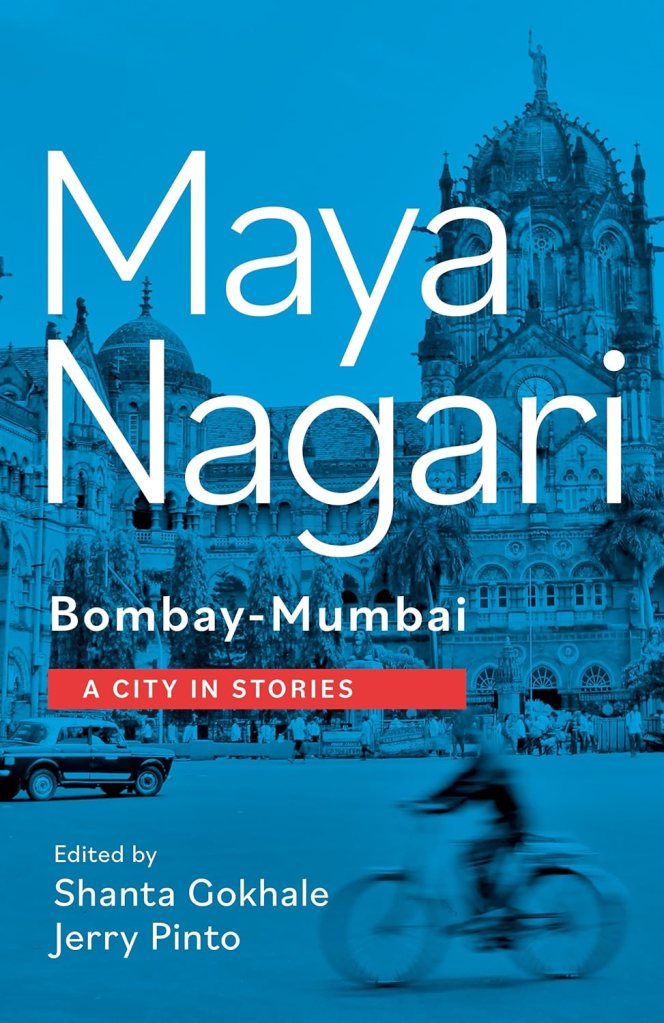
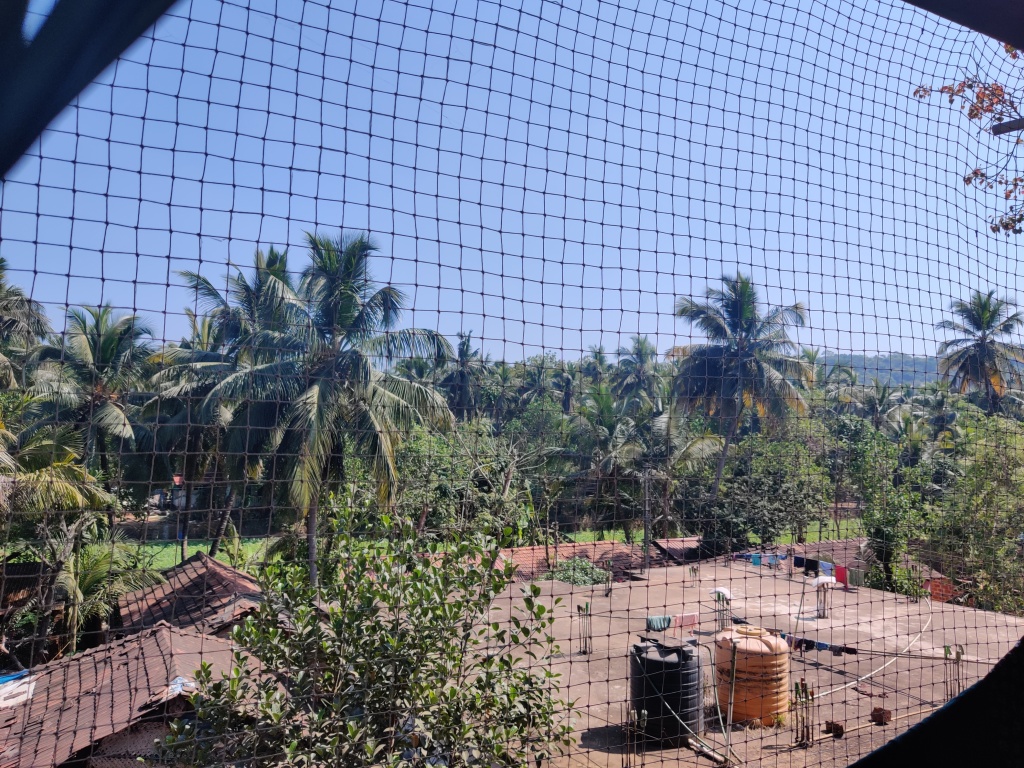

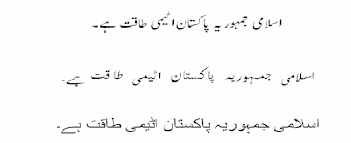





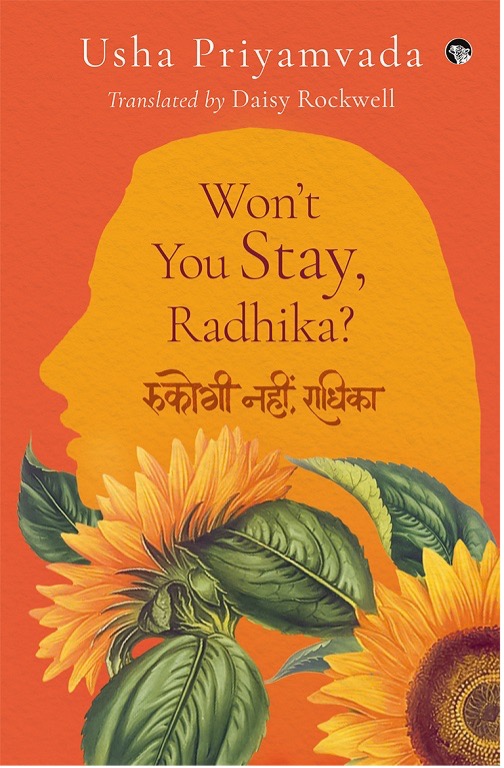



 Borderless