What will the New Year bring? Will it connect us all like a tree that has its roots deep in the Earth but reaches out to the sky with its branches rearing high? Its blooms seem like stars on the planet, connecting all life and non-living in its embrace. We hope as global consciousness grows for living in harmony with nature and science, love and kindness, may we all move towards a better more connected world. We, at Borderless Journal, wish you all a happy start to a wonderful New Year!
Our oeuvre this time brings to you a selection from the year 2021 that showcases the change makers we met, and writing that with their values connect us or ring with goodwill and look forward to a better future.
Meet & Greet
These are people you can meet on our pages — people who impact the world in a way that touches lives.
Goutam Ghose, who finds colouring the world with syncretic lore as the best alternative to sectarian violence. Click here to read.
Anvita Abbi, an empathetic linguist who builds bridges to create a seamless world, accepting and co-existing with different ways of life as colours of a rainbow. Click here to read.
Nazes Afroz translated a book on Afghanistan by Tagore’s disciple, Syed Mujtaba Ali, a memoir that shows the roots of the current crises go deep. Also, a senior BBC editor of South Asia, Afroz takes us through the situation with compassion. Click here to read.
Jessica Mudditt travelled to Myanmar and wrote a book, which is an eye-opener about the current situation. She was brought to focus by Keith Lyons who interviewed her for us. Click hereto read.
Sanjay Kumar founded Pandies, an activist theatre group that educates, bridging gaps between the divides of University educated and the less fortunate who people slums or terror zones. Click here to read.
Sybil Pretious, a teacher who has taught in six countries to impact children, starting her career in Africa and living through and beyond Apartheid. Click here to read.
Poetry
Robert Burns & Tagore in Harmony : A transcreation of Tagore’s song, Purano Sei Diner Kotha, based on Robert Burn’s poem associated with new year’s revelries. Click here to read.
Snowball Earth: A long poem by Rhys Hughes in the spirit of a modern man’s Auld Lang Syne, touching on our climate debacle. Click here to read.
Gathering Blossoms: Poetry by Michael R Burch that lingers in the heart. Click here to read.
Near the River Chenab and Under The trees: Sunil Sharma in a poignant telling takes us on a journey to the banks of a river where life, love and death sheathed in terrorism cumulate to a peak. Click here to read.
InBridge over Troubled Waters, academic Sanjay Kumar tells us about Pandies, an activist theatre group founded by him that educates, bridging gaps between the divides of University educated and the less fortunate who people slums or terror zones. Click here to read.
In Lessons Old and New from a Stray Japanese Cat, Keith Lyons talks with the author of The Cat with Three Passports, CJ Fentiman who likes the anonymity loaned by resettling in new places & enjoys creating a space for herself away from her birthplace. Click hereto read.
A transcreation of Tagore’s song, Purano Sei Diner Kotha, based on Robert Burn’s poem associated with new year’s revelries by Mitali Chakravarty. Click here to read.
Professor Fakrul Alam takes us through the three Partitions of Bengal whichultimately led to the creation of Bangladesh, with focus on the role of Dhaka University. Click hereto read.
With Christmas at our heels and the world waking up slowly from a pandemic that will hopefully become an endemic as the Omicron seems to fizzle towards a common cold, we look forward to a new year and a new world. Perhaps, our society will evolve to become one where differences are accepted as variety just as we are fine with the fact that December can be warm or cold depending on the geography of the place. People will be welcomed even if of different colours and creed. The commonality of belonging to the same species will override all other disparities…
While we have had exciting developments this year and civilians have moved beyond the Earth — we do have a piece on that by Candice Louisa Daquin — within the planet, we have become more aware of the inequalities that exist. We are aware of the politics that seems to surround even a simple thing like a vaccine for the pandemic. However, these two years dominated by the virus has shown us one thing — if we do not rise above petty greed and create a world where healthcare and basic needs are met for all, we will suffer. As my nearly eighty-year-old aunt confided, even if one person has Covid in a remote corner of the world, it will spread to all of us. The virus sees no boundaries. This pandemic was just a start. There might be more outbreaks like this in the future as the rapacious continue to exploit deeper into the wilderness to accommodate our growing greed, not need. With the onset of warmer climates — global warming and climate change are realities — what can we look forward to as our future?
Que sera sera — what will be, will be. Though a bit of that attitude is necessary, we have become more aware and connected. We can at least visualise changes towards a more egalitarian and just world, to prevent what happened in the past. It would be wonderful if we could act based on the truth learnt from history rather than to overlook or rewrite it from the perspective of the victor and use that experience to benefit our homes, planet and all living things, great and small. In tune with our quest towards a better world, we have an interview with an academic, Sanjay Kumar, founder of a group called Pandies, who use theatre to connect the world of haves with have-nots. What impressed me most was that they have actually put refugees and migrant workers on stage with their stories. They even managed to land in Kashmir and work with children from war-torn zones. They have travelled and travelled into different dimensions in quest of a better world. Travelling is what our other interviewee did too — with a cat who holds three passports. CJ Fentiman, author of The Cat with Three Passports, has been interviewed by Keith Lyons, who has reviewed her book too.
This time we have the eminent Aruna Chakravarti review Devika Khanna Narula’sBeyond the Veils, a retelling of the author’s family history. Perhaps, history has been the common thread in our reviews this time. Rakhi Dalal has reviewed Anirudh Kala’sTwo and a Half Rivers, a fiction that focusses on the Sikh issues in 1980s India from a Dalit perspective. It brought to my mind a family saga I had been recently re-reading, Alex Haley’s Roots, which showcased the whole American Revolution from the perspective of slaves brought over from Africa. Did the new laws change the fates of the slaves or Dalits? To an extent, it did but the rest as fact and fiction showcase were in the hands that belonged to the newly freed people. To enable people to step out of the cycle of poverty, the right attitudes towards growth and the ability to accept the subsequent changes is a felt need. That is perhaps where organisations like Pandies step in. Another non-fiction which highlights history around the same period and place as Kala’s novel is BP Pande’sIn the Service of Free India –Memoirs of a Civil Servant. Reviewed by Bhaskar Parichha, the book explores the darker nuances of human history filled with violence and intolerance.
That violence is intricately linked to power politics has been showcased often. But, what would be really amazing to see would be how we could get out of the cycle as a society. With gun violence being an accepted norm in one of the largest democracies of the world, perhaps we need to listen to the voice of wisdom found in the fiction by Steve Davidson who meets perhaps a ghost in Hong Kong. Musing over the ghost’s words, the past catches up in Sunil Sharma’s story, ‘Walls’. Sharma has also given us a slice from his life in Canada with its colours, vibrancy and photographs of the fall. As he emigrated to Canada, we read of immigrants in Marzia Rahman’s touching narrative. She has opted to go with the less privileged just as Lakshmi Kannan has opted to go with the privileged in her story.
Sharma observes, while we find the opulence of nature thrive in places people inhabit in Canada, it is not so in Asia. I wonder why? Why are Asian cities crowded and polluted? There was a time when Los Angeles and London suffered smogs. Has that shifted now as factories relocated to Asia, generating wealth in currency but taking away from nature’s opulence of fresh, clean air as more flock into crowded cities looking for sustenance?
Humour is introduced into the short story section with Sohana Manzoor’s hilarious rendering of her driving lessons in America, lessons given to foreigners by migrants. Rhys Hughes makes for more humour with a really hilarious rendition of men in tea cosies missing their…I think ‘TrouserHermit’ will tell you the rest. He has perhaps more sober poetry which though imaginative does not make you laugh as much as his prose. Michael Burch has shared some beautiful poetry perpetuating the calmer nuances of a deeply felt love and affection. George Freek, Anasuya Bhar, Ryan Quinn Flanagan, Dibyajyoti Sarma have all given us wonderful poetry along with many others. One could write an essay on each poem – but as we are short shrift for time, we move on to travel sagas from hiking in Australia and hobnobbing with kangaroos to renovated palaces in Bengal.
We have also travelled with our book excerpts this time. Suzanne Kamata’sThe Baseball Widowshuttles between US and Japan and Somdatta Mandal’s translation of A Bengali lady in England by Krishnabhabi Das, actually has the lady relocate to nineteenth century England and assume the dress and mannerisms of the West to write an eye-opener for her compatriots about the customs of the colonials in their own country.
While mostly we hear of sad stories related to marriages, we have a sunny one in which Alpana finds much in a marriage that runs well with wisdom learnt from Kung Fu Panda. Devraj Singh Kalsi has given us a philosophical piece with his characteristic touch of irony laced with humour on statues. If you are wondering what he could have to say, have a read.
In Nature’s Musings, Penny Wilkes has offered us prose and wonderful photographs of the last vestiges of autumn. As the season hovers between summer and winter, geographical boundaries too can get blurred at times. A nostalgic recap given by Ratnottama Sengupta along the borders of Bengal, which though still crossed by elephants freely in jungles (wild elephants do not need visas, I guess), gained an independence from the harshness of cultural hegemony on December 16th, 1971. Candice Louisa Daquin has also looked at grey zones that lie between sanity and insanity in her column. An essay which links East and West has been given to us by Rakibul Hasan about a poet who mingles the two in his poetry. A Bengali song by Tagore, Purano shei diner kotha, that is almost a perfect trans creation of Robert Burn’s Scottish Auld Lang Syne in the spirit of welcoming the New Year, has been transcreated to English. The similarity in the content of the two greats’ lyrics showcase the commonalities of love, friendship and warmth that unite all cultures into one humanity.
Our first translation from Uzbekistan – a story by Sherzod Artikov, translated from Uzbeki by Nigora Mukhammad — gives a glimpse of a culture that might be new to many of us. Akbar Barakzai’s shorter poems, translated by Fazal Baloch from Balochi and Ratnottama Sengupta’s transcreation of a Tagore song, Rangiye Die Jao, have added richness to our oeuvre along with one from Korean by Ihlwha Choi. Professor Fakrul Alam, who is well-known for his translation of poetry by Jibonanda Das, has started sharing his work on the Bengali poet with us. Pause by and take a look.
There is much more than what I can put down here as we have a bumper end of the year issue this December. There is a bit of something for all times, tastes and seasons.
I would like to thank my wonderful team for helping put together this issue. Sohana Manzoor and Sybil Pretious need double thanks for their lovely artwork that is showcased in our magazine. We are privileged to have committed readers, some of who have started contributing to our content too. A huge thanks to all our contributors and readers for being with us through our journey.
I wish you a very Merry Christmas and a wonderful transition into the New Year! May we open up to a fantastic brave, new world!
Shakespeare’s King Lear: Was he mad or grief stricken? Courtesy: Creative commons
Depending upon the country you live in, you may have to think back a long time or not so long, to imagine a time when talking of mental illness wasn’t mainstream. For many countries mental illness is still a taboo, but the internet has made knowledge of mental illness more wide-spread. You could be forgiven for thinking most people suffer from some form of mental illness. In reality, statistically, the majority do not. Most of us however, go through hard times where we may exhibit behaviour shared with those suffering from mental illness.
Having just finished co editing a large book on mental illness, I began to think about how we swung from one extreme (never acknowledging mental illness) to another (talking about it all the time). As a psychotherapist this isn’t perhaps surprising but the extent to which we label and evoke mental illness as explanation, might be.
Sometimes atypical behavior isn’t mental illness.
Teens, the elderly, the dispossessed, so many groups may suffer what seems like a mental illness but it really a natural response to a challenging situation. The adjustment of growing up. The challenges of getting older. Losing partners. Losing parents. Hormone changes. Trauma. Treating these events, the same way you would someone with a long-term mental illness like schizophrenia is ignoring the difference between an illness and a causative episode. With health insurance companies demanding categorisation in order to approve insurance, there has been a gradual shift toward ever-increasing terminology and labels. The problem with this is someone going through depression because they lost a parent can be seen as mentally ill — just like someone suffering from severe schizophrenia. But the two are not the same. We must be careful not to confuse malaise and regular responses to trauma and challenges, with a deep-rooted illness that might not be as curable. Why? Because we’re no longer understanding crucial differences in what we deem mental illness.
Therapists and medical professionals can be far too quick to state unequivocally that someone is mentally ill. This matters because just as ignoring mental illness and not talking about it, is wrong, so is over diagnosing it. The reason being, when you label someone, you set into motion years sometimes of inaccurate diagnosis and treatment which can do more harm than good.
Before you dismiss this as a rare event, think again.
Here are some case studies (real names not used) I have come across in my work:
John was told he was bipolar and was sent to an outpatient ‘group’ in a local residential center for mentally ill people. This was on the basis of his arguing repeatedly at his place of work and finally being fired. He also had several car accidents that he put down to ‘feeling angry’ and he attacked his wife during an argument. He was prescribed high dose psychotropic medication and his insurance was charged for the expensive therapy he received daily.
His family were horrified to find out their father was ‘suddenly’ mentally ill with bipolar disorder ll in his late sixties. They didn’t question the authority of the doctors until it became obvious something else was going on. At that time, he had sunk into a deep depression and seemed to be losing his ability to drive. The family asked the psychiatrists whether he could have dementia, to which they were repeatedly told — no he’s mentally ill. Firstly, this is an erroneous way of describing a condition as blanket-diagnosing mental illness, and second, they were wrong. John had the beginning of Alzheimer’s and his delayed diagnosis caused great heartache for everyone involved.
The question of how any competent psychiatrist could have diagnosed John with Bipolar ll which rarely if ever ‘suddenly happens’ late in life, is but one example of how a system will fit a diagnosis to its dominant perspective, in this case an assumption that certain behaviours are always congruent with a mental illness. John like many with Alzheimer’s did share some symptomology but nobody bothered to consider an alternative diagnosis and thus, the incorrect medication, expense and uncertainty caused a sad diagnosis of Alzheimer’s to become even more protracted and painful. Equally it should be mentioned for the sake of fairness, that there is an over-abundance of dementia-related diagnosis of older people where other causes are not considered and this is the same shortsightedness.
Liza, was diagnosed with schizophrenia based on muted affect, spells of catatonia and trauma response as well as insomnia, severe anxiety and depression. She exhibited paranoia and fearfulness as well as despondency and out bursts of anger. Even if those symptoms could fit the diagnosis for schizophrenia, they are too generalized to be assumed as such. Nevertheless, Liza was given EST (Electric Shock Treatment) and institutionalised for years, without another diagnosis being considered. It turned out Liza had never had schizophrenia but after years of medication it was hard to tell what was causing her behaviour. It wasn’t until years later when she began to open up to a therapist who cared, that Liza found out her symptoms were the reactions of severe childhood abuse and sexual abuse. These had never been considered because she was not asked about sexual abuse, and did not volunteer about it (most sexual abuse survivors don’t). It was easier to medicate her and inflict EST on her, than really understand what was going on. Liza went on to live a full life, but with the scars of her experiences and a deep mistrust of the psychiatric field (rightfully!).
These are two of many, many stories I could share of clients with misdiagnosis histories that caused them and their families a great deal of suffering. Of course, there is the flipside of people not being diagnosed with a mental illness and equally suffering and I acknowledge that happens too. The purpose of this essay is to consider the epidemic of over-diagnosis and how, maybe with good intention, we’ve swung from one extreme (nobody is mentally ill) to another (if in doubt, it’s a mental illness).
Whilst I am the first person to say accurate diagnosis and treatment can save lives when it comes to the mental health field. I have seen how doctors and practitioners can be subject to the undue influence of social trends in diagnosis and medication and how this can influence the accuracy of their diagnosis. Psychotropic drugs can have life-long effects which if that’s your only choice compared to the misery of a mental illness, you will accept, but what of those who didn’t need them in the first place? My concern is the over-medication and over-diagnosis of certain kinds of mental illness set a cascading storm into motion.
A colleague of mine who works as a psychiatrist had her own experience of being on the ‘other side’ when she developed a sudden onset illness. The illness included heart palpitations. My colleague went to the ER with chest pains thinking she might be having a heart attack. The physicians on call determined she wasn’t and their next recourse was to suggest it was an anxiety related issue. They prescribed anxiety medication and recommended she saw a therapist. My colleague went another appointment only to find out she was sitting in front of a psychiatric nurse. Despite her own qualifications as a psychiatrist, she said at the time she felt vulnerable, unsure of what was happening and very afraid. She explained her feelings of fear to the nurse, alongside her concern that she had no definitive diagnosis. The nurse did not refer her to another medical doctor for further tests. She recommended heavy duty anti-anxiety medications.
Because my colleague is a psychiatrist, she had the presence of mind to decline but it got her wondering what would have happened had she not been clued into the failings of the system? She could easily have been taking strong medications for a ‘suspected’ case of anxiety, without really finding out what was wrong and caused her heart palpitations. It took my colleague a long time to finally get an answer. A rare disease. With treatment she recovered. The lesson she learned however, terrified her. She now understood how at the mercy of doctors most patients were and how often diagnosis wasn’t a precise science or even an educated guess, but more of a ‘by rote’ method that was deeply flawed.
She showed me the thirty something bottles of medications she was given with every appointment and explained that had she been truly suffering from a serious mental illness, she would have had more than enough to overdose with, even given the safety protocols of modern medicine. She also explained the ease with which she was given extremely powerful drugs, without a documented diagnosis and how many side-effects those medicines potentially had. She is now an advocate for change, hoping the medical industry and the pharmaceutical industries can be cautioned against rash diagnosis and over-medicating. It worries me that it takes an expert in the field to raise a red flag and I remain pessimistic about her success in changing a well-oiled system that earns billions in kick-backs and profit from the perpetuation of an illness rather than a cure.
Getting into hospital unless you have a heart attack or amputated limb isn’t easy any more. The model is more about treating patients and sending them home. This works for many, and expands on the ‘care in the community’ concept with mental health (which has floundered since inception, creating huge groups of homeless mentally ill) but does not work for everyone, especially those with harder diagnosis. Consequently, many of us have learned what it feels like to be a patient going through a broken system, what you had to do to get what you needed and how hard that would be if say, you were in the throes of a serious illness (be it mental or physical). Some doctors are responsive, caring and compassionate, whilst others merely check a box. The inadequacy of systems set up to help both the physically and mentally ill is underfunded and the level of treatment often fractured, in favour of cost-saving protocols that were often unapplicable to those they served. How challenging must it be for patients to seek good help during some of the hardest times of their lives?
I have sympathy for the over-worked/under-paid GP/family doctor who is restricted by insurance protocols and limited in what they’re able to offer their patients. I understand how it may seem easier to offer an anxiety medication or label someone bipolar, than spend weeks trying to get to the real cause. But you don’t heal anyone with a wrong diagnosis, and you mar the field of psychiatry by misdiagnosis. It’s no wonder I’m often mistrusted as a mental health worker, because so many of my patients have had negative experiences of being judged, marginalised and labeled, by previous psychotherapists and doctor. It only takes one person to assume you’re not coping and must be clinically depressed, to set into motion a whole chain of events. What if that practitioner had looked beyond the obvious and considered the evidence more closely? But sometimes it’s easier to reach for the prescription pad. You are doing someone a disservice if you medicate a vulnerable person on the basis of basic symptoms rather than looking at the whole picture. It’s a catch-22 situation with such short appointment times and a burgeoning patient load.
In prisons, where a high number of inmates have mental illness that are not treated through accessible programmes, drugs have become the surrogate for competent therapy. It is simply cheaper to drug a patient than offer 1-1 therapy. Whilst it may not be fiscally possible to offer low-cost or free therapy to everyone who needs it, we shouldn’t use drugs as a substitute if they’re not the answer. Most psychotropic drugs were designed to be used short-term but many people take them for years. If you imagine some of those people could be misdiagnosed or not really suffering from a mental illness so much as a hard time that will resolve, then you’re responsible for drugging people who shouldn’t have ever been drugged. How is this an answer to anything?
In nursing homes, patients with dementia and other diseases often take over ten medications that ultimately won’t cure anything but will make the pharmaceutical industries rich. The reason? To keep them compliant and calm. So they won’t bite, make a fuss or tax the underpaid staff. Again, I can sympathise with wanting to medicate a troublesome patient, but in shrugging everything off to mental illness we lose touch with the real cause and effect and shirk our responsibility to accurately treat people. Maybe with fewer doctors and ever-increasing medical costs this is no longer possible, in which case as more of us age and get dementia or alzheimer’s, expect to see a steady increase in the use of psychotropic medication as a means of management.
I have met many who have had similar sudden onset, long lasting catastrophic illnesses. Many of them were told by doctors that these illnesses were psychosomatic or psychiatric in origin when it turned out to be a hundred percent physical. Whilst I don’t deny that some illnesses can be psychiatric in origin, many are not and women are far more likely to be told their illness is ‘in their head’ or ‘an issue of nerves’ – and this not just from the medical industry, but their families and friends. Like anything, when you’re in a dark place it’s very easy to convince yourself, the doctor is right, which can further exacerbate misdiagnosis and unnecessary suffering and stigma.
For the seriously physically ill, this is as bad as having a heart attack and being told ‘you are anxious you need to calm down’. It is counterproductive and often causes people who need help not to seek it. The blurring between the physical and the mental is unacceptable. Whilst there is clearly a mind-body link, assuming everyone with anxiety must be mentally ill (rather than anxious for a good reason) is short-sighted and potentially damaging. Likewise, labeling every woman histrionic because she’s panicking about something, is using mental illness categories as a weapon.
The gender divide between how doctors treat female versus male patients is a long-standing inequality, based upon the old concepts of hysteria (a female term applied toward women only) and the link between mental instability and the female body. Whilst it is true that menstruation, hormones and menopause can definitely change a person’s mood, this is not the same as true mental illness and it is high time we understand the difference between feeling anxious or depressed and suffering from clinical depression or anxiety. The only way we achieve this is by quitting our tendency to label certain groups without further enquiry. This includes women, people of colour and lower-income persons — all of whom are more often assumed to be mentally ill than other groups.
The harm of a misdiagnosis is, as I said earlier, as bad as no diagnosis. The rush to come to a conclusion is something that turns into a scarlet letter for the bearer. Despite our best attempts, mental illness is still stigmatised, and as such, once diagnosed, this can affect everything from future job prospects, marriage, friendships to even housing. In the information age, medical privacy is constantly under assault, and even future employers are able to find out about people’s private lives. Should they discover that person has a mental illness that they stereotype as being negative, this could reduce a person’s equal chances. The old adage, ‘crying wolf’ also applies because we over-diagnose and popularise in unhealthy ways. That causes people to shirk when someone really does need help.
Why do we stigmatize the mentally ill? I often hear from clients who are overmedicated and some who are undermedicated, both extremes existing because one provokes the other. A lot of psychotropic medication is not effective and placebo at best, leaving the medical industry with a big question mark as to how to help the mentally ill. Whilst I don’t have all the answers either, I would say, ensuring someone is really mentally ill before acting on it, is one positive step toward reforming a broken system. Currently so much money is spent on mental illness but people are not getting better, they are getting sicker. That means something really isn’t working. I’m not convinced the recent move to online psychiatry is the answer either, given the danger of powerful medications. I’m also not convinced strong medications like Ketamine and Ecstasy should be given without close monitoring. I’m all for creative thinking in medicine, but not without caution.
Finally … when is a mental illness not a mental illness? We should be open to alternative diagnosis rather than the category of mental illness as a catch all for when we’ve no better answer. Just because something isn’t apparent, doesn’t mean it’s a mental illness. There is so much the medical industry doesn’t know and often it takes patience and commitment to discover a rare disease. If we didn’t spit people out and try hard to see as many people as we could, we might have time to discover the real cause and not send people home with incorrect medication. It’s damaging and it further stigmatises those who really need mental health treatment. On the other hand, sometimes feeling anxious is just feeling anxious, and not something to pathologise. We will all feel depressed or anxious at times, it doesn’t mean we need a category and our current system doesn’t seem to have another option. How about we start with asking the patient – what do you think is going on? Often, we learn the most from our patients, and they will help us know whether they have a mental illness or are just going through a hard time. The difference between providing short-term supportive care and getting someone on a life-time of strong medication is huge and we need to have our eyes wide open.
Candice Louisa Daquin is a Psychotherapist and Editor, having worked in Europe, Canada and the USA. Daquins own work is also published widely, she has written five books of poetry, the last published by Finishing Line Press called Pinch the Lock. Her website is www thefeatheredsleep.com
.
PLEASE NOTE: ARTICLES CAN ONLY BE REPRODUCED IN OTHER SITES WITH DUE ACKNOWLEDGEMENT TO BORDERLESS JOURNAL.
In Conversation with Akbar Barakzai, a Balochi poet in exile who rejected an award from Pakistan Academy of Letters for his principles. Click here to read.
In Conversation with Somdatta Mandal, a translator, scholar and writer who has much to say on the state of Santiniketan, Tagore, women’s writing on travel and more. Click here to read.
Ratnottama Sengupta recalls her experiences of the Egyptian unrest while covering the 35th Cairo International Film Festival in 2012. Click here to read.
“I may be a dreamer,
 But I’m not the only one.”
 -- John Lennon (Imagine).
As a child I remember understanding on a very basic level the concept of cruelty. I recall vaguely thinking in the simple way children think; “Why is that person so mean?” It wasn’t because I wasn’t getting what I wanted and stomping my foot, it was more observing a cruelty and trying to make sense of it. Bottom line, children understand these things pretty early on and it forms what becomes their moral compass.
We can and do change over time but those early lessons tend to stick around. My early lesson was that I recognised that I cared. I observed that some other people did care too and some other people did not. I think ever since then I have wondered why some people are cruel.
More recently there has been a debate of sorts over the ‘value’ of being sensitive. Can you be too sensitive? Is there value in being sensitive? The issue is split. Some believe sensitivity is a weakness. Others recognise it makes life harder. Some think sensitivity is related to mental illness, whilst some believe we need more sensitivity in this world.
As a therapist I am often asked this question. I have also asked it of myself. I tend to berate myself when I am ‘too’ sensitive, but this is a learned behavior, based on being shamed for being sensitive in the past. The truth is I think you can literally speaking be too sensitive (for your own good, because it’s you who is hurt most by it) but most people who are told ‘you are too sensitive’ are being gaslighted or manipulated.
Through my life I have been told so a few times. Predictably, I felt ashamed because society perceives sensitivity as weakness. I consider myself a strong person, a resilient person, but I know the way I’m perceived by those who know I’m (also) sensitive, is weaker. This has never been truer than since moving to America, where the ‘bad ass’ mentality rules and women over-compensate by being emotionless and ‘strong’ as a rebuke against sensitivity.
Sensitivity is out of fashion; it has been for a long time. Maybe, by rejecting sensitivity, people believe they are automatically stronger (and perceived by others to be) we hold up role-models of impossibly strong people who are not depicted as sensitive. None of us seem to revere sensitive, kind people. On the contrary, we usually suspect them. We admire the person who is sarcastic, quick-witted, a little ruthless, and undefeatable. Therefore, I will seem like a sensitive person trying to justify sensitivity by writing this. And you wouldn’t be wrong. I think sensitivity has a bad rap and I’m personally tired of how insensitive people are. I don’t think this is commendable, cooler or something to aspire to, but sometimes I feel I’m in the minority.
Most recently I had two conversations within a day of each other, where I was told ‘maybe you’re being too sensitive’ and shortly after that I talked to a good friend of mine about this. Her answer got me thinking about the way sensitivity is perceived and how wrong-headed we are. She said ‘well maybe more people should be sensitive’ and those simple words were a bombshell. Exactly! We wouldn’t have to go around covered in armor if people were more sensitive! We wouldn’t have to be ‘bad ass’ if others were kind and thoughtful!
When did we become a people who worshipped coldness over warmth and compassion?
I might sound like a spiritual evangelist writing this, and ironically, I don’t believe in God, but many of my concepts are in keeping with those you might see in the Bible. Treat others as you would wish to be treated. Be compassionate and kind to those who need it. Those are not concepts we enact, instead we admire the person who is rude, emotionless, ruthless even. What happened to make this happen?
When I left university the first time, armed with my degrees I thought (naively) I could go out into the world and get a good job. Why shouldn’t I have thought that? I had worked hard I deserved it, didn’t I? When I recall how I thought back then, I was really a naïve person (though I thought I knew everything) with no comprehension of how hard the world could be. Not only was the job-market seemingly impenetrable, but nobody was impressed with anything I had to offer, and I felt utterly deflated within a short period of time.
Some would say bringing down a peg or two is a rite most young people go through when they get into the real world. But I still recall that time as being one of deep despair and sadness, to imagine a world that wasn’t fair or kind. I had genuinely thought it could be! The struggle to establish myself financially was uphill and took a long time. During which I experienced repeated knocks to my confidence and was told over and over that I was nothing/nobody. It seemed like colleagues, bosses, etc. thrived on putting down the young people who got on the first rung of the ladder.
I have never forgotten that. I ask people even now if they had the same experience(s); Some say yes, some say no. Initially I took it personally because it felt personal, but I came to realise it was a rite of passage, where young people were put down and put in their place by those who had come before them. It remains a horrible practice with no real value, after all, we need to believe in ourselves, not be trashed and put down. For some, it may be easier to get over than others. I was in the latter camp. I had grown up being put down, so the last thing I needed was for it to happen again.
This is when the idea of grin and bear it, muscle through, take it or leave it, man up, comes into play. This is but one of many times in life where the emphasis is on being ‘strong enough to endure it’ and to put aside one’s true feelings about a situation (outrage, hurt, confusion) in favor of ‘sucking it up.’ Given that I had not joined the military, I found the urge to react this way very strange. I wanted instead to ask why it had to be this way, why people let it be this way?
This relates back to my earliest understanding that some people are cruel. But our response to some people being cruel is weird. Instead of calling them out and doing something collectively about it so that they do not continue to have the power to be cruel, we seem to want to join them? The shaming of those who are sensitive seems a way to a line with those who would be cruel, even as logically all those who a line with the cruel, might once have been sensitive.
Why do we think being sensitive is such a weakness when it is far weaker to be a hard-nosed uncaring person who doesn’t give to anyone, than to be a caring person who wants to treat others as they would wish to be treated? I can’t say I understand it now any better than I did years ago. When my clients ask me, I remain as perplexed at people’s cruelty as I ever have. There simply seems no good justification for it. And moreover, why people glorify cruelty and think kindness is ‘suspect’ ‘insincere’ or ‘weak’ baffles me.
Sensitivity means you notice when someone is upset and you care. Insensitivity means you don’t care to notice what happens to anyone and you don’t give a damn. When you put that bluntly, I find it hard to understand why someone would wish to be the latter, other than it’s easier, and might be less work. But what about conscience and morality? For many of us, we have that prickling of conscience if we have mistreated someone, we want to be a good person. We try to help others, so how could we ever want to align ourselves with someone who didn’t give a damn?
Yet how often, from the schooldays onward, do we see the popular kid is the mean kid, or the most liked child is the one who does nothing for others, but is considered ‘cool’ or the boss who is mean but somehow respected, or the adult who has lots of friends though they never do a thing to help others? It’s not always the kind, sensitive person who is popular, in fact their motivations are often suspected, and they might be considered weak and cloying.
Moving to America I struggled with this considerably. I tend to wear my heart on my sleeve, if I like someone, I do go out of my way to be a good friend to them. I think that’s how it should be. But my good intentions were often suspected, people would even say to me (as an insult) “you’re so NICE” (meaning: Boring) or they wouldn’t believe my kindness was genuine. As to being sensitive, I was told I was ‘too’ sensitive if I stepped over the formality people had with each other, where people didn’t really ask how someone was doing, or follow up and care enough to get closer.
In fact, I didn’t understand how people got close, because everything was so superficial and formal. I began to see that many friendships were just that, convenience based. Those who had children hung out with others who had children, and car pooled. Those who went to the gym talked to others who worked out a lot and maybe met on weekends to work out, etc. But the moment you no longer had that in common, you rarely kept in touch. The deep friendships I had sustained back home, seemed rarer.
I was told this was because you made those kinds of friendships in childhood and once you were an adult you didn’t make friends like that. I wondered why not? All the rules of friendship baffled me and the difficulty of getting meaningfully close to people seemed incredibly hard all of a sudden. With colleagues a work — those I had known for years and whom I worked with closely — I wrongly assumed we were also friends. But they saw me only as a tool for the job I did. They invested no more in me as a person as they would in someone they had just met, even if we worked side-by-side for years.
To this day that strikes me as strange. I’m not standing on a moral high horse saying that I can’t fathom these things, I think I’m just stating a fact. I find it difficult to understand why someone would be cruel. Why someone would make someone else feel bad (deliberately) or why someone would put someone else down for being ‘weak’ just because they’re sensitive and care. Since when were those ever-bad attributes? Could it be in our rejection of older morals, we have adopted ones that cut our nose off to spite our face?
Having been told people do not trust ‘nice’ people I began to understand what that meant. Sometimes socially when you meet someone who is initially really friendly, they turn out to be less than you imagined, whereas someone else, who was perhaps initially aloof, can turn out to be a great person. I have learned friendliness doesn’t always equate to good people. Sometimes it is a front or an act. However, if you are a genuine person and sensitive to others, this is more than just initial friendliness and yet, you might be suspected because of people’s previous experience with ‘kind or friendly’ people.
When did it become rare to be kind and when did we begin to be suspicious of kindness? Intellectually I understand it but emotionally it’s so strange. I have had conversations about related subjects such as why women don’t like other women (they think they are backstabbers) or why women aren’t feminists (their experience has been women are often worse to them than men, so why would they be a feminist?) and I think they’re all related themes.
When we can’t trust the motivations of others, we might suspect the worst if that is our prior experience. Nowadays we’re more liable to mistrust a kind person than someone who is aloof or sarcastic. We’ve got things around the wrong way. And all because some of us are cruel and delight in hurting others, which includes warping the truth. Because the truth hasn’t changed. Being sensitive means caring about others, and this should never be something to ridicule or deride. Nor is it weak.
If after reading this you conclude I’m writing this to justify my own sensitivity, then you wouldn’t be wrong. I hope you see it’s leading to a much bigger picture too. I also hope you know I am not justifying sensitivity emotionally but defending it based on reason and fact. After all, sensitivity isn’t all emotional. We have often mistaken sensitivity for some kind of mental illness but it’s nothing of the kind. True, some mentally ill people may be sensitive, but that’s all. Sensitivity, unless it’s pathological in its extremity, is a natural human response. But still those who wear their heart on their sleeve are humiliated by those who are still in the school yard.
I would love a world that embraced the idea you can be sensitive and strong, because I truly believe you can. I also like the idea of a world where people’s past experiences wouldn’t close them to trusting someone’s kindness, or suspecting kindness of motivation. Do we really want a world where we’re all so removed from each other we no longer care? Is that the world you want to live in? It’s not the world I want to live in. I want my boss to care if I’m struggling, I think on a logical, emotional and realistic level this will improve our relationship. I don’t think humans are robots or unconnected. I think caring is how we connect and I want to. Living in a disconnected world where nobody cares what happens to anyone else, seems a dystopian nightmare. As we grow in numbers this is logistically more likely to occur. Let’s at least let those who are sensitive, flourish rather than shut them down and shame them.
Candice Louisa Daquin is a Psychotherapist and Editor, having worked in Europe, Canada and the USA. Daquins own work is also published widely, she has written five books of poetry, the last published by Finishing Line Press called Pinch the Lock. Her website is www thefeatheredsleep.com
.
PLEASE NOTE: ARTICLES CAN ONLY BE REPRODUCED IN OTHER SITES WITH DUE ACKNOWLEDGEMENT TO BORDERLESS JOURNAL.
A million dollar question that seems to have no satisfactory answers. While around October-November, many cultures pay respects to the departed, there are those who do pray at a different time of the year. Is there a link between that and the fun of disguising and collecting candy or playing tricks on Halloween? There are no conclusive answers or evidence to link these.
In this special edition, we decided to have a bit of fun with imps, pirates, ghost, zombies and spooks brought to you from across the world on Halloween as well as a concluding essay on the reasons we celebrate spooks. Enjoy!
Poetry
Witchy Halloween: Michael Lee Johnson gives us a magical glimpse into Halloween night. Click here to read.
Pirate Poems: Jay Nicholls brings us fun-filled ‘spooky-gooky’ adventures across the Lemon Sea. Clickhereto read.
The Tickle Imp: Is this horrific, funny or what? Only can be had from the bizarre or genius pen of Rhys Hughes. Click here to read.
Prose
The Turret: An eerie story by Niles M Reddick that seems to be right out of an edition of The Most Haunted Houses. Click here to read.
The Return of the Dead: Gita Vishwanath explores spooks in afterlife in a short story. Do we become zombies? Click here to find out.
Ketchup: A scintillating ghost story by Rakhi Pandey, set in the old Residency at Lucknow. Click here to read.
When Two or Three are Gathered: A weird dark tale from Tan Kaiyi where a victims of a virus mutate. What kind of fear is instilled by this situation? Click here to find out.
Welcoming the Dark Half of the Year: Winding up the section is Candice Louisa Daquin’s essay that takes a relook at the evolution of Halloween historically. Clickhere to read.
Halloween is one of the oldest fire festivals in the world, perhaps because it considers the relationship between the living and the dead and that has been a primal theme in all human’s lives. Ancient people were more connected to the changing of seasons because their lives literally depended upon it in a way many of us cannot understand today. Most festivals have their origins in food and seasons for this reason. Ancient observations of the dead exist in nearly every recorded culture. Where I live Dias De Los Muertos is as popular as Halloween because we have a 70 percent Hispanic population. Some (though it’s growing smaller) groups of Christians refuse to celebrate Halloween as they feel they are celebrating something Pagan.
True, the celebrations held on October 31, known to exist as far back as the 5th century, were traditionally a Pagan ancient Celtic festival called Samhain. Samhain was not some Devil worshipping name as was incorrectly assumed, but actually ‘Summers End’ in Celtic. The tradition of “dumb supper” included eating but only after inviting ancestors to join in, giving families a chance to interact with people they knew who had died and returned that night as spirits. Children entertained the dead with games while adults would update those who had passed with news. On that night, doors and windows were left open for the dead to eat cakes that had been left for them.
This night was also when people would light bonfires and wear costumes to ward off ghosts. In many ways sharing the idea of remembering the dead with Dias De Los Muertos. Most ancient cultures bred superstition alongside remembrance into a festival of some kind. If you’ve ever been to New Orleans, you’ll know about All Saints Day (and martyrs) which began during the eighth century when Pope Gregory III decided November 1 would be a time to honour all saints who did not have their own holiday. This Catholic holiday caught on in New Orleans in America and is still celebrated today. Many believe the Christian church was deliberately supplanting Pagan festivals of the dead with Christian ones that emphasised more church-related themes. The evening before All Saints Day (el Dia de los Inocentes in Mexico was day of the children also held on November 1) had been known as All Hallows Eve, and later became Halloween. All Hallows came from Middle English with Alholowmesse meaning All Saints’ Day.
Samhain traditionally marked the end of summer and the beginning of winter, which back then was often associated with human death. Harvest was considered a thriving time, Winter, the dying before Spring. Ancient Celts believed Samhain was a special night where the boundary between the worlds of the living and the dead was closer together and the ghosts of the dead could walk the earth. This is where we retain the fearfulness of subjects like death and ghosts in modern times.
Sacred festivals and rituals were part of many Pagan cultures, and Samhain was no exception. The fearfulness was countered with large bonfires (the name bonfire comes from ‘bone fire’ which related to the slaughter of cattle and burning of their bones at this time of year) and druids warded off evil spirits with sacrifices. As blasphemous as that may seem to some modern religions, it was the way ancient people understood things and brought them a sense of control. Not so different really when all things are considered. It is human nature to observe or remember the dead, it is also our tendency to wish to see them again, which is ideal in this ‘thin time of year’.
The Roman’s had celebrated Feralia which was traditionally a commemoration of the passing of the dead, Lemuria, placating the restless dead and Parentalia, honoring the spirits of ancestors. Combining these with Pomona who was the Roman Goddess of fruit and trees, they melded their traditional festivals with more Dias De Los Muertos themes and added apples, which we now incorporate with apple bobbing at Halloween. Apples are also historically connected to the ‘otherworld’ throughout history. It’s fascinating to know these extremely ancient practices are still practiced today, even as we may not know why.
Although we think of modern Halloween as originating from America as modern Christmas (Father Christmas and Christmas fir Trees) from Germany, the truth is American’s got many of their Halloween ideas from ancient European traditions, including ‘trick or treating’. But America definitely made those traditions wide-spread and thus, known worldwide. In the end, it was from America the rest of the world got their cue.
Scottish poet Robert Burns’s poem of the same name helped popularize the actual word Halloween in his poem of the same name. The modern name is two words pushed together. “Hallow” — or holy person — refers to the saints celebrated on All Saints’ Day, (November 1) and the “een” is a contraction of “eve” — or evening before. Thus, the evening before All Saints’ Day.
The Puritans of New England, refused to observe any holidays which might be associated with pagan beliefs – including Christmas, Easter and Halloween, but the Irish, who had always celebrated, shifted North America’s idea of Halloween when they arrived in large numbers after the Potato Famine. The jack o’ lantern which became our carved pumpkin originated from the Irish folk tale of Stingy Jack, a drunk and man who fooled the devil into banning him from hell but due to being a sinner could not enter heaven. When he died, he roamed the world carrying a small lantern made of a turnip with a hot ember from hell inside to light his way. People carved pumpkins or similar to ward off the ghost of Stingy Jack.
Halloween today is a giant commercial day, with companies selling more confectionary on Halloween than any other period in the year. Costumes and parties abound and adults now get into Halloween as much as children. Films specifically for this time of year are made and people relish the more secularised version of Halloween that doesn’t stand for anything that would threaten a family’s value system.
‘Trick or treating’ might have come from an English tradition on All Soul’s Day of giving soul cakes to those who promised to pray for the dead. Churches also gave out food, by way of appeasing spirits, and children would visit houses on Halloween and receive food or drink. Perhaps because food and drink were often scarce in the olden days, this was akin to eating pancakes on ‘Fat Tuesday’ before fasting. The value of food cannot be unappreciated and it features in every festival in some way, irrespective of culture.
The wearing of masks was to make oneself unrecognizable to those spirits who might return on Halloween. Originally called ‘guising’ (later, disguising) people used ash and then later, made masks. A disguise would ensure the Aos Sí, (fairies/spirits/ghosts) wouldn’t take you back with them to the ‘otherworld.’ Many cultures offer food to the dead as a way of respecting them or keeping them from taking the lives of the living.
Mumming, was the art of dressing up, often to act in skits to entertain others. Using anything available, people dressed up on Halloween to disguise themselves and ask for food. In later days, both at Halloween and other events, some people spent a lot of money on elaborate costumes. Like with anything, this was a status symbol, though the core remains the same; dressing up for fun. Allhallowtide was the old name for the originally three-day festival where such things occurred. Allhallowtide included All Saints’ Eve, All Saints’ Day, and the subsequent All Souls’ Day.
Black cats are often not sold at Halloween for fear of people purchasing them for sacrifice or mistreatment. The fear of black cats actually goes back to times where those deemed witches were thought to be able to turn themselves into a black cat. It’s a horrible stigma on innocent creatures, who have often found themselves tortured for the colour of their fur.
A revival of Samhain began in the 1980s with the growing popularity of Wicca. Modern Pagan’s and Wiccans today also observe Samhain as part of their faith. Celtic Reconstructionists celebrate by creating an altar for the dead where a feast is held in honour of loved ones who have died. It is not devil worship but far more an observance of an ancient time of transformation and understanding of the relationship between life and death. Samhain was never about worshipping death or evil. It was about the changing of seasons and preparing for the dying and rebirth of nature as the seasons changed. Through time ancient festivals held around this time of year influenced one another until they merged together and modern times developed the theme commercially. It’s a nice idea to imagine when we send our kids out trick or treating, we’re not worshipping Devils but we are remembering ancient rites held thousands of years ago.
Candice Louisa Daquin is a Psychotherapist and Editor, having worked in Europe, Canada and the USA. Daquins own work is also published widely, she has written five books of poetry, the last published by Finishing Line Press called Pinch the Lock. Her website is www thefeatheredsleep.com
.
PLEASE NOTE: ARTICLES CAN ONLY BE REPRODUCED IN OTHER SITES WITH DUE ACKNOWLEDGEMENT TO BORDERLESS JOURNAL
Bapu or Gandhi (2 October 1869 – 30 January 1948) on India’s currency. Courtesy: Creative commons
Gandhi with his call to combat violence and hatred with non- violence and truth is perhaps a voice that needs to be recalled out of history books on dusty shelves. His ideals cry out to be retrieved beyond the reach of currency notes, statues, buildings, names of parks and roads. Like Tagore, we may not agree with all his ideas but he put together an ideology which, perhaps, could be realised and implemented to make a better world across borders. If peace is forced by nuclear warheads and the ruthless are allowed a field day to govern any country because they have the might, perhaps it is time to question the efficacy of manmade constructs created through history, especially after the Second World War. Do we want bloodshed, chaos and the pandemic to be part of our daily news? Or, can we explore the philosophy of a man who mingled the best from the East and the West to create a system which has impacted many across the world? Leaders and great statesmen learnt from him — Martin Luther King Junior, Nelson Mandela, Al Gore, Barack Obama, John Lennon and Albert Einstein to name a few — just as he had learnt from greats across the world.
Today, in an attempt to recall the best in Gandhi’s philosophy, we wanted to present to you a selection that tries to connect us with his ideals — give a glimpse of his dreams that might have led to a better world if we only had listened and acted. Of the pieces we are showcasing here, some have painted a world that needs a Gandhi while others have written what they imbibed from his ideals into their own lives. Can we ride on the crescendo with these voices to achieve a better future for our children by embedding and internalising his values?
Interview
Santosh Bakaya interviews Tushar Gandhi, great-grandson of Mahatma Gandhi. Click here to read.
A poem relooking at Gandhi’s ideology in the present context, written in Manipuri by Thangjam Ibopishak and translated by RobinS Ngangom. Click hereto read.
Michael R Burch wrote this poem under the spell of the famed “I Have a Dream” speech by Martin Luther King Junior, an ardent practitioner of Gandhi’s ideology, a student and disciple of the Mahatma. Click here to read.
Fiction
In Bapu, Denied, Sunil Sharma pulls Gandhi down from a pedestal and explores his ideals in the current world. Clickhere to read.
From our treasury, Debraj Mookerjee reflects on how syncretism impacts greats like Gandhi, Tagore, Tolstoy, Emerson, Martin Luther King Jr and many more. Click hereto read.
Generally, a Westerner shouldn’t try to dabble in writing about Indian great men because it’s that kind of appropriate-ism that caused so much misunderstanding and damage to begin with. The idea the West had all the answers, which clearly it does not. The idea someone whose country used to be a colonialist-force, had the right anymore to discuss countries that were colonized, can smack deeply of appropriate-ism or worse. However, there are also ways we can appreciate what we know and transmit that without being patronizing or culturally insensitive.
I choose to consider Gandhi and his impact on the world, to remain in the middle ground. Neither applauding Gandhi without reservation, nor ignoring his incredible impact and influence on India and beyond. I don’t always do this, in the case of someone like Woody Allen or Charles Bukowski (hardly comparable) I cut them off immediately because despite being talented, their talent simply doesn’t measure against the harm they caused. With someone like Friedrich Nietzsche I would say, he has some brilliant perspectives, but his over-all views were too harmful for me to support him. Revisionist thinking is necessary, but sometimes like anything else, it can go too far and condemn significant people based on modern thinking that doesn’t take into account the mores of the time.
One of the hardest things in the world is when your heroes appear to fall. But in this case, there is so much positive about Gandhi I believe (and this is a personal belief), that his goodness encourages us to retain his relevance and enduring impact.
Firstly, Satyagraha – belief in using truth to resist evils with non-violence. Not the same as simply ‘truth’ or ‘verité’ as I would say in French. But more the ideal of believing in truth rather than being deceived or unable to believe. This is not just valuing truth, but believing in truth and thus, through that belief, knowing what is true (and reasonably, what is not).
I find this very interesting because whilst we all ‘think’ we know truth, obviously most of us do not. When does opinion and truth come together? Really holding an opinion has nothing to do with truth but with multiple versions of truth, how do we ever know which one is right? This is a discussion I have had many times in my life with friends of differing views. For a time, I wanted to be a Christian because I needed to believe in something and so many whom I knew were Christian would try to persuade me that was the ‘right’ (true) path. I was not convinced, despite my own attempts to be and it did not strike me as ‘truthful’ or ‘the truth.’ But the question is if people ‘doubt’ another’s truth then where does that end up?
I think of what Gandhi might have said; that truth is beyond conjecture, difference and trying to be ‘right’ the truth is there all along, it is immutable, transformative and fluid at the same time. And by truth he is not speaking purely of a particular faith, or a particular creed, but a universal truth. That is pretty esoteric for Westerners, I think overall Western thinking is prescribed, it feels comfortable having absolutes to follow and only demurs when it’s considered socially ‘trendy’ to disagree. While there may appear to be diverse thinking in the West, I would say it’s no more diverse than closed societies like China, the propaganda is just less obvious. After all, it’s not a societal dictate that has people unquestioning, it’s the mandate of the individual which links with the concept of Swaraj – self-rule which ultimately led to home rule, the idea that led to an independent India.
If I think of his ideals today, how many of us believe in truth by considering how this lies within us and then without us. Isn’t it more common for us to be spoon fed a ‘truism’ from our respective societies, and even if we question that truth, we do so with groupthink, subscribing to a ‘truth’ without considering what believing in truth means in relation to ultimate truth? Thus, without individual self-policing (or by proxy, the questioning of something outside ourselves) and perhaps by being so busy, we take the easy road because to question everything can be an exhausting enterprise, and as Marx would say, we’re distracted by how busy we are in the machine of work. Leading to at times, mass delusion, or mass indifference, but definitely not an understanding or questioning of how to cultivate a belief in truth.
In fact, how important is truth to us? We bandy around the words, paying lip service to the idea, but without going further to consider the idea at a more personal and then social level. Truly believing in truth would be almost like letting go of everything and beginning over (as one could say Gandhi did) and as you rebuild, doing so with belief in truth in a pure sense of the word. I believe in truth and therefore reject attempts of subterfuge in favour of increasing my belief in the existence of truth. In many ways this is like believing in God without it becoming all about the details (scripture, deity, icons etc). It seems to have a lot in common with the pure heart of Buddhism too,
This leads to another principal of Gandhi’s — simplicity. Simplicity of an idea clears the clutter to reach at the truth. That simple. Practice simplicity and you will see more clearly. How many of us truly practice simplicity? I may try, but I fail, as most of us do, with this increasingly complicated pull and push of modern society, where I might rail against absurdities because I’ve been sucked into thinking they matter. Maybe some of us don’t have the luxury of opting out and going back to basics, maybe our lives are too interwoven with an unnecessarily complicated society that ‘demands’ we brush our hair, shine our shoes, iron our clothes, wipe our faces and face the world a certain way.
The perennial question has always been: is this the only way to live? And as we lose more and more of our simplicity, we may no longer care about other options, in favour of following the status quo. Furthermore, we may believe a complicated life with stress and demands, is the only way we can live, the only way things can work. I would think Gandhi could see, by giving things up, you gain more than by taking on more, and whilst his message may seem inapplicable to many, we can all learn something by doing less, wanting less, needing less.
After all, we cannot take what we accumulate with us, so the ideals of physical wealth seem less important than spiritual health. Many of us may brag about the car we drive, the house or neighborhood we live in, where our kids go to school or university, what they do for a living and so it goes on. Even in India, this is true, as the upper and middle classes seek to emulate what they have seen dominate the rest of the world and define themselves by those status markers that mean so much (and conversely, may mean so little). It is easy to get caught up in it.
I was never an acolyte of the materialistic world, but like most people, I had my insecurities and wanted to jump through few hoops that I felt defined you as a success in society. When I became sick, it really showed me in a shocking way, how little those things mattered. I recall one day in hospital, my hair matted from throwing up, I just reached for my ponytail and cut half of it off. I had always been vain of my hair as it was thick and long and yet, it felt absurd to hold onto something for vanities sake when I was so sick and bereft of any normalcy. Likewise, when I went out into the common area of the hospital, I saw people sicker than me, and as we talked, I saw they were friendly irrespective of my not wearing make-up, or shoes (!) and in a gown with a green face. They saw ‘me’ and it felt like being a child again, liked for being ‘me’ instead of the ‘me’ I had become used to showing the world which was a counterfeit version. This principle then applies also to the notion of truth, and self-policing. Without an inflexible doctrine like religions, Gandhi’s philosophy was free to consider the whole rather than the individual steps toward being whole.
9/11 has just passed here in America my adopted country, and at its 20-year anniversary there has been much made of our withdrawal from Afghanistan, the country America invaded after 9/11 for sheltering the terrorists who were involved in the murder of so many people. Whether you are a Democrat, or Republican, many Americans believed someone had to pay for the atrocities committed on American soil. I recall at the time understanding both perspectives: the felt need for revenge or justice, and also, the need to lean towards understanding the how and the why of the incident to prevent it from recurring again.
When America withdrew from its longest and unsuccessful war against the Taliban, only to find the Taliban and Isis took over Afghanistan as if America had never been there, it did strike many as being a truly futile war (and we can argue, all wars are futile to some degree). How blatant was the takeover of a country America had wrongly thought was tamed from its former ‘enemies’. Over time, it had just felt a lot like other wars (Vietnam etc.) where so much death, destruction and expense wrought no change, certainly not as Americans had visualised. Furthermore, did the taxpayer really want to leave behind US$ 2.26 trillion of their hard-earned money to equip Afghanistan? Yet that is exactly what happened along with the providing a free access to the very latest technology in the abandoned US embassy.
Why doesn’t America learn this lesson? That going to war doesn’t really change the ideology of an invaded country, that small bandit terror cells continue to thrive and even increase, because the promotion of American ideals isn’t always universal or accepted, and promoting them whilst invading a country, breeds as much resentment as it does thankfulness. By this I am not suggesting everything America did was negative, they truly tried to help the Afghani people, but at what cost? And did it work? I would say it did not. That’s perhaps because it is not the role of any one nation to police another or dictate to another.
But what do you do if you are a military person, and your country is attacked? It’s hard to imagine sitting there and debating how to have a non-violent discussion with the enemy. Yet that is exactly what Gandhi is most famous for. Satyagraha may seem a very outdated term, or it may appeal as a modern notion, either way it’s so laden with symbolism we hardly understand its core anymore. On the one hand, there is the Old-Testament idea of ‘an eye for an eye’ and then as Gandhi followed ‘An eye for an eye leaves the whole world blind’.
Personally, I find truth in both, maybe truth can have a duality or not be as black and white as we often want it to be, but either way, non-violence is erasing the option for any kind of vengeance or payback, not an easy thing to accomplish when your enemy is being deeply unfair, as was the case with Gandhi watching the treatment of Indians in South Africa and then again with the colonial invading forces of the British in India. Gandhi founded the Natal Indian Congress in 1894, where he campaigned for the rights of indentured labourers in South Africa and protested against the system of requiring passes for Indians. Gandhi went on to organise the local Indian community, of all income brackets, into a passive resistance against this inequality. With these early eye-openers, Gandhi began his first experiences of community building into protest, utilizing peaceful means, against entrenched inequality and racism.
But every situation is different and 9/11 did not happen out of the blue, it came about as a result of decades of fighting between Christian and Muslim extremists on both sides. It also came about because the West wanted the Muslim world to accept some things, they found unacceptable. When asked why he caused the 9/11 attacks, Osama Bin Laden said because Saudi Arabia, his homeland, was in bed with America in going after Saddam Husain and others in Iraq. Why did he find this so offensive? In part because he didn’t like American military in his country, especially women soldiers. His brand of extremist Islam did not believe women equal to men and found that an abomination.
What is ironic about this extremist thinking, which can be found in all faiths, is how hypocritical those who believe it seem to be. All the terrorists who came to America to attack on 9/11 visited brothels and took full advantage of the Western ‘evils’ they preached against. They would argue that they had no respect for those people because they were ‘evil’ – in essence justifying their behavior based on a greater sin. But who are we to dictate who is more ‘sinful’ than another, and surely, if we believe in truth, we don’t break it when tempted by the very thing we condemn? Going back to Gandhi’s ideal of belief in truth, one who does, would not be hypocritical.
Yet so many humans are. Some people who condemn homosexuals have secretly practiced homosexuality. People who condemn women might be profiting from their exploitation. Those kinds of hypocrites negate the truth of their original argument. If we simplify the argument, we have no legs to stand on. Oppression of others goes against all religions but is practiced by all religions. I think Gandhi saw this palpably and was trying to redirect us to see how absurd this was. And what greater way than to practice non-violence against a violent oppressor? It literally was an act of faith, and incorporated belief in truth, and political self-policing. Is this not the ultimate reality? ‘Ahimsa’ isn’t just ‘non-violence’ because no one principle exists in isolation from ‘other’ in this case, love. Without love there is no mercy, there is no wish for non-violence. It is the connection between the intension and the outcome that produces Gandhi’s ‘Ahimsa’ (non-violence).
If all life is one, then all violence perpetrated against self or other is experienced as a whole, the welfare of human beings at the core. The very opposite of the competitive consumerism of Capitalism, which America is known for. And with this, Gandhi predicted the future, a practical need to eat less meat, (vegetarianism) or to respect life (by not consuming animals or exposing animals to suffering) relating back to the idea all living things are connected. I recall as a child being deeply impressed with this concept and it was one reason I myself became a vegetarian at a very young age. To many in the West, vegetarianism is considered the purview of the privileged, and I now understand that, because if you live a very simple life, it’s often very hard to be vegetarian and consume enough calories. To an extent, being vegetarian is abstinence. Many people with eating disorders become vegetarian or vegan as a form of orthorexia. Many middle-class kids have the ‘fad’ of vegetarianism. But the core behind Gandhi’s form vegetarianism or veganism is more in line with Hindu/Buddhist perspectives of respecting living things and causing no suffering.
The hardest principle of Gandhism I have encountered is faith. For some, this is the easiest as they already possess faith, as Gandhi did. He said: “I must confess that the observance of the law of continence is impossible without a living faith in God, which is living Truth. It is the fashion nowadays to dismiss God altogether and insist on the possibility of reaching the highest kind of life without the necessity of a living faith in a living God. I must confess my inability to drive the truth of the law home to those who have no faith in and no need for a Power infinitely higher than themselves. My own experience has led me to the knowledge that fullest life is impossible without an immovable belief in a living law in obedience to which the whole universe moves.”But unlike the shaming faith separating gender and men and women, Gandhi didn’t impose those divisions: “It is not woman whose touch defiles man, but he is often himself too impure to touch her ……” As a woman who disliked the inferior status given women in most mainstream religions, I found Gandhi’s perspective on this, refreshing and egalitarian. I cannot speak on faith as I do not possess it adequately, but I can see its place in Gandhi’s principles and understand it didn’t come to him all at once, but through the experience in part of the other values he lived with. They built into on one another and are interconnected.
Gandhi’s belief included celibacy. “Brahmacharya … means control in thought, word and action, of all the senses at all times and in all places.” The conclusion in some ways to the fulfilment of all the other principles. Those who find ways to condemn Gandhi, point to the potential for scandal by Gandhi’s relationship with Sarla Devi Chaudharani, daughter of Rabindranath Tagore’s elder sister owing to materials where Gandhi called Sarla Devi his ‘spiritual wife’. Yet in Gandhi’s letters to his friends, Gandhi explained that he called Sarla Devi his ‘spiritual wife’ because theirs’ was a ‘wedding based on knowledge.’ Why this matters, is Brahmacharya is related to celibacy and people often question whether any man is capable of celibacy or whether it was just the outward appearance of.
Personally, I’m not sure it’s as important as others feel it is, to discern whether Gandhi remained celibate, because I do not place importance on celibacy, but I understand if you are literally reading Gandhi, you would hope he did what he said he did. I wonder why this matters so much and why sex with a woman (or man) would be such an issue for those who love Gandhi (or for that matter Jesus, because many thought, he had a wife and this idea alone, scandalized others). Perhaps when it doesn’t matter if a spiritual leader has sex or not, we’ll really be free of all shame attached to sexual relations. Although for Gandhi it was more about control over impulses that could sway him from his path. Gandhi wrote in a letter on the subject; “I have reached a definition of a spiritual marriage. It is the partnership between two people of the opposite sex where the physical is wholly absent. It is therefore possible between brother and sister, father and daughter. It is possible only between two brahmacharis in thought, word and deed.”
I understand for him, perhaps passion was an inflammation of sense and morality, and this would distract him. Gandhi was thought to have developed his perspectives on carnal passions by concluding a person cannot selflessly serve humanity without accepting poverty and chastity. This seems an enduring theme among many holy men and I’m not one to dispute it, although I think it’s different for a woman. When Gandhi said: “physical union for the sake of carnal satisfaction is reversion to animality,” he may have set himself up to be perceived as unrealistically idealist and unrealistically puritanical.
On the other hand, like anything, we have to take the influences of the time-period into account; what Gandhi was responding to, what he witnessed, what he saw occur, how those played into his striving for inner-strength. I see it like trying to translate what a great painter meant by their painting, hundreds of years later. Ultimately, we do, but that painter if alive today, may say; ‘oh no you got it all wrong.’ So, when people point to the strange things Gandhi did in his Brahmacharya experiments, they could be very right, or it could be one piece of a much larger puzzle. We are all twisted by our life experiences, but we expect Gandhi to be free of this, even as he said he wasn’t. Perhaps the shame of not being with his father during his last moments as he went to his bedroom to have sex with his wife, was among some of the reasons he embraced Brahmacharya, Gandhi was after-all, human.
Trying to understand the motives of someone born in another era involves taking into account their worldview as influenced by that era. Gandhi was from a middle-class family, and we know those born into higher classes are often received differently to those from other classes. This isn’t right, but it’s the way the world has operated and blaming the person born into that family is blaming the wrong person. It is the system that perpetuates this, just as now, most ‘notable’ people come from some degree of privilege than obscurity (with significant exceptions). Gandhi was a product of that privilege but that’s not quite the same as being privileged in thought. Likewise, it’s easy to say, he got married at 13 and had 4 kids, so it was relatively easy to become celibate, but without experiencing that personally, that’s an assumption based on reaction, not fact.
I can understand the unease of revisiting historically important figures, the desire to applaud them but also the need to criticize their failings. I think if Gandhi were alive today, he would say ‘have at it’ and be open to criticism, although possibly he would find today’s world untenable, for who really knows how a historical figure would greet the future? We become the future by evolving. Only 20 years ago, the idea of gay-marriage would be abhorrent to most, so much transforms with acceptance and shifting of ideas. Some of that actually comes from thinkers like Gandhi who perhaps paved the way in some form, for the future, even if that future is quick to criticize him. But just as we must respect our grandparents view things differently from us, often through no fault or hate on their part but their upbringing, we cannot always realistically expect people, however smart, to transform on par with our own insights; that’s just not realistic or how we work as humans.
Either way, whether you are successful in incorporating the principles of Gandhi-ism in your life, or not, value lies in taking a leaf out of some of his philosophies. I don’t agree with everything I have read of Gandhi’s beliefs, but he was the first one to say, we contradict ourselves, as we grow, and nothing we do is set in stone. He was continually questioning and evolving, and that to me seems far more realistic than to be a static deity demanding fealty without question.
I remember buying my Goddaughter the kids book; The Lion The Witch and The Wardrobe and worrying that her generation may not find it as bewitching as mine did. Some things don’t age well. Others endure. But on average, there are always parts that last the test of time. Instead of being precious about Gandhi, we should be open to questioning his perspectives without rancor, because he would have wanted us to. At the same time, dismissing him because he held some views that at the time were considered normal but are now unfashionable, is to dismiss the value he brought to the table when we discuss faith and philosophy. If we demand perfection, we’ll not find anyone to be inspired by, at the same time it is not wrong to want to redefine norms as we evolve as a society, just the way Gandhi hoped we would.
Candice Louisa Daquin is a Psychotherapist and Editor, having worked in Europe, Canada and the USA. Daquins own work is also published widely, she has written five books of poetry, the last published by Finishing Line Press called Pinch the Lock. Her website is www thefeatheredsleep.com
.
PLEASE NOTE: ARTICLES CAN ONLY BE REPRODUCED IN OTHER SITES WITH DUE ACKNOWLEDGEMENT TO BORDERLESS JOURNAL.
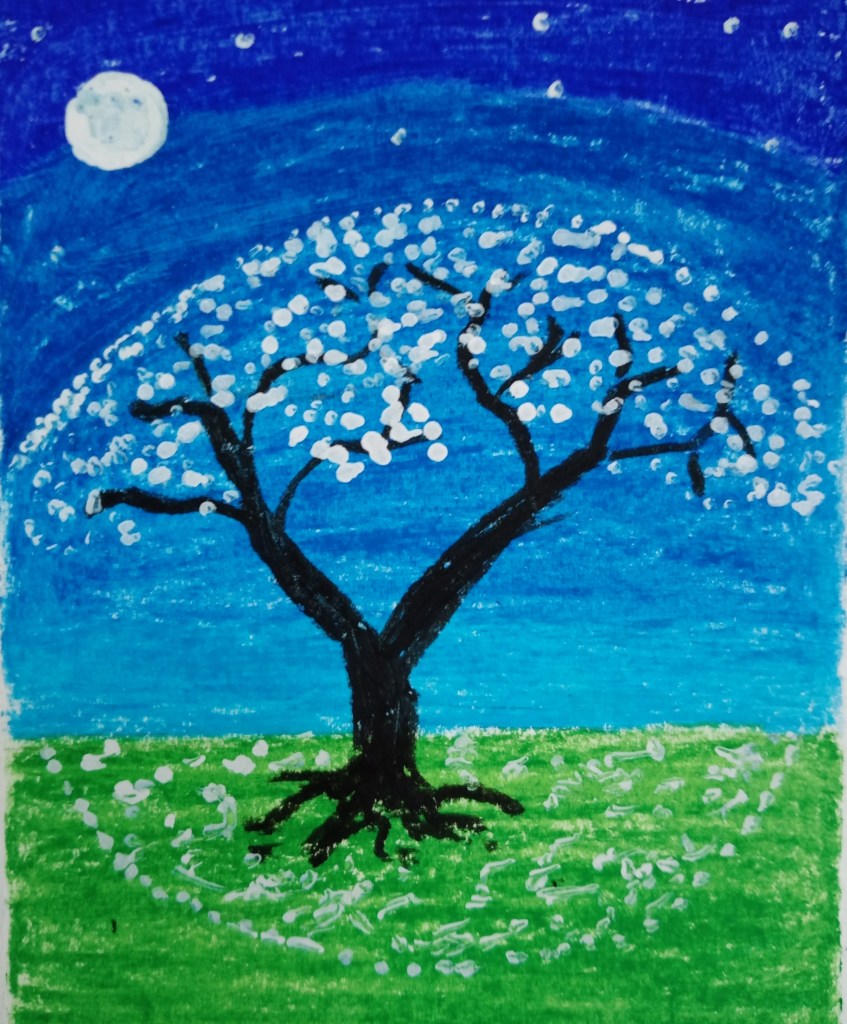




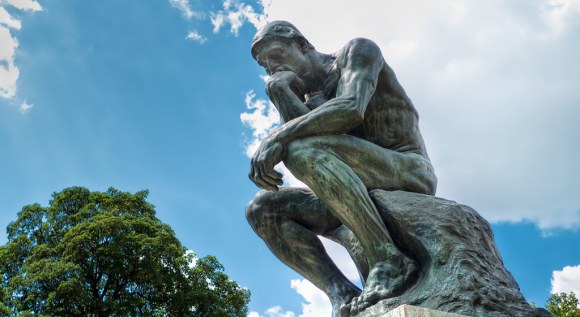



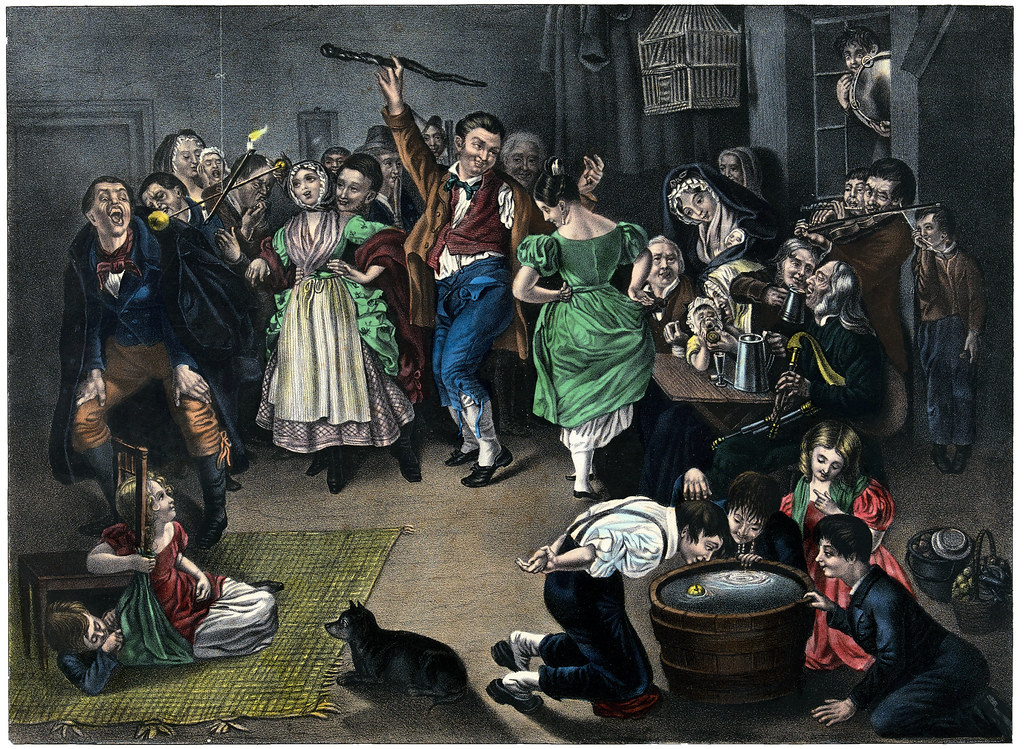
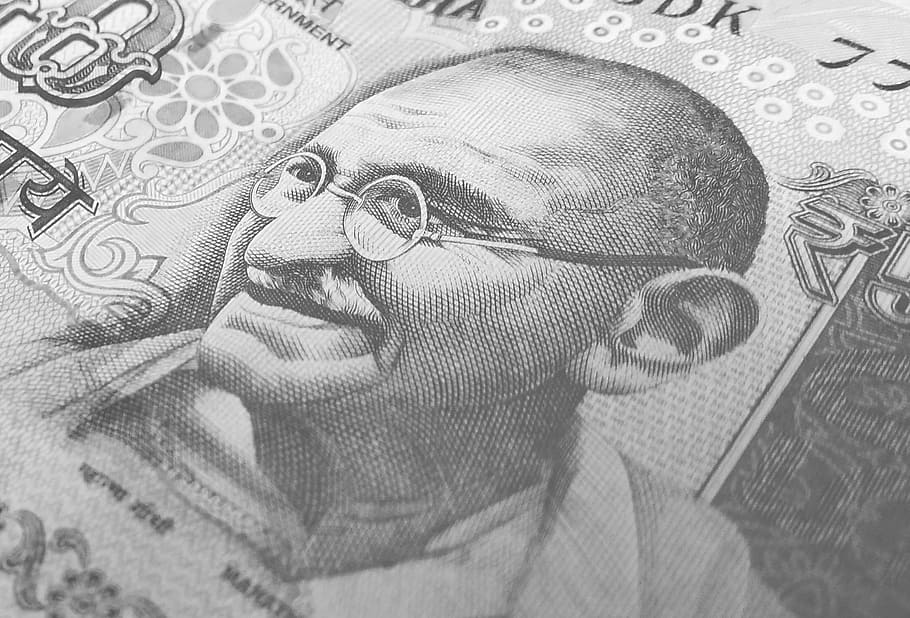
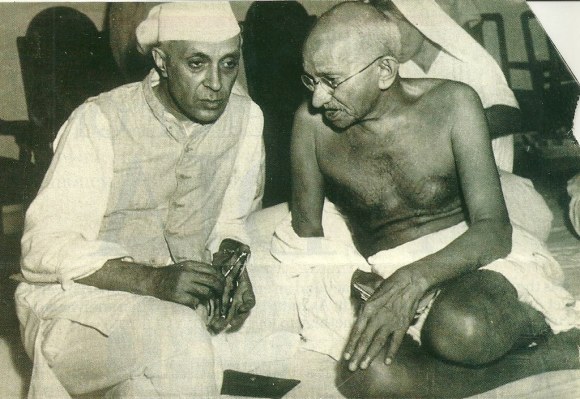

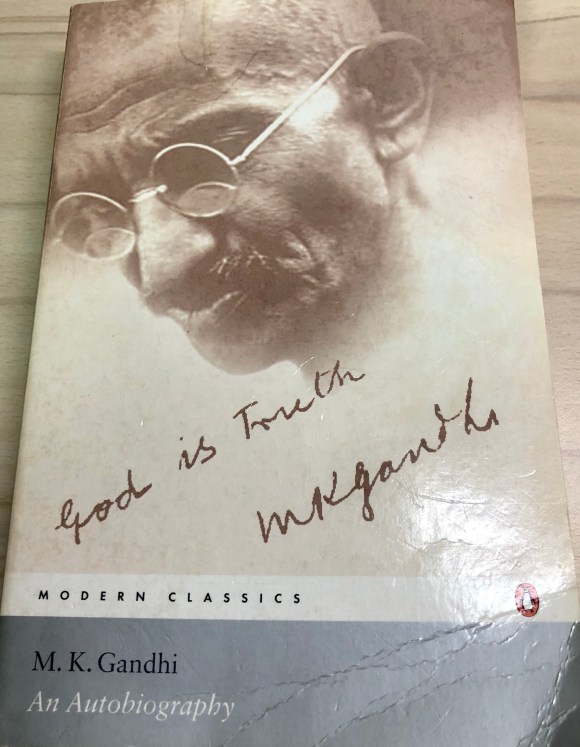
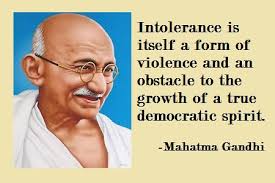

 Borderless