Painting by Claud Monet (1840-1926). From Public Domain
Acknowledging our past achievements sends a message of hope and responsibility, encouraging us to make even greater efforts in the future. Given our twentieth-century accomplishments, if people continue to suffer from famine, plague and war, we cannot blame it on nature or on God.
–Homo Deus (2015),Yuval Noah Harari
Another year drumrolls its way to a war-torn end. Yes, we have found a way to deal with Covid by the looks of it, but famine, hunger… have these drawn to a close? In another world, in 2019, Abhijit Banerjee had won a Nobel Prize for “a new approach to obtaining reliable answers about the best ways to fight global poverty”. Even before that in 2015, Yuval Noah Harari had discussed a world beyond conflicts where Homo Sapien would evolve to become Homo Deus, that is man would evolve to deus or god. As Harari contends at the start of Homo Deus, some of the world at least hoped to move towards immortality and eternal happiness. But, given the current events, is that even a remote possibility for the common man?
Harari points out in the sentence quoted above, acknowledging our past achievements gives hope… a hope born of the long journey humankind has made from caves to skyscrapers. If wars destroy those skyscrapers, what happens then? Our December issue highlights not only the world as we knew it but also the world as we know it.
In our essay section, Farouk Gulsara contextualises and discusses William Dalrymple’s latest book, The Golden Road with a focus on past glories while Professor Fakrul Alam dwells on a road in Dhaka , a road rife with history of the past and of toppling the hegemony and pointless atrocities against citizens. Yet, common people continue to weep for the citizens who have lost their homes, happiness and lives in Gaza and Ukraine, innocent victims of political machinations leading to war.
Just as politics divides and destroys, arts build bridges across the world. Ratnottama Sengupta has written of how artists over time have tried their hands at different mediums to bring to us vignettes of common people’s lives, like legendary artist M F Husain went on to make films, with his first black and white film screened in Berlin Film Festival in 1967 winning the coveted Golden Bear, he captured vignettes of Rajasthan and the local people through images and music. And there are many more instances like his…
It's always the common people who pay first. They don’t write the speeches or sign the orders. But when the dust rises, they’re the ones buried under...
Echoing the theme of the state of the common people is a powerful poem by Manish Ghatak translated from Bengali by Indrayudh Sinha, a poem that echoes how some flirt with danger on a daily basis for ‘Fire is their life’. Professor Alam has brought to us a Bengali poem by Jibanananda Das that reflects the issues we are all facing in today’s world, a poem that remains relevant even in the next century, Andhar Dekhecche, Tobu Ache (I have seen the dark and yet there is another). Fazal Baloch has translated contemporary poet Manzur Bismil’s poem from Balochi on the suffering caused by decisions made by those in power. Ihlwha Choi on the other hand has shared his own lines in English from his Korean poem about his journey back from Santiniketan, in which he claims to pack “all my lingering regrets carefully into my backpack”. And yet from the founder of Santiniketan, we have a translated poem that is not only relevant but also disturbing in its description of the current reality: “…Conflicts are born of self-interest./ Wars are fought to satiate greed…”. Tagore’s Shotabdir Surjo (The Century’s Sun, 1901) recounts the horrors of history…The poem brings to mind Edvard Munch’s disturbing painting of “The Scream” (1893). Does what was true more than hundred years ago, still hold?
Reflecting on eternal human foibles, Naramsetti Umamaheswararao creates a contemporary fable in fiction while Snigdha Agrawal reflects on attitudes towards aging. Paul Mirabile weaves an interesting story around guilt and crime. Sengupta takes us back to her theme of artistes moving away from the genre, when she interviews award winning actress, Divya Dutta, for not her acting but her literary endeavours — two memoirs — Me and Ma and Stars in the Sky. The other interviewee Lara Gelya from Ukraine, also discusses her memoir, Camels from Kyzylkum, a book that traces her journey from the desert of Kyzylkum to USA through various countries. In our book excerpts, we have one that resonates with immigrant lores as writer VS Naipual’s sister, Savi Naipaul Akal, discusses how their family emigrated to Trinidad in The Naipauls of Nepaul Street. The other excerpt from Thomas Bell’s Human Nature: A Walking History of the Himalayan Landscape seeks “to understand the relationship between communities and their environment.” He moves through the landscapes of Nepal to connect readers to people in Himalayan villages.
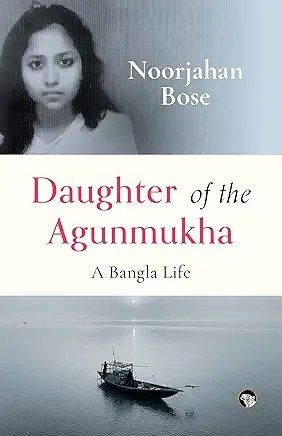
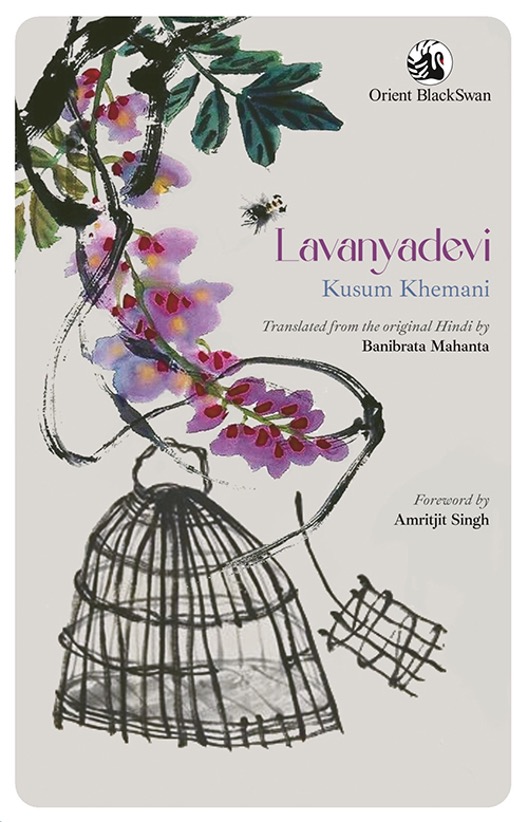
The reviews in this issue travel through cultures and time with Somdatta Mandal’s discussion of Kusum Khemani’s Lavanyadevi, translated from Hindi by Banibrata Mahanta. Aditi Yadav travels to Japan with Nanako Hanada’s The Bookshop Woman, translated from Japanese by Cat Anderson. Jagari Mukherjee writes on the poems of Kiriti Sengupta in Onenessand Bhaskar Parichha reviews a book steeped in history and the life of a brave and daring woman, a memoir by Noor Jahan Bose, Daughter of The Agunmukha: A Bangla Life, translated from Bengali by Rebecca Whittington.
We have more content than mentioned here. Please do pause by our content’s page to savour our December Issue. We are eternally grateful to you, dear readers, for making our journey worthwhile.
Huge thanks to all our contributors for making this issue come alive with their vibrant work. Huge thanks to the team at Borderless for their unflinching support and to Sohana Manzoor for sharing her iconic paintings that give our journal a distinctive flavour.
With the hope of healing with love and compassion, let us dream of a world in peace.
Published as part of Naibedya (1901) Tagore’s Shotabdir Surjo Aji(This Century’s Sun Today) remains relevant to this day.
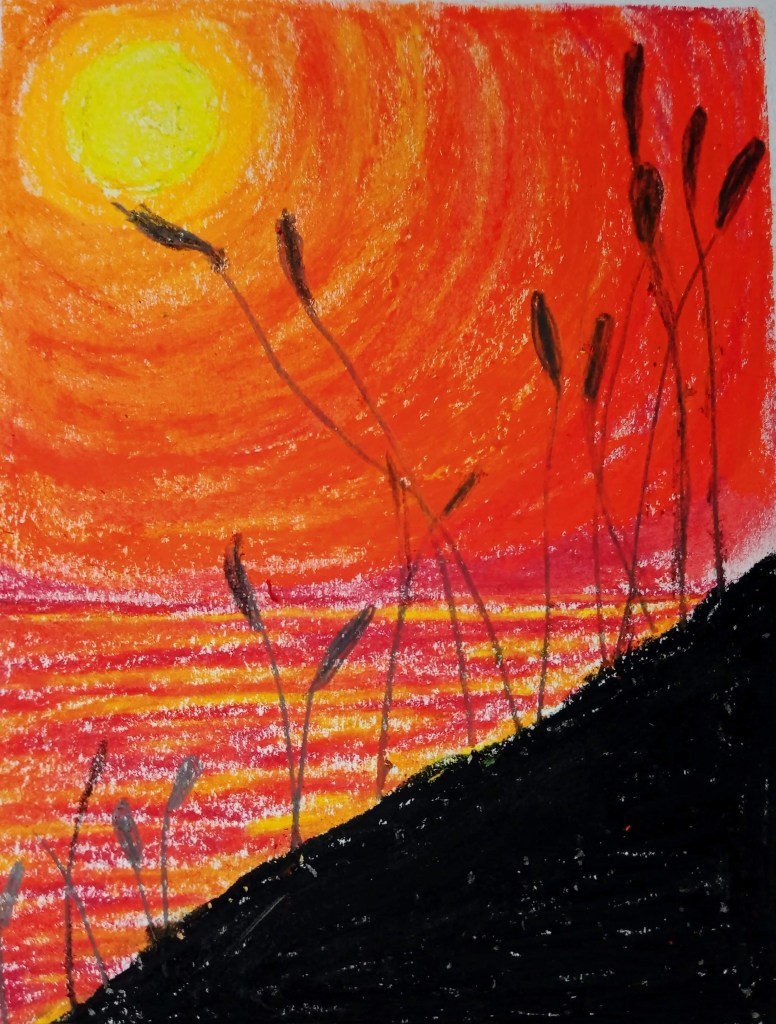
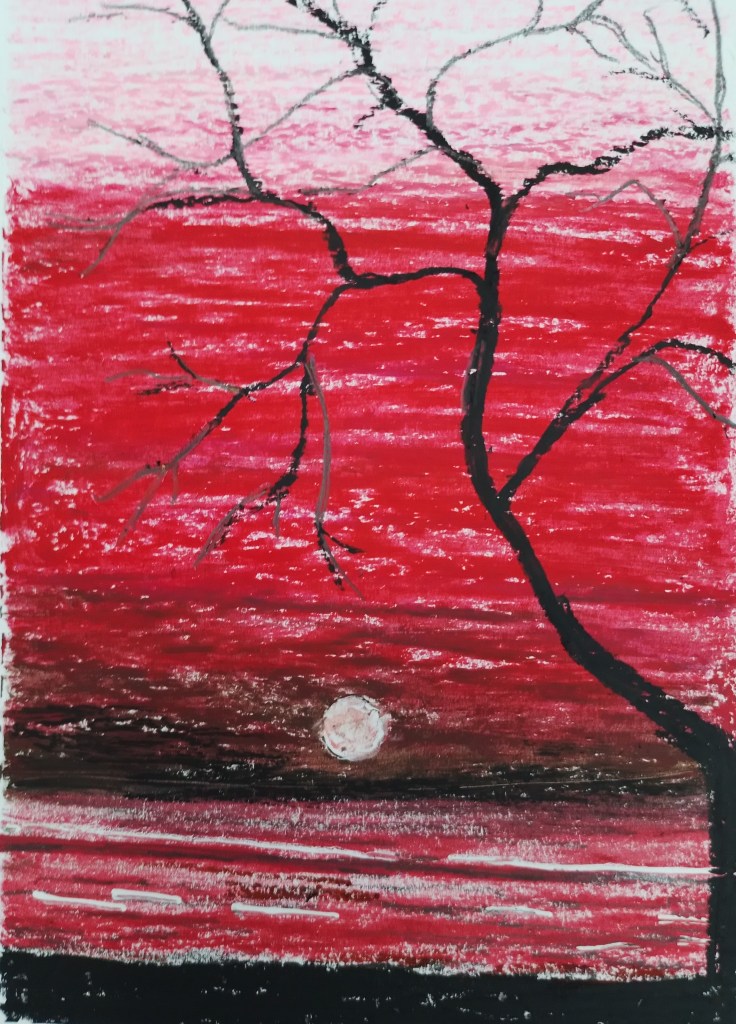
Art by Sohana Manzoor
THE CENTURY’S SUN

The century’s sun sets today amidst clouds that are blood-red.
Revelling in violence, the crazed ragini* of death
Plays a fierce tune. Civilisation’s merciless serpent raises
Its evil hood, its concealed fangs with deadly venom laced.
Conflicts are born of self-interest.
Wars are fought to satiate greed.
Hurricanes rage in distress and churn
Barbarism that rouses from filth
Shamelessly, disguised as decorum.
Terrible outrages are committed.
Faith is pushed adrift by force,
Ostensibly, for the love of the race.
Poets scream stirring fear in hearts.
Dogs in the graveyard snatch and bark.

*Female raga
This poem has been translated from Bengali by Mitali Chakravartywith editorial input from Sohana Manzoor
.
PLEASE NOTE: ARTICLES CAN ONLY BE REPRODUCED IN OTHER SITES WITH DUE ACKNOWLEDGEMENT TO BORDERLESS JOURNAL
Fuller Road, the short and winding road in the middle of the University of Dhaka campus, is quite legendary, not only as far as the history of that institution is concerned, but also in the annals of Bangladesh. It must also be one of the most beautiful of Dhaka city’s roads, having till now mostly escaped the degradations other old roads of the city have been subjected to due to rampant urbanisation. It is steeped in history, but still looks as if it was built not that long ago. Undoubtedly, it has real character and a distinctive place in the city’s life.
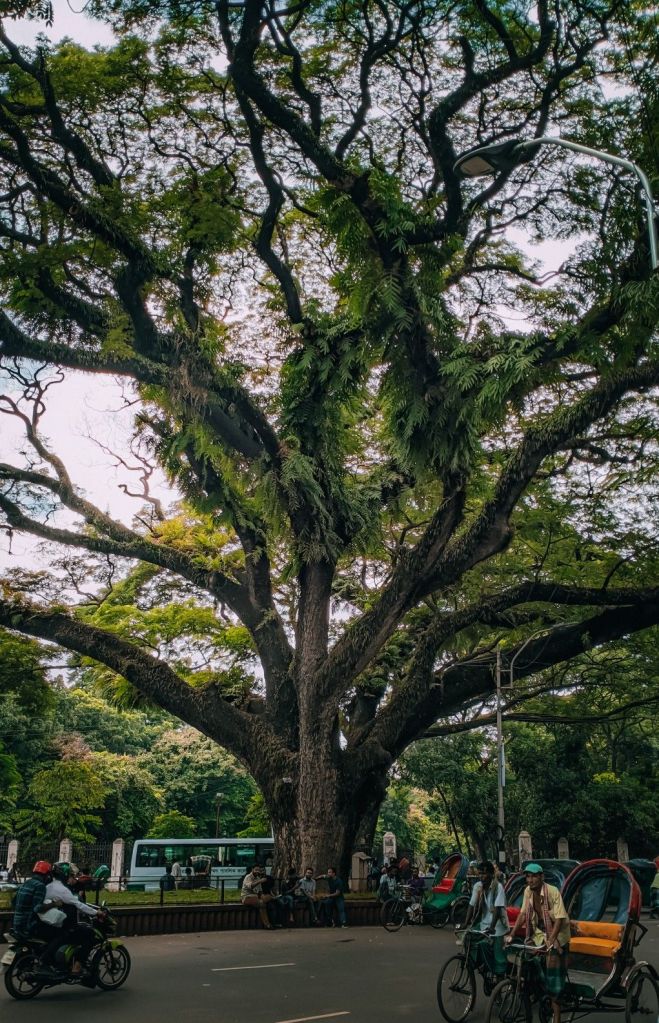
Bampfylde Fuller[1] was the first Lieutenant Governor of the province of East Bengal and Assam but he held that position for less than a year. Fuller Road must have been named to acknowledge his indirect role in the creation of Dhaka’s university. A controversial administrator and a very opinionated man, he had quit his position in a huff after less than a year at his job. The Partition of Bengal had been revoked in 1912, and all Fuller left behind then in his brief stint seemingly was the beautiful Old High Court Building of the city (whose construction he had initiated) and the splendid, sprawling rain trees of the university he had apparently imported from Madagascar. Nevertheless, the naming of the road indicates that he was part of the historical current that would lead not only to the building of the University of Dhaka in 1921, but also to the Partition of India in 1947, and the birth of Bangladesh in 1971. Fuller Road is thus replete with history.
Enter it from Azimpur Road and you will see it flanked on one side by Salimullah Muslim (or SM) Hall, and on the other by Jagannath Hall. The former, of course, is named to honour Nawab Salimullah, one of the university’s founders, and someone who had donated a lot of land to the university. Built in 1930-1931, SM Hall is a splendid building, incorporating features not merely of Mughal architecture and gardens, but also of design elements of the colleges and halls that echo another venerable university, Oxford (one reason why the University of Dhaka was once called the “Oxford of the East”). Jagannath Hall comes with an overload of history as well. It, too, was originally modelled after the halls of the University of Oxford and was named after a zamindar of Savar who had contributed to the founding of Jagannath College, which had an organic connection with the university for a long time.
Fuller Road, in fact, is also steeped in the history of Bangladesh. If you enter it from its Azimpur Road entrance, you will see the Swadhinata Sangram, a group of sculptural busts by Shamim Sikder that commemorates the legendary names associated with the university and the birth of Bangladesh. If you care to enter the university staff quarters from either the left or right of the road, and if you then ask the guards to show you around, you will find the graves of intellectuals (or plaques honouring them). These were men martyred in 1971 due to the single-minded determination of the Pakistani army and its Bengali collaborators to eliminate dissident intellectuals who had worked for the birth of Bangladesh, thereby crippling the country at the moment of its birth.
If you exit the road on Nilkhet road, you will find a solemnly built commemorative area in another island, containing plaques listing university teachers, staff members, and students martyred in 1971. The sculptures and the plaques are testaments not only to the sheer bloody-mindedness of the Pakistani forces of yore but also to the major contribution made by the university’s people to Bangladesh’s independence. I grew up listening to snatches of the history of the University of Dhaka and Fuller Road that are relevant here.
One of my uncles, for instance, is still fond of retelling an incident when he escaped from the Pakistani police’s bloody assault on demonstrators protesting on February 21, 1952, against the imposition of Urdu as the sole national language of the nascent state by (West) Pakistani administrators and their cohorts. He had taken refuge at that time in the Fuller Road flat of an European Jewish academic, who was then a faculty member. A few of my teachers have either talked about or written about the movements that continued from that memorable incident till December 16, 1971, describing their involvement with the various other movements that led to the emergence of Bangladesh. They highlight, in the process, noteworthy moments in the road’s history and the roles its denizens played in our country’s pre-liberation stages, as well as the memorable transitional historical moments they had either witnessed or were part of.
As I move in from the Swadhinata Sangram island on the Azimpur Road entry point of Fuller Road nowadays, I can see only a few remnants of the natural beauty the road once boasted. Gone is the basketball court placed in a picturesque setting that SM Hall once possessed, or the lush green grass tennis court of the Hall that my uncle reminisced about. He played there before my time. For a long time, there were many statuesque and lovely trees on the SM Hall side of the road. However, the distinctive architectural features of the SM hall building still strikes me as very impressive.
On the other side, however, the first clear signs of the uglification of Fuller Road are visible in the drab features of the newly built extension of the Jagannath Hall complex. In addition to these two halls, Fuller Road is flanked on one side by the British Council and university staff quarters, and on the other by Udayan Bidyalaya (aka Udayan School/College), some faculty and staff quarters, the residences of one of the pro-vice chancellors and the treasurer, and the vice chancellor’s house. The two buildings of the pro-vice chancellor and the treasurer are pretty nondescript, as are the Udayan buildings, but the British Council setup is quite notable. I have written about the British Council’s transformation from an open access center for intellectual and cultural pursuits and my own memories of stimulating as well as adda[2]-filled days in anguished as well as indignant remembrance elsewhere, but let me just reiterate what I say in that piece briefly here: This new British Council is, indeed, sleekly designed and has state-of-the art security, but it is no longer the vibrant centre of intellectual exchange it once was, and is now mostly a place visited by those who can afford its wares of British education.
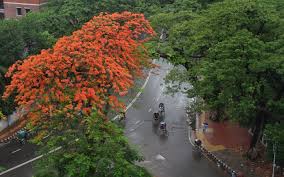
The Vice-chancellor’s residence, however, is undoubtedly still striking. If you have had the privilege of going inside, you must have been impressed by the building as well as the grounds, containing krishnachuras and jarul trees, which when flowering, make Fuller Road look vibrant and colourful—almost a garden in Dhaka city. Indeed, the rain trees, the krishnachuras and jaruls in bloom, one or two shirish and a solitary sonalu trees and (still) numerous mango trees play their part in making Fuller Road a distinctive floral phenomenon of the cityscape. Fuller Road is indeed as beautiful as you could expect any road to be in a bustling, bursting-at-its seam, and unsparingly chaotic city like Dhaka.
It is a road that also has many moods and that you can see in many lights—literally. I lived in Fuller Road for over two decades and frequented it for two more, and thus have had the privilege of viewing the road at different times of the day and on diverse occasions for at least four decades. When I now reflect on what I saw, I am struck by the immense variety of the experiences the road affords to those who live in it and even to passersby.
It was during my prolonged stay in Fuller Road that I got frequent glimpses of the wondrous place it once must have been. Even now, a nature-lover can take delight in its birds, for although the cacophonic crows still reign supreme amongst the bird population of the locality, throughout the day, and especially in the evening, you will see swiftly flying flocks of pigeons, tribes of parrots, and incomparably beautiful yellow-breasted holud pakhi[3]couples, in addition to the sad-looking, ubiquitous shaliks[4] and evening’s surrealistic bats.
When I first started living in Fuller Road, I would occasionally see snakes slithering by on monsoonal days; mongooses darting away at the sight of walkers is a not uncommon experience even now. Wild dogs roam in parts of Fuller Road at nights and early mornings. The foxes have disappeared, and I have seen a stray monkey only once or twice, but there is still enough flora and fauna around to make you feel an intimate connection with nature in this neighbourhood of the city. But of course, in addition to its nonhuman residents as well as its human ones, Fuller Road is now frequented mostly by people who find its free and open spaces appealing for different reasons at different times of the day.
Early in the morning or late in the evening, for instance, you will find men and women chatting away as they do their constitutionals; during the day students saunter across the road while vehicles fill the free and plentiful parking spaces; come evening lovers sit down discreetly in its dark spots, trying to be as close as possible and as far away as they can from prying eyes; with nightfall nouveau riche youths park faux sports and/or sleekly painted cars, trying to impress the girls who stroll across the road. Nowadays you will see with irritating frequency in evenings the parked motorcycles of busy-seeming student leaders. At night, Fuller Road can have a surrealistic feel to it—lit up but deserted, desolate as in some dreamscape, and as in a dreamscape, hauntingly familiar.
What surely makes Fuller Road truly distinctive, though, are the festival days that it hosts throughout the year, and the processions and parades that cross it throughout the year for one reason or the other. If you list them by the English calendar, you can begin with the new year when celebrations continue from the final hours of the dying year and end till the first nightfall of the new one. February is a truly distinctive month in the road—first Bashanta Utshob[5]and then Valentine’s Day see it fill up with young men and women in bright, warm colours and obviously romantic, flirtatious moods. Even solemn Ekushey[6]February, when night-long Fuller Road residents hear the doleful notes of the Ekushey song commemorating our language martyrs, and when from dawn to afternoon the road is closed to all vehicular traffic, switches to a festive mood by late afternoon, as those crisscrossing it seem bent on leaving the sad notes behind to celebrate all things Bengali. But the most exuberant display you can see in and around Fuller Road is during Pohela Boishakh[7], when the road turns into a conduit for festival-loving people flowing from fun-filled event to event. Eid days and Durga Pujas, and Saraswati pujas too witness suitably dressed young people walking across the road in obviously celebratory moods, lighting up themselves and the people around them, as they either stroll by or stand in pairs or groups here and there in the curving road’s embrace.
And the processions and parades? Suffice it to say that they are motivated not only by politics but this or that reason or cause. In the three Fuller Road flats I lived in for twenty or so years, I felt the kind of contentment and ease that I did not experience in the many neighbourhoods of Dhaka I had lived in before, or the Dhanmondi flat I live in now. Mango-filled trees exuding mango blossom scents, kamini flowers with overpowering fragrances, wide open spaces where children and boys play to their hearts’ content and neighbours greet each other familiarly throughout the day made my life on Fuller Road incomparably pleasing.
Towards the end of my Dhaka University career, I moved to a flat on the ninth floor of the newly constructed faculty apartment complex. There I saw what I had never seen before—monsoonal cloud formations, magnificent sunsets (I would not get up in time for sunrises!), the moon in its full glory, and star-studded nights. Heaven seemed to come closer and closer to me then. I truly seemed to have ascended to celestial heights! But paradise has to be lost sooner or later and can only be regained in this world by willing the mind to vision it from exilic places every now and then. But to have had some close to it moments in this life through Fuller Road is truly something to be thankful for!
From Public Domain
[1]Fuller (1854-1935) held the position from 16 October 1905 until he resigned on 20 August 1906 after which he relinquished the position to Lord Minto (1845-1914).
[6] Twenty-first February has been declared the mother tongue day by UNESCO. One of the reasons Bangladesh was formed was its insistence on Bengali being its mother tongue while Pakistan tried to impose Urdu as the national language.
[7] Pohela Boishakh (first day of the Bengali month of Boishakh) falls on 14th April in Bangladesh and is celebrated as the start of the Bengali New Year with a holiday and fanfare.
This memoir recounts the journey of a young woman from a small island in Bangladesh who discovers the works of Tagore, Marx, and de Beauvoir, ultimately emerging as a prominent advocate for feminist causes.
Noorjahan Bose is a feminist author, social advocate, and activist resides between the United States and Bangladesh. She is the founder of two organizations based in the US aimed at empowering South Asian women: Ashiyanaa (previously known as ASHA) and Samhati. Rebecca Whittington serves as a literary translator specialising in Tamil, Bangla, and Hindi.
The narrative of Daughter of the Agunmukha[1] intricately weaves the life story of Noorjahan Bose, a remarkable woman whose journey is marked by resilience, courage, and an unwavering quest for freedom. Born in 1938 in a rural area of what is now Bangladesh, Noorjahan’s early life was deeply intertwined with the rhythms of nature and the struggles of her family, who were farmers living in close proximity to the tumultuous River Agunmukha, ominously referred to as the Fire Mouth River. This river, with its fierce currents and unpredictable nature, serves as a powerful metaphor for the challenges Noorjahan would face throughout her life.
From a young age, Noorjahan was thrust into a world of hardship and trauma. She endured sexual abuse at the hands of male relatives, a harrowing experience that left deep emotional scars. Compounding her struggles was the influence of her mother, who, having been a child bride herself, was often constrained by the societal norms and expectations of their time. Despite her own limitations, Noorjahan’s mother became a beacon of hope and creativity in her life. She instilled in Noorjahan a sense of joy and the importance of self-expression, encouraging her to explore her talents and dreams even in the face of adversity.
As Noorjahan grew older, her thirst for knowledge and personal freedom became increasingly evident. Education, however, was not easily accessible to her. The societal barriers and gender discrimination prevalent in her community posed significant obstacles to her academic pursuits. Yet, with the unwavering support of her mother and the encouragement of local activists who recognised her potential, Noorjahan began to carve out a path for herself. These activists, driven by a vision of social justice and equality, played a crucial role in empowering her to challenge the status quo.
Emboldened by her experiences and the solidarity she found in progressive movements, Noorjahan’s journey took her beyond the borders of her village. She became an advocate for women’s rights, using her voice to speak out against the injustices faced by women in her community and beyond. Her activism not only transformed her own life but also inspired countless others to join the fight for equality and empowerment.
As she traveled the globe, Noorjahan encountered diverse cultures and perspectives, each enriching her understanding of the world and deepening her commitment to social change. Her experiences abroad further fueled her passion for education and advocacy, leading her to collaborate with international organisations dedicated to uplifting marginalised communities.
Noorjahan’s life has been marked by significant hardships, beginning with the anguish of Partition, followed by the loss of her husband when she was merely 18 and expecting a child. Additionally, she faced the relentless threat of cyclones that jeopardised her family’s home and means of survival. Despite these challenges, her bravery is evident throughout her memoir. She advocated for the rights of the Bangla language in East Pakistan, navigated the tumultuous period of Bangladesh’s Liberation War (1971), and entered into a marriage that transcends her family’s religious boundaries.
This poignant and compelling narrative encapsulates a profound journey of trauma, loss, resilience, and empowerment.
Bhaskar Parichha is a journalist and author of Cyclones in Odisha: Landfall, Wreckage and Resilience, Unbiased, No Strings Attached: Writings on Odisha and Biju Patnaik – A Political Biography. He lives in Bhubaneswar and writes bilingually. Besides writing for newspapers, he also reviews books on various media platforms.
.
PLEASE NOTE: ARTICLES CAN ONLY BE REPRODUCED IN OTHER SITES WITH DUE ACKNOWLEDGEMENT TO BORDERLESS JOURNAL
Author: Kusum Khemani (Translated from Hindi by Banibrata Mahanta)
Publisher: Orient BlackSwan Private Limited
Lavanyadevi is an award-winning 2013 novel by Kusum Khemani written in Hindi that chronicles five generations of a traditional aristocratic Bengali zamindar family as it transitions into modernity from British India to the present with the eponymous protagonist as its principal focus. Lavanyadevi—a compelling woman of perfection, extraordinary vision, qualities, and grace—remains real and credible because she is self-aware, self-critical, open to others, and to change. As a Marwari (people originally belonging to Marwar in Rajasthan) living in Kolkata, in Khemani’s fiction the schisms between ‘Bengali’ and ‘Marwari’ blur to reveal a delightfully plural, composite, and distinctively Indian ethos. Lavanyadevi is a story about women and their search for self, about shared laughter and friendships that endure across generations, beliefs and cultures—between mother and daughter, grandmother and granddaughter, and Marwari and Bengali women. Khemani’s women protagonists are strong, clear-sighted, both worldly and sublime, embodying a larger-than-life idealism while being grounded firmly in the everyday.
In his introduction to his novel Kanthapura (1938), Raja Rao had defined it as a sthala-purana[1], which he defined as a “legendary history” in which the old lady narrator in the village took recourse to the traditional Indian narrative technique, digressed at will to bring forth her point. Somehow the way Kusum Khemani takes recourse to multiple narrative techniques in Lavanyadevi and binds the different digressive stories and incidents into one contiguous whole when she tells us about the history of five generations of the Bengali zamindar family, reminds one of Raja Rao’s theory. She uses diverse narrative strategies like flashbacks, diaries, letters and emails, history, memory and the third person narrator to enrich its telling, lending it depth and range. A large part of the narrative revolves around telling us about past history when Lavanyadevi manages to lay her hands on her mother Jyotirmoyidevi’s diaries and finds great pleasure and thrill of reading one’s own family history. Not only do they offer a wonderful eye-witness account of the private and public sphere of Kolkata of those times, but they also make her easy transition into reading about her mother’s youth, her elaborate description of her magnificent wedding and the rituals that spread over almost a month.
The diary as metanarrative and the protagonist as reader/narrator are particularly effective, offering a telescopic perspective. Though at times it rambles a bit, the polyphonic structure of the novel engages Lavanyadevi the granddaughter, the daughter, the wife, the mother and the grandmother in conversations with her preceding and her succeeding generations. One must sometimes go back to the family tree and chart provided at the beginning of the novel to place people in proper perspective.
From the very beginning of the novel, Khemani portrays the character of Lavanyadevi in superlatives and this continues in different phases of her life till the end when she decides to remain incognito in the mountain ashram and yet control the lives of her descendants, well-wishers and others. From a child who always stood first in school and remained wholly ignorant of the real world, to her unusual marriage to a gentleman who moved over to Rangoon and then to London where she acquired many more degrees, till she came back to Kolkata, to rear her three children successfully, she seemed to excel in everything. This is how she is described at one place:
“Lavanyadevi was indefatigable. She administered the work of several institutions, her college and her home efficiently and with ease. She was never seen to panic. She was like Goddess Durga with her many hands – untiring in her zeal, handling all her duties unfailingly, responsibly and meticulously. No one could ever complain of being ignored by her. She loved all and treated everyone with the same degree of love and warmth. Scrupulous and hardworking, always upholding truth, Lavanyadevi was the unmatched standard of excellence in all aspects of life, her words worth their weight in gold.”
After judiciously assigning different welfare projects in the city as well as in far-flung places like Dhaka and the hills in Uttarkashi from the immense money she inherited from the family, and after her husband’s demise, Lavanyadevi decided it was time for her to leave the family premises and go and live in an ashram in the hills. There she did not stay in hibernation but her travels for work grew even more frenetic.
From the very beginning her rootedness and belief in the philosophical framework of Hinduism formed the core of her being. They propelled her to seek answers to questions of satya (truth) and mukti (liberation) that confronted her in the latter half of her life. She decided to transcend immediate personal concerns and address larger universal issues. Her transition from grihastha (householder) to sanyasa (renunciate) harkens back to the Hindu ideal of human life divided into four phases. However, contrary to the conception of life in isolation, Lavanyadevi, free of any kind of worldly considerations in this final phase of life, marshaled material and human resources to create a strong network of seva (social service) across the country and even beyond its borders. The list of her welfare schemes is too long to mention in the purview of this review, but ranged from renovating brothels in Kolkata’s red-light areas, creating self-help centres for rural women in Dhaka, de-addiction centres, eco-friendly schools in the hills, organic farming in South India, etc.
In the latter half of the novel, we find Lavanyadevi successfully transmitting her values and ideals to her children and grandchildren who are called the “Saptarshi Mandal friends” and who carry her legacy forward and emphasise that progress does not always mean breaking from the past. Here the novelist becomes too idealistic and brings in too many issues that seem a bit far-fetched. Issues of inter-caste and inter-religious relationships apart, the list of social welfare missions seems endless. Her “soul-children” unobtrusively usher in change and create space for diversity in relationships and ways of living. Harmonious cohabitation with nature became the foundational principle of all the education centres she built in the hills but the way she invisibly controls the activities of all her soldiers through emails and emphasises the middle path of life makes the advocacy of humanitarian concerns a bit overemphasised. She becomes larger than life for ideas and wish-fulfilment.
A Hindi novel about a Bengali family by a Marwari woman from Kolkata became significant when it was commissioned for translation into English. Winner of the PEN/Heim Translation Grant 2021, the jury called Lavanyadevi an ‘ambitious, far-reaching’ novel, lauding Khemani’s ‘energetic prose, deadpan sense of humor, and exquisite control’, and Banibrata Mahanta’s translation that ‘stretches and manipulates language to produce a vivid text’ and a must-read for lovers of Indian literature. Here one needs to mention the seriousness with which Mahanta gives us the ‘Translator’s Introduction’ at the beginning of the text and again ‘Translator’s Note’ at the end. This reviewer feels that both these could have been combined into one general essay highlighting the significance of the evolution of the Marwaris in Bengal, how Khemani’s novel is a hybrid artefact born out of multiple linguistic and cultural encounters, how the characters in the novel speak in languages other than Hindi produces dialogues in Bangla, Marwari, Haryanvi or Punjabi; and how between a breezy translation and a linguistically nuanced one, wherever possible the translator has eschewed the former and gone for the latter. As he rightly admits, translating this complex narrative into global or even a pan-Indian English is always risky, but Mahanta should be given due credit for overcoming all obstacles and bringing this immensely readable novel to a wide readership.
A translation of Jibananada Das’s Andhar Dekhecche, Tobu Ache (I have seen the dark and yet there is another) from Bengali by Professor Fakrul Alam
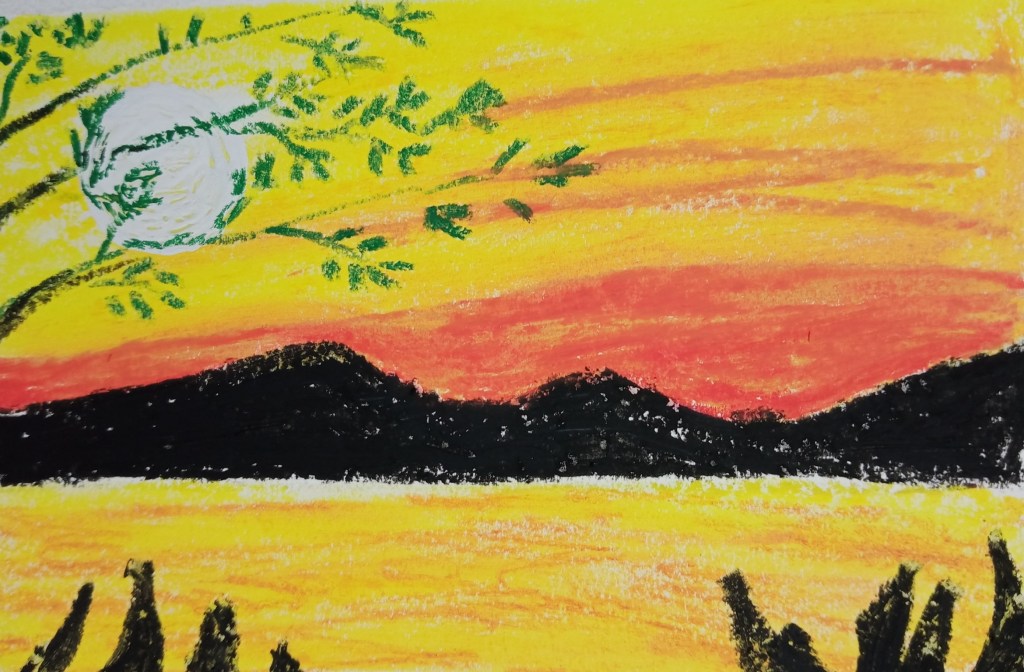
Art by Sohana Manzoor
I have seen the dark and yet there is another, greater dark
I have known death and yet there is another death awaiting
Behind is a whole history existing, but not accessible yet
Is that grand narrative—one to whom the plot has another meaning;
And to whom the sea sings another tune, and there is a different stirring
Of the heart and of issues—and where the mind is illumined uniquely.

Fire, wind, water—primeval gods burst out laughing
Spent—once spent—does one end up as pork?
Ha! Ha! I burst out laughing—
It was as if amidst the loud laughter,
The carcass of a huge whale had suddenly surfaced in a dark ocean
Making the entire earth become as overpowering as a whale carcass’s stench.

 I had thought humans would progress steadily in history’s lap;
Instead of playing with machines they had mastered
They would mature from accumulated successes.
And yet it is the machine that has become a power to reckon with
It is Love that has been punctured and power that has prospered
With the nuclear bomb—was the increase in knowledge
Supposed to result in such a split?

The wisdom that we had gathered over time in life
Just isn’t there—what we have is stasis—senility;
Surrounded by all sorts of fears, we only have
Fatigue and depression. We’ve become self-centered
And have enclosed ourselves in shells. We’re too scared
To break them and avoid unclean sexual exchanges
Carried out in the dark. Oceanic, airy, sunlight soaked,
Blood-drenched, death-touched words come and dance
Like frightening witches—we are frightened---hide in caves—
We would rather disappear—dissolve—disappear in Brahma’s
Word. Our two thousand years of learning is thus much!


We keep ourselves busy with commissions—build bases—love the city
                                         and the port’s bustle
The grass below our boots we consider only grass—nothing else alas—
we’ve made the motorcar our prized possession
Why do wagtails dance then—fingas and bulbulis flit from forest to forest?
Jibananada Das (1899-1954) was a Bengali writer, who now is named as one of the greats. In his lifetime, he wrote beautiful poetry, novels, essays and more. He believed: “Poetry and life are two different outpouring of the same thing; life as we usually conceive it contains what we normally accept as reality, but the spectacle of this incoherent and disorderly life can satisfy neither the poet’s talent nor the reader’s imagination … poetry does not contain a complete reconstruction of what we call reality; we have entered a new world.”
Nazrul’s Tumi Shundor Tai Cheye Thaki(Because you are so beautiful, I keep looking at you) has been translated from Bengali by Professor Fakrul Alam. Click here to read.
Hotel Acapulco, has been composed and translated from Italian by Ivan Pozzoni. Click hereto read.
Farouk Gulsara pays a tribute to a doctor and a friend. Click hereto read.
Musings of a Copywriter
InBecoming a ‘Plain’ Writer, Devraj Singh Kalsi explores the world of writer’s retreats on hills with a touch of irony. Clickhere to read.
Notes from Japan
In Educating for Peace in Rwanda, Suzanne Kamata discusses the peace initiatives following the terrors of the 1994 Rwandan Genocide while traveling within the country with her university colleague and students. Click here to read.
Bijoy K Mishra writes of cyclones in Odisha, while discussing Bhaskar Parichha’s Cyclones in Odisha – Landfall, Wreckage and Resilience. Clickhereto read.
Landscape of Change by Jill Pelto, Smithsonian. From Public Domain
Hope is the mantra for all human existence. We hope for a better future, for love, for peace, for good weather, for abundance. When that abundance is an abundance of harsh weather or violence wrought by wars, we hope for calm and peace.
This is the season for cyclones — Dana, Trami, Yixing, Hurricanes Milton and Helene — to name a few that left their imprint with the destruction of both property and human lives as did the floods in Spain while wars continue to annihilate more lives and constructs. That we need peace to work out how to adapt to climate change is an issue that warmongers seem to have overlooked. We have to figure out how we can work around losing landmasses and lives to intermittent floods caused by tidal waves, landslides like the one in Wayanad and rising temperatures due to the loss of ice cover. The loss of the white cover of ice leads to more absorption of heat as the melting water is deeper in colour. Such phenomena could affect the availability of potable water and food, impacted by the changes in flora and fauna as a result of altered temperatures and weather patterns. An influx of climate refugees too is likely in places that continue habitable. Do we need to find ways of accommodating these people? Do we need to redefine our constructs to face the crises?
Echoing concerns for action to adapt to climate change and hoping for peace, our current issue shimmers with vibrancy of shades while weaving in personal narratives of life, living and the process of changing to adapt.
An essay on Bhaskar Parichha’s recent book on climate change highlights the action that is needed in the area where Dana made landfall recently. In terms of preparedness things have improved, as Bijoy K Mishra contends in his essay. But more action is needed. Denying climate change or thinking of going back to pre-climate change era is not an option for humanity anymore. While politics often ignores the need to acknowledge this crises and divides destroying with wars, riots and angst, a narrative for peace is woven by some countries like Japan and Rwanda.
Suzanne Kamata recently visited Rwanda. She writes about how she found by educating people about the genocide of 1994, the locals have found a way to live in peace with people who they addressed as their enemies before… as have the future generations of Japan by remembering the atomic holocausts of 1945.
In translations, we have poetry from varied countries. Ihlwha Choi has self-translated his poem from Korean. Ivan Pozzoni has done the same from Italian. One of Tagore’s lesser-known verses, perhaps influenced by the findings of sensitivity in plants by his contemporary, Jagadish Chandra Bose (1858-1937) to who he dedicated the collection which homed this poem, Phool Photano(making flowers bloom), has been translated from Bengali. Professor Alam has translated Nazrul’s popular song, Tumi Shundor Tai Cheye Thaki (Because you are so beautiful, I keep gazing at you).
Stories travel around the world with Paul Mirabile’s narrative giving a flavour of bohemian Paris in 1974. Anna Moon’s fiction set in Philippines gives a darker perspective of life. Lakshmi Kannan’s narrative hovers around the 2008 bombing in Mumbai, an event that evoked much anger, violence and created hatred in hearts. In contrast, Naramsetti Umamaheswararao brings a sense of warmth into our lives with a story about a child and his love for a dog. Sreelekha Chatterjee weaves a tale of change, showcasing adapting to climate crisis from a penguin’s perspective.
Trying something new, being out of the box is what helped humans move out from caves, invent wheels and create civilisations. Hopefully, this is what will help us move into the next phase of human development where wars and weapons will become redundant, and we will be able to adapt to changing climes and move towards a kinder, more compassionate existence.
Thank you all for pitching in with your fabulous pieces. There are ones that have not been covered here. Do pause by our content’s page to see all our content. Huge thanks to the fantastic Borderless team and to Sohana Manzoor, for her art too.
Nazrul’s Tumi Shundor Tai Cheye Thaki (Because you are so beautiful, I keep looking at you) has been translated from Bengali by Professor Fakrul Alam.
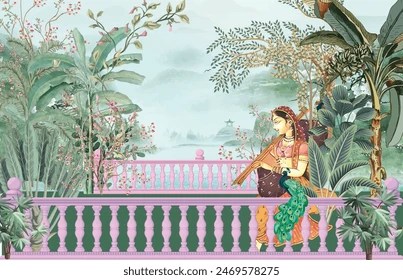
From Public Domain
BECAUSE YOU ARE SO BEAUTIFUL

Because you are so beautiful, I keep looking at you
Dearest, is that my real offence? If the chokor bird* cries
While looking at the moon, the moon doesn’t shush it.
Because I keep looking at flowers about to bloom
Do flowers ever scold me? While viewing clouds
Parched birds pine for rain, but the clouds don’t protest then.
Even when they know the sun won’t shine on them,
Silly sunflowers aren’t appeased. They are truly content
Only when looking at their God. Charmed by your beauty,
I got my sight back. Now, dearest, let my eyes have their feel!

*Partridge, a bird that is said to feed on moonbeams in mythology
1971 began and ended on a note of hope but in the course of the year we went through the whole gamut of human emotions: love for our motherland and hate for its enemies; desire for freedom and abhorrence at those who had curtailed our right to be ourselves; feelings such as anxiety, fear, even terror caused by the knowledge that at any moment we might be abducted and murdered; and excitement and elation at the thought that relief could not be far away. 1971 was the year when for months we lived from day to day, totally insecure in a Dhaka which had become like a city of the dead; it was also the year when we discovered what it meant to hope against hope. 1971, in short, was a cataclysmal year; for every Bengali it was the year of living dangerously.
The year must have begun innocuously enough; at this point in time, I have simply no recollection what I did or how I felt in January and February of that year. But certainly, hope must have been in the air; after Sheikh Sahib’s massive election victory all of us must have been feeling confident and secure in the knowledge that we were finally about to master our destiny. For me—temperamentally apolitical and not yet out of my teens at the beginning of that year—the first sign that something was seriously wrong came one day while we were watching a test match in Dhaka Stadium on the first of March. Suddenly, the game was interrupted and then abandoned as news came about Yahya Khan’s decision to not call a meeting of the Pakistani National Assembly. Pandemonium ruled for a while in the field, but soon everyone left, muttering that this cannot be, indignant that the army chief could not go against the resounding mandate given to the Awami League to change the course of Pakistani history.
And then for a while: hartals[1], demonstrations, slogans, meetings, public displays of discontent, and the will to oppose and resist on one side and display of the carrot as well as the stick on the other. In fact, the month of March showed a whole nation in a state of ferment, ready to go to any length against a brutal but posturing force.
A first climax was Sheikh Saheb’s[2] speech of March 7. Hearing it now, I cannot but think: is it as stirring for people of this generation as it was for ours? Contemplated in retrospective, the speech seems to be the quintessence of the Bengali spirit in 1971: inspired, defiant, pulsating, and resolute. It considers the dangers ahead but is emphatic about the need to put up resistance and counter whatever measures were taken to contain us.
The real climax, of course, came on the night of March 25. That night I was in Sylhet, visiting my sister and her husband, along with my father and two other sisters. In Sylhet that night we could have no idea that Dhaka had become the scene of carnage or that our family, friends, and acquaintances were in the greatest of danger. It was only next morning, waking up to discover that Sylhet town was under curfew, and listening to Indian radio and the BBC, that we began to have an inkling of how devastated Dhaka had become in a night and in how much jeopardy our loved ones were.
Throughout the next week we alternated between a feeling of joy at the knowledge that Bengalis were fighting back and a foreboding that a grievous wound had been inflicted on us. We were elated by Major Zia’s declaration on the radio about independence and the reports of resistance everywhere; we were depressed by the news items transmitted in the air waves about Dhaka as a city that had been flattened by heavy weapons and was still burning. Since, our house was close to Farmgate, we were full of anxiety: had my mother and the sister we had left behind survived the mass slaughter of Dhakaites that was being narrated everywhere except on Radio Pakistan?
After a few days my father decided that he had had enough of waiting and uncertainty; he and I would head for Dhaka and determine for ourselves the fate of my mother and sister. My brother-in-law and three other sisters would remain in what seemed the relative safety of Sylhet. Little did we realise as we left them on a day in early April the hardship and suffering they would go through in the next few months, fleeing from tea garden to tea garden and even to the safety of Tripura[3] to escape the pillaging Pakistani army. Only after we were reunited with them in Dhaka in July did we get to know of their travails as they attempted to evade the marauding forces.
The trip to Dhaka was a tense and an unforgettable one. A few images are etched in my memory vividly: driving through the tea gardens, we saw tea garden workers with bows and arrows, determination wrought on their faces. In Brahmanbaria, we heard gripping stories of the confrontations that had taken place in Comilla and saw the intense preparations being taken in the town itself to resist the Pakistani onslaught. But the most vivid memory of the journey are the scenes of mass exodus we witnessed as we neared Dhaka: men, women, and children on foot or on rickshaws, looking harrowed, wearily fleeing to village homes from the city to escape genocide. Not a few of the people we met told us not to be so foolhardy as to return to Dhaka.
Thankfully, we managed to reach our Indira Road home without facing any unpleasant situations and found that my mother and sister were safe. But there were troop movements all the time and stories of mass arrests of young men during curfew. The elders of my family decided that I would be safer in my uncle’s house in Dhanmondi than in a house in the Farmgate area.
In the few weeks that I stayed in Dhanmondi I managed to get in touch with some of my friends. The news they told me was horrifying: Dr. Jyotirmoy Guhathakurta, my tutorial teacher, and the man who first made me feel that I had the sensitivity to be a student of Shakespeare, and who went beyond his role as a tutor to talk to me about his passion for radical humanism, as well as Mr. Rashidul Hasan, who taught us Blake and was as humble and meek as some of the denizens of The Songs of Innocence and of Experience, had been brutally murdered. More horror stories: one of my school friends, Arun Chowdhury, and his father, could no longer be traced after they had been abducted from Ranada Prasad Saha’s Narayanganj home along with the millionaire philanthropist; one of my uncle’s in-laws, a Rajshahi University professor, had also disappeared after being picked up by the army; other people that we knew had been shot at or humiliated or hurt. A friend who had joined her family in Bogra had witnessed their house being burned and the family had barely managed to escape with their lives. The whole Bengali nation appeared to be bleeding and bruised.
Nevertheless, no one felt defeated and hope still flickered as a candle newly lit and solidly fixed will even in the darkest night. For one thing, there were the daily broadcasts from Swadhin Bangla Betar Kendra[4]containing news about Mujibnagar and organised resistance all over the country. Then there was the knowledge that some friends had crossed the border and were receiving training so that they could be inducted into the Mukti Bahini[5]. Everywhere one could view the resentment against the Pakistani army being concentrated to the point when it would rebound upon them.
Eventually, my parents decided that we would take a house in a part of the city which was relatively free from regular army patrolling and I rejoined them in a Central Road flat. But, really, no part of the city was completely safe. One night, to take just one example, the boys of the neighbouring family climbed the wall separating our two houses because the army had raided the house next door and stayed with us till next morning. I still remember how tense we were that night and nervous and indignant.
Gradually, we learned to sleep better and not hear the stray shots that were fired into the night by who knows whom. Inevitably, we adapted to a life lived mostly indoors, listening to the radio or the tape recorder all day, or reading, or playing cards. But we had to be very careful about everything that we did: the radio had to be toned down, books with insidious sounding titles not read, and visit to and from friends of our age restricted. Fear of army raids constricted us and forced us to make life a diminished thing. Only my father would go out regularly to spend the day in office or shopping; his greying hair gave him a kind of limited freedom that we could not hope to have.
However, consolations for lives lived under such strained circumstances were not impossible to seek even in those days when we would rarely venture into natural light. By June, bombs which were beginning to explode at regular intervals all over the city announced loudly to us that the Bengali capacity to resist, far from being diminished, had transformed itself in spectacular fashion. My father told us one day that he was one of many people who had been donating money for freedom fighters who were now infiltrating into the city in large numbers. In July and August, the Mukti Bahini activity in Dhaka intensified and I even met a few of them. Also, every once in a while, a close friend suddenly disappeared from Dhaka and those of us who still remained in the city still unsure of what we should do talked about his decision to join the freedom struggle and his daring with a mixture of admiration and envy.
Of course, we knew that the life of a freedom fighter was far from a glamorous one, and full of risks. Exactly how hazardous their life could be was driven home to us when in late August a number of them were caught and murdered. Because we knew a few of these valiant fighters personally or by name, for some time, indeed for perhaps the only time that year, we felt depressed and shaken. But another few weeks and many amongst us roused ourselves and felt hopeful again. True, there had been a setback and some of the muktis[6]who had become legendary in a short time because of their exploits had been killed or imprisoned, but September showed that the spirit of resistance was very much alive.
Explosions could once again be heard in and around Dhaka and were signs to us of the vigour and irrepressible nature of our freedom fighters. By October, Swadhin Bangla[7]Radio broadcasts regularly reassured us that there were advances being made on the diplomatic front by our government-in-exile and that on the battlefield our reconstituted Bangladesh army were beginning to engage the Pakistani forces and defeat and demoralise them.
By early November, Nasim Mohsin, my best friend at that time, decided that it was time for him to join the freedom fighters and that the moment for a decisive assault on the Pakistani army was near. I was with him when he contacted some local muktis about crossing over to training camps in Tripura. They told him that the borders were already the site of daily skirmishes and that he should postpone the journey for a while till they could confirm a safe crossing. Desperate to become part of the freedom struggle, Nasim ignored their advice and our pleas to be patient and left us, never to be seen again. Much later, we were to discover that he had been captured by collaborators of the Pakistani army in a village in the Comilla border. They then handed him over to the local Pakistani troops who summarily shot him.
Late November and our excitement grew: the Bangladesh army was no longer content with skirmishes and raids and was now attacking the Pakistanis frontally. By late November war looked inevitable as desperate Pakistani tactics drew India into the campaign. Finally, on the night of December 3, the Dhaka night sky was spectacularly lit by tracer bullets and then invaded by Indian bombers targeting military installations. The next day all of us were on roof-tops watching dog-fights and cheering Indian jets attacking the airport and the cantonment, oblivious to the danger from shrapnel and debris from shattered planes.
Over the next two weeks, our joy grew by the hour, for every Swadhin Bangla Radio broadcast or Indian radio bulletin informed us of Pakistani reverses and detailed advances made by the liberation forces. In our enthusiasm we did not realise that we were going through dangerous times in the capital city as the Pakistani army and its collaborators, their backs against the wall, were becoming more and more vicious. It was only later that we discovered that the brother of a friend who had joined the freedom fighters had been picked up by the Pakistani army during this time and would disappear from our sights forever. And as the liberation forces closed in on Dhaka, rumours spread of youths and prominent people being abducted. Undoubtedly, the scariest memory I have from this period is of a Pakistani plane droning one night, which we knew had dropped bombs on an orphanage the previous night in a bid to discredit the Indian Air Force. It was a moment when we felt totally vulnerable and at the mercy of forces whose reason had become warped to the extent that they could indulge in mass destruction of innocents merely to smear India in the eyes of the world.
Nothing the vicious Pakistani military/propaganda machine could do, however, could thwart the logic of history and prevent liberation, and by December 15 we were hearing the booming of artillery in and around Dhaka. On December 16, we headed for the Ramna Race Course area because we heard that a surrender ceremony was scheduled there in the afternoon.
But we could only go as far as the Hotel InterContinental, where we got caught in a cross-fire. A friend who was with me got slightly hurt as a splinter from a bullet pierced his leg. We took him to his house and then scattered, telling ourselves that we had not survived nine months of occupation only to get killed at the moment of liberation. But by evening we were out in the streets celebrating with muktis, among whom I could see at least one close friend, firing his Sten gun into the air. The year of living dangerously was ending, and the time for unmitigated hope had finally come to stay with us, at least for a while!


 Borderless