Categories
Poetry

Poetry of Michael Madhusudan Dutt

Ratnottama Sengupta translates Bengali poet Michael Madhusudan Dutt’s Bijoya Doushami (the last day of the festival of Durga Puja when the Goddess is supposed to return to her own home from her visit to her parents). This poem is a lament of Durga’s mother, who addresses her daughter as ‘Sati’ in the poem.

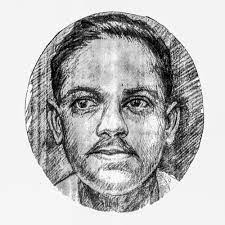
Bust of Michael Madhusudan Dutt at his memorial in Jessore, Bangladesh. Courtesy: Creative Commons

Michael Madhusudan Dutt (1824-1873) was a poet and dramatist who was a prominent precursor to Rabindranath Tagore. In his youth, he converted to Christianity (1843) and wrote in English and later turned to writing in Bengali. A product of Western education and the Bengal renaissance, he challenged the traditional literary systems. Multi-lingual and cognisant of several Indian and European languages, including Bengali, Tamil, Sanskrit, Greek and Latin, Meghnadbadh Kavya (1861) was his most important composition, an epic on the Ramayana theme and a tribute to Milton’s Paradise Lost. His repertoire includes Sarmistha (1858), based on an episode of the ancient Mahabharta, Brajangana (1861), a cycle of lyrics on the Radha- Krishna theme; and Birangana (1862), a set of 21 epistolary poems on the model of Ovid’s Heroides and much more.

DEPARTURE

“Do not, O night sky, leave
tonight, with your lot of stars --
Once you go, blissful night,
So will my heartbeat!
Once the merciless sun is up
in the East,
The apple of my eye will lose her shine!

“Full twelve months she shed true tears
before Uma came home. What a balm!
In mere three days, tell me
Oh starry-tressed,
can one have a fill
of delight?
The golden glow of brass lamps
has driven afar darkness
within and without.
Words, the sweetest of creation!
have circled my ears.

“Darkness twice as thick, I know
will engulf this homestead
once you blow out this lamp...” 
Entreated the Queen of Girish,
at the close of the ninth night...

Ratnottama Sengupta, formerly Arts Editor of The Times of India, teaches mass communication and film appreciation, curates film festivals and art exhibitions, and translates and write books. She has been a member of CBFC, served on the National Film Awards jury and has herself won a National Award. 

.

PLEASE NOTE: ARTICLES CAN ONLY BE REPRODUCED IN OTHER SITES WITH DUE ACKNOWLEDGEMENT TO BORDERLESS JOURNAL

Categories
Tribute

The Thrice Born

Commemorating fifty years of Bangladesh which struggled for the right to freedom from oppression and succeeded finally on 16th December, 1971

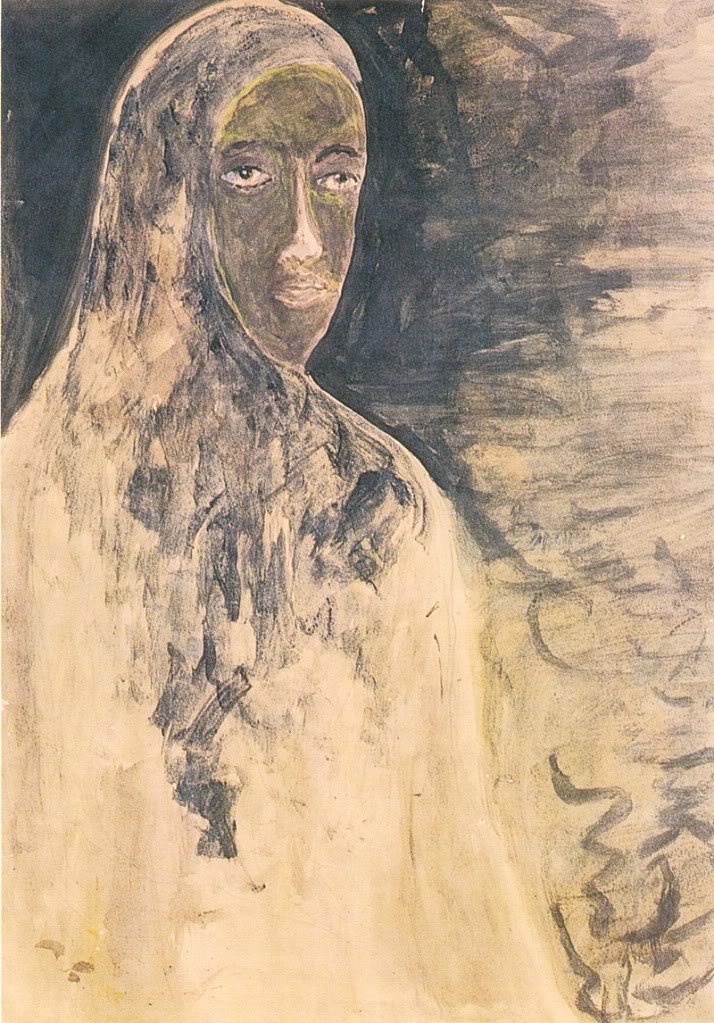
Landscape in Bengal. Painting by Sohana Manzoor

Bengal went through three Partitions, the final one being in 1971, when Bangladesh came to be its own entity. The first Partition of Bengal was in 1905, when Lord Curzon sliced it along the lines of faith, which as Ratnottama Sengupta points out in her musing was the result of the colonial policy of divide and rule implemented along religious lines for earlier when Hindus and Muslims had combined forces against colonials, it took a year to quell the revolt of 1857. Due to opposition from many, including Tagore, the colonials were forced to revoke the Partition in 1911.

In 1947, the subcontinent was again divided along religious lines. So, technically, there was Pakistan and India. Pakistan included East (Bengal) and West. As Fakrul Alam tells us in his essay, the Bengalis resented the imposition of Urdu by Pakistan. After a struggle of three decades, and a war in which India supported East Pakistan and America supported West Pakistan, Bangladesh gained complete independence in 1971 with Sheikh Mujibur Rahman, the founding father of the country, at its helm.

We present to you a glimpse of this part of history as told by various contributors on our forum.

Interview

Professor Fakrul Alam, the translator of Bongobondhu (friend of Bengal) Mujibur Rahman’s autobiography, to takes us on a journey to the inception of Bangladesh and beyond. Click here to read the interview.

Translations

Poetry & Prose of Nazrul extolls the union of all faiths. Known as the ‘rebel’, now the national poet of Bangladesh, he has been translated by Fakrul Alam, Sohana Manzoor and Shahriyer Hossain Shetu. Click here to read.

Prose

The Birth of Bangladesh & the University of Dhaka

Professor Fakrul Alam takes us through the three Partitions of Bengal which ultimately led to the creation of Bangladesh, with focus on the role of Dhaka University. Click here to read.

Joy Bangla: Memories of 1971

Ratnottama Sengupta recaptures vignettes from her past, from across the border where the same language was spoken, some in voices of refugees from East Pakistan to India. Click here to read.

The Voice that Sings Hope through Suffering…

Rakibul Hasan Khan pays a tribute with a twist to a recently deceased Bangladeshi writer, Hasan Azizul Huq, a writer who wrote of the Partition victims. Click here to read.

Golden Bangladesh at 50: Book Review by Aruna Chakravarti

Aruna Chakravarti reviews Golden Bangladesh at 50: Contemporary Stories & Poems edited by Shazia Omar, bringing to focus the Partition between 1905-1911. She also explains the story of the creation of Aamar Shonar Bangla (My Golden Bengal, the Bangladesh National Anthem) by Tagore around this period. Click here to read.

Flash Fiction: In Search of a New Home

Marzia Rahman shares a short narrative about refugees in Bangladesh. Click here to read.

House of the Dead

Sohana Manzoor gives us a glimpse of contemporary Bangladesh in a poignant short story. Click here to read.

Categories
Essay

The Birth of Bangladesh & the University of Dhaka

Professor Fakrul Alam takes us through the Partitions of Bengal which ultimately led to the creation of Bangladesh, with focus on the role of Dhaka University.

In Dhaka University: the Convocation Speeches, a volume compiled with an introduction by Serajul Islam Choudhury in 1988, we read that the university was established by the British as a “splendid imperial compensation” for the Muslims of East Bengal (Choudhury, 26). They had wanted the current rulers of India to make up through it for the loss, they felt, they had suffered because of the reunion of Bengal in 1911. Delivering his inaugural speech as the Chancellor of Dhaka University (DU) in 1923, Lord Lytton had not only made this point but had also expressed the hope that it would soon become “the chief center of Muhammadan learning” in India and would “devote special attention to higher Islamic studies” (26). However, Lytton had ended his speech by urging graduands to conceive of the institution “as an Alma Mater in whose service the Muhammadan and the Hindu can find a common bond of unity” (Choudhury, 29). The subsequent history of the university reveals that while some of its future students would viewed it as a site for cultivating Islamic values and consolidating the Islamic heritage of the part of Bengal in which it was located, others would claimed it as a space where a democratic and secular notion of being Bengalis could be disseminated.

DU started playing a decisive role in Bangladeshi national identity formation almost as soon as the Islamic state of Pakistan was born. It became the center of the movement that would lead to the creation of the country born out of the ashes of East Pakistan in 1971. The key issue here was language and the catalyst was the insistence by the central government of Pakistan that Urdu should be the lingua franca of the country, regardless of the fact that only three percent of Pakistanis actually used it in their everyday lives. For two successive days on 5 and 6 December 1947, teachers and students of the university demonstrated on campus and the streets of Dhaka against the government decision and in favour of Bengali.

The Pakistani government, however, paid no heed to the protests and went ahead with its decision to impose Urdu as the sole official language of the country. In response to this ruling DU students mobilised on 26 February, 1948 to form an “All Party Language Committee of Action.” Not daunted, Mohammad Ali Jinnah, the Governor General of Pakistan, and identified as the “Father of the Country” by the official media, reiterated publicly while on a visit to Dhaka on the 21st of March that “the state language of Pakistan is going to be Urdu and no other language” (Islam, 224). When he made the same point in addressing the DU Special Convocation on the 22nd of March, Bengali students present at the convocation protested. On March 11, 1950 the Dhaka University Language Action Committee was formed. In essence, the movement that was being spearheaded by university students and that soon spread across East Pakistan, ultimately led to the break-up of Pakistan, a state built entirely on Islamist nationalism.

A direct outcome of the language movement was that the government that had been held responsible for bruising the Bengali consciousness was voted out of power in East Pakistan in 1954. Instead, a short-lived but popular coalition government that was viewed to be pro-Bengali took over up the administration of the province. Students had played a major part in the election and the tradition of student activism in the cause of Bangladeshi nationalism became very noteworthy in national politics from this point onwards.        

In retrospect, we can see the Pakistani period was one which had witnessed a continuous tussle between successive Pakistani regimes wielding state power to curb Bengali rights and impose an Islamist state at the expense of Bengali language and culture and Bengali nationalism. DU teachers and students played a crucial part in the confrontation. It was mostly because of them that the Pakistani state apparatus failed to suppress Bengalis and prevent them from expressing themselves. The campus was at the heart of activity that promoted an awareness of secularism and brandished democracy as a goal to be achieved in national life.

It was to be expected, then, that when the Pakistani state made one last desperate attempt to suppress Bengalis clamouring for full autonomy and democracy on March 26, 1971 they would do so by targeting DU and attempting to mow down Dhaka university faculty members and students ruthlessly. When the Pakistani government decided to postpone the National Assembly meet, where the Awami League had got an absolute majority and where they were in a position to claim self-rule for East Pakistan and dominate Pakistani politics for the first time in that nation’s history, the campus broke out once again in loud protest. On the 7th of March, when the Awami League’s chief, Sheikh Mujibur Rahman, gave his historic speech claiming full autonomy and threatening to launch an armed movement that would drive away the Pakistanis from East Pakistan forever, DU student leaders were at his side as he spoke in Ramna Park, which borders the university.

What happened on 26 March was nothing less than a calculated bid to blast DU to smithereens, murder student leaders and selected faculty members, and drive out all students from the campus for playing leading roles in the movement against the Pakistani state. The Pakistani Army was nothing short of murderous in attempting to neutralize dissent. Inevitably, DU bore the brunt of their initial fury. Anybody found in the university that night was mowed down and dorms, faculty residences and the DU Teacher’s Club were shot at indiscriminately. The Shaheed Minar was razed to the ground and Bangla Academy was subject to artillery fire. Even university non-teaching staff and cafeteria officials were not spared. Madhu’s canteen – the favorite haunt of student politicians throughout the sixties – was attacked and Madhu – the benign owner of the cafeteria – was murdered. The huge bot tree (banyan) which provided shade under which student leaders delivered speeches and from which they had given the declaration of independence on one of the turbulent March days – was blasted out of existence.

It was clear that the Army had decided that DU was the ultimate symbol of the unacceptable form Bangladeshi national identity formation was assuming. As Professor Serajul Islam Chowdhury observes in “Ekattor O Dhaka Visva-Bidyalaya (1971 & DU),” the university ambience encouraged people to not merely dream about freedom and equality but to create an environment where the dream seemed to come close to reality. Also, the University had been consistently a site of resistance in its efforts to impose a theocratic or monolingual state on Bengalis, as on-campus happenings from the time of Jinnah’s 1948 declaration about making Urdu the only state language and the protest movements of the fifties and sixties that culminated in the month-long protests of March 1971 demonstrated. The six-point program proposed by the Awami League for financial and political autonomy had been drafted by DU professors.

In the nine-month liberation war that followed the Pakistani army crackdown on DU and the rest of Bangladesh, the university once again became a microcosm of the country in that almost all of its entire faculty and students fled it. Academic activities came to a standstill and it became a campus bereft of students who had deserted it along with most of their teachers since they were unwilling to kowtow to the Pakistani design to create a quiescent institution run by quislings and were not inclined to impart or acquire education in line with proto-Islamist and/or totalitarian concepts of nationalism. Many students died in the course of the next nine months fighting for liberation or suspected of doing so. When the birth of Bangladesh seemed imminent at the end of the year, the Pakistani Amy and its local collaborators carried out a systematic search of faculty members on, and outside, the campus to murder the ones still around, holding them largely responsible for the breakup of the country they had not been able to prevent from cracking up.

When independence finally came to Bangladesh on December 16, it was fitting that the Pakistani Army would surrender in the open space adjacent to the university known as Ramna Park. The many teachers and students who had been murdered since March 26 as well as the resistance put up by them were later commemorated with structures erected all over the campus, the most prominent of them being the “Aporajeyo Bangla” or “Invincible Bengal” sculpture in front of Kala Bhabhan or the Arts faculty building, the martyrs plaque put up opposite the central mall, and the sculpted figures of the freedom fighters erected in front of the Teachers-Students Centre. December 14 became from then on the day when the DU Liberation War martyrs were to be ceremonially remembered and December 16 the day when DU faculty and staff joined the rest of the country in celebrating Victory Day.

Aporajeyo Bangla” or “Invincible Bengal” sculpture. Courtesy: Creative Commons

(First published in Daily Star, Bangladesh)

Fakrul Alam is an academic, translator and writer from Bangladesh. He has translated works of Jibonananda Das and Rabindranath Tagore into English and is the recipient of Bangla Academy Literary Award (2012) for translation and SAARC Literary Award (2012).

Categories
Tribute

The Voice that Sings Hope through Suffering…

By Rakibul Hasan Khan

Hasan Azizul Huq. Photo Courtesy: Rakibul Hasan Khan

Hasan Azizul Huq (1939-2021), one of the leading Bangladeshi writers, passed away on 15 November 2021, leaving behind him an exceptional body of works. He was mainly a short story writer, but he also wrote three novels and many essays. His first book, Samudrer Swapna (Dream of the Ocean), Shiter Aranya (Winter Garden) a collection of short stories, was published in 1964. Each volume he published since then contributed to cementing his position as one of the most powerful writers of Bangla literature. Therefore, he is supposed to be remembered for long, at least as long as there will be those who care about the lives of the people whose stories he wrote. I wish I could say that he will be always remembered. I sincerely wish that, but the grim reality is that the number of those who care about the lives of the people whose stories he narrated is disconcertingly decreasing. Whose stories did he narrate? Simply put, he wrote the stories of suffering humanity – the oppressed, people at the margins, the outcasts, and most prominently, the victims of the Partition of India.

Huq was not a popular writer in the typical sense; rather, I would say that he was one of the most “unpopular” writers of Bangla literature. This statement may sound outrageous to those who hold him dear to their hearts for the irresistible attraction of his writings, but I consider them the most endangered species as readers, precariously hanging on the verge of extinction. My premonition is that Huq will be mostly forgotten within a not-so-long-time because there will be very few readers left worthy of his works.

On the other hand, the type of society we are heading towards will consciously and cunningly make him irrelevant, and this process has already started. Huq will soon be considered as a dangerous writer, neither because he is extremely revolutionary nor because he is uncompromisingly rebellious, but because his writings make people think, and thinking is a very dangerous activity. Thinking people are considered dangerous for social harmony and progress, and in future they will be treated as criminals. Even so, there will be some such criminals who will try to read him, but ultimately they will throw his books away with utter disgust and horror because his writings, be it a short story, a novel, or an essay, will inevitably fill their minds with profound shame and guilt for being complicit in perpetuating the suffering of those whose stories he wrote. Since hypocritical and insensitive readers will not be able to read him, gradually his works will lose readership in the days to come.

I can imagine how disbelievingly and contemptuously such a dark vision of the future will be received by Huq’s present readers, admirers, and family members. Huq himself would definitely disagree with me, for he had faith in people and their indomitable spirit as we can see it in so many of his characters, perhaps most notably in the character of the old woman in Agunpakhi (Firebird). But I am very optimistic about my pessimism, and think that such a dispassionately passionate writer like Huq will hardly find any reader in future. Some of his works, of course, will be read, especially those which have already got “classic” status in Bangla literature, but his overall readership will be miserably poor contrasting with his greatness. The smart generation of the smart age will spend their time smartly on their smartphones, smart TVs, smart cards, and all the other smart things that the world has to offer them, rather than troubling themselves with the works of a writer who is not that smart. They will hardly find any interest and time to read an “unsmart” and “unpleasant” writer like Huq.

Huq is in his distinct way a truly unpleasant writer, and he never tried to please anybody by his writing, neither readers nor the people in power. This quality makes him different from many writers. Another reason of his unpopularity is his persistence in using Partition as a recurring theme. Probably this particular feature of his works draws more attention in West Bengal than in Bangladesh, for partition is largely a subject matter of distant past for most Bangladeshis, grossly overshadowed by the more recent memories of the liberation war in 1971.

The oppressive rule of Pakistan period from 1947 to 1971 and the struggle for national liberation of the then East Pakistanis resulted in the general amnesia of Partition memories for the post-liberation generation. This is why, many of Huq’s readers, especially those who are a product of the de-historicising process that dominates our culture and curriculum, struggle to connect with his themes. The paradox that pervades the national imagination of the Bangladeshis in general is that they imagine Partition as a distant and altogether different phenomenon residing outside of their “national” issues. Against this backdrop of the general amnesia of Partition memories, Huq’s writings on the theme are like slaps of words to recuperate a recall of the bitter past. And who likes to be slapped?

Yet, there are those who know how overwhelmingly enchanting Huq’s writings are, and they can derive pleasure from the “unpleasant”. Probably here lies the hope. The future of Huq’s readership may not be so bleak after all! However, the opposite of what I feared will not happen automatically, unless some conscious effort is made by those who really care about his works. We should bear in mind that Huq is a type of writer who “educates” his readers in the process of reading him. So, if a reader can overcome the primary challenge of dealing with his unique style of writing and his “weighty” subject matters, they will eventually emerge as a competent reader to relish his works. Therefore, it is important to create an atmosphere that general readers might become more interested in reading his works.

To this end, it is immensely important to create a culture of critical engagement with the works of Huq. Academics and literary critics are the first who should come forward to invest their time on his works and communicate their readings with general readers. Along with them, translators are those magicians who can really give an appropriate afterlife to his works. To prove ourselves worthy of what he has left behind for us, we need to read him, remember him, and try as far as possible to establish an egalitarian and happy society he envisioned through his works.

(First Published in Countercurrents.org)

Rakibul Hasan Khan is a PhD candidate in the Department of English and Linguistics at the University of Otago, New Zealand. He can be reached at rakib.hasan82@gmail.com.

.

PLEASE NOTE: ARTICLES CAN ONLY BE REPRODUCED IN OTHER SITES WITH DUE ACKNOWLEDGEMENT TO BORDERLESS JOURNAL
Categories
Essay

The Incongruity of “Perfect” Poems 

Rakibul Hasan Khan discusses Sofiul Azam’s poetry collection Persecution from a postcolonial perspective

Sofiul Azam is one of the most important English language poets from Bangladesh. Persecution (2021) is his fourth poetry collection, which has recently been published by Salmon Poetry (Ireland). His poetry has already appeared in some of the leading poetry or literary journals across the globe, including Prairie Schooner, North Dakota Quarterly, The Ibis Head Review, and Postcolonial Text, to name a few. In Persecution, Azam shows an astonishing poetic talent, offering some wonderful poems on the themes of love, war, and politics, among others. If we read the poems of this volume purely from an artistic viewpoint, we will find most of them as what might be called “perfect” poems, but we may find the same poems somewhat problematic if we read them from certain political perspectives.  

The volume has recently come to me travelling a long distance from its publishing house in Ireland to my present residence in New Zealand. This journey, which began in Bangladesh where Azam lives, has covered three different countries of three continents. Such a transnational breadth is the main motivation for writing in English for many South Asians today, who have internalised English as a language of their own for their creative expression, inherited from their colonial past.

These poets capture the complexity and multiplicity of South Asian life with the common thread that binds them all — the language, English. Their expressions are somehow distinctly South Asian. This fact makes Azam stand apart from many of his counterparts in Bangladesh. Very few English language poets from Bangladesh, especially those who were born and brought up there, write such “perfect” poems in English. But Azam’s perfectly written poems in “native” like English with somewhat Western outlook and a poetic expression deriving from Western literary canon make some poems of Persecution incongruous in the South Asian context. In this essay, I will shed light on this incongruity while exploring some other features of his poetry.    

The most obvious influences on Azam in this collection are Eliot (1888-1965), Auden (1907-1973), and Walcott (1930-2017). Perhaps, among them his true poetic inspiration is Walcott, who is sometimes alleged to be more an English poet  than a Caribbean. This is somewhat true about Azam as well, but his situation is, of course, unlike Walcott. Azam is a self-made poet who has mastered his art of writing poetry in English through reading, overcoming his spatial “limitation” of living his whole life in a Bangla dominant country like Bangladesh where English is no more than a foreign language. Therefore, it would be an injustice not to recognise his extraordinary achievement in mastering the language to write like a ‘native’. But his poetry is not all about language. Azam’s success in Persecution lies in the fact that almost each poem is neatly written, maintaining outstanding poetic and artistic expressions. If the poems were decontextualised from their social, political, cultural, and historical backgrounds, this would be a collection of “perfect” poems. Azam in Persecution is like Walcott – more an English poet than a Bangladeshi! It is, of course, an overstatement, but there are some truths behind this assertion. To illustrate my point, I quote some lines from his poetry:

I tell myself that I can afford to be happy
like a grizzly bear only having to feast on salmon
moving upstream through shallow creeks to lay eggs and die.
I need to act like a hiker does, getting all he needs
On the wild shrubbery dense paths in Yellowstone. 

(“The Capitoline Wolf,” 14-18, pp. 15)

In the quoted lines, no one can doubt the mastery of Azam’s versification. If one is not informed of who is the writer of these lines, it would be hard to imagine these were written by a Bengali (English) poet. Objects and images like “grizzly bear”, “salmon fish”, “hiking” and “Yellowstone” are so foreign in the Bangladeshi or even in South Asian context that they seem to be incongruous in an otherwise perfect poem.  

But Bangladesh is not untraceable in Persecution, particularly in the part entitled “Heat of Interrogations”, where Bangladeshi landscapes reappear time and again through the poet’s nostalgic recollection of his childhood life in his hometown near the Garo Hill. The hill and a backyard pond in his grandparents’ house are the two most frequented places for the poet to escape from the complexities of metropolitan life of Dhaka where he lives. There is a clear undertone of English romantic poetry in the poems of this section. The quoted lines below may clarify my point:

I grew up picnicking in the Garo Hills.
In summer, I saw trees and clustered vines
dance in the wind and get covered with red dust. 

One day we will go there, to see together
the rain falling and washing the dust 
off their green foliage. 

(“Rain,” 28-33, pp. 17)

This superb poem somehow reminds me of Yeats, especially the early Yeats of romantic phase. I quote some lines from “Coming of Age,” another poem from this part, which casts a shadow over a nostalgic recollection of childhood event through the experienced poet’s realisation of its innocent cruelty:

Even as a child, I did atrocities like floating rat pups
in a coconut shell on a pond’s calm water.
I hear their sqeaks though I’m not degaussed
to such evils yet, drifting far from atonement. 

(11-14, pp. 12)

Such memories are the backbone of his poetry. In retrospect, he offers a profound insight into his life, which has a general appeal: “What am I but an accumulation of memories, / each of which is surmounted with unsuccess?” (16-17). It is true that every individual is an accumulation of memories.

This is a prominent feature of Azam’s poetry to attempt to give vent to some sad truths of human lives in general terms, especially in this part of the volume. The following lines from “The Pond at Grandpa’s House” may support my claim:

                       But I
Remain tensed like a hyacinth
Worrying about the lowering water. 

(17-19. pp. 19)  

This “lowering water” perhaps makes all of us tense, humans whose existence is as uncertain as that of a hyacinth and threatened by the drying up of water – the most vital source of existence. It is more so for Azam who does not want to strike his root in any particular place:

                              I don’t ever relish
the singular idea of being rooted in just one spot;
I rather feel like a rhizome branching out new roots
from its nodes, trying out its various potential climates
for the plurality is itself a self-renewing adventure.
Losing faith in those too preachy about the singular,
I prefer to be an unpaired jerk lusting for the plural.
If I say this planet is where I began and my windows
open into the universe, would I be allowed to belong? 

(“Earth and Windows”, 22-30, pp. 30) 

This is an unequivocal statement of Azam’s internationalism or transnationalism, renouncing any specific national identity.

Azam’s preference for a transnational identity is a common choice among many poets and writers of the so-called postcolonial world. It makes them different from the traditional postcolonial poets who usually express their deep desires to be rooted in their lands and cultures. Therefore, Azam’s choice of a transnational identity, against the backdrop of his ancestral home that he often revisits, can be interpreted as the conscious choice of a poet whose writing in an adopted language opens up before him an outstanding opportunity to explore other horizons. But there are scopes for raising questions about the intention of such transnationalism. Is it an opportunity for the poet to make his poetry more presentable to an international audience, since creative writers in English from Bangladesh and South Asia in general inevitably sense the shadow of an international as well as an unknown readership at the back of their minds?

I am aware that I am making a clichéd and contentious claim, and I may even be charged for being a nativist for raising such questions. Therefore, I must clarify my discomfort in coming to terms with the idea of transnationalism, which I think is largely confined to privileged people who can afford to assume multiple identities. This is perhaps a narrow and simplistic view of transnationalism, but it cannot be denied that those who adopt transnational or multinational identities are generally from privileged social positions. However, one particular feature that intrigues me the most is Azam’s romantic recollection of the past often with a profound attachment to nature. It makes him, to me, the last romantic of the post-postmodern age!

Part two of the book, “The Flames of Desire,” also exemplifies his romanticism. It is the spiciest part of this volume, but some of the poems in this part slightly disappoint because they do not fulfil my expectation of capturing the complexities of human relationship that I expect from the twenty-first century love poems. I am quite sure that many readers will differ and I admit that what makes me critical of Azam in this volume is essentially because of our ideological differences; his poetry as a form of art has mostly nothing to do with it. However, an exciting feature of this part is Azam’s experiments with metaphysics. This part brings out the influence of English canonical literature in shaping his poetic sensibility and artistry. On the one hand, the erotic and sensual images that he creates with an abundant use of conceits may remind one of John Donne, on the other, the rendering of the metaphysical elements in a modernist vein will remind one of T.S. Eliot who rejuvenated metaphysics in modernist poetry. The following lines from “Krishna’s Return Home” show evidence of his use of metaphysics:

As I reluctantly walk out of your woolen warmth
far worthier than the promise of a kingship
in heaven, I see washing on the line under the sky
with a few stars peeping like pot-bellied spies
through the curtains of dark clouds. (1-5, pp. 37)

These lines, once again, reflect the impressive craftsmanship of Azam who succeeds in matching the poetic talents of the English poets who influence his poetry.  

The extramarital sexual trysts that Azam accumulates in this part may titillate readers. But while emulating the erotic art of a seventeenth century poet like Donne who is notorious for his misogyny, Azam also falls into the same trap of presenting women as an object of men’s sexual pleasure, without any agency. The poem “Who Doesn’t Want to Make Love to Someone’s Wife?” is a case in point, from which I quote the following lines:

Could I borrow you?
I promise you will be returned unhurt to him
who’ll know nothing of rain’s work on a taro leaf. 

(10-12, pp. 47)     

This wonderful poetic expression is problematic for its gendered undertone. Although it may sound like making a gross interpretation of a love poem, I cannot overlook the fact that the quoted lines’ that show women are men’s possessions and they can be borrowed like any other objects. It sounds like a very offensive idea to me. Similarly, in some other poems, he compares different parts of a female body with fruits to be consumed by men.

The third part of Persecution, “Embers of Disappearance,” contains the most politically conscious and powerful poems. I enjoyed the poems of this part the most, but some of those are, unfortunately, problematic for being Eurocentric in outlook. One example of Azam’s Eurocentrism or a Western attitude is his treatment of wars, which is a recurring theme of this part. Surprisingly, Azam does not look beyond the world wars of the twentieth century to reincarnate the horror of war, assumably because of his politically apolitical and liberal humanistic Western outlook. Here lies the main incongruity of his poetry, at least from my ideological perspective. I think it is incongruous of a twenty-first century Bangladeshi poet to rely so heavily and uncritically on the World Wars to reflect on the horrors of wars, whereas there are so many ongoing and past wars in his part of the world, so many struggles of the oppressed.

Even his so-called transnationalism and lack of belonging to any particular place perhaps do not justify his stand because there are also many poems in this volume that reflect his awareness of place and time. Therefore, his position is curiously ambivalent in relation to his homeland. This kind of ambivalence is often considered to be a quintessential characteristic of the so-called postcolonial poets, but the paradox is that Azam does not seem to be very keen to identify himself as a postcolonial poet.  

Azam’s treatment of wars also indicates the influence of modern English poets on him. The following lines from “Requiem for the Undead” reflect his reminiscence of Eliot’s rendition of the horror of the First World War in “The Wasteland”: “A desert greens with corpses planted as seedlings. / Did dry sands wish to be washed out with blood?” (11-12, pp. 76). In the same poem, Auden’s account of his devastating experience of the Second World War in “The Shield of Achilles” is echoed:

Weary footfalls, the oars knifing the watery flesh.
The dreams that linger are burst-out bubbles
or hollowed-out conches washed on alien shores.
Batons, barbed wares, and the cold greet the future.

(21-24, pp. 76) 

Similarly, in another poem, he echoes the final line of Walcott’s famous poem “A Far Cry from Africa.” Walcott writes “How can I turn from Africa and live?” and Azam writes “How can I write poems and think of beauty alone?” (“Worries at a Hilltop Resort”, 27, pp. 89). Such kind of “intertextualities” are often intentional. They are undoubtably very artistic and evocative expressions, but the problem is neither the intertextuality nor the art, rather the context of the time and place when he wrote these poems. Do I sound like a nationalist now? I would rather call myself a postcolonialist. However, the influence of classic English war poets like Wilfred Owen or Keith Douglas, or the Cold War period’s poet Boris Pasternak, or the holocaust theme of Auschwitz in his poems indicates not only his inclination to present twentieth century modernist themes but also his Western point of view of meditating on his own experiences and perspectives. In this sense, he is a twenty-first century modernist poet from a postcolonial location, although it is not unusual among the Anglophone postcolonial poets to embrace Western modernism as Jahan Ramzani explains in his comprehensive study on such poets in A Transnational Poetics (2009). The irony is that Azam and many others seem to reject the identity of the “postcolonial,” but that identity persists to hang stubbornly around their necks like the dead albatross.

The most ambitious poem of this volume is “Prayers to the God of Jihadists.” In this poem, Azam deals with the issue of Islamic radicalism, which is a pressing concern for the contemporary world, particularly for the West. Azam also writes the poem largely from a Western perspective, which is evident in his use of the word “jihadist” – a popular Western coinage to describe the radical Muslims, and it is sometimes indiscriminately used to label Muslims in general. For many in the West, Islamophobia has ominously led to suspect every Muslim as a potential jihadist, and by writing this poem from their perspective, Azam seems to simplify a complex issue. The poem thus turns out to be a problematic one despite having enormous potentialities to become a great poem.    

Nonetheless, there are many poems or short expressions in Persecution which save Azam from doing injustice to his poetic merit. “Persecution” and “The Photographer” are two such poems. In these poems, Azam offers exemplary political consciousness, being fully aware of his time and place. I quote some lines from “Persecution”:

In the wake of the Confederate flags flying
o’er the land of the free and the home of the brave!
I know brown won’t ever be de-browned to white. 

I’m a genealogist, cracking the encryption codes
of all those suspicions under my critical lenses.
Oh, don’t let colour and culture make distance between us.

Elsewhere lines of sanity are now increasingly blurred.
Erich said Hear, O Israel! A new Holocaust is raging on.
So between an anvil and a hammer I stammer:

For Jews in Hitler’s war my sad tears drip,
Also for kids bombed out in the Gaza Strip.
Not anti-Semitic but you know Zionists never get it. 

(43-54, pp. 93)  

Whereas the above lines from “Persecution” express Azam’s consciousness of international politics, the “The Photographer” represents his awareness of national politics. In the latter poem, Azam makes a bold statement about political persecutions in Bangladesh. The photographer in the title of the poem alludes to a renowned photographer and political activist in Bangladesh named Shahidul Alam, who was arrested on the ground of sedition during a time of political unrest in 2018. In the following lines from the poem, Azam asserts his support for the photographer, protesting the repressive political regime that restricts freedom of speech:

                         I want caged birds
to sing their dreams out loud so that captors

feel the horror of wings being of no use.
Palmyra palm trees, though rooted,
make wings of their fronds. And only freedom

gets us on the wing. But in this country,
rules from their laboratory rain down on us
clay subjects and wash away what we made

solid with labour. I wonder if they’ll wise up
to the light brewing under darkness.
Those mute photographs will be vocal soon. 

(“The Photographer”, 17-27, pp. 104)

Thus, Azam expresses his solidarity with an artist who fights for freedom of thoughts and expressions through photography. This poem of a national subject matter has an international significance, for nowadays persecutions for dissents are very common everywhere around the world. It also justifies the titling of the volume.   

In fine, I repeat that Persecution is a collection of “perfect” poems. There are some problematic areas in this volume, but those are hardly because of any artistic weakness of the poems; rather, Azam’s ideological position sometimes weakens his political stance. His over cautiousness with form and expression is probably another reason of his political compromise. There is hardly any contemporary issue that he does not deal with in this relatively thin volume. Though I have not mentioned it in my discussion, his ecological consciousness is another highlight of this book. Therefore, I warmly accept this collection, keeping in mind the way the speaker of one of his poems asks his beloved to accept him with all his imperfections:

                        I am not

requesting you to accept me as a gem
you might have lost by mistake on the way,
rather as one humanly rife with imperfections. 

(“Who the Hell Benefit from Denials?,” 51-54, pp. 60)

Rakibul Hasan Khan is a PhD Candidate in English at the University of Otago, New Zealand. He can be reached at rakib.hasan82@gmail.com.

.

PLEASE NOTE: ARTICLES CAN ONLY BE REPRODUCED IN OTHER SITES WITH DUE ACKNOWLEDGEMENT TO BORDERLESS JOURNAL
Categories
Poetry

One Day in the Life of a Daydreamer

By Sujash Purna

One Day in the Life of a Daydreamer

The blue book with Whitman’s face
peers at me with the graphically
enhanced shadow of doubt.

I don’t learn to sing, but to dream
with my eyes open, no captain
for a borderline personality disorder.

My name is not on the list on the back
of the paperback because I am still
processing the pandemic, a fever dream:

A pentagram tattooed across her back,
a poet writes in couplets about men 
becoming monsters in kaiju defects,

but I continue teaching my class, masks
on, fortunately, or I would have Zoomed
in from a hospital bed if there’s any left.

I remember $3 reading fee and a gut-punch
knowing I don’t earn a living for five
months, living stimulus to stimulus.

Today I didn’t wince over my breakfast 
for the hunger to be an invisible name
trying so bad to be visible on the back-

a tattoo or a blue book with others- graphically
enhanced, perhaps shadowed by age,
pressed gently by the fingertips of a lover.

Sujash Purna, born in Bangladesh, is a graduate student at Missouri State University. His poetry appeared in South Carolina Review, Hawai`i Pacific Review, Kansas City Voices, Poetry Salzburg Review, English Journal, Stonecoast Review and others. He has a chapbook collection Epidemic of Nostalgia  from Finishing Line Press.

.

PLEASE NOTE: ARTICLES CAN ONLY BE REPRODUCED IN OTHER SITES WITH DUE ACKNOWLEDGEMENT TO BORDERLESS JOURNAL
Categories
Stories

Khatme Yunus

By Jackie Kabir

One day Ridima’s husband came home with an injured boy with a bandage on his head. There was a small room just before the main entrance of their house, it was mainly used as a guest room, the boy was laid down there by the people who carried him to the second floor. A scream came out of Ridima’s mouth; her mother-in-law pulled her aside and hushed her and told her to be quiet. She stood at a corner of the family space and watched.

The boy looked very frail, he was around eighteen or nineteen years old. She recognised him now. He was an orphan, who was given shelter by Ridima’s father-in-law. He worked in the shop and had become like their family member. The shops were in a building in Old Dhaka, that housed hundreds of small concerns, the interior was designed in such a way that it had a scaffold with white sheets on it and the stacks of material were arranged on the shelves above the scaffold. Everyone took their shoes off while getting inside. The customers sat on small stools that were arranged all around the scaffold.

The boy stayed in the shop while his food was sent from home in a tiffin carrier. It was a family-owned shop selling materials for clothes. That day one of their regular customers came and took one hundred pieces of material for shirts on credit. He promised he would pay the money as soon as he could. When Ridima’s husband went into the shop and saw that a whole stack of material was gone, he felt very happy. He pulled the cash drawer open. He couldn’t see any money there. He asked the salesman about the cloths. As the boy narrated the incident he lost his  temper and he took the jock from his car which was parked nearby and hit the boy with it, at the back of his head.

The boy fell unconscious and bled profusely. The boy could have died. Sensing the danger, her husband quickly called the compounder from across the street to get him bandaged. People from all around the shops rushed and advised that the boy should be taken to hospital. Pretending that it was a mere accident Ridima’s husband asked some other boys to carry him to the car. The compounder also recommended that the boy should be taken to the hospital immediately. However, Ridima’s husband took him home knowing that there could be a police case if were taken to the hospital. A doctor was called home to treat the boy. When the doctor saw the boy’s condition, he refused to treat him saying that he had be taken to the hospital. Ridima’s husband first threatened him verbally. When that didn’t work, he went inside and got his licensed pistol and asked him to treat the boy. The doctor got scared and wrote down a list of things that he needed and waited patiently till the things were brought. Another boy was given the money and sent to the nearby dispensary.  The doctor gave twenty-one stitches and heavy doses of medicines. He told them to keep the room clean and he told them he needed to change the bandage and do the dressing every day and perhaps, then, the boy would recover, even though his cut was deep.

Immediately Ridima’s mother-in-law sat down on her prayer mat with her long prayer beads. It stayed coiled on her prayer bed at one corner of the long rectangular room. A prayer mat was always spread on the prayer bed. There were about ten thousand beads on the string, she would have to finish it for about twelve and half times in order to do a Khatme Yunus; La illaha illa anta subhanaka inni kuntu minas Zalimeen, which meant, “There is none worthy of worship besides you, glorified are you, surely I am from among the wrongdoers.” It was a one-line prayer which had to be recited one lac and twenty-five thousand times in order to get results. It is said that one of Islam’s earliest prophets was devoured by a whale, he was inside the body of the whale for two and a half days and he recited this prayer and finally the whale gave out everything in form of vomit and Prophet Yunus was saved.  Since then, it was called “Dua e Yunus” and Muslims all over the world used this prayer when faced with a big crisis.

 Since the doctor was paid a huge sum of money and requested by the family to keep it a secret, he came back every day for a week and treated the boy. Ridima was very scared the first few nights. She feared the boy might die, as he had high fever and was delirious most of the night. He slept and they locked the door with a padlock. They opened the door only to give him food, clean the room and when the boy needed to use the toilet. He had to be helped to go to the toilet. Ridima’s mother-in-law asked her to make chicken soup for him every day, he was given soft rice with fish curry, the types known to produce blood in the body.

After a month, the boy could walk properly but Rimida wasn’t sure if his head injury had fully healed. She tried talking to her husband about it, he said, “You keep quiet! Do not try to act smart and meddle into affairs you know nothing about!”                

Ridima’s heart shrank. Her eyes welled with water, and she tried to keep herself from weeping.

 A few later, the boy said he was going to take a stroll downstairs. Ridima was doing some household chores, the boy nodded at her and walked out.

After Magrib Azan, her mother-in-law declared the boy was missing.  Everyone asked Ridima if she was the one who let him go outside. She denied the fact in trepidation though her mother-in-law would not buy it. When her husband came home, her mother-in-law tried to tell him that it was Ridima’s fault that the boy escaped.

Her husband was taking his socks off and said, “Let him go! He was cured and cannot file any case anymore! Good riddance!”

.

Jackie Kabir is a writer from Bangladesh. Her collection of short stories Silent Noise was published in 2016. The titular story is being taught in BA English course in colleges under Manomanium Sundaram University, Tirunelveli. Tamil Nadu.

.

PLEASE NOTE: ARTICLES CAN ONLY BE REPRODUCED IN OTHER SITES WITH DUE ACKNOWLEDGEMENT TO BORDERLESS JOURNAL
Categories
Stories

Odysseus & Me: A Quest for Home

 By Marzia Rahman

You once thought naively, oh no, not naively, but foolishly that the hardest thing to do was to sever the ties. To uproot. You did not know the true meaning of uproot back then. Or what it meant to sever the ties. You only wanted to leave your home. Your town. Your mother. Or maybe, you were just being a teenager with an insatiable thirst for freedom.

*

The mornings were the worst, gray and interminable, and you fought a lot with your mother. And at nights, you stayed awake. You imagined yourself as a princess, trapped in a palace waiting for a prince or maybe a demon to release you. You pretended to be a solitary prisoner some days, whose date of execution had been announced, but all she cared for was looking out of her cell window at a clear blue sky where a lone bird flied up, up, above until it turned into a dot. 

*

You thought you didn’t belong in that small town with half-finished buildings and mud houses that had faded and where people, too, had faded, and looked more like the forgotten characters of a history book. You wanted to run away from that godforsaken place. You knew there was a world out there, bright and shining, living and breathing, bursting with cafes and restaurants, salons and boutiques and with freedom sprinkled in the air.        

*

And then, one day you did walk out of your home and stepped into the new world. This new world—how much did you know about it? Was it a kind place? Sane and sympathetic? Or was it more crowded and chaotic than your old hometown? Could you read it the way you read the palms of your town? Did you know the name of the streets or the people of this city, the colour of its sky, the trees, the birds, the lyrics, the signs and the symbols?

No. You knew nothing.

You thought that you’d learn to navigate the roads, the twisting alleys and gullies, the hundreds of shops and days and nights. You thought you would slowly and gradually adopt to the new life of this new world. But it would take time, perhaps months and years. And in all those months and years, you’d peek into your old world sometimes just to see how things were! But you would not gaze at it for long, or you might miss it. Because you could never sever the ties forever. Forever is such a tricky adverb, an unsure word. But you did not know it back then.

You thought once you entered the city,  you would forget all about your past life, the white walls of your house, your mother’s sewing machine, the poems, the songs and the rainy nights. You thought it was fine to lose some memories, a few books of classics and the old school diaries. You wanted to build new memories, new friends.

You worked two jobs, one full time, one part-time. You cut your hair, painted your toenails, ate yogurts, made ginger tea and sang new songs. You thought you were content, and no memories of the past would ever come muttering after you in a soft November night when you were cooped up in your room, alone. You thought you would never wake up in the middle of the night to the pitter patter rain pouring outside and your heart would not ache for the starry night sky you used to watch, lying next to your grandmother on her cot in the open courtyard of your home. 

But you were wrong.

*

You were wrong to presume that you could erase the past. That you would never feel the urge to go back to your town. And you realised it when your little brother, a grown up now, showed up at your door one rainy morning. You never thought one single knock would usher so many memories of yesteryears; and made you ache for the home you left years ago.

*

When you decided to go back to your old town, you remembered how you’d once thought naively, oh not naively, but foolishly that the hardest thing to do was to cut the ties. When it was tying the cords that seemed to be much harder, a colossal task. Was it even possible to go back? You felt the pain that Odysseus must have felt. The quandary the great hero was in! You grasped why he though spent a lifetime at war, but found the biggest struggle was finding his way back home?

*

You were the new Odysseus, puzzled, lost. What if the house, where the bougainvillea bloomed on the roof in white, pink and yellow all the year round and a cat often came to sit, wagging its tail, in the wide courtyard failed to recognise you? What if your family had already filled the vacuum? They would be no longer willing to open an old wound.  

You boarded the bus, packed with people and your fears and a throbbing heart on a sunny morning in late June. And when the bus dropped you onto a dusty road of your old town in the afternoon, you were surprised to find yourself surrounded by a sea of green. The leaves of the trees on both sides of the road rustled and murmured, and the scent of some wildflowers wafted in the air and you wondered: Do you walk ahead? Or wait for a return bus? Go back to the city?

The dust beneath your feet twirled and swirled, and you bit your nails and looked at the sky, filled with clouds and your doubts. You stepped off the main road and walked down to a muddy field, flanked by bamboo and coconut trees. You suddenly remembered there was a short-cut path snaking through the bamboo groves and coconut trees. And you realised that you found your freedom, you needed to find your home now.

.

Marzia Rahman is a Bangladeshi writer. Her writings have appeared in several print and online journals. She is currently working on a novella. She is also a painter.

.

PLEASE NOTE: ARTICLES CAN ONLY BE REPRODUCED IN OTHER SITES WITH DUE ACKNOWLEDGEMENT TO BORDERLESS JOURNAL
Categories
Musings

The Significance of Roll Numbers

By Shahriyer Hossain Shetu

“What is your roll number in the class?”

I was never able to answer this question. At a very young age, I realised that the importance of having a roll number is highly significant in our society. This significance includes three important aspects that reflect a student’s life: First, on a scale of balance, the weight of a roll number placed next to a grade is heavier than any other qualities of a student. Second, it adds an enormous impact on careers availing people to differentiate between the best and the worst. And third, it clarifies who deserve all the importance as well as compliments from everyone.

Back then, I was not familiar with the concept. Due to my unfamiliarity with the term, I ended up questioning my Abbu (father), “What exactly is this roll number thing, why does everyone keep on asking me this question?” His answer, being straightforward as always, was, “Ask your Ammu (mother).” His reply was very much expected considering how hasty he has always been because of his work as a journalist. Asking my Ammu would have been a waste because she too would give me a similar response to Abbu. The scenario was like a football match where I, like a football, was being passed between one player to the another from the same team, unable to determine where exactly I was going.

Before getting admitted to a school, I mostly spent my time watching television. CN (Cartoon Network) was my best mate with whom I had spent most of my childhood. I got so obsessed with the fictional characters of CN that I started to draw them on papers using pens of different colors. My obsession started to develop into a habit and gradually to an escape from reality. But my escape route had to be closed as I was told by my parents that it is religiously prohibited to draw human figures. Plus, there is no particular future in such an obsession. “The real talent only lies in books and knowledge.” And to have a bright future, the first step is to reach the top position in the classroom. Thus, I stopped drawing.

I did my schooling in an ordinary English Medium institution located in Dinajpur. Because of my father’s job as a district correspondent, I was lucky to spend my childhood in that beautiful region. One well-known place in Dinajpur is the Boromaath (literally, Large Field), a huge green field that can be considered as the heart of the district. My school was close to Boromaath and we would often bunk our classes to play cricket or football on the big field. Our school was the only English medium institution in that locality and the idea of O and A level was not much appreciated by people who lived outside the capital. Thus, very few students in our vicinity were English medium students because people were also suspicious of the system in such schools.

As we were fewer student, the idea of having roll numbers was futile. Although, instead of roll numbers, we had registration numbers that were not given based on any academic excellence, capability, or talent. These numbers were like a code that they had shared with us as evidence for being a part of that institution. One can say that the numbers were an unnecessary adjunct, occupying an extra space in our school identity cards right under our long names.

The idea of classifying students was visible, even though we had no discriminating term as the roll number next to our grades in school. This categorisation of students based on academic grades came with extraordinary packages that concerned only the top candidates — too much care from the teachers, applause from parents, and the privilege of having too many friends. Unfortunately, I was not among the good ones to receive such privileges as my marks were never satisfactory and the dream of achieving the “extraordinary package” was never a reality for me. Due to my incapability, I had to go through an extreme ordeal of taunts and insults from my surroundings. I was already declared as the “worst” kind.

The ordeal phase was mostly because of a particular distant relative who could’ve been a millionaire if criticising could be called his full-time vocation. I still can recall the face of that overly concerned person who loved to critique my every action like a war hawk. He assumed that I was too embarrassed to share my roll number with anyone because of my poor grades. I wasn’t sure of the reason for his fantastic assumption. His way of speaking seemed too absurd to me, and I ended up raising my voice to prove my point, wrecking all traditional beliefs. As a result, I received the title of a “discourteous” child in the family. He even informed my other relatives about my “rudeness” just to prove his point.

Being raised by a middle-class family that only follows ethics and traditions, I am not supposed to defend myself from elders (not even to save my dignity) as it is religiously as well as societally prohibited. Although, using the code of “seniority,” an elder can cut and split me into two with his sharp-edged words.

He still reprimands my parents for not raising me properly because of that particular reason. How can defending ourselves from senior citizens who are almost toxic, wicked, and torturous be wrong? What does it have to do anything with our parent’s nurturing method? I still couldn’t figure it out.

The importance of roll number is still high in our country. Is it necessary to analyze a child’s future just by seeing his academic grades and categorizing him/her in first to last numbers? I don’t know. But I do know that this idea is destroying lives before it even started.

.

Shahriyer Hossain Shetu is a student in the Department of English & Humanities, ULAB. Some of his writing has appeared in Daily Star, Bangladesh.

.

PLEASE NOTE: ARTICLES CAN ONLY BE REPRODUCED IN OTHER SITES WITH DUE ACKNOWLEDGEMENT TO BORDERLESS JOURNAL

Categories
Index

Celebrating Nazrul’s Anniversary

Born in united Bengal, long before the Partition, Kazi Nazrul Islam (1899-1976) was known as the  Bidrohi Kobi, or “rebel poet”. Nazrul is now regarded as the national poet of Bangladesh though he continues a revered name in the Indian subcontinent. His birth anniversary is observed on 25th May in Bangladesh and on 25th or 26th May in Tripura, India. In addition to his prose and poetry, Nazrul wrote about 4000 songs. He was charged with sedition by the British for his fiery writing and jailed repeatedly.

We celebrate his anniversary with powerful translations of his prose and poetry. May his works help us move towards a better and more enlightened, borderless world as envisioned by him.

Temples and Mosques

Kazi Nazrul Islam’s fiery essay translated by Sohana Manzoor. Click here to read.

Purify My Life

Kazi Nazrul Islam’s poem, Purify my Life, translated by Shahriyer Hossain Shetu. Click here to read.