Categories
Conversation

Where Books Create Binding Bonds…

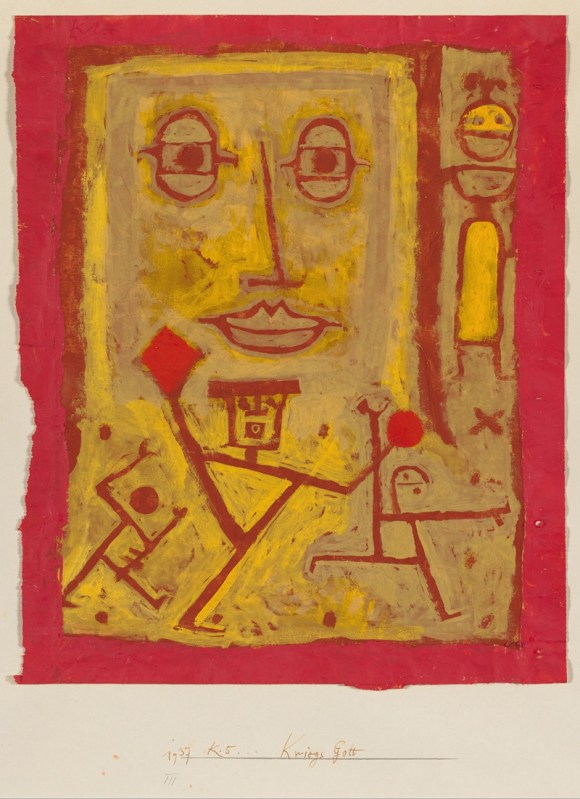
An interview with Amina Rahman, owner of Bookworm, Dhaka

In a world, where online bookshops and Amazon hold the sway, where people prefer soft copy to real books, some bookshops still persist and grow. There are of course many that have closed business or diversified. But what are these concerns that continue to show resistance to the onslaught of giant corporations and breed books for old fashioned readers? How do they thrive? To find answers, we talked to a well-known bookshop owner in Bangladesh.

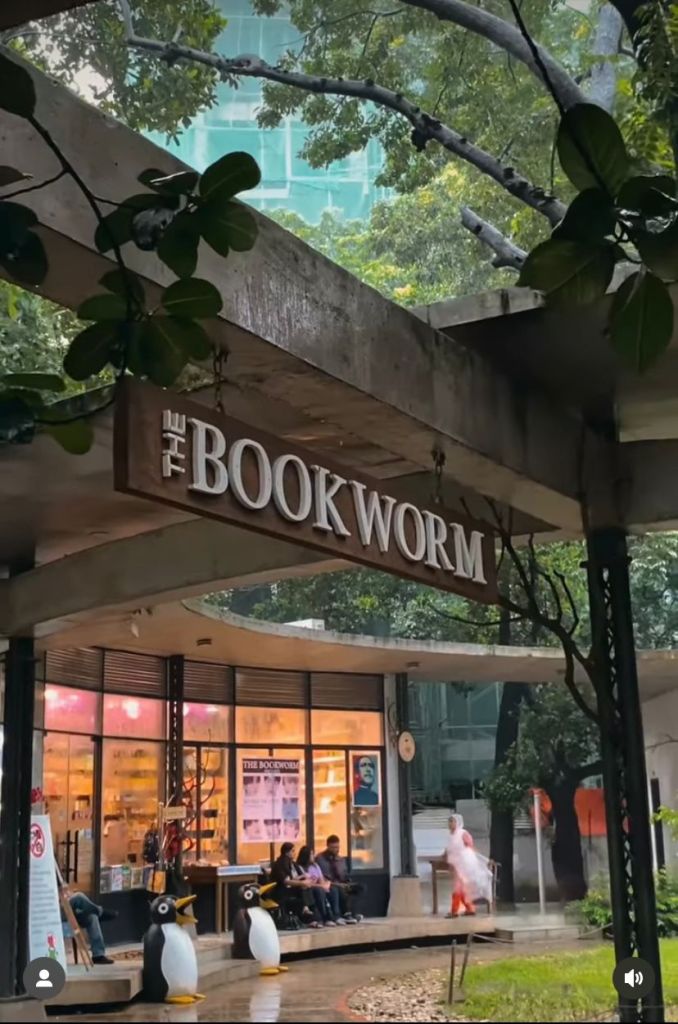
Amina Rahman is an entrepreneur who runs such a concern called Bookworm, a haven for book lovers in Dhaka. Schooled in Italy, India and America, Rahman married into the family that owned a small bookshop. Started by her father-in-law, it was a family refuge till she took over the running and created a larger community – a concept that she believed in and learnt much about during her youth spent on various continents. She believes that just as it takes a community to bring up a child, a bookshop has to be nurtured in a similar vein. Bookworm started at Dhaka’s old airport in 1994 and eventually moved to a more community friendly locale at the town centre. Rahman took over in 2012, rebranding it, repurposing and breathing new life into it.

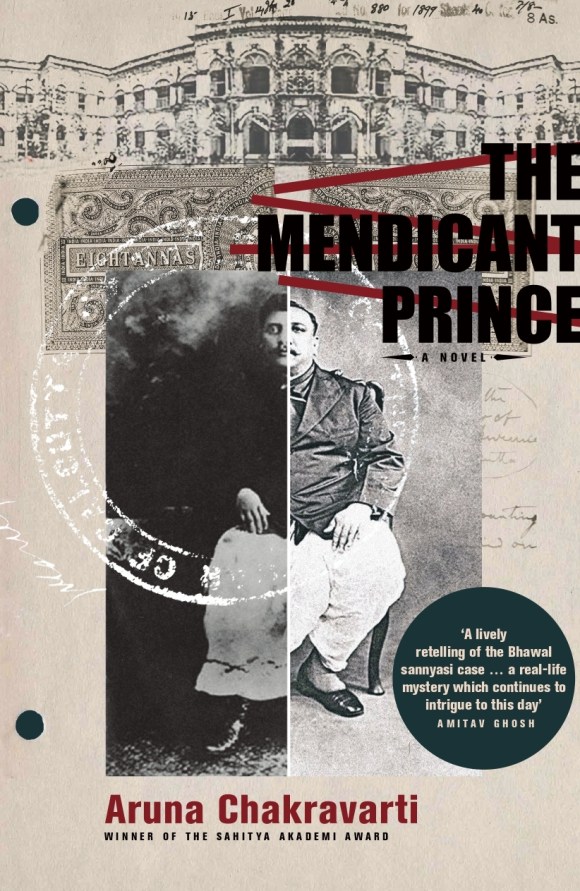
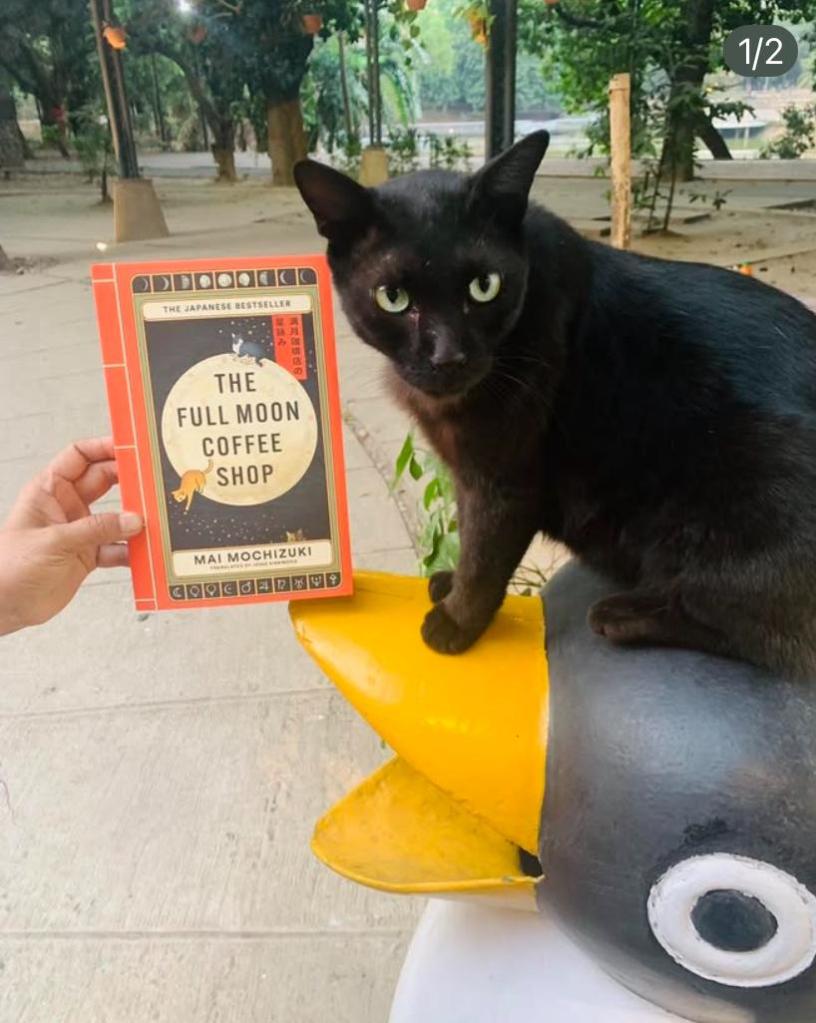
Bookworm houses books from all over the world, holds special launches, as they did recently of Sam Dalrymple’s Shattered Lands: Five Partitions and the Making of Modern Asia, and of many other local and foreign authors, like Vikram Seth and Aruna Chakravarti. They have even been adopted by the cats in the park! This month they are opening a book-café. Rahman has a unique outlook that makes her redefine ‘success’ and here she also talks about how she evolved into her dream project to make it a reality.

You studied environmental policy and environment, worked for several NGO’s and multinational concerns. What made you turn to or opt to run the bookstore over your own career options?

My choice of subject in university was impacted by a fantastic biology teacher I had in middle school at Rome. He took us out on regular field trips and made us collect garbage to learn about the environment! You can imagine — in 1984-85, when we were kids, he would pick up garbage and show us how diapers and cigarette butts were completely not biodegradable. Disgusting but effective. He told us it would take years before they deteriorated and dissolve into the Earth. These things stick in your mind.

To be honest, I followed the Environment path and ended up working for the King County solid-waste department in Seattle which was all about garbage and recycling and so fascinating. But as you get older and you travel through Asia, you realise the pointlessness of it all as none of it is applicable in the same way in our region. Bangladesh and Asia were green in those days until plastics were introduced in a big way about fifteen years ago. At the end of the day, the community is at the heart of taking care of everything, and if everyone takes care of their particular communities, it’s a better world. And this resonates with why I went into running the bookstore – to make community.

I realised that I was missing some kind of dynamism and I wanted to move forward. I wanted something more to happen. This had been a consistent strain I had with everything. You worked for organisations. They would become very top-heavy. Change happened slowly. When I shifted into the corporate world in Dhaka, I felt that was the most dynamic thing — it was fast moving.  I learnt much. Then I went into market research, which was incredible research into human behaviour but was completely tuned into making money at whatever cost. It all was very self-serving and opposite of a welfarist approach towards the community. Corporations trumped community here.

I lost inspiration.

My father-in-law and I had a mutual love for books. I fell in love with my husband over his books. I married in 2004, and it was in 2012, when I was taking time out to assess my goals that my father-in-law suggested I spend time in his bookstore. So, I did. What was an amazing coincidence, was that the Dhaka LitFest started the same year! And the chief organiser asked if Bookworm could be part of the it and I agreed. Vikram Seth was the star guest that year.

Amina Rahman

Can you briefly tell us the story of Bookworm?

When I joined the Bookworm, it was almost a forgotten venture. The family had moved on to other interests. It was used more as a refuge for relatives, old staff, dusty books, unpaid debts and stalled time.

I had never run a business in my life before. For the book business I literally had to climb from the bottom up. It was definitely not easy. I had to figure out the book world, the suppliers, the publishers, the distribution network. Customer preferences, not to mention accounting, taxes, salaries and taking over a small business and the responsibilities that go with it.

The publishing world and the distributing world is a whole different ball game from every other business. It’s a supply chain of such remarkability from the packers and warehousing to the authors and customers. You go from the very basics to the highest and that is so fulfilling. Nothing can compare to that.

Besides, the love of books, one thing I knew was at bookstore was community. It is the ultimate community for booksellers and writers to connect with the world. As you will know, we hit every audience — everybody from the newborn baby to the old man or woman to young adults to school students to university goers to the erudite pursuing literature. We cover just about everything. Ultimately a physical bookstore is where the community meets, and that’s where the ideas are shared, that’s where if you put attention to it people meet inspiration.

While the Dhaka Literary Festival, in whose first iteration Bookworm was a participant, seems to have petered off, Bookworm continues to hold launches on its own. Do you see the shop as a substitute for the festival?

Absolutely not. I mean book launches are wonderful and are a must for every physical bookstore. They connect the people, and as I tell everyone, if you want to sell your book, even if you written the greatest book, you need to work hard at promoting the book. So, every writer needs to have venues whether small or big to launch their books.

Every city needs to have a LitFest, and it is a must. Dhaka is absolutely famous for having our Boimela[1]. That is a real heritage.

What is it you offer readers other than books? Do you have a café?

Actually, we are opening one now.

We didn’t have a cafe in the store, but we’ve had very interesting sort of cafe and bookstore combination when we were in the old airport. We had a cafe next-door to us, which I finally assimilated, also adding to more space for the books. And that became our own little cafe. It wasn’t really anything great; it was just regular we did not even have a coffee machine. Coffee was the old fashion Nescafe, but it did the trick. The whole set up had a very local flavour. Most of all people just like having an area to sit and drink something hot while freely reading books. And this sufficed.

That was wonderful. That store was in the old airport, which we loved with all our heart, and we were there for 30 years. Then we left. I opened up a branch in Dhanmundi, which is probably the best place for books sellers because the book reading population is huge there. We also got the opportunity to open up our bookstore inside a very famous Coffeehouse called Northend. They had a huge base, and they asked us if we’d like to take some of it and we did and that was fantastic.

We had to close that for Covid. Many say they miss it. And that was the first time we had ventured out of our space and opened a new store like a second branch. Then we got this chance to be in a park where we don’t have a cafe inside of our bookstore, but on the other side of the park, which is why we opened a café in our store.

What do you see as the future of bookstores like yours with the onset of online giants like Amazon? Does that impact you?

Yes. Amazon has had a huge impact. Luckily, we don’t have Amazon in Bangladesh. Amazon has had a very negative impact on our fellow booksellers in India and other places. I won’t even bother to compete with them.

I think everyone’s realised that there is a big difference with access points and how Amazon works. At the end of the day, people who come to our bookstore for the experience, for meeting other people, authors too, and talking to their bookseller. It’s more than just getting the book you want to read — that’s part of it — but it’s also about browsing and finding quiet time.

I think that my great experience with books was in bookstores I didn’t have to buy a book. I could browse. Sometimes, you may not be able to afford the book, but you can open it on any page. You could just read a passage, and that might change you. You could come back and buy it or the passage could just stay with you forever. You know it’s those sort of fleeting moments that you have when you’re browsing a book that makes a bookstore precious. That’s a very different experience from Amazon.

Amazon is much more utilitarian. Both have their ups and downs, I guess. You can’t have book launches on Amazon, but I think, Amazon is a big competition… in the sense that it also gives so many discounts.

What kind of books does your store offer? What kind of writers?

I tried to offer everything. In the beginning when we started, I started to try to figure out what books to get. I started with the catalogues, and it was a bit of hit and miss. You slowly start to realise what works. One of the worst experiences for bookstore are books that sit on shelves and don’t move. Sometimes you can buy what is really number one on the best seller list and it just doesn’t move because it’s irrelevant or it’s number one in a different country. You learn by trial and error and then you start to figure out your customers. It was painstaking yet enjoyable.

We use social media to draw readers to our shelves.

As a wholesome bookstore, we have a bit of everything from literature to history, kids’ books, romance, young adult fictions, thrillers, bestselling thrillers, to fantasy. Christie, Sydey Sheldon, Gabriel Garcia Marquez, Manga, graphic novels, spiritual and religious books to Bangla books and collector’s items, special editions to lighter books that just bring solace. We see your customer choices and learn. You do not stuff literature down their throats. It has to be relevant to our customers.

What are the challenges of running a bookstore like yours in a country where English is not the first language?

I think actually it’s a challenge to run a bookstore anywhere in, especially with the new market forces of Amazon and online shopping and the digital world. Having physical stores is becoming a challenge. I have travelled to bookstores all over the world and learnt from the experience. A bookstore is more of a tactile experience for all people, readers and non-readers. Humanity has learnt from tactile experiences and to touch and smell a book, browse and sit amidst books is very much that. When realised that people were not coming to me, I took the books to them. I took our books to every mela(fairs). Social media was the next big thing. The ultimate was of course the Dhaka LitFest. People were excited to see our English books, and they all sold. Bangladeshis would travel to other countries to buy books as Bengalis love reading.

The LitFest helped a lot. It brought big authors, like Vikram Seth, for they were interested in exploring new readers.

We also started a delivery service. Some customers said it was hard to get to our store. So, we started a thrice week delivery service and then increased it. We bought a cycle for the rider. He went out and delivered the books that readers had ordered and paid for.

When Covid hit, it was prime time for many to turned to books and we had everything in place – our social media and our delivery service. We did well during that phase, though that is not a good thing to say.

What do you see as the future for your bookstore? There are chains like Takashimaya, Times Books and others — which despite having shrunk, post online bookstores, maintain an international presence. Do you see yourself as a chain that will grow into an international presence?

I think a chain store goes beyond the community. It is a model for more profit-oriented sellers. I would rather have a community-based culture where all people are welcome and find something that draws them and gives them a sense of quiet.

A lot of people mistake success with earning huge profits and if that’s what you’re in for that’s fine too — that’s business but what I do isn’t that. I get fulfilment out of other things –- community health and happiness, and you know just interaction. I think one of the ways to make a very powerful long-lasting brand and business is trust and good service. There’s no substitute for hard work and passion. When you love something, you really put your mind to it. And that helps you keep your friends forever.

Sam Dalrymple gives his opinion of Bookworm after his session ( 9th November 2025)

[1] Bookfair

(This online interview has been conducted over transcribed voice messages in What’sApp by Mitali Chakravarty. All the photographs have been provided by Amina Rahman.)

PLEASE NOTE: ARTICLES CAN ONLY BE REPRODUCED IN OTHER SITES WITH DUE ACKNOWLEDGEMENT TO BORDERLESS JOURNAL

Click here to access the Borderless anthology, Monalisa No Longer Smiles

Click here to access Monalisa No Longer Smiles on Kindle Amazon International
Categories
Stories

Sleeper on the Bench

By Paul Mirabile

From Public Domain

Out on my usual morning walk. A lovely June morning, the air fresh, cool, the rising sun obscured by a belt of sleepy, moving cloudlets. The sun’s soft, mellow rays dried the dew on the large, leafy trees and blossoming flowers of Holland Park.

As always, I bent my steps towards my favourite bench where, I could sit alone and quiet, near to the ponds, yet far enough not to hear too many voices. The air smelt fragrant that particular morning. I hastened to start on my adventures with Dickens’ David Copperfield as I turned a sharp bend on the path that took me to the bench and the great, sprawling oak tree that homed the myriad rooks and scurrying squirrels. I halted. A seedy-looking man was slowly sitting up on my bench! I had never found someone occupying my bench before. He was scratching an unshaven face and an uncombed head of black, curly hair.

Snapping out of my astonishment, I boldly went up to him. “Sir, have you been sleeping on this bench?”

Hardly looking at me, he softly replied, “In fact I have, my good man. And I will add, I enjoyed a very quiet and relaxed sleep. Not a soul in the park at two in the morning, not even the squeaking of a squirrel.” He said all this with considerable aplomb.

“Well, I’m very happy to hear that. Of course you shall be leaving soon?”

“Not that soon, I’m afraid. When I sleep out, which is almost always, I arrive here in Holland Park at 2pm. and leave at three in the afternoon, sometimes a bit later.”

I bit my lip. “What do you, eye little girls with bad intent?”

“I should think not — that is very uncouth.”

“ Spit out pieces of your broken luck?”

“Hardly. My luck has remained intact, I’m proud to say.”

“Warm your feet in the sun?”

“They keep very warm in this season, even with my shoes off.”

The bench-sleeper took out a cigarette from a torn shirt pocket, lit it, then smeared his shabby clothes with greasy fingers. “Want a smoke?”

“No thank you, I don’t smoke.”

“May I ask you why you have chosen this particular bench to sleep on?” I resumed, as he puffed away, staring blankly into space. “This is my reading bench, sir. It has been for over two years. I come almost every morning to have a good read before breakfasting at the Duck or Grouse across the road.”

“Ah ! The Duck or Grouse, I know it well. The barmaid is an acquaintance of my wife.”

“You have a wife?”

“Yes, and two children. Does that shock you?” Before I could answer he pointed a slender finger at my book: “A rather dreary read in the morning, no? I mean, why not something more droll like David Lodge or Oscar Wilde?”

“I prefer Dickens if you don’t mind,” I responded, taken aback by the man’s impertinence. The impertinent man yawned, took a bright, red apple from his trouser pocket and began munching on it.

“Sorry to have disrupted your morning reading, old chap, but oftentimes in life we are confronted by unforeseen events or encounters contrary to our habits. The question is: Should we disregard the event or investigate the meaning behind it? Why on this particular morning, on this particular bench have you been confronted by someone who has hindered your daily morning ritual? Is it accidental or providential? Please, sit down.”  I did unthinkingly sit down and watched him blow blue smoke rings into the still air. I will admit that I was a bit awed by him.

He went on calmly: “Does my appearance really offend you, cause you any discomfiture? Retard your reading of Dickens, who I must say, I have never really taken a liking to?”

“Oh, so now you insult my choice of reading?” I fumed.

“I meant no insult, sir, only a reminder you that there are morning readings, afternoon readings, evening and night readings. And I’m sorry to inform you that Dickens is not a morning reading, especially David Copperfield.

“Well, I’m sorry to disappoint you, but if you are to remain seated on this, my bench, then you will be subjected to my perusal of David Copperfield; and whether it pleases you or not will not change my habit of doing so.” My bold affirmation seemed not to disturb the blighter’s rings of smoke that sailed lightly up into the broad leaves of the oak tree.

He wrinkled his nose: “Habits are terrible enemies.”

“Are they?”

“Yes, that’s why I oftentimes change a bench … even a park: St James is lovely with its lake. Richmond, Finsbury and Circus Gardens are very pleasant, too … You see, I despise habits, they instil an implacable rigor mortis.”

I ignored him and frowned: “So, you believe I’m a silly, old dolt because I read David Copperfield every morning on the same bench?”

“Of course not,” he responded quickly, tying the laces of his heelless shoes. “I simply wished to make clear to you on this lovely morning that a stranger has sat on ‘your’ bench, and that you have yet to ask him whether he is a beggar or not!”

The bench-sleeper’s remark put so point blank did indeed pique my curiosity, so I took up his defiance: “Are you not a beggar then?”

“Have I asked for money?” was his snappy reply.

“No … not yet, anyway.”

“Nor will I. So what are your deductions?” He peered at me with a mischievous gleam in his eye.

“That you are not begging for money and that you have given me the occasion to snap my habit by engaging in conversation with you.”

“You have expressed it wonderfully!” he exclaimed.

“In that case, why do you sleep out on park benches, when you said that you have a wife and children, and you have no need of money?”

He shook the dew out of his hair. “Is there anything ambiguous or incongruous about that?” he countered.

“I think there is! I have a wife and a home, and at night I sleep in my home, not on park benches.”

“And children?” 

I sat back. “No, in fact we have no children.”

He took out another cigarette. “ So?”

“So what?”

“Oh, nothing. My children often visit me in the parks when not at school, and my wife, when she’s not working.”

“I can’t believe all this!” I stuttered.

“Why not ? Have you something against a gesture so innocent, so insignificant than a man who sleeps on park benches, who is visited by his dear family, when, in fact, he could sleep in a lovely, soft bed next to his charming wife? Let us say that park benches have become my second residence.”

I gasped at that last remark mentioned so candidly. I changed the subject: “Tell me then, what do you do until two or three o’clock on this bench? You have no book to read.”

He chuckled. “My book lies outside written pages. My readings are people whom I observe, the flowers that I smell, the singing birds or gambolling squirrels that I hear. The conversations I have with many a good person, like yourself. I do read books — just the other day I found a copy of Lawrence’s The Rainbow in the trash bin. Can you imagine someone throwing away a classic of that sort?”

“Yes, that is a crime. So your days seem to pass by splendidly, a full agenda, if I may say so without irony.”

“You may say exactly that, my good man.” He stretched his limbs, took another cigarette and smoked dreamily, peering into the thick leafy foliage of the oak tree. Songbirds had been accompanying his well-stated sentences for some time now; they seemed to punctuate them, rhythmically. The manner in which he smoked his cigarette mystified me. There was a touch of delicacy, elegance, even refinement in his gestures. His speech, too, prompted me to think that he was no ordinary tramp.

He pointed to the sun: “When did you say you breakfast at the Duck or Grouse?”

“At ten o’clock.”

“Judging by the sun, it must be very close to ten.”

I glanced at my watch. “How right you are!” I said, stunned by the accurate time-telling of this unusual man.

“I’m afraid I have prevented you from reading one sentence of Dickens.”

“No bother ; I have many mornings to do so … unless …”

“Unless you find me lying or seated here every day ? Not to worry; as I said, I change benches and parks quite regularly. But who knows, we may meet again in different circumstances.” And he smiled while his eyes shone a roguishness that confounded me.

“Right!” I returned. “Perhaps we shall meet again.” I stood up to leave.

Bon appetit,” he called out as I wended my way to the front gate.

Finishing my breakfast, I hurried home eager to share that odd encounter with my wife, at that moment busy with her morning gardening. “You’ll never know how I spent my morning, dear.”

“Reading your book, I suppose, as you always do,” my wife replied tritely without looking up, pulling out the weeds from the borders of coneflowers, forget-me-nots, asters and chrysanthemums below the bay window of our newly bought duplex.

“Not at all,” I responded. “I had a very strange conversation with a man who sleeps on park benches every night, and sits on them until three in the afternoon.”

She stood and eyed me strangely. “Talking to beggars, hey? How much did he wrest from you?”

“He wasn’t a beggar Helen. He simply sleeps and sits on park benches. In fact, he had a refined way of smoking his cigarette. Very well-spoken, too.”

She continued to stare at me without a word. “He even has a wife and children who visit him in the parks.”

“Does he ? Well I’ll be damned if he wasn’t putting you on, Marvin. Do you think I’d visit you in a park, sleeping on a bloody bench?” I smiled weakly. “He’s a smooth talker, that one is. Be careful, he might put ideas in your head, ”she concluded and attended to her peonies and snapdragons.

I felt odd and asked, “How about a restaurant tonight, dear? I’ve had a handsome pay rise, you know. Let’s dine at the Galvin La Chapelle.”

Helen jumped up like a Jack-out- of-the-Box. “Are you mad? I think that beggar or bench-sleeper got the better of you. The Galvin La Chapelle is the most expensive restaurant in London … eighty or ninety quid a menu!”

“Yes, I know. But I really feel like having a wonderful meal. After all, it’s only money…”

My wife went back to her edging and weeding.

So that night, dressed in our best clothes, we stepped under the chapelled vaults of the Galvin La Chapelle in Spitalfields, whose French cuisine and romantic atmosphere knew no rival in London, perhaps even in the whole of England. We were seated at our reserved table for two in the middle of the enormous dining hall, where we could admire the polished marble pillars supporting the stone ceiling, the timbered vaults and the arched windows. We both felt so paltry surrounded by such grandiose mediaeval decor.

“Such a posh restaurant, I’ve never seen such lovely architecture and decoration. And feel this tablecloth, it wasn’t bought at Primark,” Helen remarked blissfully, passing her rough, garden-versed fingers over the silken cloth after having been seated in a red-upholstered chair by a charming young waiter.

“I knew you’d like it, darling.” I beamed, thoroughly delighted at my wife’s first impressions. “You deserve it, haven’t we’ve worked hard: first the duplex then the car?” The Maître d’Hôtel[1] greeted them in French, then with much studied decorum, lay two menus on the table in the middle of which had been placed a vase of intoxicating tuberoses whose fragrance almost caused Helen to faint in ecstasy. Marvin ordered cocktails.

Suddenly his face turned white as a ghost. Helen, snapping out of her ecstatic state, searched the sudden whiteness for a reason: “Marvin … Marvin, are you alright ? Is it the flowers or the prices on the menu that have turned your face into stone ? I told you this place was dear. We’re not at MacDonald’s, you know …”

Marvin struggled to speak: “No … no … it’s not the menu, dear.” He turned to observe the Maître d’Hôtel presently leaning on the counter of the cocktail bar. He was attired in the most striking satin canvas double-breasted tuxedo with a black, silk bow tie whose tips brushed lightly against the red-laced lining of his vest. His tailored trousers grazed daintily a pair of Crockette and Jones shoes, the dearest in London. There he leaned on his right elbow, chatting up the barmaid. With the most refined gesture, he took out a cigarette from a gold-plaited case and lit it.

Marvin gasped: “It’s him! It’s him, Helen!”

“What are you on about?”

“The head-waiter talking to the waitress at the bar…It’s the bench-sleeper in the park. I’m sure of it.”

Helen sat back, a bit ruffled at her husband’s outlandish outbursts. The young waiter brought the hors d’oeuvres[2]: duck liver royal and buffalo milk panna cotta. As soon as the waiter had served them: “Are you daft!” she whispered so as not to be heard by two couples who had just been seated near to them. “Stop this nonsense, Marvin. Control yourself. Don’t forget where we are. How can a tramp on a park bench be the head waiter of the most expensive restaurant in London?” 

“But the way he smokes his cigarette…it’s exactly like the beggar’s! And his grey eyes, those glazed, blurry, grey eyes are his. Helen I can’t believe it!”

“Then don’t believe it because it can’t be him. Calm down and eat your duck liver. Look, he’s coming to take down our main dish, which because of your foolishness, we haven’t chosen yet.”

The stately Maître d’Hôtel glided over, pad in hand. Marvin, red as a lobster, buried his face in the menu. Helen scanned hers, marvelling at the names.

“Let me suggest the crab ravioli,” His soft voice sailed in between them. A voice very familiar to Marvin.

“That sounds lovely,” Helen said, staring impatiently at her husband who was hiding his face behind the menu. “With a lot of ricotta cheese, please. I’ll also order a free range aged duck sauce à l’orange. And you darling, what will it be?” she added, barely disguising her anger.

“I shall have the Iberico pork with chimichurri sauce, please,” Marvin ordered, peering over his menu at the head waiter.

“Of course, sir, we serve the finest French cuisine in England ; une cuisine exquisite!”

“How about some wine, dear?” Helen interrupted, peevishly.

The Maître d’Hôtel suggested: “An Aloxe-Corton Latour red wine goes well with pork. As to the crab, why not a carafe of Chardonnay?”  Helen and Marvin acquiesced by simply nodding their heads. “If I’m not mistaken, this is your first time here? Perfect. Then permit me to offer you, on the house, our burnt honey custard tart for dessert. It simply melts in your mouth.” The first-comers wreathed in smiles, albeit Marvin’s somewhat withered, nodded again in ostentatious gratitude. The Mâitre d’Hôtel glided off across the stone-paved floor with velvet steps.

Marvin leaned over the table, his nose ruffling the tuberoses. “Helen, I’m telling you it’s him. I’m going over there to settle this mystery once and for all. I know he recognised me, that’s why he offered that dessert to us.”

“Don’t be rude, Marvin. I shan’t be embarrassed because of your ill-behaviour.  That beggar has got to your head. Sip your cocktail, why are you ruining such a lovely evening, especially one that will cost you over two hundred quid?” Helen bit her lip.

“But dear, I shan’t embarrass you ; I’ll just casually stroll over to the fellow and hint at David Copperfield. He’ll get the message. He’ll know I’m on to him.”

“What do you mean ‘on to him’ ? He’s not a criminal! Stop this immediately or I’ll leave you eating your two-hundred pound meal alone!” With those stern words that brooked no rebuke, the affair appeared settled …

Marvin, however, was not to be foiled …

He stood up. Gathering courage, he made a bee-line for the cocktail bar where the Maître d’Hôtel was serving himself a drink. Marvin in a low but firm voice said: “Sir, I believe we have met elsewhere.”

Being much taller than Marvin, the Maître d’Hôtel bent over him, drawing closer. He placed a comradely hand on his shoulder : “My good man, how observant you are! My disguise has not fooled you for a moment. But please, look at your lovely wife,” and he sighed. “She’s almost in tears, worrying over your stubbornness to know the truth. The truth? Of what? About a sleeper on a park bench, one who harbours a certain disdain for Dickens in the mornings? If I were to reveal the mystery of our morning’s encounter, would you please return to your table and enjoy the meal with your wife.”

Marvin remained speechless, although he did scoop out a handful of cashew nuts from a porcelain dish on the cocktail bar counter.

“You see,” the head waiter continued philosophically, “here in this restaurant I play the role of a Maître d’Hôtel. I wear the weeds and mask of social bearing, parade about this remarkable dining room with aristocratic ease. I follow the rigid rules of proper etiquette. Where we met and spoke this morning is my breath of fresh air, my dwelling of unconfined freedom. There I dispose my mask, divest my constraining costume and don the clothes and air of a bird that has flown out of its cage. Here inside, I’m an actor. There, outside, a spectator no longer on stage constrained to act, but react to those whom I observe. And that my good man is the essence of freedom. In the parks, I regain a sense of reality by observing the simplicity of Nature, the grass beneath my feet, the sun, moon and stars above my head. The trees and the songbirds. In the restaurant, albeit it be the finest in England, I merely act, opined as a social asset, as a means to cater to people’s needs for costly pleasures, and of course to my own and those of my family’s, although mine and theirs are far from costly. Look, I shouldn’t be smoking this, but it is the only pleasure, the only soupçon of outside freedom that I can afford myself here.”

Marvin, awed by this avowal, said nothing. The Maître d’Hôtel concluded: “Now hurry back to your charming wife who has been impatiently waiting for your return. I do believe your main course will be promptly served. But let me say this, please do not disclose the reason for my bench-sleeping activities. That will be our little secret, one only between us. Look, your wife appears so upset, why subject her to trivialities? Discretion, my good man. Discretion. Put her at ease and enjoy your meal.” The Maître d’Hôtel causually strolled to a nearby table, smiling.

Marvin shuffled to his table, where indeed Helen was fuming. “Well ! Has he called the ambulance to have you packed off to Bedlam?”

Marvin winced. The irony of her remark cut deep into his emotions. He appeared lost in thought: “No … We had a smashing conversation, in fact. He’s quite a decent chap, well-read on Dickens, too.”

“Good, then let us get on with this wonderful meal. Cheers darling, and thank you, the wine is heavenly and the crab, well, what can I say?” Helen raised her glass: “To us … and Dickens!”

[1]        Head-Waiter.

[2]        ‘Starters’.

Paul Mirabile is a retired professor of philology now living in France. He has published mostly academic works centred on philology, history, pedagogy and religion. He has also published stories of his travels throughout Asia, where he spent thirty years.

.

PLEASE NOTE: ARTICLES CAN ONLY BE REPRODUCED IN OTHER SITES WITH DUE ACKNOWLEDGEMENT TO BORDERLESS JOURNAL

Click here to access the Borderless anthology, Monalisa No Longer Smiles

Click here to access Monalisa No Longer Smiles on Kindle Amazon International
Categories
Review

Boats in a Storm: Migrant Narratives

Book Review by Bhaskar Parichha

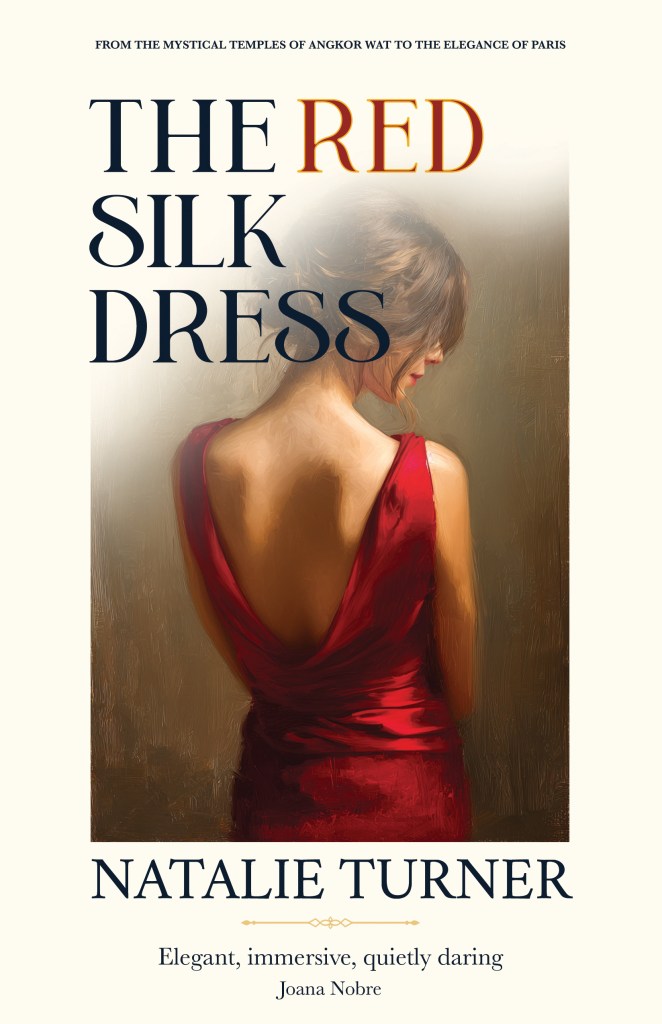
Title: Boats in a Storm: Law, Migration, and Decolonization in South and Southeast Asia, 1942–1962

Author: Kalyani Ramnath

Publisher: Westland/Context

The legal frameworks established during the period from 1942 to 1962 in South and Southeast Asia played a crucial role in shaping migration patterns and influencing decolonisation processes. This era witnessed significant changes as countries in these regions sought to redefine their legal systems in the wake of colonial rule, which in turn affected the movement of people across borders.

Migration patterns were influenced by various factors, including the aftermath of World War II, the struggle for independence, and the establishment of new national identities. Additionally, the decolonisation processes during this time were marked by the emergence of new legal frameworks that aimed to address the complexities of post-colonial governance and the rights of migrants. Understanding the interplay between these legal frameworks, migration trends, and decolonisation efforts provides valuable insights into the socio-political landscape of South and Southeast Asia during this transformative period.

Boats in a Storm: Law, Migration, and Decolonization in South and Southeast Asia, 1942–1962  authored by Kalyani Ramnath is a thoroughly researched work. This book is  part of the series South Asia in Motion and was originally published by Stanford University. Ramnath serves as an Assistant Professor of History at the University of Georgia and has conducted extensive research on migration.

Says the blurb: “For more than a century before World War II, traders, merchants, financiers, and laborers steadily moved between places on the Indian Ocean, trading goods, supplying credit, and seeking work. This all changed with the war and as India, Burma, Ceylon, and Malaya wrested independence from the British empire.”

This captivating book is set against the backdrop of the tumultuous post-war period. It delves deeply into the legal struggles encountered by migrants who are determined to maintain their traditional ways of life and cultural practices. The narrative highlights their experiences with citizenship and the broader process of decolonisation. Even as new frameworks of citizenship emerged and the political landscapes of decolonisation created complexities that often obscured the migrations between South and Southeast Asia, these migrants consistently shared their cross-border histories during their engagements with the legal system.

These narratives, often obscured by both domestic and global political developments, contest the notion that stable national identities and loyalties emerged fully formed and free from the influences of migration histories after the fall of empires.

In her book, Kalyani Ramnath draws on archival materials from India, Sri Lanka, Myanmar, London, and Singapore to illustrate how former migrants faced legal challenges in their efforts to reinstate the prewar movement of credit, capital, and labour. The book is  set against the  backdrop of a climate marked by rising ethno-nationalism, which scapegoated migrants for taking away jobs from citizens and monopolising land.

Ramnath fundamentally illustrates in the book that the process of decolonisation was marked not just by the remnants of collapsed empires and the establishment of nation-states emerging from the debris of imperial breakdown. It also encompasses the often-ignored stories of wartime displacements, the unexpected consequences that arose from these events, and the lasting impacts they have had on societies.

This perspective highlights the complex and multifaceted process of decolonisation, demonstrating how it was shaped not only by significant political transformations but also by the personal narratives and experiences of individuals who faced the challenges of conflict and displacement.

An excellent book to read!
.

.

Bhaskar Parichha is a journalist and author of Cyclones in Odisha: Landfall, Wreckage and ResilienceUnbiasedNo Strings Attached: Writings on Odisha and Biju Patnaik – A Political Biography. He lives in Bhubaneswar and writes bilingually. Besides writing for newspapers, he also reviews books on various media platforms.

PLEASE NOTE: ARTICLES CAN ONLY BE REPRODUCED IN OTHER SITES WITH DUE ACKNOWLEDGEMENT TO BORDERLESS JOURNAL

Click here to access the Borderless anthology, Monalisa No Longer Smiles

Click here to access Monalisa No Longer Smiles on Amazon International

Categories
Stories

Ali the Dervish

By Paul Mirabile

Whirling Dervishes, painting by Jean Baptiste Vanmour (1671-1737). From Public Domain

In 1976, I bought a small country cottage very pleasantly located near the town of Sheffield at Dronfield in South Yorkshire from an elderly woman who informed me she that had travelled quite extensively throughout Asia in the nineteen twenties and thirties before settling down here. She never married. The learned woman left no forwarding address.

Settling in took much time and energy because of my abundant belongings. At last, one rainy afternoon having nothing to do, I climbed the shaky stairway that led to the garret. The door had been left ajar. Inside the low-ceiling, ill-lite space, there was nothing but a large chest placed in the middle. The lid lay aslant. Its hinges were broken. 

Curious about its contents, I began rummaging through the numerous newspaper and magazine clippings, booklets, letters and other documents. A particular envelop caught my eye because the red wax seal had been broken. Wax-sealed letters are very out-dated these days. When I opened the envelop I understood why it was sealed. A seven-page letter had been written in fine, elegant script, by Lady Sheil, dated 1869. Lady Sheil was quite a prominent woman in her time[1] . This indeed was a remarkable find. It baffled me why the former proprietor would leave in a chest of documents a letter of such archival interest. Since there was little light in the garret, I took the letter downstairs to read it. Unfortunately there was no addressee, so I assumed it was sent to the former proprietor. I must confess that a feeling of guilt touched me when I began my reading. Luckily I overcame this sensation because the contents of the letter proved extraordinary …

Lady Sheil details a very peculiar adventure of an Englishman who named himself Ali the Dervish -or as she spelt it, Deervish — who had undertaken a voyage to ‘Balochestan, Persia’[2]. As I read through her letter, I came to realise that the Englishman had abandoned his British ways entirely, adopting those of the semi-nomad Balochi. To such an extent was his assimilation that he even married a Balochi woman, something utterly unthinkable at that time — in the year 1856. Why Lady Sheil would write a long letter about this chap to an unknown reader or readers heightened my curiosity.

I began investigations at the Sheffield library and found Lady Sheil’s Glimpses of Persian[3] though I found nothing at all about Ali the Dervish. Lady Sheil mentioned something about his diary but nothing substantial came of this. Be that as it may, the letter fascinated me by its mysterious allusions and ellipses, especially concerning this unusual identity change. Not a simple task for a European in the nineteenth century, or even in our century for that matter. This Ali even outdid Sir Richard Burton’s bursts of outlandish impersonation …

Examining the letter carefully, I felt a strange, slight tremor goading me to do justice to this eccentric Ali. Something unsaid in the sentences urged me to read between them, to scrutinize the margins and the paragraph indents as if Lady Sheil had deliberately left out parts of her narrative for her reader to fill in those blank, yellowing spaces.

I picked up my pen, imagining myself to be both Lady Sheil and Ali the dervish, and began filling in the those blanks, writing in the gaps, the lacuna, the untold events and details so to speak. Indeed, I had convinced myself that the letter had been destined for me. And this resolution was enough for me to divulge the mystery of Ali …

Ali, whose English-born name was left unknown, had had the best of aristocratic educations in the fine arts, especially languages. He was fluent in Hindustani, Persian, Pashtun and Turkish, besides having mastered four or five European languages, including Hungarian. This was quite a linguistic feat, second only to Richard Burton whom, by the way, Ali had the occasion to meet in Lahore. A meeting which lasted two or three weeks according to a friend of Burton’s memoirs. Little, however, is reported about their relationship.

Prior to Ali’s arrival in India and that fortuitous encounter with Burton, he apparently had led a rather lukewarm existence in England, and this in spite of his family wealth, or perhaps because of it. His accumulation of capital was analogous to his successive accumulations of prolonged bouts of depression. They left him utterly exhausted. How and when he left England is not written in the letter, although he probably reached India by ship, then on horseback or foot into Northwestern India, accompanied often by erring minstrels and story-tellers. From whom Ali learned the art of dancing, chanting and story-telling. It was not a question of imitating these rituals and customs. Ali had integrated them as if they had been part of some distant, latent self that required jolts of recollection to surge up from the depths of the unconscious. In fact, Burton was quite taken aback by Ali’s very ‘unEnglish’ appearance. His manner of speaking English, too, possessed a curious twist of Persian and Hindustani syntax — a ring of their tonal stress.

To Ali’s pleasant surprise, he no longer suffered from bouts of violent depressions. The former Englishman on leaving Burton, perhaps in 1849, rid himself of paper money, donating it to missionaries, then rode off into the verdant valleys of North-western India towards Afghanistan carrying only the clothes on his back, two gourds of fresh water, several loaves of acorn-bread and a pouch of Arabic gum. Ali carried no weapon.

Ali’s sound knowledge of Hindustani, Pashtun and Persian offered him unparallel glimpses of these undomesticated lands. Lands of shifting desert sands whose rising heat conjured in the distance illusions of ravishing oases and sparkling cascades off tree-laden crags. Ali had been warned about these deceitful mirages (by Burton?) whose marvellous vision had been the death of many a brave adventurer.

He kept to the clayey track, accepting food and board from the hospitable villagers or sleeping under the silver stars on his woven kilim-saddle cloth. He rode days or nights penetrating landscapes of indescribable beauty, of terrifying singularity, of unbearable heat in the day and equally freezing nights. At one point in his wanderings, Ali, slumbering on his horse due to the rising heat and lack of food, looked up to discover a gigantic Buddha hewn into a tuft-like cliff. A small stream ran in front of the lithic niche along which flourished many date trees. There the Buddha stood, calm, reposed, sedentary, encased in his stone casket, home to a myriad birds who had made their nests on his rounded shoulders and shaven head. Ali jumped off his horse, filled his gourds with clean water, scouted about for fresh dates. With one last look at the towering Enlightened One he set off towards Persia, filled with equivocal sensations. He felt that his nomad days would soon be numbered …

A month or two passed. Now villagers tilling their fields or collecting wood no longer greeted or spoke Pashtun to him, but in Dehwari or Persian. He welcomed this language shift. Ali felt more at ease in Persian, albeit it be the Dehwari dialect, which he had learnt from one or two erring Zarathustrian talebearers in India. By then his uncombed beard touched his chest and his hair his shoulders. In one village he traded his khaki-coloured shorts for a shalwar[4] and his boots for goat-skin sandals. In another his Safari sun hat for a turban and his heavy flax shirt for a long, cotton tunic. Whenever he met tillers or merchants they would greet him with the customary ‘hoş amati’[5]. By their pronunciation and vocabulary Ali knew he was travelling southwards into Balochestan. Temperatures rose and rose — 37° C … 42° C. His horse trotted slower and slower. Her rider drooped soporifically over her mane. Ali no longer calculated his wanderings in farsakhs[6] but by the risings and settings of the sun …

Notwithstanding these discomfitures, the persevering Ali carried on. To his delight the track widened, hospitable shepherds driving before them their herds of sheep or goats offered the solitary traveller the warmth of their camp-fires, goat’s milk, cheese and acorn-bread. Caravans of transhumance nomads pressing towards the high plateaus nodded to him. The stony-faced herdsmen chanted in their own language which translated means —

 A breath of mountain breeze,
A breath of wind from the Sea,
In the middle,
We trudge
The pilgrims of the fountain…

Then they called after their huge, savage dogs. Ali seized upon that admirable chant and intoned it to himself or aloud …

One sparkling, azure day, Ali, road-weary, alighted from his horse in a large settlement of tents, called Sa’idi. There both Persian and Dehwari were spoken, judging from the scores of people who came to greet him. It was a charming settlement, surrounded by fields of red poppies, iris, bluer than the blue of the sky, crown imperials whose orange tints glowed like lit candles, and tulips. Horses, sheep and goats dotted the terraced rows of poppies on the hills and skirts of the low-laying piebald mountains, motionless. Ali, both dazzled and comforted by the undulating kaleidoscope colours decided to halt for the night in this welcoming settlement to rest his fatigued physical and mental state and his horse.

When he asked for the elder of the settlement, he was directed to a very large white tent. In fact, since his arrival the snowy-bearded elder had been eyeing the stranger askance. He threw open the flap of his tent and greeted him in Persian as custom would have it, inviting his visitor inside for tea. Sipping their respective glasses of sugared tea, the snowy-bearded elder’s deep-set black eyes peered into those hazel-brown of Ali’s. Though he was pleased to meet this curious traveller, he was confused about his identity. Finally he put the question point blank to his sipping visitor: “Are you Persian?”  

Ali nodded neither yes nor no. His ambiguous nod set off the string of events that followed. events that transformed the already transforming Ali into a rather ambiguous Other …

The snowy-bearded elder had read that ambiguous nod as a sign of belonging. Ali’s sun-mat complexion, his extraordinary command of both Persian and Dehwari, his knowledge of social and religious habits and practices, mostly acquired during his years on the road, opened the elder’s heart and those of the Balochi people of Sa’idi, people who now had stepped into the tent, forming a large circle round Ali and the snowy-bearded elder. Out of this wide circle came the elder’s three sons and daughter to lead him to his own red tent at the outskirts of the settlement. His horse was led to pasture with the others.

On the thick carpets of his medium-sized tent, Ali sat and meditated upon that ambiguous nod. Had he really become the one of them? Deep within his heart, the former Englishman rejoiced … rejoiced at his ‘crossing over’. He had become what he really was …  

Several years passed. Ali no longer felt guilty about leaving his past behind. His immersion seemed complete. He sang and danced round the ritual fire at night. He told stories night after night after a hard day’s work in the poppy fields, apple and peach orchards and the vineyards, the tribesmen chanted their chants of ancestral lore, joined him in his whirling dance, one palm to the Heavens and the other to the Earth, eyes staring into a void of quiescence …

It was in Sa’idi that he began to be called Ali the Dervish, whirling as he did before and behind the leaping flames. Ali taught his dance to the snowy-bearded elder’s three sons. In turn, the elder offered his daughter to him in marriage — a privilege since this signified entrance into the chieftain’s family.

Once the three-day marriage ceremonies were over, his lovely bride — for she was truly lovely — sat next to him in the nuptial red tent. His wife, whose name has never been recorded, demanded nothing of him. She accepted all his nightly hesitations … ‘failings’ … Her fruity laugh and obsidian back eyes spoke a language that communicated higher values … loftier treasures than uncertainty, physical gratification or hereditary obligations.

Ali slowly discovered that his young bride possessed the quality of a seer, perhaps even belonged to a long lineage of Central Asian mystics. Intense were her meditations and visions of the Other World, of events passed and those to come … His past … Their future … Ali, both bewildered and beguiled by this power of prophesy, would timidly question his bride about her unusual gifts. She would answer enigmatically: “One must remove the Husk before bringing in the Bride,” an adage he never fully understood, nor would she ever elucidate.

On other moonlit nights, alone within the sanctuary of their intimacy, Ali’s wife would envision scenes of his long aristocratic lineage, each member afflicted by physical or mental atrophies, plagued by wasting ennui. The Dervish listened in awe as she revealed events quite unknown to him. Yet, he remained speechless, peering into the almond-shaped eyes of this woman depicting scenes that could very well cost him his life. She said nothing. He yearned to avow everything to her but some fey voice prevented him each time. She read his mind and laughed her fruity laugh, delving ever deeper into his life … theirs !

Ali accompanied her with his eyes then turned them to the dying embers of the stove fire, the glowing logs sizzled lightly in the silence. Was he deluding himself? He knew that his wife had discovered his native idenity. But were all those past scenes his true identity? He indeed stemmed from that hoary lineage, the last scion. Was he the last to play a role on this world stage of masquerade and mummery? No ! He was Ali the Dervish … Here amongst these hearty tribesmen he played no role. He had overcome the hardships of childhood as a fatherless boy. That unknown gentleman had left for Africa never to return! Never a letter nor a message brought by acquaintances. Before dying of grief, his poor mother repeated to him everynight: “Look to the stars.” And the sullen boy looked, and believed that they would lead him to another life … another identity !

Once Ali began to cry softly listening to the sizzling embers and the light, rhythmical breathing of his strange wife.

Many years had passed and yet, they had no children. His hair and beard had greyed. Yet, no reprimand, no rebuke, no judgement ever came from the community, especially from her aging father. Was the power of her revelations known to him ? Would he be the last branch of that gnarled and rotten aristocratic tree ?

Ali rode often into the fields and mountains to gather wood to build tent-frames or glean fruit from the many apple and peach trees. During these solitary moments his past crept up on him, making him feel guilty. There seemed only one solution : speak openly, candidly to his wife about his British birth, his genuine desire to become the Other. She would surely understand since she had already read his former life by sounding his heart. That night he would go straight to his wife.

But, just then out of the blue sky his wife came galloping towards him, whipping up her stead. She jumped off, an odd expression wrinkling her forehead. Ali ran up to her, took her shoulders gently, admiring the sapphire blue that framed them so perfectly like a painting. There she stood, basking in the soft glow of the mellowing, evening sun. Before he could utter his rehearsed confession she put a hand to his lips.

“Father has just passed away,” she whispered softly, without emotion. “He has been freed from the trammels of worldly existence.” She smiled. “Now you too are free to divest yourself of a personage that has been conferred to you by the stars and the strength of your will.”

“But who am I really, my dear?” her husband wondered. She caressed his bearded, burning cheeks. She answered: “If you want the horse to neigh, you must slacken the reins.” Turning round, she rode back to the settlement to wash the body of her deceased father and prepare the three-day funeral rites with her brothers. Ali puzzled by that enigmatic counsel trudged to his horse.

He rode back far behind her, meditating his ‘freedom’. What other choice had he?

This sentence was the last in Lady Sheil’s long, detailed letter. On further investigation into this strange fellow at the London library, I discovered that Ali the Dervish had divorced and remarried his bride to one of her brother’s mates, then left Sa’idi. He was last seen in Tabriz, Persia. No document reports his whereabouts after his reaching that northwestern town in the lands of the Azeri people. 

I have often wondered whether Lady Sheil ever knew who Ali the Dervish really was. I have my doubts. Only his Balochi wife knew, and of course, that mysterious person could have never been questioned. It’s also odd that Ali himself — whatever self that be– had never woven his thoughts and experiences into a book, never enlightened a Western public on integration and assimilation into a foreign culture.

As time went by I even considered that this letter might have been a hoax to hoodwink a naive fellow like myself into clothing Ali in legendary fashion. On second thought, though, who’s to arbitrate between fact and fiction ? Not I, in any case. For isn’t it a refreshing act of freedom to slip from one to the other without a pinch of guilt ?     

.

[1]        1803-1871.

[2] Balochistan is in Pakistan but the Baloch community spreads to Iran and Ali’s story dates before the formation of Pakistan.

[3]        Published in 1856.

[4]        Large, light baggy trousers.

[5]        ‘Welcome’ in Persian.

[6]        A Persian measurement equivalent to 5.35 kilometres

.

Paul Mirabile is a retired professor of philology now living in France. He has published mostly academic works centred on philology, history, pedagogy and religion. He has also published stories of his travels throughout Asia, where he spent thirty years.

.

PLEASE NOTE: ARTICLES CAN ONLY BE REPRODUCED IN OTHER SITES WITH DUE ACKNOWLEDGEMENT TO BORDERLESS JOURNAL

Click here to access the Borderless anthology, Monalisa No Longer Smiles

Click here to access Monalisa No Longer Smiles on Kindle Amazon International
Categories
Editorial

“Imagine all the people/Living life in peace”

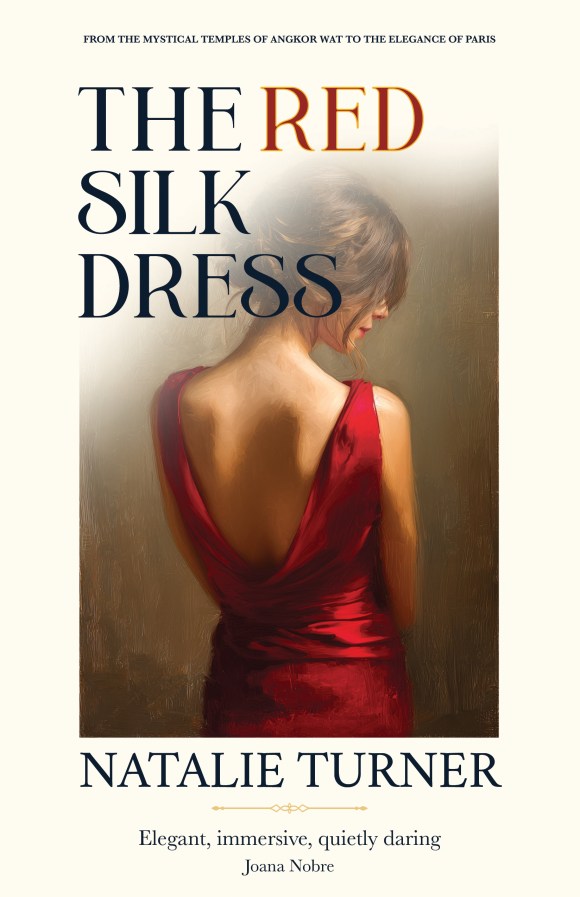
God of War by Paul Klee (1879-1940)
The sky weeps blood, the earth cannot contain
The sorrow of the young ones we've slain.
How now do dead kids laugh while stricken by red rain?

— from Stricken by Red Rain: Poems by Jim Bellamy

When there is war
And peace is gone
Where is their home?
Where do they belong?

— from Poems on Migrants by Kajoli Krishnan

Poetry, prose — all art forms — gather our emotions into concentrates that distil perhaps the finest in human emotions. They touch hearts across borders and gather us all with the commonality of feelings. We no longer care for borders drawn by divisive human constructs but find ourselves connecting despite distances. Strangers or enemies can feel the same emotions. Enemies are mostly created to guard walls made by those who want to keep us in boxes, making it easier to manage the masses. It is from these mass of civilians that soldiers are drawn, and from the same crowds, we can find the victims who die in bomb blasts. And yet, we — the masses — fight. For whom, for what and why? A hundred or more years ago, we had poets writing against wars and violence…they still do. Have we learnt nothing from the past, nothing from history — except to repeat ourselves in cycles? By now, war should have become redundant and deadly weapons out of date artefacts instead of threats that are still used to annihilate cities, humans, homes and ravage the Earth. Our major concerns should have evolved to working on social equity, peace, human welfare and climate change.

One of the people who had expressed deep concern for social equity and peace through his films and writings was Satyajit Ray. This issue has an essay that reflects how he used art to concretise his ideas by Dolly Narang, a gallery owner who brought Ray’s handiworks to limelight. The essay includes the maestro’s note in which he admits he considered himself a filmmaker and a writer but never an artist. But Ray had even invented typefaces! Artist Paritosh Sen’s introduction to Ray’s art has been included to add to the impact of Narang’s essay. Another person who consolidates photography and films to do pathbreaking work and tell stories on compelling issues like climate change and helping the differently-abled is Vijay S Jodha. Ratnottama Sengupta has interviewed this upcoming artiste.

Reflecting the themes of welfare and conflict, Prithvijeet Sinha’s essay takes us to a monument in Lucknow that had been built for love but fell victim to war. Some conflicts are personal like the ones of Odbayar Dorj who finds acceptance not in her hometown in Mongolia but in the city, she calls home now. Jun A. Alindogan from Manila explores social media in action whereas Eshana Sarah Singh takes us to her home in Jakarta to celebrate the Chinese New Year! Farouk Gulsara looks into the likely impact of genetic engineering in a world already ripped by violence and Devraj Singh Kalsi muses on his source of inspiration, his writing desk. Meredith Stephens tells the touching story of a mother’s concern for her child in Australia and Suzanne Kamata exhibits the same concern as she travels to Happy Village in Japan to meet her differently-abled daughter and her friends.

As these real-life narratives weave commonalities of human emotions, so do fictive stories. Some reflect the need for change. Fiona Sinclair writes a layered story set in London on how lived experiences define differences in human perspectives while Parnika Shirwaikar explores the need to learn to accept changes set in her part of the universe. Spandan Upadhyay explores the spirit of the city of Kolkata as a migrant with a focus on social equity. Both Paul Mirabile and Naramsetti Umamaheswararao write stories around childhood, one set in Europe and the other in Asia.

As prose weaves humanity together, so does poetry. We have poems from Jim Bellamy and Kajoli Krishnan both reflecting the impact of war and senseless violence on common humanity. Ryan Quinn Flanagan introduces us to Canadian bears in his poetry while Snigdha Agrawal makes us laugh with her lines about dogs and hatching Easter eggs! We have a wide range of poems from Snehprava Das, George Freek, Niranjan Aditya, Christine Belandres, Ajeeti S, Ron Pickett, Stuart McFarlane, Arthur Neong and Elizabeth Anne Pereira. Rhys Hughes concludes his series of photo poems with the one in this issue — especially showcasing how far a vivid imagination can twist reality with a British postman ‘carrying’ sweets from India! His column, laced with humour too, showcases in verse Lafcadio Hearn, a bridge between the East and West from more than a hundred years ago, a man who was born in Greece, worked in America and moved to Japan to even adopt a Japanese name.

Just as Hearn bridged cultures, translations help us discover how similarly all of us think despite distances in time and space. Radha Chakravarty’s translation of Kazi Nazrul Islam’s concerns about climate change and melting icecaps does just that! Professor Fakrul Alam’s translation of Nazrul’s lyrics from Bengali on women and on the commonality of human faith also make us wonder if ideas froze despite time moving on. Tagore’s poem titled Asha (hope) tends to make us introspect on the very idea of hope – just as we do now. At a more personal level, a contemporary poem reflecting on the concept of identity by Munir Momin has been translated from Balochi by Fazal Baloch. From Korean, Ihlwah Choi translates his own poem about losing the self in a crowd. We start a new column on translated Odia poetry from this month. The first one features the exquisite poetry of Bipin Nayak translated by Snehprava Das. Huge thanks to Bhaskar Parichha for bringing this whole project to fruition.

Parichha has also drawn bridges in reviews by bringing to us the memoirs of a man of mixed heritage, A Stranger in Three Worlds: The Memoirs of Aubrey Menen. Andreas Giesbert from Germany has reviewed Rhys Hughes’ The Devil’s Halo and Somdatta Mandal has discussed Arundhathi Nath’s translation, The Phantom’s Howl: Classic Tales of Ghosts and Hauntings from Bengal. Our book excerpts this time feature Devabrata Das’s One More Story About Climbing a Hill: Stories from Assam, translated by multiple translators from Assamese and Ryan Quinn Flangan’s new book, Ghosting My Way into the Afterlife, definitely poems worth mulling over with a toss of humour.

Do pause by our contents page for this issue and enjoy the reads. We are ever grateful to our ever-growing evergreen readership some of whom have started sharing their fabulous narratives with us. Thanks to all our readers and contributors. Huge thanks to our wonderful team without whose efforts we could not have curated such valuable content and thanks specially to Sohana Manzoor for her art. Thank you all for making a whiff of an idea a reality!

Let’s hope for peace, love and sanity!

Best wishes,

Mitali Chakravarty

borderlessjournal.com

Click here to access the contents page for the May 2025 Issue

READ THE LATEST UPDATES ON THE FIRST BORDERLESS ANTHOLOGY, MONALISA NO LONGER SMILES, BY CLICKING ON THIS LINK.

Categories
Excerpt

The Wanderers, Lost and Seeking

Title: Wanderers, Adventurers, Missionaries: Early Americans in India

Author: Anuradha Kumar

Publisher: Speaking Tiger Books

INTRODUCTION

The Wanderers, Lost and Seeking

The people you will meet here—the ‘first Americans in India’—were indeed all wanderers. They came, not attached to the intentions of a country, or even protected by it, unlike their peers, the Englishmen who made up the East India Company, and who came to trade backed by a royal charter granted by Elizabeth I in the year 1600.

The wanderers, the first of whom came at a time when the United States of America had not come into being—and their actions, thus, were different from what was ordained as state policy. The ‘wanderers’ were not ‘state actors’ in that sense, but they, men, and some women, came to India, on their own, driven by their own spirit of search. They were brought here by a sense of adventure, or by a wild dream—that of finding something that would make their fortune—gold or inspiration quite like gold—or by the need to do something good and enobling.

But they were in some ways quite lost after they came to India.

Stepping Into a Mosaic

To these wanderers who travelled to Asia between 1700-1950s, India came as a mosaic of many impressions, a spread of colour and many experiences. It offered a field of new sensations compelling them to revise received knowledge. They were intrigued, they saw its contradictions, its strangeness, and how things were very different from the homes they had left behind. In the process, life for these wanderers was made afresh.

They came as traders, adventurers, military men, fortune hunters, seekers of knowledge, storytellers, mystics, those seeking a new career, or who came simply to serve.

To them, India—that looked quite different from what it does now—was a land of adventure. A land to make a fortune in, or to find fame.

It was a mysterious, magical place, one that fuelled the imagination, a land that contained the ancient truths of the universe. Yet it was a place caught in the ‘medieval age’, a place they had been sent to, a matter ‘divinely ordained’—as the missionaries and mystics believed—to save souls.

A place one could write about, for it was as strange as fiction; it was a land that offered inspiration and where one could find new, yet old, wisdom. A place to serve and cure and heal. A land where a new world was possible, or an arena to set the world aright.

The wanderers were awed and overwhelmed, and then, scandalized and shocked in equal measure. Some of what they wrote mirrored each other’s experiences. For example, their surprise at the number of servants that were needed. The astonishing beauty of the temples. The majesty of the Taj Mahal. The artistry produced by craftsmen and artisans, an art passed down generations. The riot of unexpected colour—in the bazaars, in the turbans men wore, and in the forests with ‘exotic’ fauna and flora yet to be named and classified by the new science of taxonomy. Balmy days spent on houseboats—‘doongas’—in Kashmir. The spiciness of the food, the liberal doses of pepper in curries. And then, the sad state of its women, especially the child brides, and the young widows, who had to be ‘saved’. The timeless stubbornness of the caste system. The very unchanging nature of things.

Change in America

To look at this period—1700-1950—and talk of Americans is somewhat anomalous. For one thing, for the early part of this time, America was a British colony. By the mid-1770s things would change. The United States of America emerged as a new political entity only in 1776.

On the other hand, from the early 18th century onward, the once dominant Mughal Empire was in decline. Aurangzeb, the last powerful ruler of that dynasty, had worn himself and the empire out with his battles in the Deccan and the upsurge of discontent elsewhere that he failed to contain. Even before the Battle of Plassey in 1757 tilted the balance—beginning in the east—in the East India Company’s favour, India was a patchwork of regional rulers, each brimming over with ambition and jostling for power. To adventurers and fortune-seekers—like the ‘wanderers’—who had no master, who came lacking the conqueror’s zeal, but who had their own sense of adventure, such a state of affairs was ideal to make a fortune, to remake a life.

It is thus of little surprise that the first of the wanderers came as part of the East India Company, to associate themselves with it, as ordinary private traders. America at that time, showed the same precarity that characterized India. It was a continent divided up between competing European powers, and to the west of the continent, the different native American groups too had their territories.1

In the next decades, as America extended westward into new frontiers, set its own foundations as a young democracy, some of the wanderers, citizens of a new nation, also faced their own frontiers, as they sailed eastward onto an unknown land.

Most of these early travellers were those who lived on the northeastern seaboard of the American continent, that is, in the port towns of New England that had historic links with England since the early 17th century. These travellers who came all the way from the faraway West to the East were immigrants themselves, children of people who had moved a generation or two ago, a westward journey from Europe to the ‘New World’. The wanderers to India—the South Asian subcontinent—were thus children of wanderers themselves.

(Extracted from Wanderers, Adventurers, Missionaries: Early Americans in India by Anuradha Kumar. Published by Speaking Tiger Books, 2025)

THE BOOK

In 1833, Frederic Tudor, an American businessman, made history when he shipped 180 pounds of ice harvested from Walden Pond in Boston, to Calcutta—this luxury item being much in demand amongst the elites of British India. Tudor was deservedly christened the ‘Ice King’, and soon built a flourishing trade exporting American ice to India.

Others were drawn to the country by less materialistic goals. Like the ‘medical missionaries’ who were deeply concerned with the ‘women’s condition’ in India. Ida Scudder’s efforts in the 1900s resulted in the setting up of the Christian Medical College in Vellore, which continues to save lives till this day; in 1873, ‘Doctor Miss Sahiba’ Clara Swain set up the first hospital for women and children in Asia, in Bareilly, on land donated by the Nawab of Rampur.

There were also those who came to stay. Twenty-two-year-old Samuel Evans Stokes came to Kotgarh in the Himalayan foothills in 1904, embraced Hinduism and became Satyanand Stokes. He revolutionized apple cultivation in the area, now in Himachal Pradesh, by introducing the ‘Red Delicious’ apples of Missouri; today, his descendants still live and work in the region. Likewise, the Alter family. Martha and David Emmet Alter arrived in Mussoorie in 1917, to spend the summer studying at the Landour Language School; in 1941, Emmet became principal of Woodstock School, just around the hillside. Twenty-five years later, his son Robert occupied the same position. Robert’s son Stephen continues to live in Mussoorie, pursuing a successful writing career; his cousin Tom Alter was a much-loved actor in Indian films until he passed away in 2017.

These are just some of the ‘first Americans in India’ who came here, beginning in the 1700s, with different motives and dreams—as adventurers, traders, reformers, writers and artists. All of them, without exception, were fascinated, astonished, moved and, in the end, profoundly changed by their ‘Indian experience’.

Anuradha Kumar’s skilful and well-researched account of these early visitors makes this an important and engrossing book that informs, surprises and amuses in equal measure.

THE AUTHOR

Anuradha Kumar lived in Mumbai for over a decade, where she worked for the Economic and Political Weekly. She now lives in New Jersey in the US, and writes often for Scroll, The India Forum, The Missouri Review, Catamaran Literary Reader, The Common and Maine Literary Review. Two of her essays received ‘notable’ mention in Best American Essays editions of 2023 and 2024.

PLEASE NOTE: ARTICLES CAN ONLY BE REPRODUCED IN OTHER SITES WITH DUE ACKNOWLEDGEMENT TO BORDERLESS JOURNAL

Categories
Excerpt

The Great Himalayan Ascents

Title: The Great Himalayan Ascents

Author: Frank S Smythe

Publisher: Speaking Tiger Books

The Himalaya

TWO HUNDRED YEARS ago mountains were regarded as useless and terrible masses of inert matter where dragons had their lairs and the spirits of the damned lay in wait to claim the unwary. But as man emerged from the superstitions and materialisms of the Middle Ages he began to realise that mountains were beautiful and their summits worthy of attainment. The nineteenth century saw the conquest of the Alps. Unknown difficulties and dangers had to be faced by the pioneers of mountaineering. Disasters occurred, lives were lost, and mountaineering thrown into disrepute. The mountaineer was not dismayed. He knew that beauty was his for the seeking; he rejoiced in a newfound comradeship and in the acquirement and exercise of a new craft.

The great alpine summits fell one by one; traditions were established; a technique was evolved; a literature was born. The ripples of alpine mountaineering radiated outwards, bearing with them mountaineers to other ranges: the Caucasus, the Rockies, the Andes, the New Zealand Alps. On their highest peaks the skill acquired in the Alps was sufficient to ensure success. But there remained one great range that defied invasion of its strongholds – the Himalaya. There, the technique acquired in the Alps was not sufficient. Height alone was a physical deterrent, and coupled to height was steepness and danger. Expeditions had to be organised to reach even the foot of the great peaks; time and money had to be found. Yet, despite these disadvantages, Himalayan mountaineering and exploration progressed steadily. Pioneers such as the Schlagintweit Brothers, Sir Joseph Hooker, The Duke of the Abruzzi, Mr W.W. Graham, Lord Conway, Sir Francis Younghusband, Mr D.W. Freshfield, Doctor T.G. Longstaff, Doctor A.M. Kellas, General Bruce, Mr C.F. Meade, Doctor and Mrs Bullock Workman, Messrs. Rubenson and Monrad Aas, and many other pre-war pioneers opened up a region unsurpassed for its beauty and grandeur, and by their experiences pointed the way to the highest summits.

Many people refer to the Himalaya as though their limitations in scenery and climate were similar to those of the Alps. The tourist who gazes upon Kangchenjunga, 28,226 feet, from Darjeeling returns home saying that he has seen the Himalaya. So he has, but how much of two thousand miles of mountains stretching from the Pamirs to the borders of Indo-China, and beyond these limits, in terms of mountains? A lifetime might be spent wandering about the Himalaya, yet the knowledge acquired would embrace but an infinitesimal portion of that vast labyrinth of peaks, valleys and plateaux scrawled across the map of Asia.

In climate alone there is an extraordinary variety. From hot steamy tropical valleys, filled with luxuriant vegetation, it is but a few horizontal miles to zero temperatures and the highest snows in the world. Between these two extremes is an immense range of climate, the common despot of which is a fierce sun. Added to the complexities of climate due to height alone is the added complexity of seasonal weather fluctuations, due directly or indirectly to the influence of the monsoons and weather conditions emanating from the plateaux of Central Asia.

Racial characteristics are as diversified as the climate. From the people of Hunza and Chitral to the Sherpas and Bhotias of Northern Nepal, the almost extinct Lepchas of Sikkim and the wild races of Bhutan, the Himalaya can show many different types, for they form a natural frontier between India and Tibet, and a pudding-bowl wherein is stirred a mixture of Mongolian and Indian blood.

Politically, only a comparatively small portion of the Himalaya is accessible to the mountaineer and explorer. Democracy is unknown in Tibet and Nepal, and both these countries have closed their frontiers to Europeans and resolutely set themselves against infiltration of European thought and ideas. Some of the finest peaks of the Himalaya lie within the borders of Nepal, including the southern side of Everest, 29,140 feet, Dhaulagiri, 26,795 feet, Gosainthan (Shisha Pangma), 26,305 feet, and many other great peaks. In addition there are other districts where the mountaineer is not always welcomed, owing to political and other objections. The three most interesting districts accessible to mountaineers and explorers are the Karakorams, the Kumaun and Garhwal Himalaya and the Sikkim Himalaya, including the eastern side of Kangchenjunga, and it is in these three districts that the most notable mountaineering expeditions have been carried out, with the  exception of Everest (now barred politically) and the northern side of Nanga Parba (forbidden territory to expeditions at present). Each of these districts is magnificent in its own way. In the Karakoram there is no glacier to rival in grandeur the Baltoro, and no peaks surpassing in ferocity the terrific ice- armoured spires dominated by K2 (Mount Godwin Austin), 28,187 feet. From the Kumaun Himalaya rises Nanda Devi, 25,645 feet; the highest peak entirely within the confines of the British Empire, a mountain so difficult to approach that no one has yet succeeded in treading the glaciers at the foot of it, whilst Kamet, 25,447 feet, dominates the ranges of Northern Garhwal. In Sikkim, Kangchenjunga boasts the most wonderful snow and ice scenery in the Himalaya, owing to its exposure to the moisture-laden airs of the monsoon. It has defeated three determined attempts to climb it, in 1929, 1930 and 1931 by mountaineers well versed in the technique of high-altitude mountaineering. The highest point reached was 26,000 feet, by the gallant Bavarian expedition in 1931 and that only after incredible difficulty.*

Geologically, the Himalaya are a young mountain range, due to an uplift of the ancient seabed covering Central Asia. This uplift took place so slowly that rivers such as the Indus and the Brahmaputra, which have their sources to the north of the Himalaya, have been able to carve their way through the range as it rose. This is the only explanation that can account for the deep valleys cutting through from Tibet to India.

.

(Extracted from The Great Himalayan Ascents by Frank S. Smythe. Published by Speaking Tiger Books, 2025.)

About the Book

Frank S. Smythe (1900-1949) was one of the greatest mountaineers of the twentieth century, and a celebrated memoirist and adventure writer. This collection brings together three accounts of Smythe’s most thrilling ascents in the Himalayas—The Kangchenjunga Adventure, Kamet Conquered and Camp Six.

The Kangchenjunga Adventure narrates in detail the 1930 expedition to climb the third-highest mountain in the world: how Smythe, as part of an international team of mountaineers, attempts to reach the summit of Kangchenjunga, before a deadly avalanche—which kills one of the Sherpas— forces them to change course and scale the Jonsong Peak instead. In Kamet Conquered, Smythe makes a successful bid at ascending Mount Kamet in 1931, which was at that time still unscaled. On their way back, Smythe and his team chance upon the spectacular and colourful Bhyundar Valley, which they christen the ‘Valley of Flowers’, and which is now a National Park. Camp Six recounts a gripping adventure on the world’s highest mountain—the 1933 Everest Expedition, in which Smythe, climbing alone, ascends to a point higher than any human had reached before. Made without ropes or oxygen to support him, and in terrible snow conditions, the climb is regarded as one of the greatest endeavours in the history of mountaineering.

This majestic omnibus edition offers a fascinating window into early mountain climbing and Himalayan exploration. It is also a rare treat for every lover of fine, entertaining writing.

About the Author

Frank Sydney Smythe was a British mountaineer, botanist and adventurer. Smythe, who began his mountaineering career in the Alps, joined the international Kangchenjunga expedition of 1930 which ended in failure. In 1936, he led the expedition which successfully ascended Mount Kamet, then the highest peak ever to have been climbed. Subsequently, in the 1930s, Smythe was thrice part of teams which attempted to climb Mount Everest. An accomplished photographer and a prolific writer, Smythe wrote twenty-seven books in all, the best known among which are The Kangchenjunga Adventure, Kamet Conquered and Adventures of a Mountaineer. Smythe died in 1949.

.

PLEASE NOTE: ARTICLES CAN ONLY BE REPRODUCED IN OTHER SITES WITH DUE ACKNOWLEDGEMENT TO BORDERLESS JOURNAL

Categories
Stories

In the Realm of Childhood

By Paul Mirabile

From Public Domain

1970s, Scotland

The three youngsters: Rachel, fourteen, her fifteen year old brother, Victor, both born in Edinburgh but raised in Moffat, Scotland, and Kenneth, sixteen, born in Moffat, were inseparable. After school or on week-ends they would explore all the surrounding forests and burr-filled heathers around their town. Victor, good at maps, chartered every trail twisting through, over and around the wooded hollows and hillsides of rowan, hazel, holly and hawthorn sloping up or down the cloven banks of the Annan River. Kenneth and Rachel, excellent artists, sketched all the cawing rooks, starlings and wild owls they espied perched in trees; all the weird insects they avoided crushing during their jaunts. Victor, also a fine artist, drew stags, wild boar, snakes and turtles which he observed at the foot of leafless trees or upon snow-packed hill-tops. They were quite an adventurous trio to say the least, unafraid of steep gorges or the trackless stretches of marshy woodlands.

Our tale opens on a warm spring day; a tale of artistic ardour, ingenious artifice, and especially childhood passions …

The entrance of the cave lay hidden behind a tangle of thorny bramble, thistle and snapdragons. Rachel was the first to discover it when from its mouth a swarm of swallows suddenly darted out, frightened no doubt by her approaching footsteps. Rachel advanced slowly, pushing aside thorny, arching thickets. She halted wide-eyed, staring at a narrow passage that slipped gently downwards deep into darkness.

“Kenneth … Victor, quick I’ve fund[1] a cave!” the excited girl cried, craning forward at its threshold. The boys, sleepy-eyed because they had been up with the larks, trudged towards the resounding shouts of their fellow explorer. They broke through the bramble and bush, joining Rachel at the mouth of the cave.

“Don’t go in,” warned Kenneth. “We have no torches and it may be a bear’s den.” Rachel, who had stepped into the passage, shuddered.

“Stop scaring her,” Victor snapped. “Da[2] said that a bear hasn’t been seen in this area since the 1920s.”

Kenneth raised his chin haughtily: “Perhaps … still, we need light to explore it.”

“Listen, tomorrow we’ll come back with torches, pokes[3], bits[4] and paper to make a map of it,”  Rachel suggested sagely. 

“A map of what?” asked her brother, poking his head into the cavernous umbers.

“Of our cave, laddie, what do you think? It may be full of treasure?”

“Gold … diamonds … rubies …?” asked Kenneth with sarcasm, giggling under his breath.

“Aye! Aladdin’s cavern,” echoed Victor quite seriously. “Let’s get back and make all the preparations.” The three jubilant explorers did exactly that after having zig-zagged through the patches of fabled forest and heather fields that girted their town.

They spent that evening readying their equipment: sandwiches stuffed into knapsacks, boots, torches, pocket-knives, pencils, paper and rope, if needed. Nothing was to be said about the cave to their parents. It was their secret, and their secret alone …

It was in the wee hours of a Saturday morning after a speedy breakfast that they penetrated the mouth of the cave, heedful of anything alive, wary of anything dead. Not once did they have to stoop. Training their torches on the walls, the youngsters at first walked down a long, narrow gallery whose walls glistened smooth like obsidian, yet brittle to the touch. Then the gallery suddenly widened into a huge chamber.

“It’s like a kirk[5],” whispered Kennth, almost with reverence.  

“How do you mean?” whispered Victor in turn.

“Well … look, we’re standing in the nave, and there, further back is the apse.”

Victor stared in awe. The chamber indeed bulged out in colossal dimensions; it did have a church-like configuration.

“Here … Here!” Rachel gesticulated in a hushed voice as if not to disturb anything … or anyone ! “It’s a well.” She stepped back. Victor and Kennth rushed over, stopping at the edge of a huge opening in the rocky floor. Kenneth picked up a pebble and tossed it down. Down and down and down it floated: soundlessly …

The children stared at one another somewhat put off. They walked cautiously back into the ‘kirk’ chamber.

Rachel stopped, scanning the walls: “I have an idea, laddies.” She paused to create a suspenseful sensation, a whimsical smile highlighting her bright, round eyes. “Why don’t we decorate the walls of the cave with animals … or hunters just like the cavemen artists did in their caves ? I’m first in my class in art and so is Kenneth. Victor, too, paints marvellously well.” The two boys eyed her curiously.

“But why would we want to do that?” Kenneth enquired superciliously, although intrigued by Rachel’s idea, for indeed Kenneth had proven himself the best artist at their school.

Rachel trained her torch on the walls then argued: “First, to practice our painting, right ? Then … then … to play a joke on everyone in town about their origins.” Rachel’s eyes glowed with mischievousness.

“What do you mean play a joke on everyone in town?” It was now Victor who sized up his sister suspiciously.

“We could tell everyone that we ‘fund‘ cave paintings and have our pictures in the dailies.” Rachel was absolutely radiate with rapture.

Kenneth laughed. Victor appeared to warm to the idea, albeit prudently. He paced the cavern floor, scanning the smooth, dry walls. He spun on his heels and faced an adamant Kenneth, who scrutinized both with a cool aloofness: “Aye! What a bloody good idea! It’ll be our project, a real artistic project; and who gives a damn if people are fooled or not. Don’t you see Kenneth, it’ll be a brilliant chance to paint what we want to paint.”

Kenneth passed his hand carefully along the cave walls, his finger-tips tracing imaginary designs. He chuckled: “Brilliant idea, Rachel,” he admitted. “Aye, a stroke of inspiration! We can ground and sift our own pigments with the forest and riverside plants and minerals just like the cavemen did. The rock isn’t granite, look, it just chips away when you scratch it. First we’ll engrave the pictures then paint them. It’ll fill the cave with a magical lustre, a true primitive or prehistoric aura.”

“We could steam vegetables and use the juice to paint,” added Victor, growing more inflamed.

“We could even mix the paintings with hot wax for a more aged effect,” Rachel suggested.

“Nae! That’s how the Greeks painted. That technique is called encaustic. We want a caveman’s artistic technique and touch,” Kenneth checked her.

“But won’t we be going against the law?” Victor asked in a subdued tone.

“Don’t be a dafty, of course not!” Rachel reprimanded him. “It’s our cave. We fund it, didn’t we ? We’re only decorating it.”

“Aye. But to play a trick on adults,” he continued lamely.

“A little trick won’t have us tossed into gaol, laddie,” reminded Kenneth. “It’s a swell idea, and we can really explore our painting techniques and colour schemes.”

And so in the depths of that cave, unknown to the rest of the world, the youngsters’ project, or should I say, scheme, had been sealed.

Hence, the cave became their point of reference, their realm of eternal childhood, more intimate than either school or home, their retreat of borderless imagination. Day after day on those barren walls within the dry darkness of their grotto-world, their imagination, so fertile because bubbling over with youthful turbulence, brought to life animal figures, first hewn with small chisels then painted with fingers (especially thumbs), or with sticks, brushed over with clumps of grass. No paint-brush was ever used. Their painting techniques remained those of prehistoric cave-artists.

Kenneth, well versed in rock painting from his school art classes and own research, chose the designs and advised Victor and Rachel how to apply the pigments. Each chose a section of the cavern to exercise his or her talents: Victor began to draw several cattle heads in the kirk with umbers that he ground and sifted from clay, boiled acorns, with their cups, and boiled mushrooms. It conferred to his cattle grey, tawny tones; tones that seemed to afford a glow of warmth to the cold walls.

Kenneth took charge of the western nave of the kirk, animating its walls with a big black cow, two galloping horses and two bison, all in charcoal black with a fringe of madder pigment. The plant had been gathered at the Annan riverside, then ground and sifted into a deep, crimson red.

As to Rachel, she applied her talent on the eastern nave wall with a two-metre long frieze of deer heads. Rachel also took charge of making a small fire to boil the plants and vegetables, whose steamed-juice transformed the plants or vegetables into liquid pigments. She poured the liquid into small glass containers and let them sit for one night before application.

“We’re like the cavemen who discovered fire,” Rachel said cheerfully as she steamed the plants and vegetables she had gleaned either from the forest or ‘borrowed’ from her mother’s kitchen.

“Not so, lassie. It was light that discovered fire, the cavemen merely rendered it physical,” corrected Kenneth smugly.  Rachel shrugged her shoulders …

With his customary pedantry, Kenneth advised: “Don’t forget mates, painting doesn’t reproduce what is visible, but restores or renders what no one has ever seen.”

Rachel and Victor ignored him, chuckling to themselves.

They worked diligently in rhythm with the stillness of the cave, their imaginations soaring to the height and breadth of their lithic horizon. For they were careful not to surpass those limits, not to crowd the walls with too many figures. The roaming animals needed space to breathe and the young artists provided them with that vital space: horses trot … cows graze … deer gambol. Kenneth, after having examined a hunter armed with a bow in a book of cave paintings, added this figure to his zoological repertoire. The hunter had let fly an arrow and followed its flight towards something unknown. Kenneth had his arrow fly towards one of his elks. The posture of the hunter having released his arrow from a taunt bow was crudely traced then coloured in rusty ochre. It would be the only human representation of the grotto paintings.

All the paintings had been previously drawn on a flat surface of paper by Victor. Rachel arranged the positions of their depictions and the boys made mental notes of them before undertaking the actual wall representation. Kenneth had reminded Rachel and Victor that the intention of the artist was not to copy what they see but to express it, and that their undertaking should not seek a tawdry or fantastic effect, but a simple one, for simplicity is essential to true art. If they really hoped to convince the townsfolk of the millennial authenticity of their pictures, then this artistic canon had to be respected scrupulously.

Gradually the cave walls burst out into a magical menagerie: Victor’s two-horned aurochs, painted in umber came to life and Rachel’s deer-head frieze boldly gambolled out of the rock in striking shades of madder red. Rachel, applying a prehistoric technique, blew the madder pigment on to the wall through a straw, then smeared it roughly with her thumb or a feather. 

The volume of their art thickened with vegetal and mineral glints as the volume of the walls, too, thickened with a phantasmagoria creatures depicted in a style they thought of as from stone ages.

Sometimes, the youngsters would dance and sing round the fire, recite poetry, or even compose a few verses of their own in joyful wantonness. “Our cave is the setting of an unfolding story, laddies,” Rachel giggled.

This pictural setting was indeed the fruit of their childhood imagination … and talent.

The day finally arrived when the cave-artists put the final touches to their masterpiece, an œuvre of considerable talent, even genius, given the lack of adult counsel and absence of light in the cave. For they had laboured as the prehistoric artist had laboured: by torch light (theirs, of course, electric!), and from the flames of their little fire’s chiaroscuro dancing upon the walls.

This being said, to divulge the discovery of the cave and its pictural contents would be a bit dodgy. They chose to wait several weeks to reflect on how they would announce their discovery. Kenneth, meanwhile, every now and then tossed dust on the pictures to harden and ‘age’ them. They lost their glint but the umbers seemed to strike the eye more prominently. They left nothing in the cave that would jeopardise their scheme. The ashes of their fire were swept into the well or used to tinge some of the figures in a rough, taupe grey.

Finally, on a clammy late Saturday morning, Rachel and Victor stormed into their parents’ home out of breath :

Maw! Da! Come quick,” exclaimed Rachel red in the face. “We fund a cave.”

“Aye, a real deep cave full of animal pictures,” seconded Victor, sweating from the brow, either from exhaustion or fear. “You have to come to see for yourselves,” he insisted. “The cave’s not far off, near the riverside.”

Their mother and father, not very eager to tear themselves away from their armchair reading, nevertheless let their panting children drag them to the mouth of the cave. Once there, they all entered, the parents a bit warily. Victor, at the head of the expedition, led them down into the cave, scanning the walls with his torchlight which exposed several paintings. His father, unversed in cave-paintings, had, however, studied art at university in Edinburgh. The paintings intrigued him. His wife stood dumbfounded before such a vast array of art work.

“What striking pictures!” she exclaimed, staring wide-eyed in admiration as her husband illumined one section of the wall after another. Bedazzled by such parental compliments, Rachel felt an ardent urge to thank them. She checked herself. Victor remained quiet.

“Aye!” uttered their father reflectively. “This is certainly not a chambered cairn tomb. I’ll contact specialists immediately. Meanwhile, you two (indicating his children) get the school authorities to photograph the cave and the paintings. Even if they’re not authentic, they do make for a good story in the local papers until the police find the culprits who contrived this whole thing.”

“What do you mean not authentic?” asked Victor timorously.

“Well, you know, there have been art counterfeiters over the ages, but it takes time before the experts uncover their ingenious device.”

“What happens to them?” Rachel dared ask, eyeing Victor sullenly.

“They’re tossed into gaol where they rightly belong!” concluded their father, puckering his lips. Rachel winced at the word gaol …

When their parents had returned home, Rachel and Victor made a bee-line for Kenneth’s house, where they informed him of their parents’ reaction, especially the tossing into gaol.

Kenneth chuckled out of the corner of his mouth: “Keech[6] ! Minors aren’t thrown into gaol, goonies[7]. Nae, you know what they say: ‘Fools look to tomorrow. Wise men use tonight.’” Neither Rachel nor her brother really understood that point, but it did have a pleasant ring to their ears.

The following weeks were hectic ones for the youngsters both at home and at school. Pupils bombarded them with questions whilst at home the telephone never stopped ringing. All the thorny bramble, thistle and snapdragons had been cut away from the mouth of the cave allowing photographers to take pictures and journalists to examine the figures for themselves. Soon travellers from afar reached the cave to feast their eyes on these wonderful works of prehistoric art.  During that feverish time no one dreamed that they had been drawn by our three adventurers …

Secretly the adventurers were delighted. And for good reason: they had their pictures taken in front of the cave by professional photographers, and had been interviewed not only by local reporters, but reporters sent from Edinburgh, Glasglow and even London. Experts had been contacted, seven to be exact, two of whom from London.

Kenneth brooded over the outcome. He sensed that the arrival of the experts bode ill-tidings. He knew they wouldn’t go to gaol, but, would they query of the age of the pigments however primitive their mixtures, their application and original whereabouts? Would they suspect foul play simply because, besides carved stone balls, prehistoric art work had never been discovered in Scotland? These men had very technical means to detect the precise date of pigments and their wall application …

All seven arrived together. Together they entered the cave brandishing large, powerful torches and miners’ helmets. Huge crowds had gathered for the occasion: photographers, journalists and even local writers swarmed throughout the surrounding hilly forests. Kenneth sat on a rock, his chin cupped in his hands. He felt miserable. Victor, wringing his hands frantically, paced back and forth near the riverside until his footfalls had traced a path. Rachel bit the ends of her hair nervously, casting furtive glances towards the thickening crowd. Dozens of people had been congratulating them on their find all morning.

“Would they congratulate us as much if they learned we were the artists?” snickered Victor sarcastically.

“Aye, I wonder,” Rachel responded drily.

“Bloody hell, why make things worse!” Kenneth snorted stiffly, staring at the backs of the crowd in front of the cave. “The whole thing was zany[8] to begin with. Those professors will be on to us, I’m sure.” All the three bowed their heads resigned to their fate in silent expectation.

The seven filed out of the cave with wry smiles difficult to decipher. A strange composition indeed: severe or cryptic … sharp or ironic … gruff or awe-inspired! No one appeared to be able to interpret those ambivalent smiles, especially our three young artists, who had by then stomped up the humpy hillside towards the murmuring crowd. Everyone present eyed the children in nervous anticipation as if they held the key to unlock those facial mysteries. Alas none had …

The experts pushed through the crowd and reached the standing children. One of them with a pointy beard and a sweet smile asked them very politely to lead them to the home of their parents where they would like to speak to them in private. Kenneth’s father ran up and immediately agreed to offer his home for their conference. Besides, it was the closest. He led the way through the fabled forest and over the heather fields. Arriving at the door, the pointy bearded expert informed Kenneth’s father that their conference was be held without parental intrusion. Had the father any choice ? Apparently not, for the front door of his humble home was shut quietly in his astonished face …

Now whatever took place behind the shut door of that humble home the ever-present narrator is, alas, at a loss to relate. For hours and hours and hours seemed to pass, and having reached the number of words permitted in this tale, it behoves him to abandon his readers to imagine the outcome … or the verdict themselves …   

From Public Domain

[1]        ‘found’ in the Scots tongue.

[2]        ‘Father’ in the Scots tongue.

[3]        ‘bag or pouch’ in the Scots tongue.

[4]        ‘Boots’ in the Scots tongue.

[5]        ‘Church’ in the Scots tongue.

[6]        ‘Rubbish’ in the Scots tongue.

[7]        ‘Idiots’ in the Scots tongue.

[8]        ‘Crazy’ in the Scots tongue.

Paul Mirabile is a retired professor of philology now living in France. He has published mostly academic works centred on philology, history, pedagogy and religion. He has also published stories of his travels throughout Asia, where he spent thirty years.

.

PLEASE NOTE: ARTICLES CAN ONLY BE REPRODUCED IN OTHER SITES WITH DUE ACKNOWLEDGEMENT TO BORDERLESS JOURNAL

Click here to access the Borderless anthology, Monalisa No Longer Smiles

Click here to access Monalisa No Longer Smiles on Kindle Amazon International
Categories
Interview

Folklore, Fiction, Ghosts and Grammar

Storytelling is central to the life and work of Malaysian author, editor and teacher, Daphne Lee. Keith Lyons finds out what keeps her up at night.

When I1 first met Daphne Lee in person, in a Chinese Buddhist cafe in Christchurch, New Zealand, on a summery day. I was struck by her curiosity. And I came away impressed, not just by how she delights in hearing ghost stories, myths, supernatural tales, and folklore but how she makes connections to the universality of storytelling, and what lies beneath.

Daphne Lee

As well as being a collector and curator of stories, she’s a writer, a creative writing teacher, and an editor—since 2009 she’s been consulting editor at Scholastic Asia.  She’s been active in supporting the work of writers and illustrators of children’s and young adult literature with Asian content. Daphne curated and edited Malaysian Tales: Retold & Remixed (ZI Publications) in 2011 and Remang: An Anthology of Ghostly Tales (Terrer Books) in 2018, while Bright Landscapes, Daphne’s first collection of short stories, was published in 2019. She’s working on a new short story collection, and her first novel, which she is currently revising while in New Zealand on a writing retreat, far from the streets of Kuala Lumpur and her Roman Catholic school upbringing.You can find out more about the multi-talented Daphne at her website https://daphnelee.org/.

Interview with Keith Lyons

What inspired you to create Remang: An Anthology of Ghostly Tales?

Malaysians love ghost stories. We would rather any misfortune or unusual occurrence be caused by a spirit or other supernatural phenomena than try to figure out a logical reason. Having said that, I don’t believe in ghosts, but I do enjoy ghost stories. I thought it would be fun to edit a collection of these, but I was wrong …  

How do you approach writing and curating ghost stories? What elements do you feel make a truly eerie and memorable tale?

I prefer a story to suggest a mood and to be atmospherically or suggestively spooky than to be full of gory and blood-curdling details. I like the sort of ghost stories that are frightening only if you read between the lines or that seem unremarkable at first, but months later, you suddenly realise what it all means.

Your work often draws from Asian folklore and supernatural beliefs. Are there any particular myths or legends that have influenced your storytelling?

Nothing in particular, but I have heard the same stories all my life and with surprisingly few variations and differences. I enjoy retelling the old tales or building on elements in them. Hopefully, I make a completely new story, but with recognisable features because I like reading stories in which there are some familiar details.  

Do you have a personal ghost story or supernatural experience that shaped your interest in this genre?

My family lived in a haunted house in my hometown (Segamat in Johor, the peninsula’s southern-most state) and we experienced things like lights going on and off, footsteps, odd, unexplained sounds, and so on. I can’t remember much, but I don’t think any of us ever felt threatened during the eight years we lived there. If there were spirits, they were not malevolent. My interest in the supernatural was probably more shaped by the films I watched as a child, including The Exorcist and the Hammer House of Horror — Dracula films starring Christopher Lee.

As an editor, what do you look for in a compelling ghost story?

The problem with the ghost stories we tell one another is that they are usually just anecdotal fragments. I look for fully-formed stories with well-developed characters—the ghostly element might even seem merely incidental to the plot yet be significant enough to make an impression. It should haunt you a long time after you’ve stopped reading.

How do you balance creative freedom with maintaining a strong thematic or narrative structure in an anthology?

I’ve curated two anthologies—one of ghost stories and the other of retellings of folktales, myths and legends. For both the brief was quite open and I welcomed a variety of styles and voices.

What are some of the challenges you face when working with authors, particularly in speculative fiction and folklore-based stories?

I find that when it’s an open call, it can be challenging to gather enough suitable stories for an anthology. Once you’ve made the selection, the editing process is usually long and laborious, with more back and forth than the deadline allows. It’s a much more straightforward process when experienced authors are invited to contribute to an anthology. With the authors published by my day-job (at Scholastic Asia), the major challenge is when the author is too precious about what they’ve created and is adamant about retaining something that doesn’t work or refuses to/is unable to develop a half-formed idea. Fortunately, that has rarely been the case. It’s imperative that authors trust their editors and, thankfully, I’ve had a good relationship with most of the writers with whom I’ve worked.

Youve been deeply involved in the Malaysian publishing scene. How has the landscape for local horror and supernatural fiction evolved over the years?

I’m not directly involved in the scene as most of my work as an editor is with an American publishing house, albeit its Asian imprint. However, I am a reader of locally published books and do read some supernatural fiction written in the Malay language. When I was a teenager, I was a fan of a series of books with the series title Bercakap Dengan Jin (Talking with a Jinn)—they were dark tales that featured a witch doctor, set in rural Malaysia, with lurid covers and badly designed interior pages. The production value of horror fiction has improved, but the stories that are most popular are still the ones we are familiar with, especially about the ghosts that haunt every school and hospital in the country. They are hastily written and barely edited, with high print runs—horror sells, second only to romance novels.

How important is it for Malaysian and Asian supernatural stories to be represented in the broader literary world?

The world needs to realise that there is more to Asia than just what the West is showing it. Right now, a handful of houses controls what most of us are exposed to and end up reading. Even if Asian fiction is getting on the shelves, it’s only what these publishing houses have decided is worthy. In Asia, especially those countries that were colonised, readers are still stuck with the idea that books out of the UK and the US are better than those published locally. In Malaysia, we have some authors who have ‘made it’ in the West—people like Tan Twan Eng, Tash Aw, Preeta Samarasan and Zen Cho. They are excellent writers, but I don’t know if many Malaysians would pay attention to their work if they were published by Malaysian houses. Unfortunately, we don’t appear to be very discerning readers. Penguin Random House SEA, which runs out of Singapore and is riding on the Penguin brand, fails to offer sufficient editorial support to its authors and seems to be prioritising marketability and quantity over quality. Readers buy the books because Penguin is supposed to equal quality. Writers sign contracts with the house because they recognise PRH as a popular brand with a great reputation. They complain about the poor editing but choose to stay with the company. This is a kind of horror story too!

Do you think traditional ghost stories still resonate with modern readers? How do you adapt them to contemporary audiences?

I think so. I think part of the attraction of ghost stories is that people like to be scared as long as they can also feel safe while feeling terrified. Traditional ghost stories are the perfect comfort reads. They are thrilling yet familiar. You know what’s coming—all the scary bits, but there’s usually a happy ending too, when the ghosts are put to rest and the humans go back to their boring lives.

Many Western readers are familiar with ghosts like the vengeful spirit or the haunted house trope. What uniquely Malaysian or Asian ghostly elements do you wish more people knew about?

The Asian ghosts most familiar to Western readers are probably the Japanese yokai. Once again, there is a degree of gatekeeping going on. A Malaysian author I know was looking for a lit agent and was told that although her writing was good, her stories were ‘too South-east Asian’. What does that even mean? Western publishers and agents underestimate the ability of readers to relate to subjects unfamiliar, especially when they originate in South-east Asia. Often you hear that a publisher or agent already has a South-east Asian on their list and does not have room for more. Yet, there are officially eleven countries that make up the region. They are not interchangeable, and do not share a common language, history or culture. Malaysia has many types of ghosts and they each reflect the various beliefs and attitudes Malaysians have towards life and all its big and petty questions. To know these spirits is to know the fears and anxieties of the common Malaysian.

Youre planning an online archive of Malaysian folktales. Could you share more about this project and why its important to preserve these stories?

I was recently on a panel about folktales with two other Malaysian authors who write books that draw on folktales for inspiration and one of them said that the folktales that stick around are the ones that mean something to the community. This may have been true in the past when folktales were shared orally. These days, the ones that survive are those that get included in collections or are retold and reimagined into films etc. The same ones get recycled time and time again, probably because they are the most dramatic or sentimental. Collecting as many folktales as possible and storing them online gives them all a fair chance of surviving. What may be insignificant to one generation, may resonate for another. The main thing is to let each generation decide, and for the stories to be available and accessible.

Bright Landscapes was your first personal collection of short stories. How did that experience differ from curating Remang?

For Bright Landscapes I had only myself with whom to argue and disagree. My editor and I were, fortunately, on the same wavelength, but she really helped me improve on the quality of the stories. I wouldn’t undertake another project like Remang unless more time and more resources were available.

Can you share any details about your upcoming novel? What themes or ideas are you exploring?

During the pandemic I completed a novel but on reading it, I realised how rubbish it was. It’s very close to my heart, but I think it’s not quite the right time for a rewrite. It needs to ‘cook’ more, in my subconscious. That novel is set in a world where gods and humans live side-by-side, during a time of religious reform. The protagonists are a priest and a deity, and the story deals with questions of friendship, integrity, religious belief, and faith. I have a second novel that I am currently working on—a coming-of-age story set in a convent school in a small Malaysian town in the 1980s. It also explores questions of friendship and faith. I attended two Convent schools from age five to seventeen, and I was raised Roman Catholic. I did think of becoming a nun when I was in my early teens, like the protagonist of my novel, but I have been an atheist since my early twenties, although I am now probably more agnostic than anything. Religious belief and faith are subjects fascinating to me.

As a creative writing teacher, what advice would you give to aspiring writers interested in supernatural fiction?

The same advice I would give any aspiring writer: Read widely and voraciously. And write every day, about anything and everything.

If you could collaborate with any author—living or deceased—on a ghost story, who would it be and why?

I don’t want to collaborate with anyone, but I would like to have a conversation with Elizabeth Bowen about the handful of ghost stories she published. They are my favourites—quiet, mysterious, melancholy, sardonic. I have questions about them that still keep me up at night, decades after I first read them.

  1. Keith Lyons ↩︎

Keith Lyons (keithlyons.net) is an award-winning writer and creative writing mentor originally from New Zealand who has spent a quarter of his existence living and working in Asia including southwest China, Myanmar and Bali. His Venn diagram of happiness features the aroma of freshly-roasted coffee, the negative ions of the natural world including moving water, and connecting with others in meaningful ways. A Contributing Editor on Borderless Journal’s Editorial Board, his work has appeared in Borderless since its early days, and his writing featured in the anthology Monalisa No Longer Smiles.

.

PLEASE NOTE: ARTICLES CAN ONLY BE REPRODUCED IN OTHER SITES WITH DUE ACKNOWLEDGEMENT TO BORDERLESS JOURNAL. 

Click here to access the Borderless anthology, Monalisa No Longer Smiles

Click here to access Monalisa No Longer Smiles on Kindle Amazon International
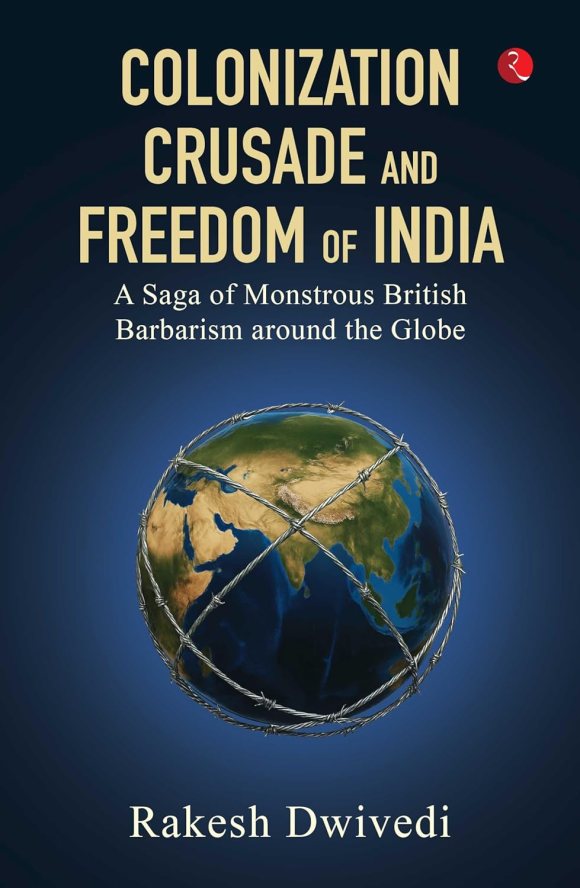
Categories
Greetings

Happy Birthday Borderless

Borderless Journal started on March, 14, 2020. When the mayhem of the pandemic had just set in, we started as a daily with half-a-dozen posts. Having built a small core of writings by July, 2020, we swung to become a monthly. And we still continue to waft and grow…

Art by Sohana Manzoor

We like to imagine ourselves as floating on clouds and therefore of the whole universe. Our team members are from multiple geographies and we request not to be tied down to a single, confined, bordered land. We would welcome aliens if they submitted to us from another galaxy…

On our Fifth Anniversary, we have collected celebratory greetings from writers and readers stretched across the world who share their experience of the journal with you and offer suggestions for the future. We conclude with words from some of the team, including my own observations on being part of this journey.

Aruna Chakravarti

Heartiest congratulations to Borderless on the occasion of its fifth anniversary! Borderless, an international journal, has the distinction of carrying contributions from many eminent writers from around the world. From its initiation in 2020, it has moved from strength to strength under the sensitive and skillful steering of its team. Today it is considered one of the finest journals of its kind. I feel privileged to have been associated with Borderless from its very inception and have contributed substantially to it. I wish to thank the team for including my work in their distinguished journal. May Borderless move meaningfully towards the future and rise to greater and greater heights! I wish it every success.

Professor Fakrul Alam

Five years ago, when Borderless set out on its literary voyage, who would have imagined the length and breadth of its imaginative crossings in this span of time? The evidence, however, is digitally there for any reader who has seen at least some of its issues. Creative writing spanning all genres, vivid illustrations, instant links giving resolute readers the option to track a contributor’s creative voyaging—here is boundless space always opening up for those seeking writing of considerable variety as well as originality. The best part here is that unlike name-brand journals, which will entice readers with limited access and then restrict their spaces unless you subscribe to them, all of Borderless is still accessible for us even though it has attracted a wide readership in five years. I certainly hope it will stay that way.

And what lies ahead for Borderless? Surely, more opportunities for the creative to articulate their deepest thoughts and feelings in virtual and seemingly infinite space, and innumerable avenues for readers to access easily. And let us hope, in the years to come Borderless will extend itself to newer frontiers of writing and will continue to keep giving space to new as well as emerging writers from our parts of the world.

May the team of Borderless, continue to live up to their claim that “there are no boundaries to human imagination and thought!”

Radha Chakravarty

Since its inception, Borderless Journal has remained true to its name, offering a vital literary space for writers, artists and scholars from around the world to engage in creative dialogue about their shared vision of a world without borders. Congratulations Borderless, and may your dream of global harmony continue to inspire.

Somdatta Mandal

According to the famous Chicana academic and theorist Gloria Anzaldua, the Borderlands are physically present wherever two or more cultures edge each other, where peopIe of different races occupy the same territory, where under, lower, middle and upper classes touch, where the space between two individuals shrinks with intimacy. Hatred, anger and exploitation are the prominent features of this landscape. There, at the juncture of cultures, languages cross-pollinate and are revitalized; they die and are born. Borders are set up to define the places that are safe and unsafe, to distinguish us from them. A border is a dividing line, a narrow strip along a steep edge. A borderland is a vague and undetermined place created by the emotional residue of an unnatural boundary. It is in a constant state of transition. The prohibited and forbidden are its inhabitants.

About five years ago, when a new online journal aptly called Borderless Journal was launched, these ideas which we had been teaching for so long were simply no longer applicable. Doing away with differences, with limits, it became a suitable platform where disparate cultures met, where people from all disciplines could express their views through different genres, be it poetry, translation, reviews, scholarly articles, creative writing and so on. Many new writers from different parts of the world became regular contributors to this unique experimentation with ‘borderlessness’ and its immense possibilities are very apt in this present global context where social media has already changed many earlier notions of scholarship, journalism, and creativity.

Jared Carter

In its first five years Borderless has become an important witness for international peace and understanding. It has encouraged submissions from writers in English based in many different countries, and has offered significant works translated from a wide range of national literatures. Its pages have featured writers based in India, Pakistan, China, Taiwan, Japan, South Korea, Australia, the UK, and the US. In the future, given the current level of world turmoil, Borderless might well consider looking more closely toward Africa and the Middle East. As the magazine continues to promote writing focused on international peace and freedom, new horizons beckon.

Teresa Rehman

The best part of this journal is that it is seamless and knows no margins or fringes. It is truly global as it has cut across geographical borders and has sculpted a novel literary genre called the ‘borderless’. It has climbed the mountains of Nepal, composed songs on the Brahmaputra in Assam, explored the hidden kingdom of Bhutan, walked on the streets of Dhaka, explored the wreckage of cyclones in Odisha, been on a cycling adventure from Malaysia to Kashmir, explored a scenic village in the Indo-China border, taken readers on a journey of making a Japanese-Malayalam dictionary, gave a first-hand account of the war in Bosnia-Herzegovina and described the syncretic culture of Bengal through its folk music and oral traditions. I hope it continues telling the untold and unchartered stories across mountains, oceans and forests.

Kirpal Singh

In a world increasingly tending towards misunderstandings across borders, this wholesome journal provides a healthy space both for diverse as well as unifying visions of our humanity. As we celebrate five distinguished years of Borderless Journal, we also look forward to another five years of such to ensure the underlying vision remains viable and visible as well as authentic and accurate.

My heartfelt Congratulations to all associated with this delightful and impressive enterprise!

Asad Latif

The proliferation of ethnic geographies of identity — Muslim/Arab, Hindu/Indian, Christian/Western, and so on — represents a threat to anything that might be called universal history. The separation and parcelling out of identities, as if they are pre-ordained, goes against the very idea (proclaimed by Edward Said) that, just as men and women create their own history, they can recreate it. Borders within the mind reflect borders outside it. Both borders resist the recreation of history. While physical borders are necessary, mental borders are not. This journal does an admirable job in erasing borders of the mind. Long may it continue to do so.  

Anuradha Kumar

I have been one of Borderless’ many readers ever since its first issue appeared five years ago. Like many others, I look forward with great anticipation to every issue, complete with stories, , reviews, poems, translations, complemented with interesting artwork. 

Borderless has truly lived up to its name. Within its portal, people, regardless of borders, but bound by common love for literature, and the world’s heritage, come together. I would wish for Borderless to scale even greater heights in the future. As a reader, I would very much like to read more writers from the ‘Global South’, especially in translation. Africa, Asia and Australasia are host to diverse languages, many in danger of getting lost. Perhaps Borderless could take a lead in showcasing writers from these languages to the world. That would be such an invaluable service to readers, and the world too.   

Ryan Quinn Flanagan

To me, Borderless Journal is a completely free and open space.  Topics and styles are never limiting, and the various writers explore everything from personal travelogues to the limp of a helpful druggist.  Writers from all corners of the globe contribute, offering a plethora of unique voices from countless circumstances and walks of life. Because of this openness, Borderless Journal can, and likely will continue to grow and expand in many directions simultaneously.  Curating and including many new voices along the way.  Happy 5th Birthday to a truly original and wonderfully eclectic journal!

George Freek

I feel the Borderless Journal fills a special spot in the publishing world. Unlike many journals, which profess to be open-minded and have no preference for any particular style of poetry, Borderless actually strives to be eclectic. Naturally, it has its own tastes, and yet truly tries to represent the broad spectrum which is contemporary poetry. I have no advice as to where it should go. I can only say keep up the good work, and stooping to a cliche, if it’s not broken, why try to fix it?

Farouk Gulsara

They say time flies when one is having fun. It sure does when a publication we love regularly churns out its issues, month after month, for five years now.

In the post-truth world, where everybody wants to exert their exclusivity and try to find ways to be different from the person standing next to them, Borderless gives a breath of fresh air. At a time when neighboring countries are telling the world they do not share a common history, Borderless tries to show their shared heritage. We may have different mothers and fathers but are all but “ONE”! 

We show the same fear found in the thunderous sounds of a growling tiger. We spill the exact hue of blood with the same pain when our skin is breached. Yet we say, “My pain is more intense than yours, and my blood is more precious.” Somehow, we find solace in playing victimhood. We have lost that mindfulness. One should appreciate freedom just as much as we realise it is fragile. Terrorism and fighting for freedom could just be opposing sides of the same coin.

There is no such thing as a just war or the mother of all wars to end all wars as it has been sold to us. One form of aggression is the beginning of many never-ending clashes. Collateral damage cannot be justified. There can be no excuse to destroy generations of human discoveries and turn back the clock to the Stone Age. 

All our hands are tainted with guilt. Nevertheless, each day is another new day to make that change. We can all sing to the tune of the official 2014 World Cup song, ‘Ola Ola,’ which means ‘We are One.’ This is like how we all get together for a whole month to immerse ourselves in the world’s favourite sport. We could also reminisce about when the world got together to feed starving kids in Africa via ‘Band-Aid’ and ‘We Are the World’. Borderless is paving the way. Happy Anniversary!

Ihlwha Choi

I sincerely congratulate Borderless Journal on its 5th anniversary. I am always delighted and grateful for the precious opportunity to publish my poetry in English through this journal. I would like to extend my special thanks for this.

Through this journal, I can read a variety of literary works—including poetry, essays, and prose—from writers around the world. As someone for whom English is a foreign language, it has also been a valuable resource for improving my English skills. I especially enjoy the frequent features on Rabindranath Tagore’s poetry, which I read with great joy. Tagore is one of my favourite poets.

I have had the privilege of visiting Santiniketan three times to trace his legacy and honor his contributions to literature and education. However, one aspect I find a little disappointing is that, despite having published over 30 poems, I have yet to receive any feedback from readers or fellow writers. It would be wonderful to have such an opportunity for engagement.

Additionally, last October, a Korean woman received the Nobel Prize in Literature—the first time an author from South Korea has been awarded this honor by the Swedish Academy. She is not only an outstanding novelist but also a poet. I searched for articles about her in Borderless Journal but was unable to find any. Of course, I understand that this is not strictly a literary newspaper, but I would have been delighted to see a feature on her.

I also feel honoured that one of my poems was included in the anthology Monalisa No Longer Smiles: An Anthology of Writings from across the World. I hope such anthologies will continue to be published. In fact, I wonder if it would be possible to compile and publish collections featuring several poems from contributing poets. If these were made available on Amazon, it would be a fulfilling experience for poets to reach a broader audience.

Moving forward, I hope Borderless Journal will continue to reach readers worldwide, beyond Asia, and contribute to fostering love and peace. Thank you.

Prithvijeet Sinha

The journey of authorship, self-expression and cultural exchange that I personally associate with Borderless Journal’s always diverse archives has remained a touchstone ever since this doorway opened itself to the world in 2020. Going against the ramshackle moods of the 2020s as an era defined by scepticism and distances, The journal has upheld a principled literary worldview close to the its pages and made sure that voices of every hue gets representation. It’s also an enterprise that consistently delivers in terms of goodwill and innocence, two rare traits which are in plenteous supply in the poems, travelogues, essays and musings presented here.

The journey with Borderless has united this writer with many fascinating, strikingly original auteurs, buoyed by a love for words and expression. It is only destined for greatness ahead. Happy Birthday Borderless! Here’s to 50 more epochs.

From Our Team

Bhaskar Parichha

As Borderless Journal celebrates its fifth anniversary, it is inspiring to see its evolution into a distinguished platform for discourse and exploration. Over the years, it has carved a unique niche in contemporary journalism, consistently delivering enlightening and engaging content. The journal features a variety of sections, including in-depth articles, insightful essays, and thought-provoking interviews, reflecting a commitment to quality and fostering dialogue on pressing global issues.
The diverse contributions enrich readers’ understanding of complex topics, with a particular focus on climate change, which is especially relevant today. By prioritising this critical issue, Borderless informs and encourages engagement with urgent realities.
Having been involved since its inception, I am continually impressed by the journal’s passion and adaptability in a changing media landscape. As we celebrate this milestone, I wish Borderless continued success as a beacon of knowledge and thoughtful discourse, inspiring readers and contributors alike.

Devraj Singh Kalsi

Borderless Journal has a sharp focus on good writing in multiple genres and offers readable prose. The platform is inclusive and does not carry any slant, offering space to divergent opinions and celebrating free expression. By choosing not to restrict to any kind of ism, the literary platform has built a strong foundation in just five years since inception. New, emerging voices – driven by the passion to write fearlessly – find it the ideal home. In a world where writing often gets commercialised and compromised, Borderless Journal is gaining strength, credibility, and wide readership. It is making a global impact by giving shape to the dreams of legendary poets who believed the world is one.  

Rakhi Dalal

My heartiest congratulations to Borderless and the entire team on the fifth Anniversary of its inception. The journal which began with the idea of letting writing and ideas transcend borders, has notably been acting as a bridge to make this world a more interconnected place. It offers a space to share human experiences across cultures, to create a sense of connection and hence compassion, which people of this world, now more distraught than ever, are sorely in need of. I am delighted to have been a part of this journey. My best wishes. May it continue to sail through time, navigating languages, literature and rising above barriers!

 Keith Lyons

Is it really five years since Borderless Journal started? It seems hard to believe. 

My index finger scrolls through Messenger chats with the editor — till they end in 2022. On the website, I find 123 results under my name. Still no luck. Eventually, in my ‘Sent’ box I find my first submission, emailed with high hopes (and low expectations) in March 2020. ‘Countdown to Lockdown’ was about my early 2020 journey from India through Thailand, Malaysia, Indonesia, and Australia to New Zealand as COVID-19 spread.

Just like that long, insightful trip, my involvement with Borderless Journal has been a journey. Three unique characteristics stand out for me. 

The first is its openness and inclusiveness. It features writers from all over the globe, with various contributions across a wide range of topics, treatments and formats. 

The second feature of the journal is its phenomenal growth, both in readers and writers, and in its reach. Borderless really does ‘walk the talk’ on breaking down barriers. It is no longer just a humble literary journal — it is so much bigger than that. 

The third unique aspect of Borderless is the devotion endowed in nurturing the journal and its contributors. I love the way each and every issue is conceived, curated, and crafted together, making tangible the aspiration ‘of uniting diverse voices and cultures, and finding commonality in the process.’

So where can we go from here? One constant in this world is change. I’d like to think that having survived a global pandemic, economic recession, and troubling times, that the core values of Borderless Journal will continue to see it grow and evolve. For never has there been a greater need to hear the voices of others to discover that we are all deeply connected.

Rhys Hughes

I have two different sets of feelings about Borderless Journal. I think the journal does an excellent job of showcasing work from many different countries and cultures. I want to say it’s an oasis of pleasing words and images in a troubled sea of chaos, but that would be mixing my metaphors improperly. Not a troubled sea of chaos but a desert of seemingly shifting values. And here is the oasis, Borderless Journal, where one can find secure ideals of liberty, tolerance, peace and internationalism. I appreciate this very much. As for my other set of feelings, I am always happy to be published in the journal, and in fact I probably would have given up writing poetry two years ago if it wasn’t for the encouragement provided to me by regular publication in the journal. I have written many poems especially for Borderless. They wouldn’t exist if Borderless didn’t exist. Therefore I am grateful on a personal level, as a writer as well as a reader.

Where can Borderless Journal go from here? This is a much harder question to answer. I feel that traditional reading culture is fading away year after year. Poets write poetry but few people buy poetry books. They can read poems at Borderless for free and that is a great advantage. I would like to see more short stories, maybe including elements of fantasy and speculative fiction. But I have no strategic vision for the future of the journal. However, one project I would like to try one day is some sort of collaborative work, maybe a big poem with lots of contributors following specific rules. It’s an idea anyway!

Meenakshi Malhotra

Borderless started with a vision of transcending the shadow lines and has over time, evolved into a platform where good writing from many parts of the world finds  a space , where as “imagination bodies forth/ The forms of things unknown, the poet’s pen/Turns them to shapes and gives to airy nothing/A local habitation and a name.”

It has been a privilege to be a part of Borderless’s journey over the last few years. It was a journey based on an idea and a vision. That dream of creating solidarity, of transcending and soaring over borders and boundaries, is evident in almost every page and article in the journal.

Mitali Chakravarty

Looking at all these responses, thinking on what everyone has said, I am left feeling overwhelmed.

Borderless started as a whimsical figment of the imagination… an attempt to bring together humanity with the commonality of felt emotions, to redefine literary norms which had assumed a darker hue in the post Bloomsbury, post existentialist world. The journal tried to invoke humour to brings smiles, joys to create a sense of camaraderie propelling people out of depression towards a more inclusive world, where laughter brings resilience and courage. It hoped to weave an awareness that all humans have the same needs, dreams and feelings despite the multiple borders drawn by history, geographies, academia and many other systems imagined by humans strewn over time.  

Going forward, I would like to take up what Harari suggests in Homo Deus — that ideas need to generate a change in the actions of humankind to make an impact. Borderless should hope to be one of the crucibles containing ideas to impact the move towards a more wholesome world, perhaps by redefining some of the current accepted norms. Some might find such an idea absurd,  but without the guts to act on impractical dreams, visions and ideas, we might have gone extinct in a post-dino Earth.

I thank the fabulous team, the wonderful writers and readers whose participation in the journal, or in engaging with it, enhances the hope of ringing in a new world for the future of our progeny.