The good folk of Black Rock, Montana, USA, were not overly enthusiastic that a small, travelling circus would be coming to their peaceful town to make a one-night performance. They had heard disturbing stories about this circus from people out of state who had seen it or pretended to have seen it. Rip Branco, the mayor of Black Rock, felt a bit reluctant about authorising the performance, but the owners’ arguments won him over, half-heartedly. Besides, the children of Black Rock had never had the pleasure of seeing a circus, nor their parents for that matter.
So, many posters of the coming circus were nailed or pasted on the outer walls of the townhall, the school and at the farmers’ and factory workers’ cooperatives.
Strange tales circulated throughout the region: the performers originated from the Old World speaking alien tongues. Hearsay spread that many of the performers were abnormal individuals, freaks of nature, they said; and that the whole show was a razzle-dazzle of shamelessness, cynicism. What if this hearsay was the truth! The majority of the folks of Black Rock were convinced of its veracity.
In spite of all this hullabaloo the circus rumbled into town. Through the narrow, main avenue of Black Rock, lined with shops, banks, the townhall, the police-station and the Wednesday open-air market, crawled ten or eleven caravans painted in colourful figures of clowns, mountebanks, lions and elephants, and odd looking creatures whose appearances the townspeople, gaped at wide-eyed. They watched this slow-moving spectacle as they stood on each side of the avenue like rows of sentinels or pine-trees. The rear-guard of the caravan was composed of a cage with two dozing lions, behind whom plodded two baby elephants, lethargically swaying their trunks, every now and then emitting a trumpeting cry as if they were announcing the arrival of the courtly cortege …
No one uttered a word as the caravan disappeared into the weedy fields outside the town, designated by the mayor for their one-night performance.
Before the astonished eyes of the townsfolk, many of whom had rushed out to the field leaving their shops unoccupied, men, women and other ‘odd’ individuals scrambled to and thro, pitching, erecting, raising, until the top-tent loomed large and welcoming before them. Admission was a mere two dollars, a comfortable fee for the good people of Black Rock, a fee, too, considered a largesse on the part of the owners given the fact that the performers had no peer on earth … Or so they said.
At eight o’clock sharp the flaps of the big-top were flung open to the mistrustful but curious folks of Black Rock. Mayor Rip Branco, with his wife and two young boys, was the first to be admitted, then the town’s children, all to be seated in the first six or seven rows of the grandstand. Next to shuffle in were the farmers, factory workers, bankers and shopkeepers with or without their wives, conducted to the stalls flanking the grandstand. No animals were permitted. Many of the men grumbled protestations or sardonic remarks, but the ticket seller, a smiling dwarf sporting a torero costume, took no heed.
When the spectators had settled in comfortably the lights went out. A blast of music boomed out of the pitch black. Trombones, trumpets, hand-drums and tambourines filling the big-top with rhythms and melodies very foreign to the ears of the spectators. A huge spotlight fell on five or six colourfully-dressed individuals in the ring masquerading as some sort of rag-time band, blowing or banging their instruments as they danced about in happy-go-lucky abandon. The ring-master stepped out of this motley crew, pushing and shoving them aside, lashing out with his whip towards the more recalcitrant ones, who, in defiance of the snapping whip, blew out scales of disobedience. He bowed to the spectators in the most obsequious manner, doffing his black top hat. One of the musicians handed him a huge megaphone and he bellowed :
“Ladies and gents … and children too, tonight is the night of all nights, one you will never forget. All of you will witness the most rollicking merry-makers that have stalked our good earth; the most incorrigible buffoons who have ever lived. Your eyes will feast upon a jamboree of dancing, jestering and cavorting oddities whose dazzling shenanigans have always made children shriek, women scream, men doubt their senses. But I can assure you every stunt, every act, every gesture, however burlesque, is of the utmost authenticity.” Whether all the spectators were able to decipherthe ring-master’s opening tirade is difficult toassess. In any case, he went on: “ Now, let me present the strongest man on Earth, the nameless giant of Central Asia.” And as he cracked his whip the musicians fled into the darkness behind him. Out of that mysterious dark, the nameless giant charged into the middle of the arena like a raging bull. The master of ceremonies fled as if for his life. Snorting and grunting, the colossus, clad only in a tiger-skin loin-cloth, flexed his biceps, threw out his mighty chest, tightened his thigh muscles. He was indeed a mountain of muscle. Meanwhile popcorn and cotton candy were being distributed to the children, free of charge. Mayor Branco and his family also benefitted from this boon …
The strongman made horrible grimaces at the children who shrank back in their seats, squealing. He stomped about snarling and growling, flaunting his muscle-laden body until out rushed seven little dwarves dressed as toreros, all of them brandishing a bullfighter’s cape. They swarmed about the now enraged strongman, waving their capes and taunting him with obscene gestures and cuss words. The strongman charged into them head down like a bull, snorting and panting, swinging his bull-like neck from left to right, knocking a few dwarves to the sandy soil of the arena. Just as the crowd began to display overt displeasure at this unseemly spectacle with hoots and hollers (except the children who were cheering on both), two dwarves jumped up on to the strongman’s massive shoulders, followed promptly by all the rest, where gradually they formed a little pyramid atop this mountain of a man, who presently much appeased, pranced about in the spotlight with his ‘captured’ dwarves’, singing a song in some alien tongue. The dwarves hectored the dwarf-bearer, chaffing him with the crudest of names, smacking his massive face or slapping the top of his bald head with pudgy hands. With one mighty shake of the head, the strongman shook them all off into the air like so many swarms of flies, they, tumbling and rolling away, far enough from him where they continued to gesture indecorously.
Many spectators began to boo and hoot. Others laughed and cheered, especially the children, who munched happily on their cotton-candy and popcorn. “Shame! Shame!” cried out several women from the stalls. But their rebukes were drowned out by two or three applauding groups of farmers who apparently had been drinking before the performance. In fact many men were drunk, and the majority were taking much delight in this unusual spectacle …
Just then, at the crack of the ring-master’s whip, the dwarves rolled out of the arena and the strongman stomped away, bowing to the crowd. Into the ring now appeared five very weird-looking creatures, and behind them, as if by magic, a long, high tightrope that had been erected, held up by two very high wooden ladders. The spectators were baffled: humans or animals? Three, perhaps women, had faces of lions, whose ‘manes’ grew out of their cheeks, rolling in thick strands down to their feet. It was a horrible sight! But more horrible still were the two-headed and the mule-faced women, dark faces drooping down to their necks. Gasps rose from the crowd. Cries of indignation followed.
“Freaks ! Monsters!” they rasped and raged at the smiling ring-master who introduced his acrobats and trapeze performers, one by one, as the finest in the land whilst they speedily climbed up the ladders, three to the left, two to the right. At the top, they tip-toed out on to the thin wire where in burlesque abandon they danced and pranced and sang, the wire swaying to and fro. One or two juggled little red balls, tossing them over the heads of the others who attempted to catch them. Far below, the master of ceremonies whipped his whip and the merry acrobats danced and pranced all the more ardently, one or two on one foot, as the wire rocked, rolled and pitched like a boat. Terrified shrieks rose from the now standing crowd. Farmers and factory workers showed their fists. Women shouted abuse. As to the children and Mayor Branco, they clapped in rhythm to the singing quintet rocking and rolling on that tightrope.
At that point Mayor Branco turned towards the displeased crowd behind him, confused about what attitude to adopt. There was no doubt that the acrobats and trapeze performers were genuine artists ; their antics on that high wire brooked no belief of beguilement. And however ‘freakish’ they appeared to be, this awful birth-born deformity should welcome a hearty appraisal. Which the good mayor did from the bottom of his heart when the five performers had slid down the ladders, taken their bows in the middle of the ring and disappeared behind the rear flaps of the top-tent.
Much of the crowd were on its feet, red-faced (due to their drinking ?), shouting down to the ring-master as he cracked his whip violently: once … twice … thrice, signal which brought out two ferocious, roaring lions[1] shaking their manes. The spotlights followed their proud steps as they neared the front rows of the grandstands. There they sniffed the cotton candy of the now terrified children who recoiled in their seats. Their parents rushed to their rescue, but this was unnecessary, for another crack of the whip — and the accompanying spotlight — brought out a three-legged man and a pin-headed man. They strolled towards the sniffing lions, calling them by their names. One of the lions began lapping the popcorn out of the outstretched hands of several children who squealed in wary delight. Then the lion licked those charitable hands in grunting gratitude.
The pin-headed man whistled. The huge beast turned and trotted to him. He waved to the crowd then opened the lion’s mouth, pushing his pin head into it. As to the three-legged man, he had hopped on to the other lion’s back, two legs at its flanks and one lying over its fluffy mane. With a deafening yelp and roar, they galloped around the ring as if they were at a rodeo show, rushing around the pin-headed man whose whole tiny body had by now completely disappeared in that lion’s open mouth. The crowd held their breaths uncertain of the stance they should take on this stunt. Could a man possibly crawl into a lion’s massive maw ? The drunken farmers laughed grossly. Their wives sneered in contempt. The children sat in excited expectation.
Meanwhile another spotlight had fallen on a beautiful milky-white woman clad in a silken gown, standing upright against a large board placed behind her. Another spotlight swung to the left where a legless man, using his arms like a pair of crutches, had positioned himself ten or fifteen feet from the upright woman, a huge leather belt girding his chest from which hung dozens of kitchen knives. Between this scene and the lion-tamers’ antics, the spectators remained nonplussed, no longer hooting or hectoring.
The legless man swiftly took a knife and threw it at the lovely girl; it drove into the back board a quarter of an inch from the crown of her head. Here the crowd puffed in awe. Many women covered their eyes whilst the children were all eyes! He threw another and another. After each knife thrown, the crowd gasped a huge gasp! The legless man continued his act, each knife working rapidly downwards from the woman’s head, around her exquisite shoulders, along her slim, graceful hips, lengthwise her bare, slender legs until reaching those minute feet of hers. When he had finished his knife-throwing performance, the beaming, long-haired woman stepped out from the contour of the knives, the spotlight proudly exhibiting her ravishing silhouette configured on the board. With a gesture of triumph, she pointed to that silhouette, then glided over to the legless man, took him by the arm and both bowed reverently to the crowd. The men jumped up cheering wildly, either out of respect for the knife-throwing performer or for the ravishing beauty of the woman. As to their wives, they remained seated, smugly looking towards the ring, disregarding their drunken husbands’ sonorous applause. Mayor Branco was on his feet applauding along with his two boys, his wife tugging at his sleeve to sit so as not to make a spectacle of himself.
All of a sudden two spotlights swept over the galloping lion and the one that, it would seem, had all but swallowed the pin-headed man. But no ! Look … there … The lion yawned a wide yawn and out of that yawn the pin-headed man leapt, running about the ring crying out: “I’ve lost me head ! I’ve lost me head!” The crowd, stunned by these uncouth shenanigans, again began yelling insults. As to the galloping lion and its whooping cavalier, they darted to the right, where in front of them a huge hoop had been magically placed; a fiery hoop whose leaping flames hissed and sizzled. Through the hoop they jumped followed by the other lion, tailed by the waddling pin-headed man who dived through the hoop, tumbled over on the other side, got up, dusted himself off, then bowed to the hypnotised spectators. The children at once howled with joy. The adults, hesitant as to the ‘quality’ of this extravagant act, remained stoic, frowning.
The band struck up a local tune, horns and drums ushering in a motley gaggle of clowns rushing about the ring like escaped madmen from an asylum. In their frantic scuffle, two or three of them were tossing about a strange object, flinging it about like a football. A sudden shiver of horror swept through the crowd: those merry-making buffoons were passing a living torso to one another! A man without arms or legs! He had a huge smile on his face as he sailed in the air from one pair of arms to another. Then the clowns broke into a song: “ Zozo the clown and his funny hat, patches on his pants and he’s big and fat, long flappy shoes and a round, red nose, makes people laugh wherever he may go!” These lyrics were repeated without respite as they played football with the torso, who, and it must be stated here, was crying out for joy!
Enough was enough! “ Monsters! Monsters!” cried out groups of red-faced, infuriated men from the back of the stalls, screwing up their eyes. Rotten tomatoes were thrown at the shameless buffoons by the farmers who had brought them along for the occasion. Ladies screamed. The children sat in dazed awe, following each pass of the laughing torso as if they were following a football match. The frolicking clowns, undismayed by the tomatoes, performed cartwheels and somersaults from one end of the ring to the other.
But it was the following scene that left the crowd dumbfounded. As the laughing torso was thrown from clown to clown, spurts of orange flames spouted from his mouth! Long fiery flames that carved out tunnels of blazing light as he arched high in the air. This surreal scene rendered the crowd, momentarily, mute with puzzled, ambiguous emotions. They soon, however, regained their initial, infuriated state.
In the last rows of the stalls, rowdies were making a tremendous row, brawling with the bankers and notaries who had shown, up till then, an impassioned interest in these performances. Fisticuffs broke out. Faces were slapped or punched. Hair and beards were pulled. Clothes torn. Ladies knocked over. Things were indeed getting out of hand. Whistles blew. The local security guards rushed into the upper stalls roughly handling the more pugnacious men, untangling the tangles of rioters one by one, unknotting the knots of brawlers that rocked the stalls.
At that stormy moment, trumpets, trombones, drums and cymbals sounded below, silencing the brawlers for a brief moment. Then from out the side flaps two baby elephants charged, trunks held high, trumpeting louder than the fanfare! Atop them, seated in howdahs apparelled in the most royal regalia were yelping mahouts fitted out in cowboy costumes, waving their huge cowboy hats at the now stupefied spectators. The elephants chased the clowns around the ring, grabbing a few with their trunks, rolling them up then flinging them into the air. The elephants had gone amok, lifting their trunks for all to see their huge flabby smiles. The living torso was passed high over the mahouts’ reach, mouthing furious flames galore, landing with a thud in the arms of a receiving clown on the other side. The children in the front rows were on their feet howling with merriment, laughing along with the clowns and elephants as the chase continued on its merry-go-round way. And here the band struck up a favourite tune to which all the clowns sang: “Zozo the clown and his funny hat, patches on his pants and he’s big and fat, long flappy shoes and a round, red nose, makes people laugh wherever he may go.”
This boisterous chorus was joined by children, some of whom had internalised the tune. Their voices rose in unison, rising far above the brawling, bickering and rioting behind them in the upper stalls. To tell the truth, some of the farmers, factory workers and bankers had also joined in the singing. How they enjoyed those yelping ‘cowboys’ whooping it up atop the baby elephants.
Mayor Branco sized up the maddening bedlam, reluctant to decide who were the madder: the performers or the crowds! Yet, deep down, oh how he was enjoying himself that evening. For him, it would be the most memorable night of his life. And I will add here, for most of the other good folk of Black Rock, be they the howling children, the appalled women or the obdurate men …The madness grew even madder when from out of the side flaps the seven little dwarves scrambled, dashing up to the elephants, waving their capes. One or two of these mischievous acrobats had been on stilts and were trying to distract the rampaging mahouts with their capes. The mahout-cowboys riposted by letting fly their lassoes, the nooses catching one or two of the rascally dwarves who were toppled from the stilts and dragged mercilessly in the wake of the plodding elephants. The ring had become a veritable pandemonium of lunacy and delirium …
Suddenly all the spotlights went out. A sudden lull crept over the ring, creeping stealthily up into the stands. A deep lull during which time not one drunken cry from the adults, not one choking laughter from the children, not one trumpet from the elephants nor yelp from either the cowboy-mahouts or clowns or dwarves were heard. The lull must have lasted a minute or two …
The lights suddenly flooded the ring where all the performers and animals had mustered in humble expectancy. Silently they stood (or were held!) searching out the crowd for compassion, understanding, appraisal. The master of ceremonies stepped out from amongst them. He doffed his top hat :
“Ladies, gents and children. The performances that you have experienced tonight will not go unnoted in the chronicles of Black Rock.” (Whether this opening remark meant to be ironic is not for your narrator to say. In any case, it provoked a few snickers from the upper stalls.) “Yes, many of you have exhibited displeasure and resentment. Monsters you cry out? Freaks you bellow in bitter tones! Well, yes, if by monsters you mean these humble unfortunates who have had the courage to show themselves, to exhibit themselves to the public as true artists, and not sulk in self-pity or hide out like criminals or unwanted wretches out of the righteous eye of the public. But why display such ill-feelings towards them, may I ask? Because many of my performers suffer from birth deformities? Because they are physically unlike normal people? No! Their terrible deformities do not, and will never deprive the public the goodness and nobleness of their hearts of gold … their feelings of sincerity when performing for you. But this sincerity must be reciprocal. If not, their disfigurement will be interpreted as a ticket to the streets, a paid fare for lethal medical experiments in clinics, tearful departures for the zoos where they will be put into cages like savage animals … We are a grand and hard-working family whose every member holds equal status. But their livelihood, ladies and gents, depends on your good will, your protection against dangerous individuals whose illicit, murderous intentions would have killed them off long ago or maimed them even more. Here, within the sanctuary of this vast tent, look not at those deplorable disfigurements, but consider fairly and honourably their long, long hours of labour, their unquestionable talent, their dauntless courage and human dignity.”
The fanfare struck up one of rag-time tunes to whose familiar melodies all the children stamped and clapped. Their mothers and fathers also clapped. Farmers, shop-keepers, bankers and factory workers alike imitated the gaiety of the children. Even the security guards joined in the revelry. As to those adamant hooters and rioters, they stalked out of the top-tent, raising their fists, spitting out drunken obscenities … Which were drowned out by the general mirth and merriment.
All the performers bowed. The baby elephants held their trunks high, the lions shook their proud, bushy manes. With the crack of the whip the lights went out.
The good folk of Black Rock Montana filed out of the top-tent singing the Zozo tune. Mayor Rip Branco was the last to leave, a bright, beaming smile on his round face.
And as Shakespeare once had occasion to record: All’s well that ends well.
[1] The story is set in indeterminate times (the author claims around 1970s) before animals were banned from performing in circuses.
Paul Mirabile is a retired professor of philology now living in France. He has published mostly academic works centred on philology, history, pedagogy and religion. He has also published stories of his travels throughout Asia, where he spent thirty years.
.
PLEASE NOTE: ARTICLES CAN ONLY BE REPRODUCED IN OTHER SITES WITH DUE ACKNOWLEDGEMENT TO BORDERLESS JOURNAL
How can anybody comprehend one of the largest and most ancient cities in the world? Keith Lyons goes up high, underground, underwater and down some dead-end alleyways as he tries to understand in just three days what took 3,000 years of history to create.
Day One*
My fascination with China started at an early age. I remember as a child leaving through the Time-Life World Library series volume for China (1965); its photographs grainy black and white, and tinted colour, only serving to increase the mystique about the nation then isolated behind the Bamboo Curtain at the height of Mao’s Cultural Revolution. Back then, to be able to stand on the Great Wall of China, or to see the vastness Tiananmen Square seemed as probable as going on a school trip to the Moon.
I was in my late 20s when I first visited the Middle Kingdom, and through a series of events, choices, and decisions, later found myself living and working in the ethnic borderlands of southwest China for more than a dozen years from the mid-2000s. During that time in-country, as well as before and after during my various travels throughout China, how many times do you think I visited the capital, Beijing? Half-a-dozen times? Or at least 10 times? Sorry. I have to confess, even though I ‘knew’ Beijing through books and documentaries — and creating travel itineraries for tour groups — I never once visited in person the Chinese capital.
Yes, that’s right. I crafted detailed, tailor-made itineraries for first-time visitors to Beijing, to give them an insider’s experience of the capital, without getting within a thousand kilometres of the great city. My excuses include:
1 – China is vast, and almost the same size as Europe;
2 – It would take 3 days by train from my courtyard house in Yunnan’s Lijiang to the Forbidden City, and I wasn’t up for such a long journey
3 – To be honest, I wasn’t as enthralled about Beijing after hearing mixed reports from other travellers, so I decided I could live (and/or die) without casting my eyes upon the sights and wonders of Beijing.
A small window of opportunity opened to me recently when the stars aligned between jobs and other responsibilities. I had turned down the invitation to speak at a national tourism conference about the future of China’s tourism development post-pandemic, but I got to visit China for the first time since 2019, making an extended stopover in the capital. A visa-exemption initiative recently re-instated to encourage tourism without the need for pre-approved visas meant I could theoretically apply for a 144-hour transit stamp.
So, I touched down at Beijing’s Capital International Airport (IATA code PEK) early one morning after an overnight flight from the southern hemisphere. This being my first time without a pre-approved (and expensive) visa I was a little nervous, and my fears were not allayed when no one was staffing the 144-hour visa desk. Was this the first great wall I had to overcome? I got sent from one immigration queue to another, a couple of times having to go against the flow of newly-arriving passengers and slip upstream through security. When eventually an official arrived to process the paperwork and issue the transit stamp, I had to show all my flight and accommodation bookings; not an easy task when you can’t connect to the airport wi-fi.
I was sweating, not just because of the late summer heat, but also because I had booked a bus tour to the Great Wall that was leaving at 8 a.m. from central Beijing, a train and subway ride away. “Dear Sir, our assembly point is at Exit C of Dengshikou Subway Station on Line 5,” read my instructions. “You can see the guide wearing a blue vest. Please arrived at the assembly point 10 minutes early.”
Having a Chinese bank card, a map preloaded onto my phone, and some decent residual Mandarin skills, along with no reservations about queue-jumping as payback for being delayed, I found an ATM, and headed to the exit of the massive airport. There were only a few seconds to admire the impressive roof arching over Terminal 3, designed by Sir Norman Foster for the 2008 Beijing Olympics as I marched across the marble floors towards the Capital Airport Express. It was just after 7 a.m. but already I could see how Beijing Capital Airport is — or was — the second busiest airport in the world.
Transferring from the airport line train downtown to the metro, the time on my phone was counting down towards the departure time. I worried that if I missed my bus, my whole trip would be ruined; and that such an inauspicious start to my Beijing exploration would cause a chain reaction of delays, missed opportunities and regret. Maybe I’d never make it to the Wall. Then I thought: take it easy, it’s not the destination, it’s the journey. I studied the Chinese characters for Dengshikou, recognising the first Sinogram as meaning light or lantern.
Arriving at the subway station, I quickened my pace up the stairs and escalators to emerge into sunlight at Exit C. It was 7:59. Fortunately, a blue-vested person was standing in the middle of the carpark. “Do I have time to grab something to eat or drink?” I asked the ZANbus guide in my slightly rusty Mandarin. “No. We’re leaving right now,” she said, ushering me onto the bus.
“But we have bottles of water on sale onboard.”
My online booked tour, a bare basics budget-friendly US$25 including admission ticket, offered three advantages: visiting a less-visited section of the Great Wall a mere 70km from Beijing, arriving before the ‘other tourists’, and being a strictly ‘no shopping’ experience (many tours visit several stores where guides and drivers make huge commissions). As the only non-Chinese person on the coach, the guide (who was supposed to speak some English) gave me a special briefing (in Mandarin), explaining the options for going up and coming down from the Mutianyu section of the wall, as we sped out of the metropolis heading towards the green rolling hills in the hazy distance.
As we passed orchards, with growers selling freshly-picked fruits and nuts, I secretly wished we could stop for some shopping, not just to support the locals, but to ease my rumbling empty stomach. A nearby passenger, a man in his 20s visiting from a central province, whom I later dubbed ‘Running Man’, live-streamed the succession of farmer’s markets we zoomed past, in between video-chatting to his girlfriend. “There’s apples, pears, apricots, plums, grapes, persimmon, walnuts and huge peaches,” I heard him say. Since the bus driver didn’t once slow down, I justified to myself that, even though probably quite delicious, that produce would probably be exorbitantly over-priced for day-tripping Great Wallers like myself.
By 9.30am I was striding along an arcade of mainly unopened shops past the visitor centre, stopping to buy more water, and some snacks. “How about an ice cream?”one vendor asked me after I looked into his glass-top freezer. “Later, OK?” A cafe offered a latte coffee, but the US$8.25 price tag reminded me that China gives too much status to the beverage, which is sometimes just instant coffee and creamer. A Chinese family, long-resident in the UK, gave me a fuller rundown on the logistics for sightseeing, where to meet the guide for the trip back to Beijing (the waiting hall just near Burger King), and most importantly, when the bus driver would be leaving (4pm sharp). “Also, if you tell them you are with this bus company, there’s a discount at Subway,” the teenage son chimed in as we boarded an electric vehicle for a short ride to the base station for the ascent of the crestline high above us. Looking along the line of the hills, I could just make out the crenellated up-and-down patterns of the walls, stretching off into the far distance.
Now you’ve probably heard it many times, but let’s dispel the myth: the Great Wall of China is not visible from space. It is not visible from the Moon. It isn’t even visible to the naked eye from the low-orbit International Space Station. The popular myth goes back centuries, and more recently has been part of the propaganda of modern China to state that the wall was the only human-made structure that could be seen from space. The myth was challenged when Apollo 12 lunar module pilot Alan Bean said, “The only thing you can see from the Moon is a beautiful sphere, mostly white, some blue and patches of yellow, and every once in a while, some green vegetation. . . No man-made object is visible at this scale.”
Some artificial structures such as cities, highways and dams are visible from space, but the Great Wall is only visible from low Earth orbit with magnification or high-powered camera lenses. This was confirmed by China’s own first astronaut who went around planet Earth 14 times in 2003 on Shenzhou 5. “The Earth looked very beautiful from space, but I did not see our Great Wall.”
Photographs provided by Keith Lyons
To get personal and up-close with the Great Wall, other passengers decided to get a chairlift up and traipse further along between watchtowers and then take a toboggan (“speed slide”) down for 5 minutes of excitement. Rather than hike up (crazy in the heat), I opted to take the same cable car up and down (less than US$20 return).
Within minutes we could look down on the graceful, curved line of each section of the wall as it gently arched from one watchtower to the next. Wow! As the cable car reached its terminus near watchtower 14, the extent of the Great Wall to the north was revealed, fading to the horizon as vegetation and battlement became indistinguishable.
The Mutianyu section extends some 5.4km, and though work began in the 6th century, much of it was rebuilt or renovated in the 15th and 16th centuries. In the 1980s about 2.3 km of that section was restored, so over the last three decades, more and more people have been able to visit the less crowded and commercialised alternative to the more famous, most-restored, scenically magnificent Badaling section.
At Mutianyu, constructed of granite blocks, the wall has been made pedestrian-friendly and smooth, though there were steps, some steep in parts as they climb to the series of watchtowers. My fellow passenger Running Man darted around taking selfies and videos, as if he had only 24-hours left to live. Couples set off to the best spots to take photos, while a group of three university students set their sights on the highest watchtower, No.20, which could take one or two hours return depending on speed, stops and stamina. The path climbs from the low of watchtower 17, with the steepest leg between 19 and 20.
Being something of a mountain goat myself, you might expect me to join them purposefully climbing towards the much-talked-about ’20’, but this goat was tired, jet-lagged, and hungry. Instead, I wandered along to the next abutments and decided to just sit in the shade admiring the view. This is just what I had envisioned, I wrote in my journal. And it was. Just like in the photos. Actually, I had expected the Great Wall might be more crowded with jostling visitors, but less than half those getting off the cable car ventured beyond watchtower 16 — and it wasn’t a weekend or holiday.
At watchtower 17, it was so quiet and still that I could hear cicadas in the pine and chestnut trees flanking the wall. A pair of sparrows darted around, a plane flew overhead, and I watched the slow progress of a centipede across the path from the inner parapet to the invader-facing crenelation, a distance of four or five metres. Surely, the centipede hadn’t climbed all the way up the seven or eight metres of the Wall’s walls, five times the height of an adult? During its construction, which went until the mid-1600s, parts of the wall were made with bricks, held together by a durable glutinous rice mortar — arsenic was used to prevent insects from eroding away the wall.
An old man, who has been sitting nearby in the shade while his adult son and grandchildren went on further, finishes drinking from a plastic water bottle and discards it over the side. I feel like saying something, but stop myself, realising that some attitudes and behaviours are slow to change. He probably thinks the Great Wall was visible from space, I confide to myself.
The Wall’s modest width, no bigger than a road, was probably why it couldn’t be easily spotted from above. However, it did provide a fast means of travel and transportation for troops. Officially, the Great Wall was some 21,198 km long – that’s equivalent to half the equator – but up to a third of the structure has disappeared over time. It’s not just one continuous wall either, with sidewalls, parallel walls, enclosing walls, and even sections where there are no walls, just high mountain ridges, rivers, ditches or moats as the barriers. The Wall can lay claim to being the longest man-made structure as well as the largest building construction project ever undertaken. On a blank page I start a rough sketch of the section in front of me, trying to get my head around how this is just a tiny fraction of the longer, greater wall.
As well as being for border defence, the Great Wall also served to transmit messages, using watchtowers and beacon towers. From the next watchtower, the grandson of the bottle-litter-man waves but failing to catch the attention of the old man, he runs back along the wall path yelling, “Yéye – Granddad! Did you see me waving to you at the next castle?”
There is a certain irony about this extensive bulwark constructed across northern China and southern Mongolia up to two millennia ago to keep out invaders which now every day is climbed over by tourists from Mongolia, Russia, Eurasia and beyond. This is supposed to keep us out. But here we are, on the top of the wall and fortifications, having invaded, not from beyond, but from the downtown of the capital of the nation. So much for the upright projections, resembling teeth bared at the enemies.
Other travel experts and expats living in Beijing tell me if I visited Mutianyu a month later, I would see the surrounding maple, oak and chestnut trees in their autumn splendour. In winter, snow transforms the scene. But on this day, I am just happy to be present, to take on the literal meaning of Mutianyu — Admire Fields Valley — as I take the cable car down to the bountiful valley, snack on a corn cob sprinkled with chilli, and some fresh walnuts. As the clouds turn to a sudden rainstorm, in the comfort of the waiting hall, after savouring an ice cream, I let the day catch up on me.
Photo provided by Keith Lyons
Back on the bus at 4pm, Running Man is sunburnt red and sweaty — but still grinning as he sorts through his photos and videos. The mother hen guide gives us all a small memento of the day, a fridge magnet of the Great Wall, as a reward for all making it back on time.
The next thing I recall is being woken by the guide. I must have drifted off to sleep. “We’ve arrived,” she says, pointing towards an entrance to the Beijing metro which seems different from the starting point. For a moment, I wonder if I have been dreaming it all: the Great Wall, the perfect day, how everything worked out in the end. Then I realised it was all true: I’ve just seen and been on the Great Wall. And I have the fridge magnet in my pocket to prove it. I turn to say goodbye to Running Man, but he’s already exited the bus, and is making for the escalator down.
Keith Lyons (keithlyons.net) is an award-winning writer and creative writing mentor originally from New Zealand who has spent a quarter of his existence living and working in Asia including southwest China, Myanmar and Bali. His Venn diagram of happiness features the aroma of freshly-roasted coffee, the negative ions of the natural world including moving water, and connecting with others in meaningful ways. A Contributing Editor on Borderless journal’s Editorial Board, his work has appeared in Borderless since its early days, and his writing featured in the anthology Monalisa No Longer Smiles.
.
PLEASE NOTE: ARTICLES CAN ONLY BE REPRODUCED IN OTHER SITES WITH DUE ACKNOWLEDGEMENT TO BORDERLESS JOURNAL.
Mr Richards, employed by the British Council, had been teaching English at a posh, private preparatory school in Thailand for more than four years in the Province of Prachuap Khira Khan in a coastal town named Mawdaung. His first and sixth form pupils enjoyed his humour much more than his tedious grammatical explanations, and Mr Richards had no qualms about this.
Mr Richards taught twelve hours a week which offered him ample time to learn Thai, travel extensively throughout the country, especially up North in the dusk-filled jungles and along the Mekong River shores exploring villages and temples.
The one-storey school, perched high up on the brow of a hill, overlooked the turquoise-tainted Indian Ocean. The large windows of his class afforded pupil and professor much visual pleasure when grammar became too much of a bore, and Mr Richards too weary or hot to break the boredom.
“Now, instead of casting cursory glances out of the windows,” shouted a nettled Mr Richards, one very grey, windy day, “who can tell me what function the word ‘chewing’ plays in the composed word ‘chewing-gum’ ?” All the smiling faces and darting eyes happily translated their perfect ignorance of the answer. However, a minute later, a very pretty girl, one of the brightest in his class, excitedly cried out, “A verb, sir !” Mr Richards gave her a benign smile and shook his head.
“No, no. It is not because it ends in -ing that it is a verb,” he lectured in a paternal tone, so overtly exercised by Mr Richards, and so perfunctorily accepted by the pupils. He scanned the eager heads of the others ; alas none had the desire to crack the enigma. He checked his watch : “Oh well, I’ll let them out ten minutes or so before the bell rings. I have to catch that bus to Bangkok,” he sighed, still waiting for an answer that never came.
“No bother. Tonight think about it and tomorrow morning let me know, right ?” He stood up. “Go on now … down the hill … off to the beach, I’ll give you a treat this afternoon.”
Before he had even finished the word ‘afternoon’ the whole class, besides two girls, grabbed their books and scrambled for the door. Out they stormed, racing downhill towards the shingled beach of the crescent-shaped bay. Mr Richards observed them from the large windows. Their delightful screams made him a bit queasy: he had been told never to allow the pupils out before the bell. He, nevertheless, had done so on several occasions. He shrugged his shoulders, picked up his books and papers from the wooden desk and was about to make for the door when a terrible thundering or roaring sound froze him in his footfalls. He swivelled on his heels and gasped in horror as rolls and rolls of water smashed against the plate glass of the window panes. The violence of the impact threw the two girls to the floor screaming, but besides a few chinks through which spouts of water gushed in, the windows had miraculously withstood the brunt of the tidal wave. For a tidal wave it was, and a tremendous one! The two girls remained lying on the floor, crying but unhurt.
Mr Richards ran to the windows. The waves had receded, but what he espied below on the crescent-shaped seascape, or what had been a crescent-shaped seascape, caused him to fall back and scream involuntarily : “Dear God! There’s nothing left!” Indeed nothing remained: no palm trees, no vendors’ shacks along the shore, no boulders. No shore ! Only a vast ocean that lay several metres below the school, now churning a glaucous thickness under grey, sultry skies, upon which floated a myriad bobbing flotsam: uprooted palm-trees, lifeless cows and dogs, shoals of bloated fish, roofs of straw, pots and pans, planks, bright coloured robes with or without their proprietors’ bodies inside them !
“Bodies !” he cried covering his mouth. “My pupils … Have they all …” He dared not finish his sentence. The two girls stared at him, mouths agape, eyes deorbited. “The boys and girls floating in the water … Dear God they’ve all drowned !” He wept and wailed, stamping his feet, grabbing at his hair. The girls too began to weep and wail.
In an instant he came to himself. “Their deaths are my fault,” he mused. “I let them out too soon … against all school regulations. Blast ! Why did I do that … just today ?” He soon realised that the headmaster would be on to him soon enough; he feared his starched character. And the parents ? They would accuse him of manslaughter. He would be arrested and put in prison, even hanged for involuntary homicide ! He had every call to be frightened …
Taking hold of himself, Mr Richards knew he had to flee very quickly from Thailand before the headmaster and the parents learned about his unpardonable blunder. And they would learn about it soon enough when the panic and hysteria had died down.
He leapt over the still supine girls and rushed out the door. Once outside he noted that the town near the school had hardly been damaged. But below, he caught glimpses of undulating corpses being poled out of the waters by villagers and policemen in pirogues, rowboats or catamarans. The tidal wave had been gigantic. He turned his attention away from the catastrophe and fled home …
He jogged up to his bungalow further up the grassy hill at the edge of town. Speedily he gathered what he could, for the alert would be out for him at any moment … Or, so he believed. A change of clothes, one or two books and his official documents he stuffed into a small backpack, and without locking his door quickly made a bee-line for the bus station, where luckily he managed to jump on a bus for Bangkok. Apparently no one recognised him, nor followed him. He paid the fare, settled into one of the many empty seats and stared stony-eyed out of the window. His red, puffy eyes filled with tears. What a blithering fool he had been ! And now, what had he become ? A fugitive … no, worse, a murderer ! “Dead ! All dead !” rose a ghastly whisper in his ear. He had to get away as far as possible as the scenes of the bloated pupils danced before his bloodshot eyes.
Once in Bangkok he wasted no time. Further North he travelled by bus into the Province of Chiang Rai. There, in a village whose name he hardly recalled, he spent two nights pondering his dilemma, assuaging his jaded nerves, chary of leaving any sign or evidence of his frantic intinerary, thinking only of a plan to save his neck. He couldn’t possibly stay in Thailand, the police surely were now on his trail, or would be very soon. Neither could he return to England: the bobbies would be waiting for him at the airport, ready to handcuff the murderer of over a dozen innocent children !
Then in the middle of a hot, sleepless night it suddenly occurred to him: he would shave his head and eyebrows, don a monk’s robe, change his expensive Russell and Bramley shoes for sandals and set out for Laos. He had travelled widely in Laos and could even speak a smattering of Kra-dai. He had taught in Luang Prabang for three years and had many friends amongst his former pupils, two of whom had entered monkhood in Pak Beng at the Wat or temple Jin Jong Jaeng. “I shall escape naked from the shipwreck of mundane life,” he murmured, smiling inwardly at his little metaphor which he recollected from his childhood upbringing. But would he ?.. Mr Richards sunk into his lumpy bed: the figure of an outlaw, a pariah, a self-exile stood before him like a shadow … a double of himself: -swollen little bodies drift like flotsam in waters,darkly … that fey voice droned above a tumult of incongruous thoughts.
Mr Richards shook his head and said aloud, “To Pak Beng. There I’ll join the sangha[1] of the Theravada monks. There I shall seek spiritual solace, rid my mind and spirit of those drifting bodies of cheerful boys and girls, swept away from the joys of life because I had a bus to catch!” So he hoped.
Yet the obstacles of reaching the temple caused him concern. The Laotian government frowned upon Western spiritual-seekers cluttering their monasteries and temples. He needed a visa. Where would he find a consulate in the North of Thailand ? And would they issue one to a ‘Western monk’ ?
He jumped up from the bed, and as he did his mind cleared of all that tumultuous tossing. He had befriended many of his pupils’ parents whilst working in Luang Prabang, and he knew, by correspondence, and his frequent voyages to Laos, that one of them, Mr Inthavong, had been appointed consul in one of the North Thailand consulates. He rushed down to the reception and asked at the desk where the nearest Laotian consulate could be found.
“You must travel by bus to Wiang Kaen near the Mekong River, sir.”
“Are there any other consulates ?”
“Not that I know of, sir.”
Mr Richards heart skipped a beat; Mr Inthavong must be working there. He had to take the chance.
The next morning the ‘Western monk’ got on a bus for Wiang Kaen, carrying only a small bag for his passport, photos and a bit of lunch. All along the tedious journey to the North-Eastern town Mr Richards prayed that Mr Inthavong would be there; it was his only chance to obtain a visa for Laos.
He reached Wiang Kaen by nightfall, found accommodations at a temple guest house and spent a horribly sleepless night, tormented now by the thought of the failure of his plan, now by the screeching rats and buzzing mosquitoes.
At nine o’clock sharp he was at the front gate of the bright new consulate, a lovely two-storey bungalow-like edifice enshrined by lush gardens carpeted with the most perfume-scented fruit trees and flowers. He rang. The security guard strolled out and sized him up. Mr Richards politely mentioned his friend’s name. The unshaven security guard raised two quizzical eyebrows, but took his passport and photo and left him to ruminate the events that were about to unfold behind that iron barrier, inside the lovely bungalow. It all seemed hours to him as that voice repeated “irresponsible murderer !” Suddenly the security guard stood before him, together with a small, portly man dressed in a suit and tie.
“Can that be you Mr Richards? A bonze? A monk? What have you done? Where is all your beautiful black hair ?” All this was said in imperious tones much to the delight of the monk who sighed in relief: his pupil’s father had recognised him! He wiped the perspiration off his furrowed brow. “Step in, please … out of the heat,” the consul pleaded. So they both strolled into the air-conditioned consulate, Mr Inthavong wearing Russell and Bramley shoes, recently polished, Mr Richards, a pair of worn-out sandals.
Inside the monk was served tea and a bowl of rice in Mr Inthavong’s office, he himself abstaining from joining him since he had already breakfasted. “I’m so happy to see you Mr Richards,” began the enthusiastic consul. “What brings you here, and dressed like that ? Are you really a monk now ?” Mr Richards broke into a tapestry of lies that, as time went by, he himself began to believe: Living so long in Asia had infused his soul with the compassionate virtues of Buddhism, and in Laos, he hoped to pursue his path deeper in the compassionate depths of Buddhahood in order to glean its treasures. The consul smiled like a child does when listening to his or her favourite nursery rhyme.
Mr Richards then got down to business: his visa ! Mr Inthavong nodded, examining his passport and two photos. “You shall have it in three days. Meanwhile, you are to be my guest here, upstairs with my wife and two children.”
And so the first snag had been circumvented. For those three days, Mr Richards, plied with food, drink and homely conversation, had all but forgotten the wave, the floating bodies and merciless whisper … the abominable figure of a self-exiled …
On the morning of the fourth day, armed with a three-month visa, the Western monk set out to cross the Mekong River to Ban Houei Sai on a Nam Ou boat with six other passengers. It had been so long since he had been on the Mother of all Rivers. He inhaled the tropical river air in silent jubilation. As they navigated slowly downstream, his thoughts interlaced with the flecks of foam, wandered back to his days spent on the Mekong at Guan Lei on the Chinese border, where having been temporarily stranded, he finally was welcomed aboard a small six-cabin dai, a Chinese boat, heading for Thailand.
What a voyage! They had anchored by the soundless jungles at night, machetted through them in the evenings in search of mangoes, navigated by bathing rosy water buffalows and by tiny golden stupa-tipped isles. What an adventure! The crew had left him off in a small Laotian village where he made his way to Luang Prabang on one of those blue, wooden box-boats, gliding by stilt-home villages under whose piles lounged or snorted huge black pigs, scenes so reminiscent of Alix Aymé’s paintings[2] housed at the Luang Prabang Royal Palace. Then the real adventure began, upstream on the Nam Ou in a frail six-seater river boat, slowly weaving between treacherous snags and swift cross-currents. He passed the Park Ou caves, Nong Khiaw and Muang Khwa, sleeping in bungalows and eating rice with thick pieces of pork in the pristine territories of the Hmong tribal peoples. Alas, his grand voyage to Hatsa ended in Sop Pong near the Vietnamese border, the authorities refusing him an entry visa to cross Vietnam then back into Laos where he wished to continue on his river voyage to Chao Dan Tra at the Chinese border.
Ah yes, those were the days of freedom … of existential sovereignty. And now ? A fugitive … a prisoner to his own wretched egoism, Mr Richards suddenly felt overwhelmed by a deep loneliness. His mixed recollections were suddenly interrupted by shouts from the shore : they had reached Ban Houei Sai.
Once the formalities were completed, Mr Richards managed to hop on a collective taxi which sped him towards Pak Beng on a smooth road. He reached the town before nightfall, and to his joy he spotted his two former pupils seated on the temple steps. Were they waiting for him ? Indeed they were, thanks to a letter sent by Mr Inthavong who had explained in great detail to the Satu or Venerable Father of the temple-sangha Mr Richards’ religious fervour and enthusiastic intentions to enter monkhood. The consul had added that nothing should be said to the police or to other state authorities of his entry into Buddhahood.
His former pupils, who had grown into full manhood, heads shaven and bare foot, happily led him to meet the Satu Father. To tell the truth, Mr Richards hardly recognised them. But that made no difference. As expected, he deposited a large donation (all the cash he had on him which amounted to some six hundred pounds), then was given three bright new ochre-coloured robes of pure cotton, shown to his splayed window cell, through which he had a slight view of the inner temple gardens, and was told the daily procedures of his initiation as a pha or a novice: collective prayers in the Prayer Hall, breakfast, Sutra readings until lunch, discussion, rest period, an hour or two of manual labour such as gardening, restoring frescoes or termite-riddled woodwork, personal perpetual moving meditations, yoga exercises, then a light meal before the final collective prayer and sleep until the sound of the gong at four o’clock in the morning.
When the two monks had left him, Mr Richards lay back on the straw mat on the earthen floor that served as a bed. He had been given immaculately clean sheets and a pillow. A mosquito net had been nailed to the splayed window. The walls bore no images nor any other colour than a light beige. Putting his hands behind his head he followed the slowly turning ceiling fan with his eyes: yes, his plan had succeeded. No one would ever find him here. Yet he had no reason to rejoice. He would never again see his aging parents seated at the hearth reading or conversing in low voices, his trusty Irish Setter … his friends at the pub. A sharp pain of remorse, or better put, compunction stabbed at his chest. “Dead!Drowned ! All dead !” the whispers hammered at his temple. Would that relentless voice ever grant him respite ? Would anyone ever forgive him ? Only penance. Only the fires of tribulation could scrape away the rust of vice that had corroded his being. A life of contrition would be the most appropriate path for him, the most responsible. Tears again began to well up in his eyes. He fell asleep and awakened to the cascading sound of two or three vibrating gongs.
So began Mr Richards’ initiation into Therevada monkhood. He had to learn the akkara alphabet in order to read the sutras, the Buddhist acriptures. His practice of many languages enabled him to accomplish this in two months. What he enjoyed most was the tham nong or the musical rhythm method which empowers the monks to memorise the hundreds of sutras of the Sacred Books ; it formed part of the didactic games that the bonzes played every morning and afternoon. These didactic games also included dancing and chanting sessions. The ‘western bonze’ adapted quite rapidly to his new lifestyle … his new home … No doubt his last …
As time passed, the rigours of the monastic code, the kindness of all the monks towards him, his slow but steady immersion into the Kra-Dai language and the marvels of the modality of Buddhist life attenuated, to a certain extent, the mortifying effects his spirit and body had suffered since that horrendous wave. Images of the drowned bodies did wake him up in the middle of certain nights, heaving and panting in one sweaty mass of anguish. However, the whispered voice had long since been silenced. His prayers and ruminations served as a watershed for those waves of guilt, an oceanic ointment for his slowly healing wounds. He was so glad to do service at the temple, run errands for the personnel who worked in the kitchen, wash and hang to dry the three robes of all twenty or so monks.
Gradually he succumbed to the beauties of Buddhahood, of attaining inner peace, his mind having all but vacated that remorseful past. His wide struggles between jubilation and despondency, gaiety and sorrow, ecstasy and debasement dwindled to a few chinks of dread. In short, he enjoyed his laborious leisure …
It was his seventh year at the temple. In spite of his three-month visa having expired, the Satu Father allowed him to take up his begging bowl and go into town to beg for donations, and even have a bite to eat at one of the roadside stands if he so desired. Mr Richards beamed with joy. In all those seven years he had hardly stepped out of the temple. He knew nothing of Pak Bent besides several photos that had been left behind by some tourists on the bench of the veranda of the main Prayer Hall.
He strolled about the crowded streets of the main arteries admiring the colourful markets and smelling the cooked food that had once given him pleasure, especially the pork and prawns. He went from shop to shop, his bowl filling with dented coins and frazzled bills. He was about to order himself a vegetarian meal in one of the market eateries when a group of well-dressed men addressed him in broken English. He shrugged his shoulders, prudently. They then spoke in Thai which he feigned to understand a bit. They appeared to be part of a large tourist group. One man placed a five-dollar bill in the monk’s bowl. They spoke very politely to him, and even invited the good monk to their hotel for a bite to eat … vegetarian of course ! The monk hesitated at first, but finally agreed. Who knows, perhaps these good men, quite wealthy-looking, would donate a fine sum to the temple-sangha.
They hailed two taxis and soon stood outside the palacial Le Grand Pakbeng, a sumptious five-star hotel. The finest in Pak Beng. In the lift that shot them up to the Presidentielle Suite, he looked at himself in the lift mirror ; he hadn’t seen his face for over seven years (the temple-sangha had no mirrors) and noted that the corners of his eyes had shrivelled into crow’s eyes. He winced.
ThePresidentielle Suite was fabulously fitted out with an outdoor spa and living area. The majestic terrace looked out upon the rolling Mekong which snaked through the rich greens of the mountainous forests.
The door was slammed shut and locked behind him …
And that was the last time anyone ever saw the monk from the Wat Jin Jong Jaeng, alias Mr Richards.
An investigating detective, sent by the Richards’ family, after a year or two of intense enquiry, believed that their son had been abducted by the group of Thai tourists who had checked into Le Grand Pakbeng. The detective, once learning their names, discovered that three or four of them were the parents of the pupils who had drowned in the terrible tidal wave that struck southern Thailand some nine or ten years back. Alas nothing could be proven against them. What proved very odd was the fact that Mr Richards’ parents had no idea their son had been the cause of the drowned children in Thailand, and even ignored his entry into monkhood, having received no letter from him for over seven years ! The detective had nothing to say about this silence. Nor did he wish to say anything.
The detective concluded in his report to the grief-stricken parents, rather sententiously, that no human being has ever disappeared completely, however altered his or her appearance. This trite remark hardly brought a ray of solace to them.
[2] (1894-1989) French painter. She discovered the use of lacquer in her landscape paintings of Southeast Asia.
.
Paul Mirabile is a retired professor of philology now living in France. He has published mostly academic works centred on philology, history, pedagogy and religion. He has also published stories of his travels throughout Asia, where he spent thirty years.
.
PLEASE NOTE: ARTICLES CAN ONLY BE REPRODUCED IN OTHER SITES WITH DUE ACKNOWLEDGEMENT TO BORDERLESS JOURNAL
If he had stayed in his first job as a bank clerk, perhaps Tomaž Serafi would never have discovered new worlds beyond the borders of the small central European country he grew up in. But he ventured out to find both ancient wisdom and inner truths. He talks to an old friend Keith Lyons.
In Mahayana Buddhism, there is a term ‘Bodhisattva’ for those who reach the threshold of enlightenment, but choose instead to remain behind delaying personal liberation, to dedicate themselves to the benefit of others. To me, Tomaž Serafi is like a compassionate Bodhisattva, gently opening doors for others, and encouraging them to go through.
But then, what do I know? I first met Tomaž more than 20 years ago, connected by a woman we loved. But when I recently scanned a map of Europe, one of the first things that came to mind was that in a modest apartment overlooking the Ljubljanica River near the heart of Slovenia’s capital, Tomaž was doing his thing, living his life to the fullest, letting his light shine.
He doesn’t just feature in my own personal geography or spiritual map of the world. Over the last two decades when travelling in Asia or Australasia I’ve come across people from Ljubljana, and on too many occasions, it turns out they also know Tomaž.
What can you tell us about where you live, in Ljubljana?
Ljubljana is located in the heart of Europe, nestled between Italy, Austria, Hungary, Croatia, and the Adriatic Sea. Slovenia’s capital city is neither large nor small, with a population of 300,000. It’s a delightful place to reside, featuring a vibrant community of young people, and hosting numerous cultural events.
I live in the city centre, right alongside the picturesque green river known as the Ljubljanica. From my window, I enjoy a spectacular view of Ljubljana’s castle perched atop a hill and the flowing river. If I wish to take a stroll in nature, there’s a forest just a 3-minute walk from my house in one direction and 15 minutes in the other. Even in the city centre, there are plenty of trees and green spaces.
Ljubljana is a hidden gem in Europe, and not many people know about its story. What can you say about the country and its people?
When I was born in 1962 Slovenia was a part of Yugoslavia, which was a non-aligned country, not affiliated with either the capitalist Western bloc or the communist Eastern bloc. Yugoslavia was a socialist country, somewhere between communism and capitalism. It was wealthier than communist countries but not as affluent as capitalist ones. Back then, we didn’t have much, but there were no truly impoverished people. Nobody was starving, and nobody was wealthy.
Today, we have a significant number of very wealthy individuals alongside many who are extremely poor, struggling with hunger and homelessness. Presently, life in Slovenia is not significantly different from that in other European countries.
What was it like for you growing up in the 1960s and 1970s in Slovenia?
Back then, we didn’t have cell phones and computers, so we spent most of our time outdoors playing with friends. We played games like hide and seek and competed to see who could run the fastest, jump the highest, climb the highest tree, and so on. When I was a child, I either played outside with friends or read books.
Where did reading books take you?
Books became my passion from the moment I learned how to read. Through books, I learned about other places on Earth and different cultures. I especially adored books about Native Americans. I read all of Karl May’s books [1]– Apache chief Winnetou was my number one hero.
So your interest in the whole wide world came from books?
Yes, my love of books furthered my fascination with other cultures. I’ve always been an avid reader. When I recognised that our own culture was not faring well, that it was troubled and leading us toward a precipice, I became curious about other cultures, especially indigenous ones. I began to delve into literature about Native American, Aboriginal, Celtic, and other cultures, exploring their spirituality and beliefs.
What put you on a path of exploring spirituality?
When I was 15, I fell off a rock wall in a canyon while I was climbing, plummeting 15 meters to the ground. I lay there, unable to move, and had to be rescued and taken to the hospital. Fortunately, it turned out that nothing was broken, but that incident profoundly changed my life. I began to contemplate the concepts of life and death. Death came close, examined me, and decided to spare me for a while longer.
Since that moment, I haven’t been afraid of death anymore. I also started pondering the meaning of life, which became the most significant question for me: What is the meaning of life? That question guided me towards spirituality and spiritual growth. Ever since, spirituality has been the most vital aspect of my life, (alongside, of course, the elements of sex, drugs, and rock and roll).
How were your first experiences venturing overseas?
My first journey took place when I was 15 years old, and I hitchhiked through Europe. I passed through Italy, and in Genoa, I attempted to buy marijuana. I gave money to a guy who entered a house but never returned. It was only then that I realised he had exited through another entrance at the back of the house.
Later in the Côte d’Azur, I purchased LSD, only to discover that I had received plain candy instead. In Nice, I was robbed by a group of 14-year-old Algerians. While hitchhiking on the highway outside of Paris, a large truck deliberately ran over my backpack, scattering all my belongings on the road. Moments later, the police arrived and informed me that hitchhiking on the highway was prohibited. When I showed them what had happened to my backpack, they simply shrugged and drove away.
In Brittany, a kind couple invited me to sleep in their house because it was raining, and I had intended to sleep outside in my sleeping bag. In Paris, a young man around 20-years-old invited me to stay in his apartment, but as we shared the same bed, he tried to put his hand into my underwear.
From these experiences, I learned that I couldn’t trust everyone and that I needed to be cautious. I also discovered that some people are incredibly generous and trustworthy. Most importantly, I learned that I am the master of my life, and it’s best to rely on myself. I also realized that the world is vast, and not every place is the same as my small Slovenia. I encountered people of various nationalities and skin colours, broadening my horizons. I understood that a person’s nationality doesn’t matter; fundamentally, we are all the same. In every country, there are both good and not-so-nice people. But regardless of where they are, everyone shares the same desire: to find happiness.
Has your style of travel changed over time from those first adventures in Europe?
When I was younger, I was restless and eager to explore as many places as possible, often staying in one place for no more than a day or two. However, as time went on, I came to realise that the longer I remain in one location, the more fulfilling it becomes. I grow more peaceful and content, and it’s only then that I can truly savour and fully immerse myself in the experiences.
I also came to understand that the slower I travel, the more profoundly I connect with the landscapes I traverse. When I travel by car, it feels like I’m merely watching the scenery on a television screen. Travelling by bicycle is a much richer experience. Walking on foot is even better, as I absorb every step of the journey. Travelling by public transport has its own appeal. On a bus, I can keenly observe the locals, their personalities, and their customs, which offers a splendid perspective on the places I visit.
What has been a really memorable travel experience for you?
One of the most memorable places that I visited in Ghana was a village called Sonyon. I was travelling by bicycle, and wherever I went, I would tell the people that I wasn’t a tourist but a pilgrim who had come to bestow blessings upon them. You can only reach this village on foot or by bicycle. Later, I learned that it’s a spiritual village where people from all over come to heal or achieve specific goals. They perform offerings, and then conduct certain ceremonies, and they say it has a powerful effect.
The houses in this village are single-story, made of mud, and have flat roofs. They are built close together, so in the evening, the villagers go up to the roofs, where it’s cooler due to a gentle breeze, and they walk around the village from house to house, like on a promenade. They even sleep there sometimes. I lay on the roof, and children came up and started touching me because they were curious about my white skin. I lay on my stomach, patted my back, and said, “You can touch me here,” and they began to stroke and massage me. It was a fantastic feeling, like being caressed and massaged by five or six children!
And how about when travelling in my home country, New Zealand?
One of the most memorable experiences during my first trip to New Zealand’s North Island was while stopping for a short break near a magnificent coastline while hitchhiking. I wanted to stay there for a while. So, I headed towards the coast, found a suitable spot, and set up camp. I spent quite a few days there. I was truly enjoying myself. I remained naked throughout the experience, frequently leaping into the water, singing loudly, dancing, and engaging in meditation, among other activities.
Then I was walking for a long time and eventually, I ran out of water and food. With my last bit of strength, I managed to reach the top of a hill. According to the information in my book, I should have soon come across the first settlement along the way. However, the path had disappeared. Tall grass had grown all around me. I climbed onto a rock and saw a belt of forest nearby, with a path beyond it. I headed towards the forest. Wild boars ran past me. The forest was so overgrown that it took me an hour to reach a path about a hundred meters away. I was dirty and scratched, my clothes were torn, and I was hungry and thirsty. It was Christmas Eve.
Soon, I heard human voices and saw a holiday trailer. People were having a picnic. I asked them if I was heading in the right direction towards the main road. They confirmed it and said, “Wait a minute. Are you thirsty, or hungry? Have a beer. It’s Christmas Eve.” I stayed with them. Soon, Māori friends joined them. We sat around the fire, ate and drank, talked, an elderly Māori woman shared stories of their spirituality and sang their songs, and I sang some of ours. I couldn’t have asked for a better Christmas gift.
Let’s go back to your earlier existence. What happened for you to give up a career working in a bank?
It all began with Illusions (1989) by Richard Bach. I was still employed at a bank when I came across this book – and it had a profound impact on me. It meant so much to me that I made a personal commitment to translate it, despite having no prior experience in translation. And so, I translated it. Subsequently, I submitted my translation to all the publishers in Slovenia, but unfortunately, none of them were interested (back then, the book didn’t align with the socialist Yugoslavia prevailing system). Undeterred, I took matters into my own hands. I photocopied 200 copies of my translation and sold them independently. With the proceeds from those sales, I was able to print an additional 500 copies. To my surprise, I found that I was earning more from these efforts than I would have if a publishing house had purchased my translation.
This realization led me to make a life-altering decision—I left my job at the bank and embarked on a journey of translating and publishing other books that I believed had the power to touch people’s hearts and were of great importance. Authors such as Kahlil Gibran, J.R.R. Tolkien, the Dalai Lama, Louise Hay, William Bloom, Paul Solomon, Dan Millman, and Lobsang Rampa were just a few of the writers whose works I translated and shared with the Slovenian audience.
What do you think is the purpose of your life?
When I was going through a very difficult period in my life and couldn’t sleep one night, I went to the balcony and suddenly heard a voice loudly asking me, “Tomaž, why are you here, why did you come to this world?” Suddenly, it dawned on me, and I replied, “I came here to be happy!” The voice replied, “That’s right, Tomaž. Now, take a look at yourself. Are you happy?”
That’s when I decided to be happy. Once I made that decision, I stuck to it, and I truly was happy.
Later, many years later, I realised that I didn’t just come to be happy. I discovered that I’m even happier and more fulfilled when I make someone else happy. Gradually, I realised that my mission is to help others. I help them in various ways. At one point, I helped by translating and publishing books that benefited them. Later, I assisted them with counselling at the New Age Information Centre, which I founded. Now, I help them with therapeutic massages, with conscious and loving touch.
So what’s your superpower?
My superpower is undoubtedly my touch. However, this transforms into true power only when I am fully aware of it and fill it with love. In fact, my superpower is the awareness that everything is one, that all that exists, the entire universe, and all the things and beings that fill it, both material and immaterial, are actually one vast super being or God.
What things do you do most days to keep you balanced?
For a long time now, I’ve had a morning routine that fulfils me and makes mornings the most beautiful part of my day. When I wake up, I first express gratitude for the night and greet the new day that lies ahead, even before I open my eyes. Then I engage in exercise. I limber up all my joints, perform tantric exercises, breathing exercises, practice yoga, tai chi, and chi gong.
Afterwards, I sit down to meditate and spend some time in silence. Only then am I prepared for the day’s responsibilities. Similarly, in the evening, when I close my eyes, I give thanks for the day I’ve lived and bid goodnight to the night that approaches.
How do you think you’ve made an impact on the lives of others?
When I was publishing books, I received a lot of feedback from my customers which made my heart sing. Some were praising my translations, and some were thankful that I decided to publish such beautiful and meaningful books.
I receive even more grateful feedback from the people I massage. One client commented “I was led to the place where everything just is and exists.” And, Frida, gave me this wonderful endorsement, “For a moment you caught me in timelessness that lasted and lasted. My body was dancing under your loving hands and melted with your grace. Thank you for this magical experience. Your love for the work you are doing and for the people can be felt and it is healing.”
Recently I received this feedback, with the person saying “This was not an ordinary massage. Tomaž’s gentle presence made me feel safe, so I entrusted him with my process.” Another wrote “Tomaž, your creation is truly something special. You’ve given the world a wonderful gift, and I thank you for it.” I’m grateful to people like Medeja who thank me by saying “As if a flock of angels, completely devoted and determined angels, guided me through all possible processes — fears, pains, freedom, love, and beauty — and brought me to their home, where it is so beautiful and pleasant that there are no words to replace this feeling.”
What are the most important things you’ve learned?
I’ve learned that the most important thing for me is to live my soul.
I’ve also learned that no one is more important than another, that there is no good or bad, and that life isnot serious; rather, everything is like dust in the wind of the Universe, or as I like to say, “chickenshit.”
The most fulfilling action one can take is to help others because it brings genuine joy. As socialbeings, our connections with others are the most crucial aspects of life, far surpassing thesignificance of material possessions.
If you have a message or advice for others, what would it be?
Don’t worry; life is not so serious. Follow your heart and live your soul. Be yourself; you don’t have to be somebody else, you don’t have to pretend to be somebody else. Everything is changing; nothing is permanent; everything will end or transform. Live fully, live, and be aware of every moment of your life. That’s why we are here: to live our life fully, to experience everything from joy to sadness, from anger to love, from despair to fulfilment. And to be aware of all of this.
[1] Karl May( 1842-1912) German author. Winnetou was a novel by him.
Keith Lyons (keithlyons.net) is an award-winning writer and creative writing mentor originally from New Zealand who has spent a quarter of his existence living and working in Asia including southwest China, Myanmar and Bali. His Venn diagram of happiness features the aroma of freshly-roasted coffee, the negative ions of the natural world including moving water, and connecting with others in meaningful ways. A Contributing Editor on Borderless journal’s Editorial Board, his work has appeared in Borderless since its early days, and his writing featured in the anthology Monalisa No Longer Smiles.
PLEASE NOTE: ARTICLES CAN ONLY BE REPRODUCED IN OTHER SITES WITH DUE ACKNOWLEDGEMENT TO BORDERLESS JOURNAL.
An introduction and a conversation with Isa Kamari, a celebrated Singaporean writer
Isa Kamari
Isa Kamari is a well-known face in the Singapore literary community. He has won numerous awards — the Anugerah Sastera Mastera, the SEA Write Award and the Singapore Cultural Medallion, the Anugerah Tun Seri Lanang. He has been part of university curriculums and has written for the television. With 11 novels, nine of which have been translated from Malay to English — and some into more languages like Arabic, Mandarin, Urdu and Turkish, French, Russian Spanish — three poetry books, plays and one novella written in English by him, one can well see him as a leading voice in literature on this island that seems to have grown into a gateway for all Asia.
Kamari’s writings dip into his own culture to integrate with the larger world. The most remarkable thing about his works, for me has been the way in which he has brought the history of Singapore from the Malay perspective into novels and made it available for all readers. The most memorable of these actually gives the history of the time around which the Treaty of Singapore was signed between the British and the indigenous ruler in 1819, handing over the port to Raffles, the treaty that was crucial to the founding of modern Singapore. The novel is named after the year of the treaty.
Other novels like Song of the Wind , Rawa and Tweet — all bring into perspective how the local Orang Seletar integrated into the skyscrapers of Singapore. We can see in his writings how the indigenous moved to be integrated into a larger whole of a multi-racial, multi-religious accepting modern city. One of his novels, One Earth (1999), is like an interim almost, set during the Japanese occupation in Singapore. The narrative dwells on the intermingling of races in the island historically. Kiswah and Intercession are novels that cry out for reforms on the religious front.
He also has novels that delve into individual journeys to glance into the maladies of the modern-day world. Whether it is faith, or career, he brings into focus the need to heal. Recently, Kamari has brought out a book of short stories, Maladies of the Soul, to focus on just this. His fifteen short stories centre around the issue mentioned in the title. In the first ten stories, he writes of old age, of mental stress, of compromises made to achieve success, of anxieties just as the title suggests. These are internal conflicts of people in a country where most have enough to eat, a house to live in and access to education for their offsprings. Then in the last five stories, he moves towards not just showcasing such maladies but also resolving, using narratives that are almost surrealistic, or poetic. They are not happy but reflective with the ability to make one think, look for a resolution. They are discomfiting narratives.
One of the last stories is given from the perspective of a silkworm — a powerful comment on the need for freedom to survive. Another has the iconic Singapore Merlion emote to an extent. The writing escapes the flaw of being didactic by its sheer inventiveness. One is reminded that this is a book by an author from a city-state which has resolved problems like poverty to a large extent. That the journey was arduous and full of struggle can be seen in Kamari’s earlier novels. But now, that people have enough to eat and live by, he takes the next step that is necessary. His stories demand not just being familiar with the issues they faced in the past, but also suggest a movement towards resolving the social problems that in a developed country can warp individuals to make them non-functional and make the society lose its suppleness to adapt and progress.
One of the stories like his earlier novel, The Tower, reflects the climb of a careerist, an architect, up a tower he has built, while recalling the compromises made. The interesting thing is the conclusions have a similar impact. And then, there is yet another story that is almost Kafkaesque in its execution, where a man turns into a bull — a comment on stock trading or people’s obsession with money and to compete?
The book needs to be read sequentially to get the full impact of his message. For, he is a writer with a message, a message that hopes to heal the world by integrating the spiritual with modernisation. In this conversation, he discusses his new book and his journey as a writer.
What makes you write? What moves you to write? Why do you write?
I need to be disturbed by events, issues and thoughts before thinking of writing anything. I would then ponder and research on the topics at hand. Only when I have my own tentative resolution of the conflicting elements, I would begin to write. Most often, my views and positions will change as I write further. In that sense writing is a form of discovery and therapy for me.
Tweet in Spanish
Do you see yourself as a bi-lingual writer or a Malay writer experimenting in English? You had written your novella, Tweet, in English. Later it was translated to more languages. How many languages have you been translated into? Do you feel the translations convey your text well into the other language?
Culturally, I think in Malay. English is a language of instruction for me. When I attempt to translate my Malay works into English, the writing sounds and feels Malay. Tweet is a result of a challenge I imposed upon myself to write creatively in English. The result is not bad. Tweet has been translated into Malay, Arabic, Russian, French, Spanish, Azerbaijan and Korean. I wouldn’t know how well the novella has been translated because I do not know those languages. I trust the translators whom I choose carefully.
Throne and Tweet in RussianTweet in French
The stories of Maladies of the Soul first appeared in Malay. Now in English. Did you translate them yourself, being a bi-lingual writer? Tell us your experience as a translator of the stories. Did you come across any hurdles while switching the language? What would you say is the difference in the Malay and English renditions?
Yes, I translated all the stories in the book. I had to overcome my own fear that the stories might end up too Malay in expression and feel. But I told myself to be true to my own voice and not be inhibited by language structure and convention. I would not know exactly the difference between the two renditions. I was just interested to tell the stories.
Is this your first venture into a full-length short story book? Tell us how novels and short stories vary as a genres in your work. How do you use the different genre to convey? Is there a difference in your premise while doing either?
I have produced just one collection of short stories. In each of the short stories, I had to be focussed on expressing concepts and philosophies on a single problem of the human condition. In my novels the concepts and philosophies are varied, expanded, more complex and layered but yet interrelated and weaved around dynamic human experiences facing common predicaments or challenges of an era.
One of the things I noticed about the book was that the stories would convey your premise better if read in order. Is that intentionally done or is it a random occurrence?
The short stories can be weaved into a novel. There is a central spine, which is my observation and philosophy of life which bind them all. The intrinsic sequence or order is not intentional, but perhaps it is the psychological thread and latent articulation of the storyteller.
Some of the stories seem to have echoes in your novels, like Kiswah and Intercession, both of which deal with crises in faith. Did your earlier novels have a direct bearing on your short stories?
I used to transform my poems into short stories, and from those write novels. The genres are just tools for me to express my thoughts and feelings. I use whatever works. I have even experimented on weaving short stories and poems in a novel. I wanted to create prose that are poetic, and poems that are capable of conveying a narrative. My latest novel, The Throne, is a result of this experiment.
Some of your stories touch on the metaphorical, especially the last five. Some of the earlier ones describe unusual or even the absurd situations we face in life. As a conglomerate, they explore darker areas of the human psyche, unlike your novels which were in certain senses more hopeful, especially Tweet. What has changed to bring the darker shades into your writing? Please elaborate.
The stories in Maladies of the Soul have a common theme of alienation in various facets and dimensions of life. As such the expected feeling after reading them is that of gloom and hopelessness. That is intentional as a revelation of the deeper and hidden fallacy of modern life that appears organised and bright on the surface. I wanted my readers to be shaken or at least moved to ponder and reflect on our current, shallow and fractured human condition. There is a better life if we were to look the other way and be more mindful and caring of each other and our environment.
I still recall a phrase from your novel, The Tower, “Festivities celebrating loneliness”. Would you say your short stories have moved towards that?
Exactly.
Why did you choose short stories over giving us a longer narrative like a novel?
It is like giving my readers bite sizes of my exploration and philosophy of life. I leave it to the readers to weave the stories into a whole, and reflect upon their own experiences, thoughts and feelings, perhaps in a more integrated and holistic manner.
What are the influences on your writing?
Life itself. Like I mentioned earlier I do not write in a vacuum. I engage life in my writing as a way of validating my ever-changing existence. I want my life and writing to be authentic and significant. Hopefully, meaningful to others too.
What can your readers look forward from you next?
I have just completed a draft of a novel in Malay, Firasat. As in all my novels, I offer a window towards healing by embracing a rejuvenated Malay philosophy called firasat which is an intuitive, integrated, balanced, lucid, harmonious and holistic way of life.
Thank youfor sharing your time and your writings with us.
(The online interview has been conducted by emails by Mitali Chakravarty)
PLEASE NOTE: ARTICLES CAN ONLY BE REPRODUCED IN OTHER SITES WITH DUE ACKNOWLEDGEMENT TO BORDERLESS JOURNAL.
Does having a to-do list help or hinder your journey, whether it be exploring the world or having a sense of achievement in your life? Keith Lyons ponders on the pointlessness and purpose of such lists.
In an article I recently came across on how to live with no regrets, it started out with the words ‘Make a bucket list’.
I admit, I didn’t read further. I dislike the term ‘bucket list’. Whether it is a list of random destinations you want to visit before you die, or some vague wish list of goals and accomplishments, there is something fundamentally flawed about creating ‘The List’.
So what’s so bad about coming up with a list of goals and experiences you’d like to complete in your lifetime? I have several qualms about this approach to life.
Firstly, bucket lists imply that you have to be close to actually ‘kicking the bucket’ before you start working on that list. That means they can be put off until there is time. Wait til you’ve raised your family. Defer til you’ve retired from work. Pull out the list when your doctor gives you half a year to live.
The second issue I have about bucket lists is we never know when we are doing to die. The assumption of a bucket list is often that we will live well into old age. Perhaps even make it to 100. But as Allen Saunders pointed out in 1957 Reader’s Digest (and John Lennon later echoed), ‘Life is what happens while you’re busy making other plans’. The upshot is that by ‘kicking the can down the road’ , we end up putting off what we desire the most.
Thirdly, often the formation of these lists comes from fantasy, illusion and magical thinking. We add sights or experiences to the list not from our own innermost selves, but to conform to the aspirations, social norms, and dreams of others. We might hear about a friend’s amazing holiday experiences, be inspired by a travel documentary, or adopt someone’s wish list items, without having compelling reasons or an authentic ownership of the list.
I’ve seen how this plays out in my previous roles as a professional tour guide and travel writer. Some readers have admitted to me that after coming across an article I’ve written about a remote island eco-resort in the Andaman Sea or a Buddhist temple on the hill flanks of a bamboo forest where monks serve green tea to pilgrims that they’ve added the location to their bucket list. But given that we all experience places differently, how can they hope to replicate my (peak) experience? The other problem with having a bucket list is that it creates great expectations, and those perfect ideals might not match the harsh realities.
I believe we shouldn’t focus so much on external achievements and tick-box experiences because often the joy and satisfaction they possibly offer can sometimes be fleeting, ephemeral or non-existent. I’ll give you three examples from my own life of some bucket list goals and how their attainment wasn’t all it was made out to be. Maybe you have the same three on your list: running a marathon, seeing the Taj Mahal, and having a story published in a major newspaper.
Crossing the finish line after 42.195km is a wonderful feeling of completion and exhaustion, and while I still look back on that marathon and marvel at how I managed to sustain my effort over three plus hours, I gained greater satisfaction in training for the run on the coastal hills near my hometown. Perhaps it was the ‘runners high’ and the feelings of agency, freedom and bodily locomotion. I do know the day after the marathon I couldn’t walk up any stairs.
Not all bucket list endeavours are over-hyped. When I finally made it to Agra to witness for myself the immense white marble mausoleum of the Taj Mahal, I got the standard photo sitting on a bench in front of the reflected structure. But just as memorable were the hours I spent on-site before the tourist throngs packed the grounds, meditatively wandering and pausing to observe and appreciate the monument as the sun rose over the Yamuna River. For me, my time and experience there exceeded my expectations. But other visitors I met during my travels reported vastly different perceptions of the heritage ‘Wonder of the World’.
When I was studying post-graduate journalism at university, I had a bet with a colleague about paying our fees by selling articles to newspapers. The first story I had published took up the front page of the features section of the newspaper, and I got two copies of the newspaper to keep for posterity’s sake. So, imagine how I felt the next day seeing a discarded newspaper floating in the lake beside the university library. Working on bigger projects such as books can also be a roller coaster of emotions varying from elation and excitement to anxiety and relief. Still harbour the deep desire to turn your life story into a book? If so, what have you done lately to put your pen to paper?
As you can see from my examples — and from your lived experience — there is often a gap between how we reckon things will be and how they pan out in the end. There are also another couple of issues with having bucket lists. What we want and truly desire can change over time. What’s important in our 20s or what we are expected to do by our peers and communities can evolve over the decades. Swimming with dolphins might drop from the list if you learn about the treatment of marine mammals. Driving on Route 66 might not have that allure and mystique when you look at the practicalities. Crashing a stranger’s wedding to object to the coupling might have other consequences. As we mature, we might find that our achievement orientation and ambition for success wanes, and that being becomes more important than doing.
I suspect that many people who do have bucket lists don’t actually do many of the things they have declared will signal they have accomplished something in their lives. They might talk about the things they want to have and exotic places they wish to see, but it is easy to have those items on the list unfulfilled. Not today. Maybe later.
By the same token, there are many, many people who aspire to better themselves by getting their dream job, migrating to a faraway country, or winning the lottery who never succeed. Having a bucket list is a First World problem. Going through a divorce, developing an addiction, and clocking up debt might be other life experiences we didn’t think we’d signed up for.
The term bucket list comes from the Justin Zackham’s screenplay which was made into the 2007 film featuring Jack Nicholson and Morgan Freeman as two terminally ill guys making a list of things to do before they die. In another (better-known) movie, The Shawshank Redemption, Freeman as Red is told by Andy Dufresne (played by Tim Robbins) the sage advice ‘Get busy living or get busy dying’. Perhaps that is the answer to living in the now without regret, rather than having a list of unobtainable items. What’s the best motivation for you?
Palliative nurse Bronnie Ware compiled a list, but it wasn’t a bucket list. Instead, through her work with the ill and dying, she put together their top five regrets. Number one was ‘I wish I’d had the courage to live a life true to myself, not the life others expected of me’. The second was ‘I wish I hadn’t worked so hard’ — every male patient said this, missing their children’s youth and their partner’s companionship.
Third on the list was ‘I wish I’d had the courage to express my feelings’. Many people suppressed their feelings in order to keep peace with others. As a result, they settled for a mediocre existence and never become who they were truly capable of becoming. According to Ware, many developed illnesses relating to the bitterness and resentment they carried as a result.
Number four on the list of regrets was ‘I wish I’d stayed in touch with my friends’, while the fifth regret was ‘I wish I’d let myself be happier’. “Many did not realise until the end that happiness is a choice. Fear of change had them pretending to others and their selves, that they were content, when deep within, they longed to laugh properly and have silliness in their life again.”
How about you? Anything on this list that resonates with you? Carpe the hell out of this Diem (Don’t let life pass you by!)
.
Keith Lyons (keithlyons.net) is an award-winning writer and creative writing mentor originally from New Zealand who has spent a quarter of his existence living and working in Asia including southwest China, Myanmar and Bali. His Venn diagram of happiness features the aroma of freshly-roasted coffee, the negative ions of the natural world including moving water, and connecting with others in meaningful ways. A Contributing Editor on Borderless Journal’s Editorial Board, his work has appeared in Borderless since its early days, and his writing featured in the anthology Monalisa No Longer Smiles.
.
PLEASE NOTE: ARTICLES CAN ONLY BE REPRODUCED IN OTHER SITES WITH DUE ACKNOWLEDGEMENT TO BORDERLESS JOURNAL
Little Billy was a timid, quiet boy of thirteen going on fourteen. He kept to himself both at home and at school. Because he was the only child, little Billy’s mother, unemployed, pampered him to such an extent that he sought refuge in outdoor activities such as tree-fort and cabin constructions in the back garden, chemical experiments with dead animals conducted in his hand-built cabins, tunnel-burrowing under trees or fences, this last activity much to the dismay of his parents. As to his father, well, his work kept him long hours away from home, so the boy hardly ever saw him besides at their late evening dinners, or on the week-ends when he wasn’t busy ‘on the road’.
Little Billy loved to read. Not those ‘childish’ stories imposed by the school programme and taught unenthusiastically by his teachers, which he never read in spite of the spot tests that his teacher would surprise the pupils with, and which he would invariably fail. No, not those boring scrawls. He indulged in true literature: the adventures and exploits of explorers in the wilds of Africa or in the depths of Asia, especially the marvellously written tales by Jules Verne, his literary hero …
Billy’s schoolmates despised his taciturn attitude in class. The more rambunctious boys indulged in creating the usual chaos during recreation when he would sit under a tree and listen to the birds or meditate on his future chemical experiments whilst his schoolmates fought, spat or cursed. Yet he was no snob; he just had nothing to share with his classmates; his adventurous dreams only bored the boys who preferred wrestling and football, and the girls who preferred wrestlers and footballers.
Little Billy filled his time and soul with adventure and constructive projects to escape his mother’s irksome babying and his father’s coerced absence. Twice his imagination materialised into daring escapes from home. The first took him about thirty kilometres or so from his neighbourhood, peddling on his little bicycle as fast as his little legs could, growing more excited as he traversed unknown territories where woods, villages and hamlets passed before his giddy eyes like a magical phantasmagoria. The police, having been phoned by Billy’s hysterical mother because he hadn’t come home for lunch or dinner, finally caught up with him late at night, seated on a grassy hillock, munching apples that he had pinched from a nearby orchard. Everyone believed that Billy simply had lost his way. Little Billy, however, felt he had been on an adventure, and to have absconded for the first time, conferred upon him a powerful and secret aura …
His second escapade was more daring: the absconder hitch-hiked and walked into regions where the folk spoke in accents very much distinct than his own. They even addressed him in strange dialects, using words he had never heard, neither at home nor at school. And how exciting it was neither to understand nor to communicate with the individuals whom he met! Three days later, dirty, hungry and clothes be-spotted with mud and rainwater, little Billy stood before his tall frowning father, who, although never having raised a hand to the child, scolded him with uproarious words and frenzied gestures. As to his distraught mother, there is no need to go into detail: her sobs and sighs, albeit somewhat theatrical, rose higher to in crescendo than the father’s roars.
Henceforth, little Billy decided to limit his adolescent élan to constructing a duplex tree-fort in the large oak tree at the back of his spacious garden. As to the wood required for such a project, the ingenious boy strolled into the many construction sites that surrounded their neighbourhood, negotiated with the workers for spare wood, nails and screws. They liked this little bugger, combative and imaginative, so they plied him, without cost, with large boards of plywood for flooring and roofing and cut, oaken beams for the supporting frames. As to the tools, these the he procured from his father’s garden tool-shed.
Little Billy set to work immediately, choosing four sturdy branches of that leafy oak tree, one branch slightly higher than the other, which allowed him to build one level at a time. Once the lower level had been finished (it took him a mere three days), the energetic builder went on to build the second level of his duplex, connected by a three-rung ladder made from the oak beams that he sawed to measure between the thick limbs with his father’s electric saw. His fort proved to be rather high off the ground, and although he shimmied up the branches like a monkey, Billy preferred a more elaborate ascent: he found two long pieces of rope, made six knots in them at half metre intervals and used the legs of chairs as rungs, which he pushed through the loops of the knots and tightened; chairs that he found thrown out as rubbish in the streets of his neighbourhood. Little Billy took pride in his tree-fort, and spent much time there reading, writing or meditating …
With the arrival of winter, however, he had to abandon his fort, open to strong, glacial winds, and began to devise a plan to build a cabin. It would be a sturdy cabin with a floor, a roof (flat of course), three windows and a door. Again the kind workers provided him the material for his project and his father, the tools. He built it in less than a month in spite of the cold and frost, which obliged him to make a floor several centimetres off the frozen earth. The door proved a bit dodgy : he bought three hinges with his pocket money, screwed them into the oaken frame of his entrance and into a large piece of plywood which he cut to fit the rectangular entrance. The fit was far from perfect; that is, the door could not be closed correctly. But that didn’t matter, he was only a little boy! Billy dispensed with a door-knob and simply sawed a hole in the plywood big enough to put two fingers through. He did the same for the three square windows, the first sawed out next to the door and the other two on the opposing sides of the cabin. He did not fit them out with sheets of pane as they were expensive and his father refused to give him money for those. Finally, to complete his happy home, he laid out several spare rolls of rug to keep his feet warm during the winter months that his father had stored away in the tool-shed. His cabin became cozy and comfortable, out of bounds to his parents; after all, it was Billy’s own private universe, his intimate recluse from the world. His father only asked him not to dig any more tunnels !
Inside, on the rickety table he had also made by himself, he conducted all sorts of experiments: dissecting frogs and fish, concocting chemical potions made his clothes stink (much to the consternation of his mother) and into which he threw frogs’ legs or fish eyes, or any other animal parts that he happened to come across on his daily late afternoon or evening jaunts.
Alas, during that very harsh winter, a terrible snow storm flattened his cabin completely; it lay wrecked, buried under tons of dirty grey snow until the early Spring rains exposed the tragic ruins.
But Billy was not a boy to be put out by such unforeseen discomfitures. The undaunted Billy, when the snows of winter had completely melted, set out to build a boat! Yes, a real boat, made of wood, big enough for three or four adults, with a real bow and deck and cabin, on top of which he would lay or sit on the ‘bridge’, bathing in the sun, reading Jules Verne or writing his memoirs.
So he again pleaded with the workers to supply him with oaken beams for the hull, large planks of plywood for the siding, bottom, deck and bridge to bridge securely the sides of the boat. The workers, amused by this boy’s inventiveness, even furnished him with a special putty to caulk the seams of his boat to make her perfectly watertight. Billy was all agog … So too were the workers!
Little Billy threw his heart and soul into his boat-building under the back deck of the house; he felt at the height of his creative powers, and by early Spring he had completed it: his dream boat. He painted the hull a bright marine blue and christened the boat ‘Captain Nemo’ painted in bold green letters, after the hero of his favourite Jules Verne adventure. He relinquished the task of providing a helm, tiller and rudder which would have required engineering skills beyond his ability; after all, Billy’s boat was a simple boat. However, with a long pole or paddle it could always been poled or paddled if he so desired. On the other hand, he carpeted the cabin located under the ‘bridge’ with the rolls that remained of his father’s thick, blue carpet. Since he had managed to secure his rickety table under the collapsed wreckage of what was once his back garden cabin, he placed that in the cabin of his boat and even built a little chair for it, a bit wobbly, but none the less, usable for what would a table be without its chair, and a boat-cabin without both ? Finally he bought a notebook which served as a logbook.
Now the reader at this point may ask him or herself in what waters would this boat be floated, and how would it be hauled into those, up till now, undisclosed waters? It goes without saying that the ingenious Billy had answers to both those questions, for if he didn’t, why would he have built a boat in the first place? The answer to the first question is quite simple. Many years ago next to Billy’s house had been dug a huge sump, surrounded by a high, wire fence, and whose waters rose very high during the winter and spring. As to the second question, the
And it floated! Yes, Billy’s marvellously made boat really floated! He tugged, hauled and pulled it down the slope of his garden, through the rent in the high wire fence, then down again to the dirty brown sump waters. There he tied it to a stake in the soft soil and stepped back to admire his work. He especially appraised the little ladder he had made that led from the fore-deck to the ‘bridge’ (Billy did not have the engineering know-how to make a stairway), and gloated over the two curves of the bow, joined so perfectly to a nice pointy fit, a bow whose nice fit was thoroughly achieved thanks to his father’s timely and skilful assistance …
Tiny ripples spun round the beautifully painted hull caused by a soft wind. They lapped against the bold green letters of ‘Captain Nemo‘. Billy frowned: he had painted the name a bit too low on the hull! Ah well, he could afford himself a bit of self-indulgence, he hadn’t taken into consideration the weight of the boat and her submersion level. His face, however, lightened up as the rays of the sun grew stronger and stronger. The weeping willows that lined the high wire fence swooned to the gentle breezes and to little Billy’s face beaming with joy. How he revelled in several instants of self-vanity! Who could blame him?
He took a cursory glance up at his house ; his parents who had gone out to shop had not as yet returned. So much the better! Smiling a mischievous smile, he untied the rope, jumped aboard and let the warm zephyrs of early springtide guide his lovely boat further and further from the sloping shore of the sump. It was her maiden voyage… He went below into the cabin and peeked out of the two portholes (without glass), picked up his logbook and chair, then climbed the make-shift ladder to the ‘bridge’. There he sat in the sun, listening to the silence of the sump, sizing up its largeness.
The branches of the weeping willows brushed lazily against the high wire fence, the birds chirped merrily here and there, some pecking at the dirt around the tree-roots. Billy’s boat, and this goes without saying, had neither outboard motor nor masts for sails: she just drifted on her own, erring aimlessly, like his thoughts, like his lively imagination had always drifted and erred from adventure to adventure … book to book … page to page … word to word … Adventures upon the high seas, atop the highest of mountains, across the hottest of deserts. Fabulous tales of a thousand and one days and nights that no one, neither parents nor teachers, could ever deprive him of, divest him of, dispossess him of …
The sun warmed his cheery, glowing cheeks as he read and wrote to the rhythm of his wanderings. His mind slipped from the scummy waters of the sump to the high swells of some very distant sea … The swells rose to titanic heights, then crashed into a myriad ripples upon some remote sandy island strand. Just then Billy’s drifting mind was brusquely interrupted by cries and shouts. They were coming from inside the sump, near the rent in the fence.
There stood Mr. and Mrs. Wimbly, his next-door neighbours, waving their chubby arms frantically, crying out to him. Mr. Wimbly had even begun to descend precariously the steep slope of the sump to the waters. He stood at the edge, hands now cupped around his mouth, hollering words that he could not understand. Mrs. Wimbly raced recklessly back and forth on the grassy walk-way between the high wire fence and the slopes of the sump. Little Billy shook his head: Was all this real or just an hallucination?
At first he ignored their cries and wild gestures, concentrating on his reading and writing ; after all the Wimblys weren’t his parents! But soon other neighbours began to pour into the sump, or materialise on the other side of the high wire fence, under the weeping willows, their twisted, purple faces swelled in torment, their piercing shrills drowning the musical chirping of the birds. There was fat Mrs. Holly shaking her pudgy fist, chiding him with names that he was taught never to pronounce either in public or at home. How dare the old cow address him with such ugly words. And there, Mr. Rogers, red-faced, his jowls bouncing up and down from so much hooting and hallooing!
Other neighbours, too, came running, all upset, jumping about like puppets on strings, waving at him, scolding him. He stood up and frowned …
Then a sudden strange sensation chilled him to the bone and which made him forget all the ongoing bedlam: He felt that his boat had stopped moving, in spite of the wind that had suddenly picked up, and that the sloping sides of the sump appeared to rise higher and higher, slowly, very slowly, whilst the clouds, too, were rising higher and higher in the deep blue of the sky … rising slowly away from him. Something was terribly wrong. He climbed down from the ‘bridge’ and was about to step down into the cabin when he fell back in horror: black waters were streaming over his lovely carpet, tossing his little table from side to side. The starboard side of his boat had burst from the seams of its framework. Billy froze in utter incomprehension: How could this be? The boat had been properly caulked! His beautiful boat … Months of love and labour …
Coming to himself quickly, little Billy climbed back up to the ‘bridge’. There he stood, half baffled, half defiant! From his sinking position he glimpsed through tear-stained eyes the stamping of feet and the pointing of fingers of so many neighbours, known or unknown. Their cries and shouts rose to incredible crescendos. He had no idea how to overcome this predicament, and it suddenly struck him that he had never learned to swim … The sump waters were very deep after the winter months. He prayed that they wouldn’t be so deep where his boat was irretrievably disappearing, for there was nothing else to be done, no one came to his succour, everyone just jumped and ran about like a pack of wild animals.
Then little Billy heard a familiar cry: It was his mother’s! She had come home, noted all the fuss round the sump and had found the rent in the fence. Now there, at the edge of the slanting slope, she was tearing at her hair, writhing in agony, her hysterical screams drowned out all the others that were drumming through his tiny head without respite. His father suddenly came into view, there, at the foot of the slope, he was descending towards the waters and appeared to jump in and swim towards the now stricken boat … swimming and swimming towards his only child with long and powerful breast-strokes … But no … this was an hallucination: Billy’s father did not know how to swim, and in any case it was too late; little Billy’s beautiful dream boat sank rapidly below the scummy dark waters, dragged down by its weighty load. The last vision that his father and mother had of this hallucinating scene was their son’s outstretched hands clutching his logbook … A few seconds later, out from the suction of the whirlpool, Billy’s little red captain’s cap popped up and floated there, aimlessly, a flotsam of engulfed dreams and sunken aspirations …
His mother collapsed. His father howled with outstretched hands, then fell lamely to his knees …
Sometime afterwards the police arrived on the scene equipped with rubber rafts. They spent hours scouring the waters, mainly because the benumbed neighbours could not decide exactly where the boat had gone under; Billy’s cap having since waded to the other side of the sump. Finally, however, a frogman brought up little Billy’s limp, lifeless body to the surface. As to his boat, it remained at the bottom of those dirty brown waters, a memorial to the boy’s ardent dreams, like the Titanic, never to be disturbed in its final resting place. And although the waters do subside during the hot summer months, there it remains to this day, lying upon its cracked and scorched, lunar-like bed, rotting yet recognisable, a ghostly vision that no hand should ever touch besides that of its hapless creator and captain.
Soon, the ill-fated ghost-boat drew many mourners from the region and beyond. They gathered round the sump to pray or look on in sorrow. Some threw flowers over the fence. (The rent had been repaired.) The sump appeared to have become some sort of pilgrimage site, attracting hundreds and hundreds of people, even foreigners came to vent their curiosity! The mayor of the town, a rather unscrupulous blighter, brought up in one of the town meetings that perhaps the municipality should charge a small fee for entry into the ‘pilgrimage site’! This proposal was over-ruled as bad taste and cynical.
As to little Billy, he was buried at the town cemetery on the bright, warm day of his fourteenth birthday, a funeral without clamour or commotion. Only his parents and close relatives attended the church service and the walk to his final burial plot.
Little Billy’s parents, due to all the fanfare that their son’s cadaverous hulk had aroused, have since moved to another region without sharing their new address with any one …
Paul Mirabile is a retired professor of philology now living in France. He has published mostly academic works centred on philology, history, pedagogy and religion. He has also published stories of his travels throughout Asia, where he spent thirty years.
.
PLEASE NOTE: ARTICLES CAN ONLY BE REPRODUCED IN OTHER SITES WITH DUE ACKNOWLEDGEMENT TO BORDERLESS JOURNAL
Blazing trails, as well as retracing the footsteps of great explorers, Christopher Winnan, a travel writer, delves into the past, and gazes into the future while conversing with Keith Lyons.
Chris Winnan in Shangri La. Photo courtesy: Chris Winnan
Christopher Winnan is a man of many hats. He has travelled widely throughout Asia, seeking out the latest breakthroughs and emerging technologies; with an uncanny ability to pick and forecast trends. As a travel writer and location scout, he’s explored off-the-beaten-track places; contributing to National Geographic and Frommers. When not consulting or publishing about Asia’s newest frontiers, he has an on-going fascination with past exploration, from the karst landscapes of south China’s opium trails to the ancient tea-horse trading routes across the Tibetan borderlands and eastern Himalayas. He writes on a wide range of subjects, both non-fiction and fiction, transporting guests to worlds old and new. Keith Lyons introduces us to the multi-faceted persona of Christopher Winnan, his past, present and future…
Tell us about growing up in the UK. When did you first get into writing?
The first paid writing gigs that I had in the UK were for top shelf men’s magazines, titles like Mayfair, Knave and Men Only. I was still too young to write the Readers Wives’ Real Stories, and so instead, I would pitch them bizarre subjects that they used as factual fillers. One I remember doing was a deep dive on the Scottish cannibal Sawney Beane, and another was about the Sultan’s harem in Constantinople. I used to find obscure books at the library on strange subjects and then compress them into articles. I may not have been Pulitzer Prize work, but the pay was good, and the work was steady.
Before you moved to Asia, what things did you do?
In the UK, I worked as a manager in a pet food warehouse, and I was one of the first casualties in the steady move to logistics automation. Just about everybody I worked with has since been replaced by AI and robots. I was not all that cut up because I had been working almost every hour that God sent, and the great boss that had originally hired me had since moved on a replaced by someone I could not get along with. I was happy to go, just to get away from him. Fortunately, I got a nice redundancy settlement, and decided to spend it on one of those round-the-world air tickets. I always thought that I would be back in twelve months and find another job. I would not have believed that I was never going back.
What first brought you to visit Asia, and where did you go? What was your first impression?
I heard about a big military parade in Seoul, and so I decided to make that my first stop. I was only planning to stay a couple of days before moving onto Tokyo, but an Australian at my guesthouse persuaded me to go for an interview at a local English school. I had never done a days’ teaching in my life, but they did not seem to care, and I was hired on the spot. I started work two days later. The school was a massive Hagwon[1], a cram school right in the middle of downtown. There were at least 300 foreign teachers, and about two-thirds of us were illegals, working on three-month tourist visas. Back in those days, the authorities did not care. South Korea was an Asian Tiger economy and everybody and their dog wanted to learn English. The Korean won was really strong against the dollar, and so we were all making bank. We would do three months on and three months off. During the down time, we would go off and explore other parts of Asia, and party like animals. Then we would come back and work like dogs for three months. I can remember that it was not long that I knew all the textbooks by heart and was teaching 14 contact hours a day, starting at 6am and finishing at 10pm. I had taught just about every class at least a dozen time so my prep time was minimal, and honestly, I loved every minute of it. The entire country was on a massive growth streak, and everybody had high hopes for the future. It was an amazing time. Eventually, I started dating one of the Korean teachers at my school. Unfortunately, she was not an ordinary local. He father had been an ambassador, she had studied at Oxford, and Papa was now the mayor in Korea’s second largest city. When he found out that his precious daughter was with a dirty foreigner, he hit the roof. The following Monday six immigration officers turned up at the office of my Director of Studies. They were all wearing long black trench coats and dark glasses and looked like the Gestapo.
“Tell us which classroom Chris Winnan is in. If you do not tell us we will arrest every teacher you have and close down the entire school.” Clearly, he did not have a lot of choice. I spent a couple of nights in an out-of-town jail and was then on a plane back to the UK. I was not too cut up about it, because at the time, Kim Il-sung[2] in North Korea, was jumping up and down threatening to turn Seoul into “a sea of fire”. A lot of the other teachers were desperate to leave but could not get out of their contracts. Anyway, it had been a good run. I had only planned to be in Seoul for three days, but I ended up staying for nearly three years.
And China, what was your first encounter like, and what made you decide to live and work there?
Like I said, we were doing three months on and three months off in Seoul, which gave us plenty of chance to explore the rest of Asia. Some places were just starting to open-up in those days. We went wreck diving in the largest WWII warship graveyard in the Philippines and ancient coin hunting in Cambodia. Cambodia, for example, was still a scary place in those days. The Khmer Rouge had only recently been ousted from power, and there were still UN peacekeepers everywhere. The markets were full of weapons, and much of the country was still off limits. We went down to Sihanoukville because we heard about an intrepid Frenchman was setting up the country’s first dive centre down there. When we went back three months later, he had been murdered by Khmer Rouge militants. We took the once-a-week train back to Phnom Penh and then just a week later, Khmer Rouge bandits kidnapped a dozen westerners and twenty odd locals off the very same train. Every one of them was executed and ended up in a shallow cave. That was a very close shave. If we had been travelling just one week later, we too would have been on this train, and I would not be talking to you now. Unsurprisingly, there were not a lot of other travellers at the time. Back in the capital, we met a Swiss who was smuggling looted artefacts out of places like Angkor back to Europe. Then there was the young Belgium kid who was trying to buy authentic Khmer Rouge uniforms. He was heading off to Battambang, which was the militants last remaining stronghold. We never saw or heard from him again.
It was dangerous but incredibly cheap. We met an American who had rented a massive nine-bedroom villa out of town for just a hundred dollars a month. It turned out he was a bit of an idiot though. He was petrified of being abducted and so he went to the Russian market and bought a load of land mines. He buried them all around the perimeter of his place, and then that night the monsoons rains came, and washed them all away.
When I was deported from Korea, I was still quite flush with cash and I had really enjoyed my teaching experience, so I decided to do a year-long intensive TEFL[3] course back at university in the UK. The course itself was a waste of time, far too academic to be of any real practical use in the real world, but I was one of the only native speakers, on the course so I had a wonderful time partying with teachers in training from all over the world. Even in those days, the universities were corporate money-making machines. My course had about thirty students and nearly all of them were non-EU residents, which meant that they were paying around four or five times as much we UK residents.
This was long before the influx of mainland Chinese students, but there were at least half a dozen Koreans and Japanese in my class. They could barely speak a word of English between them, but the professors were instructed to give them every possible assistance, in order that they would come back and sign on for even more lucrative Masters and PhD courses. The faculty would bend over backwards to help them and practically wrote their essays for them, while we English students were generally ignored. I can only imagine that universities are far, far worse now that they are full of rich tuhao[4] Mainlanders. At my university, there were only two Mainlanders in the whole place out of about 6,000 students in total, and they both looked as though they had stepped right out of the Cultural Revolution. They were more like a pair of North Koreans than the Chinese students you see today.
Their English was excellent, but they both wore Mao caps, and they talked as if they had come out of a time warp. They wanted to exchange stamps and discuss Marxism, while everybody else wanted to go down to the student union and get drunk. They must have had a tough time of it. Talking to them I realised that mainland China was about the only place in Asia I had not yet visited and so once I finished my course, that was where I decided to go.
What was China like when you first went, and how has it changed?
I initially went to Shanghai and worked at the very first English First language school. I soon saw what cowboys they were at that company, but fortunately, there was an abundance of work in Shanghai at the time, so I quickly jumped ship and went to work as a ‘Training Manager’ at a local five-star hotel. There were only a handful[5] of luxury foreign hotels in Shanghai, and so I was really lucky to have landed such a plum job. I got my own room and ate like a king at the restaurants along with the other executives. My hours were few, especially when compared to that of the interns who had come out from the UK and who had to share rooms and eat in the staff canteen.
Shanghai in those days felt much like it must have done in the twenties nearly a century earlier. In the clubs that we went to at the weekend, famous MTV VJs and Cantopop stars from Hong Kong would fly in to party. There were so few foreigners at that time, that we still had a kind of rock star status, which I fully took advantage of. I ended up dating the Prima Ballerina from the Shanghai Ballet, which gave me all kinds of incredible introductions to the local movers and shakers. For a year or so, I felt like I was living a charmed life.
Unfortunately, all good things come to an end. Shanghai was growing so fast that scores of new five-star hotels were being built. The one where I worked was one of the first, and therefore one of the oldest. Occupancy rates dropped as other more exciting options came online. They had to make cuts and having a full time English teacher on the management roster seemed to be rather extravagant and so I was one of the first to be let go.
I decided to take a job in Guangzhou at the Guangdong Foreign Language University. I went for that option because I had heard that university jobs were becoming more prestigious, even if they were not as well paid. The salary back then was 1,100 RMB per month which was about US$100. Fortunately, I had been earning ten times that at the hotel, and as it was full board, I had been able to save most of it.
I can still remember the staff of the foreign affairs office picking me up at the Railway Station and how we drove though the downtown of Guangzhou. We passed a couple of big five-star hotels, and I immediately felt more comfortable, thinking that this will not be so bad after all. We then continued to drive for another hour, and I found out to my dismay, that I was going to be working out in a secondary campus way out in the sticks.
The teacher apartments had definitely seen better days and the student canteen was like something out of the Cultural Revolution. This time, I was in for a major culture shock. Fortunately, the students were all very keen and enthusiastic. They were mainly from poor second and third tier cities out in the hinterland. Most of them had been delighted to be accepted into this particular big city university, but like me, hit the ground with a bump when they realised that were going to be at an out of town, secondary campus.
Immediately, corruption reared its ugly head. The waiban (the foreign affairs office) had a nice little earner going where they would hire out their teachers to the local joint ventures at the weekend for inordinate corporate rates. I was immediately placed at Coca Cola in a nearby industrial city. The money was good, but it was two hours travel either way and really ate into my weekend.
The other big problem that I was one of only two qualified teachers. All the other foreigners were undercover Christian missionaries from some American church organisation, who actually paid the University to hire them. Most of them were far more interested in preaching than teaching.
After a couple of months of extreme boredom, stuck out in the middle of the Chinese countryside, I started to take the long bus trip downtown to explore Guangzhou. The city itself was amazing and far more interesting than Shanghai, as it really was the Workshop of the World in those days. It was filled with every kind of wholesale market you could imagine. If it was a ‘Made-in-China’ product that ended in the west, it was guaranteed that it had gone through the markets in Guangzhou first. And they were huge sprawling places, as big as any shopping mall back home, and each one focussed on just one range of products. There were vast buildings filled with suppliers of tools, toys, Tupperware and textiles. Every time I ventured downtown, I would visit a new one and it would usually take me the whole day to explore the entire place.
I remember the day I first went to the Toy Market. There was a peasant woman outside with a bunch of plastic Star Trek figures on a piece of battered plastic tarp. Upon closer inspection, I found that they were all stamped with serial numbers on the feet, and most of them were very low numbers indeed. There was a 0001 Captain Picard, a 0002 Commander Riker and a 0003 Mr Data. I quickly realised that these were probably the factory prototypes, the original production batch that had gone up to marketing for displays and presentations before the main quantity was shipped out. I made her an offer and bough the lot, some thirty or forty figures. This was in the days before Ebay, so I went on a few early Star Trek collectors’ forums and told them what I had found and offered them for sale. Unfortunately, I made the mistake of telling them where I had found these, and everybody immediately accused that the figurines were fakes. China’s reputation was terrible even in those days. I could not give them away, let alone sell them, and so I sent them back to a friend in the UK as a gift. I hear that many of them are now worth hundreds of dollars apiece. This experience got me very interested in export opportunities, and from then on, I bolstered my measly teaching income by buying all kinds of oddities that I would stumble across in my travels and sell them overseas. One day I found the factory who made all the patches and insignia for the FBI and the Secret Service. For many years, I exported vast quantities to collectors in the US. I was buying them for pennies and selling them at high prices on eBay, with the help of a couple of partners in the US.
How was your experience in Beijing, Guangzhou and Shanghai?
Guangzhou was an interesting place to be in the early days. It really felt as though I had been taken back in a time machine. In the decade before the handover, Hong Kong was at its most exciting and vibrant, and crossing the border back into the mainland after a visa run was like suddenly going back fifty years. Bicycles ruled the road, there was no such thing as the internet and there was not even any English language TV. I might as well have been on another planet. Guangzhou was the first city to open up to western business interests, and this had also been the case in the past, and so the people that were drawn there were curious about all things western and what was going on in the largely unknown outside world. The city had been hosting the world’s largest international Trade Fair for more than fifty years, and so twice a year I was able to make friends with intrepid entrepreneurs from the remotest corners of the earth. I remember developing a passion for Yemeni cuisine, partying with Senegalese ambassador and exploring the factory slums with a group of businessmen from Madagascar.
Living conditions were most definitely in the hardship category, but the opportunities were immense. I left the university and went to work for an American corporate training company right in the heart of downtown, and fully immersed myself in what was, at the time, the most exciting city on earth. I had always felt myself to be somewhat of an ugly duckling, but here I quickly transformed into a tall, handsome swan. While I was coaching the eager new managers at the world’s biggest multi-nationals, I had a nice little sideline in modelling gigs. One year, I played the role of visiting businessman in an advertisement for the first state-owned five-star hotel in the city, and suddenly, my face was on TV all over Guangdong and Hong Kong, twenty times a night. I could not walk down the street without people recognising me and wanting to talk to me.
It was ironic that I was so popular downtown because my name was mud back at the University that I had just left. I was talking to some of my old students, and they told me that one of the missionary teachers had been caught in bed with one of the students. Rather than fire and deport the missionary, they expelled the student. They then announced at a student assembly that it was me that had been caught en-flagrante, and that I had been fired for this indiscretion. This was of course a lie, but I was no longer there to defend myself, and it also meant that they got to keep a missionary teacher that they did not have to pay.
I later landed a short-term six-month contract at the brand new computing campus of BeiDa, Beijing’s most prestigious university, and I hated just about every minute of it. I had been looking forward to working with the crème de la crème of Chinese education, but the students turned out to be robotic study machines, superb exam takers, many with photographic memories, but barely a shred of imagination between the lot of them. Nobody ever asked any pointed questions, contradicted what I said or suggested interesting alternatives. All that they were capable of was rote-memorisation and mindless regurgitation of the textbook.
Obviously, any discussion of current affairs, geo-politics and domestic issues was completely off the table. Here I was, with what was supposed to be a few thousand of the brightest young minds in China, and not one of them wanted to discuss anything of consequence. To make things worse the climate was appalling, the freezing temperatures made worse by industrial smog that was so thick that you could cut it with a knife and spread on your toast for breakfast. I did a little bit of sightseeing on my days off, but everywhere had been so thoroughly transformed with revisionist propaganda that I soon gave up. Even the food was appalling. Chinese cuisine is disappointing at the best of times, especially if you have spent any length of time in any other Southeast Asian countries but coming directly from Guangzhou where Cantonese really bucks the national trend, being in Beijing was like being on prison rations. After six months, I was going crazy and incredibly relieved to leave.
What has it been like to be in China at its peak in terms of energy, growth, dynamism?
I am not really sure I saw China at its peak, not by a long shot. You have to remember that China was way ahead of the rest of the world back in the days of Confucius and then again back in the Tang and Ming Dynasties. When I was there in the nineties, China was still reeling from a series of the worst man-made disasters that the world has ever seen, including the Great Famine and The Cultural Revolution. It was not surprising the Deng Xiaoping era was a period of rapid growth. They were after all starting from almost nothing and just about every other country on the planet was years ahead of them. People talk about the Chinese economic miracle, but in hindsight, which other way could it have gone? They were already at rock bottom in terms of economy and technology. From there the only way was up.
I was very lucky that I was living there as a foreigner with all the advantages that entailed, but it was still pretty unpleasant to be a Chinese citizen, especially a female. For ordinary Chinese people, life was not much better than it is in Iran, Russia or even North Korea. It was slightly better for a few years after Deng’s reforms, up until, say the Beijing Olympics, but it was not some Golden age of equality and mass prosperity.
As foreigners, we were somewhat isolated from the most unpleasant aspects. In fact, many existed entirely inside an expat bubble of privilege and protection, not even wanting to know what was going on in the real China. As an explorer, I saw with my own eyes what life was like in the mega-city slums, or back in the quasi-medieval villages of the hinterlands, and it was really grim. I can only imagine what it is like now, with the mass lock downs and large-scale crackdowns.
Most of the expats I knew enjoyed the exoticness of their existences, but it is not like we lived like the British colonials of the Raj. Yes, occasionally you met the kind of expat businessman who live in a gated villa and threw away a thousand dollars a night on karaoke whores, but most of us were teachers who lived in regular apartments and shopped at local wet markets. The fact was that life in China was so unpleasant that the really rich folks simply did not want to go there. I can remember briefly doing some consulting work for the heir to the VW[6] fortune, who was planning to invest millions, if not billions in green technology and environmentalism. Once he arrived, he found that he hated the place so much that he immediately flew back to Tokyo permanently and handed off all responsibility to his subordinates. Once his initial enthusiasm disappeared, so did the funds and the whole thing came to nothing.
I can also remember meeting an eighty-year-old who was backpacking his way around Yunnan, staying in hostels and guesthouses with youngsters that were around a quarter of his age. It turns out that he had been stationed in Shanghai as a Marine, just after the war when he was still in his twenties. For me, that would have been a much more interesting period to experience China, or maybe even earlier, in the days of Chiang Kai Skek and the gangsters that ruled the city.
How did you get into researching and writing travel articles and guidebooks?
I was on a visa run in Hong Kong, browsing through the China travel books in a bookstores in Tsim Sha Tsui. I was quite proud of the growing body of knowledge that I was slowly accumulating on the growing megalopolis of Guangzhou, and I wanted to see what the existing guidebooks said about the place.
I was very disappointed when I saw that the writer for Frommer’s claimed the entire city was a complete waste of time. He talked about a few lacklustre tourist sites, but this was completely unfair as Guangzhou was never a tourist city. It was an international business hub. He practically ignored all the wholesale markets, and the vibrant restaurant culture. I was very disappointed and wrote to the publisher telling them so, and that Guangzhou deserved much better. They agreed and asked me if I would contribute to their forthcoming edition, and could I cover another eight provinces at the same time.
When did you venture into Southwest China and how did it contrast with other parts of coastal city China?
It was when I got that first commission that I really started venturing into the Hinterlands. Obviously, I was required to cover all the coastal cities, but honestly, most of them were just provincial versions of Guangzhou filled with pop up factories and very little else. Huizhou Hangzhou, Fuzhou, Wenzhou and every other bloody Zhou were almost all identical. A few fake temples to replace everything that had been destroyed during the Cultural Revolution, but otherwise all pretty similar and boring. I was glad to get out into the sticks and explore the mountains and the countryside. Of course, this also had its downsides.
The second time I worked for Frommers’, I recommended a guy that I had met on the road who had been working for Rough Guides. They gave him Shanghai, Beijing and Xinjiang, all the places that I did not want and so it worked out really well. I had just had a meeting in Shenzhen with the new Director of PR for Shangri La hotels, who had been incredibly gracious and offered to comp me at any of her properties all over the country. I was grateful, but back in those days there were only about two Shangri Las in all the provinces that I was covering, so it was not really a big deal. Anyway, I told my friend Simon from Rough Guides to get in touch with her, and she quickly offered him the same deal. There were so many Shangri Las in his patch that over the next twelve months he enjoyed more than 200 free room nights completely at her expense. She was so happy with all the free coverage that he gave the brand, that she put him and his entire family up for a two-week, all-expenses-paid vacation at the company’s flagship hotel in Hong Kong. All meals included, unlimited bar tab, limo, everything. It must have been the holiday of a lifetime. As for me, I can remember turning up at the Shangri La in Beihia, and it was a worn-out shell of a state-owned enterprise dump that had yet to be renovated. I took one look at the place and decided to pay for a guest house in town out of my own pocket instead.
Exploring an old town in China. Photo Courtesy: Chris Winnan
What’s your fascination with things like the ancient tea-horse routes or opium trails?
I was very lucky working for Frommers’, as the editor encouraged me to explore and find new places. She gave me a freedom that most other guidebook writers did not enjoy. If you work for Lonely Planet, you have to cover the three must see sites, the three most popular eateries and three of the most well-known hotels. They cover so much that there simply is not room for anything else.
With Frommers, I had much more autonomy. For example, the first edition that I did they asked me to go and cover the up-and-coming destination of Hainan. It was so disappointing that I told them if they insisted that I go back, I would not be doing another edition for them. Fortunately, they agreed.
I was fascinated by the real history of China, not the propaganda that the official guides had to memorise in tourism school. I knew that there were stories that were being suppressed, fascinating takes of history and adventure that deserved to be told. The Opium Trails was a great example. For hundreds of years opium has been the main cash crop in Southern China, and much of the North too. Not only was in popular domestically as a recreational drug, but it was also exported to feed the habits of all the coolies that worked in the Chinese enclaves that existed all over Southeast Asia and beyond. So much of it was grown by the greedy landlords that it often led to regional famines and conflict. When the Communists took over, they changed the names of most cities, but if you start looking at the old records, you soon see that opium was the key commodity of the domestic economy. In Kunming alone, there were more than 120 opium distilleries.
How do you feel as a guidebook writer knowing later others will use your expertise to make it easier, but also that it might change a place?
Nowhere stays the same forever. Brigadoon is not real. Everywhere changes, whether I write about or not. In fact, it would be incredibly arrogant of me to assume that I can do anything alter the vector of a specific location. I agree that tourism can cause irreparable damage to pristine environments, but that is a problem that is caused by the many flaws of capitalism, not by me writing about it. To be honest, most of the very best places that I ever discovered are still relatively unknown even by the most adventurous travellers. For a while I did consider keeping them a secret, but I soon realised that was completely pointless. The real damage is caused by mass tourism, not by a few adventurous backpackers trying to get off the beaten path. From what I have seen, even the most remote locations were pillaged and plundered long before I was even born. Occasionally, I would find a remnant of what existed before, but it is usually just a brief glimpse of what was there previously.
How have you managed to stay at the cutting edge of ideas, new places, trends etc?
I love to read old guidebooks that have long been out of print. One time, I found an eighties paperback that had been compiled by a couple of overseas language students who wanted to explore the provinces of Guangxi and Guizhou during their summer vacation. Much of what they had written was tips on how to avoid the local authorities and visit places that were usually off limits to foreigners. Back in those days, nearly everywhere was forbidden and those two guys seemed to have spent half their holiday being escorted onto buses by local policemen who really did not want them to be there. Their explorations were long before the first Lonely Planet, and so their guidebook was filled with places that I never heard of before. This is the main problem with guidebooks. They establish well-travelled routes, which then receive so much traffic that everywhere else is usually ignored, even if the places recommended in the book have gone so far downhill that they are hardly worth considering any more.
I was always on the lookout for new places that I had never heard of. Whenever I arrived in a new town, the first place that I would check out was the local Xinhua bookstore. In the days before mobile phone and even owning a GPS device was completely illegal and likely to get you arrested as a spy, locally printed maps were always a treasure trove of information. Libraries are few and far between in rural China, but everywhere has a state-owned bookstore that disseminates all the government propaganda and school textbooks.
Sometimes I would really on local expertise. I remember one time I was travelling through Yunnan with a really glamorous Shanghai socialite. I think that she was slumming it with me, probably to enrage her parents. While we were in Kunming, she insisted on visiting one of the most expensive hairdressers in town for a suitably elegant coiffure. I asked her to quiz the head stylist on the trendiest new restaurants in town, and he gave us some amazing leads. One of the best was an amazingly innovative new place that had set up shop in what was previously a retail outlet for the local, state-owned Chinese medicine factory. It was full-on oriental apothecary in style, wall-to-wall with all those tiny wooden drawers that they used to store all the herbs and tinctures inside. The menu was a bamboo pot full of temple shaker sticks, the kind that are used by Chinese fortune tellers. You shake the sticks and depending on what falls out they tell you your future. In this case, we shook the sticks in order to decide what to order. All the food had medicinal ingredients like Lion’s Mane mushroom, gingko nuts and goji berries. It was a unique experience, that I would never have found by myself. Sometimes, insider information is essential.
How glamorous is being a travel writer and how does the reality compare with the perception?
As I explained before with regard to my friend from Rough Guides and all his free comps, it can be extremely glamorous. I imagine that if you are working for the New York Times and writing about the Caribbean, it must be a non-stop life of luxury. If, on the other hand you are out in the back of beyond in rural China, working for an English language guidebook in a place where absolutely zero percent of the population speaks any English, it is more of a challenge. In a place like China, in terms of finding interesting places, you have to kiss an awful lot of frogs before you ever meet any princes. Unfortunately, I can never be absolutely sure of that fact until I had actually been there and had a good look around for myself.
There again, some of the most spectacular discoveries come from the most uncomfortable conditions. The further you get away from civilisation, the more unspoiled the nature becomes, but the harder the travel becomes. I can remember spending endless hours in a horribly cramped minibus to reach a remote one-donkey mountain village that probably had barely changed in the last five hundred years. The accommodation would have been considered hardship conditions even by Mary and Joseph. There was no heating, the bed was carved into the bare rock and the toilet was a couple of planks over the adjoining pig sty. Despite all of this, the terrain was some of the most spectacular karst that I have ever seen, ancient stone staircases cut directly into the side of the mountains surrounded by vistas straight out of a Tolkien epic poem.
What’s the process of writing for you? How do you find topics or get ideas?
I try to keep abreast of interesting new developments by dipping into a wide as range of media as possible. Fortunately, this is easier than ever with the modern internet. I especially like websites that have very active comments sections, where people express a wide range of opinions and add valuable insights to the original article.
It is only when you dig into sites that have very active comments sections that you start to get some contrary opinions and interesting leads to follow up. Reddit is obviously one of the most useful resources, while Youtube videos have by far the most comments.
I recently watched a video about the future of resin 3D printers, and the presenter asked his viewers to share their thoughts on the way that that the industry was heading in the comments. The result was a selection a very knowledgeable individuals offering some very valuable insights that would have been difficult to find anywhere else. Good videos can often have thousands of individual comments and so in that case, I find that it is always good to sort them by the most replies received. That way you can start with the most active conversations and avoid all the mundane monosyllabic comments.
I recently found an interesting website called Exploding Topics. They have a regular newsletter where they highlight the most searched for trending topics on Google. Most of them are quite obscure but it is still interesting what is going viral before it hits the mainstream.
With subjects that I am especially interested in, I will do a regular Youtube search every month or so and sort the results by date uploaded. This way I can see all the latest content since I last searched and see for myself what is trending. For example, I regularly search for new 3D printing related videos, and recently discovered that the field of 3D musical instruments is suddenly taking off. Some wind instruments, such as clarinets can be extremely expensive, often requiring rare tropical hardwoods and craftsman engineering for all of the finger controls. Seeing and hearing some of the 3D printed versions showed me that the technology is rapidly catching up, and it probably will not be long before we see the very first entirely 3D printed orchestras. A 3D printed violin might not sound like a Stradivarius, but open-source designs are being improved on all the time and are vastly reducing the cost of entry for any aspiring musicians.
The general media is slowly being eviscerated and they simply have not got the resources to cover all the interesting stories out there. Even with the field of 3D printing, there are so many new areas opening up. Mainstream media cannot be expected to cover niche topics such as 3D printed firearms, 3D printed clockwork mechanisms or 3D printed crossbows, but all of these are making very rapid advancements and are fascinating subjects to watch develop.
What satisfaction do you get from being an expert in your many fields, getting positive reviews, gaining acknowledgement?
I am not sure it is possible to really become an expert these days, especially when so many fields are advancing so rapidly. It is good to try and keep an overview over a broad range of topics. Anyway, that is where the most interesting breakthroughs come from. From people in different fields making imaginative connections between topics that would otherwise seem completely unrelated. Hopefully, one day I will be able to make one of those world-changing cross-fertilisations that nobody else had ever considered before.
How vital are language skills, contacts, connections and your own drive to help find the latest?
The world has become such a huge place that I am not sure that personal networks are really of all that much value as they were in the past. If anything, I would say that social media is a distinct disadvantage in this sense. It is too much of distraction and too often becomes an echo chamber. Look at Wechat in China for example. Everybody is separated out into their little special interest groups which really makes it difficult to get an accurate view of the bigger picture. It is for this reason that I choose not to have a phone, and I notice that slowly, more and more people are starting to see the advantages of this choice. Not many at the moment, admittedly, but I recently found out that both Alan Moore[7] and Andy Hamilton[8] both choose not to have mobiles. These are two great examples of amazing writers, and so I am tempted to believe that I am following the right path.
How do you stay disciplined for your writing?
My last job in China was as the director of Marketing with a Chinese travel agency. The Chinese owner had very little clue of what was involved in the creation of quality content. Towards the end of my contract, she signed a contract that would have required me to write about 400,000 words in a matter of months. In the end, the project never came to fruition, but for a for weeks, I found myself under enormous pressure and realised that I was quite capable of writing 10,000 words per day, something that I would never have dreamed possible previously. I would not like to have to maintain that kind of output on a regular basis, but it is very useful to know that you can do it when push comes to shove.
These days, I like to get at least a thousand words out of the way first thing in the morning before I check my email or get sucked into Reddit. This gives me a sense of achievement early in the day and means that I can be more productive for the rest of the day.
How has the guidebook industry changed from the days of Lonely Planet/Frommers to now in the digital age?
On-line Travel Agencies such as Agoda, Tripadvisor and Booking.com killed the guidebook publishing industry stone dead. I hear that there are still a few Lonely Planet guidebooks being published, but they do not really count, as that company never paid a decent living wage in the first place. I read that that the brand has been sold twice in the last couple of years and are now a major money sink. Unfortunately, the OTAs are no better, and in many ways much worse. Having worked in the travel industry for such a long and having experienced all the tricks that hotels and travel agencies get up to, I would estimate that at least 90% of TripAdvisor reviews are fakes. They might not be paid for in cash, but are usually part of some quid pro quo deal, like a kind of insider trading within the hospitality industry. The remaining 10% that might be genuine are usually for the most popular, well-travelled places that everybody already knows about. The end result is that there are plenty of reviews of five-star business hotels that are paid for with points or exchanged air miles, but hardly anybody is going out finding new routes, and discovering new places.
The other main problem is the fact that the OTAs charge 20% or 30% per booking which has put huge financial pressure on a lot of the smaller accommodations. Admittedly, this was also partly true for Lonely Planet. In any location, the three places that got included in the book usually had more business than they could handle, while everybody else struggled to find customers. The OTAs have only made the situation far worse and have caused endless numbers of smaller operations to simply give in and shut up shop completely.
Still, what grates me most about about the OTAs is that they did away with one of the most rewarding jobs in the world. Anybody that was paid to be a professional travel writer literally had their dream job. I am all for automating as many of the dull, dirty and dangerous jobs out of existence as possible, but why do away with the most exciting jobs on the planet, just so that another Internet company can improve its bottom line by a few bucks? The demise of the paid guidebook writer is the end of an era, amazing job opportunities that future generations will never even know existed.
How different is factual writing from writing fiction?
Writing fiction is far more difficult because you need to be constantly creating an original storyline. Either you need to be a natural born storyteller, or you need to do a lot of drugs. I have been working on a solar punk novel for many years now but it requires much more effort than non-fiction. Rather than repackaging facts, you have you come up with truly novel ideas and then back them up with believable facts anyway, which makes it at least twice the work of producing non-fiction. Some of the more prolific novelists seem to be able to channel stories from another dimension. I remember reading that Robert E Howard[9], for example, would just sit down at the typewriter and the character of Conan the Barbarian would just flow out of him, like he was possessed by some literary spirit. Only very occasionally have I had that kind of experience, but I sure wish it was something that I could turn on and off at will. Now I understand why so many fiction writers struggle with writer’s block. At least when you are writing about real world facts for a work of non-fiction, you can always go out and do some more research. It is really frustrating when you are halfway through a fictional plot line and suddenly the inspiration just dries up and will not come back.
What is travel like post-Covid? What have been the best places you’ve lived in, and where are you now?
Honestly, I have not yet done any post Covid travel. It is still too much hassle to consider at the moment and anyway, I am lucky that I have spent the lock downs in a very pleasant Thai beach resort, and I could not have been more comfortable if I had tried.
As for the best places that I have lived, well I always found that tourist locations were a better bet than solely industrial or commercial centres. Tourist towns are usually popular with good reason, and as long as you find one that is not too developed, then they are often quite affordable. Obviously, this does not apply to the Bahamas or Tahiti or Monte Carlo. While I was living up in the Himalayas, I would often bump into fellow guidebook writers who were there on vacation, but who like me had chosen to live full time in one of their favourite discoveries. I met an Australian who had relocated to Thimphu in Bhutan, a Kiwi that was living up on the terraces of Ubud above Bali, and a couple who were enjoying the high life in Hong Kong. This was shortly after the handover but still long before the descent into despair, back when Hong Kong was still a world class city.
What was interesting was that most guidebook writers would choose to settle somewhere that had been a highlight in their travels, and that these places were often far more attractive than any of the places that you see in these entirely fabricated Top Ten Places to Retire articles. The only exception was the Lonely Planet writer who was compiling the latest China edition. It turned out that he lived in Ulan Bataar of all places, the capital of Inner Mongolia. It turned out that he had married a Mongolian girl and that is why he was stuck in Bataar.
These days, there are far fewer places to choose from than before. Most countries have clamped down on long term visas, and the end of the globalisation era will see far fewer long-term expats than I have experienced in my lifetime. A worldwide wave of fear and xenophobia prevails all over and the only foreigners that are welcome are those with huge amounts of disposable cash, even though they often end up wrecking the housing market and the economy for the locals.
I was very lucky to experience as much travel as I did, and it is sad to see that current generations will not have the same opportunities. When I was young it was easy to travel and find work as an English teacher or in the tourist industry, but those days have rapidly come to a close, and in the future, I think that if you really want to travel to exotic climes, you will probably have to go with the military as part of an invasion force.
Untried paths. Photo courtesy: Chris Winnan
How about air travel in the age of climate change? Is it better to view documentaries?
Oh yes, definitely. I gave up flying in the early part of my writing career, but I was lucky in that I had plenty of time to travel, and so going everywhere by boat and train was an adventure that I could justify. These days the new cost of flying is so prohibitive that it is going to be restricted mainly to the very wealthy from now on. The good news is that you can explore many of the most amazing parts of the world through travel documentaries. When I was young, we were lucky to see the occasional show about the rain forest or the outback, but these days, there are amazing films of some of the most remote places on the planet. These guys that jet around the globe with the aim of visiting every single country on the planet, honestly make me sick. What utterly narcissistic excess, when you can now travel all the way around the globe from the comfort of your very own armchair!
What future travel plans do you have?
Not many at the moment. Covid has put pay to just about everything and it looks like we are entering into a global recession that will make travel expensive and difficult for a long time to come. Still, there were not all that many places left on my bucket list anyway. It is ironic that most of the places that I really wanted to tick off were locations that most people had either never heard of or would never dream of actually visiting. For example, Kigali, the capital of Rwanda, has been at the very top of my list for a long time now, and yet the UK government only considers it a place to forcibly deport unwelcome refugees. In truth, Kigali was one of the fastest developing cities in Africa, attracting lots of high-tech investment and with a wonderfully cool climate and beautiful countryside. Admittedly, it was not ideal when it came to democracy and freedom of speech. I really wanted to experience the urban chaos and incredible opportunities of Lagos in Nigeria.
I always wanted to see the Tepuis of Venezuela, and I always fancied the idea of living in one of those medieval tower blocks in Sana’a in Yemen. Unfortunately, more and more of these places are now becoming off limits to even the most intrepid of travellers, and so maybe I will have to wait until my next life before I get chance to experience their charms.
The good news is that life in Thailand is really not so bad.
What’s your advice for aspiring writers?
There is good money to be made on Amazon, but only if you approach writing as a business. This means putting in long hours and hard work when you are getting started. It means having a wide selection of attractive products for your potential customers to choose from and making sure that they are up to date and relevant. I took all the unique experience that I built in Guangzhou and created the world’s only guidebook to the city and its hundreds of specialist wholesale markets. Unfortunately, as soon as the Chinese economic miracle began to grind to a halt, so did my sales. Although I had recommendations from embassies, consulates and chambers of commerce, I could not get any official backing at all from the local government or tourist authorities. Then, on top of this I had to deal with assassination reviews from local tour guides and interpreters because my work was so thorough that it negatively impacted their business. Finally, Covid struck and by now, my book is probably completely out of date.
Initially it took years of adventure and exploration to compile, and now I doubt that I could ever afford to update it, even if I could get back into the country in the first place. Therefore, my advice is to try and make sure that your writing has a long shelf life. If you want to create an evergreen title that provides you with a long-term passive income, then you will need to choose your subject matter very carefully. Find a good cover designer on Fiverr or develop the necessary skills yourself. A good cover sells your work and a bad cover will quickly consign it to Amazon oblivion. Find a fellow author who will help you with proof-reading and editing. You will never catch every single spelling mistake by yourself, no matter how many times to go over your work, and this will be the first thing that readers will complain about in their reviews. Professional editors are very expensive, so find someone who you can share the task with.
Always be looking for new subjects to write about. Your breakthrough book will very likely be the title that you least expected to succeed, but the more you publish, the more you increase your chances of it happening.
Keith Lyons (keithlyons.net) is an award-winning writer, author and creative writing mentor, who gave up learning to play bagpipes in a Scottish pipe band to focus on after-dark tabs of dark chocolate, early morning slow-lane swimming, and the perfect cup of masala chai tea. Find him@KeithLyonsNZor blogging at Wandering in the World (http://wanderingintheworld.com).
PLEASE NOTE: ARTICLES CAN ONLY BE REPRODUCED IN OTHER SITES WITH DUE ACKNOWLEDGEMENT TO BORDERLESS JOURNAL
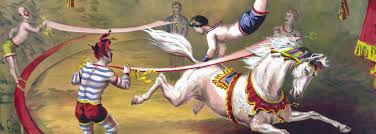
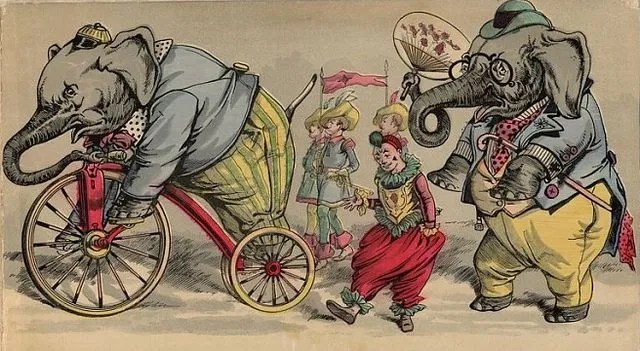
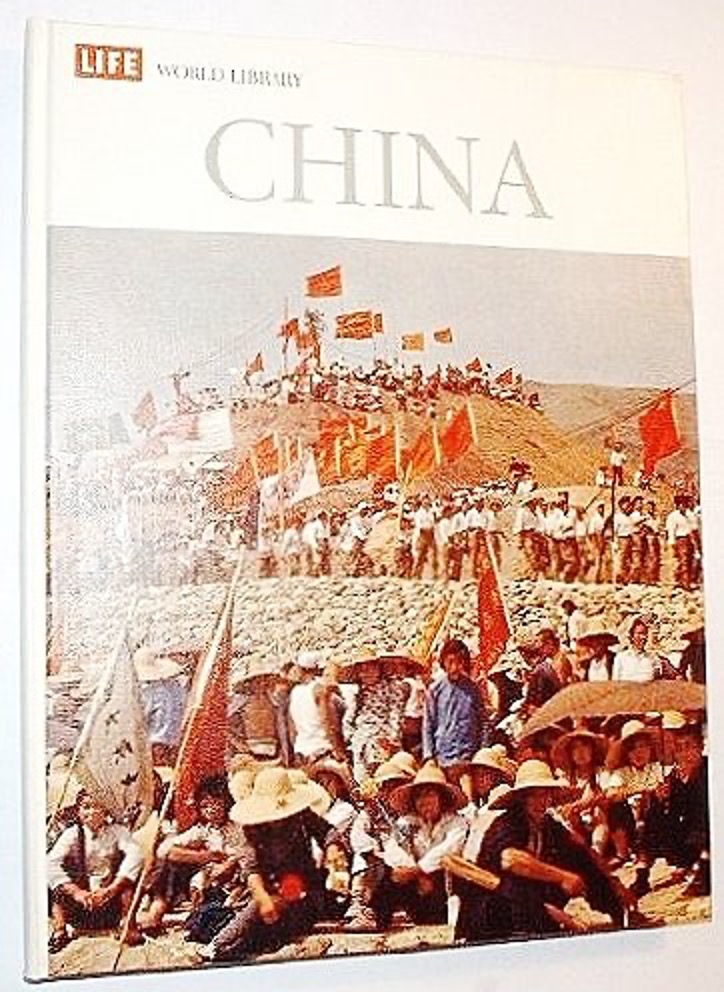
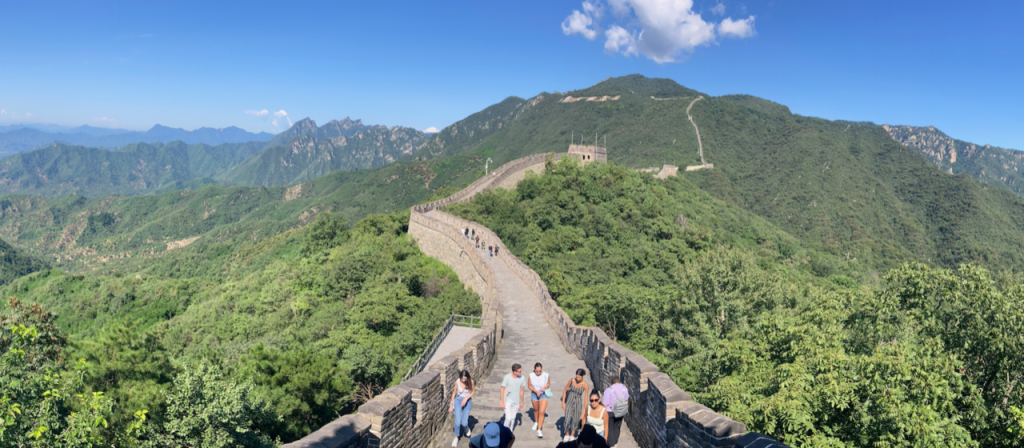
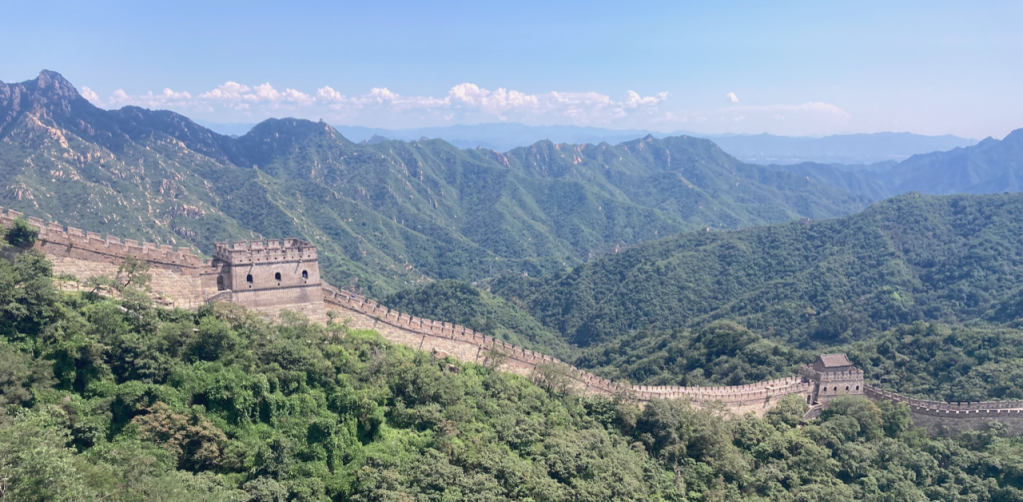
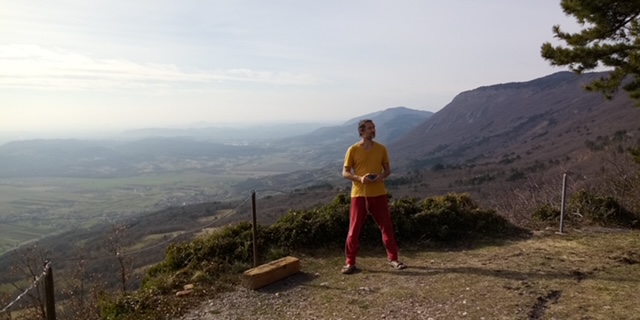


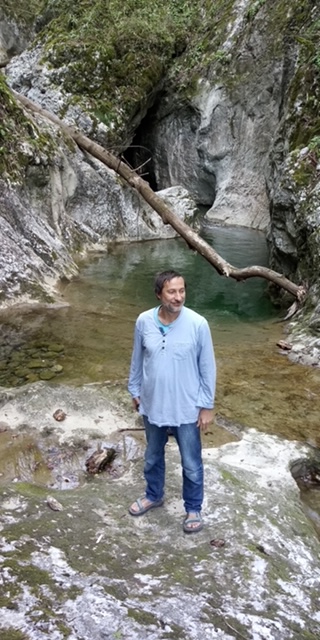
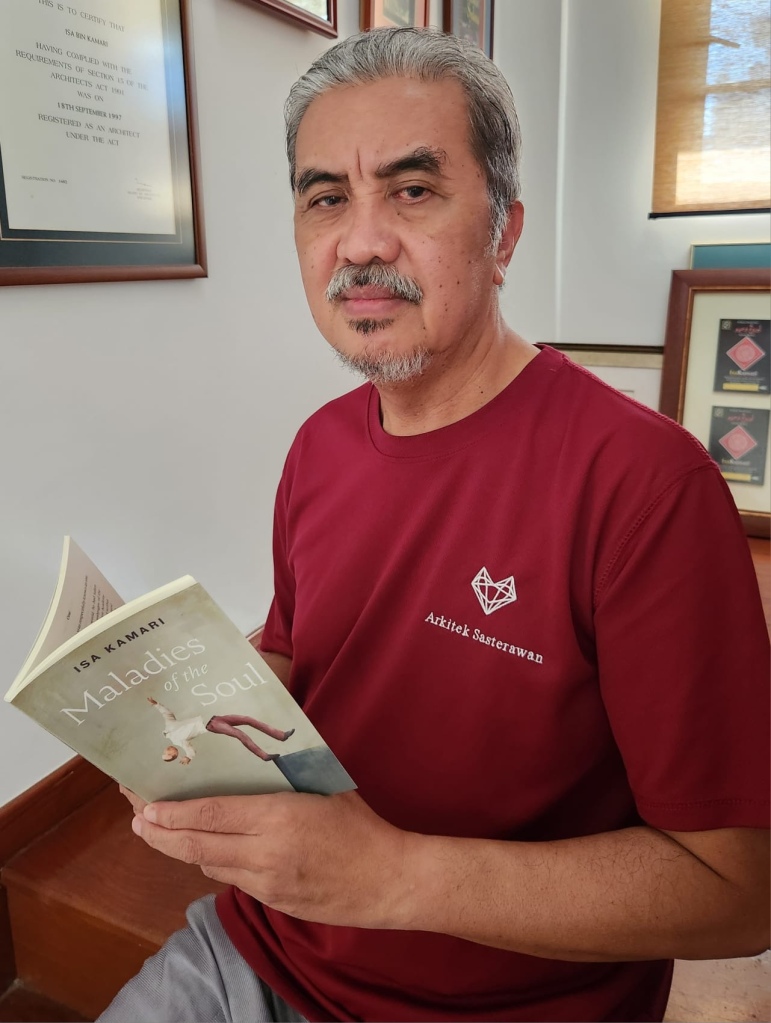


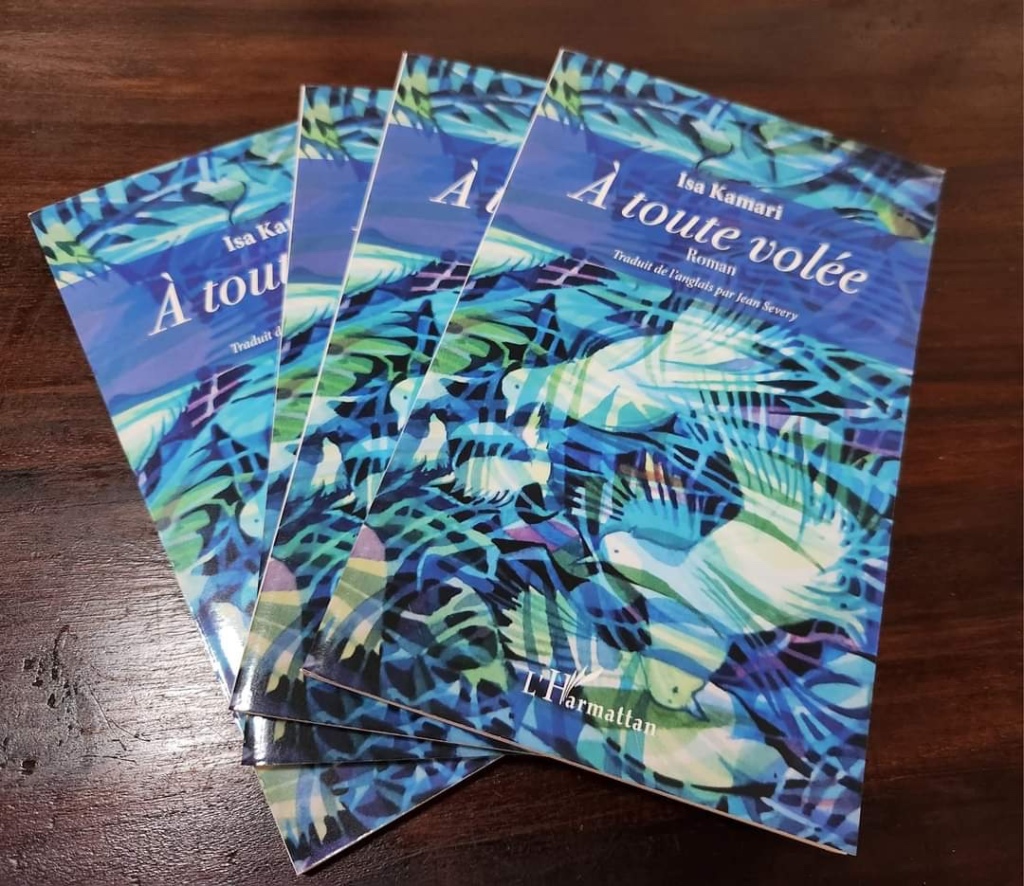

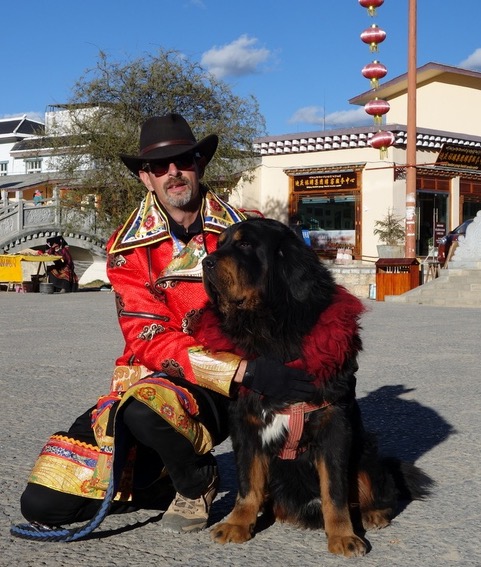
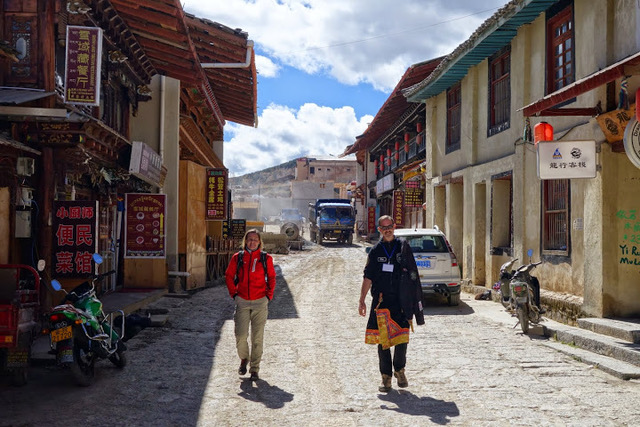
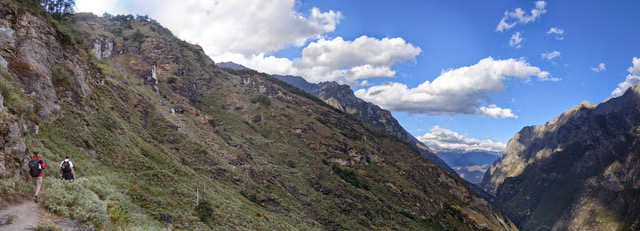
 Borderless