Jibananada Das (1899-1954) was a Bengali writer, who now is named as one of the greats. In his lifetime, he wrote beautiful poetry, novels, essays and more. He believed: “Poetry and life are two different outpouring of the same thing; life as we usually conceive it contains what we normally accept as reality, but the spectacle of this incoherent and disorderly life can satisfy neither the poet’s talent nor the reader’s imagination … poetry does not contain a complete reconstruction of what we call reality; we have entered a new world.”
I will sleep

Having lived in the world’s pathways for a long, long time
I know many stressful, hidden tales of the heart now.
In forests, branches and leaves sway -- as if
Djinns and fairies conversing! On greying evenings
 I’ve seen on their bodies a drop or two of rain dripping down.
Like parched paddy will. White specks of dust soften in rainwater.
A faint scent suffuses farmlands. From frail bodies of gubur insects
Indistinct, melancholy sounds dip into the dark river water;

I’ve seen them all—have seen the river immerse in the sloping dark;
shapmashis fly away; In asuth tree nests, ravens flutter their wings
Incessantly, someone seems to be standing in the lonely, fog-filled field.
Farther off, one or two straw-roofed houses lie scattered.
Why do the frogs croak on in Nolkhagra forests? Can’t they not stop?
Freshly laid crow eggs slip and slide into the sheora bushes.

(“Ghumiye Poribe Aami” or “I will sleep” from Ruposhi Bangla, first published in Daily Star, Bangladesh)

Aghrayan’s Wintry Wilderness

Saying, "I know you don't look for me anymore in this world these days"--
I ceased speaking. Aswatyha tree leaves lay strewn amidst the grass then--
Withered and disheveled. Wintry agrahyan has arrived in this world's forests.
And yet long, long ago, our minds had been chilled by hemonto's onset!

(Agrahayan and Hemonto are names of Bengali seasons)
Somdatta Mandalis a former Professor of English and ex-Chairperson, Department of English, Visva-Bharati, Santiniketan, India. A recipient of several prestigious fellowships like the Fulbright Research and Teaching Fellowships, British Council Charles Wallace Trust Fellowship, Rockefeller Residency at Bellagio, Italy, Salzburg Seminar and Shastri Indo-Canadian Faculty Enrichment Fellowship, she has been published widely both nationally and internationally. She has also an award from Sahitya Akademi for the All India Indian Literature Golden Jubilee (1957-2007) Literary Translation Competition in the Fiction category for translating short stories series ‘Lalu’ by Sarat Chandra Chattopadhyaya.
In Conversation with Somdatta Mandal, a translator, scholar and writer who has much to say on the state of Santiniketan, Tagore, women’s writing on travel and more. Click here to read.
This narrative gives a glimpse of Tagore’s first experience of snowfall in Brighton and published in the Tagore family journal, Balak (Children), has been translated by Somdatta Mandal . Clickhere to read.
This narrative about Tagore’s first trip to Himalayas and beyond with his father, has been translated from his Jibon Smriti (1911, Reminiscenses) by Somdatta Mandal. Click here to read.
As autumn gives way to winter, here are explorations that give us a glimpse of the season, its colours, its feel across different parts of the world and their varied interpretations. We have the vibrancy captured in colours by Sohana Manzoor and Sybil Pretious. There are reactions to events that happened at this time in different parts of the globe from Ratnottama Sengupta and Sutputra Radheye — have we healed after these events? Have things got better?
As Europe starts a new wave of pandemic lockdowns, Mike Smith takes us for a trip to Trieste, rich with the heritage of James Joyce, Umberto Saba and Baron Von Trapp of Sound of Music. Prose from Tagore(1861-1941) translated by Somdatta Mandal showcases some of his reactions while traveling in Japan, America and Europe in the autumn of his life. We can vicariously travel to different parts of the planet! While verses by Michael Burch and George Freek explore the season and the autumn of life, poetry by Rhys Hughes and Sekhar Banerjee add zest to the fall with humour. Revathi Ganeshsundram brings us a poignant narrative of new friendships. A short story from maestro storyteller from Holland, Louis Couperus(1863-1923), translated by Chaitali Sengupta, paints a darker hue of autumn while Tagore’s poetry gives us a festive feel generated by the season in Bengal. Enjoy our melange of autumnal lores!
In Conversation with Akbar Barakzai, a Balochi poet in exile who rejected an award from Pakistan Academy of Letters for his principles. Click here to read.
In Conversation with Somdatta Mandal, a translator, scholar and writer who has much to say on the state of Santiniketan, Tagore, women’s writing on travel and more. Click here to read.
Ratnottama Sengupta recalls her experiences of the Egyptian unrest while covering the 35th Cairo International Film Festival in 2012. Click here to read.
Devi (The Goddess) is a 1960 Satyajit Ray film, based on a story by a writer called Prabhat Kumar Mukhopadhyay, that showcases nineteenth century India, where the silence of a young girl who is deified, wreaks havoc in her home, village and life. In an interview, Satyajit Ray contended that the film was to make people rethink ‘messiahdom’. The exact words he used to state this was that the film was against ‘religious dogmatism’ as the film and story literally dealt with the deification of a young bride. Tagore had similarly questioned blind deification in a number of his poems and plays. These (as Ray spelt out in his interview) did not address religion per se but malpractices, among them, the tendency to worship an idol to a point where flaws are justified, accepted and emulated. Satyajit Ray and Tagore were both Brahmos — which can be seen as a reform movement. These two were not criticising religion but talking of rising above gawky hero worship to think logically and arrive at logical conclusions. When we talk of characters from the Ramayana, the Mahabharata, other mythologies or substitute the adulated with stars, writers, politicians and businessmen who run huge concerns, we tend to idolise them. But these were and are all characters with flaws, whether fictitious or real. We can well learn from their mistakes, rather than deify and worship them to justify bad behaviour by quoting instances from lives of past legends or prominent persons in the current world.
Akbar Barakzai, a poet exiled from Balochistan, talks in a similar vein in his interview. You can see it in his poetry too — some of which can be found translated by Fazal Baloch in our pages. Barakzai talks of transcending barriers we draw for ourselves in the real world, of writing with honesty and sincerity. He has shared vignettes of his life as he changed countries to continue his work. Baloch has also brought to us another excellent poet in translation, Munir Momin. A major poem by Nazrul (the ‘bidrohi kobi’), ‘Bidrohi or Rebel’ has wound its way to our pages translated by Professor Fakrul Alam. We are honoured and grateful that Prof Alam chose to share this excellent translation with us. We have more translations: Jibonananda’s ‘Motorcar’(1934) by Rakibul Hasan Khan, a Korean translation by Ihlwha Choi, another short story from Nepal and Tagore’s powerful poem, ‘Morichika or Mirage’, which is a wake-up call for the inert affluent who hold themselves aloof from common masses. We have also interviewed a major prose translator of Tagore, Professor Somdatta Mandal. With much to share on Santiniketan, Nabanita Deb Sen and many interesting anecdotes, Mandal talks of her extensive work with her translations spanning many more writers from the past.
We have a colourful ensemble this time almost as vibrant as the autumnal colours that have invaded nature in some parts of the Northern Hemisphere. Michael R Burch has given us beautiful poems on autumn, including the autumn of life. We have a poem in a similar vein by George Freek whose work continues influenced by Liu Yong (1719-1805), an influential minister and calligrapher in the Qing Dynasty. Ryan Quinn Flanagan touches on Leonardo Da Vinci’s Mona Lisa in his poetry. Rhys Hughes has given us humour in both his poetry and his column. Our other humorist, Devraj Singh Kalsi has given us darker, more caustic black humour in his narrative. We have lovely photographs from Penny Wilkes with her verses in Nature’s Musings. It is amazing the way she photographs birds in flight. Stories from Malaysia, Bangladesh, India and America add to the richness of our oeuvre. Sunil Sharma has given us an avant-garde telling of Odysseus’s voyage in the modern world, transcending the borders of time and ethnicity.
A well-known senior journalist, Ratnottama Sengupta, has also travelled through time to give us a recall of her experience at the 35th Cairo Film Festival one November, nine years ago. Her narrative about the time that the Shariat law was adopted by Egypt reminds me of the way things moved in Afghanistan few months ago and what is even more stunning is the way in which organisations dubbed extremists earlier are allowed to run countries now. Is it really not yet time to get rid of messiahs and look for one world?
Do pause by and find many more authors who dot our November edition. As usual, naming each one will keep you away from our delectable reads for longer. We thank all our readers for their continued patronage, and I would like to thank my fabulous team who are now even providing visuals to brighten our pages. A huge thanks to Sohana Manzoor and Sybil Pretious, who write as well as they paint. Thanks to all our wonderful contributors for making Borderless a reality.
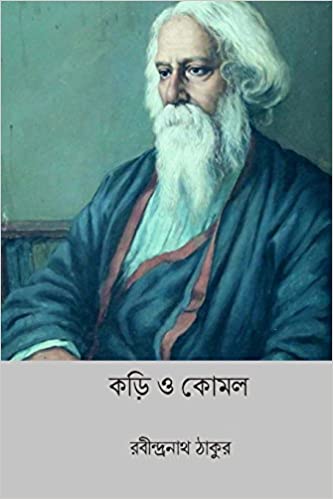
Morichika or ‘Mirage’ is one on Tagore’s early poems. It was first published in 1886 in a collection called Kori O Komal (Sharp and Flat).
Kori O Komal(Sharp & flat) Bengali edition‘Morichika or Mirage’ in Bengali
Mirage
Come, leave your bed of flowers, O friend —
Beat the hard ground with your foot.
How long will you isolate yourself weaving
Dreams of starry blooms in an unreal sky!
Look, a storm is brewing in the distance —
Your world will be washed away with tears.
Flames of God’s lightning jinx will ignite the
Fires of purity to arouse you from stupor.
Come let us both go and live with people,
Enlightened by their joys and sorrows —
Let us share their laughter and sadness
Holding hands, stay fearless when in doubt.
Let us not dwell in this redolent mirage as
It terrorises with its transient evanescence.
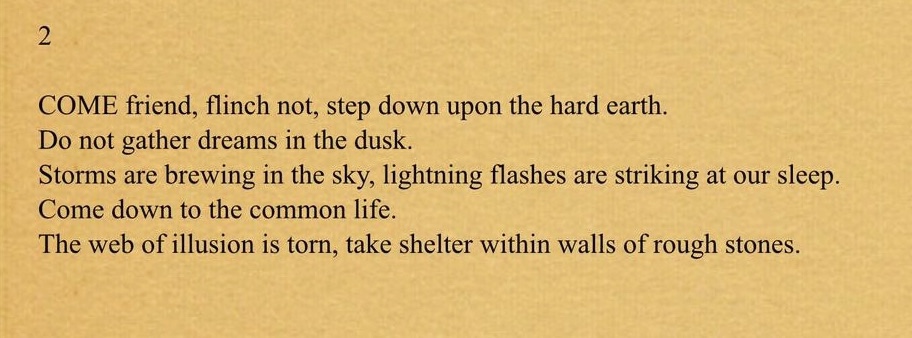
Tagore’s translation on ‘Morichika’ in Poems. Source: Bichitra
Later Tagore translated this poem to English himself. That was published in 1942 by a collection entitled Poems edited by Krishna Kripalalni, Amiya Chakravarty, Nirmal Chandra Chattopadhyay and Pulinbehari Sen published after his death by Visva Bharati.
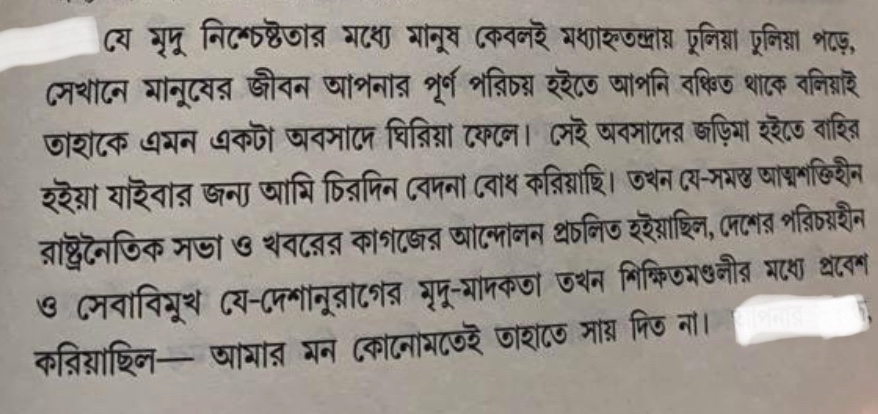
Here is an excerpt of what Tagore wrote about Kori O Komal in his Jibonsmriti (1912, autobiographical memoirs by the poet) which reflects his outlook and the mood of the poem.
Translation: Man falls into a stupor when due to his own reluctance to make an effort, he can neither understand himself nor face reality. I have always struggled to emerge out of this stupor. I cannot reconcile myself to the current situation where nameless intellectuals are inebriated with patriotism and are involved in spineless political rallies and news campaigns which exhibit both the lack of a national identity and concern for mass welfare. (Excerpted from a screenshot of Jibonsmriti sent by Anasuya Bhar)
(These translations for Borderless Journal are by Mitali Chakravarty, edited by Sohana Manzoor and Anasuya Bhar. Also, thanks to Anasuya Bhar for the images from Bichitra and Jibonsmriti and the extensive research on the poem.)
.
PLEASE NOTE: ARTICLES CAN ONLY BE REPRODUCED IN OTHER SITES WITH DUE ACKNOWLEDGEMENT TO BORDERLESS JOURNAL
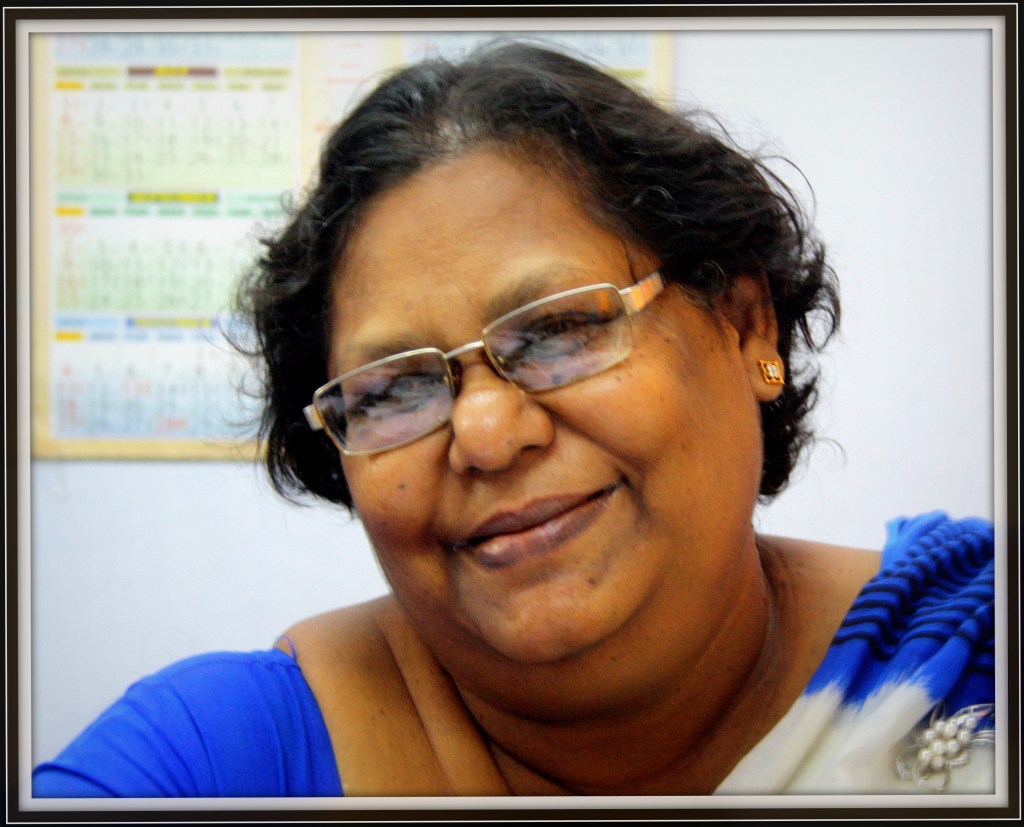
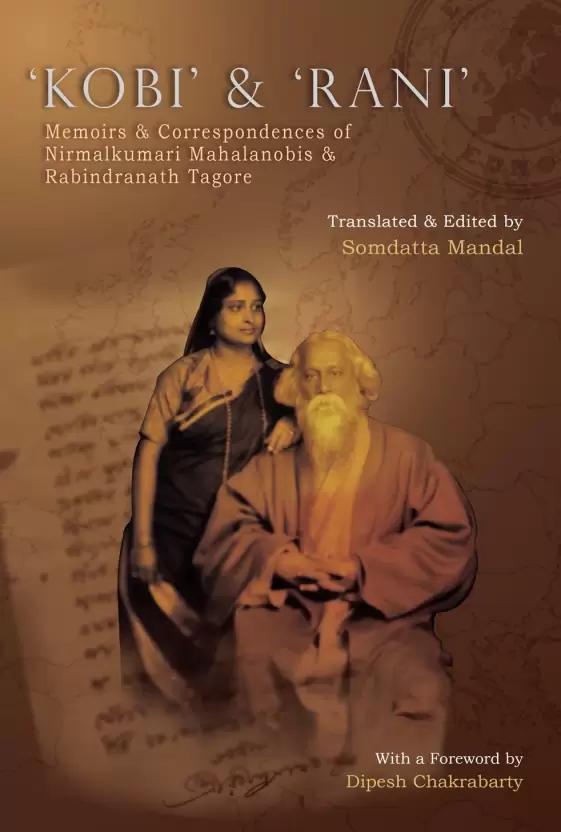
Somdatta Mandal, an eminent academic, has translated so many books and writers that it is difficult to pin her down as a doyen of one great. Her extensive work amazes with its variety intercepted with humour. Reading through her translations, Nirmalakumari’s account of how Tagore was manipulated by Mussolini, is like comprehending and living through history. It adheres and makes an impact to lead to the realisation that history is often repeated, only the cast of characters and locations change. That Tagore could put that behind him and rise above this incident (hyped by the media then) to connect with his vision reflected not just in his writings but also in the institution (Santiniketan) he created and which he reached out for help to keep intact. All this is brought home to us through just one of Mandal’s many translations, Kobi and Rani.
She talks more of her extensive findings while translating and experiencing the world from writings across the ages. She reflects on how Tagore’s vision for Santiniketan remains to be yet realised. Her answers showcase a scholar who shines in any setting not just with reflected light of others she translates but with her own inner convictions laced with a rare sense of humour. She has much to say and share in this extensive interview. We are happy to project her voice to you.
You were teaching in Santiniketan. Tell us a bit about the legendary university. How is it different from others? Has it lived up to what the Kobiguru visualised?
I retired from Visva-Bharati two years ago after teaching in the English Department there for about eighteen years. My area of specialization has been American Literature, Film and Culture Studies and Diaspora Literature. I started teaching in Santiniketan initially thinking of it as a new job at a university, but soon realised that away from the cacophony of life in Kolkata where I was born and bred, working and living all that while, the place would gradually exert its own idyllic charm upon me. Now in my retirement I want to live there in peace and use the place as a writer’s retreat. In spite of being in the news at present for all the wrong reasons, Santiniketan has its own charm, lifestyle and culture that grows within you and cannot be imposed from outside.
I think most people know, but nevertheless let me reiterate a few facts about Santiniketan. Kobiguru had visualized the institution to be different from other standard ones so that away from rote learning methods, students could imbibe the fresh ambience of studying in the lap of nature. As publicity pictures still project it, the classes in the school section are still held open air under the trees, but the university section is similar to other standard institutions.
In fact, ever since Visva-Bharati was established in 1921, it was considered to be a special place of learning inviting teachers and students from all over the world. The poet selected for its motto an ancient Sanskrit verse, Yatra visvam bhavatieka nidam, which means, ‘where the whole world meets in a single nest’.“Visva-Bharati,” he declared, ” represents India where she has her wealth of mind which is for all. Visva-Bharati acknowledges India’s obligation to offer to others the hospitality of her best culture and India’s right to accept from others their best.” The institution has excelled in areas of fine arts, singing, painting, dance, different Indian and foreign languages, and especially in the idea of rural reconstruction.
Tagore laid great emphasis on universal humanism, internationalism and trans-culturalism. He sought a positive outcome from the East-West encounters. This syncretic culture imbues the vast oeuvre of his work: it has propelled his activism and lives in his pragmatic projects today. His vision was to ultimately strengthen the fundamental conditions of world peace through the establishment of free communication of ideas between the two hemispheres.
Since 1951, when Visva-Bharati was considered as an institution of special eminence by an act of Parliament and was turned into a Central University, problems started creeping out gradually from Pandora’s box. On the one hand, it had to abide by the rules laid down by the University Grants Commission (UGC), follow its basic dictates of syllabi formulation etc. and on the other, the old ashramites and others consistently worried about the institution losing its special character to become like any other run-of-the-mill university. This dichotomy has not been resolved till date and sometimes the conflict between ‘insiders’ and ‘outsiders’ takes an ugly shape. Apparently, Tagore had made a special rule that in order to generate local employment people residing within the radius of twenty kilometres of the university should be given jobs but according to Central Government dictates, it should have a pan-Indian profile and recruit people from all over the country. This turmoil has resulted in a sort of stalemate for the past few years.
I mention all this to emphasise that the glory of erstwhile Santiniketan and Visva-Bharati has diminished greatly in the process, and it is no longer the experimental school that Tagore had initially wanted it to be. Even during his lifetime, he went from country to country delivering lectures to generate funds for his dream project and had realised how difficult it was becoming to sustain the institution financially. There is the famous saying that he had even requested Mahatma Gandhi to help and run the institution in his absence. In 1940 a year before he died, he put a letter in Gandhi’s hand,
“Visva-Bharati is like a vessel which is carrying the cargo of my life’s best treasure, and I hope it may claim special care from my countrymen for its preservation.”
Anyhow, after joining Visva-Bharati, I realised that apart from some cursory reading, I hardly knew anything about this great man, this polymath, someone who queried some interpretations of his life and work through a holistic perspective. Also, interdisciplinary seminars and interactions with faculty members of other departments made me aware of many new areas that I was oblivious of. It was quite unconsciously that little by little the spirit of Tagore, his work, his culture, seeped into my veins as it did into that of many of my city-bred colleagues.
My impetus to read and translate Tagore also gained momentum when we had to work for the academic excellence of our department by working for the UGC SAP (Special Assistance Programme). The thrust area of this Departmental Research Scheme was “Tagoreana” – we started visiting libraries and academic institutions all over India and began compiling all available material on Tagore in English. It gave us a clear picture that in reality very few critical books had been written on him in English and the plight of translated volumes was even worse. It seemed as if the work done till date was equal to a few pebbles lying on the vast seashore of knowledge. Along with this comprehensive checklist, at the end of each year, we organised a seminar on different perspectives related to Tagore and his work. Also, in order to justify the seriousness of the project, we started bringing out a book publication every year, with each teacher contributing to it. This was when I got interested in reading and translating Tagore’s non-fiction, his selected letters, his humorous pieces of dramatic skits known as Hasyakoutuk, and different essays and travel narratives. It was a vast gold mine in front of me just waiting to be explored. Here was a man of all seasons and gradually by default, being in Visva-Bharati, all of us gradually veered away from our initial area of expertise and got seeped into reading, writing and translating him. I remembered how in a light vein a professor of the Hindi department saw our first publication on ‘Tagoreana’ and told me, “Even you English professors have now got stuck in the old man’s beard!!”
You have translated lot of Tagore. What got you interested in translation — and as tough a writer as the maestro in English?
Before coming to my translation work on Tagore and how it began, I need to mention here that my role as a translator began in a strange way with a commissioned piece of work many years ago. Professor Sukumari Bhattacharya had an interesting Bengali book entitled Ramayan O Mahabarater Anupratik Jonopriyota (The Comparative Popularity of the Ramayana and the Mahabharata) and she wanted it to be translated into English. Her daughter Tanika Sarkar had begun doing the first few chapters but could not complete it. So, she was looking for a competent translator whose style would not clash with the earlier section already translated. I was given a sample chapter to work on and had to literally go and face her in a serious interview before being assigned the job. She went through my translation meticulously, pencilled a few changes, and gave me the green signal to go on. Translating very difficult Sanskritised Bengali was a real challenge in my life which very often had to be combatted armed with a thesaurus and dictionary. Sometimes, I found that after a whole afternoon’s labour I had proceed only two sentences. Anyhow, after I eventually submitted the entire work, the file somehow got lost. In a bed-ridden state Professor Bhattacharya went through the entire manuscript and approved it, often suggesting a few changes in the use of words. A few months later she passed away and nothing was heard of that translation anymore. For almost five years I would brood over the fate of my unborn first child. Fortunately, when her house was being cleaned and vacated, the lost file was recovered, and the book was published by Anustoop under the joint names of Tanika Sarkar and me.
That difficult initiation as a translator gave me tremendous moral boost and confirmed my capability as a serious translator. Tagore was no longer a problem. The only fear that I had was being too close to the original text as taking liberties with such a canonical writer was unthinkable for me. But times changed. I realised that readability of a translated text was a very important criterion than mere literal translation. So gradually I started becoming even more colloquial with Tagore’s texts. It should read as if it was written in English itself and not in the convoluted style of late 19th century or early 20th century. Contributing to The Essential Tagore volume brought out by Harvard University Press and Visva-Bharati in 2011, to commemorate the sesquicentennial anniversary of Rabindranath Tagore, was also an eye-opener for me. The extremely meticulous editors Fakrul Alam and Radha Chakravarty made me revise my entries several times in order to make the text read not like a vintage piece but a living vibrant text. Translating some of the skits from Hasyakoutuk was challenging and fun at the same time, as we could come across a different Rabindranath, full of pun, wit and satire, and quite different from the serious philosophical poet he is usually considered to be.
Again, teaching the very poor quality of translation of Tagore’s Home and the World done by Surendranath Tagore during the poet’s lifetime to graduate and undergraduate students at the university made me realise why so many of my non-Bengali professor friends spoke so badly about the text. Gradually I found myself translating many more different areas of Tagore’s writing. The essays of Pother Sonchoy (Gleanings of the Road) that Tagore wrote during his 1912 visit to England were not travel pieces per se and often ventured into philosophical musings. Niyogi Books readily brought out the volume and it was released in Kolkata at the Oxford Book Store with a lot of fanfare by Sankhya Ghosh and many others.
In the meantime, along with many lesser-known letters, early essays on travel by Rabindranath, Visva-Bharati Publications Department brought out the bookWanderlust: Travels of the Tagore Familythat contains entries of travel essays written by nineteen members of the Tagore family beginning from Dwarkanath Tagore to Sumitendranath Tagore. Incidentally, among these nineteen entries, nine were by women of the Tagore family. So you see, translating travel writing and Tagore somehow overlapped without any conscious effort on my part.
Again, translating two travel narratives by Nirmalkumari Mahalanobis (aka Rani) is equally important because they are memoirs based on her travels with Tagore. Kobir Shonge Europey (With the Poet in Europe) and Kobir Shonge Dakshinnatey (With the Poet in the South) narrate the incidents of the poet’s tour to Europe in 1926 and to South India and Sri Lanka in 1928 respectively. Incidentally, though written many years later, the first narrative is the only account of the important seven-month trip that Rabindranath undertook to Europe where he met Mussolini and many important political and social stalwarts of the day. Both these travelogues are included in my present volume of translation entitled ‘Kobi’ and ‘Rani’: Memoirs and Correspondences of Nirmalkumari Mahalanobis and Rabindranath Tagore.
Other than Tagore, you have translated more writers from colonial times to English. Why do you translate mainly travel-related writing from the past? What got you interested in this period and in travel-writing?
My interest in travel writing began many years earlier when it was not even recognised as a canonical enough genre. In a seminar on ‘Travel Writing’ that I had organized in our department, I received a great impetus when Mushirul Hasan, the famous historian and then Vice Chancellor of Jamia Millia Islamia, Delhi, attended as the chief-guest and delivered the keynote address. He had already worked and edited several volumes of travel narratives especially in Urdu and made it clear that this area of study upheld immense possibilities.
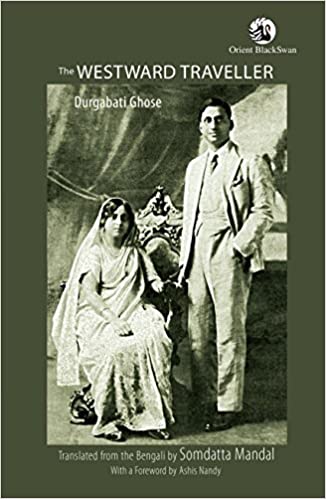
Now let me mention how apart from the writings of Tagore and his family members, my interest in travel literature grew. After work hours, I started spending the late afternoons in our university library and found immense treasure of travel books in Bengali among the unkept dusty stacks, books which had not been issued for as long as fifty years. No one gave me any computerised list of what texts were available and this manual hunting revealed many unheard names of writers. I just picked them up, issued them and dumped them in my car. Some of the books were brittle, some never issued at all. In this way I had picked up Paschimjatriki by a lady called Durgabati Ghose who went for a tour to Europe with her husband in 1932. I liked the text very much and translated it and Orient Blackswan published it as The Westward Traveller with a foreword by Ashis Nandy. Anyhow, in due course of time, I had developed a handsome collection of travel texts and my interest increased with time. In the meantime, to digress a little, I have edited three volumes on Indian Travel Writing, and one special issue of an online journal, the first one in 2010 and the last one in November 2020. The number of abstracts that flooded my mailbox everyday was unusual and in spite of strict deadlines, I had to reject many good papers due to lack of space. I remember the publisher of the first volume returned 90 copies of the book as he said that since travel writing was not included in any university syllabi or course, they were not selling, and he lacked space in his warehouse. Within a span of a decade, the genre has gained a lot of popularity and many scholars are now keenly pursuing their research in this area.
Speaking about translating writers from the past I find it safer as in most cases the copyright period is over and seeking permission is easier. Also, I must confess how I underwent a personal trauma after translating a living writer. Let me be a bit more specific. Nabaneeta Deb Sen’s Koruna Tomar Kone Path Diye is an excellent narrative about her visit to a seminar in Hyderabad and her sudden decision to travel to the Kumbh Mela. This book interested me a lot and I went through a publisher seeking her permission to translate the text. She asked me to submit two sample chapters and then gave the green signal to go ahead. I completed the entire translation within the stipulated time and sent it to her. Now began the difficult part. She did not like certain sections (“I don’t see myself in it as I should”, she explained) and the manuscript went through innumerable revisions and alterations, often with the consultation of family members and other editors. The cheeky, colloquial tone of the original Bangla text was lost – one perennial problem of translation for sure. Anyhow, the publisher introduced two more editors and in the end the book did come out under a different translator’s name with a due acknowledgement in the foreword for all my effort! So, it was a wise decision on my part henceforth to stick to older writers from the past.
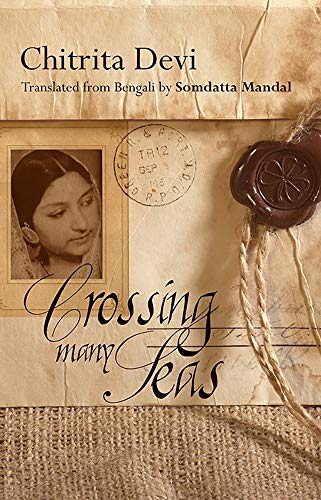
Also, though for a long time, travel writing had been relegated as an inferior form of literature, I found in many texts what I call little nuggets of history. For example, in Durgabati Ghose’s text there is a hilarious incident about her going to meet Sigmund Freud in Vienna. As the daughter of the famous psychoanalyst Girindra Sekhar Bose, she went to meet Professor Freud who was her father’s friend, and what emerged in that meeting is something unusual when Durgabati felt that Freud himself should be psychoanalyzed for his excessive love of dogs. When I mentioned that incident, Ashis Nandy regretted that if he knew about this incident earlier, he would have definitely included it in his book, The Savage Freud. Again, in Crossing Many Seas, Chitrita Devi tells us how she went to visit the British Parliament in 1947 and on that very day saw the white paper of independence being granted to India. Many other such interesting historical events and significant people are often found in very ordinary travel narratives.
What are the challenges you face while translating Bengali to English? How do you solve them?
Basically, I still consider mine as literal translations and do not venture out into bringing in radical changes. The basic challenge I face is maintaining a readable sentence structure as the English and Bengali have different methods of composition. I don’t translate directly into the computer, rather I prefer to do it in long hand. Though it entails more work, I find that I end up usually reversing the order of the sentence when I am correcting and keying it in the computer. If possible, I then ask any friend of mine to read the translation and offer any necessary suggestions for change. This system works well for me. Also, now I usually try and translate everything in the past tense and that makes it more readable. Breaking up long, convoluted sentences into shorter readable ones is another method I tend to adopt. With time and experience, I feel more confident in making such alterations.
Why do you think translating is important? What is the role of translations in a world with 6500 languages?
In spite of all its drawbacks, translation is the only way in which we can open out to other people, whether in regional languages in India or in other languages across the world. Let me give you an interesting example. Recently I reviewed a book called Rebati: Speaking in Tongues. ‘Rebati’ is a famous short story written in 1898 by the famous Odia writer Fakir Mohan Senapati. It is a tragic tale in which the dream of self-actualisation of a young girl through education comes crashing down as much due to a rampaging epidemic as due to a mindset deeply hostile to change. In this particular book, the editor, Manu Dash, has managed to bring in 36 different incarnations of the story. Arranged alphabetically, ‘Rebati’ is presented in twenty-four Indian and twelve foreign languages in all. As the editor informs us, most of the writers commissioned to translate it in different languages have taken the English or the Hindi version as their source text. For the lay reader therefore, it is not possible to vouch for the quality of the translated text. But that we are able to understand the significance of this late nineteenth century story across so many countries and cultures across the globe is what is more significant than the actual quality of the translation.
Is it possible to have cultural exchanges among languages without losing out nuances in translation?
Translation and its problems, especially when the translated pieces are twice or thrice removed from the original source text, is nothing unique and hence even labelled by terms like ‘transliteration’ and ‘transcreation’. In one of his earlier semiotic investigations, ‘The Search for the Perfect Language’, Umberto Eco argued that the Book of Genesis charts the decline of humanity into the chaos of Babel. The poly-linguistic world we live in is one more punishment from God for our baseness and general nastiness. In ‘Mouse or Rat?: Translation As Negotiation’, Eco is back on the subject of this post-lapsarian movement between different tongues, the perilous attempt to express concepts from one language into another. He suggests that translation is a ‘negotiation’ not just between words but between cultures – “Translation is always a shift, not between two languages but between two cultures. A translator must take into account rules that are not strictly linguistic but, broadly speaking, cultural.”
As a translator I am very conscious about this kind of cultural exchange. Maintaining culture-specific words within the translated version, but at the same time making its meaning clear for the reader to understand, is probably one way of retaining this culture specificity. The lesser the use of glossary the better. Jhumpa Lahiri in her latest novel Whereabouts which she self-translated from Italian into English attests to the fact: “Translation shows me how to work with new words, how to experiment with new styles and forms, how to take greater risks, how to structure and layer my sentences in different ways.”
Which is your favourite writer to translate? And why?
None in particular. I just sometimes happen to like a piece of work and feel it should be translated for a greater pan-Indian readership. Sometimes the reverse is also true. In the summer of 2004, I was residing at Bellagio in Italy on a Rockefeller Fellowship when the latest issue of the New Yorker magazine published a new short story by Jhumpa Lahiri called ‘Heaven-Hell’. Upon reading the story about the protagonist called Pranab-Kaku, I was so taken aback by its Bengaliness, I felt that every Bengalis who usually do not read English fiction and yet basked in the glory that a Bengali girl had recently won the Pulitzer prize should immediately read it. Without a second thought or even seeking any permission from anyone, I instantly sat down and translated the story into Bangla. Later when I returned to Kolkata and gave it to a senior professor to read. he was so impressed that without even informing me he sent it to the magazine Kali O Kolom which published it. I am lucky that no one sued me for copyright violation.
Recently I read a short story called ‘Barnabaad’ (Casteism) by Manoranjan Byapari in the Sunday supplement of Pratidin newspaper called Robbar and felt the urge to translate into English immediately. Dalit writing in Bengali is slowly gaining academic attention and I immediately asked someone to seek permission from the writer to allow me to translate it into English. Byapari, busy with his own electioneering campaign at that time, was thrilled and immediately gave me the permission. The translated story has been accepted by the international journal Transnational Literature and will see the light of day soon. So, you see there is no special or favourite writer for me to translate. Way back in the nineties, I remember I had voluntarily translated some essays on cinema that Satyajit Ray published in Bishoy Challachitra, but I was too naïve to know then that you needed his wife’s permission to do so. The translated pages therefore travelled to the wastepaper basket in due course.
Was it different translating Bengali women from translating Tagore? How did the experience differ?
Usually, the tone of Bengali women’s writing that I have translated to date is much more colloquial and homely, but we cannot always make generalisations. Many women wrote their travelogues at the request of family and friends and not for public consumption. But some women like Krishnabhabini Das took her job of imparting knowledge rather seriously. Also, we should not make the mistake of assuming that all Tagore’s works are of high philosophical and moral content. There are many pieces of Tagore’s writing which are also simple, homely, easy to translate and again there are places where he often quotes from the Upanishads and one needs the help of Sanskrit scholars to understand the real meaning of those quotations. So, there is no such hard and fast rule, and it all depends on what particular work and by which writer we are translating.
Were the Bengali women, like Krishnabhabini Das, you translated any different from the women associated with Tagore? How and why?
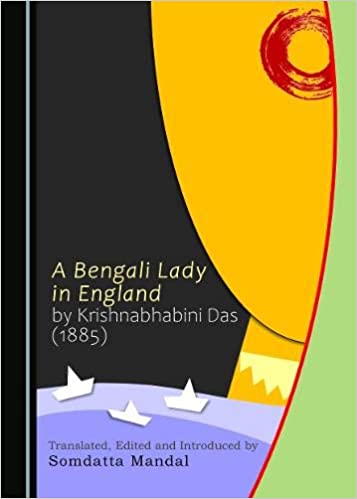
This question is more or less a repetition of the last question. Each woman’s writing has a different aim and purpose and so they cannot be clubbed together under some general definitions. The reason for the travel and the target readership is different in each individual case. Published in 1885, Krishnabhabini Das’s England-e-Bongomohila (A Bengali Lady in England) was published in Calcutta originally without her name in the title. Her identity was just that of a Bengali woman who chanced to go to England along with her husband. Her book was not a travelogue in the true sense of the term, but her aim was to seriously convey the social conditions of England at that time and to educate her sisters back home who were still in fetters and did not know much about female emancipation. Her writing is serious in nature, and she took the help of other sources and books to authenticate and explain everything in detail.
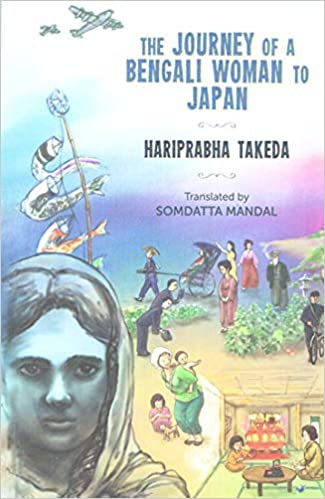
For Hariprabha Takeda, a Bengali Brahmo woman, who went to Japan in 1912 for four months along with her husband to meet her Japanese in-laws there, it was a totally personal affair. Thus, even though language was a big bar, Bongomohilar Japanjatra [The Journey of A Bengali Woman to Japan] is more intimate in tone and narration where she tries to define the idea of ‘home’ to her readers. For Chitrita Devi, sister of Maitreyi Devi, Onek Sagor Periye (Crossing many Seas) narrates travels to different places in the world in seven different segments. As a member of the P.E. N. network, her outlook and narration is much more erudite and polished than others.
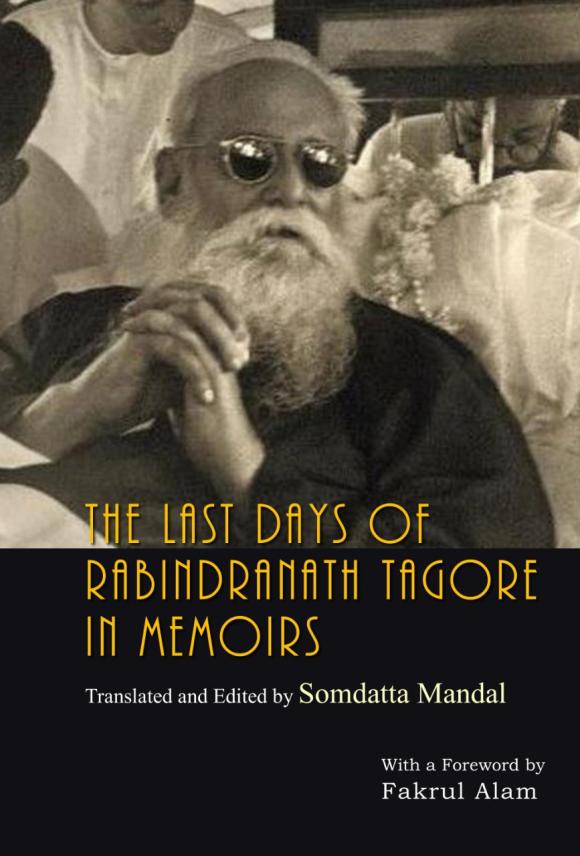
I can go on citing more examples but the basic point I want to make is that the social class and status of the woman narrator is different in each case. For women associated with Tagore, this becomes even more clearly marked. Rabindranath’s daughter-in-law, Protima Devi, wrote Nirbaan (Nirvana) immediately after the poet’s death. This text is very different from the four other women who narrated the last days of their association with Rabindranath. Though the incidents are the same, each woman’s narration comes in different styles. Thus, Rani Chanda or Maitreyi Devi or Nirmalkumari Mahalanobis’s narration have to be read side by side to understand what I mean as to the relationship of the subject to the narrator. My book The Last Days of Rabindranath Tagore in Memoirs does exactly that. Translating each woman’s narration separately was a challenge no doubt but when they are juxtaposed together, the point-of-view of each narrator becomes clearer.
Why do you stick to women and Tagore only? Have you ever thought of exploring translations of other writers like Nazrul or Jibonanondo?
As I have already mentioned, this was not a deliberate choice. I am not a feminist as such but somehow at the end of the day I find that I have translated the works of more women than men. Since none of the translations that I have done till date have been commissioned projects by publishers or authors themselves, I just translate what and when I fancy reading and feel inspired to translate. You know translation has often been called ‘transcreation’ and this creative process is something that interests me very much. Though not a creative writer per se, the translating process also gives me liberty in selecting words, style and that grants me a lot of freedom which is no less important than creative writing. About translating Nazrul or Jibonanando, I must admit that I am not very comfortable with translating poetry. I prefer to stick to prose, whether fiction or non-fiction. The more difficult the prose style, the more challenging the translating process becomes. Also, in hindsight I feel since women were marginalised in the creative process and often not taken seriously at all, as a woman myself, it is my duty to explore and translate the writings of women even more.
Have you ever thought of writing yourself?
I have written a lot of critical essays and articles but when it comes to creative writing, my contribution is negligible. However, for a long period of time I wrote small features for the ‘Now and Again’ column published in the Op-ed section of The Statesman. These pieces made me quite popular as often when introduced to strangers for the first time, I would be asked whether I was the same person who wrote that column. Occasionally, I wrote several short entries about any and everything in life that interested me or I experienced first-hand without any false attributes in them. They were written primarily to divert myself from boring academic schedules and I called them ‘Vignettes of Life’when it was first published. Later it expanded into another edition called ‘More Vignettes of Life’ and the last one being called ‘Vignettes of Life Once More’. They contain any and everything that happened to me and in places around me, I am the narrator and the protagonist, and the result is that I have been able to make people laugh. In this troublesome and problem-ridden world, pure laughter and fun are vanishing so fast that I consider these short entries to be really cathartic. As for serious creative writing like writing short stories or poems, I never attempted to do that. Perhaps I am too prosaic a person you might say with very little imagination.
What is your next project? Tell us a bit about it.
I am at present involved in a voluminous project which I began at least five years ago about different Bengalis from colonial times travelling to Vilayet or England and narrating their experiences in different genres of writing. Though I had to be selective in choosing the travellers over their two-hundred-year time span, sometimes unavailability of the primary texts made things more difficult. I am at present working on approximately forty such travellers, some of whom had written their memoirs in English. For those who wrote in Bengali, I am translating selected portions of their work for the purpose. So it is a quite laborious and time-consuming work but at the same time, very interesting because the multifarious reasons for each person’s travel to the coloniser’s land is mind-boggling. The structure of the book includes a brief bio-note of each traveller along with several sample pages from the actual narrative so that the reader can savour their experiences first-hand. I hope it sees the light of day soon.
(This is an online interview conducted by Mitali Chakravarty)
PLEASE NOTE: ARTICLES CAN ONLY BE REPRODUCED IN OTHER SITES WITH DUE ACKNOWLEDGEMENT TO BORDERLESS JOURNAL
Jibonanada Das (1899-1954) was a Bengali writer, who now is named as one of the greats after Tagore and Nazrul. During his life he wrote beautiful poetry, novels, essays and more. He believed: “Poetry and life are two different outpouring of the same thing; life as we usually conceive it contains what we normally accept as reality, but the spectacle of this incoherent and disorderly life can satisfy neither the poet’s talent nor the reader’s imagination … poetry does not contain a complete reconstruction of what we call reality; we have entered a new world.”
Motorcar (1934)… Translated by Rakibul Hasan Khan from Bengali. Click hereto read.
The Traveller in Time: An interview with Sybil Pretious who has lived through history in six countries and travelled to forty — she has participated in the first democratic elections in an apartheid-worn South Africa and is from a time when Rhodesia was the name for Zimbabwe. Click here to read.
A poem reflecting the state of Gandhi’s ideology written in Manipuri by Thangjam Ibopishak and translated from the Manipuri by Robin S Ngangom. Click here to read.
Written by Tagore in 1908,Amaar Nayano Bhulano Eledescribes early autumn when the festival of Durga Puja is celebrated. It has been translated from Bengali by Mitali Chakravarty. Click here to read.
Sameer Arshad Khatlani dwells on the tradition of education among Muslim women from early twentieth century, naming notables like Ismat Chughtai and Rashid Jahan. Click here to read.
John Herlihy takes us through more of Myanmar with his companion, Peter, in the third part of his travelogue through this land of mystic pagodas. Click here to read.
Ratnottama Sengupta, who has edited an encyclopaedia on culture and is a renowned arts journalist, gives us the role ‘kanthas’ (hand-embroidered mats, made of old rags) played in India’s freedom struggle. Click here to read.
“Beauty is truth, truth beauty — that is all
                Ye know on earth, and all ye need to know.”

John Keats (1795-1821), Ode to a Grecian Urn
‘Beauty is Truth’ : The Potato Eaters(1885) by Vincent van Gogh (1853-1890). Courtesy: Creative Commons
What makes for great literature? To me, great literature states the truth — the truth that touches your heart with its poignancy, preciseness, sadness, gentleness, vibrancy, or humour. If Khayyam, Rumi, Keats, Tagore, Frost or Whitman had no truths to state, their poetry would have failed to mesmerise time and woo readers across ages. Their truths – which can be seen as eternal ones — touch all human hearts with empathetic beauty. Lalon Fakir rose from an uneducated illiterate mendicant to a poet because he had the courage to sing the truth about mankind — to put social norms and barriers aside and versify his truth, which was ours and still is. This can be applied to all genres. Short stories by Saki, O’ Henry or plays and essays by Bernard Shaw — what typifies them? The truth they speak with perhaps a sprinkle of humour. Alan Paton spoke the truth about violence and its arbitrariness while writing of South Africa — made the characters so empathetic that Cry, My Beloved Country(1948) is to me one of the best fictions describing divides in the world, and the same divides persist today. The truth is eternal as in George Orwell’s 1984 (1949) or Suskind’s Perfume(1985). We love laughter from Gerald Durrell or PG Wodehouse too because they reflect larger truths that touch mankind as does the sentimentality of Dickens or the poignancy of Hardy or the societal questioning of the Bronte sisters, George Eliot, and Jane Austen. The list of greats in this tradition would be a very long one.
Our focus this time is on a fearless essayist in a similar tradition, one who unveiled truths rising above the mundane, lacing them with humour to make them easily digestible for laymen – a writer and a polyglot who knew fourteen languages by the name of Syed Mujtaba Ali (1904-1974). He was Tagore’s student, a Humboldt scholar who lived across six countries, including Afghanistan and spoke of the things he saw around him. Cherished as a celebrated writer among Bengali readers, he wrote for journals and published more than two dozen books that remained untranslated because his witticisms were so entrenched by cultural traditions that no translator dared pick up their pen. Many decades down the line, while in Afghanistan, a BBC editor for South and Central Asia, Nazes Afroz, translated bits of Mujtaba Ali’s non-fiction for his curious friends till he had completed the whole of the travelogue.
The translation named In a Land Far from Home: A Bengali in Afghanistan was published and nominated for the Crossword Awards. This month, we not only run an excerpt from the translated essays but also have an interview with the former BBC journalist, Afroz, who tells us not only about the book but also of the current situation in ravaged Afghanistan based on his own first-hand experiences. Nazes himself has travelled to forty countries, much like our other interviewee, Sybil Pretious, who has travelled to forty and lived in six. She had been writing for us till she left to complete her memoirs — which would cover much of history from currently non-existent country Rhodesia to apartheid and the first democratic election in South Africa. These would be valuable records shared with the world from a personal account of a pacifist who loves humanity.
We have more on travel — an essay by Tagore describing with wry humour vacations in company of his niece and nephew and letters written by the maestro during his trips, some laced with hilarity and the more serious ones excerpted from Kobi and Rani, all translated by Somdatta Mandal. We have also indulged our taste for Tagore’s poetry by translating a song heralding the start of the Durga Puja season. Durga Puja is an autumnal festival celebrated in India. An essay by Meenakshi Malhotra explains the songs of homecoming during this festival. It is interesting that the songs express the mother’s views as highlighted by Malhotra, but one notices, never that of the Goddess, who, mythology has it, gave up her life when the husband of her own choosing, Shiva, was perceived by her family as ‘uncouth’ and was insulted in her parent’s home.
In spirit of this festival highlighting women power and on the other hand her role in society, we have a review by Somdatta of T. Janakiraman’s Wooden Cow, translated from Tamil by Lakshmi Kannan, where the protagonist upends all traditional values ascribed to women. Another book which is flavourful with food and would be a real fit on every festive occasion is Mohana Kanjilal’s A Taste of Time: A Food History of Calcutta. Bhaskar Parichha tells us in his review, “In the thriving universe of Indian food books, this clearly stands out.”
Aruna Chakravarti’s review of Shazia Omar’s Golden Bangladesh at Fifty also stands out embracing the colours of Bengal. It traces the title back to history and their national anthem — a Tagore song called ‘Amaar Sonar Bangla – My Golden Bengal’. Gracy Samjetsabam’s review of Suzanne Kamata’sThe Baseball Widow, a cross cultural novel with an unusual ending that shuttles between America and Japan, winds up our review section this time.
As Kamata’s book travels across two continents in a pre-covid world, Sunil Sharma in reality moved home from one continent to another crossing multiple national borders during the pandemic. He has written an eye-opening account of his move along with his amazing short story on Gandhi. Another unusual story creating a new legend with wonderful photographs and the narrative woven around them can be relished in Nature’s Musings by Penny Wilkes. This time we have fiction from India, Malaysia, Bangladesh and America. Steve Davidson has given a story based partly on Tibetan lore and has said much in a light-hearted fashion, especially as the Llama resumes his travels at the end of the story. Keeping in step with light humour and travel is Devraj Singh Kalsi’s account of a pony ride up a hill, except it made me laugh more.
The tone of Rhys Hughes cogitations about the identity of two poets across borders in ‘Pessoa and Cavafy: What’s in a Name?’ reminds me of Puck or Narada! Of course, he has given humour in verses with a funny story poem which again — I am not quite sure — has a Welsh king who resisted Roman invasion or is it someone else? Michael Burch has limericks on animals, along with his moving poem on Martin Luther King Junior. We have much poetry crossing borders, including a translation of Akbar Barakzai’s fabulous Balochi poetry by Fazal Baloch and Sahitya Akademi winning Manipuri poet, Thangjam Ibopishak, translated by Robin S Ngangom. A Nazrul song which quests for a spiritual home has been translated from Bengali by no less than Professor Fakrul Alam, a winner of both the SAARC award and Bangla Academy Literary Award.
Former Arts Editor of Times of India, Ratnottama Sengupta, has shared an essay on how kantha (hand embroidered rug) became a tool to pass on information during the struggle against colonial occupation. The piece reminded me of the narrative of passing messages through mooncakes among Chinese. During the fourteenth century, the filling was of messages to organise a rebellion which replaced the Yuan dynasty (1271-1368) with the Ming (1368-1644). Now the filling is delicious lotus paste, chocolates or other edible delicacies. Women were heavily involved in all these movements. Sameer Arshad Khatlani has highlighted how women writers of the early twentieth century writing in Urdu, like Ismat Chughtai, created revolutionary literature and inspired even legendary writers, like Simone de Beauvoir. There is much more in our content — not all of which has been discussed here for again this time we have spilled over to near fifty pieces.
We have another delightful surprise for our readers – a cover photo of a painting by Sohana Manzoor depicting the season titled ‘Ode to Autumn’. Do pause by and take a look at this month’s issue. We thank our writers and readers for their continued support. And I would personally like to give a huge thanks to the team which makes it possible for me to put these delectable offerings before the world. Thank you all.






 Borderless