“Light festive lamps, make bright the night,
Shine your own lights, illuminate the world.”

— Tagore’s Autumnal Nights, translated by Professor Fakrul Alam
Courtesy: Creative Commons
Celebrating and reinforcing the victory of the human spirit over darker forces is a cathartic experience in a world reeling under the impact of senseless wars, depression and economic crises. While the Earth too upheaves changes to create new lores, we draw comfort from the perpetuation of rituals that have solaced us over centuries. These festivals are celebrated in different ways across the world on different days. But, the festival of lights has become a major one, celebrated by a diaspora across all continents. The rituals were varied but the celebrations include lighting of lamps across the board.
The Combat of Rama and Ravana (late 18th century) Courtesy: Creative Commons
Lamps were lit to celebrate Rama’s return home after destroying darker forces as Diwali among North Indians. Among those from the South and West, it was the victory of Krishna over demon Narakasur that warranted the celebration of Deepavali. And yet those from the East, celebrate Kali’s victory over the rakshasas with lamps, sparklers and prayers. The Jain and Buddhist communities also have their special observances on this day.
To bring to you a flavour of these festivals, we have writings by Farouk Gulsara from Malaysia on the celebration of Deepavali during his childhood; Debraj Mookerjee on Kali Puja celebrations in his ancestral home and a sample of Bibhutibhushan’s stories on the darker tantric practices — intrinsically linked to the worship of Kali along with Basudhara Roy’s review of the translation of his book by Devalina Mookerjee.
We begin our selection to jubilate this festival of lights with a translation of Tagore’s poem on light and another by Mike Smith.
It stretches without borders, without interruptions, without contentions, unifying all under its life-giving ambience. We live nurtured by the sky, the water and the Earth. If we think back to times before humans made constructs and built walls to guard their own, to times when their ancestors roamed the Earth and moved to meet their needs, the population was not huge, and resources were abundant. Our species lived in consonance with nature. People revered natural forces and found trends that evolved into traditions and constructs which eventually made their progeny forget that the sky, water and Earth did not belong to them. These belong or perhaps exist for some reason that we do not comprehend despite the explanations given by science and religions. Being merely transient passers-by through these, humanity, unlike dinosaurs, has an urge to survive and be like the sky — with a past, present and future and a sense of the eternal. Though we all have short lives compared to the sky, Earth or universe, we continue to find ourselves in a homo centric world that considers all else to be made to meet their aspirations. But there was a time, when humans lacked this arrogance. They just tried to survive. And move with shifting rivers in an unbordered world.
Exploring such times, is Anthony Sattin’s profound book, Nomads: The Wanderers Who Shaped our World. He converses to reinforce reviving the concept of asabiyya or bonding between humans so that they find it in their hearts to move forward with necessary changes to avoid following in the footsteps of mammoths. A change maker who redefined constructs for humankind, a devdasi’s[1] daughter who rose to become a pioneering doctor and activist a hundred years ago, is Dr Muthulakshmi Reddy. We have an interview with her recent biographer, R Devika, who authored Muthulakshmi Reddy: A Trailblazer in Surgery and Women’s Rights.
The books reviewed this time include one featuring the writings by the greatest change maker in cinema — Satyajit Ray. Bhaskar Parichha has reviewed Satyajit Ray Miscellany: On Life, Cinema, People & Much More while Professor Somdatta Mandal has given us a candid opinion on BM Zuhara’s The Dreams of a Mappila Girl: A Memoir, translated from Malayalam by Fehmida Zakir. Taranath Tantrik and Other Tales from the Supernatural by Bibhutibhushan, translated from Bengali by Devalina Mookerjee brings unexplored dark mysterious forces into play and has been reviewed by Basudhara Roy. We have an excerpt from the titular stories of Tarantath Tantrik. Bibhutibhushan Bandopadhyay(1894-1950) was a legendary writer from Bengal. He wrote stories and novels, some of which were immortalised in cinema, such as the Apu triology by Satyajit Ray. The other book excerpt is from a translation from Kannada by an upcoming voice that needs to be heard, Maithreyi Karnoor. She has brought to the anglophone world Shrinivas Vaidya’s Handful of Sesame.
Evoking humour is not easy, but we do have a few such writers who manage it very well. Hughes has given us a tongue-in-cheek piece on the dateline, which has more than humour. And Devraj Singh Kalsi has shared his discovery that laughter is the best medicine to shrug off a dentist’s drill. He has also visited the colours of Durga Puja which, with its spirit of inclusivity, transported visitors in one marquee near Kolkata to the iconic Malaysian Twin Towers. Thus, bringing festivals in October into our purview. Candice Lousia Daquin has actually explored why we celebrate festivals and the God gene… Did you know we have a biological need for spirituality?
Suzanne Kamata has introduced us to Mount Bizan, which houses a writer by the surname of Moraes – Wenceslau José de Souza de Moraes, an expat writer who lived in Japan at the turn of the twentieth century. Wonder if he could have been related to the Anglo Indian writer, Dom Moraes? Aditi Yadav has also given us an essay on the Japanese philosophy of Wabi-sabi with its world view centred on imperfections and transience. Ravi Shankar has suggested walks for all of us, sharing his experiences in the Himalayas, the Caribbean island of Aruba and in many more places. Meredith Stephens has written of sailing to Tasmania.
The essay that brought back a flavour of home for me is one by Asad Latif, now a journalist in Singapore but long ago, he was an icon in India. We are very privileged to have his writing on what borders do for us… a piece exploring the idea on which we base our journal, also perhaps with a touch of Anthony Sattin’ s asabiyya. ‘Pandies’ Corner‘ starts another run, showcasing women’s tryst for freedom. Amreen’s ‘Moh-Reen’, her own story, translated from Hindustani by Janees, is a brave start to the series. The voices ring out asking for a change, to heal social norms to accommodate love and kindness with the backing of Shaktishalini and Pandies as does the unsupported solo voice of an older woman from Balochistan, Ganji Baloch, brought to our notice by Ali Jaan Maqsood.
We have fiction from Sohana Manzoor – again bringing to fore strange stories of women rebelling against social norms. Paul Mirabile explores death and the sea in a horrific story. Sunil Sharma’s fiction explores madness and ideators, making a social comment on recent happenings. As the sky stretches out to accommodate all kinds of writings, all creatures great and small, we try our best to give voice to a fair cross section from around the world as we have done thistime too.
There are as usual pieces that we have not mentioned in this note but they are all worth a read. Do drop in to check out our contents in this October issue. We are truly grateful to our contributors who continue to connect with words and thoughts that waft along with clouds. We would like to thank Sohana Manzoor especially for her wonderful artwork. The journal would not be a possibility without the support of the whole team and our valuable readers who make writing worth the effort. It is lovely to be read and remembered for the words we write.
Aalo Amar Aalo (Light, My Light) was part of Tagore’s collection titled by him as Bichitro (Amazing) which appeared in 1911, and later as part of Geetabitan(1932)
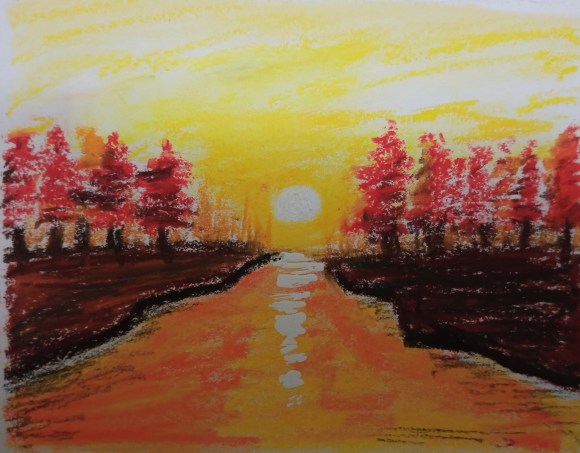
Art by Sohana Manzoor
TO LIGHT

Light of mine, O light, the universe is filled with your effulgence,
My heart is yours; my eyes drown in your refulgence.
The light danced — danced amid my being.
It sings — sings amid my heartstrings.
The sky awakens, the breeze flits, the Earth laughs.
As luminous currents surge, thousands of butterflies take flight.
Mallika-Malati* dance in waves of light.
The clouds are coloured with gold, infinite gems glitter.
The leaves laugh intoxicated with elation.
Your nectar floods the shores by the river of tunes.

*Names of fragrant flowers
We present the song in Bengali by Chinmoy Chatterjee (1930-1987), also known as Chinmoy Chattopadhyay, an eminent singer from the past.
This song has been translated by Mitali Chakravarty with editorial input from Sohana Manzoor and Anasuya Bhar.
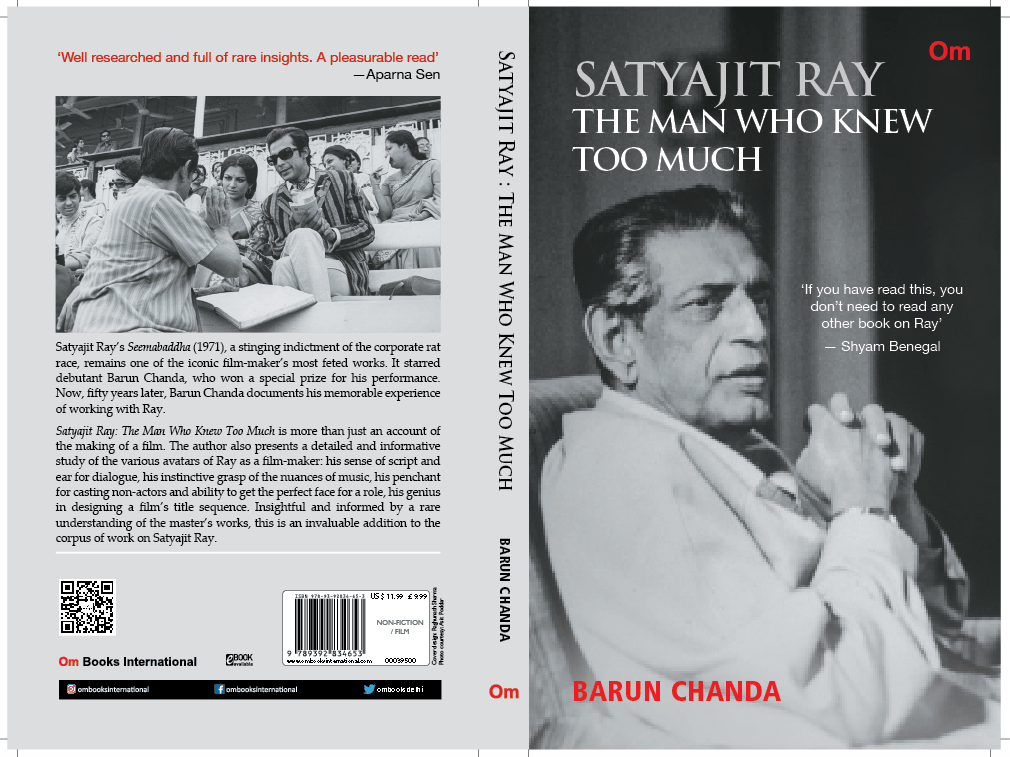
Meet Barun Chanda, an actor who started his career as the lead protagonist of a Satyajit Ray film and now is a bi-lingual writer of fiction and more recently, a non-fiction published by Om Books International,Satyajit Ray:The Man Who Knew Too Much in conversation Click here to read.
Jim Goodman, an American traveler, author, ethnologist and photographer who has spent the last half-century in Asia, converses with Keith Lyons. Click here to read.
Translations
Professor Fakrul Alam has translated three Tagore songs around autumn from Bengali. Click here to read.
Nagmati by Prafulla Roy has been translated from Bengali as Snake Maiden by Aruna Chakravarti. Click here to read.
A Balochi Folksong that is rather flirtatious has been translated by Fazal Baloch. Click here to read.
                     “Where are the songs of Spring? Ay, where are they?
                      Think not of them, thou hast thy music too…”

                                 — John Keats (1795-1851), To Autumn
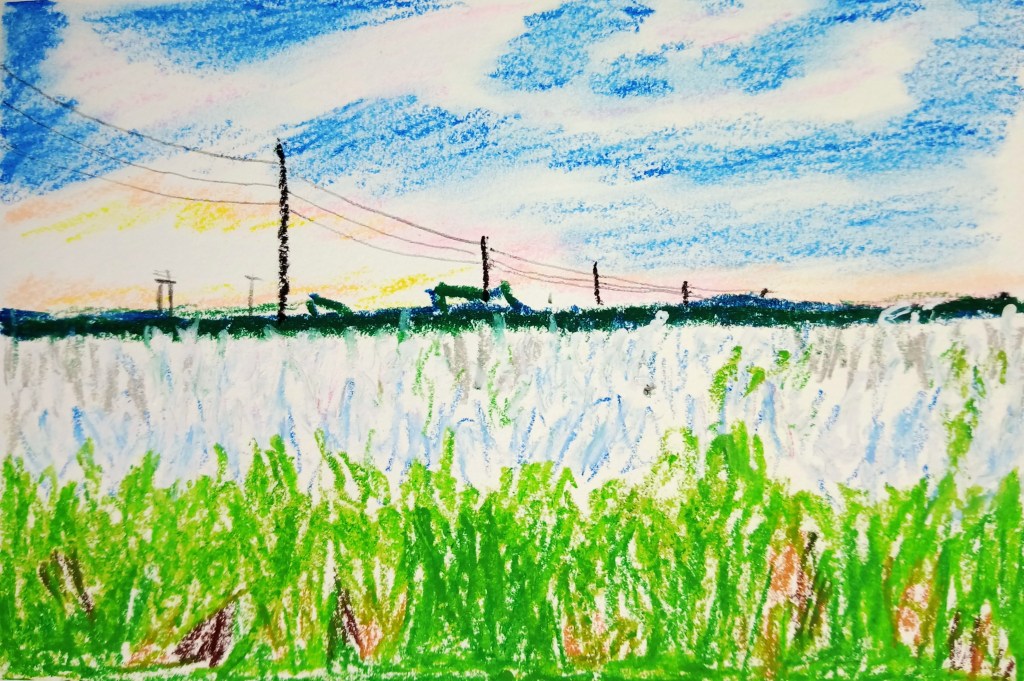
Art by Sybil Pretious
For long writers have associated autumn with “mellow wistfulness”. That loss of spring, or loss of youth is not bleak or regretful has been captured not just by Keats but also been borne out by historical facts. Anthropocene existence only get better as the human race evolves … If we view our world as moving towards an autumn, we perhaps, as Keats suggests, need to find the new “music” for it. A music that is ripe and matures with the passage of time to the point that it moves more towards perfection. Though sometimes lives fade away after autumn gives way to winter as did those of Queen Elizabeth II (April 21st 1926 – September 8th 2022) after a reign of seventy historic years and Mikhail Gorbachev (2nd March 1931 – 30thAugust 2022) with his admirable efforts to bridge divides. Both of them have left footprints that could be eternalised if voices echo in harmony. Thoughts which create bonds never die – they live on in your hearts and mine.
Imagine… ten thousand years ago, were we better off? Recorded history shows that the first war had already been fought 13,000 years ago. And they have continued to rage – but, at least, unlike the indomitable Gauls in Asterix[1] comics – not all jumped into the fray. They did during the last World Wars — which also led to attempts towards institutionalising humanitarian concerns and non-alignment. Yes, we have not had a perfect world as yet but as we age, the earth matures and we will, hopefully, move towards better times as we evolve. Climate change had happened earlier too. At a point, Sahara was green. Continental shifts split Pangaea into seven continents – that was even earlier. That might have driven the dinosaurs to extinction. But I am sure mankind will find a way out of the terror of climate change and wars over a period of time, as long as we believe in deciphering the sounds of autumn as did Keats in his poem.
Tagore had also sung of the joys of autumn which happens to be a time for festivities. Professor Fakrul Alam has translated three such songs, reflecting the joie de vivre of the season, The translation of a small poem, Eshecche Sarat[2], brings the beauty of the season in Bengal to the fore. We have a celebration of youth and romance in a Balochi folksong, an anti-thesis to autumn and aging, translated for us by Fazal Baloch and also, poetic prose in quest of God and justice by Haneef Sharif, translated from Balochi by Mashreen Hameed. Lost romance recapitulated makes interesting poetry is borne out by Ihlwha Choi’s translation of his own poem from Korean. But the topping in our translation section is a story called ‘Nagmati[3]’ by eminent Bengali writer, Prafulla Roy, translated by no less than a Sahitya Akademi winning translator – Aruna Chakravarti. This story illustrates how terrifying youthful follies can lead to the end of many young lives, a powerful narrative about the snake worshipping community of Bedeynis that highlights destruction due to youthful lusts and an inability to accept diverse cultures.
When this cultural acceptance becomes a part of our being, it creates bonds which transcend manmade borders as did the films of Satyajit Ray. His mingling was so effective that his work made it to the zenith of an international cinematic scenario so much so that Audrey Hepburn, while receiving the Oscar on his behalf, said: “Dear Satyajit Ray. I am proud and privileged to have been allowed to represent our industry in paying tribute to you as an artist and as a man. For everything you represent I send you my gratitude and love.”
This and more has been revealed to us in a book,Satyajit Ray: The Man Who Knew Too Much, authored by a protagonist from Ray’s film, Barun Chanda. This book brought out by Om Books International reflects not just Ray as a person but also how he knitted the world together with his films and took the Indian film industry to an international level. Barun Chanda has been interviewed with a focus on Satyajit Ray. Keith Lyons has also interviewed a man who has defied all norms and, in the autumn of his life, continues his journey while weaving together cultures across, China, India and Thailand by his ethnographic studies on tribes, Jim Goodman. Goodman says he left America when speaking for a war-free world became a cause for censorship. This makes one wonder if war is a game played for supporting a small minority of people who rule the roost? Or are these ramblings of a Coleridge writing ‘Kubla Khan’ under the influence of narcotics?
Poetry also brings the season into our pages with an autumnal interpretation of life from Michael Burch. More poetry from Sunil Sharma, Ryan Quinn Flanagan, Gayatri Majumdar, George Freek, Ron Pickett, Sutputra Radheye, Marianne Tefft brings a wide range of concerns to our pages – from climate to the vagaries of human nature. Poetry by an Albanian writer, Irma Kurti, and photographs by her Italian spouse, Biagio Fortini, blend together the colours of humanity. Rhys Hughes as usual, makes it to the realm of absurd – perhaps voicing much in his poetry, especially about the environment and human nature, though he talks of woodpeckers on Noah’s ark (were there any?) and of cows, yetis, monkeys and cakes… He has also given us a hilarious cat narrative for his column. Can that be called magic realism too? Or are the edges too abstract?
A book excerpt from Hughes’ Comfy RascalsShort Fiction and a review of it by Rakhi Dalal makes us wonder with the reviewer if he is a fan of Kafka or Baudelaire and is his creation a tongue-in-cheek comment on conventions? A book review by Hema Ravi of Mrutyunjay Sarangi’s A Train to Kolkata and Other Stories and another by Bhaskar Parichha of Netaji Subhash Chandra Bose’s Life, Struggle and Politics, authored by Netaji’s nephew’s wife, Krishna Bose, translated and edited by her son, Sumantra Bose, unveils the narratives around his life and death.
A leader who quested for freedom and roamed the world after being passed over by the Congress in favour of Nehru, Netaji raised an army of women who were trained in Singapore – not a small feat in the first half of the twentieth century anywhere in the world. His death in an air crash remained an unsolved mystery — another one of those controversies which raged through the century like the Bhawal case. In his review, Parichha spells out: “Aiming to bring an end to the controversies and conspiracy theories surrounding the freedom fighter, the over 300-page book gives a detailed and evidence-based account of his death in one of its chapters.”
Our non-fiction also hosts humour from Devraj Singh Kalsi about his interactions with birds and, on the other hand, a very poignant poetic-prose by Mike Smith reflecting on the vagaries of autumn. From Japan, Suzanne Kamata takes us to the Rabbit Island – and murmurings of war and weapons. We have the strangest story about a set of people who are happy to be ruled by foreign settlers – we would term them colonials – from Meredith Stephens. G Venkatesh delights with a story of love and discovery in Korea, where he had gone in pre-pandemic times. Paul Mirabile travels to Turkey to rediscover a writer, Sait Faik Abasiyanik (1906-1954). And Ravi Shankar gives us an emotional story about his trek in the Himalayas in Nepal with a friend who has passed on. Candice Louisa Daquin has written of the possibilities towards integrating those who are seen as minorities and marginalised into the mainstream.
The edition this time is like Autumn – multi-coloured. Though I am not able to do justice to all our contributors by mentioning them here, my heartfelt thanks to each as every piece only enriches our journal. I urge you to take a look at the September edition.
I would like to give huge thanks to our readers and our team too, especially Sohana Manzoor and Sybil Pretious for their artwork. We could not have come this far without support from all of you.
[1] The men in the indomitable Gaulish village (which the Romans failed to conquer) in times of Julius Caesar loved to jump into a fight for no reason…Asterix was the protagonist of the comics along with his fat friend Obelix
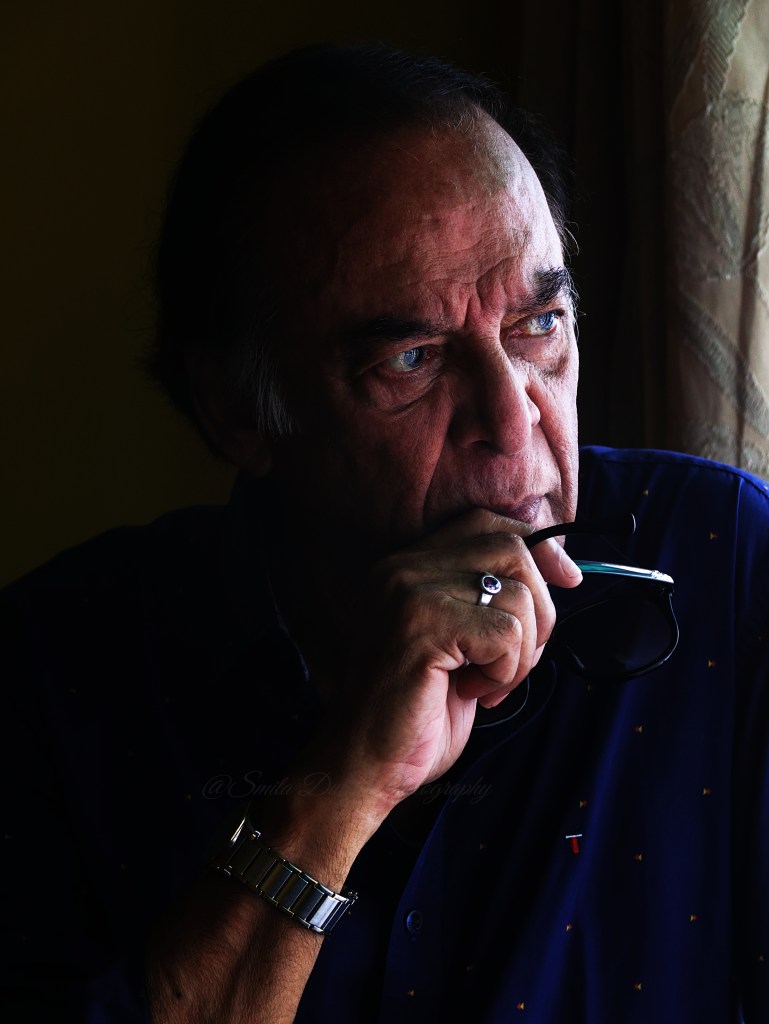
In conversation with Barun Chanda, an actor who started his career as the protagonist of a Satyajit Ray film and now is a bi-lingual writer of fiction and more recently, a non-fiction published by Om Books International, Satyajit Ray:The Man Who Knew Too Much
“[O]ne would like to remember Ray as one of the last truly great renaissance men of Bengal, moulded much in the tradition of Tagore, in the sense that his genius manifested itself in manifold directions: film-making, photography, writing, composing poetry, limericks, music, designing, drawing, developing new typefaces, you name it.
“For a long time, he was also our most distinguished cultural ambassador to the world.”
This perhaps is the one of the most apt descriptions of a man whose films were legendary in our lifetime and a part of the concluding chapter in The Man Who Knew Too Much by Barun Chanda. The book is an exhaustive account of Ray and his major films, how he made the films, what were the influences he had, how he directed the films and how versatile he was. Chanda is clearly impacted by this giant of Bengal renaissance, which started with Raja Ram Mohan Roy in the eighteenth century and encompassed Tagore.
The book is as much a memoir by Chanda about Satyajit Ray as it is a narrative about his films. Structured unusually, this non-fiction has an introduction sandwiched between two sections, the first being Chanda’s own interaction with Ray as a hero of his award-winning film, Seemabadha[1](1971), and the making of the movie; the second being the narrative that covers the titular content (borrowed from Alfred Hitchcock’s famous 1956 thriller), The Man Who Knew Too Much, about the genius of Ray as a filmmaker. Chanda shows us how Ray was truly unique and very gifted. He would remember all the dialogues and be intent on being involved with every part of film making, from costumes to camera, lighting and makeup — which is probably why his films had a unique touch so much so that he has to date been the only Indian filmmaker to win an honorary Oscar which Hollywood actress Audrey Hepburn, collected for him as he lay sick in bed (1992) breathing his last, saying: “Dear Satyajit Ray, I am proud and privileged to have been allowed to represent our industry in paying tribute to you as an artist and as a man. For everything you represent I send you my gratitude and love.”
And this note has been quoted by Chanda to bring out the uniqueness of a man who counted luminaries like Arthur C Clarke, Jean Renoir, de Sica, Kurusawa, Cartier-Bresson among his friends. He has unveiled the unique persona further. “As Ray was wont to say, everything that he had done earlier in his career, helped prepare him to be a complete filmmaker. His sense of framing stemmed from his knowledge of still photography. His deep love of Western and Indian classical music helped shape him as a music director. His sense of art direction came from his earlier stint at D.J. Keymer. His power of illustration helped him design the sets of Hirak Rajar Deshe[2]and Shatranj ke Khilari[3], both marvellous instances of art direction. And a combination of these two factors facilitated his making of some of the most original and impressive cinema posters ever.”
Chanda goes on to describe the full genius of Ray’s film making which even stretched to scripts, songs — both the lyrics and music often, and of course his ability to visualise the whole movie beforehand. Ray is quoted as having said: “I have the whole thing in my head at all times. The whole sweep of the film.”
Interspersed with anecdotes about the films, the text highlights the eternal relevance of some of the dialogues and lyrics that Ray wrote himself. For example, listening carefully to the lyrics of ‘Ore Baba Dekho Cheye[4]’ (Goopy Gyne Bagha Byne, 1969), one could see it as a comment from a current pacifist in today’s war-torn world. This book actually seems like an eye opener not only to understand Ray’s films, but also to find out what the world needs from the media, an important comment in times of false news and sensationalism.
However, the book is not all adulation. It is also a critique of the persona of a visionary who could risk all for realising his vision. Chanda tells us how to attain perfection, Ray could risk necks: “There was an element in Ray bordering on ruthlessness. To get a certain effect on the screen he wasn’t averse to taking risks, at times to dangerous levels.”
New perspectives are brought in from unpublished interviews: “In an unpublished Bengali interview of Ray which is in the possession of Abhijit Dasgupta, one-time chief of Doordarshan, Kolkata, when asked about his film Sadgati[5], the maestro is quoted to have said: ‘One needed to make a film on this story immediately. As a Marxist, Mrinal Sen would have probably made it differently, more angry … Had this film been angrier I’m not sure it would have served the purpose any better. I don’t think display of anger alone can lead to much of an achievement. To my mind a truly politically angry film hasn’t been made so far. Until now what has been done is to shoot at safe targets. It hasn’t made any difference to establishments in any way. If one were to achieve this kind of a thing, I would sooner be a political worker than a filmmaker.’”
While looking at the maestro through an objective lens, Chanda finds it hard not to express his affection for the giant who impacted not just him but a whole generation of movie goers, film personnel and the world. His last sentence says it all:
“As far as I’m concerned, he [Ray] is always present. Not past. Not even past perfect.”
Chanda, a man who started his life working in the same advertising agency as Ray and dreaming of being an actor, with four books and multiple films under his belt, himself mesmerised audiences as a protagonist in Ray’s award-winning film and then suddenly withdrew from the industry for two decades. Why would he do that? Let us find out more about him and Ray in this interview.
Barun Chanda
First of all, let me tell you I am very honoured to be interviewing a Ray hero from a film I have watched multiple times. So, tell me, why did you act only in one Ray film, have a hiatus of twenty years and then go back to acting with Hirer Angti[6] in 1992, the year Ray died. Did it have anything to do with Satyajit Ray’s presence or influence?
No. I’ll tell you what – after Seemabadha, I got a cluster of film offers, nine-ten offers and I did not accept anyone of them because they did not seem to be significant enough. I wasn’t interested in making money out of films or becoming a film star. I was interested in acting in good films. If they came my way, I would do. If they didn’t come my way, I wouldn’t. I would go back to my profession which is advertising. I was very happy there.
So, these offers that came didn’t quite satisfy me. And Manikda[7] did not call me back again for whatever reasons. The other significant filmmakers like Tapan Sinha, Mrinal Sen and Ritwick Ghatak – they did not call me. I suppose I was branded as a capitalist actor. Or Imperialistic actor! I suppose it became ingrained in their mind I was an executive and nothing else. They felt they could not bend me into the roles in their film. A pity!
Is this your first non- fiction? What led you to think of writing a book on Satyajit Ray?
Yes, it is my first non-fiction. I had harboured this thought for a long-long time but there is a natural reluctance about writing anything. I am, by and large, a lazy person and there were a whole lot of things that were pretty personal, and I thought, you know, let it be stored in my mind. Maybe, I could narrate to my close friends’ circle certain stories and certain things that happened between me and him. But not for everyone. Even in this book, I have not mentioned a whole lot of things that are too personal, which he confided to me in good understanding that I will not tell another. I won’t speak about it.
Then the centenary year came, and many asked me why I did not write my out my memories. Shantanu Ray Chaudhuri was one of them. He said the time is right and you have such wonderful anecdotes and experience, put it down for posterity. When I did the first part, I realised it could not just be my experiences but also something larger – in the sense what kind of a man was he in real life.
I was also dissatisfied with the books I have been reading about Ray and his works — starting with Marie Seton[8], who was supposed to be a gospel on Ray. I found it was a narration of his films in chronological order and what she thought of them. It was film-based assessment, not of the man himself or his qualities separated from the films. So, I decided to explore his persona. This book is quite different from any written on him. I have sections on music, editing with a whole lot of films but not in a chronological order. That is passé. The second part started with what has not been done. As I progressed, newer sections dawned on me – a whole lot of sections I have not used. I wanted a chapter on “The Rise and Fall of the Ray Empire” – but then thought I’d rather not finally. It would have been terrific, but I did not, perhaps want to spoil the public feeling about Ray. I did not want to criticise. I did do a chapter though — “Director or dictator”.
Absolutely. Your book is dispassionate but has no scandals or any unfair criticism. In fact, it seems to be based on not just your memories but also many interviews and lot of research. Can you tell us what went into the making of this book in this context? What kind of research and who all did you interview? How much time went into the making of the book?
I used Ray’s experiences with actors who are no longer alive – like Chabbi Biswas or Tulsi Chakraborty. I have used Aloknanda Roy who happened to work with Chabbi Babu in Kanchenjunga[9]. I used the living actors. I did not interview Soumitra Chatterjee – I know his feelings on Ray. So, I did not interview him separately. But there is a lot in the book about how Soumitra da perceived Ray or his equation with Ray.
The book worked well for me – I would have gone to a madhouse but for this book. You have to believe me. For it helped my sanity, writing this book during the Covid period[10]. The eighteen months—closer to two years. I could really concentrate on something as I am an outgoing person – not that I am a club person – but I would like to meet my friends, lead an active life. Suddenly, I felt imprisoned – it was like house imprisonment. So, I turned my attention to writing this book and whatever I could get out of YouTube, whole lot of other’s books, Ray’s interviews. One gentleman, Abhijit Dasgupta, who was the head of Kolkata Doordarshan, had conducted an interview. He gave me part of it which I found very intimate. You could do a book on Ray and Mrinal Sen dispassionately –Mrinal’s films would be of historical importance but not of relevance otherwise whereas Manikda’s films can be watched again and again because it touches your heart.
That is so true. Your book is structurally unusual with an introduction in the middle of two parts. Why did you follow such an unconventional format? Do you feel it helped your presentation in any way?
Yes. Because I was writing a different book. No one has written a biography in two parts. In a way it is not a biography, but it is trying to understand and appreciate Ray as a filmmaker. That’s what the book is.
I was in an advantageous position to write on Ray. Actually, Dhritiman Chatterjee could have done the same. I admire Dhriti for his thinking, but I guess there is an innate laziness. He did interview Manikda but I do not know where the tapes are.
I felt the way I did it was the right way. The book came naturally to me. For somethings, I went out of my way — like the titling.
To this date, no Indian director has made a film where the title is relevant to the film. The film follows from the title. The thought is not there. But it is there in the West. That is why you have people like Saul Bass. Ray wanted to do things himself – that might have been why he did the titling too. He would draw and present to the art director who would work further on it. I should have had a whole lot of drawings in this book, but it was not readily available.
I continue to feel I could embellish certain chapters, especially on music. Debojyoti Mishra, a film music director, has written a book in Bengali which actually traces from where Ray has borrowed what piece of Western Classical music. It is not unlike Tagore – there are analogies in the use of music between the two.
Ray spent a few years in Santiniketan when he was young, I think around 1940. Was he impacted by Tagore? Can you tell us about it? Did he meet Tagore or have any conversation with him as it was a year before Rabindranath passed on?
He did not actively seek out Rabi Thakur. He was a very shy person. There is no mention anywhere in his writings about seeking out Tagore, knowing very well Tagore held his father and grandfather in great esteem. His mom knew Tagore well. But he never sought him out. It is rather difficult to understand why he did not utilise the time speaking with Tagore. Maybe, Tagore was inaccessible. I could have asked him, but I never did. I do not know why I never asked.
Why would you borrow from Alfred Hitchcock to name probably one of the last of the Bengal renaissance men? Can you please elaborate?
I thought that the title was absolutely apt. As a director he knew more than any director did. It described him to perfection. He would draw, give music and work with his basic idea with the rest of the team.
What would you say is Ray’s most major contribution to the world?
The brilliance of Ray’s portrayal of the village was outstanding. You watch the film and think you cannot improve on it. And Ray knew it and has said it.
Does Ray continue to impact current trends in cinema?
Ray was a classicist. The film making style has moved away from that. He would not move the camera unless it became imperative to his film. But now, cameras are handheld, and they have fast shooting. Film making has transformed with the emergence of the web series. Shooting has become so much easier and quick, though they work very hard. There is something more raw about web series. The feature film is more stately, more crafted. Films have enough time. You cannot get a good film if the actors are not brilliant. You cannot shoot a good film in ten or twelve days as they do for web series. That is not physically possible. In the West, they take eighty to ninety days to shoot a film.
Ray wrote many novels on Feluda and Professor Sonkhu. Yet made few films on them. He made films of others’ books rather than his own. Can you tell us why?
Maybe, the writing part started late in his life. It was propelled by his need to feed Sandesh[11] and he had to supply stories to Desh[12] — one per year, for the puja[13]special. His writing came as an offshoot – it was an accident. But the preparation was there – if you read his scripts or lyrics, they are fantastic. The scripts he wrote were brilliant. There is much to admire and respect about him. He was a writer too.
You are known to be a writer too. Are your books impacted by your association with Ray?
What I learnt from him was how to write dialogues. The publisher of my Bengali books, Tridib Chatterjee, said he found my dialogues “smart”. Ray’s writing was very tight. I tighten my descriptions. I do not expect the readers to read a book like Tom Jones[14].
Can you tell us about your other books? Coke (2011) interestingly, is available in both Bengali and English. So, which came first — the Bengali book or the English? Are they both your handiwork? Tell us a bit about your novels?
I wrote it in Bengali first and then wrote it in English later. Actually, it was not a direct translation. I write in both the languages. Another one which is in English is Murder in the Monastery. The second edition is being brought out by Rupa, should be available on Amazon soon hopefully. Post-Covid, people have gone into hibernation. So, many have complained they cannot get it.
I have two books in English, Coke and Murder in the Monastery. The others are in Bengali.
Which genre is preferable to you — murder, mystery thrillers or non-fiction like this one?
I get my high writing fiction, especially crime.
Are you giving us any new books in the near future?
Yes, a collection of short stories in Bengali, probably after the pujas. I have created a character called Avinash Roy. He is learned and intelligent but not overtly brilliant like Sherlock Holmes. My favourite character [fictional] among detectives is that of Inspector Morse – I have seen the TV series but not read the books. He was very human. Absolutely brilliant. But coming back to my current book, it is also facing delays, but I am hoping it will be out this October.
Thank you for giving us your time and answering our questions
Eshechhe Sarat ( Autumn) by Rabindranath Tagore was published in 1937. The poem flows to describe the season of Sarat, or the early part of autumn, when Bengalis celebrated their major festival, Durga Puja
Autumn in Bengal by Sohana Manzoor
AUTUMN

A cool breeze awakens
Autumn anew.
At dawn, the grass rim
Is lined with dew.

The amloki groves shiver.
Their hearts pound like drums,
As they know the time to shed
Leaves has clearly come.

The shiuli branches are laden with buds.
The togor blossoms hold sway.
The bees visit sprays of the
Malatilata twice a day.

As the rains have ended,
The clouds roam the skies free.
They drift with the breeze,
At leisure and full of glee.

The ponds ripple with water.
Their banks bloom with flowers.
The young rice plants fill the fields
The wind swings the paddy bowers.

Wherever I look, a golden light
Suffuses a vision of holidays,
The festive sun rises in the woods
Of puja* blossoms drenched in gold rays.


------------------------------------------
Amloki is Indian gooseberry
Togor (genera: milkwood), shiuli (jasmine)and Malatilata (Rangoon creeper) are flowers that bloom around autumn
*Durga Puja
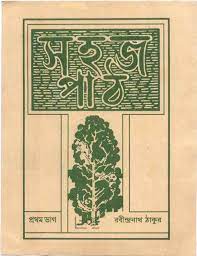
This poem was a part of Sahaj Path, a set of books created by Tagore to teach the Bengali language. The four books that constitute the set were illustrated by the famed artist Nandalal Bose (1882-1966), who was also a major part of Santiniketan.
Sahaj Path, Tagore’s Bengali primer, of which this poem was a part. Courtesy: Creative Commons
(This poem has been translated by Mitali Chakravarty with editorial backing from Anasuya Bhar and Sohana Manzoor)
.
PLEASE NOTE: ARTICLES CAN ONLY BE REPRODUCED IN OTHER SITES WITH DUE ACKNOWLEDGEMENT TO BORDERLESS JOURNAL
Bhaskar Parichha reviews a non-fiction written on Netaji by his family.
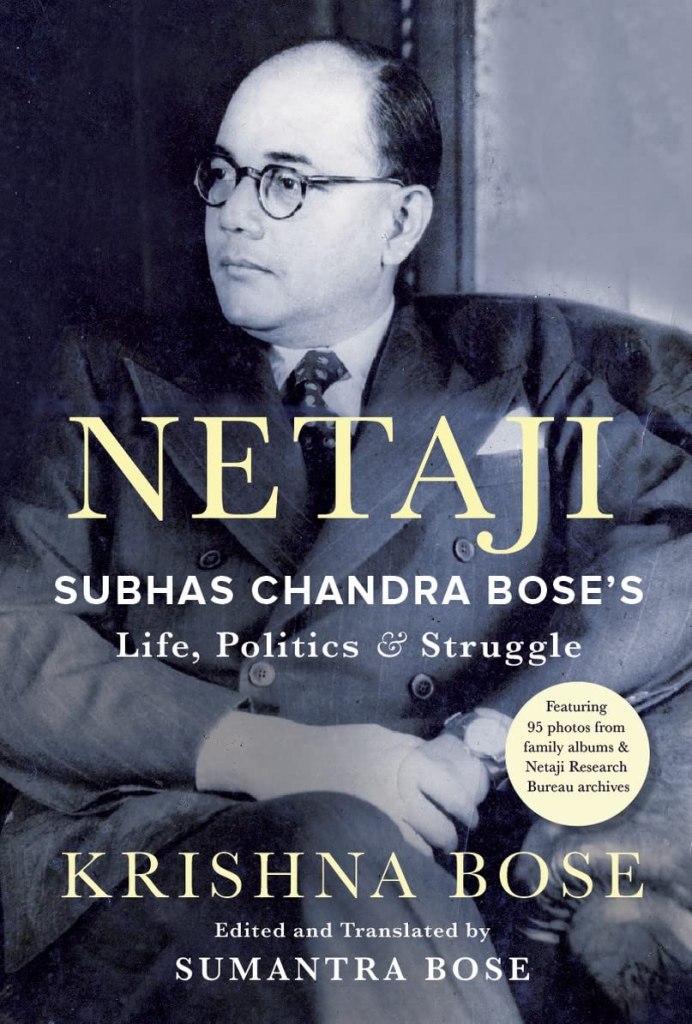
Title: Netaji Subhas Chandra Bose’s Life, Struggle and Politics
Author: Krishna Bose
Editor and Translator: Sumantra Bose
Publisher: Picador India
Books on Netaji Subhas Bose are plentiful and readers are unvaryingly fascinated by every book that hits the bookshelves. The enigma and the ecstasy of Netaji’s short yet eventful life continue to enthrall people worldwide even after decades since his death in a plane crash.
This new book Netaji Subhas Chandra Bose’s Life, Struggle and Politics by the late Krishna Bose is a refreshingly new account of the great leader’s life. Three aspects of his life stand out prominently in the book: Subhas Chandra Bose’s political motivations, personal relationships, and the daring military campaigns he undertook to secure India’s independence.
Krishna Bose (1930-2020) was a Member of Parliament thrice. A professor of English Literature, Krishna (nee Chaudhuri) married Dr. Sisir Kumar Bose — son of Netaji’s elder brother Sarat Chandra Bose. Sisir was Netaji’s chief aide in his daring escape from India in 1941 and drove the escape car from the family’s mansion on Kolkata’s Elgin Road. After Netaji’s death, Krishna helped Sisir build the Netaji Research Bureau at Netaji Bhawan. She served as NRB chairperson after Sisir’s death.
The book offers a rare in-depth account of the Netaji’s meaningful life by one of Bose’s close family members. That makes the book authentic and stimulating. Originally written in Bengali, the writings reveal the “human being alongside the revolutionary and freedom fighter”. It traverses Bose’s life from childhood to his death in August 1945. With important chapters about his youth, political career, and the power equation with Mahatma Gandhi and Jawaharlal Nehru, the book subtly brings out different shades of Netaji’s personality.
Drawing on Netaji Research Bureau’s archives and decades of fieldwork and interviews, this book offers an unmatched portrait of Subhas Chandra Bose – the man, his politics, and his epic struggle for India’s freedom. Krishna Bose’s writings were compiled, edited, and translated from Bengali by her son Sumantra Bose.
Krishna Bose traveled the world and extensively to the subcontinent in order to find out more about Netaji’s life. She strung together her findings, giving new insights into Subhas Chandra Bose’s political motivations, his personal relationships, his epic journeys, and the daring military campaigns he undertook to secure India’s independence. Written over six decades the book vividly reveals Netaji as a human being alongside his radical views.
The book has a detailed account of the women who influenced Netaji (his mother, adoptive mother, wife, and close friends as well as the soldiers of the all-women Rani of Jhansi regiment that was trained in Singapore), an eyewitness account of Netaji’s epic struggle in Europe and Asia, his secret submarine journey and escape from his Calcutta home and the Andamans where Netaji raised the national tricolour.
Divided into seven chapters (‘The Women who Influenced Netaji’; ‘Netaji’s relationships with Indian and World Leaders’; ‘Azad Hind Fauj’: ‘Netaji’s Epic Struggle in Europe and Asia’, ‘Netaji’s Soldiers: Remembering the Brave’; ‘The Liberated Lands’: ‘Visiting Manipur and the Andamans’; ‘Netaji and Women’: ‘In War and Friendship and Requiem’), the book is a truthful chronicle of Netaji.
The book contends: “[W]e visit the Manipur battlefields where the Indian National Army waged its valiant war, the Andamans where Netaji raised the national tricolor; Singapore, where the INA took shape; Vienna and Prague, his favorite European cities; and Taipei, where his life was tragically cut short. We meet Netaji’s key political contemporaries – from Nehru and Gandhi to Tojo and Hitler. And we learn in gripping detail about the Azad Hind Fauj’s spirit of unity and the bravery in the war of its men – as well as the women who fought as the Rani of Jhansi Regiment.”
In fact, Krishna Bose closely knew many personalities who feature in this book – Basanti Debi, Subhas’s adopted mother; Emilie Schenkl, his spouse; Lakshmi Sahgal, Abid Hasan, and many other leading soldiers of the Azad Hind movement – who all shared vital memories that helped complete Netaji’s life story.
Rabindranath Tagore and Subhas Chandra Bose are the two most iconic figures late modern Bengal has produced. The nature of their relationship is, however, not very well known. We are told: “Tagore and Bose first met at sea, in July 1921. Subhas, aged twenty-four was returning by ship from England to India after resigning from the Indian Civil Service to join the national struggle for freedom taking shape under Mahatma Gandhi’s leadership. Tagore, aged sixty, happened to be a co-passenger on the ship. In his book, The Indian Struggle, 1920-1934, published in London in January 1935, Netaji recalled that journey and wrote that he and Tagore had extensive discussions during the voyage.”
Aiming to bring an end to the controversies and conspiracy theories surrounding the freedom fighter, the over 300-page book gives a detailed and evidence-based account of his death in one of its chapters. Notwithstanding the mystery surrounding his demise, Netaji is widely believed to have died in a plane crash in Taiwan.
Featuring 95 images and letters from family albums and Netaji Research Bureau archives, this compilation by Krishna Bose on Netaji and his struggle for India’s freedom will enlighten readers, and especially the younger generation, about Subhas Chandra Bose’s ideals and his vision about the development of a free India.
.
Bhaskar Parichha is a journalist and author of Unbiased, No Strings Attached: Writings on Odisha and Biju Patnaik – A Political Biography. He lives in Bhubaneswar and writes bilingually. Besides writing for newspapers, he also reviews books on various media platforms.
.
PLEASE NOTE: ARTICLES CAN ONLY BE REPRODUCED IN OTHER SITES WITH DUE ACKNOWLEDGEMENT TO BORDERLESS JOURNAL
Ratnottama Senguptagives a glimpse of the life of Zohra Sehgal, based on the book Zohra: A Biography in Four ActsbyRitu Menon, and her own personal interactions with the aging Zohra Sehgal. Click here to read.
“It just so happens that their[1] universes were different from ours: because why would their imaginations be constrained by a nation-state that would not exist for another thousand years?”
These lines from a recent article on conquests carried out by the Indian subcontinent in ancient times brings to focus that earlier countries or nation-states as we know of them today did not exist till the industrial revolution set the concept in motion. In the month many countries in Asia celebrate their independent existence or rather the drawing of borders based on colonial mapmakers’ whims, we should perhaps relook at the way the world stands divided.
Is this what we want as humans? Where are we headed? While conquerors write the history, we tend to gloss over what is left unsaid. The millions who died crossing borders, in race riots and of hunger, starvation and disease in refugee camps is overlooked, or worse, used to justify the divisions that still hurt the residents of the sub-continent and try to destroy any sense of oneness among the human species. We tend not to forget the atrocities of the colonials but we overlook the violence of the mobs that incensed with hatred instilled by politics annihilated and murdered. Their story is reduced to “us” and “them”. In our mood of jubilation, the recent bombings in the Middle East and the Ukraine-Russia war have already been delegated to the newsreels. But these are all people who are killed and displaced without any justification for the need to do so. One of the things that George Orwell had depicted in 1984 was an acceptance of a constant state of war. Are we stepping into that frame of mind with our cold acceptance of the situation worldwide?
In the last century, many united against the atrocities of the empire builders. They wanted to rise above the divides. At least greats like Nazrul vociferously objected to the basis of divides that were used to draw the borders. Translations brought to us by Professor Fakrul Alam showcase such poetry as does much of Tagore’s own writing and actions. Tagore organised a protest march against the colonial proposal of Partition of Bengal in 1905 by taking a procession in which he encouraged Hindu and Muslim women to tie rakhis[2] on men from the other community and make them their brothers. Tagore put the welfare of humanity above nationalism as can be seen in his writings and speeches. Reflecting on humanity, we have Munshi Premchand’s powerful story,Pus Ki Raat or A Frigid Winter’s Night, translated from Hindi by C Christine Fair, dwelling on the sad state of peasantry under the Raj. In a bid to rouse people like the protagonist of Premchand’s story, Tagore wrote inspirational songs, one of which, Hobe Joye(Victory will be Ours) has been translated on our pages. We also continue sharing Rabindranath’s humour with a skit translated by Somdatta Mandal from Bengali.
Humour is also stirred into Borderless by Rhys Hughes with a series of mini sagas in his column and a trip around the world in eighty couplets. These couplets actually are more in number — I tried counting them — and are guaranteed to make you laugh. We have travel stories in plenty too. Ravi Shankar again treks to the Himalayas and brings us wonderful photographs of his journey and G Venkatesh stops over at Istanbul airport to find a friend from across the border. Meredith Stephens travels to a French colony called Lifou Island — sounds unbelievable as in the month we celebrate the independence of so many countries across Asia, there is still a country in the Pacific that owes allegiance to a democratic European power! But other than writing about the beaches, Stephens talks of a temporary pet dog while Suzanne Kamata gives us cat talk in her notes from Japan in a lighter vein — a very pleasant glimpse of life. Devraj Singh Kalsi brings a grin when he talks of his stint at trying to run a restaurant.
Interesting non-fictions from a book lover, Sindhu Shivprasad, and from PG Thomas who talks of King Lear performed a la classical Indian dance mode, Kathakali, by an international caste add to narratives that focus on bringing the pleasanter side of life to our readers. Such stories are a welcome relief in dark times when people find themselves caught between price hikes due to the pandemic and wars. An essay by Candice Louisa Daquin looks for a way out of the stresses of these times. Erwin Coombs gives us a funny, poignant and tragic classroom encounter which reminds me of the 1967 Sidney Poiter movie, To Sir, with Love. We have darker tones brought into our journal also with Aysha Baqir’s story on child exploitation, a sad but hopeful narrative from Nepal by Santosh Kalwar about the rejection of a girl-child by her mother and a horrific murder brought to us by Paul Mirabile.
An excerpt from B. M. Zuhara’sThe Dreams of a Mappila Girl: A Memoir, translated from Malayalam by Fehmida Zakeer, brings us close to a community we know very less about in the Southern part of India. Meenakshi Malhotra has reviewed Tagore’s Four Chapters translated from Bengali and introduced by Radha Chakravarty, a book that is a powerful voice against violence in the name of nationalism touching on the independence of women, a theme that is reiterated in another book that has been visited by Rakhi Dalal. While exploring Neelum Saran Gour’s Requiem in Raga Janki, Dalal contends that the book familiarises us with a singer “who carved her own destiny and lived life on her own terms, in times when women were generally subjugated and confined to roles given by society”. Gracy Samjetsabam has visited Mamang Dai’s Escaping the Land, a novel that tries to weave issues faced in the Northeast of India and integrate it with the mainstream by stirring human emotions. Bhaskar Parichha has reviewed Rakesh Batabyal’s Building a Free India, a collection of powerful speeches from the past.
Within the confines of the Raj, there was a long court case where a prince who had been declared dead resurfaced as a Naga sadhu[3], a claimant to the throne, this time not to abuse his power as of past but to be a sympathiser of the people in their tryst to fight the Raj. Aruna Chakravarti has woven a historical fiction around this controversy centring around the prince of Bhawal. In an exclusive interview, she tells us the story behind the making of The Mendicant Prince— her novel that was published just last month. Her responses could well teach us how to write a historical novel.
We have much more than the fare that has been mentioned here. Pause by on our contents page to take a look. My heartfelt thanks to the whole team at Borderless for helping with this issue, which we managed to get out in a shorter time than usual and Sohana Manzoor for her wonderful artwork. I am grateful to all our contributors as well as our readers. We could not have made it this far without all of you.
In the spirit of uniting under a borderless sky, let us look forward to cooler climes and happier times.
[1] Guptas (4-6 century CE), Cholas (300 BCE -1279 CE) and other ancient rulers in the Indian sub-continent
[2] A festival held in August where sisters of all ages tie a talisman or amulet called the rakhi around the wrists of their brothers, who promise to protect them.







 Borderless