Categories
Notes from Japan

Address Unknown

By Suzanne Kamata

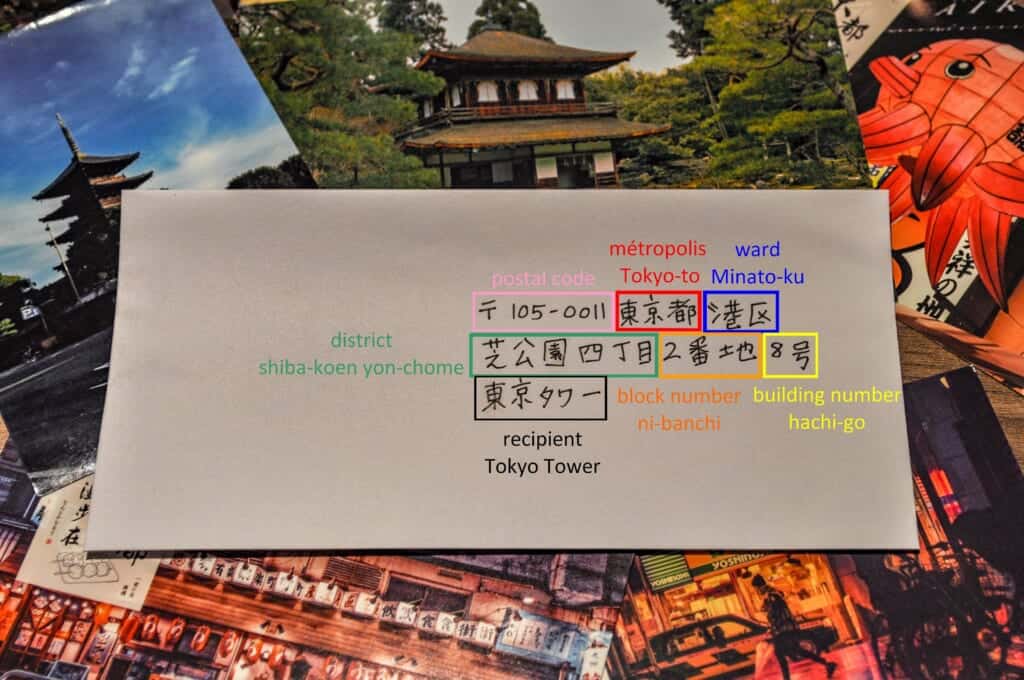
I can still remember the address of my childhood home – the house number on North Shore Road in Spring Lake, Michigan, and the five digit zip code. Short, but sweet. Here in Japan, where I’ve lived for the past twenty three years, I’ve had four different addresses, each seemingly longer than the last. I can hardly remember how to write the location of my current domicile, let alone the complicated addresses of apartments past.

Given the chance to win a bag of rice or a free trip at my local supermarket lottery, I would rather pass than take up a pen. My hand starts to cramp as soon as I see a form to fill out. At the bank, in a doctor’s office, or when having to write in the corner of an envelope, I tend to recoil. It takes such a long time to jot down my address.

Written in the Japanese style, which dates back to the Meiji Period, my address starts out with the name of the prefecture, in this case, Tokushima, followed by the county name, the name of my town, the district, and eventually narrows down to a house number. The house numbers, however, are not in sequential order, but from oldest to newest. Our street, like most in Japan, doesn’t have a name. 

Postal workers seem to be the only ones to whom addresses here have any meaning, and, to their credit, they generally get mail to the right place. When I first came to this country, however, I hardly ever got letters from my friends and relatives in America. My grandma, one of my most reliable correspondents, refused to write to me unless I sent her address labels. My address was simply too long for her to write. An editor once informed me that I had the most complicated address she’d ever seen in her life.

Cab drivers, on the other hand, can never find my house. I usually advise guests coming by taxi to get dropped off at the neighbourhood grocery store, and I go to meet them on foot. Not even satellites seem to be much help. Although most every year we are required to draw a detailed map from our children’s schools to our house to enable teachers to find us for the annual home visit, one teacher tried to find his way using his car navigation system. I watched for his car from the window as rain poured down outside. Finally, the phone rang. He was lost. He was near a shrine, he said. Could I come and get him? I dashed out with my umbrella and found him a few streets away.

For convenience, I had name cards printed up a few years ago. Now, when someone asks for my address, I simply hand over a card or, more often than not, my email address. It’s easy to remember and I can write it in six seconds.

.

Suzanne Kamata was born and raised in Grand Haven, Michigan. She now lives in Japan with her husband and two children. Her short stories, essays, articles and book reviews have appeared in over 100 publications. Her work has been nominated for the Pushcart Prize five times, and received a Special Mention in 2006. She is also a two-time winner of the All Nippon Airways/Wingspan Fiction Contest, winner of the Paris Book Festival, and winner of a SCBWI Magazine Merit Award.

PLEASE NOTE: ARTICLES CAN ONLY BE REPRODUCED IN OTHER SITES WITH DUE ACKNOWLEDGEMENT TO BORDERLESS JOURNAL

Click here to access the Borderless anthology, Monalisa No Longer Smiles

Click here to access Monalisa No Longer Smiles on Kindle Amazon International

Categories
Festive Special

Lighting Lamps of Love

Light of mine, O light, the universe is filled with your effulgence, 
My heart is yours; my eyes drown in your refulgence. 
…. 
The sky awakens, the breeze flits, the Earth laughs. 
As luminous currents surge, thousands of butterflies take flight. 

— Aalo Amar Aalo (Light, My Light), Bichitra, 1911, Rabindranath Tagore 

There was a time when lights were a part of joy and celebrations as in Tagore’s poem above. Lighting lamps, people welcomed home their beloved prince Rama on Deepavali, who returned after a fourteen year exile, and during his banishment, killed the demonic Ravana. On the same day in Bengal, lamps were lit to ward off evil and celebrate the victory of Kali, (the dark woman goddess wooed by Tantrics) over the rakshasa, Raktabeeja. In the Southern part of India, lamps were lit to celebrate the victory of Krishna over Narakasura. The reasons could be many but lights and fireworks were lit to celebrate the victory of good over evil during the festival of lights.

In the current world with lines blurred between good and evil, while climate crises seeks smoke free, coal free energy, flames of fire or fireworks are often frowned upon. In these times, we can only hope to light the lamp of love — so that differences can be settled amicably without killing the helpless and innocent, infact without violence, greed, peacefully and with kindness, keeping in mind the safety of our species and our home, the Earth. We invite you to partake of our content, writings that light the lamp of love — 

Poetry

I Gather Words by Shareefa Beegam P P. Click here to read.

The Language of Dreams by Sister Lou Ella Hickman: Click here to read.

Dreams are like Stars by Mitra Samal: Click here to read.

At Teotihuacan by Jonathan Chan: Click here to read.

Love Poetry by Gayatri Majumdar: Click here to read.

Today’s Child by Atta Shad, translated from Balochi by Fazal Baloch: Click here to read.

Endless Love, Ananto Prem (Endless Love) by Tagore, translated from Bengali by Professor Fakrul Alam. Click here to read.

Prose

Hena: a short story about love and war by Nazrul, has been translated from Bengali by Sohana Manzoor. Click here to read.

Annapurna Bhavan: Lakshmi Kannan closes class divides in Chennai over a meal. Click here to read.

Rituals in the Garden: Marcelo Medone discusses motherhood, aging and loss in this poignant flash fiction from Argentina. Click here to read.

The Tree of Life: An unusual flash fiction by Parnil Yodha about a Tibetan monk. Click here to read.

Adoption: A poignant real life story by Jeanie Kortum on adopting a child. Click here to read.

The Potato Prince: A funny but poignant love story by Sohana Manzoor. Click here to read.

A Taste of Bibimbap & More: G Venkatesh revisits the kindness he that laced his travels within Korea. Click here to read. 

Therese Schumacher and Nagayoshi Nagai: A Love Story: Suzanne Kamata introduces us to one of the first German women married to a Japanese scientist and their love story. Click here to read.

Categories
Contents

Borderless, October 2023

Artwork by Sohana Manzoor

Editorial

We had Joy, We had Fun … Click here to read

Conversations

A conversation with Nazes Afroz, former BBC editor, along with a brief introduction to his new translations of Syed Mujtaba Ali’s Tales of a Voyager (Jolay Dangay). Click here to read.

Keith Lyons converses with globe trotter Tomaž Serafi, who lives in Ljubljana. Click here to read.

Translations

Barnes and Nobles by Quazi Johirul Islam has been translated from Bengali by Professor Fakrul Alam. Click here to read.

Cast Away the Gun by Mubarak Qazi has been translated from Balochi by Fazal Baloch. Click here to read.

One Jujube has been written and translated from Korean by Ihlwha Choi. Click here to read.

A Hymn to an Autumnal Goddess by Rabindranath Tagore,  Amra Beddhechhi Kaasher Guchho ( We have Tied Bunches of Kaash), has been translated by Mitali Chakravarty. Click here to read.

Poetry

Click on the names to read the poems

Michael Burch, Gopal Lahiri, Ryan Quinn Flanagan, Hawla Riza, Reeti Jamil, Rex Tan, Santosh Bakaya, Tohm Bakelas, Pramod Rastogi, George Freek, Avantika Vijay Singh, John Zedolik, Debanga Das, Rhys Hughes

Poets, Poetry, and Rhys Hughes

In Do It Yourself Nonsense Poem, Rhys Hughes lays some ground rules for indulging in this comedic genre. Click here to read.

Musings/Slices from Life

Onsen and Hot Springs

Meredith Stephens explores Japanese and Californian hot springs with her camera and narrative. Click here to read.

Kardang Monastery: A Traveller’s High in Lahaul

Sayani De travels up the Himalayas to a Tibetan monastery. Click here to read.

Ghosts, Witches and My New Homeland

Tulip Chowdhury muses on ghosts and spooks in Bangladesh and US. Click here to read.

Musings of a Copywriter

In Red Carpet Welcome, Devraj Singh Kalsi re-examines social norms with a scoop of humour. Click here to read.

Notes from Japan

In Baseball and Robots, Suzanne Kamata shares how both these have shaped life in modern Japan. Click here to read.

Stories

The Wave of Exile

Paul Mirabile tells a strange tale started off by a arrant Tsunami. Click here to read.

Glimpses of Light

Neera Kashyap gives a poignant story around mental health. Click here to read.

The Woman Next Door

Jahanavi Bandaru writes a strange, haunting tale. Click here to read.

The Call

Nirmala Pillai explores different worlds in Mumbai. Click here to read.

Essays

The Oral Traditions of Bengal: Story and Song

Aruna Chakravarti describes the syncretic culture of Bengal through its folk music and oral traditions. Click here to read.

Belongingness and the Space In-Between

Disha Dahiya draws from a slice of her life to discuss migrant issues. Click here to read.

A City for Kings

Ravi Shankar takes us to Lima, Peru with his narrative and camera. Click here to read.

The Saga of a Dictionary: Japanese-Malayalam Affinities

Dr. KPP Nambiar takes us through his journey of making a Japanese-Malyalam dictionary, which started nearly fifty years ago, while linking ties between the cultures dating back to the sixteenth century. Click here to read.

Book Excerpts

An excerpt from Kailash Satyarthi’s Why Didn’t You Come Sooner?: Compassion In Action—Stories of Children Rescued From Slavery. Click here to read.

An excerpt from Rhys Hughes’ The Coffee Rubaiyat. Click here to read.

Book Reviews

Somdatta Mandal reviews Usha Priyamvada’s Won’t You Stay, Radhika?, translated from Hindi by Daisy Rockwell. Click here to read.

Aditi Yadav reviews Makoto Shinkai’s and Naruki Nagakawa’s She and Her Cat, translated from Japanese by Ginny Tapley Takemori. Click here to read.

Gemini Wahaaj reviews South to South: Writing South Asia in the American South edited by Khem K. Aryal. Click here to read.

Bhaskar Parichha reviews One Among You: The Autobiography of M.K. Stalin, translated from Tamil by A S Panneerselvan. Click here to read.

.

Click here to access the Borderless anthology, Monalisa No Longer Smiles

Click here to access Monalisa No Longer Smiles on Kindle Amazon International

Categories
Editorial

We had Joy, We had Fun…

There was a time when there were no boundaries drawn by humans. Our ancestors roamed the Earth like any other fauna — part of nature and the landscape. They tried to explain and appease the changing seasons, the altering landscapes and the elements that affected life and living with rituals that seemed coherent to them. There were probably no major organised structures that laid out rules. From such observances, our festivals evolved to what we celebrate today. These celebrations are not just full of joie de vivre, but also a reminder of our syncretic start that diverged into what currently seems to be irreparable breaches and a lifestyle that is in conflict with the needs of our home planet.

Reflecting on this tradition of syncretism in our folklore and music, while acknowledging the boundaries that wreak havoc, is an essay by Aruna Chakravarti. She expounds on rituals that were developed to appease natural forces spreading diseases and devastation, celebrations that bring joy with harvests and override the narrowness of institutionalised human construct. She concludes with Lalan Fakir’s life as emblematic of the syncretic lore. Lalan, an uneducated man brought to limelight by the Tagore family, swept across religious divides with his immortal lyrics full of wisdom and simplicity. Dyed in similar syncretic lore are the writings of a student and disciple of Tagore from Santiniketan, Syed Mujtaba Ali (1904-1974). His works overriding these artificial constructs have been brought to light, by his translator, former BBC editor, Nazes Afroz. Having translated his earlier book, In a Land Far from Home: A Bengali in Afghanistan, Afroz has now brought to us Syed Mujtaba Ali’s Tales of a Voyager (Jolay Dangay), in which we read of his travels to Egypt almost ninety years ago. In his interview, the translator highlights the current relevance of this remarkable polyglot.

Humming the tunes of Mujtaba Ali’s tutor, Tagore, a translation of Tagore’s song, Amra Beddhechhi Kasher Guchho (We have Tied Bunches of Kash[1]) captures the spirit of autumnal opulence which heralds the advent of Durga Puja. A translation by Fazal Baloch has brought a message of non-violence very aptly in these times from recently deceased eminent Balochi poet, Mubarak Qazi. Professor Fakrul Alam has translated a very contemporary poem by Quazi Johirul Islam on Barnes and Nobles while from Korea, we have a translation of a poem by Ihlwha Choi on the fruit, jujube, which is eaten fresh of the tree in autumn.

A poem which starts with a translation of a Tang dynasty’s poet, Yuan Zhen, inaugurates the first translation we have had from Mandarin — though it’s just two paras by the poet, Rex Tan, who continues writing his response to the Chinese poem in English. Mingling nature and drawing life lessons from it are poems by George Freek, Ryan Quinn Flanagan and Gopal Lahiri. We have poetry which enriches our treasury by its sheer variety from Hawla Riza, Pramod Rastogi, John Zedolik, Avantika Vijay Singh, Tohm Bakelas and more. Michael Burch has brought in a note of festivities with his Halloween poems. And Rhys Hughes has rolled out humour with his observations on the city of Mysore. His column too this time has given us a table and a formula for writing humorous poetry — a tongue-in-cheek piece, just like the book excerpt from The Coffee Rubaiyat. In the original Rubaiyat, Omar Khayyam (1048–1131) had given us wonderful quatrains which Edward Fitzgerald immortalised with his nineteenth century translation from Persian to English and now, Hughes gives us a spoof which would well have you rollicking on the floor, and that too, only because as he tells us he prefers coffee over wine!

Humour tinged with irony is woven into Devraj Singh Kalsi’s narrative on red carpet welcomes in Indian weddings. We have a number of travel stories from Peru to all over the world. Ravi Shankar takes us to Lima and Meredith Stephens to Californian hot springs with photographs and narratives while Sayani De does the same for a Tibetan monastery in Lahaul. Keith Lyons converses with globe trotter Tomaž Serafi, who lives in Ljubljana. And Suzanne Kamata adds colour with a light-veined narrative on robots and baseball in Japan. Syncretic elements are woven by Dr. KPP Nambiar who made the first Japanese-Malyalam Dictionary. He started nearly fifty years ago after finding commonalities between the two cultures dating back to the sixteenth century. Tulip Chowdhury brings in colours of Halloween while discussing ghosts in Bangladesh and America, where she migrated.

The theme of immigration is taken up by Gemini Wahaaj as she reviews South to South: Writing South Asia in the American South edited by Khem K. Aryal. Japan again comes into focus with Aditi Yadav’s Makoto Shinkai’s and Naruki Nagakawa’s She and Her Cat, translated from Japanese by Ginny Tapley Takemori. Somdatta Mandal has also reviewed a translation by no less than Booker winning Daisy Rockwell, who has translated Usha Priyamvada’s Won’t You Stay, Radhika? from Hindi. Our reviews seem full of translations this time as Bhaskar Parichha comments on One Among You: The Autobiography of M.K. Stalin, the current Chief Minister of Tamil Nadu, translated from Tamil by A S Panneerselvan. In fiction, we have stories that add different flavours from Paul Mirabile, Neera Kashyap, Nirmala Pillai and more.

Our book excerpt from Nobel laureate Kailash Satyarthi’s Why didn’t You Come Sooner? Compassion in Action—Stories of Children Rescued from Slavery deserves a special mention. It showcases a world far removed from the one we know. While he was rescuing some disadvantaged children, Satyarthi relates his experience in the rescue van:

“One of the children gave it [the bunch of bananas] to the child sitting in front. An emaciated girl and a little boy were seated next to me. I told them to pass on the fruit to everyone in the back and keep one each for themselves. The girl looked curiously at the bunch as she turned it around in her hands. Then she looked at the other children.

“‘I’ve never seen an onion like this one,’ she said.

“Her little companion also touched the fruit gingerly and innocently added, ‘Yes, this is not even a potato.’

“I was speechless to say the least. These children had never seen anything apart from onions and potatoes. They had definitely never chanced upon bananas…”

Heart-wrenching but true! Maybe, we can all do our bit by reaching out to some outside our comfort or social zone to close such alarming gaps… Uma Dasgupta’s book tells us that Tagore had hoped many would start institutions like Sriniketan all over the country to bridge gaps between the underprivileged and the privileged. People like Satyarthi are doing amazing work in today’s context, but more like him are needed in our world.

We have more writings than I could mention here, and each is chosen with much care. Please do pause by our contents page and take a look. Much effort has gone into creating a space for you to relish different perspectives that congeal in our journal, a space for all of you. For this, we have the team at Borderless to thank– without their participation, the journal would not be as it is. Sohana Manzoor with her vibrant artwork gives the finishing touch to each of our monthly issues. And lastly, I cannot but express my gratefulness to our contributors and readers for continuing to be with us through our journey. Heartfelt thanks to all of you.

Have a wonderful festive season!

Best wishes,

Mitali Chakravarty

borderlessjournal.com

[1] Wild long grass

.

.

Visit the October edition’s content page by clicking here

READ THE LATEST UPDATES ON THE FIRST BORDERLESS ANTHOLOGY, MONALISA NO LONGER SMILES, BY CLICKING ON THIS LINK.

Categories
Notes from Japan

Baseball and Robots

By Suzanne Kamata

When I first came to Japan from America to teach English on the Japan Exchange and Teaching (JET) Program, I had no idea how popular baseball was in this country. I quickly found out, however. I was assigned to a high school in Tokushima, on the island of Shikoku to be an assistant English teacher. It was summer, and I was immediately informed that the school’s baseball team had won the regional baseball tournament. They had gone on to the National High School Baseball Summer Tournament at Koshien stadium near Osaka.

This event is on par with the Super Bowl in the United States. The games are televised, and the entire country is riveted for the duration of the tournament. Many star players go on to play professional baseball in Japan, and later maybe even in the Major League in America. Ichiro Suzuki, Yu Darvish, and Shohei Otani are just a few players who first claimed the spotlight at Koshien.

Once classes started in September, I discovered that the baseball players were immediately recognisable by their shaved heads. I often saw them practicing on the baseball diamond very early in the morning, sometimes dragging tires yoked to their shoulders as they ran. I noticed that they were respected by the teachers. Even if they fell asleep in class, the teachers didn’t try to wake them up. When they were awake, the baseball players were very polite. They had been trained to greet their elders in a loud voice, and to bow and doff their caps.

Another thing that I quickly found out was that in Japan, baseball season is basically year-round, at least up through high school. Japanese students can choose only one sport. While in the United States, coaches often cut weaker players from their teams, in Japan anyone who wants to join a team is welcome. The team becomes a community for players of different abilities. The bonds that Japanese kids form with their teammates tend to be very strong, since they spend so much time together.

My second year in Japan, I met the man who became my husband. He was a teacher, and a baseball coach. Through him, I became even more aware of what a big deal baseball was in Japan. I also acquired a lot of insider information. I started to write a novel about an American woman married to a Japanese high school baseball coach, which I called The Baseball Widow. I asked my husband many questions while I was writing the book.

We later had twins – a daughter, who is disabled, and a son, who began to play baseball in elementary school. He devoted himself to the sport throughout high school, sometimes waking up at five o’clock in the morning on weekends for out-of-town games. He never once complained. At one point, he asked me to write a baseball story. I did. I wrote the text for a children’s picture book, Playing for Papa, which was published in Spain and is now sadly out of print. I also wrote a middle grade novel, Pop Flies, Robo-pets and Other Disasters, featuring a boy in junior high school. I read the entire novel to my son, and made some changes following his advice.

Gundam. Courtesy: Creative Commons

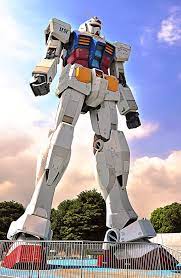
In addition to baseball, Japan is famous for its robots. Gundam is a well-known robot character, who first appeared in Japanese anime in 1979. Although many science fiction stories feature robots, they are increasingly becoming a part of daily life in Japan. This is partly because Japan’s population is decreasing. There are fewer and fewer young people to do necessary work, so machines are called upon to take up the slack.

Recently, the Japanese have developed robots which can help elderly people and others in many different ways. For example, there are robots which can help farmers pick fruit, as well as humanoid robots that can chat with people and ward off loneliness. Robot pets, like Paro (which became Mon-chan in The Baseball Widow), are also used to keep elderly people and children in hospitals company. There are special cafes staffed entirely by robots, including at least one at which the robots are controlled by people with disabilities. A nearby art museum has a robot guide which takes visitors on tours of exhibits. Robots in Japan have performed weddings and funerals. During the COVID-19 epidemic, one small university even used robots as avatars in a graduation ceremony.

I am fascinated by robots. They are not always what people expect. Sometimes they are soft and fuzzy. As soon as I learned of the robo-seal, I wanted to put it into a story. However, I sometimes feel uneasy about the replacement of humans by robots. Fortunately, at the moment, family bonds remain strong in Japan, with multiple generations living together and helping each other. Like the family in my book, we were three generations, living in the same house. We don’t have a robo-seal yet, but we do have a robotic vacuum cleaner.

.

Suzanne Kamata was born and raised in Grand Haven, Michigan. She now lives in Japan with her husband and two children. Her short stories, essays, articles and book reviews have appeared in over 100 publications. Her work has been nominated for the Pushcart Prize five times, and received a Special Mention in 2006. She is also a two-time winner of the All Nippon Airways/Wingspan Fiction Contest, winner of the Paris Book Festival, and winner of a SCBWI Magazine Merit Award.

PLEASE NOTE: ARTICLES CAN ONLY BE REPRODUCED IN OTHER SITES WITH DUE ACKNOWLEDGEMENT TO BORDERLESS JOURNAL

Click here to access the Borderless anthology, Monalisa No Longer Smiles

Click here to access Monalisa No Longer Smiles on Kindle Amazon International

Categories
Editorial

What do they Whisper?

No, they whisper. You own nothing.
You were a visitor, time after time
climbing the hill, planting the flag, proclaiming.
We never belonged to you.
You never found us.
It was always the other way round.

‘Moment’ by Margaret Atwood

With an unmanned mission reaching the moon — that moon that was chipped off the Earth’s surface when Theia bashed into the newly evolving planet — many feel mankind is en route to finding alternate biomes and perhaps, a solution to its housing needs. Will we also call moon our ‘Homeland’ and plant flags on it as we do on Earth?  Does the Earth — or the moon — really belong to our species. Do we have proprietary rights on these because of lines drawn by powerbrokers who say that the land belongs to them?

These are questions Margaret Atwood addresses in her writings which often fall into a genre called cli-fi. This is gaining in popularity as climate has become uncertain now with changes that are wringing fear in our hearts. Not all fear it. Some refuse to acknowledge it. While this is not a phenomenon that is fully understood by all of us, it’s impact is being experienced by majority of the world — harsh stormy weather, typhoons, warmer temperatures which scorch life and rising water levels that will eventually swallow lands that some regard as their homeland. Despite all these prognostications, wars continue to pollute the air as much as do human practices, including conflicts using weapons. Did ‘climbing a hill’ and ‘planting the flag’ as Atwood suggests, ever give us the rights over land, nature or climate? Do we have a right to pollute it with our lifestyle, trade or wars — all three being human constructs?

In a recent essay Tom Engelhardt, a writer and an editor, contended, “Vladimir Putin’s greatest crime wasn’t simply against the Ukrainians, but against humanity. It was another way to ensure that the global war of terror would grow fiercer and that the Lahainas of the future would burn more intensely.” And that is true of any war… Chemical and biological weapons impacted the environment in Europe and parts of Afghanistan. Atom bombs polluted not only the cities they were dropped in, but they also wreaked such havoc so that the second generation’s well-being continues impacted by events that took place more than seven decades ago. Yet another nuclear war would destroy the Earth, our planet that is already reeling under the impact of human-induced climate change. Flooding, forest fires and global warming are just the first indications that tell us not only do we need to adapt to living in changed times but also, we need to change our lifestyles, perhaps even turn pacifist to survive in a world evolving into an altered one.

This month some of our content showcase how to survive despite changes in norms. Suggesting how to retain our flora in a warming world is a book, Roses in the Fire of Spring: Better Roses for a Warming World and Other Garden Adventures, by M.S. Viraraghavanand Girija Viraraghavan, the grandson-in-law and granddaughter of the second President of India, Sarvepalli Radhakrishnan (1888-1975). They have been in conversation with Shantanu Ray Chaudhuri to explain how they have adapted plants to create hybrids that survive changing climes. Would it be wishful to think that we can find solutions for our own survival as was done for the flora?

Critiquing the darker trends in our species which leads to disasters is a book by an eminent Singaporean writer, Isa Kamari, called Maladies of the Soul. He too looks for panacea in a world where the basic needs of humans have been satiated and they have moved on towards overindulgence that can lead to redundancy. In a conversation, he tells us how he hopes his writings can help towards making a more hopeful future.

This hope is echoed in the palliative poems of Sanket Mhatre from his book, A City full of Sirens, excerpted and reviewed by Basudhara Roy. Bhaskar Parichha’s review of Samragngi Roy’s The Wizard of Festival Lighting: The Incredible Story of Srid, is a tribute also from a granddaughter to her grandfather celebrating human achievements. Somdatta Mandal’s discussion of fiction based on history, Begum Hazrat Mahal: Warrior Queen of Awadh by Malathi Ramachandran not only reflects the tenacity of a woman’s courage but also explores the historicity of the events. Exploring bits of history and the past with a soupcon of humour is our book excerpt from Syed Mujtaba Ali’s Tales of a Voyager (Joley Dangay[1]), translated from Bengali by Nazes Afroz. Though the narrative of the translation is set about ninety years ago, a little after the times of Hazrat Mahal (1820 –1879), the excerpt is an brilliant introduction to the persona of Tagore’s student, Syed Mujtaba Ali (1904-1974), by a translator who describes him almost with the maestro’s unique style. Perhaps, Afroz’s writing bears these traces as he had earlier translated a legendary work by the same writer, In a Land Far from Home: A Bengali in Afghanistan. Afroz starts with a startling question: “What will you call someone who puts down his profession as ‘quitting job regularly’ while applying for his passport?”

Other than a semi-humorous take on Mujtaba Ali, we have Rhys Hughes writing poetry in a funny vein and Santosh Bakaya giving us verses that makes us laugh. Michael Burch brings in strands of climate change with his poems as Jared Carter weaves in nature as we know it. George Freek reflects on autumn. We have more poetry by Luis Cuauhtémoc Berriozábal, Pramod Rastogi, Peter Devonald, Afshan Aqil, Hela Tekali and many more, adding to the variety of colours that enhance the vivacity of conversations that run through the journal. Adding more vibrancy to this assortment, we have fiction by Paul Mirabile, Saranyan BV and Prakriti Bandhan.

In non-fiction, we have Devraj Singh Kalsi’s funny retelling of his adventures with a barber while Hughes‘ essay on the hugely popular Tintin makes us smile. The patriarchal past is reflected in an essay by G Venkatesh, whereas Suzanne Kamata from Japan talks of women attempting to move out of invisibility. Meredith Stephens and Candice Louisa Daquin both carry on the conversation on climate change. Stephens explores the impact of Californian forest fires with photographs and first-hand narrative. Vela Noble draws solace and strength from nature in Kangaroo Island and shares a beautiful painting with us. Madhulika Vajjhala and Saumya Dwivedi discuss concepts of home.

Two touching tributes along with a poem to recently deceased poet, Jayanta Mahapatra, add to the richness of our oeuvre. Dikshya Samantrai, a researcher on the poet, has bid a touching adieu to him stating, “his legacy will continue to inspire and resonate and Jayanta Mahapatra’s name will forever remain etched in the annals of literature, a testament to the enduring power of the poet’s voice.”

Our translations this time reflect a diverse collection of mainly poetry with one short story by Telugu writer, Ammina Srinivasaraju, translated by Johny Takkedasila. Professor Fakrul Alam has introduced us to an upcoming voice in Bengali poetry, Quazi Johirul Islam. Ihlwha Choi has translated his own poetry from Korean and brought to us a fragment of his own culture. Fazal Baloch has familiarised us with a Balochi ballad based on a love story that is well known in his region, Kiyya and Sadu. Our Tagore translation has attempted to bring to you the poet’s description of early autumn or Sharat in Bengal, a season that starts in September. Sohana Manzoor has painted the scene depicted by Tagore for all of us to visualise. Huge thanks to her for her wonderful artwork, which invariably livens our journal.

Profound thanks to the whole team at Borderless for their support and especially to Hughes and Parichha for helping us source wonderful writings… some of which have not been mentioned here. Pause by our content’s page to savour all of it. And we remain forever beholden to our wonderful contributors without who the journal would not exist and our loyal readers who make our existence relevant. Thank you all.

Wish you all a wonderful month.

Mitali Chakravarty

borderlessjournal.com

[1] Translated literally, it means Water & Land

.

.

Visit the September edition’s content page by clicking here

READ THE LATEST UPDATES ON THE FIRST BORDERLESS ANTHOLOGY, MONALISA NO LONGER SMILES, BY CLICKING ON THIS LINK.

Categories
Notes from Japan

Against Invisibility

By Suzanne Kamata

Courtesy: Creative Commons

When I first came to Japan, it seemed as if people were always wanting to dress me up in traditional Japanese clothing and take my picture. The kimonos were bright, with embroidered cranes and flowers, and long furisode sleeves. I was 22 or 23. I would soon learn that such garments were only meant for young women. After marriage, Japanese women typically wore kimono with short sleeves in shades of gray.

Years later, I remember going to an event at my daughter’s school in a tunic and cardigan of light blue. One of the younger Japanese mothers commented on my outlandish fashion choice. Apparently, in Japan, I was too old for pastels. Also, it is unseemly to stand out.

Women tend to stay behind the scenes in this country. In fact, the word for wife, okusan, means “interior person.” This brings to mind someone who hides out in the depths of the house. Normally wives are not mentioned. Men do things without them. I have no idea what the wife of the current prime minister looks like.

As I became older, I could feel myself fading. For many years, I was conscious of the colour of my clothes. Wanting to be taken seriously and respected, I opted for the dark and somber. But recently I am less concerned with what other people think. This, too, comes with age.

Yaoyi Kusama. Courtesy: Creative Commons

I discovered that there is a stereotype concerning women of certain vintage in Osaka. They wear loud clothing, including leopard print, and say whatever they like. I admire that attitude. I am also a fan of Yayoi Kusama, she of the red wigs and huge polka dot dresses. Why not be iconic? Why not be a little weird?

I recently came across a call for models for a project called “40 over 40.” An American photographer in Tokyo named Tia Haygood had decided to make older women visible, to let them feel glamorous and have a good time. I volunteered to be a subject.

We had a consultation via Zoom in which I answered questions about my preferences and personality. I showed her my closet, and we talked about what I would wear. The champagne sequined dress that I bought for dinner with my daughter at the Eiffel Tower? Yes! And the four-inch heeled leopard print shoes that I had bought to go with the dress? Yes! My African print dresses? Yes! Businesslike black blazer? No!

The photo session would be fun, but I also needed a professional headshot. The author photo that I had been using, which had been hastily taken by my impatient husband in our backyard, was fifteen years old. Whenever someone asked me for a photo for a conference programme or a website, I panicked. All I had were some unsatisfactory selfies.

I packed a suitcase with clothes for the photo shoot and flew up to Tokyo. I spent the night in a hotel, and then took three trains to get to the photo studio. By the time I arrived, I was hot and sweaty.

Nobue, the makeup artist, greeted me when I peeked in the door. She ushered me into the breeze of the fan. When I had sipped some water and cooled off, I sat in a chair in front of a mirror and had my face made up.

“Don’t worry,” she kept saying, as she added colour. “Trust me.”

I did.

Tia and I talked about books and people that we knew in common and about the photo project. In December, there would be an exhibition in Tokyo featuring photos of the forty subjects. It would be a celebration, and also a networking opportunity. I vowed to be there.

For the next two or three hours, she took many photos of me in different outfits and poses. Music pumped out of the speakers. She told jokes to get me to laugh. It was fun, and it felt a tad self-indulgent, but I loved it.

While I was in that studio, no one was judging me and I wasn’t invisible. I sparkled.

.

Suzanne Kamata was born and raised in Grand Haven, Michigan. She now lives in Japan with her husband and two children. Her short stories, essays, articles and book reviews have appeared in over 100 publications. Her work has been nominated for the Pushcart Prize five times, and received a Special Mention in 2006. She is also a two-time winner of the All Nippon Airways/Wingspan Fiction Contest, winner of the Paris Book Festival, and winner of a SCBWI Magazine Merit Award.

PLEASE NOTE: ARTICLES CAN ONLY BE REPRODUCED IN OTHER SITES WITH DUE ACKNOWLEDGEMENT TO BORDERLESS JOURNAL

Click here to access the Borderless anthology, Monalisa No Longer Smiles

Click here to access Monalisa No Longer Smiles on Kindle Amazon International

Categories
Narratives of Humankind

Looking for a Refuge

Art by Sohana Manzoor

Our population crossed the 8 billion mark in November, 2022. As we move towards trying to hunt for alternative domiciles for our ever-expanding population, even in outer space, we still have to take into account  the increased movement of people across the Earth in search of alternative homes driven by external circumstances or by personal needs.

Some have lost their homes and lands to war, some to climate emergencies and some moved out out of choice. Here we have collected narratives of past and present migrations, emphasising the fluidity of borders, despite the lines drawn artificially by manmade constructs. In an earlier interview, Anthony Sattin talks of nomadic migrations and the concept of asabiyya, or brotherhood, which tied humans to ideas and ideals instead of a piece of land mooted in Arabia by Ibn Khaldun in the fourteenth century. Has the time come to revive this concept with conflicts and the climate crises becoming real? As weapons, fire and water affect our habitats, one wonders if reverting to the concept of nomadic existence is not becoming a necessity… This small collection of writings will hopefully highlight the concerns.

Migrants

In Migrating to Myself from Kolkata to Singapore, Asad Latif explores selfhood in context of diverse geographies. Click here to read.

In How I Wound Up in Japan, Suzanne Kamata gives her story as an immigrant. Click here to read.

In Belacan, Farouk Gulsara shares a narrative based on the life of a migrant in 1950s Malaysia. Click here to read.

Ujjal Dosanjh, former Minister from Canada and former Premier of British Columbia, talks of his own journey and learning as he migrated out of India to Canada. Click here to read.

Migrant poems by Malachi Edwin Vethamani. Click here to read. 

Refugees

In Mister, They’re Coming Anyway Timothy Jay Smith writes on the refugee crisis in Lesbos Island, Greece, in 2016 with photographs by Michael Honegger. Click here to read.

In A Voice from Kharkiv: A Refugee in her Own Country, Lesya Bakun relates her journey out of Ukraine as a refugee and the need for the resistance in 2022. Click here to read.

An excerpt from Ramy Al-Asheq’s Ever Since I Did Not Die, translated from Arabic by Isis Nusair, edited by Levi Thompson. The author was born in a refugee camp. Click here to read.

Refugee in my Own Country/ I am Ukraine… Poetry by Lesya Bakun. Click here to read.

Bringing Along their Homeland, a poem by Abdul Jamil Urfi, for refugees from the India- Pakistan Partition. Click here to read. 

In 1947, a biographical poem by Masha Hassan, set during the India-Pakistan Partition. Click here to read. 

The Grave is Wide, poems on refugees by Michael R Burch. Click here to read. 

Art by Sohana Manzoor

We are very grateful to our contributors who shared these unique narratives with us.

Categories
Contents

Borderless August 2023

Art by Sohana Manzoor

Editorial

Other Echoes in the Garden… Click here to read.

Interviews

Ujjal Dosanjh, former Minister from Canada and former Premier of British Columbia, discusses his autobiography, Journey After Midnight – A Punjabi Life: From India to Canada, and the need for a world with less borders. Click here to read.

Professor Fakrul Alam discusses his new book of Tagore translations, Gitabitan: Selected Song-Lyrics of Rabindranath Tagore. Click here to read.

Translations

Tagore’s Musalmanir Galpa (A Muslim Woman’s Story) has been translated from Bengali by Aruna Chakravarti. Click here to read.

Masud Khan’s poem, In Another Galaxy, has been translated from Bengali by Professor Fakrul Alam. Click here to read.

Wakeful Stays the Door, a poem by Munir Momin, has been translated from Balochi by Fazal Baloch. Click here to read.

Dangerous Coexistence, written in Korean and translated by Ilhwah Choi. Click here to read.

Proshno or Questions by Tagore has been translated by Mitali Chakravarty. Click here to read.

Pandies Corner

Songs of Freedom: An Ordinary Tale is a narrative by Nandani based on her own experiences, translated from Hindustani by Janees. These narrations highlight the ongoing struggle against debilitating rigid boundaries drawn by societal norms, with the support from organisations like Shaktishalini and Pandies. Click here to read.

Poetry

Click on the names to read the poems

Jared Carter, Rhys Hughes, Malachi Edwin Vethamani, Luis Cuauhtémoc Berriozábal, Saranyan BV, Ryan Quinn Flanagan, A Jessie Michael, Jahnavi Gogoi, George Freek, Koushiki Dasgupta Chaudhuri, David Francis, Akil Contractor, Michael Burch

Poets, Poetry & Rhys Hughes

In An Experiment with Automatic Poetic Translation, Rhys Hughes auto translates an English poem sequentially through 28 languages and then back to English with hilarious results. Click here to read.

Musings/ Slices from Life

Mister, They’re Coming Anyway

Timothy Jay Smith writes on the refugee crisis in Lesbos Island, Greece with photographs by Michael Honegger. Click here to read.

Migrating to Myself from Kolkata to Singapore

Asad Latif explores selfhood in context of diverse geographies. Click here to read.

Islands that Belong to the Seas

Paul Mirabile muses on how humans are like migrants on islands borrowed from the seas. Click here to read.

Of Dreams, Eagles and Lost Children

Aysha Baqir muses on the narrow, closed borders that condemn children. Click here to read.

Mushroom Clouds and Movies: Response from a Hibakusha’s Daughter

Kathleen Burkinshaw discusses Oppenhiemer the movie. Click here to read.

Sleepless in the High Desert, Slumber in the Sierra

Meredith Stephens covers Nevada to Columbia in a car with her camera. Click here to read.

My Hostel Days

Ravi Shankar reminisces on bygone days. Click here to read.

Musings of a Copywriter

In The Amateur Professional, Devraj Singh Kalsi writes of a amateur who thought of himself as a professional. Click here to read.

Notes from Japan

In How I Wound Up in Japan, Suzanne gives her story as an immigrant. Click here to read.

Essays

A Different Persuasion: On Jane Austen’s Novels & their Adaptations

Deepa Onkar delves into the world of Jane Austen books and films. Click here to read.

A Foray into Andamans

Mohul Bhowmik explores Andaman with a camera and narrative. Click here to read.

Bhaskar’s Corner

In Chittaranjan Das: A Centenary Tribute, Bhaskar Parichha discusses the life of one of the most legendary Odia writers. Click here to read.

Stories

Belacan

Farouk Gulsara shares a story based on the life of a migrant in 1950s. Click here to read.

The Japanese Maple

Shivani Shrivastav weaves a story of friendship and loneliness among migrants. Click here to read.

The Coin

Khayma Balakrishnan explores human and supernatural interactions in a school setting in Malaysia. Click here to read.

The Vagrant

Reeti Jamil narrates a strange tale set in a village and told by a farmer. Click here to read.

Book Excerpts

An excerpt from Ujjal Dosanjh’s Journey After Midnight: A Punjabi Life from Canada to India. Click here to read.

An excerpt from Roses in the Fire of Spring: Better Roses for a Warming World and Other Garden Adventures, by M.S. Viraraghavan and Girija Viraraghavan. Click here to read.

Book Reviews

Somdatta Mandal reviews Amitav Ghosh’s Smoke and Ashes: A Writer’s Journey Through Opium’s Hidden Histories. Click here to read.

Basudhara Roy reviews Greening the Earth: A Global Anthology of Poetry, edited by K. Satchidanandan & Nishi Chawla. Click here to read.

Bhaskar Parichha reviews Arunava Sinha’s The Greatest Indian Stories Ever Told: Fifty Masterpieces from the Nineteenth Century to the Present. Click here to read.

.

Click here to access the Borderless anthology, Monalisa No Longer Smiles

Click here to access Monalisa No Longer Smiles on Kindle Amazon International

Categories
Editorial

Other Echoes in the Garden…

“Other echoes
Inhabit the garden. Shall we follow?
Quick, said the bird, find them, find them…”

— TS Eliot, ‘Four Quartets: Burnt Norton’(1936)

Humans have always been dreamers, ideators and adventurers.

Otherwise, could we have come this far? From trees to caves to complex countries and now perhaps, an attempt to reach out towards outer space for an alternative biome as exploring water, in light of the recent disaster of the Titan, is likely to be tougher than we imagined. In our attempt to survive, to live well by creating imagined constructs, some fabrications backfired. Possibly because, as George Orwell observed with such precision in Animal Farm, some perceived themselves as “more equal”. Of course, his was an animal allegory and we are humans. How different are we from our brethren species on this beautiful planet, which can survive even without us? But can humanity survive without Earth? In science fiction, we have even explored that possibility and found home among stars with the Earth becoming uninhabitable for man. However, humanity as it stands of now, continues to need Earth. To live amicably on the planet in harmony with nature and all the species, including our own, we need to reimagine certain constructs which worked for us in the past but seem to have become divisive and destructive at this point.

Ujjal Dosanjh, former Minister in the Canadian cabinet and former Premier of British Columbia, in his autobiography, Journey After Midnight – A Punjabi Life: From India to Canada, talks of regionalism as an alternative to narrow divisive constructs that terrorise and hurt others. He writes in his book: “If humanity isn’t going to drown in the chaos of its own creation, the leading nations of the world will have to create a new world order, which may involve fewer international boundaries.” We have a candid conversation with him about his beliefs and also a powerful excerpt from his autobiography.

An interview with Professor Fakrul Alam takes us into Tagore’s imagined world. He discussed his new book of Tagore translations, Gitabitan: Selected Song-Lyrics of Rabindranath Tagore. He has brought out a collection of 300 songs translated to English. In a bid to emphasise an inclusive world, we also have a translation of Tagore’s ‘Musalmanir Galpa’ (A Muslim Woman’s Story) by Aruna Chakravarti. A transcreation of his poem, called ‘Proshno or Questions’ poses difficult challenges for humanity to move towards a more inclusive world. Our translation by Ihlwha Choi of his own Korean poem to English also touches on his visit to the polymath’s construct in the real world, Santiniketan. All of these centring around Tagore go to commemorate the month in which he breathed his last, August. Professor Alam has also translated a poem from Bengali by Masud Khan that has futuristic overtones and builds on our imagined constructs. From Fazal Baloch we have a Balochi translation of a beautiful, almost a surrealistic poem by Munir Momin.

The poetry selections start with a poem on ‘Wyvern’, an imagined dragon, by Jared Carter. And moves on to the plight of refugees by Michael Burch, A Jessie Michael, and on migrants by Malachi Edwin Vethamani. Ryan Quinn Flanagan has poetry that suggests the plight of refugees at a metaphorical level. Vibrant sprays of colours are brought into this section by Luis Cuauhtémoc Berriozábal, Saranyan BV, Jahnavi Gogoi, George Freek and many more. Rhys Hughes brings in a spot of humour with his mountainous poetry (literally) and a lot of laughter with his or rather Google’s attempt at automatic translation of a poem. Devraj Singh Kalsi has shared a tongue in cheek story about an ‘amateur professional’ — rather a dichotomy.

We travel to Andaman with Mohul Bhowmick and further into Sierra with Meredith Stephens. Ravi Shankar travels back in nostalgia to his hostel and Kathleen Burkinshaw dives into the past — discussing and responding to the media presentation of an event that left her family scarred for life, the atomic holocaust of 1945 in Japan. This was a global event more than seven decades ago that created refugees among the survivors whose homes had been permanently destroyed. Perhaps, their stories are horrific, and heart wrenching like the ones told by those who suffered from the Partition of India and Pakistan, a divide that is celebrated by Independence Days for the two nations based on a legacy of rifts created by the colonials and perpetrated to this day by powerbrokers. Aysha Baqir has written of the wounds suffered by the people with the governance gone awry. Some of the people she writes of would have been refugees and migrants too.

A poignant narrative about refugees who flock to the Greek island of Lesbos by Timothy Jay Smith with photographs by Michael Honegger, both of whom served at the shelters homing the displaced persons, cries out to halt wars and conflicts that displace them. We have multiple narratives of migrants in this issue, with powerful autobiographical stories told by Asad Latif and Suzanne Kamata. Paul Mirabile touches on how humans have adopted islands by borrowing them from seas… rather an unusual approach to migrations. We have an essay on Jane Austen by Deepa Onkar and a centenary tribute to Chittaranjan Das by Bhaskar Parichha.

The theme of migrants is echoed in stories by Farouk Gulsara and Shivani Shrivastav. Young Nandani has given an autobiographical story, translated from Hindustani to English by Janees, in which a migration out of various homes has shredded her family to bits — a narrative tucked in Pandies Corner.  Strange twists of the supernatural are woven into fiction by Khayma Balakrishnan and Reeti Jamil.

In reviews, Parichha has explored Arunava Sinha’s The Greatest Indian Stories Ever Told: Fifty Masterpieces from the Nineteenth Century to the Present. Somdatta Mandal’s review of Amitav Ghosh’s Smoke and Ashes: A Writer’s Journey Through Opium’s Hidden Histories seems to be an expose on how historical facts can be rewritten to suit different perceptions and Basudhara Roy has discussed the Greening the Earth: A Global Anthology of Poetry, edited by K. Satchidanandan and Nishi Chawla.

There is more wonderful content. Pop by our August’s bumper edition to take a look.

I would like to give my grateful thanks to our wonderful team at Borderless, especially to Sohana Manzoor for her fabulous artwork. Huge thanks to all our gifted contributors and our loyal readers. Borderless exists today because of all of you are making an attempt to bringing narratives that build bridges, bringing to mind Lennon’s visionary lyrics:

You may say I'm a dreamer
But I'm not the only one
I hope someday you'll join us
And the world will live as one

Thank you for joining us at Borderless Journal.

Have a wonderful month!

Mitali Chakravarty

borderlessjournal.com

.

Visit the August edition’s content page by clicking here

READ THE LATEST UPDATES ON THE FIRST BORDERLESS ANTHOLOGY, MONALISA NO LONGER SMILES, BY CLICKING ON THIS LINK.