Categories
Independence Day

Born Free

Born free
As free as the wind blows
As free as the grass grows
Born free to follow your heart
-- Born Free by Andy Williams

These are lines from a song by Andy Williams, a pop icon whose song was the theme song in Born Free, a film made in 1966 about a lion cub bred in captivity, who had to be trained to live free even though she was born free. Does that apply to all living creatures, including humans? What is freedom? And who is free? Does political independence mean ultimate freedom?

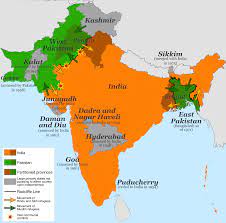
We celebrate political ‘freedom’ of countries as national or independence days. Sometimes, as in the case of India and Pakistan, independent nationhood can be laced with bloodshed and grief . Two new countries were born of a single colonial India in the August of 1947. Pakistan awoke as a country on the midnight of 14th August and India called the late hour 15th August. Nehru’s speech has become an iconic one: “Long years ago we made a tryst with destiny, and now the time comes when we shall redeem our pledge… At the stroke of the midnight hour, when the world sleeps, India will awake to life and freedom…”

Common people while crossing the boundary line between the two new nations lost their lives, homes and lands over the mob violence. The resentment still simmers in a few hearts. In an attempt to find peace and amity, we have put forward a combined selection of writing from across borders, words devoid of angst or hate, words that look for commonality and harmony.

Interview

Goutam Ghose. Courtesy: Creative Commons

In Conversation with Goutam Ghose, multiple award-winning filmmaker, writer, actor discusses his films, film-books and journey as a humanitarian artiste who makes cross cultural films across all boundaries. Click here to read.

Poetry

Akbar Barkzai’s Songs of Freedom translated from Balochi by Fazal Baloch. Click here to read.

Poems by Jaydeep Sarangi: Click here to read

For Danish Siddiqui by Sutputra Radheye: Click here to read.

The Equalizer by Nazrul translated from Bengali to English by Shahriyer Hossain Shetu from Sammyabadi. Click here to read.

Deliverance by Tagore translated from Bengali to English from Tran (Sanchayita). Click here to read.

Non-Fiction

In The Idea of India: Bharata Bhagya Bidhata – The Making of a Motherland Anasuya Bhar explores the history around the National Anthem of India which started as a song, composed by Tagore. Only the first paragraph of the whole song in Bengali was adapted as the National Anthem. We include the translations of the complete song both by Tagore and by Aruna Chakravarti. Click here to read.

In An August Account of ‘Quit India’ Movement Ratnottama Sengupta,  translates from Bengali the excerpts recorded by Sandhya Sinha (1928-2016), who witnessed an upsurge in the wake of the Quit India Movement. Click here to read.

Temples & Mosques by Nazrul has been translated by Sohana Manzoor. Click here to read.

In Seventy-four Years After Independence…“Mil ke rahe gi Azadi” (We will get our Freedom), Aysha Baqir muses on Pakistani women’s role in the independence movement and their current state. Click here to read.

 In 2147 without Borders, Devraj Singh Kalsi meanders over Partitions, borders and love stories and looks for an amicable solution in a happier future. Click here to read.

Fiction

Bundu, Consoler of the Rich is a story based on memories of Partition by Nadir Ali, translated from Punjabi by Amna Ali. Click here to read.

In The Best Word, Maliha Iqbal explores the impact of wars in a spine chilling narrative, journeying through a range of emotions. Click here to read.

In Do Not Go!, Moazzam Sheikh explores dementia, giving us a glimpse of the lives of Asian immigrants in America. Click here to read.

In The Chained Man Who Wished to be Free, Sunil Sharma explores freedom and democracy versus conventions. We are left wondering is this the freedom we fought for? Click here to read. 

Categories
Contents

Borderless August 2021

Editorial

Triumph of the Human Spirit… Click here to read.

Interviews

Goutam Ghose, multiple award-winning filmmaker, writer, actor discusses his films, film-books and journey as a humanitarian artiste. Click here to read.

Dr Kirpal Singh, a well-known poet and academic from Singapore, talks of his life and times through colonial rule, as part of independent Malaya, and the current Singapore. Click here to read.

Translations

Bundu, Consoler of the Rich

A story based on memories of Partition by Nadir Ali, translated from Punjabi by Amna Ali. Click here to read.

Akbar Barakzai’s Songs of Freedom

Akbar Barakzai’s poetry translated from Balochi by Fazal Baloch. Click here to read.

An August Account of ‘Quit India’ Movement

Ratnottama Sengupta translates from Bengali the excerpts recorded by Sandhya Sinha (1928-2016), who witnessed an upsurge in the wake of the Quit India Movement, part of India’s struggle against colonial rule. Click here to read.

Froth

A short story by Dev Kumari Thapa, translated from Nepali by Mahesh Paudyal. Click here to read.

Mother’s Birthday Dinner Table

Ihlwha Choi translates his own poem set in Santiniketan from Korean to English. Click here to read.

Deliverance by Tagore

Tran’ by Tagore translated from Bengali to English by Mitali Chakravarty, art and editing by Sohana Manzoor for Borderless Journal. Click here to read.

Essays

The Idea of India: Bharata Bhagya Bidhata – The Making of a Motherland

Anasuya Bhar explores the history of the National Anthem of India, composed by Tagore in Bengali and translated only by the poet himself and by Aruna Chakravarti. Click here to read.

A Life Well-Lived

Candice Louisa Daquin discusses the concepts of a life well-lived. Click here to read.

Once Upon a Time in Burma: Land of a Thousand Pagodas

John Herlihy explores the magnificent sites of Mandalay in company of a Slovenian friend in the first episode of his quartet on his Myanmar. Click here to read.

Bhaskar’s Corner

In Tagore & Odisha, Bhaskar Parichha explores Tagore’s interactions with Odisha, his impact on their culture and the impact of their culture on him. Click here to read

Poetry

Click on the names to read the poems

Jaydeep Sarangi, Joan McNerney, Vandana Sharma Michael Lee Johnson, Priyanka Panwar, Mihaela Melnic, Ryan Quinn FlanaganKirpal Singh, Sutputra Radheye, John Linwood Grant, Julian Matthews, Malachi Edwin Vethamani, Rhys Hughes, Rachel Jayan, Jay Nicholls, Jared Carter

Nature’s Musings

Becoming Marco Polo: Poetry and photography by Penny Wilkes

Poets, Poetry & Rhys Huges

In Dinosaurs in France, Rhys Hughes explores more than tall tales; perhaps, the passage of sense of humour in our lives. Click here to read.

Musings/Slices from Life

Me and Mr Lowry’s Clown

Mike Smith’s nostalgia about artist Pat Cooke (1935-2000) takes us back to England in the last century. Click here to read.

Seventy-four Years After Independence…

“Mil ke rahe gi Azadi” (We will get our Freedom) by Aysha Baqir muses on Pakistani women’s role in the independence movement and their current state. Click here to read.

The Road to Freedom

Kanchan Dhar explores personal freedom. Click here to read.

The Coupon

Niles Reddick tells us how Covid and supermarkets combined into a discount coupon for him. Click here to read.

Musings of a copywriter

 In 2147 without Borders, Devraj Singh Kalsi meanders over Partitions, borders and love stories. Click here to read.

Stories

Rituals in the Garden

Marcelo Medone discusses motherhood, aging and loss in this poignant flash fiction from Argentina. Click here to read.

The Best Word

Maliha Iqbal explores the impact of wars in a spine chilling narrative, journeying through a range of emotions. Click here to read.

Do Not Go!

Moazzam Sheikh explores dementia, giving us a glimpse of the lives of Asian immigrants in America. Click here to read.

The Protests Outside

Steve Ogah talks of trauma faced by riot victims in Nigeria. Click here to read.

Brother Felix’s Ward

Malachi Edwin Vethamani takes us to an exploration of faiths and borders. Click here to read.

The Literary Fictionist

In The Chained Man Who Wished to be Free, Sunil Sharma explores freedom and democracy versus conventions. Click here to read.

Book Excerpts

Beyond The Himalayas by Goutam Ghose, based on a five-part documentary taking us on a journey along the silk route exploring parts of Pakistan and China. Click here to read.

Our Home in Myanmar – Four years in Yangon by Jessica Muddit, a first hand account of a journalist in Burma. Click here to read.

Book Reviews

A review by Meenakshi Malhotra of Somdatta Mandal’s The Last Days of Rabindranath Tagore in Memoirs, a translation from a conglomeration of writings from all the Maestro’s caregivers. Click here to read.

A review by Keith Lyons of Jessica Muddit’s Our Home in Myanmar – Four years in Yangon. Click here to read.

A review by Rakhi Dalal of Maithreyi Karnoor’s Sylvia: Distant Avuncular Ends. Click here to read.

A review by Bhaskar Parichha of Arundhathi Subramaniam’s Women Who Wear Only Themselves. Click here to read.

Categories
Editorial

Triumph of the Human Spirit

On August 8th 2021, the chief of the International Olympic Committee, Thomas Bach, pointed out during the closing ceremony that these games were “unprecedented” and brought messages of “hope, solidarity and peace” into a world torn with the desolation generated by the pandemic. It was a victory of the human spirit again, a precursor of what is to come. That the Japanese could get over their pandemic wrought hurdles, just as they did post the nuclear disasters wrought by the Second World War and by the 2011 earthquake-tsunami at Fukushimaya, to host something as spectacular and inspiring as these international games reflects, as the commentators contended, a spirit of ‘harmony and humility’. The last song performed by many youngsters seemed to dwell on stars in the sky — not only were the athletes and organisers the stars but this also reminded of unexplored frontiers that beckon mankind, the space.What a wonderful thing it was to see people give their best and unite under the banner of sports to bring messages of survival and glimpses of a future we can all share as human beings! Our way of doing things might have to evolve but we will always move forward as a species to thrive and expand beyond the known frontiers.

One such explorer of yet unknown frontiers who mingles the historic with the contemporary, Goutam Ghose, an award-winning filmmaker and writer, has honoured our pages with an extensive interview showing us how art and harmony can weave lores that can help mankind survive. This is reinforced by the other interview with Singaporean academic, Dr Kirpal Singh, whose poetry reflects his convictions of a better world. With our intelligence, we can redefine processes that hold us back and grind our spirits to dust — be it the conventional ‘isms’ or norms that restrict our movement forward – just as Tagore says in the poem, we have translated this time, ‘Deliverance’.

…On this auspicious dawn,
Let us hold our heads high in the infinite sky 
Amidst the light of bounteousness and the heady breeze of freedom.

As the Kobiguru mentioned earlier in the poem, the factors that oppress could be societal, political, or economic. Could they perhaps even be the fetters put on us by the prescribed preconceived definition of manmade concepts like ‘freedom’ itself? Freedom can be interpreted differently by multiple voices.

This month, on our pages, ‘freedom’ has found multiple interpretations in myriad of ways — each voice visualising a different dream; each dream adding value to the idea of human progress. We have discussions and stories on freedom from Nigeria, Argentina, India, Pakistan, Myanmar, Malaysia and more. Strangely enough, August holds multiple independence/ national days that are always for some reason seen as days of being ‘freed’ by many — at least from oppression. But is that true?

From Malaysia, Julian Matthews and Malachi Edwin Vethamani cry out against societal, religious and political bindings – quite a powerful outcry at that with a story and poems. Akbar Barakzai continues his quest with three poems around ideas of freedom translated from Balochi by Fazal Baloch. Jaydeep Sarangi and Joan Mcnerny pick up these reverberations of freedom, each defining it in different ways through poetry.

Jared Carter takes us back to his childhood with nostalgic verses. Ryan Quinn Flanagan, Michael Lee Johnson, Vandana Sharma and many more sing to us with their lines. Rhys Hughes has of course humour in verse that makes us smile as does Jay Nicholls who continues with her story-poems on Pirate Blacktarn – fabulous pieces all of them. The sport of hummingbirds and cats among jacaranda trees is caught in words and photographs by Penny Wilkes in her Nature’s Musings. A poetic tribute to Danish Siddiqui by young Sutputra Radheye rings with admiration for the Pulitzer prize-winning photographer who met his untimely end last month on 16th while at work in Afghanistan, covering a skirmish between Taliban and Afghanistan security forces. John Linwood Grant takes up interesting issues in his poetry which brings me back to ‘freedom’ from colonial regimes, perhaps one of the most popular themes for writers.

Indo-Pak independence, celebrated now on 14th (Pakistan) and 15th August (India), reflects not only the violence of the Partition which dislocated and killed millions historically but also the trauma caused by the event. Capturing this trauma is a short story based on memories of Partition by Nadir Ali, translated from Punjabi by his daughter, Amna Ali. Ratnottama Sengupta translates from the diary of Sandhya Sinha (1928-2016), a woman’s voice from the past that empathises with the subjugated who were subdued yet again after an upsurge of violence during the Quit India Movement (1942) against the colonials. Sinha contends that though the movement frittered away, the colonials were left with an after-taste of people hankering for self-rule. A thought-provoking short story by Sunil Sharma explores the results of self-rule in independent India.

Alluding to Jinnah’s vision for women, Aysha Baqir muses emotionally about the goals that remain yet to be fulfilled 74 years after independence. Moazzam Sheikh’s story of immigrants explores dementia, giving us a glimpse of the lives of Asian immigrants in America, immigrants who had to find a new home despite independence. Was this the freedom they dreamt of — all those who fought against various oppressive regimes or colonialism?

Tagore’s lyrics might procure a few ideas on freedom, especially in the song that India calls its National Anthem. Anasuya Bhar assays around the history that surrounds the National Anthem of India, composed by Tagore in Bengali and translated to English by the poet himself and more recently, only by Aruna Chakravarti. We also carry Dr Chakravarti’s translation of the National Anthem in the essay. Reflecting on the politics of Partition and romance is a lighter piece by Devraj Singh Kalsi which says much. ‘Dinos in France’ by Rhys Hughes and Neil Reddick’s ‘The Coupon’ have tongue-in-cheek humour from two sides of the Atlantic.

A coming-of-age story has been translated from Nepali by Mahesh Paudyal – a story by a popular author, Dev Kumari Thapa – our first Nepali prose piece.  We start a four-part travelogue by John Herlihy, a travel writer, on Myanmar, a country which has recently been much in the news with its fight for surviving with democracy taking ascendency over the pandemic and leaving the people bereft of what we take for granted.

Candice Louisa Daquin discusses a life well-lived in a thought provoking essay, in which she draws lessons from her mother as do Korean poet, Ihlwha Choi, and Argentinian writer, Marcelo Medone. Maybe, mothers and freedom draw similar emotions, of blind love and adulation. They seem to be connected in some strange way with terms like motherland and mother tongue used in common parlance.

We have two book excerpts this time: one from Beyond the Himalayas by the multi-faceted, feted and awarded filmmaker we have interviewed, Goutam Ghose, reflecting on how much effort went in to make a trip beyond boundaries drawn by what Tagore called “narrow domestic walls”. We carry a second book excerpt this time, from Jessica Muddit’s Our Home in Myanmar – Four years in Yangon. Keith Lyons has reviewed this book too. If you are interested in freedom and democracy, this sounds like a must read.

Maithreyi Karnoor’s Sylvia: Distant Avuncular Ends, is a fiction that seems to redefine norms by what Rakhi Dalal suggests in her review. Bhaskar Parichha has picked a book that many of us have been curious about, Arundhathi Subramaniam’s Women Who Wear Only Themselves. Parichha is of the opinion,Elevated or chastised, exonerated or condemned, the perturbation unworldly women in India face is that they have never been treated as equal to men as spiritual leaders. This lack of equality finds its roots not only in sociological and cultural systems, but more particularly at the levels of consciousness upon which spirituality and attitudes are finally based.”One wonders if this is conclusive for all ‘unworldly women’ in India only or is it a worldwide phenomenon or is it true only for those who are tied to a particular ethos within the geographical concept of India? The book reviewed by Meenakshi Malhotra,  Somdatta Mandal’s The Last Days of Rabindranath Tagore in Memoirs, dwells on the fierce independence of the early twentieth century women caregivers of the maestro from Bengal. These women did not look for approval or acceptance but made their own rules as did Jnadanandini, Tagore’s sister-in-law. Bhaskar Parichha has also added to our Tagore lore with his essay on Tagore in Odisha.

As usual, we have given you a peek into some of our content. There is more, which we leave for our wonderful readers to uncover. We thank all the readers, our fantastic contributors and the outstanding Borderless team that helps the journal thrive drawing in the best of writers.

I wish you all a happy August as many of the countries try to move towards a new normal.

Mitali Chakravarty

Borderless Journal, August 2021

Categories
Slices from Life

An August Account of ‘Quit India’


Ratnottama Sengupta translates from Bengali the excerpts recorded by Sandhya Sinha (1928-2016), who witnessed an uprising in the wake of the Quit India Movement, part of India’s struggle against colonial rule

The golden anniversary of the Quit India Movement of 1942 had occasioned another wave of animation. There was an urge to do something spectacular. Newspapers vied with one another to write about it. Leaders exercised their jaws over speeches to ‘inspire’ the masses, eighty percent of whom had not witnessed the sacrifice and unity of the people then and could not feel the passion.

The significance of August 9th 1942, lies in the spontaneous outburst of fury and wrath in the minds of every indignant citizen. It was a peerless uprising that spread like forest fire, engulfing cities and towns, hamlets and provinces, suburbs and mohallas, causing a crack in the very foundation of the British Raj. To control the unarmed citizens the colonial rulers had unleashed armed soldiers in large numbers. Viceroy Linlithgow even issued orders to fire from the air!

There’s a big difference between those days and now. The patriotic values that suffused even the poorest of the poor in the land under foreign rule have not been passed on to independent India. People then equipped themselves physically and emotionally, to rid the land of imperialism. Those mortals had the dedication, will power and courage to sacrifice their lives at the altar of motherland. From a tender age the parents and schools inculcated in them a sense of belonging to the country. And they had inviolable faith in their leaders.

Five decades have lapsed but I can vividly recall the dance of destruction in Patna of August 9 and 11, 1942. I must have been fourteen then, a student of class IX in the Government Girls High School Bankipur. We stayed in No 8 Mangles Road, an endearing spacious government bungalow to the left of the Secretariat. Outside it, a well-pitched road and across it was the vast quadrangle of the Secretariat. The thoroughfare was lined on both sides with rows of banyan and mango, jackfruit and jamun trees. Morning, evening, companies of parrots would flock in.

To the right was Hardinge Road, again with rows of government bungalows with expansive premises. From the intersection of Hardinge and Mangles Road, a smooth road ran up right through the iron gates of the Secretariat. The ambience was stately, solemn, as favoured by the British administration. On August 11, this very road witnessed the daring adventure of unarmed multitudes, awash with the life blood of eighteen young men.

There was no television then, there was only the radio. But there was a wide gulf between what was broadcast and what actually transpired. The pride and hope of every Bengali, Subhash Chandra Bose, had hoodwinked the British government and escaped the country. He was determined in his resolve to overthrow the imperialists with the help of the Japanese. Occasionally we – all of us in the family of gazetted officer Phanindra Nath Mitra – would gather behind closed doors and listen with bated breath to Aami Subhash Bolchhi (I am Subhash speaking), his nightly broadcast from Berlin on Free India Radio which Bose had set up in 1941 with German funds. I was anguished and deeply hurt by the thought that the INA chief’s dream could have come true if all our political elders had joined forces with him.

Sir Stafford Cripps of the Left-wing Labour party (traditionally sympathetic to Indian self-rule), a member of the coalition War Cabinet under Churchill, had come to negotiate an agreement with the nationalist Congress leaders. His Mission was to secure full Indian support for the British efforts in World War II – in exchange of a promise of elections and self-government as a Dominion once the war was over. The mission was unacceptable to both, the Indian leaders and Churchill. No midway was found, the mission failed and on August 9 the country resounded with the war cry of ‘Angrez Bharat Chhodo! British Quit India!’

Gandhiji gave out the historical call of ‘Quit India’ but the responsibility for the success of the movement rested on every single Indian who now vowed, “Karenge ya Marenge! We shall do or die!” The leaders were well aware that the desperate call would lead to incarceration, but the oath armed every Indian with the resolve to carry on the andolan (revolution) if push came to shove. The fear was not unfounded: overnight all the Congress leaders were stuffed into far flung prison cells. This simply set fire to a pile of gunpowder.

On August 9, as usual I took bus no 14 but on the way to school, I noticed people agitatedly assembling in groups or heading for some place with the tri-colour in their hands. The famous Golghar was opposite our school and the Patna Maidan was close by. People were breaking into brief runs to reach the Maidan. There were countless heads right outside the school. With great difficulty the buses manoeuvred their way into the school compound and the enormous iron gates were locked.

Principal Charushila Rosa and a few other teachers stood at the door. The minute we got off the bus they directed us to go to the prayer shed at the back of the school. On the other hand, the seniors, standing with flags on the first-floor veranda, asked everyone to join them. Taradi – Tarkeshwari Sinha, who was elected to the first Lok Sabha at the young age of 26 — normally donned khaddar. That day she was attired in a red border white Khadi sari. Her eyes red and swollen from shedding tears, she was pleading with everyone, “Come on dear, Do or die! We shall force them to quit!”

All of Golghar resounded with the cry of ‘Vande Mataram! Hail Motherland!’ The senior girls echoed the slogan from the first-floor veranda. The minute that reached my ears, a strange motivation drove out every shred of fright or inhibition. We ignored Mrs Rosa and stomped up the stairs. The senior expostulated, “By arresting our leaders the British government has betrayed us. We must avenge this. We do not want the Englishmen to rule over us. Today none of us will attend classes. In the Prayer Hall we shall raise the slogan of Vande Mataram andwe will hoist our tricolor on the flag pole. We must all remain united.”

When the bell sounded, we stood on the first floor upholding the flag, sending out the message that we too were protestors. When the second bell rang, we joined the prayer line where, at the end of every row, one senior girl stood with a rolled flag in her hand. Taradi was a hostel inmate — wonder how they got hold of so many flags! Mrs Rosa, a strict disciplinarian with a temper, looked at us disparagingly, the other teachers also watched anxiously. Moments later, Taradi’s voice rang out, “Angrez Bharat Chhodo! British Quit India! Vande Mataram! We bow to thee, Motherland!”

In a blink the chorus of Vande Mataram filled the air. Mrs Rosa turned red as we walked out in front of her eyes and assembled in the front yard, all the while bellowing ‘Vande Marataram!’ I can’t put into words the emotion that coursed through my being.

Watching our unsuccessful attempt to hoist the tri-colour on the flag post some men tried to jump over the school’s boundary wall. That triggered a bout of screaming and scampering. All of a sudden, the iron gates were opened for armed policemen who mercilessly started thrashing the young men, now flung to the ground. Four trucks of armed police had entered the school compound. Word went out that they were there to arrest some of us led by Taradi. But the teachers demanded police protection to drop us home instead.

So far, we could hear distant noise beyond the compound walls. Now that was pierced by the painful outcry of wounded men. Curious to know what was going on, we rushed back to the first-floor veranda. The sight that met our eyes froze the blood in our veins. White-skinned British mounted policemen! They were wildly thrashing the ocean of human heads, lashing them right and left with iron-laced whips as they strode from one end of the road to the other. The blood-covered men were crashing to the ground, then scrambling back to their feet with raised fist and screaming in choked voices, ‘Vande Mataram! Quit India!’ Later we learnt that this incident at Bankipur Girls School was the first ever charge by the mounted police.

Never before had we witnessed such barbarity. For the first time I also witnessed how the love of motherland makes even unarmed populace lose every fear, even for their lives. We – even Taradi — started howling out of frustration, helplessness, shame, dejection. In that state we were put on the bus. Our teachers explained to us that in view of the circumstances, and in deference to what our parents would be going through, we ought to return home.

The bus moved at snail’s pace, side stepping legions of injured men. Bankipur Maidan was a sea of human heads. Where did so many turn up from? They were not attired for such an ‘outing’ but there was no trace of fear on their visage. At the risk of facing the worst kind of atrocity, thousands of unarmed people were striding forth, towards the Secretariat. We crossed another intersection and witnessed the same sight: clusters of people racing with our bus towards Mangles Road. Repeatedly they were hitting on the glass windows to stop the bus. We panicked when we saw that the Gurkha Regiment of Mounted Police was also galloping towards the city. Until this day we had seen the British only on duty at the Government House: this was the first time they were trotting through Patna’s arteries.

After dropping off Kanak at the Power House, the bus moved slower than an ant but managed to drop Rekha Di and me outside our houses. Our petrified parents were waiting on the verandas for their daughters to come home. Gazetted officers were home for lunch had not returned to their office desk! Father directed us to stay indoors without opening any door or window. But if the men trooped into our compound, we were not to stop them — they might want a drink of water to quench their thirst! And if Ganga Da – Baba’s Hindi speaking adopted son — came home from his hostel, he should stay back: the unrest would surely mount in the school-college areas.

Our pet dog was chained up in the veranda behind the house. The curb on his normal movement was least acceptable to Jack: he let the world know that through ceaseless baying that drove us out of our minds. Next morning his howls rose in pitch as the stream of voices kept rising around the Secretariat. My brothers Nilu, Dilu and I took turns at comforting him. He lapped up all the water in his bowl but since he was not free of his chain, he barked his head off.

There was no news of Ganga Da these three days. We had heard that hordes of people from neighboring regions were streaming into the city. That day, August 11, the air was thick with foreboding. The entire area was packed with people and police. All of a sudden, Jack stopped barking. Through the slatted window I saw him desperately chasing a horse – the whiplashes could not deter him. Impulsively, without a word to anyone at home, I ran out to bring him back and found myself in the thick of the unrest. Near the Secretariat the goras were attacking the protestors with unspeakable aggression. Here and there a horse would neigh loudly and rear on its hind legs — perhaps they were not trained to trample upon live humans! The groans and moans of anguished souls made me tremble. I also saw a few crazed men incredibly holding on to the cracking whips splitting the air with resounding shup-shup!

I managed to grab Jack outside No 5 Mangles Road. Someone had grasped me and pulled me back into the safety of the gap between the trunks of two massive banyans. Holding Jack in a tight embrace I was shivering away. I was stunned to see trepidation in the eyes of the men around me as, hand in hand, an inviolable mass of humans approached the Secretariat, holding aloft the tricolor, ‘Vande Mataram!’ on their lips, head held high.

Their determination showed in their raised fists as the White policemen continually rained their batons to halt them. The Police Commissioner, microphone in hand, commanded, “Stop or you will be shot! Rukk jao, simply halt! Ekdam rukk jao, stop at once!” In response, the human wall came closer. Apparently, Ganga Da was present among them, in the second row, although I did not see him. Again, the snarl: “Rukk jao, halt!!”

Suddenly I saw Durga Prasanna, the 12-year-old motherless son of my private tutor, darting in that direction, ignoring alike the crowds and the mounted police. He simply had to see for himself why all these people had gathered. So, in a jiffy, he climbed up to the topmost branch of the tree closest to the Maidan and perched himself with his feet dangling on either side. Shortly his fear-driven father arrived in search of his only child. He had no time to don his fatua shirt, or tie his dhoti properly, it was scraping the ground.

The human wall was relentlessly tiding ahead. I had no inkling that, at that very moment, seven Gurkhas were waiting in front of the Secretariat with rifles ready to shower bullets. The ageing master must have fathomed the seriousness of the situation. So, the minute he spotted Durga Prasanna atop the tree, he tried to scramble up its trunk.

Again, the microphone roared, “This is the last warning to stop!!” It prompted the human wall to take another step forward. “Fire!” the order flew out, so did the bullets. Eleven young men in the first row kissed the ground – they had been shot in the lower half of their body. Those behind them lunged forward to pick up the injured comrades and ran, crazed, confused, in no particular direction. The rest of the assembled crowds surged ahead.

The second order to ‘Fire!’ triggered simultaneous action on the treetop. To escape his father’s thrashing Durga jumped off his perch. But he did not live to rejoice: a bullet pierced his ribcage and blood gushed out in repeated spurts as the pre-teen body hit the ground. And not just one Durga Prasanna, so many vivacious young lives fell to the bullets. “Durga-a! Durga re!!” – the heart-rending wail was all the old master could let out before losing consciousness. The poor Brahmin’s foolish son had become an unintended martyr.

Had I not witnessed all this with my own eyes, I would never have believed that death can be so instantaneous, and remorseless. Like me, thousand others also did not believe that people on the payroll of the British could fire on their own unarmed countrymen. Two rounds were fired before the fact registered on the dumbfounded lot, driving them crazy. Picking up those groaning in pain, blood flowing like fountain, they carried them to the safety of the bungalows. To provide first aid the grown-ups brought out water, cotton wool, tincture of iodine and rags to bandage the wounds and save lives. Some were tenderly resting the injured in their laps, to infuse warmth in them even as they themselves were bathed in warm blood. All those who had taken the bullets on their chest were students from colleges in and around Patna. So much killing! Such bloodshed! It threw to the winds the last shred of restrain: the frantic crowd went berserk and started hitting the policemen wildly. Again, the rifles roared out in a third round of firing.

With unblinking eyes, I was watching the horrifying turn of events. I was transfixed: the suddenness of the appalling developments had stupefied me. Overcome with fear and fatigue, I stood like a statue on the rocky roots of the banyan. Before my eyes some men were carrying two injured youths with blood spurting out, towards 5 Mangles Road. A streak of red outlined their course on the muddy path. The youths were gasping. I too felt stifled and fell to the ground between the two banyans. In the midst of the mayhem, all around these people were looking for doctors to attend to the dying.

The Gurkhas and the Mounted Police, perhaps daunted by the agitated numbers now blinded with rage, went and stood inside the Secretariat compound. Carloads of local Indian policemen were taking into custody anybody they could lay their hands on. Somewhere a clock hammered three gongs: I realised it was 3 pm and I ought to get back home. I heard people say, “It would serve no purpose to be stuffed into jails, let us get away, run!” They ran helter-skelter cutting through the bungalow courtyards, jumping over the fences. Across the railway line, R-Block Water Tower was chockablock with people. They did not leave their bleeding companions, they carried them even as they fled.

A couple of jeeps with the sirens blazing gave them a chase. Countless shoes, chappals, gamchhas, torn cloth, spectacles, Gandhi topis and caking blood lay on the vast Maidan and Mangles Road to recount the story of debacle.

I have no idea how I reached home – probably the fleeing masses had carried me along. On seeing Maa’s ashen face, I believe I had merely uttered, “Maa, blood!” and then fainted.

That fateful night of August 11 had come to an end but the sacrifice of so many lives desirous of freedom had gone in vain. Fired by hope, we had all started dreaming of living in a golden India free of the yoke of colonialism but only for a brief period. Under the commendable leadership of certain parties a Free Government had temporarily come into force in parts of Bihar, Bengal, UP, Orissa, and Maharashtra. Patna itself had no rule of British law for four-five days. Rebel leader Jaiprakash Narayan had fled to Nepal border and led a guerrilla war from there.

The Quit India Movement of 1942 is the blood splattered tale of outrageous courage of India’s populace, not the ballad of the triumph of a single party. Prior to this, our history had not witnessed such an all-consuming uprising across India’s length and breadth. This was the first instance of a unique wave of emotion overnight seizing the country from one end to the other. In whom does the real power of the land rest? In 1942 people rose above caste and creed and became a force to reckon with. The imperialists realised that Indians can no longer be dominated on the pretext of a World War. Unfortunately, the gains were frittered away. Within months the movement was squashed.

Over the passing decades this date – August 9 – drags me back to the scene of crime. If only all the people and every political party in India had joined hands! Then, in all probability, the history of India would have read different.

The Kranti Memorial Sculpture near the old Secretariat in Patna. The photograph has been provided by Ratnottama Sengupta

Sandhya Sinha (1928-2016) resumed studies 17 years after marriage, completed her Masters in English, embarked on a teaching career and retired as a senior English teacher from a women’s college.Many of her articles were published in the magazine of the Bangiya Sahitya Samaj in Lucknow, of which Sucheta Kripalani was a founder member. At the age of 75, she embarked on a career of authorship, having successfully played the roles of a mother, a social worker, mentor, community leader and spiritual aspirant. 

Ratnottama Senguptaformerly Arts Editor of The Times of India, teaches mass communication and film appreciation, curates film festivals and art exhibitions, and translates and write books. She has been a member of CBFC, served on the National Film Awards jury and has herself won a National Award. Ratnottama Sengupta has the permission of the family to translate and publish this piece.

PLEASE NOTE: ARTICLES CAN ONLY BE REPRODUCED IN OTHER SITES WITH DUE ACKNOWLEDGEMENT TO BORDERLESS JOURNAL

Categories
Editorial

Reach for the Stars

Courtesy: Creative Commons
“Nothing can be unconditional: consequently, nothing can be free.”


“Liberty means responsibility. That is why most men dread it.” 

-- George Bernard Shaw,  Maxims for Revolutionists, Man & Superman (1903) 

George Bernard Shaw (1856-1950), a great writer and playwright, used these epigrammatic lines to bring focus on what people thought was liberty or freedom from oppression, from regimes that were dictatorial. While discussing concepts of freedom, one does wonder if political freedom solves all humane issues, occasions we celebrate with great aplomb, like the birth of a nation.

This month started with the observance of July 4th, the date of the American Revolution in 1776 and the publication date of Whitman’s Leaves of Grass in 1855. In between these two years, in 1789, ten days down the line, on July 14th, another significant occurrence has been handed down by history to be celebrated as the Bastille Day— the day prisoners were freed from Bastille, a major event that led to the overthrow of the insensitive monarchy in France, a symbolic resurgence of the common, exploited man that has often been seen as an inspiration for later uprisings to reinforce the concept of democracy or liberté, égalité, fraternité.

As we move forward in time, towards August, one wonders if liberty attained by these means was good for all fellow humans? France was part of the Allied Forces that with America taking the lead dropped not one but two atom bombs on Hiroshima and Nagasaki on August 6th and 9th, 1945, to end the Second World War. Did the ends justify the means? Reflecting the cry and suffering of these victims, we have poetry from Suzanne Kamata, a well-known writer from Japan. Michael Burch on the other hand has shared poetry with us which shows how the nuclear programme continued unrepentant despite the devastation it caused. One must give kudos to the descendants of the victims of the nuclear blast that they have forgiven the perpetrators, admitted their own hand in the Second World War and moved ahead. In that spirit, we have an essay on peace by Candice Louisa Daquin, who joins the Borderless team as a writer-in-residence.

We have much happening in poetry this time with an interview of American poet Jared Carter, a recipient of number of awards and fellowships, including the Walt Whitman Award and the Guggenheim fellowship. He walks us through how he created the poem ‘Yeti’ (first published in the May edition of Borderless) and talks of the impact of artifacts from China and India on his own thought processes, the impact of Du Fu (712-770) and much more. We have a poem in Du Fu’s style this time by George Freek and an interesting poem with a Chinese title by Carter, a title that can have multiple connotations and yet each seems to fit the poem perfectly.

Rhys Hughes has brought humour into our pages with both his poetry and essay on William Mcgonagall, who bore the sobriquet of the worst writer in the world through his life and had things thrown at him when he read his poetry in Dundee. Yet, his work survived the beatings, and he lives on known as the ‘Scottish Homer’.

More poetry by Singaporean poet Marc Nair gives us a glimpse of the little island as viewed by someone who has grown up on it. Poetry is always multi-hued, and we have Lorraine Caputo transport us to a Garífuna village in Honduras. Penny Wilkes takes us ‘Down the Path of Nostalgia’ with a mix of old and new photography, prose and poetry on how almost a decade after the end of the Second World War, she started her love affair with photography and nature. It hovers between poetry and musings, and this time we have a rare musing by Jared Carter too. Devraj Singh Kalsi continues cogitating with wry humour while arranging bookshelves. We also have the backpacking granny visiting Indonesia. Post sharing this trip, our granny — Sybil Pretious — plans a little break from publishing to complete her memoirs.

A riveting flash fiction by Kaiyi Tan celebrates the spirit of conquest in these dark times, weaving into the pandemic lore the quest for personal freedom. Stories this time carry a real life one by Jean Kortum on adoption — her own struggle. But then, stories can be real or unreal – draw a bit from both to reflect bigger truths or create alternates that sink into the human mind as a perceived reality and leave an imprint deep inside the heart, like that of Niles Reddick. My conviction is that some lived experiences of writers seep into each story, whether it is from Bangladesh or India or by our literary fictionist, Sunil Sharma. His narrative continues infused by suspense.

We have a complete translated story of Tagore by Radha Chakravarty as our book excerpt this time. ‘The Parrot’s Tale’, ostensibly part of a children’s collection, reflects Tagore’s response to conventional schooling — a reason for him to start Shanti Niketan perhaps. She has also shared two of her translations of Rabindranath’s songs from Bhanusingher Padabali (1884, Bhanusingh’s verses). Chakravarty generously consented to an interview and has given us a glimpse of her journey as a translator and critic.  We also have translated a long poem by Tagore on our pages, a poem that inspires hope, though it was named Dushomoy (1897, Bad Times) finally. The original name had been Swarga Patthe (On the Path to Heaven) as can be seen from a page in his diary. We have been fortunate in finding a recording of his voice reciting the poem in Bengali and the print of a sample page of the manuscript bearing his signature.

We continue with Akbar Barakzai’s poetry translated by Fazal Baloch from Balochi – this time addressed to his daughter reminding for some reason of Nehru’s Letters from a Father to his Daughter — a book I read as a child.  In addition, we have translations from Korea and Bosnia & Herzegovina, from where the young poet, Maid Corbic, has taken up the concept of freedom of the self and of the nation, both together.

Keith Lyons from New Zealand in his very brief essay has quoted American novelist William Faulkner, “We must be free not because we claim freedom, but because we practice it.” And perhaps we need to remember this if for no other reason, then, just to maintain our own sanity in these strange, almost unreal times as we attempt to unite as humankind to free ourselves from an unknown and unfathomable virus.

In a more sombre note, last week, untroubled by the virus, a victim of cancer, Bollywood legend Dileep Kumar, aged 98, breathed his last. Ratnottama Sengupta adds an unusual colour to the Borderless Journal with her tribute to this hugely acclaimed actor. In the process, she unfolds for us a brief history of the Indian cinema, and a glimpse of a world that transcends all man made constructs in quest of perfection.

We have an interesting set of reviews this July. Rakhi Dalal has reviewed Anuradha Kumar’s riveting short story collection, A Sense of Time. A murder mystery for young readers, Murder at Daisy Apartments by Shabnam Minwalla, has been reviewed by Gracy Samjetsabam. The Third Eye of Governance–Rise of Populism, Decline in Social Research by Dr N Bhaskara Rao, reviewed by Bhaskar Parichha, seems to be a non-fiction that looks forward to bridging gaps between academia and the real world, a truly felt need. Parichha has also given us an essay on a man who inspired Ian Fleming, the creator of James Bond, to make him a part of his lore, a journalist who moved around all of Asia with equal aplomb and a sense of humour – a truly global citizen called Richard Hughes.

I want to thank all our wonderful contributors for making this edition a reality. And readers, we leave you to explore the unknown… like that place we call outer space. A huge thank you again to not only all our wonderful contributors, our faithful readers but also to the fabulous Borderless team scattered across the world.  

Before I wind up, a little bird trills a song of hope in my ear. Business tycoons have started stepping into the mysterious void of space to eventually – let us hope — create affordable travel for common man, though it has started off as an expensive proposition. Will this be an industry that will generate more jobs on and off Earth and find new places for man to inhabit? After all, when George Bernard Shaw wrote his plays and essays, we had yet to cross the frontiers beyond Earth, had never even thought of flying across the world in budget airlines or mining moons!

Will we have a new world, a new outlook and a new set of hopes and aspirations as we stretch the frontiers of our home planet?

Wish you all a wonderful month of reading and thinking.

Best wishes,

Mitali Chakravarty

Categories
A Special Tribute

Dilip Kumar: Kohinoor-e-Hind

In a tribute to Bollywood legend Dileep Kumar or Yusuf Khan in real life, Ratnottama Sengupta, one of India’s most iconic arts journalist, time-travels to the days when the ‘Fankar-e-Azam’ – the great actor – sprinted about on the sets of Bombay’s studios …spiced up with fragments from the autobiography of Sengupta’s father, famed screenwriter and litterateur, Nabendu Ghosh

“Actually the quality of a performer is also measured by the contrast that he can handle. To do something different, to be humorous, and intimidating, and also to make them feel sorry for you… that is the way people like you.” – Dilip Kumar

On 7thJuly, 2021, I was at a loss — in trying to think of an epithet for the thespian who had just passed away.  So am I now, in deciding where I should start my recollections of the deathless legend. For, Dilip Kumar was already B-I-G when I started understanding the word ‘Cinema’.

I was born in 1955 — the year of Satyajit Ray’s Pather Panchali in Bengal, Bimal Roy’s Devdas in Hindi films, and also of Azad. Years would go before I learnt that Apu-Durga’s Song of the Road had placed India on the celluloid map of the world. Before I understood that my father, Nabendu Ghosh, had a hand in immortalizing Devdas by writing its screenplay – often dubbed ‘direction on paper.’ And before I observed this curious coincidence: Azad had released the same year as Devdas, the ode to undying, self-destructive love. Curious, because it brought the Monarch of Tragedy with Tragedienne, Meena Kumari, in order to create a comedy! A fun outing where a rich man, Azad, rescues Shobha from bandits; and when she decides to marry him, her family discovers Azad is the bandit.

1955 First release of Devdas . Photo provided by Ratnottama Sengupta

I became aware of this film only recently, while working on the song Apalam Chapalam – danced by Sayee and Subbulaxmi – for my underproduction documentary on Dance in Hindi Films. That number is a lesson for anyone studying dance. But aeon before I came to it, I would start dancing every time the Murphy radio in our Malad bungalow played Radha na boley na boley na boley re (Radha shan’t speak to Krishna).  I would pick up the hairband lying in front of our mirror, put it on and start swaying in a circular motion. I must have been about two-and-half. There was no television, no silver screen, no Meena Kumari in my life, only a radio. And it cast a spell with this song from Azad, one of the few comedies of Dilip Kumar, with Kohinoor and Ram Aur Shyam.

Years down the star actor had talked about distributors objecting to his playing a comic role. “’But people are used to seeing you in tragic roles… so you will die in the end, right?’ they would insist. ‘But I wanted to alter the image. I did not want to be stuck in one groove. There is a risk in breaking a familiar mould, but if people can anticipate you, that is the end of your mystery! So you must do something different each time, a departure from your familiar personality. You must work a little harder and change the chemistry of the personality’.” This could be the Bible for any actor if he plans to defy time.

Dilip Kumar captivated me with a dance which – like Meena Kumari’s in Azad – was no classical number, only robust, folksy Nain lar jai hey toh manwa ma kasak hoibey kari (When our eyes meet, I feel a pang in my heart). This was in Gunga Jumna (1960), produced by Dilip Kumar and directed by his mentor Nitin Bose. The star gustily dancing with a bunch of guys in dhoti – he was so spontaneous, so natural! This at a time when women danced but men dancing was seen as effeminate. Yes, the traditional dance gurus were male, but the movie idol had to be macho, so no dancing! Dance gurus were revered in life but on screen they were lampooned as in Padosan (The Next-door Neighbour, 1968). But he was so confident, suave you cannot but be infected by his joi de vivre.

The other thing about Gunga Jumna was its dialect.  The tongue he speaks — an admixture of Brajbhasha, Khaiboli, Awadhi, Bhojpuri — connects all our people in northern India. That may be why, when Amjad Khan was preparing to play Gabbar Singh, his lines garnished his dhobi’s (washerman’s) dialect with Gunga’s. Again, Lagaan (2001) returns to this tongue which Aamir Khan once more picks up as PK (2014), the alien who knows no earthly language of communication, from a street walker in a psychic manner, by simply holding her hand.

Dilip Kumar’s dialogue delivery was distinctly different from his other contemporaries, Raj Kapoor or Dev Anand. One had cultivated a generous dose of Charlie Chaplin in his mannerism; the other had to thank Gregory Peck for his angular tilt of head. Dilip Kumar’s controlled delivery, low and clear, probably stemmed from his admiration for Paul Muni. He whispered for the benefit of his lady love alone – how romantic! A person standing at an arm’s distance, and being addressed almost with reverence, at a time when so many of contemporaries had yet to cast off the theatrical manner of vociferous enunciation: this intensity charmed my mother’s generation of men and women and spilled over to actors of my preteen years – unabashedly they subscribed to the adage, ‘Imitation is the foremost form of adulation’.

When Joy, the worthy son of Bimal Roy, made his centenary tribute to his father, he had started by interviewing Nabendu Ghosh. In it, while talking about Devdas, the screenwriter says: “On the first day of shooting I saw Dilip Kumar loitering by himself, aloof, remote. So I asked him, ‘What’s the matter Yusuf Bhai? Every day you sit with us, talk to us, join us in our banter. Why are you so preoccupied today?’ He replied, ‘Woh teenon mere kandhe par baithey hain Nabendu Babu (those three are weighing me down like a burden on my shoulder).’ ‘Kaun teen (which three)?’ – I asked him. He replied, ‘Barua Saab, Saigal Saab, and Sarat Chandra.’” The first two legends had played Devdas (1935), Pramathesh Barua in Bengali and K L Saigal in Hindi, in New Theatre’s bilingual production, and Sarat Chandra Chatterjee (the author of Devdas) of course is the most translated author in India: Devdas alone has seen a dozen versions in as many languages if not more. Nabendu continued: “So I asked him, ‘What do you think of Sarat Chandra as a writer?’ And he replied, ‘He had divinity in his pen.’”

What a pithy appreciation of a literary master. Hardly surprising that Dilip Kumar was a major presence on the stage when the Sarat Centenary Celebrations were held in Bombay. Others present included Nitin Bose and Biraj Bahu Kamini Kaushal along with Sunil Gangopadhyay, then a young Turk who pooh-poohed the literary giant. Baba, having scripted Parineeta(1953), Devdas, Biraj Bahu(1954), Majhli Didi(Middle Sister, 1968) and Swami (later filmed by Basu Chatterjee), as much as due to his standing in Bengali literature, had chaired the unforgettable celebration.

 When Nabendu Ghosh was wondering about Yusuf Saab’s eloquent reticence, clearly the actor was in the process of pouring himself into the soul of the persona — or was he giving Devdas the stamp of Dilip Kumar? It was this total absorption that saw him transcend every known interpretation of the character and make his Devdas the abiding face of an indecisive, love-torn soul.  In an interview Dilip Kumar had said, “If I have to be convincing as a 30-year-old, I must familiarize myself with what he has gone through in the preceding 29 years.”

 However in another interview — this one, to renowned film critic, screenwriter and director, Khalid Mohamed — he had debunked method acting saying, “Yeh kis chidiya ka naam hai? What is this thing you call Method Acting?” Okay, so he did not learn – or unlearn – the acting technique of the Russian master Stanislavsky but he certainly believed in the ‘art of experiencing.’ He must have drawn on personal experiences or their memories to inform his characterization, the truth behind the persona who lived and loved in another space and time.  This I can say from my visit to the sets of Sungharsh (Clash,1968) directed by H S Rawail.            

 I can’t remember why I had gone there but I remember visiting with my father. The crew was busy preparing lights for the shot. This was the last film where Dilip Kumar was seen with Vyjayantimala: their first was Devdas, and included Gunga Jumna, Madhumati, Naya Daur, Paigham. I noticed him running round the sets, dressed in a dhoti with a gamchha tied round his waist. “Why is the hero working himself out of breath?” I’d wondered to myself.  I got the answer when they started the takes: the scene required him to run up, axe in hand, and breathlessly deliver a message.  The film based on Mahasweta Devi’s novel, Layli Aasmaner Aina (The Mirror of Layli Aasman), revolved around a courtesan and a thugee, and almost half a century later Baba wrote Sei Sab Kritantera (Those Gods of Death) which won him the Bankim Puraskar, about the cult of bandits. But circling back to Dilip Kumar, I find it astounding that a quarter century after his screen debut, the legend was preparing for the shot by physically running around!                 

No wonder he was so natural. Yet this perceptive actor did not skyrocket into fame with Jwar Bhata (Ebb and Flow, 1944), directed by Amiya Chakravarty, nor did Pratima, directed by Jairaj with music by Arun Mukherjee, do any good to his career. It was with Nitin Bose’s Milan (The Union), based on Tagore’s Naukadubi (The Wreck) and released on a Friday preceding 15tH August 1947, that his listless performance gained sparkle. Along with Jugnu (Fireflies), which was the highest grosser of the year, Milan laid the ground for the long innings of the resolved player. Small wonder, when he produced Gunga Jumna, he singled out his mentor to be the director.

All the three films, Jwar Bhata. Pratima and Milan were produced by Bombay Talkies, then being run by Devika Rani and Ashok Kumar. The popular pair of Achhut Kanya (The Untouchable Girl, 1936) was responsible for most decisions in the milestone production company that gave breaks to other majors of Indian cinema like Dev Anand, Gyan Mukherjee, B R Chopra, Sadat Hasan Manto. Ashok Kumar and Devika Rani had given Mohamed Yusuf Khan, the son of a Pathan dry fruits trader from Peshawar, his screen name. “Why did Yusuf Khan become Dilip Kumar?”  is a much asked question. To Khalid Mohamed the thespian had revealed, “The choice was between Jehangir and Dilip Kumar. The second seemed a better option because it sits easy on every tongue.” Many others have seen a different reason behind the change.

Ashok Kumar Ganguly was directed to lop off his family name at the instance of Franz Osten, the Bavarian director who partnered Himanshu Rai in the early years of Bombay Talkies, to make him more ‘Indian’ rather than a Bengali or a Brahmin. ‘Kumar’ – meaning, young prince – was, since then, included in their name by most actors — Uttam Kumar too. When Dilip Kumar debuted in mid-1940s, the national movement to free India from colonial harness was coming to a head — as was the crescendo for a separate political identity for the Muslim populace. In this scenario, many in the profession that depended on the support of maximum number of viewers, were opting for names that did not underscore their Islamic roots. Thus Mahjabeen Bano became Meena Kumari, Mumtaz Jehan Dehlavi became Madhubala, Nawab Bano was renamed Nimmi by Raj Kapoor, Nargis had started as Baby Rani, Hamid Ali Khan had assumed the name of Ajit. However, Dilip Kumar spawned many other clones. Thus, commenced the age of Pradeep Kumar, Rajendra Kumar, Manoj Kumar, Sanjeev Kumar, Akshay Kumar. And many tried to clone his histrionic abilities too!

*

The year 1947 proved a turning point in the life of Dilip Kumar in so many ways. Mehboob Khan’s Andaz (Gesture,1949), his Aan (Pride) and Nitin Bose’s Deedar (A Glance), both released in1951, Amiya Chakravarty’s Daag (The Stain,1952), Bimal Roy’s Devdas, Yahudi (Jew), Madhumati,  K.Asif’s Mughal-e-Azam (1960) — all the films thereafter proved super hits. They also carried a message for the masses, be it against alcoholism, or war; in favour of fidelity in marriage, or unadulterated friendship. They turned the brooding hero into a popular idol. At a time, the country was rapidly industrializing, Naya Daur (New Age) focused on the conflict between modernity and tradition through a race between a tonga and a bus. Yahudi, through the love between the Jewess and the Roman prince, sent out a message of communal bonding.

Dilip Kumar, it is evident, kept pace with the transformation coming in the nation’s life. His own performance, his selection of roles all reflected this. That could be why Gunga Jumna by the family production house of Citizen Films, became a precursor in so many ways. I have already spoken about its dialect. Projecting dacoits in the central roles was another. Later decades saw dacoits being replaced by smugglers as villain, drag racketeers as the evil guys, terrorists as the despicable ones.  But the dacoit theme kept recurring through Mujhe Jeene Do (Let Me Live, 1963), Mera Gaon Mera Desh (My Village My Land, 1971), Sholay (Flames, 1975), Pratiggya(The Oath, 1975(, Ganga Ki Saugandh ( Swear by the Ganga, 1978), Bandit Queen (1994), Pan Singh Tomar (2010). More so, the keynote of two brothers on either side of law was to see many reincarnations – most remarkably in Deewar (The Wall), which turned Amitabh Bachchan into the legend he is. Years later Dilip Kumar teamed with Amitabh Bachchan to play father and son aligned on opposing sides of law – again, with amazing success.

The legend teaming with a younger icon was not something new for Dilip Kumar, nor would it be the last. Keeping pace with his growing years he had shared screen space with Anil Kapoor in Mashal (The Torch, 1980s), and with Naseeruddin Shah in Karma. Prior to Deewar he had appeared in Paari (1970s), a Bengali film, where the then rising star Dharmendra played the lead. This film was remade as Anokha Milan with the same cast. Likewise, Tapan Sinha’s Sagina Mahato (Bengali) was remade as Sagina (Hindi) with his wife Saira Banu opposite him.  This remains one of Dilip Kumar’s most significant performances — perhaps also his most ‘political’ incarnation on screen. Here he is a factory worker who becomes the first to stand up to the tyranny of the British bosses in the tea gardens on the Himalayan reaches of North Bengal. Once more he surprised us, his younger viewers, to whom he was nothing but a man named Sagina Mahato whose naivety was being cleverly exploited. I had seen both the Bengali and Hindi versions but I have no answer as to why the remake did not work a magic nationally. Dilip Kumar was, after all, a master of delivery in Hindi and Urdu, although his English too was flawless.

Dilip Kumar seems to have had a special equation with Bengal, which could have grown out of the fact that so many directors from Bengal dominated the Indian screen through 1940s, 1950s, 1960s, 1970s… in other words, the screen idol’s active years. I was won over by the charisma of the star in Madhumati, incarnated from a story by Ritwik Ghatak. He had penned the first draft of the immortal classic that continues to mesmerise viewers to this day, then he was summoned back to Kolkata to direct two of his own films, Bari Theke Paaliye (The Runaway) and Ajantrik( 1957). The final script was prepared by Bimal Roy, as was his practice, in conference with his team. As a part of this Nabendu Ghosh had worked on detailing the reincarnation film as Dilip Kumar himself revealed in the interview to Khalid Mohamed. I was simply enchanted by the actor’s screen presence. Here I was, growing up in the age of Rajesh Khanna and Amitabh Bachchan, remember? Yet I was compelled to surrender to the charm of this actor! The only other ‘Kumar’ who superseded his charm for me was Uttam Kumar – and both had started their screen journeys in 1940s – long before I was born! Madhumati itself was ‘born again’ – most successfully as Farah Khan’s Om Shanti Om (2007) but the enduring charm of Dilip Kumar as an engineer arriving the upper reaches of Kumaon Hills and losing himself amidst tribals remains matchless.

Baba (Nabendu Ghosh) also scripted Yahudi where Bimal Roy directed Dilip Kumar and Meena Kumari as the Roman prince and the Jewess who fall in love – endangering lives. In the Nehruvian era, it resonated with the values of secularism that the super actor himself enshrined. In his personal life, this saw Dilip Kumar align with the Congress. He donned the hat of the Sherif of Bombay (1980) and raised funds for causes, including for the physically challenged, through exhibition cricket matches. His commitment to the country’s constitutional framework saw him campaign in support of V P Singh — and later Manmohan Singh — as Prime Minister. Nominated to Rajya Sabha — the Upper House of Parliament — from 2000 to 2006, he served in Standing Committees that brought in amendments to Indian Medical Council Act 2006. He used his MP funds to restore Bandra Fort and improve the Bandra Promenade. These kept earning him laurels in India and beyond. The Dadasaheb Phalke Award winner was decorated as Padma Bhushan in (1991), Padma Vibhushan by the present Modi government in 2015, and — befittingly — accorded state honour at his funeral.

My most significant interaction with Dilip Kumar happened four decades after Yahudi – in 1999. Atal Behari Vajpayee was then the Prime Minister, and the Pakistan government was to confer their highest civilian award – Nishan-e-Imtiaz on the actor. In the wake of the Kargill infiltration and the ensuing war this was red rag to the right wingers. Shiv Sena had laid siege outside the thespian’s Pali Hill mansion, objecting to his receiving the award of merit as a betrayal of his own country. At that point Dilip Kumar, who continues to have a massive following across the subcontinent and beyond, had come to meet the Prime Minister. And I, then the Arts Editor of The Times of India, was given a special audience – perhaps also because I was the daughter of ‘Nobendu Babu’.

I clearly recall his words: “I was born in Peshawar, which by a twist of events is now in another land. A boundary line has turned it into a foreign country but I continue to be a produce of that land. I cannot deny that nor do I wish to. And I am not breaking any law of this land by accepting this Order of Excellence. If my country benefits in any way by my refusing this award, then I am willing to do so. If instead it strengthens bonding with a (warring) nation, why should I decline it?”

This is what he said to the Prime Minister too, resulting in Vajpayee ji issuing a statement to the effect that Dilip Kumar does not need to prove his patriotism to anybody. He will do just as his heart dictates. Whether he should accept the Nishan or decline it will be decided by his inner self. No one needs to tell him that.

In later years I have thought to myself: Suchitra Sen, another abiding icon who was paired with Dilip Kumar in Devdas, has been honoured by the Bangladesh government because she was born in Pabna, and we felt happy. Soumitra Chatterjee has been honoured by the French Legion de Honor – as was his mentor Satyajit Ray before him – and we felt honoured. The Government of India conferred the Padma on Sir Richard Attenborough for his directorial essay on Gandhi (1983) and we rejoiced. If all of these gladdened our hearts, why should we take exception to Nishan-e-Imtiaz? Why must we carry scars of the past in our mind and heart? Would it not be better to apply balm on wounds and reinforce peace? 

Before I wrap up, I must time-travel back to 1991. That was the year the Film and Television Institute of India (FTII) conferred an Honoris Causa on Nabendu Ghosh whose 25 year association (1966-1991) had seen the emergence of such famous alumni as Kumar Shahani, Jaya Bachchan, Subhash Ghai, Girish Kasaravalli, Aruna Raje, Syed Mirza, Ketan Mehta, Kundan Shah. “By honouring his association with FTII we are also honouring the milestones the screen writer has gifted to the world of cinephile,” Dilip Kumar had said as the Guest of Honour handing over the honorary doctorate.  And in his address to the students, who had caused waves of unrest in FTII, he had said: “You have come here to learn the art of filmmaking. Instead, do you wish to teach your teachers? In our times we did not have any institute, we learnt from our directors. Bimal Roy himself was an institution. Nitin Bose, Bimal Roy, Mehboob Khan – they have moulded masters who come to teach you here. You stand to gain if you learn from them. Never forget to benefit from those who have learnt by experience…”

The words stay with me, as do the performances of the timeless actor who stopped short of scoring a century.

.

Ratnottama Sengupta, formerly Arts Editor of The Times of India, teaches mass communication and film appreciation, curates film festivals and art exhibitions, and translates and write books. She has been a member of CBFC, served on the National Film Awards jury and has herself won a National Award. 

.

PLEASE NOTE: ARTICLES CAN ONLY BE REPRODUCED IN OTHER SITES WITH DUE ACKNOWLEDGEMENT TO BORDERLESS JOURNAL

Categories
Contents

Borderless, June 2021

Editorial

Restless Stirrings… Click here to read.

Interviews

In conversation with Fakrul Alam, an eminent translator, critic and academic from Bangladesh who has lived through the inception of Bangladesh from East Bengal, translated not just the three greats of Bengal (Tagore, Nazrul, Jibanananda) but also multiple political leaders. Click here to read.

In conversation with Arindam Roy, the Founder and Editor-in-cheif of Different Truths, an online portal for social journalism with forty years of experience in media and major Indian newspapers. Click here to read

Poetry

Click on the names to read

Jared Carter, Geetha Ravichandran, Heena Chauhan, Michael R. Burch, Ruchi Acharya, Jim Bellamy, Bibek Adhikari, Rhys Hughes, Ihlwha Choi, Sutputra Radheye, Jay Nicholls, Geethu V Nandakumar, John Grey, Ana Marija Meshkova

Limericks by Michael R. Burch

Nature’s Musings

Changing Seasons, a photo-poem by Penny Wilkes.

Poets, Poetry & Rhys Hughes

In Never Knowingly Understood : The Sublime Daftness of Ivor Cutler, Rhys Hughes takes us to the world of a poet who wrote much about our times with a sense of humour. Click here to read.

Translations

Akbar Barakzai’s poem, The Law of Nature, translated by Fazal Baloch. Click here to read.

Kazi Nazrul Islam’s poem, Shammobadi (The Equaliser) translated by Shahriyer Hossain Shetu. Click here to read.

Tagore’s Amar Shonar Horin Chai (I want the Golden Deer) translated by Mitali Chakravarty, edited and interpreted in pastel by Sohana Manzoor. Click here to read.

To mark the birth centenary of Satyajit Ray, Ratnottama Sengupta translates from Nabendu Ghosh’s autobiography experience of Pather Panchali ( Song of the Road) — between covers and on screen. Click here to read.

Musings

An Immigrant’s Story

Candice Louisa Daquin tells us what it means to be an American immigrant in today’s world. Click here to read.

Navigating Borders

Wendy Jones Nakanishi, an academic who started her life in a small town called Rolling Prairie in midwestern US, talks of her journey as a globe trotter — through Europe and Asia — and her response to Covid while living in UK. Click here to read.

I am a Jalebi

Arjan Batth tells us why he identifies with an Indian sweetmeat. Click here to read why.

The Significance of the Roll Number

Shahriyer Hossain Shetu writes of ironing out identity at the altar of modern mass education. Click here to read.

Musings of a Copywriter

In Creative on Campus, Devraj Singh Kalsi with a soupcon of humour, explores young romances and their impact. Click here to read.

Adventures of a Backpacking Granny

Sybil Pretious visits volcanoes and lakes in Frenetic Philippines. Click here to read.

Essays

Here, There, Nowhere, Everywhere

‘Did life change or did I change from the events of the last year,’ ponders New Zealander Keith Lyons who was in the southern state of Kerala when the first cases of Covid-19 were detected in India last January. Click here to read.

The Story of a Bald Eagle & a Turkey

A photo essay by Penny and Michael B Wilkes on the American bald eagle to commemorate their Independence Day. Click here to read.

The Day Michael Jackson Died

A tribute  by Julian Matthews to the great talented star who died amidst ignominy and controversy. Click here to read.

Remembering Shiv Kumar Batalvi

Amrita Sharma has written a memorablia on the Punjabi poet, Shiv Kumar Batalvi, who wrote in the 1960s. Click here to read.

Tagore and Guru Nanak’s Vision

Parneet Jaggi talks of the influence Guru Nanak on Tagore, his ideology and poetry. Click here to read.

Bhaskar’s Corner

In Amrita Sher-Gil: An Avant-Garde Blender of the East & West, Bhaskar Parichha shows how Amrita Sher-Gil’s art absorbed the best of the East and the West. Click here to read.

Stories

Flash Fiction: Peregrine

Brindley Hallam Dennis tells us the story of a cat and a human. Click here to read.

The Crystal Ball

Saeed Ibrahim gives us a lighthearted story of a young man in quest of a good future. Click here to read

The Arangetram or The Debut

Sheefa V. Mathews weaves lockdown and parenting into a story of a debuting dancer. Click here to read.

Ghumi Stories: The Other Side of the Curtain

Nabanita Sengupta explores childhood and its experiences. Click here to read.

The Literary Fictionist

Sunil Sharma explores facets of terrorism and its deadly impact on mankind in Truth Cannot Die. Click here to read.

Book Reviews

Neelima Dalmia Adhar’s The Secret Diary Of Kasturba reviewed by Meenakshi Malhotra. Click here to read.

Shrilal Shukla’s Fragments of Happiness translated by Niyati Bafna and reviewed by Rakhi Dalal. Click here to read

Bhaskar Parichha reviews Transformational Leadership in Banking edited by Anil K. Khandelwal. Click here to read.

Book Excerpt

An excerpt from Enter Stage Right by Feisal Alkazi with a visual of young Alkazi dancing in one of the earliest discos of New Delhi. Click here to read.

Categories
Editorial

Restless Stirrings

As we stand on the threshold of a new normal that will eternally rewrite the history of social interactions, of movements across the globe, of new world orders that will have to be more inclusive and more transparent to world view, we will, perhaps, feel the need to redefine business laws so that even countries with lesser wealth are able to access vaccinations and peace. We are now looking  up to leaderships which seem to be in crises themselves. Sitting securely on a tiny island that is well governed, an island where affluence and well-being set it adrift from the turmoils of countries around it, I wonder thirty years from now, what will mankind be like…  Will we be forever marred by the current events of the world? Globalisation has ensured that none of us can be secure on any secret island. There can be no land of lotus eaters hidden from the rest of mankind and accessed by only a few anymore. Even if one region is affected by the virus in any corner of the world, can the rest of the world be pandemic free? Perhaps, a question that those who peddle in vaccines and human well-being can address.

These issues have not only been highlighted by the news media but have also found echoes in some of our content this time. Keith Lyons’s essay talks of his last stay in India, when a tourist carried the  the pandemic  unwittingly into Kerala in February 2020 and subsequent repercussions. More stories and poems that dwell on the spread of the virus this year cry out for compassion. One hopes young poet Ruchi Acharya’s verses are born true.

One day the roses of hope will grow
Meeting the horizon,
Roses that, even plucked, will not die
But will bloom and bloom
Every single day that passes by.

We have young writers on the virulence of the virus and mature pens like that of globe-trotting academic Wendy Jones Nakanishi, who maps the pandemic from UK. Perhaps, we will find a new direction eventually.

There have been calls for uniting above divides as a single unit called mankind earlier too, from greats like Tagore and Nazrul. This time we carry translations of both — Nazrul’s translated poem calls for uniting against artificial divides drawn by man-made constructs and Tagore’s translation talks of redefining through self-reflection. An essay on Tagore by academic Parineet Jaggi talks of the impact of the teachings of Guru Nanak, the founder of Sikhism, on Tagore.

We have essays on writers and icons from around the globe. A photo-essay on the bald eagle, heralding the American Independence Day on the 4th of July, gives a humorous anecdote on how the eagle was chosen above the turkey. We have more variety by Candice Louisa Daquin, an immigrant in US, who shows how important human movement across man-made borders is to the development of a country. Michael Burch has given us beautiful poetry reflecting the history of America and American dreams, one of them with the voice of the legendary Mohammed Ali. These verses add substance to the concerns raised by Daquin. Jared Carter brings to us the colours of life with his poetry.

We have humour in verses from Rhys Hughes and even from a young poet, Sutputra Radheye. Limericks from Michael Burch and Penny Wilkes photo-poetry on ‘Changing Seasons’ puts us in a more cheerful mood.  More poetry from multiple writers across the world, including Nepal, Macedonia and Korea, have found their way into our journal.

Hughes has also given us a comprehensive and interesting essay on a twentieth century poet called Ivor Cutler, who said much as he sang his poetry and was encouraged by Paul McCartney of the Beatles. The brilliant poetry of Akbar Barakzai continues translated on our pages by Fazal Baloch and one must give many thanks to the translator for his indefatigable energy and for bringing us wonderful fare from Balochistan. An excerpt translated by eminent journalist Ratnottama Sengupta from Nabendu Ghosh’s autobiography ends with Satyajit Ray’s starting his famed career with Apu’s triology (based on Pather Panchali, a novel by Bibhuti Bhushan Bandopadhyay). These three films have become iconic in cinema history.

We were fortunate to have Professor Fakrul Alam agree to an interview. An eminent translator, critic and academic who has lived through the inception of Bangladesh from East Bengal, Alam has translated not just the three greats of Bengal (Tagore, Nazrul, Jibanananda) but also multiple political leaders like Mujibur Rahman. In this exclusive, he has taken us through the annals of history, reflecting on less-known perspectives of the Partition. Also, in conversation with Borderless, is Arindam Roy, a journalist with forty years’ experience and the founder of Different Truths who started his writing career, much in the tradition of Cyrano de Bergerac on a humorous note.

This time our backpacking granny, Sybil Pretious, gives us a glimpse of her wisdom, wit and compassion while visiting Philippines and talks of an ancient death ritual, volcanoes and strange mud baths. Devraj Singh Kalsi explores young romance in his tongue-in-cheek fashion. We also have more semi-humorous musings from young writers across borders. While Sunil Sharma has explored facets of the impact of terrorism, the other stories are told in a lighter vein.

Our book excerpt from Feisal Alkazi’s Enter Stage Right has a picture of the young artiste in a discotheque dancing in abandon — check it out. It made me smile. Rakhi Dalal has reviewed Jnanpith Award winner Shrilal Shukla’s Fragments of Happiness translated by Niyati Bafna. The book review by Meenakshi Malhotra of Neelima Dalmia Adhar’s The Secret Diary of Kasturba brings out an interesting facet on Gandhi and women in the Independence movement. It makes one notice the contrasts in the perspectives of Gandhi and Tagore, who created women like he saw around him in fiction. Kasturba’s life also contrasts with the independence found in the life of the avant-garde artist, Amrita Sher-Gil, who lived around the same time. In an essay, Bhaskar Parichha has shown how Sher-Gil lived out her dreams, blending the best of the East and West, while Malhotra writes, that though “Gandhi called women to join the national movement … he was not seeking to emancipate, but more to call forth their capacity for self-abnegation and self-sacrifice.”

Parichha has also introduced us to the need for changes in the banking sector in India while reviewing Transformational Leadership in Banking edited by Anil K. Khandelwal. Perhaps these will be part of the changes that will ultimately lead to a revision of old systems and the start of new ones. Changes, though not always welcomed or convenient, hopefully will lead to progress that can mould our future into a happier one. Restless stirrings transformed mankind from cave dwellers to an intelligent race that can assimilate nature and technology to survive and dream of a future, living among stars.

As Borderless reaches out to unite mankind transcending artificial constructs, its attempts can bear fruit only with support from each and every one of you. I would like to thank all our editorial team for their wonderful support, contributors for being the backbone of our content, and all our readers for continuing to patronise us.

Do take a look at our current issue for the writers who remain unmentioned here but create phenomenal bridges towards a borderless world.

Best wishes,

Mitali Chakravarty

Categories
Excerpt

Satyajit Ray, Bibhuti Bhushan & Nabendu Ghosh and a Famous Triology

Pather Panchali (Song of the Road) by Bibhuti Bhushan Bandopadhyay was a classic immortalised further by Satyajit Ray’s films, also known know as the Apu Triology. Here is a translation from Nabendu Ghosh’s autobiography which introduces how the film came to be. This portion has been excerpted from Eka Naukar Jatri (Journey of a Lonesome Boat) and translated by Ratnottama Sengupta as a celebration of the Satyajit Ray Centenary.

Pather Panchali : Unprecedented

The year, in all probability, was 1938. (This was the year of the Prabasi Bengali Sahitya Sammelan in Guwahati. Nabendu met Bibhuti Bhushan later, probably in 1942 or 1943, when the Bengal Famine was on.) Nabendu Ghosh talks of his meeting with Bibhuti Bhushan, reading whose novel, he was transported to Nischindipur, where the narrative was set. When he met Bibhuti Bhushan, he felt he had met Apu. When he saw Song of the Road, he could only chant, ‘Apurbo!’

The Prabasi Banga Sahitya Sammelan ( Bengla festival of expatriate writers) was being held in Guwahati. Delegates from all over the country were to meet and discuss Bengali authors, novelists and poets, enjoy cultural evenings, and to tour the city in between the sessions. From Patna we – five of us – set out with printed copies of the annual number of our magazine, Prabhati. The chairman that year was Anurupa Devi (1882-1958), one of the most reputed women novelist in the British colonial era. This eminent writer was the younger sister of Surupa Devi who also wrote under the pseudonym of Indira Devi. Anurupa Devi’s Poshya Putra (Adopted Son), when staged as a play, had become a super hit. I had read two of her major novels, Mahanisha (1919) and Mantra Shakti (1915), which were made into films in 1954 with a star-studded cast. Finally I was face to face with the formidable personality. To me, to this day Anurupa Devi tops the list of women writers.

The other name that made a deep impression was Bibhuti Bhushan Bandopadhyay. Everyone was talking about his Pather Panchali – apparently it was “mesmerizing.” At the end of the session, as soon as I reached Patna, I visited the city’s biggest bookseller, Burman Company. The owner Bidyut Burman hailed from Madhya Pradesh but spoke flawless Bengali. The minute I mentioned Pather Panchali, he brought out two copies. I bought one for myself.

I finished reading it in three days. Every night I was supposed to switch off at 11 pm but, on the pretext of writing an important tutorial for my college, I stayed up all night to finish it. Three days later I shook my head and shouted at the top of my voice, “Apurbo!” (That is the name of the protagonist, and it means ‘unprecedented.’)

Maa heard me shout and came running, “What is the matter? Why did you scream?”

“For the heck of it, Maa,” I assured her, “in sheer delight.”

“Delighted? By what?” – Maa asked me.

“This book Maa,” I pointed to the copy of Pather Panchali.

“Put it on my table,” Maa said. “Let me read it.” 

Morning till evening Maa had so much work, it took her two weeks to read the book. When she finished reading she returned it to me with these words, “What a lovely reading re! Soaked in sadness, yet it enriches you from within. In fact, it loyally reflects reality – life is such! Reading this book purifies the soul.”

The way Maa put it, my admiration for the greatness of the work went up manifold. Truly, Pather Panchali is a vivid chronicle of the journey of life. Simple in its language, unadorned but poetic in its descriptions. I learnt to look at Nature anew. I got acquainted with many a tree that I had only heard about. I discovered many that I was not even aware of. The names of many creepers brought me the story of a world so far unseen. Now I was in communion with Benibabur bagan, the widespread garden that surrounded the rented house we lived in.

Bankim Chandra was my first guru in literature but honestly speaking, I could not identify with many of his characters. Sarat Chandra evoked a world much closer to the one we inhabit. I could understand the motivations of his characters who were of my age. But Pather Panchali revealed one hundred percent the inner world of my childhood. Particularly in my case. I was raised in the happy environs of our house and yet, even in my young life I had witnessed extreme unhappiness too. In every station of life innocent children with their sinless minds are drawn to happiness. The way they raid the natural world to seek out the bare minimum quota of joy from nature, what they dream of — all this is stuff this novel is made of. When I finished reading it, I felt I AM Apu — Apurbo Kishore, the protagonist of Pather Panchali: timid, faultless,  ever keen to drink of the honey of life – much like a butterfly. Apu who is not ‘smart’ or clever, Apu whose constant hunger is for flowers and fruits and dreams…

After reading Pather Panchali my attachment with Benibabur bagan grew manifold. I felt that it was the abode of Nischindipur (where the novel unfolds). In the hazy light of morning, in the stillness of sun scorched noon, in the lazy twilight of sundown and the stifled darkness when night has swallowed day, I would be transported to Nischindipur.

Many many days have passed since then. I was a youth who was knocking on the doors of manhood, thereon I have advanced towards super annuation — but that little boy Apu still resides within me. The Apu of Pather Panchali who grew up into the teenaged Aparajito, Unvanquished, and then the young man who marries and sets up Apur Sansar — Apu’s household — and travels into fatherhood, stands frozen in time there. But he sets out on a new journey into childhood through his son Kaajal. This child breathes life anew into Nischindipur.

To me, Nischindipur equates the land of No-Worry. I am reminded of W B Yates’s ‘The Lake Isle of Innisfree’ :

And I shall have some peace there, for

Peace comes dropping slow 

Dropping from the veils of the morning

To where the cricket sings…

***

Without prior notice I got an opportunity to go to Calcutta. The occasion was the wedding of my paternal aunt’s son Radha Gobinda Ghosh, who had just completed his Master in Arts studies with distinction and secured a government job.

Let me confess here that the wedding was but a pretext to go to Calcutta.  My real intention was to meet the author of Pather Panchali — Bibhuti Bhushan Bandopadhyay.

Mani Bhushan Da, the editor of our magazine, Prabhati, had provided me with his address on Mirzapur Street. He lived in Paradise Lodge, next door to the famous sweetmeat shop Putiram. It was a seven minute walk from Sagar Dutta Lane where my cousin Radha Gobinda Da lived.

The day after I reached Calcutta I told my aunt that I was going for a stroll up to College Square. “Don’t stray too far,” she cautioned me. “No, I won’t,” I assured her and set out.

I walked down Kalutola Street and across College Street, the hub of books and publishing industry in Bengal. There, on my right was Putiram, beckoning me with its array of sweets. I ignored them all and turned into the three-storeyed structure next door. The dominating signboard at the gate read ‘Paradise Lodge’.

I entered and asked for Bibhuti Bhushan Bandopadhyay. An elderly person directed me, “Climb non-stop upto the terrace and walk into the room there.”

It was like a chilekotha – a garret. It had the touch of middle class living all over it: a table with chair, a cot, the floor covered with a sheetalpati woven out of mat, an almirah full of books.

Clad in a cotton banyan a gentleman seated on the chair was reading a book. The minute I showed up at the door he looked up with a question in his eyes, “Yes?”

“I would like to meet Bibhuti Bhushan, Sir.”

“I am that very person. Where are you from?”

“Sir I am from Patna. I am carrying a letter from Manindra Chandra Samaddar of Prabhati Sangha.” I touched his feet before handing him the letter.

“May you prosper,” he blessed me with a raised palm. Then, before opening the letter he said, “Come, sit — you have come all the way from Patna!”

He smiled after reading the letter. “So you are in Mani’s team. Well well, I know Mani — a splendid person with matchless character and breathing idealism. I have gone through the last annual number of Prabhati. Very good effort. Mani mentions that you also write.”

He called out a name.

“Yes sir, here I c-o-m-e –” the name replied. He was one of the attendants at Paradise Lodge. “Get some sweets, and tea for my guest — he has come from Patna,” Bibhuti Bhushan looked at me. Then he started asking me for details about me and my writing. It was his way of getting acquainted with Nabendu.

When he paused, I ventured to speak, “I am charmed by your Pather Panchali.”

He smiled at me. “I am happy to hear that.”

Out of the blue I popped my query, “Tell me, are you Apu?”

He smiled as he nodded, ” Sure I am there in Apu. Actually every writer blends himself in with what he has seen and heard to create his characters. They see the people around them, their joys and sorrows, they laugh and cry with them, they get involved with the problems and crises in their lives and then they adapt them to their novels and stories. You are also penning stories — be a bit more aware, observe more carefully, objectively, and you will find that you are also doing the same.”

Until that moment I was not aware that such a process was at work behind what I wrote. After I heard Bibhuti Bhushan I realised the truth of his words.

The tea and sweets didn’t take too long to appear in the chilekotha room. I decided that they must be from Putiram.

As I made to take leave, he said, “Read a lot. Read the established writers. As you keep writing you will yourself realise where to start and where to stop, how much to tell and how much to leave out.”

When I left I was convinced that I was leaving Apu of Nischindipur. By this time he had become an elderly relative of mine — a well-wisher.

***

Years later. Could be 1952. 

Puffing on his Chesterfield in between the sips from his teacup, Bimalda said, “Now that Maa is complete, What next? We need new work. Bombay Talkies is in a precarious state now – in case Maa is not a hit, we will be like bad penny to them. So, before Maa is released in the theatres, we must get a new contract. And for that to happen we need a stock of stories. Hiten Chaudhuri is talking to two possible producers, two others have got in touch with me. But without a story none of these will work out.”

So we needed stories. But what kind of stories? The kind that wins over viewers when it is reflected on the silver screen in a darkened theatre. One that compels them to repeat, “And then? What now? What will happen?” But what will happen to whom? To the problems and crises in the lives of the characters. If the problems are pregnant with drama, that will blend with the skill of unfolding the narrative and keep pumping the adrenaline of the viewer and raise his blood pressure higher and higher and they will wonder, “And then? What now? What will happen?” In unison with the persona, seeking a resolution of their conflicts, they will wordlessly demand, “And then? What now? What will happen to them?” 

In our country most people gravitate to stories that revolve around the crisis called ‘love’, perhaps because desire to love is universal and to be loved is eternal. So love is a safe bet, especially in cinema. We have just completed Maa for Bombay Talkies, but that does not revolve around love between a man and a woman — it is structured around a mother’s love, for her husband and her sons. It is a family drama. We will know the power of this love only when the film releases.

So what kind of stories shall we narrate to the producers? Which stories will assure them that their investment will be secure and prompt them to say, “Yes sir! We will film this very story!” Because, no matter which story you decide on, to make it into a film means investing lakhs of lakhs — and every producer prays that he should recover his investment if not make a profit.

Over the next five-six days, we discussed and narrowed down the list to a few ideas. We listed some stories and novels from Bengali literature.  Bas – done — we were equipped for one more round of chess with success. 

The problem with cinema as a mode of livelihood lies in this: the success or failure of each film decides the film you will get to do or not do next. The director’s team is engaged to constantly come up with ideas, concepts, narration that will appeal, first, to a producer and then to a financier.

That is the first stage. And, in the final stage, the viewer will give his verdict, “Waah!” “Lovely!” Only then will the moneybags be willing to hear your next story. There is only one problem: What if the aesthetics of the moneybag is not evolved? Or, sometimes, for the sake of livelihood you bow to his ego and settle for a story idea he supplies, then all your effort might go waste like a falling kite. In short, the art form we have embraced as our mode of eking a living is a dicey form — we are constantly walking the razor’s edge.

***

Suddenly I remembered the novel that had mesmerized me. I went up to Bimalda and said, “I want to remind you of this classic novel which you must have read…”

“Which novel?” Bimalda was curious.

“It can translate into a spellbinding movie. I am talking about Bibhuti Bhushan’s Pather Panchali.”

For a few seconds Bimalda gazed fixedly at me. Then, slowly, pondering over every word he said, “Yes, it is an amazing novel. But in this Hindi film industry nobody will be able to appreciate its innate rasa. No Nabendu Babu, there will be no taker for it in this market.”

End of story. But I could not forget Pather Panchali. That very evening I met Phani Da (Majumdar) in his office and, in the course of our conversation, I mentioned it to him. I did not stop there: for almost an hour I narrated the highlights of the novel to him.

Phani Da also responded, “It will be extremely difficult to sell this in Bombay. But,” he went on, “there is no doubt that it has the possibility to become a movie of an entirely different flavour. Let’s do this: Let’s buy the rights to the story. You please write the letter.”

Write to whom? In 1950, at the age of 56, Bibhuti Bhushan had left for his heavenly abode. I did not know where his son lived. So, the next day I wrote to the publisher, the noted writer Gajendra Kumar Mitra. His company, Mitra & Ghosh had published Pather Panchali and I was lucky to claim his affection. So he would certainly guide me in the matter.

A week or so later I heard from Gajen Da. The movie rights of the novel have been purchased by the art director of the established advertising firm, D J Keemer, Mr Satyajit Ray. Initially the name was not significant to me but then, within brackets Gajen Da had written “He is the son of Sukumar Ray, the author of HaJaBaRaLa (Habber Jabber Lawand Pagla Dashu (Mad Dashu).” The name acquired a certain significance then. 

At the same time I felt a sense of loss. For three years after that the sense of loss would surface like a bubble, at unguarded moments.

One day all of a sudden I learnt that Pather Panchali will be screened for a private gathering. Along with Bimalda we made a beeline for the show. By then Bimalda had become an international celebrity thanks to Do Bigha Zamin (Two Acres of Land).

During the interval, lighting up his Chesterfield, Bimalda said, “You can do justice to a classic of Bengali literature only in Bengali. West Bengal government has sponsored the making of this film — that is a rare happening in the history of cinema worldwide. Director Satyajit Ray deserves congratulations.”

***

Indeed everything about Pather Panchali was unprecedented. The casting of characters, the creation of environment, the re-creation of Nischindipur where the actions unfold, the cinematography, and — finally — the background score: I repeat, every single aspect of the film was unprecedented. Apurbo!

Since that evening the sense of loss has never surfaced to torment me. After watching the film I was convinced that the Good Lord had created Bibhuti Bhushan Bandopadhyay to write Pather Panchali, and that very Lord had created Satyajit Ray to transcreate the novel on screen.

Nabendu Ghosh and his daughter, Ratnottama Sengupta

Nabendu Ghosh (1917-2007) was a dancer, novelist, short-story writer, film director, actor and screenwriter. His oeuvre of work includes thirty novels and fifteen collections of short stories. As part of a team of iconic film directors and actors, he was instrumental in shaping an entire age of Indian cinema. He was the recipient of numerous literary and film awards, including the Bankim Puraskar, the Bibhuti Bhushan Sahitya Arghya, the Filmfare Best Screenplay Award and the National Film Award for Best First Film of a Director.

.

Ratnottama Sengupta, formerly Arts Editor of The Times of India, teaches mass communication and film appreciation, curates film festivals and art exhibitions, and translates and write books. She has been a member of CBFC, served on the National Film Awards jury and has herself won a National Award. 

.

PLEASE NOTE: ARTICLES CAN ONLY BE REPRODUCED IN OTHER SITES WITH DUE ACKNOWLEDGEMENT TO BORDERLESS JOURNAL

Categories
Contents

Borderless, April, 2021

Greetings from Borderless Journal for all Asian New Years! Click here to read our message along with the video and a translation of a Tagore song written to greet the new year, with lyrics that not only inspire but ask the fledgling to heal mankind from deadly diseases.

Editorial

New Beginnings

A walk through our content and our plans for the future. Click here to read.

Interviews

In Conversation with Arundhathi Subramaniam: An online interview with this year’s Sahitya Akademi winner, Arundhathi Subramaniam. Click here to read.

Sumana Roy & Trees: An online interview with Sumana Roy, a writer and academic. Click here to read.

Poetry

(Click on the names to read)

Arundhathi Subramaniam, Jared Carter, Matthew James Friday, Michael R Burch, Aparna Ajith, Jenny Middleton, Rhys Hughes, Jay Nicholls, Achingliu Kamei, Vatsala Radhakeesoon, Ihlwha Choi, Smitha Vishwanath, Sekhar Banerjee, Sumana Roy

Photo-poetry by Penny Wilkes

Poets, Poetry & Rhys Hughes

With an introduction to Blood and Water by Rebecca Lowe, Rhys Hughes debuts with his column on poets and poetry. Click here to read.

Translations

The Word by Akbar Barakzai

Fazal Baloch translates the eminent Balochi poet, Akbar Barakzai. Click here to read.

Malayalam poetry in Translation

Aditya Shankar translates a poem by Shylan from Malayalam to English. Click here to read.

Tagore Songs in Translation

To commemorate Tagore’s birth anniversary, we translated five of his songs from Bengali to English. Click here to read, listen and savour.

Tagore Translations: One Small Ancient Tale

Rabindranath Tagore’s Ekti Khudro Puraton Golpo (One Small Ancient Tale) from his collection Golpo Guchcho ( literally, a bunch of stories) has been translated by Nishat Atiya. Click here to read.

Musings/Slice of Life

Pohela Boisakh: A Cultural Fiesta

Sohana Manzoor shares the Bengali New Year celebrations in Bangladesh with colourful photographs and interesting history and traditions that mingle beyond the borders. Click here to read.

Gliding along the Silk Route

Ratnottama Sengupta, a well-known senior journalist and film critic lives through her past to make an interesting discovery at the end of recapping about the silk route. Click here to read and find out more.

The Source

Mike Smith drifts into nostalgia about mid-twentieth century while exploring a box of old postcards. What are the stories they tell? Click here to read.

Lost in the Forest

John Drew, a retired professor, cogitates over a tapestry of the Ras lila. Click here to read.

Tied to Technology

Naomi Nair reflects on life infiltrated by technology, by Siri and Alexa with a tinge of humour. Click here to read.

Adventures of a Backpacking Granny

In Inspiriting SiberiaSybil Pretious takes us with her to Lake Baikal and further. Click here to read.

Musings of a Copywriter

In Tributes & AttributesDevraj Singh Kalsi pays tribute to his late mother. Click here to read.

Essays

Reflecting the Madness and Chaos Within

Over 150 Authors and Artists from five continents have written on mental illness in an anthology called Through the Looking Glass. Candice Louisa Daquin, a psychotherapist and writer and editor, tells us why this is important for healing. Click here to read.

At Home in the World: Tagore, Gandhi and the Quest for Alternative Masculinities

Meenakshi Malhotra explores the role of masculinity in Nationalism prescribed by Tagore, his niece Sarala Debi, Gandhi and Colonials. Click here to read.

A Tale of Devotion and Sacrifice as Opposed to Jealousy and Tyranny

Sohana Manzoor explores the social relevance of a dance drama by Tagore, Natir puja. We carry this to commemorate Tagore’s birth anniversary. Click here to read

Photo Essay: In the Midst of Colours

Nishi Pulugurtha explores the campus of a famed university with her camera and words and shares with us her experiences. Click here to read.

Bhaskar’s Corner

Oh, That lovely Title: Politics

A short piece by Bhaskar Parichha that makes for a witty comment on the forthcoming Indian elections. Click here to read.

Stories

Pothos

Rakhi Pande gives us a story about a woman and her inner journey embroiled in the vines of money plant. Click here to read.

Elusive

A sensitive short story by Sohana Manzoor that makes one wonder if neglect and lack of love can be termed as an abuse? Click here to read

Ghumi Stories: Grandfather & the Rickshaw

Nabanita Sengupta takes us on an adventure on the rickshaw with Raya’s grandfather. Click here to read

Flash Fiction: The Husband on the Roof

Carl Scharwath gives us a story with a strange twist. Click here to read

Flash Fiction: Flight of the Falcon

Livneet Shergill gives us a story in empathy with man and nature. Click here to read

The Literary Fictionist

A playlet by Sunil Sharma set in Badaun, The Dryad and I: A Confession and a Forecast, is a short fiction about trees and humans. Click here to read.

Book reviews

Bhaskar Parichha reviews Reconciling Differences by Rudolf C Heredia, a book that explores hate and violence. Click here to read.

Nivedita Sen reviews Nomad’s Land by Paro Anand, a fiction set among migrant children of a culture borne of displaced Rohingyas, Syrian refugees, Tibetans and more. Click here to read

Candice Louisa Daquin reviews The First Cell and the Human Costs of Pursuing Cancer to the last by Azra Raza. Click here to read.

Book Excerpt

Excerpted from Raising a Humanist: Conscious Parenting in an Increasingly Fragmented World by Manisha Pathak-Shelat and Kiran Vinod Bhatia, the focus is on media and its impact. Click here to read.

Sara’s Selection, April 2021

A selection of young person’s writings from Bookosmia. Click here to read.