Gower Bhat discusses the advent of coaching schools in Kashmir for competitive exams for University exams, which seem to be replacing real schools. Clickhere to read.
In winters, birds migrate. They face no barriers. The sun also shines across fences without any hindrance. Long ago, the late Nirendranath Chakraborty (1924-2018) wrote about a boy, Amalkanti, who wanted to be sunshine. The real world held him back and he became a worker in a dark printing press. Dreams sometimes can come to nought for humanity has enough walls to keep out those who they feel do not ‘belong’ to their way of life or thought. Some even war, kill and violate to secure an exclusive existence. Despite the perpetuation of these fences, people are now forced to emigrate not only to find shelter from the violences of wars but also to find a refuge from climate disasters. These people — the refuge seekers— are referred to as refugees[1]. And yet, there are a few who find it in themselves to waft to new worlds, create with their ideas and redefine norms… for no reason except that they feel a sense of belonging to a culture to which they were not born. These people are often referred to as migrants.
At the close of this year, Keith Lyons brings us one such persona who has found a firm footing in New Zealand. Setting new trends and inspiring others is a writer called Harry Ricketts[2]. He has even shared a poem from his latest collection, Bonfires on the Ice. Ricketts’ poem moves from the personal to the universal as does the poetry of another migrant, Luis Cuauhtémoc Berriozábal, aspiring to a new, more accepting world. While Tulip Chowdhury — who also moved across oceans — prays for peace in a war torn, weather-worn world:
I plant new seeds of dreams for a peaceful world of tomorrow.
Fiction in this issue reverberates across the world with Marc Rosenberg bringing us a poignant telling centred around childhood, innocence and abuse. Sayan Sarkar gives a witty, captivating, climate-friendly narrative centred around trees. Naramsetti Umamaheswararao weaves a fable set in Southern India.
A story by Nasir Rahim Sohrabi from the dusty landscapes of Balochistan has found its way into our translations too with Fazal Baloch rendering it into English from Balochi. Isa Kamari translates his own Malay poems which echo themes of his powerful novels, A Song of the Wind (2007) and Tweet(2017), both centred around the making of Singapore. Snehaprava Das introduces Odia poems by Satrughna Pandab in English. While Professor Fakrul Alam renders one of Nazrul’s best-loved songs from Bengali to English, Tagore’s translated poem Jatri (Passenger) welcomes prospectives onboard a boat —almost an anti-thesis of his earlier poem ‘Sonar Tori’ (The Golden Boat) where the ferry woman rows off robbing her client.
We have plenty of non-fiction this time starting with a tribute to Jane Austen (1775-1817) by Meenakshi Malhotra. Austen turns 250 this year and continues relevant with remakes in not only films but also reimagined with books around her novels — especially Pride and Prejudice (which has even a zombie version). Bhaskar Parichha pays a tribute to writer Bibhuti Patnaik. Ravi Varmman K Kanniappan explores ancient Sangam Literature from Tamil Nadu and Ratnottama Sengupta revisits an art exhibition that draws bridges across time… an exploration she herself curated.
We have a spray of colours from across almost all the continents in our pages this time. A bumper issue again — for which all of the contributors have our heartfelt thanks. Huge thanks to our fabulous team who pitch in to make a vibrant issue for all of us. A special thanks to Sohana Manzoor for the fabulous artwork. And as our readers continue to grow in numbers by leap and bounds, I would want to thank you all for visiting our content! Introduce your friends too if you like what you find and do remember to pause by this issue’s contents page.
Wish all of you happy reading through the holiday season!
Bibhuti Patnaik (born: 1937). Photo provided by Bhaskar Parichha
Bibhuti Patnaik’s literary career unfolds like a long river—steady, persistent, and quietly transformative—running through the landscape of Odia literature for more than six decades. From the late 1950s onward, he wrote with a rare combination of emotional honesty and narrative discipline, giving voice to the evolving inner lives of middle-class Odias.
His writing emerged at a time when Odia literature was searching for a new expression after Independence, trying to reconcile classical traditions with modern psychological sensibilities. Into this space stepped a young writer who was not concerned with ideology or grand social systems, but with the stirrings of the human heart.
A defining feature of Pattanaik’s oeuvre is his meticulous representation of the Odia middle class. His novels, whether Aswamedhara Ghoda (Horse of Aswamedha), Sesha Basanta (Last Spring), or Prathama Sakala (First Dawn), foreground the ethical tensions, emotional fragilities, and moral negotiations embedded in quotidian life.
What distinguished Patnaik from many of his contemporaries was his unwavering commitment to emotional realism—a faith that the complexities of human relationships, especially love and desire, could carry as much literary weight as any political or social theme.
In his earliest works, Patnaik revealed a sensitivity to the fragile moral dilemmas that shape everyday life. His characters were not heroic figures or tragic archetypes; they were ordinary men and women negotiating expectations, impulses, and the confines of middle-class respectability. His prose, clean and unadorned, immediately established a new relationship with the reader—intimate, direct, and unpretentious.
For Odia readers of the 1960s, accustomed to more stylized narrative forms, this was refreshing. Young readers in particular embraced his novels, drawn to a writer who articulated emotional experiences with clarity and sincerity. Even at this early stage, Patnaik showed a remarkable ability to create female characters with depth and interiority, granting them agency in a literary culture that often placed women on symbolic pedestals rather than treating them as independent subjects.
As Patnaik moved into the 1970s and 1980s, his literary world expanded. The emotional tensions that shaped his early novels did not disappear, but they began to encounter new social realities. Odisha was changing—economically, culturally, and morally—and Patnaik’s novels became sensitive mirrors to these shifts. Urbanisation, job insecurity, the erosion of joint families, and the anxieties of modern aspiration found their way into his fiction.
He continued to write about intimate relationships, but these relationships were now embedded in broader pressures: generational conflict, economic burdens, and shifting gender dynamics. His characters struggled not only with their feelings but also with the demands of a changing society. Through this evolution, Patnaik maintained a narrative clarity that made his writing accessible to a wide audience, allowing him to be both widely read and critically noticed.
The 1990s marked a turning point in his career. While he continued to produce fiction, Patnaik increasingly turned his attention toward literary criticism and self-reflection. His essays—fearlessly honest, sometimes provocative—revealed a writer deeply engaged with the ethical health of the literary world. He wrote about the politics of awards, the failures of institutions, the erosion of literary standards, and the compromises that authors often make.
These writings unsettled the comfortable spaces of Odia literary culture but also enriched the discourse by demanding accountability and sincerity. At a time when many writers preferred diplomatic silence, Patnaik chose frankness. This choice, while controversial, made him an indispensable voice in understanding the dynamics of Odia letters in the late twentieth century.
His memoirs and autobiographical writings in the 2000s and 2010s further broadened his contribution. They are not mere recollections of a long literary life but important historical documents that offer insight into the personalities, politics, and conflicts of Odisha’s literary circles. The candour with which he narrates his experiences—sometimes tender, sometimes critical—makes these works stand apart in Odia autobiographical literature.
They reveal a writer who, despite being celebrated, never hesitated to critique himself or the milieu in which he worked. The tone of these later writings is marked by a late-style simplicity: calm, distilled, and enriched by decades of observation. Unlike many of his generation who grew stylistically heavier with age, Patnaik’s prose became lighter, clearer, and emotionally more resonant.
One of the most enduring features of his work is his representation of women. Throughout his career, Patnaik returned again and again to the complexities of female experience—women torn between personal desire and social expectation, women who resist, women who compromise, and women who assert themselves. His empathy for his female characters is evident not in idealisation but in the dignity he grants to their doubts, choices, and vulnerabilities. In a literary tradition long dominated by male narratives, this alignment with women’s emotional truth marked a significant departure and set a model for subsequent writers.
What ties Patnaik’s diverse phases together—novels, essays, memoirs—is an ethical thread. At the heart of his writing lies an insistence on sincerity: sincerity in feeling, sincerity in storytelling, sincerity in literary practice. His criticism emerges from the same commitment that shaped his fiction—the belief that literature must remain close to life, uncorrupted by pretension or institutional manipulation. Even when he critiques, he does so with the conviction that honesty is necessary for a healthy literary culture.
Today, looking back at his multi-decade journey, it becomes clear that Bibhuti Patnaik’s importance extends far beyond his widespread readership. He shaped the emotional vocabulary of several generations of Odia readers. He penned some of the most psychologically astute portrayals of love and moral conflict in Odia fiction.
He exposed the fissures in literary institutions through his bold essays. And he preserved the history of Odia literary life through his memoirs. His evolution—from a young chronicler of quiet emotions to a mature critic of cultural politics—mirrors the transformations of post-Independence Odisha itself.
Bibhuti Patnaik’s legacy is defined by this continuity of purpose. Whether writing a tender love story or a sharp critical essay, he remained committed to the integrity of human experience. His work endures because it speaks, with remarkable clarity, to the fears, hopes, and contradictions that shape ordinary lives.
In doing so, he carved a place for himself as one of the most authentic voices in modern Odia literature—unshakeable in sincerity, unafraid of truth, and unforgettable in the emotional clarity of his storytelling.
.
Bhaskar Parichha is a journalist and author of Cyclones in Odisha: Landfall, Wreckage and Resilience, Unbiased, No Strings Attached: Writings on Odisha and Biju Patnaik – A Political Biography. He lives in Bhubaneswar and writes bilingually. Besides writing for newspapers, he also reviews books on various media platforms.
PLEASE NOTE: ARTICLES CAN ONLY BE REPRODUCED IN OTHER SITES WITH DUE ACKNOWLEDGEMENT TO BORDERLESS JOURNAL
Five poems by Satrughna Pandab have been translated to English from Odia by Snehaprava Das
Satrughna Pandab
SUMMER JOURNEY
Does this journey begin in summer? After the mango buds go dry And the koel’s voice trails away… When simuli, palash and krishna chuda Blaze in red? Does it begin when the blood After reveling in the festivities of flesh Crosses over the bone-fencing And gets cold, When the burning soul yearns for The fragrant and cool sandalwood paste?
And the soothing monsoon showers? Where lies the destination -- At what border, which estuary, Which desolate island of wordlessness? The journey perhaps itself decides The appropriate hour. You embark upon this journey alone -- Without friends, without kins, Without allies without adversaries.
You yourself are the mendicant here. You are the violin, you too are the ektara. You are the alms too. And what are the alms after all? At that ultimate point, When the end would wear the Garb of blue ascetism, The scorch of summer Turns to Sandalwood paste, Besmears the breath that Leaves you overwhelmed With its exotic fragrance.
A SKETCH OF FAMINE
The white wrap of the clouds Is ripped into shreds. The pieces are blown away in the wind.
The sky spreads out like A grey cremation ground, Where the sun, like some kapalika Performs a tantric ritual A sacrificial act, And slits the throat of a virgin cloud -- Moon: The skull of a man just died, Constellations: A crowd of beggars, Night: A Ghost Land Fissured farmlands: Human skeletons.
Flames leap. Green vegetations char. The blue of the sky turns ashy. The tender earth Lamenting its bruised honour Sprawls in a pathetic, arid sprawl.
WAR (I) (FROM KURUKSHETRA TO KUWAIT)
All the Dhritarasthras Between Kurukshetra and Kuwait Are blinded kings, Pride boiling in their blood,
Not a single weapon misses the target Each Ajatasatru fights another Ceaselessly, Neither of them returns from the battlefield,
The weapons have no ears for The mantra of love Or of brotherhood, Nor does the blood recognise its kinsmen. The battlefield does not care to know Which warrior belongs to which camp.
Not a soul could be seen on the bank of The bottomless river of blood That flows across the battlefield Desolate and forlorn.
And there is always an Aswatthama, Ready with his Naracha, the iron arrow, Awaiting the Parikshitas yet to be born.
AUTUMN
Is this river your body Flowing, calm and pristine, A translucent green? Are the dazzling streamers of sunlight Hanging from the sky of Your glowing skin? Are the rows of paddy fields Stretching to the horizon, Your sari? Do you smell like the paddy buds? Do the delicate murmur of the river waves Or the cheery chirpings of the birds Carry your voice? The glimmering stars of the night -- Are they your ear-studs? Do your eyes sparkle Like those of some goddess? Do you ever cry? Really? Are the dew drops clustering On the grass your tears, then?
And the pool of blood under your Lotus-like feet -- Whose blood is that? Ripping apart the night Coloured like the buffalo’s skin, Your lotus-face gleams like stars, My breath smells of the lotus, too.
A FAMILY MAN’S DAILY ROUTINE
The man stands His back turned to the sun, Or is it the wind?
A bare back, always Rough hair, dry, windblown, May be there is a hunch on his back, Or, is it a load of some kind? Heavy and sagging, His toils do not show on his face.
He stands like a scarecrow, Waving aimless, hollow hands Warding off the emptiness Around him, or the void within?
His face does not show it, Or he does not have a face at all? Just a headless body Moves about here and there, Brushing the dust off, Mopping the sweat beads away. The cracks on his palms and his heels Could be seen, indistinct though. There are, however, times, when A face fixes itself to the headless torso, When he comes to know About the pregnancy of his unwed daughter, Or, when he has to carry his dead son Over his shagging shoulders, The pair of eyes in that face look like marbles Deadpan, stiff and blank.
How does a family man take it When the harvest succumbs To the tyranny of flood and famine, When a dividing wall is raised In the house or in the fields, Does it matter to the family man? May be, A dagger rips his heart apart, The pain does not show on the face.
Sometimes one can see something like A basket on his back -- Who does the family man carry in that? His blind parents? His kids? Perhaps his name is Shravan Kumar And he is on a pilgrimage, Perhaps not!
He buries his already sinking feet Some more under earth, Beads of sweat shine like pearls on him. His beards hang off his face, Like the aerial roots of a Banyan tree, Does he move on carrying A dead sun on his back? His face reveals not much.
Who does the man stand Showing his bare back to? To the sun or to the wind? Who knows? Nothing shows clear on the family man’s face.
Satrughna Pandab is a conspicuous voice in contemporary Odia poetry. A poet working with an aim to define the existential issues man is confronted with in all ages, he adopts a style that embodies traditionalism and modernity in a proportionate measure. Highly emotive and poignant, his poetry that reveals a fine synthesis of the experiences both individual and universal, are testimonies of a rare poetic skill and craftmanship. A recipient of the Odisha Sahitya Akademi Award, the Sarala Award, and several such accolades the poet has nine anthologies of poems and several critical and nonfictional writing to his credit.
Dr.Snehaprava Das, is a noted writer and a translator from Bhubaneswar, Odisha. She has five books of poems, three of stories and thirteen collections of translated texts (from Odia to English), to her credit.
PLEASE NOTE: ARTICLES CAN ONLY BE REPRODUCED IN OTHER SITES WITH DUE ACKNOWLEDGEMENT TO BORDERLESS JOURNAL
The idea of spring heralds hope even when it’s deep winter. The colours of spring bring variety along with an assurance of contentment and peace. While wars and climate disasters rage around the world, peace can be found in places like the cloistered walls of Sistine Chapel where conflicts exist only in art. Sometimes, we get a glimpse of peace within ourselves as we gaze at the snowy splendour of Himalayas and sometimes, in smaller things… like a vernal flower or the smile of a young child. Inner peace can at times lead to great art forms as can conflicts where people react with the power of words or visual art. But perhaps, what is most important is the moment of quietness that helps us get in touch with that inner voice giving out words that can change lives. Can written words inspire change?
Our featured bookstore’s owner from Bangladesh, Amina Rahman, thinks it can. Rahman of Bookworm, has a unique perspective for she claims, “A lot of people mistake success with earning huge profits… I get fulfilment out of other things –- community health and happiness and… just interaction.” She provides books from across the world and more while trying to create an oasis of quietude in the busy city of Dhaka. It was wonderful listening to her views — they sounded almost utopian… and perhaps, therefore, so much more in synch with the ideas we host in these pages.
Our content this month are like the colours of the rainbow — varied and from many countries. They ring out in different colours and tones, capturing the multiplicity of human existence. The translations start with Professor Fakrul Alam’s transcreation of Nazrul’s Bengali lyrics in quest of the intangible. Isa Kamari translates four of his own Malay poems on spiritual quest, while from Balochi, Fazal Baloch bring us Munir Momin’s esoteric verses in English. Snehprava Das’s translation of Rohini K.Mukherjee poetry from Odia and S.Ramakrishnan’s story translated from Tamil by B.Chandramouli also have the same transcendental notes. Tagore’s playful poem on winter (Sheeth) mingles a bit for spring, the season welcomed by all creatures great and small.
We have good news to share —Borderless Journal has had the privilege of being listed on Duotrope – which means more readers and writers for us. We are hugely grateful to all our readers and contributors without who we would not have a journal. Thanks to our wonderful team, especially Sohana Manzoor for her fabulous artwork.
Hope you have a wonderful month as we move towards the end of this year.
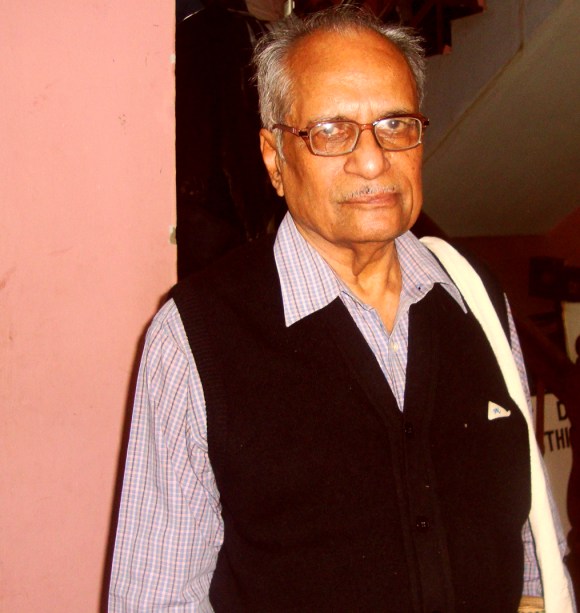
Prof. Sarbeswar Das (1925–2009): A scholar of depth, a teacher of light. Photo Provided by Bhaskar Parichha
In the intellectual history of modern Odisha, Professor Sarbeswar Das stands as one of those rare figures who seamlessly bridged scholarship, ethics, and social commitment. A luminous teacher, an erudite writer, and a quiet Gandhian, his life and work embodied the moral seriousness and intellectual curiosity that marked a generation shaped by the freedom struggle and the promise of a newly independent India.
Born in Sriramchandrapur village in the Puri district of Odisha in 1925, Sarbeswar Das grew up in a milieu where simplicity, discipline, and community values were deeply ingrained. His brilliance shone early—he topped the matriculation examination across Odisha and Bihar, a distinction that foreshadowed a lifetime of academic excellence.
His educational journey took him first to Ravenshaw College, Cuttack, the cradle of higher education in Odisha, where he absorbed the liberal spirit and rigorous intellectual training that the institution was known for. He later studied at Allahabad University, one of India’s foremost centers of learning, before proceeding to the University of Minnesota, for advanced studies in English literature.
His exposure to American academia at a time when few Indian scholars ventured abroad profoundly shaped his intellectual orientation. The years in Minnesota opened to him a new world of thought—modern literary criticism, American fiction, and the philosophy of democratic humanism—all of which left a deep imprint on his teaching and writing in later years.
On returning to India, Das joined the teaching profession, which he would pursue with remarkable dedication and grace for several decades. He served as a professor of English in some of Odisha’s most respected institutions—Christ College (Cuttack), SCS College (Puri), Khallikote College (Berhampur), and Ravenshaw College (Cuttack).
As a teacher, he was known not only for his formidable command of English but also for his clarity of expression, quiet humour, and empathetic engagement with students. He could bring Shakespeare and Emerson alive in the classroom, weaving them into the moral fabric of everyday Indian life. His pioneering initiative was the introduction of American Literature as a formal subject of study in Indian universities, long before it became fashionable to do so.
In an age when English studies in Odisha were largely confined to the British canon, he expanded its horizons by introducing writers like Walt Whitman, Emily Dickinson, William Faulkner, and Mark Twain to Indian classrooms.
Das believed that literature must connect with lived experience. He often told his students: “Language is not just a means of expression; it is a mirror of our moral imagination.” This conviction shaped generations of students who went on to become writers, teachers, and civil servants. Among them was the late Ramakanta Rath, later one of Odisha’s most celebrated poets, who fondly remembered Prof. Das as a teacher who inspired intellectual courage and aesthetic sensitivity.
Alongside his teaching, Prof. Das was a prolific writer and scholar. He authored around twenty-five books spanning essays, literary criticism, translations, and reflections on education and society. His writings in English and Odia reveal a mind steeped in both classical and modern traditions. Fluent in English, Odia, and Sanskrit, he was at ease quoting from the Bhagavad Gita and Hamlet in the same breath.
His essays in English reflected on the role of language in education, the cultural responsibility of intellectuals, and the need for moral clarity in modern life. He consistently argued for a vernacular humanism—a belief that English education must not estrange Indian students from their cultural roots but rather help them view their own traditions through a broader, universal lens.
As a principal, he brought administrative efficiency and human warmth to his role. His tenure is remembered for reforms that encouraged academic discipline, faculty collaboration, and student participation. He believed that education was not merely about acquiring degrees but about shaping ethical citizens.
Prof. Das’s intellectual life was inseparable from his moral and civic commitments. As a young man, he participated in the Quit India Movement, aligning himself with the Gandhian values of simplicity, non-violence, and service throughout his life.
Late in life, Prof. Das turned inward to recount his journey in his autobiography, Mo Kahani (My Story), which has since acquired the stature of a modern Odia classic. Spanning eight decades of personal and social history, it offers not only a memoir of a life well-lived but also a vivid ethnography of Odisha across the twentieth century.
In Mo Kahani, he paints rich, affectionate portraits of his family—his parents and sisters, Suruji and Hara Nani—and evokes the rhythms of village life, with its festivals, hierarchies, and hardships. His account of the great famine of 1919, passed down through family memory, is a haunting narrative of suffering and resilience.
The autobiography captures the moral universe of rural Odisha—its compassion, faith, and silent endurance—while chronicling the social changes wrought by modernity, education, and political awakening.
The book transcends personal recollection to become a social document of rare authenticity, preserving the voices and values of an era in transition. Scholars have hailed it as a valuable resource for understanding Odia social and cultural history, as well as a significant contribution to Indian autobiographical writing.
Prof. Sarbeswar Das passed away in 2009 at the age of 84, leaving behind a legacy of intellectual depth and human kindness. Those who knew him remember his calm demeanour, his Gandhian simplicity, and his unwavering belief in the power of education as a moral force. His students and colleagues regarded him not merely as a teacher but as a guide who exemplified integrity and humility in every aspect of life.
His contributions to English literary education in Odisha were transformative. By introducing American literature, promoting cross-cultural study, and insisting on a pedagogy grounded in ethical reflection, he helped modernise the study of English in the state and inspired a generation to approach literature as a bridge between worlds.
Even today, his writings—both critical and autobiographical—continue to speak to the challenges of our times: the search for meaning in education, the reconciliation of global and local cultures, and the enduring need for moral clarity in a rapidly changing world.
In the final measure, Prof. Sarbeswar Das remains not only a scholar and educator but also a moral historian of his age—one who chronicled the soul of Odisha with the sensitivity of a poet and the precision of a teacher. His Mo Kahani endures as his final lesson: that learning is not a mere accumulation of knowledge, but a lifelong practice of understanding, empathy, and truth.
.
Bhaskar Parichha is a journalist and author of Cyclones in Odisha: Landfall, Wreckage and Resilience, Unbiased, No Strings Attached: Writings on Odisha and Biju Patnaik – A Political Biography. He lives in Bhubaneswar and writes bilingually. Besides writing for newspapers, he also reviews books on various media platforms.
PLEASE NOTE: ARTICLES CAN ONLY BE REPRODUCED IN OTHER SITES WITH DUE ACKNOWLEDGEMENT TO BORDERLESS JOURNAL
Five poems by Rohini K.Mukherjeehave been translated from Odia by Snehaprava Das
Rohini K.Mukherjee
AT THE MYSTICAL SANCHI
An unknown voice beckons At the early hours of the morning. Moved by a new surprise Buddha relapses into meditation. A crystal dawn, cold as marble, Is traced On his hands and feet And his eyes and forehead. Some instant, invisible signal prompts him To turn on his side and sleep.
After Buddha’s Nirvana, Calm settles in the valley, slowly. Thousands of Branches and branchlets Radiate blissful divine light. The trees too, in a lavish growth, Spread out everywhere -- From the earth below to the sky above -- And meditate!
THE EXECUTIONER
No one could predict The next scene. But in the one enacted now The executioner has A prominent presence.
The executioner stalks the moon, His face hidden in the veil of clouds, Knife in hand, a gleam of smile On a phony face, A sharp, keen gaze under the glasses, Exuding the smell of An expensive perfume.
The indistinct footfalls may Prompt one to flick a look back But there would be no one behind Only clouds clad in midnight blue Sailing in the sky. From somewhere far floats in the music Of a mountain stream. Slowly, sorrow dissipates and a Path opens up for the spring, A wonderland of fairies. In his unguarded moments, The knife in the executioner’s grip Glitters in the furtive moonlight. Any moment that poison-coated knife Could find the moon’s throat, The moon knows that well. But it forgives, Because it also knows well That the executioner cannot Hide for long And will be trapped in The moonlit garden of tangled clouds.
THE DEATH OF A HAPPY MAN
One day, the eyes lost sleep And all the locusts flew away,
Not one spectator had guessed That one day The man will sprawl out on On the sea beach sands Washed away by the waves From distant lands.
The eyes lost sleep one day. The flock of locusts flew away.
But no one could guess The pains, the sobs That seared that forlorn soul.
Petals drifted in piles To make him a delicate shroud. The smell of sandalwood came wafting In the sea-breeze from the north. Seagulls flocked around the body, Unintimidated by the crowd in the beach, Drowning the voice of The living men there With their loud squawks of dissent. Ooh! What a long wished-for Happy death On a cool and blissful sea beach!
After the flock of locusts flew away Carrying all the dreams back On their wicked wings, The eyes lost sleep!
ANKLETS OF THE NIGHT
There is still time for the nightfall. But the air tinkles with the sound of The anklets of the night As if someone is retreating from An ineffectual, moon-washed garden, As if someone from the grave Watching the landscape, Or someone standing at the riverside Hums the tune of a departed season, Or someone hurrying aimlessly away To escape the approaching dawn.
It is not yet night, But the night’s anklets ring. You are probably returning To your shelter of old times In search of a new hope. Just take a look behind to see The painting of a conflicting wind Fluttering across the courtyard.
It is not yet night But its anklets begin to jingle in the air.
How cool you appear in your Evening chanting of the mantras! How calm and steady you are In the pure fragrance of the descending steps As you set out on the journey Holding your heart on your palm Like a burning clay-lamp. May be when you arrive there The dawn around you would be sonorous With the notations of Raga Bhairavi.
There is still time for the nightfall But the night’s anklets tinkle in the air!
THEY DID NOT COME
I waited for them, but They did not come, I waited all this time in vain, and Knowingly, let myself fall a victim To the first rays of the sun. The sun’s whiplash spurred me on To the jungle. It forced me to cut wood And tie them in bundles. The hunger of the sunset hour Prodded me back to where I had started. The smell of soaked rice, and the aroma of Onions and oil Drifted thick in the air of my house.
The sun came in, an intruder, Sat by me and watched. Then it devoured all the food, Leaving nothing, Not even a single dried-up onion-peel.
Because they did not come, For me the morning was Meaningless in its futility. I knew I was never one In the list of their ultimate interests When their tenure of life here ended.
The footfall of the light Trod easy on my skin. Days rolled on this way In sun and light. The sun was everywhere, all the time. Whenever the door opened, The sun stood there. When the meteor came shooting down, When words rode over the waves of sleep to float in the air, The treacherous sun always appeared.
And for me, there was No hope of their coming back.
But, one day as I leapt up in a hurry At the Sun’s summon, I discovered the Sahara Desert That I believed had Remained hidden in my School Geography book, Lying face down all these days Under my own hooves!
Rohini Kanta Mukherjee has authored, edited and co-edited several volumes of poetry and short stories in Odia and English. Many of his poems have been translated and published in various Indian languages , broadcast over several stations of All India Radio and Doordarshan . Some of his poems and translations have appeared in Wasafiri, Indian Literature, The Little Magazine , Purvagraha, Samasa among others. He retired as Associate Professor of English, from B.J.B Autonomous College, Bhubaneswar, Odisha.
Dr.Snehaprava Das, is a noted writer and a translator from Bhubaneswar, Odisha. She has five books of poems, three of stories and thirteen collections of translated texts (from Odia to English), to her credit.
PLEASE NOTE: ARTICLES CAN ONLY BE REPRODUCED IN OTHER SITES WITH DUE ACKNOWLEDGEMENT TO BORDERLESS JOURNAL
Art by Henry Tayali(1943-1987). From Public Domain
Let us imagine a world where wars have been outlawed and there is only peace. Is that even possible outside of John Lennon’s song? While John Gray, a modern-day thinker, propounds human nature cannot change despite technological advancements, one has to only imagine how a cave dweller would have told his family flying to the moon was an impossibility. And yet, it has been proven a reality and now, we are thinking living in outer space, though currently it is only the forte of a few elitists and astronomers. Maybe, it will become an accessible reality as shown in books by Isaac Asimov, Arthur C Clarke or shows like Star Trek and Star Wars. Perhaps, it’s only dreamers or ideators pursuing unreal hopes and urges who often become the change makers, the people that make humanity move forward. In Borderless, we merely gather your dreams and present them to the world. That is why we love to celebrate writers from across all languages and cultures with translations and writings that turn current norms topsy turvy. We feature a number of such ideators in this issue.
Nazrul in his times, would have been one such ideator, which is why we carry a song by him translated by Professor Fakrul Alam. And yet before him was Tagore — this time we carry a translation of an unusual poem about happiness. From current times, we present to you a poet — perhaps the greatest Malay writer in Singapore — Isa Kamari. He has translated his longing for changes into his poems. His novels and stories express the same longing as he shares in The Lost Mantras, his self-translated poems that explore adapting old to new. We will be bringing these out over a period of time. We also have poems by Hrushikesh Mallick translated from Odia by Snehprava Das and a poignant story by Sharaf Shad translated from Balochi by Fazal Baloch.
Book reviews homes an indepth introduction by Somdatta Mandal to Banu Mushtaq’s Heart Lamp: Selected Stories, translated from Kannada by Deepa Bhasthi. We have a discussion by Meenakshi Malhotra on Contours of Him: Poems, edited and introduced by Malaysian academic, Malachi Edwin Vethamani, in which she concludes, “that if femininity is a construct, so is masculinity.” Overriding human constructs are journeys made by migrants. Rupak Shreshta has introduced us to immigrant Sangita Swechcha’s Rose’s Odyssey: Tales of Love and Loss, translated from Nepali by Jayant Sharma. Bhaskar Parichha winds up this section with his exploration of Kalpana Karunakaran’s A Woman of No Consequence: Memory, Letters and Resistance in Madras. He tells us: “A Woman of No Consequence restores dignity to what is often dismissed as ordinary. It chronicles the spiritual and intellectual evolution of a woman who sought transcendence within the rhythms of domestic life, turning the everyday into a site of resistance and renewal.” Again, by the sound of it a book that redefines the idea that housework is mundane and gives dignity to women and the task at hand.
We wind up the October issue hoping for changes that will lead to a happier existence, helping us all connect with the commonality of emotions, overriding borders that hurt humanity, other species and the Earth.
Huge thanks to our fabulous team, especially Sohana Manzoor for her inimitable artwork. We would all love to congratulate Hughes for his plays that ran houseful in Swansea. And heartfelt thanks to all our wonderful contributors, without who this issue would not have been possible, and to our readers, who make it worth our while, to write and publish.
Five poems by Hrushikesh Mallick have been translated from Odia by Snehaprava Das
AFTER THEY LEAVE
After they leave, The tree in the midst of a bare field Stands forlorn. Not a single bird, Nor the sound of chirping anywhere Not a leaf flutters in the breeze, No one speaks a word After they leave.
The world is a meaningless void When they are not there. Flowers bloom and wither aimlessly. Festive seasons come and depart. The privileged and the poor come and go Without making an impact. Silence reigns everywhere and around When they are not there.
Living in a pattern, Like, in every moth-hour ‘Chhatu bhai’ riding back From the village market, ringing the bicycle bell, Or, farmers sitting on a platform in the evenings And deciding which patch of the land Would be plowed next morning, Like, the moon coming up routinely At measured intervals, And discussions centering around How ‘Gaya-bhai’ Escaped the wrath of the village-goddess Last night by a sheer miracle. Routine life continues Like rice cooking tender in the kitchen-hearth While cow-dung cakes are put To smoulder in the cowsheds. The regular pattern of living Is dull and cheerless In their absence. Who are they, then? Who indeed? They are the fragrance of the paddy-buds In the farmlands by the hillside, They are the Siju bushes that Grow under the eaves in the backyard, They are the sound of the clearing of throat That inspires courage in a fearful heart On a dark pathway, They are the drumbeats floating in In gentle waves from the neighbouring village, They are the pallbearers that twine ropes To make a pyre; And, after they leave life loses its meaning!
WHEN THERE IS NO GOD
Once you join your palms sitting on the bed while going to sleep or, as you wake up, worries stop disturbing your calm. You are assured of the presence of someone called God who might break your fall. But these are the bleak days of God’s absence, these days the headless bodies saunter down the streets of the night whispering to one another. The dogs howl in a chorus. The sounds of sermons or devotional songs do not float in from the mandapa, the air throbs instead with the siren of ambulances. As such belief is that the God that holds the trident and the mace is omnipotent. Why does that God stand dull and lifeless in the temple now? Does an idol in any temple have the power now even to chase away the stray dogs? Is there a God in any shrine who can hold open its closed doors and by some miracle turn auspicious all that is ominous? In these dark days when God is not there, if we take a fall, we have to get up on our own. We have to lean on our own mettle and our own merit in the moments of death or survival. In the absence of God, we have to commit ourselves to the service of the distressed, to feed the hungry and nurse the sick, give shelter to the homeless. It’s time we repented our indulgences without religious extravaganza. It’s time we stopped pinning blind faith in the figures of stone.
THE LONE GIRL
The lone girl has nowhere to go, She sits alone lamenting her loss; Once upon a time she had a country like we all have, it was called Syria. Its lofty national flag soared to the clouds. It had a national anthem that sparked the spirit of martyrdom in its people!
In the evenings, perched on the shoulders of her babajaan, she watched the moon in the sky of her homeland; heard stories from her mother that set her eyes rolling in wonder; that country, her homeland is now in ruins a vast, barren expanse, littered with severed limbs. Its air is sick with the smell of tons and tons of explosives there lay piles of disfigured childhood in pathetic abandon to tell the tale of a country that was!
No one had ever warned the girl that her tomorrows will be spent in makeshift shelters under the tents, nor did she know that her palms would join to make begging bowl, and there would be merchants to trade on the perfumed void in her. No one predicted that she would grow up believing in hatred instead of love! And when she would learn to ask the whereabouts of her parents the whole civilized world will keep mute.
EYES
Just as I believed that all poems which could have been written on ‘eyes’ are already written your ‘eyes’ flashed before me and what an amazing lot of trees laden with fruits and flowers and birds, they held! I wondered where did you flick your deep, boundless glance from the corridors of the hospital like a handful of floral offerings. The anguish that glance held was like the lost look in the eyes of a kid who was rudely denied a father’s lap, like a fresh bloom shying away from the eyes of a honeybee or, a streak of lightning flashing in the overcast noon-sky like a poor man’s last hope. Your eyes are like the lines of a poem that unfold a new meaning at every other reading. Your eyes, like a strange horizon captures the crimson of the dawn and the gleam of a red silk sari in a perfect balance! Your eyes could transform a waste land to a paddy field in luxuriant green, at times they are moist with muffled sobs, or, like a spear smeared in blood, at others! What is more beautiful -- the bright loquacity in your eyes or the rain-washed sunshine, the mysterious mutter in your eyes or a village enveloped in a wispy darkness?
THE HONEYBEE DOES NOT KNOW
The son writes poems. His mother does not know. ‘You are rotting yourself through writing,’ She complains, ‘Did you write them?’ A girl-friend, looks at him in wonder, ‘Can you swear to that?’ she asks. The boy writes poems The street where he lives does not know it, Nor does the village! His young face does not sport a beard, Nor have the creases appeared on his forehead. There was not that distant look Like the faraway stars in the eyes, How could then he be a poet? Who would believe that? A man who picks up a quarrel with the fisherwoman Could recite the brajabuli, Or, the fellow weaving clothes at the loom Can sing lines from Tapaswini
A poet is not supposed to have a home. He sits under the trees Amidst the anthills. A poet hacks off the branch he sits on. He does not have that worldly intelligence. A poet is not pragmatic. He begins a line at the wrong point And ends it at a wrong one too. A good poet forgets the right way of chanting The mantra that would protect him from dangers While actually facing them.
The mother does not know that Her son is a poet; nor does the father. The owner of the hut where the poet takes shelter Does not know his tenant to be a poet. The poet’s voice does not know It belongs to a poet. The reflection has no idea it is the poet’s image. The lizard exploring the shelves Does not know the ‘Award of Padmashree’ Carefully preserved there, Was won by the poet. The honeybee that circles the graves Does not know that The lines engraved on the tomb Were the epitaph for the poet.
Glossary: Mandapa is a pavilion. Brajabuli is a dialect based on Maithali that was popularised for poetry by the medieval poet Vidyapati. Tapaswini: A famous long poem by the 19th century Odia poet Gangadhar Meher.
.
Dr Hrushikesh Mallick is a reputed Odia poet and writer. He has 13 Poetry collections. His first book in 1987 heralded a new era in Odia poetry. He has received Odisha Sahitya Akademi Award (1988), Sarala Award (2016) and Central Sahitya Akademi Award (2021).He is also an eminent literary critic and fiction writer. He served as President of Odisha Sahitya Akademi (2021-2024). He has been a professor of Odia language and literature from 2012.
Dr.Snehaprava Das, is a noted writer and a translator from Bhubaneswar, Odisha. She has five books of poems, three of stories and thirteen collections of translated texts (from Odia to English), to her credit.
PLEASE NOTE: ARTICLES CAN ONLY BE REPRODUCED IN OTHER SITES WITH DUE ACKNOWLEDGEMENT TO BORDERLESS JOURNAL
Autumn Garden by Vincent Van Gogh (1853-1890). From Public Domain
September heralds the start of year-end festivities around the world. It’s autumn in one part and spring in another – both seasons that herald change. While our planet celebrates changes, dichotomies, opposites and inclusively gazes with wonder at the endless universe in all its splendour, do we? Festivals are times of good cheer and fun with our loved ones. And yet, a large part of the world seems to be in disarray with manmade disasters wrought by our own species on its own home planet. Despite the sufferings experienced by victims of climate and war-related calamities, the majority will continue to observe rituals out of habit while subscribing to exclusivity and shun change in any form. Occasionally, there are those who break all rules to create a new norm.
One such group of people are the bauls or mendicants from Bengal. Aruna Chakravarti has shared an essay about these people who have created a syncretic lore with music and nature, defying the borders that divide humanity into exclusive groups. As if to complement this syncretic flow, we have Professor Fakrul Alam’s piece on a human construct, literary clubs spanning different cultures spread over centuries – no less an area in which we find norms redefined for, the literary, often, are the harbingers of change.
Mandal, herself, has a brilliant translation featured in this issue. We have a review of her book, an interview with her, and an excerpt from the translation of Jaladhar Sen’s The Travels of a Sadhu in the Himalayas. Written and first published in the Tagore family journal, Bharati, the narrative is an outstanding cultural bridge which even translates Bengali humour for an Anglophone readership. That Sen had a strictly secular perspective in the nineteenth century when blind devotion was often a norm is showcased in Mandal’s translation as well as the stupendous descriptions of the Himalayas that haunt with elegant simplicity.
Our fiction this month seems largely focussed on women’s stories from around the world. While Fiona Sinclair and Erin Jamieson reflect on mother-daughter relationships, Anandita Dey looks into a woman’s dilemma as she tries to adjust to the accepted norm of an ‘arranged’ marriage. Rashida Murphy explores deep rooted social biases that create issues faced by a woman with a light touch. Naramsetti Umamaheswararao brings in variety with a fable – a story that reflects human traits transcending gender disparity.
The September issue would not have been possible without contributions of words and photographs by many of you. Huge thanks to all of you, to the fabulous team and to Sohana Manzoor, whose art has become synonymous with our journal. And our heartfelt thanks to our wonderful readers, without who the effort of putting together this journal would be pointless. Thank you all.