Ghosts have been interpreted as frightening, funny, gory or weird. In this collection, we bring to you some ghostly meanderings from our pages, not written by ghosts but written about ghosts or spooky encounters that are philosophical (occasionally), funny and weird.
With enough horrors in the real world around us, we decided to focus more (not fully) on the comedic and explore horror from the perspective of fun with hopefully a cathartic impact, which will deviate our minds from realities like war, hunger and climate change. Some of the tellings may be just spooky… some claim to be real encounters… are they scary or funny? Read and find out…
Tumi Kon Kanoner Phulby Tagore andAnjali Loho Morby Nazrul, love songs by the two greats, have been translated from Bengali by Professor Fakrul Alam. Click hereto read.
One Life, One Love, 300 Children : Keith Lyons writes of Tendol Gyalzur, a COVID 19 victim, a refugee and an orphan who found new lives for many other orphans with love and an ability to connect. Click here to read.
When West Meets East & Greatness Blooms: Debraj Mookerjee reflects on how syncretism impacts greats like Tagore,Tolstoy, Emerson, Martin Luther King Jr, Gandhi and many more. Click here to read.
Dilip Kumar: Kohinoor-e-Hind: In a tribute to Bollywood legend Dileep Kumar, Ratnottama Sengupta, one of India’s most iconic arts journalists, recollects the days the great actor sprinted about on the sets of Bombay’s studios …spiced up with fragments from the autobiography of Sengupta’s father, Nabendu Ghosh. Click here to read.
Are Some of Us More Human than Others ?: Meenakshi Malhotra ponders at the exclusivity that reinforces divisions, margins and borders that continue to plague humankind, against the backdrop of the Women’s Month, March. Click here to read.
Reminiscences from a Gallery: MF Husain: Dolly Narang recounts how she started a gallery more than four decades ago and talks of her encounter with world renowned artist, MF Husain. Click hereto read.
Baraf Pora (Snowfall) by Rabindranath Tagore,gives a glimpse of his first experience of snowfall in Brighton and published in the Tagore family journal, Balak (Children), has been translated from Bengali by Somdatta Mandal. Clickhere to read.
Cherry Blossom Forecast: Suzanne Kamata brings the Japanese ritual of cherry blossom viewing to our pages with her camera and words. Clickhere to read.
Two Pizza Fantasies, Rhys Hughes recounts myths around the pizza in prose, fiction and poetry, Click here to read.
An Alien on the Altar!: Snigdha Agrawal writes of how a dog and lizard add zest to festivities with a dollop of humour. Click here to read.
Where it all Began: Sybil Pretious recounts her first adventure, an ascent on Mt Kilimanjaro at the age of sixty. Clickhere to read.
Conversations
Rabindranath Tagore: A Universal Bard.: This conversation between Aruna Chakravarti and Sunil Gangopadhyay that took place at a Tagore Conference organised by the Sahitya Akademi in Kochy in 2011. Click here to read.
Sriniketan: Tagore’s “Life Work”: In Conversation with Professor Uma Das Gupta, Tagore scholar, author of A History of Sriniketan, where can be glimpsed what Tagore considered his ‘life’s work’ as an NGO smoothening divides between villagers and the educated. Click here to read. (Review & Interview).
In conversation with the late Akbar Barakzai, a Balochi poet in exile who rejected an award from Pakistan Academy of Letters for his principles. Click here to read.
Jim Goodman, an American traveler, author, ethnologist and photographer who has spent the last half-century in Asia, converses with Keith Lyons. Click here to read.
InBridge over Troubled Waters, the late Sanjay Kumar tells us about Pandies, an activist theatre group founded by him that educates, bridging gaps between the divides of university educated and the less fortunate who people slums or terror zones. Click here to read.
In Lessons Old and New from a Stray Japanese Cat, Keith Lyons talks with the author of The Cat with Three Passports, CJ Fentiman who likes the anonymity loaned by resettling in new places & enjoys creating a space for herself away from her birthplace. Click hereto read.
Fiction
Aparichitaby Tagore: This short story has been translated as The Stranger by Aruna Chakravarti. Click hereto read.
Hena by Nazrul has been translated from Bengali by Sohana Manzoor. Click here to read.
Playlets byRabindranath Tagore: Two skits that reveal the lighter side of the poet. They have been translated from Bengali by Somdatta Mandal. Click here to read.
Abhagi’s Heaven, a poignant story by Saratchandra Chattopadhyay translated by Aruna Chakravarti. Click here to read.
An Eternal Void, a Balochi story by Munir Ahmed Badini translated by Fazal Baloch. Click hereto read.
The Witch, a short story by renowned Bengali writer Tarasankar Bandopadhyay (1898 to 1971), translated by Aruna Chakravarti. Clickhere to read.
I Grew into a Flute: Balochi Folktale involving magic retold by Fazal Baloch. Click here to read.
Give Me A Rag, Please:A short story by Nabendu Ghosh, translated by Ratnottama Sengupta, set in the 1943 Bengal Famine, which reflects on man’s basic needs. Click here to read
Rakhamaninov’s Sonata: A short story by Sherzod Artikov, translated from Uzbeki by Nigora Mukhammad. Click hereto read.
The Magic Staff , a poignant short story about a Rohingya child by Shaheen Akhtar, translated from Bengali by Arifa Ghani Rahman. Click here to read.
Khaira, the Blind, a story by Nadir Ali, has been translated from Punjabi by Amna Ali. Click here to read.
The Browless Dolls by S.Ramakrishnan, has been translated from Tamil by B Chandramouli. Click hereto read.
No Man’s Land: Sohana Manzoor gives us surrealistic story reflecting on after-life. Click hereto read.
The Protests Outside: Steve Ogah talks of trauma faced by riot victims in Nigeria. Click here to read.
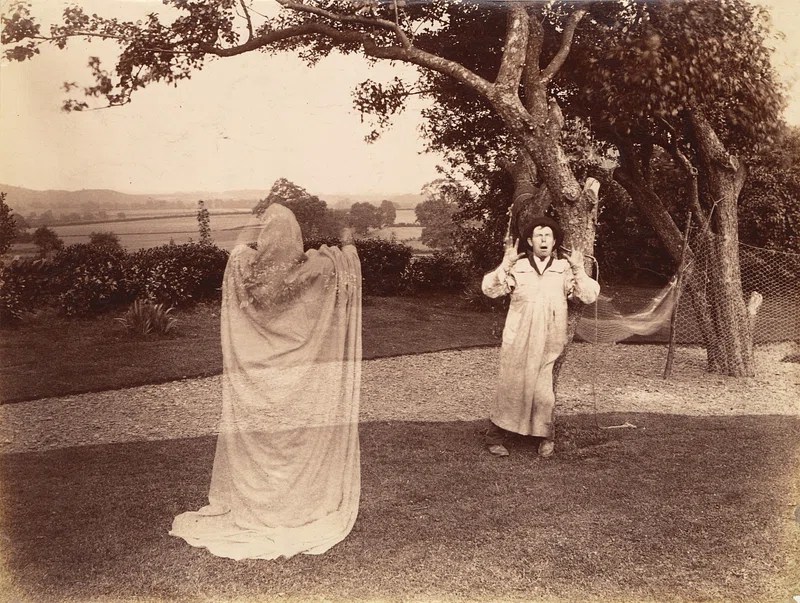
Flash Fiction: Turret: Niles M Reddick relates a haunting tale of ghosts and more. Click here to read.
Henrik’s Journey: Farah Ghuznavi follows a conglomerate of people on board a flight to address issues ranging from Rohingyas to race bias. Click hereto read.
Does this Make Me a Psychic?; Erwin Coombs tells a suspenseful, funny, poignant and sad story, based on his real life experiences. Click here to read.
Phôs and Ombra: Paul Mirabile weaves a dark tale about two people lost in a void. Click here to read.
A Queen is Crowned: Farhanaz Rabbani traces the awakening of self worth. Click here to read.
A million dollar question that seems to have no satisfactory answers. While around October-November, many cultures pay respects to the departed, there are those who do pray at a different time of the year. Is there a link between that and the fun of disguising and collecting candy or playing tricks on Halloween? There are no conclusive answers or evidence to link these.
In this special edition, we decided to have a bit of fun with imps, pirates, ghost, zombies and spooks brought to you from across the world on Halloween as well as a concluding essay on the reasons we celebrate spooks. Enjoy!
Poetry
Witchy Halloween: Michael Lee Johnson gives us a magical glimpse into Halloween night. Click here to read.
Pirate Poems: Jay Nicholls brings us fun-filled ‘spooky-gooky’ adventures across the Lemon Sea. Clickhereto read.
The Tickle Imp: Is this horrific, funny or what? Only can be had from the bizarre or genius pen of Rhys Hughes. Click here to read.
Prose
The Turret: An eerie story by Niles M Reddick that seems to be right out of an edition of The Most Haunted Houses. Click here to read.
The Return of the Dead: Gita Vishwanath explores spooks in afterlife in a short story. Do we become zombies? Click here to find out.
Ketchup: A scintillating ghost story by Rakhi Pandey, set in the old Residency at Lucknow. Click here to read.
When Two or Three are Gathered: A weird dark tale from Tan Kaiyi where a victims of a virus mutate. What kind of fear is instilled by this situation? Click here to find out.
Welcoming the Dark Half of the Year: Winding up the section is Candice Louisa Daquin’s essay that takes a relook at the evolution of Halloween historically. Clickhere to read.
Professor Anvita Abbi, a Padma Shri, discusses her experience among the indigenous Andamanese and her new book on them, Voices from the Lost Horizon. Click here to read.
Keith Lyons talks to Jessica Muddittabout her memoir, Our Home in Myanmar, and the current events. Click here to read.
Geetha Ravichnadran explores additions to our vocabulary in a tongue-in-cheek article. Clickhere to read.
Musings of a Copywriter
In When I Almost Became a Professor, Devraj Singh Kalsi gives humour tinged reasons on why he detached himself from being an academician. Click here to read.
When J.T. Morgan stood on the deck surrounding the circular turret room on top of the Jekyll club hotel to smoke a cigar as the sun rose, he didn’t notice the shrimp boat passing through the East River into Jekyll Sound before it worked the Atlantic coastline, and he didn’t see young Elliot Gould leaving the family cottage to pick Cherokee roses for his grandmother. What Morgan did see in his mind’s eye over and over was his daughter Julia on the ground below, blood flowing from her mouth onto the grass and her white summer dress stained.
Whether she jumped because of her father’s refusal to allow her to marry Elliot or whether she slipped on the iron railing was never known, but for Morgan and other parents they’d known who lost a child, it’s a blow like none other, and after construction of his own cottage was completed, he never stayed in the turret again. He’d told his wife Ann he awoke from a dream where he’d seen Julia looking down, tracing the shell wallpaper in the turret with her pointer finger, circling the turret, and disappearing through the door. Then, he’d seen her circling the Jekyll Club grounds and then out toward the dirt road that circled the island, repetitive circular movements like the design of a conch shell and the universe.
Morgan’s overwhelming pain led him to befriend the teen Elliot and even offer him a position in the banking industry, even though he knew the senior Gould wanted him to stick with the railroad industry. Morgan knew that industry would fade over time, that the Wrights were onto something with their attempted flights, and Morgan had opted to invest in technology rather than the railroad. Elliot politely declined but invited Morgan to accompany him on an island hunting trip the next morning where they’d check Elliot’s racoon traps near Driftwood Beach.
As they stepped around the palmetto and sago palms and fanned the Spanish moss draping oaks from their faces, Elliot spotted his trap highlighted by the morning light. “Look,” he whispered to Morgan. “I’ve got one.”
“Excellent, chap.”
“Stay back. I don’t want to ruin his pelt with a shot.”
Elliot crept forward, took the butt of his rifle and raised it high, and swiftly brought it down onto the head, killing the racoon instantly, but when he propped the butt of the gun on his boot to pull the dead racoon from the trap, the gun discharged right into his abdomen, and the young Elliot simply said, “Oh, no.”
Morgan left the gun and racoon and scooped Elliot and moved through the island brush as quickly as he could. He scraped his face, he sweated profusely, and his heart pounded and throbbed in his throat. He reached the Gould cottage and repeatedly kicked the door with his boot.
“Dear God,” Mrs. Gould shrieked from behind her servant when he opened the door. She called to her other servant, “Help me.” They placed young Elliot on the daybed in the drawing room, tried to stop the gushing blood, and tried to get a call out on the new phone line, but it didn’t work as well as it had when Bell had made the first transatlantic call from Jekyll. They sent for the mainland doctor. The servant stood by the grandfather clock’s pendulum in the foyer, ready to stop it the moment Elliot passed, but Elliot’s youth and stamina won. Morgan told the servant, “Get away from that clock. He’s not going anywhere.”
“At least he’s still with us,” he whispered to himself on the way back to tell his wife about the events. Ann stood on the balcony of the turret wringing her hands after one of the Jekyll Club’s employees shared there had been a hunting accident. She couldn’t lose him, too, but she had no need for fear. She was reassured when Morgan was back, and they later heard the doctor had removed the bullet, sewed Elliot’s wound, and gave him medicine to help heal. That night, Morgan dreamed of Julia circling the turret, the club grounds, and the island until she circled up into the night sky toward a distant star.
Niles Reddick is the author of a novel, two collections, and a novella. His work has been featured in nineteen anthologies, across twenty-one countries, and in over four hundred publications including The Saturday Evening Post, PIF, BlazeVox, New Reader Magazine, Citron Review, and The Boston Literary Magazine. Website: http://nilesreddick.com/
.
PLEASE NOTE: ARTICLES CAN ONLY BE REPRODUCED IN OTHER SITES WITH DUE ACKNOWLEDGEMENT TO BORDERLESS JOURNAL
Three years into our marriage, we purchased our first ranch home with no down payment thanks to help from a bank that gave us two mortgages; one was for eighty percent and the other for twenty percent with an extremely high interest rate. We stayed there five years, owed as much as we did when we bought it, and replaced the flooring, roof, the heat, ventilation and air-conditioning unit, kitchen countertops, and even the landscaping. Fortunately, the value increased, mostly because of a growth explosion in the city, and we sold high, netting a thirty percent profit, which we plunked onto the next house.
We didn’t have a lot of time to look for that first house because of start dates for our new jobs, so we had driven the realtor crazy looking at more than forty houses in three days, putting in a contract on the fourth day, and solidifying the deal on the fifth. There were things Beth had wanted I could care less about: fresh paint, no wallpaper, and the three bedrooms on the first floor. I, on the other hand, felt an office, fireplace, and wood floors were the most important things. The house we both finally agreed on had a long laundry room that could double as an office for me, except when the washer was on the spin cycle and vibrated the computer on my desk. I did get a fireplace, and Beth got the fresh paint and no wallpaper. Unfortunately, I lost out on the wooden floors, but Beth got all the bedrooms downstairs in case we had children.
Because we had an antique rattan sofa and chair set Beth’s dad had given her as a college graduation gift for her first apartment, it was more chic than comfortable, so I often lay on the carpet in front of the television to watch movies on the video player or episodes of Seinfeld or Friends. Before we went to bed, I thought a mosquito had bitten me on the outer upper thigh area. A red bump felt irritated and warm to the touch. I put a little antibiotic cream on it and went to bed. The next morning, I didn’t even think about the bump, but the second day when I was taking a shower, I noticed the bump was darker, larger, and there seemed to be rings around it, like someone had tattooed my upper thigh with an image of Saturn and her rings. I decided I would stop by the clinic for a check since I’d never had a mosquito bite look that way, I feared the West Nile virus since it had just found its way to the states, and whatever it was seemed to be spreading fairly close to my genital area.
The nurse took my vitals, temperature, and didn’t give any non-verbal communication hints when she had a peak, but the doctor came in, looked at the chart, mispronounced my name, looked through his bifocals he wore on the tip of his nose, and said, “Looks like a Brown Recluse got you. Still early and not a lot of damage, but it’s killing the tissue. The rings give it away. We’ll get you on an antibiotic.”
Brown Recluse Spider
“Brown recluse? A spider bite?”
“Oh yeah. Could be anywhere in your house. They often live in dark places, cracks and crevices, and under carpet.”
“Carpet? I knew we shouldn’t have bought that house with carpet everywhere.”
“Yes, well, I’ll look at it again next week after you’ve been on the meds. Hopefully, we won’t have to take any skin.”
After the bite healed, I had the ring for some time, but that didn’t stop me from having the carpet ripped up and wooden floors installed throughout the house. I insisted on being there with bug spray, but never saw a Brown Recluse. Beth washed the linens and I had an exterminator come monthly.
I still check my skin if I have an itch and scratch. It seems to take a lot of time to do so, and at times, if I’m in a conversation at work, I have to excuse myself to check. Co-workers see me going to the restroom more than usual. Once in a while, a co-worker might find me in the restroom with a pants leg pulled up to the knee, my sock down to the shoe, or my button down shirt open, my using a flash light to check my skin closely in the mirror, but at least they know I don’t have diarrhea, a bladder issue, or am hiding alcohol to drink.
.
Niles Reddick is author of the novel Drifting too far from the Shore, two collections Reading the Coffee Grounds and Road Kill Art and Other Oddities, and a novella Lead Me Home. His work has been featured in thirteen anthologies, twenty-one countries, and in over three hundred publications including The Saturday Evening Post, PIF, New Reader Magazine, Forth Magazine,Boston Literary Magazine,Flash Fiction Magazine, With Painted Words, among many others.








 Borderless