Title: Daktarin Jamini Sen: The Life of British India’s First Woman Doctor
Author: Deepta Roy Chakraverti
Publisher: Penguin/ EBURY PRESS
History often celebrates great events, revolutions, and institutions, yet it frequently overlooks individuals whose quiet determination helped shape the modern world.
Deepta Roy Chakraverti’s biography, Daktarin Jamini Sen: The Life of British India’s First Woman Doctor, seeks to restore one such remarkable figure to her rightful place in history. Through meticulous research and deeply personal storytelling, the book brings to light the life of a pioneering physician who challenged conventions, crossed borders, and carved a path for women in medicine at a time when such ambitions were rare.
Jamini Sen (1871- 1933) was among the earliest women doctors of British India and the first woman to become a Fellow of the Royal College of Physicians and Surgeons of Glasgow. In the late nineteenth and early twentieth centuries, when the world of medicine was overwhelmingly dominated by men, her achievement was nothing short of extraordinary. To study medicine, it required courage and determination; to excel in it and gain international recognition demanded a resilience that few possessed.
Chakraverti’s book traces Jamini Sen’s journey from the changing social landscape of Bengal to the complex and often dramatic world of royal Nepal. Born in a time when child marriage, strict gender roles, and social conservatism defined the lives of many women, Jamini’s life unfolded against the backdrop of a society in transition. The opening chapters evoke a Bengal negotiating between tradition and reform—where ideas of modern education, nationalism, and social change were beginning to challenge entrenched customs.
It was in this milieu that Jamini took her first steps toward a career in medicine. The path was far from easy. As a woman entering a profession dominated by men, she encountered skepticism, resistance, and prejudice. Yet the biography portrays her not as a passive victim of circumstance but as a determined individual driven by conviction and intellectual curiosity. Her pursuit of medical knowledge reflects both personal ambition and a broader spirit of reform that characterized parts of Indian society during the late colonial period.
One of the most fascinating phases of Jamini Sen’s career unfolded in Nepal. She was invited to serve as physician to the royal family during the reign of Prithvi Bir Bikram Shah. Nepal at that time was a kingdom cautiously opening its doors to modern influences, and Jamini’s presence there represented an important step in introducing modern medical practices to the royal court.
Serving in the palace required far more than medical skill. Court life was shaped by hierarchy, intrigue, and political sensitivities. Yet Jamini’s professionalism, discretion, and quiet confidence earned her the trust of the king and the respect of those around her. The biography suggests that her friendship with Prithvi Bir Bikram Shah was marked by mutual regard, and that she played a role in supporting his aspirations for a more modern Nepal.
But the story of Jamini Sen is not merely one of professional success. The book also reveals the personal costs that often accompany pioneering lives. Loss, loneliness, and emotional hardship form a recurring undercurrent in her journey. She endured the deaths of loved ones and navigated difficult relationships yet remained steadfast in her commitment to her work and her ideals.
Chakraverti’s narrative emphasises that Jamini’s resilience was rooted not only in determination but also in faith and introspection. Moments of spiritual reflection and philosophical questioning appear throughout the narrative, suggesting that her inner life was as complex as her public career. This dimension of the biography adds depth to the portrait of a woman who was not simply a medical pioneer but also a thoughtful and introspective individual.
The author’s own connection to the story lends the book a distinctive emotional resonance. Deepta Roy Chakraverti is the last of Jamini Sen’s descendants through the line of Jamini’s niece, Roma Sen Chakraverti. A lawyer educated at King’s College London with a first degree in mathematics from University of Delhi, Deepta writes not only as a historian but also as a custodian of family memory.
In the prologue, she reflects on the idea that our ancestors live within us—not only through blood and lineage but also through memory and spirit. Her decision to write about Jamini Sen arose from a growing sense of injustice. Why had a woman of such accomplishment been largely forgotten? Why had her life been reduced to little more than a historical footnote?
That question became the driving force behind the book. What began as a short story gradually expanded into a blog and finally into a full-length biography. Along the way, Chakraverti discovered family heirlooms, letters, and personal belongings passed down through generations—small fragments of the past that helped reconstruct Jamini’s life.
The author also drew upon anecdotes preserved in family memory and earlier Bengali writings by her great-aunt, Kamini Roy, which provided valuable insights into Jamini’s character and experiences. These sources give the narrative an intimate quality rarely found in conventional historical biographies.
Structured across twenty-five chapters, the book moves through the many stages of Jamini’s life—from her childhood in a changing Bengal to her years in Nepal, her struggles and triumphs in medicine, and the legacy she left behind. The chapter titles themselves hint at the drama and complexity of her life: ‘A Woman in a Man’s World’, ‘The Fight to Wield the Scalpel and Stethoscope’, and ‘Becoming British India’s Saree Wali Daktarin Sahib’.
A foreword by Hany Eteiba, President of the Royal College of Physicians and Surgeons of Glasgow, adds an important institutional recognition of Jamini Sen’s achievements. It situates her story within the broader history of global medicine and acknowledges the significance of her pioneering role.
Daktarin Jamini Sen is more than a biography. It is an act of historical recovery—a reminder that many women who challenged social boundaries and advanced professional fields were gradually erased from public memory. By reconstructing Jamini Sen’s life, Deepta Roy Chakraverti restores one such figure to the narrative of South Asian history.
Jamini Sen emerges from these pages as a courageous, intelligent, and deeply human figure—a woman who carried both the stethoscope and the burden of breaking barriers. Her story reminds us that the progress of society often begins with individuals who refuse to accept the limitations imposed upon them.
In telling that story, this book ensures that Jamini Sen will no longer remain a forgotten pioneer.
.
Bhaskar Parichha is a journalist and author of Cyclones in Odisha: Landfall, Wreckage and Resilience, Unbiased, No Strings Attached: Writings on Odisha and Biju Patnaik – A Political Biography. He lives in Bhubaneswar and writes bilingually. Besides writing for newspapers, he also reviews books on various media platforms.
PLEASE NOTE: ARTICLES CAN ONLY BE REPRODUCED IN OTHER SITES WITH DUE ACKNOWLEDGEMENT TO BORDERLESS JOURNAL
Title: River Traveller: Journeys on the TSANPO-BRAHMAPUTRA from Tibet to the Bay of Bengal
Author: Sanjoy Hazarika
Publisher: Speaking Tiger Books
Sanjoy Hazarika, a former reporter for the New York Times, dons many hats, combining roles as researcher, columnist, mentor and practitioner. Over decades this veteran journalist has travelled extensively across the Northeast and its neighbourhood. His interests include developments in Myanmar, Bhutan, Tibet (PRC), Bangladesh and Nepal and he has produced over a dozen documentaries including on the Brahmaputra, dolphins, governance, conflict, and rights.
River Traveller tells the story of a great river, as powerful as it is mysterious. The Brahmaputra rises in Tibet, travels through three countries and, after travelling over 2,900 kms, flows into the Bay of Bengal. But the most interesting part is that this river is known by many names: Yarlung Tsangpo and Po Tsangpo in Tibet, Siang in Arunachal Pradesh, Brahmaputra in Assam, the Jamuna in Bangladesh, merging with the Ganga at Arichar Ghat, to form the vast Padma on its unending flow to the Bay of Bengal and its quest for union with the sea.
This book has come together over decades of travels on this braided river (including on the boat clinics that he launched in 2005 in Assam) where Hazarika had seen its beauty and faced its wrath, been stuck on sandbanks and swept out to sea. He listened to those who plied the boats, the pilots, drivers, fishermen and their families, the sick and the ailing, women and children, Buddhist and Hindu monks, Sikh and Muslim priests, officials, politicians, students and scientists. He has listened to poets, singers, writers and artists, and to businessfolk and daily wage earners, boat builders, contractors, tea planters and workers. The writer amalgamated all their stories which were a mix of sadness, a determination to survive, an acceptance of fate and joy. Therefore, his traveller’s tales span not just his own journeys but the stories of those who had gone before him. Like the river, the region and its neighbourhood “never cease to delight, surprise, inspire, sadden and confound.”
Of course, the most ostentatious reason for Hazarika’s travels is the filming of documentaries on the river at different points of time. His first travel was for the film A River’s Story, the Quest for the Brahmaputra that he scripted and produced with Jahnu Barua as the director, Sudheer Palsane as cinematographer, Sanjoy Roy and Jugal Debta as audiographers as well as many others. The thrust area was to study the stories of the river and its people, from its beginnings in the Tibetan Plateau to the end in the Bay of Bengal. It wasn’t about science and theory, or politics and the environment, or climate change, but about the river and its moods, and especially its people and their relationship with each other, through history and changing geography, culture, faith, peace and poverty.
In the second venture, Gautam Bora was director and cinematographer of Brahmaputra, a six-part series for Doordarshan, shot in Arunachal Pradesh and Assam. In his third venture, he was involved in the making of Children of the River, the Xihus of Assam, which was directed and filmed by Maulee Senapati and where he learned much about dolphins.
Divided into three parts, the book is as exhaustive a study on the river as can be imagined. The Brahmaputra is one of the world’s longest and widest rivers—sustaining entire civilizations and agrarian systems. It has fascinated cartographers, lured adventurers, attracted kings and dynasts, and has supported life and ways of living by its banks. Before beginning with the actual travel in Part One that includes his sojourns in Tibet and Arunachal Pradesh, Hazarika goes back to history of the thirteenth century when in about 1215 AD, the Tai-Ahom prince Siu-ka-pha left his native land now on the China-Myanmar border and undertook a long march before settling down in Charaideo, his capital, with its surrounding flat plains, rich red soil, streams and the vast Brahmaputra nearby. After that for centuries, traders, smugglers, fighters, fugitives, goods, cuisines, languages and ideas as well as religions and religious people have travelled in either direction on the Siu-ka-pha trail.
Hazarika begins his yatra in Tibet and narrates how the challenges relating to it were not new. He describes a Tibet that was trying to hold on to its cultural legacy in the face of Chinese rule and the land’s exploitation for its resources. He recounts stories of explorers, spymasters and mapmakers, especially a motley crowd of intrepid men in the service of the East India Company and the Survey of India, who discovered the route of the river especially when it’s source was hidden in the most inhospitable terrain on earth. They finally solved the puzzle of the vanishing river and established that the Brahmaputra and the Tsangpo were the same river.
In Arunachal Pradesh, Hazarika views the river from a helicopter and to him it resembled a great, brown meandering serpent, moving in huge loops, with many channels; at times, a stream or two which joined the flow backed down on themselves, creating elegant oxbow lakes. At Gelling, the first village on the Indian side, the turbulent Tsangpo churns its way through a narrow valley after a cascading drop from Tibet. Here for the first time the Tsangpo changes its name and is known as the Siang or Dibang for the next 200 kilometers before it enters Assam. At a place called Kobo, the Lohit meets the Dibang, Noa Dihing, Tengapani and Siang and develops the immense power that is mirrored in the Brahmaputra in full flow.
Part Two comprising of nine chapters focuses on Assam. After the earthquake of 1950, water ‘blockades’ happened not just on the Siang but also on several other rivers flowing into the Assam Valley and as a result the river changed its course, lifted the riverbed, flattened the banks and land, and braided it in many places far more than ever before. As a result, many towns like Rohmoria, Sadiya simply vanished after being embraced by flood waters, and places like Barpeta, Goalpara and Dhubri underwent demographic changes.
In separate chapters we learn about the tea gardens of Assam, the influence of Srimanta Sankaradeva and his satras[1], about the great river island Majuli, the singer Bhupen Hazarika, the presence of dolphins in the Brahmaputra, the thousands of islands known as the chars and saporis, which are permanent in their impermanence, where the Muslim residents are known as Miyas, the large number of migrants that inhabit the place, the sand bars and sandbanks that dot the riverscape from Upper Assam and how the collection of sand and its sale and distribution has changed the lives of many along the river to the point where it enters Bangladesh. He also gives us details about the ferry system, the boat clinics on the river that represent both a dream and a reality, as annually, nearly three lakh people are treated in these mobile structures.
The third part of the narrative obviously ends with four chapters on Bangladesh. We are told how to move from a slow riverine economy to a bustling one is quite challenging. This section includes fear of being hunted by pirates on an open sea, the faith in the navigators, ‘drivers’, pilots and other crew members who can read the mind of the river, the trip to the confluence of the Ganga and the Brahmaputra along with a Bangladeshi singer called Maqsoodul Haque or Mac. Both these rivers have different names in Bangladesh. The Ganga is the Padma while the Brahmaputra is the Jamuna. We are told about the story of the island known to Indians as New Moore Island and to the Bangladeshis as Sandwip island that appeared and disappeared, causing a diplomatic furore. The Brahmaputra’s role in shaping the destiny of low-lying Bangladesh is well-established and we are told of the connectedness of the people to the river, on either side of the human-made border. There are many places where the turbulent river refuses to accept human markers and controls and the border just remains an imaginary line snaking across shifting sands.
After reading about the multifarious experiences of Hazarika, it is needless to state that this book of non-fiction mesmerizes the readers to such a great extent that one hankers for more information. It is best to conclude the review by quoting from the poetic way Hazarika himself speaks at the end of the book about the interconnectedness that lies even in a grain of sand:
“I have traversed the river, shared my secrets with it and laid my fears and troubles to rest there. It too has spoken to me and has been kind and generous, in the midst of its vastness and power, to someone who could not swim.
“River Traveller is deeply personal and piloted by my life and learnings on the river, failings, shortcomings, understanding. It’s about shared stories, loves gained and lost, inspiration and sadness. Autobiographical in parts, it navigates history and crosses borders.
“Many travels beckon, for the river still calls.“
From extremism to environmental responsibility, politics to ethnography, River Traveller touches on a multitude of subjects, and is an enduring study of human life and natural history. It is a rich and memorable portrait of one of the mightiest rivers on our planet. The colour photographs that are included in the middle of the narrative add extra charm to the narration. A volume worth possessing and reading and rereading repeatedly.
[1] Specialised Vaishnavi monasteries in Assam serving as socio-religious, cultural and educational centres since the fifteenth century.
.
Somdatta Mandal, critic and translator, is a former Professor of English at Visva-Bharati University, Santiniketan, India.
.
PLEASE NOTE: ARTICLES CAN ONLY BE REPRODUCED IN OTHER SITES WITH DUE ACKNOWLEDGEMENT TO BORDERLESS JOURNAL
Rose’s Odyssey:Tales of Love and Loss is a translation of ‘Gulafsangako Prem1’, a short story collection in Nepali by Sangita Swechcha. Jayant Sharma, the translator, has displayed his incredible skill transmitting the essence and the texture in his translation as they are in the original version.
Swechcha’s writing moves across geographies and emotional landscapes. In Rose’sOdyssey, we see the influence of her own journey: born and raised in Nepal, her time spent in Australia, and her life in the UK. Her experience of multiple cultures gives her work both depth and relatability. She writes not just as a woman, or a feminist, or a diasporic voice, but as a humanist. Her stories resonate because they are grounded in truth and told with generosity.
Several reviewers on Amazon have echoed the sentiments generated by the stories. Dr. Tamer Mikhail describes the experience as “mesmerising,” noting how vividly the characters come to life. Ketan Varia praises Swechcha’s exploration of how life unfolds and the unintended consequences of human choices, while Nirmala Karanjeet highlights the wit, humour, and deep perception of human emotions in every story. These voices of readers moved by the same qualities.
Among the twenty stories, a few stood out with particular force. The titular story, ‘Rose’s Odyssey’, reminded me in scope and ambition of Homer’s Odyssey. Yet this is no imitation. Swechcha’s tale of love, betrayal, vengeance, and repentance transcends a simple love story. It is a story within stories, a tapestry woven with dramatic shifts and psychological insight.
Another memorable piece is the final story, presented in diary format. The narrative offers a poignant glimpse into diasporic life, told in a male voice, which is an unusual and ambitious choice for a female writer. The story’s ability to inhabit male psychology with such authenticity is no small achievement.
The shortest story, ‘Ram Maya’, dealing with the issue of human trafficking, is devastating. In just a few pages, it trembles with urgency. Then there is ‘Shattered Dream’, a story I had previously read in its original Nepali and was eager to revisit in English. The translation, no easy feat, is executed beautifully, preserving cultural nuances while making the narrative accessible to a broader audience. In fact, I was reminded of Toni Morrison’s The Bluest Eye (1970), particularly in how Sweccha addresses themes of bodily autonomy, survival, and the commodification of womanhood.
What ties all these stories together is Swechcha’s ability to write about complex emotional terrain with elegance and restraint. Each story is deeply personal, yet universal. The immigrant experience, cultural duality, gender, longing, and resilience are all present without ever feeling heavy-handed. It is heartening to see readers on Amazon responding so positively. One reviewer calls it “an easy and interesting read,” while another from Holistic World notes how each tale is “captivating and alluring,” connected by “the thread of love.” This feedback is not only encouraging, it also affirms the book’s power to reach readers from all walks of life.
In addition to the warm reader responses and literary features, I also recall Shahd Mahanvi, author of White Shoes, at the launch event aptly described Rose’s Odyssey as “a powerful exploration of human emotions.” She added that it is “a compelling collection that delves into themes of control, mistrust, the impulse to hurt those we love, and the complex intersections of human relationships, provoking deep reflection.”
In the year since its release, Rose’s Odyssey has had a successful run, from warm reader responses to literary features, several book signings in the UK and Nepal, and community events. Its journey is far from over. The success of the book is not just a testament to Swechcha’s literary talent, but to her ability to connect across continents, cultures, and hearts.
Dr. Rupak Shrestha, a London-based Nepali poet from Pokhara, is acclaimed for diverse literary forms and translation. He also serves as Advisor to the International Nepali Literary Society (INLS) UK Chapter.
.
PLEASE NOTE: ARTICLES CAN ONLY BE REPRODUCED IN OTHER SITES WITH DUE ACKNOWLEDGEMENT TO BORDERLESS JOURNAL.
A review of Jaladhar Sen’s The Travels of a Sadhu in the Himalayas, translated from Bengali by Somdatta Mandal, published by Speaking Tiger Books, and a conversation with the translator.
Jaladhar Sen (1860–1939) travelled to the Himalayas on foot with two sadhus[1] in quest of something intangible. His memoir makes us wonder if it was resilience, for after all he lost his daughter, wife and mother — all within a few months. He moved to Dehradun from Bengal for a change of scene after his tragic losses before journeying into the hills.
Written in Bengali and first published as a serial in the Tagore family journal, Bharati, in 1893, the book was brought out in 1900 as Himalay. It has been brought to Anglophone readers by Somdatta Mandal, an eminent translator who has extensively translated much of Tagore’s essays and journals. She is a critic and scholar, a former professor of Santiniketan, an excellent translator to bring Jaladhar Sen’s diary to light. Mandal has given a lucid and informative introduction to Sen, his book and her translation — very readable and without the use of scholastic language or words which would confuse readers. Her commentary adds value to the text by contextualising the people, the times and the circumstances.
Her translation is evocative of the journey, creating vivid visual impact with the play of words. Sen is a Bengali who has picked up Hindi during his brief stay in Dehradun. That he uses multiple vernaculars to move around with two more Bengali migrants who have turned to a religious life and meets locals and pilgrims from a variety of places is well-expressed with a smattering of expressions from various languages and dialects. Mandal has integrated the meanings of these words into the text, making it easy for readers unfamiliar with these phrases to read and enjoy the narrative without breaking the continuity.
Sen is secular and educated — not ritualistic but pragmatic. You can see his attitudes illustrated in an incident at the start of the book: “We quickened our pace, but when we caught up to the two sanyasis, I felt a mix of amusement and irritation. One of them turned out to be my former servant, whom I had dismissed twenty or twenty-five days earlier for theft. His transformation was remarkable—dressed in the elaborate robes of a sanyasi, with tangled hair and constant chants of ‘Har Har Bom Bom’, he was barely recognisable as the thief he once was. It was sheer bad luck on his part that our paths crossed that day.”
At the end of the journey too, Sen concludes from his various amusing and a few alarming experiences: “Many imposters masquerading as holy sanyasis brought disgrace to the very essence of renunciation. Most of these so-called sanyasis were addicted to ganja[2], begged for sustenance, and carried the weight of their sins from one pilgrimage site to another.”
Yet, there is compassion in his heart as the trio, of which Sen was a part, help a sick young youth and others in need. He makes observations which touch ones heart as he journeys on the difficult hilly terrain, often victimised by merciless thunderstorms, heavy downpours and slippery ice. He writes very simply on devotion of another: “I felt happy observing how deep faith and belief illuminated his face.” And also observes with regret: “We have lost that simple faith, and with it, we have also lost peace of mind.” He uses tongue-in-cheek humour to make observations on beliefs that seem illogical. “In such matters, credit must be given to the authors of the Puranas. For instance, Hanuman had to be portrayed as colossal, so the sun was described as being subservient to him. However, with the advancement of science, the estimated size of the sun grew larger, and instead of diminishing Hanuman’s glory, his stature had to be exaggerated even further. Similarly, Kumbhakarna’s nostrils had to be depicted as enormous, so that with each breath, twenty to twenty-five demon monkeys could enter his stomach and exit again.”
Mandal has translated beautiful descriptions of the Himalayas from his narrative with lucid simplicity and elegance. When Sen chances to see the first snow peaks, the wonder of it, is captured with skill: “We were amazed to see a huge mountain of snow, its four large peaks encircling us. The sun was already quite high in the sky, and its bright rays fell upon those mountain peaks, radiating hues that cannot simply be described in words. Even the best painter in the world could not replicate the scene with his brush.” And: “Yet the scenery that unfolded before my eyes was simply magical. Standing in front of this pristine beauty, man’s power and pride were humbled. He could recognise his own triviality and weakness very clearly and, to a certain extent, grasp the greatness of the creator within his heart.”
And of course, there is the typical Bengali witty, sardonic banter creeping in to the narrative: “On certain days, when I felt inclined to indulge in minor luxuries, I would purchase a few pedas. However, such bravado was rarely worth the effort, as one might have needed the assistance of archaeological experts to determine the sweets’ actual date of origin—no one could tell how many generations of worms had made their home inside them!”
The translation has retained the simplicity of the narrative which Sen tells us was essentially his style. He had no intention of publishing what he wrote. He had started out in company of a sadhu with a staff, a blanket and a stock of Baul Kangal Harinath’s songs. He writes at the end: “I didn’t intend to write a diary. I had a songbook with me, and when that book was being bound, I had added a few blank pages with the idea of writing down new songs if I came across them.” He scribbled his notes in those blank pages.
The journey makes a wonderful read with its humorous descriptions of errant sadhus, frightening storms, descriptions of geographies and travel arrangements more than a hundred years ago, where the pilgrims live in shop houses and eat meagre meals, the perseverance, the wonder, the love and friendship one meets along the way. Though there is greed, theft and embarrassment too! Some of his narrative brings to my mind Nazes Afroz’s translation of Syed Mujtaba Ali’sIn a Land Far from Home: A Bengali in Afghanistan.
Mandal tells us: “A prolific writer, Sen authored about forty-two books, including novels, travelogues, works with social messages, children’s literature, and biographies.” In real life, she describes Sen as “a writer, poet, editor, philanthropist, traveller, social worker, educationist and littérateur.” That’s a long list to wear. There’s more from Mandal about what the book offers and why she translated this unique travelogue in this exclusive interview.
Traveller-translator Somdatta Mandal
How did you chance upon this book and why did you decide to translate it? How long did the whole process take?
I have been writing and researching on Indian Travel Writing for almost over two decades now and so was familiar with the sub-genre of travel writing about the Himalayas. In Bangla, there exists a great number of books on travel to holy places as part of a pilgrimage from the mid-19th century onwards. But this book was unique because it was written by a secular person who did not go to the Himalayas as part of a pilgrimage but nevertheless got influenced by the other pilgrims with whom he went along. It was in the summer of 1890 when he actually travelled, and later in 1893, his perilous experience was published serially in the Bengali periodical Bharati which was then edited by Rabindranath Tagore’s niece, Sarala Devi Choudhurani.
During that period, with the proliferation of travel narratives being regularly published in several contemporary Bengali periodicals, Jadadhar Sen’s narration became very popular and after 1900 when it was published in book form, it took the Bengali readers of the time by storm. Its popularity led to it being included as part of the syllabus at Calcutta University. Feeling that pan-Indian readers who could not read the original text in Bangla should get to read this interesting text in English, I was inspired to translate this travelogue for a long time and Speaking Tiger Books readily accepted my proposal a couple of years ago.
The places visited by Sen might not seem unique in the present context, but the period during which he undertook the travel and the culture-specificity of it needed special attention. I was busy editing two volumes of travel narratives to Britain then, and after I finished my project, I took up translating this text in full earnest. It took me about three months to complete the translation, and I send the manuscript to the publishers in January this year. After several editorial interventions, it ultimately saw the light of day in July 2025.
Did you need to input much research while doing the translation? How tough was it to translate the text, especially given that it has multiple language and cultural nuances?
I did have to do some biographical research on Jaladhar Sen as his narrative is absolutely silent about why he moved from Bengal to Dehradun and the actual reason for his setting out on this particular journey. Interestingly, I was also researching about Swami Ramananda Bharati, who was the first Bengali traveller to Tibet and Manas Sarovar, and who wrote the famous book Himaranya (The Forest of Snow) whom Sen knew earlier and with whom he actually undertook the journey. With several cross references I could fill in a lot of biographical gaps in the narrative.
Regarding translation, it must be kept in mind that though something is always lost in translation, one must always attempt to strike the right balance between oversimplification and over-explanation. Translation is also a sort of creativity and the challenges it poses are significant. The intricate navigation between the source language and the translated language shows that there are two major meanings of translation in South Asia – bhashantar, altering the language, and anuvad, retelling the story. Without going into major theoretical analyses that crowd translation studies per se, I feel one should have an equal grasp over both translated and source languages to make a translated piece readable.
What are the tools you have used to retain the flavour of the original narrative? Please elaborate.
Readability of this old text Himalay in the present context is of paramount importance and though it is very difficult to replicate the grandiose writing style of late nineteenth-century Bangla, I have attempted to retain as much of the original flavour of the text as possible. Without using glossary or footnotes, the meaning of certain words becomes evident through paraphrasing the text. Thus, in keeping with Jaladhar Sen’s original work, the names of some words have been retained as they are. For example, the words dharamshala and chati—resting places on the pilgrim’s path—are so culture-specific that they are retained in their original forms. Sen also uses other culture-specific words such as panda (the Brahmin middleman who acts as the intermediary for worshipping the deity), the kamandalu (the water jug carried by sanyasis), lota-kambal (the jug and blanket that emphasise one’s identity as a sadhu), the jhola (the typical cloth bag that hangs from the shoulders), and the mahanta, or the head priest of the temple. Again, different terms such as sadhu, sanyasi, and yogi are used at different points to define ascetics and are often employed interchangeably. The term math, denoting seats of authority and doctrinal learning, has also been retained in its original form. As a Bengali gentleman settled in western India— Dehradun—the author often refers to Bengal as his desh, which literally means ‘country’, but in his parlance refers to the region of Bengal, which is as much a part of India as Dehradun. This definition should not create any confusion in the reader’s mind.
You, like the author, never clearly tell us why Sen starts out on such a perilous journey. Why do you think he went to this journey?
From evidential sources we get to know that like any other domestic person Jaladhar Sen began his career as a teacher in a High School in 1883 in Faridpur in Bengal. He got married in 1885 but however, a few years later he endured a great personal tragedy, losing his family members in quick succession. In 1887, his newborn daughter died on the twelfth day after her birth, and his wife passed away another twelve days later. Within three months, his mother also died. Overwhelmed by grief and seeking solace, he moved to Dehradun at the foothills of the Himalayas, where he worked as a teacher.
It is known that Sen did not venture into the Himalayas out of wanderlust. Dejected with domestic life, he apparently went to Kumbh Mela in Haridwar, where he chanced upon Swami Ramananda Bharati, an elderly Bengali sadhu whom he had known previously. He decided to accompany him on a trek all the way to Badrinath on foot. This was the background to his Himalayan travels and how he became a paribrajak sadhu or a traveller saint. The year was 1890.
Even though the memoir spans only a month, the author underwent many changes. Would you regard this book as a bildungsroman of sorts, especially as there is a self-realisation that comes to Sen at the end? Please elaborate.
In his travel account Sen documents his experiences of journeying to various places of religious significance, namely Devaprayag, Rudraprayag, Karnaprayag, Vishnuprayag and Joshimath before reaching the temple town of Badrinath in the upper Himalayas. He undertook this journey as a secular sojourner. But the travel impacted his soul in such a way that at the end of his narrative he admits that he had ventured in the Himalayas with a funeral pyre burning within his heart; and he merely embraced the cool breeze of the mountains with his hands and pressed the hard snow against his chest. He is doubtful whether he had the time or the state of mind to witness the eternal glory of the Lord revealed in the heavenly scenes around him. Could he lift his head and look towards heaven? That sense of wonder was absent within him. But some sort of change had already appeared within him. In this context, I feel the last two sentences of his narrative to be very significant when he states: “If anyone feels inspired to visit the Himalayas after reading this simple travel narrative of mine, then all my writing will have been worthwhile. And if anyone journeys towards the feet of the god of the Himalayas, my life would have been fulfilled.”
What was your favourite part of the book. Did you enjoy translating some things over others? Please elaborate.
There are several sections in the book which I really enjoyed translating. Most of them relate to specific incidents that Sen encountered during his travels and how human nature was the same everywhere. The first one was when they were on their way to Devaprayag and in his diary entry on 11th May, he tells us about the incident when his money pouch along with the Swamiji’s tiger skin was stolen on the way and how with the help of a panda he managed to retrieve it after a lot of effort. Though they were not very much spiritually inclined, they realized that there were crooks on the way to the pilgrimage sites who also dressed up as sadhus and everyone could not be trusted in good faith.
The second memorable incident is when trekking during extremely inclement weather — rain and thunderstorm– and when stones rushed down from the mountain slopes nearly killed them, how Achyutananda or Vaidantik who was accompanying them managed to protect him by shielding from the natural calamities with his own body as a mother hen does to protect her chicks.
The third interesting incident that Sen narrates is dated 3rd June when they got stranded at a chati in Pipul Kuthi. The head constable or jamadar sahib arrived there to enquire about a theft and Sen tells us how even in that remote mountainous region, the police had the reputation for rudeness and stern behaviour as the Bengal police had. He writes, “These officers, tasked with restraining wrongdoers and protecting civil society, displayed the same demeanour no matter where they were stationed. It seemed that the police were the same everywhere.”
Another memorable section is when they chance upon a young boy who probably ran away from his house and was trekking with them for some part of the way. The way in which the sick lad was ultimately deposited under the care of a doctor in the local hospital is extremely moving. Several other sections can also be mentioned here but it will turn my reply excessively long.
Why did you feel the need to bring this book to a wider readership? Are you translating more of his books?
I have already mentioned the importance of Sen’s travelogue in charting the long tradition and rich repertoire of Bengali travel narratives on the Himalayas that focus on travel as pilgrimage. As early as 1853, Jadunath Sarbadhikari embarked on a journey from a small village in Bengal to visit the sacred shrines of Kedarnath and Badrinath. Returning in 1857, he chronicled his travels in Tirtha Bhraman (1865). Two lesser-known pilgrimages to the Himalayas were undertaken by monks of the Ramkrishna Mission order – Swami Akhandananda and Swami Apurvananda—in 1887 and 1939, respectively. Their travelogues were published many years later by Udbodhan Karyalaya, the official mouthpiece of the Mission. In both narratives, we find vivid details of the hardships of travelling during that period, marked by limited financial resources and minimal material comforts.
Jaladhar Sen’s narrative also holds a significant position in this chronological trend of writing about travelling in the Himalayas. From the 1960s onwards we find a proliferation of Himalayan travel writing in Bangla by writers such as Prabodh Kumar Sanyal, Shonku Maharaj, Umaprasad Mukhopadhyay and others, and many of these texts need to be translated provided one finds a responsive publisher for them. I am not translating Jaladhar Sen anymore, though as a prolific writer Sen authored about forty-two books, including novels, travelogues, works with social messages, children’s literature, and biographies.
How do you choose which text to translate? You always seem focussed on writers who lived a couple of centuries ago. Why do you not translate modern writers?
There is no hard and fast rule for selecting which text I want to translate. I have already translated several travel texts by Bengali women beginning from Krishnabhabini Das’s A Bengali Lady in England, 1876, to later ones. But I have not translated any travelogue about the Himalayas before. Here I must be candid about two issues. I pick upon writers usually whose texts are free of copyright as that does not entail a lot of extra work securing permissions etc. The second more practical reason is that I still have a long bucket list of translations I would like to do provided I find an agreeing publisher. But that is very difficult because several of my proposals have been rejected by publishing houses because they feel it will not be marketable in the current scenario.
As for the query about translating modern writers let me narrate a particular incident. As a woman writer and as someone interested in translating travel narratives of all kinds, I had approached Nabanita Dev Sen through a willing publisher to translate her visit to the Kumbh Mela that she wrote about in her book titled Koruna Tomar Kone Poth Diye[3]. After seeking necessary permission and meeting her personally on several occasions to discuss several chapters, I gradually got frustrated because even after three sets of corrections, the translation did not satisfy her.
She consulted several other people, including her own daughter, and ultimately told me that she couldn’t accept my translation because she ‘didn’t find herself in it.’ The colloquial Bangla humour in some places were not sufficiently translated. As far as I got to know from the publisher, she changed editors thrice, and in the end the translated book was published with one of the editors named as the ‘translator’. When I chanced to meet her at my university on a different occasion, Nabaneetadi told me that she had mentioned my name in the acknowledgement section of the book, which of course I didn’t bother to buy or check. From such a bitter experience, I feel staying with writers dead long ago is a safer bet for me.
You are working on a new translation. Will you tell us a bit about your forthcoming book?
As I have already mentioned, I found Swami Ramananda Bharati’s Himaranya (The Forest of Snow) to be a companion piece for translation. Not only is this significant because it was the same Swamiji with whom Jaladhar Sen travelled to the Himalayas, and though his name is not mentioned anywhere by Sen, we get to know a lot about him already through his narrative. As a monk, Bharati travelled to Mount Kailash and Manas Sarovar in Tibet during 1898, the first Bengali to do so. These travels form the basis of Himaranya. It was not entirely ‘spiritual’ or ‘theological’ but rather depended on the traveller’s own temperament. There are presentations of secular interests and considerations, and modern readers can relate to them easily, especially because the route to Kailash and Manas Sarovar has now been opened for Indian pilgrims once again and several groups are going there every other day. The manuscript is already with the publisher and hopefully the book should see the light of day by the end of this year if everything goes well.
You have translated so many voyages by Tagore, by Sen, do you now want to bring out your own travelogues or memoirs?
I have been translating travel narratives of different kinds for a long time now. I still plan to do a few more if I get a proper publisher for the same. I am an avid traveller myself and have actually trekked to Kedarnath, Badrinath, Gangotri and Yamunotri twice. I have also trekked for fourteen days to visit Muktinath in Nepal way back in the early 1980s, and during the pandemic days when I was confined at home, I managed to key in that experience in Bangla from the diary I kept at that time. That narrative was published in the online journal Parabaas which is published from the United States. But I have never taken writing about my own travelogues or memoirs seriously. Of course, last year and also forthcoming this year, a special Puja Festive number of a Bengali magazine has been publishing my travel articles. But there is nothing serious or academic about it.
Do you have any advice for fledging writers or translators?
Translating has caught up in a big way over the past five or six years. Now big publishing houses are venturing into publishing from regional bhasha literatures into English and so the possibilities are endless. Now every other day we come across new titles which are translations of regional novels or short stories. My only advice for young writers or translators is that since copyright permissions have become quite rigid and complicated nowadays, it is always advisable to seek permission from the respective authorities before venturing into translating anything. I was quite young and naïve earlier and just translated things I liked without seeking prior approval and as usual those works never saw the light of day. Also, as time went by, I learnt that translating should have as its prime motive current readability and not always rigidly adhering to being very particular about remaining close to each individual line of the source text. The target readership should also be kept in mind and so the choice of words used and glossary should be eliminated or kept to a minimum. The meaning of a foreign word should as far as possible be embedded within the text itself. All these issues would definitely make translating an enjoyable experience.
Thanks for the wonderful translation and your time.
[1] Mendicants. Sadhu and swami also have the same meaning
[3] Translates from Bengali to The Path to Compassion, published in 1978. The translation was published by Supernova Publishers in 2012 as The Holy Trail: A Pilgrims Plight. Soma Das is mentioned as the translator.
(This review and online interview is by Mitali Chakravarty)
Titles: Little Lhasa: Reflections in Exiled Tibet and Tibetan Suitcase
Author: Tsering Namgyal Khortsa
Publisher: Speaking Tiger Books
Following the forced escape of His Holiness the Dalai Lama in March 1959, thousands of Tibetans were forced to flee Tibet, and it was these refugees who formed the early exiled community. The refugee community now stands at a figure of around 130,000, with Tibetans spread across numerous settlements in India, Nepal and Bhutan, and thousands more displaced all around the world. The Tibetan government in exile is based in Dharamsala, India. It is called the Central Tibetan Administration (CTA) and was founded in 1959 by the 14th Dalai Lama. In the 1980s, a second wave of Tibetans fled due to political repression. The CTA advocates for human rights, self-determination, and the preservation of religion and culture for Tibetans. The CTA has a parliament, judiciary, and executive branch and its principles include truth, non-violence, and genuine democracy. The Dalai Lama has said that the exile administration would be dissolved as soon as freedom is restored in Tibet.
After over seventy years of being in exile, a whole generation of Tibetans have come of age in a land far from home. With the Dalai Lama and other great masters as their spiritual guides, they have grown up cut off from their homeland. Their experiences have been unique, as they have, despite globalization, kept alive their religion and culture. In Little Lhasa: Reflections in Exiled Tibet, Tsering Namgyal Khortsa writes comprehensively about the different aspects of their life today. Comprising of ten essays and six interviews, this volume becomes an eye-opener on the multifarious aspects of the present situation of Tibetans at large. Beginning with different writers writing about Tibet and exile in the very first essay titled ‘Little Lhasa’, the next one ‘Shangrila Online’ tells us about the role of social media, internet cafes and how technology in remote Dharamsala often enables one to participate in other people’s experiences in real time. The writer describes in detail how such lifestyle changes in contemporary times have enabled the creation of a “virtual Tibet”. In the next essay ‘Buddha’s Children’, Khortsa describes the young generation of exiled children in India and how their religious identity has triumphed over all other identities. We are also told about the different kinds of foreigners who come to India to take religious courses, and the writer wonders whether they go home feeling merely inspired by their visit to India and their meetings with Tibetan masters or whether such exposure and experience actually triggers a paradigm shift in the way they view the world.
In the next essay we are told how Tibetans lead demonstrations in Dharamsala and other parts of India every year, especially the one held on March 10th that commemorates the anniversary of the failed uprising against Chinese invasion. ‘Movies and Meditation’ mentions a film festival in Dharamsala which reveals how recent Tibetan films highlight a growing and vibrant filmmaking community within the Tibetan diaspora, but Khortsa laments the paucity of full-length films about Tibetans in exile and the issues they confront, namely patriotism, individualism, and reconciliation of personal fulfilment with the Tibetan cause. The titles of the three following essays, ‘Dharma Talk’, ‘The Lure of India’ and ‘The Monk at Manali’ are self-explanatory. The last essay of this section ‘Nation of Stories’ tells us about writers who write and publish in the English language, and though diverse in terms of their education, upbringing, background and geographical location, one common condition that they all share is the collective trauma of the Chinese occupation of Tibet, which is invariably a leitmotif in Tibetan literature.
Part Two consists of six interviews, each one different in perspective than the other, and they must be mentioned here to understand the kaleidoscopic nature of the people involved in the Tibetan cause. Thus, we have conversations with Lisa Gray as ‘A Western Buddhist’, Ananda Nand Agnihotri as ‘An Indian Tibetan Buddhist,’ Ngawang Woeber, ‘An Ex-Political Prisoner’, Nyima Dhondup, ‘A Swiss Tibetan’, Tenzing Sonam, ‘A Tibetan Writer and Filmmaker’ and Tenphun, ‘The Tibetan Poet’. All in all, Little Lhasa becomes a valuable record of the life of a people who refuse to bow down or forget, and even while adapting to a rapidly changing world, continue to nurture their roots.
II
After the non-fiction, Tsering Namgyal Khortsa comes up with a brilliant piece of fiction and read together, each text complements the other beautifully. In the ‘Editor’s Note’ at the very beginning of the novel Tibetan Suitcase, Tsering Namgyal Khortsa tells us that while he was working as a business journalist in Hong Kong he once ran into Dawa Tashi, an old acquaintance and an aspiring novelist from Dharamsala, India who was working as a meditation teacher and was quite busy with his job. He had a suitcase full of letters and documents and wanted him to turn the contents of the suitcase into a book. After going through the collection, Khortsa discovered that the contents of the suitcase, if organized with care and discipline, could indeed make for an epistolary novel. So, he declares that except for correcting a few typos here and there and add note and datelines to the letters, he had not done anything. He also categorically states, “None of the letters are mine, except some entries that I wrote, making the book partly fictionalized.” He also wanted to leave room for readers to imagine (or ‘feel’ for themselves) what is not mentioned in the book, in deference to the Tibetan culture of reticence and taciturnity, rather than turning himself into an all-knowing chatterbox.
Tibetan Suitcase is a remarkable novel about the peripatetic Tibetan community in exile. It is divided into six parts, beginning roughly from 1995 to 2000. It opens in Hong Kong where a tycoon Peter Wong opens a meditation centre and employs Dawa Tashi, our protagonist as a meditation teacher and a guru, though he is not really trained to be a lama. Dawa Tashi is an India-born Tibetan. His parents fled Tibet when the Chinese invaded, and Dawa has grown up in the quiet, verdant Indian Himalayas. When Dawa applies to a well-known university in America (Appleton University in Wisconsin) to pursue a course in creative writing, his hitherto ordinary life changes dramatically. At the university he befriends, and falls in love with, Iris Pennington, an unusual American student who is studying Buddhist literature. He also comes in contact with Khenchen Sangpo, a renowned scholar of Buddhism and a reincarnated Rinpoche himself. Circumstances lead Dawa back to India too soon, but the connections he makes take his life into many new directions. Some, with Iris and Khenchen, take him deeper into the mystical and mysterious world of Buddhist scholarship. Other journeys take him back to his roots, making him question his life’s directions.
Apart from the interesting incidents and characters we meet in the first four parts of the novel, Part Five is an exceptionally engrossing to read. Beginning with the reportage in the Fall Issue of the journal Meridian, which is edited by Brent Rinehart, we are told that on his seventy-ninth birthday Khenchen decided that he had to go back to Tibet to see his native land. Having gained a quick residency status in the United States, and possessing an American passport, Khenchen still had many relatives in Tibet, some of them quite alive and well, despite the Chinese occupation. He travels to Lhasa in 1996 and goes for a trip to Lake Manasarovar but things take a different turn when he is arrested by the Chinese authority because he was apparently “endangering national security”. What follows are different press releases from the US Statement Department, reports from the International Association of Tibetan Studies in London, address by the President of Appleton University and as Iris writes to Dawa, she never expected herself to be so politically involved and “did not realize Tibet was such a political subject”. It was ironic that one of the world’s most spiritual places was one of its most burning political issues. Tibet might be a small place, but it has a reasonably big space in the collective consciousness of the world. Of course, Khenchen Sangpo is ultimately released and without disclosing the actual ending of the novel, which in a circular fashion ends in Hong Kong from where it began, many loose ends are tied up and life came to a full circle for everybody, especially for Iris Pennington who finally managed to find her roots.
Both the non-fiction and the fiction book by Tsering Namgyal Khortsa prove to be eye-openers for all readers who have very little knowledge about the sorrow and plight of the uprooted Tibetans who live in exile and many of whom do not even have a country to call their own. Based in Dehradun, India at present, Khortsa’s narratives are so powerful that it has aptly prompted Speaking Tiger Books to reprint the updated versions of both the books in 2024 and one can call it a yeoman service to readers both serious and casual. A must read.
.
Somdatta Mandal, critic and translator, is a former Professor of English at Visva-Bharati, Santiniketan, India.
.
PLEASE NOTE: ARTICLES CAN ONLY BE REPRODUCED IN OTHER SITES WITH DUE ACKNOWLEDGEMENT TO BORDERLESS JOURNAL
TWO HUNDRED YEARS ago mountains were regarded as useless and terrible masses of inert matter where dragons had their lairs and the spirits of the damned lay in wait to claim the unwary. But as man emerged from the superstitions and materialisms of the Middle Ages he began to realise that mountains were beautiful and their summits worthy of attainment. The nineteenth century saw the conquest of the Alps. Unknown difficulties and dangers had to be faced by the pioneers of mountaineering. Disasters occurred, lives were lost, and mountaineering thrown into disrepute. The mountaineer was not dismayed. He knew that beauty was his for the seeking; he rejoiced in a newfound comradeship and in the acquirement and exercise of a new craft.
The great alpine summits fell one by one; traditions were established; a technique was evolved; a literature was born. The ripples of alpine mountaineering radiated outwards, bearing with them mountaineers to other ranges: the Caucasus, the Rockies, the Andes, the New Zealand Alps. On their highest peaks the skill acquired in the Alps was sufficient to ensure success. But there remained one great range that defied invasion of its strongholds – the Himalaya. There, the technique acquired in the Alps was not sufficient. Height alone was a physical deterrent, and coupled to height was steepness and danger. Expeditions had to be organised to reach even the foot of the great peaks; time and money had to be found. Yet, despite these disadvantages, Himalayan mountaineering and exploration progressed steadily. Pioneers such as the Schlagintweit Brothers, Sir Joseph Hooker, The Duke of the Abruzzi, Mr W.W. Graham, Lord Conway, Sir Francis Younghusband, Mr D.W. Freshfield, Doctor T.G. Longstaff, Doctor A.M. Kellas, General Bruce, Mr C.F. Meade, Doctor and Mrs Bullock Workman, Messrs. Rubenson and Monrad Aas, and many other pre-war pioneers opened up a region unsurpassed for its beauty and grandeur, and by their experiences pointed the way to the highest summits.
Many people refer to the Himalaya as though their limitations in scenery and climate were similar to those of the Alps. The tourist who gazes upon Kangchenjunga, 28,226 feet, from Darjeeling returns home saying that he has seen the Himalaya. So he has, but how much of two thousand miles of mountains stretching from the Pamirs to the borders of Indo-China, and beyond these limits, in terms of mountains? A lifetime might be spent wandering about the Himalaya, yet the knowledge acquired would embrace but an infinitesimal portion of that vast labyrinth of peaks, valleys and plateaux scrawled across the map of Asia.
In climate alone there is an extraordinary variety. From hot steamy tropical valleys, filled with luxuriant vegetation, it is but a few horizontal miles to zero temperatures and the highest snows in the world. Between these two extremes is an immense range of climate, the common despot of which is a fierce sun. Added to the complexities of climate due to height alone is the added complexity of seasonal weather fluctuations, due directly or indirectly to the influence of the monsoons and weather conditions emanating from the plateaux of Central Asia.
Racial characteristics are as diversified as the climate. From the people of Hunza and Chitral to the Sherpas and Bhotias of Northern Nepal, the almost extinct Lepchas of Sikkim and the wild races of Bhutan, the Himalaya can show many different types, for they form a natural frontier between India and Tibet, and a pudding-bowl wherein is stirred a mixture of Mongolian and Indian blood.
Politically, only a comparatively small portion of the Himalaya is accessible to the mountaineer and explorer. Democracy is unknown in Tibet and Nepal, and both these countries have closed their frontiers to Europeans and resolutely set themselves against infiltration of European thought and ideas. Some of the finest peaks of the Himalaya lie within the borders of Nepal, including the southern side of Everest, 29,140 feet, Dhaulagiri, 26,795 feet, Gosainthan (Shisha Pangma), 26,305 feet, and many other great peaks. In addition there are other districts where the mountaineer is not always welcomed, owing to political and other objections. The three most interesting districts accessible to mountaineers and explorers are the Karakorams, the Kumaun and Garhwal Himalaya and the Sikkim Himalaya, including the eastern side of Kangchenjunga, and it is in these three districts that the most notable mountaineering expeditions have been carried out, with the exception of Everest (now barred politically) and the northern side of Nanga Parba (forbidden territory to expeditions at present). Each of these districts is magnificent in its own way. In the Karakoram there is no glacier to rival in grandeur the Baltoro, and no peaks surpassing in ferocity the terrific ice- armoured spires dominated by K2 (Mount Godwin Austin), 28,187 feet. From the Kumaun Himalaya rises Nanda Devi, 25,645 feet; the highest peak entirely within the confines of the British Empire, a mountain so difficult to approach that no one has yet succeeded in treading the glaciers at the foot of it, whilst Kamet, 25,447 feet, dominates the ranges of Northern Garhwal. In Sikkim, Kangchenjunga boasts the most wonderful snow and ice scenery in the Himalaya, owing to its exposure to the moisture-laden airs of the monsoon. It has defeated three determined attempts to climb it, in 1929, 1930 and 1931 by mountaineers well versed in the technique of high-altitude mountaineering. The highest point reached was 26,000 feet, by the gallant Bavarian expedition in 1931 and that only after incredible difficulty.*
Geologically, the Himalaya are a young mountain range, due to an uplift of the ancient seabed covering Central Asia. This uplift took place so slowly that rivers such as the Indus and the Brahmaputra, which have their sources to the north of the Himalaya, have been able to carve their way through the range as it rose. This is the only explanation that can account for the deep valleys cutting through from Tibet to India.
.
(Extracted from The Great Himalayan Ascents by Frank S. Smythe. Published by Speaking Tiger Books, 2025.)
About the Book
Frank S. Smythe (1900-1949) was one of the greatest mountaineers of the twentieth century, and a celebrated memoirist and adventure writer. This collection brings together three accounts of Smythe’s most thrilling ascents in the Himalayas—The Kangchenjunga Adventure, Kamet Conquered and Camp Six.
The Kangchenjunga Adventure narrates in detail the 1930 expedition to climb the third-highest mountain in the world: how Smythe, as part of an international team of mountaineers, attempts to reach the summit of Kangchenjunga, before a deadly avalanche—which kills one of the Sherpas— forces them to change course and scale the Jonsong Peak instead. In Kamet Conquered, Smythe makes a successful bid at ascending Mount Kamet in 1931, which was at that time still unscaled. On their way back, Smythe and his team chance upon the spectacular and colourful Bhyundar Valley, which they christen the ‘Valley of Flowers’, and which is now a National Park. Camp Six recounts a gripping adventure on the world’s highest mountain—the 1933 Everest Expedition, in which Smythe, climbing alone, ascends to a point higher than any human had reached before. Made without ropes or oxygen to support him, and in terrible snow conditions, the climb is regarded as one of the greatest endeavours in the history of mountaineering.
This majestic omnibus edition offers a fascinating window into early mountain climbing and Himalayan exploration. It is also a rare treat for every lover of fine, entertaining writing.
About the Author
Frank Sydney Smythe was a British mountaineer, botanist and adventurer. Smythe, who began his mountaineering career in the Alps, joined the international Kangchenjunga expedition of 1930 which ended in failure. In 1936, he led the expedition which successfully ascended Mount Kamet, then the highest peak ever to have been climbed. Subsequently, in the 1930s, Smythe was thrice part of teams which attempted to climb Mount Everest. An accomplished photographer and a prolific writer, Smythe wrote twenty-seven books in all, the best known among which are The Kangchenjunga Adventure, Kamet Conquered and Adventures of a Mountaineer. Smythe died in 1949.
.
PLEASE NOTE: ARTICLES CAN ONLY BE REPRODUCED IN OTHER SITES WITH DUE ACKNOWLEDGEMENT TO BORDERLESS JOURNAL
Borderless Journal started on March, 14, 2020. When the mayhem of the pandemic had just set in, we started as a daily with half-a-dozen posts. Having built a small core of writings by July, 2020, we swung to become a monthly. And we still continue to waft and grow…
Art by Sohana Manzoor
We like to imagine ourselves as floating on clouds and therefore of the whole universe. Our team members are from multiple geographies and we request not to be tied down to a single, confined, bordered land. We would welcome aliens if they submitted to us from another galaxy…
On our Fifth Anniversary, we have collected celebratory greetings from writers and readers stretched across the world who share their experience of the journal with you and offer suggestions for the future. We conclude with words from some of the team, including my own observations on being part of this journey.
Aruna Chakravarti
Heartiest congratulations to Borderless on the occasion of its fifth anniversary! Borderless, an international journal, has the distinction of carrying contributions from many eminent writers from around the world. From its initiation in 2020, it has moved from strength to strength under the sensitive and skillful steering of its team. Today it is considered one of the finest journals of its kind. I feel privileged to have been associated with Borderless from its very inception and have contributed substantially to it. I wish to thank the team for including my work in their distinguished journal. May Borderless move meaningfully towards the future and rise to greater and greater heights! I wish it every success.
Professor Fakrul Alam
Five years ago, when Borderless set out on its literary voyage, who would have imagined the length and breadth of its imaginative crossings in this span of time? The evidence, however, is digitally there for any reader who has seen at least some of its issues. Creative writing spanning all genres, vivid illustrations, instant links giving resolute readers the option to track a contributor’s creative voyaging—here is boundless space always opening up for those seeking writing of considerable variety as well as originality. The best part here is that unlike name-brand journals, which will entice readers with limited access and then restrict their spaces unless you subscribe to them, all of Borderless is still accessible for us even though it has attracted a wide readership in five years. I certainly hope it will stay that way.
And what lies ahead for Borderless? Surely, more opportunities for the creative to articulate their deepest thoughts and feelings in virtual and seemingly infinite space, and innumerable avenues for readers to access easily. And let us hope, in the years to come Borderless will extend itself to newer frontiers of writing and will continue to keep giving space to new as well as emerging writers from our parts of the world.
May the team of Borderless, continue to live up to their claim that “there are no boundaries to human imagination and thought!”
Radha Chakravarty
Since its inception, Borderless Journal has remained true to its name, offering a vital literary space for writers, artists and scholars from around the world to engage in creative dialogue about their shared vision of a world without borders. Congratulations Borderless, and may your dream of global harmony continue to inspire.
Somdatta Mandal
According to the famous Chicana academic and theorist Gloria Anzaldua, the Borderlands are physically present wherever two or more cultures edge each other, where peopIe of different races occupy the same territory, where under, lower, middle and upper classes touch, where the space between two individuals shrinks with intimacy. Hatred, anger and exploitation are the prominent features of this landscape. There, at the juncture of cultures, languages cross-pollinate and are revitalized; they die and are born. Borders are set up to define the places that are safe and unsafe, to distinguish us from them. A border is a dividing line, a narrow strip along a steep edge. A borderland is a vague and undetermined place created by the emotional residue of an unnatural boundary. It is in a constant state of transition. The prohibited and forbidden are its inhabitants.
About five years ago, when a new online journal aptly called Borderless Journal was launched, these ideas which we had been teaching for so long were simply no longer applicable. Doing away with differences, with limits, it became a suitable platform where disparate cultures met, where people from all disciplines could express their views through different genres, be it poetry, translation, reviews, scholarly articles, creative writing and so on. Many new writers from different parts of the world became regular contributors to this unique experimentation with ‘borderlessness’ and its immense possibilities are very apt in this present global context where social media has already changed many earlier notions of scholarship, journalism, and creativity.
Jared Carter
In its first five years Borderless has become an important witness for international peace and understanding. It has encouraged submissions from writers in English based in many different countries, and has offered significant works translated from a wide range of national literatures. Its pages have featured writers based in India, Pakistan, China, Taiwan, Japan, South Korea, Australia, the UK, and the US. In the future, given the current level of world turmoil, Borderless might well consider looking more closely toward Africa and the Middle East. As the magazine continues to promote writing focused on international peace and freedom, new horizons beckon.
Teresa Rehman
The best part of this journal is that it is seamless and knows no margins or fringes. It is truly global as it has cut across geographical borders and has sculpted a novel literary genre called the ‘borderless’. It has climbed the mountains of Nepal, composed songs on the Brahmaputra in Assam, explored the hidden kingdom of Bhutan, walked on the streets of Dhaka, explored the wreckage of cyclones in Odisha, been on a cycling adventure from Malaysia to Kashmir, explored a scenic village in the Indo-China border, taken readers on a journey of making a Japanese-Malayalam dictionary, gave a first-hand account of the war in Bosnia-Herzegovina and described the syncretic culture of Bengal through its folk music and oral traditions. I hope it continues telling the untold and unchartered stories across mountains, oceans and forests.
Kirpal Singh
In a world increasingly tending towards misunderstandings across borders, this wholesome journal provides a healthy space both for diverse as well as unifying visions of our humanity. As we celebrate five distinguished years of Borderless Journal, we also look forward to another five years of such to ensure the underlying vision remains viable and visible as well as authentic and accurate.
My heartfelt Congratulations to all associated with this delightful and impressive enterprise!
Asad Latif
The proliferation of ethnic geographies of identity — Muslim/Arab, Hindu/Indian, Christian/Western, and so on — represents a threat to anything that might be called universal history. The separation and parcelling out of identities, as if they are pre-ordained, goes against the very idea (proclaimed by Edward Said) that, just as men and women create their own history, they can recreate it. Borders within the mind reflect borders outside it. Both borders resist the recreation of history. While physical borders are necessary, mental borders are not. This journal does an admirable job in erasing borders of the mind. Long may it continue to do so.
Anuradha Kumar
I have been one of Borderless’ many readers ever since its first issue appeared five years ago. Like many others, I look forward with great anticipation to every issue, complete with stories, , reviews, poems, translations, complemented with interesting artwork.
Borderless has truly lived up to its name. Within its portal, people, regardless of borders, but bound by common love for literature, and the world’s heritage, come together. I would wish for Borderless to scale even greater heights in the future. As a reader, I would very much like to read more writers from the ‘Global South’, especially in translation. Africa, Asia and Australasia are host to diverse languages, many in danger of getting lost. Perhaps Borderless could take a lead in showcasing writers from these languages to the world. That would be such an invaluable service to readers, and the world too.
Ryan Quinn Flanagan
To me, Borderless Journal is a completely free and open space. Topics and styles are never limiting, and the various writers explore everything from personal travelogues to the limp of a helpful druggist. Writers from all corners of the globe contribute, offering a plethora of unique voices from countless circumstances and walks of life. Because of this openness, Borderless Journal can, and likely will continue to grow and expand in many directions simultaneously. Curating and including many new voices along the way. Happy 5th Birthday to a truly original and wonderfully eclectic journal!
George Freek
I feel the Borderless Journal fills a special spot in the publishing world. Unlike many journals, which profess to be open-minded and have no preference for any particular style of poetry, Borderless actually strives to be eclectic. Naturally, it has its own tastes, and yet truly tries to represent the broad spectrum which is contemporary poetry. I have no advice as to where it should go. I can only say keep up the good work, and stooping to a cliche, if it’s not broken, why try to fix it?
Farouk Gulsara
They say time flies when one is having fun. It sure does when a publication we love regularly churns out its issues, month after month, for five years now.
In the post-truth world, where everybody wants to exert their exclusivity and try to find ways to be different from the person standing next to them, Borderless gives a breath of fresh air. At a time when neighboring countries are telling the world they do not share a common history, Borderless tries to show their shared heritage. We may have different mothers and fathers but are all but “ONE”!
We show the same fear found in the thunderous sounds of a growling tiger. We spill the exact hue of blood with the same pain when our skin is breached. Yet we say, “My pain is more intense than yours, and my blood is more precious.” Somehow, we find solace in playing victimhood. We have lost that mindfulness. One should appreciate freedom just as much as we realise it is fragile. Terrorism and fighting for freedom could just be opposing sides of the same coin.
There is no such thing as a just war or the mother of all wars to end all wars as it has been sold to us. One form of aggression is the beginning of many never-ending clashes. Collateral damage cannot be justified. There can be no excuse to destroy generations of human discoveries and turn back the clock to the Stone Age.
All our hands are tainted with guilt. Nevertheless, each day is another new day to make that change. We can all sing to the tune of the official 2014 World Cup song, ‘Ola Ola,’ which means ‘We are One.’ This is like how we all get together for a whole month to immerse ourselves in the world’s favourite sport. We could also reminisce about when the world got together to feed starving kids in Africa via ‘Band-Aid’ and ‘We Are the World’. Borderless is paving the way. Happy Anniversary!
Ihlwha Choi
I sincerely congratulate Borderless Journal on its 5th anniversary. I am always delighted and grateful for the precious opportunity to publish my poetry in English through this journal. I would like to extend my special thanks for this.
Through this journal, I can read a variety of literary works—including poetry, essays, and prose—from writers around the world. As someone for whom English is a foreign language, it has also been a valuable resource for improving my English skills. I especially enjoy the frequent features on Rabindranath Tagore’s poetry, which I read with great joy. Tagore is one of my favourite poets.
I have had the privilege of visiting Santiniketan three times to trace his legacy and honor his contributions to literature and education. However, one aspect I find a little disappointing is that, despite having published over 30 poems, I have yet to receive any feedback from readers or fellow writers. It would be wonderful to have such an opportunity for engagement.
Additionally, last October, a Korean woman received the Nobel Prize in Literature—the first time an author from South Korea has been awarded this honor by the Swedish Academy. She is not only an outstanding novelist but also a poet. I searched for articles about her in Borderless Journal but was unable to find any. Of course, I understand that this is not strictly a literary newspaper, but I would have been delighted to see a feature on her.
I also feel honoured that one of my poems was included in the anthology Monalisa No Longer Smiles: An Anthology of Writings from across the World. I hope such anthologies will continue to be published. In fact, I wonder if it would be possible to compile and publish collections featuring several poems from contributing poets. If these were made available on Amazon, it would be a fulfilling experience for poets to reach a broader audience.
Moving forward, I hope Borderless Journal will continue to reach readers worldwide, beyond Asia, and contribute to fostering love and peace. Thank you.
Prithvijeet Sinha
The journey of authorship, self-expression and cultural exchange that I personally associate with Borderless Journal’s always diverse archives has remained a touchstone ever since this doorway opened itself to the world in 2020. Going against the ramshackle moods of the 2020s as an era defined by scepticism and distances, The journal has upheld a principled literary worldview close to the its pages and made sure that voices of every hue gets representation. It’s also an enterprise that consistently delivers in terms of goodwill and innocence, two rare traits which are in plenteous supply in the poems, travelogues, essays and musings presented here.
The journey with Borderless has united this writer with many fascinating, strikingly original auteurs, buoyed by a love for words and expression. It is only destined for greatness ahead. Happy Birthday Borderless! Here’s to 50 more epochs.
From Our Team
Bhaskar Parichha
As Borderless Journal celebrates its fifth anniversary, it is inspiring to see its evolution into a distinguished platform for discourse and exploration. Over the years, it has carved a unique niche in contemporary journalism, consistently delivering enlightening and engaging content. The journal features a variety of sections, including in-depth articles, insightful essays, and thought-provoking interviews, reflecting a commitment to quality and fostering dialogue on pressing global issues. The diverse contributions enrich readers’ understanding of complex topics, with a particular focus on climate change, which is especially relevant today. By prioritising this critical issue, Borderless informs and encourages engagement with urgent realities. Having been involved since its inception, I am continually impressed by the journal’s passion and adaptability in a changing media landscape. As we celebrate this milestone, I wish Borderless continued success as a beacon of knowledge and thoughtful discourse, inspiring readers and contributors alike.
Devraj Singh Kalsi
Borderless Journal has a sharp focus on good writing in multiple genres and offers readable prose. The platform is inclusive and does not carry any slant, offering space to divergent opinions and celebrating free expression. By choosing not to restrict to any kind of ism, the literary platform has built a strong foundation in just five years since inception. New, emerging voices – driven by the passion to write fearlessly – find it the ideal home. In a world where writing often gets commercialised and compromised, Borderless Journal is gaining strength, credibility, and wide readership. It is making a global impact by giving shape to the dreams of legendary poets who believed the world is one.
Rakhi Dalal
My heartiest congratulations to Borderless and the entire team on the fifth Anniversary of its inception. The journal which began with the idea of letting writing and ideas transcend borders, has notably been acting as a bridge to make this world a more interconnected place. It offers a space to share human experiences across cultures, to create a sense of connection and hence compassion, which people of this world, now more distraught than ever, are sorely in need of. I am delighted to have been a part of this journey. My best wishes. May it continue to sail through time, navigating languages, literature and rising above barriers!
Keith Lyons
Is it really five years since Borderless Journal started? It seems hard to believe.
My index finger scrolls through Messenger chats with the editor — till they end in 2022. On the website, I find 123 results under my name. Still no luck. Eventually, in my ‘Sent’ box I find my first submission, emailed with high hopes (and low expectations) in March 2020. ‘Countdown to Lockdown’ was about my early 2020 journey from India through Thailand, Malaysia, Indonesia, and Australia to New Zealand as COVID-19 spread.
Just like that long, insightful trip, my involvement with Borderless Journal has been a journey. Three unique characteristics stand out for me.
The first is its openness and inclusiveness. It features writers from all over the globe, with various contributions across a wide range of topics, treatments and formats.
The second feature of the journal is its phenomenal growth, both in readers and writers, and in its reach. Borderless really does ‘walk the talk’ on breaking down barriers. It is no longer just a humble literary journal — it is so much bigger than that.
The third unique aspect of Borderless is the devotion endowed in nurturing the journal and its contributors. I love the way each and every issue is conceived, curated, and crafted together, making tangible the aspiration ‘of uniting diverse voices and cultures, and finding commonality in the process.’
So where can we go from here? One constant in this world is change. I’d like to think that having survived a global pandemic, economic recession, and troubling times, that the core values of Borderless Journal will continue to see it grow and evolve. For never has there been a greater need to hear the voices of others to discover that we are all deeply connected.
Rhys Hughes
I have two different sets of feelings about Borderless Journal. I think the journal does an excellent job of showcasing work from many different countries and cultures. I want to say it’s an oasis of pleasing words and images in a troubled sea of chaos, but that would be mixing my metaphors improperly. Not a troubled sea of chaos but a desert of seemingly shifting values. And here is the oasis, Borderless Journal, where one can find secure ideals of liberty, tolerance, peace and internationalism. I appreciate this very much. As for my other set of feelings, I am always happy to be published in the journal, and in fact I probably would have given up writing poetry two years ago if it wasn’t for the encouragement provided to me by regular publication in the journal. I have written many poems especially for Borderless. They wouldn’t exist if Borderless didn’t exist. Therefore I am grateful on a personal level, as a writer as well as a reader.
Where can Borderless Journal go from here? This is a much harder question to answer. I feel that traditional reading culture is fading away year after year. Poets write poetry but few people buy poetry books. They can read poems at Borderless for free and that is a great advantage. I would like to see more short stories, maybe including elements of fantasy and speculative fiction. But I have no strategic vision for the future of the journal. However, one project I would like to try one day is some sort of collaborative work, maybe a big poem with lots of contributors following specific rules. It’s an idea anyway!
Meenakshi Malhotra
Borderless started with a vision of transcending the shadow lines and has over time, evolved into a platform where good writing from many parts of the world finds a space , where as “imagination bodies forth/ The forms of things unknown, the poet’s pen/Turns them to shapes and gives to airy nothing/A local habitation and a name.”
It has been a privilege to be a part of Borderless’s journey over the last few years. It was a journey based on an idea and a vision. That dream of creating solidarity, of transcending and soaring over borders and boundaries, is evident in almost every page and article in the journal.
Mitali Chakravarty
Looking at all these responses, thinking on what everyone has said, I am left feeling overwhelmed.
Borderless started as a whimsical figment of the imagination… an attempt to bring together humanity with the commonality of felt emotions, to redefine literary norms which had assumed a darker hue in the post Bloomsbury, post existentialist world. The journal tried to invoke humour to brings smiles, joys to create a sense of camaraderie propelling people out of depression towards a more inclusive world, where laughter brings resilience and courage. It hoped to weave an awareness that all humans have the same needs, dreams and feelings despite the multiple borders drawn by history, geographies, academia and many other systems imagined by humans strewn over time.
Going forward, I would like to take up what Harari suggests in Homo Deus — that ideas need to generate a change in the actions of humankind to make an impact. Borderless should hope to be one of the crucibles containing ideas to impact the move towards a more wholesome world, perhaps by redefining some of the current accepted norms. Some might find such an idea absurd, but without the guts to act on impractical dreams, visions and ideas, we might have gone extinct in a post-dino Earth.
I thank the fabulous team, the wonderful writers and readers whose participation in the journal, or in engaging with it, enhances the hope of ringing in a new world for the future of our progeny.
Art by Sophia P, CypressArt by Hugo A, Quezon CityFrom Public Domain
In 1985, famous artistes, many of whom are no longer with us, collaborated on the song, We are the World, to raise funds to feed children during the Ethiopian famine (1983-85). The song was performed together by Michael Jackson, Willie Nelson, Bob Dylan, Ray Charles, Diana Ross, Stevie Wonder, Smokey Robinson, Paul Simon, Tina Turner, Dionne Warwick, Lionel Richie, Billy Joel and Bruce Springsteen. The producer, Julia Nottingham, said: “It’s a celebration of the power of creativity and the power of collective humanity.” The famine was attributed to ‘war and drought’.
Over the last few years, we have multiple wars creating hunger and drought caused by disruptions. Yet, the world watches and the atrocities continue to hurt common people, the majority who just want to live and let live, accept and act believing in the stories created by centuries of civilisation. As Yuval Noah Harari points out in a book written long before the current maladies set in, Homo Deus (2015), “…the stories are just tools. They should not become our goals or our yardsticks. When we forget that they are mere fiction, we lose touch with reality. Then we begin entire wars ‘to make a lot of money for the corporation’ or ‘to protect the national interest’. Corporations, money and nations exist only in our imagination. We invented them to serve us; why do we find ourselves sacrificing our lives in their service?”
What Harari says had been said almost ninety years ago by a voice from another region, by a man who suffered but wrote beautiful poetry, Jibanananda Das… and here are his verses —
“The stories stored in my soul will eventually fade. New ones— New festivals—will replace the old — in life’s honey-tinged slight.”
We carry the poem in this issue translated by Professor Fakrul Alam, lines that makes one dream of a better future. These ideas resonate in modern Balochi poet Ali Jan Dad’s ‘Roll Up Not the Mat’ brought to us in English by Fazal Baloch. Korean poet Ihlwha Choi’s translation takes us to longing filled with nostalgic hope while Tagore’s ‘Probhat’ (Dawn) gives a glimpse of a younger multi-faceted visionary dwell on the wonders of a perfect morning imbibing a sense of harmony with nature.
“I feel blessed for this sky, so luminous. I feel blessed to be in love with the world.”
Starting a new year on notes of hope, of finding new dreams seems to be a way forward for humanity does need to evolve out of self-imposed boundaries and darknesses and move towards a new future with narratives and stories that should outlive the present, outlive the devastating impact of climate change and wars by swapping our old narratives for ones that will help us harmonise with the wonders we see around us… wonders created by non-human hands or nature.
We start this year with questions raised on the current world by many of our contributors. Professor Alam in his essay makes us wonder about the present as he cogitates during his morning walks. Niaz Zaman writes to us about a change maker who questioned and altered her part of the world almost a century ago, Begum Roquiah. Can we still make such changes in mindsets as did Roquiah? And yet again, Ratnottama Sengupta pays homage to a great artiste, filmmaker Shyam Benegal, who left us in December 2024 just after he touched 90. Other non-fictions include musings by Nusrat Jan Esa on human nature contextualising it with Milton’s Paradise Lost (1667); Farouk Gulsara’s account of a fire in Sri Lanka where he was visiting and Suzanne Kamata’s column from Japan on the latest Japanese Literary Festival in the Fukushimaya prefecture, the place where there was a nuclear blast in 2011. What is amazing is the way they have restored the prefecture in such a short time. Their capacity to bounce back is exemplary! Devraj Singh Kalsi shares a tongue-in-cheek musing about the compatibility of banks and writers.
Exploring more of life around us are stories by Sohana Manzoor set in an expat gathering; by Priyatham Swamy about a migrant woman from Nepal and by Naramsetti Umamaheswararao set against rural Andhra Pradesh. While Ahmad Rayees gives a poignant, touching story set in a Kashmiri orphanage, Paul Mirabile reflects on the resilience of a child in a distant Greek island. Mirabile’s stories are often a throwback to earlier times.
In this issue, our book excerpts explore a writer of yore too, one that lived almost a hundred years ago, S. Eardley-Wilmot (1852-1929), a conservationist and one who captures the majesty of nature, the awe and the wonder like Tagore or Jibanananda with his book, The Life of an Elephant. The other book takes us to contemporary Urdu writers but in Kolkata —Contemporary Urdu Stories from Kolkata, translated by Shams Afif Siddiqi and edited by Shams Afif Siddiqi and Fuzail Asar Siddiqi. A set of translated stories of the well-known Bengali writer, Bibhutibhushan Bandopadhyay by Hiranmoy Lahiri, brought out in a book called Kaleidoscope of Life: Select Short Stories has been reviewed by Somdatta Mandal. Malashri Lal has discussed Basudhara Roy’s A Blur of a Woman. Roy herself has explored Afsar Mohammad’s Fasting Hymns. Bhaskar Parichha has taken us to Sri Lanka with a discussion on a book on Sri Lanka, Return to Sri Lanka: Travels in a Paradoxical Islandby an academic located in Singapore, Razeen Sally.
Bringing together varied voices from across the world and ages, one notices recurring themes raising concerns for human welfare and for the need to conserve our planet. To gain agency, it is necessary to have many voices rise in a paean to humanity and the natural world as they have in this start of the year issue.
I would like to thank all those who made this issue possible, our team and the contributors. Thank you all from the bottom of my heart. I cannot stop feeling grateful to Sohana Manzoor for her fabulous artwork too, art that blends in hope into the pages of Borderless Journal. As all our content has not been mentioned here, I invite you to pause by our content’s page to explore more of our exciting fare. Huge thanks to all readers for you make our journey worthwhile.
I would hope we can look forward to this year as being one that will have changes for the better for all humanity and the Earth… so that we still have our home a hundred years from now, even if it looks different.
“Do you think my son will really make cartoons one day, Amma?” Aarti asked, leaning on the kitchen counter. Her face was tired but animated, her eyes filled with the kind of hope that could withstand storms. “He’s obsessed with Pikachu. Says he’ll create something even better!”
My mother, chopping onions at the time, paused. “And what do you say to him?”
“I tell him to focus on his homework first,” Aarti replied, laughing, the sound carrying the weight of her exhaustion and her joy.
That was Aarti—equal parts pragmatic and dreamer.
Aarti entered our lives quietly, one morning in June. It was the start of another humid monsoon, and I remember her standing at the door, wiping rain from her forehead, sari sticking to her frame. My mother had been looking for help around the house, and a neighbour sent Aarti our way. She was in her early thirties, with a bright, almost childlike smile that seemed at odds with the world-weary shadows under her eyes.
She wasn’t the kind of maid who kept her head down and avoided conversation. She had a way of speaking as though she were a longtime friend, not an employee. My mother, who was in her mid-fifties and naturally reserved, found herself talking to Aarti more than she did to some of her relatives.
Between chores, I often found them on the balcony, sipping tea, their laughter filling the space between them. It was an unlikely friendship, but one that felt natural.
My mother always ensured that Aarti had enough food, even extra servings. Aarti laughed it off, saying she had a big appetite and always finished everything she was given. She relished the food, always making sure to appreciate even the smallest gestures. We all ate from the same vessels, sharing the same meals without reservation. It was a simple act that, to me, symbolized the ease of their bond.
She’d sit on the kitchen floor, her back against the wall, and sip slowly, the steam clouding her face. It was during one of these moments that she spoke of Nepal, of fields terraced along the mountains, of her father’s small paddy field.
One rainy afternoon, as thunder rolled faintly in the distance, she told my mother a story from her childhood in Nepal. “I was four,” she began, her voice distant, as if she were looking through a window into a world she no longer inhabited. “There was a carnival near our village. My father had saved up for weeks to take us. It seemed so magical at the time—bright colours, laughter, everything perfect.”
She paused and smiled, the kind of smile that belongs to a person who has lived through too much. “That day, I thought we were rich. My father and mother seemed so tall, so strong.”
She laughed softly, more at herself than the memory. “It was only later, when we lost the fields and came to Chennai, that I understood. We weren’t rich, Amma. My father just wanted me to feel like we were. He gave me one perfect day.”
Aarti had two children—a boy and a girl—and she poured her soul into raising them. They were confident and outspoken. “She’s given them a rare gift,” she told me once. “A sense of self-worth. They don’t feel inferior to anyone, they walk into a room like they own it.”
Aarti’s children, despite everything, carried themselves with a quiet self-assurance that was hard to miss. They didn’t slink away in shyness or look down at their shoes when spoken to. Instead, they met people’s gazes with a steady resolve that belied their modest upbringing.
For her children, she was a fortress, shielding them from the storm of her struggles.
Her pride in her children was boundless. Her son wanted to be a cartoonist, her daughter a doctor. She had no doubt they would achieve these dreams, even if the path was steep.
One evening, as my mother and Aarti stood on the balcony watching the rain, she revealed a part of herself she rarely showed. “I was engaged once before Vikas,” she said softly. My mother, who had been watching the rain, turned to her.
“I was only fifteen,” Aarti continued. “He was just like me—talked a lot, dreamed a lot. Mad fellow. He wanted to become an actor. Said he’d be in all the TV serials one day.” She laughed, but there was no joy in it. “I believed him, Amma. He painted such a beautiful life for us. I loved him.”
“What happened?” my mother asked.
“On the day of the wedding, he ran away,” she said, her voice breaking for the first time. “Just disappeared. I still don’t know why. Maybe he got scared. Maybe he didn’t love me the way I loved him.”
After the failed wedding, Aarti’s life took a different turn. Her father moved the family to Chennai, fleeing debt and the cruelty of bad harvests. He found work in a sawmill, and they lived in a cramped room with thin walls that let in too much noise and too little light. The move was jarring—exchanging the cool air of the hills for the oppressive heat of the city, the quiet of village life for the chaos of urban sprawl.
After her father passed away in an accident, her mother remarried, and they moved to Hyderabad. Aarti found herself in a new household with stepsiblings she adored. “They were kind,” she said once, “but I always felt something missing. A father figure, maybe.”
Her marriage to Vikas came a few years later. He was much older, a quiet man who had lost his job as a school peon. Their life together was neither loving nor hostile; it was functional. When Vikas lost his job, Aarti stepped into the role of breadwinner, working tirelessly to give her children the life she never had.
“Vikas isn’t abusive,” Aarti said once, shrugging. “He wasn’t unkind, but he never really saw me either. He is distant.”
It was her children who gave her life meaning. Aarti celebrated her children’s birthdays with a joy that felt almost contagious. She would save up for months to buy them small gifts—a toy car, a new set of crayons—and make simple but hearty meals for them. “We had a feast last night, bhayya[1],” she’d report cheerfully. “I made chicken biryani!”
“We may not have much,” she often told her children, “But you are no less than anyone else.”
But life had a cruel way of catching up. Her body began to betray her. Years of standing for hours, washing utensils, and working in damp conditions left her legs covered in sores. She ignored them at first, brushing off the pain, but the wounds worsened. Then came the coughing, relentless and deep. Tuberculosis, the doctor said.
Vikas, who had always been distant, stepped in to cook and care for the children. But it was Aarti’s absence from our home that hit us hardest.
One afternoon, after a brief hospital admission, Aarti’s daughter came to our house. She was teary-eyed, and I knew something was wrong.
“Ma’am, my mother won’t be coming to work anymore,” she said. “She’s too sick. We’re moving to another locality.”
My mother’s heart sank. “What happened to her?”
“She’s just… sick. Her health has been bad for a while, and now… it’s worse.” The girl’s voice trailed off, and she left without saying another word.
My mother didn’t say much after that. She went about her chores in silence, but I noticed how often she paused, her hands lingering over the vegetables she chopped or the clothes she folded. It was as if a piece of her routine, her life, had gone missing.
Years passed. My sister moved to the US, married, and had a son. My mother visited her there, her excitement about becoming a grandmother filling our calls. I moved to another city for work, and though life pulled us in different directions, we sometimes found ourselves talking about Aarti.
“Do you think her son ever became a cartoonist?” I asked my mother once.
“I hope so,” she replied.
“She deserved more,” my mother said one day, her voice quiet.
“Maybe,” I replied. “But she always tried to make sure her children wouldn’t have to stay the same.”
And so, life continued, as it always does. But the memory of Aarti—her strength, her dreams, and the way she had woven herself into our lives—remained. Aarti wasn’t extraordinary in the way the world measures greatness, but in her quiet, unassuming way, left a mark on us all.
[1] Brother, used as a term of respect for her employer’s son.
Priyatham Swamy is an emerging writer exploring complex human relationships and societal narratives. He works in India’s rural and agriculture domain and is passionate about literature and human connection.
PLEASE NOTE: ARTICLES CAN ONLY BE REPRODUCED IN OTHER SITES WITH DUE ACKNOWLEDGEMENT TO BORDERLESS JOURNAL
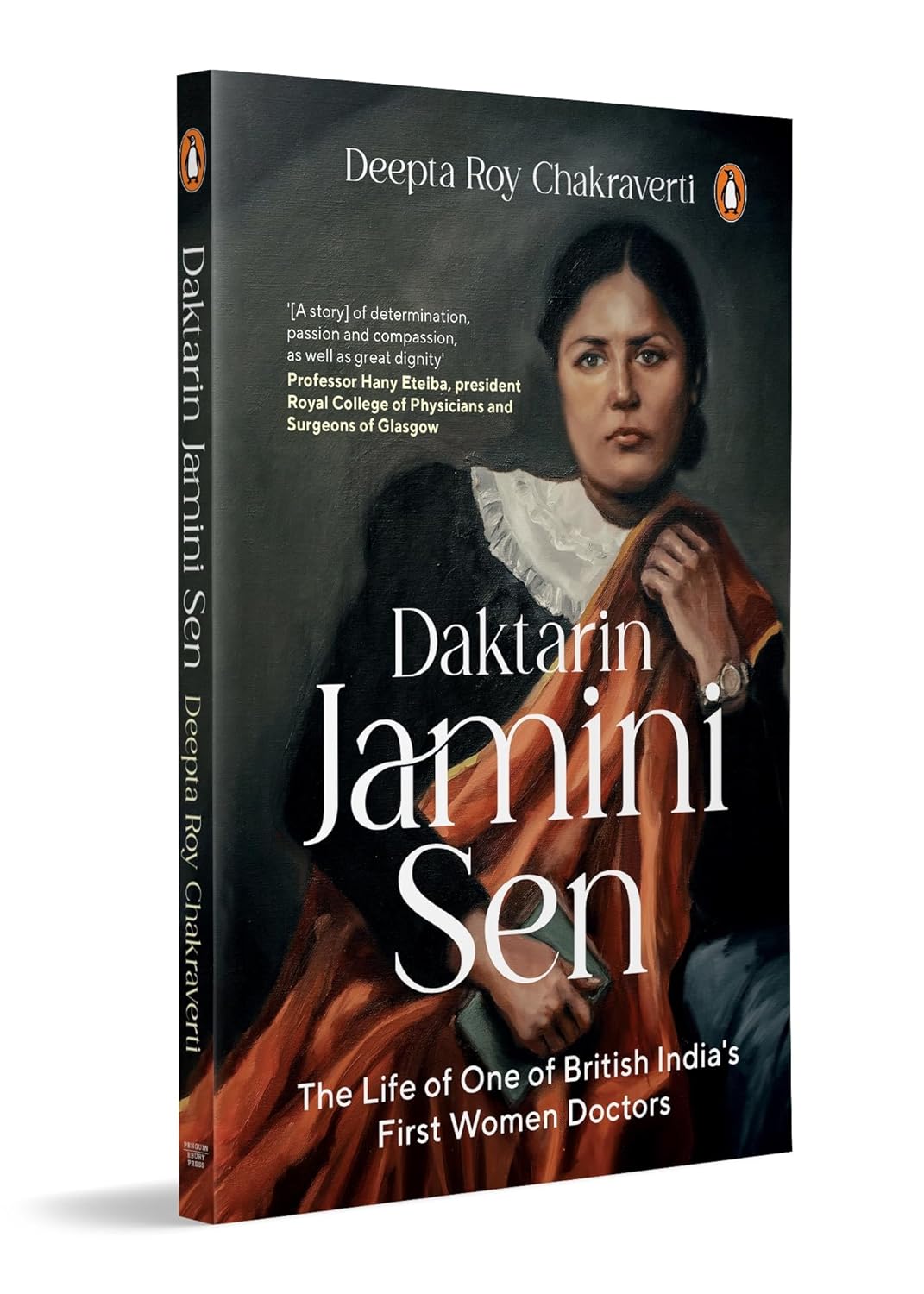
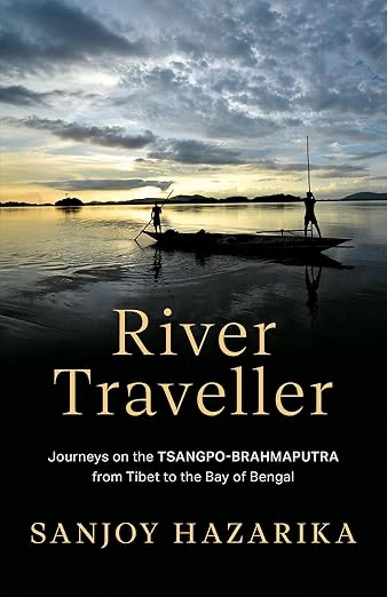
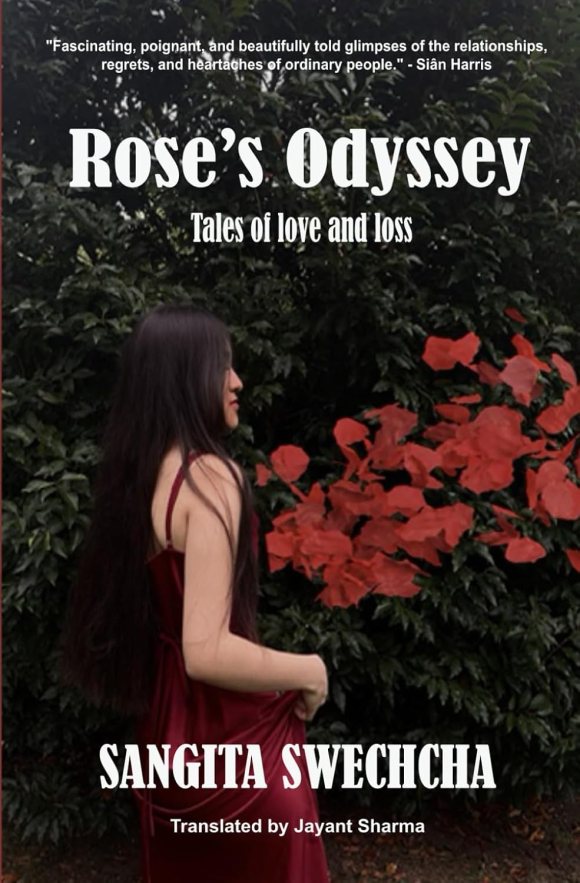
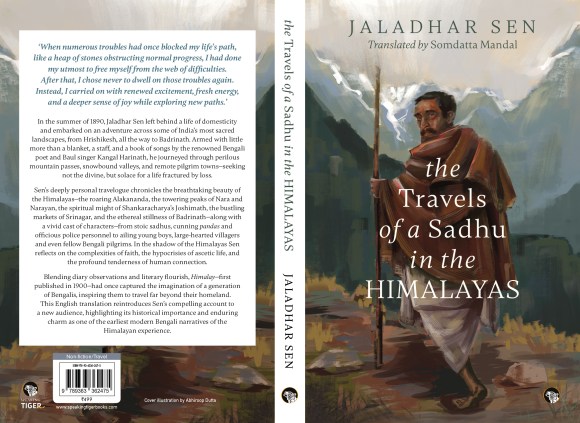
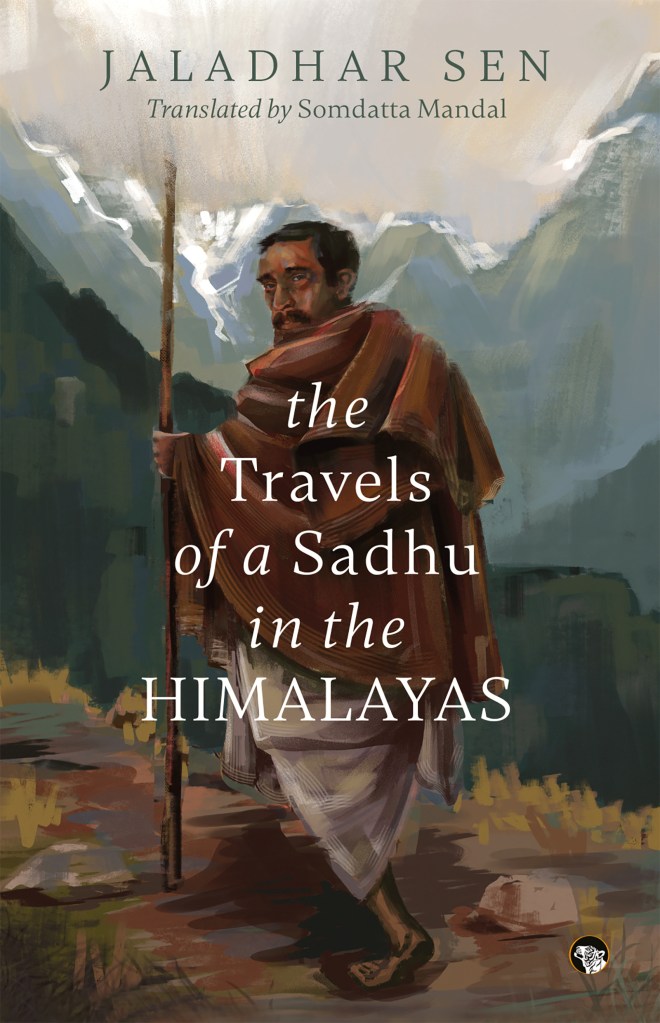
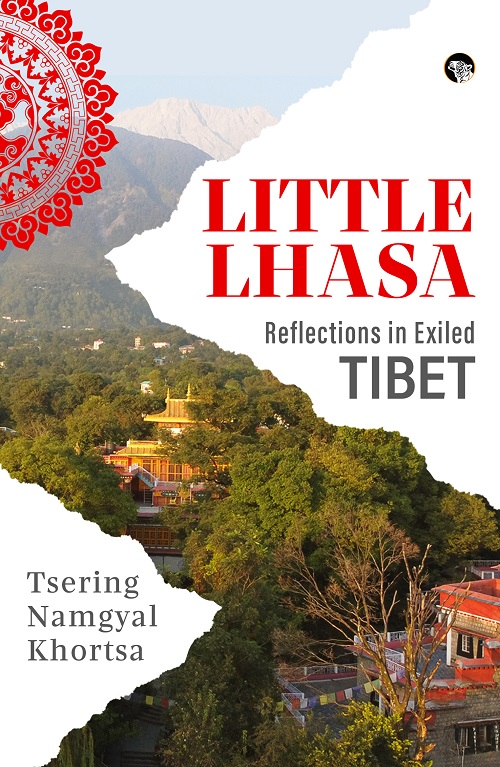
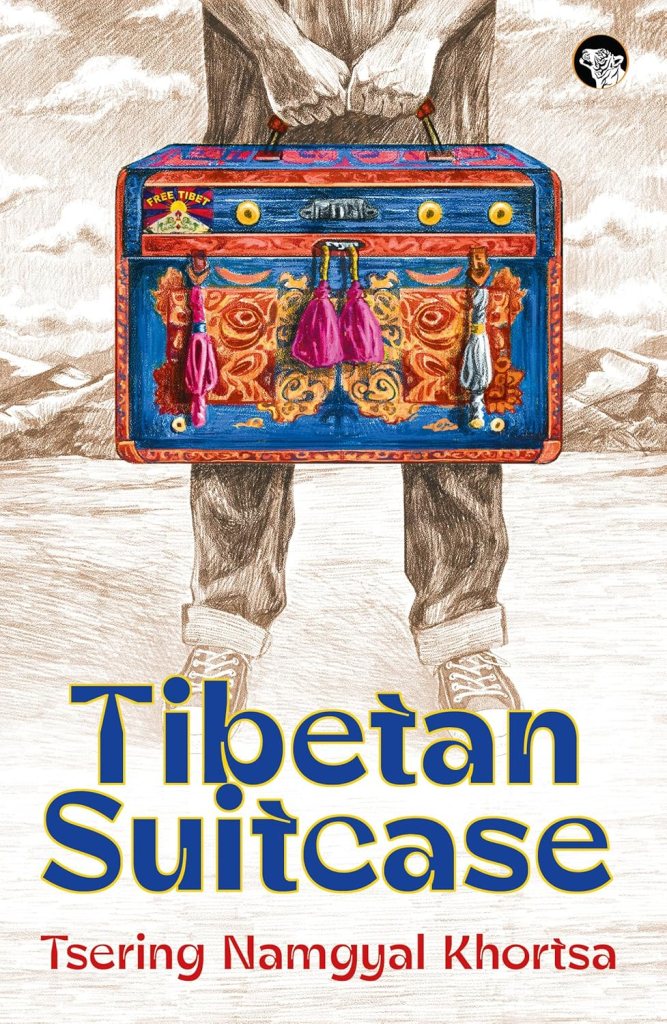



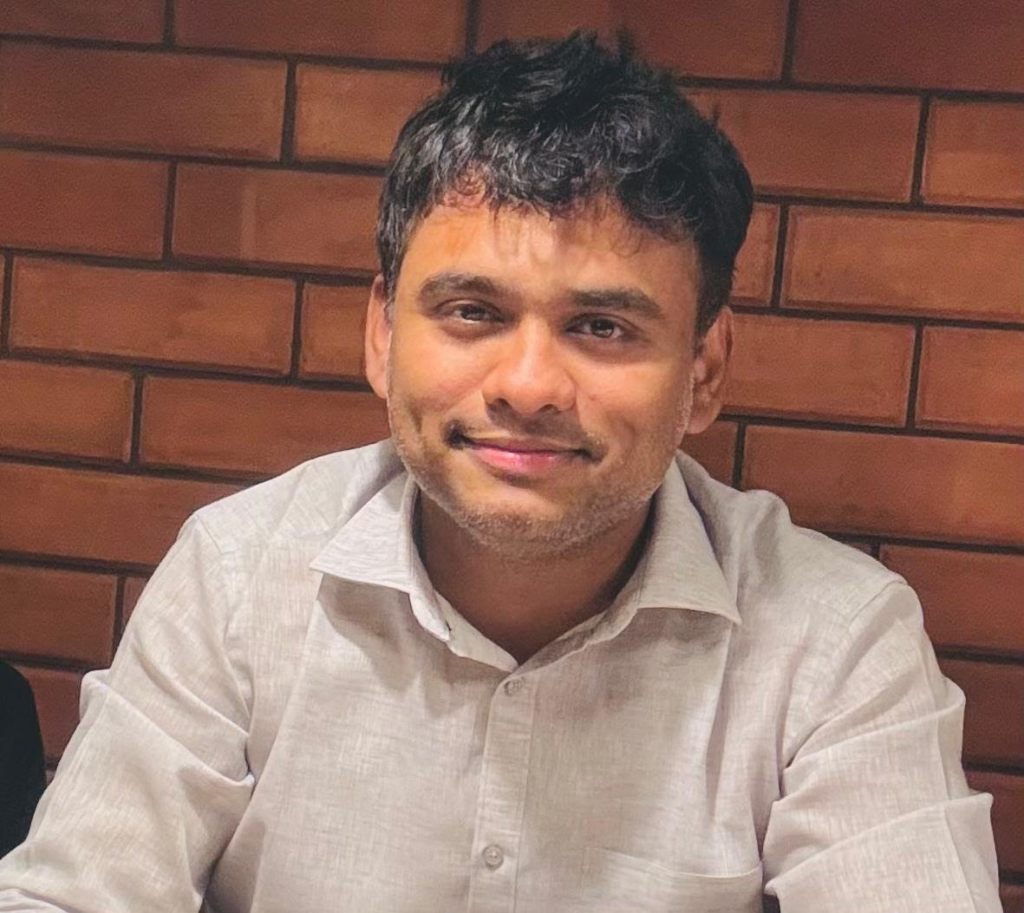
 Borderless