Flame within flame, we burned and burned relentlessly till there was nothing left to be consumed. Only ash remained, the smoke plumed like a spirit leaving its corpse, and we were left with only a name ever common between us. We had thought to love “eternally,” but the wick sputtered, the candle swooned, the flame subsided, the smoke ballooned, and our communal thought was: flee, flee, flee the choking dust.
EVERY MAN HAS A DREAM
Every man has a dream that he cannot quite touch ... a dream of contentment, of soft, starlit rain, of a breeze in the evening that, rising again, reminds him of something that cannot have been, and he calls this dream love.
And each man has a dream that he fears to let live, for he knows: to succumb is to throw away all. So he curses, denies it and locks it within the cells of his heart and he calls it a sin, this madness, this love.
But each man in his living falls prey to his dreams, and he struggles, but so he ensures that he falls, and he finds in the end that he cannot deny the joy that he feels or the tears that he cries in the darkness of night for this light he calls love.
IMPRESSIONS OF A DESERT
a sulphuric wasteland
seethes and glows
as from the sky strange brightness flows
to heat, congeal
oases vanish
or waver ,unreal,
even scorpions languish
~~~~~~
sombre mountains shift and merge
bonedry oceans at the verge
of the horizon stretch, converge
the sky is poison sand storms surge
~~~~
lizards, whining, curse the skies
squinting fire from burnt eyes
slipping, squirming rattlesnakes
quench awful yearning for moisture
and hate
~~~~~~
a flower fated soon to die
rustles, crinkles worn and dry
From Public Domain
Michael R. Burch’s poems have been published by hundreds of literary journals, taught in high schools and colleges, translated into fourteen languages, incorporated into three plays and two operas, and set to music by seventeen composers.
PLEASE NOTE: ARTICLES CAN ONLY BE REPRODUCED IN OTHER SITES WITH DUE ACKNOWLEDGEMENT TO BORDERLESS JOURNAL
Imagine the world envisioned by John Lennon. Imagine the world envisioned and partly materialised by Tagore in his pet twin projects of Santiniketan and Sriniketan, training institutes made with the intent of moving towards creating a work force that would dedicate their lives to human weal, to closing social gaps borne of human constructs and to uplifting the less privileged by educating them and giving them the means to earn a livelihood. You might well call these people visionaries and utopian dreamers, but were they? Tagore had hoped to inspire with his model institutions. In 1939, he wrote in a letter: “My path, as you know, lies in the domain of quiet integral action and thought, my units must be few and small, and I can but face human problems in relation to some basic village or cultural area. So, in the midst of worldwide anguish, and with the problems of over three hundred millions staring us in the face, I stick to my work in Santiniketan and Sriniketan hoping that my efforts will touch the heart of our village neighbours and help them in reasserting themselves in a new social order. If we can give a start to a few villages, they would perhaps be an inspiration to some others—and my life work will have been done.” But did we really have a new social order or try to emulate him?
If we had acted out of compassion and kindness towards redefining with a new social order, as Miriam Bassuk points out in her poem based on Lennon’s lyrics of Imagine, there would be no strangers. We’d all be friends living in harmony and creating a world with compassion, kindness, love and tolerance. We would not have wars or regional geopolitical tensions which act against human weal. Perhaps, we would not have had the issues of war of climate change take on the proportions that are wrecking our own constructs.
Natural disasters, floods, fires, landslides have affected many of our lives. Bringing us close to such a disaster is an essay by Salma A Shafi at ground level in Noakhali. More than 4.5 million were affected and 71 died in this disaster. Another 23 died in the same spate of floods in Tripura with 65,000 affected. We are looking at a single region here, but such disasters seem to be becoming more frequent. And yet. there had been a time when Noakhali was an idyllic vacation spot as reflected in Professor Fakrul Alam’s nostalgic essay, filled with memories of love, green outdoors and kindnesses. Such emotions reverberate in Ravi Shankar’s account of his medical adventures in the highlands of Kerala, a state that suffered a stupendous landslide last month. While Shafi shows how extreme rainfall can cause disasters, Keith Lyons writes of water, whose waves in oceanic form lap landmasses like bridges. He finds a microcosm of the whole world in a swimming pool as migrants find their way to New Zealand too. Farouk Gulsara muses on kindness and caregiving while Priyanka Panwar ponders about ordinary days. Saeed Ibrahim gives a literary twist to our musings. Tongue in cheek humour is woven into our nonfiction section by Suzanne Kamata’s notes from Japan, Devraj Singh Kalsi’s piece on premature greying and Uday Deshwal’s paean to his sunglasses!
In translations, we have Nazrul lyrics transcreated from Bengali by Professor Alam and poetry from Korean by Ihlwha Choi. We pay our respects to an eminent Balochi poet who passed on exactly a year ago, Mubarak Qazi, by carrying a translation by Fazal Baloch. Tagore’s Suprobhat (Good morning) has been rendered in English from Bengali. His descriptions of the morning are layered and amazing — with a hint of the need to reconstruct our world, very relevant even today. A powerful essay by Tagore called Raja O Praja(The King and His Subjects), has been translated by Himadri Lahiri.
Our fiction hosts two narratives that centre around childhood, one by Naramsetti Umamaheswararao and another by G Venkatesh, though with very different approaches. Mahila Iqbal relates a poignant tale about aging, mental health and neglect, the very antithesis of Gulsara’s musing. Paul Mirabile has given a strange story about a ‘useless idler’.
A short story collection has been reviewed by Rakhi Dalal, Swadesh Deepak’s A Bouquet of Dead Flowers, translated from Hindi by Jerry Pinto, Pratik Kanjilal, Nirupama Dutt, Sukant Deepak. Somdatta Mandal has written about a book by a Kashmiri immigrant which is part based on lived experiences and part fictive, Karan Mujoo’s This Our Paradise: A Novel. Bhaskar Parichha has reviewed Ayurveda, Nation and Society: United Provinces, c. 1890–1950by Saurav Kumar Rai, a book which shows how healthcare was even a hundred years ago, politicised. Meenakshi Malhotra has reviewed Anuradha Marwah’s novel, Aunties of Vasant Kunj, of which we also have an excerpt. The other excerpt is from Mineke Schipper’s Widows: A Global History. Ratnottama Sengupta converses with Reba Som, author of Hop, Skip and Jump; Peregrinations of a Diplomat’s Wife.
We have more content that adds to the vibrancy of the issue. Do pause by this issue and take a look. This issue would not have been possible without all your writings. Thank you for that. Huge thanks to our readers and our team, without whose support we could not have come this far. I would especially like to thank Sohana Manzoor for her continued supply of her fabulous and distinctive artwork and Gulsara for his fabulous photographs.
Let us look forward to a festive season which awakens each autumn and stretches to winter. May we in this season find love, compassion and kindness in our hearts towards our whole human family.
(for my grandparents George Edwin Hurt and Christine Ena Hurt)
There will be joy in the morning for now this long twilight is over and their separation has ended. For fourteen years, he had not seen her whom he first befriended, then courted and married. Let there be joy, and no mourning, for now in his arms she is carried over a threshold vastly sweeter. He never lost her; she only tarried until he was able to meet her.
LADY’S FAVOUR
May spring fling her riotous petals devil- may-care into the air, ignoring the lethal nettles and may May cry gleeful- ly Hooray! as the abundance settles, till a sudden June swoon leave us out of tune, torn, when the last rose is left inconsolably bereft, rudely shorn of every device but her thorn.
(Published by The Lyric and Suravejiliz)
HAPPILY NEVER AFTER (the Second Curse of the Horny Toad)
He did not think of love of Her at all frog-plangent nights, as moons engoldened roads through crumbling stonewalled provinces, where toads (nee princes) ruled in chinks and grew so small at last to be invisible. He smiled (the fables erred so curiously), and thought bemusedly of being reconciled to human flesh, because his heart was not incapable of love, but, being cursed a second time, could only love a toad’s . . . and listened as inflated frogs rehearsed cheekbulging tales of anguish from green moats . . . and thought of her soft croak, her skin fine-warted, his anaemic flesh, and how true love was thwarted.
(Originally published by Romantics Quarterly)
From Public Domain
Michael R. Burch’s poems have been published by hundreds of literary journals, taught in high schools and colleges, translated into fourteen languages, incorporated into three plays and two operas, and set to music by seventeen composers.
PLEASE NOTE: ARTICLES CAN ONLY BE REPRODUCED IN OTHER SITES WITH DUE ACKNOWLEDGEMENT TO BORDERLESS JOURNAL
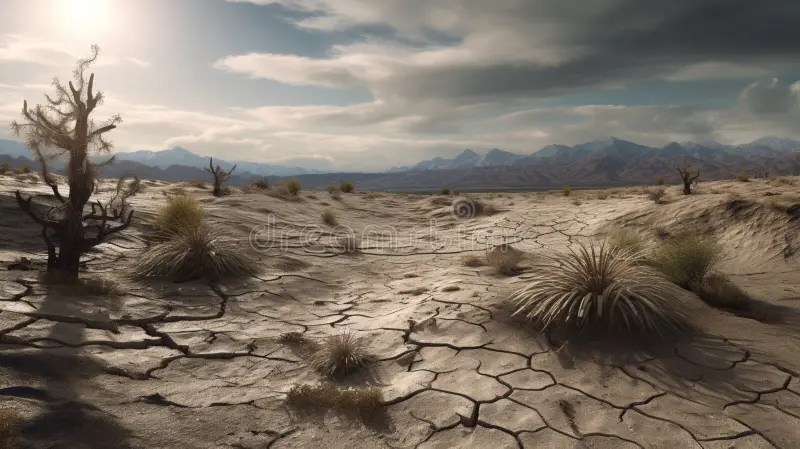
The description in ‘Hot Dry Summers’ is not of hell but what is perceived as happening on certain parts of Earth due to global warming or climate change. Forest fires. Nearer the equator, the storms have become harsher with lightning strikes that seem to connect the Earth to the sky. Trees get uprooted as the soil is softened from excessive rain. Sometimes, they fall on passers-by killing or injuring them. There is no rain in some places, forest fires or flooding in others… The highest temperatures touched 55 degrees Celsius this year. Instead of worrying about losing our homes lodged on land masses to the oceans that continue to rise, becoming dark heat absorbers due to loss of white ice cover, we persistently fight wars, egged on by differences highlighting divisive constructs. It feels strange that we are witness to these changes which seem to be apocalyptic to doomsday sayers. Are they right? Our flora, fauna and food will also be impacted by global climate change. How will we survive these? Will we outlive these as a species?
Poetry in our translations’ section travels to Balochistan, from where a Hafeez Rauf translated from Balochi by Fazal Baloch, talks of burning tyres, again conflicts. It takes on a deeper hue as Ihlwha Choi translates his poignant poem from Korean, reflecting on the death of his mother. We have a translation of Tagore’s less popular poem, Mrityu[1], reflecting on the same theme. His reflections on his wife’s death too have been translated by Professor Fakrul Alam who has also shared a song of Nazrul, written and composed on the death of Tagore. Another lesser-known poet but brilliant nonetheless, Nirendranath Chakraborty, has been translated for us by Debali Mookerjea-Leonard. And what a tremendous poem it is when the person called Amalkanti wanted to be sunshine! We have a story too — ‘Speech Matters’ by Naramsetti Umamaheswararao translated by Johny Takkedasila.
Our stories as usual travel around the world — from Holland (by Paul Mirabile) to Hyderabad (by Mohul Bhowmick) and with a quick pause at Bangalore (by Anagha Narasimha). Travels in the real world are part of our non-fiction. Sai Abhinay Penna takes to a the second largest mangrove forest in the world and Ravi Shankar to Colombo. Madhuri Bhattachrya gives us a glimpse of an Indian summer and Snigdha Aggrawal explores the impact of climate change in her part of the world. Farouk Gulsara actually writes his reflections at a traffic junction. And it reads droll…
We have an in memoriam by Keith Lyons on Morgan Spurlock, the documentary maker who ate McDonald fare for a month and then made a film on it. We have two tributes to two legends across time. Wayne F Burke has given a brief piece on the iconic illustrator, Norman Rockwell. And Aruna Chakravarti, the queen of historic fiction who brought the Tagore family alive for us in her two very well researched novels, Jorasanko and Daughters of Jorasanko, has given us a fabulous tribute to Tagore on the not-so common aspects of him.
Suzanne Kamata, the novelist who does a column from Japan for us normally, has spoken to us about her new novel, Cinnamon Beach, which overrides multiple manmade constructs. It’s an interesting read from someone who lives her life across multiple cultures and transcends many boundaries.
This is a bumper issue, and it is difficult to convey the vibrant hues of words that colour this edition. Please do pause by our contents page for a more comprehensive look.
This issue would not have been possible without all our fabulous contributors and a wonderful, dedicated team. We are delighted that Rakhi Dalal — who has done many reviews and shares her poetry with us in this issue — has agreed to be a writer-in-residence with us. A huge thanks to all of you, and especially Sohana Manzoor for her artwork. I am truly grateful to our readers for popularising our efforts to put together an online space with free and vibrant reads.
I would like to end with a few lines that gives me hope despite climate change, wars and doomsday predictions.
There’s more to life, he says to me, than what you choose to see.
“One night, the mortar launcher awakened superstition from its sleep and dragged it away with an F-16 saying, ‘I cannot exist . . . unless there is a refugee.’”
We celebrate the human spirit in those who surviving war-torn zones or climate disasters reach out for new homes or refuges in safer places. They are referred to as refugees. Yet, many people who are living without the fear of having their homes ransacked, burnt, bombed or annihilated because of reasons we don’t quite understand — for who could fully explain the logic of war, floods or fires — find it hard to allow the dispossessed shelter within the bounds of their safe haven. They get blamed for creating scarcities of resources.
“Is it our instinct to always blame the victim?” asks Ramy Al-Asheq in Ever Since I Did Not Die. We share more such questions from him and others in this special issue. He was born and bred in a refugee camp, eventually incarcerated and suffered till he found a safe haven. An account from Timothy Jay Smith on the plight of refugees who escaped to Lesbos from as far as Afghanistan and Iraq brings to the fore the crises faced by host countries too. Shaheen Akhtar’s short story takes us to a refugee camp for Rohingyas, people who have lived in the region of the Rakhine state from the seventh century but in the last few years have been facing violent displacement. A UN report gives out they are being beheaded, shot and burnt out of their homes.
We have poetry from a refugee from Ukraine who is trying to rebuild her life in Scandinavia, Lesya Bakun, and from Ahmad Al-Khatat of Iraq. Michael Burch brings in the story of Christ while talking of modern day refugees, given that he describes the Child as a ‘Palestinian’. Though did these borders drawn by political needs exist at that time? LaVern Spencer McCarthy questions laws and attitudes that nurture such fences while Ihlwha Choi of Korea talks of love and acceptance being the best balm for refugees — whether North or South Korean or Ukrainian.
The flowers are already in full bloom, In the hearts of the Northern and Southern Koreans, Also in the hearts of the people of Ukraine and Russia.
When will we find a way to get in touch with the same ‘flowers of love’ and acceptance for all humanity living on this beautiful green planet? Do we need to redefine our norms to let our species survive and thrive? Let’s ponder with these writers…
An excerpt from Ramy Al-Asheq’sEver Since I Did Not Die, translated from Arabic by Isis Nusair, edited by Levi Thompson. The author was born in a refugee camp. Click here to read.
Mister, They’re Coming Anyway: Timothy Jay Smith writes on the refugee crisis in Lesbos Island, Greece with photographs by Michael Honegger. Click here to read.
The Magic Staff , a poignant short story about a Rohingya child by Shaheen Akhtar, translated from Bengali by Arifa Ghani Rahman. Click here to read.
Ratnottama Sengupta muses on acts of terror and translates a Bengali poem by Tarik Sujat which had come as a reaction to an act of terror. Click here to read.
Renee Melchert Thorpe recounts her mother’s migration story, hopping multiple countries, starting with colonial Calcutta and Darjeeling. Click here to read.
Paul Mirabile wanders into the realm of the supernatural dating back to the Potato Famine of Ireland in the 1800s. Clickhere to read.
Conversations
In conversation with eminent Singaporean poet and academic, Kirpal Singh, about how his family migrated to Malaya and subsequently Singapore more than 120 years ago. Click hereto read.
There was a time when humans walked the Earth crossing unnamed landmasses to find homes in newer terrains. They migrated without restrictions. Over a period of time, kingdoms evolved, and travellers like Marco Polo talked of needing permissions to cross borders in certain parts of the world. The need for a permit to travel was first mentioned in the Bible, around 450BCE. A safe conduct permit appeared in England in 1414CE. Around the twentieth century, passports and visas came into full force. And yet, humanity had existed hundreds of thousand years ago… Some put the date at 300,000!
While climate contingencies, wars and violence are geared to add to migrants called ‘refugees’, there is always that bit of humanity which regards them as a burden. They forget that at some point, their ancestors too would have migrated from where they evolved. In South Africa, close to Johannesburg is Maropeng with its ‘Cradle of Humanity’, an intense network of caves where our ancestors paved the way to our evolution. The guide welcomes visitors by saying — “Welcome home!” It fills one’s heart to see the acceptance that drips through the whole experience. Does this mean our ancestors all stepped out of Africa many eons ago and that we all belonged originally to the same land?
And yet there are many restrictions that have come upon us creating boxes which do not allow intermingling easily, even if we travel. Overriding these barriers is a discussion with Jessica Mudditt about Once Around the Sun: From Cambodia to Tibet, her book about her backpacking through Asia. Documenting a migration more than a hundred years ago from Jullundur to Malaya, when borders were different and more mobile, we have a conversation with eminent scholar and writer from Singapore, Kirpal Singh. Telling the story of another eminent migrant, a Persian who became a queen in the Mughal Court is a lyric by Nazrul, Nur Jahan, translated by Professor Fakrul Alam from Bangla. Ihlwha Choi has self-translated his own poem from Korean, a poem bridging divides with love. Fazal Baloch has brought to us some exquisite Balochi poems by Munir Momin. Tagore’s poem, Okale or Out of Sync, has been translated from Bengali to reflect the strange uniqueness of each human action which despite departing from the norm, continue to be part of the flow.
We have a tongue in cheek piece from Devraj Singh Kalsi on traveling in a train with a politician. Uday Deshwal writes with a soupçon of humour as he talks of applying for jobs. Snigdha Agrawal brings to us flavours of Bengal from her past while Ratnottama Sengupta muses on the ongoing wars and violence as acts of terror in the same region and looks back at such an incident in the past which resulted in a powerful Bengali poem by Tarik Sujat. Kiriti Sengupta has written of a well-known artist, Jatin Das, a strange encounter where the artist asks them to empty fully even a glass of water! Ravi Shankar weaves in his love for books into our non-fiction section. Recounting her mother’s migration story which leads us to perceive the whole world as home is a narrative by Renee Melchert Thorpe. Urmi Chakravorty takes us to the last Indian village on the borders of Tibet. Taking us to a Dinosaur Museum in Japan is our migrant columnist, Suzanne Kamata. Her latest multicultural novel, Cinnamon Beach, has found its way to our book excerpts as has Flanagan’s poetry collection, These Many Cold Winters of the Heart.
In reviews, Somdatta Mandal has written about an anthology, Maya Nagari: Bombay-Mumbai A City in Storiesedited by Shanta Gokhale and Jerry Pinto. Rakhi Dalal has discussed a translation from Konkani by Jerry Pinto of award-winning writer Damodar Mauzo’sBoy, Unloved. Basudhara Roy has reviewed Trailokyanath Mukhopadhyay’s Tales of Early Magic Realism in Bengali, translated by Sucheta Dasgupta. Bhaskar Parichha has introduced us toThe Dilemma of an Indian Liberal by Gurcharan Das, a book that is truly relevant in the current times in context of the whole world for what he states is a truth: “In the current polarised climate, the liberal perspective is often marginalised or dismissed as being indecisive or weak.” And it is the truth for the whole world now.
Our short stories reflect the colours of the world. A fantasy set in America but crossing borders of time and place byRonald V. Micci, a story critiquing social norms that hurt by Swatee Miittal and Paul Mirabile’s ghost story shuttling from the Irish potato famine (1845-52) to the present day – all address different themes across borders, reflecting the vibrancy of thoughts and cultures. That we all exist in the same place and have the commonality of ideas and felt emotions is reflected in each of these narratives.
We have more which adds to the lustre of the content. So, do pause by our content’s page and enjoy the reads!
I would like to thank all our team without who this journal would be incomplete, especially, Sohana Manzoor, for her fabulous artwork. Huge thanks to all our contributors who bring vibrancy to our pages and our wonderful readers, without who the journal would remain just part of an electronic cloud… We welcome you all to enjoy our June issue.
We feel rather than understand what he meant as he reveals a shattered firmament which before him never existed.
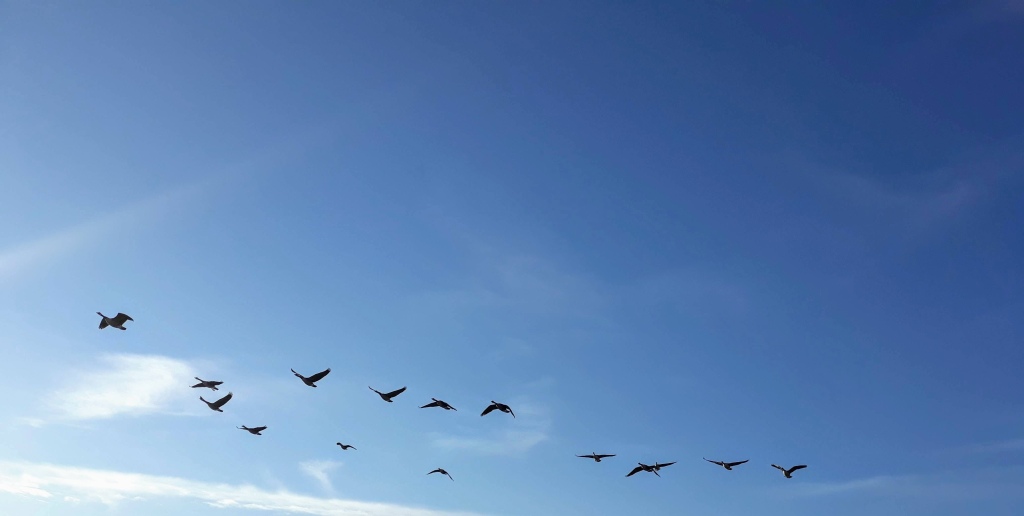
Here, there are no images gnarled and twisted out of too many words, but only flocks of white birds
wheeling and flying.
Here, as the sun spins, reeling and dying, the voice of a last gull or perhaps some spirit no longer whole,
echoes its lonely madrigal and we feel its strange pull on the astonished soul.
O My Prodigal!
The vents of the sky, ripped asunder, echo this wild, primal thunder— now dying into undulations of vanishing wings . . .
and this voice which in haggard bleak rapture still somehow downward sings.
ELEMENTAL
for and after Dylan Thomas
The poet delves earth’s detritus—hard toil— for raw-edged nouns, barbed verbs, vowels’ lush bouquet; each syllable his pen excretes—dense soil, dark images impacted, rooted clay.
The poet sees the sea but feels its meaning— the teeming brine, the mirrored oval flame that leashes and excites its turgid surface ... then squanders years imagining love’s the same.
Belatedly, he turns to what lies broken— the scarred and furrowed plot he fiercely sifts, among death’s sicksweet dungs and composts seeking one element that scorches and uplifts.
Michael R. Burch’s poems have been published by hundreds of literary journals, taught in high schools and colleges, translated into fourteen languages, incorporated into three plays and two operas, and set to music by seventeen composers.
PLEASE NOTE: ARTICLES CAN ONLY BE REPRODUCED IN OTHER SITES WITH DUE ACKNOWLEDGEMENT TO BORDERLESS JOURNAL
In Dylan on Worm’s Head, Rhys Hughes describes a misadventure that the Welsh poet had while hiking as a tribute to him on Dylan Thomas Day. Clickhereto read.
Munaj Gul gives an in memoriam for a photographer from Balochistan. Clickhere to read.
Musings of a Copywriter
In ‘Is this a Dagger I See…?‘, Devraj Singh Kalsi gives a tongue-in-cheek account of a writer’s dilemma. Click here to read.
Notes from Japan
In A Golden Memory of Green Day in Japan, Suzanne Kamata tells us of a festival where she planted a tree in the presence of the Japanese royalty. Click here to read.






 Borderless