Categories
Contents

Borderless, October 2024

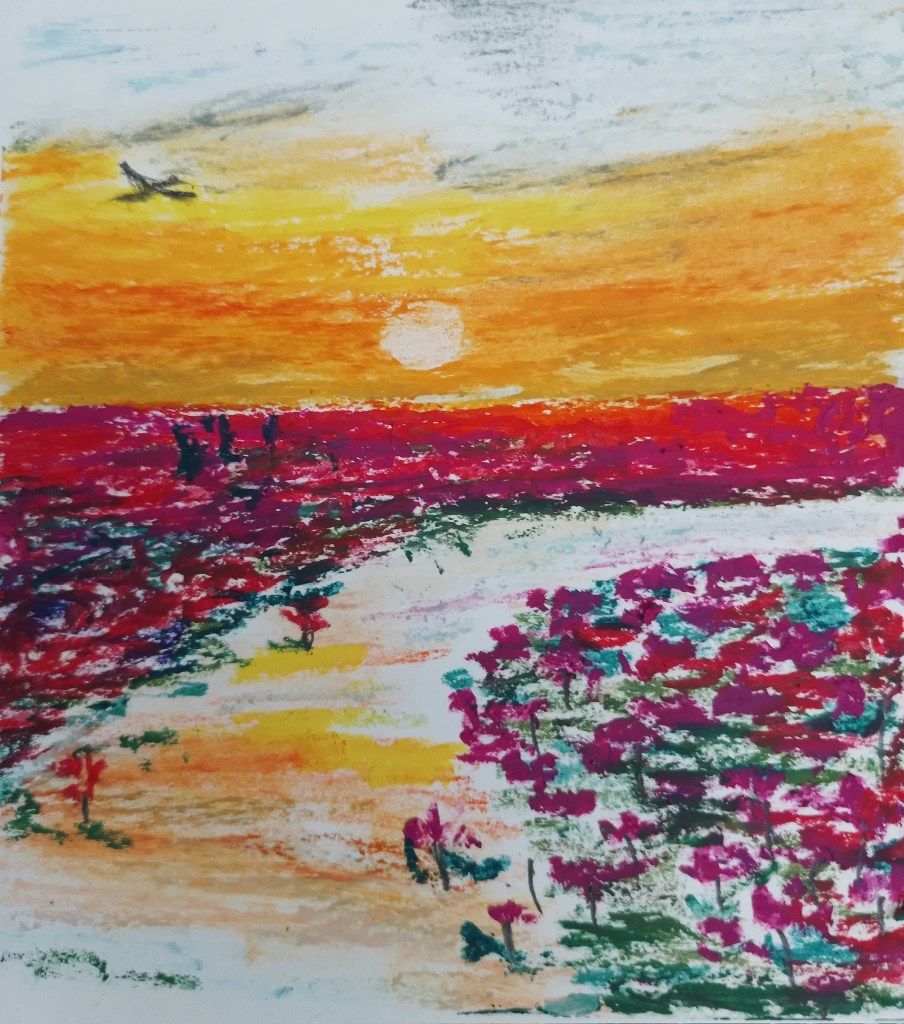
Art by Sohana Manzoor

Editorial

Where Are Those Happy Days? … Click here to read.

Conversations

In conversation with Malashri Lal with focus on her poetry book, Mandalas of Time. Click here to read.

Keith Lyons speaks to novelist Lya Badgley about her life, books and travels. Click here to read.

Translations

Tagore’s poem on Africa has been translated from Bengali by Debali Mookerjea-Leonard. Click here to read.

Nazrul’s Shukno Patar Nupur Paye (With Ankle Bells of dried leaves) has been translated from Bengali by Professor Fakrul Alam. Click here to read.

Veena Verma’s story, Galat Aurat or The Wrong Woman, has been translated from Punjabi by C Christine Fair. Click here to read.

Sharaf Shad’s story, The Melting Snow, has been translated from Balochi by Fazal Baloch. Click here to read.

Tagore’s Andhokaarer Utso Hote (From the Fount of Darkness) has been translated from Bengali by Mitali Chakravarty. Click here to read.

Poetry

Click on the names to read the poems

Rhys Hughes, Afsar Mohammad, Fhen M, Luis Cuauhtémoc Berriozábal, Shamik Banerjee, George Freek, Shahin Hossain, Stuart MacFarlane, Matthew James Friday, Udita Banerjee, Jenny Middleton, Alpa Arora, Stephen Philip Druce, Malashri Lal, Michael Burch

Poets, Poetry & Rhys Hughes

In Two Pizza Fantasies, Rhys Hughes recounts myths around the pizza in prose, fiction and poetry, Click here to read.

Musings/Slices from Life

An Alien on the Altar!

Snigdha Agrawal writes of how a dog and lizard add zest to festivities with a dollop of humour. Click here to read.

To Be or Not to Be…

Farouk Gulsara ponders over the nature of humanity. Click here to read.

Memories of my Grandfather

Alpana writes of her interactions with her late grandfather. Click here to read.

From Diana to ‘Dayaan’

Rajorshi Patronobis talks of Wiccan lore. Click here to read.

Musings of a Copywriter

In Libraries and Me, Devraj Singh Kalsi recalls his experiences in school and University in a lighter vein. Click here to read.

Notes from Japan

In Among Ghosts in the Land of a Thousand Hills, Suzanne Kamata travels with a Japanese colleague and students to Rwanda. Click here to read.

Essays

Memories of Durga Puja

Fakrul Alam recalls the festivities of Durga Puja in Dhaka during his childhood. Click here to read.

A Doctor’s Diary: Syncretic Festivities

Ravi Shankar writes of his early life in Kerala where festivals were largely a syncretic event. Click here to read.

Stories

The Return

Paul Mirabile unravels the homecoming of a British monk. Click here to read.

The Mango Thief

Naramsetti Umamaheswara Rao writes a story about peer pressure among children. Click here to read.

Sunset Memories

Saeed Ibrahim writes from near the Arabian Sea. Click here to read.

A Whiff of the Past…

Tanika Rajeswari V gives a haunting story set in Kerala. Click here to read.

Book Excerpts

An excerpt by Ruskin Bond from Let’s Be Best Friends Forever: Beautiful Stories of Friendship. Click here to read.

An excerpt from Lara Gelya’s Camel from Kyzylkum. Click here to read.

Book Reviews

Meenakshi Malhotra reviews Anjum Katyal’s Safdar Hashmi: Towards Theatre for a Democracy. Click here to read.

Somdatta Mandal reviews Ammar Kalia’s A Person Is a Prayer. Click here to read.

Bhaskar Parichha reviews Selected Works of Vyasa Kavi Fakir Mohan Senapati, edited by Monica Das. Click here to read.

.

Click here to access the Borderless anthology, Monalisa No Longer Smiles

Click here to access Monalisa No Longer Smiles on Amazon International
Categories
Editorial

Where Are Those Happy Days?

Festivals are like friends.

They bring hope, solace and love to those who believe in them. But, when the structures holding the fiestas in place start to crumble, what do we do then?

Our lives have moved out of wilderness to cities over centuries. Now, we have covered our world with the gloss of technology which our ancestors living in caves would have probably viewed as magic. And yet we violate the dignity of our own kind, war and kill, destroy what we built in the past. The ideological structures seem ineffective in instilling love, peace, compassion or hope in the hearts of the majority. Suddenly, we seem to be caving in to violence that destroys humanity, our own kind, and not meting out justice to those who mutilate, violate or kill. Will there be an end to this bleak phase? Perhaps, as Tagore says in his lyrics[1], “From the fount of darkness emerges light”. Nazrul has gone a step further and stated clearly[2], “Hair dishevelled and dressed carelessly/ Destruction makes its way gleefully. / Confident it can destroy and then build again …Why fear since destruction and creation are part of the same game?”

And yet, destruction hurts humans. It kills. Maims. Reduces to rubble. Can we get back the people whose lives are lost while destruction holds sway? We have lost lives this year in various wars and conflicts. As a tribute to all the young lives lost in Bangladesh this July, we have a poem by Shahin Hossain. Afsar Mohammad has brought in the theme of festivals into poetry tying it to the current events around the world. In keeping with the times, Michael Burch has a sense of mirthlessness in his poems. Colours of emotions and life have been woven into this section by Malashri Lal, Luis Cuauhtémoc Berriozábal, Fhen M, Shamik Banerjee, George Freek, Matthew James Friday, Jenny Middleton and many more. This section in our journal always homes a variety of flavours. Stuart MacFarlane has poems for Wordsworth… and some of it is funny, like Rhys Hughes’ poem based on photographs of amusing signposts. But then life has both sorrows and laughter, and poetry is but a slice of that as are other genres. We do have non-fiction in a lighter vein with Hughes’ story and poem about pizzas. Devraj Singh Kalsi has given a tongue in cheek narrative about his library experiences.

Suzanne Kamata has written for us about her visit to Rwanda. Farouk Gulsara has pondered over humanity’s natural proclivitiesWiccan lore has been discussed by Rajorshi Patranabis. And Snigdha Agrawal has tuned into humour with her rendition of animal antics that overran festivities. Ravi Shankar, on the other hand, has written about the syncretic nature of festivals in Kerala. Professor Fakrul Alam has given a nostalgic recap of Durga Puja during his childhood, a festival recognised as an “Intangible Cultural Heritage of Humanity” by UNESCO, and known for its syncretic traditions where people from all backgrounds, religions and cultures celebrate together.

Festivals have also been taken up in fiction by Tanika Rajeswari V with a ghostly presence hovering over the arrangements. Paul Mirabile has taken us around the world with his story while Saeed Ibrahim writes from his armchair by the Arabian sea. Sahitya Akademi winner for his children’s stories, Naramsetti Umamaheswara Rao, has showcased peer pressure among youngsters in his narrative.  

Two stories have also featured in our translations. Christine C Fair has rendered Veena Verma’s Punjabi story about an illegal immigrant into English. Hinting at climate concerns, Sharaf Shad’s fiction, has been translated from Balochi by Fazal Baloch. Tagore’s powerful poem on Africa has been brought to Anglophone readers by Debali Mookerjea-Leonard as well as his inspiring lyrics, Andhokaarer Utso Hote (From the Fount of Darkness), by our team. Nazrul’s vibrant lyrics, Shukno Patar Nupur Paye (With Ankle Bells of Dried Leaves), has been rendered into English from Bengali by Professor Alam.

Our reviews explore immigrant stories in fiction with Somdatta Mandal reviewing Ammar Kalia’s A Person Is a Prayer. Bhaskar Pariccha has written about Selected Works of Vyasa Kavi Fakir Mohan Senapati, edited by Monica Das. Fakir Mohan is a legendary writer from Odisha. Meenakshi Malhotra has discussed a book on another legend, Safdar Hashmi, one of the greatest names in street theatre in India. The book is by Anjum Katyal and called, Safdar Hashmi: Towards Theatre for a Democracy.

Our book excerpts usher good cheer with a narrative by Ruskin Bond from Let’s Be Best Friends Forever: Beautiful Stories of Friendship. And also hope with a refugee’s story from Ukraine, which travels through deserts, Italy and beyond to US and has a seemingly happier outcome than most, Lara Gelya’s Camel from Kyzylkum. This issue’s conversations take us around the world with Keith Lyons interviewing Lya Badgley, who has crossed continents to live and write. Malashri Lal, the other interviewee, is an academic and writer with sixteen books under her belt. She travels through the world with her poetry in Mandalas of Time.

Huge thanks to the Borderless team for putting this issue together – the last-minute ties – and the art from Sohana Manzoor. Without all this, the edition would look different. Heartfelt thanks to our contributors without whose timely submissions, we would not have a journal. And most of all we thank our readers – we are because you are – thank you for reading our journal.  As all our content, despite being indispensable, could not be mentioned here, do pause by our content’s page for this issue.

We wish you a wonderful month!

Cheers,

Mitali Chakravarty

borderlessjournal.com

[1] Tagore’s Andhokaarer Utso Hote (From the Fount of Darkness)

[2] Nazrul’s Proloyullash translated by Professor Alam as The Frenzy of Destruction

Click here to access the content’s page for the October 2024 Issue.

.

READ THE LATEST UPDATES ON THE FIRST BORDERLESS ANTHOLOGY, MONALISA NO LONGER SMILES, BY CLICKING ON THIS LINK.

Categories
Poetry

Poetry by Matthew James Friday

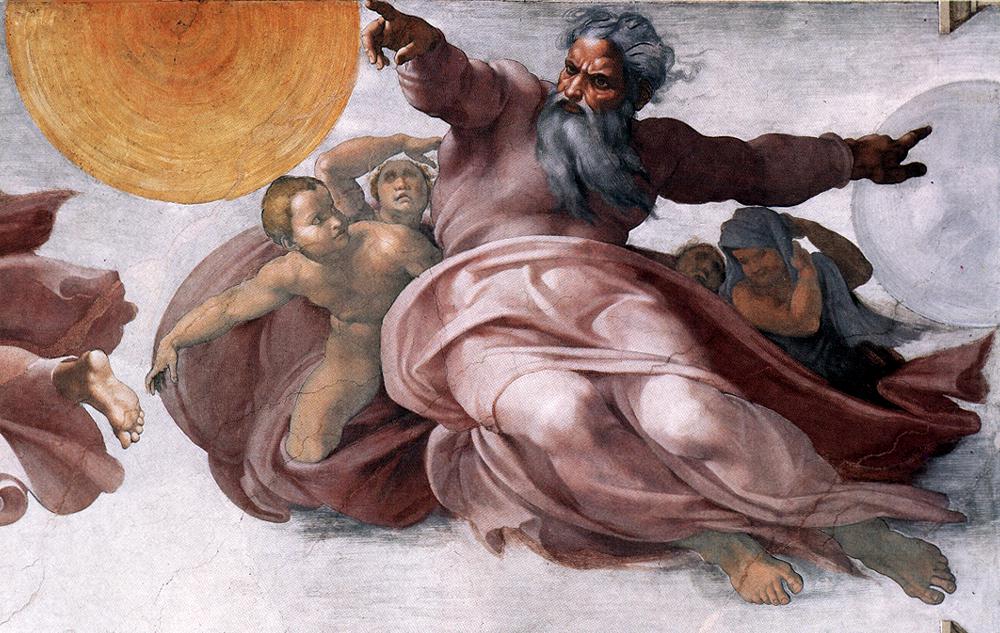
Painting by Michelangelo (1475-1564), Sistine Chapel
THE POET, GOD 

In the beginning,
God wrote infinitely before a spaceless window
open to the void.

Perhaps disliking the work, God threw
all the poems out of the window
and they coalesced and swirled and erupted
into the universe, forming
atoms and the Chapbook of Elements,
then the Epic of the DNA,
The Collected Poems of Life
with award winning variety, words in all forms,
and finally us, with our elevated word-souls,
reconstructing all that fractured work
in our little imitations of infinity
and offering it back to God
as prayer or questions or proof.

God does not respond, does not read
the overwhelming volume of submissions.
God has angelic interns to do that.

God sits procrastinating over a new volume,
trying always to write the perfect poem
aware, like all poets,
that no such poem exists
and the closest you can come to it
is being it.


SUNFLOWER


Stamen stand to attention, parading
rippling hearts and radiating petals

a yellow hole that follows Fibonacci’s
hinting a hidden march into infinity.

Every year, so much effort as if this
flower plots to become the sun,

outlive all stars, defy death itself,
as Van Gogh knew. The coup fails

every time only to return. As long
as it returns, we have hope and art.


THE STAR OF THE FOREST


Scientists are still finding
a few names on the secret roll-call
of those close to erasure.
Tiny panicking plants
in remote corners of the tropics.

(Though not too remote for profit to find.)

Enter the Star of the Forest,
Didymoplexis stella-silvae.
One of sixteen new orchids found
from a once dense corner of Madagascar.

No leaves or chlorophyll,
a plant that has lost what makes a plant.
Star-like flowers that arise out of the dank humus
for one day of attraction

in the total darkness.

The pollinator a mystery, though ants
are suspected.
The lucky one.

3 of the 16 orchids are already extinct
due to logging and geranium oil
for aromatherapy in sweet smelling
middle class Western homes.

Matthew James Friday is a British born writer and teacher. He has had many poems published in US and international journals. His first chapbook, The Residents, was published by Finishing Line Press in summer 2024. http://matthewfriday.weebly.com.

.

PLEASE NOTE: ARTICLES CAN ONLY BE REPRODUCED IN OTHER SITES WITH DUE ACKNOWLEDGEMENT TO BORDERLESS JOURNAL

Click here to access the Borderless anthology, Monalisa No Longer Smiles

Click here to access Monalisa No Longer Smiles on Kindle Amazon International
Categories
Contents

Borderless February 2022

Winter in Africa. Painting by Sybil Pretious.

Editorial

What’s Love Got to Do with it’ … Click here to read.

Interviews

Sriniketan: Tagore’s “Life Work”: In Conversation with Professor Uma Das Gupta, Tagore scholar, author of A History of Sriniketan, where can be glimpsed what Tagore considered his ‘life’s work’ as an NGO smoothening divides between villagers and the educated. Click here to read.

Akbar: The Man who was King: In conversation with eminent journalist and author, Shazi Zaman, author of Akbar, A Novel of History. Click here to read.

Translations

One Day in the Fog, written by Jibananda Das and translated from Bengali by Professor Fakrul Alam. Click here to read.

Mahnu, a poem by Atta Shad, translated from Balochi by Fazal Baloch. Click here to read.

A Superpower in the Pandemic, written and translated from Korean by Ihlwha Choi. Click here to read.

Eyes of the Python, a short story by S.Ramakrishnan, translated from Tamil by Dr.B.Chandramouli. Click here to read.

Raatri Eshe Jethay Meshe by Tagore has been translated from Bengali as Where the Night comes to Mingle by Mitali Chakravarty. Click here to read.

Pandies’ Corner

These stories are written by youngsters from the Nithari village who transcended childhood trauma and deprivation. The column starts with a story, Stranger than Fiction from Sharad Kumar in Hindustani, translated to English by Grace M Sukanya. Click here to read.

Poetry

Click on the names to read

Rhys Hughes, A Jessie Michael, Jay Nicholls, Moonmoon Chowdhury, Mike Smith, David Francis, Ananya Sarkar, Matthew James Friday, Ashok Suri, John Grey, Saptarshi Bhattacharya, Candice Louisa Daquin, Emalisa Rose, Ryan Quinn Flanagan

Nature’s Musings

Penny Wilkes explores dewdrops and sunrise in A Dewdrop World. Click here to read.

Poets, Poetry & Rhys Hughes

Rhys Hughes explores the paranormal with his usual wit in Three Ghosts in a Boat. Promise not to laugh or smile as you shiver… Click here to read.

Musings/ Slices from Life

Requiem for the Melody Queen

Ratnottama Sengupta sings her own paean in which a chorus of voices across the world join her to pay a tribute to a legend called Lata Mangeshkar. Click here to read.

Forsaking Distant Hemispheres for the Immediate Locale

Meredith Stephens introduces us to the varied fauna found in South Australia with vivid photographs clicked by her. Click here to read.

Breaking the fast

P Ravi Shankar takes us through a breakfast feast around the world. Click here to read.

Musings of a Copywriter

In Life without a Pet, Devraj Singh Kalsi gives a humorous take on why he does not keep a pet. Click here to read.

Notes from Japan

In Bridging Cultures through Music, author Suzanne Kamata introduces us to Masaki Nakagawa, a YouTuber who loves Lativia and has made it big, playing for the President of Lativia at the Japanese coronation. Click here to read.

Essays

Farewell Keri Hulme

A tribute by Keith Lyons to the first New Zealand Booker Prize winner, Keri Hulme, recalling his non-literary encounters with the sequestered author. Click here to read.

Satyajit Ray’s Cinematic Universe: Can Isolation Lead to a New World?

Rebanta Gupta explores two films of Satyajit Ray, Kanchenjunga & Charulata to see what a sense of isolation can do for humans? Click here to read.

‘What remains is darkness and facing me – Banalata Sen!’

Rakibul Hasan Khan explores death and darkness in Fakrul Alam’s translation of Jibanananda Das’s poetry. Click here to read.

Dhaka Book Fair: A Mansion and a Movement

Ratnottama Sengupta writes of a time a palace called Bardhaman House became the centre of a unique tryst against cultural hegemony. The Language Movement of 1952 that started in Dhaka led to the birth of Bangladesh in 1971. In 1999, UNESCO recognised February 21 as the Mother Language Day. Click here to read.

The Observant Immigrant

 In To Be or Not to Be, Candice Louisa Daquin takes a close look at death and suicide. Click here to read.

Stories

Navigational Error

Luke P.G. Draper explores the impact of pollution with a short compelling narrative. Click here to read.

The Art of Sleeping

Atreyo Chowdhury spins an absurd tale or could it be true? Click here to read.

Dear Dr Chilli…

Maliha Iqbal writes of life as a young girl in a competitive world. Click here to read.

The Literary Fictionist

In MissingSunil Sharma gives us a long literary yarn. Click here to read.

Book Excerpts

Two Banalata Sen poems excerpted from Jibanananda Das: Selected Poems with an Introduction, Chronology and Glossary, translated from Bengali by Fakrul Alam. Click here to read.

An excerpt from Mahasweta Devi, Our Santiniketan. Translated from the Bengali by Radha Chakravarty. Click here to read.

Book Reviews

Indrashish Banerjee reviews The Best of Travel Writing of Dom Moraes: Under Something of a Cloud. Click here to read.

Gracy Samjetsabam reviews Masala and Murder by Patrick Lyons. Click here to read.

Rakhi Dalal reviews Kavery Nambisan’s A Luxury called Health. Click here to read.

Bhaskar Parichha reviews Growing up Jewish in India: Synagogues, Customs, and Communities from the Bene Israel to the Art of Siona Benjamin, edited by Ori Z. Soltes. Click here to read.

Special Issues

Cry, Our Beloved… Click here to read (For Peace)

Born to be Wild …Click here to read (World Wild Life Day)

Categories
Poetry

Sprinkling of Words & Trouts

By Matthew James Friday

Trouts. Courtesy: Creative Commons
THE TROUT

I see you sliding 
over the muddy gold
bed of the shallow river
as it slips into Lake Lugano.

You follow a flittering 
shoal of hope, gliding 
the thin layers between
the different forms of air.

I’m surprised by your size 
as you snuggle into the sheets
of river and light. Lord 
of the muddier moments,

king-sized in a peasant course,
you draw me down the line
of the green-grey water
until merging with the unseen.


A FEW SPRINKLED WORDS

"How far is between the stars, how much farther 
is what’s right here..."
 -- Rilke 

Late August evening,
light pollution a pastel scum
fronging the pre-Alps around Lugano.

I watch stars spell themselves.
The Big Dipper points its paw to Polaris.
Under Cassiopeia, the tail end

of the Perseid meteor show,
the dusty trail of the Swift-Tuttle comet
on its 34-year love loop of the sun.

I see only the last sparks,
as small as grains of sand, spluttering 
kisses of the final flares.

I’m not putting words in a god’s
gaping mouth; no sprung
mechanisms in mysterious workings.

I only have, as Einstein said, a
vague idea about that highest truth,
the radiant beauty of the unsearchable

and a sudden awareness 
at how fantastically minuscule
my part is. 
A few sprinkled words.


HURRY ON


Drifting at the promenade of Desenzano Del Garda,
admiring freshly fallen snow on the mountains
that crown the pointed head of the Alpine lake.
A building north wind promises in waves.
Here is October tightening its chilling dress. 

We look down at the orange rock under our feet. 
Spun in the dark matter web of irregular lines 
a curling ammonite galaxy with ghostly white 
shell, a reminder of time flattened in plain sight.
The shell spins and I hear the clocks ticking 

trillions of divisions, turning rocks into sand,
caterpillars into butterflies, the hydrogen 
atoms into atomic bombs, my young parents 
into elderly people remembering their own
parents this age, and me a once immortal boy 

now a middle-aged facsimile, puzzled at how 
quickly the sand runs. Now back on the promenade, 
marvelling at the fossil, pointing it out to friends
who want to hurry on - aperitivo calling, snow 
falling, wine to be drunk, the absolute-zero of it all.


Matthew James Friday is a British born writer and teacher. He has been published in numerous international journals, including, recently: Dawntreader (UK), The Dillydoun Review (USA), Verbal Art (India), and Lunch Ticket  (USA). The micro-chapbooks All the Ways to Love, The Residents, Waters of Oregon and The Words Unsaid were published by the Origami Poems Project (USA). 

.

PLEASE NOTE: ARTICLES CAN ONLY BE REPRODUCED IN OTHER SITES WITH DUE ACKNOWLEDGEMENT TO BORDERLESS JOURNAL

Categories
Greetings

Festival of Lights

After welcoming the dark half of the year with Halloween, we light lamps to observe yet one more homecoming festival — that of the legendary Rama. Though Diwali or Deepavali is interpreted variously in different parts of India, in the North, Rama’s homecoming after fourteen years of exile and victory over various demons is celebrated with the lighting of lamps and fireworks. Simultaneously, in Eastern India, they celebrate the victory of good over evil with the worship of Goddess Kali. In the Southern part, the victory of Krishna over a demon or asura known as Narakasura is jubilated. This festival is observed as a national holiday across a dozen countries now. There are a dozen different rituals, Gods and Goddesses correlated with the festivities. But victory of good over evil is a concurrent narrative along with prayers for prosperity and well being of the world. Both of these themes are a felt need in the present times.

In keeping with the theme of light, at Borderless, we celebrate this season with stories and poems connected with lights or lamps along with narratives around the festivals themselves… all from within our treasury.

Poetry

Light a Candle by Ameenath Neena. Click here to read.

One Star by Ihlwha Choi. Click here to read.

The Candle by Matthew James Friday. Click here to read.

The Starry Night by Sunil Sharma. Click here to read.

Prose

What Ramayan taught me about my parents: Smitha R gives a humorous recap of how the legendary epic brought the family together. Click here to read.

How a dark Goddess lights up a Fallen World: Meenakshi Malhotra talks of Kali and the narrative of the festival that lights up during this festive season. Click here to read.

The Dark House: A Balochi folk tale translated by Fazal Baloch that reflects on the crucial role of light in a young girl’s life. Click here to read.

Categories
Contents

Borderless, May 2021

Editorial

And this too shall pass… Click here to read

Translations

Songs of Seasons: Translated by Fakrul Alam

Bangla Academy literary award winning translator, Dr Fakrul Alam, translates six seasonal songs of Tagore. Click here to read.

Temples and Mosques

Kazi Nazrul Islam’s fiery essay translated by Sohana Manzoor. Click here to read.

Purify My Life

Kazi Nazrul Islam’s poem, Purify my Life, translated by Shahriyer Hossain Shetu. Click here to read.

Waiting for Godot by Akbar Barakzai

Akbar Barakzai’s poem translated by Fazal Baloch. Click here to read.

Solus

Aditya Shankar translates a poem by Sujith Kumar. Click here to read.

The Last Boat

Tagore’s Diner Sheshe Ghoomer Deshe translated by Mitali Chakravarty with an interpretation in pastels by Sohana Manzoor. Click here to read.

Poetry

Anasuya Bhar, Scott Thomas Outlar, Saranyan BV, Matthew James Friday, Nitya Mariam John, RJ Kaimal, Jay Nicholls, Tasneem Hossain, Rhys Hughes, Vatsala Radhakeesoon, Ihlwha Choi, Himadri Lahiri, Sunil Sharma, Mike Smith, Jared Carter

Nature’s Musings

Photo-Poetry by Penny & Michael Wilkes. Click here to read.

Poets, Poetry & Rhys Hughes

Lear and Far

As a tribute to the 209th anniversary of Edward Lear, Rhys Hughes writes of his famous poem, ‘Owl and the Pussycat’, and writes a funny ending for it rooted in the modern day. Click here to read.

Stories

If at all

Shobha Nandavar, a physician in Bangalore, depicts the trauma of Covid 19 in India with compassion. Click here to read.

First Lady

Rituparna Khan gives us a brief vignette from the life of one of the first women doctors in India, Dr Kadambari Ganguly. Click here to read.

Mr Dutta’s Dream

Atreyo Chowdhury takes us into the world of unquenchable wanderlust. Click here to read.

Neemboo Ka Achaar or Maa’s Lemon Pickle

A compelling flash fiction by Suyasha Singh hovering around food and a mother’s love. Click here to read.

The Literary Fictionist

In A Lunch Hour Crisis, Sunil Sharma raises humanitarian concerns that though raised in a pandemic-free world, have become more relevant and concerning given our current predicament. Click here to read.

Musings/Slices from Life

Serve the People

Danielle Legault Kurihara, a Quebecker in Japan, writes of differences in rituals. Click here to read.

Why I write?
Basudhara Roy tells us how writing lingers longer than oral communications. Click here to read more.

The Quiet Governance of Instinct

Candice Louisa Daquin, a psychotherapist, talks of the importance of trusting our instincts. Click here to read more.

Musings of a Copywriter

In Nations without NobelDevraj Singh Kalsi takes a fresh look at national pride with a soupçon of sarcasm and humour. Click here to read.

Adventures of the Backpacking Granny

In Visit to Rural BaoyingSybil Pretious travels to spend a night with a local family in rural China in a ‘hundred-year-old home’.Click here to read.

Essays

Four Seasons and an Indian Summer

Keith Lyons talks of his experiences of seasons in different places, including Antarctica. Click here to read.

Rabindranath and the Etchings of His Mind

Anasuya Bhar explores the various lives given to a publication through the different edited versions, translations and films, using Tagore as a case study and the work done to provide these online. Click here to read.

My Experiments with Identity

Tejas Yadav explores identity from the context Heraclitus, Rumi down to his own. Click here to read.

Can Songs be the Musical Conscience of a Film?

Prithvijeet Sinha uses Gaman (Departure), a Hindi movie around the pain of migrant workers, as a case study to highlight his contention that lyrics and songs convey much in Indian films. Click here to read.

Bhaskar’s Corner

In Manoj Das – The Master Storyteller, Bhaskar Parichha pays a tribute to one of the greatest storytellers from the state of Odisha, India, Manoj Das( 1934-2021). Click here to read.

Book Excerpt

Excerpted from A Bengali Lady in England (1885): Annotated Translation with Critical Introduction to Krishnabhabini Das’ Englandey Bangamahila by Nabanita Sengupta. Click here to read.

Book Reviews

A review of Feisal Alkazi‘s memoir, Enter Stage Right: The Alkazi Padamsee Family Memoir by Rakhi Dalal. Click here to read.

A review of Shakti Ghosal‘s The Chronicler of the Hooghly and Other Stories by Gracy Samjetsabam. Click here to read.

Bhaskar Parichha reviews Raising a Humanist by Manisha Pathak-Shelat‘s and Kiran Vinod Bhatia. Click here to read.

Interviews

Communication scholars and authors, Manisha Pathak-Shelat and Kiran Vinod Bhatia, discuss how to bring up children in these troubled times, based on their book, Raising a Humanist, which has just been released. Click here to read.

Sonya J Nair of Samyukta Poetry talks about the Samyukta Research Foundation and its affiliates and its festival, Anantha. Click here to read.

Sara’s Selections, May 2021

A selection of young person’s writings from Bookosmia. Click here to read.

Categories
Poetry

Summer Travels

By Mathew James Friday

The Cherry Tree

We pick cherries from a tree in Unterback*.
A silent local watches us, arms on hips,
but there’s no fence, just wild grass.

We pluck the cherries in bloody handfuls,
warning each other about staining juice,
giddy with the Biblical bounty. So many

clusters of fruit when you look up at the sky,
red-shifting to purple stars. We only take
a tiny portion of what the tree tempts.

The rest if left to hang too high, rot,
or be gathered by the lucky locals,
if they can take their hands off their hips.

*Unterback is in Switzerland 


The Cuckoo Stopped Singing

Early July and I am stunned 
by the emptiness of the air. 

I suddenly miss his bell ringing, 
reminder that nature persists 

despite our best efforts. He started 
in early May, that unmistakable 

nursery rhyme song postering
in the tree-dressed stage of our 

Montagnola apartment block.
He sang me back to boyhood,

to Epsom Common woods,
where cuckoos were a distant 

promise of fleeting residency, 
the temporary in the seasons,

calling a partner in crime to lay
an egg patterned with our nature,

displacing the righteous, leaving
open mouths, always hungry.

Rightly secretive these tricksters,
afraid to be uncloaked, the confidence 

scam revealed.  I caught a glimpse
in late May as he bolted past, fleeing

to other haunts where I hear him: 
the High Alps, the lips of Italian lakes,

the confusions of teenage heat.
He seems loudest in lazy mid-

summer evenings of exposed moons,
nostalgic pangs even before leaving. 

Later in summer, I am saddened by
the need to wait until another April.


Dreams of Lake Como

I dream of your ripples on the lakeshore, 
ripples of golden waves over golden rocks. 
Like an Arthurian knight, I am drawn 
to your waters and hear the Lady chanting
in Italian, grail promises of healing, cleansing 
siren drawing me into your turquoise depths. 
Fish flit at your hem, some big and unhurried.

In some dreams the lake hazes with mist.
Your mountains become rumours, your far 
shore a blur and your ballad takes me back 
to childhood: playing in moorland rivers 
and coastal rock pools. Time is upturned 
in your glacial heart. The waves giggle over
rocks and sadness in the polished stones.

In other dreams you dress in your jewels:
orange and cream roofed villages piercing
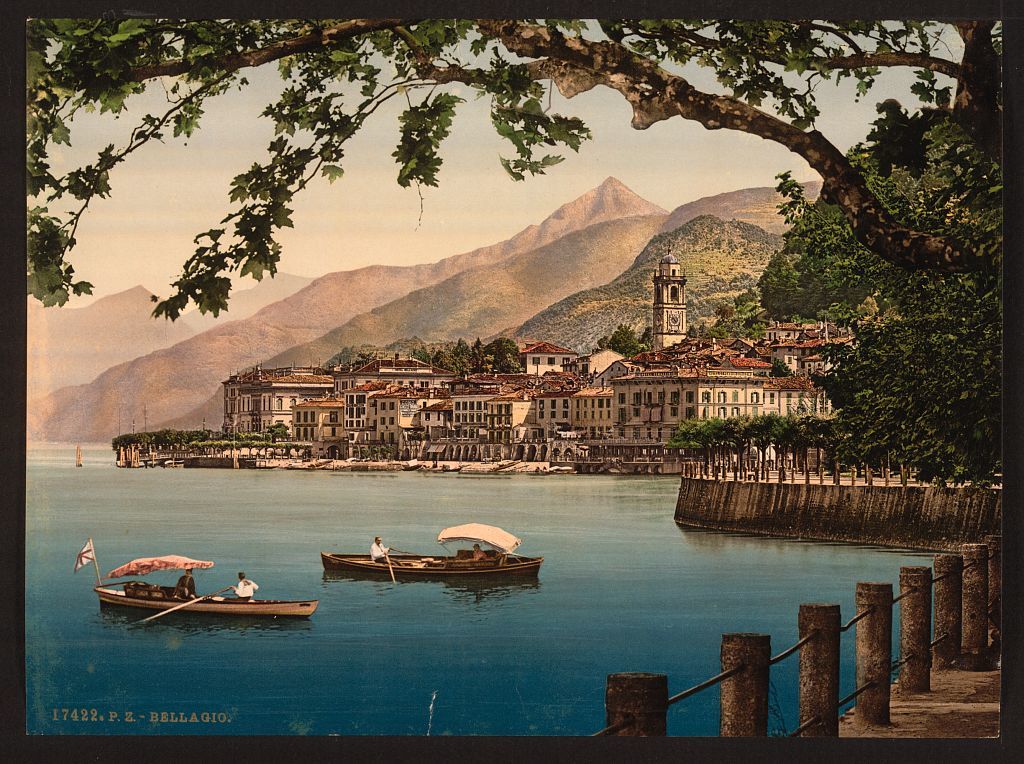
tiny ears of land, the isthmus hand of Bellagio 
dressed in lace strips, steep pearl-topped 
mountain crows. This is something beyond art,
rounder than tabled intentions, deeper 
than stone worship. What do you think of me?

Lucky atoms as near to nothing as can be,
an organic moment of punctuation in time’s 
long sentences. Your eroded indifference is all 
the more beautiful. My prayers are answered 
in reflection. Long after I am gone, you will still 
be Lake Como, but for these dreamy moments, 
we drink wine from the same earthen Grail


Matthew James Friday has had poems published in numerous international magazines and journals, including, recently: All the Sins (UK), The Blue Nib (Ireland), Acta Victoriana (Canada), and Into the Void (Canada). The mini-chapbooks All the Ways to Love, Waters of Oregon and The Words Unsaid were published by the Origami Poems Project (USA).

.

PLEASE NOTE: ARTICLES CAN ONLY BE REPRODUCED IN OTHER SITES WITH DUE ACKNOWLEDGEMENT TO BORDERLESS JOURNAL. 

Categories
Contents

Borderless, April, 2021

Greetings from Borderless Journal for all Asian New Years! Click here to read our message along with the video and a translation of a Tagore song written to greet the new year, with lyrics that not only inspire but ask the fledgling to heal mankind from deadly diseases.

Editorial

New Beginnings

A walk through our content and our plans for the future. Click here to read.

Interviews

In Conversation with Arundhathi Subramaniam: An online interview with this year’s Sahitya Akademi winner, Arundhathi Subramaniam. Click here to read.

Sumana Roy & Trees: An online interview with Sumana Roy, a writer and academic. Click here to read.

Poetry

(Click on the names to read)

Arundhathi Subramaniam, Jared Carter, Matthew James Friday, Michael R Burch, Aparna Ajith, Jenny Middleton, Rhys Hughes, Jay Nicholls, Achingliu Kamei, Vatsala Radhakeesoon, Ihlwha Choi, Smitha Vishwanath, Sekhar Banerjee, Sumana Roy

Photo-poetry by Penny Wilkes

Poets, Poetry & Rhys Hughes

With an introduction to Blood and Water by Rebecca Lowe, Rhys Hughes debuts with his column on poets and poetry. Click here to read.

Translations

The Word by Akbar Barakzai

Fazal Baloch translates the eminent Balochi poet, Akbar Barakzai. Click here to read.

Malayalam poetry in Translation

Aditya Shankar translates a poem by Shylan from Malayalam to English. Click here to read.

Tagore Songs in Translation

To commemorate Tagore’s birth anniversary, we translated five of his songs from Bengali to English. Click here to read, listen and savour.

Tagore Translations: One Small Ancient Tale

Rabindranath Tagore’s Ekti Khudro Puraton Golpo (One Small Ancient Tale) from his collection Golpo Guchcho ( literally, a bunch of stories) has been translated by Nishat Atiya. Click here to read.

Musings/Slice of Life

Pohela Boisakh: A Cultural Fiesta

Sohana Manzoor shares the Bengali New Year celebrations in Bangladesh with colourful photographs and interesting history and traditions that mingle beyond the borders. Click here to read.

Gliding along the Silk Route

Ratnottama Sengupta, a well-known senior journalist and film critic lives through her past to make an interesting discovery at the end of recapping about the silk route. Click here to read and find out more.

The Source

Mike Smith drifts into nostalgia about mid-twentieth century while exploring a box of old postcards. What are the stories they tell? Click here to read.

Lost in the Forest

John Drew, a retired professor, cogitates over a tapestry of the Ras lila. Click here to read.

Tied to Technology

Naomi Nair reflects on life infiltrated by technology, by Siri and Alexa with a tinge of humour. Click here to read.

Adventures of a Backpacking Granny

In Inspiriting SiberiaSybil Pretious takes us with her to Lake Baikal and further. Click here to read.

Musings of a Copywriter

In Tributes & AttributesDevraj Singh Kalsi pays tribute to his late mother. Click here to read.

Essays

Reflecting the Madness and Chaos Within

Over 150 Authors and Artists from five continents have written on mental illness in an anthology called Through the Looking Glass. Candice Louisa Daquin, a psychotherapist and writer and editor, tells us why this is important for healing. Click here to read.

At Home in the World: Tagore, Gandhi and the Quest for Alternative Masculinities

Meenakshi Malhotra explores the role of masculinity in Nationalism prescribed by Tagore, his niece Sarala Debi, Gandhi and Colonials. Click here to read.

A Tale of Devotion and Sacrifice as Opposed to Jealousy and Tyranny

Sohana Manzoor explores the social relevance of a dance drama by Tagore, Natir puja. We carry this to commemorate Tagore’s birth anniversary. Click here to read

Photo Essay: In the Midst of Colours

Nishi Pulugurtha explores the campus of a famed university with her camera and words and shares with us her experiences. Click here to read.

Bhaskar’s Corner

Oh, That lovely Title: Politics

A short piece by Bhaskar Parichha that makes for a witty comment on the forthcoming Indian elections. Click here to read.

Stories

Pothos

Rakhi Pande gives us a story about a woman and her inner journey embroiled in the vines of money plant. Click here to read.

Elusive

A sensitive short story by Sohana Manzoor that makes one wonder if neglect and lack of love can be termed as an abuse? Click here to read

Ghumi Stories: Grandfather & the Rickshaw

Nabanita Sengupta takes us on an adventure on the rickshaw with Raya’s grandfather. Click here to read

Flash Fiction: The Husband on the Roof

Carl Scharwath gives us a story with a strange twist. Click here to read

Flash Fiction: Flight of the Falcon

Livneet Shergill gives us a story in empathy with man and nature. Click here to read

The Literary Fictionist

A playlet by Sunil Sharma set in Badaun, The Dryad and I: A Confession and a Forecast, is a short fiction about trees and humans. Click here to read.

Book reviews

Bhaskar Parichha reviews Reconciling Differences by Rudolf C Heredia, a book that explores hate and violence. Click here to read.

Nivedita Sen reviews Nomad’s Land by Paro Anand, a fiction set among migrant children of a culture borne of displaced Rohingyas, Syrian refugees, Tibetans and more. Click here to read

Candice Louisa Daquin reviews The First Cell and the Human Costs of Pursuing Cancer to the last by Azra Raza. Click here to read.

Book Excerpt

Excerpted from Raising a Humanist: Conscious Parenting in an Increasingly Fragmented World by Manisha Pathak-Shelat and Kiran Vinod Bhatia, the focus is on media and its impact. Click here to read.

Sara’s Selection, April 2021

A selection of young person’s writings from Bookosmia. Click here to read.

Categories
Poetry

Spring Poems

By Matthew James Friday

William Blake at Felpham, West Sussex

To see a World in a Grain of Sand
And a Heaven in a Wild Flower,
Hold Infinity in the palm of your hand
And Eternity in an hour.

From ‘Auguries of Innocence’, 1803

An unfurled question mark 
answers the point where infinity begins.  
Standing on the beach at Felpham, 
studying the way the sea scars the horizon,
clouds pouring out in smoky angles,
cracks creating all kinds of illuminations; 
shafting bolts of light and gloom. 

No wonder Blake stood here 
and thought the sea was talking to him,
tongues of sunlight and wind and cloud 
fluttering through his mind. Here 
at this unremarkable, passable place
where Human and Nature face each other, 
taking turns to question and yawn,

the world turning under you, tides tugging 
at that grander part that belongs
to something renewed every day, before
being, waves pounding, reeling 
back again, a swell and releasing gift
unknown in its giving. Gulls cry you 
back to when you saw worlds in the sand,

an eternity of assembling castles by hand,
then the cheering grief of waves taking
away your creation. Here is the heavenly 
line drawn between times, stretched beyond, 
suggested in the shallowest of curves. 
The future remains uncertain, questionable  
For now the horizon is enough.


When The Flowers Return

Those first snowdrops spearing coyly,
the speckled smiles of daisies, winks 
of colour on leaf-laden forest floors.

Seeing them you are suddenly relieved
of your guilt: the thought that empty
fields will harden, deadened skies

be your last mirror, the spindly creak
of declining conversation, no summer
to talk of. You can be rejuvenated again

and pretend Nature does this for you,
that your witness is what gives worth,
that a poem is what spring needs.

Universal Knots

This is a struggle worthy of any split atom.

You’ve probably forgotten
how many fingers you needed,
how many hours of quantum patience
lost looping those string universes
around each other 
only to end up entangled.

It’s a bit tricky, says a Kindergarten girl
and then she almost gives up.
Luckily, Mom is there to keep
the orbs moving: nearly there!

For what galactically important purpose?
So you could wear tied shoes?
You never asked your gods for that.
So Mom or Dad would stop stooping down
to your level, enter your orbit.
Who wants to grow up?

A Kindergarten boy starts with one shoe
and starts to bow the skill
around the black holes of immature
fingers. Getting there, says Mom.

Einstein had to learn.
Here is E=MC2 perseverance.

Both Moms ask their stars
how is it going?
Thumbs up, Milky Way grins.
Optimism, the gravity of learning. 


Matthew James Friday has had poems published in numerous international magazines and journals, including, recently: All the Sins (UK), The Blue Nib (Ireland), Acta Victoriana (Canada), and Into the Void (Canada). The mini-chapbooks All the Ways to Love, Waters of Oregon and The Words Unsaid were published by the Origami Poems Project (USA).

.

PLEASE NOTE: ARTICLES CAN ONLY BE REPRODUCED IN OTHER SITES WITH DUE ACKNOWLEDGEMENT TO BORDERLESS JOURNAL.