Categories
Contents

Borderless, October 2025

Painting by Sohana Manzoor

Editorial

Imagine… All the People… Click here to read

Translations

Jani Jani Priyo, Ea Jebone  (I know my dear one, in this life) by Nazrul has been translated from Bengali by Professor Fakrul Alam. Click here to read.

Four of his own poems in Malay have been translated by Isa Kamari. Click here to read.

Five poems by Hrushikesh Mallick have been translated from Odia by Snehprava Das. Click here to read.

The Headstone, a poignant story by Sharaf Shad has been translated by Fazal Baloch. Click here to read.

Shukh (Happiness) by Tagore has been translated from Bengali by Mitali Chakravarty. Click here to read.

Poetry

Click on the names to read the poems

John Valentine, Saranyan BV, John Swain, Ahmad Al-Khatat, Stephen Druce, Jyotish Chalil Gopinath, Jenny Middleton, Maria Alam, Ron Pickett, Tanjila Ontu, Jim Bellamy, Pramod Rastogi, John Grey, Laila Brahmbhatt, John Zedolik, Snehaprava Das, Joseph K.Wells, Rhys Hughes

Poets, Poetry & Rhys Hughes

Rhys Hughes shares his play, Night in Karnataka. Click here to read.

Musings/ Slices from Life

Just Passing Through

Farouk Gulsara muses on humans and their best friends. Click here to read.

Feeding Carrots to Gentle Herbivores

Meredith Stephens looks back to her past adventures with horses and present ones with giraffes. Click here to read.

Linen at Midnight

Pijus Ash relates a real-life spooky encounter in Holland. Click here to read.

Two Lives – A Writer and A Businessman

Chetan Datta Poduri explores two lives from the past and what remains of their heritage. Click here to read.

My Forest or Your City Park?

G Venkatesh muses on the tug of war between sustainabilty, ecology and economies. Click here to read.

Musings of a Copywriter

In Karmic Backlog, Devraj Singh Kalsi explores reincarnations with a twinge of humour. Click here to read.

Notes from Japan

In DIY Dining in Japan, Suzanne Kamata in a light note talks about restaurants with robots. Click here to read.

Essays

Peddling Progress?

Jun A. Alindogan writes about what is perceived as progress from Philippines. Click here to read.

From Madagascar to Japan: An Adventure or a Dream…

Randriamamonjisoa Sylvie Valencia writes of her journey from Africa to Japan with a personal touch. Click here to read.

From Bombay to Kolkata — the Dhaaks of Durga 

Ratnottama Sengupta explores a UNESCO Intangible Cultural Heritage Festival. Click here to read.

Stories

Sleeper on the Bench

Paul Mirabile sets his strange story in London. Click here to read.

Sandy Cannot Write

Devraj Singh Kalsi takes us into the world of adverstising and glamour. Click here to read.

The Wise Words of the Sun

Naramsetti Umamaheswararao relates a fable involving elements of nature. Click here to read.

Discussions

A conversation with Swati Pal, academic and poet, on healing through writing and bereavement. Click here to read.

A conversation with five translators — Aruna Chakravarti, Radha Chakravarty, Somdatta Mandal, Fakrul Alam and Fazal Baloch from across South Asia. Click here to read.

Book Excerpts

An excerpt from That’s A Fire Ant Right There! Tales from Kavali by Mohammed Khadeer Babu, translated from Telugu by D.V. Subhashri. Click here to read.

An excerpt from Swati Pal’s poetry collection, Forever Yours. Click here to read.

Book Reviews

Somdatta Mandal reviews Banu Mushtaq’s Heart Lamp: Selected Stories, translated from Kannada by Deepa Bhasthi. Click here to read.

Meenakshi Malhotra has reviewed Malachi Edwin Vethamani’s anthology, Contours of Him: Poems. Click here to read.

Rupak Shreshta reviews Sangita Swechcha’s Rose’s Odyssey: Tales of Love and Loss, translated from Nepali by Jayant Sharma. Click here to read.

Bhaskar Parichha has reviewed Kalpana Karunakaran’s A Woman of No Consequence: Memory, Letters and Resistance in Madras. Click here to read.

.

Click here to access the Borderless anthology, Monalisa No Longer Smiles

Click here to access Monalisa No Longer Smiles on Amazon International

Categories
Editorial

Imagine… All the People…

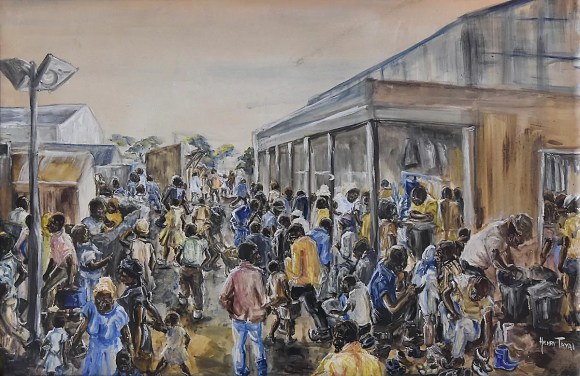
Art by Henry Tayali(1943-1987). From Public Domain

Let us imagine a world where wars have been outlawed and there is only peace. Is that even possible outside of John Lennon’s song? While John Gray, a modern-day thinker, propounds human nature cannot change despite technological advancements, one has to only imagine how a cave dweller would have told his family flying to the moon was an impossibility. And yet, it has been proven a reality and now, we are thinking living in outer space, though currently it is only the forte of a few elitists and astronomers. Maybe, it will become an accessible reality as shown in books by Isaac Asimov, Arthur C Clarke or shows like Star Trek and Star Wars. Perhaps, it’s only dreamers or ideators pursuing unreal hopes and urges who often become the change makers, the people that make humanity move forward. In Borderless, we merely gather your dreams and present them to the world. That is why we love to celebrate writers from across all languages and cultures with translations and writings that turn current norms topsy turvy. We feature a number of such ideators in this issue.

Nazrul in his times, would have been one such ideator, which is why we carry a song by him translated by Professor Fakrul Alam. And yet before him was Tagore — this time we carry a translation of an unusual poem about happiness. From current times, we present to you a poet — perhaps the greatest Malay writer in Singapore — Isa Kamari. He has translated his longing for changes into his poems. His novels and stories express the same longing as he shares in The Lost Mantras, his self-translated poems that explore adapting old to new. We will be bringing these out over a period of time. We also have poems by Hrushikesh Mallick translated from Odia by Snehprava Das and a poignant story by Sharaf Shad translated from Balochi by Fazal Baloch.

We have an evocative short play by Rhys Hughes, where gender roles are inverted in a most humorous way. It almost brings to mind Begum Rokeya’s Sultana’s Dream. Tongue-in-cheek humour in non-fiction is brought in by Devraj Singh Kalsi and Chetan Dutta Poduri. Farouk Gulsara and Meredith Stephens write in a light-hearted vein about their interactions with animal friends. G. Venkatesh brings in serious strains with his musings on sustainability. Jun A. Alindogan slips into profundities while talking of “progress” in Philippines. Young Randriamamonjisoa Sylvie Valencia gives a heartfelt account of her journey from Madagascar to Japan. Ratnottama Sengupta travels across space and time to recount her experiences in a festival recognised by UNESCO as an Intangible Cultural Heritage of Humanity. Suzanne Kamata brings a light touch again when she writes about robots serving in restaurants in Japan, a change that would be only fiction even in Asimov’s times, less than a hundred years ago!

Pijus Ash — are we to believe or not believe his strange, spooky encounter in Holland? And we definitely don’t have to believe what skeletons do in Hughes’ limericks, even if their antics make us laugh! Poetry brings on more spooks from Saranyan BV and frightening environmental focus on the aftermath of flooding by Snehaprava Das. We have colours of poetry from all over the world with John Valentine, John Swain, Ahmad Al-Khatat, Stephen Druce, Jyotish Chalil Gopinath, Jenny Middleton, Maria Alam, Ron Pickett, Tanjila Ontu, Jim Bellamy, Pramod Rastogi, John Grey, Laila Brahmbhatt, John Zedolik and Joseph K.Wells.

Fiction yields a fable from Naramsetti Umamaheswararao. Devraj Singh Kalsi takes us into the world of advertising and glamour and Paul Mirabile writes of a sleeper who likes to sleep on benches in parks out of choice! We also have an excerpt from Mohammed Khadeer Babu’s stories, That’s A Fire Ant Right There! Tales from Kavali , translated from Telugu by D.V. Subhashri. The other excerpt is from Swati Pal’s poetry collection, Forever Yours. Pal has in an online interview discussed bereavement and healing through poetry for her stunning poems pretty much do that.

Book reviews homes an indepth introduction by Somdatta Mandal to Banu Mushtaq’s Heart Lamp: Selected Stories, translated from Kannada by Deepa Bhasthi. We have a discussion by Meenakshi Malhotra on Contours of Him: Poems, edited and introduced by Malaysian academic, Malachi Edwin Vethamani, in which she concludes, “that if femininity is a construct, so is masculinity.” Overriding human constructs are journeys made by migrants. Rupak Shreshta has introduced us to immigrant Sangita Swechcha’s Rose’s Odyssey: Tales of Love and Loss, translated from Nepali by Jayant Sharma. Bhaskar Parichha winds up this section with his exploration of Kalpana Karunakaran’s A Woman of No Consequence: Memory, Letters and Resistance in Madras. He tells us: “A Woman of No Consequence restores dignity to what is often dismissed as ordinary. It chronicles the spiritual and intellectual evolution of a woman who sought transcendence within the rhythms of domestic life, turning the everyday into a site of resistance and renewal.” Again, by the sound of it a book that redefines the idea that housework is mundane and gives dignity to women and the task at hand.

We wind up the October issue hoping for changes that will lead to a happier existence, helping us all connect with the commonality of emotions, overriding borders that hurt humanity, other species and the Earth.

Huge thanks to our fabulous team, especially Sohana Manzoor for her inimitable artwork. We would all love to congratulate Hughes for his plays that ran houseful in Swansea. And heartfelt thanks to all our wonderful contributors, without who this issue would not have been possible, and to our readers, who make it worth our while, to write and publish.

Have a wonderful month!

Mitali Chakravarty

borderlessjournal.com

CLICK HERE TO ACCESS THE CONTENTS FOR THE OCTOBER 2025 ISSUE

.

READ THE LATEST UPDATES ON THE FIRST BORDERLESS ANTHOLOGY, MONALISA NO LONGER SMILES, BY CLICKING ON THIS LINK.

Categories
Poetry

When Oceans take to Dry & More …

By Jim Bellamy

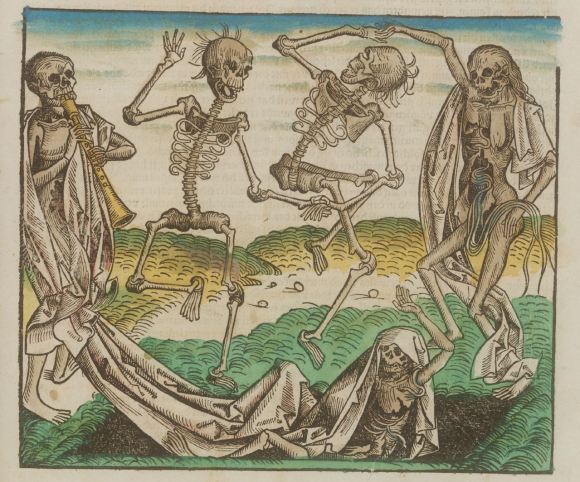
Wood block by Michael Wolgemut (1434 – 1519).
WHEN OCEANS TAKE TO DRY


When oceans take to dry whatever the madman's rib,
Through the hollows of time, where shadows pose,
We shall levitate across the Rose, so glib.

The stars, they flicker, on this darkling crib,
As night's embrace cloaks the world's woes,
When oceans take to dry whatever the madman's rib.

Beneath the moon's pale gaze, we'll imbibe the fib,
Of a world turned upside down, where chaos grows,
We shall levitate across the Rose, so glib.

The madman laughs, his mind a twisted ad-lib,
While the sea's heart beats, slow and morose,
When oceans take to dry whatever the madman's rib.

In this dance macabre, no need to transcribe,
The silent whispers of ghosts in throes,
We shall levitate across the Rose, so glib.

So let the waters rise, no need to bribe,
The fates that spin the end's close,
When oceans take to dry whatever the madman's rib,
We shall levitate across the Rose, so glib.


FOR WHEN THE ACRID MOONSTONES GROAN ACROSS GAS


For when the acrid moonstones groan across gas,
In twilight's veil, the sirens wipe away.
Beneath the stars, where shadows dare not pass.

The madcap dance, where spirits raise their glass,
To toast the dark, where light has lost its sway.
For when the acrid moonstones groan across gas.

The night's embrace, a chilling, cold morass,
Where echoes of the lost in silence pray.
Beneath the stars, where shadows dare not pass.

The moon's pale gaze, on fields of withered grass,
A serenade for souls led far astray.
For when the acrid moonstones groan across gas.

In dreams we find the gates of alabaster brass,
Where time's cruel hand can never hold its sway.
Beneath the stars, where shadows dare not pass.

Jim Bellamy was born in a storm in 1972. He studied hard and sat entrance exams for Oxford University. Jim has a fine frenzy for poetry and has written in excess of 22,000 poems. Jim adores the art of poetry. He lives for prosody.

.

PLEASE NOTE: ARTICLES CAN ONLY BE REPRODUCED IN OTHER SITES WITH DUE ACKNOWLEDGEMENT TO BORDERLESS JOURNAL

Click here to access the Borderless anthology, Monalisa No Longer Smiles

Click here to access Monalisa No Longer Smiles on Amazon International

Categories
Contents

Borderless, September 2025

Art by Sohana Manzoor

Editorial

Seasons Out of Time Click here to read

Translations

Nazrul’s Karar Oi Louho Kopat (Those Iron Shackles of Prison) has been translated from Bengali by Professor Fakrul Alam. Click here to read.

Five poems by Ashwini Mishra have been translated from Odia by Snehprava Das. Click here to read.

The Dragonfly, a poem by Ihlwha Choi,  has been translated from Korean by the poet himself. Click here to read.

Tagore’s Aaj Shororter Aloy (Today, in the Autumnal Light) has been translated from Bengali by Mitali Chakravarty. Click here to read.

Poetry

Click on the names to read the poems

Ryan Quinn Flanagan, Onkar Sharma, Ron Pickett, Arshi, Joseph K Wells, Shamim Akhtar, Stephen House, Mian Ali, John Grey, Juliet F Lalzarzoliani, Joseph C.Obgonna, Jim Bellamy, Soumyadwip Chakraborty, Richard Stimac, Sanzida Alam, Jim Murdoch, Rhys Hughes

Poets, Poetry & Rhys Hughes

In Soaring with Icarus, Rhys Hughes shares a serious poems. Click here to read.

Musings/ Slices from Life

Parenting Tips from a Quintessential Nerd

Farouk Gulsara relooks at our golden years and stretches it to parenting tips. Click here to read.

Instrumental in Solving the Crime

Meredith Stephens takes us to a crime scene with a light touch. Click here to read.

What’s in a Name?

Jun A Alindogan writes about the complex evolution of names in Phillippines. Click here to read.

Bibapur Mansion: A Vintage Charmer

Prithvijeet Sinha takes us for a tour of Lucknow’s famed vintage buildings. Click here to read.

Musings of a Copywriter

In Demolition Drives… for Awards?, Devraj Singh Kalsi muses on literary awards. Click here to read.

Notes from Japan

In Contending with a Complicated History, Suzanne Kamata writes of her trip to US from Japan. Click here to read.

Essays

The Bauls of Bengal

Aruna Chakravarti writes of wandering minstrels called bauls and the impact they had on Tagore. Click here to read.

The Literary Club of 18th Century London

Professor Fakrul Alam writes on literary club traditions of Dhaka, Kolkata and an old one from London. Click here to read.

Stories

Looking for Evans

Rashida Murphy writes a light-hearted story about a faux pas. Click here to read.

Exorcising Mother

Fiona Sinclair narrates a story bordering on spooky. Click here to read.

The Storm

Anandita Dey wanders down strange alleys of the mind. Click here to read.

The Fog of Forgotten Gardens

Erin Jamieson writes from a caregivers perspective. Click here to read

The Anger of a Good Man

Naramsetti Umamaheswararao makes up a new fable. Click here to read.

Feature

A review of Jaladhar Sen’s The Travels of a Sadhu in the Himalayas, translated from Bengali by Somdatta Mandal, and an online interview with the translator. Click here to read.

Book Excerpts

An excerpt from Jaladhar Sen’s The Travels of a Sadhu in the Himalayas, translated from Bengali by Somdatta Mandal. Click here to read.

An excerpt from Prithvijeet Sinha’s debut collection of poems, A Verdant Heart. Click here to read.

Book Reviews

Somdatta Mandal reviews Aruna Chakravarti’s selected and translated, Rising From the Dust: Dalit Stories from Bengal. Click here to read.

Rakhi Dalal reviews Mohua Chinappa’s Thorns in My Quilt: Letters from a Daughter to her Father. Click here to read.

Pradip Mondal reviews Kiriti Sengupta’s Selected Poems. Click here to read.

Bhaskar Parichha reviews Kalyani Ramnath’s Boats in a Storm: Law, Migration, and Decolonization in South and Southeast Asia, 1942–1962. Click here to read.

.

Click here to access the Borderless anthology, Monalisa No Longer Smiles

Click here to access Monalisa No Longer Smiles on Amazon International
Categories
Editorial

Seasons Out of Time

Today, as I gaze in this autumnal light,
I feel I am viewing life anew.

— Tagore's Aaj Shororter Aloy (Today, in the Autumnal Light)
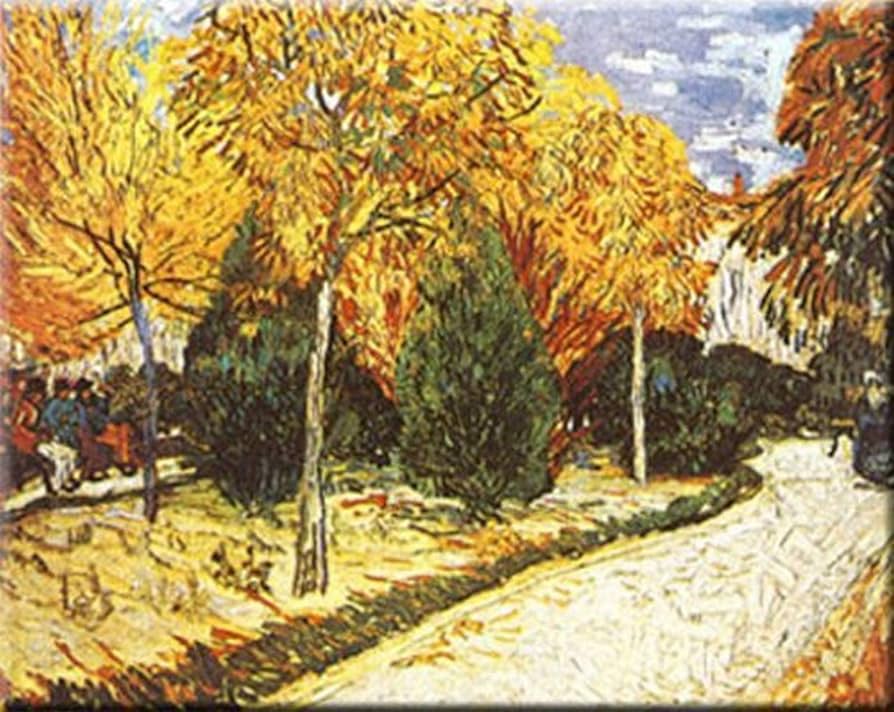
Autumn Garden by Vincent Van Gogh (1853-1890). From Public Domain

September heralds the start of year-end festivities around the world. It’s autumn in one part and spring in another – both seasons that herald change. While our planet celebrates changes, dichotomies, opposites and inclusively gazes with wonder at the endless universe in all its splendour, do we? Festivals are times of good cheer and fun with our loved ones. And yet, a large part of the world seems to be in disarray with manmade disasters wrought by our own species on its own home planet. Despite the sufferings experienced by victims of climate and war-related calamities, the majority will continue to observe rituals out of habit while subscribing to exclusivity and shun change in any form. Occasionally, there are those who break all rules to create a new norm.

One such group of people are the bauls or mendicants from Bengal. Aruna Chakravarti has shared an essay about these people who have created a syncretic lore with music and nature, defying the borders that divide humanity into exclusive groups. As if to complement this syncretic flow, we have Professor Fakrul Alam’s piece on a human construct, literary clubs spanning different cultures spread over centuries – no less an area in which we find norms redefined for, the literary, often, are the harbingers of change.

Weaving in stories from around the world, our non-fiction section offers parenting tips ( or are these really nerdy meanderings?) from Farouk Gulsara who looks inclusively at all life forms — big and small, including humans. Meredith Stephens brings us a sobering narrative with a light touch from the Southern Hemisphere. Prithvijeet Sinha takes us to explore an ancient monument of Lucknow and Jun A. Alindogan tells us “what’s in a name” in Philippines — it’s quite complex really  — it reads almost as complicated as a Japanese addresses explained in her column by Suzanne Kamata. In this issue, she takes us through the complexities of history in South Carolina, while Devraj Singh Kalsi analyses literary awards with a dollop of irony!

Humour is brought into poetry by Rhys Hughes, though his column houses more serious poems. Joseph C.Obgonna has an interesting take on his hat — if you please. We have poetry on climate by Onkar Sharma. Verses as usual mean variety on our pages. In this issue, we have a poem (an ekphrastic, if we were given to labelling) by Ryan Quinn Flanagan on a painting, by Ron Pickett on aging and on a variety of issues by Arshi, Joseph K Wells, Shamim Akhtar, Stephen House, Mian Ali, John Grey, Jim Murdoch, Juliet F Lalzarzoliani, Jim Bellamy, Soumyadwip Chakraborty, Richard Stimac and Sanzida Alam. We have translations of poetry. Ihlwha Choi has self-translated his poem on a dragonfly from Korean. Snehprava Das has brought to us another Odia poet, Ashwini Mishra. Tagore’s Aaj Shororter Aloy (Today, in the Autumnal Light) has been translated from Bengali. Though the poem starts lightly with the poet bathed in autumnal light, it dwells on ‘eternal truths’ while Nazrul’s Karar Oi Louho Kopat (Those Iron Shackles of Prison), transcreated by Professor Alam, reiterates breaking gates that exclude and highlight differences. In the same spirit as that of the bauls, Nazrul’s works ask for inclusivity as do those of Tagore.

We have more poetry in book excerpts with Sinha’s debut collection of poems, A Verdant Heart, and in reviews with veteran poet Kiriti Sengupta’s Selected Poems, reviewed by academic Pradip Mondal. Rakhi Dalal has written on Mohua Chinappa’s Thorns in my Quilt: Letters from a father to a Daughter. while Bhaskar Parichha has discussed Kalyani Ramnath’s Boats in a Storm: Law, Migration, and Decolonization in South and Southeast Asia, 1942–1962, a book that explores beyond the boundaries that politicians draw for humanity. The pièce de résistance in this section is Somdatta Mandal’s exploration of Aruna Chakravarti’s selected and translated, Rising from the Dust: Dalit Stories from Bengal. The book stands out not just for the translation but also with the selection which showcases an attempt to create bridges that transcend linguistic and cultural barriers.

Mandal, herself, has a brilliant translation featured in this issue. We have a review of her book, an interview with her, and an excerpt from the translation of Jaladhar Sen’s The Travels of a Sadhu in the Himalayas. Written and first published in the Tagore family journal, Bharati, the narrative is an outstanding cultural bridge which even translates Bengali humour for an Anglophone readership. That Sen had a strictly secular perspective in the nineteenth century when blind devotion was often a norm is showcased in Mandal’s translation as well as the stupendous descriptions of the Himalayas that haunt with elegant simplicity. 

Our fiction this month seems largely focussed on women’s stories from around the world. While Fiona Sinclair and Erin Jamieson reflect on mother-daughter relationships, Anandita Dey looks into a woman’s dilemma as she tries to adjust to the accepted norm of an ‘arranged’ marriage. Rashida Murphy explores deep rooted social biases that create issues faced by a woman with a light touch. Naramsetti Umamaheswararao brings in variety with a fable – a story that reflects human traits transcending gender disparity.

The September issue would not have been possible without contributions of words and photographs by many of you. Huge thanks to all of you, to the fabulous team and to Sohana Manzoor, whose art has become synonymous with our journal. And our heartfelt thanks to our wonderful readers, without who the effort of putting together this journal would be pointless. Thank you all.

Looking forward to happier times.

Mitali Chakravarty

borderlessjournal.com

.

CLICK HERE TO ACCESS THE CONTENTS FOR THE SEPTEMBER 2025 ISSUE

.

READ THE LATEST UPDATES ON THE FIRST BORDERLESS ANTHOLOGY, MONALISA NO LONGER SMILES, BY CLICKING ON THIS LINK.

Categories
Poetry

Meditations on Death and Darkness

By Jim Bellamy

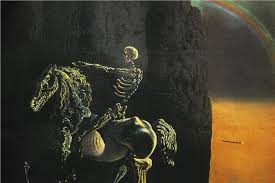
Horseman of Death by Salvador Dali (1904-1989). From Public Domain
DO NOT SPEAK FOR OLD STAVED MEN

Do not speak for old staved men whose faces glint like tyres,
In the twilight of their years, they hum a tune so grim.
Their stories told in whispers, kindling ancient fires.

Beneath the moon, their silhouettes like church spires,
Stand testament to lives lived on the brim.
Do not speak for old staved men whose faces glint like tyres.

With every wrinkle, a saga that never tires,
Eyes that sparkle with memories, vivid and dim.
Their stories told in whispers, kindling ancient fires.

They laugh with the madness that freedom acquires,
Dancing to the wind's capricious whim.
Do not speak for old staved men whose faces glint like tyres.

In the hush of night, their spirit aspires,
To cast off the shadows, stark and slim.
Their stories told in whispers, kindling ancient fires.

So let them be, these merry old sires,
As they sip the stars, on the world's rim.
Do not speak for old staved men whose faces glint like tyres,
Their stories told in whispers, kindling ancient fires.


IF AT FIRST DEATH'S WORLD IS ROUND

If at first death's world is round, take heed,
Where shadows dance and silent whispers play,
A routed cock will sing for prayer indeed.

In twilight's grasp, where heartbeats intercede,
And stars above in quiet judgment sway,
If at first death's world is round, take heed.

The moon's pale light, on which dark dreams will feed,
A canvas vast, where lost souls might stray,
A routed cock will sing for prayer indeed.

Through time's thin veil, where ancient fates are freed,
The echoes of the past are not held at bay,
If at first death's world is round, take heed.

In madness' grip, where sanity will bleed,
And reason's voice is oft led far astray,
A routed cock will sing for prayer indeed.

So listen close, for it's the earth's own creed,
In life's grand play, we all must find our way,
If at first death's world is round, take heed,
A routed cock will sing for prayer indeed.


OH, WHAT NOW FOR THE FORGETMENOT MEN

Oh, what now for the forgetmenot men,
In a world where fathers jack all pleasure?
Their laughs echo, "Ha ha," and then?

They dance in boots of heavy leaden,
Stomping on dreams with no measure.
Oh, what now for the forgetmenot men?

With every chortle, they count to ten,
A madcap rhythm to their leisure.
Their laughs echo, "Ha ha," and then?

They sip on the nectar of a pen,
Ink-stained lips betray their treasure.
Oh, what now for the forgetmenot men?

In absurdity's grip, beyond our ken,
They find in oddity their true pleasure.
Their laughs echo, "Ha ha," and then?

So raise your glass to the when,
To the forgetmenots, in all their splendour.
Oh, what now for the forgetmenot men,
Their laughs echo, "Ha ha," and then?


O, WHENCE VENAL BODIES BREAK AND SPURN

O, whence venal bodies break and spurn,
In twilight's sickly, dolorous embrace,
What now for death but a new day made up from sickness?

The stars above in cold judgement turn,
As shadows cast by the moon's pale face,
O, whence venal bodies break and spurn.

The raven's call, a direful mourn,
Echoes through the void of this haunted place,
What now for death but a new day made up from sickness?

Beneath the earth, where the lost sojourn,
Lies the heart's desire without a trace,
O, whence venal bodies break and spurn.

A dance macabre, the world does churn,
Absurd the stage, life's fleeting race,
What now for death but a new day made up from sickness?

So sing the dirge, as the candle burns,
And time erodes all but disgrace,
O, whence venal bodies break and spurn,
What now for death but a new day made up from sickness

Jim Bellamy was born in a storm in 1972. He studied hard and sat entrance exams for Oxford University. Jim has a fine frenzy for poetry and has written in excess of 22,000 poems. Jim adores the art of poetry. He lives for prosody.

.

PLEASE NOTE: ARTICLES CAN ONLY BE REPRODUCED IN OTHER SITES WITH DUE ACKNOWLEDGEMENT TO BORDERLESS JOURNAL

Click here to access the Borderless anthology, Monalisa No Longer Smiles

Click here to access Monalisa No Longer Smiles on Amazon International
Categories
Contents

Borderless, June 2025

Art by Sohana Manzoor

Editorial

‘How do you rebuild a life when all that remains is dust?’… Click here to read.

Translations

The Great War is Over and A Nobody by Jibanananda Das have been translated from Bengali by Professor Fakrul Alam. Click here to read.

Sukanta Bhattacharya’s poem, Therefore, has been translated from Bengali by Kiriti Sengupta. Click here to read.

 Five poems by Soubhagyabanta Maharana  have been translated from Odia by Snehaprava Das. Click here to read.

Animate Debris, a poem by Sangita Swechcha has been translated from Nepali by Saudamini Chalise. Click here to read.

Lost Poem, a poem by Ihlwha Choi  has been translated from Korean by the poet himself. Click here to read.

Sonar Tori (Golden Boat), a poem by Tagore, has been translated from Bengali by Mitali Chakravarty. Click here to read.

Poetry

Click on the names to read the poems

Allan Lake, Shobha Tharoor Srinivasan, Ron Pickett, Ananya Sarkar, George Freek, Bibhuti Narayan Biswal, Jim Bellamy, Pramod Rastogi, Vern Fein, Saranyan BV, Ryan Quinn Flanagan, Juairia Hossain, Gautham Pradeep, Jenny Middleton, Mandavi Choudhary, Rhys Hughes

Musings/Slices from Life

Where Should We Go After the Last Frontiers?

Ahamad Rayees writes from a village in Kashmir which homed refugees and still faced bombing. Click here to read.

The Jetty Chihuahuas

Vela Noble takes us for a stroll to the seaside at Adelaide. Click here to read.

Hope Lies Buried in Eternity

Farouk Gulsara muses on hope. Click here to read.

Undertourism in the Outback

Merdith Stephens writes from the Australian Outback with photographs from Alan Nobel. Click here to read.

Musings of a Copywriter

In Driving with Devraj, Devraj Singh Kalsi writes of his driving lessons. Click here to read.

Notes from Japan

In The Tent, Suzanne Kamata visits crimes and safety. Click here to read.

Essays

Public Intellectuals Walked, So Influencers Could Run

Lopamudra Nayak explores changing trends. Click here to read.

Where No One Wins or Loses a War…From Lucknow with Love

Prithvijeet Sinha takes us to a palace of a European begum in Lucknow. Click here to read.

Bhaskar’s Corner

In Can Odia Literature Connect Traditional Narratives with Contemporary Ones, Bhaskar Parichha discusses the said issue. Click here to read.

Feature

The story of Hawakal Publishers, based on a face-to-face tête-à-tête, and an online conversation with founder Bitan Chakraborty with his responses in Bengali translated by Kiriti Sengupta. Click here to read.

Stories

The Year the Fireflies Didn’t Come Back

Leishilembi Terem gives a poignant story set in conflict-ridden Manipur. Click here to read.

The Stranger

Jeena R. Papaadi writes of the vagaries of human relationships. Click here to read.

The Opening

Naramsetti Umamaheswararao relates a value based story in a small hamlet of southern India. Click here to read.

Book Excerpts

An excerpt from Wendy Doniger’s The Cave of Echoes: Stories about Gods, Animals and Other Strangers. Click here to read.

An excerpt from Mohua Chinappa’s Thorns in My Quilt: Letters from a Daughter to Her Father. Click here to read.

Book Reviews

Somdatta Mandal reviews Madhurima Vidyarthi’s Job Charnock and the Potter’s Boy. Click here to read.

Rakhi Dalal reviews Dhruba Hazarika’s The Shoot: Stories. Click here to read.

Satya Narayan Misra reviews Bakhtiyar K Dadabhoy’s Honest John – A Life of John Matthai. Click here to read.

Bhaskar Parichha reviews David C Engerman’s Apostles of Development: Six Economists and the World They Made. Click here to read.

.


Click here to access the Borderless anthology, Monalisa No Longer Smiles

Click here to access Monalisa No Longer Smiles on Amazon International
Categories
Editorial

‘How do you rebuild a life when all that remains is dust?’

The Great War is over
And yet there is left its vast gloom.
Our skies, light and society’s soul have been overcast…

'The Great War is Over' by Jibanananda Das (1899-1954), translated from Bengali by Professor Fakrul Alam.

Jibanananda Das wrote the above lines in the last century and yet great wars rage even now. As the world struggles to breathe looking for a beam of hope to drag itself out of the darkness induced by natural calamities, accidents, terror attacks and wars that seem to rage endlessly, are we moving towards the dystopian scenario created by George Orwell in 1984, which would be around the same time as Jibanananda Das’s ‘The Great War is Over’?

Describing such a scenario, Ahmed Rayees writes a moving piece from the Kashmiri village of Sheeri, the last refuge of the displaced refugees who were bombarded after peace was declared in their refuge during the clash across Indo-Pak borders. He contends: “People walked back not to homes, but to ruins. Entire communities had been reduced to ash and rubble. Crops were destroyed, livestock gone, schools turned into shelters or craters. How do you rebuild a life when all that remains is dust?”

People could be asking the same questions without finding answers in Gaza or Ukraine, where the cities are reduced to rubble. While we look for a ray of sunshine, amidst the rubble, Farouk Gulsara muses on hope that has its roots in eternity. Vela Noble wanders on nostalgic beaches in Adelaide. And Meredith Stephens travels to the Australian outback. Devraj Singh Kalsi brings in lighter notes writing of driving lessons while Suzanne Kamata creeps back to darker recesses musing on likely ‘criminals’ and crimes in her neighbourhood.

Lopamudra Nayak writes on social media and its impact while Bhaskar Parichha writes of trends that could be brought into Odia literature.  What he writes could apply well to all regional literature, where they lose their individual colouring to paint dystopian realities of the present world. Does modernising make us lose our ethnic identity and how important is that? These are questions that sprung to the mind reading his essay. As if in an attempt to hold on to the past ethos, Prithvijeet Sinha wafts around old ruins in Lucknow and sees a cemetery for colonial soldiers and concludes: “Everybody has formidable stakes, and the dead don’t preach the gospel of victory or sombre defeat.”

Taking up a similar theme of death and war is a poem from Saranyan BV. In poetry, we have colours from around the world with poems from Allan Lake, Ron Pickett, Ananya Sarkar, George Freek, Jim Bellamy, Ryan Quinn Flanagan, Juairia Hossain, Gautham Pradeep, Jenny Middleton, Mandavi Choudhary and many more. Multiple themes are woven into a variety of perspectives, including nature and environment, with June hosting the World Environment Day. Rhys Hughes gives a funny poem on the Welsh outlaw, Twm Siôn Cati.

We have mainly poetry in translation this time. Snehaprava Das has brought to us Soubhagyabanta Maharana’s poems from Odia and Ihlwha Choi has translated his own poem from Korean. Sangita Swechcha’s poem in Nepali has been rendered to English by Saudamini Chalise. From Bengali, other that Jibanananda Das’s poems translated by Professor Fakrul Alam, we have Tagore’s pensive and beautiful poem, Sonar Tori (the golden boat). Yet another Bengali poet, one who died young and yet left his mark, Sukanta Bhattacharya (1926-1947), has been translated by Kiriti Sengupta. Sengupta has also translated the responses of Bitan Chakravarty in a candid conversation about his dream child — the Hawakal Publishers. We also have a feature on this based on a face-to-face conversation, giving the story of how this publishing house grew out of an idea. Now, they publish poetry traditionally, without costs to the poet. Their range of authors are spread across continents.

Our fiction again returns to the darkness of war. Young Leishilembi Terem has given a story set in conflict-ridden Manipur from where she has emerged safely — a story that reiterates the senselessness of violence and politics. While Jeena R. Papaadi writes of modern human relationships that end without commitment, Naramsetti Umamaheswararao relates a value-based story in a small hamlet of southern India. 

From stories, our book excerpts return to the real world, where a daughter grieves her father in Mohua Chinappa’s Thorns in My Quilt: Letters from a Daughter to Her Father while Wendy Doniger’s The Cave of Echoes: Stories about Gods, Animals and Other Strangers, dwells on demystifying structures that create borders. We have two non-fiction reviews. Parichha writes about David C Engerman’s Apostles of Development: Six Economists and the World They Made. And Satya Narayan Misra discusses Bakhtiyar K Dadabhoy’s Honest John – A Life of John Matthai. Somdatta Mandal this time explores a historical fiction based around the founding of Calcutta, Madhurima Vidyarthi’s Job Charnock and the Potter’s Boy while Rakhi Dalal looks at fiction born of environmental awareness, Dhruba Hazarika’s The Shoot: Stories.

We have more content. Do pause by our contents page and take a look.

Huge thanks to all our contributors without who this issue would not have materialised. Heartfelt thanks to the team at Borderless for their support, especially Sohana Manzoor for her iconic artwork that has almost become a signature statement for Borderless.

Let’s hope that next month brings better news for the whole world.

Best wishes,

Mitali Chakravarty

borderlessjournal.com

Click here to access the contents for thJune 2025 Issue

READ THE LATEST UPDATES ON THE FIRST BORDERLESS ANTHOLOGY, MONALISA NO LONGER SMILES, BY CLICKING ON THIS LINK.

Categories
Poetry

Hold Fast to Dreams: Poems by Jim Bellamy

O, ONCE UPON A MIND IN A DINNER-STRANGLED SEA


O, once upon a mind in a dinner-strangled sea,
Where pans clatter in the deep and the starving dare to dream,
The rich feast on echoes of silent pleas.

In the cruel ballet of the haves and have-nots, we see
The absurd dance of fortune's cruel extreme,
O, once upon a mind in a dinner-strangled sea.

The banquet hall roars with gilded glee,
While outside, hollow eyes of the hungry gleam,
The rich feast on echoes of silent pleas.

"Feed us," cry the poor, "from tyranny free,"
But the wealthy's ears are stuffed with the cream,
O, once upon a mind in a dinner-strangled sea.

The tables turn, yet no one flees,
The starving serve, their spirits teem,
The rich feast on echoes of silent pleas.

So dare the starving feed the rich? A twisted decree,
In this dark, absurdist, cruel scheme,
O, once upon a mind in a dinner-strangled sea,
The rich feast on echoes of silent pleas.


O, WHEN ME AND MY DEAD LOVER


O, when me and my dead lover come glowering from mirrors,
In the hush of night, our whispers dance in a spectral swell,
Perhaps a keen dream will make us well.

Through the glass, our silent ballet conjures fears,
Yet in this madcap song, our hearts rebel,
O, when me and my dead lover come glowering from mirrors.

The world sleeps, but in our realm, time nears,
To the rhythm of eternity, our souls compel,
Perhaps a keen dream will make us well.

In the silvered pane, the past appears,
And we waltz in the moon's soft pastel,
O, when me and my dead lover come glowering from mirrors.

With every gaze, the boundary clears,
In dreams, the living and the lost meld,
Perhaps a keen dream will make us well.

So let the morning wait, as dawn nears,
For in this mirror's depth, our love we'll tell,
O, when me and my dead lover come glowering from mirrors,
Perhaps a keen dream will make us well.


DO NOT GO ASIDE THE DARK TILL DEATH DAWNS ON MADMEN


Do not go aside the dark till death dawns on madmen,
Where shadows weave the tales of silent might.
Hold fast to dreams, where day's bright beams are spavine.

The gentle hum of life, a soft-spun cadence,
Whispers through the void, a beacon's light.
Do not go aside the dark till death dawns on madmen.

In twilight's grasp, where thoughts of lore are laden,
Seek not the comfort of the fleeing night.
Hold fast to dreams, where day's bright beams are spavine.

Through tempest's roar and peace the heart does harden,
Stand firm against the tide, with all your might.
Do not go aside the dark till death dawns on madmen.

With every dusk, let not your spirit sadden,
For morrow's morn will chase the starless plight.
Hold fast to dreams, where day's bright beams are spavine.

So here, my friend, as fates and time do bargain,
Embrace the dusk, till dawn's forgiving light.
Do not go aside the dark till death dawns on madmen,
Hold fast to dreams, where day's bright beams are spavine.

Jim Bellamy was born in a storm in 1972. He studied hard and sat entrance exams for Oxford University. Jim has a fine frenzy for poetry and has written in excess of 22,000 poems. Jim adores the art of poetry. He lives for prosody.

.

PLEASE NOTE: ARTICLES CAN ONLY BE REPRODUCED IN OTHER SITES WITH DUE ACKNOWLEDGEMENT TO BORDERLESS JOURNAL

Click here to access the Borderless anthology, Monalisa No Longer Smiles

Click here to access Monalisa No Longer Smiles on Amazon International
Categories
Contents

Borderless, May 2025

Art by Sohana Manzoor

Editorial

“Imagine all the people/ Living life in peace”… Click here to read.

Translations

The Day of Annihilation, an essay on climate change by Kazi Nazrul Islam, has been translated from Bengali by Radha Chakravarty. Click here to read.

Arise O Woman and Two Flowers on One Leafstalk, lyrics by Nazrul, have been translated from Bengali by Professor Fakrul Alam. Click here to read.

Five poems by Bipin Nayak have been translated from Odia by Snehaprava Das. Click here to read.

Identity by Munir Momin has been translated from Balochi by Fazal Baloch. Click here to read.

Among Strangers, a poem by Ihlwha Choi  has been translated from Korean by the poet himself. Click here to read.

Asha or Hope by Tagore has been translated from Bengali by Mitali Chakravarty. Click here to read.

Poetry

Click on the names to read the poems

Ryan Quinn Flangan, Jim Bellamy, Snehprava Das, George Freek, Niranjan Aditya, Christine Belandres, Ajeeti S, Ron Pickett, Kajoli Krishnan, Stuart McFarlane, Snigdha Agrawal, Arthur Neong, Elizabeth Anne Pereira, Rhys Hughes

Poets, Poetry & Rhys Hughes

In Did He Ever?, Rhys Hughes gives fun-filled verses on Lafcadio Hearn, a bridge between the East and West from more than a hundred years ago. Click here to read.

Musings/ Slices from Life

Will Dire Wolves Stalk Streets?

Farouk Gulsara writes of genetic engineering. Click here to read.

The Boy at the Albany Bus Stop

Meredith Stephens dwells on the commonality of human emotions. Click here to read.

The Word I Could Never Say

Odbayar Dorj muses on her own life in Mongolia and Japan. Click here to read.

Social Media Repetition

Jun A. Alindogan discusses the relevance of social media. Click here to read.

Shanghai in Jakarta

Eshana Sarah Singh takes us to Chinese New Year celebrations in Djakarta. Click here to read.

Musings of a Copywriter

In My Writing Desk, Devraj Singh Kalsi writes of the source of his inspiration. Click here to read.

Notes from Japan

In Feeling Anxious in Happy Village, Suzanne Kamata relates a heartwarming story. Click here to read.

Essays

Reminiscences from a Gallery: The Other Ray

Dolly Narang muses on Satyajit Ray’s world beyond films and shares a note by the maestro and an essay on his art by the eminent artist, Paritosh Sen. Click here to read.

This Garden Calls Out to Me: A Flaneur in Lucknow’s Sikandar Bagh

Prithvijeet Sinha takes us back to a historical landmark, made for love but bloodied by war. Click here to read.

Stories

Going to Meet the Hoppers

Fiona Sinclair writes a layered story on human perspectives. Click here to read.

The Ritual of Change

Parnika Shirwaikar explores the acceptance of change. Click here to read.

The Last Metro

Spandan Upadhyay explores the spirit of the city of Kolkata. Click here to read.

Nico Finds His Dream

Paul Mirabile narrates how young Nico uncovers his own yearnings. Click here to read.

The Bequest

Naramsetti Umamaheswararao gives a story reflecting a child’s lessons from Nature. Click here to read.

Conversation

Ratnottama Sengupta introduces and converses with photographer, Vijay S Jodha. Click here to read.

Book Excerpts

An excerpt from Devabrata Das’s One More Story About Climbing a Hill: Stories from Assam, translated by multiple translators from Assamese. Click here to read.

An excerpt from Ryan Quinn Flangan’s Ghosting My Way into the Afterlife. Click here to read.

Book Reviews

Somdatta Mandal reviews Arundhathi Nath‘s translation, The Phantom’s Howl: Classic Tales of Ghosts and Hauntings from Bengal. Click here to read.

Andreas Giesbert reviews Rhys Hughes’ The Devil’s Halo. Click here to read.

Bhaskar Parichha reviews Aubrey Menen’s A Stranger in Three Worlds: The Memoirs of Aubrey Menen. Click here to read.

.

Click here to access the Borderless anthology, Monalisa No Longer Smiles

Click here to access Monalisa No Longer Smiles on Amazon International