Late, late August; the ample rains muddy The floor of the forest in dear desolation. The berries lie pristine dampened By the final drips of last night's drizzle. The forsythia blooms unhindered outside The window as my mind turns to America. Each year, as fall approaches, I think of you. Yet all I do now is turn, turn, turn to the rain. The leaves moisten in indefinite wait for the Sun that leaves no room for conjecture. The shadows tell diverse tales at different Hours of the day; my watch dissents sometimes. The infidelities of the clouds run amok in terse Acceptance of their inabilities to shimmer. Prodded by the indecisive nature that life Bestows upon my very being, I remain rooted To the oranges that fill my basket with yearning. The grass would leave no imprint of our touch, Nor the daisies without whom monsoon had Little meaning. The jasmines would be seen Flitting about with a sense of purpose As we chased them without pity or faith. With a deep lust for expectation, I remind myself Of the days when we would crowd these streets Littered with the shrubbery of touch-me-nots. Every year, I would hope against hope.
(First published in The Past Is Another Country, poems by Mohul Bhowmick)
Mohul Bhowmick is a national-level cricketer, sports journalist, poet, essayist and travel writer from Hyderabad, India. He has published five collections of poems and one travelogue so far. His latest book, The Past Is Another Country, came out in 2025. More of his work can be discovered on his website: www.mohulbhowmick.com.
PLEASE NOTE: ARTICLES CAN ONLY BE REPRODUCED IN OTHER SITES WITH DUE ACKNOWLEDGEMENT TO BORDERLESS JOURNAL
Sunset at Colaba, Bombay, which is currently referred to as Mumbai. From Public Domain
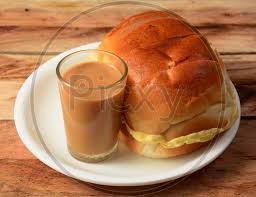
To think that Bombay is attainable is the first mistake of the rookie. And though this city attracts and repels in equal measure, it is the former that makes me want to linger all the more. And linger I do, over a cup (or was it two?) of piping hot Irani chai and bun maska at the Persian Cafe in Cuffe Parade. The rain starts just as soon as I step out of the metro station and make for the safer confines of the cafe, reminding me of home in more ways than one. It is only in Bombay that I am reminded that the culture of the Zoroastrians flourishes somewhere outside of Hyderabad as well.
Colaba lures me, but Kala Ghoda’s immense detachment from its suburban-esque walkways seems more pensive. With Mahatma Gandhi Road sweeping past the Fort and Dr Dadabhai Naoroji Road intersecting it at Flora Fountain, Bombay’s charm offensive lies bare. It is only much later, after I step into Kitaab Khana, the Bombay equivalent of Madras’ Higginbotham’s and Calcutta’s Oxford, that I strongly feel the Raj’s tentacles of reunion. On the other side of the road, the college named after Lord Mountstuart Elphinstone, who twice gave up the chance to be appointed governor-general of India, preferring to finish his two-volume work, History of India (1841) instead, is a reminder of the good that existed among our colonial masters.
*
But the second mistake that the rookie can make is by affirming that all of Bombay lies within the island of Colaba. While it did, in the days of the Raj, it no longer holds the sanctity of tradition as much as it does for the affluent who have no idea of when the last local leaves from Churchgate to Borivali. Versova, much a fishing village as Bandra had once been, is as far away from Colaba as Islamabad is from Vancouver, and Jogeshwari is a mere landing ground for the aristocrats of the north, for whom Thane is where the merely envious congregate and share stories over pav bhaji. A hint of Marathi wafts over the air, sprinkled generally with salt from the sea, and the Bambaiya of Parel and the Hindi of the island city are forgotten.
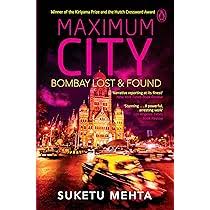
For what does a gentleman bred in the now-reclaimed Old Woman’s Island, fondly called Little Colaba, know of the fighting on the streets of Dadar? The Gateway of India, looming far beyond the ordinary, takes no part in the skyline of this Bombay, where political representatives of all hues and colours sell dreams just as kaleidoscopic as their ever-changing loyalties. Areas where no cars enter are not strictly unheard of in the Bombay of the north, and as Suketu Mehta so lovingly painted in Maximum City, it is a conurbation not afraid of its past, and one that is constantly stuck in an identity crisis. For there are more millionaires in Bombay than in any other city in the country, and they are only matched by the number of people who go to bed hungry. The Marine Drive becomes an elongated resting place for the unfortunate, the destitute or the merely curious once the lights on the Queen’s Necklace get turned on. I would have seen it had I known where to look.
*
To reclaim the days of the Raj, there are few places more apt to while away an evening than Colaba. There are certainly no places as germane as the cafes Mondegar and Leopold, which happily serve continental fare to their patrons after all these years without a trace of embarrassment at the culinary debaucheries they joyfully commit. Old men, with fedoras last seen in fashion in 1930 (before World War II took away the joys of wearing headgear, apart from sola topis, in a country where the sun has been awarded citizenship), and with shirts tucked into waistbands up to their lower chest, order bottles of grizzled beer with a side of mashed potatoes. Cholesterol and high blood sugar are forgotten when relieving one’s youth, especially with Spanish women gawking at the absurdity of it all in the flea market on the causeway outside. With the stroke of a pen, these men bring to life the jazz clubs of the early 1950s, recollecting the trumpeter Chris Perry at Alfred’s. And then they remember Lorna Cordeiro, of whom they speak as if she were a loved one.
The scarcity of vada pav in the vicinity of Kala Ghoda scares me until I remember that even autorickshaws are banned from this part of town. Much like a man seeking water from the desert atrophies of the Middle East, I lunge into a seller close to the Victoria Terminus. When he asks for a mere INR 30 for two vada pavs, I am shamed into submission, looking towards my shoes — coloured an extravagant yellow — and murmur notes of dissent that even my ears cannot pick up. A jet-black Mercedes-Benz skids past the puddle of water that has gathered around Flora Fountain, dousing me with dredges of obstinacy. There are two worlds that we live in, and Bombay may have achieved its supremacy over both yesterday.
Bun Maska can be found in Iranian cafes in Mumbai Pav Bhaji, a popular street food of Mumbai From Public Domain
Mohul Bhowmick is a national-level cricketer, poet, sports journalist, essayist and travel writer from Hyderabad, India. He has published four collections of poems and one travelogue so far. More of his work can be discovered on his website: www.mohulbhowmick.com.
PLEASE NOTE: ARTICLES CAN ONLY BE REPRODUCED IN OTHER SITES WITH DUE ACKNOWLEDGEMENT TO BORDERLESS JOURNAL.
The kettle whistled just as Asha reached for the canister of tea leaves. She turned off the stove, letting the silence settle like the layer of steam on the kitchen tiles. The small two-bedroom apartment smelled faintly of turmeric and Lysol—a combination that reminded her of trying to make something sterile feel like home.
She lived here now—on the third floor of a brick building with cracked mailboxes, faded door numbers, and a neighbour who didn’t say hello. The hallways always smelled vaguely of other people’s dinners, none of them hers.
Asha had been in Arizona for six months. Her husband, Abhinav, came two years earlier on an H1-B visa to work as a systems analyst. They used to talk on the phone every day, sometimes twice. She would sit on her parents’ terrace in Vizag, watching the sky darken over the Bay of Bengal, listening to him describe snow he’d never seen before, traffic patterns, the taste of a burrito. But after she came, the words had started to thin out like overused thread.
Now they sat across from each other during dinner, nodding politely, asking about work. His replies were short — “busy today,” or “nothing special”. He didn’t complain, didn’t shout. But he had stopped asking about her dreams. Somewhere between the visa interviews and the flight and the unpacking, they had become polite strangers sharing a lease.
She poured the tea into two silver cups, added milk, and crushed a cardamom pod between her fingers—her mother’s old habit. Back home in Vizag, her mother would brew tea each evening, calling it her “pause for the soul.” Asha had once dismissed it as drama. But now, standing in this quiet kitchen with its humming refrigerator and fluorescent light, she understood.
She placed a cup near Abhinav’s laptop. He was on the couch, scrolling through code, earphones in. He nodded without looking. She stood a moment longer, watching the steam rise and disappear, then returned to the kitchen window.
Outside, a tree was shedding its leaves. Orange and gold pirouetted to the pavement. She had never seen autumn before this year. The first time she touched a fallen maple leaf, it crumbled like a memory in her hand. Everything here was so temporary, so willing to let go.
Her phone buzzed. It was a message from Maya Aunty, a family friend from Tucson: “Come for lunch Sunday. We’ll make Biryani. Bring Abhinav if he agrees to socialize.”
Asha smiled. Maya Aunty was the closest thing she had to home here—her voice too loud, her saris too bright, but her affection sincere. She had a way of filling rooms that made loneliness impossible, at least for a few hours. Abhinav never liked going. He said those gatherings were a waste of time, full of women gossiping and men complaining about taxes.
Still, Asha replied: “Yes, I’ll come. Maybe Abhinav too. See you then.”
That night, as they sat across from each other over reheated sabzi[1], she asked, “Do you want to come to Maya Aunty’s house Sunday?”
He shook his head, scooping rice. “You go. I have a deadline.”
She had expected that. Still, she had asked. It was important to keep asking, even when you knew the answer.
They ate quietly. The news on TV murmured in the background—something about traffic and an upcoming storm. The weatherman’s voice was cheerful, as if storms were just another entertainment option.
After dinner, he returned to his laptop. She washed the plates slowly, running her fingers over the floral pattern on the china—part of the wedding gift set her mother had packed with such hope. “Start a life with this,” she had said. “You’ll need beauty when you’re far away.”
But some days, Asha felt like everything beautiful was now in another language. The sky here was wider but emptier. The silence is louder.
Sunday
She wore a green georgette saree and a pearl chain. The apartment smelled of her sandalwood perfume, a scent that felt like an argument against disappearing. She kissed Abhinav lightly on the forehead before leaving. He didn’t look up.
Tucson was a long ride on the commuter train. The landscape rolled past—brown, flat, dotted with cactii that looked like they were raising their arms in perpetual surrender. At the station, she sat beside a young woman reading an Agatha Christie novel. Asha wondered if she should start reading again. She used to read in college—Yaddanapudi Sulochana Rani, James Hadley Chase novels that made her mother shake her head in mock disapproval.
At Maya Aunty’s house, the air was warm with ginger, cloves, and nostalgia. Women laughed in the kitchen, the pressure cooker hissed, and the television played an old Telugu song that made Asha’s throat tight.
“You’re glowing!” Maya said, hugging her.
“I’m just tired.”
“You need to eat. And talk. Come, sit with me.”
Over lunch, Maya talked about her daughter in Seattle, about growing desert plants that refused to die, about how this country gave you everything and yet made you feel invisible. “You work, you pay bills, you exist,” she said, “but where do ‘you’ live?”
“Does Abhinav talk to you much?” she asked gently, after a pause.
Asha shook her head. “Not really.”
“Men here, they carry stress like skin. But you must not disappear. You must not become a shadow in your own life.”
That line stayed with her. It echoed in the train on the way home, in the empty apartment that evening.
Two Weeks Later
Asha began taking walks in the evening. She bought a notebook and wrote small things—memories, recipes, dreams she had stopped sharing. The act of writing felt like reclaiming something. She emailed an old professor in Hyderabad about doing a remote literature course.
He responded in all caps: “YES, WRITE AGAIN. SEND ME SOMETHING.”
She didn’t tell Abhinav. Not yet. Not until she found the words that would hold.
One evening, she made adrak chai[2]with extra cardamom. She handed him a cup, as usual.
This time, she didn’t walk away.
“I’ve started writing again,” she said.
He paused, looking up from the screen. “Writing?”
“Just… notes. Short stories. Memories.”
He nodded, sipping the tea. “That’s good.”
Silence.
Then: “The cardamom reminds me of your mother’s tea.”
It was a small sentence. But it cracked open a window.
She smiled. “Yes. She used to say it made the soul pause.”
He looked at her for the first time that evening—really looked, the way he used to during their terrace conversations, before the distance taught them to look away.
“Maybe I need to pause,” he said quietly.
The tea was still hot. Outside, another leaf fell from the tree. But this time, Asha thought, maybe it wasn’t about letting go. Maybe it was about making space for something new.
She didn’t say anything. Just set her hand on the couch between them, palm up.
After a long moment, he put his hand down next to hers. Not quite touching. But close.
Dr Sreenath Nagireddy is a physician from Phoenix, Arizona. A versatile writer, he explores genres ranging from humour and adventure to thriller and science fiction. His works have been published in 365tomorrows, Kitaab, Twist and Twain Magazine, among others.”
.
PLEASE NOTE: ARTICLES CAN ONLY BE REPRODUCED IN OTHER SITES WITH DUE ACKNOWLEDGEMENT TO BORDERLESS JOURNAL
And yes, this is a city, a city, a city. And words repeat as they learn from sound -- shape-shifters, taking moulds, forming legion. And I see cacophony knocking on my windowpane In the dead of night, In the tender morning light.
Yet escape comes from hindsight. I drown and drown myself in your voice -- pebble in a pond, milk in coffee, sweat in the ocean, And as I sink to lower depths, I try to avoid the unavoidable, writing my name on a single blade of grass.
Cacophony stares back as I finish this line only to pick up the phone and say, "Hello...”
Soumyadwip Chakraborty, born and brought up in Sodepur, currently residing in Hyderabad, works in a multinational. Since the body can run on food, water and oxygen, he chooses to have literature, music and cinema run his soul. His poetry is nothing but a by-product of his living.
.
PLEASE NOTE: ARTICLES CAN ONLY BE REPRODUCED IN OTHER SITES WITH DUE ACKNOWLEDGEMENT TO BORDERLESS JOURNAL
Story by Surya Dhananjay, translated from Telugu by Rahimanuddin Shaik
Surya Dhananjay
That night, in Tarnaka, Hyderabad city, all the apartments were silent as if lost in deep sleep. Sujatha’s flat was one among those. Her husband and children were sound asleep. Meanwhile, she, in the bedroom, faintly heard the phone ringing in the hall. Sujatha, a lecturer by profession, was awake, preparing for the next day’s class. A strange fear gripped her as the phone rang at that hour. As if someone was chasing her, she rushed to answer the phone. It was an unknown number. She thought of calling back but decided against it, thinking it was too late at night. The phone rang again. She immediately picked it up.
Who could it be? Why would they call at this hour of the night?
Various thoughts raced through her mind. Thinking she’d find out who it was if she called back, she redialled
“Hello,” she said, and that was it!
She could hear crying and shouting from the other end. Then the phone got disconnected again. Anxiously, she redialled, but the phone had been switched off. She checked Truecaller app[2] to see who it might be. ‘Not found’ was the result. Putting aside the book she was reading, she lay down. But she couldn’t sleep. Various thoughts haunted her. She didn’t know when she finally drifted off to sleep.
Morning dawned bright. Waking up, she fearfully picked up her phone. There were four or five messages.
She read: “Mastan anna2 is no more. He has left us.”
She felt like a thunderbolt had stricken her heart. Her eyes filled with tears. Wiping them away, she read the message again. The news slowly sank in – the news that the brother she had cherished since childhood, Mastan anna[3] who eagerly awaited for the rakhi[4] she tied every year, was gone. Tears flowed uncontrollably from her eyes. Her tear-filled eyes became slightly blurry. Through that blur, her childhood memories, mixed with tears, began to drip down drop by drop.
Sujatha was then studying in the sixth standard at Miryalaguda Girls’ High School. She came from Hemanayak tanda,[5] near the Sagar canal. Her mother, Dhwali Bai, and father Bhadru Naik were forward thinking people. Though they had only daughters, they educated them well instead of arranging child marriages for them like everybody else. Sujatha was the youngest. Theirs was a family living happily in the lap of nature, drawing their living from small-scale farming and raising cows.
Dhwali Bai occasionally went to the Miryalaguda market for groceries. On her way back, she would drop off the children’s clothes for stitching at tailor Mastan’s shop in the old bus stand area. Not just her, everyone from the tanda got their clothes stitched there for festivals and occasions. Mastan treated his customers well. He was thin in appearance and always wore clothes as white as jasmine flowers. He captivated everyone with his gentle speech. He had immense respect for Dhwali Bai and Bhadru Naik’s family. He called Dhwali Bai ‘Amma[6]’. Dhwali Bai always wished well for others. He was won over by her kindness. Dhwali Bai, who had no sons, saw a son in him. After some time, their bond grew, and Mastan became a member of the family.
Back then, there was only one bus service from Miryalaguda to Hemanayak tanda. It made only two trips a day – one in the morning and one in the evening. Sujatha, studying in Miryalaguda, would go home every Saturday evening by this bus. Her mother would wash all her school dresses white. She would oil her hair and braid it into two plaits. While making her hair, Dhwali Bai would advise Sujatha to be careful in the town.
“Because I didn’t study, I didn’t know the world. You, at least, study well and bring light to our tanda, Beti[7]. Even if Bhadru Naik has no sons, the daughters he has should study well and become role models for everyone,” Dhwali would say.
One day, Dhwali Bai, having come to drop Sujatha at the hostel, introduced Sujatha to Mastan.
“Look, Beta[8], this is your younger sister. You need to make a uniform for her. Otherwise, they won’t let her into school today. Also, whenever she comes to board the service bus, you must save a seat for her by placing a towel near the window. Tell that conductor to take the girl carefully and drop her off at the tanda gate. There aren’t good boys on the buses these days. Tell the driver to scare those boys a bit,” Dhwali instructed, as if instructing her own son.
Mastan smiled. “Alright, Yaadi[9], I’ll do as you say. I’ll look after Sujatha like my own sister. From the moment she gets off the bus all the way to her school, and after school, putting her on the bus to the tanda – it’s my responsibility,” he said, engaging them in conversation while quickly stitching a skirt and blouse for Sujatha.
“Here, sister, this dress is a gift from your brother,” he offered.
Sujatha shook her head as if declining the gift and looked at Dhwali Bai.
“Don’t take it for free, Amma. Instead, she can tie rakhi on me every year,” he said, placing the dress in her hand. From that day, their bond grew. Mastan looked after Sujatha like the apple of his eye. Their brother-sister relationship became known in the tanda as well. Every year, Mastan would go to the tanda, have Sujatha tie the rakhi, and receive Dhwali Bai’s blessings before returning. Mastan’s wife, Rajitha, was very happy that he treated Sujatha with such respect and love, even though she wasn’t his biological sister.
However, some people in the tanda didn’t like their bond. Naturally, the tanda dwellers lived happily like deer in the forest, away from the plains. Just as deer get agitated by the presence of a new creature, they hesitated when non-tribals mixed with them. They viewed Mastan’s visits to the tanda with suspicion. Kalya, Sakku, and Saida decided they must somehow stop Mastan from coming to the tanda. They didn’t dare discuss this with Bhadru Naik and Dhwali Bai. The tanda dwellers had immense respect for Bhadru. He treated everyone lovingly. Raising his daughters admirably, he stood as a role model. They didn’t dare oppose such a person. But they wanted to stop Mastan from coming to the tanda and were waiting for an opportunity.
Mastan, living amidst the car horns and crowds of Miryalaguda town, constantly stressed, dearly loved the tanda, its people, and its atmosphere. The peaceful tanda air, the innocent talk of the Lambadis, the mouth-watering jowar rotis and garlic chutney, the pleasing sight of green trees, cows, goats, and chickens in every house – Mastan liked all this very much. Moreover, like Bhadru Naik and Dhwali Bai, Mastan had an immense love for people and relationships. He helped those who came to his shop within his means and earned a good reputation around the old bus stand. If anyone came to the Mandal[10] Revenue Office with work, he would inquire about their problem, connect them with officers he knew, and provide appropriate help.
That day was 15th August[11], flag hoisting Day. Mastan went to the school looking for his sister. But Sujatha wasn’t there. As it was also Rakhi that day, Mastan learned from her friends that Sujatha had gone to the tanda the previous day to tie rakhis to her brothers there. Mastan set off for the tanda, cycling. Near the tanda, he saw some children and gave them chocolates. Sakku and Saida, who were coming that way, saw Mastan giving chocolates. They came up to him.
“Hey Mastan! What are you giving the kids? Are you giving them some enchanted marbles?!” they asked suspiciously.
“Ayyo, nothing like that, Bhiya[12]! These are just chocolates distributed at school, I brought them in my pocket. That’s what I’m giving,” Mastan replied and moved on.
Reaching Dhwali Bai’s house, Sujatha saw Mastan and shouted joyfully, “Yaadi, Mastan anna has come!”. Sujatha tied the rakhi on Mastan’s wrist and fed him sugar.
“Mastan anna, I tied the rakhi, what will you give me?” she asked.
“You’ll go to Hyderabad for higher studies, won’t you! If you get a job, you’ll stay there. Then, I myself will look after Yaadi and Bapu[13]. That is the gift I give you,” he said, smiling as he mounted his cycle.
Ten days later, suddenly, everyone in the tanda fell sick with fever. Some had diarrhoea and vomiting. Every house had patients. The tanda, which until then was like a marigold field full of bright flowers, now looked like a cotton field stripped of its flowers. Dark and unwell.
‘Some evil misfortune has befallen the village,’ people began to think.
“No, no, some ghost has possessed the tanda,” said one. “No, we didn’t celebrate the Seethlayadi festival grandly this time. That’s why the goddess is angry,” said another.
“Yes, the village deities of the tanda are angry. We must call the priest. We need to talk. Let’s all contribute a hundred rupees each and celebrate the festival well,” said the Tanda Naik[14].
“Oh Naik, these are not the real reasons why the people in the tanda suffer. That tailor shop Mastan is the cause of all this. He did this. They say he knows magic spells. Whatever he wishes, happens, they say. We found out in town,” Saida spoke passionately, his words sparking fear in the hearts of the tanda people.
“Hey, don’t talk nonsense, Saida! Mastan is not that kind of person,” Bhadru Naik thundered angrily.
Realising that his words would be wasted if he didn’t counter Bhadru, Saida looked at Sakku. “Hey Sakku! Didn’t Mastan give marbles to our tanda boys the other day…?”
“Oh… he did, Saida. I saw it too.”
“Ah! He put enchanted spell on those marbles.”
The people slowly nodded their heads, seeming to agree with Saida’s words. Meanwhile, someone from the crowd said, “In that case, we must catch that Mastan! We must make him confess what spell he used. If we just leave him, our tanda will be ruined. Only if we punish him severely will anyone else be afraid to even look towards our tanda,” they said.
“We will go and catch him,” said Kalya, Sakku, and Saida, setting off for Miryalaguda. Since everyone was united on this, Bhadru Naik and Dhwali couldn’t refuse.
The next day, Sakku, Saida, and Kalya met Mastan. “Our tanda dwellers have asked us to bring you. Come!” they said and took him away. Learning about the situation from school friends, Sujatha also left the hostel for the tanda. People gathered in front of the Tanda Naik’s house. Mastan was brought there. Sujatha reached the spot.
“Why have you brought me here?” Mastan asked the Tanda Naik.
“Everyone in our tanda has fallen ill with fever. We have never seen everyone get fevers like this at the same time. We are strong people. We can withstand any disease. But today, the entire tanda is troubled like this. They are saying you are the reason for all this. They say you gave some enchanted marbles to our boys. People apparently saw it. If that is true, tell us the counter-spell. Otherwise, the people are angry. They won’t leave you,” the Naik concluded, looking straight into Mastan’s eyes.
The accusation pierced Mastan’s heart like a crowbar.
“Spells?… I don’t know what those are. I only know how to love others. Please trust me,” he replied pitifully.
“Then what did you mix in those chocolates? What about them?” Kalya questioned.
“Those were distributed on the Independence Day at Sujatha’s school.”
“Then why did you bring them here? Aren’t there any little boys in Miryalaguda? Our boys look healthy and vibrant. That’s why you got jealous. You couldn’t bear it. Isn’t that it?!” they bombarded Mastan with question after question.
Kalya, Sakku, and Saida, who wanted to stop Mastan from coming to the tanda, saw this small opportunity as a great one and launched their attack. The people, suffering from fear and pain due to the fevers, couldn’t think rationally about right and wrong. They almost fell upon Mastan and beat him. Even though Bhadru, Dhwali, and Sujatha tried to stop them, no one listened. Swinging furiously, they attacked him.
“Don’t do this my fellow brothers, Mastan anna is not like that.”
“Hey Mastan, don’t ever look towards our tanda again! Go!” Before the Naik could finish his words, Sujatha interrupted, “Dada[15], is this your wisdom? Can’t your leadership distinguish between good and bad people?” she asked, her voice filled with anger and anguish.
“You don’t know about him, child,”
“I know everything, Dada! I am studying in the sixth standard. Science doesn’t accept spells and magic. Those are just our fears. Mastan anna is a good man. He considers not just me, but all the children of our tanda as his brothers and sisters. To stay in our tanda which suspected and insulted a good man like Mastan anna, I too feel humiliated, Dada!” she cried, taking Mastan away.
From then on, Mastan stopped coming to the tanda and Sujatha moved out of the tanda to study in less than a month. Eventually, she married and settled down in the capital town of Hyderabad. But she would come to Miryalaguda every year on Rakhi just to tie the rakhi on Mastan’s wrist. No matter how much anyone threatened, their brother-sister bond continued.
Hearing the news of Mastan’s death, Sujatha set off from Hyderabad to Miryalaguda with a grief-stricken heart. As she travelled in the car with her husband and children, childhood incidents flashed before her eyes.
“Though not of our caste, our religion, our tribe, the bond of humanity and the jewel of goodness united Mastan anna with our family. How good was Mastan anna! Though his shop was a small one, his heart was vast. Mastan anna always had the quality of helping others in his own way,” she thought to herself, looking out the car window. She realised they had reached the town. People were bustling in the shops along the roads. ‘What is it?’ she wondered, rolling down the car windows. People were enthusiastically buying rakhis. Whichever shop she looked at, only rakhis were visible.
Just then, Mastan’s small shop near the old bus stand came into her view. It was open. Seeing it, her heart grew heavy. Inside, she saw Mastan’s photo with a gentle smile and a serene face. Hundreds of rakhis surrounded the photo. The whole shop was filled with rakhis. Seeing this, crying she got out of the car and paid her respects. She was surprised and astonished looking at the farewell Mastan received.
The car reached Mastan’s house. There was no one outside the house. Only a few people were inside. Seeing Sujatha, Mastan’s wife, Rajitha, came out of the house crying and held her tightly. Rajitha’s told her that the cremation ceremony was over the night before. She said in a gloomy tone that only Mastan’s memories remained for them now. This left Sujatha stunned. She felt immense pain for not being able to have a final glimpse of Mastan.
Composing herself, Sujatha asked, “On the way, I saw many rakhis around Anna’s photo in that small shop. Who put them there?”
Then Rajitha replied, “The people of Hemanayak tanda tied them,” leaving Sujatha even more surprised.
“Our tanda people? Weren’t they angry with Anna, Vadina[16]?”
“That was once upon a time. The very people who misunderstood him under the pretext of spells came to admire him after knowing the truth. The occasion never arose to tell you this matter!”
“Really! How did they find out?” Sujatha asked eagerly.
“A month after they insulted him in front of the tanda Naik’s house, your brother went to the tanda on his cycle to plead with them and to tell them he knew nothing. On the way, beside the road, he apparently saw groups of crows and vultures gathered some distance away. Going closer, he saw that chicken shop owners from Miryalaguda town were dumping their waste there. Crows gathered around it, picking up the rotten stuff with their beaks, flying to the tanda’s water tank, sitting on it to eat, and dropping some of the pieces into the water tank. Those waters got contaminated, and cholera spread throughout the tanda.
She continued, “As soon as he understood the matter, he returned to Miryalaguda, complained to the Municipal Health Department, and got the waste removed. He got the tank cleaned. He got fines imposed on the chicken shop owners who dumped the waste there. He ensured no one came that way again.
“After some days, the diseases in the tanda subsided. The people learned the truth. Everyone came from the tanda and apologised and expressed their gratitude to your brother. They asked him to come to the tanda again. But your brother had too much self-respect. He said, ‘It’s enough that you know the truth, I won’t come again.’ The occasion never arose to tell you all this,” Rajitha said, handing Sujatha a packed cardboard box.
“Your brother asked me to give this to you,” Rajitha said. Sujatha opened it with great curiosity. Inside, he had carefully preserved all the rakhis she had tied on Mastan over the past twenty years. Seeing them, Sujatha cried profusely, realising Mastan’s noble personality, his heart as vast as the ocean, and his love for her as high as the Himalayas.
Along with the box, Rajitha gave Sujatha a packet that Mastan had also asked her to give. Inside was a green saree with a red border.
“Your brother himself spun the yarn and wove this saree. He worked hard for six months to weave it. Saying one shouldn’t remain indebted to a sister, and that he had never given you anything, he planned to call you for the Dasara festival this time and give you this saree,” Rajitha explained.
Mastan belonged to the Padmashali[17] community. In truth, Mastan had long forgotten how to spin yarn and weave sarees. But Sujatha was astonished that he had personally woven a saree for her.
“How much Mastan anna loved me! Truly, having such a brother is my fortune,” she offered a tribute from her heart. She felt very happy that the tanda people had understood Mastan’s goodness. Assuring Rajitha that she would take responsibility for educating Mastan’s two children and making them successful, Sujatha got into the car.
Now her heart felt elated. The anger she held towards her tanda for twenty years vanished. “My tanda dwellers are children of the forest. They are not aware of the outside world and its cunning ways. They all live together like one family. They don’t easily trust non-Lambadis or newcomers. That’s not just their characteristic. It’s also the law of the forest for their own protection. That’s why they insulted Mastan anna like that, that day. But if they love someone, they cherish them dearly. For them, everything is intense — love or anger. ” thinking thus, Sujatha reached Hyderabad with Mastan’s memories and a heavy heart.
.
Originally published in Telugu as Mastananna Dabba (tr. the box of Mastan brother) in Namaste Telangana, Sunday edition, on 8th March, 2020
Prof. Surya Dhananjay is an eminent Telugu scholar and folklorist from Osmania University. She champions tribal heritage and education with her writing. With an illustrious literary career spanning decades, Prof. Dhananjay has authored 28 books, including poetry, short stories, critical essays, historical studies, and compilations, alongside 80+ research papers. Her seminal work, Gor Banjara: An Enduring Tribe (co-authored with Dr. Dhananjay Naik), is a landmark exploration of Banjara (gipsy) heritage. Through her writings and advocacy, she has championed the preservation of cultural identities, leaving an indelible mark on Telugu literature and tribal studies.
Shaik Rahimanuddin has translated children’s literature on Storyweaver, Analpa and Prajasakti have published his children’s book translations.
.
PLEASE NOTE: ARTICLES CAN ONLY BE REPRODUCED IN OTHER SITES WITH DUE ACKNOWLEDGEMENT TO BORDERLESS JOURNAL
Blank faces welcome me in Phnom Penh. That the people smile at all is a miracle; years of haggard living, tortured upbringing, and painful deprivations have reduced this golden city of Indochina to one filled with figurative corpses. What America could not achieve, Pol Pot did in a flash and years of oppression turned into that of a blood-filled regime that the Mekong did not even try to wash away. For all its salubriousness, this river, among the greatest in the world, stood by and watched its children be consumed by an ephemeral fire that could only be extinguished in 1979.
Then the Vietnamese intervened, returning only after being loathed by almost everyone in Cambodia. The former, among other benedictions, took apart whatever little credibility the Democratic Kampuchea (Khmer Rouge) government had amassed in three and a half years in power. Pol Pot’s name, quite naturally, does not feature on the political billboards and hoardings that seem to have made themselves inconspicuous in Phnom Penh today. The national dish, Amok, made of fish or several vegan accoutrements to serve the European traveller, takes up the spot left by those of the beggars in the parking spot north of the royal palace.
As I sip my umpteenth sugarcane juice, fortified with cubes of ice that may have once come out of Tibet, I wonder whether the king curls his lips in distaste seeing the beggars and rag-pickers waiting outside the golden gates of his palace. But the official line in Cambodia is that Sihamoni is a staunch Buddhist who likes the occasional bit of Czech opera, and all my thoughts of irreverence — born out of weeks of living in Indochina — flush down the confluence of the Mekong and the Tonle Sap while looking past Sisowath Quay to the east.
This river, the lifeblood of Indochina, had once emerged as a trickle in Tibet, and I am perplexed by the lack of cohesion it shows while merging with the Tonle Sap, which also shares its name with a large freshwater lake in Siem Reap. During the monsoon season, the Mekong forces the Tonle Sap to reverse its water with such gushing force that the latter is left with no choice but to flood itself with fish.
It doesn’t rain in Phnom Penh; I had heard this phrase before but am accosted with it with painful lucidity for the first time when visiting the Tuol Sleng primary school that served, for years, as a torture centre for the Khmer Rouge. Had it rained on the frangipani-filled lush gardens of the school — belittling the despair and agony that went on inside — I would not have noticed. I envy the frangipani blooms and their ability to distance themselves from such emotions as those that afflict men. Outside, a survivor of the Khmer Rouge years sells his story for a few pennies; recognition from the foreigner seems more validating to him than acceptance from his countrymen, who have long forgotten his ordeals. I am told that a McDonald’s might soon open across the street.
When encountering the fabled ‘baby-killing tree’ in the ignominious Killing Fields in Cheoung Ek outside Phnom Penh, there is a numbing sensation which I have scarcely felt before. The tears fall heavier than the unseasonal rains I would have wished to encounter in Phnom Penh; it was not too long ago when I could have claimed that I had not cried in ten years. That this tree is also a Pipal, a cousin of the one under which Sakyamuni attained enlightenment, seems a cruel joke to me. That there is still some sign of life on it, populated by the innumerable butterflies and twittering sparrows, exacerbates this feeling all the more.
Angkor
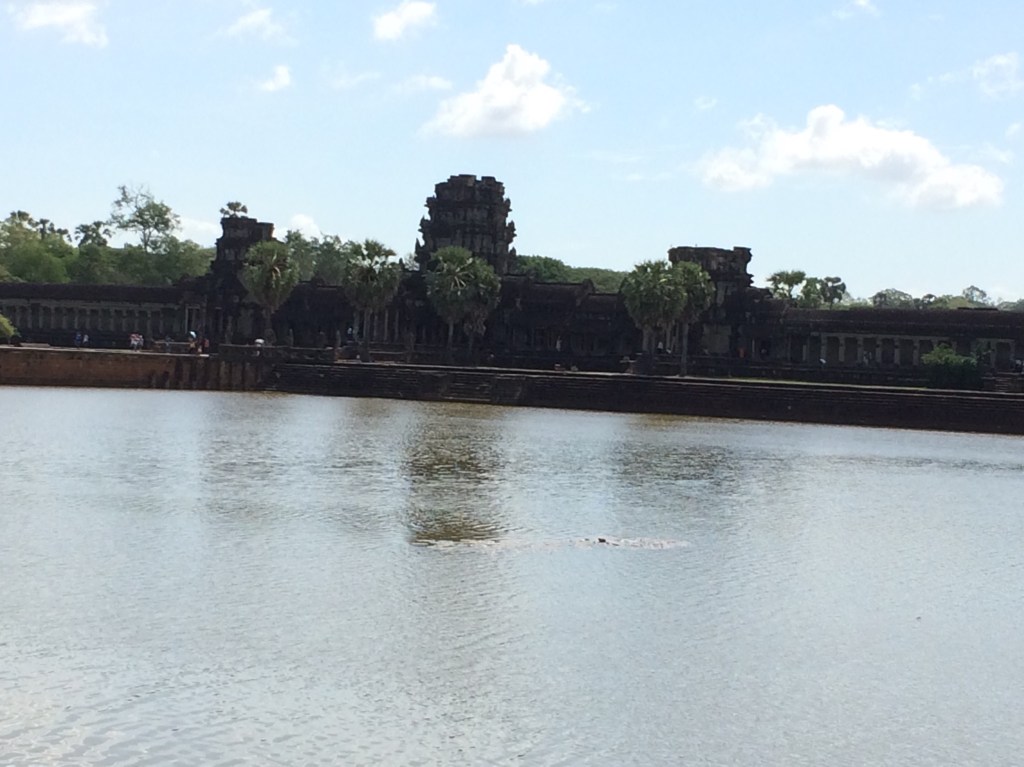
Angkor[1], a few days later, seems resplendent at dawn, but I am unable to escape the reality that the men who built this monument had also given birth to the reality that the Khmer Rouge would later become. Indeed, Pol Pot was known for his selective readings of the classics of the Khmer kingdom of Angkor — if building this city was possible, anything was, even his vastly unerudite idea of returning the country to a year ‘zero’, doing away with the market economy, abolishing money and persecuting intellectuals for wearing spectacles.
The rain that evades me in Phnom Penh finally catches up with me in Angkor Wat; unable to make a visit early one morning on a bicycle in a thunderstorm through the black jungle, I remain rooted to my guesthouse and eventually fall asleep.
On my first visit to Angkor Wat, I am stunned by the intricacies and details that seem to have permeated every angle of Khmer design. The frescoes on the walls and the images on the gates of the large temple complex depict wars fought and construction projects undertaken; for all its virility in eventually losing its grasp over modern-day Cambodia, the Hindu-Buddhist Khmer kingdom — of whose ilk Jayavarman VII had been, and whose predecessor Suryavarman II had ordered this temple made in 1150, at first as a tribute to Vishnu, and eventually, a mausoleum for himself — was remarkable in its aesthetic sensibilities.
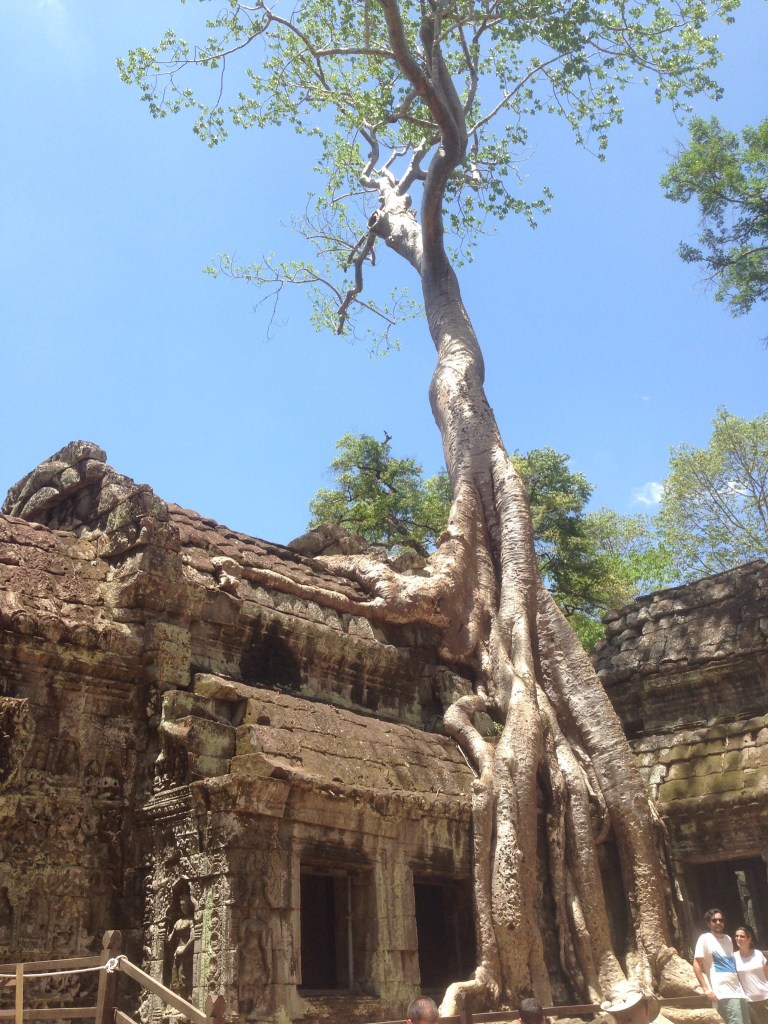
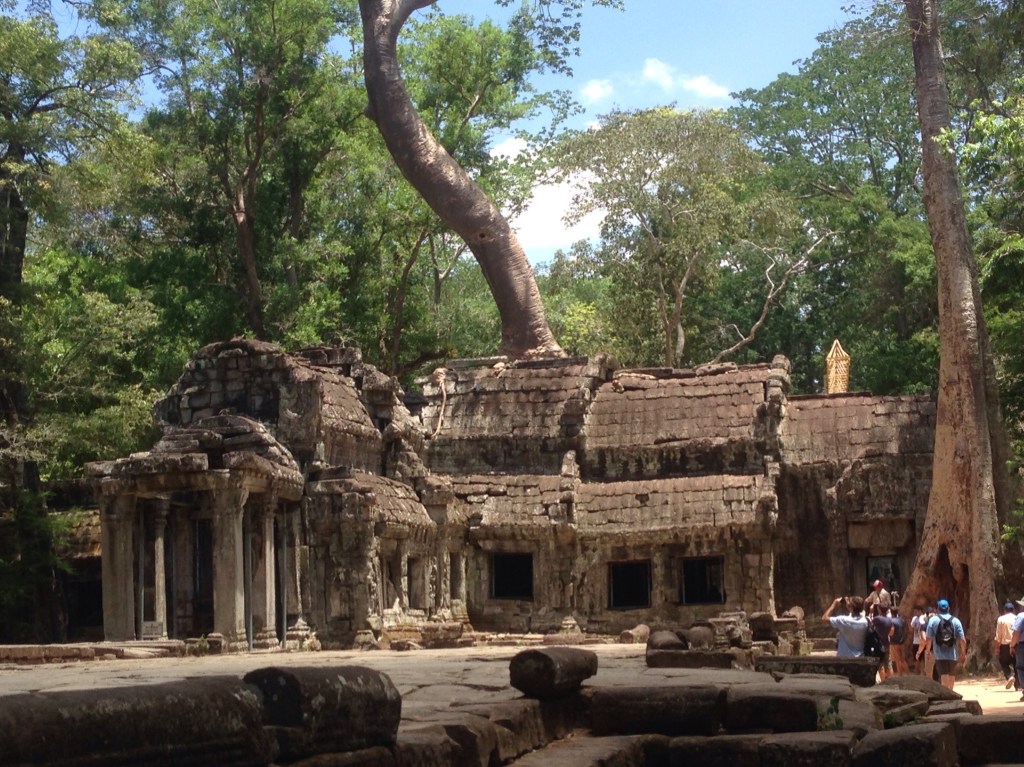
Ta Prohm
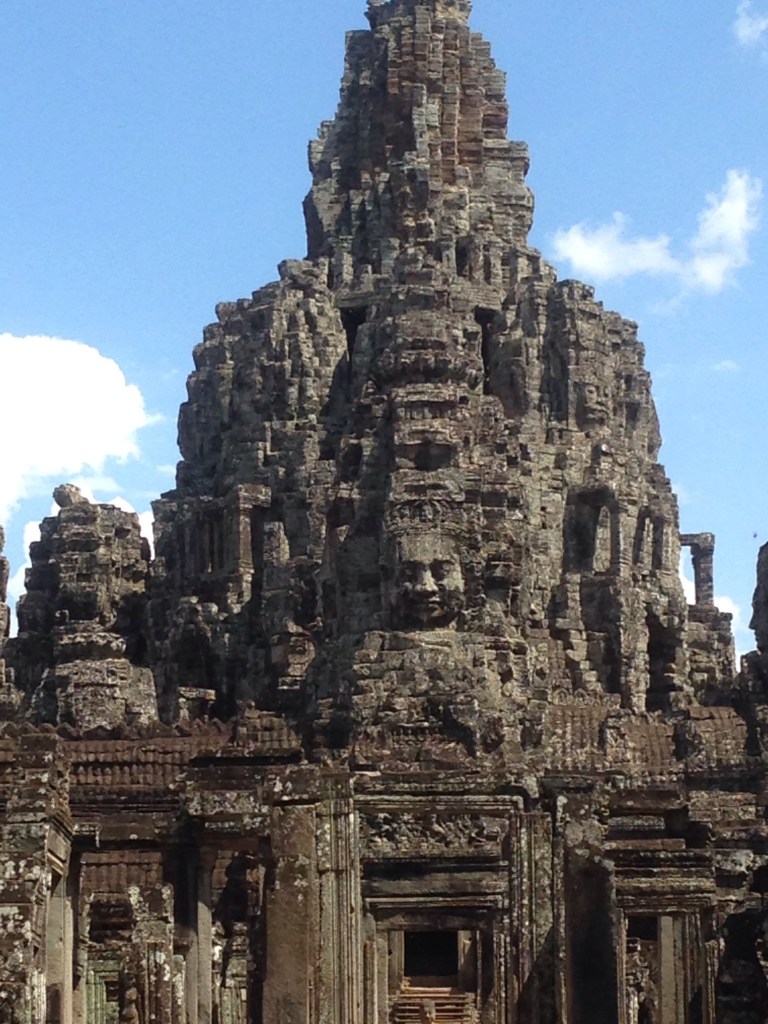
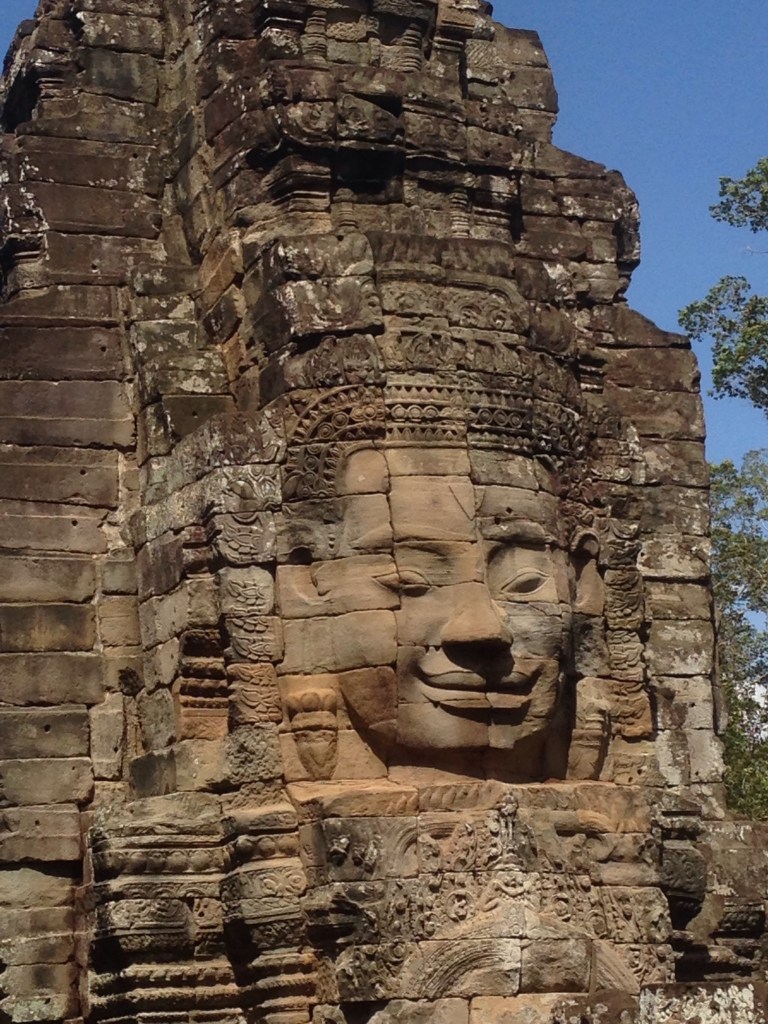
The several other temples in the area, including the great Bayon, Ta Phrom and Prasat Preah Khan — not to mention the gigantic meadows located in the heart of the old city of Angkor Thom — attract and drive my senses even as I struggle to cycle on flat roads in the deadening midday heat. The meadows, which feature statues of elephants attired in regal resplendence, remind me of a time simpler than this, when a thousand parasols could be had for cheap and held over the head of the king. The climate of Indochina, I surmise, may not have been too different from what it is now; I look yonder for concrete jungles mimicking the ones that seem to have sprung up choc-a-bloc in west Hyderabad, but encounter only lush blackness.
Angkor Thom
In effect, understanding Khmer society or the part of it which is shown to the visitor, is a challenging affair unless one undertakes a voyage of the heart that infrequently involves short-changing between lives of a different kind. The Mekong, which makes no appearance in Siem Reap, slithers away from the intemperate nature one finds in Angkor.
When I walk past Sisowath Quay one night under a moonless sky, I am reminded of my own idea of happiness, which seems to have been torn to shreds on this journey; a group of middle-aged Khmer men, devoid of languor in this dark hour and well-fortified with Angkor, the brew and not the temple, beckon me over to join in their game of sai[2]. It is then that I know it is time to put the killing tree to bed. For now.
[2] Played with the foot with a shuttlecock-like structure
Mohul Bhowmick is a national-level cricketer, poet, sports journalist, essayist and travel writer from Hyderabad, India. He has published four collections of poems and one travelogue so far. More of his work can be discovered on his website: www.mohulbhowmick.com.
PLEASE NOTE: ARTICLES CAN ONLY BE REPRODUCED IN OTHER SITES WITH DUE ACKNOWLEDGEMENT TO BORDERLESS JOURNAL.
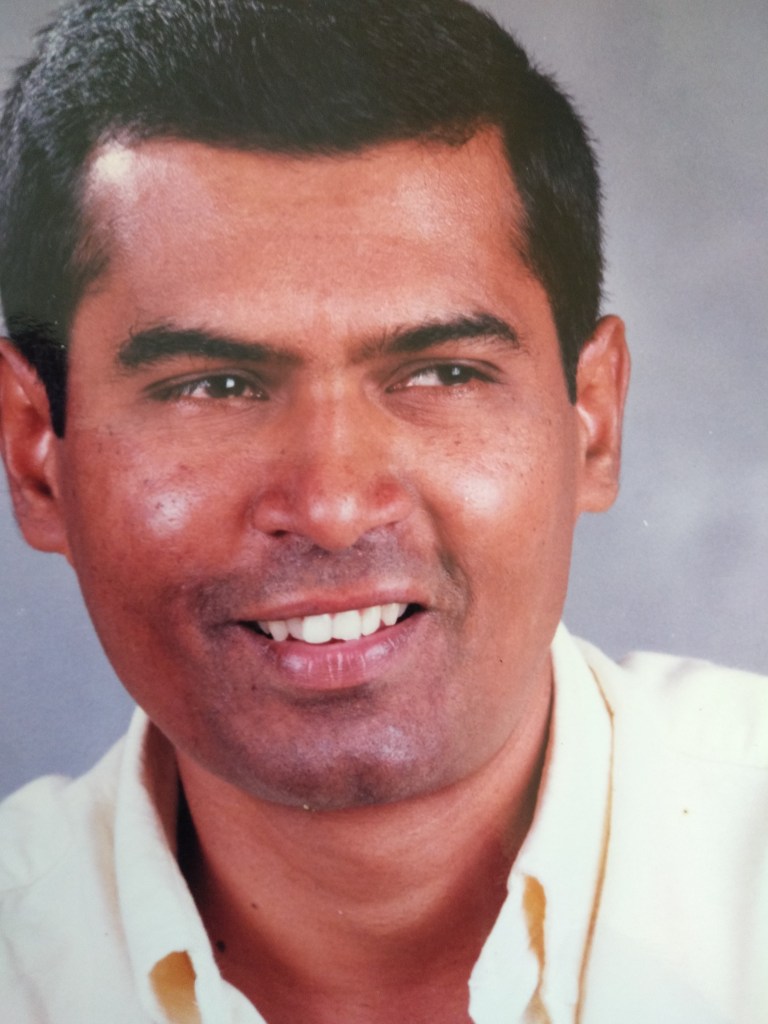
Ratnottama Sengupta tracks the journey of Leslie Carvalho over a quarter century
Leslie CarvalhoPhotos provided by Ratnottama Sengupta
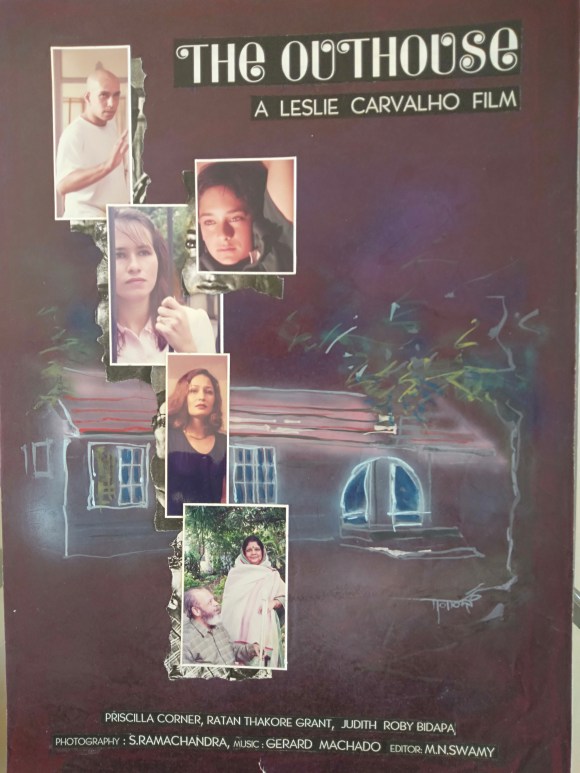
It seems like only the other day. The International Film Festival of India, IFFI, 1998 was on. Along with a colleague, I was seated on the steps outside Siri Fort I auditorium connected to a long corridor going to Siri 2. Someone introduced Leslie Carvalho. “Aha! The young filmmaker from Mangalore?” I responded. “There’s a write up on you in The Times of India today. It says there’s a lot of expectation from The Outhouse.”
The “delightfully sweet” film had lived up to the expectation of the critics. It was bestowed the Aravindan Puraskaram, presented by the Kerala Chalachitra Film Society to commemorate the iconic Malayalam director, and the first Gollapudi Srinivas award, another national level award to recognise filmmakers marking their debut in Indian cinema. So I was not surprised to meet him next as a co-member of the jury for the National Film Awards 2000.
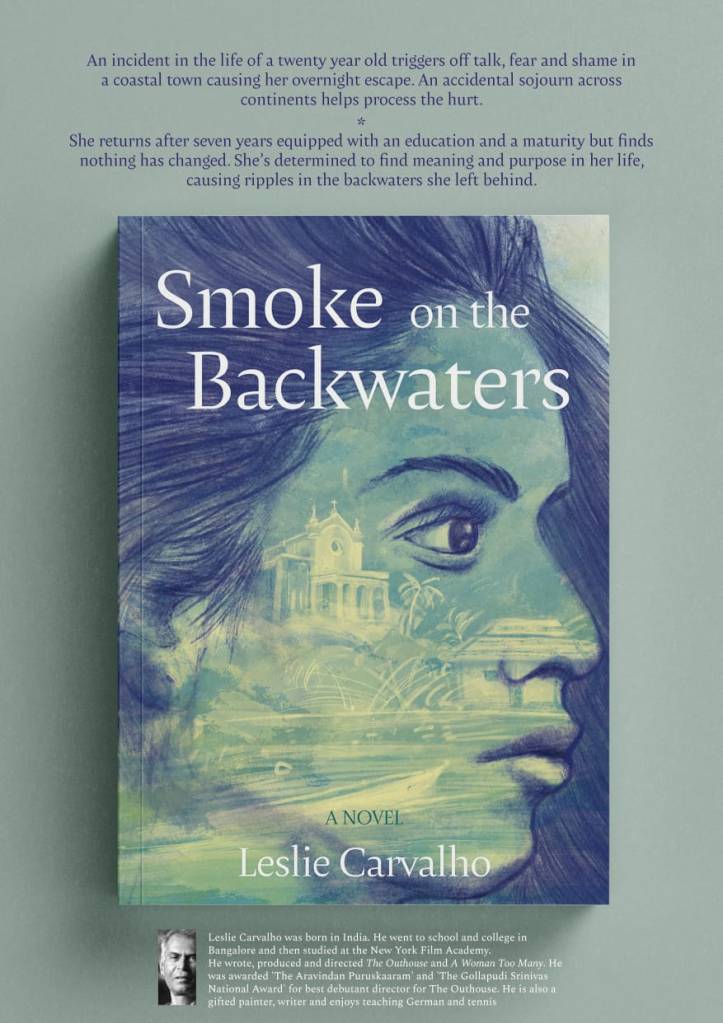
The Tennis coach who is also a German language teacher with a passion for painting has now published his first novel, Smoke on the Backwaters. It centres on Rosa, a twenty-year-old from Mangalore, who is forced to flee overnight because of the storm of gossip, fear and shame unleashed by a single incident in her life. Her unexpected journey across continents becomes a path of healing. Seven years later, armed with education and maturity, she returns home, determined to pursue her purpose in life. But how much had the town she left altered from its old ways?
RS: Leslie, before we talk Backwaters, can we briefly revisit The Outhouse? From where did you derive its content? And what was your compulsion for choosing that subject?
Provided by Ratnottama Sengupta
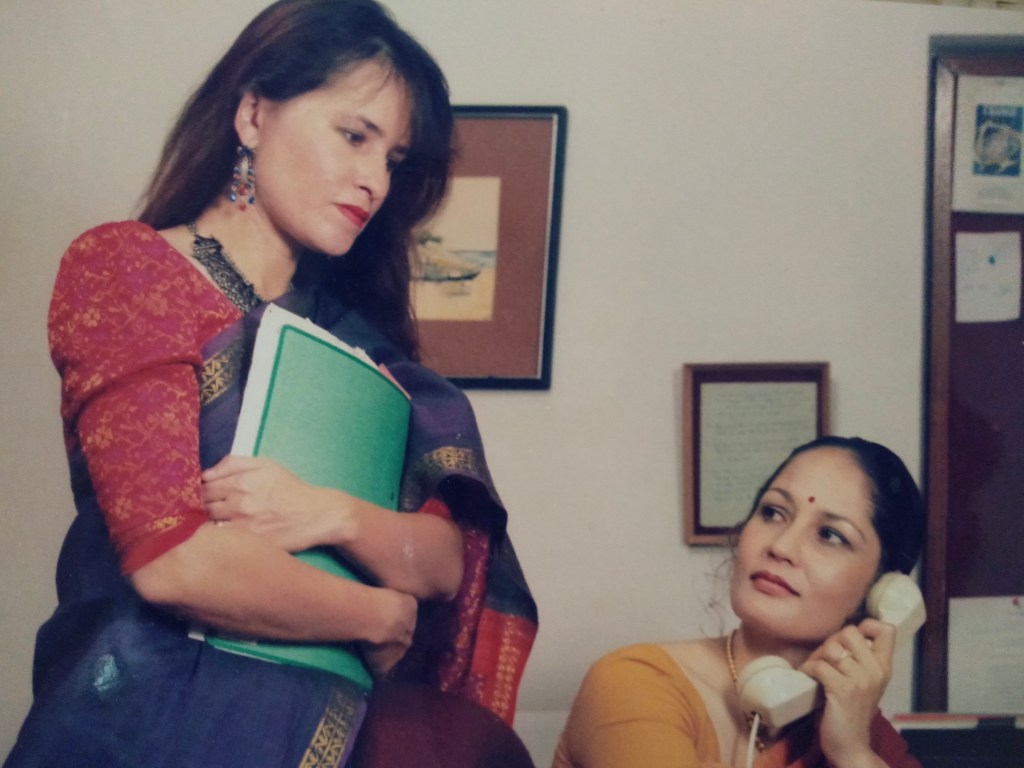
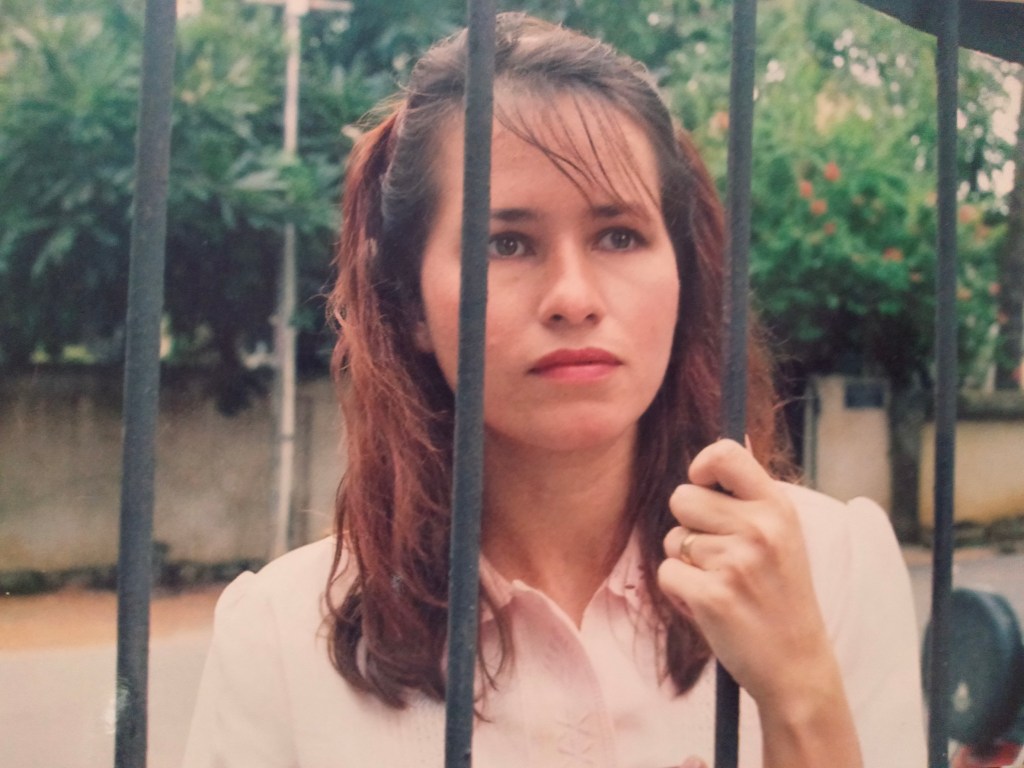
LC: The Outhouse was a simple, linear narrative about moving on in life despite the odds. A young mother’s need to gain economic independence to supplement the family income; the help she received from her financially independent sister; a kind hearted Bengali landlady’s generosity which causes stress and violence in the Anglo-Indian couple’s day to day life, and how it affects the two children growing up.
RS: Why did you choose this subject as your debut vehicle? If you were to travel in a time machine, would you choose a ‘mainstream’ subject?
LC: I chose this subject as my debut vehicle as I had seen quite a bit of violence in the Anglo- Indian community in the Lingarajapuram area of Bangalore I grew up in.
I was itching to make a movie after my six-month course at the New York Film Academy. As I was working on a very tight budget, I just stuck to what was taught — to keep it simple, straightforward and just tell a story using the various tools of cinema — in short, to make it cinematic.
If I were to go back in time, I don’t think I would have chosen a ‘mainstream subject’. I derived immense satisfaction along with the cast and crew as we felt we were working on something we were passionate about. We all felt drawn towards the characters, the story and the theme of the film.
RS: How did you get interested in cinema? And what were the problems you faced while filming The Outhouse – in terms of funding, casting, shooting location, distribution?
LC: I grew up watching Tamil, Kannada, Hindi, a couple of Konkani and lots of Hollywood films. My mother tailored clothes at home, and she taught a whole lot of women stitching. They were fans of Tamil cinema, especially of Sivaji Ganesan, MGR, and the heroes of Kannada cinema, Dr. Rajkumar and Vishnuvardhan. She also enjoyed the Hindi films of Rajesh Khanna, Dharmendra, Hema Malini, Amitabh Bachchan, Sanjeev Kumar, Jaya Bhaduri and Rekha — that is the popular cinema.
And my father, being an Army person, took us to see English films, like The Ten Commandments, The Bible, Hatari, To Sir, With Love[1]. Also, St. Germain’s School where I studied, screened English films every Friday afternoon in the Hall, from spools off a projector that made a jarring sound. It was an amazing experience — black and white Charlie Chaplin, Laurel & Hardy films and also Patton with all the bad words. Later, when in college, we would bunk classes to watch most of the popular Hindi and English movies.
At the New York Film Academy, I was exposed to an entire range of the world’s best in cinema. Satyajit Ray, Akira Kurosawa, Ingmar Bergman, Antonioni, John Ford, William Wyler, Fellini, Jean Renoir… And I watched a whole lot of films on the American Movie Chain (AMC). There I discovered all of Spencer Tracy’s films and fell in love with his sense of timing and under playing. It was also a time when I discovered Guru Dutt and marveled at his brand of filmmaking from Pyaasa, Kaagaz Ke Phool, Chaudhvin Ka Chand, Sahib Biwi Aur Ghulam to Aar Paar and Mr & Mrs 55[2].
It is hard to believe I began the shoot for The Outhouse on September 18, 1996, and completed it in 14 days – on October 1. After we went through the rushes, we required two more shots to link the gaps. Since I was on a shoestring budget of a few lakh rupees, I had rehearsals with the cast for close to three months. I doff my hat to them in gratitude as 90% of the film was canned on first takes. I could not afford retakes, and I worked with a brilliant cameraman, S Ramachandra, who was very supportive and encouraging. He shot most of B V Karanth, Girish Karnad, and Girish Kasaravalli films as well as the popular tele-serial Malgudi Days[3]. A number of first-time directors like myself, had benefitted immensely by his generosity and patience.
Since it was an independent film, whatever little finance I had, I sunk into the film. And then it took me a year to complete post-production for lack of finance.
I was particular about the casting. I wanted the Anglo-Indian look, feel, mannerisms, costume, interiors to be authentic. I met each cast member and spoke to them at length about the vision I had for my film. Almost all of them were from the Bangalore English Theatre, and all of them were cooperative. Moreover, Cooke Town is a quaint little place with many English bungalows and outhouses. After some struggle, I found one on Milton Street which suited my story perfectly.
After The Outhouse was selected for the Indian Panorama in IFFI ’98 and received the two national awards, I just walked into Plaza Theatre on MG Road in Bangalore and met the owner, Mr Ananthanarayan. He had heard about the film and asked me to meet the distributor, Nitin Shah of Hansa Pictures in Gandhi Nagar, the biggest distributor of English films. He put it on for a noon show for three weeks while Fire was on for the matinee and evening shows. The distributor then put it in Mangalore and Udupi for a week. And when I received the Gollapudi Srinivas National Award in Chennai, Aparna Sen was one of the honoured guests. She saw a small portion of the film and said that she would speak to Mr Ansu Sur to screen it at Nandan in Kolkata — founded by Satyajit Ray to help screen small independent films. A theatre owner in Kolkata recommended a person who took the film to the North East. It was also screened in parts of Kerala.
Coincidentally, this April 30th, The Outhouse will be screened in the leafy neighbourhood of Cooke Town next to the outhouse where the film was shot.
Still from The Outhouse, provided by Ratnottama Sengupta
RS: In the last 50 years we have seen films by directors like Aparna Sen, Ajay Kar, Anjan Dutt. Even before these, Ray had touched upon Anglo Indians in Mahanagar. These are all films made in Kolkata. Is it because this is the erstwhile capital of the Raj?
LC: Many of the films on Anglo-Indians were based in Calcutta. It was the influence of the British Raj and its culture that was so much a part of their long history of ruling there. Of course their influence was in other parts of the country as well like Madras, Hyderabad, Bangalore, Whitefield and Kolar Gold Fields, the railway colonies all over the country, the hill stations, and many other cities which has pockets of Anglo-Indians.
RS: I remember one Hindi film, Julie that had an Anglo-Indian protagonist. How has the community been projected in popular culture? Was it lopsided or biased?
LC: Throughout our film history Anglo-Indians have played bit roles here and there. Some significant roles came their way in Bhowani Junction, the teleserial Queenie, 36 Chowrighee Lane, Bow Barracks Forever, Bada Din, Cotton Mary, The Outhouse, Saptapadi, Mahanagar, Julie, and Calcutta I’m Sorry[4].
Some of the characterisations have been quite biased; some not well fleshed out; some in passing fleeting moments of drunkenness, prostitution. The song and dance sequences have not helped the community, sadly.
RS:What led you to writing? The screenplay for The Outhouse?
LC: I wrote the screenplay of The Outhouse on plain A4 sheets of paper, on both sides. This is not done but I did it to save on cost. I gave the screenplay to my cinematographer S. Ramachandra, and in his generosity he understood my purpose. I went by what was taught at the New York Film Academy. Of course, I had to combine all the elements to make it whole. The idea of the screenplay came to me while I was at the film school in 1995.
RS: What was the trigger for writing Smoke in the Backwaters?
LC: As an artist, filmmaker, and writer, I have tried to combine all the elements of story-telling – fact and fiction — keeping in mind the flow of ideas, pace and momentum to engage and interest my audience and readers.
I remember beginning to write the novel two decades ago when my mother — who studied in Kannada medium — said, “I hope you will write it in simple English so I can read it too.”
And I wanted it to be reader friendly with regard to the font size, the brightness of the paper, the spacing, the clarity and the size of the book. I was lucky my publisher ‘Anglo-Ink’ was supportive and combined well to find that centre.
Provided by Ratnottama Sengupta
RS: How are you marketing the book? Through Litfests? Bookstore readings? Airport bookstalls? A H Wheelers?
LC: Since Anglo-Ink is a small-time publisher, we’ve had a dream launch in my hometown Bangalore at the Catholic Club. My book seller is Bookworm on Church Street in the heart of Bangalore and for people in Cooke Town it is in The Lightroom’ library.
We are looking at launches in various cities as well, through book readings, LitFests, Airport book stalls, AH Wheelers, readings at schools and colleges.
Since a major portion of the novel is set in Germany, we are looking at translating it into German. I hope to get it translated in a few Indian languages as well.
RS:Since the sunset decade of 1900s, Anglo Indians have been migrating to Australia and Canada. What triggered this migration? Economics or politics?
LC: The migration of Anglo-Indians was inevitable. It was bound to happen for reasons more than one, be it political, economic or social. First under the ‘Whites Only’ policy, many fair skinned Anglo-Indians migrated — the brown and dark skinned were left behind. Slowly they opened up and even they left. Some felt they would adapt better to a western culture, and have adopted their new country as their homeland.
RS:You were a big support for me when my son joined NLSUI in 2000. Again, when I curated Anadi, the exhibition of paintings by Contemporary and indigenous artists from MP and Chhattisgarh. Bangalore has since become an international megalopolis. How has life changed for the locals?
LC: Bangalore has changed dramatically and drastically. The change was bound to happen because of its growing prominence of an International City. The IT industry brought jobs, slowly other industries, started picking up from real estate, fashion, digital technology and social media platforms, start-ups, academics, sports, games, recreational and tourism.
The moderate climate was a huge bonus that attracted people from all over. Bangalore has always been cordial, encouraging and accommodative of people from all over through their mild manners, hospitality and gentleness.
Today Bangalore is unrecognisable. Still, some pockets retain that old world charm of neat, clean and green Bengaluru from the old Pensioners Paradise of Bangalore.
.
[1]The Ten Commandments (1956), The Bible (1966), Hatari (1962), To Sir, with Love (1967)
[2]Pyaasa (Thirsty, 1957), Kaagaz Ke Phool (Paper flowers, 1959), Chaudhvin Ka Chand (The Full Moon, 1960), Sahib Biwi Aur Ghulam (The Master, the Wife and the Slave, 1962), Aar Paar (This shore or that, 1954), Mr &Mrs 55 (1955).
[4]Bhowani Junction (1956), TV miniseries Queenie (1987), 36 Chowrighee Lane (1981), Bow Barracks Forever (2004), Bada Din (1998), Cotton Mary (1999), Saptapadi (Seven Steps, 1981), Mahanagar (The Big City, 1963), Julie (1975), and Calcutta I’m Sorry (2019)
Ratnottama Sengupta, formerly Arts Editor of The Times of India, teaches mass communication and film appreciation, curates film festivals and art exhibitions, and translates and write books. She has been a member of CBFC, served on the National Film Awards jury and has herself won a National Award.
.
PLEASE NOTE: ARTICLES CAN ONLY BE REPRODUCED IN OTHER SITES WITH DUE ACKNOWLEDGEMENT TO BORDERLESS JOURNAL
“Do you think my son will really make cartoons one day, Amma?” Aarti asked, leaning on the kitchen counter. Her face was tired but animated, her eyes filled with the kind of hope that could withstand storms. “He’s obsessed with Pikachu. Says he’ll create something even better!”
My mother, chopping onions at the time, paused. “And what do you say to him?”
“I tell him to focus on his homework first,” Aarti replied, laughing, the sound carrying the weight of her exhaustion and her joy.
That was Aarti—equal parts pragmatic and dreamer.
Aarti entered our lives quietly, one morning in June. It was the start of another humid monsoon, and I remember her standing at the door, wiping rain from her forehead, sari sticking to her frame. My mother had been looking for help around the house, and a neighbour sent Aarti our way. She was in her early thirties, with a bright, almost childlike smile that seemed at odds with the world-weary shadows under her eyes.
She wasn’t the kind of maid who kept her head down and avoided conversation. She had a way of speaking as though she were a longtime friend, not an employee. My mother, who was in her mid-fifties and naturally reserved, found herself talking to Aarti more than she did to some of her relatives.
Between chores, I often found them on the balcony, sipping tea, their laughter filling the space between them. It was an unlikely friendship, but one that felt natural.
My mother always ensured that Aarti had enough food, even extra servings. Aarti laughed it off, saying she had a big appetite and always finished everything she was given. She relished the food, always making sure to appreciate even the smallest gestures. We all ate from the same vessels, sharing the same meals without reservation. It was a simple act that, to me, symbolized the ease of their bond.
She’d sit on the kitchen floor, her back against the wall, and sip slowly, the steam clouding her face. It was during one of these moments that she spoke of Nepal, of fields terraced along the mountains, of her father’s small paddy field.
One rainy afternoon, as thunder rolled faintly in the distance, she told my mother a story from her childhood in Nepal. “I was four,” she began, her voice distant, as if she were looking through a window into a world she no longer inhabited. “There was a carnival near our village. My father had saved up for weeks to take us. It seemed so magical at the time—bright colours, laughter, everything perfect.”
She paused and smiled, the kind of smile that belongs to a person who has lived through too much. “That day, I thought we were rich. My father and mother seemed so tall, so strong.”
She laughed softly, more at herself than the memory. “It was only later, when we lost the fields and came to Chennai, that I understood. We weren’t rich, Amma. My father just wanted me to feel like we were. He gave me one perfect day.”
Aarti had two children—a boy and a girl—and she poured her soul into raising them. They were confident and outspoken. “She’s given them a rare gift,” she told me once. “A sense of self-worth. They don’t feel inferior to anyone, they walk into a room like they own it.”
Aarti’s children, despite everything, carried themselves with a quiet self-assurance that was hard to miss. They didn’t slink away in shyness or look down at their shoes when spoken to. Instead, they met people’s gazes with a steady resolve that belied their modest upbringing.
For her children, she was a fortress, shielding them from the storm of her struggles.
Her pride in her children was boundless. Her son wanted to be a cartoonist, her daughter a doctor. She had no doubt they would achieve these dreams, even if the path was steep.
One evening, as my mother and Aarti stood on the balcony watching the rain, she revealed a part of herself she rarely showed. “I was engaged once before Vikas,” she said softly. My mother, who had been watching the rain, turned to her.
“I was only fifteen,” Aarti continued. “He was just like me—talked a lot, dreamed a lot. Mad fellow. He wanted to become an actor. Said he’d be in all the TV serials one day.” She laughed, but there was no joy in it. “I believed him, Amma. He painted such a beautiful life for us. I loved him.”
“What happened?” my mother asked.
“On the day of the wedding, he ran away,” she said, her voice breaking for the first time. “Just disappeared. I still don’t know why. Maybe he got scared. Maybe he didn’t love me the way I loved him.”
After the failed wedding, Aarti’s life took a different turn. Her father moved the family to Chennai, fleeing debt and the cruelty of bad harvests. He found work in a sawmill, and they lived in a cramped room with thin walls that let in too much noise and too little light. The move was jarring—exchanging the cool air of the hills for the oppressive heat of the city, the quiet of village life for the chaos of urban sprawl.
After her father passed away in an accident, her mother remarried, and they moved to Hyderabad. Aarti found herself in a new household with stepsiblings she adored. “They were kind,” she said once, “but I always felt something missing. A father figure, maybe.”
Her marriage to Vikas came a few years later. He was much older, a quiet man who had lost his job as a school peon. Their life together was neither loving nor hostile; it was functional. When Vikas lost his job, Aarti stepped into the role of breadwinner, working tirelessly to give her children the life she never had.
“Vikas isn’t abusive,” Aarti said once, shrugging. “He wasn’t unkind, but he never really saw me either. He is distant.”
It was her children who gave her life meaning. Aarti celebrated her children’s birthdays with a joy that felt almost contagious. She would save up for months to buy them small gifts—a toy car, a new set of crayons—and make simple but hearty meals for them. “We had a feast last night, bhayya[1],” she’d report cheerfully. “I made chicken biryani!”
“We may not have much,” she often told her children, “But you are no less than anyone else.”
But life had a cruel way of catching up. Her body began to betray her. Years of standing for hours, washing utensils, and working in damp conditions left her legs covered in sores. She ignored them at first, brushing off the pain, but the wounds worsened. Then came the coughing, relentless and deep. Tuberculosis, the doctor said.
Vikas, who had always been distant, stepped in to cook and care for the children. But it was Aarti’s absence from our home that hit us hardest.
One afternoon, after a brief hospital admission, Aarti’s daughter came to our house. She was teary-eyed, and I knew something was wrong.
“Ma’am, my mother won’t be coming to work anymore,” she said. “She’s too sick. We’re moving to another locality.”
My mother’s heart sank. “What happened to her?”
“She’s just… sick. Her health has been bad for a while, and now… it’s worse.” The girl’s voice trailed off, and she left without saying another word.
My mother didn’t say much after that. She went about her chores in silence, but I noticed how often she paused, her hands lingering over the vegetables she chopped or the clothes she folded. It was as if a piece of her routine, her life, had gone missing.
Years passed. My sister moved to the US, married, and had a son. My mother visited her there, her excitement about becoming a grandmother filling our calls. I moved to another city for work, and though life pulled us in different directions, we sometimes found ourselves talking about Aarti.
“Do you think her son ever became a cartoonist?” I asked my mother once.
“I hope so,” she replied.
“She deserved more,” my mother said one day, her voice quiet.
“Maybe,” I replied. “But she always tried to make sure her children wouldn’t have to stay the same.”
And so, life continued, as it always does. But the memory of Aarti—her strength, her dreams, and the way she had woven herself into our lives—remained. Aarti wasn’t extraordinary in the way the world measures greatness, but in her quiet, unassuming way, left a mark on us all.
[1] Brother, used as a term of respect for her employer’s son.
Priyatham Swamy is an emerging writer exploring complex human relationships and societal narratives. He works in India’s rural and agriculture domain and is passionate about literature and human connection.
PLEASE NOTE: ARTICLES CAN ONLY BE REPRODUCED IN OTHER SITES WITH DUE ACKNOWLEDGEMENT TO BORDERLESS JOURNAL
Jibananada Das’sAndhar Dekhecche, Tobu Ache (I have seen the dark and yet there is another) has been translated from Bengali by Professor Fakrul Alam. Click here to read.
Manish Ghatak’sAagun taader Praan (Fire is their Life) has been translated from Bengali by Indrayudh Sinha. Click hereto read.
Manzur Bismil’s poem,Stories, has been translated from Balochi by Fazal Baloch. Click here to read.
Homecoming, a poem by Ihlwha Choi on his return from Santiniketan, has been translated from Korean by the poet himself. Click here to read.
Tagore’sShotabdir Surjo Aji( The Century’s Sun today) has been translated from Bengali by Mitali Chakravarty. Clickhereto read.
Paul Mirabile wraps his telling like a psychological thriller. Clickhere to read.
Conversations
Ratnottama Sengupta converses with Divya Dutta, an award-winning actress, who has authored two books recently, Stars in my SkyandMe and Ma. Clickhere to read.
Charminar, an iconic landmark of Hyderabad. Art by Kishore Singh. From Public Domain
Had Paradise survived, the last Hyderabadi[1] would have done as well. Yet what remained of Paradise were shards of its best self-scattered around parts of the country that did not understand what it meant to carry its legacy, of what the endless cups of frothy Irani chai over a pair of lukhmis or nausea-inducing keema-roti[2]meant to the gentry of the city in general. Or, before the advent of the social media, what was the impact of the gentrification of a city better known as a town of small neighbourhoods, harassed yet equally enriched by the countless migrants from the eastern India.
Autumn had finally arrived, and the smell of the tree of sorrow permeated within the crisp, starch-lined shirts of the former politicians of a political party whose hues no one could be certain of anymore. The hijras[3] flocking the bus stop opposite the JBS[4] metro station had no intent in seeking out alms anymore. With the festive season approaching in all its vehemence, life was supposed to get better for them and the countless number of beggars — maimed or otherwise — who made a living out of the charitable pockets of officegoers.
The latter made the famous bus stand their endroit le plus important [5]and fed their starving souls with tidbits of generosity that they could only offer a pregnant prostitute or a vagrant with no feet staring up Akbar Road with a bright barrenness in his eyes. Of course, one could always count upon the Ganesh temple looming in all its gargantuan simplicity through the shards of space between the metro rail pillars and berating simple-minded Hindus for not having enriched its donation box. The last Hyderabadi often thought that this vision — more than ideas of goodwill — dictated the unusual largesse of the usually tight-lipped and parsimonious gentlefolk.
*
What could have been construed as big-heartedness among the lower classes was usually written off with disdain by those who did not have the luxury of being poor. The road that snaked down the Military Engineering Services instalments and evaded the right fork towards Secunderabad Club was sure to have ended up in the dull brown villas of Gunrock; the last Hyderabadi often wished he could spare himself the pain. To think of pain was pain itself. He forced himself off the stool next to Grill 9 where he was smoking a Charminar — a remnant of an era long gone — and joined the serpentining queue of revellers shedding their last moments of joie de vivre[6] from Tivoli, and its apostle up the road that took pride in housing respectable men these days.
Shedding the joie de vivre often took him back to the days when he could have been carefree enough to hop in and out of the multiple breweries that had sprung up like mushrooms on road number 45 in Jubilee Hills, not a million miles away from JBS as the crow flies. Had the last Hyderabadi known how to take the metro rail into the new central business district of the city, he would have reached sooner than he did when hoisting himself upon his trusted Bajaj. The latter frequently needed a pat of encouragement from its owner when it chose to get stuck on clean, wide roads that could only ferry the chief minister and his coterie. Of course, no other road would have had the gall would have had to tidy up as much as the ones here did — the lack of water, sanitation and seepage an accepted norm.
Of what need was there for him to chauffeur his thoughts in a world that had long seemed to dissolve him in a glass filled with water that no longer came from the Musi[7]? Yet, there was the odd occasion when he would find himself seeing the vast encumbrance that the cable bridge over Durgam Cheruvu had become, with the thought of jumping off it never too far from his mind.
Broadway, Prost, Forge, Fat Pigeon, Lord of the Drinks, Forefathers, Daily Rituals — of what use was it that he could reel their names as well as the oldest merlots they had from memory? Had he taken the time to look beyond the sports pages of the Deccan Chronicle, the last Hyderabadi would have found something to relish in times of the infrequent melancholy that knew him by name. Had the drink consumed him, or vice-versa, things may not have changed him for the better, or made the city — once recognisable, and now imperceptible — more hospitable towards him, but he would have known something better to do with his time than count by hand the centuries scored on the numerous pitches at the Parade Ground every Sunday.
*
Oh, how he longed to go back to Shah Ghouse and forget that a world such as the one he was forced to inhabit now existed. A world in which seasons came and went, but autumn — obstinate, stubborn autumn — always hung around far longer than it was welcome. With the lines blurring between right and wrong, it was felt that the city would not live up to its pretentions had the same happened between autumn and winter.
Of course, those settlers from the coastal belts of Andhra who made the northern neighbourhood of Kukatpally their home knew little better than to pull out their jumpers at the first smell of rain or — perish the thought — the temperature dropping below thirty. Yet, the last Hyderabadi plodded along, knowing innately that this season too was bound to leave — like the majority of his dreams — and winter would take over inevitably.
How little he trusted his words these days, delving deep inside his psyche to look for some semblance of sanity that he had held on to during his prime. Chasing another peak, the last Hyderabadi had settled down to accept the inescapable — the city would move on without him — and defy the passage of time that had once held him tightly in its grips. Oh, what he would have given to head back to Paradise, say hello to trusted old Saleem and ask for a cup of tea.
*
There were those moments of immense self-doubt in which the last Hyderabadi felt that his hands would wash away in the sickly Musi underneath Purana Pul[8], leaving him standing on his legs which were clearly giving up. The decisiveness of the issue softened the blow whenever he looked at the paunch he had developed of late — the endless runs up and down Tank Bund on Sundays when the whole world slept, being wrecked by the keema roti for which he would often turn to Garden, bypassing Paradise. (He had sought refuge at the Alfa one morning but was left ruing his choice as hordes of travellers swept past him determined to leave their footprints in the city without quite being welcomed by it.)
Whatever poetry had once risen inside him while tucking into the umpteenth samosa at Lamakaan had been disbursed by the recognition of pain in parts of his mind he seldom acknowledged. The poems were songs in celebration of life, and it was only ironic that he should have to think of these when assailed by the thoughts of an autumn long ago, when Keyes High School had been decked up for the first time, and he had finally realised what he wanted from life.
It was when Hitec City still boasted of barren boulders that one had to hike up to gain a better understanding of the panorama below. He often felt that he could understand the words, but not its meaning. That autumn seems to have flooded Manjeera — the lifeblood of the city — and neglected to pay the last Hyderabadi any tribute worth his while.
When he thought of life, his most recent memories appeared dusted with the coat of nostalgia that one often reserved for emotions felt long ago. His worries had been compounded by his mind’s reluctance to admit that he had become old, that there would not be anyone after him, that he was merely standing upon the shoulders of those who had come before — those who had experienced the greatness of this city and shed an imaginary tear at what it had eventually become.
[8]Purana Pul, along with being a translation of ‘Old Bridge’ in Hindi and Urdu, is also a place of significance in the old city of Hyderabad.
Mohul Bhowmick is a national-level cricketer, poet, sports journalist, essayist and travel writer from Hyderabad, India. He has published four collections of poems and one travelogue so far. More of his work can be discovered on his website: www.mohulbhowmick.com.
PLEASE NOTE: ARTICLES CAN ONLY BE REPRODUCED IN OTHER SITES WITH DUE ACKNOWLEDGEMENT TO BORDERLESS JOURNAL.








 Borderless