Categories
Conversation

A Toothsome Exploration of Poetry, Life and Values

In Conversation with Kiriti Sengupta

Based on Paul Gauguin’s life is a book by Somerset Maugham[1] called Moon and the Sixpence[2], a novel about a stockbroker who abandons his profession to become an artist. Gauguin[3] was a stockbroker turned artist, and Maugham was trained a physician but opted to write books and became a famed novelist. While earning a living as solely a writer has become increasingly difficult through the world unless you make it very big like JK Rowling[4], and therefore, most writers opt for being part time writers while holding full time jobs, we do have a few strange aberrations. One of them is Dr Kiriti Sengupta, who turned to publishing and poetry abandoning his profession — that of a dentist.
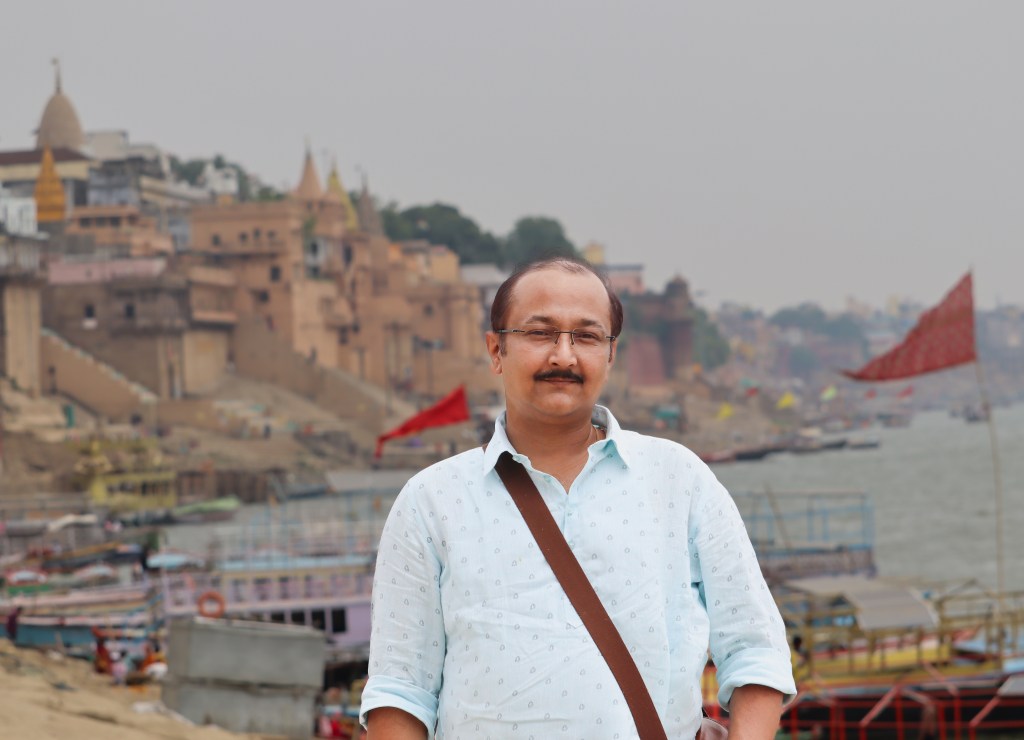
Kiriti Sengupta: Photo Courtesy: Bitan Chakraborty

He ran away from his home and started writing in a small, rented accommodation in 2011-2012. And now he writes, works as a director in one of India’s top upcoming publishing concerns, Hawakal, and rolls out poetry. Sengupta describes his former profession with, an underlined sense of irony, and perhaps with tongue-in-cheek humour:

I prefer patients who are edentulous. I dread
a tooth will wrangle my expertise, and I’ll fail
to make an impression.
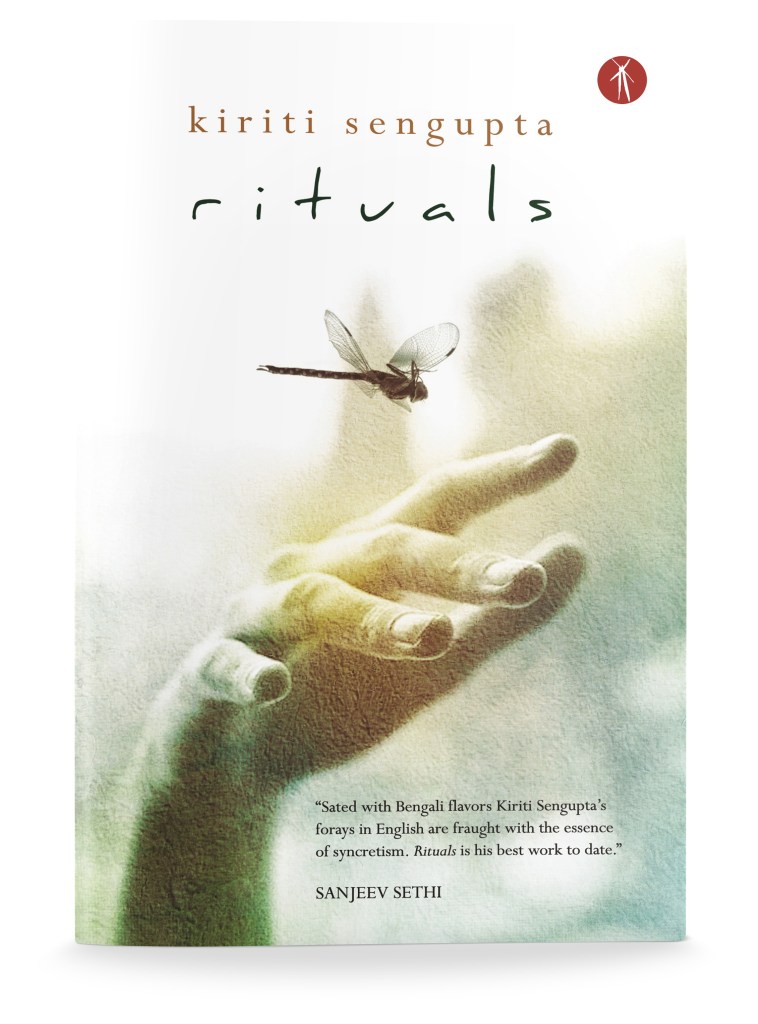
(Rituals, 2019)

Wisdom
the third molar adds
to the surgeon’s expertise
(Oneness, 2024)

He writes about water and the environment:

Water has many colors, 
smudging pebbles
along its path

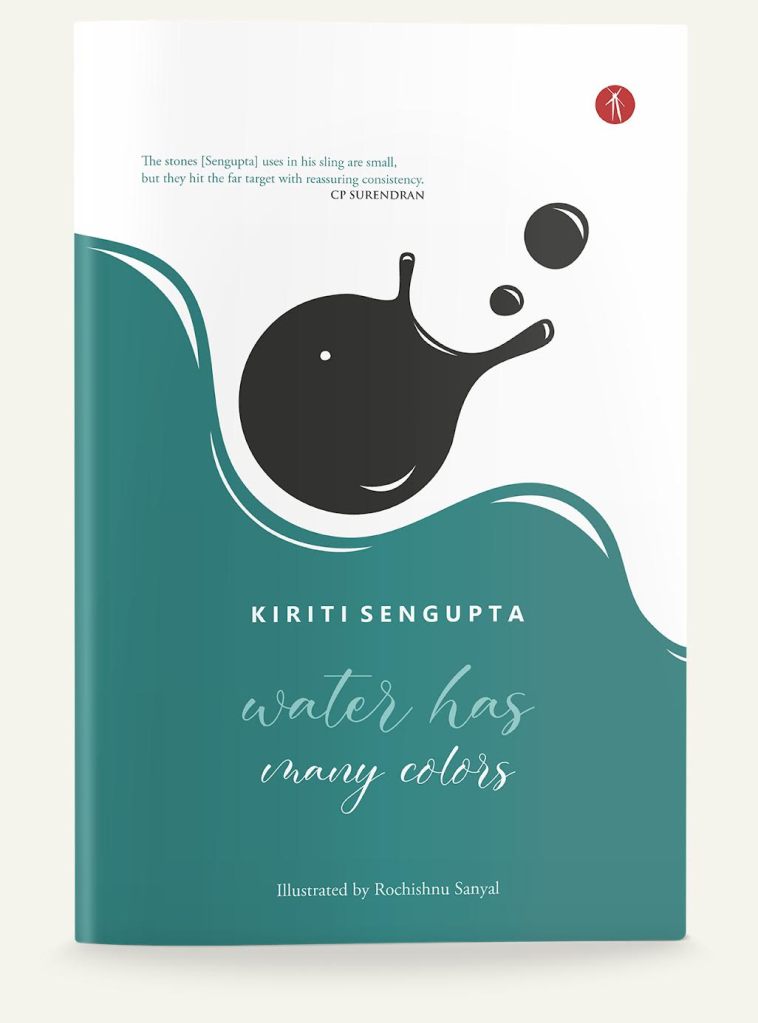
(‘Spectrum’, Water has Many Colours, 2022)


Feed the earth water
she flows in abundance.
Allow the planet to breathe:
the air is her consort.
(‘Hibiscus’, Water has Many Colours, 2022)

He writes for and about women:

How many mujras dwell in a kotha ? 

How many neonates hew to a bordello?

Like her admirers
God is silent.
In her sinews
hides a hint of soil
from the yard of courtesans.

*Mujras are courtesan’s song and dance performances
*Kothas are brothels
(‘When God is a Woman’, Rituals, 2019)

And yet critiques stances with a twisted questions:

You define women as Durga
or Kali. Are you a believer? Are you
being kind? You could have convinced
them to fight the evil.
Instead, when you imply the goddess,
do you illustrate
sisterhood with many limbs? Would you
like men to act as Shiva—the destroyer?

(‘Primordial Learning’, Oneness, 2024)

Underlying all of Sengupta’s poetry, is a strong sense of irony which like a veil drapes words with double entendres. While the poems are layered, he dwells on human frailties too…  like procrastination with a soupçon of sarcastic humour as in ‘From Being Late in Calcutta’ (Rituals):

As soon as you mark me
I’ll talk about events
that guide me to the records
you maintain.

I’d say crowded buses invite passengers
from unscheduled halts.
I’d emphasize the number of speed-breakers on road,
and their poor performance in preventing accidents.

I’d tell you trains run late.
Signals are laggy between stations.
I won’t forget to mention how
a sudden protest
makes the train stand still for hours.

I’d discuss about the day I reported late,
owing to instantaneous suspension
of underground train services
as a man killed himself on the railway lane.

I’d ask you to remember why I came late the other day.

If you can recall,
I had indigestion despite eating at home.
I blamed farmers for sprinkling pesticides on crops.
I pointed at my salary that failed to buy organic veggies.

And then,
I’d invariably argue about maintenance and population.

I’d appreciate China, one-child policy, and their claim on
how the government prevented four hundred million births.
And how India thrives on the revenues earned
from selling nicotine and condoms.

I’ll explore other issues
the next time I reach late.

He pours out lines on stars, film stars and politicians. Sengupta responds to life with poetry, often terse, brief… sometimes with a wry sense of humour. But in the brevity, lies a depth of mystery, which you can mull and cogitate over endlessly. A flickering of spiritual beliefs and a seriousness of intent despite the apparent lightness of words create a conversation within the poems. In this exclusive, an award-winning author of more than fourteen books, Kiriti Sengupta takes us on whirlwind tour of his life, his ideas and his work.
When and how did you start writing poetry? Why did you switch professions — from a dentist to a poet-publisher? What compulsion made you turn from a lucrative to an uncertain profession? Were you sure you’d succeed? Please share your story with us.

First of all, thank you for inviting me to Borderless for a heart-to-heart, Mitali. I greatly appreciate your dedication to literature, especially quality work. Coming to your first question (a bundle of questions, actually), I don’t remember when I first wrote a poem. Coming from a dentistry background, I never imagined that I would write poems. Until then, I was well acquainted with journalistic articles, critical responses, cultural essays, and, of course, scientific papers. Poetry was out of the question. I believe in karma. Maybe I was destined to write poetry. It wasn’t a deliberate choice. It wasn’t a spontaneous stance either.

I was passing through an obnoxious personal crisis that compelled me to reconsider my career in dentistry. I was comfortably placed in a government institution, enjoying a considerably thick monthly salary. In early 2012, I decided to leave my job and spend some time with myself. However, as you can understand, it was risky, as I was the only breadwinner in my family, which consisted of my wife and son. I had no career options to pursue. 

I was new to social media back then. I had the opportunity to become involved with a virtual group, Indies In Action (IIA), run by Stephen L. Wilson. They were raising funds for the victims of the devastating earthquake in Oklahoma. I contributed a few poems to the literary anthology Twist of Fate (ToF), which Steve edited. It was hugely successful, and all proceeds went to the May Tornadoes Relief Fund, managed by United Way. For the promotion of the book, I interviewed a few eminent contributors, such as Bill Lantry, Terry Lucas, Colin Dardis, Marshall G Kent Sr., Allison Bruning, Maggie Rascal, Don Martin, Linda Bonney Olin, Maria Edwards (the then President of the American Authors’ Association), Ency Bearis, among others. Honestly, they all helped me become familiar with the world of poetry. 

In 2013, my first book, The Unheard I, was published. It was released simultaneously in India by Dhansere Prakashan and in the United States by Inner Child Press Limited. It was non-fiction, although it contained two chapters dedicated to poetry. In his commentary, Stuart Aken remarked, “It is a scholarly [collection] that will appeal to those with an interest in poetry, particularly spiritual poetry expressed as literature, as well as [to] those who have a leaning toward or a significant interest in Indian myth and religion.”

Even then, I had no plans to pursue writing (or publishing, for that matter) as my career. Gradually, I evolved, and here I stand today. Do I call myself successful? I’m not sure whether I have turned into a consummate writer. Since I write poetry in a niche market worldwide, it is challenging to become a “successful” poet and earn enough royalties to sustain my family. As a publisher, oh yes, Hawakal has emerged as a leading traditional press that has published several writers and poets and enjoys its presence in New Delhi, Kolkata and Nokomis (Florida). 

How long have you been in the literary framework? Was it a tough journey moving from dentistry to writing? How did your family respond?

My first essay was published in 1995 in the college magazine. I remember it was written for students suffering from anxiety and family expectations. While studying dentistry at North Bengal Dental College, I joined the All-India Freelance Journalists Association (AFJA, Chennai). My senior colleague, Dr. Falguni Maji and I were commissioned by Uttarbanga Sambad to write an article on the pottery art in Matigara (Siliguri). I was a regular contributor to “The Third Law” in The Telegraph (India). Later, I regularly wrote health-related articles for Ganashakti.

As I said before, I was initiated into poetry quite late. It was a challenging move as I had no formal training, but I was immensely blessed to have a few mentors who honed my skills and taught me the basics of writing poetry. 

My family suffered badly from my career-shift. They had to compromise on their living standards. The initial years of becoming a full-time writer were dreadful, to say the least. From only one wholesome meal a day to just a pack of instant noodles for the day — I have personally experienced it all. I ensured that my family didn’t starve, nor did my son lose his schooling. However, their ceaseless support enabled me to survive as a writer and publisher. 

How many books have you authored/translated and how many poetry collections, and within how many years? Do you see yourself more as a poet or as a publisher/editor?

I have written fourteen books of prose and poetry, and as a translator, I have two full-length collections of poems. I have also edited nine literary anthologies, including Shimmer Spring, an all-colour, hardback coffee-table book published during the pandemic, which addresses our perceptions of light.

Honestly, I see myself as a patron of Indian arts, literature and fine arts (painting, sculpture, etc.). I’m an admirer of Indian textiles, too! I love buying drapes, be it a saree, a shawl, or a dhoti, in rich fabrics. Bitan and I have plans to start a men’s brand of drapes. We are working on it.

You claim you are a slow writer, and you isolate yourself in a ‘studio’. Tell us about your poetic process. How do you write? What inspires you to write? Are you influenced by any writers/musicians, or artists?

You know, Mitali, we have two studios in India: one in Kolkata and the other in Delhi. These ateliers are essentially stations where we work on the submissions from authors — we read, select, edit, and design the books we publish. We invite authors and readers to have a one-on-one. Readers also drop by to buy a book or two they want. You see, these studios are not meant for our writing. I say “our” because Hawakal is the collective enterprise of Bitan Chakraborty (the founder director) and me. While Bitan oversees the Bengali department, I supervise the English-language division of Hawakal.

It’s difficult to describe how I write. Anything that stirs my imagination or fancy, whether a line from a song, an incident, or a tragedy, often inspires me to pen my thoughts. I am fond of ekphrastic poems and frequently visit art exhibitions to catch a thread or two. However, it takes days or weeks to write a poem, although most of my poems are short or very short. I believe in condensing my thoughts, which is a time-consuming affair.  

Your first collection of poems, Healing Waters Floating Lamps (2015), was largely spiritual, while your latest, Oneness (2024), covers multiple aspects of life that may not be purely spiritual. Some of the poems in your later works are also ironic or verge on humour. A gap of nine years and multiple publications reside between the two books. Has there been a change or a progression in your poetry through your journey? Do you feel your poetry has changed?

Healing Waters marks my debut full-length collection of poems. Prior to this, I released 4 books, including My Glass of Wine (2013), which featured autobiographical poetry. My journey as a poet has led to a noticeable evolution. Scholars are more suited to examine these transformations. Some observe that my language and craft have become significantly more refined. They argue that my recent works display a level of sophistication. Conversely, others suggest that my earlier poems felt more spontaneous and grounded. Embracing evolution is crucial; without it, my growth as a writer would stagnate.

You translate from Bengali. Tell us who all you have translated. Have the translations impacted your own poetry. Do you feel translations should be literal or more focussed on capturing the essence of the language?

As I said before, I translated two volumes of Bengali poetry into English: Sumita Nandy’s Desirous Water and Bibhas Roy Chowdhury’s Poem Continuous—Reincarnated Expressions. I am delighted that these books have received rave reviews in India and overseas. Moreover, Hawakal recently released the 10th-anniversary edition of Poem Continuous, which has garnered critical appreciation.

Other than these books, I have translated a few contemporary Bengali poets as well: Ranadeb Dasgupta, Gourob Chakraborty, Rajeswari Sarangi, to name but a few. I can confidently tell you that translating Bengali poems has hardly influenced my work.

Whether translations of poems should be literal or more focussed on capturing the essence of the original is debatable. However, it is even more critical to ensure that the translated piece qualifies as poetry in the first place. If the piece does not read like a poem, regardless of the sincerity of the translator, the labour of translating the original work goes into vain. Every language comes with its own nuances. So, the translator should possess an excellent understanding of both the source and target languages.

Hawakal is regarded as one of the most important publishing houses for poetry in India. When and how did you join Hawakal as the director of the English section? How did you meet Bitan? Could you tell us about the journey?

Thank you for your kind comments on Hawakal, Mitali. Bitan Chakraborty established Hawakal in 2008 in Kolkata. He published numerous Bengali poets until I joined him in 2015. A common friend Kishore Ghosh introduced Bitan to me. Ghosh, a Bengali poet of some renown and a journalist, urged Bitan to publish a collection of literary criticism based on my work and that of Sharmila Ray. The book was titled Rhapsodies and Musings: poets in the mirrors of other eyes and authored by Ketaki Datta and Tania Chakravertty. So, we started our collaboration. Eventually, Bitan induced me to become one of the Directors of Hawakal.

Where do you see Hawakal travels as a publishing concern? What is the scenario like? Do you only bring out writers of Indian origin, or are you open to writers from other backgrounds? What does Hawakal look for in writers to publish with you?

For the past few years, Hawakal has been more focussed on fiction and non-fiction manuscripts. There is no dearth of poetry submissions, though. However, it’s challenging to find an authentic voice. We have published American poets like Dustin Pickering, t. kilgore splake, Marshall G. Kent Sr., Gary Manz, and others. Ethnicity isn’t a limiting factor for someone who wants to get published by Hawakal.

We really want to establish a steady foothold in the United States. Our tiny outlet in Nokomis is currently managed by Dr. Robertson James Short II. It has to grow big. Hawakal seeks original work, and we yearn for quality submissions.

Do you have any suggestions for young writers?

Aspiring writers or poets should read more and be well-versed with the works of contemporary authors. It is important to get published in journals, and accepting rejections from the editors is equally beneficial. Getting published should be a slow process. As the saying goes, there is no shortcut through the forest of life…

Thank you for your time and poetry.

Click here to read more poems by Kiriti Sengupta

[1] Somerset Maugham (1874-1965), British writer

[2] First published in 1919

[3] Paul Gauguin (1848-1903), French writer
[4] Author of Harry Potter


CLICK HERE TO SAMPLE KIRITI SENGUPTA’S POETRY

(This online interview has been conducted by Mitali Chakravarty.)

PLEASE NOTE: ARTICLES CAN ONLY BE REPRODUCED IN OTHER SITES WITH DUE ACKNOWLEDGEMENT TO BORDERLESS JOURNAL. 

Click here to access the Borderless anthology, Monalisa No Longer Smiles

Click here to access Monalisa No Longer Smiles on Kindle Amazon International
Categories
Editorial

A Sprinkling of Happiness?

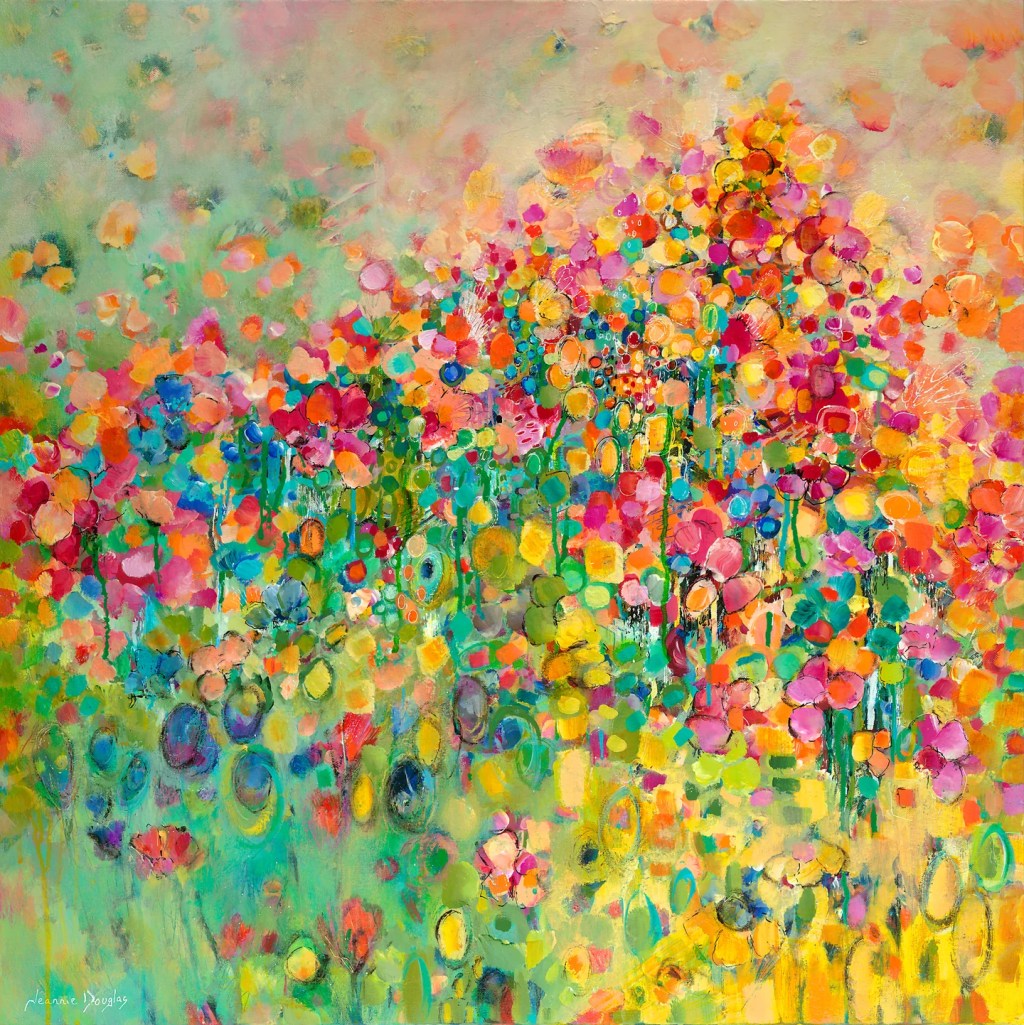
A Pop of Happiness by Jeanie Douglas. From Public Domain

Happiness is a many splendored word. For some it is the first ray of sunshine; for another, it could be a clean bill of health; and yet for another, it would be being with one’s loved ones… there is no clear-cut answer to what makes everyone happy. In Harry Potter and the Half Blood Prince (JK Rowling, 2005), a sunshine yellow elixir induces euphoria with the side effects of excessive singing and nose tweaking. This is of course fantasy but translate it to the real world and you will find that happiness does induce a lightness of being, a luminosity within us that makes it easier to tackle harder situations. Playing around with Rowling’s belief systems, even without the potion, an anticipation of happiness or just plain optimism does generate a sense of hope for better times.  Harry tackles his fears and dangers with goodwill, friends and innate optimism. When times are dark with raging wars or climate events that wreck our existence, can one look for a torch to light a sense of hope with the flame of inborn resilience borne of an inner calm, peace or happiness — call it what you will…?

It is hard to gauge the extreme circumstances with which many of us are faced in our current realities, especially when the events spin out of control. In this issue, along with the darker hues that ravage our lives, we have sprinklings of laughter to try to lighten our spirits. In the same vein, externalising our emotions to the point of absurdity that brings a smile to our lips is Rhys Hughes’ The Sunset Suite, a book that survives on tall tales generated by mugs of coffee. In one of the narratives, there is a man who is thrown into a bubbling hot spring, but he survives singing happily because his attacker has also thrown in packs of tea leaves. This man loves tea so much that he does not scald, drown or die but keeps swimming merrily singing a song. While Hughes’ stories are dark, like our times, there is an innate cheer that rings through the whole book… Dare we call it happiness or resilience? Hughes reveals much as he converses about this book, squonks and stranger facts that stretch beyond realism to a fantastical world that has full bearing on our very existence.

Poetry brings in a sprinkling of good cheer not only with a photo poem by Hughes, but also with more in a lighter vein from Ryan Quinn Flanagan, Michael R Burch, Arshi Mortuza, Jason Ryberg and others. Sanjay C Kuttan has given a poem dipped in nostalgic happiness with colourful games that evolved in Malaysia. Koiko Tsuuda, an Estonian, rethinks happiness. George Freek, Stuart MacFarlane and Saranyan BV address mortality. Nilsa Mariano and G Javaid Rasool have given us powerful migrant poetry while John Grey, Craig Kirchner, Jane Hammons, Nia Joseph, Noopur Vedajna Das and Adeline Lyons refer to climate or changes wrought by climate disasters in their verses.

A powerful essay by Binu Mathew on the climate disaster at Wayanad, a place that earlier had been written of as an idyllic getaway, tells us how the land in that region has become more prone to landslides. The one on July 30th this year washed away a whole village! Farouk Gulsara has given a narrative about his cycling adventure through the state of Kashmir with his Malaysian friends and finding support in the hearts of locals, people who would be the first to be hit by any disaster even if they have had no hand in creating the catastrophes that could wreck their lives, the flora and the fauna around them. In the wake of such destructions or in anticipation of such calamities, many migrate to other areas — like Ranu Bhattacharya’s ancestors did a bit before the 1947 Partition violence set in. A younger migrant, Chinmayi Goyal, muses under peaceful circumstances as she explores her own need to adapt to her surroundings. G Venkatesh from Sweden writes of his happy encounter with local children in the playground. And Snigdha Agrawal has written of partaking lunch with a bovine companion – it can be intimidating having a cow munching at the next table, I guess! Devraj Singh Kalsi has given a tongue-in-cheek musing on how he might find footing as a godman. Suzanne Kamata has given a lovely summery piece on parasols, which never went out of fashion in Japan!

Radha Chakravarty, known for her fabulous translations, has written about the writer she translated recently, Nazrul. Her essay includes a poem by Tagore for Nazrul. Professor Fakrul Alam has translated two of Nazrul’s songs of parting and Sohana Manzoor has rendered his stunning story Shapuray (Snake Charmer) into English. Fazal Baloch has brought to us poetry in English from the Sulaimani dialect of Balochi by Allah Bashk Buzdar, and a Korean poem has been self-translated by the poet, Ihlwha Choi. The translations wind up with a poem by Tagore, Olosh Shomoy Dhara Beye (Time Flows at an Indolent Pace), showcasing how the common man’s daily life is more rooted in permanence than evanescent regimes and empires.

Fiction brings us into the realm of the common man and uncommon situations, or funny ones. A tongue-in-cheek story set in the Midwest by Joseph Pfister makes us laugh. Farhanaz Rabbani has given us a beautiful narrative about a girl’s awakening. Paul Mirabile delves into the past using the epistolary technique highlighting darker vignettes from Christopher Columbus’s life. We have book excerpts from Maaria Sayed’s From Pashas to Pokemon and Nazes Afroz’s translation of Syed Mujtaba Ali’s Shabnam with both the extracts and Rabbani’s narratives reflecting the spunk of women, albeit in different timescapes…

Our book reviews feature Meenakshi Malhotra’s perspectives on Shuchi Kapila’s Learning to Remember: Postmemory and the Partition of India and Bhaskar Parichha’s thought provoking piece on Malvika Rajkotia’s autobiographical Unpartitioned Time: A Daughter’s Story. While both these look into narratives around the 1947 Partition of the Indian subcontinent, Rakhi Dalal’s review captures the whimsical and yet thoughtful nuances of Namita Gokhale’s Never Never Land. Somdatta Mandal has written about Upamanyu Chatterjee’s latest novel, Lorenzo Searches for the Meaning of Life, which is in a way a story about a migrant too.

When migrations are out of choice, with multiple options to explore, they take on happier hues. But when it is out of a compulsion created by manmade disasters — both wars and climate change are that — will the affected people remain unscarred, or like Potter, bear the scar only on their forehead and, with Adlerian calm, find happiness and carpe diem?

Do pause by our current issue which has more content than mentioned here as some of it falls outside the ambit of our discussion. This issue would not have been possible without an all-out effort by each of you… even readers. I would like to thank each and every contributor and our loyal readers. The wonderful team at Borderless deserve much appreciation and gratitude, especially Manzoor for her wonderful artwork. I invite you all to savour this August issue with a drizzle of not monsoon or April showers but laughter.

May we all find our paths towards building a resilient world with a bright future.

Good luck and best wishes!

Mitali Chakravarty

borderlessjournal.com

Click here to access the content’s page for the August 2024 Issue.

.

READ THE LATEST UPDATES ON THE FIRST BORDERLESS ANTHOLOGY, MONALISA NO LONGER SMILES, BY CLICKING ON THIS LINK.

Categories
Excerpt

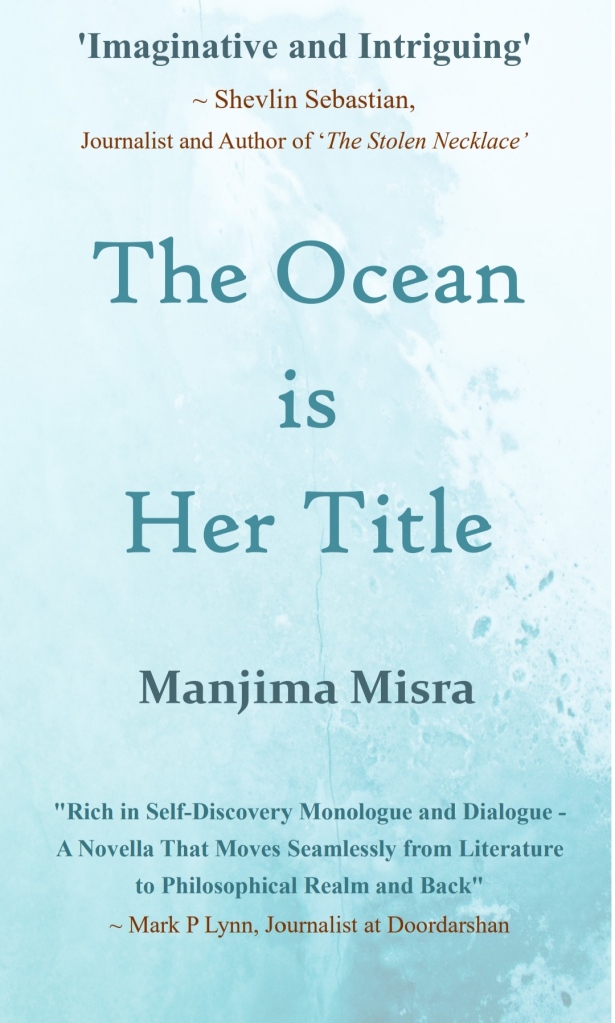
The Ocean is Her Title

Book Title: The Ocean is Her Title

Author: Manjima Misra

Publisher: Book Street Publications

The world ball dance was held on 25th December. It was the last time that Jay and Poulomi had agreed to meet each other with the tag of being lovers. The ballroom was majestic with a long winding staircase – the magnificent staircase was adorned with Christmas Mistletoe plants. Jay could not help but stare at Poulomi in her maroon ballroom dress and with her maroon lipstick making her lips seem more protruded than ever.

The song ‘Maroon’ by Taylor Swift was playing in the background.

The ballroom ceiling was full of sparkling chandeliers which glimmered with golden light. The golden rays of the daytime sunshine lit up the ballroom with a soft glow, as they passed through the crystal clear huge glass windows. Each of the windows had maroon curtains which were shifted to the side to let the daylight in.

As the day approached late evening, the curtains were closed and the ballroom still had the soft golden glow – this time it was because of candlelight lamps.

In this glorious ballroom, Agatha was playing the instrumental version of the song ‘Maroon’ on piano with the grandeur of royalty, for the piano was gifted by the Princess of England, Agatha could not feel more proud of her musical skills.

For a while, Agatha kept looking at Poulomi and Jay now and then. Poulomi’s maroon dress had golden belt and golden buttons, and Poulomi was wearing a necklace studded with golden star shaped diamond-like stones. She was carrying a golden purse with her and as she walked down the staircase, she seemed like the very Queen of England.

In the middle of the dance with Jay, Poulomi excused herself and went to Agatha. She exchanged a few words with Agatha and when she returned to the dance floor, Jay was nowhere to be found. Jay had disappeared.

Agatha came running and said, “Poulomi, you must confront Jay. This act of disappearance is no way justified”.

“Agatha, is Jay a real person? Or is he a hallucination of mine?” asked Poulomi, being well aware of her own mental health condition. And Poulomi ran towards the veranda and gazed at the maroon night sky glittering with silver stars.

Agatha followed her and said, “Well, at least, the sky and the stars are for real.”

About the Book:

The novella, titled The Ocean is Her Title, is an exploration of a fractured existence of the central character Poulomi “struggling through a welter of feelings, incapacities, and anxieties to shore up her beleaguered existential coherence”. In the words of Mark P Lynn, noted journalist at Doordarshan, “the novella is rich in self discovery monologue and dialogue and moves from literature to the philosophical realm and back. The internal monologue takes the form of a conversation with real characters who are fictionalized from the author’s love for Harry Potter, Taylor Swift, Wonder Woman, and the heartfelt support structure provided by a father who tends to a child with bipolar disorder.” In the words of renowned journalist and author Jitendra Dixit, “The Ocean Is Her Title, the readers are invited to embark on an emotionally charged novella that weaves together the dreams and struggles of a young Delhi girl, Poulomi, whose life takes an unexpected turn when she is abducted and transported to a place she could never have imagined – the Ocean Hospital. This novella, authored by Manjima Misra, is a poignant exploration of identity, resilience, and the complexities of modern womanhood.”

About the Author:

Manjima Misra is a writer based in Delhi. She has written three published books previously which are titled Indian Feminine Fury, Unapologetically Mad, and The Ocean is Her Title. Her opinion articles have been published in The Indian Express, The Quint, Outlook India, Deccan Herald, Newslaundry, and Firstpost. She has previously worked as a writer with the Education Desk at The Indian Express and as an educator with Teach For India.

 She has a Master’s degree in English literature from the University of Delhi and a Postgraduate Certificate in Teaching English to Speakers of Other Languages (TESOL) from the University of St Andrews, Scotland.

PLEASE NOTE: ARTICLES CAN ONLY BE REPRODUCED IN OTHER SITES WITH DUE ACKNOWLEDGEMENT TO BORDERLESS JOURNAL

Click here to access the Borderless anthology, Monalisa No Longer Smiles

Click here to access Monalisa No Longer Smiles on Amazon International

Categories
Essay

How Many Ways To Love a Book

By Sindhu Shivprasad

The summers of high school were eight weeks lived between a haze of pages, books borrowed and exchanged (even secreted away) with abandon.

The exchanges were facilitated with much gusto in rooms, parks, benches by the streets, friends looking over shoulders as the item in question was reverently drawn out of the bag. Some sealed the exchange verbally — “I’ll give it back to you in two weeks” — and the deed was done. Others laid out sacrosanct rules. “Don’t fold the corners. Don’t mark the pages. And for God’s sake, don’t underline anything”.

I have an elderly neighbour who keeps two copies of each book — one for reading and the other for lending. When asked why, she said, “my books are sacred”.

“Sacred” has been used as a stand-in for “religion” for so long that it’s become almost synonymous. But there’s a class of ‘sacred” that refers to things set apart with special meaning and not necessarily connected to anything religious, spiritual or metaphysical.

Sounding very much like German theologian Rudolf Otto, American psychologist JH Leuba suggested that the experience of the sacred is characterised by “an element of awe… The sacred object has a hold upon us, we stand in dynamic relation with it, and this relation is not one of equal to equal, but of superior to inferior.”

I like to observe this in others — the reverent handling of pages, the ginger grip over a paperback so the spine doesn’t crease. Much like the devout scrabble to touch the feet of statues or hold hands with holy seers, even the most upright can fall to weeping at the sight of certain books, begging to hold them in their hands. In essence, they feel what author, educator and priest, Andrew Greeley describes: “By the sacred I mean not only the other-worldly, but also the ecstatic, the transcendental, that which takes man out of himself and puts him in contact with the basic life forces of the universe.”

If you’ve said— or heard someone say —something to the effect of “I lost myself in a book”, you’ve felt this. If you’ve curled up to read a novel and felt as though there were two of you — one curled up on the couch and one hurtling through the pages — then you’ve felt this sacredness.

But like there’s more than one way to love someone, there’s more than one way to love a book. Of course, some cults and sub-cults declare the other blasphemous, but the truth is simple: one book can be revered in many ways.

The platonic lovers read books and keep them only in their hearts and minds, if at all. They don’t actively disrespect the book, but they don’t leave way-markers to say they were here, either. If one “buys books intending to read them” and “reads books only in certain situations” were a Venn diagram, platonic lovers of books would fall into that overlapped territory. They’re most likely to pack a recent bestseller in their rattan bag for a beach day or optimistically buy one at the airport bookstore but crack open only a few pages before falling asleep.

There are the preux[1] lovers, for whom form is inseparable from message. These are the ones who strive to preserve the purity of a novel assured to them by their first-hand bookseller. They carefully mark pauses with magnetic bookmarks and high-quality post-it notes aligned to the line they stopped at. Not for them the creased spines, dog-eared pages, and watermarks from dropping a V.E. Schwab[2] into the bath one tipsy night.

No, these are for the physical lovers, the ones for whom some books are as familiar as a partner’s skin. Touch breeds intimacy — marks of use are marks of love. They leave their footprint — dried flowers, bus tickets, clean leaves off the floor, demonetised currency, letters from a daughter, strands of hair — behind with the boldness of a graffiti artist in broad daylight. The book itself is but a vessel, and they prop it open with whatever’s within arm’s reach: the dog’s tail, an AirPod, or the wrapper of a Twix bar. These are the people who know what it is like to love something to pieces.

And then there are the intellectual lovers, who care to pry open layer after layer and document what they find. The most permanent way-marker— writing in books — has haters and zealots in equal proportions, and this is the class of the latter. After all, the margins — or “sophisticated information-processing space”, as mathematician-philosopher John Dee calls them — often hold more heart-stirring epiphanies than diaries can hope to match. These people might also prefer to read vandalised books over virginal ones, getting caught as much in the flow of the text as in the passions of the reader that came before them.

When I was younger, I was much like the preux booklover I describe: a young novel for a young girl. Smudges, watermarks and left-over mementoes invoked the same ‘ick’ in me that vaguely disgusting bugs did. When you’re young, it’s customary to assume ageing is something that happened to other people — I, however, extended that belief to my straight-spined, pristine novels.

Cut to now: in my late twenties, grey hairs are shooting up from my skull at an alarming rate (a hereditary disposition I give my father much grief about). My oldest books haven’t fared any better, ravaged as they are by time, bathwater, and a 2-month sea voyage from Nigeria to India in ‘06. My early-edition Harry Potter copies, in particular, are now perilously held together by duct tape and makeshift covers. (I’m yet to find Inkheart’s Silvertongue in the real world, but I continue to hope).

Over time, I became less preux and more physical, choosing secondhand books over pristine copies for the same reasons that I’d once detested them. “Where is human nature so weak as in the bookstore!” exclaimed Henry Ward Beecher[3] once, and while I can stand strong in a Crossword or an Amazon, before my favourite Church Street antiquarian store, I am weak. My excuse is that it’s a lot more exciting to be the next in line for the throne of a kingdom contained within 600 pages.

I still draw the line at marginalia, though. It feels too much like watching a movie at the cinema while Chris Hemsworth’s[4] dialogues are punctuated by boos, expletives or, if it were Mark Twain sitting beside me, vicious comments like “The Droolings of an Idiot”.

Inscriptions are yet another marker on the long-winding road of time and an invitation to re-imagine what circumstances this book has been through. These are marks that even preux lovers can’t deny because they rank highly in the eyes of a true bibliomaniac, glossing over the worst wear and tear. Even at their briefest, they tell a story, like a lovingly inscribed “To Mom” in a heartbreakingly unused novel on a used-book shelf. Indeed, a stroll through a secondhand bookstore is a study in betrayal, distance, and the melancholy effects of time. A secret taken to the grave is now out in the open for hundreds to witness.

In a Ziploc on one shelf in my library sits a battered first edition copy of Bunyan’s The Pilgrim’s Progress, passed on to me by another elderly neighbour whose home was suddenly devoid of seating space. An inscription on the flyleaf (instead of the title page where only heathens write) reads: “Berhampore, 1908”. This doesn’t hold a candle to most inscriptions out there, including Lord Byron’s 226-word note to Countess Guiccioli, which ends with, “Think of me sometimes when the Alps and the ocean divide us — but they never will, unless you wish it”. But it is a relic of our colonial history, bequeathed to me.

So it’ll remain: the small book’s journey over Hill Difficulty and the Valley of the Shadow of Death ending on this twenty-something-year-old’s shelf, cheek and jowl with other hand-me-down slices of history and mystery.


[1] Gallant in French

[2] American writer

[3] Nineteenth century US minister and speaker

[4] Australian actor

.

Sindhu Shivaprasad is an essayist. Her work has been (or is set to be) published in The Yorkshire Post, Kitaab, The Curator, Thrive Global, and more. When not at her day job or curating for her magazine, Ex Libris, she’s usually curled up in a patch of sunlight with a paperback and lemon tea.

.

PLEASE NOTE: ARTICLES CAN ONLY BE REPRODUCED IN OTHER SITES WITH DUE ACKNOWLEDGEMENT TO BORDERLESS JOURNAL

Categories
Editorial

Elephants & Laughter

Run, Painting by Sybil Pretious

Ideally, I would love to start the New Year with laughter and happiness! Then perhaps, the whole year would be dotted with humour …

Laughter clubs often practice laughing for health benefits. I know the pandemic makes both guffawing outdoors or in a group hard but think of the funniest possible thing and, perhaps, you will start laughing. For me what works other than children’s and monkeys’ antics, are my trips to the dentist, especially the trip where I wondered on the fringe benefits of ‘laughing gas’ (as given in the PG Wodehouse novel of the same name), only to be informed that it was used exclusively for young children. For me, an adult, there was only — you have guessed it — the jab that numbs your lip function to lubber. I discovered if I could make light of a dentist drilling by learning from Harry Potter (the spell to get rid of the terrifying boggart, who took the shape of the thing you feared most, was to imagine the funniest thing, focus on the humour in it, and shout ‘Riddikulus’ with a wand pointed at the creature in the form of your worst nightmare), then I could pretty much get rid of most fears.

The other thing I have been wondering for sometime is can one write an editorial that is humorous when the content is serious? I would have wanted to ask that question to many, including Ruskin Bond, who continues as one of my idols. I would love to touch hearts with the humour and the sensitivity that flavours his writing. It is tough to convey a complex thought with the simplicity and elegance of a writer who can be read and understood easily. I think we have a few of them around and I interviewed one. You all probably know him well— Rhys Hughes. I have given the reasons for the interview in lieu of Mr Bond, who continues a distant star beyond the horizon of online interviews. We discussed humour and its role in literature, leaving out completely in the cold, the fictional Mr Bond who answers to the names of James and 007 and has made entertaining films, which can be seen as serious or non-serious.

Hughes has of course, given some writerly advice not just in the interview but in ‘Making Something of Nothing’ – pretty much the advice that God had probably been given when he asked an unspecified friend on how to create the universe and multiple realities. Hughes has also added to our galaxy of poets where Michael Burch, Ryan Quinn Flanagan, Anasuya Bhar, Vernon Daim, William Miller, Pramod Rastogi, Mike Smith, Jay Nicholls and many more continue to sparkle. Taking up the theme of God’s creations, Devraj Singh Kalsi has added to more humour with a dream of divine intervention to make the ‘New Normal’ in 2022 – a plan for this year. Will it ever be real?

Another major issue in this world currently is climate change. In keeping with the need for acceptance of this reality, Keith Lyons introduced us to a nature lover, author and adventurer Kenny Peavy, who loved the fictional adventurer called Indiana Jones and has been working towards living in harmony with nature. He moved to Indonesia from America and is trying to raise awareness. You can find much, though not elephants, in the interview that encompasses the story of a man who cycled across a continent on a bike made of bamboo. However, you can find some writing on a king who acquired the skill to ride and tame elephants in our book excerpt from Shazi Zaman’s Akbar: A Novel of History. The excerpt does not showcase his elephant taming skills as did the Bollywood blockbuster Jodha Akbar but is focussed on bringing out the syncretism in the Mughal monarch’s outlook which made him seek out exponents of other religions. Sangita Swechcha’s and Andrée Roby’s anthology, A Glimpse Into My Country, with excerpts of short stories from Nepal and Zimbabwe, like Kenny Peavy, cycle across multiple borders as does our fiction. We feature stories from within and without the continent with Fazal Baloch recombining a couple of folklores from Balochistan to a single tale. Fiction from young writers highlight compassion and a varied perspective. Steve Ogah has a story from Nigeria which almost rings with overtones of Alex Haley’s Roots. Sohana Manzoor has given us a poignant narrative with an inspiring twist at the end, an absolute antithesis of the humorous one she rolled out for us last month. Candice Louisa Daquin has also given us an exceptional short fiction along with her column where she discusses the changing face of families in the current context.

While Daquin’s focus is mainly towards the West, we have an essay from Sanjay Kumar on families that live in the greyer zones of big cities, children from an outcropping called Nithari in Delhi, where they or theirs suffered neglect, abuse, carnage and cannibalism in their formative years.  Introducing the impacted children, Kumar explains how they transcended the wounds that lacerated their lives. This piece is a precursor to a column called ‘Children of Nithari’. Starting February, the abuse victims will give us a story a month which will be translated by young volunteers from pandies’, an activist theatre group founded by Kumar, and published in Borderless. Another article from Balochistan reflects on the lack of literacy and efforts to bring children into the folds of schooling. Pakistan ranked 99th out of 132 countries on the literacy survey in 2021. We are privileged to be the voice of the unheard.

Two essays that ring of concerns raised in the Kenny Peavy interview are to do with climate crisis in the Sunderbans and waste disposal in Delhi. Both of these are written by researchers who are working on these issues.

We have travel pieces from Australia – one is a sailing adventure by Meredith Stephens and the other is about a trip to the Sand Dunes of Western Australia by Shernaz Wadia. Ravi Shankar has also taken us through winters from the Everest to New York with his globe-trotting non-fiction. Penny Wilkes takes us on a flight of creativity with beautiful photography.

We have a stellar layout of translations. Professor Fakrul Alam translated another poem by Jibananada Das and Borderless is honoured to publish it to the world for the first time. We have a translation from Korea and another of a Brahmo hymn, Aji Shubho Dine, by Tagore, which is sung often during festivals. The icing in our Tagore section in this issue is Ratnottama Sengupta’s translation of the Kobiguru’s ‘Two Birds’ (Khanchar Pakhi Chhilo) along with a musing which reflects on the perspectives of the two contemporaries, Tagore and Saratchandra. She has also translated a well-known Bengali poet, Michael Madhusudan Dutt. Dutt wrote just before the advent of Tagore and had an interesting past which has been vividly depicted by Sunil Gangopadhyay in Those Days (Sei Somoy in Bengali), a novel that has been translated by Aruna Chakravarti. Bhaskar Parichha has given us a tribute on the occasion of the birth anniversary of Fakir Mohan Senapati, who, he claims, has the same standing in Odia literature as Tagore in Bengali or Premchand in Hindi.

Parichha has also reviewed Amit Ranjan’s John Lang; Wanderer of Hindoostan; Slanderer in Hindoostanee; Lawyer for the Ranee. It looks like an interesting read where an immigrant Australian came supported Rani of Jhansi in India. Rakhi Dalal has reviewed Selma Carvalho’s Sisterhood of Swans, again a story of migrants and their lives. The theme seems to echo among the books that have been reviewed this time, including Gracy Samjetsabam’s take on Anuradha Kumar’s The Hottest Summer in Years, a story about a German immigrant to India in the twentieth century. Meenakshi Malhotra’s review of Somdatta Mandal’s translation of A Bengali Lady in England by Krishnabhabini Das (1885) highlights the views of a traveller rather than an immigrant as the lady did return home after a ten-year sojourn in Britain. As Meenakshi contends, “The process of travel offers opportunities for emancipation where exposure to other cultures offers her a way of viewing and of gaining a perspective on her own experiences and that of her sisters in India. Krishnabhabini constantly refers to her Indian sisters and bemoans their sorry state and ignorance when she sees how active British women were in their families and societies…”

I was supposed to try my hand at a humorous editorial, but I realise that is tough when the ground is small. For humour, we need rolling acres where we can etch out each detail till it cannot be milked further for laughter. But I promise you I will keep trying to please the readers till one evolves to write like Ruskin Bond.

I would like to thank my fabulous team who even if not actively contributing to content are always at hand to advise and help. I would especially want to thank both Sohana Manzoor and Sybil for their fantastic artwork, which is as wonderful as their writings. I would like to give heartfelt thanks to all the contributors who have made this journal possible and each reader who comes back to our journal for more every month. Some of the pieces remain unmentioned adding to the mystery of the content, just like, Christmas gifts which need to be unwrapped and continue a reality even in January in some parts of the world – the Russians celebrate on January 7th and the Spaniards extend their festivities to January 6th.

Do take a look at this month’s edition for not just the stories mentioned here but for more.

I wish you all a wonderful New Year filled with laughter.

Mitali Chakravarty

Borderless Journal

Categories
Excerpt

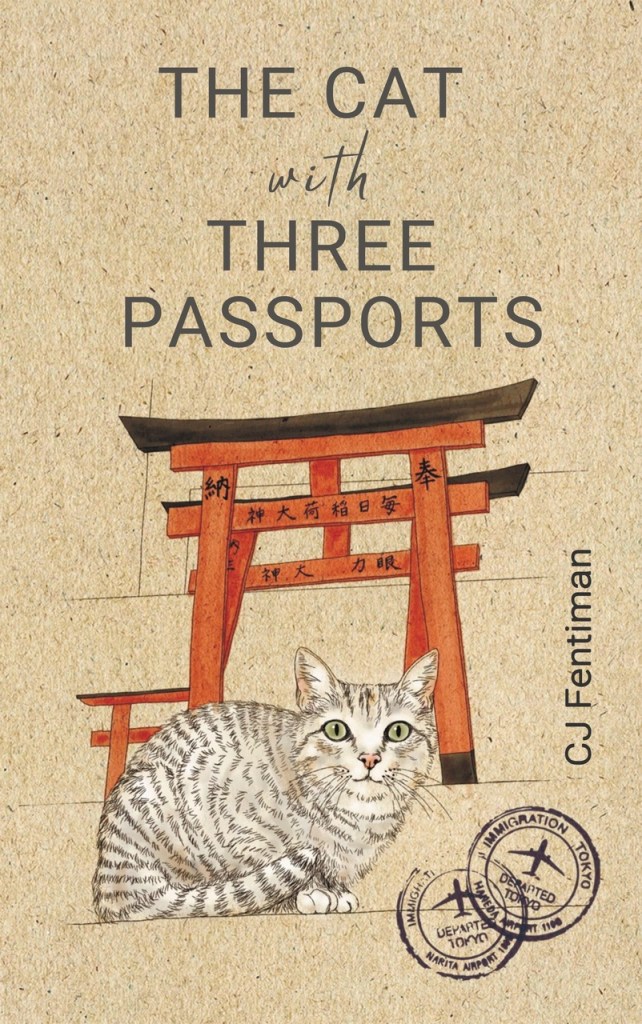
The Cat with Three Passports

Title: The Cat with Three Passports
Author: CJ Fentiman

Chapter 7: Better To Enclose A Cat Than to Scold It

Clothes shops kept irregular hours in Takayama. Three different days, at three different hours, we tried to visit a local vintage store, and each time we found it closed.

It was refreshing to see that a country that had appeared, at first, such a stickler for rules, actually had a whole community that seemed to do the opposite of what was expected.

‘It is ikigai,’ explained James, the bald Kiwi ALT whom we had called Jēmusu (the Japanese word for James) as a joke.

‘What is ikigai?’ I asked. ‘A fish?’

‘No,’ he said with a grin. ‘Ikigai means finding your purpose, your meaning in life, and combining it with your profession, your work. It is the balance of doing what you love while making a living and letting neither path control your life.’

I didn’t really understand ikigai until one spring day I actually found the vintage clothing shop open and went inside to explore as I’d longed to do for over a month. The owner, G-Kun, a snowboarder in his early thirties who wore his long black hair tied back in a ponytail, was busy checking orders on his computer.

Ryan was looking at skateboard tee shirts while I browsed some different-coloured beanies made from hemp that I loved and would probably never wear.

‘I’m so glad I finally got to come in,’ I said to G-Kun.

‘Why has your store been closed so often? Were you ill?’

‘Not at all,’ he replied with a friendly smile. ‘I have just been concentrating on something else.’

‘Like what?’

‘My music career.’

I stared at him.

‘I travelled in Europe some years back and became friendly with some European DJs,’ he continued. ‘I ended up co-producing some dance tracks with them.’

He had my rapt attention. To my very British mind, this was an entirely new concept. I had been told as a child to forget working with horses and get a job in a bank, because in England I was supposed to be a responsible adult with a steady good-paying job doing something I loathed rather than something I loved.

But in Takayama . . . Was what G-Kun telling me real? Could an avocation and a job actually be combined? And if they could, did I have my own ikigai, something that would bring deep satisfaction to my life?

Once I understood ikigai, I saw it all around me. In Takayama, many people had turned their passions into businesses from which they earned an actual living wage. Of course, that’s not to say all Japanese follow ikigai but it seemed widely practiced here.  And then there was Keisuke, who worked in a brewery and wanted to start his own saké company someday.

Twenty-something Keisuke was not particularly well educated or rich, but he seemed more contented than anyone I’d met in a long time. In fact, he was so happy and so passionate about his job that I never saw him in anything other than his cream-coloured brewery overalls.

One night in Keisuke ’s apartment, he proudly poured me his employer’s clear rice wine into a tiny white and blue ceramic cup, beaming with something more than pride.

Ryan took the first sip and beamed back at him. ‘This is good stuff! You’ve got the saké magic, Keisuke-san. Like Harry Potter.’

‘So, so, so,’ Keisuke said and paused for a moment to think. ‘You know what, I am not Harry Potter. But I am . . . the Saké Potter.’

And from that day on, that’s exactly what we called him.

A few nights later, while out for dinner with some friends, we came across a stray cat that was to begin my search for ikigai.

‘Kawaisō, it’s such a shame,’ Sayuri said. ‘There’s so many noranekos [stray cats] in Takayama. It’s sad.’

I leaned down to pat the bedraggled kitten and he tapped me with his paw, as if begging for more. ‘Poor baby,’ I said. ‘He must hang around the restaurant in the hope of getting food scraps,’ I said.

‘The staff probably feed him,’ Ryan said as he joined us, the kitten instantly turning to him for attention.

‘What should I do?’ I asked.

‘Why do you have do anything?’ Mike said, joining us.

Takako, our friendly waitress was standing at the door and confirmed our suspicions about the kitten. ‘Hai. Nora-neko desu.’ (Yes. It is a stray.)

‘Come on, you can’t save them all,’ said Dominic as he marched off down the pavement.

Reluctantly, I followed him, along with the others. But, as we wandered tipsily back to our apartment, the kitten tried to follow us. He looked unwell. Snot was dribbling down his scrawny face. Everyone picked up their pace.

I forced myself not to turn around as we walked back home. If I had, I’d have scooped that kitten up and to hell with the consequences. Actually, that would have saved me time and trouble, because when we got back to the apartment, all I could think about was the abandoned kitten with the big affectionate personality struggling to survive outside all by himself.

Our friends stood in the kitchen noisily making plans about how to get to the next party, oblivious to the kitten’s plight. I was unable to even smile, let alone participate. ‘I’m sorry. I’m not going to make it to any more parties or bars tonight. I’ve got a headache, so I’m going to stay here,’ I said.

After the noisy crowd, including Ryan, had left, I tried going to bed, but I couldn’t sleep. I was unable to purge the image of the friendly little feline from my mind. Finally, fuelled by Chu-Hai and cheese sticks, I got dressed, crept outside, grabbed my bike, and cycled along the fluorescent-lit pathway armed with dry cat biscuits and a cat carrier.

Sure enough, with no other place to go, the kitten was still at Murasaki begging for food and attention. He didn’t struggle one bit as I lifted him into the cat carrier and set it in the front basket of my bicycle. Apparently, taking his chances with the kindly stranger and her weird contraption was better than spending another dangerous night on the street.

I knew that Ryan would not be impressed with my philanthropy, and less than thrilled about this new addition to our household, but I also knew that this little boy didn’t stand much chance of survival if we left him on the streets. I also felt I could relate to the kitten’s predicament of abandonment. After all, I’d faced similar emotions myself as a child. Displeased boyfriend versus dead kitten? It was no contest.

Still, when I carried the cat carrier into the apartment, the enormity of what I had done hit me. Just as a matter of practicality, we couldn’t take on another kitten. We already had three cats we would have to re-home before we returned to England in December. Plus, this little guy was clearly sick. His eyes looked rheumy and painful. His nose was dripping. He might infect Iko, Niko, and Gershwin. I’d have to keep them apart. Into the laundry room he went with food, water, a litter box, and bedding. Fortunately, he had no interest in hiding under the washing machine.

Ryan got back the next morning looking a bit worse for wear, possibly hungover, and definitely sleep-deprived. Perfect. This was the right time to tell him what I’d done, while he was in a weakened state.

‘Don’t get angry,’ I said. ‘But there’s someone you might want to meet in the laundry room.’

Ryan looked at me with bloodshot green eyes. ‘Oh no! You didn’t. Did you?’

‘I couldn’t leave him there. Anyway, you’ve been gone nearly all night,’ I said, trying to shift the focus onto his fictional misdeeds.

‘Have you introduced him to the other cats yet?’

‘No, I’m waiting until I’ve taken him to the vet.’

‘Good idea,’ Ryan said wearily. He gave me a kiss and crawled into bed, leaving me to keep the cats separate as best I could, which was difficult, because Gershwin was eager to meet our houseguest.

It was at this moment that I realised I had found the start of my own ikigai. I wanted to incorporate my love of animals into my life’s work, but in order to do that, in the future I would need to find a healthier way to do so. So, my other cats didn’t get hurt.

I went to the vets that morning, surprising Dr. Iguchi when a bedraggled tabby kitten strode confidently out of the carrier, rather than Gershwin. Surprise turned immediately to concern as the kitten sat on the exam table, smiled at both of us, then sneezed violently, sending lots of yellow discharge all over the vet’s pristine white smock.

The prognosis was not good. ‘He could have feline flu,’ Dr. Iguchi announced. ‘Very contagious. Very bad. It could be much worse. He might have FIV virus.’

My stomach clenched. The dreaded and deadly cat AIDS.

‘There is a vaccine for your other cats,’ he continued. ‘For now, you must quarantine this kitten until we get his test results back.’

‘I think Gershwin has had the vaccination already,’ I said hopefully, ‘but I’m not sure about Iko and Niko.’

‘So, so, so. Gershkun had the vaccinations before, not the sisters. But you must keep all the cats away from the kitten for now.’

There was no alternative. If I didn’t want a house full of sick cats, and I didn’t, this was the only way. I just had to pray that the others hadn’t already been infected. I told myself they were strong, genki [healthy] animals and I was blithely certain they could fight off any infection, not realising in my ignorance how contagious and potentially deadly feline flu really was.

I drove home and put the kitten back in the laundry room, praying that he didn’t have anything that could kill him, or the other cats.

It wasn’t long before Gershwin wanted to go in and carouse with the kitten. He knew something was wrong straight away. He was always good at reading situations. So, he sat by the door and started meowing to be let in. When I came to see what was bothering him, he stared at me with every ounce of his feline superiority and demanded to see his potential Best Friend Forever. He uttered a particularly piercing nyan [meow] in protest at my having exiled the kitten to the laundry room.

‘You mustn’t go near him for a while,’ I said.

Gershwin rubbed his soft furry body against my even furrier legs and looked me straight in the eyes as if to say ‘Think again.’

When I wouldn’t give in to his demands, he started playing angrily, jumping onto the bookshelf, hurling himself off the top, somersaulting in mid-air, and landing unceremoniously a few centimetres from my feet.

‘Right, that’s it,’ I said as I picked him up, carried him to the bedroom, and shut the door.

It was always the same with Gershwin. Despite being a Ninja Attack Kitten, he had a delicate soul. Whenever he was reprimanded, he would become so hurt by the scolding that he’d disappear for hours (and once, for days) at the shock of being chastised. Then, it could be days before he would actually forgive us. He could out-sit our most ardent lures to be returned to his good graces. If I tried to tempt him with his favourite treats, he would sniff them with disdain, turn his back, and walk off scornfully. I was always the first to give in and let him have his way.

This time, Gershwin didn’t know best. He was banned from the laundry room. Iko and Niko took one look at the closed laundry room door, sniffed the scent of an unfamiliar feline, and avoided that part of the apartment just as they tried to avoid Gershwin when he came over all Ninja Kitten.

That night, I lay awake in bed worrying about what the test results would be. What if, in bringing this stray kitten home, I had inadvertently infected the other cats with the FIV virus? I felt deeply guilty at potentially jeopardising their wellbeing, even their lives. In trying to do the right thing by the sick kitten, I may have done an incredibly wrong thing by Iko, Niko, and Gershwin. If anything happened to them, it would be entirely my fault.

For the next week, while we waited for the test results, the poor kitten, whom I named Takashi after a jovial Bagus bartender, suffered from inflamed and discharging eyes and a badly running nose. I had never seen a cat in this condition before. His tatty coat needed some love and his sore eyes needed constant care. The vet had told me to wash them twice daily with saltwater, which helped them tremendously. He had also given me a medicinal orange powder that I was supposed to mix into his food. Cats being cats, he could smell the concoction a mile off and he was having none of it. I ended up mixing the powder with butter and rubbing it around his face, so he was forced to lick it off.

I agonised all that week. Ryan was equally concerned for the poor little guy. ‘When are you going back to the vets?’ he asked me daily. ‘You’re sure the other cats won’t get it?’ I dared not answer.

Finally, the dreaded, long anticipated morning arrived. A week after I had confined Takashi to the laundry room, I plopped him back into a cat carrier and drove off to see the vet and get the test results.

By now, I had become a regular and familiar face at the animal hospital. I was the only pet-owning gaijin in the vicinity, as far as I was aware, which meant I was a bit of a novelty in the waiting room. People stared at me and some smiled, a few of the braver ones even made conversation, which helped distract me from the potentially dreadful news I might be getting today.

Finally, Takashi’s name was called and, cat carrier in hand, I was ushered into an exam room. I waited nervously as the vet found the kitten’s file.

‘No Katto Eizu,’ he said.

Oh, thank God. Takashi didn’t have the FIV virus!

Before I could celebrate, he continued. ‘But Takashi-kun is very sick,’ Dr. Iguchi said in a somber tone. ‘He has cat flu.’

The tone of his voice was my first clue that feline flu was a far more serious disease than I had believed.

‘Very contagious,’ he continued. ‘Other cats should be immunised against the virus immediately, and Takashi-kun should be isolated from them for another week, maybe more. Keep giving him the medicine and bathing his eyes.’

My enormous relief that Takashi didn’t have a death sentence, and my fears for Iko, Niko, and Gershwin, warred within me all the way home.

CJ Fentiman with her cat

About the book: A girl struggling to fit in. A homeless kitten. An unexpected job offer in an unfamiliar country that changes everything. CJ had a long history of escaping places and people she wasn’t fond of. But for the sake of a silver tabby, she decided to stay in Japan for a while. This decision helped her open her heart and mind, revisit her way of thinking, and reconnect with her estranged family. Let this heartwarming memoir take you to the land of cats and cherry trees as you read about CJ’s adventures — from the craziness of Furukawa’s naked men festival, the experience of forest bathing and the significance of finding a life purpose or ikigai, to the temples of Takayama, and wonders of Cat Island — you’ll see what a homeless kitten found outside a temple in Japan taught her about an old culture and new beginnings.

About the author: CJ Fentiman is a British writer whose work has appeared in a wide range of the publications, from the Japan Times and Caravan World to Horses & People and Pets Bar. An expert on pet travel, she has featured in media in the UK and Australia including Readers Digest, SBS radio, Books on Asia, The Daily Telegraph, Herald Sun, the Courier Mail, and one of the biggest blog platforms on cats, Katzenworld. Her memoir, The Cat with Three Passports, received the award in animal narrative in the 2021 International Book Awards.