Meenakshi Malhotra writes of the diverse ways histories can be viewed, reflecting on the perspective from the point of view of water, climate, migrations or women. Click here to read.
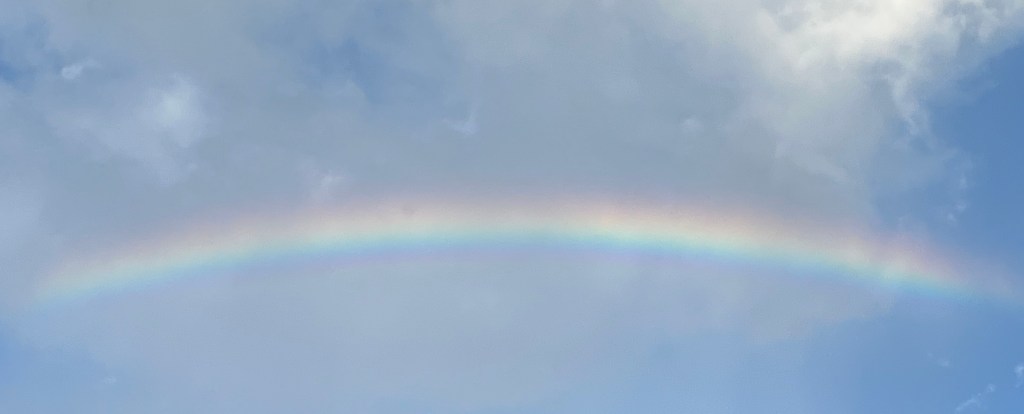
Sometimes, we have an idea, a thought and then it takes form and becomes a reality. That is how the Borderless Journal came to be six years ago while the pandemic raged. The pandemic got over and takeovers and wars started. We continued to exist because all of you continue to pitch in, ignoring the differences created by certain human constructs. We meet with the commonality of felt emotions and aesthetics to create a space for all those who believe in looking beyond margins. We try to erase margins or borders that lead to hatred, anger, violence and war. Learning from the natural world, we believe we can be like the colours of the rainbow that seem to grow out of each other or the grass that is allowed to grow freely beyond manmade borders. If nature gives us lessons through its processes, is it not to our advantage to conserve what nurtures us, and in the process, we save our home planet, the Earth? We could all be together in peace, enjoying nature and nurture, living in harmony in the Universe if only we could overlook differences and revel in similarities.
A young poet Nma Dhahir says it all in her poem that is a part of our journal this month —
This is how we stay human together: by refusing the easy damage, by carrying each other without calling it sacrifice, by believing that what we protect in one another eventually protects the world.
Translations has more poetry with Professor Fakrul Alam bringing us Nazrul’s Bengali lyrics in English and Fazal Baloch familiarising us with beautiful Balochi poetry of the late Majeed Ajez, a young poet who left us too soon. Isa Kamari translates his own poems from Malay, capturing the colours of the community in Singapore to blend it with a larger whole. And of course, we have a Tagore poem rendered into English from Bengali. This time it’s a poem called ‘Jatra (Journey)’ which reflects not only on social gaps but also on politics through aeons.
Christine C Fair has translated a story from Punjabi by Lakhvinder Virk, a story that reflects resilience in women who face the dark end of social trends, a theme that reverberates in Flanagan’s poetry and Meenakshi Malhotra’s essay, which while reflecting on the need of different perspectives in histories – like water and nomads — peeks into the need to recall women’s history aswell. This is important not just because March hosts the International Women’s Day (IWD) but because one wonders if women in Afghanistan are better off now than the suffragettes who initiated the idea of such a day more than a century ago?
This time our non-fiction froths over with scrumptious writings from across continents. Tamara-Lee Brereton-Karabetsos muses on looking at numbers and beyond to enjoy the essence of nature. Farouk Gulsara ideates about living on in posterity through deeds and ideas. Gower Bhat shares how he learns story writing skills from watching movies. Meredith Stephens talks of her experience of a fire in the Australian summer. Bhaskar Parichha writes with passion about his region, Odisha. We have a heartfelt tribute to Mark Tully, who transcended borders, from Bhowmick. And an essay on Arundhati Roy’s memoir, Mother Mary Comes to Me, from Somdatta Mandal, which explores not just the book but also the covers which change with continents. Prithvijeet Sinha travels beyond Lucknow and Suzanne Kamata brings to us stories about her trip to Phnom Penh.
Keith Lyons draws from the current crises and writes about changing times, suggesting: “Changes aren’t endings, but thresholds.” Perhaps, if we see them as ‘thresholds of change’, the current events are emphasising the need to accept that human constructs can be redefined. I am sure a Neolithic or an Australopithecus would have been equally scared of evolving out of their system to one we would deem ‘superior’. Life in certain ways can only evolve towards the future, even if currently certain changes seem to be retrogressive. We can never correctly predict the future… but can only imagine it. And Devraj Singh Kalsi imagines it with a dollop of humour where tails become a trend among humans again!
Humour and absurdity are woven into a series of short fables by Hughes while Naramsetti Umamaheswarao weaves a fable around acceptanceof differences. In fiction, we have stories of resilience from Jonathon B Ferrini and Terry Sanville. Bhat gives us a story set in Kashmir and Sohana Manzoor gives us one set in Dhaka, a narrative that reminds one of Jane Austen… and perhaps even an abbreviated version of the 2001 film, Monsoon Wedding.
In reviews we have, Mohammad Asim Siddiqui discussing Anisur Rahman’s The Essential Ghalib. Rituparna Khan has written on Malashri Lal’s poetry collection reflecting on women, Signing in the Air. And Bhaskar Parichha has reviewed Deepta Roy Chakraverti’s Daktarin Jamini Sen: The Life of British India’s First Woman Doctor, a book that reflects on the resilience that makes great women. Thus, weaving in flavours of the IWD, which applauds women who are resilient while urging humans for equal rights for one half of the world population.
While we ponder on larger realities, Borderless Journal looks forward to a future with more writings centred around humanity, climate change, our planet and all creatures great and small. This year has not only seen a rise in readership and contributors — and the numbers rose further after our unsolicited Duotrope listing in October 2025 — but has also attracted writers from more challenged parts of the world, like Ukraine, Iran, Tunisia and Kurdistan. We are delighted to home writing from all those who attempt to transcend borders and be a part of the larger race of humanity. I would like to quote Margaret Atwood to explain what I mean. “I hope that people will finally come to realize that there is only one ‘race’—the human race—and that we are all members of it.” And I would like to extend her view to find solidarity with all living beings. I hope that there will be a point in time when we will realise there’s not much difference between, a lizard, a fly, a human or a tree… All these lifeforms are necessary for our existence.
I would want to hugely thank all our team for stretching out and making this a special issue for our sixth anniversary and Manzoor for her fabulous artwork. Huge thanks to all our contributors and readers for being with us through our journey. Let’s change the world with peace, love and friendship!
Most people like you and me connect with the commonality of felt emotions and needs. We feel hungry, happy, sad, loved or unloved and express a larger plethora of feelings through art, theatre, music, painting, photography and words… With these, we tend to connect. And yet, larger structures created over time to offer security and governance to the masses—of which you and I are a part — have grown divisive, and, by the looks of it, the fences nurtured over time seem insurmountable. To retain these structures that were meant to keep us safe, wars are being fought and many are getting killed, losing homes and going hungry. We showcase such stories, poems and non-fiction to create an awareness among those who are lucky enough to remain untouched. But is there a way out, so that all of us can live peacefully, without war, without hunger and with love and a vision towards surviving climate change which (like it or not) is upon us?
Creating an awareness of hunger and destruction wreaked by war is a heartrending story set in Gaza by JK Miller. While Snigdha Agrawal’s narrative gives a sense of hope, recounting a small kindness by a common person, Sayan Sarkar shares a more personal saga of friendship and disillusionment — where people have choice. But does war leave us a choice as it annihilates friendships, cities, homes and families? Naramsetti Umamaheswararao’s story reiterates the belief in the family – peace being an accepted unit. Vela Noble’s fantastical fiction and art comes like a respite– though there is a darker side to it — with a touch of fun. Perhaps, a bit of fantasy and humour opens the mind to deal with the more sombre notes of existence.
The translation section hosts a story by Hamiruddin Middya, who grew up as a farmer’s son in Bengal. Steeped in local colours, it has been rendered into English by V Ramaswamy. Nazrul’s song revelling in the colours of spring has been translated from Bengali by Professor Fakrul Alam. Atta Shad’s pensive Balochi lines have been brought to us in English by Fazal Baloch. Isa Kamari continues to bring the flavours of an older, more laid-back Singapore with translations of his own Malay poems. A couple of Persian verses have been rendered into English by the poet, Akram Yazdani, herself. Questing for harmony, Tagore’s translated poem while reflecting on a child’s life, urges us to have the courage to be like a child — open, innocent and willing to imagine a world laced with trust and hope. If we were all to do that, do you think we’d still have wars, violence and walls built on hate and intolerance?
Mario Fenech takes a look at the idea of time. Amir Zadnemat writes of how memory is impacted by both science and humanities while Andriy Nivchuk brings to us snippets from Herodotus’s and Pericles’s lives that still read relevant. Ravi Varmman K Kanniappan gives the journey of chickpeas across space and time, asserting: “The chickpea does not care about your ideology, your portfolio, or your meticulously curated identity. It will grow, fix nitrogen, feed someone, and move on without a press release.” It has survived over aeons in a borderless state!
In book excerpts, we have a book that transcends borders as it’s a translation from Assamese by Ranjita Biswas of Arupa Kalita Patangia’s Moonlight Saga. Any translation is an attempt to integrate the margins into the mainstream of literature, and this is no less. The other excerpt is from Natalie Turner’s The Red Silk Dress. Keith Lyons has interviewed Turner about her novel which crosses multiple cultures too while on a personal quest.
Holding on to that idea, we invite you to savour the contents of our February issue.
Huge thanks to all our contributors and readers for making this issue possible. Heartfelt thanks to our wonderful team, especially Sohana Manzoor for her fabulous artwork.
Enjoy the reads!
Let’s look forward to the spring… May it bring new ideas to help us all move towards more amicable times.
I did not grow up wanting to be famous. I grew up wanting to read. Books entered my life quietly, persistently, and stayed. They were never mere ornaments on a shelf. They were companions, confidants, and windows to other worlds. I read late into the night, bent and underlined pages in hand, learning early that a book could be as vital as breath. Reading became a habit, then a need, then a lens through which I understood life itself.
But reading is not always easy. Even as a child, I struggled with the distractions of the world around me, the noise, the pull of tasks, and the sense that books were a luxury rather than a necessity. Many children grow up without sustained access to literature or quiet spaces to engage with ideas. Many adults, too, lose the habit of reading amidst digital noise, constant demands, and a culture that prizes speed over reflection. In such a world, cultivating a relationship with words becomes an act of devotion, of care, and of patience.
I read widely and without rules: fiction first, then mystery, later thrillers, philosophy, psychology, literary novels, family dramas, clean romance, cozy mysteries, science fiction, and books about the craft of writing itself. I read what interested me, what unsettled me, what slowed me down. Each genre teaches something different. Mystery teaches pacing. Literary fiction teaches restraint. Philosophy teaches patience. Psychology teaches observation. Good writing, no matter the category, teaches honesty. And yet, for many, access to books, time to read, and the encouragement to do so are rare privileges.
Reading and writing have always been companions. To write well, I must read widely. To read well, I must be attentive to language and nuance. When I read, I am listening to other writers. When I write, I try to answer, in my own way, the questions they pose on the page. Books that stay with me longest shape my own sentences, not by imitation, but by instilling rhythm, precision, and empathy.
Reading shaped the way I think and the way I write. It taught me rhythm. It taught me silence. It taught me that a sentence does not need decoration if it carries truth. Over time, reading stopped being separate from writing. One fed the other. I read to learn how others solved problems on the page. I wrote to see if I could do the same.
But the act of reading and writing is more than personal; it is communal. Stories, essays, novels, poems, reflections—they connect us. They allow us to see beyond our immediate experiences and inhabit others’ lives. They create empathy in societies that can often feel distracted or rushed. They challenge assumptions, expand understanding, and remind us of shared humanity. Yet, in a time when attention is fragmented, cultivating space for reading and writing is an ongoing challenge.
Writing arrived quietly. I began by writing notes to myself: observations, small scenes, feelings I could not explain out loud. Writing became a place to sit with things without having to perform. There was no audience then, just the page and me. Even a short paragraph, carefully written, could provide clarity where speech often failed. It could contain emotion without spectacle, simplicity without emptiness.
I am an English educator by profession. Over the years, I have guided students in navigating language, finding their voice, and understanding the weight of words. Teaching sharpened my attention. It made me careful with words. When you teach, you learn how fragile confidence can be. You learn how much words matter. You learn that clarity is kindness. The classroom has also taught me patience and observation, qualities essential to writing. Students’ struggles, triumphs, and quiet moments often inspire characters or scenes in my own work. More importantly, it has shown me that access to words, encouragement, and mentorship can transform lives, opening doors to reflection, creativity, and understanding.
My writing grew in that same vein.
I am drawn to ordinary lives, to quiet moments, to people who carry more than they say. I am not interested in spectacle. I am interested in what happens at the table, in the hallway, during a phone call that lasts too long. The smallest moments often reveal the most. A pause, a glance, a question left unasked often speaks louder than any dramatic event. Writing, I have discovered, is about noticing these details and offering them gently to the reader.
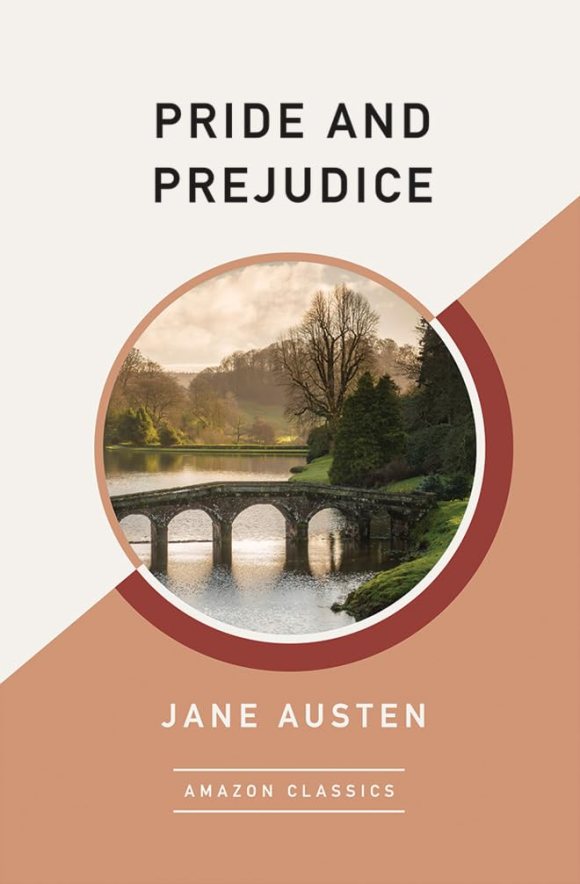
I read Jane Austen years ago and understood something important. You do not need to explain everything. You do not need to impress. You only need to tell the truth and step back. That lesson stayed with me. My writing aims for simplicity, not emptiness. Austen’s writing taught me that character, dialogue, and subtle observation can carry a story, even without dramatic plot twists. This resonates deeply as I try to develop my own voice.
I write literary fiction, family drama, and clean romance. I write about relationships between parents and children, husbands and wives, people and their inner lives. I am interested in homecoming, in belonging, in the idea of home as something emotional rather than geographical.
Many of my characters search for peace without naming it. They live in ordinary spaces yet carry extraordinary emotions. Through their stories, I explore love, hope, and resilience, not as abstract ideas, but as lived experience. These themes are not only literary; they reflect challenges we face in real life, in understanding each other, and in finding space for reflection, empathy, and connection.
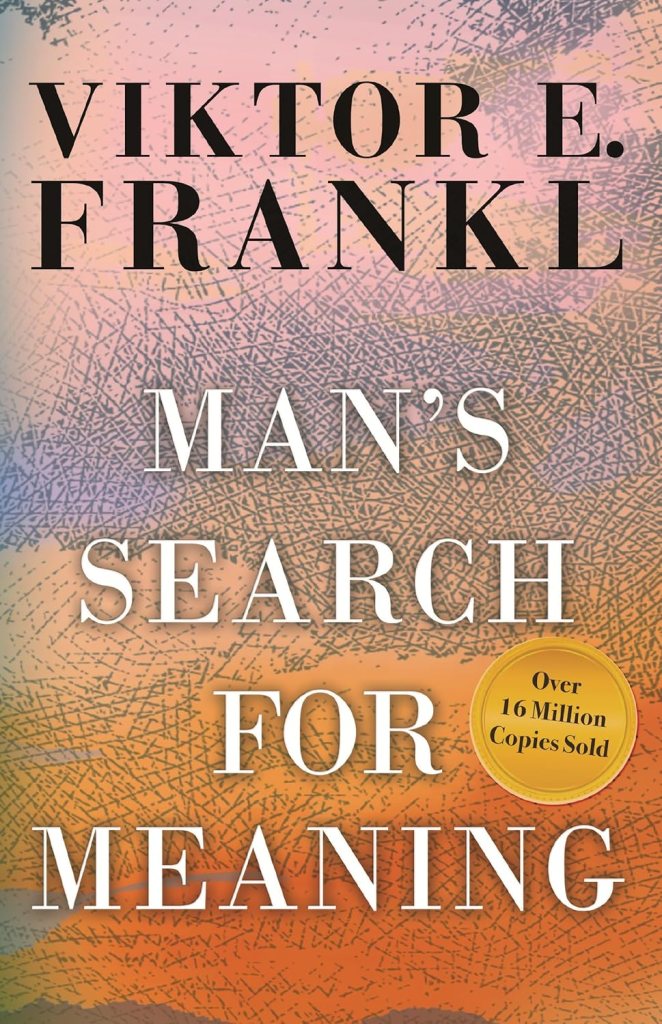
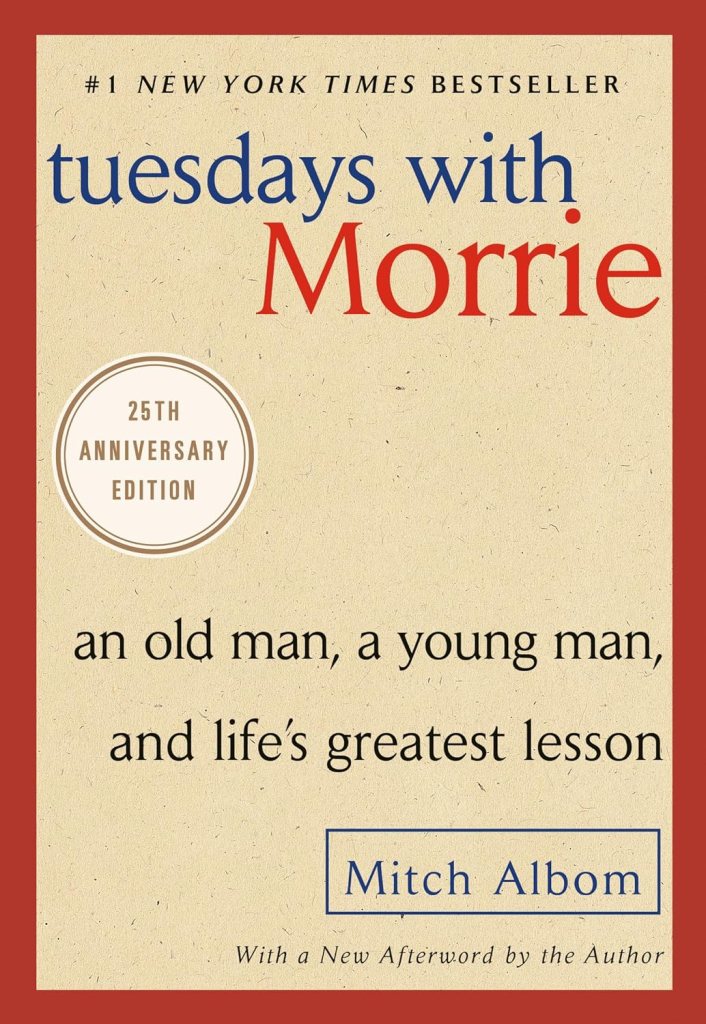
I read widely to guide my writing. I still read every day, sometimes for hours, sometimes only a few pages. I return often to books that once moved me deeply: Pride and Prejudice, Man’s Search for Meaning, Tuesdays with Morrie. Each rereading feels different. That is how I know books grow with us. Revisiting a familiar story allows me to notice things I had missed before, to understand new perspectives, and to refine my sense of narrative and character development.
I read craft books not to copy technique, but to understand intention. Why does this sentence work? Why does that scene linger? Reading teaches humility. There is always someone writing better, clearer, braver. Instead of discouraging me, that comforts me. It means the work is endless, and that is a good thing. There is always more to learn, always room to grow. This realisation keeps me grounded and committed to the long journey of writing.
I am part of some anthologies, and I have authored many articles over the years. These small contributions are part of my learning and practice, a way to keep writing while I work on larger projects. They are exercises in discipline and experimentation, testing different voices, formats, and perspectives. Each piece, no matter how short, teaches me something about structure, clarity, and the rhythm of language.
The life of a writer is not glamorous. Most of it is quiet. You sit. You doubt. You write. You delete pages you once loved. You rewrite. You keep going. There is no certainty, only commitment. Writing requires discipline more than inspiration. Inspiration visits. Discipline stays.
There were periods in my life when writing was the only stable thing I had. Work challenges, writer’s block, my daughter’s health issues, long waits—writing did not solve these problems, but it gave me a place to stand. It reminded me who I was when everything else felt fragile. Writing became a companion, a place to breathe, a way to make sense of the world. More than that, it showed me that writing, reading, and reflection are tools we all need, as societies and as individuals, to engage with ourselves and others.
My faith plays a central role in my life and writing. It teaches patience and surrender. Writing is similar. You do your part and let go of the outcome. You write honestly and accept that the work will find its reader when it is meant to. Writing, like prayer, requires consistency, trust, and humility.
I do not measure success by recognition. I measure it by sincerity. If a reader feels empathetic, the work has succeeded. If a sentence stays with someone longer than expected, that is enough. Every story, every paragraph, every sentence is a small offering, an attempt to communicate honestly, and that is enough.
I am still learning. Still reading. Still writing. That, for me, is a full life.
And it began, simply, with a book opened in silence.
Gowher Bhat is a a columnist, a freelance journalist, and educator from Kashmir. He writes about memory, place, and the quiet weight of the things we carry, often exploring themes of longing, belonging, silence, and expression. A senior columnist in several local newspapers across the Kashmir Valley, he is also an avid reader and book reviewer. He believes the smallest moments can carry the deepest truths.
PLEASE NOTE: ARTICLES CAN ONLY BE REPRODUCED IN OTHER SITES WITH DUE ACKNOWLEDGEMENT TO BORDERLESS JOURNAL
In winters, birds migrate. They face no barriers. The sun also shines across fences without any hindrance. Long ago, the late Nirendranath Chakraborty (1924-2018) wrote about a boy, Amalkanti, who wanted to be sunshine. The real world held him back and he became a worker in a dark printing press. Dreams sometimes can come to nought for humanity has enough walls to keep out those who they feel do not ‘belong’ to their way of life or thought. Some even war, kill and violate to secure an exclusive existence. Despite the perpetuation of these fences, people are now forced to emigrate not only to find shelter from the violences of wars but also to find a refuge from climate disasters. These people — the refuge seekers— are referred to as refugees[1]. And yet, there are a few who find it in themselves to waft to new worlds, create with their ideas and redefine norms… for no reason except that they feel a sense of belonging to a culture to which they were not born. These people are often referred to as migrants.
At the close of this year, Keith Lyons brings us one such persona who has found a firm footing in New Zealand. Setting new trends and inspiring others is a writer called Harry Ricketts[2]. He has even shared a poem from his latest collection, Bonfires on the Ice. Ricketts’ poem moves from the personal to the universal as does the poetry of another migrant, Luis Cuauhtémoc Berriozábal, aspiring to a new, more accepting world. While Tulip Chowdhury — who also moved across oceans — prays for peace in a war torn, weather-worn world:
I plant new seeds of dreams for a peaceful world of tomorrow.
Fiction in this issue reverberates across the world with Marc Rosenberg bringing us a poignant telling centred around childhood, innocence and abuse. Sayan Sarkar gives a witty, captivating, climate-friendly narrative centred around trees. Naramsetti Umamaheswararao weaves a fable set in Southern India.
A story by Nasir Rahim Sohrabi from the dusty landscapes of Balochistan has found its way into our translations too with Fazal Baloch rendering it into English from Balochi. Isa Kamari translates his own Malay poems which echo themes of his powerful novels, A Song of the Wind (2007) and Tweet(2017), both centred around the making of Singapore. Snehaprava Das introduces Odia poems by Satrughna Pandab in English. While Professor Fakrul Alam renders one of Nazrul’s best-loved songs from Bengali to English, Tagore’s translated poem Jatri (Passenger) welcomes prospectives onboard a boat —almost an anti-thesis of his earlier poem ‘Sonar Tori’ (The Golden Boat) where the ferry woman rows off robbing her client.
We have plenty of non-fiction this time starting with a tribute to Jane Austen (1775-1817) by Meenakshi Malhotra. Austen turns 250 this year and continues relevant with remakes in not only films but also reimagined with books around her novels — especially Pride and Prejudice (which has even a zombie version). Bhaskar Parichha pays a tribute to writer Bibhuti Patnaik. Ravi Varmman K Kanniappan explores ancient Sangam Literature from Tamil Nadu and Ratnottama Sengupta revisits an art exhibition that draws bridges across time… an exploration she herself curated.
Farouk Gulsara — with his dry humour — critiques the growing dependence on artificial intelligence (or the lack of it). Devraj Singh Kalsi again shares a spooky adventure in a funny vein.
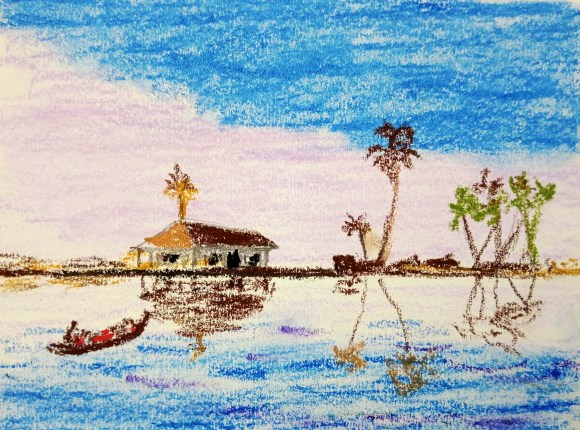
We have a spray of colours from across almost all the continents in our pages this time. A bumper issue again — for which all of the contributors have our heartfelt thanks. Huge thanks to our fabulous team who pitch in to make a vibrant issue for all of us. A special thanks to Sohana Manzoor for the fabulous artwork. And as our readers continue to grow in numbers by leap and bounds, I would want to thank you all for visiting our content! Introduce your friends too if you like what you find and do remember to pause by this issue’s contents page.
Wish all of you happy reading through the holiday season!
Nun chai, traditional pink tea from Kashmir. From Public Domain
The father sat across from me in a small tea shop in Srinagar, stirring his cup of nun chai. His face was lined with worry. His daughter had just enrolled in a well-known coaching centre, aiming to crack the NEET exam[1]. “The fees are high,” he said quietly. “We’ve had to dip into our savings. But what choice do we have?”
In Kashmir, the pursuit of higher education has led to a boom in private coaching centres. These institutions promise success in competitive exams, which have become almost essential for aspirants to institutions of higher learning. But this trend has brought significant financial and emotional burdens to families and students alike.
Over the past decade, Kashmir has seen a rapid increase in private coaching centres, especially in Srinagar. The cost of enrolling in these coaching centres is substantial. Fees can range from Rs50,000 to Rs150,000 per year, depending on the course and the institution’s reputation. For many families in the region, this represents a significant portion of their annual income. The financial strain is even greater when multiple children in a family seek such coaching, leading to difficult choices and sacrifices.
In theory, competitive exams are merit-based. But in reality, access to quality coaching has become a deciding factor. This has led to concerns that the system unfairly favours the wealthy. Children from less privileged backgrounds are often unable to afford the coaching necessary to compete, widening the educational divide.
The intense pressure to succeed in these exams takes a toll on students’ mental health. The relentless pursuit of high scores, coupled with the fear of failure, has led to increased anxiety and stress among students. In extreme cases, this pressure has resulted in self-harm or suicidal tendencies, highlighting the tragic dimensions of this educational race.
Another casualty of the coaching culture is the traditional schooling system. Many students attend school just for attendance and exams. The ‘real studying’ is perceived to take place in coaching classes. Some students even drop out of regular schools entirely, enrolling in “dummy” schools that allow them to focus solely on coaching. This shift undermines the holistic development that traditional schooling aims to provide.
Coaching institutes have turned into lucrative businesses. They hire aggressive marketing teams, use toppers’ faces on billboards, and charge extra for “elite” batches. Some teachers in these institutes earn significantly more than professors in universities. The focus has shifted from education to profit, raising concerns about the commercialisation of learning.
The rapid growth of private coaching centres has posed challenges for regulators. Concerns have been raised over the lack of a proper mechanism to regulate fee structures and ensure basic facilities for students. The absence of effective oversight has allowed some centres to prioritize profit over quality education, further exacerbating the issues faced by students and parents.
Addressing these challenges requires a multifaceted approach:
1. Strengthening Public Education: Improving the quality of education in public schools can reduce the dependency on private coaching. This includes enhancing infrastructure, updating curricula, and providing continuous teacher training.
2. Affordable Alternatives: Promoting online educational platforms that offer affordable or free resources can provide students with additional learning support without the hefty price tag associated with traditional coaching centres.
3. Mental Health Support: Integrating counselling services within schools and coaching centres can help students manage stress and build resilience, ensuring their well-being alongside academic pursuits.
4. Community Awareness: Educating parents and students about diverse career paths and the importance of holistic development can shift the focus from a narrow definition of success to a more inclusive one.
For now, parents will keep paying. Students will keep pushing. Coaching centres will keep expanding. And the question will remain—are we cracking an exam, or emptying our bank account?
The burgeoning private coaching industry in Kashmir reflects the aspirations and anxieties of a society striving for educational excellence. Balancing these ambitions with financial realities and mental well-being is crucial. As the region moves forward, a collective effort from educators, policymakers, parents, and students is essential to create an equitable and supportive educational environment.
.
[1] The NEET (National Eligibility cum Entrance Test) is a national entrance examination in India for admission to undergraduate medical programs.
Gowher Bhat is a published author of both fiction and non-fiction, a columnist, freelance journalist, and educator from Kashmir. He writes about memory, place, and the quiet weight of the things we carry, often exploring themes of longing, belonging, silence, and expression. A senior columnist in several local newspapers across the Kashmir Valley, he is also an avid reader and book reviewer. He believes the smallest moments can carry the deepest truths.
.
PLEASE NOTE: ARTICLES CAN ONLY BE REPRODUCED IN OTHER SITES WITH DUE ACKNOWLEDGEMENT TO BORDERLESS JOURNAL
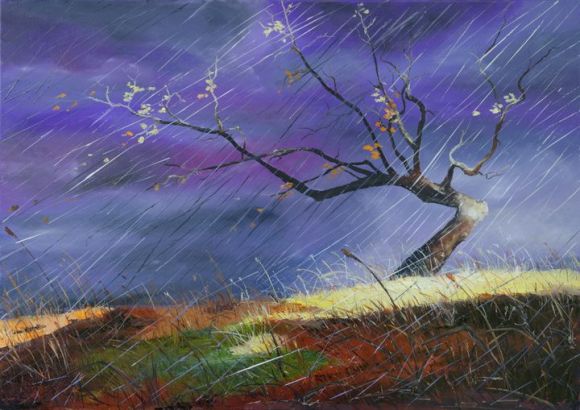
Storm in purple by Arina Tcherem. From Public Domain
If we take a look at our civilisation, there are multiple kinds of storms that threaten to annihilate our way of life and our own existence as we know it. The Earth and the human world face twin threats presented by climate change and wars. While on screen, we watch Gaza and Ukraine being sharded out of life by human-made conflicts over constructs made by our own ‘civilisations’, we also see many of the cities and humankind ravaged by floods, fires, rising sea levels and global warming. Along with that come divides created by economics and technology. Many of these themes reverberate in this month’s issue.
From South Australia, Meredith Stephens writes of marine life dying due to algal growth caused by rising water temperatures in the oceans — impact of global warming. She has even seen a dead dolphin and a variety of fishes swept up on the beach, victims of the toxins that make the ocean unfriendly for current marine life. One wonders how much we will be impacted by such changes! And then there is technology and the chatbot taking over normal human interactions as described by Farouk Gulsara. Is that good for us? If we perhaps stop letting technology take over lives as Gulsara and Jun A. Alindogan have contended, it might help us interact to find indigenous solutions, which could impact the larger framework of our planet. Alindogan has also pointed out the technological divide in Philippines, where some areas get intermittent or no electricity. And that is a truth worldwide — lack of basic resources and this technological divide.
On the affluent side of such divides are moving to a new planet, discussions on immortality — Amortals[1] by Harari’s definition, life and death by euthanasia. Ratnottama Sengupta brings to us a discussion on death by choice — a privilege of the wealthy who pay to die painlessly. The discussion on whether people can afford to live or die by choice lies on the side of the divide where basic needs are not an issue, where homes have not been destroyed by bombs and where starvation is a myth, where climate change is not wrecking villages with cloudbursts. In Kashmir, we can find a world where many issues exist and violences are a way of life. In the midst of such darkness, a bit of kindness and more human interactions as described by Gower Bhat in ‘The Man from Pulwama’ goes some way in alleviating suffering. Perhaps, we can take a page of the life of such a man. In the middle of all the raging storms, Devraj Singh Kalsi brings in a bit of humour or rather irony with his strange piece on his penchant for syrups, a little island removed from conflicts which seem to rage through this edition though it does raise concerns that affect our well-being.
Parichha has also reviewed a book by another contemporary Odia woman author, Snehaprava Das. The collection of short stories is called Keep it Secret. Madhuri Kankipati has discussed O Jungio’s The Kite of Farewells: Stories from Nagaland and Somdatta Mandal has written about Chhimi Tenduf-La’s A Hiding to Nothing, a novel by a global Tibetan living in Sri Lanka with the narrative between various countries. We have an interview with a global nomad too, Neeman Sobhan, who finds words help her override borders. In her musing on Ostia Antica, a historic seaside outside Rome, Sobhan mentions how the town was abandoned because of the onset of anopheles mosquitos. Will our cities also get impacted in similar ways because of the onset of global ravages induced by climate change? This musing can be found as a book excerpt from Abiding City: Ruminations from Rome, her book on her life as a global nomad. The other book excerpt is by a well-known writer who has also lived far from where he was born, MA Aldrich. His book,From Rasa to Lhasa: The Sacred Center of the Mandala is said to be “A sweeping, magnificent biography—which combines historical research, travel-writing and discussion of religion and everyday culture—Old Lhasa is the most comprehensive account of the fabled city ever written in English.”
With that, we come to our fiction section. This time we truly have stories from around the globe with Suzanne Kamata sending a story set in the Bon festival that’s being celebrated in Japan this week for her column. From there, we move to Taiwan with C. J. Anderson-Wu’s narrative reflecting disappearances during the White Terror (1947-1987), a frightening period for people stretched across almost four decades. Gigi Gosnell writes of the horrific abuse faced by a young Filipino girl as the mother works as a domestic helper in Dubai. Paul Mirabile gives us a cross-cultural narrative about a British who opts to become a dervish. While Hema R touches on women’s issues from within India, Sahitya Akademi Award Winner, Naramsetti Umamaheshwararao, writes a story about children.
With such hope growing out of a neolithic burial chamber, maybe there is hope for life to survive despite all the bleakness we see around us. Maybe, with a touch of magic and a sprinkle of realism – our sense of hope, faith and our ability to adapt to changes, we will survive for yet another millennia.
We wind up our content for the August issue with the eternal bait for our species — hope. Huge thanks to the fantastic team at Borderless and to all our wonderful writers. Truly grateful to Sohana Manzoor for her artwork and many thanks to all our wonderful readers for their time…
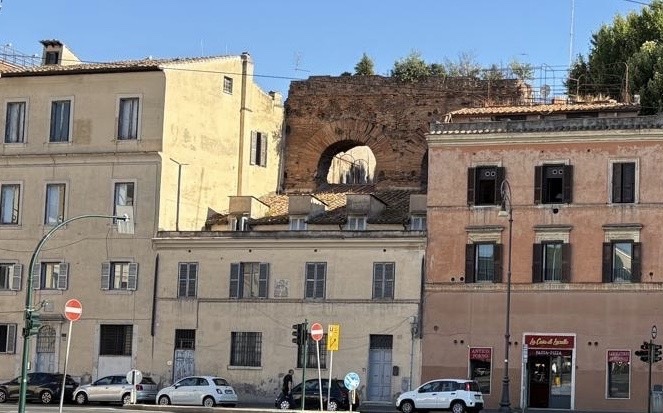
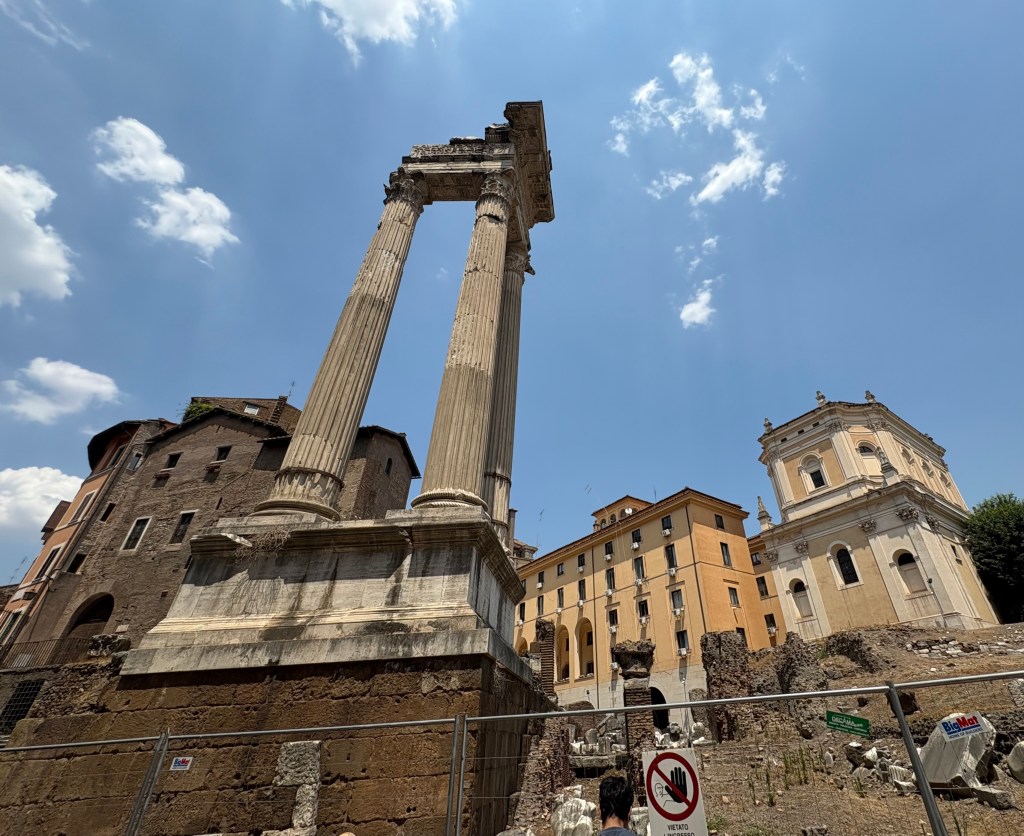
All around us, we hear of disasters. Often, we try to write of these as Tagore seems to do in the above lines. However, these lines follow after he says he draws solace and inspiration from a ‘serene lotus’, pristine and shining with vibrancy. He gazes at it while looking for that still point which helps him create an impact with words. That is perhaps what we can hope to do too — wait for a morning where clarity will show us the path to express not just what we see, but to find a way to heal and help. Finding parallels in great writings of yore to our own attempts at recreating the present makes us realise that perhaps history is cyclical. In Rome, new structures rear up against thousand-year walls, reflecting how the past congeals into the present.
Congealing the past into our present in this July’s issue are stories of American migrants — like Tom Alter’s family who made India their home — by Anuradha Kumar in her new non-fiction Wanderers, Adventurers, Missionaries: Early Americans in India. We feature this book with a review and an interview with the author where she tells us how and why she chose to write on these people. We have more people writing of their own wanderings. Mohul Bhowmick wanders into Cambodia and makes friends over a local sport while Prithvijeet Sinha strolls by the banks of the River Gomti in Lucknow. Meredith Stephens not only takes us to the Prime Meridien in Greenwich but also to Carnarvon which houses a science and technology centre in Australia. Devraj Singh Kalsi wanders with humour to discover gastronomical inspiration and hopes for sweeter recompense.
Taking up the theme of cli-fi, Rajat Chaudhuri’s Wonder Tales for a Warming Planetseems to bring hope by suggesting adapting to changing climes. Rakhi Dalal tells us in her review: “It dares to approach the climate crisis through the lens of empathy and imagination rather than panic or guilt. In doing so, Rajat Chaudhuri gives us what many adult climate narratives fail to deliver—a reason to believe that another world is not only possible but already being imagined by the young. All we need to do is listen.” Bhaskar Parichha has discussed the autobiography of a meteorologist and Distinguished University Professor at George Mason University, Jagadish Shukla. In A Billion Butterflies: A Life in Climate and Chaos Theory, he claims Shukla has “revolutionised monsoon forecasting.” Somdatta Mandal has written about Dilip K Das’s Epidemic Narratives: The Cultural Construction of Infectious Disease Outbreaks in India. And Gower Bhat reviews Neha Bansal’s best-selling poetry collection, Six of Cups.
With that, we wind up the contents of this month’s issue. Do pause by our content’s page to check it out in more details.
This month’s edition would not have been possible without all our contributors, our fabulous team and especially Sohana Manzoor’s artwork. Huge thanks to all of them and to our wonderful readers who make it worthwhile for us to write and publish. Do write in to us if you have any feedback. Five years ago, we chose to become a monthly from a daily… We have come a long way from then and grown to host writers from more than forty countries and readers from almost all over the world. For this, we owe you all – for being with us and encouraging us to find fresh pastures.




 Borderless