Born free
As free as the wind blows
As free as the grass grows
Born free to follow your heart
-- Born Free by Andy Williams
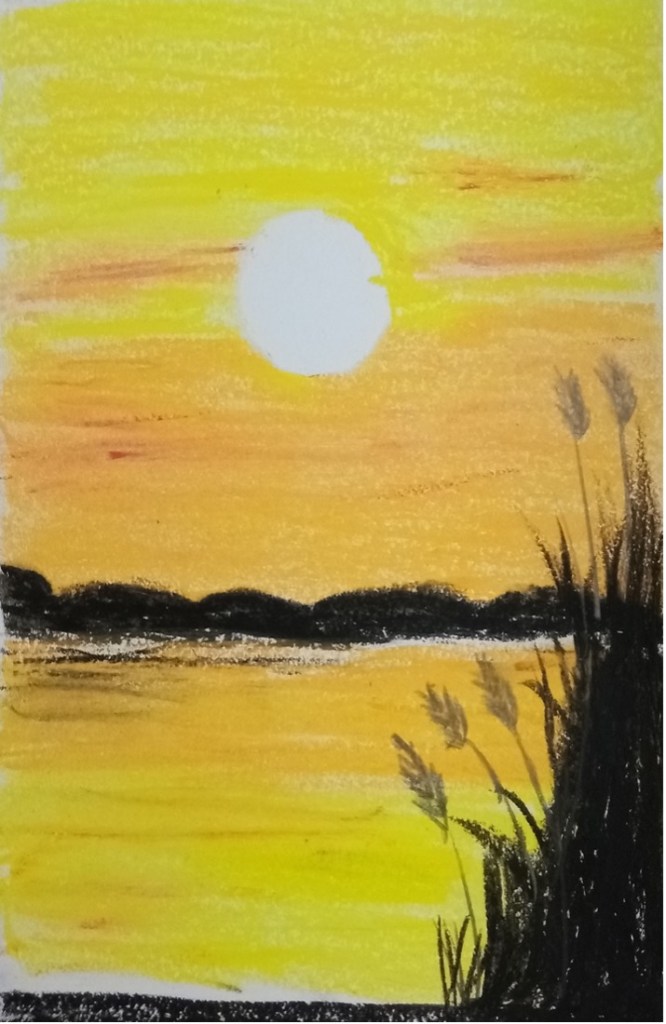
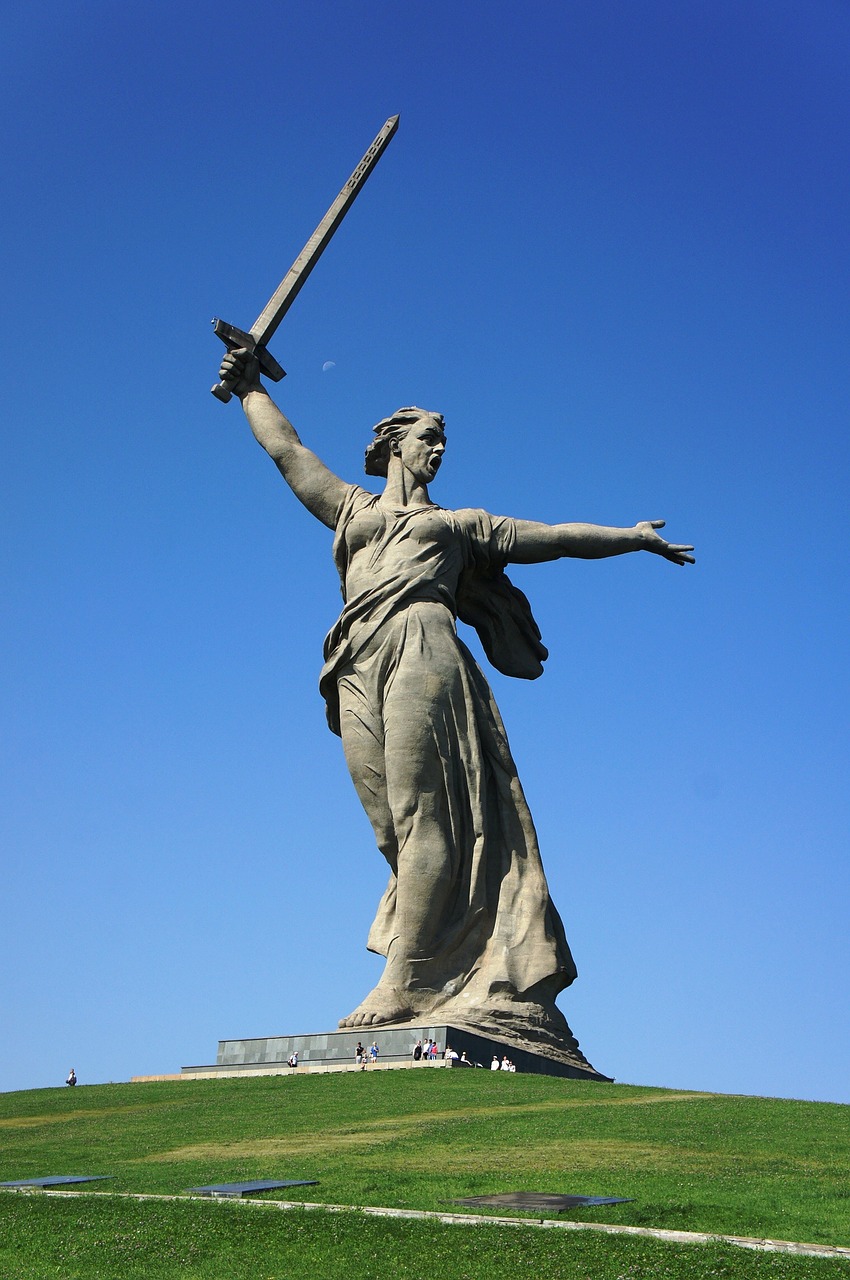
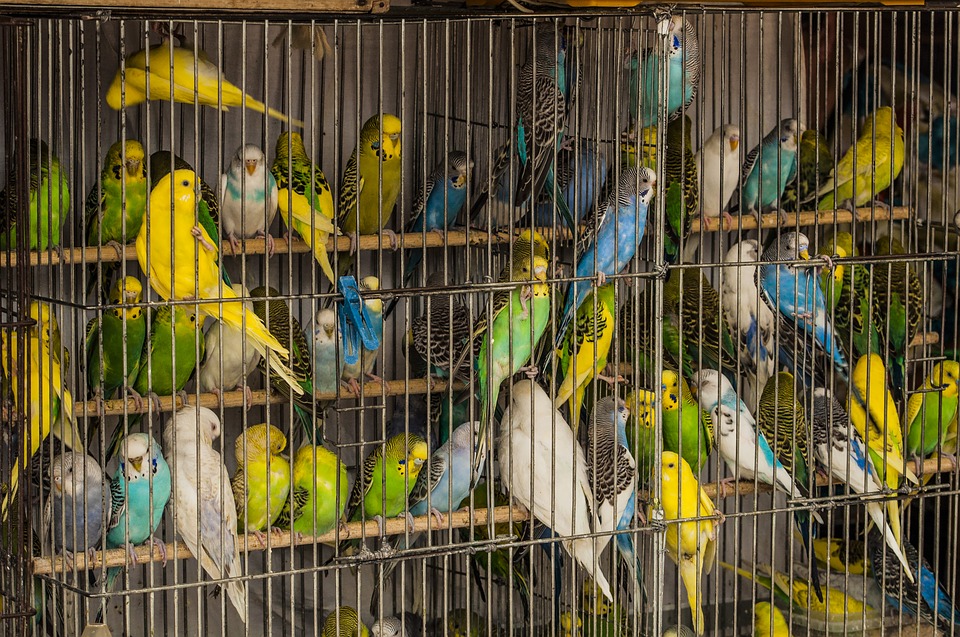
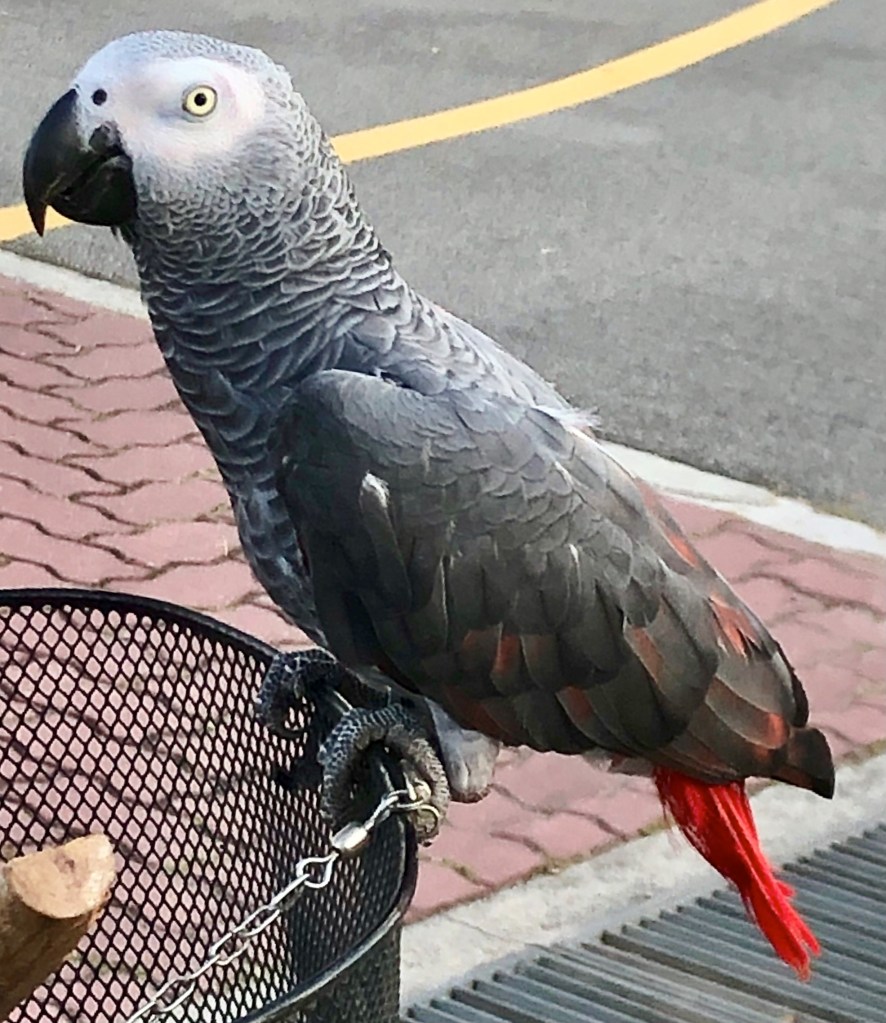
These are lines from a song by Andy Williams, a pop icon whose song was the theme song in Born Free, a film made in 1966 about a lion cub bred in captivity, who had to be trained to live free even though she was born free. Does that apply to all living creatures, including humans? What is freedom? And who is free? Does political independence mean ultimate freedom?
We celebrate political ‘freedom’ of countries as national or independence days. Sometimes, as in the case of India and Pakistan, independent nationhood can be laced with bloodshed and grief . Two new countries were born of a single colonial India in the August of 1947. Pakistan awoke as a country on the midnight of 14th August and India called the late hour 15th August. Nehru’s speech has become an iconic one: “Long years ago we made a tryst with destiny, and now the time comes when we shall redeem our pledge… At the stroke of the midnight hour, when the world sleeps, India will awake to life and freedom…”
Lord & Lady Mountbatten with Nehru on 15th August 1947
Lord & Lady Mountbatten with Jinnah and his sister, Fatima, 14 August 1947.
Lord Mountbatten was the last Viceroy of colonial India. Courtesy: Creative Commons
Common people while crossing the boundary line between the two new nations lost their lives, homes and lands over the mob violence. The resentment still simmers in a few hearts. In an attempt to find peace and amity, we have put forward a combined selection of writing from across borders, words devoid of angst or hate, words that look for commonality and harmony.
In Conversation with Goutam Ghose, multiple award-winning filmmaker, writer, actor discusses his films, film-books and journey as a humanitarian artiste who makes cross cultural films across all boundaries. Click here to read.
In The Idea of India: Bharata Bhagya Bidhata – The Making of a MotherlandAnasuya Bhar explores the history around the National Anthem of India which started as a song, composed by Tagore. Only the first paragraph of the whole song in Bengali was adapted as the National Anthem. We include the translations of the complete song both by Tagore and by Aruna Chakravarti. Click here to read.
In An August Account of ‘Quit India’ MovementRatnottama Sengupta, translates from Bengali the excerpts recorded by Sandhya Sinha (1928-2016), who witnessed an upsurge in the wake of the Quit India Movement. Click here to read.
In Seventy-four Years After Independence…“Mil ke rahe gi Azadi”(We will get our Freedom), Aysha Baqir muses on Pakistani women’s role in the independence movement and their current state. Click here to read.
In 2147 without Borders, Devraj Singh Kalsi meanders over Partitions, borders and love stories and looks for an amicable solution in a happier future. Click here to read.
Fiction
Bundu, Consoler of the Rich is a story based on memories of Partition by Nadir Ali, translated from Punjabi by Amna Ali. Click here to read.
In The Best Word, Maliha Iqbal explores the impact of wars in a spine chilling narrative, journeying through a range of emotions. Click here to read.
In Do Not Go!, Moazzam Sheikh explores dementia, giving us a glimpse of the lives of Asian immigrants in America. Click here to read.
In The Chained Man Who Wished to be Free, Sunil Sharma explores freedom and democracy versus conventions. We are left wondering is this the freedom we fought for? Click here to read.
Goutam Ghose, multiple award-winning filmmaker, writer, actor discusses his films, film-books and journey as a humanitarian artiste. Click here to read.
DrKirpal Singh, a well-known poet and academic from Singapore, talks of his life and times through colonial rule, as part of independent Malaya, and the current Singapore. Click here to read.
Ratnottama Sengupta translates from Bengali the excerpts recorded by Sandhya Sinha (1928-2016), who witnessed an upsurge in the wake of the Quit India Movement, part of India’s struggle against colonial rule. Click here to read.
‘Tran’by Tagore translated from Bengali to English by Mitali Chakravarty, art and editing by Sohana Manzoor for Borderless Journal. Click here to read.
Anasuya Bhar explores the history of the National Anthem of India, composed by Tagore in Bengali and translated only by the poet himself and by Aruna Chakravarti. Click here to read.
John Herlihy explores the magnificent sites of Mandalay in company of a Slovenian friend in the first episode of his quartet on his Myanmar. Click here to read.
Bhaskar’s Corner
In Tagore & Odisha, Bhaskar Parichha explores Tagore’s interactions with Odisha, his impact on their culture and the impact of their culture on him. Click here to read
“Mil ke rahe gi Azadi”(We will get our Freedom) by Aysha Baqir muses on Pakistani women’s role in the independence movement and their current state. Click here to read.
Beyond The Himalayas by Goutam Ghose, based on a five-part documentary taking us on a journey along the silk route exploring parts of Pakistan and China. Click here to read.
On August 8th 2021, the chief of the International Olympic Committee, Thomas Bach, pointed out during the closing ceremony that these games were “unprecedented” and brought messages of “hope, solidarity and peace” into a world torn with the desolation generated by the pandemic. It was a victory of the human spirit again, a precursor of what is to come. That the Japanese could get over their pandemic wrought hurdles, just as they did post the nuclear disasters wrought by the Second World War and by the 2011 earthquake-tsunami at Fukushimaya, to host something as spectacular and inspiring as these international games reflects, as the commentators contended, a spirit of ‘harmony and humility’. The last song performed by many youngsters seemed to dwell on stars in the sky — not only were the athletes and organisers the stars but this also reminded of unexplored frontiers that beckon mankind, the space.What a wonderful thing it was to see people give their best and unite under the banner of sports to bring messages of survival and glimpses of a future we can all share as human beings! Our way of doing things might have to evolve but we will always move forward as a species to thrive and expand beyond the known frontiers.
One such explorer of yet unknown frontiers who mingles the historic with the contemporary, Goutam Ghose, an award-winning filmmaker and writer, has honoured our pages with an extensive interview showing us how art and harmony can weave lores that can help mankind survive. This is reinforced by the other interview with Singaporean academic, Dr Kirpal Singh, whose poetry reflects his convictions of a better world. With our intelligence, we can redefine processes that hold us back and grind our spirits to dust — be it the conventional ‘isms’ or norms that restrict our movement forward – just as Tagore says in the poem, we have translated this time, ‘Deliverance’.
…On this auspicious dawn,
Let us hold our heads high in the infinite sky
Amidst the light of bounteousness and the heady breeze of freedom.
As the Kobiguru mentioned earlier in the poem, the factors that oppress could be societal, political, or economic. Could they perhaps even be the fetters put on us by the prescribed preconceived definition of manmade concepts like ‘freedom’ itself? Freedom can be interpreted differently by multiple voices.
This month, on our pages, ‘freedom’ has found multiple interpretations in myriad of ways — each voice visualising a different dream; each dream adding value to the idea of human progress. We have discussions and stories on freedom from Nigeria, Argentina, India, Pakistan, Myanmar, Malaysia and more. Strangely enough, August holds multiple independence/ national days that are always for some reason seen as days of being ‘freed’ by many — at least from oppression. But is that true?
From Malaysia, Julian Matthews and Malachi Edwin Vethamani cry out against societal, religious and political bindings – quite a powerful outcry at that with a story and poems. Akbar Barakzai continues his quest with three poems around ideas of freedom translated from Balochi by Fazal Baloch. Jaydeep Sarangi and Joan Mcnerny pick up these reverberations of freedom, each defining it in different ways through poetry.
Jared Carter takes us back to his childhood with nostalgic verses. Ryan Quinn Flanagan, Michael Lee Johnson, Vandana Sharma and many more sing to us with their lines. Rhys Hughes has of course humour in verse that makes us smile as does Jay Nicholls who continues with her story-poems on Pirate Blacktarn – fabulous pieces all of them. The sport of hummingbirds and cats among jacaranda trees is caught in words and photographs by Penny Wilkes in her Nature’s Musings. A poetic tribute to Danish Siddiqui by young Sutputra Radheye rings with admiration for the Pulitzer prize-winning photographer who met his untimely end last month on 16th while at work in Afghanistan, covering a skirmish between Taliban and Afghanistan security forces. John Linwood Grant takes up interesting issues in his poetry which brings me back to ‘freedom’ from colonial regimes, perhaps one of the most popular themes for writers.
Indo-Pak independence, celebrated now on 14th (Pakistan) and 15th August (India), reflects not only the violence of the Partition which dislocated and killed millions historically but also the trauma caused by the event. Capturing this trauma is a short story based on memories of Partition by Nadir Ali, translated from Punjabi by his daughter, Amna Ali. Ratnottama Sengupta translates from the diary of Sandhya Sinha (1928-2016), a woman’s voice from the past that empathises with the subjugated who were subdued yet again after an upsurge of violence during the Quit India Movement (1942) against the colonials. Sinha contends that though the movement frittered away, the colonials were left with an after-taste of people hankering for self-rule. A thought-provoking short story by Sunil Sharma explores the results of self-rule in independent India.
Alluding to Jinnah’s vision for women, Aysha Baqir muses emotionally about the goals that remain yet to be fulfilled 74 years after independence. Moazzam Sheikh’s story of immigrants explores dementia, giving us a glimpse of the lives of Asian immigrants in America, immigrants who had to find a new home despite independence. Was this the freedom they dreamt of — all those who fought against various oppressive regimes or colonialism?
Tagore’s lyrics might procure a few ideas on freedom, especially in the song that India calls its National Anthem. Anasuya Bhar assays around the history that surrounds the National Anthem of India, composed by Tagore in Bengali and translated to English by the poet himself and more recently, only by Aruna Chakravarti. We also carry Dr Chakravarti’s translation of the National Anthem in the essay. Reflecting on the politics of Partition and romance is a lighter piece by Devraj Singh Kalsi which says much. ‘Dinos in France’ by Rhys Hughes and Neil Reddick’s ‘The Coupon’ have tongue-in-cheek humour from two sides of the Atlantic.
A coming-of-age story has been translated from Nepali by Mahesh Paudyal – a story by a popular author, Dev Kumari Thapa – our first Nepali prose piece. We start a four-part travelogue by John Herlihy, a travel writer, on Myanmar, a country which has recently been much in the news with its fight for surviving with democracy taking ascendency over the pandemic and leaving the people bereft of what we take for granted.
Candice Louisa Daquin discusses a life well-lived in a thought provoking essay, in which she draws lessons from her mother as do Korean poet, Ihlwha Choi, and Argentinian writer, Marcelo Medone. Maybe, mothers and freedom draw similar emotions, of blind love and adulation. They seem to be connected in some strange way with terms like motherland and mother tongue used in common parlance.
We have two book excerpts this time: one from Beyond the Himalayas by the multi-faceted, feted and awarded filmmaker we have interviewed, Goutam Ghose, reflecting on how much effort went in to make a trip beyond boundaries drawn by what Tagore called “narrow domestic walls”. We carry a second book excerpt this time, from Jessica Muddit’s Our Home in Myanmar – Four years in Yangon. Keith Lyons has reviewed this book too. If you are interested in freedom and democracy, this sounds like a must read.
Maithreyi Karnoor’sSylvia: Distant Avuncular Ends,is a fiction that seems to redefine norms by what Rakhi Dalal suggests in her review. Bhaskar Parichha has picked a book that many of us have been curious about, Arundhathi Subramaniam’s Women Who Wear Only Themselves. Parichha is of the opinion, “Elevated or chastised, exonerated or condemned, the perturbation unworldly women in India face is that they have never been treated as equal to men as spiritual leaders. This lack of equality finds its roots not only in sociological and cultural systems, but more particularly at the levels of consciousness upon which spirituality and attitudes are finally based.”One wonders if this is conclusive for all ‘unworldly women’ in India only or is it a worldwide phenomenon or is it true only for those who are tied to a particular ethos within the geographical concept of India? The book reviewed by Meenakshi Malhotra, Somdatta Mandal’s The Last Days of Rabindranath Tagore in Memoirs, dwells on the fierce independence of the early twentieth century women caregivers of the maestro from Bengal. These women did not look for approval or acceptance but made their own rules as did Jnadanandini, Tagore’s sister-in-law. Bhaskar Parichha has also added to our Tagore lore with his essay on Tagore in Odisha.
As usual, we have given you a peek into some of our content. There is more, which we leave for our wonderful readers to uncover. We thank all the readers, our fantastic contributors and the outstanding Borderless team that helps the journal thrive drawing in the best of writers.
I wish you all a happy August as many of the countries try to move towards a new normal.
Almost five years ago, I wrote a short story about India-Pakistan ties. Since then, I wanted to expand it to a full-length novel set in the future – as far as 2147. With two hundred years being sufficient time to regret the misdeeds, to provide the required distance to view things dispassionately.
Since future gives the freedom to create a destiny of one’s choice, without offending the sentiments of those living in the present times, I chose a different timeline away from the reach of divisive politics, hoping that the readers belonging to the unborn generations will be blessed with the maturity to realise the blunders of the past and support the amicable rectification of what went wrong, without resorting to any blame-game, without repeating the horrors of the Partition.
The strain of thought came from an oral narrative I heard from my mother years ago. My maternal grandfather, an employee with the railways, quit his job and sought refuge in music after the Partition, devoting his remaining years to the playing of musical instruments and singing of devotional songs, to calm his mind, to forget the scenes of bloodshed he had witnessed all around. It was easy to visualise its dreadful impact even on those who did not suffer physical injuries or lose their loved ones.
Two lovers from ruling political dynasties on both sides of the border begin their campus romance at a foreign university located in a country that split their homeland centuries ago. Two leading characters who pledge to rewrite history and make their love win hearts of the nations at loggerheads. In the creative process, I drew strength from the fact that a hateful phase of five years led to the division of the two countries so it was possible to reverse that with a similar period of sublime love. A brief outline of their intense love story mapped their marital union and the reunification of the two countries happening on the same day. A grand climax heralding a new dawn – a new tryst with destiny.
Instead of divulging the plot, I let readers imagine the trajectory of events. The changes they undergo to bring about the change of heart, the hardships their love story has to face. After 200 years of separation, hatred and bitterness lose the game. The vicious cycle ends. Love triumphs. Honestly speaking, the imaginary world is no less difficult to construct.
Shaping the real world is a humongous task. The military establishment poses hurdles and the powerful nations with vested interests oppose the coming together. There are conspiracies, assassination bids, and foul attempts to stoke communal fires. But this time, the masses are wiser and the political classes cannot divide and rule. The young lovers persuade their belligerent families to make it a bilateral issue and seek public opinion through voting on this issue in their respective countries, with an overwhelming majority on both sides voting in favour of a borderless world, allowing free movement of people and the restoration of full democratic rights without any discrimination. Mutual love and respect bring lovers together and their grand union is celebrated across the borders with pomp and festivity. The spontaneous outburst of emotions sets a global example of how love can conquer hearts of millions, making it appear as if bitterness and enmity never existed.
Sharing the rubric with some friends who also dream of a new world without borders elicited positive response, a go-ahead to spend years in isolation writing this magnum opus. The support from people indicates this should happen but they do not know how this is going to happen. The idea of love and lovers doing it sounds impossible and they find it pretty immature to expect so much from love. Well, they have seen the power of hatred and violence in wars but the power of love has not been tested on such a big scale. They think big changes happen through bloodshed and not because of love.
I cannot convincingly explain in detail that the people after another century will have to nothing worse to imagine, no solution to expect from war and bloodshed. With such a bloody past behind, they will be aware that it cannot get any worse. They will be fully prepared to reject all forms of hatred. The living folks still have reserves of bitterness and hatred lying in the core. The next hundred years will deplete it further, leaving faint traces. It will be learning through self-realisation that the present generation does not have. It is the reason why they cannot imagine a different world. The future generations – who record more suffering than us over the century – will be dead against enmity and war. They will be naturally inclined to give love and a peace a chance to restore sanity.
If I write this today, the educated classes will love it. But the masses are perhaps going to find it funny. Writing a book with unborn readers in mind – a target audience that does not exist today – is a risky proposition. Agreed, it is a concept driven work that imagines an ideal world where the old order gets restored. If people do not like to read it, make an offbeat film on this subject. Viewers will find the sheer impossibility very exciting. Raising this issue and bringing it in the public domain is a good beginning. People will think of it from a fresh angle. Lovers from both sides of Punjab will be enamoured and they will crave for its realisation during their lifetime. The power blocks on both sides of the border will also think of lovers ending their hatred.
Some friends have read the opening chapter and they all suggest I should advance the date. Make it 2047 instead of 2147. I said this is an embryonic idea and it is impossible even for a writer to imagine a drastic change so quickly. A distant era makes me more comfortable to visualise cycling all the way from Amritsar to Lahore.
.
Devraj Singh Kalsiworks as a senior copywriter in Kolkata. His short stories and essays have been published in Deccan Herald, Tehelka, Kitaab, Earthen Lamp Journal, Assam Tribune, and The Statesman. Pal Motors is his first novel.
PLEASE NOTE: ARTICLES CAN ONLY BE REPRODUCED IN OTHER SITES WITH DUE ACKNOWLEDGEMENT TO BORDERLESS JOURNAL.
In conversation with an American poet,Jared Carter, who has received multiple encomiums like the Walt Whitman Award, the Poets’ Prize, a Guggenheim fellowship and much more. He tells us of his life and how he writes a poem. Click here to read.
In conversation with eminent academic and translator, RadhaChakravarty. Click here to read.
Translations
Two songs by Tagore written originally in Brajabuli, a literary language developed essentially for poetry, has been translated by Radha Chakravarty. Click here to read.
Korean Poetry written and translated to English by Ihlwha Choi. Click here to read.
Poetry in Bosnian from Bosnia & Herzegovina, written and translated by Maid Corbic. Click here to read.
Translation of ‘Dushomoy’ by Tagore, from Bengali to English by Mitali Chakravarty on behalf of Borderless Journal. Click here to read and listen to Tagore’s voice recite his poem in Bengali.
Penny Wilkes takes us Down the Path of Nostalgia with a mix of old and new photography and prose and poetry on how a decade after the end of the Second World War, she started her love affair with photography and nature. Clickhere to read
Marjuque-ul-Haque explores Mughal Lalbagh fort left unfinished in Dhaka, a fort where armies were said to disappear during the Sepoy Mutiny of 1857. Clickhere to read.
Nishi Pulugurtha journeys with her camera on the famed grounds near Fort William, a major historic site in Kolkata. Click hereto read.
Musings of a Copywriter
In Managing Bookshelves, Devraj Singh Kalsi cogitates with wry humour while arranging his book shelves. Click here to read.
Adventures of the Backpacking Granny
Sybil Pretious concludes her adventures this round with a fabulous trip to Generous Indonesia, a country with kind people, islands and ancient volcanoes. Click here to read.
A poignant real life story by Jeanie Kortum on adopting a child. Click here to read
The Literary Fictionist
In Scarecrow, Sunil Sharma explores urban paranoia. Click here to read.
Book Excerpt
The Parrot’s Tale, excerpted from Rabindranth Tagore. The Land of Cards: Stories, Poems and Plays for Children, translated by Radha Chakravarty, with a foreword from Mahasweta Devi. Clickhere to read.
In a tribute to Bollywood legend Dileep Kumar, Ratnottama Sengupta, one of India’s most iconic arts journalists, recollects the days the great actor sprinted about on the sets of Bombay’s studios …spiced up with fragments from the autobiography of Sengupta’s father, Nabendu Ghosh. Click here to read.
“Nothing can be unconditional: consequently, nothing can be free.”
“Liberty means responsibility. That is why most men dread it.”
-- George Bernard Shaw, Maxims for Revolutionists, Man & Superman (1903)
George Bernard Shaw (1856-1950), a great writer and playwright, used these epigrammatic lines to bring focus on what people thought was liberty or freedom from oppression, from regimes that were dictatorial. While discussing concepts of freedom, one does wonder if political freedom solves all humane issues, occasions we celebrate with great aplomb, like the birth of a nation.
This month started with the observance of July 4th, the date of the American Revolution in 1776 and the publication date of Whitman’s Leaves of Grass in 1855. In between these two years, in 1789, ten days down the line, on July 14th, another significant occurrence has been handed down by history to be celebrated as the Bastille Day— the day prisoners were freed from Bastille, a major event that led to the overthrow of the insensitive monarchy in France, a symbolic resurgence of the common, exploited man that has often been seen as an inspiration for later uprisings to reinforce the concept of democracy or liberté, égalité, fraternité.
As we move forward in time, towards August, one wonders if liberty attained by these means was good for all fellow humans? France was part of the Allied Forces that with America taking the lead dropped not one but two atom bombs on Hiroshima and Nagasaki on August 6th and 9th, 1945, to end the Second World War. Did the ends justify the means? Reflecting the cry and suffering of these victims, we have poetry from Suzanne Kamata, a well-known writer from Japan. Michael Burch on the other hand has shared poetry with us which shows how the nuclear programme continued unrepentant despite the devastation it caused. One must give kudos to the descendants of the victims of the nuclear blast that they have forgiven the perpetrators, admitted their own hand in the Second World War and moved ahead. In that spirit, we have an essay on peace by Candice Louisa Daquin, who joins the Borderless team as a writer-in-residence.
We have much happening in poetry this time with an interview of American poet Jared Carter, a recipient of number of awards and fellowships, including the Walt Whitman Award and the Guggenheim fellowship. He walks us through how he created the poem ‘Yeti’ (first published in the May edition of Borderless) and talks of the impact of artifacts from China and India on his own thought processes, the impact of Du Fu (712-770) and much more. We have a poem in Du Fu’s style this time by George Freek and an interesting poem with a Chinese title by Carter, a title that can have multiple connotations and yet each seems to fit the poem perfectly.
Rhys Hughes has brought humour into our pages with both his poetry and essay on William Mcgonagall, who bore the sobriquet of the worst writer in the world through his life and had things thrown at him when he read his poetry in Dundee. Yet, his work survived the beatings, and he lives on known as the ‘Scottish Homer’.
More poetry by Singaporean poet Marc Nair gives us a glimpse of the little island as viewed by someone who has grown up on it. Poetry is always multi-hued, and we have Lorraine Caputo transport us to a Garífuna village in Honduras. Penny Wilkes takes us ‘Down the Path of Nostalgia’ with a mix of old and new photography, prose and poetry on how almost a decade after the end of the Second World War, she started her love affair with photography and nature. It hovers between poetry and musings, and this time we have a rare musing by Jared Carter too. Devraj Singh Kalsi continues cogitating with wry humour while arranging bookshelves. We also have the backpacking granny visitingIndonesia. Post sharing this trip, our granny — Sybil Pretious — plans a little break from publishing to complete her memoirs.
A riveting flash fiction by Kaiyi Tan celebrates the spirit of conquest in these dark times, weaving into the pandemic lore the quest for personal freedom. Stories this time carry a real life one by Jean Kortum on adoption — her own struggle. But then, stories can be real or unreal – draw a bit from both to reflect bigger truths or create alternates that sink into the human mind as a perceived reality and leave an imprint deep inside the heart, like that of Niles Reddick. My conviction is that some lived experiences of writers seep into each story, whether it is from Bangladesh or India or by our literary fictionist, Sunil Sharma. His narrative continues infused by suspense.
We have a complete translated story of Tagore by Radha Chakravarty as our book excerpt this time. ‘The Parrot’s Tale’, ostensibly part of a children’s collection, reflects Tagore’s response to conventional schooling — a reason for him to start Shanti Niketan perhaps. She has also shared two of her translations of Rabindranath’s songs from Bhanusingher Padabali (1884, Bhanusingh’s verses). Chakravarty generously consented to an interview and has given us a glimpse of her journey as a translator and critic. We also have translated a long poem by Tagore on our pages, a poem that inspires hope, though it was named Dushomoy (1897, Bad Times) finally. The original name had been Swarga Patthe (On the Path to Heaven) as can be seen from a page in his diary. We have been fortunate in finding a recording of his voice reciting the poem in Bengali and the print of a sample page of the manuscript bearing his signature.
We continue with Akbar Barakzai’s poetry translated by Fazal Baloch from Balochi – this time addressed to his daughter reminding for some reason of Nehru’s Letters from a Father to his Daughter — a book I read as a child. In addition, we have translations from Korea and Bosnia & Herzegovina, from where the young poet, Maid Corbic, has taken up the concept of freedom of the self and of the nation, both together.
Keith Lyons from New Zealand in his very brief essay has quoted American novelist William Faulkner, “We must be free not because we claim freedom, but because we practice it.” And perhaps we need to remember this if for no other reason, then, just to maintain our own sanity in these strange, almost unreal times as we attempt to unite as humankind to free ourselves from an unknown and unfathomable virus.
In a more sombre note, last week, untroubled by the virus, a victim of cancer, Bollywood legend Dileep Kumar, aged 98, breathed his last. Ratnottama Sengupta adds an unusual colour to the Borderless Journal with her tribute to this hugely acclaimed actor. In the process, she unfolds for us a brief history of the Indian cinema, and a glimpse of a world that transcends all man made constructs in quest of perfection.
We have an interesting set of reviews this July. Rakhi Dalal has reviewed Anuradha Kumar’s riveting short story collection, A Sense of Time. A murder mystery for young readers, Murder at Daisy Apartments by Shabnam Minwalla, has been reviewed by Gracy Samjetsabam. The Third Eye of Governance–Rise of Populism, Decline in Social Research by Dr N Bhaskara Rao, reviewed by Bhaskar Parichha, seems to be a non-fiction that looks forward to bridging gaps between academia and the real world, a truly felt need. Parichha has also given us an essay on a man who inspired Ian Fleming, the creator of James Bond, to make him a part of his lore, a journalist who moved around all of Asia with equal aplomb and a sense of humour – a truly global citizen called Richard Hughes.
I want to thank all our wonderful contributors for making this edition a reality. And readers, we leave you to explore the unknown… like that place we call outer space. A huge thank you again to not only all our wonderful contributors, our faithful readers but also to the fabulous Borderless team scattered across the world.
Before I wind up, a little bird trills a song of hope in my ear. Business tycoons have started stepping into the mysterious void of space to eventually – let us hope — create affordable travel for common man, though it has started off as an expensive proposition. Will this be an industry that will generate more jobs on and off Earth and find new places for man to inhabit? After all, when George Bernard Shaw wrote his plays and essays, we had yet to cross the frontiers beyond Earth, had never even thought of flying across the world in budget airlines or mining moons!
Will we have a new world, a new outlook and a new set of hopes and aspirations as we stretch the frontiers of our home planet?
Wish you all a wonderful month of reading and thinking.
In conversation with Fakrul Alam, an eminent translator, critic and academic from Bangladesh who has lived through the inception of Bangladesh from East Bengal, translated not just the three greats of Bengal (Tagore, Nazrul, Jibanananda) but also multiple political leaders. Click here to read.
In conversation with Arindam Roy, the Founder and Editor-in-cheif of Different Truths, an online portal for social journalism with forty years of experience in media and major Indian newspapers. Click here to read
Akbar Barakzai’s poem, The Law of Nature, translated by Fazal Baloch. Click here to read.
Kazi Nazrul Islam’s poem, Shammobadi(The Equaliser) translated by Shahriyer Hossain Shetu. Click here to read.
Tagore’sAmar Shonar Horin Chai(I want the Golden Deer) translated by Mitali Chakravarty, edited and interpreted in pastel by Sohana Manzoor. Click here to read.
To mark the birth centenary of Satyajit Ray, Ratnottama Sengupta translates fromNabendu Ghosh’s autobiography experience of Pather Panchali ( Song of the Road) — between covers and on screen. Click here to read.
Wendy Jones Nakanishi, an academic who started her life in a small town called Rolling Prairie in midwestern US, talks of her journey as a globe trotter — through Europe and Asia — and her response to Covid while living in UK. Click here to read.
‘Did life change or did I change from the events of the last year,’ ponders New Zealander Keith Lyons who was in the southern state of Kerala when the first cases of Covid-19 were detected in India last January. Click here to read.
An excerpt from Enter Stage Right by Feisal Alkazi with a visual of young Alkazi dancing in one of the earliest discos of New Delhi. Click here to read.
Picking up a second-hand classic from a College Street bookshop before entering the Coffee House made you feel like a literary icon in the making even if your secret mission was to clear the national or state level entrance test and join any college as a lecturer. Having a girlfriend who saw in you the potential to become the next big novelist or a poet par excellence with utmost sensitivity – just because you took unusually long to gently push back a curl of hair from her face – was fine to stay motivated but you knew full well that she was creating a romantic rebel for a torrid fling before marrying a businessman or a secure job holder. So when she insisted you should write and write and write, she was pushing you into a dark pit from where you would never emerge again to give her a chase and disrupt her marital harmony by sending across your self-published volumes of poetry in India or in obscure journals abroad to prove her right.
If you are a professor who wanted to be a writer or a poet, you have probably saved yourself from imagining the peak of literary success too early. If you have become a writer or poet because of a girlfriend who wanted to love a literary guy, you have done the worst by following her advice. You stand ruined because of love, love, and love alone – love that not only made you lose her but also your career.
It is not a tough task to find tutors and trainers who were once upon a time literary dreamers. Once they lost the plot and the pressure of survival took a toll, they had to take up odd jobs. In their possession, you found a trove of poems written as an ode to the lost love, the burden of amateurish stories that are amusing to read today but were once considered classic material by a bevy of garrulous girls in the canteen. You read out those to her sitting in the park and she fiddled with her locks and admired your stuff with an orgasmic wow. You were inspired to write love poems and you wrote dozens and read them all to her. She was thrilled she was creating a poet for the world to applaud – a poet who made her the muse. If you were a campus poet or a lyrical bloke of such intensity for years, console yourself for the inevitable self-destruction you have brought home. If you have been able to salvage your life from the ruins she left you in, consider yourself a lucky fellow. Because most of such types seldom recover later: some go mad trying to prove the correctness of their muse and spend their life in an asylum, some end their lives by committing suicide and some die in abject poverty.
Those young guys who became poets and writers in their college and university days to win the love of the girlfriend or to woo the most beautiful girl around and impress her were the ones who belonged to a sad club of jilted lovers. These guys eulogised their lovers to the skies and they were rewarded with hugs and kisses. They continued to prove an artist was throbbing, lurking, or blooming somewhere inside while the beauties mapped out their future well. One fine day they would come to inform about their marriage that was part-arranged part-love, to deliver a formal invitation to come and shower red roses and marigolds for their happy married life or play on the grand piano a mushy song topped with best wishes for the future.
You did not realise she had no dream of struggling with an artist and dumped you at the earliest, expecting that this heartbreak would just be the right blow to make you write a masterpiece. Unable to bear the rejection you went to a bar, gulped down several pegs to drain out the last dregs of sorrow, and spent the dark, treacherous night comforted by a matronly courtesan who understood your heartbreak and shared her saga of betrayals in love that continued till the wee hours of the morning.
The vivid memories of lost love remained and you channelised the passion to write an ambitious novel that consumed three critical years and you spent another three to get it published. By this time you were well past the age to be eligible for competitive exams. If there is a survey done to gauge the extent of damage done to spurned lovers in the 70s, 80s, and 90s, you will find many middle-aged and senior citizens now regretting fulsome praise from lissome campus beauties who spotted talent where editors found nothing literary. .
If you meet any such writer or poet who destroyed his life for the sake of unrequited love, please show him some sympathy. If there is any romantic fool in the family or the neighbourhood who still adores lost love and feels her true love will make things turnaround soon, there is nothing more illusory for the eternal optimist who refuses to see the reality around and still thinks she was right not to waste her life for him. Although this misfortune was a creation of his choice, it is sad he was made to overestimate himself, like an overvalued stock in the market that would crash anytime. Was it right for the guy to think he was a literary sensation just because a girl or her cabal of friends told him so? For a sound reality check, he should have approached the head of the department and got his creative writing skills assessed with objectivity or tried sending his output to magazines and newspapers – to experience rejection in love and rejection by editors simultaneously.
And yes, had the girl wanted to choose him, she would have certainly taken him away from creativity or urged him to try these things later. How could she commit such a crime? It would have led to a sacrifice of another kind – separation from art for love’s sake.
.
Devraj Singh Kalsiworks as a senior copywriter in Kolkata. His short stories and essays have been published in Deccan Herald, Tehelka, Kitaab, Earthen Lamp Journal, Assam Tribune, and The Statesman. Pal Motors is his first novel.
PLEASE NOTE: ARTICLES CAN ONLY BE REPRODUCED IN OTHER SITES WITH DUE ACKNOWLEDGEMENT TO BORDERLESS JOURNAL.
As a tribute to the 209th anniversary of Edward Lear, Rhys Hughes writes of his famous poem, ‘Owl and the Pussycat’, and writes a funny ending for it rooted in the modern day. Click here to read.
A compelling flash fiction by Suyasha Singh hovering around food and a mother’s love. Click here to read.
The Literary Fictionist
In A Lunch Hour Crisis, Sunil Sharma raises humanitarian concerns that though raised in a pandemic-free world, have become more relevant and concerning given our current predicament. Click here to read.
Anasuya Bhar explores the various lives given to a publication through the different edited versions, translations and films, using Tagore as a case study and the work done to provide these online. Click here to read.
Prithvijeet Sinha uses Gaman (Departure), a Hindi movie around the pain of migrant workers, as a case study to highlight his contention that lyrics and songs convey much in Indian films. Click here to read.
Bhaskar’s Corner
In Manoj Das – The Master Storyteller, Bhaskar Parichha pays a tribute to one of the greatest storytellers from the state of Odisha, India, Manoj Das( 1934-2021). Click here to read.
Bhaskar Parichha reviews Raising a Humanist by Manisha Pathak-Shelat‘s and Kiran Vinod Bhatia. Click here to read.
Interviews
Communication scholars and authors, Manisha Pathak-Shelat and Kiran Vinod Bhatia, discuss how to bring up children in these troubled times, based on their book, Raising a Humanist, which has just been released. Click here to read.
Sonya J Nair of Samyukta Poetry talks about the Samyukta Research Foundation and its affiliates and its festival, Anantha. Click here to read.
Devraj Singh Kalsi takes a fresh look at national pride with a soupçon of sarcasm and humour
Many nations have not produced a single Nobel Laureate. Many have not produced a Nobel Winner in all the categories. Many have a solitary winner in over a century. Many keep winning the prize year after year in some category or the other. Such countries appear blessed with prodigious people who are rare to find like platinum and gold.
The sorrow of not winning a single medal goes deep for a country as it cannot do anything about it – only a citizen can make the nation proud with his powerhouse talent. A nation can only encourage talented citizens to keep their intellectual pursuits alive. Two categories – literature and peace – hold promise and raise big hopes as these are related to creativity and noble deeds to make the world a better place.
Imagine what happens to a country or a community if there is no Nobel Winner in literature from its soil. The sentiments of a nation that won a Nobel once in a century deserve to be felt. Such nations and communities end up deifying the solitary winners. This poses a formidable challenge to other people who feel threatened under their aura and remain insecure about the potential to repeat such a feat.
Where winning becomes a habit, the nations feel proud to have the best minds. The common people surge with collective pride in their genetic superiority and celebrate the presence of the Nobel winners as a divine gift. When great talent is ignored, there is a groundswell of suspicion that these global honours are discriminatory. It opens debates and people start scrutinising their work in great detail. Perhaps there is merit in the contention that the winner did not deserve it, but the choice is a reality to be accepted with a heavy heart. The intellectual fraternity finds the time to run a complete scan and critical write-ups appear in the newspapers for some days after the big announcement is made.
Just one Nobel Laureate for Literature in more than a century is not an impressive score for a nation that boasts of a rich cultural heritage much before the Nobel came into existence. Once there is a winner, there should be a crop of successive winners to keep alive the tradition of winning. Otherwise, the collective respect for the single winner becomes so overwhelming that the community and the nation edify the achiever and criticism becomes unacceptable. If the stream of Nobel winners keeps flowing, with at least half a dozen winners in a century, there are more claimants for veneration. The respect accumulated for the winners gets divided and the process of deification of a solitary winner gets derailed.
You become aware that with so many Nobel laureates, you have to respect them all, read them all, and assess them all. The judgment of the Nobel panel has placed them at par, but the judgment of readers is supreme. The people from the North join in to celebrate the winner from their region while the people from the South start worshipping the winner from their region. Since the winner hails from the same region, they feel closer to his identity than his work. There is a sense of appropriation as they want to have a winner from their community to be lauded more.
With multiple winners, there are more claimants to excellence and devoted readers with their strong biases critique them or compare them the way they like. If there is a single winner, the status of the sole winner gets further uplifted. If there are no repeat winners with time, it makes the people of the country feel what they are currently producing is not worth any award. They revisit the past and try to emulate the winner. If a nature poet who won, they try to become clones and find success in the same category to prove they are not bad nature poets.
Nations erupt in joy to feel elated. But the intellectual talent is global. Art created in a country is a global asset. Perhaps we are still immature as we are less enthusiastic about the work and more focused on the Nobel winner and his race, nationality, and identity.
Devraj Singh Kalsiworks as a senior copywriter in Kolkata. His short stories and essays have been published in Deccan Herald, Tehelka, Kitaab, Earthen Lamp Journal, Assam Tribune, and The Statesman. Pal Motors is his first novel.
PLEASE NOTE: ARTICLES CAN ONLY BE REPRODUCED IN OTHER SITES WITH DUE ACKNOWLEDGEMENT TO BORDERLESS JOURNAL.