Categories
Excerpt

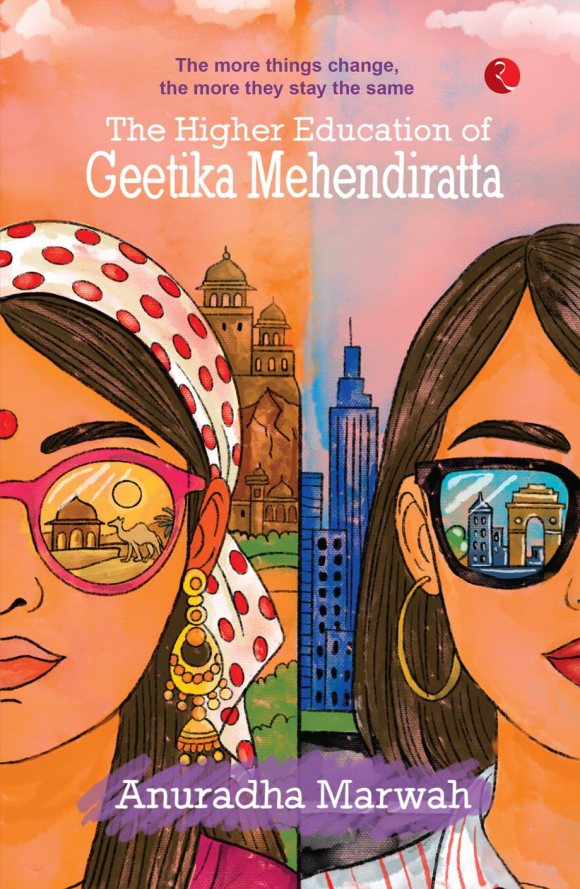
The Higher Education of Geetika Mehendiratta

Title: The Higher Education of Geetika Mehendiratta

Author: Anuradha Marwah

Publisher: Rupa Publications

Boyfriend

There is communication because there is no communication, thundered the supervisor in a sudden spurt of lucidity.

Three dark heads bent obediently over the notebook to glean these pearls of wisdom.

‘When I say cat, you may think of a black cat, a white cat, a fat cat, a thin cat…’

I wondered where to put this in. I was going to write a dissertation on A House for Mr Biswas by V.S. Naipaul, I had decided last night. At what point should I bring in the feline? This brand new structuralist approach… For the past twenty minutes, this impressive lady from Sorbonne had only spoken about the difficulty in identifying cats. I had even drawn one in my notebook. Structuralism had spread far and wide, she had told us; it had reached Cornell, where a professor had simplified it at once for the simple non-European brain. Only Americans are capable of such simplifications, she had added laughingly.

Cornell, America… Vinita.

Vinita had changed so much. She now had a baby girl. She did all the household chores herself, she had told me. She had become plump. Her breasts had lost their upright quality; she had even started applying a lot of make-up—bright lipstick, mascara and eyeshadow.

She wouldn’t know about American universities though—that wasn’t the America she had gone to. She had gone to drudgery and loneliness… No servants to chat with all day long.

In Ratish’s house, there were servants… Lakshmi said Ratish was far too predictable. She said I was predictable too. That I would get married in a hotel, watched by a whole lot of people I didn’t know; that I would have two easy deliveries and be pleasantly miserable all my life. She even predicted I would get fat.

When I told her I wasn’t predictable and would make her sit up one day, she began singing ‘Girls Just Want to Have Fun’.

Every discourse has a mediatory role as an instrument of change.

Who would mediate between my estranged parents and me?

Which discourse—the discourse of commitment or the discourse of tradition? Lakshmi or Ratish?

Ratish had come to Desertvadi to say that he loved me. Mummy had said it was absolutely dreadful the way I could never make up my mind about boys. She had cried. Andy had cried too; Papa was the only one who hadn’t. And then, suddenly, there had been a letter from the university saying I had cleared the written exams for the MPhil programme, would I appear for an interview?

I was where I wanted to be, for the first time in life, although the umbilical cord of parental expectations was yet to be cut… Ratish said he valued family and respected my parents, and that I should be gentle with them… Cruel to be kind, kind to the potential children in my womb. What if there weren’t any? What if I couldn’t have any? So much of our planning would go haywire, Ratish. I would have been cruel for nothing.

There would be nothing to do except cry or make a phone call to your office… No patter of little feet. What would I do with you then?

Tonight, we are going for a party, I will ask you then.

Words are either arbitrary or associational.

Is that a word, ‘associational’, or was it coined in Sorbonne this very summer? Lakshmi says it would be better to check the professor’s antecedents; perhaps she is not from Sorbonne at all.

Lakshmi looks down on our department anyway.

Economics people have this strange nose-in-the-air attitude towards languages. Our department was housed in the School of Languages, so everybody thought it was a Linguistics department… But we were doing literature, three of us. One was from Utkal University, Orissa; another from Ramakrishna Mission, Pondicherry; and I, from Rajasthan University.

I was disappointed that there was nobody from Lutyenabad in our course. All Lutyenabad students went to the Capital University because all the jobs were there. I had heard that there was a danger of never landing a job in Lutyenabad after doing an MPhil from Jana University.

So Andy, your curse may yet materialize—if I don’t have children and I don’t get a job. You had said as much, hadn’t you?

‘You will never be happy, Geetika, never… Don’t think you can find happiness by wrecking mine.’

But what could I do, Andy?

‘Geeti, my mother wants us to marry,’ you had said.

‘But Andy, my parents do not want me to marry yet.’

‘Look, the situation is getting very difficult for me. My parents are rather worried about the fact that your parents have not made any overtures to them.’

‘Why don’t you explain to them—’

‘I have done enough explaining. Your brother got married without even calling his parents for the wedding…’

‘What does Bhaiya have to do with this?’

‘Geeti, I can understand my parents… They didn’t question my decision to marry you. Surely, they are entitled to some sort of say in my affairs.’

‘I am not saying they are not…but Andy, what am I to do?’

You could never answer that one, could you, Andy? It just went on and on—your duty towards your parents, the obduracy of mine. I was tempted, sorely tempted, to just tell my parents that I was marrying you that very day but Ratish’s card saved me.

It came by the evening post the day you left Desertvadi after extracting a promise from me that I would speak to my parents. It was a lovely card; it said: ‘I can’t forget you, little one’.

It became easier to write that letter to you, dear Andy… It became easier to tell you, when you came running after receiving that letter, that it won’t work… But it wasn’t easy dealing with the lava of your frustrated anger as it burnt down my unsuspecting ears whenever I picked up the phone for months after that.

‘You bitch, you found somebody else at the Sportsaid, didn’t you? Don’t think you can ever be happy with him…’

Discourse becomes necessary because of the ambiguity inherent in the nature of language.

But I understood even what you didn’t say… I knew that I had wronged you, Andy. I did not cry as much as you did; I would have to make up for it. I had always appeased the gods by crying… This time, I slipped up…

About the Book: Desertvadi, Rajasthan, is a retirees’ paradise, but for a young girl like Geetika it is a claustrophobic trap. Academically gifted and sexually curious, she feels suffocated by small-town mediocrity and dreams of faraway lands and liberated lives – the kind that fill the pages of her beloved novels.

So, when an opportunity to study in the big, bustling Lutyenabad presents itself, Geetika leaps at it, eager to get away from her parents and the miasma of chronic boredom that envelops Desertvadi. Soon cosmopolitan life begins to feel like a snug fit especially when her new boyfriend, a famously fine catch, offers her the many luxuries of a conventional marriage.

But life in a metro impacts her in ways she never expected. Her aspirations inflate, her tastes evolve, and her ambitions solidify.  As her boundaries expand uncontrollably and the daydreams she was escaping to inevitably shatter, Geetika is compelled to face some tough questions.

Published in 1993, The Higher Education of Geetika Mehendiratta was one of India’s earliest campus novels. Republished for a new generation, this is a bold and intimate coming-of-age tale – unafraid of its hunger and unashamed of its heat.

About the Author: Anuradha Marwah is a professor, playwright, and novelist. Her wide-ranging publications also include poems, essays, articles and reviews. Aunties of Vasant Kunj, her fourth novel was published in 2024 to immense acclaim. Anuradha lives in Vasant Kunj, surrounded by a community of trees and cats.

Click here to read the review of the novel

.

PLEASE NOTE: ARTICLES CAN ONLY BE REPRODUCED IN OTHER SITES WITH DUE ACKNOWLEDGEMENT TO BORDERLESS JOURNAL

Click here to access the Borderless anthology, Monalisa No Longer Smiles

Click here to access Monalisa No Longer Smiles on Kindle Amazon International
Categories
Poetry

Myth by Akintoye Akinsola

Akintoye Akinsola

MYTH

Stay seated, make no fuss --
Else,
Night masquerade will come
Claim you as his
By whisking you off to the unknown land
Bearing fruit off of your cries --
Kids are told when crying or throwing tantrums,
Hoping they stop.
Sometimes it works
Other times, not!

Akintoye Akinsola loves to read and write. His works have appeared in Kalahari Review, Spillwords Review and others.

.

PLEASE NOTE: ARTICLES CAN ONLY BE REPRODUCED IN OTHER SITES WITH DUE ACKNOWLEDGEMENT TO BORDERLESS JOURNAL

Click here to access the Borderless anthology, Monalisa No Longer Smiles

Click here to access Monalisa No Longer Smiles on Kindle Amazon International

Categories
Memoir

Recycling New Jersey  


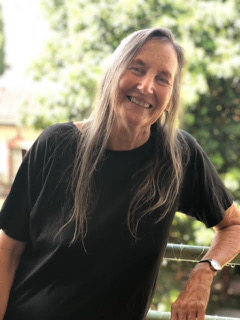
By Karen Beatty       

When I was five years old, my father transported our impoverished family from the banks of the Licking River in Eastern Kentucky to Bound Brook, New Jersey, just off a tributary of the Raritan River. My mother had not wanted to leave her beloved Kentucky or depart from her numerous kin there, but she did want to stay married. And my father wanted to find work and get away from anything connected to hollows, moonshine, and that old-time religion. Mother also hoped that she, and especially her four children (with a fifth on the way), would be better off. As it turned out, we children mostly were, while she likely wasn’t.

My father chose Bound Brook, New Jersey, because he planned to work in the trucking business managed by his older brother. In Bound Brook, my father moved us into a place described as “Garden Apartments,” but there weren’t any gardens. It was post WWII housing, mainly for immigrants and working class people who could not afford to buy homes. Since I had been transported from a shack in Appalachia, the two-bedroom apartment in New Jersey, even for parents with five kids, seemed palatial: A bathtub and flush toilet!  Hardwood floors! A gas stove and oven! Sidewalks, and even a nearby building for doing laundry. Stupendous, indeed!

Bound Brook, New Jersey, was a town where most people worked in restaurants, retail, construction, trucking, and schools; plus, there were countless employees at a couple of highly polluting chemical plants located just above the west end of town. (Sometimes strange odors and actual particles released from American Cyanamid drifted into our schoolyards, homes and playing fields.)  I considered townspeople who were low-level bankers and teachers wealthy. Of course we all knew a few kids whose parents were doctors, high-level bankers, or businessmen. Those were the really rich people who did not live in project-style apartments or in low-income housing in the sections of town populated by immigrant Poles, Italians and Irish, with perhaps a random exotic Cuban or Indian family. It was rare to see a Black person or hear Spanish in Bound Brook in the 1950s.

In Kentucky, my mother was a vibrant woman who worked in the County Courthouse. Living in New Jersey, she devolved into a burdened housewife with no local kin and no capacity to access a new community or social life. When the sixth child was on the way, the apartment management informed my parents that they had to move out because they had too many kids. Our family was given two days to leave or pay an extra month’s rent, and regardless, we were being evicted. It happened that there was some new home construction on our west end, near a brook that occasionally overflowed its banks. I knew about the development because we local children frequented the site to steal plywood, tarpaper, and nails to construct lean-tos down the brook. We also nabbed construction cable, which the big kids affixed to tree limbs to make sturdy “Tarzan” swings for sailing from bank to bank across the brook. 

At age eleven, I surreptitiously joined a group tour of the model home in the completed new development, where the available space and the fancy furniture smote me. I raced back to our apartment to tell my mother about the model house, and she sent my father over to take a look. Fortuitously, he ran across a salesperson that informed him that as a veteran of WWII, he qualified for mortgage and down payment assistance. Child number six arrived shortly after we moved into one of the newly constructed homes in the development. Then, deep into the following year, my Mother delivered my youngest brother, child number seven. Our new house afforded a shared bedroom for me and my two younger sisters, and an elongated attic room for the four boys. 

Sadly, as the duration of her stay in New Jersey and the number of kids in our family increased, my Mother’s mental state diminished. She went from intimidation and apprehension about her life in Bound Brook to what could have been clinically diagnosed as agoraphobia and paranoia. In Kentucky she had been a proud and self-confident woman; in New Jersey she was increasingly unkempt, unhinged, and functionally disabled. I remember having to fake her signature on my report card and school permission slips because she was too distracted to sign or even look at paperwork; in fact, she opted out of most any activity not related to basic household management and cooking.

Without filtering her outbursts, my mother jabbered with religious fervor about her afflictions and her rage at our father who had brought her to New Jersey. She lamented that she would not live long enough to see us grow up. She sang sad and sometimes-scary gospel tunes like, “The Old Rugged Cross,” with lyrics about suffering and shame. She also warned us about rich “Republican snakes” that didn’t care about poor people, and dangerous immigrants with funny-sounding names who spoke strange languages (Polish, Italian). She denigrated both poor Black people and neighbouring Jewish people who didn’t love Jesus the way that she did. And she did love Jesus, and the church, even though she thought church people up North dressed too fancy, sang without spirit, and passed the collection plate with too many expectations. She loved us kids unconditionally, while often relying upon us for the basics of daily living. She was unhappy in her marriage and with living in New Jersey, but she was proud of her children, despite her disappointment when most of us went hippie and unchurched and, worse, two voted Republican. 

Sports events and churches consolidated the people in the town of Bound Brook. Officials and functionaries would save your soul if you let them, and, if you were male, tone your body. My brothers were better than good enough at sports, which won them friends, attracted mentors, and enabled them to acquire college scholarships.

I was an excellent gymnast, runner, fielder, and could handle baseballs, basketballs and footballs as well as many boys. And I could maneuver a cable swing and play ping-pong better than most boys. At an inter-school Sports Field Day, I won all six of the proffered blue ribbons. Nonetheless, I didn’t get scholarships, rewards, or accolades. Instead I was mocked as a tomboy for wearing sports attire, and teased as a “skinny-bones” because I didn’t eat or grow much. After leaving rural Kentucky where I was used to drinking raw milk, the New Jersey pasteurised milk did not taste right, and my mother was reduced to serving canned vegetables and mystery meat from a supermarket. I hated the ground meat, hot dogs, and strange overcooked vegetables she served up. So I mostly didn’t eat. At a time when women were expected to be voluptuous and alluring, I was lean and agile. I hated New Jersey.

In fact, I never embraced living in NJ the way I “owned” my early years in Eastern Kentucky and my adult years in New York City. My best friend Janice said whenever she told people she was born in New Jersey, they laughed. She even wrote a song about that. I wasn’t born in New Jersey, but had enough of it imposed upon me to understand the song. Although there were plenty of kids to play with and make “fun trouble” with in the apartments and in our new housing development, I was bullied by big (literally) girls in the neighbourhood, and spurned at school by stylish girls from the better-heeled households. To survive, I became fleet of foot and quick of tongue, able to either run away from dicey situations or talk my way out of them. I fully realised I had to get out of Bound Brook, New Jersey.

In the interest of fairness, I must report that in the late 1950’s and early 1960’s Bound Brook had excellent schools and recreation facilities. Unfortunately, I had not attended any school in Kentucky, so, upon entering elementary school for the first time, I was both shy and academically lost. I also suffered from undiagnosed dyslexia, so I didn’t learn to read until almost 6th grade and never learned to write script, to the chagrin of teachers charged with improving me. Self-conscious about my “hillbilly” accent, I also did not talk at school, a definite deterrent to making friends and getting teacher approval.

I finally caught up by playing and sparring with the kids on the west end, many of whom had worse family situations than me and had the kind of personal and academic issues that were not going to resolve with time. (Being a west end kid certainly informed me that the required “Dick and Jane” school readers did not represent most families.) By the end of fifth grade I could read slowly, print neatly, and participate orally in classes. Best of all, I learned about the local library where I took refuge and read about places and events beyond what I was exposed to at home or in school. I was determined to find a way out of New Jersey.

By high school I was considered one of the smart students who was also a discipline problem. I understood socio-economic differences and realised (without knowing the specified words) that I was from a home with domestic abuse and child neglect. We kids were essentially on our own because our mother had checked out mentally and our father was irritable, sullen and mostly absent. (His absence was a good thing, considering his PTSD rage disorder from WWII.) Never really fitting in either at school or in the neighborhood, I engaged in bravado and resentment to camouflage my fears and vulnerability.

While most of us west end kids were petty thieves and street combatants, my weapon of choice became wit. I assailed bad teachers with derision, mockery, and scorn, refusing to cave to silly authoritarian directives and relentlessly challenging their biased views or misinformation. In short, I was learning about and exposing racism (then called “prejudice”) and political manipulation (still called “patriotism”).

The good and honest teachers admired my audacity and laughed at my antics, but the bad teachers were threatened and became vindictive. I teamed up with Grace, a classmate from the neighbourhood. She came from a single parent household (rare for Bound Brook in the early 1960’s), and lived in one of those so-called garden apartments with her mother. Suffice it to say, Grace and I created a lot of “smart trouble” at school. Soon we were not allowed to be in the same classroom. Worse, despite my qualifying grades, I was barred from the National Honor Society and kicked out of senior English. I had to report to the guidance office where I befriended the guidance counselor, who arranged for me to graduate despite my not completing the English requirement. This all probably happened because English was my best subject, and I was beginning to nurture my lifetime commitment to human rights and civil rights. I held New Jersey in contempt.

I desperately wanted to get out of Bound Brook and away from my home life, but I had no information, experience, or resources to facilitate those yearnings. I had never even traveled to another town by bus or train.

Toward the end of my senior year, I got work at the local recreation center, where I met a woman who was attending Montclair State College. (At the time, Montclair was the best of the New Jersey State colleges.) My older brother was putting himself through Rutgers State University, where female applicants were relegated to their Douglas College campus, close enough to Bound Brook to have required me to live at home and commute. At the last minute, I mailed an application to Montclair State and got a late acceptance with a State Scholarship that covered the $150 annual tuition, without which I could not have attended. Best of all, I was required to find housing near the college, away from home.

I had managed to escape Bound Brook but not New Jersey. I only had enough savings to live off-campus and attend college for one year, so I was prepared to drop out when President Lyndon Johnson saved me by signing the Economic Opportunity Act. Based on family income, I was part of the first wave of acceptances. Yes, to socialism and good government! I was grateful and shocked to receive money for housing, books and general spending.

Moving onto the 7th floor of a new dormitory with a stunning view of the New York City skyline, I rejoiced. Furthermore, because of Montclair State’s proximity to New York City, I was able to partake of a broad liberal education in the arts and sciences. I could actually envision departing New Jersey, so I vowed never to use Bound Brook as my mailing address again. (As it turned out, my instincts were correct: the two of our seven siblings who remained in Bound Brook eventually voted unabashedly for Donald J. Trump.)

Still, my transition out of New Jersey was a long and winding road. I returned to the State (though not to live in Bound Brook) a couple of times for temporary work or educational opportunities, and I never abandoned my New Jersey family or friends. My escape route led me to explore living in Berkeley, California; Bangkok, Thailand; Hiroshima, Japan; Honolulu, Hawaii, and, finally, to settle permanently in Greenwich Village in New York City. My daughter was raised as a proudly triumphant New Yorker.

It was, therefore, not exactly serendipitous that in my early 70s I returned to the place of my former captivity: the state of New Jersey. My choosing a late-life summer residence in the Garden State just kind of happened. My sister and I had been looking in Cape Cod, Massachusetts for places to rent or buy near the ocean, bay or sound. At the time, I was living alone in New York City and Karla lived in Massachusetts. I wanted a get-away place; she was seeking a year-round home. After a couple of thwarted attempts and some financial reality testing, we conceded we could not afford Cape Cod.

Back in New York, we investigated numerous beach towns, with similar financial results. Then, in the New York Times, I read that Asbury Park, on the north coast of the New Jersey shore, was undergoing massively successful development. With more trepidation than excitement, Karla and I hopped on New Jersey Transit to check out the Asbury Park options. We were in the habit of referring to our old home State as “New F*cking Jersey” and reassured each other that “Down the Shore” is not the same thing as NFJ! 

From my youth and during the early days of my marriage, New Jersey towns along the ocean were not unfamiliar to me. In the 1980’s, my husband and I had joined resources with our New York City friends to rent summerhouses in towns close to the ocean. We were emulating our previous summer rentals in the Hamptons, except none of it was like the Hamptons or Amagansett. It was New Jersey.

The Garden State has the shore, not snooty beach towns. You go “down the shore,” not to the beach. The Jersey shore is much cheaper than the Hamptons, but also has far less cache. Thankfully, most of the Jersey Shore is also not like the TV series of that name, at least in the experience of my friends, who were college professors, psychotherapists, artists, or in media-related professions.

In the late 1980’s the shore rentals in New Jersey were affordable, the commute was a dream, and the ocean was fabulous, even if the food and entertainment were not top notch. Of course this was the early days of Bruce Springsteen, so we knew about the Stone Pony, but the town and boardwalk areas of Asbury Park were a wreck. We also knew that next to Asbury Park was an odd little town called Ocean Grove, which was developed and managed by the Methodist Church Camp Meeting Association. The church people did not allow driving on Sunday or the sale of liquor at any time. Entry to the beach was blocked until noon on Sunday mornings. (You were supposed to be in church at that time.) At best, we New Yorkers, many Jewish and all borderline atheists, thought this Ocean Grove place was endearingly bizarre.

We stuck to upscale towns like Spring Lake for our summer rentals. By 1992, when I was 47 years old, we ended our group rentals in New Jersey and eventually most of the friends and their marriages dissipated.

It was not until 2016, when I was 71-years-old, that my sister Karla and I sadly discovered, on a sweltering summer day, that the newly renovated Asbury Park was also not affordable. Dismayed, we crossed an inviting footbridge in Asbury that led to the Ocean Grove side of the Wesley Lake estuary. Meandering around the quiet, spiritually immersed town, we noted the striking contrast to bustling Asbury Park.

Needing a cool down, we spotted an air-conditioned realtor’s office and inquired, without enthusiasm, about properties near the ocean. The prices were considerably cheaper than Asbury and the town was charming, but could we contend with the controlling Methodists? (Certainly our Mother would have approved!) The realtor patiently showed us a couple of listings on the market, but none were very appealing.

As an afterthought, probably because she was kind, it was a slow day, and we were likeable, the agent mentioned that next door to her home was a large Victorian house that had been converted to condos a couple of decades ago. The gaudy blue structure was facing the ocean and included a small 2-bedroom apartment, which had been languishing vacant and unsold for about ten years. We asked to see it, and despite the heat, the realtor agreed to climb over thirty steps in the giant house to show us an unpolished, but fully furnished, top floor unit. A series of convoluted real estate and legal processes that dragged out for a year (plus simple naive luck) enabled us to purchase this condo in the turret (meaning attic) of a magnificent old house, with ocean views throughout. Yes, it was located in Ocean Grove, NEW JERSEY!

Nowadays, I very much enjoy spending my summers down the shore, gazing at the sea from our New Jersey condo and happily catching waves in the buoyant salty water. (Fortunately, my sister lives there year-round to help maintain it.) It is indeed ironic that lacking finances, but having good fortune, delivered me “down the shore” for the summers of my elderhood. Have I come to terms with NFJ?  Recently, I had lunch with a nephew visiting me in New York City. When he nonchalantly asked if I ever considered living year-round down the Jersey shore, I let out a resounding, “NOOO!” 

.

Karen Beatty’s work appears in over 30 publications, including Chicken Soup for the Soul, Books Ireland, Non Binary Review, and Mud Season Review. Her novel, Dodging Prayers and Bullets, was published in 2023.

.

PLEASE NOTE: ARTICLES CAN ONLY BE REPRODUCED IN OTHER SITES WITH DUE ACKNOWLEDGEMENT TO BORDERLESS JOURNAL

Click here to access the Borderless anthology, Monalisa No Longer Smiles

Click here to access Monalisa No Longer Smiles on Kindle Amazon International
Categories
Poetry

Found in Translation: Pravasini Mahakuda’s Odia Poems

Five poems by Pravasini Mahakuda have been translated to English from Odia by Snehaprava Das

Pravasini Mahakuda
YOUR POETRY 

You do not get liberated by arguments.
Liberation isn’t on your mind,
Neither is it in your fortitude or your courage,
Nor in the tricky manoeuvring of your steps.
Liberation is in the challenges
Your soul ceaselessly confronts.
Salvation is in each line of the poem you write.
Do you know or do you not?
That even after you quit this beautiful earth,
Your poetry will live.
Readers of poetry will continue to be.
Your poetry will live forever because
You hold a timeless lover inside you,
And because of your love,
Which is liberation itself.
Your poetry will thrive as a green permanence,
Even on a blazing summer noon.
You and your poetry are one,
And have never existed apart.
You yourself are poetry --
Only poetry, and nothing else.
Because like you, Poetry, too, is a woman>
And you, like poetry itself
Are the eternal Truth.

THE REST OF THEM

Let the rest of them
Write about revolutions
And resistances,
About rights and responsibilities.
I write about life.
I write about love,
And things that happen around me.
I write about the changing seasons,
About the prices of goods,
Of the soreness hidden in the heart.
I write about the hopes and fears that
The heart incessantly wavers between,
Of an unseen wound that never stops to hurt.
I write about the eye that cannot see
The tears trickle down the other one,
Or the drenched pillow and the sari-end.
I write about a hand
That does not care to share
The ache in the other one.
I write about the song the dead river
That flowed once between us had sung.
Let others write about
What they won and lost.
I will write about the pain emanating from
An aspired for void.
Let others write about spite and disdain,
I will sing of life and love.

SHRAVANA*

For which Shravana must the woman
Write a poem now?
What kind of a poem of Shravana
Must she write to sprinkle life
Into the desert dying inside her
To cheer herself up?
Do you think it is easy to write poetry?
You do not know perhaps,
Only a drop of rain comes down
Against millions of palmfuls of tears.
In that lone drop of rain,
Rings a primeval tune
That perhaps lay buried under
A century old rock.
You had never been in that song
In any phase of life,
Not as friend, a husband or a neighbour
Neither as a reader, nor a critic.
The agony is because
You were never a part of that song.
The Shravana is because
You were never a part of that song.
And the rain is because of that,
And the poem too!
It’s half-hour past eight.
On this evening of a Shravana Sunday
The Shravana pours generously.
Do you believe a woman somewhere
Still sits waiting for you on this evening,
Watching her own silent tears
Mingle in the Shravana rains outside?

*Month of July-August in the Indian calendar, normally monsoons in India.

GODDESS

She is not a goddess --
The one you invoked while
Immersing,
Or immersed while
Invoking.
She is a woman.
Perhaps you have not cared to see
The tears in the eyes of that goddess.
During those performances,
You have time and again played games
With her body and her tears.
Every night,
On the freshly made beds
And in freshly written verses too.
You always know that the
Finale of the game
Will be under your control
And by your choice.
Because you have ensured the result
Would be in your favour,
You have taken the game for granted.


SAREE

The pain and pangs I have lived through
Are as many
As the threads woven
In my saree.
The end of the saree fails to hold
the profusion of
All honour and dishonour,
All joys and sorrows,
Interest and indifference,
The ache of losing things
I had won,
The ecstasy of loving
And the agony of no response.
As I set out on a journey,
The sorrow-flowers bloom in a row
Along the border of the saree,
Spring into life.
As innocent symbols of that agony,
A scene floats past my mind in a flash
Where I find the whole of my being
Standing by the loom.
I marvel at the intimate emotion
Of a beautiful loving mind
Employed at the act of weaving
Such a saree of choice.
The threads in this saree
I am clad in are as many as
The sorrows and sufferings,
Joys and elations that roll
Inside me like the gentle undulations of
The middle notes of a song.

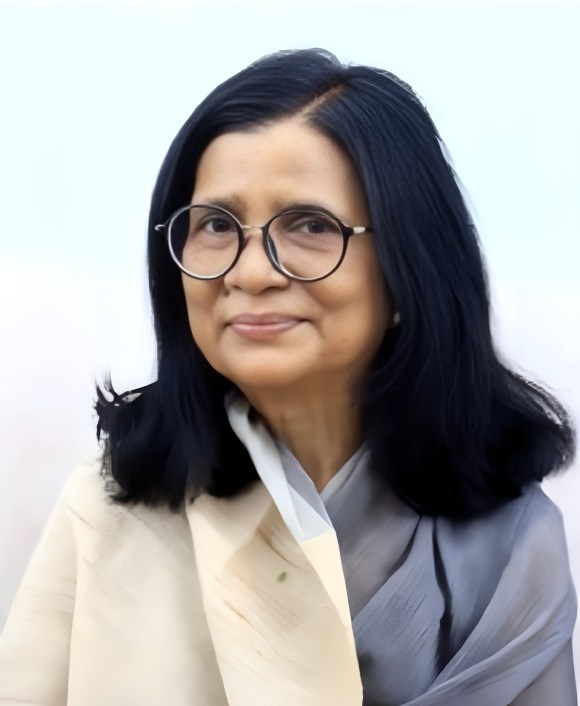
Pravasini Mahakuda is a distinguished Odia poet and translator with 18 original books and 8 books in translation from Hindi to Odia. She has received the Odisha Sahitya Akademi award, Jhankar Award and Junior and  Senior Fellowships from the Ministry of Culture, Govt. of India. Her international engagements include participation in poetry festivals in Germany presenting her work in Berlin, Munich, Hamburg, Leipzig and Frankfurt. She regularly contributes poems in national magazines and attends seminars and poetry festivals across India. 

Dr.Snehaprava Das, is a noted writer and a translator from Bhubaneswar, Odisha. She has five books of poems, three of stories and thirteen collections of translated texts (from Odia to English), to her credit. 

PLEASE NOTE: ARTICLES CAN ONLY BE REPRODUCED IN OTHER SITES WITH DUE ACKNOWLEDGEMENT TO BORDERLESS JOURNAL

Click here to access the Borderless anthology, Monalisa No Longer Smiles

Click here to access Monalisa No Longer Smiles on Kindle Amazon International
Categories
Stories

The Rose’s Wish

By Naramsetti Umamaheswararao

From Public Domain

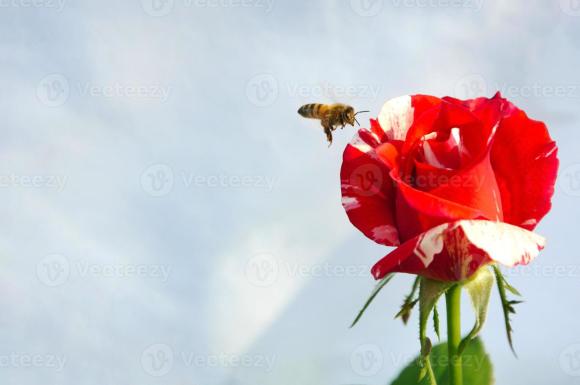
A tiny honeybee once wished to fly on her own and see the world. She longed to gather nectar from flowers and store honey by herself. After persuading her mother, she flew out of the hive.

As she flew around, she spotted a bright red rose blooming in one place. She immediately tried to land on it. But the rose closed its petals at once.

“Oh, little honeybee! Have you come to sip my nectar so easily? Give me what I want, and then take what you want,” said the rose.

“What can I give the rose?” the honeybee wondered.

Just then, a rabbit appeared beside the bushes. The honeybee asked, “What should I give the rose to make her happy?”

“I don’t know. I have to collect roots,” said the rabbit and hopped away.

A little further, the honeybee saw a cow grazing. She asked, “What should I give the rose?”

“How would I know what a rose wants? All I know is grazing and giving milk,” said the cow.

The honeybee felt disappointed by this answer. As she flew ahead, she saw a peacock. “Peacock! Do you know what I should give the rose?” she asked.

“I’m not sure. But if you want, take one of my feathers and try giving that,” suggested the peacock.

The honeybee brightened up. She happily took the peacock feather and flew to the rose.

“Look what I brought for you!” she said, showing the feather.

But the rose said, “This is not what I want,” and closed her petals again.

This time the honeybee saw a parrot and asked for help.

“Children love my playfulness. Take this ripe guava I’ve pecked. Give it to the rose. She will surely like it,” said the parrot.

The honeybee felt hopeful and took the guava to the rose. But the rose frowned, “I’m a flower. Do you think I eat fruits?”

Discouraged, the honeybee settled sadly on a nearby bush.

“In this huge forest, doesn’t anyone know what the rose wants? How will I sup on nectar?” she cried.

A sage meditating in a nearby hermitage heard her voice. He called her close and told her what the rose truly wished for.

Immediately, the honeybee flew to a meadow where little children were playing. She played with them for a while and then asked them to come to the rose plant.

When they hesitated, she said, “There are guava, orange, and banana trees. You can eat plenty of fruits!”

Hearing this, the children followed her.

When they reached the garden, they laughed, clapped, and shouted joyfully, “This place is so beautiful!”

The honeybee went to the rose and said, “You wanted children’s laughter, didn’t you? Look over there.”

Hearing the children’s joyful laughter, the rose blossomed happily.

The honeybee gently landed on the flower and drank nectar to her heart’s content.

The children picked the fruits they liked and went home.

After a while, the honeybee too returned to her hive and shared many stories with her mother. The mother bee felt proud of the little bee’s kindness.

Naramsetti Umamaheswararao has written more than a thousand stories, songs, and novels for children over 42 years. he has published 32 books. His novel, Anandalokam, received the Central Sahitya Akademi Award for children’s literature. He has received numerous awards and honours, including the Andhra Pradesh Government’s Distinguished Telugu Language Award and the Pratibha Award from Potti Sreeramulu Telugu University. He established the Naramshetty Children’s Literature Foundation and has been actively promoting children’s literature as its president.

.

PLEASE NOTE: ARTICLES CAN ONLY BE REPRODUCED IN OTHER SITES WITH DUE ACKNOWLEDGEMENT TO BORDERLESS JOURNAL

Click here to access the Borderless anthology, Monalisa No Longer Smiles

Click here to access Monalisa No Longer Smiles on Amazon International

Categories
Poetry

Foliage for my Daughter

By Pritika Rao

how will my daughter wash her hair?
will she fetch water from the village pump as my grandmother did?
or pull it up from the well like my mother?

will she have enough hibiscus and jasmine
to put in her braids, tuck behind her ear, or stick in a bun?
i would like to leave her a legacy of family recipes
with the goodness of fruit and leaves --
coconut and amla to oil it,
bhringraj to thicken it,
neem to clean it,
and shikakai to colour it.
i spend nights writing them down -
measurements to go in the mortar and pestle
to be boiled, pureed and distilled.

will she ever know the thick black rivers of a glistening mane?
or as the trees are decimated,
will every strand shrivel in a chemical wasteland
and her scalp run dry?

without the dirt in her fingers,
how will this young child of mine grow roots,
how will she learn to blossom and flower, then rest and recover,
without the laden boughs
and the wise hands of her mother?

Pritika Rao is an economist and freelance writer from Bangalore. Her works of fiction have been published in Adda and The Bangalore Review, while my poetry has appeared in Gulmohur Quarterly, Madras Courier and The Alipore Post, among others.

.

PLEASE NOTE: ARTICLES CAN ONLY BE REPRODUCED IN OTHER SITES WITH DUE ACKNOWLEDGEMENT TO BORDERLESS JOURNAL

Click here to access the Borderless anthology, Monalisa No Longer Smiles

Click here to access Monalisa No Longer Smiles on Kindle Amazon International
Categories
Aeons of Art

Art is Alive

By Ratnottama Sengupta

The Gregorian calendar was still showing 1998.

I was in Oxford on a Charles Wallace fellowship to study John Ruskin’s influence on M K Gandhi and R N Tagore. Like any other student I lived in a hostel, walked up to the Ruskin School of Art and Ashmolean Museum, to the High Street and the flea market, to the Bodleian Library, and – of course – the book stores that continue to make that ancient city of academic excellence such a delight for a person like me who started crawling in the midst of books.

What caught my fancy on the book-lined shelves in the hometown of a ‘legal deposit’ library? The screenplays of Quentin Tarantino. Countless books on Elizabeth 1 – perhaps because Shekhar Kapur’s Elizabeth had just released worldwide. And the volumes on art. The gorgeous reproductions halved the tedium of walking miles of museums and galleries. And the history of art rekindled my love for paintings from our collective past.

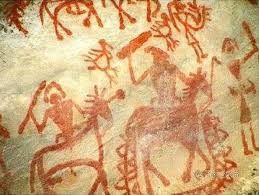
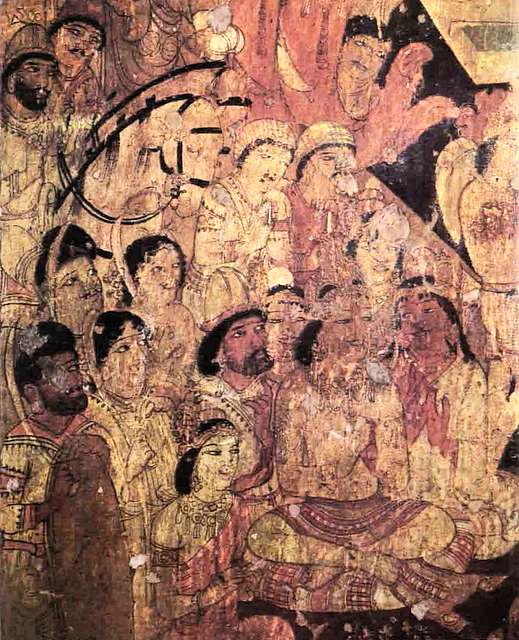
But what I didn’t take kindly to was the neglect of – if not bias against — art from my homeland. There were books on Greek, Chinese, Japanese , African, Egyptian, Mayan, Roman art, on Russian Icons and Stained Glass windows, on French Impressionists and German Expressionists, Cubists and Moderns… But Indian art? For crying out loud, where was Ajanta-Ellora? The glass paintings and Miniatures? Pichwai and Patachitra, Nathdwara and Kalighat Pat, Warli and Madhubani, Santiniketan and Baroda?

That’s when I told myself, “Put the journey of Indian paintings between covers.” For, which other country has a continuity that I can boast, of a tradition that has continued unchequered for three thousand years and more?

Once I was back home, my friend Reeta Dutta Gupta approached me to edit an Encyclopedia of Culture for the India Series she was nursing. And Dr Jain of Ratna Sagar entrusted me to author a Notebook that would recount for school-going children the story of Indian art from Bhimbetka to the present millennia. What luck!

*

Be it the hunters and the hunted of Bhimbetka, the rock art now on the UNESCO list of World Heritage, or Kolam and Alpana and Rangoli, the decorative designs of Kerala and Bengal and Maharashtra. Be it the Buddha of Ajanta Frescoes or the ploughmen and blacksmith of the Haripura Congress panels painted by the Bengal master Nandalal Bose, be it the illuminations in the Jain manuscripts or the Mughal manners immortalised by the kalams: art in India has grown out of everyday life. These art expressions have been an integral part of the people’s existence, regardless of the style or the period in which they were painted. Yes, down centuries Indian art has withstood change of regiments, religions, philosophy, social content, historical setbacks. And, aesthetic excellence has found an outlet in forms and lines, strokes and colours, whether these were obtained by crushing gems or pounded rice.

This has helped India enjoy a continuity that is rare even in the developed societies. From the sketches of Bhimbetka to those of the tribal artists of Warli, from the murals of ancient India to the art of contemporary masters, from the miniaturised figures to the Tantric patterns – art in India has reinvented itself again and again. And each time it has emerged with renewed vigour and vitality. Because, every age has related to art in an intimate way. By painting on the wall. Decorating the floor. Placing it on the altar. Or simply by keeping an account of the times.

As A Ramachandran – then professor of art at Jamia Millia Islamia in Delhi – had said to me, “Even when our ancient language that was deemed the language of the gods, fell into oblivion, art transcended centuries because it was communicating through a universal language – the visual language of colours and hues.” The lines defined the form, and also created a unitary area for the use of colour, he had further explained. “No matter what the subject, comprehension was never a problem for the Indian – until he was confronted by the art that was imposed by the colonialists.”

The Western overemphasis on realism played havoc, with the native sensibility that allowed for imagination and stylization, Nair Sir had pointed out. That sensibility had no problem accepting a ten-armed goddess, Dasabhuja Durga, or Dasanan, the ten-headed Ravan. “Lifestyle changes too have led to the dilution of Indian aesthetics that once enveloped our workaday lives. The only living art today is the visual art traditions in the villages, but that too might not last as villagers now want to ‘rise’ to the level of the urbans!” he had lamented.

In such a situation, art becomes doubly significant in the life of a child. When she or he is exposed to it, the child can not only access the history and the continuity of a culture but also nurture it with love that can ensure it lives in the days to come… With this in mind, I will write to focus on the high points of Indian art.

Ratnottama Sengupta, formerly Arts Editor of  The Times of India, teaches mass communication and film appreciation, curates film festivals and art exhibitions, and translates and writes books. She has been a member of CBFC, served on the National Film Awards jury and has herself won a National Award. 

.

PLEASE NOTE: ARTICLES CAN ONLY BE REPRODUCED IN OTHER SITES WITH DUE ACKNOWLEDGEMENT TO BORDERLESS JOURNAL

Click here to access the Borderless anthology, Monalisa No Longer Smiles

Click here to access Monalisa No Longer Smiles on Amazon International

Categories
Celebrating Humanity

Can Old Acquaintances be Forgot…

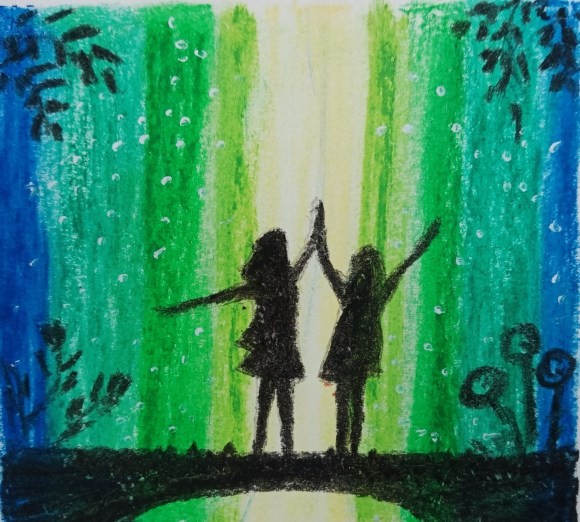
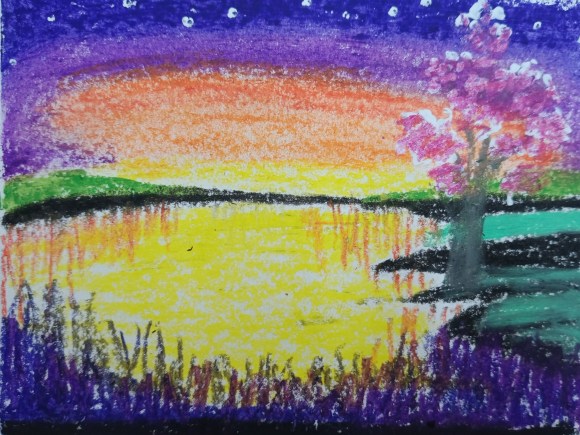
Our January 2025 Cover: Art by Sohana Manzoor

It has been a strange year for all of us. Amidst the chaos, bloodshed and climate disasters, Borderless Journal seems to be finding a footing in an orphaned world, connecting with writers who transcend borders and readers who delight in a universe knit with the variety and vibrancy of humanity. Like colours of a rainbow, the differences harmonise into an aubade, dawning a world with the most endearing of human traits, hope.

A short round up of this year starts with another new area of focus — a section with writings on environment and climate. Also, we are delighted to add we now host writers from more than forty countries. In October, we were surprised to see Borderless Journal listed on Duotrope and we have had a number of republications with acknowledgement — the last request was signed off this week for a republication of Ihlwha Choi’s poem in an anthology by Hatchette US. We have had many republications with due acknowledgment in India, Bangladesh, Pakistan and UK too among other places. Our team has been active too not just with words and art but also with more publications from Borderless. Rhys Hughes, who had a play performed to a full house in Wales recently, brought out a whole book of his photo-poems from Borderless. Bhaskar Parichha has started an initiative towards another new anthology from our content — Odia poets translated by Snehaprava Das. We are privileged to have all of you — contributors and readers — on board. And now, we invite you to savour some of our fare published in Borderless from January 2025 to December 2025. These are pieces that embody the spirit of a world beyond borders… 

Poetry

Click on the names to read the poems

Arshi, Luis Cuauhtémoc Berriozábal, Snehaprava Das, Ron Pickett, Nziku Ann, Onkar Sharma, Harry Ricketts, Ashok Suri, Heath Brougher, Momina Raza, George Freek, Snigdha Agrawal, Stuart Macfarlane, Gazala Khan , Lizzie Packer, Rakhi Dalal, Jenny Middleton, Afsar Mohammad, Ryan Quinn Flanagan, Rhys Hughes

Translated Poetry

The Lost Mantras, Malay poems written and translated by Isa Kamari

The Dragonfly, a Korean poem written and translated by Ihlwha Choi

Ramakanta Rath’s Sri Radha, translated from Odiya by the late poet himself.

Identity by Munir Momin, translated from Balochi by Fazal Baloch

Found in Translation: Bipin Nayak’s Poetry, translated from Odiya by Snehaprava Das.

For Sanjay Kumar: To Sir — with Love by Tanvir , written for the late founder of pandies’ theatre, and translated from Hindustani by Lourdes M Surpiya.

Therefore: A Poem by Sukanta Bhattacharya, translated from Bengali by Kiriti Sengupta.

Poetry of Jibanananda Das, translated from Bengali by Fakrul Alam.

Tagore’s Pochishe Boisakh Cholechhe (The twenty fifth of Boisakh draws close…) translated from Bengali by Mitali Chakravarty. 

Fiction

An excerpt from Tagore’s long play, Roktokorobi or Red Oleanders, has been translated by Professor Fakrul Alam. Click here to read.

Ajit Cour’s short story, Nandu, has been translated from Punjabi by C Christine Fair. Click here to read.

A Lump Stuck in the Throat, a short story by Nasir Rahim Sohrabi translated from Balochi by Fazal Baloch. Click here to read.

Night in Karnataka: Rhys Hughes shares his play. Click here to read.

The Wise Words of the Sun: Naramsetti Umamaheswararao relates a fable involving elements of nature. Click here to read.

Looking for Evans: Rashida Murphy writes a light-hearted story about a faux pas. Click here to read.

Exorcising Mother: Fiona Sinclair narrates a story bordering on spooky. Click here to read.

The Fog of Forgotten Gardens: Erin Jamieson writes from a caregivers perspective. Click here to read.

Jai Ho Chai: Snigdha Agrawal narrates a funny narrative about sadhus and AI. Click here to read.

The Sixth Man: C. J. Anderson-Wu tells a story around disappearances during Taiwan’s White Terror. Click here to read.

Sleeper on the Bench: Paul Mirabile sets his strange story in London. Click here to read.

I Am Not My Mother: Gigi Baldovino Gosnell gives a story of child abuse set in Philippines where the victim towers with resilience. Click here to read.

Persona: Sohana Manzoor wanders into a glamorous world of expats. Click here to read.

In American Wife, Suzanne Kamata gives a short story set set in the Obon festival in Japan. Click here to read.

Sandy Cannot Write: Devraj Singh Kalsi takes us into the world of advertising and glamour. Click here to read.

Non Fiction

Classifications in Society by Tagore has been translated from Bengali by Somdatta Mandal. Click here to read.

The Day of Annihilation, an essay on climate change by Kazi Nazrul Islam, translated from Bengali by Radha Chakravarty. Click here to read.

The Bauls of Bengal: Aruna Chakravarti writes of wandering minstrels called bauls and the impact they had on Tagore. Click here to read.

The Literary Club of 18th Century London: Professor Fakrul Alam writes on literary club traditions of Dhaka, Kolkata and an old one from London. Click here to read.

Roquiah Sakhawat Hossein: How Significant Is She Today?: Niaz Zaman reflects on the relevance of one of the earliest feminists in Bengal. Click here to read.

Anadi: A Continuum in Art: Ratnottama Sengupta writes of an exhibition curated by her. Click here to read.

Reminiscences from a Gallery: The Other Ray: Dolly Narang muses on Satyajit Ray’s world beyond films and shares a note by the maestro and an essay on his art by the eminent artist, Paritosh Sen. Click here to read.

250 Years of Jane Austen: A Tribute: Meenakshi Malhotra pays a tribute to the writer. Click here to read.

Menaced by a Marine Heatwave: Meredith Stephens writes of how global warming is impacting marine life in South Australia. Click here to read.

Linen at Midnight: Pijus Ash relates a real-life spooky encounter in Holland. Click here to read.

Two Lives – A Writer and A Businessman: Chetan Datta Poduri explores two lives from the past and what remains of their heritage. Click here to read

‘Verify You Are Human’: Farouk Gulsara ponders over the ‘intelligence’ of AI and humans. Click here to read.

Where Should We Go After the Last Frontiers?: Ahamad Rayees writes from a village in Kashmir which homed refugees and still faced bombing. Click here to read.

The Jetty Chihuahuas: Vela Noble takes us for a stroll to the seaside at Adelaide. Click here to read.

The Word I Could Never Say: Odbayar Dorj muses on her own life in Mongolia and Japan. Click here to read.

On Safari in South Africa by Suzanne Kamata takes us to a photographic and narrative treat of the Kruger National Park. Click here to read.

The Day the Earth Quaked: Amy Sawitta Lefevre gives an eyewitness account of the March 28th earthquake from Bangkok. Clickhere to read.

From Madagascar to Japan: An Adventure or a Dream: Randriamamonjisoa Sylvie Valencia writes of her journey from Africa to Japan with a personal touch. Clickhere to read.

How Two Worlds Intersect: Mohul Bhowmick muses on the diversity and syncretism in Bombay or Mumbai. Click here to read.

Can Odia Literature Connect Traditional Narratives with Contemporary Ones: Bhaskar Parichha discusses the said issue. Click here to read.

A discussion on managing cyclones, managing the aftermath and resilience with Bhaksar Parichha, author of Cyclones in Odisha: Landfall, Wreckage, and Resilience. Click here to read.

A discussion of Jaladhar Sen’s The Travels of a Sadhu in the Himalayas, translated from Bengali by Somdatta Mandal, with an online interview with the translator. Click here to read.

A conversation with the author in Anuradha Kumar’s Wanderers, Adventurers, Missionaries: Early Americans in India . Click here to read.

Keith Lyons in conversation with Harry Ricketts, mentor, poet, essayist and more. Click here to read.

Categories
Contents

Borderless, December 2025

Art by Sohana Manzoor

Editorial

‘I wondered should I go or should I stay…’ …Click here to read.

Translations

Nazrul’s Shoore O Baneer Mala Diye (With a Garland of Tunes and Lyrics) has been translated from Bengali by Professor Fakrul Alam. Click here to read.

Four of his own Malay poems have been translated by Isa Kamari. Click here to read.

Five poems by Satrughna Pandab have been translated to English from Odia by Snehaprava Das. Click here to read.

A Lump Stuck in the Throat, a short story by Nasir Rahim Sohrabi translated from Balochi by Fazal Baloch. Click here to read.

Tagore’s Jatri (Passenger) has been translated from Bengali by Mitali Chakravarty. Click here to read.

Conversation

Keith Lyons in conversation with Harry Ricketts, mentor, poet, essayist and more. Click here to read.

Poetry

Click on the names to read the poems

Harry Ricketts, Luis Cuauhtémoc Berriozábal, Laila Brahmbhatt, John Grey, Saba Zahoor, Diane Webster, Gautham Pradeep, Daniel Gene Barlekamp, Annwesa Abhipsa Pani, Cal Freeman, Smitha Vishwanath,John Swain, Nziku Ann, Anne Whitehouse, Tulip Chowdhury, Ryan Quinn Flangan, Ramzi Albert Rihani, Rhys Hughes

Poets, Poetry & Rhys Hughes

In Said the Spook, Rhys Hughes gives a strange tale around Christmas. Click here to read.

Musings/ Slices from Life

Your call is important to us?

Farouk Gulsara writes of how AI has replaced human interactions in customer service. Click here to read.

Honeymoon Homecoming

Meredith Stephens visits her old haunts in Japan. Click here to read.

Cracking Exams

Gower Bhat discusses the advent of coaching schools in Kashmir for competitive exams for University exams, which seem to be replacing real schools. Click here to read.

The Rule of Maximum Tolerance?

Jun A. Alindogan writes of Filipino norms. Click here to read.

How Two Worlds Intersect

Mohul Bhowmick muses on the diversity and syncretism in Bombay or Mumbai. Click here to read.

Musings of a Copywriter

In The Monitoring Spirit, Devraj Singh Kalsi writes of spooky encounters. Click here to read.

Notes from Japan

In One Thousand Year Story in the Middle of Shikoku, Suzanne Kamata takes us on a train ride through Japan. Click here to read.

Essays

250 Years of Jane Austen: A Tribute

Meenakshi Malhotra pays a tribute to the writer. Click here to read.

Anadi: A Continuum in Art

Ratnottama Sengupta writes of an exhibition curated by her. Click here to read.

Sangam Literature: Timeless Chronicles of an Ancient Civilisation

Ravi Varmman K Kanniappan explores the rich literary heritage of Tamil Nadu. Click here to read.

Bhaskar’s Corner

In The Riverine Journey of Bibhuti Patnaik, Bhaskar Parichha pays a tribute to the octegenarian writer. Click here to read.

Stories

Evergreen

Sayan Sarkar gives a climate friendly and fun narrative. Click here to read.

The Crying Man

Marc Rosenberg weaves a narrative around childhood. Click here to read.

How Madhu was Cured of Laziness

Naramsetti Umamaheswararao gives a fable set in Southern India. Click here to read.

Book Excerpts

Excerpt from Ghosted: Delhi’s Haunted Monuments by Eric Chopra. Click here to read.

Excerpt from Leonie’e Leap by Marzia Pasini. Click here to read.

Book Reviews

Rakhi Dalal reviews Anuradha Kumar’s Love and Crime in the Time of Plague. Click here to read.

Andreas Giesbert reviews Ariel Slick’s The Devil Take the Blues: A Southern Gothic Novel. Click here to read.

Gazala Khan reviews Ranu Uniyal’s This Could Be a Love Poem for You. Click here to read.

Bhaskar Parichha reviews Indira Das’s Last Song before Home, translated from Bengali by Bina Biswas. Click here to read.

.

Click here to access the Borderless anthology, Monalisa No Longer Smiles

Click here to access Monalisa No Longer Smiles on Amazon International

Categories
Editorial

‘I wondered should I go or should I stay…’

I flow and fly
with the wind further
still; through time
and newborn worlds…

--‘Limits’ by Luis Cuauhtémoc Berriozábal

In winters, birds migrate. They face no barriers. The sun also shines across fences without any hindrance. Long ago, the late Nirendranath Chakraborty (1924-2018) wrote about a boy, Amalkanti, who wanted to be sunshine. The real world held him back and he became a worker in a dark printing press. Dreams sometimes can come to nought for humanity has enough walls to keep out those who they feel do not ‘belong’ to their way of life or thought. Some even war, kill and violate to secure an exclusive existence. Despite the perpetuation of these fences, people are now forced to emigrate not only to find shelter from the violences of wars but also to find a refuge from climate disasters. These people — the refuge seekers— are referred to as refugees[1]. And yet, there are a few who find it in themselves to waft to new worlds, create with their ideas and redefine norms… for no reason except that they feel a sense of belonging to a culture to which they were not born. These people are often referred to as migrants.

At the close of this year, Keith Lyons brings us one such persona who has found a firm footing in New Zealand. Setting new trends and inspiring others is a writer called Harry Ricketts[2]. He has even shared a poem from his latest collection, Bonfires on the Ice. Ricketts’ poem moves from the personal to the universal as does the poetry of another migrant, Luis Cuauhtémoc Berriozábal, aspiring to a new, more accepting world. While Tulip Chowdhury — who also moved across oceans — prays for peace in a war torn, weather-worn world:

I plant new seeds of dreams
for a peaceful world of tomorrow.

--‘Hopes and Dreams’ by Tulip Chowdhury

We have more poems this month that while showcasing the vibrancy of thoughts bind with the commonality of felt emotions on a variety of issues from Laila Brahmbhatt, John Grey, Saba Zahoor, Diane Webster, Gautham Pradeep, Daniel Gene Barlekamp, Annwesa Abhipsa Pani, Cal Freeman, Smitha Vishwanath, John Swain, Nziku Ann and Anne Whitehouse. Ramzi Albert Rihani makes us sit up by inverting norms while Ryan Quinn Flangan with his distinctive style raises larger questions on the need for attitudinal changes while talking of car parks. Rhys Hughes sprinkles ‘Hughesque’ humour into poetry with traffic jams as he does with his funny spooky narrative around Christmas.

Fiction in this issue reverberates across the world with Marc Rosenberg bringing us a poignant telling centred around childhood, innocence and abuse. Sayan Sarkar gives a witty, captivating, climate-friendly narrative centred around trees. Naramsetti Umamaheswararao weaves a fable set in Southern India.

A story by Nasir Rahim Sohrabi from the dusty landscapes of Balochistan has found its way into our translations too with Fazal Baloch rendering it into English from Balochi. Isa Kamari translates his own Malay poems which echo themes of his powerful novels, A Song of the Wind (2007) and Tweet(2017), both centred around the making of Singapore. Snehaprava Das introduces Odia poems by Satrughna Pandab in English. While Professor Fakrul Alam renders one of Nazrul’s best-loved songs from Bengali to English, Tagore’s translated poem Jatri (Passenger) welcomes prospectives onboard a boat —almost an anti-thesis of his earlier poem ‘Sonar Tori’ (The Golden Boat) where the ferry woman rows off robbing her client.

In reviews, we also have a poetry collection, This Could Be a Love Poem for You by Ranu Uniyal discussed by Gazala Khan. Bhaskar Parichha introduces a book that dwells on aging and mental health issues, Indira Das’s Last Song before Home, translated from Bengali by Bina Biswas. Rakhi Dalal has reviewed Anuradha Kumar’s Love and Crime in the Time of Plague:A Bombay Mystery, a historical mystery novel set in the Bombay of yore, a sequel to her earlier The Kidnapping of Mark Twain. Andreas Giesbert has woven in supernatural lore into this section by introducing Ariel Slick’s The Devil Take the Blues: A Southern Gothic Novel. In our excerpts too, we have ghostly lore with an extract from Ghosted: Delhi’s Haunted Monuments by Eric Chopra. The other excerpt is from Marzia Pasini’s Leonie’s Leap, a YA novel showcasing resilience.

We have plenty of non-fiction this time starting with a tribute to Jane Austen (1775-1817) by Meenakshi Malhotra. Austen turns 250 this year and continues relevant with remakes in not only films but also reimagined with books around her novels — especially Pride and Prejudice (which has even a zombie version). Bhaskar Parichha pays a tribute to writer Bibhuti Patnaik. Ravi Varmman K Kanniappan explores ancient Sangam Literature from Tamil Nadu and Ratnottama Sengupta revisits an art exhibition that draws bridges across time… an exploration she herself curated.

Suzanne Kamata takes us on a train journey through historical Japan and Meredith Stephens finds joy in visiting friends and living in a two-hundred-year-old house from the Edo period[3]. Mohul Bhowmick introduces a syncretic and cosmopolitan Bombay (now Mumbai). Gower Bhat gives his opinion on examination systems in Kashmir, which echoes issues faced across the world while Jun A. Alindogan raises concerns over Filipino norms.

Farouk Gulsara — with his dry humour — critiques the growing dependence on artificial intelligence (or the lack of it). Devraj Singh Kalsi again shares a spooky adventure in a funny vein.

We have a spray of colours from across almost all the continents in our pages this time. A bumper issue again — for which all of the contributors have our heartfelt thanks. Huge thanks to our fabulous team who pitch in to make a vibrant issue for all of us. A special thanks to Sohana Manzoor for the fabulous artwork. And as our readers continue to grow in numbers by leap and bounds, I would want to thank you all for visiting our content! Introduce your friends too if you like what you find and do remember to pause by this issue’s contents page.

Wish all of you happy reading through the holiday season!

Best wishes,

Mitali Chakravarty

borderlessjournal.com

CLICK HERE TO ACCESS THE CONTENTS FOR THE DECEMBER 2025 ISSUE.

[1] UNHCR Refugees

[2] Harry Ricketts born and educated in  England moved to New Zealand.

[3] Edo period in Japan (1603-1868)

.

READ THE LATEST UPDATES ON THE FIRST BORDERLESS ANTHOLOGY, MONALISA NO LONGER SMILES, BY CLICKING ON THIS LINK.