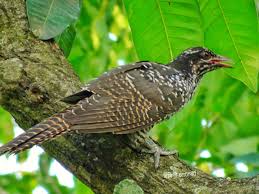
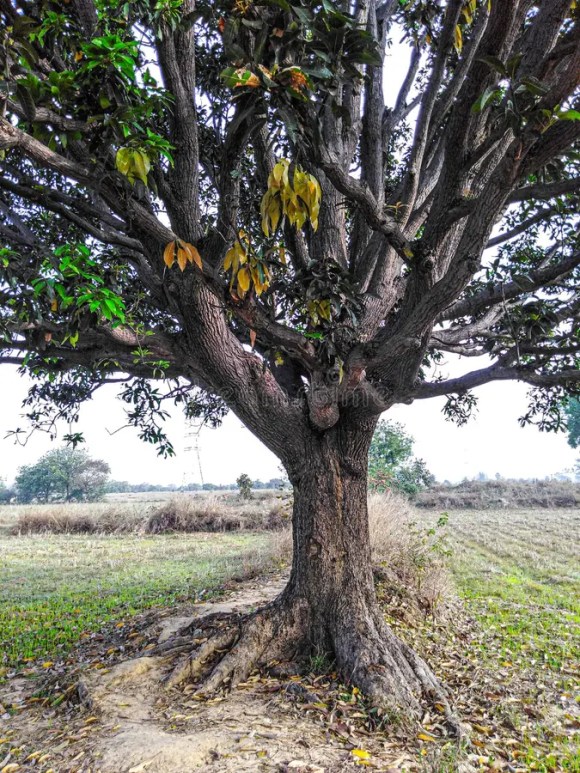
The Chaitra koel's routine visit to the Lone mango tree in the compound Of a lonelier house, Where life rests in a shadow of silence, Is delayed this time. Has it forgotten the tree That stands shrunken, pale And waits patiently to gather The silk whisper of spring colours In its brittle arms and Coax music out of it?
*
What is keeping the bird back, The tree wonders. And the answer comes in A startling cacophony That loops and rolls in angry surges Across the neighbouring vacant lot Where the mid-spring sun slants , Warm and oily, on the Massive drilling rigs, Excavators, concrete mixers, Behemoths from some alien world Filling the empty hours With too much life, Hurling ugly sermons of urbanity At its placid apathy.
The clangs, the clatters and the grinding; Stones gritting, metals rattling, Smell of smouldering tobacco and toxicity Hang over the mounds of red earth Like a crumpled canopy Of noisy ash.
Will the koel return to the Chaitra tree With its gentle silky lilts Drowning the tumults, The tree wonders, but waits Shaking dust and doubt Off its welcoming fragrant boughs Throbbing, trembling in the heavy vibrating breeze And gathering itself back Steadfast in its hope and trust.
*Chaitra: March
From Public Domain
Snehaprava Das is an academic, translator and writer. She has multiple translations, three collections of stories and five anthologies of poetry to her credit. She has been published in Indian Literature, Oxford University Press, Speaking Tiger, Penguin and Black Eagle Books.
.
PLEASE NOTE: ARTICLES CAN ONLY BE REPRODUCED IN OTHER SITES WITH DUE ACKNOWLEDGEMENT TO BORDERLESS JOURNAL.
I could be a molecule of thought
Uncanny, secret,
Dimension less.

I could be all elements
--immense, eternal --
A cosmos holding galaxies of passion.

I may be a note of music
Hanging in the air, faint, feeble,
But repeating like an echo,

Or a speck of silence in a wind-funnel,
Gyrating into a tornado,
Sonorously lingering to infinity.

I’m  overwhelmingly tender.
I hold worlds in a gentle embrace.
I’m also a razor blade,
Can slash love with a single stroke
And leave it to bleed to death.

I am war. I am peace.
Dispassionate and diligent,
I’m a nuance undulating through
Sangfroid  and turbulence.

I’m a bubble forming, dissolving,
Forming again, breaking again,
Floating relentlessly to join waters
On alien shores
And linking minds.

I’m a length of thread from a kite that is
Stubborn in its desire to fly,
Connecting to the Earth
While scanning the strip of its sky.

I wander free, unfettered by
Diverse minds and tongues,
Wearing my happy pan-world face,

Spanning dams and deserts,
Oceans and mountains,
Freezing and erupting in alternate moments,
I travel borderless.
Snehaprava Das is an academic, translator and writer. She has multiple translations, three collections of stories and five anthologies of poetry to her credit. She has been published in Indian Literature, Oxford University Press, Speaking Tiger, Penguin and Black Eagle Books.
.
PLEASE NOTE: ARTICLES CAN ONLY BE REPRODUCED IN OTHER SITES WITH DUE ACKNOWLEDGEMENT TO BORDERLESS JOURNAL.
Seasons gently fold into one another Silently, Not making too much noise but Leaving no space for A signature smell of each till finally they could not be told apart.
The secret summer koel sits stiff hidden in the wet boughs Flapping rain off its drenched feathers, Its song gone hoarse in the thunder storm.
Monsoon paper-boats lie cramped in parched puddles Amidst dead dragonflies littered around in a mess.
A sedate autumn, heavy in its Yellow bounteousness, Waits behind the frost-draped trees, Scorched by the day And soaked by the night.
Winter kites struggle Through the smoky warmth Of a sweating sky. Their long curvy tails, Caught in the crisscrossing strips of clouds, Wriggle and writhe and roll clumsily Like flying serpents in many hues.
This is yet another world That experiences terrible mood swings. Seasons blend into one another In obscure irregularity, And the century old pattern of living Goes haywire. Mankind's mood changes too -- Is really life falling apart In this absurd mess?
I wouldn't know, I just sit fixing my aching gaze On the path of another time, For the return of a tomorrow of a foregone age that has shifted from Its course in the anomalous days. But is sure to find its way one day To my waiting window!
LET US MOVE OUT IN TO THE UNKNOWN
Let us move out into the unknown In the smoke of sunlight, Breathing the hollow whispers in the wind, Straining our ears for the morning music That struggles to Wriggle out of the frosty boughs.
When the dwarf days reflect on the Parchment of streets, When the afternoons slant grim on the terrace And hibiscus buds blur on the Misty splotches of glass, It is the time to move into the unknown, Brushing off the patina on the bones And fingers of ice tracing out a Warm tomorrow On the shivering edge of the Season’s map.
Let us move out into the unknown. Who knows, we might discover The stolen moon in some other sky Before a star skewered night Descends in a crumpled heap On the stiff shoulders of time...
Snehaprava Das is an academic, translator and writer. She has multiple translations, three collections of stories and five anthologies of poetry to her credit. She has been published in Indian Literature, Oxford University Press, Speaking Tiger, Penguin and Black Eagle Books.
.
PLEASE NOTE: ARTICLES CAN ONLY BE REPRODUCED IN OTHER SITES WITH DUE ACKNOWLEDGEMENT TO BORDERLESS JOURNAL.
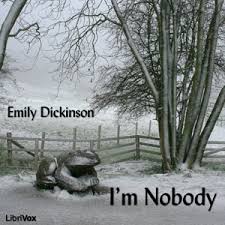
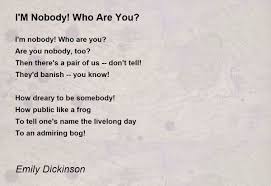
"I'm nobody! Who are you?
Are you a nobody, too?"
(Emily Dickinson)

NOBODY

It is not easy to tell the tale of nobody.
A nobody's tale is without a
beginning or an end,
Like jumbled up letters on a mussy page,
Obscure sketches from a hand untrained.

A nobody's anonymous world
Battered by the day, and
Bruised by the night,
Spins and shatters in a gyrating vortex
Of liquid darkness and light.

A nobody lives and dies and again lives
And breathes a dream in between,
Desperate to see just one come true, and
For a glimpse of green in a bald ruin.

The crimson dawn in a nobody's sky
Burns hopes to ash.
A moon flings shards of silver
At nobody’s world, aiming a cruel slash.

The fog settles forever thick and grey
Outside a nobody's  window.
In a nobody's land, seasons don't change.
There settles permanent a season of snow.

Songs painted black by storm clouds
Croak beyond a nobody's door.
The wind mourns in the hollow orchards
Roses bleed on a cracked floor;

It is hard to tell a nobody's tale
That has neither a beginning, nor an end.
It's the story of a doomed  soul,
That neither has a foe, nor a friend!!
From Public Domain
Snehaprava Das is an academic, translator and writer. She has multiple translations, three collections of stories and five anthologies of poetry to her credit. She has been published in Indian Literature, Oxford University Press, Speaking Tiger, Penguin and Black Eagle Books.
.
PLEASE NOTE: ARTICLES CAN ONLY BE REPRODUCED IN OTHER SITES WITH DUE ACKNOWLEDGEMENT TO BORDERLESS JOURNAL.
That night a shadow spread over the Moon's face. The moon, heavy in its Pain of loss became red And shed scarlet tears On the nocturnal earth caught in a Warm vaporous net.
The shadow lengthened down to A morning full of rain and river And the waves screaming a vow To drag the fields into Coffins of sand even while They still breathed in green.
The morning after, No sun peeped through the clouds of east. No music dropped from the wind Or the drowsy trees.
The green lay inert in its grave And rotted. Dreams rotted too, eaten away By worms swarming in grey abandon.
The shadow swallowed everything Like a desert, like an ocean, Like the endlessly expanding time.
Everything, like the moon went inside the dark, crippling net. The sparkle in a thousand pairs of eyes sank in the shadow of the river In a permanent eclipse.
From Public Domain
Snehaprava Das is an academic, translator and writer. She has multiple translations, three collections of stories and five anthologies of poetry to her credit. She has been published in Indian Literature, Oxford University Press, Speaking Tiger, Penguin and Black Eagle Books.
.
PLEASE NOTE: ARTICLES CAN ONLY BE REPRODUCED IN OTHER SITES WITH DUE ACKNOWLEDGEMENT TO BORDERLESS JOURNAL.
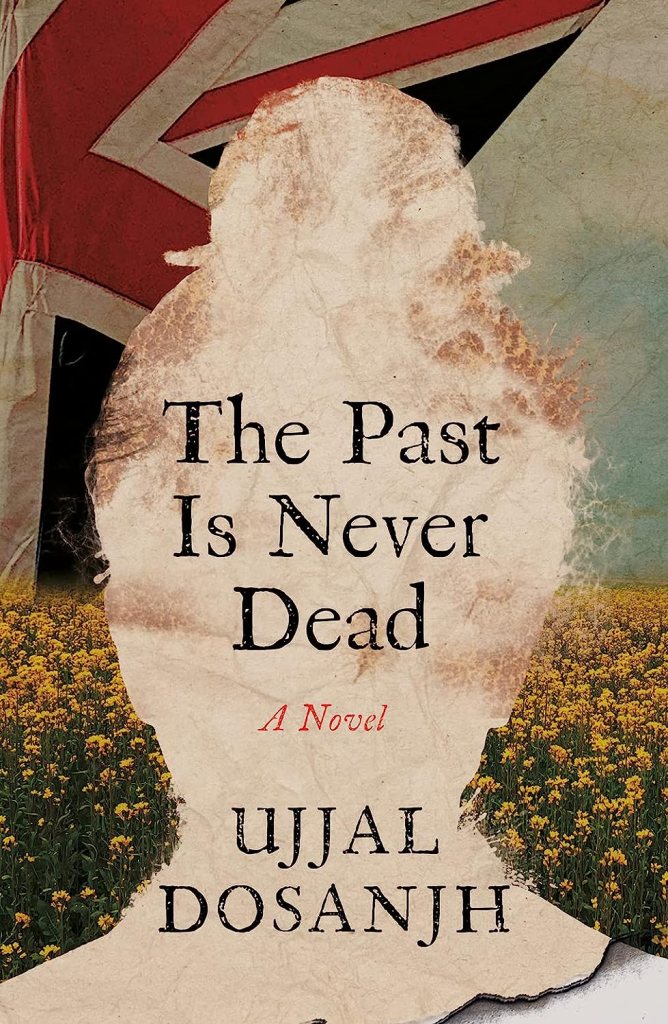
Ujjal Dosanjh’s latest novel, The Past is Never Dead, sheds light on the stranglehold of caste on Punjabi Sikh immigrants in the UK – a unique perspective of caste violence in a faith outside of Hinduism, one that was born out of the noble teaching by Guru Nanak and his followers that every human being is equal in the eyes of God. Borrowing the prologue from William Faulkner’s famous statement, “The past is never dead. It is not even past,” Dosanjh makes it his project to challenge this idea about Sikhism, as he writes about a poor family that migrates to England soon after India’s independence in the hope of escaping the indignities of caste back home – only to be confronted by it again, and in the most horrifying ways possible, in a western foreign land, where caste is supposed to be an insignificant marker of identity.
In the year 1952, Kalu escaped Banjhan Kalan in Punjab’s Hoshiarpur for Bedford in the British Midlands, hoping to find a life of dignity that he had been denied because of his untouchable caste. He was in his late teens and had grown up believing in Sikhism’s tenet of equality preached by Guru Nanak and Ravidas, a principle the villagers never sincerely practised. They had maimed his father, accusing him of stealing a zamindar’s ox; they had thrown father and son out of a Quit India rally; they had mercilessly thrashed young Kalu himself for daring to enter a temple. He had never been allowed to forget—even by his schoolmates—that he was a Chamar, destined to skin dead cattle like his ancestors. His father Udho was determined to get his son out of this life of indignity and had said, “Son, I don’t want you to grow up a Chamar. You will never do what made my hands and feet like this.” Soon Udho borrowed money from a kind merchant, bribed the officials, got a passport and left for Britain.
England promised a new life of respect and opportunity. Udho laboured hard to give his son a college education and his wife a decent life that was denied to them back in India. The way Kalu and his mother ultimately bribed their way onto an earlier flight to escape from the powerful connections his propertied travel agents had, and who could create obstacles in their journey to Britain, speaks a lot about the plight of scores of rural people in the Punjabi villages who dreamt of building a new life in the West. But freedom was illusory. Kalu’s fellow expatriates had brought caste along when they came to that country, and he would be forced to adhere to its degrading rules just as he was in Banjhan.
Apart from the story of a rural Punjabi family’s search for better life, the novel is also a powerful depiction of the stranglehold of caste over Sikh immigrants in Britain. We have read about honour killings of Sikh women during the riots that took place after the Partition of India when family patriarchs forced their wives and daughters to jump into the well or commit suicide to avoid being kidnapped by the Muslims, but the horror behind the story of honour killing within the Sikh community in England based on caste differences is something terrifying. The construction of different gurdwaras in the same locality according to caste affiliations including local politics, enmity, and gruesome killings by the Jats, who considered themselves racially superior to the other Sikhs, expose the horror and obstinacy of caste even in the middle of the twentieth century, and is just unimaginable. Determined not to bend—as he had refused to do back home—Kalu fights back as he could not suffer indignity silently, but his resoluteness in the struggle puts him and his family at serious risk.
With many turns and twists in the storyline, including the abduction and death of his doctor wife, Kalu’s hair was shaved by his caste-hate-obsessed kidnappers as revenge for what they considered his audacity in describing a Jat’s daughter as mini bell unsuited to be married to his Jat friend. Eventually, he discards his hair; the act acknowledges the impotence of religion and religious symbols in the struggle for equality and against caste. In the end, through his indomitable will force, we find how Kalu manages to overcome all odds and contest for a MP seat in the Parliament as a Labour Party candidate under the name of Dr. Kalha Chamar — “He was done fleeing, escaping or dressing up caste in surnames, unshorn hair or turban.” The concluding paragraph of the novel which gives a positive message of hope for the future is worth quoting here:
“Angad made chai. Between the sips of chai, the humpbacked Banti, the limping Udho, the hairless Kalu and the adolescent Angad danced. When Robert, Janice and Gurbat knocked on the door to congratulate him, Udho Chamar and his son, Kalu Chamar MP, were standing with raised glasses, about to down neat double Johnnie Walkers.”
Though the story of Dosanjjh’s own life and the timeframe of the novel bear a lot of similarities with the incidents narrated in the story, he does not mention it to be an autobiography. Instead, he fills the novel with various other racist perspectives that the Sikhs in Britain still cannot steer clear of. So, he safely adds other issues and titles it “A Novel.” But how far some of the incidents narrated in the novel have moved him becomes clear when we read in an interview given to scroll.in where he states:
“It was emotionally quite exacting to write The Past Is Never Dead. The toll of the issues I wrote about has been a lifelong companion. Age has rendered me shameless enough for me to confess that I often cried as I wrote many parts of the novel…. The human incapacity to learn from the past astounds me. It aids us in veiling the past from ourselves and abets our continuing cruelty in the name of dumb tradition and comatose culture.”
The novel is surely worth reading and is strongly recommended as it pays tribute to the courage and tenacity of the human spirit and its capacity for hope despite all odds.
.
Somdatta Mandal, academic, critic and translator is a former Professor of English at Visva-Bharati, Santiniketan, India.
PLEASE NOTE: ARTICLES CAN ONLY BE REPRODUCED IN OTHER SITES WITH DUE ACKNOWLEDGEMENT TO BORDERLESS JOURNAL
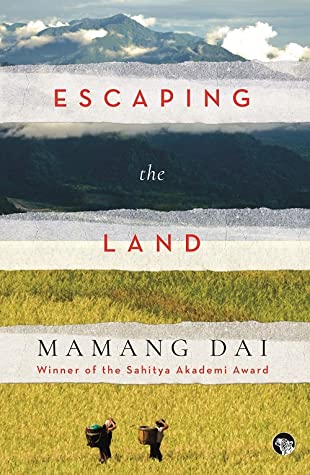
Escaping the Land (2021) by Mamang Dai is a gripping saga of turbulent times in Arunachal Pradesh from the North East Frontier Agency (NEFA) days to the present times. Padmashri and Sahitya Akademi Awardee, Mamang Dai, is an anglophone poet and novelist from Arunachal Pradesh.
In Escaping the Land, Mamang Dai weaves the history, myth and politics of Arunachal Pradesh across time. Maying, the narrator returns to her homeland from Delhi to do a project on the land of her birth and its people. Dai uses Maying to recount the story, blending fiction and history from when the state was governed as the NEFA[1] to becoming the twenty-fourth state of India as Arunachal Pradesh in 1987.
Maying meets Lutor, the ageing veteran politician and the son of a shaman, who is loved by the people and has had a long and successful career in politics since the formation of the state, to share “the story of a long ago when everything had been different and full of possibilities”. As she runs through the flow of time from the past to the present, Maying ruminates over Lutor’s idea of the “original obsession” that all of us are born with and the power of “dreams” and “instinct”. As the story begins, Maying picks up an old journal marked NEFA notebook and shuffles through the old piece of memorabilia to reflect, “The lives of people in every village and district had changed since the time this piece of fern had been so carefully pressed in between the thin pages of the book”.
Dai divides the book into five sections. The story opens with the view of a traditional house that stands on a hill with thick bamboo thickets and mountainous region. The author talks of the essence of dates and calendars in the lives of the people of a close-knit community in a remote part of the state, where tradition and family mattered. Time is an overarching theme in the novel. “Time had a method”, where everything happened in stages and history was written as it came. Dai’s novel recounts changes in time and history in the place and culture of the people of the state with emphasis on Pasighat, which was also her hometown.
Dai’s story interestingly accommodates an avalanche of landmark incidents in the history of the north-eastern state of India including battles against oppression starting from 1911, the Achingmori incident (1953), the India-China War (1962), the liberation of Bangladesh (1971) and its impact on the state, the passing of the infamous Bill for Control of Organised Crime Act (APOCO), and also, on migration and infiltration of outsiders. References to attending boarding school in Shillong, going to Delhi for higher education, or taking long hours of ferrying across the tumultuous tributaries of the Brahmaputra river that flow in the region for a sarkari[2] job, Dai reflects through the fiction the sea of change experienced in the lives of men and women in terms of education and perceptions of security in moving in or out of their homes.
Experiences of the horrors and violence in the face of insurgency, militancy and atrocities in the times of war that the people faced are vividly incorporated in some sections of the story. In times of uncertainty in the story, dreams and reality collide in a delirious mix of magic and mystery. Dai fuses myth as a consolation to the harsh realities of history. A mystic rain man heralds that change and loss of solitude cannot be halted. Though it is often reiterated that “We are safe in the hills” speedy changes in time made Lutor and his close friends rethink the credibility of this remark. Dai explodes beautiful metaphors that are specific to the culture, cross-cultural references to the exchange of people and culture from outside India, other parts of India and of the neighbouring states of Assam, Nagaland, and Manipur.
In the shifting times, money and greed have engulfed traits of love and loyalty for one’s land and people. Time moved to stages of no return from how it was in the mythical time of the ancient civilization of the Kojum-Koja[3]of the land, to when politics seemed to overtake every move in the place. The story highlights the sentiments of the people in the midst of the politics of inclusion and exclusion in the periphery.
As candidate for the office of Chief Minister, Lutor promises of development, “caught between a feeling of great humiliation and a pitying love for his homeland” but lost to his corrupt and crooked political rival Tanik, who had more money and men. Varied interesting characters add flavour to the story. With the non-retreating timber trade, where greedy traders, politicians, local middlemen and forest mafia no longer care to uproot the whole of the virgin forest in the state, the ecology at stake is echoed in the corruption portrayed in the story. Lutor in a dire strait between the memory of a lost time acknowledges that times have changed but continued to believe and live in anticipation of a pan-Arunachal unity and hopeful idea of home.
Dai through Lutor’s nostalgia for a peaceful land and longing for a homeland devoid of greed and corruption, implicates that love can heal and restore the state to a humane land as it had been in the past. Time brought changes and the world infringed by investing more money into the state. While business boomed, Lutor, as the title suggest, looked outward to escape from the land not as one defeated but with a hope to explore newer possibilities so that he could return with a better tomorrow.
In the engrossing historical novel, Escaping the land (2021), Dai works on a huge canvas to lyrically voice a tale of time, geography and changes that leads to a cohesion with the larger world.
[1] The North-East Frontier Agency (NEFA), originally known as the North-East Frontier Tracts (NEFT), was one of the political divisions during the Raj
[3] Kojum-Koja was supposed to be an ancient civilisation that established villages, part of the ancient tribal lore.
.
Gracy Samjetsabam teaches English Literature and Communication Skills at Manipal Institute of Technology, MAHE, Manipal. She is also a freelance writer and copy editor. Her interest is in Indian English Writings, Comparative Literature, Gender Studies, Culture Studies, and World Literature.
.
PLEASE NOTE: ARTICLES CAN ONLY BE REPRODUCED IN OTHER SITES WITH DUE ACKNOWLEDGEMENT TO BORDERLESS JOURNAL
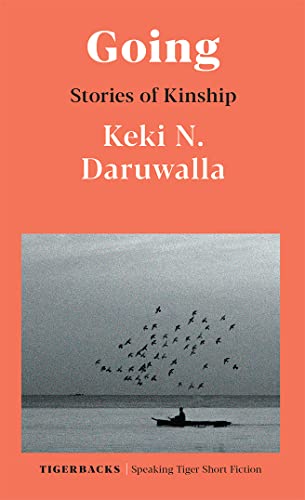
There are short stories where the ending is a collective culmination of all their subplots and themes, somewhat like a novel, but if you have read Somerset Mugham, you know what I mean. And there are stories which couldn’t care less. They move from one event to another, one subplot to another, make abstract observations and then suddenly come to an end. Maybe because every story must come to an end, but it’s the journey you must enjoy; it’s the journey that’s of greater importance. There are readers who like the former style – they appreciate its logical pattern of one thing leading to another. And there are readers who like the journey and believe disorderliness is a better reflection of life’s idiosyncrasies – and reflect on the sudden ending to connect it with what happened earlier. It is a delight to discover a writer. I knew Keki N. Daruwalla’s works – For Pepper and Christ – but had never read him. And now that I have read Going: Stories of Kinship, I will move back and try out his other works.
Among Keki N. Daruwalla’s acclaimed short story collections are Sword and Abyss (1979), The Minister for Permanent Unrest and Other Stories (1996) and Love Across the Salt Desert (2011). His first novel, For Pepper and Christ, was shortlisted for the Commonwealth Fiction Prize in 2010. He was awarded the Padma Shri in 2014. But Keki N. Daruwalla is better known for his poetry. His poetry volumes include Under Orion, The Keeper of the Dead (winner of the Sahitya Academy Award, 1984), Landscapes (winner of Commonwealth Poetry Award, 1987) and the Map Maker. Most recently he was honoured with the Poet Laureate award at the Tata Literature Live, Mumbai Litfest, 2017.
Thematically connected short stories are in fashion. But it’s difficult to identify any common thread running across the stories in Going. Each one is different.
Sometimes that sudden or understated ending can be a reference to a subplot within the story. Lionidas Campbell, in ‘The Bhahmaputra Triology’, many years after making love to an Indian woman discovers that he had sired a son from the relationship – and the story ends there. It can sometimes be reflective of the larger message the story wants to convey. After Ardeshir’s daughter, Arnavaz, elopes with a Muslim boy against her father’s wishes refusing to be dissuaded by her father’s attempt to invoke the history of persecution of Parsees by Muslims, Ardeshir is a heartbroken man. At the end, while wallowing in grief, sitting on armchair, Ardeshir suddenly feels the “frail silhouette of Arnavaz adrift on his memories” – and a yearning for his daughter grips him. The climax makes two messages very clear. The helplessness of a man seeing personal concerns of his daughter triumphing over a need for historical justice; filial love prevailing over community loyalty and concerns about history.
As much as all the stories, to an extent, explore the inner lives of characters, Bikshu is more so. The entire story is about Bikshu’s inner journey, its conflicts, evolution, emotional layers with occasional detours to Bikshu’s past, his family and mother. At the end of the book, I discovered the commonality. When you have read the stories and reflect on them as a collective, you feel they are about human relationships and how they evolve over time.
Indrasish Banerjee has been writing and publishing his works for quite some time. He has published in Indian dailies like Hindustan Times and Pioneer, and Café Dissensus, a literary magazine. Indrasish is also a book reviewer with Readsy Discovery. Indrasish stays and works in Bangalore, India.
.
PLEASE NOTE: ARTICLES CAN ONLY BE REPRODUCED IN OTHER SITES WITH DUE ACKNOWLEDGEMENT TO BORDERLESS JOURNAL
Only when the cries of the wretched of the earth will stop renting the skies,
Only when the oppressor’s bloody sword will cease smearing battlefields,
			A rebel, weary of war,
			Only then I won’t stir.
…
I’m the ever-rebellious hero--
	Soaring over the world, all alone, head forever held high!

--  Rebel or 'Bidrohi' (1922) by Nazrul, translated by Fakrul Alam
Borderless: Digital Art by Ayaan Ghoshal
These fragments I have shored against my ruins
…
Datta. Dayadhvam. Damyata.
 Shantih shantih shantih

-- Wasteland (1922) by TS Eliot
These lines reiterate values we would do well to live by in a war-torn, dissension-worn world where the need for a rebel to recreate a humane society that lives with values such as peace, generosity, acceptance, tolerance, compassion and restraint — is a felt need. The two great poems made history by remaining as popular a hundred years after they were written — ‘The Rebel’ by Nazrul and TS Eliot’s ‘Wasteland’. Nazrul defined a rebel as an iconoclast who breaks norms to find peace, justice and love for all, to move towards the creation of an ideal world. TS Eliot quoted from the Upanishads and ended with redemption coming with giving (giver perhaps denoted generosity), compassion and restraint. Despite the wisdom of these great poets and seers, war still continues a reality. The values remain neglected not just in as we see in conflicts, like the one in Ukraine that destroys lives, property and nature with intolerance towards differences, but also in our personal lives. Tagore also reiterated the same need for stepping out of personal, social, economic and political insularity. We carry a translation of a song that echoed this need while inviting participation in his ecstasy. He wrote:
Why do you sit in isolation,
Dwelling on self-centred issues?
Tagore had not only written of the negative impact of isolation from the world but he led by example, building institutions that could lead the world towards pacifism with acceptance of diversity and inclusiveness. Sriniketan and Santiniketan were created to move towards these ideals. Many of the people he influenced or who studied in Santiniketan made history, like Prime Minister Indira Gandhi, Satyajit Ray; many added to the sense of inclusiveness, like Mahasweta Devi, who other than her enormous work to integrate different cultures, also wrote a memoir about Santiniketan in Bengali. Radha Chakravarty, nominated for the Crossword Translation Award (2004) for In the Name of the Mother by Mahasweta Devi, has translated this memoir, a narrative which brings us close to Tagore’s ideals of the whole world being a family. How wonderful it would be if the world were open to such ideals and would behave like a global family and not go to war! Mahasweta Devi, Our Santiniketan, which has been reviewed by Meenakshi Malhotra, reiterates Tagore’s vision of a planet living in harmony with the flora and fauna.
Bhaskar Parichha has reviewed another non-fiction by Ashok Kumar Pandey, Why They Killed Gandhi; Unmasking the Ideology and the Conspiracy. Parichha writes: “The finest point about this book is its storytelling…” The book review brings to mind in the midst of a war and violence that Gandhi had tried to erase this mindless destruction of lives, nature and cities with Ahimsa or non-violence. Will we ever rise up to it? Perhaps… We see strains of recognising the negative impact of insular outlook in writings like that of Temsula Ao, a Sahitya Akademi Award winner, according to Indrashish Banerjee who has reviewed her new book,The Tombstone in My Garden: Stories from Nagaland. Keith Lyons has reviewed Asian Anthology: New Writing Vol. 1: Stories by Writers from Around the World, edited by Ivy Ngeow, an exotic medley of Asian stories, one of which has been excerpted as well.
We are privileged to carry another excerpt from Ruskin Bond’s Friends in Wild Places: Birds, Beasts and Other Companions, a hilarious story about a pet tiger adopted by the legendary writer’s grandfather. What is amazing about Ruskin Bond’s writing is the love and compassions for all creatures great and small that colours the tongue-in-cheek humour he rolls out to his readers. If only we could think like Bond, there would be no wars. His writing, I feel, transcends political borders or ‘isms’, and laces with love and compassion tales of menageries of monkeys, snakes, mongoose, humans of different denominations. This excerpt is a treat we are giving Borderless Journal as the journal completes two years of its existence. We are truly grateful to Speaking Tiger for sharing this excerpt with us. But our celebrations this time are sombre as the war rages with incoherence accompanied by heart-breaking ravages.
The refrain from Ukraine has been taken up by Ratnottama Sengupta as she takes us through the past and present experiences of the devastated country, bringing in the views of the legendary folk singer and pacifist, Pete Seeger (1919-2014), who she had interviewed over a span of four days. The writer of ‘Where have all the Flowers Gone?’, a song based on an Ukrainian folk song, Seeger said, “The point is not to ask for yourself alone — one has to ask for everybody: Either we all are going to make it over the rainbow or nobody is going to make it.” Candice Louisa Daquin has also pondered on the justification of war, contextualising it with the current one along with her essay on the paradox of modern linguistic communication.
We have an exhaustive essay on the legendary Satyajit Ray’s creations by Anasuya Bhar. Malhotra has pondered at exclusivity reinforcing divisions, margins and borders to plague humankind, against the backdrop of the Women’s Month, March. Highlighting women in writing, we have interviewed two female writers, one from Nepal and another from Bangladesh. Sangita Swechcha lives in UK but her writing, till now largely in Nepali, often pines for her home embedded in the Himalayas whereas, an expat, Neeman Sobhan, shuttles between Bangladesh and Italy with the affluence and assurance of a privileged background.
Finding a way to override lack of privileges, deprivation and violence, are the youngsters of Nithari on the outskirts of Delhi where less than two decades ago other than poverty, savage criminality devastated the local populace. These youngsters transcended the suffering over time with help from volunteering NGOs to create narratives that amaze with their inventiveness and confidence. Tanveer Hussain from Nithari, self-motivated and self-made from a young age, asks questions that would be relevant for all humankind in a letter to God. It has been translated from Hindustani by Vritika Thareja of pandies’. This edition’s translations include Professor Fakrul Alam’s mellifluous rendition of Jibanananda Das’s poetry from Bengali to English, Ihlwha Choi’s Korean poetry and a Balochi poem by Munir Momin rendered in English by Fazal Baloch. Baloch had earlier translated poems by Akbar Barakzai, a great poet who departed on 7th March, depriving the world of yet another powerful writer who imbibed hope of a better future in his poetry. We are privileged to have hosted the translations of some of his poems and his last interview.
Another well-known poetic voice from Singapore, Kirpal Singh, has given us poignant poetry that can be applied to the situation that is leading to the wreck of Ukraine. Anasuya Bhar has poetry, one of which despite being in the ilk of Nazrul’s great poem, ‘Rebel or Bidrohi’, questions gently mainly social constructs that obstruct the flow of harmony. Ryan Quinn Flanagan has pondered on the acceptance of a changed world. We have humour from Rhys Hughes in poetry and wonderful poems by Michael R Burch on spring. Jay Nicholls shares the last of her dozen Pirate poems as Blacktarn sails the lemon seas to fight pollution. Luis Cuauhtémoc Berriozábal, George Freek, Sutputra Radheye, Mike Smith, Shaza Khan and many more have contributed a wealth of beautiful lines. Penny Wilkes has captured storms and seas with photographs and text and Rhys has surprised us with some strange, bizarre tales in his column.
Suzanne Kamata continues writing on Japan as she introduces us to an Australian film maker who is making films in Japan and in Japanese, called Felicity Tillack. Cultures are perhaps truly crossing borders as we can see Kenny Peavy, an environmentalist who moved from US to Indonesia start a new column with us called ‘Mission Earth’. We hope, like Tagore or Rousseau, he will help to revive our felt need to live with nature, acknowledge the nurture that we get from the planet to live in harmony with it and on it.
At the end of twenty-four months of existence – that sounds better than a mere two years— we are happy to host a melange of writers from across the borders and be the meeting grounds of writers and readers from across continents. I am truly thankful to all of you for helping concretise an ideal. Huge thanks to all the writers, artists, photographers and the readers for the contribution of their time, effort and love. And thanks to our fabulous team who continue to support the journal unwaveringly. I would also like to thank Sohana for the lovely visuals she generously shares with us. A special thanks also to young Ayaan Ghoshal for his digital art where hands reach out to support a truly borderless world.
As usual, all the content has not been covered here, I invite you all to enjoy our March edition of Borderless Journal.
At the start of the third year of our existence, let us march onwards towards renewed hope – maybe the Ukraine experience will take us closer to a war-free world with an awakening of a felt need for peace and compassion in a planet without borders.
In quest of a peaceful, humane world, I invite you all to continue being part of this journey.
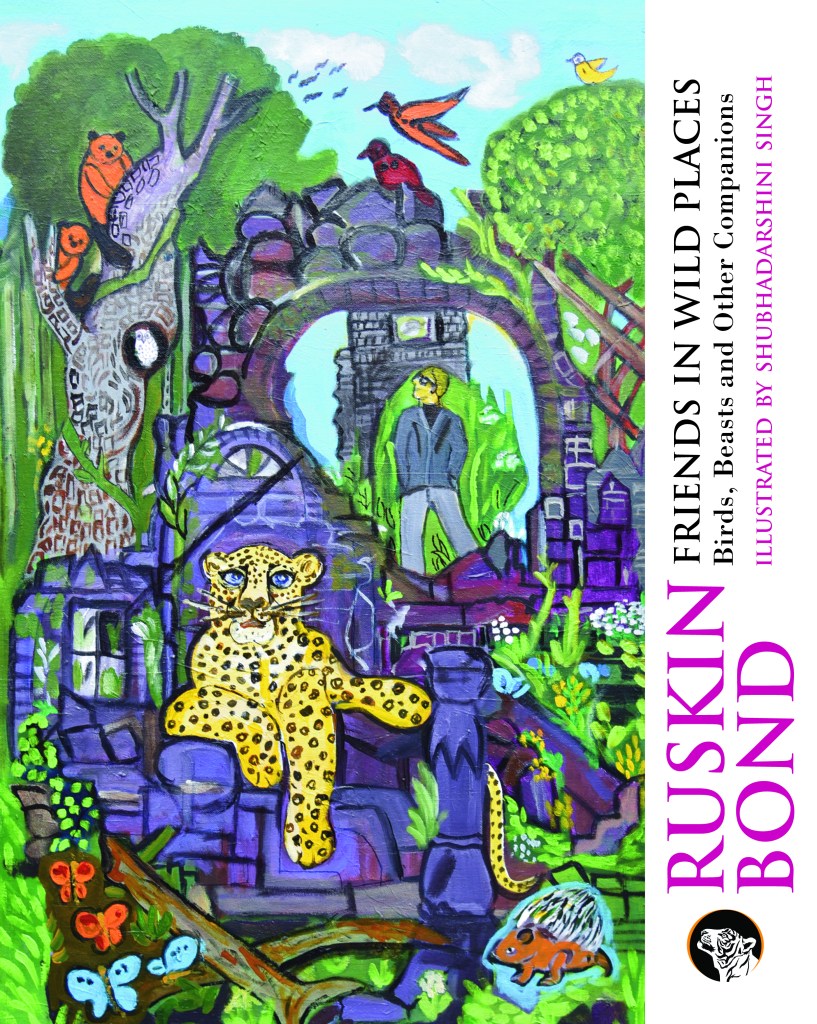
Title:Friends in Wild Places: Birds, Beasts and Other Companions
Author:Ruskin Bond
Illustrator: Shubhadarshini Singh
Publisher: Talking Cub, the children’s imprint of Speaking Tiger.
Timothy
TIMOTHY, THE TIGER cub, was discovered by Grandfather on a hunting expedition in the Terai jungle near Dehra.
Grandfather was no shikari, but as he knew the forests of the Siwalik hills better than most people, he was persuaded to accompany the party—it consisted of several Very Important Persons from Delhi—to advise on the terrain and the direction the beaters should take once a tiger had been spotted.
The camp itself was sumptuous—seven large tents (one for each shikari), a dining-tent, and a number of servants’ tents. The dinner was very good, as Grandfather admitted afterwards; it was not often that one saw hot-water plates, finger-glasses, and seven or eight courses, in a tent in the jungle! But that was how things were done in the days of the Viceroys… There were also some fifteen elephants, four of them with howdahs for the shikaris, and the others specially trained for taking part in the beat.
The sportsmen never saw a tiger, nor did they shoot anything else, though they saw a number of deer, peacocks, and wild boars. They were giving up all hope of finding a tiger, and were beginning to shoot at jackals, when Grandfather, strolling down the forest path at some distance from the rest of the party, discovered a little tiger about 18 inches long, hiding among the intricate roots of a banyan tree. Grandfather picked him up, and brought him home after the camp had broken up. He had the distinction of being the only member of the party to have bagged any game, dead or alive.
At first the tiger cub, who was named Timothy by Grandmother, was brought up entirely on milk given to him in a feeding bottle by our cook, Mahmoud. But the milk proved too rich for him, and he was put on a diet of raw mutton and cod liver oil, to be followed later by a more tempting diet of pigeons and rabbits.
Timothy was provided with two companions—Toto the monkey, who was bold enough to pull the young tiger by the tail, and then climb up the curtains if Timothy lost his temper; and a small mongrel puppy, found on the road by Grandfather.
At first Timothy appeared to be quite afraid of the puppy, and darted back with a spring if it came too near. He would make absurd dashes at it with his large forepaws, and then retreat to a ridiculously safe distance. Finally, he allowed the puppy to crawl on his back and rest there!
One of Timothy’s favourite amusements was to stalk anyone who would play with him, and so, when I came to live with Grandfather, I became one of the favourites of the tiger. With a crafty look in his glittering eyes, and his body crouching, he would creep closer and closer to me, suddenly making a dash for my feet, rolling over on his back and kicking me in delight, and pretending to bite my ankles.
He was by this time the size of a full-grown retriever, and when I took him out for walks, people on the road would give us a wide berth. When he pulled hard on his chain, I had difficulty in keeping up with him. His favourite place in the house was the drawing room, and he would make himself comfortable on the long sofa, reclining there with great dignity, and snarling at anybody who tried to get him off.
Timothy had clean habits, and would scrub his face with his paws exactly like a cat. He slept at night in the cook’s quarters, and was always delighted at being let out by him in the morning.
‘One of these days,’ declared Grandmother in her prophetic manner, ‘we are going to find Timothy sitting on Mahmoud’s bed, and no sign of the cook except his clothes and shoes!’
Of course, it never came to that, but when Timothy was about six months old a change came over him; he grew steadily less friendly. When out for a walk with me, he would try to steal away to stalk a cat or someone’s pet Pekinese. Sometimes at night we would hear frenzied cackling from the poultry house, and in the morning there would be feathers lying all over the veranda. Timothy had to be chained up more often. And finally, when he began to stalk Mahmoud about the house with what looked like villainous intent, Grandfather decided it was time to transfer him to a zoo.
The nearest zoo was at Lucknow, 200 miles away. Reserving a first-class compartment for himself and Timothy—no one would share a compartment with them— Grandfather took him to Lucknow where the zoo authorities were only too glad to receive as a gift a well-fed and fairly civilized tiger.
About six months later, when my grandparents were visiting their relatives in Lucknow, Grandfather took the opportunity of calling at the zoo to see how Timothy was getting on. I was not there to accompany him, but I heard all about it when he returned to Dehra.
Arriving at the zoo, Grandfather made straight for the particular cage in which Timothy had been interned. The tiger was there, crouched in a corner, full-grown and with a magnificent striped coat.
‘Hello Timothy!’ said Grandfather, and, climbing the railing with ease, he put his arm through the bars of the cage.
The tiger approached the bars, and allowed Grandfather to put both hands around his head. Grandfather stroked the tiger’s forehead and tickled his ear, and whenever he growled, smacked him across the mouth, which was his old way of keeping him quiet.
He licked Grandfather’s hands and only sprang away when a leopard in the next cage snarled at him. Grandfather ‘shooed’ the leopard away, and the tiger returned to lick his hands; but every now and then the leopard would rush at the bars, and the tiger would slink back to his corner.
Excerpted from Friends in Wild Places: Birds, Beasts and Other Companions by Ruskin Bond; illustrated by Shubhadarshini Singh. Published by Talking Cub, the children’s imprint of Speaking Tiger.
ABOUT THE BOOK
Since he was a young boy, Ruskin Bond has made friends easily. And some of the most rewarding and lasting friendships he has known have been with animals, birds and plants—big and small; outgoing and shy. This collection focuses on these companions and brings together his finest essays and stories, both classic and new. There are leopards and tigers, wise old forest oaks and geraniums on sunny balconies, a talking parrot and a tomcat called Suzie, bears in the mountains and kingfishers in Delhi, a family of langurs and a lonely bat—and many more ‘wild’ friends, some of an instant, others of several years.
Beautifully illustrated by Shubhadarshini Singh, this is a gift for nature- and book-lovers of all ages.
ABOUT THE AUTHOR
Ruskin Bond is the author of numerous novellas, short-story collections and non-fiction books, many of them classics. Among them are The Room on the Roof, The Night Train at Deoli, Time Stops at Shamli, Rain in the Mountains, The Blue Umbrella, When I Was a Boy, Lone Fox Dancing (his autobiography) and A Book of Simple Living. He received the Sahitya Akademi Award in 1993, the Padma Shri in 1999 and the Padma Bhushan in 2014.
Ruskin lives in Landour, Mussoorie, with his extended family.
ABOUT THE ILLUSTRATOR
Shubhadarshini Singh was brought up in Kolkata and studied in Visva-Bharati, Shantiniketan. She has been an ad woman, a journalist and a film-maker. She shares Ruskin Bond’s deep love for animals and wildlife and has made his best stories into a series for television: Ek Tha Rusty. Shubhadarshini runs an art gallery for Outsider Arts, and has had shows of her paintings in Delhi and Bhopal. She lives in Delhi with her husband, son and dogs.
PLEASE NOTE: ARTICLES CAN ONLY BE REPRODUCED IN OTHER SITES WITH DUE ACKNOWLEDGEMENT TO BORDERLESS JOURNAL




 Borderless