Categories
Stories

Two Countries

By Ravi Shankar

The decision to retire was a long, tough, and protracted one. The traditional wisdom always gave out doctors never retire. But we needed time to ourselves. We had long and fulfilling lives and now was the time to take things slow. The body was ageing and required more time to complete various activities. Some tasks were no longer possible.

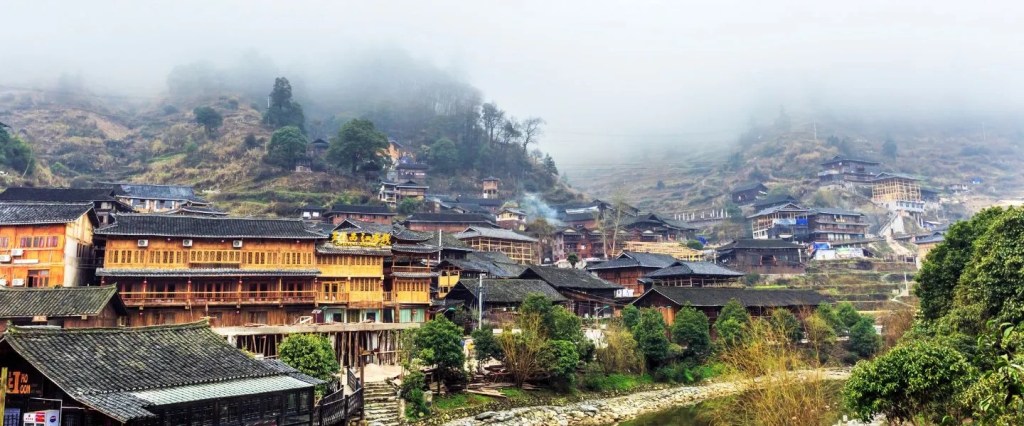
I still remember the first day I met Rajendra on the orientation day of the Family Medicine residency program in upstate New York. Rajendra was from Jiri in the Himalayan country of Nepal. For a few decades, Jiri was the gateway to the Everest region. Then the hikers and mountaineers started flying to the air strip at Lukla. Roads were also progressing further and further in the country. We grew closer during the residency. We shared many interests including nature, hiking, photography, creative writing, and a strong empathy for the underdog. Our friendship slowly deepened, and by the end of the residency we decided to spend the rest of our life together.

We were also different in so many ways. I was a girl of mixed German and Colombian heritage. My family was well-to-do, and I had a privileged childhood. Raj was from a poor family and had to face many struggles in his life. He went to medical school on a government scholarship. Like most graduates of the Institute of Medicine in Kathmandu he then concentrated on being selected for a residency in the United States. Even in the early eighties this was a long, hard struggle.

He did a few ‘observerships’ and research attachments. He eventually went on to become a chief resident and we both worked for around two years in the Northeast health system after residency. Soon we had to decide on what to do next. I would have liked to continue in the United States. Raj however, was increasingly considering whether we should go back to Nepal. I told him that though I had never even visited Nepal I was OK with whatever he decided.

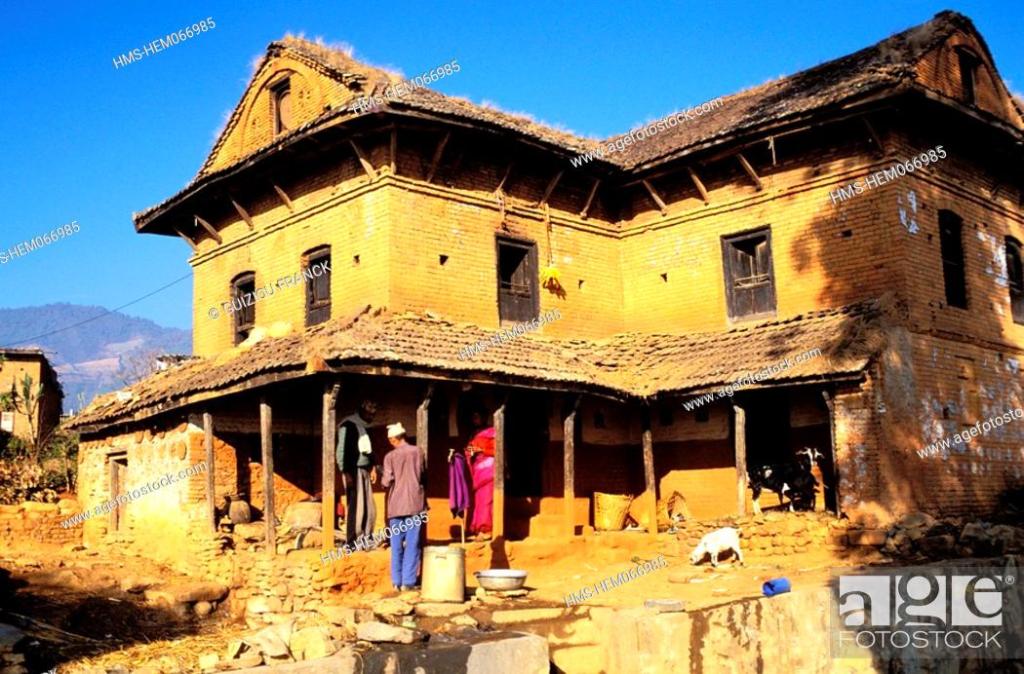
Though his family had settled in Jiri, Raj was a Newar. His full name was Rajendra Shakya. The religion of the Newars was complex tapestry of Hinduism and Buddhism. His family home was at Bungamati, a Newar village in Lalitpur district at the southern part of the Kathmandu valley. Newar Gods and Goddesses were complex and had both good and more wrathful aspects. Women were considered ritually impure during menstruation and were not allowed into the kitchen during this period, and they could not visit temples. In some rural parts of the country, the Chaupadi system was still followed, and women were banished to a cow shed during their periods. The Newars had their own caste system, and the concept of purity was important. In the Kathmandu valley the Newars had their ritual feasts (bhoj) and the buffalo was the most important animal in Newari cuisine.

The cow was sacred and killing one was a grave sin, but the poor black buffalo was fair game. I often reflected on this injustice. We first worked at the United Missions to Nepal hospital at Tansen at the foothills of the Himalayas. Tansen was a small town with a significant Newari influence and the hospital was the major and often only source of health care for a large population. The hospital was overcrowded, and we had to deal with a variety of patients. The houses for the doctors were lovely and picturesque, and we had a great community of both Nepalese doctors and expats. We stayed in Tansen for nearly a decade. There were delightful walks in the surrounding hills and a rather long hike to the Rani Mahal on the banks of the Kali Gandaki, often called the Taj Mahal of Nepal.

There was an opening for a doctor couple at Khunde hospital in the Everest region and as he was from Jiri, Raj wanted to apply. The hospital was at a height for around 4000 m and was set up by Sir Edmund Hillary. The hospital provides care to local residents, hikers, mountaineers, and porters from the lowlands. Initially it was a very isolated existence. Later a satellite phone was set up and eventually an internet connection followed. We dealt with all kinds of patients. The weather was cold, but I loved the picturesque cottage near the hospital. The region was becoming a popular trekking region and during the peak seasons of autumn and spring several thousand trekkers passed through.     

Patan hospital is one of the old and famous hospitals of Nepal located in the city of Lalitpur also known as Patan in the Kathmandu valley. Migration of doctors to developed nations was a major challenge for Nepal and the Institute of Medicine was not very successful in producing doctors for the country as most graduates left for developed nations. The importance of a family medicine/general practice programme was understood by the policy makers and the Patan Academy of Health Sciences (PAHS) was set up. MD was the postgraduate medical qualification in the country and a MD in General Practice and Emergency Medicine (MDGP) was started in this institution.

We were among the faculty for this program, and we were now working at Patan hospital. We had some family land at Bungamati and built a traditional Newari style house. There were smiling mustard fields around though the area was rapidly urbanising. Flowers grew well. In winters, the Himalayas could be seen on a clear day but air pollution and dust made this a rarer phenomenon.

My brother had retired and settled in our family land on the outskirts of Albany, New York. We had a rather large plot of land, and I was thinking of settling near him. We had followed different life trajectories, and it would be nice to spend some together in the autumn of our lives.    

Our work at Patan Hospital was hectic. After long conversations we decided to retire from the hospital and offer our expertise to the MDGP program as Emeritus Professors. Raj’s sister and brother had retired and were now living in Bungamati. Patan hospital would have loved for us to stay on.

We decided to divide our time between Albany and Bungamati. Summers in Albany and winters in Bungamati. Winters in upstate New York can be harsh and unforgiving. The long flight between the two locations will be a challenge as we did not handle long flights well. Let us see what fate had in store for us. Our son was a vascular surgeon in New York and we could be near to him. We were happy that we finally decided to retire and spend time with our families and our grandchildren. It was time to explore the road less travelled!      

.

Dr. P Ravi Shankar is a faculty member at the IMU Centre for Education (ICE), International Medical University, Kuala Lumpur, Malaysia. He enjoys traveling and is a creative writer and photographer.

.

PLEASE NOTE: ARTICLES CAN ONLY BE REPRODUCED IN OTHER SITES WITH DUE ACKNOWLEDGEMENT TO BORDERLESS JOURNAL

Click here to access the Borderless anthology, Monalisa No Longer Smiles

Click here to access Monalisa No Longer Smiles on Kindle Amazon International

Categories
Contents

Borderless, January 2024

Art by Sohana Manzoor

Editorial

Imagine all the People, Sharing All the World’Click here to read

Conversations

Interviewing Bulbul: Remembering Mrinal SenRatnottama Sengupta introduces Bulbul Sharma to converse with her on Mrinal Sen, the legendary filmmaker, reflecting on Bulbul Sharma’s experience as an actress in his film, Interview. Click here to read.

In conversation with Gajra Kottary, eminent screenplay writer, and a brief introduction to her recent book of short stories, Autumn Blossoms. Click here to read.

Translations

Nazrul’s poem, Samya or Equality, has been translated from Bengali by Niaz Zaman. Click here to read.

Masud Khan’s Fire Engine has been translated from Bengali by Fakrul Alam. Click here to read.

Short Poems by Mulla Fazul have been translated from Balochi by Fazal Baloch. Click here to read.

Disaster Alert by Ihlwha Choi has been translated from Korean by the poet himself. Click here to read.

Prarthona or Prayer by Rabindranath Tagore has been translated from Bengali by Mitali Chakravarty. Click here to read.

Poetry

Click on the names to read the poems

Radha Chakravarty, David Skelly Langen, Urmi Chakravorty, Avantika Vijay Singh, JM Huck, Isha Sharma, Stuart McFarlane, Saranyan BV, Ron Pickett, Mereena Eappen, Ahmad Al-Khatat, Ganesh Puthur, George Freek, Rhys Hughes

Poets, Poetry & Rhys Hughes

In Some Differences Between India and Sri Lanka, Rhys Hughes relates his perceptions of the two countries with a pinch of humour. Click here to read.

Musings/Slices from Life

When the Cobra Came Home

Antara Mukherjee nostalgically recalls her past and weaves it into the present. Click here to read.

The Old Man

Munaj Gul Muhammad describes his encounter with an old Balochi man. Click here to read.

Corner

Anita Sudhakaran muses on the need for a quiet corner. Click here to read.

Musings of a Copywriter

In Taking Stock…Finally, Devraj Singh Kalsi writes of stocks that defy the laws of gravity. Click here to read.

Notes from Japan

In A Sombre Start, Suzanne Kamata talks of the twin disasters in Japan. Click here to read.

Essays

Abol Tabol: No Nonsense Verses of Sukumar Ray

Ratnottama Sengupta relives the fascination of Sukumar Ray’s Abol Tabol, which has  just completed its centenary. Click here to read.

Peeking at Beijing: Fringe-dwellers and Getting Centred

Keith Lyons shares the concluding episode of his trip to Beijing. Click here to read.

Stories

The Gift

Rebecca Klassen shares a sensitive story about a child and an oak tree. Click here to read.

Healing in the Land of the Free

Ravi Shankar gives the story of a Nepali migrant. Click here to read.

Pigeons & People

Srinivasan R explores human nature. Click here to read.

Phôs and Ombra

Paul Mirabile weaves a dark tale about two people lost in a void. Click here to read.

Book Excerpts

An excerpt from Srijato’s A House of Rain and Snow, translated from Bengali by Maharghya Chakraborty. Click here to read.

An excerpt from The Kidnapping of Mark Twain: A Bombay Mystery by Anuradha Kumar. Click here to read.

Book Reviews

Somdatta Mandal reviews Sudha Murty’s Common Yet Uncommon: 14 Memorable Stories from Daily Life. Click here to read.

Meenakshi Malhotra reviews Rhys Hughes’ The Coffee Rubaiyat. Click here to read.

Rakhi Dalal reviews Ajit Cour’s Life Was Here Somewhere, translated by Ajeet Cour and Minoo Minocha. Click here to read.

Bhaskar Parichha reviews Scott Ezell’s Journey to the End of the Empire: In China Along the Edge of Tibet. Click here to read.

.

Click here to access the Borderless anthology, Monalisa No Longer Smiles

Click here to access Monalisa No Longer Smiles on Kindle Amazon International

Categories
Editorial

‘Imagine all the People, Sharing All the World’

Art by Sohana Manzoor

Let’s look forward to things getting better this New Year with wars tapering off to peace— a peace where weapons and violence are only to be found in history. Can that ever happen…?

Perhaps, all of us need to imagine it together. Feeling the need for peace, if we could dwell on the idea and come up with solutions, we could move towards making it a reality. To start with, every single human being has to believe firmly in the need for such a society instead of blaming wars on natural instincts. Human nature too needs to evolve. Right now, this kind of a world view may seem utopian. But from being hunter-gatherers, we did move towards complex civilisations that in times of peace, built structures and created art, things that would have seemed magical to a cave dweller in the Palaeolithic times. Will we destroy all that we built by warring – desecrating, decimating our own constructs and life to go on witch-hunts that lead to the destruction of our own species? Will human nature not evolve out of the darkness and chaos that leads to such large-scale annihilation?

Sometimes, darkness seems to rise in a crescendo only to be drowned by light emanating from an unknown source. This New Year — which started with an earthquake followed the next day by a deadly plane collision — was a test of human resilience from which we emerged as survivors, showing humanity can overcome hurdles if we do not decimate each other in wars. Bringing this to focus and wringing with the pain of loss, Suzanne Kamata, in her column tells us: “Earthquakes and other natural disasters are unavoidable, but I admire the effort that the Japanese people put into mitigating their effects. My hope is that more and more people here will begin to understand that it is okay to cry, to mourn, to grieve, and to talk about our suffering. My wish for the Japanese people in the new year is happiness and the achievement of dreams.”

And may this ring true for all humanity.

Often it is our creative urges that help bring to focus darker aspects of our nature. Laughter could help heal this darkness within us. Making light of our foibles, critiquing our own tendencies with a sense of humour could help us identify, creating a cathartic outcome which will ultimately lead to healing. An expert at doing that was a man who was as much a master of nonsense verses in Bengal as Edward Lear was in the West. Ratnottama Sengupta has brought into focus one such book by the legendary Sukumar Ray, Abol Tabol (or mumbo jumbo), a book that remains read, loved and relevant even hundred years later. We have more non-fiction from Keith Lyons who reflects on humanity as he loses himself in China. Antara Mukherjee talks of evolving and accepting a past woven with rituals that might seem effete nowadays and yet, these festivities did evoke a sense of joie de vivre and built bridges that stretch beyond the hectic pace of the current world. Devraj Singh Kalsi weaves in humour and variety with his funny take on stocks and shares. Rhys Hughes does much the same with his fun-filled recount on the differences between Sri Lanka and India, with crispy dosas leaning in favour of the latter.

Humour is also sprinkled into poetry by Hughes as Radha Chakravarty’s poetry brings in more sombre notes. An eminent translator from Bengali to English, she has now tuned her pen to explore the subliminal world. While trying to explore the darker aspects of the subliminal, David Skelly Langen, a young poet lost his life in December 2023. We carry some of his poems in memoriam. Ahmad Al-Khatat, an Iraqi immigrant, brings us close to the Middle East crisis with his heart-rending scenarios painted with words. Variety is added to the oeuvre with more poetry from George Freek, Ganesh Puthur, Ron Pickett, Stuart McFarlane, Urmi Chakravorty, Saranyan BV, JM Huck and many more.

Our stories take us around the world with Paul Mirabile from France, Ravi Shankar from Malaysia, Srinivasan R from India and Rebecca Klassen from England, weaving in the flavours of their own cultures yet touching hearts with the commonality of emotions.

In conversations, Ratnottama Sengupta introduces us to the multifaceted Bulbul Sharma and discusses with her the celebrated filmmaker Mrinal Sen, in one of whose films Sharma ( known for her art and writing) had acted. We also have a discussion with eminent screenplay writer Gajra Kottary on her latest book, Autumn Blossoms and an introduction to it.

Somdatta Mandal has reviewed Sudha Murty’s Common Yet Uncommon: 14 Memorable Stories from Daily Life, which she says, “speaks a universal language of what it means to be human”. Bhaskar Parichha takes us to Scott Ezell’s Journey to the End of the Empire: In China Along the Edge of Tibet. Parichha opines: “The book evokes the majesty of Tibetan landscapes, the unique dignity of the Tibetan people, and the sensory extremity of navigating nearly pre-industrial communities at the edge of the map, while also encompassing the erosion of cultures and ecosystems. Journey to the End of the Empire is both a love song and a protest against environmental destruction, centralised national narratives and marginalised minorities.” Meenakshi Malhotra provides a respite from the serious and emotional by giving us a lively review of Rhys Hughes’ The Coffee Rubaiyat, putting it in context of literature on coffee, weaving in poetry by Alexander Pope and TS Eliot. Rakhi Dalal has reviewed a translation from Punjabi by Ajeet Cour and Minoo Minocha of Cour’s Life Was Here Somewhere. Our book excerpts from Anuradha Kumar’s The Kidnapping of Mark Twain: A Bombay Mystery introduces a lighter note as opposed to the intense prose of Srijato’s A House of Rain and Snow, translated from Bengali by Maharghya Chakraborty.

Translations this time take us to the realm of poetry again with Fazal Baloch introducing us to a classical poet from Balochistan, the late Mulla Fazul. Ihlwha Choi has self-translated his poetry from Korean. Niaz Zaman brings us Nazrul’s Samya or Equality – a visionary poem for the chaotic times we live in — and Fakrul Alam transcribes Masud Khan’s Bengali verses for Anglophone readers. Our translations are wound up with Tagore’s Prarthona or Prayer, a poem in which the poet talks of keeping his integrity and concludes saying ‘May the wellbeing of others fill my heart/ With contentment”.

May we all like Tagore find contentment in others’ wellbeing and move towards a world impacted by love and peace! The grand polymath always has had the last say…

I would like to thank our contributors, the Borderless team for this vibrant beginning of the year issue, Sohana Manzoor for her fabulous art, and all our readers for continuing to patronise us.

With hope of moving towards a utopian future, I invite you to savour our fare, some of which is not covered by this note. Do pause by our contents page to check out all our fare.

Mitali Chakravarty

borderlessjournal.com

Click here to access the contents page for the January 2024 issue

.

READ THE LATEST UPDATES ON THE FIRST BORDERLESS ANTHOLOGY, MONALISA NO LONGER SMILES, BY CLICKING ON THIS LINK.

Categories
Stories

Healing in the Land of the Free

By Ravi Shankar

The wind blowing across the Long Island Sound chilled his bones. The day was cloudless and the sky blue, but the sun lacked warmth. New York. Dr Ram Bahadur had called the big apple home for over three decades. Winters were cold and snowy. There were cold snaps and the dreaded northeaster brought snow and freezing temperatures. Summers could be surprisingly warm. February in New York was the depth of winter.

Long Island was blanketed in snow. He had spent the morning clearing snow from the driveway of his home. The suburb of Woodbury was quiet and peaceful. The trees had lost their foliage and were waiting for the warmth of spring to put on a new coat of green. He had a large house with floor to ceiling picture windows. The house was two storied with an attic. There were two bedrooms on the ground and three on the first floor. He had done well in life and was now prosperous.

He still recalled his first days in the big apple. He had just come to the United States from Nepal after completing his postgraduation in Internal Medicine. The first years were tough. He had some seniors doing their residency in New York city. The state of New York offered the largest number of residencies in the country. He did his residency again in internal medicine and then a fellowship in endocrinology.

All his training was completed in New York. He worked for over two decades in large hospital systems. But, for the last five years he started his own private practice. Compared to most other countries medicine in the States paid well. Private practice was certainly lucrative, though the cost of living in New York was high.

He did sometimes think about his home country of Nepal. The Kathmandu valley was still a beautiful place. His visits were few and far in between. Unplanned urbanisation had made the valley dusty and dirty. Winters in Kathmandu were cold but milder compared to New York. The Institute of Medicine (IOM) was the first medical school established in the country. The original intention was to create doctors for rural Nepal. The selection was tough and competitive. He still remembered his joy on learning that he had been selected for the medical course. During the closing decades of the twentieth century Nepal was in turmoil. The insurgency was ongoing, and blockades were the order of the day. Violence was rife and a lot of blood was spilled. 

Most doctors from IOM migrated in search of greener pastures. The others mostly practiced in the valley, the historic heartland of the country. Ram was originally from Gorkha, in the centre of the country but his family had migrated to the capital when he was a few years old. His father was a civil servant while his mother was a housewife. Civil servants did not make much and money was always in short supply. His father was a man of principle and never accepted bribes or tolerated corruption. He still remembered the argument he had with his father when he put forward the plan to migrate to the United States (US) to pursue his residency.   

His parents had both passed away and his siblings were also settled in North America. He rarely visited Nepal these days. The insurgency was followed by the overthrow of the monarchy and then a new constitution was promulgated. A federal structure was set up and while this did have benefits, the expenditures also increased. Each state had to set up an entirely new administrative machinery. He married an American academician who taught Spanish literature at the City University of New York. His wife’s family hailed from the country of Colombia.

New York had a substantial Hispanic population these days. He was now fluent in several languages: Nepali, his mother tongue; English, Spanish and Hindi. He also understood Newari, the language of the Newars, the original inhabitants of the Kathmandu valley. He did think on and off about his motherland. Many Nepali doctors left the country. Working conditions were hard and the pay was poor. To advance, you required political patronage. The frequent changes in government required you to be on good terms with several political parties.

He still missed the food of his childhood. New York was a very cosmopolitan place. There were several Indian restaurants and even a few Nepali ones. He was very fond of bara (a spiced lentil patty) and chatamari (Newari pizza), traditional Newari foods. These had earlier not been available in New York. Luckily for him, two years ago a Newari restaurant had opened in Queens. He was also particular to Thakali food. The Thakalis were an ethnic group who lived in the Kali Gandaki valley north of Pokhara. He particularly fancied green dal, sukuti (dried meat), kanchemba (buckwheat fries) and achar (pickle). Anil was a decent cook and had learned to cook a decent Nepali thali[1]and dhido (thick paste usually made from buckwheat or corn). He also made tasty momos (filled dumplings that are either steamed or fried) and these were much in demand among his companions.

Ram loved the professional opportunities that his adopted homeland provided. He had become a US citizen. Working in the US was more rewarding though the paperwork associated with medical care had steadily increased. Many of his batchmates and seniors lived and worked in New York state and across the state border in New Jersey.

Many of them did miss their homeland and had a vague feeling of guilt for not contributing their share to their original homeland. A few of them were working on a proposal of developing a hospital at the outskirts of Mahendranagar in the far west of Nepal. The Sudurpashchim province had a great need for quality medical care. The details were still being worked out. There were about twenty IOM graduates involved and they decided on an initial contribution of a million dollars each. Despite inflation twenty million dollars was still a substantial sum in Nepal. 

This group of friends collaborated on different social projects. They were also active in promoting a more liberal America where each citizen and resident had access to quality healthcare. The hospital would be their first project outside the US. A strong community outreach component was also emphasised in their project.

The US had made him wealthy. He was a proud American. However, he also owed a deep debt to his home country for educating him and creating a doctor. Now was the time for him to repay that debt, not wholly or in full measure but substantially to the best of his abilities! 

[1] Plate made of a few courses, completing the meal

.

Dr. P Ravi Shankar is a faculty member at the IMU Centre for Education (ICE), International Medical University, Kuala Lumpur, Malaysia. He enjoys traveling and is a creative writer and photographer.

.

PLEASE NOTE: ARTICLES CAN ONLY BE REPRODUCED IN OTHER SITES WITH DUE ACKNOWLEDGEMENT TO BORDERLESS JOURNAL

Click here to access the Borderless anthology, Monalisa No Longer Smiles

Click here to access Monalisa No Longer Smiles on Kindle Amazon International
Categories
Contents

Borderless, December 2023

Art by Sohana Manzoor

Editorial

Celebrating the Child & Childhood… Click here to read.

Special Tributes

An excerpt from Rabindranath Tagore’sThe Child‘, a poem originally written in English by the poet. Click here to read.

Vignettes from an Extraordinary Life: A Historical Dramatisation by Aruna Chakravarti… Click here to read.

Conversations

A conversation with the author, Afsar Mohammed, and a brief introduction to his latest book, Remaking History: 1948 Police Action and the Muslims of Hyderabad. Click here to read.

A conversation with Meenakshi Malhotra over The Gendered Body: Negotiation, Resistance, Struggle, edited by Meenakshi Malhotra, Krishna Menon and Rachana Johri and a brief introduction to the book. Click here to read.

Translations

The Monk Who Played the Guitar, a story by S Ramakrishnan, has been translated from Tamil by T Santhanam. Click here to read.

The White-Coloured Book, a poem by Quazi Johirul Islam has translated from Bengali by Professor Fakrul Alam. Click here to read.

Indecisiveness has been written and translated from Korean by Ihlwha Choi. Click here to read.

Tagore’s 1400 Saal (The Year 1993) has been translated from Bengali by Mitali Chakravarty. Click here to read.

Nazrul’s rejoinder to Tagore’s 1400 Saal has been translated from Bengali by Professor Fakrul Alam. Click here to read.

Poetry

Click on the names to read the poems

Ron Pickett, Prithvijeet Sinha, George Freek, Sutputra Radheye, Caroline Am Bergris, Thoyyib Mohammad, Kumar Bhatt, Patricia Walsh, Hamza Azhar, John Grey, Papia Sengupta, Stuart McFarlane, Padmanabha Reddy, Ryan Quinn Flanagan, Jee Leong Koh, Rhys Hughes

Poets, Poetry & Rhys Hughes

In His Unstable Shape, Rhys Hughes explores the narratives around a favourite nursery rhyme character with a pinch of pedantic(?) humour. Click here to read.

Musings/ Slices from Life

Trojan Island

Nitya Amalean writes of why she chooses to be an immigrant living out of Sri Lanka. Click here to read.

Wayward Wayanad

Mohul Bhowmick travels to the tea gardens and hills of Wayanad. Click here to read.

Musings of a Copywriter

In Visiting Cards & Me…, Devraj Singh Kalsi ponders on his perspective on the need and the future for name cards. Click here to read.

Notes from Japan

In Kyoto: Where the Cuckoo Calls, Suzanne Kamata introduces us to Kyoto. Click here to read.

Essays

Peeking at Beijing: The Epicentre of China

Keith Lyons travels to the heart of Beijing with a sense of humour and a camera. Click here to read.

To Be or Not to Be or the Benefits of Borders

Wendy Jones Nakanishi argues in favour of walls with wit and facts. Click here to read.

Where Eagles Soar

Ravi Shankar gives a photographic treat and a narrative about Langkawi. Click here to read.

Stories

Heather Richards’ Remarkable Journey

Paul Mirabile journeys into a womb of mystery set in Thailand. Click here to read.

The Untold Story

Neeman Sobhan gives us the story of a refugee from the 1971 Bangladesh Liberation War. Click here to read.

Wrath of the Goddess?

Farouk Gulsara narrates a story set in 1960s Malaya. Click here to read.

No Man’s Land

Sohana Manzoor gives us surrealistic story reflecting on after-life. Click here to read.

Book Excerpts

An excerpt from Dr Ratna Magotra’s Whispers of the Heart – Not Just A Surgeon: An Autobiography. Click here to read.

An excerpt from Manjima Misra’s The Ocean is Her Title. Click here to read.

Book Reviews

Somdatta Mandal reviews Indian Christmas: Essays, Memoirs, Hymns, an anthology edited by Jerry Pinto and Madhulika Liddle. Click here to read.

Christopher Marks reviews Veronica Eley’s The Blue Dragonfly: healing through poetry. Click here to read.

Basudhara Roy reviews Kuhu Joshi’s My Body Didn’t Come Before Me. Click here to read.

Bhaskar Parichha reviews Permacrisis: A Plan to Fix a Fractured World by Gordon Brown, Mohamed El-Erian, Michael Spence, Reid Lidow 

.

Click here to access the Borderless anthology, Monalisa No Longer Smiles

Click here to access Monalisa No Longer Smiles on Kindle Amazon International
Categories
Editorial

Celebrating the Child & Childhood…

‘Victory to Man, the newborn, the ever-living.’
They kneel down, the king and the beggar, the saint and
the sinner,
the wise and the fool, and cry:
‘Victory to Man, the newborn, the ever-living.’

The Child’ by Rabindranath Tagore1, written in English in 1930

This is the month— the last of a conflict-ridden year— when we celebrate the birth of a messiah who spoke of divine love, kindness, forgiveness and values that make for a better world. The child, Jesus, has even been celebrated by Tagore in one of his rarer poems in English. While we all gather amidst our loved ones to celebrate the joy generated by the divine birth, perhaps, we will pause to shed a tear over the children who lost their lives in wars this year. Reportedly, it’s a larger number than ever before. And the wars don’t end. Nor the killing. Children who survive in war-torn zones lose their homes or families or both. For all the countries at war, refugees escape to look for refuge in lands that are often hostile to foreigners. And yet, this is the season of loving and giving, of helping one’s neighbours, of sharing goodwill, love and peace. On Christmas this year, will the wars cease? Will there be a respite from bombardments and annihilation?

We dedicate this bumper year-end issue to children around the world. We start with special tributes to love and peace with an excerpt from Tagore’s long poem, ‘The Child‘, written originally in English in 1930 and a rendition of the life of the philosopher and change-maker, Vivekananda, by none other than well-known historical fiction writer, Aruna Chakravarti. The poem has been excerpted from Indian Christmas: Essays, MemoirsHymns, an anthology edited by Jerry Pinto and Madhulika Liddle, a book that has been reviewed by Somdatta Mandal and praised for its portrayal of the myriad colours and flavours of Christmas in India. Christ suffered for the sins of humankind and then was resurrected, goes the legend. Healing is a part of our humanness. Suffering and healing from trauma has been brought to the fore by Christopher Marks’ perspective on Veronica Eley’s The Blue Dragonfly: healing through poetry. Basudhara Roy has also written about healing in her take of Kuhu Joshi’s My Body Didn’t Come Before Me. Bhaskar Parichha has reviewed a book that talks of healing a larger issue — the crises that humanity is facing now, Permacrisis: A Plan to Fix a Fractured World, by ex-British Prime Minister Gordon Brown, Nobel Laureate Michael Spence, Mohamed El-Erian and Reid Lidow. Parichha tells us that it suggests solutions to resolve the chaos the world is facing — perhaps a book that the world leadership would do well to read. After all, the authors are of their ilk! Our book excerpts from Dr Ratna Magotra’s Whispers of the Heart – Not Just A Surgeon: An Autobiography and Manjima Misra’s The Ocean is Her Title are tinged with healing and growth too, though in a different sense.

The theme of the need for acceptance, love and synchronicity flows into our conversations with Afsar Mohammad, who has recently authored Remaking History: 1948 Police Action and the Muslims of Hyderabad. He shows us that Hyderabadi tehzeeb or culture ascends the narrow bounds set by caged concepts of faith and nationalism, reaffirming his premise with voices of common people through extensive interviews. In search of a better world, Meenakshi Malhotra talks to us about how feminism in its recent manifestation includes masculinities and gender studies while discussing The Gendered Body: Negotiation, Resistance, Struggle, edited by her, Krishna Menon and Rachana Johri. Here too, one sees a trend to blend academia with non-academic writers to bring focus on the commonalities of suffering and healing while transcending national boundaries to cover more of South Asia.

That like Hyderabadi tehzeeb, Bengali culture in the times of Tagore and Nazrul dwelled in commonality of lore is brought to the fore when in response to the Nobel laureate’s futuristic ‘1400 Saal’ (‘The year 1993’), his younger friend responds with a poem that bears not only the same title but acknowledges the older man as an “emperor” among versifiers. Professor Fakrul Alam has not only translated Nazrul’s response, named ‘1400 Saal’ aswell, but also brought to us the voice of another modern poet, Quazi Johirul Islam. We have a self-translation of a poem by Ihlwha Choi from Korean and a short story by S Ramakrishnan in Tamil translated by T Santhanam.

Our short stories travel with migrant lore by Farouk Gulsara to Malaysia, from UK to Thailand with Paul Mirabile while chasing an errant son into the mysterious reaches of wilderness, with Neeman Sobhan to Rome, UK and Bangladesh, reflecting on the Birangonas (rape victims) of the 1971 Bangladesh Liberation war, an issue that has been taken up in Malhotra’s book too. Sobhan’s story is set against the backdrop of a war which was fought against linguistic hegemony and from which we see victims heal. Sohana Manzoor this time has not only given us fabulous artwork but also a fantasy hovering between light and dark, life and death — an imaginative fiction that makes a compelling read and questions the concept of paradise, a construct that perhaps needs to be found on Earth, rather than after death.

The unusual paradigms of life and choices made by all of us is brought into play in an interesting non-fiction by Nitya Amlean, a young Sri Lankan who lives in UK. We travel to Kyoto with Suzanne Kamata, to Beijing with Keith Lyons, to Wayanad with Mohul Bhowmick and to Langkawi with Ravi Shankar. Wendy Jones Nakanishi argues in favour of borders with benevolent leadership. Tongue-in-cheek humour is exuded by Devraj Singh Kalsi as he writes of his attempts at using visiting cards as it is by Rhys Hughes in his exploration of the truth about the origins of the creature called Humpty Dumpty of nursery rhyme fame.

Poetry again has humour from Hughes. A migrant himself, Jee Leong Koh, brings in migrant stories from Singaporeans in US. We have poems of myriad colours from Ryan Quinn Flanagan, Patricia Walsh, John Grey, Kumar Bhatt, Ron Pickett, Prithvijeet Sinha, Sutputra Radheye, George Freek and many more. Papia Sengupta ends her poem with lines that look for laughter among children and a ‘life without borders’ drawn by human constructs in contrast to Jones Nakanishi’s need for walls with sound leadership. The conversation and dialogues continue as we look for a way forward, perhaps with Gordon Brown’s visionary book or with Tagore’s world view of lighting the inner flame in each human. We can hope that a way will be found. Is it that tough to influence the world using words? We can wish — may there be no need for any more Greta Thunbergs to rise in protest for a world fragmented and destroyed by greed and lack of vision. We hope for peace and love that will create a better world for our children.

As usual, we have more content than mentioned here. All our pieces can be accessed on the contents’ page. Do pause by and take a look. This bumper issue would not have been possible without the contribution of all the writers and our fabulous team from Borderless. Huge thanks to them all and to our wonderful readers who continue to encourage us with their comments and input.

Here’s wishing you all wonderful new adventures in the New Year that will be born as this month ends!

Mitali Chakravarty

borderlessjournal.com

  1. Indian Christmas: Essays, MemoirsHymns edited by Jerry Pinto & Madhulika Liddle ↩︎

Click here to access the content’s page for the December 2023 issue

.

READ THE LATEST UPDATES ON THE FIRST BORDERLESS ANTHOLOGY, MONALISA NO LONGER SMILES, BY CLICKING ON THIS LINK.

Categories
Essay

Where Eagles Soar

Narratives and photographs by Ravi Shankar

Langkawi

Most passengers got down from the bus at Alor Setar, Kedah, north Malaysia. Binaya, my travel companion, shifted to the front seat of the double decker and later I followed him. It was after eight thirty in the evening and the road had become narrower. After driving on the six lane E1 expressway for most of the day, the narrower road looked confining. Traffic had also reduced. We got an excellent driver’s eye view of the road. One of the benefits of a double decker is the opportunity that you can pretend to be the driver. Malaysia’s northern most state of Perlis seemed different from the larger ones to the South. It was around nine-thirty at night when we reached the Kuala Perlis bus terminal. It was a short walk to our hotel near the jetty.

The Deepavali holidays had just begun and the exodus from Kuala Lumpur to various hometowns was in full swing. The expressway was packed with cars and our drive north was a slow crawl. The InterCity bus service (a private bus operator) used a double decker for this trip though the lower deck had been stripped of seats and used only for luggage and cargo. The seats were comfortable and the drive smooth though extremely slow due to the traffic.

Next morning, we had a traditional Malay breakfast of nasi lemak (rice cooked in coconut milk), fried anchovies and kueh (traditional cakes) along with teh tarikh (boiled and frothed tea). Pouring tea from a great height from one mug to another is a traditional South Indian way of cooling the drink and generating a thick head of foam. Tea shops do this with an extravagant flourish. We walked around the jetty and waited for our midday ferry to Langkawi.

The process of boarding the ferry was smooth and organised. We were seated right at the front. Roro ferries that could carry cars were approaching Kuala Perlis from Langkawi. The sea was calm, and the islands of Langkawi appeared after half an hour. The ferry went round the island and eventually approached the town of Kuah. Kuah is the district headquarters of Langkawi. There is the iconic Langkwai eagle statue near the jetty. The jetty was modern, and we took a taxi to our hotel located near Cenang Beach (Pantai Cenang in Malay).

Cenang Beach

The main island of Langkawi is surprisingly large, and taxis are the main means of transport. Cenang beach is popular with travellers. We were staying at the Cenang Langkwai House near Cenang beach. The room was spacious and well-equipped. Considerable thought had gone into the arrangements, and we had a pleasant stay. The first day I had noodles with prawns for lunch, and I was pleasantly surprised by their freshness and taste. Sea food was plentiful and enjoyable. Binaya was not comfortable with sea fish and preferred freshwater delicacies. I could understand his perspective as I always preferred sea fish and found freshwater fishes not very much to my liking. We dined in a large restaurant that was a few minutes’ walk from our hotel. One evening I tried mussels (delicious) while on another occasion I had laksa (Laksa is a spicy noodle dish popular in Southeast Asia. Laksa consists of various types of noodles, most commonly thick rice noodles, with toppings such as chicken, prawn, or fish).

My good friends, Naveen and Sunil, had recommended that we take the island-hopping tour. We booked the tour for the next morning. Langkawi is also famous for duty-free shopping and Binaya wanted to purchase a suitcase. The prices, however, were not lower than those in KL. Eventually I ended up purchasing some excellent chocolates at the Cenang Mall. Our stay was made sweeter!

Early next morning we walked down to the main thoroughfare to have roti canai is a South Indian flatbread dish popular in Malaysia). We waited on the white sands of Cenang Beach for our transportation to the tour jetty. Each boat had about 24 passengers and was well organised. Everyone had to wear life jackets while on the boat. We had our photos taken and this was our introduction to this Langkawi custom. The tour lasts for around four hours and covers three main islands south of the main island. Our first stop was the Pulau Dayang Bunting, where we entered a geopark to hike up the hills to a lake. The trail was well maintained. Humidity was the main problem. After the mandatory photo, we continued to the lake. The tiles on the water, like elsewhere in Langkawi, were made of a floating material stays afloat on lakes and seas but depresses slightly under your weight. Both of us were quiet and we were missing the energy and dash of Sunil, our friend from Monash University, Malaysia.    

Island Hopping

We continued to Pulau Singa Besar to watch eagles feed from boats. Pulau means island in Malay though it brought images of the fragrant rice dish to our minds. We continued to Pulau Beras Basah and the sandy beaches and the turquoise waters took me back in time to one happy island, Aruba. There were colourful beach huts and paragliding was available for more adventurous souls. The ride back to the main island was short and we could see a docked cruise ship in the distance. Our photo had been converted into a souvenir (a small plate on which the photo was printed). We had lunch at our morning restaurant. Binaya had nasi goreng (fried rice) while I had the all-day breakfast. This was a good deal and consisted of two pieces of toast with butter, two fried eggs, a chicken sausage, and baked beans. Binaya tried out different geographical varieties of nasi goreng from Pattaya to Cina to USA.

After lunch we went to the Underwater World. The aquarium has themed sections like tropical rain forest, subantarctic climate, and marine life sections among others. The main attractions were the seal show and the penguins. The seal performed a variety of tasks and received a treat after completing each successful task. This is mentioned as the largest aquarium in Malaysia. The one at KL has a spectacular underwater tunnel and you can watch marine life swim by all around you.

Langkawi means reddish brown eagle in the Malay language and is believed to be the place of Garuda. The islands have been a part of the Kedah sultanate for over two millennia. The islands have a geological history going back to over 550 million years. Langkawi is thought to have been cursed for seven generations in the early 18th century by Mahsuri, a woman who was falsely accused of adultery and executed unjustly. Langkawi was occupied by the Kingdom of Siam and became a part of Malaysia after the Anglo-Siam treaty. The islands were a sleepy backwater and were developed into a major tourist destination by Dr Mahathir Mohamed.

The next morning, we travelled to the cable car toward the north of the island. The Deepavali holidays brought many to the island. The tourist infrastructure’s good, and we did not experience crowds and long waiting times. The Langkawi sky cab provides an aerial link from the Oriental Village at Teluk Burau to the peak of Gunung Machinchang, which is the location of the Langkawi Sky Bridge. The total length is 2.2 km, with a journey time from the base to the top of around 15 minutes. It was officially opened in 2003. We were comparing this to the Manakamana cable car in Nepal. This one is longer and steeper. The elevation between the base and the middle station is said to be the steepest in the world. There were delightful views of the bay and the surrounding islands as we moved slowly toward the top. The Skybridge is a major attraction and is among the longest free span and curved bridge in the world. There are a few glass sections that allow you to look down into the valley. The views were majestic, and the bridge is around 660m above sea level. There is also a sky glide option with a comfortable cabin style vehicle that carries visitors from the top station to the sky bridge.

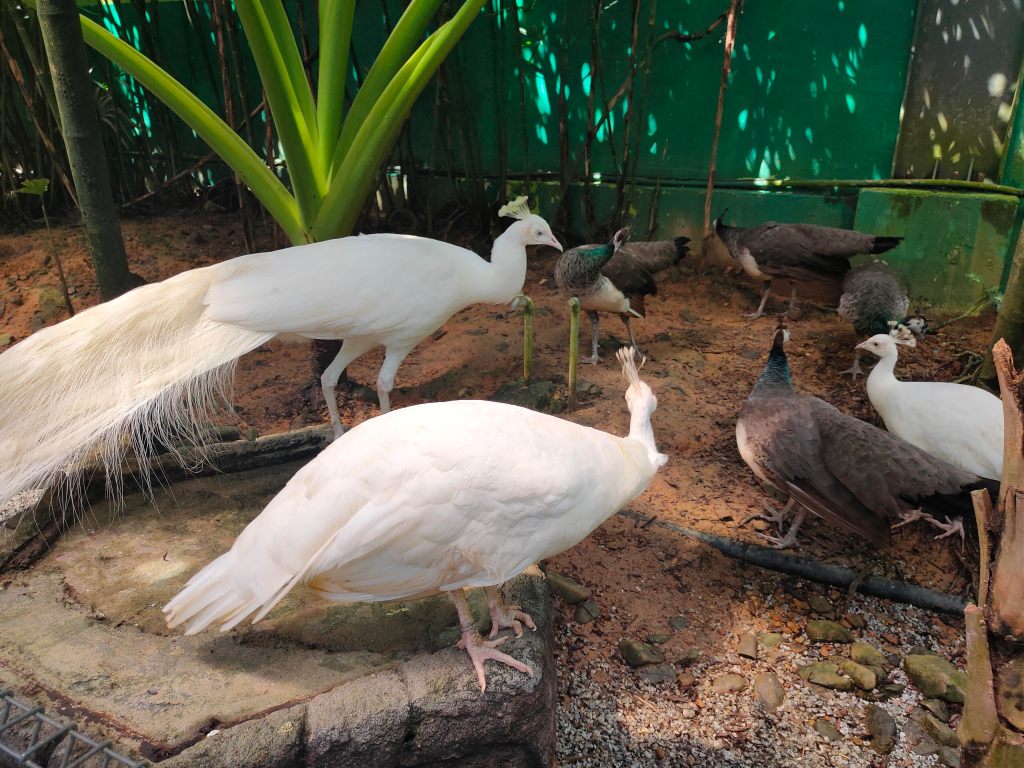
We took a taxi to the Langkawi Wildlife Park. Malaysia has some delightful animal parks and the one at Langkawi offers close encounters with animals. The animals are used to visitors and there are plenty of opportunities to touch, pet and feed them. Trained handlers were at hand. I was reminded of ‘Farm in the City’ at KL constructed around a similar theme. The covered walking path meanders through animal enclosures and the peafowls reminded me of the KL Bird Park. Feeding the small birds, the tortoises, deer, and the rabbits is a highlight of the visit. Like at other attractions there is a mandatory photo, and the exit is always through a duty-free shopping complex. That evening we had a spectacular thunderstorm. Being to the north the rains may be more seasonal at this tropical paradise.

The next morning, we had to depart back to routine life. We reached very early for our flight back to KL. We watched passengers boarding Air Asia, Malaysian Airlines and Scoot flights to Penang, KL and Singapore. Air Asia is a dominant player in the Southeast Asian market. The flights are cheap and usually fly on time. The aircrafts, however, may be older and the leg space is limited.

We had a pleasant break at one of Malaysia’s major tourist destinations. There are many attractions here that we are yet to experience. Time was limited and we did not want to rush ourselves from attraction to attraction during a leisurely break. We plan to return one day to the oldest land in Malaysia, 550 million years in the making as proudly proclaimed by the site Naturally Langkawi!

Dr. P Ravi Shankar is a faculty member at the IMU Centre for Education (ICE), International Medical University, Kuala Lumpur, Malaysia. He enjoys traveling and is a creative writer and photographer.

.

PLEASE NOTE: ARTICLES CAN ONLY BE REPRODUCED IN OTHER SITES WITH DUE ACKNOWLEDGEMENT TO BORDERLESS JOURNAL

Click here to access the Borderless anthology, Monalisa No Longer Smiles

Click here to access Monalisa No Longer Smiles on Kindle Amazon International

Categories
Editorial

Counting Colours

Look around you and expand your heart. 
Petty sorrows are insignificant.
Fill your vacant life with love for humanity. 
The Universe reverberates with celestial ecstasy. 

— Anondodhhara Bohichche Bhubone (The Universe reverberates with celestial ecstasy), Tagore, 1894

Some of the most beautiful colours in this universe are blended shades— colours that are born out of unusual combinations. Perhaps that is why we love auroras, sunrises and sunsets. Yet, we espouse clear cut structures for comprehension. As we define constructs created by our kind, we tend to overlook the myriads of colours that hover in the gloaming, the brilliant play of lights and the vibrancy of tints that could bring joy if acknowledged. That ignoring the new-born shades or half-shades and creating absolute structures or constructs lead to wars, hatred, unhappiness and intolerance has been borne true not only historically but also by the current turn of events around the globe. While battles are never fought by the colours or beliefs themselves, they can harm — sometimes annihilate — rigid believers who are victimised for being led to accept their way as the only one and hate another. Perhaps, this has echoes of the battle between the Big Endians and Little Endians over the right way to break eggs in Jonathan Swift’s Gulliver’s Travels (1726). As the book is mere fiction, we can admire, agree and laugh at the content. However, in real life, watching newsreels has become a torture with destruction and violence being the main highlights. These detract from life as we knew it.

Writing or literary inputs seem to have become a luxury. But is it really hedonistic to play with words? Words used effectively over a period of time can impact readers to think peace, acceptance and love and also help people heal from the ensuing violence. That can be a possibility only if we self-reflect. While we look for peace, love and acceptance in others, we could start by being the change-makers and bridge builders ourselves. That is the kind of writing we have managed to gather for our November issue.

Building such bridges across humanity, we have poems on the latest Middle Eastern conflict by Stuart McFarlane and David Mellor, which explore the pain of the victims and not the politics of constructs that encourage wars, destruction of humanity, the flora, the fauna and our home, the Earth. Michael Burch writes against wars. Prithvijeet Sinha and Ahana Bhattacharjee write about refugees and the underprivileged. Reflecting colours of the world are poems from Ryan Quinn Flanagan, Suzayn AH, Radhika Soni, Ron Pickett, George Freek and many more. Rhys Hughes has brought lighter shades into his poetry by trying a new technique while reflecting on yetis and mermaids. His column tries to make a parody of a non-existing parody, using TS Eliot’s century old poem, ‘Wasteland’, with amazing results!

Our translations are all poetry too this time. Professor Fakrul Alam has translated a poem discussing human aspirations by Quazi Johirul Islam from Bengali. Another Balochi poem of hope by Bashir Baidar has been brought to us in English by Fazal Baloch bringing into play the moonlight.

For the first time, we are privileged to carry poetry from a language that has almost till now has eluded majority of Anglophone readers, Maithili. Vidyanand Jha, a Maithili poet, has translated his poetry for all of us as has Korean poet, Ihlwha Choi. Winding up translations are Tagore’s ultimate words for us to introspect and find the flame within ourselves in the darkest of times – echoing perhaps, in an uncanny way, the needs of our times.

Our conversation this month brings to us a poet who comes from a minority group in India, Banjara or gypsies, Ramesh Karthik Nayak. In his attempt to reach out to the larger world, he worries that he will lose his past. But does the past not flow into the future and is it not better for traditions to evolve? Otherwise, we could all well be living in caves… But what Nayak has done — and in a major way — is that he has brought his culture closer to our hearts. His debut poetry book in English, Chakmak (flintstones), brings to us Banjara traditions, lives and culture, which are fast getting eroded and he also visits the judgemental attitude of the majoritarian world. To give you a flavour of his poetry, we bring to you an excerpt from his book, livened beautifully with Banjara art and an essay by Surya Dhananjay that contextualises the poetry for us. Our excerpts also have a focus on poetry for we are privileged to have a few poems from Mamang Dai’s The White Shirts of Summer: New and Selected Poems. Mamang Dai is a well-known name from the North-eastern state of Arunachal Pradesh for both her journalistic and poetic prowess.

We are happy to host Ranu Uniyal’s beautiful review of I am Not the Gardener: Selected Poems by Raj Bisaria. Bisaria among other his distinctions, was named “Father of the modern theatre in North India” by the Press Trust of India. The other reviews are all of prose. Somdatta Mandal has written of Ali Akbar Natiq’s Naulakhi Kothi, a fictional saga of gigantic proportions. Anita Balakrishnan has reviewed Lakshmi Kannan’s short story collection, Guilt Trip. The book that gives hope for a green future, Akshat Rathi’s Climate Capitalism: Winning the Global Race to Zero Emissions has been reviewed by Bhaskar Parichha. Parichha contends: “Through stories that bring people, policy and technology together, Rathi reveals how the green economy is possible, but profitable. This inspiring blend of business, science, and history provides the framework for ensuring that future generations can live in prosperity.”

The anti-thesis to the theme for a welfarist approach towards Earth can be found in Koushiki Dasgupta Chaudhari’s poignant musing titled, “The Theft of a River”. Meredith Stephen’s travel to California and Sai Abhinay Penna’s narrative about Chikmagalur have overtones of climate friendliness. Ravi Shankar writes further of his travels in Peru and Peruvian coffee. Keith Lyons takes us peeking at Beijing and the Great Wall. Gayatri Devi adds to the variety by introducing us to the starry universe of South Indian cinema while Devraj Singh Kalsi brings in the much-needed humour with his narrative about his “Crush on Bottles“. Suzanne Kamata has also given a tongue-in-cheek narrative about the mystique of addresses and finding homes in Japan. We have fiction from Paul Mirabile located in England and Kalsi’s located in India. Pause by our contents page to view more gems that have not been mentioned here.

Huge thanks to our team at Borderless Journal, especially Sohana Manzoor for her fabulous artwork. This journal would not have been as it is of now without each and every one of them and our wonderful contributors and readers. Thank you all.

Wish you all a wonderful month as we head towards the end of a rather tumultuous year.

Mitali Chakravarty

borderlessjournal.com

Click here to access the contents page for the November 2023 issue

.

READ THE LATEST UPDATES ON THE FIRST BORDERLESS ANTHOLOGY, MONALISA NO LONGER SMILES, BY CLICKING ON THIS LINK.

Categories
Contents

Borderless, October 2023

Artwork by Sohana Manzoor

Editorial

We had Joy, We had Fun … Click here to read

Conversations

A conversation with Nazes Afroz, former BBC editor, along with a brief introduction to his new translations of Syed Mujtaba Ali’s Tales of a Voyager (Jolay Dangay). Click here to read.

Keith Lyons converses with globe trotter Tomaž Serafi, who lives in Ljubljana. Click here to read.

Translations

Barnes and Nobles by Quazi Johirul Islam has been translated from Bengali by Professor Fakrul Alam. Click here to read.

Cast Away the Gun by Mubarak Qazi has been translated from Balochi by Fazal Baloch. Click here to read.

One Jujube has been written and translated from Korean by Ihlwha Choi. Click here to read.

A Hymn to an Autumnal Goddess by Rabindranath Tagore,  Amra Beddhechhi Kaasher Guchho ( We have Tied Bunches of Kaash), has been translated by Mitali Chakravarty. Click here to read.

Poetry

Click on the names to read the poems

Michael Burch, Gopal Lahiri, Ryan Quinn Flanagan, Hawla Riza, Reeti Jamil, Rex Tan, Santosh Bakaya, Tohm Bakelas, Pramod Rastogi, George Freek, Avantika Vijay Singh, John Zedolik, Debanga Das, Rhys Hughes

Poets, Poetry, and Rhys Hughes

In Do It Yourself Nonsense Poem, Rhys Hughes lays some ground rules for indulging in this comedic genre. Click here to read.

Musings/Slices from Life

Onsen and Hot Springs

Meredith Stephens explores Japanese and Californian hot springs with her camera and narrative. Click here to read.

Kardang Monastery: A Traveller’s High in Lahaul

Sayani De travels up the Himalayas to a Tibetan monastery. Click here to read.

Ghosts, Witches and My New Homeland

Tulip Chowdhury muses on ghosts and spooks in Bangladesh and US. Click here to read.

Musings of a Copywriter

In Red Carpet Welcome, Devraj Singh Kalsi re-examines social norms with a scoop of humour. Click here to read.

Notes from Japan

In Baseball and Robots, Suzanne Kamata shares how both these have shaped life in modern Japan. Click here to read.

Stories

The Wave of Exile

Paul Mirabile tells a strange tale started off by a arrant Tsunami. Click here to read.

Glimpses of Light

Neera Kashyap gives a poignant story around mental health. Click here to read.

The Woman Next Door

Jahanavi Bandaru writes a strange, haunting tale. Click here to read.

The Call

Nirmala Pillai explores different worlds in Mumbai. Click here to read.

Essays

The Oral Traditions of Bengal: Story and Song

Aruna Chakravarti describes the syncretic culture of Bengal through its folk music and oral traditions. Click here to read.

Belongingness and the Space In-Between

Disha Dahiya draws from a slice of her life to discuss migrant issues. Click here to read.

A City for Kings

Ravi Shankar takes us to Lima, Peru with his narrative and camera. Click here to read.

The Saga of a Dictionary: Japanese-Malayalam Affinities

Dr. KPP Nambiar takes us through his journey of making a Japanese-Malyalam dictionary, which started nearly fifty years ago, while linking ties between the cultures dating back to the sixteenth century. Click here to read.

Book Excerpts

An excerpt from Kailash Satyarthi’s Why Didn’t You Come Sooner?: Compassion In Action—Stories of Children Rescued From Slavery. Click here to read.

An excerpt from Rhys Hughes’ The Coffee Rubaiyat. Click here to read.

Book Reviews

Somdatta Mandal reviews Usha Priyamvada’s Won’t You Stay, Radhika?, translated from Hindi by Daisy Rockwell. Click here to read.

Aditi Yadav reviews Makoto Shinkai’s and Naruki Nagakawa’s She and Her Cat, translated from Japanese by Ginny Tapley Takemori. Click here to read.

Gemini Wahaaj reviews South to South: Writing South Asia in the American South edited by Khem K. Aryal. Click here to read.

Bhaskar Parichha reviews One Among You: The Autobiography of M.K. Stalin, translated from Tamil by A S Panneerselvan. Click here to read.

.

Click here to access the Borderless anthology, Monalisa No Longer Smiles

Click here to access Monalisa No Longer Smiles on Kindle Amazon International
Categories
Editorial

We had Joy, We had Fun…

There was a time when there were no boundaries drawn by humans. Our ancestors roamed the Earth like any other fauna — part of nature and the landscape. They tried to explain and appease the changing seasons, the altering landscapes and the elements that affected life and living with rituals that seemed coherent to them. There were probably no major organised structures that laid out rules. From such observances, our festivals evolved to what we celebrate today. These celebrations are not just full of joie de vivre, but also a reminder of our syncretic start that diverged into what currently seems to be irreparable breaches and a lifestyle that is in conflict with the needs of our home planet.

Reflecting on this tradition of syncretism in our folklore and music, while acknowledging the boundaries that wreak havoc, is an essay by Aruna Chakravarti. She expounds on rituals that were developed to appease natural forces spreading diseases and devastation, celebrations that bring joy with harvests and override the narrowness of institutionalised human construct. She concludes with Lalan Fakir’s life as emblematic of the syncretic lore. Lalan, an uneducated man brought to limelight by the Tagore family, swept across religious divides with his immortal lyrics full of wisdom and simplicity. Dyed in similar syncretic lore are the writings of a student and disciple of Tagore from Santiniketan, Syed Mujtaba Ali (1904-1974). His works overriding these artificial constructs have been brought to light, by his translator, former BBC editor, Nazes Afroz. Having translated his earlier book, In a Land Far from Home: A Bengali in Afghanistan, Afroz has now brought to us Syed Mujtaba Ali’s Tales of a Voyager (Jolay Dangay), in which we read of his travels to Egypt almost ninety years ago. In his interview, the translator highlights the current relevance of this remarkable polyglot.

Humming the tunes of Mujtaba Ali’s tutor, Tagore, a translation of Tagore’s song, Amra Beddhechhi Kasher Guchho (We have Tied Bunches of Kash[1]) captures the spirit of autumnal opulence which heralds the advent of Durga Puja. A translation by Fazal Baloch has brought a message of non-violence very aptly in these times from recently deceased eminent Balochi poet, Mubarak Qazi. Professor Fakrul Alam has translated a very contemporary poem by Quazi Johirul Islam on Barnes and Nobles while from Korea, we have a translation of a poem by Ihlwha Choi on the fruit, jujube, which is eaten fresh of the tree in autumn.

A poem which starts with a translation of a Tang dynasty’s poet, Yuan Zhen, inaugurates the first translation we have had from Mandarin — though it’s just two paras by the poet, Rex Tan, who continues writing his response to the Chinese poem in English. Mingling nature and drawing life lessons from it are poems by George Freek, Ryan Quinn Flanagan and Gopal Lahiri. We have poetry which enriches our treasury by its sheer variety from Hawla Riza, Pramod Rastogi, John Zedolik, Avantika Vijay Singh, Tohm Bakelas and more. Michael Burch has brought in a note of festivities with his Halloween poems. And Rhys Hughes has rolled out humour with his observations on the city of Mysore. His column too this time has given us a table and a formula for writing humorous poetry — a tongue-in-cheek piece, just like the book excerpt from The Coffee Rubaiyat. In the original Rubaiyat, Omar Khayyam (1048–1131) had given us wonderful quatrains which Edward Fitzgerald immortalised with his nineteenth century translation from Persian to English and now, Hughes gives us a spoof which would well have you rollicking on the floor, and that too, only because as he tells us he prefers coffee over wine!

Humour tinged with irony is woven into Devraj Singh Kalsi’s narrative on red carpet welcomes in Indian weddings. We have a number of travel stories from Peru to all over the world. Ravi Shankar takes us to Lima and Meredith Stephens to Californian hot springs with photographs and narratives while Sayani De does the same for a Tibetan monastery in Lahaul. Keith Lyons converses with globe trotter Tomaž Serafi, who lives in Ljubljana. And Suzanne Kamata adds colour with a light-veined narrative on robots and baseball in Japan. Syncretic elements are woven by Dr. KPP Nambiar who made the first Japanese-Malyalam Dictionary. He started nearly fifty years ago after finding commonalities between the two cultures dating back to the sixteenth century. Tulip Chowdhury brings in colours of Halloween while discussing ghosts in Bangladesh and America, where she migrated.

The theme of immigration is taken up by Gemini Wahaaj as she reviews South to South: Writing South Asia in the American South edited by Khem K. Aryal. Japan again comes into focus with Aditi Yadav’s Makoto Shinkai’s and Naruki Nagakawa’s She and Her Cat, translated from Japanese by Ginny Tapley Takemori. Somdatta Mandal has also reviewed a translation by no less than Booker winning Daisy Rockwell, who has translated Usha Priyamvada’s Won’t You Stay, Radhika? from Hindi. Our reviews seem full of translations this time as Bhaskar Parichha comments on One Among You: The Autobiography of M.K. Stalin, the current Chief Minister of Tamil Nadu, translated from Tamil by A S Panneerselvan. In fiction, we have stories that add different flavours from Paul Mirabile, Neera Kashyap, Nirmala Pillai and more.

Our book excerpt from Nobel laureate Kailash Satyarthi’s Why didn’t You Come Sooner? Compassion in Action—Stories of Children Rescued from Slavery deserves a special mention. It showcases a world far removed from the one we know. While he was rescuing some disadvantaged children, Satyarthi relates his experience in the rescue van:

“One of the children gave it [the bunch of bananas] to the child sitting in front. An emaciated girl and a little boy were seated next to me. I told them to pass on the fruit to everyone in the back and keep one each for themselves. The girl looked curiously at the bunch as she turned it around in her hands. Then she looked at the other children.

“‘I’ve never seen an onion like this one,’ she said.

“Her little companion also touched the fruit gingerly and innocently added, ‘Yes, this is not even a potato.’

“I was speechless to say the least. These children had never seen anything apart from onions and potatoes. They had definitely never chanced upon bananas…”

Heart-wrenching but true! Maybe, we can all do our bit by reaching out to some outside our comfort or social zone to close such alarming gaps… Uma Dasgupta’s book tells us that Tagore had hoped many would start institutions like Sriniketan all over the country to bridge gaps between the underprivileged and the privileged. People like Satyarthi are doing amazing work in today’s context, but more like him are needed in our world.

We have more writings than I could mention here, and each is chosen with much care. Please do pause by our contents page and take a look. Much effort has gone into creating a space for you to relish different perspectives that congeal in our journal, a space for all of you. For this, we have the team at Borderless to thank– without their participation, the journal would not be as it is. Sohana Manzoor with her vibrant artwork gives the finishing touch to each of our monthly issues. And lastly, I cannot but express my gratefulness to our contributors and readers for continuing to be with us through our journey. Heartfelt thanks to all of you.

Have a wonderful festive season!

Best wishes,

Mitali Chakravarty

borderlessjournal.com

[1] Wild long grass

.

.

Visit the October edition’s content page by clicking here

READ THE LATEST UPDATES ON THE FIRST BORDERLESS ANTHOLOGY, MONALISA NO LONGER SMILES, BY CLICKING ON THIS LINK.