Poetry by Atta Shad: Translated from Balochi by Fazal Baloch
Whether morning or eventide,
dawn or twilight—
what remains to be said
of the rainbow and raincloud,
of the scented breeze,
of the beloved earth?
The heart seems withdrawn from all.

The heart, a patient mendicant,
feels and endures each rebuff.
Desire wanders beneath the scorching sun,
a traveler without a destination.

Night falls, (so we’ve heard).
Day breaks, (so they claim).
But who can tell of day and the night?
Both are deemed dead now.
Joy wraps itself in mourning’s cloak.

Love’s springtide
carries the green pulse of bloom.
Yet to slay hope, to shatter a vow,
is a catastrophe enough for any age.
Love and wrath are bound in a single knot.

In the mirror of dreams
the world becomes a marketplace.
And in that marketplace
a shadow falls
over translucent melodies of spring,
over verdant meadows,
over pearl-laden, swaying fields.

Eyes go blind.
Ears turn deaf.
Only wealth gleams,
only riches glitter.

What remains to be said
of the rainbow and raincloud,
of the scented breeze,
of the beloved earth?

In this marketplace
you are for sale.
So am I.

The heart, a patient mendicant
feels and endures each rebuff.
Desire wanders in the scorching sun,
a traveler without a destination.
Atta Shad(1939-1997) is the most revered and cherished modern Balochi poet. He instilled a new spirit in the moribund body of modern Balochi poetry in the early 1950s when the latter was drastically paralysed by the influence of Persian and Urdu poetry. Atta Shad gave a new orientation to modern Balochi poetry by giving a formidable ground to the free verse, which also brought in its wake a chain of new themes and mode of expression hitherto untouched by Balochi poets. Apart from the popular motifs of love and romance, subjugation and suffering, freedom and liberty, life and its absurdities are a few recurrent themes which appear in Shad’s poetry. What sets Shad apart from the rest of Balochi poets is his subtle, metaphoric and symbolic approach while versifying socio-political themes. He seemed more concerned about the aesthetic sense of art than anything else.
Shad’s poetry anthologies include Roch Ger and Shap Sahaar Andem, which were later collected in a single anthology under the title Gulzameen, posthumously published by the Balochi Academy Quetta in 2015. The translated poem is from Gulzameen.
Fazal Baloch is a Balochi writer and translator. He has translated many Balochi poems and short stories into English. His translations have been featured in Pakistani Literature published by Pakistan Academy of Letters and in the form of books and anthologies. Fazal Baloch has the translation rights of Atta Shad from the publisher.
PLEASE NOTE: ARTICLES CAN ONLY BE REPRODUCED IN OTHER SITES WITH DUE ACKNOWLEDGEMENT TO BORDERLESS JOURNAL
As I watched -- She wrapped the rainbow round her finger, and drifted away -- slowly, ever so slowly. Yet The Heavens saw nothing.
EVENING
The wind wanders, seeking the fragrance of your musk: My heart and a fading leaf are carried along.
SPRING
The poor larks that returned this year peck at the scent of your bosom, still drifting through the footprints along the path of yesteryear.
JUNGLE
Such terror stirs within, none dare to face themselves. The road runs deep with fear— no one walks it alone.
THE WAIT
Shall I open a window? Will you come—or the moon?
Munir Momin is a contemporary Balochi poet widely cherished for his sublime art of poetry. Meticulously crafted images, linguistic finesse and profound aesthetic sense have earned him a distinguished place in Balochi literature. His poetry speaks through images, more than words. Momin’s poetry flows far beyond the reach of any ideology or socio-political movement. Nevertheless, he is not ignorant of the stark realities of life. The immenseness of his imagination and his mastery over the language rescues his poetry from becoming the part of any mundane narrative. So far Munir has published seven collections of his poetry and an anthology of short stories. His poetry has been translated into Urdu, English and Persian. He also edits a literary journal called Gidár.
Fazal Baloch is a Balochi writer and translator. He has translated many Balochi poems and short stories into English. His translations have been featured in Pakistani Literature published by Pakistan Academy of Letters and in the form of books and anthologies.Fazal Baloch has the translation rights to Munir Momin’s works.
.
PLEASE NOTE: ARTICLES CAN ONLY BE REPRODUCED IN OTHER SITES WITH DUE ACKNOWLEDGEMENT TO BORDERLESS JOURNAL
Story by Sharaf Shad, translated from Balochi by Fazal Baloch
From Public Domain
One afternoon, I had just returned home from the hospital and was waiting for my wife to bring me lunch when I heard the sound of a motorbike stopping outside. Then echoed the sound of hurried footsteps on the porch, followed by someone asking my wife, “Is the doctor home?”
It was Ali’s voice. I recognised it instantly. A moment later, the door swung open, and Ali, short and heavyset, entered the room.
“Doctor, come with me, please. My wife isn’t feeling well; she needs to be examined.”
“I was just about to eat…”
“You can eat there,” he interrupted, grabbing my doctor’s bag and heading out to his motorbike. Since he was my friend, I didn’t argue and silently followed him.
On the way, Ali explained that his wife was in labour. As we arrived, I examined her and, after consulting with the midwife, gave her an injection. I waited in the guest room. A short while later, his wife gave birth. Just then, the door opened, and Ali came in, his face glowing with joy.
“Sir, I’ve been blessed with a son.”
“Congratulations!”
“Thank you.” His voice was sweet with happiness. I wrote a prescription for the patient and sent Ali to the medical store to get the medicines. He dropped me off at home afterward. As we arrived, Ali reached into his pocket, but I stopped his hand with a smile.
“No, doctor, that won’t do,” he insisted.
“Come on, let it go. Just take us on a picnic sometime,” I said.
“Don’t worry about picnics. You will have plenty of them,” Ali said with a laugh, heading out of the room, still beaming with joy.
*
A few years later, one night, Ali was in intense pain and I was woken up in the middle of the night. When I arrived, he was groaning in agony. His son stood by his bedside, looking at him with wide, worried eyes. I comforted him and treated Ali. After a while, he drifted off to sleep. As I stood to leave, Ali’s son asked me with curiosity:
“Doctor, will my father be okay?”
“Yes, don’t worry. He’ll be just fine,” I reassured him, gently patting his cheek before heading out.
The next day, Ali came to see me on his motorbike and paid my consultation fee. His son was with him. I took some of the money and slipped it into the boy’s pocket.
“Are you doing well?” I asked him.
He didn’t reply, but Ali spoke up. “After seeing you treat me last night, he says he wants to be a doctor when he grows up.”
I burst out laughing and looked at the boy, who blushed and hid behind his father. “May God fulfill all his wishes!”
“Ameen,” Ali said, and they both bid me farewell.
*
A few years later, Ali brought his son, Sabzal, to the hospital. The boy wasn’t feeling well; he had fever. Ali looked worried. After examining the boy and before writing down the medicines, I asked him:
“What grade are you in now?”
“Third,” he replied.
“If I write your name here, can you read it?”
“Yes!” he said proudly, puffing out his chest.
I wrote on the prescription: “Dr. Sabzal Baloch” and then added the list of medicines.
Happiness lit up both the father’s and son’s faces. They left, smiling.
One morning, as I was getting ready to head to the hospital, Ali arrived in a hurry.
“Doctor, please come quickly! My son is having trouble breathing.” When I got there, I gave him some medicines, but when his condition didn’t improve, I told Ali: “There aren’t the right facilities here. You need to take your son to the city hospital.”
Ali booked a vehicle and rushed his son to the city. A day or two later, the news came that Ali’s son had passed away in the hospital. Ali returned home empty-handed, and I was deeply saddened. The sudden death of young Sabzal cast a shadow of grief over our small hamlet for a few days. But eventually, the routines of daily life washed away that sorrow, and life moved on as usual.
One day, I saw Ali riding his motorbike somewhere. As soon as he saw me, he stopped. After greeting him, I pointed to an object wrapped in old newspapers resting in his lap.
“What’s this?”
“It’s a headstone, sir,” Ali replied. His once cheerful face turned somber. “It’s for Sabzal’s grave.”
With a sad expression, Ali began unwrapping the newspapers. He turned the headstone towards me, and I read:
Name: Dr. Sabzal Baloch
Age: 7 years and 6 months
I looked at Ali. Two silent teardrops rolled down his cheeks and rested on his face.
Sharaf Shad is simultaneously a short story writer, poet, translator, and critic. The richness of narrative is one of the defining features of his short stories. Death and identity crises are recurring themes in his works. A collection of his short stories, titled “Safara Dambortagen Rahan” (Journeying Down the Weary Roads), was published by the Institute of Balochistan, Gwadar, in 2020.
Fazal Baloch is a Balochi writer and translator. He has translated many Balochi poems and short stories into English. His translations have been featured in Pakistani Literature published by Pakistan Academy of Letters and in the form of books and anthologies.
PLEASE NOTE: ARTICLES CAN ONLY BE REPRODUCED IN OTHER SITES WITH DUE ACKNOWLEDGEMENT TO BORDERLESS JOURNAL
Anwar Sahib Khan (1944–2018) was a notable poet, drama artist and film actor. His poetry explores a wide range of themes, from love and romance to social and political issues. He published two anthologies, Chaotaar (A Riot of Colours) and Sareechk (The Scarecrow). The translated poem is taken from his second anthology, Sareechk.
Like a scarecrow,
I stand—
Rooted in fields of green,
Until time strips away
The truth of my being:
A breath of nothingness.

I am the emblem of eternal stillness,
My outside,
My inside —
Two different tales.

When the truth dawns,
The beasts — once fled
From the fear I’d fashioned —
Will return.
My walls will scatter
Like tufts of cotton
Cast to the wind.

Birds will nest in me,
Jubilant creatures will roam
Unafraid,
Dancing in my shadow.

And the tale of my stillness
Will drift through the air —
I’m a lifeless scarecrow standing here.
Fazal Baloch is a Balochi writer and translator. He has translated many Balochi poems and short stories into English. His translations have been featured in Pakistani Literature published by Pakistan Academy of Letters and in the form of books and anthologies.Fazal Baloch has the translation rights to Anwar Sahib Khan’s works.
.
PLEASE NOTE: ARTICLES CAN ONLY BE REPRODUCED IN OTHER SITES WITH DUE ACKNOWLEDGEMENT TO BORDERLESS JOURNAL
Karim Dashti (1939-1984) is a prominent Balochi poet. What sets Karim apart from other modern Balochi poets is his skeptical and somewhat nihilistic approach that are implied in his ghazals. Abruptnessis one of the main characteristics of his tone—hardly any Balochi poet employs such abruptness, especially when dealing with themes related to divinity. Most of Karim’s verses enshrine deep philosophical reflections on existence and are rich with emotional intensity. These ghazal-couplets1 have been taken from Dil Zareet Bolan published by Balochi Academy, Quetta, in 2009.
(1)
To the Lord’s throne
No grievances I ever bear,
For, never seek a Master
Who lends you no ear.

(2)
Of God’s fierce wrath
Every preacher warns me --
Would that there were some Gods
Who promised peace and harmony.

(3)
He commands—
All unfolds by His decree,
Then why must we carry
The weight of sins, endlessly?

(4)
They say all have a Master
In this vast domain,
Where is my Lord
For I’m bound in chains?

(5)
Behold, even in death,
Karim’s grandeur prevails.
Even in the depth of the grave,
His majesty never pales.

(6)
Forgive me, the tale was long indeed,
And I was eager to leave.
Had I known how the end would unfold,
For life, I’d not have endured such grief!

(7)
Life has tormented me, O Karim,
What the hell is this, after all?
If it’s love, let it unfold;
If it’s wrath, let it fall.

(8)
The houris, the wine, and the Tuba—
For none a thought I ever bear.
In a humble hut, I find my peace—
O, do not banish me from there.


(9)
With her each stride,
A lively melody unfolds,
Sangeen is God’s eternally melodious flute.

(10)
Deprived of your sight,
I left the world in grief.
Now don’t hurry to my grave with a trailing veil.
The translation has not retained the couplet format. ↩︎
Fazal Baloch is a Balochi writer and translator. He has translated many Balochi poems and short stories into English. His translations have been featured in Pakistani Literature published by Pakistan Academy of Letters and in the form of books and anthologies.Fazal Baloch has the translation rights to Karim Dashti’s works.
.
PLEASE NOTE: ARTICLES CAN ONLY BE REPRODUCED IN OTHER SITES WITH DUE ACKNOWLEDGEMENT TO BORDERLESS JOURNAL
If you were a lamp, I would not become the night— Nor a moth, Nor a window, Nor an eye. If you were a lamp, I too would be a lamp.
(2)
Whether you dwell afar or near, To me, you are everywhere. Be it dawn or dusk, You bloom—verdant, evergreen. With famished lamps, I wander, seeking you. I crumble, collapse. With my tired soul, I sow and grow whispers. You are my pasture.
Munir Momin is a contemporary Balochi poet widely cherished for his sublime art of poetry. Meticulously crafted images, linguistic finesse and profound aesthetic sense have earned him a distinguished place in Balochi literature. His poetry speaks through images, more than words. Momin’s poetry flows far beyond the reach of any ideology or socio-political movement. Nevertheless, he is not ignorant of the stark realities of life. The immenseness of his imagination and his mastery over the language rescues his poetry from becoming the part of any mundane narrative. So far Munir has published seven collections of his poetry and an anthology of short stories. His poetry has been translated into Urdu, English and Persian. He also edits a literary journal called Gidár. This poem originally titled as Pajjar (Identity) is taken from Munir Momin’s poetry collection YakBechelley Aazman (A Span Long Sky) published by Gidar Publications in 2014.
Fazal Baloch is a Balochi writer and translator. He has translated many Balochi poems and short stories into English. His translations have been featured in Pakistani Literature published by Pakistan Academy of Letters and in the form of books and anthologies.Fazal Baloch has the translation rights to Munir Momin’s works.
.
PLEASE NOTE: ARTICLES CAN ONLY BE REPRODUCED IN OTHER SITES WITH DUE ACKNOWLEDGEMENT TO BORDERLESS JOURNAL
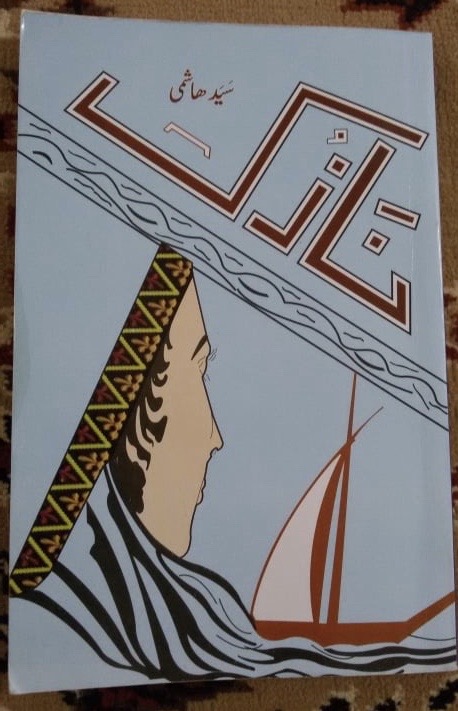
This is first chapter of the first Balochi novel that was published in 1976. It has been translated into Urdu and Persian. The narrative depicts everyday life and experiences of the people living around the coastal area of Makkuran especially Gwadar and its surroundings.
The cover of Nazuk. provided by Fazal Baloch.
For about a week, the weather had been pleasant, with a cool wind blowing across the sea—a true blessing for the fishermen. A calm sea meant loss for them, while a rough sea spelled devastation. Over the past few days, the fleet of fishing boats had been returning to the shore with plenty of catch.
The sun had completed three-quarters of its journey, racing through the sky like a messenger in haste in the final quarter. Its burning rays were yielding to the soothing coolness of the approaching evening. The long, serene shadows stretching behind the houses provided an ideal setting for a public gathering.
Away from the shore, an old voyager boat, anchored in the red sands, stood tall like a pyramid—a symbol of the unshakable bond between the boundless sea and its people. Who could say how many joyful and sad years the sea’s companions had spent navigating across its waters on that very boat? Though the sea often rocked their boat like a cradle, not once had these brave sons of the ocean furrowed their brows in fear or discontent.
The fleeting morning shadows soon vanished to the unknown but the evening shadows lingered longer, creeping towards the damp sands of the shore and eventually reaching the water, as if embodying the spirit of the giant old boat longing for the sea’s embrace to soothe its heart.
The shadow it cast offered an ideal venue for one of the biggest public gatherings in the evening. At times, it seemed as if people sitting on its plank were aboard the boat chatting to pass their time on a deep-sea trip. The cool breeze blew across reflected the pleasant weather at sea.
The wind had cooled the sands of the shore, making them so comfortable that those who lay on them forgot the comfort of even the most luxurious mattresses and cushions. Men, women, and children all came to enjoy themselves, especially today, which was more crowded than usual as it was Friday and no one had ventured into the sea for fishing the night before, giving the fishermen a day off.
For those who lived around the sea, there were only two vocations: fishing or navigating across the sea on a boat. And everyone acknowledged that sea navigation was one of the most cherished vocations in the world. Thanks to these navigations and explorations, humans had even set foot on the moon.
Navigation in the sea made fishermen exceptionally skilled and resourceful. They sailed from one country to another, learning about different lands and their people. Some sailors, despite being illiterate, exhibited such remarkable knowledge that even the learned were left in awe.
On the right, in front of a small roadside hotel, people sat on benches, sipping tea and chatting with each other. Some distance away, a group had gathered around a tall and smart man, listening intently to him. Let’s draw closer. Oh! He is Captain Naguman, moving his lips and hands alike. With his hands, he fidgets with a rope, perhaps knitting a net, while with his lips, he narrates the story of the First World War so enthusiastically as if he were a part of it himself. At that moment, someone called out from behind: “Captain! Hey Captain Naguman!”
Naguman turned around, shaking his head annoyingly, and said, “This jinxed fellow never lets me speak properly.”
“Captain! Hey Captain Naguman!”
The call came from inside the hotel’s kitchen, and from his voice, the Captain recognised him.
“Abdul is really a cursed man! Look how he disturbed the Captain in the middle of his speech,” someone said with rage.
“Exactly. He always jumps in during my speech,” Naguman turned somewhat dismayed.
“Hey Captain! Would you like tea? A cup of tea?” Abdul’s voice reached their ears again.
“If you’re going to give him a cup of tea, then bring it, you the cursed scoundrel,” someone whispered, and the Captain replied loudly, “Yes, bring it.”
Abdul immediately came and placed the cup before the Captain. He too sat down to listen. A few people from the audience cast side-glances at Abdul. The Captain smiled, sipped his tea, and resumed his speech, “Listen, you blind fishermen! Just in a single day, over a hundred planes swarmed in like locusts…”
A little farther away, a few women and children were sitting. Children were playing with the sands. The first woman was busy weaving a net, and the second one was keenly observing her. The third one was still pondering about what to do or say. The second woman said with great lament: “Mamma Papi didn’t help me weave a net. At least I could have moved my otherwise idle hands,” lamented the first woman.
“Move your hands or make some money?” replied the third woman, as if she had been waiting for the perfect moment to speak.
Papi raised her experienced eyes slightly, smiled gently, and stopped weaving the net and glanced around. When she was sure that nobody was looking at them, she retorted in a hushed tone, “The ‘Young Man’ wouldn’t let you bother yourself with work, dear Mahbalok!”
“Waiy waiy! Mamma Papi, don’t defame me,” Mahbalok said slowly, taken by surprise.
“Mamma Papi! Mamma Papi! Look there. He’s coming right here,” the third woman hastily whispered. No sooner had she uttered these words, Mahbalok became so edgy that she almost broke into a sprint.
But Mamma Papi let out a hearty laugh, then she threw the spool of thread and half-woven net on the ground. With both her hands, she held Mahbalok’s shoulders and said: “What happened to you, the cursed woman? Where are you going? Look, you’re even getting fooled by this little Hajok. I’ve had enough with you. You’re almost out of your mind,” exclaimed one of the women.
“Hajok! May the lord of the sea curse you! I’ve never seen such a jinxed woman in my entire life. Mamma Papi, by God, my heart almost sank,” Mahbok tried to maintain her unsteady breath.
“Waiy Mahbok! Hajok is your neighbor and best friend,” remarked Mamma Papi.
“By God, Mahbok, don’t tease me again. I wouldn’t like it,” Mahbok was yet to come to herself.
“It’s alright. Don’t open your basket-like mouth. Men are looking at us,” Papi warned them.
Rows of boats lined up along the arched shore, resembling horses ready for a race. It seemed as if riders had tightly held the reins and were waiting for the whistle to be blown. A few boys were playing tag behind those boats and yawls. On the left, some nets were placed on a plank.
“Come! They taste like halwa. Come! They’re fresh and hot,” Zalya shouted as if warning those who couldn’t get any that they’d only have to blame themselves. And it did the trick. In a moment, people swarmed around her cauldron. A while later, a young man and his friend called out to her:
“O, Mamma Zalya! Send us half a rupee worth of Mat, please.”
“Pindi, my son! I don’t have that much left. They’re barely worth twenty-five paisa.”
“It’s alright. Leave it.” Then he turned to his friend and said, “We’ll go to the bazaar and have tea with biscuits.”
Pindi and his friend Guli got up and made their way towards the bazaar. Two young men were playing Liddi. The game seemed to absorb to the duo as if it were the greatest challenge of their lives.
“Jalu! Jalu! Come on, boy. Pass this net to your uncle. Every day these blind fishermen return it damaged. They’ve spent their entire lives at sea, yet they can’t keep the net away from the rocks,” an old man, while weaving a net, turned to a boy sitting next to him.
“Jalu, my son! Go and get me your uncle Shahdost’s net.”
“Uncle, let me finish my peanuts first,” the boy replied indifferently.
“I’ll keep your peanuts. Get me the net first, then you can eat your peanuts.”
The boy slipped the peanuts into his pocket and scurried off. He returned almost panting and threw the net with a thud before his uncle.
He closely examined the net to determine the nature of the damage. Startled, he suddenly blurted out, “Such a new net! They have damaged it terribly,” he mumbled in anger. “They’re blind in both eyes. Neither do they know how to properly cast the net nor do they know how to untangle it.”
The sea was crowded. A few boys were playing tip-cat, and some other people were watching and enjoying the game. It’s played differently in different areas, but the version played in the coastal area is distinct. Some other boys were playing hopscotch. Two young boys were drawing sketches of fish, boats, and yawls in the sand with knife-like-sharp fish bones. A little farther away, a few young men were playing bazari. Two young men looked at them and tempted them, “You blind men! Is this the time to play this game? You’re flaunting your skills. We’ll challenge you to a match. Come tonight at the sands of Kala Teembok. We’ll show you how it’s played and won.”
A few girls were playing with beads, and some others were collecting salps[1]. It is believed that when you bury them in the ground, after seven days they will turn into beads provided no boy sees you burying them. On the seventh day, when they fail to unearth any beads, they wouldn’t turn dismayed. But at that moment, one of the girls would claim, “You know, Mami is a… he had been following us. He secretly watched us behind the wall. Thus, we couldn’t get beads.”
“Today I will complain to her mother,” the second girl replied.
“Anok! Anok! It’s better not to visit his mother.”
“Why, Jani?”
“Yesterday his father severely thrashed his mother… “
“Ah! But why?”
“You know Sayaki, the carpenter? She had visited his house.”
“May God keep us away from…”
Far in the distance, a woman called out, “Sharok! Come on, dear, look after the baby. I’ll be back from the bazaar just in a while.” Sharok, who was playing with beads, strode towards her mother. The youngest of them took all the beads from the girls, dismantled the holes, and chanted, “The game is over. Yes, it is all over.”
Two younger girls cried out, “Give us back our beads!” But by the time their sobbing subsided, she had already gone home. Determined, the two girls began digging through the holes again, hoping to find a bead hidden somewhere. However, there was nothing. Disappointed, they stood up and walked to the sea to wash their hands. Spotting other girls collecting salps nearby, they joined in, clinging to the hope that by the next Friday, the salps might somehow transform into beads.
The sun descended lower, casting the shore in hues of orange and gold. By sunset, the beach was nearly deserted, save for the men gathered around, engrossed in Naguman’s tale of the German War.
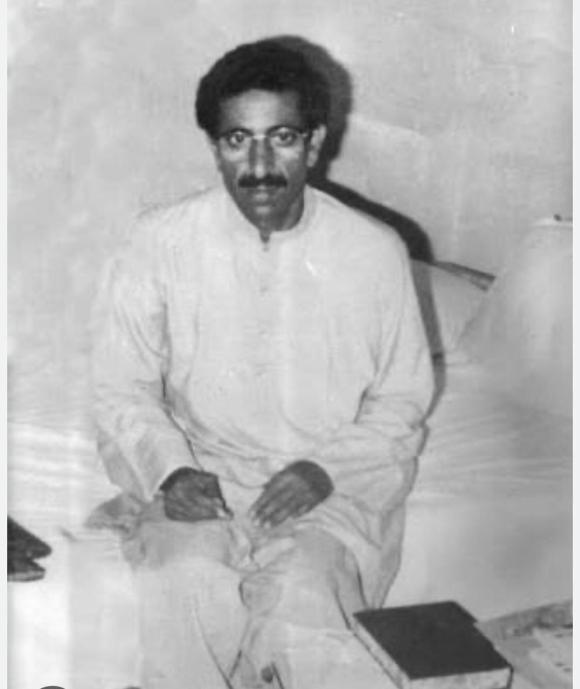
Sayad Zahoor Shah Hashumi (1926-78) is known as the pioneer of modern Balochi literature. He was simultaneously a poet, fiction writer, critic, linguist and a lexicographer par excellence. Though he left undeniable marks on various genres of Balochi literature, poetry remained his mainstay. With his enormous imagination and profound insight he laid the foundation of a new school of Balochi poetry especially Balochi ghazal which mainly emphasises on the purity of language and simplicity of poetic thoughts. This school of poetry subsequently attracted a wide range of poets to its fold. He also authored the first ever Balochi novel ‘Nazuk’ and compiled the first comprehensive Balochi-to-Balochi dictionary containing over twenty thousand words and hundreds of pictorial illustrations.
Fazal Baloch is a Balochi writer and translator. He has translated many Balochi poems and short stories into English. His translations have been featured in Pakistani Literature published by Pakistan Academy of Letters and in the form of books and anthologies. Baloch has the translation rights of this novel.
PLEASE NOTE: ARTICLES CAN ONLY BE REPRODUCED IN OTHER SITES WITH DUE ACKNOWLEDGEMENT TO BORDERLESS JOURNAL
Tumi Kon Kanoner Phulby Tagore andAnjali Loho Morby Nazrul, love songs by the two greats, have been translated from Bengali by Professor Fakrul Alam. Click hereto read.
One Life, One Love, 300 Children : Keith Lyons writes of Tendol Gyalzur, a COVID 19 victim, a refugee and an orphan who found new lives for many other orphans with love and an ability to connect. Click here to read.
When West Meets East & Greatness Blooms: Debraj Mookerjee reflects on how syncretism impacts greats like Tagore,Tolstoy, Emerson, Martin Luther King Jr, Gandhi and many more. Click here to read.
Dilip Kumar: Kohinoor-e-Hind: In a tribute to Bollywood legend Dileep Kumar, Ratnottama Sengupta, one of India’s most iconic arts journalists, recollects the days the great actor sprinted about on the sets of Bombay’s studios …spiced up with fragments from the autobiography of Sengupta’s father, Nabendu Ghosh. Click here to read.
Are Some of Us More Human than Others ?: Meenakshi Malhotra ponders at the exclusivity that reinforces divisions, margins and borders that continue to plague humankind, against the backdrop of the Women’s Month, March. Click here to read.
Reminiscences from a Gallery: MF Husain: Dolly Narang recounts how she started a gallery more than four decades ago and talks of her encounter with world renowned artist, MF Husain. Click hereto read.
Baraf Pora (Snowfall) by Rabindranath Tagore,gives a glimpse of his first experience of snowfall in Brighton and published in the Tagore family journal, Balak (Children), has been translated from Bengali by Somdatta Mandal. Clickhere to read.
Cherry Blossom Forecast: Suzanne Kamata brings the Japanese ritual of cherry blossom viewing to our pages with her camera and words. Clickhere to read.
Two Pizza Fantasies, Rhys Hughes recounts myths around the pizza in prose, fiction and poetry, Click here to read.
An Alien on the Altar!: Snigdha Agrawal writes of how a dog and lizard add zest to festivities with a dollop of humour. Click here to read.
Where it all Began: Sybil Pretious recounts her first adventure, an ascent on Mt Kilimanjaro at the age of sixty. Clickhere to read.
Conversations
Rabindranath Tagore: A Universal Bard.: This conversation between Aruna Chakravarti and Sunil Gangopadhyay that took place at a Tagore Conference organised by the Sahitya Akademi in Kochy in 2011. Click here to read.
Sriniketan: Tagore’s “Life Work”: In Conversation with Professor Uma Das Gupta, Tagore scholar, author of A History of Sriniketan, where can be glimpsed what Tagore considered his ‘life’s work’ as an NGO smoothening divides between villagers and the educated. Click here to read. (Review & Interview).
In conversation with the late Akbar Barakzai, a Balochi poet in exile who rejected an award from Pakistan Academy of Letters for his principles. Click here to read.
Jim Goodman, an American traveler, author, ethnologist and photographer who has spent the last half-century in Asia, converses with Keith Lyons. Click here to read.
InBridge over Troubled Waters, the late Sanjay Kumar tells us about Pandies, an activist theatre group founded by him that educates, bridging gaps between the divides of university educated and the less fortunate who people slums or terror zones. Click here to read.
In Lessons Old and New from a Stray Japanese Cat, Keith Lyons talks with the author of The Cat with Three Passports, CJ Fentiman who likes the anonymity loaned by resettling in new places & enjoys creating a space for herself away from her birthplace. Click hereto read.
Fiction
Aparichitaby Tagore: This short story has been translated as The Stranger by Aruna Chakravarti. Click hereto read.
Hena by Nazrul has been translated from Bengali by Sohana Manzoor. Click here to read.
Playlets byRabindranath Tagore: Two skits that reveal the lighter side of the poet. They have been translated from Bengali by Somdatta Mandal. Click here to read.
Abhagi’s Heaven, a poignant story by Saratchandra Chattopadhyay translated by Aruna Chakravarti. Click here to read.
An Eternal Void, a Balochi story by Munir Ahmed Badini translated by Fazal Baloch. Click hereto read.
The Witch, a short story by renowned Bengali writer Tarasankar Bandopadhyay (1898 to 1971), translated by Aruna Chakravarti. Clickhere to read.
I Grew into a Flute: Balochi Folktale involving magic retold by Fazal Baloch. Click here to read.
Give Me A Rag, Please:A short story by Nabendu Ghosh, translated by Ratnottama Sengupta, set in the 1943 Bengal Famine, which reflects on man’s basic needs. Click here to read
Rakhamaninov’s Sonata: A short story by Sherzod Artikov, translated from Uzbeki by Nigora Mukhammad. Click hereto read.
The Magic Staff , a poignant short story about a Rohingya child by Shaheen Akhtar, translated from Bengali by Arifa Ghani Rahman. Click here to read.
Khaira, the Blind, a story by Nadir Ali, has been translated from Punjabi by Amna Ali. Click here to read.
The Browless Dolls by S.Ramakrishnan, has been translated from Tamil by B Chandramouli. Click hereto read.
No Man’s Land: Sohana Manzoor gives us surrealistic story reflecting on after-life. Click hereto read.
The Protests Outside: Steve Ogah talks of trauma faced by riot victims in Nigeria. Click here to read.
Flash Fiction: Turret: Niles M Reddick relates a haunting tale of ghosts and more. Click here to read.
Henrik’s Journey: Farah Ghuznavi follows a conglomerate of people on board a flight to address issues ranging from Rohingyas to race bias. Click hereto read.
Does this Make Me a Psychic?; Erwin Coombs tells a suspenseful, funny, poignant and sad story, based on his real life experiences. Click here to read.
Phôs and Ombra: Paul Mirabile weaves a dark tale about two people lost in a void. Click here to read.
A Queen is Crowned: Farhanaz Rabbani traces the awakening of self worth. Click here to read.
Death is a state That leaves grief in its wake, Tearing souls from their loved ones. In the sieve of this moment, We must not divide “ours” from “others.” We are dwellers of the jungle. For nature’s tidings— Be it the heart or the hut— We must not roll up the mat. Before me came my father, And before him, my grandfather— Weavers of sacred customs. We have taken every shade of the jungle, Draped ourselves in its colours. The jungle has its customs: Nurture envy and hatred As tenderly as you nurture love. Never to strike a hungry foe. You, a soldier from the enemy’s ranks, Who come to slay my people— Eat your fill before you go, For hunger lies ahead. Do you see these towering peaks, These treacherous ravines? My sons, brave as lions, Know them better than you ever will. They wait for you, Hidden in the trenches. The jungle may show you no way out. My brothers, fierce as tigers, Have mastered the craft of survival. We are dwellers of the jungle. And you, a soldier from the enemy’s ranks, Have come to our land Sit. Eat. Leave with a full stomach. For in the jungle, it is custom Never to strike a hungry foe. I will not let blood Stain the sanctity of my tradition. Whether in war or peace, For nature’s tidings— Be it the heart or the hut— We must not roll up the mat.
Ali Jan Dad is a prominent figure in contemporary Balochi literature. He wields equal command over both the genres of ghazal and nazm. Primarily, he is a poet of love and romance, and his poetry is imbued with a melodious and lyrical finesse. Additionally, he addresses the objective issues of life and the complexities of human existence in a highly artistic manner. So far, two collections of his poetry—Dróháp (The Mirage, 2009) and Róchay Sáheg (The Sun-Shade, 2013) have been published. The translated poem has been taken from his website Kodacha.com and is presented here with his permission.
Fazal Baloch is a Balochi writer and translator. He has translated many Balochi poems and short stories into English. His translations have been featured in Pakistani Literature published by Pakistan Academy of Letters and in the form of books and anthologies. Fazal Baloch has the translation rights of of this poem from the poet.
PLEASE NOTE: ARTICLES CAN ONLY BE REPRODUCED IN OTHER SITES WITH DUE ACKNOWLEDGEMENT TO BORDERLESS JOURNAL
A mythical Simurgh perched on the Tree of Life, to which it has special affinity. Belonging to Persian mythology, the Simurgh is said to have seen the world destroyed thrice. Photo from Public Domain.
Storytellers unfolded their tales,
Yet we paid them no heed.
Again, they unfurled their tales,
It didn’t bother us, indeed.

As tales unfolded, we drifted to sleep,
Fairies, demons, djins, and devils
Crept into their lore,
Yet we remained ignorant, as before.

When the Simurgh  swallowed the snake,
Nothing we did care.
When the princess fled with a shepherd,
Curiosity filled the air.
When the thieves broke in the warehouse,
Clamours spread far and near.

And when war arrived, knocking at our door,
We left for the mountains, grasping the swords.
At last, we knew: stories are not lies anymore.
Manzur Bismil is a prominent Balochi poet. He emerged on the literary scene in the early 1990s and soon rose to fame, creating a niche for himself in the pantheon of the Balochi poets. He is widely known for his neo-classic style, especially in his verses. So far he has published eight anthologies of his poetry. This poem is taken from the poet’s poetry collection Sahaar (The Fear) published by Demrawi Majlis Muscat in 2017.
Fazal Baloch is a Balochi writer and translator. He has translated many Balochi poems and short stories into English. His translations have been featured in Pakistani Literature published by Pakistan Academy of Letters and in the form of books and anthologies. Fazal Baloch has the translation rights of of this poem from the poet.
PLEASE NOTE: ARTICLES CAN ONLY BE REPRODUCED IN OTHER SITES WITH DUE ACKNOWLEDGEMENT TO BORDERLESS JOURNAL






 Borderless