Art by Sohana ManzoorCourtesy: Suzanne Kamata Some of our visuals in 2024
As we wait for the new year to unfold, we glance back at the year that just swept past us. Here, gathered together are glimpses of the writings we found on our pages in 2024 that herald a world of compassion and kindness…writings filled with hope and, dare I say, even goodwill…and sometimes filled with the tears of poetic souls who hope for a world in peace and harmony. Disasters caused by humans starting with the January 2024 in Japan, nature and climate change, essays that invite you to recall the past with a hope to learn from it, non-fiction that is just fun or a tribute to ideas, both past and present — it’s all there. Innovative genres started by writers to meet the needs of the times — be it solar punk or weird western — give a sense of movement towards the new. What we do see in these writings is resilience which healed us out of multiple issues and will continue to help us move towards a better future.
A hundred years ago, we did not have the technology to share our views and writings, to connect and make friends with the like-minded across continents. I wonder what surprises hundred years later will hold for us…Maybe, war will have been outlawed by then, as have been malpractices and violences against individuals in the current world. The laws that rule a single man will hopefully apply to larger groups too…
Courtesy: Ratnottama Sengupta Courtesy: Farouk GulsaraSome of our visuals in 2024
Amalkantiby Nirendranath Chakraborty has been translated from Bengali by Debali Mookerjea-Leonard. Click hereto read.
The Mirror by Mubarak Qazi has been translated from Balochi by Fazal Baloch. Click hereto read.
Homecoming, a poem by Ihlwha Choi on his return from Santiniketan, has been translated from Korean by the poet himself. Click here to read.
Pochishe Boisakh(25th of Baisakh) by Tagore (1922), has been translated from Bengali by Mitali Chakravarty. Click here to read.
Nazrul’sGhumaite Dao Shranto Robi Re(Let Robi Sleep in Peace) has been translated from Bengali by Professor Fakrul Alam. Click hereto read.
Jibananada Das’sAndhar Dekhecche, Tobu Ache (I have seen the dark and yet there is another) has been translated from Bengali by Professor Fakrul Alam. Click here to read.
Tagore’sShotabdir Surjo Aji( The Century’s Sun today) has been translated from Bengali by Mitali Chakravarty. Clickhereto read.
A narrative by Rabindranath Tagore thatgives a glimpse of his first experience of snowfall in Brighton and published in the Tagore family journal, Balak (Children), has been translated from Bengali by Somdatta Mandal. Clickhere to read.
Suzanne Kamata discusses the peace initiatives following the terrors of the 1994 Rwandan Genocide while traveling within the country with her university colleague and students. Click here to read.
A story by Sharaf Shad, has been translated from Balochi by Fazal Baloch. Click here to read.
Conversations
Ratnottama Sengupta talks to Ruchira Gupta, activist for global fight against human trafficking, about her work and introduces her novel, I Kick and I Fly. Click here to read.
A conversation with eminent Singaporean poet and academic, Kirpal Singh, about how his family migrated to Malaya and subsequently Singapore more than 120 years ago. Click hereto read.
Author: Kusum Khemani (Translated from Hindi by Banibrata Mahanta)
Publisher: Orient BlackSwan Private Limited
Lavanyadevi is an award-winning 2013 novel by Kusum Khemani written in Hindi that chronicles five generations of a traditional aristocratic Bengali zamindar family as it transitions into modernity from British India to the present with the eponymous protagonist as its principal focus. Lavanyadevi—a compelling woman of perfection, extraordinary vision, qualities, and grace—remains real and credible because she is self-aware, self-critical, open to others, and to change. As a Marwari (people originally belonging to Marwar in Rajasthan) living in Kolkata, in Khemani’s fiction the schisms between ‘Bengali’ and ‘Marwari’ blur to reveal a delightfully plural, composite, and distinctively Indian ethos. Lavanyadevi is a story about women and their search for self, about shared laughter and friendships that endure across generations, beliefs and cultures—between mother and daughter, grandmother and granddaughter, and Marwari and Bengali women. Khemani’s women protagonists are strong, clear-sighted, both worldly and sublime, embodying a larger-than-life idealism while being grounded firmly in the everyday.
In his introduction to his novel Kanthapura (1938), Raja Rao had defined it as a sthala-purana[1], which he defined as a “legendary history” in which the old lady narrator in the village took recourse to the traditional Indian narrative technique, digressed at will to bring forth her point. Somehow the way Kusum Khemani takes recourse to multiple narrative techniques in Lavanyadevi and binds the different digressive stories and incidents into one contiguous whole when she tells us about the history of five generations of the Bengali zamindar family, reminds one of Raja Rao’s theory. She uses diverse narrative strategies like flashbacks, diaries, letters and emails, history, memory and the third person narrator to enrich its telling, lending it depth and range. A large part of the narrative revolves around telling us about past history when Lavanyadevi manages to lay her hands on her mother Jyotirmoyidevi’s diaries and finds great pleasure and thrill of reading one’s own family history. Not only do they offer a wonderful eye-witness account of the private and public sphere of Kolkata of those times, but they also make her easy transition into reading about her mother’s youth, her elaborate description of her magnificent wedding and the rituals that spread over almost a month.
The diary as metanarrative and the protagonist as reader/narrator are particularly effective, offering a telescopic perspective. Though at times it rambles a bit, the polyphonic structure of the novel engages Lavanyadevi the granddaughter, the daughter, the wife, the mother and the grandmother in conversations with her preceding and her succeeding generations. One must sometimes go back to the family tree and chart provided at the beginning of the novel to place people in proper perspective.
From the very beginning of the novel, Khemani portrays the character of Lavanyadevi in superlatives and this continues in different phases of her life till the end when she decides to remain incognito in the mountain ashram and yet control the lives of her descendants, well-wishers and others. From a child who always stood first in school and remained wholly ignorant of the real world, to her unusual marriage to a gentleman who moved over to Rangoon and then to London where she acquired many more degrees, till she came back to Kolkata, to rear her three children successfully, she seemed to excel in everything. This is how she is described at one place:
“Lavanyadevi was indefatigable. She administered the work of several institutions, her college and her home efficiently and with ease. She was never seen to panic. She was like Goddess Durga with her many hands – untiring in her zeal, handling all her duties unfailingly, responsibly and meticulously. No one could ever complain of being ignored by her. She loved all and treated everyone with the same degree of love and warmth. Scrupulous and hardworking, always upholding truth, Lavanyadevi was the unmatched standard of excellence in all aspects of life, her words worth their weight in gold.”
After judiciously assigning different welfare projects in the city as well as in far-flung places like Dhaka and the hills in Uttarkashi from the immense money she inherited from the family, and after her husband’s demise, Lavanyadevi decided it was time for her to leave the family premises and go and live in an ashram in the hills. There she did not stay in hibernation but her travels for work grew even more frenetic.
From the very beginning her rootedness and belief in the philosophical framework of Hinduism formed the core of her being. They propelled her to seek answers to questions of satya (truth) and mukti (liberation) that confronted her in the latter half of her life. She decided to transcend immediate personal concerns and address larger universal issues. Her transition from grihastha (householder) to sanyasa (renunciate) harkens back to the Hindu ideal of human life divided into four phases. However, contrary to the conception of life in isolation, Lavanyadevi, free of any kind of worldly considerations in this final phase of life, marshaled material and human resources to create a strong network of seva (social service) across the country and even beyond its borders. The list of her welfare schemes is too long to mention in the purview of this review, but ranged from renovating brothels in Kolkata’s red-light areas, creating self-help centres for rural women in Dhaka, de-addiction centres, eco-friendly schools in the hills, organic farming in South India, etc.
In the latter half of the novel, we find Lavanyadevi successfully transmitting her values and ideals to her children and grandchildren who are called the “Saptarshi Mandal friends” and who carry her legacy forward and emphasise that progress does not always mean breaking from the past. Here the novelist becomes too idealistic and brings in too many issues that seem a bit far-fetched. Issues of inter-caste and inter-religious relationships apart, the list of social welfare missions seems endless. Her “soul-children” unobtrusively usher in change and create space for diversity in relationships and ways of living. Harmonious cohabitation with nature became the foundational principle of all the education centres she built in the hills but the way she invisibly controls the activities of all her soldiers through emails and emphasises the middle path of life makes the advocacy of humanitarian concerns a bit overemphasised. She becomes larger than life for ideas and wish-fulfilment.
A Hindi novel about a Bengali family by a Marwari woman from Kolkata became significant when it was commissioned for translation into English. Winner of the PEN/Heim Translation Grant 2021, the jury called Lavanyadevi an ‘ambitious, far-reaching’ novel, lauding Khemani’s ‘energetic prose, deadpan sense of humor, and exquisite control’, and Banibrata Mahanta’s translation that ‘stretches and manipulates language to produce a vivid text’ and a must-read for lovers of Indian literature. Here one needs to mention the seriousness with which Mahanta gives us the ‘Translator’s Introduction’ at the beginning of the text and again ‘Translator’s Note’ at the end. This reviewer feels that both these could have been combined into one general essay highlighting the significance of the evolution of the Marwaris in Bengal, how Khemani’s novel is a hybrid artefact born out of multiple linguistic and cultural encounters, how the characters in the novel speak in languages other than Hindi produces dialogues in Bangla, Marwari, Haryanvi or Punjabi; and how between a breezy translation and a linguistically nuanced one, wherever possible the translator has eschewed the former and gone for the latter. As he rightly admits, translating this complex narrative into global or even a pan-Indian English is always risky, but Mahanta should be given due credit for overcoming all obstacles and bringing this immensely readable novel to a wide readership.
The sun often shone brightly in the small, quiet town of Uttarpara,[1] illuminating the newly laid asphalt-lined streets and vibrant gardens in front of most houses. But for Gowri, an elderly woman of seventy-eight, the light had dimmed to a dull flicker. Outside her window, life bustled, yet she felt it was happening on a different planet.
Once she had been the mover in her community—a fierce advocate for women’s empowerment, engaging them in revenue-earning activities, through pottery, painting, cooking, and weaving, supported by her husband Shekhar, a well-known and respected member of the society.
After her husband’s untimely death, the warmth in her home began to fade. She sought the warmth from her artist friends. This did not sit well with her children. They objected to her carrying on with the social activities she was involved with. Well-meaning yet misguided, they insisted it was for her safety. They believed that the world had grown too dangerous for someone of her age. So, they began the process of isolating her, one layer at a time.
At first, it was simple. “Mom, why don’t you let us help with the groceries? We’ll just do a quick online order,” they suggested. That meant not going out. Gowri, though reluctant, acquiesced. Next came the visits that grew fewer and further apart, their busy lives seeming to expand while her own contracted.
Then, her virtual connections crumbled. “We think it’s best if you take a break from social media, and all online activities” her daughter said, her voice filled with concern. “It’s so easy to get duped. There are scammers out to make a quick buck. We will handle all your banking activities, and promise to call more often.” Once the financial control was in their hands, the calls dwindled as the months rolled by, replaced by a suffocating silence.
Gowri found herself trapped in a house that felt like a cage. The once vibrant laughter of her friends at the local art complex, housed in a garage, was replaced by echoes of memories. The absence of touch—of a hand on her shoulder, the embrace of a friend—left her feeling ghostlike, a shadow of her former self. She missed visits to the Sunday haat [2] where her line of pottery drew large crowds, crafted from mud collected from the Hooghly River.
As weeks turned into months, the isolation seeped into her mind, entwining itself with her thoughts. She felt as if she were part of a macabre dance, orchestrated by her family’s misguided affection. Each step in this dance led her further from the world, pulling her deeper into a solitude that echoed with the whispers of the past.
One night, Gowri stood by the window, gazing at the moonlit street. She could see the neighbours laughing, children playing, and couples walking hand in hand…a replay of vignettes from her life when she was younger strolling with her husband behind their skipping kids. She felt punched in the belly wrapped in insufferable loneliness that old age had brought on.
She was unprepared for the awakening that followed. The local community centre hosted an art exhibition, and for the first time in months, Gowri felt a flicker of hope. She longed to see her friends, to share in their laughter and creativity. Summoning her courage, she decided to venture out, despite the concerns of her family. They would have no inkling of her movements being so far removed from her home in Uttarpara.
With a look of determination, she stepped outside, dressed in her favourite cream with red border jamdani [3] saree, which Shekhar had bought from Dhaka on one of his official visits.
When she entered, the warmth enveloped her like a long-lost embrace. Friends turned, eyes widening in shock and delight. “Gowri!” they exclaimed, rushing to her side, their voices filling the air with the vibrant hues of life. At that moment, the dance of death that had surrounded her began to unravel, replaced by a lively rhythm of connection and joy. The spark in her eyes returned as she mingled with them, admiring the work put up for the exhibition. Her last painting rested on the easel occupying centre stage. This gesture made her feel she was never truly alone. A feeling of empowerment suffused her being.
Gowri realised that old age should not be a reason for isolation. It should not mean living in a cocoon, separated from the vibrant life that pulsed just beyond her door.
As she lay in bed, a smile crept across her face. The initiation into the dance of death had not claimed her; instead, she had stepped back into the dance of life, refusing to let anyone dictate the music. In the embrace of her memories and her friends, Gowri found a spark of defiance, a whisper of hope that would guide her forward.
The dance of death was only one story; the dance of life was hers to write anew.
.
[1] City in West Bengal
[2] farmer’s market
[3] saree woven in Dhaka (Bangladesh)
.
Snigdha Agrawal (nee Banerjee) is a published author of four books and a regular contributor to anthologies published in India and overseas. A septuagenarian, she writes in all genres of poetry, prose, short stories and travelogues.
.
PLEASE NOTE: ARTICLES CAN ONLY BE REPRODUCED IN OTHER SITES WITH DUE ACKNOWLEDGEMENT TO BORDERLESS JOURNAL
Farouk Gulsara discussed William Dalrymple’s latest book
Growing up in the later part of the 1970s, kids of my generation were drilled with stories that India was a subcontinent of poverty, filth, and pickpockets. Even our history books taught us that it was a land of darkness, living in its myths, superstitions, and cults, waiting to be civilised by the mighty European race and their scientific discoveries.
That was what was impressed upon us as we sauntered into adulthood. The media did not help either. With eye-catching news like a particular Indian Prime Minister having his daily dose of gau mutra[1] for breakfast and another ousted after thirteen days of taking oath as the Prime Minister, India was made out to be just another third-world country. Then came the 21st century and the turn of tides. Locally bred academicians started teasing deeper into India’s forgotten history. They started doubting the self-deprecating history that was taught to them by leftist historians in the textbooks.
Like many historians before him, historian William Dalrymple, in his latest book, The Golden Road: How Ancient India Transformed the World outlines the importance of India as a cradle of knowledge that peddled wisdom to regions near and far. Its scientific knowledge was far ahead of its time. This know-how was put into practice and spread via trade routes. Their port of entry received not just their goods but also their culture and way of life.
Enduring attack after attack from foreign invaders, Indians had already forgotten their glorious past by the time of the British Raj. A tiger hunting expedition inadvertently brought British hunters to various beautiful cave carvings and Buddhist sculptures. That kind of rekindled India’s history, which had disappeared from the Indian imagination.
India had been a crucial economic fulcrum and a civilisational engine in early world history. As early as 31BCE, Indians had learnt to manipulate the monsoonal winds to steer their ship to the West to the prosperous kingdom of Ethiopia, Egypt and subsequent access to the Mediterranean. With their mammoth merchant ships, they transported pearls, spices, diamonds, incense, slaves and even exotic animals like elephants and tigers in exchange for gold. Trade favoured India so much that a Roman Naval Commander, Pliny the Elder, lamented the unnecessary spicing of the food and the almost transparent Indian fabric that left nothing to the imagination. It is said Buddhism reached the shores of Egypt through these ships. The Christian monastic way of life is said to have been influenced by these monks.
With seasonal monsoon winds, Indian ships brought not just trade but philosophy, politics, and architectural ideas to Southeast Asia, China, and even Japan. All this cultural allure and sophistication did not happen through conquest. Sanskrit was the language of knowledge and a conduit for spreading knowledge.
Buddhism emerged in the 5th century BCE as an alternative to caste-centred and animal sacrifice-filled rituals. Unlike Jainism’s strict austerities, it offered a middle path. Due to King Ashoka’s untiring efforts, Buddhism spread beyond its borders. Contrary to the belief that Buddhism promotes an impoverished way of living, early Buddhists drew interests (and resources) from the merchant group, as evidenced by the Ajanta Caves’ findings. Buddhism drew many Chinese scholars to India’s centres of higher learning in Nalanda and Kanchipuram in the South to get first-hand experience reading Buddhist scriptures in Sanskrit. India’s universities later became the template for other varsities the world over.
Ajanta CavesAjanta Painting inside the caveFrom Public Domain
India’s cultural influence on South Sea Asia is phenomenal. Stories from Indian epics, Ramayana and Bhagvad Gita, are told and retold in children’s stories, plays and cultural art forms. Their ruling elites were Hindus. The biggest Hindu and Buddhist temples are not in India but in Cambodia and Java, respectively, as Angkor Wat and Borobudur. Marvellous stony statues and temple are similar to those in India. At a time when the Byzantines were presiding over Europe, the Suryavarman clan was ruling a Hindu Empire so huge it would dwarf their European counterpart.
The 5th to 7th century of the common era was the golden age of Indian mathematics. Between Aryabhata and Brahmagupta, their knowledge of the nine-number system (and zero) brought them the know-how of negative numbers, algebra, trigonometry, algorithms and astronomy far ahead of their time. They understood that Earth was a sphere spinning on its axis, about the eclipse, gravity and planetary rotations. The Indians even built a space observatory tower in Ujjain to study constellations and devise a solar calendar. The idea of a prime meridian arose from here.
In the 8th century, the Abbasids exerted control over the Afghanistan region through treaties with local viziers. At that time, the Bamiyan region in Afghanistan had over 460 monasteries and 10,000 monks. A member of an influential Buddhist family, the Barmakid, converted to Islam to establish his family in the Abbasid fold. They brought Indian medicines, texts, and scholars with them and encouraged and promoted Islamic engagement with the East. Sanskrit texts were translated into Arabic. It is said that the Barmakids were instrumental in the building of Baghdad.
The Islamic hegemony spread, as did the scholarship it had built.
The Bamakid-Abbasid liaison met a tragic end due to palace power dynamics. The Abbasids started looking at the Romans for inspiration. Many Europeans were drawn to the Golden Age of Islam. Many texts were translated into Latin. Toledo of Andalusia introduced the science of timekeeping from Ujjain to Oxford. A particular young Italian named Leonardo of Pisa picked up the beauty of Mathematics during his stay in Algeria. He returned to publish ‘Liber Abaci‘ (The Book of Calculation) in 1202, which introduced Europe to the sequence of Fibonacci numbers and the mystic power of mathematics. This sudden gush of knowledge spurred the European Renaissance.
First published in 1202, Liber abaci was one of the most important books on mathematics in the Middle Ages, introducing Arabic numerals and methods throughout Europe. Its author, Leonardo Pisano of Pisa is known today as Fibonacci .Stature of Fibonacci (1170-1240/50) in PisaFrom Public Domain
The whole cycle completed its full arc when European powers rose to great heights. Benefitting from the knowledge from India that layered its way through, passing from hand to hand, the colonial masters returned to chop off[2]the hands that had nourished it.
Emerging rejuvenated from their occupation-induced slumber, with their Anglophilic familiarity, Indians have risen from the ashes to claim their status in the Indosphere[3], a world where Indian influences permeated every layer of society.
This well-researched, unputdownable book is for all history buffs. Infused with little nuggets from cover to cover that would excite nerds, it is a joy to read about the history of India in a way that is not often told in the mainstream.
[1]Gau mutra, cow urine, has a sacred role in some forms of Hinduism and Zoroastrianism and is used for medicinal purposes and in some Hindu ceremonies.
[3]Indosphere is a collective linguistic term for areas under Indian linguistic influence. It includes countries in the Southern, Southeast, and East Asian regions. 22 languages, including Indo-European and Dravidian languages, are recognised under this category and are considered to have originated in India.
Farouk Gulsara is a daytime healer and a writer by night. After developing his left side of his brain almost half his lifetime, this johnny-come-lately decided to stimulate the non-dominant part of his remaining half. An author of two non-fiction books, Inside the twisted mind of Rifle Range Boy and Real Lessons from Reel Life, he writes regularly in his blog, Rifle Range Boy.
.
PLEASE NOTE: ARTICLES CAN ONLY BE REPRODUCED IN OTHER SITES WITH DUE ACKNOWLEDGEMENT TO BORDERLESS JOURNAL
In the quiet corner of a sunlit room, Lies a quilt of stories, a tapestry of blooms. Each patch a memory stitched with care, Whispers of laughter, moments we shared.
A faded square from a summer’s day, A child’s handprints in play. Next to it, a heart stitched with love, Warmed by the whispers of stars above.
There’s a square of grey, a stormy night, A tear-stained patch, yet it still feels right For woven with sorrow, the resilience shows. With every stitch, its beauty grows.
As seasons change and threads unwind, Life’s fabric weaves, each moment enshrines. The quilt tells a story of joy and strife, A reminder that love is the thread of life.
Here in this quilt, my heart finds a home, A legacy of laughter, a place to roam.
Rajeev Borra is a young writer who lives in the southern part of India and loves to write fiction and poems. His other hobbies include reading, cycling and watching movies.
.
PLEASE NOTE: ARTICLES CAN ONLY BE REPRODUCED IN OTHER SITES WITH DUE ACKNOWLEDGEMENT TO BORDERLESS JOURNAL
My father seemed destined to be surrounded by women. At first there were four aunts, a sister and four female cousins. There was a mother too, but no father he could or would recall.
Seepersad Naipaul was born on 14th April 1906 in the settlement of Cunupia in rural Trinidad. On his birth certificate, his name is ‘Supersad’. The name and occupation of the ‘informant’ (normally the husband or father) is given as Nyepal. He is identified as a labourer. His mother’s name is Poolkareah, with no occupation cited for her. Most likely she was wife as well as mother – occupations daunting enough.
Nyepal, our Pa’s father, was not intended to be a labourer. An only child, he had come from India with his devoted mother, an indentured servant. In other words, she came under an agreement that would oblige her to work on the land, mainly in the sugar-cane fields. Why did she and so many others leave India in this way? Perhaps she had committed some indiscretion, or was running away from a bad marriage. After her term of indenture expired, she had the choice of going back to India or staying in Trinidad. She decided to stay, along with her son. Devoted to him, and a proud Brahmin, she sought to have him trained as a pundit. (In Hinduism, only Brahmins can perform the most sacred rites.) To that end, he travelled to Diego Martin, the large valley immediately west of our capital, Port of Spain, to sit at the feet of a venerable pundit. Being a pundit meant having knowledge and understanding of the sacred texts and rituals, and thus the ability to read and write Sanskrit and Hindi. Whether Nyepal ever practised as a pundit we never knew, but he apparently sold goods and supplies used in pujas, or sacred rites.
His mother also found him a wife. On the ship coming from India there were two brothers from Patna. They, too, were Brahmins. One of them had six daughters and one son. Pa’s mother chose one of the girls, Poolkareah, as her son’s bride. The wedding took place, and Nyepal and Poolkareah went on to have three children of their own: Prasad, Prabaran and Seepersad (or Supersad).
When Seepersad was two, his father Nyepal died. Did he drown? There is a vague story of a diver who drowned. Nyepal’s mother was distraught after the death of her one and only precious son, whom she had nurtured and cared for during those challenging and difficult years. Inconsolable, she drifted into her own world and became something of a recluse and an eccentric. She appears never to have remarried or formed a new alliance with another man. Curiously, my own mother Droapatie remembered this woman well. Tiny in size and very fair of complexion, she wore nothing but white clothing after her son’s death (white being the Hindu colour of mourning). She lived in or around Chaguanas, where young Droapatie would have seen her, and sometimes came into the town. Other children would sometimes jeer at her as she walked about waving a wand in front of her to protect her from unclean shadows, from people of lower caste. She spoke to no one, did her business, and then disappeared until her next visit. Droapatie would never have imagined that one day she would marry this strange woman’s grandson, Seepersad. But the caste was always right.
Death was not a subject my father liked to dwell on. Several years after his father’s passing, his mother died of an unspecified illness. Unlike his father’s death, Seepersad was evidently old enough to feel this second loss keenly. In the early nineteen-forties he wrote a five-page letter in an old ledger book to the doctor who had not saved his mother. The doctor was late in responding to their call for help, my father wrote in anger; he had not seemed to care about Poolkareah’s crisis; evidently, in his selfishness and arrogance, he was not suited to his profession. The gist of the letter was that his mother had died because she was a poor woman and therefore unimportant to the self-important Dr. Ramesar.
Perhaps the letter was never transcribed, never posted. The written word may have expiated Pa’s anger and supplanted his sense of primal loss. Could my grandmother have been saved? Her five sisters, his aunts, lived on and on despite their emphysema and other medical issues. They took a long time to ‘pop off’, he would say.
Soon after his father’s death, a half-brother was born. He was called Hari, or Hari Chacha to us children. Pa’s mother, Poolkareah, a widow with three children, would have been a burden on the closest relatives. Another liaison would have been encouraged. In my own family, all these details were rather vague. For example, it took us many years to learn that Hari Chacha was Pa’s half-brother.
The older Indian people were tight-lipped about the family’s history. They never spoke about my paternal grandfather, Nyepal, and Hari’s father never had a name. Hari’s son George carried the title or surname Persad. This seemed to fit, as Pa’s elder brother, Prasad, carried the surname Rampersad. Pa, however, eventually called himself Naipaul. He was the only one in his family who carried that name. Even the name Naipaul seems irregular. In its exact form, it does not appear to be previously used in India, or among Indians in Trinidad. In all of his early purchased books, he wrote his name as Naipal: Seepersad Naipal. The change to Naipaul took place, apparently, in the early forties, after he began work at the Trinidad Guardian, our leading newspaper. On Pa’s first driver’s licence, dated 22nd August 1928, his name is given as Bholah Supersad (not Seepersad), and his residence as Tunapuna. However, on its renewal on 24th January 1944, his name is Seepersad Naipaul (of Luis Street, Port of Spain).
About the Book
This is a moving story of a Trinidadian-Indian family’s beginnings, growth and its inevitable dispersal. Savi Naipaul Akal’s memoir pays tribute to extraordinary parents: Her father Seepersad Naipaul, virtual orphan in a dirtpoor rural Indian family, one generation away from indentured migration, who through self-education became a remarkable journalist and writer. And her mother Dropatie, who displayed remarkable diplomatic skills in sustaining a relationship with the large, prosperous and inward-looking Capildeo clan, of which she was the seventh daughter, whilst loyally supporting her husband’s insistence on independence and engagement with Trinidadian life. After Seepersad’s tragically early death, Dropatie held the family together, so that all seven children achieved university education.
It is an account of family loyalty, sacrifice, and sometimes tensions; pride in the writing achievements of her brothers Vidia and Shiva, and sorrow over estrangements and Shiva’s premature death. The memoir also gives a sharply observed picture of cultural change in Trinidad from colony to independent nation, of being Indian in a Creole society, and of the role of education in migrant families.
Elegant and lucid, written with a distinctively personal voice, the book is further enhanced by the generous quantity of family photographs that say so much about these people and the times they lived through.
About the Author
Savitri (Savi) Naipaul Akal, the fifth child of Seepersad and Dropatie Naipaul, sister of V.S. and Shiva Naipaul, was educated in Port of Spain, Trinidad and Edinburgh, Scotland. She was a school teacher, teaching geography and sociology, and retired as vice-principal in 1980. After retirement, she ran a boutique for several years. She lives with her husband in Trinidad.
PLEASE NOTE: ARTICLES CAN ONLY BE REPRODUCED IN OTHER SITES WITH DUE ACKNOWLEDGEMENT TO BORDERLESS JOURNAL
To conquer fear is the beginning of wisdom.
—Bertrand Russell, Unpopular Essays (1950)
This is one of the dedications that precedes the narrative of Mineke Schipper’s non-fiction, Widows: A Global History. Her description of misapprehensions and the darkness around widowhood, as well as the actions that have been taken and suggestions on how more can be done to heal, weave a narrative for a more equitable society.
Starting with mythological treatment of widows, the book plunges into an in-depth discussion, not just with case studies but also with a social critique of the way these women are perceived and treated around the world, their need to heal from grief or a sense of devastation caused by their spouse’s death, concluding with stories that reflect the resilience of some of those who have overcome the odds of being repulsed. It is a book that inspires hope… hope for a world where despite all stories of misogyny covered in media, there are narratives that showcase both the human spirit and humanity where the ostracised are moving towards being integrated as a part of a functional social sphere.
Schipper, best known for her work on comparative literature mythologies and intercultural studies, navigates through multiple cultures over time and geographies to leave a lingering imprint on readers. She writes: “In Book V of his Histories, Herodotus (485-425/420 BCE) described life among the Thracians: Each man has many wives, and at his death there is both great rivalry among his wives and eager contention on their friends’ part to prove which wife was best loved by her husband. She to whom the honour is adjudged is praised by men and women alike and then slain over the tomb by her nearest of kin. After the slaying she is buried with the husband.” And yet she tells us of the dark past of Europe, “A Polish text asserts with great certainty that, after the burning of the body of her husband, ‘every wife allowed herself to be beheaded and went with him into death’.” She tells us stories of wife burning, killing and dark customs of yore across the world that seem like horror stories, including satis in India. The “motivation” is often greed of relatives or customs born of patriarchal insecurities. She contends, “wherever desperate poverty reigns, widows are at an increased risk.”
She argues: “The story is much the same everywhere; widows who are well educated know what rights they have or are able to find the right authorities to approach with their questions, while women with little or no education continue to suffer from malevolent practices.”
She has covered the stories that reflect the need for the welfare of widows, of how early marriages lead to widowhood even in today’s world ( “ Every year around twelve million girls under the age of eighteen get married, one in five of all marriages.”), of social customs like dowry, which can be usurped by a widow’s spouse’s family, of steps that are being taken and changes that need to be instituted for this group of women often regarded in the past and even in some places, in the present, as witches. In fact, she has written of such ‘witch villages’ in Africa, which have been developed to help widows who have been treated badly and turned away from their homes. Such stories, she tells us prevail all over the world, including India, where widows are sent or go to Varanasi.
She asserts that despite these efforts, “there is often still a significant gap between declarations of gender equality and their day-to-day enforcement and application.” She ends with case studies of four women: “Christine de Pisan, Tao Huabi, Laila Soueif and Marta Alicia Benavente examples of widows who dared to fully throw themselves into a new life following the death of their husbands.” And with infinite wisdom adds: “We cannot change history, but we can look to the past with new knowledge and to the future with new eyes.” She concludes with a profound observation: “Time does not heal sorrow, but out of the centuries-old ashes, grief, strict commandments and prohibitions, new prospects can also rise. The fact that every person’s life is finite makes every day unique and precious. The same goes for widows.”
In this interview Mineke Schipper (née Wilhelmina Janneke Josepha de Leeuw), an award-winning writer from Netherlands, tells us what started her on her journey to uncover the stories of this group of people.
What got you interested in widows as a group from around the world? Why would you pick this particular group only for a whole book?
Yes, whence this topic? The widow had been a tiny part of Never Marry a Woman with Big Feet. Women in Proverbs From Around the World (Yale UP 2004), an earlier book I wrote about proverbs referring to women’s lives, from girl babies to brides, wives and co-wives, mothers and mothers-in-law, grandmothers and old women. It was a long and breathtaking study about more than 15,000 proverbs, collected over many years, apparently widely appreciated and translated with two relatively recent editions published in India, in English and in Marathi. For those interested: the complete collected material is accessible and searchable at www.womeninproverbsworldwide.org, including proverbs about widows. That small but striking section about widows had made me curious, but other books, as it goes, pushed ahead, before I came back to them. In January 2020, I had to look up something in that book about proverbs, and the pages about widows looked so weird that I proposed the widow as my new topic to my Dutch publisher who responded enthusiastically.
You have written of so many cultures and in-depth. How long did it take you to collect material for this book and put it together?
All over I found obvious warnings and distrust viz a viz a woman whose husband dies. Interestingly, a widow was associated with death—and a widower was not. Take heed, suitor, when you replace the dead husband in the widow’s conjugal bed! Better not! Was it the fear that she had killed him? Or the creepy thought that the dead man’s hovering ghost was still hanging around? A widow was supposed to mourn intensely over her husband, preferably the rest of her life. In the meantime, proverbial messages openly expressed the widower’s happiness at the news of his wife’s death: ‘Grief for a dead wife lasts to the door’ (all over Europe) or ‘A wife’s death renews the marriage’ (Arabic). I came across well-known names—such as Confucius, Herodotus, Boniface, and Ibn Battuta—and lesser-known names of early travellers, historians, and philosophers with their commentaries on widows, compulsory or non-mandatory prolonged mourning, voluntary or prescribed chastity, and a surprisingly common choice of suicide as the best option for her. Amazingly many widows obediently followed their husbands to death. In all continents, monuments and documents witness how women joined dead men—buried or burnt alive, hanged, strangled or beheaded, drowned, stabbed or shot. A preference for strangling was inspired by the idea that the victim would enter the next world ‘intact’. So, from the narrow diving board of no more than a few dozen proverbs I plunged into the hidden history of widowhood for about three years.
How do women perpetrate the victimisation of widows? Would you say that widows as a group are more victimised against than other groups of women?
Conceptions about women as interchangeable objects were widespread. If a woman was ‘no longer of use’, a man would need to get a new one, much as you would do with a broken watch, rifle, knife or whip. A man cannot or will not do without a wife, but what about when the tables are turned? The need to present women without husbands as inept and dependent must have been great. A widow managing all by herself was rather met with obvious disapproval. Widowhood has traditionally been associated with emptiness. In Sanskrit, the word vidhua means ‘destitute’, and the Latin viduata (‘made destitute, emptied’) is the root of the word for widow in many European languages, including Witwe (German), veuve (French) and weduwe (Dutch).
Nonetheless there have always been plenty of widows who have lived wonderfully independent lives, but this is not the image seared into the public consciousness. The notion that a woman is unable to live her own life after the death of her husband is an amazingly deep-rooted one. The Japanese word for widow (mibōjin) literally means ‘she who has not yet died’, that is, a widow is simply sitting in Death’s waiting room for her own time to come. Interestingly, the status of widower on the other hand was usually so short-lived and temporary that some languages even lack a word for it all together!
What makes widows more vulnerable than others?
Every widow has her own story, but social systems play an important role. In traditions where goods, land and property are inherited through the mother’s family line with matrilocality, a groom comes to live with his bride’s family, although this often ended up working out slightly differently as men were not best pleased with this living arrangement, so in reality there would be negotiation. However, over the centuries patrilineal systems, lineage and inheritance significantly became the dominant system. According to the patrilocal rules, a man had to remain ‘at home’, a system which to this day obliges countless brides to move in with their parents-in-law, an environment foreign to them. They are forced to comply with the demands and expectations of their family-in-law, while the husbands remain comfortable in the familiar surroundings they grew up in, with major consequences for the lives of women who become widows. This patrilocal living situation has often resulted in greater inequality between marital partners and harsh rules for widows, often preventing a wife from any material heritage after her husband’s death. According to the work of evolutionary psychologists, married women who live with or in close contact with their matrilineal family run a significantly lower risk of violence in the form of (physical) abuse, rape and exploitation than those who move in with their husband’s family. This is all the more true for a widow with a distrustful family-in-law who accuse her of killing her husband, a danger that is greatest in areas where poverty reigns.
At a point you have said, “The Aryan period, which preceded later negative social developments, saw a differently structured society in which there was more space for women: to a certain extent women had religious autonomy, they were entitled to education at all levels (with some even becoming celebrated authors), they participated in public life and also held important positions… However, by the year 200 AD, their position had considerably worsened.” Do you have any idea why their condition worsened in India? What were the ‘negative social developments’ you mention?
In matters of religion the woman was increasingly dependent on the services of her husband or of priests, possibly also on her sons or male relatives, to carry out the rituals she required. Simultaneously she became largely excluded from all types of formalised education. This lasting effect can be seen even today in the global difference in the rate of female and male literacy. The negative stance towards women in India dates back to Brahmin commentaries of ancient Vedic texts, which referred to women as lesser humans; widows subsequently occupied an even lower rung on the social ladder and were forced to work hard towards their religious salvation through extreme asceticism. One example: ‘At her pleasure [after the death of her husband], let her emaciate her body by living only on pure flowers, roots of vegetables and fruits. She must not even mention the name of any other men after her husband has died.’ (Manusmriti Kamam 5/160) Patriarchal relations have developed gradually in different parts of the world and at different times, but not everywhere in the same rigorous forms.
In the Abron-Kulango culture in the northeast of his native Côte d’Ivoire, you have told us “[B]oth widows and widowers were required to accompany their spouse to the next world” but eventually due to societal realisations, such practices stopped. Do you think this can happen in other cultures too. Have you seen it happen in other cultures?
As far as I know, such practices do not exist anywhere anymore. The most problematic obstacle for the rights of widow’s in less-well off regions is the unfortunate combination of illiteracy, fear of witchcraft and covetous in-laws, particularly during periods of mourning and grief. The good news is that even in the most unexpected places initiatives are emerging to help inform women in rural areas of their equality before the law. Self-aware widows become inspiring role models; conscious of their rights, they share their knowledge with others so that more of their fellow widows can find the right legal aid when injustice rears its head.
Would you hold as culprit people who enforce the death of widows? Would you address these people too as criminals in today’s context? Please elaborate.
It wouldn’t help much to do this! Marriage is still frequently presented as the utmost peak that a woman can achieve during her life. From this supposed top spot married women often still look at single and widowed women in a new light—with pity, contempt, suspicion or even hostility: they are out to seduce your own husband! When death comes calling, not only men’s but also women’s negative feelings easily bubble up from the morass of fear at the dreaded prospect of becoming a widow. Over the centuries such reactions towards widows have become part of the constrictive hierarchy meant to keep so many women in their place.
Can sati be justified[1](even though they are deemed illegal as is suicide) by saying the widow immolated herself willingly? Please explain.
The social pressure on widows must have been immense, but we are living now and no longer in the past. It is true that in poorer regions far out of the reach of cities, countless numbers of widows still have to traverse a long road towards a humane and dignified existence. However, instead of justifying the willingness to immolate herself as her own choice, it is better to insist on the positive news that, after the loss of their partner, today not only men but also women have the right to stay alive and further explore their own talents and new possibilities.
You have told us dowry started as a European custom. Is it still a custom there as it is in parts of South Asia, even if deemed illegal? Was it brought into Asia by Aryans/colonials or a part of the culture earlier itself?
The dowry is the gift that the bride’s family would contribute to the couple’s new home. Even though colonisation may have reinforced this ancient custom, but in many communities, it was already a custom and still is in many parts of the world. In Europe it stayed on until the late nineteenth century. In cultures where the bride provided a dowry, the death of a wife would bring benefits to a widower, as a new wife with a new dowry would enrich his home with new assets such as silver tableware, jewellery, bed linen and other valuables. For centuries, among Christians, divorce was forbidden, and from the perspective of widowers the prospect of a second chance provoked a sense of euphoria, as expressed in quite some sayings where his sadness does not go beyond the front door. Across Europe such messages confirm a husband’s profit of his wife’s death: ‘Dead wives and live sheep make a man rich.’ (French; UK English). However, most widows were denied such liberating feelings or didn’t experience any profit from the change. Often, they did not even allow themselves to get over her loss and indulge in any new freedom. They usually were subject to the paralysing fear of other people’s gossip.
In many places a widow who remarried would even lose entitlement to her own dowry or other input she had contributed to her marriage. Many women who remarried felt unable to invoke any right they had on the property of their deceased husband. Little wonder, therefore, that widows were heavily discouraged from remarrying, for example in China. The use of far-reaching laws still re-enforced the highly recommended chaste and sexless existence of widows after the death of her husband. Of course, the considerable number of child marriages in sub-Saharan Africa and South Asia easily robbed child widows from the legal rights wherever they had. According to the World Widows Report, the situation for widows with children is still exceptionally alarming in many parts of the world. Daughters, in particular, remain a huge problem in traditions where women have to contribute a dowry when daughters get married. For this reason alone, poorer parents have a preference for sons: they are more likely to inherit from their father’s family, while their widowed mother can expect little.
Has the condition of widows across the world improved over time? Please elaborate.
Over the centuries far too many widows have been convinced that their only future was conditioned by their dead husband. In my book there are examples from different areas of courageous widows who changed their own lives. Looking around in one’s own neighbourhood, there are always exemplary models of independent widows who do not let themselves be deterred by the doom of whatever prejudiced people think or say.
All emancipation starts with the opportunity to acquire knowledge, but if we are to believe what tradition tells us, women had little need for that, based on an assumption that knowledge did nothing to encourage and promote female obedience, and even less for virtue. ‘Knowledge goes before virtue for men, virtue before knowledge for women’ is an old saying in Europe, while a Chinese saying also agrees that a woman without knowledge is already doing very well. The fact that this message has had such a wide-ranging effect can be seen in the vast difference in levels of education and training among boys and girls in global education statistics.
What did a man look out for when it came to finding a wife? In order to facilitate control over women, various warnings have been passed down to men. One such proverb found the world over clearly expresses this sentiment: ‘Never marry a woman with big feet.’ It comes from the Sena language in Malawi and Mozambique. In China, India and other parts of the world, I came across literal iterations of this proverb. In spite of geographic or cultural distances and differences, this saying reflects a widespread consensus: hierarchy in male-female relations seemed to be essential, and someone had to be in charge. Should he become the main breadwinner for the duration of their married life, his wife will be even more dependent on him.
Significantly the big feet metaphor points to male fear of female talents and power. Hardly surprising therefore that becoming a widow was the worst possible catastrophe for women. Worldwide the solidarity between wives and widows is growing and literacy support within local communities as well, while the former unwavering prejudices against widows are shrinking, and more and more widows with big feet do manage. The old anti-widow stronghold of local prejudice is slowly but surely crumbling into ruins. We cannot change history, but widows can look to the past with new knowledge and into the future with new eyes and new hope.
Title: The Collected Short Stories of Kazi Nazrul Islam
Editors: Syed Manzoorul Islam and Kaustav Chakraborty
Publisher: Orient Blackswan
He dons many mantles. Kazi Nazrul Islam (1899 – 1976), the national poet of Bangladesh, was a prolific Bengali poet, revolutionary, essayist, journalist, editor, activist and composer of songs. The very mention of his name conjures up the figure of a fiery iconoclast who fought against the structures of oppression and orthodoxy in society to bring about progress and change. In fact, his self-styled image as the volatile bidrohior ‘rebel poet’ overshadows his other literary achievements and that is how ordinary people still remember him.
This unique volume presents all twenty of Kazi Nazrul Islam’s short stories for the first time in English translation. Done by different hands, they feature rich imagery, evocative landscapes, references to music, classical poetry, folktales and more. The prominent characteristics of these stories are simplicity, vivacity and emotionality. They have been sourced from different anthologies. The first six stories are from the collection Harvest of Sorrow1. The opening story of the collection titled “Harvest of Sorrow”, is a collage of tales narrated by the three characters: Dara, Bedoura and Saiful Mulk. Dara, located in Iran’s Golestan, narrates his tale of love, separation and devotion to his motherland through a series of reminiscences. After that, we hear the same set of events narrated from Bedoura’s perspective. Then follows the account narrated by Saiful Mulk, portrayed as a sinner who tempted Bedoura into losing her virginity. Overcome by guilt, he joins the freedom struggle where he encounters Dara. What follows is a tale of redemption loss and transcendence of physical love to a more spiritual kind of love. “Hena”, the second story of the collection, is narrated by Sohrab, and its theme is also love and war – both internal and external battle. “In the Relentless Rain” is basically a story of love between strangers. The author doesn’t provide us the names of the lovers – rather both are addressed as dark-skinned. The next story, “Half Asleep”, is divided into two parts: Azhar’s story and Pari’s story. Azhar’s story is mainly about his sacrifices and why he favours detachment from the sensuousness. His renunciation of carnal pleasures towards attaining greater contentment ends his relationship with Pari, whose marriage he arranges with one of his friends. He ensures that Pari remains confined within the household structure. By making Pari assert that she will not betray her role as a loving wife without pretending to erase the love that she has for her former lover, Nazrul offers a critique of the conventional notion of ‘loyalty’ of wives to serve their husbands. The first-person narrator of “Insatiate Desire” soliloquizes on a saga of disunited love where the narrator falls in love with his childhood friend, feigns disinterest in her when her marriage is arranged to another man, and characterises his own actions as stemming from the most noble impulses. The final piece of the volume, “Letter from a Political Prisoner”, is an epistolary story of a political prisoner who has also been diagnosed with fatal tuberculosis. The story is addressed to the lady of his dreams, Manashi, who does not seem to have reciprocated his love.
The title story of the next section is from an anthology of the same name, The Agony of the Destitute2. The story centres around the glorification of war but in the process, it also raises questions related to war and gender. In sharp contrast to the narrator-protagonist of this narrative who detaches himself from domesticity to join the war, the protagonist of the very next story, “Autobiography of a Vagabond” suffers a tragic end to his domestic life and thereafter joins the army and eventually dies while fighting in Baghdad. “Meher Negar”, the third story of this section, is another tale of war and conflicts in love. Yusuf Khan, the protagonist, is a Pathan from the mountains of Waziristan who meets Meher Negar (whose actual name is Gulshan) after reaching a distant land to learn music. Later he joins the War of Independence for Afghanistan. Unable to forget her, he visits Meher Negar one last time only to discover that she is no more. As an allegorical piece of writing, “Evening Star” is about a man’s love for a distant beloved that is ultimately futile because of the probable demise of the beloved.
“Rakshasi” is written in the language spoken by the Bagdi community of the Birbhum district in West Bengal in which the speaker Bindi is a woman who complains to her friend about how society has stigmatized her as a demoness because she has killed her husband to save him from abandoning her and getting remarried to a notorious girl.“Salek” is a short moral story where, through a series of events, a dervish (later revealed to be Hafiz) shows an arrogant Kazi the path to salvation; the former becomes the latter’s salek or the one who shows the way. In “The Widow”, Begum, the narrator, speaks of her sorrowful youth, her happy married life and the miseries of her widowhood to her friend Salima. The story challenge multiple stereotypes that are often associated with the women of South Asia. The concluding tale of this volume is titled “The Restless Traveller” which is an impressionistic story centered round the urge towards finding freedom by restless youth.
The four stories that comprise the third volume of Nazrul’s stories and the next section, called The Shiuli Mala3, speak about Nazrul’s ecological sensitivity. The opening story “The Lotus-Cobras” is about Zohra and her human and non-human intimacies. As the editors rightly point out, “In the portrayal of Zohra’s attachment with her serpent sons, Nazrul seems to be very close to the essence of posthumanism where radical posthuman subjectivity is understood on the basis of an intersectional ethics of plurality”. “The King of the Djinns” is a tragicomic story about how Alla-Rakha, the protagonist, resorts to a series of tricks to get married to Chan Bhanu, the woman he desires. “The Volcano” deals with the disaster that is caused by the sudden eruption of repressed anger and egotistic pride in Sabur, the humble, helpful and uncomplaining protagonist of the story. It is a study of the anxiety of manliness. “The Shiuli Mala”, the concluding story of this section, is a testimony to Nazrul’s love for the trope of separated lovers or unrequited love. Set in Shillong, it primarily deals with a platonic and disunited love between Azhar, a well-known chess player, and Shiuli, the daughter of another brilliant chess player, Professor Chowdhury. Structured as a flashback, Azhar narrates the story to his friends who are part of a regular chess adda.
Two unanthologised stories end the collection. “Letter from a Lost Boy” is an epistolary account of a boy who writes to his mother about some incidents in his life that have occurred since he had left her until the time of his return. The story is a critique of child marriage and the consequent early widowhood that brings never-ending misery in the life of a woman. “The Hawk-Cuckoo from the Woods” tells the story of a marital discord between Dushasan Mitra and his wife Romola. Their friction widens after Romola becomes too attached to an injured hawk-cuckoo and her husband feels agitated by her gradual disconnect from their conjugal life. The story ends with Romola flaying her husband for throwing the bird away, finding and hugging the dying bird to her heart and plunging into the waters of the Padma.
All these twenty stories invite the reader to re-evaluate the ‘rebel poet’ as an empathetic humanitarian who also excelled in human relationships. Nazrul is essentially multilingual – he uses Hindi, Urdu, Arabic and Persian words along with Bangla. This book is the outcome of a project sponsored by the Nazrul Centre for Social and Cultural Studies, Kazi Nazrul University, Asansol, West Bengal. The volume is a transnational, collaborative labour of love bringing together the editors and translators from Bangladesh and India. Most of them are academics and have taken up the challenge to translate the stories, which in their infinite variety, is indeed a difficult task. The stories are accompanied by a timeline of Nazrul’s life and a detailed critical introduction that not only provides foundational context for the stories, but also highlights Nazrul’s attempt to counter majoritarianism and various hegemonies by dismantling hierarchies and celebrating intimate pluralities. In fact, at the end of their introduction, the editors Syed Manzoorul Islam and Kaustav Chakraborty ask two very pertinent questions. “In which category can we place Nazrul? Is there a need to formulate a different category altogether in order to position him?” The answers of course lie with the readers of the translated stories to decide. All said and done, this volume of short stories is strongly recommended for all classes of readers who are keen to discover the multi-faceted genius of Kazi Nazrul Islam and who could not earlier savour their uniqueness because they were only written in Bangla.
Byathar Daan (Harvest of Sorrows) published in March 1922 ↩︎
Rikter Bedon (Agony of the Destitute) published in January 1925 ↩︎
Shiuli Mala (Garland of Jasmines) published in October 1931 ↩︎
Somdatta Mandal, critic, academic and translator, is a former Professor of English at Visva-Bharati University, Santiniketan, India.
PLEASE NOTE: ARTICLES CAN ONLY BE REPRODUCED IN OTHER SITES WITH DUE ACKNOWLEDGEMENT TO BORDERLESS JOURNAL
In 1974, the modest, starless Hotel du Commerce, at 14, Rue[1] Sainte Geneviève, in Paris became my home for over six months, and its owner, Madame Marie, my adopted mother.
A young, aspiring journalist, I was sent to Paris by the editor of a worthless monthly magazine in Palermo, Sicily, to write an article on the monuments of Paris. I took up my long residence at the Hotel du Commerce for two reasons: it was very cheap — that is, ten francs a day — and conveniently located in the centre of the city, only a ten minute walk to the Notre-Dame Cathedral. Madame Marie, ninety kilos of joy and laughter, rented me a room on the fifth floor (without a lift) with two other residents: Caban across from me and Paco at the end of the corridor. The rooms had neither attached toilets – there was one for each floor — nor showers (none). Like all residents and tourists, we washed from the washbasin in our rooms. My little window looked out on to the red-tiled rooftop of a Russian bookshop.
To tell the truth I never wrote that article on the monuments of Paris. What a boring subject! On the other hand, my stay at Madame Marie’s hotel afforded me enough material to write a book — a sketch of her and her residents, their trades, joys and sorrows … their uncelebrated destinies. My editor would have probably sacked me for this ‘breach of contract’, but as luck would have it, his magazine went out of business before my return to Palermo.
I shall never know why Madame Marie took such a liking to me. Everyday, she would invite me for coffee and a chat. We would even watch television in the evenings in her sitting-room which separated the tiny kitchen from the reception. From there she kept an alert eye on the comings and goings of everyone. She was a jolly old woman, and this, despite the loss of her husband at an early age, and the terrible events that occurred in her hotel during the Algerian war in the fifties and sixties[2]. She was indeed fat, but quick-witted with plenty of pluck. She had rolls of flesh rumbling under her eye-catching flower-dotted red robe.
“You know, I was a young girl during the Second World War. I hid some French Resistance fighters in my parents’ house in the Alps. The Germans who hunted down the French fighters couldn’t scare me with their rifles and threats. I sent them packing whenever they pounded at our door!” she would repeat proudly when I was alone with her. When her husband died, she was left on her own to manage the hotel, and in the 50’s that was no asset. Deserters, police informers, merciless OAS members[3] and their equally ruthless adversaries, the FNL[4] all came and went causing rows, arrests, even murders. The plucky Madame Marie handled it all with her sang-froid and flair for compromise.
“My sixth-sense got me through that lot,” she would laugh, her jowls shaking. By the 1970’s, however, things had calmed down in Paris. The lodgers were mostly Japanese and American tourists with a sprinkling of North Europeans. No more brawls, police raids or murders. Madame Marie spoke no foreign language but she understood everything that she needed to understand. She had hired an old woman to clean the rooms. The sprightly widow had learned how to say in English, after having knocked on the lodger’s door at eight in the morning: “You stay or you go?” It was enough to get her point across.
Madame Marie disliked the police. She flared at their scent even before they stepped through the front door in incognito on the trail of someone except on one occasion. I shall let her narrate that exceptional episode: “How that flic[5] fooled me I’ll never forget. Dressed like a hippy, long hair, a torn knapsack, he took a room in the courtyard. He spent two weeks here and never said a word. He got in no later than eight o’clock at night. I thought he played the guitar on the metro[6] for money. Then one day, dozens of police stormed through the front door into the courtyard. I was in the sitting-room and rushed out the back door of the kitchen to see what all the hullabaloo was about. The door of one of my clients was wide open, a young bloke who used to play the guitar on the metro; he had been handcuffed by the ‘hippy’ and was being walked out. I couldn’t believe it. It was like a film. When everything settled down, a police officer came over to me and politely explained that my lodger was a notorious drug-dealer and had been under surveillance for weeks by the ‘hippy’. He apologised for the inconvenience and paid the rent for both the dealer (who hadn’t paid me) and the hippy-policeman.” Madame Marie sighed. “He’s the only flic who ever fooled me.” And she laughed her usual jolly laugh.
She got up to make some more coffee for at that moment Caban and Bebert came in for a chat, both a bit tipsy from their usual drinking bouts before, during and after work. Then Bebette made her appearance, the prostitute to whom Madame Marie ‘lent’ one of the courtyard rooms every now and then to exercise her profession. Madame Marie had no moral qualms about such professions. Everyone had to earn a living … Close behind sailed in an elderly woman whose name I no longer recall. Madame Marie considered the woman to be her best friend. She would sit in front of the television and shout insults at the politicians whom she disliked, much to the displeasure of the others, especially Bebert, who would shower her with mocking abuse. When things got too rowdy Madame Marie would shout them all down or threaten to turn them out if they didn’t settle down.
Madame Marie was at times brusque but fair. She liked Caban, the former butcher and now factory worker hailing from southern France, shy and lonely, drunk by mid-morning. He had been living in Hotel du Commerce since the late sixties. She was fond too, of Bebert, the chimney-sweep, a small, taciturn, melancholic chap straight out of Dicken’s David Copperfield, drunk before ten in the morning. He constantly coughed. His clothes were impregnated with soot and cigarette smoke. Bebert hardly spoke at the table, smoking like a chimney, drinking his coffee whilst Caban smiled and winced at the others’ ridiculous jokes and jibes. Day after day and night after night that sitting-room typified for me – and for the others, I suppose — a sanctuary of friendship and convivial exchange. Oftentimes, I read myself into a page of Balzac’s novel Le Père Goriot [7].
The other two residents rarely joined at that cheery table. One of them, Bolot, stayed in a room in the courtyard. He was a former German soldier who joined the French Foreign Legion after his capture during World War II. The other was called Paco, a Republican Spaniard, who escaped Franco’s persecutions after the Spanish Civil War[8].
I got to know them all, save Bebert. We had no time to get really acquainted. “Poor Bebert,” Madame Marie would sigh. One evening as we sat watching a film Bebert knocked at her kitchen door, then staggered in towards us, blood streaming from his mouth, drenching his night-shirt. His face was ghost white. He kept murmuring, “Madame Marie … Madame Marie,” through clenched, blood-filled teeth. The chimney-sweep appeared lost in a daze. Madame Marie quickly took him by the shoulders, laid him on the sofa then trotted off to get the police. They arrived quickly (the station was two doors away). An ambulance shortly followed. Bebert was placed carefully on a stretcher and carried out.
We never saw Bebert again nor had any news of him. Madame Marie presumed that he had died of a haemorrhage from too much smoking, drinking and chimney soot. She had his room cleaned and fumigated. His belongings amounted to a pair of torn slippers, two shirts and trousers and two used razor blades. On the other hand, she gasped at the hundreds of empty packs of cigarettes. Bebert’s world had been compressed into a nebulous routine of cigarette and alcohol fumes and chimney soot. A bleak, Dickensian world to say the least.
Poor Bebert. He had been living at Hotel du Commerce for eleven years. A fellow without a family, friends … known to no one. He practiced a trade that was gradually dying out. No one ever asked for him at the reception — never a phone call. He was the unknown toiler whose burial stone carries no name because he had no money for a headstone. He was probably buried in the fosse commune[9].
Caban, whom I knew much better than Bebert, fared no better. His salary flowed away upon the torrent of fumes of cigarettes and drink, or as Madame Marie put it coarsely: “He pissed it all against a wall!” Too much gambling, too. So his wife left him, after that, his sixteen-year-old daughter. They were never to be heard from again. Caban was soft-spoken, very shy. Quite frankly, I never saw Caban sober, except at six in the morning before catching the bus to work at the wine-bottling factory. He had asked the foreman, Mister Tomas, to have me hired on for the summer since many of the workers had gone off on holiday. In the café whilst waiting for the morning bus, he began his inglorious day with coffee and a few shots of cognac. He continued his indulging all through the working day on the first floor of the factory where he drank the last dregs of wine from the bottles that were to be washed. By five o’clock he was completely sloshed! Mister Tomas kept him on out of pity. Besides, Caban was inoffensive. Madame Marie even told me he had saved a girl from drowning in the Seine River in Paris. But let Madame Marie tell this very true tale: “He was walking along the banks of the Seine after work when he heard the screams and splashings below him. Caban was a strong swimmer at that time, so he took off his shoes, dived in and grabbed the girl in the water. In a few minutes he had brought her back to the banks safe and sound where a crowd of people had gathered, applauding him. The young girl cried and cried but was unhurt. And you know, her father was the owner of the France-Soir daily newspaper. So, to thank Caban, he gave him a certain sum of money and offered him the France-Soir freeeveryday for the rest of his life. All he had to do was give his name at the news-stands.”
“Does Caban read the France-Soir? I never see him reading a newspaper,” I asked naively.
She laughed. “No, Caban never reads. He never had much instruction.”
I became quite friendly with Caban since we worked together at the factory, although he would constantly upbraid me for not joining him in his ritualised morning concoction. I insisted that I never drink. He would snicker and shrug his bony shoulders. “All men drink!” he slurred. That of course was a subject of conjecture which, and this goes without saying, I never pursued with him.
One day whilst I translated for Madame Marie at the reception, I mentioned that I hadn’t seen Caban for more than a week. Neither had she. Mister Tomas had telephoned, too. Caban never missed a day at work … never. She told me to go upstairs and knock at his door. Which I did for several minutes. Silence. When I returned without news of him she immediately dawdled out to the police station. She was back in no time with two policemen. I accompanied them upstairs. They pounded at the door then kicked it open. There knelt Caban over his bed, his face black as coal. The stench in his room made us gag. I hurried down to tell Madame Marie. And as we stood in the reception, the ambulance arrived and four men, escorted by the police, placed Caban’s frail, limp body into a plastic bag and dragged it down the steps, one by one : thump … thump … thump … Madame Marie started to cry. I covered my ears …
Poor Caban had been dead for over a week, due no doubt to a blood clot of the brain. Madame Marie never forgot those thumps on the flight of stairs. Nothing was said of his death in the newspapers, even in the tabloids. Like Bebert, he succumbed to a companionless death, without flowers or prayers. Without sorrow or tears … He too was probably buried in a fosse commune. He had no bank account. The police found six Francs in his pocket … Six more than in Bebert’s …
Paco, the Spanish refugee, had been living in Hotel du Commerce for seven years. His lack of good French isolated him from the Paris scene, so he took refuge in the clusters of Hispanic scenes that peppered the Parisian streets, especially the taverns where flamenco music could be heard on Rue Moufftard, only a fifteen-minute walk from our hotel.
Since I speak Spanish quite well, I had on many occasions accompanied Paco to these musical haunts of his, where the paella was copious, the sangria flowed like water, the music, if not excellent, loud enough to forget one’s trials and tribulations of the day. Above all, it was cheap …
Paco drank heavily, rum and coke or sangria, but never behaved uncivilly. His deep, black eyes bore into mine whenever he spoke of his luckless past: “My older brother was killed in the war against Franco. I escaped via the Pyrenees leaving behind my parents. Since 1940, I’ve been living in France, working in factories or in the fields. And you know, I still don’t have my French papers. I have no identity! I can’t go back to Spain because of Franco[10], so I must stay here unloading lorries at the Halle Market or washing dishes in grotty gargotes[11].” Paco clapped to the sound of tapping feet and to the rhythmic chords of a furious guitar. “Every now and then I repair the toilets at the hotel which are constantly clogged up.” He snapped his fingers, ordered tapas[12], spoke to his friends in the language of his parents.
The fiery Spaniard would introduce me to his Spanish artist friends, all of them sullen, sad figures whose love of Spain had evaporated into hazy fumes of sangria, nostalgia, gaudy flamenco music, tasteless tapas and brief love affairs. As to Paco, he appeared to be a loner, an ill-starred chap lost in a huge city of lost souls, of crowds so busy that their business took no heed of such a shadowy figure, fugitive and fleeting, drifting from tapas to tapas, sangria to sangria.
Paco hated Paris, but it proved the only place for a stateless refugee to avoid police roundups. For Paco, Hotel du Commerce symbolised a haven for marginals, the homeless and stateless. “Madame Marie is my guardian angel,” he would croak. “My very fat guardian angel” as he clapped and stamped to the riotous music. “The police will never find me … never!” he boasted raising his glass to Madame Marie’s health.
He was wrong. One hot September week, Paco couldn’t be found in the hotel. Madame Marie suspected foul play. Two days later the police arrived, informing her that a certain Paco Fuentes had been apprehended without papers. He had been extradited to his country of origin. His belongings? He had none, like Bebert and Caban. The little he did possess were thrown into a bag and out into a rubbish bin. Poor Paco — would he ever find his parents?
On my many jaunts through Spain, after Franco’s death, I tried to locate Paco Fuentes, but it was like finding a needle in a haystack as the expression goes. Here, however, I must thank the excellent Spaniard, for it was he who introduced me to the world of flamenco.
Bolot kept very much to himself. Unlike the other residents he never drank nor smoked. You didn’t want to muck about with Bolot — a massive fellow, indeed. But then again who would muck about with a former French Foreign Legion soldier?
Yet, Bolot’s aloofness and reserved demeanour attracted many people to him. He had that sort of winning smile, and since he spoke very good French, albeit with a heavy German accent, he befriended those who came into contact with him. Moreover, he shared a passion for stamp-collecting. That was Bolot’s raison d’être[13]! His collection had become very well known to both specialists and amateurs. I would accompany him to the Flea Market on Sundays and there he would trade stamps with the best of stamp-collectors. Stamps from the Soviet Union, China, India, Cuba, several African states, Turkey and Libya. Bolot didn’t need the money, his pension as a soldier was comfortable enough. He simply enjoyed the thrills.
One day as we strolled back to the metro as he towered above me, Bolot acknowledged his good luck: “I volunteered for the army at seventeen, an enthusiastic patriot. Was captured by the French after two days of combat and given a choice: prison or the Foreign Legion. I chose the second, changed my nationality and name.”
“What was your German name?” He smiled but left the question unanswered.
“So I fought for the French. A traitor to my homeland. Call me what you like, I couldn’t sit out the war in a prison for years and years. You know, I never went back to Germany. When I quit the Legion I received my pension and came straight to Paris, the City of Lights.”
“To do what?”
“To sell stamps!” Bolot laughed. “No, I worked as a mechanic in factories until retiring.”
I got to know Bolot as well as Caban since all three of us worked at the same wine-bottling factory in the summer of 1974. He left earlier than me because of a fight between him and an obnoxious individual who abhorred Germans, even though Bolot had acquired French nationality long ago. Bolot refused to fight him, despite the other’s punches, which the former Legionnaire dodged or blocked with considerable ease. If Bolot had really fought, he would have killed him. Mister Tomas broke up the squabble, sacked the young rowdy on the spot and apologised to Bolot. Bolot exercised the noble art of self-restraint.
When I left for grape-picking at the end of September, then on to Italy and Sicily, it was Bolot who helped me repair the broken spokes of my bicycle. Outside Hotel du Commerce, Madame Marie and Bolot wished me the best of luck, inviting me back whenever it suited me. There would always be a spare room for me she insisted. I cycled out of Paris in the direction of Burgundy. I had spent six months at Hotel du Commerce …
After a month of grape-picking I returned to Palermo only to discover that the magazine had failed due to lack of interest … and funds. Relieved, I went to Madrid to begin a career as a flamenco guitarist. Time passed quickly. Or as Madame Marie would philosophically say: “It’s not time that passes but us!” Exhausted from so much playing in studios and taverns, I decided to take a break and travel to France and visit Hotel du Commerce.
It was under new ownership. The manager, an Italian, informed me that Madame Marie had died years ago from dementia after a spell in a nursing home. How everything had changed: the reception room had been refurbished and Madame Marie’s Balzacian sitting-room had become a dining-room for guests. The once starless hotel had become a three-star hotel.
I stayed two nights and paid sixty euros a night! In the seventies, I paid the equivalent of one and a half euros! True, all the rooms had been painted in bright, cheery colours, fitted out with toilets and showers. But sixty euros? Besides, I like a hotel that is lived in, not just slept in …
With the death of Madame Marie, a whole era had come to a close. Hotel du Commerce had decidedly conformed to the standards of kitsch. There were no more residents, only tourists. All the single rooms on the fifth floor had become large rooms suitable for modern travelling couples. Gone were the days and nights round Madame Marie’s convivial table, her coffees and conversation. Those colourful figures who had imprinted their existence there, whose joys and sorrows had been shared by Madame Marie and myself, no longer painted those refurbished walls simply because the epoch ignored the very existence of such figures.
Indeed, who during those two nights reminisced the glittering epoch of Madame Marie’s Hotel duCommerce? Who even imagined her singular story and those of her likeable, touching residents? No one. No one, perhaps, except me, who vouched to safeguard those memories. Memories of the anonymous whose faces will never be seen on photos, nor names ever printed in books.
Paul Mirabile is a retired professor of philology now living in France. He has published mostly academic works centred on philology, history, pedagogy and religion. He has also published stories of his travels throughout Asia, where he spent thirty years.
.
PLEASE NOTE: ARTICLES CAN ONLY BE REPRODUCED IN OTHER SITES WITH DUE ACKNOWLEDGEMENT TO BORDERLESS JOURNAL
1971 began and ended on a note of hope but in the course of the year we went through the whole gamut of human emotions: love for our motherland and hate for its enemies; desire for freedom and abhorrence at those who had curtailed our right to be ourselves; feelings such as anxiety, fear, even terror caused by the knowledge that at any moment we might be abducted and murdered; and excitement and elation at the thought that relief could not be far away. 1971 was the year when for months we lived from day to day, totally insecure in a Dhaka which had become like a city of the dead; it was also the year when we discovered what it meant to hope against hope. 1971, in short, was a cataclysmal year; for every Bengali it was the year of living dangerously.
The year must have begun innocuously enough; at this point in time, I have simply no recollection what I did or how I felt in January and February of that year. But certainly, hope must have been in the air; after Sheikh Sahib’s massive election victory all of us must have been feeling confident and secure in the knowledge that we were finally about to master our destiny. For me—temperamentally apolitical and not yet out of my teens at the beginning of that year—the first sign that something was seriously wrong came one day while we were watching a test match in Dhaka Stadium on the first of March. Suddenly, the game was interrupted and then abandoned as news came about Yahya Khan’s decision to not call a meeting of the Pakistani National Assembly. Pandemonium ruled for a while in the field, but soon everyone left, muttering that this cannot be, indignant that the army chief could not go against the resounding mandate given to the Awami League to change the course of Pakistani history.
And then for a while: hartals[1], demonstrations, slogans, meetings, public displays of discontent, and the will to oppose and resist on one side and display of the carrot as well as the stick on the other. In fact, the month of March showed a whole nation in a state of ferment, ready to go to any length against a brutal but posturing force.
A first climax was Sheikh Saheb’s[2] speech of March 7. Hearing it now, I cannot but think: is it as stirring for people of this generation as it was for ours? Contemplated in retrospective, the speech seems to be the quintessence of the Bengali spirit in 1971: inspired, defiant, pulsating, and resolute. It considers the dangers ahead but is emphatic about the need to put up resistance and counter whatever measures were taken to contain us.
The real climax, of course, came on the night of March 25. That night I was in Sylhet, visiting my sister and her husband, along with my father and two other sisters. In Sylhet that night we could have no idea that Dhaka had become the scene of carnage or that our family, friends, and acquaintances were in the greatest of danger. It was only next morning, waking up to discover that Sylhet town was under curfew, and listening to Indian radio and the BBC, that we began to have an inkling of how devastated Dhaka had become in a night and in how much jeopardy our loved ones were.
Throughout the next week we alternated between a feeling of joy at the knowledge that Bengalis were fighting back and a foreboding that a grievous wound had been inflicted on us. We were elated by Major Zia’s declaration on the radio about independence and the reports of resistance everywhere; we were depressed by the news items transmitted in the air waves about Dhaka as a city that had been flattened by heavy weapons and was still burning. Since, our house was close to Farmgate, we were full of anxiety: had my mother and the sister we had left behind survived the mass slaughter of Dhakaites that was being narrated everywhere except on Radio Pakistan?
After a few days my father decided that he had had enough of waiting and uncertainty; he and I would head for Dhaka and determine for ourselves the fate of my mother and sister. My brother-in-law and three other sisters would remain in what seemed the relative safety of Sylhet. Little did we realise as we left them on a day in early April the hardship and suffering they would go through in the next few months, fleeing from tea garden to tea garden and even to the safety of Tripura[3] to escape the pillaging Pakistani army. Only after we were reunited with them in Dhaka in July did we get to know of their travails as they attempted to evade the marauding forces.
The trip to Dhaka was a tense and an unforgettable one. A few images are etched in my memory vividly: driving through the tea gardens, we saw tea garden workers with bows and arrows, determination wrought on their faces. In Brahmanbaria, we heard gripping stories of the confrontations that had taken place in Comilla and saw the intense preparations being taken in the town itself to resist the Pakistani onslaught. But the most vivid memory of the journey are the scenes of mass exodus we witnessed as we neared Dhaka: men, women, and children on foot or on rickshaws, looking harrowed, wearily fleeing to village homes from the city to escape genocide. Not a few of the people we met told us not to be so foolhardy as to return to Dhaka.
Thankfully, we managed to reach our Indira Road home without facing any unpleasant situations and found that my mother and sister were safe. But there were troop movements all the time and stories of mass arrests of young men during curfew. The elders of my family decided that I would be safer in my uncle’s house in Dhanmondi than in a house in the Farmgate area.
In the few weeks that I stayed in Dhanmondi I managed to get in touch with some of my friends. The news they told me was horrifying: Dr. Jyotirmoy Guhathakurta, my tutorial teacher, and the man who first made me feel that I had the sensitivity to be a student of Shakespeare, and who went beyond his role as a tutor to talk to me about his passion for radical humanism, as well as Mr. Rashidul Hasan, who taught us Blake and was as humble and meek as some of the denizens of The Songs of Innocence and of Experience, had been brutally murdered. More horror stories: one of my school friends, Arun Chowdhury, and his father, could no longer be traced after they had been abducted from Ranada Prasad Saha’s Narayanganj home along with the millionaire philanthropist; one of my uncle’s in-laws, a Rajshahi University professor, had also disappeared after being picked up by the army; other people that we knew had been shot at or humiliated or hurt. A friend who had joined her family in Bogra had witnessed their house being burned and the family had barely managed to escape with their lives. The whole Bengali nation appeared to be bleeding and bruised.
Nevertheless, no one felt defeated and hope still flickered as a candle newly lit and solidly fixed will even in the darkest night. For one thing, there were the daily broadcasts from Swadhin Bangla Betar Kendra[4]containing news about Mujibnagar and organised resistance all over the country. Then there was the knowledge that some friends had crossed the border and were receiving training so that they could be inducted into the Mukti Bahini[5]. Everywhere one could view the resentment against the Pakistani army being concentrated to the point when it would rebound upon them.
Eventually, my parents decided that we would take a house in a part of the city which was relatively free from regular army patrolling and I rejoined them in a Central Road flat. But, really, no part of the city was completely safe. One night, to take just one example, the boys of the neighbouring family climbed the wall separating our two houses because the army had raided the house next door and stayed with us till next morning. I still remember how tense we were that night and nervous and indignant.
Gradually, we learned to sleep better and not hear the stray shots that were fired into the night by who knows whom. Inevitably, we adapted to a life lived mostly indoors, listening to the radio or the tape recorder all day, or reading, or playing cards. But we had to be very careful about everything that we did: the radio had to be toned down, books with insidious sounding titles not read, and visit to and from friends of our age restricted. Fear of army raids constricted us and forced us to make life a diminished thing. Only my father would go out regularly to spend the day in office or shopping; his greying hair gave him a kind of limited freedom that we could not hope to have.
However, consolations for lives lived under such strained circumstances were not impossible to seek even in those days when we would rarely venture into natural light. By June, bombs which were beginning to explode at regular intervals all over the city announced loudly to us that the Bengali capacity to resist, far from being diminished, had transformed itself in spectacular fashion. My father told us one day that he was one of many people who had been donating money for freedom fighters who were now infiltrating into the city in large numbers. In July and August, the Mukti Bahini activity in Dhaka intensified and I even met a few of them. Also, every once in a while, a close friend suddenly disappeared from Dhaka and those of us who still remained in the city still unsure of what we should do talked about his decision to join the freedom struggle and his daring with a mixture of admiration and envy.
Of course, we knew that the life of a freedom fighter was far from a glamorous one, and full of risks. Exactly how hazardous their life could be was driven home to us when in late August a number of them were caught and murdered. Because we knew a few of these valiant fighters personally or by name, for some time, indeed for perhaps the only time that year, we felt depressed and shaken. But another few weeks and many amongst us roused ourselves and felt hopeful again. True, there had been a setback and some of the muktis[6]who had become legendary in a short time because of their exploits had been killed or imprisoned, but September showed that the spirit of resistance was very much alive.
Explosions could once again be heard in and around Dhaka and were signs to us of the vigour and irrepressible nature of our freedom fighters. By October, Swadhin Bangla[7]Radio broadcasts regularly reassured us that there were advances being made on the diplomatic front by our government-in-exile and that on the battlefield our reconstituted Bangladesh army were beginning to engage the Pakistani forces and defeat and demoralise them.
By early November, Nasim Mohsin, my best friend at that time, decided that it was time for him to join the freedom fighters and that the moment for a decisive assault on the Pakistani army was near. I was with him when he contacted some local muktis about crossing over to training camps in Tripura. They told him that the borders were already the site of daily skirmishes and that he should postpone the journey for a while till they could confirm a safe crossing. Desperate to become part of the freedom struggle, Nasim ignored their advice and our pleas to be patient and left us, never to be seen again. Much later, we were to discover that he had been captured by collaborators of the Pakistani army in a village in the Comilla border. They then handed him over to the local Pakistani troops who summarily shot him.
Late November and our excitement grew: the Bangladesh army was no longer content with skirmishes and raids and was now attacking the Pakistanis frontally. By late November war looked inevitable as desperate Pakistani tactics drew India into the campaign. Finally, on the night of December 3, the Dhaka night sky was spectacularly lit by tracer bullets and then invaded by Indian bombers targeting military installations. The next day all of us were on roof-tops watching dog-fights and cheering Indian jets attacking the airport and the cantonment, oblivious to the danger from shrapnel and debris from shattered planes.
Over the next two weeks, our joy grew by the hour, for every Swadhin Bangla Radio broadcast or Indian radio bulletin informed us of Pakistani reverses and detailed advances made by the liberation forces. In our enthusiasm we did not realise that we were going through dangerous times in the capital city as the Pakistani army and its collaborators, their backs against the wall, were becoming more and more vicious. It was only later that we discovered that the brother of a friend who had joined the freedom fighters had been picked up by the Pakistani army during this time and would disappear from our sights forever. And as the liberation forces closed in on Dhaka, rumours spread of youths and prominent people being abducted. Undoubtedly, the scariest memory I have from this period is of a Pakistani plane droning one night, which we knew had dropped bombs on an orphanage the previous night in a bid to discredit the Indian Air Force. It was a moment when we felt totally vulnerable and at the mercy of forces whose reason had become warped to the extent that they could indulge in mass destruction of innocents merely to smear India in the eyes of the world.
Nothing the vicious Pakistani military/propaganda machine could do, however, could thwart the logic of history and prevent liberation, and by December 15 we were hearing the booming of artillery in and around Dhaka. On December 16, we headed for the Ramna Race Course area because we heard that a surrender ceremony was scheduled there in the afternoon.
But we could only go as far as the Hotel InterContinental, where we got caught in a cross-fire. A friend who was with me got slightly hurt as a splinter from a bullet pierced his leg. We took him to his house and then scattered, telling ourselves that we had not survived nine months of occupation only to get killed at the moment of liberation. But by evening we were out in the streets celebrating with muktis, among whom I could see at least one close friend, firing his Sten gun into the air. The year of living dangerously was ending, and the time for unmitigated hope had finally come to stay with us, at least for a while!
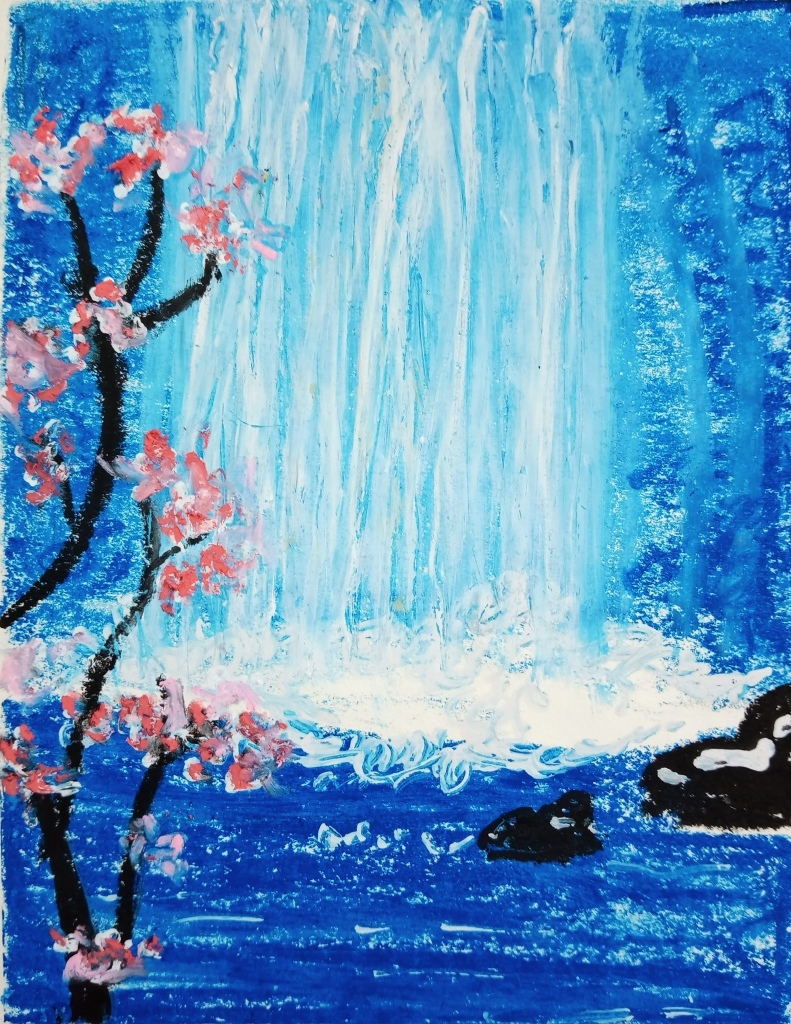



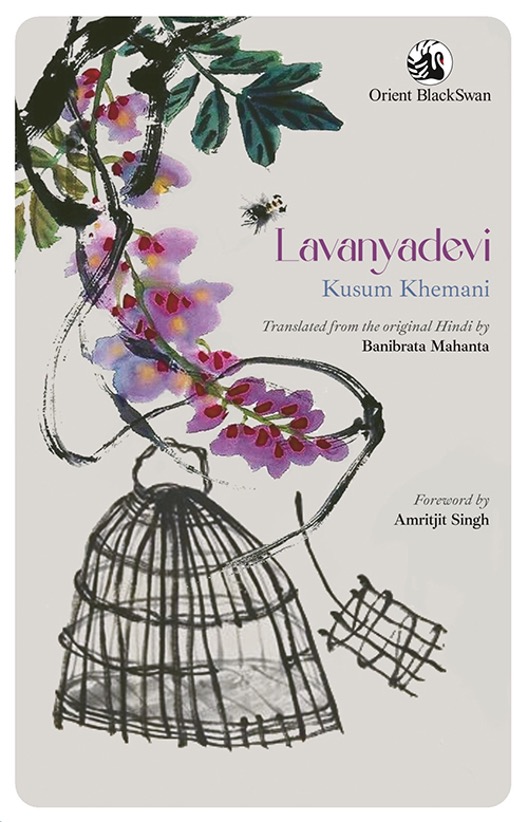

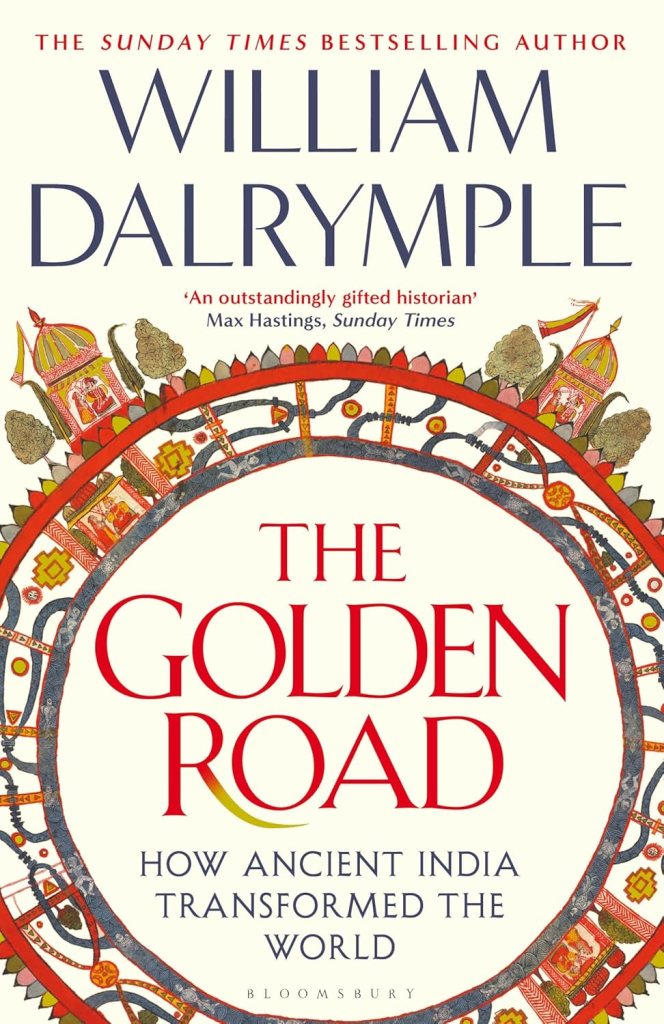






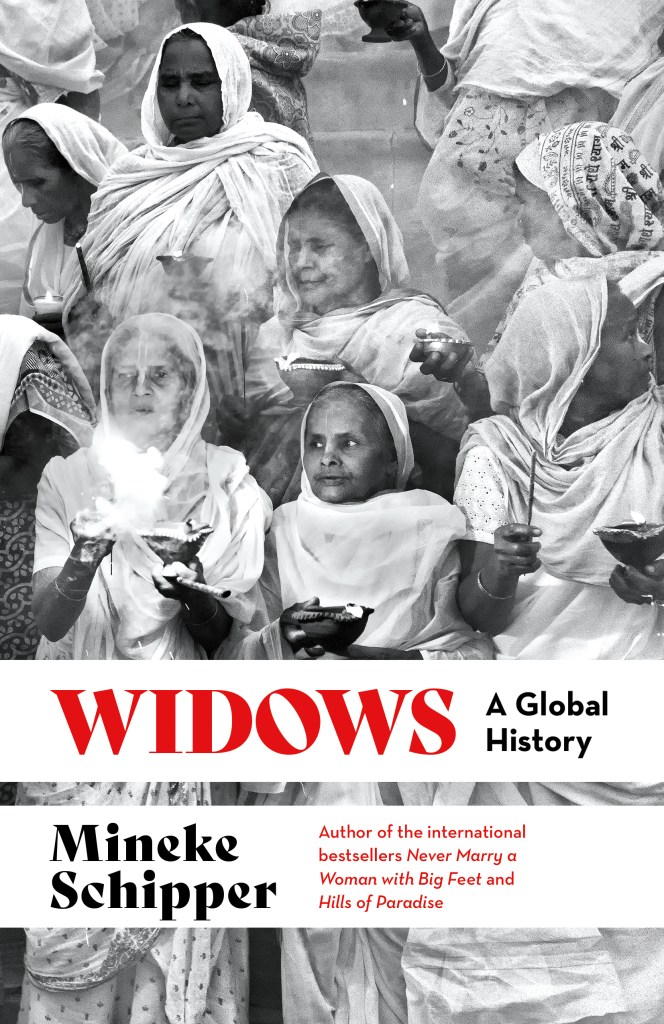

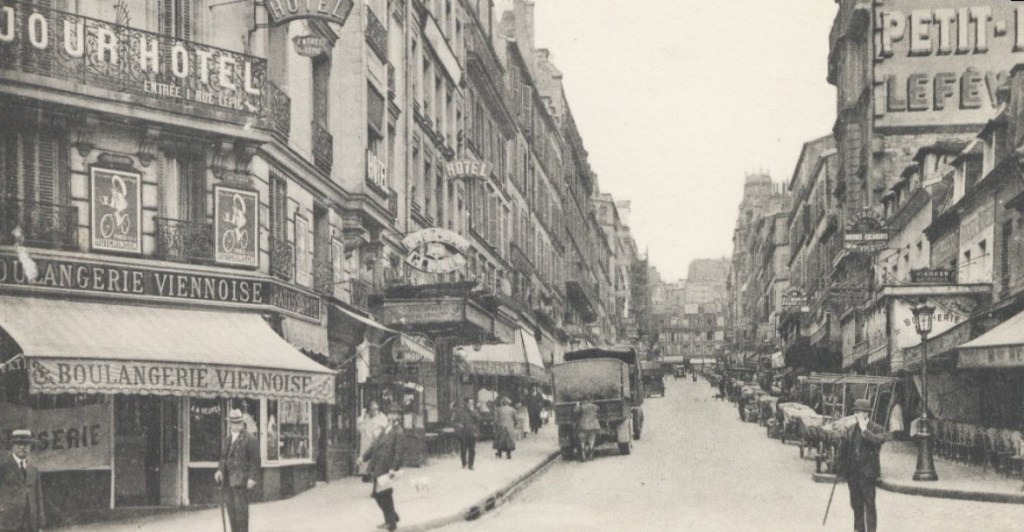
 Borderless