Five poems by Pravasini Mahakudahave been translated to English from Odia by Snehaprava Das. Click here to read.
A Poet in Exileby Dmitry Blizniuk has been translated from Ukranian by Sergey Gerasimov. Click hereto read.
Kalponik or Imaginedby Tagore has been translated from Bengali by Mitali Chakravarty. Click hereto read.
Pandies Corner
Songs of Freedom: The Seven Mysteries of Sumona’s Life is an autobiographical narrative by Sumona (pseudonym), translated from Hindustani by Grace M Sukanya. These stories highlight the ongoing struggle against debilitating rigid boundaries drawn by societal norms, with the support from organisations like Shaktishalini and Pandies. Click here to read.
Charles Dickens was flying high by 1842. His books, Pickwick Papers and Oliver Twist, and periodicals were selling like hot cakes on both sides of the Atlantic. With so many fans over in America, he decided to pay them a visit. What he saw in the second-largest fan base upset him for two reasons. Firstly, there was the issue of royalty. Publishers in America were printing his work left, right and centre. He received none of the returns due to him. Secondly, he was upset with the level of racism and their cavalier attitude towards slavery, even amongst the northern states.
Dickens could not stomach the dehumanisation of the black Americans. The vocal and expressive writer, who drew his readers to his craft in the first place, wrote in one of his later articles about his trip to America. He did not twist his words when he wrote verbatim in his American travelogues of slaveowners’ advertisements about their runaway slaves. In one of these advertisements, it read, “Ran away, a negro woman and two children; a few days before she went off, I burnt her with a hot iron, on the left side of her face. I tried to make the letter M.”
A few years earlier, Britain had outlawed slavery, so the British felt a bit of moral superiority over the Americans.
The Americans did not take to this kindly. Dickens’ following few publications fared poorly.
Meanwhile, Britain was also changing.
It was industrialising as its Empire ventured far and wide to exotic lands. With that came the increasing gap between the poor and the rich. The poor remained short of money and short of education opportunities. With the development of science, religious belief took a back seat. Catholicism lost its favour. The Puritans were disillusioned with the material world.
The idea of Christmas and family togetherness was losing out. Work took up most of the time. There were no documented Christmas holidays. The ancient midwinter culture of Europeans had lost its lustre. Many of the Christmas iconographies were viewed as pagan in the UK and the US. The Puritans viewed life as hard, and having joy and fun was scorned. A small proportion of people still wanted to revive the spirit of Christmas.
Against this background, Dickens returned home. His following two books received a poor reception from readers. He resumed his social work, helping the marginalised. At that time, the prevailing view in the UK was that poverty was self-inflicted. The society felt that providing aid to the poor was counterproductive; it made them lazy. People deserved to go hungry for producing so many children, and the Malthusian theory that food demand would outstrip supply seemed to be coming true. The 1840s were known as the “hungry 40s.” Famine was looming.
Yet another layer of population, the reformists, took it upon themselves to help the downtrodden. Dickens was one of those souls. In Manchester, after giving an emotional lecture at a fundraiser to feed and educate poor children, he went for one of his famous long walks.
As he walked the streets, an idea struck him. He visualised a man who had lost all his compassion and had to be jolted back into a complete sense of his humanity. The story helped rebuild Christmas and the compassion that had been lost over the years. The rest, as they say, is history. A Christmas Carol reformed Victorian Britain.
Photo provided by Farouk Gulsara
Reference:
From Journey Through Time: 59. A Christmas Carol: The Book That Brought Back Christmas (Ep 1), 25 Dec 2025. Podcast
Farouk Gulsara is a daytime healer and a writer by night. After developing his left side of his brain almost half his lifetime, this johnny-come-lately decided to stimulate the non-dominant part of his remaining half. An author of two non-fiction books, Inside the twisted mind of Rifle Range Boy and Real Lessons from Reel Life, he writes regularly in his blog, Rifle Range Boy.
PLEASE NOTE: ARTICLES CAN ONLY BE REPRODUCED IN OTHER SITES WITH DUE ACKNOWLEDGEMENT TO BORDERLESS JOURNAL
Offerings during Qing Ming Jie, a festival honouring ancestorsSongkran(Thai New Year) CelebrationsFestivals in April: From Public Domain
April is a month full of celebrations around the world. Asia hosts a spray of New Year festivities. Then there are festivals like Qing Ming Jie, Good Friday and Easter. All these are in a way reminders of our past. And yet, we critique things as old fashioned! So, where does tradition end and ‘outdated’ or ‘outmoded’ start? Meanwhile we continue to celebrate these festivals with joy but what happens to those who have lost their home, family and their living due to war or climate disasters? Can they too join in with the joie de vivre? Can we take our celebrations to them to give solace in some way?
In our April issue, we have stories from climate and conflict-ridden parts of the world. From Bangkok, Amy Sawitta Lefevre gives an eyewitness account of the March 28th Earthquake that originated in Myanmar. While in her city, the disaster was managed, she writes: “I’m also thinking of all the children in Myanmar who are sleeping in the open, who lost loved ones, who are feeling scared and alone, with no one to reassure them.” As news reels tell us, in Myanmar there have been thousands of casualties from the earthquake as well as shootings by the army.
From another troubled region, Pakistan, Zeeshan Nasir gives a heartrending narrative about climate change, which also dwells on the human suffering, including increase in underage marriages.
Human suffering can be generated by rituals and customs too. For instance, if festivals dwell on exclusivity, they can hurt those who are left out of the celebrations. Odbayar Dorje muses along those lines on Mongolian traditions and calls for inclusivity and the need to change norms. On the other hand, Devraj Singh Kalsi hums with humour as he reflects on social norms and niceties and hints at the need for change in a light-hearted manner. Farouk Gulsara makes us laugh with the antics of his spoilt pet cat. And Suzanne Kamata dwells on her animal sightings in Kruger National Park with her words and camera while Meredith Stephens takes us sailing on stormy seas… that too at night.
Art is brought into focus by Ratnottama Sengupta who introduces artist Haren Thakur with his adaptation of tribal styles that has been compared to that of Paul Klee (1879-1940). She also converses with filmmaker Leslie Carvalho, known for his film The Outhouse, and his new novel, Smoke on the Backwaters. Both of these have a focus on the Anglo-Indian community in India. Also writing on Indian film trends of the 1970s is Tamara Raza. Bhaskar Parichha pays tribute to the late Ramakanta Rath (1934-2025), whose powerful and touching poetry, translated from Odia by the poet himself, can be found in our translations section.
We have an excerpt from Professor Fakrul Alam’s unpublished translation of Tagore’sRed Oleanders. It’s a long play and truly relevant for our times. Somdatta Mandal shares with us her translation of Tagore’s essay called ‘The Classification in Society’, an essay where the writer dwells on the need for change in mindsets of individuals that make up a community to move forward. A transcreation of a poem by Tagore for his birthday in 1935 reflects the darkness he overcame in his own life. Two poems expressive of longings by Jibananada Das have been translated from Bengali by Professor Alam aswell. From Balochistan, we have an excerpt from the first Balochi novel, Nazuk, written by the late Syad Zahoor Shah Hashmi and rendered into English by Fazal Baloch. Among contemporaries, we have a short story by Bitan Chakraborty translated from Bengali by Kiriti Sengupta, a poignant story that reflects on gaps in our society. And a Korean poem by Ihlwha Choi rendered to English by the poet himself.
This issue has been made possible because of support from all of you. Huge thanks to the team, all our contributors and readers. Thanks to Sohana Manzoor for her fabulous artwork. Do pause by our contents page as all the content could not be covered here.
Perhaps, world events leave a sense of pensiveness in all of us and an aura of insecurity. But, as Scarlett O’ Hara of Gone with the Wind[2] fame says, “After all, tomorrow is another day.”
Looking forward to a new day with hope, let’s dream of happier times filled with sunshine and change.
Poulami Bose Chatterjee converses with Ratnottama Sengupta
Young Soumitra Chatterjee with his daughter, Poulami. Photo provided by Ratnottama Sengupta
“All the recovery Rono Bhaitu[1]( Soumitra’s grandson) has made, is entirely due to his mother,” Soumitra Chatterjee (1935-2020) had said to me when I met him before Covid set in. His voice was laden with deep affection and paternal pride for his daughter. Deservedly so, as the world has been witnessing since the star actor passed away in November 2020. Poulami took upon herself the male mantle of lighting her father’s pyre.
An older Soumitra Chatterjee with his grandson, Ronodeb Bose. Photo provided by Ratnottama Sengupta
But that was neither the beginning nor the end of her duty towards her father. I had seen her perform on stage alongside the thespian in Homapakhi [A Legendary Bird] that had explored the complexities of a society trying to reconcile its modern aspirations with traditional roots.
And last November she directed Janmantar [Rebirth], an original play Soumitra Chatterjee had written in 1993 but was never staged before. Seen through the eyes of a matinee idol who is visiting a remote village in Purulia, it focused on ills like child marriage, witch hunting, clash between and land owners and cultivators. “Unfortunately, 30 years later too, all the ills are still thriving on that soil,” Poulami said to me.
Poulami with Soumitra. Photo provided by Ratnottama Sengupta
And in January, even as the definitive biography Soumitra Chatterjee and his World was being launched in the Kolkata Literary Meet, she staged Chandanpurer Chor [The Thief of Chanderpur], his light hearted transliteration of Jean Anouilh’s Carnival of Thieves[2], to mark his birth anniversary.
On the eve of the International Women’s Day I conversed with Poulami, whose parents have been an integral part of my life too.
Ratnottama Sengupta: Who is Poulami? A Bharatanatyam dancer? A theatre person? Mother of an actor with a brief trajectory? Or, daughter of Soumitra Chatterjee?
Poulami Bose Chatterjee
Poulami Bose: I think Poulami is a bit of all this — along with a passionate theatre practitioner. I am my mother’s daughter too. I hope I am a loyal friend to my friends. But above all I’m myself. I like to think of myself as a free spirit — absolutely totally in love with my daughter and son and music and dance and theatre and all that is wonderful in the world.
RS: When did you first realise that your father was not a 10-5 pm office going father like that of other girls? That he was a star?
PB: For a long time in my growing up years I actually didn’t realise how big a star he was. He was a very loving, hands-on father, very involved in our lives. I always knew he was an actor but didn’t realise the magnitude of his stardom. He never brought that aspect home. Our home was always filled with lively discussions, about books, music, paintings, dance, theatre, cinema, the environment, travel… It was a beautiful childhood, very loving, very secure.
Bapi [father] and Ma were always introducing us to new things. Encouraging us to embrace the world. I thought that was normal and that’s what every father was like. Only after I grew up did I realise his impact on the Bengali moviegoers’ lives.
RS: What did a ‘cine star’ mean to you when a) you were learning Bharatanatyam under Thankamani Kutty? b) Studying? c) Getting married to Ruchir Bose?
PB: The word ‘Cine Star’ didn’t matter much when I was learning dance or studying because I was treated just like any other student, by my teachers and my friends. In fact my father didn’t believe in the word ‘Star’. He maintained that he was a professional actor — and we were certainly not encouraged to have airs and graces about us. So we interacted normally with people, and people did likewise. Some people were of course star struck but they didn’t make a difference to me. As for getting married to Ruchir: he was and still is a very down to earth person, far removed from the film industry, very humane. He and his family have always accepted me and treated me for who I am rather than who my father was.
RS: Who was a bigger star for you — Soumitra Chatterjee or Satyajit Ray?
PB: Of course Satyajit Ray! Soumitra Chatterjee was my father first and then everything else, whereas Satyajit Ray was larger than life. We grew up hero worshipping him. Our whole family was absolutely in awe of him — as a person, as a filmmaker, an author and the rest. We were influenced a great deal by his way of life. His sensibilities. In fact we still idolize him.
RS: Which films of Soumitra Chatterjee have you loved most?
PB: Oh there are so many! Apur Sansar, Sansar Simante, Jhinder Bondi, Koni. Ekti Jiban, Dekha, Mayurakshi, Agradani, Ashani Sanket, Abhijan, Sonar Kella, Ganadevata, Atal Jaler Ahwan, Aparichita, Teen Bhubaner Pare, Baghini, Basanta Bilap, Shakha Prasakha, Charulata, Kapurush, Akash Kusum, Dwando, Borunbabur Bondhu…[3] I can go on.
The most impressive thing for me was his versatility. He was different in all the films that I have mentioned above. He was one actor who didn’t have mannerisms. He always became the character. I have seen him doing a lot of homework, research to delve deep into the character’s psyche. Acting was his passion and that was evident in whichever role he played.
RS:Which film of your father has impacted you most? One that moved you at a personal level, perhaps because you identified with it most?
PB: I think Koni. His now iconic dialogue, “Fight Koni, fight!” has stayed with me till this day. Whenever I feel low or face any kind of obstacle, I always remember him in the film. How the human spirit is capable of rising against all odds. How hard work and determination can carry you forward. It inspires not to give up without a fight.
RS: Soumitra Da was a Master in Bengali; Deepadi[4] in English. Who guided you in your studies? Who selected what books you will read?
PB: My parents, like I said earlier, were hands on parents. They, both, helped me with my school work. The atmosphere in our house revolved around books, so we read a lot while growing up. Ma had done her MA in Philosophy. She and Bapi introduced me to both English and Bengali literature. Bapi was more strict, he expected me to read classics and serious books. Ma was more liberal, she let me read anything I wanted to, including romance novels which my father thought were a waste of time.
Soumitra and his wife Deepa. Photo provided by Soumitra Chatterjee
RS: So who are your favourite authors?
PB: I am eclectic in my choice. I read classics as well as bestsellers, plenty of them. My favourite authors are Tarashankar Bandopadhyay, Bibhuti Bhushan, Manik Bandopadhyay, Jibanananda Das, Shakti Chattopadhyay, Sunil Gangopadhyay, Charles Dickens, O Henry, Oscar Wilde, Maupassant, Shirshendu Mukhopadhyay, Samaresh Basu, John Grisham, Pablo Neruda, Gabriel García Marquez, Arundhati Roy, Agatha Christie, Akhtaruzzaman Elias, Humayun Ahmed, Jeffrey Archer, Khaled Husseini, Chitra Divakaruni Banerjee, Satyajit Ray, Sukumar Ray, Saradindu Bandopadhyay, Paolo Coelho, Gerald Durrell, Charlotte Bronte, Emily Bronte, Lewis Carroll… to name a few!
RS: Soumitra Da was a poet. He also translated plays — classics of world theatre — into Bengali. What was he most happy to do — act in movies? Write and direct plays? Or retire to the inner world of poetry?
PB: All three. I’ve never seen him sit idle or waste time. It depended on his mood — he loved doing all three. But I must add: theatre was, always, his first love. He was deeply influenced by Sisir Bhaduri (1889-1959), with whom he had started out. He directed plays for Pratikriti, a group that Ma had — and he directed plays for Abhinetri Sangha, set up by the actors of Tollygunge.
RS: Deepadi was an ace badminton player. Did she give up her own world to be Mrs Soumitra Chatterjee?
PB: She gave up her career primarily for us. Bapi was at the peak of his career and was naturally very busy. Ma felt we needed to have at least one parent around, always. In retrospect, I realise it was a huge sacrifice. But I have to say, both my brother and I needed her. I think she realised that and did what most mothers do: she prioritized us over her career.
Ma had the biggest heart ever. She was more intelligent than the three of us put together. And she was non-judgmental about who she was reaching out to. So many sportswomen she helped, on her own. And I vividly remember this young Muslim boy in New Market who always carried her shopping to the car. One day Ma learnt that he had TB. She immediately brought him home and organised a room on the terrace for him to stay until he recovered. She didn’t hesitate because she had children, she didn’t seek the advice of doctors, she didn’t think twice because her husband was a star!
RS: Why did you choose to carry forward Soumitra Chatterjee’s legacy on stage rather than on screen?
PB: Theatre kind of seeped into me. I used to watch Bapi – when he was idling, he would arrange the empty cigarette and matchboxes to design sets. I have been on stage ever since I could walk. It is my first love. I’m passionate about live performances, be it dance or theatre. Not that I didn’t get offers for films but I never actively pursued them. I married relatively early and had both my children by the time I was 26. Stage was always more accommodating and easier to manage. And till now the magic of the stage hasn’t worn off. I am still madly in love with the stage. Screen just didn’t happen… no particular reason, really.
RS: Soumitra Da was proud of his grandson’s screen presence. And he was extremely proud of the manner in which you handled your son’s unfortunate accident. Would you like to talk about it?
PB: Bapi had high hopes for Ronodeep. He felt Rono was a very sensitive actor perfectly suited for the screen. He was devastated by Rono’s accident. It was the most tragic thing to have happened in all our lives. But I have come to terms with it. I count my blessings — it could have been worse! Rono is with us — a bright and wonderful boy, sensitive and sweet, full of love and empathy. He still has a long way to go in terms of recovery and health but he’s getting there, one step at a time…
I have learned a lot from this phase of my life. I continue to learn every day. It has also shaped me, moulded me as a person. Bapi-Ma told me always to have grace even under pressure, to be always dignified. I have tried to follow them.
RS: Can you recount one cherished moment with your father?
PB: In May 2020, months before he passed away, during Covid, Bapi and I were just sitting and talking about various things. Suddenly he told me, “Mitil I have never said this to you before but I want you to know that I am very proud of the way you have conducted yourself during Bhaitu’s accident and every day since then. Your dignity and your grace has made me really happy. I’m so proud that you have turned out to be the person you are!”
All through my life I will cherish this one moment.
RS: In today’s world many daughters are taking up the responsibility of carrying forward the legacy of their fathers. What, in your opinion, has brought about this social change? Did Soumitra Chatterjee raise you to (consciously) fight patriarchy?
PB: I guess the world is waking up to the fact that what sons can do, daughters can do better! I really don’t know what exactly has brought this social change but I definitely welcome it. My daughter is a great source of strength for me. She is my best friend. My father had raised my brother, Sougata, and me as equals, maybe favouring me a tad more!
Bapi was always ahead of his times. He always told me, “The sky is the limit, you can do whatever you set your mind to.” But it was Ma who very consciously taught me to fight patriarchy. She was a champion for the girl child.
RS: Soumitra Da was never lured by the reach and fame of Bollywood? So, why did he direct Stree Ka Patra[5], the telefilm he made for the national television, in Hindi?
PB: Bapi believed that he could deliver best in his own mother tongue. Besides, he was not enamoured of the kind of films made in Bollywood at that time. He loved his life here, his theatre, his poetry, and co-editing Ekshan, the culture magazine that first published Satyajit Ray’s script. Going to Bollywood, he felt, would put a stop to all his literary and theatrical pursuits.
However, he got the offer to direct Stree Ka Patra for National Doordarshan, and it came with the clause that it had to be in Hindi. The other telefilm he directed, Mahasindhur Opar Theke [ From the Other side of the Ocean] was in Bengali
RS: Many uncharitable people say that Soumitra Chatterjee wasted his talent by limiting himself to Bengali films and by indiscriminate selection of roles — because of his family responsibilities. Your response to this?
PB: Limiting himself to Bengali films was a conscious decision he made. And I have just elucidated the reasons. Yes he wanted to provide for his family, and he did so the only way he knew to — by acting. He never shied from saying that he was a professional actor. And if he wanted to take on the responsibilities who is anyone else to talk about it?
He could have abandoned his family like many others. He chose not to. His family, his life, his choices… that’s all I can say.
RS: You have grown up in close proximity with stars like Sharmila Tagore, Madhabi Mukherjee, Sandhya Roy, Tanuja, and directors like Tapan Sinha, Ajoy Kar, Tarun Majumdar, Rituparno Ghosh. Please share some memories/ anecdotes with us.
PB: The only name in the list who I have grown up in close proximity with is Tapan Sinha, whose birth centenary is being celebrated. He was a wonderful human being! While we were growing up we didn’t interact much with people from the film industry. We certainly met them but at parties, weddings, social events…
My parents had a huge circle of friends. A doctor’s group. My mum’s friends. Poets like Shakti Kaku and Sunil Kaku. My dad’s friends like Nirmalya Acharya, the co-editor of Ekshan. Directors Ajit Lahiri, Ashutosh Mukherjee, Nripen Ganguly who was fondly called ‘Nyapa Da.’ Friends from theatre. His childhood friends. It was a vast cross section of people, so it was wonderful, happy and great fun growing up around so many amazing people.
RS: Gaachh [Tree], the documentary by Catherine Berger, focused only on his stage life. Abhijan[6][The Expedition] directed by renowned actor Parambrata Chatterjee, did not excite cineastes who have adored Soumitra Chatterjee, honoured with Dadasaheb Phalke for cinema, Sangeet Natak award for theatre, decorated with the Lotus award of Padma Bhushan and the French Order des Arts et des Lettres. Will you give us a biopic of Soumitra Chatterjee on stage?
PB: I am not in favour of a biopic for someone like Bapi. On the other hand, a stage production would be limiting. He was a multihued talent. It is difficult to capture so many facets of his personality. It is a daunting task to encompass every nuance, every shade of such an extraordinary life in a single film. A biopic should not be made if it does not do justice to the magnificence of the man.
.
[1] Ronodeb Bose, grandson of Soumitra Chatterjee, had a bike accident in 2017
[2] Jean Anouilh (1910-1987), Carnival of Thieves(1938)
[3] Bengali films in which Soumitra Chatterjee played the lead.
[5] A pun in the heading. Stree is woman, Patra is vessel as well as a prospective groom. So, a Woman’s Vessel or Prospective Groom
[6] Soumitro Chatterjee played the lead in the 1962 Abhijan, directed by Satyajit Ray
.
Ratnottama Sengupta, formerly Arts Editor of The Times of India, teaches mass communication and film appreciation, curates film festivals and art exhibitions, and translates and write books. She has been a member of CBFC, served on the National Film Awards jury and has herself won a National Award.
.
PLEASE NOTE: ARTICLES CAN ONLY BE REPRODUCED IN OTHER SITES WITH DUE ACKNOWLEDGEMENT TO BORDERLESS JOURNAL
In her seminal work, Illness as Metaphor, Susan Sontag delves into the intricate realm of disease metaphors and presents evidence from the literary field that has employed metaphors for human illness, especially tuberculosis and cancer. Sontag draws on a rich literary history, referencing the works of Stendhal, Karl Menninger, Thomas Mann, Charles Dickens, Thomas Wolfe, Franz Kafka and others, to illustrate how metaphors for diseases have been ingrained in our cultural psyche. The two diseases, TB and cancer, discussed at length in the essay, are viewed from innumerable literary points of view. Fictional and real-life views of people surrounding these diseases have been put forward, which betray a cacophony of contrasting and similar ideas.
Sontag astutely dissects the contrasting metaphors associated with tuberculosis and cancer. Tuberculosis, she argues, has been romanticised and considered more socially acceptable and often viewed as a glamorous affliction. “Having TB was imagined to be an aphrodisiac and to confer extraordinary power of seduction. Cancer is considered to be de-sexualizing.” Sontag describes the tumour as “a foetus with its own will”. She further states that TB is a disease of poverty and deprivation, whereas cancer is a disease of middle-class life. She adds that cancer is associated with affluence, with excess. The metaphors associated with the diseases, she contends, not only affect the body but also shape societal perceptions and cultural narratives. The metaphorical attributions of TB and cancer in literature and society echo broader societal perceptions of class and status.
Published in 1978Susan Sontag (1933-2004)
There is an aphorism by Heraclitus that men have devised gods in their own images, and as Sontag states, the nomenclature of ‘cancer’ is derived from the Greek- karkinos and the Latin- cancer, both of which mean crab. She clarifies by quoting Galen that since the external tumour’s swollen veins resembled a crab’s legs, that is how it got its name. This tendency to associate unfamiliar things with familiar ones is common; people often perceive shapes in clouds, drawing comparisons to known objects. Similarly, diseases are often viewed through familiar frameworks. Since diseases afflict and weaken us, they are often seen as adversaries. Thus, labelling the experience of battling cancer as a fight imbues individuals with a sense of hope, suggesting the possibility of victory amidst adversity.
Sontag, betraying the nature of cancer as a slowly progressing disease that suddenly manifests without any warning, presents the earliest evidence where it was first used metaphorically by Wyclif in 1382. “The word of hem crepith as a kankir”.She assembles the different metaphors associated with Cancer, which are as diverse as the number of human illnesses. For her, Cancer is a source for topological metaphors: “spreads”, “proliferates”, “diffused”, and “excised”.
The essay examines the mythologies and superstitions associated with these diseases and how metaphors sometimes wear the cloak of superstition, too. But metaphors make the understanding of the disease more manageable. Metaphors are a means of understanding the meaning of things. That which cannot be explained as such can be explained by metaphors. In his books, The Doors of Perception and Heaven and Hell, Aldous Huxley states: “It is difficult, it is all but impossible, to speak of mental events except in similes drawn from the more familiar universe of material things. If I have made use of geographical and zoological metaphors, it is not wantonly out of a mere addiction to picturesque language. It is because such metaphors express very forcibly the essential otherness of the mind’s far continents, the complete autonomy and self-sufficiency of their inhabitants.” The metaphors will exist, and educating the masses is the only way to stop them from becoming a stigma or superstition against that disease.
Published in 1954Published in 1956
Quite possibly, the doctors refraining from revealing the true nature of disease inherently to the patient might reflect the notion of fear of death. The diseased person might perhaps think that death will come to everyone but him. Revealing his cancer to him might imply the idea of the inevitable approaching death. Thus, employing the metaphor of ‘battling’ with cancer provides a sense of relief to the patient of emerging victorious in the battle. A diseased man on the bed is akin to a newborn baby, with the only difference being that in one, the river of life has begun to flow, whereas, in the other, it is on the verge of drying. An afflicted man is as helpless as a baby. He craves for care. In this vulnerable state, directly discussing the illness may be too distressing, necessitating the use of metaphors to convey the situation. The patient’s understanding is limited. The only truth he has made a pact with is the slipping of time and the approach of death.
Regardless of how one has lived, everyone desires a death with dignity. Yet, why is it that some illnesses seem to afford this dignity while others do not? What criteria determine whether an illness is seen as favourable? Is it pain or time? The dilemma is akin to choosing between jumping into a well or off a cliff―Death awaits at both ends. As Susan Sontag herself ‘battled’ breast cancer, one cannot help but wonder whether the book would have been different had her affliction been tuberculosis instead. The essay appears biased, elevating tuberculosis and its sufferers while diminishing the dignity of cancer patients. It only examines these diseases from a personal perspective. TB has been presented as a glorified disease, whereas cancer is something that rots the body. Only briefly does the essay touch on the societal perceptions that label tuberculosis as a disease of poverty and cancer as a disease of affluence.
It is not only cancer and TB that have attracted metaphors or have been known to be identified with them. In fact, every other disease and illness is accompanied by metaphors, like an object and its shadow. And it must be noted that some diseases, apart from being associated with metaphors, are linked with gods and deities.
I recall a passage from the book The Monkey Grammarian in which the author, Octavio Paz, describes a scene inside the ‘Temple of Galta’ which is also known as ‘The Monkey Temple’ in Rajasthan: “The children leap about and point to the stone, shouting ‘Hanuman, Hanuman!’ On hearing them shouting, a beggar suddenly emerges from the rocks to show me his hands eaten away by leprosy. The next moment, another mendicant appears, and then another and another.”
When I first read this passage, I was immediately reminded of the story ‘The Mark of The Beast’ by Rudyard Kipling and a paper that I had read related to the story titled ‘Recognizing the Leper: Hindu Myth, British Medicine, and the Crisis of Realism in Rudyard Kipling’s The Mark of the Beast’. The author of the paper had woven the interconnectedness and drawn parallels between the story, the leprosy affected character and Hanuman-lila. In ‘The Mark of The Beast’, an Englishman named Fleete, in the company of his two friends, desecrates a statue of Hanuman inside a temple with his cigar and declares it as ‘the mark of the beast’ but is soon embraced by a “mewing” leper who emerges from behind the statue following which, Fleete begins to develop skin discolourations and starts exhibiting animal-like behaviour. In the paper, the author establishes a connection between Hanuman and leprosy to justify why the Hindu monkey god is often called ‘sankat-mochan’ or ‘liberator from distress’. Drawing reference from the study of Hanuman lore by Philip Lutgendorf, the author argues how Kipling’s story resonates with a specific Hanuman-lila that relates his manifestation as a leper before the 16th-century saint Tulsidas.
“Instead, he [the tree ghost] told Tulsidas to seek the grace of Hanuman and revealed that the latter came every evening to a certain ghat in the form of an old leper to listen to the narration of Rama's story; he sat at the back of the crowd and was always the last to leave. That night, Tulsidas surreptitiously followed the leper, who led him deep into the forest before the poet finally fell at his feet, hailing him as the Son of the Wind. As the ghost had predicted, the leper "denied a thousand times" that he was anything other than a sick old man, but Tulsidas persisted in his entreaties. Eventually, Hanuman manifested his glorious form. Raising one hand over his shoulder to point southwest, he said, "Go to Chitrakut," and placing the other hand over his heart, added, "I promise you will see Rama.”
Illness as Metaphor should not be considered a caution about metaphors in their relation to illness but rather a critique of their misapplication, where these metaphors can morph into stigmas that persist in people’s consciousness. “Illness is the night-side of life, a more onerous citizenship. Everyone who is born holds dual citizenship in the kingdom of the well and in the kingdom of the sick. Although we all prefer to use only the good passport, sooner or later, each of us is obliged, at least for a spell, to identify ourselves as citizens of that other place,” Sontag states in the opening lines of her book-length essay. But, unless one is born in the mythical Shangri-La, and as long as humanity exists, illnesses and their accompanying metaphors will persist, evolving with each new malady that emerges. Today, it is cancer, just as yesterday, it was tuberculosis and COVID-19. Tomorrow will inevitably bring new illnesses, accompanied by a fresh set of metaphors that shape our collective understanding of the ever-present shadow of illness in the human experience.
Satyarth Pandita is a Junior Research Fellow at the National Institute of Mental Health and Neurosciences, Bengaluru. He completed his dual degree of Bachelor of Science and Master of Science in Biological Sciences (major) and Humanities and Social Sciences (minor) from the Indian Institute of Science Education and Research Bhopal (IISERB).
Links to Satyarth’s published works, email address and social media handles can be found here.
.
PLEASE NOTE: ARTICLES CAN ONLY BE REPRODUCED IN OTHER SITES WITH DUE ACKNOWLEDGEMENT TO BORDERLESS JOURNAL
For when your troubles starting multiplying
And they just might
It's easy to forget them without trying
With just a pocketful of starlight

Catch a falling star and put it in your pocket
Never let it fade away (never let it fade away)
Catch a falling star and put it in your pocket
Save it for a rainy day

'Catch a Falling Star' by Paul Vance and Lee Pockriss
Perhaps, it is time to find that fallen star popularised by pop singer Perry Como is 1957. Optimism glimmers faintly, sometimes even conceals itself, in a world passing through a dark phase in history. For instance, few of us would know that we might find more answers to tackle climate change as dinosaur fossils (from the time an asteroid hit the planet) have been unearthed recently. That sounds like solutions can be had to what was perceived as inevitable doom.
Another bit of news that perhaps will cheer some is the first anthology of Borderless Journal will soon be available in market. It has been accepted by a publisher, an old, trusted and reputed name from India, Om Books International. They have bookshops splattered all over — should make it easy for buyers to access the book. Hopefully, you can target the anthology for your Diwali or Christmas gift hampers. Om Books has one of the most iconic editors-in chief, Shantanu Ray Chaudhuri. A multiple award-winning editor, he has worked in Penguin and Harper Collins and is currently churning out wonderful books from Om with a fabulous production team, working with whom has been a pleasure. Ray Chaudhuri is an outstanding film writer and poet. He is part of a group that is creating a film archive online. To know more about him or his views on publishing, you can read our online conversation with him.
The energy one gets from optimism like starlight from a fallen star, lightens the darker shadows that create gloom with the war leading to rise in prices and threats of recession in a post pandemic scenario. Lesya Bakun, the refugee from Ukraine whose story we carried last month, finds her starlight by sharing updates of her story. She added to her narrative with the news that her cousin has been taken as a prisoner of war by Russia from the besieged factory in Ukraine. Though sharing does not alleviate suffering, Bakun’s ability to cling to hope and imagine a future where she gets her dream highlights the strength of her convictions. The other thing that is revealed by her narrative and media coverage is exclusivity and boxes of ideology split humankind, erase families, cities, countries, lives and sanity. The war can appease only the lust of warlords. Against this desolation caused by the devastation, what could be the starlight that would lead to a happier future?
Laughter. Unleashing the ability to laugh at oneself is as potent as laughter that generates relief and lightens our mood, so that we can view differences as whimsical, treat them with tolerance and compassion and not destroy the diversities that add colours to the world. Perhaps, that is why Tagore took to humour too. Somdatta Mandal has translated a series of humorous skits by Tagore. We are featuring one of these called the ‘Ordeal of Fame’. Yet another translation or transcreation of a poem called ‘Lukochuri’ or ‘Hide and Seek’ reflects the playful in Tagore’s oeuvre. These, along with Rhys Hughes humour on the pandemic in poetry and prose, bring good cheer into our journal. Hughes has also used his column to tell us why he curated a new humorous anthology of verses by seventeen poets called Wuxing Lyrical. I wonder if he is serious or joking!
As we trot around the globe, Suzanne Kamata tells us about a Monet museum in Japan where she ate madeleines made with the artist’s recipe! Meredith Stephens sails to Tasmania with her camera and gives us a glimpse of nature’s plenty. Ravi Shankar relates his trekking adventures among the Himalayas in Nepal, with awesome photographs of these mountains, while Kenny Peavy who lives in Indonesia dwells on the value of falling down and getting up in a light humorous vein against the backdrop of nature – though metaphorically perhaps the world needs to do that. We have G Venkatesh’s story about his stay in Johannesburg where he discovers that skin tones do not matter.
Ratnottama Sengupta makes the whole world look like a home with the story of a legendary screenwriter, Jean Claude Carriere, who wrote the script of Mahabharata for Peter Brook’s play (1985) of the same name and the subsequent film (1989) — with characters drawn from all over the world. Candice gives us an overview of the pandemic, with more focus on US where she lives.
Mike Smith travels back to another time when an ailment called World War II raged and has revived a writer from the past, HE Bates (1905-1974). We have another essay by Dan Meloche on a legendary book which turned 100 this year — Herman Hesse’s Siddhartha. Rakhi Dalal revisits more than a century old translation by Devabrata Mukherjee of Tagore’s The Post Office which bears relevance to the present day as it shows how the human spirit endures over even the darkness of death.
Bhaskar Parichha has reviewed Radhika Gupta’s Limitless: The Power of Unlocking Your True Potential, by his assessment a book that inspires youngsters to take charge of their future. On the other hand, there are books that explore the darkest in humans. Basudhara Roy has reviewed a collection short stories by Sunil Sharma called Burn the Library & Other Fiction. Indrashish Banerjee reviews Upamanyu Chatterjee’s latest novel based on modern day crimes, Villainy, from which we are carrying a book excerpt too. The other excerpt is from a narrative written from a refugee’s perspective, Ramy Al-Asheq’s Ever Since I Did Not Die, translated by Isis Nusair from Arabic. Born in a refugee camp in Damascus, this Syrian-Palestinian poet defies all genres to touch hearts with brutal honesty. No less sincere is Michael Burch’s poetry on summer that ushers in the season as much as Sohana’s beautiful painting that we are using as our cover photo. We have poetry from not just Shantanu Ray Chaudhuri but also by George Freek, S. Srinivas, Tohm Bakelas, Abin Chakraborty, Marianne Tefft and many more. As usual, I have not mentioned all the treats in store for you. Delve into our contents page and browse to find out more.
Before winding up, I would want to extend my thanks not only to our team and contributors, but also to our publisher who is willing to republish our content with some tweaking. Thanks to our readers who, I hope, will be excited to have selected content between their palms as a hardcopy anthology with 49 of our most iconic pieces. We have more than a thousand published works. This anthology will be an iconic sample that you can carry anywhere with you even if there is no internet – that would include Mars and Moon!
I wish you happy reading, happy dreaming and hope… plenty of it.
A stranger than fiction book that starts with a limerick and ends with a rhyme, supposed to be a scholarly and playful work on perhaps the first Australian novelist-cum-lawyer-cum-journalist who sold cheap paperbacks for women readers traveling by train in India in the nineteenth century — probably British readership — fought a case for Rani of Jhansi – wrote for Charles Dickens’s Household Words – This can be the description of Amit Ranjan’s John Lang the Wanderer of Hindoostan, Slanderer in Hindoostanee, Lawyer for the Ranee (Niyogi Books). Why would one do a book on a maverick like this Australian journalist-cum-writer of the nineteenth century who opposed the British? What led to such a book? The quest for a ghostly ‘Alice Richman’ who lived in Pune in the 1800s, says Ranjan. And the author’s quest continues…spanning the shores of Australia, ‘Hindoostan’ and America…
The other most interesting thing about this book is the way the story is told – Ranjan says he is deeply influenced by the genre of magic realism and this, perhaps, reflects in his writing. While the research input is awesome, the style is non-academic and even flamboyant at times. It is a book that brings a smile to your face with its obvious cheekiness. But this is also the kind of book you keep on your bookshelf and pull out when you have time to mull over a discussion on historic links and syncretism – for that is the sap that flows through the book concealed behind a laid-back narrative style of a nineteenth-century writer. Who is this Ranjan who has tried to re-invent pedantry and scholarship, treat the serious business of research and academia with such friskiness?
Ranjan is a Visiting Fellow at UNSW [University of New South Wales], Sydney; and a Fulbright Scholar-in- Residence at Miami, an assistant Professor at NCERT [National Council of Educational Research and Training, India] — with eye to the sky, and ear to the ocean. His poetry collection, Find Me Leonard Cohen, I’mAlmost Thirty, came out two years ago, and his biography of Dara Shukoh is due out soon. His poetry collection came out 4 years ago, and a new collection of poems The Knot of Juggernaut was just released in Miami in March. Without more ado, as John Lang would have it, we present to you Amit Ranjan –
What was it that made you map your journey of unearthing Lang in the form of his writings instead of writing about his life directly? You have used the forms of limerick, poetry and the epistolary technique along with essays and Lang’s own writing to build your case. An amazing amalgam — Why? It is rather an unusual form of storytelling.
This is an interesting question, or a set of questions. I think poetry is a powerful medium. At a certain time, it was supposed to regale and break tedium; now it seems to create tedium – the trajectory of human taste is interesting indeed. So, unable to write a book in verse (Vikram Seth debuted with a novel[1] in verse a little more than three decades ago, with elan), the least I could do (and generally do with prose) is having poetic invocations at the beginning and the end. I’ve also tried to maintain a certain poeticity through the book – it does add some funk and spunk, I believe.
About the form of writing – what was available to me was writings about Lang, and writings by Lang. Lang’s own voice is richer and wittier than his contemporaries and commentators, and therefore it came naturally to speak about his voice, rather than speak about what has been spoken about his voice. Unfortunately, the personal papers and artefacts of Lang have all been lost – it would certainly have been a riot to peruse his letters. And since letters by him are missing, I decided to write a letter to him (which is the first chapter) much in the way he’d have liked to write or receive a letter.
Also, about the form of writing – history writing and academic writing is caught in its self-referential niche writing – and needs to be freed from that cage, or that page in the history of stylistics of writing. Much influenced by the Latin American novelists, as also the frame narratives like Bocaccio’s Decameron and Alif Laila[2] – I thought it would be an interesting to approach non-fiction and/or history like a novel of the “lo real maravilloso[3]” genre (well, almost). So one could call it creative non-fiction (this work is completely and heavily annotated, so there’s nothing ‘fictitious’ in the work – just to add that disclaimer). I think these experiments are exciting, much like ficto-criticism as a foil of this form.
You have an interesting tone of narration which is half flippant, but it delves deep into research. Tell us a bit about your research.
The tone is what one makes of it. It is also very Victorian in its language, to keep in sync with Lang’s age. The alleged flippancy is a deliberate device I guess – as a tribute to Lang’s own voice that is playful and yet serious, as also to demonstrate that playful writing can be effective and serious.
Telling a “bit” about this research will occupy a bit of space, for dwelling in the haunt of 19th century is a bit of a habit with me now. Those puns aside, the road of this research has been thrilling across space and time. On the home turf, it took me to Meerut, Mussoorie, Agra and Calcutta. We, being good recyclers of papers, the works by or about Lang barely survive here. The copies of his newspaper, The Mofussilite, published from the above-mentioned cities (minus Mussoorie) weren’t available anywhere except London, Canberra, Chicago – and interestingly Islamabad. And so, I went to UNSW at Sydney for my PhD research, courtesy of Endeavour and Inlaks fellowships. There I met a very interesting 86-year-old gentleman, Mr Victor Crittenden, who was a retired librarian, and who had a very keen interest in John Lang. He had republished a lot of Lang’s work, and it was amazing to have conversations with him. The only little problem was that he was such a hopeless Romantic that he had ascribed several anonymous or pseudonymous works to Lang. This, then, became a daunting task, to research about each of these works and see if they could actually be Lang’s. And of course, it also resulted in funny arguments. Meanwhile, I relaxed the scope and the methodology, made it broad and unorthodox, to see where I could get. I met descendants of Lang’s half-brothers; a rabbi in Melbourne who believed Lang was Jewish; a member of Italian nobility in Paris, bitter about the politics in that family, and so on. At one point I emailed one Motee Persaud in hope that he’s a descendant of Jotee Persaud – only to cause him anxiety, for there was some court against him, and he thought my email was a subterfuge for a bigger design! When I returned from Sydney, I lost a pen drive with scans of Lang’s newspaper, for it was in a pretty UNSW backpack that someone took fancy to. I think I met the purloiner for a fleeting minute a few months later! The bit can go on, but I think this bit should be contained before I write a short story about it here.
Was the journey of discovery as interesting as your discovery of Lang?
Oh yes indeed! I think some of that has been revealed in the previous answer. It’s still an open book, an ongoing journey, I am still working with The Mofussilite. In my three fellowships to Miami (none about Lang), I purloined time to peruse Lang’s journal. The journey has been a thriller all through, I would like to believe – including my not being able to find Lang’s grave ever. Once, my friends and I rolled down Mussoorie hills into Camel’s Back Cemetery and the eight of us hunted for Lang at the haunted forest on a rainy afternoon. No luck, and never after in my subsequent visits, though the directions are fairly easy.
One of the most fun discoveries was that a picture of Lala Jotee Persaud, a client of Lang’s, was printed in The Illustrated London News as Nana Sahib’s! I was thrilled to receive that picture from ILN.
Ruskin Bond, a writer many of us deeply admire, found Lang in the Camel Back cemetery in Mussoorie in 1964. Then an Australian scholar investigated him. Lang finally found a way to instigate your pen to take up his cause. What moved you to research and write on him?
I met Mr Bond in 2009 I think, and my friends and I had a great fan moment. His father had some Lang novels, and that is what interested in him. Almost simultaneous, John Earnshaw was interested Lang’s life in Australia, and he wrote a short 30-page account detailing his timeline. And then the interest was lost for 40 years, when Victor Crittenden and Rory Medcalf of Australian High Commission reinvigorated interest in the matter.
All this, unbeknown to me, I was hunting for Alice’s history. Alice Richman, a girl who died at 26 in 1882, is buried in Alice Garden, Pune University, surrounded by a forest and many urban legends. Not knowing how to go about finding anything about her – I followed the Hanuman methodology – pick up the whole mountain if you can’t identify the herb. In reading about Australians in India in 19th century, I stumbled upon Lang, and since then, there’s been no looking back.
So, Alice the ghost sparked your interest in him from her very presence in Pune, what was it about Lang that attracted you to take a decade long journey into his adventures? Tell us a bit about how Alice pushed you to it.
In the pursuit of Alice, I read about the interesting Australian women missionaries in India (they were brought to India to be ‘tamed’); camels and camel drivers that went from India; and several such fascinating stories. The pursuit of Alice prepared my reading list, and that is how I found Lang. A white man fighting a white empire, with a nuanced understanding of India, and with an infective invective – seemed like a natural resonance to me. It is beyond the scope of this interview to get into the thrilling details of discovering things about Alice’s life too throughout this decade you’ve mentioned. Suffice it to say that it is actually the pursuit of Alice I have been on, and she keeps rewarding with some Lang legend and legacy every now and then.
Did you feel there was a need to bring out Lang to the fore? Is he relevant for our times?
Absolutely so. He was the man who took on Lord Hardinge in his newspaper on a daily basis, to the point where the Governor General summoned him. Lang merely said that he made more profit by writing against him, than he could ever by singing paeans to him. He was a rebel, and witty. Today’s journalists across the world from the age of democracy can take a lesson or two from a man from the time of the Empire.
To understand where we are, we need to look at where we come from. The tedious legal system; the workings and trappings of army; racism; casteism; evolution of sciences and belief in pseudosciences – are explained in detail with wit, rigour and humour in Lang’s writings. To understand our postcolonial ontology, it is very important to understand how deeply colonialism affects us.
Please introduce the most interesting fact about the ‘Wanderer of Hindoostan’ to our readers. Tell us a bit about him concisely, especially as we are told in your preface: “Suddenly, there was an interesting piece of news doing rounds: that the Indian PM gifted his Australian counterpart with John Lang documents to demonstrate how far back the relations between the two countries went. I was not acknowledged. However, it was also a backhanded compliment. Lang had finally found an afterlife.”
Lang died in 1864; his name and works survived until. About 1910. For the afterlife of a writer, critics are important. Shakespeare, for example, was resurrected by the Romantics in the 19th century. After 19th century, Lang was lost until John Earnshaw’s minor interest in the 1960s; and then Victor – as already stated. My research was awarded as a PhD thesis in 2012. Interestingly, in 2014 he was showcased in this prime ministerial meeting. The rest you have told in your question – sometimes one has to take backhanded compliments with high spirits! Of course, it was an anxious time for me, for the cat was out of the bag, and I had to hunt for a publisher fast. However, as stated in the book – Stories forgotten or lying in the cold, find their own time to be told – and therefore finally a book, half in size of the original, in 2021. The advantage of including Lang is of course pushing India-Australia ties to mid-19th century, an idea which has never really been thought of.
Was the John Charnock you mentioned in your book related to Job Charnock, the founder of Calcutta? Was Lang related to him and did that impact his choices? Job Charnock was after all a rebel too in a manner of speaking.
That’s a difficult connection to figure out, which I will try to, on some idle day when curiosity gets the better of me. Job Charnock, the alleged founder of Calcutta, died in 1693; and the reference in the Lang book about John Charnock is from 1843 (p362). Lucy, wife of John Lang, had a sister, Mary, a poet who was married to John Henry Charnock. Mary’s book Legendary Rhymes (1843) was published posthumously, and her husband wrote a preface to this book. This Charnock was Lang’s brother-in-law, so they would have known each other well. John Charnock himself was an agriculturalist and a drainage expert and wrote books on this matter. To answer the last part of the question, in my opinion, Job Charnock and John Lang are as different as chalk and cheese – the former being a thorough imperialist and the latter, the opposite.
In the start of a chapter, you have said: “Lang had foreseen Google.” Elucidate.
Oh, that’s a joke to complement and compliment one of Lang jokes. The novel Ex-Wife revolves around the predicament of a Eva Merrydale, divorced by her husband for “criminal familiarity with another man.” (p370) Eva’s brother tells that this case has been mentioned 114,227 times in the media, with 107 times in the Times alone. These kind of figures are something one would see in a google search result – 114,227 results for “Eva Merrydale divorce”
That is Lang lampooning the British media for its obsessing over a poor divorcee through the exaggerated figures. However, one wonders, if there were people employed to keep track of a particular news appearing in the media.
As a digression to this essay, Lang indeed was looking into the future of journalism – sensational headlines, scandals and so on. In one lead article about the Gorham case, which had been talked about to death, Lang just wrote –‘Damn the Gorham Case!’ – and captured the public sentiment!
What was the purpose of this book? What kind of readership did you expect?
I guess the purpose of a prose book, fiction or non-fiction, is to tell a good story. However, my purpose was to fulfil a calling – I had at hand, the figure of a character lost for a century. It then becomes one’s responsibility to resurrect the figure as one has been entrusted by destiny, too. And of the course, the more general idea holds – the keys to the present lie in the past, as has already been discussed.
In terms of readership, I was looking at anyone who is interested in an interesting story of a maverick figure. This is why the language is jargon free, the stylistics are that of a novel. However, of course, one is also looking at the countries Lang is lost to – India, Australia and UK – and to have them remember an important critic and figure of their past. I expect students of literature and colonial/ postcolonial histories to pick this work up; but I’d love it much more that it appeals to the general reader of fiction and non-fiction.
John Lang had encounters with Dickens, Rani of Jhansi — a very wide range of historic personalities and influenced, you have claimed even George Bernard Shaw. Yet, all these personalities lived on while he faded to obscurity. Why do you think that happened?
Lang fought the British imperial sword with his pen, was declared a “hospital bed novelist” by the critics and buried to the British posterity. He wrote in Australia with convicts as heroes, which of course, didn’t go down well with the convict settlement. For Indians, who he had so much adulation for, he still got lost to history. Probably his interest in wine and women did not go down well with Indian historians too; or he was difficult to slot, being an interloper.
One of the things that does come across is Lang faded to obscurity as no one knew of him. Do you feel the role of historians and critics critical to the survival of an author? Or do you feel the colonials he often wrote against were happy to bury his writings?
Both aspects are at work. As already pointed out, the colonial press gave him bad reviews all the time. Subsequent critics were not kind either. This goes on to suggest how deeply ideological and long drawn out the colonial project was.
How was Lang a rebel in his times? Do you feel your own journey has been a rebellion against pedagogical practices of the current times? After all, can a book based on this much research start with a limerick and end with a tongue-in-cheek rhyme?
Two leitmotifs would suffice to settle the matter about being a rebel. It is said, in Lang’s multiple novels, about the white British protagonists – “India he loved, England he despised.” The second motif is strong women characters, some of them very deliberately parodying Victorian women and Victorian novels.
If my writing is considered rebellious to the current conventions, I would take it as a compliment, and not a back handed one. I wish I wrote the entire book in verse. I hope to pull off that trick successfully someday.
Maybe you will – an upcoming one – Alice’s story…Do you have an upcoming book? What about a novel on the ghostly Alice?
A new poetry book titled The Knot of Juggernaut, Or The Mystery of (Miami Mambo) Vexuality was just released, a day before I left Miami to come back to Delhi. It will be out here soon, too, in a month. This collection has poems written about journeys between the Bay of Bengal and the Bay of Biscayne. The title was suggested by The Right Honourable KB Con, Ducktor Albatross.
A biography of Dara Shukoh is scheduled for the year end.
The Alice book – definitely, whenever Alice wills it!
I mostly read commercial fiction and novels the first eight to ten years after I started reading. At that time, I was not familiar with the concept of genres and didn’t know – much less cared – about them. I was taking my first steps into the world of books and reading a new novel and finishing it was all that mattered. A decade or so later, now much more comfortable in the bibliographic world, I started experimenting with other types of books. Freakonomics (2005) by Steven Levitt was my first foray into non- fiction. Then I experimented with a few more history non-fiction books (history was one of subjects in graduation) mainly by William Dalrymple and Jawaharlal Nehru but also by other writers. Keen on territorial conquests of another kind, I experimented with Khushwant Singh, Anita Desai, RK Narayan and a few works by a few more Indian writers. Further from home, I tried out Charles Dickens (had read some abridged versions of his novels in school), Thomas Hardy, EM Forster and more. I read their novels, short stories and essays whatever I found.
I had travelled very far from where I had started many years ago, crisscrossing genres. But my idea of what makes a good read had hardly changed. Whether it came to fiction or non-fiction, contemporary or classic, it still revolved around ‘a story well told’. Of course, some characteristics had changed. I had become more patient with slower narratives, more adept at handling complex narratives, more comfortable with narrative calisthenics and more at ease with diverse types of writing. I had also developed an understanding about the basic differences between literary and commercial works. Even so, my idea of a good read had remained resistant to transformative changes, engendering the question in my mind: “Do genres really matter?”
The answer is both yes and no. Genres help categorise books based on what the reader can expect of them. There are millions and millions of books in the world and just imagine there being no basis to separate one book from another. The reader would have to go from the beginning to end of a book to understand what it was all about or start a journey without knowing what lay ahead. As much as it could be a delightful experience, it would bring in its own challenges. One of them would be to market the book.
Even if we don’t want to overlook the importance of commerce to art, let’s admit that no two things in the world treat each other with as much suspicion. Be that as it may, writers have, from to time, expressed their derision for genre. Kazuo Ishiguro, who has written many genre benders, once said in an interview that genres have no profound literary purpose or any substantial contribution to literature. They are creations of book marketers and their purpose is solely to sell books.
But is literary genre’s relevance to literature only archival and commercial? Maybe a minor digression will bring in a new perspective.
In Hindustani music, genre plays a vital role: it adds variety and richness. There are multiple gharanas (schools) in Hindustani music. Their identity is based on their geographical regions (Lucknow gharana, Carnatic gharana) they come from, the distinct musical heritage and ancestry they represent and the musical form they practice. However, the uniqueness of each gharana is determined by the raga it engineers by combining several suras (pitches). There are seven suras (notes) in Hindustani music.
Film genres contribute to films, of course, in terms of variety but also by creating slots based on audience preferences, social anxieties, aspirations and various other factors which allow filmmakers to address the associated emotions by placing their films in the predefined categories which helps to find a ready audience. Film genres are more fluid than Hindustani music genres. They come and go and also get clubbed creating a hybrid genre where different genres are built into one narrative to appeal to a wider audience.
On the other hand, traditionally, book genres have had rigid boundaries with very minimal or no cross-genre exchanges. In fact, the boundaries have been so rigid that authors of one genre have never shied away from expressing their disdain for their counterparts in another genre. Broadly speaking, the two warring factions have been literary and commercial fiction.
In The Naive And The Sentimental Novelist (2011), Orhan Pamuk says commercial novels (detective, crime, romance, sci fi novels) lack a ‘centre’ – a profound reflection on the meaning of life – which is integral to literary novels. This absence of a centre in commercial novels makes almost all of them same with nothing substantial separating one genre novel from another except their characters, plot twists and the murderer. This lack of substance makes it important for genre novels to always provide excitement to their readers, he alleges. On the contrary, according to Pamuk, a literary novel is a constant quest for the centre not just for the reader but also for the writer.
Some writers may not know the centre to start with discovering it while writing the novel as an act of serendipity. Some may structure their plots such as to illuminate the centre. Tolstoy had to change War and Peace (written in 1869, Translated in 1899) many times to discover its centre. Pamuk informs that Dostoyevsky had suffered epileptic attacks, after writing The Devils (1871-72, translated 1916), when he had realised that he had made a mistake leading to the sudden appearance of a new plan. And he had changed everything radically, Dostoyevsky had claimed.
Howevee, in The Miraculous Years, Joseph Frank, Dostoevsky’s biographer had said Dostoyevsky was exaggerating. The new plan had indeed changed the novel from a mediocre novel with one dimensional characters to a brilliant political one, but Dostoyevsky hadn’t changed more than forty pages of the 250 pages he had written the previous year. Apparently, it’s the ‘centre’ of the novel the great writer had referred to when he had said he had radically changed it, Pamuk concludes.
In The Great Derangement: Climate Change and the Unthinkable, Amitav Ghosh blames this obsession of serious literature with daily humdrum, or the ordinariness of life has traditionally kept it away from dealing with subjects which are not considered ‘serious’ leaving them for the humbler genre fiction. Climactic events like a gale flattening a town or massive rains drowning it were considered too incredulous, not making the cut for nineteenth century literary gravitas.
Until 19th century the division between fiction and non-fiction was fuzzy. In the 19th century, thanks to Industrial Revolution, there was a profusion of factories – moving workforces from unorganised, ruralized setups to more disciplined and controlled environments. What followed was people constructing their lives around their workplaces. This transformed rural and agricultural societies into orderly and urbanised ones bringing about a new kind of society which was far more cloistered, sober and unexciting than earlier societies which, being agricultural and rural, were far rougher and exposed to vagaries of life and nature. The colourful stories of pre 19th century couldn’t adequately capture this new reality; it needed a new kind of literary tool. In came the serious fiction or what we call today the literary novel.
Pamela by Samuel Richardson (1740), Shamela by Henry Fielding (1741) and Tristram Shandy by Laurence Sterne (1760) were the first attempts at literary novel dealing with such solemn themes as social differences, inner conflicts and women’s sexual autonomy. This style of writing travelled far and wide. Among others, it was adopted by Bankim Chandra Chatterjee, among the earliest practitioners of the novel in India, digressing from the earlier traditions of storytelling in India, the Jataka tales and so on, informs Amitav Ghosh in The Great Derangement: Climate Change and the Unthinkable.
Over a period of time, puritanism around contours of literary fiction set in, and it’s difficult to say when the wall between serious and literary fiction collapsed – in fact one can say it never did. But just as literary novels had emerged to accommodate a new kind of reality in 19th century, breaking away from genre fiction, genre benders have accounted for another kind of changing reality which is presenting challenges hitherto unimagined within the conventional boundaries of human life, like the effects of climate change and technological advances like artificial intelligence and machine learning.
To capture the idiosyncrasies of modern life, many literary writers have flouted the boundary between literary and genre novels by setting their plots in the genre format while retaining the treatment of literary fiction. In Kazuo Ishiguro’s When We Were Orphans (2000), Christopher Banks, now a private detective in London, sets out to investigate how his parents disappeared from Shanghai during the Second Sino-Japanese War. The novel is about life’s profundities like memory, nostalgia at its heart, although it’s written like a detective novel. The plot constantly moves from one incident to another keeping the reader waiting for the end, even as it draws a detailed picture of Shanghai society during the war. In Ishiguro’s recent book – Klara And The Sun (published in 2021) – he explores what separates human from robot even after the robot has acquired human-like intelligence. The book has a children’s book like element to it which is its main charm.
Many writers have experimented with multiplicity of forms, but among the notable books are Kobo Abe’s 1950s novel, Inter Ice Age 4, which starts as a hardwired sci fi but slowly evolves into a political thriller and Italo Calvino’s If on a Winter’s Night a Traveller (1979) whose plot bifurcates into two in the middle of the novel. There on, in some chapters, the reader is solving literary mysteries while the other chapters are the first chapters from other novels of varied styles.
The novel like any other art form has survived and moved ahead through adoption from within its various forms or external influences. When a new form arrives as a reaction to a social change or occurrence or an enterprising writer pushing back the boundaries, puritanism sets in to preserve the form in its purest state if it achieves literary acceptance and fame. Novels with magic realism and migration are some examples. When the form outlives its utility or is made obsolete by emerging trends or excessive repetition, it gets subsumed by another form and survives as part of it or slowly dies out. And thus, a new form, a mix of the two or many more, emerges. And the novel lives to fight another day.
.
Indrasish Banerjee has been writing and publishing his works for quite some time. He has published in Indian dailies like Hindustan Times and Pioneer, and Café Dissensus, a literary magazine. Indrasish is also a book reviewer with Readsy Discovery. Indrasish stays and works in Bangalore, India.
.
PLEASE NOTE: ARTICLES CAN ONLY BE REPRODUCED IN OTHER SITES WITH DUE ACKNOWLEDGEMENT TO BORDERLESS JOURNAL
A common concept today about the children portrayed in Victorian literature is that they are innocent in spite of their sufferings and brutalization by the society. One can refer to an apotheosis of childhood innocence through characters like Dickens’s Oliver Twist, Little Nell in Old Curiosity Shop, and Pip in Great Expectations, or Charlotte Brontë’s Jane Eyre. During the Victorian era morality and didacticism were appended to the Romantic imagination, and these childhood victims of social injustice were redeemed by their inherent sense of goodness and modesty. Consequently, later on in life these victims of tyranny did not turn into tyrants themselves.
Emily Brontë’s Wuthering Heights, however, treats children and their sufferings in a very different manner. Peter Coveney observes, “the symbol which had such strength and richness in the poetry of Blake and some parts of the novels of Dickens became in time the static and moribund child-figure of the Victorian imagination” (33). Emily Brontë perhaps captures this idea more acutely than any other of her contemporaries.
When it comes to the novel, most people visualize a grand romance on the Yorkshire moors as portrayed in Hollywood movies by the same name. But I wonder how many actually realize that the heroine of that romance died when she was just over eighteen and Heathcliff had left home three years before that. Doesn’t that make it more of a romance of adolescence or even childhood?
The pain and anguish represented through the two characters is more about the loss of a love that belonged to the freedom of childhood and was lost as they encountered social segregation and class-conflicts as they grew older. In this article, I have chosen to look at those troubled children of Wuthering Heights whose childhood was virtually disrupted by the adult figures surrounding them. The sufferings they encountered as teenagers or adults are rooted in the cherished and tortured existence they led as children.
The popular belief today is that the horrors of the World Wars, concentration camps, and other nightmarish situations took away that world of innocence from the modern child. Such an assumption suggests that nineteenth-century children were more innocent than the children of the twentieth century because they did not experience the horrors of the Great Wars. But standing in mid-nineteenth century England, Brontë shows with brutal honesty that a child’s world might be simpler and less complicated than an adult’s but is still far from being innocent and guiltless.
In ‘Le Chat’, one in the collection of The Belgian Essays, she draws an analogy between a cat and a child. When a child comes to his mother with a crushed butterfly in hands, she hugs him praising his efforts. For Emily Bronte, however, the scenario is reminiscent of a cat “with the tail of a half-devoured rat hanging from its mouth” (58). Using the metaphor of a predator she thus brings forth another aspect of “childhood innocence” which can be cruel and terrifying. And hence, the youngsters in Wuthering Heights torture and kill helpless animals on different occasions. They are reported to kill birds by hanging traps over their nests, and to strangle puppies from the back of chairs.
Early in Wuthering Heights the uninvited guest Mr. Lockwood has a nightmare during his stay at the Heights which in crucial ways sets the tone of the novel. He dreams of someone or something knocking on his windowpane, and when he tries to close the window, a cold little hand grabs his wrist and begs for entrance:
Terror made me cruel; and finding it useless to attempt shaking the creature off, I pulled its wrist on to the broken pane, and rubbed it to and fro till the blood ran down and soaked the bed-clothes: still it wailed, “Let me in!” and maintained its tenacious gripe, almost maddening me with fear. (20–21)
The dream, or rather the nightmare is fearful in its realistic description and neither the author nor the narrator attempts to interpret it except in incoherent blabbering. His fear makes him act irrationally and thus the readers are made to enter a world where children are treated unkindly, cruelly even.
While cruelty toward children is not all that unusual in Victorian novels, the problem with Wuthering Heights is that here it seems rampant. The houses in Emily’s novel are not work-houses or orphanages as one can find in the novels of Dickens. And yet the way children are reared and treated here can hardly be described as benevolent or nourishing.
The idea that children are to be treated kindly, a theme repeatedly emphasized by the Victorians, seems to have gone completely awry in Wuthering Heights. Children are mostly treated whimsically by adults as if they are mere playthings. Moreover, because the purveyor of ill-treatment is a parent or guardian, there is nobody to interfere, nobody to question the authority of the wrongdoer.
Old Earnshaw takes a fancy to the foundling Heathcliff but turns against his own son, Hindley. So much so, that in order to have peace in the house after his wife’s death he sends Hindley away to college. Not once does he consider the way he as a father has allowed an outsider to usurp his son’s rightful place. On the contrary, he blames Hindley for unruly behavior. Naturally, when Hindley returns home after his father’s death, he has no compassion for his usurper of a foster brother, Heathcliff.
Then we have old Mr. and Mrs. Linton, generally known as kind and just people. And yet during Catherine and Heathcliff’s nocturnal adventure at the Grange, they are unperturbed by Catherine being bitten by their watchdog, Skulker. It is only later when Edgar identifies her as Miss Earnshaw, they tend to her wound. Mr. Linton allows young Cathy to be welcomed inside, but Heathcliff is turned out because he does not conform to the behavior or appearance of an ideal child as Mr. Linton observes:
“Oh, my dear Mary, look here! Don’t be afraid, it is but a boy—yet, the villain scowls so plainly in his face, would it not be a kindness to the country to hang him at once, before he shows his nature in acts, as well as features?” (39)
Instead of the angelic golden looks of Oliver Twist, or Edgar Linton, Heathcliff possesses the dark appearance of a gypsy; he swears, and often speaks gibberish instead of clear English. To be welcomed as a cherished child, however, one would have to appear and act as a perfect child, and not just have the size and looks of any child. He is younger than Edgar, is still in his adolescence, yet the Magistrate of the province wants him hanged—Linton’s real feelings here survive his irony—based on his gipsy-like looks.
Oliver with his innocent appearance earns occasional compassion even from the master criminal Fagin, but Heathcliff with his dark countenance fails to gain an iota of sympathy from either Mr. or Mrs. Linton. They never attempt to understand Heathcliff’s plight or Hindley’s tyranny. On the contrary, they also seem to feel that the “little Lascar” deserves that kind of treatment because of his unbecoming appearance and unruly behavior. Such an attitude toward children indicates a problematic aspect about Victorian England. Often characters were decided based on physiognomy, just as Mr. Linton assumes Heathcliff to be a criminal.
Nelly, who presents herself to be better than most in her appreciation of Heathcliff, admits that Hindley’s treatment of Heathcliff “was enough to make a fiend of a saint” (51). And yet she too often confides in her audience that Heathcliff might very well have been a devil’s child, as she says, “where did he come from, the little dark thing, harbored by a good man to his bane?” (252). Such concerns against Heathcliff are uttered by almost all characters of the novel on different occasions, throwing light on a very provincial attitude of contemporary England. Even children could not escape the clutches of such convictions, and therefore, were treated accordingly. The problem with Heathcliff is not just that he is a foundling, but also that he is a foundling with non-English physical attributes. Moreover, he often resists social decorum and takes a perverse joy in acting wicked. It matters little, therefore, that he is a child; more important is the fact that he does not fit the criteria set for an adorable child.
Thus, it obviously seems that in spite of promoting innocent childhood, nineteenth-century England could very well have been a challenging sphere for children. Religious beliefs encouraged strict discipline but there was nobody to oversee the tyranny practiced in the name of religious teaching. So, while young Heathcliff and Catherine are bullied into reading the Bible by Joseph in a cold fireless room, Hindley and his wife enjoy themselves in idleness, resting by the fire.
Furthermore, Emily Brontë questions the traditional understanding of a good child and a bad one. Heathcliff tells Nelly that the reason behind his and Catherine’s nocturnal visit to the Grange was to find out if the Linton children are treated as badly as they are. When Nelly sinks into the purely conventional again [and], says that they are good children and therefore do not need punishment, Heathcliff scoffs at her for being partial to the Linton children because she thinks it is acceptable: “‘Don’t you can’t, Nelly,’ he said. ‘Nonsense!’” (38). Soon and often it becomes apparent that there is nothing so extraordinarily good about Edgar and Isabella. They are the children of a local, influential man, and therefore, petted by everybody around them. They are taught to be polite in company and dress well. In spirit, however, they are no better than the children of Wuthering Heights.
Another interesting aspect about the children of this novel is that they are all are left without the care and protection of their mother. Not a single one of them approach adulthood with their mother to protect them.
It indeed seems that Emily Brontë’s world is a place where children are left without the protection of their guardians, and “normal” emotions are reverted (144). In some significant ways, they pose as a commentary on the children of Charles Dickens who are idolized as perfect children. This is how even some of Brontë’s contemporaries looked at her work, and failed to understand the meaning of such random atrocities. The Victorian mind probably expected a kind of pattern of stable life which Emily’s novel refuses to provide.
Sohana Manzoor is an Associate Professor of English at the University of Liberal Arts Bangladesh.
.
PLEASE NOTE: ARTICLES CAN ONLY BE REPRODUCED IN OTHER SITES WITH DUE ACKNOWLEDGEMENT TO BORDERLESS JOURNAL.
I have always wondered, when I am not at home, do the inhabitants of my bookshelf come alive like those children’s playthings in Toy Story? Apart from what their titles bind them to narrate, do my books have other stories to tell? Is my bookshelf some sort of a universe in itself with each compartment and the contents – an entity of its own? Are there dimensions to a bookshelf that we, humans, are not aware of – something that is beyond our realm?
For a while now (for me, a year since my last job as a journalist), Monday mornings do not come with blues attached. Moreover, since the lockdown, it hardly registers. However, this time I woke up to a message from a friend. She sent me a picture of her bookshelf. Pristine. Clean. I kept looking at the picture and zoomed in to see if I could read the titles of the books. The low-resolution nature of the photograph offered me a little chance to do so. Some I could read, some covers I was familiar with, and a lot many I could not figure out.
However, the shelf stood proud. The big brown square with sixteen shelves held its own against a lighter coloured background. The books despite not being arranged in perfect rows -‑ some standing, some lying flat — presented a scenic contrast and appeared orderly on the whole.
I shifted my gaze to my bookshelf and a quote, I had read a long time ago, came to my mind — “If you do not keep on sorting your books, your books unsort themselves”.
My bookshelf is chaotic. It’s like the city I live in — Mumbai. Each book jostling for space and complaining and, yet, wouldn’t want to be anywhere else.
But I like it the way it is. I have heard that people who keep pets end up looking like each other after a while, and behave similarly too. Many dog owners have told me this. I don’t know much about it but I have seen it happen with one of my friends. But that is not the point. Drawing an analogy, there is a thought germinating and it asks, after a while, does a bookshelf reflect the mind of its owner? I look at my bookshelf and I seem to know the answer. I am just not sure if I should put it out here.
Going back to that quote — do the books really want to “… unsort themselves?” I’m thinking of a counter narrative here.
What if my books want to be sorted. Will they secretly, when I am not home, rearrange themselves in an order that would make a librarian proud? Or, will they rise in rebellion against me to drive home the point?
Will a book ‘accidentally’ fall on my head and ensure that it drills some sense into me and goad me to impart some sanity to my bookshelf as well. I am relieved that I have kept all the heavy hard cover books on the lowest shelves. Of course, back then I had no inkling of any rebellion by the books. I had done that just to add solidity to the shelf. It is supposed to be a strong foundation.
If the books were to sort themselves, then they must be interacting. I hope they are. For all the disorder that my shelf displays, it aptly houses James Gleick’s Chaos. Does this book try to make sense and explain to others the lack of planning and logic in the way I have maintained the bookshelf?
Does Michio Kaku’s Hyperspace talk to others about why I am oblivious of their realm? Does Milan Kundera’s Joker still sit sulking in a corner because I have only read about seventy to eighty pages and have kept it back with a bookmark sticking out like the proverbial sore thumb? And does Charles Dickens’s Great Expectations complain, “Why on earth have I been placed next to Charles Bukowski’s ThePleasures Of The Damned and what on earth am I supposed to do here?”
I’m quite sure my PG Wodehouse’s Carry On Jeeves treats its neighbour Orhan Pamuk’s Museum of Innocence like its own butler and comments on its sartorial sense or rather the lack of it. Despite the crowding, there is, however, one hollow space that makes me well up. The emptiness of the space where I had kept my copy of One Hundred Years Of Solitude. I gave away Gabriel Garcia Marquez’s masterpiece to a friend — a young writer and a book lover himself. I hope to buy another copy soon. I will.
There is no thought behind the way the books are arranged on my bookshelf. Bill Bryson’s The Road To Little Dribbling is shoulder-to shoulder with Peter Carey’s True History of The Kelly Gang. My Kannada books are strewn all over with a couple of them holding their own against Howard Jacobson and John Steinbeck on either side.
There is Rushdie with Hemmingway, Coetzee and Murakami are neighbours filled with warmth. There is my collection of National Geographic Magazine somewhere deep down there and on top of this stack is a potpourri of books including my sketch book.
That’s not all. There are layers I cannot reach. And I don’t know when I will unravel them. Behind the proud frontline are rows of books I bought but never read. It makes me shudder to even guess what they must be thinking. Would they consult J Krishnamurthy’s TheAwakening Of Intelligence to understand and counsel themselves as to why they are the neglected children?
And then there is a book Hitchhiker’s Guide to The Galaxy. It knows it doesn’t belong here but has somehow been at home among my books for more than a decade. I had borrowed it from a colleague in 2008 and have not returned it so far. I promised him that I would, and I intend to keep that promise. So, this copy knows it is not permanent here. Must be a miserable feeling to be somewhere for that long and yet not belong.
I have often felt like that in between shifting residences in Mumbai. Most of my contracts have ended in eleven months and sometimes maybe twenty two months. But the current place has been my residence for six years now. Do I feel like this copy of Douglas Adams’s work here? Sometimes, I do.
It is a studio apartment. And it doesn’t offer me space for another bookshelf. In fact the top left square of my bookshelf is where I have kept all the photos of Gods and holy books, including Shrimad Bhagavad Gita. In the lower squares I have made space for my watches and bottles of cologne. And now in the lockdown, there are bottles of hand sanitisers too. The shelves are so stacked that there is no place for The Shadow Of The Wind, which interestingly (ironically?) is the part one of The Cemetery Of Forgotten Books series, and it finds itself on top of the bookshelf gupshupping with a straw hat.
It appears that my jostling for space in the apartment is a concurrent and a similar theme to the way my books are stacked. Whenever I am vexed with all this struggle, a walk by the sea rejuvenates me. But what about my books?
It maybe fantastical to think that whenever I step outside, they crib about me. But being privy to the way I live, it wouldn’t take too much imagination to believe that they do. There is an unread copy of Hilary Mantel’s A Place Of Greater Safety and a partially read The Second World War by Antony Beevor. And I wonder if these books would put the idea of a revolution and war in the minds of the other books. Maybe I should keep these books in good humour. A transparent polythene cover and proper dusting should do the trick.
I do not want to return to my flat one day and find my books in regimental rows and columns with their guns trained on me. It would break my heart to see my favourite A Farewell To Arms pick up a gun again.
Perhaps before the lockdown ends, I will dust all the books, the bookshelf and rearrange them in a way they might prefer. Perhaps Hemingway wants to be with Alistair McLean. Maybe all my Kannada books want to be together and even share some space with a few Hindi books. I should also make it a point to read all those books sulking behind the front rows.
All this was in my top five things-to-do-in-the-lockdown list and I haven’t come around to doing any of them so far. Despite my counter narrative to the quote, I believe in what Georges Perec wrote in his Thoughts Of Sorts.
Deep down at a subconscious level, I’m happy with the way my bookshelf is. I’m beginning to understand as I write this piece that the state of the bookshelf does indeed reflect my state of mind.
My bookshelf, along with its inhabitants, is a thriving ecosystem. A being of its own with its blood lines and nerve centres. Despite its constant state of ‘unsort’, I gravitate to it whenever I’m in need of a friend or solace. Sometimes I wonder if it owns me instead of the other way round. Perhaps in some dimension, of which I’m unaware, my bookshelf and I are a single entity. I sure do hope so.
.
K.R. Guruprasad has been associated with the sports pages of several newspapers over the last 16 years, as Sports Editor of DNA and previously the Indian Express and Hindustan Times. Guru has developed a finesse at zooming out of the myopic view of any sport, instead looking at sports as a coming together of the players’ lives and struggles, skills and technique and much more. His book ‘Going Places. India’s Small-Town Cricket Heroes’ by Penguin is a great testament to this approach. While his professional career has been focused on writing about sports, he is an avid reader and writer of varied subjects. An alumnus of Asian College of Journalism, was born in Bellary, Karnataka and later pursued his education in Mumbai.
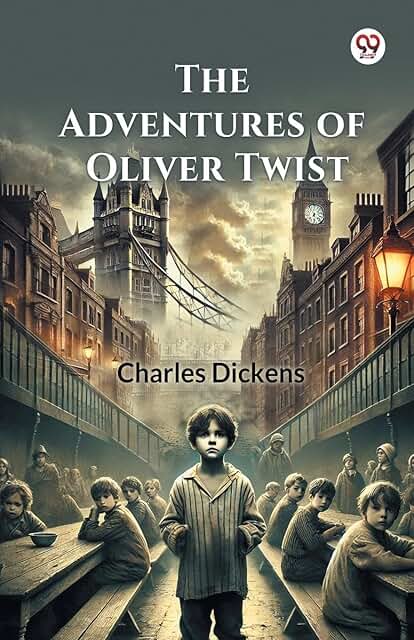
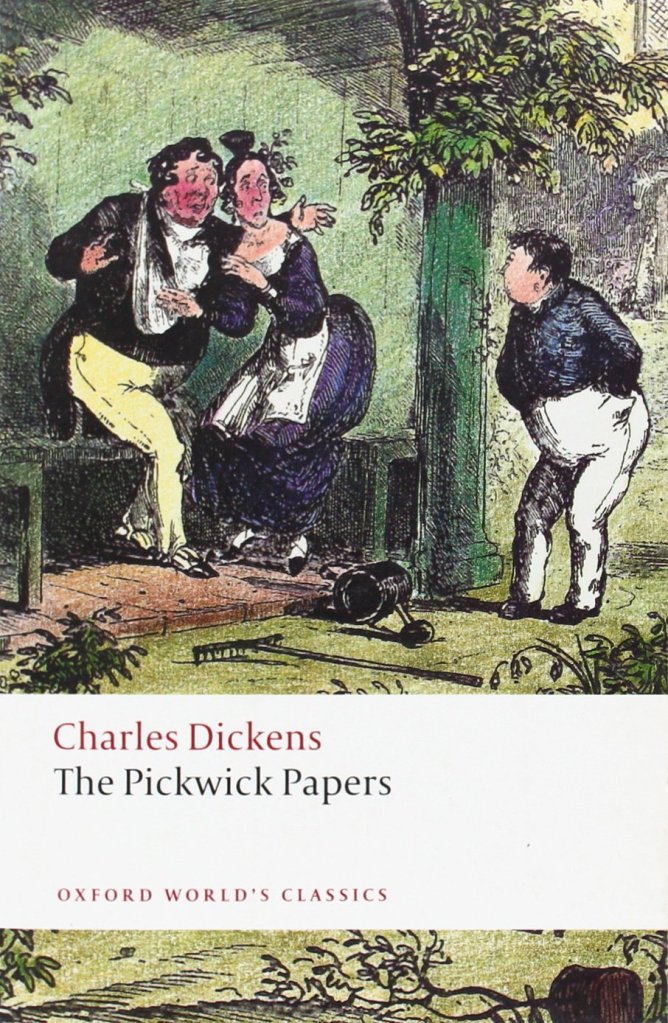




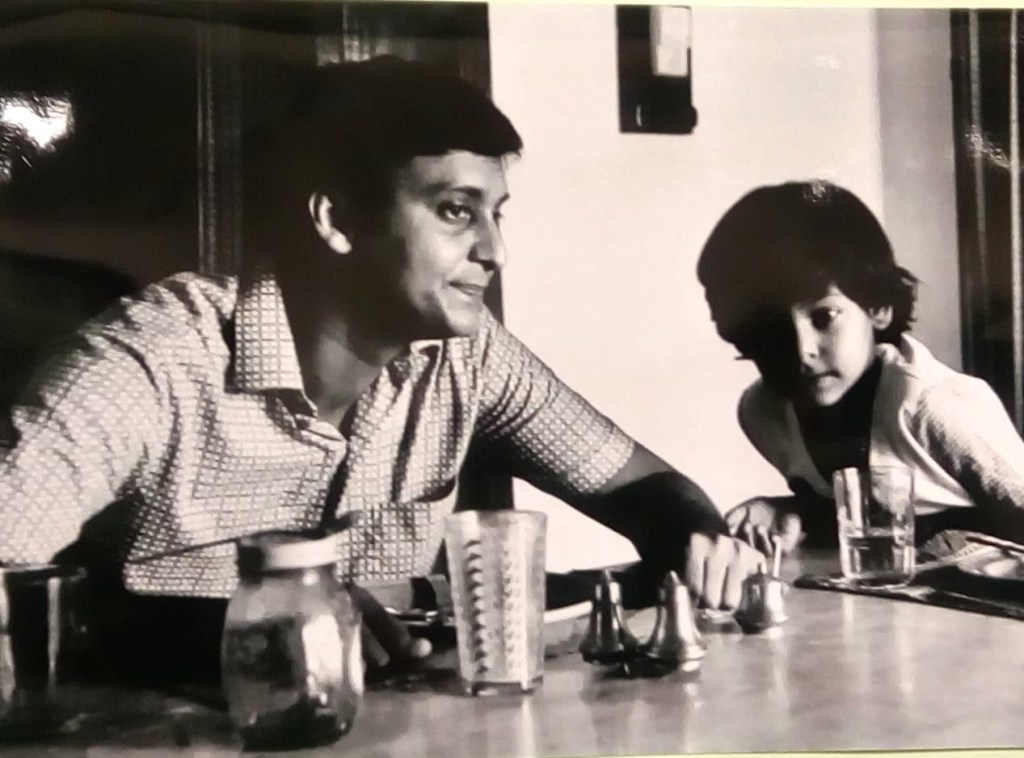

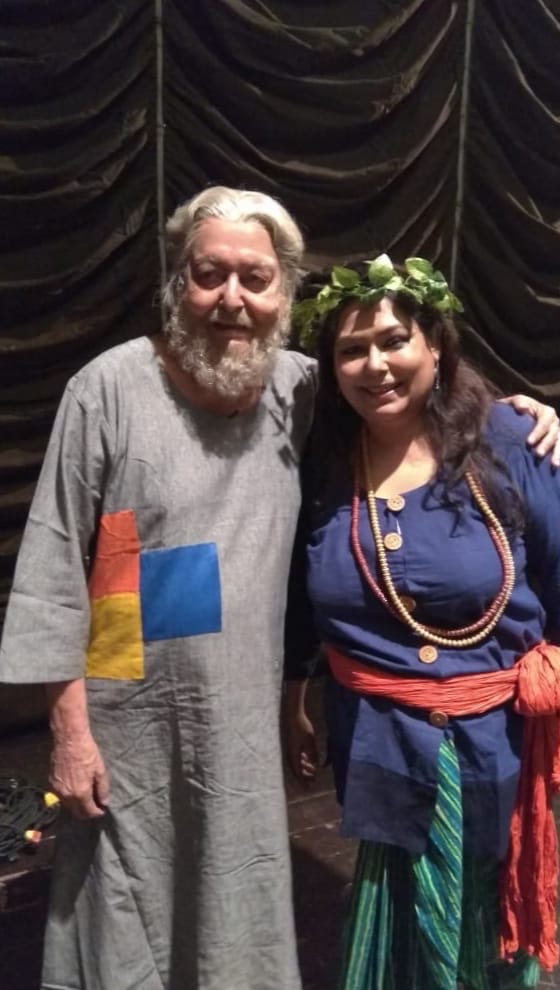

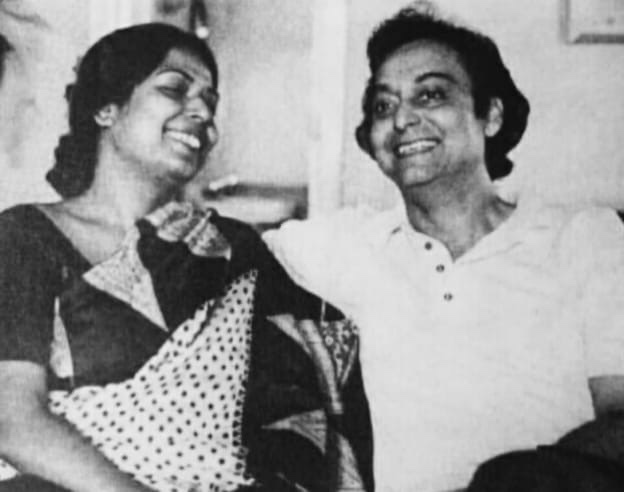
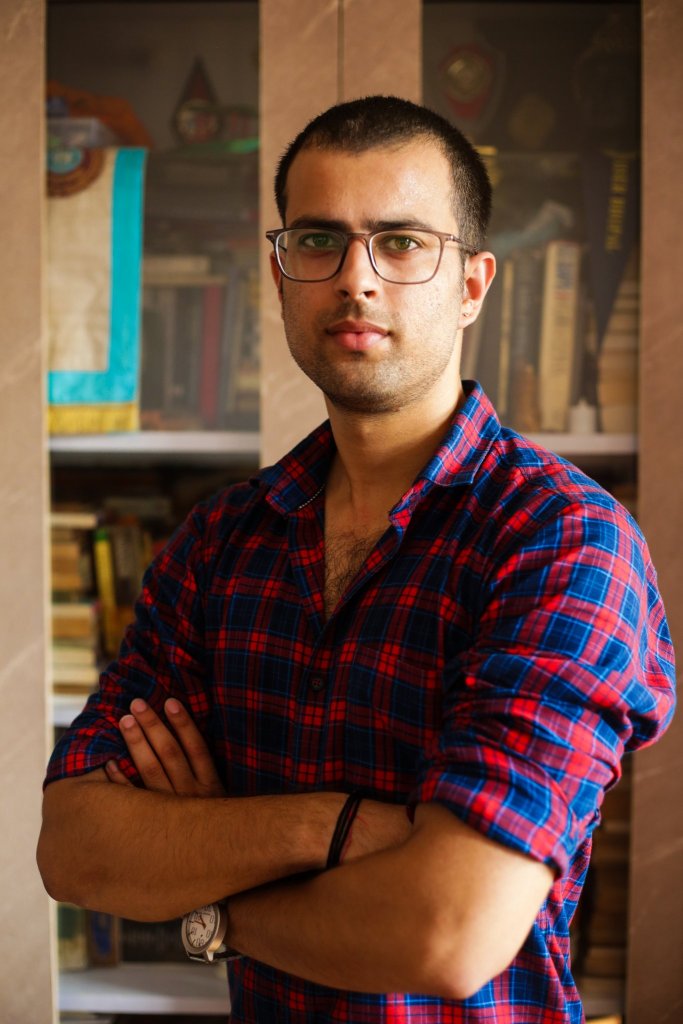
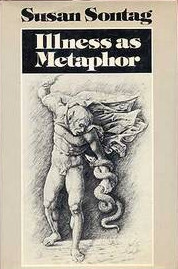
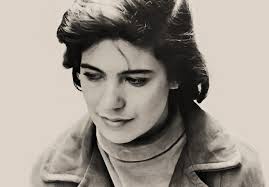
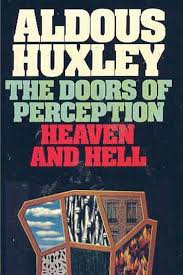
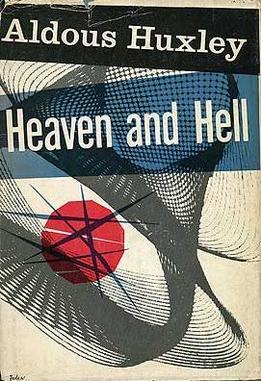
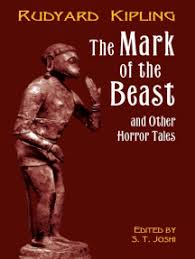
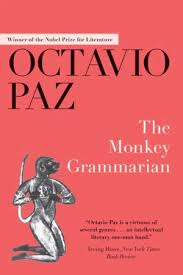


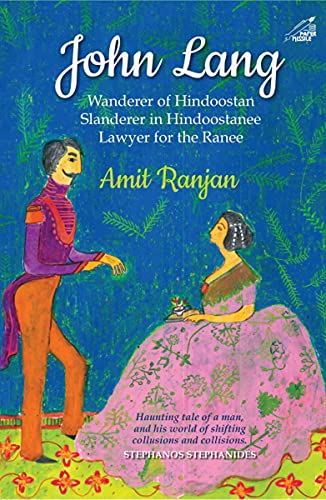

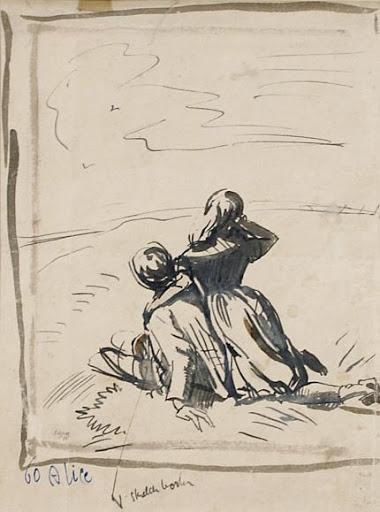
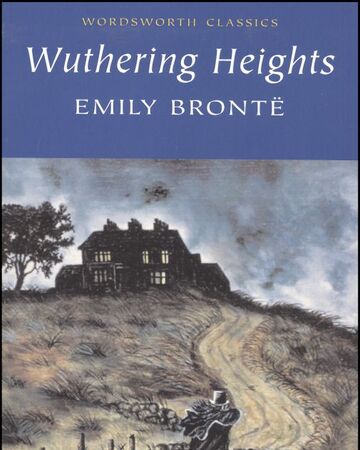
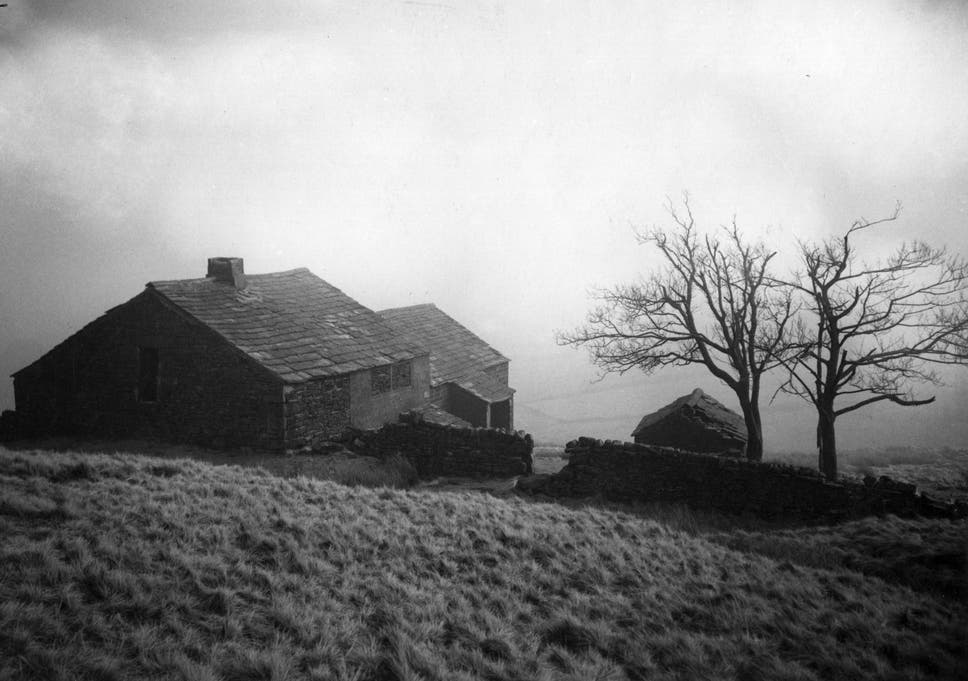
 Borderless