Categories
Poetry

Found in Translation: Hrushikesh Mallick’s Poems

Five poems by Hrushikesh Mallick have been translated from Odia by Snehaprava Das

AFTER THEY LEAVE     

After they leave,
The tree in the midst of a bare field
Stands forlorn.
Not a single bird,
Nor the sound of chirping anywhere
Not a leaf flutters in the breeze,
No one speaks a word
After they leave.

The world is a meaningless void
When they are not there.
Flowers bloom and wither aimlessly.
Festive seasons come and depart.
The privileged and the poor come and go
Without making an impact.
Silence reigns everywhere and around
When they are not there.

Living in a pattern,
Like, in every moth-hour
‘Chhatu bhai’ riding back
From the village market, ringing the bicycle bell,
Or, farmers sitting on a platform in the evenings
And deciding which patch of the land
Would be plowed next morning,
Like, the moon coming up routinely
At measured intervals,
And discussions centering around
How ‘Gaya-bhai’
Escaped the wrath of the village-goddess
Last night by a sheer miracle.
Routine life continues
Like rice cooking tender in the kitchen-hearth
While cow-dung cakes are put
To smoulder in the cowsheds.
The regular pattern of living
Is dull and cheerless
In their absence.
Who are they, then? Who indeed?
They are the fragrance of the paddy-buds
In the farmlands by the hillside,
They are the Siju bushes that
Grow under the eaves in the backyard,
They are the sound of the clearing of throat
That inspires courage in a fearful heart
On a dark pathway,
They are the drumbeats floating in
In gentle waves from the neighbouring village,
They are the pallbearers that twine ropes
To make a pyre;
And, after they leave life loses its meaning!

WHEN THERE IS NO GOD

Once you join your palms
sitting on the bed
while going to sleep
or, as you wake up,
worries stop disturbing
your calm.
You are assured of the presence
of someone called God
who might break your fall.
But these are the bleak days
of God’s absence,
these days the headless bodies
saunter down the streets of the night
whispering to one another.
The dogs howl in a chorus.
The sounds of sermons or devotional songs
do not float in from the mandapa,
the air throbs instead with the siren
of ambulances.
As such belief is that
the God that holds
the trident and the mace
is omnipotent.
Why does that God stand dull
and lifeless in the temple now?
Does an idol in any temple
have the power now
even to chase away the stray dogs?
Is there a God in any shrine
who can hold open
its closed doors and by some miracle
turn auspicious
all that is ominous?
In these dark days when
God is not there,
if we take a fall,
we have to get up on our own.
We have to lean on our own mettle
and our own merit
in the moments of death or survival.
In the absence of God,
we have to commit ourselves
to the service of the distressed,
to feed the hungry
and nurse the sick,
give shelter to the homeless.
It’s time we repented our indulgences
without religious extravaganza.
It’s time we stopped
pinning blind faith in
the figures of stone.

THE LONE GIRL

The lone girl has nowhere to go,
She sits alone lamenting her loss;
Once upon a time she had
a country like we all have,
it was called Syria.
Its lofty national flag
soared to the clouds.
It had a national anthem that
sparked the spirit of martyrdom
in its people!

In the evenings,
perched on the shoulders
of her babajaan,
she watched the moon
in the sky of her homeland;
heard stories from her mother
that set her eyes rolling in wonder;
that country, her homeland is now in ruins
a vast, barren expanse,
littered with severed limbs.
Its air is sick with the smell of
tons and tons of explosives
there lay piles of disfigured childhood
in pathetic abandon
to tell the tale of a country that was!

No one had ever warned the girl
that her tomorrows will be spent
in makeshift shelters under the tents,
nor did she know that
her palms would join to make begging bowl,
and there would be merchants
to trade on
the perfumed void in her.
No one predicted that she would grow up
believing in hatred instead of love!
And when she would learn to ask
the whereabouts of her parents
the whole civilized world will
keep mute.

EYES

Just as I believed that all poems
which could have been written on ‘eyes’
are already written
your ‘eyes’ flashed before me
and what an amazing lot of trees
laden with fruits and flowers
and birds, they held!
I wondered where did you flick
your deep, boundless glance
from the corridors of the hospital
like a handful of floral offerings.
The anguish that glance held
was like the lost look in the eyes of a kid
who was rudely denied a father’s lap,
like a fresh bloom shying away
from the eyes of a honeybee
or, a streak of lightning flashing
in the overcast noon-sky
like a poor man’s last hope.
Your eyes are like the lines of a poem
that unfold a new meaning
at every other reading.
Your eyes,
like a strange horizon captures
the crimson of the dawn
and the gleam of a red silk sari
in a perfect balance!
Your eyes could transform a waste land
to a paddy field in luxuriant green,
at times they are moist with muffled sobs,
or, like a spear smeared in blood, at others!
What is more beautiful --
the bright loquacity in your eyes
or the rain-washed sunshine,
the mysterious mutter in your eyes
or a village enveloped in a wispy darkness?

THE HONEYBEE DOES NOT KNOW

The son writes poems.
His mother does not know.
‘You are rotting yourself through writing,’
She complains,
‘Did you write them?’
A girl-friend, looks at him in wonder,
‘Can you swear to that?’ she asks.
The boy writes poems
The street where he lives does not know it,
Nor does the village!
His young face does not sport a beard,
Nor have the creases appeared on his forehead.
There was not that distant look
Like the faraway stars in the eyes,
How could then he be a poet?
Who would believe that?
A man who picks up a quarrel with the fisherwoman
Could recite the brajabuli,
Or, the fellow weaving clothes at the loom
Can sing lines from Tapaswini

A poet is not supposed to have a home.
He sits under the trees
Amidst the anthills.
A poet hacks off the branch he sits on.
He does not have that worldly intelligence.
A poet is not pragmatic.
He begins a line at the wrong point
And ends it at a wrong one too.
A good poet forgets the right way of chanting
The mantra that would protect him from dangers
While actually facing them.

The mother does not know that
Her son is a poet; nor does the father.
The owner of the hut where the poet takes shelter
Does not know his tenant to be a poet.
The poet’s voice does not know
It belongs to a poet.
The reflection has no idea it is the poet’s image.
The lizard exploring the shelves
Does not know the ‘Award of Padmashree’
Carefully preserved there,
Was won by the poet.
The honeybee that circles the graves
Does not know that
The lines engraved on the tomb
Were the epitaph for the poet.

Glossary:
Mandapa is a pavilion.
Brajabuli is a dialect based on Maithali that was popularised for poetry by the medieval poet Vidyapati.
Tapaswini: A famous long poem by the 19th century Odia poet Gangadhar Meher.
.

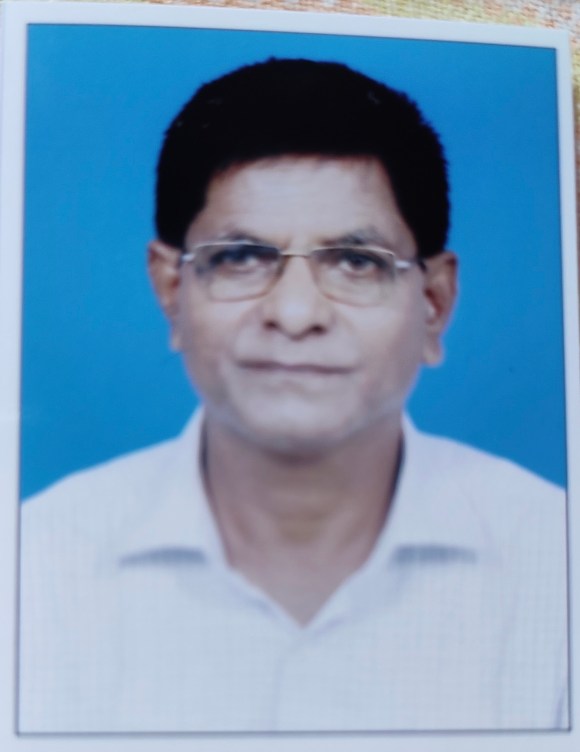
Dr Hrushikesh Mallick is a reputed Odia poet and writer. He has 13 Poetry collections. His first book in 1987 heralded a new era in Odia poetry. He has received Odisha Sahitya Akademi Award (1988), Sarala Award (2016) and Central Sahitya Akademi Award (2021).He is also an eminent literary critic and fiction writer. He served as President of Odisha Sahitya Akademi (2021-2024). He has been a professor of Odia language and literature from 2012.

Dr.Snehaprava Das, is a noted writer and a translator from Bhubaneswar, Odisha. She has five books of poems, three of stories and thirteen collections of translated texts (from Odia to English), to her credit. 

PLEASE NOTE: ARTICLES CAN ONLY BE REPRODUCED IN OTHER SITES WITH DUE ACKNOWLEDGEMENT TO BORDERLESS JOURNAL

Click here to access the Borderless anthology, Monalisa No Longer Smiles

Click here to access Monalisa No Longer Smiles on Kindle Amazon International
Categories
Celebrating Translations

Transmitting across Cultures

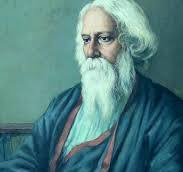
Rabindranath Tagore (1861-1941)

Translations are like bridges. Three years ago, we decided to start a bridge between Tagore’s ideas and the world that was unfamiliar with his language, Bengali. He has of course written a few pieces in Brajbuli too. We started our journey into the territory of Tagore translations with Aruna Chakravarti’s Songs of Tagore. Now we have expanded hugely this section of our translations with many prose pieces and more translations of his lyrics and poetry by writers like Aruna Chakravarti, Fakrul Alam, Radha Chakravarty, Somdatta Mandal, Himadri Lahiri, Ratnottama Sengupta, Chaitali Sengupta and Nishat Atiya other than our team’s efforts. To all these translators our heartfelt thanks. We share with you their work celebrating one of the greatest ideators of the world.

Prose

Stories

.Aparichita by Tagore :This short story has been translated as The Stranger by Aruna Chakravarti. Click here to read. 

Musalmanir Galpa (A Muslim Woman’s Story): This short story has been translated by Aruna Chakravarti. Click here to read.

One Small Ancient Tale: Rabindranath Tagore’s Ekti Khudro Puraton Golpo (One Small Ancient Tale) from his collection Golpo Guchcho ( literally, a bunch of stories) has been translated by Nishat Atiya. Click here to read.

 Bolai: Story of nature and a child translated by Chaitali Sengupta. Click here to read.

Humorous Skits

(All translated by Somdatta Mandal)

 Playlets by Rabindranath Tagore : Click here to read.

 The Ordeal of Fame: Click here to read.

The Funeral: Click here to read. 

The Welcome: Click here to read.

 The Treatment of an Ailment: Click here to read.

Non-fiction

Baraf Pora (Snowfall) : This narrative gives a glimpse of Tagore’s first experience of snowfall in Brighton and published in the Tagore family journal, Balak (Children), has been translated by Somdatta Mandal . Click here to read.

 Travels & Holidays: Humour from Rabindranath: Translated from the original Bengali by Somdatta Mandal, these are Tagore’s essays and letters laced with humour. Click here to read.

Himalaya Jatra ( A trip to Himalayas) :This narrative about Tagore’s first trip to Himalayas and beyond with his father, has been translated from his Jibon Smriti (1911, Reminiscenses) by Somdatta Mandal. Click here to read.

Raja O Praja or The King and His Subjects, an essay by Tagore, has been translated by Himadri Lahiri. Click here to read.

 Library: A part of Bichitro Probondho (Strange Essays) by Rabindranath Tagore, this essay was written in 1885, translated by Chaitali Sengupta. Click here to read.

Book Excerpts

The Parrot’s Tale: Excerpted from Rabindranth Tagore. The Land of Cards: Stories, Poems and Plays for Children, translated by Radha Chakravarty, with a foreword from Mahasweta Devi. Click here to read

Rabindranath Tagore Four Chapters: An excerpt from a brilliant new translation by Radha Chakravarty of Tagore’s controversial last novel Char Adhyay. Click here to read.

Farewell Song :An excerpt from Radha Chakravarty’s translation of Tagore’s  novel. Click here to read.

An excerpt from Kobi’ and ‘Rani’: Memoirs and Correspondences of Nirmalkumari Mahalanobis and Rabindranath Tagore, translated by Somdatta Mandal, showcasing Tagore’s introduction and letters. Click here to read.

 Letters from Japan, Europe & America :An excerpt from letters written by Tagore from Kobi & Rani, translated by Somdatta Mandal. Click hereto read.

Gleanings of the Road: Book excerpt brilliantly translated by Somdatta Mandal. Click here to read.

Songs and Poems

Songs of Seasons: Translated by Fakrul Alam

Bangla Academy literary award winning translator, Dr Fakrul Alam, translates seven seasonal songs of Tagore. Click here to read.

  • Garland of Lightening Gems (Bajromanik Diye Gantha
  • In The Thunderous Clouds (Oi Je Jhorer Meghe
  • The Tune of the New Clouds (Aaj Nobeen Megher Shoor Legeche)
  • The Sky’s Musings (Aaj Akashe Moner Kotha
  • Under the Kadamba Trees (Esho Nipo Bone
  • Tear-filled Sorrow (Ashrubhara Bedona)

Endless Love: Tagore Translated by Fakrul Alam

Ananto Prem (Endless Love) by Tagore, translated from Bengali by Professor Fakrul Alam. Click here to read.

Giraffe’s Dad by Tagore

Giraffer Baba (Giraffe’s Dad), a short humorous poem by Tagore, has been translated from Bengali by Professor Fakrul Alam. Click here to read. 

Oikotan or Harmonising

Oikotan (Harmonising) has been translated by Professor Fakrul Alam and published specially to commemorate Tagore’s Birth Anniversary. Click hereto read.

Monomor Megher O Shongi (or The Cloud, My friend) has been translated by Professor Fakrul Alam. Click here to read. 

Professor Fakrul Alam has translated Tomra Ja Bolo Tai BoloHridoy Chheele Jege and Himer Raate — three songs around autumn from Click here to read.

Tagore’s Achhe Dukhu, Achhe Mrityu(Sorrow Exists, Death Exists) has been translated from Bengali by Fakrul Alam. Click here to read.

Colour the World: Translated by Ratnottama Sengupt: Rangiye Diye Jao, a song by Tagore, transcreated by Ratnottama Sengupta. Click here to read.

Bhumika (Introduction) by Tagore has been translated  by Ratnottama Sengupta. Click here to read.

On behalf of Borderless Journal 

Esho, He Baisakh, Esho Esho (Come Baisakh: A song to welcome the Bengali New Year) Click here to read.

Tagore Songs in Translation. Click here to read the next five.

  • Kothao Amar Hariye Jawa Nei Mana ( Losing myself)
  • Akash Bhora Shurjo Tara (The Star-studded Sky)
  • Krishnokoli ( Inspired by a girl who lives in a village)
  • Phoole Phoole Dhole Dhole (The Swaying Flowers)
  • Shaongagane Ghora Ghanaghata (Against the Monsoon Skies, Brajbuli to English)

Tagore’s Diner Sheshe Ghoomer Deshe (At the close of the day, in the land of sleep).Click here to read the translation.

Tagore’s Amar Shonar Horin Chai (I want the Golden Deer). Click here to read the translation.

Tagore’s long poem, Dushomoy (translated as Journey of Hope though literally the poem means bad times). Click here to read the poem in English and listen to Tagore’s voice recite his poem in Bengali. We also have a sample of the page of his diary where he first wrote the poem as ‘Swarga Pathhe'(On the Path to Heaven).

Deliverance by Tagore: ‘Tran’ by Tagore, a prayer for awakening of the subjugated. Click here to read the translation.

Abhisar by Tagore: A story poem about a Buddhist monk by Rabindranath Tagore in Bengali. Click here to read the translation.

Amaar Nayano Bhulano Ele describes early autumn when the festival of Durga Puja is celebrated. Click here to read the translation from Bengali.

Morichika or Mirage by Tagore is an early poem of the maestro that asks the elites to infringe class divides and mingle. Click here to read the translation from Bengali. 

 Purano Sei Diner Kotha or ‘Can old days ever be forgot?’ based on Robert Burn’s poem, Auld Lang Syne. Click here to read the translation.

 Aaji Shubhodine Pitaar Bhabone or On This Auspicious Day, a Brahmo Hymn. Click here to read the translation.

Raatri Eshe Jethay Meshe or Where the Night comes to Mingle , a song written in 1910. Click here to read the translation.

 Anondodhara Bohichche Bhubone (The Universe reverberates with celestial ecstasy), a song …Click here to read the translation.

Ebar Phirao More (Take me Back) a poem… Click here to read the translation.

Lukochuri has been translated from Bengali as Hide and Seek. Click here to read the translation.

Taal Gaachh or The Palmyra Tree, a lilting light poem, has been translated from Bengali. Click here to read the translation.

Nobobarsha or New Rain, a poem describing the rain transports one to Tagore’s world. Click here to read the translation.

Hobe Joye has been translated as  Song of Hope for that is exactly what it is in spirit. Click here to read.

Eshechhe Sarat, a poem describing autumn in Bengal, has been translated as Autumn. Click here to read the translation.

Aalo Amar Aalo is a paean to light and its impact on us. Click here to read the translation.

Tomar Shonkho Dhulay Porey (your conch lies in the dust), is an inspirational poem to shed apathy. Click here to read the translation.

 Prothom Diner Shurjo (The Sun on the First day) is one of the last poems of Tagore. Click here to read the translation.

 Banshi or Flute is an inspirational poem delving into the relationship with the divine muse. Click here to read the translation.

 Somudro or Ocean has probably been written during Tagore’s travels. Click here to read the translation.

 Borondala (Basket of Offerings) is a poem of ecstasy. Click here to read the translation.

Nobo Borsho or New Year, is a poem written on the Bengali New Year, urging people to rid themselves of past angst. Click here to read the translation.

Bhoy hote tobo is the first Birthday Song by Tagore, a poem written in 1899. Click here to read the translation.

Pran or Life, a poem that reflects the poets outlook on life. Click here to read the translation.

Megh or Cloud is a poem about clouds with spiritual undertones reflecting transience . Click here to read.

Proshno or Question  with its poignant overtones continues relevant to this date. Click here to read.

Sharat or Autumn, describes Bengal in the season of sharat or early autumn. Click here to read.

Amra Bedhechhi Kasher Guchho (We have Tied Bunches of Kash) is a hymn to an autumnal goddess. Click here to read. 

Tomar Kachhe Shanti Chabo Na (I Will Not Pray to You for Peace) is a song that inspires to survive the dark phases of life. Click here to read.

Tagore’s 1400 Saal (The Year 1993), was read in London in 1993, including Tagore’s own rather brief translation and had a response from Nazrul. Click here to read.

Prarthona or Prayer is a poem in which the poet seeks inner strength. Click here to read.

Tagore’s Dhoola Mandir or Temple of Dust is a poem that questions norms, even from the current times. Click here to read.

Phalgun or Spring  describes spring in Bengal. Click here to read.

Pochishe Boisakh (25th of Baisakh) is a birthday poem Tagore wrote in 1922 and from he derived the lyrics of his last birthday song written in 1941. Click here to read.

Chhora or Rhymes , a poem describing the creative process, it was written in 1941. Click here to read.

Okale or Out of Sync gives a glimpse of how out of sync situations are also part of our flow. Click here to read.

Mrityu or Death dwells on Tagore’s ability to accept death as a reality. Click here to read.

 Olosh Shomoy Dhara Beye (Time Flows at an Indolent Pace) reflects his perspective on history. Click here to read.

Suprobhat or Good Morning gives an unusual interpretation to morning. Click here to read.

Book Excerpts

Songs of TagoreSeven songs translated by Aruna Chakravarti from a collection that started her on her litrary journey and also our Tagore translation section. Click here to read.

Songs from Bhanusingher Padabali: Translated by Radha Chakravarty: Two songs by Tagore written originally in Brajabuli, a literary language developed essentially for poetry, has been translated by Radha Chakravarty. Click here to read.

Categories
Celebrating Translations

We are the World

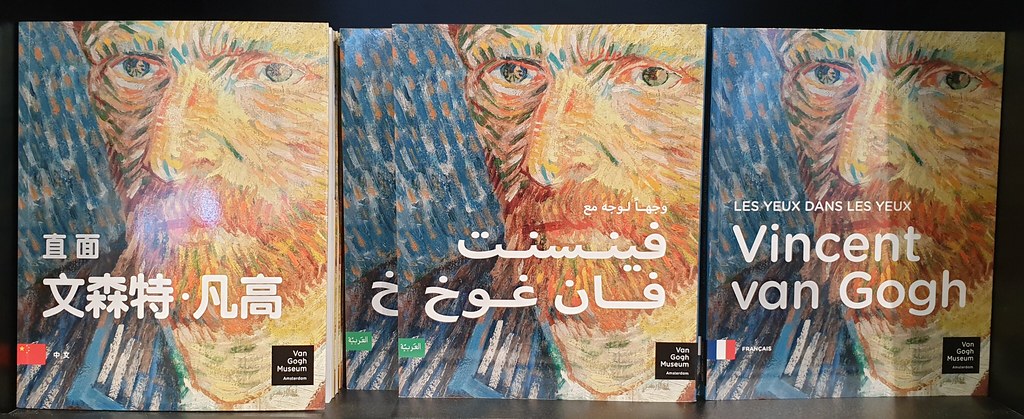
Vincent Van Gogh written is different scripts. Courtesy: Creative Commons

The whole world opens up in the realm of ideas that have existed wafting and bridging across time and space. Sometimes they find conduits to come to the fore, even though they find expression in different languages, under varied cultural milieus. One way of connecting these ideas is to translate them into a single language. And that is what many have started to do. Celebrating writers and translators who have connected us with these ideas across boundaries of time and place, we bring to you translated writings in English from twenty eight languages on the International Translation Day, from some of the most iconic thinkers as well as from contemporary voices. 

Prose

Tagore’s short story, Aparichita, has been translated from Bengali as The Stranger by Aruna Chakravarti. Click here to read. 

Travels & Holidays: Humour from Rabindranath, have been translated from Bengali by Somdatta Mandal. Click here to read.

Hena, a short story by Nazrul, has been translated from Bengali by Sohana Manzoor. Click hereto read.

Munshi Premchand’s Balak or the Child has been translated from Hindi by Anurag Sharma Click here to read.

Munshi Premchand’s Pus Ki Raat or A Frigid Winter Night  has been translated from Hindi by C Christine Fair. Click here to read.

Nadir Ali’s The Kabbadi Player has been translated from Punjabi by Amna Ali. Click here to read.

Kamaleswar Barua’s Uehara by  has been translated from Assamese and introduced by Bikash K. Bhattacharya. Click here to read.

S Ramakrishnan’s Muhammad Ali’s Singnature has been S. Ramakrishnan, translated from Tamil by Dr B. Chandramouli. Click here to read. 

PF Mathews’ Mercy,  has been translated from Malayalam by Ram Anantharaman. Click here to read.

Road to Nowhere, an unusual story about a man who heads for suicide, translated from Odiya by the author, Satya Misra. Click here to read.

An excerpt from A Handful of Sesame by Shrinivas Vaidya, translated from Kannada by Maithreyi Karnoor. Click here to read.

Writings from Pandies’ Corner highlight the ongoing struggle against debilitating rigid boundaries drawn by societal norms. Each piece is written in Hindustani and then translated by a volunteer from Pandies’ in English. Click here to read.

Rakhamaninov’s Sonata, a short story by Sherzod Artikov, translated from Uzbeki by Nigora Mukhammad. Click here to read.

Of Days and Seasons, a parable by the eminent Dutch writer, Louis Couperus (1863-1923), translated by Chaitali Sengupta. Click here to read.

The Faithful Wife, a folktale translated from Balochi by Fazal Baloch. Click here to read.

An excerpt from Ramy Al-Asheq’s Ever Since I Did Not Die, translated from Arabic by Isis Nusair, edited by Levi Thompson. The author was born in a refugee camp. Click here to read.

Poetry

Two songs by Tagore written originally in Brajabuli, a literary language developed essentially for poetry in the sixteenth century, has been translated by Radha Chakravarty. Click here to read. 

Rebel or ‘Bidrohi’, Nazrul’s signature poem,Bidrohi, translated from Bengali by Professor Fakrul Alam. Click here to read.

Banlata Sen, Jibananada Das’s iconic poem, translated from Bengali by Professor Fakrul Alam. Click here to read. 

Poetry of Michael Madhusudan Dutt has been translated from Bengali by Ratnottama Sengupta. Click here to read.

Our Children, a poem by well-known Iranian poet, Bijan Najdi, has been translated from Persian by Davood Jalili. Click here to read.

Akbar Barakzai’s Be and It All Came into Being has been translated from Balochi by Fazal Baloch. Click here to read.

Biju Kanhangad’s The Girl Who Went Fishing has been translated from Malayalam by Aditya Shankar. Click here to read.

Jitendra Vasava’s Adivasi Poetry,  translated from the Dehwali Bhili via Gujarati by Gopika Jadeja. Click here to read.

Sokhen Tudu’s A Poem for The Ol Chiki, translated from the Santhali by Hansda Sowvendra Shekhar. Click here to read.

Thangjam Ibopishak’s Gandhi & Robot translated from the Manipuri by Robin S Ngangom. Click here to read.

 Rayees Ahmad translates his own poem, Ab tak Toofan or The Storm that Rages, from Urdu to English. Click here to read.

Poetry by Sanket Mhatre has been translated by Rochelle Potkar from Marathi to English. Click here to read.

An excerpt from Evening with a Sufi: Selected Poemsby Afsar Mohammad, translated from Telugu by Afsar Mohammad & Shamala Gallagher. Click hereto read.

Ihlwha Choi’s Universal Language written at Santiniktan, translated from Korean by the poet himself. Click here to read.

Sangita Swechha’s Motherhood: A Tiny Life inside Me has been translated from Nepali by Hem Bishwakarma. Click here to read.

Rosy Gallace’s Two poems from Italy  have been translated from Italian by Irma Kurti. Click here to read.

Poetry in Bosnian written and translated from Bosnian by Maid Corbic. Click here to read.

Lesya Bakun translates three of her own poems from Ukranian and Russian to English. Click here to read.

Poems from Armenia by Eduard Harents translated from Armenian by Harout Vartanian. Click here to read.