Categories
Review

The Dilemma of an Indian Liberal

Book Review by Bhaskar Parichha
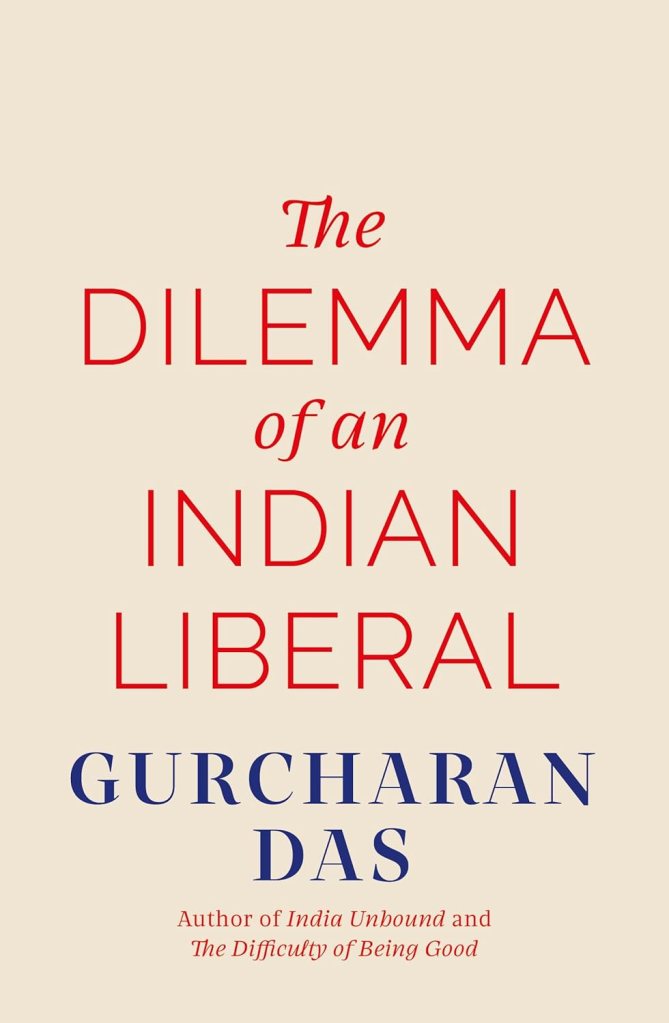
Title: The Dilemma of an Indian Liberal 

Author: Gurcharan Das 

Publisher: Speaking Tiger Books

One predicament faced by a liberal individual from India is the challenge of navigating a society deeply rooted in traditional values and conservative ideologies. India, with its diverse cultural and religious landscape, often presents a clash between progressive ideas and age-old customs.

In The Dilemma of an Indian Liberal, the author, Gurcharan Das, recounts his own professional and intellectual journey: how and why he became a liberal. While telling his story, he also narrates the story of a nation struggling—still— to become a successful liberal democracy—the late promise and its seeming betrayal, but also the possibility of course correction.

Das has dedicated his entire life to advocating for economic and political freedom. In his writings, he emphasises that liberal democracies and free markets have become the most logical and effective way to organise public life over the past two centuries. Having witnessed India’s transition from a stifling “license raj” to a liberal order in the 1990s, Das celebrated the country’s progress as market reforms and a maturing democratic process brought prosperity and dignity to millions who had been deprived of both for many years. He documented this remarkable transformation in his renowned book, India Unbound (2012) However, after three decades, it appears that the once bright light of progress is dimming.

The foremost pickle for liberals is the resistance and backlash they face while advocating for social change. Traditional norms and beliefs, deeply ingrained in Indian society, can be resistant to progressive ideas such as gender equality, LGBTQ+ rights, and freedom of expression. Liberals often battle continuously to challenge these norms and push for a more inclusive and tolerant society.

Another quandary faced by open-minded individuals in India is the threat to their personal safety and freedom of expression. Speaking out against societal injustices, criticising the government, or advocating for marginalised communities can often lead to harassment, threats, or even violence. The rise of online trolling and hate speech further exacerbates this predicament, making it difficult for liberals to express their opinions without fear of reprisal.

Furthermore, it is a challenge to find like-minded communities and support networks. In a society where conservative ideologies dominate, liberals can find themselves isolated when looking for shared values and beliefs. This lack of support can make it challenging to sustain their activism and maintain their motivation in the face of adversity.

Then there is the dilemma of balancing their personal beliefs with the need to respect and understand the cultural and religious diversity of the country. While advocating for progressive ideas, they must also navigate the delicate balance of not offending or disrespecting deeply held beliefs and traditions. This predicament requires a nuanced approach to ensure that their advocacy is effective without alienating the very communities they seek to empower.

In recent years, liberalism in India has been experiencing a decline, reflecting a broader global trend. The society has become increasingly polarised, with different factions holding divergent views on various social, economic, and political issues. This growing division has created fertile ground for the rise of populism, which has gained significant momentum in the country. One of the key debates that currently dominates the Indian discourse revolves around the perceived conflict between economic freedom and political freedom.

There are differing opinions on the matter, with some asserting that giving priority to economic freedom, such as advocating for free markets and deregulation, is crucial for a nation’s growth and success. They maintain that a thriving economy will ultimately result in political stability and individual liberties. Conversely, advocates for political freedom argue that without strong democratic institutions and safeguards, economic advancement can be superficial and unfair. They stress the significance of safeguarding civil rights, promoting social justice, and empowering marginalized groups. They firmly believe that political freedom is a fundamental requirement for a fair and inclusive society.

In the current polarised climate, the liberal perspective is often marginalised or dismissed as being indecisive or weak. Liberal individuals may find it difficult to navigate the political landscape, as they strive to uphold their principles while also engaging with the diverse viewpoints prevalent in society.

This book covers it all from resistance to personal safety concerns, finding support networks, navigating cultural sensitivities and  also navigating a complex landscape to bring about the desired transformation from within the cultural milieu. Addressing urgent needs, this enlightening narrative is written with strong conviction, deep insight, and scholarly expertise, all presented with remarkable clarity. It is a must-read for every person who is concerned about the future of democracy.

.

Bhaskar Parichha is a journalist and author of UnbiasedNo Strings Attached: Writings on Odisha and Biju Patnaik – A Political Biography. He lives in Bhubaneswar and writes bilingually. Besides writing for newspapers, he also reviews books on various media platforms.

.

PLEASE NOTE: ARTICLES CAN ONLY BE REPRODUCED IN OTHER SITES WITH DUE ACKNOWLEDGEMENT TO BORDERLESS JOURNAL

Click here to access the Borderless anthology, Monalisa No Longer Smiles

Click here to access Monalisa No Longer Smiles on Amazon Internation

Categories
Contents

Borderless, May 2024

Painting by Sohana Manzoor

Editorial

Though I Sang in my Chains like the Sea… Click here to read

Translations

Three poems by Nazrul have been translated by Niaz Zaman from Bengali. Click here to read.

Projapoti (Butterfly) by Nazrul has been translated by Fakrul Alam from Bengali. Click here to read.

Human by Manzur Bismil has been translated by Fazal Baloch from Balochi. Click here to read.

Now, What I Can Do by Ihlwha Choi has been translated from Korean by the poet himself. Click here to read.

Chhora or Rhymes by Tagore has been translated from Bengali by Mitali Chakravarty. Click here to read.

Poetry

Click on the names to read the poems

Michael Burch, Kirpal Singh, Ryan Quinn Flanagan, Shamik Banerjee, Stuart McFarlane, Mary Tina Shamli Pillay, George Freek, Radhika Soni, Craig Kirchner, Tapas Sarkar, Stephen Philip Druce, Anjali Chauhan, Michael Lee Johnson, Milan Mondal, Rhys Hughes

Poets, Poetry & Rhys Hughes

In Dylan on Worm’s Head, Rhys Hughes describes a misadventure that the Welsh poet had while hiking as a tribute to him on Dylan Thomas Day. Click here to read.

Musings/Slices from Life

Hooked for Life and Beyond…

Ravi Shankar looks at the computer revolution in a light vein. Click here to read.

Sundays are Only for Some…

Snigdha Agrawal introduces us to the perspectives of a child of parents who iron clothes for the middle class in India. Click here to read.

Eternalising the Beauty of Balochistan

Munaj Gul gives an in memoriam for a photographer from Balochistan. Click here to read.

Musings of a Copywriter

In Is this a Dagger I See…?, Devraj Singh Kalsi gives a tongue-in-cheek account of a writer’s dilemma. Click here to read.

Notes from Japan

In A Golden Memory of Green Day in Japan, Suzanne Kamata tells us of a festival where she planted a tree in the presence of the Japanese royalty. Click here to read.

Essays

When the Feminist and the Revolutionary Met

Niaz Zaman writes of the feminist leanings of Nazrul’s poetry in context of Madam Roquiah, a contemporary of the poet. Click here to read.

Metaphorical Maladies

Satyarth Pandita looks into literature around maladies. Click here to read.

The Storied Past of Khiva

Gita Viswanath takes us to the heritage city in Uzbekistan. Click here to read.

Akbar Barakzai: A Timeless Poet

Hazaran Rahim Dad explores the universal poetry of Akbar Barakzai. Click here to read.

Stories

Don Quixote’s Paradise

Farouk Gulsara takes us through a dystopian adventure. Click here to read.

The Buyback

Devraj Singh Kalsi gives a tale of reconnecting with the past. Click here to read.

Pier Paolo’s Idyll

Paul Mirabile traces a story of a young boy in the outskirts of Rome. Click here to read.

Conversations

Ratnottama Sengupta in conversation with Sohini Roychowdhury, who tries to bridge cultures with dance. Click here to read.

A brief overview of Rajat Chaudhuri’s Spellcasters and a discussion with the author on his book. Click here to read.

Book Excerpts

An excerpt from Selected Essays: Kazi Nazrul Islam, translated by Radha Chakravarty from Bengali. Click here to read.

An excerpt from Aruna Chakravarti’s Jorsanko. Click here to read.

Book Reviews

Somdatta Mandal reviews Radha Chakravarty’s translation of Selected Essays: Kazi Nazrul Islam. Click here to read.

Malashri Lal reviews Lakshmi Kannan’s Nadistuti: Poems. Click here to read.

Ajanta Paul reviews Bitan Chakraborty’s The Blight and Seven Short Stories. Click here to read.

Bhaskar Parichha reviews Will Cockrell’s Everest, Inc. The Renegades and Rogues who Built an Industry at the Top of the World. Click here to read.

.

Click here to access the Borderless anthology, Monalisa No Longer Smiles

Click here to access Monalisa No Longer Smiles on Amazon International

Categories
Editorial

Though I Sang in my Chains like the Sea…

      Time held me green and dying
Though I sang in my chains like the sea.

Fern Hill by Dylan Thomas (1914-1953)

Perhaps when Dylan Thomas wrote these lines, he did not know how relevant they would sound in context of the world as it is with so many young dying in wars, more than seven decades after he passed on. No poet does. Neither did he. As the world observes Dylan Thomas Day today — the day his play, Under the Milkwood, was read on stage in New York a few months before he died in 1953 — we have a part humorous poem as tribute to the poet and his play by Stuart McFarlane and a tribute from our own Welsh poet, Rhys Hughes, describing a fey incident around Thomas in prose leading up to a poem.

May seems to be a month when we celebrate birthdays of many writers, Tagore, Nazrul and Ruskin Bond. Tagore’s birthday was in the early part of May in 1861 and we celebrated with a special edition on him. Bond, who turns a grand ninety this year, continues to dazzle his readers with fantastic writings from the hills, narratives which reflect the joie de vivre of existence, of compassion and of love for humanity and most importantly his own world view. His books have the rare quality of being infused with an incredible sense of humour and his unique ability to make fun of himself and laugh with all of us. 

Nazrul, on the other hand, dreamt, hoped and wrote for an ideal world in the last century. The commonality among all these writers, seemingly so diverse in their outlooks and styles, is the affection they express for humanity. Celebrating the writings of Nazrul, we have one of his fiery speeches translated from Bengali by Radha Chakravarty and a review of her Selected Essays: Kazi Nazrul Islam by Somdatta Mandal. An essay from Niaz Zaman dwells on the feminist side of Nazrul while bringing in Begum Roquiah. Zaman has also shared translations of his poetry. Professor Fakrul Alam, who had earlier translated Nazrul’s iconic ‘Bidrohi or Rebel‘, has given us a beautiful rendition of his song ‘Projapoti or Butterfly’ in English.  Also in translation, is a poem by Tagore on the process of writing poetry. Balochi poetry by Manzur Bismil on human nature has been rendered into English by Fazal Baloch and yet another poem from Korean to English by Ilwha Choi.

Reflecting on the concept of a paradise is poetry from Michael Burch. Issues like climate, women, humanity, mourning, aging and more have been addressed in poetry by Shamik Banerjee, Ryan Quinn Flanagan, Milan Mondal, Kirpal Singh, Craig Kirchner, George Freek, Michael Lee Johnson and many more. Hughes brings in a dollop of humour with his response to a signpost in verse. Irony is woven into our non-fiction section by Devraj Singh Kalsi’s musing on writers and assailants. Ravi Shankar explores his passion for computers in a light vein. Snigdha Agrawal gives us a poignant story about a young child from the less privileged classes in India. Suzanne Kamata writes to tell us about the environment friendly Green Day in Japan.

Ratnottama Sengupta this month converses with a dancer who tries to build bridges with the tinkling of her bells, Sohini Roychowdhury. Gita Viswanthan travels to Khiva in Uzbekistan, historically located on the Silk Route, with words and camera.  An essay on Akbar Barakzai by Hazran Rahim Dad and another looking into literature around maladies by Satyarth Pandita add zest to our non-fiction section. Though these seem to be a heterogeneous collection of themes, they are all tied together with the underlying idea of creating links to build towards a better future.

Our stories travel from Malaysia to France and India. Farouk Gulsara sets his in futuristic Malaysia, again exploring the theme of utopia as did his earlier musing. Paul Mirabile creates a story where a child tries to create his own idyllic paradise while Kalsi writes of fiction centring around a property tussle. The book reviews feature a couple of non-fiction. Other than Kazi Nazrul Islam’s essays, Bhaskar Parichha reviews Will Cockrell’s Everest, Inc. The Renegades and Rogues Who Built an Industry at the Top of the World. Ajanta Paul discusses Bitan Chakraborty’s The Blight and Seven Short Stories, translated from Bengali by Malati Mukherjee. Malashri Lal has written on Lakshmi Kannan’s Nadistuti: Poems, poems dedicated to Jayanta Mahapatra who the poet reflects lives on with his verses. And that is so true, considering this issue is full of poets who continue in our lives eternally because of their words. That is why perhaps, we recreate their lives as has Aruna Chakravarti in Jorasanko.

In focus this time is a writer whose prose is almost akin to poetry, Rajat Chaudhuri. A proponent of solarpunk, his novel, Spellcasters, takes us to fictitious cities modelled on Delhi and Kolkata. In his interview, Chaudhuri tells us: “The path to utopia is not necessarily through dystopia. We can start hoping and acting today before things get really bad. Which is the locus of the whole solarpunk movement with which I am closely associated as an editor and creator…”

On that note, I would like to end with a couple of lines from Nazrul, who reiterates how the old gives way to new in Proloyullash (The Frenzy of Destruction, translated by Alam): “Why fear destruction? / It’s the gateway to creation!” Will destruction be the turning point for creation of a new world? And should the destruction be of human constructs that hurt humanity (like wars and weapons) or of humanity and the planet Earth? As the solarpunk movement emphasises, we need to act to move towards a better world. And how would one act? Perhaps, by getting in touch with the best in themselves and using it to act for the betterment of humankind? These are all points to ponder… if you have any ideas that need a forum on such themes, do share with us.

We have more content which has not been woven into this piece for the sheer variety of themes they encompass. Do pause by our content’s page and browse on all our pieces.

With warm thanks to our wonderful team at Borderless — especially Sohana Manzoor for her fabulous art — I would like to express gratitude to all our contributors, without who we could not create this journal. We would also like to thank our readers for making it worth our while to write — for all of our words look to be read, savoured and mulled, and maybe, some will evolve into treasured wines.

Thank you all.

Mitali Chakravarty

borderlessjournal.com

Click here to access the content’s page for the May, 2024 Issue

.

READ THE LATEST UPDATES ON THE FIRST BORDERLESS ANTHOLOGY, MONALISA NO LONGER SMILES, BY CLICKING ON THIS LINK.

Categories
Review

Contemporary Everest Industry as seen by an Explorer

Book review by Bhaskar Parichha

Title: Everest, Inc.The Renegades and Rogues who Built an Industry at the Top of the World 

Author: Will Cockrell

Publisher: Gallery Books/ Simon & Schuster India

This book delves into a unique topic with a unique approach. Will Cockrell’s Everest Inc. The Renegades and Rogues who Built an Industry at the Top of the World explores the intersection of democratisation and commercialisation in the realm of high adventure. Through meticulous research, Cockrell presents a dynamic narrative of the evolution of guided climbing on Mount Everest. The narrative captures the shift of the mountain from a challenging climb to a lucrative business venture. From the pioneering expedition of Hillary and Norgay in 1953, Cockrell traces the journey of various individuals who played a role in making the summit more accessible and profitable.

Cockrell, an award-winning writer and journalist, skillfully delves into the captivating world of mountain climbing. With meticulous research and interviews with guides, sherpas, amateur climbers, and even Hollywood figures, he unveils the fascinating story that led to the rise of this industry. These entrepreneurial adventurers, who once catered to affluent clients, have now become an indispensable part of the lucrative adventure economy, revolutionising our perception of mountain climbing and the majestic peaks themselves. Despite the unfortunate tragedies and the excessive commercialisation that have plagued the mountain in recent years, Cockrell’s narrative remains an inspiring and uplifting tale.

This comprehensive adventure history delves into the world of guided climbing on Mount Everest, featuring exclusive interviews with renowned mountain guides and climbers such as Jimmy Chin and Conrad Anker. It serves as a cautionary tale about the risks of overexposure while also celebrating the enduring allure of this ultimate terrestrial adventure.

Says the blurb: “Anyone who has read Jon Krakauer’s Into Thin Air or has seen a recent photo of climbers standing in line to get to the top of Everest may think they have the mountain pretty well figured out. It’s an extreme landscape where bad weather and incredible altitude can occasionally kill, but more so an overcrowded, trashed-out recreation destination where rich clients pad their egos—and social media feeds—while exploiting local Sherpas.”

“There’s some truth to these clichés, but they’re a sliver of the story. Unlike any book to date, Everest, Inc. gets to the heart of the mountain through the definitive story of its greatest invention: the Himalayan guiding industry. It all began in the 1980s with a few boot-strapping entrepreneurs who paired raw courage and naked ambition with a new style of expedition planning. Many of them are still living and climbing today, and as a result of their astonishing success, ninety percent of the people now on Everest are clients or employees of guided expeditions.”

The book glances at the lives of early guides, victories and setbacks experienced during the industry’s growth, and diverse opinions on the evolution of the guiding industry on Everest. Cockrell interviews prominent figures in the Everest guiding community — ranging from Conrad Anker to the late David Breashears, as well as climbing legends like filmmaker, Jimmy Chin, and outdoor industry leader, Yvonne Chouinard.

Filled with firsthand accounts from over a hundred western and sherpas, clients, writers, filmmakers, and even a Hollywood actor, Everest, Inc. places emphasis on the perspectives of those who have shaped the mountain’s current state. While it delves into the gripping tales of triumph and tragedy spanning the past four decades, it goes beyond clichés and presents an inspiring alternate narrative about the dedicated individuals who have fulfilled the aspirations of others, as well as the Nepalis who are propelling the industry forward.

Despite the constant media exposure on Mount Everest, there has been a lack of comprehensive documentation regarding its recent turbulent existence. Will Cockrell discusses this gap exhaustively with research and interviews to by present a multifaceted perspective that pays tribute to various viewpoints, particularly those of the sherpas who consider the Himalayas their homeland.

Everest, Inc. is essential read for anyone considering attempting the world’s highest peak or for those interested in understanding the intricate workings of the contemporary Everest industry.

.

Bhaskar Parichha is a journalist and author of UnbiasedNo Strings Attached: Writings on Odisha and Biju Patnaik – A Political Biography. He lives in Bhubaneswar and writes bilingually. Besides writing for newspapers, he also reviews books on various media platforms.

.

PLEASE NOTE: ARTICLES CAN ONLY BE REPRODUCED IN OTHER SITES WITH DUE ACKNOWLEDGEMENT TO BORDERLESS JOURNAL

Click here to access the Borderless anthology, Monalisa No Longer Smiles

Click here to access Monalisa No Longer Smiles on Amazon International

Categories
Contents

Borderless April, 2024

Art by Sohana Manzoor

Editorial

April Showers… Click here to read.

Translations

Baraf Pora (Snowfall) by Rabindranath Tagore, gives a glimpse of his first experience of snowfall in Brighton and published in the Tagore family journal, Balak (Children), has been translated from Bengali by Somdatta Mandal. Click here to read.

Himalaya Jatra ( A trip to Himalayas) by Tagore, has been translated from his Jibon Smriti (1911, Reminiscenses) by Somdatta Mandal from Bengali. Click here to read.

Bhumika (Introduction) by Tagore has been translated from Bengali by Ratnottama Sengupta. Click here to read.

The Fire-grinding Quern by Manzur Bismil has been translated from Balochi by Fazal Baloch. Click here to read.

The Tobacco Lover by Ihlwha Choi has been translated from Korean by the poet himself. Click here to read.

Pochishe Boisakh (25th of Baisakh) by Tagore(1922), has been translated from Bengali by Mitali Chakravarty. Click here to read.

Pandies Corner

Songs of Freedom: Dear Me… is an autobiographical narrative by Ilma Khan, translated from Hindustani by Janees. These narrations highlight the ongoing struggle against debilitating rigid boundaries drawn by societal norms, with the support from organisations like Shaktishalini and pandies’. Click here to read.

Poetry

Click on the names to read the poems

Michael Burch, Kirpal Singh, Scott Thomas Outlar, Nusrat Jahan Esa, George Freek, Snigdha Agrawal, Phil Wood, Pramod Rastogi, Stuart McFarlane, Ahmad Al-Khatat, Shamik Banerjee, Ryan Quinn Flanagan, Lisa Sultani, Jenny Middleton, Kumar Bhatt, Rhys Hughes

Poets, Poetry & Rhys Hughes

In The Desk, Rhys Hughes writes of his writerly needs with a speck of humour. Click here to read.

Musings/Slices from Life

Heatwave & Tagore

Ratnottama Sengupta relates songs of Tagore to the recent heatwave scorching Kolkata. Click here to read.

The Older I get, the More Youthful Feels Tagore

Asad Latif gives a paean in prose to the evergreen lyrics of Tagore. Click here to read.

No Film? No Problem

Ravi Shankar takes us through a journey of cameras and photography, starting with black and white films. Click here to read.

Musings of a Copywriter

In Witches and Crafts: A Spook’s Tale, Devraj Singh Kalsi finds a ghostly witch in his library. Click here to read.

Notes from Japan

In Of Peace and Cheese, Suzanne Kamata gives us a tongue in cheek glimpse of photo-modelling mores. Click here to read.

Essays

Discovering Rabindranath and My Own Self

Professor Fakrul Alam muses on the impact of Tagore in his life. Click here to read.

The Lyric Temper

Jared Carter explores the creative soul of poets through varied times and cultures. Click here to read.

Bengaliness and Recent Trends in Indian English Poetry: Some Random Thoughts

Somdatta Mandal browses over multiple Bengali poets who write in English. Click here to read.

Stories

Hope is the Waking Dream of a Man

Shevlin Sebastian gives a vignette of life of an artist in Mumbai. Click here to read.

Viceregal Lodge

Lakshmi Kannan explores patriarchal mindsets. Click here to read.

The Thirteen-Year Old Pyromaniac

Paul Mirabile gives a gripping tale about a young pyromaniac. Click here to read.

Conversation

Ratnottama Sengupta in conversation about Kitareba, a contemporary dance performance on immigrants, with Sudarshan Chakravorty, a choreographer, and founder of the Sapphire Dance Company. Click here to read.

Book Excerpts

An excerpt from Jessica Mudditt’s Once Around the Sun – From Cambodia to Tibet. Click here to read.

An excerpt from Bhaskar Parichha’s Biju Patnaik: The Rainmaker of Opposition Politics. Click here to read.

Book Reviews

Meenakshi Malhotra reviews Mahasweta Devi: Writer, Activist, Visionary, edited by Radha Chakravarty. Click here to read.

Basudhara Roy reviews Out of Sri Lanka: Tamil, Sinhala and English Poetry from Sri Lanka and its Diasporas, edited by Vidyan Ravinthiran, Seni Seneviratne, Shash Trevett. Click here to read.

Swagata Chatterjee reviews Sanjukta Dasgupta’s Ekalavya Speaks. Click here to read.

Bhaskar Parichha reviews Bhang Journeys: Stories, Histories, Trips and Travels by Akshaya Bahibala. Click here to read.

.

Click here to access the Borderless anthology, Monalisa No Longer Smiles

Click here to access Monalisa No Longer Smiles on Amazon International

Categories
Editorial

April Showers

Whan that Aprill with his shoures soote
The droghte of March hath perced to the roote,
….
Thanne longen folk to goon on pilgrimages.

— Prologue, The Canterbury Tales, Geoffrey Chaucer (1342-1400)

Centuries ago, April was associated with spring induced travel… just as pilgrims set out on a journey in Chaucer’s Canterbury Tales. Some of the journeys, like to Mecca, become a part of religious lore. And some just add to the joie de vivre of festivities during different festivals that punctuate much of Asia during this time — Pohela Boisakh (Bengali), Songkran (Thai), Navavarsha (Nepali), Ugadi (Indian), Vaisakhi (Indian), Aluth Avurudda (Sri Lankan) and many more.

A hundred years ago, in April 1924, Tagore had also set out to journey across the oceans to China — a trip which, perhaps, led to the setting up of Cheena Bhavan in Vishwa Bharati. Recently, Professor Uma Dasgupta in a presentation stated that Tagore’s Nobel prize winning Gitanjali, and also a collection called The Crescent Moon (1913), had been translated to Chinese in 1923 itself… He was renowned within China even before he ventured there. His work had been critically acclaimed in literary journals within the country. That arts connect in an attempt to override divides drawn by politics is well embodied in Tagore’s work as an NGO and as a writer. He drew from all cultures, Western and Eastern, to try and get the best together to serve humankind, closing gaps borne of human constructs. This spirit throbbed in his work and his words. Both towered beyond politics or any divisive constructs and wept with the pain of human suffering.

This issue features translations of Tagore’s writings from his childhood — both done by professor Somdatta Mandal — his first trip with his father to the Himalayas and his first experience of snow in Brighton. We have a transcreation of some of his lyrics by Ratnottama Sengupta. The translation of his birthday poem to himself — Pochishe Boisakh (his date of birth in the Bengali calendar) along with more renditions in English of Korean poetry by Ihlwha Choi and Manzur Bismil’s powerful poetry from Balochi by Fazal Baloch, add richness to our oeuvre. Bismil’s poetry is an ode to the people — a paean to their struggle. It would seem from all the translations that if poets and writers had their way, the world would be filled with love and kindness.

Yet, the world still thunders with wars, with divides — perhaps, there will come a time when soldiers will down their weapons and embrace with love for, they do not fight for themselves but for causes borne of artificial human divides. It is difficult to greet people on any festival or new year, knowing there are parts  of the world where people cannot celebrate for they have no food, no water, no electricity, no homes and no lives… for many have died for a cause that has been created not by them as individuals but by those who are guided solely by their hankering for power and money, which are again human constructs. Beyond these constructs there is a reality that grows out of acceptance and love, the power that creates humanity, the Earth and the skies…

Exploring the world beyond these constructs are poems by Scott Thomas Outlar, Nusrat Jahan Esa and Shamik Banerjee, who spins out an aubade to Kanchenjunga extolling the magnificence of a construct that is beyond the human domain.  Michael Burch brings in the theme of evolution and adaptation — the survival of the fittest. We have colours of life woven into our issue with poetry from Ryan Quinn Flangan, Kirpal Singh, George Freek, Stuart McFarlane, Lisa Sultani, Jenny Middleton, Phil Wood, Kumar Bhatt, Snigdha Agrawal and more. Rhys Hughes adds a zest of humour as he continues to explore signs and names with poetry and, in his column, he has written to extoll the virtues of a writing desk!

Humour is brought into non-fiction by Devraj Singh Kalsi’s narrative about being haunted by an ancient British ghost in Kolkata! Suzanne Kamata adds to the lightness while dwelling on modelling for photographs in the Japanese way. Ravi Shankar plunges into the history of photography while musing on black and white photographs from the past.

Tagore again seeps into non-fiction with Professor Fakrul Alam and Asad Latif telling us what the visionary means to the Bengali psyche. Starting with precursors of Tagore, like Michael Madhusudan Dutt, and post-him, Sarojini Naidu, Mandal has shared an essay on Bengaliness in contemporary poetry written by those born to the culture. Jared Carter has given discussed ‘the lyric temper’ in poetry — a wonderful empathetic recap of what it takes to write poetry. Exploring perspectives of multiple greats, like Yeats, Keats, George Santyana, Fitzgerald, Carter states, “Genuine lyricism comes only after the self has been quieted.”

Sengupta has conversed with a dance choreographer, Sudershan Chakravorty, who has been composing to create an awareness about the dilemmas faced by migrants. An autobiographical narrative in Hindustani from Ilma Khan, translated by Janees, shows the resilience of the human spirit against oppressive social norms. Our fiction has stories from Lakshmi Kannan and Shevlin Sebastian urging us to take a relook at social norms that install biases and hatred, while Paul Mirabile journeys into the realm of fantasy with his strange story about a boy obsessed with pyromania.

We carry excerpts from journalistic books by Jessica Muddit, Once Around the Sun: From Cambodia to Tibet, and by Bhaskar Parichha, Biju Patnaik: The Rainmaker of Opposition Politics.  Parichha has also reviewed for us an interesting book by Akshaya Bahibala, called Bhang Journeys: Stories, Histories, Trips and Travels. Basudhara Roy has explored migrant poetry in Out of Sri Lanka: Tamil, Sinhala and English Poetry from Sri Lanka and its Diasporas, edited by Vidyan Ravinthiran, Seni Seneviratne, Shash Trevett. Meenakshi Malhotra has discussed the volume brought out by Radha Chakravarty on the legendary Mahasweta Devi — Mahasweta Devi: Writer, Activist, Visionary. Meenakshi concludes her review contending:

“It is an ironical reflection on our times that a prolific and much awarded Indian writer– perhaps deserving of the Nobel prize — should be excised from the university syllabus of a central university. This move has, perhaps paradoxically, elicited even more interest in Mahasweta Devi’s work and has also consolidated her reputation as a mascot, a symbol of resistance to state violence. A timely intervention, this volume proves yet again that a great writer, in responding to local, regional, environmental ethical concerns sensitively, transcends his/her immediate context to acquire global and universal significance.”

There is more content than I mention here. Do pause by our current issue to take a look.

I would hugely like to thank the Borderless team for their unceasing support, and especially Sohana Manzoor, also for her fantastic art. Heartfelt thanks to all our wonderful writers and our readers. We exist because you all are — ubuntu.

Hope you have a wonderful month. Here’s wishing you all wonderful new years and festivals in March-April — Easter, Eid and the new years that stretch across Asian cultures.

Looking forward and hoping for peace and goodwill.

Mitali Chakravarty

borderlessjournal.com

.

Click here to access the content page for the April 2024 Issue.

.

READ THE LATEST UPDATES ON THE FIRST BORDERLESS ANTHOLOGY, MONALISA NO LONGER SMILES, BY CLICKING ON THIS LINK.

Categories
Excerpt

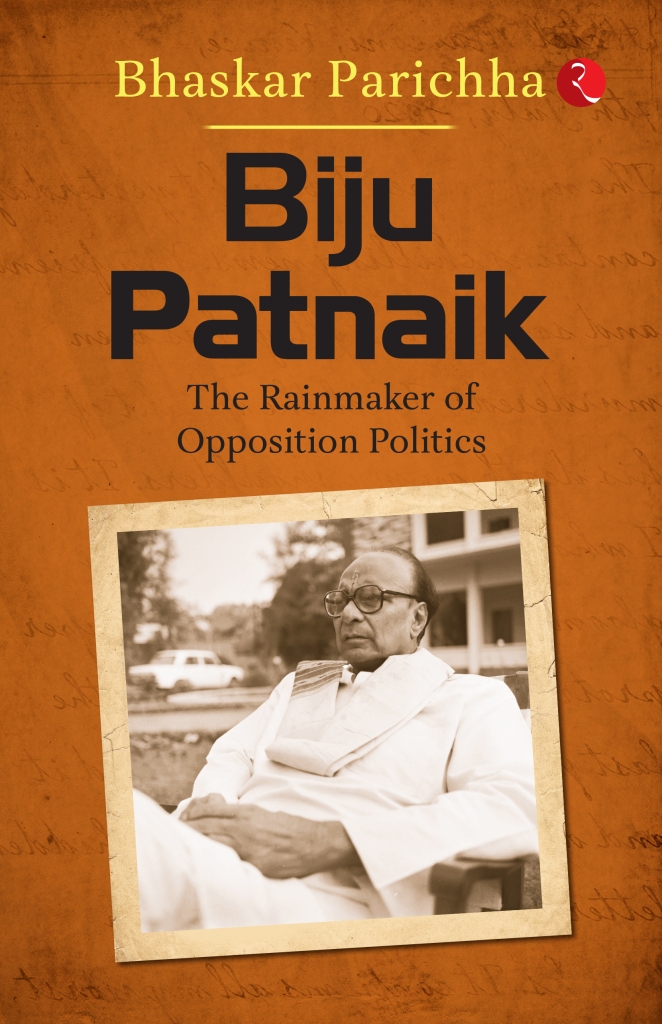
Biju Patnaik: Architect of Modern Odisha

Title: Biju Patnaik: The Rainmaker of Opposition Politics 

Author: Bhaskar Parichha

Publisher: Rupa Publications India

Architect of Modern Odisha

Biju had a strong sense of zeal for dreaming big. At that time, no one had even dreamt that there could be a private sector industry, much less one that was successful. He dreamt and succeeded. Throughout his life, Biju stood out as a person with courage, and that by itself chronicled a remarkable saga of industrial adventure in Odisha half a century ago.

In 1945, when he had attempted to establish an industrial empire in Odisha, he had several other responsibilities. He could have remained committed to politics and wielded political power, as he was exposed to it during the height of the freedom struggle. However, he had a unique vision of industrialization of Odisha. As mentioned earlier, Biju was greatly influenced by Manubhai Shah. In the same way that Mahtab taught him the basics of realpolitik, Manubhai taught him the first few lessons of setting up an industry.

In the years following Biju’s release from jail, he developed an unshakable faith in himself and a commitment to utilize his full potential. There were no great merchants or wealthy individuals in his circle, nor was he in possession of vast resources. The only thing he had was a lofty vision. Despite British strongholds throughout the country, he had flipped through quite a few pages on how to struggle and achieve success. However, the actual struggle had not yet begun.

Owing to his aviation background, several years before he became a big industrialist, he had set up his own airline Kalinga Airlines. At one time, it is believed that Biju had seven aircraft registered in his name, a rare possession. This demonstrated the importance of Biju as a pilot—industrialist. Apart from aviation, it was Choudwar’s textile mill that ushered in a new era of industrial expansion in Odisha. With the establishment of the Odisha Textile Mill in Choudwar, he launched the first chapter of his industrial empire. Slowly but surely, the Kalinga Empire was taking shape. Two years later, it swept through the area, adding a few more plants, both large and small. It would be a reiteration of the obvious to dwell on the ingenuity of this stalwart who painted a large industrial landscape on a blank canvas.

In setting his vision of an industrialized Odisha, Biju was clearly aiming to change the fate of Odias; to transform an agriculture-dominated, feudalist economy and society into something more industrial. This was the inevitable course of action that he took.

ODISHA TEXTILE MILL

From 1946 to 1950, Mahtab served as the Chief Minister of Odisha.

There was a great deal of activity during his tenure as

CM Mahtab,  like    Biju,     was   also   concerned    with    the industrialization of Odisha. He was seeking a dynamic youth to this end, which he found in Biju. Mahtab was also instrumental in establishing Biju as a leading industrialist in the country. It took just a short period of time for Biju to become one.

In 1944, the interim Indian government decentralized the textile industry. As a result, Odisha received four textile units. As textiles appeared to have great potential, Biju was particularly interested in them. Odisha Textile Mills was established at that time. A company named B. Patnaik & Co. was established. A half stake in the company was owned by Biju. Lala Pratap Singh, a descendant of industrialists Lala Sriram and Bhubanananda Das, held the other half. In Odisha, it was the first private company to begin operations. Through this flagship company, Biju’s enterprise   was growing rapidly. Several small- and medium-sized industries emerged, including cotton and ferromanganese. Biju Patnaik & Co. was an industry through and through. It was the birth of a brand. A common thread running through Biju’s corporate credo was the concept of industrialization and diversification.

It was in the late 1940s that Biju joined the Kalinga industrial empire. The primary objective of his career was to establish himself as an upcoming industrialist and develop a company that had the highest annual growth rate. Biju took a shot and Odisha’s industrialization was catapulted into a remarkable era. However, this glory did not last long. Out of his own free will, Btu was renouncing that industrial prowess. The two contrasting factors that contributed to his disdain for the position must have been his well-publicized commitment to do something for the slothful people of Odisha and his dislike of the responsibilities that came with being a manager.

After a brief blossoming, his entrepreneurial spirit soon faded. Biju was the only one apart from Prafulla Chandra Roy[1] in West Bengal, who was able to build industries from scratch. It has been decades since Sir Prafulla Chandra Roy pioneered the West Bengal industry before it withered away.

In 1963, Biju gave away his Ironworks plant in Barbil to the state when it was earning 10-15 per cent profit annually. Biju then gave other plants to his employees. The Kalinga Group saw a gradual decline once he made everything available to the state. All of this had the potential to make him the richest man in the state. This reluctance to engage in business, which Biju demonstrated later as well, was accompanied by a lack of expectation of compensation. All he wanted was a progressive Odisha, which could have never become a reality if he had no political power.

[1]Physicist, educator, historian, industrialist and philanthropist, Roy was an eminent figure in Indian science. Known as the father of chemical science in India, he established the first modern Indian research school in chemistry. While being the founder of Bengal Chemical & Pharmaceuticals, he also served as its chairman.

About the Book

Transitioning from pilot to freedom fighter, businessman to politician, Biju Patnaik(1916-1997) was a multifaceted leader and towering regional icon who has left behind an impactful legacy. Step into the riveting saga of Biju Patnaik, the icon of resurgent opposition politics, through this compelling biography, Biju Patnaik: The Rainmaker of Opposition Politics. His journey, from leaving office in 1963 to reclaiming it in 1990, epitomized resilience and rebirth in politics. Whether as chief minister or Opposition leader, Patnaik’s unwavering connection with the people of Odisha defied conventional politics. Navigating triumphs and trials, Patnaik wielded immense influence, shaping the state’s destiny. His adept manoeuvring from the state secretariat to the corridors of power in Delhi showcased unparalleled strategic prowess, strengthening Opposition alliances and advocating for a credible alternative to the dominant Congress. Biju had tremendous faith in Opposition unity, considering it vital for the survival of democracy in the country. A visionary and unifier, Biju Patnaik’s legacy as a stalwart of Opposition unity echoes through the captivating pages of this stirring account.

About the Author

Bhaskar Parichha is a renowned name in Odisha journalism. Throughout his four-decade long career in the media industry, he has been affiliated with various newspapers in the state. He is the writer of Unbiased: Writings on India, No Strings Attached: Writings on Odisha, and Madhubabu – The Global Indian. Recently, he has also edited a collection titled Naveen@25 – Perspectives. Residing in Bhubaneswar, he is known for his bilingual writing.

.

PLEASE NOTE: ARTICLES CAN ONLY BE REPRODUCED IN OTHER SITES WITH DUE ACKNOWLEDGEMENT TO BORDERLESS JOURNAL

Click here to access the Borderless anthology, Monalisa No Longer Smiles

Click here to access Monalisa No Longer Smiles on Amazon International

Categories
Review

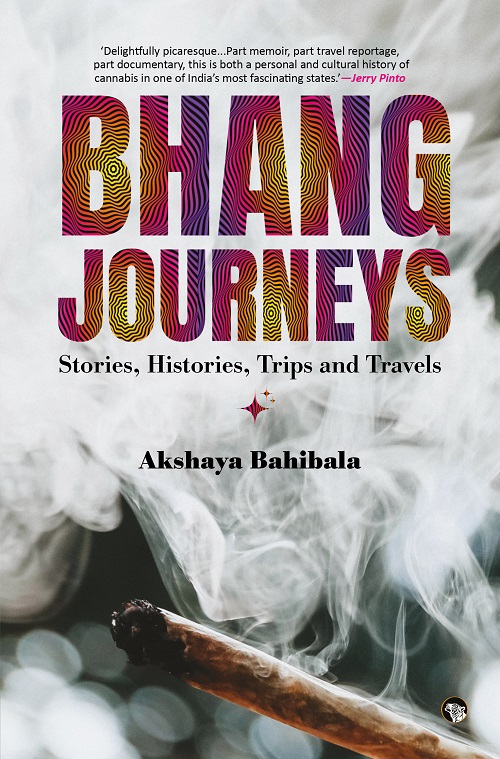
Bhang Journeys: Stories, Histories, Trips and Travels

Book Review by Bhaskar Parichha

Title: Bhang Journeys: Stories, Histories, Trips and Travels

Author: Akshaya Bahibala

Publisher: Speaking Tiger Books

Akshaya Bahibala is a poet, bookseller, publisher, and library advocate. He is the co-founder of Walking Book Fairs, an independent bookstore and publishing company, as well as one of the most beloved bookmobiles in India, having journeyed over 35,000 kilometres through 20 states to promote a love of literature. Bahibala has authored four books in Odia. This book marks his debut in English. This captivating book is full of unexpected twists and turns, offering a unique blend of memories, adventures, and intriguing facts about a well-known substance. It serves both as an exploration and a cautionary tale.

Bhang Journeys: Stories, Histories, Trips and Travels by Akshaya Bahibala is an eye-witness account of the cannabis in one part of India – Odisha. Quite a bit of research and ideation seems to have gone into the book. This book is truly captivating due to its exploration of a controversial subject — bhang or cannabis..

Reads the blurb: “For ten years, from 1998 to 2008, Akshaya Bahibala was in the grip of bhang, of ganja—drinking it, smoking it, experiencing the highs and lows of an addict on Puri’s beaches with hippies, backpackers and drop-outs from France and Japan, Italy and Norway. Then he drew back from the edge and tried to make a life, working as a waiter, a salesman, a bookseller. He starts this journal-cum-travel book with startling, fragmented memories of his lost decade. From these, he moves to stories about people across Odisha whose lives revolve around ganja-bhang-opium.”

Bahibala commences the book by recounting his experiences of indulging in bhang and ganja on the shores of Puri. He also spends time with a considerable number of foreigners — Caucasian men and women who appear to visit Puri for the purpose of getting high. The author mingles with Japanese, German, French, Italian, and Israeli tourists, sharing meals, borrowing money, exchanging bhang-infused biscuits, occasionally engaging in fights, all while listening to Bob Marley’s soulful rendition of “No Woman, No Cry” in a state of intoxication.

The book has some interesting details like how the owner of a government-approved bhang shop prides himself on selling the purest bhang available, claiming it can make people as forgiving and non-violent as Jesus. Another story is about how an opium cutter, learnt how to massage a lump of opium with mustard oil and carve it into tablets as a boy. There is a heart wrenching narrative of a girl who survived cholera by licking opium and became a lifelong addict. Yet another, is about the yearnings of a goldsmith with an opium de-addiction card for 20 grams a month, but he longs for more — atleast 25 grams. There is also the story of the ganja farmer who flies to Puri from Punjab in a helicopter.

The hallucinations induced by the drug are reflected in the case study of a young man, suffering from ganja-and-bhang-fuelled paranoia, convinced that Indian and American spies are after him makes for an interesting yet concerning read. Descriptions are given of angry villagers indulging in violence against excise department officials who try to destroy ganja plantations.

Alongside these narratives, are official data on opium production, seizures, and destruction; UN reports on the medicinal benefits of cannabis and a veteran’s recipes for bhang laddoos and sherbets. The author delves into the process of creating bhang, highlighting its complete legality in India (unlike charas and ganja, which are prohibited under the country’s 1985 Narcotic Drugs and Psychotropic Substances Act). Additionally, there is a subtly humorous account of a Brahmin bhang shop owner who offers intriguing insights into the procurement and sale of bhang. Bahibala also discusses opium (referred to as afeem locally) cutters and government-operated facilities where opium is manufactured. He sheds light on opium addicts, for whom the government provides a de-addiction program.

The author concludes the book on a rather melancholic tone, discussing the current state of affairs in Puri and the significant changes that have occurred over the past two decades. The absence of foreign tourists on Beach Road, the police cracking down on public marijuana use, the proliferation of hotels and restaurants, and the eagerness of owners to expand and construct more establishments are all highlighted. Additionally, the author reflects on the individuals he once knew during his youth, noting that some have relocated to other countries while others remain in the area.

This book offers a comprehensive perspective on the bhang/charas/ganja culture in India, covering aspects such as production, sale, purchase, and consumption under peer pressure. The author’s personal experiences and lessons learnt add depth to the narrative, making it a captivating read. It is a liberating and unfiltered account, unconcerned with conforming to political correctness and yet, there is his own story, where he feels he ‘lost’ a decade of his life to addiction.

Bhaskar Parichha is a journalist and author of UnbiasedNo Strings Attached: Writings on Odisha and Biju Patnaik – A Political Biography. He lives in Bhubaneswar and writes bilingually. Besides writing for newspapers, he also reviews books on various media platforms.

.

PLEASE NOTE: ARTICLES CAN ONLY BE REPRODUCED IN OTHER SITES WITH DUE ACKNOWLEDGEMENT TO BORDERLESS JOURNAL

Click here to access the Borderless anthology, Monalisa No Longer Smiles

Click here to access Monalisa No Longer Smiles on Amazon International

Categories
Contents

Borderless, March 2024

Art by Sohana Manzoor

Editorial

‘If Winter Comes, Can Spring be Far Behind…’ Click here to read.

Translations

Travels of Debendranath Tagore are narratives translated from Bengali by Somdatta Mandal. Click here to read.

The Yellow Flower, a narrative by Haneef Sharif, has been translated by Fazal Baloch from Balochi. Click here to read.

Ye Shao-weng’s poetry ( 1100-1150) has been translated from Mandarin by Rex Tan. Click here to read.

Nazrul’s Amamai Nahi Go Bhalobashleo (Even if you don’t love me) has been translated by Professor Fakrul Alam from Bengali. Click here to read.

Rough Stone by Ihlwha Choi has been translated from Korean to English by the poet himself. Click here to read.

Phalgun or Spring by Rabindranath Tagore has been translated from Bengali by Mitali Chakravarty. Click here to read.

Conversations

A discussion with Radha Chakravarty on her new book, Subliminal, and a brief review of the book. Click here to read.

Jagari Mukherjee interviews Rajorshi Patranabis, discussing his new book, Checklist Anomaly and Wiccan philosophy. Click here to read.

Poetry

Click on the names to read the poems

Rhys Hughes, Alpana, Ron Pickett, Shamik Banerjee, Stuart McFarlean, Baisali Chatterjee Dutt, John Grey, Shahalam Tariq, Jim Murdoch, Kumar Ghimire, Peter Magliocco, Saranyan BV, Rex Tan, Samina Tahreem, Luis Cuauhtémoc Berriozábal

Poets, Poetry & Rhys Hughes

In Lines for Loons, Loonies and Such-like, Rhys Hughes shares a rare treat. Click here to read.

Musings/Slices from Life

The Elusive Utopia?

Farouk Gulsara discusses the ideal of a perfect world. Click here to read.

Serenading Sri Lanka

Mohul Bhowmick backpacks in Sri Lanka with a camera. Click here to read.

Musings of a Copywriter

In A Conversation with God, Devraj Singh Kalsi has a bargaining chip. Click here to read.

Notes from Japan

In Cherry Blossom Forecast, Suzanne Kamata brings the Japanese ritual of cherry blossom viewing to our pages with her camera and words. Click here to read.

Stories

Prison Break

C.J.Anderson-Wu gives a poignant flash fiction. Click here to read.

Terrace

Rakhi Pande relates a strange tale from Goa. Click here to read.

The Temple-going Snake

Devraj Singh Kalsi almost creates a fable but not quite. Click here to read.

Monsoon Arc

K.S. Subramaniam shows the human spirit pitched against the harshness of monsoon storms. Click here to read.

Felipe Jimenez’s Quest of the Unheard

Paul Mirabile travels to Spain of Goya’s times with an imaginary friend who takes after perhaps, Don Quixote? Click here to read.

Essays

Where the Rice is Blue and Dinosaurs Roar…

Ravi Shankar takes us on a tour of a Malaysian town. Click here to read.

Conquering Fears: Bowing to the Mountains 

Keith Lyons tells us of his challenging hike in New Zealand. Click here to read.

Book Excerpts

An excerpt from Out of Sri Lanka: Tamil, Sinhala and English Poetry from Sri Lanka and its Diasporas edited by Vidyan Ravinthiran, Seni Seneviratne and Shash Trevett. Click here to read.

An excerpt from Rajat Chaudhuri’s Spellcasters. Click here to read.

Book Reviews

Somdatta Mandal reviews Ilse Kohler-Rollefson’s Camel Karma: Twenty Years Among India’s Camel Nomads. Click here to read.

Rakhi Dalal reviews Anuradha Kumar’s The Kidnapping of Mark Twain: A Bombay Mystery. Click here to read.

Bhaskar Parichha reviews Mafia Raj: The Rule of Bosses in South Asia by Lucia Michelutti, Ashraf Hoque, Nicolas Martin, David Picherit, Paul Rollier, Clarinda Still. Click here to read.

.

Click here to access the Borderless anthology, Monalisa No Longer Smiles

Click here to access Monalisa No Longer Smiles on Amazon International

Categories
Editorial

‘If Winter Comes, Can Spring be Far Behind…’

Where the mind is without fear

Where the world has not been broken up into fragments

Where the clear stream of reason has not lost its way

Where the mind is led forward by thee
Into ever-widening thought and action…

— ‘Where the Mind is without Fear’ (1910), by Rabindranath Tagore

As we complete the fourth year of our virtual existence in the clouds and across borders, the world has undergone many changes around us, and it’s not only climate change (which is a huge challenge) but much more. We started around the time of the pandemic — in March 2020 — as human interactions moved from face-to-face non-virtual interactions to virtual communication. When the pandemic ended, we had thought humanity would enter a new age where new etiquettes redefining our social norms would make human existence as pandemic proof as possible. But before we could define new norms in the global context, takeovers and conflicts seem to have reft countries, regions and communities apart. Perhaps, this is a time when Borderless Journal can give a voice to all those who want to continue living as part of a single species in this world — where we can rise above our differences to find commonalities that make us human and part of the larger stream of humanity, that has been visualised by visionaries like Tagore or John Lennon — widely different cultural milieus but looking for the same things — humankind living together in harmony and moving towards a world without violence, without hate, without rancour and steeped in goodwill and love.  

Talking of positive values does not make sense in a world that seems to be veering towards darkness… Many say that humankind is intrinsically given to feelings of anger, hate, division, lust, shame and violence. But then we are just as much inclined towards happiness, fun, love, being respectful and peaceful. Otherwise, would we be writing about these? These are inherited values that have also come down to us from our forefathers and some have been evolving towards embalming or healing with resilience, with kindness and with an open mind.  

If you wake up before sunrise, you will notice the sky is really an unredeemable dark. Then, it turns a soft grey till the vibrant colours of the sun paint the horizon and beyond, dousing with not just lively shades but also with a variety of sounds announcing the start of a new day. The darkest hours give way to light. Light is as much a truth as darkness. Both exist. They come in phases in the natural world, and we cannot choose but live with the choices that have been pre-made for us. But there are things we can choose — we can choose to love or hate. We can choose resilience or weakness. We can choose our friends. We can choose our thoughts, our ideas. In Borderless, we have a forum which invites you to choose to be part of a world that has the courage to dream, to imagine. We hope to ignite the torch to carry on this conversation which is probably as old as humanity. We look forward to finding new voices that are willing to move in quest of an impractical world, a utopia, a vision — from which perhaps will emerge systems that will give way to a better future for our progeny.

In the last four years, we are happy to say we have hosted writers from more than forty different nationalities and our readers stretch across almost the whole map of the world. We had our first anthology published less than one and a half years ago, focussing more on writing from established pens. Discussions are afoot to bring out more anthologies in hardcopy with more variety of writers.

In our fourth anniversary issue, we not only host translations by Professor Fakrul Alam of Nazrul, by Somdatta Mandal of Tagore’s father, Debendranath Tagore, but also our first Mandarin translation of a twelfth century Southern Song Dynasty poet, Ye Shao-weng, by Rex Tan, a journalist and writer from Malaysia. From other parts of Asia, Dr Haneef Sharif’s Balochi writing has been rendered into English by Fazal Baloch and Ihlwha Choi has transcreated his own poetry from Korean to English. Tagore’s Phalgun or Spring, describing the current season in Bengal, adds to the variety in our translated oeuvre.

An eminent translator who has brought out her debut poetry book, Radha Chakravarty, has conversed about her poetry and told us among other things, how translating to English varies from writing for oneself. A brief overview of her book, Subliminal, has been provided. Our other interviewee, Rajorshi Patranabis — interviewed by Jagari Mukherjee — has written poetry from a Wiccan perspective — poetry on love — for he is a Wiccan. We have poetry by Luis Cuauhtémoc Berriozábal, Jim Murdoch, Alpana, Baisali Chatterjee Dutt, John Grey, Shahalam Tariq, Saranyan BV, Rex Tan, Ron Pickett with poetry on the season and many more. Humour is brought into poetry with verses woven around a funny sign by Rhys Hughes . His column this month hosts a series of shorter poems — typically in Hughes’ own unique style.

Devraj Singh Kalsi has explored darker shades of humour in his conversation with God while Suzanne Kamata has ushered in the Japanese spring ritual of gazing at cherry blossoms in her column with photographs and narrative. Keith Lyons takes us to the beautiful Fiordlands of New Zealand, Ravi Shankar to Malaysia and Mohul Bhowmick trapezes from place to place in Sri Lanka. Farouk Gulsara has discussed the elusiveness of utopia — an interesting perspective given that we look upto ideals like these in Borderless. I would urge more of you to join this conversation and tell us what you think. We did have Wendy Jones Nakashini start a discussion along these lines in an earlier issue.

We have stories from around the world: C.J.Anderson-Wu from Taiwan, Paul Mirabile from France, Rakhi Pande, Kalsi and K.S. Subramaniam from India. Our book excerpts are from Out of Sri Lanka: Tamil, Sinhala and English Poetry from Sri Lanka and its Diasporas edited by Vidyan Ravinthiran, Seni Seneviratne and Shash Trevett and a Cli-fi book that is making waves, Rajat Chaudhauri’s Spellcasters. Mandal has also reviewed for us Ilse Kohler-Rollefson’s Camel Karma: Twenty Years Among India’s Camel Nomads. Bhaskar Parichha has discussed Mafia Raj: The Rule of Bosses in South Asia by Lucia Michelutti, Ashraf Hoque, Nicolas Martin, David Picherit, Paul Rollier, Clarinda Still — a book written jointly by multiple academics. Rakhi Dalal in her review of Anuradha Kumar’s The Kidnapping of Mark Twain: A Bombay Mystery has compared the novel to an Agatha Christie mystery!

I would want to thank our dedicated team from the bottom of my heart. Without them, we could not have brought out two issues within three weeks for we were late with our February issue. A huge thanks to them for their writing and to Sohana Manzoor for her art too. Thanks to our wonderful reviewers who have been with us for a number of years, to all our mentors and contributors without who this journal could not exist. Huge thanks to all our fabulous loyal readers. Devoid of their patronage these words would dangle meaninglessly and unread. Thank you all.

Wish you a wonderful spring as Borderless Journal starts out on the fifth year of its virtual existence! We hope you will be part of our journey throughout…

Enjoy the reads in this special anniversary issue with more content than highlighted here, and each piece is a wonderful addition to our oeuvre!

Mitali Chakravarty

borderlessjournal.com

Click here to access the content page for the March 2024 Issue.

.

READ THE LATEST UPDATES ON THE FIRST BORDERLESS ANTHOLOGY, MONALISA NO LONGER SMILES, BY CLICKING ON THIS LINK.