Title: Behind Latticed Marble: Inner Worlds of Women
Author: Jyotirmoyee Devi Sen, translated from Bengali by Apala G. Egan
New Delhi: Niyogi Books
The very mention of the name of Jyotirmoyee Devi (1894 – 1988) brings to our mind the strong feminist Bengali writer, author of the famous Partition novel, Epar Ganga Opar Ganga (The River Churning), mainly depicted the lives of the women in Bengal who bore the burden of this communal divide, their bodies being inflicted with sexual violence, rape, and social exclusion as a consequence to the former two. Owing to the dearth in the literature that records such gruesome atrocities that were inflicted upon women, till date her work is extremely important. This present anthology however focuses on a totally different perspective of the writer where she tells us interesting stories about the life of the women and little girls of Rajasthan, and the discriminatory gender and caste norms that policed and defined their existence.
Jyotirmoyee Devi was born in Jaipur in an upper-caste and economically well-off family. Her grandfather, who had emigrated there from Bengal during the British Raj, rose to occupy a high administrative position as the dewan or prime minister to the Maharaja of Jaipur. Thus, Rajasthan had a profound impact on her writings in the later years. Not being given an opportunity for formal education, her sole means to establish a relationship with reading became her grandfather’s library where she, along with her sister, were assigned to arrange newly arrived books and magazines. Therefore, even though she was a little girl, she attempted to make use of her multiple privileges that could help her access books and writing material. Married at the age of ten and widowed at twenty-five, she returned to her parents’ home along with her children and became a prolific writer during her long period of widowhood.
The ten fictional narratives in this anthology are all set in Rajasthan, and they create an elegant tapestry amidst the backdrop of Rajput grandeur and chivalry. Based on an eyewitness account of life in royal harems, these stories describe the very human interaction between men and women in this milieu. They highlight power play, disinheritance, and the threat of assault, which are perennial concerns for women. These include fascinating narration about the machinations that went on inside the royal households, as well as stories which tells us the plight of the veiled women in different strata of society. For instance, in “Beneath the Aravalli Hills,” a young village girl Dhapi disappears in the city where her father sold her for two hundred rupees. She is kept in a harem and punished for entering the festive hall without permission, she ends her life in prison. In “Frame Up” when the king dies, there is a heavy pall of suspicion in the kingdom that the queen had murdered him. Two decades later, when she is on her deathbed, she calls her son to tell him that the harem housekeeper and the chief eunuch had hatched a plot to kill his father but the young king walks away without acknowledging his mother’s innocence. In “The Child Bride” we read about the plight of a young widow Kesar whose jewellery is unlawfully snatched from her by the in-laws and she spends the rest of her life in poverty by serving like other destitute widows in the Govindji temple at Vrindavan.
Women-centric issues also recur in a story called “The Queen and the Concubine” where despite having plenty of riches befitting the Rajput royals, the ladies muse secret sorrows since their husbands, seldom, if ever, visited them. They spent their time in their sumptuous villas by holding pageants, dance dramas, and musical soirees. It tells the story of how the protagonist Kesar moved to the king’s harem upon his desire, metamorphosed from a mere maid to a courtesan, till she was burnt to death in the end. As per the rules of the state, sons of courtesans and concubines also lived luxurious and leisure lives, but somehow there always existed a fine dividing line between these men and the real heir to the throne. “The Taint” tells us of the king’s youngest son Samudra, who after receiving college education decides to take up a simple job in the British Indian army while his father arranges for his marriage with plenty of dowry albeit without his consent.
The human side of man is beautifully expressed in “Ungendered” where the royal eunuch decides not to have an heir and lets two young boys live a normal man’s life. Several other stories reiterate tragic tales of women in purdah and how many of them reach unfortunate ends when they try to escape from the strict socially imposed patriarchal norms that keep them totally voiceless. “The Princess Baby” (Beti ka Baap or Father of a daughter) calls for attention towards the evil of female infanticide by feeding them with an overdose of opium and focus on the limited social interactions allowed to young women. Though sometimes repetitive, the stories overall try and tell us about the miserable plight of women in Rajasthan, whether they were commoners or part of the royalty.
Before concluding, a few words about the translation. This anthology contains ten stories, each of which had been translated and published in different journals abroad (nine in different American journals and one in Turkey) before collating them into this present volume. The translator, residing in the USA, obviously had the western reader in mind and sometimes several complicated and difficult words and phrases are used probably to remain politically correct to the original text. But what this reviewer finds problematic is the introduction by the author. Who are the targeted readers? In her introduction, she mentions at random women’s issues from around the world and in different ages one wonders why the context of the stories translated here is not provided at all — except for giving us a bio-note of Jyotirmoyee Devi which is briefly included in the back flap cover. Also, the page-long bibliography provided at the end of the rather out-of-context introduction seems totally redundant. Apart from this lacuna of course, the volume will interest those readers who marvel at the eyewitness accounts of life of women and men, common and royal alike, in Rajasthan in the first few decades of the twentieth century.
Somdatta Mandal, author, academic and translator, is former Professor of English at Visva-Bharati, Santiniketan, India.
.
PLEASE NOTE: ARTICLES CAN ONLY BE REPRODUCED IN OTHER SITES WITH DUE ACKNOWLEDGEMENT TO BORDERLESS JOURNAL.
OF ONE

Deep within the turquoise sea,
       they will find you and me swimming with shimmering metallic wings

        Dreaming of reaching
our hands into the edge of the horizon,
        the sliver of a new moon smiling down upon us, a curious cloud traipsing across a
        sunset-soaked sky

Imagine how high we may go,
        when we practice comfort and love
for the far below

There is no limit to where we may go
Though you may not know, we already exist
Everywhere

It is the unseen who sings ever so quietly, deeply connected
to the dancing leaves in the trees, it shall be:

         I am you. You are me. We are we.

Beloved and blessed beyond means.
Evangeline Zarpas is a nomadic poet and artist originally from Virginia. She explores the ephemeral quality of existence, the divinity which lives within all, and the transformations of self.
PLEASE NOTE: ARTICLES CAN ONLY BE REPRODUCED IN OTHER SITES WITH DUE ACKNOWLEDGEMENT TO BORDERLESS JOURNAL
Shantanu Ray Chaudhuri introduces #Shout, a documentary by Vinta Nanda that documents the position of women in Indian society against the backdrop of the #MeToo movement and centuries of oppression and injustice and converses with Vinta about the film.
The team that created Shout with Vinta Nanda in the centre, next to the woman in the yellow. Photo Courtesy: Vinta Nanda
Women are not asking for protection of their vaginas – they are asking for the freedom to live their lives as equal citizens.
The landlord’s son making out with a Dalit girl is a coming-of-age ritual.
These are just two of the many views that stun you in Vinta Nanda’s thought-provoking and disquieting documentary, #Shout. In a little over 90 minutes, the film covers a huge ground, taking into its ambit not just the #MeToo movement, from which it originated, but also the deep-rooted patriarchy and misogyny that has been written into the DNA of our nation. As a respondent in the film, a transgender, says: “We are not good enough to be regular citizens purely because a sexual harassment case filed by a woman could lead to a punishment of seven years whereas a transgender getting raped gets only six months.” The matter-of-fact nature in which the interviewee puts this across only serves to highlight the agony that permeates every word. And the hopelessness of the situation.
You realize – yes, women have an uneven playing field, but the issues the film underlines are not circumscribed by that. And that there are nuances to the debate that we do not even think of. As Tara Kaushal, author of Why Women Rape, says, the discussion on rape has to account for the fact that there’s a whole different dynamic at play when we talk of it in the context of a marriage or when a sex worker is involved. How do you address the fact that ‘stalking’ is seen as a courting ritual than as an offence or as trespassing?
There’s also something intrinsically wrong with a society where a labourer is made to pay with both his arms and a leg for daring to speak up against the rape of his minor daughter in the way Bant Singh of Mansa was. One of the most harrowing and at the same time inspirational passages of the film tells his story – and that brings another dynamic into the dismal picture: that of caste. If there’s one thing as unfortunate as being a woman in this country, it’s being poor and a Dalit.
Bant Singh. Photo Courtesy: Vinta Nanda
One of the striking aspects is the range of respondents that the director has interviewed. There are academics and writers like Urvashi Butalia and Nirupama Dutt, who bring their experience of the feminist movement in India to bear upon the narrative. There is journalist Namita Bhandare who argues cogently how the conversation in #MeToo tended to become a case of ‘he said /she said’ – the woman’s word against the man’s. There’s Sabita Lahkar from Assam, a journalist who alleged sexual harassment at the hands of a leading journalist and Sahitya Akademi award winner way back in 2003, before ‘me too’ became part of our discourse. And there is Bhanwari Devi, whose ordeal led to the landmark Vishakha guidelines in 1997 and The Sexual Harassment of Women at Workplace (Prevention, Prohibition and Redressal) Act 2013. It is with a sense of awe that you listen to Bhanwari Devi narrate not only the ignominy she was subjected to – imagine the accused in the case being acquitted on the ground that her husband couldn’t have passively watched his wife being gang-raped – but also the vast reserves of fortitude that comes through in her responses on camera.
What’s also commendable about the film is that it does not become an exercise in agitprop. It would be easy to approach the subject with anger. And much of what Vinta documents does leave you seething. However, the anger here is leavened by an intrinsic understanding of the fact that haranguing against or blaming any one section of society serves no purpose. And that there are no overnight solutions in a country that lives in many centuries at the same time. That lends the film an elegiac tone that’s impossible not to be moved by. What also adds to the film’s ‘objective’ take is Vinta’s own history – she was one of the prominent voices in India’s #MeToo story and as such aware of much of the discourse in the film. Against that background, her decision to leave herself out of the narrative is a brave one, and one that gives the film a rare distance too. It must have been tough to condense such a vast spectrum of narratives – the filmmakers had to restrict the number of respondents to 55 – in the span of 90 minutes, and you wonder if the film runs the risk of paying lip service to the issues. The narrative does get somewhat diffused in the last quarter of an hour, when the background score, otherwise well-modulated, tends to sound a trifle at odds with the tone in the rest of the narrative. However, as Vinta argues, none of these issues can be seen in isolation, and each aspect flows into and is born of the others.
To Vinta’s credit, the film does not lose sight of the little details even when being aware of the larger picture. Justice Sujata Manohar, who was part of the three-member bench which formulated the Vishakha guidelines, has two of the film’s rare amusing moments – which ironically tell a lot about the way we continue to think of women in the workspace. Reminiscing on one of the first cases involving a women barrister in Indian jurisprudence, she narrates how the woman was handed a case that she could not possibly lose. When the lady expressed her surprise at being given the responsibility, something that the male lawyer could easily do, she was told that her client wanted her to take it up only to inflict on his adversary the humiliation of being defeated by a woman! Not much had changed decades later when Justice Manohar was asked if she was in the profession looking for a husband.
These off-the-cuff insights give the film its potency, coexisting with the fiery poetry of Amy Singh or the debate on how a woman’s body becomes a playground for scoring political and religious points. Nowhere better illustrated than the heart-breaking testimony of Deepika Rajawat, advocate of the Jammu and Kashmir High Court, vis-à-vis the Kathua rape case, where the inhuman killing of an eight-year-old snowballed into a Hindu-Muslim debate. Or in the way Chinmayi Sripaada highlights how her testimony in the #MeToo movement was given a political twist. While it was alleged that she was acting at the behest of a powerful political party, Priya Ramani’s equally damaging claims against one of India’s celebrated journalists and a minister at the Centre were sought to be dismissed as a smear campaign against the same party.
This is an important work. And a bleak one. Watching this brought to light the fact that beyond the cases that make the headlines, there’s a whole world that we are simply not aware of or concerned about. And that in the era of social media everything comes with a fifteen-day sell-by date. Not a single region of the country emerges unscathed from the filmmaker’s scalpel. If there’s Asifa Bano in Kashmir, there’s the rape victim in Unnao, Uttar Pradesh, whose father died in judicial custody under suspicious circumstances. If Bhanwari Devi and Roop Kanwar are the shame of Rajasthan, Manorama Devi of Manipur remains a blot on our collective conscience. From Dr Sister Jesme of Kerala (recounting her abuse at the hands of a priest) to Bilkis Bano of Gujarat – the malaise runs deep and wide.
Banwari Devi. Photo Courtesy: Vinta Nanda
After all, what do you say about a country where a former Chief Justice of India addresses allegations of sexual harassment against him by offering his ‘modest’ bank balance as proof of his integrity. Or where almost all the perpetrators of the most heinous crimes of sexual predation have been rehabilitated in major literary, cultural and political circles. This is a film puts the whole country in the dock.
***
Directed by: Vinta Nanda
Produced by: Gayatri Gill, Siddharth Kumar Tewary and Rahul Kumar Tewary
Cinematography: Shanti Bhushan Roy
Editing: Puloma Pal
Sound Supervision: Bishwadeep Dipak Chatterjee
Sound Design: Mohandas
.
Tell us something about the genesis of Shout.
It came to me from out of the blue. I got a call from Siddharth Kumar Tewary, one of three producers with Gayatri Gill and Rahul Kumar Tewary, that Gayatri was toying with the idea of making a documentary on the #MeToo movement. This was in 2019, when the movement was still smouldering. Gayatri and Siddharth were understanding about where I stood, personally, on the issue. The first draft of the write-up I gave to them was a clincher and we were ready to sail.
It covers a whole gamut. Were you daunted that it could become unwieldy with each individual aspect not getting enough space?
Manisha Mashaal, a Dalit leader and women’s rights activist in Kurukshetra, Haryana, says, “We don’t know when the media will have a #MeToo movement for us. We are invisible to the world?” In my understanding of things, she is a feminist. But did she participate in the #MeToo movement? Was she even a voice? Obviously not!
While the #MeToo movement did several things to empower women in general, it also didn’t do other things that it could’ve done. I was clear in my mind about what I felt about the movement. My approach was to put the #MeToo movement in perspective to the attitudes and behaviours of Indian men and women towards women’s rights and also in context of the many other movements that have dotted the gender landscape over the last fifty years or so. Without understanding patriarchy, without applying the context of feminism to the #MeToo movement and without discussing rape, there could only be a voyeuristic offering, and that meant we would be feeding the monster.
I never felt daunted or ever thought it would be unwieldy to deal with the many things because rape, patriarchy and feminism are discussions that belong to the same discourse. The support of the media during the #MeToo movement gave women the confidence to publicly name the men who had abused them, men who were brazen because collective misogyny had provided them a cover.
For something this vast – was there a definite plan to the way the actual shooting was structured. Can you give us a snapshot of the logistics of putting together the documentary?
(Retd) Justice Sujata Manohar says, succinctly, in the film, “We live in several centuries at the same time.” This was also our primary challenge when we started working on the film. How do we make a film which will resonate with people from all walks of life, urban, rural, young, senior, everybody?
We started working on the film in mid-2019. We headed straight to research. Bani Gill, Paroma Sadhana and Shiv Bhalla formed the research team and they came back to us with a vast ocean of knowledge. We were a small but formidable team. Gayatri and I were at the centre, flanked by our creative consultants Priti Chandriani and Veena Bakshi, and then we had Siddharth at the outer ring to present to and who would respond objectively. For about three months we worked every day and dived deep into the way the gender discourse has played itself out in India over many years before the #MeToo movement happened.
While research was under way, we started connecting with the people that our findings were throwing up. We had a huge list but had to put a stop at fifty-five. We divided them by the geographies they belonged to, and planned our travels accordingly. We had worked on the questions but I was also aware that we were meeting women and men of great significance. So each interview I canned is over 40 minutes long because there was so much more to talk about with each of them, which was way beyond what the film could contain. We are working on a website that will carry some of the material, also a YouTube channel. We are also working on a book we plan to publish later this year.
My DOP[Director of Photography], Shanti Bhushan Roy, and I were aligned perfectly. We were travelling to so many places and we decided to capture the beauty of every place that our subjects inhabited – we wanted to capture the sound, the music. Most importantly, we wanted to capture the stillness, too, in India, which was in correspondence with the emptiness we felt.
We were fortunate to finish the shooting before the pandemic was declared, before the first lockdown. I remember we returned to Mumbai from Imphal on 15 March 2020 and the lockdown was declared on 22 March. We were in a good place to start editing.
The editing process was a long one but Puloma Pal, the editor of the film, did a brilliant job. With the first cut, Siddharth, Gayatri and I knew that the soul and the scale we had imagined was there. Then, Puloma divided the film into parts, a process which gave the film its form and rhythm.
Our real struggle started when we handed over our final cut to the sound supervisor, Bishwadeep Dipak Chatterjee. After he saw the cut, he called for a meeting with us where shared his thoughts about the possibilities he could see us achieve with the soundtrack. His conviction was compelling and we decided to revisit the final cut. Puloma and I took a break for a few weeks. I told Puloma that we should give ourselves four weeks, and if we had a Eureka moment we would regroup and re-edit the film. If not, we would go with what we had.
About three weeks later, Puloma called me. She had an epiphany and narrated what she had in mind. She had caught Bishwadeep’s pulse and was ready to give him what he needed to build the soundtrack. After three more rounds of editing we were done. The experience was magical. Then we went to Kolkata to record the song with Usha Uthup, which was composed by Raja and written by Amy Singh. Mohandas started working on the sound design.
One remarkable feature is the variety of experiences you have gathered. Can you give us an insight into how you went about choosing the people you have spoken to.
The research brought up many names. The four people who showed us the light along the way were Namita Bhandare, Preeti Gill, Nirupama Dutt and Mitra Phukan. It was Namita who guided us to (Retd) Justice Sujata Manohar, Nikita Saxena, Vandana Grover and others. Preeti led us to Nirupama Dutt, Urvashi Butalia, Bibi Kiranjot Kaur and Amy Singh. Subsequently, Nirupama took us to Bant Singh, Mitra connected us to Bijoy Kumar Tayenjam. It was through Bijoy we met Pradip Phanjubaum and Ratan Thiyam and so on…
Social media helped to trace Sabita Lahkar, some others too. We went on this forty-day journey by road and air to meet survivors, families of victims, feminists, authors, legal experts, activists, poets, religious leaders, actors – all those who had a deep connection with the issue as well as the politics surrounding it.
The most astonishing aspect of the documentary is how all-pervasive the malaise is. We seem to be country united only by the way we mistreat our women.
It is true that if there’s one factor ubiquitous it is the way women are treated in our country. It is no secret that women are second-class citizens wherever they are and whichever profession and hierarchy they belong to. They work as hard as men, often more, but they are not called breadwinners. It is one of the problems. Moreover, as some of the speakers in the film have said, rape is about power and about how power is expressed in our world. It is political, it is feudal and it is the harshest face of the deep patriarchy that defines our culture, our society.
Irrespective of the progress we make, irrespective of the several revolutions of the past centuries, industrial, information-communication or technology, the system remains feudal. The culture that drives behaviours and practices, across economic and social divides, is inflexible. It is intimidated by women and designed to keep them in control, guide the course of their lives.
The system is neither fair to women nor to the men. Why should men be forced to bear the burden of women’s safety on their shoulders? When a system can deliver vaccines to 2 billion people, why can’t it deliver a message, a powerful idea, to every corner of the earth? Obviously there’s a lack of intention and political will. And, moreover, the world still cannot see the advantages, dividends and profit in doing that!
It’s only in recent times that women are beginning to find a voice, and the credit for it goes to the feminist movements that have taken place in India and the rest of the world over the last 50 years at least, at the grassroot level as well as in metropolises. We were sure that we didn’t want to leave the efforts of the past out from our narration. After all, the #MeToo movement would find no ground to keep its feet on if it wasn’t for several battles fought by women for their rights as equal citizens.
As someone who became an important driver of the #MeToo campaign – would you like to share your personal experience of that and how that shaped this film?
I broke my silence during the movement in October 2018 and, overnight, I was speaking to the national media about myself and what had happened to me. Barely a couple of months later it was business as usual for everyone. When left alone, I felt a hollowness and it was then that I, for the first time, introspected and explored the situation. I realised that in India, we had just about touched the surface. And now, we were already waiting for something ‘else’ to happen that would resolve the issue. The introspection decimated my fears and gave me the courage to move forward.
The emptiness I felt, then, was for many reasons. Primary among them was the fact that #MeToo was a media movement and an urban phenomenon. And that it belonged to the upper crust, whereas the most disempowered, excluded and disadvantaged among the women of India are nowhere close to having the access that we have. Neither did the statistics reveal that the #MeToo movement has had an impact. The number of women molested, abused and raped in India kept on rising consistently thereafter. It was the same after Bhanwari, Nirbhaya, Asifa, after Unnao. The anger, the outrage, the vigils, they peter out and an oppressive system knows that well.
Also, I would not have made this film if I wasn’t able to draw from the well of my personal experiences. When I said yes to directing the film, the one condition I put was that I would not be a part of it. I wanted to remain objective in my approach – as far as it was possible. Another advantage of my having been a part of the movement was that all the survivors I interviewed, especially Bhanwari Devi, Asifa’s parents, Sabita Lahkar, Simran Kaur Suri, Saloni Chopra, and Mandana Karimi, felt comfortable and unhesitant. In fact, Bhanwari Devi took me to task for having taken 20 years to talk about what had happened to me. She reprimanded me and scolded me, saying that she had not waited a single day – she was at the police station the next morning.
We wrongly believe that we, who have access, are greatly empowered, because the courage of a Bhanwari and a Bant is way beyond what we can ever imagine to have! All the other interviewees, too, I could sense while making the film, wanted that #SHOUT be made – they were encouraging and stepped out of their way to help us.
Bollywood cops a lot of blame for the way we treat women. Do you agree that our films are to blame? Or is Bollywood a favourite whipping boy.
Bollywood is to blame to some extent. Yet, the question will be a conundrum because it is more complex than what can be taken at face value. In our film, Tara Kaushal, author of Why Men Rape, asks a pertinent question. “Stalking is akin to love for some men, whereas for women who are stalked, it is harassment. So, how will the two paradigms meet?” Do we blame Bollywood for making stalking an expression of love, or do we blame society for Bollywood adopting stalking from it. We can blame films for all the evil in society, but where does that take us? It’s nothing more or less than a mother saying that her son is a paragon of virtue and it’s his friends who have spoiled him, or it is the movies, social media, or whatever else he is under the influence of. Fact is that it is important for women to feel safe at home and in public spaces, irrespective of what they wear. Their ownership of their bodies is non-negotiable.
I don’t believe it is the item number, so to say, which is wrong. Our classical culture and folklore is full of provocative expression through art, dance, theatre and music, and all of us enjoy the performances as viewers and as actors. It is every man and woman’s right to dress the way he and she wants to, and feel beautiful, be admired and appreciated. It is the angle of the camera and the lens through which the item number is presented to audiences, the positioning, in the most unesthetic and distorted ways, that must change.
Here, I’d like to add that the executive producer of #SHOUT, Sandra de Castro Buffington, is also the co-producer of Nina Menke’s film Brainwashed – another film from Hollywood that is a must-watch, because it shows, historically, how the camera has objectified women and thereby created a perception, over several decades of the existence of cinema, which is not at all justifiable.
Having said all of the above, I would add that Bollywood does need to be careful of what it promotes as acceptable and appropriate behaviour. All the creative folk in the industry need to be sensitised to the impact they have on lives and livelihoods – also the damage they can do consciously and unconsciously. But who is studying behavioural science here, and who cares to impart the knowledge? Everyone is too busy making money to be bothered about how the decisions taken are harming the world, and that’s where the debate rests for now, unfortunately.
One startling statistic that is referred to in the film pertains to the #MeToo campaign – that only 159 cases actually came up despite all the uproar. Would you say that the movement failed? Or was it good enough to bring attention to something that was not spoken of?
We can’t say that the movement didn’t make a difference, in the sense that the implementation of POSH [Prevention of Sexual Harassment] was made mandatory at all places of work, and committees were constituted, but that is where it also ended. The #MeToo movement brought attention to something that was difficult to speak about. Unfortunately, it lasted for too short a while. Ironically, the silence has grown ever since instead of the other way around. Before the movement could go further from urban to rural India, it was over.
I shudder to think what the girls who were abused by Sajid Khan, and had dared to speak out against him during the movement, go through when they watch him on national television. But then, we have to ask the following questions: Who took the decision to make him a participant in the popular show? Did it not cross their mind that what they are doing is ill intended, that a wrong precedent is being set, that it is immoral, sexist and misogynistic?
The answer to all the questions is also clear: of course they knew it. And, that is exactly why they did it. They wanted to be sensational, controversial. They wanted the feminist’s and activist’s outrage to flood social media. They could have made Sajid Khan apologise before he was brought to the house, but they didn’t do it because that would have made neither the viewer, nor for that matter Bollywood happy.
The symbiotic relationship between the content creator and the viewer (especially the male) demanded that Sajid Khan be repositioned strategically in the most crude and brazen manner so that it would result in the outrage required to capture eyeballs. How will women find the courage to speak out against injustice in the future when the whitewashing of Sajid Khan and the feting of the many predators, the editors and writers, at lit fests is the overarching reality they face?
Watching Shout, I could not help wondering if women themselves failed the #MeToo campaign. And that it was also misused to settle personal scores.
I was alert to the reactions of those around me during the movement. One among the many significant things that happened was that all my male friends disappeared – almost immediately. Except for Mahesh Bhatt, who called me and spoke on my behalf right away, Amit Khanna, who reached out, Suryaveer Singh Bhullar, along with his wife Aroona Bhat, Salim Asgarally, my nephew Shiv Bhalla and Kishore Velankar, all the other ‘men’ I knew became incommunicado. Some did make their wives and girlfriends call me to offer their support, which was amusing because the conversations were inquisitorial to my inner space. But by and large everyone else went silent on me.
Among my girlfriends, Ritu Bajaj, in Mumbai, and Ginger, who flew down from Punjab to be with me, and my niece Devki, were my rocks. But there were other girlfriends who said things like, ‘Oh, so this is a nice way to make a comeback to the scene.’ Another girlfriend, an ex-colleague who met me at a coffee shop where I was with some friends, said, ‘By the way, the joke in the industry going around is that the men are now greeting each other with, “#YouToo!” when they meet each other.’ And then, she burst into peals of laughter. These experiences made me realise how far we were from the goalpost. How much longer the struggle was going to take.
To answer your question about women using it as a tool to get after men for personal vendetta, well, there are instances and I, for one, would not deny it. Men face abuse too. The battle we are fighting is against patriarchy and feudalism, against discrimination and exclusion, which hurt both men and women.
Another aspect that comes across tellingly is how women’s bodies become playgrounds for scoring political and religious points. Even as you were putting the final cut together, there was the shameful Bilkis Bano episode playing out.
The perpetrators were released to appease a section of voters prior to the elections in Gujarat. Deal with it! It tells us clearly where we are in the discourse. Bilkis Bano, a woman who belongs to the minority community, fears for her life after the release of the men. The perpetrators roam free. They are celebrated as heroes by a section of one community, which harbours hate for another because our politics has polarised and divided the people of India to this extent – we have become inhuman, barbaric and medieval. That explains it all.
More than a couple of interviewees mention that in the new generation of women we have hope of the tide turning. That every generation builds on the battles the previous generation fought.
Yes, that’s right. As I enter the sixtieth year of my life in 2023, I realise that many of the battles fought by us have given courage to the new generations of women. I also understand that many of the battles fought by our mothers is why we, as a generation of women, could leap ahead from where we were stationed previously. But we must not ignore the roadblocks that the new generation of women will also face as so did we.
The economic, religious and caste inequalities, disadvantages and the exclusion of many of our fellow women will make progress much harder for those of us who are at the frontlines of this battle if there isn’t a dramatic change that takes place immediately. Women of the present generation have to become a part of politics, of administration, of policy and decision making – they must enter the boardrooms and take positions of power in greater numbers to bring about the desired change.
If there is one takeaway from making the film that you were asked to pinpoint, what would that be?
The one takeaway would be that we need to invest in our allies as we go forward. There are so many men who supported and encouraged us during the making of this film. In our immediate circumference, two among the three producers are men, Siddharth and Rahul, the DOP Shanti Bhushan Roy, Sound Supervisor Bishwadeep Dipak Chatterjee, Sound Designer Mohandas VP, and several other members of the crew, who have stood by us are men. I don’t think Gayatri, Puloma and I, the women in the team, could’ve asked for anything more.
Gayatri with the sound director. Photo Courtesy: Vinta Nanda
We have had arguments, discussions, even disagreements with the men, which even led to long spells of cold wars between us, but not for once did anyone impose his will upon us. They understood that this was a film about us, about something we felt more deeply about, and were as often surprised by what they learnt along the way as we were.
My own experience during the #MeToo movement makes me aware that against every detractor, I have at least ten allies in both men and women who I can name. While making the film, the experience was the same. There are more men who wish for change to take place than there are those who don’t. And it is now time for us to tap into this resource.
.
PLEASE NOTE: ARTICLES CAN ONLY BE REPRODUCED IN OTHER SITES WITH DUE ACKNOWLEDGEMENT TO BORDERLESS JOURNAL
Millions of years ago,
Life bubbled into being
In a world without walls…
While the World Environment Day steps in once a year, we live in an ever-changing environment every moment of our lives. The environment is what we make of it as it continues to evolve around us. It is impacted by our very presence. There was a time when all the world was a huge continent — Pangaea. Climate must have been as different as the flora and fauna then by what scientists tell us.
We have come a long way since that period. Looking at the concerns we face today, the United Nations has announced a plastic awareness drive. Plastic is not natural… but of human origin, just like United Nations. Climate change is the focus of the whole world, as temperatures rise, ice-caps melt and the weather turns more unpredictable.
In this special issue, we have poetry from around the world showcasing the evolution of Earth, climate change, the way life has evolved and will continue to evolve —
Dreams of Disenchantment: Poetry by Michael Burch maps how man has contributed to global disasters through history. Click here to read.
Specks & Spirits: Showcasing selected poetry excerpted from Rhys Hughes’ latest anthology of global voices,Animal, Vegetable, Mineral: Light Verse about Life & Other Heavy Things, these poems map the historic evolution of life on Earth, of humans, celebrate the diversity of flora and fauna and muse to wonder at our evolving place in the Universe… Click here to read.
Excerpted from Rhys Hughes latest anthology of light verses, Animal, Vegetable, Mineral: Light Verse about Life & Other Heavy Things with contributions from writers across all continents, except from Antarctica, these poems stretch a little to reflect on the wonders of the universe, both past and present with perhaps, an evolutionary sense of humour. They make you smile, ponder and pause…
SPIRIT ANIMALBy Richard Temple
I am cuttlefish:
jet propelled cephalopod –
self-defence with ink.
MY NAME IS LUCABy Rhys Hughes
My name is LUCA,
I live on the second floor
of a hydrothermal vent.
I am the Last Universal
Common Ancestor
of all life on Earth today,
including aardvarks, gibbons,
walruses and jesters.
I don’t live upstairs from you
and you have probably
never seen me before,
unless you have a time machine
and a very good submarine.
My name is LUCA,
I lived on the second floor
billions of years ago.
THE HUMAN RACEBy Tim Newton Anderson
The Human Race was started by Darwin’s gun
Early runners were Kenyapithecus,
Orrorin, Sahelanthropus and Griphopithecus
Neanderthals fell out at the Pleistocene after a model run
Followed shortly by Heidelbergensis
and then by another - Homo Rudolfensis
And so it was, by a stride, that Austrelopithecus won
SWEET SABRE-TOOTHED TIGERBy Rhys Hughes
Sweet Sabre-Toothed Tiger,
your mate has gone into labour.
She will deliver eight or nine kittens
like uncomfortable mittens
and you will dance and drink cider
to celebrate their arrival
into the unspoiled ancient world.
Palaeolithic cider, of course,
because that’s all there was back then
before the invention of gin.
THE PLATYPUSBy Roman Godzich
A famous creature is the Platypus.
Not noted for its song and dance.
It still commands such great respect
Despite the fact that so few ever get the chance
To see one in the wild alone
Or even in the tame with others.
The Platypus stands sole, dear heart
And far away from other brothers.
Its culinary skills set it apart
And not for what it does with mustard
THE COMMITTEE By Doug Skinner
A wolf, a horse, a rat, a goose,
A frog, a rattlesnake, a moose,
A wallaby, a flea, a stoat,
A chimp, a bear, an eel, a goat,
A kinkajou, a brace of quail,
A pig, a crocodile, a whale,
A hummingbird, a snail, a hawk,
A manatee, a carp, an auk,
A mole, a duck, a bandicoot,
An octopus, a cat, a newt,
A unicorn, a cockatrice,
A badger, and a dozen mice
Sat down in one tremendous ring
And disagreed on everything.
MANGO PULP FICTIONBy Maithreyi Karnoor
Like vanquished kings and squished nothings
The alphonsos, here, have no show
Without the ring of the hype and bling
Sweetly loved the mancurads grow
Here pulp fiction has got its own diction
Old uncle Albuquerque barbed in his garb
When comes in for a juicy benediction
Is redeemed as silly Albukar baab.
FLOWER MAY MOON By Jeanne Van Buren
Flower moon, I waited tonight to see you
at your brightest
shining down on dogwood blossoms and lilacs
I need sleep
couldn’t rest till I saw you
like lost love.
TRANSIENCE?By Mitali Chakravarty
A butterfly flits from flower
to flower sipping honey.
A bloom is but a transient
passenger that rides on
waves of time. And yet, the
poet who writes of the bloom
and the butterfly looks for
immortality in words. Will
words change over eons? Will
histories change? Will Earth
remain? What are we but a
drifting speck in the Universe?
Title: Greening the Earth: A Global Anthology of Poems
Editors: K. Satchidanandan & Nishi Chawla
Publisher: Penguin Random House
Preface
Humanity’s power to degrade the environment has become unprecedentedly dangerous. In fact, we have already changed the environment irreversibly, and suicidally so. What we call nature is no longer nature in its pristine glory. Human intervention has transformed it into something sub- rather than semi-human: a combination of climate, topography, the original environment and the effects of the long history of human intervention. If it was agriculture that had transformed the landscape once, it is now urbanization that has affected the broader areas of our environment. Managing the environment is becoming a practical rather than a theoretical problem. It is not enough that we create theme parks or conserve a select few areas. ‘Museumizing’ nature and landscape will not be enough. Several animals and birds are on the verge of extinction; the list is growing, and human beings can easily be next in the at-risk list. What we require today is not isolated action, but concerted action at the global level. Techno- fascism that leads to eco-fascism—both have their roots in human greed and aggression—is one of the inevitable fall-outs of blind and unsustainable patterns of development.
While a few poems in this anthology offer a perspective on how humans can respond to the reality of extinction, others give us an awareness of how we can struggle to keep what we still have. Some poems share earnest insights into our own evolution, and others offer grim warnings or raise voices against the imminent threat of extinction and the fate of our planet. Some poets spin interconnected incantations and weave healing nature through their blood, and others honor it by connecting the sustainable with their personal poetic bones. The environmental theme of most poems can inspire meditation as well as a commitment to apocalyptic action. The poets anthologized here offer landscapes of beauty and joy, of rustic retreat, of communion with our natural world, against the larger looming questions of human survival, of spurring towards conservation and preservation, of recognizing our ancestral knowledge, of a complicated pact and a complex impact. The anthology, in short, is our kind of shock tactic to the glaring lacunae within our urbanized, post-industrial society. What distinguishes us further, is that our anthology is a global chorus of poetic voices. We cannot stress enough the ‘sustainable’ route felt in the ‘sustainable’ poetic voices of our anthology. Along with our conscious eco warrior poets, Greening the Earth is our kind of responsible activism.
Extinction
Maren Bodenstein
here
on the prairie we measure
the years
by the extinction of insects
that visit our porch lamps
the brittle
longhorn is gone
for a while now the giant
stick insect no longer flares its scarlet wings even
the bluewhite chafers have succumbed
to the heat
by day we dwell in the creek
my sisters and I
one of us pregnant
but I keep forgetting
if it is me
look I am full term now
I tell them stroking my flat belly
on the horizon
a fire roars
through the grasses and over
the houses it marches
the last army of insects
into the bellies of storks
a confusion of vehicles
full of belongings flees
towards us
Ma in her car
with the poodle
comes rushing at us
get in she shouts
misses the bridge
plunges deep
we must rescue her
I tug at the metal
but my sisters
heavy with chatter
do not hear
Ma broken mermaid sneezes
opens her blue-eyes
happy
to see me
Beholden
Erin Holtz Braeckman
I come to you as Crow. But not before you first come to me. My bones are left like tinder in the dark ashes of my feathers when you find them. Crouching low in the crisp clutch of Spring the way the grandmothers once did, you speak words of ritual from the cave of folk memory you’ve walked right into without knowing. And you ask—before you hear my totem call from the pines high overhead; you ask before you slip one of my bones into your pocket. Because wrapped inside the song of that old teaching circle you stepped within was this telling: what you collect, you become the caretaker of. Not the thing itself, but its living story. Those crystals on your altar? You are the steward of their mountains. Those shells lining your windowsill? You are the custodian of their oceans. The pressed petals and dried acorns and vials of sand—the bones; in them there are entire fields and forests and feral ones of whom you are a curator. Which is why I come to you this time, a cackle-caw of shade-shifters stalking through your sister spruces. The others fly when you near, leaving me below in the corner fencing, the wing you took the bone from a tangle of black shadow throwing back the light. I feel the moment you are beholden, Crow-Keeper; how you fold the wild beating of my body into your hands, placing me like a stone on a cairn into the bracken beyond; how those grandmothers come to braid feathers into your hair.
(Excerpted from Greening the Earth: A global Anthology of Poetry, Penguin Random House)
About the Book:
Greening the Earthis a rare anthology that brings together global poetic responses to one of the major crises faced by humanity in our time: environmental degradation and the threat it poses to the very survival of the human species. Poets from across the world respond here in their diverse voices-of anger, despair, and empathy-to the present ecological damage prompted by human greed, pray for the re-greening of our little planet and celebrate a possible future where we live in harmony with every form of creation.
Editors:
K. Satchidanandan is a leading Indian poet He is also perhaps the most translated of contemporary Indian poets, having 32 collections of translation in 19 languages, including Arabic, Chinese, Japanese, English, Irish, French, German and Italian, besides all the major Indian languages. He has 24 collections of poetry, four books of travel, a full length play and a collection of one-act plays, two books for children and several collections of critical essays, including five books in English on Indian literature besides several collections of world poetry in translation. He has been a Professor of English, and also the chief executive of the Sahitya Akademi, the Director of the School of Translation Studies, Indira Gandhi Open University, Delhi and National Fellow, Indian Institute of Advanced Study, Shimla. He is a Fellow of the Kerala Sahitya Akademi and has won 52 literary awards from different states and countries, including the Sahitya Akademi award, India-Poland Friendship Medal from the Government of Poland, Knighthood from the Government of Italy and World Prize for Poetry for Peace from the Government of the UAE. His recent collections in English include While I Write, Misplaced Objects and Other Poems, The Missing Rib: Collected Poems, Not Only the Oceans, Questions from the Dead and The Whispering Tree: Poems of Love and Longing.
Nishi Chawla is an academician and a writer. She has six collections of poetry, nine plays, two screenplays and two novels to her credit. Nishi Chawla holds a Ph. D. in English from The George Washington University, Washington, D.C. USA. After teaching for nearly twenty years as a tenured Professor of English at Delhi University, India, she had migrated with her family to a suburb of Washington D.C. She has taught at the University of Maryland from 1999 until 2014. She is now on the faculty of Thomas Edison State University, New Jersey, USA. Nishi Chawla’s plays get staged both in the USA and in India.
PLEASE NOTE: ARTICLES CAN ONLY BE REPRODUCED IN OTHER SITES WITH DUE ACKNOWLEDGEMENT TO BORDERLESS JOURNAL
First published in the collection titled Baethar Daan (Offerings of Pain, 1922), Kazi Nazrul Islam’s short story, Hena, is set against the backdrop of the First World War where the writer himself had fought as a young soldier (1917-1919). It has been translated by Sohana Manzoorand brought out to commemorate Nazrul’s 124th Birth Anniversary.
Nazrul in British Army uniformBaethar Daan or Offerings of Pain book cover
A trench in Verdun,France
This must be what they call rain of fire! And the sounds! The roaring sound of the artillery! Not a speck of blue sky can be seen– as if the whole sky has been set on fire. The thick rain of fire that pours down from the exploding cannonballs and bombs is so intense that if those were real raindrops trickling out of the blue eyes of the sky, the entire world would have been flooded just in a day. And if these sounds that were louder and more intense than any thunderstorm, would continue like this, people’s eardrums would split, turning them deaf. Today, we the soldiers could only recall the song that is sung during Holi celebrations:
“We will play holi with swords today,
All the soldiers of the world are gathered here
Shields playing the trumpets, cannon balls the squirt pumps
Ammunitions are colourful, the battle is intense.”
It is very true that the ammunition has caused the sky and ground to turn completely red. The reddest are the congealed blood on the bayonetted chests of the unfortunate ones! No other colour but red! As soldiers fall one by one, each one a martyr, they lie on the ground, dressed in red like bridegrooms!
Agh! The worst of all is the smoky smell. It is enough to turn your stomach. Are not human beings the best of all creations? Then why have them killed in such ugly and terrifying ways? When the inanimate lead bullets, hit someone’s bones, they explode with a horrid force and tear through the flesh.
If human beings used their intelligence in more productive ways, they could have claimed a place close to the angels. Oh, and this heart-rending thirst! The friend lying next to you, his rifle slipping from his hand, cannot be awakened even if a thousand cannons roar by his ear. No general can ever make him obey his orders. After fighting for seven days at a stretch in this muddy trench he has finally fallen asleep. He is finally at peace! A rare touch of soothing contentment lingers on his cold and dry lips.
But I feel so thirsty. Let me take the water-bottle from his waist and take a sip! I haven’t had a drop since yesterday. No one cared to offer me a drink. Aah…! This one sip feels so sweet! My Lewis gun doesn’t work anymore. It grew tired after days of continuous shooting. I will take the gun of my deceased friend then. If his mother, sister or wife were present here, they would surely have taken his broken skull on their laps and cry their hearts out! Well, I guess, in a few minutes, a heavy shell will land in front of the trench and bury the two of us! It won’t be too bad actually!
It is really funny as I think of the women crying. All of us will die one day, what is there to weep? Death is an eternal truth — why should one grieve over something that is so normal and inevitable?
I am going through so much pain, after receiving so many wounds, but my heart is filled with a demonic joy! I cannot sketch this feeling with this wooden pencil! There is often a joy that lies asleep at the heart of extreme pain which we can’t really feel! And is this habit of writing something bad? I have been swimming in fire, with scores of dead bodies under my feet and bombs dropped from aircraft bursting over my head, artillery shells are exploding and rifle and machinegun bullets are zooming past, still, deep inside, I feel restless because I couldn’t write down my innermost thoughts in the past seven days! But today, I feel relieved that I could start writing again!
Let me rest for a while, leaning against my dead friend. Ah, it feels so good!…
An unknown young girl of this distant land across the sea gave me some pickles and two slices of bread with butter which I haven’t had time to eat… The women of this country look at us with affection and pity! . . . . Ha ha ha, look at the bread here—these are dry and seem roasted! Let’s see if the bread is tougher than my teeth. I have no other option but to eat these — I am so hungry. The pickle is still quite fresh though!
That girl who was thirteen or fourteen (in our country, she would be wedded by now, if not already a mother), put her hands around my neck and kissed me. She said, “Brother, you must drive the enemy out with full force.” I broke into a pure, sad smile.
Ah! I can finally see the sky. A strip of blue sky can be seen behind the mass of heavy clouds. It is so beautiful– like a pair of blue eyes filled with tears! Anyway, I will write down my other thoughts later. The spirit of my dead friend must be mad at me by now. What, my friend, you want a drop of water? See, how he is staring at me! No, my friend, I tell you your beloved is waiting for you with a glass of lemonade in the other world. I would not want to disappoint her, would I?
Ah, I seem to remember so many things today. But no! There’s nothing to remember! These are all lies. Let me pick up the Lewis gun and start shooting. I see some of those who are helping me have stolen a nap!
But there, I can hear the sound of footsteps. They are all marching– left-right-left. That sound is so melodious! Are they coming to relieve us from duty?
Ouch! A moment of distraction has allowed a bullet to bruise my arm! Let me dress it. I hate those nurses. If a woman cares for me without loving me, why should I accept it? Ah! A war shows how killing others can be addictive.
The man who has fallen beside me is far stronger and healthier than me! But I have also seen how one’s mind has more strength than one’s body.
This Lewis gun is shooting about six to seven hundred rounds per minute. If only I could know how many I have killed! But the two Lewis guns here are keeping the enemies confined to their position. You can hear the loud groans of the enemies as they die in droves! The beauty of such youthful deaths is boundless!
A tent at the river Seine, France
I slept for all forty-eight hours of the last two days. And now I have to get dressed for battle and go out to destroy God’s creatures once again. The killing game is the right kind of activity for stone-hearted person like me.
Today that kind girl took me to visit her house… How clean and pretty are the houses here! The girl has clearly fallen in love with me. And I, too, have begun to love her… In our country, people would have said that the girl has gone bad… They would not have liked to see a young girl going out with a young man of twenty or twenty-one.
People look at love in such ugly ways these days! Are these human beings, or vultures? There is so much sin in the world! How did the people become so petty? The sky above is so vast and blue, but beneath the same sky human beings are so mean and narrow-minded!
Fire, you keep raining down! Let the curse of God float downward like frozen chunks of ice… Oh the horn of Israfil[1]! Do blow and immobilize the world! Oh, the thunder of destruction, strike inside the human brains, like the bombs and the artillery shells. And let the entire sky fall on the heads of those people who slander love, and blight the flowers…
If I could dress up one of my countrymen the way I am dressed now, and pushed him down, I am sure he wouldn’t be able to get up, no matter how hard he tried. I am highly amused at my bulky and sluggish appearance.
A ‘wicked’ friend once commented “What pleasing looks!” What a weird adjective! And another one is supposed have said, “The bullock looks like a katla fish!”
A thick forest near Paris, France
All on a sudden, we were sent to this dense forest yesterday. I have no clue why we had to fall back. This is the beauty of military life—an order is given and you are told “Get it done!” You can never ask “Why do I have to do this,” or ask for an explanation. It’s an order –that’s all!”
If I say, “I am going to die,” a stern voice will reply, “As long as you breathe, keep on doing what you are doing, if you fall dead on your right foot while you are marching, let your left foot keep up the pace!”
There is a strange beauty in obeying orders with blind obedience! What tenderness it is that lies at the heart of a thunder! If the entire world could come under one (and only) such military regime, then it would turn out so beautiful that even calling it a heaven on earth would not be enough.
The British nation is so great now because of the discipline they exercise on everything they do. They walk so tall that we can never see the crown of their heads no matter how hard we crane our necks — and let our headgears fall off while doing that! To speak frankly, their empire is like a huge clock that is always correct and faultless. Its two hands run in precision. The clock is oiled every day so there is no speck of rust anywhere.
We were the ones who chased the Germans to the Hindenburg Line and then we had to retreat so far! Only the maker of the clock knows which hand has to move at what pace, but the hands don’t know anything about it. But the hands have to keep ticking because these are continuously driven by a spring from the rear.
We badly need a disciplined, clockwork system like this. This reckless nation of ours really needs to be tied up and disciplined; otherwise, there is no hope of it rising anytime in future! If everybody wants to be the leader, who will do the work?
Oh, the artillery shells raining on us even at this distance! This is really uncanny… The war is being fought so far away but cannon-balls are dropping on us in the forest!
Well, an elephant might think that it is the biggest animal in the world. But even a mosquito can cause it enough trouble through a single bite in its head.
It’s cool in this shady darkness here. How my heart had been yearning for this solace in darkness.
Alas! Darkness seems to trigger in my mind so many fond memories! But, no, let me just climb up the tree and see if any enemy is hiding nearby.
How charming that distant ice-covered river looks from the tree! But there are also some big houses around which shells have torn through, leaving ugly gaping holes! This game of destruction reminds me of my childhood when we used to build clay doll’s houses. After we were done with our play, we used to crush them with our feet and sing:
“We made them gleefully with our hands
We broke them gleefully with our feet!”
The cannon-balls are flying through the air and dropping on distant planes, and from my vantage point, they look like falling stars.
And the sound these fighter planes are making! Oh! The way they are climbing and diving– it looks as if an expert kite flier is maneuvering his fighter-kite to hurtle through the sky in search of a rival. That plane is ours! The German zeppelins look from a distant more like big, flying caterpillars.
Anyway, let me get a bit of pickle out of my haversack. That foreign girl is so far away from me today but the pickle seems to retain her touch! Hell! What am I doing? Why do I keep on thinking of all this gibberish? I don’t need the pain that arises from nowhere and tortures me!
Well, well! What do I see there? A friend of mine is trying to take a nap on that tree. See, he has tied himself with his belt to a branch quite tightly. If he somehow falls in the water below, it will be quite a hassle for him! But then why not? Oh God, let him fall!
Should I shoot a bullet past his ear? Ah, no! Poor thing! Let him sleep awhile. Nobody except me has such hapless eyes that sleep never touches, or a blasted mind like mine which gets sick thinking about the goings on in the world. It’s night – quite deep into the night, I guess! I will have to stay here in this crouching position till dawn…. Perhaps when I am old (if I live that long), the trials I am going through will turn into sweet memories.
The light of the moon, which will turn into a full moon tomorrow night, is creating patterns of light and shadow in the forest below, which make the forest look like a giant cheetah! The heavy, dark clouds over my head are slowly drifting towards some unknown destination. A few drops of cool water fall on my head. Ah, how sad these drops feel! Ah!
The moon is now hidden by a cloud, and now it shoots out and hides behind another cloud! It seems like a game of peekaboo played by beauties living in the glass palace of a king. Who is running in the sky now? The clouds or the moon? I would say the clouds but a simple child might say the moon. Who is right? Aha! How lovely is the play of light and shadow!
What’s that bird cooing in the distance? The delicate tones of the bird songs of this country seem to evoke a sweet laziness… I find them intoxicating.
In this light and shadow, I remember so many things! But the memory is so full of pain.
I recall telling her, “I love you so much, Hena.”
Hena shook her raven black silky hair and replied, “But Sohrab, I haven’t been able to love you.”
That day, the bright saffron flowers seemed to be playing a game to welcome the new day in the garden of Balochistan. Unmindfully, I broke a branch of walnut and collected some flowers from the deodar tree and threw them at her feet.
A few drops of tears trickled down her dark eyes lined with Istanbul kohl! Her face turned redder than her henna dyed hands!
I picked up a bunch of raw plums and threw them at the nightingale sitting in bush of screw pine flowers. The birds stopped singing and few away.
What Human beings think is the closest turns out to be the farthest from them! This is indeed a profound mystery! Hena! Oh Hena! There’s just so much regret…!
Hindenburg Line
Oh! What is this place? I cannot believe that this is an underground land of fairies and monsters! Can a trench built during the wartimes be really as huge as a city full of houses? Who could have imagined this? What a gigantic venture so deep down underground! This is indeed another wonder of the world! One can live as luxuriously as the Nabobs of Bengal in this place!
But I did not come here for the peace it offers! I did not ask for comfort. I only wanted pain and suffering. I am not made for enjoyment and comfort! I would have to seek out another path then. It seems like I found a house under the tamarind tree in trying to escape from tasting sour things.
No, I need to be active. I want to drown myself in work. But this life of comfort here is embarrassing!
I heard that iron turns into steel when it burns in fire. What about human beings? Only ‘baptised’?
Being freed of restraints, my mind has fled again to that room full of grapes and pomegranates! I recall those days again!
“Hena, I’m about to jump into the fire that burns in a free country. I am burning inside, so let my body burn too! Maybe, I will never return. But what means do I have? How do I find travel expenses? How will I live in the foreign land?”
Hena’s henna-dyed fingers trembled like young shoots in my hands. She replied in a clear voice, “But that’s not how your life becomes meaningful, Sohrab! This is only the hot-headed youthfulness! You’re clinging to a lie! There is still time for you to get the message!… See I’ve not been able to love you yet.”
All is empty. Nothing remains. A gusty wind blew through the thick tamarisk trees and cried, “Ah!… Ah!… Ah! When the first battalion of our Baloch Regiment 127 started off for this country from Quetta, one of my friends, a young Bengali doctor, sang while sitting under a pear tree:
“How will you make him return
The one you bade farewell in tears.
In this languid air
At night in the garden
Have you recalled him under the bakul tree?
How will you make him return!
The honeymoon of the full moon
Returns from time to time,
But the one who has gone, does not come back!
Now how will you make him return?”
How weak I am! No wonder I did not want to come to this place. What would I do in this palatial life? Fellows of my regiment think there is no one as carefree and happy as I am. It’s because I laugh a lot. Does anybody know how much blood is hidden in the heart of the henna leaves?
I played “Home sweet home” on the piano and sang along so beautifully that the French were amazed! It was as if we are not human beings and so we cannot do anything as well as them! We have to break such preconceived notions.
Hindenburg Line
What else can I do if there’s no work? I have to find something to do. So last night I crawled for about a couple of miles and cut through much of their wires. Nobody seemed to notice.
My commanding officer said, “You’ll be rewarded for this.”
So, I became a corporal today.
The other day, I met that foreign girl too. She has grown much prettier in these two years! She told me directly that if I had no objection, she would like to have me as her partner! I told her, “That’s impossible!”
I said to myself, “A blind man loses his staff only once. Again? No way. I have had enough.”
The way her blue eyes filled with tears and her bosom heaved made a stone-hearted person like me cry!
She controlled herself and said, “But you’ll allow me to love you? Like a brother at least…?”
I am just a god forsaken wayfarer. So, I showed a lot of interest and replied, “Of course.” Then she left bidding me adieu. She never came back! I can only recall that line, “But the one who has gone does not come back.” Oh!
Anyway, the day was well-spent with the Gurkhas. These Gurkhas were really like big babies. I would not have believed that grown men could be so naive and innocent. These Gurkhas and their brothers-in-law, the Garwhals– both turn into killing machines in the battle field! Each of them turns into a tiger, a “Sher-e-Babbar.” Even the Germans throw away their rifles and run off at the sight of their kukri knives. If these two fighter groups did not exist, we would never be able to achieve this much. Only a handful of them are still alive. Entire regiments of them have perished. Yet, the few of them that are still alive are so full of life, as if nothing has happened!
Nobody can make them understand what great feat they have achieved. And those tall and sturdy Sikhs—what betrayers they have turned out to be! Some shot themselves in the arm and ended up at the hospital.
Look there! There is a battalion ‘march’ going on in the trench. We are marching at the beat of a French band! Left- right-left. A thousand people are all marching at the same pace– all at once. How amazing!
Balochistan
My cottage in Quetta
In the grapevine garden
What happened? I am trying to find out an answer to the question, sitting in this walnut and pear garden. All our Indian soldiers have returned home, and so have I. But how happily did those two years pass by!
I am looking at the blue sky washed by rain, which reminds me of the wide blue eyes of the young French woman. Looking at the mountain-yaks I remember her silky curly hair. And those ripe grapes– aren’t they exactly like the sparkling tears of her eyes?
After becoming an ‘officer’ I also received the title “Sardar Bahadur.” My boss would not let go of me. How could I make him understand that I was not there to form a permanent bond? I did not cross the seas with any high ideals. I only went to purify myself in fire — to hide myself too.
And I never thought I would return here of all places. But I had to– it seems I am tied to this land!
I have no one, I have nothing. And yet I feel, everything is here. Who am I trying to comfort?
I have not hurt anybody; nobody hurt me. Then why was I reluctant to come here? But that’s a matter of unspeakable agony. I can’t articulate it well enough. Hena! Oh! There’s nobody around, still the wind carries the broken echo “na…na”. “No” it is then!
The brook still flows through the hill; only the girl Hena, whose footprints are still etched on the stone-steps, is no longer there. There are so many things lying around that remind me of her soft touch.
Hena! Hena! Hena! Again that echo! Na –Na- Na!
***
I have found her! She is — here. Hena! My Hena! I saw you here today, here in Peshawar! Why do you keep hiding the truth behind those lies? She watched me from a distance and cried. She did not utter a word; she only looked at me and shed tears.
In such meetings, tears are the most articulate language of the heart. She told me again that she could not bring herself to love me. The moment she uttered the word “no” she cried so dejectedly that even the morning air became mournful!
The biggest puzzle in this world is the mind of a woman!
Kabul
Dakka camp
When I heard that the great man Ameer Habibullah Khan had been martyred, I felt that the top of the Hindukush had collapsed! And Suleiman Mountain must have been torn out of its base!
And I wondered what I should do. For ten days, I kept on thinking. It was no easy task!
I decided that I would fight for Ameer. Why? Well, there’s no answer to that question. But let me say candidly that I do not consider the British as my enemy. I have always thought of them as my best friends. But even if I say the reason for my joining the war this time was to protect the weak, even if it meant sacrificing my life, it won’t be quite the right answer. Even I do not understand my own whims!
That morning, someone seemed to have set fire to the pomegranates. They looked bright red! That was perhaps the blood from the hearts of many like me!
The vast sky had just paused after crying incessantly. Its eyes are still misty, so it would start crying again. A broken-hearted cuckoo had also been weeping somewhere, turning its eyes red and its voice rang through the damp winds of the autumnal morning. Someone on the other side of the dried river was playing the Asawari raga[2]on the shehnai. Its notes echoed the doleful cries of a lonely heart. I felt the sadness more than anyone else. The strong smell of henna flowers intoxicated me.
I said, “Hena, I am going to war again, to fight for the Ameer. I won’t come back. Even if I live, I won’t come back.”
Hena buried herself in my chest and cried, “Sohrab, my love! Yes, go wherever you will. Now is the time to tell you how much I love you. I won’t hide the truth anymore. I won’t cause my love further pain….”
I understood. She was a warrior-woman, a daughter of the Afghans. Even though being an Afghan myself I have spent my entire life fighting, she had wanted me to sacrifice my life at the feet of our country. She wanted me to sacrifice my life for our land.
O, the heart of a woman! How could you hide yourself like this? What perseverance! How could such a soft-hearted woman be so tough at the same time?
Kabul
My body has taken five bullets. But until the moment I lost consciousness, I had defended my soldiers with all my strength!
O my God! If protecting my country with my blood makes me a martyr, then I am a martyr.
I came back. Hena followed me like a shadow. How could she hold back so much love that flowed like a rapid tumbling uncontrollably down the mountain with her fragile ribcage!
The Ameer has given me a place in his court. I am one of the commanders of his army.
And Hena? There is Hena, sleeping by my side, clinging to my chest…. Her heart is still fluttering with some unknown fear. Her sighs are still pervading the winds with some dissatisfaction.
The poor girl has also been badly wounded like me! Let her sleep. No, we’ll sleep together. O God — don’t give us any more pain by waking us up from this pleasurable sleep! Hena! Hena! –na—na—Ah!
.
[1] The angel who blows the trumpet on the day of judgement in Islam.
[2] A morning raga or melodic composition in the Hindustani classical tradition.
.
Kazi Nazrul Islam(1899-1976) was born in united Bengal, long before the Partition. Known as the Bidrohi Kobi, or “rebel poet”. Nazrul is now regarded as the national poet of Bangladesh though he continues a revered name in the Indian subcontinent. In addition to his prose and poetry, Nazrul wrote about 4000 songs.
Sohana Manzoor is an Associate Professor at the Department of English and Humanities at ULAB, a short story writer, a translator, an essayist and an artist.
PLEASE NOTE: ARTICLES CAN ONLY BE REPRODUCED IN OTHER SITES WITH DUE ACKNOWLEDGEMENT TO BORDERLESS JOURNAL
ProfessorFakrul Alam brings to us Tagore songs in translation and in discussion on the season that follows the scorching heat of summer months. Clickhereto read.
“May is pretty, May is mild,
Dances like a happy child…”

Annette Wynne (Early twentieth century)
Each month is expressed in a different form by nature in various parts of the world. In the tropics, May is sweltering and hot — peak summer. In the Southern hemisphere, it is cold. However, with climate change setting in, the patterns are changing, and the temperatures are swinging to extremes. Sometimes, one wonders if this is a reflection of human minds, which seem to swing like pendulums to create dissensions and conflicts in the current world. Nothing seems constant and the winds of change have taken on a menacing appearance. If we go by Nazrul’s outlook, destruction is a part of creating a new way of life as he contends in his poem, ‘Ring Bells of Victory’ — “Why fear destruction? It’s the gateway to creation!” Is this how we will move towards ‘dancing like a happy child’?
Mitra Phukan addresses this need for change in her novel, What Will People Say — not with intensity of Nazrul nor in poetry but with a light feathery wand, more in the tradition of Jane Austen. Her narrative reflects on change at various levels to explore the destruction of old customs giving way to new that are more accepting and kinder to inclusivity, addressing issues like widow remarriage in conservative Hindu frameworks, female fellowship and ageing as Phukan tells us in her interview. Upcoming voice, Prerna Gill, lauded by names like Arundhathi Subramaniam and Chitra Divakaruni, has also been in conversation with Shantanu Ray Choudhuri on her book of verses, Meanwhile. She has refreshing perspectives on life and literature.
Devraj Singh Kalsi has written a nostalgic piece that hovers between irony and perhaps, a reformatory urge… I am not quite sure, but it is as enjoyable and compelling as Meredith Stephen’s narrative on her conservation efforts in Kangaroo Island in the Southern hemisphere and fantastic animals she meets, livened further by her photography. Ravi Shankar talks of his night hikes in the Northern hemisphere, more accurately, in the Himalayas. While trekking at night seems a risky task, trying to recreate dishes from the past is no less daunting, as Suzanne Kamata tells us in her Notes from Japan.
May hosts the birthday of a number of greats, including Tagore and Satyajit Ray. Ratnottama Sengupta’s piece on Ray’s birth anniversary celebrations with actress Jaya Bachchan recounting her experience while working for Ray in Mahanagar(Big City), a film that has been restored and was part of celebrations for the filmmaker’s 102nd Birth anniversary captures the nostalgia of a famous actress on the greatest filmmakers of our times. She has also given us an essay on Tagore and cinema in memory of the great soul, who was just sixty years older to Ray and impacted the filmmaker too. Ray had a year-long sojourn in Santiniketan during his youth.
Eulogising Rabindrasangeet and its lyrics is an essay by Professor Fakrul Alam on Tagore. Professor Alam has translated number of his songs for the essay as he has, a powerful poem from Bengali by Masud Khan. A transcreation of Tagore’s first birthday poem , a wonderful translation of Balochi poetry by Fazal Baloch of Munir Momin’s verses, another one from Korean by Ihlwha Choi rounds up the translated poetry in this edition. Stories that reach out with their poignant telling include Nadir Ali’s narrative, translated from Punjabi by his daughter, Amna Ali, and Aruna Chakravarti’s translation of a short story by Tagore. We have more stories from around the world with Julian Gallo exploring addiction, Abdullah Rayhan with a poignant narrative from Bangladesh, Sreelekha Chatterjee with a short funny tale and Paul Mirabile exploring the supernatural and horror, a sequel to ‘The Book Hunter‘, published in the April issue.
All the genres we host seem to be topped with a sprinkling of pieces on Tagore as this is his birth month. A book excerpt from Chakravarti’s Daughters of Jorasankonarrates her well-researched version of Tagore’s last birthday celebration and carries her translation of the last birthday song by the giant of Bengali literature. The other book excerpt is from Bhubaneswar@75 – Perspectives, edited by Bhaskar Parichha/ Charudutta Panigrahi. Parichha has also reviewed Journey After Midnight – A Punjabi Life: From India to Canadaby Ujjal Dosanjh, a book that starts in pre-independent India and travels with the writer to Canada via UK. Again to commemorate the maestro’s birth anniversary, Meenakshi Malhotra has revisited Radha Chakravarty’s translation of Tagore’s Farewell Song. Somdatta Mandal has critiqued KR Meera’sJezebel, translated from Malayalam by Abhirami Girija Sriram and K. S. Bijukuma. Lakshmi Kannan has introduced to us Jaydeep Sarangi’s collection of poems, letters in lower case.
There are pieces that still reach out to be mentioned. Do visit our content page for May. I would like to thank Sohana Manzoor for her fantastic artwork and continued editorial support for the Tagore translations and the whole team for helping me put together this issue. Thank you. A huge thanks to our loyal readers and contributors who continue to bring in vibrant content, photography and artwork. Without you all, we would not be where we are today.
In Conversation with Mitra Phukanabout her latest novel, What Will People Say?A Novel , published by Speaking Tiger Books, March 2023
Mitra Phukan. Courtesy: Speaking Tiger Books
What will people Say? A Novel by Mitra Phukan, a well-known writer from Assam, plays out like a sonata with fugues introducing complexities into the narrative. It concludes in a crescendo of hope with an acceptance of love. At the end, Phukan writes: “It was love. A love great enough to conquer all the ‘What Will People Says’.”
What is remarkable about the novel is the light touch with which it deals with major issues like communal tensions, acceptance of love across divisive human constructs and questioning of social norms. She elucidates: “I have written What Will People Say in a conversational, everyday style, sprinkled liberally with humour, even though the themes are very serious.”
Phukan’s novel moves towards a more accepting world where social norms adapt to changing needs — perhaps an attitude we would all do well to emulate, given the need for a change in mindsets to broach not only divisive societal practices but the advancing climate crises which calls for unconventional, untried steps to create cohesive bonds among humanity.
The story is set in a small town in Assam called Tinigaon. Where the protagonist, Mihika, a widow and a professor, upends accepted social norms with her budding romance to a Muslim expat, a friend of her deceased husband. She has strong supporters among her family and friends but faces devastating social criticism and even some ostracisation. This makes her think of giving up the relationship that drew her out of the darkness of widowhood.
Suffering during widowhood is a topic that has been broached by many Indian writers ranging from Tagore, Sunil Gangopadhyay to many more. Before the advent of these writers, in 1856, the Hindu Widows’ Remarriage Act was brought into play by the efforts of Ishwar Chandra Vidyasagar, who had also written on the issue. But despite the law, has it as yet been accepted by conventional society? And how would such a society which bases its perceptions on rituals and traditions respond further to a relationship that discards marriage as a norm? These are questions that Phukan deals with not only in her novel but in the conversation that follows.
The plot showcases an interesting interplay of different perspectives. In certain senses, it has the delightful touch of a Jane Austen novel, except it is set in India in the twenty first century, where relationships are impacted by even social media. Phukan, herself, sees “ageism” and female bonding and friendship” as major issues addressed in the novel. She says that women’s bonding is a theme that “has not been focused on enough, at least in Assamese writing”, even though, it is a fact that this has been the focus in other literature like, Jane Austen’s novels written in the nineteenth century and in subsequent modern-day take-offs on her novels, like the The Jane Austen Book Club by Karen Joy Fowler, published in 2004. In the sub-continent, Begum Rokeya described a full woman’s utopia in Sultana’s Dream(1905), though Rokeya’s story is essentially a feminist sci-fi. Unlike Rokeya’s book, Phukan’s is not an intense feminist novel. The protagonist, Mihika, has men well-wishers and men friends-cum-colleagues too. The tone is lighter and makes for a fabulous read, like Austen’s novels.
As if rising in a fugue to Mihika’s romance are two more relationships of a similar nature. One is between her daughter and a young boy from a traditional, respected, conventional home. The other, which I found more interesting, and I wish Phukan had explored a bit more, is a relationship between Mihika’s Bihari beautician, Sita, and a tribal boy. While the girl is from a traditional vegetarian strictly Hindu family, the boy is an orphan, a tribal. It is a romance that is outside the conventional affluent, middle-class circle. And is used as a contrast to Mihika’s and her daughter’s experiences. Sita’s narrative highlights how the conventional finally accept the unconventionality of a romance that in the past might have been completely rejected.
The novel rises above victimhood by looking for resolutions outside the accepted norms subtly. The plot weaves the triangular interplay of relationships with notes of harmony. The story, devoid of gender biases and darker shades of drama, delves into serious themes with a feathery touch.
The structuring of the novel arrests the reader with its seeming simplicity but each is fitted into the composition to create a fiction that touches your heart and leaves you pining for a bit more… like the strains of a composition that has the deftness and neatness of a Jane Austen novel, written in the context of twenty first century Assam.
Phukan herself is a trained vocalist in Indian classical, a columnist, a translator and a writer. In this conversation, she reveals more about the making and intent of her novel and her journey as a writer.
You wear a number of hats — that of an Indian classical vocalist, a columnist, a children’s writer, a translator and so much more. How does this impact your work as a novelist?
I feel everything is related; everything flows seamlessly into the other aspects. Yes, I am a trained Shastriya Sangeet[1]vocalist, though I have retired from performances now. But at one time that was my life…even now, I write extensively about music through essays and reviews. And I’m always listening to music, of many genres.
I began writing, hesitantly comparatively late, though I always enjoyed it, getting prizes in school and college. Later, I began to write stories, etc, for magazines such as Femina, Eve’s Weekly. Mainly though it was the paper The Sentinel and its editor D N Bezboruah which gave me a platform through middles, short fiction, essays and other genres. My children were very young at the time, and somehow the children’s stories came to me at that point. Now that they are grown up, those stories don’t come any more…and I regret that.
Translation happened because two stalwarts of Assamese literature, Jnanpith awardee Dr Indira Goswami and Sahitya Akdami awardee poet Dr Nirmal Prova Bordoloi encouraged me to try my hand at it by translating their work. I found I enjoyed it …and the journey continues!
Writing fiction, especially novels, needs the writer to have a wide view of life, I feel. I love storytelling. I write from observation, but also, I learn a lot about the literature of the place I come from, Assam, through the works of the greats in Assamese.
Do your other passions, especially music, impact your writing?
Music, definitely. In What Will People Say, for instance, there are so many references to songs and music, to concerts and musicians. There is an entire chapter devoted to songs in Hindi and Assamese where the theme is music. Besides, my novel A Monsoon of Music is about the lives of four practicing musicians. Many of my short stories from A Full Night’s Thievery have music as a theme …’The Tabla Player’, ‘The Choice’, ‘Spring Song’, and so on.
Also, musical metaphors seem to creep in, unbidden, to my writing…
Among the other passions that are reflected to a greater or lesser degree in my writing are gardening, and of course food!
What led you to write What Will People Say?
My stories, whether long or short, are always triggered by events, people, that I see around me. Sometimes it could even be a sentence I overhear while waiting at an airport, or maybe an expression on somebody’s face. They are based on reality, though they are fictionalised as they pass through the prism of my mind, my imagination.
What Will People Say was triggered by the fact that I see so many older women who have lost their spouses spend their lives in loneliness and sometimes despondency. Yes, their children may be caring, they may have women friends, a profession, but that is not enough. Love, finding a romantic partner, even companionship, is very unusual as a senior. There are so many unwritten codes, so many taboos and restrictions, especially in the small, peri-urban places.
And yet I find that change is coming. After all, people are exposed to other cultures, where going in for a second relationship is not seen as a betrayal of the dead husband, as it tends to be here.
The need for social change and a questioning of norms is part of the journey you take your readers through in your novel. Were these consciously woven into the story or did the story just happen? Please tell us about the journey of the novel.
This was the theme I have had in my mind for a while now. It was a conscious decision, and not always an easy one to implement, because of the binaries involved.
The place where I live, the larger society, prides itself on being “liberal”. And it is, compared to some other places on the planet, or in the country. But in the twenty first century, we are aware that there is much more that needs to be done, a much longer path to be traversed. The theme came first. After which I began to think of the storyline, the characters, the incidents that would make the theme come alive, all in a fictional way, of course.
What Will People Say, the line, is a kind of whip used to keep “straying” members of society, usually young people, within the fold. But here I have inverted it …it is the older members, those who are supposed to uphold the status quo, who are doing what, for many, would be the unthinkable.
Do you still see widow remarriage as an issue? Is it still an issue in Northeast India as your book shows?
Assam is a multi-ethnic, multi-lingual, multi-cultural and multi-religious society.
The community I am describing is what is known as the “caste Hindu” society, in which, traditionally, widow remarriage is not “allowed”. Even now, even in urban Assamese society, it is uncommon. There are unspoken taboos, unwritten codes of conduct. The extreme strictness of the past has lessened no doubt, but also a lot depends on the economic and social status of the woman. I never, for instance, saw my grandmother, a staunch Brahmin, wear anything but stark white after she was widowed. Her vegetarian kitchen was separate from the main kitchen …leave aside meat or fish, even onions, garlic were not allowed there. My mother wanted to follow the same route after my father passed away, but her doctor forbade her from doing that, while her children insisted, she wear colour. Today, my generation of women wear colour and eat non-vegetarian after the demise of their husbands, so things are slowly changing. But a second marriage, or a romantic relationship, in middle age is still very rare indeed.
Your book describes middle class liberals, conservatives as well as immigrants and tribals. What kind of impact have tribals and immigrants had in Assam over time?
There have been many waves of migration into this fertile valley of the Brahmaputra. As a result, it is a rich cultural and linguistic mosaic. Different influences are at play all the time, communities that live in proximity to each other are definitely influenced. But it is a slow process, naturally. And usually takes place over generations.
You have hinted that tribals are more liberal and out of the framework of Hindu rituals. Is that a fact?
Many tribes are, in general, indeed more liberal when it comes to widow remarriage, as are the large Muslim and also the Christian communities. It is the “caste Hindus”, especially those from the “top” of the caste pyramid, who mostly have these taboos. The original inhabitants of these valleys were different ethnic groups, which, because of the riverine, heavily forested aspects of the region, tended to remain in isolation from each other. As a result, cultural practices were unique to each one. Different waves of immigrants from both the East of the region, from Southeast Asia and beyond, and from the rest of India in the west brought in different influences, which were absorbed slowly. We see this in the food practices, the music, the weaves and clothes that we traditionally wear, and religious and social practices, among other things.
How do your characters evolve? Out of fact or are they just a figment of your imagination?
All are creations of my mind, my imagination. But I try to keep them as real as possible. It is all fiction. I love adding layers to them as I go along, till they have their own individuality, their own body language, their own ways of thinking, speaking, their food preferences, everything. By the end, they are “real” to me, though they actually exist only within the pages of a book.
What writers/ musicians/art impact you as a writer? Is there any writer who you feel impacts you more than others?
My music gurus have impacted me in many ways, beyond music. Guru Birendra Kumar Phukan, especially, taught me …through his music …what it means to be steeped in spirituality, and how to aspire higher through Shastriya music, which, to him, and sometimes to me, too, was and is prayer.
As for writers, there are so many I admire deeply. Among the Assamese writers are the scholar and creative writer of the 15th-16th Century, the Saint Srimanta Sankardev, Jnanpith awardees Birendra Kumar Bhattacharyya and Indira Goswami. I am always deeply moved by their humanity. Their works, their characters, are drenched in it.
Among writers that I have read in English are the obvious ones, so many of them …but for style and humour, I think nobody can beat P G Wodehouse, and for irony, Jane Austen. And my Go To book during the pandemic was Three Men in a Boat by Jerome K Jerome, for an instant lifting of spirits.
You have written a lot of children’s stories and written columns. Have these impacted you as a novelist? How is writing a novel different from doing a fantasy-based children’s story or writing a column?
I have written biographies, short stories and essays too. Basically, I see myself as a storyteller, though I write non-fiction too. The children’s stories came from my observations of the child’s world at one time, the way they thought and reacted. My columns are commentaries on society, couched in different “rasas”, including the humorous, but are sometimes a narration in the form of a story. The practice of writing, whatever the genre, and the habit of observation, have all helped me in the marathon task of writing novels!
What can we look forward to from you next? Are you working on a new novel?
Yes. I do have a novel in the pipeline, am giving it some final touches now. But what is due to be published next is a biography of Dr Bhupen Hazarika, a monograph really. He is a musical icon and so much else for us. It is being published by Sahitya Akademi. And then there is a translation of a novella by Sahitya Akademi Awardee Dr Dhrubjyoti Borah, to be published later this year by Om Books. And then of course there are the columns which I really enjoy doing, since the paper that I write for, The Assam Tribune, reaches the deepest areas of rural Assam. Many of the readers of this column, ‘All Things Considered’ are first generation literates, and that makes me really happy.


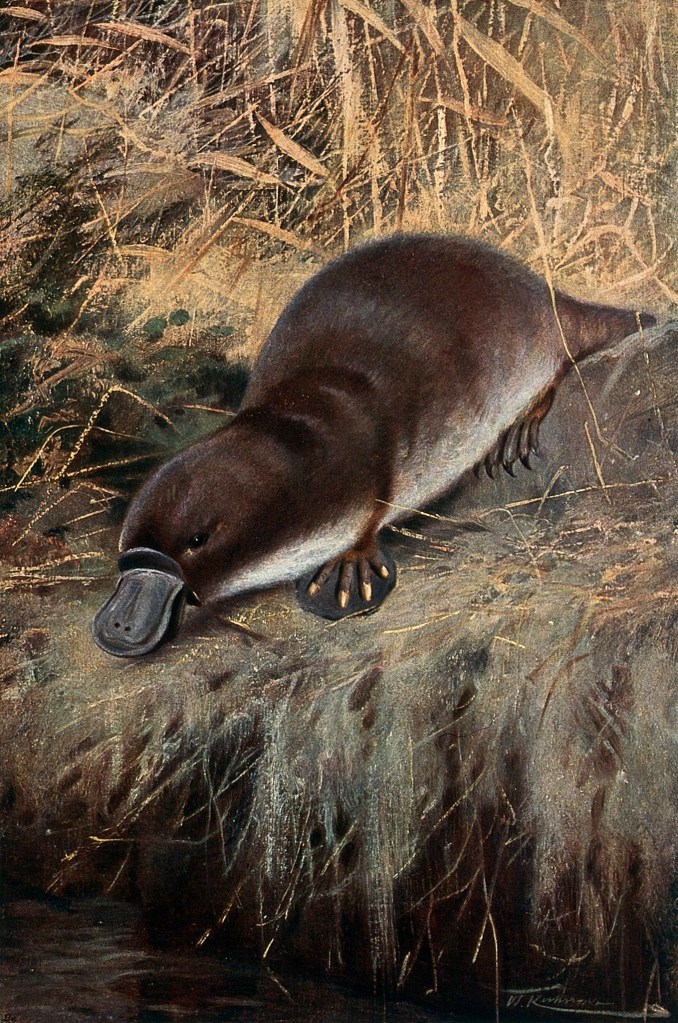




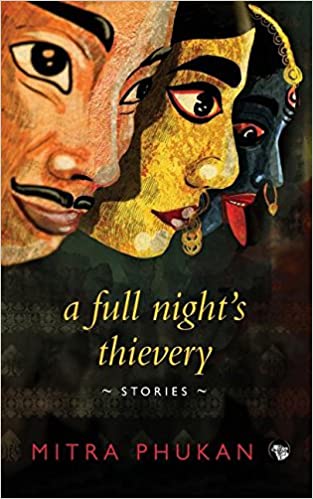
 Borderless