I first learned of Okunoshima from a Canadian friend’s Facebook post. She’d shared photos of herself surrounded by rabbits. The island just off the coast of Shikoku and only accessible by ferry, was overrun with these adorable animals. How unusual, I thought. How cute! Surprisingly, few Japanese people that I talked to seem to know about this place. However, when it was featured a few months ago on a TV travel show, my daughter Lilia told me that she wanted to visit.
“It’s really far,” I told her. “At least three hours by car.”
“We can take the bus,” she signed to me. (My daughter is deaf.)
I knew that there were no buses that went from our town in Tokushima, on the eastern part of Shikoku, to Tadanoumi in Ehime Prefecture where we could board the ferry to Okunoshima. My daughter, who has cerebral palsy, uses a wheelchair, and it seemed like too much of a hassle to take the bus to Matsuyama and change buses once or twice to get to that tiny coastal town, but I wanted to visit as much as she did. I was charmed by the idea of an island full of bunnies. When I came across a flyer advertising a one-day bus tour to Okunoshima, I immediately signed us up.
We got up extra early that sunny Sunday and met our tour guide in a gravel parking lot near the town gym. I’d told the tour guide that my daughter was disabled, but it wasn’t a big deal. We climbed into the front seat and the guide handed out tea and packaged rice balls. We gazed out at the lush green terraced fields, yellow roadside wildflowers, and flooded rice paddies as we made our way to Ehime Prefecture. The landscape outside our window might have been lifted from the animated film Tottoro.
“Inaka,” Lilia signed.
“Yes.” I agreed that we were deep “in the countryside.”
I was a little worried that once we got to the island my daughter would find the real-life rabbits annoying. I remembered how she had been bothered by the notoriously aggressive deer in Nara on her school trip. One deer had tried to eat her notebook. What if the rabbits tried to nibble on her fingers or cellphone? But as we rolled along the highway, she reminisced about the rabbit she and her classmates had taken care of in kindergarten. When it had died, they had held a little ceremony and buried it on the school grounds.
As we approached the port, finally catching a glimpse of the sea, the tour guide gave us some final instructions. “Don’t give the rabbits snacks,” she said. We could buy rabbit food at the port.
The bus took a turn down a narrow road flanked by brown-tiled houses, many of them with solar panels. Finally, we arrived at a parking lot next to a small cluster of buildings. To my surprise, here we were, seemingly in the back of beyond, but a long line of people already snaked around the corner from the ferry dock. The tour guide seemed a bit nervous. “It’s a small boat,” she said, “and they don’t accept reservations.” She hurried off to buy our tickets. Note to self, regarding future visits: arrive plenty early.
The tour guide returned to the bus and informed us that the passengers were lined up for an earlier ferry and that we would be able to board. Phew! Since we had about half-an-hour before our own departure, we all got off the bus. Lilia and I went to a small building with a big clock to buy packets of rabbit pellets.
When it was time to get on the ferry, we were directed to the lower level, along with several young families with strollers. Most of the other passengers went above deck. We stayed to the side as three rows of cars were directed onto the ferry. It was shaded and cool.
Lilia, who has always been far more social than me, tried to get me to start a conversation with a blonde foreign woman standing nearby with her three kids and husband. From the familiar scent of her sunscreen, I assumed that she was American, but I didn’t really feel like talking. I resisted my daughter’s entreaties, suggesting that we just relax and enjoy the wind on our faces, the sight of the waves. I thought it was remarkable, however, that although most Japanese people I’d mentioned the island to had never heard anything about Okunoshima, there seemed to be several groups of foreigners on this ferry alone bound for the island.
We arrived in about twenty minutes. The tour guide had arranged for a mini bus to transport my daughter and me to a restaurant on the island. Lunch was included in our package tour. The rest of the group would be going on foot. The restaurant was only about a fifteen-minute walk from the port.
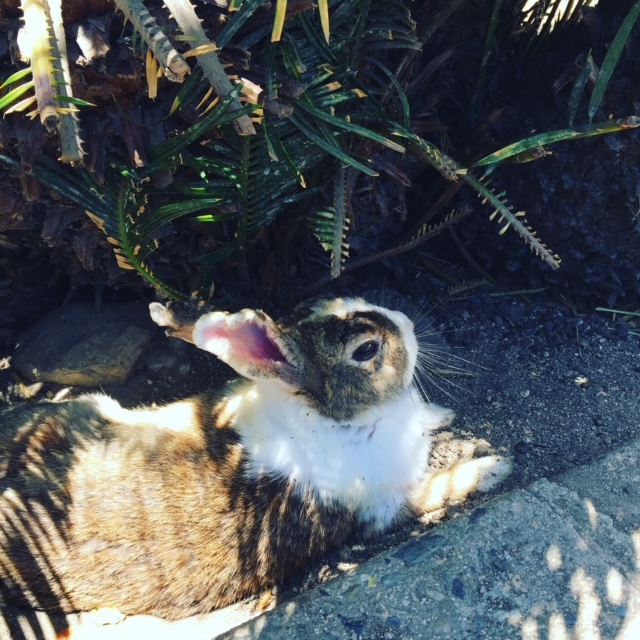
I had half-expected hordes of rabbits to greet us upon disembarking, but it was hot. The first rabbits I spotted were lolling beneath bushes, their energy apparently sapped by the high temperatures and humidity.
My daughter and I boarded the waiting van. I pointed out rabbits to Lilia: there, in a burrow, there, under the picnic table. It occurred to me that this was the first Japanese island that I had been on that wasn’t home to stray cats.
“Are there any predators on this island?” I asked our driver.
He thought for a moment. “Maybe crows.”
The rest of our group was dining in a tatami room. Because of my daughter’s wheelchair, we ate in another room at a table with chairs. Our pre-ordered lunch consisted of slices of sashimi, miso soup, and rice mixed with vegetables, but at the Usagi Lunch Café, you could order pancakes branded with bunnies, white rice molded into rabbit shapes surrounded by curry, and long-eared rice-filled omelettes.
After lunch, we were free to do as we liked until the ferry departed. We set out to explore. Bicycles can be rented, but it’s possible to walk the four kilometres around the entire island in an hour or less. The bunnies are not hard to find.
LiliaLilia and the rabbit
Lilia and I ventured on to a grassy lawn, which was full of holes dug by rabbits, making it a bumpy ride with the wheelchair. We settled briefly at a shady spot under some trees where some bunnies had gathered, and lured them with pellets. I was worried that they might bite our fingers, but they were docile and friendly, nibbling only on the food that was offered. “Kawaii!” Lilia said. “Cute!”
Although the rabbits are, for all intents and purposes, wild, they are supposedly descendants of pet rabbits kept at a long-ago school. The story goes that in 1971 schoolchildren released eight of these creatures on the island, and then they began to proliferate, as rabbits do, Now the island is designated as a national park and is home to around 700 bunnies.
There is another more sinister theory as to how the rabbits came to be on the island. Unbeknownst to many Japanese, from 1929-1945, the Secondary Tokyo Military Arsenal manufactured chemical weapons for the Japanese Army on Okunoshima. This project was so secret that during that time, the island was excluded from most maps of Japan. The poisonous gases produced here, including mustard gas, tear gas, and phosgene, were used more than 2,000 times exclusively against the Chinese, killing 80,000 people. The effectiveness of the gases was allegedly tested on rabbits. Some say that the ones now living on the island are descendants from test rabbits released after the facility was destroyed in 1945 by U.S. Forces. However, Hatsuichi Murakami, who worked at the poison gas factory as a teenager and later became director of the Poison Gas Museum, told a New York Times reporter that the present-day rabbits are not related to those used for testing.
My daughter wanted to visit the Poison Gas Museum, which she had also learned about from TV. Having visited the Hiroshima Peace Museum and the Holocaust Museum in Washington D.C. on family trips, she was familiar with the horrors of war, and keen to know more about history. We saved a few pellets for later, and made our way to the small building with a red-brick facade. A ramp made it easily accessible, as did the nominal one-hundred-yen entry fee. The exhibits of gas-making materials, clothing owned by factory workers, and photos take up only two rooms, but their impact is strong. They are labeled in both Japanese and English. According to the museum’s English brochure, “Having seen materials made by concerned people, we hereby declare that war is meaningless and the production of poison gas is tragic. We make an appeal for everlasting peace.”
Once again under the hot afternoon sun, we wandered slowly back toward the port, dispensing pellets as we went. Maybe, I thought, these cute little bunny rabbits were released here to live freely as atonement for the ones who had suffered and died. They are now protected from hunters, dogs, and cats (which are prohibited on the island). Signs warn visitors not to feed them on the road, in order to keep them safely out of the way of oncoming cars. From their appearance, they seem mostly healthy and well cared for. The island itself is now a family-friendly place with a campground and a spa, where people from all over the world gather peacefully.
As we lined up for the ferry to return home, my only regret was that we couldn’t stay longer. Then again, now that we knew how to get there, we could always go back.
Suzanne Kamatawas born and raised in Grand Haven, Michigan. She now lives in Japan with her husband and two children. Her short stories, essays, articles and book reviews have appeared in over 100 publications. Her work has been nominated for the Pushcart Prize five times, and received a Special Mention in 2006. She is also a two-time winner of the All Nippon Airways/Wingspan Fiction Contest, winner of the Paris Book Festival, and winner of a SCBWI Magazine Merit Award.
PLEASE NOTE: ARTICLES CAN ONLY BE REPRODUCED IN OTHER SITES WITH DUE ACKNOWLEDGEMENT TO BORDERLESS JOURNAL
A CONVERSATION BETWEEN A LADY AND HER SUITOR

She: Hither come, help me get off the cliff, O white-shawled lad!
He: I’ll, O, red-dressed lass, but what will be the reward, I have?

She: Either my necklace or my bangles, you will have.
He: Of your necklace and bangles, none I ever need!
‘Tis your shapely nose and flowing tresses I seek.

She: Shapely nose and flowing tresses lie beyond your reach
-- I’ll become a wild citron on a lofty tree.
Boy: I’ll become grasshopper and nibble your tender leaves.

She: I’ll become a cumulus and on the valley burst forth.
He: A thirsty deer I’ll become, and drink all the fresh water you pour.

She: I’ll become a sorghum grain and rest on the field.
He: I’ll become a grey dove and hold you in my beak.

She: I’ll become a rabbit, in rosebushes I’ll sleep.
He: I’ll become a shepherd, you with my crook I’ll gently beat.

She: I’ll become a turban that rests on a bride’s head.
He: I’ll play my mouth-harp, and as a reward, you I’ll seek.

She: I’ll become the helpless daughter of a poor man.
He: I’ll become the grim-reaper, and whisk you off to the heaven.

She: You’ve filled my heart with boundless joy and delight
Hurry to the wedding chamber, I’m your bride.
This folk song was originally featured in Dreen (The Rainbow: A Collection of Folksongs) collected and translated into Urdu by Atta Shad and A. Salam and published by the Balochi Academy Quetta.Fazal Baloch has the rights to the translation in English.
Fazal Baloch is a Balochi writer and translator. He has translated many Balochi poems and short stories into English. His translations have been featured in Pakistani Literature published by Pakistan Academy of Letters and in the form of books and anthologies.
.
PLEASE NOTE: ARTICLES CAN ONLY BE REPRODUCED IN OTHER SITES WITH DUE ACKNOWLEDGEMENT TO BORDERLESS JOURNAL.
“The moon was a tomato in the sky, then it was an orange, then a grapefruit, then a metaphor, then it was exactly like a simile, then like some other comparison, then finally it was itself, the moon. The comfy rascals reclined on loungers on the beach and watched it change and pretended it was a weak sun they had tricked out of sunbeams…..”
Thus begins the title story of the collection, which with its brilliant wordplay, focuses on the imagination of things, on moon and Baudelaire, thus first transferring awareness to the realm of uncanny and then almost quietly turning it back to the real world. It is peculiar and subtle, the way it happens. A tale of palpable human helplessness in a cold and dark world as the comfy rascals first laugh and “then shiver at night in their own last desperate resort, an abandoned seaside town”.
Comfy Rascals is Rhys Hughes’ recent collection of experimental short fiction where the stories constantly shift/ permeate to the realm of fantasy from real world and vice-versa, blurring the binary categories of human/nonhuman and natural/material world. Hughes was born in Wales. His first book, Worming the Harpy, was published in 1995. Since that time he has published fifty other books, more than nine hundred short stories, and innumerable articles. He graduated as an engineer but now works as a tutor of mathematics.
Hughes, who sees himself as a comedic writer, uses fantasy and humour to explore unusual concepts which compel readers to re-visualise the accepted ideas of reality, challenging their understanding of the certainties this world offers and the possibilities it may, when seen in a manner unaccustomed to the mind. While some of the stories may unsettle –
“I have destroyed the world, but what of that? Light a candle in my memory and that will be more than enough.” (‘A Deep Breath’)
Some bring a vivid element of the fantastic, like —
It is so cold that the candle flame just froze solid and I was able to snap it off and put it in my pocket for later. When it thaws out I will use it as a hand warmer and then put it back on the wick. In fact it is so cold that the flames of the fire have frozen solid and can be snapped off and used to cut butter, if cutting butter is something you need to do.” (‘How Cold is It?’)
And some others just amuse by virtue of their humour/satire:
“One Socrates in the market square is not a heap of philosophers. What happens if we add another Socrates? Still, this is not a heap. It is two philosophers, that is all. Add another Socrates and keep adding them.” (‘Sorites Speculation’)
Hughes works with human anatomy, sometimes in tandem with non-human forms, and challenges the anthropocentric worldview where everything human has more value over others. The elements of grotesque that he thus makes use of, subvert the notions of ‘real world’ and ‘materiality’ while being playful. He also makes use of spaces inhabited by humans, like homes to question the extent of boundaries we willing create.
One important space that is difficult to overlook in this collection is author’s use of the concept of libraries (Four stories in all), especially in the wake of a tyrannical rule. He employs it to drive home the point that tyrannies succeed when people become subservient to the rule. We witness books being burned but not always.
“Tyrants burn books, but sometimes the books fight back and vanquish the inferno.” (‘The Library’)
Science fiction and mythology are brought into play by Hughes. His stories swerve socio-political understanding and narratives to the realms of the uncanny, the grotesque and the fantastic while displaying a vibrant play on words, thereby alluring with unconventional reads and hence, unimagined revelations.
In the author’s own words –
“Many rascals are too tense to be comfortable. Real life rascals have much to worry about. But rascals in fiction can afford to relax a little in the waves of prose that surround them, gently swirling on the wit and wisdom, bobbing on the contrivance, floating on the syntax. It is nice to be a comfy rascal.”
Rakhi Dalal is an educator by profession. When not working, she can usually be found reading books or writing about reading them. She writes at https://rakhidalal.blogspot.com/ .
.
PLEASE NOTE: ARTICLES CAN ONLY BE REPRODUCED IN OTHER SITES WITH DUE ACKNOWLEDGEMENT TO BORDERLESS JOURNAL.
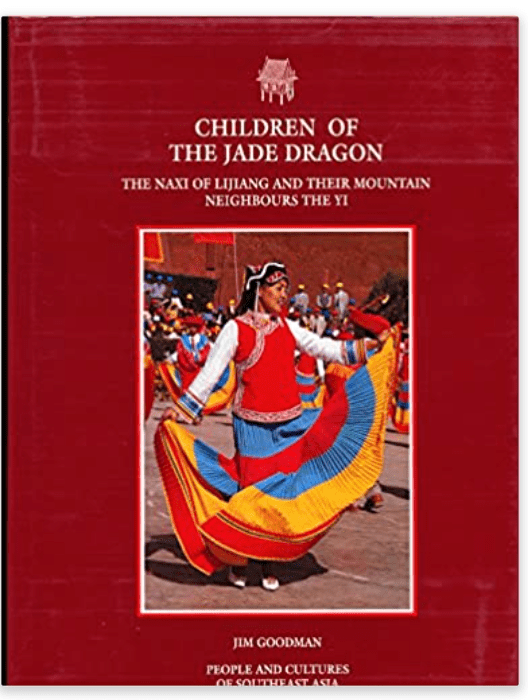
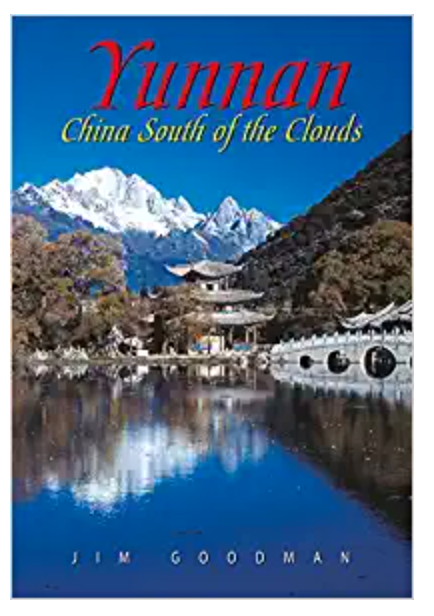
Jim Goodman, an American traveler, author, ethnologist and photographer who has spent the last half-century in Asia, converses with Keith Lyons.
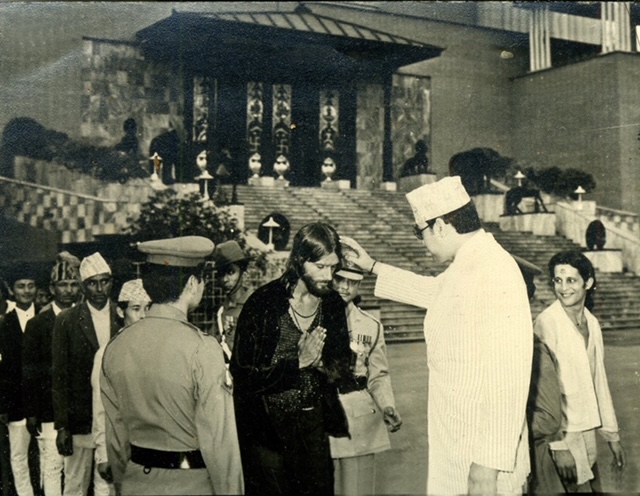
Jim Goodman in Nepal at Dasain being blessed by King Birendra, October 1978.
Jim Goodman is something of a legend in Southeast Asia and Eastern South Asia. His definitive guide to southwest China’s Yunnan province was the most sought-after travel book for any intrepid backpacker wanting to get off-the-beaten-track in the ethnically-diverse province bordering Vietnam, Laos, Myanmar and Tibet. That’s how I first came across Jim, through the well-thumbed pages of his The Exploration of Yunnan. Back then, I marvelled at his ability to venture into areas that were only just opening up to foreign travellers, and the breadth and depth of his knowledge of different ethnic minorities. It was almost 20 years later that I finally met Jim in person in a cafe inside the old city gates of northern Thailand’s Chiang Mai, where he has been based since 1988. Later, on a media trip to the Golden Triangle’s eastern Shan state hill-tribe villages, I saw how Jim’s interactions, appearance (and conversation in ethnic language) endeared him to local minorities.
He has published books in Nepal, Singapore, Thailand, China and Vietnam, and also worked with ethnic minorities, including on textiles with Newars in Nepal and northern east Indian Mizos, and on traditional handicrafts with Akha in northern Thailand. “Besides acquiring new labour skills—I was the dyer and designer—the work gave me valuable insights into the different cultural norms and ways of thinking of traditional societies in this region,” he once wrote. “My writing, research and photography reflect my fascination with history, traditional cultures and ethnic minorities, not just in the ethnologies, cultural studies and histories I’ve published, but in my fiction and poetry as well.”
You were born in the US capital Washington D.C. and raised in the Midwest in Cincinnati, Ohio. Growing up in the US, what do you think contributed to your interest in different countries and cultures?
As a kid I was fascinated by American Indians, especially those from the western plains and the southeast. My father taught Latin American history at Xavier University in Cincinnati. He and my mother were members, later chairmen, of the Foreign Students Welcoming Committee. Every American holiday — 4th of July, Thanksgiving, Christmas, etc — we had foreign guests. They were from India, Nepal, Tunisia, Thailand, Colombia and Nigeria. They aroused my natural curiosity.
How were your first experiences of ‘foreignness’ in the US and then overseas?
I stopped believing in my parents’ Catholicism by the time I was in high school and for the next few years felt like a foreigner in my own family and neighbourhood. In later years, when I was living in Europe or Asia I was always conscious of being foreign, especially in things like double pricing, but I integrated socially enough not to let it bother me. Occasionally, that worked in my favour. In Korea in the 70s, males were forbidden by law to grow their hair over their ears or past the collar. Every four or five months the police carried out widely publicised roundups. But foreigners were exempt.
What was it like growing up in the 1960’s in the US?
It was very exciting. Thanks to the civil rights and anti-war movements it was easy to challenge the system intellectually and practically. The drugs and music, a very new kind of music, also contributed to this sense of the times are changing everywhere and lots of options were possible. It was an amazingly optimistic decade.
How did you come to be in the army, and what was your experience as a soldier in Germany and later South Korea?
I got my draft notice in the summer of 1967, at the peak of the Vietnam War, when 80% of those drafted were sent off to Vietnam after training. So I took the enlistment option, signing up for an extra two years, with one year at the language school studying Arabic. War might be over by the time I finish the course, I thought, and anyway they wouldn’t need an Arabic translator in Vietnam. But the Army inserted a little clause in every contract, “subject to needs of the Army,” that let them do what they liked. When I arrived at the language school, after basic training I was told my orders had been changed. I had to go back and wait for new ones. Eventually they put me in a tank training unit, but by the luck of the draw I was in the company sent after training to Germany, while the other three were dispatched to Vietnam.
In Germany, I served in an armoured unit which was very often in the field. However, this was 1968 and I managed to get a pass to go to Paris in early June and marched down the avenues with the students and workers singing L’internationale over and over. I still know the first stanza, in French. I also met Arab officers from Jordan and Libya and took a month’s leave in the autumn to have my 21st birthday in Beirut. On my first night in Beirut, a South Yemeni staying in the same hotel told me there were three good reasons to travel. The first was to meet the different kinds of people living in this world. Second, was to try the various local foods and drinks. And third, was to appreciate the scenery and historical monuments. I never forgot the order in which he listed those attractions: people first. Throughout my trip, I wore a button on my shirt that said Restore Palestine to the Arab People, which guaranteed a good reception everywhere in Lebanon and Jordan. I was very active politically by then and the following spring published the first anti-war newspaper by a soldier in Europe. That later got me transferred to Korea, the only place there was no organised anti-war soldier activity. In Korea, I was in charge of the Photo Lab, where I learned the basic principles of photography. Also joined rock bands as a singer, so I wasn’t very political in Korea, except for some of the song lyrics.
After your time in the army, how did you get back to Asia?
I was discharged in Seattle in January 1972, went to San Francisco to live and later got a clerk-typist job with General Services Administration. Then my boss recommended me for a low-ranking administrative position. I would have been in charge of the installation of furniture in the California offices of the state’s two senators. Not exactly exciting work, but anyway I had to get a security clearance, starting with answering a questionnaire with things like ‘are you now or have you ever been a member of the Communist Party’ and ‘do you advocate the overthrow of the US government by force or violence’.
I answered no to everything, but within 24 hours the office got back a disapproval of my application “for security reasons”. After that news got out, everybody in the building thought I was a terrorist, and that was before terrorist was a household word. It was doubtless my activity as an anti-war soldier but it meant I would really have no future in my country. I went to Korea that autumn on a one-way ticket without enough money for a round-trip. (I don’t think that’s even possible anymore.) I met other ex-GI’s in Seoul who gave private English lessons, so I did, too. In the second year, I got hired by Language Teaching Research Center, which didn’t use textbooks and so I made up my own lessons. I spent free time among soldiers on the army base and in off-base bars and would listen carefully to their conversations. Whatever they said that I thought my students wouldn’t understand, I wrote down and worked it into my lessons. It was a wonderfully creative job and made me especially conscious of my own language.
What happened for you to leave Korea and ending up almost dying and in jail in Nepal?
My last summer (1976) in Korea, I met travellers who had been to India, Nepal and Southeast Asia. Later that year I got busted for a small amount of grass and, near the end of the year, was expelled from Korea. India and Nepal seemed a natural place to go next. It wasn’t easy in the beginning and once in Calcutta, I got robbed of everything and went over three weeks without eating. I was kind of resigned to dying by starvation but a Muslim street merchant recognised the situation, paid my bills and lent me enough money to get back to Kathmandu. Everything seemed fine but when I finally ate a meal I vomited it all a few minutes later. Body won’t take food, eh? Guess I’m going to die after all. He said don’t worry, wait a little and try again. He had witnessed the same thing with starving Bengali refugees during the break-up of Pakistan. He was right. The next meal was fine and ever since then, I’ve not worried about, for one reason or another, missing a meal or two. I missed meals three and a half weeks and got by.
And you spent some time in jail, not just in Kathmandu but in Korea?
I was three weeks in Korean solitary confinement until my girlfriend bailed me out. Longer, about four months, in the holding centre in Kathmandu, where those arrested awaited trial. I was busted for a lot of hash but charged with both possession, 10,000 rupees fine, and exporting, 100,000 rupees fine (about 70 to a dollar then). I pleaded guilty to possession only. The judge dismissed the exporting charge because the hash was found in my home, not at any border. However, to save face, the prosecutor appealed the acquittal for exporting. The appeal had to go to the special court, which only met once a week, so cases piled up. In Nepal, you don’t bribe the judge. You bribe the clerk to put your case before a sympathetic judge. I wasn’t going to hurry up the case because then I would have to leave the country afterwards. The prosecutor wasn’t going to speed up the proceedings because he still would have no evidence and would lose again. Meanwhile, I was free to continue my Nepal life. For over a year the government’s attitude to me was like a joke. They thought I had figured out how to beat the system. The following year, I became an embarrassment and the year after that, with a new government, it became an issue and I finally got a new passport and left Nepal for a month’s holiday in Thailand.
What took you to Assam, and what made you later leave?
It was one of the few places in India I hadn’t visited yet. It had an interesting separate history from the rest of the country and was surrounded by many fascinating ethnic minorities. My first trip was in the autumn of 1979, when I was paid to take an American woman and her daughter, whose tutor I was, to Darjeeling, Sikkim and Kaziranga, the rhinoceros park in Assam. The Assamese anti-immigrant demonstrations had already begun, so I kept up on news then and afterwards. In 1980, I made two trips to cover the movement for newspaper articles. I only got to visit hill people (Khasi) in Meghalaya, as the other states, and parts of Assam were closed to foreigners. I bought a lot of books about them, anticipating freer travel sometime soon. Instead, I got blamed on my third trip in May by the Delhi government for organising the Assam movement (as if they couldn’t organise themselves) and banned from re-entry.
After moving to Chiang Mai Thailand, what did you concentrate on?
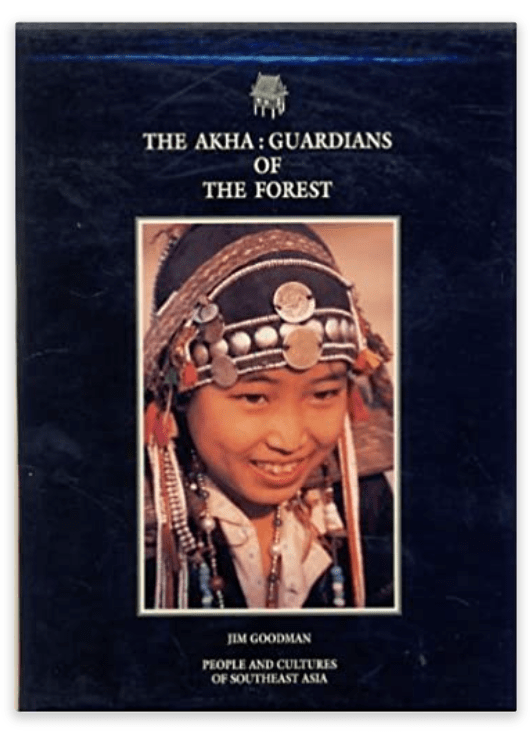
Jim Goodman with a Akha girl in Thailand, 1988
The skills I learned in Nepal were those involving weaving and dyeing. I used natural dyes and designed the patterns for the looms. I had worked with both Mizos from Northeast India, who used a back-strap loom, and Newars, who used a stand-up frame loom, like that of the Thai. I began working with the Karen, who used back-strap looms. But after meeting the Akha, I conceived the idea of making Akha jackets, which were cut like Western jackets, using my colours from natural dyes and bigger to fit Western bodies. I soon dropped the work with the Karen and found enough customers for Akha jackets and shoulder bags to cover the expenses of a modest lifestyle and my research on them.
What made you decide to go to Yunnan and southwest China? When did you go, and what was the experience as the region just opened up to travel by foreigners?
One of the sub-groups I worked with in Thailand, the Pamee Akha, came directly down from Yunnan. I met a relative on one of my trips who was in Pamee to make money picking lychees for a season. He invited me to his village in Xishuangbanna, if I could ever come to China. Not long afterwards a flight opened from Chiang Mai to Kunming. I booked one for July 1992. After a few days around Kunming and Lunan County, I flew to Xishuangbanna and found out from Akha in Jinghong how to find my friend I met in Pamee. After some time there, I returned to Kunming and embarked for the northwest for a quick look that did include the Torch Festival in Ninglang. I couldn’t speak much Chinese then, but in Xishuangbanna, the Akha enjoyed the fact that the first foreigner they ever met could speak their language. People were friendly everywhere and once I started repeating visits for research, I got introduced to English-speaking locals who could assist me.
When you first went to southwest China, did you feel you might be documenting some people whose culture would be wiped out by modernisation, and if so, has this happened?
From the very beginning I felt ethnic cultures were having a true revival but wondered how long that could last, not because of politics, as in the past, but because of the greater exposure to outside modern influences, including mass tourism. Certainly, that has happened, but not to the same extent everywhere. And mass tourism has been more disruptive. Lijiang and Lugu Lake are two obvious examples. I was lucky to have chosen those places to fully research before they completely transformed into tourist traps. In other places, like Ailaoshan, parts of Lincang and Pu’er prefectures and even much of Xishuangbanna, modernisation has been less noticeable and the traditional culture and lifestyles still strong.
What have been some of your most memorable experiences in Yunnan?
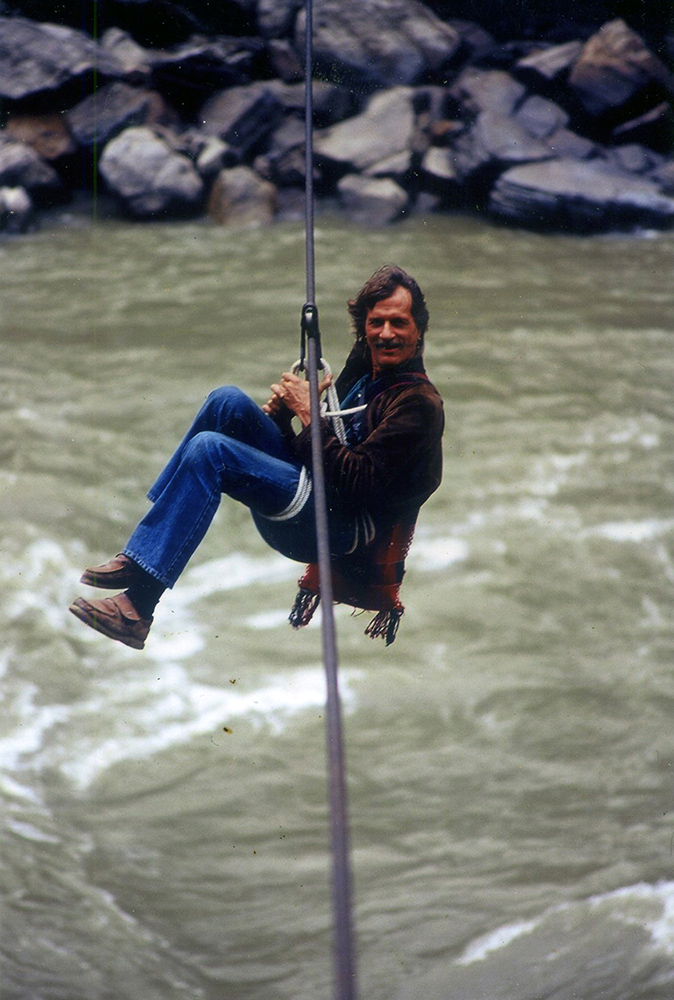
After watching two little Lisu girls at Lishadi cross the Nu River on the rope-bridge several times, for their own amusement, without adult supervision, I concluded:
1. It can’t be dangerous.
2. It must be fun.
Next trip to Nujiang I had a Lisu friend in Fugong get me the harness and cable hook. Made my first crossing, just for the fun of it, at Damedi south of Fugong and over the next few years carried my cable hook and rope harness to Nujiang for more rides at more locations.
Jim Goodman making the crossingJim Goodman with a crossbow
The other unique, to me anyway, research experience was my repeated visits to Lige village, Lugu Lake. Mosuo culture is matrilineal, the children belong to the mother, but also Tibetan Buddhist and each family has a resident monk. Women were definitely in charge of domestic affairs. At Lugu Lake, my friends, the folks I hung out with, got high and drunk with and had the most experiences with, were mainly women. Many of them introduced themselves to me. I only knew a few men. With every other minority, I only met women because they were my friend’s wives, daughters or sisters, whom he introduced to me. The Mosuo were really special.
From your experiences across Southeast Asia and eastern Southern Asia, what are some of the most interesting things you’ve learnt about hill tribes, their customs, societies, and beliefs?
They are very attuned to nature, with a cultural sense of ecological balance. Most of their festivals are concerned with important junctures in the agricultural work cycle. Their societies are very collective-oriented. Everyone has relationships with everyone else. No one ever has to feel alone.
How has learning languages and assisting local craftspeople enabled you to get inside like an anthropologist?
Learning an ethnic minority language is a clear indication of special interest in them. And they respond very favourably to that. Involving them in handicrafts production shows appreciation of their traditional arts and crafts, like a form of flattery. It also means getting to know them more personally and becoming an accepted part of their existence, making research easy.
What’s your personal approach to meeting new people, and why do you think it works?
As that pertains to my research work I always made clear to the people what my interest in them was and that I was going to write about them. Always had a positive response and when I indulged in their hospitality I followed four rules I set for myself: eat whatever they give me, drink whatever they give me, smoke whatever they give me, and sleep wherever they put me. As a result, I’ve had some really spicy food, very powerful liquor, pretty raunchy cigarettes and even opium and some pretty uncomfortable sleeping conditions. But I figured nothing can hurt me much for a day or so and the effect on them was that they thought I was a great guest. Everything they did for me seemed to work. They didn’t have to make any adjustments.
What’s it like to be the first outsider or ‘white person’ that some groups have seen?
That happened mostly in Yunnan and was never a negative experience. I remember once about to enter a Yunnan village that was definitely off the beaten track and when children spotted me they ran back to the village shouting, “Weiguo pengyou lai!” (“Foreign friend comes.”) And then the adults came out to welcome me. I never found any animosity or impolite, intrusive curiosity anywhere I went. The local attitude seemed to be ‘here’s a chance to make a foreign friend’. Minorities were as curious about me as I was about them. And being American in China or Vietnam, in their context I was a fellow minority person.
For many of the groups you’ve studied and spent time with, they are spread across countries and borders. Are there differences on different sides of the borders, or does close contact mean the groups retain their traditions?
I made my first trip to Vietnam precisely to answer that question. I was researching the terrace builders in Honghe between the Red River and the Vietnam border. Many ethnic groups lived on both sides, so I travelled through the border areas in Vietnam to meet sub-groups I knew in Yunnan. Lifestyles and cultural traits were very similar. The minorities in Vietnam seemed more conservative, more resistant to modern influence, while the same minorities on the Yunnan side seemed better off economically.
Your other interest is Vietnam. What fascinates you about Vietnam?
I was already familiar with Chinese culture when I first visited Vietnam, as well as Southeast Asian culture. It didn’t seem like such a strange place and I was able to discover what was unique about Vietnam, its separate cultural characteristics. The people were uniformly friendly, even though I came from a country that bombed the hell out of it. Yet the Vietnamese I met regarded all that as the past and now it’s different so no time for resentment. I made close friendships there easily (eventually married one) and found new topics to write books about—what was unique about Vietnamese culture, the special history of Hanoi, and how the country became one entity.
Why do you have a fascination and affinity with ethnic minorities, particularly hill tribes?
Hard to really say, but I suppose it was because I like their very different kind of living environment, the way they look and the way they act. Always felt comfortable with them.
How do you feel about the changes that have happened to minorities, such as becoming tourist attractions, or having to move to towns for economic opportunities?
It was probably inevitable. Traditional agriculture, the shifting cultivation type, was no longer sustainable due to population density growth. Roads are better and more numerous, too, so those who do move to cities can still maintain links with their villages. Becoming tourist attractions can be more of a lifestyle change. Everything cultural seems to become a commodity, something to be paid to do. In some places, the culture on display is not even their own. For example, in Sapa Vietnam, many Hmong girls dress up in fancy clothing of the Flowery Hmong because their own Black Hmong outfits are not as colourful or photogenic for tourists, who pay them to take photographs.
When did you know that you wanted to be a writer?
When I first started reading world literature as an early teenager and started fantasizing about one day becoming one of the literary giants.
How do you go about your writing process?
I begin by thinking about it for many sessions, then, when it’s a book or a lengthy article, make an outline and start adding details before I actually write anything. When I do get going I often inspire myself by fantasising what a positive review might say, then add or revise something to justify the imaginary praise.
How has photography integrated with your writing?
Most of what I write requires illustration and some of it was because I had a set of photographs that sort of made a story. When doing cultural research, I photographed anything I thought might be relevant, whether it was photogenic or not, because then I would have a reference. I wouldn’t have to write down or have to remember what I saw. The photo was the record.
Yes. It was set up by a young friend many years ago. I don’t make any money from it. It would have been nice to have sold all the site’s articles, but I continue it because it represents my self-image of contributing to the sum of human knowledge concerning the topics I write about. Regarding books, I have had publishers in several cities: Kathmandu, Bangkok, Singapore, Kunming, Hong Kong and Hanoi.
What projects do you have on the go currently?
This year’s project was Peoples of the Mekong River Basin: The Ethnic Minorities. It covers 23 ethnic minorities and over 100 photos, 90% mine. The publisher is World Scientific Press, Singapore and it should come out in or maybe before October. I would like to do one more book, on Lamphun and its first ruler Queen Chamadevi, the most interesting and accomplished woman in all of Thai history. But I have to find a publisher interested before I start work on it.
*Photographs provided by Jim Goodman
Keith Lyons (keithlyons.net) is an award-winning writer, author and creative writing mentor, who gave up learning to play bagpipes in a Scottish pipe band to focus on after-dark tabs of dark chocolate, early morning slow-lane swimming, and the perfect cup of masala chai tea. Find him@KeithLyonsNZor blogging at Wandering in the World (http://wanderingintheworld.com).
PLEASE NOTE: ARTICLES CAN ONLY BE REPRODUCED IN OTHER SITES WITH DUE ACKNOWLEDGEMENT TO BORDERLESS JOURNAL
Since 1991, Ukraine has been celebrating its Independence Day on August 24th. As another year of its independent existence starts, it is unfortunately embroiled in a state of war for the last six months where large parts of its territory have been forcefully conquered by the invading Russian army and cities have faced erasure — razed to the ground by incessant, unceasing, ruthless violence. Many human lives have been lost, more refugees generated and thousands have been wounded or taken prisoners. Families have been torn and natural resources depleted.
This year of all years, it’s most important to commemorate Ukraine’s Independence Day — to reaffirm the recognition given to a region and a culture that binds the residents together into an independent entity. One wonders if dreams as Lennon’s of “all the people/ Livin’ life in peace” could ever come true and have us create a beautiful haven on Earth where wars would be a narrative from the past…
Imagine there's no heaven
It's easy if you try
No hell below us
Above us, only sky

Imagine all the people
Livin' for today
Ah

Imagine there's no countries
It isn't hard to do
Nothing to kill or die for
And no religion, too

Imagine all the people
Livin' life in peace
You....

Imagine all the people
Sharing all the world
You

{Excerpted from "Imagine"(1971) by John Lennon (1940-1980)}
Voicing out in unison against the violence and violations faced by our fellow humans in war zones, we bring to you poetry and prose by fourteen writers from nine different countries, including one who had to flee Ukraine as the shelling shattered Kharkiv.
Poetry
Poetry from across the world in support of peace and voicing concerns over the humanitarian crisis in Ukraine, we have Ukranian Lesya Bakun give us poetry as a war victim, a refugee. Rhys Hughes, Ron Pickett, Michael R Burch, Kirpal Singh, Malachi Edwin Vethamani, Suzanne Kamata, Mini Babu, Sybil Pretious and Mitali Chakravarty have contributed poetry written for the Ukraine crisis. Click here to read “How Many Times Must the Cannonballs Fly…?”
Cry the Sunflower by Ihlwha Choi, who wrote the poem in Korean and translated it for our readers. Click here to read.
‘When will we ever learn? Oh, will we ever learn?’: Ratnottama Sengupta,comments on the situation in Ukraine while dwelling on her memorable meeting with folk legend Pete Seeger, a pacifist, who wrote ‘Where have all the Flowers gone’, based on a folk song from Ukraine. Click here to read.
Ratnottama Senguptagives a glimpse of the life of Zohra Sehgal, based on the book Zohra: A Biography in Four ActsbyRitu Menon, and her own personal interactions with the aging Zohra Sehgal. Click here to read.
“It just so happens that their[1] universes were different from ours: because why would their imaginations be constrained by a nation-state that would not exist for another thousand years?”
These lines from a recent article on conquests carried out by the Indian subcontinent in ancient times brings to focus that earlier countries or nation-states as we know of them today did not exist till the industrial revolution set the concept in motion. In the month many countries in Asia celebrate their independent existence or rather the drawing of borders based on colonial mapmakers’ whims, we should perhaps relook at the way the world stands divided.
Is this what we want as humans? Where are we headed? While conquerors write the history, we tend to gloss over what is left unsaid. The millions who died crossing borders, in race riots and of hunger, starvation and disease in refugee camps is overlooked, or worse, used to justify the divisions that still hurt the residents of the sub-continent and try to destroy any sense of oneness among the human species. We tend not to forget the atrocities of the colonials but we overlook the violence of the mobs that incensed with hatred instilled by politics annihilated and murdered. Their story is reduced to “us” and “them”. In our mood of jubilation, the recent bombings in the Middle East and the Ukraine-Russia war have already been delegated to the newsreels. But these are all people who are killed and displaced without any justification for the need to do so. One of the things that George Orwell had depicted in 1984 was an acceptance of a constant state of war. Are we stepping into that frame of mind with our cold acceptance of the situation worldwide?
In the last century, many united against the atrocities of the empire builders. They wanted to rise above the divides. At least greats like Nazrul vociferously objected to the basis of divides that were used to draw the borders. Translations brought to us by Professor Fakrul Alam showcase such poetry as does much of Tagore’s own writing and actions. Tagore organised a protest march against the colonial proposal of Partition of Bengal in 1905 by taking a procession in which he encouraged Hindu and Muslim women to tie rakhis[2] on men from the other community and make them their brothers. Tagore put the welfare of humanity above nationalism as can be seen in his writings and speeches. Reflecting on humanity, we have Munshi Premchand’s powerful story,Pus Ki Raat or A Frigid Winter’s Night, translated from Hindi by C Christine Fair, dwelling on the sad state of peasantry under the Raj. In a bid to rouse people like the protagonist of Premchand’s story, Tagore wrote inspirational songs, one of which, Hobe Joye(Victory will be Ours) has been translated on our pages. We also continue sharing Rabindranath’s humour with a skit translated by Somdatta Mandal from Bengali.
Humour is also stirred into Borderless by Rhys Hughes with a series of mini sagas in his column and a trip around the world in eighty couplets. These couplets actually are more in number — I tried counting them — and are guaranteed to make you laugh. We have travel stories in plenty too. Ravi Shankar again treks to the Himalayas and brings us wonderful photographs of his journey and G Venkatesh stops over at Istanbul airport to find a friend from across the border. Meredith Stephens travels to a French colony called Lifou Island — sounds unbelievable as in the month we celebrate the independence of so many countries across Asia, there is still a country in the Pacific that owes allegiance to a democratic European power! But other than writing about the beaches, Stephens talks of a temporary pet dog while Suzanne Kamata gives us cat talk in her notes from Japan in a lighter vein — a very pleasant glimpse of life. Devraj Singh Kalsi brings a grin when he talks of his stint at trying to run a restaurant.
Interesting non-fictions from a book lover, Sindhu Shivprasad, and from PG Thomas who talks of King Lear performed a la classical Indian dance mode, Kathakali, by an international caste add to narratives that focus on bringing the pleasanter side of life to our readers. Such stories are a welcome relief in dark times when people find themselves caught between price hikes due to the pandemic and wars. An essay by Candice Louisa Daquin looks for a way out of the stresses of these times. Erwin Coombs gives us a funny, poignant and tragic classroom encounter which reminds me of the 1967 Sidney Poiter movie, To Sir, with Love. We have darker tones brought into our journal also with Aysha Baqir’s story on child exploitation, a sad but hopeful narrative from Nepal by Santosh Kalwar about the rejection of a girl-child by her mother and a horrific murder brought to us by Paul Mirabile.
An excerpt from B. M. Zuhara’sThe Dreams of a Mappila Girl: A Memoir, translated from Malayalam by Fehmida Zakeer, brings us close to a community we know very less about in the Southern part of India. Meenakshi Malhotra has reviewed Tagore’s Four Chapters translated from Bengali and introduced by Radha Chakravarty, a book that is a powerful voice against violence in the name of nationalism touching on the independence of women, a theme that is reiterated in another book that has been visited by Rakhi Dalal. While exploring Neelum Saran Gour’s Requiem in Raga Janki, Dalal contends that the book familiarises us with a singer “who carved her own destiny and lived life on her own terms, in times when women were generally subjugated and confined to roles given by society”. Gracy Samjetsabam has visited Mamang Dai’s Escaping the Land, a novel that tries to weave issues faced in the Northeast of India and integrate it with the mainstream by stirring human emotions. Bhaskar Parichha has reviewed Rakesh Batabyal’s Building a Free India, a collection of powerful speeches from the past.
Within the confines of the Raj, there was a long court case where a prince who had been declared dead resurfaced as a Naga sadhu[3], a claimant to the throne, this time not to abuse his power as of past but to be a sympathiser of the people in their tryst to fight the Raj. Aruna Chakravarti has woven a historical fiction around this controversy centring around the prince of Bhawal. In an exclusive interview, she tells us the story behind the making of The Mendicant Prince— her novel that was published just last month. Her responses could well teach us how to write a historical novel.
We have much more than the fare that has been mentioned here. Pause by on our contents page to take a look. My heartfelt thanks to the whole team at Borderless for helping with this issue, which we managed to get out in a shorter time than usual and Sohana Manzoor for her wonderful artwork. I am grateful to all our contributors as well as our readers. We could not have made it this far without all of you.
In the spirit of uniting under a borderless sky, let us look forward to cooler climes and happier times.
[1] Guptas (4-6 century CE), Cholas (300 BCE -1279 CE) and other ancient rulers in the Indian sub-continent
[2] A festival held in August where sisters of all ages tie a talisman or amulet called the rakhi around the wrists of their brothers, who promise to protect them.
I first became aware of the flash fiction form called the ‘mini-saga’ in the mid 1980s. They were invented by the author Brian Aldiss (1925-2017). The British newspaper, The Daily Telegraph, held annual competitions for the public and the winners were published in the newspaper and also in a series of anthologies.
I submitted a few mini-sagas on a number of occasions but never won. I never even made it as a runner-up. All I can remember of those early pieces of mine was that one of them involved a submarine that somehow was turned upside down while it was diving and went the wrong way through the atmosphere and ended up in outer space.
A mini-saga consists of a story told in precisely fifty words. They aren’t easy to do well, but they get easier with practice (like everything else). The title should have an upper limit of fifteen characters, but this rule is not such a strict one. Because there are so few words to work with, the title is often an essential part of the story.
About twenty years ago I wrote a mini-saga that I was pleased with. It was translated into Portuguese and printed on a T-shirt. For many years I regarded this as my only successful mini-saga. Later I wrote another, not as good, and then forgot all about the form.
But when I was staying in Sri Lanka earlier this year, I read Brian Aldiss’ book, 50×50, fifty mini-sagas in total, a very short collection, and I wondered if I might do something similar. But I decided to write 500 instead of 50. This turned out to be perhaps too much to chew on, but I had already bitten it off, and so I persisted and intend to keep persisting.
My book of 500 mini-sagas will be published when it is finished. So far I have written 216. Some are obviously better than others. I am pleased to now present a short selection from this project in progress.
Plate Armour
The army is on the move, crossing borders and conquering new lands, and the key to their success is mobility. They never stop for meals but eat as they go along. They wear armour specially adapted to hold the curries, pickles, bread, cheese, rice and puddings they enjoy. Plate armour.
Odysseus: Binoculars is the name. They permit you to see further. Hold them to your face in this precise position.
Polyphemus: Like this? But I can’t see a thing!
Odysseus: Quick men, let’s escape while he is temporarily blinded.
Bytes, Not Scratches
You are typing on your computer when your cat reaches out a paw and deletes your work. That’s the end of the story. If your dog does the same thing, you can say “Fetch” and it will leap into oblivion, find the document and retrieve it for you, tail wagging.
Pinocchio’s Brother
Pinocchio has a brother whose nose grows shorter whenever he tells a lie. He is the opposite of his more famous sibling in this regard. If he tells enough lies his nose retreats into his face, leaving a deep crater. He is unfortunately too popular with the fraternity of golfers.
In Sheep’s Clothing
An eccentric shepherd in these parts has dressed his sheep in pink frocks. The wolf is reluctant to clothe himself the same way but remembers he is cunning and to fulfil the conditions of his reputation he has no choice. He takes care not to be seen by other wolves.
My Nose
My nose was in the Guinness Book of Records. It’s a volume that lists the most extreme instances of various things. There’s a chapter about the tallest person ever, the longest hair and so forth. My nose was in that book. Then the librarian told me to take it out.
Going for a Walk
She said she was going for a walk with a book. I imagined she wanted to sit and read somewhere, but when I went to the park later, I saw her with a Tolstoy novel on a lead. It was opening its back pages against a tree while she waited.
The Haiku Hiker
The haiku poet went hiking and somewhere along the route he lost count of his syllables, so he just kept going. After walking far, he found an isolated tavern in the enormous forest. He fell on the beer like a shooting star. The syllables could find their own way home.
Runny Honey
Runny honey: see the jar sprinting down the street. It grew legs secretly at night in the cupboard when no one was looking. When I opened the door, it jumped out and escaped! I chase it with a spoon. I will never buy runny honey again, only the solid kind.
He was Mighty
An early start was required. He rose from his bed in the castle and called for his squire, who carefully dressed him. A frown for his forehead, an increased pulse for his chest, perspiration for his skin. Now the mighty worrier was ready! Off he went to do anxious battle.
The Toothbrush Duel
There were no other weapons available, all the swords and pistols were missing or broken, so they decided to duel with toothbrushes. They met at dawn, saluted each other, then battled for an hour on the field of honour. Toothpaste squirted into the air. It was a good, clean fight.
Something More Comfortable
The woman took the man home. They had met only an hour before but had felt an instant attraction. “Allow me to change into something more comfortable,” she said. He nodded eagerly. In a flash she transformed into a big fluffy white dog that jumped up to lick his face.
.
Rhys Hughes has lived in many countries. He graduated as an engineer but currently works as a tutor of mathematics. Since his first book was published in 1995 he has had fifty other books published and his work has been translated into ten languages.
.
PLEASE NOTE: ARTICLES CAN ONLY BE REPRODUCED IN OTHER SITES WITH DUE ACKNOWLEDGEMENT TO BORDERLESS JOURNAL
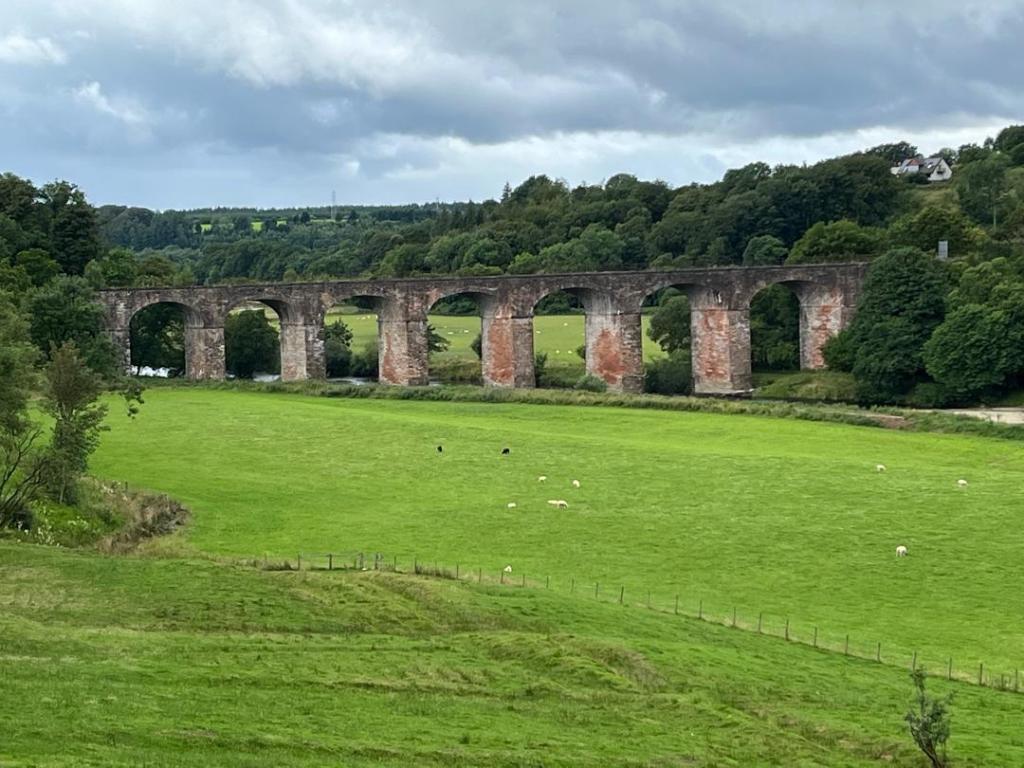
Viaduct on the Waverly Line in the Scottish Borders where the poet composed his lines. Photo Courtesy: Peter Burgess.
BOYS DAY OUT

Old men really
hunting viaducts among the trees
they straddle gorges
laze in shallow valleys
keeping still
as if avoiding being seen

We tramp for miles upstream
downstream behind the river bends
their cool stone breathes
sighs of relief

Tunnels would do instead
lurking under ground
bricks tumbling in, their portals caged
(as if they might break for freedom)
old stations, water towers, signal boxes
even a platelayer’s hut
the track bed itself, recognisable across fields

Ruins are ruins, Roman and the rest

Somebody else’s past written in rock
like but not our own
who knows what we might find
among these left-over lives
where no next train arrives

But we are not waiting for signals to change
or rusted points to re-align
though we are on a platform of some kind
a destination in our minds

By this day’s end we shall have caught
some train of thought back down the line of time
imagining journeys we might have made
remembering journeys we might have made
knowing where it all began
but not quite sure how it came to here
Mike Smith lives on the edge of England where he writes occasional plays, poetry, and essays, usually on the short story form in which he writes as Brindley Hallam Dennis. His writing has been published and performed. He blogs at www.Bhdandme.wordpress.com. This poem was composed around Whitrope in July, 2022.
.
PLEASE NOTE: ARTICLES CAN ONLY BE REPRODUCED IN OTHER SITES WITH DUE ACKNOWLEDGEMENT TO BORDERLESS JOURNAL
The credibility of a writer is important. Of course, anyone’s credibility is important because without it, you are keeping time with someone who is a phantom of a personality if they can’t be believed for one reason or another. One must trust that the person telling a story is not sitting in a Starbucks for hours at a time nursing a small coffee and babbling away about things that never happened or didn’t happen that way. Just to put your mind at rest, I’m not currently in a coffee shop, I never linger over coffee and everything I say happened, more or less as I describe.
Here’s where my credibility might be called into question: I am psychic. There, I said it, it’s on the page, a frank admission that makes most people start to wonder where the nearest exit is, or perhaps you are now looking for the nearest recycling bin for this peice. I remember saying this to a fellow at a party once and his expression froze. Not being the most socially adept creature, he was looking for a way to get away from me before I put a hex or curse or whatever it is psychic people do.
He grabbed his cell phone and said, “Sorry, I better take this.”
And as he backed away his phone began to ring. So, either he was pretending to have a call, or he was the psychic — one who knew it was coming. But he found an almost smooth way out of a conversation with someone who might just be an oddball. You do not have to fake a call and presumably you’re reading this with open eyes and an open mind, so let me tell you a bit about this nether, dark world that both fascinates us and repels us like standing naked before a mirror once you’re well into middle age. Here is a story that might not be spooky in the other world sense, but it certainly gave me pause.
It was an overcast fall day in an old room in an old school. How’s that for a spooky, atmospheric set up? I was teaching another class of basic level grade 10 boys. These poor devils have been committed opponents to English classes likely since their first day in kindergarten. Again, it’s not that they’re dumb, at all. But they sure didn’t like English class.
I came up with a brainchild of an idea to get them to work. I could always keep them quiet and seated, which is a feat in itself. But to get them to work I thought I would go right back to a depression era technique and told them I would give the best student of the day a prize. Now these poor working-class sods were not used to prizes. Mostly at home they got slaps across the head for transgression both real and imagined on the part of parent(s) whose only embrace of parenthood involved forgetting to bring a condom. Their faces lit up at the prospect of a prize. An award! They had spent their school years running into punishments, but a prize!
I felt a little bad when they immediately grabbed their pencils (this time not as a weapon), opened their books (this time not for a pillow), and began to read and write. There is no more stirring or heartbreaking sight for a teacher who cares than watching students try so hard to do something well for which they have no confidence. I sat at my desk and began to wonder.
The first thing I wondered was what could I give for a prize. I assumed they would scoff and make some kind of a sucking noise with their teeth. In 1991, this was a favourite of rappers to display dismissiveness. I had encountered it many times as a teacher. My defense was to ask, in a sincere voice, if they wanted some floss.
“Floss? For what, man?
“Sorry, I thought you had something stuck in your teeth from lunch. I do have some floss in my desk. It’s been there for a while, but it might just do the trick of dislodging that bit of food you feel the need to suck out.”
With a lot of teachers this might well have resulted in a small-scale riot. But my kids knew I liked them, and I tease and, as I said, they might not be bookish smart, but they knew sarcasm when they heard it and they usually just laughed.
But back to the problem of offering a prize that I didn’t even have. I cast a quick look around the room for possibilities. There were some posters on the wall of an educational bent that I could use. There was a lovely one of a parachutist drifting down to earth with the caption below saying: “The mind is like a parachute. It only operates when open.”
I could imagine telling some poor slob that they could take that home for a hard day’s work. I imagine I would eventually make it out of the class, but not in one piece. The pounding I would take would put me on long term disability. Not a terrible idea but the journey to get there would be hard.
I thought about the money in my pocket, full five dollars and some change. But wouldn’t that be a bribe or some form of prostitution? And the next class all behavior and production would come with a price tag. And when the principal got word that I was paying my students, it would mean a different route to long term disability.
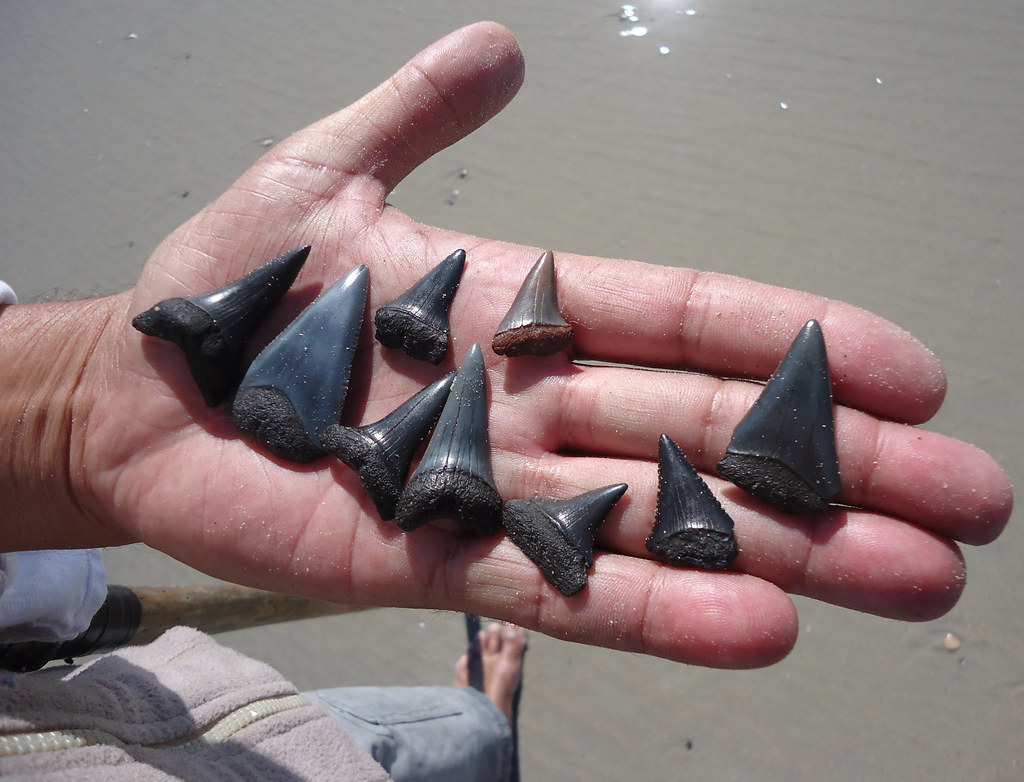
I rummaged through my desk drawer when I saw it. My salvation! It was a glass jar of shark’s teeth. Now why in God’s name would a teacher have such a thing on his desk. Simple. It cost me nothing and was a gift. My wife’s uncle was this eccentric but genuinely nice man who collected things. It didn’t matter what, he would collect them. He had scoured the countryside looking for Indigenous arrowheads and tools and guess what? He found them by the hundreds. His collection was so impressive that the Royal Ontario Museum gladly took them when he offered them up out of the goodness of his heart. So, one day we were in his cavernous basement, strewn with rocks and fossils and bits of metal and God knows what else. It was a summer day, and his hay fever had the better of him. He let out a sneeze that no doubt shattered an arrowhead or two.
He blew his nose into a handkerchief that would likely never be used again for any human purpose. He looked down at the contents and said,
“Oh, I thought my nose was bleeding, but it’s snot (instead of it’s not, you see).”
That was exactly the kind of joke this guy made and one of the reasons I found him so much fun to be with. The odd thing was he had survived a German work camp as a teenager during World War II, one in which his brother had died. Yet here he was, in his seventies, bent and old and so full of life and always finding a reason to laugh. How could I not like him? And now was he related to some of Tina’s family? They were people who could find a dark cloud in the second coming of Christ.
“You know he really should have called first. This is really not convenient.”
Anyway, this jolly old fellow saw me admiring his countless bottles of shark’s teeth lined up on a shelf.
“Geez, just take one. I got plenty.”
“That’s awfully good of you, Bill. But all the work you took yanking them out of their mouths. It just doesn’t seem right.”
He would never laugh at my jokes, but I know he liked them.
“Here, you keep ‘em. Mostly they were lost in bar fights anyway.”
So, thank you very much, Bill. Now I could give my winner a reason to not add my teeth to the collection.
The class came to an end, and I knew I had my top student. I would have liked to have given them all something because they had all tried, and I was very proud of them. But if you give a prize to everybody then it takes away from the very idea of a prize which is a celebration of accomplishment in a field of others. It reminded me of the increasingly bizarre notion that had come up in education in the last few years, namely that everyone is special and stands apart and should be recognised as such. I am all for increasing students’ sense of self-worth but here’s the trick: if everyone is special, then nobody is special. If every child is recognised and labelled as having poor behaviour or attitude because of their genetics or how they were raised or because they weren’t tucked in at night in order to maximise their potential, then they all have an out.
Unfortunately, it gives every kid a playing card that they can pull in any situation. I remember breaking up a fight and as I guided the hulk along to the office, he looked at me wide eyed and said, “It’s not my fault…I have anger issues.”
This was a kid that was not exactly a future student of psychology. A future as a study model of aberrant psychology possibly. But he had been told by teachers and counsellors and no doubt his parents that his ‘acting out’, to put it mildly, was the result of this syndrome. It is to laugh for.
Though I wanted to reward them all, I knew that I had to choose just one. Bobby Mack (yes, it did sound vaguely like a cosmetic line) was the one. I don’t think anyone ever made fun of his name to his face. He was very tall and naturally very strong. His strength wasn’t achieved from holding big books in the library. His love of academics was an empty love. He was, however, a very good future plumber. That’s why he was at school. He was a likeable fellow with a good sense of humour, I knew this because he laughed at my jokes. 16 years old in grade 10, turning his life around to pursue his love of plumbing. It would also help him support the two children he had with two different girls similarly young. Ah, well, he had a goal and I felt he could do it.
With a few minutes to go before the end of class I stood before their expectant faces and said my piece.
“Well, after careful consideration, and after having fed data into the computer, it has been calculated who is student of the day and thereby the winner of a prize that will change their lives.”
I love a big build up, but the faces in front of me told this young teacher that they didn’t use computers, only had calculators for projectiles and didn’t think lives could change. I cut to the chase and told Bobby to come on up and get his prize. He lumbered to the front of the room with a shy smile as the class applauded. I’m sure the guy never won a prize in an English classroom in his life. When I say applauded, I mean a few did, several whined that they should have won. One fellow called out,
“Oh, sir, that’s not fair. You’re a racist.”
I looked down at this white face, back to Bobby’s white face and wondered where he got that complaint from.
“No, it’s not racist. For one thing I didn’t even know you were Chinese.”
“I’m not Chi…!”
He cut himself off realising that there was both a joke as well as a jab in there for him. Bobby stood in front of me and I slowly, for even more dramatic effect, took out my little bottle of shark’s teeth, took one out and put it in his outstretched hand. The smile didn’t run from his face, it sprinted. He looked hard at the tooth and held it as though he were holding a turd.
“What the hell is this?”
As he was genuinely angry and outraged, I let the swear word go. It floated up into the air not to be addressed by the tough teacher I usually was. It fled the room along with his smile and his joy at having won. He was angry. He was big. I was scared.
“That, my friend, is a shark’s tooth from Florida!” I said, pumping up the item like a door-to-door salesman.”
“I thought I was getting chocolate, or money or something not weird.”
“I want you to know why that is such a prize, far more valuable and lasting than chocolate.”
He still looked angry, but I sensed he would listen. I figured I better talk fast and good or start running. At the Faculty of Education, they taught us that running away from threatening students can chip away at one’s credibility in the classroom. I addressed the whole class as well.
“A hundred years ago there was a shark swimming in the warm waters of the Atlantic Ocean. It didn’t know about death; it didn’t know about anything. It simply existed. That’s all it wanted, to eat and swim and make little sharks, not because he thought those were good things to do. He just did what came naturally to him…stay alive and make more life. But he died, in some way we will never know. And now Bobby here is holding one of his teeth in his hand.
This is a reminder to all of us that life is beautiful, but it doesn’t last. That shark had a last day on this earth and so will we. We don’t know how or when. But one thing we do know is that we should treasure every day we have, and remember, always remember, this is the only life we have and today is the only day we get, so make the most of it. Value it. That shark, though he didn’t know it, has taught us that lesson.”
Bobby now had the tooth between his fingers and smiled.
“Yeah, that’s kind of cool sir…thanks.”
He tucked the tooth into his pocket and took his seat. The bell went a minute later, and I was pleased to see several kinds around Bobby as he showed off the prize that had meant less than nothing to him moments before. I was proud of myself for having taught a lesson, a life lesson that would hopefully stick with those kids for their whole lives.
I know it stuck with Bobby for the rest of his life. For his life ended that night. He was at a party, a drunken argument and another kid came back with a gun and shot Bobby in the head. I like to think he had the tooth in his pocket and that maybe his last day on earth, he might have valued the little things a bit more, his child’s smile, his mother’s farewell hug. I even fool myself into thinking he looked up at the sky for once, not to check the weather, but just to be happy.
.
Erwin Coombs is a retired teacher of philosophy, history and literature who has rejected all forms of retirement. He is an avid writer, reader, and observer of life. When not observing and reading and living, he is writing. Erwin has lived in Egypt, Jamaica, England and travelled a great deal but, in his mind, not enough. His writing is a celebration of people and opportunity, both of which life gives in abundance. These stories are from his, as yet unpublished book, Dusty the Cat: Her Part in My Downfall.
.
PLEASE NOTE: ARTICLES CAN ONLY BE REPRODUCED IN OTHER SITES WITH DUE ACKNOWLEDGEMENT TO BORDERLESS JOURNAL











 Borderless