Categories
Discussion

Bridging Cultures across Time and Space

In Conversation with Translators

Translators are bridge builders across cultures, time and place. We have interviewed five of them from South Asia. While the translators we have interviewed are academics, they have all ventured further than the bounds of academia towards evolving a larger literary persona.

The doyen of translation and the queen of historical fiction, Aruna Chakravarti,  and poet, critic and translator, Radha Chakravarty , feel their experience at bridging cultures has impacted their creative writing aswell. Somdatta Mandal, is prolific with a huge barrage of translations ranging from Tagore, to women to travellers, despite being an essayist and reviewer, claims she does not do creative writing and views translations as her passion. Whereas eminent professor and essayist from Bangladesh, Fakrul Alam tells us that translating helped him as a teacher too. Fazal Baloch, translator and columnist from Balochistan, tells us that translation is immersive, creative and an art into itself. We started the conversation with the most basic question – how do they choose the text they want to translate…

How do you choose which texts to translate?
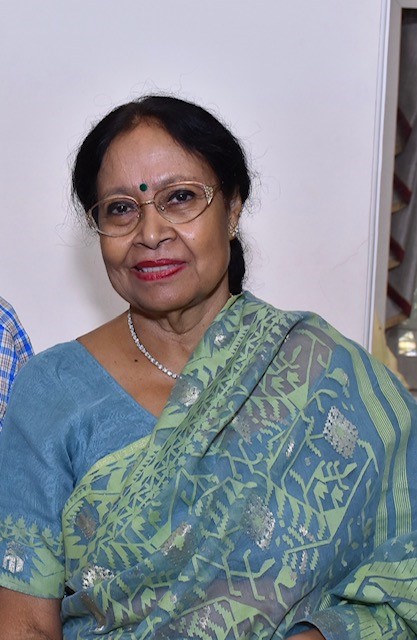
Aruna Chakravarti

Aruna Chakravarti: A translation is an attempt at communication on behalf of a culture, a tradition and a literature. Choosing an author and, more importantly, the most significant areas of his or her work are the first steps towards this communication, because it is only through translation that masterpieces from a small provincial culture become universal ones. Since I come from Bengal, I have always chosen the best of its literature for translation. My first translation was of Rabindranath Tagore’s lyrics. Rabindranath once said that even if all his other work fades to oblivion, his songs would remain. Saratchandra Chattopadhyay, a leading writer of 19th and early 20th century Bengal, considered Srikanta the best of his novels and the most suited to be conveyed to a global readership. I translated Srikanta. Sunil Gangopadhyay is hailed as the most eminent writer of present-day Bengal.  My translations of his novels and short stories are extraordinarily well received by non-Bengali readers, to this day.

Radha Chakravarty

Radha Chakravarty: Every occasion is different. Sometimes a text chooses itself because I feel compelled to translate it. Sometimes I select texts to translate, in response to suggestions or requests from editors, readers and friends who read. Several of my books in translation evolved alongside my research interests as a scholar and academic. For instance, Vermillion Clouds, my anthology of stories by Bengali women, developed from my general interest in feminist literature and my desire to bring texts from our own culture to the English-speaking world. My translations of Mahasweta Devi’s writings, especially the stories on motherhood in the collection titled In the Name of the Mother, happened when I was working on a chapter about Mahasweta for my PhD thesis. Our Santiniketan, my translation of her childhood memoir, emerged from my interest in her writings, as well as my admiration for Rabindranath Tagore. The translations of Chokher Bali1, Farewell Song (Shesher Kabita) and Four Chapters reflect my special fascination with Tagore’s woman-centred novels, for this was also the subject of my post-doctoral work. Later, I developed this research into my book Novelist Tagore: Gender and Modernity in Selected Texts. For my edited anthology Shades of Difference, a compilation of Tagore’s works on the theme of universality in heterogeneity, the selection involved a great deal of thinking and research. And translating Kazi Nazrul Islam’s essays turned out to be an incredible learning experience.
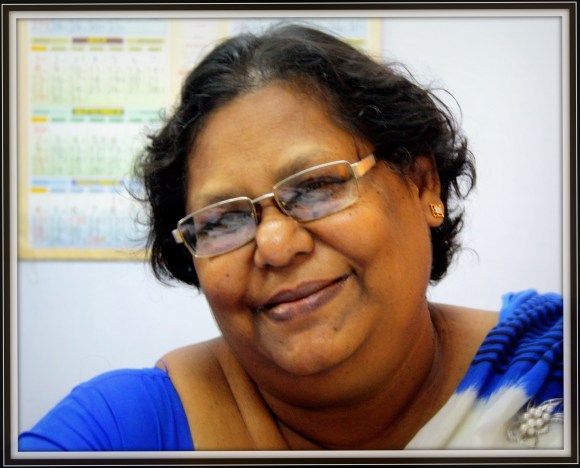
Somdatta Mandal

Somdatta Mandal: I have been translating different kinds of texts over the last couple of decades, and I have no fixed agenda of what I choose to translate. Usually, I am assigned some particular text by the author or a publisher, but sometimes I pick up texts which I like to do on my own. Since I have been working and researching on travel writing for a long time, I have chosen and translated several travel texts from Bengali to English written by women during the colonial times. I have also translated a lot of Rabindranath Tagore’s essays, letters and memoirs of different women related to him. Recently I translated a seminal Bengali travel text of a sadhu’s sojourn in the Himalayas in the late nineteenth century. I have a huge bucket list of texts that I would love to translate provided I find some publisher willing to undertake it. Since copyright permissions have become quite rigid and complicated nowadays, I have learnt from my own experience that it is always advisable to seek permission from the respective authorities before venturing into translating anything. Earlier I was naïve to translate stories which I liked without seeking necessary permission from the copyright holder and those projects ultimately did not see the light of day.
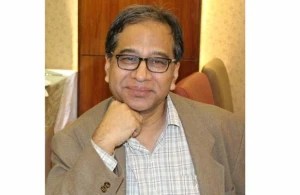
Fakrul Alam

Fakrul Alam: I have no fixed policy on this issue. Sometimes the texts choose me, so to speak. For instance, I began translating poems from Bengali when I first read Jibanananda Das’s “Banalata Sen”. The poem got hold of me and would not let go. I felt at one point an intense desire to translate it and read more of Jibanananda’s poems. Translating the poem elated me and having the end product in my hand in a printed page was joyous. The more poems I read by Jibanananda afterwards, the more I felt like rendering them into English, as if to share my delight and excitement at coming across such wonderful poems with readers who would not have read them in Bengali. That led to my first book of translations, Jibanananda Das: Selected Poems (Dhaka, UPL, 1999). As I ended my work on Jibanananda I thought: why not translate some poems by Rabindranath too? I had climbed one very high mountain satisfactorily and so why not venture forth and climb the topmost peak of Bengali literature?  And so, I began translating Rabindranath’s poems as well as his songs. I had grown up with them, but till now had never imagined I could render them into English. Kumkum Bhattacharya, a dear friend who at that time was in charge of Viswa-Bharati’s publishing wing, Granthana Vibhaga, had seen samples of my work and told me to think of an anthology of his translated works to be published in Tagore’s sesquicentenary year for them. This led me to the poems, prose pieces and songs by him that I translated for The Essential Tagore (Cambridge, Mass, Harvard UP, 2011 and Kolkata: Viswa Bharati, 2011), a book that I had co-edited (with Radha Chakravarty). My last book of translations, Gitabitan: Selected Song-Lyrics of Rabindranath Tagore (Dhaka: Journeyman Books, 2023) alsocame out of this same compulsion of translating works in Bengali. This particular work is a book of translations of nearly 300 songs that I love to listen to again and again—songs that made me feel every now and then that I had to translate them, especially when I heard them sung by a favourite Tagore singer. My translations of a few Kazi Nazrul Islam’s poems and some of his songs are also the result of such compulsive feelings. 

However, I also translated some works because I was requested to do so by people who knew about my Jibanananda Das and Tagore translations and who felt that I would be a competent translator of works they felt were worth presenting to readers in English versions of Bengali books very dear to them. My three translations of works by Sheikh Mujibur Rahman, The Unfinished Memoirs (Dhaka: UPL Books, 2012), The Prison Dairies (Dhaka: Bangla Academy, 2017), and New China 1952 (Dhaka: Bangla Academy, 2021) were all outcomes of requests made to me to translate them. Translating Ocean of Sorrow, the epic 1891 novel by Mir Mosharraf Hossain, has been the most challenging translating work I have had to undertake till now (Dhaka: Bangla Academy, 2016). I would not have dared take on the task of translating such a long and demanding prose work if Shamsuzzaman Khan, the Director of the Bangla Academy of that period, had not kept requesting me to translate this classic of Bengali Literature.

I will end my response to this question by saying that every now and then I translate poems and prose pieces by leading writers who are my contemporaries and who keep requesting me to translate them. Occasionally, I will also translate poems by major poets of our country of the last century—poets like Shamsur Rahman and Al Mahmud—because a poem or two by them had gripped me and made me feel like venturing forth into the realm of translation.  
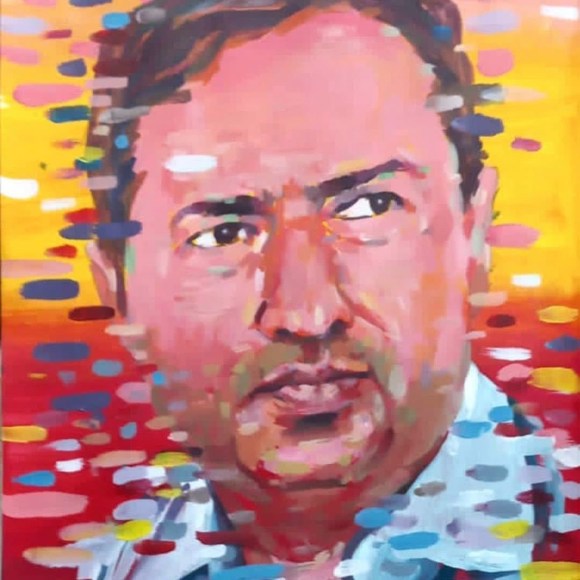
Fazal Baloch

Fazal Baloch: Translating poetry and prose are two very different endeavors. Poetry often makes an immediate impact. Sometimes just a few lines strike me powerfully on the first reading, creating an atmosphere that sets the translation process in motion. In other words, I tend to translate the verses that stir something in me or resonate deeply.

Prose translation, by contrast, works differently. It usually unfolds after a longer process and often requires multiple readings of the text. At times, it even calls for a more deliberate, conscious effort.

Does translating impact your own writing?

Aruna Chakravarti: Yes, it does.  While translating the great masters of Bengali literature I have learned much that has impacted my own writing. From Rabindranath I learned that prose need not necessarily be dry and matter of fact. It could be imbued with lyricism without appearing sentimental and over emotional.  Saratchandra taught me the importance of brevity and precision. Search all his novels and you will not find one superfluous word. I try to follow his example and shun over-writing. From Sunil Gangopadhyay, I learned the art of dialogue. His direct, no-nonsense style and use of colloquialisms work best in dialogue.  

Radha Chakravarty: Yes indeed. As I have just indicated in my answer to your previous question, my translations often take a course parallel to my research, and the two strands of my work sometimes become inseparably interrelated. In my critical works on Indian literature, I remain conscious of bringing these writings to an audience beyond India. Hence an element of cultural translation infuses my analysis of texts by Indian writers. In my own English poetry, when I write about Bengali settings and themes, bilingual overtones often seep in.

Somdatta Mandal: No, not at all. I am not a creative writer per se, so there is no way that translation can influence my own writing.

Fakrul Alam: I will start answering the question by saying that apart from translating and writing nonfiction essays in the creative mode, I have not authored literary works. I am first and foremost an academic. Inevitably, translating Rabindranath’s works have impacted on me academically. By now I have at least one collection of essays on various aspects of Rabindranath’s life and enough essays on him that can lead to another such book. No doubt coming to know Rabindranath so intimately through the kind of close reading that is essential for translation work has made me more sensitive to him as a thinker, educator and visionary, as well as a poet and writer of prose and fictional works. Reading literary creations by him, his letters and lectures that I came across because of my involvement with his work has also lead me to editing; the work I did as co-editor of The Essential Tagore is surely proof of that.

Let me add that my translations have also impacted on my teaching. I am now able to draw on comparisons with Bangladeshi writers and Bengali literature for comparison and contrast in the classroom when I teach texts written in English to my students.  Reading up on the authors I have translated has also equipped me to be more aware of Bangladesh’s roots and national identity formation. This has led me to essays on these subjects.   

Fazal Baloch: Translation is not separate from the process of creativity. Through it, we enter a new world of meaning and explore the experiences of others through a creative lens. As a writer, I find translation essential for nurturing and enriching the mind. It is also worth noting that translation is not partial or fragmentary but a complete and holistic act. When I translate, I move with its current just as I do when I write. Both processes unfold in their own rhythm without obstructing one another. In fact, it is through translation that I have come to recognize and understand great works of creativity in a deeper way.

What is the most challenging part of translation? Do you need to research when you translate?

Aruna Chakravarti:  Yes, since a major part of my translation work was set in 19th century Bengal, I needed to understand and imbibe the ethos and ambience of the times. Being a Probasi Bangali who has lived outside Bengal all her life, this was important. Consequently, a fair amount of research was involved. This has stood me in good stead in my own writing.

Speaking about challenges there are many. The more divergent the two literary traditions the greater the dilemma of the translator. But the test of a good translation is the absence of uncertainty, hesitation and strain. Since translation undertakes to build bridges across cultures it is important that it reads like a creative work. The language must be flowing and spontaneous; one that readers from other languages and cultures don’t feel alienated from. One that they are willing, even eager to read. One they can sail through with effortless ease.

On the other hand, readability or beauty of language cannot be the sole test of a good translation. If the translator becomes obsessed with sounding right in the target language, he/she could run the risk of diluting and distorting the original text which would be a disservice to the author. The reader should hear the author’s voice and be conscious of the source language and culture, down to the finest nuance, if the translation is a truly good one. A good translator is constantly trying to keep a balance between Beauty and Fidelity. No translation is perfect but the finer the balance…the better the translation.

Radha Chakravarty: When translating from Bengali into a culturally distant language like English, the greatest challenge is to bring the spirit of the original alive in the target language, for readers who may not be familiar with the local context. Literal translation does not work.

The need for research can vary, depending on the nature of the text being translated, the purpose of the translation, and the target readership. Some texts travel easily across cultural and linguistic borders, while others need to be interpreted in relation to the time, place and milieu to which they belong. The latter demand more research on the part of the translator, who must act as the cultural mediator or interpreter. When translating Tagore’s writings for my anthology The Land of Cards: Stories, Poems and Plays for Children, I found that these works speak to all children without requiring too much explanation or contextualization; very often the context becomes clear from the writing itself. But Boyhood Days, my translation of Tagore’s childhood memories in Chhelebela, required greater contextualization, for present day readers to grasp unfamiliar details of life in old-world Kolkata.

Somdatta Mandal: The most challenging part of translation is to maintain the readability of the text which I consider to be of foremost importance for any text to communicate with its readers. However, this readability should not be achieved at the cost of omission or suppression of portions of the original. Instead of rigidly following one particular criterion, usually my focus has been to choose what best communicates the nuances of the Source Language [SL]. Sometimes of course when it is best to do a literal translation of cultural material rather than obfuscate it by transforming it into an alien idiom taken from the target language resulting thus in a significant loss of the culture reflected in the original text.

As for doing research when I translate, the answer depends on what kind of text I am working on. If it is a serious academic piece, then occasionally I must consult the dictionary or the thesaurus for the most suitable word. Sometimes contextual or historical references need special attention and background research but such instances are occasional. What really attracts me towards translation is the inherent joy of creativity – of being free to frame the writer’s thoughts in your own words.

Fakrul Alam: The most challenging part of translation is getting it right, that is to say, conveying the words and feel of the original as accurately as possible.  But “getting it right” also means being able to convey the form and tone of the original as well as is possible.  In every way the translator must carry on his translating shoulder the burden of accuracy whenever and whatever he or she is into translating. In this respect a translator like me is different from creative people who take on the task of translating ready to take liberties to render the original in distinctive ways that will bear their signatures. They do not feel constrained like translators of my kind who never dare to move away more than a little distance from the original in order to convey the tone and the meaning as imaginatively and creatively as is possible for them.

I have a simple method when it comes to translating. My first draft is the result of no aid other than printed and/or online dictionaries. If there are allusions I come across when readying the first draft, I Google. Lately, AI has been very helpful in this regard—it even gives me the English equivalence for quite a few Bengali words when, for instance, I type the title in English of a Bengali song-lyric by Rabindranath. Then I compare my translation with that of other translations available online to see if my version is deviating to much from the ones I see.

Occasionally, I will need to do research on the work I am translating. In translating Mir Mosharraf Hossein’s epic novel, for example, I kept searching on the net to know more about the characters and situations of history he had rendered into his narrative than I knew from his writing. I will also do a lot of research if and when I feel a poem or prose work needs to be contextualized and footnotes or end notes needed by readers to understand what is being depicted fully. Thus, for Jibanananda Das’s “Banalata Sen” alone I had to Google a number of times to understand fully the imaginative geography of the piece and get a feel of the real-life equivalents of the places and characters mentioned. In particular, for the first stanza of the poem I had to look for glossaries I intended to provide on words like Vimbisar, Vidarbha, Sravasti and Natore for overseas readers.

Fazal Baloch: Translation is not simply the process of transferring of text from one language to another; it is more like a conversation between cultures, a process through which they come closer and begin to understand one another.

For me, the most challenging part of translation is working with idiomatic and metaphorical expressions. Every language has its own unique idioms and linguistic frameworks, and these are often difficult to carry over into another language. To meet this challenge, I often need to conduct research and explore the etymological roots of words.

What is more important in a translation? Capturing the essence of the work or accuracy?

Aruna Chakravarti:  Capturing the essence of the work is certainly more important than accuracy.  Translators shouldn’t translate words. They should convey the spirit, the intent of the work. There are some authors so obsessed with their own use of language… they want translators to find the exact equivalent for each word they have written. This is a bad idea. Firstly, it is simply not possible to find exact equivalents. At least, not in languages as diverse as Bengali and English. Secondly, the job of the translator is not to satisfy the author’s ego. It is to transfer a literary gem from a small readership to a larger, more inclusive one. If one is unable to do so, the author revered in his own country will fail to speak meaningfully across the language barrier and the onus of the failure will fall on the translator.

Radha Chakravarty: A literary text is a living reality, not a corpus of printed words on the page. It is this living spirit that needs to animate the translated text, rather than precise verbal equivalence. The popular emphasis on fidelity in translation is misplaced. For literary translation cannot be a mechanical exercise. It is, in its own right, a creative process, which depends, not on rigid verbal ‘accuracy’, but on the translator’s ability to recreate, in another language, the very soul of the original. Perhaps ‘transcreation’ is a good word to describe this.

Somdatta Mandal: Regarding translation, it must be kept in mind that though something is always lost in translation, one must always attempt to strike the right balance between oversimplification and over-explanation. Translation is also creative and the challenges it poses are significant. The intricate navigation between the source language and the translated language shows that there are two major meanings of translation in South Asia – bhashantar, altering the language, and anuvad, retelling the story. Without going into major theoretical analyses that crowd translation studies per se, I feel one should have an equal grasp over the SL and the TL [Translated Language] to make a translated piece readable. I translate between two languages – Bengali and English. Sometimes of course, cultural fidelity must be prioritised over linguistic fidelity.

Translating has caught up in a big way over the past five or six years. Now big publishing houses are venturing into publishing from regional bhasha [Language] literatures into English and so the possibilities are endless. Now every other day we come across new titles which are translations of regional novels or short stories. Translating should have as its prime motive current readability and not always rigidly adhering to being very particular about remaining close to each individual line of the source text. The target readership should also be kept in mind and so the choice of words used, and glossary should be eliminated or kept to a minimum. The meaning of a foreign word should as far as possible be embedded within the text itself. All these issues would make translating an enjoyable experience. Way back in 1995, Lawrence Venuti popularised the term ‘foreignized’ so that readers can get access to the source culture as well. He used the term to explain the kind of translation that ‘signifies the difference of the foreign text by disrupting the cultural codes that prevail in the target language.’ Thus, the idea of translation is not to just communicate the plot but also to make readers familiar with the traditions, rituals, and world views of the other.

Fakrul Alam: To me the most important goal is to come as close to the original in every possible way. This means aiming for accuracy, but surely it also means coming as near as possible to the essence of the original. In other words, as far as I am concerned, accuracy will lead to essence. But as I indicate above, most creative writers doing translation will go for the essence and forego accuracy. But knowing something will be lost in translation I will try to minimize the loss by sticking close to the original in every possible way—word meaning, the rhythm of speech, sound elements and imagery. Of course, a man’s reach should exceed his grasp but what else is going to bring the translator close to cloud nine? 

Fazal Baloch: Both essence and accuracy matter, but in poetry translation, the limited space to maneuver often makes essence the priority. As I mentioned earlier, the goal of translation is not only to carry over the meaning of the words but also the rhythm, tone, emotion, and cultural context that bring the original to life.

In practice, this means the translator has to balance several tasks at once: preserving cadence and rhythm, maintaining poetic flow, and ensuring semantic clarity. Yet above all, the translator must not lose the spirit of the original when choosing between essence and accuracy.

Prose, on the other hand, offers more freedom. Because it allows greater room to preserve meaning, accuracy tends to matter more, though essence still plays a role.

In short, poetry often gives more weight to essence, while prose allows essence and accuracy to work together more harmoniously.

  1. Best friend from Childhood, literally Sand from the Eye ↩︎

Bios of Featured Translators:

Aruna Chakravarti has been the principal of a prestigious women’s college of Delhi University for ten years. She is also a well-known academic, creative writer and translator. Her novels, JorasankoDaughters of JorasankoThe InheritorsSuralakshmi Villa and The Mendicant Prince have sold widely and received rave reviews. She has two collections of short stories and many translations, the latest being Rising from the Dust. She has also received awards such as the Vaitalik Award, Sahitya Akademi Award and Sarat Puraskar for her translations.

Radha Chakravarty is a poet, critic and translator based in Delhi, India. She has published over 20 books, including translations of major Bengali writers such as Rabindranath Tagore, Bankimchandra Chatterjee and Kazi Nazrul Islam, anthologies of South Asian writing, and several critical monographs. She has co-edited The Essential Tagore (Harvard and Visva-Bharati), named Book of the Year 2011 by Martha Nussbaum. She was Professor of Comparative Literature and Translation Studies at Ambedkar University Delhi.

Somdatta Mandal is the Former Professor of English and Chairperson at the Department of English & Other Modern European Languages, Visva-Bharati, Santiniketan. Somdatta has a keen interest in translation and travel writing.

Fakrul Alam is an academic, translator and writer from Bangladesh. He has translated works of Jibonananda Das and Rabindranath Tagore into English and is the recipient of Bangla Academy Literary Award (2012) for translation and SAARC Literary Award (2012).

Fazal Baloch is a writer and translator. So far, he has published seven English anthologies and one Urdu collection of his translations. His. works include “God and the Blind Man: Selected short stories by Munir Ahmed Badini (Balochistan Academy of Science and Research, 2020), The Broken Verses: Aphorism and Epigrams by Sayad Hashumi (Balochi Academy Quetta 2021), Rising Stars: English Translations of Selected Balochi Literature by the Writers under the Age of Fifty (Pakistan Academy of Letters Islamabad 2022), Muntakhib Balochi Kahaniyan (Pakistan Academy of Letters Islamabad 2022), Adam’s Remorse and Other Poems by Akbar Barakzai (Balochi Academy Quetta 2023), “Why Does the Moon Look So Beautiful?: Selected short stories by Naguman” (Balochistan Academy Turbat, revised edition 2024) and “Every Verse for You”: Selected Poetry by Mubarak Qazi (Balochistan Academy Turbat, revised edition 2025). His translations have also been included in different anthologies such as ‘Silence between the Note’ (Dhauli Books India, 2019), Unheard Voices: Twenty-One Short Stories in Balochi with English translations (Uppsala University Sweden, 2022) and ‘Monalisa No Longer Smiles: An Anthology of Writings from across the World (Om Books International, 2022). He also contributes literary columns to various newspapers and magazines. He lives in Turbat Balochistan where he serves as an Assistant Professor at Atta Shad Degree College Turbat.     

(The interviews were conducted via email by Mitali Chakravarty)

PLEASE NOTE: ARTICLES CAN ONLY BE REPRODUCED IN OTHER SITES WITH DUE ACKNOWLEDGEMENT TO BORDERLESS JOURNAL

Click here to access the Borderless anthology, Monalisa No Longer Smiles

Click here to access Monalisa No Longer Smiles on Kindle Amazon International
Categories
climate change

‘Climate change matters to me, and it should matter to you too’

Zeeshan Nasir writes of a region whose carbon footprint is next to zero, yet it suffers some of the worst climate-related disasters…

The perennial consequence of climate change is affecting the lives of people all over the world, particularly in the remote and underprivileged parts of Balochistan.

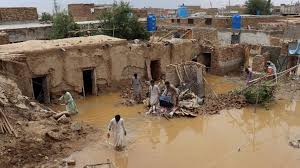
Noora Ali, 14, was oblivious to the temperature shifts because she had grown up in Turbat, a city in the centre of CPEC (China-Pakistan Economic Corridor). They had frequent floods during the monsoon season and blazing heatwaves during summers, with temperatures rising above 51 centigrade. Compared to other cities in Balochistan, Turbat experiences hot summers and typical winters. As a result, the majority of wealthy families in the city travel to Gwadar, Quetta, or Karachi during the sweltering summers and return to Turbat during the winters. The Water and Power Development Authority (WAPDA) moved Noora’s father, who works there, to the neighbouring Gwadar in 2022.

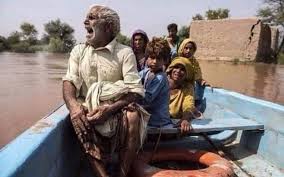
In the February of 2022, the sea seemed calm while boats of the fishermen busily dotted the waters of the Padi Zir (Gwadar’s West Bay). It was a typical Thursday morning when rain started pouring down. The rain was so intense that the sea became wild and uncontrollable. The roads were washed away, bridges collapsed, with streets being inundated with flood water and the port city became completely disconnected with the rest of the country. Back in Turbat, her ancestral hometown was also submerged under flood water.

Noora had also heard from her school fellows that Gwadar and Turbat had never experienced such heavy and intense rainfall before. She knew and felt that the temperature of her native city was rising and that Gwadar beneath flood water didn’t seem normal.  “This is due to climate change.” Her elder brother told her. At the age of 14, typical children in Balochistan have no idea what climate change and global warming are but they are already feeling it impacts.

Like Noora, thousands of children in South Asia, particularly Pakistan, Bangladesh, Nepal, India and Afghanistan are at the risk of climate related disasters, as per the UNICEF 2021 Children’s Climate Risk Index. The report further reiterates that children in these countries have vigorously been exposed to devastating air pollution and aggressive heatwaves, with 6 million children confronting implacable floods that lashed across these countries in the July of 2024.

On the 11th and 22nd November 2024, over 20 youths urged the world leaders to come up with plans to mitigate the impacts of climate change on children at the 2024 United Nations Climate Change Conference (COP 29) held in Baku, Azerbaijan. Among those 20 resolute children was the 14 years old, Zunaira Qayyum Baloch representing the 241.5 million children and women of Pakistan. 

Dressed in her traditional Balochi attire, with a radiant smile in her face and resolute in her commitment, Zunaira Qayyum Baloch, startled everyone. Hailing from the far-flung district of Hub in the Southwest of the Pakistan’s Balochistan, Ms. Baloch went to represent the children of a country whose carbon footprint is next to zero, yet it suffers some of the worst climate-related disasters. Her message to world leaders was clear: step up and combat climate-induced inequalities, particularly those affecting women and children.

She had always remained conscious about the changing climate in her city, observing the floods of 2022 that had wreaked havoc in Hub Chowki, initiating awareness programmes and youth advocacy guide training in her home city to advocate for girls right to education and climate change.

“After my father passed away, my mother became the sole breadwinner. She helped us get an education and met all our requirements.” Zunaira explains. “During the catastrophic rains of 2022, an incident changed my perspective on climate change.  Rainwater had accumulated in the roof of our home and streets were flooded with water. The destruction was so overwhelming that I realised that such events were no longer rare but increasing constantly. “

During the COP29, Ms Baloch expressed her concerns with the experts how Pakistan, particularly Balochistan has been detrimentally affected by climate disasters like frequented floods, heatwaves, hurricanes and droughts. Lamenting that climate change was a child-rights crisis, she told the world how the changes in the climate had jeopardised the lives of millions of women and children throughout the world.

Asking the world leaders to join determined children like her to combat climate change, she addressed them in the COP29: “Climate change matters to me, and it should matter to you too.”

Stark Reality of the Past

Bibi Dureen, 80, is a testimony to how climate is continuously transforming. She hails from the outskirts of the Kech district in a town called Nasirabad.

“The seasons are changing.” She says with her voice laced with sorrow. “The heatwaves have become more aggressive, and floods are common. It all started around 1998 in Turbat. Then in 2007, a devastating flood destroyed our homes, date palm trees, livestock –and worst of all, it took lives.” She pauses, her wrinkled hands trembling.

As she talks to me in front of her thatched cottage, through which sunlight is streaming in, tears well up in her eyes as she recalls a painful childhood memory, “I was young at that time. It was a pitch-black night, and the rain was pouring down mercilessly when a man came shouting that the flood water had reached the fields.” She exclaims with grief. “My mother, desperate to save what little we had, sent her only son, my sixteen-year-old brother, Habib, our family’s only breadwinner, to find the only cow we had in the fields.  Neither the cow nor Habib returned. Later some men found his dead body in the jungle.”

In June 2007, when the Cyclone Yemyin hit the coast of Balochistan, it wrought unprecedented damage to the province, particularly Turbat, Pasni and Ormara and rendered 50,000 homeless within 24 hours, including children. According to reports 800,000 were affected and 24 went missing.

The 2022 floods had a devastating impact across Pakistan, with the province of Balochistan being one of the hardest hit. With 528 children dying nationwide, 336 people died in Balochistan, including children as per the reports of the Provincial Disaster Management Authority (PDMA).

Tragedy struck again in 2024 when torrential rains engulfed 32 districts of Balochistan, particularly, the port city of Gwadar and Kech district. The PDMA put the death toll of children dying due to the flood at 55 out of the total of 170, with 16 others injured.

The Double Crisis Facing Girls

Regions in Balochistan, such as Naseerabad, Jaffarabad, Sohbatpur, Nokundi, Sibi and Turbat have seen severe heatwaves in the past few decades. On May, 2017, the Mercury rose to a record breaking of 53.5 centigrade in Turbat, making the district to be the hottest place of the year after Mitribah, Kuwait. During heatwaves, cases of fainting and health-related illness among residents, particularly children are rarely uncommon. According to a 2023 report by the Pakistan Meteorological Department, Balochistan has seen a 1.8°C rise in average temperature over the past three decades, leading to longer and harsher heatwaves.

Dr Sammi Parvaz, a gynaecologist at the university hospital in Turbat, tells that rising temperatures in the district not only contribute to higher dropout rates among school-girls but their menstrual cycle is also affected.

 “According to the recent research of the National Institute of Health (NIH) , menstruation– a biological process that occurs in females when they reach puberty — is severely affected in countries which are vulnerable to climate change and Pakistan is one them.” She explains. “The menstruation in girl children living in extreme heat, such as, in Turbat and Karachi, becomes very intense, painful and with cramps.”

Dr Sammi further elaborates that this phenomenon is linked to the increased release of cortisol and oestrogen, the hormones which regulate the female reproductive cycle. “Girl children exposed to harsher environments such as severe heat or cold, experience hormonal imbalances leading to irregular periods and severe menstrual cramps. The hospitals in Turbat are frequented by patients suffering from intense cramps or irregular periods.”

Hygiene becomes another pressing issue during floods, especially for young girls. Research published by the International Journal of Environmental Research and Public Health states that floodwater contains lead, polychlorinated biphenyls (PCBs) and other chemicals which are the cause for irregular periods.

During floods thousands of girl children struggle to manage their periods amidst the chaos of the disaster and remain without period products.  For instance, after the 2022 floods, 650,000 pregnant women and girl children in Pakistan were without essential maternal care, with a significant proportion from Balochistan.

Admist all this chaos climate activist like Zunaira Qayyum Baloch raise awareness while women like Maryam Jamali work directly on the ground to ensure that every women has ration in her house and access to menstruation products during catastrophes.

 Madat Balochistan [1]— a non-profit organisation — has supported more than 31,000 people across 34 districts in Sindh and Balochistan. With its major work concentrated in and around Quetta, Dera Bugti, Jaffarabad, Jhal Magsi, Sohbatpur, and Khuzdar, they are a women-led organisation fundamentally prioritising women and young girls in their work because even on the frontlines, they are bearing most of the cost of climate change, according to its co-founder, Maryam Jamali.

 “Our conversations on climate change vulnerability often treat everyone as ‘equal’ in terms of impact, when that is far from the truth. Vulnerability is a multi-dimensional concept and in a country like Pakistan where most of the women and girls are pushed to the margins of society in every way possible — we cannot just overlook their struggles.” Maryam Jamali tells.

“Take the 2022 floods, for example — the most recent catastrophes etched in our memories. Women and girls were responsible for most of the labour when it came to evacuating to safer places. As soon as they did, their needs when it came to menstruation or pregnancy care were completely ignored by aid agencies as they sent out packages or set up medical camps. Most of our work at Madat was compensating for things like this. We worked with midwives to ensure that women, who could not stand in lines for ration, received it regardless or women who did not want to interact with male doctors didn’t have to. In our housing projects, we prioritise women especially those who don’t have a patriarch in the household because that severely limits their access to resources for rehabilitation.”

Floods, heatwaves and other natural calamities are gender neutral. However,  female children are more likely to be affected by them. According to the UN Assistant Secretary-General Asako Okai that when disaster strikes, women and children are 14 times more likely to die than men. In Pakistan, 80% of people displaced by climate disasters are women and children.

 In patriarchal societies in Pakistan, women and female children are the primary caregivers of the family and they are the sole persons to grow crop, do house chores, fetch firewood and water. With little to no potable water nearby, girls have to travel far to help their parents, further exacerbating their vulnerability.

These household responsibilities create an educational gap. Girls are taken out of schools in Balochistan during floods. With Pakistan’s lowest girl literacy rate at just 27 per cent, the International Rescue Committee (IRC) reported that the province of Sindh and Balochistan have seen greater educational disruptions due to heatwaves and floods, with the 2022 flood causing more educational institutions closure than the combined two-year COVID-19 pandemic.

Extreme heatwaves and recurrent flooding in Balochistan have further compounded this gap. For instance, the 2022 flood damaged or destroyed 7,439 schools in the province, affecting the education of over 386,600 students and 17,660 teachers and staff members. Reports also mention that most of the government school were used as flood shelters in the province. In the 2024 floods, 464 schools were again damaged.

The destruction of educational infrastructure has forced many children out of school, contributing to the province’s high out-of-school rate.

Monsoon Brides during Floods

 Though floodwater is no longer accumulating in the Mulla Band Ward of Gwadar district in Balochistan, the damage it has wrought will stay with the people for a long time for many years. For Gul Naz[2],16, the loss has been devastating.She was only 16 years at the time when flood water entered their home in 2022. Her father, being a fisherman, struggled to make ends meet, as the sea was completely closed for fishing, cutting off the family’s only source of income.

“I was in the Jannat Market and when I returned home, I was told by my mother that my marriage has been fixed to a man twice my age in exchange for money.” She discloses that her parents were given Rs.50,000 ($178.50) which is a whooping sum for a poor family, who survive on around one dollar a day.

“I have two kids now and I am a child raising a child.”

The sadness in Gul Naz’s voice is palpable and she isn’t alone in her predicament. During floods and emergency situations, families in Balochistan resort to any desperate means for survival. The first and most obvious way is to give their daughters away in marriage for financial relief — a practice that usually surges during the monsoon season, hence, the name monsoon brides.

In the Sindh province of Pakistan, where this trend is more prevalent, there has been a spike in the number of monsoon brides during the last flash floods of 2022. In the Khan Mohammad Mallah Village, Dadu district, approximately 45 were married off in that year, according to the NGO organisation, Sujag Sansar[3], which works to reduce child marriages in the region.

Pakistan stands at the sixth position in the world when it comes to marrying children below eighteen. While there has been a reduction in child marriages in Pakistan in recent years, UNICEF warns that extreme weather patterns put the girl child at risk.

Madat Balochistan has also been on the forefront in the reduction of child marriages in Balochistan, “It’s not intuitive to think of girls’ education or loan relief or housing provision as measures to build climate change resilience, but in our contexts, these are the very things that drive vulnerability to climate change.” Says the Maryam Jamali. “We have been working on supporting farmers with loan relief so that young girls aren’t married off to compensate for the financial burden of loans after a lost harvest. We are also working on initiatives for sustainable livelihoods for women as well as ensuring that young girls in all the communities we work in have access to education despite geographic or financial limitations.”

Jamali thinks that gender inequality is one of the biggest aspects here which makes it absolutely necessary for a region like Balochistan, where physical vulnerability and socio-economic vulnerability is high, to have young girls at the decision-making table.

“Activists like Zunaira can ensure that when we come up with solutions for climate change, we contextualize them through a gender lens and make sure that this does not become another instance of taking away women’s agency but becomes an opportunity to involve them in climate change policy decision-making.” Jamali contends. “It is rewarding to see the girls we support do great things. One of our girls from Musakhel is studying at Cadet College Quetta, the first in her family to be able to pursue education beyond 8th grade.”

The Way Forward

“Extreme weather can fuel conflict and be a threat multiplier,” says Siraj Gul, a lawyer at the Balochistan High Court, Quetta, citing the recent research published in the journal Alternatives: Global, Local, Political. He stresses that the decades long running insurgency in Balochistan stems from human rights violations, inequality and government negligence. “Climate related catastrophes further destabilise the region’s development. For instance, there was a surge in the number of protests during the 2022 floods in Gwadar, Lasbela and Turbat, reflecting the deep frustration and despair of the people.” According to Mr. Gul if children like Zunaira are given a platform to speak and work for Balochistan, they are not merely advocating for the environment, they are working for a more peaceful and tranquil region.

A climate resilient infrastructure and child-oriented disaster relief have become a must in climate-torn regions like Balochistan.

[1] Help Balochistan

[2]Her name has been changed to retain her privacy

[3] Awake World

Zeeshan Nasir is a Turbat-based writer and currently pursuing his MBBS Degree from the Makran Medical college, Turbat. He tweets on X @zeeshannasir972. He has contributed to Daily Dawn, Countercurrents, Pakistan Today, The Diplomat and others. A different version of this essay has been published earlier in Countercurrents and Pakistan Today.

.

PLEASE NOTE: ARTICLES CAN ONLY BE REPRODUCED IN OTHER SITES WITH DUE ACKNOWLEDGEMENT TO BORDERLESS JOURNAL

Click here to access the Borderless anthology, Monalisa No Longer Smiles

Click here to access Monalisa No Longer Smiles on Amazon International

Categories
Stories

‘Solitude is a Kind of Freedom…’

By Munaj Gul Baloch

From Public Domain

Mehr’s fingers shivered as she turned the pages of Patrick Hamilton’s Slaves of Solitude. The words in the pages distorted together, but her mind was elsewhere, stuck in a maze of solitude.

Five years and seven months of isolation had made her life dazed with unrelenting queries. Mehr frequently grilled herself… how could she bring her past back? That would be impossible, but it had been beautiful and sad too. She had lost her companion, Nohan, to cancer that night more than five years ago. Nohan, from Mehr’s school cohort, had been her soulmate. During the recess at school, he often says to Mehr, “You are as fine-looking as the moon,” looking at Mehr’s brown eyes with a pure smile on his lips. She never praised but had deeply admired him.

The consciousness of Nohan and Mehr were akin. They loved gentle breeze, striking mountains, the elegant water of Nihing River, and the scenario of Jaalbaar. Most of their debates were grounded on the veneration of Balochistan’s beauty. Mehr had always aired her life’s grievances to Nohan and found relief in being with him. Since the day Nohan had departed from the world, she was in the room – alone.

Her room, once an asylum for her companions, now turned into a prison. The gentle breeze, the echoes of mountains, and the rain created a forlorn opus, adding her depression. Each drop of rain haunted her and reminded her of bygone days. Memories of her past unsettled and haunted her even in her most blessed hours. Her eyes, once perky, now seemed grey, weighed down by the tears she had shed in the isolated room with the pages of the book.

A voice whispered to her, “Take my hand, or you will go astray here—in the world of solitude.” Mehr’s heart pranced a beat. She spun around, however, there was no one there. She remained astound. Past mid night, the voice persisted again, “Look, there is a yellow river beside your room, flowing with blood and sorrows.” The words dripped torment. All of a sudden, Mehr’s gaze drifted towards the window, and for a moment, she saw nothing around. It was so dark, she found a yellowish glow, and after some seconds, the yellowish glow died out.

It was still raining outside. The voice continued to haunt her. Mehr felt like she was drowning in a sea of despair. Afterwards, something budged. The night turned into another day. She picked up another book, One Hundred Years of Solitude by Gabriel Garcia Marquez, which was kept in her personal collection. But nothing changed.  She still felt a sense of nervousness.

Mehr’s heart swelled with sensation as she approached the word solitude in the pages of the book. She smiled, and felt a weight lift off her shoulders. For the first time in years, she felt a sense of belonging. Though, the solitude, the memories, and the voices – they had all been a manifestation of her own fears and doubts. She smiled and knew that she still had a long way to go – perhaps an unknown destination. The phrase “Solitude is a kind of freedom” would continue to roll on her mind. She found solace in solitude– a feeling she could own. She lived by the line that said, “In solitude, the mind gains strength and learns to lean upon itself.”

.

Munaj Gul is a lawyer based in Turbat, Balochistan. He tweets @MunajGul

PLEASE NOTE: ARTICLES CAN ONLY BE REPRODUCED IN OTHER SITES WITH DUE ACKNOWLEDGEMENT TO BORDERLESS JOURNAL

Click here to access the Borderless anthology, Monalisa No Longer Smiles

Click here to access Monalisa No Longer Smiles on Kindle Amazon International
Categories
In Memoriam

Eternalising the Beauty of Balochistan

By Munaj Gul Muhammad

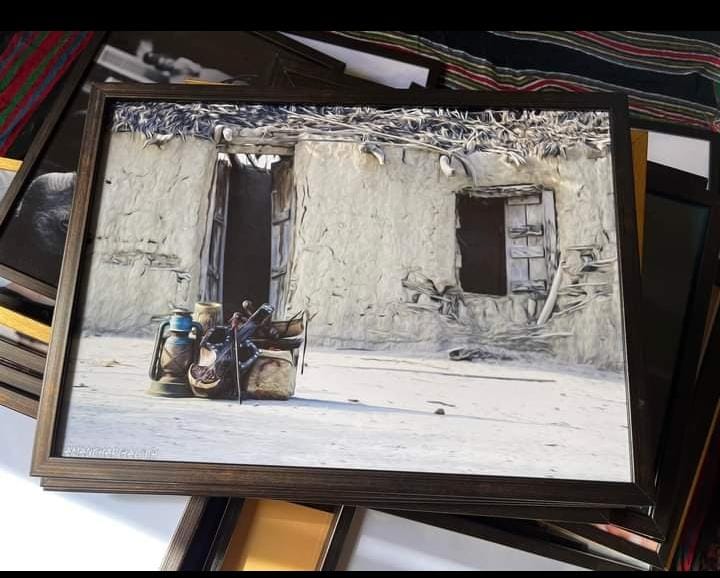
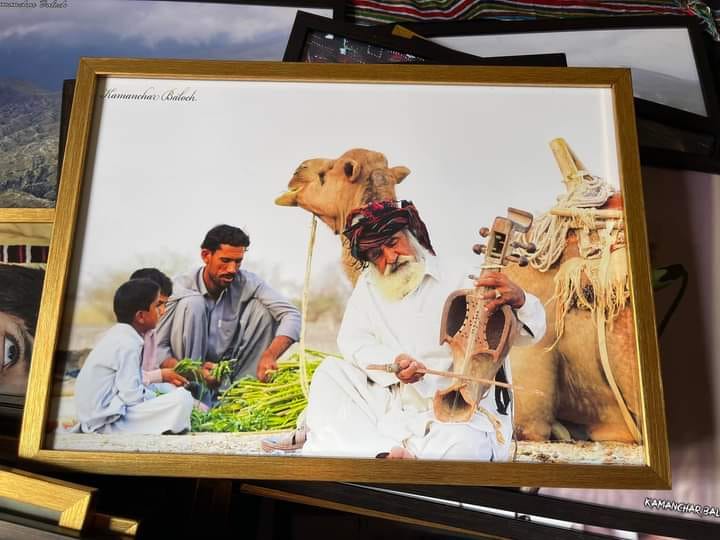
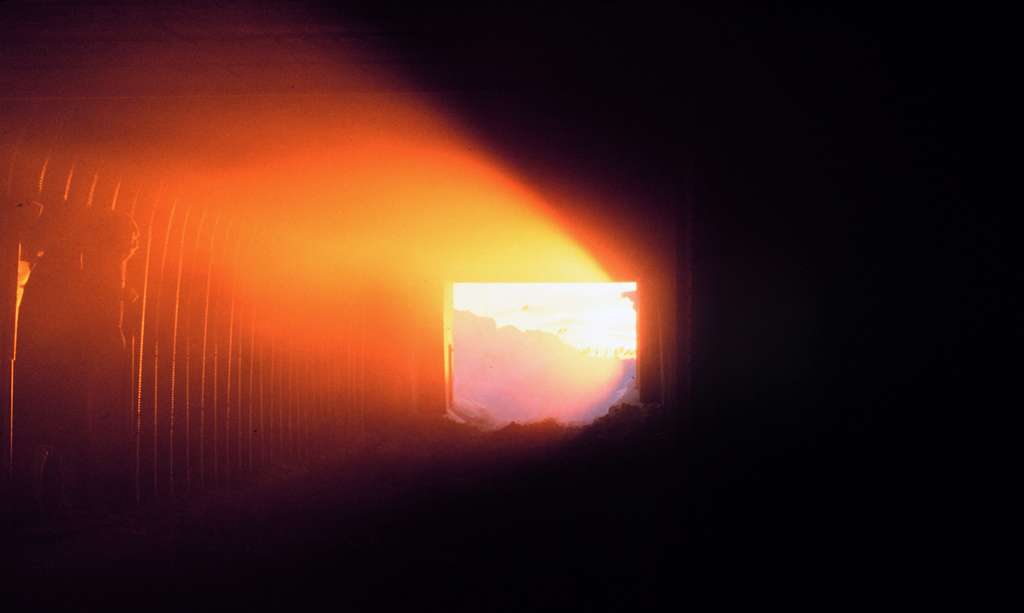
Photograph by Kamachar Baloch. Sourced by the author
All the world’s a stage, 
And all the men and women merely players;
They have their exits and their entrances;
And one man in his time plays many parts...

--Shakespeare, As You Like It (1623)

In life, certain individuals excel in their roles, leaving a profound impact despite their brief presence, imprint a lasting legacy that resonates long after they depart.

Such an individual was Ghulam Sarwar Baloch, commonly known as Kamanchar Baloch, a devoted photographer who captured the beauty of Balochistan through his photographs. On April 16, 2024, he departed after battling diabetes and tuberculosis.

Baloch was born in 1998 in the home of Anwar Jeehand in the Meeran Goth of Malir, Karachi. His ancestors were from the remote town of Mand in the Kech District of Balochistan. After receiving his primary education in Mand, Kamanchar Baloch enrolled in the Department of English Literature at Benazir Bhutto Shaheed University, Lyari, Karachi in 2020. However, driven solely by his passion for capturing the beauty of Balochistan through his camera lenses, he left his studies incomplete.

Kamanchar Baloch was a dedicated photographer. His unwavering focus was on capturing the beauty of Balochistan’s landscapes with his exquisite photography. It is often said that Kamanchar’s camera wielded a power like a gun, and as a marginalised Baloch himself, he consistently captured the struggles of the Baloch people within society.

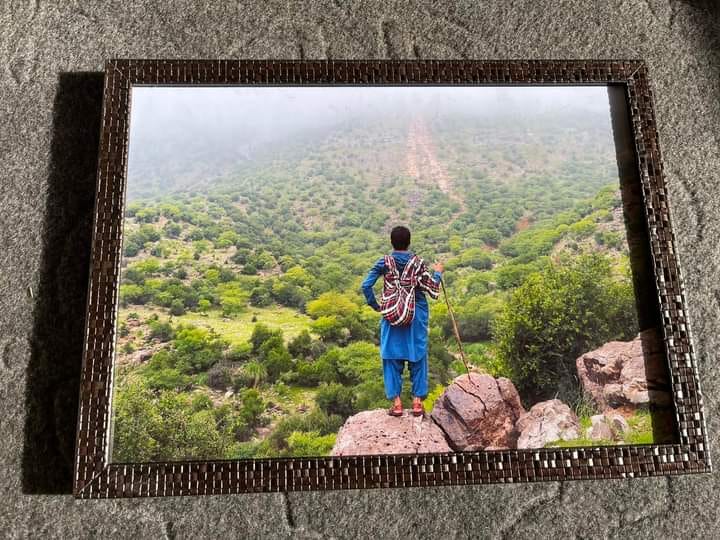
Kamanchar’s passion for exploration led him to uncover the many facets of Balochistan: from Mand to Turbat, Turbat to Quetta, Quetta to Bolan, Bolan to Ziarat, Ziarat to Koh-E-Suleman, and beyond. Wherever his travels took him, he captured the scenery through the lens of his camera, embarking on journeys to mountains, bridges, hills, valleys, coastal shores, and encapsulating the beauty of this rugged land.

His photo exhibitions were held in various locations, including Karachi, Quetta, Gwadar, and Turbat. Kamancher not only explored every corner of Balochistan but also worked tirelessly to encourage and support young photographers and artists in appreciating the richness of Baloch heritage, land, and its beauty.

Photograph by Kamachar Baloch. Sourced by the author

Kamanchar’s legacy lives on in the images he immortalised and the voices he amplified. His departure has undoubtedly left a void in Balochistan, orphaning a community that looked to him as a beacon of hope and understanding. As the people mourns the loss of this exceptional artist, his work stands as a testament to the power of art to provoke empathy and incite change. The impact of Kamanchar Baloch’s life and artistry will continue to resonate, inspiring future generations to advocate for the marginalised.

Although Kamanchar passed away early, his legacy lives on through his photographs. He was still young and had much more to contribute to Baloch and Balochistan.

“It was Kamanchar who showed us that photographs will never come to us, but we need to look for them and chase them,” says Baloch filmmaker, Kamalan Bebagr.

May Kamanchar live in his art forever!

Munaj Gul is a lawyer based in Turbat, Balochistan. He tweets @MunajGul

PLEASE NOTE: ARTICLES CAN ONLY BE REPRODUCED IN OTHER SITES WITH DUE ACKNOWLEDGEMENT TO BORDERLESS JOURNAL

Click here to access the Borderless anthology, Monalisa No Longer Smiles

Click here to access Monalisa No Longer Smiles on Kindle Amazon International
Categories
Poetry

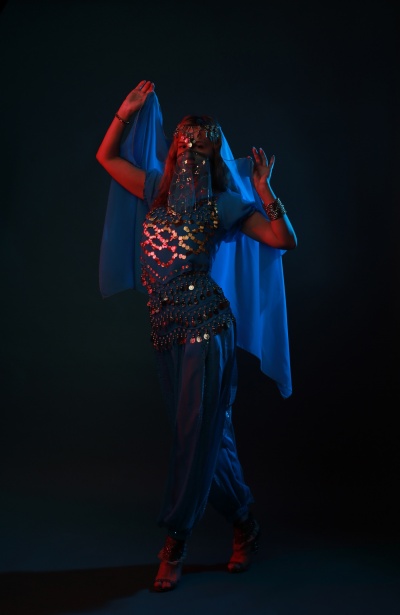
Dancer: A Balochi poem by Bashir Baidar

Translated by Fazal Baloch

Courtesy: Creative Commons
O dancer!
Come and dance
with ecstasy and trance
to set my heart aflame.

This dark and ebony night
may never see dawn's light.
May the jingle of your anklets
never cease into silence,
even for a moment.

As long as lingers the hangover, 
Move forth, stretch out your hands
and see how the colourful cash floats.

Why think of honour and modesty?
You're helpless, so am I.
You're famished, so am I --
You, for a crumb of bread.
I, of an anguished heart.
Who is chaste? Who is wanton?
Who is innocent? Who a sinner?
I know each and everyone.
Sealed are my lips.

These perfidious Masters and Chiefs,
shameless Mullahs and Pirs,
blood sucking oppressors
Are Man's eternal enemies.

Keep shaking your body,
till it crumbles apart
and all your organs shatter
like crystal on the floor.

O dancer!
Come and dance
With ecstasy and trance
And set my heart aflame.

.

Bashir Baidar belongs to the generation of the Balochi poets that emerged on the horizons of Balochi literature in the 1960s. Drawing inspiration from Progressive Writers Movement, Baidar’s poetry is widely cherished for his political undertone. So far, he has published four anthologies of his poetry. This poem is taken from Gowarbam (second edition) published by Pak News Agency Turbat in 2021.

.

Fazal Baloch is a Balochi writer and translator. He has translated many Balochi poems and short stories into English. His translations have been featured in Pakistani Literature published by Pakistan Academy of Letters and in the form of books and anthologies.

PLEASE NOTE: ARTICLES CAN ONLY BE REPRODUCED IN OTHER SITES WITH DUE ACKNOWLEDGEMENT TO BORDERLESS JOURNAL

Click here to access the Borderless anthology, Monalisa No Longer Smiles

Click here to access Monalisa No Longer Smiles on Kindle Amazon International

Categories
Stories

A Letter Adrift in the Breeze

Haneef Sharif

By Haneef Sharif, translated from Balochi by Mashreen Hameed

From the world,

coldness,

autumn,

silence… intense silence.

My lord!

Fair wishes…

I am somewhere between the better and the best in this world. Safe and sound. Breathing. Every morning, I had walked to my job and the evening breeze had wafted me back home. Drifting like this, many times I pondered over penning down a letter to you but was held back…. lack of address ….my own fears…. dread of time…. Therefore, I never quite made up my mind to complete the task.

My Lord! Today I am feeling very dispirited. I have been expelled by the head of the post office from my job. He said, I happen to deliver the letters, orders, registry and parcels on wrong addresses. The recipients receive the wrong mail. He states, for three months I kept reiterating these mistakes.

I had never envisioned this situation.

Giving it some thought, I concluded that this is all because I did not write a letter to you. Thus, today, I am writing to you.

I apologise in advance for any errors in my penning.

The crucial thing is — My Lord! Tonight, is curtained by stillness, the fire is inhaling its final breath. After the fire dies, I remain with taciturnity alone at home. Whosoever obtains more power than others, will press them down, and you know well who is more powerful than me and who….

God Almighty! To say worthily, I love you a lot and very much —

like toys kept on carts,

like whirlwinds on mosques,

like ash that clings tired on jammed wheels,

like wandering cows on streets,

like the daughters of neighbours…

Almighty God! I love you limitlessly. I don’t know how to convince your ears about my profound affections. I love everything about you, I stoop to your every word, and your every creation is beyond examples, wordless and irreplaceable.

But my Lord! This is also true that you left nothing but confusion in this world, everywhere inconclusiveness, lack of fulfilment, no ins and outs but all the edges of incompletion.

My Lord, who are you? What are you?

The pouring light of lamp igniting before the home of Khuda Baksh[1], I wonder are you

the tyre-prints of police cars,

the pay-day for teachers,

the rock on the pavement of road,

or the first daily paper each morning?

Who are you? Where are you? In the skies…

No, I cannot admit this, how come my friend, my companion is so far? My Lord is not cruel. He is alone, childfree, poor, miserable like me… stricken by hunger, and knows that the most powerful thing in the world is hunger… hunger… ufff…. I cannot explain. But My Lord, what do you think, is the most powerful among your creations —

drug filled cigarettes,

leftovers of bread,

a cold, collapsed lonely road,

sunsets in summers,

or relics of autumn leaves?

As per my heart, these all are powerful, frightening, but tempting.

What do you say my lord?

What is your point of view?

Do you know one more thing Almighty God, you made abundant useless things in your world; they are meaningless, unimportant, but absurdly you are accountable for creating them.

Lord Almighty! Don’t you realise some surplus things remain unnoticed when you look at the world, like —

school going children in the morning,

busloads of travelers to cities,

 ‘wedlocks’ in marriages,

ventilators of bathrooms,

 and traffic police on roads.

My lord!! These all are complaints, all protests. These are our grievances echoing before you.

We are wretched, distressed, dead hearted. Other people are engulfing us. We are being thrown out of the world. Lord, my heart has become the residence of hatred, enmity and envy; I feel jealous of everyone. I suffer in anguish. I am changing into a devil, converting to wickedness. In spite of all these, I am amazed to discover that, My Lord, I love you a lot, in fact, very, very much –

like a healthy fish,

like the last drop of wine,

like a full plate of curry,

like a room filled with water,

like… like…

God Almighty! There is nothing more vital to pen down except, the fire is dead now. My stomach is screaming, hunger creeps, cold extends, surfeits, magnifies and I am…

My best regards to all.

Your son,

And… actually…. I am handing over this letter to the breeze; I hope you will receive it.

Everything is pretty well.

.

(This story was first published in Balochi in Teeran Dask, a collection of stories by Haneef Sharif and is being published in translation with permission from the author and the Balochistan Academy of Literature and Research, Turbat.)

Haneef Sharif, born on December 25, 1976, is a well-recognised author, filmmaker, YouTuber, photographer and  script writer. He completed his basic education in Turbat, Balochistan, and received his MBBS degree from Bolan Medical College, Quetta, in 2003. He currently lives in Germany. He has published a novel, Chegerd Poll enth ( The Chegerd Tree is blossoming), and a number of short stories in Balochi. Some of his short stories have been published in 3 collections: Shapa ke Hour Gwareth ( The Night When It Rains), Teeran Dask ( Teeran Dask) and Haneefnaam ( Hey you Haneef). He has also directed four films in Balochi. He also runs a YouTube channel Radio Balochistan where he publishes videos, short stories, interviews and lectures on miscellaneous subjects. 

Mashreen Hameed is a fresh graduate of University of Turbat with a Masters’ degree in English literature. She is a writes fiction, poetry and translates from Balochi and English.

.

PLEASE NOTE: ARTICLES CAN ONLY BE REPRODUCED IN OTHER SITES WITH DUE ACKNOWLEDGEMENT TO BORDERLESS JOURNAL

Categories
Stories

Death will Come…

By Munaj Gul Baloch

 It was a quiet pleasant evening with an unending essence of hopelessness. Mahi was drained and unable to reply to her own self. It was about six in the evening. The breeze carried a soulful fragrance within its whispers. Mahi was sitting on the edge of Neheng River. The sparkle of the setting sun with the pleasing breeze solaced her and revived her, raising her out of her weariness. 

She remembered the sunset when she would sit a little distance away from Hasnain and stare at him. Hasnain was dispirited and was waiting to befriend death. So was death.

Hasnain’s tempting smiles and innocent face were forever visible within her tear-filled eyes. Mahi wandered why like a doomed soul he was unable to adjust himself to dwell in peace.

Mahi closed her eyes and scrutinised the jarring memories that wavered through her mind, remembering all those peaceful moments which were spent with him. The boy had died a year ago. His voice still haunted her. His image still drifted before her eyes. His grief was apparent in such visions and each of his words wafted back to her. 

 She was bound to suffer. She still heard the voice of his wretchedness as he screamed out loud.

 “Is there anyone to free me from this torture-cell? I am suffocated here. I no longer want to resist my own departure from myself. Neither have I had an existence nor a non-existence. I befriended nothingness.” 

These words of Hasnain made Mahi suffer till her last breath. She was dead silent after witnessing the misery and soreness of the blue boy as he tussled with death and lost himself.

It was the same day. It bound each life within death. Mahi was submerged with suffering, and she befriended death. So did death. 

The graveyard is proud to own deaths that had befriended lives and exposed souls.

.

Munaj Gul Muhammed from Turbat, Balochistan, has been writing since 2017 on various educational, social and gender issues in different newspapers such as The Daily Times, Balochistan Voices, The Baloch News, Balochistan Point and other outlets. He has also won Agahi Award in the category of Human Rights in 2018.

PLEASE NOTE: ARTICLES CAN ONLY BE REPRODUCED IN OTHER SITES WITH DUE ACKNOWLEDGEMENT TO BORDERLESS JOURNAL

Categories
Contents

Borderless January, 2022

Painting by Sohana Manzoor

Editorial

Elephants & Laughter… Click here to read.

Interviews

Keith Lyons introduces us to Kenny Peavy, an author, adventurer, educator and wilderness first-aider who has travelled far and wide and wishes everyone could connect with the natural world right outside their door. Click here to read.

In Rhys Hughes Unbounded, Hughes, an author and adventurer, tells us about his inclination for comedies. Click here to read

Translations

Professor Fakrul Alam translates If Life were Eternal by Jibananada Das from Bengali. Click here to read.

Ratnottama Sengupta translates Bengali poet Michael Madhusudan Dutt’s Bijoya Doushami. Click here to read.

Korean poet Ihlwha Choi translates his own poem, Sometimes Losing is Winning, from Korean. Click here to read.

Give Me A Rag, Please:A short story by Nabendu Ghosh, translated by Ratnottama Sengupta, set in the 1943 Bengal Famine, which reflects on man’s basic needs. Click here to read.

On This Auspicious Day is a translation of a Tagore’s song, Aaji Shubhodine Pitaar Bhabone, from Bengali by Mitali Chakravarty. Click here to read.

Poetry

Click on the names to read

Rhys Hughes, Ryan Quinn Flanagan, Anasuya Bhar, Jay Nicholls, Anuradha Vijayakrishnan, Vernon Daim, Mathangi Sunderrajan, William Miller, Syam Sudhakar, Mike Smith, Pramod Rastogi, Ivan Peledov, Subzar Ahmed, Michael R Burch

Nature’s Musings

In Best Friends, Penny Wilkes takes us for a photographic treat. Click here to read.

Poets, Poetry & Rhys Hughes

In Making Something of Nothing…, Rhys Hughes explores sources of inspirations with a dollop of humour. Click here to read.

Musings/Slices from Life

Wooing Children to School

Munaj Gul writes of how volunteers are engaged in wooing children from poverty stricken backgrounds to school in Turbat, Balochistan. Click here to read.

Historical Accuracy

Ravibala Shenoy ponders over various interpretations of the past in media and through social media. Click here to read.

The Ocean & Me

Meredith Stephens writes of her sailing adventures in South Australia. Click here to read.

Crotons

Kavya RK finds her fascination for plants flourish in the pandemic. Click here to read.

The Great Freeze

P Ravi Shankar trots through winters in different parts of the globe. Click here to read.

Two Birds

Ratnottama Sengupta muses as she translates a Tagore’s song. Click here to read.

Musings of a Copywriter

In The New Year’s Boon, Devraj Singh gives a glimpse into the projection of a new normal created by God. Click here to read.

Essays

Dramatising an Evolving Consciousness: Theatre with Nithari’s Children

Sanjay Kumar gives us a glimpse of how theatre has been used to transcend trauma and create bridges. Click here to read.

Potable Water Crisis & the Sunderbans

Camellia Biswas, a visitor to Sunderbans during the cyclone Alia, turns environmentalist and writes about the potable water issue faced by locals. Click here to read.

The Malodorous Mountain: A Contemporary Folklore

Sayantan Sur looks into environmental hazards due to shoddy garbage disposal. Click here to read.

Where Sands Drift Back in Time…

Shernaz Wadia explores Western Australia. Click here to read.

The Observant Immigrant

In The Changing Faces of the Family, Candice Louisa Daquin explores the trends in what is seen as a family now. Click here to read.

Bhaskar’s Corner

In Fakir Mohan: A Tribute, Bhaskar Parichha introduces us to Fakir Mohan Senapati, the writer he considers the greatest in Odia literature. Click here to read.

Stories

Folklore from Balochistan: The Pearl

Balochi folktales woven into a story and reinvented by Fazal Baloch highlighting the wisdom of a woman. Click here to read.

The American Wonder

Steve Ogah takes us to a village in Nigeria. Click here to read.

The Boy

Neilay Khasnabish shares a story on migrant labours with a twist. Click here to read.

Stranger than Fiction

Sushant Thapa writes of real life in Nepal, which at times is stranger than fiction. Click here to read.

The Solace

Candice Louisa Daquin takes us on a poignant story of longing. Click here to read.

The Doll

Sohana Manzoor tells a story around the awakening of a young woman. Click here to read.

Among Our PeopleDevraj Singh Kalsi gives a fictitious account of a common man’s quest for security in a country that is one of the world’s largest democracy. Click here to read.

Book Excerpts

An excerpt from Shazi Zaman’s Akbar: A Novel of History detailing his interactions with Surdas and Braj. Click here to read.

Excerpts from A Glimpse Into My Country, An Anthology of International Short Stories edited by Andrée Roby & Dr Sangita Swechcha. Click here to read.

Book Reviews

Meenakshi Malhotra reviews Somdatta Mandal’s translation of A Bengali Lady in England by Krishnabhabini Das (1885). Click here to read.

Gracy Samjetsabam reviews Anuradha Kumar’s The Hottest Summer in Years. Click here to read.

Rakhi Dalal reviews Selma Carvalho’s Sisterhood of Swans. Click here to read.

Bhaskar Parichha reviews Amit Ranjan’s John Lang; Wanderer of Hindoostan; Slanderer in Hindoostanee; Lawyer for the Ranee. Click here to read.

Categories
Slices from Life

Wooing Children to School

By Munaj Gul Muhammad

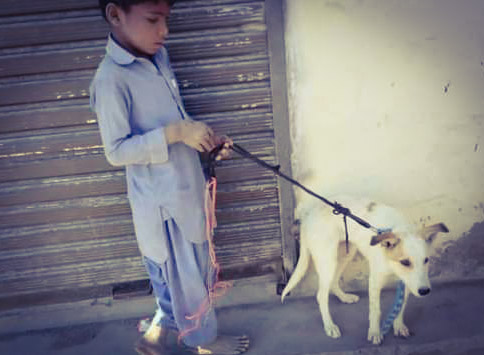
Shah Meer Sowali with the dog he wanted to sell. Photo Courtesy: Munaj Gul

Little Shah Meer Sowali got a dog with him to the bazaar in Turbat. He sold the dog for a small sum because he lives hand to mouth. His beloved and aged father is lame and they live in a broken room. Seeing the condition of little Shah Meer, members of an organisation called SFA (School for All) approached Shah Meer’s family and took the responsibility of the little boy and his little sister as before they both were out-of-school. The family had been unable to enroll the little children because of poverty.  Now, Shah Meer and his sister are enrolled in Bolan School.

The SFA is a non-profit organisation working for the promotion of education and reduction of student dropouts along with enrolling unschooled children into schools in Turbat since its establishment. It was established on October 1, 2020. Since its inception, the organisation has been successfully enrolling many orphans and disabled children along with financially weak children into different private and government educational institutions. The organisation is registered under Balochistan Charities Regulation Authority [BCRA] and is designed to serve the cause of education in the province. The organisation facilitates education of the enrolled students until they matriculate. These children are provided with books, shoes, bags, uniforms, stationery and fees along with other basic amenities.

Given that Pakistan is one of the most illiterate countries of the world, education for people is a daydream. Fahad Baloch, had to go to Quetta to get a basic education.  Unlike Fahad, his brother was not as fortunate. Despite wanting to go to school, he could not. A large chunk of children had no access to uneducated in his locality. But now this gap is being attempted to be bridged by the SFA.

The prime ambition of this organisation is to aid edifying the society where everyone acquires the opportunity to receive an education. They also hope to subsidise the costs. The organisation has successfully conducted three educational awareness programs in different areas of the region and received an affirmative response of the society to enrolling the out-of-school children into schools. The core drive of conducting such programmes was to impart a real sense or essence of education to the minds of the people in the region.

The SFA has been successful in enrolling 21 out-of-school children into private schools and 34 in government institutions. These enrolled children are registered by an agreement drawn up between the organisation and the parents of the children. They have even opened four bookstalls in the region to help get books to those who can read. “The benefits received by the SFA from the bookstalls go to these needy people,” said Kamran Gichki of the SFA. “Since the inception of the organisation, we approached many people, among them some were government officials from the concerned departments, and we shared our motives with them. We received affirmative and moral support from these officers but got financial support only from the middle-class residents in the region. The government is yet to support us in our efforts financially even though by Article 25A, they have made education a must for five to sixteen year olds.”

.

Munaj Gul Muhammed is a journalist and a LLB student at Faculty of Law, University of Turbat. He tweets at @MunajGul

PLEASE NOTE: ARTICLES CAN ONLY BE REPRODUCED IN OTHER SITES WITH DUE ACKNOWLEDGEMENT TO BORDERLESS JOURNAL