Categories
Contents

Borderless, July 2022

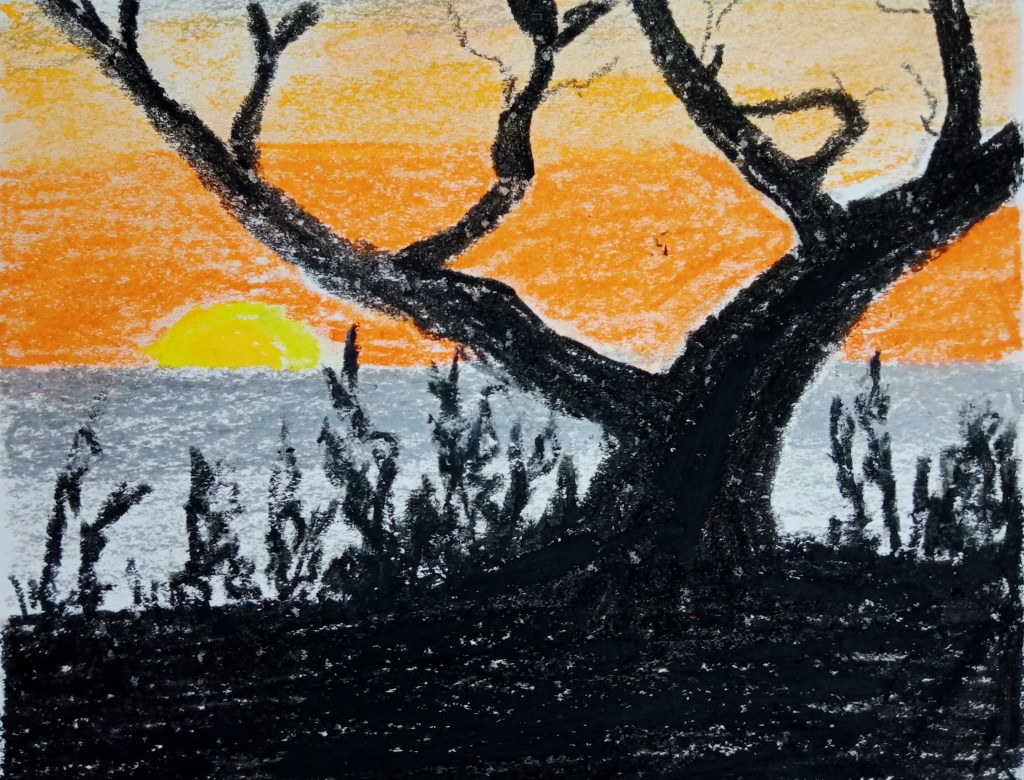
Art by Sohana Manzoor

Editorial

Whispers of Stones… Click here to read.

Translations

Tagore’s Mono Mor Megher Shongi (‘The Clouds, My Friends‘)has been translated by Professor Fakrul Alam. Click here to read.

The Welcome, a skit by Tagore, has been translated by Somdatta Mandal. Click here to read.

The Bus Conductor, a short story by Dalip Kaur Tiwana has been translated from Punjabi by C. Christine Fair. Click here to read.

Hasan Sol: A Balochi Folktale from Geedi Kessah-4(Folktales Vol: 4) compiled and retold by Gulzar Khan Mari, has been translated by Fazal Baloch from Balochi. Click here to read.

Cry of the Sunflower written in Korean and translated to English by Ihlwha Choi, a poem for Ukraine. Click here to read.

Tagore’s Nobobarsha (or ‘New Rains’) has been translated by Mitali Chakravarty. Click here to read.

Pandies’ Corner

This narrative is written by a youngster from the Nithari village who transcended childhood trauma and deprivation. Lockdown had been written in Hindustani by Jishan and translated to English by Grace M Sukanya. Click here to read.

Poetry

Click on the names to read

Michael R Burch, Supatra Sen, Jenny Middleton, Pramod Rastogi, Ron Pickett, George Freek, Devangshu Dutta, Candice Louisa Daquin, David Francis, Raja Chakraborty, Michael Lee Johnson, Ashok Suri, Ryan Quinn Flanagan, Sutputra Radheye, Maid Corbic, Rhys Hughes

Poets, Poetry & Rhys Hughes

In The Anthology in my Mind, Rhys Hughes talks of a make believe anthology. Click here to read and find out what he imagines.

Conversations

Eminent film journalist, Ratnottama Sengupta, converses with legendary actress, Deepti Naval, on her literary aspirations at the Simla Literary festival, Unmesh, in June 2022. Click here to read.

Keith Lyons interviews Steve Carr, a writer who has written 500 short stories and has founded the Sweetycat Press. Click here to read.

Stories

A Cat Story

Sohana Manzoor leaves one wondering if the story is about felines or… Click here to read.

My Christmas Eve “Alone”

Erwin Coomb has a strange encounter at night. Is it real? Click here to read.

Bus Stop

The story by Rinu Antony focusses on chance encounter at a bus stop. Click here to read.

Murder at the ‘Pozzo di San Patriza’

Paul Mirabile travels to 1970s Italy to experience a crime inside a sixteenth century well. Click here to read.

Musings/ Slices from Life

Grune Point and an Inkling of Eternity

A poetic account by Mike Smith as he explores the area that hovers between England and Scotland. Click here to read.

Olympic Game Farm: Meeting and Greeting Animals from Disney Movies

Hema Ravi visits a farm that houses animals that had a past in Disney. Click here to read.

Notes from Japan

In A Visit to the Isamu Noguchi Garden Museum, Suzanne Kamata visits a Museum dedicated to an American Japanese artist. Click here to read.

Musings of a Copywriter

In Shopping for my Funeral, Devraj Singh Kalsi goes on a bizarre spree. Click here to read.

Mission Earth

In On a Bamboo Bicycle from Thailand to Indonesia, Kenny Peavy revisits his trip across Asia exploring the biodiversity and conservation efforts. Click here to read.

Essays

Discovering Books and Places: The Voyage from Eden

Meredith Stephens sails the Australian coastline, recording her experiences with words and her camera. Click here to read.

Trekking to Tilicho Lake

Ravi Shankar treks up to Tilicho Tal at 4940 m. Click here to read his trekking adventures.

A Modern-day Animal Fable with Twists

Dan Meloche visits a contemporary Canadian novel written as an animal fable to draw an unexpected inference. Click here to read.

The Observant Immigrant

Is it okay to be ordinary? by Candice Louisa Daquin explores the responses of people to being accepted as ordinary. Click here to read.

Book Excerpts

An excerpt from The Mendicant Prince (based on the Bhawal sannyasi case) by Aruna Chakravarty. Click here to read.

An excerpt from Nabendu Ghosh’s Dadamoni: The Life and Times of Ashok Kumar. Click here to read.

Book Reviews

Meenakshi Malhotra reviews Tagore’s Gleanings of the Road translated by Somdatta Mandal. Click here to read.

Rakhi Dalal reviews Geetanjali Shree’s Mai, Silently Mother, a Sahitya Akademi winning translation of the Hindi novel by Nita Kumar. Click here to read.

Indrashish Banerjee reviews Nabendu Ghosh’s Dadamoni: The Life and Times of Ashok Kumar. Click here to read.

Bhaskar Parichha reviews Prosanta Chakrabarty’s Explaining Life Through Evolution. Click here to read.

Categories
Editorial

Whispers of Stones

When the mountains and grass
had life, stones whispered
how the world came to be…

'Stonehenge', Daily Star

And as the world came to be, there was war — war that seems to rage in some part of the world or other. The British Museum has an exhibit which states the first battle was staged 13,000 years ago… in what is now Sudan, long before the advent of written history. This was even before the advent of people who built the ancient Stonehenge which was constructed around 3000-2000 BCE. And battles still continue to rage. The Jebel Sahaba casualties in Sudan 13000 years ago were less than 100. But the current conflicts claim in terms of tens of thousands which prolonged could stretch to millions. The last world war (1939-1945) which lasted for six years had a total of  75-80 million persons who perished. Ukraine-Russia conflict has within five months had a casualty count of more than 14000. And yet weapons and nuclear arms continue to proliferate decimating humanity, nature and towns, destroying homes, erasing ruthlessly and creating more refugees. The only need for such battles seem to be to satiate the hunger of the warlords secure in their impenetrable fortresses while tens of thousands are annihilated and natural or nurtured landscapes lie emaciated, mutilated and polluted.

What would be a good way of ending such wars?

Tagore sought the development of better instincts in humankind as an antidote. He wrote in the last century: “Any teaching concerning man must have human nature for its chief element. How far it will harmonise with human nature is a matter of time.”

With wars getting deadlier and more horrific, we can only try to awaken, as Tagore suggests, the better nature in man to move towards a peaceful world. What would be a more effective way of doing it than writing with the hope of a kinder and accepting future?

For that let us start with translations of the maestro Tagore himself. We have a song about the season — monsoon, ‘Monomor Megher Songi (My Friends, the Clouds)’, translated by Professor Fakrul Alam, a painting by Sohana Manzoor interpreting the lyrics and a transcreation of Nababarsha or New Rains’ was shrunken into a popular Rabindra Sangeet and reduced to twenty lines in English by Tagore himself. The connect with nature is an important aspect that enables humans to transcend petty concerns leading to dissensions of different kinds as evidenced in the maestro’s humorous feline skit, translated by Somdatta Mandal. A translation of Dalip Kaur Tiwana’s ‘The Bus Conductor’ from Punjabi by C. Christine Fair adds zest to this section. Fazal Baloch has translated a folktale from Balochistan involving the supernatural and Ihlwha Choi has taken on the cry for peace on behalf of Ukraine while translating his own poem in Korean. The Nithari column has a story by Jishan in Hindustani, translated to English by Grace M Sukanya, showcasing the struggle of a youngster during the pandemic – rather a sad narrative, which though fictitious has its roots in reality. 

Our poetry section touches upon the timelessness of dissensions and darkness with Michael R Burch’s poem on Stonehenge and Supatra Sen’s poem on Ukraine. This has been allayed by love poetry by Maid Corbic from Bosnia. George Freek’s poem ruffles with its reflective lines. And in the midst of it all, is poetry by Ryan Quinn Flanagan reflecting on the seven stages of man. Will the process of aging or human nature ever change? I wonder if Rhys Hughes can find an answer for that in humorous verses as he has shared in this issue. In his column, Hughes has written about an imagined anthology of short stories.

Our short story section has echoes of humour around felines by Manzoor, somewhat in tune with the mind frame seen in Tagore’s skit on this issue. Humour rings tinged with an apparition in Erwin Coombs’s narrative – should one call it dark humour or is it just his style? Paul Mirabile goes for gothic darkness in his meanderings around Italy.

Strangely, we seem to have a focus on short stories this time. Keith Lyons has interviewed Steve Carr, a journalist, a publisher and writer of 500 short stories who is questing to create a ‘perfect short story’. Reading out excerpts from her short story at a literary festival in Simla, Bollywood celebrity, Deepti Naval, was in conversation with eminent film journalist, Ratnottama Sengupta. She spoke of her literary aspirations while unveiling her autobiography in verse, A Country Called Childhood. This conversation has been shared by Sengupta with Borderless. It is interesting to see how Naval’s reactions to social malaise contrasts with that of the film director, cinematographer and actor, Goutam Ghose, who was present during the unveiling of her book. He had responded to communal violence by making a film on Lalan Fakir extolling virtues of love and kindness, called Moner Manush (2010) and then made a book on the film called, The Quest (2013) which has beautiful translations of Lalan Fakir’s lyrics by Sankar Sen.  

Our non-fiction sections seem to be hosting multiple travel stories across UK by Mike Smith, along the Australian coastline by Meredith Stephens, on the Himalayas with Ravi Shankar and an unusual visit by Hema Ravi to a farm in US where animals that had been used in Disney films in the past are homed. Our environmental columnist, Kenny Peavy, actually wrote about his cycling trip from Thailand to Indonesia on a bamboo cycle made by a Singaporean! And from Japan, Suzanne Kamata explored a museum in the neighbouring town of Mure. The museum on a hill hosts the art of American Japanese Artists, Isamu Noguchi.

We do have non-fiction that moves away from travel: noir humour by Devraj Singh Kalsi and an essay by Candice Louisa Daquin on a very interesting subject – ‘Is it Okay to be Ordinary?’ Is it?  Dan Meloche has written a literary essay on Canadian novelist Andre Alexis’s award-winning novel, Fifteen Dogs: An Apologue (2015). While Meloche spoke of how the novel departed from Orwell’s Animal Farm, his narrative brought to my mind a novel closer to our times set in England by Jasper Fforde called Constant Rabbit (2020) – this a science fiction while Alexis’s was an apologue or an animal fable. Fforde did use the rabbits rather well to highlight the current times.

We have book excerpts of two recent books that I would call really outstanding. One of them is Aruna Chakravarti’s The Mendicant Prince, which is being released this week, and is based on the evergreen contentious case of the prince of Bhawal that has even been explored even in cinema. The other, Dadamoni: The Life and Times of Ashok Kumar by Nabendu Ghosh, has been published posthumously and is not a translation from Bengali but written in English originally by this trilingual writer.  

Called ‘Dadamoni’ affectionately, iconic actor Ashok Kumar is regarded as “the one personality who symbolises Indian cinema’s journey from Bombay Talkies to Bollywood”.  This book has been reviewed by Indrashish Banerjee, who calls it ‘a reflection on the Hindi film industry’ as well as a biography. Rakhi Dalal has reviewed Booker winner Geetanjali Shree’s Mai, Silently Mother, a Sahitya Akademi winning translation of her Hindi novel by Nita Kumar, reiterating the dialogue that had been kindled on motherhood last month by Rinki Roy Bhattacharya and Maithili Rao’s The Oldest Love Story (2022). Bhaskar Parichha has reviewed Prosanta Chakrabarty’s Explaining Life Through Evolution plotting how life evolved on earth. Parichha tells us: “Meaningful, wide-ranging and argumentative, this is a must-read book. It will propel us to imagine and reimagine life around us.” Another book that sounds like a must-read has been reviewed by Meenakshi Malhotra, Tagore’s Gleanings of the Road, translated by Mandal. She tells us: “ ‘Gleanings’ represents the quintessential Tagore…Ably introduced and translated by Somdatta Mandal, a renowned Tagore scholar, the translation captures the iridescent and luminous quality of Tagore’s prose and its chiaroscuro effects.”

There is more to tempt. Please stop by on our contents page and take a look.

We would like to hugely thank all our contributors and readers for being with us and helping us grow. I would like to thank my team, who despite hurdles they face, always lend a helping hand and wonderful words from their pens or computers to get Borderless on its feet. I apologise for the delay and thank you all for your patience. Special thanks to Sohana Manzoor for her fabulous artwork.

I wish you all a wonderful July and peace in a war-torn world. We are all affected by the ongoing conflicts. Let us hope for peaceful and just resolutions.

Thanks.

Mitali Chakravarty

borderlessjournal.com

Categories
Poetry

Hats, Cats, Foxes & Rhymes…

Poetry by Rhys Hughes

THE DOERS OF THAT


We very rarely do this
for we are the doers of that,
we are almost impossible to kiss
and we wear incredible hats.

Yes, we are the doers of that,
we tease whoever we please,
we hiss at bees high in the trees
and wheeze at inedible cats.

To be a good doer of that
it helps to swap fleas with things
or flit and flap like a cricket bat
that has suddenly sprouted wings.

Our bicycles are truly organic
with bold noses mostly titanic,
mighty big sneezes plus sea breezes
will trundle us along in a panic.

But rather diffuse are our ears,
they operate best in low gears,
when listening uphill they thrill
to the trill of squirrels drunk on beers.

Soft are the beds we lie on,
their shapes based on dandelions,
slick are the knees that we freeze
in cold teas and biscuity their caps.

For we are the doers of that
and inordinately proud of the fact.
Yes, we are the doers of that,
expressionless and very abstract.


TWO DETECTIVE INSPECTORS


The fox said to the owl
“When it came to
choosing a career
most of my options were defective.
I wanted something proactive
so I was very selective
and decided to become a detective
because murder most fowl
sounded very attractive.”

“I too joined the police
for gustatory reasons,” replied the bird,
“and now I do battle against
gangs who shoot, stab and smother.
To be perfectly candid
I am always enthralled
when we catch them red-handed
and the perpetrators rat on each other.”


THE RHYME AND THE MIME


The rhyme and the mime were friends
but drove each other
round the bend, taking it in turns.
They never learned!

And in the hay one day
one rolled around until he was far away
and the other was irate:
too late to berate the fate of his mate!

Which was the unfortunate explorer?
Was it the quiet mime
or was it the rhyme with perfect time
twanging in a corner?

Obviously it was the mime, otherwise
logic is endangered
and strangers who range on the plain
will dissolve in rain.

The rhyme and the mime are laughing
with their little faces,
eyes of the mime, sequins bright: those
of the rhyme, lower case.

Rhys Hughes has lived in many countries. He graduated as an engineer but currently works as a tutor of mathematics. Since his first book was published in 1995 he has had fifty other books published and his work has been translated into ten languages.

PLEASE NOTE: ARTICLES CAN ONLY BE REPRODUCED IN OTHER SITES WITH DUE ACKNOWLEDGEMENT TO BORDERLESS JOURNAL
Categories
Poets, Poetry & Rhys Hughes

The Anthology in my Mind

Courtesy: Creative Commons

A few years after I first fell in love with literature, in my distant youth, I began putting together an imaginary anthology full of the best short stories I happened to read, and I never stopped compiling it. This anthology ought to be enormous now, unwieldy and unpublishable, but in fact it’s a perfectly manageable length and that is because it only contains stories that truly riveted me and there aren’t so many of those. It’s not good enough for them just to be good. They must be stories that make me jump up and ruffle my hair and shout: “I wish I had written that, but I didn’t, and probably I couldn’t.”

I am sure I am not the only reader who carries such an anthology around in their heads. And though my tastes might have changed over the years, the fact remains that the stories in my imaginary anthology are those that had a forceful emotional effect as well as providing a cerebral satisfaction. Having said that, I must concede that cerebral satisfaction is emotional too. We feel elated when a clever insight suddenly illuminates an opaque mystery or when an impossible puzzle proves to have an ingenious solution.

The first story in my anthology is ‘The Tell-Tale Heart’ by Edgar Allan Poe, which I read when I was 15 years old. It was the first time I encountered the device of an ‘unreliable narrator’ (or at least a narrator with a twisted view of life) and it amazed me. I became an instant Poe devotee. Other stories by Poe that can be found in my anthology are ‘The Masque of the Red Death’ and ‘The Cask of Amontillado’, both of them perfect fables, and also a few of his weird comedies (it often comes as a surprise to readers that Poe wrote comedies) such as ‘A Predicament’, which is a fine example of surrealism before the word was coined (maybe we ought to call it ‘proto-surreal’).

Poe gave me a taste for the nightmarish, which isn’t quite the same as horror, and led me to Kafka, after I was informed (I can’t remember who by) that Kafka’s work was even more nightmarish than Poe’s. Maybe it is, but in a different way. And yet neither ‘Metamorphosis’ nor ‘In the Penal Colony’ are included in the anthology, magnificent though they are. I found myself more strongly drawn to some of his less obviously allegorical stories, ‘A Country Doctor’, for example, ‘The Great Wall of China’, ‘A Hunger Artist’, and to the the very brief and brilliant ‘On Parables’.

There has to be an upper word limit to each of the stories in my anthology, of course, and this is why Voltaire’s Candide, which is a novella or short novel, finds no place in the imaginary pages. The next author to be included must thus be Ray Bradbury, my literary hero when I was seventeen or so. I have included ‘The Scythe’ and ‘Homecoming’ (the first Bradbury story I ever read) as being the most important of his stories for me. Bradbury is the true heir of Poe, for his work wanders among the genres in the same manner, and his dark humour sits side by side with his more gothic effects.

I think that Saki must be in the anthology too, and I would choose ‘Laura’ from all his tales, for its sheer ingenuity. It remains one of the best twist ending fictions I have encountered and is hilariously ironic, and twist endings are not common in Saki, who generally prefers to fulfil the uneasy expectations of the reader rather than pulling the rug from under their feet. This is why he shouldn’t be compared with O Henry, who is included for ‘The Gift of the Magi’, though it has already been anthologised hundreds of times.

Chekhov’s early stories were a big influence on me, and although his later work is considered vastly superior to the fiction of his youth, I personally regard stories such as ‘Romance with Double-Bass’, ‘The Objet d’Art’ and ‘Revenge’ with their unexpected endings as more purely enjoyable. I also received a happy shock from two quite obscure tales, ‘The Monster of Lake LaMetrie’ by Wardon Allan Curtis and ‘The Anticipator’ by Morley Roberts. Another of my favourite twist endings is found in ‘Metonymy’ by Rachel de Queiroz. But twist endings aren’t everything. My favourite H.G. Wells’ story, ‘The Country of the Blind’, has no twist at the end. It proceeds with an unstoppable momentum like a slow avalanche, the reader a helpless observer.

The finest stories of Jorge Luis Borges are among the most remarkable pieces of fiction I have read. We might all be familiar with the conceptual rigour and originality of his most famous stories, ‘Tlön, Uqbar, Orbis Tertius’, ‘The Garden of Forking Paths’ and ‘The Library of Babel’, for these texts have redefined the purpose of the short story as a cultural product, but I have always found ‘The Congress’ to be the ultimate Borges story. The matrix on which it is based is a loop that turns out to be a complex manifold akin to the mathematical shape known as a Reimann surface. It is somewhat like a reverse prose version of Escher’s lithograph ‘Print Gallery’ in which a man is viewing a picture which contains the gallery in which he stands. In ‘The Congress’ a scheme is evolved to represent and control all the variables of the real world, but as the number of variables increases due to the demands of greater precision, the scheme is seen to already exist in the form of the real world itself.

A few of Italo Calvino’s hugely inventive stories are in my anthology too, ‘The Distance of the Moon’ among them, the first of his stories to feature the character, Qfwfq, who is as old as the universe. But Calvino’s shorter fiction tends to be at its best when it comes in sequences, and it’s the entire sequence that ends up being so superb, the Marcovaldo stories, for instance. They work better as linked suites, almost novels. One of his earliest surviving stories, ‘The Man Who Shouted Teresa’, will be in my anthology, however, for its charming absurdity, its precision and ironic logic.

I still haven’t decided which stories to include by Stanislaw Lem, Roger Zelazny, John Sladek, and so many other writers, but I feel confident they will have at least one piece in the anthology. Those were all science fiction writers and I read a lot of science fiction when I was young. Fredric Brown’s ‘Answer’ must be included in my anthology as a perfect example of a one-page story that manages to deal with the biggest themes in the universe in a way that is snappy and funny but also deeply thought provoking.

Now I will mention ‘The Dead Lady of Clown Town’ by Cordwainer Smith. All literature of the imagination is ‘strange’ but most of it is created by men and women who are not particularly strange. Most tales of the far future maintain the impression that they are imagined by writers who are living in the present. But Smith’s stories give the impression they are realistic fictions written in the future. I have heard it said elsewhere that the strangeness of Smith’s style derives from Chinese methods of storytelling (Smith spent his formative years in China) but that doesn’t account for the strangeness of his visions. They are authentically strange, not forced or contrived.

‘The Incredible and Sad Tale of Innocent Eréndira and Her Heartless Grandmother’ by Gabriel García Márquez is another candidate. It is an extension of a brief scene in his renowned novel One Hundred Years of Solitude. Eréndira is a young girl who accidentally sets fire to the home of her grandmother, who forces her to work in order to repay the debt, a term of servitude that lasts years. The hallucinatory tone of the story and its incipient strangeness intensify rather than detract from the fact that this is essentially a love and revenge tragedy as bloody and passionate as any ever conceived but conveyed in language that is simultaneously moon-washed with magic, heady with tropical oppression and sharp as a machete.

‘A Manual for Sons’ by Donald Barthelme is there too. For many people ‘postmodernism’ is a suspicious word, but it never has been for me, because I discovered the work of Barthelme long before being exposed to the somewhat pretentious academic side of the ‘movement’. Barthelme’s stories are playful, wise, profound, dry, unique and funny. There is no finer stylist in the cosmos of the short story. He was an experimentalist but also had an utterly solid grasp of the fundamental rules of the craft, and ‘A Manual for Sons’ demonstrates all his strengths. It is both tragic and comedic to an extreme degree.

‘The Cloud-Sculptors of Coral D’ by J.G. Ballard. When Ballard was at his best his prose had a strange sort of clarity that was intellectual and emotional and quite heady. He was able to make geometries lyrical. The forlorn abandoned landscapes of modern civilisation were projected by him into a curious world of glacial fabulation. It often seems as if he is writing the same story again and again, refining it in an attempt to achieve some ultimate truth. In my opinion, he never bettered ‘The Cloud-Sculptors of Coral D’ in which the usual Ballardian obsessions, the overlit deserts, the elegant women, the misfits, the surreal juxtaposition of old and new, the vast silences, fuse as perfectly as grains of sand that have turned into glass. Ballard was a writer who relied almost entirely on imagery, deeply affecting sequences of mind patterns, to impress and even mesmerise the reader. After first reading this story almost twenty years ago I have never been able to forget the gliders carving clouds into giant shapes above the bizarre resort of Vermilion Sands.

‘The Four-Colour Problem’ by Barrington Bayley, a story which at first glance resembles a dissertation on geometry. There are mathematical lectures embedded in the text, but these are never too technical for digestion. To further soften their impact, Bayley adopts a darkly comic tone which owes much to William Burroughs. The plot involves the discovery that geography is wrong and that between political borders lie new countries. The explanation for this concerns a real mathematical problem. Cartographers have long known that just four colours are required to fill in a map so that no colour borders itself, but mathematics yields only a proof for five colours. Bayley’s response is that maps exist that really do require five colours and that on the surface of our globe there are missing countries existing in dimensions tangential to our own. During the course of the tale, efforts are made to probe these intersections, with unexpected and humorous consequences.

‘Five Letters From an Eastern Empire’ by Alasdair Gray. This was the first story by Gray I ever read and it burned itself into my mind so forcefully almost three decades ago that I still regard it as the zenith of what is possible in the art of the short story, or rather what I regard as ultimately desirable. It’s a political satire, a fantasy, a tragedy and a story about definitions. The changing of one word in the title of a lament written by the main character, Bohu the Court Poet, turns an act of rebellion into a perfect propaganda tool for a repressive regime ruled by an immortal puppet. This remarkable conceit has much to say about how dictatorships manipulate the masses, and the evolution of the intolerable irony of the situation in which Bohu finds himself is perfect in pacing, mood and depth of meaning.

Recently I added another story to my imaginary anthology, a piece called ‘Cul-de-Sac (Uncompleted)’ by Australian writer Murray Bail, a deeply strange, quirky, logically lateral, hugely inventive, funny and disturbing piece. I know of nobody else who has read it. It’s a story that has clearly slipped through the cracks of time and awareness. I suppose there must be hundreds of stupendous works out there similarly neglected…

The anthology in my mind is a work continually in progress. It will never be finished until I stop reading short stories and it will never be published.

.

Rhys Hughes has lived in many countries. He graduated as an engineer but currently works as a tutor of mathematics. Since his first book was published in 1995 he has had fifty other books published and his work has been translated into ten languages.

.

PLEASE NOTE: ARTICLES CAN ONLY BE REPRODUCED IN OTHER SITES WITH DUE ACKNOWLEDGEMENT TO BORDERLESS JOURNAL

Categories
Contents

Borderless, June 2022

Art by Sohana Manzoor

Editorial

We are All Going on a Summer HolidayClick here to read.

Interviews

In Conversation with Rinki Roy (daughter of legendary director Bimal Roy) about The Oldest Love Story, an anthology on motherhood, edited and curated by journalist and authors, Rinki Roy and Maithili Rao. Click here to read.

Achingliu Kamei in conversation with Veio Pou, author of Waiting for the Dust to Settle, a novel based on the ongoing conflicts in North-east India. Click here to read.

Translations

The Funeral, a satirical skit by Tagore, translated by Somdatta Mandal. Click here to read.

Three Shorter Poems of Jibananda Das have been translated from Bengali by Professor Fakrul Alam. Click here to read.

The Magic Staff , a poignant short story about a Rohingya child by Shaheen Akhtar, translated from Bengali by Arifa Ghani Rahman. Click here to read.

Fakir Khizmil & the Missing Princess, a Balochi Folktale has been translated by Fazal Baloch. Click here to read.

Pie in the Sky is a poem written and translated from Korean by Ihlwha Choi. Click here to read.

Taal Gaachh or The Palmyra Tree, a lilting light poem by Tagore, has been translated from Bengali by Mitali Chakravarty. Click here to read.

Pandies’ Corner

This narrative is written by a youngster from the Nithari village who transcended childhood trauma and deprivation. Dhaani has been written in Hindi and translated to English by Kiran Mishra. Click here to read.

Poetry

Click on the names to read

Jared Carter, Sutputra Radheye, Ryan Quinn Flanagan, Antara Mukherjee, David Francis, Alpana, George Freek, Prashanti Chunduri, John Grey, Ashok Suri, Heather Sager, G Venkatesh, Candice Louisa Daquin, Elizabeth Ip, Rhys Hughes, Michael R Burch

Poets, Poetry & Rhys Hughes

In From a Kafkaesque Dream to the Penguin Cafe Orchestra, Rhys Hughes brings out a new strain of tunes that grew out of Jeff Simon’s unusual journey and it continues to persist beyond his life. Click here to read.

Stories

Oliver’s Soul

Paul Mirabile weaves a story of murder and madness in Madrid of 1970s. Click here to read.

The Wallet

Atreyo Chowdhury spins a tale set in Kolkata. Click here to read.

Flowers on the Doorstep

Shivani Shrivastav writes of an encounter with a mysterious child in Almora. Click here to read.

A Riverine Healing 

PG Thomas’s narrative set in Kerala, explores a leader’s old age. Click here to read.

Pagol Daries

Indrashish Banerjee creates a humanoid scenario where robots take on human roles. Click here to read.

Musings/ Slices from Life

In Memoriam: Star of the Stage Shines on Screen

Ratnottama Sengupta pays a tribute to famed actress, Swatilekha Sengupta (May 1950- June 2021). Click here to read.

Pizzas En Route to Paradise

Keith Lyons discovers the import and export of desires in Varanasi, one of the oldest cities in the world, beside one of the most revered rivers. Click here to read.

Notes from Japan

In Marathon Blues, Suzanne Kamata talks of pandemic outcomes in Japan in a lighter tone. Click here to read.

Musings of a Copywriter

In Journey of an Ant, Devraj Singh Kalsi explores life from an insect’s perspective. Click here to read.

Mission Earth

In Tuning in to Nature, Kenny Peavy tells us how to interact with nature. Click here to read.

Essays

Kabir & His Impact on Tagore

Mozid Mahmud explores Kabir and his impact on Tagore, which ultimately led to a translation of the great medieval poet. Click here to read.

A view of Mt Everest

Ravi Shankar travels in the freezing cold of Himalayan splendour and shares magnificent photographs of Mt Everest. Click here to read.

The Good, the Bad, and the Benign: Back across Bass Strait

Meredith Stephens shares a photographic and narrative treat from Tasmania. Click here to read.

The Observant Immigrant

In Season’s in the Sun, Candice Louisa Daquin explores what intense positivity can do to people. Click here to read.

Book Excerpts

Excerpt from Tagore’s Gleanings of the Road, translated by Somdatta Mandal. Click here to read.

Excerpt from Waiting by Suzanne Kamata. Click here to read.

Book Reviews

Meenakshi Malhotra revisits Harsh Mander’s Locking down the Poor: The Pandemic and India’s Moral Centre. Click here to read.

Indrashish Banerjee reviews Keki N Daruwalla’s Going:Stories of Kinship. Click here to read.

Gracy Samjetsabam reviews Pronoti Datta’s Half-Blood. Click here to read.

Bhaskar Parichha reviews Deepti Priya Mehrotra’s Her Stories –Indian Women Down the Ages — Thinkers, Workers, Rebels, Queens. Click here to read.

Categories
Editorial

We are All Going on a Summer Holiday…

Yes! It is vacation time, and we are all able to travel at last. Though the pandemic which had closed borders for us seems to be evolving as an endemic, another huge human crisis, a war which cannot be justified in any way, stares us in the face. Loss of lives, homes, towns, cities and threats of global recession follow in the footsteps of refugees wandering into our lives. Lesya Bakun, the Ukrainian refugee whose story we have been following, told me four of her relatives’ homes in Mariupol have been erased out of existence and her extended family has scattered where they found safety as her cousin continues a prisoner of war, captured while defending the iron and steel factory at Azovstal. While majority of the world expresses solidarity with the Ukrainians, another set of refugees remain in shadows. They have completely lost their country in which they had lived from ancient times. I am referring to the Rohingya of Arakan. CNN world states:

“The Rohingya are a stateless Muslim minority in Myanmar’s Rakhine State, thought to number about 1 million people.

“Myanmar does not recognize them as citizens or one of the 135 recognized ethnic groups in the country.”

 We are privileged to host a powerful poignant translation by Arifa Ghani Rahman of Shaheen Akhtar’s short story about such a voiceless Rohingya child in a refugee camp. Though this is a fiction inspired by Akhtar’s visits to such shelters, we hope at some point these children will be able to build new lives to create a world free of violence, intolerance, hatred and greed.

One of the questions that springs to one’s mind, watching such atrocities destroy innocent lives is that should one accept bullies and give in to their pressure tactics? Bullies can be found among world leaders as well as perpetrators of decadent societal norms which are often critiqued by satires. Somdatta Mandal has translated one such satirical playlet where social conventions are targeted in a lighter vein by Tagore. In the same spirit, the maestro’s iconic poem about a palmyra tree called Taal Gaachh has been transcreated to bring the joy of innocent wanderings back into the narrative, creating an island of healing thoughts. We continue with our translations of Jibananada Das by Professor Fakrul Alam, a Korean poem by Ihlwha Choi and a magical Balochi folktale by Fazal Baloch. Let us read such translations to connect with varied cultures so that compassion and acceptance of diverse perspectives end horrors like wars, starvation and hunger.  

Tagore’s writings translated to English by Mandal in Gleanings of the Road, a collection covering the maestro’s travel to the West, is part one of our book excerpts and highlights Rabindranath’s perspectives on the need to connect with the larger world. The other book excerpt, from Waiting, poetry by Suzanne Kamata, takes up the theme of victimisation, crime and murder. Dwelling on no less horrific narratives, though justified as non-criminal, is a review by Meenakshi Malhotra of Harsh Mander’s Locking down the Poor: The Pandemic and India’s Moral Centre. Gracy Samjetsabam’s assessment of Half-Blood by Pronoti Datta informs about the greyer areas of a whole community in Mumbai. Indrashish Banerjee reviewed Keki Daruwalla’s stories on human relationships anthologised in a collection called Going: Stories of Kinship while Bhaskar Parichha has acquainted us with Deepti Priya Mehrotra’s Her Stories –Indian Women Down the Ages — Thinkers, Workers, Rebels, Queens, a non-fiction that visits inspiring women.

Inspiration can also be drawn from Rinki Roy Bhattacharya’s and Maithili Rao’s The Oldest Love Story, featuring a medley of men and women writing on the theme of motherhood along with some narratives about their mothers or on the experience of being one. The medley includes well-known names from films and literature like Shabana Azmi, Saeed Mirza, Shashi Deshpande, Nabanita Dev Sen and more. We interviewed Roy Bhattacharya to find out more about this impactful book. Achingliu Kamei, an academic and writer, has conversed with Naga writer, Veio Pou, whose award-winning book, Waiting for the Dust to Settle, was reviewed earlier — a book that gives a glimpse of conflicts in the Northeast of India.

Taking on the theme of conflicts at a personal level, Atreyo Chowdhury’s and Banerjee’s stories create a sense of disquiet as Paul Mirabile’s explores crime, madness and its impact on humans. G Thomas takes a relook at heroism and bravery as a concept. His story set in Kerala shakes our complacency, upending traditional concepts of heroism and bravery just as Candice Louisa Daquin has upended the cult of positivity in her essay. Notes of discord and accord seem to ring through this edition and the undertones of greys spread out towards an exploration of life and death. We have multiple ghost stories this time, even from the Nithari column written by Kiran Mishra, a youngster who got over the trauma of violence in the community and discovered her place as a bilingual writer and educator.

Our poetry section is honoured to host Walt Whitman Award winner, Jared Carter, again with his poetry on a Japanese artefact as George Freek’s continues to be inspired by the style of Song dynasty poets. Michael Burch writes beautiful love poems. We have a vibrant poetry section with Daquin, Sutputra Radheye, Ryan Quinn Flanagan, Antara Mukherjee, Rhys Hughes, who has also revisited ‘The Penguin Café Orchestra‘. This band started a new kind of musical trend with nothing but passion and conviction. Hughes of course cannot escape the bonds of his tongue-in-cheek style, also adopted by Devraj Singh Kalsi while he pretends to be an ant.

Keith Lyons has got the bug of tongue-in-cheek too as he gives us a piece on his travels in Varanasi that well captures the dichotomies we find in India. Dwelling on social dichotomies also is Ratnottama Sengupta’s powerful tribute to Swatilekha Sengupta, a film and theatre doyenne who brought to life Tagore’s novel, Ghare Baire (Home and the World, 1985). An essay by Mozid Mahmud exploring both the syncretic elements in Tagore’s and Kabir’s works, the medieval poet’s impact on the Nobel laureate and a dispute over Rabindranath’s own translation blends with the tone of greys in this edition.

Travel narratives and photographs by Meredith Stephens sailing the seas in Tasmania and Ravi Shankar trekking on the slopes of the Himalayas to get a view of Mt Everest make for perfect holiday adventures. From Japan, Kamata has given us a narrative set in the pandemic. And environmentalist Kenny Peavy dwells on reconnecting with nature in Mission Earth.

We have a fair deal from across the globe in the June issue. But, as usual, some of the treats in the content have not been mentioned though they are wonderful pieces of writing too. We look forward to your continued support as you delve into our treasure trove of gems from across the oceans. A huge thanks to our fabulous team, to the contributors and readers. I especially want to thank Sohana Manzoor for sharing her lovely artwork and wish you all a wonderful read!

I hope you have a fabulous summer.

Thank you.

Mitali Chakravarty

borderlessjournal.com

Categories
Poetry

The Three Misses

By Rhys Hughes

Courtesy: Creative Commons
MISFORTUNE

She was poor and had a hard life
and everything that could
go wrong went wrong, as if Fate
was determined to make her wait
an inordinately long time
for any joy or satisfaction. A toy
of cruel chance,
even when she learned to dance
she remained alone,
nobody’s partner, nobody’s wife
and as a distraction
from her woes she took to driving
traction engines,
the most powerful kind
permitted by law,
one hundred horsepower or more.
One morning in a fog she crashed
into the limousine
of a very wealthy touring man, who
on an ocean cruise
during a storm
had already seen her face
in a dream. He fell in love instantly
despite his bruises.
A misfortune it had been
but her name
soon became Mrs Fortune.

 
MISADVENTURE

She crashed her biplane
in the depths
of the jungle. Her navigator
had bungled badly
and was beyond help now
but she survived
and began the long trek
home. Through
mountain passes on foot,
across lakes
on improvised rafts,
always alone,
over rotting rope bridges,
braving leopards
and snakes, the censure
of sentient apes,
until she found the lost city
and met the king.
So handsome!
A misadventure it had been
but her name
soon became Mrs Adventure.

 
MISALIGNED

Her mind never ran
in parallel with other brains,
her thoughts remained
unique. She would seek
answers to questions
that no one ever asked.
Her daily task was to doubt
ordinary phenomena
and drown out assumptions
with the music of wonder.
She was like Andromeda
but chained to the Strange
instead of a Cliff. A whiff
of magic could be detected
whenever she elected
to reveal her true self. But
then one day she met
an elf: old and wise, he was.
She was right for him,
she fitted in precisely
to his psyche, and his to hers.
Misaligned she had been
for years but her name
soon became Mrs Aligned.

Rhys Hughes has lived in many countries. He graduated as an engineer but currently works as a tutor of mathematics. Since his first book was published in 1995 he has had fifty other books published and his work has been translated into ten languages.

PLEASE NOTE: ARTICLES CAN ONLY BE REPRODUCED IN OTHER SITES WITH DUE ACKNOWLEDGEMENT TO BORDERLESS JOURNAL

Categories
Contents

Borderless May 2022

Painting by Sohana Manzoor

Editorial

Catch a Falling StarClick here to read

Interviews

Shantanu Ray Chaudhuri: In Search of Serendipity: Shantanu Ray Chaudhuri, an iconic editor and film writer from India, converses on his own journey and traditional publishing. Click here to read.

A Wonderer Who Wanders Between Waves and Graveyards and Digs Up Ancient Tales: In Conversation with Amit Ranjan, a writer-academic, who is trying to redefine academic writing, starting with his book, John Lang the Wanderer of Hindoostan, Slanderer in Hindoostan, Lawyer for the Ranee. Click here to read.

Translations

Jibananda Das’s All Afternoon Long, translated from Bengali by Fakrul Alam. Click here to read.

The Colour of Time, Korean poetry composed and translated by Ihlwha Choi. Click here to read.

The Ordeal of Fame, a humorous skit by Rabindranath, translated by Somdatta Mandal. Click here to read.

Fazal Baloch translates a retold folktale from Balochi, The Precious Pearl. Click here to read.

Tagores’ Lukochuri has been translated from Bengali as Hide and Seek by Mitali Chakravarty. Click here to read.

Pandies’ Corner

These narratives are written by youngsters from the Nithari village who transcended childhood trauma and deprivation. The Story of Rajesh has been written by Yogesh Uniyal in a mix of English and Hindi, and translated fully to Hindi by Nirbhay Bhogal. Click here to read.

Poetry

Click on the names to read

Michael R Burch, Shantanu Ray Chaudhuri, Ron Pickett, Abin Chakraborty, Tohm Bakelas, Mini Babu, Sudakshina Kashyap, George Freek, Shailja Sharma, Allison Grayhurst, Amritendu Ghosal, Marianne Tefft, S Srinivas, Rhys Hughes

Poets, Poetry & Rhys Hughes

Rhys Hughes shares why he put together an anthology of humorous poetry with seventeen writers, Wuxing Lyrical. Is his logic funny or sane? Click here to find out.

Stories

Intersleep

Nileena Sunil gives us a flash fiction. Click here to read.

Ants

Paul Mirabile tells a strange tale set in Madrid. Click here to read.

Mausoleum

Hridi gives us a poignant story on the banks of the river Seine. Click here to read.

The Persistence of Memory

Vedant Srinivas reflects on a childhood lost and a career found. Click here to read.

Viral Wisdom

Rhys Hughes finds humour within pandemic sagas. Is it dark or light? Click here to read.

Musings/Slices from Life

Sea Days, Sea Flowers

Mike Smith uncovers the wonders of British writer, H.E Bates. Click here to read.

Ruleman Ngwenya and Johannesburg

G Venkatesh shares the experience of his first trip out of India long, long ago. Click here to read.

“You don’t have to understand life. You just have to live”

Shubha Apte muses on a book that taught her life lessons. Click here to read.

Mission Earth

In Falling Down and Getting Up, Kenny Peavy explores how to raise resilient children. Click here to read.

Notes from Japan

In An Encounter with the Monet on Naoshima, Suzanne Kamata writes of snacking on Claude Monet’s hundred year old recipes while savouring his art and that of the famed artist who makes bold art with polka-dots, Yayoi Kusama. Click here to read.

A Special Tribute

In Jean Claude Carriere: A Writer for all Directors, Ratnottama Sengupta pays homage to Jean Claude Carriere (1931-2021), the legendary screenwriter of Peter Brook’s Mahabharata. Click here to read.

Essays

Hesse’s Siddhartha: Towards a Shadowless Present

Dan Meloche revisits a hundred-year-old classic by Herman Hesse that is based on Buddhist lore. Click here to read.

Himalayan Stories: Evenings with Nuru at Pheriche

P Ravi Shankar takes us to a trekkers’ life in the Himalayas. Click here to read.

Living up to my Seafaring Name in Tasmania

Meredith Stephens explores Tasmania on a boat and with hikes with a gripping narrative and her camera.Click here to read.

The Observant Immigrant

In A Post Pandemic Future …?, Candice Louisa Daquin takes a look at our future. Click here to read.

Book Excerpts

An excerpt from Upamanyu Chatterjee’s Villainy. Click here to read.

An excerpt from Ramy Al-Asheq’s Ever Since I Did Not Die, translated from Arabic by Isis Nusair, edited by Levi Thompson. The author was born in a refugee camp. Click here to read.

Book Reviews

Rakhi Dalal revisits Tagore’s The Post Office, translated from Bengali in 1912 by Devabrata Mukherjee. Click here to read.

Indrashish Banerjee reviews Upamanyu Chatterjee’s Villainy. Click here to read.

Basudhara Roy reviews Sunil Sharma’s Burn The Library & Other Fiction. Click here to read.

Bhaskar Parichha reviews Radhika Gupta’s Limitless: The Power of Unlocking Your True Potential. Click here to read.

Categories
Editorial

Catch a Falling Star…

Art by Sohana Manzoor
For when your troubles starting multiplying
And they just might
It's easy to forget them without trying
With just a pocketful of starlight

Catch a falling star and put it in your pocket
Never let it fade away (never let it fade away)
Catch a falling star and put it in your pocket
Save it for a rainy day

'Catch a Falling Star' by Paul Vance and Lee Pockriss

Perhaps, it is time to find that fallen star popularised by pop singer Perry Como is 1957. Optimism glimmers faintly, sometimes even conceals itself, in a world passing through a dark phase in history. For instance, few of us would know that we might find more answers to tackle  climate change as dinosaur fossils (from the time an asteroid hit the planet) have been unearthed recently. That sounds like solutions can be had to what was perceived as inevitable doom.

Another bit of news that perhaps will cheer some is the first anthology of Borderless Journal will soon be available in market. It has been accepted by a publisher, an old, trusted and reputed name from India, Om Books International. They have bookshops splattered all over — should make it easy for buyers to access the book. Hopefully, you can target the anthology for your Diwali or Christmas gift hampers. Om Books has one of the most iconic editors-in chief, Shantanu Ray Chaudhuri. A multiple award-winning editor, he has worked in Penguin and Harper Collins and is currently churning out wonderful books from Om with a fabulous production team, working with whom has been a pleasure. Ray Chaudhuri is an outstanding film writer and poet. He is part of a group that is creating a film archive online. To know more about him or his views on publishing, you can read our online conversation with him.

The energy one gets from optimism like starlight from a fallen star, lightens the darker shadows that create gloom with the war leading to rise in prices and threats of recession in a post pandemic scenario. Lesya Bakun, the refugee from Ukraine whose story we carried last month, finds her starlight by sharing updates of her story.  She added to her narrative with the news that her cousin has been taken as a prisoner of war by Russia from the besieged factory in Ukraine. Though sharing does not alleviate suffering, Bakun’s ability to cling to hope and imagine a future where she gets her dream highlights the strength of her convictions. The other thing that is revealed by her narrative and media coverage is exclusivity and boxes of ideology split humankind, erase families, cities, countries, lives and sanity. The war can appease only the lust of warlords. Against this desolation caused by the devastation, what could be the starlight that would lead to a happier future?

Laughter. Unleashing the ability to laugh at oneself is as potent as laughter that generates relief and lightens our mood, so that we can view differences as whimsical, treat them with tolerance and compassion and not destroy the diversities that add colours to the world. Perhaps, that is why Tagore took to humour too. Somdatta Mandal has translated a series of humorous skits by Tagore. We are featuring one of these called the ‘Ordeal of Fame’. Yet another translation or transcreation of a poem called ‘Lukochuri’ or ‘Hide and Seek’ reflects the playful in Tagore’s oeuvre. These, along with Rhys Hughes humour on the pandemic in poetry and prose, bring good cheer into our journal. Hughes has also used his column to tell us why he curated a new humorous anthology of verses by seventeen poets called Wuxing Lyrical. I wonder if he is serious or joking!

We were fortunate to have a tongue-in-cheek online discussion with an academic with a witty sense of humour who started a book based on his PhD research with a limerick, Amit Ranjan, author of John Lang the Wanderer of Hindoostan, Slanderer in Hindoostan, Lawyer for the Ranee. While Ranjan brought to us a narrative of an Australian who challenged the colonial mindset, went to court representing the Rani of Jhansi, wrote for Charles Dickens in Household Words and moved around the world just like one of us, hopping jobs and looking for a life, we have diverse cultural streams woven into the journal with translations of a Balochi folktale from Fazal Baloch, a Korean poem by Ihlwha Choi and Professor Fakrul Alam’s translation of Jibananda’s poetry, an ongoing project in Borderless.

The Nithari column has yielded us a story that was written in a mix of Hindi and English by Yogesh Uniyal and translated fully to English by Nirbhay Bhogal. We have strange stories this time. Nileena Sunil’s short narrative and Paul Mirabile’s longer one set in Madrid explore the unusual. More stories delve into the intricacies of the human mind.

As we trot around the globe, Suzanne Kamata tells us about a Monet museum in Japan where she ate madeleines made with the artist’s recipe! Meredith Stephens sails to Tasmania with her camera and gives us a glimpse of nature’s plenty. Ravi Shankar relates his trekking adventures among the Himalayas in Nepal, with awesome photographs of these mountains, while Kenny Peavy who lives in Indonesia dwells on the value of falling down and getting up in a light humorous vein against the backdrop of nature – though metaphorically perhaps the world needs to do that. We have G Venkatesh’s story about his stay in Johannesburg where he discovers that skin tones do not matter.

Ratnottama Sengupta makes the whole world look like a home with the story of a legendary screenwriter, Jean Claude Carriere, who wrote the script of Mahabharata for Peter Brook’s play (1985) of the same name and the subsequent film (1989) — with characters drawn from all over the world. Candice gives us an overview of the pandemic, with more focus on US where she lives.

Mike Smith travels back to another time when an ailment called World War II raged and has revived a writer from the past, HE Bates (1905-1974). We have another essay by Dan Meloche on a legendary book which turned 100 this year — Herman Hesse’s Siddhartha. Rakhi Dalal revisits more than a century old translation by Devabrata Mukherjee of Tagore’s The Post Office which bears relevance to the present day as it shows how the human spirit endures over even the darkness of death.

Bhaskar Parichha has reviewed Radhika Gupta’s Limitless: The Power of Unlocking Your True Potential, by his assessment a book that inspires youngsters to take charge of their future. On the other hand, there are books that explore the darkest in humans. Basudhara Roy has reviewed a collection short stories by Sunil Sharma called Burn the Library & Other Fiction. Indrashish Banerjee reviews Upamanyu Chatterjee’s latest novel based on modern day crimes, Villainy, from which we are carrying a book excerpt too. The other excerpt is from a narrative written from a refugee’s perspective, Ramy Al-Asheq’s Ever Since I Did Not Die, translated by Isis Nusair from Arabic. Born in a refugee camp in Damascus, this Syrian-Palestinian poet defies all genres to touch hearts with brutal honesty. No less sincere is Michael Burch’s poetry on summer that ushers in the season as much as Sohana’s beautiful painting that we are using as our cover photo. We have poetry from not just Shantanu Ray Chaudhuri but also by George Freek, S. Srinivas, Tohm Bakelas, Abin Chakraborty, Marianne Tefft and many more. As usual, I have not mentioned all the treats in store for you. Delve into our contents page and browse to find out more.

Before winding up, I would want to extend my thanks not only to our team and contributors, but also to our publisher who is willing to republish our content with some tweaking. Thanks to our readers who, I hope, will be excited to have selected content between their palms as a hardcopy anthology with 49 of our most iconic pieces. We have more than a thousand published works. This anthology will be an iconic sample that you can carry anywhere with you even if there is no internet – that would include Mars and Moon!

I wish you happy reading, happy dreaming and hope… plenty of it.

Best wishes,

Mitali Chakravarty

borderlessjournal.com

Categories
Poets, Poetry & Rhys Hughes

The Origin of Wuxing Lyrical

Back in 2012, I started my own small press, a very modest affair indeed, with the main aim of publishing my own short stories. Various publishers had issued slim chapbooks of my tales and these chapbooks had gone out of print. I gathered as many of them as possible together and published them in one big volume as The Tellmenow Isitsöornot, a curious title that probably needs an explanation. Edgar Allan Poe, in one of his strange comedies (he wrote comedies as well as tales of terror and they are almost as disturbing as his more famous macabre and wholly serious masterpieces) invented a fictional tome to match The Thousand and One Nights and he called it The Tellmenow Isitsöornot because those words seem to evoke ancient mystery and cryptic secrets, but in fact if you say them in an Irish accent you end up with ‘Tell me now, is it so or not?’ and as this struck me as a delightful joke, I appropriated the title.

At first, I only published e-books but then I decided that it would be nicer to publish paperbacks too. Also, I wanted to publish writers other than myself. The idea occurred to me of publishing an anthology with a specific theme. I chose to put together a book of cat stories and poems entitled More Than a Feline and so I imagined that this was the start of publishing many such anthologies. But our plans often go wonky. No more anthologies appeared. I published collections of my own work and a couple of volumes of poetry by individual authors, but still I felt the urge to issue an anthology. I conceived a project called Coconut Moon that originally was too ambitious to work well, four interconnected volumes that would be released over the span of one year. The cover of the first was designed and I received lots of good work, but the project soon became disorganised and even chaotic. I lost my enthusiasm for the books, while recognising that I ought to pull my socks up and issue them anyway.

I needed something to perk me up and I hit on the idea of putting together a much simpler anthology. If I could publish this book, then my enthusiasm for the neglected Coconut Moon project would return. The momentum generated would keep me going. But I am getting ahead of myself. The idea of creating an easy anthology in order to get a difficult one moving again came to me because of a happy set of circumstances.

Many years ago, I wrote down a joke and this is something I often do. When I was young, I used to wonder who were the people who invented jokes, little suspecting that one day I would be one of them. I had forgotten the joke but then I was reminded of it. I decided to turn it into a poem. This is a method I use to freshen my old jokes and turn them into a new kind of object. People often seem to prefer my jokes when they take the form of poems. The joke was about my sign in Chinese astrology and how it might humorously be misunderstood. I am a fire horse. What if this was misheard as ‘fire hose’? It could prove disastrous and exquisitely absurd.

I wrote the poem and shared it and, shortly afterwards, a writer by the name of James Bennett responded with a poem of his own about a water rat, which I assume is his own sign in Chinese astrology. It was then obvious to me that a poetry sequence had been set in motion. As I know little about astrology of any kind, I had to do some research to discover that in the Chinese system there are twelve animals that combine with five special elements, giving a total of sixty personality types. Why not a poem for every animal-element combination? This seemed a good objective, but I had no great desire to write all the poems myself. It was clear that I needed to recruit other poets!

I imagined I would be able to assign the animal-element combinations in a rigorous way, but of course this was not to be. My organisational skills are too poor for such a course of action. Poets were asked to contribute and those who agreed were allowed to choose whatever combinations they found appealing. It was a better system for me, but it meant that some combinations were doubled or even tripled. Metal and fire turned out to be the most popular elements while wood and earth were the least popular. Water floated somewhere in the middle. Dragons and snakes seemed to provide more inspiration than rabbits and goats. Instead of insisting on exactly sixty poems for the anthology, I decided that the project would be complete only when every combination had been covered at least once, which happened after I received seventy-eight poems. These appear in the book in the order that I received them.

As for the title, that was easy. I like punning titles. I learned that ‘wuxing’ is an ancient spiritual system connected with Chinese astrology and from there it was a small step to play a word game with the phrase ‘waxing lyrical’. I still needed to design a cover for the book, but I had designed several covers in the previous few months and felt I could accomplish the task reasonably well. It is true that creating an anthology requires a lot of work but only after it has been published comes the truly hard part: marketing it effectively and efficiently. It is an unfortunate fact that books are unable to sell themselves. How nice it would be if they did! Then we could move on to the next project smoothly and without worrying about exposure, reviews, popularity.

Wuxing Lyrical took less than a month from the initial concept to the actual book. It now seems to me that I will be able to return to the abandoned Coconut Moon and get it launched after all. I also think that more anthologies are feasible, and I have been toying with themes for these. Some themes might be broad and open to interpretation while others could be extremely precise and particular. An anthology of mini-sagas seems very likely to happen (a ‘mini-saga’ is a story or a poem exactly fifty words in length). Anthologies with the themes of ‘animals’ and ‘planets’ appeal to me. I am also half inclined to put together anthologies of poems about puddings, chess, robots, weather and islands. Maybe I should seek an illustrator for these future projects. Illustrated books of poetry are nicer than plain ones, especially if the poetry is humorous.

Rhys Hughes has lived in many countries. He graduated as an engineer but currently works as a tutor of mathematics. Since his first book was published in 1995 he has had fifty other books published and his work has been translated into ten languages.

.

PLEASE NOTE: ARTICLES CAN ONLY BE REPRODUCED IN OTHER SITES WITH DUE ACKNOWLEDGEMENT TO BORDERLESS JOURNAL