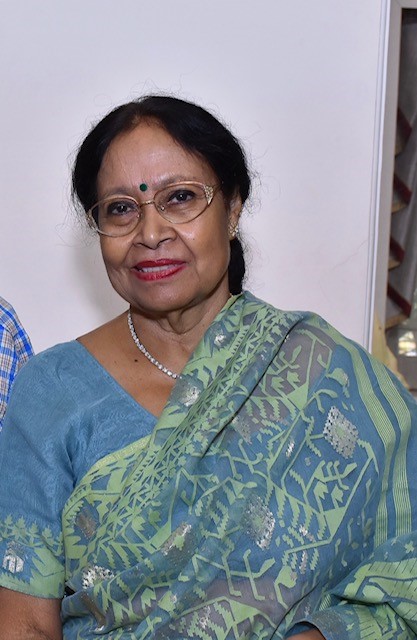
In conversation with Fakrul Alam, an eminent translator, critic and academic from Bangladesh who has lived through the inception of Bangladesh from East Bengal, translated not just the three greats of Bengal (Tagore, Nazrul, Jibanananda) but also multiple political leaders. Click here to read.
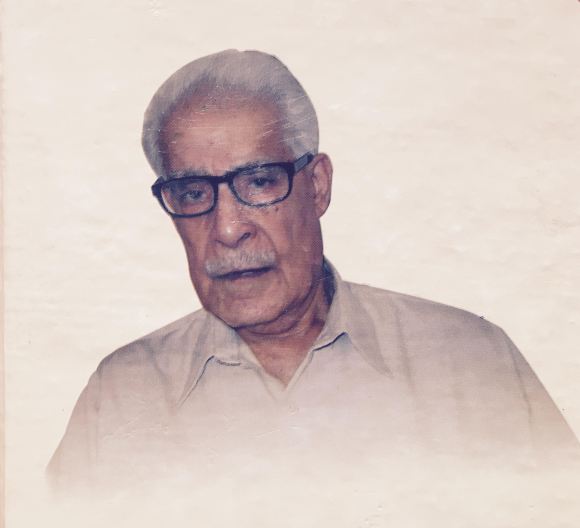
In conversation with Arindam Roy, the Founder and Editor-in-cheif of Different Truths, an online portal for social journalism with forty years of experience in media and major Indian newspapers. Click here to read
Akbar Barakzai’s poem, The Law of Nature, translated by Fazal Baloch. Click here to read.
Kazi Nazrul Islam’s poem, Shammobadi(The Equaliser) translated by Shahriyer Hossain Shetu. Click here to read.
Tagore’sAmar Shonar Horin Chai(I want the Golden Deer) translated by Mitali Chakravarty, edited and interpreted in pastel by Sohana Manzoor. Click here to read.
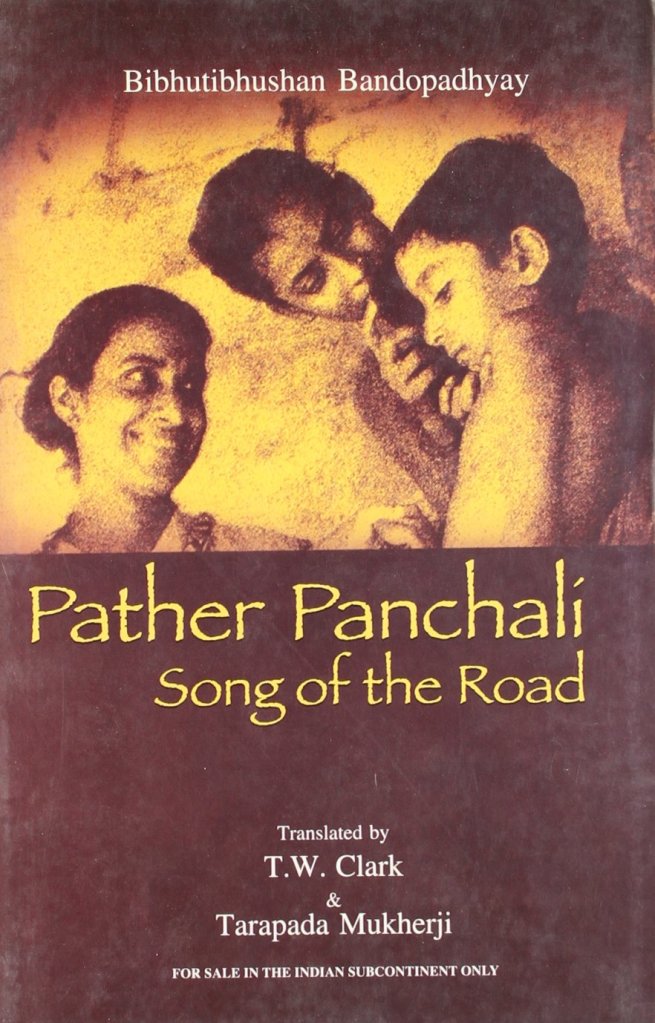
To mark the birth centenary of Satyajit Ray, Ratnottama Sengupta translates fromNabendu Ghosh’s autobiography experience of Pather Panchali ( Song of the Road) — between covers and on screen. Click here to read.
Wendy Jones Nakanishi, an academic who started her life in a small town called Rolling Prairie in midwestern US, talks of her journey as a globe trotter — through Europe and Asia — and her response to Covid while living in UK. Click here to read.
‘Did life change or did I change from the events of the last year,’ ponders New Zealander Keith Lyons who was in the southern state of Kerala when the first cases of Covid-19 were detected in India last January. Click here to read.
An excerpt from Enter Stage Right by Feisal Alkazi with a visual of young Alkazi dancing in one of the earliest discos of New Delhi. Click here to read.
As we stand on the threshold of a new normal that will eternally rewrite the history of social interactions, of movements across the globe, of new world orders that will have to be more inclusive and more transparent to world view, we will, perhaps, feel the need to redefine business laws so that even countries with lesser wealth are able to access vaccinations and peace. We are now looking up to leaderships which seem to be in crises themselves. Sitting securely on a tiny island that is well governed, an island where affluence and well-being set it adrift from the turmoils of countries around it, I wonder thirty years from now, what will mankind be like… Will we be forever marred by the current events of the world? Globalisation has ensured that none of us can be secure on any secret island. There can be no land of lotus eaters hidden from the rest of mankind and accessed by only a few anymore. Even if one region is affected by the virus in any corner of the world, can the rest of the world be pandemic free? Perhaps, a question that those who peddle in vaccines and human well-being can address.
These issues have not only been highlighted by the news media but have also found echoes in some of our content this time. Keith Lyons’s essay talks of his last stay in India, when a tourist carried the the pandemic unwittingly into Kerala in February 2020 and subsequent repercussions. More stories and poems that dwell on the spread of the virus this year cry out for compassion. One hopes young poet Ruchi Acharya’s verses are born true.
One day the roses of hope will grow
Meeting the horizon,
Roses that, even plucked, will not die
But will bloom and bloom
Every single day that passes by.
We have young writers on the virulence of the virus and mature pens like that of globe-trotting academic Wendy Jones Nakanishi, who maps the pandemic from UK. Perhaps, we will find a new direction eventually.
There have been calls for uniting above divides as a single unit called mankind earlier too, from greats like Tagore and Nazrul. This time we carry translations of both — Nazrul’s translated poem calls for uniting against artificial divides drawn by man-made constructs and Tagore’s translation talks of redefining through self-reflection. An essay on Tagore by academic Parineet Jaggi talks of the impact of the teachings of Guru Nanak, the founder of Sikhism, on Tagore.
We have essays on writers and icons from around the globe. A photo-essay on the bald eagle, heralding the American Independence Day on the 4th of July, gives a humorous anecdote on how the eagle was chosen above the turkey. We have more variety by Candice Louisa Daquin, an immigrant in US, who shows how important human movement across man-made borders is to the development of a country. Michael Burch has given us beautiful poetry reflecting the history of America and American dreams, one of them with the voice of the legendary Mohammed Ali. These verses add substance to the concerns raised by Daquin. Jared Carter brings to us the colours of life with his poetry.
We have humour in verses from Rhys Hughes and even from a young poet, Sutputra Radheye. Limericks from Michael Burch and Penny Wilkes photo-poetry on ‘Changing Seasons’ puts us in a more cheerful mood. More poetry from multiple writers across the world, including Nepal, Macedonia and Korea, have found their way into our journal.
Hughes has also given us a comprehensive and interesting essay on a twentieth century poet called Ivor Cutler, who said much as he sang his poetry and was encouraged by Paul McCartney of the Beatles. The brilliant poetry of Akbar Barakzai continues translated on our pages by Fazal Baloch and one must give many thanks to the translator for his indefatigable energy and for bringing us wonderful fare from Balochistan. An excerpt translated by eminent journalist Ratnottama Sengupta from Nabendu Ghosh’s autobiography ends with Satyajit Ray’s starting his famed career with Apu’s triology (based on Pather Panchali, a novel by Bibhuti Bhushan Bandopadhyay). These three films have become iconic in cinema history.
We were fortunate to have Professor Fakrul Alam agree to an interview. An eminent translator, critic and academic who has lived through the inception of Bangladesh from East Bengal, Alam has translated not just the three greats of Bengal (Tagore, Nazrul, Jibanananda) but also multiple political leaders like Mujibur Rahman. In this exclusive, he has taken us through the annals of history, reflecting on less-known perspectives of the Partition. Also, in conversation with Borderless, is Arindam Roy, a journalist with forty years’ experience and the founder of Different Truths who started his writing career, much in the tradition of Cyrano de Bergerac on a humorous note.
This time our backpacking granny, Sybil Pretious, gives us a glimpse of her wisdom, wit and compassion while visiting Philippines and talks of an ancient death ritual, volcanoes and strange mud baths. Devraj Singh Kalsi explores young romance in his tongue-in-cheek fashion. We also have more semi-humorous musings from young writers across borders. While Sunil Sharma has explored facets of the impact of terrorism, the other stories are told in a lighter vein.
Our book excerpt from Feisal Alkazi’s Enter Stage Right has a picture of the young artiste in a discotheque dancing in abandon — check it out. It made me smile. Rakhi Dalal has reviewed Jnanpith Award winner Shrilal Shukla’s Fragments of Happiness translated by Niyati Bafna. The book review by Meenakshi Malhotra of Neelima Dalmia Adhar’sThe Secret Diary of Kasturba brings out an interesting facet on Gandhi and women in the Independence movement. It makes one notice the contrasts in the perspectives of Gandhi and Tagore, who created women like he saw around him in fiction. Kasturba’s life also contrasts with the independence found in the life of the avant-garde artist, Amrita Sher-Gil, who lived around the same time. In an essay, Bhaskar Parichha has shown how Sher-Gil lived out her dreams, blending the best of the East and West, while Malhotra writes, that though “Gandhi called women to join the national movement … he was not seeking to emancipate, but more to call forth their capacity for self-abnegation and self-sacrifice.”
Parichha has also introduced us to the need for changes in the banking sector in India while reviewing Transformational Leadership in Banking edited by Anil K. Khandelwal. Perhaps these will be part of the changes that will ultimately lead to a revision of old systems and the start of new ones. Changes, though not always welcomed or convenient, hopefully will lead to progress that can mould our future into a happier one. Restless stirrings transformed mankind from cave dwellers to an intelligent race that can assimilate nature and technology to survive and dream of a future, living among stars.
As Borderless reaches out to unite mankind transcending artificial constructs, its attempts can bear fruit only with support from each and every one of you. I would like to thank all our editorial team for their wonderful support, contributors for being the backbone of our content, and all our readers for continuing to patronise us.
Do take a look at our current issue for the writers who remain unmentioned here but create phenomenal bridges towards a borderless world.
Pather Panchali (Song of the Road) by Bibhuti Bhushan Bandopadhyay was a classic immortalised further by Satyajit Ray’s films, also known know as the Apu Triology. Here is a translation from Nabendu Ghosh’s autobiography which introduces how the film came to be. This portion has been excerpted from Eka Naukar Jatri (Journey of a Lonesome Boat) and translated by Ratnottama Sengupta as a celebration of the Satyajit Ray Centenary.
Nabendu Ghosh’s Autobiography
The translated Song of the Road showcasing a scene from Satyajit Ray’s film
Pather Panchali : Unprecedented
The year, in all probability, was 1938.(This was the year of the Prabasi Bengali Sahitya Sammelan in Guwahati. Nabendu met Bibhuti Bhushan later, probably in 1942 or 1943, when the Bengal Famine was on.) Nabendu Ghosh talks of his meeting with Bibhuti Bhushan, reading whose novel, he was transported to Nischindipur, where the narrative was set. When he met Bibhuti Bhushan, he felt he had met Apu. When he saw Song of the Road, he could only chant, ‘Apurbo!’
The Prabasi Banga Sahitya Sammelan ( Bengla festival of expatriate writers) was being held in Guwahati. Delegates from all over the country were to meet and discuss Bengali authors, novelists and poets, enjoy cultural evenings, and to tour the city in between the sessions. From Patna we – five of us – set out with printed copies of the annual number of our magazine, Prabhati. The chairman that year was Anurupa Devi (1882-1958), one of the most reputed women novelist in the British colonial era. This eminent writer was the younger sister of Surupa Devi who also wrote under the pseudonym of Indira Devi. Anurupa Devi’s Poshya Putra (Adopted Son), when staged as a play, had become a super hit. I had read two of her major novels, Mahanisha (1919) and Mantra Shakti (1915), which were made into films in 1954 with a star-studded cast. Finally I was face to face with the formidable personality. To me, to this day Anurupa Devi tops the list of women writers.
The other name that made a deep impression was Bibhuti Bhushan Bandopadhyay. Everyone was talking about his Pather Panchali – apparently it was “mesmerizing.” At the end of the session, as soon as I reached Patna, I visited the city’s biggest bookseller, Burman Company. The owner Bidyut Burman hailed from Madhya Pradesh but spoke flawless Bengali. The minute I mentioned Pather Panchali, he brought out two copies. I bought one for myself.
I finished reading it in three days. Every night I was supposed to switch off at 11 pm but, on the pretext of writing an important tutorial for my college, I stayed up all night to finish it. Three days later I shook my head and shouted at the top of my voice, “Apurbo!” (That is the name of the protagonist, and it means ‘unprecedented.’)
Maa heard me shout and came running, “What is the matter? Why did you scream?”
“For the heck of it, Maa,” I assured her, “in sheer delight.”
“Delighted? By what?” – Maa asked me.
“This book Maa,” I pointed to the copy of Pather Panchali.
“Put it on my table,” Maa said. “Let me read it.”
Morning till evening Maa had so much work, it took her two weeks to read the book. When she finished reading she returned it to me with these words, “What a lovely reading re! Soaked in sadness, yet it enriches you from within. In fact, it loyally reflects reality – life is such! Reading this book purifies the soul.”
The way Maa put it, my admiration for the greatness of the work went up manifold. Truly, Pather Panchali is a vivid chronicle of the journey of life. Simple in its language, unadorned but poetic in its descriptions. I learnt to look at Nature anew. I got acquainted with many a tree that I had only heard about. I discovered many that I was not even aware of. The names of many creepers brought me the story of a world so far unseen. Now I was in communion with Benibabur bagan, the widespread garden that surrounded the rented house we lived in.
Bankim Chandra was my first guru in literature but honestly speaking, I could not identify with many of his characters. Sarat Chandra evoked a world much closer to the one we inhabit. I could understand the motivations of his characters who were of my age. But Pather Panchali revealed one hundred percent the inner world of my childhood. Particularly in my case. I was raised in the happy environs of our house and yet, even in my young life I had witnessed extreme unhappiness too. In every station of life innocent children with their sinless minds are drawn to happiness. The way they raid the natural world to seek out the bare minimum quota of joy from nature, what they dream of — all this is stuff this novel is made of. When I finished reading it, I felt I AM Apu — Apurbo Kishore, the protagonist of Pather Panchali: timid, faultless, ever keen to drink of the honey of life – much like a butterfly. Apu who is not ‘smart’ or clever, Apu whose constant hunger is for flowers and fruits and dreams…
After reading Pather Panchali my attachment with Benibabur bagan grew manifold. I felt that it was the abode of Nischindipur (where the novel unfolds). In the hazy light of morning, in the stillness of sun scorched noon, in the lazy twilight of sundown and the stifled darkness when night has swallowed day, I would be transported to Nischindipur.
Many many days have passed since then. I was a youth who was knocking on the doors of manhood, thereon I have advanced towards super annuation — but that little boy Apu still resides within me. The Apu of Pather Panchali who grew up into the teenaged Aparajito, Unvanquished, and then the young man who marries and sets up Apur Sansar — Apu’s household — and travels into fatherhood, stands frozen in time there. But he sets out on a new journey into childhood through his son Kaajal. This child breathes life anew into Nischindipur.
To me, Nischindipur equates the land of No-Worry. I am reminded of W B Yates’s ‘The Lake Isle of Innisfree’ :
And I shall have some peace there, for
Peace comes dropping slow
Dropping from the veils of the morning
To where the cricket sings…
***
Without prior notice I got an opportunity to go to Calcutta. The occasion was the wedding of my paternal aunt’s son Radha Gobinda Ghosh, who had just completed his Master in Arts studies with distinction and secured a government job.
Let me confess here that the wedding was but a pretext to go to Calcutta. My real intention was to meet the author of Pather Panchali — Bibhuti Bhushan Bandopadhyay.
Mani Bhushan Da, the editor of our magazine, Prabhati, had provided me with his address on Mirzapur Street. He lived in Paradise Lodge, next door to the famous sweetmeat shop Putiram. It was a seven minute walk from Sagar Dutta Lane where my cousin Radha Gobinda Da lived.
The day after I reached Calcutta I told my aunt that I was going for a stroll up to College Square. “Don’t stray too far,” she cautioned me. “No, I won’t,” I assured her and set out.
I walked down Kalutola Street and across College Street, the hub of books and publishing industry in Bengal. There, on my right was Putiram, beckoning me with its array of sweets. I ignored them all and turned into the three-storeyed structure next door. The dominating signboard at the gate read ‘Paradise Lodge’.
I entered and asked for Bibhuti Bhushan Bandopadhyay. An elderly person directed me, “Climb non-stop upto the terrace and walk into the room there.”
It was like a chilekotha – a garret. It had the touch of middle class living all over it: a table with chair, a cot, the floor covered with a sheetalpatiwoven out of mat, an almirah full of books.
Clad in a cotton banyan a gentleman seated on the chair was reading a book. The minute I showed up at the door he looked up with a question in his eyes, “Yes?”
“I would like to meet Bibhuti Bhushan, Sir.”
“I am that very person. Where are you from?”
“Sir I am from Patna. I am carrying a letter from Manindra Chandra Samaddar of Prabhati Sangha.” I touched his feet before handing him the letter.
“May you prosper,” he blessed me with a raised palm. Then, before opening the letter he said, “Come, sit — you have come all the way from Patna!”
He smiled after reading the letter. “So you are in Mani’s team. Well well, I know Mani — a splendid person with matchless character and breathing idealism. I have gone through the last annual number of Prabhati. Very good effort. Mani mentions that you also write.”
He called out a name.
“Yes sir, here I c-o-m-e –” the name replied. He was one of the attendants at Paradise Lodge. “Get some sweets, and tea for my guest — he has come from Patna,” Bibhuti Bhushan looked at me. Then he started asking me for details about me and my writing. It was his way of getting acquainted with Nabendu.
When he paused, I ventured to speak, “I am charmed by your Pather Panchali.”
He smiled at me. “I am happy to hear that.”
Out of the blue I popped my query, “Tell me, are you Apu?”
He smiled as he nodded, ” Sure I am there in Apu. Actually every writer blends himself in with what he has seen and heard to create his characters. They see the people around them, their joys and sorrows, they laugh and cry with them, they get involved with the problems and crises in their lives and then they adapt them to their novels and stories. You are also penning stories — be a bit more aware, observe more carefully, objectively, and you will find that you are also doing the same.”
Until that moment I was not aware that such a process was at work behind what I wrote. After I heard Bibhuti Bhushan I realised the truth of his words.
The tea and sweets didn’t take too long to appear in the chilekotha room. I decided that they must be from Putiram.
As I made to take leave, he said, “Read a lot. Read the established writers. As you keep writing you will yourself realise where to start and where to stop, how much to tell and how much to leave out.”
When I left I was convinced that I was leaving Apu of Nischindipur. By this time he had become an elderly relative of mine — a well-wisher.
***
Years later. Could be 1952.
Puffing on his Chesterfield in between the sips from his teacup, Bimalda said, “Now that Maa is complete, What next? We need new work. Bombay Talkies is in a precarious state now – in case Maa is not a hit, we will be like bad penny to them. So, before Maa is released in the theatres, we must get a new contract. And for that to happen we need a stock of stories. Hiten Chaudhuri is talking to two possible producers, two others have got in touch with me. But without a story none of these will work out.”
So we needed stories. But what kind of stories? The kind that wins over viewers when it is reflected on the silver screen in a darkened theatre. One that compels them to repeat, “And then? What now? What will happen?” But what will happen to whom? To the problems and crises in the lives of the characters. If the problems are pregnant with drama, that will blend with the skill of unfolding the narrative and keep pumping the adrenaline of the viewer and raise his blood pressure higher and higher and they will wonder, “And then? What now? What will happen?” In unison with the persona, seeking a resolution of their conflicts, they will wordlessly demand, “And then? What now? What will happen to them?”
In our country most people gravitate to stories that revolve around the crisis called ‘love’, perhaps because desire to love is universal and to be loved is eternal. So love is a safe bet, especially in cinema. We have just completed Maa for Bombay Talkies, but that does not revolve around love between a man and a woman — it is structured around a mother’s love, for her husband and her sons. It is a family drama. We will know the power of this love only when the film releases.
So what kind of stories shall we narrate to the producers? Which stories will assure them that their investment will be secure and prompt them to say, “Yes sir! We will film this very story!” Because, no matter which story you decide on, to make it into a film means investing lakhs of lakhs — and every producer prays that he should recover his investment if not make a profit.
Over the next five-six days, we discussed and narrowed down the list to a few ideas. We listed some stories and novels from Bengali literature. Bas – done — we were equipped for one more round of chess with success.
The problem with cinema as a mode of livelihood lies in this: the success or failure of each film decides the film you will get to do or not do next. The director’s team is engaged to constantly come up with ideas, concepts, narration that will appeal, first, to a producer and then to a financier.
That is the first stage. And, in the final stage, the viewer will give his verdict, “Waah!” “Lovely!” Only then will the moneybags be willing to hear your next story. There is only one problem: What if the aesthetics of the moneybag is not evolved? Or, sometimes, for the sake of livelihood you bow to his ego and settle for a story idea he supplies, then all your effort might go waste like a falling kite. In short, the art form we have embraced as our mode of eking a living is a dicey form — we are constantly walking the razor’s edge.
***
Suddenly I remembered the novel that had mesmerized me. I went up to Bimalda and said, “I want to remind you of this classic novel which you must have read…”
“Which novel?” Bimalda was curious.
“It can translate into a spellbinding movie. I am talking about Bibhuti Bhushan’s Pather Panchali.”
For a few seconds Bimalda gazed fixedly at me. Then, slowly, pondering over every word he said, “Yes, it is an amazing novel. But in this Hindi film industry nobody will be able to appreciate its innate rasa. No Nabendu Babu, there will be no taker for it in this market.”
End of story. But I could not forget Pather Panchali. That very evening I met Phani Da (Majumdar) in his office and, in the course of our conversation, I mentioned it to him. I did not stop there: for almost an hour I narrated the highlights of the novel to him.
Phani Da also responded, “It will be extremely difficult to sell this in Bombay. But,” he went on, “there is no doubt that it has the possibility to become a movie of an entirely different flavour. Let’s do this: Let’s buy the rights to the story. You please write the letter.”
Write to whom? In 1950, at the age of 56, Bibhuti Bhushan had left for his heavenly abode. I did not know where his son lived. So, the next day I wrote to the publisher, the noted writer Gajendra Kumar Mitra. His company, Mitra & Ghosh had published Pather Panchali and I was lucky to claim his affection. So he would certainly guide me in the matter.
A week or so later I heard from Gajen Da. The movie rights of the novel have been purchased by the art director of the established advertising firm, D J Keemer, Mr Satyajit Ray. Initially the name was not significant to me but then, within brackets Gajen Da had written “He is the son of Sukumar Ray, the author of HaJaBaRaLa (Habber Jabber Law) and Pagla Dashu (Mad Dashu).” The name acquired a certain significance then.
At the same time I felt a sense of loss. For three years after that the sense of loss would surface like a bubble, at unguarded moments.
One day all of a sudden I learnt that Pather Panchali will be screened for a private gathering. Along with Bimalda we made a beeline for the show. By then Bimalda had become an international celebrity thanks to Do Bigha Zamin (Two Acres of Land).
During the interval, lighting up his Chesterfield, Bimalda said, “You can do justice to a classic of Bengali literature only in Bengali. West Bengal government has sponsored the making of this film — that is a rare happening in the history of cinema worldwide. Director Satyajit Ray deserves congratulations.”
***
Indeed everything about Pather Panchali was unprecedented. The casting of characters, the creation of environment, the re-creation of Nischindipur where the actions unfold, the cinematography, and — finally — the background score: I repeat, every single aspect of the film was unprecedented. Apurbo!
Since that evening the sense of loss has never surfaced to torment me. After watching the film I was convinced that the Good Lord had created Bibhuti Bhushan Bandopadhyay to write Pather Panchali, and that very Lord had created Satyajit Ray to transcreate the novel on screen.
Nabendu Ghosh and his daughter, Ratnottama Sengupta
Nabendu Ghosh (1917-2007) was a dancer, novelist, short-story writer, film director, actor and screenwriter. His oeuvre of work includes thirty novels and fifteen collections of short stories. As part of a team of iconic film directors and actors, he was instrumental in shaping an entire age of Indian cinema. He was the recipient of numerous literary and film awards, including the Bankim Puraskar, the Bibhuti Bhushan Sahitya Arghya, the Filmfare Best Screenplay Award and the National Film Award for Best First Film of a Director.
.
Ratnottama Sengupta, formerly Arts Editor of The Times of India, teaches mass communication and film appreciation, curates film festivals and art exhibitions, and translates and write books. She has been a member of CBFC, served on the National Film Awards jury and has herself won a National Award.
.
PLEASE NOTE: ARTICLES CAN ONLY BE REPRODUCED IN OTHER SITES WITH DUE ACKNOWLEDGEMENT TO BORDERLESS JOURNAL
Greetings fromBorderless Journalfor all Asian New Years!Click here to read our message along with the video and a translation of a Tagore song written to greet the new year, with lyrics that not only inspire but ask the fledgling to heal mankind from deadly diseases.
Rabindranath Tagore’s Ekti Khudro Puraton Golpo (One Small Ancient Tale) from his collection Golpo Guchcho ( literally, a bunch of stories) has been translated by Nishat Atiya. Click here to read.
Sohana Manzoor shares the Bengali New Year celebrations in Bangladesh with colourful photographs and interesting history and traditions that mingle beyond the borders. Click here to read.
Ratnottama Sengupta, a well-known senior journalist and film critic lives through her past to make an interesting discovery at the end of recapping about the silk route. Click here to read and find out more.
Mike Smith drifts into nostalgia about mid-twentieth century while exploring a box of old postcards. What are the stories they tell? Click here to read.
Over 150 Authors and Artists from five continents have written on mental illness in an anthology called Through the Looking Glass. Candice Louisa Daquin, a psychotherapist and writer and editor, tells us why this is important for healing. Click here to read.
Meenakshi Malhotra explores the role of masculinity in Nationalism prescribed by Tagore, his niece Sarala Debi, Gandhi and Colonials. Click here to read.
Sohana Manzoor explores the social relevance of a dance drama by Tagore, Natir puja. We carry this to commemorate Tagore’s birth anniversary. Click here to read
Bhaskar Parichha reviews Reconciling Differencesby Rudolf C Heredia, a book that explores hate and violence. Click here to read.
Nivedita Sen reviews Nomad’s Landby Paro Anand, a fiction set among migrant children of a culture borne of displaced Rohingyas, Syrian refugees, Tibetans and more. Click here to read
These contemplations have come out of Ruhaniyat-e-Aam, an online festival of migrating music. Hosted by Indus Band, its focal theme was ‘Reconstructing the Silk Route’. A webinar was the finale of the concept that was put into practice long before ‘COVID’ entered the Oxford dictionary – in 2018 when Somali Panda, founding head of the Kolkata-based Band came up with the novel concept of connecting online with performers in Greece. They played their music, we joined them with my reading, Tamal Goswami’s painting, and Somali’s songs.
Subsequently, during the pandemic, “when the world was compelled to stay indoors, the importance of connecting with the rest of humanity forcefully struck us,” says Somali. She then went on to host this series of interactions with musicians, artists, filmmakers and academicians from Greece, Czech Republic, Egypt, Iran, Kazakhstan and India — all participating in a celebration of the Human Migration that established bonding amongst nations, cultures, civilizations, and created a global community long before the term had come into existence.
The prime purpose of reconstructing the Silk Route — philosophically, ideologically, conceptually – was to forge a measure of friendship. Friends they became – Labros Kantos, singer from Greece; Saimir Bajo from the Czech Republic; Mesbah Kamal, academician from Dhaka; Sharofat Ara Bova, filmmaker from Tajikistan; Arqavaneh Folklore Ensemble from Isfahan, Iran; Mohamed Abu Zid from Cairo, Egypt; Sarower Reza Jimi, playwright from Lisbon, Portugal… Because music connects people most readily since it overrides the barrier of language, “and it gives inner peace and solace,” Somali adds.
By the time it ended, Ruhaniyat-e-Aam had traced the cultural exchange from the time of Alexander and helped to understand how Hellenic Culture became Hellenistic through synthesis. Most of us know that after Alexander conquered the Persians, he established the city of Alexandria (339 BC). A little more detail: this was in the Fergana Valley of Neb – around modern-day Tajikistan. Leaving the wounded warriors behind Alexander moved on, and in time the Macedonians intermarried with the indigenous populace creating the Greco Bactrian culture that flourished in the Seleucid Empire after his death.
*
This festival of Migrant Music set me on a virtual journey down the Silk Road, the 6,400 km caravan tract that was actually an ancient network of trade routes. Formally established during the Han Dynasty of China, it linked in commerce the regions from China to Mesopotamia – should I say modern day Iran? – through India, Asia Minor, Egypt, the African continent, Greece, Rome and Britain too — between 130 BC and 1453 AD. Originating in Xian – now famed for its Terracotta Army – it followed the Great Wall of China to its northwest, bypassed the Takla Makan Desert, climbed the Pamirs, crossed Afghanistan, went on to the Levant region from where merchandise was shipped across the Mediterranean Sea.
What many of us don’t realize is that the Silk Route was not one single road. There were some that were longer and safer; some were shorter and more difficult. Some had been journeyed on much longer and thereby had witnessed more exchange than some of the shorter, more precarious roads and pockets like, say, Bhutan. And few travelled the entire length of the road: goods were handled in a staggered progression by middlemen.
The greatest value of the road lies in the exchange of culture it effected. Art, religion, technology, language, science, architecture — indeed, every other element of civilization was exchanged on these roads, along with the commercial goods that merchants traded from country to country
With the loss of Roman superiority and rise of Arabian power, the Silk Road became more and more unsafe. However, during the rule of the Mongols/ Mughals, Venetian explorer Marco Polo (1254-1324) travelled right up to China along the road that is now supposed to have been the main artery along which travelled the bubonic plague bacteria responsible for the pandemic of Black Death that decimated the Byzantine capital of Constantinople.
The network was used regularly till about 1453 when the Ottoman Empire boycotted trade with the west and closed the routes. By this time Europeans had become used to goods from the east, and so merchants set out to find new trade routes – over the oceans. That, as we know, led to the discovery of the New World and of new civilizations and forging of new cultures. In sum, we may say that laid the groundwork for the modern world.
*
What many of us don’t know: Part of the Silk Road still exists as a paved highway connecting Pakistan and the Uygur, an autonomous region of Xinjiang in China. It had given UN the impetus to plan a trans-Asian highway, and a railway counterpart of the road too had been proposed. The road had inspired cellist Yo-Yo Ma to found the Silk Road Project in 1999 in order to explore cultural traditions along its route and beyond, as a means for connecting arts worldwide, across cultures.
But why look back on the Road that has little to do with how it existed 2000 years ago? Forget the zeros – it is probably not like it was even two and half years ago! So what is its importance?
To my mind, the importance lies in the layers of history lining it. Glancing backward we realize that we stand on the shoulder of giants. Every visit into the past unearths stories of human civilization. And whenever I have done that – as I did in Kazakhstan as part of an ICCR effort in 2009 – I have got answers to questions like:
A) Where was the Road going and why?
B) Why was it such a life transforming journey?
C) The road traversed through remote parts of the world, especially a huge part was ice covered desert. Then, why did the horse become such an important part of the journey on this road?
D) Horse was only one of the animals that were traded on the route. So, who named it Silk Road and why?
Arabian Nights
It was so named by Ferdinand von Richthofen in 1877 CE because silk was a treasured part of the trade – indeed it was the primary attraction that started off the trade but few travellers walked the entire length of the road. They came to different posts on the route, exchanged goods, food, plants, and ideas along with spices and tea. Stories of The Arabian Nights give us an idea about the exchanges that were taking place in city like Baghdad. And we realise that the flying carpet was not a mere figment of imagination, it became a metaphor for journeying from one world to another.
*
Enough of history? Well then, let’s take note of the cultural exchanges closer to our life and times. Since Ruhaniyat-e-Aam was about Migrating Music, what we naturally traced was the commonality of instruments like sarod, santoor and violin… How come the last named string instrument most associated with Western Classical music gained such acceptance and became inseparable part of music in Iran and in South India’s Carnatic music? Was rabab, the folk accompaniment most widely associated with Afghanistan, the precursor of India’s sarod, internationalized by Ustads such as Ali Akbar Khan and Amjad Ali Khan? Indeed, it was from them that I learnt there have been several versions of the rustic musical instrument that was honed, refined, perfected and sophisticated until it became the sonorous voice of Indian classical music.
Again, our santoor has a close affinity with instruments in China, Persia, Greece, and so many other places. I remember my visit to China for the Festival of India under the aegis of the Ministry of Human Resources, then headed by Arjun Singh. As part of that government-to-government initiative, I visited some music schools and was amazed to see how much our santoor — once called shatatantri or hundred stringed veena — had in common with the Chinese hammered dulcimer, yangqin. There have been many versions of it – in Iran, Iraq, Greece, Armenia. I noticed that the music played on the Chinese instruments were a bit more staccato; in India I learnt from maestros closely identified with santoor — primarily Shiv Kumar Sharma and Bhajan Sopori – that strings have been added to get the murchhana or greater resonance so that the notes linger on…
If we go on to visual arts, the first name that comes to my mind is of Nicholas Roerich (1874-1947). The Russian lawyer-painter-archaeologist-philosopher born in St Petersberg had developed an abiding interest in Eastern religions, in Theosophy and Buddhism as much as Ramakrishna and Vivekananda, Tagore, Vedanta and Bhagavad Gita. His spiritual leanings took him across the Himalayas and make his home in the Himachal town of Naggar where he breathed his last.
Of greater consequence to Ruhaniyat-e-Aam was the fact that in mid-1920s the Roerichs together with their son and six friends went on a five-year-long Asian Expedition that started – in Roerich’s words – “from Sikkim and went through Punjab, Kashmir, Ladah, the Karakoram Mountains, Khotan, Kashgar, Qarashar, Urumchi, Irtysh, the Altai Mountains, Oyrot regions of Mongolia, the Central Gobi, Kansu, Tsaidam and Tibet…” A decade later he was to return to Mongolia and Manchuria to collect seeds of plants that prevent soil erosion.
In plainer words, because of these travels Roerich intimately knew not only the Himalayan range but a lot more of the Silk Road. This armed him with a scintillating palette of colours that painted mesmerizing mountains that are bold yet lyrical, rather mystical, even spiritual. I was absorbed by the tranquility that imbues the hypnotic series of 36 immersive images of the Himalayas preserved in the Roerich Gallery at the Chitrakala Parishath in Bangalore.
Roerich’s journeys along the Road had also prompted him to talk of preventing the destruction of art and architecture and work toward preserving the cultural wealth of the world. This had led to his nomination for the Nobel Peace Prize in 1929.
Deb Mukharji, a retired member of India’s Foreign Services, has also travelled through its hardy folds – and extensively photographed the Abode of Snow. The keen photographer who has authored Kailash and Mansarovar and exhibited Tall Tales of the Himalayas — among many others — is concerned about the ecosystem of the rugged and culturally rich Himalayas. “It is threatened by the highways that are being built through the mountains, either to promote religious tourism or for other purposes, he says after treks that took him from Garhwal to Nepal and Kailash to Manas.”
Cinematographer-director Goutam Ghose has journeyed through the Silk Route to make the ten-part documentary, Beyond the Himalayas. His project had started in 1994 and initially he had travelled with only 5-6 members who drove in a jeep and through the countries. “Our purpose was to look back from here and now in order to connect all the yesterdays that have transformed life and made us what we are today,” the celebrated filmmaker had said to me then.
So many stories of the exchanges enrich our literature too. Saradindu Bandopadhyay, author of many Bengali classics, had penned a story titled Maru O Sangha – The Monastery in the Desert. This was turned into a film, Trishagni/ Sandstorm (1989) by Nabendu Ghosh, another celebrated Bengali writer who became a legend as screenwriter of Hindi films. His film revolved around a monastery in Central Asia, somewhere on the Silk Route. It showed traders who came to the monastery with a ration of food, clothes and other essentials. Those were days when people could not fly in in a helicopter and drop supplies… it took months for these traders travelling in groups to reach from one stupa to another. There was a focus on the lifestyle of the times. Buddhism was the first organized religion, and monastery being the centre of Buddhism was thus the centre of such exchanges 2000 and more years ago. These monasteries subsequently became the prototype for Islamic Madrasas and before that, of Christian universities: they were built along the lines of the monasteries which dotted Central Asia. And it is believed that the Stupa also gave the concept of the gumbad, the round top of so many masjids and forts too.
Another important exchange that was happening came to light when Trishagni was screened in many international film festivals outside India – in Tehran, Cairo, Thailand… One of the questions that cropped up was this: “You are talking about Buddhism but why are the men (and women) dressed like they dress in Islamic countries? Islam wasn’t there then!” It had to be pointed out that philosophy – and religion is a part of that – and ideas travel but Geography moulds what we wear. Because of the weather, when there was no air conditioner or even fans around, people in some parts of Africa wore no garments and in some parts of the Asian desert men wore long robes to cover the body from head to toe from the hot flying sand particles. They started covering their heads and ears and part of the face, and that wisdom became a convention and then a tradition.
Thus, geographical reality moulded why people in certain parts of the world dress in certain ways. And with the journey of religion, these dress codes also journeyed. The Romans did not wear silk because they admired the style in which the Chinese wore it but because of the inherent quality of silk. Cotton was also much in demand on this route since it was hot in the desert. So was indigo – native to India, primarily, and sought in Mediterranean countries as pigment for dyeing, medicinal and cosmetic use.
These exchanges which are now history happened largely because of geography. Why? I got the answer in the course of a seminar where artistes and academics had come from Azerbaijan and Uzbekistan, Tajikistan and Turkey. I started realizing that people were travelling from China down to Northern tip of Africa or the Mediterranean country, certain lifestyle changes were taking place. These landlocked pockets that had no access to the sea, had little green and only animals to live off. Naturally, many turned their attention to what was going on the Silk Road. Two very interesting things happened:
1) Many became bandits who would rob these caravans.
2) Many did the opposite: they offered themselves as guards to protect the goods in the caravans from bandits.
So, the same problem generated two different approaches to life, two different lifestyles. Those who became guards would travel with the caravans and they became warriors. They became warriors because they were living in very tough terrains, and they became skilled warriors because they were fighting off bandits to protect the caravans. Before long these men turned aggressive. Wars between tribes became endemic – and many of the lands strived to find stability and prosperity for their people by going into the lands of other people. (Once again, geography and history came together to define lifestyle and culture.)
We find versions of this later when people set out from Europe and landed up in America, and a new culture and civilizational evolved. Another such change took place when people were forced to travel from the Queen’s England to Australia. All these migrations and journeys have influenced the arts, ideas, religion, food habit… Why is it that in India’s Northwest – Afghanistan, to be specific — people cook meat and roti in tandoor ovens while in Bengal well-being is synonymous with ‘maachh-bhaat’ – fish curry and rice? Once again the answer lies in the history of geography – that is, geography moulding tradition and shaping history.
*
In 1892 Rabindranath Tagore wrote Kabuliwala, a story that touches the heart of humans everywhere in the world even today. It pivots on a peddler from Kabul who comes to Calcutta each year to sell dry fruits, and befriends a child, Mini. Circumstances force him to go to prison on charges of stabbing a debtor. On his release he goes to meet Mini and finds she is getting married. Rahman realizes that his daughter, now grown up, will also not have any recollection of her father – and he starts on his return journey, towards home.
This story has been filmed in India in Bengali by Tapan Sinha (1957), in Hindi by Hemen Gupta (1961), by Kazi Hayat of Bangladesh (2006), by Anurag Basu for a television channel (2015), by Deb Medhekar in 2018. It has been reimagined in totally different contexts. Bioscopewala, set in 1990s, had Minnie going to Afghanistan where her father has died in a plane crash. In another script French Afghan writer Atiq Rahimi sets the story after the destruction of the Balmiyan Buddhas. This man from Kabul spells another exchange of ideas: he comes because this part of the world believes in reincarnation — and he is seeking his little girl who died during the destruction of the Buddhas!
Taking her cue from this same story, Sharofat Imam Arabova of Tajikistan made a lilting film where an Indian vendor selling things in that land strikes a friendship with a little girl. Desirous of paying a tribute to the author, the FTII-trained director approached Somali Panda to incorporate Tagore’s music in the script. “And when we did that using a santoor, it was so strikingly in sync!” says the music-maker from Kolkata who extensively used Raag Bhairavi. “That is the power of music – and also the bonding of migrant music,” she adds. And even as she spoke, I was reminded of Mrinal Sen’s Neel Akasher Neechey/ Under the Blue Sky (1959) wherein a Chinese hawker, Wang Lu, sold silk on the streets of Calcutta of 1930s, when India was under British rule. His life changed forever when he met Basanti, a housewife who gets arrested for her involvement in politics.
So what’s common between these stories? What connects the diverse players? Human situation where a man has travelled for work and struck friendship, an equation with a child – the most basic, most innocent form of humanity.
*
This is the importance of revisiting the Silk Route and renewing acquaintance with migrant music: that human beings everywhere in the world have been migrating. Individually too we have migrated. My grandfather migrated from East Bengal – Dhaka – to Patna, then a part of Bengal Presidency. Now Dhaka is a different country, and Patna is part of Bihar, a different state from West Bengal. My father ‘migrated’ from Patna to Calcutta to Bombay Presidency which became two states – Maharashtra and Gujarat. I was born in Bombay, which has become Mumbai, lived in Delhi which was earlier a Union Territory and now has become a state. At present, I live in West Bengal. My brother who was born in Patna studied in Pune, graduated in Medicine from Calcutta, lived in UK and worked in Germany, Brunei, Cyprus, Bosnia… So many migrations!
Today technology has opened new highways, new vistas of connecting with the world. And even as we speak (or read, as in this case) we are crossing boundaries almost every minute of our day. Within families to, a child goes out to study in London or New York, makes Singapore or Sidney his workplace, his family perhaps lives in Delhi, and he travels to Johannesburg to Rio, Texas to Tokyo, Moscow to Hong Kong, Sweden to Israel. So many outposts of civilization – just as people on the Silk Road once did, for their trade.
The crux of it? Stories that tell us about human lives and human emotions highlight one simple thing: Humans are the same everywhere. They are all born of their soil – geography. And geography moulds our history. Because we are creatures of these two forces, periodically we need to look back and trace our commonalities in order to transcend the schisms in society.
.
Ratnottama Sengupta, formerly Arts Editor of The Times of India, teaches mass communication and film appreciation, curates film festivals and art exhibitions, and translates and write books. She has been a member of CBFC, served on the National Film Awards jury and has herself won a National Award.
.
PLEASE NOTE: ARTICLES CAN ONLY BE REPRODUCED IN OTHER SITES WITH DUE ACKNOWLEDGEMENT TO BORDERLESS JOURNAL

Nabendu Ghosh, the author for who the elegy was written, and his daughter, Ratnottama Sengupta, who has transcribed these poems.
Nabendu Ghosh : Elegy
In the wee hours of the morning
Nabendu Ghosh knocked on my door.
His dishevelled appearance
Reminds me of the Famine
His Clarion Call* evokes--
An awning sky,
A busy suburb,
A shaded glen…
Fact is, even after Death,
Some people knock on the door.
Some people live on beyond life…
*The Clarion Call (Daak Diye Jaai), the autobiography of Nabendu Ghosh.
(Original in Bengali By Bimal Deb)Journey...
Long days have passed
Since the path of two friends
Branched.
In the crowd of unknown faces
Two eyes seek him,
So does his heart.
At times,
It knocks on the door
Of Memory.
Time spent in togetherness
Signals delight.
The miles between them
Weighs down the mind,
The hidden flow of Time
Ever present, never seen,
Will it once more enjoin
Two parted hands?
(Original in Bengali: Kaushik Ghosh)Vasundhara*
I have known you
Since I crawled out
Of my mother's lap.
As I walked
Under your leafy boughs
I launched on
My journey with shades.
The enchanting weave of colours -
They grew out of you.
My first love took roots
As I cut through the mustard fields
That lifted their lips
To the blue skies.
Not once have you let me down.
And when the deluge came
You it was that steeled me
With the warmth of your womb.
My misty vision, reaching out
Through my thickening lenses
Do not falter
Do not squint.
Age has not withered
Nor has Time staled
Your luminous face.
You rule my canvas
As you always have
Since I stepped out
Of my mother's lap
Into yours
O Mother Earth...
*Vasundhara – Earth in Bengali
(Original in Bengali by Maniklal Chatterjee)
Ratnottama Sengupta, formerly Arts Editor of The Times of India, teaches mass communication and film appreciation, curates film festivals and art exhibitions, translates and write books. She has been a member of CBFC, served on the National Film Awards jury and has herself won a National Award.
.
PLEASE NOTE: ARTICLES CAN ONLY BE REPRODUCED IN OTHER SITES WITH DUE ACKNOWLEDGEMENT TO BORDERLESS JOURNAL
Reflections of Sandhya Sinha (1928-2016), translated by Ratnottama Sengupta
Ali Baba and the Forty Thieves. Courtesy: Wikicommons
Chiching Phank! “Open Sesame!” Two cock-n-bull words. But the spell of these two magical words released the rocky gates of a secret cave hidden by thorny bushes in the folds of a mountain, in front of Alibaba’s dazed eyes…
The hideout was as mysterious as it was cavernous. With a pounding heart the impoverished woodcutter entered the cave — and froze. Diamonds and rubies, gold and silver filled every corner of the cave; silk and velvet and Persian carpets and God knows what else were stored there! He had never set eyes on so much glitter nor had he heard about such riches. This was the secret locker for the goods ill-begotten by the forty dacoits who had just galloped away on horseback.
By this time even the youngest reader of 1001 Arabian Nights would be wonderstruck by the astounding description of diamonds, rubies and gold coins. “Will Alibaba succeed in loading all these riches on the back of his three donkeys he has left hidden in the bushes and safely take off for his home?” the reader would wonder, afraid to even imagine the consequences in case Alibaba failed.
If he was captured alive by those dacoits, they would bury Alibaba alive in that very cave and not even a crow would get to know of it. Such anxious moments! Each moment would weigh down the breath of the reader, until Alibaba emerged out of that zone of enchantment — all goods intact — and reached his shelter at sundown.
The spell binding excitement about ‘What Happens Next?’ in the Arabian Nights was planted in us readers by unknown storytellers — and the unreal harvest of curiosity has continued to cast its magic over centuries and across continents. The identity of the original creator of these stories is lost in the womb of time. What lived on were the characters which the author fleshed with dexterous imagination. It has been only three hundred years since the West got a taste of these adventures and became curious about the romance that is the Orient. Truth is these tales come out of the Arabian Nights but why ‘Nights’? The adventures are happening in broad daylight too. Ask, and the answer will lead you to a chatur nari — a very clever woman — and her hoshiyari — her quick thinking, alert mind.
Scheherazade, painted in the 19th century by Sophie Andersen: Courtesy: Wiki
So, there was this very powerful Persian Badshah who found out that his Begum was carrying on an illicit affair. He not only snuffed out her life, he developed such immense hatred for the gender that every night he would procure a beauty to warm his bed and send her off to be beheaded at the break of daylight.
This went on for a while. The ministers were at their wit’s end: Who knew when their daughters would be sent for? One night, of her own free will, the prime minister’s daughter, the clever Scheherazade stepped forward and entered the Badshah’s bedroom, despite being well aware that the night ends in the certainty of death. The trusted matronly nurse of ample years was entrusted with the job of waking her up in the wee hours of the night. Thus, in the fading darkness, Scheherazade started narrating a bewitching story to the Badshah. Spellbound he listened, until the first ray of the sun interrupted the action at such a critical point in the story that the curiosity to know what happens next compelled the Badshah to postpone the beheading by one night.
By the sheer genius of her sharp wit, that young lady with the sword of death hanging over her head, went on with her storytelling for one thousand and one nights. So what if he was a brutal devil? The pulsating heart of a flesh and blood human entrapped him too: after birthing three adorable babies Scheherazade became his Begum. And her head stayed firmly between her shoulders.
Centuries have passed since thirst-driven caravans on sandy roads immersed themselves in these stories as they sat around shallow wells to gather their breath or to warm themselves around fires under chilly starlit skies. By word of mouth, from one caravan to another, from one town to another, from a port to another land, these literary gems counted centuries before they were stilled in sentences and paragraphs. Some parts of this literature, penned down in Arabic script during the 1st century after Christ, have been unearthed in Cairo as recently as the 20th century. These appear to be attempts to recount and record those captivating tales.
Many interpolations must have happened in the process of their journey from one narrator to another. Doubtless these are ancient treasures of the East that were presented to the world at the onset of the 19th century by French archaeologist Antoine Galland. He translated the stories from the Arabic manuscript unearthed in Aleppo and from the stories recounted to him by a Syrian. Not one or two but in twelve volumes he published his version of the tales and stormed the bastion of literary West between 1704 and 1717. Subsequently, it is believed that his work exerted significant influence on later European literature and attitudes towards the Islamic world.
Since French was widespread then, England and the rest of Europe too could savour the romance embedded in these tales of adventure. But more than another hundred years passed before they were transcreated in English. It was Edward William Lane’s English version, Arabian Nights Entertainment, that amazed English readers globally.
It is logical to ask, from where were such captivating tales strung together? These tales do not belong to any particular tribe, nor are they rooted in any one soil. They have grown out of multifarious dialects and a multitude of emotions. They have been watered by inventiveness and mysticism. Man’s creative soul springs from them like an unchequered waterfall. The essence of India, Persia, Israel and Greece enrich this lexicon of mankind. Hence they unhesitatingly bear the robustness of an archaic tongue and of obscenity too. To ease the pain of a long day’s journey through unrelenting desert, or the rigours of relentless chores, the wayfarers would let loose the fertility of their mind in unimagined colours. Their panache would sketch even impossibly enchanted worlds. Perhaps it did not happen exactly so — but surely it could too! And if by chance or deus ex machina it did? Oh, what thrill that would spell!
Thus the tales crossed the boundaries of nature and politics. Thus they were nourished by the traditions of alien lands. Thus they came to flow as one river, fed by streams brown and blue and white. Since its origin, the human mind has seen little change in its dreams and desires, hopes and heartbreaks, greed and ambition, jealousy and suspicion, envy and enmity, doubts and fears. These make him oscillate from peaks of delight to the depths of despondency. Consequently, these stories have not faced wear and tear.
Magic lamp from Aladdin
The worthless, good-for-nothing son of a poverty stricken tailor, Aladdin spends his days imagining the impossible. It so happens that a magician takes a shine to him, and he arrives at a garden where trees are laden with rubies and emeralds. There he picks up a rusty little lamp. He rubs it, and a genie materialises out of thin air to fulfill every command of his. With his services and generosity, Aladdin gets the world in his fist. Soon as he becomes wealthy, he finds the Sultan’s daughter to be his wife. Then one day, through the machinations of the evil magician, womanly wisdom prompts her to trade off the rusty old lamp for the radiance of a brand new brass lamp. And in a jiffy his luxurious world evaporates before his very eyes. His wife is imprisoned by the trickster and he is tossed into the throes of endless suffering – until the clever Aladdin uses his wit, destroys the magician and retrieves his magic lamp. And when his father-in-law passes away, Aladdin wears the crown of the Sultan! How many minds and men are inspired by this little story to dream of the impossible coming true in their lives!
At the other end, simpleton Alibaba reaches home with the three donkeys laden with sacks full of gold coins. But how will he quieten his hyper-excited wife, Hasina Bibi? The destitute family did not own even a weighing scale. There was no other way but to borrow one from the haughty wife of his brother Cassem living on the other side of their partition wall.
“The family scrapes together barely two meals a day – now what has he brought home that compels him to borrow a scale at midnight?” – Cassem’s wife is not only curious, she is quick witted enough to paste some soft dough on the underside of the scale. A shining gold coin sticks to that and arrives in Cassem’s house, to declare what Alibaba and Hasina had come to own.
Spurred by greed, Cassem discreetly follows his brother at daybreak and unravels the mystery of the cave. And as soon as Alibaba exits the cave, Cassem utters “Open Sesame!” and enters the treasure trove. Things go wrong once he sees the riches stored inside. He goes berserk stuffing sack after sack and in the process totally forgets the two magic words. When he senses that he ought to leave, he realises the enormity of that one little mistake. He tears his hair in despair and keeps uttering “Open Potatoes!” “Open Brinjal!” “Open Cinnamon!” “Open World!” Alas! The stone wall does not sway a hair’s breadth.
Fear of losing one’s life is so overwhelming that Cassem lost all desire for an iota of the wealth he had so lustily filled in his bags. How desperate he was to see the stone wall budge! And when it actually creaked open, Cassem’s eyes shone at the thought that now he could live to see the world outside. But the shine in his eyes lasted a mere second: the very next moment he was lying in a heap, his body chopped to pieces by the dacoit’s sword. They hung the severed body parts outside the cave and set off again.
Is there a moral lesson to be learnt from this story? The non-confronting, peaceable Alibaba could leave the cave in good time as he did not lose his equanimity, while the wily Cassem was so overcome by greed that he forgot the two magic words ‘Open Sesame’, lost his sense of time and consequently, his life too.
The thrill plays on in the heart and mind of those who watched Alibaba (1937), directed by Modhu Bose and featuring his danseuse wife Sadhana Bose. One of the songs went thus:
Aay bandi tui Begum hobi khwaab dekhechhi
(Hey slave girl! You’ll be a queen, I know that from my dreams)
Aami Badshah banechhi
(I have become the Badshah)
Ami begum banechhi
(I have become your Begum)
Badshah Begum jham jhama jham bajiye chalechhi
(Badshah Begum creating the jingle of coins wherever we go)
Oh, who can forget that fun sequence of song and dance!
Herding camels and goats was the culture of Bedouins, the nomadic Arab tribes who historically inhabited the desert regions of North Africa, the Arabian Peninsula, Upper Mesopotamia and Levant. They were neither burdened by heritage, nor did they boast a wealth of literature. Generation after generation, these startling stories became their oral co-travellers. That nomadic lot of humanity with behaviour and actions peculiar to their regions, their atheism and agnosticism, their songs and liturgy became one single flow. Almost 1250 years ago, when the cornerstone of Arab civilization was laid, gathering strength from the various languages, strifes and skills, these incomparable tales became a bulk of Arab literature — and effortlessly got dyed in the Islamic colours of the devotees of Allah. Friendship and affection, wisdom and respect for seniority, belief in destiny, surrender to Allah regardless of personal wealth or poverty — these are the keynotes of all the stories. The action could well be taking place in China or Persia, but the characters are all bound by the discipline of Prophet Muhammad. It is an astonishing harvest of Islam’s golden age.
However, Haroun Al Rashid, who is the protagonist of quite a few novellas, is not an imaginary character. Renowned in history as the fifth Abbasid Caliph who was the sole lord of every life and property in sweeping Mesopotamia — and owner of consequential wealth and splendid palaces, stately homes, chateaux and alquazar (al-qasr) – his rule between 786 and 809 AD saw Baghdad become Asia’s most chronicled trading post.
The city would bustle with transactions in the most exquisite crafts. Gifted artistes and intuitive minds assembled here at a time when European civilization had yet to scale heights. Haroun’s Baghdad can then verily be described as the poetic nursery of Arabian literature, a champion of architectural beauty, love, and other emotions of the human heart.
1001 Arabian Nights have gained recognition by learned critics as a truthful record of Islamic civilization at the turn of the 8th century. And not just that: Even today adventurers are amazed to find the wealth of traders being transported through the difficult terrain of the desert on the back of slow-moving camels — exactly as described in the Arabian Nights. It appears to be a breathtaking oral history whose contribution to the social science of the lettered world is immense.
It is impossible to classify this piece of literature as the product of sheer fantasy. The story of ace seafarer Sindbad is a hair-raising description of a new world that can be tallied with reality. None can doubt it as drug-induced hallucination.
During the glorious days of the Caliph, Arab seamen set out on courageous courses across the waters. The lush foliage and dense forests of the Far East repeatedly drew the desert dwellers — and they did not return empty handed. The heady fragrance of the tasty spices, the silk at South Indian ports, pearls — pink and purple, grey and milky; emeralds of the Lankan island and rubies of Burma along India’s east coast — they filled their bags with all this, and their memories with experiences galore. Had they not witnessed these with their very own eyes, the actions and gestures of cannibalistic tribes; the extraction of pearls from the shells wrested from the bottom of the ocean, and the enticing iridescence of gems– it would not be possible for sheer artistry to measure up to all these tasks.
Personable and prudent Sindbad had gone around the ocean full seven times. Then comes the mishap: monstrous roc birds attack and destroy his ship. When she sinks, Sindbad stays afloat by hanging on to a plank of wood and using it like a raft, he arrives at an island. Here, an emaciated old man perches on his shoulder and with his dangling skinny legs he grasps his neck in a pincer-like hold. The exhausted Sindbad has no choice but to eat and sleep carrying on his back the old man (perhaps like the men who followed the African custom of riding on slaves).
This makes me think of the Indian Panchatantra Tales, which in 550 AD, are said to have been extremely popular in Persian translations. Did the Arabian storyteller adorn the Betaal Panchavimsati tales with further fictional details to create this particular old man of the sea?
A flying carpet
Metaphorically speaking, endless greed and lust can get the better of man and ride him, slave like. Men in those days had to walk for days to their destinations. The Arabian tales are woven from a zillion life situations, narratives and religious beliefs — an effortless journey undertaken on a daily basis. In the garb of fantasy many a historical fact has been jotted down by the fanciful chronicler — a timeless tapestry of fact and fiction. The experiences and realisations of everyman have orally arrived at the horizons of many an imaginary land and have been disbursed to untrod shores. Who on earth can suppress the desire to scour the globe and the heavens too, astride an Uran Khatola — a flying carpet? In practical terms it may not be possible but where is the harm in dreaming of the impossible?
Sir Richard Burton had visited Mecca to witness for himself the glory of the Haj. On this journey full of hardships, he heard the thousand and one incredible stories spun out by Scheherazade, just before dawn. He translated the tales word for word, and published them in English in the first half of Queen Victoria’s rule. The recording of experiences of human head and heart, unadulterated by any critical or moral judgment, opened possibilities of altering the prudish values then prevailing in England. That a vision stretching out into the horizon, the romance of adventure and the thrill of luxuriating in untold wealth can captivate all, is best exemplified by Robinson Crusoe and Gulliver’s Travels — tales of adventure that have immortalised Daniel Defoe and Jonathan Swift.
Literature of no land can ever become popular unless it correlates the head with the heart. Unbeknownst to himself Shahryar, that wrathful Sultan who hated every woman, has enshrined his Scheherazade. He may have got a scribe to put into script the tales he had heard in the melting darkness of his bedroom. It added a glorious chapter to the literature of the world. The opportunity to dive deep into the ocean of fantasy, and experience unadulterated joy and thrill became everlasting for generations of readers all over the world.
Sandhya Sinha (1928-2016)resumed studies 17 years after marriage, completed her Masters in English, embarked on a teaching career and retired as a senior English teacher from a women’s college.Many of her articles were published in the magazine of the Bangiya Sahitya Samaj in Lucknow, of which Sucheta Kripalani was a founder member. At the age of 75, she embarked on a career of authorship, having successfully played the roles of a mother, a social worker, mentor, community leader and spiritual aspirant.
Ratnottama Sengupta, formerly Arts Editor of The Times of India, teaches mass communication and film appreciation, curates film festivals and art exhibitions, and translates and write books. She has been a member of CBFC, served on the National Film Awards jury and has herself won a National Award.
(Published with permission of family)
PLEASE NOTE: ARTICLES CAN ONLY BE REPRODUCED IN OTHER SITES WITH DUE ACKNOWLEDGEMENT TO BORDERLESS JOURNAL
Ratnottama Sengupta, eminent journalist and daughter of Bengali writer Nabendu Ghosh, has been a force behind translating Bengali literature and bringing it to the doorstep of those who do not know the language. In this exclusive, she discusses how translations impact the world of literature.
I have often been asked, “Nabendu Ghosh was a literary figure and a screenwriter. How much importance did he place on translation?” Truthfully, because he was a literary person, my father placed a lot of importance on translations which, as he once pointed out, has given us access to almost all the first books in a bevy of Indian languages.
Let me elaborate. Adi Kavi Valmiki, the harbinger poet in Sanskrit literature, composed the original – ‘mool’ – Ramayan long before the first century BC. But Krittibas Ojha’s 15th century rendition in Bengali ‘Panchali’ style is not merely a rewording of the original epic, it gives a description of Bengal’s society and culture in the Middle Ages. It also explores the concept of Bhakti which later contributed to the emergence of Vaishnavism in the Gangetic belt.
This is said to have had a profound impact on the literature of the surrounding region. In Bihar of 16th century Goswami Tulsidas heightened the Bhakti quotient as he retold Ramayan in Hindi, as Ramcharit Manas. The same happened in Orissa. Earlier it had been adapted, with plot twists and thematic adaptations, in the 12th century Tamil Ramavataram; 14th century Telugu Sri Ranganatha Ramayanam; several Kannada versions, starting in 12th century; Ramacharitam in Malayalam; into Marathi also around this time.
My father had inculcated in us this love for multiple languages when I was about ten. As we all sat around after dinner, he would read from these texts – Valmiki’s Ramayan, Tulsi’s Ramcharit Manas, The Old Testament from the Bible, Buddhist Jataka Tales, and Sri Sri Ramakrishna Kathamrita wherein Mahendra Nath Gupta recounts, word for Bengali word, the conversations and activities of the 19th century Indian mystic. Published in five volumes between 1902 and 1910, this work summing up the life philosophy of Ramkrishna Paramahans through simple anecdotes and parables, has been translated into English and Hindi.
Before that, at the young age of nine, I was also initiated into the crème de la crème of world literature – Tolstoy, Gorky, Mark Twain, and Shakespeare too – through translations into Bengali. Abridged versions of Crime and Punishment, Mother, Adventures of Tom Sawyer, Blue Bird, and Hamlet, Lear, Othello, Romeo and Juliet were published by Deb Sahitya Kutir — among other Bengali publishers — for young readers. Later in life, as a student of English Literature, I realized that our understanding of the ways and woes of our world would be so much poorer if Iliad and Odyssey had remained confined to Greek readers; if Henrik Ibsen’s A Doll’s House had not crossed the frontiers of Norway; if Don Quixote were to be read only in the Spanish that Miguel Cervantes wrote in; if The Hunchback of Notre Dame was meant only for those raised in French, or if Faust were to be played only to German viewers.
And, talking of viewers: how would the world have known about the Russian Sergei Eisenstein, the Japanese Akira Kurosawa, the Greek Theo Angelopoulos, the Italian Michelangelo Antonioni and Federico Fellini, the French Jean Luc Godard and Francois Truffaut, the Swedish Ingmar Bergman, the Polish Andrzej Wajda, the Czech Jiri Menzel, the Argentinian Fernando Solanas, the Turkish Yilmaz Guney, the Chinese Zhang Yimou, the Iranian Abbas Kiarostami, or our very own Satyajit Ray? Unthinkable, the world of cinema without subtitles in this day and age when Hollywood films come with subtitles in not just English and Hindi – the two official languages of India – but also in its umpteen regional languages to reach viewers in pockets that speak only Tamil, Telugu, Malayalam, Marathi, Bengali…
The importance of translation is best exemplified by the Song Offerings. If Rabindranath Tagore had not translated the poems of Gitanjali, Asia would have had to wait longer for its first Nobel Prize. Incidentally the central theme of this work too is devotion – and it is part of UNESCO’s collection of Representative Works. And it is my belief that no other Nobel for literature has come to India because we have not come up with any worthy translation – say, of Bibhuti Bhushan Bandopadhyay? At least, not until recent years, nor in a big way.
Also, it is my own experience that only after Me and I — translated from the Bengali original, Aami O Aami by Devottam Sengupta — was published by Hachette India that a major international publishing house got interested in translating Nabendu Ghosh into French.
*
That brings me to the frequently asked question: “Why are you translating Nabendu Ghosh rather than publishing his Bengali originals?” The answer takes me back to 1940s when Baba’s Phears Lane was translated into Urdu and published in Lahore. Clearly Nabendu Ghosh was a ‘star’ in Bengali literature then. Allow me to quote Soumitra Chatterjee, the thespian who we lost so recently and was a Master in Bengali: “I had known about Nabendu Ghosh even before I took to studying Bengali literature, since Daak Diye Jaai (The Clarion Call) was a sensation even when I was in school. His writing was not confined to urban setting and city life. He went to the villages and wrote about the man of the soil too. His characters were always flesh and blood humans.”
But the Partition of India had halved the market for books and films in Bengali, dimming the prospects of even established directors and writers who sought a new opening on the shores of the Arabian Sea. Thus, when Bimal Roy – a celluloid star after his meteoric debut with Udayer Pathey ( In the Path of Sunrise, 1943) — left for Bombay in 1950 to make a film for Bombay talkies, Nabendu Ghosh joined his unit. However, in Bombay he found that his kind of writing did not have as much of a prospect in films which were made primarily for the entertainment of an amorphous mass. So, he decided to write scripts based on other people’s stories, and his own thought-provoking stories — which he described as ‘fingers pointing at what ails society’ — he continued to write as pure literature, in Bengali, and send to publishers in Kolkata.
This oeuvre bears the distinct stamp of his outlook towards life, society, or state. As a critic wrote, “There is deep empathy for human emotions, layers of meaning that add to the depth of the spoken words, subtle symbolism, description of unbearable life paired with flight in the open sky of imagination.” But this aspect of the writer got buried under the glamour of screen writing, and even in Bengal people thought of him only as the screen writer of successful films. Small wonder, since he wrote more than eighty scripts, for directors like Bimal Roy, Guru Dutt, Hrishikesh Mukherjee, Basu Bhattacharya, Vijay Bhatt, Sultan Ahmed, Dulal Guha, Lekh Tandon, Phani Majumdar, Satyen Bose, Shakti Samanta, Sushil Mazumdar, among others. Most of them are considered classics of the Indian screen: Sujata, Bandini, Devdas, Parineeta, Aar Paar, Majhli Didi, Teesri Kasam, Chaitanya Mahaprabhu, Ganga Ki Saugandh, Khan Dost, Baadbaan, Insaan Jaag Utha, Lal Patthar …
But Baba was saddened that even his colleagues in the filmdom did not know his literary pouring as only a handful were translated into Hindi and none into English. This is what I have tried to rectify through Chuninda Kahaniyaan (2009), Me and I (2017), and That Bird Called Happiness (2017). Mistress of Melodies (2020) you could say is a part of a continuum that started with River of Flesh (2016) and comes after That Bird Called Happiness. Nabendu Ghosh would read up volumes — books, news items, dictionaries and encyclopedia — when he fleshed out his characters. Perhaps that is why they play out their lives before you, like moving images. It was no different when he was writing Song of a Sarangi/ Ekti Sarengir Sur, included in Chaand Dekhechhilo that won him the Bankim Puraskar.
But above all, the reason for putting my energy in this art is to take a part of my heritage to the world. Because, as the celebrated Bengali writer Shirshendu Mukherjee said about Nabendu Ghosh, he is a writer who deserves to be read. Allow me to finish with a quote from him as he talked about his senior’s continuing relevance, to readers of Bengali literature and outside.
“Nabendu Da’s use of language was remarkable. He starts one of his stories with the word ‘Bhabchhi / (I’m) Thinking.’ It is a single word, that is also a complete sentence, and it has been used as a para in itself. One of his stories, Khumuchis, explores the secret language used by pickpockets. Bichitra Ek Prem Gatha (A Wondrous Love) – published to mark 2550th year of the Buddha — uses a vocabulary that is devoid of any word that would not have existed before the advent of Islam.
“He had an amazing sense of the optimum in this matter — he never overdid it. Not many writers of his time were into such experiments. Nabendu Ghosh did. He stood apart from his contemporaries in this respect. A part of his mind always ticked away, thinking of how his characters would speak. This added to the readability of his novels and stories. It quickened the pace of unfolding the narrative. They were all so racy! So fast paced, so real, so full of conflict and its resolution… Exceptional is the only word to describe it.
“And this was because of his language/ vocabulary. He was always pushing the boundaries of the language. His ‘throw’ was such that it turns into an eternal emotion which continues to cast its spell.
The same focused development of a plot shorn of every trivial and expendable branch, razor sharp emotions, whirlwind passion — I feel writing itself was a passion for him. He did not write with his head alone, his heart bled for the human condition.
“And this is why he never dated. His writing is the stuff that makes a story universal, eternal. For today’s readers he is a lesson in how to write — they can master how to write a narrative that flows like a boat down a rapid stream. In terms of language, structure, characters and situation, he is a writer who would be relevant to the young readers of not only Bengal but worldwide.”
Translations of Nabendu Ghosh novels initiated by Ratnottama Sengupta in recent years
Ratnottama Sengupta, formerly Arts Editor of The Times of India, teaches mass communication and film appreciation, curates film festivals and art exhibitions, and translates and write books. She has been a member of CBFC, served on the National Film Awards jury and has herself won a National Award.
.
PLEASE NOTE: ARTICLES CAN ONLY BE REPRODUCED IN OTHER SITES WITH DUE ACKNOWLEDGEMENT TO BORDERLESS JOURNAL
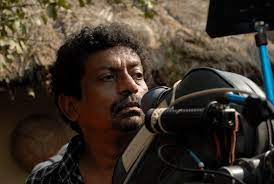
Ratnottama Sengupta journeys to show how past and present are interlinked in artand pays tribute to a polyglot
I must have been six or seven years old then. I had already developed the habit of looking attentively at visual images even before I could discern the letters of the alphabet. For, even as a child I would leaf through Baba’s* books that were everywhere in our house — in the bookshelves, on the table, on the beds and even under the beds. So, when I loitered out of our home into those of our neighbours, I was drawn by the ‘Merry Christmas’ cards overflowing the mantel shelves of some and the ‘Diwali Greetings’ lining the walls of others. Later I started collecting them, and some years down, when my elder brother went off to medical school, I inherited his stamp collection. In all of these, I would involuntarily seek out Indian scenes: women plaiting hair, farmer ploughing his field, Koli* fisherfolks with their nets, boatman in the river, cow and calf, lady lighting a diya*, an itinerant sadhu, a Baul* singer…
Why was I drawn to these ‘Indian’ stories? I was, after all, growing up in Bombay of 1960s, where the citizens were commuting by train to eke out a livelihood in the mills and factories, in the corporate offices and film studios churning out tinsel dreams. I never posed these questions then but almost six decades later I have the answer:
In the rapidly industrialising country, people coming out of a glorious past were forging a new identity for another tomorrow. But even an India of new dreams could not be divorced from the lived reality of the forefathers, right?
This realisation came to me after I visited Santiniketan, had the good fortune to interact with pathbreaking artists like Sankho Chaudhuri, K Subramanian, Ramananda Bandopadhyay, Debabrata Mukherjee — and when I penned Krishna’s Cosmos on the art and life of pioneer printmaker Krishna Reddy. Through them all, I understood that the need for a self-perception of a ‘Bengal’ identity — both biographical and cultural — was very much alive post Partition.
Although Krishna Reddy had a divergent journey in Art, Maniklal Chatterjee, was also moulded in the same crucible as the printmaker, under the watchful eyes of the iconic Nandalal Bose. And, in a certain way, Maniklal carried on the famed Master Moshai’s* Haripura Congress tradition of capturing the everyday life of farmers and labourers, artisans and housewives. It came out of his innate love for nature and the pastoral world in the lap of mother earth. In other words, it was rooted in Life as it was lived in erstwhile East Bengal, that end of the land which was lopped off by the Radcliffe Line, forcing Maniklal to seek a new roof to shelter his homestead — and a new haven through lines and tints.
Krishna Reddy, moving in 1950 to post World War II London and Paris, realised that while Europe was seeking as escape from the horrifying memory of the holocaust, by negating human figures and going into Abstract art, Cubism, Op art and Pop art, India was looking back to its pre-colonial heritage in art: the Mughal miniatures, the folk traditions of Bengal, the bazaar art of Kalighat, the Patachitra of Puri and the homely Madhubani. It was this fount of inspiration that Maniklal Chatterjee appears to have made his own. He did not use his inborn skill to counter the influence of Academic training, nor was he being Progressive by adapting Modernism. Born of a different history and rooted in a different culture, he compulsively looked back to the home he had left behind in Barishal and drew upon the wash technique, the tempera and water colour of Santiniketan that has welded diverse art inheritances in its quest for an Oriental universality.
Paintings by Maniklal Chatterjee
In short, it was this artist’s way of retaining an identity that was as much him as his Bangal accent and his commitment to Communism. Yes, he committed his grasp over the formal and technical basics of the Santiniketan/ Bengal School of painting to talk about Everyman. His imprint of life of his suffering countrymen bore the aesthetic sophistication of the hallowed School but was charged by the love for an idyllic India. A withering workman’s India. An unspoilt India now relegated to memories.
But though he dipped his brush in the colour of nostalgia, Maniklal’s art was imbued with serenity and joy. The women and men, the kids and calf pulsated with lived energy. The ‘sarbohara‘ who has lost his all — the uprooted refugee as much as the man who has nothing to lose but his chain, these were the heroes for Maniklal Chatterjee.
Those were the glorious days of IPTA (Indian People’s Theatre Association). Remember the film, Do Bigha Zamin (Two Acres of Land)? The rickshawala on foot racing with his cart against a horse drawn carriage, not just to reach his human brethren to his destination but also to earn two square meals and — more urgently — to save his two acre land, back in the country’s hinterland, came to signify the rapidly industrialising India of 1950s. It was this set of lives that Maniklal Chatterjee chose to iconise. His art sang of those deprived, but not downtrodden. Not for nothing were these celebrated as ‘Postcards from Bengal’. The poet within the artist wrote, “Tomar kaachhe aajanma wrini aami — tumi je basundhara (I am beholden to you Mother – you are the Earth).”Age cannot wither nor time stale this luminous face of Mother India — be it for Maniklal Chatterjee or for you and me. Because art for him is the expression of a deeply rooted emotion. It is as personal a portrait of his life and times as the photograph of my parents taken in a studio after their marriage: It is a time wrap, but one we will always be grateful for.
*Baba: Father. Her father was the late Nabendu Ghosh, an eminent writer in Bengali and a personality in film scripting and directing.
*Koli: Fisherfolk in Mumbai.
*diyas: oil lamp
*Baul: mystic minstrels or bards in Bengal
*Master Moshai: Teacher or Maestro in Bengali
Ratnottama Sengupta, formerly Arts Editor of The Times of India, teaches mass communication and film appreciation, curates film festivals and art exhibitions, and write books. Daughter of Nabendu Ghosh, she has authored Krishna’s Cosmos, a biography of the pioneering printmaker Krishna Reddy, among many other books She has been a member of CBFC, served on the National Film Awards jury and has herself won a National Award.
.
PLEASE NOTE: ARTICLES CAN ONLY BE REPRODUCED IN OTHER SITES WITH DUE ACKNOWLEDGEMENT TO BORDERLESS JOURNAL
Exploring the writings of Nabendu Ghosh, his daughter Ratnottama Sengupta shares his life and times and her own journey as a senior journalist, writer and, more recently, a filmmaker.
Nabendu Ghosh on the right at the award ceremony for his Bankim Puraskar, awarded by West Bengal Chief Minister, Buddhadeb Bhattacharya(left), who can be seen conversing with him. Photo source: Ratnottama Sengupta.
Mistress of Melodies is a new book, a translation of Nabendu Ghosh’s stories. Ghosh was an eminent Bengali writer and also a major screenwriter from Bollywood, the award-winning director of the iconic Trishagni (The Sandstorm, 1988). This collection edited by his daughter, a senior journalist, translator and writer, Ratnottama Sengupta, brings out the plight of women ranging from the glamorous Gauhar Jaan to the hapless prostitutes and widows — like Fatima who almost gets pushed into the flesh trade for feeding her hungry child. The story on Gauhar Jaan was written originally in English by Nabendu himself. The man did an excellent job in English too though he wrote in Bengali and Hindi mostly. His writing has cinematic clarity.
In 2018, another collection of his short stories That Bird called Happiness was brought out by Sengupta, who with multiple books under her belt, retired as the arts editor of The Times of India and now she is helping the world uncover the richness of the literary lore of Nabendu Ghosh. In this exclusive, she tells us more.
You are the daughter of a very loved writer, screen writer and filmmaker from Bengal, Nabendu Ghosh, along with being an award-winning journalist and film maker. How much did your father influence your choice of career? What impact did his work have on your childhood?
My father did not at all influence my choice of career as a journalist. As a matter of fact, he believed that journalism was literature in hurry. He was happy that his daughter’s name – byline — was appearing every week, often more than once a week, and across India with enviable regularity. But he would often remind me that, in pursuit of this “short-lived glory”, I was neglecting my potentials as a ‘literary writer’ which, he felt, I had in me…
But let me tell you: I would not be what I am today – an editor, translator, curator and director in addition to being a journalist – if I were not born with Nabendu and Kanaklata as my father and mother. Here’s the Why of this statement.
I must have been five or less when I developed the habit of looking attentively at visual images even before I could discern the alphabets. For, even as a baby I would leaf through the books that were everywhere in our house – in the bookshelves, on the tables, on the beds and even under them. Indeed, every night we would remove the books to make our beds and every morning we would put them back there!
Having always been with books, reading stories and images came most naturally to me. And then, there was the dinner table at 2 Pushpa Colony, my home in Mumbai, which was the camp address for not only my cousins and unrelated uncles from Patna and Malda (the two places my parents came from) who were making a career in films, but also that for writers from Bengal and Bihar: Nirendranath Chakraborty, Santosh Ghosh, Samaresh Bose, Phaniswar Nath Renu, Debabrata Mukherjee…
The result? I grew up listening to discussions on literature and cinema – every aspect of it, from cinematography and editing to music and dance. Through them all, I came to appreciate not only the aesthetic aspects of these art forms but also their technical, economic and other social aspects. Through it all, unknown to me, I had become a film and art critic.
Your father moved from Bengal to Patna at the start of his life. Why? Did it impact his choice of career?
My grandfather Nabadwip Chandra Ghosh, a well-known Kirtan singer, was a much-respected advocate who moved from Dhaka to Patna, then a part of the Bengal Presidency, in 1920. Nabendu was then all of four. But every Durga Puja would find them back in Kalatiya village where he started by playing ‘sakhi’ (a woman’s role) and experiencing the rasa of devotion. In his school days itself Nabendu took to writing and soon was part of the editorial team bringing out a handwritten magazine which was popular in the Bengali society of Patna. From his early years he used to save from his tiffin money to watch movies. He was keen about dance and drama and in his college days he regularly performed – even in towns and cities outside Patna. All in all, he was trained in the Arts from his childhood.
And by 1942 he was already a published author. But what determined his ‘career’ as a writer was the Quit India call given by Gandhiji. It led to an incident that changed his life. A large crowd to assemble at the Government offices including that of the IG Police where Nabendu was then a junior. After witnessing the bloodshed unleashed by the British Police, he started writing a novel that labeled him into being identified as a ‘subversive’ writer. Realising that he would not get a respectable job under the imperialist government, he resigned from that job and again, from Military Accounts – and took to writing as a full time occupation and moved to Calcutta.
Why did Nabendu go to Bombay when he was such a successful and loved writer in Bengal?
We are all social creatures, and we do not realise how much our lives are tossed and turned by political events. Take the Partition of India: It bifurcated the state of Bengal, dividing the reader of books and the viewership of films. By 1947, Bengal was the most established film producing centre in India, and as a young, popular and respected writer endowed with a cinematic vision, Nabendu Ghosh was already writing screenplays for a Hollywood-returned director, among others. But both, the publishing sector and Bengali film industry suffered a humongous setback after Partition – especially as the newly formed Pakistan government decided to enforce Urdu as its lingua franca.
So, when faced with tremendous financial hardship, many successful directors moved to Bombay. Legendary director Bimal Roy too was invited by actor Ashok Kumar to make a film for Bombay Talkies, and he invited Nabendu to join the team as a screenwriter. The rest is a historic change of geography: the Bengali writer moved to the shores of the Arabian Sea but did not cease to serve the ‘Bay of Bengal’, as Sunil Gangopadhyay said in reviewing Eka Naukar Jatri ( Journey of a Lonesome Boat, Nabendu’s autobiography).
Eka Noukar Jatri or Journey of a Lonesome Boat
Here, allow me to quote what poet Nirendranath Chakraborty said at the launch of the autobiography: “It was not with any joy that Nabendu Da left for Bombay at the close of 1940s. The times were such that it was difficult for most of us to eke a decent living. He had a family to look after, the family was growing, opportunities were not. If anything, they were getting curbed. Nabendu Da fulfilled all his responsibilities, including to his family, his friends, and to his first love – literature.”
Recently his telling of Gauhar Jaan has been published in Mistress of Melodies, with some of his translated stories. But Gauhar Jaan was written by him in English — and very well written I must say. Why did he write it in English?
Nabendu was always a keen writer, and politically aware. He wanted to major in History but was advised to take up English. So, he did his MA in English – under British teachers. Naturally he had a firm grounding in the language.
In Bombay of 1950s, directors, actors, producers from different corners had converged. And so, although the discussions in Bimal Roy Productions were held in Bengali and Hindi, he wrote the scripts in English and the basic dialogue, though in Hindi, too was penned in Roman alphabet. So English was always his second language.
Besides, Nabendu had written Swar ki Rani or ‘Mistress of Melodies’ as the first draft for a fuller screenplay that he always planned to write – in all probability, for my brother Subhankar Ghosh who is a graduate from the Film and Television Institute of India (FTII), directed the successful serial Yugantar (Over the ages) for Doordarshan and Woh Chhokri (That Girl) that won several National Awards.
Why did he not make a film out of Gauhar Jaan? It is an excellent story. Any plans to film it now?
Life is a hard task master. Subhankar too has had to go through several twists and turns. He was in Fiji for some years to teach filmmaking at the Fiji National University. That did not give him the scope to direct the film when Baba penned the first draft. If any opportunity comes along, I am sure that ‘Mistress of Melodies’ will be seen on the silver screen – or streamed on an OTT platform.
Nabendu was into script writing in a big way, especially for Bimal Roy. Can you tell us how they started working together?
After Nabendu moved base to Kolkata, Jahar Roy – the celebrated comedian of the Bengali screen who was like a younger brother to Nabendu since their Patna days – introduced him to Bimal Roy who had shot into national limelight with his very first film, Udayer Pathey (In the Path of Sunrise, 1943). The director, an avid reader, had read most of Nabendu’s writings and had observed that his writing had the “visual quality of a screenplay.” In particular he was highly impressed with the allegorical novel Ajab Nagarer Kahini (Tales of a Curious Land). But at that point B N Sircar of New Theatres was travelling abroad, so the project did not take off.
Meanwhile Mrinal Sen, then only a young associate of my father from Indian People’s Theatre Association, was eager to film it. He came up with a producer who unfortunately ran out of money within a few months and abandoned the project. Nabendu went back to Bimal Roy but he had firmed up his plans to shift to Bombay. All of a sudden, over a cup of tea, he asked Nabendu to join his creative team – and the writer was only too happy to get a new opening in the dismal post-Partition world.
Trishagni was an award-winning film by your father. Tell us how it came about and what made him pick the story?
In 1966 after Bimal Roy passed away, my father had started teaching the Direction students at Film and Television Institute of India as a regular Guest Lecturer. Soon the Film Finance Corporation (FFC) was reborn as National Film Development Corporation (NFDC) – and he became one of the revered members of its Script Committee. To create a bank of screenplays NFDC held a script competition and Nabendu won an award. It was not a cash award: NFDC supported the making of the film by way of equipment, editing, lab cost etc. That script became the award-winning Trishagni, based on a story by Saradindu Bandopadhyay, the Bengali litterateur best known as the creator of Byomkesh Bakshi.
Why this particular story? Being a writer himself, Nabendu would always go to literature for the subject of a film. He maintained that a writer puts in a lot of thought in rooting the character, into creating drama, in layering it with social concern. This gives a sturdiness to the visuals and adds to the fabric of the film which, in tinsel town, otherwise tend to become wishy-washy, and short-lived in their stimulation value. So even for Bimal Roy films he would suggest stories by writers like Subodh Ghosh, Narendranath Mitra, Samaresh Bose. These writers he not only read and respected, he would regularly meet them and often discuss the characters while scripting their stories.
Besides, being from Patna, he was fascinated by Gautama the Buddha whose statues in the museums generated “an inner feeling of content and peace”, he once told me. A prince who renounced every comfort, every pleasure in life in search of a truth, a ‘Bodh’ that would help mankind attain peace in his lifetime: this unique vision drew him to the teachings of Buddha. Then, in Maru O Sangha (The Desert and the Convent) he came across the Agni Upadesh, the sermon that outlined that the world is burning with desire, and our mission in life should be to free ourselves from desires that consume life. Only then we can attain a life of tranquility, endless bliss.
His reverence had inspired Baba to write a novel, Bichitra Ek Prem Gatha (A Wondrous Love, 2007) to mark Buddha’s 2550th year. It derived from the Buddhist text ‘Theri Gatha’ to juxtapose the worldly desires and longings with the exemplary discipline and distilled love of Pippali and Kapilani, two newly-weds who were drawn towards the Sakya Muni and took refuge in him. Eventually Pippali turned into Mahakashyap, a ‘lieutenant’ of the Buddha, and Kapilani headed the ranks of nuns – probably the first convent in the world! This turned out to be Baba’s last published novel (while he lived).
While on his Buddha Trail, let me add that Nabendu had earlier been part of Gotama the Buddha (1956), the Bimal Roy Productions documentary that had won director Rajbans Khanna an Honorable Mention at Cannes.
What was the last film he made? And what was the last book he wrote?
The last film he was to make – on NFDC funding – was Motilal Padre, based on a novel by Kamal Kumar Majumdar. Unfortunately, this remained an unfulfilled dream. So, effectively, he directed three films: Trishagni (1989), Netraheen Sakshi (Blind Witness, 1992) for the Children’s Film Society of India, about a visually challenged boy who could identify a killer by his voice, and Ladkiyaan (Daughters, 1997) for the Ministry of Health and Family Welfare.
This again was part of a scheme that saw the Ministry finance films pertaining to a Girl Child’s education (Kairee by Amol Palekar), childbearing and women’s health in a Muslim family (Hari Bhari by Shyam Benegal), and so on. Ladkiyaan was based on a real-life incident that saw three sisters in Kanpur jointly commit suicide when one night, they heard the father threatening their mother, who had conceived again: “No more girls! I want only a boy.”
Kadam Kadam or The Long March
His last completed novel is Kadam Kadam (The Long March), which chronicles the story of a young Indian who joins the British Army, is sent to Singapore, taken POW by the Japanese, joins INA and is transformed. He had just completed it when he had to be hospitalized. I published it at the onset of his birth centenary.
He wrote a book for his grandchildren too. Would you like to tell us about it?
Yes, he wrote Aami ar Aami, translated to Me and I, for his two grandsons, Devottam Sengupta and Devraj Nicholas Ghosh. The racy story about a parallel universe fuses human curiosity about outer space, the stars and galaxies, with a futuristic vision emanating from his faith in humans and a ‘Hindu’ vision of the cosmos…
The germ of the story came from Sudheesh Ghatak, the second brother of celebrated director Ritwik Ghatak, whom I remember from my childhood as a fascinating storyteller and a storehouse of knowledge on the developments in science as well as on the ‘Unbelievable’. One day he had talked about the hypothesis of a group of scientists about twin planets in the cosmos. A few weeks later Nabendu, on a visit to Kolkata, was leafing through old books sold on the pavements of College Street, and came across one that referred to twin planets. That spurred his curiosity, and imagination…
My son, Devottam, started translating the book as part of my effort to improve his Bengali. He believes that somewhere the idea grew in my father from watching his two grandsons. When they were kids Dev and Nick — who now lives in UK — were mistaken for twins. At one time my brother was posted in Germany, and his friends would remark how the cousins resembled each other yet were “somewhat different”. This could have fanned his thoughts about the protagonist and his interstellar twin who were ‘identical yet opposite’. In Me and I, Mukul (which, incidentally, was my father’s pet name) and Lukum “mirror, in a modified way, our experiences of growing up as two brothers separated by what in 1980s was several thousand miles of culture – experiences, of what we were exposed to and how we were brought up in our thinking,” Devottam wrote in his translator’s note.
What do you feel when you translate Nabendu’s work?
You have taken the words out of my mouth. Actually, translating Nabendu Ghosh has been a BIG lesson in creative writing. His stories are rooted in the soil, yet not homilies on traditional lives. They are about the lives impacted by social and political twists that tossed people not only across the Radcliffe Line but from Bengal to Bombay, Madras (now Chennai) to the Himalayas, from villages to the industrialising cities, the lost world of Lucknow’s nawabs to the Bengal heightened by World War II, to the dreamland of Bollywood and the upper crust families homed in Park Street.
Layering a character with socio-political reality makes them both universal and timeless, I learnt as I tried to translate these stories. There’s always a tomorrow to live for, I learnt from them. The more direct your sentence is, the more crisply is the emotion conveyed, I learnt from his sentences. The shorter the sentence is, the more it compels you to walk ahead with the characters into their lives. And, of course, from his use of language I learnt that every word we utter is a reflection of my time, my mood, my upbringing. As Shirshendu Mukhopadhyay said, Nabendu Ghosh is a writer who should be read by every aspiring writer for his grasp over the art of storytelling.
Tell us what was the perception about his writing and its impact on his peers and writers who came after him?
When Nabendu entered the frame, the towering personality of Rabindranath Tagore was no longer on the scene. There were the three Bandopadhyays – Tarashankar, Manik and Bibhuti Bhushan. The three ‘N’s – Narayan Gangopadhyay, Narendranath Mitra and Nabendu Ghosh joined them at this juncture, each with a definite voice and constituency.
On his 90th birthday, litterateur-journalist Dibyendu Palit wrote: “Nabendu Ghosh is among those frontrunners of the post-Kallol era Bengali literature who amazed with the power of their pen. His subjects were rooted in realism, his language was seeking new expressions in aesthetics. His Ajab Nagarer Kahini, Phears Lane, Daak Diye Jaai are memorable creations in the language…”
Sunil Gangopadhyay summed for the Indian PEN Society, what he wrote in reviewing Eka Naukar Jatri: “Your devotion to Bengali literature and your creativity in the language is a matter of great joy for us.”
Last year Shirshendu Mukherjee, speaking at a celebration of Nabendu’s birth anniversary at Starmark said, “Nabendu Ghosh was a ‘star’ among those writing in1940-1950s. He lived a long life — he passed away when he was nearing 91 — and almost until he went away, he was writing. My attraction for his work was formed when I was a teenager reading world literature. There were two names I admired very much Norwegian Nobel laureate Knut Hamsun (1859-1952); and Austrian Stefen Zweig (1881-1942), the most popular novelist of his time. Anyone who read him can’t forget his style of writing. In my view, Nabendu Ghosh shared his trait of riveting storytelling with Zweig. The same focused development of a plot shorn of every trivial and expendable branch, razor sharp emotions, whirlwind passion — I feel writing itself was a passion for him. He did not write with his head alone, his heart bled for the human condition. This I can say without exhausting the considerable list of his writings — 28 novels, 18 anthologies of short stories.”
Nabendu Ghosh
Shirshendu also talked about Nabendu’s remarkable use of language. “One of his stories starts with a word, “Bhabchhi — (I’m) Thinking.” It is a single word that is also a complete sentence, and it has been used as a paragraph in itself. Not many writers of his time were into such experiments. Even some doyens of Bengali literature did not accept to set out on this adventure. Nabendu Ghosh did. He stood apart from his contemporaries in this respect. A part of his mind always ticked away, thinking of how his characters would speak. This has to be done – this tinkering with structure, altering of syntax, or adding to the vocabulary. Words from so many languages — Arabic and Persian and English – have filtered in and become a part of the Mother Language as we speak it today.
“Nabendu was always pushing the boundaries of the language – but he had an amazing sense of the optimum in this matter: he never overdid it. One of his stories, Khumuchis, explores the secret language used by pickpockets. Bichitra Ek Prem Gatha (A Wondrous Love) – published to mark 2550th year of Buddha — uses language that is closer to Prakrit, in that it is devoid of any word that would not have existed before the advent of Islam. He always put a lot of thought into how the characters would speak. This added to the readability of his stories and quickened the pace of the narrative. They were all so racy!
“And this is why he never dated. His writing is the stuff that makes a story universal, eternal. For today’s readers he is a lesson in how to write — they can master how to write a narrative that flows like a boat down a rapid stream. In terms of language, structure, characters and situation, he is a writer who would be relevant to the young readers of not only Bengali but worldwide.”
Chuninda Kahaniyaan: Nabendu Ghosh
Speaking at the launch of Chuninda Kahaniyaan: Nabendu Ghosh (Chosen Stories of Nabendu Ghosh, stories translated to Hindi) the recently demised thespian Soumitra Chatterjee, a Master in Bengali Literature, had said: “Even before I took to studying Bengali literature, even when I was in school, Daak Diye Jai (The Call) was a sensation. His writing was not confined to urban settings and city life, he wrote of the man of the soil too. His characters were always flesh and blood humans too.”
And when his last birthday was being publicly celebrated at the Palladian Lounge in Kolkata, an MA student of Rabindra Bharati University, Saswati Saha had said, “This bright star of contemporary Bengali literature has riveted me with the quiet aesthetics and deep realizations that are germane to his novels. I am a young reader of his art but both Bichitra Ek Prem Gatha and Jibaner Swad (The Taste of Life), both published in 2007, have increased my appetite for his writings. With the alluring simplicity of his language and unhurried descriptions he unfolds harsh realities. Had I not read Nabendu Ghosh, I would have remained ignorant of a large tract of life experience.”
You yourself have made a directorial debut on the life and works of your father. Did that help you understand him better? How did the film do?
And They Made Classics… was made to celebrate his Birth Centenary in 2007 but the interview it came out of was recorded by Joy Bimal Roy and Aparajita Sinha – son and daughter of Bimal Roy when they set out to make Remembering Bimal Roy in his 100th year. ATMC… spoke primarily about the classics of Nabendu scripted for the legendary director. It is a lesson in film appreciation and also in a certain way, about the art of making films in a given social circumstance – in the face of all odds. It seasoned me as a film analyst, really.
Of course, what has given me a greater insight into his life and times is Eka Naukar Jatri, the autobiography that was first serialized by Dibyendu Palit as the editor of Sangbad Pratidin (News Everyday) then fleshed out by the writer for Dey’s Publication. Now, while translating it for Speaking Tiger, it lifts the curtain on how he became a litterateur, virtually chronicling 1940s, the founding decade of our nation. This was a decade that was ushering the future in tumultuous colours and fiery alphabets. Just think of the march of the dead this decade saw: people dying on the streets of Calcutta while the British government was sending away rice to the theatre of war in the North East; people dying in poisonous chemical vapour unleashed through Europe; lives lost in Japan when a new atomic toy was dropped from the air – and later, repeatedly in the Pacific Islands, when millions suddenly were tossed into an identity crisis and an ensuing bloodbath by the Radcliffe Line…
I now understand that he was constantly bothered by questions such as “Is this the new era, the age of Deliverance to be ushered by the mythical avatar, Kalki? Or will this flow of blood and the wails of mothers be lost in the dust? Will the world be green again?” I now understand why the Lifetime Achievement Award citation of Bengal’s literary council, Bangiya Sahitya Parishad reads: “Time and again the strange ironies and mysteries of history have lit up your questioning mind. At the centre of history is Man. History is the conveyor belt that leads Man from past to present, sometimes with affection, mostly through rough and tumble. History never stands still through conflicting turns of events it makes way ahead. You made history stand still in your pages…”
You have written a number of books and translated extensively. What is the difference between your father’s writing and yours? Of course, you are an eminent journalist, and he was a creative writer. He wrote in Bengali and Hindi mainly. And you write in English. But, other than that do you find any similarity in the way you tell a story? Has he impacted your style?
Now you must bear with me as I talk about myself!
Ratnottama Sengupta
I am what I am as a writer because I was born in the household of Nabendu Ghosh – and here I am not talking of DNA or of dynastic inheritance. As I have said before, our house was full of books and I grew up leafing through them even when I didn’t know whether they were in English, Bengali or Hindi. I had a lovely childhood reading Bengali ‘kishore sahitya’ – literature for young readers – as much as Enid Blyton, Mark Twain, Phantom and Amar Chitra Katha comics. At BES School in Dadar, we annually celebrated Saraswati Puja by ‘publishing’ a handwritten magazine of stories and essays by the students – and that was my haatey khari — initiation as a writer. Here too, I would discuss a story idea and my father would tell me how the characters would think or act, never how to write, what language to use or how to structure the story.
Perhaps that is why, although I scored the highest in our school when I matriculated in 1971, securing in 96 and 97 in Science and Math, I joined Elphinstone College, then celebrated for its Arts stream and Mastered in English and American literature, with the added advantage of fluidly moving from English to Bengali and Hindi, Marathi and Gujarati. In other words, through Indian literary traditions as much as the wealth of world literature. That helped me to decide that I will make life either as a journalist or in academics, careers that would see me read and write every day.
It so happened that in 1978, when I returned from England after eight long months of holiday with my brother Dipankar, I applied for two jobs: a trainee sub-editor at Indian Express, and lecturer at the National College in Bandra – both at the instance of my friend Imran Merchant, erstwhile Editor of TV World. As life would have it, I got appointment letters from both, first from the daily, and a month later, from the college. I didn’t know which way to go, so I went to Ms Homai Shroff, then the head of the department for English in Elphinstone. When I told her my dilemma, she retorted: “What! You are already in journalism, and you want to move to academics? Don’t be stupid!” That decided it…
But let me add that eventually I did get to teach as well. Although for a short term, I was guest lecturer at Delhi University’s Kalindi College; I taught young entrants at the Times School of Journalism; I have been Mentor to Mass Com students at Lady Shriram College…
Journalism carried my name to virtually every corner of India. It gave me an opportunity to travel across the globe. It brought me into contact with the biggest names in the world of Arts – painting, music, dance, theatre, literature and of course cinema. All this made Baba happy and quietly proud. But he nursed one objection: “Journalism is short lived and mostly goes into highlighting other people’s achievement. In doing all this, you are expending your time and literary energy. Turn your attention to your own creative writing,” he would urge.
Similarity of style? I don’t think so since we were doing very different kind of writing. But impact, yes, and I have already said how.
What are your future plans? With translations? Films? Your own writing?
All of them. I plan to keep translating, and not just my father’s work. God willing, I will certainly make a few more films. I am halfway through Menaka to Mallika, a documentary study of dance in Hindi films. I hope to make a short feature on trafficking and a full length one on a father-daughter story. As for my own writing, there are talks of publishing them. Ambitious? Perhaps. But like my father I would like to read and write till the last day life grants me.
Nabendu Ghosh with his daughter Ratnottama Sengupta
This interview was conducted online by Mitali Chakravarty.
.
PLEASE NOTE: ARTICLES CAN ONLY BE REPRODUCED IN OTHER SITES WITH DUE ACKNOWLEDGEMENT TO BORDERLESS JOURNAL.