Categories
Contents

Borderless, December 2025

Art by Sohana Manzoor

Editorial

‘I wondered should I go or should I stay…’ …Click here to read.

Translations

Nazrul’s Shoore O Baneer Mala Diye (With a Garland of Tunes and Lyrics) has been translated from Bengali by Professor Fakrul Alam. Click here to read.

Four of his own Malay poems have been translated by Isa Kamari. Click here to read.

Five poems by Satrughna Pandab have been translated to English from Odia by Snehaprava Das. Click here to read.

A Lump Stuck in the Throat, a short story by Nasir Rahim Sohrabi translated from Balochi by Fazal Baloch. Click here to read.

Tagore’s Jatri (Passenger) has been translated from Bengali by Mitali Chakravarty. Click here to read.

Conversation

Keith Lyons in conversation with Harry Ricketts, mentor, poet, essayist and more. Click here to read.

Poetry

Click on the names to read the poems

Harry Ricketts, Luis Cuauhtémoc Berriozábal, Laila Brahmbhatt, John Grey, Saba Zahoor, Diane Webster, Gautham Pradeep, Daniel Gene Barlekamp, Annwesa Abhipsa Pani, Cal Freeman, Smitha Vishwanath,John Swain, Nziku Ann, Anne Whitehouse, Tulip Chowdhury, Ryan Quinn Flangan, Ramzi Albert Rihani, Rhys Hughes

Poets, Poetry & Rhys Hughes

In Said the Spook, Rhys Hughes gives a strange tale around Christmas. Click here to read.

Musings/ Slices from Life

Your call is important to us?

Farouk Gulsara writes of how AI has replaced human interactions in customer service. Click here to read.

Honeymoon Homecoming

Meredith Stephens visits her old haunts in Japan. Click here to read.

Cracking Exams

Gower Bhat discusses the advent of coaching schools in Kashmir for competitive exams for University exams, which seem to be replacing real schools. Click here to read.

The Rule of Maximum Tolerance?

Jun A. Alindogan writes of Filipino norms. Click here to read.

How Two Worlds Intersect

Mohul Bhowmick muses on the diversity and syncretism in Bombay or Mumbai. Click here to read.

Musings of a Copywriter

In The Monitoring Spirit, Devraj Singh Kalsi writes of spooky encounters. Click here to read.

Notes from Japan

In One Thousand Year Story in the Middle of Shikoku, Suzanne Kamata takes us on a train ride through Japan. Click here to read.

Essays

250 Years of Jane Austen: A Tribute

Meenakshi Malhotra pays a tribute to the writer. Click here to read.

Anadi: A Continuum in Art

Ratnottama Sengupta writes of an exhibition curated by her. Click here to read.

Sangam Literature: Timeless Chronicles of an Ancient Civilisation

Ravi Varmman K Kanniappan explores the rich literary heritage of Tamil Nadu. Click here to read.

A Brickfields Christmas Tale

Malachi Edwin Vethamani recounts the flavours of past Christmases in a Malaysian Kampung. Click here to read.

Bhaskar’s Corner

In The Riverine Journey of Bibhuti Patnaik, Bhaskar Parichha pays a tribute to the octegenarian writer. Click here to read.

Stories

Evergreen

Sayan Sarkar gives a climate friendly and fun narrative. Click here to read.

The Crying Man

Marc Rosenberg weaves a narrative around childhood. Click here to read.

How Madhu was Cured of Laziness

Naramsetti Umamaheswararao gives a fable set in Southern India. Click here to read.

Book Excerpts

Excerpt from Ghosted: Delhi’s Haunted Monuments by Eric Chopra. Click here to read.

Excerpt from Leonie’e Leap by Marzia Pasini. Click here to read.

Book Reviews

Rakhi Dalal reviews Anuradha Kumar’s Love and Crime in the Time of Plague. Click here to read.

Andreas Giesbert reviews Ariel Slick’s The Devil Take the Blues: A Southern Gothic Novel. Click here to read.

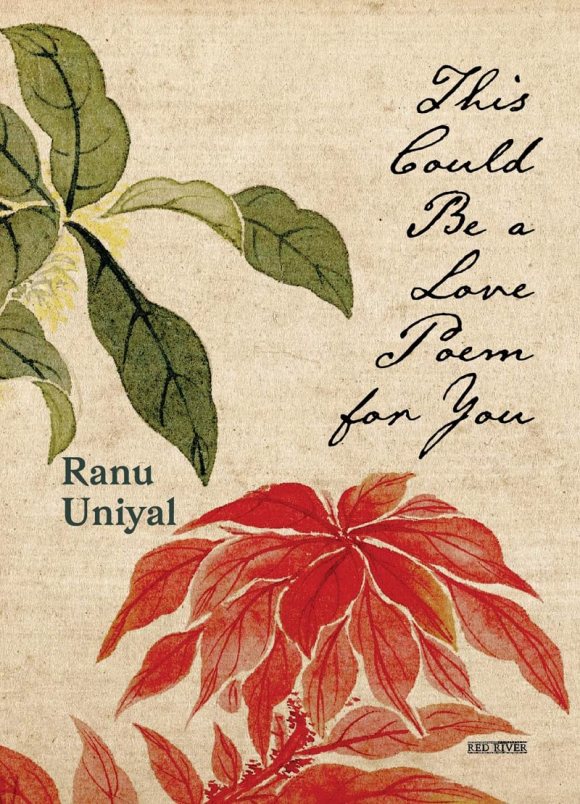
Gazala Khan reviews Ranu Uniyal’s This Could Be a Love Poem for You. Click here to read.

Bhaskar Parichha reviews Indira Das’s Last Song before Home, translated from Bengali by Bina Biswas. Click here to read.

.

Click here to access the Borderless anthology, Monalisa No Longer Smiles

Click here to access Monalisa No Longer Smiles on Amazon International

Categories
Editorial

‘I wondered should I go or should I stay…’

I flow and fly
with the wind further
still; through time
and newborn worlds…

--‘Limits’ by Luis Cuauhtémoc Berriozábal

In winters, birds migrate. They face no barriers. The sun also shines across fences without any hindrance. Long ago, the late Nirendranath Chakraborty (1924-2018) wrote about a boy, Amalkanti, who wanted to be sunshine. The real world held him back and he became a worker in a dark printing press. Dreams sometimes can come to nought for humanity has enough walls to keep out those who they feel do not ‘belong’ to their way of life or thought. Some even war, kill and violate to secure an exclusive existence. Despite the perpetuation of these fences, people are now forced to emigrate not only to find shelter from the violences of wars but also to find a refuge from climate disasters. These people — the refuge seekers— are referred to as refugees[1]. And yet, there are a few who find it in themselves to waft to new worlds, create with their ideas and redefine norms… for no reason except that they feel a sense of belonging to a culture to which they were not born. These people are often referred to as migrants.

At the close of this year, Keith Lyons brings us one such persona who has found a firm footing in New Zealand. Setting new trends and inspiring others is a writer called Harry Ricketts[2]. He has even shared a poem from his latest collection, Bonfires on the Ice. Ricketts’ poem moves from the personal to the universal as does the poetry of another migrant, Luis Cuauhtémoc Berriozábal, aspiring to a new, more accepting world. While Tulip Chowdhury — who also moved across oceans — prays for peace in a war torn, weather-worn world:

I plant new seeds of dreams
for a peaceful world of tomorrow.

--‘Hopes and Dreams’ by Tulip Chowdhury

We have more poems this month that while showcasing the vibrancy of thoughts bind with the commonality of felt emotions on a variety of issues from Laila Brahmbhatt, John Grey, Saba Zahoor, Diane Webster, Gautham Pradeep, Daniel Gene Barlekamp, Annwesa Abhipsa Pani, Cal Freeman, Smitha Vishwanath, John Swain, Nziku Ann and Anne Whitehouse. Ramzi Albert Rihani makes us sit up by inverting norms while Ryan Quinn Flangan with his distinctive style raises larger questions on the need for attitudinal changes while talking of car parks. Rhys Hughes sprinkles ‘Hughesque’ humour into poetry with traffic jams as he does with his funny spooky narrative around Christmas.

Fiction in this issue reverberates across the world with Marc Rosenberg bringing us a poignant telling centred around childhood, innocence and abuse. Sayan Sarkar gives a witty, captivating, climate-friendly narrative centred around trees. Naramsetti Umamaheswararao weaves a fable set in Southern India.

A story by Nasir Rahim Sohrabi from the dusty landscapes of Balochistan has found its way into our translations too with Fazal Baloch rendering it into English from Balochi. Isa Kamari translates his own Malay poems which echo themes of his powerful novels, A Song of the Wind (2007) and Tweet(2017), both centred around the making of Singapore. Snehaprava Das introduces Odia poems by Satrughna Pandab in English. While Professor Fakrul Alam renders one of Nazrul’s best-loved songs from Bengali to English, Tagore’s translated poem Jatri (Passenger) welcomes prospectives onboard a boat —almost an anti-thesis of his earlier poem ‘Sonar Tori’ (The Golden Boat) where the ferry woman rows off robbing her client.

In reviews, we also have a poetry collection, This Could Be a Love Poem for You by Ranu Uniyal discussed by Gazala Khan. Bhaskar Parichha introduces a book that dwells on aging and mental health issues, Indira Das’s Last Song before Home, translated from Bengali by Bina Biswas. Rakhi Dalal has reviewed Anuradha Kumar’s Love and Crime in the Time of Plague:A Bombay Mystery, a historical mystery novel set in the Bombay of yore, a sequel to her earlier The Kidnapping of Mark Twain. Andreas Giesbert has woven in supernatural lore into this section by introducing Ariel Slick’s The Devil Take the Blues: A Southern Gothic Novel. In our excerpts too, we have ghostly lore with an extract from Ghosted: Delhi’s Haunted Monuments by Eric Chopra. The other excerpt is from Marzia Pasini’s Leonie’s Leap, a YA novel showcasing resilience.

We have plenty of non-fiction this time starting with a tribute to Jane Austen (1775-1817) by Meenakshi Malhotra. Austen turns 250 this year and continues relevant with remakes in not only films but also reimagined with books around her novels — especially Pride and Prejudice (which has even a zombie version). Bhaskar Parichha pays a tribute to writer Bibhuti Patnaik. Ravi Varmman K Kanniappan explores ancient Sangam Literature from Tamil Nadu and Ratnottama Sengupta revisits an art exhibition that draws bridges across time… an exploration she herself curated.

Suzanne Kamata takes us on a train journey through historical Japan and Meredith Stephens finds joy in visiting friends and living in a two-hundred-year-old house from the Edo period[3]. Mohul Bhowmick introduces a syncretic and cosmopolitan Bombay (now Mumbai). Gower Bhat gives his opinion on examination systems in Kashmir, which echoes issues faced across the world while Jun A. Alindogan raises concerns over Filipino norms.

Farouk Gulsara — with his dry humour — critiques the growing dependence on artificial intelligence (or the lack of it). Devraj Singh Kalsi again shares a spooky adventure in a funny vein while Malachi Edwin Vethamani woos us with syncretic colours of Christmas during his childhood in Brickfields, Malaysia — a narrative woven with his own poems and nostalgia.

We have a spray of colours from across almost all the continents in our pages this time. A bumper issue again — for which all of the contributors have our heartfelt thanks. Huge thanks to our fabulous team who pitch in to make a vibrant issue for all of us. A special thanks to Sohana Manzoor for the fabulous artwork. And as our readers continue to grow in numbers by leap and bounds, I would want to thank you all for visiting our content! Introduce your friends too if you like what you find and do remember to pause by this issue’s contents page.

Wish all of you happy reading through the holiday season!

Best wishes,

Mitali Chakravarty

borderlessjournal.com

CLICK HERE TO ACCESS THE CONTENTS FOR THE DECEMBER 2025 ISSUE.

[1] UNHCR Refugees

[2] Harry Ricketts born and educated in  England moved to New Zealand.

[3] Edo period in Japan (1603-1868)

.

READ THE LATEST UPDATES ON THE FIRST BORDERLESS ANTHOLOGY, MONALISA NO LONGER SMILES, BY CLICKING ON THIS LINK.

Categories
Review

This Could be A Love Poem for You

Book Review by Gazala Khan

Title: This Could Be a Love Poem for You

Author: Ranu Uniyal

Publisher: Red River

This Could Be a Love Poem for You by Ranu Uniyal, is her fifth collection of poems. Uniyal is a passionate bilingual poet at heart, a retired professor of English literature by profession and an inspiration to many budding poets. Across the Divide (2006), The Day We Went Strawberry Picking in Scarborough (2018), December Poems (2012) and Saeeda Ke Ghar (In Saeeda’s home, Hindi, 2021) are some other significant contributions made by the poet.

“Poetry and beauty are always making peace. When you read something beautiful, you find co-existence; it breaks walls down.” A quote by Mahmoud Darwish is reflective of Dr Uniyal’s poignant portrayal of human existence layered with love, grief, crises and relationships with the One (Self) and the World.

The collection is an aesthetic delight that traverses the heart of the readers with astute directness and a distinct confessional tone. It has three segments: ‘Dust My Regrets’, ‘Be a Good Girl’ and ‘Thy Eternal Grace’. Collectively, there are 62 poems in all.

The poems start from the personal and move to the universal  with their intricate details. The poetic sensibilities take us to the female imaginary of the physical, psychological and spiritual domains. If Kamala Das in the 20th century introduced the readers to her brazenness in poetry, then Ranu Uniyal in the 21st century coerces her readers to travel from the common routine to the coveted spiritual abode found in the creative doctrine of poetry. The poetic depth can also be inferred through the rhythmic structure, the play with the words through alliteration and rhymes introduce jibes in poems such as ‘The Shop and the Shutter’.

The themes of love, identity, self-expression, language and power, old age, body’s fragility, vulnerability, precarity, loss, women and domesticity, motherhood, death and memory are persistent throughout the anthology. She poetically contours the theme of human existence and its distinct flavours like WB Yeats in Sailing to Byzantium with — “That is no country for old men.”

The poetic pondering over the question of ‘Self’ or recurrent declaration of ‘I’ is developed through linguistic, racial, and geographical temporal identities. For example, the poet’s ‘Garhwali’ identity is camouflaged with the the more modern Anglophone identity. The declaration of the personal “self” and dedication to some personalities like Mohini Mangalik, S. A. Hamid and Amma takes us to the glints of the poet’s biography in the most poetic manner. Gulzar once uttered that, “we poets are errant grains of dust… life takes us and tosses us, we do not know where it will end.” The poems hail the essence of life’s evolutionary journey, especially the one of experience and the mature years of life.

Her poems present multiple binaries: of love and grief, seller and buyer, life and death, through picturesque imagery. Additionally, the poet familiarises the readers with the references to the pagan myths from diverse cultures, Christ, Nachiketa, Yama, Isis, which also introduce us to the eco-folklorists’ traditions which is a delight to explore.

She writes in aphorisms at times and critiques the personal and public crises. The poem, ‘Only Grief’, provocatively emotes the climate crisis as an apocalyptic warning through a distant voice from the future, wherein, critiquing the war-torn present world and the catastrophic space left for the progeny of the future.

We sang dangerously of the failure.
Of our prodigal ancestors.

Another poem, ‘From One Life to Another’, reflects a similar concern about the cataclysmic/tragic climate situations left for the future:

Sparrows and crows have 
been hushed to silence.
The once-green acacia shrieked
as they chopped her limbs.

Nature and motherhood hold each other’s hands in sharing the identity of exploration and exploitation. Furthermore, the intricate details through the lens of the ecofeminist poetic sensibilities highlight the diversified literary corpus in the anthology. The same poem states further:

I was once a tree- all green.
Very tall, bobbing in the wind.
I had leaves, branches.
And occasional flowers.
I, too, had a name.
A woman. A mother.
Once a tree.
I brush them aside,
My tears, an upright foliage
Lying heavy on my chest.

Dr Uniyal can be set alongside the “literary greats” like Kamla Das and Sujata Bhatt.

The usage of the colloquial vernacular Hindi words and phrases makes it more personal, tinctured with cultural aesthetics.

The eponymous poem in the anthology, ‘This Could Be a Love Poem for You’ is raw and personal between the one waiting for the other partner far away from a distance is the talisman of the relationship, the theme that finds its way again and again in the poet’s poetic oeuvre. This colourful and mature anthology glossed with distinct sonorous imagery could indeed be a reflective love poem for the present and for our progeny, the rightful claimants, who would reminisce over the past.  It’s a love poem about resilience and human existence that shall follow the hearts of the readers for a long, dialogic course of expressions and insights.

Gazala Khan teaches in the Department of English at Doon University, Dehradun, India. She has published poetry in magazines such as Setu, Borderless, and The Fictional Café and has been consistently working on creative and literary projects.

.

PLEASE NOTE: ARTICLES CAN ONLY BE REPRODUCED IN OTHER SITES WITH DUE ACKNOWLEDGEMENT TO BORDERLESS JOURNAL

Click here to access the Borderless anthology, Monalisa No Longer Smiles

Click here to access Monalisa No Longer Smiles on Kindle Amazon International

Categories
Contents

Borderless, November 2023

Art by Sohana Manzoor

Editorial

Counting Colours… Click here to read.

Conversation

Banjara author Ramesh Karthik Nayak discusses his new book, Chakmak (flintsone), giving us a glimpse of his world. We also have a brief introduction to his work. Click here to read.

Translations

Demanding Longevity by Quazi Johirul Islam has been translated from Bengali by Fakrul Alam. Click here to read.

Moonlight, a poem by Bashir Baidar, has been translated from Balochi by Fazal Baloch. Click here to read.

Maithili Poetry by Vidyanand Jha has been translated from Maithili by the poet himself. Click here to read.

The Window and the Flower Vase has been written and translated from Korean by Ihlwha Choi. Click here to read.

Tagore’s Tomar Kachhe Shanti Chabo Na (I Will Not Pray to You for Peace) has been translated from Bengali by Mitali Chakravarty. Click here to read.

Poetry

Click on the names to read the poems

Michael Burch, Aineesh Dutt, Stuart McFarlane, Radhika Soni, David Mellor, Prithvijeet Sinha, John Grey, Ahana Bhattacharjee, Ron Pickett, Suzanne AH, George Freek, Arshi Mortuza, Caroline Am Bergris, Avantika Vijay Singh, Ryan Quinn Flanagan, Kisholoy Roy, Rhys Hughes

Poets, Poetry & Rhys Hughes

In A Parody of a Non-existing Parody: The Recycled Sea, Rhys Hughes uses TS Eliot’s ‘The Waste Land’ to create a new parody. Click here to read.

Musings/Slices from Life

The Theft of a River

Koushiki Dasgupta Chaudhuri tells a poignant truth about how a river is moving towards disappearance due to human intervention. Click here to read.

In Quest of Seeing the Largest Tree in the World

Meredith Stephens writes of her last day in California. Click here to read.

Beyond Horizons: A Love Story

Sai Abhinay Penna shares photographs and narrative about his trek at Chikmagalur. Click here to read.

Musings of a Copywriter

In Crush on Bottles, Devraj Singh Kalsi inebriates his piece with humour. Click here to read.

Notes from Japan

In Address Unknown, Suzanne Kamata shares a Japanese norm with a touch of humour. Click here to read.

Essays

Peeking at Beijing: The Wall

Keith Lyons travels to The Great Wall and writes of the experience. Click here to read.

Cinema, Cinema, Cinema!

Gayatri Devi writes of the translation impact of cinema, contextualising with the Tamil blockbuster, Jailer. Click here to read.

Coffee, Lima and Legends…

Ravi Shankar explores Lima, its legends and Peruvian coffee. Click here to read.

Stories

Jonathan’s Missing Wife

Paul Mirabile sets his story in a small town in England. Click here to read.

The Tender Butcher

Devraj Singh Kalsi weaves a story around a poetic butcher. Click here to read.

Book Excerpts

An excerpt of The White Shirts of Summer: New and Selected Poems by Mamang Dai. Click here to read.

An excerpt from Ramesh Karthik Nayak’s Chakmak. Click here to read.

Book Reviews

Somdatta Mandal reviews Ali Akbar Natiq’s Naulakhi Kothi, translated from Urdu by Naima Rashid. Click here to read.

Ranu Uniyal reviews I am Not the Gardener: Selected Poems by Raj Bisaria. Click here to read.

Anita Balakrishnan reviews Lakshmi Kannan’s Guilt Trip and Other Stories. Click here to read.

Bhaskar Parichha reviews Akshat Rathi’s Climate Capitalism: Winning the Global Race to Zero Emissions. Click here to read.

.

.

Click here to access the Borderless anthology, Monalisa No Longer Smiles

Click here to access Monalisa No Longer Smiles on Amazon International
Categories
Editorial

Counting Colours

Look around you and expand your heart. 
Petty sorrows are insignificant.
Fill your vacant life with love for humanity. 
The Universe reverberates with celestial ecstasy. 

— Anondodhhara Bohichche Bhubone (The Universe reverberates with celestial ecstasy), Tagore, 1894

Some of the most beautiful colours in this universe are blended shades— colours that are born out of unusual combinations. Perhaps that is why we love auroras, sunrises and sunsets. Yet, we espouse clear cut structures for comprehension. As we define constructs created by our kind, we tend to overlook the myriads of colours that hover in the gloaming, the brilliant play of lights and the vibrancy of tints that could bring joy if acknowledged. That ignoring the new-born shades or half-shades and creating absolute structures or constructs lead to wars, hatred, unhappiness and intolerance has been borne true not only historically but also by the current turn of events around the globe. While battles are never fought by the colours or beliefs themselves, they can harm — sometimes annihilate — rigid believers who are victimised for being led to accept their way as the only one and hate another. Perhaps, this has echoes of the battle between the Big Endians and Little Endians over the right way to break eggs in Jonathan Swift’s Gulliver’s Travels (1726). As the book is mere fiction, we can admire, agree and laugh at the content. However, in real life, watching newsreels has become a torture with destruction and violence being the main highlights. These detract from life as we knew it.

Writing or literary inputs seem to have become a luxury. But is it really hedonistic to play with words? Words used effectively over a period of time can impact readers to think peace, acceptance and love and also help people heal from the ensuing violence. That can be a possibility only if we self-reflect. While we look for peace, love and acceptance in others, we could start by being the change-makers and bridge builders ourselves. That is the kind of writing we have managed to gather for our November issue.

Building such bridges across humanity, we have poems on the latest Middle Eastern conflict by Stuart McFarlane and David Mellor, which explore the pain of the victims and not the politics of constructs that encourage wars, destruction of humanity, the flora, the fauna and our home, the Earth. Michael Burch writes against wars. Prithvijeet Sinha and Ahana Bhattacharjee write about refugees and the underprivileged. Reflecting colours of the world are poems from Ryan Quinn Flanagan, Suzayn AH, Radhika Soni, Ron Pickett, George Freek and many more. Rhys Hughes has brought lighter shades into his poetry by trying a new technique while reflecting on yetis and mermaids. His column tries to make a parody of a non-existing parody, using TS Eliot’s century old poem, ‘Wasteland’, with amazing results!

Our translations are all poetry too this time. Professor Fakrul Alam has translated a poem discussing human aspirations by Quazi Johirul Islam from Bengali. Another Balochi poem of hope by Bashir Baidar has been brought to us in English by Fazal Baloch bringing into play the moonlight.

For the first time, we are privileged to carry poetry from a language that has almost till now has eluded majority of Anglophone readers, Maithili. Vidyanand Jha, a Maithili poet, has translated his poetry for all of us as has Korean poet, Ihlwha Choi. Winding up translations are Tagore’s ultimate words for us to introspect and find the flame within ourselves in the darkest of times – echoing perhaps, in an uncanny way, the needs of our times.

Our conversation this month brings to us a poet who comes from a minority group in India, Banjara or gypsies, Ramesh Karthik Nayak. In his attempt to reach out to the larger world, he worries that he will lose his past. But does the past not flow into the future and is it not better for traditions to evolve? Otherwise, we could all well be living in caves… But what Nayak has done — and in a major way — is that he has brought his culture closer to our hearts. His debut poetry book in English, Chakmak (flintstones), brings to us Banjara traditions, lives and culture, which are fast getting eroded and he also visits the judgemental attitude of the majoritarian world. To give you a flavour of his poetry, we bring to you an excerpt from his book, livened beautifully with Banjara art and an essay by Surya Dhananjay that contextualises the poetry for us. Our excerpts also have a focus on poetry for we are privileged to have a few poems from Mamang Dai’s The White Shirts of Summer: New and Selected Poems. Mamang Dai is a well-known name from the North-eastern state of Arunachal Pradesh for both her journalistic and poetic prowess.

We are happy to host Ranu Uniyal’s beautiful review of I am Not the Gardener: Selected Poems by Raj Bisaria. Bisaria among other his distinctions, was named “Father of the modern theatre in North India” by the Press Trust of India. The other reviews are all of prose. Somdatta Mandal has written of Ali Akbar Natiq’s Naulakhi Kothi, a fictional saga of gigantic proportions. Anita Balakrishnan has reviewed Lakshmi Kannan’s short story collection, Guilt Trip. The book that gives hope for a green future, Akshat Rathi’s Climate Capitalism: Winning the Global Race to Zero Emissions has been reviewed by Bhaskar Parichha. Parichha contends: “Through stories that bring people, policy and technology together, Rathi reveals how the green economy is possible, but profitable. This inspiring blend of business, science, and history provides the framework for ensuring that future generations can live in prosperity.”

The anti-thesis to the theme for a welfarist approach towards Earth can be found in Koushiki Dasgupta Chaudhari’s poignant musing titled, “The Theft of a River”. Meredith Stephen’s travel to California and Sai Abhinay Penna’s narrative about Chikmagalur have overtones of climate friendliness. Ravi Shankar writes further of his travels in Peru and Peruvian coffee. Keith Lyons takes us peeking at Beijing and the Great Wall. Gayatri Devi adds to the variety by introducing us to the starry universe of South Indian cinema while Devraj Singh Kalsi brings in the much-needed humour with his narrative about his “Crush on Bottles“. Suzanne Kamata has also given a tongue-in-cheek narrative about the mystique of addresses and finding homes in Japan. We have fiction from Paul Mirabile located in England and Kalsi’s located in India. Pause by our contents page to view more gems that have not been mentioned here.

Huge thanks to our team at Borderless Journal, especially Sohana Manzoor for her fabulous artwork. This journal would not have been as it is of now without each and every one of them and our wonderful contributors and readers. Thank you all.

Wish you all a wonderful month as we head towards the end of a rather tumultuous year.

Mitali Chakravarty

borderlessjournal.com

Click here to access the contents page for the November 2023 issue

.

READ THE LATEST UPDATES ON THE FIRST BORDERLESS ANTHOLOGY, MONALISA NO LONGER SMILES, BY CLICKING ON THIS LINK.

Categories
Review

I am Not the Gardener

Book Review by Ranu Uniyal

Title: I am Not the Gardener: Selected Poems by Raj Bisaria

Author: Raj Bisaria

Publisher:  Terra Firma, Bangalore

Here is a book that I have been waiting for.  In several sittings you go through these breathtaking poems by Raj Bisaria.  A book that needs to be read with patience and, if you have had the privilege of being taught by him, you read with a curious eye.  Soft and gentle – a touch of an artist gently goads you to read it loudly– as if you are in an auditorium reading out to an unknown audience.  Who will listen to this voice of a gardener who with I am Not the Gardener weaves seasons of delight “telling of one’s heart is not self-gazing” but divine contemplation? 

The book does not carry an introduction to the author.  It has forty-three poems with photos capturing moments with family and friends. A few pictures of the domes and spires from Lucknow too add a special meaning to the verses. As director, producer, designer, actor and professor, Raj Bisaria has left an indelible mark. Press Trust of India described him as “Father of the modern theatre in North India”. Raj Bisaria founded Theatre Arts Workshop in 1966 and Bhartendu Academy of Dramatic Arts in 1975 in Lucknow. He taught English literature for more than three decades at the University of Lucknow. He is the first to receive Padma Shree from Uttar Pradesh for his contribution to modern theatre.  As a theatre artist his contribution remains unparalleled.

The first poem in this collection is ‘The Curtain Boy’. The poem is a thoughtful mediation on the meaning rather meaninglessness of all our actions.  The poet writes “I am not the gardener, / Nor the owner of the garden. / My job is to do odd things/ To weed out little wrongs/ To keep the pathway clean”. ‘Odd’ and “little” acts of “watching” lead to an awareness of the burden of possession and the transitory nature of dreams.  And this is followed by a similar concern in the poem ‘To a Young Actor’ – “I was told once to discipline/ Imagination in the rhythm/ of iambs and trochees. Only I wonder / If external form will give / Meaning to chaos.”

The poet, artist, and the philosopher in him create a complex mirage of emotions that reflect the restlessness and the anxiety of a man who finds comfort in words.  “In your dying/ My love has found / A new lease:/ For beyond death / Only love goes on”, the poet expresses his love for his mother in the poem ‘Elegy’.  Like Hamlet he gives voice to his own fears and then affirms with a defining certitude “Love is a quiet secret, / The seed within the rose.” The images are drawn from garden to the sea and the mountains “And I learnt to be silent / with the unspeakable granite of the mountains.”

Travel as a motif binds his restless spirit and opens the unreachable corners of his heart.  Love and fulfilment are contraries in a world trapped in the mundane.  In his poem ‘Byzantium’, Yeats refers to “The fury and mire of the human veins”. An artist seeks perfection in this imperfect world. The desire to transcend the ordinary compels him to write. The debut collection of poems gives us fascinating insights as Bisaria draws us to a wide range of experiences with a cry for attention “Do not shut my words out.  It is winter.” Here in lies an assertion with a sad awareness that yes, life is ending.  The artist within and the performer without must often be traversing contradictory spaces.  Both are equally strong and vulnerable. 

Sometimes the voice of the performer seems to undermine the anguish of the poet.  “He who does not forgive himself/ Forgives others less.” These are poems of love, longing, grief, and interminable loneliness that invades an artist whenever he confronts his inner self.  Those familiar with Bisaria’s dramatic productions might find a different voice lurking behind these poems.  It requires courage to accept one’s vulnerabilities, to confront the inner daemons and to pour an array of emotions with a faith that only an eternal seeker can display.  “To your shrines I came my Lord, / But I came without faith; / To your people I spoke my Lord / But I spoke without love; …Yet give me Lord peace/ To bear my own emptiness, / And your silence /Quieten my doubting mind.” This is not just a poem with the title ‘Prayer’, but a plea that resonates with a quest for self-realisation. 

A sadness runs through these poems.  Read and receive every word, every glance, every touch of this mortal self where “Love comes slowly by and by…” and the poet firmly believes “Love’s life is more than time…”. “It is a flight in the freedom of self…”. Even if you try hard, it is difficult to run away from oneself.  Like a shadow your inner conscience follows you, here, there, and everywhere.   

Ranu Uniyal is a poet and a Professor from the Department of English and Modern European Languages, University of Lucknow.

.

PLEASE NOTE: ARTICLES CAN ONLY BE REPRODUCED IN OTHER SITES WITH DUE ACKNOWLEDGEMENT TO BORDERLESS JOURNAL

Click here to access the Borderless anthology, Monalisa No Longer Smiles

Click here to access Monalisa No Longer Smiles on Kindle Amazon International

Categories
Contents

Borderless, January 2023

Painting by Sohana Manzoor

Editorial

Will Monalisa Smile Again? … Click here to read.

Translations

Nazrul’s Ring Bells of Victory has been translated from Bengali by Professor Fakrul Alam. Click here to read.

Nobody in the Sky by S Ramarishnan, has translated from Tamil by R Sathish. Click here to read.

The Bike Thief by Ihlwha Choi has been translated from Korean by the poet himself. Click here to read.

Tagore’s Banshi or Flute has been translated by Mitali Chakravarty from Bengali.Click here to read.

Poetry

Click on the names to read

Jared Carter, Ranu Uniyal, Rhys Hughes, Saranyan BV, Scott Thomas Outlar, Priyanka Panwar, Ron Pickett, Ananya Sarkar, K.S. Subramaniam, George Freek, Snigdha Agrawal, Jenny Middleton, Asad Latif, Michael R Burch

Poets, Poetry & Rhys Hughes

In I Went to Kerala, Rhys Hughes treads a humorous path. Click here to read.

Conversation

In Conversation with Abhay K, a poet turned diplomat, translator and a polyglot, converses of how beauty inspired him to turn poet and translating Kalidasa and other poets taught him technique. Click here to read.

Musings/Slices from Life

What do Freddy Mercury, Rishi Sunak & Mississipi Masala have in Common?

Farouk Gulsara muses on the human race. Click here to read.

Ghosh & Company

Ratnottama Sengupta relives the past. Click here to read.

Sails, Whales, and Whimsical Winds

Meredith Stephens continues on her sailing adventures in New South Wales and spots some sporting whales. Click here to read.

Tsunami 2004: After 18 years

Sarpreet Kaur travels back to take a relook at the tsunami in 2004 from Andaman and Nicobar Islands. Click here to read.

‘I am in a New York state of mind’

Ravi Shankar shares his travel adventures in the city. Click here to read.

Half a World Away from Home

Mike Smith introspects on his travels to New Zealand. Click here to read.

Musings of a Copywriter

In Back to the Past, Devraj Singh Kalsi muses on the need to relive nostalgia. Click here to read.

Notes from Japan

In The Year of the Tiger Papa, Suzanne Kamata gives us a glimpse of Japan’s education system with a touch of humour. Click here to read.

Essays

A Solitary Pursuit: The Art of Suhas Roy

Ratnottama Sengupta journeys with the signature art of Suhas Roy as it transformed in theme, style, and medium. Click here to read.

New Perspectives on Cinema & Mental Health

Between 1990 and 2017 one in seven people in India suffered from mental illness. However, the depiction of this in cinema has been poor and sensationalist contends Shantanu Ray Chaudhuri. Click here to read.

The Observant Immigrant

In The Immigrant’s Dilemma, Candice Louisa Daquin explores immigrants and the great American Dream. Click here to read.

Stories

The Book Truck

Salini Vineeth writes a story set in the future. Click here to read.

The Scholar

Chaturvedi Divi explores academia. Click here to read.

Little Billy

Paul Mirabile renders the poignant tale of a little boy. Click here to read.

Book Excerpts

An excerpt from Sanjay Kumar’s Performing, Teaching and Writing Theatre: Exploring Play. Click here to read.

An excerpt from Abhay K’s Monsoon: A Poem of Love & Longing. Click here to read.

Book Reviews

Somdatta Mandal reviews Priya Hajela’s Ladies Tailor: A novel. Click here to read.

Rakhi Dalal reviews Shrinivas Vaidya’s A Handful of Sesame, translated from Kannada by Maithreyi Karnoor. Click here to read.

Gracy Samjetsabam reviews K.A. Abbas’s Sone Chandi Ke Buth: Writings on Cinema, translated and edited by Syeda Hameed and Sukhpreet Kahlon. Click here to read.

Bhaskar Parichha reviews MA Sreenivasan’s Of the Raj, Maharajas and Me. Click here to read.

.

Click here to access the Borderless anthology, Monalisa No Longer Smiles

Categories
Editorial

Will Monalisa Smile Again?

The first month of 2023 has been one of the most exciting! Our first book, Monalisa No Longer Smiles: An Anthology of Writings from across the World, is now in multiple bookstores in India (including Midlands and Om Bookstores). It has also had multiple launches in Delhi and been part of a festival.

We, Meenakshi Malhotra and I, were privileged to be together at the physical book events. We met the editor in chief of Om Books International, Shantanu Ray Chaudhuri, the editor of our anthology, Jyotsna Mehta, along with two translators and writers I most admire, Aruna Chakravarti and Radha Chakravarty, who also graced a panel discussion on the anthology during our physical book launch. The earlier e-book launch had been in November 2022. My heartfelt thanks to the two eminent translators and Chaudhuri for being part of the discussions at both these launches. Chaudhuri was also in the panel along with Debraj Mookerjee at a launch organised by Malhotra and the English Literary Society steered by Nabaneeta Choudhury at Hans Raj College, Delhi University. An energising, interactive session with students and faculty where we discussed traditional and online publishing, we are immensely grateful to Malhotra for actively organising the event and to the Pandies’ founder, Sanjay Kumar, for joining us for the discussion. It was wonderful to interact with young minds. On the same day, an online discussion on the poetry in Monalisa No Longer Smiles was released by the Pragati Vichar Literary Festival (PVLF) in Delhi.

At the PVLF session, I met an interesting contemporary diplomat cum poet, Abhay K. He has translated Kalidasa’s Meghaduta and the Ritusamhara from Sanskrit and then written a long poem based on these, called Monsoon. We are hosting a conversation with him and are carrying book excerpts from Monsoon, a poem that is part of the curriculum in Harvard. The other book excerpt is from Sanjay Kumar’s Performing, Teaching and Writing Theatre: Exploring Play, a book that has just been published by the Cambridge University Press.

Perhaps because it is nearing the Republic Day of India, we seem to have a flurry of book reviews that reflect the Sub-continental struggle for Independence from the colonials. Somdatta Mandal has reviewed Priya Hajela’s Ladies Tailor: A novel, a book that takes us back to the trauma of the Partition that killed nearly 200,000 to 2 million people – the counts are uncertain. Bhaskar Parichha has discussed MA Sreenivasan’s Of the Raj, Maharajas and Me, a biography of a long serving official in the Raj era — two different perspectives of the same period. Rakhi Dalal has shared her views on Shrinivas Vaidya’s A Handful of Sesame, translated from Kannada by Maithreyi Karnoor, a book that dwells on an immigrant to the Southern part of India in the same time period. The legendary film writer K.A. Abbas’s Sone Chandi Ke Buth: Writings on Cinema, translated and edited by Syeda Hameed and Sukhpreet Kahlon, has been praised by Gracy Samjetsabam.

We have a piece on mental health in cinema by Chaudhuri, an excellent essay written after interviewing specialists in the field. Ratnottama Sengupta has given us a vibrant piece on Suhas Roy, an artist who overrides the bounds of East and West to create art that touches the heart. Candice Louisa Daquin has written on border controls and migrants in America. High profile immigrants have also been the subject of Farouk Gulsara’s ‘What do Freddy Mercury, Rishi Sunak & Mississipi Masala have in Common?’ Sengupta also writes of her immigrant family, including her father, eminent writer, Nabendu Ghosh, who moved from Bengal during the Partition. There are a number of travel pieces across the world by Ravi Shankar, Meredith Stephens and Mike Smith — each written in distinctively different styles and exploring different areas on our beautiful Earth. Sarpreet Kaur has revisited the devastation of the 2004 tsunami and wonders if it is a backlash from nature. Could it be really that?

Suzanne Kamata gives us a glimpse of the education system in Japan in her column with a humorous overtone. Devraj Singh Kalsi dwells on the need for nostalgia with a tongue-in-cheek approach. Rhys Hughes makes us rollick with laughter when he talks of his trip to Kerala and yet there is no derision, perhaps, even a sense of admiration in the tone. Hughes poetry also revels in humour. We have wonderful poetry from Jared Carter, Ranu Uniyal, Asad Latif, Anaya Sarkar, Michael R Burch, Scott Thomas Outlar, Priyanka Panwar, George Freek and many more.

The flavours of cultures is enhanced by the translation of Nazrul’s inspirational poetry by Professor Fakrul Alam, Korean poetry written and translated by Ihlwha Choi and a transcreation of Tagore’s poem Banshi (or flute) which explores the theme of inspiration and the muse. We have a story by S Ramakrishnan translated from Tamil by R Sathish. The short stories featured at the start of this year startle with their content. Salini Vineeth writes a story set in the future and Paul Mirabile tells the gripping poignant tale of a strange child.

With these and more, we welcome you to savour the January 2023 edition of Borderless, which has been delayed a bit as we were busy with the book events for our first anthology. I am truly grateful to all those who arranged the discussions and hosted us, especially Ruchika Khanna, Om Books International, the English Literary Society of Hans Raj College and to the attendees of the event. My heartfelt thanks to the indefatigable team and our wonderful writers, artists and readers, without who this journey would have remained incomplete. Special thanks to Sohana Manzoor for her artwork. Many thanks to the readers of Borderless Journal and Monalisa No Longer Smiles. I hope you will find the book to your liking. We have made a special page for all comments and reviews.

I wish you a wonderful 2023. Let us make a New Year’s wish —

May all wars and conflicts end so that our iconic Monalisa can start smiling again!

Mitali Chakravarty,

borderlessjournal.com

.

Photographs of events around Monalisa No Longer Smiles: An Anthology of Writings from across the World. Click here to access the Book.

.

Insta Link to an excerpt of the launch at Om Bookstore. Click here to view.

E-Launch of the first anthology of Borderless Journal, November 14th 2022. Click here to view.

Categories
Poetry

Two Poems by Ranu Uniyal

GRIEF DOES NOT DIE  

it melts 
it runs 
it smells
and then 
it dissolves

grief
I am sorry to say 
is beyond shelf life 
it outlives us all.   

Please don’t be surprised 
if you see it smirking  
through your years  
pitching in moments of 
relentless tapping 
of bristling laughter 
unguarded affection 
and invincible ties.   

Grief asks you not to surrender.  
“I am here to stay,” it taps on your chest 
and keeps you agog at night.  

Grief walks in at odd times 
when you are just settling in 
it steps inside and howls 
like a cyclone Tauktae
bound by seasons of melancholy
it rips you open and as you 
chug along with crushed smiles 
for all to see and you to bear 
eyes, ears, lips, breasts 
the falling of tears 
and the stepping aside 
of strangers in a bus or 
the train compartment, at the 
shopping mall, roadside paan thela*, 
inside the classroom, in the middle of 
everywhere it stalks you, 
unattended, forlorn.   


*A cart selling betel leaves

HARD TO FIND   


I am good
Amma holds her heart 
inside her fist.   

It is a cold Sankranti* for her 
and my only son 
struggling with dysgraphia rattles 
the mobile number of his father.   

A lullaby whines and I see her  
riding in the submissive dark 
with eyes flipping at unknown bridges.   

There is water everywhere 
The sky is full of treasure  
and the earth has returned all her dues.  
To wind she had her smiles to offer,  

wings, furs, tapioca, coconut shells 
syllables, ragas, laughter, and stray wounds 
there is enough to last a lifetime, 

Till date nobody knows where she has stored that gift of fire.  

*Sankranti is a harvest festival

Ranu Uniyal is Professor of English at University of Lucknow.  She is a bi-lingual poet and Chief editor of Rhetorica, a literary journal of Arts. She has published four poetry collections:  Across the Divide (2006), December Poems (2012), The Day We Went Strawberry Picking in Scarborough(2018) and Hindi Poems Saeeda Ke Ghar (2021) and has read her poems at international literature festivals and conferences. She was on a Writer’s Residency in 2019 at Uzbekistan.  She can be reached at ranuuniyalpant@gmail.com.  Website: ranuuniyal.com

.

PLEASE NOTE: ARTICLES CAN ONLY BE REPRODUCED IN OTHER SITES WITH DUE ACKNOWLEDGEMENT TO BORDERLESS JOURNAL. 

Click here to access the Borderless anthology, Monalisa No Longer Smiles