Categories
celebrations

Festivals of Humanity

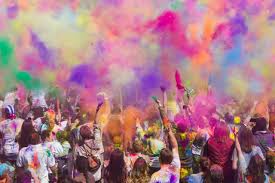
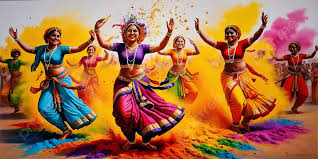
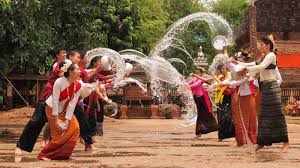
Festivals are affirmations of joy and love that bind humanity with their sense of hope even in a world torn by violence and climate change. As the end of the year approaches, we invite you to savour flavours of festivals past and, a few, yet to come, before the cycle starts again in the new year. The colours of celebrations are vibrant and varied as shades of nature or the skies.

We have new years spread out over the year, starting with January, moving on to the Chinese New Year around February, the Bengali new year in April to festivals of environment, light, darkness as in Wiccan beliefs, Tagore’s birth, more conventional ones like Deepavali, Eid, Durga Puja and Christmas. People celebrate in different ways and for different reasons. What we have also gathered is not only the joie de vivre but also the sadness people feel when celebrations are muted whether due to the pandemic, wars or for social reasons. In some cases, we indulge in excesses with funny results! And there are of course festivals of humanity … as celebrated by the bauls — the singing mendicants of Bengal — who only recognise the religion of love, compassion and kindness. 

Enjoy our fare! 

Poetry

 Aaji Shubhodine Pitaar Bhabone or On This Auspicious Day, a Brahmo Hymn by Tagore. Click here to read the translation by Mitali Chakravarty.

Potpouri by Isa Kamari familiarises us with Malay-Singaporean traditions that are observed during festivals. Click here to read.

Eid Poems by Afsar Mohammad. Click here to read.

 Ramakanta Rath’s Sri Radha celebrating the love of Radha and Krishna have been translated from Odiya by the late poet himself, have been excerpted from his full length translation. Click here to read.

Bijoya Doushumi, a poem on the last day of Durga Puja, by the famous poet, Michael Madhusudan Dutt, has been translated from Bengali by Ratnottama Sengupta. Click here to read.

Groundhog Day by John Grey. Click here to read. 

Christmas Cheer by Malachi Edwin Vethamani. Click here to read.

Christmas Poems by Rhys Hughes. Click here to read.

Poem on Christ by  Rabindranath Tagore: Verses excerpted from  ‘The Child‘, a poem originally written in English by the poet. Click here to read.

 Purano Sei Diner Kotha or ‘Can old days ever be forgot?’ by Tagore, based on Robert Burn’s lyrics, Auld Lang Syne. Click here to read the translation by Mitali Chakravarty.

Prose


 A Clean StartSuzanne Kamata tells us how the Japanese usher in a new year. Click here to read.

Shanghai in Jakarta: Eshana Sarah Singh takes us to Chinese New Year celebrations in Djakarta. Click here to read.

Cherry Blossom Forecast: Suzanne Kamata brings the Japanese ritual of cherry blossom viewing to our pages with her camera and words. Click here to read.

Pohela Boisakh: A Cultural Fiesta: Sohana Manzoor shares the Bengali New Year celebrations in Bangladesh with interesting history and traditions that mingle beyond the borders. Click here to read.

The New Year’s BoonDevraj Singh gives a glimpse into the projection of a new normal created by God. Click here to read.

A Musical Soiree: Snigdha Agrawal recalls how their family celebrated Tagore’s birth anniversary. Click here to read.

Not Everyone is Invited to a Child’s Haircut Ceremony: Odbayar Dorje muses on Mongolian traditions. Clickhere to read.

A Golden Memory of Green Day in JapanSuzanne Kamata tells us of a festival where she planted a tree in the presence of the Japanese royalty. Click here to read.

An Alien on the Altar! Snigdha Agrawal writes of how a dog and lizard add zest to Janmashtami (Krishna’s birthday) festivities with a dollop of humour. Click here to read

Memories of Durga Puja : Fakrul Alam recalls the festivities of Durga Puja in Dhaka during his childhood. Click here to read.

From Bombay to Kolkata — the Dhaaks of Durga : Ratnottama Sengupta explores a UNESCO Intangible Cultural Heritage Festival. Click here to read.

KL Twin Towers near Kolkata?: Devraj Singh Kalsi visits the colours of a marquee hosting the Durga Puja season with its spirit of inclusivity.  Click here to read.

The Oral Traditions of Bengal: Story and Song: Aruna Chakravarti describes the syncretic culture of Bengal through its folk music and oral traditions. Click here to read.

From Diana to ‘Dayaan’: Rajorshi Patronobis talks of Wiccan lore. Click here to read.

Dim Memories of the Festival of Lights: Farouk Gulsara takes a nostalgic trip to Deepavali celebrations in Malaysia. Click here to read. 

When Nectar Turns Poisonous!: Farouk Gulsara looks at social norms around festive eating. Click here to read.

 Hold the roast turkey please Santa: Celebrating the festive season off-season with Keith Lyons from New Zealand, where summer solstice and Christmas fall around the same time. Click here to read.

 Indian Christmas: Essays, MemoirsHymns, an anthology edited by Jerry Pinto and Madhulika Liddle, has been reviewed by Somdatta Mandal. Click here to read.

 I Went to KeralaRhys Hughes treads a humorous path bringing to us a mixed narrative of Christmas on bicycles . Click here to read.

The Bauls of Bengal: Aruna Chakravarti writes of wandering minstrels called bauls and the impact they had on Tagore. Click here to read.

Categories
Bhaskar's Corner

‘Language… is a mirror of our moral imagination’

By Bhaskar Parichha

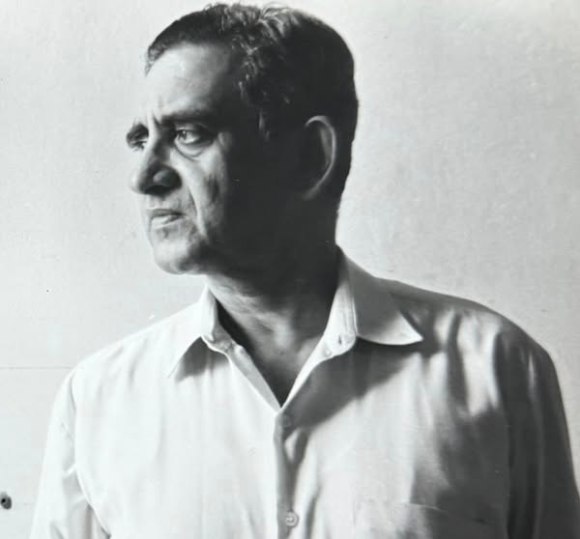
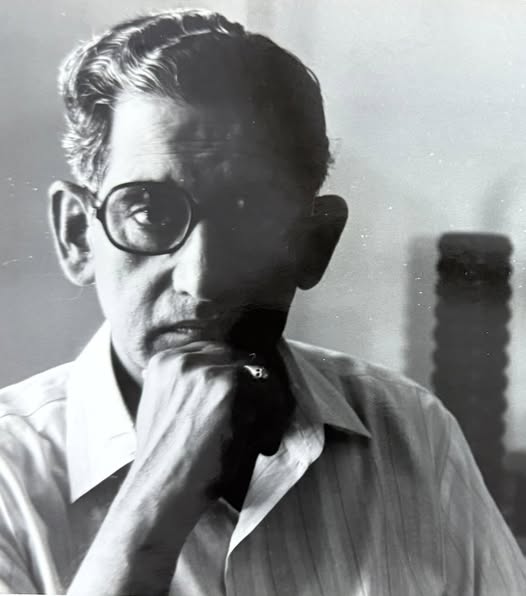
Prof. Sarbeswar Das (1925–2009): A scholar of depth, a teacher of light. Photo Provided by Bhaskar Parichha

In the intellectual history of modern Odisha, Professor Sarbeswar Das stands as one of those rare figures who seamlessly bridged scholarship, ethics, and social commitment. A luminous teacher, an erudite writer, and a quiet Gandhian, his life and work embodied the moral seriousness and intellectual curiosity that marked a generation shaped by the freedom struggle and the promise of a newly independent India.

Born in Sriramchandrapur village in the Puri district of Odisha in 1925, Sarbeswar Das grew up in a milieu where simplicity, discipline, and community values were deeply ingrained. His brilliance shone early—he topped the matriculation examination across Odisha and Bihar, a distinction that foreshadowed a lifetime of academic excellence.

His educational journey took him first to Ravenshaw College, Cuttack, the cradle of higher education in Odisha, where he absorbed the liberal spirit and rigorous intellectual training that the institution was known for. He later studied at Allahabad University, one of India’s foremost centers of learning, before proceeding to the University of Minnesota, for advanced studies in English literature.

His exposure to American academia at a time when few Indian scholars ventured abroad profoundly shaped his intellectual orientation. The years in Minnesota opened to him a new world of thought—modern literary criticism, American fiction, and the philosophy of democratic humanism—all of which left a deep imprint on his teaching and writing in later years.

On returning to India, Das joined the teaching profession, which he would pursue with remarkable dedication and grace for several decades. He served as a professor of English in some of Odisha’s most respected institutions—Christ College (Cuttack), SCS College (Puri), Khallikote College (Berhampur), and Ravenshaw College (Cuttack).

As a teacher, he was known not only for his formidable command of English but also for his clarity of expression, quiet humour, and empathetic engagement with students. He could bring Shakespeare and Emerson alive in the classroom, weaving them into the moral fabric of everyday Indian life. His pioneering initiative was the introduction of American Literature as a formal subject of study in Indian universities, long before it became fashionable to do so.

In an age when English studies in Odisha were largely confined to the British canon, he expanded its horizons by introducing writers like Walt Whitman, Emily Dickinson, William Faulkner, and Mark Twain to Indian classrooms.

Das believed that literature must connect with lived experience. He often told his students: “Language is not just a means of expression; it is a mirror of our moral imagination.” This conviction shaped generations of students who went on to become writers, teachers, and civil servants. Among them was the late Ramakanta Rath, later one of Odisha’s most celebrated poets, who fondly remembered Prof. Das as a teacher who inspired intellectual courage and aesthetic sensitivity.

Alongside his teaching, Prof. Das was a prolific writer and scholar. He authored around twenty-five books spanning essays, literary criticism, translations, and reflections on education and society. His writings in English and Odia reveal a mind steeped in both classical and modern traditions. Fluent in English, Odia, and Sanskrit, he was at ease quoting from the Bhagavad Gita and Hamlet in the same breath.

His essays in English reflected on the role of language in education, the cultural responsibility of intellectuals, and the need for moral clarity in modern life. He consistently argued for a vernacular humanism—a belief that English education must not estrange Indian students from their cultural roots but rather help them view their own traditions through a broader, universal lens.

As a principal, he brought administrative efficiency and human warmth to his role. His tenure is remembered for reforms that encouraged academic discipline, faculty collaboration, and student participation. He believed that education was not merely about acquiring degrees but about shaping ethical citizens.

Prof. Das’s intellectual life was inseparable from his moral and civic commitments. As a young man, he participated in the Quit India Movement, aligning himself with the Gandhian values of simplicity, non-violence, and service throughout his life.

Late in life, Prof. Das turned inward to recount his journey in his autobiography, Mo Kahani (My Story), which has since acquired the stature of a modern Odia classic. Spanning eight decades of personal and social history, it offers not only a memoir of a life well-lived but also a vivid ethnography of Odisha across the twentieth century.

In Mo Kahani, he paints rich, affectionate portraits of his family—his parents and sisters, Suruji and Hara Nani—and evokes the rhythms of village life, with its festivals, hierarchies, and hardships. His account of the great famine of 1919, passed down through family memory, is a haunting narrative of suffering and resilience.

The autobiography captures the moral universe of rural Odisha—its compassion, faith, and silent endurance—while chronicling the social changes wrought by modernity, education, and political awakening.

The book transcends personal recollection to become a social document of rare authenticity, preserving the voices and values of an era in transition. Scholars have hailed it as a valuable resource for understanding Odia social and cultural history, as well as a significant contribution to Indian autobiographical writing.

Prof. Sarbeswar Das passed away in 2009 at the age of 84, leaving behind a legacy of intellectual depth and human kindness. Those who knew him remember his calm demeanour, his Gandhian simplicity, and his unwavering belief in the power of education as a moral force. His students and colleagues regarded him not merely as a teacher but as a guide who exemplified integrity and humility in every aspect of life.

His contributions to English literary education in Odisha were transformative. By introducing American literature, promoting cross-cultural study, and insisting on a pedagogy grounded in ethical reflection, he helped modernise the study of English in the state and inspired a generation to approach literature as a bridge between worlds.

Even today, his writings—both critical and autobiographical—continue to speak to the challenges of our times: the search for meaning in education, the reconciliation of global and local cultures, and the enduring need for moral clarity in a rapidly changing world.

In the final measure, Prof. Sarbeswar Das remains not only a scholar and educator but also a moral historian of his age—one who chronicled the soul of Odisha with the sensitivity of a poet and the precision of a teacher. His Mo Kahani endures as his final lesson: that learning is not a mere accumulation of knowledge, but a lifelong practice of understanding, empathy, and truth.

.

Bhaskar Parichha is a journalist and author of Cyclones in Odisha: Landfall, Wreckage and ResilienceUnbiasedNo Strings Attached: Writings on Odisha and Biju Patnaik – A Political Biography. He lives in Bhubaneswar and writes bilingually. Besides writing for newspapers, he also reviews books on various media platforms.

PLEASE NOTE: ARTICLES CAN ONLY BE REPRODUCED IN OTHER SITES WITH DUE ACKNOWLEDGEMENT TO BORDERLESS JOURNAL

Click here to access the Borderless anthology, Monalisa No Longer Smiles

Click here to access Monalisa No Longer Smiles on Amazon International

Categories
Contents

Borderless, April 2025

Art by Sohana Manzoor

Editorial

Seasons in the Sun?….Click here to read.

Translations

An excerpt from Tagore’s long play, Roktokorobi or Red Oleanders, has been translated by Professor Fakrul Alam. Click here to read.

Tagore’s essay, Classifications in Society, has been translated by Somdatta Mandal. Click here to read.

Poems of Longing by Jibananada Das homes two of his poems translated from Bengali by Professor Fakrul Alam. Click here to read.

Four cantos from Ramakanta Rath’s Sri Radha, translated from Odiya by the late poet himself, have been excerpted from his full length translation. Click here to read.

An excerpt from Syad Zahoor Shah Hashmi’s Nazuk, has been translated from Balochi by Fazal Baloch. Click here to read.

Disappearance by Bitan Chakraborty has been translated from Bengali by Kiriti Sengupta. Click here to read.

Roadside Ritual, a poem by Ihlwha Choi  has been translated from Korean by the poet himself. Click here to read.

Tagore’s Pochishe Boisakh Cholechhe (The twenty fifth of Boisakh draws close…) from Bengali by Mitali Chakravarty. Click here to read.

Poetry

Click on the names to read the poems

Luis Cuauhtémoc Berriozábal, Thompson Emate, Pramod Rastogi, George Freek, Vidya Hariharan, Stuart McFarlane, Meetu Mishra, Lizzie Packer, Saranyan BV, Paul Mirabile, Hema Ravi, Ryan Quinn Flanagan, Rhys Hughes

Poets, Poetry & Rhys Hughes

In Three Gothic Poems, Rhys Hughes explores the world of horrific with a light touch. Click here to read.

Musings/Slices from Life

The Day the Earth Quaked

Amy Sawitta Lefevre gives an eyewitness account of the March 28th earthquake from Bangkok. Click here to read.

Felix, the Philosophical Cat

Farouk Gulsara shares lessons learnt from his spoilt pet with a touch of humour. Click here to read.

Not Everyone is Invited to a Child’s Haircut Ceremony

Odbayar Dorje muses on Mongolian traditions. Click here to read.

From a Bucking Bronco to an Ageing Clydesdale

Meredith Stephens writes of sailing on rough seas one dark night. Click here to read.

Musings of a Copywriter

Stay Blessed! by Devraj Singh Kalsi is a tongue-in-cheek musing on social norms and niceties. Click here to read.

Notes from Japan

On Safari in South Africa by Suzanne Kamata takes us to a photographic and narrative treat of the Kruger National Park. Click here to read.

Essays

Songs of the Adivasi Earth

Ratnottama Sengupta introduces us to the art of Haren Thakur, rooted in tribal lores. Click here to read.

‘Rajnigandha’: A Celebration of the Middle-of-the-Road

Tamara Raza writes of a film that she loves. Click here to read.

‘Climate change matters to me, and it should matter to you too’

Zeeshan Nasir writes of the impact of the recent climate disasters in Pakistan, with special focus on Balochistan. Click here to read.

Bhaskar’s Corner

Ramakanta Rath: A Monument of Literature: Bhaskar Parichha pays a tribute to the late poet. Click here to read.

Stories

Jai Ho Chai

Snigdha Agrawal narrates a funny narrative about sadhus and AI. Click here to read.

The Mischief

Mitra Samal writes a sensitive story about childhood. Click here to read.

Lending a hand

Naramsetti Umamaheswararao takes us back to school. Click here to read.

Conversation

Ratnottama Sengupta talks to filmmaker and author Leslie Carvalho about his old film, The Outhouse, that will be screened this month and his new book, Smoke on the Backwaters. Click here to read.

Book Excerpts

An excerpt from Anuradha Kumar’s Wanderers, Adventurers, Missionaries: Early Americans in India. Click here to read.

An excerpt from Snigdha Agrawal’s Fragments of Time (Memoirs). Click here to read.

Book Reviews

Somdatta Mandal reviews Sheela Rohekar’s Miss Samuel: A Jewish Indian Saga, translated by Madhu Singh. Click here to read.

Gracy Samjetsabam reviews Tony K Stewart’s Needle at the Bottom of the Sea: Classic Bengali Tales from the Sundarbans. Click here to read.

Bhaskar Parichha reviews Raisina Chronicles: India’s Global Public Square by S. Jaishankar & Samir Saran. Click here to read.

.

Click here to access the Borderless anthology, Monalisa No Longer Smiles

Click here to access Monalisa No Longer Smiles on Amazon International

Categories
Editorial

Seasons in the Sun?

April is a month full of celebrations around the world. Asia hosts a spray of New Year festivities. Then there are festivals like Qing Ming Jie, Good Friday and Easter. All these are in a way reminders of our past. And yet, we critique things as old fashioned! So, where does tradition end and ‘outdated’ or ‘outmoded’ start? Meanwhile we continue to celebrate these festivals with joy but what happens to those who have lost their home, family and their living due to war or climate disasters? Can they too join in with the joie de vivre? Can we take our celebrations to them to give solace in some way?

In our April issue, we have stories from climate and conflict-ridden parts of the world. From Bangkok, Amy Sawitta Lefevre gives an eyewitness account of the March 28th Earthquake that originated in Myanmar. While in her city, the disaster was managed, she writes: “I’m also thinking of all the children in Myanmar who are sleeping in the open, who lost loved ones, who are feeling scared and alone, with no one to reassure them.” As news reels tell us, in Myanmar there have been thousands of casualties from the earthquake as well as shootings by the army.

From another troubled region, Pakistan, Zeeshan Nasir gives a heartrending narrative about climate change, which also dwells on the human suffering, including increase in underage marriages.

Human suffering can be generated by rituals and customs too. For instance, if festivals dwell on exclusivity, they can hurt those who are left out of the celebrations. Odbayar Dorje muses along those lines on Mongolian traditions and calls for inclusivity and the need to change norms. On the other hand, Devraj Singh Kalsi hums with humour as he reflects on social norms and niceties and hints at the need for change in a light-hearted manner. Farouk Gulsara makes us laugh with the antics of his spoilt pet cat. And Suzanne Kamata dwells on her animal sightings in Kruger National Park with her words and camera while Meredith Stephens takes us sailing on stormy seas… that too at night.

Art is brought into focus by Ratnottama Sengupta who introduces artist Haren Thakur with his adaptation of tribal styles that has been compared to that of Paul Klee (1879-1940). She also converses with filmmaker Leslie Carvalho, known for his film The Outhouse, and his new novel, Smoke on the Backwaters. Both of these have a focus on the Anglo-Indian community in India. Also writing on Indian film trends of the 1970s is Tamara Raza. Bhaskar Parichha pays tribute to the late Ramakanta Rath (1934-2025), whose powerful and touching poetry, translated from Odia by the poet himself, can be found in our translations section.

We have an excerpt from Professor Fakrul Alam’s unpublished translation of Tagore’s Red Oleanders. It’s a long play and truly relevant for our times. Somdatta Mandal shares with us her translation of Tagore’s essay called ‘The Classification in Society’, an essay where the writer dwells on the need for change in mindsets of individuals that make up a community to move forward. A transcreation of a poem by Tagore for his birthday in 1935 reflects the darkness he overcame in his own life. Two poems expressive of longings by Jibananada Das have been translated from Bengali by Professor Alam aswell. From Balochistan, we have an excerpt from the first Balochi novel, Nazuk, written by the late Syad Zahoor Shah Hashmi and rendered into English by Fazal Baloch. Among contemporaries, we have a short story by Bitan Chakraborty translated from Bengali by Kiriti Sengupta, a poignant story that reflects on gaps in our society. And a Korean poem by Ihlwha Choi rendered to English by the poet himself.

Our poetry section celebrates nature with poetry by Lizzie Packer. Many of the poems draw from nature like that of George Freek and Luis Cuauhtémoc Berriozábal. Some talk of the relationship between man and nature as does Stuart McFarlane. We have a variety of themes addressed in poems by Thompson Emate, Meetu Mishra, Saranyan BV, Paul Mirabile, Pramod Rastogi, Ryan Quinn Flanagan and many more. Rhys Hughes brings in both humour and social commentary of sorts with his poem. And in his column, Hughes has shared three gothic poems which he claims are horrible but there is that twinge of fable and lightness similar to the ghosts of Ebenezer Scrooge’s world[1]— colourful and symbolic.

Stories sprinkle humour of different shades with Snigdha Agrawal’s narrative about mendicants and AI and Mitra Samal’s strange tale about childhood pranks. Naramsetti Umamaheswararao takes us back to schooldays with his narrative. We have a fun book excerpt from Agrawal’s Fragments of Time (Memoirs), almost in tone with some of her stories and musings.

An extract from Anuradha Kumar’s latest non-fiction making bridges across time and geographies. Called Wanderers, Adventurers, Missionaries: Early Americans in India, the book is an intriguing read. We have a review by Professor Mandal of Sheela Rohekar’s Miss Samuel: A Jewish Indian Saga, translated by Madhu Singh. Highlighting syncretic folk traditions, Gracy Samjetsabam has discussed the late Tony K Stewart’s translation of oral folklore in Needle at the Bottom of the Sea: Classic Bengali Tales from the Sundarbans. Parichha has written about a high-profile book that also hopes to draw bridges across the world, Raisina Chronicles: India’s Global Public Square, by S. Jaishankar and Samir Saran.

This issue has been made possible because of support from all of you. Huge thanks to the team, all our contributors and readers. Thanks to Sohana Manzoor for her fabulous artwork. Do pause by our contents page as all the content could not be covered here.

Perhaps, world events leave a sense of pensiveness in all of us and an aura of insecurity. But, as Scarlett O’ Hara of Gone with the Wind[2] fame says, “After all, tomorrow is another day.” 

Looking forward to a new day with hope, let’s dream of happier times filled with sunshine and change.

Enjoy the reads!

Mitali Chakravarty

borderlessjournal.com

[1] A Christmas Carol by Charles Dickens, 1843

[2] Gone With the Wind, a novel by Margaret Mitchell, published in 1936

Click here to access the contents page for the April 2025 Issue

READ THE LATEST UPDATES ON THE FIRST BORDERLESS ANTHOLOGY, MONALISA NO LONGER SMILES, BY CLICKING ON THIS LINK.

Categories
Poetry

Poetry by Ramakanta Rath

Ramakanta Rath (1934-2025). Photo Courtesy: Pinaki Rath
Sri Radha Canto 58

You are the fragrance of rocks,
the lamentation of each flower,
the unbearable heat of the moon,
the icy coolness of the blazing sun,
the language of my letters to myself,
the smile with which all despair is borne,
the millenniums of waiting without a wink of sleep,
the ultimate futility of all rebellion,
the exquisite idol made of aspirations,
the green yesterdays of deserts,
the monsoon in an apparel of leaves and flowers,
the illuminated pathway from the clay to the farthest planet,
the fantastic time that's half-day and half-night,
the eternity of the sea's brief silence,
the solace-filled conclusion of incomplete dreams,
the dishevelled moment of an awakening with a start,
the reluctant star in the sky brightening at dawn,
the unspoken sentences at farewell,
the restless wind sentenced to solitary confinement,
the body of fog seated on a throne,
the reflection asleep on the river's abysmal bed,
the undiscovered mine of the most precious jewel,
the outlines of lunacy engraved in space, and
the untold story of lightning.
You have, my dearest, always suffered
all my inadequacies with a smile.
I know I am not destined to bring you back once you've left.
All I can do hereafter, till the last day of my life,
is to collect the fragments of what you are
and try to piece them together.


Sri Radha Canto 19

Come, take half
of the remainder of my life,
but fill every moment
of the half that is mine
with your infatuation.
Was the bargain unfair?
Then leave me with a single moment
and take away the rest of my life,
but like the sky,
fill the whole space
above that moment.

No, not like the sky.
Come closer and become the cloud
over my past, present and future
so that, when I touched myself,
I would touch the monsoon of your body.
Your sighs would breathe
the gale spewed by the despair
of a distant ocean
and, when I smile
and touch myself,
the gale would cease.

My lifetime,
unconcerned with its nearing death,
would everyday renew its pilgrimage
to the early years of your youth.
You would exist as a mass of blue
carved by my command,
or as the blue
of all my known, partly known
and unknown desires.
Since I always dress in blue,
you too must be blue.
How can you have any other colour when
it would break my heart
if you had any other hue other than blue?

Was the bargain unfair?
Then come, take away
even that single moment.
But do not bend down, look straight
into my eyes.
Meet the impudent traveller
who has passed through hell after hell
and, at the end of the very last hell,
stands under a kadamba tree
and awaits your coming.


Sri Radha Canto 25

It was a bad day yesterday.
My husband dragged me by the hair
and knocked my head against the wall
several times, and insisted
that I come out with the true account
of where I had spent the previous night.
It hurt for some time,
but when he began an inspection
of my body, I could not
hold back my laughter.

God, I said to myself,
what an imbecile I have
for a husband!
He is looking for proof
of my infidelity
in the body
and at daytime too!

Sri Radha Canto 61

Reports of your passing away
have reached us here.

Don’t count me
among your widows
or among those who carry your body
in procession.

Your body, mercifully,
Is far, far away.

In the parting of my hair,
the vermilion mark
is brighter than ever.
Now stop joking,
become the bridegroom,
and come.

I wear
the bride’s heavy silk
and gold.
My bangles tinkle
And snub all sandals.

You no longer are
anyone’s father, son, husband.
You are the pure naughtiness
of our last night together,
the voice
that teases me,
and the touch that breaks
the virginity of my loneliness.
Just when I would stop crying,
you will arrive and tickle
my lifeless longing
into unrestrained laughter.

When they deposit your body
on the pyre,
all that you ever meant to them
will be consumed by flames.
They would return home
and, a few days later,
would fill your absence
with thoughts of you
and a thousand other things.

My joy today
is uncontrollable.
If you had not died for them,
you would not have become
entirely mine.

Since everyone believes you are dead,
my journey to the riverbank
will now be without fear.
All claims to you are now void,
Except mine.
They will forget I was ever there
Or even know how I held on
To your glamour-doll shoulders.

I fold up
Under your common hand of desire
As you disable my jelly-limbs
Filling my spaces
Beyond all that exists
Or does not exist.

Ramakanta Rath is one of the most renowned modernist poets in the Odia literature. The quest for the mystical, the riddles of life and death, the inner solitude of individual selves, and subservience to material needs and carnal desires are among this philosopher-poet’s favourite themes. His poetry betrays a sense of pessimism along with counter-aesthetics, and he steadfastly refuses to put on the garb of a preacher of goodness and absolute beauty. His poetry is full of melancholy and laments the inevitability of death and the resultant feeling of futility. The poetic expressions found in his creations carry a distinct sign of symbolic annotations to spiritual and metaphysical contents of life. Often transcending beyond ordinary human capabilities, the poet reaches the higher territories of sharp intellectualism.

The contents have varied from a modernist interpretation of ancient Sanskrit literature protagonist Radha in the poem “Sri Radha” to the ever-present and enthralling death-consciousness espoused in “Saptama Ritu” (The Seventh Season). Some of his other major poetry collections include Kete Dinara (Of a Long ,Long Time), Aneka Kothari (Many Rooms), Sandigdha Mrigaya (Suspicious Hunting), Sachitra Andhara (Picturesque Darkness), and Sri Palataka (Mr. Escapist).

Ramakanta Rath was born in Cuttack, Orissa (India) on 13th December 1934 and passed way on 15th March 2025.

He obtained his MA in English Literature from Ravenshaw College, Orissa. He joined the Indian Administrative Service in 1957 but continued his writing career. He retired as Chief Secretary Orissa after holding several important posts in the Central Government such as Secretary to the Government of India. He received the Sahitya Akademi Award in 1977, Saraswati Samman in 1992, Bishuva Samman in 1990 and India’s 3rd highest civilian honour, the Padma Bhushan in 2006. He was the Vice President of the Sahitya Academy of India from 1993 to 1998 and the President of the Sahitya Akademi of India from 1998 to 2003, New Delhi. In February 2009 he was awarded a fellowship by the Central Sahitya Akademi.

These cantos have been excerpted from Ramakanta Rath’s own translation of his long Odiya poem, “Sri Radha”, by his son, Pinaki Rath.

.

PLEASE NOTE: ARTICLES CAN ONLY BE REPRODUCED IN OTHER SITES WITH DUE ACKNOWLEDGEMENT TO BORDERLESS JOURNAL. 

Click here to access the Borderless anthology, Monalisa No Longer Smiles

Click here to access Monalisa No Longer Smiles on Kindle Amazon International

Categories
Bhaskar's Corner Tribute

Ramakanta Rath: A Monument of Literature

By Bhaskar Parichha

The death of Ramakanta Rath, a provocative figure in contemporary Odia poetry, has left a considerable gap in the literary landscape. Born on December 13, 1934, in Cuttack, Ramakanta was a prominent modernist poet in Odia literature. He obtained his Master’s degree in English Literature from Ravenshaw College and joined the Indian Administrative Services (IAS) in 1957.

His work was significantly shaped by the influences of poets such as T.S. Eliot and Ezra Pound, often delving into themes of mysticism, mortality, and human isolation. Ramakanta Rath’s contributions have profoundly impacted modern Odia literature in various ways. He brought modernist themes and styles to Odia poetry, drawing significant inspiration from Western poets such as T.S. Eliot and Ezra Pound. His examination of topics like the search for the mystical, the concepts of life and death, and the experience of inner solitude facilitated a transition in Odia poetry towards more contemporary and universal themes.

 Rath’s poetry is marked by symbolic references to spiritual and metaphysical dimensions of existence, which enhanced the intellectual richness of Odia literature. This methodology enabled readers to engage with intricate philosophical concepts through the medium of poetry. Rath’s poetry is noted for its somber tone and symbolic references to the spiritual and metaphysical dimensions of existence.

His significant literary contributions include Kete Dinara (Of Bygone Days, 1962), Aneka Kothari (Many Rooms, 1967), Sandigdha Mrigaya (Suspicious Hunting, 1971), Saptama Ritu (The Seven Seasons, 1977), Sachitra Andhara (Picturesque Darkness, 1982), Sri Radha (1984), and Sri Palataka (Mr Escapist, 1997). Rath was honoured with the Sahitya Akademi Award in 1977, the Saraswati Samman in 1992 for Sri Radha, the Bishuva Samman in 1990, and the Padma Bhushan in 2006. He also received the Sahitya Akademi Fellowship in 2009 before which he was the vice-president of the Akademi.

Rath is particularly celebrated for his lengthy poem, Sri Radha, in which he reimagines Radha, freeing her from theological limitations and depicting her as a remarkable character who embodies deep emotions, love, defiance, and resilience. This poem uniquely intertwines themes of erotic love with existential introspection. This notable work initiated a new trend in Odia poetry that echoed the confessional styles of poets like Sylvia Plath, infusing a personal and introspective quality into Odia literature.

He skillfully combined traditional Odia poetic meters and techniques with contemporary free verse, creating a unique hallmark of his artistic expression. Odia poetry is characterised by its extensive use of classical meters and forms, such as chhanda, chautisa and  champu which serve to articulate intricate emotions and themes in a structured and rhythmic manner. By incorporating these traditional elements, Rath infused his poetry with cultural richness and musicality, thereby amplifying its emotional resonance and thematic depth.

Ramakanta Rath’s integration of traditional Odia meter enriched his themes in multiple ways. By using these familiar poetic forms, his work connects more profoundly with readers who recognise them. This cultural connection amplifies the emotional resonance of his themes, making them easier for his audience to relate to. Additionally, traditional Odia meters often hold symbolic significance, which Rath skilfully utilises to deepen his modernist themes.

The combination of symbolic annotations and modernist concepts enhances Rath’s poetry, adding depth and encouraging reflection. By contrasting traditional forms with modernist ideas, his work creates a dynamic tension. This tension amplifies the emotional resonance of his poetry, prompting readers to navigate the clash between traditional values and contemporary realities, which adds layers to his themes. Rath’s incorporation of traditional meters with modern free verse invites readers to think critically about his poetry.

This fusion of styles encourages a deeper exploration of his themes, leading to a more profound appreciation of his work. While the traditional Odia meters offer a cultural base, Rath’s modernist themes keep his poetry relevant on a global scale. This interplay between tradition and modernity enables his work to reach beyond local confines, attracting a wider audience interested in existential and philosophical questions.

Rath’s poetry stands out for its masterful incorporation of irony and wit, elements that add depth and complexity to his body of work. Critics note that his use of irony can often be challenging to interpret, reflecting the nuanced and multifaceted nature of his poetic viewpoint. This unique approach, combined with his thematic explorations, has sparked a resurgence among a new generation of Odia poets, playing a crucial role in the advancement of modern Odia literature.

Ramakanta Rath’s impact has been instrumental in shaping the landscape of contemporary Odia poetry, solidifying his reputation as a monumental figure in the realm of Indian literature today. His passing signifies the conclusion of a significant era in the narrative of Odia literature, leaving behind a legacy that will continue to inspire future writers and poets.

.

(First published in Odisha Plus)

Read his translated poems by clicking here.

Bhaskar Parichha is a journalist and author of Cyclones in Odisha: Landfall, Wreckage and ResilienceUnbiasedNo Strings Attached: Writings on Odisha and Biju Patnaik – A Political Biography. He lives in Bhubaneswar and writes bilingually. Besides writing for newspapers, he also reviews books on various media platforms.

.

PLEASE NOTE: ARTICLES CAN ONLY BE REPRODUCED IN OTHER SITES WITH DUE ACKNOWLEDGEMENT TO BORDERLESS JOURNAL

Click here to access the Borderless anthology, Monalisa No Longer Smiles

Click here to access Monalisa No Longer Smiles on Amazon International