It has been a strange year for all of us. Amidst the chaos, bloodshed and climate disasters, Borderless Journal seems to be finding a footing in an orphaned world, connecting with writers who transcend borders and readers who delight in a universe knit with the variety and vibrancy of humanity. Like colours of a rainbow, the differences harmonise into an aubade, dawning a world with the most endearing of human traits, hope.
A short round up of this year starts with another new area of focus — a section with writings on environment and climate. Also, we are delighted to add we now host writers from more than forty countries. In October, we were surprised to see Borderless Journal listed on Duotrope and we have had a number of republications with acknowledgement — the last request was signed off this week for a republication of Ihlwha Choi’s poem in an anthology by Hatchette US. We have had many republications with due acknowledgment in India, Bangladesh, Pakistan and UK too among other places. Our team has been active too not just with words and art but also with more publications from Borderless. Rhys Hughes, who had a play performed to a full house in Wales recently, brought out a whole book of his photo-poems from Borderless. Bhaskar Parichha has started an initiative towards another new anthology from our content — Odia poets translated by Snehaprava Das. We are privileged to have all of you — contributors and readers — on board. And now, we invite you to savour some of our fare published in Borderless from January 2025 to December 2025. These are pieces that embody the spirit of a world beyond borders…
I Am Not My Mother: Gigi Baldovino Gosnell gives a story of child abuse set in Philippines where the victim towers with resilience. Click here to read.
Persona: Sohana Manzoor wanders into a glamorous world of expats. Click here to read.
In American Wife, Suzanne Kamata gives a short story set set in the Obon festival in Japan. Click here to read.
Sandy Cannot Write: Devraj Singh Kalsi takes us into the world of advertising and glamour. Click here to read.
Reminiscences from a Gallery: The Other Ray: Dolly Narang muses on Satyajit Ray’s world beyond films and shares a note by the maestro and an essay on his art by the eminent artist, Paritosh Sen. Click here to read.
A discussion of Jaladhar Sen’s The Travels of a Sadhu in the Himalayas, translated from Bengali by Somdatta Mandal, with an online interview with the translator. Click here to read.
In the Philippines, ‘maximum tolerance’ refers to peacekeepers practicing a high level of restraint during public gatherings to ensure safety and maintain peace, while law enforcement implements action against violent demonstrators and shows tolerance towards those who are peaceful. Essentially, it means tolerating an individual’s capacity for patience, endurance, and long-suffering in the face of behavioral challenges.
Until now, I have maintained a close relationship with an orphaned nephew of a colleague of mine. Our bond grew stronger when he moved to our church shelter from a nearby mountainous town to live with his uncle. I have always empathised with him, as my family also provided care for fatherless children. The purpose of his relocation was to enable him to complete his college education. He eventually graduated with a degree in computer science from an institution that claims to have an Asian focus, despite lacking a physical campus during the Covid-19 pandemic. Understandably, he struggled to find employment. He returned home to stay with his aunt’s family, patiently waiting for an opportunity to secure a job, which proved to be challenging.
During his studies, we would occasionally meet for meals to discuss the work on his paper requirements before graduation and plan his group thesis. When the pandemic hit, our conversations shifted online, but his willingness to seek my assistance remained strong, and I gladly supported him.
His first job involved selling organic powdered coffee imported from Malaysia at an office in the heart of Quezon City. When the Covid-19 virus spiked, all the company’s employees had to work from home. However, there were times when they were asked to come to the office despite the significant health risk.
My friend refused to do so, which was quite reasonable as he lived with his elderly aunt and uncle. As a result, he was reprimanded and issued a memo for unauthorised leave of absence. I had to help him draft a letter in response to the memo. This situation challenged him to assert his rights as an employee as not every human resource policy is beneficial. At times, companies will test your threshold of tolerance to the limit which is not necessarily wrong. Upon repeated emails that we sent to the HR department, he was finally given his last paycheck months after his resignation.
His next job was as a management trainee for a Canadian-based coffee shop in a mall chain. Coffee shops and fast-food stores often hire college graduates from any field to fill staffing gaps caused by high employee turnover, even if their majors are unrelated to the food industry. Unfortunately, he did not pass the probationary period because he said he was verbally mistreated by the store manager over work principles and practices.
His initial job application at a global fast-food chain was unsuccessful, as he did not receive an interview. He ended up taking a part-time online job at a small pharmaceutical company to earn money for his expenses. After a year of waiting, he was finally invited for a management interview at the same fast-food chain in a city near his hometown. He got the job.
He has been working for the global fast-food chain for over two years now and enjoys his role as a specialist manager due to his interest in computing and ordering items. However, the local store management has not been supportive in terms of taking care of their team. For example, when he had a high-grade fever while working, he was not allowed to go home until the next shift manager arrived, in the midst of a heavy, rainy evening. There was even an instance where he had to attend a management meeting at another store after his graveyard shift.
On a particular rest day after his graveyard shift, he was instructed to attend management classes in a southern city for three days, without being given additional days off to offset his attendance during his rest day. Another schedule required him to report at 2pm after working a graveyard shift. At times, he was also instructed to go to other stores to manage, without any fare allowances. All these cases are documented online. The goal is for the team to hit the sales target at whatever cost and without offering any additional incentives. Even when he had toe-surgery and had to go on sick leave, he was still expected to work from home regarding stock orders. The global fast food chain’s work-life balance policy is only superficial.
Maximum tolerance does not mean to allow individuals, communities, and corporations to exploit us to unimaginable levels, where our self-worth is solely dependent on our output. Outstanding results should be based on a holistic approach that recognises everyone’s basic humanity. Resignation prevails simply because individuals are not allowed to exercise and enjoy their humanness in any circumstances. This should not be the case.
This scenario is not only limited to corporations, but also to religious institutions. In the church that I regularly attend, the resident minister encourages members to be involved in various programs, as leadership should not be dependent on a single individual but on the collective efforts of everyone. However, in doing so, he expects every member to participate in a series of activities all day on Sundays. Sundays, or any Sabbath day, should be a day of spiritual and physical refreshment and renewal. However, with the onslaught of day-long programmes each Sunday, the maximum tolerance of members is tested to the point where most skip events instead of feeling encouraged, as the minister makes them feel guilty. Saying ‘n’o is not a sin of omission.
I look forward to a time when it will be common for business enterprises and social institutions to implement appropriate mechanisms that help individuals to be more human, rather than just robots mindlessly following instructions.
Manuel A. Alindogan, Jr. or Jun A. Alindogan is the Academic Director of the Expanded Alternative Learning Program of Empowered East, a Rizal-province based NGO in the Philippines and is also the founder of Speechsmart Online that specialises in English test preparation courses. He is a freelance writer and a member of the Freelance Writers’ Guild of the Philippines (FWGP).
.
PLEASE NOTE: ARTICLES CAN ONLY BE REPRODUCED IN OTHER SITES WITH DUE ACKNOWLEDGEMENT TO BORDERLESS JOURNAL
Naramsetti Umamaheswararao makes up a new fable. Click here to read.
Feature
A review of Jaladhar Sen’s The Travels of a Sadhu in the Himalayas, translated from Bengali by Somdatta Mandal, and an online interview with the translator. Click here to read.
By Jun A. Alindogan… also known as Manuel A, Alindogan
Lines from Romeo and Juliet by William Shakespeare(1564-1616) From Public Domain
When I was in kindergarten, the only name I knew was Jun. So when my teacher called me by my full name, I didn’t respond at all.
Obviously, I was named after my father and am the second child in a brood of four. Many acquaintances actually mistake my name for Emmanuel. I don’t know why my grandparents named my father Manuel, but it might be attributed to common influences in the community, not necessarily based on a desired dream or a definite meaning. My grandfather was from Fujian, China, as were many other Chinese migrants to the Philippines. It is presently common for Filipino Chinese to have Filipino surnames, which could be traced back to the Spanish regime in the Philippines when conversion to Catholicism entailed getting a godparent to sponsor one’s last name.
Although my surname has its Tagalog root, which means alluring or captivating, my facial features are predominantly Chinese despite being just a quarter Chinese. According to my mom, I got my habit of heavy toothbrushing from my father. My dentist told me that I inherited my yellowish and strong teeth from my dad. According to stories, my grandmother, Isadora, was from Tondo, Manila, who I presume, had some Chinese roots too as her maiden name was Gubangco.
While teaching at a special speech school in Manila, I met a student from Capiz province whom I got to know better through some conversations on a bus heading to a southern suburb. She asked me about my middle name, which is Arnaldo, and mentioned that my roots might have a tendril from her province. She also noted that in addition to Roxas City, there is an Arnaldo City in the province. Similarly, there is a highway named Arnaldo in General Trias, Cavite province. However, our Arnaldo clan is from Bulacan province, so I am not sure if we have relatives who migrated to Capiz or if it is the other way around.
It is interesting to note that my grandfather had only one sibling. They shared two last names, which were Arnaldo Cruz. These names were not to be mistaken for middle and last names, as is the legal order of our names. From some information I received from my cousins, I discovered that my grandfather decided to only have one last name, so he adopted Arnaldo, while his brother took on Cruz. In Spanish, arnaldo means powerful as an eagle.
Our Arnaldo clan is large, as my mother had twelve siblings, with one dying shortly after birth. All of my uncles’ first names ended with the letter O, while two of my aunts shared the same last letter, A, in their first names as my mom. I do not have information about my grandfather’s brother and whether he had a large family as well. However, I do know that my mom and her siblings were close to their first cousins, who mostly lived in a village in Tondo, Manila.
One of their cousins worked in theatre, sharing the last name Arnaldo, for many years until his passing. My second cousin, whose maiden name is also Arnaldo, is a seasoned actress for television and movies. Another nephew who shares the same last name, Arnaldo, owns a boutique in Makati and is a fashion designer. His father was a village captain (Barangay Chairman) in Tondo. I am a freelance writer with a creative non-fiction portfolio. I do not know if talent is innate, but I believe it is a gift that needs to be consistently nourished and shared. Each family has its own unique talent, origin, and destination.
A former movie actress, who used to be known by her maiden name Arnaldo, has now become a nun and has turned her back on films. However, we are not related. She was also an environmentalist. Perhaps we are all connected in some way, but as time and tradition fade away, we cannot definitively identify these physiological and social elements.
When I moved to a residence uphill a few decades ago, the municipal mayor’s last name was Cuerpo. Residents claimed he was originally from Nueva Ecija, the province next to Bulacan. Recently, I discovered that two last names were common during our grandparents’ time. I learned about this during annual visits to our family tomb in Obando, my hometown. My grandmother had a brother whom we fondly called Lolo (grandfather) and was a good painter. I remember a porch at their house with a concrete wall painted with fish, shells, and other marine life. His name was Eliseo, but we knew him by his nickname Sayong. On our family tomb, his death marker shows his full name as Eliseo Cuerpo Cruz Enriquez. Does this mean that we are remotely related to the previous town mayor of my current residence? Her daughter recently started a political career and won as the number one councilor in our just-concluded national and local government elections. It would be great to have a conversation with her about her family origins. Cuerpo means body in Spanish.
In my first teaching job at a high school in my province in the late 80s, I had the opportunity, along with my colleagues, to visit the ancestral house of the then-municipal mayor, former mayor Tito Enriquez of Bulakan, Bulacan, on his birthday. His house reminded me of the Alindogan ancestral house, also known as Bahay na Bato (stone house), where the ground floor was used for firewood storage, free-range chicken, and other household items. I suspect that we may be related, as my grandmother was also from Bulacan, but from a different municipality, Baliwag. I recall attending a large family reunion of the Arnaldo-Enriquez clan in the same town during my childhood, which rarely occurs now since all of my mom’s siblings have passed away. In my first year of teaching, I was too timid to inquire or discuss my ancestry with the mayor. “Enriquez” means “son of Enrique” in Spanish. According to history, the Enriquez family of Bulakan, Bulacan, were prominent heroes in the Battle of San Rafael[1].
Not everyone has the opportunity to observe, identify, and understand family connections from the past and present, but it is always a good idea to remember where we come from. This can perhaps help us navigate our present and future destinations more clearly.
[1] Fought between the Spanish and the Filipinos in 1896
.
Manuel A. Alindogan, Jr. or Jun A. Alindogan is the Academic Director of the Expanded Alternative Learning Program of Empowered East, a Rizal-province based NGO in the Philippines and is also the founder of Speechsmart Online that specializes in English test preparation courses. He is a freelance writer and a member of the Freelance Writers’ Guild of the Philippines (FWGP).
.
PLEASE NOTE: ARTICLES CAN ONLY BE REPRODUCED IN OTHER SITES WITH DUE ACKNOWLEDGEMENT TO BORDERLESS JOURNAL
Storm in purple by Arina Tcherem. From Public Domain
If we take a look at our civilisation, there are multiple kinds of storms that threaten to annihilate our way of life and our own existence as we know it. The Earth and the human world face twin threats presented by climate change and wars. While on screen, we watch Gaza and Ukraine being sharded out of life by human-made conflicts over constructs made by our own ‘civilisations’, we also see many of the cities and humankind ravaged by floods, fires, rising sea levels and global warming. Along with that come divides created by economics and technology. Many of these themes reverberate in this month’s issue.
From South Australia, Meredith Stephens writes of marine life dying due to algal growth caused by rising water temperatures in the oceans — impact of global warming. She has even seen a dead dolphin and a variety of fishes swept up on the beach, victims of the toxins that make the ocean unfriendly for current marine life. One wonders how much we will be impacted by such changes! And then there is technology and the chatbot taking over normal human interactions as described by Farouk Gulsara. Is that good for us? If we perhaps stop letting technology take over lives as Gulsara and Jun A. Alindogan have contended, it might help us interact to find indigenous solutions, which could impact the larger framework of our planet. Alindogan has also pointed out the technological divide in Philippines, where some areas get intermittent or no electricity. And that is a truth worldwide — lack of basic resources and this technological divide.
On the affluent side of such divides are moving to a new planet, discussions on immortality — Amortals[1] by Harari’s definition, life and death by euthanasia. Ratnottama Sengupta brings to us a discussion on death by choice — a privilege of the wealthy who pay to die painlessly. The discussion on whether people can afford to live or die by choice lies on the side of the divide where basic needs are not an issue, where homes have not been destroyed by bombs and where starvation is a myth, where climate change is not wrecking villages with cloudbursts. In Kashmir, we can find a world where many issues exist and violences are a way of life. In the midst of such darkness, a bit of kindness and more human interactions as described by Gower Bhat in ‘The Man from Pulwama’ goes some way in alleviating suffering. Perhaps, we can take a page of the life of such a man. In the middle of all the raging storms, Devraj Singh Kalsi brings in a bit of humour or rather irony with his strange piece on his penchant for syrups, a little island removed from conflicts which seem to rage through this edition though it does raise concerns that affect our well-being.
Parichha has also reviewed a book by another contemporary Odia woman author, Snehaprava Das. The collection of short stories is called Keep it Secret. Madhuri Kankipati has discussed O Jungio’s The Kite of Farewells: Stories from Nagaland and Somdatta Mandal has written about Chhimi Tenduf-La’s A Hiding to Nothing, a novel by a global Tibetan living in Sri Lanka with the narrative between various countries. We have an interview with a global nomad too, Neeman Sobhan, who finds words help her override borders. In her musing on Ostia Antica, a historic seaside outside Rome, Sobhan mentions how the town was abandoned because of the onset of anopheles mosquitos. Will our cities also get impacted in similar ways because of the onset of global ravages induced by climate change? This musing can be found as a book excerpt from Abiding City: Ruminations from Rome, her book on her life as a global nomad. The other book excerpt is by a well-known writer who has also lived far from where he was born, MA Aldrich. His book,From Rasa to Lhasa: The Sacred Center of the Mandala is said to be “A sweeping, magnificent biography—which combines historical research, travel-writing and discussion of religion and everyday culture—Old Lhasa is the most comprehensive account of the fabled city ever written in English.”
With that, we come to our fiction section. This time we truly have stories from around the globe with Suzanne Kamata sending a story set in the Bon festival that’s being celebrated in Japan this week for her column. From there, we move to Taiwan with C. J. Anderson-Wu’s narrative reflecting disappearances during the White Terror (1947-1987), a frightening period for people stretched across almost four decades. Gigi Gosnell writes of the horrific abuse faced by a young Filipino girl as the mother works as a domestic helper in Dubai. Paul Mirabile gives us a cross-cultural narrative about a British who opts to become a dervish. While Hema R touches on women’s issues from within India, Sahitya Akademi Award Winner, Naramsetti Umamaheshwararao, writes a story about children.
With such hope growing out of a neolithic burial chamber, maybe there is hope for life to survive despite all the bleakness we see around us. Maybe, with a touch of magic and a sprinkle of realism – our sense of hope, faith and our ability to adapt to changes, we will survive for yet another millennia.
We wind up our content for the August issue with the eternal bait for our species — hope. Huge thanks to the fantastic team at Borderless and to all our wonderful writers. Truly grateful to Sohana Manzoor for her artwork and many thanks to all our wonderful readers for their time…
It is always refreshing when trust can be established online without any face-to-face interaction. Social media is filled with scammers, making it challenging to trust individuals based solely on their stories. This becomes even more complicated when the relationship starts at a time when the internet was not easily accessible. In these situations, you have to rely only on the person’s words. Sincerity is difficult to gauge, even with the use of emotive and abstract language in any physical correspondence.
Many years ago, I found myself in a situation where I met a woman through physical correspondence, as encouraged by a friend. He advised me to introduce myself to the lady and share about my work teaching at the seminary, providing English tutorials for Koreans, and assisting a church in a suburban foothill. As it turned out, she was part of a Christian NGO based in the US, along with a few other senior citizens. The organisation’s mission was to provide funds for seminary scholarships, livelihood support, books, conference fees, further studies, and toys.
Our relationship was purely based on trust as we did not know each other personally and yet for a number of years, she supported me financially as she learned of my journey. She preferred to write her letters on an electric typewriter and on blue-coloured stationery with a lovingly short note of affirmation. She took my every word at face-value although at times, I sent her photos of myself and church activities to support my stories that she sometimes quoted in her monthly newsletter.
When a missionary friend detoured to the US prior to her Colombian street kids’ programme, she visited the organisation’s garage cum office and brought my gift of a passenger jeep replica made from the ashes of a previous volcanic eruption, which she greatly appreciated. The organisation’s resources were donated to a graduate-level seminary in the US, that included her book, Pilgrims and Strangers Seek The City Not Made with Hands, upon her demise and all her colleagues.
Words only have meaning when they are used in a relational context; otherwise, they are simply meaningless.
Years before the internet became readily accessible, I used to write letters to two friends who worked as domestic helpers in Singapore. Despite having college degrees, they were unable to find relevant jobs in our country due to its political turmoil. I myself was jobless for two years, and like many new college graduates, I succumbed to depression and questioned my faith and self-worth. The struggles were compounded by stress from family and friends. I found a way to vent my issues to these Overseas Filipino Workers (OFWs), who also had their fair share of misery and homesickness. My letters were selfish. Over time, the correspondence gradually faded, along with the photos that sometimes accompanied their stories. One migrated to Canada and the other one is retired and lives with her sibling who has a physical disability in a suburban locality. All my letters from my benefactors and friends were washed away in an unexpected catastrophic flood that swept my residence. Up to this day, the loss is still palpable.
I lost two aunts during the pandemic, who were the last of my father’s siblings. The younger one passed away in her late 70s, while the older one died in her early 90s. Both were based in the US and worked as medical professionals. Every Christmas, I make sure to send them individual greeting cards through the mail, along with a few personal thoughts. They lived separately in the same village in the US, and I believe they appreciated these physical cards for their nostalgic value. They didn’t usually respond to emails or cards, as technology can be bothersome for the elderly.
My older aunt once told my eldest brother, who also lives in the US, that my emails were too long and tended to put her to sleep. I also send them thank you cards for the occasional holiday cash they send. My relationship with my aunts is mainly through written correspondence, with only a few rare occasions of meeting in Manila. Despite this, they never fail to remember me and my younger sibling, sending us thoughtful notes. My dad passed away at 60, and my aunts fondly told me that I look like my father. Perhaps this resemblance was one of the catalysts that kept our correspondence going, even in its irregularity. Stories, however trivial, matter to them.
Letter writing can be tedious, especially when done by hand. However, it is also tiring to write letters on computers and share both trivial and significant stories to send by post, as we are not certain if our experiences matter to our recipients. Nevertheless, physical personal correspondence brings about a certain degree of warmth that is often lacking online. It takes more effort to scribble than to type. It is also more spontaneous compared to digital writing, where you can effortlessly edit and revise through AI tools. Sometimes, the physical paper used says a lot about the sender and receiver. I am particularly fond of lined stationery with religious quotes and maxims on recycled paper. The envelope is of equal value as well because it must similarly match its properties.
At times, I also use plain paper to write letters. I remember writing letters of regards and sharing personal news with a college classmate and friend who was stationed on one of the most remote islands in the country for a kids’ mission. She replied to me, but her letters took a long time to reach me through the mail. Both her letters and mine were written in longhand. We were able to reconnect through letters because there were no mobile phones or internet at that time. The distance and physical absence made our words more meaningful and profound.
They say that the post office is in its dying stage, but time and again, it has proven itself to still be relevant in the internet age. Not everyone is connected, especially in areas where there is no access to electricity.
In one of the upland villages in my municipality, which is just about a two-hour drive from the city, they have not had electricity for years. This is because streetlights have to be paid for by the consumer. If the area has rugged terrain, it will require a good number of posts to be erected to bring electricity. This is a common scenario in agricultural and upland villages. While solar power is an option, procuring panels can be quite expensive as the government has not taken any measures yet to bring the cost down. To connect, villagers go to stores that offer WiFi for a minimal fee. Mobile signals are not available in many remote locations, so the gap is still widespread despite technological tools. We must accept the fact that technology is limited. Physical correspondence is here to stay.
From Public Domain
Manuel A. Alindogan, Jr., also known as Jun A. Alindogan, is the Academic Director of the Expanded Alternative Learning Program of Empowered East, a Rizal-province based NGO in the Philippines and is also the founder of Speechsmart Online that specialises in English test preparation courses. He is a freelance writer and a member of the Freelance Writers’ Guild of the Philippines (FWGP).
PLEASE NOTE: ARTICLES CAN ONLY BE REPRODUCED IN OTHER SITES WITH DUE ACKNOWLEDGEMENT TO BORDERLESS JOURNAL.
There is no point in writing when misery isn’t in your ink. There is no magic, no denouement to wait, no promises held and broken so hard, our hearts are compelled to tug our ring fingers to pick up our pens.
Christine Belandres is a writer from Cebu, Philippines. She studies Literature and is a Poetry/Prose Editor at Pen & Quill. She likes to read classical literature and drama in her free time.
.
PLEASE NOTE: ARTICLES CAN ONLY BE REPRODUCED IN OTHER SITES WITH DUE ACKNOWLEDGEMENT TO BORDERLESS JOURNAL.
When we were younger, we were always told to sleep in the afternoon so we would grow taller. I had always been a small child. I was 9 nine back then. I was already in third grade, but I was 119 centimeters tall and weighed only 19 kilograms.
My grandparents spoiled me. We usually ate boiled okra that my grandmother counted and tied up in bundles with colourful rubber bands from early morning until noon, while they fried one of the chickens, they had raised underneath the hut my grandfather built.
My grandfather worked in the rice field and returned home at 12:30 pm, carrying a huge watermelon. He went straight to the kitchen while my grandmother and I waited in the sala where we also slept, laughing with the host of the only noontime shows we could watch on TV since all the other channels were either static or blurry.
“It’s already ripe,” he said, putting the plate of thickly sliced red watermelon on the round table. I mindlessly took a piece, dipping it in white sugar while he sat beside me on the worn-out sofa upholstered in a brown striped fabric with its springs protruding like the bones under his wrinkled skin.
He bit into the watery pulp of the watermelon and swallowed the black seeds. Without taking his eyes off the screen, he held out his hand and let me spit the seeds into them.
“It’s time to sleep,” my grandmother said, rising from the sofa and then turning off the TV. She laid the old, torn, white blanket on the cold wooden slats while I held a flattened, hard pillow.
In the afternoon, I lay on the floor between my grandparents listening to the soft bamboo trees outside creaking. There was a momentary silence. I waited for the wind to blow and the bamboo barks to squeak again. The sand and dust outside made everything gray, and the bamboo trees swayed. It had always been cold and dreary, and it never failed to lull me.
By three in the afternoon, I was deep asleep, left alone dreaming about a herd of headless brown horses galloping freely but vigorously, aimlessly. They did not neigh, because they did not have mouths. The only sounds they made were their hooves hitting the ground.
It was not gore. It wasn’t out of the ordinary. It was just like they never had heads to begin with. Everything else in those dreams quickly dissipated as soon as I woke up. Everything else in my childhood was forgotten. I just knew once it existed. Deep in my heart, I knew it did even if I pretended it didn’t. On that afternoon, I was awakened by my grandfather deeply kissing me.
I never told anyone. I was just nine back then. I didn’t know much about the world. I pretended it didn’t happen. I was certain I was dreaming of headless horses. I turned and twisted, pretending I was still asleep.
These emotions weren’t fleeting. It felt like my heart drop to my stomach. I was sickened. I was confused. I was scared. I was angry. I listened to the bamboo trees creaking. It’s the sound of the bedroom door quietly opening. My grandmother used to sneak in and check if I was sleeping. “It’s colder outside,” she said and never let me sleep in the bedroom again.
I was awake for hours, but the dream wouldn’t fade. The dream wouldn’t disappear. I never slept in the afternoon again. Still, I grew taller.
.
Anna Moon was born in a small historic town in the Philippines. Growing up, she was fascinated with languages, traditions, and cultures. She loves to travel.
.
PLEASE NOTE: ARTICLES CAN ONLY BE REPRODUCED IN OTHER SITES WITH DUE ACKNOWLEDGEMENT TO BORDERLESS JOURNAL
Islands belong to oceans and seas and lakes. They are born within the deepest depths of the marine underworld like infants in the depths of their mothers’ wombs. Born often from surging volcanic eruptions, the molten lava hardens into rock. The rock is smoothed by ocean-swept sands that turn fecund over time. They are gradually populated by migrating birds who rest their weary wings and deposit seeds from which sprout rich and luxuriant vegetation. To these shingled or sandy shores, little by little, pirates, buccaneers, conquistadors, renegades, the exiled or self-exiled, slaves, missionaries and migrant workers come to explore and eventually settle.
They all come flocking to this primordial land floating in the waters of the world, birds and humans, animals too follow. Bees buzz their contentment, donkeys hee-haw, goats baa and mosquitoes whine. And yet the islands do not belong to any one of these creatures. They belong to the oceans and seas and lakes — their creators and benefactors.
Ah! The birth of an island! The centre of which rises high above those shingled or sandy shores, the dense jungles or arid scrub, where Vulcan in rampant rage had spat out smouldering rock and tongues of lava. There they now waft as if levitating from their aqueous-bed, home to a new Humanity …
Since my childhood, whenever I poured over maps my eyes would invariably fall on the islands that dotted the oceans or seas or lakes of our world. They held a more significant, a more imaginative, a stronger attraction for me, ones with which I could empathise. For Sicily was my genealogical point of attachment on those maps, a legacy of thirteen civilisations or so which had landed, settled or departed, leaving their immemorial traces both on the land, in the architecture, in our very mixed genes. Sicily is a perfect ‘officina‘[1] which I translate as the ‘melding of Humanity’ !
I day-dreamed while pouring over those frazzled maps and islands, whilst reading Jules Vernes’ MysteriousIsland and Daniel Defoe’s Robinson Crusoe. Actually, I don’t believe that I love islands because of those novels (or any other), but they did arouse in me a sense of friendship, affection and human compassion towards islands because of the extraordinary diversity of their errant or settled communities, their many languages and customs, their manifold landscapes. Languages that have forged the hybrid compositions of Creole, forged inter-marriages, forged populations whose quotidian merges into the hybrid species of fauna and flora.
I read and read again and again the fabulous tale of Hayy Ibn Yaqzān[2] who lived on his uninhabited island amongst the plants, trees and animals, all alone in wondrous solitude, learning from them: his human qualities, his religion, his love of humanity and sympathy for every quintessential being or object that came into contact with him — be it mineral, vegetal, animal or eventually human …
Islands are bursting with nature and nature is a friend of humanity, thus islands are bursting with friendship — bursting with hybrid species … like their ethnicities and their languages. Even when Nature can become an enemy, this enmity offers islanders the possibility of strength and force through trial and error. When storms arise, they build sturdier homes. When dangerous interlopers reach their shores, they offer hospitality and eventual integration. Perilous sea creatures and beating waves against boulders demand of islanders to muster their ingenuity and imagination. To cultivate friendship, virtue ; to draw closer to one another ; to be able to live only in a way that conforms to Nature … to an island’s generous and bountiful treasures ; to befriend Nature and Humanity, for they are equal in diversity and disinterestedness.
I suddenly stopped dreaming of islands as they pinched with patriotism, narrow nationalism, circumscribed communitarianism. I stopped dreaming of islands and with my fingers touched Sicily, Cuba, Cyprus, Malta, Madeira, and the Princess Islands stringing out in the Marmara Sea. I slid them upon the island of Olkhon on Lake Baikal in Russia, the oldest and deepest in the world; an island where Shamanism, the oldest religion of the world, and Orthodox Christianity vie in relative peacefulness. There my fingers brushed against layers of civilisation, of ethnic blending, of howling winds and raging white-crested waves off boulders and high cliffs and laughing seagulls on the wing. There I heard a myriad of languages spoken by the communities of Humanity both in the public and the private domains: Greek, Turkish, Sicilian, Spanish, Italian, Maltese, Russian, Arabic, Jewish-Spanish, Norman, Armenian and so on. There swelled dark secrets of mythical creatures, of legendary figures whose wild wisdom infused a shroud of enigma that piqued my curiosity towards the universal sympathy that exudes from those aforesaid islands: the fragrance of bougainvillaea, wisteria, honeysuckle and jasmine, of ossified forests laden with the ice of deep winter, of the briny sea spray of stoic rocks, of cries of fishermen at the docks and those of traders at the markets. When I lift my finger that sacred moment, that spell which has been cast upon me vanishes from my waking state …
To Sicily, Cuba, Malta, Madeira Cyprus, Olkhon and to the Princess Islands I weighed anchor and set sail on various shaped vessels — ships that cleaved the high seas or navigated the coasts. At dawn upon disembarking, the colours of the skies drip from violet to orange to red to blue. The fishermen at the harbours or docks always asked me: “How do you like it ?”
“What, the island ?”
“Yes.”
“There is no point on Earth that rivals an island,” I would always repeat in sympathetic earnest.
On shore, wherever that shore be, we would drink coffee or tea in one of the wooden cooperatives for fishermen, traders and sailors. Chickens cackled, dogs barked, seagulls laughed whilst glasses and conversation chimed out the tunes of the islanders’ community spirit: tunes chanted in many tongues, gesticulated in many forms. I broke bread and filled my glass, observing the leathern faces of these hard-working tradesmen mending their nets, fitting their poles, scraping or painting their sea vessels … accomplishing their livelihood together as a whole.
“The wind is blowing from the southeast,” a rough-looking chap declared for all to ponder upon.
“That’s rain !” shouted another with a slight nod of his head.
And then I fell asleep in my bungalow and dreamt of dancing boats and throngs of fishermen talking about their fortunes or misfortunes. Villagers living near the rising waves filled my sleep with their colourful robes or coiffeurs, their daily gestures of sympathy to both nature and humanity.
Pouring over maps filled my childhood. Fingering the points that we call islands submerged me in oceanic rhapsody. Entire archipelagos coiling from North to South and West to East pervaded my soul with the rhythmic cadence of their tides. And as the tides beat out cosmological tunes, my dreams ended. I woke and embarked on many an island adventure in Sicily, Madeira, Cuba, Cyprus, Olkhon, Malta and on the Princess Islands. Points on the map became the unchartered lands of my great middle age sympathetic adventure. I had returned to the lands of my ancestors ! Ships had bore me to those points of human sympathy, exploring fantastic landscapes, communicating in innumerable tongues. There I breathed the air of island sovereignty, simplicity, silence and solitude.
I lived happily on all those islands. And in spite of certain prejudices and intolerances, I rejoiced living with the islanders who are good, heroic, honest and fair in their daily commerce. Who earn their daily living by the sweat of their brow and by the devotion to one another, whoever be that one or other. Inside the cafés faces furrowed by wind and sun concentrated on their drink or their cards or dominoes, whilst outside, hands hardened by generations of toil and moil, mended nets, built boats, cut fish, rowed boats. I rejoiced at all those acts of universal friendship.
I lived happily, intermingling with the melded species of plants, birds and humanity — not only as a spectator, but as an actor: the spectator who observes himself acting, and the actor who perceives his observations. Like in a dream … day and night !
It seemed to me like paradise. Paradise, a word derived from the Old Persian ‘pairidaëza‘ which meant ‘enclosure, a place walled in’: walled in or enclosed by its creator — the water ! But its meaning shifted when read by the Hebrews and became ‘pardēs‘ ‘a garden’. The Garden of Eden ? Yes, a garden so pristine and divine, yet possessing that infamous apple tree of the forbidden fruit. All paradises can descend into the bowels of Hell if tempted by a slithering, sly, snaky and insidious interloper … As we shall soon see !
At present the tides of time have consumed my youth, so I have decided to write a humble meditation about my mingling amongst the islanders of so many islands, of so many archipelagoes. I see them all from the porch of my bungalow, stretching out like a necklace of pearls. A pearly necklace cast in its oceanic casket. So I write and wander upon the silent, deserted roads of the many islands that I have treaded; that I have seen, touched, smelt and tasted. The time has hence come to render homage to those islands, to the nature of those islands, to the nature of those populations.
At this point, I expect readers will retort and point out that not all islands should benefit from such a distinguished homage: How about Cyprus, and the Turkish-Greek conflict ? And Sri Lanka and the terrible war that raged between 1983 and 2010 ? Japan and England, too, big islands indeed but islands, nevertheless. Was the subjugation of Welsh, Scot and Irish not enough? No, those English islanders set out on the high seas to subjugate other ethnic communities … other islands! The first being Ireland, invaded in the XIVth century and conquered uninterruptedly by Henry the Eighth and Oliver Cromwell. The ‘de-Irelandising’ of the island, or more appropriately formulated, the genocidal ‘civilising mission’ produced exile, persecution, misery and death until the founding of the Irish Free State in 1921 and finally the Republic of Ireland in 1949![3]
Were the Japanese not content to eliminate any foreign intrusion on their precious island ? No, they set out to decimate and enslave the ethnic communities that thrived on the islands of the Pacific: Guam, Wake Island, the Philippines, the Solomon Islands, the Aleutian Islands, etc. Japan’s violent and bloody imperialism during WW II, and England’s century’s long brutal colonisation have marked all our History books and memories of their so called ‘civilising missions’. Be it the imperialistic brutality in the lands of the rising sun or that of the setting, as the French say: c’est bonnet blanc et blanc bonnet ![4]
Yes, these counter examples are, alas, historically documented. Are they then accidents of history or sorrowful exceptions? I will answer that in the case of Cyprus, the Cypriots, a fine blend of Greek and Turkish ethnic commingling since the Middle Ages, with a sprinkling of English since King Richard the Lion Heart (1191), became the unfortunate victim of Britain’s ‘civilising mission’. One needs only to read Lawrence Durrell’s Bitter Lemons of Cyprus[5]to understand the sad and tragic events that erupted in the 1950s and their never-ending aftermath and continuity. Cyprus belongs neither to Greece nor to Turkey (and certainly not to Great Britain), but to the Cypriot Greek and Turk, who in turn know perfectly well that their grand island for centuries has always belonged and will always belong to the brilliant whiteness of the Mediterranean Sea! The tragedy that befell this island sprang from the combined effort of British cynicism, Greek nationalism and Turkish overweening military reaction.
As to Sri Lanka, Sinhalese and Tamils had been living together since the twelfth century, assuredly not under the most perfect idyllic neighbourly conduct, yet the intermingling populations, be they Hindu, Christian or Budddhist, carried out their daily lives without too many eruptive disturbances. It was only with the full British conquest in 1815, and their fancied game of pitting one community against another, there, favouring the Tamil populations of the island, that a slow but steady bitterness, rancour and animosity grew within the Sinhalese population. The pent-up enmity exploded as soon as the British abandoned their ‘mission’, leaving both communities in a sort of political vacuum: Who was to govern? Who was to replace the ‘civilisers’ once they decamped without preparing Sinhalese and Tamil for self-rule, as the British had always done in the benignity and magnanimity of their decolonisation? The vacant legacy they left behind was rapidly filled with ethnic rivalry, exposed to Sinhalese vindictiveness and Tamil claims to share power and land in spite of their minority status. Each community claimed their rights as the deprived community at the expense of one another, a situation so similar to the void left behind by the British in Cyprus. The dramatic events that followed became the final act in the history of Britain’s ‘civilising mission’ performance …
In these two cases, the two communities, forsaken victims of the British colonial mindset, instead of achieving ethnic unity, wallowed in the abysmal chasm of oblivion. Islands that could be paradises plunged into the throes of Hell !
To conclude, an island belongs to the vast waters that enshrine it, as its etymology translates: a ‘land’ in ‘water’. Islands do not belong to imperialists or colonialist powers ; they belong to the oceans or seas or lakes that give birth to them, to the nature that stretches its silken carpet over them, to the ethnic groups or communities that gradually settle upon them, intermingling, trading, marrying, creating together a hybrid or Creole culture worthy of any ‘continental’ civilisation. For this very reason, there should not be any dominate power on an island, or official boundaries which sever communities from one another save the natural one that has nurtured and provided for its very existence: the surging billows and silent tides of their eternal creator …
.
[1]‘Factory’ or ‘workshop’ of production. It is of Latin origin
[2] An allegory written by Alī Ibn Sinā or Avicenna (950-1037) Hayy Iby Yazqān, the Bird Salāmān and Absāl interpreted and adapted by Ibn Tufayl with the same title, born in Muslim Spain in the XIIth century. See Lenn Evan Goodman, Ibn Tufayl’s Hayy Ibn Yaqzān, gee tee bee, Los Angelos, CA, 2003.
[3]The slaughter of all Irish aristocrats, the prohibition of inter-marriage between Anglo-Normand and Irish and the prohibition of the Gaelic written language in 1592 were part of the English ‘civilising mission’ in Ireland.
[4]‘It all amounts to the same thing’ or ‘It’s six of one and half a dozen of the other’.
[5] Lawrence Durrell, Bitter Lemons of Cyprus, 1957.
Paul Mirabile is a retired professor of philology now living in France. He has published mostly academic works centred on philology, history, pedagogy and religion. He has also published stories of his travels throughout Asia, where he spent thirty years.
.
PLEASE NOTE: ARTICLES CAN ONLY BE REPRODUCED IN OTHER SITES WITH DUE ACKNOWLEDGEMENT TO BORDERLESS JOURNAL
Blazing trails, as well as retracing the footsteps of great explorers, Christopher Winnan, a travel writer, delves into the past, and gazes into the future while conversing with Keith Lyons.
Chris Winnan in Shangri La. Photo courtesy: Chris Winnan
Christopher Winnan is a man of many hats. He has travelled widely throughout Asia, seeking out the latest breakthroughs and emerging technologies; with an uncanny ability to pick and forecast trends. As a travel writer and location scout, he’s explored off-the-beaten-track places; contributing to National Geographic and Frommers. When not consulting or publishing about Asia’s newest frontiers, he has an on-going fascination with past exploration, from the karst landscapes of south China’s opium trails to the ancient tea-horse trading routes across the Tibetan borderlands and eastern Himalayas. He writes on a wide range of subjects, both non-fiction and fiction, transporting guests to worlds old and new. Keith Lyons introduces us to the multi-faceted persona of Christopher Winnan, his past, present and future…
Tell us about growing up in the UK. When did you first get into writing?
The first paid writing gigs that I had in the UK were for top shelf men’s magazines, titles like Mayfair, Knave and Men Only. I was still too young to write the Readers Wives’ Real Stories, and so instead, I would pitch them bizarre subjects that they used as factual fillers. One I remember doing was a deep dive on the Scottish cannibal Sawney Beane, and another was about the Sultan’s harem in Constantinople. I used to find obscure books at the library on strange subjects and then compress them into articles. I may not have been Pulitzer Prize work, but the pay was good, and the work was steady.
Before you moved to Asia, what things did you do?
In the UK, I worked as a manager in a pet food warehouse, and I was one of the first casualties in the steady move to logistics automation. Just about everybody I worked with has since been replaced by AI and robots. I was not all that cut up because I had been working almost every hour that God sent, and the great boss that had originally hired me had since moved on a replaced by someone I could not get along with. I was happy to go, just to get away from him. Fortunately, I got a nice redundancy settlement, and decided to spend it on one of those round-the-world air tickets. I always thought that I would be back in twelve months and find another job. I would not have believed that I was never going back.
What first brought you to visit Asia, and where did you go? What was your first impression?
I heard about a big military parade in Seoul, and so I decided to make that my first stop. I was only planning to stay a couple of days before moving onto Tokyo, but an Australian at my guesthouse persuaded me to go for an interview at a local English school. I had never done a days’ teaching in my life, but they did not seem to care, and I was hired on the spot. I started work two days later. The school was a massive Hagwon[1], a cram school right in the middle of downtown. There were at least 300 foreign teachers, and about two-thirds of us were illegals, working on three-month tourist visas. Back in those days, the authorities did not care. South Korea was an Asian Tiger economy and everybody and their dog wanted to learn English. The Korean won was really strong against the dollar, and so we were all making bank. We would do three months on and three months off. During the down time, we would go off and explore other parts of Asia, and party like animals. Then we would come back and work like dogs for three months. I can remember that it was not long that I knew all the textbooks by heart and was teaching 14 contact hours a day, starting at 6am and finishing at 10pm. I had taught just about every class at least a dozen time so my prep time was minimal, and honestly, I loved every minute of it. The entire country was on a massive growth streak, and everybody had high hopes for the future. It was an amazing time. Eventually, I started dating one of the Korean teachers at my school. Unfortunately, she was not an ordinary local. He father had been an ambassador, she had studied at Oxford, and Papa was now the mayor in Korea’s second largest city. When he found out that his precious daughter was with a dirty foreigner, he hit the roof. The following Monday six immigration officers turned up at the office of my Director of Studies. They were all wearing long black trench coats and dark glasses and looked like the Gestapo.
“Tell us which classroom Chris Winnan is in. If you do not tell us we will arrest every teacher you have and close down the entire school.” Clearly, he did not have a lot of choice. I spent a couple of nights in an out-of-town jail and was then on a plane back to the UK. I was not too cut up about it, because at the time, Kim Il-sung[2] in North Korea, was jumping up and down threatening to turn Seoul into “a sea of fire”. A lot of the other teachers were desperate to leave but could not get out of their contracts. Anyway, it had been a good run. I had only planned to be in Seoul for three days, but I ended up staying for nearly three years.
And China, what was your first encounter like, and what made you decide to live and work there?
Like I said, we were doing three months on and three months off in Seoul, which gave us plenty of chance to explore the rest of Asia. Some places were just starting to open-up in those days. We went wreck diving in the largest WWII warship graveyard in the Philippines and ancient coin hunting in Cambodia. Cambodia, for example, was still a scary place in those days. The Khmer Rouge had only recently been ousted from power, and there were still UN peacekeepers everywhere. The markets were full of weapons, and much of the country was still off limits. We went down to Sihanoukville because we heard about an intrepid Frenchman was setting up the country’s first dive centre down there. When we went back three months later, he had been murdered by Khmer Rouge militants. We took the once-a-week train back to Phnom Penh and then just a week later, Khmer Rouge bandits kidnapped a dozen westerners and twenty odd locals off the very same train. Every one of them was executed and ended up in a shallow cave. That was a very close shave. If we had been travelling just one week later, we too would have been on this train, and I would not be talking to you now. Unsurprisingly, there were not a lot of other travellers at the time. Back in the capital, we met a Swiss who was smuggling looted artefacts out of places like Angkor back to Europe. Then there was the young Belgium kid who was trying to buy authentic Khmer Rouge uniforms. He was heading off to Battambang, which was the militants last remaining stronghold. We never saw or heard from him again.
It was dangerous but incredibly cheap. We met an American who had rented a massive nine-bedroom villa out of town for just a hundred dollars a month. It turned out he was a bit of an idiot though. He was petrified of being abducted and so he went to the Russian market and bought a load of land mines. He buried them all around the perimeter of his place, and then that night the monsoons rains came, and washed them all away.
When I was deported from Korea, I was still quite flush with cash and I had really enjoyed my teaching experience, so I decided to do a year-long intensive TEFL[3] course back at university in the UK. The course itself was a waste of time, far too academic to be of any real practical use in the real world, but I was one of the only native speakers, on the course so I had a wonderful time partying with teachers in training from all over the world. Even in those days, the universities were corporate money-making machines. My course had about thirty students and nearly all of them were non-EU residents, which meant that they were paying around four or five times as much we UK residents.
This was long before the influx of mainland Chinese students, but there were at least half a dozen Koreans and Japanese in my class. They could barely speak a word of English between them, but the professors were instructed to give them every possible assistance, in order that they would come back and sign on for even more lucrative Masters and PhD courses. The faculty would bend over backwards to help them and practically wrote their essays for them, while we English students were generally ignored. I can only imagine that universities are far, far worse now that they are full of rich tuhao[4] Mainlanders. At my university, there were only two Mainlanders in the whole place out of about 6,000 students in total, and they both looked as though they had stepped right out of the Cultural Revolution. They were more like a pair of North Koreans than the Chinese students you see today.
Their English was excellent, but they both wore Mao caps, and they talked as if they had come out of a time warp. They wanted to exchange stamps and discuss Marxism, while everybody else wanted to go down to the student union and get drunk. They must have had a tough time of it. Talking to them I realised that mainland China was about the only place in Asia I had not yet visited and so once I finished my course, that was where I decided to go.
What was China like when you first went, and how has it changed?
I initially went to Shanghai and worked at the very first English First language school. I soon saw what cowboys they were at that company, but fortunately, there was an abundance of work in Shanghai at the time, so I quickly jumped ship and went to work as a ‘Training Manager’ at a local five-star hotel. There were only a handful[5] of luxury foreign hotels in Shanghai, and so I was really lucky to have landed such a plum job. I got my own room and ate like a king at the restaurants along with the other executives. My hours were few, especially when compared to that of the interns who had come out from the UK and who had to share rooms and eat in the staff canteen.
Shanghai in those days felt much like it must have done in the twenties nearly a century earlier. In the clubs that we went to at the weekend, famous MTV VJs and Cantopop stars from Hong Kong would fly in to party. There were so few foreigners at that time, that we still had a kind of rock star status, which I fully took advantage of. I ended up dating the Prima Ballerina from the Shanghai Ballet, which gave me all kinds of incredible introductions to the local movers and shakers. For a year or so, I felt like I was living a charmed life.
Unfortunately, all good things come to an end. Shanghai was growing so fast that scores of new five-star hotels were being built. The one where I worked was one of the first, and therefore one of the oldest. Occupancy rates dropped as other more exciting options came online. They had to make cuts and having a full time English teacher on the management roster seemed to be rather extravagant and so I was one of the first to be let go.
I decided to take a job in Guangzhou at the Guangdong Foreign Language University. I went for that option because I had heard that university jobs were becoming more prestigious, even if they were not as well paid. The salary back then was 1,100 RMB per month which was about US$100. Fortunately, I had been earning ten times that at the hotel, and as it was full board, I had been able to save most of it.
I can still remember the staff of the foreign affairs office picking me up at the Railway Station and how we drove though the downtown of Guangzhou. We passed a couple of big five-star hotels, and I immediately felt more comfortable, thinking that this will not be so bad after all. We then continued to drive for another hour, and I found out to my dismay, that I was going to be working out in a secondary campus way out in the sticks.
The teacher apartments had definitely seen better days and the student canteen was like something out of the Cultural Revolution. This time, I was in for a major culture shock. Fortunately, the students were all very keen and enthusiastic. They were mainly from poor second and third tier cities out in the hinterland. Most of them had been delighted to be accepted into this particular big city university, but like me, hit the ground with a bump when they realised that were going to be at an out of town, secondary campus.
Immediately, corruption reared its ugly head. The waiban (the foreign affairs office) had a nice little earner going where they would hire out their teachers to the local joint ventures at the weekend for inordinate corporate rates. I was immediately placed at Coca Cola in a nearby industrial city. The money was good, but it was two hours travel either way and really ate into my weekend.
The other big problem that I was one of only two qualified teachers. All the other foreigners were undercover Christian missionaries from some American church organisation, who actually paid the University to hire them. Most of them were far more interested in preaching than teaching.
After a couple of months of extreme boredom, stuck out in the middle of the Chinese countryside, I started to take the long bus trip downtown to explore Guangzhou. The city itself was amazing and far more interesting than Shanghai, as it really was the Workshop of the World in those days. It was filled with every kind of wholesale market you could imagine. If it was a ‘Made-in-China’ product that ended in the west, it was guaranteed that it had gone through the markets in Guangzhou first. And they were huge sprawling places, as big as any shopping mall back home, and each one focussed on just one range of products. There were vast buildings filled with suppliers of tools, toys, Tupperware and textiles. Every time I ventured downtown, I would visit a new one and it would usually take me the whole day to explore the entire place.
I remember the day I first went to the Toy Market. There was a peasant woman outside with a bunch of plastic Star Trek figures on a piece of battered plastic tarp. Upon closer inspection, I found that they were all stamped with serial numbers on the feet, and most of them were very low numbers indeed. There was a 0001 Captain Picard, a 0002 Commander Riker and a 0003 Mr Data. I quickly realised that these were probably the factory prototypes, the original production batch that had gone up to marketing for displays and presentations before the main quantity was shipped out. I made her an offer and bough the lot, some thirty or forty figures. This was in the days before Ebay, so I went on a few early Star Trek collectors’ forums and told them what I had found and offered them for sale. Unfortunately, I made the mistake of telling them where I had found these, and everybody immediately accused that the figurines were fakes. China’s reputation was terrible even in those days. I could not give them away, let alone sell them, and so I sent them back to a friend in the UK as a gift. I hear that many of them are now worth hundreds of dollars apiece. This experience got me very interested in export opportunities, and from then on, I bolstered my measly teaching income by buying all kinds of oddities that I would stumble across in my travels and sell them overseas. One day I found the factory who made all the patches and insignia for the FBI and the Secret Service. For many years, I exported vast quantities to collectors in the US. I was buying them for pennies and selling them at high prices on eBay, with the help of a couple of partners in the US.
How was your experience in Beijing, Guangzhou and Shanghai?
Guangzhou was an interesting place to be in the early days. It really felt as though I had been taken back in a time machine. In the decade before the handover, Hong Kong was at its most exciting and vibrant, and crossing the border back into the mainland after a visa run was like suddenly going back fifty years. Bicycles ruled the road, there was no such thing as the internet and there was not even any English language TV. I might as well have been on another planet. Guangzhou was the first city to open up to western business interests, and this had also been the case in the past, and so the people that were drawn there were curious about all things western and what was going on in the largely unknown outside world. The city had been hosting the world’s largest international Trade Fair for more than fifty years, and so twice a year I was able to make friends with intrepid entrepreneurs from the remotest corners of the earth. I remember developing a passion for Yemeni cuisine, partying with Senegalese ambassador and exploring the factory slums with a group of businessmen from Madagascar.
Living conditions were most definitely in the hardship category, but the opportunities were immense. I left the university and went to work for an American corporate training company right in the heart of downtown, and fully immersed myself in what was, at the time, the most exciting city on earth. I had always felt myself to be somewhat of an ugly duckling, but here I quickly transformed into a tall, handsome swan. While I was coaching the eager new managers at the world’s biggest multi-nationals, I had a nice little sideline in modelling gigs. One year, I played the role of visiting businessman in an advertisement for the first state-owned five-star hotel in the city, and suddenly, my face was on TV all over Guangdong and Hong Kong, twenty times a night. I could not walk down the street without people recognising me and wanting to talk to me.
It was ironic that I was so popular downtown because my name was mud back at the University that I had just left. I was talking to some of my old students, and they told me that one of the missionary teachers had been caught in bed with one of the students. Rather than fire and deport the missionary, they expelled the student. They then announced at a student assembly that it was me that had been caught en-flagrante, and that I had been fired for this indiscretion. This was of course a lie, but I was no longer there to defend myself, and it also meant that they got to keep a missionary teacher that they did not have to pay.
I later landed a short-term six-month contract at the brand new computing campus of BeiDa, Beijing’s most prestigious university, and I hated just about every minute of it. I had been looking forward to working with the crème de la crème of Chinese education, but the students turned out to be robotic study machines, superb exam takers, many with photographic memories, but barely a shred of imagination between the lot of them. Nobody ever asked any pointed questions, contradicted what I said or suggested interesting alternatives. All that they were capable of was rote-memorisation and mindless regurgitation of the textbook.
Obviously, any discussion of current affairs, geo-politics and domestic issues was completely off the table. Here I was, with what was supposed to be a few thousand of the brightest young minds in China, and not one of them wanted to discuss anything of consequence. To make things worse the climate was appalling, the freezing temperatures made worse by industrial smog that was so thick that you could cut it with a knife and spread on your toast for breakfast. I did a little bit of sightseeing on my days off, but everywhere had been so thoroughly transformed with revisionist propaganda that I soon gave up. Even the food was appalling. Chinese cuisine is disappointing at the best of times, especially if you have spent any length of time in any other Southeast Asian countries but coming directly from Guangzhou where Cantonese really bucks the national trend, being in Beijing was like being on prison rations. After six months, I was going crazy and incredibly relieved to leave.
What has it been like to be in China at its peak in terms of energy, growth, dynamism?
I am not really sure I saw China at its peak, not by a long shot. You have to remember that China was way ahead of the rest of the world back in the days of Confucius and then again back in the Tang and Ming Dynasties. When I was there in the nineties, China was still reeling from a series of the worst man-made disasters that the world has ever seen, including the Great Famine and The Cultural Revolution. It was not surprising the Deng Xiaoping era was a period of rapid growth. They were after all starting from almost nothing and just about every other country on the planet was years ahead of them. People talk about the Chinese economic miracle, but in hindsight, which other way could it have gone? They were already at rock bottom in terms of economy and technology. From there the only way was up.
I was very lucky that I was living there as a foreigner with all the advantages that entailed, but it was still pretty unpleasant to be a Chinese citizen, especially a female. For ordinary Chinese people, life was not much better than it is in Iran, Russia or even North Korea. It was slightly better for a few years after Deng’s reforms, up until, say the Beijing Olympics, but it was not some Golden age of equality and mass prosperity.
As foreigners, we were somewhat isolated from the most unpleasant aspects. In fact, many existed entirely inside an expat bubble of privilege and protection, not even wanting to know what was going on in the real China. As an explorer, I saw with my own eyes what life was like in the mega-city slums, or back in the quasi-medieval villages of the hinterlands, and it was really grim. I can only imagine what it is like now, with the mass lock downs and large-scale crackdowns.
Most of the expats I knew enjoyed the exoticness of their existences, but it is not like we lived like the British colonials of the Raj. Yes, occasionally you met the kind of expat businessman who live in a gated villa and threw away a thousand dollars a night on karaoke whores, but most of us were teachers who lived in regular apartments and shopped at local wet markets. The fact was that life in China was so unpleasant that the really rich folks simply did not want to go there. I can remember briefly doing some consulting work for the heir to the VW[6] fortune, who was planning to invest millions, if not billions in green technology and environmentalism. Once he arrived, he found that he hated the place so much that he immediately flew back to Tokyo permanently and handed off all responsibility to his subordinates. Once his initial enthusiasm disappeared, so did the funds and the whole thing came to nothing.
I can also remember meeting an eighty-year-old who was backpacking his way around Yunnan, staying in hostels and guesthouses with youngsters that were around a quarter of his age. It turns out that he had been stationed in Shanghai as a Marine, just after the war when he was still in his twenties. For me, that would have been a much more interesting period to experience China, or maybe even earlier, in the days of Chiang Kai Skek and the gangsters that ruled the city.
How did you get into researching and writing travel articles and guidebooks?
I was on a visa run in Hong Kong, browsing through the China travel books in a bookstores in Tsim Sha Tsui. I was quite proud of the growing body of knowledge that I was slowly accumulating on the growing megalopolis of Guangzhou, and I wanted to see what the existing guidebooks said about the place.
I was very disappointed when I saw that the writer for Frommer’s claimed the entire city was a complete waste of time. He talked about a few lacklustre tourist sites, but this was completely unfair as Guangzhou was never a tourist city. It was an international business hub. He practically ignored all the wholesale markets, and the vibrant restaurant culture. I was very disappointed and wrote to the publisher telling them so, and that Guangzhou deserved much better. They agreed and asked me if I would contribute to their forthcoming edition, and could I cover another eight provinces at the same time.
When did you venture into Southwest China and how did it contrast with other parts of coastal city China?
It was when I got that first commission that I really started venturing into the Hinterlands. Obviously, I was required to cover all the coastal cities, but honestly, most of them were just provincial versions of Guangzhou filled with pop up factories and very little else. Huizhou Hangzhou, Fuzhou, Wenzhou and every other bloody Zhou were almost all identical. A few fake temples to replace everything that had been destroyed during the Cultural Revolution, but otherwise all pretty similar and boring. I was glad to get out into the sticks and explore the mountains and the countryside. Of course, this also had its downsides.
The second time I worked for Frommers’, I recommended a guy that I had met on the road who had been working for Rough Guides. They gave him Shanghai, Beijing and Xinjiang, all the places that I did not want and so it worked out really well. I had just had a meeting in Shenzhen with the new Director of PR for Shangri La hotels, who had been incredibly gracious and offered to comp me at any of her properties all over the country. I was grateful, but back in those days there were only about two Shangri Las in all the provinces that I was covering, so it was not really a big deal. Anyway, I told my friend Simon from Rough Guides to get in touch with her, and she quickly offered him the same deal. There were so many Shangri Las in his patch that over the next twelve months he enjoyed more than 200 free room nights completely at her expense. She was so happy with all the free coverage that he gave the brand, that she put him and his entire family up for a two-week, all-expenses-paid vacation at the company’s flagship hotel in Hong Kong. All meals included, unlimited bar tab, limo, everything. It must have been the holiday of a lifetime. As for me, I can remember turning up at the Shangri La in Beihia, and it was a worn-out shell of a state-owned enterprise dump that had yet to be renovated. I took one look at the place and decided to pay for a guest house in town out of my own pocket instead.
Exploring an old town in China. Photo Courtesy: Chris Winnan
What’s your fascination with things like the ancient tea-horse routes or opium trails?
I was very lucky working for Frommers’, as the editor encouraged me to explore and find new places. She gave me a freedom that most other guidebook writers did not enjoy. If you work for Lonely Planet, you have to cover the three must see sites, the three most popular eateries and three of the most well-known hotels. They cover so much that there simply is not room for anything else.
With Frommers, I had much more autonomy. For example, the first edition that I did they asked me to go and cover the up-and-coming destination of Hainan. It was so disappointing that I told them if they insisted that I go back, I would not be doing another edition for them. Fortunately, they agreed.
I was fascinated by the real history of China, not the propaganda that the official guides had to memorise in tourism school. I knew that there were stories that were being suppressed, fascinating takes of history and adventure that deserved to be told. The Opium Trails was a great example. For hundreds of years opium has been the main cash crop in Southern China, and much of the North too. Not only was in popular domestically as a recreational drug, but it was also exported to feed the habits of all the coolies that worked in the Chinese enclaves that existed all over Southeast Asia and beyond. So much of it was grown by the greedy landlords that it often led to regional famines and conflict. When the Communists took over, they changed the names of most cities, but if you start looking at the old records, you soon see that opium was the key commodity of the domestic economy. In Kunming alone, there were more than 120 opium distilleries.
How do you feel as a guidebook writer knowing later others will use your expertise to make it easier, but also that it might change a place?
Nowhere stays the same forever. Brigadoon is not real. Everywhere changes, whether I write about or not. In fact, it would be incredibly arrogant of me to assume that I can do anything alter the vector of a specific location. I agree that tourism can cause irreparable damage to pristine environments, but that is a problem that is caused by the many flaws of capitalism, not by me writing about it. To be honest, most of the very best places that I ever discovered are still relatively unknown even by the most adventurous travellers. For a while I did consider keeping them a secret, but I soon realised that was completely pointless. The real damage is caused by mass tourism, not by a few adventurous backpackers trying to get off the beaten path. From what I have seen, even the most remote locations were pillaged and plundered long before I was even born. Occasionally, I would find a remnant of what existed before, but it is usually just a brief glimpse of what was there previously.
How have you managed to stay at the cutting edge of ideas, new places, trends etc?
I love to read old guidebooks that have long been out of print. One time, I found an eighties paperback that had been compiled by a couple of overseas language students who wanted to explore the provinces of Guangxi and Guizhou during their summer vacation. Much of what they had written was tips on how to avoid the local authorities and visit places that were usually off limits to foreigners. Back in those days, nearly everywhere was forbidden and those two guys seemed to have spent half their holiday being escorted onto buses by local policemen who really did not want them to be there. Their explorations were long before the first Lonely Planet, and so their guidebook was filled with places that I never heard of before. This is the main problem with guidebooks. They establish well-travelled routes, which then receive so much traffic that everywhere else is usually ignored, even if the places recommended in the book have gone so far downhill that they are hardly worth considering any more.
I was always on the lookout for new places that I had never heard of. Whenever I arrived in a new town, the first place that I would check out was the local Xinhua bookstore. In the days before mobile phone and even owning a GPS device was completely illegal and likely to get you arrested as a spy, locally printed maps were always a treasure trove of information. Libraries are few and far between in rural China, but everywhere has a state-owned bookstore that disseminates all the government propaganda and school textbooks.
Sometimes I would really on local expertise. I remember one time I was travelling through Yunnan with a really glamorous Shanghai socialite. I think that she was slumming it with me, probably to enrage her parents. While we were in Kunming, she insisted on visiting one of the most expensive hairdressers in town for a suitably elegant coiffure. I asked her to quiz the head stylist on the trendiest new restaurants in town, and he gave us some amazing leads. One of the best was an amazingly innovative new place that had set up shop in what was previously a retail outlet for the local, state-owned Chinese medicine factory. It was full-on oriental apothecary in style, wall-to-wall with all those tiny wooden drawers that they used to store all the herbs and tinctures inside. The menu was a bamboo pot full of temple shaker sticks, the kind that are used by Chinese fortune tellers. You shake the sticks and depending on what falls out they tell you your future. In this case, we shook the sticks in order to decide what to order. All the food had medicinal ingredients like Lion’s Mane mushroom, gingko nuts and goji berries. It was a unique experience, that I would never have found by myself. Sometimes, insider information is essential.
How glamorous is being a travel writer and how does the reality compare with the perception?
As I explained before with regard to my friend from Rough Guides and all his free comps, it can be extremely glamorous. I imagine that if you are working for the New York Times and writing about the Caribbean, it must be a non-stop life of luxury. If, on the other hand you are out in the back of beyond in rural China, working for an English language guidebook in a place where absolutely zero percent of the population speaks any English, it is more of a challenge. In a place like China, in terms of finding interesting places, you have to kiss an awful lot of frogs before you ever meet any princes. Unfortunately, I can never be absolutely sure of that fact until I had actually been there and had a good look around for myself.
There again, some of the most spectacular discoveries come from the most uncomfortable conditions. The further you get away from civilisation, the more unspoiled the nature becomes, but the harder the travel becomes. I can remember spending endless hours in a horribly cramped minibus to reach a remote one-donkey mountain village that probably had barely changed in the last five hundred years. The accommodation would have been considered hardship conditions even by Mary and Joseph. There was no heating, the bed was carved into the bare rock and the toilet was a couple of planks over the adjoining pig sty. Despite all of this, the terrain was some of the most spectacular karst that I have ever seen, ancient stone staircases cut directly into the side of the mountains surrounded by vistas straight out of a Tolkien epic poem.
What’s the process of writing for you? How do you find topics or get ideas?
I try to keep abreast of interesting new developments by dipping into a wide as range of media as possible. Fortunately, this is easier than ever with the modern internet. I especially like websites that have very active comments sections, where people express a wide range of opinions and add valuable insights to the original article.
It is only when you dig into sites that have very active comments sections that you start to get some contrary opinions and interesting leads to follow up. Reddit is obviously one of the most useful resources, while Youtube videos have by far the most comments.
I recently watched a video about the future of resin 3D printers, and the presenter asked his viewers to share their thoughts on the way that that the industry was heading in the comments. The result was a selection a very knowledgeable individuals offering some very valuable insights that would have been difficult to find anywhere else. Good videos can often have thousands of individual comments and so in that case, I find that it is always good to sort them by the most replies received. That way you can start with the most active conversations and avoid all the mundane monosyllabic comments.
I recently found an interesting website called Exploding Topics. They have a regular newsletter where they highlight the most searched for trending topics on Google. Most of them are quite obscure but it is still interesting what is going viral before it hits the mainstream.
With subjects that I am especially interested in, I will do a regular Youtube search every month or so and sort the results by date uploaded. This way I can see all the latest content since I last searched and see for myself what is trending. For example, I regularly search for new 3D printing related videos, and recently discovered that the field of 3D musical instruments is suddenly taking off. Some wind instruments, such as clarinets can be extremely expensive, often requiring rare tropical hardwoods and craftsman engineering for all of the finger controls. Seeing and hearing some of the 3D printed versions showed me that the technology is rapidly catching up, and it probably will not be long before we see the very first entirely 3D printed orchestras. A 3D printed violin might not sound like a Stradivarius, but open-source designs are being improved on all the time and are vastly reducing the cost of entry for any aspiring musicians.
The general media is slowly being eviscerated and they simply have not got the resources to cover all the interesting stories out there. Even with the field of 3D printing, there are so many new areas opening up. Mainstream media cannot be expected to cover niche topics such as 3D printed firearms, 3D printed clockwork mechanisms or 3D printed crossbows, but all of these are making very rapid advancements and are fascinating subjects to watch develop.
What satisfaction do you get from being an expert in your many fields, getting positive reviews, gaining acknowledgement?
I am not sure it is possible to really become an expert these days, especially when so many fields are advancing so rapidly. It is good to try and keep an overview over a broad range of topics. Anyway, that is where the most interesting breakthroughs come from. From people in different fields making imaginative connections between topics that would otherwise seem completely unrelated. Hopefully, one day I will be able to make one of those world-changing cross-fertilisations that nobody else had ever considered before.
How vital are language skills, contacts, connections and your own drive to help find the latest?
The world has become such a huge place that I am not sure that personal networks are really of all that much value as they were in the past. If anything, I would say that social media is a distinct disadvantage in this sense. It is too much of distraction and too often becomes an echo chamber. Look at Wechat in China for example. Everybody is separated out into their little special interest groups which really makes it difficult to get an accurate view of the bigger picture. It is for this reason that I choose not to have a phone, and I notice that slowly, more and more people are starting to see the advantages of this choice. Not many at the moment, admittedly, but I recently found out that both Alan Moore[7] and Andy Hamilton[8] both choose not to have mobiles. These are two great examples of amazing writers, and so I am tempted to believe that I am following the right path.
How do you stay disciplined for your writing?
My last job in China was as the director of Marketing with a Chinese travel agency. The Chinese owner had very little clue of what was involved in the creation of quality content. Towards the end of my contract, she signed a contract that would have required me to write about 400,000 words in a matter of months. In the end, the project never came to fruition, but for a for weeks, I found myself under enormous pressure and realised that I was quite capable of writing 10,000 words per day, something that I would never have dreamed possible previously. I would not like to have to maintain that kind of output on a regular basis, but it is very useful to know that you can do it when push comes to shove.
These days, I like to get at least a thousand words out of the way first thing in the morning before I check my email or get sucked into Reddit. This gives me a sense of achievement early in the day and means that I can be more productive for the rest of the day.
How has the guidebook industry changed from the days of Lonely Planet/Frommers to now in the digital age?
On-line Travel Agencies such as Agoda, Tripadvisor and Booking.com killed the guidebook publishing industry stone dead. I hear that there are still a few Lonely Planet guidebooks being published, but they do not really count, as that company never paid a decent living wage in the first place. I read that that the brand has been sold twice in the last couple of years and are now a major money sink. Unfortunately, the OTAs are no better, and in many ways much worse. Having worked in the travel industry for such a long and having experienced all the tricks that hotels and travel agencies get up to, I would estimate that at least 90% of TripAdvisor reviews are fakes. They might not be paid for in cash, but are usually part of some quid pro quo deal, like a kind of insider trading within the hospitality industry. The remaining 10% that might be genuine are usually for the most popular, well-travelled places that everybody already knows about. The end result is that there are plenty of reviews of five-star business hotels that are paid for with points or exchanged air miles, but hardly anybody is going out finding new routes, and discovering new places.
The other main problem is the fact that the OTAs charge 20% or 30% per booking which has put huge financial pressure on a lot of the smaller accommodations. Admittedly, this was also partly true for Lonely Planet. In any location, the three places that got included in the book usually had more business than they could handle, while everybody else struggled to find customers. The OTAs have only made the situation far worse and have caused endless numbers of smaller operations to simply give in and shut up shop completely.
Still, what grates me most about about the OTAs is that they did away with one of the most rewarding jobs in the world. Anybody that was paid to be a professional travel writer literally had their dream job. I am all for automating as many of the dull, dirty and dangerous jobs out of existence as possible, but why do away with the most exciting jobs on the planet, just so that another Internet company can improve its bottom line by a few bucks? The demise of the paid guidebook writer is the end of an era, amazing job opportunities that future generations will never even know existed.
How different is factual writing from writing fiction?
Writing fiction is far more difficult because you need to be constantly creating an original storyline. Either you need to be a natural born storyteller, or you need to do a lot of drugs. I have been working on a solar punk novel for many years now but it requires much more effort than non-fiction. Rather than repackaging facts, you have you come up with truly novel ideas and then back them up with believable facts anyway, which makes it at least twice the work of producing non-fiction. Some of the more prolific novelists seem to be able to channel stories from another dimension. I remember reading that Robert E Howard[9], for example, would just sit down at the typewriter and the character of Conan the Barbarian would just flow out of him, like he was possessed by some literary spirit. Only very occasionally have I had that kind of experience, but I sure wish it was something that I could turn on and off at will. Now I understand why so many fiction writers struggle with writer’s block. At least when you are writing about real world facts for a work of non-fiction, you can always go out and do some more research. It is really frustrating when you are halfway through a fictional plot line and suddenly the inspiration just dries up and will not come back.
What is travel like post-Covid? What have been the best places you’ve lived in, and where are you now?
Honestly, I have not yet done any post Covid travel. It is still too much hassle to consider at the moment and anyway, I am lucky that I have spent the lock downs in a very pleasant Thai beach resort, and I could not have been more comfortable if I had tried.
As for the best places that I have lived, well I always found that tourist locations were a better bet than solely industrial or commercial centres. Tourist towns are usually popular with good reason, and as long as you find one that is not too developed, then they are often quite affordable. Obviously, this does not apply to the Bahamas or Tahiti or Monte Carlo. While I was living up in the Himalayas, I would often bump into fellow guidebook writers who were there on vacation, but who like me had chosen to live full time in one of their favourite discoveries. I met an Australian who had relocated to Thimphu in Bhutan, a Kiwi that was living up on the terraces of Ubud above Bali, and a couple who were enjoying the high life in Hong Kong. This was shortly after the handover but still long before the descent into despair, back when Hong Kong was still a world class city.
What was interesting was that most guidebook writers would choose to settle somewhere that had been a highlight in their travels, and that these places were often far more attractive than any of the places that you see in these entirely fabricated Top Ten Places to Retire articles. The only exception was the Lonely Planet writer who was compiling the latest China edition. It turned out that he lived in Ulan Bataar of all places, the capital of Inner Mongolia. It turned out that he had married a Mongolian girl and that is why he was stuck in Bataar.
These days, there are far fewer places to choose from than before. Most countries have clamped down on long term visas, and the end of the globalisation era will see far fewer long-term expats than I have experienced in my lifetime. A worldwide wave of fear and xenophobia prevails all over and the only foreigners that are welcome are those with huge amounts of disposable cash, even though they often end up wrecking the housing market and the economy for the locals.
I was very lucky to experience as much travel as I did, and it is sad to see that current generations will not have the same opportunities. When I was young it was easy to travel and find work as an English teacher or in the tourist industry, but those days have rapidly come to a close, and in the future, I think that if you really want to travel to exotic climes, you will probably have to go with the military as part of an invasion force.
Untried paths. Photo courtesy: Chris Winnan
How about air travel in the age of climate change? Is it better to view documentaries?
Oh yes, definitely. I gave up flying in the early part of my writing career, but I was lucky in that I had plenty of time to travel, and so going everywhere by boat and train was an adventure that I could justify. These days the new cost of flying is so prohibitive that it is going to be restricted mainly to the very wealthy from now on. The good news is that you can explore many of the most amazing parts of the world through travel documentaries. When I was young, we were lucky to see the occasional show about the rain forest or the outback, but these days, there are amazing films of some of the most remote places on the planet. These guys that jet around the globe with the aim of visiting every single country on the planet, honestly make me sick. What utterly narcissistic excess, when you can now travel all the way around the globe from the comfort of your very own armchair!
What future travel plans do you have?
Not many at the moment. Covid has put pay to just about everything and it looks like we are entering into a global recession that will make travel expensive and difficult for a long time to come. Still, there were not all that many places left on my bucket list anyway. It is ironic that most of the places that I really wanted to tick off were locations that most people had either never heard of or would never dream of actually visiting. For example, Kigali, the capital of Rwanda, has been at the very top of my list for a long time now, and yet the UK government only considers it a place to forcibly deport unwelcome refugees. In truth, Kigali was one of the fastest developing cities in Africa, attracting lots of high-tech investment and with a wonderfully cool climate and beautiful countryside. Admittedly, it was not ideal when it came to democracy and freedom of speech. I really wanted to experience the urban chaos and incredible opportunities of Lagos in Nigeria.
I always wanted to see the Tepuis of Venezuela, and I always fancied the idea of living in one of those medieval tower blocks in Sana’a in Yemen. Unfortunately, more and more of these places are now becoming off limits to even the most intrepid of travellers, and so maybe I will have to wait until my next life before I get chance to experience their charms.
The good news is that life in Thailand is really not so bad.
What’s your advice for aspiring writers?
There is good money to be made on Amazon, but only if you approach writing as a business. This means putting in long hours and hard work when you are getting started. It means having a wide selection of attractive products for your potential customers to choose from and making sure that they are up to date and relevant. I took all the unique experience that I built in Guangzhou and created the world’s only guidebook to the city and its hundreds of specialist wholesale markets. Unfortunately, as soon as the Chinese economic miracle began to grind to a halt, so did my sales. Although I had recommendations from embassies, consulates and chambers of commerce, I could not get any official backing at all from the local government or tourist authorities. Then, on top of this I had to deal with assassination reviews from local tour guides and interpreters because my work was so thorough that it negatively impacted their business. Finally, Covid struck and by now, my book is probably completely out of date.
Initially it took years of adventure and exploration to compile, and now I doubt that I could ever afford to update it, even if I could get back into the country in the first place. Therefore, my advice is to try and make sure that your writing has a long shelf life. If you want to create an evergreen title that provides you with a long-term passive income, then you will need to choose your subject matter very carefully. Find a good cover designer on Fiverr or develop the necessary skills yourself. A good cover sells your work and a bad cover will quickly consign it to Amazon oblivion. Find a fellow author who will help you with proof-reading and editing. You will never catch every single spelling mistake by yourself, no matter how many times to go over your work, and this will be the first thing that readers will complain about in their reviews. Professional editors are very expensive, so find someone who you can share the task with.
Always be looking for new subjects to write about. Your breakthrough book will very likely be the title that you least expected to succeed, but the more you publish, the more you increase your chances of it happening.
Keith Lyons (keithlyons.net) is an award-winning writer, author and creative writing mentor, who gave up learning to play bagpipes in a Scottish pipe band to focus on after-dark tabs of dark chocolate, early morning slow-lane swimming, and the perfect cup of masala chai tea. Find him@KeithLyonsNZor blogging at Wandering in the World (http://wanderingintheworld.com).
PLEASE NOTE: ARTICLES CAN ONLY BE REPRODUCED IN OTHER SITES WITH DUE ACKNOWLEDGEMENT TO BORDERLESS JOURNAL



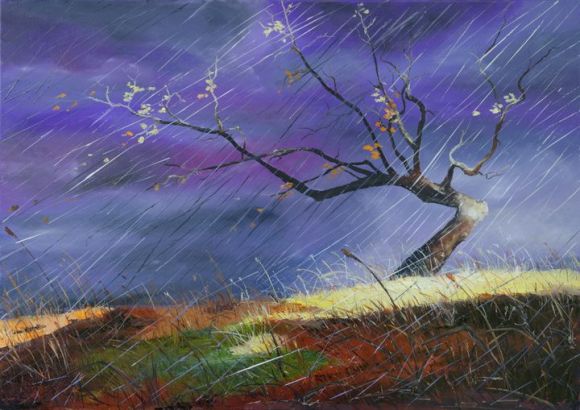






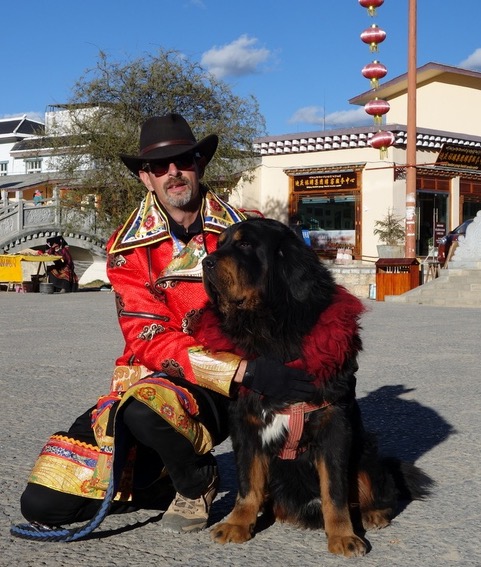
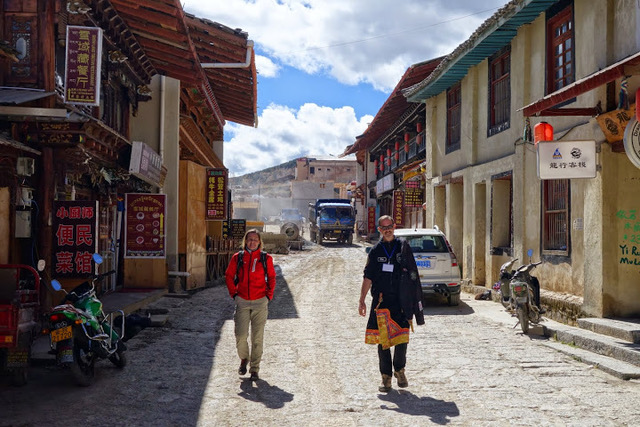
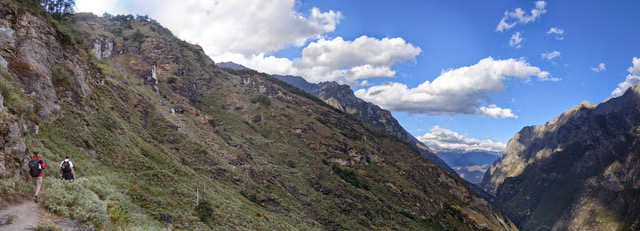
 Borderless