It is a truth almost universally acknowledged that Jane Austen is a great writer. The world created by her in just six novels continues to regale generations of readers with tales of love, marriage and money, a sentiment which would be reiterated by substantial numbers of her fans all over the globe. We could well echo Evelyn Waugh on the comic writer P. G. Wodehouse: that his (Wodehouse’s) inimitable world could never grow stale….that he has made a world for us (readers) to live in and delight in…
Jane Austen(1775-1817) has acquired a kind of cult status in the last couple of centuries. Such is her reputation that it has helped birth a veritable Jane Austen industry, replete with museums, memorabilia and mementos. There have been numerous novels and films inspired by Pride and Prejudice and Emma and many films (and remakes and adaptations) based on her novels.
16 December 2025 marks her 250th birth anniversary. Many museums in the UK and the USA have showcased exhibits which give viewers delightful glimpses into her life and writing. Her novels, full of wit and satire, provide an insightful commentary on the social hierarchies, as well as the quirks and oddities of her milieu.Their plots and themes are woven around women and the necessity of marriage, money and the determining power of money.With considerable irony and subtlety, she turns the mirror on how manners are a function of morality and good sense and not just a matter of appearances. Rarely didactic or preachy(with Mansfield Park as the only exception), her novels convey in perfectly nuanced and measured prose, how difficult and crucial it is for women to find the right spouse and space.
As the youngest daughter of a poor clergyman, mostly educated at home, Jane Austen was well aware of the value of an independent income and a home of their own. After the death of her father, she, her sister Cassandra and mother, rather like the Dashwood women in her novel Sense and Sensibility, had to move around as they were dependant on the financial support of her brothers, especially her wealthy brother, Edward. The pain of this unequal fortune and frequent shifts, which Jane and her sister Cassandra may have experienced, is expressed by Elinor and Marianne in the novel where they have to practice small economies and learn to scale their expectations according to their situation.
Austen led a largely sheltered and sequestered existence, surrounded by her family, bound to family duties which “might have been the more expected of a dependent spinster aunt such as she was.”[1] Many intelligent women, like Charlotte Lucas, Elizabeth Bennett’s friend in Pride and Prejudice are shown to accept inferior matches to escape from spinsterhood and the expectations of their natal families. The absence of livelihood opportunities for women in her day and the lack of any income of her own would have proved irksome to Austen and provided her with a further impetus to “write her way into some money,” as she wrote in a letter to her brother, Captain Francis Austen, in July 1813. Further, in another letter to her niece Fanny Knight, she writes that “single women have the propensity to be poor which is one very strong inducement for women to marry.”
Her novels often do not always reveal the full measure of Jane Austen’s remarkable achievement: how she, constrained by genteel poverty, “the lack of a room of her own”, and writing materials which had to be put away often to attend to obligatory family commitments, wrote her novels based on such close observation of, and acute insight into contemporary life. Her eye for detail is such that it invites frequent references to her own words: “A little bit of ivory, two inches wide, on which I work with a brush so fine as to produce little effect after much labour.” This modest disclaimer and “little effect” have, however, fascinated generations of readers and inspired hosts of writers.
That Jane Austen’s 250th anniversary is being celebrated and commemorated all over the English-speaking world perhaps comes as no surprise but it still leaves us with some questions. What is the relevance of her novels now? Are her novels relevant to present-day political realities, in addition to their astute observations on graded social hierarchies? Can we view her as a feminist? Does she merit inclusion and study in universities of the global south at a time when there is a strong drive to decolonise English, the language of the erstwhile colonial masters?
In her book Jane Austen: The Secret Radical, Helena Kelly writes of the subversive and radical potential and intent of Jane Austen’s novels. Kelly goes a step beyond Marilyn Butler’s 1987 Jane Austen and the War of Ideas that had suggested that Austen leaned on the conservative Burkean side when challenged by new-fangled Jacobinism with its ideas of equality and brotherhood, coming from France which disturbed hierarchies, ideas and values long held to be sacrosanct in traditional English society. Kelly suggests that far from being conservative, insulated from contemporary political concerns, Jane Austen held radical and possibly subversive views which she did not express openly but which are clearly configured in the world of her novels. In doing so, she made the novel a meaningful art-form and a vehicle for the expression of ideas around love, marriage and additionally also of debates on slavery, female education and emancipation.
“It is a truth universally acknowledged that a single man in possession of a good fortune must be in the want of a wife.”[2] This famous ironic opening sentence of Austen’s has captured attention and elicited many critical commentaries. It’s a brilliant masterstroke where Austen underlines the mindset of young women and their anxious mothers on the lookout for eligible bachelors. Articulated like a truism, it seeks to facetiously universalise a partial truth. The omniscient authorial tone and tenor encompasses the dominant themes of Pride and Prejudice in the opening statement itself. Marriage, women’s responses, men’s reactions, social rank and wealth — all the principal subjects of Austen’s writing are near universal themes. In her novels, Austen communicates the constraints within which women function and the limited or literally the only ‘choice’ available to them. Having experienced financial instability and economic dependence, she had a clear understanding of the constraints experienced by women in early nineteenth-century England.
The happy ending that we see where Elizabeth Benett indeed becomes “mistress of Pemberley” symbolises the moment when some women, having acquired a certain status, become custodians of the home and the private sphere. Some feminist historians like Gerda Lerner, however, have pin-pointed this moment as one where the economic marginalisation of women is complete, in the aftermath of the Industrial Revolution, and they are pushed back from the public sphere.
Even as women were participating in print culture and taking their place as readers and writers, they were increasingly relegated to the private sphere. The tendency to relegate women to the private sphere and making them responsible for the entire range of domestic tasks of nurturing and care-giving and thereby sustaining the edifice of domestic life is something that persists even now. The fact is that women’s participation in the paid economy and public sphere has added to their ‘double’ burden in the 21st century.
Many critical voices have pointed out that Jane Austen’s writings do not directly mention the political situation, philosophical debates or religious discourses of the day centering on questions of social equality, justice, economic questions or the rights of man. Yet her fine crafted depiction of socio-economic relations, the dynamics of human relationships shaped and moulded by the struggle for wealth or power or status exposes the political reality, social hierarchy and the economic structure in society which shaped and informed all social transactions.
While the position of women may have improved in some spheres, there are still glaring gaps when it comes to women’s access to equality or justice. Changes in the last two centuries have gone beyond superficial tokenism. There are still miles to go in our march towards equality. It is in this larger context where there is a grudging acceptance or disavowal of women’s rights that the Jane Austen heroine’s negotiations with patriarchy remain relevant.
They demonstrate a mode of assertion, of agency in the face of inequality and in socially disadvantaged situations, which sustain an illusion of female empowerment and wish-fulfilment. It is this vision of romance, which, informed by a comic and somewhat ironical view of life, consolidates the exercise of female agency and makes the reading and re-reading of Jane Austen’s novels a rewarding and enriching experience. Her astute delineation of human delusion and human folly holds up a mirror to her society that often impels recognition on our part and remains forever relevant. Her perceptive analysis of the warp and weft of her society remains almost unmatched.
…yet he (Byron) cannot match the shock she (Austen) gives me;
Beside her, Joyce is as innocent as young grass. I feel truly uneasy, my mind unsettled,
Watching the English middle-class spinster
describe the power of money to attract love,
so plainly and soberly revealing
the economic foundations that sustain human society.
W.H.Auden’s lines on Jane Austen and the unlikely comparison with the prince of notoriety, Lord George Byron, never fails to instruct or entertain us. Such is the mark of great literature which leaves its imprint decades and centuries after its inception.
Meenakshi Malhotra is Professor of English Literature at Hansraj College, University of Delhi, and has been involved in teaching and curriculum development in several universities. She has edited two books on Women and Lifewriting, Representing the Self and Claiming the I, in addition to numerous published articles on gender, literature and feminist theory. Her most recent publication is The Gendered Body: Negotiation, Resistance, Struggle.
.
PLEASE NOTE: ARTICLES CAN ONLY BE REPRODUCED IN OTHER SITES WITH DUE ACKNOWLEDGEMENT TO BORDERLESS JOURNAL
With its four-storey outlet in GK-2, Ajay Jain has made Kunzum the new happening place for book lovers in Delhi-NCR. He converses with Shantanu Ray Chaudhuri about his journey and about making brick and mortar stores viable in the era of Amazon as the writer browses through the different sections of the bookstore.
Book event with actor, Kabir BediBook event with Booker winner, Geetanjali ShreeIn Kunzum Bookstore. Photos provided by Shantanu Ray Chaudhuri
It is a bookstore unlike any I have been to, and that’s saying a lot. I visited it first sometime in December 2022, when it was still a work in progress, and even then it was stunning enough for me to get my aged parents, who need walking sticks, and my wife, who at the time was nursing a broken ankle, to visit this as a new year outing on 1 January 2023. Since then Kunzum at M Block Market, Greater Kailash 2, New Delhi, has grown to four floors spread over 10,000 square feet. The first floor is the regular bookstore, the second the Penguin bookstore. The third the ‘Theatre Kunzum’ – a 125-seater events hall – and the fourth an eighty-seater theatre, with plans for a café. There are other Kunzum bookstores which are a more modest 2500 square feet each. The original Kunzum Travel Café is approximately 500 square feet.
I enter it and am transported to a book lover’s paradise. Its very affable owner, Ajay Jain, and brilliant curator, Subir Dey – who generates in me a huge complex with his awareness of books and a hole in my pocket with his recommendations for the same – have time and again asked me to work out of the store. Which I would have gladly done, but for the fact that, one, it is impossible to get any work done once you enter its precincts (the only work it allows is browsing its shelves), and, two, I fear that I will end up spending all my salary at the store.
What makes it remarkable is that Ajay can visualise a store chain like this in this day and age where we hear a constant refrain of brick and mortar stores closing down. Of how difficult it is to sustain one in the age of Amazon. Most of the major bookstores across the country have devoted a large part of the space to stationery and toys. Ajay is determined not to do that. As far as he is concerned, a bookstore is a bookstore. And there will be no dilution of the space. As Ajay says, “I was very clear from day one. We will not sell teddy bears, stationary, croissants (chuckles). It might be a slightly steeper learning curve, but we want to learn how to sell more books. If I’m not selling enough books, why am I in this business? I could have invested this money somewhere else. For me, it’s a social mission to push more people to read. If everyone, every human being on this planet, reads books, it would be a much better place to live in. When we read books, we also challenge rampant consumerism – we are taking the money away from buying other stuff to buy books.”
Given the quite extraordinary range of books, including rare and collectors’ editions – I picked myself a mind-blowing one on iconic book covers, The Look of the Book, by Peter Mendelsund and David Alworth – Subir Dey, the curator, is the backroom star of the show. A quiet, self-effacing book lover, Subir says, “I have been doing this for myself, at home, before Ajay started the bookshops. One day, I just picked up the phone and asked him, how can I help? Then, there is the community angle. I talk to fellow bibliophiles both online and offline who point out all the amazing editions of great books. The curation team at Kunzum is indispensable. Everyone has their favourite genre and we all diligently keep track. The classics and graphic novels are an easy target because of their popularity. Then there are collected works and anniversary/commemorative editions that we try to keep track of. Publishers help us with that too. For example, the Dune series picked up when the new movie came out. There are so many beautiful editions of the book that it is hard to choose. There are graphic adaptations of long-form novels like 1984, Animal Farm, The Kite Runner that we tracked down and have in stock. These are great books for someone who is intimidated by the traditional long-form novel format. This could be their gateway drug into reading and Kunzum would love to get them addicted. Special editions are a brilliant gifting idea. Books are the best gift you can give to people. Most of us have friends who are avid readers. These special editions are a very thoughtful gift. We tell our customers to bring a book to a party full of people who are bringing bottles of wine. We all used to give and receive books as gifts, growing up. Those books shaped our worldview. We are rolling out ads on social media to highlight the special editions available with us and pretty soon you will see more of these titles highlighted not just online but in our stores too. There is a demand for it, we have seen an uptick in the interest among buyers who are looking for specific edition of their favourite books and our team is happy to track them down.”
The Beginnings
Ajay Jain: I have a background in engineering and management, so I worked in the IT industry for five years. Then I got into sports management, and did that for five years. At the age of 31, I dropped everything and moved to the UK to study journalism. I did my master’s in journalism there. I came back in 2002, worked for the Express group, started a youth newspaper, got into blogging and freelance writing – mostly business and tech writing – which I did till about 2006–07. I was one of the earliest professional bloggers in the world. As a journalist/blogger/ influencer (the word wasn’t there at the time), and as somebody who wanted to write books, I figured I wanted to do something where I could create more of a legacy.
Early Reading
Ajay Jain: Growing up, I read the usual staple. You had your Enid Blyton, Nancy Drew, Hardy Boys, Famous Five. Unlike my classmates, I never read Agatha Christie or PG Wodehouse, but I had read all of James Hadley Chase by the time I was in Class 8. My headmaster used to ask me why I was borrowing these books from the library. I did so because they were there! I read a whole mixed bag of books in middle school and high school, even in college. I read Sidney Sheldon, Jeffrey Archer, Ayn Rand – a mixed bag. Anything that caught my fancy.
Travel Writing
Ajay Jain: Around 2007, at a personal and professional crossroads and unable to relocate from Delhi, I said to myself, ‘Okay, let me do the next best thing,’ and I became a travel writer. I’d done a few short road trips around India, and I was really enjoying travelling. Since I’d also learnt photography, I was doing a lot of that. I thought, why not make it a profession? So I hit the road.
I didn’t want to write a Lonely Planet kind of book, and I also didn’t want it to be a literary piece. I was thinking of my own format. The first trip I actually went on was to this place called Spiti in Himachal. I spent a night in Manali, and then headed for Spiti. I crossed the Rohtang Pass. Till then, it was fine because there were other people. I’d never done that kind of terrain ever. I drove for hours in a high-altitude desert area with no road signs, no mobile signals, nothing! Just a track where you followed earlier track marks. After a while I realised I was lost!
The Defining Moment – the Birth of Kunzum
Ajay Jain: I just kept driving, not coming across another human being for hours. Imagine not seeing another human being for hours in a country like India. Suddenly I came upon a plateau, upon a sign that said ‘Kaza’, which was where I was headed! That spot, where I stood, was the most astounding place. As I looked around, the only thing I saw was snow peaks, Buddhist flags flying, complete silence. It was breath-taking. I thought to myself, if this is what the planet is, if this is what India is, I want to be a travel writer. In that moment, not only did I find my direction to Kaza, I found my direction in life as well. The spot where I stood was Kunzum-La.
After I returned, I called my blog Kunzum.com. A little accident in technology worked in my favour. I had reserved the domain called traveltattoo.com as my travel blog. For some reason, the registrar didn’t inform me that my domain was up for renewal. It got taken by someone else. In losing traveltattoo.com, I got Kunzum.com. That’s how the name Kunzum came up.
Kunzum Gallery, Hauz Khas Village
Ajay Jain: I did a few shows for my photography at places like Habitat Centre and got a decent response. I was encouraged to open a place of my own and came across a place in Hauz Khas Village. I picked it up in 2009 and opened up a gallery there. On the first day I sold a print, and then for the next year or so I didn’t sell a single thing! So, I was just sitting there with some friends, mulling over what to do, and we realised that all the people who bought my prints in Habitat just happened to be passing by. They saw the prints, they liked it, and bought it on the spot because the prints weren’t very expensive. I decided to do something there (in the gallery in Hauz Khas) that would get people in. That’s when we decided to offer seating in the gallery- let people come in, enjoy free WiFi, etc.
We set up a small library so that people could borrow books, and decided to serve up tea, coffee and cookies. We thought we could pay for all of this. When we looked at the numbers (and crunched them), we realised that if we pay for everything and a certain number of people come, and nobody pays, we will be out of pocket by so much, but will have acquired some customers for that price of coffee and cookies and all.
Funding the Enterprise
Ajay Jain: I was still freelancing, and had been investing over the years with whatever I’d saved from my various ventures. I was just getting by. We decided to rebrand the place in Hauz Khas from Kunzum Gallery to Kunzum Travel Café. The place took a life of its own. A few days after we opened, someone came in asking if we could do a poetry reading, to which I agreed. Before we knew it, we had over 200 events happening in the café every year. There were all sorts of events – book launches, film screenings, poetry events, talks, etc.
We were clear about the financials. If you benefited commercially from it, you pay us. If there was nothing commercial, if you didn’t have the budget, okay, you could use the space anyway (if the event was suitable). We kept it flexible. My main motivation was to get people in, to see my photography and my books, which were sold at the café.
Bookstore Chain in the Time of Amazon
Ajay Jain: During the pandemic, I was reassessing a lot of things. I have always believed that just because we are doing something well, we should not be doing it all our lives. With the pandemic, I had to shut Kunzum Café for over two years, making do with a skeletal staff throughout. I wrote my first novel. I kept wondering: how do I find an audience for my books? No matter how big your publishers are, or how big you are as an author, you still need to find your own readership. Then I thought, why don’t I set up a book club? A national book club, something that would have many people. The response came in quickly as well. I enrolled a couple of thousand members.
That’s when I thought, why don’t I turn Kunzum Travel Café into a chain of reading rooms? Build a model where we create reading rooms across the country, where people come and sit and read. The numbers didn’t add up though. There was no model that would make this sustainable for me. Enough people wouldn’t pay enough money to make this a library-type of model. It wouldn’t work in this climate, especially when real-estate had become so expensive. I had learnt how to build a community, how to bring people together through Kunzum Travel Café, but I didn’t know how to monetise it.
People had asked me, will there be more Kunzum Travel Cafes? Will there be a Kunzum Travel Café franchise? For me, Kunzum Travel Café was more of an exercise in personal branding. For the external investor, there would be no ROI since the only one benefiting from Kunzum Café was one Ajay Jain. In the process, I started making money doing brand endorsements through Kunzum Travel Café. It was more like a PR agency, so the only guy benefiting would have been me.
That is when I realised I should open a chain of bookshops! The model would be Kunzum Travel Café, but with a bookshop added to it. I did some back-of-the-envelope market research. There were people buying books, publishers doing business. In absolute numbers, there were more books being sold than ever before. I went to the bookshops which had good business – like Bahrisons, Faqir Chand, Midlands, etc. They had a huge legacy and were located in prime locations. I figured that I’d learnt how to make Kunzum Café in Hauz Khas a destination, and that I’d make this new venture a destination also. I didn’t really feel too daunted by this, I knew we’d figure things out as we went along. If I started asking too many questions, I would have been dissuaded immediately, so I thought that I’d figure it out on the road.
We have five locations. The GK one has four floors, so you can consider them either four stores or just one. At the core, the business model is simple – sell books, and sell enough books to make a profit. It’s still early days for us, we are on the way as we speak. I know that trends are right, and within this year we will be operationally profitable, so I’m not too worried about that.
I did a bit of reading, given that stores were closing all over the world, and the rise of Amazon. If Amazon did not exist, or if Amazon did not offer such discounts, many more bookshops would be open today. People would still prefer to walk into a bookstore for the experience of buying a book over buying it online. Because Amazon offers such discounts, most people think books are easier to buy online. I blame publishers squarely for this, not Amazon.
The Irony of Publishers Killing Bookstores
Ajay Jain: If books and readership are being challenged by other forms of entertainment, and readers are distracted, one needs to look at this as something cultural. That’s why experiences become important. Experiences are connected to physical spaces. That’s how you expand readership. Unfortunately, when I started interacting with publishers, I noticed that they show little intent to expand readership in society. They are making enough money not to think about expanding readership. It’s not enough for publishers to tell me, “Hey, I love what you’re doing at Kunzum Café.” They need to plug the discounting at Amazon, and the piracy of books. More than piracy, I think the discounting is a problem, which publishers can solve partly through lobbying, and partly through curtailing supply, if they want to. They own the product, and if they say no, that can change things.
The publishers’ argument is that they give the books to distributors to be sold, and these distributors are not within their control. The fact is, everyone is traceable. Publishers know who is selling their books, and can plug supply. If a reseller picked up a book on Amazon to resell, the publisher could tell Amazon to stop them. It could get into a cat-and-mouse game but eventually, it would dissuade them so much that the incentive to play this game would go down.
France Shows the Way
Ajay Jain: Look at what happened in France. The government in France forbade Amazon from offering discounts of more than 5 per cent on books. The French government realised bookshops were a national cultural asset. Because of this, bookshops that were struggling are now flourishing, and new bookshops are opening. This change came through legislation.
In India, if publishers want, they can move the Competition Commission, and say that discounting on Amazon is an unfair trade practice. In a country like India, where you have the MRP [Maximum Retail Price], if you can’t sell above MRP, how can you sell below MRP? Especially because all governments in India have the same stated position on FDI [Foreign Direct Investment] in retail, which is to ‘protect the small trader’. So, Competition Commission could look at how these discounting practices are putting businesses in such a precarious situation. If the publishers make enough of a song-and-dance about it, if they lobbied, if they took legal recourse, I think this issue can be resolved. We have a precedent in France now.
Financial Viability
Ajay Jain: When I was doing research, I wasn’t researching into whether I could open bookshops or not. I was researching how to make it viable. I had already decided I was going to commit to this venture. I’d started acquiring the real estate for it. I read someplace, “Bookshops don’t fail. Bookshops run by lazy booksellers fail.” In today’s day and age, not just books, you have to sell every commodity as an experience. You could be selling shirts, shoes, books, anything, because everything you want is available online. But if you want people to come to the stores, shopping malls, markets, you need to create that experience for people.
The Four Cs of Bookshop Design and Marketing
Ajay Jain: I have formulated what I call ‘The Four Cs of Bookshop Design and Marketing’. First is Configuration, which is basically the way you design the stores. If you look around, we’ve designed them in a way that the shelves don’t overwhelm you. There is enough space to move around, to sit down, to go through the books. You have browsing space and you can maintain a distance between yourself and the shelves. Not only is the vibe inviting, the design also allows you to discover books which you may not have discovered in an overstocked bookstore. The whole mood of being inside a bookstore is extremely important.
The second C is Curation. The kind of titles we select, the way we display them, and the way we help customers discover new material. Finding books customers were not looking for makes for a delightful experience. That is what will bring them back. These customers will say, “Hey, you know what? I went to Kunzum and found this great book! I loved it. It was money well-spent and time well-spent.” This is where Subir and his team come in.
The third C is Community, which we were doing at Kunzum Travel Café. We wanted to build a community of not just readers, but creators – writers, artists, designers, editors, everyone involved in creating books. Again, like Kunzum Travel Café, look at it like a larger cultural thing. So, bring in musicians, film-makers, puppeteers! We wanted to bring these people together to create a community.
The fourth C, Convene, aims to bring these people together for events. Ever since we’ve been fully operational, we’ve already hosted over 500 authors. We’re adding many more events, more programming, more partnerships, so that people can come and use our spaces. We make sure that there is enough space for people at our events, and that people don’t have to push bookshelves in order to be able to participate. We have dedicated spaces for events.
Since many people in my team come from the book retail industry, when the first store opened, the first question they asked was, “Sir, haven’t you wasted a lot of space?” The event space is going to be your brand ambassadors, your marketing agents. People will want to come for these events. We built the whole model on these four Cs. The signs are positive. People will come and talk about you, and be here, and will want to buy books from you. It’s just a matter of time before enough people will buy these books.
The Penguin Floor and Other Initiatives
The Penguin floor
Ajay Jain: In GK 2 we had just one floor, the first floor, a general bookstore, to begin with. Then an opportunity came to acquire the rest of the building above. Because the terms were attractive, I agreed. Then I thought, why not have thematic floors? One thought was that half of the second floor could be a graphic comic and art store, and the other half would be for children’s books, with the rest of the spaces above being dedicated to events. I was in the Penguin office having a general talk about multiple things. I really loved their office, so I said, “Look, it’s like a bookstore in itself.” I proposed that we should have an exclusive Penguin store. Penguin is one publisher with such range and distribution in books, no other publisher has ever come close. Their international collection is only increasing, and they have so much to offer. I don’t think the exclusive floor in our bookshop would have worked with any other publisher, just because no other publisher can offer the range Penguin has. They have graphic novels and comics – an important genre for us.
Then we got an offer from the top management, and I got excited. Like everything else in life, I ran with the idea, and decided to work out the viability later. The idea is that our bookshop showcases the best Penguin has to offer, incentivising Penguin to bring in their best in terms of their programming, their authors, and their events. It technically becomes a Penguin showcase. For us, it’s an opportunity to work closer with the world’s biggest publishing house. A few weeks ago, the UK Penguin team confirmed to me that this (the floor of the bookshop) was the only exclusive Penguin store in the world.
As part of a community, we’ve actually taken a lot of initiatives. One of them is called Book Bees, which is a book club for children, for kids up to twelve. Our children’s book section is called Kunzum Book Bees now. We also have a general book club called the Kunzum Book Club. Anyone can become a member for free. If you become a member, you get priority invites to events, we will give you first access to signed editions, which are always in limited supply; we will give you a little discount on our books, stuff like that. That’s part of the community-building exercise.
We launched the Kunzum CEO Book Club, where we’re getting corporates to come on board to encourage the culture of reading. The proposition being that all leaders are readers. If you want to nurture leadership within your organisation, you need to promote readership. We’re reaching out to them, asking them to buy books on a structured basis to distribute them amongst their employees, and maybe go even beyond that, by distributing them amongst their vendors, their customers, to spread the culture of reading.
We launched this programme called ‘Kunzum Key’ which is open to everyone, but primarily for creators of all kinds. You could be an actor, a dancer, a film-maker, a producer, an event-manager, a musician, anything! We give a free membership card that allows them to create at Kunzum – keep their own sort-of-office as long as they follow a fair-use policy. These creators can come, sit here, do their work, hold meetings, have interactions, brainstorm, showcase their work in some way. They will be offered free WiFi, which we don’t offer our regular customers. Every time these creators come they will be given a no-questions-asked complimentary cup of coffee or tea, and the bookstore will give them a very hefty 20 per cent discount on all the books they buy at the store.
Then there are the lit-fests. We are reaching out to every possible event where there are likely to be people who will buy books. We are asking them to make us their official bookstore partner.
Reaching Out to the Underprivileged
There’s a limitation to how many bookstores we can set up and how much we can do in each store. We don’t want to expand our physical spaces indiscriminately because we want to stay true to the culture we are trying to create. If we expand too much, or thin ourselves out, even if we get funding, which comes with its own pressures, we don’t want to lose our essence.
Our idea of expansion is to take Kunzum to potential readers. The corporate sector is a very obvious one. We’ve started doing small book fairs and events at different localities to promote the culture of books and reading at your doorstep. Schools and colleges are important to us. The intent is there. We’ve already reached out to a few schools, some of the DAV schools, where we did some events. There’s around a thousand schools there. Each school in the DAV chain cuts across all segments of society. We’ve also been approached by a few universities and colleges. We have a limitation of manpower. We want to make sure our manpower can pay for itself. We want to reach out to schools to, again, promote this culture of reading. If schools start buying at an institutional level from us, they can make books available for students who are not able to afford books. That’s where, again, we go back to the whole ethos of ‘Curation’ we are trying to create. Don’t just buy books that you think everyone is reading for the sake of being like everyone else. We’ll help you select books that you may not have thought of. I have been thinking of a programme where enthusiastic readers who are unable to afford books can be matched with someone who could fund their books. Of course, we will have to do it in a slightly more structured way. When I meet anyone from above a certain economic stratum, I see how privileged they are because they can afford to buy books but they are not reading books. There are people out there who want to read books…
At an LGTBQIA event that we had done, a guest who loves books said she couldn’t read anymore because of an eyesight problem. There was another young person there who wanted to read books but could not afford to buy. They just got chatting, they’d never met each other, and the former bought the book for the latter. She said, “I can’t read, but you can, so here’s the book for you.” How do we kind of institutionalise this programme? We’ll have to figure it out.
Regional Language Library
There are a couple of issues here. We will have a space constraint – where do we store it? Number two, how would we curate it? Because every language would require a different curator. In a city like Delhi, there would be enough Telugu readers, Bengali readers. But then, Bengali readers may want something other than the popular titles we might store. They might be looking for a larger collection. A lot of vernacular readers invest a lot in their respective languages. We might not be able to build depth to cater to that audience, so that’s a challenging situation to be in.
Going Ahead
We want to be present in every community – corporates, residential neighbourhoods, schools and colleges, etc. In a small way, we are sending books to rural areas too. For that to pick up pace, we need to look at it slightly differently. For now, we’re doing it in our small capacity. The whole idea is, irrespective of how many stores we have, we just want to go out there and get more people to read. Whether they borrow books and read, or buy books from Kunzum or not, let that be secondary. It falls upon every book lover to spread the good word, and encourage other people to read. Once you overcome that inertia and start reading, you stay with it.
Ajay Jain in Kunzum Bookstore
(Published in multiple sites)
Shantanu Ray Chaudhuriis a film buff, editor, publisher, film critic and writer. Books commissioned and edited by him have won the National Award for Best Book on Cinema twice and the inaugural MAMI (Mumbai Academy of Moving Images) Award for Best Writing on Cinema. In 2017, he was named Editor of the Year by the apex publishing body, Publishing Next. He has contributed to a number of magazines and websites like The Daily Eye, Cinemaazi, Film Companion, The Wire, Outlook, The Taj, and others. He is the author of two books: Whims – A Book of Poems(published by Writers Workshop) and Icons from Bollywood (published by Penguin/Puffin).
In Conversation with Mitra Phukanabout her latest novel, What Will People Say?A Novel , published by Speaking Tiger Books, March 2023
Mitra Phukan. Courtesy: Speaking Tiger Books
What will people Say? A Novel by Mitra Phukan, a well-known writer from Assam, plays out like a sonata with fugues introducing complexities into the narrative. It concludes in a crescendo of hope with an acceptance of love. At the end, Phukan writes: “It was love. A love great enough to conquer all the ‘What Will People Says’.”
What is remarkable about the novel is the light touch with which it deals with major issues like communal tensions, acceptance of love across divisive human constructs and questioning of social norms. She elucidates: “I have written What Will People Say in a conversational, everyday style, sprinkled liberally with humour, even though the themes are very serious.”
Phukan’s novel moves towards a more accepting world where social norms adapt to changing needs — perhaps an attitude we would all do well to emulate, given the need for a change in mindsets to broach not only divisive societal practices but the advancing climate crises which calls for unconventional, untried steps to create cohesive bonds among humanity.
The story is set in a small town in Assam called Tinigaon. Where the protagonist, Mihika, a widow and a professor, upends accepted social norms with her budding romance to a Muslim expat, a friend of her deceased husband. She has strong supporters among her family and friends but faces devastating social criticism and even some ostracisation. This makes her think of giving up the relationship that drew her out of the darkness of widowhood.
Suffering during widowhood is a topic that has been broached by many Indian writers ranging from Tagore, Sunil Gangopadhyay to many more. Before the advent of these writers, in 1856, the Hindu Widows’ Remarriage Act was brought into play by the efforts of Ishwar Chandra Vidyasagar, who had also written on the issue. But despite the law, has it as yet been accepted by conventional society? And how would such a society which bases its perceptions on rituals and traditions respond further to a relationship that discards marriage as a norm? These are questions that Phukan deals with not only in her novel but in the conversation that follows.
The plot showcases an interesting interplay of different perspectives. In certain senses, it has the delightful touch of a Jane Austen novel, except it is set in India in the twenty first century, where relationships are impacted by even social media. Phukan, herself, sees “ageism” and female bonding and friendship” as major issues addressed in the novel. She says that women’s bonding is a theme that “has not been focused on enough, at least in Assamese writing”, even though, it is a fact that this has been the focus in other literature like, Jane Austen’s novels written in the nineteenth century and in subsequent modern-day take-offs on her novels, like the The Jane Austen Book Club by Karen Joy Fowler, published in 2004. In the sub-continent, Begum Rokeya described a full woman’s utopia in Sultana’s Dream(1905), though Rokeya’s story is essentially a feminist sci-fi. Unlike Rokeya’s book, Phukan’s is not an intense feminist novel. The protagonist, Mihika, has men well-wishers and men friends-cum-colleagues too. The tone is lighter and makes for a fabulous read, like Austen’s novels.
As if rising in a fugue to Mihika’s romance are two more relationships of a similar nature. One is between her daughter and a young boy from a traditional, respected, conventional home. The other, which I found more interesting, and I wish Phukan had explored a bit more, is a relationship between Mihika’s Bihari beautician, Sita, and a tribal boy. While the girl is from a traditional vegetarian strictly Hindu family, the boy is an orphan, a tribal. It is a romance that is outside the conventional affluent, middle-class circle. And is used as a contrast to Mihika’s and her daughter’s experiences. Sita’s narrative highlights how the conventional finally accept the unconventionality of a romance that in the past might have been completely rejected.
The novel rises above victimhood by looking for resolutions outside the accepted norms subtly. The plot weaves the triangular interplay of relationships with notes of harmony. The story, devoid of gender biases and darker shades of drama, delves into serious themes with a feathery touch.
The structuring of the novel arrests the reader with its seeming simplicity but each is fitted into the composition to create a fiction that touches your heart and leaves you pining for a bit more… like the strains of a composition that has the deftness and neatness of a Jane Austen novel, written in the context of twenty first century Assam.
Phukan herself is a trained vocalist in Indian classical, a columnist, a translator and a writer. In this conversation, she reveals more about the making and intent of her novel and her journey as a writer.
You wear a number of hats — that of an Indian classical vocalist, a columnist, a children’s writer, a translator and so much more. How does this impact your work as a novelist?
I feel everything is related; everything flows seamlessly into the other aspects. Yes, I am a trained Shastriya Sangeet[1]vocalist, though I have retired from performances now. But at one time that was my life…even now, I write extensively about music through essays and reviews. And I’m always listening to music, of many genres.
I began writing, hesitantly comparatively late, though I always enjoyed it, getting prizes in school and college. Later, I began to write stories, etc, for magazines such as Femina, Eve’s Weekly. Mainly though it was the paper The Sentinel and its editor D N Bezboruah which gave me a platform through middles, short fiction, essays and other genres. My children were very young at the time, and somehow the children’s stories came to me at that point. Now that they are grown up, those stories don’t come any more…and I regret that.
Translation happened because two stalwarts of Assamese literature, Jnanpith awardee Dr Indira Goswami and Sahitya Akdami awardee poet Dr Nirmal Prova Bordoloi encouraged me to try my hand at it by translating their work. I found I enjoyed it …and the journey continues!
Writing fiction, especially novels, needs the writer to have a wide view of life, I feel. I love storytelling. I write from observation, but also, I learn a lot about the literature of the place I come from, Assam, through the works of the greats in Assamese.
Do your other passions, especially music, impact your writing?
Music, definitely. In What Will People Say, for instance, there are so many references to songs and music, to concerts and musicians. There is an entire chapter devoted to songs in Hindi and Assamese where the theme is music. Besides, my novel A Monsoon of Music is about the lives of four practicing musicians. Many of my short stories from A Full Night’s Thievery have music as a theme …’The Tabla Player’, ‘The Choice’, ‘Spring Song’, and so on.
Also, musical metaphors seem to creep in, unbidden, to my writing…
Among the other passions that are reflected to a greater or lesser degree in my writing are gardening, and of course food!
What led you to write What Will People Say?
My stories, whether long or short, are always triggered by events, people, that I see around me. Sometimes it could even be a sentence I overhear while waiting at an airport, or maybe an expression on somebody’s face. They are based on reality, though they are fictionalised as they pass through the prism of my mind, my imagination.
What Will People Say was triggered by the fact that I see so many older women who have lost their spouses spend their lives in loneliness and sometimes despondency. Yes, their children may be caring, they may have women friends, a profession, but that is not enough. Love, finding a romantic partner, even companionship, is very unusual as a senior. There are so many unwritten codes, so many taboos and restrictions, especially in the small, peri-urban places.
And yet I find that change is coming. After all, people are exposed to other cultures, where going in for a second relationship is not seen as a betrayal of the dead husband, as it tends to be here.
The need for social change and a questioning of norms is part of the journey you take your readers through in your novel. Were these consciously woven into the story or did the story just happen? Please tell us about the journey of the novel.
This was the theme I have had in my mind for a while now. It was a conscious decision, and not always an easy one to implement, because of the binaries involved.
The place where I live, the larger society, prides itself on being “liberal”. And it is, compared to some other places on the planet, or in the country. But in the twenty first century, we are aware that there is much more that needs to be done, a much longer path to be traversed. The theme came first. After which I began to think of the storyline, the characters, the incidents that would make the theme come alive, all in a fictional way, of course.
What Will People Say, the line, is a kind of whip used to keep “straying” members of society, usually young people, within the fold. But here I have inverted it …it is the older members, those who are supposed to uphold the status quo, who are doing what, for many, would be the unthinkable.
Do you still see widow remarriage as an issue? Is it still an issue in Northeast India as your book shows?
Assam is a multi-ethnic, multi-lingual, multi-cultural and multi-religious society.
The community I am describing is what is known as the “caste Hindu” society, in which, traditionally, widow remarriage is not “allowed”. Even now, even in urban Assamese society, it is uncommon. There are unspoken taboos, unwritten codes of conduct. The extreme strictness of the past has lessened no doubt, but also a lot depends on the economic and social status of the woman. I never, for instance, saw my grandmother, a staunch Brahmin, wear anything but stark white after she was widowed. Her vegetarian kitchen was separate from the main kitchen …leave aside meat or fish, even onions, garlic were not allowed there. My mother wanted to follow the same route after my father passed away, but her doctor forbade her from doing that, while her children insisted, she wear colour. Today, my generation of women wear colour and eat non-vegetarian after the demise of their husbands, so things are slowly changing. But a second marriage, or a romantic relationship, in middle age is still very rare indeed.
Your book describes middle class liberals, conservatives as well as immigrants and tribals. What kind of impact have tribals and immigrants had in Assam over time?
There have been many waves of migration into this fertile valley of the Brahmaputra. As a result, it is a rich cultural and linguistic mosaic. Different influences are at play all the time, communities that live in proximity to each other are definitely influenced. But it is a slow process, naturally. And usually takes place over generations.
You have hinted that tribals are more liberal and out of the framework of Hindu rituals. Is that a fact?
Many tribes are, in general, indeed more liberal when it comes to widow remarriage, as are the large Muslim and also the Christian communities. It is the “caste Hindus”, especially those from the “top” of the caste pyramid, who mostly have these taboos. The original inhabitants of these valleys were different ethnic groups, which, because of the riverine, heavily forested aspects of the region, tended to remain in isolation from each other. As a result, cultural practices were unique to each one. Different waves of immigrants from both the East of the region, from Southeast Asia and beyond, and from the rest of India in the west brought in different influences, which were absorbed slowly. We see this in the food practices, the music, the weaves and clothes that we traditionally wear, and religious and social practices, among other things.
How do your characters evolve? Out of fact or are they just a figment of your imagination?
All are creations of my mind, my imagination. But I try to keep them as real as possible. It is all fiction. I love adding layers to them as I go along, till they have their own individuality, their own body language, their own ways of thinking, speaking, their food preferences, everything. By the end, they are “real” to me, though they actually exist only within the pages of a book.
What writers/ musicians/art impact you as a writer? Is there any writer who you feel impacts you more than others?
My music gurus have impacted me in many ways, beyond music. Guru Birendra Kumar Phukan, especially, taught me …through his music …what it means to be steeped in spirituality, and how to aspire higher through Shastriya music, which, to him, and sometimes to me, too, was and is prayer.
As for writers, there are so many I admire deeply. Among the Assamese writers are the scholar and creative writer of the 15th-16th Century, the Saint Srimanta Sankardev, Jnanpith awardees Birendra Kumar Bhattacharyya and Indira Goswami. I am always deeply moved by their humanity. Their works, their characters, are drenched in it.
Among writers that I have read in English are the obvious ones, so many of them …but for style and humour, I think nobody can beat P G Wodehouse, and for irony, Jane Austen. And my Go To book during the pandemic was Three Men in a Boat by Jerome K Jerome, for an instant lifting of spirits.
You have written a lot of children’s stories and written columns. Have these impacted you as a novelist? How is writing a novel different from doing a fantasy-based children’s story or writing a column?
I have written biographies, short stories and essays too. Basically, I see myself as a storyteller, though I write non-fiction too. The children’s stories came from my observations of the child’s world at one time, the way they thought and reacted. My columns are commentaries on society, couched in different “rasas”, including the humorous, but are sometimes a narration in the form of a story. The practice of writing, whatever the genre, and the habit of observation, have all helped me in the marathon task of writing novels!
What can we look forward to from you next? Are you working on a new novel?
Yes. I do have a novel in the pipeline, am giving it some final touches now. But what is due to be published next is a biography of Dr Bhupen Hazarika, a monograph really. He is a musical icon and so much else for us. It is being published by Sahitya Akademi. And then there is a translation of a novella by Sahitya Akademi Awardee Dr Dhrubjyoti Borah, to be published later this year by Om Books. And then of course there are the columns which I really enjoy doing, since the paper that I write for, The Assam Tribune, reaches the deepest areas of rural Assam. Many of the readers of this column, ‘All Things Considered’ are first generation literates, and that makes me really happy.
Indian President Pranab Mukherjee presents the Swarna Kamal Award to Shantanu Ray Chaudhuri at the 60th National Film Awards ceremony in New Delhi in 2013. Photo provided by Shantanu Ray Chaudhuri
Sandman, the mythical dream maker from Scandinavia, is said to sprinkle magical sand on sleeping children’s eyes to inspire beautiful dreams. What could Sandman have in common with a much-fêted editor who has worked with many celluloid stars and writers?
They both vend dreams – one makes dreams for children and the other is tries to fulfil dreams of writers attempting to create a beautiful book. Meet one such seeker of serendipity Shantanu Ray Chaudhuri, an eminent award-winning editor, who has brought out books on and by film personalities of India as well as assisted less-known writers find a footing in the tough world of traditional publishing. His magical sand is impeccable editing and an open outlook that stretches beyond the superficial glitter of fame and delves deep to look for that hidden well from which he draws out the best in a writer.
Books commissioned and edited by him have won the National Award for Best Book on Cinema twice and the inaugural MAMI (Mumbai Academy of Moving Images) Award for Best Writing on Cinema. In 2017, he was named Editor of the Year by the apex publishing body, Publishing Next. He has worked with famed writers like Gulzar and Arun Shourie as well as Bollywood stars like Rishi Kapoor and with the prestigious Satyajit Ray Archives. He has a book called Icons from Bollywood (2005) with Penguin on films, a set of fifteen essays. And he writes wonderful pieces on films for various sites like Cinemaazi, an archival film website,and Free Press Journal regularly.
But, Ray Chaudhuri is not just a film buff as he tells the world. He has a well-kept secret like ABBA’s ‘Nina Pretty Ballerina’, who would wear dancing shoes after work and turn into a phenomenon. He emotes beautiful poetry but hesitates to publish…He does have a book of verses though called Whims brought out by the Writers’ Workshop. In this exclusive, Ray Chaudhuri, who has worked in Penguin and Harper Collins and now is the Editor-in-Chief of Om Books International, tells us how he turned from a dry accountant to a seeker of serendipity and what it takes to publish with traditional publishers.
Please tell us what started you out on your journey as an editor and writer.
I have always loved the word serendipity. It accounts for whatever good I have experienced. I loved reading of course but went on to become an accidental editor. I started very early – loved books. Went through the age-specific lists – Hardy Boys, Alfred Hitchcock and The Three Investigators, and Tintin (which I love still), then slowly to Conan Doyle and Agatha Christie and P.G. Wodehouse, Satyajit Ray, Feluda and Shonku, Somerset Maugham, Camus and others.
In fact, I remember, during summer vacations, my mashis [aunts] would often ask to pluck grey hair from their heads and would pay me at Re 1 per hair. So, if I managed 25, I would have money to buy a Tintin. Or novels that were sold in second-hand shops at Rs 10-15. I wanted to study literature and humanities but at the time the stream was looked down upon. People whose opinions we respected kept saying, ‘Will you be a schoolteacher after studying humanities?’ I wish I had said yes at the time.
Anyway… Science I was sure I wouldn’t take. And humanities I wasn’t allowed to. So, I took up commerce, graduated, did my M.Com, studied for chartered accountancy and cost accountancy. Then for years worked in accounts and finance. And hated it. I would leave jobs and go off quite regularly.
Meanwhile, I had started writing poems and on films (as a means of escaping the drudgery of accounts and finance). These were published in magazines regularly. In fact, I won the Filmfare Best Review Award that they had every month a few times. Then, Writers Workshop published my first book of poems. And by this time, nearing thirty, I had had enough of accounts. I realised that any creativity in accounts would lead to jail! And I was damned if I could put up with another day of matching debits and credits. I enrolled for a mass communication course at XIC Mumbai, then started a magazine on cinema on my own, and subsequently moved to publishing and editorial.
What pushed you into publishing others over writing yourself for we can see you are an excellent writer too?
I have often asked myself: do I have anything to say that will make a difference to someone reading? Can I ever write an opening sentence as eloquent as Camus’s The Outsider? Or create a character like Larry Darrel in Maugham’s Razor’s Edge? Or one line like Rilke’s ‘For the Sake of a Single Poem’. Or, in fact, a draft of an unpublished novel a young friend of mine, Ramona Sen, asked me to read recently to comment on editorially – it is so good … could well be the next big thing in publishing. And the answer has always been ‘no’.
I look at what goes for writing today. It dismays me that books have become all about posting your picture with the cover and getting likes – it has to be more than getting FB likes, more than announcing your book as bestseller on social media. I would be mortified about unleashing anything as mediocre as these on anyone.
And then there’s also the question of what being a ‘writer’ means for you as an individual. Some of these authors and poets I meet are so conceited … I have doubts about myself as a person … you know, as Matthew 16:26 says: For what will it profit a man if he gains the whole world and forfeits his soul? These doubts about whether my writing amounts to anything, whether it says anything about me as a person have kept me from writing and more importantly publishing my writing – barring of course my columns and features on cinema.
Editing and publishing other people’s work is more impersonal – I can keep myself out of the equation. Though when you really like a book, you do tend to get emotionally involved.
You have authored a book of poems, Whims, and IconsfromBollywood. Tell us about these.
I guess both came off just like that – I wonder if there was a case of wanting to show off at the time I had published them. Today, I would think twice. The book of poems, Whims, was published by Writers Workshop, and I was rather proud at one time that Professor Lal deemed it worthy of being published. I often told myself that some of the best Indian poets began with Writers Workshop. I just sent it off to him on a whim.
Iconsfrom Bollywood was a more organised affair. I was working at Penguin at the time. Its children division was doing a series of books on icons – the arts, science, music, etc. Since everyone knew my interest in cinema, I had even met a few of the icons, the publisher, Sayoni Basu, asked me and I agreed. Eventually as no two people could agree on the ten names for the book – all the books in the series had ten icons – this ended up having fifteen names, the only book in the series with fifteen essays. It did rather well, got some good reviews in Dawn and Guardian and a few others.
Is authoring a book more challenging than editing and publishing for another? Or is it the other way? Please elucidate.
Of course, writing a book is more challenging. When you edit, you are working on adding some value to what a writer has already put down. You are not creating the world. At best, you help the author develop his work. It is challenging because often you are the first reader outside the author’s circle and your opinion also shapes the book. But writing is way more difficult. You are literally creating something out of nothing. Even writing a single line of good poetry is tougher than editing.
Tell us what moves your muse for poetry and prose?
That’s tough. It could be anything. For instance, in my college days DTC buses used to have a single passenger seat right at the front. I would often look at it and imagine how lonely it might feel. I eventually wrote a poem on that. Or when my folks narrated the story of Gulzar’s film Lekin to me, I was moved enough to write a poem. The sight of a battered old man, dead-drunk, lying by the roadside led to a story – what if that man had a past when there was hope and love in his life. Being in love has been a muse: I once wrote 21 poems for a beloved friend’s twenty-first birthday. The sight of my son’s sleeping face, his soft breathing, when I wake up at night and look at him. Even hate inspires you. The sense of disillusionment I felt about a ‘great’ poet’s pettiness and hypocrisy led to one of my best poems. My own frailties. The light at dusk, a tired day going to sleep. Lost friends … lost ideals. A good film. A bad film. Anything really.
We have read a lot of film pieces by you. When did your interest in writing for cinema start and how did it take off? Did it ever stray to film industries in other countries?
I think the love for cinema developed once I started studying commerce. The subjects bored me. Films offered me an escape. It helped that there were 4-5 cinema halls within walking distance of both my home and my college. I would often get away from college and make my way to a theatre. In the three years of graduation, I watched 169 films in halls. I watched the first-day-first-show, 12-3, and then would make my way to the evening one 6-9. I used to make a list and write down synopsis of what I felt. This was the 1980s, theatres were in awful shape, a really bad time for films and so most of what I watched were utter crap. But that was a lesson in itself. And I really enjoyed the escape to another world, even if a trashy one.
Slowly, with the coming of cable TV, there were more options. The VCR had come in and with that a few more options. Pirated prints from Palika Bazar. I had meanwhile written a few reviews for Filmfare and won a series of best review awards. That boosted my confidence in both my writing and my understanding of cinema. I also did a course in film and TV from the XIC, Mumbai. I started contributing to journals. I ran and wrote for the journal I started in Bombay, Lights Camera Action. But things took off after I started writing on Bengali cinema for Film Companion. And then with my association with Cinemaazi. I must thank Anupama Chopra and Sumant Batra for this. Couldn’t have happened without them.
I publish primarily on Bengali and Hindi cinema but write on a lot of international films for my own self. It’s tough finding time to watch, write, while keeping to the demands of a regular job and other freelancing assignments that one needs to do to keep the home fires burning. I envy the people who have money to spare, don’t have to worry about a job, and can keep churning out books.
Please tell us a bit about Cinemaazi – is it a website founded by you? It seems to be an archive, there is mention of an encyclopaedia?
Cinemaazi is the kind of serendipity I have been looking for as editor and film lover. It’s an initiative to document the history of Indian cinema across languages under the umbrella project Indian Cinema Heritage Foundation, a public charitable trust. The Foundation is also creating a freely accessible digital archive and encyclopaedia of Indian cinema and its people. No, I am not the founder. It’s entirely the brainchild and vision of Sumant and Asha Batra. Sumant is the kind of collector you can only be in awe of. I met him first at the Kumaon Lit Fest that he runs. And we shared a common love of cinema. In 2019, he started talking of a site to document the history of Hindi films, using his huge collection of film memorabilia. My only contribution, if you could call it that, was suggesting we make it a site on pan-Indian cinema, not just Hindi. He agreed and I worked on getting some material on Bengali and some other languages. Also kept contributing to it with articles and some video essays – we did a six-hour-long oral history project with Dhritiman Chatterjee. Cinemaazi got off to a very good start in January 2020. But by March 2020 we were all locking down. And it affected an endeavour taking its first steps. But it kept on working thanks to a small dedicated team. And now it’s poised to take off in a big way. I would have been very happy to engage in a bigger way with Cinemaazi, but as Sumant says, ‘he can’t afford me’, whatever that might mean. Sigh! I guess one ceases to be useful after a time. I am happy to have been a part of it in a small way in its first years.
You have worked with many icons of the Indian film industry like Rishi Kapoor, Satyajit Ray, Gulzar. Please share with us a few of your more interesting experiences.
Shantanu with film star Rishi Kapoor and his wife Neetu SinghShantanu And Rishi Kapoor Photos provided by Shantanu Ray Chaudhuri
The big names I worked with like Gulzar and Rishi Kapoor and Arun Shourie were like perks of the job. Yes, they were FB like/share moments except that I seldom shared those days. I miss Rishi-ji a lot … and often go through the WhatsApp messages he sent me… With Gulzar-ji, it was all about poetry and translations. Never worked on a book of films with him, though I did commission a series of monographs on three of his films that came out after I had left the publishing house.
Shantanu Ray Chaudhuri in conversation with Gulzar and Meghna (Gulzar’s daughter) in Jaipur Literary Festival
The Satyajit Ray association was immensely satisfying. We ended up publishing five very rare books that I think not many editors would have dared to – imagine doing a book on Satyajit Ray’s unmade film on Ravi Shankar! The ones I really enjoyed were the first-time authors I was privileged to publish, people like Balaji Vittal, Anirudh Bhattacharya, Akshay Manwani, Rakesh Bakshi, Parthajit Baruah … and so many. They had no reason to trust me as editor and publisher. I have never been a big-name editor. But to have had them trust me with their books, books that did well, was quite humbling.
I was privileged to have someone like Vishal Bhardwaj trust me with his first book of poems in English. And through Vishal, I came to know Rekha and worked on a series of festival appearances with her – she has so many stories that she should do a book. With Sharmila Tagore, I worked on a book on Mansur Pataudi that did very well. Authors like Krishna Shastri, Sathya Saran and Gajra Kottary became close friends. Rakhshanda Jalil … whom I love and admire – she did a wonderful book on Shahryar with me and a couple of other translations of Gulzar and Kaifi Azmi. There was Nasreen Munni Kabir and her book on Zakir Hussain…
The more interesting encounters are the ones that ended badly. An author, who again published first with me and went on to publish 4 more, turned on me because I took on his rabid right-wing wife on the CAA and their obnoxious reference to ‘urban naxals’ … I was abused and received a lot of threatening messages and calls … I lost a friend and an author, but I am glad I could take a stand on a matter on which many of our ‘liberal’ friends and authors remain silent. Another ‘great’ poet, someone I considered God, turned out to have feet of clay and whose behaviour I find traumatic even today. But those are for my memoir! They taught me a better lesson than anything else could.
You have worked with big multinational names like Penguin and HarperCollins and even brought out collection of books on films. And now you have moved to working with one of the oldest and most iconic publishers from India. Is the experience any different?
Well, the best thing about not being with an MNC is that one is not part of the toxic environment they breed. It was killing after a point. And often they wouldn’t take on an idea just to spite you, even though some of the books that got commissioned were unbelievably bad, had me scratching my head, wondering what I had missed. And they can be very demeaning to authors. And short-sighted too. I remember signing up Rahul Rawail’s memoir of Raj Kapoor. And the publishing house actually reneged on its commitment after sending him an offer. It put me in such a bad place with him. Thankfully, I could get him another MNC publisher. And the book is now getting such rave reviews.
Yes, it’s challenging working in a smaller space. You have nothing going for marketing – not that the biggies do anything much on this either, unless you are already a big name which makes it easy to market. Then you don’t have budgets for advances and for marketing. So, immediately your commissioning acquires a different take. But that also makes you look for good young talent. I am glad I have found quite a few, thanks to agents like Suhail Mathur and some goodwill I might have built up in the last few years. Authors I am sure I wouldn’t have been allowed to publish in the MNCs. Now, whether they sell and work in the market is a gamble.
Writers find it challenging to use traditional publishing. In an attempt to make their writing visible, many are turning to self-publishing and publishing with independent small publishers. What do you think of this trend?
I think it does take a little more time in going the traditional publishing route. Self-publishing is quicker. But then authors also need to be patient. Traditional publishing can give them benefits of a good editor. Give them more time to polish their text. However, it seems more and more authors are in too much of a rush to publish. Getting FB likes and shares is more important than working on your text. Authors don’t feel like they need good editorial intervention. Publishing is all that matters, whatever be the quality of writing.
Unfortunately, traditional publishing too has failed to give good editorial inputs. Some of the stuff I read by the MNC publishers are atrocious. I think everyone wants a book out too quick. When I started out as an editor, we had months to work on a book. These days, authors tend to ask for a marketing plan even before they have completed the first draft of the text. And publishers are only too willing to get on the treadmill. And the post-publication efforts of MNCs also operate on the 90-10 principle: 90 per cent of marketing budget is spent on 10 per cent of the biggies. So, I guess self-publishing works. Some of the most successful mass-market writers we have today started with vanity or self-publishing, then were picked up by the traditional publishers. And the writing continues to be as bad.
Can you tell us as a publisher, what do you look for when you accept or reject a piece of writing?
I don’t think any publisher has figured out what makes a book work. Most of them go by herd mentality: mythologicals are selling, let’s do them, in trilogies, since it’s fashionable these days. Short stories don’t work. Fitness/self-help, yes, let’s do.
Basically, one looks for (i) is the content engaging (ii) is the writing interesting. Take, Akshay’s book on Sahir … I found the content wonderful. And so well done. Or Balaji-Anirudh’s book on RD Burman … the research was impeccable. And though people were sceptical, saying these people had been dead for decades, one felt that these books had that special something. Or more recently, the anthology on motherhood that Om is publishing. I was immediately interested in the theme and the variety of essays on offer – to have Kamala Das and Mannu Bhandari, Shashi Deshpande and Shabana Azmi between the same covers is…. There’s a collection of essays on the pandemic that I have commissioned, coming out soon – again, from Shashi Tharoor and Vidya Balan to an anonymous gravedigger and migrant worker – the range is incredible. The book that we are doing with Borderless Journal, for example. What a wide variety of international writing! Or the book on cybersecurity. Or for that matter, Suman Ghosh’s Soumitra Chatterjee book, which gave some fascinating insights to the director-actor relationship. I knew people would think it niche, but what if we could make it big? It has the potential.
Thank you for that. What is your vision as a publisher and writer of the future of publishing and writing?
I am too small fry to talk of the future of publishing. It’s a tough time for publishers. At the end of the day, all those 500 likes on FB won’t help if those liking don’t buy books. Social media reach is no guarantee of either good writing or good sales.
The way Westland folded says a lot about how untenable big advances are. Authors must realise that. While publishers must make efforts to sell more of the books they publish so that even if advances are small, the royalty on sales works out.
I think there’s also a lot of snobbery around English-language publishing in India. On the part of publishers, authors, translators, agents, literary festivals. I know an agent, one of India’s most successful, who doesn’t deign to pitch books to me because I am not with the top MNC publishers. Though apart from a hefty advance, there is nothing I cannot deliver that the biggies can. One of the most popular cover designers, who worked closely with me when I was at Penguin and Harper, just put me out to dry when I approached him for a cover on the Soumitra Chatterjee book. He couldn’t be bothered even to respond given that I was with a smaller publisher now. The most popular translator won’t give me time of day, though I edited his/her first book. There’s this author couple I published after both their individual books had been rejected at other publishers. But once they realised that prosperity lay in ingratiating themselves with what they perceived were other more popular and powerful editors … though none of their books have worked in terms of sales so far in the last ten years.
Most editors I have come across give off vibes like they are god’s gift to the language. I mean, not even two per cent of the population engages with the work you do. What are we so uppity about? The local cobbler attends to more people than what your average book gets as readers.
And this snobbery impacts the kind of publishing we do. We are suckers for big names, big advances. We have to move out of that. And out of this herd mentality of publishing. Give new writers, new themes a chance. At the same time, new young authors need to reflect on their work and not rush into becoming a ‘published’ author. It’s not instant noodles or coffee. Books and authors take time to develop. We need to give books that time.
Thank you for giving us your time and also taking on our anthology.
With Sandip Ray &Sharmila TagoreWith Soumitra ChatterjeeWith Amitabh BachchanShantanu at various launches and events with Indian films’ glitterati. Photos provided by Shantanu Ray Chaudhuri
Ideally, I would love to start the New Year with laughter and happiness! Then perhaps, the whole year would be dotted with humour …
Laughter clubs often practice laughing for health benefits. I know the pandemic makes both guffawing outdoors or in a group hard but think of the funniest possible thing and, perhaps, you will start laughing. For me what works other than children’s and monkeys’ antics, are my trips to the dentist, especially the trip where I wondered on the fringe benefits of ‘laughing gas’ (as given in the PG Wodehouse novel of the same name), only to be informed that it was used exclusively for young children. For me, an adult, there was only — you have guessed it — the jab that numbs your lip function to lubber. I discovered if I could make light of a dentist drilling by learning from Harry Potter (the spell to get rid of the terrifying boggart, who took the shape of the thing you feared most, was to imagine the funniest thing, focus on the humour in it, and shout ‘Riddikulus’ with a wand pointed at the creature in the form of your worst nightmare), then I could pretty much get rid of most fears.
The other thing I have been wondering for sometime is can one write an editorial that is humorous when the content is serious? I would have wanted to ask that question to many, including Ruskin Bond, who continues as one of my idols. I would love to touch hearts with the humour and the sensitivity that flavours his writing. It is tough to convey a complex thought with the simplicity and elegance of a writer who can be read and understood easily. I think we have a few of them around and I interviewed one. You all probably know him well— Rhys Hughes. I have given the reasons for the interview in lieu of Mr Bond, who continues a distant star beyond the horizon of online interviews. We discussed humour and its role in literature, leaving out completely in the cold, the fictional Mr Bond who answers to the names of James and 007 and has made entertaining films, which can be seen as serious or non-serious.
Hughes has of course, given some writerly advice not just in the interview but in ‘Making Something of Nothing’ – pretty much the advice that God had probably been given when he asked an unspecified friend on how to create the universe and multiple realities. Hughes has also added to our galaxy of poets where Michael Burch, Ryan Quinn Flanagan, Anasuya Bhar, Vernon Daim, William Miller, Pramod Rastogi, Mike Smith, Jay Nicholls and many more continue to sparkle. Taking up the theme of God’s creations, Devraj Singh Kalsi has added to more humour with a dream of divine intervention to make the ‘New Normal’ in 2022 – a plan for this year. Will it ever be real?
Another major issue in this world currently is climate change. In keeping with the need for acceptance of this reality, Keith Lyons introduced us to a nature lover, author and adventurer Kenny Peavy, who loved the fictional adventurer called Indiana Jones and has been working towards living in harmony with nature. He moved to Indonesia from America and is trying to raise awareness. You can find much, though not elephants, in the interview that encompasses the story of a man who cycled across a continent on a bike made of bamboo. However, you can find some writing on a king who acquired the skill to ride and tame elephants in our book excerpt from Shazi Zaman’sAkbar: A Novel of History. The excerpt does not showcase his elephant taming skills as did the Bollywood blockbuster Jodha Akbar but is focussed on bringing out the syncretism in the Mughal monarch’s outlook which made him seek out exponents of other religions. Sangita Swechcha’s and Andrée Roby’s anthology, A Glimpse Into My Country, with excerpts of short stories from Nepal and Zimbabwe, like Kenny Peavy, cycle across multiple borders as does our fiction. We feature stories from within and without the continent with Fazal Baloch recombining a couple of folklores from Balochistan to a single tale. Fiction from young writers highlight compassion and a varied perspective. Steve Ogah has a story from Nigeria which almost rings with overtones of Alex Haley’s Roots. Sohana Manzoor has given us a poignant narrative with an inspiring twist at the end, an absolute antithesis of the humorous one she rolled out for us last month. Candice Louisa Daquin has also given us an exceptional short fiction along with her column where she discusses the changing face of families in the current context.
While Daquin’s focus is mainly towards the West, we have an essay from Sanjay Kumar on families that live in the greyer zones of big cities, children from an outcropping called Nithari in Delhi, where they or theirs suffered neglect, abuse, carnage and cannibalism in their formative years. Introducing the impacted children, Kumar explains how they transcended the wounds that lacerated their lives. This piece is a precursor to a column called ‘Children of Nithari’. Starting February, the abuse victims will give us a story a month which will be translated by young volunteers from pandies’, an activist theatre group founded by Kumar, and published in Borderless. Another article from Balochistan reflects on the lack of literacy and efforts to bring children into the folds of schooling. Pakistan ranked 99th out of 132 countries on the literacy survey in 2021. We are privileged to be the voice of the unheard.
Two essays that ring of concerns raised in the Kenny Peavy interview are to do with climate crisis in the Sunderbans and waste disposal in Delhi. Both of these are written by researchers who are working on these issues.
We have travel pieces from Australia – one is a sailing adventure by Meredith Stephens and the other is about a trip to the Sand Dunes of Western Australia by Shernaz Wadia. Ravi Shankar has also taken us through winters from the Everest to New York with his globe-trotting non-fiction. Penny Wilkes takes us on a flight of creativity with beautiful photography.
We have a stellar layout of translations. Professor Fakrul Alam translated another poem by Jibananada Das and Borderless is honoured to publish it to the world for the first time. We have a translation from Korea and another of a Brahmo hymn, Aji Shubho Dine, by Tagore, which is sung often during festivals. The icing in our Tagore section in this issue is Ratnottama Sengupta’s translation of the Kobiguru’s ‘Two Birds’ (Khanchar Pakhi Chhilo) along with a musing which reflects on the perspectives of the two contemporaries, Tagore and Saratchandra. She has also translated a well-known Bengali poet, Michael Madhusudan Dutt. Dutt wrote just before the advent of Tagore and had an interesting past which has been vividly depicted by Sunil Gangopadhyay in Those Days (Sei Somoy in Bengali), a novel that has been translated by Aruna Chakravarti. Bhaskar Parichha has given us a tribute on the occasion of the birth anniversary of Fakir Mohan Senapati, who, he claims, has the same standing in Odia literature as Tagore in Bengali or Premchand in Hindi.
Parichha has also reviewed Amit Ranjan’sJohn Lang; Wanderer of Hindoostan; Slanderer in Hindoostanee; Lawyer for the Ranee. It looks like an interesting read where an immigrant Australian came supported Rani of Jhansi in India. Rakhi Dalal has reviewed Selma Carvalho’s Sisterhood of Swans, again a story of migrants and their lives. The theme seems to echo among the books that have been reviewed this time, including Gracy Samjetsabam’s take on Anuradha Kumar’s The Hottest Summer in Years, a story about a German immigrant to India in the twentieth century. Meenakshi Malhotra’s review of Somdatta Mandal’s translation of A Bengali Lady in England by Krishnabhabini Das (1885) highlights the views of a traveller rather than an immigrant as the lady did return home after a ten-year sojourn in Britain. As Meenakshi contends, “The process of travel offers opportunities for emancipation where exposure to other cultures offers her a way of viewing and of gaining a perspective on her own experiences and that of her sisters in India. Krishnabhabini constantly refers to her Indian sisters and bemoans their sorry state and ignorance when she sees how active British women were in their families and societies…”
I was supposed to try my hand at a humorous editorial, but I realise that is tough when the ground is small. For humour, we need rolling acres where we can etch out each detail till it cannot be milked further for laughter. But I promise you I will keep trying to please the readers till one evolves to write like Ruskin Bond.
I would like to thank my fabulous team who even if not actively contributing to content are always at hand to advise and help. I would especially want to thank both Sohana Manzoor and Sybil for their fantastic artwork, which is as wonderful as their writings. I would like to give heartfelt thanks to all the contributors who have made this journal possible and each reader who comes back to our journal for more every month. Some of the pieces remain unmentioned adding to the mystery of the content, just like, Christmas gifts which need to be unwrapped and continue a reality even in January in some parts of the world – the Russians celebrate on January 7th and the Spaniards extend their festivities to January 6th.
Do take a look at this month’s edition for not just the stories mentioned here but for more.
I wish you all a wonderful New Year filled with laughter.
“Beauty is truth, truth beauty — that is all
                Ye know on earth, and all ye need to know.”

John Keats (1795-1821), Ode to a Grecian Urn
‘Beauty is Truth’ : The Potato Eaters(1885) by Vincent van Gogh (1853-1890). Courtesy: Creative Commons
What makes for great literature? To me, great literature states the truth — the truth that touches your heart with its poignancy, preciseness, sadness, gentleness, vibrancy, or humour. If Khayyam, Rumi, Keats, Tagore, Frost or Whitman had no truths to state, their poetry would have failed to mesmerise time and woo readers across ages. Their truths – which can be seen as eternal ones — touch all human hearts with empathetic beauty. Lalon Fakir rose from an uneducated illiterate mendicant to a poet because he had the courage to sing the truth about mankind — to put social norms and barriers aside and versify his truth, which was ours and still is. This can be applied to all genres. Short stories by Saki, O’ Henry or plays and essays by Bernard Shaw — what typifies them? The truth they speak with perhaps a sprinkle of humour. Alan Paton spoke the truth about violence and its arbitrariness while writing of South Africa — made the characters so empathetic that Cry, My Beloved Country(1948) is to me one of the best fictions describing divides in the world, and the same divides persist today. The truth is eternal as in George Orwell’s 1984 (1949) or Suskind’s Perfume(1985). We love laughter from Gerald Durrell or PG Wodehouse too because they reflect larger truths that touch mankind as does the sentimentality of Dickens or the poignancy of Hardy or the societal questioning of the Bronte sisters, George Eliot, and Jane Austen. The list of greats in this tradition would be a very long one.
Our focus this time is on a fearless essayist in a similar tradition, one who unveiled truths rising above the mundane, lacing them with humour to make them easily digestible for laymen – a writer and a polyglot who knew fourteen languages by the name of Syed Mujtaba Ali (1904-1974). He was Tagore’s student, a Humboldt scholar who lived across six countries, including Afghanistan and spoke of the things he saw around him. Cherished as a celebrated writer among Bengali readers, he wrote for journals and published more than two dozen books that remained untranslated because his witticisms were so entrenched by cultural traditions that no translator dared pick up their pen. Many decades down the line, while in Afghanistan, a BBC editor for South and Central Asia, Nazes Afroz, translated bits of Mujtaba Ali’s non-fiction for his curious friends till he had completed the whole of the travelogue.
The translation named In a Land Far from Home: A Bengali in Afghanistan was published and nominated for the Crossword Awards. This month, we not only run an excerpt from the translated essays but also have an interview with the former BBC journalist, Afroz, who tells us not only about the book but also of the current situation in ravaged Afghanistan based on his own first-hand experiences. Nazes himself has travelled to forty countries, much like our other interviewee, Sybil Pretious, who has travelled to forty and lived in six. She had been writing for us till she left to complete her memoirs — which would cover much of history from currently non-existent country Rhodesia to apartheid and the first democratic election in South Africa. These would be valuable records shared with the world from a personal account of a pacifist who loves humanity.
We have more on travel — an essay by Tagore describing with wry humour vacations in company of his niece and nephew and letters written by the maestro during his trips, some laced with hilarity and the more serious ones excerpted from Kobi and Rani, all translated by Somdatta Mandal. We have also indulged our taste for Tagore’s poetry by translating a song heralding the start of the Durga Puja season. Durga Puja is an autumnal festival celebrated in India. An essay by Meenakshi Malhotra explains the songs of homecoming during this festival. It is interesting that the songs express the mother’s views as highlighted by Malhotra, but one notices, never that of the Goddess, who, mythology has it, gave up her life when the husband of her own choosing, Shiva, was perceived by her family as ‘uncouth’ and was insulted in her parent’s home.
In spirit of this festival highlighting women power and on the other hand her role in society, we have a review by Somdatta of T. Janakiraman’s Wooden Cow, translated from Tamil by Lakshmi Kannan, where the protagonist upends all traditional values ascribed to women. Another book which is flavourful with food and would be a real fit on every festive occasion is Mohana Kanjilal’s A Taste of Time: A Food History of Calcutta. Bhaskar Parichha tells us in his review, “In the thriving universe of Indian food books, this clearly stands out.”
Aruna Chakravarti’s review of Shazia Omar’s Golden Bangladesh at Fifty also stands out embracing the colours of Bengal. It traces the title back to history and their national anthem — a Tagore song called ‘Amaar Sonar Bangla – My Golden Bengal’. Gracy Samjetsabam’s review of Suzanne Kamata’sThe Baseball Widow, a cross cultural novel with an unusual ending that shuttles between America and Japan, winds up our review section this time.
As Kamata’s book travels across two continents in a pre-covid world, Sunil Sharma in reality moved home from one continent to another crossing multiple national borders during the pandemic. He has written an eye-opening account of his move along with his amazing short story on Gandhi. Another unusual story creating a new legend with wonderful photographs and the narrative woven around them can be relished in Nature’s Musings by Penny Wilkes. This time we have fiction from India, Malaysia, Bangladesh and America. Steve Davidson has given a story based partly on Tibetan lore and has said much in a light-hearted fashion, especially as the Llama resumes his travels at the end of the story. Keeping in step with light humour and travel is Devraj Singh Kalsi’s account of a pony ride up a hill, except it made me laugh more.
The tone of Rhys Hughes cogitations about the identity of two poets across borders in ‘Pessoa and Cavafy: What’s in a Name?’ reminds me of Puck or Narada! Of course, he has given humour in verses with a funny story poem which again — I am not quite sure — has a Welsh king who resisted Roman invasion or is it someone else? Michael Burch has limericks on animals, along with his moving poem on Martin Luther King Junior. We have much poetry crossing borders, including a translation of Akbar Barakzai’s fabulous Balochi poetry by Fazal Baloch and Sahitya Akademi winning Manipuri poet, Thangjam Ibopishak, translated by Robin S Ngangom. A Nazrul song which quests for a spiritual home has been translated from Bengali by no less than Professor Fakrul Alam, a winner of both the SAARC award and Bangla Academy Literary Award.
Former Arts Editor of Times of India, Ratnottama Sengupta, has shared an essay on how kantha (hand embroidered rug) became a tool to pass on information during the struggle against colonial occupation. The piece reminded me of the narrative of passing messages through mooncakes among Chinese. During the fourteenth century, the filling was of messages to organise a rebellion which replaced the Yuan dynasty (1271-1368) with the Ming (1368-1644). Now the filling is delicious lotus paste, chocolates or other edible delicacies. Women were heavily involved in all these movements. Sameer Arshad Khatlani has highlighted how women writers of the early twentieth century writing in Urdu, like Ismat Chughtai, created revolutionary literature and inspired even legendary writers, like Simone de Beauvoir. There is much more in our content — not all of which has been discussed here for again this time we have spilled over to near fifty pieces.
We have another delightful surprise for our readers – a cover photo of a painting by Sohana Manzoor depicting the season titled ‘Ode to Autumn’. Do pause by and take a look at this month’s issue. We thank our writers and readers for their continued support. And I would personally like to give a huge thanks to the team which makes it possible for me to put these delectable offerings before the world. Thank you all.
I have always wondered, when I am not at home, do the inhabitants of my bookshelf come alive like those children’s playthings in Toy Story? Apart from what their titles bind them to narrate, do my books have other stories to tell? Is my bookshelf some sort of a universe in itself with each compartment and the contents – an entity of its own? Are there dimensions to a bookshelf that we, humans, are not aware of – something that is beyond our realm?
For a while now (for me, a year since my last job as a journalist), Monday mornings do not come with blues attached. Moreover, since the lockdown, it hardly registers. However, this time I woke up to a message from a friend. She sent me a picture of her bookshelf. Pristine. Clean. I kept looking at the picture and zoomed in to see if I could read the titles of the books. The low-resolution nature of the photograph offered me a little chance to do so. Some I could read, some covers I was familiar with, and a lot many I could not figure out.
However, the shelf stood proud. The big brown square with sixteen shelves held its own against a lighter coloured background. The books despite not being arranged in perfect rows -‑ some standing, some lying flat — presented a scenic contrast and appeared orderly on the whole.
I shifted my gaze to my bookshelf and a quote, I had read a long time ago, came to my mind — “If you do not keep on sorting your books, your books unsort themselves”.
My bookshelf is chaotic. It’s like the city I live in — Mumbai. Each book jostling for space and complaining and, yet, wouldn’t want to be anywhere else.
But I like it the way it is. I have heard that people who keep pets end up looking like each other after a while, and behave similarly too. Many dog owners have told me this. I don’t know much about it but I have seen it happen with one of my friends. But that is not the point. Drawing an analogy, there is a thought germinating and it asks, after a while, does a bookshelf reflect the mind of its owner? I look at my bookshelf and I seem to know the answer. I am just not sure if I should put it out here.
Going back to that quote — do the books really want to “… unsort themselves?” I’m thinking of a counter narrative here.
What if my books want to be sorted. Will they secretly, when I am not home, rearrange themselves in an order that would make a librarian proud? Or, will they rise in rebellion against me to drive home the point?
Will a book ‘accidentally’ fall on my head and ensure that it drills some sense into me and goad me to impart some sanity to my bookshelf as well. I am relieved that I have kept all the heavy hard cover books on the lowest shelves. Of course, back then I had no inkling of any rebellion by the books. I had done that just to add solidity to the shelf. It is supposed to be a strong foundation.
If the books were to sort themselves, then they must be interacting. I hope they are. For all the disorder that my shelf displays, it aptly houses James Gleick’s Chaos. Does this book try to make sense and explain to others the lack of planning and logic in the way I have maintained the bookshelf?
Does Michio Kaku’s Hyperspace talk to others about why I am oblivious of their realm? Does Milan Kundera’s Joker still sit sulking in a corner because I have only read about seventy to eighty pages and have kept it back with a bookmark sticking out like the proverbial sore thumb? And does Charles Dickens’s Great Expectations complain, “Why on earth have I been placed next to Charles Bukowski’s ThePleasures Of The Damned and what on earth am I supposed to do here?”
I’m quite sure my PG Wodehouse’s Carry On Jeeves treats its neighbour Orhan Pamuk’s Museum of Innocence like its own butler and comments on its sartorial sense or rather the lack of it. Despite the crowding, there is, however, one hollow space that makes me well up. The emptiness of the space where I had kept my copy of One Hundred Years Of Solitude. I gave away Gabriel Garcia Marquez’s masterpiece to a friend — a young writer and a book lover himself. I hope to buy another copy soon. I will.
There is no thought behind the way the books are arranged on my bookshelf. Bill Bryson’s The Road To Little Dribbling is shoulder-to shoulder with Peter Carey’s True History of The Kelly Gang. My Kannada books are strewn all over with a couple of them holding their own against Howard Jacobson and John Steinbeck on either side.
There is Rushdie with Hemmingway, Coetzee and Murakami are neighbours filled with warmth. There is my collection of National Geographic Magazine somewhere deep down there and on top of this stack is a potpourri of books including my sketch book.
That’s not all. There are layers I cannot reach. And I don’t know when I will unravel them. Behind the proud frontline are rows of books I bought but never read. It makes me shudder to even guess what they must be thinking. Would they consult J Krishnamurthy’s TheAwakening Of Intelligence to understand and counsel themselves as to why they are the neglected children?
And then there is a book Hitchhiker’s Guide to The Galaxy. It knows it doesn’t belong here but has somehow been at home among my books for more than a decade. I had borrowed it from a colleague in 2008 and have not returned it so far. I promised him that I would, and I intend to keep that promise. So, this copy knows it is not permanent here. Must be a miserable feeling to be somewhere for that long and yet not belong.
I have often felt like that in between shifting residences in Mumbai. Most of my contracts have ended in eleven months and sometimes maybe twenty two months. But the current place has been my residence for six years now. Do I feel like this copy of Douglas Adams’s work here? Sometimes, I do.
It is a studio apartment. And it doesn’t offer me space for another bookshelf. In fact the top left square of my bookshelf is where I have kept all the photos of Gods and holy books, including Shrimad Bhagavad Gita. In the lower squares I have made space for my watches and bottles of cologne. And now in the lockdown, there are bottles of hand sanitisers too. The shelves are so stacked that there is no place for The Shadow Of The Wind, which interestingly (ironically?) is the part one of The Cemetery Of Forgotten Books series, and it finds itself on top of the bookshelf gupshupping with a straw hat.
It appears that my jostling for space in the apartment is a concurrent and a similar theme to the way my books are stacked. Whenever I am vexed with all this struggle, a walk by the sea rejuvenates me. But what about my books?
It maybe fantastical to think that whenever I step outside, they crib about me. But being privy to the way I live, it wouldn’t take too much imagination to believe that they do. There is an unread copy of Hilary Mantel’s A Place Of Greater Safety and a partially read The Second World War by Antony Beevor. And I wonder if these books would put the idea of a revolution and war in the minds of the other books. Maybe I should keep these books in good humour. A transparent polythene cover and proper dusting should do the trick.
I do not want to return to my flat one day and find my books in regimental rows and columns with their guns trained on me. It would break my heart to see my favourite A Farewell To Arms pick up a gun again.
Perhaps before the lockdown ends, I will dust all the books, the bookshelf and rearrange them in a way they might prefer. Perhaps Hemingway wants to be with Alistair McLean. Maybe all my Kannada books want to be together and even share some space with a few Hindi books. I should also make it a point to read all those books sulking behind the front rows.
All this was in my top five things-to-do-in-the-lockdown list and I haven’t come around to doing any of them so far. Despite my counter narrative to the quote, I believe in what Georges Perec wrote in his Thoughts Of Sorts.
Deep down at a subconscious level, I’m happy with the way my bookshelf is. I’m beginning to understand as I write this piece that the state of the bookshelf does indeed reflect my state of mind.
My bookshelf, along with its inhabitants, is a thriving ecosystem. A being of its own with its blood lines and nerve centres. Despite its constant state of ‘unsort’, I gravitate to it whenever I’m in need of a friend or solace. Sometimes I wonder if it owns me instead of the other way round. Perhaps in some dimension, of which I’m unaware, my bookshelf and I are a single entity. I sure do hope so.
.
K.R. Guruprasad has been associated with the sports pages of several newspapers over the last 16 years, as Sports Editor of DNA and previously the Indian Express and Hindustan Times. Guru has developed a finesse at zooming out of the myopic view of any sport, instead looking at sports as a coming together of the players’ lives and struggles, skills and technique and much more. His book ‘Going Places. India’s Small-Town Cricket Heroes’ by Penguin is a great testament to this approach. While his professional career has been focused on writing about sports, he is an avid reader and writer of varied subjects. An alumnus of Asian College of Journalism, was born in Bellary, Karnataka and later pursued his education in Mumbai.

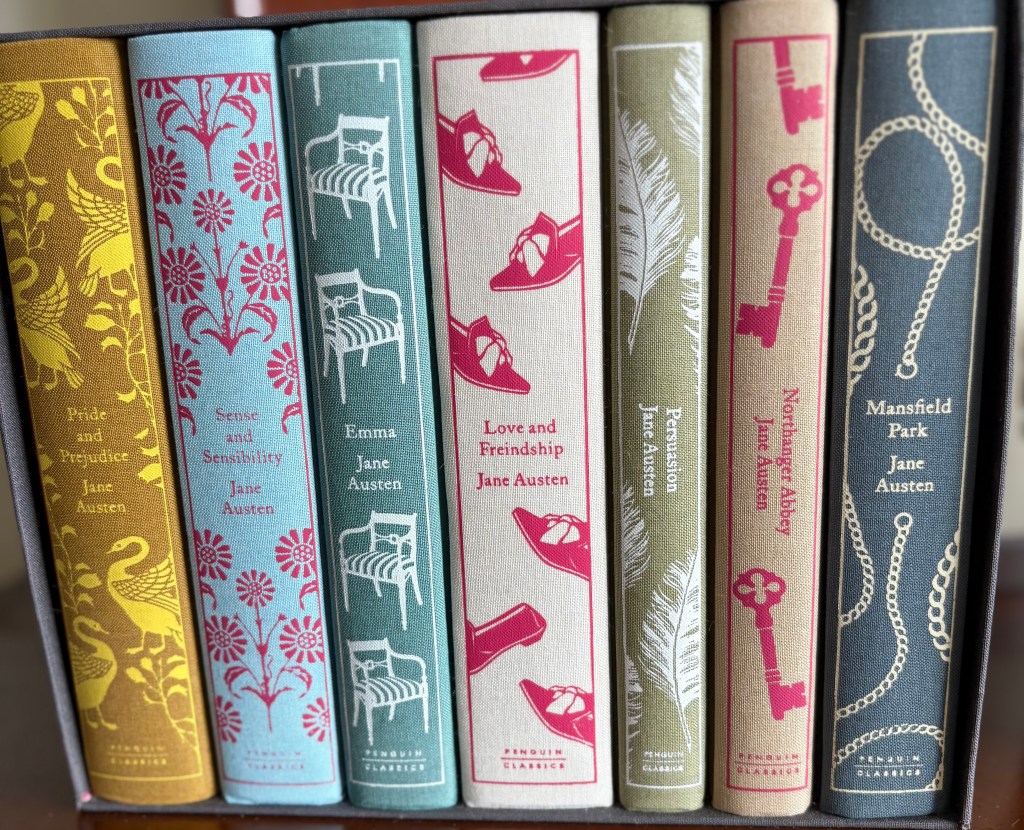
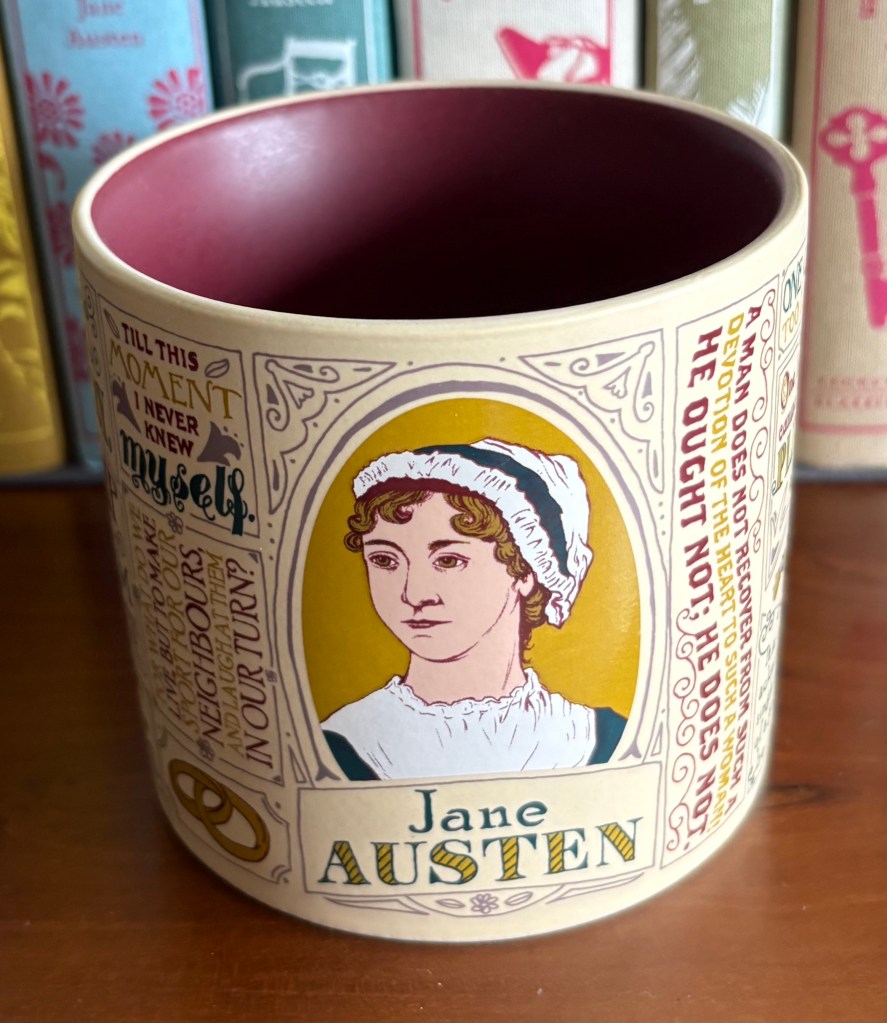


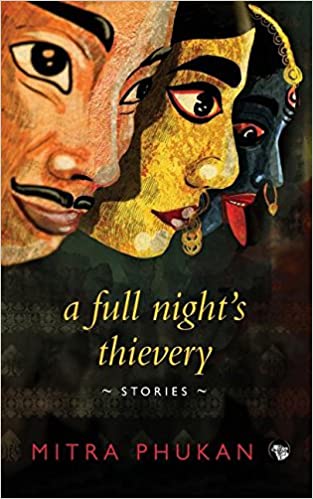
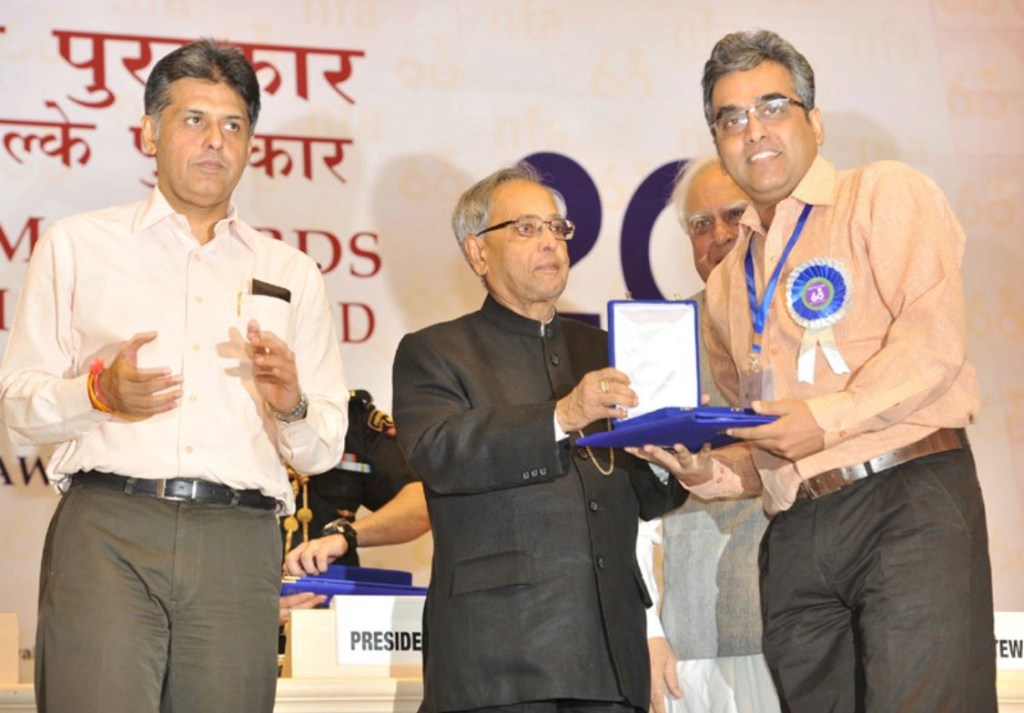
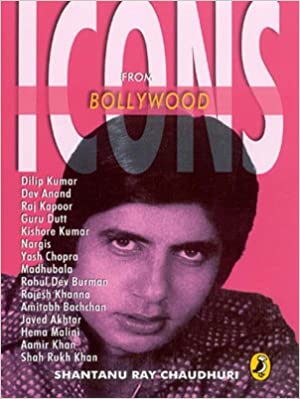
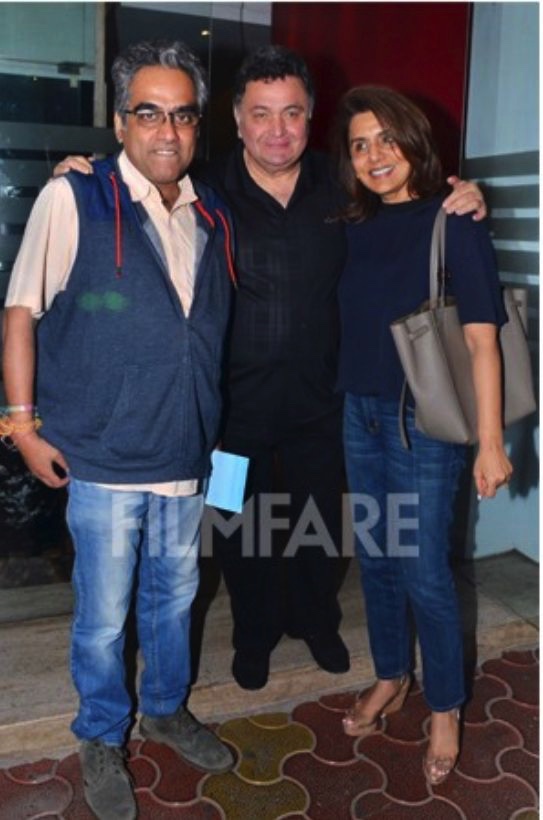
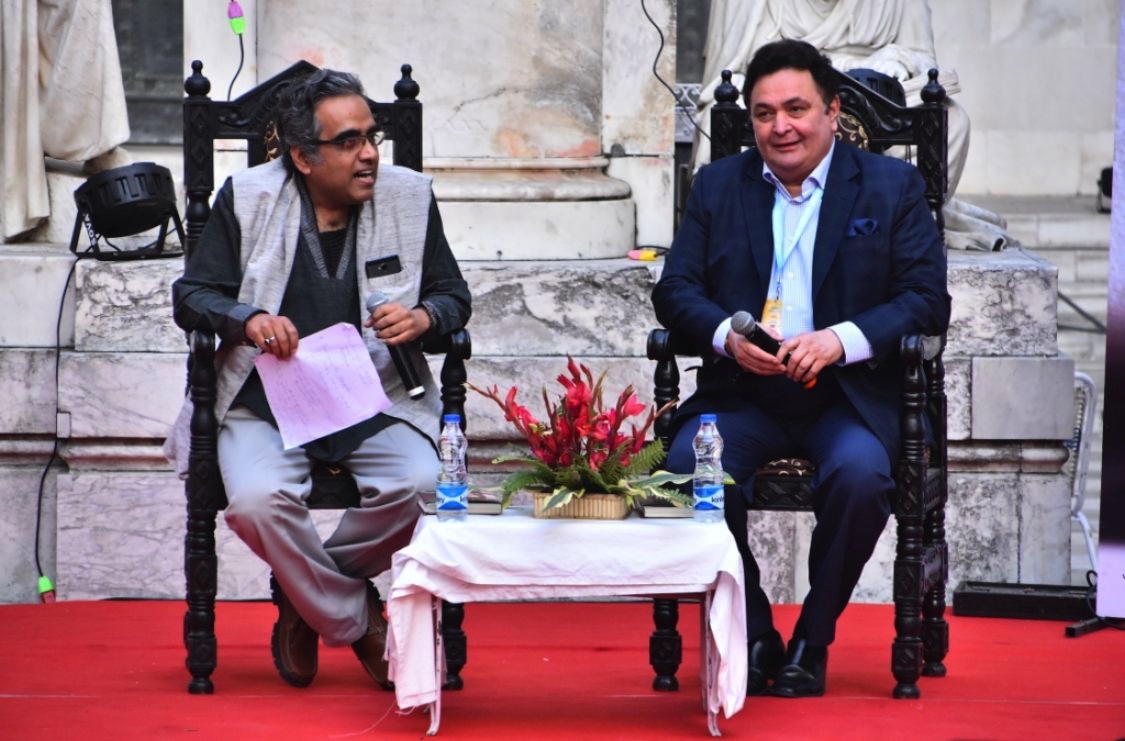


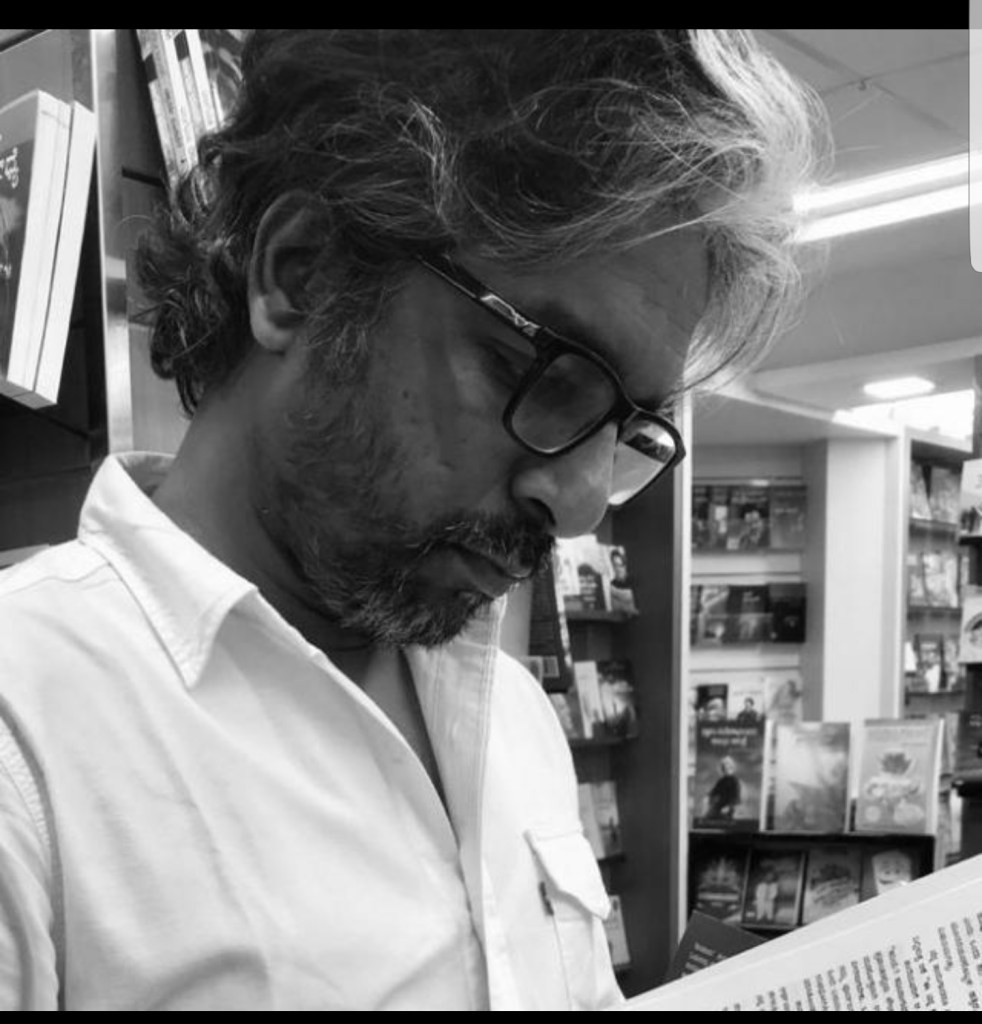

 Borderless