Categories
Stories

Naughty Ravi

By Naramsetti Umamaheswararao

Ravi, a fourth-grade boy, could never sit still. His hands were always busy with some mischief. Whenever he found something at home, he would play with it, often damaging valuable items. Despite his mother’s occasional scoldings, Ravi never stopped his antics or playing around.

One morning, while playing with a ball inside the house, Ravi threw it at the television in the hall. The screen cracked, and his furious mother couldn’t hold back her anger. She hit him, but before she could deliver more blows, Ravi’s father intervened, rescuing the boy.

Through tears, Ravi said, “I didn’t mean to, Dad! I promise I’ll never play with a ball inside the house again.” His father calmed him down and persuaded his mother to forgive him.

But Ravi’s mischief didn’t end there. Another day, he saw a bug on the glass-top tea table in the hall. Picking up a cricket bat, he swung at the bug, but it flew away unharmed. Unfortunately, the table shattered under the force of his swing. The sound of breaking glass brought his parents running. They found Ravi holding the bat, standing next to the broken table.

Afraid of another scolding, Ravi glanced nervously at his mother. Before she could say anything, his father stepped in and asked, “Didn’t you promise not to play inside the house? What happened now?”

“I only used the bat to hit a big bug on the table, Dad. It got away,” Ravi explained, gesturing with his hands. His father patiently advised him, “Alright, but remember, no more damaging things at home.” Ravi’s mother, however, remained silent, visibly upset.

Another day, Ravi wanted a storybook from the shelf. Climbing onto a chair to reach it, he accidentally knocked down several books and other items. Hearing the commotion, his mother rushed in to find books and belongings scattered on the floor.

Frustrated, she scolded, “How many times have I told you to be careful? You’re always breaking or dropping something! Now clean this mess up!” Ravi tried to explain that the other items fell when he pulled out one book, but his mother refused to listen. Feeling deeply hurt, Ravi decided to leave the house for a while.

“If I go out, Mom will worry and search for me. She might even cry. That would make her stop scolding me,” he thought.

Ravi walked to the nearby park. Sitting amidst the greenery, he watched people, children playing in the distance, and ducklings swimming in a pond. Slowly, his irritation and sadness faded.

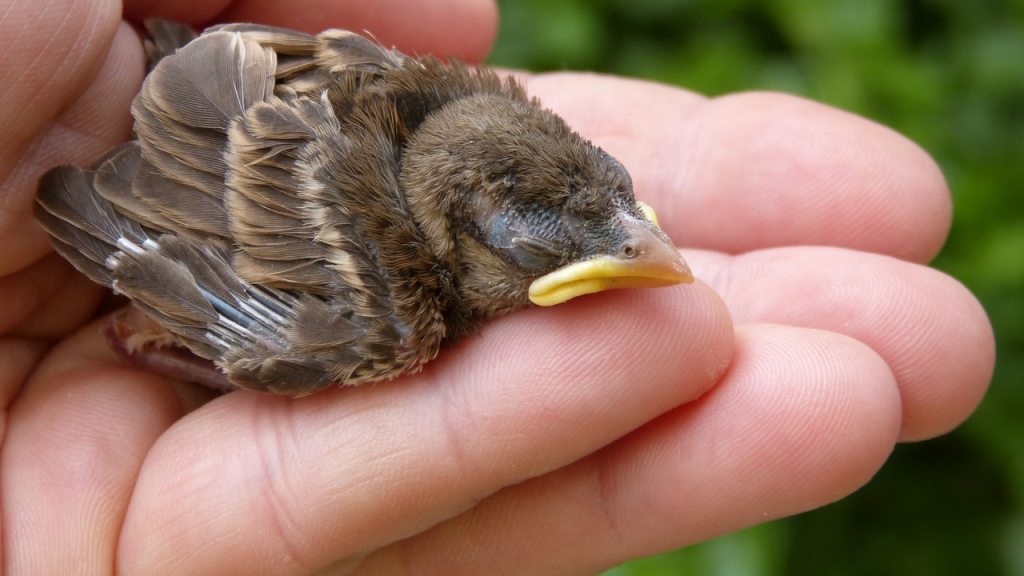
Just then, he noticed a baby bird falling from a nest in a nearby tree. The bird chirped loudly in fear. Ravi quickly ran to the tree and caught the bird in his hands before it could hit the ground. Gently stroking its wings, he calmed the frightened bird.

From Public Domain

Moments later, the mother bird flew down, circling Ravi and chirping anxiously. The baby bird flapped its wings joyfully at the sight of its mother. Ravi placed the baby bird carefully back near its nest. The mother bird covered it lovingly with her wings.

“The mother bird came back to protect her baby. Maybe my mom is already worried about me. I should go home and let her know I’m safe,” Ravi thought.

Ravi rushed back home. The moment his mother saw him, she smiled and said, “Where were you? I made some payasam for you. Come and eat.” Ravi sat down and narrated everything that had happened in the park.

Hearing his story, his mother’s face lit up with pride. She kissed his cheek and said, “You’re my precious little gem. You’re mischievous at home, but outside, you’re so helpful and kind.”

Ravi realised, “Mom scolds me when I do wrong and praises me when I do good. She truly loves me. I should never make her sad or upset again.” From that day on, Ravi started listening to his mother and became more careful both at home and outside.

Naramsetti Umamaheswararao has written more than a thousand stories, songs, and novels for children over 42 years. he has published 32 books. His novel, Anandalokam, received the Central Sahitya Akademi Award for children’s literature. He has received numerous awards and honours, including the Andhra Pradesh Government’s Distinguished Telugu Language Award and the Pratibha Award from Potti Sreeramulu Telugu University. He established the Naramshetty Children’s Literature Foundation and has been actively promoting children’s literature as its president.

.

PLEASE NOTE: ARTICLES CAN ONLY BE REPRODUCED IN OTHER SITES WITH DUE ACKNOWLEDGEMENT TO BORDERLESS JOURNAL

Click here to access the Borderless anthology, Monalisa No Longer Smiles

Click here to access Monalisa No Longer Smiles on Amazon International

Categories
Contents

Borderless, January 2025

Art by Sohana Manzoor

Editorial

“We are the World”… Click here to read.

Translations

Jibanananda Das’s Ghumiye Poribe Aami (I’ll Fall Asleep) has been translated from Bengali by Professor Fakrul Alam. Click here to read.

Roll Up Not the Mat by Ali Jan Dad has been translated from Balochi by Fazal Baloch. Click here to read.

My Father’s Jacket, a poem by Ihlwha Choi  has been translated from Korean by the poet himself. Click here to read.

Probhat or Dawn by Tagore has been translated from Bengali by Mitali Chakravarty. Click here to read.

Poetry

Click on the names to read the poems

Michael R Burch, Kirpal Singh, Afsar Mohammad, Michelle Hillman, Kiriti Sengupta, Jenny Middleton, G Javaid Rasool, Stephen Druce, John Grey, Aman Alam, George Freek, Vidya Hariharan, Stuart McFarlane, Rhys Hughes

Poets, Poetry & Rhys Hughes

In Midnight Tonight, Rhys Hughes gives us humour and horror together. Click here to read.

Musings/Slices from Life

Not Quite a Towering Inferno

Farouk Gulsara gives an account of an experienced hotel fire in Colombo. Click here to read.

Do we all Dance with the Forbidden?

Nusrat Jahan Esa muses on human nature keeping in mid Milton’s Paradise Lost. Click here to read.

Musings of a Copywriter

In Banking Ideas?, Devraj Singh Kalsi explores the idea of writers and banking. Click here to read.

Notes from Japan

In Weekend in Futaba at the Japan Writers Conference, Suzanne Kamata writes of the inception of the event and this year’s meet. Click here to read.

Essays

Well Done, Shyam! Never Say ‘Goodbye’!

Ratnottama Sengupta gives an emotional tribute to Shyam Benegal, focussing on her personal interactions and his films. Click here to read.

Roquiah Sakhawat Hossein: How Significant Is She Today?

Niaz Zaman reflects on the relevance of one of the earliest feminists in Bengal. Click here to read.

Morning Walks

Professor Fakrul Alam writes of his perambulations in Dhaka. Click here to read.

Stories

Nico’s Boat Sails to China

Paul Mirabile weaves a story of resilience set in Greece. Click here to read.

Anand’s Wisdom

Naramsetti Umamaheswararao relates a story set on pathways amidst Andhra villages. Click here to read.

The Forgotten Children

Ahamad Rayees gives us a poignant story set in Kashmir. Click here to read.

The Heart of Aarti

Priyatham Swamy gives a story about an immigrant from Nepal. Click here to read.

Persona

Sohana Manzoor wanders into a glamorous world of expats. Click here to read.

Conversation

In conversation with Kiriti Sengupta, a writer and a director of Hawakal Publishers. Click here to read.

Book Excerpts

An excerpt from S. Eardley-Wilmot’s The Life of an Elephant. Click here to read.

An excerpt from Contemporary Urdu Stories from Kolkata, translated by Shams Afif Siddiqi and edited by Shams Afif Siddiqi and Fuzail Asar Siddiqi. Click here to read.

Book Reviews

Somdatta Mandal reviews Bibhutibhushan Bandopadhyay’s Kaleidoscope of Life: Select Short Stories, translated from Bengali by Hiranmoy Lahiri. Click here to read.

Malashri Lal reviews Basudhara Roy’s A Blur of a Woman. Click here to read.

Basudhara Roy reviews Afsar Mohammad’s Fasting Hymns. Click here to read.

Bhaskar Parichha reviews Razeen Sally’s Return to Sri Lanka: Travels in a Paradoxical Island. Click here to read.

.

Click here to access the Borderless anthology, Monalisa No Longer Smiles

Click here to access Monalisa No Longer Smiles on Amazon International

Categories
Editorial

“We are the World”

In 1985, famous artistes, many of whom are no longer with us, collaborated on the song, We are the World, to raise funds to feed children during the Ethiopian famine (1983-85). The song was performed together by Michael Jackson, Willie Nelson, Bob Dylan, Ray Charles, Diana Ross, Stevie Wonder, Smokey Robinson, Paul Simon, Tina Turner, Dionne Warwick, Lionel Richie, Billy Joel and Bruce Springsteen.  The producer, Julia Nottingham, said: “It’s a celebration of the power of creativity and the power of collective humanity.” The famine was attributed to ‘war and drought’.

Over the last few years, we have multiple wars creating hunger and drought caused by disruptions. Yet, the world watches and the atrocities continue to hurt common people, the majority who just want to live and let live, accept and act believing in the stories created by centuries of civilisation. As Yuval Noah Harari points out in a book written long before the current maladies set in, Homo Deus (2015), “…the stories are just tools. They should not become our goals or our yardsticks. When we forget that they are mere fiction, we lose touch with reality. Then we begin entire wars ‘to make a lot of money for the corporation’ or ‘to protect the national interest’. Corporations, money and nations exist only in our imagination. We invented them to serve us; why do we find ourselves sacrificing our lives in their service?”

What Harari says had been said almost ninety years ago by a voice from another region, by a man who suffered but wrote beautiful poetry, Jibanananda Das… and here are his verses —

“The stories stored in my soul will eventually fade. New ones—
New festivals—will replace the old — in life’s honey-tinged slight.”

Jibananda Das, from ‘Ghumiye Poribe Aami’ (I’ll fall asleep), 1934, translated from Bengali by Professor Fakrul Alam

We carry the poem in this issue translated by Professor Fakrul Alam, lines that makes one dream of a better future. These ideas resonate in modern Balochi poet Ali Jan Dad’s ‘Roll Up Not the Mat’ brought to us in English by Fazal Baloch. Korean poet Ihlwha Choi’s translation takes us to longing filled with nostalgic hope while Tagore’s ‘Probhat’ (Dawn) gives a glimpse of a younger multi-faceted visionary dwell on the wonders of a perfect morning imbibing a sense of harmony with nature.

“I feel blessed for this sky, so luminous. 
I feel blessed to be in love with the world.”

--‘Probhat’ (Dawn) by Tagore, 1897, translated from Bengali by Mitali Chakravarty

Starting a new year on notes of hope, of finding new dreams seems to be a way forward for humanity does need to evolve out of self-imposed boundaries and darknesses and move towards a new future with narratives and stories that should outlive the present, outlive the devastating impact of climate change and wars by swapping our old narratives for ones that will help us harmonise with the wonders we see around us… wonders created by non-human hands or nature.

We start this year with questions raised on the current world by many of our contributors. Professor Alam in his essay makes us wonder about the present as he cogitates during his morning walks. Niaz Zaman writes to us about a change maker who questioned and altered her part of the world almost a century ago, Begum Roquiah. Can we still make such changes in mindsets as did Roquiah? And yet again, Ratnottama Sengupta pays homage to a great artiste, filmmaker Shyam Benegal, who left us in December 2024 just after he touched 90. Other non-fictions include musings by Nusrat Jan Esa on human nature contextualising it with Milton’s Paradise Lost (1667); Farouk Gulsara’s account of a fire in Sri Lanka where he was visiting and Suzanne Kamata’s column from Japan on the latest Japanese Literary Festival in the Fukushimaya prefecture, the place where there was a nuclear blast in 2011. What is amazing is the way they have restored the prefecture in such a short time. Their capacity to bounce back is exemplary! Devraj Singh Kalsi shares a tongue-in-cheek musing about the compatibility of banks and writers.

Rhys Hughes’ poem based on the photograph of a sign is tongue-in- cheek too. But this time we also have an unusual exploration of horror with wry humour in his column. Michael Burch shares a lovely poem about a hill that was planted by his grandfather and is now claimed as state property… Afsar Mohammad explores hunger in his fasting poems and Aman Alam gives heart rending verses on joblessness. Poems by Kirpal Singh contextualise Shakespearian lore to modern suffering. We have more poems by Kiriti Sengupta, Michelle Hillman, Jenny Middleton, G Javaid Rasool, Stephen Druce, John Grey, George Freek and many others — all exploring multiple facets of life. We also have a conversation with Kiriti Sengupta on how he turned to poetry from dentistry!

Exploring more of life around us are stories by Sohana Manzoor set in an expat gathering; by Priyatham Swamy about a migrant woman from Nepal and by Naramsetti Umamaheswararao set against rural Andhra Pradesh. While Ahmad Rayees gives a poignant, touching story set in a Kashmiri orphanage, Paul Mirabile reflects on the resilience of a child in a distant Greek island. Mirabile’s stories are often a throwback to earlier times.

In this issue, our book excerpts explore a writer of yore too, one that lived almost a hundred years ago, S. Eardley-Wilmot (1852-1929), a conservationist and one who captures the majesty of nature, the awe and the wonder like Tagore or Jibanananda with his book, The Life of an Elephant. The other book takes us to contemporary Urdu writers but in Kolkata —Contemporary Urdu Stories from Kolkata, translated by Shams Afif Siddiqi and edited by Shams Afif Siddiqi and Fuzail Asar Siddiqi. A set of translated stories of the well-known Bengali writer, Bibhutibhushan Bandopadhyay by Hiranmoy Lahiri, brought out in a book called Kaleidoscope of Life: Select Short Stories has been reviewed by Somdatta Mandal. Malashri Lal has discussed Basudhara Roy’s A Blur of a Woman. Roy herself has explored Afsar Mohammad’s Fasting Hymns. Bhaskar Parichha has taken us to Sri Lanka with a discussion on a book on Sri Lanka, Return to Sri Lanka: Travels in a Paradoxical Island by an academic located in Singapore, Razeen Sally.

Bringing together varied voices from across the world and ages, one notices recurring themes raising concerns for human welfare and for the need to conserve our planet. To gain agency, it is necessary to have many voices rise in a paean to humanity and the natural world as they have in this start of the year issue.  

I would like to thank all those who made this issue possible, our team and the contributors. Thank you all from the bottom of my heart. I cannot stop feeling grateful to Sohana Manzoor for her fabulous artwork too, art that blends in hope into the pages of Borderless Journal. As all our content has not been mentioned here, I invite you to pause by our content’s page to explore more of our exciting fare. Huge thanks to all readers for you make our journey worthwhile.

I would hope we can look forward to this year as being one that will have changes for the better for all humanity and the Earth… so that we still have our home a hundred years from now, even if it looks different.

Wish you a year filled with new dreams.

Mitali Chakravarty

borderlessjournal.com

Click here to access the content’s page for the January 2025 issue

.

READ THE LATEST UPDATES ON THE FIRST BORDERLESS ANTHOLOGY, MONALISA NO LONGER SMILES, BY CLICKING ON THIS LINK.

Categories
Stories

Anand’s Wisdom

By Naramsetti Umamaheswararao

In the town of Kalyanapuram, there lived a wealthy man named Raghav. He had a daughter of marriageable age and was seeking a suitable groom for her.

Once, while Raghav was traveling to a nearby village called Bangaru Palem to explore a possible marriage alliance, he met Anand on the way. Anand introduced himself, saying he was from Machavaram village, well-educated, settled in business, and unmarried.

Raghav thought that Anand might make a good son-in-law, but he decided to test his intelligence and character before making a decision.

As they were traveling, the heat of the sun intensified, and Raghav felt thirsty. He asked a passerby, “Is there a well or a pond nearby?” The man pointed to a pond and said, “You can quench your thirst at that pond.”

Anand asked the man, “Is the pond water poisonous or life-giving?” The man replied, “I don’t know.” Raghav went ahead and drank the water from the pond. He thought to himself, “What a strange question Anand asked! Is he a fool?”

After some distance, two more travelers joined them. One was a farmer, and the other was a moneylender. The farmer was going to a neighbouring village to buy cattle, and the moneylender was on his way to collect old debts.

Anand asked the farmer, “Are you a provider of food or just greedy?” The farmer remained silent, unsure of how to respond. Then, Anand turned to the moneylender and asked, “Do you care for people’s well-being or just focus on squeezing them dry?” The moneylender also remained silent. Raghav now firmly believed Anand was indeed a madman and thought, “There’s no way I can accept him as my son-in-law.”

Even though Raghav continued walking with Anand, he kept his distance, disliking the way Anand spoke. The other two travelers also found Anand’s words odd and wanted to get rid of him as soon as possible.

A little further into the journey, it was noon, and the group felt hungry. They sat under a tree, unpacked their food, and began to eat. But Anand’s attention was drawn to a nearby bush. “It’s not safe to sit here. Let’s move away immediately,” Anand warned.

The other three ignored him and said, “We will eat here. If you don’t like it, go wherever you wish.” But Anand insisted, “I’m saying this for your safety. I sense a dangerous snake nearby. If we don’t leave quickly, it could be a threat.”

Raghav mocked him, “Did the snake come and tell you this in a dream? Or do you have some magical powers?”

Anand pointed to a snake’s skin near the bush and said, “Look at that freshly shed snakeskin. It’s about fourteen feet long and thick, which indicates the size of the snake. It must be nearby. I’m warning you based on this evidence.”

As soon as Anand finished speaking, the farmer screamed, “Look! There it is! The snake is coming toward us, just as Anand said.” In no time, all four ran far away to a safe place and had their meal.

Raghav ’s opinion about Anand began to change. He realised Anand wasn’t mad after all. However, Raghav was still curious why Anand had asked those strange questions earlier.

He asked Anand, “You seem to be a wise man. Why did you ask if the pond water was life-giving or poisonous?”

Anand replied, “Even if the water looks clean, it could be filled with dirt or dangerous creatures like crocodiles, which would make it deadly. On the other hand, water from a safe, clean source sustains life, making it like nectar. That’s why I asked.”

Next, Raghav asked, “Why did you ask the farmer if he was a provider of food or just greedy?”

Anand explained, “A farmer who grows food crops feeds others, so, he’s a provider of food. But if he only grows cash crops for profit, he is driven by greed. That’s why I asked.”

Hearing this, the farmer proudly declared, “I am certainly a provider of food!”

Then Raghav asked, “What was the meaning behind your question to the moneylender—whether he cared for people or just squeezed them dry?”

Anand replied, “There are two kinds of moneylenders. Those who consider the financial situation of the borrower and give them time to repay with understanding — they care for people. But those who are ruthless and demand repayment no matter what, are only focused on taking money and are like a burden on people’s backs. That’s why I asked.”

The moneylender, realising the wisdom in Anand’s words, said, “I am definitely the kind who cares for people!”

With all his doubts cleared, Raghav invited Anand to his home and expressed his desire to make him his son-in-law.

Naramsetti Umamaheswararao has written more than a thousand stories, songs, and novels for children over 42 years. he has published 32 books. His novel, Anandalokam, received the Central Sahitya Akademi Award for children’s literature. He has received numerous awards and honours, including the Andhra Pradesh Government’s Distinguished Telugu Language Award and the Pratibha Award from Potti Sreeramulu Telugu University. He established the Naramshetty Children’s Literature Foundation and has been actively promoting children’s literature as its president.

.

PLEASE NOTE: ARTICLES CAN ONLY BE REPRODUCED IN OTHER SITES WITH DUE ACKNOWLEDGEMENT TO BORDERLESS JOURNAL

Click here to access the Borderless anthology, Monalisa No Longer Smiles

Click here to access Monalisa No Longer Smiles on Amazon International

Categories
Greetings from Borderless

Auld Lang Syne…

As we wait for the new year to unfold, we glance back at the year that just swept past us. Here, gathered together are glimpses of the writings we found on our pages in 2024 that herald a world of compassion and kindness…writings filled with hope and, dare I say, even goodwill…and sometimes filled with the tears of poetic souls who hope for a world in peace and harmony. Disasters caused by humans starting with the January 2024 in Japan, nature and climate change, essays that invite you to recall the past with a hope to learn from it, non-fiction that is just fun or a tribute to ideas, both past and present — it’s all there. Innovative genres started by writers to meet the needs of the times — be it solar punk or weird western — give a sense of movement towards the new. What we do see in these writings is resilience which healed us out of multiple issues and will continue to help us move towards a better future.

A hundred years ago, we did not have the technology to share our views and writings, to connect and make friends with the like-minded across continents. I wonder what surprises hundred years later will hold for us…Maybe, war will have been outlawed by then, as have been malpractices and violences against individuals in the current world. The laws that rule a single man will hopefully apply to larger groups too…

Poetry

Whose life? by Aman Alam. Click here to read.

Winter Consumes by Luis Cuauhtémoc Berriozábal. Click here to read.

Hot Dry Summers by Lizzie Packer. Click here to read.

House of Birds (for Pablo Neruda) by Ryan Quinn Flanagan. Click here to read.

Poems for Dylan Thomas by Michael Burch. Click here to read.

Dylan Thomas in Ardmillan Terrace? by Stuart McFarlane. Click here to read.

Bermuda Love Triangle & the Frothiest Coffee by Rhys Hughes. Click here to read.

Satirical Poems by Maithreyi Karnoor. Click here to read.

Three Poems by Rakhi Dalal. Click here to read.

Manish Ghatak’s Aagun taader Praan (Fire is their Life) has been translated from Bengali by Indrayudh Sinha. Click here to read.

Manzur Bismil’s poem, Stories, has been translated from Balochi by Fazal Baloch. Click here to read.

Ye Shao-weng’s poetry ( 1100-1150) has been translated from Mandarin by Rex Tan. Click here to read.

Amalkanti by Nirendranath Chakraborty has been translated from Bengali by Debali Mookerjea-Leonard. Click here to read.

The Mirror by Mubarak Qazi has been translated from Balochi by Fazal Baloch. Click here to read.

Homecoming, a poem by Ihlwha Choi on his return from Santiniketan, has been translated from Korean by the poet himself. Click here to read.

Pochishe Boisakh (25th of Baisakh) by Tagore (1922), has been translated from Bengali by Mitali Chakravarty. Click here to read.

Nazrul’s Ghumaite Dao Shranto Robi Re (Let Robi Sleep in Peace) has been translated from Bengali by Professor Fakrul Alam. Click here to read.

Jibananada Das’s Andhar Dekhecche, Tobu Ache (I have seen the dark and yet there is another) has been translated from Bengali by Professor Fakrul Alam. Click here to read.

Tagore’s Shotabdir Surjo Aji ( The Century’s Sun today) has been translated from Bengali by Mitali Chakravarty. Click here to read.

Non-fiction

Baraf Pora (Snowfall)

A narrative by Rabindranath Tagore that gives a glimpse of his first experience of snowfall in Brighton and published in the Tagore family journal, Balak (Children), has been translated from Bengali by Somdatta Mandal. Click here to read.

Dylan on Worm’s Head

Rhys Hughes describes a misadventure that the Welsh poet had while hiking as a tribute to him on Dylan Thomas Day. Click here to read.

Travels of Debendranath Tagore 

These are from the memoirs of Tagore’s father translated from Bengali by Somdatta Mandal. Click here to read.

Two Pizza Fantasies

Rhys Hughes recounts myths around the pizza in prose, fiction and poetry, Click here to read

Is this a Dagger I See…?

Devraj Singh Kalsi gives a tongue-in-cheek account of a writer’s dilemma. Click here to read.

Still to Moving Images 

Ratnottama Sengupta explores artists who have turned to use the medium of films… artists like the legendary MF Husain. Click here to read.

How Dynamic was Ancient India?

Farouk Gulsara explores William Dalrymple’s latest book, The Golden Road: How Ancient India Transformed the World. Click here to read.

The Magic Dragon: Cycling for Peace

Keith Lyons writes of a man who cycled for peace in a conflict ridden world. Click here to read.

A Cover Letter

Uday Deshwal muses on writing a cover letter for employment. Click here to read.

A Manmade Disaster or Climate Change?

Salma A Shafi writes of floods in Bangladesh from ground level. Click here to read.

Pinecones and Pinky Promises

Luke Rimmo Minkeng Lego writes of mists and cloudy remembrances in Shillong. Click here to read.

 Educating for Peace in Rwanda

Suzanne Kamata discusses the peace initiatives following the terrors of the 1994 Rwandan Genocide while traveling within the country with her university colleague and students. Click here to read.

Breaking Bread

Snigdha Agrawal has a bovine encounter in a restaurant. Click here to read.

From Srinagar to Ladakh: A Cyclist’s Diary

Farouk Gulsara travels from Malaysia for a cycling adventure in Kashmir. Click here to read.

A Saga of Self-empowerment in Adversity

Bhaskar Parichha writes of Noor Jahan Bose’s Daughter of The Agunmukha: A Bangla Life, translated from Bengali by Rebecca Whittington. Click here to read.

Safdar Hashmi

Meenakshi Malhotra writes of Anjum Katyal’s Safdar Hashmi: Towards Theatre for a Democracy. Click hereto read.

Meeting the Artists

Kiriti Sengupta talks of his encounter with Jatin Das, a legendary artist. Click here to read.

The Comet’s Trail: Remembering Kazi Nazrul Islam

Radha Chakravarty pays tribute to the rebel poet of Bengal. Click here to read.

The Myriad Hues of Tagore by Aruna Chakravarti

Aruna Chakravarti writes on times and the various facets of Tagore. Click here to read.

The Year of Living Dangerously

Professor Fakrul Alam takes us back to the birth of Bangladesh. Click here to read.

A Short, Winding, and Legendary Dhaka Road 

Professor Fakrul Alam takes us on a historical journey of one of the most iconic roads of Dhaka, Fuller Road. Click here to read.

 A Sombre Start 

Suzanne Kamata talks of the twin disasters in Japan. Click here to read.

Fiction

The Snakecharmer

Shapuray by Nazrul, has been translated from Bengali by Sohana Manzoor. Click here to read.

Significance

Naramsetti  Umamaheswararao creates a fable around a banyan tree and it’s fruit. Click here to read.

Just Another Day

Neeman Sobhan gives a story exploring the impact of the politics of national language on common people. Click here to read.

The Ghosts of Hogshead

Paul Mirabile wanders into the realm of the supernatural dating back to the Potato Famine of Ireland in the 1800s. Click here to read.

A Queen is Crowned

Farhanaz Rabbani traces the awakening of self worth. Click here to read.

The Last Hyderabadi

Mohul Bhowmick talks of the passage of an era. Click here to read.

The Gift 

Rebecca Klassen shares a sensitive story about a child and an oak tree. Click here to read.

Galat Aurat or The Wrong Woman

Veena Verma’s story has been translated from Punjabi by C Christine Fair. Click here to read.

The Melting Snow

A story by Sharaf Shad,  has been translated from Balochi by Fazal Baloch. Click here to read.

Conversations

Ratnottama Sengupta talks to Ruchira Gupta, activist for global fight against human trafficking, about her work and introduces her novel, I Kick and I Fly. Click here to read.

A conversation with eminent Singaporean poet and academic, Kirpal Singh, about how his family migrated to Malaya and subsequently Singapore more than 120 years ago. Click here to read.

A brief overview of Rajat Chaudhuri’s Spellcasters and a discussion with the author on his book. Click here to read.

A review of and discussion with Rhys Hughes about his ‘Weird Western’, The Sunset Suite. Click here to read.

Categories
Contents

Borderless, December 2024

Art by Sohana Manzoor

Editorial

‘Footfalls Echo in the Memory’… Click here to read.

Translations

Jibananada Das’s Andhar Dekhecche, Tobu Ache (I have seen the dark and yet there is another) has been translated from Bengali by Professor Fakrul Alam. Click here to read.

Manish Ghatak’s Aagun taader Praan (Fire is their Life) has been translated from Bengali by Indrayudh Sinha. Click here to read.

Manzur Bismil’s poem, Stories, has been translated from Balochi by Fazal Baloch. Click here to read.

Homecoming, a poem by Ihlwha Choi on his return from Santiniketan, has been translated from Korean by the poet himself. Click here to read.

Tagore’s Shotabdir Surjo Aji ( The Century’s Sun today) has been translated from Bengali by Mitali Chakravarty. Click here to read.

Poetry

Click on the names to read the poems

Michael R Burch, Farah Sheikh, George Freek, Rajiv Borra, Kelsey Walker, Lokenath Roy, Thompson Emate, Joy Anne O’Donnell, Jayant Kashyap, John Grey, Aman Alam, Stuart McFarlane, Ayesha Binte Islam, Ryan Quinn Flanagan, Saranyan BV, Rhys Hughes

Musings/ Slices from Life

Autumn in Hyderabad

Mohul Bhowmick muses on Hyderabad. Click here to read.

Straight Back Across the Strait

Meredith Stephens gives a vignette of life in South Australia with a sailing adventure built in. Click here to read.

My Patchwork Year

Keith Lyons muses on what 2024 meant for him. Click here to read.

Musings of a Copywriter

In Byline Fever, Devraj Singh Kalsi travels down the path of nostalgia. Click here to read.

Essays

Still to Moving Images

Ratnottama Sengupta explores artists who have turned to use the medium of films… artists like the legendary MF Husain. Click here to read.

How Dynamic was Ancient India?

Farouk Gulsara explores William Dalrymple’s latest book, The Golden Road: How Ancient India Transformed the World. Click here to read.

A Short, Winding, and Legendary Dhaka Road

Professor Fakrul Alam takes us on a historical journey of one of the most iconic roads of Dhaka, Fuller Road. Click here to read.

Stories

Significance

Naramsetti  Umamaheswararao creates a fable around a banyan tree and it’s fruit. Click here to read.

The Dance of Life

Snigdha Agrawal explores ageism. Click here to read.

The Unsuspecting Suspect

Paul Mirabile wraps his telling like a psychological thriller. Click here to read.

Conversations

Ratnottama Sengupta converses with Divya Dutta, an award-winning actress, who has authored two books recently, Stars in my Sky and Me and Ma. Click here to read.

Lara Geyla converses about her memoir, Camels of Kyzylkum, and her journey as an immigrant. Click here to read.

Book Excerpts

An excerpt from Thomas Bell’s Human Nature: A Walking History of the Himalayan Landscape. Click here to read.

An excerpt from Savi Naipaul Akal’s The Naipauls of Nepaul Street, a retelling of VS Naipaul’s heritage in Trinidad by his sister. Click here to read.

Book Reviews

Somdatta Mandal reviews Kusum Khemani’s Lavanyadevi, translated from Hindi by Banibrata Mahanta. Click here to read.

Aditi Yadav reviews Nanako Hanada’s The Bookshop Woman, translated from Japanese by Cat Anderson. Click here to read.

Jagari Mukherjee reviews Kiriti Sengupta’s poetry collection, Oneness. Click here to read.

Bhaskar Parichha reviews Noor Jahan Bose’s Daughter of The Agunmukha: A Bangla Life, translated from Bengali by Rebecca Whittington. Click here to read.

.

Click here to access the Borderless anthology, Monalisa No Longer Smiles

Click here to access Monalisa No Longer Smiles on Amazon International

Categories
Stories

Significance

By  Naramsetti  Umamaheswararao

Once, while a bird was searching for food, it spotted a  berry under a banyan tree. As the bird grabbed the berry with its beak and flew, it slipped and fell. The place where the berry landed was a field next to a village. On the same day the berry fell, a strong storm brought rain, causing the soil to cover the berry.

Two days later, the berry rotted, and the seeds inside began to talk to each other.

One seed happily said, “We are alive thanks to our luck! Otherwise, we would have been digested in the bird’s stomach within a week.”

Another seed replied, “That’s true. If we had gone into the bird’s stomach, we would have died. We wouldn’t even have had the chance to talk like this.” The other seeds nodded in agreement.

After two more days, one seed sprouted. The sprouting seed excitedly jumped and said, “Look, everyone! I’ve sprouted!”

Seeing the sprout, the other seeds warned, “Pull that sprout back! If you grow, you will change your form and rise above the ground. You will face many hardships while growing. Sometimes, humans might uproot you. Other times, animals might trample or eat you. You must overcome all this to grow into a plant. If you grow, you need sufficient water. If you don’t get enough water, you will wither and die. You cannot endure all these hardships, so it’s better to remain as we are and enjoy our time together.”

The sprouting seed listened but did not respond or pull back its sprout. After a few days, the banyan plant emerged from the soil and began to grow. Its stem grew straight, branches spread out, and many leaves sprouted. Years passed, and it grew into a large tree.

To escape the heat, farmers and travelers rested in the shade of the banyan tree. Animals found shelter beneath it during the night and when it rained. Birds built nests on its branches. The banyan tree provided refuge to many, making the area lively.

Occasionally, indigenous doctors came to the banyan tree to collect its bark, leaves, and buds for medicinal use. Children played in the field, swinging joyfully on swings hung on the banyan tree. The banyan tree felt happy.

Many years went by. One day, a terrifying storm struck. Strong winds blew, and it rained heavily. Many trees were uprooted by the storm, and the banyan tree was among them. The people were deeply saddened by the fall of the banyan tree. The birds and animals living in its branches mourned silently.

After a few days, when the greenery of the banyan tree faded, villagers used axes to cut its branches and trunk for firewood. Everyone who carried the wood remarked, “It was useful even after it died.”

Meanwhile, the remaining seeds in the ground, which had stayed behind selfishly, felt happy hearing their sibling’s praises but were also ashamed. One seed said, “We all made a grave mistake. We remained as we were and couldn’t help anyone. We didn’t do anything worthy of remembrance. Every life should have significance, but our life has been wasted. Although we had a great opportunity to be born, we squandered it. Our sibling, however, did something good. Even in death, it lives on in the hearts and homes of people. Our sibling’s legacy uncovered the true significance of life.”

Hearing this, another banyan seed replied, “Some people also live cowardly lives. They continue to make the same mistake we did. They waste their lives, not realising that a life dedicated to helping others brings true satisfaction. If we understand that helping others leads to everlasting fame and support one another, it would be much better.”

The banyan seeds lamented, “We cannot bring back what has passed, so this is all we have in this life.”

Banyan Berries: Fom Public Domain

Naramsetti Umamaheswararao has written more than a thousand stories, songs, and novels for children over 42 years. he has published 32 books. His novel, Anandalokam, received the Central Sahitya Akademi Award for children’s literature. He has received numerous awards and honours, including the Andhra Pradesh Government’s Distinguished Telugu Language Award and the Pratibha Award from Potti Sreeramulu Telugu University. He established the Naramshetty Children’s Literature Foundation and has been actively promoting children’s literature as its president.

.

PLEASE NOTE: ARTICLES CAN ONLY BE REPRODUCED IN OTHER SITES WITH DUE ACKNOWLEDGEMENT TO BORDERLESS JOURNAL

Click here to access the Borderless anthology, Monalisa No Longer Smiles

Click here to access Monalisa No Longer Smiles on Amazon International

Categories
Contents

Borderless, November 2024

Art by Sohana Manzoor

Editorial

Clinging to Hope…Click here to read.

Translations

Nazrul’s Tumi Shundor Tai Cheye Thaki (Because you are so beautiful, I keep looking at you) has been translated from Bengali by Professor Fakrul Alam. Click here to read.

Hotel Acapulco, has been composed and translated from Italian by Ivan Pozzoni. Click here to read.

On the Reserved Seat of the Subway, a poem by Ihlwha Choi, has been translated from Korean by the poet himself. Click here to read.

Tagore’s Phul Photano (Making Flowers Bloom) has been translated from Bengali by Mitali Chakravarty. Click here to read.

Poetry

Click on the names to read the poems

Michael R Burch, Jahanara Tariq, Luis Cuauhtémoc Berriozábal, Shahalam Tariq, Stuart McFarlane, Saranyan BV, George Freek, G Javaid Rasool, Heath Brougher, Vidya Hariharan, Paul Mirabile, Ananya Sarkar, Ryan Quinn Flanagan, Pulkita Anand, Rhys Hughes

Musings/Slices from Life

Pinecones and Pinky Promises

Luke Rimmo Minkeng Lego writes of mists and cloudy remembrances in Shillong. Click here to read.

Elusive XLs

Shobha Sriram muses on weight management. Click here to read.

The Eternal Sleep of Kumbhakarna

Farouk Gulsara pays a tribute to a doctor and a friend. Click here to read.

Musings of a Copywriter

In Becoming a ‘Plain’ Writer, Devraj Singh Kalsi explores the world of writer’s retreats on hills with a touch of irony. Click here to read.

Notes from Japan

In Educating for Peace in Rwanda, Suzanne Kamata discusses the peace initiatives following the terrors of the 1994 Rwandan Genocide while traveling within the country with her university colleague and students. Click here to read.

Essays

The Year of Living Dangerously

Professor Fakrul Alam takes us back to the birth of Bangladesh. Click here to read.

Deconstructing Happiness

Abdullah Rayhan analyses the concept of happiness. Click here to read.

More Frequent Cyclones to Impact Odisha

Bijoy K Mishra writes of cyclones in Odisha, while discussing Bhaskar Parichha’s Cyclones in Odisha – Landfall, Wreckage and Resilience. Click here to read.

Stories

Hotel du Commerce

Paul Mirabile gives a vignette of life in Paris in the 1970s. Click here to read.

Chintu’s Big Heart

Naramsetti Umamaheswararao gives a value-based story about a child. Click here to read.

Headless Horses

Anna Moon relates a story set in rural Philippines. Click here to read.

A Penguin’s Story

Sreelekha Chatterjee writes a story from a penguin’s perspective. Click here to read.

Phantom Pain

Lakshmi Kannan writes of human nature. Click here to read.

Conversations

A conversation with Dutch author, Mineke Schipper, with focus of her recent book Widows: A Global History. Click here to read.

Ratnottama Sengupta converses with Veena Raman, wife of the late Vijay Raman, an IPS officer who authored, Did I Really Do All This: Memoirs of a Gentleman Cop Who Dared to be Different. Click here to read.

Book Excerpts

An excerpt from Vijay Raman’s Did I Really Do All This: Memoirs of a Gentleman Cop Who Dared to be Different. Click here to read.

An excerpt from Rhys Hughes’ Growl at the Moon, a Weird Western. Click here to read.

Book Reviews

Somdatta Mandal reviews The Collected Short Stories of Kazi Nazrul Islam, translated by multiple translators from Bengali and edited by Syed Manzoorul Islam and Kaustav Chakraborty. Click here to read.

Rakhi Dalal reviews The Long Strider in Jehangir’s Hindustan: In the Footsteps of the Englishman Who Walked From England to India in the Year 1613 by Dom Moraes and Sarayu Srivatsa. Click here to read.

Bhaskar Parichha reviews Mohammad Tarbush’s My Palestine: An Impossible Exile. Click here to read.

.

Click here to access the Borderless anthology, Monalisa No Longer Smiles

Click here to access Monalisa No Longer Smiles on Amazon International

Categories
Editorial

Clinging to Hope

I will cling fast to hope.

— Suzanne Kamata, ‘Educating for Peace in Rwanda

Landscape of Change by Jill Pelto, Smithsonian. From Public Domain

Hope is the mantra for all human existence. We hope for a better future, for love, for peace, for good weather, for abundance. When that abundance is an abundance of harsh weather or violence wrought by wars, we hope for calm and peace.

This is the season for cyclones — Dana, Trami, Yixing, Hurricanes Milton and Helene — to name a few that left their imprint with the destruction of both property and human lives as did the floods in Spain while wars continue to annihilate more lives and constructs. That we need peace to work out how to adapt to climate change is an issue that warmongers seem to have overlooked. We have to figure out how we can work around losing landmasses and lives to intermittent floods caused by tidal waves, landslides like the one in Wayanad and rising temperatures due to the loss of ice cover. The loss of the white cover of ice leads to more absorption of heat as the melting water is deeper in colour. Such phenomena could affect the availability of potable water and food, impacted by the changes in flora and fauna as a result of altered temperatures and weather patterns. An influx of climate refugees too is likely in places that continue habitable. Do we need to find ways of accommodating these people? Do we need to redefine our constructs to face the crises?

Echoing concerns for action to adapt to climate change and hoping for peace, our current issue shimmers with vibrancy of shades while weaving in personal narratives of life, living and the process of changing to adapt.

An essay on Bhaskar Parichha’s recent book on climate change highlights the action that is needed in the area where Dana made landfall recently. In terms of preparedness things have improved, as Bijoy K Mishra contends in his essay. But more action is needed. Denying climate change or thinking of going back to pre-climate change era is not an option for humanity anymore. While politics often ignores the need to acknowledge this crises and divides destroying with wars, riots and angst, a narrative for peace is woven by some countries like Japan and Rwanda.

Suzanne Kamata recently visited Rwanda. She writes about how she found by educating people about the genocide of 1994, the locals have found a way to live in peace with people who they addressed as their enemies before… as have the future generations of Japan by remembering the atomic holocausts of 1945.

Writing about an event which wrought danger into the lives of common people in South Asia is Professor Fakrul Alam’s essay on the 1971 conflict between the countries that were carved out of the 1947 Partition of the Indian subcontinent. As if an antithesis to this narrative of divides that destroyed lives, Luke Rimmo Minkeng Lego muses about peace and calm in Shillong which leaves a lingering fragrance of heartfelt friendships. Farouk Gulsara muses on nostalgic friendships and twists of fate that compel one to face mortality. Abdullah Rayhan ponders about happiness and Shobha Sriram, with a pinch of humour, adapts to changes. Devraj Singh Kalsi writes satirically of current norms aiming for a change in outlook.

Humour is brought into poetry by Rhys Hughes who writes about a photograph of a sign that can be interpreted in ways more than one. Michael Burch travels down the path of nostalgia as Ryan Quinn Flanagan shares a poem inspired by Pablo Neruda’s bird poems. Luis Cuauhtémoc Berriozábal writes heart wrenching verses about the harshness of winter for the homeless without shelter. We have more colours in poetry woven by Jahanara Tariq, Stuart MacFarlane, Saranyan BV, George Freek, G Javaid Rasool, Heath Brougher and more.

In translations, we have poetry from varied countries. Ihlwha Choi has self-translated his poem from Korean. Ivan Pozzoni has done the same from Italian. One of Tagore’s lesser-known verses, perhaps influenced by the findings of sensitivity in plants by his contemporary, Jagadish Chandra Bose (1858-1937) to who he dedicated the collection which homed this poem, Phool Photano (making flowers bloom), has been translated from Bengali. Professor Alam has translated Nazrul’s popular song, Tumi Shundor Tai Cheye Thaki (Because you are so beautiful, I keep gazing at you).

In reviews, Somdatta Mandal has discussed The Collected Short Stories of Kazi Nazrul Islam, translated by multiple translators from Bengali and edited by Syed Manzoorul Islam and Kaustav Chakraborty. Rakhi Dalal has written about The Long Strider in Jehangir’s Hindustan: In the Footsteps of the Englishman Who Walked From England to India in the Year 1613 by Dom Moraes and Sarayu Srivatsa, a book that looks and compares the past with the present. Bhaskar Parichha has written of a memoir which showcases not just the personal but gives a political and economic commentary on tumultuous events that shaped the history of Israel, Palestine, and the modern Middle East prior to the more than a year-old conflict. The book by the late Mohammad Tarbush (1948-2022) is called My Palestine: An Impossible Exile.

Stories travel around the world with Paul Mirabile’s narrative giving a flavour of bohemian Paris in 1974. Anna Moon’s fiction set in Philippines gives a darker perspective of life. Lakshmi Kannan’s narrative hovers around the 2008 bombing in Mumbai, an event that evoked much anger, violence and created hatred in hearts. In contrast, Naramsetti Umamaheswararao brings a sense of warmth into our lives with a story about a child and his love for a dog. Sreelekha Chatterjee weaves a tale of change, showcasing adapting to climate crisis from a penguin’s perspective.

Hoping to change mindsets with education, Mineke Schipper has a collection of essays called Widows: A Global History, which has been introduced along with a discussion with the author on how we can hope for a more equitable world. The other conversation by Ratnottama Sengupta with Veena Raman, wife of the late Vijay Raman, a police officer who authored, Did I Really Do All This: Memoirs of a Gentleman Cop Who Dared to be Different, showcases a life given to serving justice. Raman was an officer who caught dacoits like Paan Singh Tomar and the Indian legendary dacoit queen, Phoolan Devi. An excerpt from his memoir accompanies the conversation. The other book excerpt is from an extremely out of the box book, Rhys Hughes’ Growl at the Moon, a Weird Western.

Trying something new, being out of the box is what helped humans move out from caves, invent wheels and create civilisations. Hopefully, this is what will help us move into the next phase of human development where wars and weapons will become redundant, and we will be able to adapt to changing climes and move towards a kinder, more compassionate existence.

Thank you all for pitching in with your fabulous pieces. There are ones that have not been covered here. Do pause by our content’s page to see all our content. Huge thanks to the fantastic Borderless team and to Sohana Manzoor, for her art too.

Hope you enjoy our fare!

Mitali Chakravarty

borderlessjournal.com

Click here to access the  content’s page for the November 2024 Issue

.

READ THE LATEST UPDATES ON THE FIRST BORDERLESS ANTHOLOGY, MONALISA NO LONGER SMILES, BY CLICKING ON THIS LINK.

Categories
Stories

Chintu’s Big Heart

By  Naramsetti Umamaheswararao

Chintu, a fifth-grader, was known for his intelligence beyond his years. Every day, he walked a mile to school by himself. When his parents offered to accompany him, he confidently replied, “I can go by myself. I’m grown up now.” Since their village, Seethanagaram, was a small town, there wasn’t much fear of children being abducted or harmed, so his parents didn’t object.

One day, Chintu woke up early and set out for school earlier than usual. He packed a small spade, a water bottle, and his books into his schoolbag and slung it over his shoulder.

His mother, who had been observing him, asked, “Why are you leaving so early? There’s still time for school.”

“I have some work, mother. I’ll tell you when I come back,” Chintu replied.

On his way to school, Chintu spotted some discarded mango seeds. He carefully picked out the good ones and walked a little further from the road. Using his small spade, he dug holes and buried the seeds. Then, he poured some water from his bottle over them.

As Chintu was about to leave, an old beggar woman sitting under a nearby tree called out, “Come here, boy.”

Chintu approached her and greeted her politely.

“I saw you planting those seeds. That’s a good deed. But who will water them every day?” she asked.

“I pass this way to school every day. I will water them,” Chintu replied.

While talking to the old woman, Chintu noticed she looked weak and was coughing frequently. Concerned, he asked, “Do you have a fever? Have you eaten anything?”

“I don’t have the strength to move. I haven’t gone anywhere and haven’t eaten anything either,” the old woman replied.

“Oh no, that’s not good,” said Chintu, opening his lunch box and offering her some food.

The old woman hesitated. “You’ll be hungry in school. Don’t worry about me, son. I’m used to this.”

“Don’t worry about me. My friends will share their food with me,” Chintu reassured her. He then gave her water to drink and asked some passersby to help take her to the hospital before heading to school.

After school, on his way back home, Chintu saw a small puppy being chased by a big dog. The puppy, terrified, ran in search of shelter, letting out pitiful cries. It squeezed through the gate of a house, but the house dog barked at it, causing it to retreat. The puppy then ran into an alley, where a pig scared it further. Not knowing what to do, the puppy let out a helpless whimper.

Seeing the puppy in distress, Chintu took out his spade and used it to chase away the big dog. He picked up the trembling puppy and comforted it, saying, “Don’t be scared. I chased it away.”

Just then, a woman from the house across the street came outside and noticed the puppy in Chintu’s arms. “Its mother died in an accident while crossing the road. You can take it home if you want to raise it,” she said.

Without a second thought, Chintu took the puppy home.

When Chintu’s mother saw him with the puppy, she frowned. “Why did you bring a puppy home? It will make a mess everywhere. Leave it where you found it.”

“Poor thing… its mother died, and a big dog and a pig were chasing it. It was so frightened. Let’s take care of it for a while. We can let it go later. First, give it some food and milk,” Chintu pleaded.

“You seem to be taking on more responsibilities than necessary. You should be focusing on school, not trying to act like a grown-up,” his mother scolded.

“But if everyone thought that way, who would help those in need? Grown-ups can’t always do everything, and if kids aren’t allowed to help either, then who will assist those in trouble? Remember when you asked me this morning where I was going early? Let me explain now. I heard my teacher say that many people throw away mango seeds after eating the fruit. He said they shouldn’t go to waste. So, I buried some seeds by the roadside, and I’ll water them every day. There was an old woman with a fever under a tree. I gave her my lunch, and she was so happy. She blessed me,” Chintu said, his eyes wide with excitement.

“Is that so? You did a good thing. Keep helping others whenever you can. I’ll get some food for the puppy. Don’t worry about it. We’ll take care of it for a while and then find it a good home,” his mother said kindly.

“Let’s do that. I didn’t tell you this morning because I thought you might scold me. But now I know you’re kind-hearted and will understand. From now on, I’ll tell you everything I plan to do,” Chintu promised.

“You’re my precious child,” his mother said, hugging him lovingly.

From Public Domain

Naramsetti Umamaheswararao has written more than a thousand stories, songs, and novels for children over 42 years. he has published 32 books. His novel, Anandalokam, received the Central Sahitya Akademi Award for children’s literature. He has received numerous awards and honours, including the Andhra Pradesh Government’s Distinguished Telugu Language Award and the Pratibha Award from Potti Sreeramulu Telugu University. He established the Naramshetty Children’s Literature Foundation and has been actively promoting children’s literature as its president.

.

PLEASE NOTE: ARTICLES CAN ONLY BE REPRODUCED IN OTHER SITES WITH DUE ACKNOWLEDGEMENT TO BORDERLESS JOURNAL

Click here to access the Borderless anthology, Monalisa No Longer Smiles

Click here to access Monalisa No Longer Smiles on Amazon International