Title: River Traveller: Journeys on the TSANPO-BRAHMAPUTRA from Tibet to the Bay of Bengal
Author: Sanjoy Hazarika
Publisher: Speaking Tiger Books
Sanjoy Hazarika, a former reporter for the New York Times, dons many hats, combining roles as researcher, columnist, mentor and practitioner. Over decades this veteran journalist has travelled extensively across the Northeast and its neighbourhood. His interests include developments in Myanmar, Bhutan, Tibet (PRC), Bangladesh and Nepal and he has produced over a dozen documentaries including on the Brahmaputra, dolphins, governance, conflict, and rights.
River Traveller tells the story of a great river, as powerful as it is mysterious. The Brahmaputra rises in Tibet, travels through three countries and, after travelling over 2,900 kms, flows into the Bay of Bengal. But the most interesting part is that this river is known by many names: Yarlung Tsangpo and Po Tsangpo in Tibet, Siang in Arunachal Pradesh, Brahmaputra in Assam, the Jamuna in Bangladesh, merging with the Ganga at Arichar Ghat, to form the vast Padma on its unending flow to the Bay of Bengal and its quest for union with the sea.
This book has come together over decades of travels on this braided river (including on the boat clinics that he launched in 2005 in Assam) where Hazarika had seen its beauty and faced its wrath, been stuck on sandbanks and swept out to sea. He listened to those who plied the boats, the pilots, drivers, fishermen and their families, the sick and the ailing, women and children, Buddhist and Hindu monks, Sikh and Muslim priests, officials, politicians, students and scientists. He has listened to poets, singers, writers and artists, and to businessfolk and daily wage earners, boat builders, contractors, tea planters and workers. The writer amalgamated all their stories which were a mix of sadness, a determination to survive, an acceptance of fate and joy. Therefore, his traveller’s tales span not just his own journeys but the stories of those who had gone before him. Like the river, the region and its neighbourhood “never cease to delight, surprise, inspire, sadden and confound.”
Of course, the most ostentatious reason for Hazarika’s travels is the filming of documentaries on the river at different points of time. His first travel was for the film A River’s Story, the Quest for the Brahmaputra that he scripted and produced with Jahnu Barua as the director, Sudheer Palsane as cinematographer, Sanjoy Roy and Jugal Debta as audiographers as well as many others. The thrust area was to study the stories of the river and its people, from its beginnings in the Tibetan Plateau to the end in the Bay of Bengal. It wasn’t about science and theory, or politics and the environment, or climate change, but about the river and its moods, and especially its people and their relationship with each other, through history and changing geography, culture, faith, peace and poverty.
In the second venture, Gautam Bora was director and cinematographer of Brahmaputra, a six-part series for Doordarshan, shot in Arunachal Pradesh and Assam. In his third venture, he was involved in the making of Children of the River, the Xihus of Assam, which was directed and filmed by Maulee Senapati and where he learned much about dolphins.
Divided into three parts, the book is as exhaustive a study on the river as can be imagined. The Brahmaputra is one of the world’s longest and widest rivers—sustaining entire civilizations and agrarian systems. It has fascinated cartographers, lured adventurers, attracted kings and dynasts, and has supported life and ways of living by its banks. Before beginning with the actual travel in Part One that includes his sojourns in Tibet and Arunachal Pradesh, Hazarika goes back to history of the thirteenth century when in about 1215 AD, the Tai-Ahom prince Siu-ka-pha left his native land now on the China-Myanmar border and undertook a long march before settling down in Charaideo, his capital, with its surrounding flat plains, rich red soil, streams and the vast Brahmaputra nearby. After that for centuries, traders, smugglers, fighters, fugitives, goods, cuisines, languages and ideas as well as religions and religious people have travelled in either direction on the Siu-ka-pha trail.
Hazarika begins his yatra in Tibet and narrates how the challenges relating to it were not new. He describes a Tibet that was trying to hold on to its cultural legacy in the face of Chinese rule and the land’s exploitation for its resources. He recounts stories of explorers, spymasters and mapmakers, especially a motley crowd of intrepid men in the service of the East India Company and the Survey of India, who discovered the route of the river especially when it’s source was hidden in the most inhospitable terrain on earth. They finally solved the puzzle of the vanishing river and established that the Brahmaputra and the Tsangpo were the same river.
In Arunachal Pradesh, Hazarika views the river from a helicopter and to him it resembled a great, brown meandering serpent, moving in huge loops, with many channels; at times, a stream or two which joined the flow backed down on themselves, creating elegant oxbow lakes. At Gelling, the first village on the Indian side, the turbulent Tsangpo churns its way through a narrow valley after a cascading drop from Tibet. Here for the first time the Tsangpo changes its name and is known as the Siang or Dibang for the next 200 kilometers before it enters Assam. At a place called Kobo, the Lohit meets the Dibang, Noa Dihing, Tengapani and Siang and develops the immense power that is mirrored in the Brahmaputra in full flow.
Part Two comprising of nine chapters focuses on Assam. After the earthquake of 1950, water ‘blockades’ happened not just on the Siang but also on several other rivers flowing into the Assam Valley and as a result the river changed its course, lifted the riverbed, flattened the banks and land, and braided it in many places far more than ever before. As a result, many towns like Rohmoria, Sadiya simply vanished after being embraced by flood waters, and places like Barpeta, Goalpara and Dhubri underwent demographic changes.
In separate chapters we learn about the tea gardens of Assam, the influence of Srimanta Sankaradeva and his satras[1], about the great river island Majuli, the singer Bhupen Hazarika, the presence of dolphins in the Brahmaputra, the thousands of islands known as the chars and saporis, which are permanent in their impermanence, where the Muslim residents are known as Miyas, the large number of migrants that inhabit the place, the sand bars and sandbanks that dot the riverscape from Upper Assam and how the collection of sand and its sale and distribution has changed the lives of many along the river to the point where it enters Bangladesh. He also gives us details about the ferry system, the boat clinics on the river that represent both a dream and a reality, as annually, nearly three lakh people are treated in these mobile structures.
The third part of the narrative obviously ends with four chapters on Bangladesh. We are told how to move from a slow riverine economy to a bustling one is quite challenging. This section includes fear of being hunted by pirates on an open sea, the faith in the navigators, ‘drivers’, pilots and other crew members who can read the mind of the river, the trip to the confluence of the Ganga and the Brahmaputra along with a Bangladeshi singer called Maqsoodul Haque or Mac. Both these rivers have different names in Bangladesh. The Ganga is the Padma while the Brahmaputra is the Jamuna. We are told about the story of the island known to Indians as New Moore Island and to the Bangladeshis as Sandwip island that appeared and disappeared, causing a diplomatic furore. The Brahmaputra’s role in shaping the destiny of low-lying Bangladesh is well-established and we are told of the connectedness of the people to the river, on either side of the human-made border. There are many places where the turbulent river refuses to accept human markers and controls and the border just remains an imaginary line snaking across shifting sands.
After reading about the multifarious experiences of Hazarika, it is needless to state that this book of non-fiction mesmerizes the readers to such a great extent that one hankers for more information. It is best to conclude the review by quoting from the poetic way Hazarika himself speaks at the end of the book about the interconnectedness that lies even in a grain of sand:
“I have traversed the river, shared my secrets with it and laid my fears and troubles to rest there. It too has spoken to me and has been kind and generous, in the midst of its vastness and power, to someone who could not swim.
“River Traveller is deeply personal and piloted by my life and learnings on the river, failings, shortcomings, understanding. It’s about shared stories, loves gained and lost, inspiration and sadness. Autobiographical in parts, it navigates history and crosses borders.
“Many travels beckon, for the river still calls.“
From extremism to environmental responsibility, politics to ethnography, River Traveller touches on a multitude of subjects, and is an enduring study of human life and natural history. It is a rich and memorable portrait of one of the mightiest rivers on our planet. The colour photographs that are included in the middle of the narrative add extra charm to the narration. A volume worth possessing and reading and rereading repeatedly.
[1] Specialised Vaishnavi monasteries in Assam serving as socio-religious, cultural and educational centres since the fifteenth century.
.
Somdatta Mandal, critic and translator, is a former Professor of English at Visva-Bharati University, Santiniketan, India.
.
PLEASE NOTE: ARTICLES CAN ONLY BE REPRODUCED IN OTHER SITES WITH DUE ACKNOWLEDGEMENT TO BORDERLESS JOURNAL
Showkat Ali (1936 – 2018) was a renowned Bangladeshi novelist, short story writer and journalist whose work explored history, class and identity in Bengali society. In 1989, he published a novel called Narai (translated from Bengali as The Struggle) which is set in a remote village in the Dinajpur region of undivided Bengal during the mid-1940s.
The novel is broadly divided into three sections. In the first section entitled ‘A Ploughing Household,’ the author gives us detailed description of an agrarian society where poor Muslim farmers as well as some other lower classes of untouchable Hindus eked out their living primarily through farming as well as other low-paying jobs. The feudal setup of the society is complete with threatening and wily landlords (often Hindus) who are always on the lookout for cheating the sharecroppers of their legitimate dues.
The story begins with a poor farmer called Ahedali who, unable to procure a second bullock to till his field, bore one side of the yoke himself, and soon fell ill and succumbed to death leaving his young wife Phulmoti and a ten-year-old son Abedali behind. The real problem for this widow begins when she is left alone to fend for herself along with a few ducks, chickens and goats. Her fragile world is shattered. People in the village start advising her to get married once again and she gradually finds it very difficult to survive from the ogling eyes and salacious offers from different men in the community. Her son can offer little defense against the men now circling her—neighbours, relatives, even the local cleric—drawn by desire and the lure of her small property. Malek, a kindly bookseller at the local market, too, proves not to be what he seems. It is Malek’s hired hand, Qutubali, who finds himself drawn into her struggles, standing by her in ways that others do not.
The second section of the novel ‘Home and Family’ describes in detail how Qutubali, the simple-minded outsider whose unexpected kindness and fierce loyalty turns into Phulmoti’s unlikely ally. Apparently, he was a senseless and stupid man who provided her benefaction again and again. Much younger to her, he was totally ignorant of standard man-woman relationships and though he often stayed back at Phulmoti’s house, he didn’t express any sort of physical desire for the young widow. He tended to the animals, helped in sowing seeds and worked relentlessly to bring some comfort and peace in the household.
This entire section gives us details of how they come close to each other. Finding no other alternative to live a decent and harmonious life, they go to a mosque where a saint called Darbesh Chacha, who had brought up the orphan Qutubali earlier, gets them married in order that both can live their lives peacefully hereafter. Since then, things gradually changed. If a young widow found a husband, or brought home a ‘ghor jamai’[1], that was definitely news, especially if the man in question was from another village. But people gradually accepted it. Of course, the widow’s suitors fumed with resentment, though even that fire cooled eventually. Qutubali also gradually started learning the tricks of the trade – he had their own land and along with the yield of the sharecropped land, he knew he could become a full-fledged farmer soon. He was sure the days of his misfortune were over. At the end of this section, when Phulmoti announces to the simple-minded Qutubali that she was pregnant, the reader feels that the rest of the story would follow suit in domestic harmony and bliss. The family had a happy air about them. But that was not to be.
The third section of the novel aptly titled ‘We Must Fight!’ begins amid the upheavals of a precarious feudal order and the stirrings of a nation on the verge of independence. Qutubali did not have the time to stay at home. He was never clear about where he went and what he did. When asked, he replied in monosyllables. He started attending sermons. The headmaster of the village school started indoctrinating him and the village folk with the idea of swadeshi.
The politics of the Congress and the Muslim League started to hover on the margins of village life, far removed from their daily battles. But when the tebhaga[2]struggle broke out in Bengal—with sharecroppers demanding two-thirds of the harvest from landlords as their rightful due—Phulmoti and Qutubali stand to lose what little of their lives they had pieced back together.
By that time, she no longer saw Qutubali as a callow youth. He had become a regular, responsible, labouring man but his gradual involvement in the politics could not be avoided. He got involved in the activities of the peasants’ union. The novel remains open-ended with Phulmoti keeping on waiting for her husband to come back from wherever he was even after a decade is over.
Before concluding, a note must be added about the excellent quality of translation. Both V. Ramaswamy and Mohiuddin Jahangir have done a wonderful job in translating this social realist novel from one of the most celebrated novelists of Bangladesh for the benefit of a wider audience to remember a very detailed study of rural Bengal from both social and political angles from the 1940s — a very significant time when amidst the prevailing feudal order of the agrarian society in rural Bengal, the stirrings of a nation on the verge of independence as well as outside forces were gradually creeping in.
[1] In the usual Bengali tradition, a wife moves on to live in her husband’s house after marriage. The situation is reverse when the married man comes to live in his wife’s or in-law’s house and is then called a ‘ghor jamai.’
[2] The Tebhaga movement was significant peasant agitation, initiated in Bengal in the late 1940s by the All India Kisan Sabha of peasant front of the Communist Party of India. It aimed to reduce the share of crops that tenants had to give to landlords.
The Lost Pendant brings together poems translated from Bengali by translators such as Himalaya Jana, Mandakranta Sen, Rajorshi Patronobish, Sanjukta Dasgupta, Angshuman Kar, and Souva Chattopadhyay. Through these compelling translations, the volume makes a significant intervention in Partition literature, arriving at a moment when revisiting the lingering spectres of the event has become especially urgent. The Partition of India in 1947, which divided the subcontinent into India and Pakistan, resulted in one of the largest mass migrations in history and left enduring scars of displacement, violence, and fractured identities. As the editor, writer and academic, Angshuman Kar, notes in the book’s introduction how Partition remains a 78-year-old wound that continues to bleed.
The anthology showcases poetry from the eastern parts of the subcontinent, chiefly Bengal, Assam, and Bangladesh, featuring works by 41 poets from India and Bangladesh. Kar does not simply compile these poems but thoughtfully curates them to reveal several critical nuances. He invokes the concept of “buoyant memory,” introduced in his earlier work, Divided: Partition Memoirs from Two Bengals, to depict how “forgetting the past is impossible for the direct victims of Partition.” He also draws attention to the disproportionate representation of upper-caste Hindu Bengali poets, in contrast to the relative invisibility of Muslims and those from marginalised communities. This imbalance extends to gender as well, with a noticeable disparity between male and female poets in the collection.
The book is structured in two parts, respectively featuring poets from India and Bangladesh. The Indian section is notably larger and presents a wide range of emotions, reflecting both the immediate trauma of Partition and its long-lasting reverberations over the years. Many of the poems in this section express a deep nostalgia for a lost homeland. For instance, Alokeranjan Dasgupta’s ‘Exile’ evokes memories of abandoned spaces. Similarly, Ananda Sankar Rai’s ‘The Far Side’ laments the estrangement from what was once familiar. He writes, “Once it was a province, now an alien land / where you must enter passport in hand.” Basudeb Deb’s ‘Picture of My Father’ constructs a powerful portrait of the nation through the figure of the father: “Swadeshi movement war sirens famine flood / Riot and partition written in the wrinkles on his forehead.” After the father’s death, only a walking stick remains. The poem draws a powerful parallel between the futility of the father’s dismissive words, “This country is not a pumpkin that you can cut it in one blow”, and the uselessness of the walking stick after his passing. This object comes to embody the spirit of the deceased father, “just another old toy”, offering a stark commentary on how individuals became pawns in the hands of the state.
Several poets in the anthology focus intensely on the experiences of refugees, capturing both their suffering and the complexities of their identities. In ‘The Refugee Mystery’, Binoy Majumdar laments the loss of linguistic roots, noting how “the Bangals now speak the dialect of Kolkata all the time, having forgotten the dialects of Barishal and Faridpur / The Moslems of Dhaka are heard singing and speaking in the radio with the lilt of Uluberia.” His reflections emphasise the deep connection between language and social identity. This theme finds a resonance in Sunil Gangopadhyay’s poem ‘That Day’, where he writes, “On one side they named the waters Pani / on the other side–Jol.” Through this simple yet evocative contrast, Gangopadhyay underscores how a shared concept can be articulated through divergent linguistic expressions in India and Bangladesh, which become subtle yet potent markers of socio-linguistic divisions. Such poems provoke profound questions: Can the adoption of a new dialect truly redefine one’s identity? How does one navigate the tension between past and present linguistic selves, and is reconciliation even possible?
Viewed through the intertwined lenses of faith and suffering, poetry often functions as a repository of collective memory and a means of resilience. In this regard, Devdas Acharya’s three poems present a poignant exploration of the lived experiences of refugees in post-Partition India. A recurring and haunting image emerges in his work: a grieving father, who has recently lost a child to hunger, standing before a deity symbolically embodied by a swadeshi leader. This image encapsulates both the profound deprivation endured by displaced communities and their simultaneous reliance on unshaken faith. Despite the magnitude of loss, what sustained many refugees was a deeply rooted belief system that imbued their suffering with meaning.
By foregrounding the gendered dimensions of violence, Partition poetry exposes how women’s bodies became contested sites of power and trauma. In “She, on the Platform of a Station”, Krishna Dhar powerfully captures the plight of women during Partition. She writes, “Chased from the other side of the border, escaping fire and the fangs and tongues of wolves, one day she arrived,” evoking the image of a refugee woman doubly marginalised– “devastated by Partition” and simultaneously “dodging the eyes of the hyenas.” Here, the metaphorical wolves and hyenas represent predatory men who treated women’s bodies as extensions of territorial conquest. Kar points out in the introduction that very few women wrote poetry about their Partition experiences, largely because they were already engaged in the broader struggle for gender equality. While women’s memoirs on Partition exist, poetry by women addressing these themes, particularly from the 1970s, is strikingly limited. This absence is significant, as women’s experiences are crucial to understanding how deeply gendered the space of the subcontinent was during and after Partition.
Following independence, conflicts often emerged within the nation, revolving around issues of region, language, religion, and ethnicity. In ‘The Diary of a Refugee’, Shaktipada Brahmachari reflects on his sense of belonging across borders, juxtaposing his memories of a past home in Bengal with his present life in Assam. He writes, “The world is my home now, in Bangla my love I spell–Prafulla and Vrigu are the cousins of my heart,” referencing two leaders of the Asom Gana Parishad. While refugees in Assam experienced a more complex form of marginalisation due to ethno-linguistic differences, Brahmachari portrays a gradual process of acceptance, where both the homeland he left and the land he adopted come to hold emotional significance.
Across the border in Bangladesh, the theme of displacement persists. In “Leaving Home”, Jasimuddin asserts, “this land is for Hindus and Muslims,” calling on educators to return and “build the broken schools once more…we will find out our beloved brother, whom I lost,” a poignant appeal for reconciliation and return of Hindu families displaced by Partition. The motifs of memory and loss recur throughout most of these poems, a trope common between both the nations. This sense of finality is further echoed in Binod Bera’s lament: “Our nation is now three, all three are independent, and love lives an alien existence.” The emotional chasm created by Partition, and the subsequent loss of mutual affection, renders any notion of return futile.
The collection deserves commendation for its ambitious effort to recover voices from Bengali literature and render them accessible to a global readership beyond linguistic boundaries, through gripping translations. It is the first-ever translated collection of Bengali Partition poetry that captures the angst of the original poems with perfect nuance. The very title, The Lost Pendant, merits particular attention, for it resonates with themes of liminality and the fractured sense of identity experienced by the refugee poet Nirmalyo Bhushan Bhattacharya, better known by his pseudonym, Majnu Mostafa. Born in Khulna, Bangladesh, yet spending much of his life in Krishnanagar, India, Bhattacharya embodies the dislocation and dual belonging of Partition’s afterlives. As Kar insightfully observes, the choice of pseudonym can be read as a deliberate act of defiance, “a strategy to cross the boundaries set up by religious politics and fundamentalism–a move much needed in the subcontinent of our times.” In this sense, The Lost Pendant is not merely an anthology but a work of cultural recuperation as it attempts to resurrect poets whose voices risked erasure, while simultaneously protecting their oeuvres from the twin threats of historical amnesia and linguistic inaccessibility.
.
Udita Banerjee is an Assistant Professor of English at VIT-AP University. Her work has previously been published in platforms such as Outlook Weekender, Borderless Journal, Indian Review, and Poems India.
PLEASE NOTE: ARTICLES CAN ONLY BE REPRODUCED IN OTHER SITES WITH DUE ACKNOWLEDGEMENT TO BORDERLESS JOURNAL
Aruna Chakravarti writes of the Bauls (wandering minstrels) of Bengal and the impact their syncretic thought, music and life had on Tagore
Bauls by Jamini RoyBaul Singer by Jamini Roy Paintings by Jamini Roy (1887-1972). From Public Domain
Religious movements such as Bhakti and Sufi have spanned time and territory and entered Bengal, in successive waves, creating a syncretic culture in which music and poetry are amalgamated. One of the forms in which these movements find creative expression is Baul Gaan —the singing of itinerant minstrels.
Universally recognised as foremost among the oralities of Bengal, the Baul Sampradai is a community for whom singing is synonymous with worship. The Baul expounds a philosophy of humanism which rejects religious orthodoxies and stresses human equality irrespective of caste, class, religion and gender. The Baul sets himself on a spiritual journey, lasting a lifetime, towards discovering his moner manush (man within the heart) thereby alienating the notion of seeking the Divine in external forms such as mosques, temples, images and sculptures. Since God is believed to reside within man, the human body is viewed as the site of the ultimate truth –that which encompasses the entire universe. This tenet of Baul philosophy is known as deha tatwabad—the belief that the soul being pure the body that houses it, together with all its functions, is pure and holy.
Concentrated mostly in Kushthia, Shilaidaha and Sajadpur in East Bengal (now Bangladesh) and Murshidabad and Birbhum in West Bengal, the Baul tradition, though drawing elements from Tantra, Shakta and Sahajiya[1], stems from two main sources — Muslim Sufi and Hindu Vaishnav. Hence the simultaneous presence of Hindu and Muslim bauls in the villages of Bengal and great composers from both streams—Lalon Fakir, Duddu Shah, Madan Baul, Gagan Harkara and Fakirchand. Rejecting religious codes such as Shariat and Shastras, caste differences, social conventions and taboos, which they see as barriers to a true union with God, they sing of harmony between man and man. “Temples and mosques obstruct my path,” the Baul sings, “and I can’t hear your voice when teachers and priests crowd around me.”
Refusing to conform to the conventions of religion and caste ridden Bengali society, Bauls (the word is sourced from the middle eastern bawal meaning mad or possessed) are wandering minstrels who sing and dance on their way to an inner vision. Essentially nomadic in nature walking, for them, is a way of life. “No baul should live under the same tree for more than three days” — the saying seems to stem from the Sufi doctrine of walking an endless path (manzil) in quest of the land where the Beloved (the Divine) might be glimpsed. Bauls live on alms which people give readily. In return the Baul sings strumming his ektara[2] with dancing movements. The songs are rich with symbolism, on the one hand, and full of ready wit and rustic humour on the other. The Baul rails against the hypocrisy of religion and caste and takes sharp digs at the clergy but totally without rancour.
Many of the composite forms found in an older culture of Bengal have become sadly obscured in the present scenario of identity politics. But the one that has not only survived but is gaining in recognition day by day, is the Baul tradition. This is, in no small measure, owing to the intervention and interest taken by Rabindranath Tagore. In his Religion of Man Rabindranath tells us that, being the son of the founder of the Adi Brahmo Samaj, he had followed a monotheistic ideal from childhood but, on gaining maturity, had sensed within himself a disconnect from the organised belief he had inherited. Gradually the feeling that he was using a mask to hide the fact that he had mentally severed his connection with the Brahmo Samaj began tormenting him. And while in this frame of mind, travelling through the family estates in rural Bengal, he heard a Baul sing. The singer was a postal runner by the name of Gagan Harkara and the song was “Ami kothai paabo tare/ amaar moner manush je re[3].”
“What struck me in this simple song,” Rabindranath goes on to say, “was a religious expression that was neither grossly concrete, full of crude details, nor metaphysical in its rarefied transcendentalism… Since then, I’ve often tried to meet these people and sought to understand them through their songs which are their only form of worship.” In his Preface to Haramoni[4], Rabindranath makes another reference to this song. Quoting some lines from the Upanishads— Know him whom you need to know/ else suffer the pangs of death— he goes on to say, “What I heard from the mouth of a peasant in rustic language and a primary tune was the same. I heard, in his voice, the loss and bewilderment of a child separated from its mother. The Upanishads speak of the one who dwells deep within the heart antartama hridayatma[5]and the Baul sings of the moner manush. They seem to me to be one and the same and the thought fills me with wonder.”
A Portrait of Lalon Fakir sketched by Jyotindranath Tagore(1849-1925)
Lalon Fakir’s commune was located in the village of Chheurhia which fell within Rabindranath’s father’s estates. Though there is no authentic record of a meeting between the two, it is a fact that the poet was the first to recognise Lalon’s merit which had the quality of a rough diamond. His inspiration was powerful and spontaneous but, lacking in clarity of expression, lay buried in obscurity till Rabindranath brought it out into the open. Publishing some of the songs in some of the major journals of the time, Rabindranath took them to the doors of the educated elite. Not only that. They gained in popularity from the fact that he, himself, often used Baul thought and melody in his own work. “In some songs,” he tells us in his Manush er Dharma[6], “the primary tunes got mixed up with other raags – raaginis which prove that the Baul idiom entered my sub conscious fairly early in life. The man of my heart, moner manush, is the true Devata[7]. To the extent that I’m honest and true to my knowledge, action and thought — to that extent will I find the man of my heart. When there is distortion within, I lose sight of him. Man’s tendency is to look two ways — within and without. When we seek him without — in wealth, fame and self- gratification — we lose him within.”
But it wasn’t only in his compositions that Rabindranath disseminated Baul ideology. It went deeper than that. The primitive simplicity and freedom of Baul thought and living charmed him so completely that he started imbibing them in his own lifestyle. He grew his hair long, kept a flowing beard and wore loose robes. He created Baul like characters in his plays and dance dramas and enacted the roles himself. And, as he grew older, a restlessness; an inability to stay in one place took hold of him. Leaving the ancestral mansion of Jorasanko he relocated to Santiniketan but even there he could not stay in the same house for more than two months. In the last two and half decades of his life, a tremendous wanderlust seized him. He travelled extensively both within the country and without, earning for himself the sobriquet of ‘roving ambassador for India’.
Perhaps, the most powerful testimony of the evolution of Rabindranath from a princely scion of the Tagores of Jorasanko to the man he finally became is found in Abanindranath’s portrait of his uncle. It depicts an old man with flowing white locks and beard, wearing a loose robe and holding an ektara high above his head. The limbs are fluid in an ecstatic dance movement. It is a significant fact that the painting is titled Robi Baul.
Robi Baul (1916): Painting by Abanindranath Tagore (1871-1951). From Public Domain
[1] Different schools of philosophy and religion. The Sahajiya is a philosophy that embrace nature and the natural way of life.
[3] Translates from Bengali to: “Where will I find Him — He who dwells within my heart”
[4] The Haramoni (Lost Jewels) is 13-volume collection of Baul songs compiled by Mansooruddin to which Tagore wrote the preface for the first volume published in 1931
[5] Translates to ‘innermost part of the heart and soul’
[6] Collection of Lectures by Tagore in Bengali, published in 1932
Aruna Chakravarti has been the principal of a prestigious women’s college of Delhi University for ten years. She is also a well-known academic, creative writer and translator. Her novels, Jorasanko, Daughters of Jorasanko, The Inheritors, Suralakshmi Villa and The Mendicant Prince have sold widely and received rave reviews. She has two collections of short stories and many translations, the latest being Rising from the Dust. She has also received awards such as the Vaitalik Award, Sahitya Akademi Award and Sarat Puraskar for her translations.
.
PLEASE NOTE: ARTICLES CAN ONLY BE REPRODUCED IN OTHER SITES WITH DUE ACKNOWLEDGEMENT TO BORDERLESS JOURNAL
What if I tell you that History is my neighbour? It would sound like hyperbole to a lay person. But if you are a resident of the historic and expansively beautiful urban area of Hazratganj that is the heart of the city, it will seem a shorthand for reflections in time.
Hazratganj is a state of mind, not only a piece of land stretching across kilometres and hosting the best that humanity has to offer, whether natural or man-made, including the Imambaras, gardens and riverfronts and gateways that define Lucknow as also the mass of commercial institutions, cultural centres and culinary establishments elevating its profile as a diverse area of activity.
In this beautiful centre of a glorious city lives yours truly and one of the most evocative of the historic gardens dotting Hazratganj also happens to be a mere five-minute walk from his home. I’m talking about Sikandar Bagh, a garden complex that is a sight for sore eyes and retains history in its structure, with lime yellow walls of lakhauri[1], a beautiful gateway bearing the city’s fabled fish symbol and a pagoda style arch signifying the melange of influences in its multidimensional whole.
The domes and ramparts retain the haunting afterglow of history but also the dark days that led to its tragic unraveling.
Built around the mid 1840s by Nawab Wajid Ali Shah[2], the great aesthete and ruler of Lucknow, Sikandar Bagh was a private residence, a garden of elegance and a performance art venue made to honour his love for Sikandar Begum, his beloved wife. The intimacy of this saga of love and mutual respect shared between two life-partners is reflected in the way the place comes alive for any visitor. There’s nothing grand here. Yet there’s the gift of verdure, the protection of huge, dome-like trees and remnants of the original structure that reminds us of a place preserved in its handsome inception and prevalence down the ages.
But Sikandar Bagh is a cultural outlier because apart from its blessed beginnings and present serene state, it had also been scarred by the First War of Independence in 1857[3]. This was the site that was used by sepoys of Awadh (a hallowed title for the region comprising Lucknow and its neighbouring districts that continues to this date) to mount their rebellion against British supremacy. This was a private garrison and hiding place in those erstwhile days of November 1857 where the plotting of a historic rebellion took place. History was not kind to the rebels, and nearly all were slain by the colonial establishment. Knowing that the serenity here could hold so much ballast in its open space makes one ponder. To know about this is to understand that we are progeny of these brave and the remains of the walls facing this garden and continuing up till the Shahnajaf Imambara seem to take the toll of all that bloodshed and hurt that lies embedded within these bricks.
Of course, knowing the background is imperative but so is being inured to its beauty. I am an eternal walker, a flaneur, so for me Sikandar Bagh has been a favourite place to revel in the humbling and aesthetic aspects of Lucknow. Sikandar Bagh befits my desire to saunter and take in the bouquet of nature.
*
It’s been my morning ritual to be comforted by the breeze, swayed and lulled to satisfaction with the lullaby of the trees within its compound and behold a distant beehive in the tallest Goliath among these ancient trees, looking at nestling birds and squirrels in the lower branches of their trunks.
As I write this after a brief stroll in this garden on a pleasant Sunday afternoon, the summer seems to have been evoked to spread its sunny yellow carpet with mellow repose instead of scorching us with humid darts and blows.
The thing with Sikandar Bagh is that history is alive here but also a natural companion. Always the silent, sturdy type, an occasional morning walker or casual passers-by make for rare sights inside its premises in the early hours. It always makes me feel like the chosen one, allowed to roam its length and breadth, making it a regular haunt.
*
A lot of times while going from one place to another, I see young people seated on its green benches, relieving themselves of their pressures and sometimes enjoying a quiet meal here. I also look at people who, besotted by its unique beauty and structure, walk leisurely and photograph its stretches. Their eyes register the special place it holds for them.
Today, Sikandar Bagh is overseen by the Archeological Survey of India. Around early 2022, it commissioned a refurbishment that restored its walls, ramparts with the lakhauri , a far cry from the concrete jungle that is an urban reality in the modern era.
It always comes down to these columns, frescoes, ramparts, a humble mosque within this secular compound, the pavilion signifying what once was an open theatre and the palatial remains, all blended in the unique textures and colours of centuries; worn out by time but never denuded of glory, a stark yet humbling reminder that Sikandar Bagh is a labour of love. Writing this, I am enchanted by its gateway’s peacock iconography, how they seem to call out to the actual birds who visit from the neighbouring Botanical Gardens premises facing this little slice of verdure and architectural wonder.
I inhale the sights, simultaneously rattled by the annoyance of traffic outside its main gate intruding upon its peculiar, unique position within the heart of the city. Yet I know it’s sealed by a dignified reserve, as if these domes and the gateway spell quietude and ubiquity like the red eyes of the pigeons flying near the roof and peering down its height.
*
Honeybees on the tallest trees here go from the nectar of one season to the next and the sun shades this compound in moods invoking the spirit of a poet in me. It’s so easy to be wrapped in the peace and calm of this open space and its historical representation, so easy to know that creative inspiration fed by such a pleasant source is far from just a fictional device. It is a living, breathing ally to diurnal times.
Being in the lap of nature within cities can be a novel intervention. But my love affair with Sikandar Bagh – my own paradise — never waits for a distinct memento. It came to be from a place of love. It is my composite love for it that makes it stand out.
[2] Nawab Wajid Ali Shah was the eleventh and last nawab of Awadh. His kingdom was annexed by the East India Company in 1856 and he was exiled to Kolkata.
[3] Revolt of 1857: The sepoys – Hindus and Muslims – rose united in rebellion against the British Raj. As a result, the British adopted the weapon of Divide and Rule successfully, and the subcontinent continues to be scarred by the fanning of the same flame to this day.
Prithvijeet Sinha is an MPhil from the University of Lucknow, having launched his prolific writing career by self-publishing on the worldwide community Wattpad since 2015 and on his WordPress blog An Awadh Boy’s Panorama. Besides that, his works have been published in several journals and anthologies.
PLEASE NOTE: ARTICLES CAN ONLY BE REPRODUCED IN OTHER SITES WITH DUE ACKNOWLEDGEMENT TO BORDERLESS JOURNAL
The moment the calendar flips to January, Jakarta undergoes a transformation, almost as if it’s washed anew, like one’s gazing at the city through rose-coloured glasses. Although Chinese New Year normally falls in February, the city wastes no time in dressing itself at its festive best, akin to a newly wed bride right from the beginnings of the year itself. The streets glow with the soft, warm hues of red lanterns swaying gently in the tropical breeze, intricate golden motifs adorning shop windows shaped in Chinese characters signifying good health and luck, ah! and of course the unmistakable notes of celebratory music drifting through the air. For a few short weeks, Jakarta doesn’t just celebrate Chinese New Year—it embodies it.
Growing up in Jakarta, yet hailing from Indian descent, I was always fascinated by how this festival seemed to take over the city, outshining even the likes of Christmas in its grandeur. To an outsider, Jakarta in February might feel more like Shanghai at its prime than the capital of the world’s largest Muslim-majority country, however the fabric of Chinese New Year is woven into the hearts of people across the country.
Photos provided by Eshana Sarah Singh
Jakarta’s shopping malls—already known for their extravagance and avant-garde ambiance —take it up a notch during this season, pull the notch all the way up really. Grand Indonesia, Pacific Place, and Central Park become galleries down the streets of metropolitan Beijing, displays of Chinese artistry adorn the walls, with colossal dragon sculptures wrapping around pillars, cherry blossom trees dotting atriums, and enormous red envelopes symbolising prosperity displayed in elaborate installations. At Pantai Indah Kapuk, a neighbourhood known for its Chinese-Indonesian roots, the neighbourhood where I grew up, restaurants overflow with families indulging in yu sheng (a prosperity toss salad) and steaming platters of shumai (dumplings) wafting their aromas into the air.
Photo provided by Eshana Sarah Singh
In Jakarta’s very own Chinatown, Glodok, the roads are chock-filled with movement, cacophonous and chaotic but so vibrant. Red flags with auspicious messages printed in gold are hawked by vendors, temple incense wafts by getting ever-stronger with murmurs of chanted prayers for prosperity and riches along the roads.
The sound of drums boom so loud that the ribs vibrate, that the very ground trembles beneath one’s feet, proclaiming the onset of the Barong Sai—an ancient lion dance with movements so fluid and gracious that they can’t help but draw eyes passing by. Their beauty, yet further enhanced by the resonant clashing of cymbals, is in theory supposed to ward off evil spirits and usher in prosperity; this tradition infact predates the existence of most civilizations.
Lion Dance. Photo provided by Eshana Sarah Singh
Amidst all this festivity, I am reminded of the countless Chinese New Year’s I’ve spent in school growing up and lessons from my Mandarin teacher, whom we affectionately called Laoshi or teacher.
Tha author and her Chinese teacher. Photo provided by Eshana Sarah Singh
“Laoshi, I remember you used to tell us about all the dos and don’ts of Chinese New Year,” I chuckled, eager to hear her insights once again.
She chuckled. “Ah, yes! There are many, and each family follows different ones, some only specific to them. But some are universal. For example, never sweep the floor on the first day!”
I laughed, “Why is that again?”
“Because you will sweep away all the good luck for the year of course! The same goes for washing your hair—avoid it, or you will wash away your fortune. And of course, you should wear red. It brings happiness and wards off the Nian monster.” It seemed a lot of the superstitions absurdly revolved around washing, but then again they’re superstitions so perhaps logical reasoning wasn’t the best path forward.
“What about food? Are there any specific dishes that must be eaten?” I asked.
“There are actually, eating fish is a must because the word for fish in Mandarin sounds like ‘surplus,’ which is meant to bring in abundance for the coming year. And you can’t forget about tangerines as well, have you ever noticed how they’re only ever sold during the Chinese New Year? Their name sounds like ‘luck’ in Mandarin, so people always exchange them with family and friends. I think by now you can guess why,” Laoshi chuckled.
She paused slightly, her voice wavering and tone turning nostalgic. “You know, in Indonesia, many Chinese-Indonesian families have developed their own unique traditions, which are understandable; traditions are never truly the same in a place that’s not their own. But this way at least there’s something for everyone. For example, we still hand out angpao, the red envelopes filled with money, but nowadays, some people send them digitally! Would you believe it?”
Wading through the bustling streets of Jakarta in the days leading up to the New Year, the tension, the excitement, the wait was palpable in the air. I noticed how the celebration was not confined to Chinese-Indonesian families alone, it was a time for all of us. Malls showcased extravagant public performances, offices hosted small celebrations, every building was decked out in red from head to toe and even my non-Chinese friends, including me of course, joined in by donning red and sharing greetings of “Xin Nian Kuai Le1.”
Indonesia’s long history with its Chinese diaspora has not always been smooth or friendly for that matter, but in these moments of collective celebration, one realised how some moments were made better when shared with everyone. Chinese New Year in Jakarta is not just a cultural event—it is a national one really.
As traditions evolve, so does the way Jakarta celebrates. Some things remain timeless, temple visits, family reunions, and Barong Sai performances, however that does not mean new customs are not emerging. Metropolitan city dwellers now send digital angpao via apps, families opt for lavish dinners at high-end restaurants instead of a table chock full of home-cooked feasts, and social media becomes a hub for sharing well-wishes and festive experiences, because the wishes of luck and prosperity transcend the miles that separate us. Taking in the sea of red around me, the rhythmic drumbeats, and the air filled with the scent of incense and festive feasts, the very grandeur of Chinese New Year in Jakarta, I know that no matter where life takes me, this festival in this city will always feel like home.
Eshana Sarah Singh is a media and journalism student with a passion for storytelling, blending authentic personal experiences with rose coloured lenses to ultimately explore diverse and untold narratives that chart off the beaten path.
.
PLEASE NOTE: ARTICLES CAN ONLY BE REPRODUCED IN OTHER SITES WITH DUE ACKNOWLEDGEMENT TO BORDERLESS JOURNAL.
Borderless Journal started on March, 14, 2020. When the mayhem of the pandemic had just set in, we started as a daily with half-a-dozen posts. Having built a small core of writings by July, 2020, we swung to become a monthly. And we still continue to waft and grow…
Art by Sohana Manzoor
We like to imagine ourselves as floating on clouds and therefore of the whole universe. Our team members are from multiple geographies and we request not to be tied down to a single, confined, bordered land. We would welcome aliens if they submitted to us from another galaxy…
On our Fifth Anniversary, we have collected celebratory greetings from writers and readers stretched across the world who share their experience of the journal with you and offer suggestions for the future. We conclude with words from some of the team, including my own observations on being part of this journey.
Aruna Chakravarti
Heartiest congratulations to Borderless on the occasion of its fifth anniversary! Borderless, an international journal, has the distinction of carrying contributions from many eminent writers from around the world. From its initiation in 2020, it has moved from strength to strength under the sensitive and skillful steering of its team. Today it is considered one of the finest journals of its kind. I feel privileged to have been associated with Borderless from its very inception and have contributed substantially to it. I wish to thank the team for including my work in their distinguished journal. May Borderless move meaningfully towards the future and rise to greater and greater heights! I wish it every success.
Professor Fakrul Alam
Five years ago, when Borderless set out on its literary voyage, who would have imagined the length and breadth of its imaginative crossings in this span of time? The evidence, however, is digitally there for any reader who has seen at least some of its issues. Creative writing spanning all genres, vivid illustrations, instant links giving resolute readers the option to track a contributor’s creative voyaging—here is boundless space always opening up for those seeking writing of considerable variety as well as originality. The best part here is that unlike name-brand journals, which will entice readers with limited access and then restrict their spaces unless you subscribe to them, all of Borderless is still accessible for us even though it has attracted a wide readership in five years. I certainly hope it will stay that way.
And what lies ahead for Borderless? Surely, more opportunities for the creative to articulate their deepest thoughts and feelings in virtual and seemingly infinite space, and innumerable avenues for readers to access easily. And let us hope, in the years to come Borderless will extend itself to newer frontiers of writing and will continue to keep giving space to new as well as emerging writers from our parts of the world.
May the team of Borderless, continue to live up to their claim that “there are no boundaries to human imagination and thought!”
Radha Chakravarty
Since its inception, Borderless Journal has remained true to its name, offering a vital literary space for writers, artists and scholars from around the world to engage in creative dialogue about their shared vision of a world without borders. Congratulations Borderless, and may your dream of global harmony continue to inspire.
Somdatta Mandal
According to the famous Chicana academic and theorist Gloria Anzaldua, the Borderlands are physically present wherever two or more cultures edge each other, where peopIe of different races occupy the same territory, where under, lower, middle and upper classes touch, where the space between two individuals shrinks with intimacy. Hatred, anger and exploitation are the prominent features of this landscape. There, at the juncture of cultures, languages cross-pollinate and are revitalized; they die and are born. Borders are set up to define the places that are safe and unsafe, to distinguish us from them. A border is a dividing line, a narrow strip along a steep edge. A borderland is a vague and undetermined place created by the emotional residue of an unnatural boundary. It is in a constant state of transition. The prohibited and forbidden are its inhabitants.
About five years ago, when a new online journal aptly called Borderless Journal was launched, these ideas which we had been teaching for so long were simply no longer applicable. Doing away with differences, with limits, it became a suitable platform where disparate cultures met, where people from all disciplines could express their views through different genres, be it poetry, translation, reviews, scholarly articles, creative writing and so on. Many new writers from different parts of the world became regular contributors to this unique experimentation with ‘borderlessness’ and its immense possibilities are very apt in this present global context where social media has already changed many earlier notions of scholarship, journalism, and creativity.
Jared Carter
In its first five years Borderless has become an important witness for international peace and understanding. It has encouraged submissions from writers in English based in many different countries, and has offered significant works translated from a wide range of national literatures. Its pages have featured writers based in India, Pakistan, China, Taiwan, Japan, South Korea, Australia, the UK, and the US. In the future, given the current level of world turmoil, Borderless might well consider looking more closely toward Africa and the Middle East. As the magazine continues to promote writing focused on international peace and freedom, new horizons beckon.
Teresa Rehman
The best part of this journal is that it is seamless and knows no margins or fringes. It is truly global as it has cut across geographical borders and has sculpted a novel literary genre called the ‘borderless’. It has climbed the mountains of Nepal, composed songs on the Brahmaputra in Assam, explored the hidden kingdom of Bhutan, walked on the streets of Dhaka, explored the wreckage of cyclones in Odisha, been on a cycling adventure from Malaysia to Kashmir, explored a scenic village in the Indo-China border, taken readers on a journey of making a Japanese-Malayalam dictionary, gave a first-hand account of the war in Bosnia-Herzegovina and described the syncretic culture of Bengal through its folk music and oral traditions. I hope it continues telling the untold and unchartered stories across mountains, oceans and forests.
Kirpal Singh
In a world increasingly tending towards misunderstandings across borders, this wholesome journal provides a healthy space both for diverse as well as unifying visions of our humanity. As we celebrate five distinguished years of Borderless Journal, we also look forward to another five years of such to ensure the underlying vision remains viable and visible as well as authentic and accurate.
My heartfelt Congratulations to all associated with this delightful and impressive enterprise!
Asad Latif
The proliferation of ethnic geographies of identity — Muslim/Arab, Hindu/Indian, Christian/Western, and so on — represents a threat to anything that might be called universal history. The separation and parcelling out of identities, as if they are pre-ordained, goes against the very idea (proclaimed by Edward Said) that, just as men and women create their own history, they can recreate it. Borders within the mind reflect borders outside it. Both borders resist the recreation of history. While physical borders are necessary, mental borders are not. This journal does an admirable job in erasing borders of the mind. Long may it continue to do so.
Anuradha Kumar
I have been one of Borderless’ many readers ever since its first issue appeared five years ago. Like many others, I look forward with great anticipation to every issue, complete with stories, , reviews, poems, translations, complemented with interesting artwork.
Borderless has truly lived up to its name. Within its portal, people, regardless of borders, but bound by common love for literature, and the world’s heritage, come together. I would wish for Borderless to scale even greater heights in the future. As a reader, I would very much like to read more writers from the ‘Global South’, especially in translation. Africa, Asia and Australasia are host to diverse languages, many in danger of getting lost. Perhaps Borderless could take a lead in showcasing writers from these languages to the world. That would be such an invaluable service to readers, and the world too.
Ryan Quinn Flanagan
To me, Borderless Journal is a completely free and open space. Topics and styles are never limiting, and the various writers explore everything from personal travelogues to the limp of a helpful druggist. Writers from all corners of the globe contribute, offering a plethora of unique voices from countless circumstances and walks of life. Because of this openness, Borderless Journal can, and likely will continue to grow and expand in many directions simultaneously. Curating and including many new voices along the way. Happy 5th Birthday to a truly original and wonderfully eclectic journal!
George Freek
I feel the Borderless Journal fills a special spot in the publishing world. Unlike many journals, which profess to be open-minded and have no preference for any particular style of poetry, Borderless actually strives to be eclectic. Naturally, it has its own tastes, and yet truly tries to represent the broad spectrum which is contemporary poetry. I have no advice as to where it should go. I can only say keep up the good work, and stooping to a cliche, if it’s not broken, why try to fix it?
Farouk Gulsara
They say time flies when one is having fun. It sure does when a publication we love regularly churns out its issues, month after month, for five years now.
In the post-truth world, where everybody wants to exert their exclusivity and try to find ways to be different from the person standing next to them, Borderless gives a breath of fresh air. At a time when neighboring countries are telling the world they do not share a common history, Borderless tries to show their shared heritage. We may have different mothers and fathers but are all but “ONE”!
We show the same fear found in the thunderous sounds of a growling tiger. We spill the exact hue of blood with the same pain when our skin is breached. Yet we say, “My pain is more intense than yours, and my blood is more precious.” Somehow, we find solace in playing victimhood. We have lost that mindfulness. One should appreciate freedom just as much as we realise it is fragile. Terrorism and fighting for freedom could just be opposing sides of the same coin.
There is no such thing as a just war or the mother of all wars to end all wars as it has been sold to us. One form of aggression is the beginning of many never-ending clashes. Collateral damage cannot be justified. There can be no excuse to destroy generations of human discoveries and turn back the clock to the Stone Age.
All our hands are tainted with guilt. Nevertheless, each day is another new day to make that change. We can all sing to the tune of the official 2014 World Cup song, ‘Ola Ola,’ which means ‘We are One.’ This is like how we all get together for a whole month to immerse ourselves in the world’s favourite sport. We could also reminisce about when the world got together to feed starving kids in Africa via ‘Band-Aid’ and ‘We Are the World’. Borderless is paving the way. Happy Anniversary!
Ihlwha Choi
I sincerely congratulate Borderless Journal on its 5th anniversary. I am always delighted and grateful for the precious opportunity to publish my poetry in English through this journal. I would like to extend my special thanks for this.
Through this journal, I can read a variety of literary works—including poetry, essays, and prose—from writers around the world. As someone for whom English is a foreign language, it has also been a valuable resource for improving my English skills. I especially enjoy the frequent features on Rabindranath Tagore’s poetry, which I read with great joy. Tagore is one of my favourite poets.
I have had the privilege of visiting Santiniketan three times to trace his legacy and honor his contributions to literature and education. However, one aspect I find a little disappointing is that, despite having published over 30 poems, I have yet to receive any feedback from readers or fellow writers. It would be wonderful to have such an opportunity for engagement.
Additionally, last October, a Korean woman received the Nobel Prize in Literature—the first time an author from South Korea has been awarded this honor by the Swedish Academy. She is not only an outstanding novelist but also a poet. I searched for articles about her in Borderless Journal but was unable to find any. Of course, I understand that this is not strictly a literary newspaper, but I would have been delighted to see a feature on her.
I also feel honoured that one of my poems was included in the anthology Monalisa No Longer Smiles: An Anthology of Writings from across the World. I hope such anthologies will continue to be published. In fact, I wonder if it would be possible to compile and publish collections featuring several poems from contributing poets. If these were made available on Amazon, it would be a fulfilling experience for poets to reach a broader audience.
Moving forward, I hope Borderless Journal will continue to reach readers worldwide, beyond Asia, and contribute to fostering love and peace. Thank you.
Prithvijeet Sinha
The journey of authorship, self-expression and cultural exchange that I personally associate with Borderless Journal’s always diverse archives has remained a touchstone ever since this doorway opened itself to the world in 2020. Going against the ramshackle moods of the 2020s as an era defined by scepticism and distances, The journal has upheld a principled literary worldview close to the its pages and made sure that voices of every hue gets representation. It’s also an enterprise that consistently delivers in terms of goodwill and innocence, two rare traits which are in plenteous supply in the poems, travelogues, essays and musings presented here.
The journey with Borderless has united this writer with many fascinating, strikingly original auteurs, buoyed by a love for words and expression. It is only destined for greatness ahead. Happy Birthday Borderless! Here’s to 50 more epochs.
From Our Team
Bhaskar Parichha
As Borderless Journal celebrates its fifth anniversary, it is inspiring to see its evolution into a distinguished platform for discourse and exploration. Over the years, it has carved a unique niche in contemporary journalism, consistently delivering enlightening and engaging content. The journal features a variety of sections, including in-depth articles, insightful essays, and thought-provoking interviews, reflecting a commitment to quality and fostering dialogue on pressing global issues. The diverse contributions enrich readers’ understanding of complex topics, with a particular focus on climate change, which is especially relevant today. By prioritising this critical issue, Borderless informs and encourages engagement with urgent realities. Having been involved since its inception, I am continually impressed by the journal’s passion and adaptability in a changing media landscape. As we celebrate this milestone, I wish Borderless continued success as a beacon of knowledge and thoughtful discourse, inspiring readers and contributors alike.
Devraj Singh Kalsi
Borderless Journal has a sharp focus on good writing in multiple genres and offers readable prose. The platform is inclusive and does not carry any slant, offering space to divergent opinions and celebrating free expression. By choosing not to restrict to any kind of ism, the literary platform has built a strong foundation in just five years since inception. New, emerging voices – driven by the passion to write fearlessly – find it the ideal home. In a world where writing often gets commercialised and compromised, Borderless Journal is gaining strength, credibility, and wide readership. It is making a global impact by giving shape to the dreams of legendary poets who believed the world is one.
Rakhi Dalal
My heartiest congratulations to Borderless and the entire team on the fifth Anniversary of its inception. The journal which began with the idea of letting writing and ideas transcend borders, has notably been acting as a bridge to make this world a more interconnected place. It offers a space to share human experiences across cultures, to create a sense of connection and hence compassion, which people of this world, now more distraught than ever, are sorely in need of. I am delighted to have been a part of this journey. My best wishes. May it continue to sail through time, navigating languages, literature and rising above barriers!
Keith Lyons
Is it really five years since Borderless Journal started? It seems hard to believe.
My index finger scrolls through Messenger chats with the editor — till they end in 2022. On the website, I find 123 results under my name. Still no luck. Eventually, in my ‘Sent’ box I find my first submission, emailed with high hopes (and low expectations) in March 2020. ‘Countdown to Lockdown’ was about my early 2020 journey from India through Thailand, Malaysia, Indonesia, and Australia to New Zealand as COVID-19 spread.
Just like that long, insightful trip, my involvement with Borderless Journal has been a journey. Three unique characteristics stand out for me.
The first is its openness and inclusiveness. It features writers from all over the globe, with various contributions across a wide range of topics, treatments and formats.
The second feature of the journal is its phenomenal growth, both in readers and writers, and in its reach. Borderless really does ‘walk the talk’ on breaking down barriers. It is no longer just a humble literary journal — it is so much bigger than that.
The third unique aspect of Borderless is the devotion endowed in nurturing the journal and its contributors. I love the way each and every issue is conceived, curated, and crafted together, making tangible the aspiration ‘of uniting diverse voices and cultures, and finding commonality in the process.’
So where can we go from here? One constant in this world is change. I’d like to think that having survived a global pandemic, economic recession, and troubling times, that the core values of Borderless Journal will continue to see it grow and evolve. For never has there been a greater need to hear the voices of others to discover that we are all deeply connected.
Rhys Hughes
I have two different sets of feelings about Borderless Journal. I think the journal does an excellent job of showcasing work from many different countries and cultures. I want to say it’s an oasis of pleasing words and images in a troubled sea of chaos, but that would be mixing my metaphors improperly. Not a troubled sea of chaos but a desert of seemingly shifting values. And here is the oasis, Borderless Journal, where one can find secure ideals of liberty, tolerance, peace and internationalism. I appreciate this very much. As for my other set of feelings, I am always happy to be published in the journal, and in fact I probably would have given up writing poetry two years ago if it wasn’t for the encouragement provided to me by regular publication in the journal. I have written many poems especially for Borderless. They wouldn’t exist if Borderless didn’t exist. Therefore I am grateful on a personal level, as a writer as well as a reader.
Where can Borderless Journal go from here? This is a much harder question to answer. I feel that traditional reading culture is fading away year after year. Poets write poetry but few people buy poetry books. They can read poems at Borderless for free and that is a great advantage. I would like to see more short stories, maybe including elements of fantasy and speculative fiction. But I have no strategic vision for the future of the journal. However, one project I would like to try one day is some sort of collaborative work, maybe a big poem with lots of contributors following specific rules. It’s an idea anyway!
Meenakshi Malhotra
Borderless started with a vision of transcending the shadow lines and has over time, evolved into a platform where good writing from many parts of the world finds a space , where as “imagination bodies forth/ The forms of things unknown, the poet’s pen/Turns them to shapes and gives to airy nothing/A local habitation and a name.”
It has been a privilege to be a part of Borderless’s journey over the last few years. It was a journey based on an idea and a vision. That dream of creating solidarity, of transcending and soaring over borders and boundaries, is evident in almost every page and article in the journal.
Mitali Chakravarty
Looking at all these responses, thinking on what everyone has said, I am left feeling overwhelmed.
Borderless started as a whimsical figment of the imagination… an attempt to bring together humanity with the commonality of felt emotions, to redefine literary norms which had assumed a darker hue in the post Bloomsbury, post existentialist world. The journal tried to invoke humour to brings smiles, joys to create a sense of camaraderie propelling people out of depression towards a more inclusive world, where laughter brings resilience and courage. It hoped to weave an awareness that all humans have the same needs, dreams and feelings despite the multiple borders drawn by history, geographies, academia and many other systems imagined by humans strewn over time.
Going forward, I would like to take up what Harari suggests in Homo Deus — that ideas need to generate a change in the actions of humankind to make an impact. Borderless should hope to be one of the crucibles containing ideas to impact the move towards a more wholesome world, perhaps by redefining some of the current accepted norms. Some might find such an idea absurd, but without the guts to act on impractical dreams, visions and ideas, we might have gone extinct in a post-dino Earth.
I thank the fabulous team, the wonderful writers and readers whose participation in the journal, or in engaging with it, enhances the hope of ringing in a new world for the future of our progeny.
The very last words my mother had said to me constituted the question, “What is your name?” We were in the VIP lounge of Dhaka airport and she had just been wheeled in from an aircraft with one of my sisters. Another sister and I had gathered there to receive her, perhaps knowing as well as her, that she was close to dying. And yet she had managed a smile as she said to me, “What is your name?”
The words, indeed, amounted to a kind of game she would play with me whenever I would meet her at my sister’s house in Dhaka. It was what we call a rhetorical question since she most certainly did not have to be told what my name was. It was her way of reminding me that while I might be professor of English at the University of Dhaka, I — Dr. Alam, as she would also sometimes teasingly call me — should never forget that I had learned English from her, sometimes literally at her feet as she did housework, and on other occasions, when she had done the day’s work, at the table where all of us siblings would gather to study once we were old enough to do so.
On International Women’s Day, I would like to pay a tribute to my mother, her fierce belief in the importance of education, especially women’s education, and the rights of women to study and work and have parity in every sphere with men.
My mother was an outstanding student. Recorded as well as oral family narratives enable me to reconstruct her brilliant performance as a student as well as her aborted student life and its consequences. From one of my aunts’ contributions to the 100th anniversary commemorative volume of Feni Government Girls School, I am reminded that both in Class Four and Six she had made it to the All Bengal Merit List and had been awarded scholarships for her achievement.
From an uncle’s autobiographical narrative, I have an explanation of why she had to stop studying when she was in Class Eight. The only Muslim girl studying in a very conservative town, she had become an obvious target of their religious concern. “Why must a Muslim girl study after a point?” they would say. My mother would go to school properly veiled, but these men reminded my grandfather, who had once been a progressive Swadeshi[1]but was then embracing a very conservative Islamic position, that there were Hindu male teachers teaching in the school. And, they noted, educated women tended to be immoral. For good measure they added, “Is your daughter going to become a judge/barrister after studying?” What was the point of female education, after all?
Persuaded, my grandfather withdrew my mother from school. The clinching point for him, I learnt from my uncle’s narrative, was his own father telling him with finality, “Your daughter has to stop studying. It’s enough that she can write letters and read them!” My grandfather tried to placate her by saying that she could sit for the matriculation examination as a “private” student.
Both my aunt’s account and my uncle’s narrative l record my mother’s intense grief afterwards. For a while, she tried to concentrate on studying for “private” matriculation. But then the First World War broke out; everything was disrupted in Feni, and she was married off after a couple of years. Not only was she grief-stricken at that time, as my aunt notes in her piece, but she would carry her grief at being cheated out of an education almost to her grave.
However, my mother was nothing if not a fighter. My uncles would tease her and call her a “communist”, and if the word had been fashionable in the late ’50s and ’60s when they would always be visiting us in our Dhaka house, surely they would have also called her a “feminist”, although I am sure she would have detested the sanctimonious and self-serving ways in which the word is at times bandied.
What my mother missed in formal schooling, she made up by reading voraciously, whenever she could spare the time. A lasting memory I have of my mother, both after lunch and dinner, and after all the housework was done and our studies supervised, was of her going to bed, day after day and night after night, with the Bangla newspaper, the current issue of the weekly Begum, and some Bangla novel, usually by Sarat Chandra or some other best-selling Bengali author.
Always feisty, and despite being immensely religious and completely devoted to God and the Prophet, she would never miss the opportunity to berate ‘holier than thou’ Muslim priests and men for the way they treated women. Because she knew the religion well, she would always cite examples of how the place of women was not what it was made to be by patriarchal Muslim men of her generation and how veiling beyond a point was totally unnecessary and the ghomta and orna[2]were good enough, if one knew what was prescribed in the holiest of books.
But the most eloquent way that my mother protested against the deprivation she and her generation of Muslim women suffered because of their fathers and their friends and mullahs at large, was in her single-minded dedication to the cause of women’s education. Not only did she teach us and my four sisters the English and Bangla alphabet, but she also ensured that her four daughters as well as her one son had equal access to education. She insisted that her daughters earned the highest degree possible in the field of their choice and was proud when they became working women. She was saddened when a couple of them did not go beyond an MA degree and when one of them gave up her job. And she did everything for them as long as she could to ensure that they could combine not only higher studies but career goals that would help them realise their dreams. When I told my wife I would be writing a tribute to my mother for International Women’s Day, she reminded me that my mother had told her when we were leaving for Canada, where I would be doing higher studies, that she should not come back without earning a higher degree in some field or the other.
Moreover, my mother’s preoccupation with women’s education went beyond her family. She would help any woman wanting to advance herself, through education and through jobs. Whether it was her sisters or her relatives, or even their friends, she offered our house as a home to them and would become their “local guardian” or counsellor, if not a surrogate mother. She also went way out of her way to help any woman she felt was remotely in distress, or lonely, or deprived in any way, with whatever little she could do to help or comfort them. And she would teach anyone, male or female, she could get hold of, believing that education was above all!
There is a lot more that I could say about my mother but I must end here by saying that I took this occasion not really to give you the feeling that my mother largely made me what I am, but mostly to convey to you how she had pledged herself to parity and worked for the emancipation of women in her own way all her life. In that respect, and in so many ways, she was an exemplary woman and truly ahead of her time and thus worth remembering on this day.
[1] Freedom fighter – active in the struggle for independence of the subcontinent from British rule
[2] Covering the head with the loose end of a saree or an orna (shawl or large scarf)
(First published in Daily Star, Bangladesh, on March 9, 2016)
Ramakrishna Mission Durga Puja, Dhaka. From Public Domain
The very first time I heard Shah Abdul Karim’s [1]heart-stirring song “Age Ki Shundor Din Kataitam[2]”, I was transported to my childhood years in Dhaka’s Ramakrishna Mission Road, where we revelled during Durga Puja. Karim remembers lyrically “how happily” he and other village youths would spend their childhood days, “Hindus and Muslims/Singing Baul and Ghetu songs all together.” Karim’s song always strikes a responsive note in my heart because I recall how joyously my friends—whether Muslim or Hindu—and my family members would spend the Puja days every year in our Ramakrishna Misson Road paara or neighbourhood. Although my memories of those days have dimmed considerably by now, one thing I still remember clearly is this: after the two Eids, Durga Puja was the most important festival to light up our young lives then. Alas, those days are gone, not only for me, but for most people growing up in a paara in Dhaka.
One explanation for the spontaneity with which we would participate in the Ramakrishna Mission Puja festivities was demography. Our paara consisted mostly of Muslims but also of not a few Hindus. Our nearest neighbours, for instance, were two Hindu families. True, the events leading to 1947 Partition had created a divide of sorts between people speaking the same language but belonging to different religions, yet, on most occasions, we interacted freely with each other. Every day we would hear the ululations linked to prayers in our Hindu neighbour’s house just as they would listen to the azaan[3] drift into their homes five times a day from our neighbourhood mosques (sans loudspeakers!), summoning the faithful to join the congregation. On Puja days, they would send us prasads[4] and we too would share sweets our mothers would cook for our religious festivals with them. Pakistan was very much a state built around one religion, but do I deceive myself or were ordinary people much more secular and much less bigoted then?
Another reason for the ease with which we moved in and out of Ramkrishna Mission stemmed no doubt from the attitudes of the people who directed Ramkrishna Mission. Much like the Catholic American missionaries who ran the school and college where I would get my basic education, the saffron-clad men of this mission were always tolerant of paara children irrespective of their religion. We were allowed to play football in the Mission field, bathe in its pond for hours, pick the bokul flowers from its trees or while they were strewn in the shades, chat for hours on its lawn, or read in its reading room. Occasionally, one of the missionaries who would spend most of their time meditating or leading prayers for Hindus, would even drop in for a chat with my parents, both devout Muslims but very pleased to have others in our midst. Sure, there were limits even then, for we would not go inside Hindu prayer rooms, and our Hindu friends would never disturb us during our prayer times, but open-mindedness and forbearance ensured that most of the spaces we lived in in our community were shared ones.
Dhakkis or drummers performing. From Public domain
In any case, Durga Puja in Ramkrishna Mission was the most memorable experience of another religion I have ever had. The moment we would hear the tak dum tak dum of the drums pervade the spaces of our neighbourhood in the mostly warm but occasionally hot and humid end-autumnal days full of fleecy clouds in nearly always blue skies, our hearts would flutter. Those thrumming, magical beats announced unmistakably that the time for another fun-filled Saradiya[5]Puja week had come! The dhakkis or drummers, I do believe, were our Pied Pipers, for we would sprint like the spellbound children of Hamlin then to the open field in front of the mission prayer hall the moment we heard them. We would find them there pounding away on their drums, swaying and smiling and showing off their skills on those ponderous-seeming but colourfully decorated and deep-echoing dhols!
The whole of Ramkrishna Mission became a spectacle of sights, smells, and sounds for the next few days. No matter where or when we went to the Mission during the festival, we would experience a riot of colours, a medley of sounds, and a range of flavours that made the Durga Puja days[6] unforgettable. During Durga Puja, Ramkrishna Mission was truly in the carnivalesque mode, for there was an unmistakable mela or fair-like quality to it.
Hindu men and women would come dressed in their fineries, the married women glowing because of their vermillion smeared-foreheads and multi-coloured saris, the men looking happy and yet self-conscious in their bright but heavily-starched new dhotis[7], and the children beaming and giggling because of anything and everything. We too would dress up for the occasion because, whether Hindu or Muslim, this was an occasion to meet people, mingle, chat, display and (for the boys) ogle.
Playing ManjirasBlowing the Conch shellFrom Public Domain
The sound of the drums would merge with the tinkle of manjiras[8], the chiming of bells, the unique note coming from conch shells, the ululation of women, the chanting of the mysterious but solemn-sounding Sanskrit prayers and the incessant chatter of not quite focused devotees. Indeed, there was a constant buzz in the Mission compound every day from mid-morning till late in the evening. In the Mission field, hawkers would sell hot and spicy pickles and chutneys, delectable sweet and/or sour savouries, and flavoured and syrupy drinks. At times the missionaries and volunteers would serve watery but delicious labra khichuri to anyone who cared to line up and eat from the plantain leaves. The smell of the different food items sold through the day would blend with the smoke and scent of the ceremonial dhups or incense lighted for the occasion. The press of the crowd, the feeling of excitement exuded by the people who sat to watch events or wander from place to place, and the assorted Bangla dialects heard all around us created a matchless mix.
But of course, Puja was mainly a holy occasion for the Hindus of the city. While we Muslim children did not understand a lot of what went on and were often mystified by the seemingly endless cycle of rituals, there was much to keep us absorbed in at least a few of the religious events. At the centre of the Puja, undoubtedly, were the idols built for the occasion. They are traditionally unveiled on the sixth day of the moon and placed on a pandal, a temporary structure erected for the veneration of the goddess Durga. Even if we did not know the import of all that we saw, who could not but be overwhelmed by the centrepiece, the resplendent goddess, ten weapons in her ten hands, a benign smile on her face, glowing in light golden colours, draped in a flaming red sari, standing on her lion mount, taming the demon Mahisasur.
Also awe-inspiring were the attendant deities (how “filmy” are the idols made now!). We were captivated by the welcoming melodies of “agamoni” and intrigued by the “Chandipat[9]” or reading from the Hindu scriptures. Day and night we were captivated by the rituals of anjali as the deity was offered flowers and prayers.
For most of us, one of the more fascinating moments of Durga Puja came on the ninth day, when a little girl was made the kumari, symbol of pristine beauty. But the climactic event was the immersion of the deity in the mission pond on the last day. From the morning of this day we would witness intense activity. First, devotees would begin preparations to move the deity, then the pandal would be carried to the pond to the sound of ululations, and finally the Durga would be immersed in the pond water to chants affirming her victory and predicting her triumphant return the next year.
The Durga Puja days mesmerised all of us in the paara in many other ways. For instance, the dhaakis seemed to punctuate the days and nights of the Puja week with aarati[10]and ritual dances, gyrating and drumming with abandon and delighting us children. In the evenings, kirtans or devotional songs absorbed older people who were content to muse to musical tunes even in the middle of a crowd. But what fascinated most people young or old was the jatra[11] that was staged in any one of these evenings. Like the morality plays that I would read about later in my English Studies when studying the history of the theatre of Elizabethan England, this folk genre had angels and demons, characters like Vice and Conscience, music and dance, pathos and farce. In short, it was made out of a recipe guaranteed to please. Its plot, typically taken from an episode of a Hindu epic, was of the kind that would keep children as well as adults spellbound.
Jatra performed on an open (often makeshift)stage with the audience sitting all around it. From Public Domain
All in all, Durga Puja was a truly enthralling and synaesthetic experience; no wonder our senses were satiated by the end of the Puja week! The most important thing, I now realise, was that for nearly a week our paara came alive and we became part of a carnival that went on for days. And in the process our neighbourhood managed to come somewhat closer, for this was one religious occasion where differences were overcome to a great extent.
In 1967, my family moved from Ramakrishna Mission Road to another part of Dhaka and I have never been to another Durga Puja held there since then. But by 1965, a change had already come over our paara. The India-Pakistan war of 1965 had widened the rift created by Partition, a rift that seemed to have been bridged to a great extent in our neighbourhood. A few of our Hindu neighbours left for India after the war. The rest, I know from subsequent visits, have migrated to India over the decades. The Ramkrishna Mission Puja, I hear, is still a huge event, but I doubt very much if the whole neighbourhood comes alive during puja week like it did when I was there.
Will coming generations in our part of the world ever rediscover the joy that comes from knowing that despite different beliefs, people can participate spontaneously in each other’s festivals and even delight in them fully? In 1985, after six years spent in Canada, I remember walking past a Durga Puja pandal in Khulna with a nephew. I asked him, “Have you ever gone inside and enjoyed the puja festivities?”
“No,” he said, “there is a smell that comes from the dhup that they use that I can’t stand. Besides, we aren’t supposed to!” It was a moment that first made me realise that the dream of a secular, tolerant, humane Bangladesh had received a jolt in the years that I had been away. Subsequent events have been even more upsetting for those of us who believe in the values encapsulated in that part of our original (1972) constitution that was later “amended”. It is thus that Shah Abdul Karim’s song has so much resonance for me that every time I hear it, I keep thinking of the Durga Puja celebrations in Ramakrishna Mission that I had been part of once upon a time: “How happily once we village youths/ Would spend our days, Hindus and Muslims/…./ I keep thinking: we’ll never be happy like then/ Though I once believed happiness was forever/ Day by day things get worse and worse.”
(Published in Daily Star on October 20, 2007)
[1] Shah Abdul Karim (1916-2009) was a baul musician of note.
I fondly remember my first place of work after graduation and the lessons it taught me. My education and house surgency had prepared me well for medical practice. I was removed from the cocoon of my alma mater and learned to practice medicine in the community. I have not visited the place after I left, and the ensuing three decades must have brought about a lot of changes. Unsure if any of my colleagues are still working at the hospital. I owe a debt of gratitude to the nurses, fellow resident doctors, specialists and others who got me started on the long road toward independent medical practice!
I recall… in the 1990s, the time was after two in the afternoon when I reached Perumpaddapa in Malappuram district of Kerala state in India. I had used public transport. Public transport in Kerala is mainly provided by private buses. I was happy to meet two of my seniors working at the KMM hospital as medical officers. The hospital had advertised a resident medical officer (RMO) post in local dailies, and I had travelled to apply for the position.
Coincidentally, two seniors both had the same name as me — Ravi, and they strongly recommended me for the position. The Medical Superintendent was a paediatrician. Based on my academic records and my friends’ recommendations, I was offered the position. The hospital was a busy one and it was my first job after graduation and house surgency. Soon we had three Ravis as RMOs at the hospital. The other two RMOs were named Abdul Ghafoor.
The hospital was next to the famous Puthenpalli (new mosque in Malayalam) and was located at the Southern border of Malappuram district. There was a strong influence from the neighbouring district of Thrissur where I did my undergraduate medical degree. The nearest town was Kunnamkulam. I had frequented the town many times before. We, the RMOs were posted in different departments, and had to take emergency duty in turns. There was an emergency duty room. We spent the evening and night there while on duty. The hospital had a psychiatry department and a coronary care unit (CCU). These were not common in the 1990s. In the evening, we accompanied the psychiatrist and the internal medicine specialist on their rounds in the psychiatry ward and the CCU. The hospital was not built to a central plan, and buildings had been added as per need leading to a warren of buildings and structures.
During the mornings I worked in the Paediatrics outpatient department (OPD) and assisted the Paediatricians. Our lead child specialist was very popular in the region and had a lot of patients. Most doctors working in the hospital did private practice in the afternoon and evenings. On my non-duty days, I would be free by around two in the afternoon. I stayed in a quarter provided by the hospital. The quarter was a two-story building surrounded by swaying coconut and betel nut trees. I was on the top floor and my apartment had a small sit out, a living room and a bedroom and a kitchen. There were two quarters on the top floor while the ground floor only had one large quarter occupied by our orthopaedic surgeon. There were two buildings in proximity.
The rooms had basic furniture — armchairs, cots and beddings. There were no curtains and old fashioned open wooden cupboards fitted into the walls. These consisted of wooden planks and frames recessed into the wall. These are often depicted in older Malayalam movies.
I occasionally made house calls. The region had a lot of individuals working in the ‘Gulf’. Remittances had made the region prosperous.
It was a short three-minute walk to the hospital. Puthenpalli was a popular place for pilgrimage. The mosque contains the maqbara (grave) of a renowned Sufi saint, Sheik Kunjahmed Musaliyar. Devotees believe that his blessings keep the place safe and radiant. The consecrated water at the mosque is believed to have divine healing powers.
Puthenpalli MosqueDuffu Muttu danceFrom Public Domain
Puthenpalli Nercha[1] was the annual festival and drew pilgrims from far and wide. Ghee rice was distributed to the pilgrims and the needy. Ghee rice is a popular delicacy in the Malabar region. The flavour was largely syncretic as the festival was in December around Christmas and it catered to all communities irrespective of religious inclinations. A grand procession involving elephants and traditional musical performances like Chenda Melam using the traditional drums of Kerala and Mapila Pattu… dances like Kol Kali and Duffu Muttu followed.
Chenda MelamKol Kali — a stick dance From Public Domain
It is typical of Kerala that religious festivals have both a religious and a community purpose. Over centuries, different religions have co-existed in harmony. Elephant processions are common in Hindu temple festivals and are also increasingly used in church and mosque celebrations.
In the olden days these festivals were also important locations for commerce as various stalls were set up selling a variety of goods. Today with online shopping sites and home delivery this may be less important though the shopping attraction still exists. These festivals enable people to forget the challenges of daily life and be transported to a different world for a few days. The Hindu festivals are called Poorams or Velas, the Christian ones are termed Perunnal and the Muslim ones are called either Nercha or Perunnal. Puthenpalli Nercha also boasted a mesmerising fireworks display at night.
The mosque committee served the community by running a school and an orphanage.
We were provided with food from the school hostel. The food was usually par boiled rice and sardines. We were provided with both spicy sardine curry and sardine fries. Two sardines in the curry and two or three well fried and crispy ones for both lunch and dinner. Eating the same food day after day could get a bit boring though! There would also be a vegetable that used to vary daily. And Kerala papadam. The Kerala fish curry used plenty of coconut and tamarind. A coconut and chilly paste was coated on the sardine and it was then deep fried in coconut oil before being part of the curry. Shallots, Kashmiri chillies and curry leaves are common ingredients. I discovered as you travelled up the Malabar coast toward Mangalore, the coating became less spicy.
The emergency department was busy during the evenings, but things usually quietened down at night. I always found night duty tiring as it took me a long time to go back to sleep after attending to a case. Injuries were common and we also received psychiatric patients for admission to the psychiatry ward and cardiac patients as we had an CCU. We were not sufficiently trained to handle aggressive patients. We did have a security person on duty outside the emergency. There were also other security personnel on duty at the entrance to the CCU and at different outpatient departments.
The hospital was surrounded by village homes, and we often walked along the quiet by lanes. The quarter next to me on the top floor was occupied by a lab technician and he was good company and had a wealth of stories to tell. The buses were usually very crowded.
The coast was not far, and you could also walk on the beach and watch the fishermen set out in their boats. The mosque was usually crowded. There were no academic activities at the hospital, and we learned by doing. We would get a break after finishing our night duty and I used to combine my leaves and spend two or three days with my uncle in Palakkad once every two months. KMM hospital was a good place to work. I eventually left to join a small hospital and clinic at Areacode further north in the same district.
Dr. P Ravi Shankar is a faculty member at the IMU Centre for Education (ICE), International Medical University, Kuala Lumpur, Malaysia. He enjoys traveling and is a creative writer and photographer.
.
PLEASE NOTE: ARTICLES CAN ONLY BE REPRODUCED IN OTHER SITES WITH DUE ACKNOWLEDGEMENT TO BORDERLESS JOURNAL
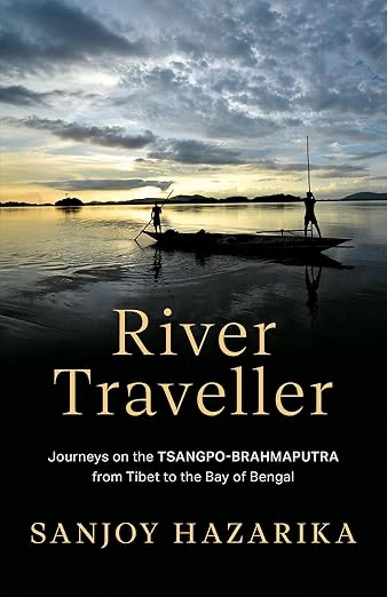
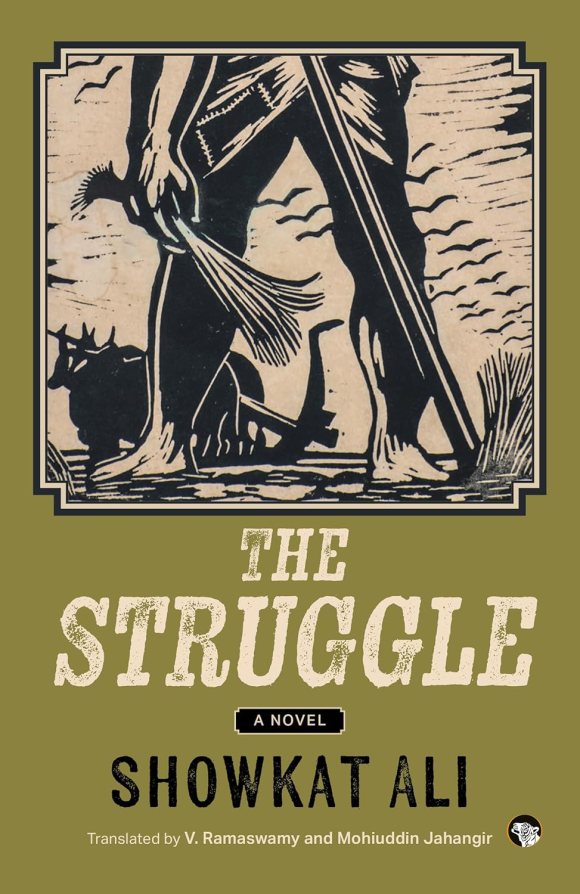
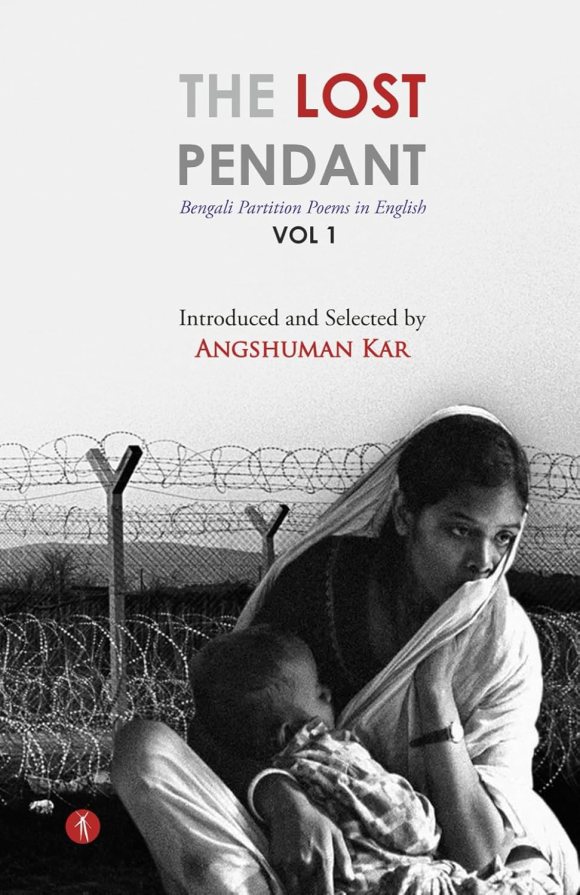
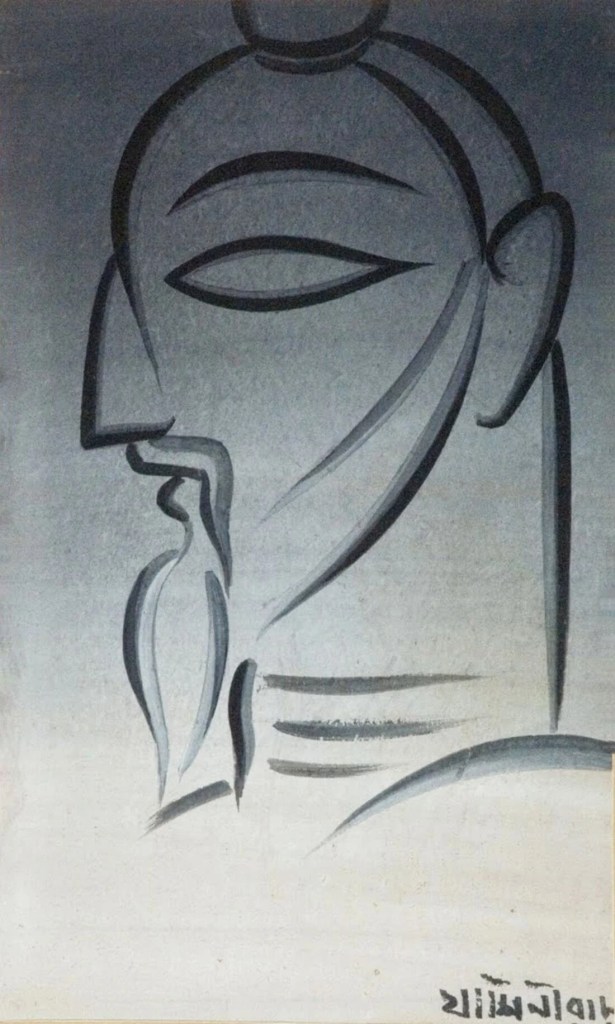
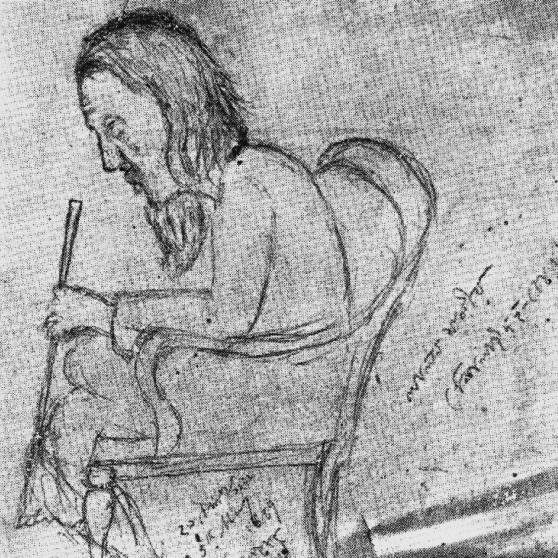

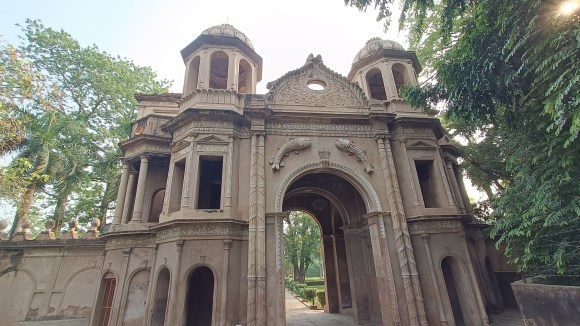
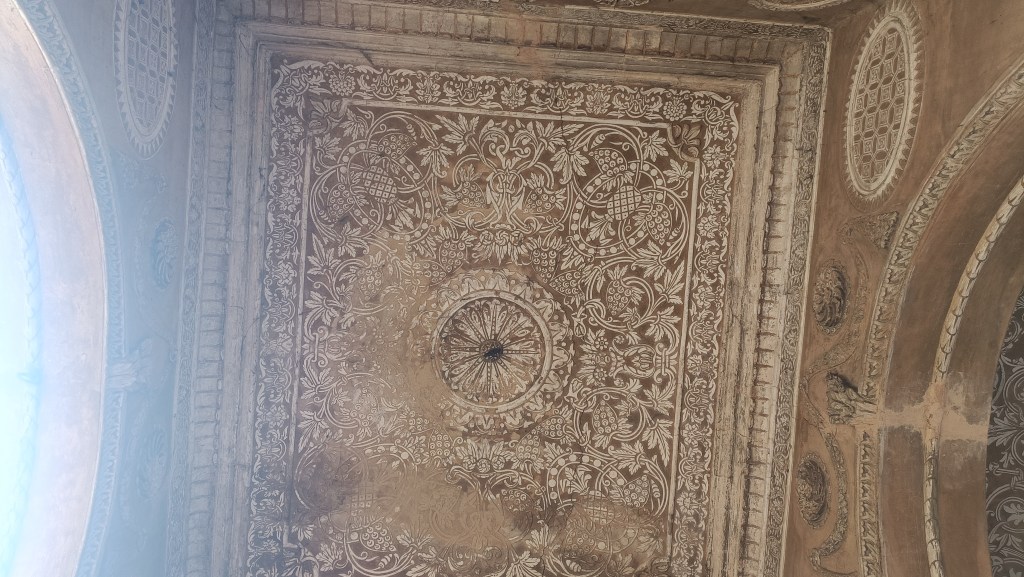
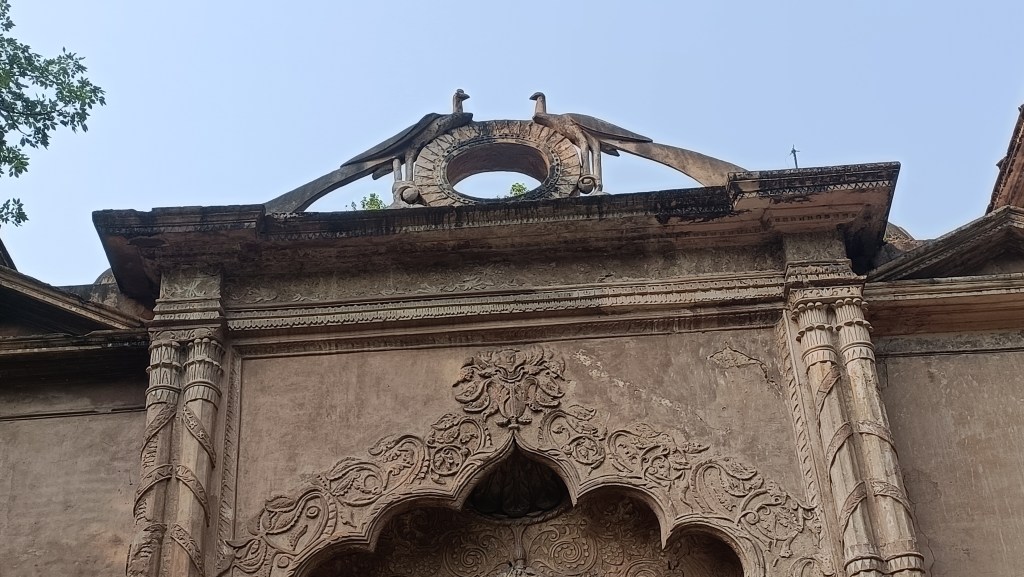
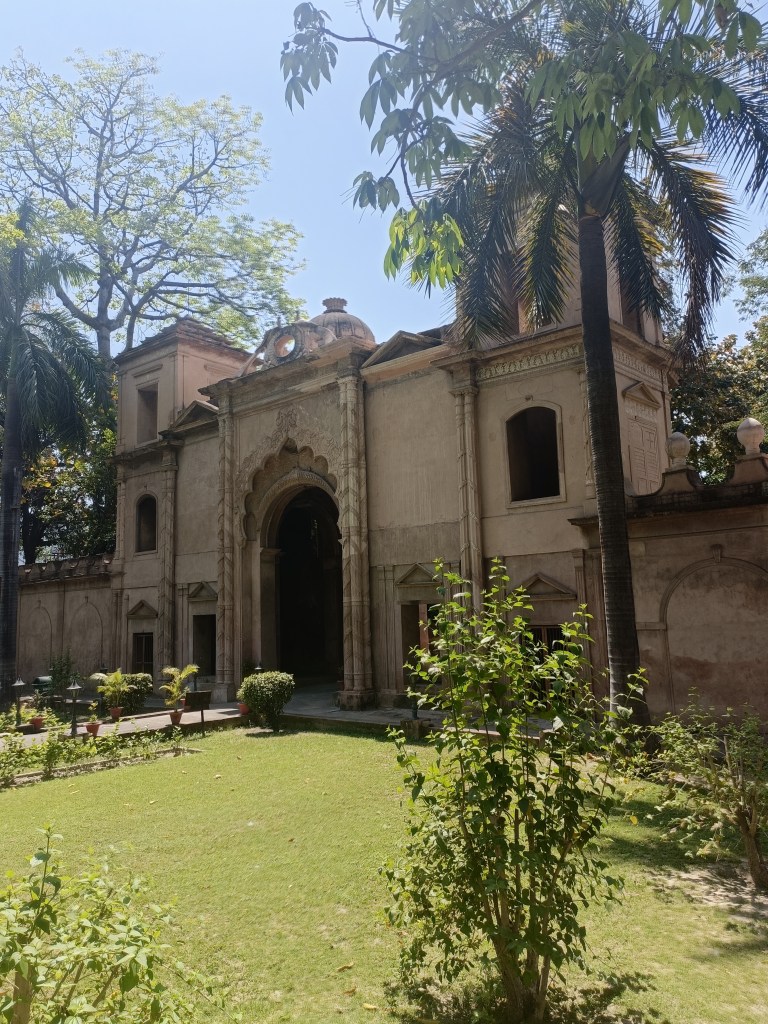
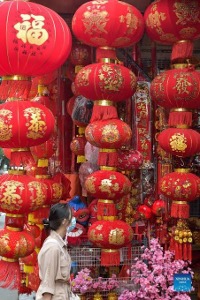


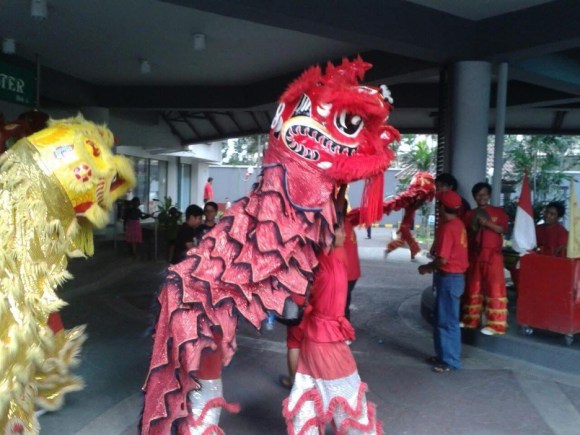


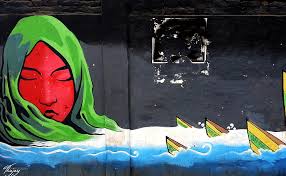
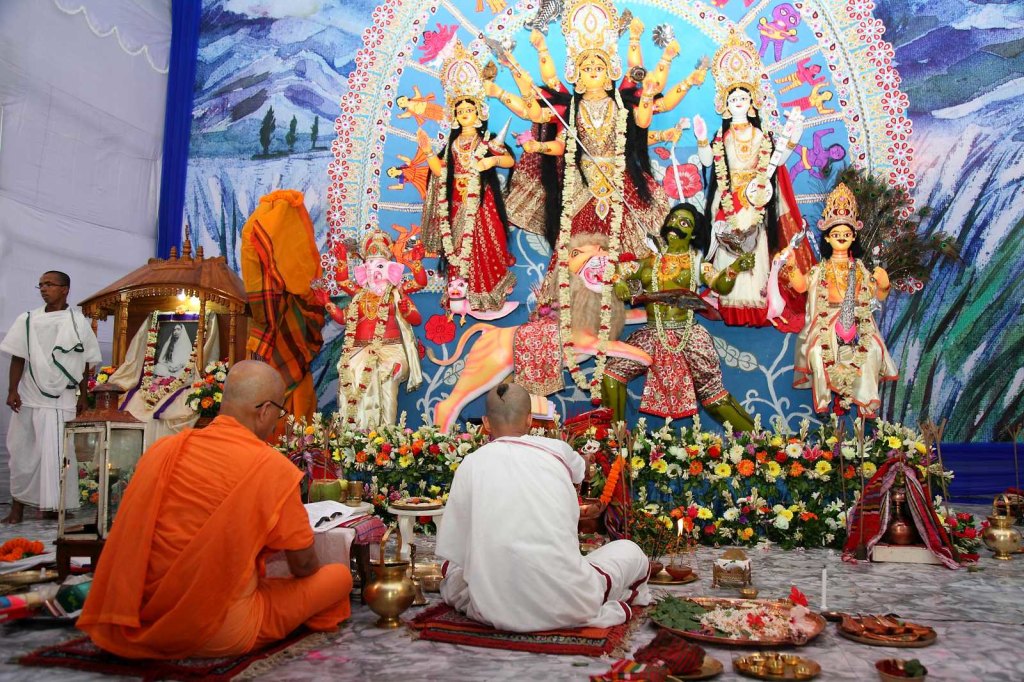
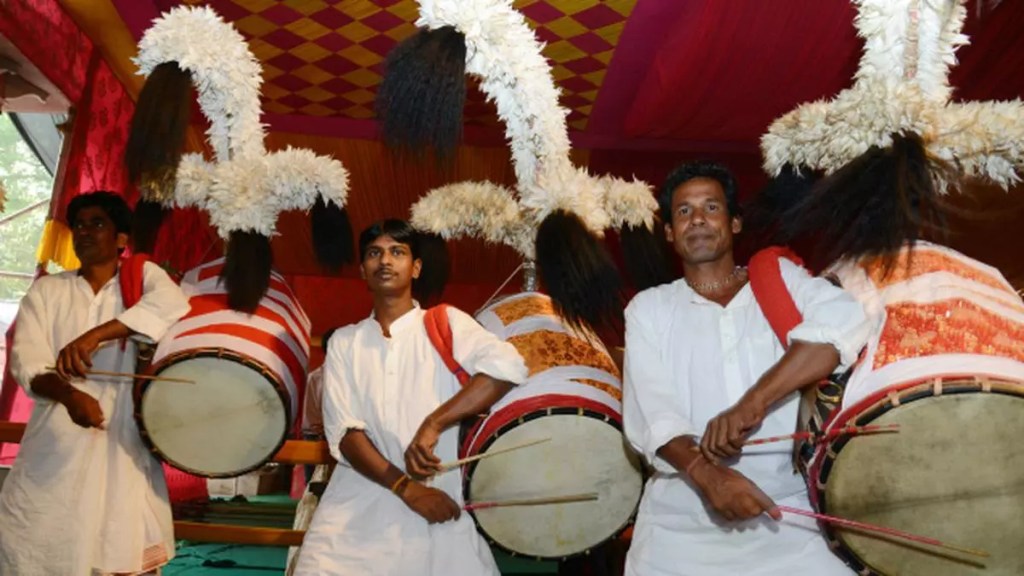


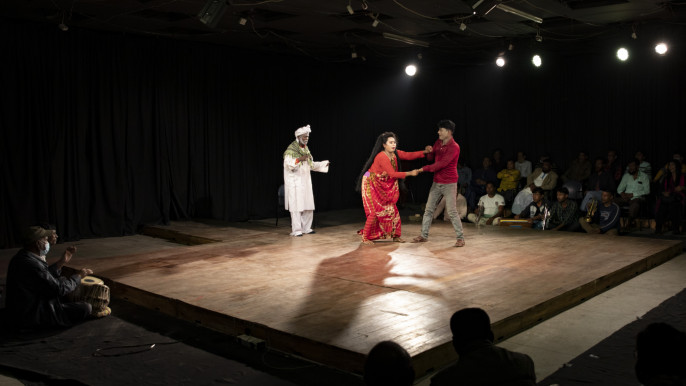
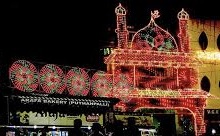
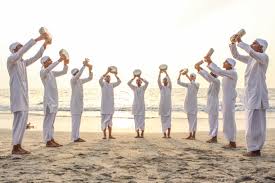
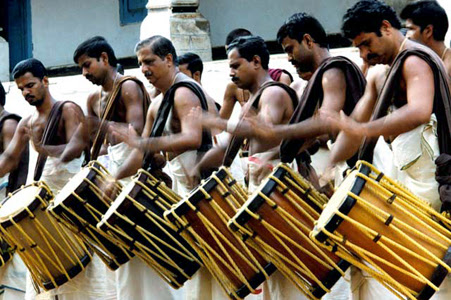

 Borderless