Categories
Story Poem

Ullswater Requiem

By Mike Smith

Photo provided by Mike Smith
Ullswater Requiem

I Dies Irae: The Anger of the Water

Here’s where I stand. I read the lake each day.
Beyond our reach it changes endlessly.
Sometimes it’s dark as ice. Sometimes it’s broken glass,
sometimes like metal streaked where boats have passed,
sometimes with ripples regular as sound.
Sometimes it’s like a sky: Sometimes a pit.
Sometimes it’s white capped, rough.
Sometimes there’s barely breeze enough
to drown the mirrored image of the trees.
It mirrors all moods, given time.
Today the water’s still and black. Call it
sullen if you like. It cannot mind.

And there’s a pebble beach that waves have cut
driven by storms against the mountainside.


II Tuba Mirum: The Bringing of the News

Whatever moves above it or below
disturbs the surface: Writes its passage: 
weight: speed: bulk: hull: body: keel and fin:
the changing pressure of the wind.
A drowning man will tell his tale
as clearly as a fishing heron can.
Today it’s briefly mute: What lives below 
is motionless. The wind is starved of breath.

Here three boys died a few yards from the shore,
where the wave cut platform tips sheer down
the steep slope to deeps that glaciers carved.
So cold at depth it strips you to the bone.
That shock of cold will take your breath away.
Only shallow water over stone’s not cold.


III Recordare: Memory

You remember once yourself slipping off 
the narrow shelf of Ullswater.
You were no swimmer at all and had waded out like them
beyond the glimmer of sunlight on rocks below,
walking on a cliff edge in a mist,
and only when you felt the stones begin
to slip and shift knew you were on the lip
of some commencing underwater fall.

You had rowed singing over the water
like fearless Vikings to the shingle beach,
bringing your gear: striped blazer, straw boater,
a camping stove for the picnic, scones,
a gramophone and old seventy eights.
You danced on stones before it drew you in.


IV Quod sum miser: The Bereaved

Crossing a mountain stream once in bare feet
you could not keep yourself from crying out,
sliced by that scalpel cold, burned by its ice.

An avalanche of cold enfolded them.
Only an inch or two beneath it’s cold
as graves. Stone cold where the sun can’t penetrate.
Rivers of cold run deep along the lake.

Perhaps it helps to have a faith, belief;
Something to make sense of grief, to bring relief
from pain: insubstantial as breath.

We are taken from each other every way.
By fire and water, earth or air, broken
by illness, old age, accident of place
or time, seemingly without rhyme or reason.


V Lacrimosa: Weeping

I did not witness this. I saw the lake.
Ripples run towards me every day. 
I cannot read them all. The steamer makes
eight beats per second by my clock, no more.
Yet I must speak or what’s the watching for?
My words must face you square and eye to eye.
We are each other’s strangers of goodwill.
Tears bind us; the sky; mountains, and fire.

Tomorrow they’ll be singing from their boats once more
and paddling in the shallows by the shore.
Their waves will reach me soon. Make no mistake 
who knows the depth and coldness of a lake.
The shoreline trees cast shadows where we tread.
The living must keep vigil for the dead.


VI Lux Aeterna: A Celebration

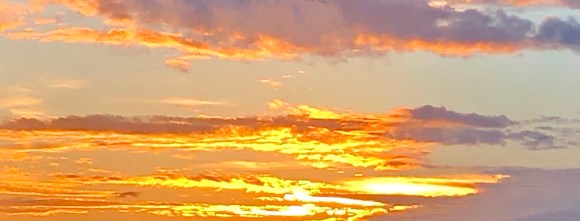
The sky’s sheet ice, the blood of sunset drained away.
Clouds are gathered in like nets at the horizon.
Rose petals of last light are floating in
an awkward angle of the bay. Crows are
Litter whirled in a corner of the air.
The steamer’s wake has met itself returning.
Some say this is the old day’s dying, as if
no dawn will break; but not me. I see a star.

This moment holds the world still in my eye.
A perception of the vastness of planets,
of the unimaginable distances
of space. In the turning of the day
that hemispherical shadow of
yesterday and tomorrow coming to pass.


VII Libera me: A Prayer

Let me drop a pebble to that surface
and watch its ripples run out perfect
and see a fish rising from the depths,
a pebble cast by water into sky,
and those two rings meeting, interfering,
intermingling, intersecting but still perfect,
each still unbroken in its way:
A criss-cross message of place and time.

Believe. We shall not be alone whatever
faith we hold or understanding reach.
Hold to it that the circles of our lives
shall in their intersectings bring us peace:
That we shall write ourselves upon the water
and learn to speak the languages of waves.

Glossary:

Dies Irae: A Latin hymn sung in a Mass for the dead.

Tuba Mirum: Part of both Verdi and Mozart’s requiems on death.

Recordare: Remembering, Spanish

Quod Sum Miser: That I am wretched, Latin

Lacrimosa: Our Lady of Sorrows, part of Dies Irae.

Lux Aeterna: Eternal light, Latin, from a hymn.

Libera Me: Deliver me, Latin, from a hymn.

Mike Smith lives on the edge of England where he writes occasional plays, poetry, and essays, usually on the short story form in which he writes as Brindley Hallam Dennis. His writing has been published and performed. He blogs at www.Bhdandme.wordpress.com 

.

PLEASE NOTE: ARTICLES CAN ONLY BE REPRODUCED IN OTHER SITES WITH DUE ACKNOWLEDGEMENT TO BORDERLESS JOURNAL

Categories
Tribute

In Memory of Peace

My friend, you would not tell with such high zest
To children ardent for some desperate glory,
The old Lie: Dulce et decorum est
Pro patria mori*.
-- Dulce et Decorum Est, Wilfred Owen (1893-1918)

*Translated: "It is sweet and fitting to die for the homeland."

On 11th November, we remember the men who gave up their lives to win wars for those in power. Remembrance Day started as an annual event after the First World War (28th July, 1914- 11the November, 1918) more than a hundred years ago, in memory of soldiers — some of who were lost in the battle grounds, whose remains never got back to their families. Some of these men who fought were from countries that were subservient to colonial powers who started the war and some, like the soldier-poet, Wilfred Owen, were from conquering nations.

This was much before atom bombs were dropped on Hiroshima and Nagasaki. Eventually, a nuclear armistice was declared. Mahatma Gandhi (1869-1948), an internationally acknowledged apostle of peace, had an opinion on this: “‘The very frightfulness of the atom bomb will not force non-violence on the world? If all nations are armed with the atom bomb, they will refrain from using it as it will mean absolute destruction for all concerned?’ I am of the opinion that it will not.” Has this nuclear armistice made the world more peaceful? And if so, what is the quality of peace that has been wrought by drumming fears of annihilation in human hearts? Could the ‘fakir…striding half-naked up the steps of the viceregal palace’ be right after all?

Here we have collected a few stories and poems around ongoing conflicts and wars which stretch to the present day, some old and some new… some even written by men who faced battle…

Poetry

A poem and art by Sybil Pretious in memory of soldiers who died in the World War I.

Soldiers & Missives by Prithvijeet Sinha … Click here to read.

Our Children by Bijan Najdi, translated from Persian by Davood Jalili. Click here to read.

Prose

Line of Control by Paresh Tiwari, a story about the life of soldiers set in the Indo-Pak border… Click here to read.

I am a Coward with Priorities by Tejaswinee Roychowdhury, a story from a soldier’s perspective. Click here to read.

From the Pages of a Soldier’s Diary… by Mike Smith takes you on a journey through the pages of a colonial diary and muses on choices he has made. Click here to read.

Bundu, Consoler of the Rich is a story based on memories of the Partition by Nadir Ali, translated from Punjabi by Amna Ali. Click here to read.

In a Land Far From Home: A Bengali in Afghanistan, an excerpt from an account by Syed Mujataba Ali, translated from Bengali by Nazes Afroz. Click here to read.

Categories
Editorial

The Caged Birds Sing

...Don't you know
They're talkin''bout a revolution
It sounds like a whisper...
-- Tracy Chapman,'Talkin 'Bout a Revolution
Thou shalt love thy neighbour as thyself. 
— Bible 

We are living in strange times that seem to be filled with events to challenge the innovativeness of man. As if the pandemic were not enough, concepts that had come out of the best in our civilisation to unite mankind have been convoluted by a minority to manipulate and hurt the majority into submission. Life is not about surviving with faint-hearted compliance but about having the courage to live it as you want, facing it full up front, to voice out in unison against injustices, wrongs, and most of all to loan strength to help and care for each other. Often to understand this, we need to hinge on to our past, to learn from our heritage. But do we do that? In the hectic drive to be successful, we tend to ignore important lessons that could have been imbibed from the past. Like, did you know that the tribes in the Andaman can save themselves from a tsunami?

Padma Shri Anvita Abbi tells us all about the Andamanese and her attempts to revive their moribund language in her interview and book, Voices from the Lost Horizon, reviewed by Rakhi Dalal. While the review focusses on the uniqueness of Abbi’s work and the publication with its embedded recordings of the tribe fast dissolving into the morass of mainstream civilisation, her interview highlights the need to revive their lores that evolved out of a 70,000-year-old culture. On the other hand, Jessica Mudditt, interviewed by Keith Lyons, dwells on the ongoing crisis in Myanmar, which has been clearly the focus of her book, Our Home in Yangon. This interview focusses on the here and now of the crisis. But most crises have their roots deep and perhaps an exploration of these could help. There are 135 ethnicities in Myanmar but how many are actually integrated into the mainstream? Are they in the process of getting ‘lost’ like the voices of the speakers of Greater Andamanese?

That is why we tried to showcase a few such strains that are going unheard in the loudness of the ‘civilised’ mainstream. We have translations in poetry from Santhali and Adivasi, touching on the concerns of those who are often considered underdeveloped. And, perhaps, as Abbi said in her interview about the Andamanese, we can say much the same for these tribes too.

“These tribes are neither poor, nor uneducated (their knowledge of environment comprising birds, fishes, medicinal plants and their … weather predictions, and the Earth they walk on is amazing) …”

Distinctions have been created by a ‘civilisation’ entrenched in mono-cognitive enforcements leading to the loss of trust, confidence, languages, cultures and valuable knowledge about basic survival. Perhaps we can attempt to heal such wounds by imbibing the openness, love, devotion and compassion shown by the Buddhist monk, Upagupta (who is still revered in Myanmar as Shin Upagutta), in the translation of Tagore’s story poem, ‘Abhisar’ or ‘The Tryst’.  Somdatta Mandal’s translation of Tagore’s letters introduce similar humanitarian concerns when the maestro mentions a German anthropologist and his wife who for the betterment of mankind were journeying to study tribals in India. Tagore remarks, “The people for whom they are willingly prepared to undergo hardship and to overlook all sorts of danger are not their relatives, nor are they civilised.” And yet even a century ago to fathom more about mankind, attempts were being made to integrate with our ancient lore. The concept of being ‘civilised’ is of course now much under the microscope. What is being ‘civilised’?

 Is it about having power? We have Akbar Barakzai’s poem translated by Fazal Baloch on creation looking at the divide between a ‘civilised’ God and man. The theme stresses the two sides of the divide. More translations from Odiya, Dutch and Korean further mingle different flavours of the world into our journal — each questioning the accepted norm in different ways.

In an edition focussed on myths and stories from which we evolved, Rhys Hughes has created an unusual legend around elephants. His poetry also deals with animals — cats. One wonders if the T S Eliot’s famed ‘Macavity, the Mystery Cat’ could have to do something with his choices?  We were fortunate to have Arundhathi Subramaniam share her poetry on myths around Indian figures like Shakuntala and Avvaiyar and the titular poem from When God is a Traveller that won her the 2020 Sahitya Akademi Award. Michael R Burch continues on the theme dwelling on Circe, Mary Magdalene and Helen. Sekhar Banerjee has a more iconoclastic approach to myths in his poetry. Jared Carter talks of modern myths perpetuated through art and cultural studies as does Mike Smith in his musings with his glance back at the last century through a photograph.

We have poetry by a Filipino writer Gigi Baldovino Gosnell from South Africa, looking for a new world, a new legend, perhaps a world without borders. Tohm Bakelas has given us a few lines of powerful poetry. Could these poems be a reaction to world events? Smitha Vishwanath has responded to the situation in Afghanistan with a poem. In this edition, photographs and verses in Penny Wilkes’ ‘Nature’s Musings‘ draw from the universe. She writes, “The sun never asks for applause” — a powerful thought and perhaps one mankind can learn from.

Ghost stories by Niles Reddick and Sunil Sharma perpetuate the theme, especially the latter has a ghost that questions myths of ‘isms’ created in the modern-day world. We also have a writer from Malaysia, P Ravi Shankar, with a futuristic legend set in a far-off time where man has embraced the reality of climate change and artificial intelligence. An interesting and fun read as is Devraj Singh Kalsi’s professions about why he did not become a professor, Geetha Ravichandran’s light musing on word play and a young writer Saurabh Nagpal’s musing, ‘Leo Messi’s Magic Realism‘ — a footballer viewed from a literary perspective!

While our musings make us laugh, our essays this time take us around the world with the myth of happiness deconstructed by Candice Louisa Daquin, to Burma and deep into Kolkata’s iconic history of the detective department started in the nineteenth century. There is an essay by Bhaskar Parichha that explores politics and media and mentions ‘gatekeepers’ of the media who need to be responsible for influencing public opinion. Guess who would be the gatekeepers?

Bhaskar Parichha’s review of Wendy Donniger’s non-fiction exploring myths around horses, Winged Stallion and Wicked Mares, and Basudhara Roy’s review of Bina Sarkar Ellias’ Song of a Rebel and Other Selected Poems perpetuate the theme of the importance of the past on the one hand and question it on the other. But that is what Borderless is about — exploring the dialectics of opposing streams to re-invent myths towards a better future.

We have a bumper issue again this time with nearly fifty posts. I invite our wonderful readers on a magical journey to unfold the hidden, unmentioned gems scattered on the pages of the September Issue of Borderless. Thank you again to an outstanding team, all our global contributors who make every edition an adventure and a reality and our wonderful readers. Thank you all.

Have a beautiful month!

Mitali Chakravarty

Borderless Journal

Categories
Nostalgia Slices from Life

Cyclists

By Mike Smith

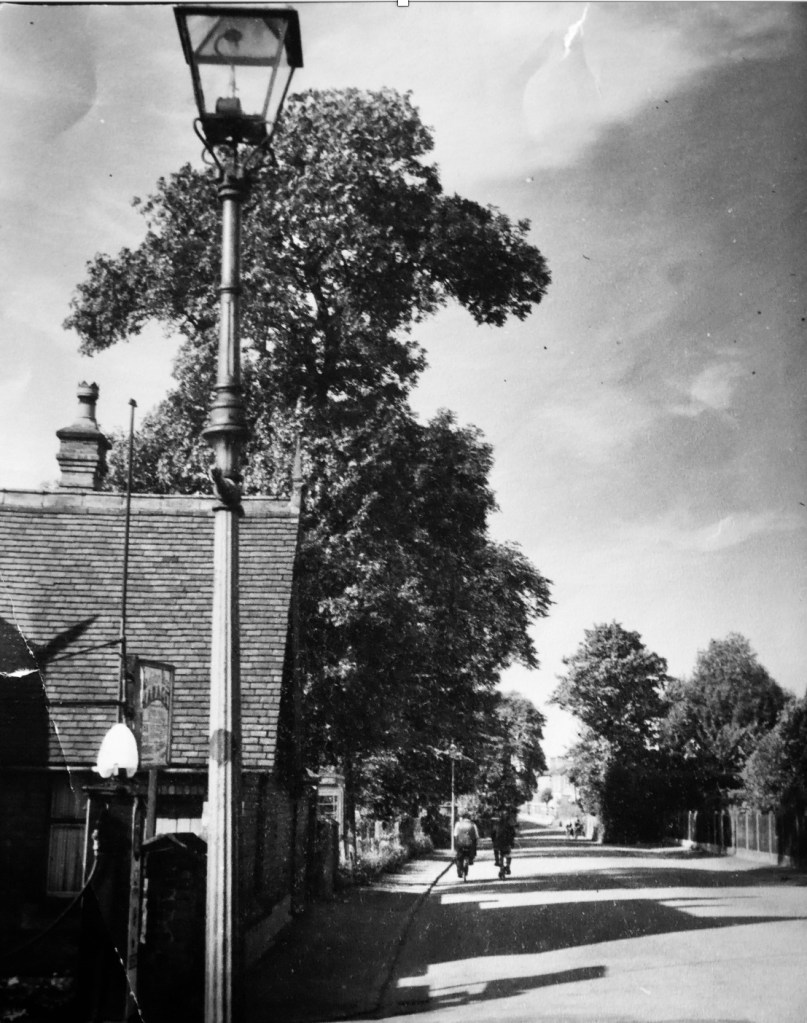
Two men on cycles. Photo Courtesy: Mike Smith

This is a photograph from my childhood. It is of a roadside cottage and a fine, unidentified tree, on what was the edge of a Midland town, as they both were over sixty years ago. I’d guess it was taken in the mid or late nineteen fifties. It shows the front wall of the cottage I grew up in, and the road outside. It was a road that, when the photograph was taken, led out into the Staffordshire countryside. You might have called it a road to nowhere.

In the foreground on the left, if you ignore the old gaslight, is an upright object with a white top. You might recognise it as a petrol pump, probably a ‘Shell’ one.

The cottage had been the gate-lodge to a substantial house belonging to a successful Burton-upon-Trent brewer. That was demolished sometime between the two World Wars. A short flight of stone steps, overgrown, and the rumour of a lost cellar, both at the far end of our plot, were all that was left of what must have been the house and its ornamental gardens.

A pale blue gate, permanently open during my childhood save once when I recall cattle being driven along the road, stands out of sight closer to the camera than the lens captures. It bore the name of ‘The Lodge’ if memory isn’t playing me false. A short drive led down past the bay window of the cottage – an oval rose garden edged with stone alongside – to old stables, coach houses and outbuildings. All had the same steep, slated roofs, blue weatherboards pierced with fleur-de-lis designs in which swallows nested, and tall, pointed wooden finials. You can just make one out on the visible gable of the cottage, not quite merged in the foliage of the tree behind. There’s the shadow of another on the roof, presumably above that bay window. These were the buildings that I described in my only published novella, A Penny Spitfire, and the greenhouse that features in my daughter’s animation Giant’s Puddings leaned against one of them.

The photograph shows more, and pricks memory beyond what it shows. I can just remember that gas lamp being lit at dusk by a man who, Wee Willie Winkie-like, ‘ran through the town’, carrying his long pole, hurrying to light the lamps before true darkness fell, or at least, I think I can. I found a coal miner lying beneath it once, or the lamp that replaced it, and thought him dead, rather than dead drunk, and wrote a poem about it fifty and more years later.

The tree is in full leaf, beneath a Simpson’s sky, which would have had no meaning when the photograph was taken. And the shadows are long and to the east of north if my internal compass points true. This makes it a summer evening, I guess, or maybe late afternoon. Those cyclists, small as they are, seem unhurried. I imagine them enjoying the warmth, chatting, side by side as they ride.

Above the stub wall, beyond the petrol pump, you can see the top of what used to be the front door. Unseen to the right of it, but the shadow gives the clue, steps led up to road level and an opening with, back then, a gate.

Further along the road, even at this angle, you can make out a window and beyond that another door. This didn’t open into the house but was a yard gate through which you stepped down to outhouses, though I never saw it used: a washhouse with a boiler in the corner, a room with running water from a tap – dad fixed it up as a darkroom for photography. He was a hobby photographer all his life and taught me to develop and print in black and white. This photograph, of which I have several prints must be one of his.  There was an outside toilet too, in that yard, lit by starlight and protected from frost by a paraffin heater, with a store shed alongside, both backing onto the road. The shed was eventually hollowed out, its roof left intact and propped up at the corner, and a fuel tank for central heating was installed in the space beneath.

The cottage was tiny. The room with the bay window had an open fire, and opened onto a short corridor, to the left of which was a scullery kitchen with a gas water heater by the sink. The bath was underneath the kitchen table, which was fixed to the wall and hinged up, secured to a hook. And yes, I was told, it did once fall down on me in the bath. The room with the window onto the road was a bedroom. The room with the window showing to the left of the petrol pump must have been some sort of reception room. I can remember it with a desk, being used as an office and shop-front, but not for long.

Because dad was an inveterate builder, and demolisher. That single pump turned into two, and perhaps three. Their swing arms carried pipes across the pavement to serve the cars. At the back he extended the kitchen, and added a bathroom and indoor toilet, nibbling away at other outbuildings to make space. He added a bedroom. Some called them the golden fifties, though I remember them as grey, and the sixties they called the silver sixties, because things got better.

Reminiscing about my mother recently, I realised what a catalogue of disaster blighted the first forty years of her life, and dad’s. Born before the First World War, mum, the youngest child, was sent to queue for food at the shops – there was no rationing (until 1917?) in that war, and when it was gone it was gone. Then there was the Homes Fit for Heroes that didn’t materialise, the inflation caused by the war, the crippling debt it imposed, the General Strike, the Wall Street Crash, and the next war after that. No wonder mum was content and counted herself lucky all the years of my life. She knew her place, and knew it was better than she’d had before, and bore it without aspiration, with the stoicism of some unspoken disappointment. She might have truly asked though, who could want for more?

The cyclists – there are two more in the distance – emphasise the emptiness of the road. I can just recall it like that, though I wouldn’t have noticed at the time. Dad spoke of that petrol pump as being modern. Earlier ones were hand operated, and before that petrol was sold in two-gallon cans. But the times were changing. They started to build what was said would be the biggest coal fired power station in Western Europe a few miles up the road. Conveys of vehicles passed by in both directions day after day for years and several times a day, calling in for fuel. The private car was on the rise. By the time I left school they were predicting 20 million of them. Dad knocked down the extended cottage, put the pumps a little more than a car’s width back from the pavement, and a new building a tad more than a car’s width back from that.

There was a showroom, a shop, office and stores on the ground floor, a staircase bolted on at the back – overlooked in the original thumbnail sketch – and a four-bedroom flat with enormous rooms built on above. For a time, my old new bedroom had a steel girder down through the ceiling, a tarpaulin on the roof. I played on the scaffolding after school.

And not just our place: the road changed too. Just beyond the last tree on the right-hand side, a hillside we’d sledged down to the hedge was opened up. A road network spread over the ridge that we’d called the Cow Pastures. I learned to drive on it. Before that we had slid on metal trays down clay ski-runs where they later bumped out the hillside for houses. I went to school in a brand-new building on land I’d seen bulldozed flat, frogs, newts, plants, and water spilling from the ponds as they trashed them. The houses were slow to arrive, one by one over years, like reluctant weeds along the crest and on the reverse slope. After working hours, after school, we roamed the building sites.  

Below them at the slope’s foot, opposite to us, an Aunt and Uncle, dad’s sister with her second husband, lived in a bungalow stuffed with dark furniture and suppressed resentment. He was a tee-totaller with a fine palate and tasted the beer for one of the breweries. It might have been Bass. A taciturn man, he told me once, that if I practised long and hard enough with a tennis ball in my pocket, I could crush it flat with one hand. And he demonstrated.

Dad fell out with her, over a petrol mower he decided to sell when the last piece of our grass was concreted over for the business. I’ve no money, my uncle had said, surprised to be asked. She crossed the road, threw banknotes on to the kitchen table and didn’t speak to him again for years.

Next door to them, another bungalow, more modern and with a tennis court – both plots had been the grounds of the house you can catch a glimpse of at the photo’s far right edge – and a retired policeman lived there. He always wore a fag, unlit, dangling from his lips. Offer him a light, dad said. I’ll get one later, he’d reply. When they were too worn, I suppose, to dry out and re-use, he’d buy another pack. Twenty Players.

There’s an old red phone box in the shot. We used it, until we got our own. What we see arrive seems always new. What is there already seems just furniture however recently it arrived. I recall our, first fridge, first image on a TV screen, even our first phone perhaps.

Go back there today and you’ll find the road, I suspect, much as it was, save for the cottage and perhaps the tree. It’s full fifteen years, as I write since I visited the spot. The pumps had gone. The showroom had substituted furniture for cars. The old red phone box might be a garden ornament by now. Cyclists will move a little faster, pumping Lycra, no doubt.

The power station’s come and gone, been swept away, its working life complete. Built, used, demolished, all in the blink of a life’s eye.

Fleur-de-lis

Mike Smith lives on the edge of England where he writes occasional plays, poetry, and essays, usually on the short story form in which he writes as Brindley Hallam Dennis. His writing has been published and performed. He blogs at www.Bhdandme.wordpress.com 

.

PLEASE NOTE: ARTICLES CAN ONLY BE REPRODUCED IN OTHER SITES WITH DUE ACKNOWLEDGEMENT TO BORDERLESS JOURNAL

Categories
Contents

Borderless August 2021

Editorial

Triumph of the Human Spirit… Click here to read.

Interviews

Goutam Ghose, multiple award-winning filmmaker, writer, actor discusses his films, film-books and journey as a humanitarian artiste. Click here to read.

Dr Kirpal Singh, a well-known poet and academic from Singapore, talks of his life and times through colonial rule, as part of independent Malaya, and the current Singapore. Click here to read.

Translations

Bundu, Consoler of the Rich

A story based on memories of Partition by Nadir Ali, translated from Punjabi by Amna Ali. Click here to read.

Akbar Barakzai’s Songs of Freedom

Akbar Barakzai’s poetry translated from Balochi by Fazal Baloch. Click here to read.

An August Account of ‘Quit India’ Movement

Ratnottama Sengupta translates from Bengali the excerpts recorded by Sandhya Sinha (1928-2016), who witnessed an upsurge in the wake of the Quit India Movement, part of India’s struggle against colonial rule. Click here to read.

Froth

A short story by Dev Kumari Thapa, translated from Nepali by Mahesh Paudyal. Click here to read.

Mother’s Birthday Dinner Table

Ihlwha Choi translates his own poem set in Santiniketan from Korean to English. Click here to read.

Deliverance by Tagore

Tran’ by Tagore translated from Bengali to English by Mitali Chakravarty, art and editing by Sohana Manzoor for Borderless Journal. Click here to read.

Essays

The Idea of India: Bharata Bhagya Bidhata – The Making of a Motherland

Anasuya Bhar explores the history of the National Anthem of India, composed by Tagore in Bengali and translated only by the poet himself and by Aruna Chakravarti. Click here to read.

A Life Well-Lived

Candice Louisa Daquin discusses the concepts of a life well-lived. Click here to read.

Once Upon a Time in Burma: Land of a Thousand Pagodas

John Herlihy explores the magnificent sites of Mandalay in company of a Slovenian friend in the first episode of his quartet on his Myanmar. Click here to read.

Bhaskar’s Corner

In Tagore & Odisha, Bhaskar Parichha explores Tagore’s interactions with Odisha, his impact on their culture and the impact of their culture on him. Click here to read

Poetry

Click on the names to read the poems

Jaydeep Sarangi, Joan McNerney, Vandana Sharma Michael Lee Johnson, Priyanka Panwar, Mihaela Melnic, Ryan Quinn FlanaganKirpal Singh, Sutputra Radheye, John Linwood Grant, Julian Matthews, Malachi Edwin Vethamani, Rhys Hughes, Rachel Jayan, Jay Nicholls, Jared Carter

Nature’s Musings

Becoming Marco Polo: Poetry and photography by Penny Wilkes

Poets, Poetry & Rhys Huges

In Dinosaurs in France, Rhys Hughes explores more than tall tales; perhaps, the passage of sense of humour in our lives. Click here to read.

Musings/Slices from Life

Me and Mr Lowry’s Clown

Mike Smith’s nostalgia about artist Pat Cooke (1935-2000) takes us back to England in the last century. Click here to read.

Seventy-four Years After Independence…

“Mil ke rahe gi Azadi” (We will get our Freedom) by Aysha Baqir muses on Pakistani women’s role in the independence movement and their current state. Click here to read.

The Road to Freedom

Kanchan Dhar explores personal freedom. Click here to read.

The Coupon

Niles Reddick tells us how Covid and supermarkets combined into a discount coupon for him. Click here to read.

Musings of a copywriter

 In 2147 without Borders, Devraj Singh Kalsi meanders over Partitions, borders and love stories. Click here to read.

Stories

Rituals in the Garden

Marcelo Medone discusses motherhood, aging and loss in this poignant flash fiction from Argentina. Click here to read.

The Best Word

Maliha Iqbal explores the impact of wars in a spine chilling narrative, journeying through a range of emotions. Click here to read.

Do Not Go!

Moazzam Sheikh explores dementia, giving us a glimpse of the lives of Asian immigrants in America. Click here to read.

The Protests Outside

Steve Ogah talks of trauma faced by riot victims in Nigeria. Click here to read.

Brother Felix’s Ward

Malachi Edwin Vethamani takes us to an exploration of faiths and borders. Click here to read.

The Literary Fictionist

In The Chained Man Who Wished to be Free, Sunil Sharma explores freedom and democracy versus conventions. Click here to read.

Book Excerpts

Beyond The Himalayas by Goutam Ghose, based on a five-part documentary taking us on a journey along the silk route exploring parts of Pakistan and China. Click here to read.

Our Home in Myanmar – Four years in Yangon by Jessica Muddit, a first hand account of a journalist in Burma. Click here to read.

Book Reviews

A review by Meenakshi Malhotra of Somdatta Mandal’s The Last Days of Rabindranath Tagore in Memoirs, a translation from a conglomeration of writings from all the Maestro’s caregivers. Click here to read.

A review by Keith Lyons of Jessica Muddit’s Our Home in Myanmar – Four years in Yangon. Click here to read.

A review by Rakhi Dalal of Maithreyi Karnoor’s Sylvia: Distant Avuncular Ends. Click here to read.

A review by Bhaskar Parichha of Arundhathi Subramaniam’s Women Who Wear Only Themselves. Click here to read.

Categories
Nostalgia Slices from Life

Me and Mr Lowry’s Clown

Mike Smith’s nostalgia about artist Pat Cooke (1935-2000)

When I became a dealer in second-hand books in the mid nineteen eighties, I was briefly a member of the prestigious PBFA, which stands for the Provincial Booksellers Fairs Association, and not, as others have suggested for the alternative (which begins with Pretentious). That led to me standing a bookfair at Knutsford in Cheshire.

Into that fair one morning strolled Brian and Pat Cooke. They were interested in the Crimean War, and luckily, I had a few uncommon titles on that subject. I was a new boy on the block, but they were regular visitors to the fair. They made me welcome. They were, in fact, the sort of people who, even within a few minutes of first meeting, enrich your life. Brian was already working on what would be the first major study of the light railway built to supply the British Army outside Sebastopol during that war, which he went on to publish in two editions, the second benefitting from information flushed out by the first. You can still find copies of The Grand Crimean Central Railway online today.

The couple had joiede vivre that was infectious and heady. The world sprang into colour and movement and light when they were about, and especially Pat. But then, Pat was an artist.

The meeting led to a relationship that like many in the second-hand book trade was as much about friendship as it was about commerce. We sent Pat our regular catalogues, and she put in orders. It was always Pat that wrote, and the orders were neatly scribed in sharp black ink on small cards. They were illustrated with cartoons and sketches, with messages of goodwill to us and our daughter, often with the mention of a gift for the latter: ‘£5 to spend enclosed’.

The Cooke’s moved in elevated circles, compared to us! We were invited to a party at Tatton Hall. Bring some books to sell, I was told. It was a great party! And we sold more books, by value, in an hour than we would normally sell in a month. The toffs and celebs were at them before I could even unpack the boxes, like Whitby seagulls on a chip packet.

Pat Cooke was Mr Lowry’s Clown.

Mr Lowry, as I’m sure you know, was that painter of ‘matchstick men’ that status quo sang about in the nineteen sixties. He painted much more. I can remember walking into a room at the Abbot Hall Art Gallery in Kendal and being overwhelmed by one of his seascapes – the first I had ever seen. Massive and deceptively simple, the horizon line at my eye level it was as if I had been cast into that empty ocean. I didn’t even know it was a Lowry until I read the little card beside it, and when I did know it changed my whole perception of the man. I have a postcard of the painting and years later it still overwhelms and threatens me with extinction.

His friend from 1948 when she was 13 until Lowry’s death, Pat published in 1998 a small paperback of a mere 63 pages in which she recalled that friendship. The book is packed with photographs of Lowry, here and there, with Pat and her husband. It’s packed too with reminiscences of what they said and did together. Interesting by any measure, what strikes me, having recently watched the biopic, Mrs Lowry and Son, is the upbeat picture she paints of that often gloomily depicted artist.

L. S. Lowry(1887-1976) memorial, Greater Manchester. Courtesy: Creative Commons

Sketching or just looking, their jaunts together in the English countryside or at the coast, seem to have ended as often as not with a search for afternoon tea, or as Lowry is quoted: ‘poached eggs on toast, warm scones with strawberry jam… perhaps some sponge cake or brandy snaps…’

My favourite quote is one that could be applied equally to writers, I think, and it is Lowry’s advice to Pat, and other artists: ‘Find out what subjects you like to draw and paint, keep a limited palette, don’t be influenced to change your natural style and then work very hard for at least fifty years.’

The first third of the book gives us the history of Pat herself, and though Lowry is the more famous, I find this a bonus rather than a flaw. We might think she was lucky to have known him, but having met Pat and Brian, I know that he was lucky too.

I searched for the little book online while writing this. It comes up in large numbers, but all of them ‘sold’ or ‘out of stock’. We took a handful, which we passed on over the years to people we thought might like them. We kept the one with the note tucked in, ordering from our October ‘98 catalogue,the one mentioning that fiver. ‘Cheers from the zoo X X’, it’s signed. And on the front endpaper of the book itself, ‘To Freya and her team…Good luck and God bless always…Pat Cooke’.

I think I was blessed already.

Photo Courtesy: Mike Smith

.

Mike Smith lives on the edge of England where he writes occasional plays, poetry, and essays, usually on the short story form in which he writes as Brindley Hallam Dennis. His writing has been published and performed. He blogs at www.Bhdandme.wordpress.com 

.

PLEASE NOTE: ARTICLES CAN ONLY BE REPRODUCED IN OTHER SITES WITH DUE ACKNOWLEDGEMENT TO BORDERLESS JOURNAL

Categories
Contents

Borderless, May 2021

Editorial

And this too shall pass… Click here to read

Translations

Songs of Seasons: Translated by Fakrul Alam

Bangla Academy literary award winning translator, Dr Fakrul Alam, translates six seasonal songs of Tagore. Click here to read.

Temples and Mosques

Kazi Nazrul Islam’s fiery essay translated by Sohana Manzoor. Click here to read.

Purify My Life

Kazi Nazrul Islam’s poem, Purify my Life, translated by Shahriyer Hossain Shetu. Click here to read.

Waiting for Godot by Akbar Barakzai

Akbar Barakzai’s poem translated by Fazal Baloch. Click here to read.

Solus

Aditya Shankar translates a poem by Sujith Kumar. Click here to read.

The Last Boat

Tagore’s Diner Sheshe Ghoomer Deshe translated by Mitali Chakravarty with an interpretation in pastels by Sohana Manzoor. Click here to read.

Poetry

Anasuya Bhar, Scott Thomas Outlar, Saranyan BV, Matthew James Friday, Nitya Mariam John, RJ Kaimal, Jay Nicholls, Tasneem Hossain, Rhys Hughes, Vatsala Radhakeesoon, Ihlwha Choi, Himadri Lahiri, Sunil Sharma, Mike Smith, Jared Carter

Nature’s Musings

Photo-Poetry by Penny & Michael Wilkes. Click here to read.

Poets, Poetry & Rhys Hughes

Lear and Far

As a tribute to the 209th anniversary of Edward Lear, Rhys Hughes writes of his famous poem, ‘Owl and the Pussycat’, and writes a funny ending for it rooted in the modern day. Click here to read.

Stories

If at all

Shobha Nandavar, a physician in Bangalore, depicts the trauma of Covid 19 in India with compassion. Click here to read.

First Lady

Rituparna Khan gives us a brief vignette from the life of one of the first women doctors in India, Dr Kadambari Ganguly. Click here to read.

Mr Dutta’s Dream

Atreyo Chowdhury takes us into the world of unquenchable wanderlust. Click here to read.

Neemboo Ka Achaar or Maa’s Lemon Pickle

A compelling flash fiction by Suyasha Singh hovering around food and a mother’s love. Click here to read.

The Literary Fictionist

In A Lunch Hour Crisis, Sunil Sharma raises humanitarian concerns that though raised in a pandemic-free world, have become more relevant and concerning given our current predicament. Click here to read.

Musings/Slices from Life

Serve the People

Danielle Legault Kurihara, a Quebecker in Japan, writes of differences in rituals. Click here to read.

Why I write?
Basudhara Roy tells us how writing lingers longer than oral communications. Click here to read more.

The Quiet Governance of Instinct

Candice Louisa Daquin, a psychotherapist, talks of the importance of trusting our instincts. Click here to read more.

Musings of a Copywriter

In Nations without NobelDevraj Singh Kalsi takes a fresh look at national pride with a soupçon of sarcasm and humour. Click here to read.

Adventures of the Backpacking Granny

In Visit to Rural BaoyingSybil Pretious travels to spend a night with a local family in rural China in a ‘hundred-year-old home’.Click here to read.

Essays

Four Seasons and an Indian Summer

Keith Lyons talks of his experiences of seasons in different places, including Antarctica. Click here to read.

Rabindranath and the Etchings of His Mind

Anasuya Bhar explores the various lives given to a publication through the different edited versions, translations and films, using Tagore as a case study and the work done to provide these online. Click here to read.

My Experiments with Identity

Tejas Yadav explores identity from the context Heraclitus, Rumi down to his own. Click here to read.

Can Songs be the Musical Conscience of a Film?

Prithvijeet Sinha uses Gaman (Departure), a Hindi movie around the pain of migrant workers, as a case study to highlight his contention that lyrics and songs convey much in Indian films. Click here to read.

Bhaskar’s Corner

In Manoj Das – The Master Storyteller, Bhaskar Parichha pays a tribute to one of the greatest storytellers from the state of Odisha, India, Manoj Das( 1934-2021). Click here to read.

Book Excerpt

Excerpted from A Bengali Lady in England (1885): Annotated Translation with Critical Introduction to Krishnabhabini Das’ Englandey Bangamahila by Nabanita Sengupta. Click here to read.

Book Reviews

A review of Feisal Alkazi‘s memoir, Enter Stage Right: The Alkazi Padamsee Family Memoir by Rakhi Dalal. Click here to read.

A review of Shakti Ghosal‘s The Chronicler of the Hooghly and Other Stories by Gracy Samjetsabam. Click here to read.

Bhaskar Parichha reviews Raising a Humanist by Manisha Pathak-Shelat‘s and Kiran Vinod Bhatia. Click here to read.

Interviews

Communication scholars and authors, Manisha Pathak-Shelat and Kiran Vinod Bhatia, discuss how to bring up children in these troubled times, based on their book, Raising a Humanist, which has just been released. Click here to read.

Sonya J Nair of Samyukta Poetry talks about the Samyukta Research Foundation and its affiliates and its festival, Anantha. Click here to read.

Sara’s Selections, May 2021

A selection of young person’s writings from Bookosmia. Click here to read.

Categories
Poetry

Tribute to Tagore

By Mike Smith

All Things Are Connected

Touch this web
We call the world
However lightly
With your God-finger
And see
From each concentric strand
The dew is shaken
 
Not one strained string
There is that does not shimmer
With that motion
 
Even the hollow centre
Ring of nothingness
Into which we fall
Moves
 
And the guy-line cables
That hold this universe in place
                    Tremble.

(Published first in Acumen Magazine in 2006 and then in its anthology, First Sixty.)

.

Mike Smith lives on the edge of England where he writes occasional plays, poetry, and essays, usually on the short story form in which he writes as Brindley Hallam Dennis. His writing has been published and performed. He blogs at www.Bhdandme.wordpress.com 

.

PLEASE NOTE: ARTICLES CAN ONLY BE REPRODUCED IN OTHER SITES WITH DUE ACKNOWLEDGEMENT TO BORDERLESS JOURNAL

Categories
Contents

Borderless, April, 2021

Greetings from Borderless Journal for all Asian New Years! Click here to read our message along with the video and a translation of a Tagore song written to greet the new year, with lyrics that not only inspire but ask the fledgling to heal mankind from deadly diseases.

Editorial

New Beginnings

A walk through our content and our plans for the future. Click here to read.

Interviews

In Conversation with Arundhathi Subramaniam: An online interview with this year’s Sahitya Akademi winner, Arundhathi Subramaniam. Click here to read.

Sumana Roy & Trees: An online interview with Sumana Roy, a writer and academic. Click here to read.

Poetry

(Click on the names to read)

Arundhathi Subramaniam, Jared Carter, Matthew James Friday, Michael R Burch, Aparna Ajith, Jenny Middleton, Rhys Hughes, Jay Nicholls, Achingliu Kamei, Vatsala Radhakeesoon, Ihlwha Choi, Smitha Vishwanath, Sekhar Banerjee, Sumana Roy

Photo-poetry by Penny Wilkes

Poets, Poetry & Rhys Hughes

With an introduction to Blood and Water by Rebecca Lowe, Rhys Hughes debuts with his column on poets and poetry. Click here to read.

Translations

The Word by Akbar Barakzai

Fazal Baloch translates the eminent Balochi poet, Akbar Barakzai. Click here to read.

Malayalam poetry in Translation

Aditya Shankar translates a poem by Shylan from Malayalam to English. Click here to read.

Tagore Songs in Translation

To commemorate Tagore’s birth anniversary, we translated five of his songs from Bengali to English. Click here to read, listen and savour.

Tagore Translations: One Small Ancient Tale

Rabindranath Tagore’s Ekti Khudro Puraton Golpo (One Small Ancient Tale) from his collection Golpo Guchcho ( literally, a bunch of stories) has been translated by Nishat Atiya. Click here to read.

Musings/Slice of Life

Pohela Boisakh: A Cultural Fiesta

Sohana Manzoor shares the Bengali New Year celebrations in Bangladesh with colourful photographs and interesting history and traditions that mingle beyond the borders. Click here to read.

Gliding along the Silk Route

Ratnottama Sengupta, a well-known senior journalist and film critic lives through her past to make an interesting discovery at the end of recapping about the silk route. Click here to read and find out more.

The Source

Mike Smith drifts into nostalgia about mid-twentieth century while exploring a box of old postcards. What are the stories they tell? Click here to read.

Lost in the Forest

John Drew, a retired professor, cogitates over a tapestry of the Ras lila. Click here to read.

Tied to Technology

Naomi Nair reflects on life infiltrated by technology, by Siri and Alexa with a tinge of humour. Click here to read.

Adventures of a Backpacking Granny

In Inspiriting SiberiaSybil Pretious takes us with her to Lake Baikal and further. Click here to read.

Musings of a Copywriter

In Tributes & AttributesDevraj Singh Kalsi pays tribute to his late mother. Click here to read.

Essays

Reflecting the Madness and Chaos Within

Over 150 Authors and Artists from five continents have written on mental illness in an anthology called Through the Looking Glass. Candice Louisa Daquin, a psychotherapist and writer and editor, tells us why this is important for healing. Click here to read.

At Home in the World: Tagore, Gandhi and the Quest for Alternative Masculinities

Meenakshi Malhotra explores the role of masculinity in Nationalism prescribed by Tagore, his niece Sarala Debi, Gandhi and Colonials. Click here to read.

A Tale of Devotion and Sacrifice as Opposed to Jealousy and Tyranny

Sohana Manzoor explores the social relevance of a dance drama by Tagore, Natir puja. We carry this to commemorate Tagore’s birth anniversary. Click here to read

Photo Essay: In the Midst of Colours

Nishi Pulugurtha explores the campus of a famed university with her camera and words and shares with us her experiences. Click here to read.

Bhaskar’s Corner

Oh, That lovely Title: Politics

A short piece by Bhaskar Parichha that makes for a witty comment on the forthcoming Indian elections. Click here to read.

Stories

Pothos

Rakhi Pande gives us a story about a woman and her inner journey embroiled in the vines of money plant. Click here to read.

Elusive

A sensitive short story by Sohana Manzoor that makes one wonder if neglect and lack of love can be termed as an abuse? Click here to read

Ghumi Stories: Grandfather & the Rickshaw

Nabanita Sengupta takes us on an adventure on the rickshaw with Raya’s grandfather. Click here to read

Flash Fiction: The Husband on the Roof

Carl Scharwath gives us a story with a strange twist. Click here to read

Flash Fiction: Flight of the Falcon

Livneet Shergill gives us a story in empathy with man and nature. Click here to read

The Literary Fictionist

A playlet by Sunil Sharma set in Badaun, The Dryad and I: A Confession and a Forecast, is a short fiction about trees and humans. Click here to read.

Book reviews

Bhaskar Parichha reviews Reconciling Differences by Rudolf C Heredia, a book that explores hate and violence. Click here to read.

Nivedita Sen reviews Nomad’s Land by Paro Anand, a fiction set among migrant children of a culture borne of displaced Rohingyas, Syrian refugees, Tibetans and more. Click here to read

Candice Louisa Daquin reviews The First Cell and the Human Costs of Pursuing Cancer to the last by Azra Raza. Click here to read.

Book Excerpt

Excerpted from Raising a Humanist: Conscious Parenting in an Increasingly Fragmented World by Manisha Pathak-Shelat and Kiran Vinod Bhatia, the focus is on media and its impact. Click here to read.

Sara’s Selection, April 2021

A selection of young person’s writings from Bookosmia. Click here to read.

Categories
Musings

The Source

Mike Smith drifts into nostalgia about mid-twentieth century while exploring a box of old postcards. What are the stories they tell?

In the days when I used to give live readings of short stories I was often asked where they came from. It’s a question writing buddies know better than to ask. Obviously, they already know that stories come from wherever you have found them. But to the non-writing reader it seems to be a mystery.

V.S.Pritchett said that they came from a ‘poetic impulse’, and life can and will prompt that impulse without warning. Even something as simple as looking at postcard can do the job. I was recently shown one such card, sent in the mid nineteen-thirties from Algiers. On the back it’s titled as number 12: Alger. Rue Bab-Azoun, and on the front of it carries a black and white photograph of a street scene. I’ve never been to Algiers, but the image evokes memories and associations with travellers’ tales, articles, TV shows and movies, and by no means all of them directly related to that city.

The image is full of life, locating itself at a precise moment in place and time by its buildings, its street furniture, its traffic, its advertising posters and its people, more than a dozen of them in several distinct groups. Each of those groups might imply a tale, and in combination a more complex one. That dead centre café with its two arches, ‘La Vieux Grenadier’ makes me think of Rick’s place in the film Casablanca. And could the ‘Au Grand Bon Marche’* up above it on the wall be an ironic comment? On the dapper man in the dark jacket and tie, his straw boater subtly tilted, his thumb stuck in his belt, say, as he strides towards us. Is he known to them, rejoining them perhaps after an assignation? And what about those two characters in white suits whom he has just passed? One of them is glancing across. Is it at him, and if so, why? Could be somebody’s brother, and the start of something. Or is his line of sight slightly ahead of the man, towards a couple partially obscured by the little knot of tourists nearer the foreground? Has something been done, or said? And who is the man standing on the back of the tram vanishing into the shadows? Has he just boarded at the stop? It is a stop, I’m sure, just close by that nearer group, because we can see the tracks reverting to single from double lines, that would form a passing loop for crossing vehicles. Further to the left there’s a mixed group: a man in robes reaching out, for what? Two men in solar topees: are they the police? Off duty soldiers? What sort of vehicle is it? Are they demanding to see papers? Is that luggage on the roof?

And on the far right, a couple, casually dressed. She is just visible behind him. They are heading towards the ‘Parfumerie’, if I have read the lettering on the wall above them correctly. They are moving quickly, I think, and with no eyes for the others in the scene.

Every still photograph catches a moment in time and place and holds it motionless, which, almost word for word, is what the writer Arthur Miller told us short stories do. Each picture is a segment of the arc of some imagined or remembered story, and for the would-be writer the trick might be – I offer no certainties – to know which segment: beginning, middle or end? So that the whole arc might be created.

And every momentary image brought to our eyes, upon the street or in a building, or from a vehicle, every sight and every sound, each whiff of wind off the sea, or waft of coffee from a café, each faint smell of smoke or blood from an alleyway or open door, offers us the same potential. And so, the answer to that question, asked or unasked, must always be: stories? They come from everywhere!

12: Alger. Rue Bab-Azoun. Snapshot of the postcard by Mike Smith

Where to start?

For I know only the ending of the story. That lies in the box of old postcards and photographs, of dinner menus and an itinerary of the liner, The Laconia. It was a Cunard Line ship and came to an unwanted fame a few years later when, in 1942 it was sunk by a German U-boat. A flotilla of German and Italian submarines attempted to rescue survivors, but were later bombed and strafed by American warplanes, forcing them to dive, sweeping those survivors into the sea.

The Mediterranean cruise recorded in those old postcards took place in the mid-nineteen thirties and was a honeymoon trip. The postcards show Algiers, Jerusalem, Valetta, and unknown views. Petra, city of the rock is in there. Photographs show bustling streets. Western tourists in period costume to us now, smile, raise glasses, chin-chin, gaze from balconies and terraces. The menus show us what they dined on, the itinerary, where and when they made landfall. They are printed on a stiff card, Art Deco in design and near to what we might think of as A5 in size, but which in those days would have carried what seems now a more Imperial label: crown quarto, small demy octavo.

There’s even a folding diagram of the ship: printed on flimsy paper but still good, even along the eighty-year-old folds. It shows the steel hull, the cabin walls (Not walls, an old naval friend mine would have corrected. Those are bulwarks, matey!).

The young bride was my mother in law’s mother. Her husband was an English farmer, a cut above her in class. She was a Londoner, a nurse, he a Norfolk country landowner. But tragedy struck. Before even the Laconia sank, he had died.

And through the twists and turns of life she’d kept the box of postcards and old photographs, and the dinner menus, the itinerary of their trip, the folded diagram of the ship, their cabin black-inked and arrowed in someone’s hand; perhaps hers, perhaps his.

I never met the lady. She died the year I met my wife, but I could weep for her now, knowing the ending of their story.      

Glossary

Au Grand Bon Marche: Literal translation, a great bargain, French. Could also refer to a French Department store Le Bon Marche.      

Parfumerie: A place where perfumes are sold. French.

.

Mike Smith lives on the edge of England where he writes occasional plays, poetry, and essays, usually on the short story form in which he writes as Brindley Hallam Dennis. His writing has been published and performed. He blogs at www.Bhdandme.wordpress.com 

.

PLEASE NOTE: ARTICLES CAN ONLY BE REPRODUCED IN OTHER SITES WITH DUE ACKNOWLEDGEMENT TO BORDERLESS JOURNAL