It was a sombre occasion. The only sounds audible were the occasional sniffles and a quiet hum of a mantra in the background. The crowd arrived in an orderly manner, circled the casket, paused at her feet, touched them, and raised their hands in reverence. They stopped near the son; some offered a consolatory handshake while others embraced. Afterwards, they found a safe corner to watch the world go on, lost in thought. They wonder if they should slow down, take a step back, and smell the roses. They understand that every passing day brings them closer to the day when they will be the main focus at such an event.
Many who knew her well will remember her 87 years of life and the challenges she faced. Coming to Malaysia as a young, match-made bride from India, she must have encountered difficulties adapting to her new country. Widowed for more than half her life, her children were her constant companions. The recent sudden death of her eldest son took a heavy toll on this octogenarian. It said that the biggest burden that a parent carries is to bury their own child.
The mourners who were there at the funeral were there to pay respect to the soul that had endured all the challenges that life threw at her. Amid those hurdles, she managed to bring forth offspring who helped make the world a better place. The kids, in their own ways, contributed to society and the nation. It is like a 21-gun salute to a fallen hero, minus the military regalia. That is all.
It was an act of gratitude. The rituals symbolised the completion of a book; an immersive one. The covers were closed, but the memory of its contents would linger in readers’ minds for a long time, especially if it was well written. What is a good book in the story of life? That would start the debate about the purpose of life. Why are we here? Is it a reward to be born into a species with higher senses, after enduring millions of births before which were not so glamorous? Is it a test bed for other births to come?
Are we here just to engage in the dizzyingly indulgent experience of being alive? Are we sent here to make some indelible change or leave a legacy?
These questions popped up again after his funeral as I was watching a reel sent to me on social media.
It was one of those rare, civilised discourses on Tamil Nadu TV about the younger generation and their outlook on marriage and having kids. On one side of the auditorium, Baby Boomers and Gen-X’ers[1] were complaining that Gen-Zs were delaying their marriages and even postponing the time they embarked on having children. Their bone of contention was that this was bad for society at large. Society’s in a constant flux, needing new innovations and people with unabashed energy to stay afloat. Only young minds can do this. Delaying this process could be a disservice to mankind, they say.
In defence, the Gen-Zs asserted that we are given just one life. Within that span of a lifetime, we are expected to learn, save, serve, experience and enjoy. There isn’t much time. Bringing a child into the world is a big commitment and a strain on their time and finances. There is no guarantee that they would do as good a job as the generation before them. They went on to say that the world is a dangerous place with predators and with global degradation on the rise, every living day draws earthlings a day closer to annihilation. The fear of passing on harmful genes was also mentioned.
In rebuttal, they were told that no one comes with a cookbook for surviving. Everyone tends to learn on the job, savouring every moment of it, the ups and downs, and leaves the world with nothing but memories. If that is our purpose in life in the first place, this was it.
Then again, the same thought came into my conscience around the time when Renée Good was shot dead by ICE (Immigration and Customs Enforcement) officers in Minnesota. If Renée were not shot, the world would probably not be reading her award-winning poem, ‘On Learning to Dissect Fetal Pigs‘. As if by a stroke of serendipitous and synergistic coincidence, her poem also explores the interplay of faith and scientific reason in our day-to-day lives. The logical mind tells us something is either white or black. Further exploration may reveal various shades of white, off-white, beige, ivory, and more. There is a confusing line that separates the analytical mind, which complicates understanding, from the spiritual awe that prompts one into submission. In that poem, Renée probably conceives of life as a chance meeting of an ovum and a sperm. Is there a higher meaning for this chance meeting?
To quote George Orwell, “The trouble is every generation imagines itself to be more intelligent than the one that went before it, and wiser than the one that comes after it.” In the late 18th century, economist Thomas Malthus postulated that population would outstrip food production, leading the world to starve into oblivion. Subsequent generations, through science, proved him utterly wrong, and we are now afflicted with malnutrition of abundance.
We should not underestimate the next generation to find answers to questions we cannot answer.
Every generation is still searching for the ultimate secret of life. What we are given instead are the red pill of the sciences and the blue pill of unquestionable social traditions[2].
Propagating the race with our progeny may not be the only reason for existence. If such is the case, the world would not remember literary doyens like Jane Austen and Virginia Woolf. Neither would spiritual figures, like Swami Vivekananda and Adi Shankara, who left without children, remain in people’s minds. They left us with chests full of wisdom to help us think.
A perfect life need not be complemented with children. Legacies may be handed down by other means, through passing of wisdom, art or impact.
[2] The Red Pill / Blue Pill concept was introduced in the 1999 movie, ‘The Matrix’. The Red Pill reveals the harsh truth about the world, and the Blue Pill lets him stay in comfortable ignorance.
Farouk Gulsara is a daytime healer and a writer by night. After developing his left side of his brain almost half his lifetime, this johnny-come-lately decided to stimulate the non-dominant part of his remaining half. An author of two non-fiction books, Inside the twisted mind of Rifle Range Boy and Real Lessons from Reel Life, he writes regularly in his blog, Rifle Range Boy.
PLEASE NOTE: ARTICLES CAN ONLY BE REPRODUCED IN OTHER SITES WITH DUE ACKNOWLEDGEMENT TO BORDERLESS JOURNAL
Pongal Pot. Photo Courtesy: Ravi Varmman K Kanniappan
On the 15th of January 2026, while much of the modern world was busy checking notifications, updating calendars, and worrying about quarterly outcomes, traditional Tamil households across the globe were doing something far more radical, watching milk boil. “Pongal”, the harvest festival, is one of those ancient cultural practices that stubbornly refuses to modernise. It does not arrive as an app update, cannot be streamed, and has no subscription model.
Milk is poured into a pot, heated patiently, and allowed, indeed encouraged, to overflow. This overflow is not considered inefficiency or waste, but it is the very point. It signifies abundance, wellbeing, and prosperity not merely for humans but for the entire ecosystem that made the meal possible, the sun, the rain, the soil, the cow, and the quiet, unseen labour of nature itself. Rice, lentils, jaggery, nuts, legumes, and raisins follow, and the resulting sweet dish is shared freely among family and friends, because prosperity that is not shared is considered incomplete.
This is an economy based not on accumulation but on circulation, not on profit but on participation. Something I believe is deeply unsettling to modern sensibilities.
Into this defiantly non-consumerist ritual wandered a chickpea with an extraordinarily well travelled past. This was no humble backyard legume, nor had it been picked up at the nearest market. It had sprouted in Mexico, been packed in Lebanon, purchased in Sierra Leone, and generously gifted by my wife Greeja’s friend, Saras, and her husband Pieter, a Belgian whose kindness, like the chickpea itself, clearly knows no borders. The chickpea’s journey to Malaysia, where, after crossing more continents than most humans manage in a lifetime, it finally fulfilled its destiny, being cooked into a traditional Tamil Pongal.
By then this chickpea had crossed more borders than most people ever will, navigated more currencies than a multinational executive, and yet arrived without a single stamp of self-importance. If globalization were ever to seek a spokesperson, it would do well to choose this chickpea, which achieved in silence what conferences and treaties have struggled to explain. The chickpea does not attend Davos, does not publish white papers, does not tweet about resilience or sustainability, and yet it embodies globalisation with a calm confidence that makes economists look unnecessarily stressed.
We often speak of globalisation as though it were invented sometime in the late twentieth century by economists with impressive haircuts and Power Point skills. But the chickpea, unimpressed by timelines, has been global for at least nine thousand years. Its origins lie in the “Fertile Crescent”, that much abused cradle of early civilisations covering modern day Turkey and Syria, where early cultivation was recorded between 7500 and 6800 BCE. The wild ancestor, “cicer reticulatum”, still grows in southeastern Turkey, quietly ignoring the fact that humans have spent millennia fighting over the land around it. From this region, chickpeas spread naturally to the Middle East, the Mediterranean basin, and India by around 3000 to 2000 BCE, becoming a staple across cultures, religions, and cuisines. This was globalisation without shipping containers, trade sanctions, or consultants, just humans carrying seeds because hunger is wonderfully non-ideological.
India, once it encountered the chickpea, embraced it with characteristic enthusiasm and then proceeded to dominate its production. Today, India accounts for more than 70 percent of global chickpea output, a statistic that has made the chickpea an unlikely participant in modern trade wars. Protectionist policies, tariffs, reciprocal duties, and import bans imposed by major players such as India, the United States, and Mexico have transformed this humble legume into a politically sensitive commodity. It turns out that even the simplest food becomes controversial once spreadsheets get involved.
Thiruvalluvar (an ancient philosopher), writing two thousand years ago, anticipated this uncomfortable truth with brutal clarity:
“Only those who live by agriculture truly live; all others merely follow and feed upon them.” - Kural 1033
The verse throws stylish shade at modern life, while we sip lattes under perfect air conditioning and call it “work”, farmers are out there negotiating with the sun, rain, and stubborn soil to keep humanity fed. Our sleek jobs, fancy titles, and glowing screens? Well, they are merely luxury addons. Strip away agriculture and civilisation collapses into a very well-dressed famine. Turns out, all our progress still runs on dirt, with attitude.
The chickpea’s journey to South America, especially Mexico, is a reminder that globalisation has often travelled under less noble banners. Portuguese and Spanish explorers introduced chickpeas to the New World in the sixteenth century, carrying them across oceans as reliable, non-perishable protein sources. From these initial points of contact, chickpeas spread across Central and South America, embedding themselves into local agriculture and diets. In modern times, Mexico has emerged as a significant exporter, specialising in the Kabuli variety prized for its size and quality, with major production zones in Sonora and Sinaloa. Argentina and Chile also joined the club. Thus, a crop born in ancient Anatolia, nurtured in India, and sanctified by ritual, found itself repackaged for global markets, complete with branding, logistics, and regulatory oversight. The chickpea, once again, remained silent.
Silence, however, does not mean insignificance. Homer knew this. In TheIliad (Book 13) he famously compares arrows ricocheting off Menelaus’s armour to chickpeas and dark-fleshed beans flying off a threshing floor in the wind. The metaphor works only because the audience knew exactly how dried chickpeas behave, hard, resilient, and oddly bouncy. By likening lethal weapons to pulses, Homer not only emphasises the strength of the armour but also performs a subtle act of cultural grounding. The epic world of gods and heroes is momentarily tethered to the everyday agricultural reality of farmers winnowing grain. War, Homer seems to say, may be glorious, but it is ultimately sustained by food. Chickpeas, by 800 BCE, were so deeply embedded in Greek life that their sound and movement were universally recognisable. Even epic poetry depended on legumes.
Indian tradition offers an equally revealing, if more logistical, narrative. In South Indian tale associated with the Mahabharata, an Udupi King is said to have managed catering for the massive armies at Kurukshetra. Legend holds that he could predict daily casualties by observing leftover food. In some versions, the king visits Krishna at night, who eats a handful of roasted chickpeas, the number consumed corresponding mysteriously to the thousands who would fall the next day. This allowed precise meal planning and zero waste on an industrial scale of destruction. These divine data analytics allowed the king to cook exactly the right amount of food, avoiding waste on a genocidal scale. It is perhaps the earliest example of just-in-time inventory management, achieved without software, powered entirely by chickpeas and divine omniscience.
If you have ever wondered why Udupi cuisine is famous for efficiency and planning, this story offers a clue. Here, chickpeas function not just as food but as instruments of cosmic accounting.
Interestingly, while early Vedic texts sometimes viewed certain pulses as unsuitable for sacrifice, the Mahabharata period saw chickpeas elevated into sraddha rites (funeral rituals) and daily offerings. They transitioned from questionable to sacred, a promotion many humans would envy.
Thiruvalluvar’s ethical framework accommodates this evolution effortlessly:
“Sharing food and caring for all life is the highest of virtues.”-- Kural 322
A noble idea, until chickpeas quietly steal the spotlight. Modest, beige, and absurdly cooperative, they divide endlessly without complaint and nourish everyone from monks to gym bros. While humans argue ethics in panels and podcasts, chickpeas get on with the job, feeding the masses without ego. In the moral economy of virtue, they don’t preach but they simply multiply and sustain, humbling us one hummus bowl at a time.
Across civilisations, chickpeas became the dependable fuel of endurance. Roman soldiers consumed them as part of their standard rations, boiling them into thick porridge known as “puls” when meat was scarce. Gladiators relied on pulses for strength, earning nicknames that emphasised grain and legume consumption rather than heroism. Spanish and Portuguese sailors trusted chickpeas on long sea voyages because they did not rot, sulk, or demand refrigeration. During World War II, Allied researchers turned again to pulses to address vitamin deficiencies among troops, while the modern Indian Army continues to include chickpea flour and whole chickpeas in field rations due to their high caloric density and reliability. Empires rise and fall, but soldiers keep eating chickpeas.
Modern science, arriving fashionably late as usual, now confirms what ancient armies, monks, and farmers already knew. Chickpeas are celebrated as “brain food,” dense with nutrients that support cognitive function, mood regulation, and neurological health. Nutritional psychiatry highlights their role in reducing inflammation and stabilising the gut brain axis, making them valuable in alleviating anxiety and depression. Unlike the sugar-fuelled spikes and crashes of contemporary diets, chickpeas offer slow-release energy, the kind required for sustained thought, emotional regulation, empathy, and decision making. In a world addicted to instant gratification, caffeine dependence, and burnout worn as a badge of honour, the chickpea is almost offensively patient. That patience makes it profoundly incompatible with modern lifestyles, and incompatibility, in our times, is the surest mark of subversion.
If this sounds like ancient wisdom romanticised through hindsight, it is worth noting that modern civilisation has recently spent billions of dollars rediscovering precisely the same conclusion, often during lunch breaks. Sometime in the post-Covid era, somewhere between a glass walled co-working space and an overbranded café serving ethically sourced air, a young startup founder sat staring at his laptop, attempting to optimise a problem modern life seems uniquely skilled at inventing, how to eat “mindfully” without actually having time to eat. His company was building an AI-driven wellness platform designed to “personalise nutrition using real time biometric feedback.” Investors liked it. The pitch deck had the correct fonts. The valuation was impressive for something that had not yet solved hunger, distraction, or exhaustion.
Lunch arrived in recyclable packaging engineered to survive a nuclear winter. Inside was a bowl labelled Ancient Protein Medley. It contained quinoa flown in from the Andes, kale grown in a vertical farm two kilometres away, avocado sourced from somewhere geopolitically awkward, and, almost as an afterthought, roasted chickpeas. The chickpeas were rebranded as “plant-based protein spheres,” presumably because “chickpea” did not sound sufficiently disruptive, scalable, or fundable.
As the founder ate mechanically between Slack notifications, his smartwatch vibrated with updates. Blood sugar stable. Cortisol marginally elevated. Cognitive focus acceptable. The AI recommended breathing exercises and fewer screens. The founder ignored both and continued eating. The irony was complete. A system powered by cloud computing, global capital, and predictive algorithms had concluded, after millions in funding, that roasted chickpeas were ideal for sustained energy and mental clarity.
This was not new knowledge. Roman soldiers had marched on it. Tamil farmers had lived on it. Sailors had crossed oceans with it. But now it had a dashboard, a graph, and a subscription model.
Later that evening, the same founder attended a panel discussion on sustainability. Someone in the audience asked about regenerative agriculture. The panellists responded confidently, invoking carbon credits, blockchain traceability, lab-grown proteins, and the future of food. No one mentioned legumes fixing nitrogen. No one mentioned soil. No one mentioned that the chickpeas quietly sitting in the founder’s lunch bowl had already done more for planetary health than the entire panel combined. The chickpeas, true to form, offered no comment, no keynote, and no thought leadership, only nourishment.
The chickpea’s journey eastward is no less intriguing. It reached China via the Silk Road, settling primarily in Xinjiang, where evidence of cultivation dates back around two thousand years. There, it became part of Uighur medicinal traditions, prescribed for ailments ranging from hypertension to itchy skin. During the Tang and Yuan dynasties, chickpeas gained prominence as a “cosmopolitan” food, sometimes referred to as the “Muslim bean”. Yet in central China, the chickpea struggled for a distinct identity, often conflated with the common pea even by Li Shizhen[1], the famed Ming dynasty herbalist. Not all travellers are recognised for who they are, some spend centuries being mistaken for someone else.
And yet, through all this travel, confusion, commodification, and conflict, the chickpea remained quietly regenerative. Unlike extractive crops, it forms a symbiotic relationship with Rhizobium bacteria in its roots, fixing nitrogen from the air and enriching the soil. It takes and gives simultaneously, leaving the land better than it found it. This is perhaps the most radical aspect of the chickpea’s philosophy, one that stands in stark contrast to modern economic models based on extraction and exhaustion.
Thiruvalluvar warns us gently but firmly:
“Harm done to others inevitably returns to oneself.” – Kural 319
A warning humans hear, nod at, and immediately ignore. The chickpea takes a cooler approach. It survives by being outrageously generous, throwing itself into curries, salads, and hummus without a trace of resentment. No revenge arc, no ego. Just pure edible goodwill. While we stress over karma and consequences, the chickpea lives its truth, give everything away, become indispensable, and achieve immortality in every lunch bowl.
Humanity today resembles the ancient chickpea, hard, resilient, perpetually defensive. We pride ourselves on toughness, bouncing off crises with admirable persistence, yet rarely ask what we leave behind. Climate change, trade wars, and political upheavals are the shrill winds of Homer’s winnowing floor, tossing us about. The question is not whether we survive the tossing, but whether we enrich the soil when we land. Progress, the chickpea suggests, is not about becoming larger, louder, or more profitable. It is about being regenerative, ordinary, and useful.
In an age obsessed with luxury, consumption, and curated lifestyles, the chickpea offers a quietly subversive model. It is not elite food, but it is the food of soldiers, monks, labourers, and families. It does not advertise, rebrand, or reinvent itself. It simply nourishes.
Thiruvalluvar captures this understated wisdom perfectly:
“From seeds come harvests, and from giving comes abundance.” -- Kural 1030
A line politicians quote solemnly before approving tax breaks for themselves. The chickpea, deeply unimpressed, just does the math. One seed becomes many, then redistributes itself aggressively into every cuisine on earth. No gatekeeping, no merit tests, no ‘personal responsibility’ lecture. While humans weaponise scarcity and call it policy, the chickpea runs a ruthless experiment in abundance and wins, by being cheap, shared, and impossible to cancel. The chickpea has lived this truth for millennia.
So perhaps the real lesson of globalisation does not lie in trade agreements or consumer choices but in a small legume that has travelled from ancient Turkey to modern Mexico, survived Roman marches and mythic wars, endured misnaming and trade barriers, and still ends up quietly nourishing someone’s meal.
Even now, after dashboards have glowed, algorithms have pontificated, and every opinion has been optimised into a performance, the answer remains stubbornly ancient, from Roman roads to Tamil fields. The chickpea does not care about your ideology, your portfolio, or your meticulously curated identity. It will grow, fix nitrogen, feed someone, and move on without a press release.
In a world addicted to spectacle, branding, and moral pontification, this calm, beige indifference feels almost obscene. Quiet competence and unfashionable, the chick pea, turns out to be the rarest, and most outrageously extravagant, luxury left.
The travelled chickpea. Photo Courtesy: Ravi Varmman K Kanniappan
[1] Li Shizen(1518-1593), Ming acupuncturist, herbalist, naturalist, pharmacologist, physician.
Ravi Varmman explores leadership, culture, and self-inquiry through a philosophical lens, weaving management insight with human experience to illuminate resilience, ethical living, and reflective growth in an ever shifting world today.
PLEASE NOTE: ARTICLES CAN ONLY BE REPRODUCED IN OTHER SITES WITH DUE ACKNOWLEDGEMENT TO BORDERLESS JOURNAL
Bibliography
Pongal festival, milk boiling ritual, symbolism of abundance and ecology
Ramaswamy, N. (2004). Festivals of Tamil Nadu. New Delhi: Sterling Publishers.
Origins of chickpea domestication in the Fertile Crescent; dates (7500–6800 BCE); wild ancestor Cicer reticulatum
Zohary, D., Hopf, M., & Weiss, E. (2012). Domestication of Plants in the Old World (4th ed.). Oxford: Oxford University Press.
Spread of chickpeas to India by 3000–2000 BCE
Fuller, D. Q. (2006). Agricultural origins and frontiers in South Asia. Journal of World Prehistory, 20(1), 1–86.
India producing ~70% of global chickpeas; modern trade disputes
FAO. (2023). FAOSTAT Statistical Database: Pulses Production and Trade. Rome: Food and Agriculture Organization of the United Nations.
Thiruvalluvar quotations, dating (~2nd century BCE–2nd century CE), agrarian ethics
Pope, G. U. (1886). The Tirukkural. London: Oxford University Press.
Introduction of chickpeas to the Americas by Spanish and Portuguese explorers
Smith, B. D. (2011). General patterns of niche construction and the management of ‘wild’ plant and animal resources. Philosophical Transactions of the Royal Society B, 366(1566), 836–848.
Modern chickpea cultivation in Mexico (Sonora, Sinaloa), Kabuli variety exports
Gaur, P. M., et al. (2012). Chickpea breeding and production. Plant Breeding Reviews, 36, 1–87.
Homer’s Iliad Book 13 chickpea/threshing-floor simile
Homer. (c. 8th century BCE). The Iliad, Book XIII. Trans. E. V. Rieu. London: Penguin Classics.
Udupi King / Mahabharata legends involving chickpeas and casualty prediction
Hiltebeitel, A. (2001). Rethinking the Mahābhārata: A Reader’s Guide to the Education of the Dharma King. Chicago: University of Chicago Press.
Chickpeas in sraddha rites and post-Vedic ritual elevation
Olivelle, P. (1993). The Āśrama System: The History and Hermeneutics of a Religious Institution. Oxford: Oxford University Press.
Roman soldiers, gladiators, and chickpea-based diets (“puls”)
Garnsey, P. (1999). Food and Society in Classical Antiquity. Cambridge: Cambridge University Press.
Chickpeas in maritime rations and early modern naval diets
Braudel, F. (1981). The Structures of Everyday Life: Civilization and Capitalism, Vol. 1. New York: Harper & Row.
Use of pulses in World War II nutrition and modern military rations
Nestle, M. (2002). Food Politics: How the Food Industry Influences Nutrition and Health. Berkeley: University of California Press.
Nutritional psychiatry: chickpeas, gut–brain axis, slow-release energy
Jacka, F. N. et al. (2017). Nutritional psychiatry: The present state of the evidence. The Lancet Psychiatry, 4(3), 271–282.
Modern “wellness tech,” quantified nutrition, and startup food culture
Lupton, D. (2016). The Quantified Self. Cambridge: Polity Press.
Nitrogen fixation via Rhizobium in chickpeas; regenerative agriculture
Peoples, M. B., et al. (2009). The contributions of legumes to reducing the environmental risk of agricultural production. Agriculture, Ecosystems & Environment, 133(3–4), 223–234.
Chickpeas in China via Silk Road; Xinjiang cultivation; “Muslim bean”
Hansen, V. (2012). The Silk Road: A New History. Oxford: Oxford University Press.
Li Shizhen and historical misclassification of chickpeas
Unschuld, P. U. (1986). Medicine in China: A History of Ideas. Berkeley: University of California Press.
Keith Lyons in conversation with Natalie Turner, author of The Red Silk Dress
Natalie Turner in Lisbon
Tell us about your background and life. If you had to give a relatable elevator pitch to readers, what would you say?
I was born in 1968, a year of social upheaval, into a life shaped early by movement, belief, and questioning. My parents were Christian missionaries, so I grew up immersed in faith, travel, and a strong inner world. From a young age, I wanted to be a writer. I was also restless, resistant to fixed paths, and fiercely independent, which meant that desire took many shapes before it found its way home.
As a young adult, I travelled and worked across Asia and Latin America, experiences that expanded my worldview and quietly dismantled many of the belief systems I had inherited. I later studied politics, economics, and social psychology, worked in Parliament, and then moved into business and innovation, where I continue to help organisations navigate change. Writing stayed alive throughout, mostly through journals and ideas, even when it wasn’t centre stage.
The red thread running through my life has always been transformation. A willingness to question what no longer fits, and the courage to follow what is asking to emerge. Writing fiction felt like the most honest way to bring that thread home.
What first inspired The Red Silk Dress?
The inspiration came from living inside a world that looked complete from the outside but felt fractured beneath the surface. In Southeast Asia, I was surrounded by what’s often called the expat life, glamorous settings, elegant events, and success on display. Yet in quieter moments, especially in conversations with women, a very different story would surface.
Many were intelligent, capable, outwardly fulfilled, yet privately wrestling with a sense of loss. They had raised families and built impressive lives, yet somewhere along the way they felt they had misplaced themselves. The contrast between the polished exterior and the unspoken interior stayed with me.
At the same time, I recognised a parallel in myself. From the outside, my life also looked full and successful. Inside, I sensed something unfinished, something buried. The novel grew from that convergence. From the tension between what we show the world and what quietly asks for attention. Cambodia, and a writing retreat in Siem Reap, became the place where that question could no longer be ignored.
Why did you choose Claudette, a French woman living overseas, as the heart of this story?
I didn’t choose Claudette in a deliberate way. I wasn’t designing a character or thinking about nationality or backstory. She arrived. On the outskirts of Angkor Wat, during a writing retreat, surrounded by experienced writers and acutely aware of my own inexperience, this woman appeared fully formed in my imagination.
She was elegant and guarded, wearing a wide-brimmed white hat and dark glasses. She introduced herself as Claudette, from Paris, and asked me to write her story. When she removed her glasses, what struck me was the sadness in her eyes. That moment carried a quiet insistence. It wasn’t dramatic, but it was unmistakable.
I wrote the opening paragraph that day, and it remains the opening paragraph of the novel. Claudette wasn’t invented to make a point. She was the right vessel for the story that wanted to be told.
The novel explores longing, desire, and reinvention. What drew you to these themes?
Reinvention has always fascinated me because I’ve lived it. I’ve moved countries, changed careers, and rebuilt my life more than once. That capacity for agency, for choosing to become something new, has been a quiet through-line in my work and my thinking.
Longing and desire entered the novel more subtly. At the time, I was living in Penang, Malaysia, immersed in colour, texture, heat, and beauty. I began to experience desire not as something reckless or romanticised, but as a form of intelligence. A way back into memory, creativity, and the parts of us that go dormant when life becomes crowded with too much to do.
Longing, for me, is a signal. If we ignore it, we stay as we are. If we listen, it draws us inward, into an interior journey that can quietly change the course of our lives.
Is The Red Silk Dress a love story, or is it really about something deeper?
It’s about something deeper than a conventional love story. The love affair in The Red Silk Dress isn’t a romance in the usual sense, and it isn’t about escape or transgression for its own sake. It functions as a catalyst. Love, in Claudette’s case, is what wakes her up to herself.
What interested me was eros in its older meaning. A sensual awakening of the body and the senses, of attention and aliveness. A pause that draws us back into ourselves and allows us to inhabit moments more fully.
In that sense, eros doesn’t just awaken desire. It awakens attention. And sustained attention inevitably sharpens conscience. When we feel more alive, more present, more attuned, we become more aware of misalignment. Of what we are complicit in. Of what no longer feels bearable. That awareness naturally turns outward into questions of responsibility.
Places feel very alive in the book. Why were Cambodia, Malaysia, and Paris important settings?
The places are alive in the novel, as much a character as the people who inhabit it. Geography isn’t a backdrop for Claudette’s journey; it actively shapes it.
Cambodia is where the story begins because it is where her inner life is first disturbed and opened. I was deeply affected by Cambodia’s layers of history, from the ancient Angkor civilisation to the energy of contemporary artists, designers, and entrepreneurs rebuilding culture with pride and imagination. There is a sensuality and generosity in the country that opens Claudette.
Malaysia is her lived world. It is where I spent many years, moving between lush, gated communities, international enclaves, and the daily crossings into Singapore. That environment, with its contrasts between order and improvisation, privilege, and dislocation, shaped how Claudette learned to belong and not belong at the same time.
Paris represents origin and memory. It carries sensuality, identity, and an earlier version of herself. It is where Claudette must reckon with who she has been and who she is becoming, not nostalgically, but honestly.
And then there is Portugal, which sits quietly behind the book rather than inside the story. It is where the novel was edited, refined, and completed. After the intensity of Asia, it offered a different rhythm. More space. More listening. It was here that what had been awakened elsewhere could be integrated and shaped with patience.
For me, the locale is never decorative. Each country asks something different of Claudette. Cambodia opens her. Malaysia tests her sense of belonging. Paris calls her to reckon with her past.
What’s your connection with Malaysia, Cambodia, and Singapore, and what was your experience living and working there?
I moved to Singapore in 2010, initially for work. It was still a time when the traditional expat package existed, and the city was dazzling, ordered, and highly curated. I was fascinated by it, not because it was my life, but because of what it revealed about status, success, and performance.
We moved to Malaysia largely for practical reasons. In Johor Bahru, we became part of a more entrepreneurial, improvised community, shaped by people building lives across borders. I crossed into Singapore several times a week, so the contrast between those two societies became part of my daily rhythm.
Penang was where something settled. It was slower, textured, steeped in history. It was also where I returned fully to writing and committed to the novel. After years of living between worlds, Penang became the place where the book could finally be written.
You’ve lived and worked across many countries. How has that shaped the way you write about identity and belonging?
Living across countries has made identity feel less fixed and more relational. Belonging isn’t something you arrive at once and for all. It shifts depending on place, people, and season of life.
Being immersed in different cultures sharpened my sensitivity to belief systems, values, and the ways we construct meaning. Living now in Portugal has added another layer. After years of movement, it has offered a sense of feeling grounded without confinement. A rhythm where I can listen differently.
I now find myself writing more reflective cultural pieces that explore place, memory, and creativity. Belonging, I’ve learned, is not about fitting in neatly. It’s about learning how to be changed by place while remaining true to yourself.
You often write about moments when life quietly asks us to change. Where does that fascination come from?
From my own life. I’ve reinvented not just what I do, but how I think. What interests me most are the subtle moments when something no longer fits and begins to ask different questions.
Real change rarely arrives loudly. It comes as a discomfort, a quiet misalignment. Innovation, like personal change, requires the courage to step beyond conformity and tolerate uncertainty. I’ve always been drawn to that edge because it is where life becomes most alive.
Your professional work focuses on creativity and transformation. Did those ideas find their way into this story?
Yes, though not in a literal way. My work has always been about how change unfolds as lived experience. Claudette’s journey follows that inner arc. Awareness, awakening, investigation, and consequence.
Creativity also enters the novel through the senses. Fabric, silk, touch, style. I wanted creativity to live in the body, not just the mind. In that sense, the story becomes a meeting place between beauty and transformation.
Did writing The Red Silk Dress change how you see yourself or your work?
The act of writing, and the way the book moved me emotionally and sensorially, awakened a level of creative energy I hadn’t experienced before. When I finished the novel, I realised I had opened a door into a new phase of my life.
It also reoriented my work. I no longer separate creativity, leadership, and transformation into neat categories. They belong together. Writing the novel didn’t replace my previous work. It gave it a deeper centre.
In parallel, I continue my work with women in leadership, creating spaces where they can step back from performance and certainty and listen more deeply to themselves. In many ways, those spaces and the novel are in a subtle, mutually reinforcing conversation. Both are about reconnecting with agency, voice, and purpose, not as theory but as lived experience.
Who do you think this book is for?
It will likely resonate most strongly with women who are curious, reflective, and drawn to immersive stories. Readers who want to be transported into another world and enjoy discovering history, culture, and meaning through story.
That said, men have responded deeply too. Several have shared how meaningful it was to inhabit a woman’s inner world so intimately. While it is a woman’s journey, the relationships and portrayals of masculinity are layered and intentional.
At heart, it’s for readers standing at a threshold. Those who sense a quiet unease and are open to being moved by a story that stays with them.
If a reader recognises themselves in Claudette’s struggle, what would you want them to take from her story?
I would want them to pause first. To take a breath and turn inward. Claudette’s story isn’t a prescription or a manifesto. It’s an invitation to reflect.
If there is one thing I hope readers take from her journey, it’s the understanding that feeling trapped does not mean being powerless. Agency often begins quietly, with hope, courage, and a willingness to trust what is asking to emerge.
And that emergence isn’t just personal. It shapes how we show up in our families, our work, our communities. Change, in this story, is not about abandoning life, but about stepping back into it with greater responsibility for the world we are helping to shape.
What do you hope readers feel or reflect on after turning the final page?
Above all, I hope the book creates a pause. A moment of deeper listening. Not a rush to act or decide, but an invitation to sit with what is emerging.
What’s your advice to aspiring writers?
I think writing begins with attention. Being open to life, to what keeps circling at the edges of consciousness, to the story that wants to be told. Craft matters enormously, of course. Writing a novel asks for depth, endurance, and commitment well beyond beautiful prose. Technique only comes alive when it is in the service of something true, something rooted in vulnerability. Finding your story is about learning how to listen, and then having the courage and patience to give it form.
.
Keith Lyons (keithlyons.net) is an award-winning writer and creative writing mentor originally from New Zealand who has spent a quarter of his existence living and working in Asia including southwest China, Myanmar and Bali. His Venn diagram of happiness features the aroma of freshly-roasted coffee, the negative ions of the natural world including moving water, and connecting with others in meaningful ways. A Contributing Editor on Borderless journal’s Editorial Board, his work has appeared in Borderless since its early days, and his writing featured in the anthology Monalisa No Longer Smiles.
She stepped out of the limousine. The brim of her white Panama hat brushed the car door, and dust from the spinning wheels of a departing silver Mercedes hung in the air like a shroud. She shot an irritated glance at the receding car. Why did everything have to feel so rushed? She exhaled slowly, a familiar weight pressing against her chest. She looked down at her Jimmy Choos, now dusted with sand—a small detail, yet enough to deepen her annoyance. Determined to regain a sense of control, she pulled a tissue from her bag and stooped to wipe them clean. Shielding her eyes with oversized black sunglasses, she lifted her gaze to the sun.
Surrounded by meticulously manicured gardens, the Grand Hotel d’Angkor, an elegant cream mansion with a red slate roof and white veranda, stood before her. Its old-world charm softened her irritation. Finally, a touch of class. Claudette hadn’t realised just how much she had missed it.
Beside the limousine stood Andrew, her husband, his tall frame casting a long shadow. Wiping sweat from his freckled forehead, the lines on his face betrayed stress and fatigue. She knew it was the toll of his work, and she couldn’t help but feel a pang of sadness.
“I’ll check in,” he said, frowning. Pulling a handful of US dollars from the pocket of his sun-bleached khaki shorts, Claudette watched as he paid the driver, a knot of emotion tightening in her chest. There had been a time when he was light-hearted—playful even—but those days were long gone. Now his frown served only as a reminder of how distant they had become. His efforts to avoid meaningful conversation only deepened her frustration, and their relationship rarely stretched beyond the children’s schedules and his business travel plans.
“Monique, Pierre, wait!” she called to their ten-year-old twins. Overcome with excitement, they ignored her and sprinted up the hotel steps. Waving to catch their attention, she dropped her mobile. “Mon Dieu. Can you tell the children to stop for a moment?” Andrew turned his back and waved dismissively. Why does the burden of responsibility always fall on me? It was a familiar pattern. She was tired of feeling unheard and unimportant. Picking up her phone, she tucked a strand of long dark hair behind her ear and lowered her hat to shield her face from the sun. Following the twins up the steps, she entered the hotel.
“Ma’am.” A butler bowed as he offered a cold-pressed towel. Grateful for his attentiveness, she thanked him and pressed it to her face. Its cardamom-infused aroma lingered on her lips, and her fingers tingled from its cool, damp texture. Wiping her hands, she smiled and placed the towel on a small bronze plate. Determined to shake off her discomfort, she followed him into the cool, air-conditioned lobby and stepped into the lounge. Notes of Duke Ellington’s ‘Sophisticated Lady’ drifted through the air, accompanying her inside. It was one of her favourite songs. A wave of nostalgia, stirred by Sarah Vaughan’s mellow voice, carried her back to her days as a fashion student in a Parisian jazz bar. How she missed those days—when everything felt simple, possibilities stretching ahead like an open road. Days before she met Andrew, when her dreams were bright and believable. For a moment, the memories wrapped around her like a warm embrace. For a moment, she forgot where she was. She wanted more than the façade of a glamorous life; she longed to feel alive again. She sat down on a muted gold velvet sofa, hoping this weekend she might rediscover the Claudette she once was.
ABOUT THE BOOK
From the mystical temples of Angkor Wat to the glittering expat communities of Malaysia and the elegance of Paris, the novel is a story of longing, courage and transformation. Claudette, a French expat trapped in a loveless marriage, is captivated by Som, a charismatic Cambodian whose passion for his homeland awakens desires she thought were lost. Torn between duty and an awakening that promises freedom, but at a cost, Claudette must choose or risk losing the life calling her name. An intimate journey through the beauty and ache of second chances, the risks we take for love, and the secrets we keep, even from ourselves. For everyone longing to reclaim identity, this story will linger long after the final page.
ABOUT THE AUTHOR
Natalie Turner is a British author based in Lisbon. Her debut novel, The Red Silk Dress, is an upmarket literary exploration of longing, courage, and awakening, set across Cambodia, Malaysia, and Paris. Alongside her fiction, she writes a reflective cultural column exploring creativity, imagination, and the human dimensions of change. She is also the author of the award-winning non-fiction book Yes, You Can Innovate. Drawing on years living across Southeast Asia and Europe, she writes about women at thresholds, the landscapes that shape us, and the quiet moments where life begins to change.
Five poems by Pravasini Mahakudahave been translated to English from Odia by Snehaprava Das. Click here to read.
A Poet in Exileby Dmitry Blizniuk has been translated from Ukranian by Sergey Gerasimov. Click hereto read.
Kalponik or Imaginedby Tagore has been translated from Bengali by Mitali Chakravarty. Click hereto read.
Pandies Corner
Songs of Freedom: The Seven Mysteries of Sumona’s Life is an autobiographical narrative by Sumona (pseudonym), translated from Hindustani by Grace M Sukanya. These stories highlight the ongoing struggle against debilitating rigid boundaries drawn by societal norms, with the support from organisations like Shaktishalini and Pandies. Click here to read.
With the amount of information I am bombarded with daily, I often wonder, as one usually does, how all these changes will change society. Are we all going to be empowered, aware, and demanding what is due to us? Will our minds be so open that we can accept that there is more than one way to skin a cat? On the contrary, will we become more aware of the many ways we can be taken for a ride, and so paranoid that we cannot even breathe a breath of fresh air? What if it is contaminated with toxic effluents?
Three recent video clips steered my mind towards this end.
In the first instance, a group of spectators in a stadium in Kolkata went amok. They were seen tearing fences and wrecking stadium chairs and equipment. They had come to see their favourite world-famous footballer, Lionel Messi, interact with fans. Perhaps the organisers had noble intentions that by having these types of exhibitions, more youngsters in India would take up the sport.
Unfortunately, the events of that day were quite different. It became a façade, with Messi surrounded by multiple VIPs and their entourages, all eager to take selfies from every angle.
The crowd was furious that the star was interacting only with VIPs, their children, politicians, and their kin. Messi was seen being passed around like a soccer ball to capture that perfect picture that would one day adorn their study. The ordinary spectators were left drooling, unable to get close enough to see Messi’s scoring actions. Messi was then seen joking around with the exclusive group of kids, kicking a few balls before departing.
The spectators paid good money not to see their hero paraded as a selfie model. They came expecting some action. A show promised to last two hours, but it ended after just half-an-hour when politicians and officials hijacked the event. One trigger, and chaos erupted.
What happened? Were the people in the stadium offended because they felt duped after paying a lot of money to catch glimpses of the hero posing with others and their children, not with them? They believed his appearance was too brief to matter. They thought the wealthy had used the ticket sales for their own pleasures.
Has Messi’s overexposure in the media led ordinary people to claim ownership of Messi? They believe they have a legitimate right to him. Watching others possess their hero while he is kept outside was too much for them to bear. Meanwhile, they overlook that their own football hero, Sunil Chhetri, reportedly the world’s third-highest goal scorer after Ronaldo and Messi, is ignored. Some Indians do not even know who Chhetri is.
Another reel that reached me showed stranded Indigo passengers having a field day berating the frontliners verbally as thousands of flights were cancelled because the airline could not comply with the new aviation regulations. The reel commentator scolded the passengers for their unruly behaviour. People of a certain stature, well-travelled and well-informed, should not be behaving as they did—loud, abusive, threatening, and insulting the ground staff. The recipients were merely lowly-paid messengers who had no control over operations, yet they bore the brunt of every customer’s insult.
The message further criticises the stranded passengers for losing their composure. They should have behaved with more dignity. In their view, flying is a privilege enjoyed by the educated; hence the need to act ‘cultured’ rather than resort to theatrics. The demonstration exemplified the deep-rooted middle-class mentality that seemed to prevail amongst the nouveau riche.
It is too simplistic to assume this. The rot runs deeper. On one hand, there is a feeling that passengers are being taken for fools. Airlines have recently been cutting corners due to the sharp increase in air travel. With so many new destinations, more flights, and affordability, the airline industry has never been more profitable. Making hay while the sun shines is the airlines’ motto. By squeezing pilots, crew members, and ground staff, the owners have had a field day. Recognising this, those in power tightened regulations to ensure air safety. Sufficient time was given to industry players to make amends. Indigo, holding the lion’s share of India’s air travel market, believed it was above the law. They procrastinated defiantly. That, in short, led to this fiasco.
So, were the passengers justified in their behaviour? Some were attending job interviews, some were about to get married, while others were taking part in equally important, life-changing events. All of it was for nothing because profiteers turned into vultures. There must surely be some etiquette in the business. They should have a minimum level of responsibility to follow the law and ensure safety. Instead, they failed. They killed the golden goose.
The failure of public relations to provide practical solutions, leaving customers in limbo about how events would unfold, is a recipe for disaster. And it happened.
In Malaysia, nearly every time after a fatal motor vehicle accident, the public is informed that the driver involved in causing death was driving without a valid driving licence, road tax, or had 30 or 40 unpaid summonses. Each time a suspect sustains fatal wounds during car chases, interrogations, or while in custody, the Malaysian public raises concerns. In defence, the police often mention possession of machetes and criminal records related to the deceased, as if their demise is justified and question why the public should mourn a hardened criminal.
This time, it was different. Police allegedly engaged in a highway car chase and shot three suspects. They soon announced their list of criminal records and provided a summary of the weapons found and the sequence of events. What the police did not know was that the spouse of one of the deceased had recorded her conversation with her partner, and the phone recording continued until after the trigger was pulled.
A day after the incident, the recording surfaced. The gunshot did not resemble a typical shootout but rather an execution. The postmortem report complicated matters further. The bullet entered the nose and pierced the heart, execution style.
For so long, the Malaysian public had been told to believe the various narratives about these kinds of deaths. For the first time, telecommunications tools may reveal what actually happens during police chases in the dead of night. Amnesty International has been warning us that our police custodial death rates are alarmingly high. The police have been dragging their feet on the public appeal to set up an Independent Police Complaints and Misconduct Commission and to equip their officers with body cameras.
Is the damning evidence produced by modern devices a turning point in how policing is done in Malaysia?
Modern life has changed many of our priorities. If, a century ago, the average man was content with decent square meals, enough garments to keep himself and cover the essentials, had a roof over his head and was able to provide for his family, the modern man needs more than that. The world’s modern economy, on the one hand, makes him quite aware of his surroundings. He is cognisant of different ways in which others live their life. On the downside, he has become a little self-centred and hedonistic. Travel to a foreign land has become an essential pastime. His obsession with famous media icons makes him mindlessly parrot his hero. He dresses like them, mimics their mannerisms and worships the Earth they stand on. Not all this work is for the betterment of society.
The fence that separates the elite and the plebeians is crumbling. Certain privileged information was kept from the general public, deemed necessary to ensure peace. Disinformation and uncertainty worked very well to maintain law and order. As information became more widely accessible, we found it helpful to curb abuses of the system. That, however, did not assure peace of mind. As in all things in life, there are two sides to the coin. Even though they may present opposing views, they are actually part of the same coin. The analogy is the same. Humans must learn to accept that everything is a work in progress. Not a single item that Man created has stood the test of time; it has needed constant twirling and re-modelling.
.
Farouk Gulsara is a daytime healer and a writer by night. After developing his left side of his brain almost half his lifetime, this johnny-come-lately decided to stimulate the non-dominant part of his remaining half. An author of two non-fiction books, Inside the twisted mind of Rifle Range Boy and Real Lessons from Reel Life, he writes regularly in his blog, Rifle Range Boy.
PLEASE NOTE: ARTICLES CAN ONLY BE REPRODUCED IN OTHER SITES WITH DUE ACKNOWLEDGEMENT TO BORDERLESS JOURNAL
In winters, birds migrate. They face no barriers. The sun also shines across fences without any hindrance. Long ago, the late Nirendranath Chakraborty (1924-2018) wrote about a boy, Amalkanti, who wanted to be sunshine. The real world held him back and he became a worker in a dark printing press. Dreams sometimes can come to nought for humanity has enough walls to keep out those who they feel do not ‘belong’ to their way of life or thought. Some even war, kill and violate to secure an exclusive existence. Despite the perpetuation of these fences, people are now forced to emigrate not only to find shelter from the violences of wars but also to find a refuge from climate disasters. These people — the refuge seekers— are referred to as refugees[1]. And yet, there are a few who find it in themselves to waft to new worlds, create with their ideas and redefine norms… for no reason except that they feel a sense of belonging to a culture to which they were not born. These people are often referred to as migrants.
At the close of this year, Keith Lyons brings us one such persona who has found a firm footing in New Zealand. Setting new trends and inspiring others is a writer called Harry Ricketts[2]. He has even shared a poem from his latest collection, Bonfires on the Ice. Ricketts’ poem moves from the personal to the universal as does the poetry of another migrant, Luis Cuauhtémoc Berriozábal, aspiring to a new, more accepting world. While Tulip Chowdhury — who also moved across oceans — prays for peace in a war torn, weather-worn world:
I plant new seeds of dreams for a peaceful world of tomorrow.
Fiction in this issue reverberates across the world with Marc Rosenberg bringing us a poignant telling centred around childhood, innocence and abuse. Sayan Sarkar gives a witty, captivating, climate-friendly narrative centred around trees. Naramsetti Umamaheswararao weaves a fable set in Southern India.
A story by Nasir Rahim Sohrabi from the dusty landscapes of Balochistan has found its way into our translations too with Fazal Baloch rendering it into English from Balochi. Isa Kamari translates his own Malay poems which echo themes of his powerful novels, A Song of the Wind (2007) and Tweet(2017), both centred around the making of Singapore. Snehaprava Das introduces Odia poems by Satrughna Pandab in English. While Professor Fakrul Alam renders one of Nazrul’s best-loved songs from Bengali to English, Tagore’s translated poem Jatri (Passenger) welcomes prospectives onboard a boat —almost an anti-thesis of his earlier poem ‘Sonar Tori’ (The Golden Boat) where the ferry woman rows off robbing her client.
We have plenty of non-fiction this time starting with a tribute to Jane Austen (1775-1817) by Meenakshi Malhotra. Austen turns 250 this year and continues relevant with remakes in not only films but also reimagined with books around her novels — especially Pride and Prejudice (which has even a zombie version). Bhaskar Parichha pays a tribute to writer Bibhuti Patnaik. Ravi Varmman K Kanniappan explores ancient Sangam Literature from Tamil Nadu and Ratnottama Sengupta revisits an art exhibition that draws bridges across time… an exploration she herself curated.
Farouk Gulsara — with his dry humour — critiques the growing dependence on artificial intelligence (or the lack of it). Devraj Singh Kalsi again shares a spooky adventure in a funny vein.
We have a spray of colours from across almost all the continents in our pages this time. A bumper issue again — for which all of the contributors have our heartfelt thanks. Huge thanks to our fabulous team who pitch in to make a vibrant issue for all of us. A special thanks to Sohana Manzoor for the fabulous artwork. And as our readers continue to grow in numbers by leap and bounds, I would want to thank you all for visiting our content! Introduce your friends too if you like what you find and do remember to pause by this issue’s contents page.
Wish all of you happy reading through the holiday season!
Keith Lyons in conversation with Harry Ricketts, a writer and mentor who found himself across continents and oceans
Harry Ricketts has authored thirty books and mentored many writers, including Keith Lyons. Photo Courtesy: Robert Cross
Harry Ricketts is a New Zealand poet, essayist, and literary biographer whose work has gained recognition for its wit, lyricism, and insight into memory, identity, and everyday life. He has published widely across poetry, biography, and literary criticism, and his writing blends formal elegance with accessibility. After studying at Oxford University, he taught in the UK and Hong Kong before moving to New Zealand in the early 1980s. A respected teacher and mentor, Ricketts has shaped both the literary culture of New Zealand and the broader English-language literary world through his poetry, essays, and guidance to emerging writers. His works include a major biography of the British India-born journalist, novelist, poet, and short-story writer Rudyard Kipling, The Unforgiving Minute, Strange Meetings: The Poets of the Great War, and his most recent books, the memoir First Things, and the poetry collection Bonfires on the Ice. His How to Live Elsewhere (2004) is one of twelve titles in the Montana Estates essay series published by Four Winds Press. The press was established by Lloyd Jones to encourage and develop the essay genre in New Zealand. In his essay, Ricketts reflects on his move from England to New Zealand. In this interview, he brings to us not only on his writerly life but also his journey as a mentor for other writers.
KL: Tell us about your early life?
HR: My father was a British army officer, and we moved every two years till I was ten: England, Malaysia, two different parts of England, Hong Kong, England. My first words were probably Malay. From eight to eighteen, I went to boarding schools in England; apart from the cricket and one or two teachers, this was not a positive experience.
KL: How do you think moving around affected you, and your sense of self and being in the world? Does that transience shape your perspective and writing now?
HR: I think constantly moving around gave me a very equivocal sense of belonging anywhere and also a strong sense of needing to adapt (up to a point) to wherever I found myself. I was an only child, and friendship became and remains incredibly important to me. Perhaps this hard-wired sense of temporariness has contributed to my trying to produce as many different kinds of books as possible, but eventually you discover what you can and can’t do: I can’t write novels.
KL: How has your sense of ‘home’ evolved in your work over the years?
HR: As above, but I’ve lived in New Zealand for more than forty years, so that must count for something. My second wife, Belinda, was a Kiwi; for thirty years, she was a lovely person to share the world with. I’d say I like to live slightly at an angle to whatever community I’m in.
KL: How did books and poems come into your life, and what do you think have been influences on your later work?
HR: My mother was a great reader and read me Beatrix Potter, A.A. Milne etc as a child. When I was seven, I had measles and had to stay in bed for a fortnight. I read Arthur Ransome’s Peter Duck and then I couldn’t stop. Books were a protection and a passion at boarding school. As for poetry, at school we had to learn poems by heart which I enjoyed and later recited them in class which was nerve-wracking. When I was fifteen – like many others – I fell in love with Keats, then a few years later it was Sylvia Plath, Ted Hughes, T.S. Eliot, Gerard Manley Hopkins, C.P. Cavafy ….. I was also listening to a lot of music, particularly singer songwriters like Bob Dylan, Leonard Cohen, Richard Thompson, Joni Mitchell.
Everything you read and listen to is an influence. My mind is a lumber-room of things I’ve read and listened to, things other people have said, things that have happened to me and to others, places I’ve been, love and friendship – and all that crops up in my poems in one way or another. Plath and Hughes were a wrong trail. It took me a while to work that out. Well into my twenties, I couldn’t stand Philip Larkin, but not now. I like witty, melancholy poets.
KL: Your first book, People Like Us: Sketches of Hong Kong was published when you were 27. How did that come about.? What satisfaction did you get from seeing your name in print?
HR: People Like Us is a mixture of short stories and song lyrics. Hong Kong, as I experienced it in the 1970s, (still very much a British colony) was a heterogeneous mishmash of styles, and I tried to mimic that mishmash in the pieces I wrote. I was pleased when it got published but it wasn’t much good.
KL: Can you describe your writing space?
HR: I have a small study, but since Belinda died two years ago, I’ve shifted to the kitchen table. She wouldn’t have approved, but the kitchen is light and airy and the stove-top coffee-maker close by.
KL: What is your writing process from start to finish?
HR: I do a lot of drafts. First thoughts can almost always be improved. A friend likes to say, ‘It’s not the writing; it’s the rewriting’, and I agree. But some poems have come quite quickly. When I’m writing prose, I often play music, but not when I’m working on a poem.
KL: What usually sparks a new poem for you: an image, a phrase, or a rhythm?
HR: It can be anything really. I’m usually doing something else entirely – writing an email or some piece of prose or just walking around – and something will interrupt me. It’s often a phrase which for some reason acts like a magnet, attracting another phrase or an images or an idea. It might be something I’m reading; this has happened with English poets like Edward Thomas, Philip Larkin, James Fenton, Hugo Williams and Wendy Cope and New Zealand poets like Bill Manhire, Fleur Adcock and Nick Ascroft. Occasionally, I’ve written a commissioned poem: for a friend’s wedding, say.
KL: How do you balance experimentation with accessibility in your work?
HR: I don’t think like that, but I do try not to repeat myself if I can help it. However, several poems of mine have had successors; so I wrote a poem in the mid-1980s about my six-year-old daughter Jessie called ‘Your Secret Life’, imagining her as a teenager and me waiting up late for her to return home, and my latest collection contains a ‘Your Secret Life 5’, written when she was forty. I’ve found myself writing a few poem-sequences recently, including one about an imaginary New Zealand woman poet. That was quite new for me.
KL: How do your roles as poet, biographer, and critic feed into each other?
HR: Constructively, I hope. I think you can always get prose out of yourself if you sit there long enough (fiction writers might disagree), but not poems. Some initial reverberation/interruption has to happen, some ‘spark’, as you put it. It’s all writing, of course, and writing is a habit. You have to keep doing it, otherwise that part of you switches itself off or attends to other things.
KL: Looking back across more than thirty books, what evolution do you see in your writing life, and what themes do you keep on coming back to?
HR: I think lots of writers (except the very vain ones) suffer from versions of ‘imposter syndrome’ and have problems with their personal myth — that they are a writer. I’ve got a bit more confident that I am a writer and in particular that I can write poems. Getting published helps a lot with the personal myth: something you’ve done is now out in the world. Once you publish a book, though, you lose any control you had over it. People may love it, hate or, worst of all, ignore it. But that’s just the deal.
I prefer the term preoccupations to themes. I’m preoccupied with people, places, trying to make sense of the past, happiness, the role of luck, life’s oddities, incongruities and ambiguities….
KL: You often talk about ‘gaps’, doubt, and ambiguity as central to your work. How do these function in your poetry today?
HR: To measure gaps, to be in doubt, to see the ambiguity in things: that just seems to me to be human. Poems can be acts of discovery or at least partial clarification. They can also simply preserve something: an experience, a moment, a realisation, some sense of those we love.
KL: You describe teaching as a kind of midwifery: helping writers bring out what is already within them. How did you arrive at that approach?
HR: Decades of teaching suggest to me that encouragement is more likely to help someone tell the stories they have it in them to tell rather than giving them a hard time. Writing can be a bit like giving birth and, for some, having support and encouragement is more helpful than trying to do it all on your own. Of course, in the end you do have to do most of it on your own.
KL: What advice did you find yourself giving students most often, and does it still hold true for you?
HR: I have taught poetry courses, but over the last twenty-five years I’ve mostly taught creative non-fiction. I often quote Lytton Strachey’s comment that ‘Discretion is not the better part of biography’ and then add: ‘Nor the better part of autobiography.’ I also suggest that mixed feelings are more interesting to write out of and about than clearcut ones. If you’re writing about someone else, pure admiration tends to produce hagiography, pure dislike a vindictive portrait – all warts, rather than warts and all. Serious doesn’t mean earnest; you can be serious and funny at the same time.
KL: What is the best advice you’ve received as a writer?
HR: The best advice it would have been helpful to be given (but no one did) would have been: ‘Don’t eat your heart out trying to be a kind of writer you aren’t (say, a novelist). Try to find out what kind of writer you are and pursue that as hard as you can.’ Chaucer knew: ‘The lyf so short, the craft so long to lerne.’
KL: Which authors do you most often recommend to students or emerging poets?
HR: I mostly suggest they should read as widely as they can and that they should read as a writer.
KL: What writers are you returning to most these days?
HR: I often go back to Montaigne’s essays and Orwell’s and Virginia Woolf’s. Poets I often reread include: Derek Mahon, Hugo Williams, Thomas Gray, Wendy Cope, Fleur Adcock, Edward Thomas, Andrew Marvell, Seamus Heaney, Lauris Edmond, Anne French, Robert Browning, Thomas Hardy, Philip Larkin …
KL: What responsibilities do reviewers have to writers, and what responsibilities do they have to readers?
HR: Reviewers have an obligation to be fair-minded towards their subject and to write something as worth reading (ie well-written and enjoyable) as any other piece of prose.
KL: How can reviewers give criticism that is honest yet constructive?
HR: They should try to understand what the writer was aiming at (rather than the thing they think the writer should have been aiming at) and judge the work accordingly. This is easier said than done. Writers rarely remember the positives reviewers say, and rarely forget the negatives. Reviewing is hard, if you’re trying to do a good job. In a small country like New Zealand, there’s only one-and-a-half degrees of separation, which makes puffing and pulling your punches a tempting prospect.
KL: What kind of legacy do you hope to leave through your poetry and teaching?
HR: Whatever legacy you might leave (and few writers or teachers in the scale of things leave any) is not up to you. But of course writers hope people will positively remember something they’ve written and that their work will continue to be read after their death. When I think of the teachers who have matter to me, I think of them with immense gratitude and I hope some of my pupils might feel something of that, too.
KL: Is there a question about your work that you wish people asked more often?
HR: Interesting question, but I don’t really have an answer. Perhaps ‘Why, given that you also write plenty of poems in free verse, do you still think that there are possibilities in fixed poetic forms like the sonnet, villanelle and triolet?’ I could talk about that for a long time.
KL: If your life was a movie, what would the audience be screaming out to you now?
HR: Keep going! Well, I’d like to think they might.
KL: What’s next for you? What are you working on now?
HR: I’m threequarters of the way through a second volume of memoirs and about to write about a particularly difficult part of my life. I want to finish that and then a third volume, if I can. And write more poems.
*This interview has been conducted through emails.
Keith Lyons (keithlyons.net) is an award-winning writer and creative writing mentor originally from New Zealand who has spent a quarter of his existence living and working in Asia including southwest China, Myanmar and Bali. His Venn diagram of happiness features the aroma of freshly-roasted coffee, the negative ions of the natural world including moving water, and connecting with others in meaningful ways. A Contributing Editor on Borderless journal’sEditorial Board, his work has appeared in Borderless since its early days, and his writing featured in the anthology Monalisa No Longer Smiles.
.
PLEASE NOTE: ARTICLES CAN ONLY BE REPRODUCED IN OTHER SITES WITH DUE ACKNOWLEDGEMENT TO BORDERLESS JOURNAL
In the Philippines, ‘maximum tolerance’ refers to peacekeepers practicing a high level of restraint during public gatherings to ensure safety and maintain peace, while law enforcement implements action against violent demonstrators and shows tolerance towards those who are peaceful. Essentially, it means tolerating an individual’s capacity for patience, endurance, and long-suffering in the face of behavioral challenges.
Until now, I have maintained a close relationship with an orphaned nephew of a colleague of mine. Our bond grew stronger when he moved to our church shelter from a nearby mountainous town to live with his uncle. I have always empathised with him, as my family also provided care for fatherless children. The purpose of his relocation was to enable him to complete his college education. He eventually graduated with a degree in computer science from an institution that claims to have an Asian focus, despite lacking a physical campus during the Covid-19 pandemic. Understandably, he struggled to find employment. He returned home to stay with his aunt’s family, patiently waiting for an opportunity to secure a job, which proved to be challenging.
During his studies, we would occasionally meet for meals to discuss the work on his paper requirements before graduation and plan his group thesis. When the pandemic hit, our conversations shifted online, but his willingness to seek my assistance remained strong, and I gladly supported him.
His first job involved selling organic powdered coffee imported from Malaysia at an office in the heart of Quezon City. When the Covid-19 virus spiked, all the company’s employees had to work from home. However, there were times when they were asked to come to the office despite the significant health risk.
My friend refused to do so, which was quite reasonable as he lived with his elderly aunt and uncle. As a result, he was reprimanded and issued a memo for unauthorised leave of absence. I had to help him draft a letter in response to the memo. This situation challenged him to assert his rights as an employee as not every human resource policy is beneficial. At times, companies will test your threshold of tolerance to the limit which is not necessarily wrong. Upon repeated emails that we sent to the HR department, he was finally given his last paycheck months after his resignation.
His next job was as a management trainee for a Canadian-based coffee shop in a mall chain. Coffee shops and fast-food stores often hire college graduates from any field to fill staffing gaps caused by high employee turnover, even if their majors are unrelated to the food industry. Unfortunately, he did not pass the probationary period because he said he was verbally mistreated by the store manager over work principles and practices.
His initial job application at a global fast-food chain was unsuccessful, as he did not receive an interview. He ended up taking a part-time online job at a small pharmaceutical company to earn money for his expenses. After a year of waiting, he was finally invited for a management interview at the same fast-food chain in a city near his hometown. He got the job.
He has been working for the global fast-food chain for over two years now and enjoys his role as a specialist manager due to his interest in computing and ordering items. However, the local store management has not been supportive in terms of taking care of their team. For example, when he had a high-grade fever while working, he was not allowed to go home until the next shift manager arrived, in the midst of a heavy, rainy evening. There was even an instance where he had to attend a management meeting at another store after his graveyard shift.
On a particular rest day after his graveyard shift, he was instructed to attend management classes in a southern city for three days, without being given additional days off to offset his attendance during his rest day. Another schedule required him to report at 2pm after working a graveyard shift. At times, he was also instructed to go to other stores to manage, without any fare allowances. All these cases are documented online. The goal is for the team to hit the sales target at whatever cost and without offering any additional incentives. Even when he had toe-surgery and had to go on sick leave, he was still expected to work from home regarding stock orders. The global fast food chain’s work-life balance policy is only superficial.
Maximum tolerance does not mean to allow individuals, communities, and corporations to exploit us to unimaginable levels, where our self-worth is solely dependent on our output. Outstanding results should be based on a holistic approach that recognises everyone’s basic humanity. Resignation prevails simply because individuals are not allowed to exercise and enjoy their humanness in any circumstances. This should not be the case.
This scenario is not only limited to corporations, but also to religious institutions. In the church that I regularly attend, the resident minister encourages members to be involved in various programs, as leadership should not be dependent on a single individual but on the collective efforts of everyone. However, in doing so, he expects every member to participate in a series of activities all day on Sundays. Sundays, or any Sabbath day, should be a day of spiritual and physical refreshment and renewal. However, with the onslaught of day-long programmes each Sunday, the maximum tolerance of members is tested to the point where most skip events instead of feeling encouraged, as the minister makes them feel guilty. Saying ‘n’o is not a sin of omission.
I look forward to a time when it will be common for business enterprises and social institutions to implement appropriate mechanisms that help individuals to be more human, rather than just robots mindlessly following instructions.
Manuel A. Alindogan, Jr. or Jun A. Alindogan is the Academic Director of the Expanded Alternative Learning Program of Empowered East, a Rizal-province based NGO in the Philippines and is also the founder of Speechsmart Online that specialises in English test preparation courses. He is a freelance writer and a member of the Freelance Writers’ Guild of the Philippines (FWGP).
.
PLEASE NOTE: ARTICLES CAN ONLY BE REPRODUCED IN OTHER SITES WITH DUE ACKNOWLEDGEMENT TO BORDERLESS JOURNAL
During my early days of cycling, as I trained during the early hours before dawn, my greatest fear was not the darkness. Beyond fearing fear itself, the next thing that frightened me was the possibility of a head-to-head encounter with a pack of stray dogs that throng the country roads leading up to Genting Peres, the border between the districts of Hulu Langat in Selangor and Jelebu in Negeri Sembilan.
The dogs are not from the wild. Some of these ‘man’s best friends’ served as guard dogs for the numerous orchards and homes of indigenous dwellers along the valley. A few packs of dogs must have been abandoned by their owners for various reasons. In Malaysia, a peculiar tradition during the Lunar New Year is to adopt animals based on the celestial animals associated with that year. Dogs, rabbits, and pet roosters are highly sought after until the excitement of the new year diminishes. Afterwards, people often look for ways to discard their pets. Where do you think they end up? Here, at the edge of civilisation. Fortunately, tigers and dragons, which are also animals in the Chinese calendar, cannot be kept as pets for obvious reasons. Imagine abandoning these creatures into the wild after the flavour of the month!
Over time, we occasionally hear of dogs attacking cyclists or cyclists falling off their bikes after being harassed by these canine creatures. The interesting thing about these wild animals is their need for vigilance. Creatures of the wild generally live by the rule of survival. They base their behaviour on constant vigilance. In a universe where ‘might is right’ and the law of the jungle dictates that the winner takes all, a misjudgment could be their last. Their default behaviour is to establish dominance in any given situation. If the opponent appears uncertain, frightened, or even runs away, the animals will try to assert dominance. Conversely, if they seem disinterested or exude confidence, the wild animals will likely just slither away. It is all about exerting dominance, marking territory, and size—these really matter.
Imagine a child who, after being frightened by the appearance of a stray animal, immediately reacts with fear and runs away. This kind of submissiveness can be easily detected by predators. It is 101 in their survival toolkit. Next comes the attack. The more one bows, the more he will be smacked down. This is the law of the jungle before Earth became civilised, but is it relevant still?
We like to believe that civilisation ushers in less violence. A civil society is meant to resolve conflicts through negotiation and arbitration. The higher one climbs the ladder of education, the less one resorts to swords and machetes to prove one’s point. At least, that is the belief we have been taught.
We were also told that we are not the sole owners of the planet. We share it with other beings, both human and non-human, to pass it on to the next generation in the pristine condition in which we received it. Every being deserves its place in the Sun.
Someone from my secondary school WhatsApp group recently sent a gruesome video of a toddler being mauled by a stray dog on a busy street. It is unfair to speculate about the events that led to the incident, but suffice it to say, rabies is quite rare in the community, and the dog was quickly captured and probably put down.
The whole fiasco brought to mind the recent ruling of India’s Supreme Court on stray dogs[1]. After a six-year-old girl died from rabies following an attack by a stray dog in Delhi, society recognised the seriousness of the stray dog problem in India. There are about 15 million stray dogs in that country [2]. The Supreme Court decreed that all strays should be removed from the streets and be vaccinated, neutered, and placed in shelters permanently.
What followed was a farcical display of comedy. Animal activists were furious, accusing others of cruelty for confining animals in cages. The highest courts reversed their decision and allowed the dogs to be returned as strays after sterilisation and immunisation, as if that would reduce dog attacks. Perhaps if the gonads are removed, they would be less aggressive.
Many talk shows and YouTubers appeared in the media, debating the issue and trying to find common ground. Some activists may have lost perspective, forgetting that human lives are involved. They personify the stray animals, attributing more importance to them than to children, and prioritise animal rights and freedom. Some animal enthusiasts even link animal aggression to human behaviour. In my books, children and human lives may take precedence over animals. Some conspiracy theorists went so far as to say that PETA [3]and animal sympathisers are foreign agents to discredit India and maintain the Indian demand for rabies vaccines.
The rising sales of pepper sprays only confirm that we should be more wary of fellow humans than other beings[4]. The increasing avenues for ladies (and men) to call for help in case of domestic or sexual assaults do not speak well of our ‘civil’ society. The ongoing stories about horrific crimes further serve as evidence of these crimes[5]. Leaders whom we elected democratically to protect us are determined to turn the world upside down, aligning with the military-industrial complex. They seek to wage war, not to promote peace. They play the fiddle while their capital goes aflame. They indulge in cakes when the common man has no bread.
We may convince ourselves that we, as a society, have become less violent. As a hunter-gatherer, our lifetime chance of a violent death was close to 15%[6]. In modern times, however, despite years of introspection, aggression still occurs. A growing concern is violence against oneself in the form of suicide, war and genocide against others due to differing ideologies, homicide for self-interest, and killing other animals for recreation. And we call ourselves cultured. Animals only kill for food, territory and mates for the continuity of the species. We do it for recreation during the hunting season, and for a psychopath, it gives him power, control, grandiosity and ecstasy with no remorse[7]. (6)
(P.S. Like how a mafia would walk into the neighbourhood and receive a cursory nod from the town folks, the pack of stray dogs and I have established a working relationship. They do their thing of barking and exerting authority, whilst I simply pass through unceremoniously. It is an understanding between a wandering dog and a cycling dog!)
Farouk Gulsara is a daytime healer and a writer by night. After developing his left side of his brain almost half his lifetime, this johnny-come-lately decided to stimulate the non-dominant part of his remaining half. An author of two non-fiction books, Inside the twisted mind of Rifle Range Boy and Real Lessons from Reel Life, he writes regularly in his blog, Rifle Range Boy.
Disclaimer: The opinions expressed are solely that of the author and not that of Borderless Journal.
PLEASE NOTE: ARTICLES CAN ONLY BE REPRODUCED IN OTHER SITES WITH DUE ACKNOWLEDGEMENT TO BORDERLESS JOURNAL
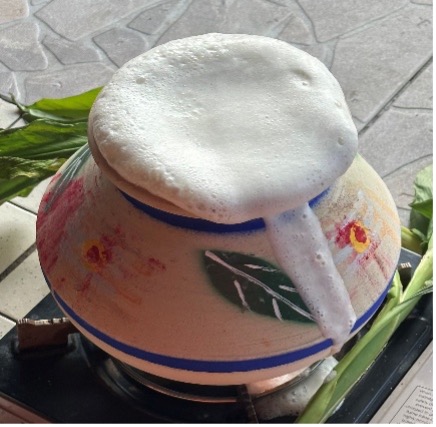
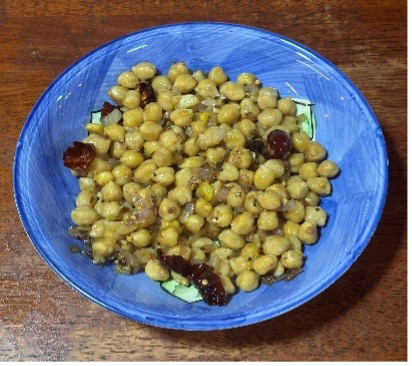
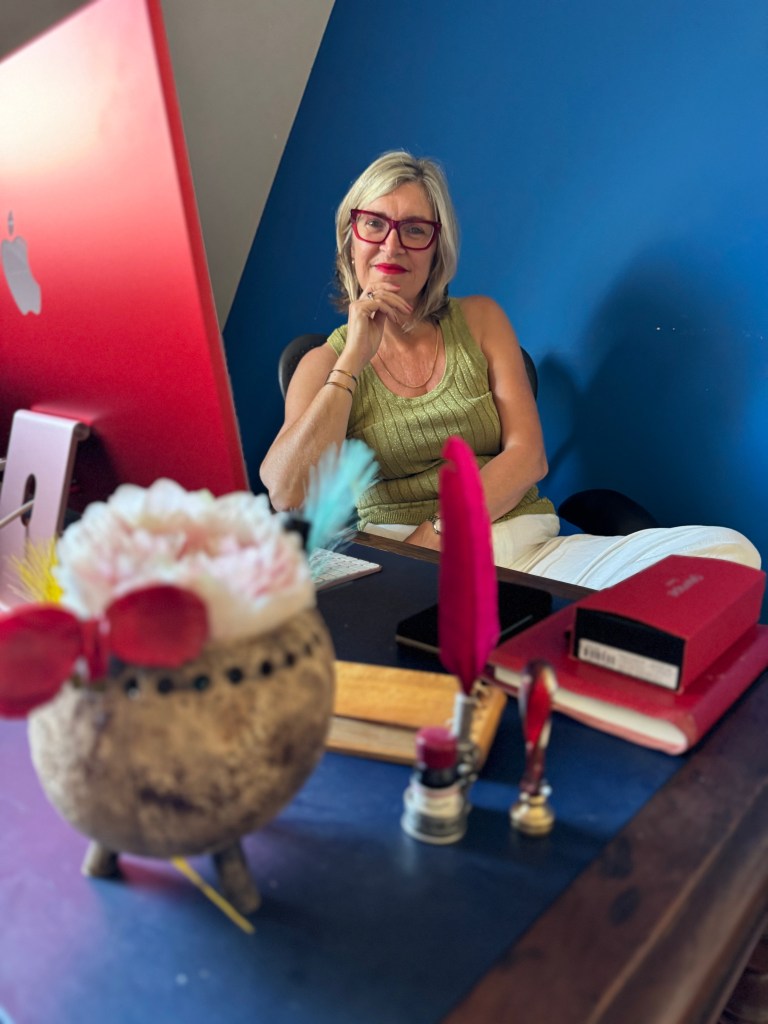
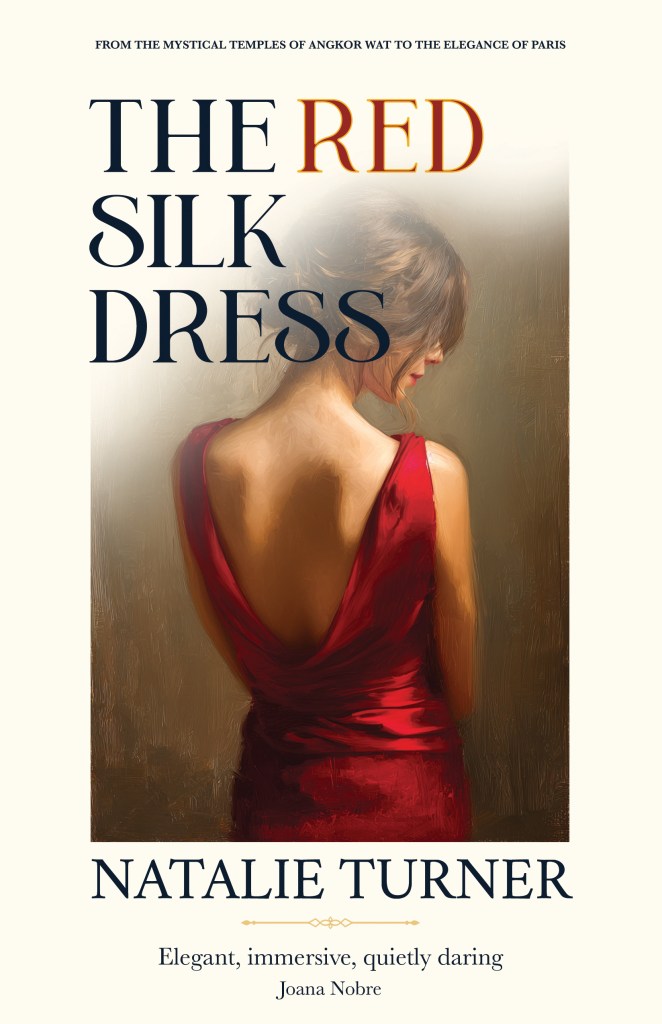
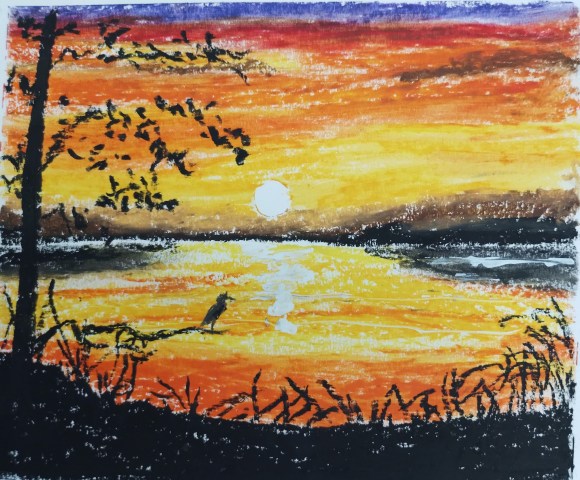
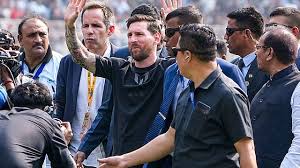

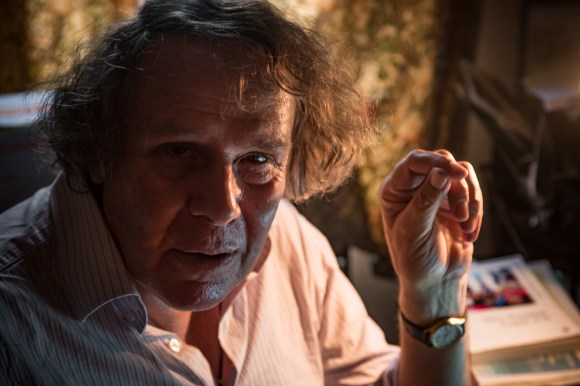

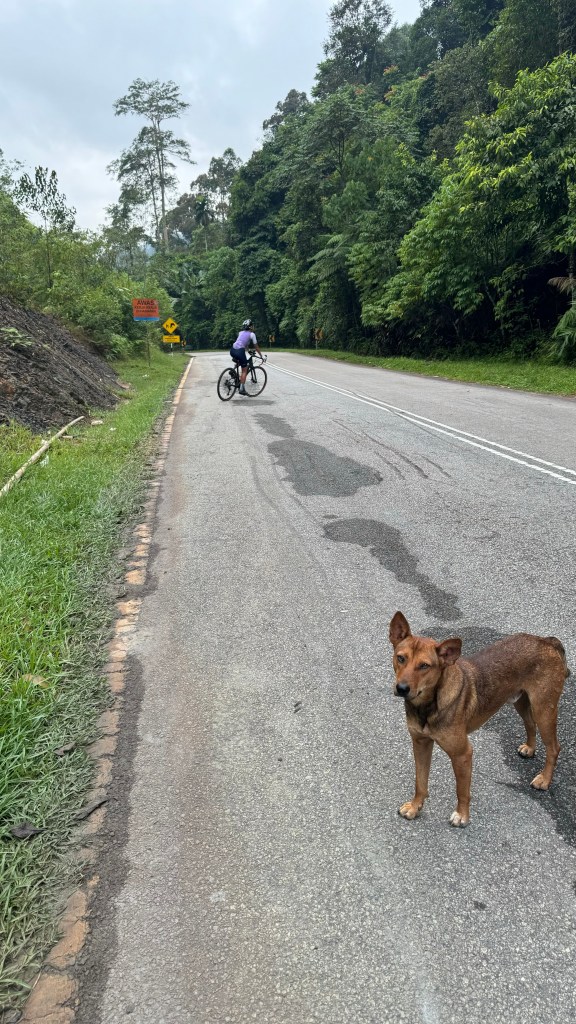
 Borderless