Categories
Editorial

“Imagine all the people/Living life in peace”

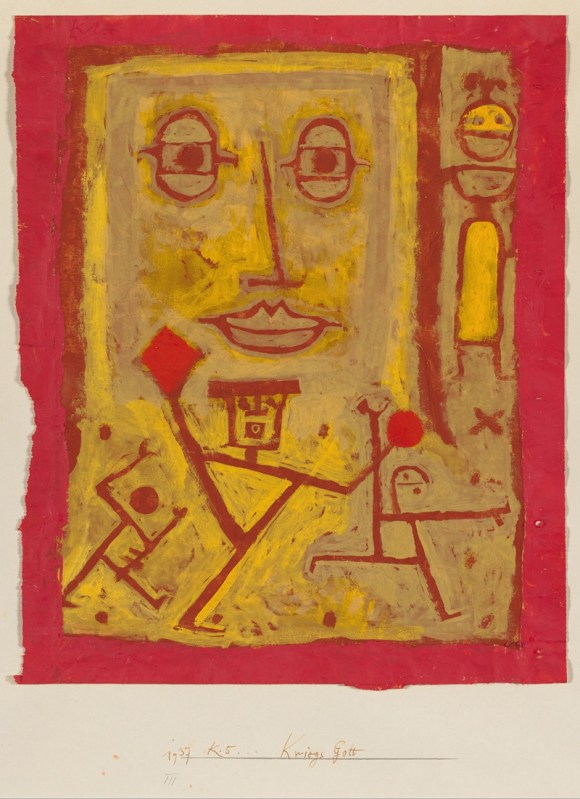
God of War by Paul Klee (1879-1940)
The sky weeps blood, the earth cannot contain
The sorrow of the young ones we've slain.
How now do dead kids laugh while stricken by red rain?

— from Stricken by Red Rain: Poems by Jim Bellamy

When there is war
And peace is gone
Where is their home?
Where do they belong?

— from Poems on Migrants by Kajoli Krishnan

Poetry, prose — all art forms — gather our emotions into concentrates that distil perhaps the finest in human emotions. They touch hearts across borders and gather us all with the commonality of feelings. We no longer care for borders drawn by divisive human constructs but find ourselves connecting despite distances. Strangers or enemies can feel the same emotions. Enemies are mostly created to guard walls made by those who want to keep us in boxes, making it easier to manage the masses. It is from these mass of civilians that soldiers are drawn, and from the same crowds, we can find the victims who die in bomb blasts. And yet, we — the masses — fight. For whom, for what and why? A hundred or more years ago, we had poets writing against wars and violence…they still do. Have we learnt nothing from the past, nothing from history — except to repeat ourselves in cycles? By now, war should have become redundant and deadly weapons out of date artefacts instead of threats that are still used to annihilate cities, humans, homes and ravage the Earth. Our major concerns should have evolved to working on social equity, peace, human welfare and climate change.

One of the people who had expressed deep concern for social equity and peace through his films and writings was Satyajit Ray. This issue has an essay that reflects how he used art to concretise his ideas by Dolly Narang, a gallery owner who brought Ray’s handiworks to limelight. The essay includes the maestro’s note in which he admits he considered himself a filmmaker and a writer but never an artist. But Ray had even invented typefaces! Artist Paritosh Sen’s introduction to Ray’s art has been included to add to the impact of Narang’s essay. Another person who consolidates photography and films to do pathbreaking work and tell stories on compelling issues like climate change and helping the differently-abled is Vijay S Jodha. Ratnottama Sengupta has interviewed this upcoming artiste.

Reflecting the themes of welfare and conflict, Prithvijeet Sinha’s essay takes us to a monument in Lucknow that had been built for love but fell victim to war. Some conflicts are personal like the ones of Odbayar Dorj who finds acceptance not in her hometown in Mongolia but in the city, she calls home now. Jun A. Alindogan from Manila explores social media in action whereas Eshana Sarah Singh takes us to her home in Jakarta to celebrate the Chinese New Year! Farouk Gulsara looks into the likely impact of genetic engineering in a world already ripped by violence and Devraj Singh Kalsi muses on his source of inspiration, his writing desk. Meredith Stephens tells the touching story of a mother’s concern for her child in Australia and Suzanne Kamata exhibits the same concern as she travels to Happy Village in Japan to meet her differently-abled daughter and her friends.

As these real-life narratives weave commonalities of human emotions, so do fictive stories. Some reflect the need for change. Fiona Sinclair writes a layered story set in London on how lived experiences define differences in human perspectives while Parnika Shirwaikar explores the need to learn to accept changes set in her part of the universe. Spandan Upadhyay explores the spirit of the city of Kolkata as a migrant with a focus on social equity. Both Paul Mirabile and Naramsetti Umamaheswararao write stories around childhood, one set in Europe and the other in Asia.

As prose weaves humanity together, so does poetry. We have poems from Jim Bellamy and Kajoli Krishnan both reflecting the impact of war and senseless violence on common humanity. Ryan Quinn Flanagan introduces us to Canadian bears in his poetry while Snigdha Agrawal makes us laugh with her lines about dogs and hatching Easter eggs! We have a wide range of poems from Snehprava Das, George Freek, Niranjan Aditya, Christine Belandres, Ajeeti S, Ron Pickett, Stuart McFarlane, Arthur Neong and Elizabeth Anne Pereira. Rhys Hughes concludes his series of photo poems with the one in this issue — especially showcasing how far a vivid imagination can twist reality with a British postman ‘carrying’ sweets from India! His column, laced with humour too, showcases in verse Lafcadio Hearn, a bridge between the East and West from more than a hundred years ago, a man who was born in Greece, worked in America and moved to Japan to even adopt a Japanese name.

Just as Hearn bridged cultures, translations help us discover how similarly all of us think despite distances in time and space. Radha Chakravarty’s translation of Kazi Nazrul Islam’s concerns about climate change and melting icecaps does just that! Professor Fakrul Alam’s translation of Nazrul’s lyrics from Bengali on women and on the commonality of human faith also make us wonder if ideas froze despite time moving on. Tagore’s poem titled Asha (hope) tends to make us introspect on the very idea of hope – just as we do now. At a more personal level, a contemporary poem reflecting on the concept of identity by Munir Momin has been translated from Balochi by Fazal Baloch. From Korean, Ihlwah Choi translates his own poem about losing the self in a crowd. We start a new column on translated Odia poetry from this month. The first one features the exquisite poetry of Bipin Nayak translated by Snehprava Das. Huge thanks to Bhaskar Parichha for bringing this whole project to fruition.

Parichha has also drawn bridges in reviews by bringing to us the memoirs of a man of mixed heritage, A Stranger in Three Worlds: The Memoirs of Aubrey Menen. Andreas Giesbert from Germany has reviewed Rhys Hughes’ The Devil’s Halo and Somdatta Mandal has discussed Arundhathi Nath’s translation, The Phantom’s Howl: Classic Tales of Ghosts and Hauntings from Bengal. Our book excerpts this time feature Devabrata Das’s One More Story About Climbing a Hill: Stories from Assam, translated by multiple translators from Assamese and Ryan Quinn Flangan’s new book, Ghosting My Way into the Afterlife, definitely poems worth mulling over with a toss of humour.

Do pause by our contents page for this issue and enjoy the reads. We are ever grateful to our ever-growing evergreen readership some of whom have started sharing their fabulous narratives with us. Thanks to all our readers and contributors. Huge thanks to our wonderful team without whose efforts we could not have curated such valuable content and thanks specially to Sohana Manzoor for her art. Thank you all for making a whiff of an idea a reality!

Let’s hope for peace, love and sanity!

Best wishes,

Mitali Chakravarty

borderlessjournal.com

Click here to access the contents page for the May 2025 Issue

READ THE LATEST UPDATES ON THE FIRST BORDERLESS ANTHOLOGY, MONALISA NO LONGER SMILES, BY CLICKING ON THIS LINK.

Categories
Stories

The Last Metro

By Spandan Upadhyay

The platform was empty. My footsteps echoed back at me as if mocking this sterile, hollow space. I had been here a thousand times before, but never like this—never in the aftermath of such a disaster. 9:30pm, and the metro hadn’t shown up yet. I sat down, unsure of where else to be. The evening had been a slow car crash — every minute at that poetry reading had scraped away at my dignity. Each time I glanced up from my notebook, I caught the same expression on people’s faces, that slightly bored politeness, the kind reserved for an artist you’ll never remember.

I loosened the strap of my satchel and rubbed my shoulder, trying to push the night out of my mind, but it stuck, like the words of my poems, lingering. Why had I called them ‘Words Left Unspoken’? It seemed so pretentious now, as if I was grasping for some profound truth when, really, they were just words no one cared to listen to. I saw my reflection in the mirror on the platform. Green kurta, brown sandals and black rimmed glasses, I didn’t really command much attention. Why would anyone care to listen to me anyway?

I glanced around the station. It felt unreal, like some purgatory where time stretched on forever, with nothing to look forward to. The fluorescent lights flickered, and the only sound was the occasional distant rattle of a train that would never come. Or at least it felt like it.

This city, Kolkata—it was once a place where artists mattered, where poets walked down College Street with a cup of tea in one hand and a burning idea in the other. Now? Now, the city didn’t care about poetry. It cared about money, about practicality, about getting from one station to the next as fast as possible.

I checked my phone again. Though there wasn’t really much to check. The poetry circle WhatsApp group was silent, like the station itself. No one had said a word about my performance. Probably because they were all too busy posting Instagram stories from some hipster café by now.

My eyes wandered to the far end of the platform. That’s when I saw her.

She was standing under one of the dim lights, a woman in her late forties, maybe early fifties, her face lined with age and fatigue. She had a basket of flowers slung over her arm—wilting roses, chrysanthemums, marigolds, all tired-looking, much like their owner. I’d seen her here before, always in the same spot. She was a fixture of the station, but I’d never paid much attention.

Tonight, though, there was something about her that pulled at me, maybe because she seemed as out of place as I felt.

I stood up, more out of curiosity than anything else, and walked toward her. My footsteps sounded loud in the silence, but she didn’t seem to notice.

“Flowers at this hour?” I asked, my voice echoing off the walls.

She glanced at me, her eyes sharp, measuring me up. “Metro or no metro, people still need flowers. Weddings, funerals, who cares? Life goes on.”

Her voice was raspy, like someone who’d spent years yelling into the wind. And yet, there was something calm about her. Resigned. It felt familiar.

I shrugged. “Strange place to sell them, though.”

She didn’t look at me this time, just adjusted the flowers in her basket, fingers working methodically. “It’s quieter down here. Besides, I’m not here for the regular crowd. I’m here for people like you.”

“Like me?” I frowned.

“Late. Alone. Waiting for something that’s probably not coming.”

The words hit me like a slap, sharper than I expected. There was a tired smile on her lips when she finally looked up, and in her eyes, I saw something I didn’t want to acknowledge—recognition.

I smirked, though I didn’t feel like it. “I guess that makes two of us then.”

She chuckled softly. It was a strange sound, not of amusement but of knowing. She leaned back against the wall, the flowers now forgotten at her side. “You’re one of those types, aren’t you? The ones who think too much.”

I should’ve been offended, but I wasn’t. She was right. I was one of those types. I lived inside my own head more than I lived in the real world. “I suppose I am.”

Silence enveloped us, thick and uncomfortable, but I didn’t move away. Maybe it was because I had nowhere else to go, or maybe it was because this was the first time in a long while that someone had spoken to me without the usual pretence. The usual platitudes.

“What about you?” I asked, breaking the silence. “What’s your story?”

Her eyes flicked to me again, and for a moment, I regretted asking. It sounded cheap, like I was trying to force a connection where there wasn’t one. But she didn’t seem to mind. If anything, the question seemed to amuse her.

“My story?” she repeated, almost as if tasting the words. “My story is this city. I came here when I was a girl, like so many others. Thought I’d find something—maybe love, maybe money. Instead, I found nothing. Just a city that takes everything and gives you nothing back.”

I nodded, though I wasn’t sure why. I wasn’t anything like her. I wasn’t scraping by selling flowers at a metro station. But her words felt true, as if they could just as easily be mine.

“I know that feeling,” I said quietly, more to myself than to her.

She tilted her head, her eyes narrowing slightly. “Do you? What did the city take from you?”

I swallowed. How do you explain to someone that the city hadn’t taken anything tangible? It hadn’t taken my house or my livelihood. It had taken my belief, my sense of purpose. It had eroded me slowly, bit by bit, rejection after rejection.

“I wanted to be a poet,” I said, almost ashamed of how small that sounded in comparison. “But it turns out, poetry doesn’t pay the bills.”

The woman smiled — a slow, tired smile, but a smile nonetheless. “Ah, poetry. That’s a different kind of hunger.”

She stood up straight then, looking at me with something like pity in her eyes. “And has the city fed that hunger? Or has it starved you?”

I felt my throat tighten, that familiar ache creeping up again. The answer was obvious, but saying it aloud would make it too real.

“Starved me,” I whispered.

She nodded, as if she already knew. As if that was the only answer she had ever expected. “This city has a way of doing that,” she said softly. “But you’re still here, aren’t you? Still waiting.”

I couldn’t look at her anymore. The sound of a train rumbled in the distance, but it didn’t matter. I wasn’t waiting for the metro. Not anymore.

*

The rumble of the approaching train faded, leaving only the familiar, dead silence behind. I stared at the woman, still leaning against the grimy wall, and realised how little I knew about her—this strange fixture of the metro station who spoke with such familiarity about a city I thought I understood.

I glanced at her basket of wilting flowers. The roses, once bright and promising, now drooped sadly, much like everything else in this place. I wanted to ask her something more meaningful, but I wasn’t sure where to start. Every time I opened my mouth, it felt like I was playing a part in a scene I hadn’t rehearsed for.

“How long have you been selling flowers?” I asked, almost awkwardly, knowing it wasn’t the right question, but asking it anyway.

She looked at me, then down at the basket as if only just remembering the flowers were there. “Long enough,” she replied with a wry smile. “It’s been… what, twenty years?”

“Twenty years?” I repeated, surprised. “At this station?”

She chuckled, shaking her head. “Not here, no. I used to sell near Howrah Bridge. It was better business back then. People actually bought flowers to take home. Now, people are too busy for things like that. They’re always in a rush—running to catch a train, running to get home. Nobody stops anymore. But down here, there’s time. The waiting… it slows everything down.”

Her words struck me in a way I hadn’t expected. The waiting—it was something I knew all too well. I wasn’t just waiting for the metro; I had been waiting for years, for something that never came. For recognition, for understanding, for someone to care about the words I scribbled on pages night after night.

“You said you came here when you were young. What brought you to Kolkata?” I asked, sensing there was more to her story than just flowers.

She hesitated, her eyes shifting toward the empty tracks. For a moment, I thought she wouldn’t answer. But then she sighed, the weight of the years settling into her voice. “A man,” she said simply. “A musician. He played the harmonium—beautifully, like he could make the city itself sing. I followed him here, thinking we’d make a life together. I was just a girl, then. What did I know?”

The way she said it—so matter-of-fact, without a trace of bitterness—made it seem like she had long ago accepted the futility of it all. But I could hear something else beneath her words, a kind of nostalgia wrapped in pain. Her story wasn’t unfamiliar; I had heard versions of it before. Hell, I had lived it, in my own way.

“What happened to him?” I asked, not sure if I was overstepping.

She smiled, but it didn’t reach her eyes. “What happens to all men like that? He left. One day, he just… disappeared. No note, no goodbye. Just gone. I waited for him—days, weeks—but I knew. Deep down, I knew he wasn’t coming back.”

She let the words hang in the air between us. I didn’t know what to say. What could I say? There was no way to ease that kind of loss. It wasn’t the kind you could fix with words. It just stayed with you, like a dull ache you learned to live with.

I shifted uncomfortably, memories of my own failed relationships creeping in, uninvited. I had been left before, too. Not in such a dramatic way, but in small, gradual steps. I had been with someone once—Megha, a girl who loved art, who loved the idea of poetry as much as I did. We would sit together in the old cafés of College Street, drinking endless cups of tea, talking about books and writing and the meaning of life.

But my ambition had killed it. She grew tired of waiting for me to be someone, tired of the rejection letters, the endless nights where I’d stay up writing instead of being with her. She had wanted a future, something stable, something real. I couldn’t give her that. I couldn’t be practical. And so, just like the woman’s musician, Megha had left.

I cleared my throat, trying to push the memory away. “Why did you stay here? In the city, I mean. After he left?”

She looked at me, surprised by the question. “Where else was I supposed to go?” Her voice was soft, as though the answer should have been obvious. “Once you come to this city, it doesn’t let you leave. Not really.”

I nodded, understanding more than I wanted to admit. Kolkata did that to people. It pulled you in with its promises of art, of culture, of something greater than yourself. But once you were here, it chewed you up and spit you out. And yet, you stayed. You stayed because there was something about this place, something that kept you hoping, even when you knew better.

“I stayed because this is where everything happened,” she continued, her voice barely above a whisper. “This is where I loved, where I lost. And I figured if I left, it would all disappear, like it had never happened. The city… it holds the memories.”

She looked away then, her gaze drifting toward the tracks again, as if waiting for something that wasn’t coming.

I understood her in a way I didn’t expect to. I had stayed for the same reason. I had stayed because leaving would mean admitting that none of it had mattered—my poems, my dreams of becoming something more than just another face in the crowd. As long as I stayed, I could pretend that maybe, one day, things would change. Maybe one day, someone would listen.

The sound of another train rumbled faintly in the distance, but neither of us moved.

*

I stayed quiet for a while, letting her words sink in. The idea that Kolkata held memories—it was strange how true that felt. The city never let you forget. Every street corner had a history, every old café carried the weight of conversations long past. And if you had been here long enough, like I had, those memories started piling up on you, like layers of dust on an old book you no longer bothered to open.

The woman shifted, the flowers rustling in her basket. She wasn’t looking at me anymore; her eyes were somewhere far away, back in whatever time she was remembering.

“We used to walk,” she said suddenly, her voice softer now, almost wistful. “All over the city. He used to play his harmonium on the ghats by the river, you know. I thought… I thought we’d stay like that forever.”

I could almost picture it: her and this mysterious musician, strolling through the old streets of Kolkata, full of hope, maybe even a kind of reckless love. The kind of love that felt invincible when you were young, when the world hadn’t yet shown you its teeth.

“And you believed in him,” I said, not as a question, but as a statement. Because of course she did. That’s what love did—it made you believe, even in the most absurd dreams.

She nodded. “Yes. I believed in him. I believed that the music would carry us through. I believed in the city, too. I thought this was the kind of place where people like us could thrive, where art mattered.”

Her words echoed something I had thought once. Maybe still did, deep down.

“And now?” I asked.

She didn’t answer right away. Her fingers traced the edge of one of the wilted flowers, and for a moment, I thought she wasn’t going to say anything. But then she looked up, her eyes meeting mine. “Now, I don’t know. I think… maybe I was wrong. Maybe this city only cares about those who already have something. If you come here with nothing, you leave with even less.”

That hit me hard. I thought of all the nights I had spent in tiny cafés, hunched over my notebook, scribbling out poems with the belief that this city—the same one that had raised writers like Tagore and Ghosh — would eventually recognise me. I thought of all the open mikes I had attended, all the rejection letters I had collected over the years. The city had taken my words, my effort, and it had given me nothing in return.

But, like her, I had stayed. I had stayed because I didn’t want to believe I was wrong. I didn’t want to admit that maybe this city wasn’t what I had imagined it to be.

I rubbed my face, trying to shake off the feeling that was creeping up on me. “I used to believe too,” I said quietly. “When I first came here… I thought Kolkata was the place where dreams happened. I thought it would embrace me.”

I wasn’t sure why I was telling her this. I hadn’t even said it out loud to myself before. But there was something about the way she spoke, the way she seemed to understand without judgment, that made it easier to confess.

She didn’t respond, but there was a look in her eyes that said she understood.

“I came here to be a poet,” I continued, feeling the weight of those words more heavily than I had before. “I thought I had something to say, you know? I thought people would listen.” I laughed, though there was no humour in it. “But the city doesn’t care. No one listens. They just… move on. Poetry doesn’t matter to them.”

“Poetry matters,” she said softly, surprising me. “It’s just that most people don’t realise it does.”

I wanted to believe her. I really did. But it was hard, after all these years. I couldn’t even remember the last time someone had genuinely cared about what I had written.

The silence between us thickened, and I found myself drifting back to a time when things were different. The early days, when I had first arrived in Kolkata. I remembered the excitement, the feeling that the city was alive with possibilities. I had been younger then, full of optimism. And I hadn’t been alone.

There was Megha.

The memory of her came back so suddenly, it was like a punch to the gut. I hadn’t thought about her in a long time—not really. Not in any meaningful way. But now, in this quiet station, with this woman who reminded me too much of lost things, Megha’s face rose to the surface.

I could see her as clearly as if she were standing in front of me: dark hair that always fell into her eyes, a quick, teasing smile, the way she’d sit across from me in a café, her hands wrapped around a cup of tea, listening intently as I read her some new poem I was working on. She had loved words as much as I did. Or at least, that’s what I had thought.

We had met during my first year in the city. She was a literature student at Presidency, full of fire and ideas, always debating something, always questioning. She was the kind of person who seemed like she could change the world if she wanted to. And for a while, I thought we could change it together.

We spent hours in each other’s company, walking through the narrow lanes of College Street, visiting the old bookstalls, talking about poetry and art like they were the only things that mattered. I had never felt so alive, so full of potential. With Megha, everything seemed possible.

But ambition has a way of turning on you.

I had wanted to be a poet so badly, wanted to make my mark in the world of letters. I spent every waking moment writing, trying to create something that would last. I thought Megha understood, but slowly, I could feel her slipping away. She grew tired of waiting for me to “make it,” tired of the uncertainty, the nights where I chose my poems over her. She wanted stability, something I couldn’t give.

The end had been slow, like a candle burning itself out. One day, she was just… gone. She hadn’t left like the woman’s musician, without a word. But when she said goodbye, I knew it wasn’t just the end of us—it was the end of the belief that love could coexist with art. Not for me, at least.

“Are you thinking about someone?” the woman’s voice broke through my thoughts, pulling me back to the present.

I blinked, surprised that she had noticed. “Yeah. Someone I lost.”

She nodded, as if she knew that feeling all too well. “Funny how they never really leave us, isn’t it? Even when they’re gone, they stay here.” She tapped her chest lightly, right where her heart was.

I didn’t reply. I didn’t need to. The station was silent again, except for the faint hum of the city above us, always moving, always forgetting.

The air felt heavy with all the things we hadn’t said yet. The train wasn’t coming, but neither of us seemed to care anymore. I glanced at the woman — this flower seller who seemed to know the city better than anyone I’d ever met — and wondered how many stories like mine she had heard over the years, how many late-night conversations had she had with strangers, all of us waiting for something.

“It’s funny,” I said, breaking the silence again. “I’ve been in Kolkata for years now, but I still feel like a stranger. Like the city doesn’t really belong to me.”

She looked at me, her expression unreadable. “The city doesn’t belong to anyone.”

Her words settled over me like a cold wind. Maybe that was the truth I had been avoiding all this time. Kolkata wasn’t mine. It wasn’t anyone’s. It just was, moving forward with or without us. And yet, somehow, I had convinced myself that it owed me something.

“I guess I’ve been waiting for it to recognise me,” I said, feeling a little foolish even as the words left my mouth. “Like, if I just wrote the right poem, if I just found the right words, then maybe…”

“Then maybe you’d matter,” she finished for me.

I nodded. There was no point in denying it. That’s exactly what I had been chasing—validation, recognition, something to prove that my words weren’t just disappearing into the void. But the truth was, no matter how many poems I wrote, no matter how many nights I spent scribbling away in dimly lit cafés, the city didn’t care.

She sighed, her shoulders sinking a little as she leaned against the wall. “This place… it makes you think you’re special. It makes you believe you’re destined for something more. But it’s just a city. It’s not listening.”

Her words hit harder than I expected. For years, I had clung to the idea that Kolkata was different—that it was a city that nurtured art, that it understood poets and dreamers. But the truth was, Kolkata wasn’t a living thing. It was just a backdrop. The stories we told ourselves about it were just that—stories.

“Do you ever regret it?” I asked. “Staying here, I mean.”

She didn’t answer right away. Instead, she looked down at the wilting flowers in her basket, running her fingers over the petals as if considering their fate.

“Regret?” she echoed, almost to herself. “I don’t know. I think, after a while, regret doesn’t mean much. You just… accept things. You stop fighting.”

There was a kind of peace in her voice, but it wasn’t the kind I wanted. It was the peace of someone who had given up on the fight. And that scared me.

“I don’t want to stop fighting,” I said, the words coming out more forcefully than I intended. “I don’t want to just… accept that this is all there is.”

She smiled softly, but there was something sad in it. “Then don’t. But the city won’t fight with you. It doesn’t care. You’re the only one who does.”

That was the hardest part to accept—that the city wasn’t an adversary or a friend. It wasn’t anything. All these years, I had been projecting my own desires onto it, waiting for it to give me something that it had never promised.

I ran a hand through my hair, frustration gnawing at me. “I don’t know. Maybe I’ve just been deluding myself this whole time.”

“Maybe,” she said simply. “Or maybe you’re just waiting for the wrong thing.”

I frowned. “What do you mean?”

She looked at me, her dark eyes sharp, searching. “You’re waiting for the city to recognize you. But what if that’s not what matters? What if… it’s about finding someone who sees you, instead?”

Her words lingered in the air between us, and for a moment, I didn’t know what to say. It wasn’t something I had thought about before. I had always assumed that if I could just succeed—if I could just make a name for myself—then everything else would fall into place. But what if I had been chasing the wrong thing all along?

“Someone who sees me…” I repeated quietly.

She nodded. “Isn’t that what we all want? To be seen, to be heard? Not by the world, but by one person who understands.”

Her words brought back the memory of Megha again. She had seen me once, hadn’t she? She had believed in me, in my poetry, in my passion. But I had let her slip away, too caught up in my own ambitions to realise that she had been the one who understood me.

I swallowed, the weight of that realisation settling in. All these years, I had been chasing after something abstract—recognition from a city, from an audience that didn’t even know me. But maybe what I had needed all along was something simpler. Someone to see me. Really see me.

“Did he see you?” I asked, my voice barely above a whisper. “The musician?”

Her eyes flickered with something I couldn’t quite place—pain, maybe, or longing. “He did. For a while.”

She didn’t say anything more, and I didn’t push. There was no need. I could tell by the way she looked at me, by the way her hand absently touched the petals of the flowers, that it was a wound she still carried. A wound that had never fully healed.

The sound of another distant train rumbled through the station, but it was faint, almost like a ghost passing through. We both stood there, lost in our own thoughts, the silence between us heavy but comfortable.

I felt something shift inside me, like a door that had been locked for years had finally creaked open. I didn’t know what was on the other side yet, but for the first time in a long while, I felt like maybe… just maybe, I was ready to find out.

*

The low rumble of the metro echoed through the station, growing louder with each passing second. But neither of us moved. The sound seemed distant, like a reminder that time was still flowing, even though it felt like we had stepped outside of it for a while.

I glanced at the woman. She wasn’t looking at me, or at the approaching train. Her eyes were fixed somewhere just past the tracks, as though she could see something I couldn’t. Maybe she was thinking about her musician. Maybe she was thinking about the life she’d imagined but never had. Whatever it was, I felt like I shouldn’t disturb her.

The train arrived, its brakes screeching as it slowed to a stop. The doors opened with a mechanical hiss, and for a moment, I considered getting up, walking toward the train, letting this conversation fade into memory like so many other late-night encounters in this city.

But I didn’t move.

I didn’t want to leave just yet. Not until I figured out why this conversation—this woman—had gripped me so intensely. I felt like there was still something left unsaid, something hanging in the air between us.

The woman turned her head slightly, her eyes meeting mine, and for the first time since we started talking, I saw a flicker of emotion there. Not just the weariness she had shown earlier, but something else. Something deeper.

“You’re not getting on the train,” she said, not as a question but as a statement.

“No,” I replied quietly. “Neither are you.”

She smiled faintly. “No. I guess not.”

We sat there for a few moments longer, the train doors still open, inviting us in, but neither of us made a move. The platform was empty except for us now. Everyone else had either left or never showed up. It was just the two of us, waiting for something we couldn’t quite name.

Finally, the doors slid shut, and the train began to pull away, leaving the station once again in silence.

“Why didn’t you get on?” I asked her, genuinely curious.

She shrugged, her gaze returning to the empty tracks. “I wasn’t waiting for the train.”

I frowned. “Then what were you waiting for?”

She didn’t answer right away, and for a moment, I thought she wouldn’t. But then she looked at me again, and this time, there was something in her expression that made my chest tighten.

“I’m not waiting for anything,” she said softly. “Not anymore.”

Her words hung in the air, heavy with finality. I didn’t know what she meant, not fully, but something in the way she said it made me feel like she had already made peace with whatever it was she had been waiting for all those years.

I wanted to ask her more—to pry open the door she had just cracked, to understand what lay behind her cryptic words. But I couldn’t. I felt like asking would break whatever fragile connection we had built, and I wasn’t ready to lose that yet.

Instead, I turned the conversation back to something I understood—something that had been gnawing at me since we started talking.

“Do you ever think about why we create art?” I asked, almost to myself. “I mean, why we bother with it at all? When no one’s listening, when no one cares, why do we keep going?”

She tilted her head, considering my question. “I don’t know,” she admitted. “But maybe it’s because we’re afraid of disappearing. Of being forgotten.”

I nodded slowly, the truth of her words sinking in. That was it, wasn’t it? The fear of being invisible. The fear that if we stopped creating, stopped putting pieces of ourselves into the world, we would just vanish.

“Maybe,” I said. “But sometimes it feels like we’ve already disappeared.”

She smiled at that, a small, sad smile. “Maybe we have. But it doesn’t stop us, does it?”

“No,” I said, shaking my head. “It doesn’t.”

We sat in silence for a while, the hum of the empty station filling the space between us. I thought about all the poems I had written, all the nights spent hunched over my notebook, convinced that the next line, the next stanza, would be the one that finally made people see me. I thought about Megha, about how I had pushed her away in my pursuit of something that had never materialised.

And then I thought about this woman, sitting here beside me, selling flowers at a metro station in the dead of night. She had loved, she had lost, and yet she had stayed. Not because the city had given her anything, but because… well, maybe because she had nowhere else to go. Or maybe because leaving would have meant giving up on the idea that this place still held something for her.

“What will you do now?” I asked her, unsure if I was talking about tonight or her life in general.

She glanced down at her basket of flowers, then back at me. “I’ll go home. Get some sleep. Tomorrow, I’ll come back here and sell more flowers. And the day after that.”

Her words were simple, matter-of-fact, but there was a weight to them that I couldn’t quite shake. It was like she had accepted her place in the world, and I wasn’t sure if that was comforting or terrifying.

“And you?” she asked, her eyes locking onto mine. “What will you do?”

I didn’t have an answer. Not a real one, anyway. I could say I’d keep writing, keep chasing the dream of being a poet in a city that didn’t care. But suddenly, that felt hollow. I wasn’t sure I believed in it anymore—not the way I had when I first came here.

“I don’t know,” I admitted. “I guess I’ll just… keep waiting.”

She nodded, as if that made perfect sense. “We all wait for something. Sometimes, we don’t even know what it is until it’s too late.”

The station fell quiet again, and I realized that this was it. This was the moment when I had to leave, when the night would end and I’d go back to my small, cramped apartment and try to make sense of everything that had happened. But something still held me there, some invisible thread connecting me to this woman and her basket of wilted flowers.

“I don’t even know your name,” I said, almost an afterthought.

She smiled—a real smile this time, not the sad, resigned ones from earlier. “It doesn’t matter,” she said. “Names are just another thing the city forgets.”

I opened my mouth to argue, to tell her that names did matter, that they were part of what made us real, what made us seen. But before I could say anything, the faint sound of another train approaching echoed through the station.

This time, I knew I had to go.

I stood up, slinging my satchel over my shoulder. “Goodbye,” I said, though it didn’t feel like enough.

She didn’t say anything, just nodded, her smile fading as the train grew louder. I turned and walked toward the platform, the noise of the approaching metro filling the space behind me. I didn’t look back, though I wanted to.

As the train doors opened and I stepped inside, I realised something strange. I had come here tonight feeling more lost and disconnected than ever, and yet now, leaving this woman behind, I felt a sense of closure. Like something had ended, even if I wasn’t sure what.

The doors slid shut, and the train began to move. I leaned back against the seat, staring out at the dark tunnel ahead. I didn’t know where I was going. But for the first time in a long while, that didn’t bother me.

.

Spandan Upadhyay is a new writer whose work captures the vibrant nuances of everyday life. With a deep appreciation for the human experience, Spandan’s stories weave together subtle emotions and moments of introspection. Each of his stories invite readers into a world where ordinary occurrences reveal profound truths, leaving a lasting impact.

.

PLEASE NOTE: ARTICLES CAN ONLY BE REPRODUCED IN OTHER SITES WITH DUE ACKNOWLEDGEMENT TO BORDERLESS JOURNAL. 

Click here to access the Borderless anthology, Monalisa No Longer Smiles

Click here to access Monalisa No Longer Smiles on Kindle Amazon International
Categories
Musings of a Copywriter

My Writing Desk

By Devraj Singh Kalsi

From Public Domain

Since childhood days, I was offered what I believed to be an adult desk: a solid wood table with impressive dimensions suited for professionals instead of young learners. Introduced early to the grand furniture piece did not generate a sense of superiority until the day my close friend shot an envious look at it, ran his delicate hands on the smooth polished surface and rested his chubby cheeks to feel its naked coldness. Emulating him to derive similar pleasure from the wooden marvel, I realised the cold sensory bliss and fostered a special attachment to this possession, finding time in between the lessons to smother my hands on the table top or rub my thighs against its intricately carved supple legs. The sensuous awakening of entwined legs could be read differently but the innocence of the experience carried nothing except pure bliss.

The bonding with the study table was solid in more ways than one. A constant companion that absorbed my tears faster than any human hand could reach to wipe them off, the desk witnessed almost everything ecstatic and tumultuous that happened in those growing up years. It was the space that saw me pick up new tastes, new habits. From doodling on its surface with the dark pencil to highlight my drawing skills, the table allowed its body to be used as a springboard to catapult my imagination. I was immersed in the act of carving something new and permanent but most of my efforts shamed me, leaving me desperate to replace those with something funky, more in keeping with my inchoate artistic sensibilities.

Years of fiddling registered no marked improvement in my output but the flawless skin of the desk was bruised – and it never completely recovered from those childish, frivolous strokes. Both of us grew up together with scratches and bruises on the body – those on mine disappeared with the power of natural healing while those on the desk remained stark and etched, reminding me of what hell I had made it undergo just to keep myself engaged. Weird, non-existing creatures were brought to life even though I later felt shy to call them my creations or displaying them anywhere. I tried to hide those by spreading a tablecloth but the attractive wood looked marginalised with the desperate cover-up bid. 

Adorning it with a tablecloth embroidered by my mother worried me as the tutors were often served hot and cold drinks on the desk. My academic guides were often retired. With their shaky hands they could spill a lot of liquid that would damage the fine cloth, making her clean it repeatedly and vigorously to restore its sheen. Such accidental brushes could also happen due to my exciting outbursts – while casually picking up or placing something on it. Such a protective measure to safeguard the desk would display the beautiful tablecloth, but it would also spike the probability of damage to it.

When I asked whether she was okay with the lurking fear and nagging anxiety of damage to her embroidered creation, she said she had never indulged in negative thinking. Even if it got damaged, she would not fret or fume but simply replace it with her new work. Her readiness to put in extra effort to create another piece was a sign of confidence suggesting that the creator should always have the faith to create beautiful pieces instead of worrying about safe upkeep. This triggered a different line of thinking. I could be a risk-taker and would expose myself to the dangers of damage to creations instead of worrying about it all the time. Now, I felt mentally at ease and free. It made me enjoy the process of creation and its output to the fullest.

Among other benefits, the desk with the chair enabled me to sit erect and sometimes generated a sense of authority. I felt empowered there with the pen within my grip. It made me feel close to writing classical tales or passing legal judgments. The presence of a pen-stand and the variety of pens with refills ranging from blue to green to red to black, with fountain pens and dot pens co-existing harmoniously, gave the freedom to write with any colour and then to correct with red ink, thus,  combining the power of the learner and the examiner rolled into one. I loved to use red to strike out my verbose sentences like the teachers who used it to point out errors.

Resting my head on the desk amounted to brief lapses into the fantasy world as the mind journeyed to faraway lands. An hour of imagining a world where horses flew like birds and fish hopped on the grass could not rein in the wild impossibilities. The lack of logic provided laughter and immense joy – the world turned upside down was a thing of beauty as it strengthened my ability to make it grotesque. Sometimes I envisaged a cub sitting in front of me even though it was a cat pawing my geometry box. As I remained half-asleep and half-awake on the precious desk, I was navigating two precious but different worlds at the same time – the real and the unreal. The desk facilitated my first flight of imagination and inspired me to repeatedly indulge in that experience, nurturing the storyteller with half-baked ideas that required the firm support of reading to make a solid landing.

The desk witnessed the arrival of story books and allowed a dedicated space for non-academic texts. As the pile of relaxed reading material grew taller than the academic stuff, it was time for the family to express concern. A tough balancing act by pushing up the grades was the easiest way to address their fears, followed by inculcating a sense of responsibility that the syllabus was as important as the reading material for leisure.

The presence of current affairs and film magazines, apart from fables and mythological tales added genres to the desk, with my father stacking up his weeklies on my desk after he had finished reading them.  I loved to spend more time occupying this space. Soon I began to indulge in writing pieces that matured from paragraphs to essays. I had convinced myself if I had to write something interesting and worthwhile I needed adopt a proper, dignified posture to think clearly and then jot down ideas on paper. Imposing this self-discipline was easier with the lure of the wooden desk. I could sit there for long hours at a stretch – the first crucial requirement before one thinks of pursuing writing.

The realisation that the desk was wooden but my writing should not be wooden came my way when I was struggling to produce a lively short piece. I found much scope to improve after the first draft, but I softened the nasty blow on my ego which was beginning to acquire a fearsome form. I showed the piece to my tutor who had his own critical take on a teenager’s struggle to write, signing off with a cryptic good-effort comment that left me craving for clarity. The thoughts were scattered like fluffy cotton balls floating in the air. I wished to acquire better control to put them together. To put it briefly, the desk witnessed the despair and repair and everything else that celebrates the slow churning of a small-time writer. Placing a decent piece in a reputed publication and displaying it on the wooden desk that housed many great works formed a vague dream that translated into reality much later.

The attached drawer was a convenient space to hide personal items such as love letters and adult magazines. Since nobody came here to check the space, it was suitable for stashing pocket money and everything else that required secrecy. Being lockable, I could utilise it with full security and safety. When the tutors or guardians noticed I was maintaining a lockable space, it was a clear sign that the boy was growing up with his pile of secrets. Nobody tried to unearth what I was squirreling away even though they had perhaps imagined the predictable and worst possible things. I did overhear the elders hatch a plan to detach the drawer. They solicited advice from a carpenter, seeking his opinion regarding how to do it without causing any damage to the antique table. His suggestion not to tamper with it was accepted without further argument since there was a high risk of damaging one of its legs. Before they could think of anything else, I chose to remove the lock and offered them full access with the key, showing signs of intelligence that made them feel assured I was not misusing it in any manner. While my idea was to keep the beautiful piece look complete instead of amputated, it was surely an outcome of my attachment to the wooden piece that I believed should remain in my possession so long as I am alive. As two companions engaged in a mission to produce the best creative work, we chose to stay together and work together with the fond hope that this partnership would produce some magical work.

Showing no signs of ageing, the sturdy table still flaunts a youthful look, as if it has been just crafted. The ability to remain fresh over the years should be there in writing as well –the reader should be able to relate to the work even after ages. Even when it is read generations later, it should always stay mint fresh.

With the passage of time, more gadgets had arrived on the desk and demanded space – like the desktop computer. Keeping almost half of it clean and vacant was not a challenge as it was quite long and wide. The tall glass of water or a cup of coffee and a fruit bowl also remain on it without giving a cluttered look. I did not have to make hard choices or compromises – what to keep and what to discard. It allowed me the space to write long-hand and then type it on the keyboard without tumbling other objects.

The finesse of the wooden desk inspired me to strive for perfection. The intricate wood carvings and the perfect finish made me feel the need to attach these qualities to my writing. Getting the structure ready was similar to framing the wooden structure first. Chiselling it further to make the rough edges look smooth made me think of doing the same in terms of writing. When everything gets joined, it looks no less than a wonder: just like joining sentences and then adding paragraphs. The process of carpentry bears strong similarities with the process of writing. The art of beautiful writing and beautiful carving in wood blended in my psyche. Using it to create chiselled work touched a chord.

I have been told the table looks vintage – although it has retained fresh appeal. I have been told to think of replacements. But I have been stubborn on the topic of retaining it – not falling prey to engineered wood and all that new stuff that lacks the indispensable feature of durability. Like solid wood furniture, the writing should also survive the test of time. The desk has subtly groomed me to be strong and resilient like it since childhood days.

Both of us are capable of surviving umpteen rejections and we have shared moments of sadness. The drawer was the place where the rejected pieces were dumped. If any member of the family ever raided the place for something shocking, he would have found several letters from editors, suggesting my temerity to approach them with my pieces that could not be carried for multiple reasons. The creative bug bit me here and then one thing led to another in a chain of events that sucked me into the world of writing. I always felt that the wooden desk was sorrowful and consoled me that these gems of failure would sparkle one day. A silent motivator that did not allow the termites of depression to infest my soul. 

On days when I sat elsewhere to ideate or write, I did not feel in my element.  As if I missed out something valuable and I must return to its fold at the earliest – inspired to create something beautiful like the table. With this soothing thought relaxing the nerves, I felt a surge of confidence – of writing something compelling and long-lasting like the wooden desk and displaying the content right there to match or surpass its excellence.  

From Public Domain

Devraj Singh Kalsi works as a senior copywriter in Kolkata. His short stories and essays have been published in Deccan Herald, Tehelka, Kitaab, Earthen Lamp Journal, Assam Tribune, and The Statesman. Pal Motors is his first novel.  


PLEASE NOTE: ARTICLES CAN ONLY BE REPRODUCED IN OTHER SITES WITH DUE ACKNOWLEDGEMENT TO BORDERLESS JOURNAL

Click here to access the Borderless anthology, Monalisa No Longer Smiles

Click here to access Monalisa No Longer Smiles on Kindle Amazon International
Categories
Essay

This Garden Calls Out to Me: A Flaneur in Lucknow’s Sikandar Bagh

Photographs and Narrative by Prithvijeet Sinha

Sikandra Bagh

What if I tell you that History is my neighbour? It would sound like hyperbole to a lay person. But if you are a resident of the historic and expansively beautiful urban area of Hazratganj that is the heart of the city, it will seem a shorthand for reflections in time.

Hazratganj is a state of mind, not only a piece of land stretching across kilometres and hosting the best that humanity has to offer, whether natural or man-made, including the Imambaras, gardens and riverfronts and gateways that define Lucknow as also the mass of commercial institutions, cultural centres and culinary establishments elevating its profile as a diverse area of activity.

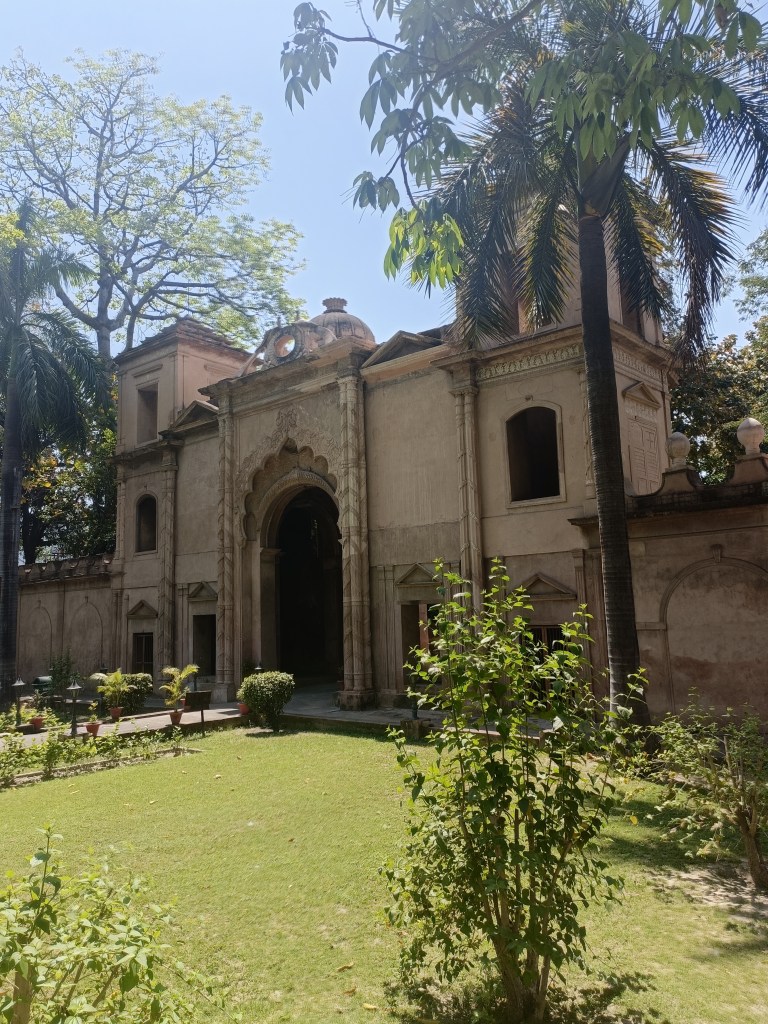
In this beautiful centre of a glorious city lives yours truly and one of the most evocative of the historic gardens dotting Hazratganj also happens to be a mere five-minute walk from his home. I’m talking about Sikandar Bagh, a garden complex that is a sight for sore eyes and retains history in its structure, with lime yellow walls of lakhauri[1], a beautiful gateway bearing the city’s fabled fish symbol and a pagoda style arch signifying the melange of influences in its multidimensional whole.

The domes and ramparts retain the haunting afterglow of history but also the dark days that led to its tragic unraveling.

Built around the mid 1840s by Nawab Wajid Ali Shah[2], the great aesthete and ruler of Lucknow, Sikandar Bagh was a private residence, a garden of elegance and a performance art venue made to honour his love for Sikandar Begum, his beloved wife. The intimacy of this saga of love and mutual respect shared between two life-partners is reflected in the way the place comes alive for any visitor. There’s nothing grand here. Yet there’s the gift of verdure, the protection of huge, dome-like trees and remnants of the original structure that reminds us of a place preserved in its handsome inception and prevalence down the ages.

But Sikandar Bagh is a cultural outlier because apart from its blessed beginnings and present serene state, it had also been scarred by the First War of Independence in 1857[3]. This was the site that was used by sepoys of Awadh (a hallowed title for the region comprising Lucknow and its neighbouring districts that continues to this date) to mount their rebellion against British supremacy. This was a private garrison and hiding place in those erstwhile days of November 1857 where the plotting of a historic rebellion took place. History was not kind to the rebels, and nearly all were slain by the colonial establishment. Knowing that the serenity here could hold so much ballast in its open space makes one ponder. To know about this is to understand that we are progeny of these brave and the remains of the walls facing this garden and continuing up till the Shahnajaf Imambara seem to take the toll of all that bloodshed and hurt that lies embedded within these bricks.

Of course, knowing the background is imperative but so is being inured to its beauty. I am an eternal walker, a flaneur, so for me Sikandar Bagh has been a favourite place to revel in the humbling and aesthetic aspects of Lucknow. Sikandar Bagh befits my desire to saunter and take in the bouquet of nature.

*

It’s been my morning ritual to be comforted by the breeze, swayed and lulled to satisfaction with the lullaby of the trees within its compound and behold a distant beehive in the tallest Goliath among these ancient trees, looking at nestling birds and squirrels in the lower branches of their trunks.

As I write this after a brief stroll in this garden on a pleasant Sunday afternoon, the summer seems to have been evoked to spread its sunny yellow carpet with mellow repose instead of scorching us with humid darts and blows.

The thing with Sikandar Bagh is that history is alive here but also a natural companion. Always the silent, sturdy type, an occasional morning walker or casual passers-by make for rare sights inside its premises in the early hours. It always makes me feel like the chosen one, allowed to roam its length and breadth, making it a regular haunt.

*

A lot of times while going from one place to another, I see young people seated on its green benches, relieving themselves of their pressures and sometimes enjoying a quiet meal here. I also look at people who, besotted by its unique beauty and structure, walk leisurely and photograph its stretches.  Their eyes register the special place it holds for them.

Today, Sikandar Bagh is overseen by the Archeological Survey of India. Around early 2022, it commissioned a refurbishment that restored its walls, ramparts with the lakhauri , a far cry from the concrete jungle that is an urban reality in the modern era.

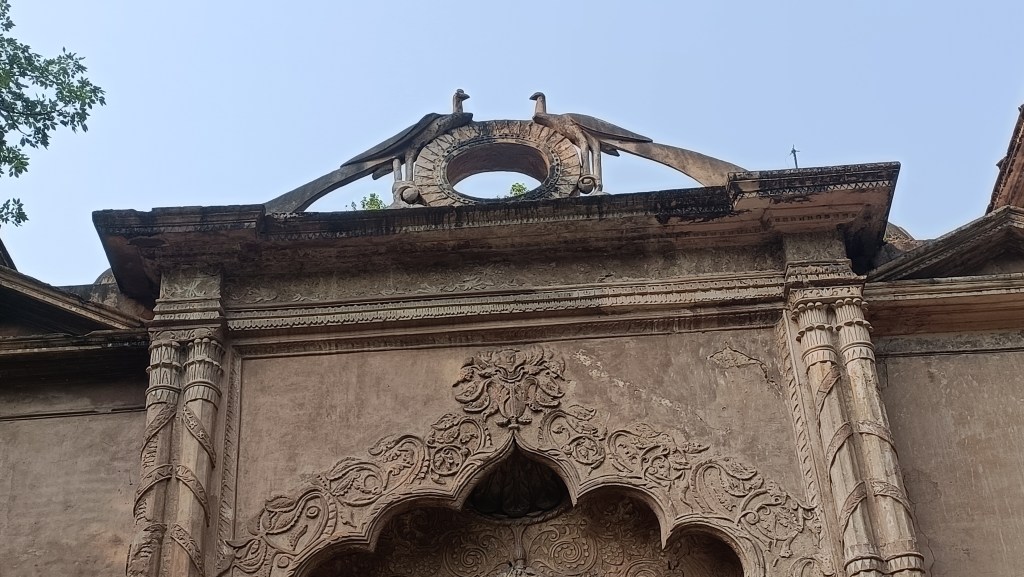
It always comes down to these columns, frescoes, ramparts, a humble mosque within this secular compound, the pavilion signifying what once was an open theatre and the palatial remains, all blended in the unique textures and colours of centuries; worn out by time but never denuded of glory, a stark yet humbling reminder that Sikandar Bagh is a labour of love. Writing this, I am enchanted by its gateway’s peacock iconography, how they seem to call out to the actual birds who visit from the neighbouring Botanical Gardens premises facing this little slice of verdure and architectural wonder.

I inhale the sights, simultaneously rattled by the annoyance of traffic outside its main gate intruding upon its peculiar, unique position within the heart of the city. Yet I know it’s sealed by a dignified reserve, as if these domes and the gateway spell quietude and ubiquity like the red eyes of the pigeons flying near the roof and peering down its height.

*

Honeybees on the tallest trees here go from the nectar of one season to the next and the sun shades this compound in moods invoking the spirit of a poet in me. It’s so easy to be wrapped in the peace and calm of this open space and its historical representation, so easy to know that creative inspiration fed by such a pleasant source is far from just a fictional device. It is a living, breathing ally to diurnal times.

Being in the lap of nature within cities can be a novel intervention. But my love affair with Sikandar Bagh – my own paradise — never waits for a distinct memento. It came to be from a place of love. It is my composite love for it that makes it stand out.

[1] lime paint and plaster

[2] Nawab Wajid Ali Shah was the eleventh and last nawab of Awadh. His kingdom was annexed by the East India Company in 1856 and he was exiled to Kolkata.

[3] Revolt of 1857: The sepoys – Hindus and Muslims – rose united in rebellion against the British Raj. As a result, the British adopted the weapon of Divide and Rule successfully, and the subcontinent continues to be scarred by the fanning of the same flame to this day.

Prithvijeet Sinha  is an MPhil from the University of Lucknow, having launched his prolific writing career by self-publishing on the worldwide community Wattpad since 2015 and on his WordPress blog An Awadh Boy’s Panorama. Besides that, his works have been published in several journals and anthologies. 

PLEASE NOTE: ARTICLES CAN ONLY BE REPRODUCED IN OTHER SITES WITH DUE ACKNOWLEDGEMENT TO BORDERLESS JOURNAL

Click here to access the Borderless anthology, Monalisa No Longer Smiles

Click here to access Monalisa No Longer Smiles on Kindle Amazon International

Categories
Conversation

‘Words, still photos, moving images – they are all storytelling’

Ratnottama Sengupta introduces and converses with a photographer who works at the intersection of art and social issues, Vijay S Jodha

Vijay S Jodha was yet to become one of India’s leading lens-based artists at the intersection of art and social issues. Back then, in the 1990s, he had no inkling that 30 years later he would be the chairperson of UGC-CEC[1] jury for selecting the best educational films made in India. Or that he would be the national selector and trainer in photography for the National Abilympics Association of India.

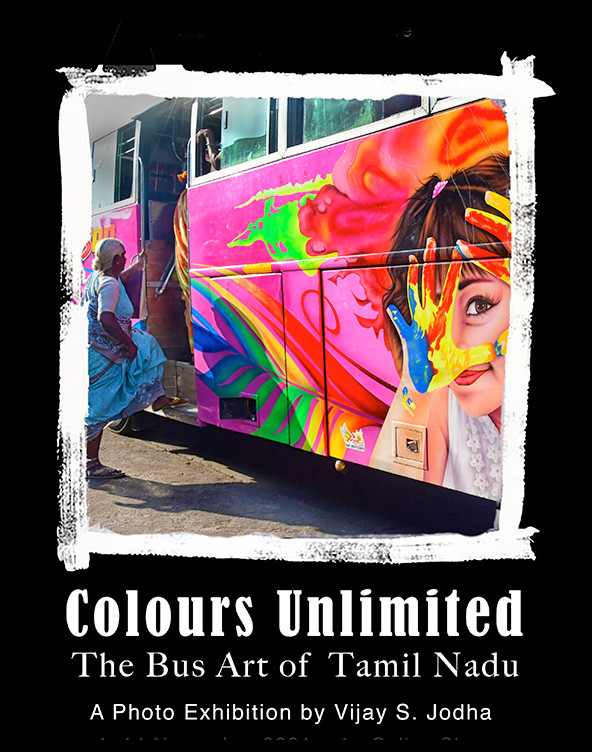
When I first met him, he was mounting a collaborative exhibition of his work with the elderly, their contribution to society and the care they deserve. Little did I know that the entire bent of this journalist-turned documentary filmmaker-turned photo artist would go on to focus on subjects ranging from mob violence, riot victims, farmers’ suicide, 75 years of Indian constitution to Joys of Christmas and the Bus Art of Tamil Nadu. 

Not surprising that the International Confederation of NGOs has honoured Vijay with the Media Citizen Award for using media to drive social change. And it is only one among hundreds of honours he has received in two dozen countries. These include awards and grants, from Swiss Development Agency to Ford Foundation and Bill & Melinda Gates Foundation. Screening of his films on 75 channels worldwide and in 250 festivals in 60 countries.

These seem tedious details? So, interestingly, two public showings of his work have been vandalised. And a false police case against him took eight years to be thrown out by India’s courts!

Conversation

Vijay how did you come into photography? 

I’m a trained filmmaker – I mastered in film production – and have been making films for two decades. My films have shown on 75 stations including Discovery, CNN, BBC. But training in photography I have none. All my photography is non-fiction work. Actually my films are also non-fiction or reality based work. I just find still photography very relaxing because, unlike films where a director is responsible for so many things, here I’m on my own. But there’s no production deadline. No huge budget is needed. I can address any subject that catches my fancy and pursue it over several years, without any worry. Otherwise it’s the same: photos or films, you’re storytelling around substantial issues that interest you, in a manner that does justice to those issues, and — hopefully — engaging to the viewers.

So who was your inspiration?

In photography it is obviously the greats who defined the grammar of the medium itself such as Robert Frank[2] and Cartier Bresson[3]. They’ve inspired us all in some manner. I’m fortunate that, as a part time journalist in New York decades ago, I got to meet and interview top filmmakers and photographers like Gordon Parks and Richard Avedon. 

I once did a course at New York’s School of Visual Arts where they honoured Mary Ellen Mark and she had come across. As a journalist, I covered Sebastião Salgado’s launch of his workers’ project that put him on the map (of photography). I met Raghubir Singh while doing a project on Ayodhya in India, and again in New York where we put up the same exhibition. He also photographed some of us – myself, Siddharth Varadarajan, the editor-publisher of The Wire who was then a student at Columbia University, and other Indian students — were protesting some human rights issue.

I’m also fortunate to have our finest photo-journalists and lens-based artists as friends. I can take across my work to get a feedback or pick their brains. This beats the best photo schools in the world. In fact years ago I did a book which had photos from all of them! This was the biggest photo project on the Tiranga[4] as listed in the Limca Book of Records. They have all done many books on their own but this is the only one where all these masters appear in a single volume, their works united thematically. Apart from Raghu Rai, Ram Rahman, Prashant Panjiar,  Dayanita Singh,  T Narayan, and the late TS Satyan, I’d also interviewed people across India, from the then Prime Minister Vajpayee to those selling flags at traffic lights for a few meagre rupees.

You did not go to any international school to train in the art or the technology aspect. So what prompted your PhD?

Three decades back when I decided to go into mass communication as a career there were few computers, no internet, no private TV channels, or mobile phones. Sorry if that makes me seem Jurassic but it was a world with very few media opportunities. Post college, I had got  admissions into a trainee programme with a newspaper as well as in the MA programme in International Relations at India’s premier Jawaharlal Nehru University. My father felt that a masters and exposure at JNU would be a better investment for journalism – probably the single best advice I’ve got in my entire career — and I followed that. 

Then for some time I worked in print media: I freelanced for newspapers, edited and published a journal for a business house, scripted for a film and worked on a book with one of my journalism heroes – late Kuldip Nayar. But in the pre-internet era newspaper articles had a very short life, so I felt the need to produce something that would last longer such as film. So I decided to get a degree in Film. It also encompassed all my interests, from writing to art to music, travel and photography.

You’ve not been a photo-journalist working for any journal or newspaper. Yet you felt inclined to do projects on environment, elder care, survivors of riots and mob violence, farmer suicide, art that travels. Was it inevitable, given your father’s background?

Actually I’ve done a bit of photo journalism too. During my film school days at NYU I was a writer-photographer for their student-run newspaper, Washington Square News. I’ve also been a stringer for mainstream dailies including The Economic Times where I shot images parallel to my writing. I did stills for Mira Nair’s Monsoon Wedding and of course stills for my own film projects. So I’ve a lot of published images in papers worldwide though my main gig has been films. 

Frankly I don’t see much difference between these mediums. Be it words, stills or moving images; an academic paper, photo books, or films, short or long – all this is story telling. I’m a story teller.

And subjects? I’ve filmed every possible subject except wildlife: I just don’t have the patience for that. Otherwise everything, from artist biopics — on Paritosh Sen and Prokash Karmakar, whose inaugural screening you also attended in Calcutta years ago — to films on environment. My The Weeping Apple Tree (2005) was among the first ones on climate change in India. It won the UK Environment Film Fellowship Award 2005 and had multiple screenings on Discovery, with an introduction by Sir Mark Tully.

At that time, few knew about climate change. So Delhi govt organised a special screening for their MLAs and officers of water, electricity and sanitation departments. It was screened at UNEP headquarters in Nairobi and in various festivals. UNIDO and other grassroots level NGOs used it to create awareness. Some years back an IFS {Indian Forest Service} officer told me that Himachal government uses it to train their forest officers. 

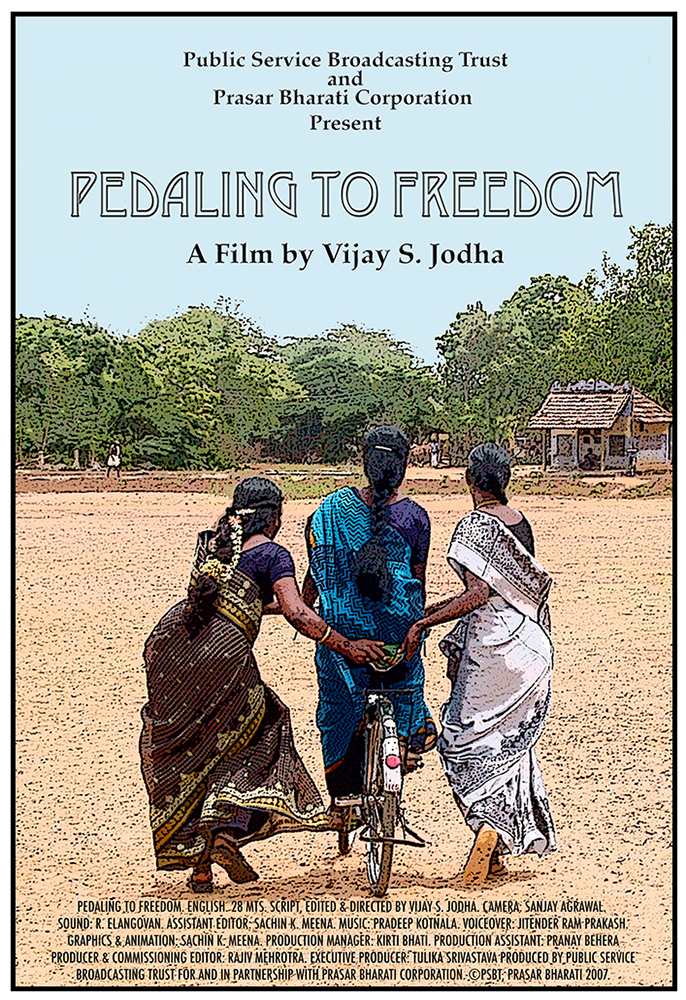
My film on gender, Pedalling to Freedom (2007) revisited an old initiative in one of the poorest parts of the world. It traced the life-changing impact of teaching 100,000 women to ride the bicycle. That film is in the US Library of Congress. It was also chosen for archiving at OSA Budapest, world’s premier repository of materials dealing with human rights. 

Then there are films that get food on the table. Training films. Corporate films. I once did a ‘funeral film’ on a well-known personality whose passing received a lot of press coverage in India but the NRI son could not come for the funeral.

What motivates you Vijay — money, international honour, or the possibility of social change?

Well, all this is livelihood so the money part is important. But doing work that gets recognised far and wide, that is substantial, to hold good for a long time – that’s a huge motivator. 

I have a slightly spiritual take towards this. I feel that regardless of our profession we are all bound by a dharmic or sacred duty. A teacher’s duty is to teach and a doctor’s is to heal. For those in the business of storytelling — including photographers — the sacred duty is to document, bear witness, push things forward. And believe you me, this has little connect with means or accessibility. 

To give you an extreme example: After the Nazis lost the war and Berlin fell, soldiers from the victorious allies army raped virtually every woman in Berlin. Few rapists were taken to task and  to top it, despite all the extensive coverage of the allies victory by forgotten photographers as well as superstars like Margaret Bourke-White  (known to us through her famous Gandhiji with charkha portrait) or Robert Capa (regarded as the greatest war photographer of all time), there was no coverage of this mass outrage in Berlin by anyone be it in photo essays in Life Magazine, or World War photo books. It appears in no Hollywood film or TV series.  

Likewise, fifty years ago, when India came under the draconian Emergency, our courts also endorsed the robbing of our Constitutional rights. Nobody documented, then or since, the forced sterilisation of 6,000,000 who were stripped of their reproductive rights. We, as photographers and filmmakers, failed on this front.

The First Witnesses is my project around farmer suicides. It is not an unheard issue nor something hard to get access. But how many have found it worth their while to document the issue? How many are documenting a disappearing art form or livelihood? Or our urban heritage being torn down? Our movie theatres once represented cinema as an inexpensive and readily accessible mass culture. Now they are being torn down even in smaller towns. Each had a unique character. Is anyone documenting that?

I documented Durga Puja in Kolkata 20 years ago when I was working with painters there. Durga astride a tiger, slaying the demonic Mahisasur emerging out of a buffalo: these elements get interpreted in hundreds of ways across the city each year. Each pandal has a different aesthetic interpretation, inside and outside. The religious aspect is no less important. But  these are also like site-specific installation art works shaped by the imagination of so many talented people but designed for impermanence. How many books of photos exist around this work now recognised by UNESCO as Intangible Cultural Heritage of Humanity?

How successful have you been in achieving this?

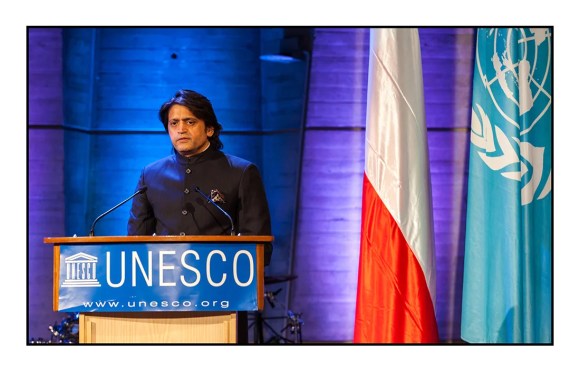
The merit of my work is for others to judge. I’m happy that, though India doesn’t have many foundations or support for non-commercial oriented art, I’ve been able to do at least a few things that are genuinely pathbreaking, substantial and have gone around the world. To be invited to UNESCO headquarters in Paris to screen a film and address delegates from 193 countries, or be honoured by our President for India’s best ever performed at Abilympics — these are certainly my career highlights.

Vijay S Jodha at UNESCO introducing his film. Photo provided by Vijay S Jodha

My work has received over a hundred honours across 24 countries, but what truly motivates me is when people I look up to, my heroes, appreciate what I do. That kind of recognition carries a different weight. For instance, Magsaysay awardee P Sainath, whose ground-breaking reportage has long inspired me, saw my farmers project when it was exhibited alongside his photographic work at the Chennai Photo Biennale 2019. We hadn’t met before, so when he praised my effort, it felt like receiving a medal.

Another moment that has stayed with me was post my time at NYU. My professor, George Stoney, referred to as the father of public access television and mentioned in history books on documentary cinema, mentored Oscar-winning directors like Oliver Stone, Martin Scorsese, Spike Lee, and Ang Lee. When he watched The Weeping Apple Tree, he said, “Vijay, this is better than Al Gore’s An Inconvenient Truth. That was a glorified PowerPoint by comparison.” That one comment meant more to me than most awards ever could.

As a photo artist what is the biggest moment of joy for you — technical hurray or the joy of the subjects?

As I just said, recognition and praise of my heroes gives the maximum joy. There are other honours. Two photo projects listed in Limca Book of Records for being the biggest and path breaking. The first was on ageing that I did over eight years with my brother Samar Jodha – he did the images while I did the concept research, writing and interviews. The other was the aforementioned Tiranga. My film Poop on Poverty (2012) won a Peabody award, the oldest honour for documentary films, and more international honours than any non-fiction film produced out of India. 

After landmark exhibitions in Hong Kong and New York I donated two complete sets of The First Witnesses, my farming crisis project, to two farmer unions including our oldest and biggest All India Kisan Sabha (AIKS). They are using it for awareness raising across villages. That’s a real high as a photographer.

Then there’s high coming from those we pass down our expertise to. Among those I’ve taught or mentored is a highly talented though physically challenged youngster from Vijayawada with missing digits and motoring issues. His family runs a Kirana shop. When he started school, they sent him back saying he cannot even hold a pencil. He won a bronze medal in photography for India at the last Abilympics in France. Another student has himself become a photography teacher in a school for hearing impaired. This is the kind of stuff that gets me very excited. 

Thirty years ago as a volunteer writer and researcher I helped Sanskriti Foundation set up India’s first international artist retreat. That novel venture raised crores in grants and set up three museums. Today it is being scaled back as its founder O P Jain is in his 90s. But that idea caught on and you have scores of artist retreats across India. 

How has digital technology influenced photography as an art form? Has it done more harm? Or widened its spread?

Digital has been a mixed experience. It democratised the process of production and dissemination — be it still images or movies. This is a fantastic thing. But it killed a lot of the processes and livelihoods such as the printing labs, film production and processing facilities. It has also killed an art form like print making. It’s a specialised skill in itself, so a lot of artistry, understanding, appreciation and sustenance of it has got compromised.

The emergence of deep fake images and piracy of work is bad news too. But it has allowed more people to become story tellers. They now bear witness, as filmmakers and photographers, of issues and events that was earlier impossible.

I can cite examples from my work. I’m National Selector and Trainer in photography for National Abilympics Association of India (NAAI) and my students are in different parts of India. Two are hearing impaired, two others have motoring issues and physical challenges. Thanks to digital tools, we’re running long distance classes every week. NAAI provides me sign language interpreter but I can send and receive digital files, use zoom to conduct classes, use google translate to send instructions in Tamil, English and Marathi to my students. Now one student, despite hearing challenge, is running a photo studio. The student who has issues with his leg also works as wedding photographer. Workshops with institutions and festivals, within and outside India, are now easy and inexpensive thanks to these digital tools and communication modes.

Has selfies on mobile camera shortened the life of portraiture?

It has certainly democratised the process while the average person’s patience to study or appreciate any art work — portrait or landscape photo — is shrinking by the minute. Of course, good portraiture requires some skill to make as well as appreciate – that cultural literacy is a challenge everywhere, not just in photo medium. As a seasoned art critic you would have noticed that in the world of painting and sculpture too. Sadly we don’t have that education in our schools. 

You have continued with still images even after doing many documentaries. What is the joy in either case?

I’m doing still photography and movies parallel to each other. Last month I had a book on public policy, as I mentioned. Also launched last month – by our defence minister –was my film on our Armed Forces Medical Corps – it’s one of the oldest divisions in the world, going back 260 years. I’m working on a project on the Indian Constitution and a biopic on Amitabh Sen Gupta, the artist whose retrospective exhibition this year is organised by Artworld Chennai. My still photography project on the farmers crisis is also going on for the past 7-8 years.

All projects are joyous and offer their own challenges. It’s like bringing children into the world. You do the best you can, hope they’ll do well and go far, but you don’t know which one will. Regardless of their line of work you feel happy with each of them and what they achieve. 

What is the future of Arriflex, Mitchell, Kodak Brownie? And that of Yashica, Nikon, Canon, Leica, Olympus…?

Some old camera brands like Konica and Minolta have merged, or evolved into digital Avatars like Arriflex. Others, like Kodak, have faded into history. Interestingly, a small Indian company has licensed their name to market TVs under Kodak brand name now. For those of us from the analogue generation, it’s a bittersweet feeling. When a beloved brand disappears, it feels like saying goodbye to an old friend. But such is the nature of change.

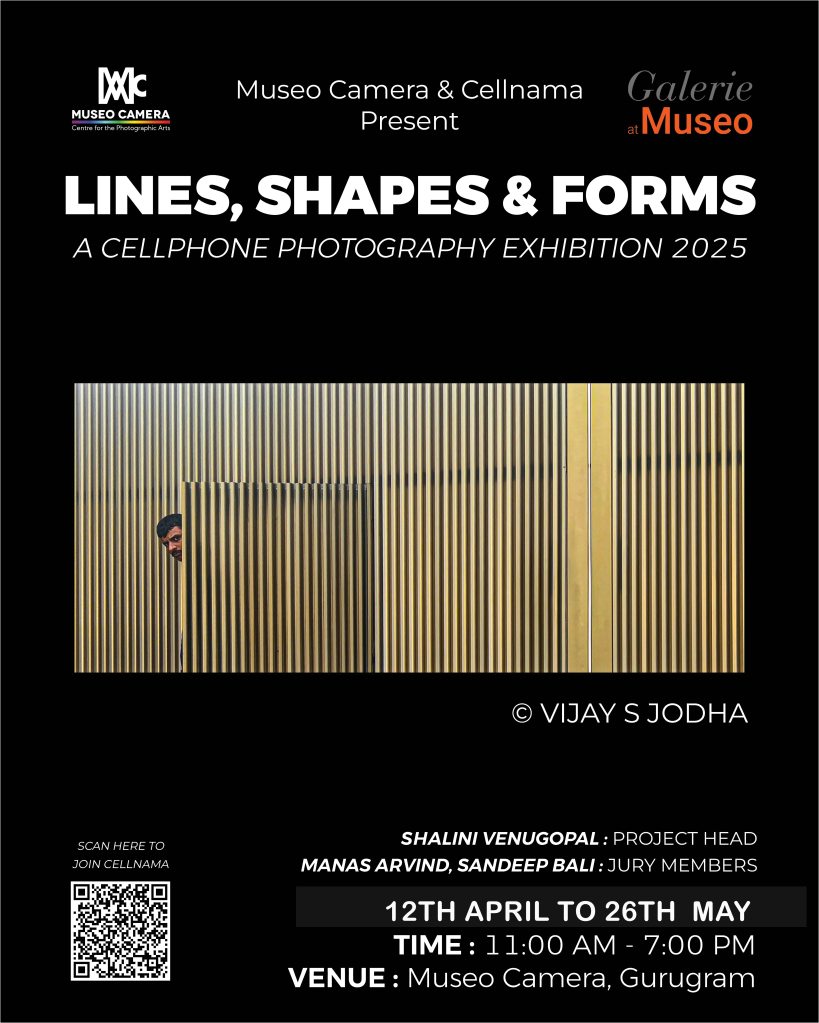
My friend Aditya Arya, one of India’s eminent photographers and a passionate camera collector, has created a remarkable space to preserve this legacy. He established the Museo Camera in Gurgaon, a non-profit centre promoting photographic art, which has become not only a camera museum but also a leading art and culture hub in the Delhi national capital region. If you’re an old time photographer passing through Delhi, it’s a wonderful place to revisit these “old friends.”

(Website of Museo Camera https://www.museocamera.org)

[1]  University Grants Commission-Consortium for Educational Communication

[2] Robert Frank (1924-2019) was a photographer and documentary filmmaker. 

[3] Henri Cartier-Bresson (1908-2004) was a humanist photographer, a master of candid photography, and an early user of 35mm film. One of the founding members of Magnum Photos in 1947, he pioneered the genre of street photography, and viewed photography as capturing a decisive moment.

[4] Three colours, published in 2005

Ratnottama Sengupta, formerly Arts Editor of  The Times of India, teaches mass communication and film appreciation, curates film festivals and art exhibitions, and translates and writes books. She has been a member of CBFC, served on the National Film Awards jury and has herself won a National Award. 

.

PLEASE NOTE: ARTICLES CAN ONLY BE REPRODUCED IN OTHER SITES WITH DUE ACKNOWLEDGEMENT TO BORDERLESS JOURNAL

Click here to access the Borderless anthology, Monalisa No Longer Smiles

Click here to access Monalisa No Longer Smiles on Amazon International

Categories
Musings of a Copywriter

Stay Blessed!

By Devraj Singh Kalsi

Just like attaining the eligible age to vote or marry, I am convinced that some individuals – awakened souls I mean – acquire the power to bless only after a certain age. Premature greying of hair lends the wrong impression that I have already reached the age to raise my hand to shower blessings like rose petals. Misled by the ageing process showing visible signs, a senior couple came home with their newly-wed son and daughter-in-law, directing them to touch my feet and seek blessings. I withdrew my pedicured feet before they could reach there and patted the padded shoulder of the bridegroom wearing a sherwani instead of placing my hand on his head. It must have appeared odd to the family that I had not shown the willingness to bless the newly-married couple in a proper, traditional manner. My heavy pat was an attempt to boost his morale and brace him up for the challenges ahead or it could be interpreted as a thumping appreciation that he had garlanded the right partner after a long wait since the pandemic.

My life has not been spiritually gifted or divinely blessed, so I do not wish to behave like a saint to transfer goodness or good wishes. Besides, I do not think my soothing words of blessings have any magical power to alter the destiny of an individual. If the guy drinks and drives and rams his car into a truck, my live-long blessings would have no meaning. If the fellow turns into a gambler, my tons of blessings cannot save his wealth.  

When it comes to seeking blessings, I am always ready to receive. I have tried to build a reservoir of blessings over the years but these have not proved to be beneficial in terms of growth. Maybe those who blessed me were also spiritually weak or they did not possess the divine aura to bless. Or perhaps my fate was so overloaded with tragedies that most of those blessings had been utilised to neutralise dark episodes and ensure a smooth, steady life without any highs or lows. The stabilising influence of blessings has been the most convincing and comforting argument I can offer myself, to feel assured that blessings do have an impact if sourced well.

Forget the blessings of ordinary mortals, which come with a doubtful efficacy rate like vaccine shots. Focus on the blessings of the divine alone. My double standards are revealed when I ask other people to stop seeking blessings from me but always look eager to receive blessings from people all around me. The opportunity to seek blessings from mendicants when they receive foodgrains or currency is never lost. I go out of the way in my greed to collect blessings. My key objective behind every act of charity is to receive blessings and raise a buffer stock – fit to use during troubled times.

In the matter of seeking blessings from the Lord, I forget to make a list of what I want. Usually, it is long like a grocery list. I know the others praying are also seeking similar blessings from the Lord. Sometimes I feel I should rein in my greed to receive blessings and request the Lord to distribute my share among the other seekers. But this noble thought perishes soon. The fear of a dull, aching life without divine blessings returns to haunt me. The arrogance of having to survive without his blessings can only invite curse and misfortune.  

There have been several instances where young people have come forward to seek my blessings. I give them a warm hug instead without explaining why I am incapable of giving blessings. A fanboy reader in my neighbourhood made the mistake of considering me a wise, well-read scholar and hoped to get blessed to write better – simply by touching my feet. I stepped back and asked him to write more and face rejections to improve his creative skills instead of pinning high hopes on a direct benefit transfer through his act of submissiveness. 

Even if I proclaim myself as a sinner, those who associate me with goodness will never buy my story. I cannot tell them I do not think I have reached the fag-end of my life when all I can do is sit by the riverside and distribute blessings to the world. I think my life itself is a blessing and I must stay afloat and blessed forever to live it to the fullest.

A situation emerged when I was enraged and felt I must curse the chap with a bleak future as he tested the limits of my patience by challenging my faith in God. I said in anger that he would suffer horribly for offending me though I had been kind and helpful to him. I was confident that my curse would wreak havoc but within a few years he really prospered. Though we did not meet after that incident and I do not intend to bump into him again, I am sure he must be eager to tell me that my curse was nothing more than a fake mumbling of an overheated brain. It made me conclude that even though I had not tested my power to bless, the power to curse had been tested and it misfired. Sometimes I feel like writing a mythological tale based on curses but then I am reminded whether those curses would lack potency and weaken the plot instead.   

Incurring the wrath of saints is never a good idea – a lesson acquired after a memorable encounter with a group of sadhus who came close to getting offended by my tendency to bargain with them. As their kohl-lined eyes grew wider to scare me and the tongue began lashing out invectives to scold me for monetary attachment in this transient world, I loosened my purse strings to bring them back from the verge of spewing fire and converted their harsh words into the nectar of admiration.

I have not cursed too many people, not even those who ditched me, ever since I realised my zero potential to curse effectively. Many people have been offended or snubbed without a valid reason and they have cursed me behind my back – quite effectively in my case at least. Whenever I accost them, they are so cheerful that I forget their tendency to curse.  

Seeking blessings is reduced to a mere formality prevalent all around. There are many opportunists who fake it and come forward to seek blessings just to make you feel superior. The younger relatives who visit me to seek blessings are politely asked to identify the actual elders in the family and bow down before them. A septuagenarian wields more power to bless vis-à-vis a person who is flirting with middle-age. I prefer to seek blessings from elders even today and permanently occupy the slot of a recipient instead of becoming a donor of blessings. 

Having realised that I am not the one empowered to bless or curse a person, I avoid getting into this trap now. No divine light emerges from my palm so I keep my hands clasped in prayer instead of raising it too often to bless like a godman popping up through the panoramic sunroof of his luxurious SUV.  

Devraj Singh Kalsi works as a senior copywriter in Kolkata. His short stories and essays have been published in Deccan Herald, Tehelka, Kitaab, Earthen Lamp Journal, Assam Tribune, and The Statesman. Pal Motors is his first novel.  


PLEASE NOTE: ARTICLES CAN ONLY BE REPRODUCED IN OTHER SITES WITH DUE ACKNOWLEDGEMENT TO BORDERLESS JOURNAL

Click here to access the Borderless anthology, Monalisa No Longer Smiles

Click here to access Monalisa No Longer Smiles on Kindle Amazon International

Categories
Conversation

From Outhouse to Backwaters

Ratnottama Sengupta tracks the journey of Leslie Carvalho over a quarter century

It seems like only the other day. The International Film Festival of India, IFFI, 1998 was on. Along with a colleague, I was seated on the steps outside Siri Fort I auditorium connected to a long corridor going to Siri 2. Someone introduced Leslie Carvalho. “Aha! The young filmmaker from Mangalore?”  I responded. “There’s a write up on you in The Times of India today. It says there’s a lot of expectation from The Outhouse.”

The “delightfully sweet” film had lived up to the expectation of the critics. It was bestowed the Aravindan Puraskaram, presented by the Kerala Chalachitra Film Society to commemorate the iconic Malayalam director, and the first Gollapudi Srinivas award, another national level award to recognise filmmakers marking their debut in Indian cinema. So I was not surprised to meet him next as a co-member of the jury for the National Film Awards 2000.

The Tennis coach who is also a German language teacher with a passion for painting has now published his first novel, Smoke on the Backwaters. It centres on Rosa, a twenty-year-old from Mangalore, who is forced to flee overnight because of the storm of gossip, fear and shame unleashed by a single incident in her life. Her unexpected journey across continents becomes a path of healing. Seven years later, armed with education and maturity, she returns home, determined to pursue her purpose in life. But how much had the town she left altered from its old ways?

RS: Leslie, before we talk Backwaters, can we briefly revisit The Outhouse? From where did you derive its content? And what was your compulsion for choosing that subject?

Provided by Ratnottama Sengupta

LC: The Outhouse was a simple, linear narrative about moving on in life despite the odds. A young mother’s need to gain economic independence to supplement the family income; the help she received from her financially independent sister; a kind hearted Bengali landlady’s generosity which causes stress and violence in the Anglo-Indian couple’s day to day life, and how it affects the two children growing up.

RS: Why did you choose this subject as your debut vehicle? If you were to travel in a time machine, would you choose a ‘mainstream’ subject?

LC: I chose this subject as my debut vehicle as I had seen quite a bit of violence in the Anglo- Indian community in the Lingarajapuram area of Bangalore I grew up in.

I was itching to make a movie after my six-month course at the New York Film Academy. As I was working on a very tight budget, I just stuck to what was taught — to keep it simple, straightforward and just tell a story using the various tools of cinema — in short, to make it cinematic.

If I were to go back in time, I don’t think I would have chosen a ‘mainstream subject’. I derived immense satisfaction along with the cast and crew as we felt we were working on something we were passionate about. We all felt drawn towards the characters, the story and the theme of the film.

RS: How did you get interested in cinema? And what were the problems you faced while filming The Outhouse – in terms of funding, casting, shooting location, distribution?

LC: I grew up watching Tamil, Kannada, Hindi, a couple of Konkani and lots of Hollywood films. My mother tailored clothes at home, and she taught a whole lot of women stitching. They were fans of Tamil cinema, especially of Sivaji Ganesan, MGR, and the heroes of Kannada cinema, Dr. Rajkumar and Vishnuvardhan. She also enjoyed the Hindi films of Rajesh Khanna, Dharmendra, Hema Malini, Amitabh Bachchan, Sanjeev Kumar, Jaya Bhaduri and Rekha — that is the popular cinema.

And my father, being an Army person, took us to see English films, like The Ten Commandments, The Bible, Hatari, To Sir, With Love[1]. Also, St. Germain’s School where I studied, screened English films every Friday afternoon in the Hall, from spools off a projector that made a jarring sound. It was an amazing experience — black and white Charlie Chaplin, Laurel & Hardy films and also Patton with all the bad words. Later, when in college, we would bunk classes to watch most of the popular Hindi and English movies.

At the New York Film Academy, I was exposed to an entire range of the world’s best in cinema. Satyajit Ray, Akira Kurosawa, Ingmar Bergman, Antonioni, John Ford, William Wyler, Fellini, Jean Renoir… And I watched a whole lot of films on the American Movie Chain (AMC). There I discovered all of Spencer Tracy’s films and fell in love with his sense of timing and under playing. It was also a time when I discovered Guru Dutt and marveled at his brand of filmmaking from Pyaasa, Kaagaz Ke Phool, Chaudhvin Ka Chand, Sahib Biwi Aur Ghulam to Aar Paar and Mr & Mrs 55[2].

It is hard to believe I began the shoot for The Outhouse on September 18, 1996, and completed it in 14 days – on October 1. After we went through the rushes, we required two more shots to link the gaps. Since I was on a shoestring budget of a few lakh rupees, I had rehearsals with the cast for close to three months. I doff my hat to them in gratitude as 90% of the film was canned on first takes. I could not afford retakes, and I worked with a brilliant cameraman, S Ramachandra, who was very supportive and encouraging. He shot most of B V Karanth, Girish Karnad, and Girish Kasaravalli films as well as the popular tele-serial Malgudi Days[3]. A number of first-time directors like myself, had benefitted immensely by his generosity and patience.

Since it was an independent film, whatever little finance I had, I sunk into the film. And then it took me a year to complete post-production for lack of finance.

I was particular about the casting. I wanted the Anglo-Indian look, feel, mannerisms, costume, interiors to be authentic. I met each cast member and spoke to them at length about the vision I had for my film. Almost all of them were from the Bangalore English Theatre, and all of them were cooperative. Moreover, Cooke Town is a quaint little place with many English bungalows and outhouses. After some struggle, I found one on Milton Street which suited my story perfectly.

After The Outhouse was selected for the Indian Panorama in IFFI ’98 and received the two national awards, I just walked into Plaza Theatre on MG Road in Bangalore and met the owner, Mr Ananthanarayan. He had heard about the film and asked me to meet the distributor, Nitin Shah of Hansa Pictures in Gandhi Nagar, the biggest distributor of English films. He put it on for a noon show for three weeks while Fire was on for the matinee and evening shows. The distributor then put it in Mangalore and Udupi for a week. And when I received the Gollapudi Srinivas National Award in Chennai, Aparna Sen was one of the honoured guests. She saw a small portion of the film and said that she would speak to Mr Ansu Sur to screen it at Nandan in Kolkata — founded by Satyajit Ray to help screen small independent films. A theatre owner in Kolkata recommended a person who took the film to the North East. It was also screened in parts of Kerala.

Coincidentally, this April 30th, The Outhouse will be screened in the leafy neighbourhood of Cooke Town next to the outhouse where the film was shot.

RS: In the last 50 years we have seen films by directors like Aparna Sen, Ajay Kar, Anjan Dutt. Even before these, Ray had touched upon Anglo Indians in Mahanagar. These are all films made in Kolkata. Is it because this is the erstwhile capital of the Raj?

LC: Many of the films on Anglo-Indians were based in Calcutta. It was the influence of the British Raj and its culture that was so much a part of their long history of ruling there. Of course their influence was in other parts of the country as well like Madras, Hyderabad, Bangalore, Whitefield and Kolar Gold Fields, the railway colonies all over the country, the hill stations, and many other cities which has pockets of Anglo-Indians.

RS: I remember one Hindi film, Julie that had an Anglo-Indian protagonist. How has the community been projected in popular culture? Was it lopsided or biased?

LC: Throughout our film history Anglo-Indians have played bit roles here and there. Some significant roles came their way in Bhowani Junction, the teleserial Queenie, 36 Chowrighee Lane, Bow Barracks Forever, Bada Din, Cotton Mary, The Outhouse, Saptapadi, Mahanagar, Julie, and Calcutta I’m Sorry[4].

Some of the characterisations have been quite biased; some not well fleshed out; some in passing fleeting moments of drunkenness, prostitution. The song and dance sequences have not helped the community, sadly.

RS: What led you to writing? The screenplay for The Outhouse?

LC: I wrote the screenplay of The Outhouse on plain A4 sheets of paper, on both sides. This is not done but I did it to save on cost. I gave the screenplay to my cinematographer S. Ramachandra, and in his generosity he understood my purpose. I went by what was taught at the New York Film Academy. Of course, I had to combine all the elements to make it whole. The idea of the screenplay came to me while I was at the film school in 1995.

RS: What was the trigger for writing Smoke in the Backwaters?

LC: As an artist, filmmaker, and writer, I have tried to combine all the elements of story-telling – fact and fiction — keeping in mind the flow of ideas, pace and momentum to engage and interest my audience and readers.

I remember beginning to write the novel two decades ago when my mother — who studied in Kannada medium — said, “I hope you will write it in simple English so I can read it too.”

And I wanted it to be reader friendly with regard to the font size, the brightness of the paper, the spacing, the clarity and the size of the book. I was lucky my publisher ‘Anglo-Ink’ was supportive and combined well to find that centre.

Provided by Ratnottama Sengupta

RS: How are you marketing the book? Through Litfests? Bookstore readings? Airport bookstalls? A H Wheelers?

LC: Since Anglo-Ink is a small-time publisher, we’ve had a dream launch in my hometown Bangalore at the Catholic Club. My book seller is Bookworm on Church Street in the heart of Bangalore and for people in Cooke Town it is in The Lightroom’ library.

We are looking at launches in various cities as well, through book readings, LitFests, Airport book stalls, AH Wheelers, readings at schools and colleges.

Since a major portion of the novel is set in Germany, we are looking at translating it into German. I hope to get it translated in a few Indian languages as well.

RS: Since the sunset decade of 1900s, Anglo Indians have been migrating to Australia and Canada. What triggered this migration? Economics or politics?

LC: The migration of Anglo-Indians was inevitable. It was bound to happen for reasons more than one, be it political, economic or social. First under the ‘Whites Only’ policy, many fair skinned Anglo-Indians migrated — the brown and dark skinned were left behind. Slowly they opened up and even they left. Some felt they would adapt better to a western culture, and have adopted their new country as their homeland.

RS: You were a big support for me when my son joined NLSUI in 2000. Again, when I curated Anadi, the exhibition of paintings by Contemporary and indigenous artists from MP and Chhattisgarh. Bangalore has since become an international megalopolis. How has life changed for the locals?

LC: Bangalore has changed dramatically and drastically. The change was bound to happen because of its growing prominence of an International City. The IT industry brought jobs, slowly other industries, started picking up from real estate, fashion, digital technology and social media platforms, start-ups, academics, sports, games, recreational and tourism.

The moderate climate was a huge bonus that attracted people from all over. Bangalore has always been cordial, encouraging and accommodative of people from all over through their mild manners, hospitality and gentleness.

Today Bangalore is unrecognisable. Still, some pockets retain that old world charm of neat, clean and green Bengaluru from the old Pensioners Paradise of Bangalore.

.

[1] The Ten Commandments (1956), The Bible (1966), Hatari (1962), To Sir, with Love (1967)

[2] Pyaasa (Thirsty, 1957), Kaagaz Ke Phool (Paper flowers, 1959), Chaudhvin Ka Chand (The Full Moon, 1960), Sahib Biwi Aur Ghulam (The Master, the Wife and the Slave, 1962), Aar Paar (This shore or that, 1954), Mr &Mrs 55 (1955).

[3] From 1986 to 2006.

[4] Bhowani Junction (1956), TV miniseries Queenie (1987), 36 Chowrighee Lane (1981), Bow Barracks Forever (2004), Bada Din (1998), Cotton Mary (1999), Saptapadi (Seven Steps, 1981), Mahanagar (The Big City, 1963), Julie (1975), and Calcutta I’m Sorry (2019)

Ratnottama Sengupta, formerly Arts Editor of  The Times of India, teaches mass communication and film appreciation, curates film festivals and art exhibitions, and translates and write books. She has been a member of CBFC, served on the National Film Awards jury and has herself won a National Award. 

.

PLEASE NOTE: ARTICLES CAN ONLY BE REPRODUCED IN OTHER SITES WITH DUE ACKNOWLEDGEMENT TO BORDERLESS JOURNAL

Click here to access the Borderless anthology, Monalisa No Longer Smiles

Click here to access Monalisa No Longer Smiles on Amazon International

Categories
Musings of a Copywriter

All Creatures Great and Small…  

By Devraj Singh Kalsi

From Public Domain

The white cat cuddles up on the furry brown mat right outside the entrance door. After I lock the gate leading to the granite steps, it slips in through the iron grille, assured that this seat will ensure comfortable sleep at night. So long as it makes no noise to disturb me, this arrangement works fine. Sometimes when I wake up early, I forget to peep out through the glass window to check whether it is still there. My sudden opening of the door hits her legs and she quickly vacates the spot, turning back to stare and warn that my inhospitable disruption would draw a bloody scratch.

It is true she would have slept longer if I had not arrived on the scene. The feline is entitled to jump to the conclusion that I am the culprit who did not show a sensitive side by tendering an apology through expression. Making an effort to introspect mirrored how miserable I felt when I was groggy with sleep – head buried under the pillow – especially if a domineering member of the family pulled me out of the cosy comforter and rebuked me for being lethargic. My humble submissions for another fifteen minutes of restful sleep were always rejected like salary hike requests. Drawing this parallel provided the solace that I still had a  functional ability to regenerate the tender side.

To make amends, I woke up late or delayed opening the door, allowing the cat the opportunity to snooze for a longer duration. Any kind of clatter inside the house could disturb her sleep so I took extra precautions to maintain peace in the kitchen. I chided myself for not being courteous enough to offer a bowl of milk to welcome the guest. These were clear indications that my sensitive side was kicking in!  

The decline of the sensitive side usually gets overlooked in the rush to cope with daily commitments. When something awful and unexpected occurs, the journey to explore within and measure the decline begins all of a sudden. One tends to becomes extra vigilant, checks repeatedly the extent of damage and how to recover the lost ground. The natural ability to be sensitive and the efforts to restore it calls for consistent efforts that strengthen bonds with nature and its allies.

The other day I woke up late as I binge-watched a lot. It slipped out of my mind that the pigeons were waiting to be fed. When I reached the garden, most of them had taken flight. There were still a few of them hopping around. As I served foodgrains, there was a scramble to peck at it. They settled down to polish off whatever their eyes could find and then proceeded to spread their wings in the air. After their exit, smaller birds like sparrows descended from the branches of a guava tree to have their fill. The squirrels on the garage roof availed the hollow pipe to come down with alacrity, to search for remnants. I thought I should arrange something for them, probably nuts. It was a mere idea without any urge to act immediately. Some minutes later, I came inside to proceed with other chores but I kept thinking about the pigeons – about the ones who could not wait and those who stayed there.  

The loss of patience was natural as the pigeons knew I was never so late. Instead of wasting time, they flew away to other options to have their fill. I could relate to this practical behaviour as I myself do not like being kept waiting to be served tea or coffee at home or in a café and have often shown the tendency to leave. Somewhere deep inside I relished the thought that those who waited for my arrival were close to me and shared a strong bond that I became aware of through this episode.

The packet of peanuts was torn, and it slipped out of my hands when I tried to fill them in a glass jar. A handful of nuts fell on the tiled floor. I gathered those nuts and opened the kitchen window to offer it to the squirrels still lounging in the garden. Perhaps the universe had communicated my thoughts to them. Within minutes, the squirrels vanished with the booty. Though it is widely believed that the food reaches for whom it is meant, it shows gross insensitivity when food is wasted or thrown away. How can it possibly be acceptable that some human beings are destined to scavenge for food in garbage bins?

Some mornings are special as the sight of a herd of cows grazing on the grass outside the main gate motivates me to offer them greens such as cauliflower and cabbage leaves. Their mastication draws the attention of stray dogs who feel my act of preferential treatment cannot be overlooked.  Their collective barking peaks, reminding me that I must offer them something as well. Serving biscuits is the easiest way to calm them. When I give them something to eat, their anger subsides.

Feeling left out is painful as I can recollect how miserable and low I felt when I was not considered fit for the school cricket team despite being a good player. The stray dogs tamed their resistance and allowed the cows to graze without any confrontation, following them like escorts. The sight of two different species bonding so well became an inspiration, making me wonder how I can emulate this example and make my house an abode for multiple creatures to co-exist and care for each other without any fear of competition.

I am not a regular when it comes to feeding the cows crossing my house. But I have noticed some of them slowing down their pace in front of my gate, anticipating something to be served to them. Now I intend to add breadcrumbs or chapatis or anything they like to eat, making it a regular practice to place something for them. Being quite punctual like pigeons, their arrival signals they have memorised my address and they take a break to stop and chew here. The neighbour has shown the competitive spirit to become sensitive by placing a tumbler full of water for all animals. Cows eat from my home and then proceed to quench their thirst next door. I should celebrate such healthy competition as the neighbour is playing a positive role to find his space in the connected world by becoming useful to other species.  

Recently, I bought a bird feeder and decided to put it up in the garden, with the support of bamboo poles. Before summer sets in, the bird feeder should be installed. A little bit of digging of the soil is required and this tiresome activity slows me down. I made a resolution to hire someone to do the job if it proved too cumbersome for me. Although I am aware it’s getting delayed, I am not making any effort to complete it.

When I finally went to the garden on a Sunday afternoon, I saw dried-up, hardened soil and felt disappointed. Watering plants should be a priority. The petunias made my windows look beautiful, with the purple and white blooms. I was busy clicking photos and sharing them  for likes but I was not ready to accept that these plants needed more attention to bloom better and for longer. I had seen them growing in other places during this season, in other bungalows, boulevards, and other cottages. I needed to be modest in accepting the fact that I had not shown a highly sensitive side when it came to nurturing them with love. If I could dedicate fifteen minutes every day, to water them early in the day, I would have shown better signs of care.

Nowadays, I am happy just watering them – whenever I find the time. There is a palpable loss of my sensitive side as I consider it is sufficient to water plants without thinking too much about fixing a timeline. I need to remember how quickly I reach out for a glass of water whenever I am thirsty. But in case of plants, I have concluded that watering them is enough – delaying it does not generate any smidgen of guilt.

The truth is that plants also need water regularly and performing this task early in the day is better. Before I consume the first glass of water, I must ensure the plants have quenched their thirst. I should stop comparing myself with those who do not water plants. I should not feel I am doing the plants any favour. When the plants grow healthy here, they create a positive environment for the residents to lead happier lives. Instead of taking pride in providing any noble service, I should change my mindset and think that there are hundreds of more ways to strengthen the sensitive side. These are some smalls steps as the awakening grows deeper. Knowing the depth of love knows no end. Similarly, the depth of sensitivity is never fully known. All we can do is keep growing sensitive to make this world a better place for all creatures. 

From Public Domain

Devraj Singh Kalsi works as a senior copywriter in Kolkata. His short stories and essays have been published in Deccan Herald, Tehelka, Kitaab, Earthen Lamp Journal, Assam Tribune, and The Statesman. Pal Motors is his first novel.  


PLEASE NOTE: ARTICLES CAN ONLY BE REPRODUCED IN OTHER SITES WITH DUE ACKNOWLEDGEMENT TO BORDERLESS JOURNAL

Click here to access the Borderless anthology, Monalisa No Longer Smiles

Click here to access Monalisa No Longer Smiles on Kindle Amazon International
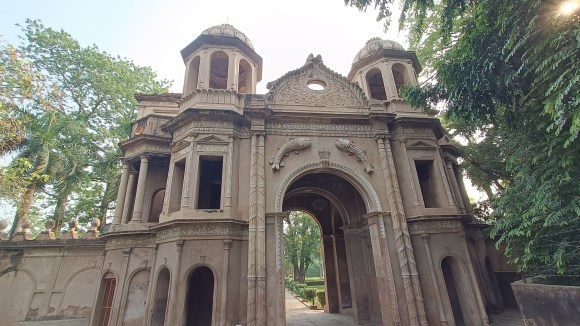
Categories
Review

Mapping Raghu Rai: A Photo Journalist’s Journey

Book Review by Malashri Lal

Title: Raghu Rai: Waiting for the Divine

Author: Rachna Singh

Publisher: Hawakal Publishers

“My story should remain simple, step by step, click by click.”   -- Raghu Rai

Rachna Singh, notebook and recorder tucked in her bag, pen in hand, first meets Raghu Rai in his picturesque home nestled in the Mehrauli forest of New Delhi, a landscape with occasional medieval structures peeping through the trees. Away from a concrete encrusted city, Rachna, a patient biographer, knows that the legendary photographer whose images shaped the visual progress of a nation, has his own deep stories.  But will he reveal them? She pries the tales open by carving pathways through Raghu Rai’s photos— and a remarkable book about the person behind the camera is captured by a literary image-maker, in this sensitive, tender, and insightful biography. Rai permeates  a series of chapters that play intricate games with memory because every frame in the camera is connected to myriad threads of experience.

Since the book is sub-titled “Waiting for the Divine”, I naturally look for references to Mother Teresa and the Dalai Lama to discover how the transcendent power of Raghu Rai’s photos of these two personages emerged. Entry into sacred precincts is never easy, and a camera in hand signals a definite obstacle. However, at the Sisters of Charity in Kolkata the photographer is permitted to follow the Mother unobtrusively. Yet, when a curtain flutters to reveal angel-like nuns and Rai dives to the floor to catch the best angle and the right light, even the Mother’s equanimity breaks and she is aghast! From such “shadowing” emerges the divine photograph titled “Mother Teresa in Prayer” with every crease in the luminous face catching the glow, an expression transporting her to realms beyond ordinary comprehension.

If Raghu Rai’s association with Mother Teresa is marked by reverence, his link with His Holiness the Dalai Lama is marked by friendship—one that extends to warm handshakes and brotherly embrace, informal conversations and a conviction about universal compassion. Says Rai, “His Holiness is an uninhibited, wonderfully loving man. How gracious of him to say he is my friend.” Again, it is the camera lens that reveals remarkable facets of the Dalai Lama– his childlike smile as also the sombre spiritual leader of a people in exile. Rachna Singh recounts an almost surreal story of a protective stone gifted to Rai by His Holiness that saw him survive a severe heart condition of ninety percent blockage while still chasing images of a crowded procession!

This takes me back to Rachna Singh’s intention, “My book is not a third-person memoir nor a chronological recounting of Raghu Rai’s life. Instead, it unfolds through candid conversations, inviting the readers into an intimate dialogue.” The reader’s response being part of her textual strategy, I too could add my account of the mystical energy felt in the presence of the Dalai Lama. The book’s attraction lies in this fluidity of the biographer, her subject and the reader being part of the evolving discussion of the deep philosophical pool from which photos are created. The trajectory of Raghu Rai’s life is well known—the photo journalist with The Statesman and India Today; his famous photo essays in the international magazines Time, Life, The New Yorker and numerous others, the award of a Padma Shri, his eminent friends and compeers, but Rachna Singh’s book probes Rai’s mind, his consciousness, his search and his beliefs. Therefore, it offers gems of information through anecdotes and the atmospherics of events, and some delectable quotations in Punjabi and English.

I turn here to Raghu Rai’s series on the Bhopal gas leak of 1984. “The black and white picture of a dead child, eyes open, staring sightlessly into space, lying in the rubble with a hand gently caressing the ravaged face in farewell,” describes Rachna, calling Rai a ‘Braveheart’ who painted a “searing picture of the tragedy.” The conversation is strangely matter of fact as though both the biographer and her subject are numbed by the enormity of that night of terror. Did Rai fear for his health or safety in the toxic air? The answer is “No” because the human pain around was greater than the instinct for self-preservation. All the journalists visited the mass cremations, the hospitals, the dead and the dying as though it was a “job”, Rai being practical enough to say, “You cannot let your spirit turn soggy with emotion.” Those of us who read of such tragedies and see photos in newspapers while sipping our morning tea should admire the intrepid people providing the raw material from ground zero.

Another memorable series was on Bangladesh refugees after the 1971 war—emaciated women and men often carrying sick children in baskets. Rai had been in the frontlines of the war and had once been surrounded by a hostile mob. Rachna is on tenterhooks as he narrates the details but he declared “I was more excited than scared … there was actually no time to feel scared.” At one time he even smiles and says, “It was a lot of fun.” Which brings me to probe the extraordinary grit and strength of photo journalists or reporters from war zones. Where does compassion and newsworthiness meet? Is image more important than the decimated human body? What lasting imprint does such witnessing leave?

Perhaps the answer lies in Raghu Rai’s quest for the Divine—beyond image, outside time. He was born in pre-partition India, in the village of Jhang that is now in Pakistan. He speaks haltingly of the childhood terrors—homes in flames, of escape in the pre-dawn—Rachna notes the tremor in his voice and the reluctance to recall those years. Yet she astutely links Rai’s portrayals of hurt and human sorrow, his sensitivity yet distancing from those early experiences. Finally, it’s been a holistic calm. Rai is quoted: “Photography has been my entire life—it has, in fact become my religion, a faith to which I have dedicated myself completely. My craft led me toward a meditative path that gave me insights to life and the divine.” And that quest bridges the beatific and the aesthetics in this most commendable book.

Malashri Lal, writer and academic, with twenty four  books, retired as Professor, English Department,  University of Delhi. Publications include Tagore and the Feminine, and The Law of the Threshold: Women Writers in Indian English. Co-edited with Namita Gokhale is the ‘goddess trilogy’, and also Betrayed by Hope: A Play on the Life of Michael Madhusudan Dutt  which received the Kalinga Fiction Award.  Lal’s poems Mandalas of Time has recently been translated into Hindi as Mandal Dhwani. She is currently Convener, English Advisory Board of the Sahitya Akademi. Honours include the prestigious ‘Maharani Gayatri Devi Award for Women’s Excellence’.

PLEASE NOTE: ARTICLES CAN ONLY BE REPRODUCED IN OTHER SITES WITH DUE ACKNOWLEDGEMENT TO BORDERLESS JOURNAL

Click here to access the Borderless anthology, Monalisa No Longer Smiles

Click here to access Monalisa No Longer Smiles on Kindle Amazon International
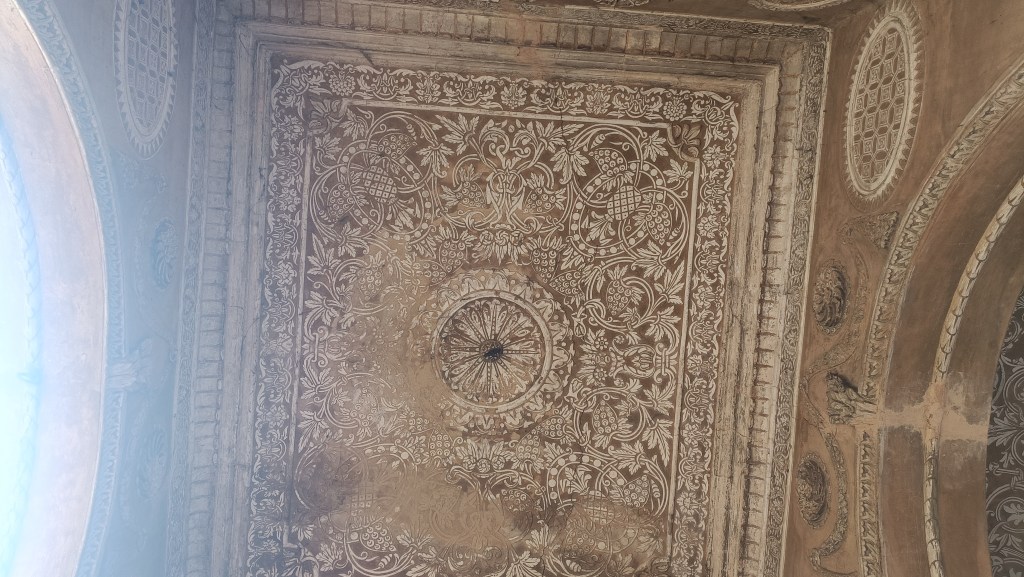
Categories
Conversation

‘Soumitra Chatterjee was my father first and then everything else’

Poulami Bose Chatterjee converses with Ratnottama Sengupta

Young Soumitra Chatterjee with his daughter, Poulami. Photo provided by Ratnottama Sengupta

“All the recovery Rono Bhaitu[1]( Soumitra’s grandson) has made, is entirely due to his mother,” Soumitra Chatterjee (1935-2020) had said to me when I met him before Covid set in. His voice was laden with deep affection and paternal pride for his daughter. Deservedly so, as the world has been witnessing since the star actor passed away in November 2020. Poulami took upon herself the male mantle of lighting her father’s pyre.

An older Soumitra Chatterjee with his grandson, Ronodeb Bose. Photo provided by Ratnottama Sengupta

But that was neither the beginning nor the end of her duty towards her father. I had seen her perform on stage alongside the thespian in Homapakhi [A Legendary Bird] that had explored the complexities of a society trying to reconcile its modern aspirations with traditional roots.

And last November she directed Janmantar [Rebirth], an original play Soumitra Chatterjee had written in 1993 but was never staged before. Seen through the eyes of a matinee idol who is visiting a remote village in Purulia, it focused on ills like child marriage, witch hunting, clash between and land owners and cultivators.  “Unfortunately, 30 years later too, all the ills are still thriving on that soil,” Poulami said to me.

Poulami with Soumitra. Photo provided by Ratnottama Sengupta

And in January, even as the definitive biography Soumitra Chatterjee and his World was being launched in the Kolkata Literary Meet, she staged Chandanpurer Chor [The Thief of Chanderpur], his light hearted transliteration of Jean Anouilh’s Carnival of Thieves[2], to mark his birth anniversary.

On the eve of the International Women’s Day I conversed with Poulami, whose parents have been an integral part of my life too.   

Ratnottama Sengupta: Who is Poulami? A Bharatanatyam dancer? A theatre person? Mother of an actor with a brief trajectory? Or, daughter of Soumitra Chatterjee?

Poulami Bose Chatterjee

Poulami Bose: I think Poulami is a bit of all this — along with a passionate theatre practitioner. I am my mother’s daughter too. I hope I am a loyal friend to my friends. But above all I’m myself. I like to think of myself as a free spirit — absolutely totally in love with my daughter and son and music and dance and theatre and all that is wonderful in the world.

RS: When did you first realise that your father was not a 10-5 pm office going father like that of other girls? That he was a star?

PB: For a long time in my growing up years I actually didn’t realise how big a star he was. He was a very loving, hands-on father, very involved in our lives. I always knew he was an actor but didn’t realise the magnitude of his stardom. He never brought that aspect home. Our home was always filled with lively discussions, about books, music, paintings, dance, theatre, cinema, the environment, travel… It was a beautiful childhood, very loving, very secure.

Bapi [father] and Ma were always introducing us to new things. Encouraging us to embrace the world. I thought that was normal and that’s what every father was like. Only after I grew up did I realise his impact on the Bengali moviegoers’ lives.

RS: What did a ‘cine star’ mean to you when a) you were learning Bharatanatyam under Thankamani Kutty? b) Studying? c) Getting married to Ruchir Bose?

PB: The word ‘Cine Star’ didn’t matter much when I was learning dance or studying because I was treated just like any other student, by my teachers and my friends. In fact my father didn’t believe in the word ‘Star’. He maintained that he was a professional actor — and we were certainly not encouraged to have airs and graces about us. So we interacted normally with people, and people did likewise. Some people were of course star struck but they didn’t make a difference to me. As for getting married to Ruchir: he was and still is a very down to earth person, far removed from the film industry, very humane. He and his family have always accepted me and treated me for who I am rather than who my father was.

RS: Who was a bigger star for you — Soumitra Chatterjee or Satyajit Ray?

PB: Of course Satyajit Ray! Soumitra Chatterjee was my father first and then everything else, whereas Satyajit Ray was larger than life. We grew up hero worshipping him. Our whole family was absolutely in awe of him — as a person, as a filmmaker, an author and the rest. We were influenced a great deal by his way of life. His sensibilities. In fact we still idolize him.

RS: Which films of Soumitra Chatterjee have you loved most?

PB: Oh there are so many! Apur Sansar, Sansar Simante, Jhinder Bondi, Koni. Ekti Jiban, Dekha, Mayurakshi, Agradani, Ashani Sanket, Abhijan, Sonar Kella, Ganadevata, Atal Jaler Ahwan, Aparichita, Teen Bhubaner Pare, Baghini, Basanta Bilap, Shakha Prasakha, Charulata, Kapurush, Akash Kusum, Dwando, Borunbabur Bondhu…[3] I can go on.

The most impressive thing for me was his versatility. He was different in all the films that I have mentioned above. He was one actor who didn’t have mannerisms. He always became the character. I have seen him doing a lot of homework, research to delve deep into the character’s psyche. Acting was his passion and that was evident in whichever role he played.

RS: Which film of your father has impacted you most? One that moved you at a personal level, perhaps because you identified with it most?

PB: I think Koni. His now iconic dialogue, “Fight Koni, fight!” has stayed with me till this day. Whenever I feel low or face any kind of obstacle, I always remember him in the film. How the human spirit is capable of rising against all odds. How hard work and determination can carry you forward. It inspires not to give up without a fight.

RS: Soumitra Da was a Master in Bengali; Deepadi[4] in English. Who guided you in your studies? Who selected what books you will read?

PB: My parents, like I said earlier, were hands on parents. They, both, helped me with my school work. The atmosphere in our house revolved around books, so we read a lot while growing up. Ma had done her MA in Philosophy. She and Bapi introduced me to both English and Bengali literature. Bapi was more strict, he expected me to read classics and serious books. Ma was more liberal, she let me read anything I wanted to, including romance novels which my father thought were a waste of time.

Soumitra and his wife Deepa. Photo provided by Soumitra Chatterjee

RS: So who are your favourite authors?

PB: I am eclectic in my choice. I read classics as well as bestsellers, plenty of them. My favourite authors are Tarashankar Bandopadhyay,  Bibhuti Bhushan, Manik Bandopadhyay, Jibanananda Das, Shakti Chattopadhyay,  Sunil Gangopadhyay, Charles Dickens, O Henry, Oscar Wilde, Maupassant, Shirshendu Mukhopadhyay, Samaresh Basu, John Grisham, Pablo Neruda, Gabriel García Marquez, Arundhati Roy, Agatha Christie, Akhtaruzzaman Elias, Humayun Ahmed, Jeffrey Archer, Khaled Husseini, Chitra Divakaruni Banerjee, Satyajit Ray, Sukumar Ray, Saradindu Bandopadhyay, Paolo Coelho, Gerald Durrell, Charlotte Bronte, Emily Bronte, Lewis Carroll… to name a few!

RS: Soumitra Da was a poet. He also translated plays — classics of world theatre — into Bengali. What was he most happy to do — act in movies? Write and direct plays? Or retire to the inner world of poetry?

PB: All three. I’ve never seen him sit idle or waste time. It depended on his mood — he loved doing all three. But I must add: theatre was, always, his first love. He was deeply influenced by Sisir Bhaduri (1889-1959), with whom he had started out. He directed plays for Pratikriti, a group that Ma had — and he directed plays for Abhinetri Sangha, set up by the actors of Tollygunge.

RS: Deepadi was an ace badminton player. Did she give up her own world to be Mrs Soumitra Chatterjee? 

PB: She gave up her career primarily for us. Bapi was at the peak of his career and was naturally very busy. Ma felt we needed to have at least one parent around, always. In retrospect, I realise it was a huge sacrifice. But I have to say, both my brother and I needed her. I think she realised that and did what most mothers do: she prioritized us over her career.

Ma had the biggest heart ever. She was more intelligent than the three of us put together. And she was non-judgmental about who she was reaching out to. So many sportswomen she helped, on her own. And I vividly remember this young Muslim boy in New Market who always carried her shopping to the car. One day Ma learnt that he had TB. She immediately brought him home and organised a room on the terrace for him to stay until he recovered. She didn’t hesitate because she had children, she didn’t seek the advice of doctors, she didn’t think twice because her husband was a star!

RS: Why did you choose to carry forward Soumitra Chatterjee’s legacy on stage rather than on screen? 

PB: Theatre kind of seeped into me. I used to watch Bapi – when he was idling, he would arrange the empty cigarette and matchboxes to design sets. I have been on stage ever since I could walk. It is my first love. I’m passionate about live performances, be it dance or theatre. Not that I didn’t get offers for films but I never actively pursued them. I married relatively early and had both my children by the time I was 26. Stage was always more accommodating and easier to manage. And till now the magic of the stage hasn’t worn off. I am still madly in love with the stage. Screen just didn’t happen… no particular reason, really.

RS: Soumitra Da was proud of his grandson’s screen presence. And he was extremely proud of the manner in which you handled your son’s unfortunate accident. Would you like to talk about it?

PB: Bapi had high hopes for Ronodeep. He felt Rono was a very sensitive actor perfectly suited for the screen. He was devastated by Rono’s accident. It was the most tragic thing to have happened in all our lives. But I have come to terms with it. I count my blessings — it could have been worse! Rono is with us — a bright and wonderful boy, sensitive and sweet, full of love and empathy. He still has a long way to go in terms of recovery and health but he’s getting there, one step at a time…

I have learned a lot from this phase of my life. I continue to learn every day. It has also shaped me, moulded me as a person. Bapi-Ma told me always to have grace even under pressure, to be always dignified. I have tried to follow them.

RS: Can you recount one cherished moment with your father?

PB: In May 2020, months before he passed away, during Covid, Bapi and I were just sitting and talking about various things. Suddenly he told me, “Mitil I have never said this to you before but I want you to know that I am very proud of the way you have conducted yourself during Bhaitu’s accident and every day since then. Your dignity and your grace has made me really happy. I’m so proud that you have turned out to be the person you are!”

All through my life I will cherish this one moment.

RS: In today’s world many daughters are taking up the responsibility of carrying forward the legacy of their fathers. What, in your opinion, has brought about this social change? Did Soumitra Chatterjee raise you to (consciously) fight patriarchy?

PB: I guess the world is waking up to the fact that what sons can do, daughters can do better! I really don’t know what exactly has brought this social change but I definitely welcome it. My daughter is a great source of strength for me. She is my best friend. My father had raised my brother, Sougata, and me as equals, maybe favouring me a tad more!

Bapi was always ahead of his times. He always told me, “The sky is the limit, you can do whatever you set your mind to.” But it was Ma who very consciously taught me to fight patriarchy. She was a champion for the girl child.

RS: Soumitra Da was never lured by the reach and fame of Bollywood? So, why did he direct Stree Ka Patra[5], the telefilm he made for the national television, in Hindi?
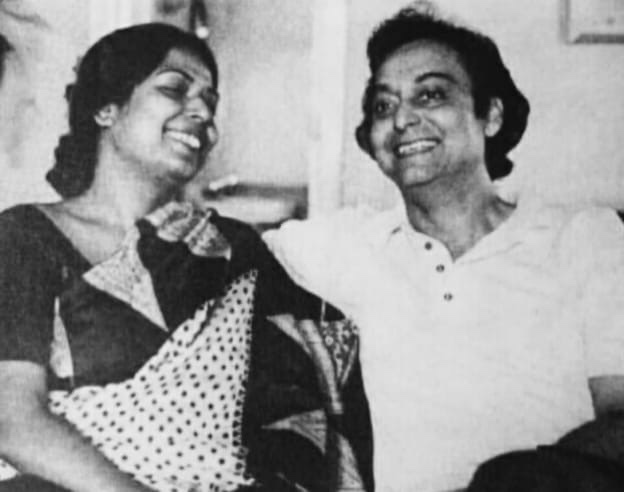
PB: Bapi believed that he could deliver best in his own mother tongue. Besides, he was not enamoured of the kind of films made in Bollywood at that time. He loved his life here, his theatre, his poetry, and co-editing Ekshan, the culture magazine that first published Satyajit Ray’s script. Going to Bollywood, he felt, would put a stop to all his literary and theatrical pursuits.

However, he got the offer to direct Stree Ka Patra for National Doordarshan, and it came with the clause that it had to be in Hindi. The other telefilm he directed, Mahasindhur Opar Theke [ From the Other side of the Ocean] was in Bengali 

RS: Many uncharitable people say that Soumitra Chatterjee wasted his talent by limiting himself to Bengali films and by indiscriminate selection of roles — because of his family responsibilities. Your response to this?

PB: Limiting himself to Bengali films was a conscious decision he made. And I have just elucidated the reasons. Yes he wanted to provide for his family, and he did so the only way he knew to — by acting. He never shied from saying that he was a professional actor. And if he wanted to take on the responsibilities who is anyone else to talk about it?

He could have abandoned his family like many others. He chose not to. His family, his life, his choices… that’s all I can say.

RS: You have grown up in close proximity with stars like Sharmila Tagore, Madhabi Mukherjee, Sandhya Roy, Tanuja, and directors like Tapan Sinha, Ajoy Kar, Tarun Majumdar, Rituparno Ghosh. Please share some memories/ anecdotes with us.

PB: The only name in the list who I have grown up in close proximity with is Tapan Sinha, whose birth centenary is being celebrated. He was a wonderful human being! While we were growing up we didn’t interact much with people from the film industry. We certainly met them but at parties, weddings, social events… 

My parents had a huge circle of friends. A doctor’s group. My mum’s friends. Poets like Shakti Kaku and Sunil Kaku. My dad’s friends like Nirmalya Acharya, the co-editor of Ekshan. Directors Ajit Lahiri, Ashutosh Mukherjee, Nripen Ganguly who was fondly called ‘Nyapa Da.’ Friends from theatre. His childhood friends. It was a vast cross section of people, so it was wonderful, happy and great fun growing up around so many amazing people.

RS: Gaachh [Tree], the documentary by Catherine Berger, focused only on his stage life. Abhijan[6][The Expedition] directed by renowned actor Parambrata Chatterjee, did not excite cineastes who have adored Soumitra Chatterjee, honoured with Dadasaheb Phalke for cinema, Sangeet Natak award for theatre, decorated with the Lotus award of Padma Bhushan and the French Order des Arts et des Lettres. Will you give us a biopic of Soumitra Chatterjee on stage?

PB: I am not in favour of a biopic for someone like Bapi. On the other hand, a stage production would be limiting. He was a multihued talent. It is difficult to capture so many facets of his personality. It is a daunting task to encompass every nuance, every shade of such an extraordinary life in a single film. A biopic should not be made if it does not do justice to the magnificence of the man.

.

[1] Ronodeb Bose, grandson of Soumitra Chatterjee, had a bike accident in 2017

[2] Jean Anouilh (1910-1987), Carnival of Thieves(1938)

[3] Bengali films in which Soumitra Chatterjee played the lead.

[4] Deepa Chatterjee, wife of Soumitra Chatterjee

[5] A pun in the heading. Stree is woman, Patra is vessel as well as a prospective groom. So, a Woman’s Vessel or Prospective Groom

[6] Soumitro Chatterjee played the lead in the 1962 Abhijan, directed by Satyajit Ray

.

Ratnottama Sengupta, formerly Arts Editor of  The Times of India, teaches mass communication and film appreciation, curates film festivals and art exhibitions, and translates and write books. She has been a member of CBFC, served on the National Film Awards jury and has herself won a National Award. 

.

PLEASE NOTE: ARTICLES CAN ONLY BE REPRODUCED IN OTHER SITES WITH DUE ACKNOWLEDGEMENT TO BORDERLESS JOURNAL

Click here to access the Borderless anthology, Monalisa No Longer Smiles

Click here to access Monalisa No Longer Smiles on Amazon International