Categories
celebrations

Festivals of Humanity

Festivals are affirmations of joy and love that bind humanity with their sense of hope even in a world torn by violence and climate change. As the end of the year approaches, we invite you to savour flavours of festivals past and, a few, yet to come, before the cycle starts again in the new year. The colours of celebrations are vibrant and varied as shades of nature or the skies.

We have new years spread out over the year, starting with January, moving on to the Chinese New Year around February, the Bengali new year in April to festivals of environment, light, darkness as in Wiccan beliefs, Tagore’s birth, more conventional ones like Deepavali, Eid, Durga Puja and Christmas. People celebrate in different ways and for different reasons. What we have also gathered is not only the joie de vivre but also the sadness people feel when celebrations are muted whether due to the pandemic, wars or for social reasons. In some cases, we indulge in excesses with funny results! And there are of course festivals of humanity … as celebrated by the bauls — the singing mendicants of Bengal — who only recognise the religion of love, compassion and kindness. 

Enjoy our fare! 

Poetry

 Aaji Shubhodine Pitaar Bhabone or On This Auspicious Day, a Brahmo Hymn by Tagore. Click here to read the translation by Mitali Chakravarty.

Potpouri by Isa Kamari familiarises us with Malay-Singaporean traditions that are observed during festivals. Click here to read.

Eid Poems by Afsar Mohammad. Click here to read.

 Ramakanta Rath’s Sri Radha celebrating the love of Radha and Krishna have been translated from Odiya by the late poet himself, have been excerpted from his full length translation. Click here to read.

Bijoya Doushumi, a poem on the last day of Durga Puja, by the famous poet, Michael Madhusudan Dutt, has been translated from Bengali by Ratnottama Sengupta. Click here to read.

Groundhog Day by John Grey. Click here to read. 

Christmas Cheer by Malachi Edwin Vethamani. Click here to read.

Christmas Poems by Rhys Hughes. Click here to read.

Poem on Christ by  Rabindranath Tagore: Verses excerpted from  ‘The Child‘, a poem originally written in English by the poet. Click here to read.

 Purano Sei Diner Kotha or ‘Can old days ever be forgot?’ by Tagore, based on Robert Burn’s lyrics, Auld Lang Syne. Click here to read the translation by Mitali Chakravarty.

Prose


 A Clean StartSuzanne Kamata tells us how the Japanese usher in a new year. Click here to read.

Shanghai in Jakarta: Eshana Sarah Singh takes us to Chinese New Year celebrations in Djakarta. Click here to read.

Cherry Blossom Forecast: Suzanne Kamata brings the Japanese ritual of cherry blossom viewing to our pages with her camera and words. Click here to read.

Pohela Boisakh: A Cultural Fiesta: Sohana Manzoor shares the Bengali New Year celebrations in Bangladesh with interesting history and traditions that mingle beyond the borders. Click here to read.

The New Year’s BoonDevraj Singh gives a glimpse into the projection of a new normal created by God. Click here to read.

A Musical Soiree: Snigdha Agrawal recalls how their family celebrated Tagore’s birth anniversary. Click here to read.

Not Everyone is Invited to a Child’s Haircut Ceremony: Odbayar Dorje muses on Mongolian traditions. Clickhere to read.

A Golden Memory of Green Day in JapanSuzanne Kamata tells us of a festival where she planted a tree in the presence of the Japanese royalty. Click here to read.

An Alien on the Altar! Snigdha Agrawal writes of how a dog and lizard add zest to Janmashtami (Krishna’s birthday) festivities with a dollop of humour. Click here to read

Memories of Durga Puja : Fakrul Alam recalls the festivities of Durga Puja in Dhaka during his childhood. Click here to read.

From Bombay to Kolkata — the Dhaaks of Durga : Ratnottama Sengupta explores a UNESCO Intangible Cultural Heritage Festival. Click here to read.

KL Twin Towers near Kolkata?: Devraj Singh Kalsi visits the colours of a marquee hosting the Durga Puja season with its spirit of inclusivity.  Click here to read.

The Oral Traditions of Bengal: Story and Song: Aruna Chakravarti describes the syncretic culture of Bengal through its folk music and oral traditions. Click here to read.

From Diana to ‘Dayaan’: Rajorshi Patronobis talks of Wiccan lore. Click here to read.

Dim Memories of the Festival of Lights: Farouk Gulsara takes a nostalgic trip to Deepavali celebrations in Malaysia. Click here to read. 

When Nectar Turns Poisonous!: Farouk Gulsara looks at social norms around festive eating. Click here to read.

 Hold the roast turkey please Santa: Celebrating the festive season off-season with Keith Lyons from New Zealand, where summer solstice and Christmas fall around the same time. Click here to read.

 Indian Christmas: Essays, MemoirsHymns, an anthology edited by Jerry Pinto and Madhulika Liddle, has been reviewed by Somdatta Mandal. Click here to read.

 I Went to KeralaRhys Hughes treads a humorous path bringing to us a mixed narrative of Christmas on bicycles . Click here to read.

The Bauls of Bengal: Aruna Chakravarti writes of wandering minstrels called bauls and the impact they had on Tagore. Click here to read.
Categories
Review

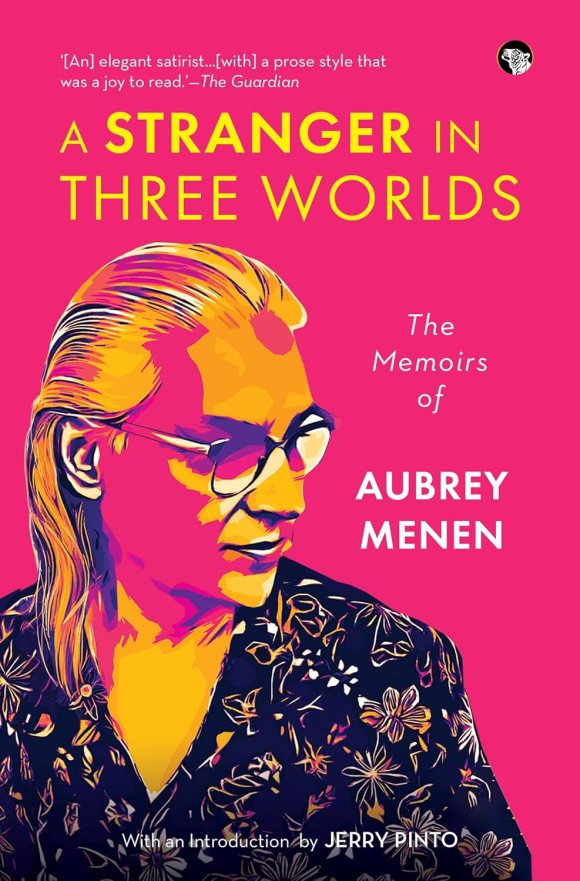
A Stranger in Three Worlds

Book Review by Bhaskar Parichha

Title: A Stranger in Three Worlds: The Memoirs of Aubrey Menen

Author: Salvator Aubrey Clarence Menen

Publisher: Speaking Tiger Books

Salvator Aubrey Clarence Menen (April 22, 1912 – February 13, 1989) was a British author, novelist, satirist, and theatre critic. Born in London to Irish and Indian parents, he studied at University College, London, before becoming a drama critic and stage director. During World War II, he was in India, organising pro-Allied radio broadcasts and editing film scripts for the Indian government.

After the war, he returned to London and worked in an advertising agency’s film department, but the success of his debut novel, The Prevalence of Witches (1947), led him to write full-time. Menen’s satirical works explore themes of nationalism and the cultural contrast between his Irish-Indian heritage and his British upbringing.

Menen, a remarkably gifted author who frequently goes unnoticed, adeptly delves into the intricate themes of identity, nationality, and the sense of belonging. He does so with his signature blend of irony and profound insight in his two acclaimed autobiographical pieces. A Stranger in Three Worlds: The Memoirs of Aubrey Menen is an exceptional autobiographical account that spans multiple continents. Menen’s writing is noted for its irony, insight, and a nuanced exploration of themes such as belonging and the quest for the self in a multicultural context.

Menen’s life narrative is defined by his experience as an outsider, or a ‘stranger,’ within the three distinct cultures of England, Ireland, and India. This position of being an outsider enables him to keenly observe and critique the social and cultural norms prevalent in each society with remarkable clarity and humor.

 The memoir explores the inherent tensions and contradictions that arise from possessing multiple, often conflicting, identities, as well as the difficulties of establishing a coherent sense of self when one does not entirely belong to any particular group.

The book’s narrative style is marked by irony and a keenly humorous outlook on the absurdities of the social conventions and biases he encounters across these cultures. His insights are both deeply personal and widely relatable, resonating with anyone who has navigated the complexities of multicultural or diasporic identity.

The essays featured in Dead Man in the Silver Market, originally published in 1953, analyse themes of jingoism, social class, and the absurdities associated with national pride, intertwining personal stories with sharp social critique.

Written shortly after World War II, his irreverent insights into English society, colonial history, and human nature continue to resonate powerfully in contemporary discourse. ‘The Space within the Heart’, authored in 1970, presents a more personal and philosophical exploration of existence, love, and self-awareness.

Infused with humour and gentle satire, it contemplates the essence of the soul, drawing from the Upanishads and European literary traditions. Menen’s seemingly straightforward yet deeply impactful writing encourages readers to transcend rigid identities and appreciate the fluidity inherent in the human experience.

With an introduction by Jerry Pinto, this omnibus edition functions as a memoir, offering personal reflections and experiences, while simultaneously serving as a critique of imperialism, examining its impacts and consequences.

Furthermore, it thoroughly explores the intricacies of identity, rendering it an exceptional piece of literature that is both informative and captivating, prompting readers to engage in deep reflection on its themes.

.

Bhaskar Parichha is a journalist and author of Cyclones in Odisha: Landfall, Wreckage and ResilienceUnbiasedNo Strings Attached: Writings on Odisha and Biju Patnaik – A Political Biography. He lives in Bhubaneswar and writes bilingually. Besides writing for newspapers, he also reviews books on various media platforms.

.

PLEASE NOTE: ARTICLES CAN ONLY BE REPRODUCED IN OTHER SITES WITH DUE ACKNOWLEDGEMENT TO BORDERLESS JOURNAL

Click here to access the Borderless anthology, Monalisa No Longer Smiles

Click here to access Monalisa No Longer Smiles on Amazon International

Categories
Excerpt

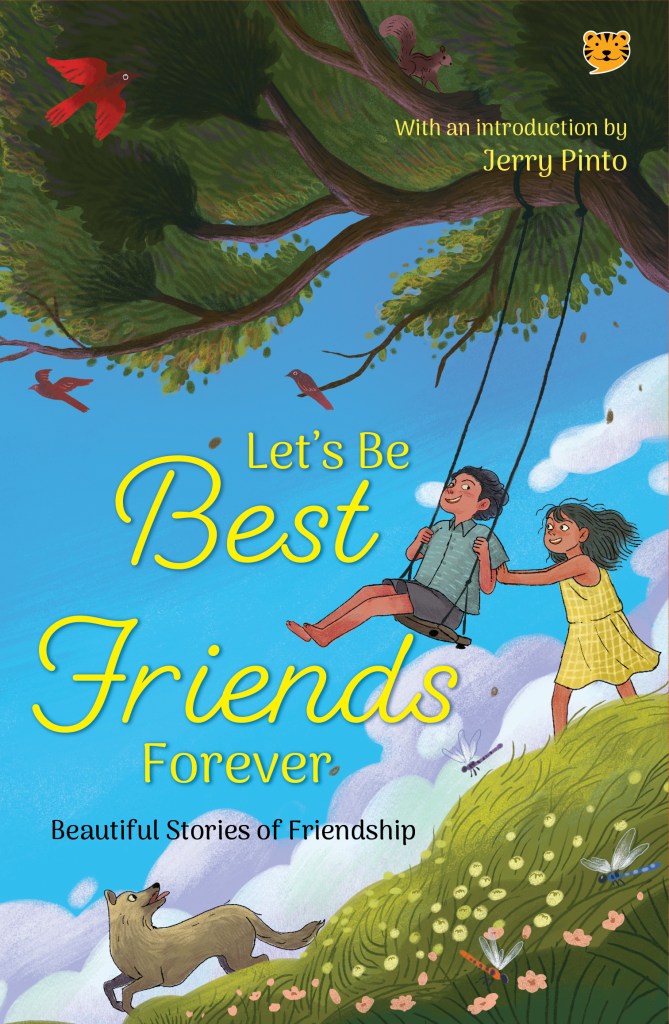
Let’s Be Best Friends Forever

Title: Let’s Be Best Friends Forever: Beautiful Stories of Friendship

Publisher: Talking Cub, Speaking Tiger Books

From ‘The Tunnel of Friendship’ by Ruskin Bond

I had already started writing my first book. It was called Nine Months, but had nothing to do with a pregnancy; it referred merely to the length of the school term, the beginning of March to the end of November, and it detailed my friendships and escapades at school and lampooned a few of our teachers. I had filled three slim exercise books with this premature literary project, and I allowed Azhar to go through them. He was my first reader and critic. ‘They’re very interesting. But you’ll get into trouble if someone finds them,’ was his verdict.

We returned to Shimla, having won our matches against Sanawar, and were school heroes for a couple of days. And then my housemaster discovered my literary opus and took it away and read it. I was given six of the best with a Malacca cane, and my manuscript was torn up. Azhar knew better than to say ‘I told you so’ when I showed him the purple welts on my bottom. Instead, he repeated the more outrageous bits he remembered from the notebooks and laughed, till I began to laugh too.

‘Will you go away when the British leave India?’ Azhar asked me one day.

‘I don’t think so,’ I said. ‘My stepfather is Indian. My mother’s family have lived here for generations.’

‘Everyone is saying they’re going to divide the country. I think I’ll have to go away.’

‘Oh, it won’t happen,’ I said glibly. ‘How can they cut up such a big country?’

‘Gandhi will stop them,’ he said.

But even as we dismissed the possibility, Jinnah, Nehru and Mountbatten and all those who mattered were preparing their instruments for major surgery.

Before their decision had any effect on our life, we found a little freedom of our own—in an underground tunnel that we discovered in a corner of the school grounds. It was really part of an old, disused drainage system, and when Azhar and I began exploring it, we had no idea just how far it extended. After crawling along on our bellies for some twenty feet, we found ourselves in complete darkness. It was a bit frightening, but moving backwards would have been quite impossible, so we continued writhing forward, until we saw a glimmer of light at the end of the tunnel. Dusty, a little bruised and very scruffy, we emerged at last on to a grassy knoll, a little way outside the school boundary. We’d found a way to escape school!

The tunnel became our beautiful secret. We would sit and chat in it, or crawl through it just for the thrill of stealing out of the school to walk in the wilderness. Or to lie on the grass, our heads touching, reading comics or watching the kites and eagles wheeling in the sky. In those quiet moments, I became aware of the beauty and solace of nature more keenly than I had been till then: the scent of pine needles, the soothing calls of the Himalayan bulbuls, the feel of grass on bare feet, and the low music of the cicadas.

World War II had just come to an end, the United Nations held out the promise of a world living in peace and harmony, and India, an equal partner with Britain, would be among the great nations…

But soon we learnt that Bengal and Punjab provinces, with their large Muslim populations, were to be bisected. Everyone was in a hurry: Jinnah and company were in a hurry to get a country of their own; Nehru, Patel and others were in a hurry to run a free, if truncated, India; and Britain was in a hurry to get out. Riots flared up across northern India.

At school, the common room radio and the occasional newspaper kept us abreast of events. But in our tunnel Azhar and I felt immune from all that was happening, worlds away from all the pillage, murder and revenge. Outside the tunnel, there was fresh untrodden grass, sprinkled with clover and daisies, the only sounds the hammering of a woodpecker, and the distant insistent call of the Himalayan barbet. Who could touch us there?

‘And when all wars are done,’ I said, ‘a butterfly will still be beautiful.’

‘Did you read that somewhere?’ Azhar asked.

‘No, it just came into my head.’

‘It’s good. Already you’re a writer.’

Though it felt good to hear him say that, I made light of it. ‘No, I want to play hockey for India or football for Arsenal. Only winning teams!’

‘You’ll lose sometimes, you know, even if you get into those teams,’ said wise old Azhar. ‘You can’t win forever. Better to be a writer.’

One morning after chapel, the headmaster announced that the Muslim boys—those who had their homes in what was now Pakistan—would have to be evacuated. They would be sent to their homes across the border with an armed convoy.

It was time for Azhar to leave, along with some fifty other boys from Lahore, Rawalpindi and Peshawar. The rest of us—Hindus, Christians, Buddhists, Sikhs and Parsis—helped them load their luggage into the waiting British Army trucks that would take them to Lahore. A couple of boys broke down and wept, including our departing school captain, a Pathan who had been known for his unemotional demeanour. Azhar waved to me and I waved back. We had vowed to meet again some day. We both kept our composure.

The headmaster announced a couple of days later that all the boys had reached Pakistan and were safe. On the morning of 15 August 1947, we were marched up to town to witness the Indian flag being raised for the first time. Shimla was still the summer capital of India, so it was quite an event. It was raining that morning. We were in our raincoats and gumboots, while a sea of umbrellas covered the Mall.

(Extracted from Let’s Be Best Friends Forever: Beautiful Stories of Friendship, with an introduction by Jerry Pinto. Published by Talking Cub, the children’s imprint of Speaking Tiger Books.)

ABOUT THE BOOK

 An Afghan trader and a young Bengali girl form a touching connection that transcends cultural barriers in Rabindranath Tagore’s classic story ‘The Kabuliwala’. Jo March and Laurie from Little Women meet at a dull party and become companions for life. L. Frank Baum’s timeless characters Dorothy and Toto adventure around Oz forging magical bonds of friendship.

The brave queen of Jhansi and her ally Jhalkaribai come together to fight for freedom and dignity; Jesse Owens narrates an inspiring tale of sportsmanship and solidarity from his Olympic days; and twelve-year-old Kamala and her friends, Edward, Amir and Amma, endure the Partition riots together in Bulbul Sharma’s heart-warming story.

In these pages you will also meet Nimmi and her best pal, Kabir, whose school misadventures include spirited debates; Sunny, whose love for books leads to a new friendship on a trip to Darjeeling; Cyril and Neil, who face life’s challenges with inventive word games, and Siya, who discovers that true friends can come in the most unexpected forms—even as a cherished doll.

Animal lovers will delight in the escapades of Gillu, the charming squirrel, Harold, the handsome hornbill, Rikki-tikki-tavi, the loyal mongoose, Hira and Moti, the powerful oxen, and Bagheera, the brave panther who looks after the young boy Mowgli.

With stories from beloved and popular authors—Ruskin Bond, Rudyard Kipling, Mahadevi Varma, Jerry Pinto, Shabnam Minwalla, and many more—Let’s Be Best Friends Forever is an enchanting collection that celebrates the universal power and beauty of friendship.

.

PLEASE NOTE: ARTICLES CAN ONLY BE REPRODUCED IN OTHER SITES WITH DUE ACKNOWLEDGEMENT TO BORDERLESS JOURNAL

Categories
Contents

Borderless, September 2024

Art by Sohana Manzoor

Editorial

And Wilderness is Paradise Enow… Click here to read.

Translations

Raja O Praja or The King and His Subjects, an essay by Tagore, has been translated from Bengali by Himadri Lahiri. Click here to read.

Nazrul’s Roomu Jhoomu Roomu Jhoomu has been transcreated from Bengali by Professor Fakrul Alam. Click here to read.

The Mirror by Mubarak Qazi has been translated from Balochi by Fazal Baloch. Click here to read.

The Source by Ihlwha Choi has been translated from Korean by the poet himself. Click here to read.

Suprobhat or Good Morning by Tagore has been translated from Bengali by Mitali Chakravarty. Click here to read.

Poetry

Click on the names to read the poems

Rhys Hughes, Cal Freeman, Jackie Kabir, Jennifer McCormack, Pramod Rastogi, Miriam Bassuk, K B Ryan Joshua Mahindapala, Paul Mirabile, Shamik Banerjee, Craig Kirchner, Thomas Emate, Stuart MacFarlane, Supriya Javalgekar, George Freek, Ryan Quinn Flanagan, Luis Cuauhtémoc Berriozábal, Michael Burch

Musings/Slices from Life

Finding the Fulcrum

Farouk Gulsara gives a poignant account of looking after an aged parent. Click here to read.

Watery World

Keith Lyons finds the whole world within a swimming pool. Click here to read.

Days that don’t Smell of Cakes and Candy

Priyanka Panwar muses on days which not much happens… Click here to read.

Rayban-dhan

Uday Deshwal revisits his life with his companion sunglass. Click here to read.

In Favour of a Genre…

Saeed Ibrahim argues in favour of short stories as a genre. Click here to read.

Musings of a Copywriter

In Shades of Grey – Hair and There, Devraj Singh Kalsi writes of adventures with premature greying. Click here to read.

Notes from Japan

In Sneaky Sneakers, Suzanne Kamata grins at life in Japan. Click here to read.

Essays

Ah Nana Bari!

Fakrul Alam writes nostalgically of his visits to Feni in Noakhali, a small town which now suffers from severe flooding due to climate change. Click here to read.

A Manmade Disaster or Climate Change?

Salma A Shafi writes of floods in Bangladesh from ground level. Click here to read.

A Doctor’s Diary: Life in the High Ranges

Ravi Shankar writes of his life in the last century among the less developed highlands of Kerala. Click here to read.

Stories

The Useless Idler

Paul Mirabile writes of a strange encounter with someone who calls himself an ‘idler’. Click here to read.

Imitation

Naramsetti Umamaheswararao explores parenting. Click here to read.

Final Hours

Mahila Iqbal gives a poignant story about aging. Click here to read.

Friends

G Venkatesh writes a story stirring environmental concerns. Click here to read.

Conversation

Ratnottama Sengupta converses with Reba Som, who recently brought out, Hop, Skip and Jump; Peregrinations of a Diplomat’s Wife. Click here to read.

Book Excerpts

An excerpt from Mineke Schipper’s Widows: A Global History. Click here to read.

An excerpt from Anuradha Marwah’s Aunties of Vasant Kunj. Click here to read.

Book Reviews

Somdatta Mandal reviews Karan Mujoo’s This Our Paradise: A Novel. Click here to read.

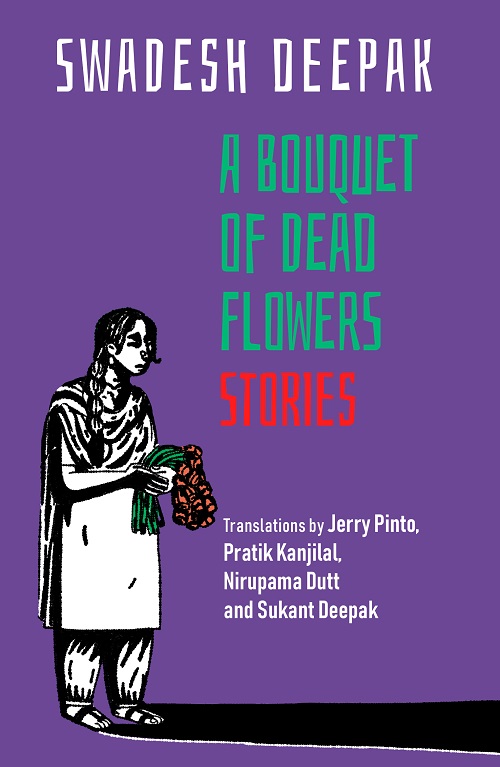
Rakhi Dalal reviews Swadesh Deepak’s A Bouquet of Dead Flowers translated from Hindi by Jerry Pinto, Pratik Kanjilal, Nirupama Dutt, Sukant Deepak. Click here to read.

Meenakshi Malhotra reviews Anuradha Marwah’s Aunties of Vasant Kunj. Click here to read.

Bhaskar Parichha reviews Ayurveda, Nation and Society: United Provinces, c. 1890–1950 by Saurav Kumar Rai. Click here to read.

.

Click here to access the Borderless anthology, Monalisa No Longer Smiles

Click here to access Monalisa No Longer Smiles on Amazon International

Categories
Editorial

And Wilderness is Paradise Enow…

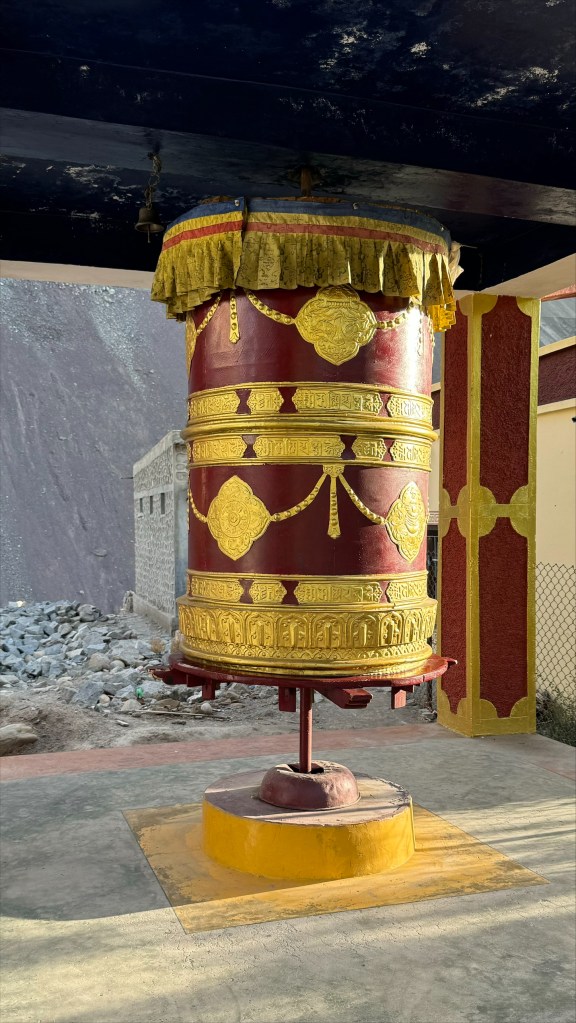
Prayer Wheel at Nurulia, Ladakh. Photo Courtesy: Farouk Gulsara
We lock eyes, find glimmers
of smiles, trust our leaders.
We break bread with strangers
because there aren’t any.

--Imagine by Miriam Bassuk

Imagine the world envisioned by John Lennon. Imagine the world envisioned and partly materialised by Tagore in his pet twin projects of Santiniketan and Sriniketan, training institutes made with the intent of moving towards creating a work force that would dedicate their lives to human weal, to closing social gaps borne of human constructs and to uplifting the less privileged by educating them and giving them the means to earn a livelihood. You might well call these people visionaries and utopian dreamers, but were they? Tagore had hoped to inspire with his model institutions.  In 1939, he wrote in a letter: “My path, as you know, lies in the domain of quiet integral action and thought, my units must be few and small, and I can but face human problems in relation to some basic village or cultural area. So, in the midst of worldwide anguish, and with the problems of over three hundred millions staring us in the face, I stick to my work in Santiniketan and Sriniketan hoping that my efforts will touch the heart of our village neighbours and help them in reasserting themselves in a new social order. If we can give a start to a few villages, they would perhaps be an inspiration to some others—and my life work will have been done.”  But did we really have a new social order or try to emulate him?

If we had acted out of compassion and kindness towards redefining with a new social order, as Miriam Bassuk points out in her poem based on Lennon’s lyrics of Imagine, there would be no strangers. We’d all be friends living in harmony and creating a world with compassion, kindness, love and tolerance. We would not have wars or regional geopolitical tensions which act against human weal. Perhaps, we would not have had the issues of war of climate change take on the proportions that are wrecking our own constructs.

Natural disasters, floods, fires, landslides have affected many of our lives. Bringing us close to such a disaster is an essay by Salma A Shafi at ground level in Noakhali. More than 4.5 million were affected and 71 died in this disaster. Another 23 died in the same spate of floods in Tripura with 65,000 affected. We are looking at a single region here, but such disasters seem to be becoming more frequent. And yet. there had been a time when Noakhali was an idyllic vacation spot as reflected in Professor Fakrul Alam’s nostalgic essay, filled with memories of love, green outdoors and kindnesses. Such emotions reverberate in Ravi Shankar’s account of his medical adventures in the highlands of Kerala, a state that suffered a stupendous landslide last month. While Shafi shows how extreme rainfall can cause disasters, Keith Lyons writes of water, whose waves in oceanic form lap landmasses like bridges. He finds a microcosm of the whole world in a swimming pool as migrants find their way to New Zealand too. Farouk Gulsara muses on kindness and caregiving while Priyanka Panwar ponders about ordinary days. Saeed Ibrahim gives a literary twist to our musings.   Tongue in cheek humour is woven into our nonfiction section by Suzanne Kamata’s notes from Japan, Devraj Singh Kalsi’s piece on premature greying and Uday Deshwal’s paean to his sunglasses!

Humour is wrought into poetry by Rhys Hughes. Supriya Javelkar and Shamik Banerjee have cheeky poems that make you smile. We have poetry on love by Michael Burch and poetry for Dylan Thomas by Ryan Quinn Flanagan. Miriam Bassuk has described a Utopian world… but very much in the spirit of our journal. Variety is brought into our journal with poetry from Jackie Kabir, Jennifer McCormack, Craig Kirchner, Stuart MacFarlane, George Freek, Luis Cuauhtémoc Berriozábal and many more.

In translations, we have Nazrul lyrics transcreated from Bengali by Professor Alam and poetry from Korean by Ihlwha Choi. We pay our respects to an eminent Balochi poet who passed on exactly a year ago, Mubarak Qazi, by carrying a translation by Fazal Baloch. Tagore’s Suprobhat (Good morning) has been rendered in English from Bengali. His descriptions of the morning are layered and amazing — with a hint of the need to reconstruct our world, very relevant even today.  A powerful essay by Tagore called Raja O Praja (The King and His Subjects), has been translated by Himadri Lahiri.

Our fiction hosts two narratives that centre around childhood, one by Naramsetti Umamaheswararao and another by G Venkatesh, though with very different approaches. Mahila Iqbal relates a poignant tale about aging, mental health and neglect, the very antithesis of Gulsara’s musing. Paul Mirabile has given a strange story about a ‘useless idler’.

A short story collection has been reviewed by Rakhi Dalal, Swadesh Deepak’s A Bouquet of Dead Flowers, translated from Hindi by Jerry Pinto, Pratik Kanjilal, Nirupama Dutt, Sukant Deepak. Somdatta Mandal has written about a book by a Kashmiri immigrant which is part based on lived experiences and part fictive, Karan Mujoo’s This Our Paradise: A Novel. Bhaskar Parichha has reviewed Ayurveda, Nation and Society: United Provinces, c. 1890–1950 by Saurav Kumar Rai, a book which shows how healthcare was even a hundred years ago, politicised. Meenakshi Malhotra has reviewed Anuradha Marwah’s novel, Aunties of Vasant Kunj, of which we also have an excerpt. The other excerpt is from Mineke Schipper’s Widows: A Global History. Ratnottama Sengupta converses with Reba Som, author of Hop, Skip and Jump; Peregrinations of a Diplomat’s Wife.

We have more content that adds to the vibrancy of the issue. Do pause by this issue and take a look. This issue would not have been possible without all your writings. Thank you for that. Huge thanks to our readers and our team, without whose support we could not have come this far. I would especially like to thank Sohana Manzoor for her continued supply of her fabulous and distinctive artwork and Gulsara for his fabulous photographs.

Let us look forward to a festive season which awakens each autumn and stretches to winter. May we in this season find love, compassion and kindness in our hearts towards our whole human family.

Have a wonderful month!

Mitali Chakravarty

borderlessjournal.com

Click here to access the content’s page for the September 2024 Issue.

.

READ THE LATEST UPDATES ON THE FIRST BORDERLESS ANTHOLOGY, MONALISA NO LONGER SMILES, BY CLICKING ON THIS LINK.

Categories
Review

A Bouquet of Dead Flowers

Book Review by Rakhi Dalal

Book Title: A Bouquet of Dead Flowers

Author: Swadesh Deepak

Translators: Jerry Pinto, Pratik Kanjilal, Nirupama Dutt, Sukant Deepak

Publisher: Speaking Tiger Books

“Hindi literature, Swadesh Deepak maintained, had to be forced out of its comfort zone. The reader here is treated no less savagely,” writes Jerry Pinto in his introduction to this collection of ten stories by Swadesh Deepak, an author and playwright who was born in Rawalpindi on 6th  August, 1942. After his masters in English Literature, he taught for a long time at the Gandhi Memorial National College, Ambala Cantonment. Following a period of illness from 1991 to 1997, when he had little contact with anyone other than his family and close friends, he made a momentous return to the world of letters with an autobiographical account of his illness, Maine Mandu Nahin Dekha[1], and the play Sabse Udaas Kavita[2]. He received the Sangeet Natak Akademi Award in 2004. He has a total of 15 published books to his name including short-story collections such as TamashaBaal Bhagwan[3]and Kisi Ek Pedh Ka Naam Lo[4]and hugely successful plays such as Court Martial and Kaal Kothri[5]. In 2006 he left home for a walk and never returned. He has been missing ever since.

These stories, deeply unsettling, challenge readers by taking them into a world where unknown forces work mysteriously, upending and affecting the lives of its characters, leaving them vulnerable at the mercy of chance happenings which rarely bring them relief. Much akin to what Thomas Hardy called as the Immanent Will — a blind and indifferent force determining the fates (and generally blighting the lives) of the privileged and the common people alike.

Whether it is the hunger for food, a ravenous longing of the starved and the deprived as portrayed in the stories ‘Hunger’ and ‘The Child God’, the mystery around the fate of a loved one in ‘For the Wind Cannot Read’, the struggle with depression in ‘Pears from Rawalpindi’ or ‘Horsemen’[, the unrequited yearning for a life of togetherness in ‘Dread and Dead End’, the author’s masterful play of the elements comes to the fore with an intensity that shakes and stuns the reader. Pinto refers to the author as the master of neo gothic,

The sunlight, the wind, the trees, the figure of a broken man, appears again and again. It seems as if it is just not the fate but also the forces of natural elements that keep rattling the course of the lives of the characters.     The trees stand as guards, or sway in delight or offer a refuge, the sunlight “makes a hesitant arrival” sitting quietly or climbing the hills or sometimes streaking in the rooms, the wind is at times playful and at others vindictive. Then there are the flowers, the dead flowers of memories, whose bouquets one keeps holding, clinging to and clasping. And then there is the poetic play of words – “a pale yellow georgette afternoon in Novemberbringing to life the patchy sunlight of autumn.

In the figure of broken man which appears again and again in stories, the author seems to be questioning the role that society has forced upon a man – that of a provider of the family, a role sometimes begrudgingly assumed in the stories because “no one respects a man without work, no matter how talented he is.” 

In each story, the author weaves a tale that becomes a commentary — on society and its inherent evils, on relationships within a family stifled by arrogance, ignorance or circumstances and quietly working on the minds of those inhabiting it, on human greed engendered by depravity, hunger or lust, on the mysteriousness of fate whose force makes the mighty cower.  

The translation, well executed, offers a closer reading experience and leaves a bilingual reader with the wish to approach the author’s works in original as well. I must make a special note on the introduction by the acclaimed writer and translator Jerry Pinto who offers a peek into the mind of Swadesh Deepak through a couple of excerpts of the author’s conversations with his psychiatrist and also with a convict brought to the hospital for evaluation. Perhaps these ideas had haunted him in the mental ward of the hospital and later seeped into his stories. Pinto in the introduction not only seeks to make sense of Deepak’s writing but also makes for a compelling reason to read his works – to read on without looking over one’s shoulders.

.

[1] I have not seen Mandu

[2] The Saddest Poem ever Written

[3] The Child God

[4] Name a Tree, any Tree

[5] Dark Chamber

Rakhi Dalal is an educator by profession. When not working, she can usually be found reading books or writing about reading them. She writes at https://rakhidalal.blogspot.com/ .

.

PLEASE NOTE: ARTICLES CAN ONLY BE REPRODUCED IN OTHER SITES WITH DUE ACKNOWLEDGEMENT TO BORDERLESS JOURNAL

Click here to access the Borderless anthology, Monalisa No Longer Smiles

Click here to access Monalisa No Longer Smiles on Kindle Amazon International

Categories
Contents

Borderless, June 2024

Art by Sohana Manzoor

Editorial

Fly High…Like Birds in the Sky… Click here to read.

Translations

Nazrul’s Nur Jahan, the Mughal empress, has been translated from Bengali to English by Professor Fakrul Alam. Click here to read.

Eight Short Poems by Munir Momin have been translated from Balochi by Fazal Baloch. Click here to read.

An Age-old Struggle by Ihlwha Choi has been translated from Korean by the poet himself. Click here to read.

Okale or Out of Sync by Tagore has been translated from Bengali by Mitali Chakravarty. Click here to read.

Poetry

Click on the names to read the poems

Michael Burch, Ryan Quinn Flanagan, Kumar Sawan, LaVern Spencer McCarthy, Shamik Banerjee, Prithvijeet Sinha, Gregg Norman, Rinku Dutta, Alex S. Johnson, Anushka Chaudhury, Wayne Russell, Nusrat Jahan Esa, Ahmad Rayees, Ivan Ling, Swetarani Tripathy, R.L.Peterson, Ayesha Binte Islam, Rhys Hughes

Musings/ Slices from Life

In the Grip of Violence

Ratnottama Sengupta muses on acts of terror and translates a Bengali poem by Tarik Sujat which had come as a reaction to an act of terror. Click here to read.

Meeting the Artists

Kiriti Sengupta talks of his encounter with Jatin Das, a legendary artist from Bengal. Click here to read.

A Musical Soiree

Snigdha Agrawal recalls how their family celebrated Tagore’s birth anniversary. Click here to read.

A Cover Letter

Uday Deshwal muses on writing a cover letter for employment. Click here to read.

Musings of a Copywriter

In Berth of a Politician, Devraj Singh Kalsi muses on an encounter with a politician. Click here to read.

Notes from Japan

In A Day with Dinosaurs, Suzanne Kamata visits the ancient dino bones found in Fukui Prefecture. Click here to read.

Essays

From Place to Place

Renee Melchert Thorpe recounts her mother’s migration story, hopping multiple countries, starting with colonial Calcutta and Darjeeling. Click here to read.

My Love Affair with (Printed) Books

Ravi Shankar writes of his passion for print media. Click here to read.

A Story Carved in Wood, Snow and Stone  

Urmi Chakravorty travels with her camera and narrative to a scenic village in the Indo China border. Click here to read.

Stories

Spunky Dory and the Wheel of Fortune

Ronald V. Micci takes the readers on a fantastical adventure. Click here to read.

Rani Pink

Swatee Miittal sheds light on societal attitudes. Click here to read.

The Ghosts of Hogshead

Paul Mirabile wanders into the realm of the supernatural dating back to the Potato Famine of Ireland in the 1800s. Click here to read.

Conversations

In conversation with eminent Singaporean poet and academic, Kirpal Singh, about how his family migrated to Malaya and subsequently Singapore more than 120 years ago. Click here to read.

In conversation with Jessica Muddit, author of Once Around the Sun: From Cambodia to Tibet, and a review of her book. Click here to read.

Book Excerpts

An excerpt from Suzanne Kamata’s Cinnamon Beach. Click here to read.

An excerpt from Ryan Quinn Flanagann’s These Many Cold Winters of the Heart. Click here to read.

Book Reviews

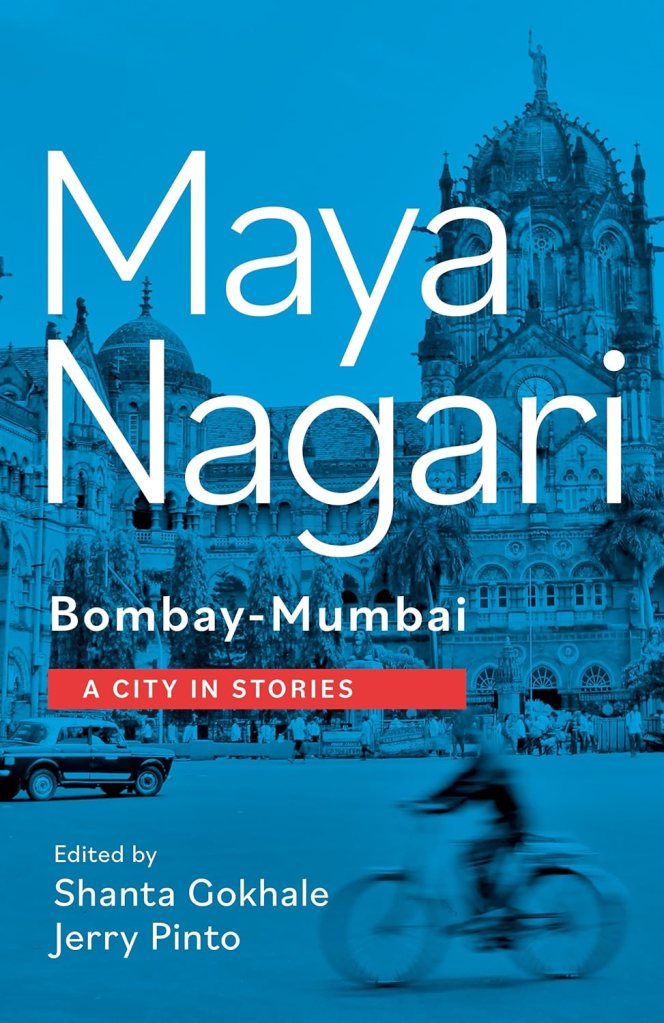
Somdatta Mandal reviews Maya Nagari: Bombay-Mumbai A City in Stories, edited by Shanta Gokhale and Jerry Pinto. Click here to read.

Basudhara Roy reviews Trailokyanath Mukhopadhyay’s Tales of Early Magic Realism in Bengali, translated by Sucheta Dasgupta. Click here to read.

Rakhi Dalal reviews Damodar Mauzo’s Boy, Unloved, translated from Konkani by Jerry Pinto. Click here to read.

Bhaskar Parichha reviews The Dilemma of an Indian Liberal by Gurcharan Das. Click here to read.

.

Click here to access the Borderless anthology, Monalisa No Longer Smiles

Click here to access Monalisa No Longer Smiles on Amazon International

Categories
Review

An Immersive Translation

Book Review by Rakhi Dalal

Title: Boy, Unloved

Author: Damodar Mauzo

Translated by: Jerry Pinto

Publisher: Speaking Tiger Books

The Jnanpith and Sahitya Akademi Award winning Konkani novelist Domodar Mauzo’s Jeev Divum Kai Chya Marum is translated into English as Boy, Unloved by the acclaimed writer, Jerry Pinto. The translation succeeds in offering an immersive experience to the reader, especially of the life, sights and cuisine redolent of a Goan village in the backdrop. Although a reader, in the absence of knowledge of Konkani and hence the original work, may not be able to gather the nuances often difficult to translate.

This novel is a bildungsroman which follows the life of its protagonist, Vipin Parob, born into a loveless marriage in a serene village in Goa. It navigates his lonely formative years and explores his friendships in teenage years. While the exploration of his growing up years as a kid wrenches the heart of a reader, those of his later pre-adult years leaves one with an unsettling feeling. And that makes a reader wonder at what went amiss…

At the outset, the harrowing circumstances within the family of five-year-old Vipin are revealed. His house, with its closed windows and doors, restricts his body and mind. He becomes lonesome, finds solace in books and has difficulty making friends at school. In an environment which stifles him both physically and emotionally, he adheres to reclusiveness to cope with his ruthless father and careless mother. An unloved child of a bitter and broken wedlock, Vipin’s plight, as stunningly portrayed by the author, wrings the reader’s core. Mauzo’s incisive insight into the complexities around childhood trauma emerges in his portrayal of Vipin’s manners. His submissiveness in front of his parents, because of the treatment meted out to him perhaps, indicates how distress during childhood years may affect a person’s sense of self-worth. In fact, when his brilliance in academics makes his father’s relation with him transactional, where he is favoured because his father believes he can become a doctor, Vipin lets go off his own desire to study the subject he likes.

During his time in junior college, Vipin comes across people he befriends. Martin Sir, his English teacher from school, is the first person who understands and mentors him. Subsequently, although reluctantly at first, he manages to forge meaningful connections with Chitra and Fatima from his college. Krishna (initially a house help), and Amanda (the nurse caring for his mother later) also become people he can relate to. However, a narrative inconsistency appears in the depiction of the dynamics among teenagers, Vipin, Chitra and Fatima who despite becoming very close to each other, grapple with unnecessary confusions. Where Vipin’s character appears reliable, the characters of both Chitra and Fatima come off as unreliable. Perhaps because they are not fully explored and much appears unsaid in terms of their backgrounds and their mannerisms.   

Regardless of the lack of love and care in his familial relationships, when it falls upon Vipin to take care of his ailing parents during their respective illnesses, he does it with a sense of responsibility and concern, if not love. It is something that also comes forth in his relationships with others, whether it is helping Krishna to study further, helping him financially or protecting Amanda from his cousin.

Mauzo, very strikingly captures the quagmire which makes a vulnerable, unloved child grow up to become a young adult who fiercely feels protective towards people close to him. However, Vipin’s journey of exploration of his self and subsequently of his aim in life, wrestle with disparities thrown at him by circumstances. The loneliness of his heart swells to consume the ties he forged in hope of love, leaving an emptiness he finds difficult to conquer. For the invested reader, it renders a disconcerting mark.

Rakhi Dalal is an educator by profession. When not working, she can usually be found reading books or writing about reading them. She writes at https://rakhidalal.blogspot.com/ .

.

PLEASE NOTE: ARTICLES CAN ONLY BE REPRODUCED IN OTHER SITES WITH DUE ACKNOWLEDGEMENT TO BORDERLESS JOURNAL

Click here to access the Borderless anthology, Monalisa No Longer Smiles

Click here to access Monalisa No Longer Smiles on Kindle Amazon International

Categories
Review

Maya Nagari: Stories of Bombay-Mumbai

Book Review by Somdatta Mandal

 Title: Maya Nagari: Bombay-Mumbai A City in Stories

Editors: Shanta Gokhale, Jerry Pinto

Publisher: Speaking Tiger Books

The very mention of the name Mumbai (or Bombay) brings to our minds a great city in India where the thriving metropolis grows at a rapid speed because people not only flock here from different parts of the country to make quick bucks and survive against all odds, but also because the film industry of Bollywood has also established it as a city of dreams, one that never sleeps and instead creates a mirage-of-sorts — an illusion, rightly labelled by the editors of this anthology as ‘Maya Nagari’. Edited by Shanta Gokhale and Jerry Pinto, this book, comprising twenty-one short stories about Mumbai takes the road less taken to create a non-uniform image of the metropolis. In tune with its multicultural and multilingual nature, we have stories about the city that is a sea of people and speaks at least a dozen languages. There are stories translated from Marathi, Urdu, Gujarati, Tamil, Hindi, Kannada, Malayalam, and stories written originally in English. Among the writers are legends and new voices—Baburao Bagul, Ismat Chughtai, Pu La Deshpande, Ambai,Urmila Pawar, Mohan Rakesh, Saadat Hasan Manto, Ambai, Jayant Kaikini, Bhupen Khakhar, Shripad Narayan Pendse, Manasi, Krishan Chander, Udayan Thakker, Cyrus Mistry, Vilas Sarang, Jayant Pawar, Tejaswini Apte-Rahm and Anuradha Kumar.

As Jerry Pinto clearly states in the introduction, the stories can be read as we like, we can begin with the first story or the last, or any story in between. The observant reader might notice that he and the other editor Shanta Gokhale have deliberately chosen not to organise the material according to chronology, or geography. This is partly because they believe that the city lives in several time zones and spaces at once, as does India, but also because there is something essentially chaotic about its nature. So, he says, “the stories echo and bounce off each other, they do not collide, but there is a Brownian motion to these patterns” and he hopes to let the readers find it. Here, Mumbai is stripped of its twinkle; it is deglamourised to reveal how it’s the quotidian that lends the city its character—warmth and hostility alike and as inhabitants of the city the editors call ‘home,’ they hope a narrative will emerge.

In the twenty-one stories of this collection, there is the city that labours in the mills and streets, and the city that sips and nibbles in five-star lounges, the city of Ganapati, Haji Malang and the Virgin Mary. What binds the stories together is ‘human muscle’ – the desperate attempts of men and women of all classes and castes to survive in this heartless city amid all odds.

The stories are of different lengths and written in different narrative styles. Of the five or six stories translated by Shanta Gokhale herself from Marathi, one is struck by the excessive length of the so called ‘short’ stories. The very first one “Oh! The Joy of Devotion” by Jayant Pawar, forty-five pages in length, narrates in detail about the Ganapati festival and how it is related to the fate of the local people. Pu La Deshpande’s story “A Cultural Moment is Born”, set in the 1940s, tells stories of people living in chawls [slums] and how they spend their cultural days. Another very long story translated by Gokhale called “The Ramsharan Story” tells us about the rise and fall of a bus conductor by the name of Ramsharan who turns out to become a union leader. Baburao Bagul’s “Woman of the Street”, written originally in Marathi and translated by Gokhale again, tells the story of Girija, a sex-worker trying to collect money to cure her son in the village. The story ends on a disturbing note, as it reaffirms the relativity of success.

Once again, Krishan Chander’s story “The Children of Dadar Bridge” translated from Hindustani by Jerry Pinto is so long that it qualifies to be called a sort of novella. In this powerful story God comes to earth to a chawl and offers food to the first-person narrator. Then, impersonating as a small and innocent child, and along with the child narrator, he moves around different places in the city to witness its activities firsthand — we get to know about behind the scene affairs that take place in the film studios, about satta[1] dens, about bribery, local dons who arm-twist every new hawker to carry on their business after receiving their weekly cut money and more. In “Civic Duty and Physics Practicals”, Malayalam writer Manasi reveals the different experiences one comes across living in a society defined by power equations. Issues of hooliganism, superstition, illegal colonies, corruption, intimidation and violence are explored in a single story where the narrator is struggling, for days, with blaring speakers at a wedding nearby, even as her son tries hard to prepare for his upcoming exams. The story soon takes a dark turn where power trumps over consideration for fellow human beings.

A very powerful story written by Ambai in Tamil called “Kala Ghora Chowk” deals with issues of Marxist ideology, trade unions and the fate of a raped woman called Rosa. Anuradha Kumar’s “Neera Joshi’s Unfinished Book” tells us the life story of one woman who “made the city” and the perennial problems of displaced mill workers when the closed mills give way to high-rise buildings. Some of the stories are of course written in a lighter vein, though they also depict different problems related to city life. As the title of Vilas Sarang’s story “An Afternoon Among the Rocks” suggests, it narrates the plight of a couple trying to make love in the deserted seashore and how they get hijacked by a smuggler! In “The Flat on the Fifth Floor”, Mohan Rakesh writes about two sisters who meet the narrator after one failed love affair. A moving picture of the closing down of cinema halls in Mumbai comes out very beautifully in the Kannada story “Opera House” by Jayant Kaikini, especially narrating the plight of one of the sweepers working there when the declaration of permanent closure is pasted everywhere. Tejaswini Apte-Rahm’s “Mili” tells the story of a man who meets his ex-girlfriend after five years.

Though it is not possible to give the details of each and every story included in this anthology in this review, one must mention some of the stories that were originally written in English. Cyrus Mistry’s “Percy” about a young and lonely Parsi boy is so compelling that it was even made into a Gujarati motion-picture. “House Cleaning” by Jerry Pinto tells the story of a woman cleaner and his son, who talks about the reality of street dwellers. Eunice de Souza’s “Rina of Queen’s Diamonds” is not a straightforward narration at all but offers a collage of different vignettes of life in Bombay.

Though most of the stories portray the seamier side of life and in some ways de-glamourise Mumbai, at the same time they also portray how human resilience can combat all sorts of odds, and the city can be revealed only through shared experiences. Thus, each of the twenty-one stories in this collection tells a different tale of Mumbai, Bombay, Momoi, Bambai, Manbai and many others. As the editors have rightly pointed out at the beginning of their introduction, “You cannot catch a city in words. You cannot catch a city at all.”  They felt that “it is not meant to be caught…this city resists even more because it was not designed at all; it just happened and it keeps on happening.” Thus, the four-hundred plus pages of this anthology Maya-Nagari remains a book to be treasured and read now at leisure and also at any time in the future.

.

[1] Betting or gambling dens

Somdatta Mandal, critic and translator, is a former Professor of English at Visva-Bharati, Santiniketan, India.

.

PLEASE NOTE: ARTICLES CAN ONLY BE REPRODUCED IN OTHER SITES WITH DUE ACKNOWLEDGEMENT TO BORDERLESS JOURNAL

Click here to access the Borderless anthology, Monalisa No Longer Smiles

Click here to access Monalisa No Longer Smiles on Kindle Amazon International

Categories
Festive Special

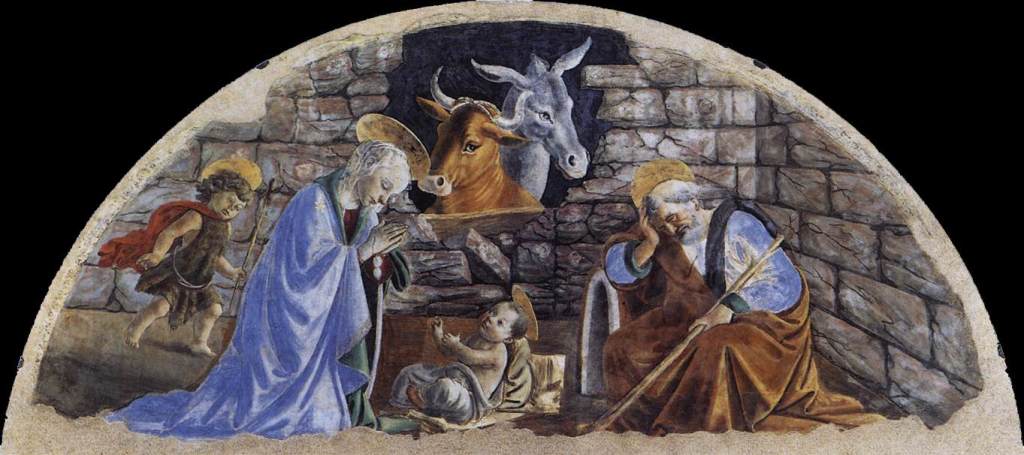
Goodwill and Peace on Christmas

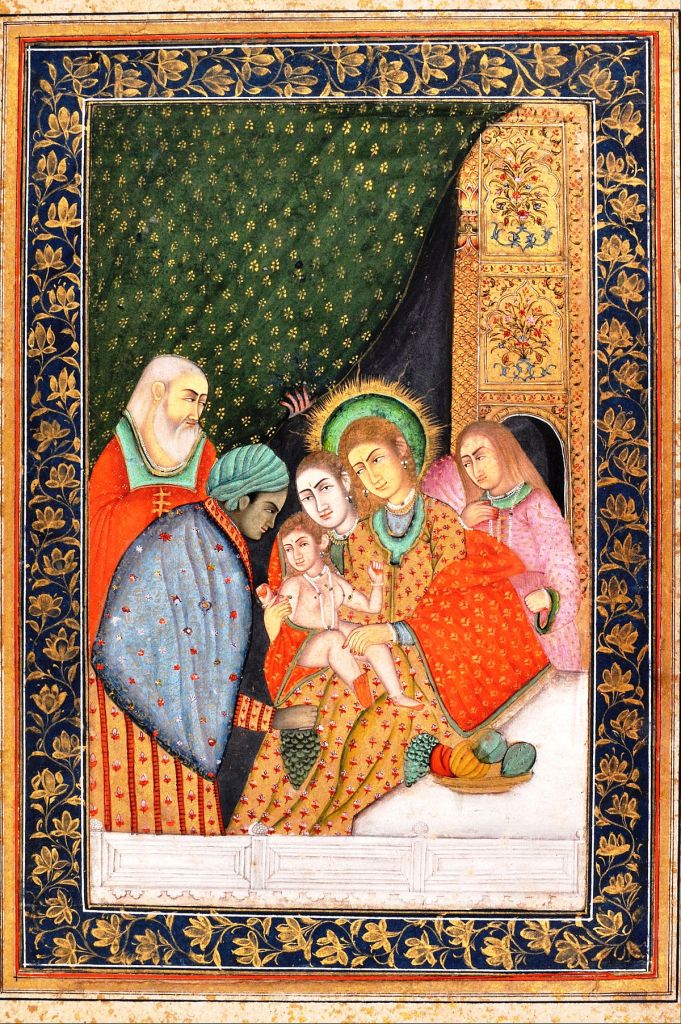
Nativity of Christ, painted in the Mughal empire, around 1800 AD

“The central celebration is the birth of a child. There is no culture that does not celebrate this event, because all of us who belong to the human race can see our collective future in the pudgy little face. We marvel at this conjuring act, the miniature miracle, at its tiny fingernails and budlike nose.” — Jerry Pinto, Indian Christmas: Essays, MemoirsHymns, an anthology edited by Jerry Pinto and Madhulika Liddle

Christmas centres around the birth of a child who impacted a large part of the world and urged us to love others despite differences, to be kind, to embrace those who suffered… and that is the spirit that continues to unite humankind to move towards a future where people thrive in harmony, with love in their hearts. Despite all the darkness that broods over the world, Christmas has come around. The sun still moves forward in time and at some point, the darkness will give way to light. Perhaps, Christmas will remind people of the values they need to uphold to live in a world that is not filled with fear, greed or the lust for power and they will stop killing ruthlessly and without any sense of coherence. With that in mind, we have tried to evoke the spirit of Christmas cheer by presenting writings that talk of celebrations.

This is a season that should be filled with hope, goodwill, peace and love. The celebrations — depicting variety, a departure from conventional norms — by writers who reach across borders and time, rekindle our belief in the wonder created by these values, which is what Christmas is all about. We start with Tagore, a Brahmo by religion but his poem in English dwells on the wonder he feels at the idea of this unique birth of Christ. Our other writers from across the world pitch in with what Christmas means to all of them, whether it creates a sense of goodwill, nostalgia, invokes curiosity or just evokes plain laughter. Hopefully, we can all join together to ring the bells of kindness, love, humanitarian help and peace this year!

Poetry

An excerpt from Rabindranath Tagore’s ‘The Child‘ a poem originally written in English by the poet to celebrate Christmas. Click here to read.

One Star by Ihlawha Choi. Click here to read.

Christmas Cheer by Malachi Edwin Vethamani. Click here to read.

Prose

Indian Christmas: Essays, MemoirsHymns, an anthology edited by Jerry Pinto and Madhulika Liddle has been discussed by Somdatta Mandal. Click here to read.

In I Went to Kerala, Rhys Hughes treads a humorous path while exploring Christmas in Kerala. Click here to read.

In Hold the Roast Turkey Please Santa , Keith Lyons writes from New Zealand, where summer solstice and Christmas fall around the same time. Click here to read.

In My Christmas Eve “Alone”, Erwin Coomb has a strange encounter on Christmas eve… Is it real? Click here to read. 

Nativity, a fresco by Italian artist Boticelli, created around 1467