QUANTUM


It was a miniature hemisphere
of chocolate ice cream,
in a silver chalice,
with a gleaming spoon.

When is enough, enough?
Having just one scruple?
The first four notes of Beethoven's fifth?
Taking four hundred pills like sprinkles?

I skimmed the dome with my spoon,
and licked off the coating.
Then I picked out the dark chips
and crunched down on them.

Finally, I anointed my mouth
with the frozen chrism itself,
That one scoop could have been six,
or ten, or a hundred.


NOCTURNE


I opened the blind to reveal the riches of the night…

Red of the roads
            Orange of the tree bark
                            Yellow of the moon
                                            Green of the cat’s eyes
                                                                  Blue of the grass
                                                                                        Indigo of the sky
                                                                                                          Violet of the clouds


Run from the high chroma of the day!

Roam in this rainbow instead.
Caroline Am Bergris is a half-Colombian, half-Pakistani poet living in London. Her poems have been published, online and in print, in Europe and America.
PLEASE NOTE: ARTICLES CAN ONLY BE REPRODUCED IN OTHER SITES WITH DUE ACKNOWLEDGEMENT TO BORDERLESS JOURNAL.
The city of Lima, Peru was founded by the Spanish conquistador, Francisco Pizzaro in 1535. Spanish scouts sent out by him reported the place had ample water, fertile lands, sea access, and fair weather influencing the decision to settle there. Now, the city is in the agricultural region known by the locals as Limaq. It was once the most important city in the Viceroyalty of Peru that ruled over a large part of South America. Today over one-third of Peru’s population resides in the greater Lima area. The moisture-laden winds from the ocean result in fog throughout most of the year. The cold Humboldt current keeps the Pacific Ocean temperatures low. The coastal region of Peru known as the Costa is a dry desert and rainfall is scarce. The combination of very little rain with a thick fog fascinates both residents and visitors. Most mornings were foggy during my stay in Lima.
Lima serves as the entry point to Peru and during your trips around the country, you can enter and leave Lima multiple times like I did. During one of my visits, I stayed with Cesar, a pharmacist with the Ministry of Health, on the 15th floor of a modern apartment complex overlooking the Pacific Ocean, in Magdalena del Mar, with a beautiful view of the Pacific.
Magdalena del Mar is fast becoming a trendy neighbourhood has an immaculate Heart of Mary Church, an ornate beautifully designed church in pink stone. Roman Catholicism with its emphasis on ceremonies, ornamentation, and ostentatious displays shares many similarities with the religions of the East. One afternoon after lunch, I visited the long stretch of beach which I admired from the fifteenth-floor window. I had to cross the Circuito de Playas, the six-lane highway that links several spots along the coast in Lima.
Heart of Mary ChurchArt Museum
The city of Lima is famous for its museums. The Museum of Art in Lima is wonderful. Located in downtown Peru at the Parque de la Exposicion (Park of the Exposition), the museum houses one of the best collections of Peruvian art from pre-Columbian times to the modern day. The artworks are mostly grouped according to the period of their creation. Different cultures like the Moche, Nazca, Chimu, Chancay, Ica, and the Incas are represented. After the Spanish conquest, local artists and artisans concentrated on religious Catholic art. Modern Peruvian secular art began in the nineteenth century. I read with great interest the struggle between two schools/visions on how this art should grow and develop. One school wanted a cosmopolitan art like that developing in Europe while the other school wanted Peruvian artists to concentrate on traditional Peruvian topics like Inca buildings, town planning, Peruvian plateaus and mountains, and the Peruvian Indian.
Holiday makers in Plaza de Armas.
The Plaza de San Martin is one of the most representative public spaces in the capital. It was declared a UNESCO World Heritage site in 1988 and is connected to the Plaza de Armas by the Jiron de la Union. The plaza pays homage to the liberator of Peru, Jose San Martin (1778-1850). The plaza was built in 1921 in honor of the 100th anniversary of Peruvian independence. The buildings lining the plaza date from 1910 to the 1940s.
Exhibits of Gold
In the 1960s, Miguel Mujica Gallo used his private collection, gathered throughout his life, to open the “Gold Museum of Peru and Weapons of the World”. The museum has over 7000 gold, silver, and copper objects. Gold and silver had a religious importance in pre-Columbian Peru. Gold represented the Sun while silver represented the Moon. The collection is valued at over 10 million US dollars. The other major section represents the weapons of the world. I found it ironic that humanity expended so much effort and resources on devising better and better ways of killing each other. There is a Japanese room at the museum highlighting the close ties between Japan and Peru. Many Peruvians of Japanese and Chinese descent are still able to read in their native languages while at the same time being fluent in Spanish.
On my last day in Peru, I decided to use the public bus to visit the ruins of Pachacamac which is located outside the capital in the city of Lurin. Pachacamac was a major religious site for the different cultures of Peru. As new cultures became dominant, they added their constructions to the holy site. The site was first settled in 200 AD and is named after the earth-maker God, Pacha Kamac. some museums in Peru there are concessions for teachers which I feel is a very good idea. School children visit museums accompanied by their teachers and museum guides to develop a good understanding of their culture.
Pachacamac MuseumQuipu, recording devices made from Camelid hair
Unfortunately, Pachacamac was too near the capital Lima to escape the attention of the rapacious Spaniards. The conquistadores were mainly driven by their limitless appetite for gold and a narrow bigoted religious view which regarded Roman Catholicism as the only true religion and other religions as heretic practices to be destroyed. They caused much damage to Pachacamac.
Pachacamac
The wind started blowing and a flurry of dust pervaded the air. The Sun Temple is the major building. There were separate locations for religious buildings, administrative buildings, and residential buildings and there were also granaries.
View from the Sun Temple
The Incas and the pre-Inca cultures practiced human sacrifice. Enemies were ritually sacrificed but young virgin girls were also sacrificed. These mamacuna (Virgins for the Sun), had important status. They wove textiles for priests, and brewed corn beer which was used in Inca festivals. The women were sacrificed in the highest ritual; they were strangled with cotton garrote. They were wrapped in fine cloth and buried in stone tombs. Each was surrounded by offerings from the highlands of Peru, such as coca, quinoa, and cayenne peppers.
Peruvian coffee like Peruvian food turned out to be a hidden treasure. Smooth without bitterness or harshness, the coffee can be drunk black without milk. Peru is also home to ‘poop coffee’. Dung coffee is made by having an animal (usually a civet) eat coffee cherries. The natural digestion process reduces bitterness. When they poop out the beans, they’re gathered, thoroughly washed, and typically take on flavors of the animal’s diet. Peruvians use the uber-adorable coatis, which are like tiny raccoons. They are fed the best-of-the-best Arabica beans and nature takes over from there!
Twined with the flavour of Peru is a beautiful legend which needs to be told to highlight their colours. In the good old days, a widowed mother, Pacha, worked day and night to feed her three sons. The sons were lazy and survived on the food provided by their mother. One evening while returning home the mother tripped on a stone and was injured. She was bedridden and became dependent on her sons. The sons were too lazy to work their farm and stole from the villagers and eventually started selling their farm part by part. They lied to their mother about their plentiful harvests. One day, the mother went to the farm to see the harvest but was beaten by the villagers who mistook her for a thief. Learning about this, the sons got angry and turned themselves into hail, frost, and furious wind devastating the villagers’ farms and houses. Since that day when the elders gather at night to tell stories, they talk about the hail, the frost, the wind, and how they ruin the fields from time to time, and they continue to blame the men of the village for having mistreated the mother (mother earth / Pachamama)!
I enjoyed my days in the city of kings. The weather was good, the accommodation was great, the food was excellent, great architecture and art greeted one everywhere, getting around was not too difficult and the cost was reasonable. What more can a man want? I plan to return one day in the near future.
Peruvian camelids
Dr. P Ravi Shankar is a faculty member at the IMU Centre for Education (ICE), International Medical University, Kuala Lumpur, Malaysia. He enjoys traveling and is a creative writer and photographer.
.
PLEASE NOTE: ARTICLES CAN ONLY BE REPRODUCED IN OTHER SITES WITH DUE ACKNOWLEDGEMENT TO BORDERLESS JOURNAL
How can anybody comprehend one of the largest and most ancient cities in the world? Keith Lyons goes up high, underground, underwater and down some dead-end alleyways as he tries to understand in just three days what took 3,000 years of history to create.
Day One*
My fascination with China started at an early age. I remember as a child leaving through the Time-Life World Library series volume for China (1965); its photographs grainy black and white, and tinted colour, only serving to increase the mystique about the nation then isolated behind the Bamboo Curtain at the height of Mao’s Cultural Revolution. Back then, to be able to stand on the Great Wall of China, or to see the vastness Tiananmen Square seemed as probable as going on a school trip to the Moon.
I was in my late 20s when I first visited the Middle Kingdom, and through a series of events, choices, and decisions, later found myself living and working in the ethnic borderlands of southwest China for more than a dozen years from the mid-2000s. During that time in-country, as well as before and after during my various travels throughout China, how many times do you think I visited the capital, Beijing? Half-a-dozen times? Or at least 10 times? Sorry. I have to confess, even though I ‘knew’ Beijing through books and documentaries — and creating travel itineraries for tour groups — I never once visited in person the Chinese capital.
Yes, that’s right. I crafted detailed, tailor-made itineraries for first-time visitors to Beijing, to give them an insider’s experience of the capital, without getting within a thousand kilometres of the great city. My excuses include:
1 – China is vast, and almost the same size as Europe;
2 – It would take 3 days by train from my courtyard house in Yunnan’s Lijiang to the Forbidden City, and I wasn’t up for such a long journey
3 – To be honest, I wasn’t as enthralled about Beijing after hearing mixed reports from other travellers, so I decided I could live (and/or die) without casting my eyes upon the sights and wonders of Beijing.
A small window of opportunity opened to me recently when the stars aligned between jobs and other responsibilities. I had turned down the invitation to speak at a national tourism conference about the future of China’s tourism development post-pandemic, but I got to visit China for the first time since 2019, making an extended stopover in the capital. A visa-exemption initiative recently re-instated to encourage tourism without the need for pre-approved visas meant I could theoretically apply for a 144-hour transit stamp.
So, I touched down at Beijing’s Capital International Airport (IATA code PEK) early one morning after an overnight flight from the southern hemisphere. This being my first time without a pre-approved (and expensive) visa I was a little nervous, and my fears were not allayed when no one was staffing the 144-hour visa desk. Was this the first great wall I had to overcome? I got sent from one immigration queue to another, a couple of times having to go against the flow of newly-arriving passengers and slip upstream through security. When eventually an official arrived to process the paperwork and issue the transit stamp, I had to show all my flight and accommodation bookings; not an easy task when you can’t connect to the airport wi-fi.
I was sweating, not just because of the late summer heat, but also because I had booked a bus tour to the Great Wall that was leaving at 8 a.m. from central Beijing, a train and subway ride away. “Dear Sir, our assembly point is at Exit C of Dengshikou Subway Station on Line 5,” read my instructions. “You can see the guide wearing a blue vest. Please arrived at the assembly point 10 minutes early.”
Having a Chinese bank card, a map preloaded onto my phone, and some decent residual Mandarin skills, along with no reservations about queue-jumping as payback for being delayed, I found an ATM, and headed to the exit of the massive airport. There were only a few seconds to admire the impressive roof arching over Terminal 3, designed by Sir Norman Foster for the 2008 Beijing Olympics as I marched across the marble floors towards the Capital Airport Express. It was just after 7 a.m. but already I could see how Beijing Capital Airport is — or was — the second busiest airport in the world.
Transferring from the airport line train downtown to the metro, the time on my phone was counting down towards the departure time. I worried that if I missed my bus, my whole trip would be ruined; and that such an inauspicious start to my Beijing exploration would cause a chain reaction of delays, missed opportunities and regret. Maybe I’d never make it to the Wall. Then I thought: take it easy, it’s not the destination, it’s the journey. I studied the Chinese characters for Dengshikou, recognising the first Sinogram as meaning light or lantern.
Arriving at the subway station, I quickened my pace up the stairs and escalators to emerge into sunlight at Exit C. It was 7:59. Fortunately, a blue-vested person was standing in the middle of the carpark. “Do I have time to grab something to eat or drink?” I asked the ZANbus guide in my slightly rusty Mandarin. “No. We’re leaving right now,” she said, ushering me onto the bus.
“But we have bottles of water on sale onboard.”
My online booked tour, a bare basics budget-friendly US$25 including admission ticket, offered three advantages: visiting a less-visited section of the Great Wall a mere 70km from Beijing, arriving before the ‘other tourists’, and being a strictly ‘no shopping’ experience (many tours visit several stores where guides and drivers make huge commissions). As the only non-Chinese person on the coach, the guide (who was supposed to speak some English) gave me a special briefing (in Mandarin), explaining the options for going up and coming down from the Mutianyu section of the wall, as we sped out of the metropolis heading towards the green rolling hills in the hazy distance.
As we passed orchards, with growers selling freshly-picked fruits and nuts, I secretly wished we could stop for some shopping, not just to support the locals, but to ease my rumbling empty stomach. A nearby passenger, a man in his 20s visiting from a central province, whom I later dubbed ‘Running Man’, live-streamed the succession of farmer’s markets we zoomed past, in between video-chatting to his girlfriend. “There’s apples, pears, apricots, plums, grapes, persimmon, walnuts and huge peaches,” I heard him say. Since the bus driver didn’t once slow down, I justified to myself that, even though probably quite delicious, that produce would probably be exorbitantly over-priced for day-tripping Great Wallers like myself.
By 9.30am I was striding along an arcade of mainly unopened shops past the visitor centre, stopping to buy more water, and some snacks. “How about an ice cream?”one vendor asked me after I looked into his glass-top freezer. “Later, OK?” A cafe offered a latte coffee, but the US$8.25 price tag reminded me that China gives too much status to the beverage, which is sometimes just instant coffee and creamer. A Chinese family, long-resident in the UK, gave me a fuller rundown on the logistics for sightseeing, where to meet the guide for the trip back to Beijing (the waiting hall just near Burger King), and most importantly, when the bus driver would be leaving (4pm sharp). “Also, if you tell them you are with this bus company, there’s a discount at Subway,” the teenage son chimed in as we boarded an electric vehicle for a short ride to the base station for the ascent of the crestline high above us. Looking along the line of the hills, I could just make out the crenellated up-and-down patterns of the walls, stretching off into the far distance.
Now you’ve probably heard it many times, but let’s dispel the myth: the Great Wall of China is not visible from space. It is not visible from the Moon. It isn’t even visible to the naked eye from the low-orbit International Space Station. The popular myth goes back centuries, and more recently has been part of the propaganda of modern China to state that the wall was the only human-made structure that could be seen from space. The myth was challenged when Apollo 12 lunar module pilot Alan Bean said, “The only thing you can see from the Moon is a beautiful sphere, mostly white, some blue and patches of yellow, and every once in a while, some green vegetation. . . No man-made object is visible at this scale.”
Some artificial structures such as cities, highways and dams are visible from space, but the Great Wall is only visible from low Earth orbit with magnification or high-powered camera lenses. This was confirmed by China’s own first astronaut who went around planet Earth 14 times in 2003 on Shenzhou 5. “The Earth looked very beautiful from space, but I did not see our Great Wall.”
Photographs provided by Keith Lyons
To get personal and up-close with the Great Wall, other passengers decided to get a chairlift up and traipse further along between watchtowers and then take a toboggan (“speed slide”) down for 5 minutes of excitement. Rather than hike up (crazy in the heat), I opted to take the same cable car up and down (less than US$20 return).
Within minutes we could look down on the graceful, curved line of each section of the wall as it gently arched from one watchtower to the next. Wow! As the cable car reached its terminus near watchtower 14, the extent of the Great Wall to the north was revealed, fading to the horizon as vegetation and battlement became indistinguishable.
The Mutianyu section extends some 5.4km, and though work began in the 6th century, much of it was rebuilt or renovated in the 15th and 16th centuries. In the 1980s about 2.3 km of that section was restored, so over the last three decades, more and more people have been able to visit the less crowded and commercialised alternative to the more famous, most-restored, scenically magnificent Badaling section.
At Mutianyu, constructed of granite blocks, the wall has been made pedestrian-friendly and smooth, though there were steps, some steep in parts as they climb to the series of watchtowers. My fellow passenger Running Man darted around taking selfies and videos, as if he had only 24-hours left to live. Couples set off to the best spots to take photos, while a group of three university students set their sights on the highest watchtower, No.20, which could take one or two hours return depending on speed, stops and stamina. The path climbs from the low of watchtower 17, with the steepest leg between 19 and 20.
Being something of a mountain goat myself, you might expect me to join them purposefully climbing towards the much-talked-about ’20’, but this goat was tired, jet-lagged, and hungry. Instead, I wandered along to the next abutments and decided to just sit in the shade admiring the view. This is just what I had envisioned, I wrote in my journal. And it was. Just like in the photos. Actually, I had expected the Great Wall might be more crowded with jostling visitors, but less than half those getting off the cable car ventured beyond watchtower 16 — and it wasn’t a weekend or holiday.
At watchtower 17, it was so quiet and still that I could hear cicadas in the pine and chestnut trees flanking the wall. A pair of sparrows darted around, a plane flew overhead, and I watched the slow progress of a centipede across the path from the inner parapet to the invader-facing crenelation, a distance of four or five metres. Surely, the centipede hadn’t climbed all the way up the seven or eight metres of the Wall’s walls, five times the height of an adult? During its construction, which went until the mid-1600s, parts of the wall were made with bricks, held together by a durable glutinous rice mortar — arsenic was used to prevent insects from eroding away the wall.
An old man, who has been sitting nearby in the shade while his adult son and grandchildren went on further, finishes drinking from a plastic water bottle and discards it over the side. I feel like saying something, but stop myself, realising that some attitudes and behaviours are slow to change. He probably thinks the Great Wall was visible from space, I confide to myself.
The Wall’s modest width, no bigger than a road, was probably why it couldn’t be easily spotted from above. However, it did provide a fast means of travel and transportation for troops. Officially, the Great Wall was some 21,198 km long – that’s equivalent to half the equator – but up to a third of the structure has disappeared over time. It’s not just one continuous wall either, with sidewalls, parallel walls, enclosing walls, and even sections where there are no walls, just high mountain ridges, rivers, ditches or moats as the barriers. The Wall can lay claim to being the longest man-made structure as well as the largest building construction project ever undertaken. On a blank page I start a rough sketch of the section in front of me, trying to get my head around how this is just a tiny fraction of the longer, greater wall.
As well as being for border defence, the Great Wall also served to transmit messages, using watchtowers and beacon towers. From the next watchtower, the grandson of the bottle-litter-man waves but failing to catch the attention of the old man, he runs back along the wall path yelling, “Yéye – Granddad! Did you see me waving to you at the next castle?”
There is a certain irony about this extensive bulwark constructed across northern China and southern Mongolia up to two millennia ago to keep out invaders which now every day is climbed over by tourists from Mongolia, Russia, Eurasia and beyond. This is supposed to keep us out. But here we are, on the top of the wall and fortifications, having invaded, not from beyond, but from the downtown of the capital of the nation. So much for the upright projections, resembling teeth bared at the enemies.
Other travel experts and expats living in Beijing tell me if I visited Mutianyu a month later, I would see the surrounding maple, oak and chestnut trees in their autumn splendour. In winter, snow transforms the scene. But on this day, I am just happy to be present, to take on the literal meaning of Mutianyu — Admire Fields Valley — as I take the cable car down to the bountiful valley, snack on a corn cob sprinkled with chilli, and some fresh walnuts. As the clouds turn to a sudden rainstorm, in the comfort of the waiting hall, after savouring an ice cream, I let the day catch up on me.
Photo provided by Keith Lyons
Back on the bus at 4pm, Running Man is sunburnt red and sweaty — but still grinning as he sorts through his photos and videos. The mother hen guide gives us all a small memento of the day, a fridge magnet of the Great Wall, as a reward for all making it back on time.
The next thing I recall is being woken by the guide. I must have drifted off to sleep. “We’ve arrived,” she says, pointing towards an entrance to the Beijing metro which seems different from the starting point. For a moment, I wonder if I have been dreaming it all: the Great Wall, the perfect day, how everything worked out in the end. Then I realised it was all true: I’ve just seen and been on the Great Wall. And I have the fridge magnet in my pocket to prove it. I turn to say goodbye to Running Man, but he’s already exited the bus, and is making for the escalator down.
Keith Lyons (keithlyons.net) is an award-winning writer and creative writing mentor originally from New Zealand who has spent a quarter of his existence living and working in Asia including southwest China, Myanmar and Bali. His Venn diagram of happiness features the aroma of freshly-roasted coffee, the negative ions of the natural world including moving water, and connecting with others in meaningful ways. A Contributing Editor on Borderless journal’s Editorial Board, his work has appeared in Borderless since its early days, and his writing featured in the anthology Monalisa No Longer Smiles.
.
PLEASE NOTE: ARTICLES CAN ONLY BE REPRODUCED IN OTHER SITES WITH DUE ACKNOWLEDGEMENT TO BORDERLESS JOURNAL.
Can anyone say for sure, when Japan and Kerala or, for that matter, Japanese and Malayalam languages, came into contact for the first time? No, it is all buried in the chronicles of yore! This is so, in spite of the legendary Bodhidharma travelling from somewhere in the South-West part of India (Kerala?) to China on its way to Japan in AD 520, albeit still disputed!
With the arrival of the Portuguese in Southern Japan from Cochin(?) during AD 1543, there was obviously a possibility of Malayalee priests or laymen including ‘horse trainers’ and cooks, reaching Japan along with Portuguese navigators. But records of such visits are yet to be made public, being either in Portuguese, Chinese or Japanese archives.
However, according to Takako Mulloor, a daughter-in-law from Japan living in Kerala for the past half a century, such obscurities need not always be the case. She remembers the story of four Japanese youths who happened to visit Quilon and from there to North Kerala, sometime during the reign of Ōtomo Sōrin (1530-1587).
Sorin was one of the few feudal lords of Japan (Daimyo), to embrace Catholicism under the influence of Portuguese missionaries. Originally known as ‘Fujiwara-no-Yoshishige’, he was very powerful at the time, ruling most of Japan. Apparently, he thought it apt to ascertain the ‘truth’ behind the new religion that was spreading fast in his domain. Thus, he is said to have deputed four Japanese youths to Rome and Europe – a new world — to meet the Holy Pope and report back to him.
These youths, after completing their mission successfully, landed in Quilon, on their return voyage. Quilon was a flourishing port of that period. Due to some unknown reasons, they proceeded further north towards Cochin by local crafts, called ‘Kettuvalloms’. Unfortunately, one of them caught malaria and died somewhere on the way and was buried.
According to personal communication from Takako, such records are available with the NHK ( Nippon Hōsō Kyōkai) Brodcasting Corporation of Japan. She remembered that a TV team from NHK had visited Kerala sometime in 1979-80, to make a documentary on these youths and to locate the grave of the one who had lost his life. Takako was their interpreter on this mission, being fluent in Malayalam, Japanese and English.
While I was in Japan from 1965 to 1969, very little information was available in Kerala about Japan. Prior to leaving India, except for some writings by the renowned author MT Vasudevan Nair, the knowledge of Japanese language or culture was scanty.
On joining Osaka University of Foreign Languages (Ōsaka Gaidai), I was fascinated by the general manners of people in and out of the university. They were always kind, polite and willing to help especially students and others from abroad.
Despite having an advanced ‘Language Laboratory’ and excellent faculty, my language proficiency was mostly strengthened by the people on the street or in the villages of the Osaka suburbs. From the very beginning, I was also struck with an inexplicable quality in their language, with its unaccented delivery and melodious intonations that always reminded me nostalgically, of Malayalam!
Amazingly, both these languages were similar in several respects such as the order of alphabets, vowels and structure of sentences that usually didn’t end in a consonant.
We foreign students had to learn some special topics namely ‘Things Japanese’ that included Flower arrangement (Ikebana); Japanese theatre traditions Kabuki, Bunraku and the oral Rakugo and so on. In general, most of them including folk arts, proverbs, and day to day practices, reminded me of the village life in Kerala.
For instance, ‘banishing’ evil spirits from home was just the same as practiced in villages here. Above all, I could also recognise a few Japanese words more or less similar in meaning and pronunciation, synonymous with Malayalam!
That was when the idea of a Japanese-Malayalam Dictionary germinated in me. But, back in Tokyo University after completing six months’ language course, my attention was mainly focused on research, to earn a doctorate. Still, I was able to hone my Japanese speaking skills by constant interaction with the local people who were always enthusiastic about teaching foreigners, their language.
During the second year in Tokyo, unexpectedly one day, the Indian Embassy in Tokyo called me to enquire if I could teach a few senior Japanese government officials, Malayalam.
Didactic skill being not my forte with Malayalam, my first response was a polite ‘no’, despite the attractive remuneration offered. But the potential pupils would not be dissuaded. Thus started my part-time job as ‘Malayalam Teacher’, in Tokyo. Nearly three years of teaching came to an end on my completing my doctoral research, so as to return home.
Contacts with my erstwhile students were soon reduced to almost nil. One exception was an exchange of communication with a Shyoichi Itoh, who retained his interest in Malayalam as also Kerala. Occasionally, he used to write to me in Malayalam to my great delight, for comments and correction. He had also written some articles on Kerala in Japanese journals, on topics of interest to Japanese readers, based on his experience.
The unique Writers’ Co-operative of Kerala (SPCS) was one of such topics covered. Similarly, at my request and as suggested by the editor M T Vasudevan Nair, he wrote an article for the Malayalam weekly, Mathrubhoomi, focusing on the ritual suicide of the famous Japanese writer Yukio Mishima, in 1970. He had also written a guide book for Japanese students interested in learning Malayalam entitled ‘Malayalam for Beginners’.
Subsequently in 1974, Itoh made a surprise visit to me in Poona where I was working at the time. In fact, he came with the happy news of joining The Tokyo University of Foreign Studies (TUFS) as Professor and Head of the Department of Malayalam. That was a deserving recognition of his dedication to the study of Malayalam. His Malayalam for Beginners is still in use in the University and elsewhere.
My last meeting with Prof. Itoh was during early 1982, when he visited my official residence in Tokyo, with his dear daughter. At that time, I was on a government of India assignment (1981-’85), renewing old contacts as well.
Sadly, Prof. Itoh passed away rather prematurely, in 1998.
After taking superannuation from my employer — an international organisation at that time – at the beginning of the current millennium, I settled down in Cochin, India. Still, the dictionary dream was alive and efforts for bringing Japanese and Malayalam closer, was always a passion!
During the early nineties, despite being immersed in professional activities, I had undertaken the translation of Nobel Laureate Yasunari Kawabata’s [1]novel, Yama no Oto or ‘Sound of the Mountain’ (1971) directly from Japanese to Malayalam as Malayute Shabdam.
Published by Current Books (Trissur) in 1994, the translation was well received by Malayalee readers, resulting in more editions. Considering the fact that such translations are usually based on the English version due to language constrains, my work, directly from the original Japanese, is thought to be the first of its kind, in Malayalam.
However, the dictionary project could not be taken up immediately even after retirement, due to personal preoccupations. Ultimately, work on this long-awaited project was started in 2002, two years after retirement, in right earnest.
An old dictionary of Japanese-English-Japanese format, brought along from my ‘student’ days in Osaka was used as the first reference source. Published in 1950 by the Obunsha Company of Tokyo, it was the only one available for me at that juncture.
Following untiring work, the first draft was ready in two years. It was prepared in the Japanese-English-Malayalam format covering some 2000 foolscap pages and nearly a hundred thousand head-words. The meaning of each word and phrase was given in English and Malayalam with Japanese pronunciation in Malayalam fonts. The entire manuscript was compiled in long hand, without using a typewriter or computer!
Thereafter, attempts to get a competent publisher in Kerala was futile mainly due to the non-availability of Japanese fonts for printing. As a final solution, it was felt necessary to obtain fonts from Japan. However, the impasse was broken finally when my old friend and great historian Prof (Dr.) M.G.S. Narayanan introduced Toshie Awaya, a faculty member of the TUFS, as a conduit for assistance from that university.
While discussing various possibilities with Awaya, it was a pleasant surprise to know that late Prof. Itoh, my ‘old student’, used to be her Malayalam Professor!
Subsequently, on visiting Japan with my wife, a meeting was arranged with the late Indologist and renowned historian, Prof. Noboru Karashima, whom I knew during Tokyo University days. He was living in Kamakura, and Awaye took us to his very impressive residence for discussion.
On that occasion, as he suggested, it was decided we meet Prof. Jun Takashima and Prof. Makoto Minegishi engaged in dictionary-related research, in TUFS. They were attached to the Institute of Languages and Cultures of Asia and Africa (ILCAA). Established in 1964 within TUFS, this institute was engaged in promoting academic exchanges between Japan and other Asian-African nations, having been recognised as competent to carry out that task.
The two Professors during a meeting that ensued in the Institute, were amazed to see the sample manuscript of the dictionary that was shown to them. Firstly, use of ‘long hand’ instead of typing or computer printing, seemed out of this world to them.
Another fact, of more importance, was that the dictionary used as reference source material was outdated. It was pointed out that in view of the fast-evolving nature of languages with the addition of new words incessantly, the earlier work had become redundant.
While agreeing to discard the manuscript, we decided to start afresh using a latest dictionary as source to digitalise the new version with the help of a software developed by Prof. Takashima! It was also agreed that the manuscript thus produced with my data would be arranged in a ‘camera-ready’ copy at the ILCAA, that could be suitably published in Kerala.
After several exchanges of visits from India to Japan and Japan to India followed by umpteen number of corrections and revisions, the promised ‘final’ product was ready by the end of 2018.
Then, it was a matter of finding a qualified publisher. The Kerala State Institute of Languages, Thiruvananthapuram, that readily agreed, was found to be the most appropriate one to accomplish that task, in an excellent manner.
The formal release of the beautifully printed and bound Japanese-Malayalam Dictionary of some 1500 pages was formally carried out in the presence of the ILCAA Professors, by Kerala State Cultural Minister A.K. Balan. Hideki Asari, Minister and Dy. Chief of Mission, Japanese Embassy, New Delhi and several other dignitaries were present on the occasion in Thiruvananthapuram on March 8, 2019.
With such a happy finale of a hard work put in during some sixteen years of my post-retirement years, the dictionary may represent a milestone in the annals of Japanese-Malayalam affinities.
During the half a century that elapsed from the time of my first landing in Japan and the release of the dictionary, major changes are manifested in the ethos of Japan-Kerala interactions. Exchange of visits by artists, academics, writers and common people, resulted in the publication of several travelogues, translations, studies, and so forth enabling people of these two parts of the world to come closer, as I dreamt in the 1960s.
Several literary works from Japanese were translated into Malayalam by eminent writers from Kerala including M.K. Menon (Vilasini), K. Kunhikrishnan and others! General studies were also published about Japan, in Malayalam. An in-depth study of Kerala-Japan cultural relations is available in the remarkable book, ‘The Throne of Chrysanthemums’ by the gifted writer and artist, K. Asok Kumar.
In addition to such developments, many professionals from Kerala are now finding gainful employment in Japan, something unheard of a few years back.
In conclusion, it has to be emphasised that the age-old affinity between Japanese and Malayalam needs to be studied afresh by our linguists and historians, in the light of significant evidence emerging from various new studies.
When Rev.(Dr.) Robert Caldwell (1814-1891) postulated the theory of possible origin of Japanese and Tamil languages from the same root, there was no mention of Malayalam, in particular. So also Japanese professors – Akira Fujiwara (1981) and Susumu Ohno (2007) — who revived that hypothesis recently, were also not referring to the Malayalam connection.
Meanwhile, some of our erudite linguists such as Prof. Naduvattom Gopala Krishnan, were able to prove the ancient origin of Malayalam, from the same root as modern Tamil, proving eligibility of both these languages to be included in the ‘Classical Languages’ category, already accepted officially.
According to Prof Gopala Krishnan, the very fact that some ‘Malayalam only’ words were identified in ‘Sangam Literature’ of 300 BCE- 300 ACE, reaffirms its classical position. Even epigraphical evidence from the Edakkal Caves of Wayanad (Malabar), that go back to 6000 BCE, are said to be supportive of ancient origin of Malayalam, together with Tamil.
As such, there is an urgent need for a relook into our perspective of the gamut of Japanese-Malayalam affinities!
[1] Yasunari Kawabata (1899-1972) was the first Japanese to win a Nobel prize in 1968
Dr. KPP Nambiar, formerly a Consultant/Technocrat at the UN Food and Agriculture Organisation, is the author of many scientific papers and books, including a 1500-page Japanese-Malayalam dictionary.
PLEASE NOTE: ARTICLES CAN ONLY BE REPRODUCED IN OTHER SITES WITH DUE ACKNOWLEDGEMENT TO BORDERLESS JOURNAL.
No, they whisper. You own nothing.
You were a visitor, time after time
climbing the hill, planting the flag, proclaiming.
We never belonged to you.
You never found us.
It was always the other way round.

‘Moment’ by Margaret Atwood
With an unmanned mission reaching the moon — that moon that was chipped off the Earth’s surface when Theia bashed into the newly evolving planet — many feel mankind is en route to finding alternate biomes and perhaps, a solution to its housing needs. Will we also call moon our ‘Homeland’ and plant flags on it as we do on Earth? Does the Earth — or the moon — really belong to our species. Do we have proprietary rights on these because of lines drawn by powerbrokers who say that the land belongs to them?
These are questions Margaret Atwood addresses in her writings which often fall into a genre called cli-fi. This is gaining in popularity as climate has become uncertain now with changes that are wringing fear in our hearts. Not all fear it. Some refuse to acknowledge it. While this is not a phenomenon that is fully understood by all of us, it’s impact is being experienced by majority of the world — harsh stormy weather, typhoons, warmer temperatures which scorch life and rising water levels that will eventually swallow lands that some regard as their homeland. Despite all these prognostications, wars continue to pollute the air as much as do human practices, including conflicts using weapons. Did ‘climbing a hill’ and ‘planting the flag’ as Atwood suggests, ever give us the rights over land, nature or climate? Do we have a right to pollute it with our lifestyle, trade or wars — all three being human constructs?
In a recent essay, Tom Engelhardt, a writer and an editor, contended, “Vladimir Putin’s greatest crime wasn’t simply against the Ukrainians, but against humanity. It was another way to ensure that the global war of terror would grow fiercer and that the Lahainas of the future would burn more intensely.” And that is true of any war… Chemical and biological weapons impacted the environment in Europe and parts of Afghanistan. Atom bombs polluted not only the cities they were dropped in, but they also wreaked such havoc so that the second generation’s well-being continues impacted by events that took place more than seven decades ago. Yet another nuclear war would destroy the Earth, our planet that is already reeling under the impact of human-induced climate change. Flooding, forest fires and global warming are just the first indications that tell us not only do we need to adapt to living in changed times but also, we need to change our lifestyles, perhaps even turn pacifist to survive in a world evolving into an altered one.
Critiquing the darker trends in our species which leads to disasters is a book by an eminent Singaporean writer, Isa Kamari, called Maladies of the Soul. He too looks for panacea in a world where the basic needs of humans have been satiated and they have moved on towards overindulgence that can lead to redundancy. In a conversation, he tells us how he hopes his writings can help towards making a more hopeful future.
This hope is echoed in the palliative poems of Sanket Mhatre from his book, A City full of Sirens, excerpted and reviewed by Basudhara Roy. Bhaskar Parichha’s review of Samragngi Roy’s The Wizard of Festival Lighting: The Incredible Story of Srid, is a tribute also from a granddaughter to her grandfather celebrating human achievements. Somdatta Mandal’s discussion of fiction based on history, Begum Hazrat Mahal: Warrior Queen of Awadhby Malathi Ramachandran not only reflects the tenacity of a woman’s courage but also explores the historicity of the events. Exploring bits of history and the past with a soupcon of humour is our book excerpt from Syed Mujtaba Ali’s Tales of a Voyager (Joley Dangay[1]), translated from Bengali by Nazes Afroz. Though the narrative of the translation is set about ninety years ago, a little after the times of Hazrat Mahal (1820 –1879), the excerpt is an brilliant introduction to the persona of Tagore’s student, Syed Mujtaba Ali (1904-1974), by a translator who describes him almost with the maestro’s unique style. Perhaps, Afroz’s writing bears these traces as he had earlier translated a legendary work by the same writer, In a Land Far from Home: A Bengali in Afghanistan. Afroz starts with a startling question: “What will you call someone who puts down his profession as ‘quitting job regularly’ while applying for his passport?”
In non-fiction, we have Devraj Singh Kalsi’s funny retelling of his adventures with a barber while Hughes‘ essay on the hugely popular Tintin makes us smile. The patriarchal past is reflected in an essay by G Venkatesh, whereas Suzanne Kamata from Japan talks of women attempting to move out of invisibility. Meredith Stephens and Candice Louisa Daquin both carry on the conversation on climate change. Stephens explores the impact of Californian forest fires with photographs and first-hand narrative. Vela Noble draws solace and strength from nature in Kangaroo Island and shares a beautiful painting with us. Madhulika Vajjhala and Saumya Dwivedi discuss concepts of home.
Two touching tributes along with a poem to recently deceased poet, Jayanta Mahapatra, add to the richness of our oeuvre. Dikshya Samantrai, a researcher on the poet, has bid a touching adieu to him stating, “his legacy will continue to inspire and resonate and Jayanta Mahapatra’s name will forever remain etched in the annals of literature, a testament to the enduring power of the poet’s voice.”
Our translations this time reflect a diverse collection of mainly poetry with one short story by Telugu writer, Ammina Srinivasaraju, translated by Johny Takkedasila. Professor Fakrul Alam has introduced us to an upcoming voice in Bengali poetry, Quazi Johirul Islam. Ihlwha Choi has translated his own poetry from Korean and brought to us a fragment of his own culture. Fazal Baloch has familiarised us with a Balochi ballad based on a love story that is well known in his region, Kiyya and Sadu. Our Tagore translation has attempted to bring to you the poet’s description of early autumn or Sharat in Bengal, a season that starts in September. Sohana Manzoor has painted the scene depicted by Tagore for all of us to visualise. Huge thanks to her for her wonderful artwork, which invariably livens our journal.
Profound thanks to the whole team at Borderless for their support and especially to Hughes and Parichha for helping us source wonderful writings… some of which have not been mentioned here. Pause by our content’s page to savour all of it. And we remain forever beholden to our wonderful contributors without who the journal would not exist and our loyal readers who make our existence relevant. Thank you all.
In childhood I recall getting my coveted membership to Save Our Seas. I loved the sea and marine animals, and this seemed a meaningful way of helping from a child’s perspective. I recall reading Rachael Carsons famous books Silent Spring and The Sea Around Us at the same age and wondering how a book written in the sixties could be so prescient and why the subject was still under debate? If a ten-year-old can understand the message Carson had, of indiscriminate application of agricultural chemicals, pesticides, and other modern chemicals polluting waterways, damaging wildlife populations and causing health problems for humans, then why not adults?
It’s easy for a child’s mind to think those simple questions, not understanding the intricacies of what’s at play. Not least; politics, big business and money. These more than anything has dictated international policy, and it’s not science that sways policy, it’s influence. Vandana Shiva, an Indian environmentalist, is another such example of a prescient activist whose truth has been stifled in the march toward profit. Shiva, both physicist and social activist, founded the Research Foundation for Science, Technology, and Natural Resource Policy devoted to developing sustainable methods of agriculture. Shiva is contended; “Justice and sustainability both demand that we do not use more resources than we need. Uniformity is not nature’s way; diversity is nature’s way. We are either going to have a future where women lead the way to make peace with the Earth or we are not going to have a human future at all.”
Sadly, Shiva’s work is less known than companies like Monsanto who are responsible for mass destruction due to putting profits before conscience in the selling of GMO[1] seeds that caused widespread bankruptcy, suicides and irreversible environmental damage. In 1995, the United States Environmental Protection Agency, EPA, listed Monsanto among the top 5 lethal corporations dumping toxic waste, as it was recorded dumping nearly 37 million tons of toxic waste, through air, water, and land. . It is unfathomable why such blatant atrocities should be permitted but our global history is littered with them.
Scientists have warned since the 1800s, where experiments suggesting that human-produced carbon dioxide (CO2) and other gases were able to collect in the atmosphere and insulate Earth (or its reverse) were met with more curiosity than concern. By the late 1950s, CO2 readings would offer some of the first data to corroborate the global warming theory. That it’s not if, but when, climate change will alter the way humans experience life on this planet, let alone wildlife and nature.
At one extreme we have the eco warrior who has valiantly tried to campaign and actively fight against human encroachment; in the middle, we have the skeptic who points to fluctuating weather patterns going back millennia and at the other extreme, there are the climate deniers who despite having children seem not to be concerned about the earth those children will inherit. There is proof that “Dating back to the ancient Greeks, many people had proposed that humans could change temperatures and influence rainfall by chopping down trees, plowing fields or irrigating a desert.”
If I sound biased it is because it’s a generally accepted fact that the earth isn’t just heating up, it is changing. The only issue under debate now is who or what is responsible, if anyone is, and how long do we have before things get really bad. Twenty years ago, people still mulled over whether climate change was happening, many believing it was just cyclical and sometimes it was, but there have been enough giant seismic changes in the last 40 years to put that doubt to rest. “Scientists have pieced together a record of the earth’s climate by analysing a number of indirect measures of climate, such as ice cores, tree rings, glacier lengths, pollen remains, and ocean sediments, and by studying changes in the earth’s orbit around the sun. This record shows that the climate varies naturally over a wide range of time scales, but this variability does not explain the observed warming since the 1950s. Rather, it is extremely likely (> 95%) that human activities have been the dominant cause of that warming.”
Now if you turn on the TV, the nightly news is as much about weather as it is other things. Weather dominates our lives more than ever. Perhaps it’s ironic that ancient man would live or die by weather and we are now doing the same. The heyday of calm weather may have been slightly exaggerated but most people over 50 can attest that things weren’t quite as dramatic all the time, every year, as they appear to be now.
The harbinger of our behaviour in terms of polluting the environment has speeded up, something that may have been inevitable but could possibly have been avoided. The hardest part being that ‘developed’ countries such as America and Europe asked ‘developing’ countries to reduce their carbon and other emissions without really reflecting that they were as if not more guilty, relatively speaking, before they ‘saw the light’. To ask developing countries to leapfrog ahead in their development for the sake of the environment is coming from a position of privilege, having already polluted the world themselves first.
On the other hand, developing countries may struggle to reduce emissions because they are gaining traction in terms of improving quality of life for most of their population but are not there yet in terms of having the luxury to reduce emissions. It takes a lot of money, effort, commitment and determination to do this and for a country that is trying to improve its lot for its citizens this isn’t always their first priority, not to mention the patronising tone of developed countries demanding this be done. It is important to see this relationally which means understanding the difference in countries development and that some of those countries were abused and depleted of resources and kept ‘poor’ by conquering overlords who reaped the benefits and left them poor as a result. Those counties will struggle to climb out of the post-colonial model and that should be considered when judging them.
But we don’t have time. Despite know this beforehand, we did not do enough. In the late 1800’s, Swedish chemist Svante Arrhenius [1859-1927] wondered if decreasing levels of CO2 in the atmosphere might cool Earth. To explain earth’s ice ages, he considered if decreased volcanic activity could lower CO2 levels globally. Those calculations evidenced that if CO2 levels were halved, global temperatures may decrease by about 9 degrees Fahrenheit. From this, Arrhenius investigated if the reverse were also true; investigating what would occur if CO2 levels doubled. His results suggested global temperatures would increase by the same amount.
By the 1980s global temperatures were going rapidly higher. So, climate-based experts use 1988 as a critical turning point when events placed global warming in the spotlight with extreme weather and increased public interest. Scientists, the UN and many others warned we were heading to a point of no return.
Turn on the news today and we seem to be there.
Even if we did everything right as a planet from now on, it would still be too late to repair the biggest climate change consequences. That doesn’t mean we shouldn’t try but it’s alarming to imagine we’ve let it become too late, though not surprising when you consider the apathy of world leaders to come together and make this happen.
UN Secretary-General António Guterres’ remarks to the General Assembly in March 2022 illustrates this: “Just last week, the Intergovernmental Panel on Climate Change issued an alarming report that showed climate impacts are already devastating every region of the world, but particularly developing countries and small island States. The session considered the irreversible impacts of the climate crisis, which could render some parts of the earth uninhabitable.” What does it mean for us? For the future generations if there are to be any? It means things we took for granted will change. Just as more animals are going extinct than ever before we also must look to history to give us an idea of what we might face in the near future.
Look how many times there have been huge seismic shifts in the earth? One example in particular is quite interesting. The Storegga Slide happened in approximately (600-BCE) and was the largest Paleo tsunami to hit Europe in the (Paleo) era. It altered the geography of Europe massively, causing England to break off from continental Europe from where Scotland was attached to Scandinavia. This was lost beneath the sea as a huge part of Scandinavia broke off and caused giant waves that poured over this fertile land and swallowed it whole.
Climate deniers use these types of stories to explain away climate change as being a natural phenomenon but that’s inaccurate. Whilst significant and damaging things have occurred throughout history and will continue to, as scientists warned, it’s the number of disasters and changes occurring that count, not that they happen but that they happen with such regularity and severity. It’s been this hot before, but has it been this hot consistently and throughout the world for as long before? I was born in a year where there was freak heatwave but that’s just it, it was a freak heatwave.
Such things are natural in nature but not if its progressive or things keep happening one after the other. People assume if there is a cold winter then climate change can’t be real but that’s the funny thing, it’s the extremes of weather as much as heat, that are indicative of climate change. For every extraordinarily hot summer and burning Hawaii, there are extreme weather events in winter too as the planet falls out of a healthy cycle and is slowly losing its ability to nurture life like it used to.
Does it mean we will become extinct? Or just that life will become harder and less places habitable? And hasn’t that happened before? Well, it has, in so much as once Africa was a grassland without drought and Europe was covered in ice. But when a planet first forms it’s likely to have extreme weather. As long as humans have been churning out chemicals that pollute the seas and mining the earth for its ore, we’ve accelerated and exacerbated those disasters. And just as it is believed a meteor killed off the dinosaurs and a virus might have killed off the Neanderthals it’s possible our actions will hasten our demise and at very least make life more unbearable.
How? Along with viruses being more omnipresent than previously and antibiotic resistance, UV exposure and higher radiation have increased. The average human has more chemicals and formaldehyde and plastics in their body than at any other point in history. It affects our health, our reproduction and our longevity. Cancers hit the young more than ever before. We’re either over medicated or not able to afford medication. If global temperatures rose by 11 or 12 degrees, more than half the world’s population, as distributed today, would die of direct heat. The disparity between the ‘haves’ and the ‘have nots’ have exaggerated like in the feudal past. The idea we’re all middle class is a myth borne on ownership for technology rather than quality of life, which for many working two or three jobs to sustain their lifestyle, is hardly enviable.
The world is heading for a collision, and we are propagating this by a lifestyle we don’t seem capable of changing. If we label those who care about the environment as eco terrorists and pay football players millions whilst leaving nurses and teachers underfunded? Our priorities must be reflected in these things to have a trickledown effect in the future. If we can’t educate our children to understand that saving the planet isn’t just a day every year or a whim but must be a full-time effort, then what hope does the future possess?
ActNow is the United Nations campaign to inspire people to act for the Sustainable Development Goals and many other organisations like it fight against misinformation and seek to actuate these goals, but they’re often drowned out by lobbyists for special interests, such as the car industry, gas industry, fossil fuel industry, nuclear industry etc.
Just like in the fight against cancer, we need science to lead the way, that science which is not the influenced by special interest groups, like in the case of cancer, big-pharma and big-business. We need to take profit out of research and make it objective rather than tied to business, so it can be unimpeded to do what’s necessary. With cancer research, profit has stymied progress and stalled any meaningful change, instead people believe cancer is being cured by pharmaceutical promises, whilst more people than ever are getting cancer. Contrast this to climate change and if we don’t do the research into sustainable alternatives and ways to live into the future, there may be no future worth living for.
All hope is not completely lost of course. We always find ways, maybe one of them will be to go off world whilst another would be to live in Antarctica when it melts, provided the sea doesn’t swallow it. But what of the towns and cities by the coasts? What will that look like in 50 years? Maybe less. I think in my life time it is predicted that many of these places will be unliveable, beneath water, and whilst this has happened before it hasn’t happened to this degree. Yes, Venice has always been sinking and maybe NYC wasn’t built on the best land but everywhere else? And what will the displaced do? And how is space travel possible without a healthy earth?
Those old enough can attest that the world seems to be burning and statistically with more people than ever on an already burgeoning planet in terms of resources. We seem to be wasting more food, yet more people are hungry in certain pockets of the world. We are growing hotter in some parts, colder in others, heatwaves represent an increasing threat to cities in both the Northern and Southern hemispheres. And it’s shifting agricultural production. Heatwaves are affecting colder countries too. A study states: “As illustrated by the example of Quebec, rising temperatures and heatwaves are an increasing hazard in countries of comparably cold climate as well as in warmer climates. According to a report published by UN Climate Change, higher temperatures due to climate change cause heatwaves which affect human health. For example, in Germany alone, the heatwave of 2003 resulted in nearly 7,000 deaths and many heat-related illnesses due to heat stroke, dehydration, and cardiovascular disease.”
Realistically many places in the planet are harder to live in, firstly because prices are pushed artificially high by unrelenting inflation but slower wage increases, people are often underemployed or expected to work longer hours for less pay if you consider the cost of living 50 years ago to now and relate that to increase in wages. On another level, people’s standards of living seem to improve in some areas, but again this is hard to gauge when you consider the divide between the very wealthy elite and the rest.
In America at least, displaced people’s flood through the borders and are hopefully given shelter and housing and opportunities but are they really better off than from the places they have fled? In some circumstances invariably, but for others, they may earn more but that money is swallowed by the higher cost of living; so, they’re not really better off. It’s an illusion to consider America as the land of the free or the American Dream, with so many living below the poverty line or just above it, which is negligible when you consider you may have slightly more money but you are thus not eligible for social assistance so you end up being as poor or poorer than those who do qualify for social assistance. This all relates to climate change because what incentive do people who are struggling to survive have, to help save the environment? Can you blame them? Shouldn’t we blame if we are to allocate blame, those who perpetuate poverty and turn a blind eye to its outcomes? Like former colonial countries who once having raped the land, decry its poverty, even as it’s the direct result of such pillage? Haiti being a great example of that.
Meanwhile the war machine grinds on and we pour money into that, to the detriment of climate change. Climate change is left for summits about but little changes. Countries make pledges but few are actuated and that’s without considering the lies that abound, or the cover ups of environmental disasters that are hushed up but have caused immeasurable harm. In 2017, the US Air Force used USD$4.9 billion worth of fuel; also, that year, the US military was responsible for 59 million tons of CO2 which is the same as total emissions of some industrialised countries like Switzerland or Sweden.
If we don’t even get the actual truth, how can we know the true extent of damage and our real part in it? Think of the nuclear disasters? That said, it’s understandable countries seeking to free themselves from fossil fuels would consider nuclear power, but how tenable is that when it depends upon people to function, what if those people were lost? Would the sites go critical and kill all survivors? Where do we safely store radioactive nuclear waste when it takes thousands of years to degrade even slightly? Just like those toxic super-dumping sites dotted throughout the planet, filling the seas with plastic and debris, we don’t think about the consequence of such dumping, only the immediacy of needing air conditioners.
Eventually fossil fuels will run out, but we haven’t found a tangible replacement. Electric car batteries don’t do well in heat, they also aren’t as durable in distance driving, cost a lot in using electricity which is still using resources, are prohibitively expensive and likewise with solar energy and wind energy. It seems there are downsides to all we’ve come up with so far, and whilst some progress is made with desalination of water to ensure clean drinking water and terraforming of previously uninhabitable land, is it enough to ward off the inevitable or does it mean those who already are rich, will be somewhat protected from the first consequences of planet earths deteriorating climate, whilst those without, will be the first to pay the price?
We’ve had so many canaries in the coal mine warnings from long before now, that none of this is news but people still en mass prefer not to think of it. When polled, voters in America usually do not put climate change in the top five concerns they have. The last few years this has changed, and that might signal a positive shift to taking climate change seriously, but it’s a bit late. Things can be done to shore up some of the fragile resources, but it will take a sustained commitment. How can that happen if majority of politicians’ are more focused on power and money than true change, renewable energy that works and a consensus that if we do nothing, we only have ourselves to blame? We have to change politics, policies and education if we hope to have a meaningful impact long term.
If we replace jobs with AI and technology as we are doing, how will people afford to improve their lives and make significant change? Everything is interconnected, it all matters, but we have to care, and being distracted by technology and super stars isn’t the answer. Why can’t an eco-warrior be a hero as much as a basketball player? We must keep trying. As Dr. Vandana Shiva is quoted as saying; “I do not allow myself to be overcome by hopelessness, no matter how tough the situation. I believe that if you just do your little bit without thinking of the bigness of what you stand against, if you turn to the enlargement of your own capacities, just that itself creates new potential.”
Candice Louisa Daquin is a Psychotherapist and Editor, having worked in Europe, Canada and the USA. Daquins own work is also published widely, she has written five books of poetry, the last published by Finishing Line Press called Pinch the Lock. Her website is www thefeatheredsleep.com
.
PLEASE NOTE: ARTICLES CAN ONLY BE REPRODUCED IN OTHER SITES WITH DUE ACKNOWLEDGEMENT TO BORDERLESS JOURNAL
Shantanu Ray Chaudhuri in conversation with M.S. Viraraghavan and Girija Viraraghavan
M.S. Viraraghavan and Girija Viraraghavan
In their new book Roses in the Fire of Spring: Better Roses for a Warming World and Other Garden Adventures (Running Head, 2023), world-renowned rose hybridisers, M.S. Viraraghavan and Girija Viraraghavan, record their journey of over fifty years, creating more than a hundred new rose varieties, in a range of colours, shapes and types. The authors spoke to Shantanu Ray Chaudhuri on their lifelong passion for the rose.
The passion for roses goes back a long way – can you recall the first moments when you realised that this was a ‘calling’ you had to follow? Any epiphanic moment that leaps to the mind?
From quite a young age, Viraraghavan was fascinated with roses, but the epiphanic moment was really when his family spent summer vacations in Coonoor, staying at the government guesthouse within Sim’s Park, which overlooked a rose garden. Every morning, he would wander about this garden which was a blaze of colour of the new roses created from the golden rose of Persia, R. foetida by Pernet Ducher, a great French rose breeder. The brilliant, never-before-seen colours of these roses amazed him – from bright gold and apricot to dazzling oranges and reds. In particular, one of the golden roses took his breath away – ‘Julien Potin’, aptly named for a jeweller – its vivid colour was quite overwhelming for the boy of thirteen, already thrilled with roses. From this came the intoxicating thought: ‘If Pernet Ducher could do it, why not I?’
There’s a delightful little bit about Viraraghavan sir’s viva-voce for the IAS and how his knowledge of roses played an important part in him getting through that. Would you like to share that with our readers?
A difficult part of the IAS examination is the viva-voce, where a panel of senior administrators question the aspirant about various aspects of his or her life and ambitions. Viraraghavan was in the middle of this interview when the Chairman, by chance a learned rose grower, asked him what his hobbies were. ‘Growing roses,’ was the response. The next question was meant to be a googly to confuse a nervous candidate. ‘What roses can you grow in Madras City?’ But Viraraghavan had read the CompleteGardening in India by K.S. Gopalaswamiengar, well-known horticulturist of Bangalore, many times, so my answer was nearly verbatim from the chapter on various kinds of roses which do well in low-to-medium elevations, i.e., warm climates, so he reeled off the different rose classifications: Teas, Noisettes, Bourbons, Chinas, Hybrid Teas, Hybrid Perpetuals. The interview committee then decided it was prudent to go on to other questions rather than get a lecture from a young and seemingly unflurried candidate! But his capacity to master detailed information on various subjects had been noted, and he came through with flying colours (pun intended).
You mention making your presence on the world stage as late as 2000. Please give us a brief account of your work on roses before and after – a potted highlights package, if one can call it.
From the start, our rose breeding focused on creating better roses for warm climates based on the dictum of India’s pioneer rose breeder, B.S. Bhatcharji of Bengal and Bihar, who had stressed the need for a separate breeding line for warm climates as distinct from the Western focus on creating cold-hardy roses suitable for them. Thus, in the early years, our work was with those roses which, though Western, performed well in hot climates, and we had bred many which did well in Hyderabad where we lived. Then, after perusal of many books on roses, we realised the potential in two Indian rose species Rosa gigantea (from northeast India) and Rosa clinophylla (perhaps the world’s only tropical rose species). After getting them with great effort, we began to work with them. At every annual national rose convention in India we would present updates of our work. In 1999, at what happened to be a World Regional Rose Convention, in Jaipur, Viraraghavan’s talk, as always, focused on the breeding with the two rose species mentioned. After the talk, the World Federation of Rose Societies President, Helga Brichet, and Vice-President (South America), Mercedes Villar, came up to him and said they had never before heard of this kind of rose work or of these rose species and invited him to be a speaker at the next World Rose Convention to be held in May 2000 in Houston, Texas.
That was the start of a further phase of rose breeding with the realisation that other than India, several warm parts of the world were also looking for roses that would do well there. These two rose species had been personally collected by us from their native habitat. At Houston, and in other places, people were fascinated by this aspect, which no earlier breeder had undertaken, that is, personally collecting rose species in the wild, at great risk, growing them and using them in creating new roses; starting from scratch as it were. It made sense to them when Viraraghavan explained the dictum of that great German breeder Wilhelm Kordes I who said –‘The soup ladle will only bring out what is already in the tureen’, meaning that fresh genetic input was required if new and different roses are to be created. The enthusiastic response to his ideas strengthened his determination to go ahead with this new rose breeding line. There is nothing as intoxicating as the realisation that the rose world is watching our work with great interest.
One of the most fascinating sections of the book is the one titled ‘The Ones Who Came Before’. Please provide readers with a short account of these legendary influences.
Karrie’s Rose. Photo courtesy: M.S. Viraraghavan and Girija Viraraghavan
We had noticed that invariably roses were named for famous people with often no connection to the world of roses. This made us think: why not name our roses for the intrepid plant-hunters who had discovered roses in the wild, on mountains and in forests, and botanists who had contributed to the knowledge on plants.
One wild Indian rose is R. gigantea, from our north-east, and Myanmar. Three great plant hunters were responsible for collecting this species in the wild – Sir George Watt, General Sir Henry Collett and Frank Kingdon Ward. We decided to name our rose hybrids for all three. Sir George was a medical doctor with an interest in botany, and worked as a surveyor with the British India government. During the course of his work, in the 1880s, he found Rosa gigantea growing on the slopes of Mt Sirohi, now in Manipur, and collected specimens. Almost simultaneously, so did Sir Henry Collett, except in the Shan Hills in what is now Myanmar. Both specimens were identified as being the same and named by the great Belgian taxonomist of the time, François Crepin. Climbing Mt Sirohi in 1990, we came across and collected plants from perhaps the precise location that Sir George had found Rosa gigantea. We named our first hybrid, a creamy yellow climbing rose, for him. We then felt it should be planted near his ancestral home in Scotland. With the help of the Royal Botanic Garden, Edinburgh, we managed to get this new rose planted in the Logan Botanic Garden, very near Sir George’s birthplace. Some years later we embarked on a sentimental journey, along with his descendants and his associates’ descendants, visiting his grave and the hospital he had worked in after retiring from India, to see the rose blooming in Logan.
We named a second seedling we had bred from R. gigantea for General Sir Henry Collett, a rose with big creamy white blooms that has been planted in suitable areas in Britain as well, and, gratifyingly, being grown by some of his descendants. A third rose, a climber with blooms of yellow-suffused pink, was named for Frank Kingdon Ward, the legendary and intrepid plant hunter who collected innumerable new and wild Himalayan plants despite his surprising acrophobia! We then came across a piece by the then BBC 4 gardening anchor, Matthew Biggs, who had visited Kingdon Ward’s grave in Grantchester near Cambridge. He wrote about the neglected condition of the grave of one of the world’s greatest plant explorers. So we decided to make amends by planting ‘Frank Kingdon Ward’ by the wall nearest his grave in the churchyard in a moving ceremony organised by Matthew Biggs, and attended by a number of well-known British horticulturists, as also the family. An urn with the ashes of Sheila Macklin, Kingdon Ward’s wife, for whom he had named a Himalayan lily, and who had died just the previous year, was interred near his grave, and close to where the rose was planted.
We have also named a rose for Leschenault de la Tour, the great French plant explorer who found a beautiful new rose species, called Rosa leschenaultiana after him, in the Western Ghats in the early 1800s; our rose named for him is a climber with pure white blooms.
And of course we have a rose to celebrate the remarkable life and career of the great Indian botanist and cytogeneticist, E.K. Janaki Ammal, who co-wrote the Chromosome Atlas of All Cultivated Plants in 1945. She studied botany at Michigan State University in the 1920s on a full scholarship, later receiving a PhD and DSc honoris causa. Back in India, she played a vital role in creating the ‘Noble’ strain of sugarcane – an extraordinary hybrid of sugarcane and bamboo leading to varieties thick as a man’s arm in contrast to the pencil-thin traditional varieties. But credit was stolen by seniors at the research station, and so she went off to Britain. There she worked at famous institutes, including John Innes, Kew and the Royal Horticultural Society. Later, she met the then Prime Minister Jawaharlal Nehru on a plane, and he put her in charge of reforming the Botanical Survey of India in Calcutta. But sadly she was a forgotten figure by the time of her death in 1984. Our rose named for her has the same colour hues as the saris she wore – orange yellow and saffron. A plant of this rose was planted in 2020 at the World Regional Rose Conference Kolkata, at the Botanical Survey of India garden. The rose has also been planted in the John Innes Institute, in Kew and the Royal Horticultural Society’s garden in Wisley in the UK.
If one were to ask you of one moment each – one particular achievement in the journey and one abiding regret – what would these be and why?
There can be no doubt that the moment which was special in our rose breeding career was the moment described above, when Helga Brichet and Mercedes Villar came up to us in Jaipur in 1999, and said they had never heard such a new approach to breeding roses, pioneered by us, of using two Indian rose species to create a new line of warm-climate roses. It was their invitation to speak in Texas launched us on to the world stage of roses.
As for an abiding regret, that’s all too easy to answer. It’s the systematic neglect of Indian-bred roses by the rose-growing public of India, who remain fascinated by roses raised in Europe and the U.S. though they are utterly unsuited for Indian climates. This unreasonable preference for foreign rose varieties is part of the general craze for all things foreign. Fortunately, more recently, there has been a change, and young rose breeders and growers are realising that Indian bred roses do better in the heat and are slowly beginning to grow these.
Give us an insight into the challenges and pitfalls of growing and creating roses in India, as informed by your journey. Interesting story that highlighted these.
The main challenge was getting Indian roses accepted by the Indian rose growing public, as highlighted above. Indeed, now our roses are being grown in India, perhaps because they are being grown around the world! Another thing is one must learn patience. It takes us about eight to nine years to name and release a new rose. It is a long process, of the actual crossing of two roses, waiting for the fruit to ripen, then harvesting the fruit (rose hips), collecting the seeds, stratifying them in the refrigerator (if one lives on the hot plains), sowing the seed, waiting for the seedlings to sprout, growing the plant for a number of years to test its potential, and suitability, and only then finding a name and releasing it, by sending to a rose nursery to make more plants.
Our long career in rose breeding and our connected travels around the world has provided us with many interesting, even hilarious experiences. We were in Japan, at the Sakura Rose Garden. With us was a group of people including our friend, the well-known Japanese plant scientist, Dr Yuki Mikanagi. We were looking at a rose plant, with dark pinkish-red blooms with white on the reverse, bred by us and as yet unnamed. Yuki said she liked this rose very much. We immediately told her that we would name it for her. She said: ‘But this rose is red and white, whereas my name means “snow” in Japanese. Viru’s instant response was, ‘Then we will it name it Blushing Yuki,’ much to the delight of Yuki and everyone.
In his government service days, when we lived in Hyderabad, Viru would tend to his roses, watering and spraying them with fertilizers before leaving for office. There would be a number of telephone calls for him about some official matter. Girija would answer the phone (landline in those days), and when she told the callers he was busy spraying, they would hear it as ‘praying’ and immediately apologise: ‘Please do not disturb him when he is at his prayers’.
Both of us were hands-on gardeners, doing most of the work ourselves and you cannot garden without muddy hands and clothes. Very often visitors would mistake us for the garden help and request us to take them to the master or the mistress of the house. The looks on their faces when they realised who we were would make us laugh.
On one occasion, we were in California to receive the ‘Great Rosarians of the World’ Award. At the ceremony, we both first gave a talk on ‘Roses in India, Past Present and Future’. At the end of the ceremony, an earnest old lady came up to us and asked, in all seriousness, ‘Do roses grow in India?’
For most of us, roses are red and a Valentine’s Day Gift. Appendix 1 of your roses runs to 50 pages! Tell us briefly of some of the interesting ones, in particular the very evocative names you have, for example, Kindly Light, Meghamala/Wine-dark Sea, Twilight Secret. What goes into giving a name to a rose?
Apart from the roses we have named for friends, for other roses we like to give evocative names.
KINDLY LIGHT: we named this lovely white shading to soft pink rose after the hymn ‘Lead, Kindly Light’, a favourite of Mahatma Gandhi’s. We have the practice of giving two names to some of our roses, one better understood in India, if it is a Sanskrit word, and one for the West. This rose is named ‘Swami Vinayananda’ in India, for a monk of the Ramakrishna Mission order. He was great plantsman, his book on dahlias is a definitive work on all aspects of dahlia growing and he was very good rose grower.
MEGHAMALA/WINE-DARK SEA: One more example of two names for a rose. Meghamala translates as ‘garland of clouds’. The name for our rose was inspired by the purple garland-like pattern, reminiscent of clouds, on the petals of this rose, which otherwise are dark orange-red in colour. ‘Meghamala’ is from a line by Devulapalli Krishna Sastri, beloved modern poet of the Telugu language, to whom the rose is a tribute. ‘Wine-Dark Sea’ derives from Homer’s epithet, in both the Iliad and Odyssey, of the purple shadows of approaching night on the orange-red waters reflecting the rays of a setting sun on the Aegean Sea.
ALLEGORY OF SPRING: We named a very special light-pink rose with intriguing pointed petals after the famous Botticelli painting La Primavera, also called ‘Allegory of Spring’.
INCENSE INDIGO: An indigo purple rose with an enticing fragrance was the inspiration for this name.
TWILIGHT SECRET and TWILIGHT TRYST: Two purple-hued roses that remind one of the late evening, shadowy light, romantic secrets and trysts.
AHIMSA: We gave this name to a golden yellow rose borne on a plant without any thorns (prickles), thinking of the Mahatma’s philosophy of non-violence.
KUSABUE’S GUARDIAN ANGELS: Kusabue is the name of a rose garden in Sakura City, Japan, entirely looked after by volunteers, all very senior citizens. This is our tribute to them.
Golden ThresholdKanyakumariPhoto Courtesy: M.S. Viraraghavan and Girija Viraraghavan
Shantanu Ray Chaudhuriis a film buff, editor, publisher, film critic and writer. Books commissioned and edited by him have won the National Award for Best Book on Cinema twice and the inaugural MAMI (Mumbai Academy of Moving Images) Award for Best Writing on Cinema. In 2017, he was named Editor of the Year by the apex publishing body, Publishing Next. He has contributed to a number of magazines and websites like The Daily Eye, Cinemaazi, Film Companion, The Wire, Outlook, The Taj, and others. He is the author of two books: Whims – A Book of Poems(published by Writers Workshop) and Icons from Bollywood (published by Penguin/Puffin).
.
PLEASE NOTE: ARTICLES CAN ONLY BE REPRODUCED IN OTHER SITES WITH DUE ACKNOWLEDGEMENT TO BORDERLESS JOURNAL
Title:Journey After Midnight: A Punjabi Life from Canada to India
Author: Ujjal Dosanjh
Publisher: Speaking Tiger Books
50
A variation on the common Indian expression “Mullan de daur maseet taeen,” which roughly translates as “An imam’s ultimate refuge is the mosque,” sums up my relationship with the world: India is my maseet. I have lived as a global citizen, but India has been my mandir, my masjid, and my girja: my temple, my mosque, and my church. It has been, too, my gurdwara, my synagogue, and my pagoda. Canada has helped shape me; India is in my soul. Canada has been my abode, providing me with physical comforts and the arena for being an active citizen. India has been my spiritual refuge and my sanctuary. Physically, and in the incessant wanderings of the mind, I have returned to it time and again.
Most immigrants do not admit to living this divided experience. Our lack of candour about our schizophrenic souls is rooted in our fear of being branded disloyal to our adopted lands. I believe Canada, however, is mature enough to withstand the acknowledgement of the duality of immigrant lives. It can only make for a healthier democracy.
Several decades ago, I adopted Gandhi’s creed of achieving change through non-violence as my own. As I ponder the journey ahead, far from India’s partition and the midnight of my birth, there is no avoiding that the world is full of violence. In many parts of the globe, people are being butchered in the name of religion, nationalism and ethnic differences. Whole populations are migrating to Europe for economic reasons or to save themselves from being shot, beheaded or raped in the numerous conflicts in the Middle East and Africa. The reception in Europe for those fleeing mayhem and murder is at times ugly, as is the brutal discrimination faced by the world’s Roma populations. The U.S. faces a similar crisis with migrants from Mexico and other parts of South America fleeing poverty and violence, in some cases that of the drug cartels. Parents and children take the huge risk of being killed en route to their dreamed destinations because they know the deathly dangers of staying. Building walls around rich and peaceful countries won’t keep desperate people away. The only lasting solution is to build a peaceful world.
Human beings are naturally protective of the peace and prosperity within their own countries. A very small number of immigrants and refugees, or their sons and daughters, sometimes threaten the peace of their “host” societies. But regardless of whether the affluent societies of western Europe, Australia, New Zealand and North America like it or not, the pressure to accept the millions of people on the move will only mount as the bloody conflicts continue. Refugees will rightly argue that if the West becomes involved to the extent of bombing groups like ISIS, it must also do much more on the humanitarian front by helping to resettle those forced to flee, be they poverty-driven or refugees under the Geneva Convention. With the pressures of population, poverty and violence compounded by looming environmental catastrophes, the traditional borders of nation states are bound to crumble. If humanity isn’t going to drown in the chaos of its own creation, the leading nations of the world will have to create a new world order, which may involve fewer international boundaries.
In my birthplace, the land of the Mahatma, the forces of the religious right are ascendant, wreaking havoc on the foundational secularism of India’s independence movement. I have never professed religion to be my business except when it invades secular spaces established for the benefit of all. Extremists the world over—the enemies of freedom—would like to erase both the modern and the secular from our lives. Born and bred in secular India, and having lived in secular Britain and Canada, I cherish everyone’s freedom to be what they want to be and to believe what they choose to believe.
I have always been concerned about the ubiquitous financial, moral and ethical corruption in India, and my concern has often landed me in trouble with the rulers there. Corruption’s almost complete stranglehold threatens the future of the country while the ruling elite remain in deep slumber, pretending that the trickle of economic development that escapes corruption’s clutches will make the country great. It will not.
Just as more education in India has not meant less corruption, more economic development won’t result in greater honesty and integrity unless India experiences a cultural revolution of values and ethics. The inequalities of caste, poverty and gender also continue to bedevil India. Two books published in 1990, V.S. Naipaul’s India: A Million Mutinies Now and Arthur Bonner’s Averting the Apocalypse, sum up the ongoing turmoil. A million mutinies, both noble and evil, are boiling in India’s bosom. Unless corruption is confronted, evil tamed, and the yearning for good liberated, an apocalypse will be impossible to avert. It will destroy India and its soul.
On the international level, the world today is missing big aspirational pushes and inspiring leaders. Perhaps I have been spoiled. During my childhood, I witnessed giants like Dr. Saifuddin Kitchlew of the Indian freedom movement take their place in history and even met some of them. As a teenager, I was mesmerized by the likes of Nehru and John F. Kennedy. I closely followed Martin Luther King and Robert Kennedy as they wrestled with difficult issues and transformative ideas. I landed in Canada during the time of Pierre Trudeau, one of our great prime ministers. Great leaders with great ideas are now sadly absent from the world stage.
The last few years have allowed me time for reflection. Writing this autobiography has served as a bridge between the life gone by and what lies ahead. Now that the often mundane demands of elected life no longer claim my energies, I am free to follow my heart. And in my continuing ambition that equality and social justice be realized, it is toward India, the land of my ancestors, that my heart leads me.
Extracted from the revised paperback edition of Journey After Midnight: A Punjabi Life from Canada to India by Ujjal Dosanjh. Published by Speaking Tiger Books, 2023.
About the Book: Born in rural Punjab just months before Indian independence, Ujjal Dosanjh emigrated to the UK, alone, when he was eighteen and spent four years making crayons and shunting trains while he attended night school. Four years later, he moved to Canada, where he worked in a sawmill, eventually earning a law degree, and committed himself to justice for immigrant women and men, farm workers and religious and racial minorities. In 2000, he became the first person of Indian origin to lead a government in the western world when he was elected Premier of British Columbia. Later, he was elected to the Canadian parliament.
Journey After Midnight is the compelling story of a life of rich and varied experience and rare conviction. With fascinating insight, Ujjal Dosanjh writes about life in rural Punjab in the 1950s and early ’60s; the Indian immigrant experience—from the late 19th century to the present day—in the UK and Canada; post-Independence politics in Punjab and the Punjabi diaspora— including the period of Sikh militancy—and the inner workings of the democratic process in Canada, one of the world’s more egalitarian nations.
He also writes with unusual candour about his dual identity as a first-generation immigrant. And he describes how he has felt compelled to campaign against discriminatory policies of his adopted country, even as he has opposed regressive and extremist tendencies within the Punjabi community. His outspoken views against the Khalistan movement in the 1980s led to death threats and a vicious physical assault, and he narrowly escaped becoming a victim of the bombing of Air India Flight 182 in 1985. Yet he has remained steadfast in his defence of democracy, human rights and good governance in the two countries that he calls home—Canada and India. His autobiography is an inspiring book for our times.
About the Author: Ujjal Dosanjh was born in the Jalandhar district of Punjab in 1946. He emigrated to the UK in 1964 and from there to Canada in 1968. He was Premier of British Columbia from 2000 to 2001 and a Liberal Party of Canada Member of Parliament from 2004 to 2011. In 2003 he was awarded the Pravasi Bharatiya Samman, the highest honour conferred by the Government of India on overseas Indians.
Refugees landing at Lesbos. Photographs by Michael Honegger
Memories of Lesbos, 2016.
Sunrise over the Mediterranean. The island’s hills brighten as the chug of boat engines can be heard over the lapping waves. These aren’t your typical Greek fishing boats returning from a night at sea, but a flotilla of black rafts, nine total carrying some 400 refugees to land on the north coast of Lesbos Island. Under five miles off the Turkish coast, Lesbos has become a beachhead for a flood of refugees that has come as unannounced as a tsunami, and for which local communities are even less prepared.
There has always been a trickle of refugees across the narrow channel. In the ten years that I have been coming here, every week I would find one or two rafts abandoned on the beach with ten or so life jackets or paddles. Until recently, most had been young men from Afghanistan and Iraq, escaping wars they didn’t want to fight, who would later be spotted on a road walking the forty miles or so to the island’s capital, Mytilini, to be processed and transferred to a camp in Athens. In the whole country, the number of such migrants has increased five-fold over the same period last year; but for the islands offshore Turkey, the numbers have risen far more dramatically. On Lesbos, the count has gone from a few dozen a month to over two thousand in one three-day period alone.
A surge in Taliban-led violence in Afghanistan, the rapid spread of the barbaric Islamic state in Iraq, and Syria’s devastating civil war have sent millions fleeing for their lives. Over half of the Syrian population has been displaced, and now accounts for half or more of the new arrivals. Often members of the middle class—teachers, IT specialists and engineers—more often Syrians come as families, forced to leave when their children’s school was bombed; or if from Aleppo, when their neighbourhood was razed. On the whole, Syrians have more money than others, but that doesn’t mean much when they have nothing else but the clothes they are wearing.
Refugees in Lesbos. Photographs by Michael Honegger
Some Afghani refugees have walked from as far as Kabul, taking weeks to hike over Iran’s mountains and cross the length of Turkey to its west coast. The odd Syrian has flown to Istanbul, and taken buses to where, even if he or she has money, still has to hide in forests, waiting for days until his turn for the ‘trafficker’ to bundle him aboard a rubber raft. With the craft’s captain (usually one of the refugees) given an hour of training, they are launched for Greece with nothing more precise nautically than a pointed finger.
It’s a harrowing journey for everyone, not the least because of the real risk of capsizing their overloaded rafts even in light seas—sometimes purposefully. The traffickers instruct them to slash their pontoons if the Greek Coast Guard approaches to keep from being turned back to Turkey, which inevitably tosses forty-some non-swimmers into the sea with a crew of only four frantically trying to save them. Ironically, the Coast Guard’s mission is not to turn them back, but to ensure their safe arrival.
Ahead of them, the journey will still be hard. They don’t know it yet. Their dream—their safety—is their first footstep in Europe. It’s only one step in a perilous journey that will take them to processing centers, overcrowded camps, and force them into the hands of other traffickers, more malevolent than anyone else they have met on their way, who, for extortionist prices, promise to get them to Germany or Austria—the current popular destinations.
That emotional first step on European soil can’t be overestimated. As their rafts slide ashore, it’s a celebration. The journey has ended and they have arrived safely. Regardless of their wariness of what’s next, they scramble ashore, some feeling the need to run a short distance from the water; but others, overcome with their first sense of security in years, weep, embrace each other, believing—rightfully—that they have made it to a better place. Certainly a safer one.
It’s different, too, from what they imagined. There is little officialdom at this northern point of the island. No police to register them, no information other than the latest rumours that their rescuers—sometimes the Coast Guard, sometimes local volunteers—can pass on. Frequently they don’t know where they landed, only that they need to register with the police to get in the long line to be processed.
Where are the police?
Seventy kilometers away.
Will there be a bus?
Maybe.
Maybe?
Probably not. But maybe. It changes daily.
What do we do?
Walk.
Walk? My wife is pregnant. My boy is three years old.
I’m sorry. Walk.
The rules, and the probability of a bus, change daily. It’s not because of some great inefficiency by Lesbos’ government, though the elimination a few years ago of village mayors to create a central authority in Mytilini has complicated providing services as essential as portable johns at the bus park where people are often stranded for several days. Earlier this week, that meant thirty persons crowded into a bus shelter on a chilly and rainy night; among them, eight children and five women—two of them pregnant.
While it was foreseeable that the Syrians would mass in camps just over the border in Turkey, it was far less predictable that they would become such a massive wave of refugees headed for the West. If someone saw it coming, that message never got to frontline Lesbos. It might not have mattered if it did. The country is bankrupt. Local officials can hardly provide basic services, let alone cope with an explosion of refugees. International NGOs haven’t caught up with the crisis either.
Local volunteers are making extraordinary efforts to meet the rafts on arrival, and ensure that they have food, water, clothing, shoes, and even Pampers because there are so many infants. Of course, not everyone agrees on what assistance, if any, should be provided.
Most refugees don’t plan to stay in Greece. Some will, of course, but the locals, seeing first-hand the dimension of what is happening, are starting to ask the bigger picture questions: What does it mean for Europe? Who are these people, coming from war-torn countries, possibly armed because in war zones people have weapons? How many refugees can be absorbed before fundamentally changing the culture of Europe itself?
Closer to home, the concerns take on an economic aspect. What if tourists stop coming because they don’t want to be confronted with the plight of refugees, as some reports suggest has started to happen on other islands? No one denies they need water and food, but what beyond that might actually encourage the next groups to make Molyvos their destination? Tents? Toilets? The worry is that if the refugees, using their cell phones, report back to those following in their footsteps that they are being helped, even more people will come here.
The refugees expect to be met and confronted in some way. The lack of even one policeman in my village, or the absence of a bus to take them to Mytilini, puzzles them. A couple of days ago, a few staged a sit-in, blocking traffic on the road in the village, demanding to be arrested and taken to Mytilini. It lasted only as long as it took to convince them that there really was no one in authority who could arrest them.
One of the young men asked me why not a policeman? Why not a bus? I told him that Greece was a poor country, but he didn’t buy it. His was poorer.
I tried the argument: There are too many of you. The village can’t cope. You are sending messages back that here you get water, food, and until a few days ago, we had a small camp where you could sleep. Now too many people are coming.
He shook his head sadly at my obtuseness.
Mister, they’re coming anyway.
Photograph by Michael Honegger
Timothy Jay Smith, writer, wanderer and philanthropist, has traveled around the world many times collecting stories for his novels, screenplays and stage plays.
.
PLEASE NOTE: ARTICLES CAN ONLY BE REPRODUCED IN OTHER SITES WITH DUE ACKNOWLEDGEMENT TO BORDERLESS JOURNAL
POTENTIAL PEACE BENEATH THE WAR

Does humanity, as a concept
exist in a vacuum?
Where humble sentience is
dislocated in the parched throat of self-interest?
Where does the common man find solace?
Lost moniker describing individuals seeking equity
in twitching furnace of somnambulist society,
their labour rebuked for birth right or whimsy,
inequality sewn into flimsy lapel, the holes of their shoes
before any nation’s birth is death; for what nationality
does anyone possess? Or own? What land is
ours or yours? What power? What skin?
What impotent sieve tries to retain enough water before the monsoon shifts?
Drunk, before any of us knew we could protest
what was never going to be given freely --
that division of us all, made clay, made stalagmite
what are anyone’s true wishes? Who hears?
When war makers fabricate the mould and send
into battle, scolded and uncooked, their children?
What does the crowing babe think; when war flies
its planes and machines overhead? Raining red loss
upon the downtrodden, seeking only, meagre sense of existing --
hardly able to drag their weary bodies to vote
nor contemplate chess pieces above artificial stations.
Perhaps Marx had a point, the silver infusion
of distraction, an ultimate opiate, or
is it just our water-borne natures? If there is such
collective nature? To fight in dust -- swirl until we’re tired
then lay our guns down and pick on each other
with weary, blooded fists. Is anything appeased in our
vain battles or are mere silly devils playing ruined
games on a board where nobody watches?
Save the ember curl of time, reminding all;
Those who do not remember history
are bound, to repeat its grievous wounds.
Then: Break free mockingbird
find your own voice, not choked by common
dust, for we are all, for we all can find
potential peace beneath the war.
.
Candice Louisa Daquin is a Psychotherapist and Editor, having worked in Europe, Canada and the USA. Daquins own work is also published widely, she has written five books of poetry, the last published by Finishing Line Press called Pinch the Lock. Her website is www thefeatheredsleep.com
.
PLEASE NOTE: ARTICLES CAN ONLY BE REPRODUCED IN OTHER SITES WITH DUE ACKNOWLEDGEMENT TO BORDERLESS JOURNAL.


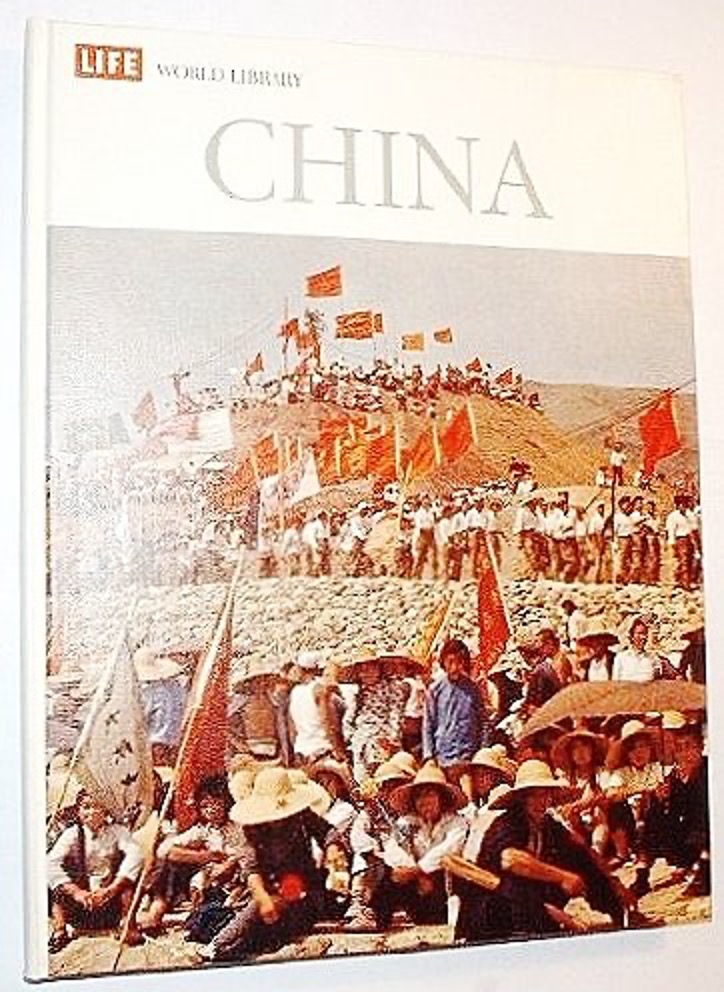
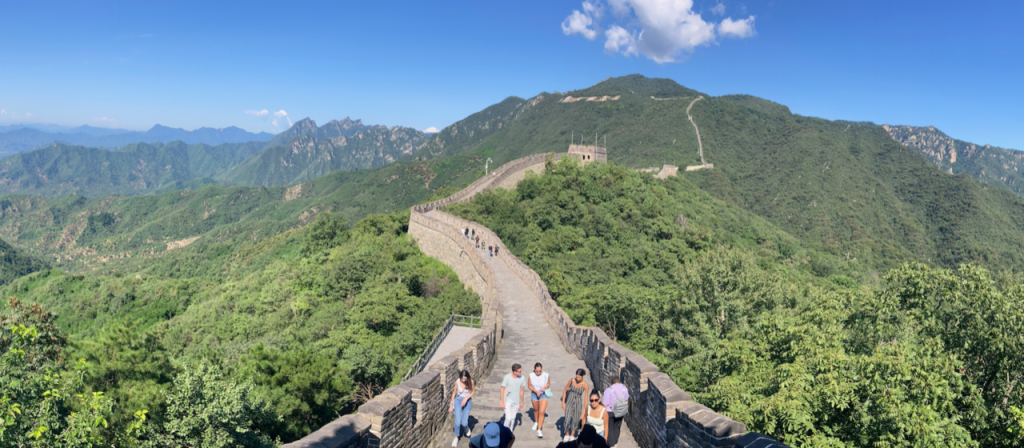
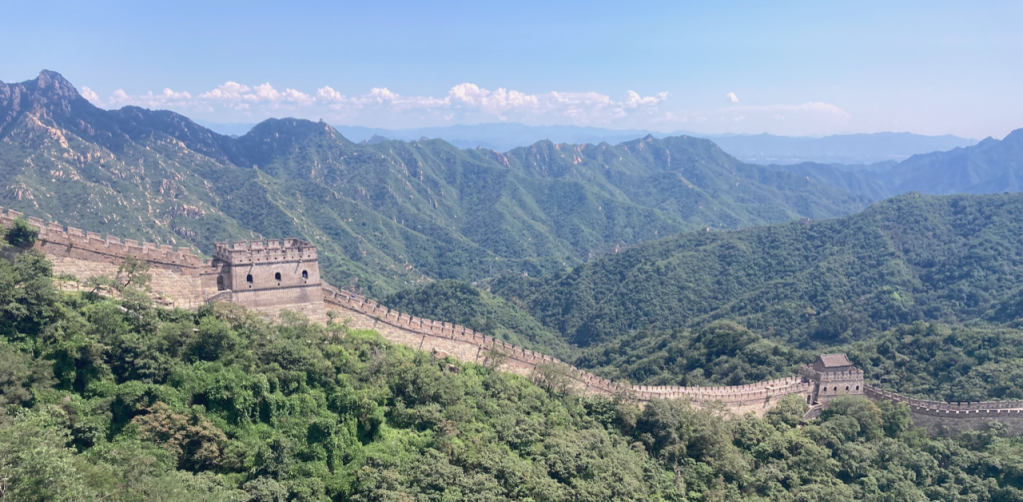
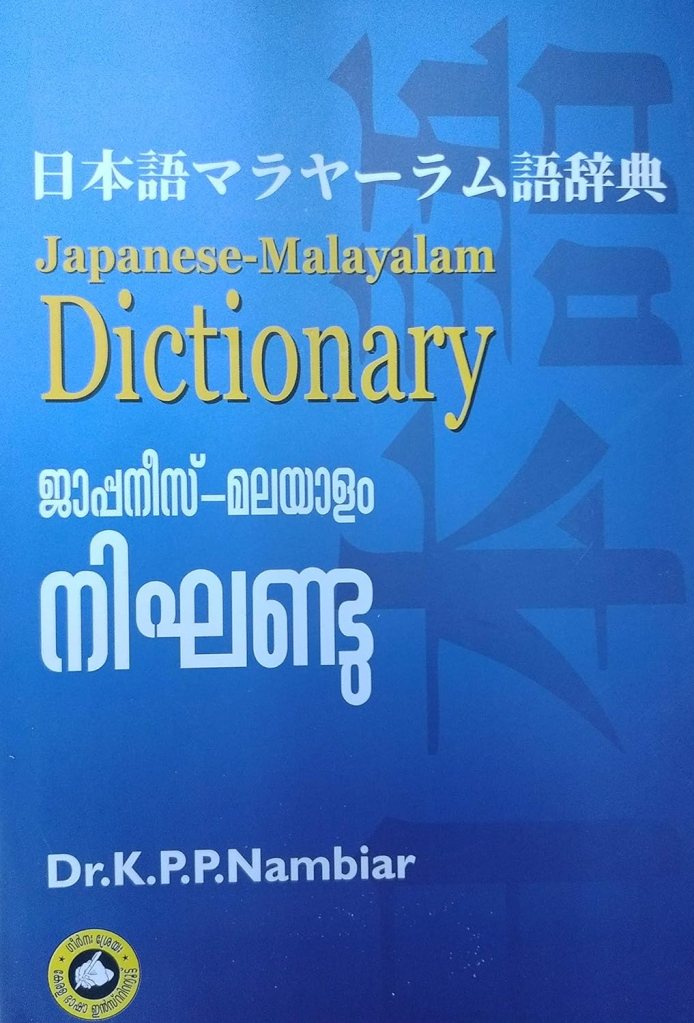


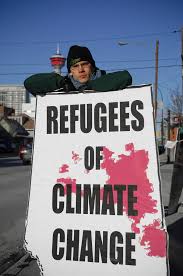



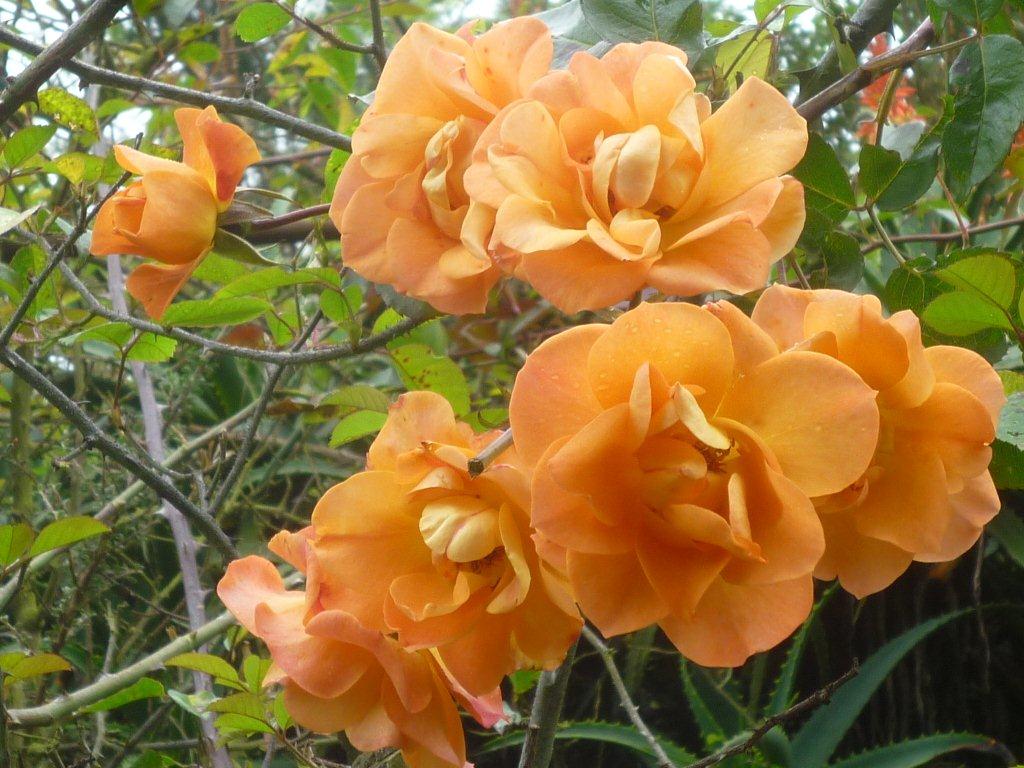
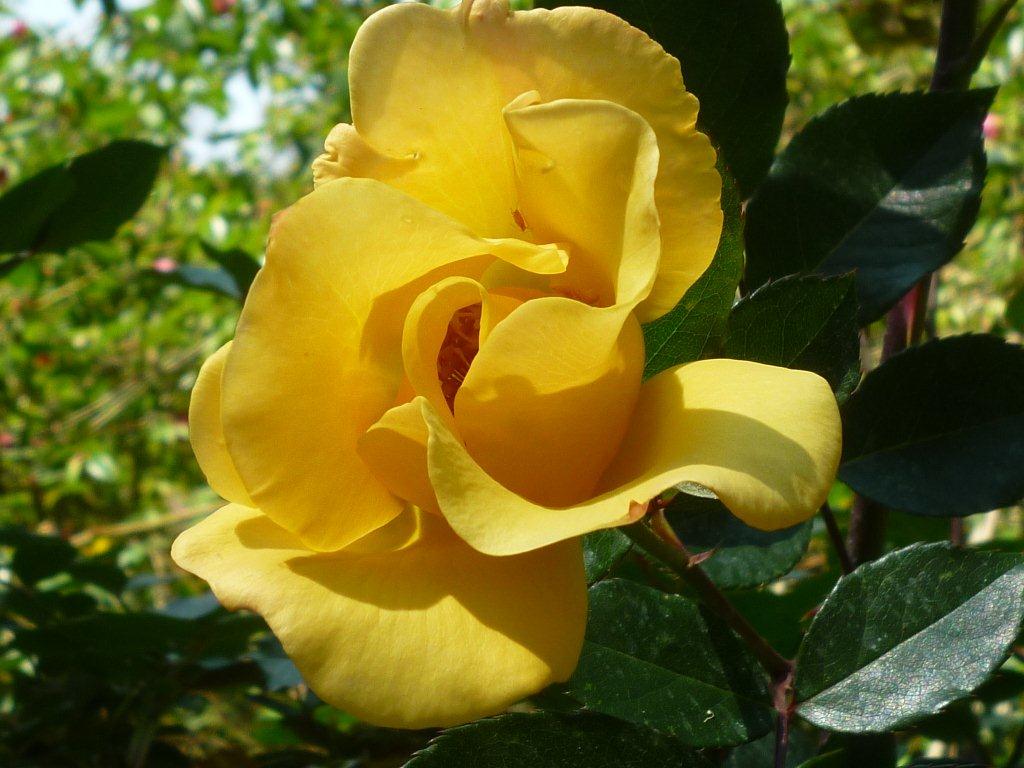

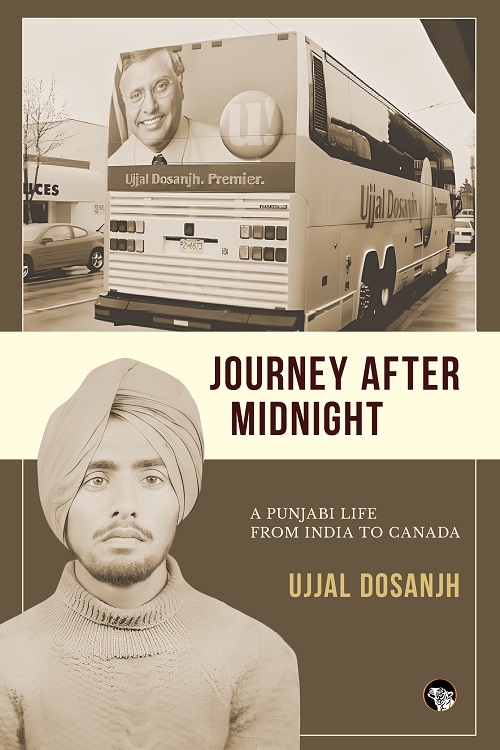
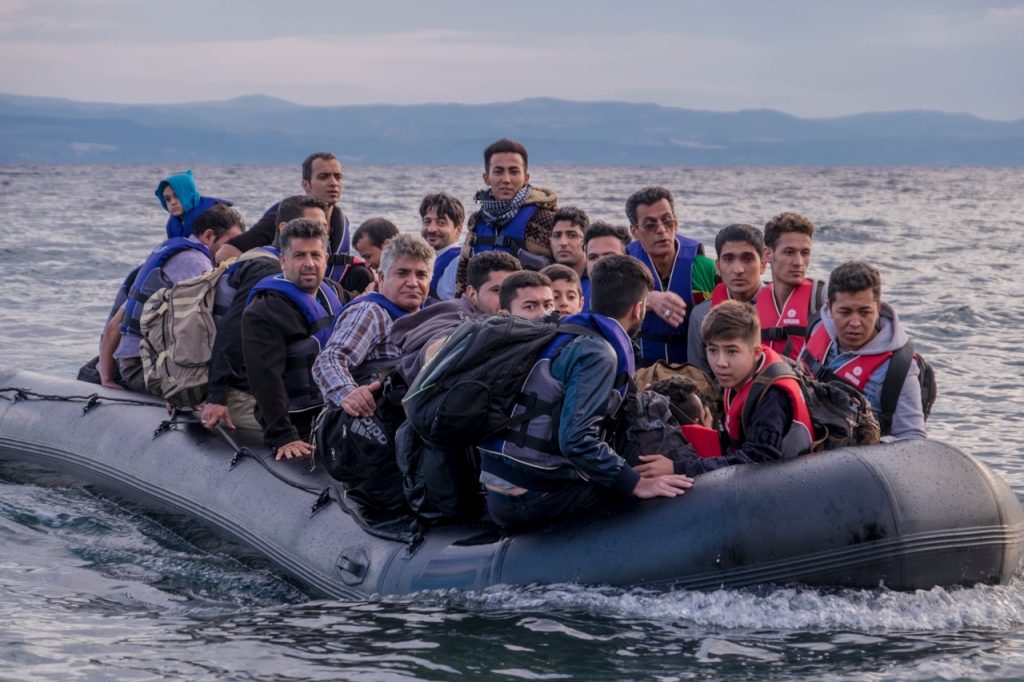
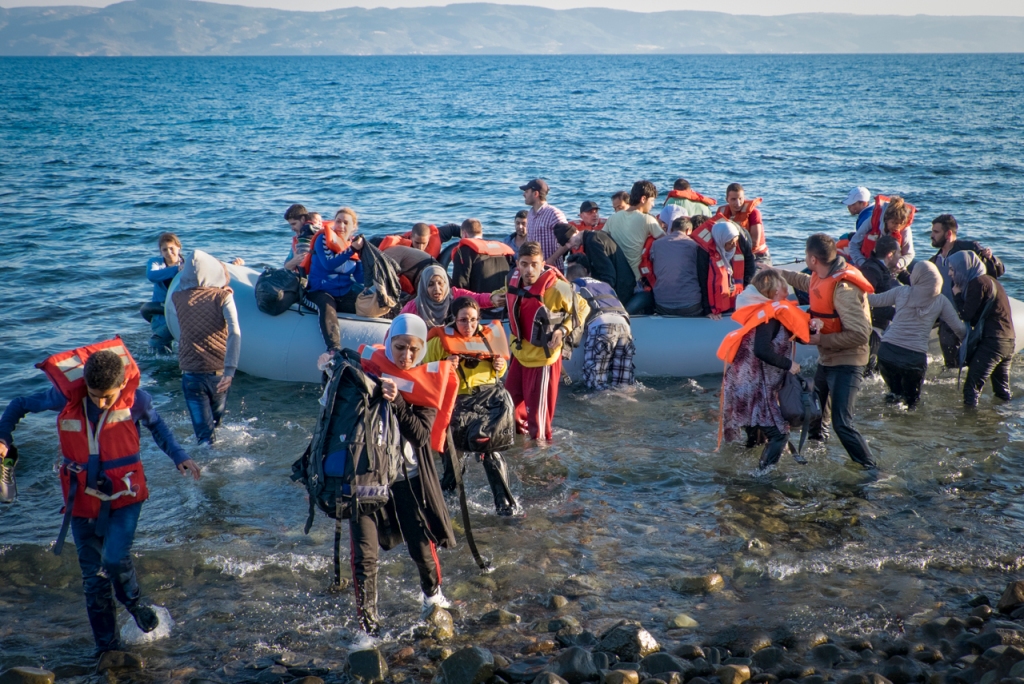
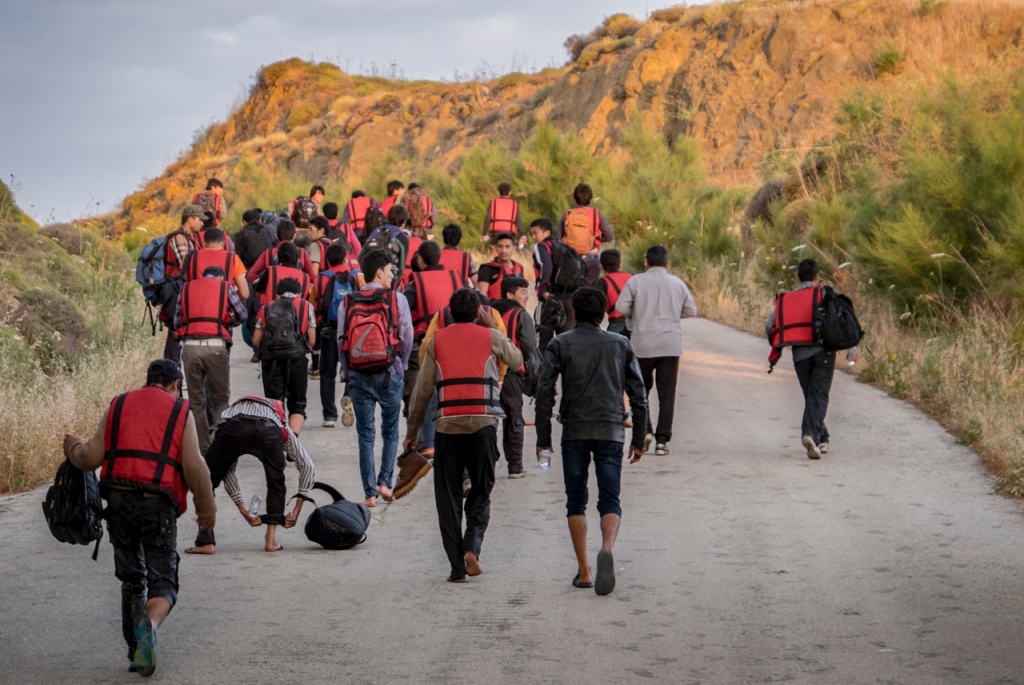
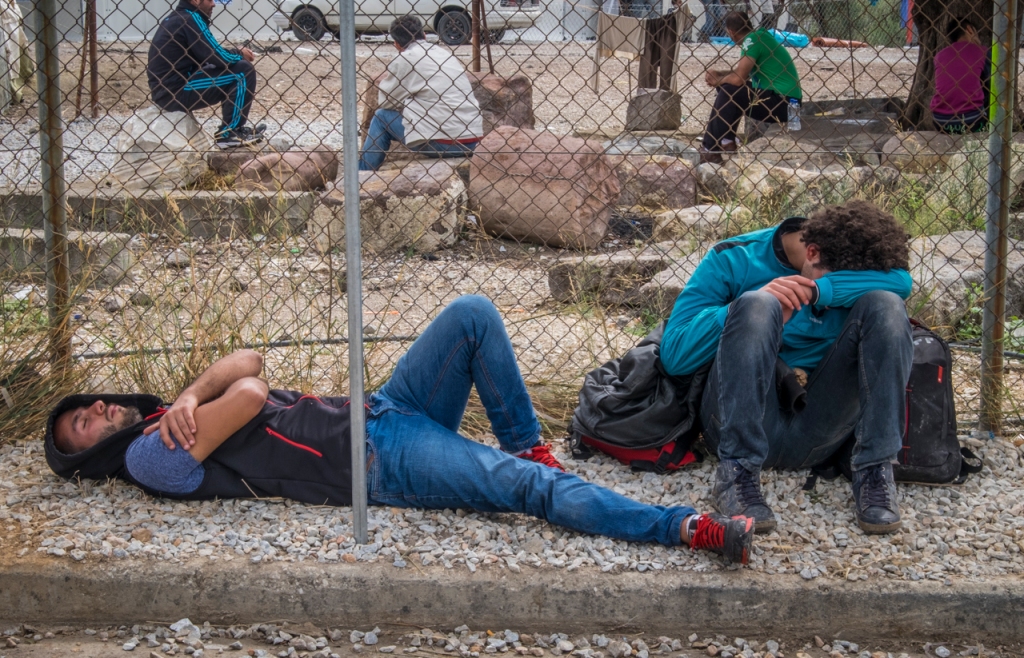
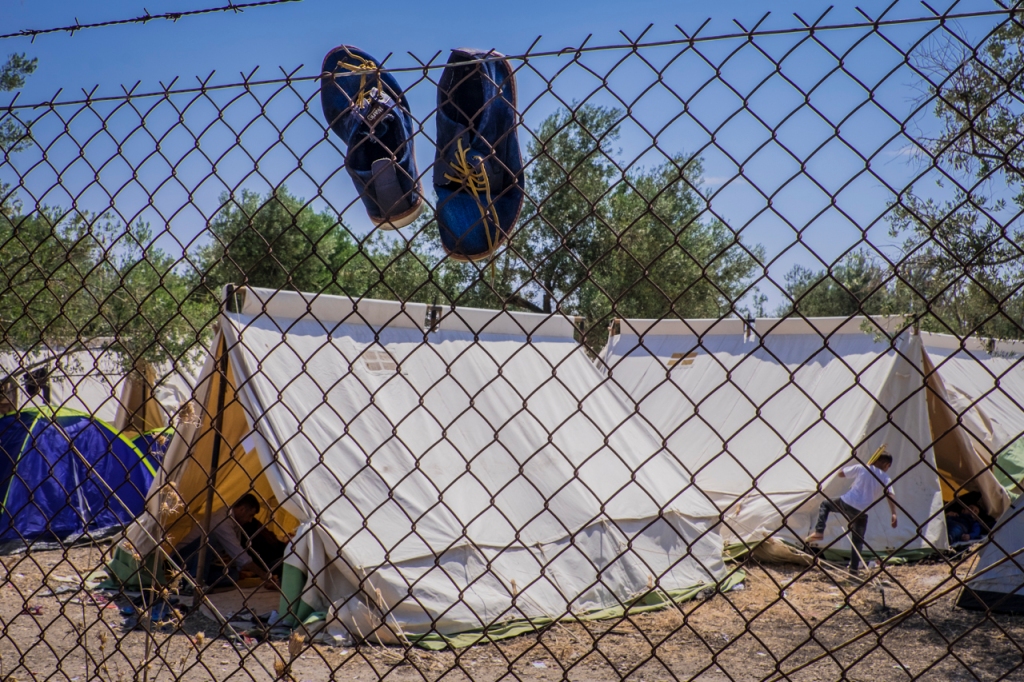

 Borderless