Categories
Excerpt

Villainy by Upamanyu Chatterjee

Title: Villainy

Author: Upamanyu Chatterjee

Publisher: Speaking Tiger Books

Death of late having been much on her mind, it did not seem surprising to Dr Mujumdar that she should, at seven-forty of a December morning, during her constitutional in the neighbourhood park, be the first to come upon the corpse or rather, to recognise it to be a dead body. Of course, they were all concentrating on striding along on the jogging track – rolling their hips, pausing discreetly on occasion, only for a micro-second, to break wind – and all moving clockwise as per the rules set down and put up by the Residents’ Welfare Association on the signboard at the entrance, and if they had eyes for anything, it was for the odd, protruding pebble in their paths and every now and then, a Johnny-come-lately in his new car outside the gates, prowling in search of a parking slot. But beneath the hibiscus bushes just before the Children’s Corner, they so stared her in the face, leapt out at her to shout out their presence that she marvelled that no one else appeared to have noticed them – a pair of off-white Bata tennis sneakers, stark against the dark, damp loam, blue socks in a heap at the ankles, khaki trousers that had ridden up to reveal scrawny calves, with the rest of the travesty mercifully hidden by the foliage and a mound of compost awaiting distribution. For travesty she knew it would be and she did not want to see it; for since when has death not been a travesty of all that holds meaning?

       ‘Something tells me that that is not a drunk Colony guard or municipal gardener sleeping it off,’ said she, aloud, to herself, glanced at her watch even though she knew what time it was, and continued silently, But could I still do my half-a-dozen rounds as though nothing has happened, or at least as many as I can before someone else notices something amiss? Or would that be callous and unfeeling of me? She lengthened her stride and began doggedly to pump her elbows in an effort to get away quickly. Her heart though was really not in it that morning. ‘It does seem shameful for someone who’s almost a medical doctor,’ she carried on her conversation with herself, ‘to run away from a corpse. Waddle away, more accurately. But people must never know. And all this – ’ She looked up and about her for a moment, blinked ‘ – is going to have to stop pretty soon, isn’t it?’ She exchanged a ‘Morning’ for a ‘Hello, dear’ as she overtook portly Mrs Gulati. ‘I mean, no one can possibly jog or skip rope or stretch or do his yoga and breathe through his anus or laugh his therapeutic Santa Claus belly laugh in the presence of a dead body, can he?’ And then, aloud, ‘Morning, Sanjeev-ji. You are early today?!’

      Dr Mujumdar took more than her usual eleven minutes to cross the Children’s Corner, pass the Water-Harvesting Area and loop around the Nano Golf Course. By the time she turned into the straight stretch along the C-Block side of the park, a knot of the regulars, forced to abandon their burpees and their Hanuman pushups, had formed around the hibiscus bushes. Automatically, Dr Mujumdar slowed down, even wondered for a second whether she could about-turn and, disobeying the commandment of the RWA, clump away anti-clockwise.

       ‘Don’t touch anything! Just call the police.’

      ‘Could it be someone we know? Even a member of the Health Club?’

      ‘Doesn’t look as though his membership did him any good. Somebody had better telephone the police, I say.’

      ‘I can’t. My phone needs to be charged.’

      ‘I can’t either, unfortunately. I always leave my phone behind at home when I step out for my exercise.’

      ‘Why don’t you call them? They will respond immediately to your commanding personality.’

      ‘It is the RWA that should phone the police. After all, the dead body has been found in a public place. Just call Tutreja at the Association.’

      ‘I can’t, I just told you. My phone needs to be charged.’

      ‘Why are you carrying around a phone that doesn’t work?’

      ‘To time my rounds, if you must know. The clock works. And how damn nosey you are, if I might add.’

      ‘Is something the matter? I’m a doctor. A pharmacist, more accurately. Perhaps I might be of help.’

      The knot of exercisers, three-deep by then, stirred and parted like porridge to make way for Dr Mujumdar and then congealed around her even before she could look down once more upon the Bata shoes and the scrawny calves, the khaki trousers. The press of bodies made concentration all the more difficult.

      ‘We’ll have to pull him out and turn him over. Any volunteers?’ The doctor looked about her at the knot, watched it stir and thin. ‘Backache,’ murmured a man with a white moustache, his hand ready to clutch his hip.

      With a grunt of annoyance, portly Mrs Gulati planted herself in the hibiscus bed, pushed aside the vegetation and bent to grab an ankle. The shadow of a momentary queasiness crossed her features at the touch of that cold, alien flesh. She was suddenly surrounded by several fellow-residents whom she had abashed. Freely directing and admonishing one another, they lifted the body up and sideways and laid it down, face up, on the jogging track. The group emitted a sort of collective moan, part sigh, part gasp, on first seeing the face. With difficulty, Dr Mujumdar got down on her knees beside the body. The onlookers, four deep now, gathered about them as though caught in an eddy.

      He was dead, there was no doubt about that. The dead do not look like the living. She felt for his pulse. The wrist was cold and stiff. She extracted a large handkerchief from the pocket of her tracksuit and gently dusted the loam and grit off the face. A murmur, a commentary on the vanity of all that is not death, rustled through the group like the hint of a breeze.

Excerpted from Villainy by Upamanyu Chatterjee. Published by Speaking Tiger Books, 2022.

ABOUT THE BOOK

 Walkers in a Delhi neighbourhood park come upon a body on a mid-winter morning—an unidentified body, unremarkable but for an extraordinary scar right between the eyes.

A delinquent teenager—who prefers, to the rest of living, an Ecstasy pill with a beer, and the interior of an expensive car with a gun in his pocket—leaves home one evening for a joyride in his father’s Mercedes.

In the nineteen years separating these episodes, five killings take place—and one near-fatal battery—none of which would have happened if a school bus hadn’t been in the wrong lane. Deals are struck between masters and servants, money changes hands, assurances are given and broken. The wheels of justice turn, forward, backwards and sideways, pause and turn again. Old alliances are tested and new ones are formed in prison cells, mortuaries and court rooms. And every life is a gamble, for no one is entirely innocent.

A meticulously crafted literary thriller, Upamanyu Chatterjee’s seventh novel is a riveting story of crime and retribution, and a meditation on the randomness of evil, death and redemption. It will keep you spellbound till the end.

ABOUT THE AUTHOR

 Upamanyu Chatterjee is the celebrated author of English, August: An Indian Story (1988), The Last Burden (1993), The Mammaries of the Welfare State (2000), Weight Loss (2006), Way to Go (2011), and Fairy Tales at Fifty (2014)—all novels; The Revenge of the Non-vegetarian (2018), a novella; and The Assassination of Indira Gandhi (2019), a collection of long stories. He won the Sahitya Akademi Award in 2000, and in 2008, he was awarded the Order of Officier des Arts et des Lettres by the French Government for his contribution to literature.

Click here to read the review

PLEASE NOTE: ARTICLES CAN ONLY BE REPRODUCED IN OTHER SITES WITH DUE ACKNOWLEDGEMENT TO BORDERLESS JOURNAL

Categories
Stories

The Persistence of Memory

By Vedant Srinivas

Despite rolling the window firmly shut, Dhruv could still feel the dust swivel inside the car and settle on his skin. He could smell the combined whiff of fried pakodas mixed with rotting trash, as if the transparent glass pane was no barrier for the hazardous environment outside to which he had once belonged. Sweat rolled down in beads and collected at the nape of his neck, and he wiped it with a crumpled handkerchief. Small apartment blocks came into view on both sides, with cycle rickshaws parked on either side of the gate. Rusted clotheslines jutted out from the balcony on each floor. They were hung with clothes of varied shapes and colours. A car honked twice, and someone yelled in return.

He eyed the outside proceedings with a strange fervour, his eyes taking in the action that seemed already imprinted in the depths of his memory. It wasn’t so much perception as re-creation; he had, after all, spent his childhood roaming the same streets of north-west Delhi. Remembrances swept to the shore of his mind, summoning up something buried and forgotten inside him. He distracted himself with more practical concerns. What was he to say to Digant’s father? Would he recognise him?

The taxi took meandering turns down narrow lanes. “They all look the same,” the driver remarked, his tall figure bent as he struggled to look through the windshield. Indeed, the roads did look the same — row after row of vehicles were parked in every inch of space available. Yawning over them were emaciated trees providing respite from the excessively harsh sun. Two boys with long rakish hair zoomed past on a motorcycle, their sunburnt faces exuding joy.

The car took a right turn and came upon an apartment gate populated by people in white. Some were on the phone while others were standing together in groups, waiting for instructions to be given. Dhruv paid the taxi and stepped out, smoothening the creases on his white kurta. He felt a strange sensation in the pit of his stomach. He had, since he received the news, thrust it in the back of his mind, refusing to engage with it, and had himself been vaguely surprised by his stoic reaction. Now it was bubbling in his gut, threatening to spill over.

Dhruv exchanged handshakes and condolences with people he assumed were family, and was shown directions to the flat on the first floor. The door was open, and smoke billowed out from the narrow entrance, wafting in tune with the pandit’s recitations. Some of the furniture had been moved and replaced by threaded mats to accommodate the shraddh ceremony ( funeral rites). There was an air of forced busyness inside the flat; people scurried about carrying various things, whispering quietly to each other or into their phones, as if stillness would collapse the facade that had so painstakingly been constructed by everyone present. Without this structured pretence, reality itself would lose its consistency, and make them confront that which perhaps lacked definition.

In one corner of the room, some women sat huddled together, rocking to and fro. Dhruv recognised Digant’s mother amongst them. Her eyes were red and puffy, and her distant gaze seemed to pierce through the opposite wall. A ceiling fan turned lugubriously near to where she sat. Mr. Singh, Digant’s father, sat next to the officiating priest, his fingers locked tightly together as he tried to follow the priest’s sharp intonations. His eyes were glued to the body that lay in front. The flicker of recognition in his eyes upon seeing Dhruv soon transformed into a dull glaze.

 Dhruv moved closer, his hands folded in a namaste-like posture. It was wrapped in a white shroud, with cotton buds placed in the nose. There were dark pouches under the eyes. The skin too had aged; the glowing white of ten years ago had now turned into a sickly yellow. He peered hard at what had once been Digant. Try as he might, Dhruv ​​couldn’t muster anything as complete and engulfing as grief. The pinch of bereavement he felt was for a life snuffed out, a death that had taken place, utterly devoid of particularities.

Dhruv had received the news last night through the school group. More details had emerged, once the initial outpouring of shock and concern had subsided. The rope had been tied to the ceiling fan, and the door locked from inside. No note had been found and no foul play suspected, though he had been known to lead a rough life.

Dhruv glanced around the room and spotted a familiar face at the end of the passage. He walked towards Rohit and they hugged awkwardly, putting one arm sideways around the other’s shoulder. Rohit had been in Digant’s section, and had also been part of the football team with Dhruv. His hair had already started greying; a paunch of considerable size jutted out from his middle. Standing next to him were two other schoolmates whose faces he recognised but whose names he couldn’t recall. They politely nodded at each other. It felt odd to meet under such circumstances.

Leaning against a wall, Dhruv and Rohit observed the proceedings, with hands clasped respectfully at the front. The priest was pouring ghee into the crackling fire while chanting archaic mantras. Their eyes smarted from the smoke of fiery oblations; tears of grief freely mingled with those produced by the stinging fire. Dhruv found his mind wandering. He wondered what view tradition accorded to such an event, and whether the rites would be different in this case. There was an uneasiness in the room that belied even the genuine concern he could see entrenched on faces and eyes. Rohit turned to Dhruv, put a hand around his shoulder, and said in a caressing voice, “I can’t even begin to imagine what you are going through. After all, you guys were best friends.”

Dhruv started, his feet almost giving away under him. Suddenly thirsty, he stumbled towards the kitchen, wading through the ever-increasing number of people. More than concern, it felt like an unbidden accusation. Surely calling them as best friends would be going too far? Yes, they had spent some important years of their childhood together, but that was true for everyone who had lived in the locality and gone to their school. It felt intrusive to think that someone else had formed such an important opinion without bothering to consult him or the facts.

The water filter beeped a faint red as water began to drip out of the nozzle. Flashes of the distant past, sieved through his memory, came upon Dhruv — bunking school and spending the day playing pool at one of the shady centers in Pitampura, the regular fights they’d get into, alcohol, rustication… Image after image played successively in the recesses of his mind; he was unable to think of a single school memory that didn’t have Digant in it.

Dhruv suddenly felt swamped by unreality. His current existence — his job as an advertising filmmaker, his daughter and wife back in Bangalore — had nothing to do with the memories that now assuaged him from all sides. He had lost touch with everyone as soon as he entered college, and had somehow managed to do well for himself, despite the odds, proving everyone — including his parents — wrong. He was now fully wedded to a life of ‘upward mobility’ and the sophistication that came with it. Indeed, his entire childhood, including Rohit and the others lounging outside, seemed now like a mythology that had been invented from scratch. To think that he had grown up in this grimy locality of corruption and crime, sharing secrets and confessions, shouting songs of friendship and love, with the same people whom he could barely recognise seemed to him a fiction of the highest order. 

The kitchen window was blowing wind like a furnace, and he found it difficult to breathe. Stepping out, he made his way to the bathroom and locked the fledgling door. The drain cover had mounds of wet hair stuck to it. Sitting on the commode, another hazy image assuaged him, sending shudders through his body. A drunken reverie, teenage angst, him and Digant, valiant and masculine, proclaiming their allegiance to the famous 27 club as a revolt against life, their deaths too enshrined in history …

Later, at the crematorium, the men listlessly shifted their weight and scratched their faces as they stood huddled around the burning pyre. Dhruv had helped with the preparations and now, standing at a distance, watched plumes of smoke merge with the blinding sky. Bereft of its materiality, Digant again existed as he had before, as a submerged and fleeting reminiscence. Dhruv suddenly felt tired and nauseous. A vague feeling of inertia hit him. The present moment curdled in the heat of the afternoon, and he was confronted with lumps of empty time as it stretched across the burial ground, shimmering and undulating like the funeral fire. Unable to stand it, he nudged Rohit on the shoulder and whispered into his ear if he wanted to go have a beer afterwards.

 *

Years later, while directing some extras for an advertising shoot in Himachal, Dhruv would spot a local theatre performer — a dot on the camera monitor — struggling to master the sequence. In exasperation, he would yell out, “Digant, keep to your mark and don’t stray out of the circle.” Non-plussed faces would stare back at him, unsure of who he was talking to. The words that had come crashing out would be swallowed back just as soon, followed by a long period of silence. For the rest of the day, he would walk around in a reeling daze, and try not to stare at the young man who had unwittingly, instantaneously reminded him of what had once been.

Vedant Srinivas studied Philosophy and went on to do a diploma in Filmmaking. His interests fall in the interstices of literature, anthropology, cinema, and poetry.

.

PLEASE NOTE: ARTICLES CAN ONLY BE REPRODUCED IN OTHER SITES WITH DUE ACKNOWLEDGEMENT TO BORDERLESS JOURNAL

Categories
pandies' corner

Children of Nithari: The story of Rajesh

Written in a mix of English and Hindi  by Yogesh Uniyal, translated fully to English by Nirbhay Bhogal

Yogesh Uniyal is now a banking professional, currently working with Kotak Mahindra Bank, and has a Masters in Finance. He joined workshops lead by pandies’ theatre in 2006 and has performed in all the shows put up by the youth associated with Saksham, Nithari, including at the American Center, Delhi in 2010. A consistent performer and singer, he performs with the pandies’ besides doing street plays with Nithari friends and like-minded people on women’s education, cancer, and many other themes.

The Story of Rajesh

Somewhere in this wide, wide world, lived an eighteen-year-old boy (quite sensible and honest) going by the name of Rajesh,  in a small village, where he had a family with his  parents. Since childhood, Rajesh had always liked watching movies. Despite not having a television at home, he would commute a kilometre within their village, to the home of his paternal uncle ( being a good friend of his father’s) to watch movies on that uncle-by-sentiment’s TV. While watching a film at his uncle’s, one day Rajesh made a plan to venture outside their village after finishing his intermediate education. Rajesh had no idea that there was a huge gap, between this real world and the fictional world of movies, almost as if one were Purgatory and the other Heaven.

Rajesh’s Decision to go to Delhi

This is the story of that boy from an underprivileged family who came with big dreams to Delhi – “The City of Hearts, Brimming with Living and Giving” – leaving behind his village, his home, his parents, his everything. Rajesh had come to this city after completing his schooling with a great hope kindled in his heart – a desire to earn buckets of cash. But little did he imagine what he would lose while trying to fulfil that dream.

Living in their village home were Rajesh’s elderly parents. Leaving them behind and coming here wasn’t easy for him. But he left them and moved  nevertheless, for his happiness and theirs, which revolved around his attaining a higher standard of living.

Rajesh’s life in Delhi

He started lodging in a room that he rented in “The City of Hearts, Brimming with Living and Giving, also The Capital of India”. He stumbled wandered around the city for two to three months, looking for a decent job. But he did not get any employment. Then he came across a person who promised to get him a job, in return for Rs 20,000[1].

Rajesh, gathered the money from multiple sources – including some remitted by his parents from the village on his request. He paid the agent an advance of Rs 15,000, and promised to pay the remainder after securing the job.

After waiting for many days, Rajesh secured this job in a company that would pay him Rs 9,000 a month, at a workplace that was 4 kms from his room in the city. This salary certainly sounded small as Rajesh had to pay for his lodgings, food, water…and also send some money home.

Every morning, he would walk to the company where he was employed. And, every evening, he would walk from there to his neighbourhood. He knew that every expense, such as commuting by vehicles in a city like Delhi, wasn’t possible on just Rs 9,000.

He threw himself with all his heart and mind into his nine-hour job. Many times, however, he was made to stay back and work for ten to twelve hours a day. That earned him Rs 70 for every extra hour. He continued to work with dedication. What he didn’t know was that you needed to be street smart to compound your dedication to get a raise in such a place. Even after working so hard, he wasn’t getting the increment or promotion that he was worthy of. He brought this up many times, in conversation with his manager, but the manager would keep evading him on this. After one year, Rajesh decided to leave the company. After quitting his job, he gave job interviews at many other companies, and eventually did get hired. He joined this other company on 1st January 2020.

In the new company, he was paid more than double his last salary, and he was happy that he could manage all his expenses. But his struggle had just started.

For two months, everything was fine. Then, suddenly, a disease called Corona started to fester and spread. Cases of its transmission were quickly increasing in India. Observing this COVID-outbreak, the Central Government declared a lockdown in all of India on 22nd March 2020. Rajesh and all other employees of his company were kicked out of their jobs.

When the fired employees protested, the company said, “Whoever have their own computers can work from home.” But employees who’d been hired only in the past two months, how were they supposed to afford a personal computer? Some of the employees still managed to arrange computers for themselves, and they were re-hired. But what about people like Rajesh?

Eventually, Rajesh too was fired, which was a huge blow for him. He had no means of livelihood. His monthly expenses were piling up, and the spectre of groceries loaned from his regular shops kept looming over him.

After losing his job, Rajesh sat in his room, spending time on the same old TV news channels. But none of these channels gave the truth: about how the pandemic was hurting families like his, how they were living, what was the solution, and what were the safeguards that were being put in place?

Who knows how many families had people like Rajesh, who lost their jobs? What on earth was Rajesh going to do now?

For ten days, Rajesh kept brooding over the job he’d lost. Rajesh asked a neighbouring Uncleji[2], “Would any of the nearby bungalows have need of car-cleaning personnel?” Uncleji was moved to tears by seeing him in such a state. He said to Rajesh, “Why would you…a computer-operating professional…be doing such work?” And he started providing Rajesh food from his own domestic kitchen.

But how long was he supposed to feed Rajesh? Uncleji’s wife would taunt every now and then. This eventually became too much for Rajesh to bear, and he decided once again to clean cars for a living.

Rajesh had been reduced to the condition of one who belonged neither here nor there. And he was worried about his parents. He was managing to arrange two meals’ worth on certain days, and not even one meal’s worth on other days. Some evenings he would line up, for a meal at food stalls, set up by anyone wishing to feed the poor. Other evenings, he would scrape together a meal in other ways. What else was he supposed to do? Borne to the City by Hopes, and Buoying Himself Against the Blows He Received, He Was Still Not Able to Get Enough Food.

A person contracted Corona in the neighbourhood. This cast a spell of fear over all the residents. Now all of them, including Rajesh, were taken to a hospital and tested in isolation. Rajesh tested negative, but he still had to suffer his neighbourhood being barricaded. Now nobody could either go out or come in. This meant Rajesh couldn’t go to clean cars in the morning. He had no means of arranging food for himself. For seven days, he subsisted on water and one meal a day.

He then somehow got permission for resuming cleaning cars for the rich. But back home in his village, his parents both contracted the virus, and they were soon in a critical condition.

Rajesh had no means of going back to his village, which was 700 kilometres away. He didn’t know what to do. He began to recall his old life in the village, when he lived without any tension, amidst the warmth and safety of his home. Whatever presumptions he’d had about Delhi, and big cities in general, were proving to be opposite of what he had hoped and dreamt. All he could think of was going back to living with his parents in the village. He wished to rid himself of his current situation come-what-may.

Initially, he couldn’t come up with a plan, since he didn’t know any route back to his village, even if he started back on foot. Finally, he decided that he would follow the rail track to reach his village. He started on this path, hungry and thirsty.

On the way, some people were handing out food to migrants like Rajesh, who were journeying back home. For two days, Rajesh kept walking like this, surviving on such charitable provisions somewhere or the other, and thus he would store food for breakfast as well at dinner.

One such night, after eating and storing the food for the next meal, he resumed walking along the railway line. That night, he felt very tired, so he lay down on the track. Exhausted, he drifted off to sleep.

That very night, a train passed by on those tracks. And, after that, his eyes never opened.


[1] Indian Currency rupees: $1= Rs76

[2] An elderly gentleman in often referred to as uncleji in North India, ji being an honorific title

Nirbhay Bhogal is a 32-year-old amateur actor, with pandies’ theatre since late 2014, when she first experienced with them an altogether improvisational mode of workshopping a script chosen by the group. She’s currently pursuing a Bachelors in English Literature and hopes to make a career out of translating literary and non-literary works from Hindi into English, and vice versa. She was involved with the tail end of pandies’ workshop theatre at pre-pandemic Saksham school in Nithari and has also co-facilitated Zoom-based workshop theatre with Shakti Shalini’s shelter for women survivors of gender-based violence.

.

PLEASE NOTE: ARTICLES CAN ONLY BE REPRODUCED IN OTHER SITES WITH DUE ACKNOWLEDGEMENT TO BORDERLESS JOURNAL. 

Categories
pandies' corner

Children of Nithari: Stranger than Fiction

These are stories written by youngsters from the Nithari village. They transcended childhood trauma and deprivation for many decades. The column starts with a story by Sharad Kumar in Hindustani, translated for us by Grace M Sukanya

Sharad Kumar is a 22-year-old engineer / artist from Nithari, Delhi, currently in the final year of his B. Tech in Information Technology. He has also performed as an actor and singer for various college productions. He has been associated with pandies’ theatre group since 2010. His performance at the American Center, Delhi, with 40 more children from the school Saksham, Nithari, was the audience’s pick. Working with younger children in Nithari, teaching them Physics, Maths and also, how to perform on stage, he hopes to be able to give back to the community he comes from. His desire: quality education and opportunities to children from under-served backgrounds.

Stranger than Fiction

When it had begun, it had seemed it would just be for a short while and would get over quickly. But it had now been three months since the lockdown had been announced.

Mumbai’s streets were so quiet that it seemed the multitudes had been anaesthetised. Only the sound of dogs continued to disrupt the silence of the alleyways. Even the air felt cleaner.

But there was still one pollutant left: the virus. 

The corona warriors worked away at their jobs as though this was the battle of Mahabharat. Excepting a few people, everyone was busy waging a personal war.

On national television, people initially behaved admirably. But now they too showed symptoms of being infected by the virus of television rating points.

Mritunjay, an ordinary hawaldar, took time out of his busy schedule to lay out his gamchha and rest on it, as he did every day, and started knitting a dream from the past — his grandfather’s memories.

He traveled back in time to an era when the British Empire extended to almost all parts of the world.

*

Somewhere far away from the Indian sub-continent, Mritunjay’s grandfather, Dirghayu, was a soldier in the British Indian Army. Due to the circumstances of that time, Dirghayu and his compatriots were beholden to do the British’s bidding, waging war in trenches, pits, and holes for their colonial masters.

Meagre rations, living in squalor with rats, snakes, and other parasites, were all part of their war time trials. Standing every day in the cold water and the wet mud of waterlogged trenches had started taking its toll. With each passing day, Dirghayu’s legs were becoming more painful.

Then, one day the commander’s voice had announced the beginning of war, and everywhere cartridges, canons, and weapons poured forth rivers of blood. Perhaps, because of his name, Dirghayu, meaning the long-lived one, the hawaldar’s ancestor had been blessed with good luck and courage. He survived the enemy gunfire, the terrible living conditions, the horror of warfare, and managed to win the British their victory. The Commander was happy with his performance and decided to send him back to his homeland.

Back in the Indian subcontinent, the Jallianwala Bagh massacre had just taken place. General Dyer’s order to fire at point blank range on a peaceful prayer meet had shocked the empire to its core. The cruelty of the British Raj had been increasing since Gandhiji’s successful Champaran Satyagrah. Some political parties had taken to violence and arms, challenging the British to a direct conflict. 

The Spanish Flu too, was at its peak. Millions of people had lost their lives. The death count was rising every day. Some scientists had estimated the death toll at as much as 5% of India’s entire population. 

Economy and communications had collapsed. The rulers, in an attempt to veil their incompetent handling of the pandemic, had busied themselves in passing a variety of bills and ordinances. The only relief forthcoming from them was a lockdown.

The people in the Indian subcontinent were faced with starvation, unemployment, lack of education, and an utter lack of services.

Seeing the country in this state, Dirghayu realised there were three more battles that he had to face: (i) to provide for the comforts and security of his family; (ii) to take precautions against the spread of the Spanish Flu; (iii) and, to continue to work honestly for the British government without compromising his principles.

One day, Dirghayu’s son asks him, “Why is the Spanish Flu known as the Spanish Flu?”

Dirghayu, who has had a little education, and had gleaned some information from the company of the British officers he served, told him: “It is because the Spanish were the first to report it, but people’s mind-set is such that they started calling it the Spanish Flu.”

Then his son suddenly changed the topic and asked him, “Why are you opposed to Gandhiji and the other freedom fighters?”

Dirghayu, shocked, attempted to circumvent the issue by proffering a false excuse: “Gandhiji has gotten the flu, and he must not be allowed to spread it to other people through these huge public gatherings. This is why I am opposed to them. In any case, my priority is the safety of you people. I have to earn money so I can look after you!” 

“So, if you had been there at Jallianwallah Bagh, would you too have fired at the crowd?” 

At this, Dirghayu was upset. He scolded his son, telling him to focus on his studies instead of asking unnecessary questions.

A few months later, however, Dirghayu faced a challenge that could lead to his losing all the three battles of his life simultaneously.

Dirghayu was summoned by the senior officials of the British Army. They told him that they had been informed by their secret services that some university students were involved in a massive conspiracy against the Rowlatt Act passed in 1919 to allow indefinite incarceration without a proper trial.

They gave him two options: He could either give up his post in the army and be dismissed in disgrace, losing his right to a pension, or he could arrest the mastermind of the conspiracy: his own son.  

Keeping his priorities in mind, Dirghayu chose to give up his post in the army even though he knew he would not be able to support his household without that money. Without the army pension, his fight against the Spanish Flu would also slow down, and he would have to face the problems that the many had to face in the subcontinent.

However, he gave his son some money, and managed to send him to a safe place.

He was brought in for questioning by his own colleagues. They cajoled him, coaxed him, threatened him, even tortured him — but he refused to give up his son’s location. Eventually, the authorities gave up and let him go.

After his wife’s death, he was left alone but he has managed to conquer at least two of the battles he had set forth for himself.

Night and day, like a Spanish Flu warrior, he was engaged in helping people, getting them medicines, arranging food for the poor, encouraging the sufferers to live, and helping them out in any way required as he fought against the devastation wrought by the disease.

But perhaps he could not win this last battle. His name had protected him so far, but he met his end at the hands of the Spanish Flu.

*

Suddenly, Mrityunjay was woken up by the voices of his colleagues.

They were asking him: “What are you dreaming? You seem to be lost in your dreams.”

He said: “Perhaps this is not a dream, but the reality. After all these years, things are still exactly the same.”

Glossary & Notes:

Gamchha – a cotton towel

Hawaldar – a police constable

Jallianwallah Bagh massacre: Click here to read.

Champaran Satyagrah: Click here to read.

Rowlatt Act: Click here to read more.

Spanish Flu: Click here to read more.

Grace M Sukanya is a 28-year-old filmmaker based in Delhi, India. She is interested in creating arts-based educational interventions for children that respond to socio-political issues. She has been associated with pandies’ theatre since 2020.

.

PLEASE NOTE: ARTICLES CAN ONLY BE REPRODUCED IN OTHER SITES WITH DUE ACKNOWLEDGEMENT TO BORDERLESS JOURNAL

Categories
Tribute

Requiem for the Melody Queen

Ratnottama Sengupta sings her own paean in which a chorus of voices across the world join her to pay a tribute to a legend called Lata

She was a “pint-sized bundel of musical genius,” wrote the TIME Magazine. The melody queen of India was, they said, “a singer with moonlight in her throat.”

Dr Javed Iqbal was the former Principal and HOD (Surgery) in Qaid-e-Azam Medical College, Bahawalpur, the 11th biggest city of Pakistan. Until a week ago I knew its name only because of Bahawalpur House, the mansion of the former monarch in Delhi, which is now the National School of Drama in the Capital’s Mandi House area. But on February 6, 2022, I gained acquaintance with this surgeon courtesy Whatsap. I heard in wonder as he paid a personal tribute to the just demised Nightingale of India. And I bowed my head twice in deference to the legendary singer and then, to the doctor who, by his own admission, was no scholar of music, yet provided a unique significance of Lata Mangeshkar.

Let me translate what I heard him say in Urdu. “As you know, I’m a surgeon. And when I came to Bahawalpur, I introduced a number of new procedures which contributed to my popularity as Principal and professor. So, students came to interview me for the college magazine. They asked me, ‘Sir where did you learn such good surgery?’ I don’t know why but instantly I answered, ‘From Lata Mangeshkar.’

“The students were surprised, ‘How can that be? She’s not a surgeon! How can you master surgery from her?’ ‘Have you heard her sing?’ I asked them. ‘The way she clears the dues of each harf, every letter of the alphabet; the way she conveys the nuances of every word without erring on even a fraction of the note or messing with a beat – this is the artistry that should permeate the work of every artist. Just the way a single stroke of a painter’s brush can make the painting a masterpiece or can mar it, in the same way a single movement of the finger holding the surgeon’s scalpel, a single cut, a single stitch, a single dissection through a cautery can transform the entire operation into an exemplary art or spoil it for life.’

“Many years ago, it struck me that the way Lata Mangeshkar does justice to every inflection of her songs, should be the yardstick to measure any art. Every breath should transform your performance into the best of your ability. If you listen to any song by Lata Mangeshkar, you will realise that, if the word is written with a chhoti-ii (pronounced: ‘e’) then you will hear a short vowel; and if it is a badi-ii (pronounced: ee) you will hear a long vowel. If you hear ain you can tell that it is written with ain/ euyin and if it is the Arabic letter qaaf then you will hear the guttural sound. But at the same time not a single demand of the melody will be ignored. I’m not an expert nor a scholar of music – and in the past few years I have not been hearing her often – but I can say that this is one quality that makes her mumtaz – the Best.

“Today when she has passed away, I feel like sharing this: The reason why humans are distinct from other living creatures is that physicality is the dominant need of other animals whereas humans are driven by the combined needs of physicality, intellect, emotion and spirituality. The creature whose life revolves around physicality alone will end when Death comes. But the more a person’s intellect, emotion and spirituality contributes to his/her actions, the greater will be his/her claim on immortality. Death is inevitable, Death is mighty, but Death is only so powerful as to make the 5-feet-something Lata Mangeshkar disappear from the face of the earth. Death is not so powerful as to end her art and erase her voice and make her songs disappear. Because the Lata Mangeshkar who was a khatun, a 5-feet-something lady has passed away. But the Lata Mangeshkar who made her ‘The Lata Mangeshkar’ will never die…”

*

Kumar Gandharva (1924-1992), the late Classical vocalist whose signature style refused to be bound by gharana traditions, once said that “Often people ask about Lata Mangeshkar’s place in the pantheon of Classical music. In my opinion, this question is redundant, because there can be no comparison between classical music and film songs. While serious development of notes is the constant concern of one, fast beat and fickleness or agility is the main trait of the other.”

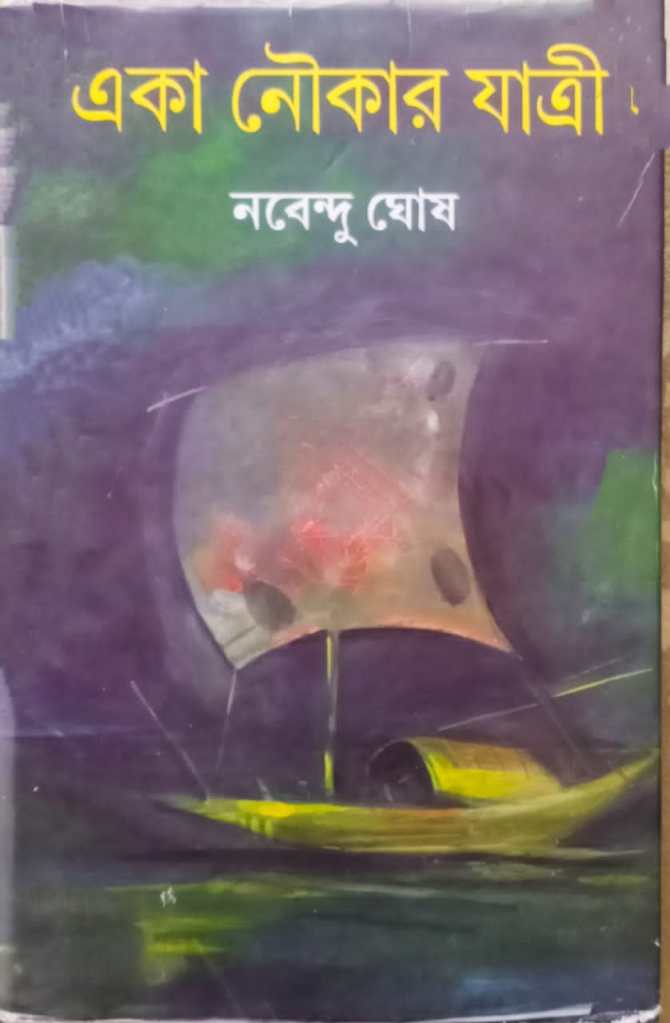
At the other end is Nitish Bharadwaj who is still revered for his much-loved evocation of Lord Krishna in the phenomenal serial Mahabharat. The actor has been like a brother to me since he debuted on the Hindi screen with Trishagni directed by my father Nabendu Ghosh. In his homage to the legend, he said, “Since her childhood Lata Didi has lived her life in pursuit of her art, as upasana, contemplation. Her career has not been to amass wealth, it has been as upasak, a worshipper or sadhak, devotee. Which is why she has succeeded in leaving behind thousands of songs for us…”

It is a fact that Lata Mangeshkar has more recordings to her name than any singer in the world. But it is not merely the number, it is the impact of the songs that astounds the world. I will quote an unidentified fan with whom my generation can easily identify. For she writes, “As a child you woke me up with Jago Mohan pyare (Rise my child, Krishna) and lulled me to sleep with Aa ja re aa nindiya tu aaa (Come, Sleep to rest in my baby’s eyes). You made me feel good as you sang Bacche man ke sacche (Children are born pure, with heart of gold). When you sing Humko man ki shakti dena, (Give us the strength to win over our mind) you take me back to my classroom. Solah baras ki bali umar (Sixteen going on seventeen), I experienced in your voice the blossoming of my first crush. Ajeeb dastaan hai ye (What a strange story, this!) stirred the deepest chord of my heart. Aaj phir jeene ki tamanna hai you gave voice to the abandonment of a spirit freed from bonding. And the countless times I heard Aye mere watan ke logon (Cry, O people of my land) tears flowed down my cheeks…”

Three days after Lata Mangeshkar bid adieu to sunlight, Rabindra Sarobar – close to my house in Lake Gardens – offered a unique proof of her abiding life. Let me share it in the words of Mudar Patherya, my secularist friend who initiated a revival of the lake by hosting morning concerts and inculcated pride in one’s neighbourhood by painting icons on otherwise defaced walls.

“DEAR LATA AUNTY,” he wrote on his FB wall, “this morning, for a change, we sang for you. Beginning with Allah tero naam, Ishwar  (God are your names too) – we feel you are that too. Then, we went on to Naa jeyo naa (Do not go away), Lag jaa gale (Come, hold me in your arms), Rahein na rahein hum (If I’m there or I’m gone), Piya tose (My eyes have met yours, beloved) and others. We ended with Ai mere watan ke logo

“We were a few. We took kalam, printouts of the lyrics. We read the words. Emphasised the huroof, letters of the alphabet. Sang from deep within.  

“‘Singing for you,’ we said.  

“Nobody said Wah wah, Well done. Nor kya gaaya, encore.  

“But…  

“One Sarobar walker stopped and joined us.  

“Another doing his press-ups did not rise, easing into restfulness after the fourth. 

“Rowers – members of the Rowing Club next door – came close to where we were sitting, lifted their oars and glided lazily for seconds. 

“The lady walking purposefully said ‘Wait a sec’ to her husband and stayed till the end.  

“A yogi, engaged in the specific type of controlled breathing called anulom-vilom,, dropped his fingers halfway and meditated.  

“A lady, who was a part of our audience, closed her eyes and rocked gently. 

“The surgeon who played the harmonium for us shook his head in a gentle parabola as if he’d just comprehended something new. 

“The lady with a DSLR to shoot birds capped her lens and sat down.  

“The stranger who chanced by perched himself on the durrie and asked ‘Gaaitay paari? Can I join in?’  

“Schedules were interrupted, agendas disturbed, focus distracted. 

“At the end, someone suggested something radical.  

“‘Can we have this for the whole day?’ “

*

Don’t worry dear, I would say in reply. We will — for the rest of our lives.

.

Glossary

Khatun: A woman of rank

Aaj phir jeene ki tamanna hai: I want to live again today.

.

Ratnottama Sengupta, formerly Arts Editor of The Times of India, teaches mass communication and film appreciation, curates film festivals and art exhibitions, and translates and write books. She has been a member of CBFC, served on the National Film Awards jury and has herself won a National Award. 

.

PLEASE NOTE: ARTICLES CAN ONLY BE REPRODUCED IN OTHER SITES WITH DUE ACKNOWLEDGEMENT TO BORDERLESS JOURNAL

Categories
Stories

Dear Dr Chilli…

By Maliha Iqbal

Courtesy: Creative Commons

Although she could say her madness had begun when she first wrote to Dr. Chilli, but somewhere deep inside her, in a tiny dark crevice, sparked an unintelligible force. This force melted the hard glitter of her eyes till they were like luminous ponds in the heart of a wild forest where all was quiet; ponds in which autumn leaves floated without causing even a shadow of a ripple. Tears flowed down her cheeks.  Now the pond had become like a river that refused to stop even as it tore through rocks and Earth. This force had always existed in her, it existed in everyone but remained dormant in most.

She knew she had to stop. Angrily, she beat her forehead with her sweaty, hot palms. Blows that dulled her, as though each was a hypodermic injecting an exhausted numbness in her. The sound of her own crying came from far away like the soundtrack of a movie in slow motion, like distant bombs exploding, like the ringing of an alarm clock heard through the haze of a dream. That’s what it probably was– a dream. It couldn’t be real. In her world, reality was harsher.

She heard the groaning of her school bus and decided that she was awake after all. The day had just begun. It would get harsher.

*

Ankita got into the bus and sat down in a corner. Her face had faint streaks where tears had flown not so long ago, like the snowy white path left behind by a flying airplane. As they reached the next stop, she stared out of the window. A girl came running out the house and into the bus. She was grinning. A grin that was confident. Perhaps cheerful too but that was difficult to say. It was as though happiness spread everywhere but shied away just when it reached the eye.

She sat down next to Ankita.
“Hi, all prepared?”

Ankita stared at her best friend, Nita and a thought flashed through her. My best friend is Mona Lisa. She made herself smile, stretching her skin so it became plasticky and the somewhat synthetic glitter returned to her eyes.

“Yes, hope today’s class test goes well.”

The girls chatted until the gates of the school appeared.

*

After school Ankita and Nita returned home. They had a quick lunch and then went off to their coaching center. They went to the same coaching institute, travelling together.

On the way, Ankita kept staring at Nita. Something she had said earlier in school had amazed her. Not shocked her or angered her, not even disgusted her but made her wonder. Curious. Something that she never was nowadays. Nita had airily remarked that she had imagined tenth grade would be very difficult and yet it was easier than her expectations. Was it now? Really? She thought about her routine. Wake up at six in the morning, get ready for school and study till seven thirty. Then school and back home at one in the afternoon, lunch and then get ready for coaching. She went to coaching to prepare for NTSE (National Talent Search Exam), her upcoming board exams as well as for various entrance exams. Returning home at seven in the evening, she completed all her homework by nine and was free to enjoy herself until twelve when she went to bed. 

She hadn’t ever complained but lately something had happened to her. All because of Dr. Chilli.

When she had walked into class this morning, two of her classmates had remarked cheerfully that she wouldn’t be worried about the class test of course since she was the topper. Ankita had said nothing. Yes, her class test had gone well. Yes, she loved being the topper but no, she had worried! Right up to the last minute.

This thing about being the topper worried her too. No doubt she loved it, but she knew that it was more difficult to stay at the top than to reach it. She had seen so many toppers deteriorate. Her own best friend was her main competition right now. If only her percentage was higher than Nita in the upcoming boards. Even 0.5 percent higher than Nita would make her feel elated.

She knew Nita must be studying more than her. Why had God made her, Ankita, so dumb? She couldn’t really be good. Not ever.

“Why are you looking so worried?”

Nita was staring anxiously at her.

“Oh no, nothing. I am okay.”

“Look! There’s a new poster for our coaching institute.” Nita pointed at a huge billboard. Ankita stared at a dazzling new poster with the pictures of grim faced, God-like toppers of earlier years staring down. Below was written, “You could be the next one! Excellence in Learning. Experienced Educators. Join now.”

She repeated Nita’s words in her mind. ‘Our coaching’, Nita had said it in a way that meant naturally, not even unusually, that they and the coaching institute went hand in hand. Where there was coaching, there was Ankita and Nita. It was something essential in their life, like the heart or the brain. It had always been ‘ourcoaching’, said in a single quick breath with no space in between the words and she had never really noticed it. 

She thought about what was written. Yes, the teachers were very experienced in her institute. Take Mr Sharma who taught physics. He had a formidable experience of eight years in Kota, and he kept complaining about the low quality of things in Delhi. The students worked harder there, put in more hours, slept lesser. When he talked about his Kota days Ankita stared at the faces of her classmates, their eyes shone, and she could clearly read the desire in them. The desire to be hung up on a billboard, staring down on the world. At those times, she had felt that desire too but now she only felt like laughing at them.

The poster was too small. They were crazy if they thought they could all ever fit in it.

*

“Are you okay?”
“Yes, yes. I am fine.”
“Ankita, you talk so little nowadays, and you look worried.”

Ankita stared at Nita’s concerned face. She smiled synthetically, feeling her palms sweat.

“Trust me. It’s just that the board exams are only a month away. It’s the stress.”

“Don’t be worried! Remember what our principal said — just think of it as a class test.”

Ankita thought what it would be like if this was really a class test. Well, she might worry a little less but she would still worry. Every mark mattered. Somehow, she could not think of a board exam as a class test, but it was easy enough to think of a class test as a board exam. That made her wince.

“What’s wrong?”

Ankita straightened her face quickly and said nothing.

Nita frowned and murmured, “You keep making faces… I don’t think you are well.”

“Oh, don’t keep saying that!”

Nita looked surprised and with a touch of hurt said, “I only care about you. I won’t ask you anymore.”

They were both silent for a while. Then Ankita said quickly, in a low voice,

“You don’t understand. There are too many Sharma sirs in this world, and I am so afraid of him.  I afraid of going out into that world.”

*

Ankita was at home, and it was nine-thirty in the evening. She had just finished her dinner. She lay back on the bed, the back of her neck throbbing with pain. It always ached when she studied with her head bent. She thought back to her coaching class, trying to feel inspired by Sharma sir’s words like she used to feel once upon a time but there was no rush of adrenaline through her body. She held her head in her hands, hating Dr. Chilli.

Her mind went to when she had first started all this. When she was preparing for her ninth-grade final exams, her heart had often felt crushed by a heavy weight like an iron fist squeezing the life out of her. She had not only worried about her upcoming exams but also about her tenth grade for those were the real tests. The Boards. Nita had been concerned even then. She had told her that exams were nothing to be scared about. Sometimes even she, Nita worried, but did not let that worry make a wreck of herself. Ankita had listened to Nita but shook her head slightly. Nita had then laughed and joked, “Well, then go see a psychiatrist!”

That had made both of them laugh.

“What makes you think I have enough saved to go to a high-class psychiatrist?”

“Okay then, just take a page, invent a doctor and write to him!”

They had laughed again but that night when Ankita couldn’t sleep (it was getting more difficult to sleep as the days passed), she had slipped out of bed and opened a notebook. She thought for several moments then wrote,


“Dear Doctor Sheikh Chilli,”

She smiled. Sometimes she imagined if she had just been a fool, no topper. What would life be like? She would never know but at least she could consult a psychiatrist who was a fool, one of the most famous simpletons!

That was how it had started. She now went to that notebook and picked it up flicking to the first entry. It read–

“Dear Doctor Sheikh Chilli,


I feel like I am going mad. I am angry all the time. Angry on my father, my mother, even a glass of water (I threw one down and broke it yesterday). I have always been so calm, but I don’t know what has happened… What’s really weird is that I don’t feel afraid of my results or even the exams, but I am always more afraid of what comes in between- the preparation. What kind of preparation is this? I have to mug up every word of my books, be word-perfect. I hate it. I mug up something at night and forget it in the morning. It’s all very well to say that the key to scoring good marks is reading the chapters thoroughly. Sounds intelligent. Of course, it’s not true. The text in the book should be branded in your brain to get anywhere at all.

In all my life, whenever I have had problems, I have talked to my parents. Take the time when I lost my most cherished fountain pen and cried all day. My father at once bought me a new one next day but now I really don’t know whom to confide in. My father can do nothing. My mother can do nothing. I am fighting a losing battle against a system that I haven’t yet understood clearly. Perhaps that’s why I am angry because I don’t know whom to beg for help, whom to be angry on. Perhaps that’s why I am going mad.

Sometimes when I am studying, my brain goes out of control, and it becomes so difficult to memorise even one paragraph. I feel so mad, so angry that I slap myself. It’s morbid but it is so out of my control! It seems I have to beat the words into my brain. I remember when my grandfather passed away, my grandma became hysterical with grief when she came to know of it.  She screamed and sobbed, slapping her forehead. Whom am I crying for? Is it because I know I am dying or is it because I know everyone like me is dying?

Yours,

Ankita

She read it once and with sweaty hands picked up her headphones. She listened to songs till ten when her mother came into the room.
“Ankita, I just came to remind you. Have you finished your homework?”

“Yes! Is there anything you want me to help you with?!”
“Don’t shout! This is a bad habit of yours. Whenever you have your headphones on, you think that just because you can’t hear clearly, others cannot either and you have to shout to make yourself heard.”
“Sorry.”

She smiled sheepishly. Her mother went away, and she relaxed in her bed.

She thought back to what she had read not long back. Then she had been afraid of the mugging. Now she was afraid because she wasn’t afraid. She no longer feared the mugging because she knew it was nonsense, stupid, illogical– and that’s what really frightened her. When she had finally realised the brain-deadening stupidity of it all, would she ever be able to continue as before? Now that she realised that this crazy competition was not healthy, but maddening, would she still remain the topper? Could she ever put her heart into all this and truly believe in it?

*

Ankita woke up gasping. She had a nightmare, but she couldn’t really remember what it was. Did she even have a nightmare? She wasn’t sure any longer. She sat on her bed for a long time. It was strange. She was sure something horrible had caused her to wake up. If only she could at least remember the nightmare. She was sweating badly.

Dr. Chilli would never hear from her again. She had promised herself this because if she continued writing she knew either of two things could happen- she would deteriorate or she would go mad but right now she had to do something to pass the time because she just couldn’t sleep. She opened the notebook and decided that she would write something positive, something that had been on her mind ever since the exams started to loom on the horizon.

“Dear Dr. Chilli,

‘When the Exams are Over.’  Sounds so magical, doesn’t it? I have so often thought and thought of what I would do when the exams are finally over. Finally, I am penning it down. Firstly, I would definitely take a look at those flowers by the river that I always see whenever I pass by in the school bus. They look beautiful from so far away. Imagine how nice they would be up close!

I also want to devote some time and try learning swimming. It always looks so exciting. Another important thing I would do would be to convince my parents to take me to a beach. Andaman? Kerala? Odisha? Or some foreign country? I haven’t decided but I would definitely see a beach someday. I would go to a theatre to watch a movie. I haven’t ever seen a movie in a theatre, but I hope it will be fun! There are so many other things. I could fill this notebook!”

She paused, suddenly excited by all the planning. When could she do this? Most likely after Board exams in March. No, she had her senior secondary entrance tests pretty soon after that and then the scholarship exams. There was NTSE also.

Then she also had to join coaching classes for eleventh grade. She would have free time too (she could do some of the things then), of course but what had she been thinking? Imagining everything would be over after this exam. Oh no, life was an exam. There would always be the next one. For one moment she had imagined living in the world where she had beat the system. It was fun.

She sighed and wrote the same lines several times in her notebook until she fell asleep, her face calm, no doubt thinking about the one line she had written so many times.

When the exams are over...

.

Maliha Iqbal is a student and writer based in Aligarh, India. Many of her short stories, write-ups, letters and poems have been published in magazines like Livewire (The Wire), Creativity Webzine, Histolit, Countercurrents, Freedom Review, Cafe Dissensus, Times of India, Good Morning Kashmir, Borderless Journal and Indian Periodical. 

PLEASE NOTE: ARTICLES CAN ONLY BE REPRODUCED IN OTHER SITES WITH DUE ACKNOWLEDGEMENT TO BORDERLESS JOURNAL

Categories
Editorial

Elephants & Laughter

Run, Painting by Sybil Pretious

Ideally, I would love to start the New Year with laughter and happiness! Then perhaps, the whole year would be dotted with humour …

Laughter clubs often practice laughing for health benefits. I know the pandemic makes both guffawing outdoors or in a group hard but think of the funniest possible thing and, perhaps, you will start laughing. For me what works other than children’s and monkeys’ antics, are my trips to the dentist, especially the trip where I wondered on the fringe benefits of ‘laughing gas’ (as given in the PG Wodehouse novel of the same name), only to be informed that it was used exclusively for young children. For me, an adult, there was only — you have guessed it — the jab that numbs your lip function to lubber. I discovered if I could make light of a dentist drilling by learning from Harry Potter (the spell to get rid of the terrifying boggart, who took the shape of the thing you feared most, was to imagine the funniest thing, focus on the humour in it, and shout ‘Riddikulus’ with a wand pointed at the creature in the form of your worst nightmare), then I could pretty much get rid of most fears.

The other thing I have been wondering for sometime is can one write an editorial that is humorous when the content is serious? I would have wanted to ask that question to many, including Ruskin Bond, who continues as one of my idols. I would love to touch hearts with the humour and the sensitivity that flavours his writing. It is tough to convey a complex thought with the simplicity and elegance of a writer who can be read and understood easily. I think we have a few of them around and I interviewed one. You all probably know him well— Rhys Hughes. I have given the reasons for the interview in lieu of Mr Bond, who continues a distant star beyond the horizon of online interviews. We discussed humour and its role in literature, leaving out completely in the cold, the fictional Mr Bond who answers to the names of James and 007 and has made entertaining films, which can be seen as serious or non-serious.

Hughes has of course, given some writerly advice not just in the interview but in ‘Making Something of Nothing’ – pretty much the advice that God had probably been given when he asked an unspecified friend on how to create the universe and multiple realities. Hughes has also added to our galaxy of poets where Michael Burch, Ryan Quinn Flanagan, Anasuya Bhar, Vernon Daim, William Miller, Pramod Rastogi, Mike Smith, Jay Nicholls and many more continue to sparkle. Taking up the theme of God’s creations, Devraj Singh Kalsi has added to more humour with a dream of divine intervention to make the ‘New Normal’ in 2022 – a plan for this year. Will it ever be real?

Another major issue in this world currently is climate change. In keeping with the need for acceptance of this reality, Keith Lyons introduced us to a nature lover, author and adventurer Kenny Peavy, who loved the fictional adventurer called Indiana Jones and has been working towards living in harmony with nature. He moved to Indonesia from America and is trying to raise awareness. You can find much, though not elephants, in the interview that encompasses the story of a man who cycled across a continent on a bike made of bamboo. However, you can find some writing on a king who acquired the skill to ride and tame elephants in our book excerpt from Shazi Zaman’s Akbar: A Novel of History. The excerpt does not showcase his elephant taming skills as did the Bollywood blockbuster Jodha Akbar but is focussed on bringing out the syncretism in the Mughal monarch’s outlook which made him seek out exponents of other religions. Sangita Swechcha’s and Andrée Roby’s anthology, A Glimpse Into My Country, with excerpts of short stories from Nepal and Zimbabwe, like Kenny Peavy, cycle across multiple borders as does our fiction. We feature stories from within and without the continent with Fazal Baloch recombining a couple of folklores from Balochistan to a single tale. Fiction from young writers highlight compassion and a varied perspective. Steve Ogah has a story from Nigeria which almost rings with overtones of Alex Haley’s Roots. Sohana Manzoor has given us a poignant narrative with an inspiring twist at the end, an absolute antithesis of the humorous one she rolled out for us last month. Candice Louisa Daquin has also given us an exceptional short fiction along with her column where she discusses the changing face of families in the current context.

While Daquin’s focus is mainly towards the West, we have an essay from Sanjay Kumar on families that live in the greyer zones of big cities, children from an outcropping called Nithari in Delhi, where they or theirs suffered neglect, abuse, carnage and cannibalism in their formative years.  Introducing the impacted children, Kumar explains how they transcended the wounds that lacerated their lives. This piece is a precursor to a column called ‘Children of Nithari’. Starting February, the abuse victims will give us a story a month which will be translated by young volunteers from pandies’, an activist theatre group founded by Kumar, and published in Borderless. Another article from Balochistan reflects on the lack of literacy and efforts to bring children into the folds of schooling. Pakistan ranked 99th out of 132 countries on the literacy survey in 2021. We are privileged to be the voice of the unheard.

Two essays that ring of concerns raised in the Kenny Peavy interview are to do with climate crisis in the Sunderbans and waste disposal in Delhi. Both of these are written by researchers who are working on these issues.

We have travel pieces from Australia – one is a sailing adventure by Meredith Stephens and the other is about a trip to the Sand Dunes of Western Australia by Shernaz Wadia. Ravi Shankar has also taken us through winters from the Everest to New York with his globe-trotting non-fiction. Penny Wilkes takes us on a flight of creativity with beautiful photography.

We have a stellar layout of translations. Professor Fakrul Alam translated another poem by Jibananada Das and Borderless is honoured to publish it to the world for the first time. We have a translation from Korea and another of a Brahmo hymn, Aji Shubho Dine, by Tagore, which is sung often during festivals. The icing in our Tagore section in this issue is Ratnottama Sengupta’s translation of the Kobiguru’s ‘Two Birds’ (Khanchar Pakhi Chhilo) along with a musing which reflects on the perspectives of the two contemporaries, Tagore and Saratchandra. She has also translated a well-known Bengali poet, Michael Madhusudan Dutt. Dutt wrote just before the advent of Tagore and had an interesting past which has been vividly depicted by Sunil Gangopadhyay in Those Days (Sei Somoy in Bengali), a novel that has been translated by Aruna Chakravarti. Bhaskar Parichha has given us a tribute on the occasion of the birth anniversary of Fakir Mohan Senapati, who, he claims, has the same standing in Odia literature as Tagore in Bengali or Premchand in Hindi.

Parichha has also reviewed Amit Ranjan’s John Lang; Wanderer of Hindoostan; Slanderer in Hindoostanee; Lawyer for the Ranee. It looks like an interesting read where an immigrant Australian came supported Rani of Jhansi in India. Rakhi Dalal has reviewed Selma Carvalho’s Sisterhood of Swans, again a story of migrants and their lives. The theme seems to echo among the books that have been reviewed this time, including Gracy Samjetsabam’s take on Anuradha Kumar’s The Hottest Summer in Years, a story about a German immigrant to India in the twentieth century. Meenakshi Malhotra’s review of Somdatta Mandal’s translation of A Bengali Lady in England by Krishnabhabini Das (1885) highlights the views of a traveller rather than an immigrant as the lady did return home after a ten-year sojourn in Britain. As Meenakshi contends, “The process of travel offers opportunities for emancipation where exposure to other cultures offers her a way of viewing and of gaining a perspective on her own experiences and that of her sisters in India. Krishnabhabini constantly refers to her Indian sisters and bemoans their sorry state and ignorance when she sees how active British women were in their families and societies…”

I was supposed to try my hand at a humorous editorial, but I realise that is tough when the ground is small. For humour, we need rolling acres where we can etch out each detail till it cannot be milked further for laughter. But I promise you I will keep trying to please the readers till one evolves to write like Ruskin Bond.

I would like to thank my fabulous team who even if not actively contributing to content are always at hand to advise and help. I would especially want to thank both Sohana Manzoor and Sybil for their fantastic artwork, which is as wonderful as their writings. I would like to give heartfelt thanks to all the contributors who have made this journal possible and each reader who comes back to our journal for more every month. Some of the pieces remain unmentioned adding to the mystery of the content, just like, Christmas gifts which need to be unwrapped and continue a reality even in January in some parts of the world – the Russians celebrate on January 7th and the Spaniards extend their festivities to January 6th.

Do take a look at this month’s edition for not just the stories mentioned here but for more.

I wish you all a wonderful New Year filled with laughter.

Mitali Chakravarty

Borderless Journal

Categories
Essay

The Malodorous Mountain: A Contemporary Folklore

By Sayantan Sur

On a bleak wintertide morning in January, our story begins with a black taxi and a somnolent rider. The taxi was racing through a maze of concrete towards the southern part of the city when out of the blue, the silhouette of a towering mountain appeared. With a large flock of wings dancing around its crest, the mountain looked surreal. One would naturally be stupefied to come across this elevation as Delhi is supposed to be flat as a pancake. As we closed in, my initial shock was instantly replaced by a strong sense of revulsion, for the mountain turned out to be a ginormous pile of rubbish. This reeking pile, I would later find out, is infamously known as the mountain of garbage.

The mountain is currently as tall as the majestic Taj Mahal, and would soon outgrow the mausoleum. On blazing summer days, spontaneous fires erupt from the methane released from the dump. Encircling its slope, is a small slum of rag-pickers. The local inhabitants who continually breathe in the putrid air often develop severe respiratory diseases, allergies, and asthma. Discarded tires at the dumpsite accumulate rain-water and transform into a haven for mosquitoes. This dump at Ghazipur was instated in 1984 and was to be closed in 2002 when it had reached its capacity, but evidently, that did not happen. The mountain and its ailing people sum up the out-and-out failure of the capital’s waste management system and its lack of operational efficiency.

On average, Delhi produces 10,000 tonnes of waste per day, and less than half of it gets segregated. About 50% of this waste is composed of organic materials, which for the most part comes from individual households. To treat this heap of organic waste, Delhi has only two operational composting and zero vermi-composting plants. The number of such facilities undoubtedly need to be increased. Although organic wastes account for a large fraction of the total waste, it imposes a lesser threat than other inorganic wastes such as plastic.

Plastic wastes make up just about 10% of the total municipal solid waste in Delhi, despite the current blanket-ban on 50-micron plastics. Three fourth of the household garbages are wrapped in single-use polythene bags, which eventually end up in landfill sites. Delhi currently generates the largest quantity of plastic waste in India, which is truthfully shameful. These plastics are practically impossible to segregate at the landfill sites due to the lack of advanced equipment. The only recycling presently being done is by the rag-pickers, who risk their lives to rummage through the rotten dumps and sell the collected plastics to intermediary dealers.

Other countries, however, have addressed this very problem by using advanced scientific methods. Commercially available sorting machines can easily classify the plastic wastes from other garbages, which uncomplicate the task of recycling. These machines employ basic spectroscopy and x-ray techniques to perform macro-sorting, which is far more efficient than manual sorting. Macro-sorting involves the separation of plastic bottles and containers, while micro-sorting deals with smaller bits, such as chopped plastic flakes. The sink-float technique is one of the major methods used to perform micro-sorting; here the materials are deposited in a water-filled tank and subsequently, the lighter materials start to float while the heavy materials sink. This technique works only when the materials have different densities. The plastic wastes can also be used to fabricate usable products, such as hydrogen and carbon-nanotubes, by using a process called two-step pyrolysis. This process uses Ni-Fe (Nickel and Iron) as a catalyst under extreme temperatures, to produce high yields of hydrogen gas. This thermochemical method is remarkably energy-efficient and can be easily practiced to recycle our plastic wastes.

An alternative way to get rid of plastics is through bioremediation. It involves the usage of different microorganisms, which can consume and degrade certain environmental pollutants. Last year, a paper published in the journal, Environmental Pollution has discovered an entirely new species of plastic-eating bacteria (Ji et al. Env. Pol. 258, 113793; 2020). This bacteria, Mycobacterium neoaurum, is the first known bacteria identified to have the ability to degrade 2,6-DMP (2,6-dimethylphenol), which is a widely used plastic monomer. Consequently, M. neoaurum might prove to be a key candidate for the bioremediation of 2,6-DMP-contaminated areas.

Corresponding to this, another paper published in, Science of the Total Environment has unearthed a plastic-eating super worm in China (Yang et al. Sci Total Environ. 708, 135233; 2020) . The larvae of the worm, Zophobas atratus, was proven to be capable of degrading and mineralizing polystyrene. The worms were shown to survive near about a month on the Styrofoam diet alone. Each super worm was estimated to devour 0.58 mg Styrofoam per day, which is four times more than what mealworms can eat. These new findings can change the currents ways of recycling plastic but we have to bear in mind that these scientific methods can only be used when our waste is properly segregated and disposed of in the first place; if the biological wastes are mixed with inorganic wastes, then they become unusable for future use.

The present-day segregation and sorting happen under extremely hazardous conditions and its effectiveness is reasonably low as only valuable discards are segregated from the dumpsite which guarantees a comparatively greater economic benefit in the recycling market. So, it becomes our duty as civilized citizens to ensure that we sort our household trash at our homes and then only it will have a domino effect on the waste management process.

The mountain of garbage is not only a physical body, but it is a metaphor that can be applied to any city with poor garbage disposal facilities. Luckily for us, the final act is yet to be written, and only time will reveal that story.

.

Sayantan Sur is a doctoral fellow at the University of Delhi. He has published numerous scientific articles and has won 2019 AWSAR award for articulating best science story.

.

PLEASE NOTE: ARTICLES CAN ONLY BE REPRODUCED IN OTHER SITES WITH DUE ACKNOWLEDGEMENT TO BORDERLESS JOURNAL

Categories
Nostalgia Slices from Life

Joy Bangla: Memories of 1971

Ratnottama Sengupta recaptures a time when as a teenager she witnessed a war that was fought to retain a culture

“Joy Bangla!”

I was startled by the greeting.  I was sixteen-going-on-seventeen and — en route to Darjeeling — I was visiting Malda, my ‘Mamabari’ where my mother lived until she was married at sixteen-just-turned-seventeen. I had just finished my school finals in ‘Bombai’ and was enjoying the long summer break with my school friend Swapna, my paternal didi, Tandra, and my maternal didi, Nanda. My Mama’s son, Shyamal, and his friend, Subhash, had graciously taken upon them the onus of taking us around Gaur, Pandua and Adina. All these are relics of the historical capitals that hark back to a glorious Bengal long past and — for most Indians – lost in oblivion. And here, in the 12-gate mosque of Baroduari, they were singing paeans to the Shahs and Sens and Pals of a medieval Bengal!

I was soon to face history-in-the-making. For, the rectangular brick and stone structure with three aisles, eleven arched openings, and so-many-times-that domes, built sometime in the 16th century and now in the care of Archeological Survey of India, was teeming with barely-clad men women and kids who were fleeing on a daily(or hourly?)-basis the gola-barood of the Razakars – the paramilitary force General Tikka Khan had unleashed in the eastern wing of Pakistan. This was May of 1971 and, even in the apolitical clime of the tinsel town in Bombay, we knew that the Pakistani President Yahya Khan was hounding supporters of the Awami League leader, Sheikh Mujibur Rahman.

I was therefore thrilled to hear the boom-boom-boom periodically rupturing the hazy horizon in the distant. Was it the spiteful army goons or was it the guerrillas fighting back? “How wonderful it would be to meet some of them!” the romantic in me spoke aloud to the red-eyed men and women who had greeted me with ‘Joy Bangla!’

“Don’t!” Shyamal Da and Subhash drew me aside. “Don’t get close to them – don’t you see they have all got ‘joy bangla’?”

“So what?!” I retaliated, “They are all infected with the love for their country – that’s why they are saying ‘Joy Bangla’! Isn’t that good!”

“No, they are all infected with conjunctivitis – it is highly infectious and spreading rapidly in the camps. So now, not only in Malda but all through West Bengal, ‘joy bangla’ is the name for conjunctivitis.”

.

Mangoes. Raw, green, going yellow-orange-red. Stretch out your hand, pluck them off the tree, hit hard on them with your fist and bite into the sour-sweet flesh… But we girls failed to emulate what Shyamal and Subhash could do with such ease on our way to Singhabad, the last stop for our trains this side of the border in that part of Bengal. Nevertheless, the fragrances of Amrapali, Moutuski, Kishanbog and Fazli remain fresh in my memory years after Shyamal, Nandadi, Swapna, Tandradi have all followed Bangobandhu to a borderless land beyond the clouds.

Singhabad is where my mother Kanaklata owned some 27 bighas of cultivable land inherited from her father: Chandrakanta Ghosh had, in 1940s, apportioned plots to his city dwelling daughters, Malati and Ranjita too, worried that they might face difficulties if their ‘job-dependent’ husbands lost their all to the Partition! He had reasons to worry. He had exchanged most of his land in Dinajpur but the daughters were married into families that had their base in Dhaka, Munshigunj and Kustia. Before you turn to your Google Guru let me tell you – all these were part of East Bengal and are now in Bangladesh.

Much later, in 2001, I would understand my grandfather’s angst when centurion Bhabesh Chandra Sanyal told me in Delhi: “This part of the subcontinent has seen three partitions – in 1905, 1947 and 1971.” The doyen of modernism in Indian painting, who had moved from Calcutta to Lahore in his youth and from Lahore to Delhi in 1947, had brought alive another chapter of history that most of us in India or Bangladesh don’t often recall. Yes, in 1905 the ‘territorial reorganisation’ of the Bengal Presidency by Lord Curzon was said to be for “better administration” since Bengal, for centuries, was spread right up to Burma in the East and well into Assam and Tripura in the North-East, into Bihar and Jharkhand in the West and in the South to Odissa. Noted: but why did it have to be along religious lines, separating the ‘Muslim-dominated’ areas from the ‘Hindu-majority’ ones? Because together the Hindus and Muslims had taken up arms against the goras in 1857, and starting from Barrackpore the mutiny had spread to Lucknow, Jhansi, Gwalior, Meerut, Delhi… After 1857, the last Mughal Badshah, 82-year-old Bahadur Shah Zafar, had to be exiled in Rangoon while in 1885 the last emperor of Burma, Thibaw Min, was forced to live in exile at Ratnagiri…

If it were not so tragic, it would have been ludicrous, this ‘exchange’ of emperors.

.

Nandadi’s brother, Nirjhar, now 79, vividly recalls crossing the newly defined boundary to come away for good from Meherpur, in Dinajpur of East Bengal, to Malda with his mother — my aunt — Pramila, his three-year-old sister, Nanda, and a just-born brother, Nirmal. “We were coming in three bullock carts: the first one driven by a certain Mongra carried our eldest Mama, his wife Charulata and youngest son Subrata; and the last had our younger Mama’s wife Gayatri, son Suvendu and daughter Maitreyi. Many people were coming just like us, there was no knowledge of the word ‘Passport’ and no concept of ‘Visa’. Since our Dadu – maternal grandfather Chandra Kanta – had to stay back to wind up things after us, he took us to a dear friend of his, a Muslim named Sukardi Chowdhury, in Anarpur and asked him to accompany us since he had a gun.

“He was to reach us to Jagannathpur where Dadu had built a house on the newly exchanged land just six kilometers away from Meherpur. Sukardi Chowdhury lived two kilometers from the border but we had to cross river Punarbhaba on a boat and then we followed the road along the railway line. All of a sudden, we were startled by a piercing cry in a female voice. ‘Who is this? Who goes there?’ demanded Sukardi Chowdhury. He climbed on to the railway track and witnessed some miscreants harassing a woman. He fired his gun in the air and the rascals fled. He walked up to the woman and found that the malefactors had bitten off the nipples of the woman who was bleeding and writhing in pain.

“Sukardi Chowdhury had a gamchha tied around his head like a bandana. He took it off and wound it around the chest of the victim. He advised her companions to go along the railway track straight to Singhabad station, take a train to Malda and seek medical aid there. ‘That will save your life,’ he assured her. I will never forget.” Incidentally Nirjhar’s father, Makhan Chandra Ghosh, did not cross the border until 1980. Along with his ageing mother he had stayed back to care for his widowed sister since their land further inside Dinajpur could not be exchanged.

.

This 27-acre land in Singhabad adjacent to the No-Man’s Land on the Bangladesh border was so dear to Kanaklata that she would not hear a word about selling it off although she lived far away with her husband, Nabendu, who was busy scripting films. “One should never forget one’s roots,” she told me in 1971 when she went around with a donation-book raising chanda for the Bangla refugees. She was delighted when – later – the government of India issued Refugee Relief stamps that had to be affixed to every letter, be it a postcard, an envelope, or an inland letter. Was it because deep within she identified with the uprooted people who were forced by history to cross borders?

Ma’s love for her land had, perhaps, infected us. When she passed on in 1999, we dispersed her ashes in the pond on this land. In 2007, before my son, Devottam, was to depart for higher studies abroad, he visited this innermost corner of his land. In 2017, when Ma would have turned ninety, my husband, Debasis, celebrated by planting mango trees around the pond and released fish, the sales of which now pays for a Durga Puja on the land. Yet, just last December, we severed our formal ties by selling off the ‘two-acre land.’ But no, Kanaklata is not forgotten by the men and women – many of whom studied in the school she helped set up long before government aid came their way. They are setting up a temple in her memory…

.

But hang on friends, that’s not the end of my story, “picture abhi baaki hai!”

On December 13, 1971, Tandra’s elder sister Chhanda got married. She came from Patna where Nabendu’s brother lived; the groom, Animesh, came from Delhi. But Kanaklata had organised everything in Bombay, in the same house in Malad where our family has lived since 1951. This Goan-style bungalow had a garden surrounding it and this tiny ‘lawn’ was to be the wedding venue. However, ten days before the event when the invitations had gone out and the baratis had already booked their tickets, aerial strikes on Indian air stations led to an all-out war with Pakistan.

This was ominous for many reasons. Six years before this, during another war with Pakistan, my grandfather had passed away in August 1965. This time around, the mighty Seventh Fleet of the USA had entered the Bay of Bengal to support Pakistan in the war. Sirens were being sounded at regular intervals and we joked that – since both the bride and the groom were trained musicians – these sirens were ‘replacing’ shehnai by Bismillah and party. Why? Because the police showed up to warn us that no conch shells or ululations that mark traditional revelry at Bengali weddings were to be sounded — and not even a single ray of light should evade the black-cloth-wrapped pandal that had to be erected to cover the house!

Ill omens? Never mind. You can’t stop a wedding because a war was on! All the Bengali families of Bollywood united that evening to celebrate with bated breath. And on December 16, when the bride was being formally inducted into the groom’s family in Delhi over the sumptuous meal of Boubhat, news came that General Niazi of Pakistan had surrendered to General Jagjit Singh Arora of India.

So Vijay Diwas is one day that unites India and Bangladesh in celebrating its actual secession from Pakistan. “Joy Bangla!” – we all said as Chhanda and Animesh led a chorus that sang,

 Aamar Sonar Bangla, aami tomay bhalobashi!*

Oh my glittering Bengal, I love you…

Glossary

Didi – elder sister

Mama – mother’s brother

golaa-barood — ammunition

Amrapali, Moutuski, Kishanbog and Fazli – Varities of mango

bighas – acres

goras – whites

Badshah — Emperor

chanda – donations

picture abhi baaki hai – The movie is still not over

Boubhat – wedding reception, traditionally

*Song by Tagore that became the national anthem of a free Bangladesh

Ratnottama Sengupta, formerly Arts Editor of The Times of India, teaches mass communication and film appreciation, curates film festivals and art exhibitions, and translates and write books. She has been a member of CBFC, served on the National Film Awards jury and has herself won a National Award. 

.

PLEASE NOTE: ARTICLES CAN ONLY BE REPRODUCED IN OTHER SITES WITH DUE ACKNOWLEDGEMENT TO BORDERLESS JOURNAL

Categories
Essay

Corona & the Police

By Subhankar Dutta

A policeman wearing a ‘corona’ helmet in India to educate civilians on the pandemic

With the onslaught of the massive pandemic worldwide, state and central police forces’ activities increased significantly in India. From the street corner to the deep alleys, the police became one of the frontline forces having close proximity with the suspected victims and also with communities. While describing the exercise of power by the state apparatus on public, Foucault, the French historian and philosopher asserts, “We should not forget that in the eighteenth century the police force was not invented only for maintaining law and order, nor for assisting governments in their struggle against their enemies, but for assuring urban supplies, hygiene, health, and standards considered necessary for handicrafts and commerce” (The subject and power, p784).

Pondering upon the huge impact of the first wave and the ongoing second wave, we can see a close resonance of Foucault’s words in our present condition: the pandemic, nationwide lockdown, stay-at-home orders, curfew, and the overcrowded vaccination centers. This new avatar of police forces started to be seen, initially, with the awareness campaign during the first wave of the corona. Several creative re-creations of popular songs and dance numbers were performed by the police at the street corners, residential areas, markets, and other public spaces. Kolkata police gave a twist to Anjan Dutt’s iconic song ‘Bela Bose’ and cheered up the citizens staying inside the home during the national lockdown. The initiative taken by the Gariahat police station was acclaimed worldwide and shared by the Kolkata Police Twitter handle. Similarly, the celebrated song from Satyajit Ray’s Goopy Gyne Bagha Byne (1969) ‘O re sahar basi (Oh, the city dwellers)’ was deftly modified by the Rabindra Sarobar Police Station to reinstall patience and faith in the citizens.

Policemen in Kolkata performing Satyajit Ray’s famed film song adapted to create COVID awareness

Madhya Pradesh and Maharashtra police also adapted the popular Bollywood number ‘Zindagi maut na ban jaye Yaaro’(Friends beware, life should not become death)’ from the 1999 Amir Khan action-drama Sarfarosh and made it a corona awareness song.

Madhya Pradesh police performing corona awareness song, an adaptation from Bollywood movie Sarfarosh

Few more popular reincarnations of songs like, ‘Ae Mere Humsafar’ from the film Qayamat Se Qayamat Tak (1988) to “Ae mere deshbaisyo, ghar me hi tum raho. Bahar coronavirus hain, bahar na niklo (O my countrymen! you stay at home. Coronavirus is out there, do not come out)” by the MP Police; ‘Mera mulk, mera desh, mera ye watan (My country, my homeland)’ from the film Diljale (1996) by the Andaman Nicobar Police; and many more were modified and sung by Indian policemen to spread awareness as well as to keep people positive during the new-normal.

The Kerala police went a step ahead in this new creative exploration came up with a unique dance number, and the official uploaded video became an instant hit. Following a similar line, police from Chhattisgarh, Pune, Delhi and other states and cities, also made us experience a new creative side of them: an experience like roadside concert even in the lockdown. Not only in India but also the Spanish policemen were seen singing on the empty street of Majorca during their nationwide lockdown.

Police officers adapting popular song to educate on the pandemic

Holding placards, wearing coronavirus-inspired helmets, donning the attire of the Yamraj ( the god of death in Hindu lore), and the pop-cultural renderings of singing and dancing are the innovative side of the police, directing us towards a new orientation and new conception of the word ‘police’. Owing its origin to the Medieval Latin ‘politia’ meaning citizenship or government, it has changed its significance a lot with time. In the past few decades with growing urban violence, Maoist upsurge in several parts of India, student protest in the premier institutions, and communal combats around events and organisations, the term police and its social significance tend towards a more limited understanding of law, order, and control.

The ongoing pandemic presents before us a new image of police who sing songs, deliver food, campaign for health awareness, assist the migrants with food, water, and shelter; quite a close rendering of the words of Foucault, showing a new compassionate side of them. While we are disturbed, both physically and mentally, watching the viral videos of lathi-charge following the Tablighi Jamaat, huge mass gathering at Bandra (Mumbai) or Anand Vihar, or the farmers’ protest at Delhi, we should also look at the other side of the coin: a new public role that Indian police have been assigned.

Lokmani, a low-income wage-earning woman in Andhra Pradesh, giving cold drinks to the on-duty policeman with affection, was a warm acceptance of this new role: a mutual exchange of respect and care. The Indian police, which is often criticized for rudeness, bribery, and high-handedness, has to be seen from a more humane angle during this ongoing pandemic. A report prepared collectively by Hanns Seidel Foundation and Janaagraha Trust in Bangalore suggests that ninety percent of the surveyed citizens are accepting the police from a new positive perspective. A similar narrative prevails almost throughout the globe.

But what is the new lesson to be learned? It is something that demands mutual consents from both the government and the citizens. What corona taught us is a new image of the police and thus refers to a reformed legal sensibility that we all should bring into existence and carry forward. Our popular Bollywood films have often presented the hero figure or the ‘saviour’ image of police in the hits like Singham, Mardaani, Simba to Article 15, and many others. But when it comes to the real scenario of the police-public relationship, the narrative is quite different.

They are seen as the ‘privileged alien forces’ who are an obstacle to the smooth life conduct of general citizens. Similarly, the police station is also perceived as a place of fear and terror. The different spectacle of ‘policing’ by the police and other contextual brutalities created a fear-figure of them, very authentically. In our childhood, policemen were used to instill fear in us. This was probably the start of imbibing the ‘fearful-figure’ syndrome into our minds. But it is essential to bridge the gulf between reel life and real life, and the corona crisis provides us an idiom for that. This new attentiveness of the police towards the public, their different methods of spreading awareness, helping families in cremation, and other pandemic related help have made them a new emblem of hope and courage. As the Commissioner of Delhi Police, SN Shrivastava tweeted recently, “Policemen are living upto the motto of ‘Service’, even though it entails risk to their own safety. Despite many of them falling sick, it has not dented their morale and desire to help citizens gasping for breath. They are the ultimate saviour.”

On our part, we need to transform our concept of tyranny associated with policemen to a more humane identification of these men as our local guardians or local legal representatives. The government, on their part, should ensure the same by giving a permissible space where the local police and administration can frolic at ease. The police, because of its proximity to the public, can become a significant tool for public health, risk management, and other inclusive public services. The legal system could re-animate its view of law and police, from as an over-autonomous power which is separate and self-contained, to a kinder configuration where they are more constructive, interpretative, and contextual: rooted in the local life, local necessities. It is like giving the police more power: power to become more humane.

However, though this will not change mindsets overnight, it widens the possibility of making the police and the citizens work for each other in the future. Hopefully, corona will respond one day by becoming endemic or disappearing, to either the ‘Go Corona, Corona Go’ chanting at the Gateway of India, or to the vaccination drive (the sooner, the better), but the new affinity that is building up between the police and the civilian should be retained for a better future. As the corona crisis continues to hover, it has proven that we could learn to build a reciprocal sensibility between police and public for the benefit of both.

Go Corona chanting in Mumbai

Whenever the necessity comes, we should again be together with a safe distance and sing with the Chhattisgarh cop, “Ek pyar ka nagma hai, hum sabne ye thana hain, milke ab humko corona ko harana hain (This is a song of love, we have all decided in unison, together we need to defeat corona).”

.

Subhankar Dutta is a Research Scholar and Teaching Assistant at Humanities and Social Sciences Department, IIT Bombay. For more details, please visit the link. https://subhankarduttas.wordpress.com/

.

PLEASE NOTE: ARTICLES CAN ONLY BE REPRODUCED IN OTHER SITES WITH DUE ACKNOWLEDGEMENT TO BORDERLESS JOURNAL