Naramsetti Umamaheswararao makes up a new fable. Click here to read.
Feature
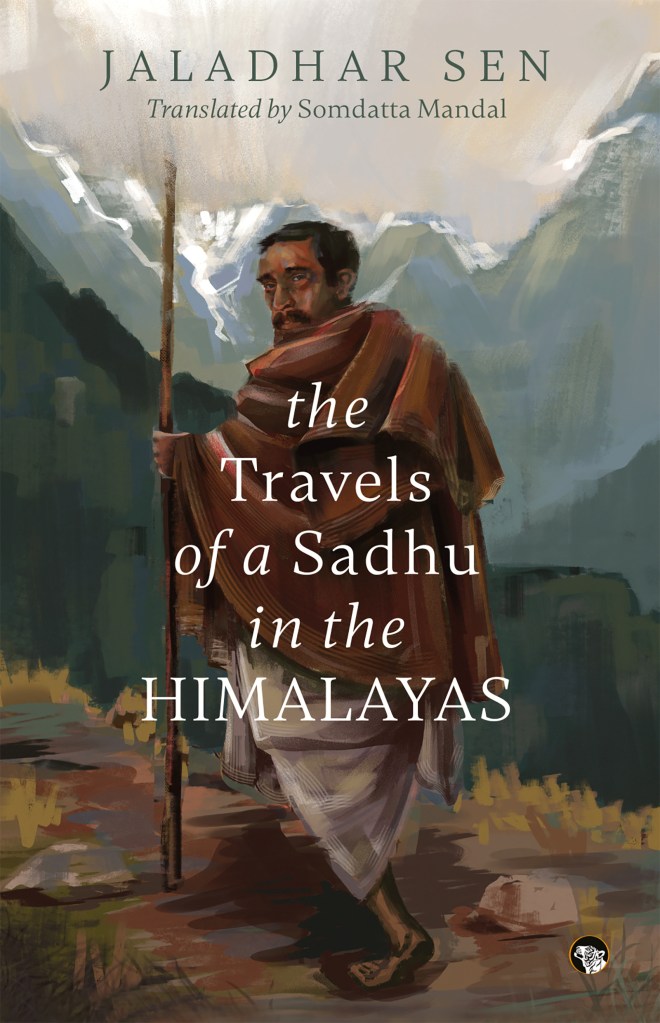
A review of Jaladhar Sen’s The Travels of a Sadhu in the Himalayas, translated from Bengali by Somdatta Mandal, and an online interview with the translator. Click here to read.
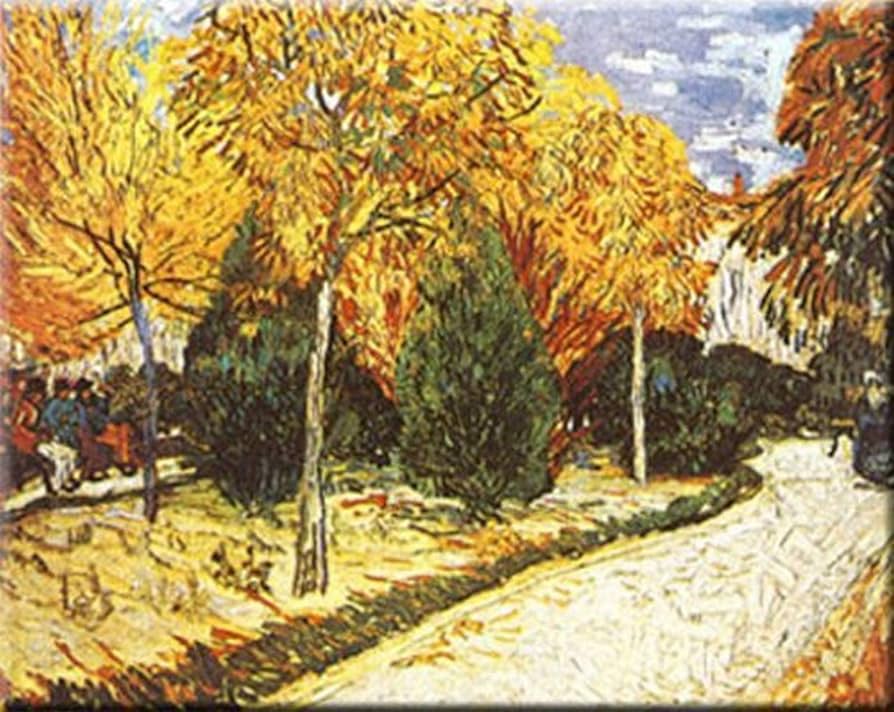
Autumn Garden by Vincent Van Gogh (1853-1890). From Public Domain
September heralds the start of year-end festivities around the world. It’s autumn in one part and spring in another – both seasons that herald change. While our planet celebrates changes, dichotomies, opposites and inclusively gazes with wonder at the endless universe in all its splendour, do we? Festivals are times of good cheer and fun with our loved ones. And yet, a large part of the world seems to be in disarray with manmade disasters wrought by our own species on its own home planet. Despite the sufferings experienced by victims of climate and war-related calamities, the majority will continue to observe rituals out of habit while subscribing to exclusivity and shun change in any form. Occasionally, there are those who break all rules to create a new norm.
One such group of people are the bauls or mendicants from Bengal. Aruna Chakravarti has shared an essay about these people who have created a syncretic lore with music and nature, defying the borders that divide humanity into exclusive groups. As if to complement this syncretic flow, we have Professor Fakrul Alam’s piece on a human construct, literary clubs spanning different cultures spread over centuries – no less an area in which we find norms redefined for, the literary, often, are the harbingers of change.
Mandal, herself, has a brilliant translation featured in this issue. We have a review of her book, an interview with her, and an excerpt from the translation of Jaladhar Sen’s The Travels of a Sadhu in the Himalayas. Written and first published in the Tagore family journal, Bharati, the narrative is an outstanding cultural bridge which even translates Bengali humour for an Anglophone readership. That Sen had a strictly secular perspective in the nineteenth century when blind devotion was often a norm is showcased in Mandal’s translation as well as the stupendous descriptions of the Himalayas that haunt with elegant simplicity.
Our fiction this month seems largely focussed on women’s stories from around the world. While Fiona Sinclair and Erin Jamieson reflect on mother-daughter relationships, Anandita Dey looks into a woman’s dilemma as she tries to adjust to the accepted norm of an ‘arranged’ marriage. Rashida Murphy explores deep rooted social biases that create issues faced by a woman with a light touch. Naramsetti Umamaheswararao brings in variety with a fable – a story that reflects human traits transcending gender disparity.
The September issue would not have been possible without contributions of words and photographs by many of you. Huge thanks to all of you, to the fabulous team and to Sohana Manzoor, whose art has become synonymous with our journal. And our heartfelt thanks to our wonderful readers, without who the effort of putting together this journal would be pointless. Thank you all.
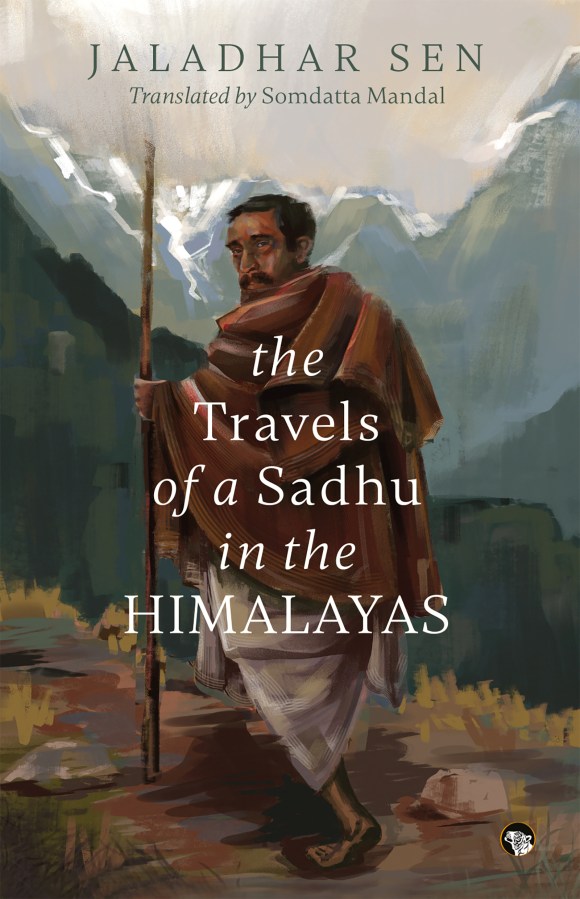
A review of Jaladhar Sen’s The Travels of a Sadhu in the Himalayas, translated from Bengali by Somdatta Mandal, published by Speaking Tiger Books, and a conversation with the translator.
Jaladhar Sen (1860–1939) travelled to the Himalayas on foot with two sadhus[1] in quest of something intangible. His memoir makes us wonder if it was resilience, for after all he lost his daughter, wife and mother — all within a few months. He moved to Dehradun from Bengal for a change of scene after his tragic losses before journeying into the hills.
Written in Bengali and first published as a serial in the Tagore family journal, Bharati, in 1893, the book was brought out in 1900 as Himalay. It has been brought to Anglophone readers by Somdatta Mandal, an eminent translator who has extensively translated much of Tagore’s essays and journals. She is a critic and scholar, a former professor of Santiniketan, an excellent translator to bring Jaladhar Sen’s diary to light. Mandal has given a lucid and informative introduction to Sen, his book and her translation — very readable and without the use of scholastic language or words which would confuse readers. Her commentary adds value to the text by contextualising the people, the times and the circumstances.
Her translation is evocative of the journey, creating vivid visual impact with the play of words. Sen is a Bengali who has picked up Hindi during his brief stay in Dehradun. That he uses multiple vernaculars to move around with two more Bengali migrants who have turned to a religious life and meets locals and pilgrims from a variety of places is well-expressed with a smattering of expressions from various languages and dialects. Mandal has integrated the meanings of these words into the text, making it easy for readers unfamiliar with these phrases to read and enjoy the narrative without breaking the continuity.
Sen is secular and educated — not ritualistic but pragmatic. You can see his attitudes illustrated in an incident at the start of the book: “We quickened our pace, but when we caught up to the two sanyasis, I felt a mix of amusement and irritation. One of them turned out to be my former servant, whom I had dismissed twenty or twenty-five days earlier for theft. His transformation was remarkable—dressed in the elaborate robes of a sanyasi, with tangled hair and constant chants of ‘Har Har Bom Bom’, he was barely recognisable as the thief he once was. It was sheer bad luck on his part that our paths crossed that day.”
At the end of the journey too, Sen concludes from his various amusing and a few alarming experiences: “Many imposters masquerading as holy sanyasis brought disgrace to the very essence of renunciation. Most of these so-called sanyasis were addicted to ganja[2], begged for sustenance, and carried the weight of their sins from one pilgrimage site to another.”
Yet, there is compassion in his heart as the trio, of which Sen was a part, help a sick young youth and others in need. He makes observations which touch ones heart as he journeys on the difficult hilly terrain, often victimised by merciless thunderstorms, heavy downpours and slippery ice. He writes very simply on devotion of another: “I felt happy observing how deep faith and belief illuminated his face.” And also observes with regret: “We have lost that simple faith, and with it, we have also lost peace of mind.” He uses tongue-in-cheek humour to make observations on beliefs that seem illogical. “In such matters, credit must be given to the authors of the Puranas. For instance, Hanuman had to be portrayed as colossal, so the sun was described as being subservient to him. However, with the advancement of science, the estimated size of the sun grew larger, and instead of diminishing Hanuman’s glory, his stature had to be exaggerated even further. Similarly, Kumbhakarna’s nostrils had to be depicted as enormous, so that with each breath, twenty to twenty-five demon monkeys could enter his stomach and exit again.”
Mandal has translated beautiful descriptions of the Himalayas from his narrative with lucid simplicity and elegance. When Sen chances to see the first snow peaks, the wonder of it, is captured with skill: “We were amazed to see a huge mountain of snow, its four large peaks encircling us. The sun was already quite high in the sky, and its bright rays fell upon those mountain peaks, radiating hues that cannot simply be described in words. Even the best painter in the world could not replicate the scene with his brush.” And: “Yet the scenery that unfolded before my eyes was simply magical. Standing in front of this pristine beauty, man’s power and pride were humbled. He could recognise his own triviality and weakness very clearly and, to a certain extent, grasp the greatness of the creator within his heart.”
And of course, there is the typical Bengali witty, sardonic banter creeping in to the narrative: “On certain days, when I felt inclined to indulge in minor luxuries, I would purchase a few pedas. However, such bravado was rarely worth the effort, as one might have needed the assistance of archaeological experts to determine the sweets’ actual date of origin—no one could tell how many generations of worms had made their home inside them!”
The translation has retained the simplicity of the narrative which Sen tells us was essentially his style. He had no intention of publishing what he wrote. He had started out in company of a sadhu with a staff, a blanket and a stock of Baul Kangal Harinath’s songs. He writes at the end: “I didn’t intend to write a diary. I had a songbook with me, and when that book was being bound, I had added a few blank pages with the idea of writing down new songs if I came across them.” He scribbled his notes in those blank pages.
The journey makes a wonderful read with its humorous descriptions of errant sadhus, frightening storms, descriptions of geographies and travel arrangements more than a hundred years ago, where the pilgrims live in shop houses and eat meagre meals, the perseverance, the wonder, the love and friendship one meets along the way. Though there is greed, theft and embarrassment too! Some of his narrative brings to my mind Nazes Afroz’s translation of Syed Mujtaba Ali’sIn a Land Far from Home: A Bengali in Afghanistan.
Mandal tells us: “A prolific writer, Sen authored about forty-two books, including novels, travelogues, works with social messages, children’s literature, and biographies.” In real life, she describes Sen as “a writer, poet, editor, philanthropist, traveller, social worker, educationist and littérateur.” That’s a long list to wear. There’s more from Mandal about what the book offers and why she translated this unique travelogue in this exclusive interview.
Traveller-translator Somdatta Mandal
How did you chance upon this book and why did you decide to translate it? How long did the whole process take?
I have been writing and researching on Indian Travel Writing for almost over two decades now and so was familiar with the sub-genre of travel writing about the Himalayas. In Bangla, there exists a great number of books on travel to holy places as part of a pilgrimage from the mid-19th century onwards. But this book was unique because it was written by a secular person who did not go to the Himalayas as part of a pilgrimage but nevertheless got influenced by the other pilgrims with whom he went along. It was in the summer of 1890 when he actually travelled, and later in 1893, his perilous experience was published serially in the Bengali periodical Bharati which was then edited by Rabindranath Tagore’s niece, Sarala Devi Choudhurani.
During that period, with the proliferation of travel narratives being regularly published in several contemporary Bengali periodicals, Jadadhar Sen’s narration became very popular and after 1900 when it was published in book form, it took the Bengali readers of the time by storm. Its popularity led to it being included as part of the syllabus at Calcutta University. Feeling that pan-Indian readers who could not read the original text in Bangla should get to read this interesting text in English, I was inspired to translate this travelogue for a long time and Speaking Tiger Books readily accepted my proposal a couple of years ago.
The places visited by Sen might not seem unique in the present context, but the period during which he undertook the travel and the culture-specificity of it needed special attention. I was busy editing two volumes of travel narratives to Britain then, and after I finished my project, I took up translating this text in full earnest. It took me about three months to complete the translation, and I send the manuscript to the publishers in January this year. After several editorial interventions, it ultimately saw the light of day in July 2025.
Did you need to input much research while doing the translation? How tough was it to translate the text, especially given that it has multiple language and cultural nuances?
I did have to do some biographical research on Jaladhar Sen as his narrative is absolutely silent about why he moved from Bengal to Dehradun and the actual reason for his setting out on this particular journey. Interestingly, I was also researching about Swami Ramananda Bharati, who was the first Bengali traveller to Tibet and Manas Sarovar, and who wrote the famous book Himaranya (The Forest of Snow) whom Sen knew earlier and with whom he actually undertook the journey. With several cross references I could fill in a lot of biographical gaps in the narrative.
Regarding translation, it must be kept in mind that though something is always lost in translation, one must always attempt to strike the right balance between oversimplification and over-explanation. Translation is also a sort of creativity and the challenges it poses are significant. The intricate navigation between the source language and the translated language shows that there are two major meanings of translation in South Asia – bhashantar, altering the language, and anuvad, retelling the story. Without going into major theoretical analyses that crowd translation studies per se, I feel one should have an equal grasp over both translated and source languages to make a translated piece readable.
What are the tools you have used to retain the flavour of the original narrative? Please elaborate.
Readability of this old text Himalay in the present context is of paramount importance and though it is very difficult to replicate the grandiose writing style of late nineteenth-century Bangla, I have attempted to retain as much of the original flavour of the text as possible. Without using glossary or footnotes, the meaning of certain words becomes evident through paraphrasing the text. Thus, in keeping with Jaladhar Sen’s original work, the names of some words have been retained as they are. For example, the words dharamshala and chati—resting places on the pilgrim’s path—are so culture-specific that they are retained in their original forms. Sen also uses other culture-specific words such as panda (the Brahmin middleman who acts as the intermediary for worshipping the deity), the kamandalu (the water jug carried by sanyasis), lota-kambal (the jug and blanket that emphasise one’s identity as a sadhu), the jhola (the typical cloth bag that hangs from the shoulders), and the mahanta, or the head priest of the temple. Again, different terms such as sadhu, sanyasi, and yogi are used at different points to define ascetics and are often employed interchangeably. The term math, denoting seats of authority and doctrinal learning, has also been retained in its original form. As a Bengali gentleman settled in western India— Dehradun—the author often refers to Bengal as his desh, which literally means ‘country’, but in his parlance refers to the region of Bengal, which is as much a part of India as Dehradun. This definition should not create any confusion in the reader’s mind.
You, like the author, never clearly tell us why Sen starts out on such a perilous journey. Why do you think he went to this journey?
From evidential sources we get to know that like any other domestic person Jaladhar Sen began his career as a teacher in a High School in 1883 in Faridpur in Bengal. He got married in 1885 but however, a few years later he endured a great personal tragedy, losing his family members in quick succession. In 1887, his newborn daughter died on the twelfth day after her birth, and his wife passed away another twelve days later. Within three months, his mother also died. Overwhelmed by grief and seeking solace, he moved to Dehradun at the foothills of the Himalayas, where he worked as a teacher.
It is known that Sen did not venture into the Himalayas out of wanderlust. Dejected with domestic life, he apparently went to Kumbh Mela in Haridwar, where he chanced upon Swami Ramananda Bharati, an elderly Bengali sadhu whom he had known previously. He decided to accompany him on a trek all the way to Badrinath on foot. This was the background to his Himalayan travels and how he became a paribrajak sadhu or a traveller saint. The year was 1890.
Even though the memoir spans only a month, the author underwent many changes. Would you regard this book as a bildungsroman of sorts, especially as there is a self-realisation that comes to Sen at the end? Please elaborate.
In his travel account Sen documents his experiences of journeying to various places of religious significance, namely Devaprayag, Rudraprayag, Karnaprayag, Vishnuprayag and Joshimath before reaching the temple town of Badrinath in the upper Himalayas. He undertook this journey as a secular sojourner. But the travel impacted his soul in such a way that at the end of his narrative he admits that he had ventured in the Himalayas with a funeral pyre burning within his heart; and he merely embraced the cool breeze of the mountains with his hands and pressed the hard snow against his chest. He is doubtful whether he had the time or the state of mind to witness the eternal glory of the Lord revealed in the heavenly scenes around him. Could he lift his head and look towards heaven? That sense of wonder was absent within him. But some sort of change had already appeared within him. In this context, I feel the last two sentences of his narrative to be very significant when he states: “If anyone feels inspired to visit the Himalayas after reading this simple travel narrative of mine, then all my writing will have been worthwhile. And if anyone journeys towards the feet of the god of the Himalayas, my life would have been fulfilled.”
What was your favourite part of the book. Did you enjoy translating some things over others? Please elaborate.
There are several sections in the book which I really enjoyed translating. Most of them relate to specific incidents that Sen encountered during his travels and how human nature was the same everywhere. The first one was when they were on their way to Devaprayag and in his diary entry on 11th May, he tells us about the incident when his money pouch along with the Swamiji’s tiger skin was stolen on the way and how with the help of a panda he managed to retrieve it after a lot of effort. Though they were not very much spiritually inclined, they realized that there were crooks on the way to the pilgrimage sites who also dressed up as sadhus and everyone could not be trusted in good faith.
The second memorable incident is when trekking during extremely inclement weather — rain and thunderstorm– and when stones rushed down from the mountain slopes nearly killed them, how Achyutananda or Vaidantik who was accompanying them managed to protect him by shielding from the natural calamities with his own body as a mother hen does to protect her chicks.
The third interesting incident that Sen narrates is dated 3rd June when they got stranded at a chati in Pipul Kuthi. The head constable or jamadar sahib arrived there to enquire about a theft and Sen tells us how even in that remote mountainous region, the police had the reputation for rudeness and stern behaviour as the Bengal police had. He writes, “These officers, tasked with restraining wrongdoers and protecting civil society, displayed the same demeanour no matter where they were stationed. It seemed that the police were the same everywhere.”
Another memorable section is when they chance upon a young boy who probably ran away from his house and was trekking with them for some part of the way. The way in which the sick lad was ultimately deposited under the care of a doctor in the local hospital is extremely moving. Several other sections can also be mentioned here but it will turn my reply excessively long.
Why did you feel the need to bring this book to a wider readership? Are you translating more of his books?
I have already mentioned the importance of Sen’s travelogue in charting the long tradition and rich repertoire of Bengali travel narratives on the Himalayas that focus on travel as pilgrimage. As early as 1853, Jadunath Sarbadhikari embarked on a journey from a small village in Bengal to visit the sacred shrines of Kedarnath and Badrinath. Returning in 1857, he chronicled his travels in Tirtha Bhraman (1865). Two lesser-known pilgrimages to the Himalayas were undertaken by monks of the Ramkrishna Mission order – Swami Akhandananda and Swami Apurvananda—in 1887 and 1939, respectively. Their travelogues were published many years later by Udbodhan Karyalaya, the official mouthpiece of the Mission. In both narratives, we find vivid details of the hardships of travelling during that period, marked by limited financial resources and minimal material comforts.
Jaladhar Sen’s narrative also holds a significant position in this chronological trend of writing about travelling in the Himalayas. From the 1960s onwards we find a proliferation of Himalayan travel writing in Bangla by writers such as Prabodh Kumar Sanyal, Shonku Maharaj, Umaprasad Mukhopadhyay and others, and many of these texts need to be translated provided one finds a responsive publisher for them. I am not translating Jaladhar Sen anymore, though as a prolific writer Sen authored about forty-two books, including novels, travelogues, works with social messages, children’s literature, and biographies.
How do you choose which text to translate? You always seem focussed on writers who lived a couple of centuries ago. Why do you not translate modern writers?
There is no hard and fast rule for selecting which text I want to translate. I have already translated several travel texts by Bengali women beginning from Krishnabhabini Das’s A Bengali Lady in England, 1876, to later ones. But I have not translated any travelogue about the Himalayas before. Here I must be candid about two issues. I pick upon writers usually whose texts are free of copyright as that does not entail a lot of extra work securing permissions etc. The second more practical reason is that I still have a long bucket list of translations I would like to do provided I find an agreeing publisher. But that is very difficult because several of my proposals have been rejected by publishing houses because they feel it will not be marketable in the current scenario.
As for the query about translating modern writers let me narrate a particular incident. As a woman writer and as someone interested in translating travel narratives of all kinds, I had approached Nabanita Dev Sen through a willing publisher to translate her visit to the Kumbh Mela that she wrote about in her book titled Koruna Tomar Kone Poth Diye[3]. After seeking necessary permission and meeting her personally on several occasions to discuss several chapters, I gradually got frustrated because even after three sets of corrections, the translation did not satisfy her.
She consulted several other people, including her own daughter, and ultimately told me that she couldn’t accept my translation because she ‘didn’t find herself in it.’ The colloquial Bangla humour in some places were not sufficiently translated. As far as I got to know from the publisher, she changed editors thrice, and in the end the translated book was published with one of the editors named as the ‘translator’. When I chanced to meet her at my university on a different occasion, Nabaneetadi told me that she had mentioned my name in the acknowledgement section of the book, which of course I didn’t bother to buy or check. From such a bitter experience, I feel staying with writers dead long ago is a safer bet for me.
You are working on a new translation. Will you tell us a bit about your forthcoming book?
As I have already mentioned, I found Swami Ramananda Bharati’s Himaranya (The Forest of Snow) to be a companion piece for translation. Not only is this significant because it was the same Swamiji with whom Jaladhar Sen travelled to the Himalayas, and though his name is not mentioned anywhere by Sen, we get to know a lot about him already through his narrative. As a monk, Bharati travelled to Mount Kailash and Manas Sarovar in Tibet during 1898, the first Bengali to do so. These travels form the basis of Himaranya. It was not entirely ‘spiritual’ or ‘theological’ but rather depended on the traveller’s own temperament. There are presentations of secular interests and considerations, and modern readers can relate to them easily, especially because the route to Kailash and Manas Sarovar has now been opened for Indian pilgrims once again and several groups are going there every other day. The manuscript is already with the publisher and hopefully the book should see the light of day by the end of this year if everything goes well.
You have translated so many voyages by Tagore, by Sen, do you now want to bring out your own travelogues or memoirs?
I have been translating travel narratives of different kinds for a long time now. I still plan to do a few more if I get a proper publisher for the same. I am an avid traveller myself and have actually trekked to Kedarnath, Badrinath, Gangotri and Yamunotri twice. I have also trekked for fourteen days to visit Muktinath in Nepal way back in the early 1980s, and during the pandemic days when I was confined at home, I managed to key in that experience in Bangla from the diary I kept at that time. That narrative was published in the online journal Parabaas which is published from the United States. But I have never taken writing about my own travelogues or memoirs seriously. Of course, last year and also forthcoming this year, a special Puja Festive number of a Bengali magazine has been publishing my travel articles. But there is nothing serious or academic about it.
Do you have any advice for fledging writers or translators?
Translating has caught up in a big way over the past five or six years. Now big publishing houses are venturing into publishing from regional bhasha literatures into English and so the possibilities are endless. Now every other day we come across new titles which are translations of regional novels or short stories. My only advice for young writers or translators is that since copyright permissions have become quite rigid and complicated nowadays, it is always advisable to seek permission from the respective authorities before venturing into translating anything. I was quite young and naïve earlier and just translated things I liked without seeking prior approval and as usual those works never saw the light of day. Also, as time went by, I learnt that translating should have as its prime motive current readability and not always rigidly adhering to being very particular about remaining close to each individual line of the source text. The target readership should also be kept in mind and so the choice of words used and glossary should be eliminated or kept to a minimum. The meaning of a foreign word should as far as possible be embedded within the text itself. All these issues would definitely make translating an enjoyable experience.
Thanks for the wonderful translation and your time.
[1] Mendicants. Sadhu and swami also have the same meaning
[3] Translates from Bengali to The Path to Compassion, published in 1978. The translation was published by Supernova Publishers in 2012 as The Holy Trail: A Pilgrims Plight. Soma Das is mentioned as the translator.
(This review and online interview is by Mitali Chakravarty)
I had arranged to leave at half past four in the morning; my friends arrived even earlier to bid me farewell. It was a moonlit night, and the entire world lay silent and still. Could this small change in my life affect the grand workings of the earth? I was leaving everyone behind; friends and relatives accompanied me for quite some distance. It was evidently difficult for them to sever the affectionate ties they had nurtured with me for so long. I requested that they not proceed further; in the end, they reluctantly turned back. I, too, glanced back several times to take one last look at them. I couldn’t help but wonder—if this separation from friends was so painful, how much more difficult would it be to part from one’s own family?
A few days ago, I had read Pilgrim’s Progress*, and one scene from the book kept recurring in my mind. As we walked, my thoughts wandered to such reflections. Soon, the sun rose. We began moving towards Hrishikesh. This was an unfamiliar route—rarely travelled by others. After crossing several mountains and forests, we arrived at a small village called ‘Khanu’† around 11 a.m. This peaceful village with only five to seven houses nestled beneath a canopy of trees, resembled a tiny bird’s nest. A small stream meandered near the village. We went and took shelter under a tree by the stream, and, parched and famished, we gratefully drank its water to our hearts’ content. After eating our meal there, we resumed our journey around 5 p.m.
After leaving the village, we noticed two monks walking ahead of us. Since it was just the two of us travelling, I thought, why not join these holy men? At least the four of us could travel together for a while. We quickened our pace, but when we caught up to the two sanyasis, I felt a mix of amusement and irritation. One of them turned out to be my former servant, whom I had dismissed twenty or twenty-five days earlier for theft. His transformation was remarkable—dressed in the elaborate robes of a sanyasi, with tangled hair and constant chants of ‘Har Har Bom Bom’, he was barely recognisable as the thief he once was. It was sheer bad luck on his part that our paths crossed that day.
I recounted the whole story to Swamiji, who commented, ‘Perhaps his companion has some money in his jhola, and he has disguised himself in this manner to swindle it.’
Indeed, there seemed to be no limit to the number of people who cloaked themselves in saffron robes, with matted hair and a kamandalu, only to engage in theft, deceive innocent people, or even commit heinous crimes when the opportunity arose. Readers will encounter many such so-called sadhus in my travel narrative.
At first, my servant seemed confident I wouldn’t recognise him in his new guise. He appeared smug, believing that his ‘western intelligence’ would outwit my ‘Bengali intellect’. Seeing us, he began chanting ‘Bom Bom’ even louder, as if to reinforce his act. Unable to tolerate his pretence any longer, I burst out laughing and said, ‘Aare lounde, kabse chori chhod ke sadhu ban giya?——Oh, you scoundrel, since when did you give up thievery to become a monk?’
He was utterly stunned and rendered speechless by my words. I then explained everything to his companion, a naïve and well-meaning man. This stout young fellow had accepted my servant as his disciple, feeding him well in exchange for a few religious sermons. I said, ‘Sadhu, you may keep him and feed him—I have no objection. But if you have any money in your jhola, guard it carefully. If a man can become a sadhu in ten or twelve days, there’s nothing stopping him from becoming a murderous dacoit in a few hours.’
Later, I heard that the sadhu heeded my unsolicited advice.
By evening, we reached Bhogpur. This village was home to many people, and the presence of small brick houses suggested that some wealthy residents lived there. Close to the homes of these affluent villagers stood a dharamshala, built and maintained by the villagers themselves. Travellers and sadhus from afar could find shelter here, with food and amenities provided by the locals. However, if a traveller carried money or the village had a shop, they need not rely on these dharamshalas.
There is a great deficiency of dharamshalas in Bengal. In many respects, we are far more developed and civilised than people from other parts of India; however, we are so preoccupied that we do not have the leisure to spare time for travellers or sick people who might perish on their journeys. Of course, it must be acknowledged that there are still a few among us who are exceptions to this. Nevertheless, I feel that the uneducated Garhwali farmers, who help others, offer shelter to the distressed, and wholeheartedly care for guests, are far more sincere than the educated people of Bengal.
We spent the night at the dharamshala in Bhogpur. Exhausted from the rigours of travelling, we had no need for food and instead went straight to sleep.
7th May, Thursday
We resumed our journey early in the morning and entered the forest of Hrishikesh, which we had traversed before. Although the forest was familiar, the path was entirely unknown; we could not determine whether we were following the same route we had previously taken. We reached Hrishikesh at 1 p.m. and rested beneath a tree, still without any food. Once the afternoon sun’s glare had lessened, we resumed our journey and reached Lakshman Jhula by evening.
The few shops overlooking the Ganga at Lakshman Jhula were bustling with travellers. A group of Udasi sanyasis had arrived that very day. They were Sikhs.
(Excerpted from The Travels of a Sadhu in the Himalayas by Jaladhar Sen, translated by Somdatta Mandal. Published by Speaking Tiger Books, 2025.)
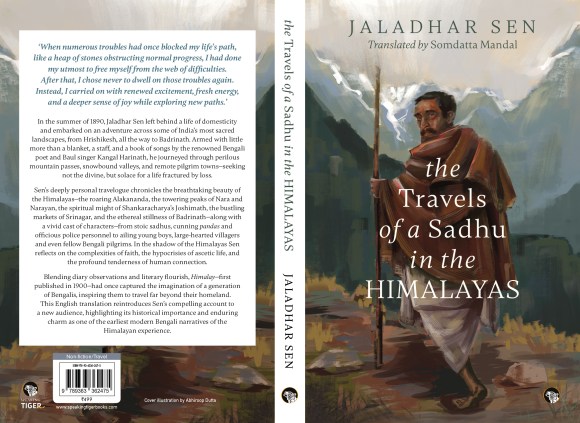
THE BOOK
In the summer of 1890, Jaladhar Sen left behind a life of domesticity and embarked on an adventure across some of India’s most sacred landscapes, from Hrishikesh, all the way to Badrinath. Armed with little more than a blanket, a staff, and a book of songs by the renowned Bengali poet and Baul singer Kangal Harinath, he journeyed through perilous mountain passes, snowbound valleys, and remote pilgrim towns—seeking not the divine, but solace for a life fractured by loss.
Sen’s deeply personal travelogue chronicles the breathtaking beauty of the Himalayas—the roaring Alakananda, the towering peaks of Nara and Narayan, the spiritual might of Shankaracharya’s Joshimath, the bustling markets of Srinagar, and the ethereal stillness of Badrinath—along with a vivid cast of characters—from stoic sadhus, cunning pandas and officious police personnel to ailing young boys, large-hearted villagers and even fellow Bengali pilgrims. In the shadow of the Himalayas, Sen reflects on the complexities of faith, the hypocrisies of ascetic life, and the profound tenderness of human connection.
Blending diary observations and literary flourish, Himalay—first published in 1900—had once captured the imagination of a generation of Bengalis, inspiring them to travel far beyond their homeland. This English translation reintroduces Sen’s compelling account to a new audience, highlighting its historical importance and enduring charm as one of the earliest modern Bengali narratives of the Himalayan experience.
THE AUTHOR
Jaladhar Sen (1860–1939) was a Bengali writer, poet, editor and a philanthropist, traveller, social worker, educationist, and littérateur. He was awarded the title of ‘Ray Bahadur’ by the British Government. In 1887 he suffered the greatest loss in his life when his mother, wife and daughter died in quick succession. Overwhelmed by grief and seeking solace, Jaladhar moved to Dehradun at the foothills of the Himalayas, where he worked as a teacher. It was during this time, in 1890, that he travelled to the Garhwal Himalaya. This journey inspired his travelogue Himalay.
THE TRANSLATOR
Somdatta Mandal is the Former Professor of English and Chairperson at the Department of English & Other Modern European Languages, Visva-Bharati, Santiniketan. Somdatta has a keen interest in translation and travel writing.
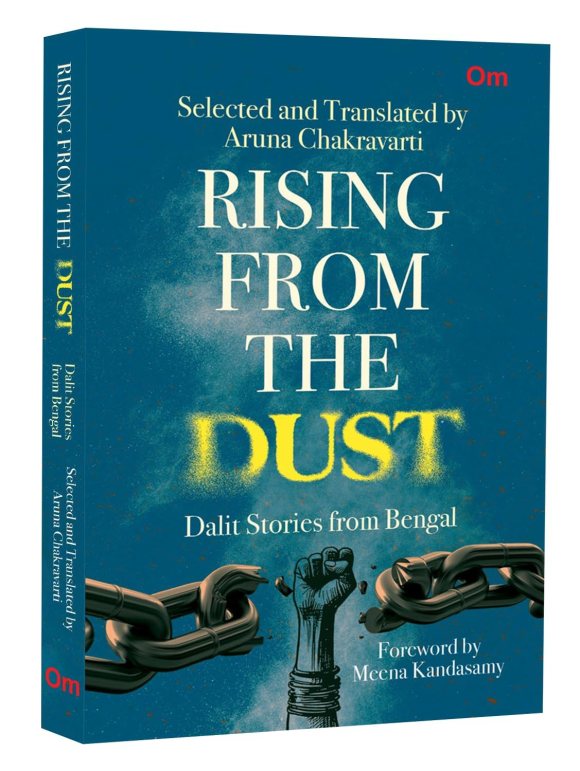
Title: Rising From the Dust: Dalit Stories from Bengal
Selected and Translated by Aruna Charavarti
Publisher: Om Books International
Though Bengali Dalit writing is comparatively newer compared to Dalit writing in Marathi and other Dravidian languages, nevertheless it has already carved a niche for itself in a significant way. The main difference between the Dalit writing emanating from other regions of India and that of Bengal is that whereas the thrust area elsewhere is primarily on the untouchables, the downtrodden and the way the Dalits have been marginalised in society for a long time, in Bengal the problem is further complicated by caste and class issues which is not so significant elsewhere. This collection of twelve Dalit short stories from Bengal, carefully selected and translated by Aruna Chakravarti, spans a long period and what distinguishes it is the gendered lens that explores the Dalit woman’s cause and holds it up to the light.
There is a difference in the style of narrating the Dalit experience from writer to writer and accordingly it can be divided into two groups. In the first category are writers who themselves belong to the Dalit community and their writing stem out of experiential feelings. The second group of writers belong to the upper castes, and their writing stems from a feeling of empathy for the marginalized and the downtrodden. Spanning a long period of almost a century, Aruna Chakravarti has decided to blend both these categories and has meticulously translated the dozen stories from well-known writers to those a little lesser known. While literary stalwarts like Mahasweta Devi, Saratchandra Chattopadhyay, Tarashankar Bandopadhyay and Prafulla Roy share their profound understanding of the Dalit woman’s fears and traumas, hopes, dreams and aspirations, contemporary voices from the Dalit community itself like Manoranjan Byapari, Bimalendu Haldar, Manohar Mouli Biswas, Kalyani Thakur Charal, Anil Ghorai and Nakul Mallik explore aspects of survival and social ostracisation with both sensitivity and angst. On the one hand we have centuries of oppression being still carried upon these subaltern people, and even within that restricted space, we also often find protest and upheaval that the doubly marginalized womenfolk attempt to revolt against.
In the opening story titled “Fortress” by Manoranjan Byapari, we find Nakul’s widow Sarama, unwillingly forced to sell her body to oppressive menfolk everyday finds her unique way of protest by deliberately copulating with her ex-husband Ratan who is inflicted with venereal disease, thereby driving out all her fear and henceforth would ‘welcome every touch’ and ‘would wait outside her door in delicious anticipation.’ In Bimalendu Haldar’s “Salt” we are shown how a fisherman Madhai who works for his employer Nishay Ghosh, goes missing and his wife Chintay, collecting three other suffering women registers their protest in a unique way. In “Shonkhomala” Manohar Mouli Biswas tells us a relatively contemporary and true story relating to the grabbing of agricultural land in the fertile Singur area by the government for setting up of the Tata Motor Factory. It tells us of how Shonkhomala Dom, a Dalit woman, changes her name to Tapashi Malik and is gangraped and murdered because she was unwilling to give up her land and organized a protest march instead. Incidentally, till date, the court case for identifying the murderer and the rapists of Tapashi Malik is unresolved.
Another very touching story “Illegal Immigrant” by Nakul Mallick brings in the plight of refugees from erstwhile East Bengal coming to India after the partition. It tells us of the plight of an extremely poor jhalmuri seller called Madhav who, along with his wife Shefali, lives in a slum beside the train track and somehow manages to eke out a decent living. When Madhav is picked up as an illegal Bangladeshi immigrant and thrown out of the country, his wife’s life goes haywire as she goes to the Petrapole border looking for her husband in vain. Kalyani Thakur Charal deliberately adds the word ‘Charal’ meaning ‘Chandal’ or ‘untouchable’ to her name in order to take pride of her Dalit identity. In “Motho’s Daughter” she tells the story of one Nishikanta who wants to get his children educated first and foremost and is frustrated in the end because his stray son gets married to a woman who doesn’t encourage education. Anil Ghorai, another powerful Dalit writer, tells an interesting story about Larani, belonging to the tanner caste, her relationship with Hola Burho, a dhol[1] repairer and his son Pabna. The main thrust of the story “The Insect Festival” is of course the attack of locusts in the village and how the majority of the illiterate villagers take resort to superstitious rituals in order to ward off the menace instead of confronting the situation in a scientific manner.
As mentioned earlier, each story by the four empathetic writers goes on emphasizing the pressures of caste and class upon the lower classes of people in different situations. In “The True Life Story of Uli-Buli’s Mother” Mahasweta Devi tells us the story of a helpless woman who becomes a destitute after being thrown away for having four daughters. She lives under the delusion that someone has stolen her young twins Uli and Buli. Again in “Nalini’s Story” she draws a beautiful pen picture of Nalini, who after being abandoned by her husband, lives with her grandson and ekes out her living by working as a maid. Years later, her estranged son along with his wife and her landlord Gobindo all desire to take possession of her house by arranging an elaborate shraddha ceremony for her estranged husband. Nalini understands their ploy and, in the end, she puts her foot down, unwilling to be in eternal debt for the extravagant rituals proposed by them.
Prafulla Kumar Roy’s “Snake Maiden” gives us an inside story of the gypsies or nomads who are known as ‘bedyes’ and who deal with snakes and charms. Here Shankhini is the mistress of a band of bedeys who come and settle in Sonai Bibir Bil for the season and accidentally meets her ex-lover Raja saheb. She is in a quandary because he wants her to renounce the bedeni’s life and settle down in one place and turn into a farmer’s wife. The tug between domesticity and the age-old tradition of this nomadic gypsy tribe’s rituals and customs is elaborated through the rest of this interesting story. The powerful storyteller Tarashankar Bandyopadhyay gives us two stories with totally different locales and characters. In “The Witch” he elaborates upon the idea of a woman who is defined as a witch and is ostracised by society because she is said to cast an evil eye upon everything she sees. She dies an agonising death in the end as her dark and unholy blood oozes out from her veins. Incidentally, even to this day the idea of identifying certain low caste woman as witches and even burning them to death persists in several villages in rural Bengal and such superstitions are not overcome at all.
In the second story “Raikamal”, Tarashankar gives us an in-depth picture of a Vaishnav community, their rituals and their manner of living. The protagonist Kamalini had to abandon her crush on Ranjan because he belongs to another caste, weds Rasik who consumes poison in the end out of jealousy and ultimately Kamalini has to live all alone. Sarat Chandra Chattopadhyay’s eponymous story “Abhagi’s Heaven” is once again a depiction of Bengali society strictly divided according to caste lines. In this story, Kangali’s mother Abhagi, an untouchable, a ‘duley’ by caste, watches the funeral pyre of a Brahmin lady and imagines her going to heaven in a golden chariot. She nourishes the desire to be cremated in a similar fashion when she dies, but after her actual death she is denied the privilege of being burnt and has to be buried near the riverside as per societal norms.
The stories in this collection capture the essence of a way of life marked by the enduring defiant spirit of the dispossessed and the marginalised. This is a must-read not only for literary enthusiasts, but also for students and scholars of Dalit and caste studies, development studies, Indian literature in translation and gender studies. In her foreword, Meena Kandasamy categorically states that “every short story in this collection holds together a precious, precarious universe – the old order continues with its oppression, the new is struggling to be born; everyday life is a struggle and yet, struggle itself is the terrain, where life, liveliness, and being alive come into their full glory.” This translated volume is therefore strongly recommended for non-Bengali readers who are not aware of the nuances of Bengali Dalit writing at all and it will dispel the notion that all kinds of Dalit writing cannot be brought together under a single umbrella. Kudos to Aruna Chakravarti for her excellent selection and meticulous translation of these one dozen stories.
[1] Musical instrument akin to a drum but hung from the neck
.
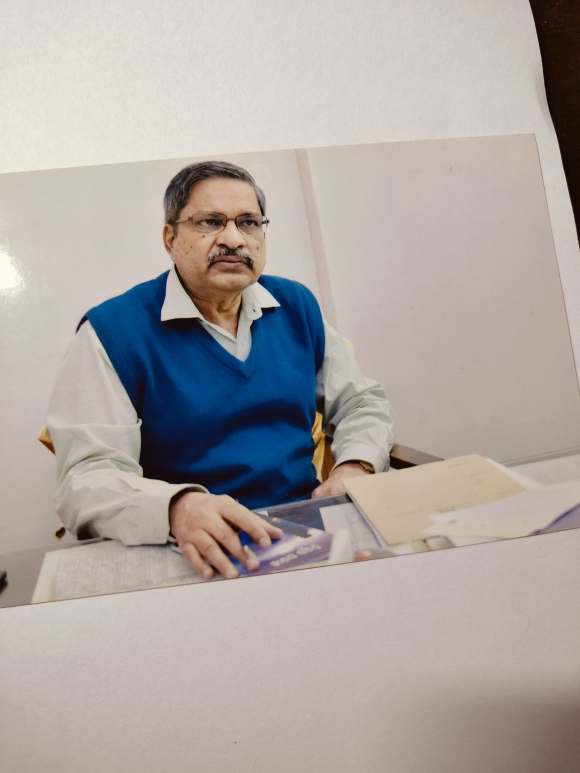
Somdatta Mandal, critic and translator, is a former Professor of English at Visva Bharati, Santiniketan.
PLEASE NOTE: ARTICLES CAN ONLY BE REPRODUCED IN OTHER SITES WITH DUE ACKNOWLEDGEMENT TO BORDERLESS JOURNAL
Five poems by Ashwini Mishra have been translated from Odia by Snehaprava Das
Ashwini Mishra
RIDING THE EARTH: THE LAST DAY

Farewell!
A final goodbye!
The prologue to an epic of an endless rest
Has to be something
Extra special.

Gathering up all the strength
Of his senses
He strove to know the people
Around him.
He spoke fondly to them
‘Let you all be there in my heart
Forever,
May my world keep shimmering
With the glow of this endearing bond.’
He rode each passing day
That galloped on --
Like a well-fed, robust horse,
He rode on,
His feet securely stuck in the stirrups
His hands gripping the rein hard.
 In an instant he could
 Gallop around the earth
 Cradling time under his arm.
The river, the ponds
And the rainclouds brought water
For his parched throat,

Towards the end of the journey
He called one by one his folks
Whom he held dear to his heart.
 Some of them sounded assuring,
 Some promised to come.
 A few fulfilled their promises too
 And came --
Still, there was a disturbing emptiness
Somewhere within.

Where has disappeared
The knot of love that had held
So strong in the days of past?
It was as though that knot
Had loosened and shredded.
Worn out like a weary page
In the mindscape,
Like someone that had once
Played a major role,
And had moved away from the centerstage,
To stand by the stage-wings
Distanced and dispassionate!

SWORD

 I had never wanted
To wield a sword, a dagger or a goad.
I had always wanted to tuck plumes
into the hair,
To draw a lotus on the palm,
To play the notes of spring breeze
For the ears of the
Blazing summer noon.
I had wanted to be a dreamer,
To let my eyes close
At the touch of the delicate petals
Of exotic blooms!
But you did not let that happen.
My loved ones,
My folk I held close to my heart,
Fell at the merciless blows
Of harsh and hostile words
Your canons shot.
Your anger, your cruelty,
Weighed heavy on me
And a thunderstorm brew inside me.
Unnoticed by others.
In the end,
My compelled hands
Reached out to the scabbard
Lying abandoned under
The smuts of time
To draw the sword out.

THE CLAY LAMP

A clay lamp can always guess
How long the ghee and
The wick in it will last.
It is a living thing
How brief might its lifespan be.
It can, like all living beings,
Battle the wind and the darkness
In its struggle to survive
In an unenclosed space
That is vulnerable to
The assault of hooves of animals
Or the misty spray of the dew.
 It knows that
 The moment the curtain rises,
 Revealing the stage
All set for the entry of light,
The first act of the play will end
And Its role will be over
Even before the makeup is
Rubbed off the face or the artificial tint
On the hair fades.
The hand that had lit it
May turn impassive, too!

  A woman, her heart and hands
  Focused on the act,
  Keeps lighting up the clay lamps,
  Not knowing for sure
  How long their light would last
  Or when the flames would die.
 The idol of the goddess
  That glittered in the light of
  The lamps she lights
   Never steps down to help her
   When the flames char her body.
   There is not a soul in sight
   When her flame dies,
   Except a few burnt insects.

 GAZA
You neither have a chest
Nor arms now
To embrace those who once saw
You as their own
Like you did before.
The natives and the foreigners,
Who trod your soil,
Now take a turn either to your left
Or to your right and move on.
No longer the chirrups of birds
Come sprinkling down
Either from your sky, or your trees.
There are vultures everywhere
Scavenging on the tender human flesh
Getting fat and heavy.
The sun, the moon and the stars
In your sky are
Blown away into thousand pieces now.
You may dig up some of them
Graved under your ground.
The Death in your sea breeze
And in your explosive garb
Haunts living humans
To turn them to corpses.
Like a farmland ladened with crops,
Skeletons are heaped in your streets.
Houses and buildings where life dwelt
Are mounds of shattered concrete.
Wreckage of kitchenware,
 And of home appliances
 Lie on the desolate roads
 In pathetic scatters.
A book satchel slings from the
Severed hand of a dead child.
The thirst for war is not quelled yet,
New strategies are deliberated upon
To pursue newer missions of death.
New weapons must be hoarded
In the arsenal
To launch an attack on the netherworld
After this world is razed to ruins.

WHIP

The whip that once basked proud in
The love of the kings and the feudal lords
And danced in elation on
The defenseless back of the oppressed,
Now lies worn and weary
In a niche in the royal palace or
Behind the glass doors in the shelf
Of a museum,
Coated in dust and dirt.
The obsequious tanners,
Who were far below the
Aristocracy,
Polished this tool of tyranny
 Bright with oil,
 And it jumped crazy
On their haggard backs,
Drawing crooked lines
Of livid blue and red.

How wide is the chasm between
Sage Dadhichi who gave his bones
For forging a thunderbolt
To kill demon Brutrasura*,
And the stingray that gave its tail to
Shape a whip
That performs its brutal dance
On the back of innocent humans?
Even today,
The barges of history and legends
Voyage across the pages
Of text books taught in the classroom,
Their sails fluttering
On their proud masts.

*Brutrasura was killed by Indra with a weapon made with Sage Dadhichi’s bones as per mythology.
Aswini Kumar Mishra has 13 poetry collections to his credit. He has been translated widely into English, Hindi, Bengali, Tamil and other Indian languages. He has authored a fiction in English, Feet in the Valley (Rupa Publications, 2016), His poems and essays have appeared in several literary journals including Indian Literature, Kavya Bharati, Wasafiri, M.P.T, The Little Magazine, Samakaleen, Konark, Rock Pebbles and Vahi etc. A recipient of several awards, he currently lives in Bhubaneswar and can be reached at cell phone +919438615742, +918456953936. His email id is: mishra.aswini53@gmail.com
Dr.Snehaprava Das, is a noted writer and a translator from Bhubaneswar, Odisha. She has five books of poems, three of stories and thirteen collections of translated texts (from Odia to English), to her credit.
PLEASE NOTE: ARTICLES CAN ONLY BE REPRODUCED IN OTHER SITES WITH DUE ACKNOWLEDGEMENT TO BORDERLESS JOURNAL
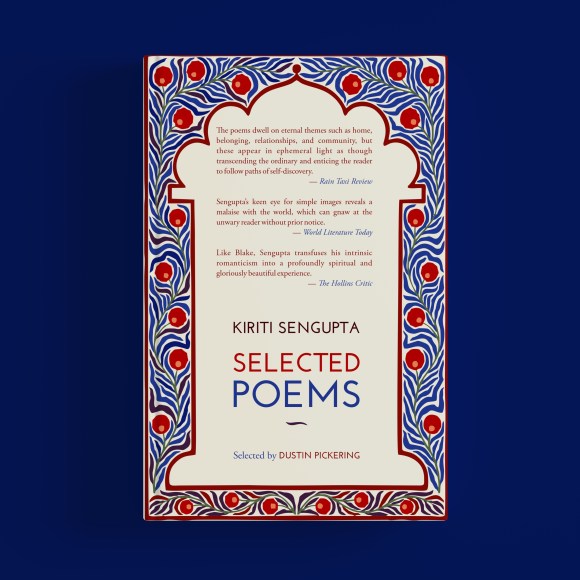
Sir Philip Sidney, in his AnApology for Poetry, argues that the primary purpose of poetry is to “teach” and “delight”. Kiriti’s Sengupta’s Selected Poems serves both purposes though the poems do not preach at any point but leave the readers mulling over the ideas with the play of words. The book contains more than 125 poems, selected by Dustin Pickering, a writer and the founding editor of Transcedent Zero Press. The content covers an eclectic range of subjects—from personal musings to ecology, memory to myths and more — mostly republications from his earlier collections and some from journals.
An award-winning poet, publisher, editor, translator and critic, Sengupta believes himself twice-born as he states in his poem of the same name — ‘Twice Born’, written specially for this collection. He has embraced the calling of a poet, forsaking the lucrative profession of a doctor. It’s not that he doesn’t vacillate: “The ink has dried on the paper; the pot can’t be refilled with scribbles. Do I now surrender my pen?” But poetry is his vocation; it would sound ludicrous if someone could ask a noted poet, “What if you weren’t a poet?”(“Intrinsic’)
There is a sense of flow in the poems despite his stylistic terseness. Water permeates his poetry. The poet believes: “…water is achromatic and otherwise called life.” As the poet is a deep observer of nature and its surroundings, he observes that water carries out its own duty: “Water has no call, no décor either; it floats the bone and/ the ash free.” In ‘Evening in Varanasi’, the poet assigns the water of the Ganges with exceptional qualities: “The water here is not/a fire extinguisher. /Flames rise through the water.” He connects the water to the Sun: “O Sun, I remember/I’ve bathed your feet/with the water of the Ganges”. ‘River of Tears and Mother’ airs the deep concern about the recalcitrance of those who ignore ecological issues: “Ganga has her stories to tell;/wish she had someone to listen to her.”
Ecological strains seep through Sengupta’s poems. In ‘The Pillars of Soil’, he draws a fine connection between human beings and trees through the image of the roots. The poet invokes a supreme spirit: “the world would need another maestro/who could sing for the seasoned flesh—/those who walked the earth—/whose roots ran deep into the ground”. In ‘Hibiscus’, he evocatively draws a curious connection between the colour of hibiscus flower and human blood: “…I’ll bloom/like a hibiscus:/the blush will endorse/my bloodline.” The epigraph of the poem, translated by Sengupta from a poem by the noted ‘rebellious’ Bengali poet, Sukanta Bhattacharya, re-enforces his stance.
Concern for extreme air pollution in cities yields sardonic poetry: “Nature made the nasal frame fragile. /How do they breathe the vain air?” He also highlights pollution caused by plastics: “The earth has grown plastic. Water takes eons to seep”.
Some of Sengupta’s poems convey a sense of domesticity. “Clarity”deals with gastronomy as the poet succinctly invites the reader to succor ghee with all their five senses. In this piece, the poet reminisces about the aroma of ghee that his mother used to prepare. The poet here compares his mother’s organic ghee with his organic memory: “So organic is my memory—/the granular residue lifted us to heaven. /Ah! Pious Ghee, and incorrigible.”
In poems such as ‘Experience Personified’, the poet records his experience of the commonplace things: “Tiny droplets envelop my feet/and permeate the toes. /I don’t call it a feeling, I will name it/my experience”. It reminds a me of lines by Tagore: “But I haven’t beholden/what lies two steps away from my home/on a blade of paddy grain, a dazzling drop of dew”. Sengupta also doesn’t shy away from the recent happenings in India. In ‘The Untold Saga’, the poet recalls the abominable “Nirbhaya episode” and rues that, unlike Durga, Nirbhaya could not create an epic due to her untimely death.
The poet turns metaphysical – almost like John Donne[1]— when he asserts, “I now look beyond the flesh, bone and keratin, /I’ve been told/the finer body dwells undressed.” Though most of the poems are contemplative, the book offers some light-hearted ones too: “To my complete bewilderment, if the ghost appears, I’ve decided to offer it a chair first, and then I’ll plead, ‘Take a seat and relax! Let us share our stories.’” In ‘Gravity’, the poet offers a lighter note for the turbulence caused in the aircraft due to the inclement weather. He gives solace to his terrified son: “Relax, Bumps help us/ realize the earth.” In a haiku, punning on the word ‘wisdom’, the poet realises that it’s a test of a surgeon’s wisdom to pluck out a wisdom tooth (biologically called ‘the third molar’) of a patient.
Sengupta’s Selected Poems is a fabulous collection. These poems are like chosen seeds that contain intrinsic vigour to sprout through the age-old concrete floor, giving a message of hope in the face of all odds. Sengupta’s penetrating observations, coupled with his poetic prowess, can be vividly experienced by delving into the rich treasures hidden in between the covers.
Pradip Mondal teaches at L. B. S. Govt. P. G. College Halduchaur, Nainital (India). He has been published in journals like Suburban Witchcraft (Serbia), Muse India (India), and Indi@logs (Spain).
.
PLEASE NOTE: ARTICLES CAN ONLY BE REPRODUCED IN OTHER SITES WITH DUE ACKNOWLEDGEMENT TO BORDERLESS JOURNAL
Nazrul’s Jonomo, Jonomo Gelo(Generations passed) has been translated from Bengali by Professor Fakrul Alam. Click here to read and listen to a rendition by the famed Feroza Begum.
Ajit Cour‘s short story, Nandu, has been translated from Punjabi by C Christine Fair. Click here to read.
The Scarecrowby Anwar Sahib Khan has been translated from Balochi by Fazal Baloch. Click here to read.
Naramsetti Umamaheswararao moulds children’s perspectives. Click here to read.
Notes from Japan
In American Wife,Suzanne Kamata gives a short story set set in the Obon festival in Japan. Click here to read.
Conversation
Neeman Sobhan, author of Abiding City: Ruminations from Rome, discusses shuttling between multiple cultures and finding her identity in words. Click here to road.
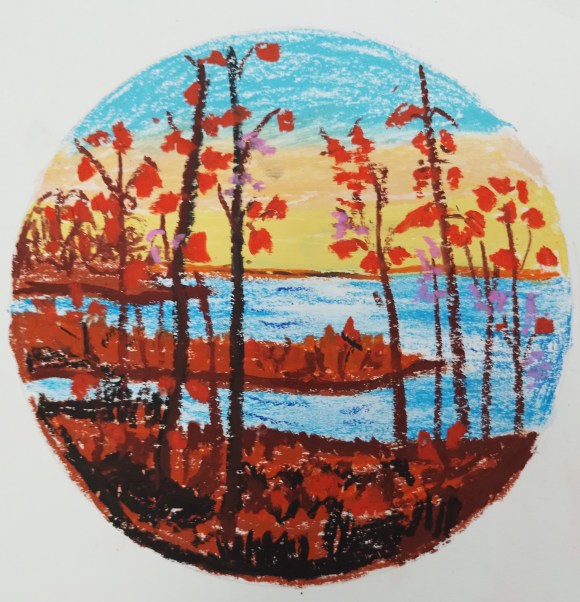
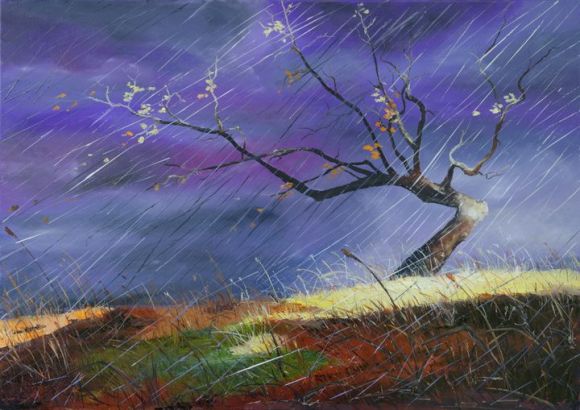
Storm in purple by Arina Tcherem. From Public Domain
If we take a look at our civilisation, there are multiple kinds of storms that threaten to annihilate our way of life and our own existence as we know it. The Earth and the human world face twin threats presented by climate change and wars. While on screen, we watch Gaza and Ukraine being sharded out of life by human-made conflicts over constructs made by our own ‘civilisations’, we also see many of the cities and humankind ravaged by floods, fires, rising sea levels and global warming. Along with that come divides created by economics and technology. Many of these themes reverberate in this month’s issue.
From South Australia, Meredith Stephens writes of marine life dying due to algal growth caused by rising water temperatures in the oceans — impact of global warming. She has even seen a dead dolphin and a variety of fishes swept up on the beach, victims of the toxins that make the ocean unfriendly for current marine life. One wonders how much we will be impacted by such changes! And then there is technology and the chatbot taking over normal human interactions as described by Farouk Gulsara. Is that good for us? If we perhaps stop letting technology take over lives as Gulsara and Jun A. Alindogan have contended, it might help us interact to find indigenous solutions, which could impact the larger framework of our planet. Alindogan has also pointed out the technological divide in Philippines, where some areas get intermittent or no electricity. And that is a truth worldwide — lack of basic resources and this technological divide.
On the affluent side of such divides are moving to a new planet, discussions on immortality — Amortals[1] by Harari’s definition, life and death by euthanasia. Ratnottama Sengupta brings to us a discussion on death by choice — a privilege of the wealthy who pay to die painlessly. The discussion on whether people can afford to live or die by choice lies on the side of the divide where basic needs are not an issue, where homes have not been destroyed by bombs and where starvation is a myth, where climate change is not wrecking villages with cloudbursts. In Kashmir, we can find a world where many issues exist and violences are a way of life. In the midst of such darkness, a bit of kindness and more human interactions as described by Gower Bhat in ‘The Man from Pulwama’ goes some way in alleviating suffering. Perhaps, we can take a page of the life of such a man. In the middle of all the raging storms, Devraj Singh Kalsi brings in a bit of humour or rather irony with his strange piece on his penchant for syrups, a little island removed from conflicts which seem to rage through this edition though it does raise concerns that affect our well-being.
Parichha has also reviewed a book by another contemporary Odia woman author, Snehaprava Das. The collection of short stories is called Keep it Secret. Madhuri Kankipati has discussed O Jungio’s The Kite of Farewells: Stories from Nagaland and Somdatta Mandal has written about Chhimi Tenduf-La’s A Hiding to Nothing, a novel by a global Tibetan living in Sri Lanka with the narrative between various countries. We have an interview with a global nomad too, Neeman Sobhan, who finds words help her override borders. In her musing on Ostia Antica, a historic seaside outside Rome, Sobhan mentions how the town was abandoned because of the onset of anopheles mosquitos. Will our cities also get impacted in similar ways because of the onset of global ravages induced by climate change? This musing can be found as a book excerpt from Abiding City: Ruminations from Rome, her book on her life as a global nomad. The other book excerpt is by a well-known writer who has also lived far from where he was born, MA Aldrich. His book,From Rasa to Lhasa: The Sacred Center of the Mandala is said to be “A sweeping, magnificent biography—which combines historical research, travel-writing and discussion of religion and everyday culture—Old Lhasa is the most comprehensive account of the fabled city ever written in English.”
With that, we come to our fiction section. This time we truly have stories from around the globe with Suzanne Kamata sending a story set in the Bon festival that’s being celebrated in Japan this week for her column. From there, we move to Taiwan with C. J. Anderson-Wu’s narrative reflecting disappearances during the White Terror (1947-1987), a frightening period for people stretched across almost four decades. Gigi Gosnell writes of the horrific abuse faced by a young Filipino girl as the mother works as a domestic helper in Dubai. Paul Mirabile gives us a cross-cultural narrative about a British who opts to become a dervish. While Hema R touches on women’s issues from within India, Sahitya Akademi Award Winner, Naramsetti Umamaheshwararao, writes a story about children.
With such hope growing out of a neolithic burial chamber, maybe there is hope for life to survive despite all the bleakness we see around us. Maybe, with a touch of magic and a sprinkle of realism – our sense of hope, faith and our ability to adapt to changes, we will survive for yet another millennia.
We wind up our content for the August issue with the eternal bait for our species — hope. Huge thanks to the fantastic team at Borderless and to all our wonderful writers. Truly grateful to Sohana Manzoor for her artwork and many thanks to all our wonderful readers for their time…
Shaishabshandha(Childhood’s Dusk) was published as a part of Tagore’s poetry collection called Sonar Tori (Golden Boat, 1894).
Art by Sohana Manzoor
CHILDHOOD'S DUSK

Slowly, across all horizons
    Spreads the weary exhaustion
    Of darkness like a mother’s anchal*.
    Standing alone, I gaze steadily
    At the west, absolutely still.
    I contemplate fixedly
    The bottomless abyss,
    The lonely riverside with a
    Dusky sky. Dawn weeps,
    As deep gloom sweeps
With tired eyes, compassionately,
    Silently over the water and land
    In this gloaming.
    Suddenly, a song bursts forth
    From the dark woods, the village paths,
    Perhaps, from a youth returning home.
    Uplifting, peaceful, fearless notes
    Resonate in tune as if sharply
    Slicing the twilight in two.
    I cannot see him. I see a village
    In the southern part. Amidst the lonely
Bamboo woods, the sugarcane fields,
    The betel nut and banana trees,
    There rests a village. I can see that.
Perhaps, it’s a cowherd’s son
    Singing on his way home.
    He does not think much
    Except of a full stomach.
    He brings back that dusk in my childhood:
    We talked, played — three friends —
    While we lay on the bed.
    That was in the distant past.
Has the world not aged?
     Have we exchanged our childhood,
     Our games, our toys, our restful
     slumber for the burden of knowledge?
     Standing on this lonely field,
     When silence fills the gloaming,
     Hearing this song, I recall —
    The riverbanks, the mango groves,
     The brass bells ringing in temples,
     The mustard fields, by the pond,
Smiling faces in many homes,
    Young hearts filled with new hopes,
      Impossible, beautiful imaginings,
      Priceless dreams, endless desires
     And beliefs. Standing in the dark,
     I see among stars, the infinite universe —
     Many young at home abed,
    Their mother’s face lit by the lamp.


*Loose end of a sari
This poem has been translated from Bengali by Mitali Chakravartywith editorial input from Sohana Manzoor.
.
PLEASE NOTE: ARTICLES CAN ONLY BE REPRODUCED IN OTHER SITES WITH DUE ACKNOWLEDGEMENT TO BORDERLESS JOURNAL


 Borderless