Categories
Contents

Borderless, January 2025

Art by Sohana Manzoor

Editorial

“We are the World”… Click here to read.

Translations

Jibanananda Das’s Ghumiye Poribe Aami (I’ll Fall Asleep) has been translated from Bengali by Professor Fakrul Alam. Click here to read.

Roll Up Not the Mat by Ali Jan Dad has been translated from Balochi by Fazal Baloch. Click here to read.

My Father’s Jacket, a poem by Ihlwha Choi  has been translated from Korean by the poet himself. Click here to read.

Probhat or Dawn by Tagore has been translated from Bengali by Mitali Chakravarty. Click here to read.

Poetry

Click on the names to read the poems

Michael R Burch, Kirpal Singh, Afsar Mohammad, Michelle Hillman, Kiriti Sengupta, Jenny Middleton, G Javaid Rasool, Stephen Druce, John Grey, Aman Alam, George Freek, Vidya Hariharan, Stuart McFarlane, Rhys Hughes

Poets, Poetry & Rhys Hughes

In Midnight Tonight, Rhys Hughes gives us humour and horror together. Click here to read.

Musings/Slices from Life

Not Quite a Towering Inferno

Farouk Gulsara gives an account of an experienced hotel fire in Colombo. Click here to read.

Do we all Dance with the Forbidden?

Nusrat Jahan Esa muses on human nature keeping in mid Milton’s Paradise Lost. Click here to read.

Musings of a Copywriter

In Banking Ideas?, Devraj Singh Kalsi explores the idea of writers and banking. Click here to read.

Notes from Japan

In Weekend in Futaba at the Japan Writers Conference, Suzanne Kamata writes of the inception of the event and this year’s meet. Click here to read.

Essays

Well Done, Shyam! Never Say ‘Goodbye’!

Ratnottama Sengupta gives an emotional tribute to Shyam Benegal, focussing on her personal interactions and his films. Click here to read.

Roquiah Sakhawat Hossein: How Significant Is She Today?

Niaz Zaman reflects on the relevance of one of the earliest feminists in Bengal. Click here to read.

Morning Walks

Professor Fakrul Alam writes of his perambulations in Dhaka. Click here to read.

Stories

Nico’s Boat Sails to China

Paul Mirabile weaves a story of resilience set in Greece. Click here to read.

Anand’s Wisdom

Naramsetti Umamaheswararao relates a story set on pathways amidst Andhra villages. Click here to read.

The Forgotten Children

Ahamad Rayees gives us a poignant story set in Kashmir. Click here to read.

The Heart of Aarti

Priyatham Swamy gives a story about an immigrant from Nepal. Click here to read.

Persona

Sohana Manzoor wanders into a glamorous world of expats. Click here to read.

Conversation

In conversation with Kiriti Sengupta, a writer and a director of Hawakal Publishers. Click here to read.

Book Excerpts

An excerpt from S. Eardley-Wilmot’s The Life of an Elephant. Click here to read.

An excerpt from Contemporary Urdu Stories from Kolkata, translated by Shams Afif Siddiqi and edited by Shams Afif Siddiqi and Fuzail Asar Siddiqi. Click here to read.

Book Reviews

Somdatta Mandal reviews Bibhutibhushan Bandopadhyay’s Kaleidoscope of Life: Select Short Stories, translated from Bengali by Hiranmoy Lahiri. Click here to read.

Malashri Lal reviews Basudhara Roy’s A Blur of a Woman. Click here to read.

Basudhara Roy reviews Afsar Mohammad’s Fasting Hymns. Click here to read.

Bhaskar Parichha reviews Razeen Sally’s Return to Sri Lanka: Travels in a Paradoxical Island. Click here to read.

.

Click here to access the Borderless anthology, Monalisa No Longer Smiles

Click here to access Monalisa No Longer Smiles on Amazon International

Categories
Editorial

“We are the World”

In 1985, famous artistes, many of whom are no longer with us, collaborated on the song, We are the World, to raise funds to feed children during the Ethiopian famine (1983-85). The song was performed together by Michael Jackson, Willie Nelson, Bob Dylan, Ray Charles, Diana Ross, Stevie Wonder, Smokey Robinson, Paul Simon, Tina Turner, Dionne Warwick, Lionel Richie, Billy Joel and Bruce Springsteen.  The producer, Julia Nottingham, said: “It’s a celebration of the power of creativity and the power of collective humanity.” The famine was attributed to ‘war and drought’.

Over the last few years, we have multiple wars creating hunger and drought caused by disruptions. Yet, the world watches and the atrocities continue to hurt common people, the majority who just want to live and let live, accept and act believing in the stories created by centuries of civilisation. As Yuval Noah Harari points out in a book written long before the current maladies set in, Homo Deus (2015), “…the stories are just tools. They should not become our goals or our yardsticks. When we forget that they are mere fiction, we lose touch with reality. Then we begin entire wars ‘to make a lot of money for the corporation’ or ‘to protect the national interest’. Corporations, money and nations exist only in our imagination. We invented them to serve us; why do we find ourselves sacrificing our lives in their service?”

What Harari says had been said almost ninety years ago by a voice from another region, by a man who suffered but wrote beautiful poetry, Jibanananda Das… and here are his verses —

“The stories stored in my soul will eventually fade. New ones—
New festivals—will replace the old — in life’s honey-tinged slight.”

Jibananda Das, from ‘Ghumiye Poribe Aami’ (I’ll fall asleep), 1934, translated from Bengali by Professor Fakrul Alam

We carry the poem in this issue translated by Professor Fakrul Alam, lines that makes one dream of a better future. These ideas resonate in modern Balochi poet Ali Jan Dad’s ‘Roll Up Not the Mat’ brought to us in English by Fazal Baloch. Korean poet Ihlwha Choi’s translation takes us to longing filled with nostalgic hope while Tagore’s ‘Probhat’ (Dawn) gives a glimpse of a younger multi-faceted visionary dwell on the wonders of a perfect morning imbibing a sense of harmony with nature.

“I feel blessed for this sky, so luminous. 
I feel blessed to be in love with the world.”

--‘Probhat’ (Dawn) by Tagore, 1897, translated from Bengali by Mitali Chakravarty

Starting a new year on notes of hope, of finding new dreams seems to be a way forward for humanity does need to evolve out of self-imposed boundaries and darknesses and move towards a new future with narratives and stories that should outlive the present, outlive the devastating impact of climate change and wars by swapping our old narratives for ones that will help us harmonise with the wonders we see around us… wonders created by non-human hands or nature.

We start this year with questions raised on the current world by many of our contributors. Professor Alam in his essay makes us wonder about the present as he cogitates during his morning walks. Niaz Zaman writes to us about a change maker who questioned and altered her part of the world almost a century ago, Begum Roquiah. Can we still make such changes in mindsets as did Roquiah? And yet again, Ratnottama Sengupta pays homage to a great artiste, filmmaker Shyam Benegal, who left us in December 2024 just after he touched 90. Other non-fictions include musings by Nusrat Jan Esa on human nature contextualising it with Milton’s Paradise Lost (1667); Farouk Gulsara’s account of a fire in Sri Lanka where he was visiting and Suzanne Kamata’s column from Japan on the latest Japanese Literary Festival in the Fukushimaya prefecture, the place where there was a nuclear blast in 2011. What is amazing is the way they have restored the prefecture in such a short time. Their capacity to bounce back is exemplary! Devraj Singh Kalsi shares a tongue-in-cheek musing about the compatibility of banks and writers.

Rhys Hughes’ poem based on the photograph of a sign is tongue-in- cheek too. But this time we also have an unusual exploration of horror with wry humour in his column. Michael Burch shares a lovely poem about a hill that was planted by his grandfather and is now claimed as state property… Afsar Mohammad explores hunger in his fasting poems and Aman Alam gives heart rending verses on joblessness. Poems by Kirpal Singh contextualise Shakespearian lore to modern suffering. We have more poems by Kiriti Sengupta, Michelle Hillman, Jenny Middleton, G Javaid Rasool, Stephen Druce, John Grey, George Freek and many others — all exploring multiple facets of life. We also have a conversation with Kiriti Sengupta on how he turned to poetry from dentistry!

Exploring more of life around us are stories by Sohana Manzoor set in an expat gathering; by Priyatham Swamy about a migrant woman from Nepal and by Naramsetti Umamaheswararao set against rural Andhra Pradesh. While Ahmad Rayees gives a poignant, touching story set in a Kashmiri orphanage, Paul Mirabile reflects on the resilience of a child in a distant Greek island. Mirabile’s stories are often a throwback to earlier times.

In this issue, our book excerpts explore a writer of yore too, one that lived almost a hundred years ago, S. Eardley-Wilmot (1852-1929), a conservationist and one who captures the majesty of nature, the awe and the wonder like Tagore or Jibanananda with his book, The Life of an Elephant. The other book takes us to contemporary Urdu writers but in Kolkata —Contemporary Urdu Stories from Kolkata, translated by Shams Afif Siddiqi and edited by Shams Afif Siddiqi and Fuzail Asar Siddiqi. A set of translated stories of the well-known Bengali writer, Bibhutibhushan Bandopadhyay by Hiranmoy Lahiri, brought out in a book called Kaleidoscope of Life: Select Short Stories has been reviewed by Somdatta Mandal. Malashri Lal has discussed Basudhara Roy’s A Blur of a Woman. Roy herself has explored Afsar Mohammad’s Fasting Hymns. Bhaskar Parichha has taken us to Sri Lanka with a discussion on a book on Sri Lanka, Return to Sri Lanka: Travels in a Paradoxical Island by an academic located in Singapore, Razeen Sally.

Bringing together varied voices from across the world and ages, one notices recurring themes raising concerns for human welfare and for the need to conserve our planet. To gain agency, it is necessary to have many voices rise in a paean to humanity and the natural world as they have in this start of the year issue.  

I would like to thank all those who made this issue possible, our team and the contributors. Thank you all from the bottom of my heart. I cannot stop feeling grateful to Sohana Manzoor for her fabulous artwork too, art that blends in hope into the pages of Borderless Journal. As all our content has not been mentioned here, I invite you to pause by our content’s page to explore more of our exciting fare. Huge thanks to all readers for you make our journey worthwhile.

I would hope we can look forward to this year as being one that will have changes for the better for all humanity and the Earth… so that we still have our home a hundred years from now, even if it looks different.

Wish you a year filled with new dreams.

Mitali Chakravarty

borderlessjournal.com

Click here to access the content’s page for the January 2025 issue

.

READ THE LATEST UPDATES ON THE FIRST BORDERLESS ANTHOLOGY, MONALISA NO LONGER SMILES, BY CLICKING ON THIS LINK.

Categories
Review

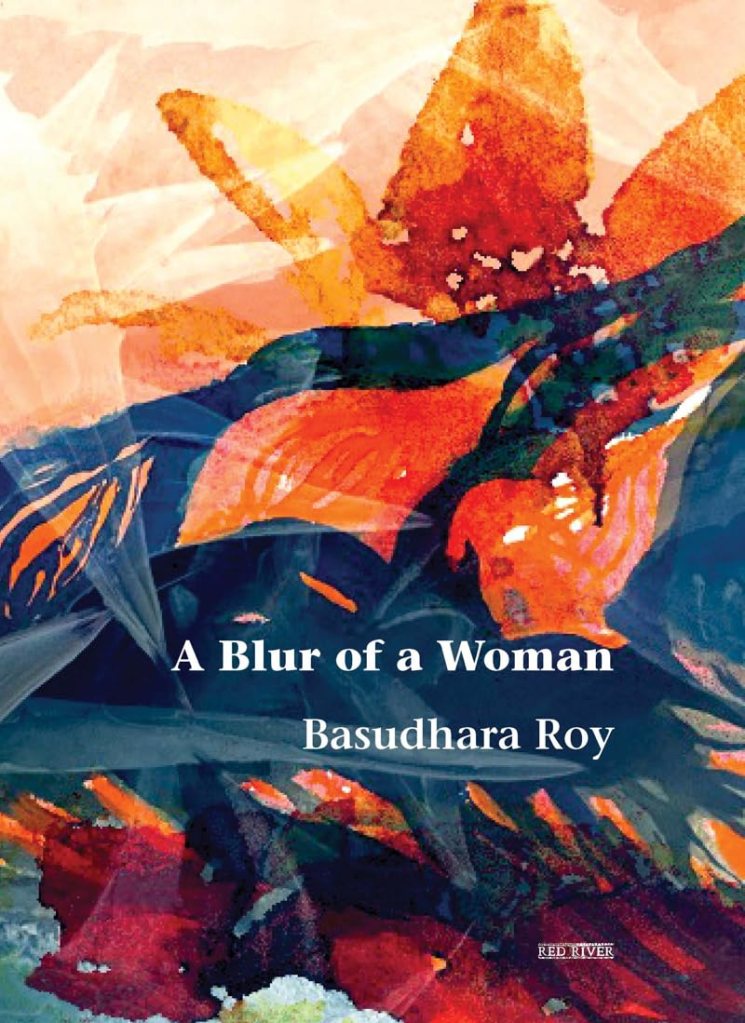
A Blur of a Woman

Book Review by Malashri Lal

Title: A Blur of a Woman

Author: Basudhara Roy

Publisher: Red River

The feminine mystique has defied every attempt to capture its attributes. If clusters of stories surround a goddess, dilemmas are embedded in them. If the pavement-dwelling mother with children clinging to her skirt images economic deprivation, there are stories hidden in her grey-flecked eyes. Basudhara Roy recognises this amorphous, protean aspect of the feminine and titles her collection A Blur of a Woman, poetically declaring; “she owns the place/and the little magic she has earned…she will use it someday to unbuild herself/disappear dissolve/ become a blur”.

This collection is a subtle attack on patriarchy as it encompasses the history and socio-cultural conditions that have moulded women into being mercurial yet tangible, pliant as well as resistive, buoyant but also vulnerable. As the poems flow in a drumroll of many contexts, vignettes of the journey are captured, symbolically strong and offering a plethora of layered meanings. The lines encourage a dialogic exchange whether with the poet, or with one’s own half-acknowledged self that is suddenly confronted by Medusa’s mirror.

The first two sections begin with poems titled ‘Duhkha’ and ‘Soka’[1], directing us towards the Buddhist principle of inevitable mutability and the need for acceptance.

I have seen hearts shut and bolt doors
from within, their windows walled while
on love the mold of ingratitude thrives

With such adaptations, the contemporary takes precedence over the philosophical teachings, and the identification with thwarted expectations, social discord, betrayal and helpless sorrow is almost immediate. If solace is to be found it is now individual—and, in this instance, by  turning to the gnarled trunks of trees where tears have watered the serrated bark. Speaking of the imagistic density of Roy’s phrases, this kind of interlinking through poetic shorthand is perceived in much of her narrativisation. The ‘betrayal’ that causes sorrow and also the maturity of recovery is a process resonant through the history of women’s writing. ‘Soka: A Triptych’ strings this further through contemplating the elegiac notes of death and mourning—yet birth and death are twins: “If life alone can be seen/all this emptiness must surely be death.”

A sizeable section of the book charts a trajectory of feminist fables, gleaning references from Rabindranath Tagore, Jayadev’s Geet Govinda, Philomela’s story, Virgo’s distress, and others. In Roy’s hands, irony becomes a viable and effective tool of social critique as in the poem

‘In Which Bimala Agrees to an Interview for a Special Issue of Post-Text Feminism’. Tagore’s popular novel Ghare Baire/ The Home and the World presents Bimala as the conventional woman who is persuaded to discover the turmoil of the world outside the threshold. Basudhara devises an imaginary conversation, some of which is quoted:

Where, then, would you locate yourself?
Here. Now.
Come on! I am hardly lost
and need no GPS of theory to find myself!

Such a startling reinvention of a canonical text subverts many assumptions with sharp, clear strokes: the jargon of literary theory, the leap into digital alignments, the confidence of the liberated woman, and the time travel that feminism has enabled.                     

My other favourite piece is about ‘Lalita’, a sakhi or friend  of the beauteous Radha who is always the heroine in the traditional tale. In Lalita’s version of the mysterious raas leela where Krishna is perceived by each woman as her partner, she is jubilant about her societal escape and physical abandon;

limbs supple like vines we danced,
thrilled to be
where love was recklessly returned.

This may be the right time to refer to the Author’s Note which is titled ‘I Write from the Body’ and seems to carry forward the feminist discourse of theorists such as Hélène Cixous who invented the term écriture feminine, or Julia Kristevawho perceived the  chora as a specially maternal zone.  According to Roy, “In the earth-bed of this woman’s life that I live, poetry runs as a river, its plenitude being both a lesson and an antidote to the prosaic borders of my world.” In which case, “Blur” is the right metaphor for attempting to break the boundaries through word-play and subversive themes expanded in poems  such ‘Aid to Forgetting’, ‘Praise for the Subaltern’, ‘Dis/enfranchised’—and several other poems  are expressions of resistance to the bastions of control. Philomela’s severed tongue has again learned to speak– but it’s a new language of assertion and intertextuality.

The semiotic breakthrough in Roy’s poems is accompanied by stylist experiments too, the Ghazal section being one such. The transcreated  use of the Urdu structure allows for couplets on a variety of subjects—for example, the seasons in the manner of the Baramasa (songs of the twelve months) with a twist that the woman is no longer the bereft, perpetually waiting figure uttering  her woes to the firmament. She says confidently now: 

You etch every constellation on your  palm
Yet secrets line the arcane of the body

In all, A Blur of a Woman, offers  poems for the intellect and the heart which are  indivisible aspects of a woman’s existence. That she  is mercurial  and evasive is once again a reminder of a fascinating mystery that has prevailed over time — and perhaps its more exciting to keep it that way.

[1] Both Dukha and Soka are forms of grief

Malashri Lal, writer and academic, with twenty one books, retired as Professor, English Department,  University of Delhi. Publications include Tagore and the Feminine, and the ‘goddess trilogy’ (co-edited with Namita Gokhale) In Search of SitaFinding Radha, and Treasures of LakshmiBetrayed by Hope: A Play on the Life of Michael Madhusudan Dutt  received the Kalinga Fiction Award.  Lal’s poems Mandalas of Time has recently been translated into Hindi as Mandal Dhwani. She is   currently Convener, English Advisory Board of the Sahitya Akademi.

.

PLEASE NOTE: ARTICLES CAN ONLY BE REPRODUCED IN OTHER SITES WITH DUE ACKNOWLEDGEMENT TO BORDERLESS JOURNAL

Click here to access the Borderless anthology, Monalisa No Longer Smiles

Click here to access Monalisa No Longer Smiles on Kindle Amazon International

Categories
Review

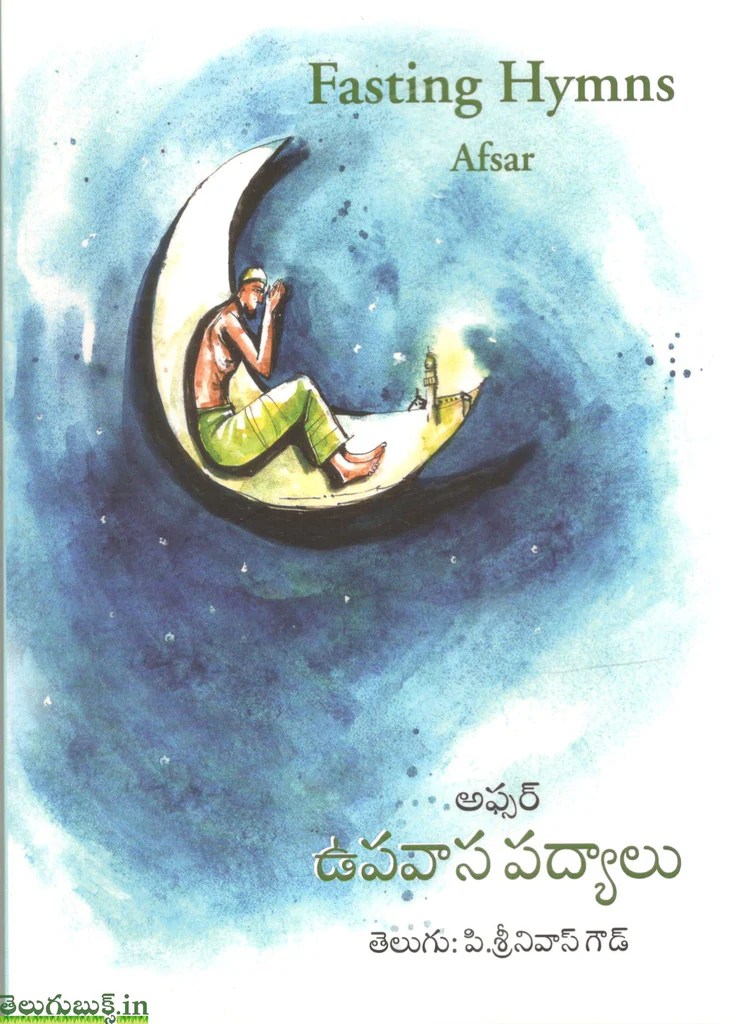
Hunger and Poetry of Afsar Mohammad

Book Review by Basudhara Roy

Title: Fasting Hymns

Author: Afsar Mohammad (translated to Telugu by P Srinivas Goud as Upavaasa Padyaalu)

Publisher: Bodhi Foundation

In the best of poems, the barrier between word and prayer crumbles, and in the greatest of them, it is dissolved into a timeless song of being. To name a collection of poems Fasting Hymns would be one thing but to summon and craft poems out of the very act of fasting is to elevate both poetry and prayer to a level of transcendence that only be accomplished by a world vision of the human soul. A collection of thirty poems, Fasting Hymns is Afsar Mohammad’s second book of poetry and invites comparisons in its honest sublimity with Rumi, and in its political engagement with the sinewy Bhakti poetry of the Indian subcontinent.

The ritual of fasting is of great significance in many traditions of thought. Valorised as an act of cleansing, of virtuous self-abnegation, of rest, sacrifice, healing and strength, voluntary and compulsive fasting constitute an important element of practice in several religions of the world. In contrast to the acquisition of physical energy through the act of eating, the act of fasting is believed to produce spiritual energy while also making for the rejuvenation and sustainability of the resources of production, including the earth and the body. Just as home reminds us of homelessness, fasting reminds us of food, of nourishment, of the body, and of the ways in which the body is negated, abused, denied, violated, punished and decimated by most discourses of power.

Most importantly, fasting recalls its close kin—hunger, for while fasting is a voluntary act of deferring consumption, hunger is an enforced act of deprivation and a stern reminder of the rampant food-wars and strategic starvation that a large part of the world’s population is led to regularly undergo for political and economic reasons. Fasting Hymns contextualizes the act of fasting within the month-long holy fast of of Ramadan and in underlining the centrality of this fast to Islamic ethics and philosophy.

There is a tranquillity to the book’s appearance–a visual script that overlaps reality, hope, and dream as its thirty poems commemorate the thirty days of fasting in the Islamic calendar. A linear travel of the consciousness meets us here, heightening in poem after poem as it widens to embrace larger spaces of geography and spirit. With each advancing day of the roza or fast, the poems travel deeper, unearthing spirit from body, soaring from ‘I’ to ‘us’, granting and seeking the essential solidarity of existence:

The sunken moon like
an empty stomach
Praying for a piece of bread. (Poem 1)

This collection, as the reader will note, is as much a journey into the world of the self as it is into the self of the world. Each untitled poem here ranges between three lines to twelve and becomes a hymn not just by virtue of its length or in being written by a fasting body but in being written by a searching soul. As one travels through them, there is a gradual building up of compassionate force, a slow summoning of the resources of the self:

Fazar: I begin my self-talk
Iftar: Not sure where
my self-talk ends.
If you can map my face,
Time and space fail. (Poem 9)

One is struck by this intense vigilance on the soul, this consistent observation of its workings, and this thorough and starkly honest ransacking of its contents to discover what it holds. Religion and humanity confront one another with determination in these hymns, the poet content to let the greater force win:

Amma would say,
“You earn ten nekis for
Offering water to a Rozgar.”

What would Amma say
if she knew an entire country was
cut off from water and food
during Ramadan? (Poem 17)

It is interesting to note that the Islamic holy month, in this book, is spelt in all its three major variants: Ramadan, Ramzan and Ramjan, pointing to the plural linguistic heritages of the Muslim community. However, what is assigned supreme value in these poems is not the ritualistic observation of fast but the profound spiritual experience that the month demands of its observers. The sharp interrogation of religion in the interests of humanity concludes, in this collection, with a complete subservience of the former to the latter. Between the first hymn and the last, the book covers a dense journey—physical, political, civilisational and human. There is no indignation in these poems, no overt moralising and no despair whatsoever. The book does not grieve an unliveable world or express helpless anger over its injustices. If anything, each of these thirty poems is a testimony to the spirit of human courage and endurance, its pace and measure acquired from a deep spiritual anchoring in the principles of humanity beyond religion:


I thought I know all my suras by heart.
now, each verse is a stranger and,
asks a hundred questions. (Poem 5)

If Afsar’s first collection of poems Evening with a Sufi sought to view the world through the Sufi gaze of oneness, these poems in Fasting Hymns seek to experience that oneness in the flesh and in the spirit through bonds of connection and empathy that the act of fasting fosters in the human body and soul. In Precarious Life: The Powers of Mourning and Violence, Judith Butler talks about the “public dimension” of the body: “Constituted as a social phenomenon in the public sphere, my body is and is not mine. Given over from the start to the world of others, it bears their imprint, is formed within the crucible of social life; only later, and with some uncertainty, do I lay claim to my body as my own, if, in fact, I ever do.”

For Butler, the fact of physical vulnerability makes the body a shared public space, connected and accessible to others. This fact of vulnerability is also the focal point of Fasting Hymns that transforms blood into bread and vice-versa. Afsar reminds us how we pay for everything with the currency of the body—with hunger, disease, guilt, grief and how it is the body that ties us to each other in unalienable ways so that each one of us is equally vulnerable to the violence of hunger:

Yes,
When I speak about the bread of Ramzan
I also speak about the
Blood of Muharram
Bread and blood are never
Separate in my world. (Poem 10)

Fasting Hymns is a distilled collection. There is nothing extraneous here in terms of either thought or language. The simplicity of diction in these poems makes for their steady luminosity–a subdued but patient burning that consistently lights up the fallible. While Evening with a Sufi was a translation from Afsar Mohhamad’s original poems in Telugu into English, this bilingual collection, born in English, has been expertly translated into Telugu by P. Srinivas Goud as Upavaasa Padyaalu, the very translation of ‘roza’ into ‘upavaasa’ bridging the aesthetic and ideological disparities between languages, cultures, and religions:

More than a hundred dishes
Compete in a political iftar.

I walk into a muhalla.

I see an empty plate
and a hungry face everywhere. (Poem 15)

While fasting, in general, might mean only the forgoing of food, the fasting during Ramadan is also a potent historical reminder of the scarcity of water and of thirst. While this collection offers rich food for thought, there is a grace to the poems that reminds one of water flowing from a tilted pitcher. A majesty of vision marks this collection along with a deep sense of personal responsibility to be accountable for the world and to account it, making this book both an intense soul-searching as well as an unsparing statement on things found.

At the day’s end Fasting Hymns brings both the calm of twilight and the restlessness of days to come–a restlessness that can be overcome only by the courage to struggle ceaselessly against undermining forces and, if necessary, alone.

Click here to read some verses from Fasting Hymns

Basudhara Roy teaches English at Karim City College affiliated to Kolhan University, Chaibasa. Author of three collections of poems, her latest work has been featured in EPW, The Pine Cone Review, Live Wire, Lucy Writers Platform, Setu and The Aleph Review among others. 

.

PLEASE NOTE: ARTICLES CAN ONLY BE REPRODUCED IN OTHER SITES WITH DUE ACKNOWLEDGEMENT TO BORDERLESS JOURNAL

Click here to access the Borderless anthology, Monalisa No Longer Smiles

Click here to access Monalisa No Longer Smiles on Kindle Amazon International

Categories
Contents

Borderless, July 2024

Art by Sohana Manzoor

Editorial

Seasons out of TimeClick here to read.

Conversation

A brief introduction to Suzanne Kamata’s Cinnamon Beach and a conversation with the author about her latest novel. Click here to read.

Translations

Tagore’s Achhe Dukhu, Achhe Mrityu, (Sorrow Exists, Death Exists) has been translated from Bengali by Fakrul Alam. Click here to read.

Nazrul’s Ghumaite Dao Shranto Robi Re (Let Robi Sleep in Peace) has been translated from Bengali by Professor Fakrul Alam. Click here to read.

Amalkanti by Nirendranath Chakraborty has been translated from Bengali by Debali Mookerjea-Leonard. Click here to read.

Speech Matters, a story by Naramsetti Umamaheswararao, has been translated from Telugu by Johnny Takkedasila. Click here to read.

Every Day by Hafeez Rauf has been translated from Balochi by Fazal Baloch. Click here to read.

The Long Journey by Ihlwha Choi has been translated from Korean by the poet himself. Click here to read.

Mrityu or Death by Tagore has been translated from Bengali by Mitali Chakravarty. Click here to read.

Poetry

Click on the names to read the poems

Jared Carter, Michael Burch, Kirpal Singh, Rakhi Dalal, Stuart MacFarlane, Averi Saha, John Grey, Surbhi Sharma, David Francis, Pramod Rastogi, David Mellor, Saranyan BV, Jim Bellamy, Tasneem Hossain, Thompson Emate, George Freek, Mitra Samal, Lizzie Packer, Shamik Banerjee, Ryan Quinn Flanagan, Rhys Hughes

Musings/ Slices from Life

Stop, Look, Think!

Farouk Gulsara muses with a slice irony at a traffic junction. Click here to read.

Norman Rockwell: Out of the Closet

Wayne F. Burke gives a vignette of the life of the legendary illustrator. Click here to read.

Unveiling the Magic of Mystical Mangroves

Sai Abhinay Penna travels to the second largest mangrove forest in the world. Click here to read.

Glimpses of an Indian Summer

Madhuri Bhattacharya nostalgically captures the nuances of a hot summer. Click here to read.

The Pearl of the Indian Ocean

Ravi Shankar travels to Colombo. Click here to read.

Essays

The Myriad Hues of Tagore by Aruna Chakravarti

Aruna Chakravarti writes on times and the various facets of Tagore. Click here to read.

Picked Clean

Snigdha Agrawal writes of the impact from the loss of green cover in Bangalore. Click here to read.

Fast Food for a Month

Keith Lyons gives an in memoriam about the late documentarian, Morgan Spurlock. Click here to read.

Stories

In the Shadows…

Paul Mirabile gives us a story steeped in art and mental health. Click here to read.

The Last Hyderabadi

Mohul Bhowmick talks of the passage of an era. Click here to read.

Alvin and the Curious Case of Spoilt Milk

Anagha Narasimha gives a light hearted piece about the impact of demonetisation. Click here to read.

Book Excerpts

An excerpt from The Poisoner of Bengal/The Prince and the Poisoner by Dan Morrison. Click here to read.

An excerpt from The Sunset Suite by Rhys Hughes. Click here to read.

Book Reviews

Somdatta Mandal reviews Knife:  Meditations After an Attempted Murder by Salman Rushdie. Click here to read.

Basudhara Roy reviews Wild Women: Seekers, Protagonists and Goddesses in Sacred Indian Poetry by Arundhathi Subramaniam. Click here to read.

Navleen Multani reviews Mapping the Mind, Minding the Map, edited by Basudhara Roy and Jaydeep Sarangi. Click here to read.

Bhaskar Parichha reviews Derek Waller’s The Pundits: British Exploration of Tibet and Central Asia. Click here to read.

.

Click here to access the Borderless anthology, Monalisa No Longer Smiles

Click here to access Monalisa No Longer Smiles on Amazon International

Categories
Editorial

Seasons Out of Time

...the horror of dark red sky – the gates of hell opened wide so they say that even atheists prayed to save the souls of the dead...

— Lizzie Packer, 'Hot Dry Summers'

The description in ‘Hot Dry Summers’ is not of hell but what is perceived as happening on certain parts of Earth due to global warming or climate change. Forest fires. Nearer the equator, the storms have become harsher with lightning strikes that seem to connect the Earth to the sky. Trees get uprooted as the soil is softened from excessive rain. Sometimes, they fall on passers-by killing or injuring them. There is no rain in some places, forest fires or flooding in others… The highest temperatures touched 55 degrees Celsius this year. Instead of worrying about losing our homes lodged on land masses to the oceans that continue to rise, becoming dark heat absorbers due to loss of white ice cover, we persistently fight wars, egged on by differences highlighting divisive constructs. It feels strange that we are witness to these changes which seem to be apocalyptic to doomsday sayers. Are they right? Our flora, fauna and food will also be impacted by global climate change. How will we survive these? Will we outlive these as a species?

Keeping the myriad nuances of living on this planet in mind, we have writings from more than a dozen countries showcased in this issue, with a few highlighting climate change and wars — especially in poetry. Michael Burch has given us poetry on weather. John Grey has celebrated nature. Other than Lizzie Packer, Mitra Samal has a subtle poem on climate change. Stuart McFarlane and David Mellor bring the disaster of war to our doorstep. Jared Carter, Kirpal Singh, Ryan Quinn Flanagan, Averi Saha, Shamik Banerjee, David Francis, George Freek, Rakhi Dalal and more have reflected on the varied nuances of life. Rhys Hughes has brought in humour and a comment on our perspectives, with his poem ‘Devil’s Bridge to Istanbul’… Can a shortcut be found across continents with the magic of a signboard?

Poetry in our translations’ section travels to Balochistan, from where a Hafeez Rauf translated from Balochi by Fazal Baloch, talks of burning tyres, again conflicts. It takes on a deeper hue as Ihlwha Choi translates his poignant poem from Korean, reflecting on the death of his mother. We have a translation of Tagore’s less popular poem, Mrityu[1], reflecting on the same theme. His reflections on his wife’s death too have been translated by Professor Fakrul Alam who has also shared a song of Nazrul, written and composed on the death of Tagore. Another lesser-known poet but brilliant nonetheless, Nirendranath Chakraborty, has been translated for us by Debali Mookerjea-Leonard. And what a tremendous poem it is when the person called Amalkanti wanted to be sunshine! We have a story too — ‘Speech Matters’ by Naramsetti Umamaheswararao translated by Johny Takkedasila.

Our stories as usual travel around the world — from Holland (by Paul Mirabile) to Hyderabad (by Mohul Bhowmick) and with a quick pause at Bangalore (by Anagha Narasimha). Travels in the real world are part of our non-fiction. Sai Abhinay Penna takes to a the second largest mangrove forest in the world and Ravi Shankar to Colombo. Madhuri Bhattachrya gives us a glimpse of an Indian summer and Snigdha Aggrawal explores the impact of climate change in her part of the world. Farouk Gulsara actually writes his reflections at a traffic junction. And it reads droll…

We have an in memoriam by Keith Lyons on Morgan Spurlock, the documentary maker who ate McDonald fare for a month and then made a film on it. We have two tributes to two legends across time. Wayne F Burke has given a brief piece on the iconic illustrator, Norman Rockwell. And Aruna Chakravarti, the queen of historic fiction who brought the Tagore family alive for us in her two very well researched novels, Jorasanko and Daughters of Jorasanko, has given us a fabulous tribute to Tagore on the not-so common aspects of him.

We have excerpts from another historical novel set in Bengal of Tagore’s time, Dan Morrison’s The Prince and the Poisoner: The Murder that Rocked the British Raj and Hughes’ The Sunset Suite, a set of absurd tall tales that make you smile, squirm or wonder…  Reviews of Salman Rushdie’s Knife: Meditations After an Attempted Murder by Somdatta Mandal and of Arundhathi Subramaniam’s Wild Women: Seekers, Protagonists and Goddesses in Sacred Indian Poetry by Basudhara Roy bring two latest books to our readers. Navleen Multani reflects on Mapping the Mind, Minding the Map, edited by Basudhara Roy and Jaydeep Sarangi. And Bhaskar Parichha tells us about a group of men called Pundits during British Raj, “In the closed files of the government of British India, however, they were given their true designation as spies…” in his review of Derek Waller’s The Pundits: British Exploration of Tibet and Central Asia.

Suzanne Kamata, the novelist who does a column from Japan for us normally, has spoken to us about her new novel, Cinnamon Beach, which overrides multiple manmade constructs. It’s an interesting read from someone who lives her life across multiple cultures and transcends many boundaries.

This is a bumper issue, and it is difficult to convey the vibrant hues of words that colour this edition. Please do pause by our contents page for a more comprehensive look.

This issue would not have been possible without all our fabulous contributors and a wonderful, dedicated team. We are delighted that Rakhi Dalal — who has done many reviews and shares her poetry with us in this issue — has agreed to be a writer-in-residence with us. A huge thanks to all of you, and especially Sohana Manzoor for her artwork. I am truly grateful to our readers for popularising our efforts to put together an online space with free and vibrant reads.

I would like to end with a few lines that gives me hope despite climate change, wars and doomsday predictions.

There’s more to life,
he says to me,
than what you choose to see.

— George Freek, 'The Imponderables'

Enjoy the reads.

Mitali Chakravarty

borderlessjournal.com

[1] Death

Click here to access the content’s page for the July 2024 Issue.

.

READ THE LATEST UPDATES ON THE FIRST BORDERLESS ANTHOLOGY, MONALISA NO LONGER SMILES, BY CLICKING ON THIS LINK.

Categories
Review

The Reclamation of Wilderness

Review by Basudhara Roy

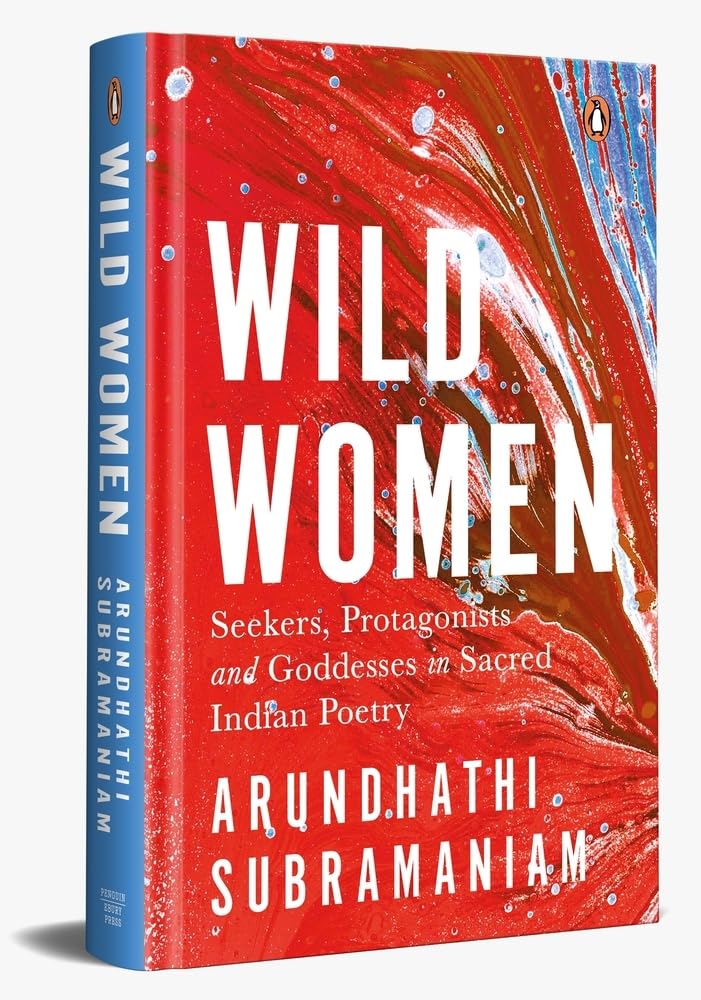
Title: Wild Women: Seekers, Protagonists and Goddesses in Sacred Indian Poetry

Editor: Arundhathi Subramaniam

Publisher: Penguin Random House

“The path of the heart is at times discredited as a soft option. It is seen as a path of neurotic excess and greasy sentimentality. Yet, what we hear in these songs isn’t prissy obedience but open-throated longing. […] Such longing is not born of an infantile need for a divine paterfamilias. Nor is it the resort of those who lack the intellect to craft their own destinies. This is the way of the razor’s edge. The path of those who have nothing left to protect or prove. This is one of the most courageous journeys back home,” writes Arundhathi Subramaniam in some of the most powerful lines of a very evocative Introduction to this book.

Wild Women: Seekers, Protagonists and Goddesses in Sacred Indian Poetry is a comprehensive anthology of sacred poems that brings together three of Subramaniam’s most cherished interests–spirituality, poetry, and women’s creative lives. Seen within the tradition of Arundhathi’s own consistent and remarkable oeuvre as woman, poet and spiritual traveller, this anthology containing poems by women seekers as well as poems by men and women dedicated to women protagonists and goddesses, is a deep historical and existential search for legacy, for connection, for the otherness of selfhood and the self-ness of the other. The cover of the book, richly symbolic as it is, is also highly attractive, and one that readers will not forget in a hurry. Here is a birth, both cosmic and cataclysmic, a falling and a rebounding, calm and turmoil.

As an anthology of poems, Wild Woman attempts an undertaking not envisaged before – the bringing together of the voices of women within the spiritual fold from across the length and breadth of the country’s geography and history. Here are women from varied historical ages, diverse places, languages, social classes, traditions, and religious cults; women who are both well-known and relatively anonymous; women who choose to live within the family as well as those who seek to renounce it altogether; women who speak in their own voices as well as those who are spoken for by male poets, lovers and devotees; women who stand between history, myth, and divinity; in short, women who have been beckoned by and have responded, in various ways, to the persistent call of the wilderness within their wide, vibrant souls.

Given the intensity of its subject and intention, the book is aptly titled. ‘Wild women’, apart from being alliterative, marks distinct metaphorical connections with the cultural terrain of women’s lives. As the poems in this book powerfully assert, ‘wilderness’ is a location these women existentially inhabit. It is a space that is beyond the governance and influence of society, and though women are native to it, this is where they are forever exiled from. To return to the self is to reclaim this wilderness within, to dismiss societal constructs and make an institution out of faith and intuition. This wilderness, as Subramaniam insists, “is not a cosy hearth. It is a place of peril, a smithy of surprises.”

It is also a space that has the potential to envision a new ontological, epistemological, and social order. Every voice in this anthology is, thus, disruptive in its envisioning of a form of existence that militates against the one offered by contemporary society. In ‘Get Ready to Live like a Pauper’, Gangasati [1]whose songs are an important part of the oral tradition of poetry in Gujarati even today, says:

The world of the divine has no place
For caste, gender or race
Shed this phantom chain,
Be cool and take it easy, man.

Similarly, Amuge Rayamma of the twelfth century CE, says:

If you know the self
why have truck with those who gossip?
If you can move in ways unimagined,
why depend on women?

In every poem, the route taken into this wilderness is that of the spiritual, revealing a desire to merge the self with the essential light of the universe—the formless Divine or the God, loved deeply in some human form.  Here is a total rejection of every established commandment, and a faithful obedience only to the experience of the self – the physical and the spiritual. The Lord is conceived as responding to every form of desire and arrives to the woman seeker in plural shapes of parent, lover, mentor or guide. To Kanhopatra of the fifteenth century CE, the Lord appears as “Mother Krishna” while to Vidya who wrote in Sanskrit sometime between the seventh and ninth century CE, he comes as a lover:

Why expose a lone woman
to such pageant
o season of rain
the torment
the sweet bitter need to be
touched

The poems in this anthology evince a strong dissatisfaction with prescribed moulds of identity and an urgency to experience life and thought first-hand. The constant pull between society and the individual, dogma and will, subjection and agency, and incarceration and liberation constitute the essential conflict in these poems, only to be resolved by the fierce choices of the spirit. Dissatisfaction with caste, gender, family, materialism and injustice lead the poets in this book to experiment with a language that legitimises the use of women’s experiences as yardstick and metaphor for the exploration and exposition of new truths. Keeping the feminine body of woman and nature at the centre of experience and discourse, the syntax of these poems is framed by an irresistible desire to overwhelm the old with the new. In every poem, thus, language becomes a sharp and dextrous tool, both argumentative and aesthetic, to establish new knowledges and new points of view. In ‘A Manifesto for New Poetry’, Muddupalani (eighteenth century CE) writes:

Can your poems stand in the field, girl,
alongside all the great poems of all the great
poets? Absolutely.
Doesn’t the bee gorged on honey
from the great lotus still savour
the humble flower’s nectar?

“The journey of a book, not unlike the journey of the heart, has its own logic—precise but not always schematic,” writes Subramaniam. Operating on its own logic, this book vitally performs for our times four extraordinary tasks—historical, activist, poetic, and feminist. Historically, it liberates women from stereotypes of oppression within patriarchy and domesticity, and by reinstating their positions as thinkers, philosophers, agents, leaders, and role-players within active religious and community life, it lays down empowered annals of womanhood for us to contemplate on. In terms of literary activism, such an extensive attempt at documenting and compiling voices of and for women within the spiritual domain, is largely unprecedented. “The essential impetus behind this project was to invoke the names of women. To turn cameos into protagonists. To invite backstage workers into the spotlight,” remarks Subramaniam. By highlighting women’s names and contributions to Indian spiritual traditions, this book will not only protect these names from oblivion and erasure but also encourage further explorations and deliberations in this field.

“A poem can offer us respite from too much meaning,” states Subramaniam. As poetry, this volume is a distilled collection of some of the finest spiritual doubts, agonies, and ecstasies of the human self in its journey towards the divine. Additionally, by bringing poems in translation from a wide corpus of vernacular languages into English, this anthology opens up Indian English poetry to the most intimate linguistic and creative recesses of the Indian mind. Finally, as a feminist work, this book highlights an ontology of the wild which becomes here, a praxis rather than an anomaly, and helps to establish a shared bond of courageous and self-conscious womanhood. Through each of the three sections of the book where women appear as seekers, protagonists and goddesses, Wild Women steadily performs an ecriture feminine, and sculpts a spiritual biography of Indian womanhood.

There is an elemental power that radiates from Subramaniam’s language, the power of words that have been painstakingly lived through before utterance. Subramaniam is, as much, a disciple of language as she is of the spirit. “This is poetry as power—the power of conscious utterance and the raging power of all that must be left unsaid,” she remarks of the poems in this book. Her own words evince that power to create and to procreate an understanding of womanhood that is steadily expanding to include new experiences and worldviews. She writes, “Since these poets lived lives profoundly wedded to mystery, that mystery is an integral part of this project.” Constantly aware of this mystery, Wild Women is a passionate and compelling thesis for reclaiming women’s essential wilderness and the place of wild women within history, spirituality and poetry.

[1] A medieval saint poet of the Bhakti tradition

Basudhara Roy teaches English at Karim City College affiliated to Kolhan University, Chaibasa. Author of three collections of poems, her latest works have been featured in EPW, The Pine Cone Review, Live Wire, Lucy Writers Platform, Setu and The Aleph Review among others. 

.

PLEASE NOTE: ARTICLES CAN ONLY BE REPRODUCED IN OTHER SITES WITH DUE ACKNOWLEDGEMENT TO BORDERLESS JOURNAL

Click here to access the Borderless anthology, Monalisa No Longer Smiles

Click here to access Monalisa No Longer Smiles on Kindle Amazon International

Categories
Review

Mapping the Mind

Book Review by Navleen Multani

Title: Mapping the Mind, Minding the Map

Editors: Basudhara Roy and Jaydeep Sarangi

Publisher: Sahitya Akademi

Mapping the Mind, Minding the Map edited by Basudhara Roy and Jaydeep Sarangi anthologises twenty contemporary poets. This book unveils a large canvas of poems penned by poets hailing from diverse locations and cultures, evoking thoughts on existential dilemmas of the contemporary world. The 391 pages of the anthology comprise poems by multiple poets: Adil Jussawalla, Arundhati Subramaniam, Ashwani Kumar, Bashabi Fraser, Bibhu Padhi, Jayant Mahapatra, K. Satchidanandan, K.Srilata, Keki N.Daruwalla, Lakshmi Kannan, Mamang Dai, Nabina Das, Robin S. Ngangom, Sanjukta Dasgupta, Tabish Khair, Usha Akella, Yogesh Patel and more

Every poem entails evocative images, visual and syntactic cues that put forth poetics of everyday life. Traversing maps and minds, this engaging collection of two hundred poems unravels different places and persons. The anthology is a poetic narrative and holistic exploration of locating oneself through language. As the book brings together experiences and knowledge of space, it pushes readers to rethink how landscape shape identity.

Memories encompassing reflections on landscapes, ancient history, myth, family, home, towns, cities, countries, music, seasons, elements of nature, disasters, wants, love and wounds of Homo Sapiens, women, mother as well as immigrants abounds the creation of every poet. Memories of special days, seasons, cities and cultures culminate in the compositions of Mamang Dai. Nabina Das’ creations talk about death and else. Sanjukta Dasgupta juxtaposes past and present to celebrate free spirit of Kali, Alakshmi and Millenial Sita.

This compilation, published by Sahitya Akademi, is an itinerary for dreamers and travellers alike. Ten poems by each poet weave a tapestry of emotions, experiences, moments and memories that define persons, places, practices and cultures. Every word, image and syntactical turn in these poems moves readers to discover poet’s emotional state. Events and myriad experiences, memorable and unpleasant, form an intricate reflection on life. The poems are also revelations about the contemporary world. The mosaic of memories present a ceaseless stream of significant moments that mould the minds and the maps. The compositions heighten consciousness, enrich the understanding of readers and deepen their humanity. The poems make the readers encounter hardships, moments of despair, compassion, empathy and resilience to extract invaluable insights. Reflections on difficult and dark times infuse renewed strength to deal with adversity.

Every poet uses different linguistic register to delve into solitude, decay, death and a new force that nurtures mind as well as takes to greater understanding about existence. “When Landscape Becomes Woman” by Arundhati Subramaniam reveals “That a chink in a wall is all you need to tumble into a parallel universe”. Whether it is Bashabi Fraser’s “Mothers All” claiming, “They are the bravest soldiers-marching on”, or Adil Jussawalla’s “Refuge” telling “Mother tells her rosary from six to seven, her one hour refuge,” each poet, irrespective of gender, envisions an independent and autonomous identity. “What’s wrong with us Kali women?”, “Maryada[1] and modern Draupadi”, “Woman in a Landscape” by Adil Jussawalla, “History”, “Draupadi”, “Partition Ghazal”, “The Tribal Goddess” and “Patna to Nalanda-1979” by Keki N.Daruwalla transport readers from past to present and illuminate multi-facets of life. “Somewhere like a shadow in the night like a black mineral in the earth, /Somewhere in a mirror where you can see your dreams a poem awaits deftly angled light,” writes Keki Daruwalla. Ashwani Kumar’s poems dwell on Alzheimer’s, lies emerging from deception, town vanished in the reservoir of waters and the strange ways of the world.

The deftly crafted poems blend imagery, thoughts and experiences. Many of the poems are centred on home, landscape and seasons. Titles of a few poems like “Mitti[2]’, “Bhakti[3]”, “Haldi[4]”, “Mahaprajapati[5]”, “O Boisakh[6]” and “Lopamudra[7]” have not been provided with a translation. Supplementing these titles are poems like “Earthrise”, “Missives of Music”, “The Same Moon from Edinburgh to Calcutta: A Refracted Lens”, “Sunrise at Puri-on-Sea”, “The River” and “Earth Day”.

The poems ranging from prose to typographic and linguistic variations, Mapping the Mind, Minding the Map speaks to larger issues of urban Indian identity, acceptance, adaptation and cultural estrangement. These map the poetics of womanhood, the body, institution, family and love. By doing so, the anthology erases traditional boundaries to develop a new poetic form. The poems are ensembles of words that unite to present verbal, vocal and visual sphere of communication.

This three-dimensional language becomes carrier of aesthetic message of the poet. The reduction of language to a word or fragments in many of the poems is similar to the reduction of landscape to map elements selectively and generally. This gives a distinct charm to the anthology. The poems explode with bird-names, names of cities and countries making these compositions a dialectical map. Very aptly the poems, as Howard McCord contends, can be comprehended as “a map on which articulation of consciousness can be charted, and the serial flow we associate with prose can be gathered into clusters and islands of words which reveal the individual’s voice and vision, even his philosophical stance, more accurately than a line broken by a general rule imposed.” Poems in Mapping the Mind, Minding the Map are maps that offer ways to know simplified, generalised and selective views on the world and human existence.

[1] Dignity

[2] Mud

[3] Devotion

[4] Turmeric

[5] The woman who raised Buddha

[6] The second month in the Bengali calendar which coincides with April-May

[7] A philosopher who lived in the Rigvedic age

Dr Navleen Multani is Associate Professor, Head, School of Languages, and Director, Public Relations at Jagat Guru Nanak Dev Punjab State Open University, Patiala (India). She is Area Editor with Oxford Online Bibliographies: Literary and Critical Theory.

.

PLEASE NOTE: ARTICLES CAN ONLY BE REPRODUCED IN OTHER SITES WITH DUE ACKNOWLEDGEMENT TO BORDERLESS JOURNAL

Click here to access the Borderless anthology, Monalisa No Longer Smiles

Click here to access Monalisa No Longer Smiles on Kindle Amazon International
Categories
Contents

Borderless, June 2024

Art by Sohana Manzoor

Editorial

Fly High…Like Birds in the Sky… Click here to read.

Translations

Nazrul’s Nur Jahan, the Mughal empress, has been translated from Bengali to English by Professor Fakrul Alam. Click here to read.

Eight Short Poems by Munir Momin have been translated from Balochi by Fazal Baloch. Click here to read.

An Age-old Struggle by Ihlwha Choi has been translated from Korean by the poet himself. Click here to read.

Okale or Out of Sync by Tagore has been translated from Bengali by Mitali Chakravarty. Click here to read.

Poetry

Click on the names to read the poems

Michael Burch, Ryan Quinn Flanagan, Kumar Sawan, LaVern Spencer McCarthy, Shamik Banerjee, Prithvijeet Sinha, Gregg Norman, Rinku Dutta, Alex S. Johnson, Anushka Chaudhury, Wayne Russell, Nusrat Jahan Esa, Ahmad Rayees, Ivan Ling, Swetarani Tripathy, R.L.Peterson, Ayesha Binte Islam, Rhys Hughes

Musings/ Slices from Life

In the Grip of Violence

Ratnottama Sengupta muses on acts of terror and translates a Bengali poem by Tarik Sujat which had come as a reaction to an act of terror. Click here to read.

Meeting the Artists

Kiriti Sengupta talks of his encounter with Jatin Das, a legendary artist from Bengal. Click here to read.

A Musical Soiree

Snigdha Agrawal recalls how their family celebrated Tagore’s birth anniversary. Click here to read.

A Cover Letter

Uday Deshwal muses on writing a cover letter for employment. Click here to read.

Musings of a Copywriter

In Berth of a Politician, Devraj Singh Kalsi muses on an encounter with a politician. Click here to read.

Notes from Japan

In A Day with Dinosaurs, Suzanne Kamata visits the ancient dino bones found in Fukui Prefecture. Click here to read.

Essays

From Place to Place

Renee Melchert Thorpe recounts her mother’s migration story, hopping multiple countries, starting with colonial Calcutta and Darjeeling. Click here to read.

My Love Affair with (Printed) Books

Ravi Shankar writes of his passion for print media. Click here to read.

A Story Carved in Wood, Snow and Stone  

Urmi Chakravorty travels with her camera and narrative to a scenic village in the Indo China border. Click here to read.

Stories

Spunky Dory and the Wheel of Fortune

Ronald V. Micci takes the readers on a fantastical adventure. Click here to read.

Rani Pink

Swatee Miittal sheds light on societal attitudes. Click here to read.

The Ghosts of Hogshead

Paul Mirabile wanders into the realm of the supernatural dating back to the Potato Famine of Ireland in the 1800s. Click here to read.

Conversations

In conversation with eminent Singaporean poet and academic, Kirpal Singh, about how his family migrated to Malaya and subsequently Singapore more than 120 years ago. Click here to read.

In conversation with Jessica Muddit, author of Once Around the Sun: From Cambodia to Tibet, and a review of her book. Click here to read.

Book Excerpts

An excerpt from Suzanne Kamata’s Cinnamon Beach. Click here to read.

An excerpt from Ryan Quinn Flanagann’s These Many Cold Winters of the Heart. Click here to read.

Book Reviews

Somdatta Mandal reviews Maya Nagari: Bombay-Mumbai A City in Stories, edited by Shanta Gokhale and Jerry Pinto. Click here to read.

Basudhara Roy reviews Trailokyanath Mukhopadhyay’s Tales of Early Magic Realism in Bengali, translated by Sucheta Dasgupta. Click here to read.

Rakhi Dalal reviews Damodar Mauzo’s Boy, Unloved, translated from Konkani by Jerry Pinto. Click here to read.

Bhaskar Parichha reviews The Dilemma of an Indian Liberal by Gurcharan Das. Click here to read.

.

Click here to access the Borderless anthology, Monalisa No Longer Smiles

Click here to access Monalisa No Longer Smiles on Amazon International

Categories
Editorial

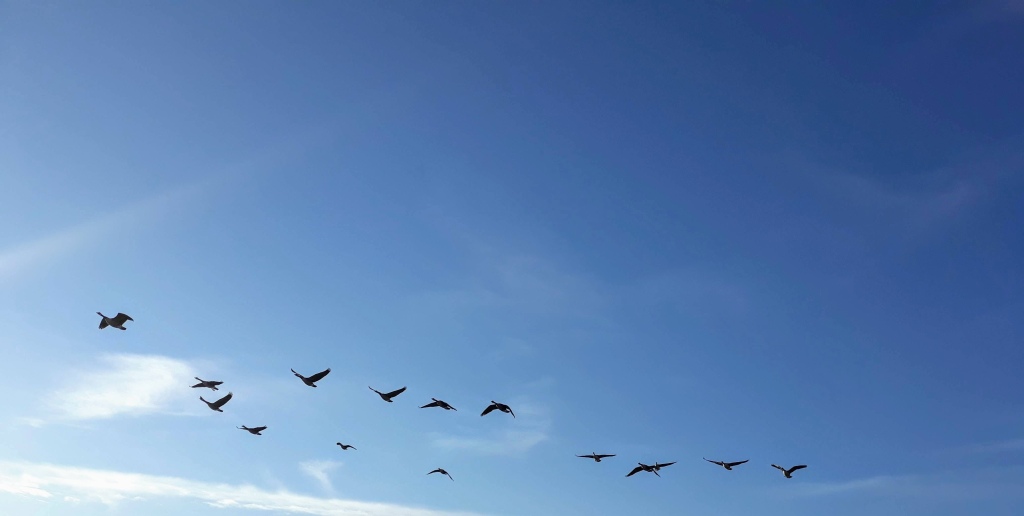
Fly High… Like Birds in the Sky…

He sees a barrier where soldiers stand
with rifles drawn, encroachers kept at bay.
A migrant child who holds his mother's hand


— LaVern Spencer McCarthy, Are We There Yet?

There was a time when humans walked the Earth crossing unnamed landmasses to find homes in newer terrains. They migrated without restrictions.  Over a period of time, kingdoms evolved, and travellers like Marco Polo talked of needing permissions to cross borders in certain parts of the world. The need for a permit to travel was first mentioned in the Bible, around 450BCE. A safe conduct permit appeared in England in 1414CE. Around the twentieth century, passports and visas came into full force. And yet, humanity had existed hundreds of thousand years ago… Some put the date at 300,000!

While climate contingencies, wars and violence are geared to add to migrants called ‘refugees’, there is always that bit of humanity which regards them as a burden. They forget that at some point, their ancestors too would have migrated from where they evolved. In South Africa, close to Johannesburg is Maropeng with its ‘Cradle of Humanity’, an intense network of caves where our ancestors paved the way to our evolution. The guide welcomes visitors by saying — “Welcome home!” It fills one’s heart to see the acceptance that drips through the whole experience.  Does this mean our ancestors all stepped out of Africa many eons ago and that we all belonged originally to the same land?

And yet there are many restrictions that have come upon us creating boxes which do not allow intermingling easily, even if we travel. Overriding these barriers is a discussion with Jessica Mudditt about Once Around the Sun: From Cambodia to Tibet, her book about her backpacking through Asia. Documenting a migration more than a hundred years ago from Jullundur to Malaya, when borders were different and more mobile, we have a conversation with eminent scholar and writer from Singapore, Kirpal Singh. Telling the story of another eminent migrant, a Persian who became a queen in the Mughal Court is a lyric by Nazrul, Nur Jahan, translated by Professor Fakrul Alam from Bangla. Ihlwha Choi has self-translated his own poem from Korean, a poem bridging divides with love. Fazal Baloch has brought to us some exquisite Balochi poems by Munir Momin. Tagore’s poem, Okale or Out of Sync, has been translated from Bengali to reflect the strange uniqueness of each human action which despite departing from the norm, continue to be part of the flow.

Among our untranslated poetry is housed LaVern Spencer McCarthy’s voice on the plight of migrants of the current times. Michael Burch gives us poems for Dylan Thomas. We have a plethora of issues covered in poetry ranging from love to women’s issues, even an affectionate description of his father by Shamik Banerjee. Ryan Quinn Flanagan, Kumar Sawan, Prithvijeet Sinha, Gregg Norman, Anushka Chaudhary, Wayne Russell, Ahmad Rayees, Ivan Ling, Ayesha Binte Islam and many more add verve with their varied themes. Rhys Hughes has shared a poem on a funny sign he photographed himself.

We have a tongue in cheek piece from Devraj Singh Kalsi on traveling in a train with a politician. Uday Deshwal writes with a soupçon of humour as he talks of applying for jobs. Snigdha Agrawal brings to us flavours of Bengal from her past while Ratnottama Sengupta muses on the ongoing wars and violence as acts of terror in the same region and looks back at such an incident in the past which resulted in a powerful Bengali poem by Tarik Sujat. Kiriti Sengupta has written of a well-known artist, Jatin Das, a strange encounter where the artist asks them to empty fully even a glass of water! Ravi Shankar weaves in his love for books into our non-fiction section. Recounting her mother’s migration story which leads us to perceive the whole world as home is a narrative by Renee Melchert Thorpe. Urmi Chakravorty takes us to the last Indian village on the borders of Tibet. Taking us to a Dinosaur Museum in Japan is our migrant columnist, Suzanne Kamata. Her latest multicultural novel, Cinnamon Beach, has found its way to our book excerpts as has Flanagan’s poetry collection, These Many Cold Winters of the Heart.

In reviews, Somdatta Mandal has written about an anthology, Maya Nagari: Bombay-Mumbai A City in Stories edited by Shanta Gokhale and Jerry Pinto. Rakhi Dalal has discussed a translation from Konkani by Jerry Pinto of award-winning writer Damodar Mauzo’s Boy, Unloved. Basudhara Roy has reviewed Trailokyanath Mukhopadhyay’s Tales of Early Magic Realism in Bengali, translated by Sucheta Dasgupta. Bhaskar Parichha has introduced us to The Dilemma of an Indian Liberal by Gurcharan Das, a book that is truly relevant in the current times in context of the whole world for what he states is a truth:In the current polarised climate, the liberal perspective is often marginalised or dismissed as being indecisive or weak.” And it is the truth for the whole world now.

Our short stories reflect the colours of the world. A fantasy set in America but crossing borders of time and place by Ronald V. Micci, a story critiquing social norms that hurt by Swatee Miittal and Paul Mirabile’s ghost story shuttling from the Irish potato famine (1845-52) to the present day – all address different themes across borders, reflecting the vibrancy of thoughts and cultures. That we all exist in the same place and have the commonality of ideas and felt emotions is reflected in each of these narratives.

We have more which adds to the lustre of the content. So, do pause by our content’s page and enjoy the reads!

I would like to thank all our team without who this journal would be incomplete, especially, Sohana Manzoor, for her fabulous artwork. Huge thanks to all our contributors who bring vibrancy to our pages and our wonderful readers, without who the journal would remain just part of an electronic cloud… We welcome you all to enjoy our June issue.

Wish you happiness and good weather!

Thank you all.

Mitali Chakravarty

borderlessjournal.com

Click here to access the content’s page for the June 2024 Issue.

.

READ THE LATEST UPDATES ON THE FIRST BORDERLESS ANTHOLOGY, MONALISA NO LONGER SMILES, BY CLICKING ON THIS LINK.