Commemorating fifty years of Bangladesh which struggled for the right to freedom from oppression and succeeded finally on 16th December, 1971
Landscape in Bengal. Painting by Sohana Manzoor
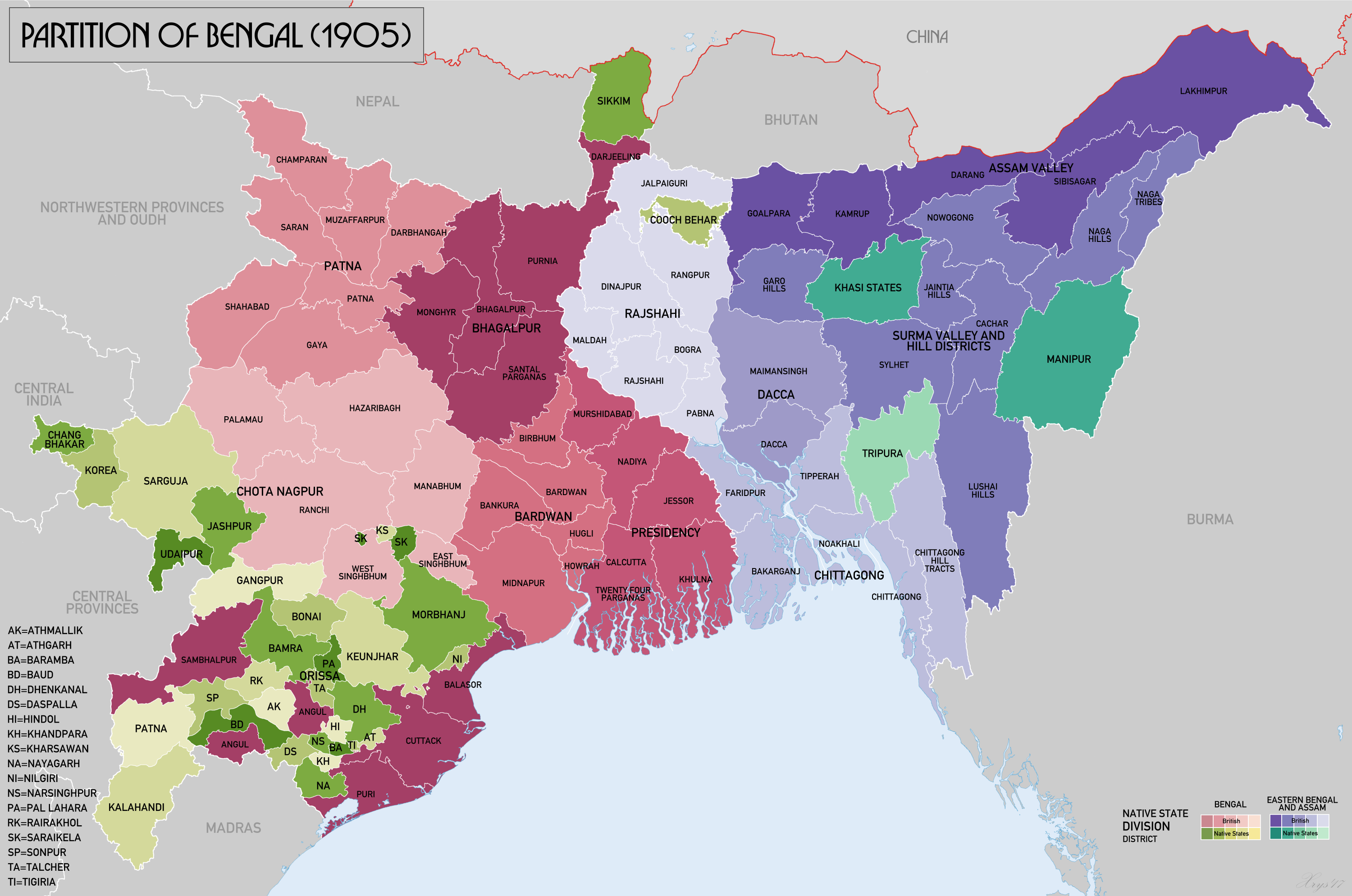
Bengal went through three Partitions, the final one being in 1971, when Bangladesh came to be its own entity. The first Partition of Bengal was in 1905, when Lord Curzon sliced it along the lines of faith, which as Ratnottama Sengupta points out in her musing was the result of the colonial policy of divide and rule implemented along religious lines for earlier when Hindus and Muslims had combined forces against colonials, it took a year to quell the revolt of 1857. Due to opposition from many, including Tagore, the colonials were forced to revoke the Partition in 1911.
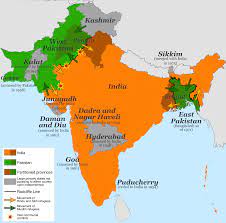
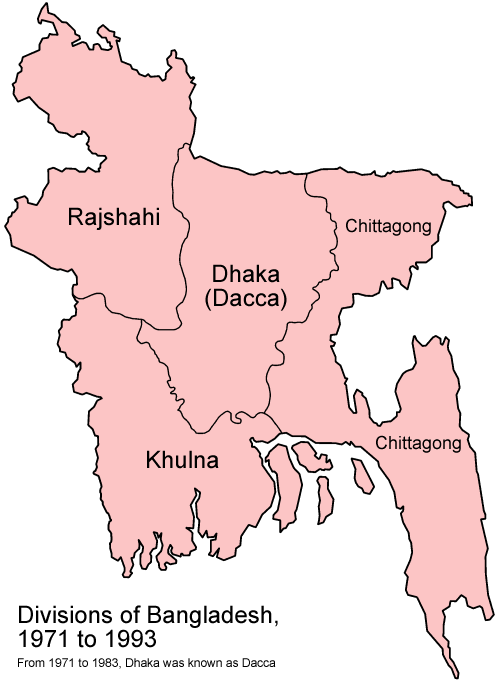
19051947Post-1971The three Partitions of Bengal in Maps: Courtesy: Creative Commons
In 1947, the subcontinent was again divided along religious lines. So, technically, there was Pakistan and India. Pakistan included East (Bengal) and West. As Fakrul Alam tells us in his essay, the Bengalis resented the imposition of Urdu by Pakistan. After a struggle of three decades, and a war in which India supported East Pakistan and America supported West Pakistan, Bangladesh gained complete independence in 1971 with Sheikh Mujibur Rahman, the founding father of the country, at its helm.
We present to you a glimpse of this part of history as told by various contributors on our forum.
Interview
Professor Fakrul Alam, the translator of Bongobondhu (friend of Bengal) Mujibur Rahman’s autobiography, to takes us on a journey to the inception of Bangladesh and beyond. Click here to read the interview.
Professor Fakrul Alam takes us through the three Partitions of Bengal whichultimately led to the creation of Bangladesh, with focus on the role of Dhaka University. Click hereto read.
Ratnottama Sengupta recaptures vignettes from her past, from across the border where the same language was spoken, some in voices of refugees from East Pakistan to India. Click here to read.
Rakibul Hasan Khan pays a tribute with a twist to a recently deceased Bangladeshi writer, Hasan Azizul Huq, a writer who wrote of the Partition victims. Click here to read.
Aruna Chakravarti reviews Golden Bangladesh at 50: Contemporary Stories & Poemseditedby Shazia Omar, bringing to focus the Partition between 1905-1911. She also explains the story of the creation of Aamar Shonar Bangla (My Golden Bengal, the Bangladesh National Anthem) by Tagore around this period. Click here to read.
Professor Fakrul Alam takes us through the Partitions of Bengal which ultimately led to the creation of Bangladesh, with focus on the role of Dhaka University.
In Dhaka University: the Convocation Speeches, a volume compiled with an introduction by Serajul Islam Choudhury in 1988, we read that the university was established by the British as a “splendid imperial compensation” for the Muslims of East Bengal (Choudhury, 26). They had wanted the current rulers of India to make up through it for the loss, they felt, they had suffered because of the reunion of Bengal in 1911. Delivering his inaugural speech as the Chancellor of Dhaka University (DU) in 1923, Lord Lytton had not only made this point but had also expressed the hope that it would soon become “the chief center of Muhammadan learning” in India and would “devote special attention to higher Islamic studies” (26). However, Lytton had ended his speech by urging graduands to conceive of the institution “as an Alma Mater in whose service the Muhammadan and the Hindu can find a common bond of unity” (Choudhury, 29). The subsequent history of the university reveals that while some of its future students would viewed it as a site for cultivating Islamic values and consolidating the Islamic heritage of the part of Bengal in which it was located, others would claimed it as a space where a democratic and secular notion of being Bengalis could be disseminated.
DU started playing a decisive role in Bangladeshi national identity formation almost as soon as the Islamic state of Pakistan was born. It became the center of the movement that would lead to the creation of the country born out of the ashes of East Pakistan in 1971. The key issue here was language and the catalyst was the insistence by the central government of Pakistan that Urdu should be the lingua franca of the country, regardless of the fact that only three percent of Pakistanis actually used it in their everyday lives. For two successive days on 5 and 6 December 1947, teachers and students of the university demonstrated on campus and the streets of Dhaka against the government decision and in favour of Bengali.
The Pakistani government, however, paid no heed to the protests and went ahead with its decision to impose Urdu as the sole official language of the country. In response to this ruling DU students mobilised on 26 February, 1948 to form an “All Party Language Committee of Action.” Not daunted, Mohammad Ali Jinnah, the Governor General of Pakistan, and identified as the “Father of the Country” by the official media, reiterated publicly while on a visit to Dhaka on the 21st of March that “the state language of Pakistan is going to be Urdu and no other language” (Islam, 224). When he made the same point in addressing the DU Special Convocation on the 22nd of March, Bengali students present at the convocation protested. On March 11, 1950 the Dhaka University Language Action Committee was formed. In essence, the movement that was being spearheaded by university students and that soon spread across East Pakistan, ultimately led to the break-up of Pakistan, a state built entirely on Islamist nationalism.
A direct outcome of the language movement was that the government that had been held responsible for bruising the Bengali consciousness was voted out of power in East Pakistan in 1954. Instead, a short-lived but popular coalition government that was viewed to be pro-Bengali took over up the administration of the province. Students had played a major part in the election and the tradition of student activism in the cause of Bangladeshi nationalism became very noteworthy in national politics from this point onwards.
In retrospect, we can see the Pakistani period was one which had witnessed a continuous tussle between successive Pakistani regimes wielding state power to curb Bengali rights and impose an Islamist state at the expense of Bengali language and culture and Bengali nationalism. DU teachers and students played a crucial part in the confrontation. It was mostly because of them that the Pakistani state apparatus failed to suppress Bengalis and prevent them from expressing themselves. The campus was at the heart of activity that promoted an awareness of secularism and brandished democracy as a goal to be achieved in national life.
It was to be expected, then, that when the Pakistani state made one last desperate attempt to suppress Bengalis clamouring for full autonomy and democracy on March 26, 1971 they would do so by targeting DU and attempting to mow down Dhaka university faculty members and students ruthlessly. When the Pakistani government decided to postpone the National Assembly meet, where the Awami League had got an absolute majority and where they were in a position to claim self-rule for East Pakistan and dominate Pakistani politics for the first time in that nation’s history, the campus broke out once again in loud protest. On the 7th of March, when the Awami League’s chief, Sheikh Mujibur Rahman, gave his historic speech claiming full autonomy and threatening to launch an armed movement that would drive away the Pakistanis from East Pakistan forever, DU student leaders were at his side as he spoke in Ramna Park, which borders the university.
What happened on 26 March was nothing less than a calculated bid to blast DU to smithereens, murder student leaders and selected faculty members, and drive out all students from the campus for playing leading roles in the movement against the Pakistani state. The Pakistani Army was nothing short of murderous in attempting to neutralize dissent. Inevitably, DU bore the brunt of their initial fury. Anybody found in the university that night was mowed down and dorms, faculty residences and the DU Teacher’s Club were shot at indiscriminately. The Shaheed Minar was razed to the ground and Bangla Academy was subject to artillery fire. Even university non-teaching staff and cafeteria officials were not spared. Madhu’s canteen – the favorite haunt of student politicians throughout the sixties – was attacked and Madhu – the benign owner of the cafeteria – was murdered. The huge bot tree (banyan) which provided shade under which student leaders delivered speeches and from which they had given the declaration of independence on one of the turbulent March days – was blasted out of existence.
It was clear that the Army had decided that DU was the ultimate symbol of the unacceptable form Bangladeshi national identity formation was assuming. As Professor Serajul Islam Chowdhury observes in “Ekattor O Dhaka Visva-Bidyalaya (1971 & DU),” the university ambience encouraged people to not merely dream about freedom and equality but to create an environment where the dream seemed to come close to reality. Also, the University had been consistently a site of resistance in its efforts to impose a theocratic or monolingual state on Bengalis, as on-campus happenings from the time of Jinnah’s 1948 declaration about making Urdu the only state language and the protest movements of the fifties and sixties that culminated in the month-long protests of March 1971 demonstrated. The six-point program proposed by the Awami League for financial and political autonomy had been drafted by DU professors.
In the nine-month liberation war that followed the Pakistani army crackdown on DU and the rest of Bangladesh, the university once again became a microcosm of the country in that almost all of its entire faculty and students fled it. Academic activities came to a standstill and it became a campus bereft of students who had deserted it along with most of their teachers since they were unwilling to kowtow to the Pakistani design to create a quiescent institution run by quislings and were not inclined to impart or acquire education in line with proto-Islamist and/or totalitarian concepts of nationalism. Many students died in the course of the next nine months fighting for liberation or suspected of doing so. When the birth of Bangladesh seemed imminent at the end of the year, the Pakistani Amy and its local collaborators carried out a systematic search of faculty members on, and outside, the campus to murder the ones still around, holding them largely responsible for the breakup of the country they had not been able to prevent from cracking up.
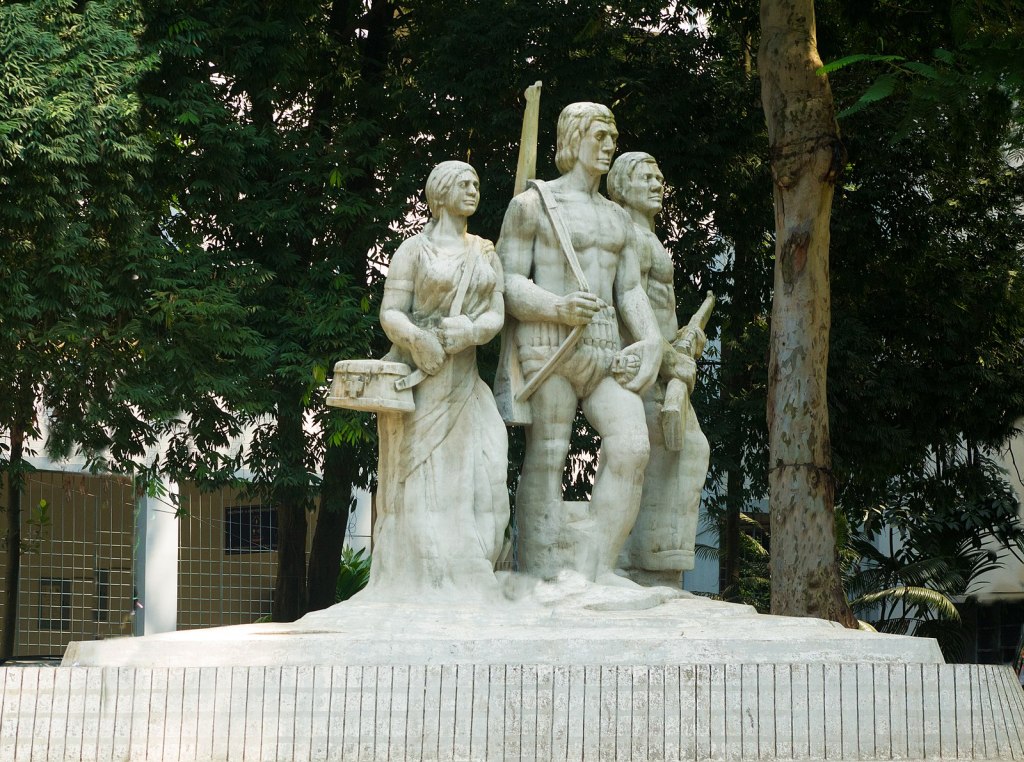
When independence finally came to Bangladesh on December 16, it was fitting that the Pakistani Army would surrender in the open space adjacent to the university known as Ramna Park. The many teachers and students who had been murdered since March 26 as well as the resistance put up by them were later commemorated with structures erected all over the campus, the most prominent of them being the “Aporajeyo Bangla” or “Invincible Bengal” sculpture in front of Kala Bhabhan or the Arts faculty building, the martyrs plaque put up opposite the central mall, and the sculpted figures of the freedom fighters erected in front of the Teachers-Students Centre. December 14 became from then on the day when the DU Liberation War martyrs were to be ceremonially remembered and December 16 the day when DU faculty and staff joined the rest of the country in celebrating Victory Day.
“Aporajeyo Bangla” or “Invincible Bengal” sculpture. Courtesy: Creative Commons
InBridge over Troubled Waters, academic Sanjay Kumar tells us about Pandies, an activist theatre group founded by him that educates, bridging gaps between the divides of University educated and the less fortunate who people slums or terror zones. Click here to read.
In Lessons Old and New from a Stray Japanese Cat, Keith Lyons talks with the author of The Cat with Three Passports, CJ Fentiman who likes the anonymity loaned by resettling in new places & enjoys creating a space for herself away from her birthplace. Click hereto read.
A transcreation of Tagore’s song, Purano Sei Diner Kotha, based on Robert Burn’s poem associated with new year’s revelries by Mitali Chakravarty. Click here to read.
Professor Fakrul Alam takes us through the three Partitions of Bengal whichultimately led to the creation of Bangladesh, with focus on the role of Dhaka University. Click hereto read.
With Christmas at our heels and the world waking up slowly from a pandemic that will hopefully become an endemic as the Omicron seems to fizzle towards a common cold, we look forward to a new year and a new world. Perhaps, our society will evolve to become one where differences are accepted as variety just as we are fine with the fact that December can be warm or cold depending on the geography of the place. People will be welcomed even if of different colours and creed. The commonality of belonging to the same species will override all other disparities…
While we have had exciting developments this year and civilians have moved beyond the Earth — we do have a piece on that by Candice Louisa Daquin — within the planet, we have become more aware of the inequalities that exist. We are aware of the politics that seems to surround even a simple thing like a vaccine for the pandemic. However, these two years dominated by the virus has shown us one thing — if we do not rise above petty greed and create a world where healthcare and basic needs are met for all, we will suffer. As my nearly eighty-year-old aunt confided, even if one person has Covid in a remote corner of the world, it will spread to all of us. The virus sees no boundaries. This pandemic was just a start. There might be more outbreaks like this in the future as the rapacious continue to exploit deeper into the wilderness to accommodate our growing greed, not need. With the onset of warmer climates — global warming and climate change are realities — what can we look forward to as our future?
Que sera sera — what will be, will be. Though a bit of that attitude is necessary, we have become more aware and connected. We can at least visualise changes towards a more egalitarian and just world, to prevent what happened in the past. It would be wonderful if we could act based on the truth learnt from history rather than to overlook or rewrite it from the perspective of the victor and use that experience to benefit our homes, planet and all living things, great and small. In tune with our quest towards a better world, we have an interview with an academic, Sanjay Kumar, founder of a group called Pandies, who use theatre to connect the world of haves with have-nots. What impressed me most was that they have actually put refugees and migrant workers on stage with their stories. They even managed to land in Kashmir and work with children from war-torn zones. They have travelled and travelled into different dimensions in quest of a better world. Travelling is what our other interviewee did too — with a cat who holds three passports. CJ Fentiman, author of The Cat with Three Passports, has been interviewed by Keith Lyons, who has reviewed her book too.
This time we have the eminent Aruna Chakravarti review Devika Khanna Narula’sBeyond the Veils, a retelling of the author’s family history. Perhaps, history has been the common thread in our reviews this time. Rakhi Dalal has reviewed Anirudh Kala’sTwo and a Half Rivers, a fiction that focusses on the Sikh issues in 1980s India from a Dalit perspective. It brought to my mind a family saga I had been recently re-reading, Alex Haley’s Roots, which showcased the whole American Revolution from the perspective of slaves brought over from Africa. Did the new laws change the fates of the slaves or Dalits? To an extent, it did but the rest as fact and fiction showcase were in the hands that belonged to the newly freed people. To enable people to step out of the cycle of poverty, the right attitudes towards growth and the ability to accept the subsequent changes is a felt need. That is perhaps where organisations like Pandies step in. Another non-fiction which highlights history around the same period and place as Kala’s novel is BP Pande’sIn the Service of Free India –Memoirs of a Civil Servant. Reviewed by Bhaskar Parichha, the book explores the darker nuances of human history filled with violence and intolerance.
That violence is intricately linked to power politics has been showcased often. But, what would be really amazing to see would be how we could get out of the cycle as a society. With gun violence being an accepted norm in one of the largest democracies of the world, perhaps we need to listen to the voice of wisdom found in the fiction by Steve Davidson who meets perhaps a ghost in Hong Kong. Musing over the ghost’s words, the past catches up in Sunil Sharma’s story, ‘Walls’. Sharma has also given us a slice from his life in Canada with its colours, vibrancy and photographs of the fall. As he emigrated to Canada, we read of immigrants in Marzia Rahman’s touching narrative. She has opted to go with the less privileged just as Lakshmi Kannan has opted to go with the privileged in her story.
Sharma observes, while we find the opulence of nature thrive in places people inhabit in Canada, it is not so in Asia. I wonder why? Why are Asian cities crowded and polluted? There was a time when Los Angeles and London suffered smogs. Has that shifted now as factories relocated to Asia, generating wealth in currency but taking away from nature’s opulence of fresh, clean air as more flock into crowded cities looking for sustenance?
Humour is introduced into the short story section with Sohana Manzoor’s hilarious rendering of her driving lessons in America, lessons given to foreigners by migrants. Rhys Hughes makes for more humour with a really hilarious rendition of men in tea cosies missing their…I think ‘TrouserHermit’ will tell you the rest. He has perhaps more sober poetry which though imaginative does not make you laugh as much as his prose. Michael Burch has shared some beautiful poetry perpetuating the calmer nuances of a deeply felt love and affection. George Freek, Anasuya Bhar, Ryan Quinn Flanagan, Dibyajyoti Sarma have all given us wonderful poetry along with many others. One could write an essay on each poem – but as we are short shrift for time, we move on to travel sagas from hiking in Australia and hobnobbing with kangaroos to renovated palaces in Bengal.
We have also travelled with our book excerpts this time. Suzanne Kamata’sThe Baseball Widowshuttles between US and Japan and Somdatta Mandal’s translation of A Bengali lady in England by Krishnabhabi Das, actually has the lady relocate to nineteenth century England and assume the dress and mannerisms of the West to write an eye-opener for her compatriots about the customs of the colonials in their own country.
While mostly we hear of sad stories related to marriages, we have a sunny one in which Alpana finds much in a marriage that runs well with wisdom learnt from Kung Fu Panda. Devraj Singh Kalsi has given us a philosophical piece with his characteristic touch of irony laced with humour on statues. If you are wondering what he could have to say, have a read.
In Nature’s Musings, Penny Wilkes has offered us prose and wonderful photographs of the last vestiges of autumn. As the season hovers between summer and winter, geographical boundaries too can get blurred at times. A nostalgic recap given by Ratnottama Sengupta along the borders of Bengal, which though still crossed by elephants freely in jungles (wild elephants do not need visas, I guess), gained an independence from the harshness of cultural hegemony on December 16th, 1971. Candice Louisa Daquin has also looked at grey zones that lie between sanity and insanity in her column. An essay which links East and West has been given to us by Rakibul Hasan about a poet who mingles the two in his poetry. A Bengali song by Tagore, Purano shei diner kotha, that is almost a perfect trans creation of Robert Burn’s Scottish Auld Lang Syne in the spirit of welcoming the New Year, has been transcreated to English. The similarity in the content of the two greats’ lyrics showcase the commonalities of love, friendship and warmth that unite all cultures into one humanity.
Our first translation from Uzbekistan – a story by Sherzod Artikov, translated from Uzbeki by Nigora Mukhammad — gives a glimpse of a culture that might be new to many of us. Akbar Barakzai’s shorter poems, translated by Fazal Baloch from Balochi and Ratnottama Sengupta’s transcreation of a Tagore song, Rangiye Die Jao, have added richness to our oeuvre along with one from Korean by Ihlwha Choi. Professor Fakrul Alam, who is well-known for his translation of poetry by Jibonanda Das, has started sharing his work on the Bengali poet with us. Pause by and take a look.
There is much more than what I can put down here as we have a bumper end of the year issue this December. There is a bit of something for all times, tastes and seasons.
I would like to thank my wonderful team for helping put together this issue. Sohana Manzoor and Sybil Pretious need double thanks for their lovely artwork that is showcased in our magazine. We are privileged to have committed readers, some of who have started contributing to our content too. A huge thanks to all our contributors and readers for being with us through our journey.
I wish you a very Merry Christmas and a wonderful transition into the New Year! May we open up to a fantastic brave, new world!
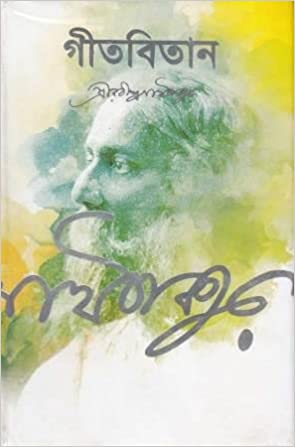
Rangiye Diye Jao (Colour the World) written in 1927 by Tagore is a part of Gitabitan, the maestro’s largest compendium of songs. It has been trans-created by Ratnottama Sengupta.
Colour the World

Colour the world before you bid adieu --
Before you go
Dye the world in your hues,
In your notes,
In the youthful verve
Of your smiles...
Colour the world before
Bidding adieu...

May those hues steep my soul,
May the hues stay in my heart --
To colour every action henceforth,
To light up the path when darkness falls,
To stay awake when slumber engulfs...

Dye the Earth with this melody of yours,
Bathe it in tears but
Make it recall --
The joyous ring that wrapped us all.
Dye the Earth before you go...
Colour it, before bidding adieu --

Wake me up before you leave,
Let my bloodstream
Ripple to your name --
Like the stars that
Shine through night,
Like the stream that
Breaks free of rocks,
Like the bolt that
Rips the clouds,
Like the rhythm that throbs
The axis of the world...
Rock me gently with your hands
Before bidding adieu --
Rabindranath Tagore (1861 to 1941) was a brilliant poet, writer, musician, artist, educator – a polymath. He was the first Nobel Laureate from Asia. His writing spanned across genres, across global issues and across the world. His works remains relevant to this day.
Ratnottama Sengupta, formerly Arts Editor of The Times of India, teaches mass communication and film appreciation, curates film festivals and art exhibitions, and translates and write books. She has been a member of CBFC, served on the National Film Awards jury and has herself won a National Award.
.
PLEASE NOTE: ARTICLES CAN ONLY BE REPRODUCED IN OTHER SITES WITH DUE ACKNOWLEDGEMENT TO BORDERLESS JOURNAL
In Conversation with Sanjay Kumar, the founder of Pandies, a socially responsible theatre group
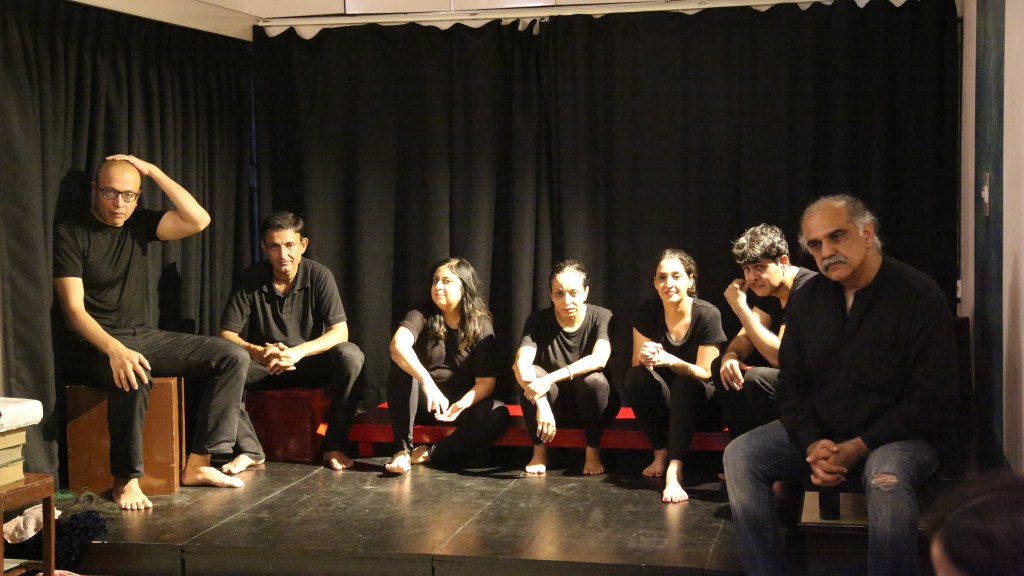
Some members of Pandies, with Sanjay Kumar sitting in the right hand corner.
Festivals often involve pageantry where people connect, reach out and have fun through performances. These can range from high class shows in halls to entertaining performances in street corners, individual buskers or theatricals at home. Brecht (1898-1956), often taught in universities, popularised socially responsible epic theatre. Epic theatre connects the players, imbued with welfarism and a sense of social responsibility, to educate the audience, subsequently encouraged to question and move towards altering their present reality to a more egalitarian one. Add to this students who look for more than just academic growth in universities and a young dynamic professor in the 1980s, and the end result is a volunteered ‘institution’ that has blossomed over three decades into a strangely named group – Pandies.
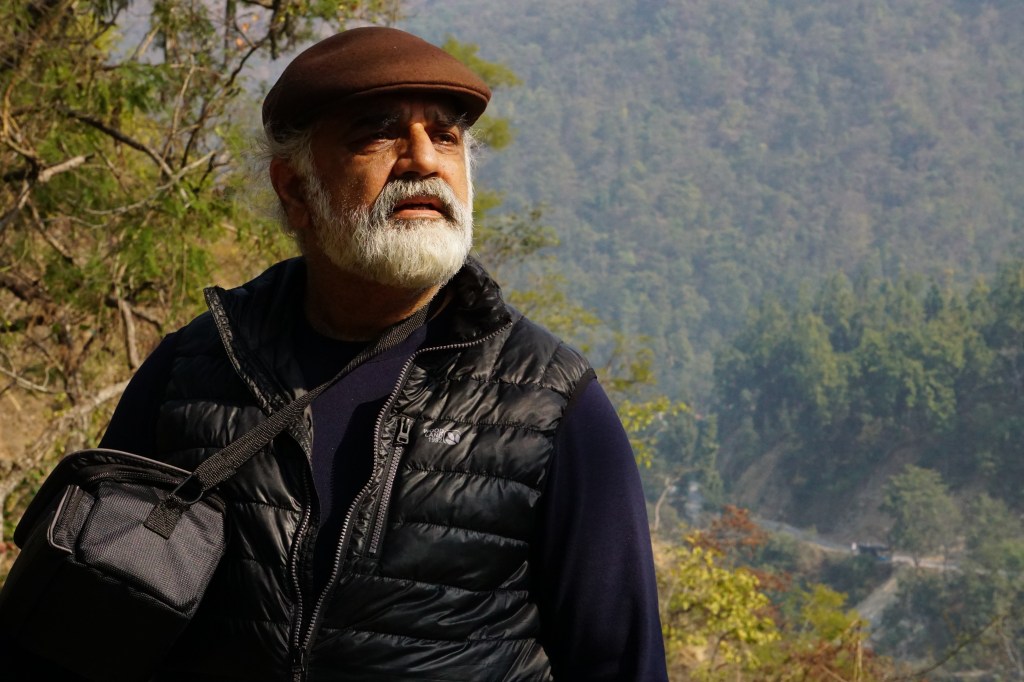
Sanjay Kumar
Founded in 1987 by Sanjay Kumar, an academic from Delhi University with residencies in Italy and the United States for the welfare of exploited children, the group evolved into a major voice trying to reach out to all strata of society. Kumar evolved a form of theatre to channelise the energy of students towards creating an awareness for the need to grow by helping the less fortunate. He tells us by the way of introduction: “We have been working with twenty slums or bastis in Delhi, have had interactions with a hundred schools and about twenty-five colleges. A minimum of hundred presentations are held each year. The major issue till 2000 was gender-sensitisation. Each year, pandies’ latches on to a different theme. After performing in the proscenium theatre, it takes adaptations of the same to diverse places. The group also works on issues related to environment. The adaptable, flexible, bilingual (at times multi-lingual) scripts are totally ours. The group is constantly exploring, searching for better modes to get its meaning across. Songs, dances, choreographed sequences are all a part of its repertoire. One of the most successful modes is an extremely interactive discussion at the end where the activist even narrates relevant anecdotes to get its audience to talk. The group has evolved a mega network in and around Delhi consisting of women, HIV activists, environmentalists, school and college teachers and students, progressive women from various communities including slums, victims of rape, attempted murder.” His work has reached across to multiple countries, universities (including Harvard) and has found credence among number of hearts across the East and the West.
The most impressive performance I saw was online with young refugees from Afghanistan and migrant workers in slums. They have worked with Non-Governmental Organisations (NGOs) that work with children, sex workers and women, thus educating and learning from them and exposing them to our, more secure world where the maximum need a young student has, is to score well to get into the right university and for their family and friends to travel, to have freedom of speech and better lives. Perhaps, the best way to comprehend this kind of drama is to let Sanjay Kumar take over and introduce the work they are doing, bridging gaps at multiple levels.
Tell us about the inception of pandies’. How old is the group?
The incipience of the group goes back to college really to the year 1987 when we did the first play from Hansraj (a college under Delhi University), though we registered later in 1993, as we broke away. As I got free from MPhil, I decided to start theatre in the college in a way that steers it clear of the festival circuit of doing 25-30 minutes plays and winning small cash awards at various college fests. The College Drama Society was revived in 1987 and under that banner we did six plays, one each a year on the trot: Lorca’s Blood Wedding (1933), Ngugi’s The Trial of DedanKimathi (1974), Strindberg’s The Dream Play (1901), Vicente Lenero’s The Bricklayers(1976), Genet’s The Balcony (1957)and Brecht’s TheCaucasian Chalk Circle (1944). Each was a full-length play of at least 100 minutes.
We were doing plays at a semiprofessional level, all having a run of five to seven days in Delhi’s leading theatre halls. The bookings were being done in the name of the college but from the beginning no money was put forth by the college. The funding was collected by the students from small donations. The group was getting too big for the college. There was a constant targeting from many in the administration and the faculty, accusations of the openly sexual content of the plays, of the insubordinate behaviour of the students, of classes being bunked. And then as the group evolved, there were many students who had graduated but still wanted to be there and as the reputation grew with the choice of plays and quality of production (contemporary reviews read us at par with professional groups), many students from other colleges wanted to join us. Things came to a head with the college administration in 1993. We had already booked at the auditorium in the name of the college and were rehearsing for Macbeth. We decided to launch our own group (the work normally took about six months) and in two months we registered and collected money enough to go under the new banner — Pandies’ theatre. The relationship with structures of the university remains tricky, there are those among the younger teachers and of course students who love us but the old and orthodox are still a bit wary.
Was this theatre started for the needs of the students/ teachers or to create an interest in academic curriculum?
Yes, at that time the syllabus had a totally first world bias (the bias is still there but less), to get in plays that speak to us. They may be first world, but they critique our oppressor — Brecht, Rame, Genet.
What was the gel that bound the group together ? Was it used to satisfy the needs of the students, teachers or society. Can you elaborate?
The first thing was the love of theatre. It’s like a bug, and the heady thing about a collectivism trying its own thing, charting paths not done in college before. And then the activism took over and went way beyond the love. We started pandies’ with a view that our world is not the way we want it. We wanted to make it better for more people. Even the plays from 1987 to 1993 were exploring non-canonical theatre.
The first point of attack was the huge gender bias. We felt we were living in a misogynist, rape friendly society. Series of proscenium plays attacked that. We tied up with the feminist NGO, Shakti Shalini. Our ties go back to 1996, with LGBT movements and women’s movements. Veils had more than hundred shows, theatres, colleges, schools and markets and slums and villages. We were asking for change in rape laws in the country. She’s MAD took stories from women’s organisations about laws of mental illness being consistently used against women to label them mad to take away their property rights, custody of children and provide a veneer over patriarchal violence. Again a play that sought legislative reform was Danger Zones. It explores what happens when you are lesbian and do not have a big wallet or parents to save you — forced marriages, sale into prostitution.
Equally important, in fact more so in later years has been the attack on religious bigotry. Gujarat was a breaking point. We had years of series workshops with impoverished youth in slums exposing the rhetoric of bigotry. We start with the Sikh pogrom of ’85 and go on to dissent against what our society has evolved to under a right wing dispensation, the religious supremacism of our world.
When you work with young boys, drug peddlers and sex workers, aged eight to fourteen, you return home a wreck and in need of therapy. But if you keep that fire alive inside you, you know how to take on the oppressors.
It is about a naked politics. We seek to rouse people from slumber, awaken a critical understanding of the world we live, of the forces that govern us — patriarchy, capitalism and, the tying factor of all oppression — religion.
The need was and remains the need of our times and our ethos.
How did the name evolve? And your group evolve?
It goes back to 1993 and is fully in keeping the with ‘play’ aspect of the group which likes to play with politics with its audience. It emerged from collective decisioning that has been the hallmark of pandies’ functioning. The name is a take ‘off’, ‘away’ from Mangal Pandey and the revolt of 1857. Actually, from the inability of the British to get Indian pronunciations correct. Pandey became Pandy, a hated expletive for the British commanders and continued in their letters even 50 years after the suppression of the revolt. ‘Pandy’ was one who was a part of the British structure, in their employ (Jhansi’s soldiers were not Pandies for instance), earned from them and rose against them. The hatred conveyed by the word was many times higher than in the simple expletives of traitor or the Hindustani ‘gaddaar.’ While it has a historical solidity, it also has a playful aspect just beneath, for many of the young in the group it was also deliciously close to panties and pondies (slang for pornographic literature), the sexual aspects for which the group was falsely castigated while in college, and what we loved to grin and laugh at.
We broke away in 1993, four teachers and about thirty students. Starting as a proscenium English group with an activist leaning in 1993, by 1996 we had turned totally activist. Starting with about thirty-five members (still the core for each project), the group soon acquired more than hundred members (today it has more than that, people go away and many return, even after a decade or fifteen years, to do that “better thing”). A strong presence of young, motivated women gave the group a feminist essence. And seeking overtly to make our ethos better, the group stressed a Left Feminist Atheist core as the law of its work from the very beginning. Activism, simply the overt statement that we are not okay with our world the way it is and seek a systemic change and are willing to do our bit as theatre enthusiasts for it.
Our three primary areas of work are : a. Proscenium: The plays are always activist and many of our own scripts and many adapted, some activist plays (Brecht, Rame and other activist scripts including agit prop) in the original; b. Theatre outside proscenium: What is usually called street theatre, nukkad natak, guerrilla theatre, the group has done actually thousands of performances and c. Workshop theatre: Where activist facilitators create plays with communities, staying with them or visiting them regularly — razor’s edge work has been done with young boy sex workers picked from platforms and housed in shelters, in the cannibalised village of Nithari, in women’s shelters, with refugees and in Kashmir. The process consists of getting ‘stories’ from the margins and creating theatre from them, performed usually by the community members, and at times along with Pandies.
Were you influenced by any theatre/art forms/writers or any external events to evolve your own form?
From the international activist tradition Brecht has been the most solid influence, his mode of showing what is obvious but we refuse to see it. Boal, Franca Rame, Dario Fo. The entire traditions of left swinging realism and alienation. In our own traditions the influence is more subtle, Indian People’s Theatre Association (IPTA) itself and Janam (a more contemporary people’s theatre group). We also borrow from the political and popular traditions of the subcontinent — Dastaan Goi, Jatra, Tamasha and Nautanki to name a few.
What impacts us most is the politics. Theatre is about critique, it’s about my ability to say ‘no’ and my desire to ask ‘why.’ We look back through history, history that tells us nothing can be permanent, that is record of those who stood and fought tyranny and authoritarianism. Gujarat 2002 was difficult and so was Babri Masjid but so was the emergency of 70s and never forget the anti-Sikh pogrom of the mid 80s at the heart of the country where I live.
Yes, and what is happening today, here and all over the globe cries for activist intervention.
What were the kind of content you started with? I heard you even adopted out of Aruna Chakravarti’s novel (Alo’s World?) to make a play. So, what was the content of your plays? Were you scripting your own lines?
We started with adaptations of plays with explicitly activist content which could be made more activist and imposed on our reality. Ibsen’s Ghosts, inspirations from Simon de Beauvoir, Doris Lessing. And post-1996, we were creating more and more from our own scripts, often containing multiple plays tied with thematic thrusts. And again, in times of repression one reverts to adaptations, of those who stood up to the challenge of their times, specially at the doors of gender, religion and class (the three themes of Pandies).
What we did for Aruna was akin to what we have done for other friends of Pandies, fiction writers, create small dramatic enactments based on parts their novels/short stories to go along with the launch and publicity of their works.
Have you moved away from your earlier models? What is your new model?
From proscenium to (while retaining proscenium) community theatre to (while retaining proscenium and community) workshop theatre that was the trajectory of Pandies before the pandemic struck our world.
The pandemic thrust us into a new model of cyber theatre. The group meets every Sunday but with Covid and the lockdown, we all went hibernating for a few months, awestruck by what struck us.
And then we started meeting online. It was amazing, we were able to connect with members in US, in Philippines, in UK and in different parts of India. There was the frigidity of the online mode but the ability to converse with so many people in their respective bubbles was just great. We met every Sunday. And started with storytelling for each other. With around thirty people that process took some Sundays. And then we started thinking of doing online plays using zoom. These were live online, no recording and each ending with a question-and-answer session with our audiences.
What was happening around us, the pandemic, and the equally deadly forays of our right-wing rulers made us look for avante garde activist plays from the past. We turned deliberately to the American tradition (important to let it be known that even the most decadent capitalist center has a solid activist theatre tradition) and did one agit prop and one proto-feminist play. Subterfuge was important and it was also important to say that even in the darkest of hours people have stood up to tyranny and fascism. Clifford Odets’ Till the Day I Die (1935), an anti-Nazi play of the agit prop tradition is aimed as much at Hitler as at McCarthy and relevant against all fascist governments. Broadcast simultaneously on Zoom and Facebook, the play got over 7000 hits. Sophie Treadwell’s Machinal (1928) was the second, a proto feminist play it raised issues of mainstream violence and suppression of ‘other’ voices. We were making quite an impact. Our audience was not confined to people from one city but spread internationally as friends all over the world who had wanted to see our plays (we have travelled and performed abroad twice, once in Manchester with an anti-fascist play — Cleansing in 2002 and in New York in 2012 with Offtrack, based on the lives of young boys ‘rescued’ from platforms in India).
We decided to connect with communities that we work with at least in and around Delhi through zoom. And we discovered the horrors for ourselves. While the rich had actually been ‘worried’ over the lockdown, the poor had taken an unfathomable hit. The incidence of domestic violence was at a peak (lockdown, problems getting ‘booze’, little help from cops and NGOs). Our young friends — now in late 20s, with whom we had been performing since 2006 since the Nithari (slum outside Delhi) pogrom had been thrown out of their meagre jobs, belonging to families of migrant labour — had seen it all and refugees from Afghanistan — in a bad state anyways — were really hit. And they were all artists, performers and storytellers par excellence. So, we decided on a storytelling festival where people from these sectors would narrate their stories in the same cyber format. And we asked our audience to put in some money and that was entirely distributed among the participants. The stories that emerged, personal and fiction derived from personal, were simple exhilarating.
What and how many languages do you use and how do you bridge linguistic gaps?
Language is highly political. We set out as an English group but with Macbeth itself some crucial scenes were being rendered in Hindustani (the opening scene and the porter scene). By 1996, as the group was going totally activist, a multi-language form had evolved. We were still keeping a section of English in the proscenium (had to be translated or made easier in the slums and villages shows) but sections of Hindustani and diverse languages of North India are being introduced. A recent example is an adaptation of Manto’s(1912-1955) stories and writings (Saadat Hasan Manto: Pagaleyan da Sardar), about 60 percent in Punjabi and 40 in English with no other language used (Punglish). We do a lot of translation work, including at times on the spot.
Who does your scripting? How do your scripts evolve?
The original scripts are a collective, collated exercise and emerge after months of workshopping on an issue within the group. Most of the Scripts are written by me or my colleagues from Delhi University, Anuradha Marwah and Anand Prakash.
Who are your crew members and how many team members do you have? How many did you start with?
The total number is above 100. Many leave for a while and return from careers and families. It is strictly volunteer group. The group has tried variously models and the one that works and keeps it activist intent intact is the one where we do not pay ourselves for our time. A project involves a total of about thirty people.
What was the reaction of your colleagues when you started Pandies? Did it find acceptance/ support did you receive from among your colleagues, the academics, and the media?
I would like to add that the reactions from colleagues and academia have been interesting and mixed. Pandies is the first and possibly the only story, of a group tracing its origins in college society theatre and move on without a break to establish not just a national but an international reputation. Even as the model evolved from proscenium alone to in-your-face activism, from seeking and getting funding to putting in your own money and/or collecting it from the audience but never compromising on the political content of what you do. It makes people uncomfortable, especially in the early years, say the first decade — “is this theatre at all?” Today it is seen a story, as an experiment that worked — the sheer survival of the group from 1987 to 2021 and beyond creates a space for admiration. Students spread across this university, over other universities in India and abroad have been the most ardent support system.
The media has been supportive, quite a bit actually. Over the years, the Pandies’ fan club has extended there too. We got some adverse reviews to begin with but more from those from the academia, who were writing in papers and journals, who had problems of simply — I cannot see activist success stories from the university itself.
What has been the impact on the people who are part of the Pandies? What has been the impact on the audience?
When you do political theatre the impact is on all sides of the spectrum. And the best place to measure the success is your own side. The empathy, the killing guilt and the desire to do more manifest in the group members, especially after series of tough workshop theatre evidences the impact.
I saw your play in an on online forum. What exactly made you move towards what you called cyber theatre?
Basically, the pandemic. But it has been a good experience, sheerly in terms of reach and numbers (the first play had 7000+ hits though we never got near that again, also we were ticketing plays after the first). We always crib about the reach of market theatre and how activist theatre falls by the side. The cyber medium actually gives an international access to live theatre. Think the potential is huge.
How would others access these plays?
Amazingly the reach of the smart phone is huge. When we worked with communities, we did send out signals to make available smart phones for our performers and their local audience but discovered that not much was required. The internet does at times pose problems, even for us, there are technical glitches at times but then we have glitches everywhere. And technology, as young techie at Pandies told me, is to be used and not feared. If the audience can suspend disbelief in theatre, what’s a glitch or two on screen.
The potential far outweighs the hurdles.
You had interesting pieces (or rather pieces) evolving out of slums and migrant workers. You had an interesting take on why slums develop. Can you tell us?
The ignored margins of our world. Metropolitan cities, and I speak of Delhi — my abode specifically, attract people from all over. The prospects are great, and it is not untrue, as we have seen in our experiences of performing in so many slums and more importantly creating theatre with those who live there, that life is actually better for most. They earn more, eat better and find better school and health facilities. The trajectory is both simple and awful, many villages around Delhi become abodes for migrants, first on rent and then ownership. These margins are also the blot for the rich and famous who live around there in big bungalows and condominiums. They berate the residents for being thieves and drug peddlers and use them for a supply of menial help, maids, drivers, and the same kind of drugs. Working with them and creating theatre one realises that the grievances from the other side are worse — of exploitations, profiling and being treated worse than animals.
What was the impact of this piece on migrant workers and the theatre you had with Afghan refugees among your audience? Who are the people that constitute your audience? How do they respond to these plays? Do you have collaborations with more universities or theatre groups?
In the preceding decades Pandies has performed in practical every college in Delhi University besides performing in universities all over including IITs (Indian Institute of Technology), TISS (Tata Institute of Social Sciences), Jammu, Bangalore and colleges of Rajasthan and Jharkhand. The tie-ups and collaborations are specific project related. Pandies has over the years been very zealous of guarding its artistic and political independence and anything that seeks to compromise that even slightly is not welcome. We have long lasting collaborations with organisations that work in areas we are in — Shakti Shalini (NGO Women’s group), or Saksham in Nithari (NGO running schools for children).
Can you tell us its reach — universities, theatre halls, small screen? How far have you been able to stretch out in thirty years? Tell us about the growth.
Bourgeois theatre rules the world. It’s connected and money generates more money. pandies’ endeavour has been to connect not just at the university levels, not just at national levels but at international levels, evolve collectives that deal with exploitation and oppression at diverse levels.
We perform and do workshops. The group’s reach has been wide. Going on a narrower, sharper course over the last decade to be able to work with the severely marginalised, those who don’t even come on the space of development of the downtrodden.
The nature of our theatre enables us to connect with the underserved and more than 80 percent of the work does not come on the page of the dominant middle class. Performances and presentations all over the country and many abroad use the pandies’ template, Syrian refugees in Greece (2018), Gypsy communities of Ireland (2013), communities in NYC (2012) and nooks and corners of our own country including the Muslim valley of Kashmir where angels fear to tread.
What are your future plans?
As the world opens up, all varieties of work have started again. Workshops with our underserved margins and a full-length proscenium production are both long overdue.
At the same time the cyber experience has taught us the importance of reach, that those who go physically away don’t have to opt out of working for the group.
So yes, we seek a malleable form, a hybrid that combines stage theatre with all its power and is available online live, and the online form too will merge together to the performance which will be more far reaching and accessible. Given the group’s depth we will get there and soon.
Thank you.
(This is an online interview conducted by Mitali Chakravarty.)
PLEASE NOTE: ARTICLES CAN ONLY BE REPRODUCED IN OTHER SITES WITH DUE ACKNOWLEDGEMENT TO BORDERLESS JOURNAL
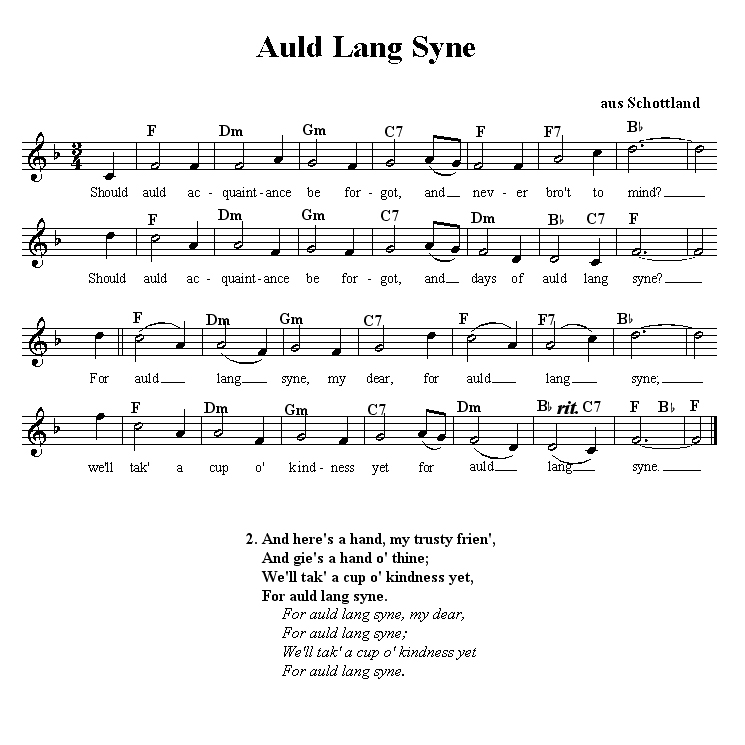
A translation of Purano Sei Diner (1885), Tagore’s youthful adaptation of Robert’s Burn’sAuld Lang Syne(1788) to an Indian context.
Can Old Days Ever be Forgot?

Can old days ever be forgot, O my friend!
The things we saw, we shared together, can they be forgot?
Come, my friend, come once again into my heart.
We’ll talk of our joys and sorrows, and we’ll relax.
We have swung, picked flowers in the dawn,
Played the flute, sung together under the bokul*.
Oh, we parted in between, scattered here and there.
Now that we’ve met again, my friend, come into my hearth.

*Bokul is a tree with fragrant flowers, commonly known as medlar in English.
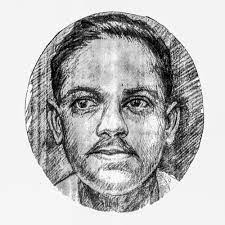
Tagore’s song sung by Bengali legendary singer, Debabrata Biswas
We present here the version created by Robert Burns based on an old Scottish song. It is popularly sung during the new year.
Auld Lang Syne
By Robert Burns

Should auld acquaintance be forgot,
And never brought to mind?
Should auld acquaintance be forgot,
And auld lang syne!

     Chorus:
For auld lang syne, my dear,
     For auld lang syne.
     We'll tak a cup o' kindness yet,
     For auld lang syne.

And surely ye'll be your pint stowp!
And surely I'll be mine!
And we'll tak a cup o' kindness yet,
For auld lang syne.

     Chorus

We twa hae run about the braes,
And pou'd the gowans fine;
But we've wander'd mony a weary fit,
Sin' auld lang syne.

     Chorus

We twa hae paidl'd in the burn,
Frae morning sun till dine;
But seas between us braid hae roar'd
Sin' auld lang syne.

     Chorus

And there's a hand, my trusty fere!
And gie's a hand o' thine!
And we'll tak a right gude-willie waught,
For auld lang syne.

     Chorus
Auld Lang Syne in Scottish and English
(Translated for Borderless Journal by Mitali Chakravarty, edited by Sohana Manzoor and Anasuya Bhar.)
.
PLEASE NOTE: ARTICLES CAN ONLY BE REPRODUCED IN OTHER SITES WITH DUE ACKNOWLEDGEMENT TO BORDERLESS JOURNAL
Ratnottama Sengupta recaptures a time when as a teenager she witnessed a war that was fought to retain a culture
At the border of the two Bengals: Photo Courtesy: Ratnottama Sengupta
“Joy Bangla!”
I was startled by the greeting. I was sixteen-going-on-seventeen and — en route to Darjeeling — I was visiting Malda, my ‘Mamabari’ where my mother lived until she was married at sixteen-just-turned-seventeen. I had just finished my school finals in ‘Bombai’ and was enjoying the long summer break with my school friend Swapna, my paternal didi, Tandra, and my maternal didi, Nanda. My Mama’s son, Shyamal, and his friend, Subhash, had graciously taken upon them the onus of taking us around Gaur, Pandua and Adina. All these are relics of the historical capitals that hark back to a glorious Bengal long past and — for most Indians – lost in oblivion. And here, in the 12-gate mosque of Baroduari, they were singing paeans to the Shahs and Sens and Pals of a medieval Bengal!
I was soon to face history-in-the-making. For, the rectangular brick and stone structure with three aisles, eleven arched openings, and so-many-times-that domes, built sometime in the 16th century and now in the care of Archeological Survey of India, was teeming with barely-clad men women and kids who were fleeing on a daily(or hourly?)-basis the gola-barood of the Razakars – the paramilitary force General Tikka Khan had unleashed in the eastern wing of Pakistan. This was May of 1971 and, even in the apolitical clime of the tinsel town in Bombay, we knew that the Pakistani President Yahya Khan was hounding supporters of the Awami League leader, Sheikh Mujibur Rahman.
I was therefore thrilled to hear the boom-boom-boom periodically rupturing the hazy horizon in the distant. Was it the spiteful army goons or was it the guerrillas fighting back? “How wonderful it would be to meet some of them!” the romantic in me spoke aloud to the red-eyed men and women who had greeted me with ‘Joy Bangla!’
“Don’t!” Shyamal Da and Subhash drew me aside. “Don’t get close to them – don’t you see they have all got ‘joy bangla’?”
“So what?!” I retaliated, “They are all infected with the love for their country – that’s why they are saying ‘Joy Bangla’! Isn’t that good!”
“No, they are all infected with conjunctivitis – it is highly infectious and spreading rapidly in the camps. So now, not only in Malda but all through West Bengal, ‘joy bangla’ is the name for conjunctivitis.”
.
Mangoes. Raw, green, going yellow-orange-red. Stretch out your hand, pluck them off the tree, hit hard on them with your fist and bite into the sour-sweet flesh… But we girls failed to emulate what Shyamal and Subhash could do with such ease on our way to Singhabad, the last stop for our trains this side of the border in that part of Bengal. Nevertheless, the fragrances of Amrapali, Moutuski, Kishanbog and Fazli remain fresh in my memory years after Shyamal, Nandadi, Swapna, Tandradi have all followed Bangobandhu to a borderless land beyond the clouds.
Singhabad is where my mother Kanaklata owned some 27 bighas of cultivable land inherited from her father: Chandrakanta Ghosh had, in 1940s, apportioned plots to his city dwelling daughters, Malati and Ranjita too, worried that they might face difficulties if their ‘job-dependent’ husbands lost their all to the Partition! He had reasons to worry. He had exchanged most of his land in Dinajpur but the daughters were married into families that had their base in Dhaka, Munshigunj and Kustia. Before you turn to your Google Guru let me tell you – all these were part of East Bengal and are now in Bangladesh.
Much later, in 2001, I would understand my grandfather’s angst when centurion Bhabesh Chandra Sanyal told me in Delhi: “This part of the subcontinent has seen three partitions – in 1905, 1947 and 1971.” The doyen of modernism in Indian painting, who had moved from Calcutta to Lahore in his youth and from Lahore to Delhi in 1947, had brought alive another chapter of history that most of us in India or Bangladesh don’t often recall. Yes, in 1905 the ‘territorial reorganisation’ of the Bengal Presidency by Lord Curzon was said to be for “better administration” since Bengal, for centuries, was spread right up to Burma in the East and well into Assam and Tripura in the North-East, into Bihar and Jharkhand in the West and in the South to Odissa. Noted: but why did it have to be along religious lines, separating the ‘Muslim-dominated’ areas from the ‘Hindu-majority’ ones? Because together the Hindus and Muslims had taken up arms against the goras in 1857, and starting from Barrackpore the mutiny had spread to Lucknow, Jhansi, Gwalior, Meerut, Delhi… After 1857, the last Mughal Badshah, 82-year-old Bahadur Shah Zafar, had to be exiled in Rangoon while in 1885 the last emperor of Burma, Thibaw Min, was forced to live in exile at Ratnagiri…
If it were not so tragic, it would have been ludicrous, this ‘exchange’ of emperors.
.
Nandadi’s brother, Nirjhar, now 79, vividly recalls crossing the newly defined boundary to come away for good from Meherpur, in Dinajpur of East Bengal, to Malda with his mother — my aunt — Pramila, his three-year-old sister, Nanda, and a just-born brother, Nirmal. “We were coming in three bullock carts: the first one driven by a certain Mongra carried our eldest Mama, his wife Charulata and youngest son Subrata; and the last had our younger Mama’s wife Gayatri, son Suvendu and daughter Maitreyi. Many people were coming just like us, there was no knowledge of the word ‘Passport’ and no concept of ‘Visa’. Since our Dadu – maternal grandfather Chandra Kanta – had to stay back to wind up things after us, he took us to a dear friend of his, a Muslim named Sukardi Chowdhury, in Anarpur and asked him to accompany us since he had a gun.
“He was to reach us to Jagannathpur where Dadu had built a house on the newly exchanged land just six kilometers away from Meherpur. Sukardi Chowdhury lived two kilometers from the border but we had to cross river Punarbhaba on a boat and then we followed the road along the railway line. All of a sudden, we were startled by a piercing cry in a female voice. ‘Who is this? Who goes there?’ demanded Sukardi Chowdhury. He climbed on to the railway track and witnessed some miscreants harassing a woman. He fired his gun in the air and the rascals fled. He walked up to the woman and found that the malefactors had bitten off the nipples of the woman who was bleeding and writhing in pain.
“Sukardi Chowdhury had a gamchha tied around his head like a bandana. He took it off and wound it around the chest of the victim. He advised her companions to go along the railway track straight to Singhabad station, take a train to Malda and seek medical aid there. ‘That will save your life,’ he assured her. I will never forget.” Incidentally Nirjhar’s father, Makhan Chandra Ghosh, did not cross the border until 1980. Along with his ageing mother he had stayed back to care for his widowed sister since their land further inside Dinajpur could not be exchanged.
.
This 27-acre land in Singhabad adjacent to the No-Man’s Land on the Bangladesh border was so dear to Kanaklata that she would not hear a word about selling it off although she lived far away with her husband, Nabendu, who was busy scripting films. “One should never forget one’s roots,” she told me in 1971 when she went around with a donation-book raising chanda for the Bangla refugees. She was delighted when – later – the government of India issued Refugee Relief stamps that had to be affixed to every letter, be it a postcard, an envelope, or an inland letter. Was it because deep within she identified with the uprooted people who were forced by history to cross borders?
Ma’s love for her land had, perhaps, infected us. When she passed on in 1999, we dispersed her ashes in the pond on this land. In 2007, before my son, Devottam, was to depart for higher studies abroad, he visited this innermost corner of his land. In 2017, when Ma would have turned ninety, my husband, Debasis, celebrated by planting mango trees around the pond and released fish, the sales of which now pays for a Durga Puja on the land. Yet, just last December, we severed our formal ties by selling off the ‘two-acre land.’ But no, Kanaklata is not forgotten by the men and women – many of whom studied in the school she helped set up long before government aid came their way. They are setting up a temple in her memory…
.
But hang on friends, that’s not the end of my story, “picture abhi baaki hai!”
On December 13, 1971, Tandra’s elder sister Chhanda got married. She came from Patna where Nabendu’s brother lived; the groom, Animesh, came from Delhi. But Kanaklata had organised everything in Bombay, in the same house in Malad where our family has lived since 1951. This Goan-style bungalow had a garden surrounding it and this tiny ‘lawn’ was to be the wedding venue. However, ten days before the event when the invitations had gone out and the baratis had already booked their tickets, aerial strikes on Indian air stations led to an all-out war with Pakistan.
This was ominous for many reasons. Six years before this, during another war with Pakistan, my grandfather had passed away in August 1965. This time around, the mighty Seventh Fleet of the USA had entered the Bay of Bengal to support Pakistan in the war. Sirens were being sounded at regular intervals and we joked that – since both the bride and the groom were trained musicians – these sirens were ‘replacing’ shehnai by Bismillah and party. Why? Because the police showed up to warn us that no conch shells or ululations that mark traditional revelry at Bengali weddings were to be sounded — and not even a single ray of light should evade the black-cloth-wrapped pandal that had to be erected to cover the house!
Ill omens? Never mind. You can’t stop a wedding because a war was on! All the Bengali families of Bollywood united that evening to celebrate with bated breath. And on December 16, when the bride was being formally inducted into the groom’s family in Delhi over the sumptuous meal of Boubhat, news came that General Niazi of Pakistan had surrendered to General Jagjit Singh Arora of India.
So Vijay Diwas is one day that unites India and Bangladesh in celebrating its actual secession from Pakistan. “Joy Bangla!” – we all said as Chhanda and Animesh led a chorus that sang,
Aamar Sonar Bangla, aami tomay bhalobashi!*
Oh my glittering Bengal, I love you…
Malda: Photo Courtesy: Ratnottama Sengupta
Glossary
Didi – elder sister
Mama – mother’s brother
golaa-barood — ammunition
Amrapali, Moutuski, Kishanbog and Fazli – Varities of mango
bighas – acres
goras – whites
Badshah — Emperor
chanda – donations
picture abhi baaki hai – The movie is still not over
Boubhat – wedding reception, traditionally
*Song by Tagore that became the national anthem of a free Bangladesh
Ratnottama Sengupta, formerly Arts Editor of The Times of India, teaches mass communication and film appreciation, curates film festivals and art exhibitions, and translates and write books. She has been a member of CBFC, served on the National Film Awards jury and has herself won a National Award.
.
PLEASE NOTE: ARTICLES CAN ONLY BE REPRODUCED IN OTHER SITES WITH DUE ACKNOWLEDGEMENT TO BORDERLESS JOURNAL
Jibananada Das (1899-1954) was a Bengali writer, who now is named as one of the greats. In his lifetime, he wrote beautiful poetry, novels, essays and more. He believed: “Poetry and life are two different outpouring of the same thing; life as we usually conceive it contains what we normally accept as reality, but the spectacle of this incoherent and disorderly life can satisfy neither the poet’s talent nor the reader’s imagination … poetry does not contain a complete reconstruction of what we call reality; we have entered a new world.”
I will sleep

Having lived in the world’s pathways for a long, long time
I know many stressful, hidden tales of the heart now.
In forests, branches and leaves sway -- as if
Djinns and fairies conversing! On greying evenings
 I’ve seen on their bodies a drop or two of rain dripping down.
Like parched paddy will. White specks of dust soften in rainwater.
A faint scent suffuses farmlands. From frail bodies of gubur insects
Indistinct, melancholy sounds dip into the dark river water;

I’ve seen them all—have seen the river immerse in the sloping dark;
shapmashis fly away; In asuth tree nests, ravens flutter their wings
Incessantly, someone seems to be standing in the lonely, fog-filled field.
Farther off, one or two straw-roofed houses lie scattered.
Why do the frogs croak on in Nolkhagra forests? Can’t they not stop?
Freshly laid crow eggs slip and slide into the sheora bushes.

(“Ghumiye Poribe Aami” or “I will sleep” from Ruposhi Bangla, first published in Daily Star, Bangladesh)

Aghrayan’s Wintry Wilderness

Saying, "I know you don't look for me anymore in this world these days"--
I ceased speaking. Aswatyha tree leaves lay strewn amidst the grass then--
Withered and disheveled. Wintry agrahyan has arrived in this world's forests.
And yet long, long ago, our minds had been chilled by hemonto's onset!

(Agrahayan and Hemonto are names of Bengali seasons)
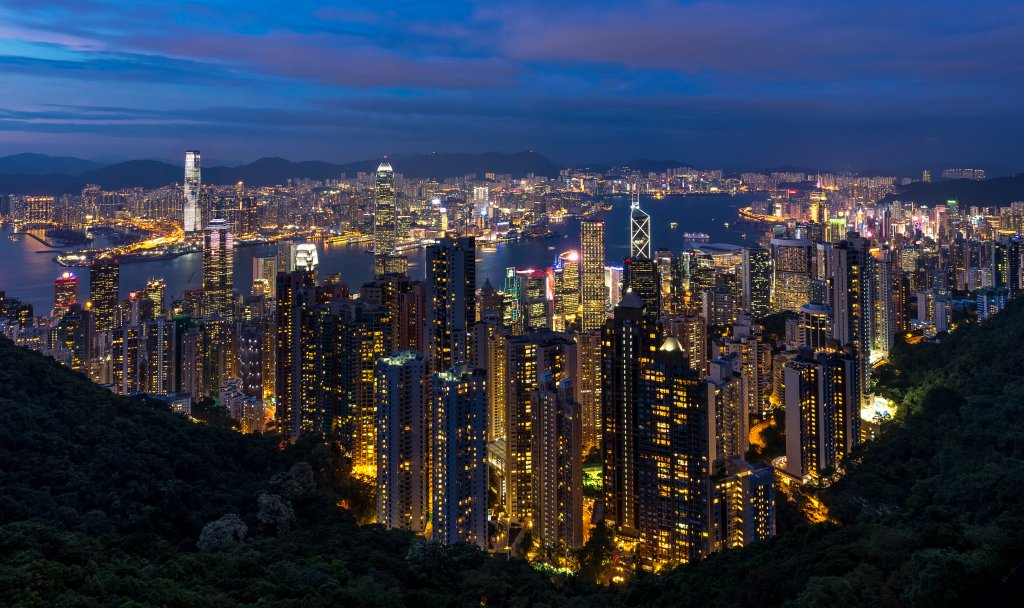
Recently I happened to be in Hong Kong for a cognitive education conference, and at day’s end, like many people, I took the spectacular funicular Tram and click-clacked up to the top of Victoria’s Peak to have dinner. The charming restaurant staff nicely seated me at a small table where I could gaze out over Victoria Harbour, which was slowly descending into indigo blue, as the multicolored lights of Hong Kong and Kowloon gently transformed the city into fields of jewels, linked by the diamond tracks of the much-loved ferries cruising back and forth across the dark water.
As I sipped my cold San Miguel beer in the warm evening, the restaurant began to fill up, and a pleasant looking gentleman was seated at the table next to me. He also soon was gazing out at what must be one of the most stunning views in the world, Victoria Harbour from Victoria Peak. “Beautiful”, he remarked. “Yes”, I replied. And so began my conversation with Dr. Bo Stamford, one of the chief architects of what might be called the “Singapore System”, the principles underlying the globe’s most successful city-state.
Bo appears to be a clone of Buddha. Warm, unpretentious, calm, respectful, broadly well-informed, shrewd and quick, and quietly amused. Dressed de rigueur for the territory in pale yellow cotton polo shirt, pale blue cotton trousers, and Tod’s suede driving loafers. His doctorate is in economics from a prestigious London university. As we dined on shrimp dim sum, I had a chance to interview him about the amazing, numerous successes of his home, Singapore.
I: Would anyone ever have predicted that a small British coaling station at the foot of the Malay Peninsula would morph into one of the world’s stellar communities, a model city-state? How did it happen?
Dr. S: Naturally, there are the obvious sources. An ideal location for international trade. A convenient intersection of magnificent cultures—India, Britain, and China. Vigorous, ambitious citizenry from Malaysia and Indonesia. Water from river and rain, fields for planting, and copious sunshine.
I: But those elements are true for numerous neighbors of yours. And many of those neighbors are struggling to build roads, schools, and hospitals, make money, and keep the peace. How are you different?
Dr. S: (Bo looked at me with a gentle gleam in his eye, then looked about, as if checking to make sure no one were listening from Hello! Magazine, or the Terre Haute Chamber of Commerce, and finally whispered his answer.) Causality . . .
I: CAUSALITY?
Dr. S: Not so loud!
I: Okay, okay. So, what is this—thing?
Dr. S: Academia . . . slides . . . over the concept of causality. It’s there, but it isn’t. It’s critical, but it’s neglected. It’s a necessity, but it’s inconvenient. It’s the holy grail of knowledge, then it’s Wednesday’s child.
I: Singapore, I take it, took a different tack.
Dr. S: The very thing. In every area of endeavour you can name, causality is the key.
I: I’d like to tell you that I completely agree with you, and that your insight is doubtless excellent. However, a couple of examples, would . . . you know . . . clarify a little bit.
Dr. S: Naturally. Regard, for a moment, these topics:
Leadership. Leaders are supposed to control events in a desired direction. That’s causality.
Government. Administrations are supposed to manage society so that civic conduct falls within a highly admired range, so that all have jobs, medical care, housing, food and water in a beautiful, safe setting. That’s causality.
Financiers. Accountants and bankers are supposed to carefully analyze monetary systems, then invest in the ones likeliest to bring prosperous returns to the citizenry. That’s causality.
Civic Designers. Creative engineers are supposed to plan and build roads, buildings, parks, and breakwaters so the city continues to be dry, efficient, convenient, and attractive decade after decade. That’s causality.
Students. Members of the educational community are supposed to acquire world class knowledge and skills, so they can provide world class service, resulting in world class incomes. That’s causality.
I: Yes . . . that’s what I thought you meant . . .
However, how do you know if something is causal? Isn’t there a lot of controversy around that issue?
Dr. S: There’s confusion and, if I dare say, ignorance, about causality, but perhaps not so much true controversy. The importance of causality is radically grasped all across Singaporean society, top to bottom.
I: How did that occur? Why so?
Dr. S: Nothing bearing such value was left to chance!
I: No, that doesn’t sound like that would be very Singaporean. But, what did you do?
Dr. S: First, our scientists provided us with a clear model of causality. Then, that model was adopted by our educational establishment and taught to students from a young age, as well as continuously publicized by our media.
I: Am I going to get confused here?
Dr. S: Not necessarily. It is, as a magician might say, tricky but simple.
I: I’m listening. I think.
Dr. S: The key concept is comparison.
I: I knew I was going to get lost.
Dr. S: Look down below. Ferries shuttle back and forth, from Hong Kong Island to the Kowloon Peninsula. It costs money to buy the fuel to keep the engines running. Hong Kong is in the tropics, where sunshine is copious. It occurs to someone that if ferries were equipped with solar collectors the sun might provide enough power to run the ferries.
I: Ah, I possibly see where this is heading.
Dr. S: Yes, yes. Good. Take ten average ferries. Spit them in half. Equip one half, five ferries, with solar collectors. Leave the other five, the “control” half, just as it was. At the end of a year, compare the fuel costs. If the ferries with the solar collectors cost much less to run, that’s probably because of the solar collectors.
I: You know that because the solar collectors were the only difference between the two groups of ferries.
Dr. S: Right. That’s a controlled comparison. A test group compared to a control group. That’s how you test for causality.
Not exactly obvious, but once you get it, you’ve got it.
I: Okay, maybe I am starting to. So, when Singapore has an idea, it puts the idea into a controlled comparison to find out if it works or not. If it works, it becomes a part of the Singapore System. If not, it’s put aside.
That’s why everything in Singapore works so well. It’s been causally tested!
Dr. S: There it is. We pilot ideas—test them out. If they work, then we implement across our city-state of Singapore.
For example, we’re piloting a new leadership training program in the financial sector. We chose ten matched banks, and broke them into two groups of five each, five in the test group, and five in the control group. We taught the new leadership style to the managers in the five test groups, and said nothing to the managers in the five control groups. In one year, we’ll compare the two sets of banks, and see which is making more money. If our idea works, the five banks in the test group should be doing better than the five banks in the control group. If so, then we can think about implementing the new leadership style across the whole financial sector.
There’s some guesswork involved in all that, here and there, naturally. But that’s our basic approach, our basic causal schema.
His espresso coffee all gone, Bo checked his Patek Philippe watch and announced, “I have a meeting scheduled this evening at the Peninsula Hotel, in Kowloon, therefore, unfortunately, I must depart. It has been a pleasure speaking with you. Please enjoy the conference.”
As we exited the restaurant to all the splendor of nighttime Hong Kong viewed from high above, a green Rolls Royce, piloted by a strikingly attractive woman, switched on its lights and rolled silently forward, stopping in front of Dr. Stamford. As the car door opened, he turned and made a final comment.
“Plutarch told the stories of numerous men who made Athens, and similar city-states, eternally eminent. We draw those stories into our hearts, into our minds, into our culture. If Athens can . . . make it happen, then, Singapore can . . . make it happen. It’s all a process of . . . causality!” Then he smiled, bowed, slipped onto the beige leather seats, the door quietly closed, and the good doctor ghosted, in his shiny green Wraith, away down the dark hill.
.
Steve Davidson is a psychologist from California, the author of the clinical textbook “An Introduction to Human Operations Psychotherapy”.
.
PLEASE NOTE: ARTICLES CAN ONLY BE REPRODUCED IN OTHER SITES WITH DUE ACKNOWLEDGEMENT TO BORDERLESS JOURNAL
Disclaimer: The opinions expressed are solely that of the author and not of Borderless Journal.







 Borderless