Categories
The Observant Immigrant

A Post-Pandemic Future …?

By Candice Louisa Daquin
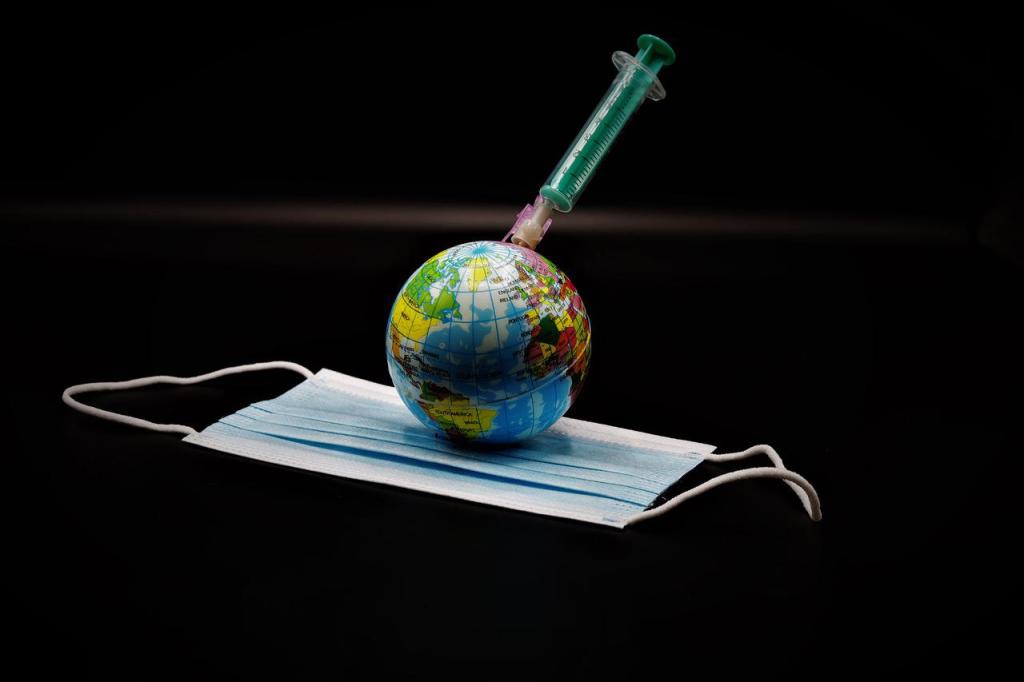
Courtesy: Creative Commons

Having been a reluctant fan of apocalyptic fiction since I read George Orwell’s Nineteen Eighty-four (1949), I had studied virology when the AIDS pandemic struck and read a great number of virus-related books on infectious diseases. Despite this preparedness and the knowledge that it was not a case of IF, but WHEN, the next virus would strike, I think I speak for most of us when I say we were still all unprepared for Covid-19.

What the pandemic has taught us thus far is immeasurable and I believe it will last several generations, or I hope so. That said, it’s our human nature to want to move on. Not because we don’t care, but part of being alive is putting trauma and suffering behind us and ensuring those who survive, truly survive, which means living. Is that insensitive or just the nature of the beast? It can be insensitive, especially to the millions who have lost loved ones, but it’s also how humans generally operate.

Is it possible to move on and live a full life irrespective of this global tragedy without losing our compassion and responsibility to stop this from ever happening again?

The reality is; it will happen again, and for many of us, in our lifetime. What we can do is be better prepared and all that this entails.

What are the steps being taken to move toward the new post pandemic future? What are we doing differently? And why?

The pandemic divided us, it physically kept us apart. Some who were well versed in social skills and true extroverts, struggled when they emerged from the worst of the pandemic. They found it hard to do the things they used to be so skilled at. From lack of practice. I recall sitting at lunch with a friend who used to be the life-and-soul of any social event. She struggled for, as she put it; ‘her words’. Having become so used to speaking less and not being face-to-face, she said it felt ‘overwhelming’, ‘strange’ and she looked forward to going home.

That is a habit we must break. The comfort of the living room and the immediate family is intoxicating. We can rapidly get used to living in a smaller-seemingly safer, changed world where we see less people, go out less, and become accustomed to an intimate circle. For some of us this was always our life, and maybe not as challenging — a shift as it was for those who previously socialised a great deal.

In a way the pandemic was harder on the extrovert than the introvert. Because while introverts aren’t averse to socialising, they can find it exhausting; whereas extroverts gain energy from it. When you put an extrovert in a forced setting without social opportunity, they may struggle more than someone used to their own company.

But it’s not as simple as extrovert and introverts. Many of us are a little of both, depending on the situation. I can go out with a big group one day. But on other days I want to be alone. Few of us are extremes. Most are like ‘ambiverts’ a combination of extroverts and introverts.

For those who do thrive on socialising, the pandemic was particularly challenging, but there are many ways to be affected, not least the tension and anxiety all of us picked up on or directly experienced.

Fortunately, technology became our best friend as we Zoomed more and met via video chats throughout the world. It opened up an international stage more than we’ve ever experienced and gave children a new normal in terms of how they learned online. Learning solely online had deleterious effects on underperformers. This ‘unfinished learning’ [1] particularly impacted youth who might have already been struggling in the educational system.

Having taught Critical Thinking online for years, I genuinely believe online learning cannot replace in-class learning. There are huge draws to learning from the comfort of home, especially for adult learners who do so after work [2]. “In comparisons of online and in-person classes, however, online classes aren’t as effective as in-person classes for most students. Only a little research has assessed the effects of online lessons for elementary and high school students, and even less has used the ‘gold standard’ method of comparing the results for students assigned randomly to online or in-person courses.” [3]The amount of information retained is drastically smaller and the social engagement of a classroom has benefits that are hard to quantify but necessary for social development. When you rob children of the opportunity to socialize with each other you isolate them at a crucial stage in their development.

Some kids with learning disabilities[4] are particularly affected by this, as are those who come from unsafe or impoverished backgrounds, where they may not have equal access to technology or reliable internet. They may not have parents who can help them if they are stuck or be able to work from home or have access to lunch. All those necessary elements to the education system were lost in our need to stay home and protect each other. A generation of children will always remember this time as a result.

On the other hand, they have mastered technology in a way that few older generations can boast of, and they are conversant in all the myriad ways of communicating with a wide range of technologies and devices. They are adaptable, versatile and fearless when it comes to tackling the rigors of online learning. For some who dislike social settings, it may also be a vast improvement[5].

Women left the workforce in droves [6]when the pandemic hit, with 2 million less in the work-force. The inverse of this was men began to return to work having been dropping in numbers whilst women rose. The Pew Research Center found “What accounts for the larger labor force withdrawals among less-educated women than men during the pandemic? It is complex but there seems to be a consensus that it partly reflects how women are overrepresented in certain health care, food preparation and personal service occupations that were sharply curtailed at the start of the pandemic. Although women overall are more likely than men to be able to work remotely, they are disproportionately employed in occupations that require them to work on-site and in close proximity to others.” Jobs men traditionally do like physical labor, were in high demand, whilst many jobs traditionally filled by women, were shut down, often not returning[7].

We can be glad our restaurants are open again; we’re opening borders, we’re flying abroad, we’re living again. But let’s also spare a moment to think of those who lost so much it’s almost impossible to conceive. Covid was the third leading cause of death in America during the height of the pandemic, how did this many deaths become normal? Covid killed an estimated 13% of people over 80. Aside the tragedy of a generation of elderly dying[8] and the loss of grandparents, and parents for so many, we’ve also seen younger people dying from a virus, which has shaken the belief younger people have that they are impervious to viruses similar to the flu, what effect with this have on their sense of safety going forward?

And what of the health consequences of those who technically survived bout of the pademic but developed ‘slow Covid’ or worse, the side-effects and lingering legacy of being seriously ill with the virus?[9] How many lung transplants will occur? How will ‘long haulers’ cope with lingering serious effects? What of those who live in countries where this isn’t an option? How many chronic illnesses will continue for decades as a result of this pandemic? It’s not enough to point to those who have died but also include those who survived but at such a high cost.

Financially we have collectively poured money into research, vaccines, countermeasures and prevention, but where has that money actually come from? And can we feasibly borrow that much money from our coffers without a reckoning? Economist Anton Korinek, an associate professor with a joint appointment in the University of Virginia’s Department of Economics and the Darden School of Business thinks: “People sometimes frame the policy response to COVID-19 as a trade-off between lives and livelihoods, and they ask whether it’s worth killing our economy to save people’s lives. But what they forget is that people won’t go back to a normal life and consumer demand won’t really recover if the virus is spreading through our country and killing people.” But the result of these hard choices and repeat closures, is they now predict an impending worldwide recession of global proportions, which had already been mounting prior to the pandemic, but promises to be far greater in its aftermath. I don’t think we’ve even begun to see the fall out; it begins with massive inflation but that’s just the start[10].

History tells us when we go through challenging times and survive, ‘the near miss experience’ as it’s known as, we want to live more than ever before[11], but economically this will not be possible for so many who are robbed of their financial security because of inflation, redundancy, underemployment and post-covid illness. We should be mindful that none of us are all right if many of us are still suffering and if we can support those who struggle, this battle with covid should have taught us all that we should care more about each other.

Perhaps these are the steps we can take to move toward a new post-pandemic future, where we consider ways, we may be better prepared for an invariable future of emerging viruses. We can try to find ways to avoid spilling into areas with high disease potential. “According to a group of UN biodiversity experts, around 1.7 million unidentified viruses circulate in animal populations, of which 540,000 to 850,000 have the capacity to infect humans.” So, we can avoid wet markets, and sloppy scientific research, both of which are vectors for the spread of viruses. We can pay more emerging virus hunters [12] to seek out those emerging viruses and begin work on treatments before they devastate countries. We can be borderless in our unanimous approach to equity for all, especially access to healthcare.

In America, we learned we were far from unassailable. In a New York Times article about Covid Deaths, the authors wrote: “For all the encouragement that American health leaders drew from other countries’ success in withstanding the Omicron surge, the outcomes in the U.S. have been markedly different. Hospital admissions in the U.S. swelled to much higher rates than in Western Europe, leaving some states struggling to provide care. Americans are now dying from Covid at nearly double the daily rate of Britons and four times the rate of Germans.” Nothing can diminish that fatal statistic or rectify the unnecessary deaths[13]. Our healthcare system, considered superior, proved to be full of holes. Without some type of socialised healthcare our costs and resources are too high and scarce. We don’t value the front-line workers like nurses, porters, assistants and care staff and we do not pay them for the risks they take, and whilst we do pay doctors good wages, we have severe shortages of knowledge and progress. Finding out we didn’t have enough ventilators, masks for medical staff, PCP equipment and beyond, exposed the shame of putting profit over people. [14]

It is no surprise then that the UK and USA were among the top offenders in the rise and spread of the pandemic and their death rates exposed this. No one ethnic group appears to be at greater risker of dying from the virus based on ethnicity alone, but Hispanic, Black, and native Americans or AIAN people are about twice as likely to die from COVID-19 as their White counterparts and that Hispanic and AIAN people are at one and a half times greater risk of COVID-19 infection than White people[15]. This is caused by social reasons (inequality) not ethnicity, as can be proven by Africa and some AIAN countries having some of the lowest Covid mortality rates. In the article ‘Racism not Genetics’ in Scientific American, the authors point out “the genes that influence skin colour are distributed independently of genes that influence the risk for any particular disease. Given the heterogeneity of groups we call “black” or “white,” treating those categories as proxies for genetic variation almost always leads us astray.”[16]

Even if there are increased susceptibilities related to blood type[17] and age (More than 81% of COVID-19 deaths occur in people over age 65. The number of deaths among people over age 65 is 97 times higher than the number of deaths among people ages 18-29 years). The real risk is how healthy the population is and whether they have safe access to healthcare[18]. Both America and the UK failed because they put profit above people and have large populations of sickly people[19]. Going forward this needs to change, which means redesigning what we prioritise. People need to have access to healthcare and make lifestyle changes that will reduce their risks which they cannot do if they cannot afford to see a doctor or in the case of the UK find it hard to see a doctor because of long wait times and reduced staffing. It’s not as simple as socializing healthcare as the UK proved, this alone doesn’t save lives, what saves lives is considering the larger picture.

But politicians gain from older populations dying, consider what happened in Brazil when the President denied the danger of Covid and for a time Brazil had the highest Covid mortality[20]. This is the harsh truism rarely mentioned: It benefits those in control of a society to lose the most fragile members who will suck up precious resources, much like a form of eugenics, it behooves them to let it happen and there are many examples[21]. For a politician who is looking for ways to reduce healthcare costs, what is better than some of the potentially most expensive ‘customers’ dying? This happened in France where number of elderly people died one Summer, shockingly little was said at the time, but all signs pointed to a collective signal of relief from those in power who benefited from less older people making claim on an already taxed medical system[22].

When Italy [23]and Spain [24] and Brazil [25] became epicenters of Covid 19 deaths, they did so because of ill preparedness and it’s a cautionary tale to witness which countries succumbed to the ravages of covid 19 repeatedly, versus those who learned from them. What we have learned is more, not less, needs to be done and if a country keeps its borders open including air-travel and business-travel, then as much as they hope to save their economy, they do so at the expense of their most vulnerable. For some countries this was a conscious choice (economy over lives) whereas for others it was poor communication and slow response times. For some a lack of money, for others a desire to gain at any cost. All this speaks of the tapestry that is the pandemic’s aftermath (and truly, is it really vanquished?)[26].

I’d love to say a new post pandemic future looks rosy, but the only way that happens is if we learn from our mistakes, which history tells us, we rarely do. The most important thing is empathy, when we saw others take their masks off and simply not care if the vulnerable died, we saw how bad we as humans can fall. But we also saw how wonderful humans can be, including the infinite sacrifice and compassion of thousands who sought to help strangers. If there is a way, we can reward the good and not the bad, if we can get our priorities right and stop paying sports figures astronomical sums but perhaps emphasise on compassion, kindness, and diligence, we can all grow together.

I was particularly moved by youth who in the turmoil of the pandemic created inventions or systems to help others[27]. Believing youth are our future, and thus, our hope, it gives me great faith in the future when I see those too young to vote, care for strangers and seek to do their part. We should always encourage this as we should encourage a continued dialogue into how we can create an international rapid response to emerging diseases. It is not if, but when, and now all of us should know this and have no excuse for putting our heads in the sand again. Yes, it hurts to think of it, yes, we’d rather go off and have fun, but what fun is it if we are only postponing the inevitable return of a lethal virus? Part of being responsible for our planet and each other, is not avoiding the harsh truths; of environmental changes and devastation, global poverty, continued inequality and elitism, and of course, the increasing risk of deadly diseases.

We have within us all, the power to effect change. The steps we should take to move toward a post pandemic future must necessarily include keeping our eyes open and not taking the easy road. Sure, governments don’t want to spend the money on research, science, virus hunters, predictions. And preparedness, but I challenge anyone to say this isn’t exactly what they need to do. It is necessary we keep this in mind when we vote and protest. We should be marching about this as much as any other cause, because it affects us all and equally, brings us all together with one cause.

Thinking in terms of one world, we are less divided than ever before and whilst we were separated, I think we also found ways to come together if we choose to. I say, we should. Because, together globally, we learn more than we ever would divided. With the offensive by Russia on Ukraine, we see the lunacy of war, the futility, the devastation and waste. Instead of pouring millions into wars and keeping the rich, rich at the cost of the poor and overworked, we should consider how we can all rise out of the mire and evolve towards a better future. But in order to achieve this we cannot be complacent, and we cannot let our guard down.


[1] https://www.mckinsey.com/industries/education/our-insights/covid-19-and-education-the-lingering-effects-of-unfinished-learning

[2] https://www.forbes.com/sites/dereknewton/2021/03/31/the-worst-of-times-for-online-education/?sh=401d57623a5a

[3] https://www.edweek.org/technology/opinion-how-effective-is-online-learning-what-the-research-does-and-doesnt-tell-us/2020/03

[4] https://www.washingtonpost.com/education/2021/05/20/students-disabilities-virtual-learning-failure/

[5] https://penntoday.upenn.edu/news/how-technology-making-education-more-accessible

[6] https://www.shrm.org/resourcesandtools/hr-topics/behavioral-competencies/global-and-cultural-effectiveness/pages/over-1-million-fewer-women-in-labor-force.aspx

[7] https://www.pewresearch.org/fact-tank/2022/01/14/some-gender-disparities-widened-in-the-u-s-workforce-during-the-pandemic/

[8] https://www.statista.com/statistics/1191568/reported-deaths-from-covid-by-age-us/

[9] https://www.hopkinsmedicine.org/health/conditions-and-diseases/coronavirus/covid-long-haulers-long-term-effects-of-covid19

[10] https://news.virginia.edu/content/economist-societal-costs-covid-19-outweigh-individual-costs

[11] https://www.psychologytoday.com/us/blog/understanding-grief/201803/aftereffects-the-near-death-experience

[12] https://www.france24.com/en/africa/20201218-gabon-s-virus-hunters-in-search-of-the-next-covid-19

[13] https://www.nytimes.com/interactive/2022/02/01/science/covid-deaths-united-states.html

[14] https://www.theguardian.com/us-news/2022/feb/06/us-covid-death-rate-vaccines

[15] https://www.cdc.gov/coronavirus/2019-ncov/community/health-equity/race-ethnicity.html

[16] https://blogs.scientificamerican.com/voices/racism-not-genetics-explains-why-black-americans-are-dying-of-covid-19/

[17] https://www.ncbi.nlm.nih.gov/pmc/articles/PMC8286549/

[18] https://www.bbc.com/news/world-us-canada-52245690

[19] https://theconversation.com/why-has-the-uks-covid-death-toll-been-so-high-inequality-may-have-played-a-role-156331

[20] https://www.thelancet.com/journals/lancet/article/PIIS0140-6736(21)00529-8/fulltext

[21] https://foreignpolicy.com/2021/03/18/china-covid-19-killed-health-care-workers-worldwide/

[22] https://www.nbcnews.com/news/world/hong-kong-covid-outbreak-rcna20033

[23] https://www.france24.com/en/tv-shows/revisited/20210528-covid-19-in-europe-codogno-the-italian-town-where-it-all-began

[24] https://www.nytimes.com/2020/03/13/world/europe/spain-coronavirus-emergency.html

[25] https://www.scielo.br/j/rsbmt/a/8FzbQZY57WRTwYL9MnBKBQp/?lang=en

[26] https://www.nature.com/articles/d41586-021-03003-6

[27] https://circle.tufts.edu/latest-research/deeply-affected-pandemic-youth-are-committed-helping-others

.

Candice Louisa Daquin is a Psychotherapist and Editor, having worked in Europe, Canada and the USA. Daquins own work is also published widely, she has written five books of poetry, the last published by Finishing Line Press called Pinch the Lock. Her website is www thefeatheredsleep.com

.

PLEASE NOTE: ARTICLES CAN ONLY BE REPRODUCED IN OTHER SITES WITH DUE ACKNOWLEDGEMENT TO BORDERLESS JOURNAL.
Categories
Tribute

Celebrating Tagore

Was he a poet? A writer? A humorist? A social reformer…

At an intellectual plane, we could keep arguing about labelling Tagore. He was truly a polymath. But, the most important thing is he touched our hearts with his words and used that to earn and pour into projects that benefitted the underprivileged. This year, on his 161st birth anniversary, we will explore some lesser known aspects of the maestro: Rabindranath, the social reformer and the humorist weaving both the Gregorian calendar (7th May) and the Bengali calendar (9th May) dates into our celebrations.

Tagore, the Humorist 

Many of us from Bengal grew up reading light pieces by Tagore embracing his creations as a much-loved part of our hearts. We present translations by Fakrul Alam and Somdatta Mandal of Tagore’s humour — a light poem about a giraffe and playlets by the maestro. 

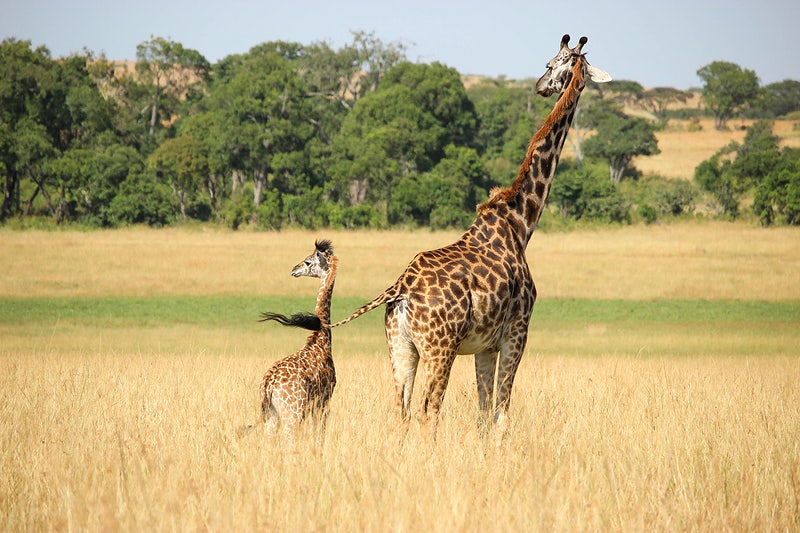
Giraffe’s Dad by Tagore: Giraffer Baba (Giraffe’s Dad), a short humorous poem by Tagore, has been translated from Bengali by Professor Fakrul Alam. Click here to read.

Playlets by Rabindranath Tagore : Two skits that reveal the lighter side of the poet. They have been translated from Bengali by Somdatta Mandal. Click here to read.

Tagore, the Social Reformer

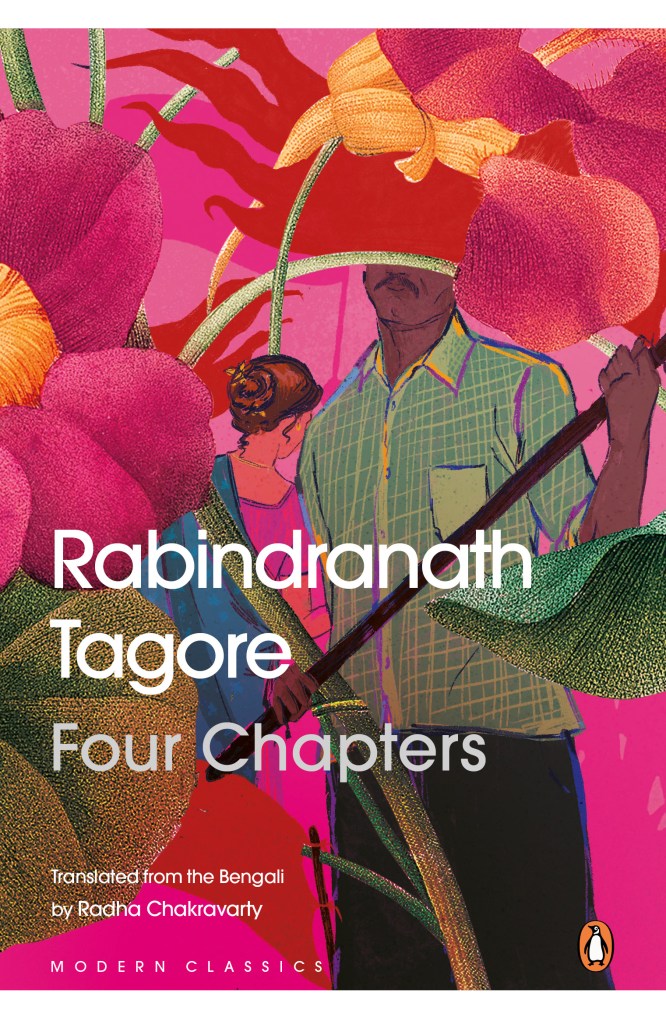
Tagore thought his “life work” lay in developing villages and bridging gaps. A recent book by Uma Dasgupta brought this to light. We have an interview and review of her book, A History of Sriniketan: Rabindranath Tagore’s Pioneering work in Rural Reconstruction Along with that we have some translations of his poetry focussing on his call to bridge gaps — one of them by Fakrul Alam and another that has been mentioned in Dasgupta’s book as a description of his mindset that led to the Sriniketan project. Meenakshi Malhotra’s review of Radha Chakravarty’s translation of Mahasweta Devi’s Our Santiniketan and an interview with translator Somdatta Mandal, an ex-professor of Visva Bharati shifts the focus to Santiniketan. However, the icing on Tagore’s birthday cake is yet another excerpt from Radha Chakravarty’s latest translation of Char Adhyay or Four Chapters, his last and thirteenth novel which takes up issues of nationalism, gender, gaps in upbringing against the setting of a budding romance. The heroine is truly modern in her outlook and passionate about service to humanity. 

Sriniketan: Tagore’s “Life Work” :In Conversation with Professor Uma Das Gupta, Tagore scholar, author of A History of Sriniketan, where can be glimpsed what Tagore considered his ‘life’s work’ as an NGO. Click here to read. (Review & Interview).

Oikotan (Harmonising) has been translated by Professor Fakrul Alam and published specially to commemorate Tagore’s Birth Anniversary. Click here to read.

Ebar Phirao More (Take me Back) a poem that calls for bridging gaps between the rich and poor translated by Mitali Chakravarty … Click here to read.

Mahasweta Devi, Our Santiniketan : Meenakshi Malhotra reviews Mahasweta Devi, Our Santiniketan translated by Radha Chakravarty. Click here to read.

Where the Whole World Meets in a Single Nest: In Conversation with Somdatta Mandal, a translator, scholar and writer who has much to say on the state of Santiniketan, Tagore and more. Click here to read.

Rabindranath Tagore Four Chapters: An excerpt from a brilliant new translation by Radha Chakravarty of Tagore’s controversial last novel Char Adhyay. Click here to read.

Categories
Tagore Translations

Tagore Translated by Fakrul Alam

Rabindranath’s Oikotan (Harmonising) was first published in 1941. It has been translated by Professor Fakrul Alam specially to commemorate Tagore’s Birth Anniversary.

Courtesy: Creative Commons
HARMONISING

How little I know of this immense world,
Of its countless countries, cities, capitals,
And the never-ending deeds of its peoples
As well as its rivers, hills, deserts and seas
And innumerable animals and strange trees—
So many things fated to be forever unknown
Such a vast assemblage
And yet my mind has to be content with only a corner!
Frustrated, I read as many books and travel tales as I can
With boundless enthusiasm.
I pick up too vividly written accounts I come across
With never-diminishing eagerness,
Satiating my knowledge deficit
With treasures I’ll gather by scavenging for them!
    
I am the world’s poet. Whatever of its sounds I hear
I try to reverberate in my flute later
But though this may be my intent
Many of earth’s notes still elude me
For despite my efforts, gaps remain!
I intuit earth’s amazing harmonies
Through leaps of my imagination
On many an occasion intense silence fills my soul
Notes sounding across remote snowy mountains
And the azure stillness of the sky too
Invite me to commune with them again and again!
The unknown star at the apex of the south pole
Reigning illustriously	through long nights
Illuminates my sleepless eyes on midnights.
Distant waterfalls cascading down
With immense force, flooding everything in sight,
Transmit their harmonies to the innermost me.
I connect intuitively as well with poets everywhere
Contributing to nature’s harmonies
All keep me company and give me immense delight
I receive offerings of lyric notes from the muse of songs
As well as intimations of the music of the spheres.    

The outside world can’t fathom fully
The most inaccessible of being residing in us
For He is in our innermost part
And only when one enters it
One gets to know the Being who is truly Him
But I can’t find the door with which to enter there
Since I’ve erected fences in pathways everywhere!
Farmer who keep tilling the soil
Weavers threading yarn and fishermen casting nets—
Varied professions having far-reaching impact
On them all depend whole families and lifestyles.
But the honour due to them is confined
To people of the top tiers of the society I live in
We can only peep at them from narrow openings! 
At times I’d take paths fronting their neighbourhoods
But never ever was resolute enough to enter inside!
If one can’t connect one’s life with another’s though
The songs one composes can become cumbersome
And so, I concede to charges levelled against me
And admit my own songs’ limitations.
I know my verses may have traversed varied paths
But they haven’t reached everywhere!
The one who can share a peasant’s life
And whose words and deeds are kins
Is the one who is truly close to the soil
And I’m all ears to listen to that kind of poet.   
I may not have created a feast of literary delights
Yet, what I couldn’t attain I keep questing for
Let what I discover ring true
And let me not mislead others’ eyes with fakery
It’s not right to earn fame without paying its true price
It isn’t right at all to indulge in any kind of foppery!

Come poet, retrieve as many as you can
Of those voiceless ones whose minds are unheard
And relieve those nurturing deep hurt inside
In this land lacking spirit
Bereft of songs being sung on any side,
A land which has become an arid desert
For want of joy and the strain created by neglect
Fill with the essence of everything beautiful
And untie the spirit residing in one’s innermost being
 In literary festivals and musical concerts organised,
Let those playing the one-stringed ektara be duly feted.
And the muted ones who can’t express either joy or sorrow
And those whose heads are bowed and voices silent
While facing the world—
Oh gifted one,
Let me hear them all—near or far
Let them partake of your fame
As for me—
Again and again, I’ll pay homage to you   

Fakrul Alam is an academic, translator and writer from Bangladesh. He has translated works of Jibanananda Das and Rabindranath Tagore into English and is the recipient of Bangla Academy Literary Award (2012) for translation and SAARC Literary Award (2012).

.

PLEASE NOTE: ARTICLES CAN ONLY BE REPRODUCED IN OTHER SITES WITH DUE ACKNOWLEDGEMENT TO BORDERLESS JOURNAL

Categories
Excerpt

Tagore’s Four Chapters in Translation by Radha Chakravarty

Title: Rabindranath Tagore Four Chapters

Translator: Radha Chakravarty

Publisher: Penguin, May 2022

‘It’s time to utter some harsh truths,’ he declared. ‘Who are you to surrender me, to the nation or to anyone else, I ask you? You had it in your power to surrender the gift of tenderness—a possession that truly belongs to you. Whether you call it service or a boon, it doesn’t matter. If you permit arrogance, I shall be arrogant. If you demand that I come to your door in humility, I can do that too. But today you belittle your own right to offer a gift. You set aside the inner wealth you could have donated from the storehouse of a woman’s glory and say instead that you are handing over the nation to me. It is not yours to give! Not yours, not anyone else’s. The nation can’t be passed around from hand to hand.’

The colour drained from Ela’s face.

‘What do you mean? I can’t quite understand,’ she said. ‘I say that the ambit of women’s glory, even if it seems to be circumscribed, has inner depths that are limitless. It is not a cage. But the space that you had designated as my nest, by giving it the name of the nation—that nation constructed by your party, whatever it may mean to others—that space itself is a cage, at least for me. My own power, because it can’t find full expression within that space, falls sick, grows distorted, commits acts of insanity in its attempt to articulate that which is not truly its own. I feel ashamed, yet the door to escape is closed. Don’t you know my wings are tattered? My legs are tightly shackled. One had the responsibility to find one’s own place in one’s own nation on one’s own strength. I possessed that strength. Why did you make me forget that?’

‘Why did you forget it, Antu?’ asked Ela, her voice full of anguish.

‘You women have an unfailing ability to make one forget—all of you. Else, I would have been ashamed of having forgotten. I insist a thousand times over that you have the capacity to make me forget myself. If I hadn’t forgotten, I would have doubted my own manhood.’

‘If that is so, then why are you rebuking me?’

‘Why? That’s what I am trying to explain. By deluding me, you carry me to your own universe where your own rights prevail. Echoing the words of your own party, you said that you and your small group have determined the only path of duty in the world. Caught in that stone-paved, official path of duty, my life-stream spins in a whirlpool and its waters grow muddy.’

‘Official duty?’

‘Yes, that Jagannath Ratha—that grand, sacred chariot of your swadeshi duty. The one who initiated you into the sacred mantra decreed that your only duty is to hoist a heavy rope onto your shoulders and keep on tugging at it—all of you together—with your eyes closed. Thousands of young men tightened their waistbands, braced themselves and grasped the rope. So many of them fell beneath the chariot wheels; so many were crippled for life. At this juncture, the moment came for the Ratha Yatra—the ceremonial chariot procession—in reverse. The chariot turned around. Broken bones can’t be mended. The masses of crippled workers were swept aside, flung down upon the dust-heaps by the roadside. Their confidence in their own power had been so utterly demolished at the very outset that all of them agreed, with great daring, to let themselves be cast in the mould of puppets of the government. When at the pull of the puppeteer’s strings everyone began to perform the same dance moves, they thought in amazement, “This is what the dance of power is all about!” When the puppeteer loosens the strings ever so slightly, thousands and thousands of human puppets get eliminated.’

‘But Antu, that only happened because many of them began to dance wildly without keeping to the rhythm.’

‘They should have known from the start that humans can’t dance like puppets for long. You may try to reform human nature, though it takes time. But it’s a mistake to imagine that destroying human nature and turning men into puppets will make things easier. Only when one thinks of human beings in terms of their diverse forms of inner power can one understand the truth about them. Had you respected me as such a being, you would have drawn me close, not to your party, but to your heart.’

‘Antu, why didn’t you humiliate and spurn me right at the beginning? Why did you make me a culprit?’

‘That’s something I have told you time and again. Very simply, I longed to be one with you. That hunger was impossible to overcome. But the usual route was closed. In desperation, I pledged my life to a crooked path. You were captivated by it. Now I have realized that I must die on the path I have taken. Once that death happens, you will call me back with open arms—call me to your empty heart, day after day, night after night.’

About Rabindranath Tagore Four Chapters

This is a brilliant new translation of Tagore’s controversial novel. Passion and politics intertwine in Char Adhyay (1934), Rabindranath Tagore’s last and perhaps most controversial novel, set in the context of the freedom struggle in pre-Independent India. Ela, a young working woman, comes under the spell of Indranath, a charismatic political activist who advocates the path of terror. She joins his band of underground rebels, vowing never to marry, and to devote her life to the nation’s cause. But through her relationship with Atindra, a poet and romantic who grows disenchanted after joining the group, Ela realizes the hollowness of Indranath’s machinations. The lovers now face a terrible choice …

This new translation brings Tagore’s text to life in a contemporary idiom, while evoking the charged atmosphere of the story’s historical setting.

About the Author

Rabindranath Tagore, Renaissance man, reshaped Bengal’s literature and music, and became the first non-European to win the Nobel Prize in Literature in 1913. He introduced new prose and verse forms and the use of colloquial language into Bengali literature, thereby freeing it from traditional models based on classical Sanskrit. He was highly influential in introducing the best of Indian culture to the West and vice versa, and was a living institution for India, especially for Bengal.

About the Translator

Radha Chakravarty is a writer, critic, and translator. In 2004, she was nominated for the Crossword Translation Award for In the Name of the Mother by Mahasweta Devi.

PLEASE NOTE: ARTICLES CAN ONLY BE REPRODUCED IN OTHER SITES WITH DUE ACKNOWLEDGEMENT TO BORDERLESS JOURNAL. 

Categories
Tagore Translations

Giraffe’s Dad by Tagore

Translated by Professor Fakrul Alam

Tagore wrote humorous verses too. Giraffer Baba (Giraffe’s Dad) was published by him in 1937 in a collection called Khapchara (Eccentric).

GIRAFFE'S DAD

Giraffe’s Dad said,
“Son, looking at your body
My feelings for you ebb
For with so high a head
And so small a back
How do you walk at all?” 

Giraffe’s son said,
 “Did you ever
Look at yourself dad?
Why mother loves you
No one can figure out at all!”
 
Courtesy: Creative Commons

Fakrul Alam is an academic, translator and writer from Bangladesh. He has translated works of Jibanananda Das and Rabindranath Tagore into English and is the recipient of Bangla Academy Literary Award (2012) for translation and SAARC Literary Award (2012).

.

PLEASE NOTE: ARTICLES CAN ONLY BE REPRODUCED IN OTHER SITES WITH DUE ACKNOWLEDGEMENT TO BORDERLESS JOURNAL

Categories
Contents

Borderless April, 2022

Art by Sohana Manzoor

Editorial

For the People, Of the People, By the People Click here to read.

Ukrainian Refrains

In A Voice from Kharkiv: A Refugee in her Own Country, Lesya Bukan relates her journey out of Ukraine as a refugee and the need for the resistance. Click here to read.

Refugee in my Own Country/ I am Ukraine Poetry by Lesya Bukan of Ukraine. Click here to read.

Translations

Ananto Prem (Endless Love) by Tagore, translated from Bengali by Professor Fakrul Alam. Click here to read.

Playlets by Rabindranath Tagore reveal the lighter side of the poet. They have been translated from Bengali by Somdatta Mandal. Click here to read.

The Faithful Wife, a folktale translated from Balochi by Fazal Baloch. Click here to read.

Leafless Trees, poetry and translation from Korean by Ihlwha Choi. Click here to read.

Ebar Phirao More (Take me Back) by Tagore, translated from Bengali by Mitali Chakravarty. Click here to read.

Pandies’ Corner

These narratives are written by youngsters from the Nithari village who transcended childhood trauma and deprivation. Will to be Human is based on a real life story by Sachin Sharma, translated from Hindustani by Diksha Lamba. Click here to read.

Interviews

In When a Hobo in a Fedora Hat Breathes Tolkien…, Strider Marcus Jones, a poet and the editor of Lothlorien Journal, talks of poetry, pacifism and his utopia or Lothlorien. Click here to read.

In Why We Need Stories, Keith Lyons converses with Ivy Ngeow, author and editor of a recent anthology of Asian writing. Click here to read.

Poetry

Click on the names to read

Michael R Burch, Mini Babu, Luis Cuauhtémoc Berriozabal, Anjali V Raj, George Freek, Ashok Suri, Ron Pickett, Sutputra Radheye, Dr Kisholoy Roy, David Francis, J.D. Koikoibo, Sybil Pretious, Apphia Ruth D’souza, Rhys Hughes

Nature’s Musings

In Studies in Blue and White, Penny Wilkes gives us a feast of bird and ocean photography along with poetry. Click here to read and savour the photographs.

Poets, Poetry & Rhys Hughes

In My Favourite Poem, Rhys Hughes discloses a secret. Click here to read.

Musings/Slices from Life

Getting My Nemesis

Erwin Coombs laces his cat’s story with humour. Click here to read.

A Writer’s Pickle

Adnan Zaidi has analysed his poetic abilities with tongue-in-cheek comments. Click here to write.

Great Work…Keep Going!

G. Venkatesh looks at the ability to find silver linings in dark clouds through the medium of his experiences as a cricketeer and more. Click here to write.

Cycling for my Life

What can be more scary and life-threatening than the risk of getting Covid-19? Keith Lyons finds how his daily joy has menacing dangers. Click here to read.

Musings of the Copywriter

In When Books have Wings, Devraj Singh Kalsi talks of books that disappear from one book shelf to reappear in someone’s else’s shelf. Click here to read.

Notes from Japan

In Owls in Ginza, Suzanne Kamata takes us to visit an Owl Cafe. Click here to read.

Mission Earth

In No Adults Allowed!, Kenny Peavy gives a light hearted rendition in praise boredom and interaction with nature. Click here to read.

Stories

Chameleon Boy

Kieran Martin gives a short fiction woven with shades of nature. Click here to read.

The Circle

Sutputra Radheye narrates a poignant story about love and loss. Click here to read.

Before the Sun Goes Down

Amjad Ali Malik gives us a strange tale of flatmates. Click here to read.

The Agent

Paul Mirabile takes us to Nisa, Portugal, with his narrative. Click here to read.

The Rebel Sardar

Devraj Singh Kalsi has written of how one man’s protest impacts a whole community. Click here to read.

Essays

Beg Your Pardon

Ratnottama Sengupta explores beggary in fact, films and fiction. Click here to read.

A Tasmanian Adventure: Bushwhacking in East Pillinger

A photo-essay set in Tasmania by Meredith Stephens. Click here to read.

The Call of the Himalayas

P Ravi Shankar takes us on a trek to the Himalayas in Nepal and a viewing of Annapurna peak with a narrative dipped in history and photographs of his lived experience. Click here to read.

The Observant Immigrant

In A Bouquet of Retorts, Candice Louisa Daquin discusses the impact of changes in linguistic expressions. Click here to read.

Book Excerpts

An excerpt from a fast-paced novel set in Mumbai, Half-Blood by Pronoti Datta. Click here to read.

An excerpt from a Malaysian anthology, The Year of the Rat and Other Poems edited by Malachi Edwin Vethamani. Click here to read.

Book Reviews

Rakhi Dalal reviews Ramy Al-Asheq’s Ever Since I Did Not Die, translated by Isis Nusair, edited by Levi Thompson. Click here to read.

Gracy Samjetsabam reviews Iskendar Pala’s Tulip of Istanbul, translated from Turkish by Ruth Whitehouse. Click here to read.

Candice Louisa Daquin reviews Marjorie Maddox’s poetry collection, Begin with a Question. Click here to read.

Bhaskar Parichha reviews Kiran Manral’s Rising: 30 Women Who Changed India. Click here to read.

Tagore Anniversary Special

Click here to read.

Categories
Editorial

For the People, Of the People, By the People

Painting by Gita Viswanath
"I wish you survival, 
Health
And the closed sky above you."

— Refugee in my own Country/I am Ukraine, Lesya Bakun

Despite this being the season of multiple new years around Asia, we cannot close our eyes to the skies that connect all the world like a blue dome. Though celebrations and humour continue to lighten the darkness of war, while Ukraine is being wrecked, can we turn our faces towards only festivities?

I had an interesting anecdote about how before the onset of the Gregorian calendar, new years in the world were celebrated around March and in some places in September. The Earth would turn fecund and green with spring, a beautiful season sprinkled with love and nostalgia as Michael R Burch tells us in his poetry. However, despite all the opulence of nature, it is hard to watch a country being bombed and families splintered to man a war that supposedly guards a human construct called ideology and blocs. Ukranian refugee, Lesya Bakun, in an interview says: “It is not a clash of ideologies. It is a fight for our country and nation to exist.” Listening to Lesya’s stories makes one amazed at the bravery of the Ukrainians battling what seems to be cultural hegemony. It reminds of the war in Bangladesh in 1971. Though incredibly courageous in voicing her experiences, Lesya is traumatised and has a psychosomatic cough as she sends her voice and text messages from her mobile through Telegram. There were times when she was just weeping or angry for the questions asked, and justifiably so, as her home in Kharkiv, where she lived was under attack, and the town of Mariupol, where she was born, has been wrecked by the war.

The refrain of the pain of a refugee continues to reverberate in a book reviewed by Rakhi Dalal, Ramy Al-Asheq’s Ever Since I Did Not Die, written originally in Arabic and translated by Isis Nusair. The Syrian-Palestinian poet refused to clarify whether his writing was prose or poetry — perhaps these borders and boxes drawn by humankind are breaking down in reality. Perhaps, this new year, the time is ripe to look forward to a new world that transcends these borders. This is also the first time we have had the privilege of carrying reviews of translations from Arabic and also from Turkish. Gracy Samjetsabam has reviewed a translation of a Turkish novel by Iskendar Pala called The Tulip of Istanbul, translated by Ruth Whitehouse. Bhaskar Parichha has reviewed a book by Kiran Manral, Rising: 30 Women Who Changed India while Candice Louisa Daquin has drawn our focus on a poetry collection by Marjorie Maddox, Begin with a Question, where the perceived divisions do not matter while the poet questions the larger issue of faith in quest of answers.

Is it the same kind of quest that has led Strider Marcus Jones to create the Lothlorien Journal, named reminiscently after Tolkien’s elvish ‘Lothlorien’ in Lord of the Rings? Find out Jones’s views and flow with his fluid poetry in the featured interview. Keith Lyons has been in conversation with Ivy Ngeow, an upcoming writer and the editor of a recent anthology of Asian writing where she has retained different styles of English across the world in a single book. While this could be beneficial to writers, would readers be comfortable reading stories with different styles or dialects of English without a glossary?

Our book excerpts are from more Asian books.  The Year of the Rat and Other Poems edited by Malachi Edwin Vethamani has an interesting title poem which has been shared in the excerpt. The other excerpt is from a fast-paced novel, Half-Blood, by Pronoti Datta. We also have a fast-paced story by a writer from France called Paul Mirabile set in Portugal; two that verge on the bizarre from Keiran Martin and Amjad Ali Malik; a poignant story from Sutputra Radheye and another that shows the positive side of voicing a protest against wrongs by Devraj Singh Kalsi. Kalsi has also given us a tongue in cheek musing called When Books have Wings.

On the lighter vein are travel essays by Ravi Shankar and Meredith Stephens. They take us to the Himalayas in Nepal and to Tasmania! Suzanne Kamata has taken us to an owl cafe in Japan! At the end of her column, one feels sad for the owls as opposed to Erwin Coombs’ narrative that evokes laughter with his much-loved pet cat’s antics.

Humour is evoked by G. Venkatesh who with an ability to find silver linings in dark clouds talks of cricket and lessons learnt from missing his school bus. Adnan Zaidi has also analysed his poetic abilities with tongue-in-cheek comments. Kenny Peavy gives a lighthearted rendition in praise of boredom and interactions with nature. It is good to have laughter to combat the darkness of the current times, to give us energy to transcend our grief. Keith Lyons hovers on the track between humour and non-humour with his cycling adventures. Rhys Hughes seems to talk of both his favourite poem and the war in a lighter shades, in no way insensitive but his observations make us wonder at the sanity of war. We have much of war poetry by a number of writers, poetry on varied issues by Luis Cuauhtémoc Berriozabal, George Freek, Sybil Pretious, Kisholoy Roy, J.D. Koikoibo and many more.

Candice Louisa Daquin has taken on the onus of bringing to our notice how language can impact us in the long run while Ratnottama Sengupta has explored beggary in films, fiction and fact. The Nithari column runs a real-life story of a young boy narrated by his brother, Sachin Sharma. It has been translated from Hindustani by Diksha Lamba. The trauma faced in 2006 is strangely not discussed in the story though it hovers in the backdrop between the lines. We also have a translation of a Balochi folk story by Fazal Baloch and a Korean poem by Ihlwha Choi. Translations from Tagore by Fakrul Alam and Somdatta Mandal have honoured our pages again. Mandal has sent us fun-filled skits by Tagore. But are they just fun or is there something more? We also have a translation of a long poem that explores a different aspect of Tagore, his empathy for the downtrodden which led him to create Sriniketan and regard it as his ‘life work’.

We have a bumper issue this time again — especially for the Asian new years; Thai, Nepalese, Bangladeshi, multiple Indian and more…

We would like to thank Sohana Manzoor for our cover painting and Gita Viswanath for her artwork. I would like to thank our wonderful team who with their contributions make this journal a reality. All the contributors deserve a huge thanks as do our loyal readers.

I wish you all a wonderful start to a non-Gregorian new year and hope that peace prevails over parts torn by wars and dissensions.

Thank you all!

Mitali Chakravarty

borderlessjournal.com

Categories
Interview

A Voice from Kharkiv : A Refugee in her Own Country

Lesya Bakun, a poet and writer, tells her story of escape from war-torn Ukraine. Her narrative maps the past and the present.

“I woke up around 4 am with the sound of a loud explosion. And I heard all around me people running. They were leaving as they knew it (war) had started,” said Lesya Bakun, an applied linguist who worked as a youth worker and Non-Formal Education trainer in Kharkiv, Ukraine. This was on 24th February 2022. The offensive that is devastating a huge country with a population of 43,273,062 had started.

Lesya faced bombs as she tried to get food to her mother from her home as supermarkets were not functioning. She went live on Facebook while the shelling continued, using the footage as a defence mechanism. She elucidates: “I have documented my trip to bring my mother some food. It was scary because I heard explosions all the time. I was partly doing that as a security measure so that if anything happened to me it would be caught live on video. I had told my friends, if anything happened to me, they had my permission to disclose it. I had been sharing the overall story of the war. Many followed me on FB live from different countries because I was involved in European Commission’s Erasmus Programme for nine years and I knew people from pretty much all around Europe. I had connections also because I was a moderator for Virtual Poetry Readings. I had friends from every continent. People were following my story. It is one thing to watch the events in news but another to watch someone live through it. Eventually, people started recommending me to journalists in other countries. I gave five interviews to Canada, USA, Lithuania, Georgia and Italy. I became a bit famous. Weird though, not on the basis of who I am but on the basis of where I was and what I experienced. Like I am doing right now.”

Born five years before the USSR was dissolved, Lesya lived the first part of her life in the city that has been ground to pulp with the bombing, Mariupol. She moved to Kharkiv when she was twelve. She has memories of her past growing up in a Ukranian-speaking home, she was exposed to Russian and English together at kindergarten.  

She unfolds the story of the current aggression bit by bit. The war this time was anticipated, she tells us. “This (attack) was anticipated because pretty much the whole world warned us that this would happen. And I had been warned by my friends from Lithuania and Latvia. My friend from Lithuania warned me three days before the attack and my friend from Latvia, three weeks before the attack. Russia and Belarus had prepared troops nearby, but a lot of people did not believe it would happen as they believed the Russian propaganda for dozens of years. I could have left earlier but my mum was really ill. She had COVID and pneumonia in January. She was in hospital. Then we brought her home with the oxygen machine.”

She had been going through family crises when the war started. She tells us: “Even though I was warned, I had not packed at all. In December, my grandmother died of a long illness. Then in January, my mum got ill with COVID. I had formalities of the funeral and all that. I was definitely not mentally prepared for war. How can you ever be prepared? I think even Putin was not prepared though he knew Russia’s plan. But he definitely did not understand how the Ukranians would meet him and his troops. Because for some reason, he was sure Ukranians would be happy to meet them. But Ukranians were not happy at all. He anticipated welcome like in Crimea (2014) where people did not fight. Unfortunately, eight years ago, lot of Ukranian troops and Crimea just gave up and changed the flag just like that. So, they have broken their promise to the Ukranian nation.”

She spells out clearly that Ukranians want their identity respected and not annihilated. “It is not a clash of ideologies. It is a fight for our country and nation to exist.”

The sense of resentment runs strong. The feeling of being let down is evident. She talks of the Budapest Memorandum signed in 1994, which led to the denuclearisation of Ukraine, here as she did in her poem. “Budapest Memorandum is an agreement between Russia, USA and UK. It says these three countries will protect us if we are attacked. When Russia took away Crimea eight years ago, no one came to protect us. There was a war with people dying in the East of Ukraine. Now as Russia attacks us, will Russia protect us? The United States and United Kingdom did not protect us from Russia. Thank you for all the help, help to refugees, for weapons. But the world would not need to face millions of refugees if they had respected the Budapest Memorandum eight years ago.”

Lesya gives a backgrounder to elucidate the need to withstand the Russian forces: “Ukraine is a multi-ethnic country, we have ethnic Greeks, Germans, Hungarians, Belarusians, Poles, Jews, Tartars, many others — not only Ukrainians and Russians, so it was never about ‘evil Ukrainians want to forbid Russian language and oppress Russian-speakers’ as they said in propaganda for years. Ukrainian Constitution protects the right for every nation and language to exist — but for Russia, just the existence of the Ukrainian language is an insult and a ‘threat to their existence’ (that they apparently need to protect by bombing Russian-speaking cities among others).

“For centuries, massive anti-Ukraine politics have been lead, targeted to wipe out Ukrainian language, culture, and identity, in the Tsarist Russia, in the USSR, and even after the Ukrainian independence. People have been brainwashed, and even our own TV shows often made fun of Ukrainians. A lot of common people (in some regions, up to 50%) believed the Russian propaganda. Films and media were still in Russian despite our breaking away, for years, which made me — a Ukrainian speaker — feel like an unwanted element in my own country. Only Yushchenko — our third President – introduced the law that all movies had to be dubbed in Ukrainian. Poroshenko — our fifth President — introduced Ukrainian-speaking quotas on the Radio — and a lot of business owners opposed that, and from that point, rumours of ‘Ukrainians suppressing Russians’ intensified. Russia wanted Russian to be the sole ‘inhabiter’ of our narrative and media, and the mere existence of Ukrainian media in Ukraine was perceived aggressively as ‘Ukrainian Nazism’ and ‘Ukrainians hating Russians’, ‘oppression of Russian-speakers’ and ‘Russian language needing protection in Ukraine’ (by destroying kindergartens and maternity hospitals, apparently).”

She gives an example of a woman who believed the ‘Russian narrative’ just before the war started. Lesya had gone for a lung check up to the hospital as she was coughing. This is what she says she encountered. “Two days before (the war started), I went to the hospital. I went for a fluoroscopy of my lungs. Then I could not take my results because the war began. But I still went to see the doctor before the war. A patient waiting with me asked, ‘If you do not have the results of the flouroscopy, why are you waiting to see the doctor?’ And I told her, ‘What if tomorrow the war starts?’ And this woman was too scared to believe.”

Lesya comes from a family of academics and intellectuals. She tells us about her mother, who despite the shelling continues to live in Kharkiv. A university lecturer, a Slavist and a dialectologist, her mother researched on language policies. Lesya explains:  “My mother researched the Habsburg dynasty language policy in Wien and saw the originals of documents and laws. The laws of the Austro-Hungarian Empire were issued in local languages — among them, Ukrainian, Polish, Czech. There were magazines and books published in Ukrainian — while in the part of Ukraine under Tsarist Russia it was impossible. The existence of Ukrainian press, theatre, education, independent thought was forbidden. While in the Tsarist Russia, there had been a sets of laws that gradually forbade the use of Ukrainian in all wakes of life. Under the Soviet occupation, the situation did not improve. While on paper you could use Ukrainian, but in reality, all ‘other-thinkers’ were executed, sent to Siberia or suppressed and mentally broken until they started writing only ‘Social realism’ and praise of the Soviet regime and Stalin.”

Lesya draws from the past to explain how long Ukranians have faced oppression and why they felt the need to stand up to Russia. “You could not tell the story of Ukranian oppression in USSR because then you would be killed. Both my grandparents’ families have lived through the genocide of Holdomor genocide of 1932-33. Food was taken from the children and sold to the West, creating an artificial famine. Millions of Ukranians died of hunger. My grandfather’s family survived that, but his aunts died of hunger. And my grandmother’s family went through that. Their whole life, they were together, but they only started speaking to each other about the Holodomor genocide and their families’ experiences after Ukraine got its independence in 1991. Speaking about all this was forbidden so that even within the family people were scared to discuss it.”

To explain the current crises, Lesya drew upon the past. “We wanted to exist. Ukranian history, culture and language had been destroyed for centuries. We wanted to exist as a nation. The weak and faulty Soviet economy was another reason why not just Ukraine, but most of the Soviet republics, wanted independence. That was very noticeable even to common citizens despite all the anti-West propaganda and the Iron Curtain. I only have faint memories of it as I was five when the USSR collapsed, but I heard and read a lot of stories, and saw photos of empty shells of Soviet shops — there was this huge deficit of even the most needed things. The ‘planned economy’ was a ‘disaster’. Like if you wanted to buy milk, you needed to wake up at 4 am and stand in queue for two hours. There was the Iron Curtain — citizens of Soviet Union were forbidden to go abroad, or Western products brought in. Only if you were thoroughly screened by the KGB, you would be allowed to go abroad, and that would mainly be to the ‘Socialist block’ countries, on a preliminary very thoroughly planned visit. The KGB would continue to follow each of your steps while you were on a visit abroad. Only several dozen people were allowed to leave USSR for a short period of time, on a route agreed by the KGB — mostly diplomats or huge cultural actors (like ballet dancers). No such thing as ‘travel’ outside of Soviet Union could even happen.

“Of course, we had notion of international friendships, India, African countries, Cuba. We were curious. One of my closest friends is Ukranian-speaking half-Cuban — one parent is Cuban and the other Ukranian. They fell in love when as a student, one of them came from Cuba to study in Ukraine. We have had international friendships but only with socialist countries.”

Lesya tells us more about the suffering within her family in the Soviet Union. “Individual businesses were forbidden in USSR. My grandmother’s uncle was executed for owning a windmill. Being an entrepreneur was impossible. In my family, we have lots of such stories. My grandfather from my father’s side (who I did not know because he died before my parents married) believed in the Soviet propaganda, and he crossed over from Poland across the border with Belarus on foot. My grandfather eventually got married and had a daughter. But he was convicted on false allegations that he was a Polish spy and sent for ten years to Siberia. When he returned, his family had forsaken him in order not to live under the black mark of a ‘family of an enemy of the state’.

“With time, my grandfather managed to create another family and have my father — I am carrying this grandfather’s surname. My father, despite being born in Belarus from a Polish person, was documented as a ‘Russian’ in order to save him from a similar fate. Now imagine how many people in the Soviet Union were written as ‘Russian’ despite not being such? When he met my mother and he told her the truth, but my mum was okay because she said her father was also ‘an enemy of the state’.”

Lesya’s pride in her heritage is strong. She talks of her city and grandfather, mingling it with the present. “My city of Mariupol is being ruined by the Orcs (as we call the Russians) so much so that now the city almost does not exist. The city is an important cultural, naval (port), technological and industrial centre. It is a city in which my grandfather, Nil Andriyovych Karnaushenko, was a professor of metallurgy. And he has 32 patents that have been used in the local metallurgical works.

You have heard about the tragedy of civilians and the military — sheltered and simultaneously trapped in the metallurgical factory Azovstal. One of them is my cousin, who has been captured by the Russians*. The metallurgical works of Illicha and Azovstal were working non-stop even during the WW2 and the four years it’s been fought on Ukrainian territory – my grandfather said if the blast furnace gets stopped, it takes a lot of efforts and days to start it again, with a risk you could not start it at all. So the furnaces were working even during the four years of war.

“And now – two months of war with Russia – the metallurgical works that used my grandfather’s 32 inventions, all of his life’s work – are being destroyed. The university in which he lectured until his last breath – has lost half if its personnel. The city almost ceased to exist. And this is a primarily Russian-speaking city (despite being created by Greeks and being surrounded by ethnic Greek villages).

“It is not just Mariupol, but multiple cities, towns, villages near the Azov and Black seas, were built by Greeks. We have many ethnic Greeks living in and around Mariupol, we have lot of villages that are mostly populated by ethnic Greeks — that are now either wiped out or seized (after being wiped out) by Russians. We used to have a Greek consulate in Mariupol. It was as important cultural city, and hopefully will be again — after we win and rebuild it. And each of the 24 regions and the temporarily occupied Republic of Crimea in Ukraine have their own centuries of history and their own distinct story to tell — which is not Russian at all.

“They came to ‘liberate the people of Donbas’. Apparently, by creating multiple mass graves, burning thousands of civilians in moving crematoriums and deporting tens of thousands to Siberia without documents and means of communication.”

She draws from the past and tells us, “I am not a historian but a linguist. But the stories that my family have lived through and passed to me are a work in history. The story of Ukraine has not started by breaking away from Russia in 1991. It has started much earlier than Keivan Rus’ (882-1240). Ukranian history began more than one million years ago when the first Ukranian settlers began to inhabit the terrain of Ukraine. Long ago, the first horse was domesticated in Ukraine along with wheels. The first metal was developed in Ukraine.”

Lesya explains from a linguist’s perspective. “We have many ethnoses living in Ukraine for centuries. Our Constitution has been protecting all of them since Independence. We have local minorities of Romanians, Hungarians, Greeks, Poles, Germans, Karaims. We have a local minority of Crimean tartars (an ethnos native to Crimea). They had been deported by Stalin to Siberia — thousands of people dying in trains travelling to this cold place. Some survived and continued to live in Siberia. Imagine, for example, all people from Spain being sent to Greenland, with barely any clothes or food. Stalin banned the return of Crimean Tartars to their native, warm Crimea from Siberia — and only when Ukraine got its independence, we allowed them to come back. People returned home, after generations to see their homes taken by the Russian military or people exported from all over Soviet Union into their empty homes. This tragedy has been depicted in Jamala’s Eurovision-winning song “1944”. Ukraine had given Crimean Tartars the status of ‘nation local to Crimea’. While the Soviet Union and Russia as its heir had expelled them from their homes and deported them, without the right to return home, for three generations. This is why Crimean Tartars are so loyal to Ukraine as a country, and vocal in support of Ukraine after Crimea was forcefully taken. And this is one of the reasons why the tale ‘Crimea has always been Russian’ is a blatant lie.

Jamala’s song — the 2016 Eurovision winner

“We have many Jews. Belorussians. So, there are many more languages spoken in Ukraine other than Ukranian, Russian and English. Some people in Transcarpathia speak a mix of languages, you can see traces of Hungarian and sometimes Romanian — not pure Ukrainian. Ukraine is a huge country, geographically the biggest in Europe. Historically, unfortunately, our territory has been often split between different countries, each with their own policy about ethnic minority nations and languages. Russia had been very efficient trying to exterminate the Ukranian language, history and culture for centuries. And downgrading our sense of self-worth and installing in us a feeling we are not anything. Also installing a myth that Ukranian language and nation does not exist. In my part of Ukraine, Russian has been spoken widely just because they have a policy of destroying other languages. Also, sometimes people who speak Ukranian switch to Russian because they want to ‘fit in’ and be perceived as ‘higher rank’ or better educated — all because of centuries of conditioning that if a person speaks Ukrainian, they are an uneducated villager, and Russian is ‘high profile’ and overall better.

“When the Soviets came to the western part of Ukraine, they were very repressive. People were executed just for speaking Ukranian, or simply having the blue-and yellow (Ukrainian) flag. The place in which thousands of people were tortured and executed by the Soviets, is now Lonsky Prison National Memorial Museum (the National Museum-Memorial of Victims of Occupation Regimes) in Lviv. And that is why people in the West of Ukraine fought against the Soviets during the  World War II and till 1956 when the Ukranian Rebel Army was totally destroyed — the rebels called ‘Nazists’ by the Soviet propaganda in Ukraine for the fact they were fighting against Soviet oppressors — a lie that had lived on for dozens of years and manifested in war now.”

Some of this may sound unreal or perhaps surreal to the world that continues entrenched in their everyday existence where the pandemic protocols continue a major concern along with having enough money to sustain oneself. Perhaps, the majority of people are most hit by the rise in oil and food prices, a threat of widespread hunger and stocks going awry. But for Lesya, it is her very existence as she recounts how she got out of Ukraine to the safety of Lithuania. Her choice was made because a friend from Lithuania warned her about the upcoming war and offered her a place to stay three days before the bombing. She adds: “Also, Lithuania has had a lot in common with Ukraine historically — the countries being together in the Grand Duchy of Lithuania (1236-1795), old Ukrainian being one of the official languages there. Lithuania had also suffered under the Soviet occupation. When I finally reached Lithuania, I found that the country was very supportive of Ukrainians. Many Lithuanians were volunteering, gathering humanitarian help. There were lots of Ukrainian flags and messages of support everywhere.”

Her escape to Lithuania was an adventure that lasted for eight days. When asked if she could relate her experience, this is what she had to say: “I can disclose part of the escape — not all because it will put others at risk for no reason… Actually, for the first five days I was trying to convince my mum to leave, to pack. But it was almost impossible. One of the reasons is she is still connected to the Oxygen machine. She can stay only for some time without the machine, but a long time would not be a good idea. And then she could not find her documents. And she was definitely not in a psychological condition to pack and go somewhere. Neither was I — but she was in a worse condition than me. I had been trying to convince her for five days, but she did not budge.

“My mother was the first one who saw smoke really close to her home and she called her friends and acquaintances to find out if they knew anything about the source. That did not convince her to leave. But it convinced me. It was the day after the Kharkiv administrative building had been bombed. The next day the neighbourhood in which we lived, in the centre of the city, was bombed. That is when I started to blog and do Face Book live — something that I almost had never done before – to document my trip to carry some food to my mother from my home.”

She continued her narrative explaining how she got help to leave the country from a voluntary group formed by citizens to take people to safety out of Ukraine: “There are several organisations. In Kharkiv, I know of two. Probably there are more. They are helping people get out of Kharkiv. One organisation was taking people to Poland or wherever the person wants to go but it would have to be outside the city. There is also a group of volunteers who help people reach the train station to leave by the evacuation train because it is hard to reach the train station without public transportation. Public transport is no longer functioning. And the taxi drivers were asking for absurd prices — like a month’s salary where earlier it was a hundred now, they wanted 5000 or 7000 hryvnias. I did not know what to do, for it would take me about three hours to walk to the train station under normal circumstances. Now with my backpack and belongings under constant shelling, it seemed pretty much impossible.

“At that juncture, I got to know there is an organisation which I will not name till the war stops, that helps people out and I registered with them in a google form writing where I wanted to go. In the form, they asked us to fill the number of people who needed evacuation, the number of children, pets. Their priority was to get whole families out. I was just one person — that was one of the reasons why it took me so long to get to the border as families were a priority.

“One of the people affiliated to this organisation is a friend of mine. She is also a writer who used to document war crimes in the Donetsk region for eight years. So, that day she called me at 7 am and asked me if I could be ready in fifteen minutes, I said I could not be ready in fifteen minutes as I was at my mum’s. Then I rushed home and packed whatever I could. There was a chance that the cars with the fleeing residents would be bombed. The most important things needed to be in the backpack — money and documents and in my case, the laptop. Because even though I do not use it much, you can work anywhere if you have your laptop. I had thirty minutes to pack to leave.”

“One or two days before that, the electricity got cut for the evening. I was afraid the meat would be ruined. I did not know when the electricity would be back. So, I boiled all the meat from the fridge. Before leaving, I gave the two bowls of boiled meat to my neighbour who at that point had not planned to leave. I also gave her my massage cover that I had bought in December. In our tradition, leaving something behind is a sign you will return.

“At that point my neighbour did not want to leave as she had family near Kharkiv. But now, she is in Germany. When the war started, she was wondering when it would all end. I was looking at her and thinking how our grandparents faced war for four years during the Second World War. I bet they did not ask when will it all end! I knew that it will not be quick, that is not how wars are fought. At that point, it was the third day of full-scale war, and it was weird that she constantly asked, ‘When it will all end?’ and was eagerly waiting for the result of peace talks between our diplomats. I knew no peace talks were really possible: they would demand half of Ukrainian territory, we would not agree, end of discussion, the war continues. What peace talks? On the basis of what? Us surrendering? ‘Demilitarisation’? Why would we do that? There was no common ground for discussion. We want to be left alone, to continue being an independent country with a path towards NATO (North Atlantic Treaty Organisation) and the EU (European Union), and we want Crimea and the occupied territories of Donetsk and Luhansk regions back. They want Ukraine to cease existing (what they call ‘demilitarisation’), Ukrainians as a nation assimilated (what they call ‘de-Nazification’). These are their demands. There is no ground for discussion here.

“I took the dry food which would not go bad during the trip. I did not know how long the trip would take and what I would face. I took only the food that did not need to be cooked.

“I packed what I could and then I found my friend calling me. I had not heard the phone ring. I am really thankful she did not leave without me because people really need to leave the city very early as the bombing would start early, maybe at 9am, and then it repeats with pauses — every two hours, about five times a day. You hide in a self-created bomb shelter while the shelling continues. When it stops, you sit there for some time, trembling and unsure; and by the time you get your guts together to go buy some food or supplies (in my case, medicine or pulse oximeter batteries for mom), the shelling begins again, and you cannot leave. You just sit at home, frozen, in the constant state of crippling fear.

“My trip to Lithuania was nothing special. But I have never been not able to travel as I want. Also, I never had to travel with bombs and outside of curfews. I live fifteen minutes by bus from the airport. But the biggest airports of Ukraine were closed the night before the war started. That is why it took so long. Each city, each neighbourhood have their own curfews. You cannot be outside the curfew. 

“I started my journey as, first, an internally displaced person, and then, a refugee, on the sixth day of war. My friend picked me up. I got in the bus and put my luggage aside. All you needed was your money, documents and your smart phone.

“I thanked my friend for taking me, but she said, ‘My dear how would I leave you?’ And I whispered under my breath, ‘I love you.’ I felt relieved. We started driving. Within five minutes, I saw several bombed buildings. I saw with my own eyes how real it all was.

“After that we went to the house of my friend’s parents, outside Kharkiv. That had been converted to a refugee shelter. It was a point where you waited for the next part of the transport. More people were waiting there.

“We made plans for our trip. My friend also arrived. She apologised that she could not take me as the next two buses were loaded with families and they do not part families. So, I stopped there with her family. I waited two days for the next transfer. It was nerve racking as it was close to Kharkiv and we heard warplanes flying. The bombs were exploding in our part of the town.

“You made connections with the people in the house because you do not know how long you would have to wait. You do not know if the bus would be bombed, if the bus driver will be alive. You do not know. You are in the complete dark. I managed to make friends with the people there. I slept on the sofa in the same room. My friend’s mother cooked for us free of charge. The people in the village had to stand in a queue for one and a half hours to buy food. The good thing was that at least there was food in the shops.

“There were no sirens because we were not in the city. The city defence system did not actually cover us. And the city air raid warning system also did not cover us. If you hear the planes and the explosions, you know it is time to go inside as the bombs can hit your house. Sometimes, you take shelter in the cellars which is used to store vegetables. One of the children in the shelter was a special needs kid and therefore restless and would scream. My coat was ripped but I did not have the inner strength to sew it. I had two foreign passports. I used the part that was ripped to hide documents and money, in case I’d need to run with no luggage. It is legal in Ukraine to have two foreign passports. I had some money there which, unfortunately, I could not exchange after the war started.

“Finally, we left early in two buses. In Ukraine you travel between curfews. On the road, we had two stops in local kindergartens or schools on the borders of the region at night for the curfew. The bus driver had to monitor to navigate us safely — watching all the while where the road was destroyed, where the bridge was destroyed.

“We would start around six seven in the morning every day and then stop for shelter at 2 pm or 3 pm or 4 pm so as not to move outside the curfew. We were welcomed in kindergartens or schools. Sometimes we slept on the floor. We were not the first and we will not be the last. Lots of families with children waited. And we were brought to a refugee centre in the centre of Ukraine which is the office of the organisation that was helping us. In the city, I will not name till the end of the war and probably later, we stayed in a very old Soviet hotel with running water but no hot water. We had to hide in the bomb shelters three times a day just in case. It was a hotel full of people from Kharkiv. I have been in Lithuania now for almost a month. And this organisation is still helping people.

“We stayed in the centre of Ukraine. It was not modern, but it was a shelter, and they gave us food on a voluntary basis. So, some people decided this would be their final destination. Some refugees are now volunteering for arranging transportation, giving information, fund raising. They are trying to arrange buses but sometimes, there are buses but no driver, sometimes drivers but no buses, sometimes no petrol — it is war. So, we waited there two or three days. I cannot recall the number of days exactly. We waited for buses to take us to Warsaw as this organisation has an agreement with Poland. There is a hotel in which we could stay in Warsaw.

“They gave us food three times a day and we did not have to pay anything. I spoke to two young women, mother and a teenage daughter. Their home was destroyed near the Constitution Square and they were living in the hotel. They had bombed the Constitution Square and the Independence Square… Those two women have been left without a home and stay in the hotel. I had given interviews to Canada, Romania by then and I went around asking people if they would like to give interviews, but people did not want to. So, in that sense, I am unique.

“Every person deals with stress in different ways. They were not ready to talk of their trauma.  But for me it is natural to talk. So, this woman refused to talk about it. Their experience is their home did not exist anymore. The mother had to be dug out of the rubble when there was an explosion. The daughter was like the Terminator. The cupboard fell on her and she got up and put everything back to order and dug her mother out of the rubble in the bathroom. Her mother stayed in the hospital emergency care for one day as her face was covered with broken glass. Then the next day, their relatives came, helped dig out two suitcases and, mind you, it was February, and they had only two suitcases left. If you live in the centre of Kharkiv, it means your life is good. They lost everything.

“My friend from Lithuania was wondering if I were ready to go. When I told him I would probably have to go to Warsaw, he started searching for ways for me to get to Lithuania from Warsaw. Apparently, there are volunteers who are taking people from the border of Poland to Lithuania but not from Warsaw. So, he told me to go to the border of Poland and find this person and say that I need help.

“We arrived by bus to the border town of Lviv. My friend from Lithuania had a relative there whose wife worked in the school, which was used to house us. This relative’s wife helped me buy some cough medicine, as I was coughing, and a power bank…  We spend the night in the village and started our trip. It was a green corridor bus so I thought it would go faster. They would not check the documents so thoroughly. But there was a huge crowd of buses and people. We had to wait at the border for eight hours.  It was 1 am when we crossed the border. To get from the border to Lithuania was not easy. No one knew how long one has to wait at the border. Some people had been waiting two days at the border. Eight hours later, I got out and I felt my adventure had ended. But actually, it was just starting.”

Lesya Bakun at the Polish border

A special message from Lesya Bakun:

“If you want to help Ukraine in its hour of need, I urge you to donate to Ukrainian military — because if Ukraine loses, there will no longer be need for humanitarian help. You can support local humanitarian actions — things that are really needed in these specific locations in this specific time. You can donate to the fund “Come back alive/Povernys’ Zhyvym“. Please click here to donate. And you can help Ukrainian families, children, and pets get to safety by donating to the volunteers who bring people like me and all the people I met en route.

“I also urge you to support Ukraine by buying Ukrainian books, inviting Ukrainian artists to poetry, musical, and visual arts events – or offering residencies and shelter to Ukrainians fleeing from war, and learning more about the reach Ukrainian culture and the history of its fight for freedom.

“Together, we will win!” — Lesya Bakun

*Updated on 9th May, 2022, from an email message by sent by Lesya Bakun: “My cousin, the defender of Mariupol, has been captured by Russians.”

(This article is based on an online interview conducted by Mitali Chakravarty from voice messages and written texts on the social media platform of Telegram.)

Lesya Bakun has given a list of some places where donations can be made.

BENEFICIARY

RJABKO VASILIJ 64703, Ukraine,region Kharkivska,city Kharkiv,street Akhsarova,building 15a,flat 27

IBAN:
UA273052990262046400929572634

ACCOUNT

5169 3600 1722 8341

BANK OF BENEFICIARY
Банк отримувача
JSC CB PRIVATBANK, 1D HRUSHEVSKOHO STR., KYIV, 01001, UKRAINE
SWIFT CODE/BIC: PBANUA2X

CORRESPONDENT ACCOUNT

0011000080

INTERMEDIARY BANK

JP MORGAN CHASE BANK
SWIFT CODE/BIC: CHASUS33

Card currency:
USD

BENEFICIARY
Отримувач (П. І. Б. отримувача рахунку латиницею)
RJABKO VASILIJ 64703, Ukraine,region Kharkivska,city Kharkiv,street Akhsarova,building 15a,flat 27

IBAN:
UA513052990262016400929572635

ACCOUNT
Рахунок в банку одержувача (номер пластикової карти або поточний рахунок в Приватбанку)
5169 3600 1722 8358

BANK OF BENEFICIARY
Банк отримувача
JSC CB PRIVATBANK, 1D HRUSHEVSKOHO STR., KYIV, 01001, UKRAINE
SWIFT CODE/BIC: PBANUA2X

CORRESPONDENT ACCOUNT
Рахунок банку одержувача в банку-кореспонденті
623-160-5145

INTERMEDIARY BANK
Банк-корреспондент
J.P.MORGAN AG, FRANKFURT AM MAIN, GERMANY
SWIFT CODE/BIC: CHASDEFX

Валюта карти:
EUR

Riabko Vasyl 095 555 06 58
papakarlowas@gmail.com
For Western Union or PayPal

PLEASE NOTE: ARTICLES CAN ONLY BE REPRODUCED IN OTHER SITES WITH DUE ACKNOWLEDGEMENT TO BORDERLESS JOURNAL. 

Disclaimer: The opinions expressed in this interview are solely that of the interviewee and not of Borderless Journal.

Categories
Tagore Translations

Tagore: ‘Take Me Back to the Edge of Civilisation’

Tagore empathised with the suffering of humankind. Out of it was born Sriniketan, a project that hoped to initiate a slow merger of differences and reduce human suffering. Ebar Phirao More (Take me back) was a poem he wrote in 1894 on the plight of villagers steeped in poverty, servitude and ignorance. Tagore regarded his ‘life work’ as that of restoring the dignity and the economy of villages, deftly showcased in Professor Uma Das Gupta’s A History of Sriniketan, Rabindranath Tagore’s Pioneering work in Rural Reconstruction. Here, we present to you a transcreation/ translation of the poem.

TAKE ME BACK

While the world moves busily
You play the flute, like a truant boy, 
Leaning under a shady tree in a field with 
The fragrance of the forest floating on 
A tired breeze. O, arise — there is a fire! 
Who plays the conch to awaken 
The world? Whose cries resound in space? 
What dark shackles imprison the orphan 
Asking for support? The burden of insults
heaped on the shoulders of the helpless 
sup of their blood. The self-centred 

Mock unjustly. Oppressed, scared slaves
Hide in disguise. There they stand with
Heads bowed, silent — centuries of pitiful
Exploitation written on their pallid faces.
As their shoulders are plied with growing
burdens, they move slowly till their last breath—
Then, their progeny inherit generations of this load.
They are not invisible, have no memory of criticism.
They do not blame humans, nor do they have pride.
They only look for a few grains of food to survive. 
When their food is snatched away, when they are 
Exploited, they do not know where to go for justice. 
They call out to the God of the poverty stricken, then
Die silently. These silent souls need to be given a 
Voice — their suffering souls have to be roused
With hope — a clarion call has to be given —
As of now, raise your heads, unite. The person
Who you fear is more of a coward than you. 
When you awake to confront him, he will flee. 
When you stand up to him, he will be terrified
To retreat, like a stray dog. In God’s court, 
He will have no support as swollen with 
False pride, he will know only contempt 
In his heart. 

   Poet, come forward — if you have only life,
Then get that with you, and dedicate that today. 
With immense pain, sorrow, the deprived
Suffer hardships, weakness, death and darkness. 
They need food to live, light to find the breeze of freedom. 
They need strength, health, a bright happy future
Courage, guts. Amidst this poverty, O poet, 
Inspire a vision of trust that creates a heaven. 
Imagination, I bid your colours to take me back 
To the edge of civilisation. Do not distract me with
The soft breeze, the waves and alluring illusions.
Do not let me stay steeped in lonely depression 
In the shade of a bower. Day ends. Dusk sets in. 
The direction is lost in darkness. The woods 
Cry In hopeless despair. I step out 
To be under the open skies, on the grey road that
Leads to the common man. Where do you go?
O traveler, I do not know you. Turn and look at me. 
Tell me your name. Do not distrust me. 
I have lived alone in this strange world 
For many days and nights. That is why my 
Garb is amazing. I am different — my eyes
Dream, my heart is hungry. When I returned to this world,
Why did you, o mother, give me this playful flute?
Over long days and long nights, mesmerised by
My own tunes, I have wandered far from the 
Limitations imposed by civilisation. If the tunes that
I have learnt can inspire with exultation the 
Music-less exhausted, if even for a moment, my 
Music can instil life—giving hope in the lives of the 
Hapless, if touched by the manna from heaven
they voice their sadness, the sleeping thirst is 
Roused from deep within — then my song will be 
Blessed, my dissatisfaction appeased to find nirvana. 

What is sung or heard? Happiness are lies.
Sorrows are lies. A self-centred individual 
has not learnt to live in a larger world. 
With Truth as the guiding star, run fearlessly,
Dancing in unison with the waves of cosmic life. 
There is no fear of death. The tears of poverty
Will rain on my head — in the midst of that,
I will go for a tryst with the person to whom 
I dedicate my life forever. Who is that? I do not know —
I only know this— that he is the wayfarer through ages
Trudging in the darkness of the the night, amidst 
Thunder and lightening, carrying a flickering lamp.
I only know he has heard the invocation and fearlessly 
Come to help the needy, rejecting civilisation’s dictates,
He has embraced the cries of the tortured to his heart
Like a favourite tune. Burnt by flames, 
Pierced by spears, pieced by an axe, he has 
Gathered all his belongings and 
Sacrificed all his desires through his life —
He has shredded his heart as an offering
With devotion for the repayment of his birth. 
He has given up his life to serve the masses. 
Influenced by him, the prince wears rags,
Disgusted with his wealth, akin to a beggar. 
The great soul tolerates all tortures and derisions. 
The intellectuals sneer in disbelief. 
Loved ones mock at him. Close acquaintances are
Contemptuous while he silently forgives them all
with his merciful eyes. He is incomparable and

Beautiful. For him, the proud have forsaken 
Their pride, the rich their wealth, the brave 
Their lives. For his ideals, the poet has written 
Poetry and spread it across the globe. I know 
Praise for him is whispered by the breeze, 
The seas. Paeans sung by dear ones soar 
Across the land and the vibrant blue skies
To celebrate his victory, perfection, love 
And kindness. I just know that he will
Sacrifice his own petty needs for the love of 
Humankind. He will transcend all insults.
He will stand with his progressive head held high.
Fearlessness is inscribed across his forehead.
The dust of slavery has not contaminated him. 
Internalise him. Move forward alone 
On the thorny path of life, wipe away precious 
Tears, face sorrows with patience, 
Work relentlessly to please. When weary, 
Worn with exhaustion at the end of the long 
Journey of life, there will be an abode of 
Peace and contentment. The celestial will 
Smile and garland the devotee. At this abode, 
There will be peace, relief from all grief, 
All misfortune. Tears will cleanse all 
Past anguishes. Embroidering hope, 
Plead for mercy for life’s disabilities. 
Maybe, the despondencies will dwindle and
Eternal love will quench life’s thirsts for ever. 

(The poem has been translated for Borderless Journal  by Mitali Chakravarty with editorial comments from Anasuya Bhar.)

.

PLEASE NOTE: ARTICLES CAN ONLY BE REPRODUCED IN OTHER SITES WITH DUE ACKNOWLEDGEMENT TO BORDERLESS JOURNAL

Categories
Interview

 When a Hobo in a Fedora Hat Breathes Tolkien…

In Conversation with Strider Marcus Jones

Strider Marcus Jones
i'm come home again
in your Lothlorien

Strider Marcus Jones wrote these lines about an idyllic utopia that was named Lothlorien by JRR Tolkien in Lord of the Rings. Jones writes beautiful poetry that touches the heart with its music and lyricality and recreates a world that hums with peace, beauty, acceptance and tolerance – values that have become more precious than gems in the current world of war, strife and distress. He has created his own Lothlorien in the form of a journal which he has named after the elfin utopia of Tolkien. An avid reader and connoisseur of arts, for him all his appreciation congeals in the form of poetry which draws from music, art and he says, perhaps even his legal training! Let us stride into his poetic universe to uncover more about a man who seems to be reclusive and shy about facing fame and says he learns from not just greats but every poet he publishes.

What started you out as a writer? What got your muse going and when?

In my childhood, I sought ways to escape the poverty of the slums in Salford. My escape, while gathering floorboards from condemned houses every winter and carrying them through back entries in crunching snow to our flat, above two shops for my dad to chop up and burn on the fire was to live in my imagination. I was an explorer and archaeologist discovering lost civilisations and portals to new dimensions our mind’s had lost the ability to see and travel between since the time of the druids. Indoors I devoured books on ancient history, artists, and poetry from the library. I was fascinated by the works of Picasso, Gauguin, Bruegel and many others and sketched some of their paintings. Then one day, my pencil stopped sketching and started to compose words into lines that became “raw” poems.  My first mentor was Anne Ryan, who taught me English Literature at High School when I was fourteen. Before this, I had never told anyone I was writing poetry. My parents, siblings and friends only found out when I was in my twenties and comfortable in myself with being a ranger, a maverick in reality and imagination.

When I read your poetry, I am left wondering… Do you see yourself in the tradition of a gypsy/mendicant singing verses or more as a courtly troubadour or something else?

I don’t have the legs to be a courtly troubadour in tights and my voice sounds like a blacksmith pounding a lump of metal on his anvil.

I feel and relate to being gypsy and am proud of my Celtic roots passed down to me from my Irish Gypsy grandmother on my Father’s side who read the tea leaves, keys, rings, and other items telling people’s fortunes for years with scary accuracy. I seem to have inherited some of her seer abilities for premonition.

Like my evening single malt whiskey, age has matured the idealism of my youth and hardened my resolve to give something back to the world and society for giving me this longevity in it. The knocks from the rough and tumble of life have hardened my edges, but my inner core still glows like Aragorn’s calm courage and determination in the quest to bring about a more just and fairer world that protects its innocent people and polluted environment. Since Woody Guthrie, Tom Waits and Bukowski are influences I identify with deeply, I suppose I am a mendicant in some of my poetry but a romantic and revolutionary too, influenced by Neruda, Rumi, Byron, and Shelley shielded by The Tree of Life in Tolkien’s Lothlorien:

THE HEAD IN HIS FEDORA HAT

a lonely man,
cigarette,
rain
and music
in a strange wind blowing

moving,
not knowing,
a gypsy caravan
whose journey doesn't expect
to go back
and explain
why everyone's ruts have the same
blood and vein.

the head in his fedora hat
bows to no one's grip
brim tilted inwards
concealing his vineyards
of lyrical prose
in a chaos composed
to be exposed,
go, git
awed
and jawed
perfect and flawed,
songs from the borderless
plain
where no one has domain
and his outlaw wit
must confess
to remain

a storyteller
that hobo fella

a listening barfly
for a while,
the word-winged butterfly
whose style
they can't close the shutters on
or stop talking about
when he walks out
and is gone.

whiskey and tequila
with a woman who can feel ya
inside her, and know she's not Ophelia
as ya move as one,
to a closer and simplistic,
unmaterialistic
tribal Babylon,

becomes so,
when she stands, spread
all arms and legs
in her Eskimo
Galadriel glow,
sharing mithril breath,
no more suburban settlements
and tortured tenements
of death,
just a fenceless forest
and mountain quests
with a place to rest
on her suckled breasts,
hanging high, swinging slow.

war clouds HARP
through stripped leaves and bark,
where bodies sleeping in houseboat bones
reflect and creak in cobbled stones:
smokey sparks from smoked cigars
drop like meteorites from streetlight stars,
as cordons crush civil rights
under Faust's fascist Fahrenheit’s.
 
one more whiskey for the road.
another story lived and told

under that
fedora hat
inhaling smoke
as he sang and spoke
stranger fella
storyteller.

You seem to have a fascination for JRR Tolkien. You have a poem and a journal by the name of Lothlorien. Why this fascination? Do you think that JRR Tolkien is relevant in the current context? We are after all, reverting to a situation similar to a hundred years ago.

Yes, on all counts. Tolkien and his Lord of The Rings trilogy have been part of my life since I first read one summer when I was twelve years old.  My young mind, starved of adventure and elevenses in Salford’s slums, willingly absorbed the myths and magic, lore’s and legends beguiling me to enter the ‘Age of Man’. This living in a time of relative peace alongside other, more ancient races with musical-poetic languages reflected part of my own reality in living through the Cold War decades under the impending doom of nuclear annihilation where daily life often felt the shadows cast by the Cuban Missile Crisis, war in Vietnam, Pol Pot’s Cambodia, and famine in Biafra.

Sauron’s evil eye and invading armies echo an outgoing President Eisenhower’s ominous warning to curtail the influence and corruption of the banking-military-industrial-complex. Instead, Martin Luther King and President John F Kennedy were assassinated and a surveillance state and gilded slavery ideology is being imposed globally using artificial intelligence. Ancient civilisations in Iraq and Libya have been destroyed for control of oil and to maintain global Petro dollar power. Tolkien and The Lord of the Rings is just as relevant today in Ukraine, Yemen, and Syria and as it was through the slaughters of Verdun, the Somme and Flanders Fields. It is a warning that good must prevail over evil and this burden is borne by those with courage and conviction who cannot be corrupted.  

What is your Lothlorien? What does poetry mean to you and your existence?

My Lothlorien is a more peaceful world, with more tolerance of other individuals and cultures. Not perfect by any stretch but a place where people laugh, have their neighbours back and work with each other. A place of social justice and equality, music, poetry and art. It is no place for racism, sexism, ageism, corruption, or war. A kind of homestead with birdsong, forest, mountains and rivers, preferably in the French Pyrenees or Alaskan Bush. A place of words composed into poems and stories read and spoken, passed down and added to by each inspired generation in the Native American tradition. Poetry is all about communication and community in my existence. We are caretakers of our words and the world.

You have used Orwell, Gaugin and many more references in your poetry. Which are the writers and artists that influence you the most? What do you find fascinating about them?

Individuality of expression through fiction, poetry, art and music fascinates me. Now, at 62 years of age so many have influenced my poetry with or without me knowing or realising it. These include:

From the past – Chaucer, Tennyson, Shelley, Keats, Blake, W.B. Yeats, Auden, Langston Hughes, Hart Crane, Sexton, Plath, Kerouac, Heaney, Lorca, Orwell, Dickens, Dylan Thomas, Tolkien, Steinbeck, Heller, Donaldson, P.D. James, Ian Rankin, Vonnegut, Dostoyevsky, Rilke, Rumi, E.E.Cummings, Neruda, Leadbelly, Robert Johnson, Miles Davis, Thelonious  Monk, John Coltrane, Dylan, Tom Waits. So many.

From now – They know who they are. I have published their work in Lothlorien Poetry Journal.

You play instruments — saxophone and clarinet? Does that impact your poetry?

Saying I play instruments is a huge stretch of the imagination. I get strange notes out of my saxophone and clarinet that must sound like a hurricane blowing in anyone’s ears. My black Labrador, Mysty, covers her ears with her paws but I enjoy trying to play. I love jazz music, anything from the 1920s to early 70s, but Miles Davis, Monk, Coltrane, Mingus, and Ornette Coleman took jazz music to a level that transcends mortality.

Jazz music continues to be a profound influence in my poetry. I will explain how.     

Does any kind of music impact your writing?

In some way, unbeknown to me, jazz music, particularly that of Davis, Monk and Coltrane runs parallel to and interweaves with the rhythms of how I think when I write poetry. It closes my mind to the distractions of the outside world. The sound of those perfect and imperfect notes opens a door in my mind, I close my eyes, float into this dark room and my senses fill with images and words, which hover in the air like musical notes where I conduct them into rhythms and phrases bonded to a theme. Some become poems, others disintegrate into specks of dust, the moment gone. Sometimes, the idea and train of thought sleeps in my subconscious for years. This happened with my poems “Visigoth Rover” and “Life is Flamenco” which come from   my sojourns randomly wandering through Spain but were born years later listening to Paco playing Spanish guitar and Flamenco music which is another key influence in my poetry.

VISIGOTH ROVER

i went on the bus to Cordoba,
and tried to find the Moor's
left over
in their excavated floors
and mosaic courtyards,
with hanging flowers brightly chameleon
against whitewashed walls
carrying calls
behind gated iron bars-
but they were gone
leaving mosque arches
and carved stories
to God's doors.

in those ancient streets
where everybody meets-
i saw the old successful men
with their younger women again,
sat in chrome slat chairs,
drinking coffee to cover
their vain love affairs-
and every breast,
was like the crest
of a soft ridge
as i peeped over
the castle wall and Roman bridge
like a Visigoth rover.

soft hand tapping on shoulder,
heavy hair
and beauty older,
the gypsy lady gave her clover
to borrowed breath, 
embroidering it for death,
adding more to less
like the colours fading in her dress.
time and tune are too planned
to understand
her Trevi fountain of prediction,
or the dirty Bernini hand
shaping its description.

LIFE IS FLAMENCO

why can't i walk as far
and smoke more tobacco,
or play my Spanish guitar
like Paco,
putting rhythms and feelings
without old ceilings
you've never heard
before in a word.

life is flamenco,
to come and go
high and low
fast and slow-

she loves him,
he loves her
and their shades within
caress and spur
in a ride and dance
of tempestuous romance.

outback, in Andalucian ease,
i embrace you, like melted breeze
amongst ripe olive trees-
dark and different,
all manly scent
and mind unkempt.

like i do,
Picasso knew
everything about you
when he drew
your elongated arms and legs
around me, in this perpetual bed
of emotion
and motion
for these soft geometric angles
in my finger strokes
and exhaled smokes 
of rhythmic bangles
to circle colour your Celtic skin
with primitive phthalo blue
pigment in wiccan tattoo
before entering
vibrating wings
through thrumming strings
of wild lucid moments
in eternal components.

i can walk as far
and smoke more tobacco,
and play my Spanish guitar
like Paco.

Tell us about how music and language weaves into your poetry — “i’m come home again” — there is no effort at punctuation — and yet the poem is clear and lyrical. I really love this poem – Lothlorien. Can you tell me how you handle the basic tool of words and grammar in your poetry?

In my mind, music is poetry through sound instead of words. Like words, the combinations of notes and pauses have intricate rhythms and phrases. In many of my poems like “Lothlorien” and those above, I weave the rhythms and phrases of jazz music or Spanish guitar and words together with run on lines so there is no need for punctuation. This gives these poems, and many others a spontaneity and energy which feels more natural and real and has a potent, more immediate impact on the senses and emotions when combined with images and happenings. This whole process feels natural to me. It began in my early twenties, when I was listening to old Blues and the likes of Leadbelly and Robert Johnson alongside Dylan, Led Zeppelin, Tom Waits and Neil Young. These are the raw underbelly notes of my pain and anger at the world. Jazz is the mellow top notes. I hope this makes sense. It is hard to explain something that is natural to and part of who I am, so forgive any lack of clarity.

Sometimes, I just like to add a moment of mischievous fun to a serious poem as in these two:

REJECTING OVID

the fabulous beauty of your face-
so esoteric,
not always in this place-
beguiles me.

it's late, mesmeric
smile is but a base,
a film to interface
with the movements of the mind behind it.

my smile, me-
like Thomas O'Malley
the alley
cat reclining on a tin bin lid
with fishy whiskers-

turns the ink in the valley
of your quills
into script,
while i sit
and sip

your syllables
with fresh red sepals of hibiscus,
rejecting Ovid
and his Amores
for your stories.


OLD CAFE

a rest, from swinging bar
and animals in the abattoir-
to smoke in mental thinks
spoken holding cooling drinks.

counting out old coppers to be fed
in the set squares of blue and red
plastic tablecloth-
just enough to break up bread in thick barley broth.

Jesus is late
after saying he was coming
back to share the wealth and real estate
of capitalist cunning.

maybe. just maybe.
put another song on the jukebox baby:
no more heroes anymore.
what are we fighting for --

he's hiding in hymns and chants,
in those Monty Python underpants,
from this coalition of new McCarthy's
and it's institutions of Moriarty's.

some shepherds’ sheep will do this dance
in hypothermic trance,
for one pound an hour
like a shamed flower,

watched by sinister sentinels-
while scratched tubular bells,
summon all to Sunday service
where invisible myths exist-

to a shamed flower
with supernatural power
come the hour.  

How do you compose a poem? Is it spontaneous or is it something you do? Do you hear the lines or voices or is it in some other way?

Most poems come from life’s experiences and observations of people, places, nature, and events. These can be from the past, or present and sometimes premonitions of the future which often overlap depending on the theme/s and where I want it to go.

When it comes to composing a poem, I am not robotic, and neither is my Muse. I have no set time and never write for the sake of writing something each day which I find disrupts my subconscious process. A poem can begin at any time of day or night, but my preferred time to think and write is mid-evening going through to witching hour and beyond. I put some music on low, pour myself a slow whiskey and sit down in my favourite chair with pen and folded paper. I never try to force a poem. The urge to write just occurs. I don’t know how, or why. It just happens. My subconscious finds the thread, thinks it through and the poem begins to unravel on the page. I care about the poems since they care about the world and the people in it. So, I often agonise for days and in some cases years, over lines and words and structure, crossing out words and whole lines until they feel right. Editing, and redrafting is a crucial part of the writing process and requires courage and discipline. Butchering your own work feels barbaric in the moment but enhances your poetic voice and strengthens the impact of a poem on the reader.

You are a lawyer and in the Civil Service in UK. How does law blend with poetry?

I am a law graduate and retired legal adviser to the magistrates’ courts/civil servant who retired early. I have never practiced as a lawyer.

I never think about law when I write, but I am sure the discipline brings organisation to the orderly chaos of Spinoza’s universe that resembles the space inside my head.

Tell us about your journal. When and how did you start it?

I started Lothlorien Poetry Journal in January 2021. I publish the online rolling blog of poetry and fiction and printed book volumes — currently standing at eight issues featuring established and emerging poets and fiction writers published on the LPJ blog.

We are a friendly literary journal featuring free verse/rhyming/experimental poetry, short stories, flash fiction, and occasional interviews with poets.

We love poems about enchantment, fantasy, fairy tale, folklore, dreams, dystopian, flora and fauna, magical realism, romance, and anything hiding deep in-between the cracks.

I publish Lothlorien Poetry Journal periodically, 4-6 issues every year. Contributors to each issue (selected from the best work published on the Journal’s Blog) are notified prior to publication and receive a free PDF copy of the issue that features their work.

We nominate for the Pushcart Prize and Best of the Net.

 What do you look for in a poet as a publisher?

I look for a poet or writer’s distinct voice, that spark of originality in their theme/s, the rhythm and musicality in their language and phrasing.  I have no boundaries as to style, form, or subject – prose, rhyming, free verse, sonnets, haiku, experimental or mavericks who break the rules and write about the darker underbelly of society – if it is good and not offensive, racist or sexist Lothlorien Poetry Journal could be the natural home for your work. The best way to find out is to come to Lothlorien, have a read, and decide to submit.

LOTHLORIEN

i'm come home again
in your Lothlorien
to marinate my mind
in your words,
and stand behind
good tribes grown blind,
trapped in old absurd
regressive reasons
and selfish treasons.

in this cast of strife
the Tree of Life
embraces innocent ghosts,
slain by Sauron's hosts-
and their falling cries
make us wise
enough to rise
up in a fellowship of friends
to oppose Mordor's ends
and smote this evil stronger
and longer
for each one of us that dies.

i'm come home again
in your Lothlorien,
persuading
yellow snapdragons
to take wing
and un-fang serpent krakens-
while i bring
all the races
to resume
their bloom
as equals in equal spaces
by removing
and muting
the chorus of crickets
who cheat them from chambered thickets,
hiding corruptions older than long grass
that still fag for favours asked.

i'm come home again
in your Lothlorien
where corporate warfare
and workfare
on health
and welfare
infests our tribal bodies
and separate self
in political lobbies
so conscience can't care
or share
worth and wealth-

to rally drones
of walking bones,
too tired
and uninspired
to think things through
and the powerless who see it true.
red unites, blue divides,
which one are you
and what will you do
when reason decides.


IN THE TALK OF MY TOBACCO SMOKE

i have disconnected self
from the wire of the world
retreated to this unmade croft
of wild grass and savage stone
moored mountains
set in sea
blue black green grey
dyed all the colours of my mood
and liquid language-
to climb rocks
instead of rungs
living with them
moving around their settlements
of revolutionary random place
for simple solitary glory.
i am reduced again
to elements and matter
that barter her body for food
teasing and turning
her flesh to take words and plough.
rapid rain
slaps the skin
on honest hands
strongly gentle
while sowing seeds
the way i touch my lover
in the talk of my tobacco smoke:
now she knows
she tastes
like all the drops
of my dreams
falling on the forest
of our Lothlorien.

Thanks for your lovely poetry and time.

(This is an online interview conducted by Mitali Chakravarty.)

PLEASE NOTE: ARTICLES CAN ONLY BE REPRODUCED IN OTHER SITES WITH DUE ACKNOWLEDGEMENT TO BORDERLESS JOURNAL