Now the school of semantics is fully enrolled,
we begin to believe the lies we’re being sold.
‘Proportional response’. ‘Collateral damage’.
‘It’s a situation we feel we can manage’.
Politicians, as ever, so sensible,
queue up to defend the indefensible.
The Israelis freely act without constraint.
The Americans continue to urge restraint.
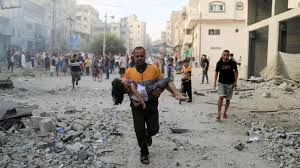
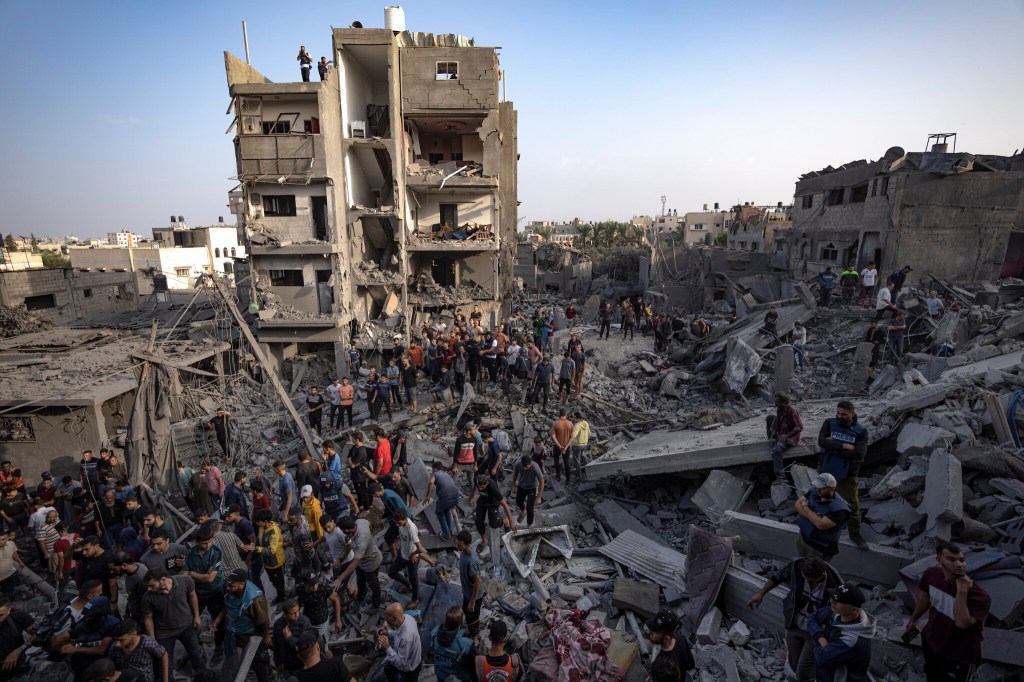
Schools, housing, hospitals; all are destroyed,
yet, still, euphemistic terms are employed.
Artillery posts now even have trouble
finding a building to reduce to rubble.
And, as Gaza withers, festers and rots,
the diplomats tie themselves in knots.
‘Not a ceasefire, a humanitarian pause’.
Treating the symptoms, not the underlying cause.
But Israel miscalculated, and crossed a red line,
in denying the idea of a Palestine.
For an idea does not so easily die;
all the dead children of Gaza so testify.
How can the fighting now ever cease?
There’s not the faintest prospect of peace.
By conducting such a senseless war,
they've only ensured centuries more.
You can justify anything, if you try hard enough
but, deep down, do we realise, it’s all so much guff.
So, don’t pretend, as you kill, wound and maim,
It's not murder; by any other name.
Stuart McFarlane is now semi-retired. He taught English for many years to asylum seekers in London. He has had poems published in a few online journals.
.
PLEASE NOTE: ARTICLES CAN ONLY BE REPRODUCED IN OTHER SITES WITH DUE ACKNOWLEDGEMENT TO BORDERLESS JOURNAL
Ratnottama Sengupta talks to Ruchira Gupta, activist for global fight against human trafficking, about her work and introduces her novel, I Kick and I Fly. Click here to read.
The White Lady by Atta Shad has been translated from Balochi by Fazal Baloch. Click here to read.
Sparrows by Ihlwha Choi has been translated from Korean by the poet himself. Click here to read.
Tagore’s Dhoola Mandiror Temple of Dust has been translated from Bengali by Mitali Chakravarty. Click here to read.
Pandies Corner
Songs of Freedom: What are the Options? is an autobiographical narrative by Jyoti Kaur, translated from Hindustani by Lourdes M Supriya. These narrations highlight the ongoing struggle against debilitating rigid boundaries drawn by societal norms, with the support from organisations like Shaktishalini and pandies’. Click here to read.
Ratnottama Sengupta travels back to her childhood wonderland where she witnessed what we regard as Indian film history being created. Click here to read.
Aditi Yadav explores the universal appeal of the translation of a 1937 Japanese novel that recently came to limelight as it’s rendition on the screen won the Golden Globe Best Animated Feature Film award (2024). Click here to read.
Nature has shed her wintry robes
to adorn brighter clothes.
A cornucopia of colours – bold
yellow, crimson, purple, gold.
Far away the ample hills repose
where a new light softly grows.
The sky is blue, the wind is fair.
A lone bird flies into the air.
In winter, silent seeds have toiled
to deny the grip of frozen soil.
Soon in the garden, green will
bloom with tulips, roses, and daffodils
And the nourished roots shall bring
forth the joyful fruits of spring.
UNTITLED
I feel a silky silence grow
as if all the world has died.
Night is as black as the crow,
no light to show habitation,
but the far off, orange glow
of firelight on the hillside.
I hear a rippling river flow
through a valley, dark and wide.
The white of an owl swoops low –
wings spread, I watch it glide
and the distant orange glow
of firelight on the hillside.
Stuart McFarlane is now semi-retired. He taught English for many years to asylum seekers in London. He has had poems published in a few online journals.
.
PLEASE NOTE: ARTICLES CAN ONLY BE REPRODUCED IN OTHER SITES WITH DUE ACKNOWLEDGEMENT TO BORDERLESS JOURNAL
Interviewing Bulbul: Remembering Mrinal Sen… Ratnottama Sengupta introduces Bulbul Sharma to converse with her on Mrinal Sen, the legendary filmmaker, reflecting on Bulbul Sharma’s experience as an actress in his film, Interview. Click here to read.
In conversation with Gajra Kottary, eminent screenplay writer, and a brief introduction to her recent book of short stories, Autumn Blossoms. Click hereto read.
Translations
Nazrul’s poem, Samya or Equality, has been translated from Bengali by Niaz Zaman. Click here to read.
Masud Khan’s Fire Engine has been translated from Bengali by Fakrul Alam. Click here to read.
Let’s look forward to things getting better this New Year with wars tapering off to peace— a peace where weapons and violence are only to be found in history. Can that ever happen…?
Perhaps, all of us need to imagine it together. Feeling the need for peace, if we could dwell on the idea and come up with solutions, we could move towards making it a reality. To start with, every single human being has to believe firmly in the need for such a society instead of blaming wars on natural instincts. Human nature too needs to evolve. Right now, this kind of a world view may seem utopian. But from being hunter-gatherers, we did move towards complex civilisations that in times of peace, built structures and created art, things that would have seemed magical to a cave dweller in the Palaeolithic times. Will we destroy all that we built by warring – desecrating, decimating our own constructs and life to go on witch-hunts that lead to the destruction of our own species? Will human nature not evolve out of the darkness and chaos that leads to such large-scale annihilation?
Sometimes, darkness seems to rise in a crescendo only to be drowned by light emanating from an unknown source. This New Year — which started with an earthquake followed the next day by a deadly plane collision — was a test of human resilience from which we emerged as survivors, showing humanity can overcome hurdles if we do not decimate each other in wars. Bringing this to focus and wringing with the pain of loss, Suzanne Kamata, in her column tells us: “Earthquakes and other natural disasters are unavoidable, but I admire the effort that the Japanese people put into mitigating their effects. My hope is that more and more people here will begin to understand that it is okay to cry, to mourn, to grieve, and to talk about our suffering. My wish for the Japanese people in the new year is happiness and the achievement of dreams.”
And may this ring true for all humanity.
Often it is our creative urges that help bring to focus darker aspects of our nature. Laughter could help heal this darkness within us. Making light of our foibles, critiquing our own tendencies with a sense of humour could help us identify, creating a cathartic outcome which will ultimately lead to healing. An expert at doing that was a man who was as much a master of nonsense verses in Bengal as Edward Lear was in the West. Ratnottama Sengupta has brought into focus one such book by the legendary Sukumar Ray, Abol Tabol (or mumbo jumbo), a book that remains read, loved and relevant even hundred years later. We have more non-fiction from Keith Lyons who reflects on humanity as he loses himself in China. Antara Mukherjee talks of evolving and accepting a past woven with rituals that might seem effete nowadays and yet, these festivities did evoke a sense of joie de vivre and built bridges that stretch beyond the hectic pace of the current world. Devraj Singh Kalsi weaves in humour and variety with his funny take on stocks and shares. Rhys Hughes does much the same with his fun-filled recount on the differences between Sri Lanka and India, with crispy dosas leaning in favour of the latter.
Our stories take us around the world with Paul Mirabile from France, Ravi Shankar from Malaysia, Srinivasan R from India and Rebecca Klassen from England, weaving in the flavours of their own cultures yet touching hearts with the commonality of emotions.
In conversations, Ratnottama Sengupta introduces us to the multifaceted Bulbul Sharma and discusses with her the celebrated filmmaker Mrinal Sen, in one of whose films Sharma ( known for her art and writing) had acted. We also have a discussion with eminent screenplay writer Gajra Kottary on her latest book, Autumn Blossoms and an introduction to it.
Somdatta Mandal has reviewed Sudha Murty’s Common Yet Uncommon: 14 Memorable Stories from Daily Life, which she says, “speaks a universal language of what it means to be human”. Bhaskar Parichha takes us to Scott Ezell’s Journey to the End of the Empire: In China Along the Edge of Tibet. Parichha opines: “The book evokes the majesty of Tibetan landscapes, the unique dignity of the Tibetan people, and the sensory extremity of navigating nearly pre-industrial communities at the edge of the map, while also encompassing the erosion of cultures and ecosystems. Journey to the End of the Empire is both a love song and a protest against environmental destruction, centralised national narratives and marginalised minorities.” Meenakshi Malhotra provides a respite from the serious and emotional by giving us a lively review of Rhys Hughes’ The Coffee Rubaiyat, putting it in context of literature on coffee, weaving in poetry by Alexander Pope and TS Eliot. Rakhi Dalal has reviewed a translation from Punjabi by Ajeet Cour and Minoo Minocha of Cour’s Life Was Here Somewhere. Our book excerpts from Anuradha Kumar’s The Kidnapping of Mark Twain: A Bombay Mysteryintroduces a lighter note as opposed to the intense prose of Srijato’s AHouse of Rain and Snow, translated from Bengali by Maharghya Chakraborty.
Translations this time take us to the realm of poetry again with Fazal Baloch introducing us to a classical poet from Balochistan, the late Mulla Fazul. Ihlwha Choi has self-translated his poetry from Korean. Niaz Zaman brings us Nazrul’s Samya or Equality – a visionary poem for the chaotic times we live in — and Fakrul Alam transcribes Masud Khan’s Bengali verses for Anglophone readers. Our translations are wound up with Tagore’s Prarthonaor Prayer, a poem in which the poet talks of keeping his integrity and concludes saying ‘May the wellbeing of others fill my heart/ With contentment”.
May we all like Tagore find contentment in others’ wellbeing and move towards a world impacted by love and peace! The grand polymath always has had the last say…
I would like to thank our contributors, the Borderless team for this vibrant beginning of the year issue, Sohana Manzoor for her fabulous art, and all our readers for continuing to patronise us.
With hope of moving towards a utopian future, I invite you to savour our fare, some of which is not covered by this note. Do pause by our contents page to check out all our fare.
A fame, so undoubtable, a flame, unputoutable; where lesser lights faded, their sentiments jaded, his words still shone bright, a timeless delight; as, slow, the world turns so still Rabbie burns.
ONLY THE RAIN
So how are you? Nice to see you again.
“I know your face but can’t place the name”.
That sound you can hear? It’s only the rain. And how have we been?
“Oh, much the same. The pills they give me help dull the pain”.
I’m sorry I’m late. I missed the first train.
“Whoever you are I’m glad that you came. But that sound gets louder. It beats in my brain.”
Don’t worry now. Sleep. It’s only the rain.
UNTITLED
1
Now I am gone -- I wonder was I ever really there? For a while I merely filled an empty space. The empty space remains. And what was my life, after all? Was there ever any substance? As, in water, my reflection briefly glimpsed, then scattered by a sudden wind. Now there’s only water, as there was before.
2
Heaped high, I helped myself, never noticed it was shrinking. Nonchalant, I scooped another spoonful of time; even spilled a few grains. I sense a dull sound of metal on ceramic, for the bowl is empty now.
3
If tomorrow never comes how come I keep meeting it? I know when it comes it’s today and, not long after, yesterday. Time is like an airport carousel, an endless loop in perpetual motion, past, present and future, all entwined, each moment returning to where it once began.
THE YEARS
I no longer believe what once was true. Here’s what the years do.
My world has grown old, once it was new. Here’s what the years do.
I once had many friends, now only a few. Here’s what the years do.
I once knew the alphabet, all the way through. Here’s what the years do.
Now the sky’s black, once it was blue. Here’s what the years do.
You say you know me but I don’t know you. Here’s what the years do.
Treurende Oude Man (At Eternity’s Gate), 1890, by Vincent Vangogh (1853-1890). Courtesy: Creative Commons
Stuart McFarlane is now semi-retired. He taught English for many years to asylum seekers in London. He has had poems published in a few online journals.
.
PLEASE NOTE: ARTICLES CAN ONLY BE REPRODUCED IN OTHER SITES WITH DUE ACKNOWLEDGEMENT TO BORDERLESS JOURNAL
A conversation with the author,Afsar Mohammed, and a brief introduction to his latest book, Remaking History: 1948 Police Action and the Muslims of Hyderabad. Click hereto read.
A conversation with Meenakshi Malhotra over The Gendered Body: Negotiation, Resistance, Struggle, edited by Meenakshi Malhotra, Krishna Menon and Rachana Johri and a brief introduction to the book. Click hereto read.
In His Unstable Shape, Rhys Hughes explores the narratives around a favourite nursery rhyme character with a pinch of pedantic(?) humour. Click here to read.
JOE
                                                                                                                     I hear you’re looking for Joe.
He’s not what he was, you know.

They took him away in the night.
He won’t get any worse – but he might.
All you can do is hope and pray,
for miracles do happen, they say.
But you know Joe, he never did God,
always found it all a bit odd.
‘So who made the virus?’ he’d sometimes ask.
You can’t see God’s face. He’s wearing a mask.
He’s not said a word since the ICU.
They said they’d let me know of anything new.
So here I sit; I sit by the phone.
I wait for the call he’s on his way home.
I wait; I watch the clock on the wall.
I watch the light die; and darkness fall.

I hear you’re looking for Joe.
He’s not what he was, you know.


THOUGHTS ON CORONAVIRUS

Bacteria, they say, are alive.                                                                                              Coronavirus, they say, is alive                                                                                                                       and, yet, not alive.                                                                                                                                    Its only purpose on this Earth                                                                                                                      is to replicate itself as fast                                                                                                                      as it can.                                                                                                                                                    It’s so small it almost isn’t there.                                                                                                           And, yet, it’s there. It’s everywhere.                                                                                                                It’s very minuteness is it’s strength.                                                                                                                       It manifests a fierce impulse                                                                                                                       to survive.                                                                                                                                                      And to survive, it kills.
Yet it doesn’t know it kills.                                                                                                                                    It doesn’t know, it doesn’t know.                                                                                                         It doesn’t know, it doesn’t know,                                                                                                                      it doesn’t know.                                                                                                                            Deep down, deep inside our body cells,                                                                                        it wages sub-atomic warfare;                                                                                                                          it’s murderous motivation unfathomable.                                                                                                 A million more – it doesn’t care.                                                                                                                       It doesn’t care, it doesn’t care.                                                                                                                        It doesn’t care, it doesn’t care,                                                                                                                                   it doesn’t care.
Stuart McFarlane is now semi-retired. He taught English for many years to asylum seekers in London. He has had poems published in a few online journals.
.
PLEASE NOTE: ARTICLES CAN ONLY BE REPRODUCED IN OTHER SITES WITH DUE ACKNOWLEDGEMENT TO BORDERLESS JOURNAL
Banjara author Ramesh Karthik Nayakdiscusses his new book, Chakmak (flintsone), giving us a glimpse of his world. We also have a brief introduction to his work. Clickhere to read.
Translations
Demanding Longevityby Quazi Johirul Islam has been translated from Bengali by Fakrul Alam. Clickhere to read.
Moonlight, a poem by Bashir Baidar, has been translated from Balochi by Fazal Baloch. Clickhere to read.
Maithili Poetryby Vidyanand Jha has been translated from Maithili by the poet himself. Click hereto read.
Look around you and expand your heart.
Petty sorrows are insignificant.
Fill your vacant life with love for humanity.
The Universe reverberates with celestial ecstasy.
— Anondodhhara Bohichche Bhubone(The Universe reverberates with celestial ecstasy), Tagore, 1894
Some of the most beautiful colours in this universe are blended shades— colours that are born out of unusual combinations. Perhaps that is why we love auroras, sunrises and sunsets. Yet, we espouse clear cut structures for comprehension. As we define constructs created by our kind, we tend to overlook the myriads of colours that hover in the gloaming, the brilliant play of lights and the vibrancy of tints that could bring joy if acknowledged. That ignoring the new-born shades or half-shades and creating absolute structures or constructs lead to wars, hatred, unhappiness and intolerance has been borne true not only historically but also by the current turn of events around the globe. While battles are never fought by the colours or beliefs themselves, they can harm — sometimes annihilate — rigid believers who are victimised for being led to accept their way as the only one and hate another. Perhaps, this has echoes of the battle between the Big Endians and Little Endians over the right way to break eggs in Jonathan Swift’s Gulliver’s Travels (1726). As the book is mere fiction, we can admire, agree and laugh at the content. However, in real life, watching newsreels has become a torture with destruction and violence being the main highlights. These detract from life as we knew it.
Writing or literary inputs seem to have become a luxury. But is it really hedonistic to play with words? Words used effectively over a period of time can impact readers to think peace, acceptance and love and also help people heal from the ensuing violence. That can be a possibility only if we self-reflect. While we look for peace, love and acceptance in others, we could start by being the change-makers and bridge builders ourselves. That is the kind of writing we have managed to gather for our November issue.
Building such bridges across humanity, we have poems on the latest Middle Eastern conflict by Stuart McFarlane and David Mellor, which explore the pain of the victims and not the politics of constructs that encourage wars, destruction of humanity, the flora, the fauna and our home, the Earth. Michael Burch writes against wars. Prithvijeet Sinha and Ahana Bhattacharjee write about refugees and the underprivileged. Reflecting colours of the world are poems from Ryan Quinn Flanagan, Suzayn AH, Radhika Soni, Ron Pickett, George Freek and many more. Rhys Hughes has brought lighter shades into his poetry by trying a new technique while reflecting on yetis and mermaids. His column tries to make a parody of a non-existing parody, using TS Eliot’s century old poem, ‘Wasteland’, with amazing results!
Our translations are all poetry too this time. Professor Fakrul Alam has translated a poem discussing human aspirations by Quazi Johirul Islam from Bengali. Another Balochi poem of hope by Bashir Baidar has been brought to us in English by Fazal Baloch bringing into play the moonlight.
For the first time, we are privileged to carry poetry from a language that has almost till now has eluded majority of Anglophone readers, Maithili. Vidyanand Jha, a Maithili poet, has translated his poetry for all of us as has Korean poet, Ihlwha Choi. Winding up translations are Tagore’s ultimate words for us to introspect and find the flame within ourselves in the darkest of times – echoing perhaps, in an uncanny way, the needs of our times.
Our conversation this month brings to us a poet who comes from a minority group in India, Banjara or gypsies, Ramesh Karthik Nayak. In his attempt to reach out to the larger world, he worries that he will lose his past. But does the past not flow into the future and is it not better for traditions to evolve? Otherwise, we could all well be living in caves… But what Nayak has done — and in a major way — is that he has brought his culture closer to our hearts. His debut poetry book in English, Chakmak (flintstones), brings to us Banjara traditions, lives and culture, which are fast getting eroded and he also visits the judgemental attitude of the majoritarian world. To give you a flavour of his poetry, we bring to you an excerpt from his book, livened beautifully with Banjara art and an essay by Surya Dhananjay that contextualises the poetry for us. Our excerpts also have a focus on poetry for we are privileged to have a few poems from Mamang Dai’s The White Shirts of Summer: New and Selected Poems. Mamang Dai is a well-known name from the North-eastern state of Arunachal Pradesh for both her journalistic and poetic prowess.
We are happy to host Ranu Uniyal’s beautiful review of I am Not the Gardener: Selected Poems by Raj Bisaria. Bisaria among other his distinctions, was named “Father of the modern theatre in North India” by the Press Trust of India. The other reviews are all of prose. Somdatta Mandal has written of Ali Akbar Natiq’s Naulakhi Kothi, a fictional saga of gigantic proportions. Anita Balakrishnan has reviewed Lakshmi Kannan’s short story collection, Guilt Trip. The book that gives hope for a green future, Akshat Rathi’s Climate Capitalism: Winning the Global Race to Zero Emissionshas been reviewed by Bhaskar Parichha. Parichha contends: “Through stories that bring people, policy and technology together, Rathi reveals how the green economy is possible, but profitable. This inspiring blend of business, science, and history provides the framework for ensuring that future generations can live in prosperity.”
The anti-thesis to the theme for a welfarist approach towards Earth can be found in Koushiki Dasgupta Chaudhari’s poignant musing titled, “The Theft of a River”. Meredith Stephen’s travel to California and Sai Abhinay Penna’s narrative about Chikmagalur have overtones of climate friendliness. Ravi Shankar writes further of his travels in Peru and Peruvian coffee. Keith Lyons takes us peeking at Beijing and the Great Wall. Gayatri Devi adds to the variety by introducing us to the starry universe of South Indian cinema while Devraj Singh Kalsi brings in the much-needed humour with his narrative about his “Crush on Bottles“. Suzanne Kamata has also given a tongue-in-cheek narrative about the mystique of addresses and finding homes in Japan. We have fiction from Paul Mirabile located in England and Kalsi’s located in India. Pause by our contents page to view more gems that have not been mentioned here.
Huge thanks to our team at Borderless Journal, especially Sohana Manzoor for her fabulous artwork. This journal would not have been as it is of now without each and every one of them and our wonderful contributors and readers. Thank you all.
Wish you all a wonderful month as we head towards the end of a rather tumultuous year.


 Borderless